Tag: Bank of Ghana

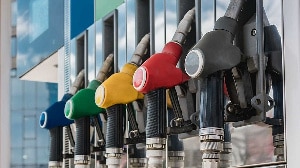
  • Fuel from gold for oil policy serves only 20% of Ghana’s market – BoG

    Fuel from gold for oil policy serves only 20% of Ghana’s market – BoG

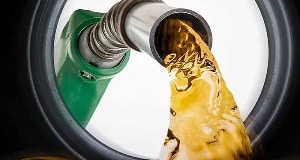
    The Head of financial markets at the Bank of Ghana, Stephen Opata, has confirmed that the first consignment from the gold for oil policy is already being sold to the bulk oil distributing companies.

    He noted that even though the prices are lower than the ex-pump prices, the impact will not be felt since it is just about 20% of the country’s market neds.

    “The product was cleared from the ports today and I know that BOST has started selling. This is just 20% of our market needs from the numbers I have seen the prices are better than what is at the ex-pump prices right now.

    “Because this is just 20 percent of our needs, it will not make that much impact as it would if we were to be doing 100 percent of our diesel needs,” he was quoted by myjoyonline.com.

    The first consignment of the oil from the gold for oil policy arrived in Ghana on Monday, January 16, 2023.

    The 41,000 metric tons of oil from the United Arab Emirates was however discharged to Bulk Oil Storage and Transportation (BOST).

    The move is part of the government’s efforts to curb high fuel prices and the lack of enough dollars to purchase oil from the international market.

    Source: Ghanaweb
  • Cedi sells at GH¢12.90 to $1 on forex market, GH¢10.41 on interbank market

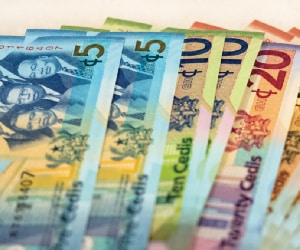
    Cedi sells at GH¢12.90 to $1 on forex market, GH¢10.41 on interbank market

    The Interbank forex rates from the Bank of Ghana today, January 25, 2023, have shown that the Ghana Cedi is trading against the dollar at a buying price of 10.3998 and a selling price of 10.4102.

    As compared to yesterday’s trading of a buying price of 10.3948 and a selling price of 10.4052. At a forex bureau in Accra, the dollar is being bought at a rate of 12.30 and sold at a rate of 12.90.

    Against the Pound Sterling, the Cedi is trading at a buying price of 12.8042 and a selling price of 12.8181 as compared to yesterday’s trading of a buying price of 12.8490 and a selling price of 12.8629.

    At a forex bureau in Accra, the pound sterling is being bought at a rate of 15.00 and sold at a rate of 16.00.

    The Euro is trading at a buying price of 11.3102 and a selling price of 11.3204 as compared to yesterday’s trading of a buying price of 11.2938 and a selling price of 11.3051.

    At a forex bureau in Accra, Euro is being bought at a rate of 12.60 and sold at a rate of 13.70.

    The South African Rand is trading at a buying price of 0.6037 and a selling price of 0.6041 as compared to yesterday’s trading of a buying price of 0.6046 and a selling price of 0.6051.

    At a forex bureau in Accra, South African Rand is being bought at a rate of 0.50 and sold at a rate of 1.10.

    The Nigerian Naira is trading at a buying price of 44.2979 and a selling price of 44.3479 as compared to yesterday’s trading at a buying price of 44.3048 and a selling price of 44.3548.

    At a forex bureau in Accra, Nigerian Naira is being bought at a rate of 14.50 Naira for every 1 Cedi and sold at a rate of 19.50.

    Our forex bureau rates are provided by Afriswap Bureau De Change in Osu, Accra.

  • Next MPC meeting is likely to see another policy rate increase

    Next MPC meeting is likely to see another policy rate increase

    The market anticipates a further increase in the policy rate at the upcoming Monetary Policy Committee (MPC) meeting of the Bank of Ghana due to the rising inflationary pressures and the rapid depreciation of the cedi against the dollar and other major currencies this year.

    According to the most recent consumer inflation statistics, consumer prices continued to rise at the end of 2022 for an accelerated 19th consecutive month, rising to 54.1 percent from 50.3 percent in November 2022, driven by rising food prices and the trickle-down effects of increased oil prices.

    At 54.1%, inflation is currently 5.41x above the upper bound of the medium-term inflation target band set by the central bank, which is continuing to have a negative impact on consumer spending and economic activity.

    Ahead of the first MPC meetings of the year, starting on Wednesday, January 25, with the policy rate decision expected to be announced on Monday, 31st January 2023; Apakan Securities, a market watcher, in its forecast, says, it expects a hike in the monetary policy rate as the MPC to maintains its aggressive stance.

    “We expect the MPC to maintain its hawkish stance, raising the policy rate by 100 basis points (bps) ± 50bps,” it said.

    The market expects inflation to continue higher through January 2023, albeit at a moderated pace, with an outlook for a peak at the end of Q1 2023.

    During 2022, the central bank cumulatively increased the benchmark policy rate by 1250 basis points to 27 percent – the highest rate in almost 2 decades.

    The central bank has also served indication that it will remain hawkish at least through Q1-2023 until inflation shows signs of moderation and the implementation of other available monetary tools to control money supply and rein in inflation. Tighter monetary policy stance of various central banks around the globe and global recession risks could potentially weigh on Ghana’s economy.

    The Bank of Ghana expects inflation to peak in Q1-2023, then decline to a 25 percent area by the end of 2023.

    However, the recent utility tarrifs hike effective February 1, 2023 as announced by the Public Utility Regulatory Commission (PURC) remains an upside risk to inflation. The new tariffs will push electricity up by 29.96 percent for all customers and water by 8.3 percent.

    According to the PURC, the increments were occasioned by the unstable exchange rate, rising inflation, generation mix and weighted average cost of natural gas.

    Inflation expectations

    Market watcher, GCB Capital in forecasting what to expect said: “We anticipate a sharper cooling of inflation beyond 1Q 2023 as we believe we have seen the worst of cedi depreciation. With the government committing to fiscal consolidation under an IMF programme from 2023, we expect the much-needed balance of payment support and policy credibility from the programme to anchor cedi stability through 2023”.

    “We believe cedi depreciation and rising petroleum prices are the primary triggers of inflation, and given this improved outlook for 2023, we expect a sharper cooling of inflation beyond 1Q 2023,” it said.

    Commenting on the outlook, Constant Capital also maintained its outlook of higher inflation in Dec-2022 with a potential peak deferred to Q1-2023.

    “In the near term, we expect to see the impact of passthrough effects of cedi depreciation, elevated petroleum prices, upward transport fare adjustment, lagged impact of utility tariff hikes, as well as the yuletide-induced price increase and consumer demand to continue to lift the CPI,” it said.

  • Forex bureaus sell $1 at GH¢13.00, GH¢10.40 on interbank market as of January 24

    Forex bureaus sell $1 at GH¢13.00, GH¢10.40 on interbank market as of January 24

    The Interbank forex rates from the Bank of Ghana today, January 24, 2023, have shown that the Ghana Cedi is trading against the dollar at a buying price of 10.3948 and a selling price of 10.4052.

    As compared to yesterday’s trading of a buying price of 10.3507 and a selling price of 10.3611. At a forex bureau in Accra, the dollar is being bought at a rate of 12.40 and sold at a rate of 13.00.

    Against the Pound Sterling, the Cedi is trading at a buying price of 12.8490 and a selling price of 12.8629 as compared to yesterday’s trading of a buying price of 12.7904 and a selling price of 12.8053.

    At a forex bureau in Accra, the pound sterling is being bought at a rate of 15.00 and sold at a rate of 16.00.

    The Euro is trading at a buying price of 11.2938 and a selling price of 11.3051 as compared to yesterday’s trading of a buying price of 11.1970 and a selling price of 11.2081.

    At a forex bureau in Accra, Euro is being bought at a rate of 12.70 and sold at a rate of 13.70.

    The South African Rand is trading at a buying price of 0.6046 and a selling price of 0.6051 as compared to yesterday’s trading of a buying price of 0.6019 and a selling price of 0.6024.

    At a forex bureau in Accra, South African Rand is being bought at a rate of 0.50 and sold at a rate of 1.10.

    The Nigerian Naira is trading at a buying price of 44.3048 and a selling price of 44.3548 as compared to yesterday’s trading at a buying price of 44.4191 and a selling price of 44.5360.

    At a forex bureau in Accra, Nigerian Naira is being bought at a rate of 14.00 Naira for every 1 Cedi and sold at a rate of 19.00.

  • FLASHBACK: Taxpayers’ money won’t be used to pay locked-up funds – Bawumia

    FLASHBACK: Taxpayers’ money won’t be used to pay locked-up funds – Bawumia

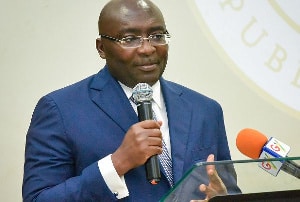
    Vice President, Dr. Mahamudu Bawumia, in October 2020 stated that the government will not use taxpayers’ money to pay depositors whose investments have been locked up in the defunct Menzgold Company Limited.

    He said, “Menzgold is not a licensed financial institution. We are talking about licensed financial institutions but if you set up your 419 institutions and the Bank of Ghana warned repeatedly that people should not do business with Menzgold because they were not a licensed financial institution, so, you can’t use taxpayers’ money to pay locked-up funds of an institution that is not a licensed financial institution.”

    Read the full story originally published on October 24, 2020 by Classfmonline

    The Akufo-Addo government will not use taxpayers’ money to pay depositors whose investments have been locked up in the now-defunct Menzgold Company Limited, Vice-President Dr. Mahamudu Bawumia has said.

    Dr Bawumia told Agya Owusu on Techiman-based Link89.1 FM in the Bono East Region during his recent tour of that part of Ghana that, unlike the situation where the government rescued 4.4 million depositors whose funds got locked up in some banks and specialized deposit-taking institutions who were collapsed by their regulatory authorities over infractions and insolvency, the customers of Menzgold are not entitled to such rescue since they defied all warning from the Bank of Ghana to do business with an unlicensed financial institution.

    “Menzgold is not a licensed financial institution. We are talking about licensed financial institutions but if you set up your 419 institutions and the Bank of Ghana warned repeatedly that people should not do business with Menzgold because they were not a licensed financial institution, so, you can’t use taxpayers’ money to pay locked-up funds of an institution that is not a licensed financial institution,” Dr. Bawumia said.

    Two weeks ago, some aggrieved customers of the gold-trading company said they deserve a bailout just like the other companies that were licensed by the Securities and Exchange Commission (SEC) and collapsed with a “written letter” because their operations were contrary to their terms of the license.

    According to the aggrieved customers, they deserve a bailout since Menzgold was under the regulation of SEC.

    Source: Classfmoline

  • Ghanaians to pay “Trosky” fares online

    Ghanaians to pay “Trosky” fares online

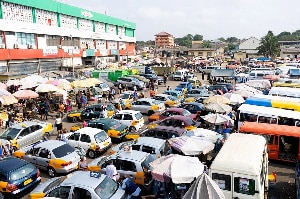
    Customers of trotro will pay their transportation fare electronically, according to Dr. Maxwell Opoku Afari, Deputy Governor of the Bank of Ghana.

    He said that this government program will lessen the problem of “change” among passengers and bus drivers.

    If you want to ride a trotro, all you have to do is ask the driver for his or her mobile money number, and then you may transfer the money.
    The rare altercation between passengers and conductors over a few cedis changes will be reduced thanks to this innovation, he said.

    Read the full story originally published on 23 January 2018 by Ghananewsagency

    Patrons of commercial vehicles “tro-tro,” would pay their transportation fare via digital means after the passage of Payment System and Service Bill is passed by Parliament.

    Dr Maxwell Opoku Afari, Deputy Governor of Bank of Ghana who disclosed this, explained, “If you are going to board a tro-tro all you need to do is just ask for the mobile money number of the driver, then you transfer the payment.

    “This innovation will curtail the occasional scuffle between passengers and conductors over few Cedis change”.

    Speaking on a topic ‘Innovative Financial Service for Business and SME’s Development’, at a symposium held at the University of Ghana, Dr Afari noted that the regulation would allow most traditional payments to be done digitally and would change payment in Ghana and reduce queues at the banking halls.

    ”Last year, we organised a stakeholders forum to discuss and review the Electronic Management Guidelines and Payment System Act and consolidated it into one piece of legislation which is now called the Payment System and Services bill. We have met the economic management team to make a case for the passage of the bill,” he mentioned.

    The Bill therefore seeks to promote the availability and acceptance of electronic money and other forms of payment services as retail payment medium. It also seeks to create an enabling regulatory environment for convenient, efficient and safe retail payment and funds transfer mechanisms as well as provide the necessary safeguards and controls to mitigate the risks associated with electronic money business and other payment services.

    The Deputy Governor said the Bank of Ghana had observed that the public had shown interest and appreciated recent innovative ways using technology to transact business.

    He said after the introduction of formal banking in Ghana over 60 years ago, only 11.4 million out of the about 28 million Ghanaians had bank accounts. He noted however that after the institution of electronic money issuance guidelines in 2015, over 23 million people now have mobile money accounts “if we consider that as an account”.

    He said penetrating into low-income communities by banks had been hindered by the high cost of building and rentals as well as operational overhead cost. Dr Afari noted that while brick-and-mortar branches were expensive for banks to maintain in rural and deprived communities, the cost of travelling to urban areas was also high for many rural customers.

    ”The institution of electronic money issuance guidelines, payment system in 2015 which sought to promote and supervise electronic and other payments, will help in funds transfer, clearing and settlement systems and has helped the Telecom’s to collaborate with banks to provide financial service to people especially SMEs.

    The high prevalence of mobile phones and other electronic devices have made it convenient to expand access to financial services across the country,” he argued.

  • COPEC anticipates a drop in fuel price over “gold-for-oil policy

    COPEC anticipates a drop in fuel price over “gold-for-oil policy

    The government’s acquisition and distribution of goods from its “gold-for-oil” strategy to Oil Marketing Companies, claims the Chamber of Petroleum Consumers, Ghana (COPEC), is to blame for any potential reduction.

    However, Duncan Amoah, COPEC’s executive director, wants the commodity’s distribution to be accelerated in order to let prices fall and protect customers.

    “The data related to this gold-for-oil arrangement is particularly important.
    According to Citinewsroom.com, “We should entirely stop the politicians from intervening in fuel or trade if it doesn’t solve the situation with the rising fuel prices and the weakening cedi.”

    “Because that will not be the situation Ghanaians are clamouring for. The numbers they will put up for the coming week will determine whether we are able to stimulate the market downwards or we are able to sustain prices where they are. Or there are some benefits to be derived as a people. If there are no benefits, then it will be difficult to go to the Bank of Ghana (BoG) to ask for money to trade in oil, we will be burnt on all sides,” Duncan Amoah added.

    Meanwhile, the price of petroleum products has increased in the second pricing window of January which took effect on Saturday 21, 2023.

    The development has since been attributed to the recent depreciation of the cedi against major trading currencies despite witnessing some appreciation during the festive period in 2022.

    To mitigate the situation, government has taken delivery of the first consignment for its ‘Gold-for-Oil’ policy for about 41,000 million metric tons of petroleum products.

    The petroleum products are expected to be discharged and sold by state-owned enterprise BOST to Bulk Oil Distributing Companies (BDCs) across the country.

    Vice President, Dr. Mahamudu Bawumia, in November 2022 first announced government’s plan to undertake the gold-for-oil initiative. The deal was hinged on buying oil products with Ghana’s gold instead of the US dollar.

    Dr. Bawumia on Facebook earlier explained that the usage of gold to purchase oil would also address Ghana’s dwindling foreign reserves as well as reduce demand for US dollars by oil importers.

    “It will fundamentally change our balance of payments and significantly reduce the persistent depreciation of our currency,” the Vice President earlier wrote.

    Under the policy, government believes that using gold to purchase oil products would also bring stability to the exchange rate market and ensure domestic oil operators do not solely depend on foreign exchange to import products.

  • Depreciation of cedi a result of pressure on economy – BoG Governor

    Depreciation of cedi a result of pressure on economy – BoG Governor

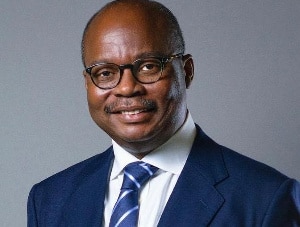
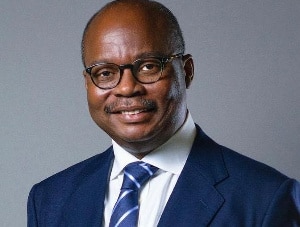
    Dr Ernest Addison, Governor of the Bank of Ghana, on Monday said several factors account for the depreciation of the local currency.

    He, therefore, attributed the depreciation of the local currency to the day-to-day pressures on the economy.

    Although the cedi appreciated against the dollar during the last two months of 2022, it is currently depreciating further against the dollar.

    The cedi which appreciated GH¢8 to a dollar around December 2022 is currently selling GH¢13 to a dollar.

    Dr Addison explained when he appeared at the Public Accounts Committee (PAC) of Parliament that the cedi depreciation reflected the movement daily.

    He said: “If there is additional demand for the cedis the currency will be restricted. The Central Bank cannot fix the exchange rate, it depends on what transactions have taken place…like payments to contractors.”

    “Typically, that kind of payment can move the exchange rate because some of them immediately convert into foreign exchange. So, the exchange reflects a lot of day-to-day pressures in the economy,” he said.

    Touching on the Gold for Oil policy introduced by the Government, Dr Addison said it would help avoid the pressure on the exchange rate from the private Oil Marketing firms.

    Ghana on Monday, January 16, 2023, took delivery of the first consignment of the Gold for Oil deal reached with the United Arab Emirates.

    While some members of the PAC expressed worry at the policy’s sustainability, Dr Addison urged them to be hopeful as “it is early days yet to conclude.”

    The 40,000 metric tons of oil arrived at the Tema port on Sunday, January 15, 2023, according to the Ministry of Lands and Natural Resources.

    The Energy Ministry, the Bulk Oil Storage, transportation, and Oil Marketing Companies are to formulate plans for its distribution and sale.

    PAC commenced sittings on Monday, January 16, 2023, to examine the Auditor General’s report on public accounts of the government for the year 2020.

    As part of their scheduled work, the Committee would also scrutinise the Auditor General’s report on public accounts of various Ministries, Departments, and Agencies during the sittings.

    Further, the accounts of public boards, corporations, and other statutory institutions for the year 2020 would also be considered.

    Proceedings of the almost two-week Sitting are expected to be concluded on Friday, January 27, 2023, according to a statement issued by the Public Affairs Directorate of Parliament and copied to the Ghana News Agency in Accra.

    Source: Ghanaweb

  • Bank of Ghana cannot fix cedi depreciation – Governor

    Bank of Ghana cannot fix cedi depreciation – Governor

    The Bank of Ghana has said it cannot solve the country’s exchange rate problems.

    Governor of the bank, Ernest Addison who appeared before the Public Accounts Committee of Parliament, said the exchange rate, which is currently GH¢13 to a dollar, “reflects the movement on a day-to-day basis.

    “If there is additional demand for cedis, the currency will be restricted, the central bank cannot fix the exchange rate”, he noted, adding: “It depends on what transactions have taken place”, such as “payments to contractors.”

    “Typically, that kind of payment can move the exchange rate because some of them immediately convert into foreign exchange. So, the exchange, really, reflects a lot of day-to-day pressures in the economy.”

    Dr. Addison also noted that the gold-for-oil programme will shore up the cedi’s strength.

    According to the Ministry of Lands and Natural Resources, Ghana took delivery of 40,000 metric tonnes of oil from the United Arab Emirates through the barter programme on Sunday, 15 January 2023.

  • I will keep my money under the pillow than to buy GoG bond – IBF convener

    I will keep my money under the pillow than to buy GoG bond – IBF convener

    Mr. Yaw Owusu Brefo, a convener of the Ghana Individual Bondholders’ Forum (IBF), claims that he would rather keep his money hidden under his pillow than invest it in Ghana government bonds.

    Individual bondholders are required to agree to a “voluntary” agreement to swap their domestic bonds for new benchmark bonds under the Domestic Debt Exchange (DDE) programme.

    Mr. Yaw Brefo said during an appearance on the Badwam show on Adom TV hosted by Akwasi Nsiah, that he personally would not invest in it and advised others against doing the same.

    He said that if an individual’s investment is impacted, many businesses will fail, with severe ramifications.

    He said, “If I had extra money after paying for my children’s schools fees, I would either invest it in something else or hide it under my pillow rather than buy bonds.”

    “People won’t grasp the reality of what we’re talking about until they see the true repercussions. I can promise you that the results of this government’s planned Domestic Debt Exchange would be terrible,” he added.

    Meanwhile, the IBF has issued a formal notification to its members and invited individual bondholders to become members so that they can continue to consult with them as they provide legal public advocacy and negotiation.

    IBF also appealed to labor unions to join them in the fight to protect the hard-earned savings and investments made by Ghanaians, including their own members.

  • “BoG does not bring down firms.” – Elsie Awadzi

    “BoG does not bring down firms.” – Elsie Awadzi

    Elsie Addo Awadzi, the Bank of Ghana’s second deputy governor, stated in 2020 that the nation’s financial institutions were not under the control of the central bank.

    She emphasised that when an institution fails, the Bank of Ghana removes it from the system.

    “It is crucial that the media guides the public dialogue in a detached and knowledgeable manner…

    We’ve read headlines like “Bank of Ghana has collapsed companies” much too frequently.
    Nothing ever fails at the Bank of Ghana. No.
    When an institution fails, we remove it from the system in a way that does not have an impact on the system, she added. We licence, we supervise.

    Read the full story originally published on October 13, 2020 by GhanaWeb

    Second Deputy Governor of the Bank of Ghana (BoG), Elsie Addo Awadzi, has asked the media to use the right terminologies in their reports on the sector to send the right messages to the public.

    Speaking at a media sensitization workshop organised by the BoG and associations representing Specialised Deposit-taking Institutions (SDIs), the 2nd Deputy BoG Governor said some headlines distort the salient point in an event within the sector.

    “It is important that the media leads the public discourse in a dispassionate and expert manner…We have heard too often, headlines such as ‘Bank of Ghana has collapsed companies’. Bank of Ghana never collapses anything. No. We licence, we supervise and then when an institution has failed, we take it out of the system in a manner that does not affect the system.

    “So do not say ‘Bank of Ghana has collapsed anything’. Bank of Ghana does not collapse anything. These institutions are run and governed by their shareholders, who put their Board of Directors and a team of management. So, they collapsed the companies. We don’t collapse the companies. It is important for the media to understand that,” she stressed.

    The media sensitisation event brought together key players in the sector and presented a rare opportunity for the SDI associations to better explain their operations to the media.

    It also enabled the media to ask appropriate questions of the key players in the sector and provide feedback to SDIs as to what the public thinks of their service.

    Elsie Addo Awadzi said it is important that the media grows to become a key partner that understands the financial sector and the regulatory framework within which the financial sector operates.

    “[The financial sector] is very different from other types of businesses and it is important that the media, when they engage in discussions related to the financial sector, they do so with an understanding of regulatory environment as well as the policy environment within which the financial sector operates,” she admonished.

  • Forex bureaus sell $1 at GH¢12.90, GH¢9.04 on interbank market as of January 13

    Forex bureaus sell $1 at GH¢12.90, GH¢9.04 on interbank market as of January 13

    Note that these rates may be different at a forex bureau near you.

    Our forex bureau rates are provided by Afriswap Bureau De Change in Osu, Accra.

    The Interbank forex rates from the Bank of Ghana today, January 13, 2023, have shown that the Ghana Cedi is trading against the dollar at a buying price of 9.0402 and a selling price of 9.0492.

    As compared to yesterday’s trading of a buying price of 9.0252 and a selling price of 9.0342. At a forex bureau in Accra, the dollar is being bought at a rate of 12.20 and sold at a rate of 12.90.

    Against the Pound Sterling, the Cedi is trading at a buying price of 10.9974 and a selling price of 11.0102 as compared to yesterday’s trading of a buying price of 10.9611 and a selling price of 10.9739.

    At a forex bureau in Accra, the pound sterling is being bought at a rate of 14.50 and sold at a rate of 15.50.

    The Euro is trading at a buying price of 9.7659 and a selling price of 9.7755 as compared to yesterday’s trading of a buying price of 9.7181 and a selling price of 9.7286.

    At a forex bureau in Accra, Euro is being bought at a rate of 12.20 and sold at a rate of 13.30.

    The South African Rand is trading at a buying price of 0.5362 and a selling price of 0.5366 as compared to yesterday’s trading of a buying price of 0.5318 and a selling price of 0.5323.

    At a forex bureau in Accra, South African Rand is being bought at a rate of 0.60 and sold at a rate of 1.00.

    The Nigerian Naira is trading at a buying price of 50.9237 and a selling price of 51.0133 as compared to yesterday’s trading at a buying price of 51.0061 and a selling price of 51.0903.

    At a forex bureau in Accra, Nigerian Naira is being bought at a rate of 13.00 Naira for every 1 Cedi and sold at a rate of 18.00.

    Source: Ghanaweb
  • BoG does not bring down businesses; rather, their owners do so – Elsie Awadzi

    BoG does not bring down businesses; rather, their owners do so – Elsie Awadzi

    Elsie Addo Awadzi, the second deputy governor of the Bank of Ghana, stated in 2020 that the country’s financial institutions were not under the control of the central bank.

    She emphasized how the Bank of Ghana removes a failing institution from the system.

    It’s crucial that the media guides the public conversation in a neutral and knowledgeable way.

    Headlines like “Bank of Ghana has collapsed companies” are ones we’ve heard far too frequently.
    Bank of Ghana never lets anything go under.
    No.
    We supervise, we license, and when an institution fails, we remove it from the system in a way that doesn’t have an impact on the system, she said.

    Read the full story originally published on October 13, 2020 by GhanaWeb

    Second Deputy Governor of the Bank of Ghana (BoG), Elsie Addo Awadzi, has asked the media to use the right terminologies in their reports on the sector to send the right messages to the public.

    Speaking at a media sensitization workshop organised by the BoG and associations representing Specialised Deposit-taking Institutions (SDIs), the 2nd Deputy BoG Governor said some headlines distort the salient point in an event within the sector.

    “It is important that the media leads the public discourse in a dispassionate and expert manner…We have heard too often, headlines such as ‘Bank of Ghana has collapsed companies’. Bank of Ghana never collapses anything. No. We licence, we supervise and then when an institution has failed, we take it out of the system in a manner that does not affect the system.

    “So do not say ‘Bank of Ghana has collapsed anything’. Bank of Ghana does not collapse anything. These institutions are run and governed by their shareholders, who put their Board of Directors and a team of management. So, they collapsed the companies. We don’t collapse the companies. It is important for the media to understand that,” she stressed.

    The media sensitisation event brought together key players in the sector and presented a rare opportunity for the SDI associations to better explain their operations to the media.

    It also enabled the media to ask appropriate questions of the key players in the sector and provide feedback to SDIs as to what the public thinks of their service.

    Elsie Addo Awadzi said it is important that the media grows to become a key partner that understands the financial sector and the regulatory framework within which the financial sector operates.

    “[The financial sector] is very different from other types of businesses and it is important that the media, when they engage in discussions related to the financial sector, they do so with an understanding of regulatory environment as well as the policy environment within which the financial sector operates,” she admonished.

  • Cedi sells at GH¢12.45 to $1 on forex market, GH¢9.03 on BoG interbank market

    Cedi sells at GH¢12.45 to $1 on forex market, GH¢9.03 on BoG interbank market

    Our forex bureau rates are provided by Afriswap Bureau De Change in Osu, Accra.

    The Interbank forex rates from the Bank of Ghana today, January 12, 2023, have shown that the Ghana Cedi is trading against the dollar at a buying price of 9.0252 and a selling price of 9.0342.

    As compared to yesterday’s trading of a buying price of 9.0052 and a selling price of 9.0142. At a forex bureau in Accra, the dollar is being bought at a rate of 11.75 and sold at a rate of 12.45.

    Against the Pound Sterling, the Cedi is trading at a buying price of 10.9611 and a selling price of 10.9739 as compared to yesterday’s trading of a buying price of 10.9359 and a selling price of 10.9487.

    At a forex bureau in Accra, the pound sterling is being bought at a rate of 13.80 and sold at a rate of 14.70.

    The Euro is trading at a buying price of 9.7181 and a selling price of 9.7286 as compared to yesterday’s trading of a buying price of 9.6581 and a selling price of 9.6685.

    At a forex bureau in Accra, Euro is being bought at a rate of 12.00 and sold at a rate of 12.80.

    The South African Rand is trading at a buying price of 0.5318 and a selling price of 0.5323 as compared to yesterday’s trading of a buying price of 0.5278 and a selling price of 0.5282.

    At a forex bureau in Accra, South African Rand is being bought at a rate of 0.60 and sold at a rate of 1.00.

    The Nigerian Naira is trading at a buying price of 51.0061 and a selling price of 51.0903 as compared to yesterday’s trading at a buying price of 51.1604 and a selling price of 51.2115.

    At a forex bureau in Accra, Nigerian Naira is being bought at a rate of 12.50 Naira for every 1 Cedi and sold at a rate of 17.50.

    Source: Ghanaweb

  • If the current account deficit cannot be sustained, Cedi be will under pressure – World Bank

    If the current account deficit cannot be sustained, Cedi be will under pressure – World Bank

    If the government gives up on making sure that the nation’s current account deficit reaches a manageable level, the Ghana Cedi’s problems are likely to continue this year against the US Dollar, the World Bank has warned.

    The warning appeared in the January 2023 Global Economic Prospects report from the World Bank.

    The research stated that “large current account deficits are anticipated to keep currencies under pressure in a number of countries, adding to inflation and external vulnerabilities (Gambia, Ghana)”.

    The World Bank research forewarned Ghana and other nations, but urged the government to take strict measures to manage the current account deficit in the fiscal year 2023.

    The World Bank also stressed the implementation of policies targeted at boosting exports to narrow the current account deficit, while controlling excessive importation.

    It noted that the implementation of these measures and policies must check rising inflationary pressures which could peak in the coming months thereby negatively impacting the local currency.

    Meanwhile, the cedi has begun to experience some marginal depreciation against the US dollar since the start of 2023.

    The currency is selling for around GH¢12.45 to $1 on the forex market while going for GH¢9.00 on the Bank of Ghana interbank forex market.

    As of January 12, 2023, the British Pound is selling at GH¢14.70 on the forex retail market while the Euro is going for GH¢12.80 on the forex retail market.

  • An economic outlook on what to expect in 2023

    An economic outlook on what to expect in 2023


    In a year when government and the International Monetary Fund (IMF) are expressing differing sentiments about Ghana’s economic prospects following a difficult 2022, it is obvious that 2023 is going to be full of uncertainties.

    While government is bullish that the US$3billion bailout programme it agreed with the IMF at staff level last December can restore much-needed stability following a disastrous 2022, when inflation reached over 50 percent, the Bretton Woods institution on the other hand is predicting a difficult year ahead. Come what may, the economy’s various sectors will be impacted to varied degrees depending on both internal and external factors.

    The Business and Financial Times (B&FT) takes a dive into the economy’s various sectors and offers brief outlooks as to what to expect in 2023. Enjoy the read.

    Economy

    Following the Ghanaian economy’s mixed performance in the third quarter of 2022, it is expected to continue losing ground through 2023. The country’s provisional real quarterly gross domestic product (QGDP) growth rate – which includes oil and gas – came in at 2.9 percent annually, according to data released by the Ghana Statistical Service.

    The Q3 2022 GDP marked a slowdown from the 6.5 percent growth rate seen in the same period of 2021 – the lowest in eight quarters during the COVID-19 pandemic and since 2020 Q3 when GDP logged at -3.3 percent.

    Through 2023, the reduced growth will come on the back of rising price pressures and monetary-tightening weighing on private consumption and investment, and as government spending declines. Government is anticipated to resume rigorous fiscal consolidation while continuing its attempts to rationalise expenditures.

    Additionally, it is anticipated that the central bank’s hawkish monetary policy stance, which it has adopted to stabilise the cedi and control inflation and expectations, will have a negative impact on the expansion of private-sector lending.

    During 2022, the central bank cumulatively increased the benchmark policy rate by 1250 basis points to 27 percent – the highest rate in almost two decades. Inflation currently sits at 50.3 percent, thus 5.1 times outside the upper limit of the central bank’s medium-term inflation target band, and continues to adversely impact economic activity and consumer behaviour.

    The central bank has noted that it may remain hawkish at least through Q1-2023 until inflation shows signs of moderation, and the implementation of other available monetary tools to control money supply and rein-in inflation take effect.

    The tighter monetary policy stance of various central banks around the globe, and global recession risks, could also potentially weigh on Ghana’s economy. The central bank expects inflation to peak in Q1-2023, then decline to around 25 percent by the end of 2023.

    Effectively, the Q4-2022 growth outturn is expected within the band of 1.7 percent to 2.5 percent year-on-year, given the factors at end-2022.

    Debt restructuring

    Due to the country’s high risk of debt distress and urgent need for IMF assistance, it is anticipated that the US$3billion deal will be approved by the Fund’s executive board by mid-2023 after a staff-level agreement was approved in December 2022. However, a successful debt restructuring is still essential.

    Financial sector to remain under immense pressure in 2023

    The financial sector is set to come under scrutiny as the country navigates economic uncertainty, with banks and the broader securities industry set to come under sustained scrutiny.

    The Bank of Ghana’s Monetary Policy Report shows that despite a robust performance in the first 10 months of 2022, when the value of the industry’s assets accelerated to GH¢249.9billion, cracks had begun to appear in the once-resilient sector.

    Currently, banks are rebalancing their portfolios and cutting back on new advances due to increasing pressure and a decline in Capital Adequacy Ratio amid concerns over Non-Performing Loans. This trend is expected to continue.

    The Domestic Debt Exchange Programme will also put additional pressure on this segment, since commercial and rural banks as well as institutional investors hold about 60 percent of the nation’s domestic debt.

    Deposits, which remain a major component of banks’ funding mix, are anticipated to take a hit as customers hold onto cash due to increasing lack of confidence. However, the likelihood of a run on banks remains very unlikely.

    Despite the industry’s NPL ratio declining from 16.4 percent in October 2021 to 14 percent in October 2022, the nominal stock of NPLs increased to GH¢11.3billion in October 2022 from GH¢8.4billion in October 2021. Analysts remain concerned that tighter economic conditions will only raise the stock further.

    However, to further alleviate thissituation, the Bank of Ghana has granted relief measures such as reducing the Cash Reserve Requirement ratio and access to a GH¢15billion Financial Stability Fund (FSF). Although analysts have already expressed concern about the source of funding for the FSF, particularly as none of the development partners which have been touted to contribute to it has yet to make any commitment.

    On the stock market front, where a loss of 12.38 percent was recorded in 2022 compared to more than 43 percent gain in 2021, limited activity is expected this fiscal year – while financial and technology stocks are anticipated to be bright spots.

    Unlike technology stocks, however, financial stocks are expected to experience some level of pressure from uncertainty in the wider industry. The consensus among industry experts is that, irrespective of the direct economic losses the financial sector might experience in the medium term, the loss of investor confidence will pose the biggest challenge this year and beyond.

    Tricky year ahead for mining

    Locally, the mining industry is undergoing a number of reforms – including the domestic gold purchasing programme and ‘gold for oil’ barter policy.

    While the policies are envisioned to build on the country’s gold reserves, compel miners to retain at least 20 percent of their revenue in local currency, ease pressure on the cedi and ultimately help to restore economic stability, the Ghana Chamber of Mines says compelling its members to retain a high percentage in cedi could have negative repercussions for the industry, due to its wobbly nature.

    Other challenges like the ongoing redundancies of mine workers and illegal mining remain a threat to the sector’s future. Gold output for 2022 is projected at 3 million ounces, up from 2.7 million in 2021.

    Energy sector faces daunting future

    The energy sector – comprising petroleum upstream and downstream and power (electricity), ideally should be at the centre of what is seen as a ‘year of bouncing back’ from the shackles of 2022. However, the sector faces mounting challenges ranging from dwindling production volumes, high cost of fuel and lack of liquidity in the power sector, among others.

    In the upstream sector, the first three quarters of 2022 saw windfall revenue of US$1.6billion, US$550.5million more than 2021, due to high international prices but against a lower output. Should this price surge trend continue in 2023, industry watchers expect that the impact of dwindling production volumes will not be felt.

    However, given that demand and supply uncertainties remain a concern owing to the Russia-Ukraine conflict, the COVID pandemic and expected global economic recession, a fall in international oil prices could spell doom for government.

    This could be exacerbated by the falling production volumes, with Ghana having failed to add to its three producing fields – Jubilee, TEN and Sankofa – since 2018. The situation, compounded by government’s reluctance to incentivise exploration according to the Ghana Upstream Petroleum Chamber, does not portend well for the upstream industry.

    Similar to the upstream industry, the downstream faces price volatility challenges which could make or undo government’s efforts to restore microeconomic stability.

    Crude prices on the international market are expected to remain stable in the first quarter of 2023, which should be welcoming news for local consumers; but going into the rest of the year, China’s easing of economic restrictions and the EU’s sanctions on Russia may drive prices up. The expected contraction in the global economy, which is likely to drive down demand, may also bring about lower prices.

    Meanwhile, the defining moment for the power sub-sector rests on whether government can settle its indebtedness to independent power producers, which currently stands at over US$1billion.

    The quarterly review of utility tariffs – where a substantial hike in tariffs is expected in the coming weeks on the back of rising inflation, currency depreciation and high fuel prices – could further increase the burden on consumers. Equally important to the power sub-sector’s future will be how the Electricity Company of Ghana can effectively collect revenue to pay for the power it buys from power producing companies.

    Agriculture

    Although government spending on the agricultural sector in 2023 has increased marginally to 1.95 percent above the previous year’s figure of 1.86 percent, many industry players believe more funding is needed.

    Ghana is a signatory to the Comprehensive African Agricultural Development Programme of 2003 (Malabo Declaration), in which member-countries were expected to increase agricultural investment to 10 percent of annual budgets to culminate into, at least, six percent growth in the sector annually; but the country has failed to do so since then.

    Though it is unlikely that government will prioritise financing in the agricultural sector, it is still necessary that spending in the sector increases from the current 1.86 percent. This will ensure the necessary measures are put in place to ensure food security going forward.

    Meanwhile, the Managing Director for GIRSAL, Kwesi Korboe, indicated last year that 2022 witnessed willingness on the part of banks to lend to agribusiness – cutting across the value chain.

    “We have also done a lot of work in the area of policy and issued more guarantees this year. We have seen an upward trajectory of growth in terms of the value of guarantees we are issuing and number of agribusinesses we are supporting. We also have an agreement with the Development Bank of Ghana that we think will be beneficial to the sector,” he said.

    But to increase gains in the sector, it is necessary that much attention be paid to policy decisions so as to ensure efficiency in the sector, attract investors for the value chain and encourage import substitution.

    It is also important, as suggested by some experts, that various stakeholders must be deliberate in organising training for directors of banks and other financial institutions who are key policymakers, so as to gain more interest and raise awareness. It is high time the agricultural sector received the necessary attention to make it more attractive as calls for youth to venture into it increase.

    Tourism holds a positive view

    With key tourism initiatives including the ‘Beyond the Return’ agenda, Ghana continues to enjoy a high level of goodwill in its quest to become a tourism hub in the sub-region and the continent as a whole.

    As the country becomes a major destination for African-Americans in the diaspora, Ghana’s heritage and historical tourism credentials are unmatched on the continent – and this trend is expected to continue into the long-term.

    For 2023, total global tourist spend is projected to exceed US$1.4trillion, according to Euromonitor International’s index. This means the country must be strategic in order to attract a chunk of this expenditure.

    Last year, there was an estimated one million visitors into the country (international arrivals). Official figures from the Ghana Tourism Authority (GTA) indicate that there were some 645,047 visitors from January to September 2022.

    With key projects, including the anticipated completion of the Kwame Nkrumah Mausoleum by March this year and starting the construction of amphitheatres across the country, the Tourism Ministry is surely rallying all available resources to increase diaspora visitor numbers into the country.

    According to the ministry, an amount GH¢350million has been allocated to modernise tourist attraction sites and embark on product development, as part of a broader plan to enhance the sector’s fortunes.

    The sector’s modernisation will continue this year, according to the ministry, while it is further projected that government will continue allocainge more resources into the sector.

    Consequently, the Tourism Development Fund (TDF) is targetting some GH¢19.6million in revenue for 2023 against the GH¢15.9million collected in 2022. The Fund is key in the country’s tourism promotion.

    There is also a significant potential to expand upon Ghana’s niche tourism segments, with some of West Africa’s largest national parks, diverse wildlife and UNESCO World Heritage sites spread across the country.

    Ghana, just like Kenya and South Africa which are known for their successful wildlife tourism industries, has the potential to expand its ecotourism resources through the development of wildlife and natural sites: including Mole National Park, Kakum National Park, the Ankasa Conservation Area, the Shai Hills Resource Reserve and the Wli waterfalls – the highest falls in West Africa.

    In addition, Ghana has a vast array of wildlife, with 773 recorded species of birds, the Bobiri Forest and Butterfly Sanctuary, the Boabeng-Fiema Monkey Sanctuary and several national parks that are home to elephants and other large animals. The potential for ecotourism, as well as wildlife and wellness tourism resorts, is substantial given the large area of Ghana’s natural reserves and its expansive coastline.

    Could 2023 be the year to finally unlock the country’s tourism potential?

    ICT, digital economy in focus

    With government’s strategic digitalisation agenda positioning the country as a fertile ground for data science research and development, the Ghanaian digital economy is expected to provide unique opportunities to accelerate economic growth and connect citizens to services and jobs.

    The development is also expected to create the right tools and environment necessary to develop Artificial Intelligence (AI) solutions for the country’s agriculture, health, education and financial sectors this year – a move expected to help in the restoration of macroeconomic stability.

    And for the ICT sector or the digital economy to play a critical role in solving the country’s uncertain macroeconomic outlook in 2033, there’s a need for an effective digital transformation agenda.

    The Ministry of Communications and Digitalisation has already started stakeholder engagement efforts on the draft economy policy for inputs to ensure inclusiveness and comprehensiveness.

    With telecom services as the main driver of the country’s ICT for Accelerated Development (ICT4AD) policy – unlocking economic pathways by leveraging the mobile phone as a tool for connectivity, information services and digital financial services over the last decade – the country’s ICT sector and digital economy are expected to see massive advancement.

    Areas such as the local tech entrepreneurial ecosystem, related skills development, digital government platforms and the explosion of data and other emerging technologies – such as artificial intelligence, advanced data analytics, IoT, blockchain metaverse and quantum computing – are all expected to leverage on these advancements.

    The sector will also experience some activities in the development XR in Ghana and Africa, which is an emerging umbrella-term for all the immersive technologies similar to augmented reality (AR), virtual reality (VR) and mixed reality (MR).

    Last but not least, the ICT sector will be rigorously regulated this year. Laws governing the sector are expected to see greater enforcement by the National Information Technology (NITA). This is to ensure that the ICT ecosystem is governed by globally acceptable standards and professionals with the requisite certification and capacity to man the systems being deployed to put the sector at the forefront of the country’s economic development and transformation.

    Free SHS survival could determine sustainability

    Funding for the Free Senior High School (SHS) policy over the past six years has been a combination of government of Ghana’s tax revenue streams and the Annual Budget Funding Amount (ABFA); or simply put, oil revenue.

    These funding sources for the policy have received much criticism from industry players, who maintain that the current funding module is unsustainable as it is primarily taking away a huge chunk of the sector’s allocation at the expense of investment into critical infrastructure.

    For instance, data from the Public Interest and Accountability Committee (PIAC) show that from an oil revenue allocation of 38.7 percent in 2021 to 40.5 percent in 2022, Free SHS is being funded solely from oil revenue in 2023. This complete shift from what has been practiced for the past six years seems to be a sign of what to expect for the next three years under the pending IMF programme.

    The ABFA, which is the amount of oil revenue that goes into the national budget, has four priority areas – of which the education sector is one. If all funding allocations to the education sector for the next three years are channelled into the funding of Free SHS, then other sectors of education such as basic education infrastructure, construction of new Junior High Schools (JHSs) in remote areas for primary schools without JHS, and textbooks for the new curriculum could all suffer a setback this year and beyond.

    The return of government to the International Monetary Fund (IMF) is expected to further tighten its spending ability and limit allocations to the education sector far below the international benchmark of at least 15 to 20 percent of projected expenditure, by about eight percent.

    Notwithstanding, the World Bank is currently reviewing governments’ flagship programmes including the Free SHS initiative. The expectation is that this will better inform government on the way forward regarding the initiative’s implementation and sustainability.

    Implications

    Due to the overconcentration of government spending on the Free SHS, other levels of the education sector are feeling the pinch.

    For example, three years after the commencement of a new curriculum for basic schools, under 30 percent of textbooks have been released to schools – covering only three subjects: English, Science and Creative Arts. This leaves the remaining subjects to the discretion of schools’ heads and teachers.

    These limited textbooks were procured with Ghana Education Trust Fund (GETFund) inflows, raising questions over the cap placed on the Fund by the Finance Ministry.

    With this complete shift from what has been the practice for the past 6 years, if the Free SHS is able to survive on the ABFA without significantly impacting the ability of other critical projects and programmes, it is tempting to conclude that the policy can then survive at least for the next three years under IMF stewardship.

    SMEs must innovate to stay afloat

    Small and Medium Enterprises (SMEs) and startups undoubtedly have a major role to play in the country’s economic recovery journey. Contributing about 60 percent to the country’s Gross Domestic Product (GDP) and accounting for 90 percent of all businesses, SMEs also provide around 80 percent of the total employment in Ghana.

    The space was not spared the challenging times of 2022 but has witnessed quite a number of funding opportunities from financial institutions, the Ghana Enterprises Agency (GEA) and non-governmental organisations; and also embraced events geared toward strengthening their activities to ensure business sustainability.

    However, SMEs must rethink and reassess their operations and consider cutting back or outsourcing to manage their cost of production, especially since all indicators are pointing to increases in their cost of production this year. Instructively, the key concern for the industry this year is how it can successfully navigate the ongoing economic crisis so as to ensure growth and sustainability.

    Parliament

    The first meeting of the Third Session of the 8th Parliament of the Fourth Republic is expected to commence this month, after the House adjourned “sine die” (without any appointed date for resumption) in December last year.

    Upon resumption, President Nana Addo Dankwa Akuffo-Addo is expected to present the State of the Nation Address to the House. As is usual with the practice of the House, bills are expected to be presented. The House will also work on some bills, if there are any at the committee level; and some other instruments at various stages of consideration may be presented as well.

    The First Meeting will also see the Speaker of Parliament admitting Papers, Petitions and Motions for debate, as well as questions for sector ministers to answer.

    This year, the two major parties – the ruling New Patriotic Party (NPP) and National Democratic Congress (NDC) – are gearing-up for their internal elections. This will likely present a challenge to certain aspects of parliamentary business, as incumbent members may abandon their legislative duties to focus on retaining their tickets.

    Absenteeism has been a topic for discussion, and a major challenge to business. Successive Speakers have attempted to deal with the situation in their own way. The current Speaker Alban Bagbin’s position is no different on the matter of absenteeism, particularly for MPs who double as ministers.

    The Eighth Parliament is in its third year and so much has happened already, including the E-levy brawl and the eventful night of inauguration for the 8th Parliament. With the current economic crisis faced by the country, the current IMF deal and the cedi’s performance against the dollar, this meeting promises to be an interesting one with various economic uncertainties.

  • Forex bureaus sell $1 at GH¢12.30, GH¢9.01 on interbank market as of January 11

    Forex bureaus sell $1 at GH¢12.30, GH¢9.01 on interbank market as of January 11

    Our forex bureau rates are provided by Afriswap Bureau De Change in Osu, Accra.

    The Interbank forex rates from the Bank of Ghana today, January 11, 2023, have shown that the Ghana Cedi is trading against the dollar at a buying price of 9.0052 and a selling price of 9.0142.

    As compared to yesterday’s trading of a buying price of 9.0002 and a selling price of 9.0092. At a forex bureau in Accra, the dollar is being bought at a rate of 11.60 and sold at a rate of 12.30.

    Against the Pound Sterling, the Cedi is trading at a buying price of 10.9359 and a selling price of 10.9487 as compared to yesterday’s trading of a buying price of 10.8110 and a selling price of 10.8237.

    At a forex bureau in Accra, the pound sterling is being bought at a rate of 13.80 and sold at a rate of 14.70.

    The Euro is trading at a buying price of 9.6581 and a selling price of 9.6685 as compared to yesterday’s trading of a buying price of 9.5361 and a selling price of 9.5455.

    At a forex bureau in Accra, Euro is being bought at a rate of 11.80 and sold at a rate of 12.70.

    The South African Rand is trading at a buying price of 0.5278 and a selling price of 0.5282 as compared to yesterday’s trading of a buying price of 0.5221 and a selling price of 0.5226.

    At a forex bureau in Accra, South African Rand is being bought at a rate of 0.60 and sold at a rate of 1.00.

    The Nigerian Naira is trading at a buying price of 51.1604 and a selling price of 51.2115 as compared to yesterday’s trading at a buying price of 51.1522 and a selling price of 51.2077.

    At a forex bureau in Accra, Nigerian Naira is being bought at a rate of 12.50 Naira for every 1 Cedi and sold at a rate of 17.50.

  • BoG purchases 26,000 ounces of gold from Gold Fields

    BoG purchases 26,000 ounces of gold from Gold Fields

    Following the signing of a gold purchase agreement with the government-run bank, Gold Fields Ghana sold 26,000 ounces of gold to the Bank of Ghana (BoG) in December 2022.

    The native currency, the Cedi, was used to pay for the gold.

    Joshua Mortoti, Executive Vice President and Head of Gold Fields West Africa, stated that the Bank of Ghana purchased 19,000 and 7,000 ounces of gold from the Tarkwa and Damang mines, respectively, at the going market rate.

    We communicated with the government through the Chamber of Mines and reached an agreement on the gold buying program in November, allowing the central bank to purchase the gold.

    The domestic gold purchase programme, which was launched by the BoG in June 2021, is expected to augment the country’s foreign exchange reserves and shore up the local currency.

    Mr. Mortoti further explained, the industry needs a predictable fiscal environment for investment to thrive.

    “We will continue to support and engage government on initiatives in these critical times to arrive at mutually beneficial outcomes, with consideration to conditions in our Development Agreement,” Mr Mortoti said.

    The mining sector is key to the country’s economy and contributes over 40% of GDP and generates more than one-third of total export revenue.

  • Crude oil prices are rising, reaching $79,47 per barrel

    Crude oil prices are rising, reaching $79,47 per barrel

    On Monday, January 9, the price of crude oil soared as a result of China, one of the largest economies in the world, opening its borders.

    China is one of the biggest crude oil importers, so when their borders were opened again, demand increased and the price of crude oil rose from US$74.67 to US$79.47 a barrel.

    It is anticipated that Ghana’s dual status as an exporter of crude oil and an importer of finished petroleum products will have a double impact on the country’s economy.

    The government will benefit from the increase in commodity prices since it will increase government revenue.

    On the other hand, the rise, coupled with the recent depreciation of the cedi is also expected to lead to increased prices of finished petroleum products at the pumps which would put pressure on consumers.

    Latest figures from the Bank of Ghana indicates that the dollar is currently selling at GH¢9,002 per dollar as at Friday January 6.

    Fuel is currently selling at GH¢12.40 per litre while diesel is selling for GH¢14.60

  • Cedi sells at GH¢12.20 to $1, GH¢9.00 on interbank market as of January 10

    Cedi sells at GH¢12.20 to $1, GH¢9.00 on interbank market as of January 10

    Our forex bureau rates are provided by Afriswap Bureau De Change in Osu, Accra.

    The Interbank forex rates from the Bank of Ghana today, January 10, 2023, have shown that the Ghana Cedi is trading against the dollar at a buying price of 9.0002 and a selling price of 9.0092.

    As compared to Friday’s trading of a buying price of 8.6067 and a selling price of 8.6153. At a forex bureau in Accra, the dollar is being bought at a rate of 11.30 and sold at a rate of 12.20.

    Against the Pound Sterling, the Cedi is trading at a buying price of 10.8110 and a selling price of 10.8237 as compared to Friday’s trading of a buying price of 10.2334 and a selling price of 10.2445.

    At a forex bureau in Accra, the pound sterling is being bought at a rate of 13.50 and sold at a rate of 14.70.

    The Euro is trading at a buying price of 9.5361 and a selling price of 9.5455 as compared to Friday’s trading of a buying price of 9.0633 and a selling price of 9.0723.

    At a forex bureau in Accra, Euro is being bought at a rate of 11.50 and sold at a rate of 12.40.

    The South African Rand is trading at a buying price of 0.5221 and a selling price of 0.5226 as compared to Friday’s trading of a buying price of 0.4989 and a selling price of 0.4994.

    At a forex bureau in Accra, South African Rand is being bought at a rate of 0.45 and sold at a rate of 0.90.

    The Nigerian Naira is trading at a buying price of 51.1522 and a selling price of 51.2077 as compared to Friday’s trading at a buying price of 53.4468 and a selling price of 53.5559.

    At a forex bureau in Accra, Nigerian Naira is being bought at a rate of 12.50 Naira for every 1 Cedi and sold at a rate of 17.50.

  • Ghana pledged to strengthen public spending controls – IMF resident Rep

    Ghana pledged to strengthen public spending controls – IMF resident Rep

    Dr. Leandro Medina, the IMF’s resident representative in Ghana, has stated that the government will work to strengthen public expenditure commitment controls as it gets ready to sign a Board-Level Agreement with the international lender.

    The IMF resident representative stated in an interview with Graphic Online that Ghana’s administration seeks to increase budgetary transparency, better management of public companies, and address structural difficulties, particularly in the energy and cocoa industries.

    According to Dr. Medina, “the authorities are also dedicated to further strengthening governance and accountability.”

    As part of measures to address exchange rate challenges and monetary policies, the IMF representative said the Bank of Ghana would continue to strengthen its monetary policy framework and promote exchange rate flexibility to rebuild external buffers.

    He further added that reducing inflation, enhancing resilience to external shocks and improving market confidence will be prioritized as part of Ghana IMF’s programme.

    “As part of the authorities’ debt strategy, a domestic debt exchange has been launched. The authorities are committed to taking the necessary mitigation measures to ensure financial sector stability is preserved. We will be able to share more details publicly once the programme has been approved by our board, followed by the publication of the related documents,” he disclosed.

    Dr Leandro Medina was appointed in September 2022 to assume responsibility as IMF resident representative for Ghana. He took over from Dr Albert Touma Mama following the end of his mission.

    Ghana on December 13, 2022 secured a Staff-Level Agreement with the fund for an amount of $3 billion under an Extended Credit Facility. As part of the deal, government has announced plans to undertake a Domestic Debt Exchange Programme.

    Under the programme, government is inviting domestic bondholders to voluntarily swap their bonds for fresh ones. It is targeting approximately GH¢137.3 billion of principal amount, outstanding of certain domestic notes and bonds issued by the government.

  • Forex bureaus sell $1 at GH¢12.20, GH¢9.00 on interbank market as of January 9

    Forex bureaus sell $1 at GH¢12.20, GH¢9.00 on interbank market as of January 9

    The Interbank forex rates from the Bank of Ghana today, January 9, 2023, have shown that the Ghana Cedi is trading against the dollar at a buying price of 9.0002 and a selling price of 9.0092.

    As compared to Friday’s trading of a buying price of 8.6067 and a selling price of 8.6153. At a forex bureau in Accra, the dollar is being bought at a rate of 11.30 and sold at a rate of 12.20.

    Against the Pound Sterling, the Cedi is trading at a buying price of 10.8110 and a selling price of 10.8237 as compared to Friday’s trading of a buying price of 10.2334 and a selling price of 10.2445.

    At a forex bureau in Accra, the pound sterling is being bought at a rate of 13.50 and sold at a rate of 14.70.

    The Euro is trading at a buying price of 9.5361 and a selling price of 9.5455 as compared to Friday’s trading of a buying price of 9.0633 and a selling price of 9.0723.

    At a forex bureau in Accra, Euro is being bought at a rate of 11.50 and sold at a rate of 12.40.

    The South African Rand is trading at a buying price of 0.5221 and a selling price of 0.5226 as compared to Friday’s trading of a buying price of 0.4989 and a selling price of 0.4994.

    At a forex bureau in Accra, South African Rand is being bought at a rate of 0.45 and sold at a rate of 0.90.

    The Nigerian Naira is trading at a buying price of 51.1522 and a selling price of 51.2077 as compared to Friday’s trading at a buying price of 53.4468 and a selling price of 53.5559.

    At a forex bureau in Accra, Nigerian Naira is being bought at a rate of 12.50 Naira for every 1 Cedi and sold at a rate of 17.50.

    Our forex bureau rates are provided by Afriswap Bureau De Change in Osu, Accra.

  • BoG to sell $200m to BDCs in first quarter of 2023

    Bank of Ghana has announced that it will in a Forex Forward Auction sell a total of $200 million to Bulk Oil Distribution Companies (BDCs) in the first quarter of 2023.

    In a press statement, the Central Bank indicated that it would hold six auctions from January 12 to March 29.

    According to the auction calender, in January alone, the Central Bank would sell $80 million, where half of the amount would be sold on January 12 and January 30, respectively.

    On February 14 and February 24, an amount of $30 million, will be sold to the BDCs respectively.

    A total of $60 million have been allocated for March. $30 million will be sold on March 14, while the remaining half is sold on March 29.

    Receipts of bids will be made from 9:30am to 10:30am on each auction day with the announcement of the auction results made at 3pm on each auction date.

    “In accordance with the BDCs Forex Forward Auction guidelines, bids are invited as per the prescribed format to purchase United States Dollars against Ghana cedis, separately on each auction date and should be submitted via the dedicated email bogforwards@bog.gov.gh,” the statement added.

    The initiative taken by the Central Bank is meant to reduce the high demand for the foreign currency, dollar.

    However, it is unknown if the $200 million allocated would be enough to cater for the Foreign Exchange (FX) needs of the BDCs in order to import the needed amount of crude oil into the country.

    This is because this year’s allocation is $220 million less than the amount sold in the final quarter last year. The Central Bank sold a total of $420 million to the BDCs via banks in quarter 4 of 2022.

  • Do not accept guarantees from Ghana Exim Bank – BoG to banks

    Bank of Ghana (BoG) has written to some banks in the country not to accept guarantees issued by the Ghana Exim Bank (GEXIM) to support businesses to enable them access credit facilities from financial institutions.

    The government’s plans to develop the industrial sector through its flagship programme One District One Factory may suffer major setbacks.

    According to the Central Bank, all other assurances do not meet the requirements for suitable collateral under Section 62(9) of Act 930, with the exception of those from Multilateral Development Banks (MDBs).

    The Ghana Exim Bank issues guarantees, just like all other Exim Banks and Export Financing Agencies (ECAs), to either make it easier for firms to obtain credit from commercial banks or to ensure that they will be paid back for a business transaction.

    According to sources, such a mandate to the banks is likely to have an impact on Ghana Exim Bank’s reputation both nationally and globally. The many SMEs around the world that lack sufficient collateral to receive financing from commercial banks would feel the full impact of it.

    It is very important to note that every guarantee institution is accepted based on credibility of its Guarantee Certificate, therefore anything that seeks to tarnish the credibility of such institutions is to be avoided.

    The objective of Ghana EXIM Act, Act 911 is to support and develop directly and indirectly trade between Ghana and other countries, and also build Ghana’s capacity and competitiveness in the international market-place.

    Ghana Exim Bank support businesses directly through credit facilities, and indirectly through Guarantees and other financial instruments, business advisory services, research, etc.

    The companies that Ghana Exim Bank has referred to banks for credit facilities to be backed by Ghana Exim Bank’s guarantee, include those who have already benefited from the Exim Bank’s guarantee cover which would not be affected in anyway by the directives from Bank of Ghana because of the credibility of the Guarantee Certificates.  

    Ghana Exim Banks works with all commercial banks in Ghana, although has signed a Memorandum of Understanding with 10 selected banks, as well as international banks and financial institutions. Ghana Exim Bank is currently on a guarantee application in favour of an international financial institution, and therefore any pronouncement that seeks to attack the credibility and validity of the bank’s Guarantee Certificate presents a dire consequence for SMEs trying to access credit facilities from such institutions using guarantees from Ghana Exim Bank.

    For the year 2022, the bank has worked on 17 guarantees to the tuned of ¢347.4 million. This resulted in ¢468million credit facilities from commercial banks to businesses.

    Ghana Exim Bank is a member of an international body including Berne Union which has membership of Exim Banks, Export Credit Agencies and the Investment Insurance Industry. They include credible institutions like Export-Import Bank of the United States, The Arab Investment & Export Credit Guarantee Corporation, Export Development Canada, Denmark’s Export Credit Agency, The Saudi Export-Import Bank, China Export & Credit Insurance Corporation (Sinosure) and UK Export Finance (Export Credit Guarantees Department).

    Ghana Exim Bank was a creation by the Parliament of Ghana through the enactment of Act 911. It was established through the merger of Export Development and Agricultural Investment Fund (EDAIF), Eximguaranty Ghana Company Limited (EGCL) and Export Finance Company Limited (EFC).

    Before becoming part of Ghana Exim Bank, EGCL has since 1994, been issuing guarantees to commercial banks in Ghana for the purpose of serving as collateral to enable SMEs have access to credit from these banks.

    Source: MyJoyOnline.com

  • BoG buys 26k ounces of gold from Gold Fields

    BoG buys 26k ounces of gold from Gold Fields

    Following a gold purchase deal, Gold Fields Ghana has sold 26,000 ounces of gold to the Bank of Ghana (BoG) in December 2022.

    The cedi, the local currency, was used to pay for the gold.

    “Our Tarkwa and Damang mines sold 19,000 and 7,000 ounces of gold, respectively, to the Bank of Ghana at the prevailing market price,” said Joshua Mortoti, Executive Vice President and Head of Gold Fields West Africa.

    “Through the Chamber of Mines, we engaged the government and agreed to the gold purchasing programme in November, which enabled the central bank to acquire the gold.”

    The domestic gold purchase program, which was started by the BoG in June 2021, is meant to strengthen the nation’s foreign exchange reserves and support the local currency.

    The industry requires a stable fiscal climate for investment to flourish, Mr. Mortoti continued.

    “We will continue to support and engage government on initiatives in these critical times to arrive at mutually beneficial outcomes, with consideration to conditions in our Development Agreement,’’ said Mr Mortoti.

    The mining industry is crucial to the nation’s economy because it accounts for over 40% of GDP and more than one-third of all export earnings.

  • How Ghana, Africa’s rising star, got into financial trouble

    Doris Oduro is seated at her modest, nearly empty shop in Odorkor, a suburb of Accra, the capital of Ghana.
    The mother of two feels frustrated on her own.
    She has been in business for 15 years, but she is now thinking about closing since she can’t afford to replenish because of the increasing cost of living.

    Oduro, 38, told Al Jazeera, “I am running at a tremendous loss.”
    She trades in imported goods including juices, cookies, soft drinks, soaps, and chocolates, but her business is suffering greatly as a result of Ghana’s economic woes.

    “Prices of goods keep soaring, and it is affecting my principal capital,” she said. “I want to close my store and find something else to do. Things are tough for me because I can’t sustain the business and I have a family to keep.”

    Ghana, a country once described as Africa’s shining star by the World Bank, had the world’s fastest-growing economy in 2019 after it doubled its economic growth. But today, it is no longer the economic poster boy of West Africa. Despite being a major cocoa and gold exporter, it is currently battling its worst financial crisis in decades with inflation hovering at a record 50.3 percent, the highest in 21 years.

    Ghana’s economic successes were in the limelight when the new government of President Nana Addo Dankwa Akufo-Addo took power in January 2017 and brought down inflation significantly. Under the previous government in 2016, it was 15.4 percent, and it fell to 7.9 percent by the end of 2019 and remained in single digits until the pandemic hit in March 2020.

    Ghana’s budget deficit, which was about 6.5 percent of the nation’s gross domestic product before Akufo-Addo’s government came to power, was brought down to under 5 percent of GDP by the end of 2019.

    “The growth that we experienced around 2017 to 2019 was actually coming from the oil sector,” Daniel Anim Amarteye, an economist with the Accra-based Policy Initiative for Economic Development, told Al Jazeera.

    “We were so excited that the economy was growing, but we couldn’t devise strategies to ensure that the growth reflects in the other sectors of the economy,” he said. “For instance, we neglected the agriculture sector, and we couldn’t do any meaningful value-added investment in that sector. The government became complacent.”

    According to the United Nations’ Food and Agriculture Organization, agriculture represents 21 percent of Ghana’s GDP and accounts for more than 40 percent of its export earnings. At the same time, it provides more than 90 percent of the food the country needs.

    “Over the years, the government failed to invest in increasing output in the agricultural sector that will eventually lead to economic growth and transformation and food security. We are a major cocoa growing country, but we didn’t pay attention to increasing yields to translate into more foreign exchange earnings to drive economic growth and employment,” Amarteye said.

    Ghanaian traders, who contribute significantly to the economy, mostly buy and sell products they import from Western countries and China, including home appliances, consumables, cars and second-hand clothes.

    Due to the nature of their businesses, there is a persistent strong demand for the US dollar to pay for imports. This led to the continuous depreciation of the local currency, the cedi, which was recently described as the worst-performing on world markets.

    As inflation surges, rising prices keep the cost of living accelerating for Ghanaians.

    “Things are not the same anymore,” said Francis Anim, a vehicle spare parts importer. “I used to spend $5 a day with my wife and child on food alone early this year. Now we spend close to $10 [for the same amount of food]. Why?”

    “We are feeling the heat,” he said. “The import duties are very high at the ports, so we have to pass on that burden to retailers, and eventually the consumer suffers. This has resulted in a high cost of living in Ghana, and the economy is not helping us either.”

    A nation in crisis

    The president conceded in a recent address to the nation that the West African country is in crisis. He blamed the situation on external shocks – the pandemic and Russia-Ukraine war.

    However, analysts say the government took certain political and economic decisions that would have eventually exposed the weaknesses in the system even without those external factors.

    For instance, to fulfil one of Akufo-Addo’s most expensive campaign pledges, his government launched a free education programme in public high schools nine months after he took office. It also provided free meals to students at primary and secondary levels.

    Also in 2017, the governing New Patriotic Party scrapped what it called 15 “nuisance taxes”. These included the 17.5 percent value added tax on financial services, real estate and selected imported medicines. They also reduced import duties on spare car parts, abolished the 1 percent special import levy and the 17.5 percent VAT on domestic airline tickets.

    “This brought a massive reduction in government revenue,” Williams Kwasi Peprah, a Ghanaian associate professor of finance at Andrews University in Michigan, told Al Jazeera. “To make up for the revenue shortfall, the government adopted borrowing. This increased Ghana’s bond market activities domestically and externally and, as a result, a high debt-to-GDP exposure, leading to the current debt unsustainability levels.”

    From August 2017 to December 2018, Akufo-Addo’s government spent more than $2.1bn on what it called the “banking sector clean-up”.

    The central bank said some banks were insolvent and were operating on life support, putting the interests of depositors at risk. The clean-up saw a reduction in the number of banks from 33 to 23 while more than 340 other financial institutions, such as savings and loans companies, had their licences revoked.

    The government aimed to restore confidence and reposition the banking sector to support economic growth.

    “The financial sector clean-up also cost the country more than anticipated in attaining a robust financial sector before 2022,” Peprah said.

    He said the discovery of two more oilfields in 2019 led to the anticipation of more revenues. The government responded by issuing more domestic and external bonds, increasing its debt and raising spending on interest payments, social programmes and employment.

    The government is Ghana’s largest employer, primarily in the fields of education, healthcare and security. It spends almost half of its budget on wages; this year, it raked in $8.2bn in estimated revenue and used about $4.2bn to pay salaries of public sector workers.

    In 2017, the government also restored allowances for trainee nurses and teachers. President John Mahama lost to Akufo-Addo in the 2016 election partly for suspending those allowances two years earlier. They put a huge strain on the public purse. For the nurses’ allowances alone, the government paid more than $2.5 million annually.

    “That was a poor political and economic decision the Akufo-Addo government made at that time because the country was faced with revenue challenges,” said Kwasi Yirenkyi, a financial analyst with Accra-based Data Crunchers. “The government was spending more than it was receiving, and at the same time, it failed to widen the tax net. We were slowly heading for disaster.”

    The pandemic and debt load

    There was a significant drop in revenue in 2020 coupled with a rise in government expenditures. They were mainly COVID-related as the government adopted a populist approach, provided free water and electricity to citizens and fed 470,000 households during a three-week lockdown that cost the nation $9.4m.

    In August 2021 Akufo-Addo began what he later admitted was “an overly ambitious” construction project of 111 hospitals with an estimated price tag of more than $1bn. Pressure kept mounting on his government to fulfil a plethora of other electoral promises, such as the construction of roads, schools and markets, forcing the government to keep borrowing and leaving an economy dogged by high public debt. The most recent data released by the central bank put the country’s debt load at $48.9bn as of September. That represents 76 percent of GDP.

    “Largely, the debt that we accrued were not actually prudently used to drive economic growth,” Amarteye said. “If that was done, we could have generated sufficient inflow to be able to meet repayment obligations. Borrowing is not a bad thing, but how you use it is critical. On our part, the managers of the economy failed to invest it in the critical sectors of the economy.”

    The oil-exporting country produced 39.15 million barrels of crude oil from January to September, according to the 2023 budget statement read by Finance Minister Ken Ofori-Atta in Parliament in November. They brought in $873.25m in revenues for the eighth-largest oil producer in Africa. Although oil production declined between January and June, according to a report by the Public Interest and Accountability Committee, a surge in prices resulted in the government taking in more revenue than it had expected.

    “Where did all the oil revenue go to?” opposition member of parliament Isaac Adongo asked. “The economy has been on life-support system because this government kept borrowing. We have now hit the ceiling, and there is no way out.”

    In spite of the challenges, the government had been optimistic that the economy would bounce back after the pandemic. However, Russia’s war in Ukraine has derailed Ghana’s economic recovery. The cedi, its currency, lost more than 50 percent of its value between January and October 2022, causing Ghana’s debt burden to rise by $6bn.

    “The war affected global economies and exposed fundamental weaknesses,” Peprah said. “Within a short period, prices in Ghana had increased, leading to hyperinflation and currency devaluation affecting both macro and micro levels of the economy. The Bank of Ghana did not have the needed dollars to pay for the country’s commitments. The balance of payment had deteriorated, leading Ghana to insolvency.”

    Workers and traders protested from July to September over price hikes, which have increased the cost of electricity by 27 percent and water by 22 percent.

    Activists and anti-corruption campaigners have also accused the government of mismanaging public finances.

    “We have gold, oil and cocoa, yet we’re still foundering as a nation,” said Bernard Mornah, a leading member of the Arise Ghana pressure group. “The level of corruption under this government is unprecedented. There are so many revenue loopholes that must be blocked. Government officials are looting state funds and assets, so how do we develop?”

    A 2021 Transparency International study on perceptions of corruption in Africa ranked Ghana ninth out of 49 Sub-Saharan African countries.

    Investor confidence dims

    Investors began to lose confidence in the economy as the government grappled with liquidity challenges. They started moving their money out of Ghana. In May, Minister Ofori-Atta introduced an unpopular e-levy, which placed a 1.5 percent tax on all electronic and merchant payments, bank transfers and remittances as part of measures to increase revenue. It brought in a paltry 10 percent of its targeted amount in its first month.

    In the middle of this economic storm, credit ratings firms such as Moody’s downgraded Ghana to junk status, pushing even more investors away. At this point, Ghana was forced in July to turn to the International Monetary Fund (IMF) for relief.

    It was a difficult decision for Akufo-Addo to make after he had condemned his predecessor for mismanaging the economy and taking an IMF bailout.

    In December, the government reached an agreement with the IMF for a $3bn loan. However, the West African country needs to carry out a comprehensive debt restructuring in order to receive the funds.

    This means that Ghana will have to renegotiate the terms of its debt with its creditors, including extending repayment period, lowering the interest rate, or reducing the overall balance owed.

    Formerly regarded as an investor favourite, Ghana has also suspended payments on part of its foreign debt to preserve the fast-depleting international reserve of the central bank. There is also a freeze in hiring into the public sector among many other measures taken to cut expenditure.

    “The story would have been different but for the pandemic and the Russia war in Ukraine,” Deputy Finance Minister Abena Osei-Asare said. “We have instituted clear policies to return to economic growth. We are very hopeful the economy will bounce back.”

    The economy has made some gains since Ghana reached the agreement with the IMF. The cedi is recovering against the US dollar, appreciating by 63.7 percent in mid-December, according to the Bank of Ghana, after suffering a year-to-date depreciation of 54.2 percent at the end of November. But economists and scholars such as Peprah believe the long-term solution is for the government to live within its means.

    “The solution to the current problem is for the government to reduce expenditure and increase revenue,” Peprah said. “It needs to ensure efficient and effective allocation of resources backed by accountability.”

    For his part, Amarteye said the government must be downsized, and he called for stringent measures to check corruption.

    “We have to ensure that every cedi that is extended to government agencies are accounted for,” Amarteye said. “The Office of the Special Prosecutor should be empowered to be able to deal with corruption in the system. There should be fiscal discipline, and also we have to add value to our produce by supporting the private sector to lead that particular space.”

    “If that is done, jobs will be created and also the economy will bounce back,” he said.

    In Odorkor, shop-owner Oduro, like many Ghanaians, wants to see a thriving economy again, one in which she can do business and feed her family.

    “I have played my part as a voter,” she said. “The government must play its part too – fix the economy. This is not the Ghana we came to meet.”

    Source: Ghanaweb
  • Cedi sells at GH¢12.00 to $1 on forex market, GH¢8.58 on BoG interbank market

    The Interbank forex rates from the Bank of Ghana today, December 31, 2022, have shown that the Ghana Cedi is trading against the dollar at a buying price of 8.5717 and a selling price of 8.5803.

    As compared to yesterday’s trading of a buying price of 8.3108 and a selling price of 8.3192. At a forex bureau in Accra, the dollar is being bought at a rate of 11.00 and sold at a rate of 12.00.

    Against the Pound Sterling, the Cedi is trading at a buying price of 10.3058 and a selling price of 10.3178 as compared to yesterday’s trading of a buying price of 10.0029 and a selling price of 10.0138.

    At a forex bureau in Accra, the pound sterling is being bought at a rate of 12.50 and sold at a rate of 14.50.

    The Euro is trading at a buying price of 9.1412 and a selling price of 9.1502 as compared to yesterday’s trading of a buying price of 8.8514 and a selling price of 8.8602.

    At a forex bureau in Accra, Euro is being bought at a rate of 11.20 and sold at a rate of 12.50.

    The South African Rand is trading at a buying price of 0.5042 and a selling price of 0.5046 as compared to yesterday’s trading of a buying price of 0.4901 and a selling price of 0.4903.

    At a forex bureau in Accra, South African Rand is being bought at a rate of 0.45 and sold at a rate of 0.90.

    The Nigerian Naira is trading at a buying price of 55.3638 and a selling price of 55.4756 as compared to yesterday’s trading at a buying price of 55.3638 and a selling price of 55.4756.

    At a forex bureau in Accra, Nigerian Naira is being bought at a rate of 12.50 Naira for every 1 Cedi and sold at a rate of 17.50.

    Source: Ghanaweb

  • Ghanaian banks’ capital to weaken on sovereign debt restructure – Fitch Ratings

    Ghanaian banks could face significant pressure on their capitalisation due to the restructuring of local-currency (LC) sovereign debt, Fitch Ratings says. Fitch believes banks will suffer large economic losses when they exchange their existing debt for new bonds with lower coupons and longer tenors.

    This could lead to material capital shortfalls at some banks but we expect regulatory forbearance to mitigate the impact, enabling banks to remain compliant with minimum capital requirements. The two Ghanaian banks rated by Fitch have sizeable capital buffers that should help their ratings withstand the LC debt exchange, even disregarding regulatory forbearance.

    The LC debt exchange, launched on 5 December, comes alongside Ghana’s efforts to secure IMF support. Fitch views it as a distressed debt exchange and downgraded Ghana’s Long-Term Local-Currency Issuer Default Rating (IDR) to ‘C’ from ‘CC’ as a result.

    Ghana’s Ministry of Finance has stated that the debt exchange is voluntary but we expect banks to participate, particularly as the risk-weighting for the old bonds will be increased to 100% from 0%, and non-participating banks will not be eligible for liquidity support from Ghana’s newly created financial stability fund. Treasury Bills, which account for about 15% of the banking system’s securities according to Bank of Ghana data, are excluded from the restructuring.

    Based on the coupon rates and tenors of the new bonds, and assuming a 20% discount rate, we estimate that banks exchanging old LC government bonds will suffer a net present value loss of about 50%. This would significantly erode banking system capitalisation. However, we expect the authorities to allow flexible accounting treatment to significantly reduce losses, and to ease regulatory capital requirements so that banks can still meet minimum capital ratios.

    Holders of LC government bonds were originally given until 19 December to formally respond to the exchange invitation but the deadline has been extended to 30 December. Fitch believes there is much opposition to the terms of the exchange, which raises the prospect of a further extension of the deadline and potentially a relaxation of the terms, reducing the losses imposed on creditors.

    On 20 December, the government announced plans to restructure its external sovereign debt, which will add to the pressure on banks’ capital. Details have yet to be announced but payments on selected external debt, including Eurobonds, commercial term loans, and most bilateral debt, have been suspended.

    Fitch views this as the beginning of a sovereign default process and downgraded Ghana’s Long-Term Foreign-Currency IDR to ‘C’ from ‘CC’ accordingly.

    Fitch rates two Nigerian-owned banks in Ghana: Guaranty Trust Bank (Ghana) Limited and United Bank for Africa (Ghana) Limited, both with a Long-Term IDR of ‘B-’/Stable and a Viability Rating (VR) of ‘ccc’.

    Taking account of these banks’ sovereign debt portfolio compositions, ample capital buffers and good headroom on other rating factors, we believe their VRs should be able to withstand both the LC and foreign-currency debt restructure, in addition to impending asset quality deterioration due to the effects of severe currency depreciation, extremely high inflation and large interest rate rises.

    The two banks’ Long-Term IDRs are driven by our view that support from the banks’ Nigeria-based parents is likely to be provided, if needed. We do not expect Ghana’s debt restructure to affect the owners’ stance in this respect.

    Foreign-owned banks, which account for about half of banking system assets in Ghana, may be better-placed than domestic banks to navigate the highly stressed operating conditions due to parental capital support.

  • Soldiers brutalize masquerader in Takoradi

    Some soldiers on guard at the Bank of Ghana (BoG) premises in Takoradi, in the Western Region on Tuesday, December 27, 2022, allegedly brutalized some innocent members of a masquerade group who were parading through the streets of the metropolis.

    Narrating the incident to Empire News’ Kwame Malcolm, the victim, Roberta Monkah said she has been left with wounds under her right eye following the assault.

    “We were in a procession and someone lighted firecrackers and rushed back to my fiancé and I. Out of nowhere three soldiers from the Bank of Ghana approached us and started assaulting my fiancé. So it was there I told them that he is not the one who lit it. But out of nowhere a soldier from behind kicked me and I fell and he hit my lower eye with the butt of his gun leaving blood gushing out,” she narrated.

    She was thus taken to the Ghana Ports and Harbours Hospital in Takoradi for medical attention.

    She however added that upon lodging a complaint at the Takoradi Central Police station, she was asked to bring a doctor’s report which she’s yet to obtain at a cost of GHc500.

    The Christmas period in the Sekondi Takoradi metropolis is marked by various masquerade groups parading and dancing to brass band music on the streets of the metropolis.

    Takoradi has earned the accolade as the preferred Christmas destination.

  • Cedi sells at GH¢11.80 at forex bureaus, BoG at GH¢8.30

    Our forex bureau rates are provided by Afriswap Bureau De Change in Osu, Accra.

    The Interbank forex rates from the Bank of Ghana today, December 29, 2022, have shown that the Ghana Cedi is trading against the dollar at a buying price of 8.3008 and a selling price of 8.3092.

    As compared to yesterday’s trading of a buying price of 8.2988 and a selling price of 8.3072. At a forex bureau in Accra, the dollar is being bought at a rate of 10.50 and sold at a rate of 11.80.

    Against the Pound Sterling, the Cedi is trading at a buying price of 9.9992 and a selling price of 10.0109 as compared to Friday’s trading of a buying price of 10.0200 and a selling price of 10.0325.

    At a forex bureau in Accra, the pound sterling is being bought at a rate of 12.00 and sold at a rate of 14.50.

    The Euro is trading at a buying price of 8.8184 and a selling price of 8.8271 as compared to yesterday’s trading of a buying price of 8.8173 and a selling price of 8.8276.

    At a forex bureau in Accra, Euro is being bought at a rate of 10.70 and sold at a rate of 12.00.

    The South African Rand is trading at a buying price of 0.4846 and a selling price of 0.4851 as compared to Friday’s trading of a buying price of 0.4889 and a selling price of 0.4893.

    At a forex bureau in Accra, South African Rand is being bought at a rate of 0.45 and sold at a rate of 0.90.

    The Nigerian Naira is trading at a buying price of 54.9934 and a selling price of 55.1078 as compared to Friday’s trading at a buying price of 54.6501 and a selling price of 54.7332.

    At a forex bureau in Accra, Nigerian Naira is being bought at a rate of 14.00 Naira for every 1 Cedi and sold at a rate of 19.00.

    Source: Ghanaweb

  • Forex bureaus sells at $1 at GH¢11.80, BoG at GH¢8.30 as at December 28

    Our forex bureau rates are provided by Afriswap Bureau De Change in Osu, Accra.

    The Interbank forex rates from the Bank of Ghana today, December 28, 2022, have shown that the Ghana Cedi is trading against the dollar at a buying price of 8.2988 and a selling price of 8.3072.

    As compared to Friday’s trading of a buying price of 8.2959 and a selling price of 8.3042. At a forex bureau in Accra, the dollar is being bought at a rate of 10.30 and sold at a rate of 11.80.

    Against the Pound Sterling, the Cedi is trading at a buying price of 10.0200 and a selling price of 10.0325 as compared to Friday’s trading of a buying price of 9.9633 and a selling price of 9.9741.

    At a forex bureau in Accra, the pound sterling is being bought at a rate of 11.50 and sold at a rate of 14.50.

    The Euro is trading at a buying price of 8.8173 and a selling price of 8.8276 as compared to yesterday’s trading of a buying price of 8.7899 and a selling price of 8.7986.

    At a forex bureau in Accra, Euro is being bought at a rate of 10.50 and sold at a rate of 12.00.

    The South African Rand is trading at a buying price of 0.4889 and a selling price of 0.4893 as compared to Friday’s trading of a buying price of 0.4837 and a selling price of 0.4840.

    At a forex bureau in Accra, South African Rand is being bought at a rate of 0.45 and sold at a rate of 0.90.

    The Nigerian Naira is trading at a buying price of 54.6501 and a selling price of 54.7332 as compared to Friday’s trading at a buying price of 56.5771 and a selling price of 56.5664.

    At a forex bureau in Accra, Nigerian Naira is being bought at a rate of 12.50 Naira for every 1 Cedi and sold at a rate of 17.50.

    Source: Ghanaweb

  • Cedi sells at GH¢11.50 at forex bureaus, BoG at GH¢8.30 as of December 27


    Our forex bureau rates are provided by Afriswap Bureau De Change in Osu, Accra.

    The Interbank forex rates from the Bank of Ghana today, December 27, 2022, have shown that the Ghana Cedi is trading against the dollar at a buying price of 8.2988 and a selling price of 8.3072.

    As compared to yesterday’s trading of a buying price of 8.2959 and a selling price of 8.3042. At a forex bureau in Accra, the dollar is being bought at a rate of 10.00 and sold at a rate of 11.50.

    Against the Pound Sterling, the Cedi is trading at a buying price of 10.0200 and a selling price of 10.0325 as compared to yesterday’s trading of a buying price of 9.9633 and a selling price of 9.9741.

    At a forex bureau in Accra, the pound sterling is being bought at a rate of 11.00 and sold at a rate of 14.50.

    The Euro is trading at a buying price of 8.8173 and a selling price of 8.8276 as compared to yesterday’s trading of a buying price of 8.7899 and a selling price of 8.7986.

    At a forex bureau in Accra, Euro is being bought at a rate of 10.50 and sold at a rate of 12.00.

    The South African Rand is trading at a buying price of 0.4889 and a selling price of 0.4893 as compared to yesterday’s trading of a buying price of 0.4837 and a selling price of 0.4840.

    At a forex bureau in Accra, South African Rand is being bought at a rate of 0.45 and sold at a rate of 0.90.

    The Nigerian Naira is trading at a buying price of 54.6501 and a selling price of 54.7332 as compared to yesterday’s trading at a buying price of 56.5771 and a selling price of 56.5664.

    At a forex bureau in Accra, Nigerian Naira is being bought at a rate of 10.00 Naira for every 1 Cedi and sold at a rate of 14.00.

  • Treasury bills see a modest decline as interest rates decline a little

    Results from the Bank of Ghana’s weekly treasury bills auction indicate a little decline from subscriptions from the previous week.

    The total subscription, which was GH2,015.85, was revealed at the December 23 auction.

    Even though it exceeded the goal of GH1,438 million, the amount was less than what was obtained in the previous auction.

    Following the 182-day bill, which had a loss of 0.50% to 36.03%, the 91-day T-Bill saw a dip of 0.64% to 34.93%.

    On the other hand, interest rates also dropped to 35.36% for the 91-day bill and 35.90% for the 182-day bill.

    The 91-day bill accepted GH¢1,413.86 million whiles the 182-day bill accepted GH¢601.99 million.

    The reduction in interest rates in the last few weeks has been attributed to the debt exchange programme and the announcement that treasury bills were exempted from the programme.

    Also, a reduction in the interest rate will mean that the yields on the bills will be less.

  • Forex Bureaus sell $1 at GH11.50 and BoG at GH8.30. as of December 26

    Afriswap Bureau De Change in Osu, Accra, provides our exchange rates.

    According to the Bank of Ghana’s interbank exchange rates, the Ghana Cedi is now trading against the dollar at a purchasing price of 8.2988 and a selling price of 8.3072 as of today, December 26, 2022.

    Compared to the trade of 8.2959 as the purchasing price and 8.3042 as the selling price from yesterday.
    The exchange rate for buying and selling the dollar in Accra is 10.00 for buying and 11.50 for selling.

    Against the Pound Sterling, the Cedi is trading at a buying price of 10.0200 and a selling price of 10.0325 as compared to yesterday’s trading of a buying price of 9.9633 and a selling price of 9.9741.

    At a forex bureau in Accra, the pound sterling is being bought at a rate of 11.00 and sold at a rate of 14.50.

    The Euro is trading at a buying price of 8.8173 and a selling price of 8.8276 as compared to yesterday’s trading of a buying price of 8.7899 and a selling price of 8.7986.

    At a forex bureau in Accra, Euro is being bought at a rate of 10.50 and sold at a rate of 12.00.

    The South African Rand is trading at a buying price of 0.4889 and a selling price of 0.4893 as compared to yesterday’s trading of a buying price of 0.4837 and a selling price of 0.4840.

    At a forex bureau in Accra, South African Rand is being bought at a rate of 0.45 and sold at a rate of 0.90.

    The Nigerian Naira is trading at a buying price of 54.6501 and a selling price of 54.7332 as compared to yesterday’s trading at a buying price of 56.5771 and a selling price of 56.5664.

    At a forex bureau in Accra, Nigerian Naira is being bought at a rate of 10.00 Naira for every 1 Cedi and sold at a rate of 14.00.

  • BoG responds to Togbe Afede XIV’s remark on the high interest rate

    In response to concerns highlighted by Togbe Afede regarding the composition of its monetary policy rate, the Bank of Ghana took action.

    More recently, the Bank of Ghana’s current management has collaborated closely with other important players to achieve notable stability during the past four (4) years.
    When the covid pandemic started, the disinflation process was disrupted, which caused inflation to rise once more in 2020 and is currently estimated to reach 12.2 percent at the end of November 2021, the bank said in a statement. Inflation, which was 15.4 percent at the end of 2016 was significantly reduced to 7.9 percent in 2019.

    The Bank of Ghana (BoG) has responded to a comment by Volta regional House of Chief, Togbe Afede XIV who is also an astute businessman in Ghana, to the effect that the interest rate in Ghana is high.

    The central bank indicated that Togbe Afede XIV is reported to have raised several issues about the Bank of Ghana’s conduct of monetary policy and its governance structure.

    While they rarely comment on general media discussions with the understanding that different stakeholders will have different views on the conduct of monetary policy, and also has a strong commitment not to be distracted by such discussions but rather remain focused on its primary mandate of controlling inflation, the BoG said it found it very important to respond to the claims by made by the revered traditional ruler.

    A statement issued by the head of Research at the BoG said “To begin addressing the issues he raised, we will put in perspective where we have come from as far as macroeconomic management is concerned. Achieving and maintaining macroeconomic stability has been one of the major challenges to public policymaking in Ghana. Its evolution is intertwined with the development history of Ghana.

    “More recently, the current Management of the Bank of Ghana has worked very closely with other key stakeholders to achieve significant stability in the last four (4) years. Inflation which was 15.4 percent at the end of 2016 was brought down significantly to 7.9 percent in 2019, until the disinflation process was dislodged with the onset of the covid pandemic, which saw inflation rising again in 2020 and currently estimated at 12.2 percent at the end of November 2021.

    The gains from this disinflation process have been passed on to the market as the Central Bank reduced the Monetary Policy Rate, which stood at 25.5 percent at the end of 2016 to 13.5 percent at September 2021, and lending rates have dropped from 28.1 percent at the end of 2016 to 20.2 percent at the end of September 2021.

  • Dumelo applauds Cedi’s achievements

    John Dumelo, a businessman, has praised the strengthening of the cedi against the dollar.

    He hopes the cedi keeps rising so that forecasts for 2023 will be helped.

    This was announced by John Dumelo via a tweet.

    “I can see the cedi has made big gains against the dollar,” he remarked.
    I hope it keeps going like way.
    For the estimates for 2023, we require some forex stability.

    According to the Bank of Ghana’s currency rate, the dollar is now trading at GHC8 and GHC7.

    It is difficult to pinpoint the cause of the cedi’s continuous rise against the dollar, but it may help to recall that Ghana’s vice president had anticipated significant gains for the currency.

    At a function where he spoke, he said government was putting in place measures to ensure that the cedi makes huge gains.

    He was optimistic that fuel prices will also drop drastically adding that living standards will come to normalcy.

  • Forex Bureaus sell $1 at GH¢11.50, BoG at GH¢8.30 as of December 24

    Note that these rates may be different at a forex bureau near you.

    Our forex bureau rates are provided by Afriswap Bureau De Change in Osu, Accra.

    The Interbank forex rates from the Bank of Ghana today, December 24, 2022, have shown that the Ghana Cedi is trading against the dollar at a buying price of 8.2988 and a selling price of 8.3072.

    As compared to yesterday’s trading of a buying price of 8.2959 and a selling price of 8.3042. At a forex bureau in Accra, the dollar is being bought at a rate of 10.00 and sold at a rate of 11.50.

    Against the Pound Sterling, the Cedi is trading at a buying price of 10.0200 and a selling price of 10.0325 as compared to yesterday’s trading of a buying price of 9.9633 and a selling price of 9.9741.

    At a forex bureau in Accra, the pound sterling is being bought at a rate of 11.00 and sold at a rate of 14.50.

    The Euro is trading at a buying price of 8.8173 and a selling price of 8.8276 as compared to yesterday’s trading of a buying price of 8.7899 and a selling price of 8.7986.

    At a forex bureau in Accra, Euro is being bought at a rate of 10.50 and sold at a rate of 12.00.

    The South African Rand is trading at a buying price of 0.4889 and a selling price of 0.4893 as compared to yesterday’s trading of a buying price of 0.4837 and a selling price of 0.4840.

    At a forex bureau in Accra, South African Rand is being bought at a rate of 0.45 and sold at a rate of 0.90.

    The Nigerian Naira is trading at a buying price of 54.6501 and a selling price of 54.7332 as compared to yesterday’s trading at a buying price of 56.5771 and a selling price of 56.5664.

    At a forex bureau in Accra, Nigerian Naira is being bought at a rate of 10.00 Naira for every 1 Cedi and sold at a rate of 14.00.

  • Market maintains inflation outlook

    Market observers have kept the inflation outlook for a peak at the end of Q1 2023 even though consumer inflation has had its largest increase in nearly two decades and has broken the 50% threshold for an accelerated 18th consecutive month.

    Due to the pass-through effects of the lower cedi and increased oil prices, headline inflation jumped from 40.4 percent y/y in October 2022 to 50.3 percent y/y in November 2022, and is currently around 5x higher than the Bank of Ghana’s top policy objective of 10 percent.
    Since January 2003, when the rate rocketed up by 12 percentage points from 13.5 percent observed the month before, this represents the biggest rate increase for a single month.

    GCB Capital, in its analysis of November inflation, indicated that inflation will continue getting higher in December and January – albeit at a moderated pace.

    “Regardless of the cedi’s sharp appreciation and the marked slowdown in ex-pump fuel prices, we expect inflation to continue higher through January 2023, albeit at a moderated pace. The anticipated downward price adjustment in response to the cedi’s resilience and easing fuel prices could be marginal. The Yuletide-induced demand pressures could also sustain the uptick in headline inflation,” it said.

    In forecasting what to expect, the investment advisor said: “We anticipate a sharper cooling of inflation beyond 1Q 2023, as we believe we have seen the worst of cedi depreciation. With government committing to fiscal consolidation under an IMF programme from 2023, we expect the much-needed BoP support and policy credibility from the programme to anchor cedi stability through 2023”.

    It is expected that the extended Covid-induced lockdown in China and the increasing threat of recession in major economies will continue to undermine oil demand. However, Chevron and other major oil producers resuming production in Venezuela following the US government lifting sanctions against the oil major will moderate the impact of supply shock from Russia, given the anticipated increase in oil supply.

    “We believe cedi depreciation and rising petroleum prices are the primary triggers of inflation; and given this improved outlook for 2023, we expect a sharper cooling of inflation beyond 1Q 2023,” it said.

    Commenting on the outlook, Constant Capital also maintained its outlook of higher inflation in Dec-2022 with a potential peak deferred to Q1-2023.

    “In the near-term, we expect to see the impact of pass-through effects from cedi depreciation, elevated petroleum prices, upward transport fare adjustment, lagged impact of utility tariff hikes, as well as the yuletide-induced price increase and consumer demand to continue lifting the CPI,” it said.

    While the exchange rate performance has seen a remarkable rally in recent sessions based on the Staff-Level Agreement (SLA) reached by government for an ECF programme with the IMF, we think the impact on ex-pump petroleum prices will be lagged markedly due to price-stickiness. Petroleum prices will respond relatively faster to the better FX performance and lower global crude oil prices, with lower ex-pump petroleum prices providing support for other sub-classes of inflation that depend on fuel – such as transport and food.

    Money Market

    On the money market, Constant Capital is of the view that demand will remain firm as investors take advantage of Treasury bill exemptions in the debt restructuring conversations. This provides opportunities for the Treasury to reduce its borrowing costs at the short window. “We expect to see relatively lower yields at the short end of the curve.”

    Given the clarity on domestic debt restructuring, GCB Capital also expects domestic market sentiments to improve steadily and nominal yields to gradually correct across the curve. “Excess demand for T-bill has started to depress T-bill yields despite the pronounced negative real returns and the elevated inflation profile; T-bill yields could fall sharply once inflation peaks,” GCB Capital said.

    “While inflation remains elevated, the anticipated risks to inflation appear to moderate in the near-term. Headline inflation is on course to peak in 1Q 2023, even though we expect further increases through January 2023. Thus, the monetary authorities could hold the policy rate at the Jan-23 meeting, as the balance of risk weighs heavily on growth,” it added.

  • Cedi to further appreciate amid coupon payments suspension

    The Bank of Ghana’s actions, improved foreign exchange liquidity brought on by the IMF’s Staff-Level Agreement, the government’s recent suspension of coupon payments on some external bonds, and the recent resurrection of the cedi all suggest that it will continue.

    After a period of steady depreciation, the local currency stabilized around the GH15 mark. The rapid gains it has made recently, as well as clarity regarding debt restructuring, the IMF’s Staff-Level Agreement, regulatory interventions from the Bank of Ghana, as well as speculative selling and profit-taking, are also major contributors.

    The reversal of fortune has seen the local unit move from the ‘worst-performing’ currency in the world in mid-October to become the ‘best performer’ for the corresponding period of December, with the average interbank rate at the close of business on Monday, December 19, 2022 showing that US$1 was being exchanged for GH¢8, according to the Bank of Ghana (BoG).

    In addition to the above, the impending IMF programme is expected to offer concessional lending to promote the accumulation of foreign exchange reserves – which will aid in maintaining the cedi’s stability.

    In an update on the economy, Finance Minister Ken Ofori-Atta highlighted that, ultimately, confidence and the active participation of all stakeholders are the essential elements for success of the proposed debt exchange programme.

    “As such, government is committed to laying out a path toward attaining debt sustainability, informed by sound technical analysis and broad stakeholder engagement,” he said.

    “So far, we have all witnessed the cedi’s gains over the past week, as well as the attainment of this Staff Level Agreement in near-record time. We must and we will collectively recover all,” Mr. Ofori-Atta added.

    Last week, the cedi saw significant gains against the US$, GB£ and € on the interbank reference market, increasing by 56.95 percent, 58.18 percent, and 55.80 percent respectively. This continues the cedi’s strong correction over the past weeks, resulting in a decrease in its year-to-date (YTD) loss against the US$ to 24.94 percent – from 54.17 percent – on the interbank market.

    The € and GB£ have also significantly strengthened over the past two weeks, with similar trends in the retail market; with the € YTD loss decreasing to 19.56 percent, from 51.07 percent, and the GB£’s YTD loss decreasing from 51.07 percent.

    Also, the typical seasonal effects of increased imports around the holiday season have remained muted this year – as importers acted earlier in the year for fear of the higher cost for accessing forex during this period, contributing to the depreciation in October and November.

    The central bank’s liquidity intervention, the surge in remittances and tourist spending over the holiday season, and improved FX offers from speculators as a result of the IMF agreement are other factors that contributed to the cedi’s appreciation.

    GCB Capital, in its analysis of the currency market, anticipates that the cedi will continue to stabilise in the upcoming days, helped by increased liquidity as “the impending IMF programme will offer concessional lending to promote the accumulation of foreign exchange reserves, which will aid in maintaining cedi stability”.

    Government’s engagement with the IMF is anchored on the Post-Covid Programme for Economic Growth (PC-PEG), which aims to restore macroeconomic stability and debt sustainability for a stronger and inclusive recovery. Following further stakeholder engagements, government last week agreed to extend the expiration date for the domestic debt exchange to December 30, 2022 to allow for key concerns raised by stakeholders to be accommodated in some form.

    “Our ‘end-game’ as a government has always been to achieve a Ghana Beyond Aid – a Wealthy, Inclusive, Sustainable, Empowered and Resilient society (a WISER Ghana). The necessary precondition for this is a stable macroeconomic environment. Viewed from that lens, restructuring our debt is only a necessary part of our story,” the Finance Minister said, anticipating the IMF programme’s approval in the first quarter of 2023.

    Impact on cedi-equivalent of External Debts

    The cocktail of factors should see pressure on the Treasury ease up. For instance, the external debt stock grew by more than 40 percent by the end of September to GH¢271.71billion, or 44.15 percent of GDP, on account of the cedi’s 37.5 percent depreciation against the US dollar. As of the end of September, the cedi to dollar rate was approximately GH¢9.6 to US$1. Consequently, the debt stock could shrink by as much as GH¢45billion by the close of the year if the cedi maintains its momentum.

    Furthermore, the crude oil import bill – which contributed significantly to the depletion of external reserves to 2.9 months of import cover at the end of October 2022 – is expected to reduce further due to the lower global crude prices; but more importantly, the strengthened cedi.

    Debt Restructuring & External Bondholders’ Response

    The nation’s external bondholders, following the suspension of coupon payments announcement, indicated through a communique that they had formed a representative committee to engage with government – while sounding upbeat about the International Monetary Fund’s (IMFs) participation in the wider process.

    “The Committee is focused on the orderly and comprehensive resolution of Ghana’s debt challenges, recognising that such resolution will require fair burden-sharing and collaboration among the Ghanaian authorities, private creditors (both domestic and international) and official sector creditors. The Committee welcomes the authorities’ ongoing engagement with the International Monetary Fund (IMF) and recent announcement of the Staff Level Agreement,” the statement read.

    “The Committee aims at securing an outcome that is both equitable to creditors and responsive to the economic and social challenges facing Ghana,” it added.

  • Cedi sells at GH¢11.00 at bureaus, BoG at GH¢8.00 as of December 21

    The Interbank forex rates from the Bank of Ghana today, December 21, 2022, have shown that the Ghana Cedi is trading against the dollar at a buying price of 8.0000 and a selling price of 8.0080.

    As compared to yesterday’s trading of a buying price of 7.9970 and a selling price of 8.0050. At a forex bureau in Accra, the dollar is being bought at a rate of 10.30 and sold at a rate of 11.00.

    Against the Pound Sterling, the Cedi is trading at a buying price of 9.7272 and a selling price of 9.7385 as compared to yesterday’s trading of a buying price of 9.7403 and a selling price of 9.7509.

    At a forex bureau in Accra, the pound sterling is being bought at a rate of 11.00 and sold at a rate of 13.50.

    The Euro is trading at a buying price of 8.4839 and a selling price of 8.4923 as compared to yesterday’s trading of a buying price of 8.4839 and a selling price of 8.4925.

    At a forex bureau in Accra, Euro is being bought at a rate of 9.30 and sold at a rate of 11.00.

    The South African Rand is trading at a buying price of 0.4625 and a selling price of 0.4628 as compared to yesterday’s trading of a buying price of 0.4620 and a selling price of 0.4623.

    At a forex bureau in Accra, South African Rand is being bought at a rate of 0.45 and sold at a rate of 0.90.

    The Nigerian Naira is trading at a buying price of 56.3093 and a selling price of 56.3918 as compared to yesterday’s trading at a buying price of 56.2705 and a selling price of 56.3692.

    At a forex bureau in Accra, Nigerian Naira is being bought at a rate of 14.00 Naira for every 1 Cedi and sold at a rate of 16.00.

  • Cedi sells at GH¢11.00 at bureaus, BoG at GH¢13.08 as of December 21

    The Interbank forex rates from the Bank of Ghana today, December 21, 2022, have shown that the Ghana Cedi is trading against the dollar at a buying price of 8.0000 and a selling price of 8.0080.

    As compared to yesterday’s trading of a buying price of 7.9970 and a selling price of 8.0050. At a forex bureau in Accra, the dollar is being bought at a rate of 10.30 and sold at a rate of 11.00.

    Against the Pound Sterling, the Cedi is trading at a buying price of 9.7272 and a selling price of 9.7385 as compared to yesterday’s trading of a buying price of 9.7403 and a selling price of 9.7509.

    At a forex bureau in Accra, the pound sterling is being bought at a rate of 11.00 and sold at a rate of 13.50.

    The Euro is trading at a buying price of 8.4839 and a selling price of 8.4923 as compared to yesterday’s trading of a buying price of 8.4839 and a selling price of 8.4925.

    At a forex bureau in Accra, Euro is being bought at a rate of 9.30 and sold at a rate of 11.00.

    The South African Rand is trading at a buying price of 0.4625 and a selling price of 0.4628 as compared to yesterday’s trading of a buying price of 0.4620 and a selling price of 0.4623.

    At a forex bureau in Accra, South African Rand is being bought at a rate of 0.45 and sold at a rate of 0.90.

    The Nigerian Naira is trading at a buying price of 56.3093 and a selling price of 56.3918 as compared to yesterday’s trading at a buying price of 56.2705 and a selling price of 56.3692.

    At a forex bureau in Accra, Nigerian Naira is being bought at a rate of 14.00 Naira for every 1 Cedi and sold at a rate of 16.00.

  • Treasury bills: Government records 98% oversubscription in last auction

    Results from the weekly auction by the Bank of Ghana showed that interest has started declining slightly.

    The interest rate for the 91-day bills was 34.92%, the 182-day bill was sold at 36.03% and the 365-day bill stood at 36.10%.

    According to data from the Bank of Ghana, the government secured a 98.1% oversubscription of its target Treasury bills sale that was held on December 16, 2022.

    The 91-day bill accepted GH¢2,393.02 million bids, the 182-day bill accepted GH¢691.43, and the 364-day bill accepted GH¢586.83 million bids.

    For the 91-day, 182-day, and 365-day bills, a total of GH¢3971.28 million was accepted.

    For three weeks running the treasury bill market experienced marginal patronage after the announcement of a debt exchange programme.

  • BoG to develop framework to regulate crypto currency – Dr. Addison

    According to Governor Dr. Ernest Addison of the Bank of Ghana (BoG), a thorough framework for regulating the digital asset sector is being developed.

    He claimed that the action was in keeping with the public’s rising interest in and use of digital and virtual assets, sometimes known as crypto currencies.

    Dr. Addison said this at the Chartered Institute of Bankers Ghana 2022 Annual Bankers’ Dinner Day, also known as Governor’s Dinner Day, which was held in Accra last week.

    Dr Addison who delivered the keynote address said having dom­inated global headlines for both innovation and calamity, crypto currencies were gaining grounds on the African continent.

    “Given the recent trends, the BoG initiated processes to active­ly study and monitor cryptocur­rency and related technologies and models such as blockchain, decentralised finance and stable­coins. The bank has subsequently gained institutional understand­ing of the concepts, monitored global market developments, and reviewed several regulatory and global standards setting bodies across various jurisdictions, includ­ing the Financial Action Taskforce, Financial Stability Board, the Basel Committee on Banking Supervi­sion,” the Governor stated.

    “In all these, the clearest take­away for the bank is the fact that, crypto currencies are digital assets and not currency, and in as much as cryptocurrency is associated with other key risks including volatility, cyber-theft, loss of funds with potential threat to financial stability, an outright ban of crypto­currency has proven ineffective, mainly due to its decentralised and borderless nature.

    Consequently, the bank intends to continue to allow blockchain in the regulatory sandbox, as the first step while we continue to explore a comprehensive regulatory frame­work for the digital asset industry, Dr Addison stated.

    He said notwithstanding the decision to develop a regulatory framework for cryptocurrency assets, the bank still stood by its caution statements to the public on the dangers associated with cryptocurrency transactions as contained in several notices issued in the past.

    “Interested parties need to be wary about potential losses that could occur when trading in crypto currencies. The bank equally stands by its directive as per the Notice issued on March 9, 2022, that all licensed institutions includ­ing banks, specialised deposit-tak­ing institutions, dedicated elec­tronic money issuers and payment service providers should refrain from facilitating cryptocurrency­transactions via their platforms or agent outlets,” Dr Addison stated.

    On the growing cyber security threat in the country, the Governor said as online business transactions had grown, so had the incidence of cyber-attacks, and mobile mon­ey and Automated Teller Machine fraud.

    He said to forestall such activi­ties from becoming embedded and weakening the digitisation drive, the bank established a Financial Industry Command Security Oper­ations Centre (FICSOC) in 2018.

    “In this regard, the bank has worked closely with the industry to complete a state-of- the-art FICSOC infrastructure, which is expected to be fully operational in the first quarter of 2023,” Dr Addison stated.

    The FICSOC, the Governor said would assist with identify­ing threats in the banking sector through proactive monitoring, strengthening the cybersecurity posture of member institutions, sharing cybersecurity threat intelligence to improve resilience and incident management, and conducting digital forensic investi­gation where necessary.

  • To increase liquidity supply, BoG will buy foreign currency from the mining and oil sectors, – Akufo-Addo

    The Bank of Ghana will, according to President Nana Addo Dankwa Akufo-Addo, continue to take strategic actions in the upcoming weeks to maintain progress made in strengthening the local currency.

    The cedi has made some progress over the last two weeks when compared to other main trading currencies, particularly the US dollar, registering a 63.7 percent increase in mid-December 2022.

    President Akufo-Addo stated in a speech marking the centennial commemoration of the Ga Presbytery of the Presbyterian Church of Ghana that the government, working with the Bank of Ghana, will guarantee that achievements gained on the cedi are sustained.

    Explaining the rationale behind the recent appreciation, he noted that “Cedi liquidity tightening measures, resulting in the offloading of forex, as a store of value, by speculators; the improvement of forex flows from remittances and the mining sector; and the reaching of a staff-level agreement with the IMF for a US$3 billion package.”

    “Indeed, in the weeks ahead, the Bank of Ghana will continue with the purchases of forex from the mining and oil sectors to enhance liquidity supply to the market; continue with the single, unified forex forward auction and some modest targeted bilateral support to critical imports; and the implementation of the gold for oil swap transaction, which will significantly remove forex pressures on the cedi,” President Akufo-Addo said.

    Despite being optimistic about the gains made thus far, President Akufo-Addo maintained that the country was still ‘not out of the woods yet’ toward restoring the economy.

    Meanwhile, Ghana and International Monetary Fund on December 13 reached a Staff-Level Agreement for an Extended Credit Facility of $3 billion over a three-year period.

    The agreement is however subject to IMF Management and Executive Board approval and receipt of the necessary financing assurances by Ghana’s partners and creditors.

  • Cedi appreciation: We are not out of the woods yet – Akufo-Addo

    According to President Nana Addo Dankwa Akufo-Addo, the government‘s intentional policy initiatives over the past few months are what led to the cedi’s appreciation versus all major trade currencies.

    The strengthening of the cedi, according to President Akufo-Addo, “has not happened by accident, but through the implementation of intentional policies by the government, in partnership with the Bank of Ghana.”

    The improvement of forex flows from remittances and the mining sector, as well as the staff-level agreement with the IMF for a US$3 billion package, are among these measures, according to him. They also include “cedi liquidity tightening measures, resulting in the offloading of forex, as a store of value, by speculators.”

    The President made this known on Sunday, 18 December 2022, when he delivered an address at the centenary celebration of the Ga Presbytery of the Presbyterian Church of Ghana, held at the Black Star Square, Accra.

    Addressing the congregation, which included the Moderator of the Presbyterian Church of Ghana, Rev. Prof. Joseph Obiri Yeboah Mante, he stated that with appropriate policy, determination and hard work on the part of the government, things are beginning to turn around.

    While acknowledging that the country was by no means “out of the woods yet”, he assured that the government will continue to work hard to maintain and sustain the gains made.

    “Indeed, in the weeks ahead, the Bank of Ghana will continue with the purchases of forex from the mining and oil sectors to enhance liquidity supply to the market; continue with the single, unified forex forward auction and some modest targeted bilateral support to critical imports; and the implementation of the gold-for-oil swap transaction, which will significantly remove forex pressures on the cedi,” the President said.

    It is in view of this that he added his voice to those of GUTA, GRTCC and others to appeal to manufacturers, traders and transport operators who, at the height of the cedi’s recent depreciation, increased prices of goods and services, to reduce their prices now that the cedi is re-gaining much of its strength.

    “I believe this is not only a fair request, but also a just one, and I urge all of you to join me in this clarion call so we can all have a more pleasant Christmas,” he added.

  • Cedi makes an unexpected recovery versus the dollar, rising 63%

    Now that the Ghana cedi has seen a startling comeback versus the US dollar as of mid-December, rising by 63.7 percent, businesses and households can finally breathe a sigh of relief.

    This is a shocking development because only a few weeks ago, the Ghana cedi was severely undervalued against the US dollar on the foreign currency market, losing 54.2 percent of its value year to date at the end of November and trading as low as GH15 to $1.

    However, according to information from the Bank of Ghana, on December 15, 2022, the local currency defeated the US dollar and gained 63.7 percent in value (currently trading at about GH 8), bringing the year-to-date depreciation to 24.9 percent.

    This has eased the enormous and unbearable pressure on the price of goods that consumers experienced in the past two months, as prices at least doubled on the market due to exchange rate pressures. For example, diesel prices at the pumps in early November moved to more than GH¢23, but have now fallen to around GH¢16.

    And for a country that is heavily dependent on imports, especially food products, the cedi’s stability has seen prices stabilise – albeit there have been no reductions.

    The obvious question being asked is: what is/are accounting for this sudden recovery of the Ghana cedi, which was gasping for air in the intensive care unit with little hope of survival.

    Basically, rapid depreciation in the exchange rate, according to the Bank of Ghana, was largely influenced by speculation – especially when it was apparent that government was going to embark on debt restructuring, leading to portfolio rebalancing in favour of foreign currency holdings as against Ghana cedi-denominated assets

    To address this, the central bank introduced directives which sought to control this speculative behaviour.

    It instructed banks and forex bureaus to only trade foreign currency to those who genuinely need it for transactions; demanding that such individuals or businesses provide proof of their need for foreign currency to conduct such business.

    The Bank also embarked on an aggressive exercise to flush-out illegal forex operators, popularly known as ‘the black market’. As a result, together with the police it arrested more than 70 illegal forex operators in September – sending a strong message to the public that it is on the alert for such operators.

    This, central bank Governor Dr. Ernest Addison said, became necessary due to the role being played by the black market in determining exchange rates on the forex market.

    “Clearly, this type of movement does not reflect changes in the fundamentals. It’s clear that the market is not functioning properly. We are seeing speculation taking over under very disorderly market conditions, and it appears that now the black market is rather driving exchange rates. This we cannot allow to continue,” he said when meeting the Association of Forex Bureau Operators toward the end of October.

    Dr. Addison further stated that the central bank is bent on restoring order in the forex market by making sure the interbank market takes full control to enforce regulations surrounding forex trading, so as to streamline the supply of foreign currency in the country.

    As to whether the cedi’s recovery will be long-lasting or not, it is a matter that can only be determined by time. But in the meantime, the cedi’s outstanding performance – whether serendipitous or by deliberate policies – elicits a deep sigh of relief from businesses and households.

  • Government would maintain gains after the Cedi appreciation – Akufo-Addo

    According to President Nana Addo Dankwa Akufo-Addo, deliberate policy changes made by the administration over the past few months are to blame for the cedi’s appreciation versus all major trading currencies.

    “The strengthening of the cedi has not happened by happenstance,” claims President Akufo-Addo, “but through the implementation of intentional measures by Government, in partnership with the Bank of Ghana.”

    The improvement of forex flows from remittances and the mining sector, as well as the staff level agreement with the IMF for a US$3 billion package, are among these measures, according to him. They also include “cedi liquidity tightening measures, resulting in the offloading of forex as a store of value by speculators”

    The President made this known on Sunday, December 18, 2022, when he delivered an address at the centenary celebration of the Ga Presbytery of the Presbyterian Church of Ghana, held at the Black Star Square, Accra.

    Addressing the congregation, which included the Moderator of the Presbyterian Church of Ghana, Rev. Prof. Joseph Obiri Yeboah Mante, he stated that with appropriate policy, determination and hard work on the part of Government, things are beginning to turn around.

    Whilst acknowledging that the country was by no means “out of the woods yet”, he assured that Government will continue to work hard to maintain and sustain the gains made.

    “Indeed, in the weeks ahead, the Bank of Ghana will continue with the purchases of forex from the mining and oil sectors to enhance liquidity supply to the market; continue with the single, unified forex forward auction and some modest targeted bilateral support to critical imports; and the implementation of the gold for oil swap transaction, which will significantly remove forex pressures on the cedi,” Akufo-Addo said.

    He added his voice to those of GUTA, GRTCC and others to appeal to manufacturers, traders and transport operators who, at the height of the cedi’s recent depreciation, increased prices of goods and services, to reduce their prices now that the cedi is re-gaining much of its strength.

    “I believe this is not only a fair request, but also a just one, and I urge all of you to join me in this clarion call, so we can all have a more pleasant Christmas,” he added.

    President Akufo-Addo thanked the Presbyterian Church of Ghana for the support it continues to give for the construction of the National Cathedral.

    He stated that, upon completion, the National Cathedral will serve not only as the country’s collective thanksgiving “to the Almighty for the blessings He has bestowed on our nation, sparing us the ravages of civil war that have bedeviled the histories of virtually all our neighbours, and the outbreak of deadly mass epidemics, but also as a rallying point for the entire Christian Community of Ghana, which represents seventy plus percent (70+%) of the population.”

    The President, therefore, urged the Ga Presbytery, and, indeed, all Christians, to continue to pray for Ghana’s peace and unity, so the nation can move forward in unity.

    “I need the support of every Ghanaian, together with the prayers of the Church, to help me and my government carry out our mandate successfully. Pray for me so that Almighty God will continue to give me wisdom, strength, courage and compassion to enable me execute my duties as a good leader. With Him, all things are possible, as the Battle is the Lord’s, for this too shall pass”, President Akufo-Addo said.

  • Forex Bureaus sell $1 at GH¢10.00, BoG at GH¢8.00 as of December 19

    The Interbank forex rates from the Bank of Ghana today, December 19, 2022, have shown that the Ghana Cedi is trading against the dollar at a buying price of 7.9975 and a selling price of 8.0052.

    As compared to yesterday’s trading of a buying price of 7.9975 and a selling price of 8.0055. At a forex bureau in Accra, the dollar is being bought at a rate of 8.50 and sold at a rate of 10.00.

    Against the Pound Sterling, the Cedi is trading at a buying price of 9.7278 and a selling price of 9.7383 as compared to Friday’s trading of a buying price of 11.5225 and a selling price of 11.5359.

    At a forex bureau in Accra, the pound sterling is being bought at a rate of 10.50 and sold at a rate of 13.00.

    The Euro is trading at a buying price of 8.4848 and a selling price of 8.4925 as compared to Friday’s trading of a buying price of 8.5292 and a selling price of 8.5370.

    At a forex bureau in Accra, Euro is being bought at a rate of 9.00 and sold at a rate of 11.50.

    The South African Rand is trading at a buying price of 0.4528 and a selling price of 0.4531 as compared to Friday’s trading of a buying price of 0.4582 and a selling price of 0.4585.

    At a forex bureau in Accra, South African Rand is being bought at a rate of 0.45 and sold at a rate of 0.90.

    The Nigerian Naira is trading at a buying price of 56.2691 and a selling price of 56.3166 as compared to Friday’s trading at a buying price of 48.2430 and a selling price of 48.3204.

    At a forex bureau in Accra, Nigerian Naira is being bought at a rate of 10.00 Naira for every 1 Cedi and sold at a rate of 16.00.

  • Persons with no immediate use for dollar should be barred from buying them – Economist

    Professor William Baah-Boateng, an economist at the University of Ghana, has asked the Bank of Ghana to make sure that people who do not require dollars for trade or the payment of fees are denied access to the market.

    He claims that these people are also responsible for the cedi’s depreciation.

    And that is how it should be since the dollar is not accepted as payment in Ghana.
    Dollars are kept by people as a store of value.

    “And therefore, if the Bank of Ghana is able to strengthen that part and say that if you don’t have any dollar account, you don’t have anything about dollars and then you have your cedis and say I want to change my cedis into dollar when we know that you’re not an importer when we know that you’re not travelling, when we know that you’re not using it to pay fees, Central Bank should not allow that,” he is quoted by myjoonline.com.

    He re-echoed that a unique means of identification must be enforced to reduce the speculative aspect of the cedi’s depreciation.

    “And I think they can also go further as we have always said that going forward, the Central Bank should also make sure that people will not just walk into forex bureau and just change money as it were.

    “They need to identify themselves with the Ghana card, with their passport, and that is the regulation that we talked about so that we don’t allow the market forces to determine anything as we have in the tomato market,” he said.

  • Inflation to ease by end of 2023 around 25% – BoG report

    The Bank of Ghana has projected that inflation will continue to peak in the first quarter of 2023 and ease to around 25 percent by the end of 2023.

    This is according to the Central Bank’s November 2022 Monetary Policy Report.

    The report explained that the projection is based on the tightness of the monetary policy as well as the adoption of measures to address liquidity issues in the Ghanaian economy.

    “There are, however, upside risks to the outlook, emanating from the persistent upward adjustments in ex-pump petroleum products and transport fares with associated second-round effects on the pricing of goods and services”.

    “Additionally, the proposed VAT increase and currency pressures may exert upward pressures on headline inflation. Amid these concerns, however, it is expected that the continued tight monetary policy stance would moderate the spillover effects,” the report noted.

    The BoG also indicated that sustained observance of the development of these potential price pressures in the outlook will be vital.

    In November 2022, the Central increased the monetary policy rate by 250 basis points from 24.5 to 27 percent in a bid to stem inflationary pressures.

    “In the outlook, significant upside risks remain arising from both domestic and foreign sources. Global inflation remains high and persistent, driven largely by food and energy prices. Central banks’ concerted efforts to contain price pressures globally have led to aggressive policy tightening across advanced economies”.

    “On the transmission of monetary policy changes to inflation, the Central Bank said there is evidence that the policy rate increases in the past few months have helped dampen the pace of monthly price increases.

    “Between May and August 2022, the monthly inflation numbers eased from a peak of 5.1% to 1.9%. However, this was reversed in September and October 2022 on account of additional shocks from upward adjustment in ex-pump petroleum prices, utility tariff adjustments, and transport fare increases”, it added.

    Source: Ghanaweb