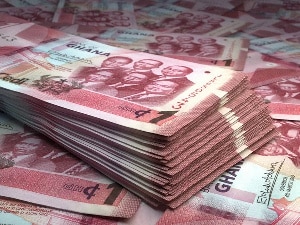
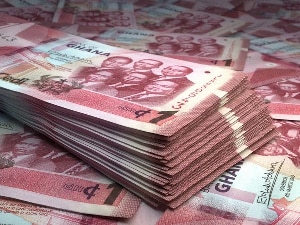
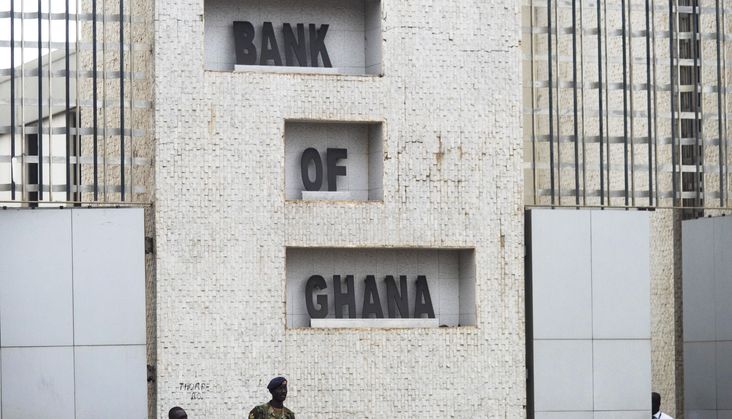
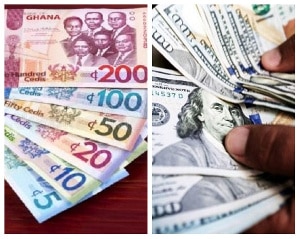
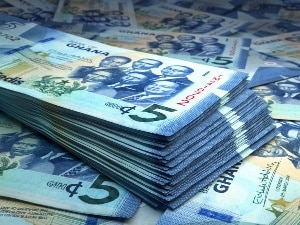
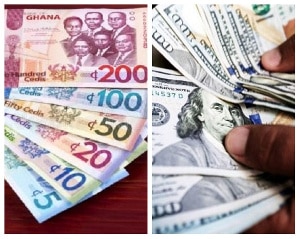
The Interbank forex rates from the Bank of Ghana today, March 13, 2023, have shown that the Ghana Cedi is trading against the dollar at a buying price of 11.0082 and a selling price of 11.0196.
At a forex bureau in Accra, the dollar is being bought at a rate of 12.10 and sold at a rate of 12.70.
Against the Pound Sterling, the Cedi is trading at a buying price of 13.3292 and a selling price of 13.3447.
At a forex bureau in Accra, the pound sterling is being bought at a rate of 14.40 and sold at a rate of 15.30.
The Euro is trading at a buying price of 11.7645 and a selling price of 11.7751.
At a forex bureau in Accra, Euro is being bought at a rate of 12.40 and sold at a rate of 13.40.
The South African Rand is trading at a buying price of 0.6053 and a selling price of 0.6055.
At a forex bureau in Accra, South African Rand is being bought at a rate of 0.45 and sold at a rate of 1.10.
The Nigerian Naira is trading at a buying price of 41.8364 and a selling price of 41.8972.
At a forex bureau in Accra, Nigerian Naira is being bought at a rate of 14.00 Naira for every 1 Cedi and sold at a rate of 19.00.
For the CFA, it is trading at a buying price of 55.7071 and a selling price of 55.7573.
At a forex bureau in Accra, CFA is being bought at a rate of 17.00 CFA for every 1 Cedi and sold at a rate of 21.00 CFA for every 1 Cedi.
Our forex bureau rates are provided by Afriswap Bureau De Change in Osu, Accra.
The Interbank forex rates from the Bank of Ghana today, March 7, 2023, have shown that the Ghana Cedi is trading against the dollar at a buying price of 11.0083 and a selling price of 11.0193.
At a forex bureau in Accra, the dollar is being bought at a rate of 12.20 and sold at a rate of 12.80.
Against the Pound Sterling, the Cedi is trading at a buying price of 13.1835 and a selling price of 13.1989.
At a forex bureau in Accra, the pound sterling is being bought at a rate of 14.70 and sold at a rate of 15.70.
The Euro is trading at a buying price of 11.6699 and a selling price of 11.6815.
At a forex bureau in Accra, Euro is being bought at a rate of 12.50 and sold at a rate of 13.50.
The South African Rand is trading at a buying price of 0.6053 and a selling price of 0.6058.
At a forex bureau in Accra, South African Rand is being bought at a rate of 0.50 and sold at a rate of 1.10.
The Nigerian Naira is trading at a buying price of 41.0031 and a selling price of 41.8865.
At a forex bureau in Accra, Nigerian Naira is being bought at a rate of 14.00 Naira for every 1 Cedi and sold at a rate of 19.00.
For the CFA, it is trading at a buying price of 56.1535 and a selling price of 56.2093.
At a forex bureau in Accra, CFA is being bought at a rate of 17.50 CFA for every 1 Cedi and sold at a rate of 21.50 CFA for every 1 Cedi.
Our forex bureau rates are provided by Afriswap Bureau De Change in Osu, Accra.
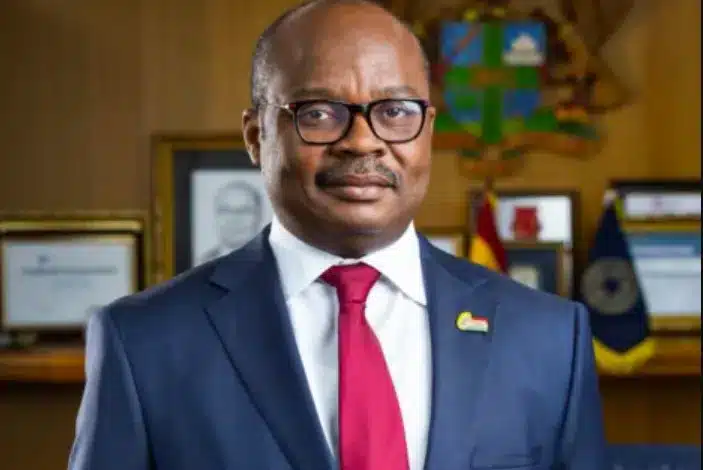
The Governor of the Bank of Ghana (BoG), Dr Ernest Addison, has enjoined boards and shareholders of banks and other deposit-taking institutions to act quickly to address early signs of distress to mitigate the risk of failure, which has ramifications not only for depositors, but also for the stability of the entire financial system and the economy.
He made this call at the second induction ceremony of insolvency practitioners organised by the Ghana Association of Restructuring and Insolvency Advisors (GARIA), and noted that prevailing macroeconomic conditions have heightened the need for vigilance and swift action on the part of all corporate institutions, including banks and special deposit-taking institutions (SDIs).
“The bank’s macro-prudential risk assessment of the banking sector indicated the emergence of signs of spillovers from the current macroeconomic conditions characterised by high inflation and rising interest rates on the banking sector. In particular, pressure on the solvency and liquidity of banks has increased, and the bank is closely monitoring these,” Dr Addison said in a speech read on his behalf by the head of BoG’s Resolution Office, Elliot Adu Amoako.
Dr Addison pointed out that the Basel Core Principles require supervisory authorities to have adequate legal powers to impose prompt corrective action on weak institutions to give them a chance of recovery within a reasonable timeframe. Failure to recover within this timeframe, he said, will require adequate action to restore these institutions under the special resolution regime.
The BoG, earlier this year, noted that the banking industry had begun to show signs of strain as a result of the current conditions. The industry’s capital adequacy ratio (CAR) had decreased to 16.6 percent in December 2022 from 19.6% the previous year, albeit remaining above the prudential floor of 13%.
The central bank attributed the losses to mark-to-market investments, an increase in risk-weighted assets, and the depreciation of the cedi on foreign currency-denominated loans.
Profitability also declined as higher impairments on loans and rising operating costs weighed heavily. The industry’s post-tax profit contracted by 18.9% year-on-year, amounting to GHC3.9 billion in December 2022 while operating expenses rose by 32.2% during the same period under consideration, even as inflation remained at more than five times the central bank’s upper target limit.
Dr. Addison further stated that while the BoG has put in a number of reliefs, including the establishment of the GHC15 billion Ghana Financial Stability Fund, it will not hesitate to rely on the expertise of licensed insolvency practitioners if the need arises.
“I would like to emphasise that the resolution of banks and SDIs falls under the Special Resolution Regime provided by Banks and SDIs Act 930. The Bank of Ghana would, without hesitation, rely on licensed professionals under GARIA in the event of any future episodes,” he said.
The central bank’s chief welcomed the addition of new insolvency practitioners coupled with the Corporate Restructuring and Insolvency Act, 2020, (Act 1015), which he described as an “important addition to the framework for the establishment of a well-designed insolvency regime”.
The Interbank forex rates from the Bank of Ghana today, March 3, 2023, have shown that the Ghana Cedi is trading against the dollar at a buying price of 11.0088 and a selling price of 11.0198.
As compared to yesterday’s trading of a buying price of 11.0090 and a selling price of 11.0200. At a forex bureau in Accra, the dollar is being bought at a rate of 12.30 and sold at a rate of 12.90.
Against the Pound Sterling, the Cedi is trading at a buying price of 13.1390 and a selling price of 13.1532 as compared to yesterday’s trading of a buying price of 13.2020 and a selling price of 13.2174.
At a forex bureau in Accra, the pound sterling is being bought at a rate of 14.60 and sold at a rate of 15.60.
The Euro is trading at a buying price of 11.6729 and a selling price of 11.6835 as compared to yesterday’s trading of a buying price of 11.7309 and a selling price of 11.7425.
At a forex bureau in Accra, Euro is being bought at a rate of 12.60 and sold at a rate of 13.60.
The South African Rand is trading at a buying price of 0.6052 and a selling price of 0.6057 as compared to yesterday’s trading of a buying price of 0.6050 and a selling price of 0.6056.
At a forex bureau in Accra, South African Rand is being bought at a rate of 0.50 and sold at a rate of 1.10.
The Nigerian Naira is trading at a buying price of 41.7813 and a selling price of 41.8812 as compared to yesterday’s trading at a buying price of 41.7813 and a selling price of 41.8812.
At a forex bureau in Accra, Nigerian Naira is being bought at a rate of 41.8392 Naira for every 1 Cedi and sold at a rate of 19.00.
Our forex bureau rates are provided by Afriswap Bureau De Change in Osu, Accra.
Dr Kwabena Duffuor has promised to install a real-time vote compilation system for the National Democratic Congress in the 2024 elections so the party can monitor the results as they trickle in instantly.
The former Bank of Ghana Governor, who is one of four flag bearer aspirants of the NDC, told journalists during his presidential declaration event that he intends to change the party’s vote-monitoring and results-compilation system during general elections.
Asked how he plans to do that, the former finance minister said: “Real-time”.
“You know real time?” he asked his questioners, explaining: “As you vote, we’ve a system that’ll pick it”.
In December last year, Mr Johnson Asiedu Nketia, the then-general secretary of the party, who was aspiring to the national chair slot at the time, revealed to some party delegates in the Ashanti Region during his campaign for the internal polls that the biggest opposition party was unable to collate results in the 2020 polls because an IT system installed by the Chairman at the time, Mr Samuel Ofosu-Ampofo, who lost his re-election bid, crashed after just five regional results were entered into it for processing.
In a leaked audiotape, Mr Nketia is heard telling his audience: “I totally understand if anyone says I’m partly to blame for the collation fiasco because all those people undertaking the process were reporting to me but the bit of it is that there were people tasked to do that job”.
He continued: “Mr Ofosu-Ampofo’s so-called ‘robust’ and ‘strong’ IT system he had installed for the collation of results crashed after just five regional results were entered into it for processing”.
“So, that is the truth of the matter”, Mr Nketia noted.
Following the mishap, Mr Nketia said: “We then decided to manually collate the pink sheets”.
Again, he said “the Chairman took over the whole process and brought in some university students to put some documents together”.
However, he recalled: “When it was time for me to mount the dock, it was clear the results they gave me to back our case in court would have brought me nothing but shame and disgrace”.
“We could not have gone to court with those documents as evidence”, he asserted.
“We then carried those same documents to Mr Tsatsu Tsikata, the lawyer, for perusal.
After studying the documents, he called us the following day to say if that was the evidence we were taking to court then he wouldn’t be part of the case and suggested we find a different lawyer to represent the party in court since there was no way he was going to be part of it”, Mr Nketia recounted.
“That is why I told the court we didn’t bring any results when I was asked to produce the evidence”, Mr Nketia explained to his audience.
The Supreme Court, eventually, threw out the petition and upheld the results declared by Electoral Commission Chair Jean Mensa.
Mr Nketia promised that should he become the next chairman of the NDC, “I intend to make sure this collation fiasco never happens again”.
Rather than adopting fiscal policies that will put the government in check to change the fortunes of the economy, Ivan Innocent Kyei has slammed Dr. Ernest Addison for turning the central bank into a “printing press.”
According to him, the Bank of Ghana has specialised in printing out currency notes to the government without putting the fiscal ramifications on the economy into consideration.
He has bemoaned the entire government machinery for taking the country through the Sri Lankan trajectory which ended up collapsing their economy.
He told Captain Smart on Maakye Tuesday, February 28, 2023, that if care is not taken, China will take over the country just as they did to Sri Lanka and other countries that defaulted on their debt payment.
“The President has failed us. The confidence and trust that was reposed in him by the citizens, he has messed up to the extent that even if he hears the word President in his next life, he will flee to the bush.
”That was the same thing Sri Lanka did. They thought China was going to forgive them their debt but it didn’t so they took over their port. The port is on lease for 99 years and that’s why they (Sri Lanka) fell.
“…And the Bank of Ghana is also printing currencies for them (government). Addison has now turned the Bank of Ghana into a printing press. All he does is to print currency notes,” he said on Onua TV/FM.
His comment follows Ghana’s call on China to forfeit its debts to help her restructure her economy which the Asian giant refused.
President Addo Dankwa Akufo-Addo on Friday, January 3, 2023, urged Germany to “encourage” China, an ad hoc member of the Paris Club, to support Ghana’s debt restructuring efforts.
He said it was critical that the Paris Club swiftly establishes, with the participation of other official creditors, a creditors committee, to support the efforts that would enable Ghana to restore economic growth.
The President made the call when the visiting German Finance Minister, Christian Lindner called on him at the Jubilee House, Accra.
Linden, who was the head of a delegation from his country, held bilateral talks with the President aimed at boosting relations and economic ties between the two nations.
President Akufo-Addo told the Minister that the main concern for his government is to conclude negotiations with the International Monetary Fund (IMF), particularly at the Board Level, and seal a deal with the Bretton Woods institution by mid-March this year.
“Our main concern right now is the arrangements that we are in the process of concluding with the IMF… and the specific assistance that will be useful to us and help us fast-track the process.
“Our target is that by the middle of March, we should be before the Board for the full agreement. We have already taken one important step forward in concluding a staff-level agreement with the IMF and we are now looking to go the full haul in concluding the agreement. We are hoping that it will be done by the middle of March.
“One of the steps towards that has been the domestic debt exchange programme that we are on, which unfortunately, we have quite a lot of difficulties, but has now been virtually concluded,” he stated.
But China after some negotiations has decided to opt out of Ghana’s bilateral debt talks.
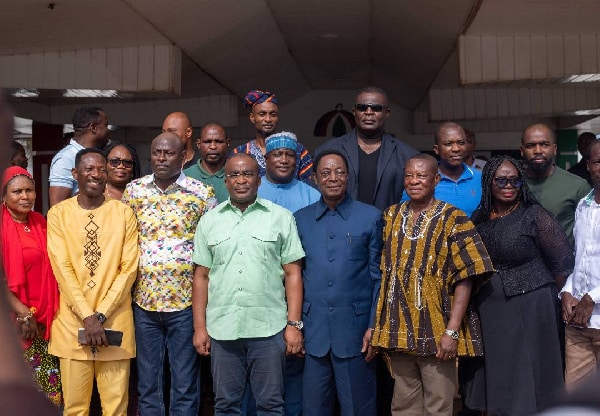
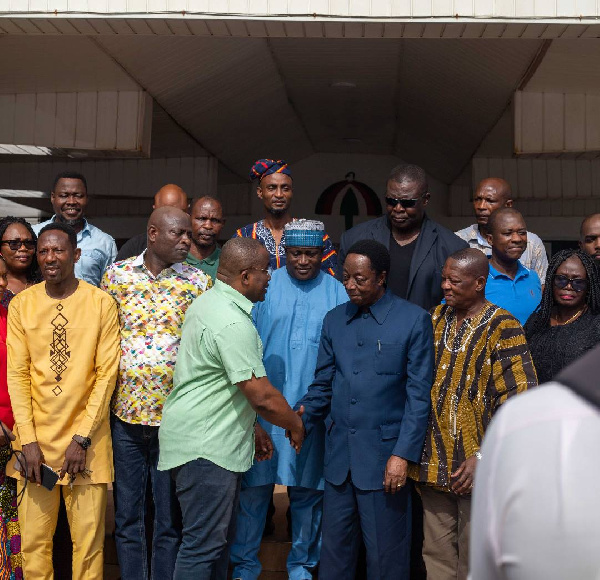
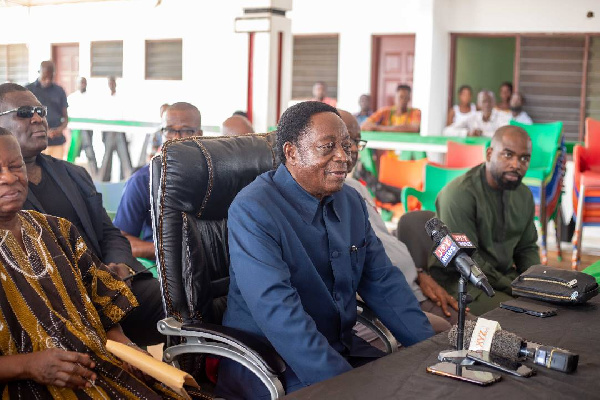
The Greater Accra Regional National Democratic Congress (NDC) leadership have given their approval for NDC flag bearer candidate Dr. Kwabena Duffuor to start his national tour in the area.
This comes after he successfully picked up a flagbearership nomination form to contest the vacant position of the party.
Dr. Kwabena Duffuor, a former Minister of Finance, and a former Governor of the Bank of Ghana, has expressed optimism about his chances of winning the flagbearer race of party.
He has also indicated in several interactions that he is the best man to bring Ghana out of its current economic challenges, adding that he once stabilised the economy as minister.
In lieu of that, Dr. Kwabena Duffuor paid a working visit to the regional executives of the NDC in the Greater Accra Region to announce his intentions to run as flagbearer, and to also seek their blessings to tour the region.
“Last Thursday, I was so delighted, but at the same time, I was humbled when thousands of our members – grassroots, particularly women, picked up forms and delivered the forms to me, saying that ‘we want you to contest for the flagbearership of the NDC.’
“It was an honour, but I was humbled. I’ve accepted to contest, that’s why we are here today. Colleagues, ours is a great party; it’s a very big party, bigger than the other groups,” he said.
In his response, the regional chairman, Nii Ashie Moore, expressed hopes that whoever gets to lead their party will deliver victory for the NDC in 2024.
He was also excited that the candidate had decided to begin his tour in the Greater Accra Region, adding that a win in that region is a decisive one.
“You have distinguished yourself to the max. we are one family, this is an internal election. Our target is the NPP. Our target is to maximise the votes of Greater Accra, because we see Greater Accra Region as a decisive region when it comes to politics. When we win Greater Accra, we know we will form the next government.
“I pray to the Almighty God that all of you who have put up yourself there to lead our political party, to lead our country, at the end of the day, one of you will be made a flagbearer of our party,” he said.
While wishing Dr. Kwabena Duffuor well, he prayed that at the end of the contest, all the factions in the party will work towards unity.
Dr. Kwabena Duffuor’s tour of the Greater Accra Region will be the first in a series across the country.
The Interbank forex rates from the Bank of Ghana today, February 28, 2023, have shown that the Ghana Cedi is trading against the dollar at a buying price of 11.0075 and a selling price of 11.0185.
As compared to yesterday’s trading of a buying price of 11.0077 and a selling price of 11.0187. At a forex bureau in Accra, the dollar is being bought at a rate of 12.60 and sold at a rate of 13.10.
Against the Pound Sterling, the Cedi is trading at a buying price of 13.2398 and a selling price of 13.2542 as compared to yesterday’s trading of a buying price of 13.1641 and a selling price of 13.1795.
At a forex bureau in Accra, the pound sterling is being bought at a rate of 15.20 and sold at a rate of 15.90.
The Euro is trading at a buying price of 11.6753 and a selling price of 11.6859 as compared to yesterday’s trading of a buying price of 11.6660 and a selling price of 11.6775.
At a forex bureau in Accra, Euro is being bought at a rate of 13.20 and sold at a rate of 13.90.
The South African Rand is trading at a buying price of 0.5973 and a selling price of 0.5978 as compared to yesterday’s trading of a buying price of 0.6031 and a selling price of 0.6038.
At a forex bureau in Accra, South African Rand is being bought at a rate of 0.50 and sold at a rate of 1.10.
The Nigerian Naira is trading at a buying price of 41.8451 and a selling price of 41.9241 as compared to yesterday’s trading at a buying price of 41.8135 and a selling price of 41.8861.
At a forex bureau in Accra, Nigerian Naira is being bought at a rate of 14.00 Naira for every 1 Cedi and sold at a rate of 19.00.
Our forex bureau rates are provided by Afriswap Bureau De Change in Osu, Accra.
The government exceeded its treasury bill target by 75% in its latest auction held on February 24, 2023.
According to the Bank of Ghana results, the government secured GH¢5.06 billion from the 91-day, 182-day, and 364-day bills.
The 91-day bill gathered GH¢2.93 billion, the 182-day bill secured GH¢665.99 million and the 365-day bill secured GH¢1.46 billion.
Interest rates hovered around 35.5% which is still quite high, a situation many analysts have raised concerns over.
The target for the auction was GH¢2.88 billion therefore the oversubscription was 75% away from the target.
Analysts have noted that the interest rates are too high for the government and may cost the government more when they mature.
Meanwhile, Finance Minister Ken Ofori-Atta noted that the main financing source for the 2023 budget is treasury bills and concessional loans.
According to him, this has become the case because of the closure of the international domestic bond market.
He made the comment when he appeared before parliament on February 16, 2023.
“Mr Speaker, as the domestic international domestic bond markets are shut, for the financing of government programmes, we are relying on treasury bills and concessional primary sources of financing for the 2023 budget,” he noted.
Energy policy analyst Benjamin Nsiah wants government to re-direct its dollar auction policy towards the importation and pricing of liquified petroleum gas (LPG) in the country.
According to him, the move will address the soaring prices of LPG which have witnessed an increment from around GH¢8 per kilogram in January to GH¢15 per kilogram in the second pricing window of February 2023.
In a statement , the energy policy analyst believes that the current prices of LPG is discouraging small businesses and households from using clean cooking methods.
“The high and unchecked surging of LPG prices is likely to reduce its consumption in 2023, negatively affecting the government’s policy target of achieving 50% LPG penetration of households by 2030, and making this deadline one of the unachieved deadlines on the LPG agenda,” he noted.
He continued, “Furthermore, households forced to use unclean cooking fuels like firewood and charcoal due to the non-affordability of LPG contribute to depleting the country’s forest cover, causing respiratory diseases and contributing to climate change.”
He however noted that government’s previous interventions, including the Bank of Ghana forex auction to the Bulk Distributing Companies (BDCs) and the Gold for Oil policy through Bulk Oil Storage and Transportation (BOST), have somewhat stabilized or reduced the prices of petrol and diesel throughout 2022 and the first two months of 2023.
To address this, Benjamin Nsiah suggests that government re-directs its dollar auction policy towards LPG imports and pricing as BDCs would hardly need auction dollars to import diesel and petrol due to the Gold-for-Oil policy, which just commenced implementation.
“This would have a better impact on LPG price reduction compared to the scrapping of the taxes and levies of about GH¢1.21 per kilogram, which make up approximately 9 percent of the LPG price build-up in February,” the policy analyst said.
“It has become necessary to internalize the pricing of LPG and make it affordable, given the trend of international LPG prices, which has been on an upward trajectory since December 2022, rendering the impact of scrapping taxes insignificant in subsequent windows,” he concluded.
Watch the latest edition of BizTech and Biz Headlines below:https://www.youtube.com/embed/d5w03FSW2Co
Sources close to the Bank of Ghana have called on journalists to be circumspect in their utterances and reportage with regard to the economic managers of the country.
One source who spoke on condition of anonymity to GhanaWeb Business said the country is already facing a difficult time and therefore requires extra precision in the dissemination of news on the economy and public institutions.
The source made the remarks after the contents of a front-page story from the Herald newspaper which sought to create an impression that BoG Governor, Dr Ernest Addison, is unwell and thus left the management of the Bank to the Second Deputy Governor, Mrs Elsie Addo Awadzi.
The source however urged the general public to disregard the false publication adding that Dr. Ernest Addison remains in good health and full control of affairs at the Bank of Ghana.
“I think the vile propaganda should stop. The contents of the story are false and without merit. I have followed the activities of the Bank, including monitoring their Monetary Policy Committee (MPC) Press Conferences both in-person and online and I personally find it difficult to understand why a publication of this kind would be made to create a false impression,” the source said.
“…For instance, If the Governor is unwell, how will he be able to stand for an hour to read the MPC statement and also answer questions from the press every two months. From my assessment, l think he is very healthy and I suggest there is video evidence available on the internet for all to see,” the source added.
The source further pointed out that the BoG Governor has attended numerous public engagements where he has delivered speeches with no sign of ill health whatsoever.
“I can assure you that the Governor is always at post and does not spend his time abroad. The impression that he is always outside the country on medical grounds is rather false and must be disregarded.”
“I will urge Governor Ernest Addison and his Management to focus on their work and not be destructed by the propaganda created in some circles,” the source concluded.
The Interbank forex rates from the Bank of Ghana today, February 22, 2023, have shown that the Ghana Cedi is trading against the dollar at a buying price of 11.0009 and a selling price of 11.0119.
As compared to yesterday’s trading of a buying price of 10.7985 and a selling price of 10.8093. At a forex bureau in Accra, the dollar is being bought at a rate of 12.60 and sold at a rate of 13.10.
Against the Pound Sterling, the Cedi is trading at a buying price of 13.3177 and a selling price of 13.3332 as compared to yesterday’s trading of a buying price of 12.9852 and a selling price of 12.9993.
At a forex bureau in Accra, the pound sterling is being bought at a rate of 15.00 and sold at a rate of 15.80.
The Euro is trading at a buying price of 11.7481 and a selling price of 11.7598 as compared to yesterday’s trading of a buying price of 11.5434 and a selling price of 11.5539.
At a forex bureau in Accra, Euro is being bought at a rate of 13.00 and sold at a rate of 13.80.
The South African Rand is trading at a buying price of 0.6018 and a selling price of 0.6024 as compared to yesterday’s trading of a buying price of 0.5951 and a selling price of 0.5957.
At a forex bureau in Accra, South African Rand is being bought at a rate of 0.50 and sold at a rate of 1.10.
The Nigerian Naira is trading at a buying price of 41.8211 and a selling price of 41.9111 as compared to yesterday’s trading at a buying price of 42.5957 and a selling price of 42.6948.
At a forex bureau in Accra, Nigerian Naira is being bought at a rate of 14.00 Naira for every 1 Cedi and sold at a rate of 19.00.
Our forex bureau rates are provided by Afriswap Bureau De Change in Osu, Accra.
Bank of Ghana (BoG) has announced a drastic decline in the number of advertised jobs in the country.
The total number of advertised jobs in selected print and online media in 2022, which partially gauges labour demand in the economy, fell by 5.3% to 32,651, the Bank of Ghana has revealed.
This is against 34,484 recorded during 2021.
But the number of jobs advertised increased in December 2022 relative to a year ago.
According to the Bank of Ghana, 3,277 job adverts were recorded as compared with 2,588 for the same period in 2021, an increase of 26.6% year-on-year.
On a month-on-month basis, the number of job vacancies in December 2022 went up by 17.9% from the 2,779 jobs advertised in November 2022.
The Interbank forex rates from the Bank of Ghana today, February 21, 2023, have shown that the Ghana Cedi is trading against the dollar at a buying price of 10.7985 and a selling price of 10.8093.
As compared to yesterday’s trading of a buying price of 10.7985 and a selling price of 10.8093. At a forex bureau in Accra, the dollar is being bought at a rate of 12.60 and sold at a rate of 13.10.
Against the Pound Sterling, the Cedi is trading at a buying price of 12.9852 and a selling price of 12.9993 as compared to yesterday’s trading of a buying price of 12.9830 and a selling price of 12.9971.
At a forex bureau in Accra, the pound sterling is being bought at a rate of 15.00 and sold at a rate of 15.80.
The Euro is trading at a buying price of 11.5434 and a selling price of 11.5539 as compared to yesterday’s trading of a buying price of 11.5292 and a selling price of 11.5396.
At a forex bureau in Accra, Euro is being bought at a rate of 13.00 and sold at a rate of 13.80.
The South African Rand is trading at a buying price of 0.5951 and a selling price of 0.5957 as compared to yesterday’s trading of a buying price of 0.5989 and a selling price of 0.5945.
At a forex bureau in Accra, South African Rand is being bought at a rate of 0.50 and sold at a rate of 1.10.
The Nigerian Naira is trading at a buying price of 42.5957 and a selling price of 42.6948 as compared to yesterday’s trading at a buying price of 42.6096 and a selling price of 42.7272.
At a forex bureau in Accra, Nigerian Naira is being bought at a rate of 14.00 Naira for every 1 Cedi and sold at a rate of 19.00.
Our forex bureau rates are provided by Afriswap Bureau De Change in Osu, Accra.
Founder of defunct UT Bank, Prince Kofi Amoabeng, had his licence to operate a financial institution in Ghana revoked by the Bank of Ghana in 2017.
This led to the collapse of his bank which subsequently had dire consequences on his finances.
In an interview on GTV, the once-vibrant businessman noted that he was no longer wealthy.
He declared his financial status as broke while speaking to Kafui Dey on GTV.
Mr Amoabeng noted that he currently has in possession a watch and a pair of shoes.
“I don’t have wealth, I’m broke and Ghanaians (those who don’t like people who progress) should be happy [about that],” Mr Amoabeng said.
“But Ghanaians…tend to think I’ve got some wealth stashed somewhere because they are putting themselves in my shoes: they think if they were like me, if they had owned a bank then they would have a lot of money outside but my wealth was in the bank and in the company, so, while the company and the bank were doing very well, I was worth a lot of money but the bank went through losses and so on and so forth, therefore, my capital went with the bank. I think it’s not difficult to understand,” he added.
But Mr Amoabeng had in an earlier interview on TV3 on October 4, 2022, said he had to sell his mansion to prevent himself from getting broke.
Background
The BoG revoked licences of UT Bank Ltd and Capital Bank Ltd and approved a Purchase and Assumption (P&A) transaction with GCB Bank Ltd that transferred all deposits and selected assets of the two banks after they were found to be deeply insolvent.
The Central Bank subsequently revoked the universal banking licences of five banks including UniBank Ghana Limited, Construction Bank, Sovereign Bank, Royal Bank and Beige Bank and issued a licence to a newly created bank – Consolidated Bank Ghana Limited – which is wholly owned by the Government of Ghana.
BoG further revoked the licenses of 23 insolvent savings and loans and finance house companies.
The companies are GN Savings and Loans Ltd., Ideal Finance Ltd., IFS Financial Services Ltd., Legacy Capital Savings and Loans Ltd., Midland Savings and Loans Company Ltd., Sterling Financial Services Ltd., uniCredit Savings and Loans Ltd., Women’s World Banking Savings and Loans Co. Ltd., Accent Financial Services Ltd. and Adom Savings and Loans Ltd.
Others are AllTime Finance Ltd., Alpha Capital Savings and Loans Ltd., ASN Financial Services Ltd., CDH Savings and Loans Ltd., Commerz Savings and Loans Ltd., Crest Finance House Ltd., Dream Finance Company Ltd., Express Savings and Loans Company Ltd., the First African Savings and Loans Company Ltd., First Allied Savings and Loans Co. Ltd., First Ghana Savings and Loans Co. Ltd., First Trust Savings and Loans Ltd. and Global Access Savings and Loans Company Ltd.
Note that these rates may be different at a forex bureau near you.
Our forex bureau rates are provided by Afriswap Bureau De Change in Osu, Accra.
The Interbank forex rates from the Bank of Ghana today, February 18, 2023, have shown that the Ghana Cedi is trading against the dollar at a buying price of 10.7985 and a selling price of 10.8093.
As compared to Friday’s trading of a buying price of 10.7965 and a selling price of 10.8073. At a forex bureau in Accra, the dollar is being bought at a rate of 12.50 and sold at a rate of 13.00.
Against the Pound Sterling, the Cedi is trading at a buying price of 12.9830 and a selling price of 12.9971 as compared to Friday’s trading of a buying price of 12.9644 and a selling price of 12.9636.
At a forex bureau in Accra, the pound sterling is being bought at a rate of 14.70 and sold at a rate of 15.70.
The Euro is trading at a buying price of 11.5292 and a selling price of 11.5396 as compared to Friday’s trading of a buying price of 11.5281 and a selling price of 11.5334.
At a forex bureau in Accra, Euro is being bought at a rate of 12.80 and sold at a rate of 13.80.
The South African Rand is trading at a buying price of 0.5989 and a selling price of 0.5995 as compared to Friday’s trading of a buying price of 0.5939 and a selling price of 0.5945.
At a forex bureau in Accra, South African Rand is being bought at a rate of 0.50 and sold at a rate of 1.10.
The Nigerian Naira is trading at a buying price of 42.6096 and a selling price of 42.7272 as compared to Friday’s trading at a buying price of 42.6684 and a selling price of 42.7416.
At a forex bureau in Accra, Nigerian Naira is being bought at a rate of 14.00 Naira for every 1 Cedi and sold at a rate of 19.00.
Our forex bureau rates are provided by Afriswap Bureau De Change in Osu, Accra.
Note that these rates may be different at a forex bureau near you.
Our forex bureau rates are provided by Afriswap Bureau De Change in Osu, Accra.
The Interbank forex rates from the Bank of Ghana today, February 17, 2023, have shown that the Ghana Cedi is trading against the dollar at a buying price of 10.7965 and a selling price of 10.8073.
As compared to yesterday’s trading of a buying price of 10.7967 and a selling price of 10.8075. At a forex bureau in Accra, the dollar is being bought at a rate of 12.40 and sold at a rate of 12.90.
Against the Pound Sterling, the Cedi is trading at a buying price of 12.9644 and a selling price of 12.9785 as compared to yesterday’s trading of a buying price of 12.9496 and a selling price of 12.9636.
At a forex bureau in Accra, the pound sterling is being bought at a rate of 14.60 and sold at a rate of 15.60.
The Euro is trading at a buying price of 11.5219 and a selling price of 11.5334 as compared to yesterday’s trading of a buying price of 11.5281 and a selling price of 11.5386.
At a forex bureau in Accra, Euro is being bought at a rate of 12.80 and sold at a rate of 13.80.
The South African Rand is trading at a buying price of 0.5939 and a selling price of 0.5945 as compared to yesterday’s trading of a buying price of 0.5978 and a selling price of 0.5982.
At a forex bureau in Accra, South African Rand is being bought at a rate of 0.50 and sold at a rate of 1.10.
The Nigerian Naira is trading at a buying price of 42.6684 and a selling price of 42.7416 as compared to yesterday’s trading at a buying price of 42.6269 and a selling price of 42.7435.
At a forex bureau in Accra, Nigerian Naira is being bought at a rate of 14.00 Naira for every 1 Cedi and sold at a rate of 19.00.
Our forex bureau rates are provided by Afriswap Bureau De Change in Osu, Accra.
Finance Minister, Ken Ofori-Atta, said the successful implementation of the Domestic Debt Exchange Programme (DDEP) will close the country’s financing gap and enable the government to meet the debt sustainability target of 55percent of debt-to-GDP in present value terms by 2028.
According to him, the government’s debt exchange programme, which secured over 80percent participation by the time of closure, was part of a broader response strategy for addressing the country’s current economic challenges.
“While we continue to secure an IMF programme to boost confidence in the economy, we are complementing this by enhancing our domestic mobilisation efforts,” Mr. Ofori-Atta said Thursday when he briefed Parliament on the DDEP.
Seeking financing from BoG
Ghana lost access to the International Capital Markets (ICM) at the beginning of 2022. At the same time, the country’s budget implementation was confronted with domestic financing challenges from the auctions as well as lower than estimated domestic revenue mobilization.
“These presented a very challenging macroeconomic environment during 2022, leading to a widened financing gap of the Budget and therefore became necessary for the Bank of Ghana to fund shortfalls at the auction market to avoid a disorderly default and prevent a deeper crisis,” the minister said.
Under these circumstances, Mr. Ofori-Atta told Parliament that it was necessary for the government to seek financing from the Bank of Ghana to augment its fiscal operations for the year.
The Bank of Ghana, last week, concluded work on its financial accounts for 2022 and reports that the total overdraft extended to Government for 2022 was GH¢37,956.82 million.
“Mr Speaker, in line with Section 30 (6) of the Bank of Ghana Act, 2002, (Act 612), we are using this platform to inform the legislature of the financing of the budget by the Bank of Ghana. The Domestic Debt Exchange exercise and the External Debt Restructuring Programme, will make such financing unnecessary, going forward in 2023 and beyond,” he stated.
He added: “Mr. Speaker, all these efforts would be greatly enhanced if the Income Tax (Amendment) Bill, Excise Duty & Excise Tax Stamp (Amendment) Bills as well as the Growth and Sustainability Levy Bill, which are outstanding in this august House could be prioritized and passed.”
For those old enough to remember Ghana’s economic crisis of 1982/3, the country’s closest to those ugly times came last year.
In 2022 when revenue growth flattened and the borrowing window shut, what many expected was an economy without money, where salary payments will delay, imports, including fuel will shrink, businesses and consumers will face shortages, the country will default in its debt repayment and an economic chaos will set in similar to what occurred some four decades ago.
But that did not happen. Public sector workers continued to receive their salaries, there was no default while goods and services were readily available to businesses and consumers albeit at ridiculously high and unpredictable prices.
This prevented the imminent fuel and consumable shortages and the resulting queues, disorder and the tension that these beget.
In between these similar economic periods that produced different outcomes is the role of central banking in times of crises.
As lenders of last resort, central banks the world over are the last sources of hope when an economy is at the verge of collapse.
How they exercise their novel power on money supply in response to those emergencies determine the extent to which the crises will impact the citizens.
In the United States of America and the United Kingdom, the large purchase of Treasury and mortgage-backed securities by their respective central banks ostensibly to inject liquidity into their economies and keep them afloat are recent examples.
Case of BoG
In the case of Ghana, the story is not different hence the need to contextualise discussions around the Bank of Ghana’s funding of government expenditures last year.
In 2022 when the borrowing window, which had become the most reliant avenue to plugging the revenue gap, closed, it became evident that the economy was literally out of the usual good choices.
Instead, it had been pushed into survival mode and only hard options capable of steadying the ship to calm waters for standard policy choices to be discussed and taken were needed.
In response, the Bank of Ghana (BoG) turned to its deficit financing mandate which allows it to lend money to the government in sustenance of the economy in times of emergencies.
As the Governor of BoG, Dr Ernest Addison, said last month on the issue, there was no option or plan ‘B’ for the economy as far as keeping it together was concerned.
As a result, that gesture of the central bank helped to finance critical expenditures, including paying salaries and meeting fuel demands.
It also prevented a disorderly default of both servicing for domestic and external debt and that kept the system together until this year when a comprehensive debt management strategy has been discussed, adopted and now being rolled out.
Indeed, this support to the government, which the BoG said totaled GH¢44.5 billion last year, emerged as the real insulator that shielded the citizens and businesses from the real effects of the crisis.
Breakdown
In a recent press release that attempted to contextualise public debate on the matter, BoG explained that it purchased treasury bonds from banks worth GH¢7.2 billion to help provide the lenders with liquidity to meet their obligation to customers.
It also unlended GH¢8.9 billion of IMF resources to the government and used GH¢37.9 billion of its own resources to cover auction shortfalls.
While this took place, the government’s deposit liabilities at BoG rose to GH¢9.5 billion in 2022, bringing BoG’s net claims to the government for the year to GH¢44.5 billion.
Zero deficit financing
It is instructive to note that these events took place at a time the country had submitted itself to the International Monetary Fund (IMF) for a fund-assisted programme to stabilise the economy.
Given the fund’s strong opinion against deficit financing, it is clear that the fund signed them off, leading to the country securing a staff-level agreement (SLA) in record time last December.
But as BoG said in its release, the central bank and the fund had agreed that the practice was suboptimal but a necessary arrangement to bailing the economy out of the crisis for a comprehensive solution to be adopted from this year onwards.
Indeed, the central bank cut lending to the government in 2016 as part of the terms of a memorandum of understanding (MOU) between the Ministry of Finance and the bank to implement a zero deficit financing mechanism.
That MOU, which was at the behest of the IMF, remained until 2020 when the effects of the COVID-19 pandemic led to it being set aside for BoG to lend GH¢10 billion to the government to resuscitate the economy.
The zero deficit financing continued in 2021 although the MOU had expired in 2019 only for the events of last year to necessitate the lending of the GH¢44.5 billion to the government.
Way forward
There is no belabouring the point that unrestrained deficit financing is counterproductive: It crowds out the private sector, fuels inflation, depresses demand and ultimately slows down economic growth.
This explains why the IMF is strongly opposed to it and has insisted on a zero deficit financing in Ghana.
However, as laws are made for man and not the reverse, it is a mark of prudence to bend backwards to save a situation with a temporary but emergent arrangement than allow an entire system to crash in a supposed defense for a standard.
What should not be countenanced though is the abuse of this emergency window.
Indeed, the BoG Governor has already admitted that the central bank cannot continue to hold the system through continuous financing of government expenditure.
It is, therefore, heartwarming that plans to revert to the zero deficit financing policy are well grounded by all parties, including the IMF and the Ministry of Finance.
Also, the Minister of Finance, Ken Ofori-Atta, needs to rectify the anomaly by reporting the practice to Parliament in the spirit of transparency and good governance.
Although the BoG Act (Act 612), 2002 allows the central bank to finance the deficit of up to five per cent of the previous year’s revenues, that amount can sometimes be exceeded as happened last year.
In situations like that the same law requires the Finance Minister to report to Parliament for the necessary corrections to be done.
In the case of this, Mr Ofori-Atta could use the opportunity to further clarify the urgency of last year’s deficit financing for people to properly appreciate its role in keeping the economy and the country as a whole together till now.
The International Monetary Fund (IMF) has elected Leonard Chumo as a financial consultant to the Bank of Ghana.
The member of parliament representing the Yapei Kusawgu district, John Jinapor, has cautioned Chumo to exercise utmost caution.
Commenting on the Finance Minister’s address to Parliament on the state of the Domestic Debt Exchange Programme (DDEP) on Thursday, February 16, Mr Jinapor said Mr Chumo must scrutinise all documents provided to him at the Central Bank.
“I welcome Mr Chumo but please open your eyes at the Bank of Ghana…read and scrutinise the documents,” Mr Jinapor said.
Funded by Switzerland’s State Secretariat for Economic Affairs (SECO), the resident adviser is expected to provide technical assistance and help build the capacity of the banking supervision function in the country.
A press release from the Bank of Ghana indicated that “the Adviser’s placement is a continuation of cooperation in this area between the Bank of Ghana, the IMF, and SECO, that started as early as in 2015 and had already seen the assignment of a previous Adviser until 2018.”
According to the Bank of Ghana, the previous adviser contributed to some achievements which make the current assignment eminent.
Ghana is currently before the IMF seeking a $3 billion bailout to support the country’s ailing economy.
The Domestic Debt restructuring programme is part of the conditions before the board of the Bretton Wood institution considers Ghana’s proposal. Ghana in December reached a staff-level agreement with the IMF paving the way for the $3 billion bailout.
The Finance Minister, Ken Ofori-Atta, on Thursday, confirmed that all pensioners who failed to tender their old bonds for new ones under the Domestic Debt Exchange Programme (DDEP) have been exempted from the programme.
Addressing Parliament, Mr Ofori-Atta said the pensioners have nothing to worry about adding that all their coupons and principals will be honoured when maturity is due.
He added that an official letter has been written to the pensioner bondholders who did not sign onto the Programme of their exemption from the exercise.
The Member of Parliament for Yapei-Kusawgu has urged the newly assigned resident advisor for financial sector supervision at the Bank of Ghana (BoG) to keep a close eye on the activities of the Central Bank.
This comes after the International Monetary Fund assigned a Resident Advisor to provide technical assistance and help build the capacity of the banking supervision function.
John Jinapor, who lauded the move, posited that there is a mistrust in the Governor of the Bank, Dr. Ernest Addison, which therefore requires proper supervision of the bank’s activities.
Speaking on the floor of parliament on February 16, 2023, the former deputy energy minister expressed concern over the Central Bank’s decision to advance funds for government expenditures in 2022.
“I am not surprised that the IMF has appointed Leonard Chumo as the Financial Sector Advisor for the Bank of Ghana. Let me thank you and welcome you to Ghana but let me plead with you to please open your eyes at the Bank of Ghana,” the lawmaker stressed.
“…I cannot trust that Governor [Dr. Ernest Addison] one way or one bit and I beg you [Leonard Chumo] to open your eyes in scrutinizing the documents and ensure that the right thing is done,” John Jinapor added.
Meanwhile, the Bank of Ghana has come under intense criticism for its action which resulted in the printing of new cedi notes to the tune of GH¢44.5 billion to support government expenditure in 2022.
The BoG in its response contended that the decision was a crisis management tool since the Fiscal Responsibility Act, 2018 which was suspended by the Parliament of Ghana had not been reinstated.
It further added that the economy would have collapsed and faced a halt as access to the International Capital Market was closed while the domestic market was also struggling.
But analysts believe that the move was entirely wrong and has since caused inflationary pressures in the Ghanaian economy.
The Interbank forex rates from theBank of Ghana today, February 16, 2023, have shown that the Ghana Cedi is trading against the dollar at a buying price of 10.7967 and a selling price of 10.8075.
As compared to yesterday’s trading of a buying price of 10.7964 and a selling price of 10.8072. At a forex bureau in Accra, the dollar is being bought at a rate of 12.40 and sold at a rate of 12.90.
Against the Pound Sterling, the Cedi is trading at a buying price of 12.9496 and a selling price of 12.9636 as compared to yesterday’s trading of a buying price of 13.1684 and a selling price of 13.1826.
At a forex bureau in Accra, the pound sterling is being bought at a rate of 14.60 and sold at a rate of 15.60.
The Euro is trading at a buying price of 11.5281 and a selling price of 11.5386 as compared to yesterday’s trading of a buying price of 11.6174 and a selling price of 11.6280.
At a forex bureau in Accra, Euro is being bought at a rate of 12.70 and sold at a rate of 13.70.
The South African Rand is trading at a buying price of 0.5978 and a selling price of 0.5982 as compared to yesterday’s trading of a buying price of 0.6044 and a selling price of 0.6050.
At a forex bureau in Accra, South African Rand is being bought at a rate of 0.50 and sold at a rate of 1.10.
The Nigerian Naira is trading at a buying price of 42.6269 and a selling price of 42.7435 as compared to yesterday’s trading at a buying price of 42.6040 and a selling price of 42.6966.
At a forex bureau in Accra, Nigerian Naira is being bought at a rate of 14.00 Naira for every 1 Cedi and sold at a rate of 19.00.
Our forex bureau rates are provided by Afriswap Bureau De Change in Osu, Accra.
Apart from a lack of transparency, poor information flow, bad faith and poor treatment of creditor groups, a report put together by Banking Consultant Richmond Atuahene has also revealed that ministry of finance has been reactive instead of proactive with the domestic debt exchange programme.
The report says there are many instances of inconsistency and incoherence with the way the government has handled the whole process and its intended objective.
It said a critical review of the domestic debt exchange programme shows “it is not in line with the best principles for fair debt restructuring for emerging economies”.
“The strategy on the above has not been done properly by the Ghana government”, the report noted, adding: “The government has failed to inform Ghanaians [of] how much fiscal space the domestic debt exchange” — if implemented successfully — “will provide” and whether or not that space is “significant” for the duration of the programme.
“It has always been narratives; no figures have been attached to the domestic debt exchange programme”, the report observed.
An earlier publication by Morgan Stanley Investment Banking Group said it expects a cashflow savings of $7.2 billion between 2023 and 2028.
The debt exchange initiative will release approximately $1.2 billion each year in 2023, 2024, 2025, 2026, 2027 and 2028.
The report said “from our earlier research findings published from the data analysis using NPV [Net Present Value] of the debt exchange of the total PV of bond value of domestic banks, firms and institutions; foreign investors, the Bank of Ghana, retail and individuals, insurance companies, SSNIT and rural and community banks of ¢431.962 billion showed the estimated losses of ¢117.346 billion in NPV to local bondholders with maturity extension from five years to 15 years with an average coupon rate declining from current weighted average of 20.0% to weighted average rate of 9.0% for the 12 eligible new domestic bonds maturing with predetermined ratios of 9% from 2027 to 2031 and 8% from 2032 to 2038”.
“With an overall NPV estimated losses of 58%, banking sector losses including Bank of Ghana and rural and community banks amounted to ¢67.880 billion, a major factor for determining the capital needs of the banks”.
“Furthermore, it is estimated that losses of 35% using NPV of the 23 local banks could amount to ¢41.315 billion and it could impact negatively on both banks’ solvency and liquidity”, it added.
The report said the reform of the fiscal space in the DDEP never included the stricter compliance and enforcement of a Fiscal Responsibility Act 2018, Act 982, which strictly requires that the annual fiscal deficit does not exceed 5% of the GDP, as well as the implementation of a revamped tax administration programme and public sector transformation.
“The way the government has been handling the operationalisation has not been in line with the best practices of the fair debt restructuring for the emerging markets”, the report said.
“The strategy should have involved first making a convincing case to the market on the prospect of significant cost savings that would contribute to sustainable debt dynamics from voluntary par‐for‐par exchange of expensive bonds with low-coupon, longer-maturity instruments but this has not happened”, the report said.
It also noted that “good faith actions should be displayed by the debtor – Government of Ghana”, pointing out: “The Ministry of Finance has shown bad faith in dealing all creditors.”
The fund appointed Leonard Chumo, an Irish and Kenyan, to the central bank this month to provide technical assistance and help build the capacity of the banking supervision function of the regulator.
He will stay for three years, a statement from BoG said.
BoG said in the Tuesday, February 14, press release that the appointment was at the behest of BoG and will be fully funded by Switzerland’s State Secretariat for Economic Affairs (SECO).
“The Adviser’s placement is a continuation of cooperation in this area between BoG, the IMF and SECO that started as early as in 2015 and had already seen the assignment of a previous Adviser until 2018.
“Achievements from the past collaborative efforts include the passage of the Banks and Specialised Deposit-Taking Institutions Act, 2016 (Act 930), the development and issuance of the Corporate Governance Directive 2018, and the Capital Requirement Directive 2018,” the statement said.
It said the Mr Chumo brings first-hand knowledge of supervisory work from leading central banks as well as previous technical assistance experience in the Western Africa region.
It said Mr Chumo started his assignment in BoG on February 6 this year and was expected to stay for three years.
“Among others, he will support the implementation of Pillar two and three of the Basel II/III capital frameworks, as well as strengthen the Risk-Based Supervisory framework at BoG.
“BoG wishes to express its utmost appreciation to SECO for the continued funding of long-term technical experts from the IMF to the bank,” the statement said.
Ghana is closing in on a three-year US$3 billion support from the IMF to help reorganise its finances for the cedi depreciation and inflation to stabilise.
The minority leader, Dr. Cassiel Ato Forson, has expressed grave reservations regarding the government’s gold-for-oil agreement, which aims to lower the cost of petroleum goods in the nation.
The former deputy minister for finance said that the Bank of Ghana is covertly printing cedis to deliver to the Precious Minerals Marketing Company (PMMC), which will use them to buy gold for the government, during an interview with Prince Minkah on the Dwaboase program on TV XYZ.
“Where is the BoG getting money to purchase to give to PMMC to purchase the gold?” Dr Forson asked while pointing to the illegality that is surrounding the policy.
“The Bank of Ghana has secretly printed GH¢50 billion this year without Parliamentary approval. He did that with Finance Minister Ken Ofori-Atta, and we don’t know where the money has gone,” he said.
He explained that the secret printing of cedis began in 2020.
“From 2020 till now, the Bank of Ghana has printed GH¢90 billion cedis. GH¢40 billion printed between 2020 and 2022. This year alone, they have printed GH¢50 billion cedis,” Forson disclosed.
Dr Forson who is also the MP for Ejumako-Enyan-Essiam Constituency also indicated that the Minority would hold the Governor of the Central Bank accountable for the illegality.
The ‘Gold for Oil’ policy is to buy oil products with gold rather than U.S. dollar reserves.
It is meant to tackle dwindling foreign currency reserves coupled with the demand for dollars by oil importers, which weakens the Ghana cedi and increases living costs.
Speaking at the 2022 AGI Awards in Accra, Vice President Dr Mahamadu Bawumia explained that Ghana’s gold for oil program will give Ghana the space to accumulate more international reserves as the country will save the $3 billion it spends on oil imports.
He added that the use of gold was specifically for oil imports in the face of declining foreign exchange reserves.
However, Dr Ato Forson believes the deal is marred by corruption as he explained that the government did not buy oil with gold in its first transaction under the policy.
“They bought the oil with dollars; they didn’t buy with gold as we were told. Even with that, instead of buying the oil at 95 dollars per metric tonne, they bought it at around 101 or 105 dollars per metric tonne.
“This means there is a middleman somewhere who is making 5 dollars profit around the deal,” Dr Forson noted and assured that his side of the law-making chamber will unveil the face behind that illegality.
The Ghana Cedi is currently trading against the dollar at a purchasing price of 10.7944 and a selling price of GH¢12.60 according to the Bank of Ghana‘s interbank exchange rates for Wednesday, February 14, 2023.
As compared to yesterday’s trading of a buying price of 10.7939 and a selling price of 10.8047. At a forex bureau in Accra, the dollar is being bought at a rate of 12.10 and sold at a rate of 12.60.
Against the Pound Sterling, the Cedi is trading at a buying price of 13.0925 and a selling price of 13.1078 as compared to yesterday’s trading of a buying price of 13.0736 and a selling price of 13.0877.
At a forex bureau in Accra, the pound sterling is being bought at a rate of 14.30 and sold at a rate of 15.30.
The Euro is trading at a buying price of 11.5658 and a selling price of 11.5773 as compared to yesterday’s trading of a buying price of 11.5511 and a selling price of 11.5626.
At a forex bureau in Accra, Euro is being bought at a rate of 12.50 and sold at a rate of 13.50.
The South African Rand is trading at a buying price of 0.6044 and a selling price of 0.6050 as compared to yesterday’s trading of a buying price of 0.6033 and a selling price of 0.6037.
At a forex bureau in Accra, South African Rand is being bought at a rate of 0.50 and sold at a rate of 1.10.
The Nigerian Naira is trading at a buying price of 42.6119 and a selling price of 42.7249 as compared to yesterday’s trading at a buying price of 42.7065 and a selling price of 42.7806.
At a forex bureau in Accra, Nigerian Naira is being bought at a rate of 14.00 Naira for every 1 Cedi and sold at a rate of 19.00.
Bank of Ghana (BoG) Governor, Dr. Ernest Addison, has justified the bank’s decision to fund government spending in 2022 – stating that not doing so would have destabilised the economy.
As of November 2022, broad fiscal deficit exceeded the target of 6.7 percent of gross domestic product (GDP) – standing at 9.8 percent of GDP. With underperforming domestic revenue and no access to the international capital market, there was a risk of default. The central bank’s intervention, Dr. Addison explains, was therefore necessary to prevent an economic standstill.
In all, the central bank’s net claims to government amounted to GH¢44.5billion at the end of 2022.
“It is important to recognise that we could have gone into this crisis much earlier than we did; if the BoG hadn’t stepped in, investors in government bonds were not going to be paid the interest,” Dr. Addison said at the State Interest and Governance Authority (SIGA) annual stakeholder meeting at Kwahu Abetifi in the Eastern Region.
“We need to remember where we were coming from at the beginning of 2022 when we lost access to the capital market,” said Dr. Addison. “This is a government that had access to the capital market for at least US$3billion each year, but we started 2022 with a downgrading of the economy – and therefore the source of financing was not available.”
Governor Addison explained that the situation became unsustainable by mid-2022, leading to government’s decision to seek support from the International Monetary Fund (IMF).
He added that revenue measures were not successful, leading to financial distress: “In addition to that, the revenue measures were not working – with the revenue projections performing below targets. All those meant that government finances were in trouble, as expenditures needed to be funded but there was no money,” he narrated.
Overwhelmed, he said, government admitted the need for financing from the central bank while it explored other options. “We had been discussing this plan with the IMF over the last three to six months, and finally had a staff-level agreement in December.”
The plan, according to Dr. Addison, involves fiscal consolidation and debt restructuring.
“So when people speak as if we have been reckless, I disagree completely,” he said.
The Bank in an earlier statement issued last week revealed that the GH¢37.9billion overdraft was extended solely for the purpose of addressing auction shortfalls, paying matured bonds and financing critical imports. This was in addition to GH¢7.2billion which represented the bank’s purchase of Treasury bonds from banks to provide them with liquidity; and also GH¢8.9billion as on-lending facilities granted by the IMF for onward lending to government.
The BoG also highlighted the increase in government’s deposit liabilities at the Bank, which recorded an increase of GH¢9.5billion in the course of 2022.
“On a net basis, therefore, putting together all claims and netting-off all deposit liabilities, these transactions resulted in an increase in Bank of Ghana’s net claims to government by GH¢44.5billion,” the BoG said.
One of the IMF programme’s key objectives, according to Dr. Addison, is to ensure that the revenue and expenditure plan for 2023 does not require BoG financing – so as to make the central bank’s interest rate policy more effective.
The National Communication Officer of the National Democratic Congress (NDC), Sammy Gyamfi, has accused the Governor of the Bank of Ghana, Dr. Ernest Addison, of printing over GH¢45 billion illegally for the government.
he thus has called for the prosecution of Mr Addison.
In a tweet shared on February 9, 2023, Sammy Gyamfi said that the Bank of Ghana has violated the Bank of Ghana (Amendment) Act, 2016 (Act 918) by printing money above the allowed threshold without the approval of parliament.
He added that, that action by the central bank is criminal, as such, Dr. Ernest Addison and another individual who is involved in the illegality should be dealt with by the law.
“This statement from the BoG is an admission of criminality and can suffice as a confession statement. The governor of the BoG and all those culpable are candidates for criminal prosecution under section 67 of the ACT 612 for violating section 30 of ACT 612 as amended by ACT 918,” parts of the tweet read.
The NDC national communications officer was reacting to a justification by the central bank on its decision to print over GH¢40 billion for the government to finance the 2022 budget which is above the required threshold and needs the approval of parliament.
According to the BoG, it was left with no option but to support the government because it’s (the government’s) access to International Capital Market was closed and the domestic market was also struggling.
In a statement issued on Thursday, February 9, 2023, the central bank posited that its action was not wrong since the Fiscal Responsibility Act, 2018 which was suspended by the Parliament of Ghana, had not been reinstated.
The statement by the BoG comes after it was heavily criticized by some Ghanaians after a Bloomberg report indicated that it printed GH¢41.9 billion for the government in 2022.
Broadcaster, Dr. Randy Abbey, who was reacting to the Bloomberg report, said that the BoG, which is supposed to be regulating the country’s financial sector, appears to be breaking all the rules in the sector.
“The level of seeming recklessness and lawlessness, and irresponsibility when it comes to the operation of the central bank and the lack of transparency is getting worrying,” he said.
The printing of more than GHS41 billion by the Bank of Ghana (BoG) to finance the government’s budget in 2022, according to Dr. Tiah Kabiru Mahama, a technical advisor at the Office of the Vice President, is not necessarily a bad idea.
According to him, rumors that the BoG has printed more than GH 41 billion, maybe more than the 5% of total revenue it is permitted to utilize to finance the government’s budget, should not lead Ghanaians to believe that the BoG has engaged in criminal activity.
Dr. Kabiru Mahama explained in an interview with Good Morning Ghana that the administration and BoG had petitioned Parliament to suspend some financial regulations, notably the Fiscal Responsibly Act.
“… there is a presumption of regularity in the affairs of the central bank unless we prove that something has been done irregularly.
“If that government has contemplated the law and has gone to Parliament without wanting to set aside the law and do things at their discretion and wimps, that government will equally think about the law when they are dealing with the central bank borrowing.
“We are assuming that something has been done irregularly… until it is proven based on the central bank’s own books and the outstanding loan the government is owing the central bank, we cannot be saying that this allegation that it (BoG) has done something wrong is true,” he said.
“I know Dr. Addison and his able deputies; they will never do anything that is outside the law,” Vice President Dr. Mahamudu Bawumia’s advisor added.
Meanwhile, the Bank of Ghana has justified its decision to print over GH¢40 billion for the government to finance the 2022 budget.
According to the BoG, it was left with no option but to support the government because it (the government’s) access to International Capital Market was closed and the domestic market was also struggling.
In a statement issued on Thursday, February 9, 2023, the central bank posited that its action was not wrong since the Fiscal Responsibility Act, 2018 which was suspended by the Parliament of Ghana had not been reinstated.
“… it will be important to recall the circumstances under which Government of Ghana decided to seek IMF support. Ghana had lost access to the International Capital Market, domestic revenue was significantly underperforming and not realized, pushing the state of government finances into near external and domestic default.
“With the above, the policy choices were not that of business as usual but rather a more challenged conduct of macroeconomic policy in the context of crisis. The government needed to finance critical expenditures for which Bank of Ghana needed to provide the necessary financing to avert a disorderly default of both servicing for domestic and external debt including financing critical imports to keep the economy on the stable path,” parts of the statement read.
The statement by the BoG comes after it was heavily criticized by some Ghanaians after a Bloomberg report indicated that it printed GH¢41.9 billion for the government in 2022.
Broadcaster Dr. Randy Abbey, who was reacting to the Bloomberg report, said that the BoG, which is supposed to be regulating the country’s financial sector, appears to be breaking all the rules in the sector.
“The level of seeming recklessness and lawlessness, and irresponsibility when it comes to the operation of the central bank and the lack of transparency is getting worrying,” he said.
Since the end of 2020, according to data from the Bank of Ghana, consumer and corporate confidence in the overall economy has been declining.
Since January 2021, the Consumer and Business Confidence Indices have both constantly remained below the 100 level.
In this time, the consumer confidence index has averaged 86.13, while the corporate confidence index has averaged 88.19.
In the meantime, in October 2022, the consumer and business confidence indexes hit record lows of 73.9 and 72.6, respectively. The indexes increased to 79.2 for consumer confidence and 75.7 for business confidence in December 2022.
https://datawrapper.dwcdn.net/gGotm/1/
According to the Bank of Ghana, consumer confidence improved on the back of the reductions in ex-pump petroleum prices and transportation fares in December 2022.
Business confidence also turned positive due to achievement of short-term targets and confidence about company and industry prospects, following the appreciation of the local currency during the month.
The confidence indices
Consumer confidence index (CCI) measures how optimistic or pessimistic consumers are regarding their expected financial situation.
The CCI is based on the premise that if consumers are optimistic, they will spend more and stimulate the economy but if they are pessimistic then their spending patterns could lead to an economic slowdown or recession.
According to the Organisation for Economic Co-operation and Development (OECD), an indicator above 100 signals a boost in the consumers’ confidence towards the future economic situation, as a consequence of which they are less prone to save, and more inclined to spend on major purchases.
Values below 100 indicate a pessimistic attitude towards future developments in the economy, possibly resulting in a tendency to save more and consume less.
The business confidence index provides information on future developments, based upon opinion surveys on developments in production, orders and stocks of finished goods in the industry sector.
It can be used to monitor output growth and to anticipate turning points in economic activity.
Ghana’s Real Composite Index of Economic Activity (CIEA)
This indicator has moved from 39.4% in April 2021 and slid continuously to 10.2% in November 2021 and by November 2022 moved to -6.2%.
It is worth mentioning that the second half of the 2022 economic year was characterized by high fuel prices, high inflation and excessive depreciation of the Ghanaian cedi and this may explain why economic indicators showed negative growth especially during this period.
Ghana’s Real Composite Index of Economic Activity (CIEA)
The annual growth of Bank of Ghana’s Real CIEA also shows a dip to an all-time low in November 2022 of -6.2%. This is indicative of a worsening outlook on domestic economic activity.
This indicator has moved from 39.4% in April 2021 and slid continuously to 10.2% in November 2021 and by November 2022 moved to -6.2%.
It is worth mentioning that the second half of the 2022 economic year was characterized by high fuel prices, high inflation and excessive depreciation of the Ghanaian cedi and this may explain why economic indicators showed negative growth especially during this period.
The financing of the government’s 2022 budget with roughly ¢44.5 billion has been justified by the Bank of Ghana (BoG).
At the end of December 2022, the Central Bank reported an increase in its net claims against the government of around ¢44.5 billion.
This comes after the BoG’s financing of the budget in 2022 was once again the subject of media discussion.
The Central Bank claimed in a statement that the financing of the government was a crisis management instrument utilized to address issues in 2022.
“It must be recognised that the ongoing debt operations are part of the corrective measures designed to address the financing problem of the budget. Bank of Ghana financing was part of a crises management tool used in dealing with the difficulties of 2022”.
Against this backdrop, the details of the Bank of Ghana’s claims on government as at December 2022 were ¢7.2 billion, representing its purchase of treasury bonds from banks to provide them with liquidity to enable them meet their obligation to customers and ¢8.9 billion, representing on-lending facilities granted by the international Monetary Fund (IMF) for onward lending to government.
The rest are ¢37.9 billion, representing overdraft extended to government, solely meant for the purpose of addressing auction shortfalls and paying customers whose bonds had matured and for which government did not have adequate resources.
At the same time, the government deposit liabilities at the Bank of Ghana recorded an increase of ¢9.5 billion in the course of 2022.
The Bank of Ghana continued that “it will be important to recall the circumstances under which Government of Ghana decided to seek IMF support. Ghana had lost access to the International Capital Market, domestic revenue was significantly underperforming and not realised, pushing the state of government finances into near external and domestic default. With the above, the policy choices were not that of business as usual but rather a more challenged conduct of macroeconomic policy in the context of crisis”.
It added “the government needed to finance critical expenditures for which Bank of Ghana needed to provide the necessary financing to avert a disorderly default of both servicing for domestic and external debt including financing critical imports to keep the economy on the stable path.
It further said “in fact, while the team from the International Monetary Fund (IMF), who assessed the situation of the economy, noted that this outcome is sub-optimal, it was agreed that this temporary arrangement was needed as part of a comprehensive solution to be addressed in the government’s economic policies and programmes to be supported by the IMF. And so, the indication in the media that the IMF came and uncovered the extent of the overdraft is wholly inaccurate”.
The bonds, which will also pay the interest owed to the Bank of Ghana, would be issued by the finance ministry, according to sources with knowledge of the situation.
There are no specifics regarding a schedule for the securitization, but the government wants to finish restructuring its public debt this quarter in order to receive board approval from the International Monetary Fund (IMF) by the end of March.
The securitized central bank loan will be added to the list of domestic debt under restructuring, according to the sources. The new bonds would bring the central bank into Ghana’s ongoing debt restructuring process, under which the government is asking investors to swap out 137.3 billion cedis ($11.2 billion) worth of local government securities into new notes with less attractive terms. The voluntary exchange has a February 7 deadline.
The restructuring is a key condition for Ghana to qualify for a desperately needed $3 billion bailout from the IMF. However, the IMF has also urged Ghana to stop borrowing from the central bank in order to secure the bailout, as previously reported.
Besides restructuring its local bonds, Ghana is also in talks to restructure its bilateral and external debt.
A spokesperson for the central bank declined to comment, while a spokesperson for the finance ministry did not immediately respond to requests for comment.
According to Ghanaian regulations, Section 30 of the Bank of Ghana Act permits the central bank to lend to the government. However, if repayment is “unduly delayed,” the Bank may transfer the debt to the public through the sale of treasury bills. Securitizing the loans would head off the central bank issuing treasury bills to recoup its money.
Ghana has been shut out of international markets after suspending interest payments on $13 billion of Eurobonds.
The country is facing fiscal and economic challenges, and the securitization of central bank loans could help it avoid further difficulties as it seeks to secure a much-needed bailout from the IMF.
By the end of 2022, the Bank’s loans to the government had nearly reached GH 42 billion. This raised concerns about the public debt stock’s expansion and potential inflationary pressures. The Bank has come under fire for these loans.
As a result, it is anticipated that the IMF would stipulate that one of the requirements for its US$3 billion facility agreement is that a Memorandum of Understanding (MoU) be signed and implemented between the central bank and fiscal authorities, promising zero financing from the latter.
“If the policies are implemented as designed, there will be no need for the central bank to step in,” he said, while expressing optimism that total agreement with the Fund and first disbursement can be attained by end of quarter-one.
As of June 2022, the economy was in a difficult position with no access to international capital markets, low revenue and obligations to be met, leading to the central bank’s direct financing of government.
“The central bank stepped in to ensure that the economy continued to function; to service our debts for holders of government instruments to get their payments. This was the scenario in June 2022.
“Revenues were not there, but the payments needed to be made. The central bank had to support the system. There was really no choice and there was no plan B but the system needed to be kept stable. But once the decision was made to go to the IMF – plan B, it all changed. Plan A was not sustainable, as the Bank of Ghana alone could not hold the system together for much longer,” Dr. Addison explained.
The deficit financing, analysts say, was one of the major contributors to dwindling the nation’s stock of reserves as it became inflationary through the exchange rate channel [where more cedis flooded the financial system].
Data from the first Summary of Economic and Financial Data for the year published by the BoG showed that at the close of 2022, Gross International Reserves totalled US$6.2billion – equivalent to 2.7 months of import cover – down from US$9.7billion, equivalent to 4.4 months of import cover at the comparable period in 2021.
Similarly, the Net International Reserve dropped from US$6.1billion to US$2.4billion during the period under consideration.
Already, provisional data on budget execution for the period January to November 2022 indicate an overrun on the broad fiscal deficit, on a cash basis, from the intended target of 6.7 percent of Gross Domestic Product (GDP) to 9.8 percent of GDP.
The 2023 budget has a deficit target of 7.7 percent of GDP, equivalent to GH¢61.47billion and above the legally-mandated ceiling of 5 percent.
As compared to Friday’s trading of a buying price of 10.7941 and a selling price of 10.8049. At a forex bureau in Accra, the dollar is being bought at a rate of 12.00 and sold at a rate of 12.70.
Against the Pound Sterling, the Cedi is trading at a buying price of 13.0430 and a selling price of 13.0571 as compared to Friday’s trading of a buying price of 13.2832 and a selling price of 13.2976.
The Euro is trading at a buying price of 11.6873 and a selling price of 11.6989 as compared to Friday’s trading of a buying price of 11.7811 and a selling price of 11.7928.
At a forex bureau in Accra, Euro is being bought at a rate of 12.70 and sold at a rate of 13.50.
The South African Rand is trading at a buying price of 0.6179 and a selling price of 0.6185 as compared to Friday’s trading of a buying price of 0.6290 and a selling price of 0.6294.
At a forex bureau in Accra, South African Rand is being bought at a rate of 0.50 and sold at a rate of 1.10.
The Nigerian Naira is trading at a buying price of 42.6243 and a selling price of 42.7280 as compared to Friday’s trading at a buying price of 42.7242 and a selling price of 42.7798.
At a forex bureau in Accra, Nigerian Naira is being bought at a rate of 14.00 Naira for every 1 Cedi and sold at a rate of 19.00.
Ghana intends to convert loans to the Bank of Ghana that are believed to be worth 40 billion cedis ($3.3 billion) into bonds, making the Central Bank the sole owner of domestic government assets and subjecting it to the ongoing debt restructuring process.
The bonds, which will also pay the interest owed to the Bank of Ghana, would be issued by the finance ministry, according to sources with knowledge of the situation.
There are no specifics regarding a schedule for the securitization, but the government wants to finish restructuring its public debt this quarter in order to receive board approval from the International Monetary Fund (IMF) by the end of March.
The securitized central bank loan will be added to the list of domestic debt under restructuring, according to the sources. The new bonds would bring the central bank into Ghana’s ongoing debt restructuring process, under which the government is asking investors to swap out 137.3 billion cedis ($11.2 billion) worth of local government securities into new notes with less attractive terms. The voluntary exchange has a February 7 deadline.
The restructuring is a key condition for Ghana to qualify for a desperately needed $3 billion bailout from the IMF. However, the IMF has also urged Ghana to stop borrowing from the central bank in order to secure the bailout, as previously reported.
Ghana’s government debt reached 575.7 billion cedis ($47 billion) at the end of November 2022, while its public debt stood at an estimated 105% of its gross domestic product, a figure the country hopes to reduce to 55% by 2028.
Besides restructuring its local bonds, Ghana is also in talks to restructure its bilateral and external debt.
A spokesperson for the central bank declined to comment, while a spokesperson for the finance ministry did not immediately respond to requests for comment.
According to Ghanaian regulations, Section 30 of the Bank of Ghana Act permits the central bank to lend to the government. However, if repayment is “unduly delayed,” the Bank may transfer the debt to the public through the sale of treasury bills. Securitizing the loans would head off the central bank issuing treasury bills to recoup its money.
Ghana has been shut out of international markets after suspending interest payments on $13 billion of Eurobonds.
The country is facing fiscal and economic challenges, and the securitization of central bank loans could help it avoid further difficulties as it seeks to secure a much-needed bailout from the IMF.
The daily publishing of foreign exchange rates, which sets the rates lower than those offered on the retail or forex market, has been defended by the Bank of Ghana.
The rates are a weighted average of transaction rates gathered and compiled from the commercial banks and made available to customers, claims the Central Bank.
Some people have criticized the Central Bank for publishing foreign exchange rates that don’t correspond to the current rates on the retail market.
Responding to inquiries at the Public Accounts Committee, First Deputy Governor Dr. Maxwell Opoku Afari stated that the Central Bank’s rates are a weighted average of transaction rates that the banks disclose as indicative rates.
“The Bank of Ghana does not have the Bank of Ghana rate as we speak. So, what is being twitted is our indicative rates…transaction rates collected from commercials banks at the end of the previous day at 3pm. The weighted average [of banks] based on transaction volume and then published for the benefit of the general public.”
“The difference you see from the commercial banks is that when you go to your bank this morning, they would have published an indicative rate but not a transaction rate. So when you see ¢13 or ¢12 , the bank is saying that as you come to my bank, you may get this rate but depending on the type of transaction you want, you may even get it ¢10 or ¢11”, he explained.
Dr. Opoku-Afari pointed out that there is huge margin between the indicative rate and the previous day transactional rate.
“So you look at the indicative rate and you compare it to their previous day’s transactional rates, you will see a huge margin. The transaction rate is not different from what Bank of Ghana publishes”, he continued.
Dr. Kofi Amoah, a well-known economist and businessman, has claimed that the government will though the Bank of Ghana to print additional money in order to support its Gold-for-Oil agenda.
In a tweet shared on Friday, February 3, 2023, Dr Amoah said that the government has no savings to purchase the gold for this policy and thus will resort to printing more money.
He said that the printing of money will fuel inflation which will further heighten the hardship ordinary Ghanaians are facing.
He added that Ghanaians who can afford to leave the country should do so before it collapses totally.
“The NPP has stepped into the Capitalistic Culture they’ve no clue of. Pls get out whilst you can b4 Ghana drowns completely
“Govt n BOG have no money saved so they’ll print new money to buy the gold for the barter which will fuel inflation n Cedi depreciation,” parts of the tweet read.
The economist made these remarks while reacting to an article by GhanaWeb on the government’s Gold-for-Oil policy.
Vice President Mahamudu Bawumia, in November 2022, announced the government’s plan to undertake the gold-for-oil initiative. The deal was hinged on buying oil products with Ghana’s gold instead of the US dollar.
Dr Bawumia, in a post shared on Facebook, explained that the usage of gold to purchase oil would address Ghana’s dwindling foreign reserves as well as reduce demand for US dollars by oil importers.
“It will fundamentally change our balance of payments and significantly reduce the persistent depreciation of our currency,” the vice president earlier wrote.
Under the policy, the government believes that using gold to purchase oil products would also bring stability to the exchange rate market and ensure domestic oil operators do not solely depend on foreign exchange to import products.
View the tweet below:
The NPP has stepped into the Capitalistic Culture they’ve no clue of
Pls get out whilst you can b4 Ghana drowns completely
Govt n BOG have no money saved so they’ll print new money to buy the gold for the barter which will fuel inflation n Cedi depreciation
He added that “they need to give details so that we can all interrogate the issue, and not hide behind we are going to buy forex for the local market…only for it to turn out to be a fiasco, a lie, then I think that they have not treated all of us fairly. The gold-for-oil policy seems dead on arrival because the cargo that was delivered seemed not to have had any impact on pump prices. I think they should halt or end this dangerous expedition and go back to fixing the cedi.”
Even though the first consignment was received in January, fuel prices have increased twice in 2023.
Duncan Amoah, has thereby, questioned the Bank of Ghana’s failure to auction dollars to the Bulk oil distribution companies since the policy is to help deal with the cedi’s depreciation.
“If you tell us gold-for-oil is a shield for forex so that the BDCs’ demand for forex and the pressure it puts on the cedi goes down, and it ends up that we rather took the dollar, real cash from here to now go and import, shouldn’t you have auctioned the dollars to the private firms to reduce the pressure that the BDCs are facing as opposing to this dangerous transaction?” Mr. Amoah questioned.
Mobile money, digital banking, and the promotion of financial technology solutions, which have all gained popularity across the nation, including rural areas, were, in the Bank’s estimation, the three main drivers of inclusion over the ten-year period.
“Ever since then, various policies have been issued to promote fintech solutions – of which the current Payment Systems and Services Act 2019 (Act 987) is at the core. Based on the principle of proportionate regulation, six risk-based licence categories with corresponding permissible activities are accommodated in the Ghanaian fintech space; thereby permitting participation by fintechs of varying size,” Dr. Addison explained.
“It is to be noted that this seemingly unusual policy approach is supported by about a decade of evidence on fintechs’ impact on financial inclusion. Subsequent increases in Ghana’s financial inclusion to 58 percent and 68 percent in 2017 and 2021 were largely due to fintech products and services delivered on the back of mobile money,” he added.
Despite the progress, which sees Ghana better the sub-Saharan Africa average of 55 percent, Dr. Addsion emphasised that much work still needs to be done to improve financial inclusion – especially for women, the unbanked, and underserved segments of the population.
He also stressed the importance of financial education and awareness, especially to protect users from fraudsters and scammers.
Market Development
The domestic digital finance market has recorded growth across all segments according to recently-released data from the BoG, a development that augurs well for the national digitisation and cash-lite agenda.
The cumulative value of transactions for segment leader – mobile money – exceeded the GH¢1trillion barrier for the first time, to close 2022 at GH¢1.07trillion. This came despite a decline from GH¢90.5billion in March to GH¢77.4billion and GH¢77.2billion in June and July respectively, ostensibly as users reacted to enforcement of the E-levy. Recovery began in August, with December accounting for GH¢112billion – a 47.2 percent increase over the GH¢82.9billion recorded in December 2021.
This dwarfed the value of transactions executed by cheques, which came in at approximately a quarter of mobile money with GH¢254.4billion – while Internet banking saw GH¢80.3billion worth of transactions completed.
Also on the digital front, E-zwich, Gh-link and the Ghipss Instant Pay (GIP) recorded GH¢14.64billion, GH¢551.3million and GH¢58.7billion worth of transactions respectively.
Reaffirming the BoG’s commitment to promoting financial inclusion through digital channels, Dr. Addison further stated: “Let me assure you that the Bank of Ghana is committed to the fintech agenda, and has demonstrated this through the conducive regulatory environment created for fintechs to thrive”.
Other developments
The BoG last month extended an invitation for financial innovators who seek to improve financial inclusion to submit applications for admission into its regulatory sandbox.
The invitation, which is open to registered financial institutions and unlicenced fintech startups, will support innovations in new digital business models not currently covered explicitly or implicitly under any regulation; new and immature digital financial service technology; as well as innovative and disruptive digital financial service products that have the potential of addressing a present financial inclusion challenge, the central bank said.
As compared to yesterday’s trading of a buying price of 10.7941 and a selling price of 10.8049. At a forex bureau in Accra, the dollar is being bought at a rate of 12.30 and sold at a rate of 12.80.
Against the Pound Sterling, the Cedi is trading at a buying price of 13.2364 and a selling price of 13.2508 as compared to yesterday’s trading of a buying price of 13.2832 and a selling price of 13.2976.
The Euro is trading at a buying price of 11.7877 and a selling price of 11.7984 as compared to yesterday’s trading of a buying price of 11.7811 and a selling price of 11.7928.
At a forex bureau in Accra, Euro is being bought at a rate of 12.70 and sold at a rate of 13.50.
The South African Rand is trading at a buying price of 0.6314 and a selling price of 0.6318 as compared to yesterday’s trading of a buying price of 0.6290 and a selling price of 0.6294.
At a forex bureau in Accra, South African Rand is being bought at a rate of 0.50 and sold at a rate of 1.10.
The Nigerian Naira is trading at a buying price of 42.6235 and a selling price of 42.7050 as compared to yesterday’s trading at a buying price of 42.7242 and a selling price of 42.7798.
At a forex bureau in Accra, Nigerian Naira is being bought at a rate of 14.00 Naira for every 1 Cedi and sold at a rate of 19.00.
Our forex bureau rates are provided by Afriswap Bureau De Change in Osu, Accra.
According to recent information issued by the Bank of Ghana (BoG) on Monday January 30, 2023, Ghana’s total public debt stock increased dramatically to GH575.7 billion at the end of November 2022.
According to the Central Bank’s most recent debt statistics, Ghana’s debt to Gross Domestic Product (GDP) ratio has increased from 75.9% in September 2022 to 93.5% today.
Also, the country’s debt stock increased by GH¢108.3 billion between September and November 2021.
Commenting on the figures on Starr Today with Joshua Nana Kwame, the economist indicated that the depreciation effect on the cedi can largely be blamed for the surging debt.
“If you look at the dynamics the reality is that since June we haven’t borrowed as a nation. So the surge you are seeing is actually the Exim loan of $750 million and then exchange rate effect or depreciating effect. The external debt, domestic debts even if the external was slightly higher the difference wasn’t much. It was more than 51 percent to about 49 percent between external and domestic.
He added that the debt-to-GDP ratio will definitely cross the 100% mark.
“As the way the IMF is looking at it, we are looking at debts of SOEs, public guarantee debts such as the Sino-hydro, ESLA, COCOBOD and many others will all be added now. These are total government obligations and if you incorporate all of that we are above 110 percent to GDP.”
With the industry’s umbrella organization, Ghana Association of Banks (GAB), agreeing to engage in the Programme, the Bank’s action, in conjunction with the GFSF, will minimize possible risks to the banking sector as a result of banks’ participation in the planned DDEP.
Aside from the GFSF, all the financial sector regulators will deploy regulatory and supervisory tools that mitigate risks to financial stability on the back of the DDEP.
Responding to a question at a press briefing following the 110th Monetary Policy Committee (MPC) meeting, the Governor said: “The GFSF is to be supported by the donor partners and is already capitalised at US$ 1 billion – with the World Bank pledging to support it with about US$250million. At theBank of Ghana, we have our own liquidity arrangements already with the banks and do not plan to be part of the Ghana Financial Stability Fund, which is mainly financed by external development partners”.
He assured that banks are fairly capitalised, some of which hold capital in excess of the regulator requirement; however, those impacted by the DDEP will be given enough time to recapitalise.
There are emerging signs that current macroeconomic conditions are spilling over to the banking sector. Profitability levels have declined alongside other financial soundness indicators. The central bank’s latest macro-prudential risk assessments indicated increased pressure on the solvency and liquidity of banks ahead of the DDEP implementation.
The industry’s Capital Adequacy Ratio (CAR) declined to 16.6 percent, but remained above the prudential minimum of 13 percent as at December 2022 from 19.6 percent in December 2021 – attributed to losses on mark-to-market investments, increase in risk-weighted assets of banks from the high growth in actual credit, and the price effect of Ghana cedi-depreciation on foreign currency-denominated loans.
The sector’s profitability indicators – namely the return-on-equity and return-on-assets – also declined during the period, in line with declining profit after tax and profit-before-tax respectively. The non-performing loans (NPL) ratio however improved to 14.8 percent in December 2022 compared with 15.2 percent in December 2021, on account of high credit growth relative to the increased stock of NPLs between the two periods.
Dr. Addison noted that to moderate any potential impact on the sector, the Bank has some regulatory reliefs for banks to help preserve financial stability.
“We don’t think that the forbearance measures in place will compromise the financial sector’s stability. Our banks are fairly well capitalised; as you know, most of them were holding capital in excess of the requirement. And we think those which fall slightly below the requirement will be given enough time to recapitalise; that should not compromise the integrity [of the financial sector].
“Besides that, there are backstops; both the GFSF and central bank will be there to support the system. So, I do not see any issues in terms of compromising the financial sector’s integrity,” the Governor said.
Total banking sector assets increased to GH¢221billion, representing an annual growth of 22.9 percent in December 2022 compared to growth of 20.4 percent a year earlier. Total deposits ended the year at GH¢157.9billion, representing an increase of 30.4 percent in 2022 relative to growth of 16.6 percent in 2021.
Credit continued to increase, recording growth of 30.2 percent to GH¢70.0billion from GH¢53.8billion in December 2021. Total investments, on the other hand, contracted by 4.8 percent to GH¢79.2billion in December 2022 relative to 29.0 percent annual growth in 2021, as banks rebalanced asset portfolios in response to the Domestic Debt Exchange Programme.
This he said is the cause of the current galloping inflation the country is experiencing.
Ghana’s current inflation rate is beyond 50% with experts warning the situation could get worse.
Only this week, the central bank increased the monetary policy rate by 100 basis points moving the rate from 27% to 28%.
This a move the Bank hopes will tame inflation and deal with the Ghana cedi’s flip-flopping.
In a tweet, Dr Cassiel Ato Forson who until his appointment as Minority Leader was the Ranking Member on the Finance Committee claimed that the central bank is in breach of the Bank of Ghana (Amendment) Act.
“Inflation is @ 54.1% & MPR now @ 28 %! We are here largely because BoG has so far printed over $50bn in one year & depleted net intl reserves to record lows as of end-Dec 2022.
“BOG’s governor continues to breach Section 30(2) and 30(7) of BoG (Amendment) Act, 2016 (Act 918).”
“The Minority Leader promised to hold those responsible for this accountable.
“Those destroying livelihoods of Ghanaians will soon be held to account!”
Dr Ato Forson is pledging to turn the heat on the Bank of Ghana during his time as Minority Leader for what he says is their recklessness.
As compared to yesterday’s trading of a buying price of 10.7943 and a selling price of 10.8051. At a forex bureau in Accra, the dollar is being bought at a rate of 12.40 and sold at a rate of 12.80.
Against the Pound Sterling, the Cedi is trading at a buying price of 13.2832 and a selling price of 13.2976 as compared to yesterday’s trading of a buying price of 13.2791 and a selling price of 13.2935.
The Euro is trading at a buying price of 11.7811 and a selling price of 11.7928 as compared to yesterday’s trading of a buying price of 11.7203 and a selling price of 11.7320.
At a forex bureau in Accra, Euro is being bought at a rate of 12.70 and sold at a rate of 13.50.
The South African Rand is trading at a buying price of 0.6290 and a selling price of 0.6294 as compared to yesterday’s trading of a buying price of 0.6208 and a selling price of 0.6210.
At a forex bureau in Accra, South African Rand is being bought at a rate of 0.50 and sold at a rate of 1.10.
The Nigerian Naira is trading at a buying price of 42.7242 and a selling price of 42.7798 as compared to yesterday’s trading at a buying price of 42.6308 and a selling price of 42.7141.
At a forex bureau in Accra, Nigerian Naira is being bought at a rate of 14.00 Naira for every 1 Cedi and sold at a rate of 19.00.
Our forex bureau rates are provided by Afriswap Bureau De Change in Osu, Accra.
The Watton, Norfolk, branch of Barclays will close on 3 May after a 64% reduction in counter transactions in the past year.
The bank said it would keep a presence in the town via one of its “community locations”.
Watton’s mayor, Susan Hebborn, said there would be a post office but the rotary club’s secretary was “appalled”
Roy Challand, secretary of Watton Rotary Club, said: “When we moved here 23 years ago, there were three banks and two building societies and now we’re going to have none.
“In that time, however, the town has more than doubled, it just seems crazy.
“I’m quite elderly myself and there are older people in the town who can’t do online.
“Some of us like to use cash and at the rotary club we raise money and that’s normally done by cash transactions, we don’t run around with card readers.”
Image caption, Watton’s Barclays branch, on the High Street, will close on 3 May
It said the number of banking transactions that took place in a branch was less than 10%.
The firm said in Watton there had been a 64% reduction in counter transactions in the past year, compared to the 12 months to March 2020.
It said 86% of its customers at the branch used alternative ways to bank, including via the telephone, online and mobile app.
The company said just 12 regular customers used the branch exclusively for their banking needs and staff would now be getting in touch with regular and vulnerable users.
Ms Hebborn said if there was not enough footfall then Barclays was “justified” in closing.
She said loss of the bank would mean another empty building on the high street but added, “hopefully, that will be short term”.
As compared to yesterday’s trading of a buying price of 10.7946 and a selling price of 10.8054. At a forex bureau in Accra, the dollar is being bought at a rate of 12.20 and sold at a rate of 12.80.
At a forex bureau in Accra, the pound sterling is being bought at a rate of 15.00 and sold at a rate of 16.00.
The Euro is trading at a buying price of 11.7519 and a selling price of 11.7636 as compared to yesterday’s trading of a buying price of 11.7324 and a selling price of 11.7450.
At a forex bureau in Accra, Euro is being bought at a rate of 12.70 and sold at a rate of 13.60.
The South African Rand is trading at a buying price of 0.6212 and a selling price of 0.6218 as compared to yesterday’s trading of a buying price of 0.6277 and a selling price of 0.6283.
At a forex bureau in Accra, South African Rand is being bought at a rate of 0.50 and sold at a rate of 1.10.
The Nigerian Naira is trading at a buying price of 42.6328 and a selling price of 42.7189 as compared to yesterday’s trading at a buying price of 42.6296 and a selling price of 42.7241.
At a forex bureau in Accra, Nigerian Naira is being bought at a rate of 14.50 Naira for every 1 Cedi and sold at a rate of 19.50.
Our forex bureau rates are provided by Afriswap Bureau De Change in Osu, Accra.
Mahama Ayariga, MP for Bawku Central has warned that if the Governor of the Bank of Ghana does not step in and seek legal clarity on the programme to support banks through the Ghana Financial Stability Fund (GFSF), the implementing agency; Ghana Amalgamated Trust PLC (GAT) will end up offloading the shares of the domestic banks to third parties. This will effectively end up in the expropriation of the interests of existing owners of our indigenous Ghanaian banks.
In a letter written by Mr. Ayariga to the Governor of the Bank of Ghana, the law maker raises concerns about what he says are the illegality and opaqueness of the operations of GAT and GFSF and how they could ultimately enable the take-over of our domestic banks by cronies of decision makers for the sector.
Mahama Ayariga has therefore called on both the Governor of the Bank of Ghana and Parliament to step in to ensure legal and policy clarity in terms of the intervention being made by Minister Ken Ofori-Atta to deal with the threats to the banking sector occasioned by the implementation of the Domestic Debt Exchange (DDE) programme.
“The Minister of Finance has announced a debt restructuring programme involving a debt exchange by government domestic bond holders. Our total external debt stood at about GHC383 billion as at November 2022. Domestic debt constituted GHC195 billion. Total debt was therefore GHC578 billion in November 2022.
“Banks in Ghana hold about half of the entire domestic bonds of the Government of Ghana and individuals hold 11% of the Government bonds. The Minister of Finance has compelled domestic banks to “voluntarily” engage in a debt exchange with the Government in relation to the bonds they hold. This involves reduced coupons and deferred payments. Definitely, the liquidity, solvency and capitalization of these banks will be negatively affected. This also creates a problem for the financial sector as individual investors will be scared. Coming after the recent banking sector “cleanup” and the collapse of some banks it generated, people will shy away from depositing their funds in bank accounts. Our entire financial sector is in danger of collapsing,” parts of the statement said.
The Minister for Finance has announced a Ghana Financial Stability Fund and directed banks to approach Ghana Amalgamated Trust PLC for a rescue package. This letter to the Governor and those copied seeks to point out the danger of this remedial prescription of the Minister for Finance.
He believes that FinTechs have a critical role to play in improving the lives of a segment of the population which are unbanked and underserved although they are experiencing formal fund transfers and payments through mobile money.
Speaking at the Ghana Fintechs Award 2022 in Accra, Dr Addison commended the efforts made by FinTechs over the years toward increasing financial inclusion and empowering persons economically.
“However, access to savings, credit, and investment remains a challenge. People must be able to save to take care of future needs, invest and access credit to meet pressing needs or seize opportunities to expand their businesses,” he noted.
Touching on the gender dimension of financial inclusion, Dr Addison noted that although there has been a reduction in the gender gap in account ownership across developing countries, the latest 2021 Global Findex Report, paints a deeply concerning picture which needs to be addressed.
“Women dominate the micro, small and medium-size enterprise segment which constitutes about 90 percent of businesses in Ghana. Consequently, the gender gap has far-reaching implications for output growth, employment generation, societal welfare, and economic and financial empowerment.”
“This is without a doubt, a fertile ground for FinTech intervention that promises very high dividends. Several types of businesses including agriculture, manufacturing, distribution, transportation, retail, and wholesale are represented in this category and require user-centric solutions to make any meaningful impact,” the BoG Governor explained.
The Monetary Policy Committee (MPC) of the Bank of Ghana (BoG) has increased the monetary policy rate – the rate at which it lends to commercial banks – by 100 basis points to 28%.
The Central Bank attributed the adjustment to the downside risks to inflation and exchange rate depreciation as the major reason.
Following its 110th meeting, the first for the year 2023, the MPC noted that the underlying inflationary pressures similarly remained elevated, adding that the Bank’s core inflation measure, which excludes energy and utility, accelerated to 53.2 percent in December 2022 from 49.7 percent in November.
“The MPC sees the need to remain vigilant and moderate liquidity in the system to underpin macroeconomic adjustments taking place to drive inflation on a downward path. Under the circumstances, the Committee decided to increase the policy rate by 100 basis points to 28 percent,” a statement released by the Central Bank read.
The upward adjustment in the policy rate means cost of loans will go up further, and will consequently worsen the cost of doing business in the country.
Meanwhile, Head of Research at Standard Chartered Bank in charge of Africa and Middle East, Razia Khan, has projected an increase in Ghana’s Monetary Policy Rate (MPR) by 400 basis points in the next three months.
According to Madam Razia Khan, the policy rate will increase by 200 basis points in January to 29%, as well as rise by another 200 basis points in March to 31%.
She attributed the projection made to Ghana’s ever-climbing inflation rate since the beginning of 2022 and the weakening of the local currency against the dollar.
“Ghana’s inflation has continued to increase and so we see a 200 basis points hike in January and a further 200 basis points in March 2023 to a peak of 31%”, Madam Razia Khan said.
Ghana throughout last year experienced a raft of economic challenges which have rendered almost all economic indicators in distress.
Consumer inflation rate reached 54.1 percent at the end of December 2022, the local currency also tumbled by about 50 percent throughout 2022 while interest payments on government debt increased between 70 percent and 100 percent of Gross Domestic Product.
Additionally, Ghana’s account deficit deteriorated to $2.18 billion in December 2022 from $1.64 billion in September 2022. Within the same period in 2022, Ghana recorded a capital account surplus of more than $3.3 billion.
As part of efforts to secure an IMF bailout and address the country’s unsustainable debt situation, government launched the DDEP inviting bondholders to voluntarily exchange approximately GH¢137 billion domestic notes and bonds of the Republic including ESLA and Daakye for a package of new bonds.