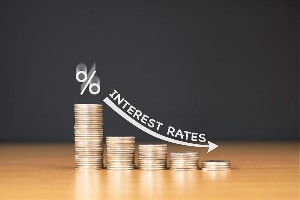
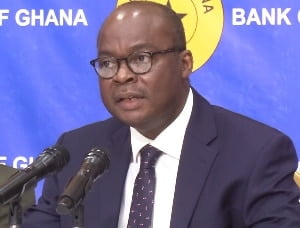
The Bank of Ghana has entreated commercial banks to lower lending rates at a time macroeconomic performance of the nation, including inflation, is improving.
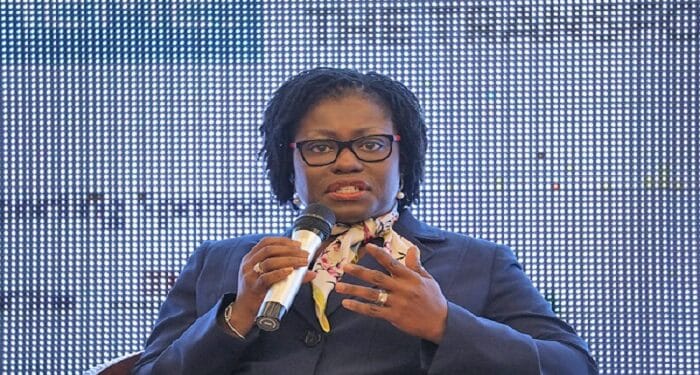
Elsie Addo Awadzi, the second deputy governor of the Bank of Ghana, claims that the rate of inflation has steadily decreased from the start of the year to 41.2%, signaling indicators of economic recovery.
Addressing at the inauguration of a partnership between Absa Bank and the Mastercard Foundation to offer 10% interest rates on loans to small enterprises, the second deputy governor said “as the economy picks up and there is a signal of improvement in the macro economy, we expect things to get better. Moments ago before I got here, inflation has dropped to 41.2% for April [2023], from the about 50% some months ago”.
“We as a regulator and at the Monetary Policy Committee project that things will improve. Inflation rate will drop further and lending rates will come down. I, therefore, encouraged you all as banks to emulate Absa Bank and bring the lending rates down further”, she added.
“I want to see more lending to the sector at lower rates so that these Ghanaian businesses can be very competitive,” she reiterated.
Furthermore, she said the Small and Micro Enterprises are the backbone of the economy especially with the Africa Continental Free Trade Agreement onboard.
Country Manager for Mastercard Foundation, Rossy Fynn used the occasion to announce plans by the foundation to introduce innovative products to support small businesses especially those on sustainable and green initiatives.
Managing Director for Absa Bank, Abena Osei Opoku assured that the bank will remain the best choice for SME lending.
She also indicated that the plan for the SME loan at 10% is to reach out to more than 5,000 small businesses and make them investor ready.
The Absa SME loan is a low rate special offer at 10% for women owned businesses and SMEs.
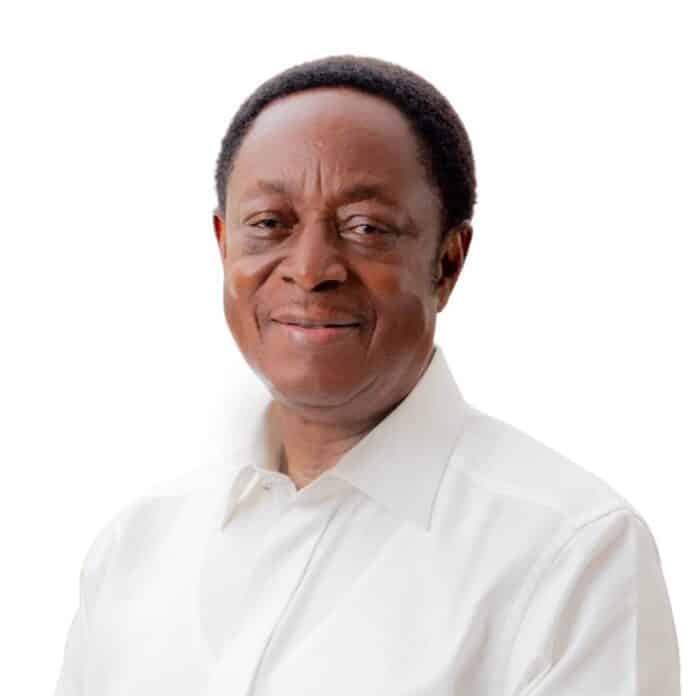
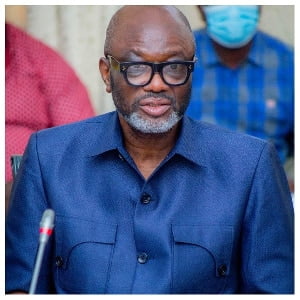
The National Democratic Congress’ aspiring flag bearer,Dr. Kwabena Duffuor, has stated that he endured hardships under the ruling New Patriotic Party (NPP).
This comes on the back of a skewed campaign by his opponents that he has received some form of sponsorship for his bid to lead the National Democratic Congress (NDC).
However, the former Governor of the Bank of Ghana(BoG) has flatly denied the allegation.
According to him, he has not received any sponsorship from the NPP to destroy the NDC which he contributed to building.
He disclosed this when addressing the party’s delegates in Adansi Asokwa Constituency in the Ashanti region as part of his four days campaign in the Ashanti region.
Dr. Duffuor however urged the party supporters particularly the delegates to disregard the destructive campaign his opponents are sharing to party members.
“I funded the NDC so I’m NDC and nothing can change my love for NDC. The NPP destroyed my banks and tried to collapse every business under my control. I want to tell you that the NPP has hurt me more than any other member of the party. The NPP can never use me to destroy the NDC. My main aim is to return NDC to power to make Ghana better,” Dr. Duffuor reiterated.
He pleaded with the party supporters to vote for him to lead the party into election 2024 on Saturday 13th May 2023 in the presidential election by thumb printing #3 on the ballot paper.
Economist, Professor William Baah-Boateng, has urged the Bank of Ghana to institute laws that ensure that forex bureaus across the country only buy foreign currencies and sell only the cedi.
According to him, this is a sure way to help control the cedi’s depreciation on the international market.
He said, Ghanaians’ easy access to foreign currency at the various forex bureaus is what has significantly contributed to the dollarisation of the economy and the subsequent tanking of the cedi.
Speaking on JoyNews’ PM Express Business Edition, he said unless a Ghanaian is travelling abroad, they should not be given foreign currency.
“I don’t understand why as a Ghanaian if I’m not travelling I can go to the forex bureau and say I need dollars. What am I using the dollars for?” he said.
He said similar laws are applied in other foreign countries like Finland and Germany where foreign currencies are not accepted in the country during transactions.
“So for me I think if the central bank, if Bank of Ghana law and regulation can be reviewed and say that forex bureau are supposed to mop-up foreign currency for the bank but not to sell, it means that if I come from outside and I need cedis I can walk to forex bureau and give them my foreign currency and get the cedis, but not get dollar and give my cedis.
“When you do that it means if I’m travelling – and it happens in many other countries and my colleagues at central bank they travel more than I do, they know. And I’ll give you Finland as one of the countries. If you enter Finland, you cannot buy any good or service with any currency like dollar or so on or even Germany.
“I was in Germany and I wanted to buy something and I didn’t have enough euros and I thought I could use my dollar, I went there they said ‘we can’t use go and change it to euro before we can use it.’ Because the rules are there so nobody will then go and buy dollar and so on.
“So you use the local currency and when you’re leaving you get to the airport, you get your boarding pass, at the last point there’s a forex bureau there you can change and get the dollar. And if we’re able to insist on this why would we need the dollar in Ghana? Why do I have to buy the dollar as a store of value?” he explained.
Reports coming in is that the Bank of Ghana and the government have signed a memorandum of understanding (MoU) to stop monetary financing by the former to the latter.
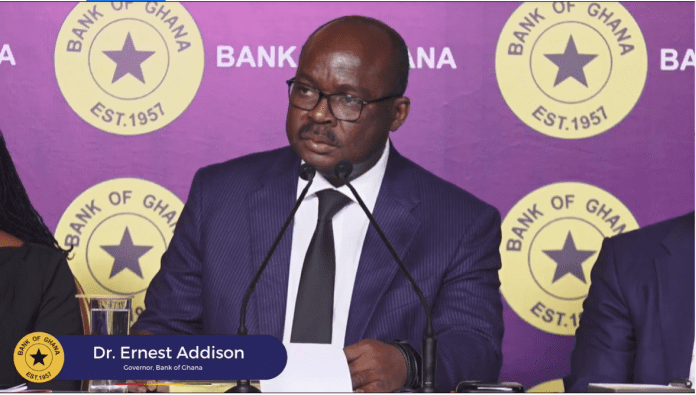
“The MoU has been finalised and signed,” Governor Ernest Addison is quoted to told Central Banking on May 2, 2023.
The MoU is a requirement of a pending loan package agreed with the International Monetary Fund (IMF).
According to reports, the MoU will enter into force once the IMF Board approves Ghana request for a credit facility worth $3 billion.
Prior to this, Member of Parliament for Tamale South, Haruna Iddrisu, said the Minority in Parliament would oppose the signing of the MoU.
According to him, the MoU between the Bank of Ghana and the Ministry of Finance is “laughable”.
“A serious country must be run seriously and run guided by a legal framework that protects the State and protects its institution. The Bank of Ghana is in breach for having to overdraft and lend government beyond the stipulated legislation within the amended Bank of Ghana Act.
“But MoU, what is the weight of MoU within the parameters of the Ghanaian constitution and Ghanaian law?” he questioned.
Speaking with Joy News, the legislator said the Finance Minister, Ken Ofori-Atta, must be present before Parliament for legislation on zero per cent financing of government by the Bank of Ghana.
As a result, he noted that anything short of legislation passed by parliament will not be accepted.
The Bank of Ghana is said to have provided over GH₵40 billion in support to government in 2021 and according to the central bank, the funding saved the economy from collapse.
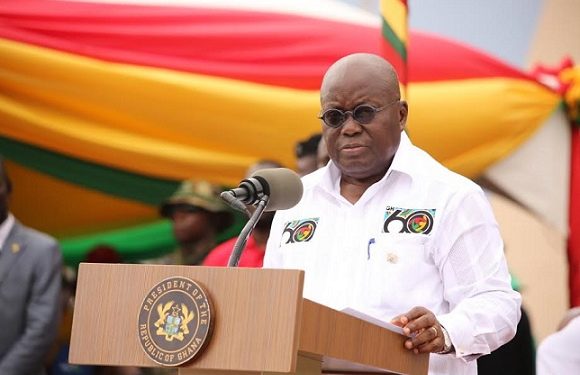
The governmentis making efforts to lessen the effect of the Domestic Debt Exchange Programme (DDEP) on the financial industry, this is according to President Akufo-Addo.
Speaking at the 2023 International Labour Day parade he stated that among other things the government has established the Ghana Financial Stability Fund as earlier announced as part of the process of ensuring the finance sector is aided amid the debt restructuring.
This fund he noted would provide, amongst others, solvency and liquidity support to eligible financial sector institutions, which may be affected by the Domestic Debt Exchange Programme.
“In addition, the Bank of Ghana and the regulators in the financial sector space have provided some regulatory reliefs to support affected institutions.
“In keeping with our common objective, the government, through the Financial Stability Council, will monitor continuously the impact of the Domestic Debt Exchange Programme on financial institutions to enable it to take remedial action, if and when necessary.”
President Akufo-Addo added that this would ensure that measures put in place to safeguard incomes, deposits, pensions, investor funds and assets are effective.
Meanwhile, he also assured organised labour of the protection of their pension funds as the government continues its debt restructuring programme aimed at securing an IMF deal.
President Akufo-Addo noted that his outfit is aware of the impact of the restructuring on workers and as such aimed to explore other beneficial options within debt sustainability limits with the cooperation of both Government and Organised Labour.
He said that “In undertaking the Domestic Debt Exchange Programme, we have been very mindful of its potential impact on the pension funds of workers.
“We will not act in any way to short-change workers in protecting their pensions.”
Institutions in the banking sector have been entreated by the Central Bank to focus on strategies such as risk management, innovation, stakeholder engagement, transparency and disclosure and collaboration.
This is to ensure they remain resilient in times of uncertainty. The Bank of Ghana holds the assertion that sustainable banking is a crucial tool for addressing challenges of uncertainty and volatility in the global economy.
Deputy Director of Banking Supervision, Ismail Adam, said by integrating Environmental, social, and governance (ESG) criteria into banks’ decision-making processes, banks can create long-term value for both society and investors, while promoting a more sustainable and equitable future.
Deputy Director of Banking Supervision, Ismail Adam
Speaking at the launch the Integrated Environmental, Social and Governance (IESG) programme for Ghana, he said one of the key challenges facing banking business is uncertainty and volatility of markets and economies, but sustainable banking can help address these challenges by promoting risk management with a forward-looking view, as well as helping to build more resilient and sustainable economies.
He further that the Bank of Ghana has undertaken a number of activities towards the implementation of the SBPs and therefore it is his expectation that this project would complement the efforts of the Central Bank and leads to the full implementation of the SBPs across the banking industry as well as within Bank of Ghana itself.
Some key activities undertaken by BOG include building the capacity of staff on the SBPs as well as getting a dedicated office within the bank to oversee the full implementation SBPs, developing a road map to ensure banking industry training on all the principles by the end of 2023 and analysing four rounds of reports received from the banks, beginning March 2021 to September 2022.
Mr. Adam said the reporting templates received from the banks suggest a steady progress with the implementation of the SBPs with average compliance rate at 53.37% as of September 2022.
The programme builds on two previous IFC initiatives in collaboration with the Bank of Ghana that culminated in the launch of Ghana’s Sustainable Banking Principles, in 2019.
All Ghanaian banks have now signed on to the principles, thereby recognizing that a holistic approach to risk management must include ESG considerations.
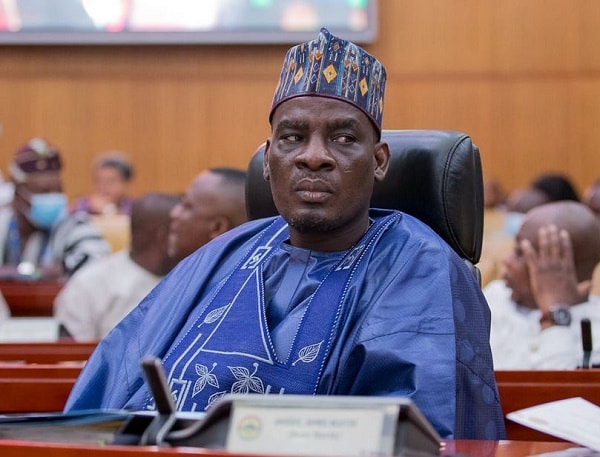
Any attempt by the Bank of Ghana to sign a Memorandum of Understanding (MoU) with the Finance Ministry for zero financing for the government will be opposed by the Minority in Parliament.
Former Minority leader, Haruna Iddrisu, who represents the people of Tamale South disclosed this information to the media.
According to him, the MoU between the Bank of Ghana and the Ministry of Finance is “laughable”.
“A serious country must be run seriously and run guided by a legal framework that protects the State and protects its institution. The Bank of Ghana is in breach for having to overdraft and lend government beyond the stipulated legislation within the amended Bank of Ghana Act.
“But MoU, what is the weight of MoU within the parameters of the Ghanaian constitution and Ghanaian law?” he questioned.
Former Minority leader and Member of Parliament for the Tamale South, Haruna Iddrisu
Speaking with Joy News, the legislator said the Finance Minister must be present before Parliament for legislation on zero per cent financing of government by the Bank of Ghana.
As a result, he noted that anything short of legislation passed by parliament will not be accepted.
The International Monetary Fund is, among other things, demanding that government enters into a binding agreement with the Bank of Ghana for zero financing of government programmes.
The bank is said to have provided over GH₵40 billion in support to government in 2021 and according to the central bank, the funding saved the economy from collapse.
Finance Minister, Ken Ofori-Atta on the sidelines of the IMF/World Bank meetings told JoyNews that government has signed a Memorandum of Understanding (MoU) in compliance with the IMF order.
Meanwhile, the Ghana Association of Banks says its members will henceforth grant loans to only productive projects as it defends its decision to participate in the domestic debt exchange programme.
This is despite the participation resulting in severe impairment of the assets of the institutions with some nearing insolvency.
Financial Economist, Professor Godfred Bokpin has criticised the Bank of Ghana (BoG) for publishing what he believes is “unreliable” data on the country’s international reserves.
According to him, the Central Bank is on record for providing conflicting data, contrary to what the International Monetary Fund and the World Bank put out.
His comment is coming at a time, the IMF is warning Ghana’s international reserves is almost empty contrary to what the Bank of Ghana had published in its January 2023 Summary Economic and Financial Data.
Prof. Godfred Bokpin told Joy Business providing inaccurate data is unacceptable.
“Of course, we know that when it comes to our international reserves, it is not the first time. In fact, in 2014, the Central Bank had a dispute with the international community as well as the IMF because, in 2014, our reserves from net basis could only cover two weeks of imports…only two weeks.”
“Meanwhile, the Bank of Ghana had data that suggested we could do more than one month…you can check the data, and the explanation then – and I believe it will not vary now”, he explained.
“Is it that probably the Bank of Ghana is looking at reserves on a gross basis?” Professor Bokpin quizzed.
He added, “When they [reserves] also include the heritage fund and all of that, and probably the Fund [IMF] will be looking at reserves on a net basis and also in terms of the denominator they are looking at both imports of goods and services”.
He pointed out that the Central Bank indeed financed the government to the tune of over ¢77 billion, based on the latest data from the IMF.
“Do you remember that somewhere last year…I think in the middle of last year, there was the issue [argument] of the Bank of Ghana monetising the deficit and printing and sustaining the government, the Central Bank denied that but what do we see today? If you check the latest figures, you will see that the Bank of Ghana’s overdraft facility, everything put together is over ¢77 billion”.
He concluded that providing inaccurate data does not help the financial market.
“The other bit is to look at the Bank of Ghana’s own official exchange rate. You can’t refer to that rate as a transactional rate because the dollar is not clearing at that particular rate.
“So, when we do all these things we are actually not helping the market because one important function of the market is price discovery”.
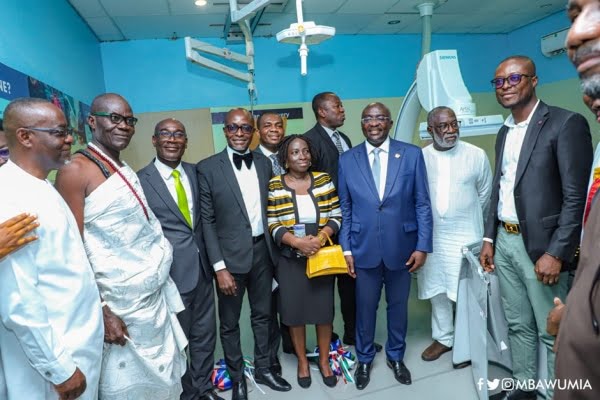
The Board, Management and staff of the Korle Bu Teaching Hospital have expressed their gratitude to the Vice President, Dr Mahamudu Bawumia, and leadership of the Bank of Ghana, for the various roles they played in the acquisition and installation of a Catherization Laboratory at the nation’s premier health facility.
The one million dollar ($1m) lab, the most advanced Cath Lab in the country, and its accompanying Big Detector, dyna CT and roadmap software and 3D workstation – essential for the requirements for achieving accurate and effective minimally invasive treatments – was procured and funded by the Bank of Ghana after an appeal by the Vice President for the Bank to consider funding the acquisition of such an essential medical equipment as part of its Corporate Social Responsibility.
Officials of the Korle Bu Teaching Hospital say Ghana is currently the only country in the West Africa subregion offering advanced minimally invasive endovascular treatments (performing brain surgeries without cutting the skull) for conditions such as brain aneurysms, and the acquisition of this Lab is expected to reduce the incidence of patients being referred abroad for further tests and treatments.
By investing in such advanced medical facilities, Ghana can also attract and retain skilled medical professionals, improve the training of local doctors and enhance the quality of care provided to patient.
Speaking at the commissioning of the Lab in Accra on Tuesday, 25 April 2023 the Chief Executive Officer of the Korle Bu Teaching Hospital, Dr Opoku Ware Ampomah, said Management of the hospital has been working assiduously to acquire, maintain and improve upon existing facilities, with investments into various aspects of the healthcare space through strategic partnerships.
“This investment by the Bank of Ghana in sponsoring the full cost of the Catherization Lab is a case in point. Thank you so much Bank of Ghana. This will greatly enhance our capabilities to provide cardiac catherization, stenting for various conditions and emergency treatment of strokes and thromboembolic phenomena and other life-saving interventions.
Describing Dr Bawumia as “a friend of Korle Bu”, Dr Ampomah recalled the instrumental role played by the Vice President, from engaging the Governor of the Bank of Ghana to see the acquisition of the Catherization Lab as an essential item that could fall under the Bank’s Social Responsibility obligations, through regular visits and updates during the installation process, to the commissioning today.
“Your Excellency, Korle Bu Hospital is indeed very grateful to you for your advocacy and personal interest which has brought the project to reality.”
Speaking at the launch, Vice President Bawumia challenged hospitals and other medical facilities across the country to partner with the private sector to provide and maintain essential equipment in order to help the facilities offer top-notch care to patients.
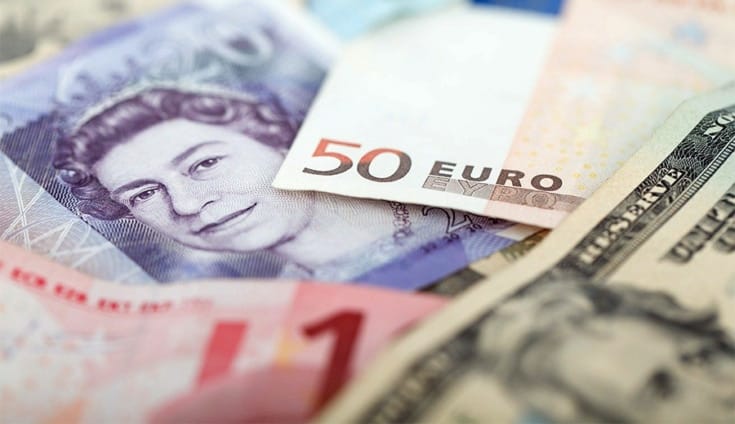
The Interbank forex rates from the Bank of Ghana today, April 25, 2023, have shown that the Ghana Cedi is trading against the dollar at a buying price of 10.9386 and a selling price of 10.9496.
At a forex bureau in Accra, the dollar is being bought at a rate of 11.50 and sold at a rate of 12.20.
Against the Pound Sterling, the Cedi is trading at a buying price of 13.5726 and a selling price of 13.5884.
At a forex bureau in Accra, the pound sterling is being bought at a rate of 14.30 and sold at a rate of 15.30.
The Euro is trading at a buying price of 12.0080 and a selling price of 12.0198.
At a forex bureau in Accra, Euro is being bought at a rate of 12.40 and sold at a rate of 13.20.
The South African Rand is trading at a buying price of 0.6049 and a selling price of 0.6055.
At a forex bureau in Accra, South African Rand is being bought at a rate of 0.30 and sold at a rate of 0.90.
The Nigerian Naira is trading at a buying price of 42.0729 and a selling price of 42.1807.
At a forex bureau in Accra, Nigerian Naira is being bought at a rate of 13.50 Naira for every 1 Cedi and sold at a rate of 18.50.
For the CFA, it is trading at a buying price of 54.5730 and a selling price of 54.6267.
At a forex bureau in Accra, CFA is being bought at a rate of 17.00 CFA for every 1 Cedi and sold at a rate of 21.00 CFA for every 1 Cedi.
Our forex bureau rates are provided by Afriswap Bureau De Change in Osu, Accra.
The Interbank forex rates from the Bank of Ghana today, April 14, 2023, have shown that the Ghana Cedi is trading against the dollar at a buying price of 10.9313 and a selling price of 10.9423.
At a forex bureau in Accra, the dollar is being bought at a rate of 11.40 and sold at a rate of 12.40.
Against the Pound Sterling, the Cedi is trading at a buying price of 13.6981 and a selling price of 13.7129.
At a forex bureau in Accra, the pound sterling is being bought at a rate of 13.70 and sold at a rate of 14.70.
The Euro is trading at a buying price of 12.0879 and a selling price of 12.0989.
At a forex bureau in Accra, Euro is being bought at a rate of 12.00 and sold at a rate of 13.00.
The South African Rand is trading at a buying price of 0.6058 and a selling price of 0.6062.
At a forex bureau in Accra, South African Rand is being bought at a rate of 0.30 and sold at a rate of 0.90.
The Nigerian Naira is trading at a buying price of 42.1257 and a selling price of 42.2390.
At a forex bureau in Accra, Nigerian Naira is being bought at a rate of 13.50 Naira for every 1 Cedi and sold at a rate of 18.50.
For the CFA, it is trading at a buying price of 54.2163 and a selling price of 54.2656.
At a forex bureau in Accra, CFA is being bought at a rate of 17.00 CFA for every 1 Cedi and sold at a rate of 21.00 CFA for every 1 Cedi.
Our forex bureau rates are provided by Afriswap Bureau De Change in Osu, Accra.
The Ghana Union of Traders Association (GUTA) has urged its members to adapt prices to reflect the exchange rate and positively respond to the changing trend in inflation.
This comes after the Ghana Statistical Service (GSS) on April 12 announced a sharp drop in the national inflation from 52.8 percent in February to 45.0 percent in March 2023.
On the back on this and some relative stability in the exchange rate, GUTA has encouraged traders to react by adjusting the prices of goods towards a downward trend.
“In light of this, GUTA entreats all members of the business community to respond positively to the changing trend and adjust prices to reflect the exchange rate”
“Indeed, we are very appreciative of the government’s efforts and hope that it will bring relief to businesses and lead to the economic transformation we all cherish and desire as a nation,” President of GUTA, Dr Joseph Obeng said in a statement issued on April 12, 2023.
GUTA further acknowledged the efforts of the government and the Bank of Ghana which has resulted in the recent developments.
The Association however urged government to work towards further strengthening the local currency against other major trading currencies.
The Interbank forex rates from the Bank of Ghana today, April 13, 2023, have shown that the Ghana Cedi is trading against the dollar at a buying price of 10.9263 and a selling price of 10.9373.
At a forex bureau in Accra, the dollar is being bought at a rate of 11.00 and sold at a rate of 12.00.
Against the Pound Sterling, the Cedi is trading at a buying price of 13.6383 and a selling price of 13.6530.
At a forex bureau in Accra, the pound sterling is being bought at a rate of 13.40 and sold at a rate of 14.40.
The Euro is trading at a buying price of 12.0140 and a selling price of 12.0248.
At a forex bureau in Accra, Euro is being bought at a rate of 11.70 and sold at a rate of 12.70.
The South African Rand is trading at a buying price of 0.5981 and a selling price of 0.5986.
At a forex bureau in Accra, South African Rand is being bought at a rate of 0.30 and sold at a rate of 0.90.
The Nigerian Naira is trading at a buying price of 42.2520 and a selling price of 42.2977.
At a forex bureau in Accra, Nigerian Naira is being bought at a rate of 13.50 Naira for every 1 Cedi and sold at a rate of 18.50.
For the CFA, it is trading at a buying price of 54.5503 and a selling price of 54.5994.
At a forex bureau in Accra, CFA is being bought at a rate of 17.00 CFA for every 1 Cedi and sold at a rate of 21.00 CFA for every 1 Cedi.
Our forex bureau rates are provided by Afriswap Bureau De Change in Osu, Accra.
The Interbank forex rates from the Bank of Ghana today, April 12, 2023, have shown that the Ghana Cedi is trading against the dollar at a buying price of 10.9243 and a selling price of 10.9353.
At a forex bureau in Accra, the dollar is being bought at a rate of 10.50 and sold at a rate of 11.50.
Against the Pound Sterling, the Cedi is trading at a buying price of 13.5822 and a selling price of 13.5969.
At a forex bureau in Accra, the pound sterling is being bought at a rate of 13.40 and sold at a rate of 14.40.
The Euro is trading at a buying price of 11.9226 and a selling price of 11.9323.
At a forex bureau in Accra, Euro is being bought at a rate of 11.50 and sold at a rate of 12.50.
The South African Rand is trading at a buying price of 0.5947 and a selling price of 0.5949.
At a forex bureau in Accra, South African Rand is being bought at a rate of 0.30 and sold at a rate of 0.90.
The Nigerian Naira is trading at a buying price of 42.1591 and a selling price of 42.2542.
At a forex bureau in Accra, Nigerian Naira is being bought at a rate of 13.50 Naira for every 1 Cedi and sold at a rate of 18.50.
For the CFA, it is trading at a buying price of 54.9732 and a selling price of 55.0179.
At a forex bureau in Accra, CFA is being bought at a rate of 17.00 CFA for every 1 Cedi and sold at a rate of 21.00 CFA for every 1 Cedi.
Our forex bureau rates are provided by Afriswap Bureau De Change in Osu, Accra.
The bond market witnessed a significant increase in volume as trades in the new bonds experienced an uptick last week, reaching GH¢227.44million – a 459 percent increase from the previous week’s GH¢40.72million.
Despite the increase in volume traded, liquidity on the fixed-income secondary market was lower than in the previous week.
The secondary market yields on the new bonds rose over the week due to the ripple-effect of the hike in policy rate from 28 percent to 29.5 percent, while the old bonds – those which were not traded in during the Domestic Debt Exchange Programme (DDEP) – recorded a slight decrease in yield.
The old bonds market was nearly inactive, with only GH¢10.37million in volume traded, making up only 2.12 percent of the market share. The volume traded for old bonds fell by 47.43 percent from the previous week’s GH¢927.9million.
Although the old government bonds, Treasury-bills and corporate bonds recorded a total of GH¢487.8million in volume traded, the money market instruments – particularly the 91-day variant, still dominated the market with a 97.44 percent share.
Treasury-bills remain the preferred investment option for risk-averse investors, with the recent Treasury-bill auction seeing government raise GH¢1.88billion – exceeding their target of GH¢1.77billion by 6.57 percent. Government plans on raising GH¢1.67billion at next week’s auction.
However, market activity has been comparatively uninspiring over the last two weeks, with total trading volumes falling to GH¢62.31million from GH¢299.58million the previous week. Market participants were less active last week due to the unexpected policy rate hike of 150 basis points (bps) to 29.5 percent in March 2023.
The policy rate increase resulted in the Bank of Ghana (BoG) issuing its 14-day and 52-day bills at 29.5 percent and 30.25 percent respectively last week. As a result, the attention of market participants was drawn to the primary auction, reducing trading volumes on the secondary bond market.
Despite the recent policy rate hike and reduced market activity, the market is expected to improve with the March inflation report’s release, which is expected to show a marginal drop in the inflation rate. This drop could further boost investor confidence in the market.
However, analysts are bearish on the market this week; predicting that activity on the market will remain lifeless as investors seek better investment alternatives. The holiday-shortened trading week is also expected to weigh on trading volumes.
This comes as government is seeking to secure a US$3billion facility for balance of payment support, and the passing of three revenue tax bills by parliament moves government closer to securing the International Monetary Fund (IMF) Executive Board’s approval.
Government has also begun negotiations with Ghana’s Eurobond holders, of which financial assurances are required by the IMF board before approval of the pending extended credit facility programme. These developments could further boost investor confidence in the market.
The Bank of Ghana (BoG) has justified again its financing of the budget post Covid-19, saying, failure to do so will have spelt doom for the economy.
Before Covid-19 struck, the Central Bank between 2015 and 2020 had a policy of zero financing of the budget.
However, that changed right after Covid-19 when government was struggling to raise enough revenue.
Speaking at the University of Ghana 75th Anniversary Public Lecture on “Ghana’s Economic; The need for Paradigm Shift”, Director of Research at the Bank of Ghana, Dr Philip Abradu-Otoo said the Bank of Ghana had no choice but to save the economy from collapsing.
“So the Central Bank’s point of view, we realised we needed an economy to protect. So there were choices that had to be made, should we allow the economy to collapse or we should stick strictly to issues of fiscal dominance and then who picks up the pieces after the economy has collapsed”.
“But that financing that we did in 2022 went mainly to deal with investors; domestic investors whose bonds had matured and government needed to pay these bonds and for which government had no resources”, he explained further.
Dr Abradu-Otoo added that the Bank of Ghana stepped in as a lender of last resort as it always does to protect the financial sector.
“Hundred per cent of that amount [BoG financing] was due to domestic bonds that had matured for which we had to step in to save these domestic investors. And that is where this fiscal dominance issue came in”.
“So yes, it came in but we did that to save domestic investors”, he concluded.
The Treasury exceeded its Issuance target for Q1 2023 by approximately GH¢8.25billion, issuing GH¢36.41billion in total; thus frontloading its capital raising requirement on the money market due to limited investment options available to investors, resulting in higher demand for short-term securities.
B&FT’s analysis of the issuance data reveals that the demand for T-bills continued to soar in Q1 2023 due to attractive yield levels and persistent market uncertainties. Across the 91-day to 364-day bills, the Treasury accepted about GH¢36.41billion in Q1 2023 from a total investor bid of GH¢39.46billion, against a target size of GH¢28.16billion.
This follows the exemption of Treasury-bills from the domestic debt exchange programme in Q4-2022, as government turned toward the Treasury market to finance its budget deficit after being priced out of the bond market.
During Q1 2023, the Treasury made fresh issuances of GH¢12.28billion while GH¢24.13billion covered maturing securities. The issuance made in Q1 2023 reflects an increase of 138 percentage points year-on-year, compared to Q1 2022 at GH¢15.28billion from a total investor bid tender of GH¢15.66billion.
Cumulatively, in 2022 the Treasury sold a gross amount of GH¢71.06billion across tenors on the money market, which was sufficient to cover a gross maturing face value of GH¢59.27billion for the year.
Government has been tapping the Treasury-bill market to refinance maturing obligations and build buffers, leading to the continuous accumulation of a relatively high-interest burden. To reduce the cost of borrowing, the Treasury took advantage of the high demand environment for short-term maturities and compressed yields starting in March 2023. Government has attempted to drive down the interest rates across the 91-day to 364-day money market instruments, to as low as 15 percent.
The market held the view that the relatively high interest costs do not factor in government’s medium-term Debt Sustainability Analysis (DSA), prompting the Treasury to take steps to ‘force’ interest rates down at the close of Q1.
At the end of Q1, the coupon rate on the 91-day T-bill had reduced by 1648 basis point (bps) to 18.88 percent from 35.36 percent; and the 182-day bill also reduced, to 21.44 percent by 1454bps from 35.98 percent; and the 364-day bill declined by 1028 bps to 25.66 percent from 35.89 percent.
MPC tightening stance
The decline in yields across the short-term spectrum of the market has halted amid tightening liquidity efforts by the Bank of Ghana, signalling a reversal of cost-cutting moves by the Treasury to keep yields on the low at around 15 percent on the 91-day T-bill. At the March 2023 Monetary Policy Committee (MPC) meeting, the policy rate was increased by 150 basis points (bps) to 29.5 percent and the cash reserve requirement increased to 14 percent.
Treasury yields rose marginally over the last two weeks to attract investors as demand weakened in the previous week, marking a second successive week the yields on T-bills increased – following nine consecutive weeks of robust auction performance of oversubscriptions which had yields on the decline.
During the last two week’s auction, which was settled on April 3, 2023, the 91-day bill increased by 50bps to 19.39 percent, while the 182-day bill surged by 42bps to 21.86 percent. Prior to this auction, which was settled on April 3, 2023 following the MPC’s decision, the market had signalled dissatisfaction with the yields on short-term bills. This resulted in a downturn of demand for T-bills after nine consecutive weeks of oversubscription – recording under-subscription of GH¢2.44billion, 24 percent short of the GH¢3.21billion issuance target.
With GH¢1.68billion due across the 91- to 364-day bill this week, the Treasury intends to raise GH¢1.77billion to refinance its maturity value today.
The market anticipates that yields will continue their upward trajectory in the coming weeks on the back of the liquidity crunch – albeit at a moderate pace to attract investors, as Treasury-bills remain one of the key avenues for government in financing its budget deficit.
The Interbank forex rates from the Bank of Ghana today, April 11, 2023, have shown that the Ghana Cedi is trading against the dollar at a buying price of 10.9245 and a selling price of 10.9355.
At a forex bureau in Accra, the dollar is being bought at a rate of 10.50 and sold at a rate of 11.50.
Against the Pound Sterling, the Cedi is trading at a buying price of 13.6120 and a selling price of 13.6267.
At a forex bureau in Accra, the pound sterling is being bought at a rate of 13.50 and sold at a rate of 14.50.
The Euro is trading at a buying price of 11.9278 and a selling price of 11.9386.
At a forex bureau in Accra, Euro is being bought at a rate of 11.20 and sold at a rate of 12.20.
The South African Rand is trading at a buying price of 0.6072 and a selling price of 0.6077.
At a forex bureau in Accra, South African Rand is being bought at a rate of 0.30 and sold at a rate of 0.90.
The Nigerian Naira is trading at a buying price of 42.1766 and a selling price of 42.2479.
At a forex bureau in Accra, Nigerian Naira is being bought at a rate of 13.50 Naira for every 1 Cedi and sold at a rate of 18.50.
For the CFA, it is trading at a buying price of 54.9442 and a selling price of 54.9940.
At a forex bureau in Accra, CFA is being bought at a rate of 17.00 CFA for every 1 Cedi and sold at a rate of 21.00 CFA for every 1 Cedi.
Our forex bureau rates are provided by Afriswap Bureau De Change in Osu, Accra.
The Interbank forex rates from the Bank of Ghana today, April 7, 2023, have shown that the Ghana Cedi is trading against the dollar at a buying price of 10.9245 and a selling price of 10.9355.
At a forex bureau in Accra, the dollar is being bought at a rate of 10.30 and sold at a rate of 11.30.
Against the Pound Sterling, the Cedi is trading at a buying price of 13.5890 and a selling price of 13.6037.
At a forex bureau in Accra, the pound sterling is being bought at a rate of 13.40 and sold at a rate of 14.40.
The Euro is trading at a buying price of 11.9380 and a selling price of 11.9488.
At a forex bureau in Accra, Euro is being bought at a rate of 11.10 and sold at a rate of 12.00.
The South African Rand is trading at a buying price of 0.5993 and a selling price of 0.5999.
At a forex bureau in Accra, South African Rand is being bought at a rate of 0.30 and sold at a rate of 0.90.
The Nigerian Naira is trading at a buying price of 42.1894 and a selling price of 42.2470.
At a forex bureau in Accra, Nigerian Naira is being bought at a rate of 13.50 Naira for every 1 Cedi and sold at a rate of 18.50.
For the CFA, it is trading at a buying price of 54.8973 and a selling price of 54.9470.
At a forex bureau in Accra, CFA is being bought at a rate of 17.00 CFA for every 1 Cedi and sold at a rate of 21.00 CFA for every 1 Cedi.
Our forex bureau rates are provided by Afriswap Bureau De Change in Osu, Accra.
The Bank of Ghana has urged customers of banks and specialized deposit-taking institutions to keenly look out for interest rates when deciding to accept a loan offer, which is known as the Annual Percentage Rate (APR).
The APR represents the total cost to be paid to the lender annually for the loan facility which is expressed as a percentage and provides a broader measure of the cost that a borrower pays for taking a loan.
It further reflects not only the interest rate but also the other charges that borrowers have to pay for the loan.
According to the Central Bank, borrowers must critically assess their capacity for the loan, particularly their repayment capabilities before obtaining or accepting a loan facility.
The BoG made this known in a statement issued to outline key issues with regards to loan acquisition and repayment responsibilities and obligations of customers.
“You may compare the APR of your financial institution with those of other lenders in making the decision on where to apply for your loan. Take note of all the fees and charges associated with the loan, and these shall be disclosed in the Loan Agreement,” it advised.
The Central Bank further called on borrowers to seek clarification from the lender in any language of their choice to gain the needed understanding of the loan product.
“Prior to signing any Loan Agreement, please read and ensure that you understand all the terms and conditions, and seek professional advice if you need it,” the BoG noted.
Meanwhile, the Central Bank has also advised borrowers not to rush in their bid to acquire loans. It therefore noted that borrowers can compare offers from multiple lenders before deciding on the best possible deal.
“Prior to the signing of a Loan Agreement, lenders are required to give potential borrowers a ‘Pre-agreement Truth’ in Lending statement (similar to proforma invoice), that summarizes the terms and conditions associated with the loan,” the statement added.
As part of its mandate to promote transparency and effective disclosure practices in the financial sector, Bank of Ghana wishes to bring to the attention of the general public, the underlisted key issues, with regards to loan acquisition and repayment responsibilities and obligations of customers of banks and specialized deposit-taking institutions.
i. Critically assess your capacity for the loan, i.e. your repayment capabilities prior to obtaining a loan facility.
ii. Borrowers are advised not to rush to acquire loans. Where possible, they may obtain and compare offers from multiple lenders before deciding on the best deal.
iii. Prior to the signing of a Loan Agreement, lenders are required to give potential borrowers a ‘Pre-agreement Truth’ in Lending statement (similar to proforma invoice), that summarizes the terms and conditions associated with the loan.
iv. Information on the ‘Pre-agreement Truth’ in Lending statement should include:
a. Interest rate of the credit facility (indicating whether fixed or variable). b. Annual Percentage Rate (APR) c. Other fees and charges such as commissions, administrative or processing fees, commitment fees, insurance. d. Bundled products and services. e. Repayment Schedule. f. Penal charges or late payment penalties. g. Penalty rates and any other charges associated with the product. h. Security deposits or savings required as a condition to acquire the loan. i. Total amount to be paid back at the end of the loan period, among others.
v. In taking the decision to accept a loan offer, customers should look out for interest rate which in this case should be the Annual Percentage Rate (APR), which represents the total cost to be paid to the lender each year for the loan, expressed as a percentage. Note that the APR provides a broader measure of the cost that a borrower pays for taking a loan.
The APR reflects not only the interest rate but also the other fees and charges that borrowers have to pay for the loan.
vi. You may compare the APR of your financial institution with those of other lenders in making the decision on where to apply for your loan. vii. Take note of all the fees and charges associated with the loan, and these shall be disclosed in the Loan Agreement.
viii. Seek clarification from the lender in any language of your choice to gain the needed understanding of the loan product.
ix. Prior to signing any Loan Agreement, please read and ensure that you understand all the terms and conditions, and seek professional advice if you need it.
x. Charges that are not disclosed to the borrower in the Loan Agreement will be considered null and void. Borrowers shall be due a refund of all such charges paid, and may report to the Bank of Ghana if a lender fails to reverse such payments.
xi. If you desire to pay off a loan earlier than scheduled, the lender should provide you with the full outstanding amount to pay, and allow you 20 working days from the date of receipt of the written request, to effect full repayment. You may be charged an early settlement penalty fee.
However, this should not exceed 0.25% of the principal amount of the loan.
xii. After signing the Loan Agreement and obtaining the facility, borrowers should adhere to the agreed terms and conditions, including the repayment of the facility. Your lender may be contacted where necessary, to discuss any repayment challenges.
xiii. Always remember to obtain a copy of the Loan Agreement, duly signed by you (borrower) and authorized representative(s) of the Lender, for your records.
According to a statement made by the Bank of Ghana (BoG), charges that are not disclosed to a borrower in a loan arrangement should be regarded as void.
The BoG also gave commercial banks and lenders the order to return those funds to the borrowers, referring to any borrowers who would go through such a situation as victims.
“Borrowers shall be due a refund of all such charges paid”, the BoG stressed in its statement titled Bank of Ghana’s Responsible Borrowing Guidelines.
It added that “victims” must report such acts to the regulator if the lenders fail to reverse the payments.
According to the BoG, it is embarking on the campaign to promote transparency in loan disbursement, as well as empower borrowers to “shop around” for better rates and loan conditions.
Responsibilities of Lenders
The central bank also directed lenders to make sure that before a borrower signs a loan agreement, they are given what is called “Pre-Agreement Truth” in lending statement (Similar to Proforma Invoice) that summarizes the terms and conditions associated with the loan.
This should disclose all the conditions that is contained in the loan agreement.
The regulator noted that this information on the ‘Pre-agreement Truth’ in lending statement should include:
a. Interest rate of the credit facility (indicating whether fixed or variable).
b. Annual Percentage Rate (APR)
c. Other fees and charges such as commissions, administrative or processing fees, commitment fees, insurance. d. Bundled products and services.
e. Repayment Schedule.
f. Penal charges or late payment penalties.
g. Penalty rates and any other charges associated with the product.
h. Security deposits or savings required as a condition to acquire the loan. i. Total amount to be paid back at the end of the loan period, among others
What should borrowers do before signing a loan agreement?
The BoG also advised borrowers that prior to signing any loan agreement, customers must read and ensure that they understand all the terms and conditions, and seek professional advice.
“They are also required to seek clarification from the lender in any language of your choice to gain the needed understanding of the loan product”, it added.
The BoG advised borrowers to look out for interest rate which in this case should be the Annual Percentage Rate (APR), which represents the total cost to be paid to the lender each year for the loan, expressed as a percentage.
“Note that the APR provides a broader measure of the cost that a borrower pays for taking a loan”.
The APR reflects not only the interest rate but also the other fees and charges that borrowers have to pay for the loan
Repayment of Loans
The BoG has also directed lenders that in circumstances where a borrower wants to pay off a loan, earlier than scheduled , lenders should provide the full outstanding amount to pay and allow the borrower 20 working days from the date of receipt of the written request to effect the full repayment.
It added that even though this will be associated with settlement penalty fee, it should not exceed 0.25 percent of the principal amount to be paid.
Former Deputy Governor of the Bank of Ghana, Emmanuel Asiedu-Mante, has passed away.
The 81-year-old is said to have to died on Monday night while at the Bank;s hospital in Accra. Prior to his demise, he battled with an illness.
Born in June 1942, he was the Deputy Governor of the central bank from May 29, 2001 to May 31, 2006.
Daniel Asiedu-Mante, son of the deceased while speaking to the media said “it is sad but we will take it a day at a time.”
The son said the family was due to meet this weekend to decide on the burial and funeral arrangement.
The late Asiedu-Mante worked with BoG for 38 years prior to his retirement in 2006 as Deputy Governor.
Also a former Chairman of the Board of Stanbic Bank Ghana Limited, he was instrumental in the introduction of the rural banking concept into the country.
He chaired the central bank’s Transitions Apex Steering Committee that was put together to formulate modalities for a regulatory regime for rural and community banks (RCBs).
The committee’s work led to the setting up of today’s ARB Apex Bank, a mini central bank for the RCBs, and the operationalisation of RCBs nation wide.
The Interbank forex rates from the Bank of Ghana today, April 6, 2023, have shown that the Ghana Cedi is trading against the dollar at a buying price of 10.9245 and a selling price of 10.9355.
At a forex bureau in Accra, the dollar is being bought at a rate of 10.30 and sold at a rate of 11.30.
Against the Pound Sterling, the Cedi is trading at a buying price of 13.6120 and a selling price of 13.6267.
At a forex bureau in Accra, the pound sterling is being bought at a rate of 13.40 and sold at a rate of 14.40.
The Euro is trading at a buying price of 11.9278 and a selling price of 11.9386.
At a forex bureau in Accra, Euro is being bought at a rate of 11.20 and sold at a rate of 12.20.
The South African Rand is trading at a buying price of 0.6072 and a selling price of 0.6077.
At a forex bureau in Accra, South African Rand is being bought at a rate of 0.45 and sold at a rate of 1.10.
The Nigerian Naira is trading at a buying price of 42.1766 and a selling price of 42.2479.
At a forex bureau in Accra, Nigerian Naira is being bought at a rate of 13.50 Naira for every 1 Cedi and sold at a rate of 19.00.
For the CFA, it is trading at a buying price of 54.9442 and a selling price of 54.9940.
At a forex bureau in Accra, CFA is being bought at a rate of 17.00 CFA for every 1 Cedi and sold at a rate of 21.00 CFA for every 1 Cedi.
Our forex bureau rates are provided by Afriswap Bureau De Change in Osu, Accra.
The Deputy Head of the Other Financial Institution Provision Department and an Assistant Director at the Bank of Ghana, Patience Yeboah-Nkansah, is advising all non-bank financial institutions to adhere to the rules of providing their quarterly reports on their operations to theBank of Ghana (BoG).
According to her, the feedback that will be provided by the non-bank financial institutions will enable the Central Bank to report to the board, its development partners and the Ministry of Finance (MoH).
She explained that the submission of the quarterly report will help the Central Bank to come out with policies to better serve the interest of the customers and the operators of the non-bank financial institutions.
She said non-bank financial institutions are not banks so they must operate in their remit and not set out to operate as banks.
She appealed to operators to abide by the laws governing their operations because the BoG would deal with them if they fall foul of the law.
She appealed to the non-banks, for that matter, microfinance operators to do responsible lending.
Madam Yeboah Nkansah issued this warning speaking in an interview at the Microfinance Forum organised by Ghana Microfinance Institutions Network (GHAMFIN) on the theme: ‘Building Resilient and Sustainable Non-Bank Financial Institution’s Sector in the Wake of Current Economic Challenges’.
On his part, Mr Yaw Gyamfi, the Executive Director of GHAMFIN, said the submission of returns has been a challenge to operators.
According to him, some operators have low capital so they shy away from submitting quarterly returns.
He warned that having low capital and failing to submit returns and paying a penalty of GHS12,000 is like using your capital to pay the penalty.
It is on this score, he urged members to adhere to the submission of the returns to avoid infractions.
The Interbank forex rates from the Bank of Ghana today, April 5, 2023, have shown that the Ghana Cedi is trading against the dollar at a buying price of 10.9395 and a selling price of 10.9505.
At a forex bureau in Accra, the dollar is being bought at a rate of 10.30 and sold at a rate of 11.30.
Against the Pound Sterling, the Cedi is trading at a buying price of 13.6777 and a selling price of 13.6925.
At a forex bureau in Accra, the pound sterling is being bought at a rate of 13.40 and sold at a rate of 14.40.
The Euro is trading at a buying price of 11.9906 and a selling price of 12.0015.
At a forex bureau in Accra, Euro is being bought at a rate of 11.20 and sold at a rate of 12.20.
The South African Rand is trading at a buying price of 0.6106 and a selling price of 0.6111.
At a forex bureau in Accra, South African Rand is being bought at a rate of 0.45 and sold at a rate of 1.10.
The Nigerian Naira is trading at a buying price of 42.1042 and a selling price of 42.1608.
At a forex bureau in Accra, Nigerian Naira is being bought at a rate of 13.50 Naira for every 1 Cedi and sold at a rate of 19.00.
For the CFA, it is trading at a buying price of 54.6563 and a selling price of 54.7059.
At a forex bureau in Accra, CFA is being bought at a rate of 17.00 CFA for every 1 Cedi and sold at a rate of 21.00 CFA for every 1 Cedi.
Our forex bureau rates are provided by Afriswap Bureau De Change in Osu, Accra.
The cedi remains relatively strong despite weak economic fundamentals, says market observers GCB Capital and Constant Capital.
Although the local unit has lost 4.4 percent against the US dollar as of March 28, the performance beats market expectations due to anticipated seasonality effects in Q1 2023 amid weaker foreign exchange reserve position and the highly bearish end to 2022, while the interbank reference rate has depreciated by 22 percent.
This is believed to result from efforts by the Bank of Ghana to tighten market spreads and quell speculation. Despite concerns over a weaker forex reserve position, export receipts have helped to drive a year-on-year (y/y) surplus for the merchandise trade account.
GCB Capital, in its report analysing the recent Monetary Policy Committee (MPC) decision to increase the policy rate by 150bps, suggested that limited trading activity on the Ghana Fixed Income Market [GFIM] has slowed down FX demand pressure from portfolio reversals – further supporting the cedi’s strength.
“We believe this surplus trade balance and the ongoing gold purchase programme have limited the rate of reserve depletion and sustained the central bank’s FX liquidity management efforts, on both the spot and forward market for build distributing companies,” GCB Capital said.
Additionally, the breakthrough in negotiations with China has brought the country closer to securing International Monetary Fund (IMF) Executive Board approval – with an official start of the IMF programme expected to unlock a balance of payment backstop for the cedi’s resilience in the second half of 2023.
“We believe the local unit’s near-term performance hinges on progress of Ghana’s external debt restructuring – including securing assurances from its bilateral creditors and capital market bondholders, as well as the delayed IMF Executive Board approval for an economic programme,” Constant Capital said.
Expressing a similar view, Apakan Securities mentioned that progress made on the local debt treatment alongside further engagements by government with its external creditors has improved market sentiments.
“After kicking off the year on a weaker foot against the US dollar and other major trading pairs, the local currency has regained its footing in recent weeks. This is primarily driven by the central bank’s continuous FX support on the market amid lower demand. Additionally, progress made on the local debt treatment with further engagements by government with its external creditors has improved market sentiments,” Apakan Securities said.
The market generally holds the view that the country’s breakthrough in negotiations with China has brought it closer to securing IMF Executive Board’s approval, which should unlock a balance of payment backstop – further supporting the cedi’s resilience through the second half of 2023. However, analysts noted that near-term performance of the local unit hinges on progress in Ghana’s external debt restructuring and securing assurances from its bilateral creditors and capital market bondholders.
“We believe the Ghanaian economy is facing significant challenges, but the resilience of the currency so far is positive news for investors,” said GCB Capital. “The currency’s strength will depend on progress in talks with creditors and the IMF, as well as efforts to manage liquidity and inflation.”
Although the Domestic Debt Exchange Programme (DDEP) has been less of a liquidity problem than expected, there have been solvency concerns for some commercial banks. The two percent reduction in the cash reserve ratio has led to excess liquidity in the interbank market, but banks have been cautious over loan book expansion due to uncertainties and heightened risks.
As a result, there has been a strong growth in broad money supply; which could be inflationary.
In response the MPC hiked the monetary policy rate by 150bps, which was seen as a surprise, as well as an additional measure of raising the cash reserve ratio (CRR) on domestic currency deposits from 12 percent to 14 percent, effective 13th April 2023.
GCB Capital suggests that the move signals commitment to sustaining a tight monetary policy stance until the disinflation process strengthens. However, this decision has trade-offs for growth and employment, particularly as the growth pulse has softened since second-half 2022.
“The decision has high trade-offs for growth and employment, particularly with the growth pulse softening considerably since 2H22,” GCB Capital added.
he Interbank forex rates from the Bank of Ghana today, April 4, 2023, have shown that the Ghana Cedi is trading against the dollar at a buying price of 11.0062 and a selling price of 11.0172.
At a forex bureau in Accra, the dollar is being bought at a rate of 10.50 and sold at a rate of 11.50.
Against the Pound Sterling, the Cedi is trading at a buying price of 13.6499 and a selling price of 13.6646.
At a forex bureau in Accra, the pound sterling is being bought at a rate of 13.50 and sold at a rate of 14.50.
The Euro is trading at a buying price of 11.9883 and a selling price of 11.9992.
At a forex bureau in Accra, Euro is being bought at a rate of 12.80 and sold at a rate of 12.80.
The South African Rand is trading at a buying price of 0.6182 and a selling price of 0.6187.
At a forex bureau in Accra, South African Rand is being bought at a rate of 0.45 and sold at a rate of 1.10.
The Nigerian Naira is trading at a buying price of 41.8382 and a selling price of 41.9000.
At a forex bureau in Accra, Nigerian Naira is being bought at a rate of 13.50 Naira for every 1 Cedi and sold at a rate of 19.00.
For the CFA, it is trading at a buying price of 54.6667 and a selling price of 54.7164.
At a forex bureau in Accra, CFA is being bought at a rate of 17.00 CFA for every 1 Cedi and sold at a rate of 21.00 CFA for every 1 Cedi.
Our forex bureau rates are provided by Afriswap Bureau De Change in Osu, Accra.
Rating firm, Fitch Solutions, has predicted that the central bank will keep the policy rate on hold at 30.50% next year.
The latest forecast by Fitch indicates that inflation, on the other hand, will witness a sharp increase of 16.0% in 2024.
According to a report, Fitch Solutions said the hike in the policy rate will strengthen the monetary policy framework of the Bank of Ghana.
“Turning to 2024, we believe that the BoG will keep the policy rate on hold at 30.50%. While inflation will moderate further – we forecast inflation will average 16.0% in 2024 – we believe that it is unlikely that the BoG will start easing monetary policy,” the rating firm said.
“Indeed, under an expected International Monetary Fund programme, the Central Bank will likely be encouraged to keep the policy rate elevated to “strengthen its monetary policy framework”, it added.
The projection comes after the Monetary Policy Committee of the Bank of Ghana announced a hike in the policy rate by 150 basis points.
The new policy rate stands at 29.5 percent from an earlier 28 percent announced in January this year.
The decision comes after the Bank of Ghana held its second meeting for 2023 to review economic developments in the country.
Governor of the Bank, Dr. Ernest Addison explained that the hike in the policy rate was due to rising inflationary shocks which are expected to persist as Ghana awaits an IMF-supported programme.
The Interbank forex rates from the Bank of Ghana today, April 3, 2023, have shown that the Ghana Cedi is trading against the dollar at a buying price of 11.0082 and a selling price of 11.0192 .
At a forex bureau in Accra, the dollar is being bought at a rate of 11.20 and sold at a rate of 12.10.
Against the Pound Sterling, the Cedi is trading at a buying price of 13.6138 and a selling price of 13.6297.
At a forex bureau in Accra, the pound sterling is being bought at a rate of 14.20 and sold at a rate of 15.00.
The Euro is trading at a buying price of 11.9598 and a selling price of 11.9716.
At a forex bureau in Accra, Euro is being bought at a rate of 12.20 and sold at a rate of 13.10.
The South African Rand is trading at a buying price of 0.6207 and a selling price of 0.6212.
At a forex bureau in Accra, South African Rand is being bought at a rate of 0.45 and sold at a rate of 1.10.
The Nigerian Naira is trading at a buying price of 41.6844 and a selling price of 41.8433.
At a forex bureau in Accra, Nigerian Naira is being bought at a rate of 14.00 Naira for every 1 Cedi and sold at a rate of 19.00.
For the CFA, it is trading at a buying price of 54.7928 and a selling price of 54.8468.
At a forex bureau in Accra, CFA is being bought at a rate of 17.00 CFA for every 1 Cedi and sold at a rate of 21.00 CFA for every 1 Cedi.
Our forex bureau rates are provided by Afriswap Bureau De Change in Osu, Accra.
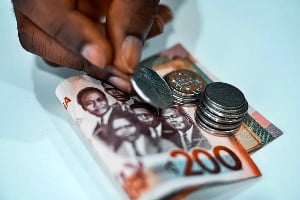
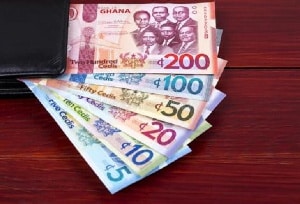
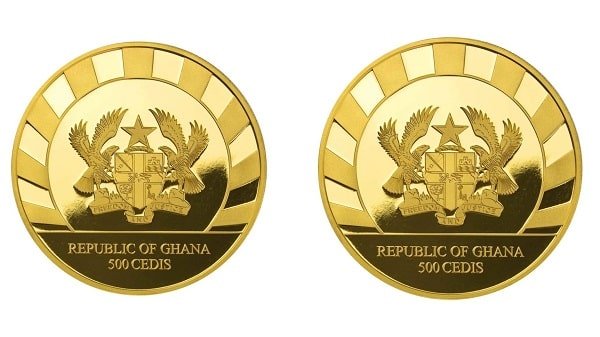
The Bank of Ghana (BoG) has advisedGhanaians to disregard speculations that the institution plans to soon make a GH500 coin the official unit of exchange in the country.
Reports are rife on social media alleging that such a coin, with samples already viral, is in the works.
But the apex bank said it has no such intentions.
The Director for Currency Management at the Bank of Ghana, Dominic Owusu, dismissed the reports and described them as false.
“When there is a currency issuance or change, the Bank of Ghana will come with an appropriate press release to inform the public. We saw on social media that the central bank will issue a GH¢500 note or coin, but the bank has not done any such thing. So it’s not true,“ Mr Owusu clarified.
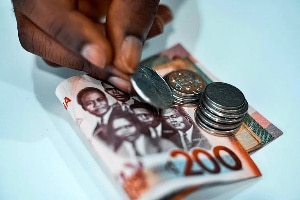
Mr. Owusu also responded to reports that the one pesewas coin is no longer legal tender.
“The central bank has not demonetised the one pesewa coin,” he said in a Joy News interview.
Mr. Owusu further urged Ghanaians to handle the cedi notes with care to prevent them from getting worn out easily.
“We want the education out there for people to learn how to handle the cedi not to worn out. That’s why you journalists are here, and I want you to help the central bank in that quest. The bank is also doing its part and will make sure all is done to save the cedi”, Mr. Owusu stressed.
The Bank of Ghana (BoG) has described reports regarding the issuance of GH¢500 coins as false.
According to the Central Bank, there is currently no intention to issue higher denominations in the interim.
The Director for Currency Management at BoG, Dominic Owusu, made the statement in response to claims that the bank was making plans to introduce a GH¢500 coin.
“When there is a currency issuance or change, the Bank of Ghana will come with an appropriate press release to inform the public. We saw on social media that the central bank will issue a GH¢500 note or coin but the bank has not done any such thing. So, it’s not true,” he stated in an interview with JoyNews.
Dominic Owusu also noted that before any currency introduction or withdrawal of a currency, proper consultation and due processes are initiated and followed through.
He used the opportunity to also note that the unpopular one pesewa coin is still a valid legal tender that must be accepted by all.
“That’s why we are here, so help us to circulate the information that those coins are still legal tender and must be used for transactions. The central bank has not demonetized the one pesewa coin,” he maintained.
“We want the education out there for people to learn how to handle the cedi not to worn out. That’s why you journalists are here and I want you to help the central bank in that quest. The bank is also doing its part and will make sure all is done to save the cedi”, he added.
The first prosecution witness in the criminal trial of the former CEO and owner of defunct Beige Bank,Mike Nyinaku, has alleged that the accused person, in addition to the myriad of allegations levelled against him, also approved the physical transfer of US$200,000 from the bank’s vault to himself without due process.
Mr Julius Ayivor, a chartered accountant at audit and advisory firm, KPMG, who is the First Prosecution Witness in the case, told the High Court hearing the case that the said amount was moved from the cash management unit (CMU) of the now defunct bank to Mike Nyinaku’s office, noting that the accused person has till date not accounted for or returned the money to the bank.
This came to light when counsel for Mr Nyinaku, Thaddeus Sory, was cross-examining the witness in court last week.
Mr Sory directed the witness to take a look at a printed copy of an email in which Mr Nyinaku approved an amount of US$200,000 cash to be released to his own office, saying: “Take a look at Exhibit AA1. This is an e-mail dated 17 July 2017 written by a certain Stephen Duah Agyemang at 5:38pm to the accused person.”
In response, the witness answered: “that is so, my lady”.
Mr Sory then asked: “It is clear from Exhibit AA1 that the accused person approved [the US$200,000] as requested. Is that correct” and the witness answered “that is so. Exhibit AA1 shows the accused person’s approval and Exbibit AA shows the actual movement of the US$200,000 to the accused person’s office”.
Mr Sory asserted in his subsequent line of questions that the evidence tendered by the prosecution, which included a memo from the defunct bank’s cash management unit to Nyinaku’s office as well as other documents attached to that memo, only provided information on the name of the person who received the US$200,000 and not where (the location) the amount was received.
The witness, in response to Mr Sory’s assertions explained that from the evidence (ie Exhibit AA and Exhibit AA1), Stephen Duah Agyemang, who was an official of the defunct Beige Bank, sought approval from Mr Nyinaku for the US$200,000 to be released to his (Nyinaku’s) office.
The witness further explained that the same Exhibits also indicated where the US$200,000 was taken from (the bank’s vault) and where it was delivered (Nyinaku’s office).
The witness also explained that the first part of exhibit AA was a memo showing the evacuation of US$200,000 to Nyinaku’s office, while the second part of the same memo showed an acknowledgment by one Raphael Zilevu (an official of Nyinaku’s office) of receipt of the cash.
Mr Sory, who argued that Exhibits AA and AA1 were two separate and distinct documents, as such, could not be said to confirm that Mr Nyinaku’s office received the US$200,000, said “the actual acknowledgment [of the US$200,000] is separate and distinct from the memo which generated the evacuation [of the funds]”.
In response, the witness disagreed. Mr Ayivor explained that although the memo and the acknowledgment were two separate documents, the memo, which had the signature of Raphael Zilevu, an official from Nyinaku’s office as the ‘Receiving Officer,’ was the document used to request for the US$200,000 while the other document was the document signed by Raphael Zilevu to acknowledge receipt of the cash on behalf of the accused person.
Transfer tracing
The cross-examination of the witness also centered on a number of customers of the defunct bank listed on Exhibit AB1 (a list of over 10,000 customers) whose funds formed part of the over GH¢448 million that Mr Nyinaku is alleged to have siphoned to his company, Beige Capital Asset Management.
Mr Sory sought to challenge the veracity of the claim, using the case of one Emmanuel Kpobi, a former customer of the Bank, by asking the witness to trace the said transaction on the account of Beige Capital Asset Management which was tendered in evidence as Exhibit 9.
In response, Mr Ayivor said “that transaction is on the Beige Capital Asset Management Mobilisation account on page four (4) of 86 and the reference number is FT1705272820, dated 21 February 2017 for an amount of GH¢10,741.95”.
The witness also showed Mr Sory where, on the Beige Capital Asset Management Mobilisation account, he could find the remaining transactions.
Mr Sory had tendered a pendrive, containing the statements of account for Beige Capital Asset Management that shows all the funds allegedly siphoned from the account of the over 10,000 affected customers without their knowledge and consent, in evidence.
The case was adjourned to Monday 3 April 2023 for a continuation of the cross-examination of the witness.
Background
On 1 August 2018, the Bank of Ghana revoked the banking license of Beige Bank and placed it in receivership.
Later, Nyinaku was put on trial for on 43 counts of stealing, fraudulent breach of trust and money laundering, involving the siphoning of a total of GH¢1.2 billion from the defunct Beige Bank between 2015 and 2018, in a case presided over by Justice Afia Serwah Asare-Botwe, a Justice of the Court of Appeal sitting with additional responsibilities as a High Court Judge.
The state has charged founder of defunct Unibank Limited, Dr. Kwabena Duffuor and five others in the matter of between the Republic vs. Dr Kwabena Duffour and others concerning the insolvency of the bank has been adjourned to April 20223.
According to a court transcript following sittings held from March 14 to 16, 2023, Dr Duffuor and the five others were charged for willfully causing financial loss to the Republic and conspiracy to commit crime. Other details of the charges include fraudulent breach of trust, money laundering and dishonest appropriation.
The charges come after the 1st Prosecution witness (Nii Amanor Dodoo) who is the Receiver of Unibank, concluded his evidence-in-chief while Counsel for the 1st, 2nd, 3rd, 4th and 5th accused persons also concluded their cross-examination of the Receiver.
The Receiver discovered that at the time the license of Unibank was revoked, an amount of GH¢5.7 billion had been dishonestly appropriated by the shareholders with the connivance and assistance of some of the accused persons.
At the last court date, Counsel for Elsie Dansoa Kyere, (6th accused), the Executive Head of Corporate Banking of Unibank at the time of the revocation of its license also concluded his cross-examination of the Receiver.,
The Receiver informed the Court that fictitious loans were originated by the 6th accused person and one Benjamin Ofori, a former Executive Head of Credit Risk of Unibank (the 8 th accused).
This was done through memoranda that were channeled through Jeffrey Amon, a former senior Relationship Manager of Corporate Banking (7th accused) for approval from 4th accused (Kwabena Duffour II) and 5th accused (Ekow Nyarko Dadzie-Dennis).
The Receiver stated that these loans in question were neither channeled through the Management Credit Committee, Executive Committee nor the Assets and Liabilities Committee. These loans, according to the Receiver, were fictitious because they were made in the names of persons who did not request that those accounts to be opened.
Nii Amanor Dodoo explained that once when loans are approved, the proceeds go to the customer adding that proceeds of these fictitious loans were rather credited to the Deferred Expenditure Account.
He told the Court that the accounts of the customers listed in the memoranda were all fictitious since they were not the regular account numbers of those customers.
The memoranda also requested for credit facilities to be disbursed into these fictitious accounts, according to the Receiver. The Receiver further explained that the management of the bank in the review of their monthly management accounts were able to determine the actual profit or loss made. This was then compared to the profit indicated in their prepared budget.
On this basis, they then determined how much loans should be generated to create interest. These loans were backdated so the bank’s system would generate and post the interest generated into the interest income account.
The Receiver informed the Court that the shareholders of Unibank siphoned funds from the bank which was charged against the Deferred Expenditure Account.
Since this account did not yield interest, they had to find a way of creating loan accounts that would generate interest.
According to the Receiver, these fictitious accounts were created to generate interest income and to present a situation as though Unibank was operating profitably.
The Receiver added that the fictitious loans were also created to conceal money siphoned from the bank by shareholders. He added that the 6th accused played a significant role in this through the initiation of memoranda together with 7th and 8th accused persons. They did this with the approval of the 4th and 5th accused persons. By this, they significantly misstated the financial statements of Unibank.
The Receiver explained there were meetings during which the plan to create the fictitious loans and generate fictitious interest income was hatched.
At these meetings, the customers in whose names the fictitious loans were to be created were identified and the interest rates to be applied agreed on.
He added that the tabulation of the financial gap that needed to be filled was prepared and based on this, the quantum of loans that needed to be created were determined and signed off on. This formed the basis on which entries were subsequently passed.
The Receiver informed the Court further that his team was informed by officials of the Finance Department of Unibank that this whole plan was arranged by the 4th, 5th, 6th, 7th and 8th accused persons.
He explained that because of the sensitive nature of these transactions, the originating documents were retrieved from the Finance Department after the entries were passed.
He added that an official of the Finance Department who believed that the entries which were being passed would create problems someday hid one of those documents which he shared with the Receiver’s team.
The Court was informed that the financial statements of Unibank did not show the actual position of the Deferred Expenditure Account. He added that his team was informed that the balances on this account were intentionally excluded from the financial statements and the returns submitted to the Bank of Ghana.
The 4th,5th,6th,7th and 8th accused persons concealed the balances on the Deferred Expenditure Account by creating the fictitious loans.
According to the Receiver, the deliberate attempts to conceal the magnitude of those transactions and failure to report the balances on the financial statements and actually transferring some of these funds to the fictitious accounts was wrong.
The Receiver further informed the Court that the shareholders of Unibank accepted responsibility for the funds siphoned from the bank. He indicated that the shareholders initially offered to hand over assets purchased with those funds.
They later proposed to set up a special purpose vehicle to house those assets and to use the special purpose vehicle to secure loans to reimburse the bank.
The shareholders, according to the Receiver, offered to seek loans directly to pay back the siphoned funds. All these proposals, the Court was informed, were yet to materialize.
Meanwhile, the case was adjourned to April 18 and 19 2023.
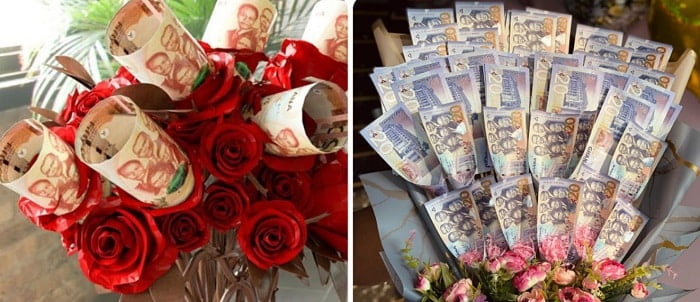
TheBank of Ghanahas warned Ghanaians to refrain from sending gifts to others in the form of cedi bouquets and hampers.
It said the currency was issued to be used as a medium of exchange for the purchase of goods and services.
The Director of the Currency Department at the central bank, Mr.Dominic Owusu, told journalists today (Thursday, March 30, 2023) that any other use of the currency was illegal and subject to prosecution.
He said the bank had noticed that some people were using the cedi notes as bouquets and hampers as gifts during weddings, birthdays and other celebrations, a practice he said must be stopped.
He said beyond being illegal, such acts made it easier for the notes to spoil or get defaced.
Given that spoilt and worn-out notes are replaced at a cost, he said such acts affected the operations of the central bank.
Mr Owusu was speaking to journalists on how to preserve the currency as part of events marking Ghana month in March.
He said the local currency was a great symbol of the country and efforts to preserve its quality and cleanliness must be prioritised by all.
The Bank of Ghana has said the global inflation ease on food and energy prices could have a trickle-down effect on Ghana’s economy.
At its recent Monetary Policy Committee meeting on Monday, March 27, 2023, Governor Ernest Addison said: “Global inflation is easing as food and energy prices moderate due to weakened global demand, improved supply of goods, and continued monetary policy tightening”.
He said, “despite the emerging risks to global financial stability, central banks in major advanced economies have demonstrated a strong commitment to containing underlying inflationary pressures with sustained policy rate hikes, albeit, at lower rates than earlier anticipated”.
He noted that global financing conditions have eased slightly, reflecting changing market expectations regarding the pace of policy tightening.
The US dollar index initially firmed up amid rising demand for safe-haven currencies following the collapse of Silicon Valley Bank and Signature Bank, but so far, swift regulatory action and assurances to contain contagion risks, combined with decisions to boost dollar liquidity somewhat eased market concerns about a wider banking and financial crisis.
“The committee was of the view that the ease in price pressures abroad would likely impact positively on Ghana’s domestic inflation profile”, he reported.
On the other hand, he said “the committee noted that the domestic economy still faces relatively tight global financing conditions, emerging risks in the global financial system, and heightened uncertainty about the global economic outlook”.
“The effects of these on the domestic economy could be amplified by inherent vulnerabilities, including structural excess liquidity following the DDEP, and the widening negative output gap”, he added.
The Bank of Ghana has said Ghana’s gross international reserves fell to US$5.9 billion as of the end of February 2023.
It is enough to provide import cover for 2.8 months, the Governor, Dr Ernest Addison, told journalists at the central bank’s monetary policy committee meeting on Monday, March 27, 2023.
He said: “For the year 2022, the overall balance of payments recorded a deficit of US$3.6 billion”, noting: “The capital and financial account recorded a net outflow of US$2.1 billion (2.9 percent of GDP), mainly on account of lower FDI flows and significant portfolio reversals”.
These, Dr Addison noted, together with the current account deficit of US$1.5 billion (2.1 per cent of GDP), resulted in the deficit of the overall balance”.
“As a result, Gross International Reserves for 2022 declined by US$3.5 billion to US$6.2 billion. Net International Reserves, which adjusts Gross reserves for the Heritage and Stabilization funds as well as other encumbered funds also declined by US$3.7 billion to settle at US$2.4 billion by December 2022”, he reported.
Dr Addison indicated: “Gross international reserves further declined to US$5.9 billion at the end of February 2023, providing cover for 2.8 months of imports of goods and services. However, Net international reserves improved to US$2.6 billion, reflecting a slight decline in encumbered funds”.
Banks with a capital adequacy ratio (CAR) of less than 10 percent of their assets have been asked to submit plans for recapitalisation, Bank of Ghana Governor Dr. Ernest Addison has disclosed.
The ratio – a principal financial soundness indicator – demonstrates banks ‘ ability to finance their long-term capital expenditures and ventures, and was reduced from 13 percent to 10 percent in December 2022 as part of a slew of measures aimed at mitigating the domestic debt exchange programme’s (DDEP) impact on banks, as they were over-exposed to the Treasury instruments… holding a third of all outstanding cedi-denominated bonds.
Responding to questions about banks’ solvency at the end of the 111th ordinary meeting of the central bank’s Monetary Policy Committee (MPC), Governor Addison stated that the regulator had met with operators of the banks whose capital has been impacted to submit plans for a fresh injection of funds.
“Those banks that are currently reporting CAR below 10 percent will be required to submit recapitalisation plans; in fact, we already met with them last week and asked those banks that have had their capital levels impacted to submit recapitalisation plans for the central bank to review,” Governor Addison stated.
The apex bank’s head added that the processes through which impacted banks can apply for support from the GH¢15billion financial stability fund are being finalised.
In addition to reduction in the CAR to 10 percent, losses from the DDEP are to be reflected in the computation of CAR over a period of up to three years.
Consequently, the industry’s average CAR stood at 15.7 percent in December 2022 compared to 16.6 percent at the end of 2021. The adjusted CAR was influenced by valuation losses on central government bonds, increased credit risk, and revaluation losses on loans denominated in foreign currency, the central bank noted.
For additional context, the industry’s CAR was at a healthier 19.8 percent in December 2020, significantly above the minimum regulatory requirement of 11.5 percent – which was reduced from 13 percent with the advent of COVID-19 as the BoG sought to stimulate private sector lending.
A banking consultant, Dr. Richmond Atuahene, citing a recent study he authored on the impact of the DDEP on the solvency of banks, said the call for recapitalisation did not come as a surprise as there were some banks already walking a tightrope even before the onset of the DDEP.
“I am not surprised this has happened, as we have already seen the moves some banks have made in the past month,” he said with reference to announcements by some foreign-owned banks, including South Africa-based Standard Bank and First Rand Bank, that they are looking to recapitalise their Ghanaian operations, with the former being reported to have set aside 1.5 billion South African Rand (ZAR) – approximately US$81million – to cover potential losses emanating from the DDEP.
He, however, expressed concern that some locally-owned banks might struggle to raise funds, seeing that
the minimum capital requirement for banks was raised from GH¢120million to GH¢400million less than five years ago.
“Some of the local banks might struggle getting their shareholders to commit in raising the required capital, and this could have ramifications for their domestic and international operations – including trade financing,” he said while refusing to rule out the possibility of acquisitions by more stable banks.
In order to pass the three revenue bills that are currently before the House, Kojo Oppong Nkrumah, minister of information, has urged the minority in parliament to cooperate with the majority.
They are theIncome Tax Amendment Bill, Excise Duty Amendment Bill, and Growth and Sustainability Amendment Bill.
The government is seeking to pass these bills to generate approximately GH¢4 billion per year to supplement domestic revenue.
Mr Oppong Nkrumah who is also a Member of Parliament for Ofoase Ayirebi told journalists in an interview on Tuesday, March 28 that “To our colleagues in the Minority, I think it is clear that we need to work together to achieve a certain objective for the country.
“Sometimes we are whipped up but let’s look at the country’s interest at this point in time.”
“The world is ready to help us, China, the Paris Club and external creditors are all with us in a good place now and are looking at us to see if we can help ourselves. My appeal to those in government, Minority, economic groups is that, we must ensure that these revenue bills are passed to close this GH¢4 billion gap”, he added.
Governor of the Bank of Ghana (BoG) Dr Ernest Addison also urged the House to prioritize passage of the Bil.
He said that the Monetary Policy Committee noted that the budget statement for 2023 has set fiscal policy on a consolidation path.
He said this was consistent with key elements agreed with the International Monetary Fund (IMF) at the Staff Level in December 2022.
The domestic debt exchange programme launched by the government, new revenue measures, and structural fiscal reforms will provide significant reduction of debt service and help create fiscal space, Dr Addison stated.
Addressing the 111th Monetary Policy Committee (MPC) press conference in Accra on Monday, March 27, he said the fiscal outlook is contingent on financing of the budget and will require the conclusion of the domestic debt exchange programme as well as securing the requisite financing assurances from bilateral donors. Indications are that these discussions are proceeding well.
“Based on the above, it is imperative that Parliament prioritizes the passage of the revenue bills currently before it,” Dr Addison said.
He further intimated that under the Staff Level Agreement with the IMF, the Bank of Ghana and the Ministry of Finance have finalised a Memorandum of Understanding on zero financing to the budget, which will be signed shortly.
“The passage of the relevant revenue bills by Parliament will therefore conclude the required prior actions to advance Ghana’s programme to the IMF Executive Board.
“This will be critical in resetting the economy on the path of recovery, including putting it firmly on a disinflation path and sustained growth,” he said.
Last week, Finance Minister Ken Ofori-Atta, led a high-level delegation from the ministry to China to engage in bilateral talks with his Chinese counterpart and other Chinese officials.
The Finance Ministry said that Mr Ofori-Atta had very positive and encouraging meetings in China.
The Ministry said they were looking forward to securing external assurances very soon.
“So far had very positive and encouraging meetings in China! Looking forward to securing external assurances very soon, even as we pass our outstanding domestic revenue bills back home. Great progress on all fronts…#ResolvingTogether #GhanaFirst,” the Office of the Finance Minister tweeted on Friday.
Mr Ofori-Atta also mentioned to the Chinese Finance Minister Liu Kun the Domestic Debt Exchange Programme that has been introduced by the government as an indication that Ghana was ready to take the necessary action to readjust its fiscal path.
In response, Mr Kun said “we know that these are short-term challenges which we as responsible creditors remain committed to resolving” and that “the long-standing and prosperous relationship between Ghana and China imposes on us, a responsibility to help”.
The Chinese Finance Minister further said it was the hope of his country that Multilateral and Commercial creditors would also fully participate in the interest of burden sharing.
“Chinese authorities have confidence in Ghana’s economic management, and its long-term economic viability,” Mr Kun said.
He added “China believes in promoting debt sustainability and sustainable development,”
He said these when Mr Ofori-Atta, led a high-level delegation from the ministry to China to engage in bilateral talks with his Chinese counterpart and other Chinese officials.
The Bank of Ghana has increased its policy rate by 150 basis points to 29.5% to help check the high inflation and any downside risks to the economy.
This means the cost of credit will continue to remain high, affecting household spending and private sector growth.
Average lending rates shot up marginally to 36.64% in February 2023, from 35.58% recorded in December 2022. This is equivalent to 3.02% interest rate on loans per month.
Announcing the development few minutes ago, Governor of the Bank of Ghana, Dr. Ernest Addison, said the ease in price pressures abroad will likely impact positively on Ghana’s domestic inflation profile going forward.
“Headline inflation has declined marginally for two consecutive months, but continues to remain relatively high compared to the medium-term target of 8±2 percent. To place the economy firmly on the path of stability and reinforce the pace of disinflation, it is important that the monetary policy stance be tuned further to re[1]anchor inflation expectations towards the medium-term target. Given these considerations, the MPC decided to increase the Monetary Policy Rate by 150 basis points to 29.5 percent”, he said.
He said the recent Domestic Debt Exchange Programme (DDEP) has impacted negatively on banks, hence the need for the Central Bank to make necessary adjustments to its regulatory requirements to support the banks.
“Whiles the domestic economy still faces relatively tight global financing conditions and heightened uncertainty about the global economic outlook, the effects of these could be amplified inherent vulnerabilities including structural and excess liquidity following the DDEP and the widening negative outlook gap”.
He, however, said the banks remain strong, sound and stable based on its recent stress test.
He added that the Monetary Policy Committee of the Bank of Ghana will continue to monitor developments within the banking industry to reduce the downside risks to the economy.
He explained that on fiscal policy, the Committee noted that the budget statement for 2023 has set fiscal policy on a consolidation path which is consistent with key elements agreed with the IMF at the Staff Level in December 2022.
“The domestic debt exchange, new revenue measures, and structural fiscal reforms will provide significant reduction of debt service and help create fiscal space”.
Dr. Addison stated that the fiscal outlook is contingent on financing of the budget and will require the conclusion of the domestic debt exchange programme as well as securing the requisite financing assurances from bilateral donors.
“Indications are that these discussions are proceeding well. Based on the above, it is imperative that Parliament prioritizes the passage of the revenue bills currently before it. Under the Staff Level Agreement with the IMF, the Bank of Ghana and the Ministry of Finance have finalised a Memorandum of Understanding on zero financing to the budget, which will be signed shortly”, he said.
He added that the passage of the relevant revenue bills by Parliament will conclude the required prior actions to advance Ghana’s programme to the IMF Executive Board.
This, he said will be critical in resetting the economy on the path of recovery, including putting it firmly on a disinflation path and sustained growth.
The Interbank forex rates from the Bank of Ghana today, March 23, 2023, have shown that the Ghana Cedi is trading against the dollar at a buying price of 11.0089 and a selling price of 11.0199.
At a forex bureau in Accra, the dollar is being bought at a rate of 12.00 and sold at a rate of 12.60.
Against the Pound Sterling, the Cedi is trading at a buying price of 13.4760 and a selling price of 13.4917.
At a forex bureau in Accra, the pound sterling is being bought at a rate of 14.30 and sold at a rate of 15.30.
The Euro is trading at a buying price of 11.8815 and a selling price of 11.8932.
At a forex bureau in Accra, Euro is being bought at a rate of 12.50 and sold at a rate of 13.30.
The South African Rand is trading at a buying price of 0.6008 and a selling price of 0.6014.
At a forex bureau in Accra, South African Rand is being bought at a rate of 0.45 and sold at a rate of 1.10.
The Nigerian Naira is trading at a buying price of 41.8280 and a selling price of 41.8734.
At a forex bureau in Accra, Nigerian Naira is being bought at a rate of 14.00 Naira for every 1 Cedi and sold at a rate of 19.00.
For the CFA, it is trading at a buying price of 55.1540 and a selling price of 55.2083.
At a forex bureau in Accra, CFA is being bought at a rate of 17.00 CFA for every 1 Cedi and sold at a rate of 21.00 CFA for every 1 Cedi.
Our forex bureau rates are provided by Afriswap Bureau De Change in Osu, Accra.
The relationship between academic institutions and industries needs to be reconsidered, according to Dr. Maxwell Opoku-Afari, first deputy governor of the Bank of Ghana.
Dealing with unemployment and problems associated to it will be made possible by this.
He said this at the Congregation of College of Humanities at the University of Ghana, Legon, where he charged academic institutions to create linkage with industry.
Dr. Opoku-Afari, who is also the Chairman, Advisory Board, of the College of Humanities, challenged the university, students and industry to make maximum use of technology to the benefit of the country.
The 2023 University of Ghana Congregation ceremonies was held for graduates who completed their programmes of study during the 2021/2022 Academic year. It is the first in-person graduation since the outbreak of COVID-19.
The first Deputy Governor of the Bank of Ghana, Dr Maxwell Opoku-Afari, said with the constant change in the world, there is the need for academia to infuse technology in all spheres of training to equip students with skills for the world of work.
He also charged the graduates to imbibe the principles of hard work, perseverance and integrity to make a meaningful impact in the world.
In a speech read on behalf of the Vice Chancellor, Prof Nana Aba Amfo, the Pro Vice Chancellor Academic and Student Affairs, Prof Gordon Awandare, said from July 2022 to date, 62 research grant contracts and agreements with a value of Four million dollars were executed.
According to him the university will continue to play a pivotal role and position it as the number one researchinstitution.
Chancellor of the University of Ghana, Mrs. Mary Chinery-Hesse, applauded the University for adapting to the challenges during Covid-19. She urged the management of the University to keep up the good work and continue to tap into technology as they prepare the students for the world.
Mrs Chinery-Hesse said there are numerous problems facing society and challenged the graduates to play a major role in creating a better future for all.
Eleven thousand, seven hundred and eleven people graduated from four Colleges and Graduate Studies with Jacklord Agyabeng Amponsah as the valedictorian for the College of Humanities with a final GPA of 3.93.
Legal team for the Minority Leader, Dr Cassiel Ato Forson in the ambulance case has informed the court that he did not authorize or issue any Letters of Credit.
They contend that this accusation is unfounded and ought to be dropped.
The attorneys contend that the prosecution has not presented enough evidence to support this charge in their legal representations to the court.
They have thus asked the court to acquit and discharge the accused.
“We submit that, to the extent that the evidence on record do not support but contradict these material allegations in the particulars of offences for Counts 1 and 5, the prosecution has failed to adduce sufficient evidence on key ingredients of the offences in Counts 1 and 5. Consequently, A1 must be acquitted and discharged.“
“Contrary to the assertions in the particulars of offence of Counts 1 and 5 that A1 ‘authorized’ or ‘caused’ irrevocable letters of credit to be established, it is clear from the evidence on record that A1 never ‘authorized’ or ‘caused irrevocable’ letters of credit to be established nor did A1 act in any manner without due cause and authorization.
“Exhibits A and B1, which bear the signature of A1 were transmitted to the Bank of Ghana under the authority of and on behalf of the Minister of Finance as confirmed by Exhibit 5 for A1….That claim is patently false,” the lawyers argued in their detailed submissions to the court.
They also stated that the prosecution of Dr. Cassiel Ato Forson is abuse of prosecutorial powers by the state.
According to them, the state was acting like a Leviathan, who has no regard for the rights and liberties of its citizens.
“We maintain that, in a reasoned decision, a court has a duty to clearly set out the legal principles and the evidence upon the decision is based.
“In addition, an adversarial system like ours, where the role of the court is primarily that of an umpire, places an additional duty on the Court to explain why it prefers one piece of evidence or argument to the other after carefully weighing the evidence relied on by the prosecution and the defence,” excerpts of their legal submission added.
Dr. Forson, who is also the National Democratic Congress Member of Parliament for Ajumako Enyan Esiam, has been charged with Sylvester Anemana, a former Chief Director of the Ministry of Health and Richard Jakpa, a businessman, for allegedly causing financial loss of €2.37 million to the state in a deal to purchase some 200 ambulances for the country between 2014 and 2016.
The Governor of the Bank of Ghana (BoG), Dr Ernest Addison, has urged the Ghana Stock Exchange (GSE) to explore the possibility of helping rural and community banks (RCBs) to list on the stock market.
Dr Addison said the GSE’s Ghana Alternative Market (GAM) was an avenue for patient capital and the RCBs could leverage the platform to access funds for expansion.
He, therefore, advised the GSE to collaborate with the ARB Apex Bank Limited, the mini central bank for the community-based lenders, on how best they can support the institutions to float shares in return for long-term capital.
Dr Addison made the call when the Managing Director of the GSE, Abena Amoah, led a five-member delegation from the bourse to pay a courtesy call on him.
The meeting was for Ms Abena Amoah, who was appointed the first female of the GSE in November last year, to introduce herself to the central bank’s management.
The Managing Director (MD) of the GSE was accompanied by the acting Deputy MD, Frank Berle; the Head of the Ghana Fixed Income Market, Augustine Simons; the Head of Strategy & International Relations, Diana Okine and the Head of Marketing & Public Relations, Jerry Boachie-Danquah.
The BoG Governor received the delegation in the company of the First Deputy Governor, Dr Maxwell Opoku-Afari, and some directors of the bank’s departments.
The BoG Governor, congratulated Ms Amoah on her appointment and further expressed confidence in her ability to ensure a seamless transition from her predecessor, given her experience in the sector.
Dr Addison said the outlook for the economy remained positive and urged the GSE management to continue to work with relevant stakeholders to help create a robust economy to help improve the fortunes of the market.
He noted that the DDEP that was concluded in January was to facilitate a fiscal consolidation exercise meant to achieve macroeconomic stability and sustainable growth.
The Governor further stated that the private sector had a key role to play in the transformation of the economy and that private sector investment must lead with the state providing an enabling environment.
For her part, Ms Amoah expressed delight about the warm reception and commended the Governor for his leadership, which she said had positively impacted the financial sector.
On the stock exchange, the MD indicated that although the Ghana Composite Index declined by 13 per cent last year, the market recorded its largest trading value of about GH¢1.3 billion.
This, she said, was attributed to MTN Ghana floating more of its shares on the stock exchange.
The MD added that about GH¢230 billion was traded in fixed income market.
She informed the governor that in 2022, GSE was admitted as a full member of the World Federation of Stock Exchangers, placing the Accra bourse at par with the major players in the global stock exchange space.
Impact of DDEP
Ms Amoah said the DDEP, which was undertaken by the government as a condition precedent to the country’s entry into the International Monetary Fund (IMF) programme, had eroded investor confidence in the country.
To bolster investor confidence, the MD highlighted the need for increased financial literacy engagements, availability of sufficient investment information and the diversification of products on the market.
On the foreign exchange market, Ms Amoah said it was the intention of GSE to liaise with the central bank and other stakeholders to form a committee for the formalisation of the foreign exchange market.
The Bank of Ghana has joined forces with the Ghana Air Force to airlift cash to some of its regional offices nationwide.
The move is expected to help reduce robberies of bullion vans, some of which results in fatalities.
BANK OF GHANA, GHANA AIR FORCE COMMISSION HELIPAD TO AIRLIFT CURRENCIES TO SEFWI BOAKO
Following the accident of a Bank of Ghana Bullion Van in November 2019 at Techiman, in the Bono East Region of Ghana, the Management of the Bank of Ghana established a committee to investigate the circumstances leading to the accident and make recommendations to improve currency movement operations in the country.
Amongst other recommendations, the committee suggested to the Management of the Bank to explore other means of distributing currencies across the country. Based on the committee’s report, the Bank engaged the Ghana Air Force on the possibility of airlifting currencies to some of its Regional Offices in the country.
The engagement with the Air Force led to the signing of a Memorandum of Understanding (MoU), which made the Air Force to commence the lifting of currencies from Accra to Tamale in late 2020. After a successful lifting of currencies via the Tamale-Accra route, the two institutions begun ways of extending the services to other Regional Offices.
Based on the foregoing, the Ghana Air Force in collaboration with the 48 Engineer Regiment of the Ghana Armed Forces, begun the construction of a Helipad at the Bank’s Regional office at Sefwi Boako in the Western North of Ghana.
At a short ceremony on Thursday, 16th March 2023, the Air Force and the 48 Engineer Regiment handed over the newly constructed Helipad at Sefwi Boako to the Bank.
The helipad will boost the Bank’s currency movement operations to the Western part of the country by airlifting currencies from Accra to Sefwi Boako.
The handing-over ceremony was witnessed by officials of the Bank, the Ghana Air Force and 48 Engineer Regiment Officers. The Bank’s team was led by the Director of the Security Department of the Bank, Wing Commander Kwame Asare-Boateng (Rtd), Nana Buabeng of the Corporate Management Services Department and the Regional Manager of the Sefwi Boako Office. On behalf of the Governor, Wg Cdr Asare-Boateng expressed the Bank’s appreciation to the Ghana Air Force, 48 Engineers Regiment and other stakeholders for helping to construct the Helipad in record time. He indicated that the helipad will enable the Bank to transport currencies safely to Sefwi Boako without any attacks on the Bank’s bullion vans.
The Air Force and the 48 Engineer Regiment were represented by Air Cdre C.N.A Mills, and Lt. Col. Albert Tekyi.
Anthony Sarpong, a senior partner at the accounting and auditing firm KPMG Ghana, has counselled the Bank of Ghana and other central banks in Africa to view the failure of banks in developed countries as a warning to the banking industry to avoid a similar situation in the future.
Maintaining sufficient liquidity to cover customer withdrawals, in his opinion, is one way to stop bank failure.
He said the failure of those banks is a wake-up call that must not be disregarded in an interview with Joy Business following the collapse of US Bank, Silicon Valley Bank, and other larger financial institutions.
However, he expressed assurance that the steps taken by the Bank of Ghana to support banks will be successful.
“You noticed that the regulator has taken swift action to contain the effect of what is happening in the United States on the banking sector and any potential spill-over. So we won’t expect any effects”.
“However, it’s a developing situation and therefore must be watched with caution so that the fear it triggered in the US does not have a negative impact on Ghanaian banks as we go through our own challenges, he explained.
Furthermore, Mr. Sarpong urged the Bank of Ghana to ensure sufficient liquidity in the banking industry.
“The main area is to ensure sufficient liquidity of the banks, and the Bank of Ghana has assured of liquidity support to our banks. So one will be sure that we won’t go through a similar situation as we go on with our own debt restructuring”..
On March 10, Silicon Valley Bank, one of the most prominent lenders in the start-up ecosystem, collapsed.
The Interbank forex rates from the Bank of Ghana today, March 17, 2023, have shown that the Ghana Cedi is trading against the dollar at a buying price of 11.0086 and a selling price of 11.0196.
At a forex bureau in Accra, the dollar is being bought at a rate of 12.30 and sold at a rate of 12.70.
Against the Pound Sterling, the Cedi is trading at a buying price of 13.3182 and a selling price of 13.3326.
At a forex bureau in Accra, the pound sterling is being bought at a rate of 14.50 and sold at a rate of 15.30.
The Euro is trading at a buying price of 11.6775 and a selling price of 11.6871.
At a forex bureau in Accra, Euro is being bought at a rate of 12.50 and sold at a rate of 13.50.
The South African Rand is trading at a buying price of 0.5983 and a selling price of 0.5988.
At a forex bureau in Accra, South African Rand is being bought at a rate of 0.45 and sold at a rate of 1.10.
The Nigerian Naira is trading at a buying price of 41.8972 and a selling price of 41.9381.
At a forex bureau in Accra, Nigerian Naira is being bought at a rate of 14.00 Naira for every 1 Cedi and sold at a rate of 19.00.
For the CFA, it is trading at a buying price of 56.1266 and a selling price of 56.1727.
At a forex bureau in Accra, CFA is being bought at a rate of 17.00 CFA for every 1 Cedi and sold at a rate of 21.00 CFA for every 1 Cedi.
Vice President Dr Mahamudu Bawumia has revealed that he suffered sleepless nights when Ghana went through a phase of persistent hikes in exchange rates leading to a rise in the pricing of fuel products.
According to the vice president, the situation and the quest to find a workable solution around it left him sleepless.
“One moment which gave me a lot of sleepless nights personally was when at one point, the forward exchange rate of GH¢19 to the dollar was used to price fuel at the pump,” Dr Bawumia stated during the commissioning of the new head office of the Bulk Oil Storage Transportation Company in Accra on Wednesday, March 15, 2023.
“We were faced with how much higher it could go. We were faced with a very critical situation because we didn’t have enough foreign exchange reserves to meet this persistent demand.
“Today, you are seeing that in Kenya, they are facing a significant shortage of foreign exchange reserves resulting in petroleum queues.
“So, we had to think outside the box to prevent Ghana from going through that situation… and this is where the thinking for gold-for-oil came in,” the vice president added.
The head of the Government’s Economic Management Committee, however, noted that the quest to find a solution led to the conception of the government’s Gold-for-Oil policy.
Touting the policy as the most important macroeconomic policy in the history of the country relative to the exchange rate, fuel, and food pricing, the vice president emphasised that the policy is already achieving its intended results just three months after its implementation.
”In my humble opinion, it is the most important macro-economic policy intervention to deal with the exchange rate depreciation, fuel price, and food price issues that we have had.
“We have not only seen a decline in prices of fuel from GH¢23.00 per litre to around GH¢12, but we have also seen stability in the exchange rate,” he noted.
Among other things, the vice president noted that the country will make an annual savings of some US$4.8 billion in foreign exchange when the policy is optimised to cover 100% of the country’s foreign imports by the end of the year as projected.
“I’ve been told that next week we are likely to see a reduction in fuel prices and next week is actually not far. It is tomorrow. Tomorrow we will see the decline in prices that we expect. This is remarkable. Two and a half months ago you were at 23 cedis and today you are at 12 cedis per litre and falling. That is a good point.
“But let me note that the most important aspect of the Gold-for-oil policy is not just the reduction in fuel prices. But the most important aspect is the savings in foreign exchange that the Bank of Ghana will make as a result of the lower demand for forex to import oil.
“That saving is huge, we are currently importing about 50 to 60 percent of oil under this policy, the goal is to move to 100% and that will be done this year,” the vice president stated while commissioning a new head office for the state-owned Bulk Oil Storage and Transportation Company Limited (BOST).
About the Gold-for-oil policy
Last year, Dr. Bawumia announced a new government policy dubbed gold-for-oil. The policy, as explained by the government, is to allow the government to pay for imported oil products with gold, in a direct barter with gold purchased by the Central Bank.
Vice-President,Mahamudu Bawumiahas said that he had restless nights when the country’s bulk oil distribution businesses priced petrol at GHC19 to a dollar .
According to Bawumia, the nightmare sparked the idea for the gold for oil initiative.
The policy is designed to allow the government to pay for imported petroleum products with gold in direct barter arrangements, using gold purchased by the Bank of Ghana.
The policy aims to help stabilise prices of fuel products, as well as reduce pressure on Ghana’s foreign exchange, because direct gold barters will be the modus for paying for imported oil, which will help guard against depleting the country’s foreign exchange reserves.
“One moment which gave me a lot of sleepless nights personally was when at one point, the forward exchange rate of GHC19 to the dollar was used to price fuel at the pump,” Bawumia said at the commissioning of the head office of the Bulk Oil Storage Transportation Companyin Accra on Wednesday (15 March).
“And therefore, we were faced with how much higher it could go. We were faced with a very critical situation because we didn’t have enough foreign exchange reserves to meet this persistent demand.
“Today, you are seeing that in Kenya, they are facing significant shortage of foreign exchange reserves resulting in petroleum queues.
“So, we had to think outside the box to prevent Ghana from going through that situation… and this is where the thinking for gold for oil came in,” Bawumia said.
A member of the Mines and Energy Committee of Parliament, Edward Bawa, is requesting information from the government regarding the conditions of the funds used to acquire the first shipment of oil in accordance with the government’s gold for oil policy.
The Member of Parliament for Bongo claims that the central bank pre-financed the purchase of the initial 40,000 tonnes of diesel that came in January under the program, according to information provided by the National Petroleum Authority (NPA).
Speaking to journalists, the lawmaker stated that the government must hold the transaction accountable to the public.
“You recall that the Deputy Minister of Energy, Andrew Egyapa Mercer said that the first consignment was not paid with gold but ore-financed by the Bank of Ghana. Question is, was it a loan to BOST? If it was, what were the terms of the engagement? That has not been made public. If you look at the quantity of petroleum that they bring, it is not enough to take care of the window.”
There have been several calls for government to provide contract details of the recent fuel consignment brought under the gold for oil policy.
What did Mercer say?
Deputy Energy Minister, Andrew Egyapa Mercer, has confirmed that the initial consignment of 40,000 tons of oil brought into the country under the Gold-for-oil policy was purchased with cash instead of gold.
He said the companies they dealt with initially did not have the capacity to exchange gold for oil.
“The policy actually started with an intent to do strict barter for gold and petroleum products, but it became apparent that any of the international oil trading companies that do not have a commodity wing to deal with gold on their behalf will be excluded from the policy.
“We developed the policy such that we were operating two streams, one was direct barter and the second was monetising the gold, so we can pay for IOTs that were not other commodity focused but solely petroleum products…so the test run that we did was actually paid through the second route.”