In the first quarter of 2023, the provisional Gross Domestic Product (GDP) growth in the real sector exceeded expectations, showing significant improvement, according to the Bank of Ghana (BoG).
According to the latest data from the Ghana Statistical Service, the real GDP grew by 4.2 percent during this period, surpassing the 3.0 percent recorded in the corresponding quarter of 2022.
The Central Bank made this known in its Monetary Policy Committee Press Release dated 24th July, 2023.
Non-oil GDP growth also experienced substantial growth, reaching 5.5 percent compared to 3.7 percent in the same period of 2022.
The notable growth was primarily driven by the Services and Agricultural sub-sectors, which recorded growth rates of 10.1 percent and 4.8 percent, respectively.
However, the Industry sub-sector faced challenges and contracted, experiencing a decline of 3.2 percent.
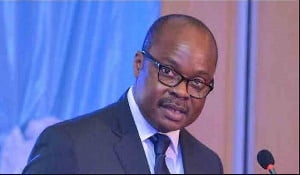
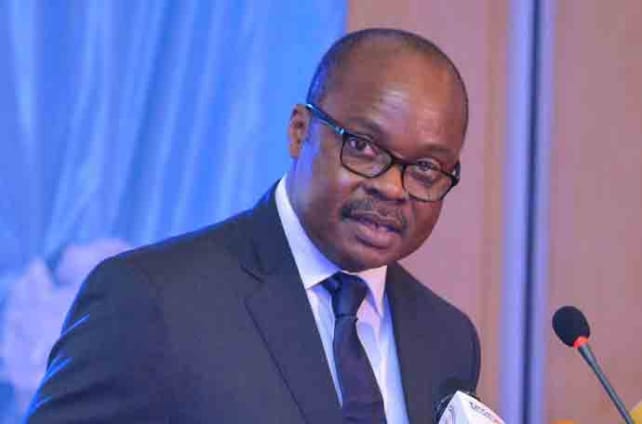
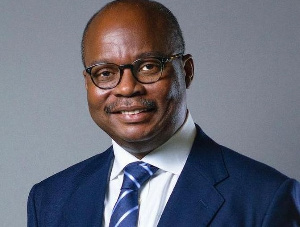
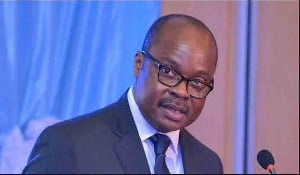
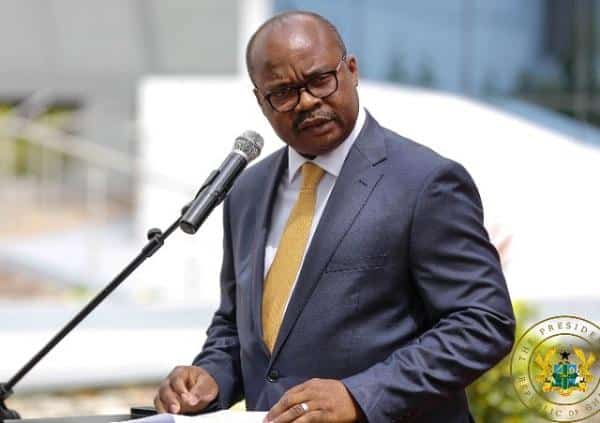
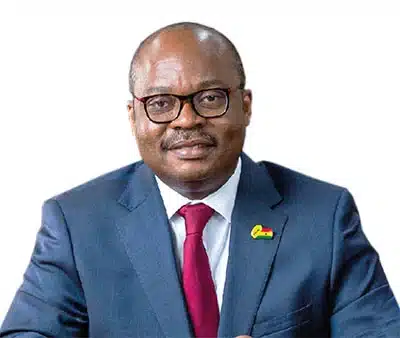
The Governor of the Bank of Ghana (BoG), Dr. Ernest Addison, has raised concerns about individuals holding significant amounts of foreign currencies in their homes.
This comes after reports emerged that the former Minister of Sanitation and Water Resources, Madam Cecilia Dapaah, allegedly kept over One million dollars in her bedroom.
Dr. Addison expressed worry over the practice during the 113th Monetary Policy Committee meeting on Monday, July 24.
In the midst of these concerns, the Office of the Special Prosecutor (OSP) confirmed the arrest of Madam Cecilia Dapaah on suspected corruption charges.
Addison said: “It is a worry to all of us but it is a matter in court so there is not much to say about it.”
The Special Prosecutor’s statement mentioned large sums of money and valuable items reportedly stolen from her residence.
Following numerous reports, the investigation was initiated, and she is currently being questioned by authorized officers of the OSP.
Madam Cecilia Dapaah resigned from her ministerial position on Saturday, July 22, 2023, after revelations that her house helps allegedly stole significant amounts of foreign and local currencies from her residence in Accra.
Two house helps, Patience Botwe and Sarah Agyei, are facing charges in connection with the audacious theft, where they are accused of stealing millions of dollars and Ghanaian cedis from her home between July and October 2022.
The Monetary Policy Committee of the Bank of Ghana, as part of efforts to address the surging inflation, has raised its Policy Rate by 50 basis points, reaching 30%.
This is the latest move in a series of increases since November 2021, amounting to a total of 15.5%.
Interestingly, despite the hike in the policy rate, lending rates are not anticipated to rise. Surprisingly, the cost of credit has been decreasing, contrary to the expected upward trend.
After declining consistently between January to April, headline inflation increased in May and June on account of a variety of factors, including higher food prices, implementation of new tax measures, and utility tariff adjustments.
Overall inflation increased from 41.2 percent in April to 42.2 percent in May and then further to 42.5 percent in June.
Underlying measures of inflation have all ticked up in May 2023, the BoG said.
“While core inflation ticked up, businesses expectations of inflation remain flat at an elevated level. Although inflation is expected to decline in the near-term, baseline forecasts show a slightly higher elevated profile in the year ahead, which, if not contained, could embed in underlying inflationary pressures.
“It is important that policy responds appropriately and decisively to prevent these risks from becoming embedded and consequently derail the disinflation process,” the Central Bank addded.
Inflation has persistently hovered around 42 percent throughout the second quarter of 2023 even though central bank financing has been eliminated in the first six months of the year.
Ghana’s macroeconomic framework, the Central Bank noted, requires decisive tightening from both the fiscal and monetary side to anchor inflation expectations firmly on a declining path.
In its latest auction on July 21, 2023, the government exceeded its treasury bill target by GH¢45.05 million.
The total subscription for the 91-day, 182-day, and 364-day bills amounted to GH¢2.69 billion, surpassing the auction’s target of GH¢2.65 billion.
The results from the Bank of Ghana indicate an increase in interest rates for the 364-day bill, reaching 30.4%. Similarly, the 91-day and 182-day bills saw interest rates rise to 24.92% and 26.80%, respectively.
Despite the higher interest rates, all bids tendered were accepted. Specifically, GH¢1.78 billion was accepted from the 91-day bill, GH¢356.97 million from the 182-day bill, and GH¢557.07 million from the 364-day bill.
Looking ahead, the government is planning to borrow GH¢2.282 billion from its next auction.
In the first half of 2023, Ghana experienced a trade surplus of $1.77 billion, which accounts for approximately 2.4% of its Gross Domestic Product (GDP), per a report from the Central Bank.
This figure is higher than the $1.47 billion trade surplus (2.0% of GDP) recorded during the same period in the previous year.
According to the July 2023 Summary of Economic and Financial Data from the Bank of Ghana, total exports as of June 2023 were estimated at $8.17 billion, while total imports amounted to $6.40 billion.
Gold remained the dominant export, generating $3.45 billion in June 2023, an increase from $3.03 billion in the corresponding period the previous year.
Crude oil exports ranked second, contributing $1.66 billion in June 2023, compared to $2.83 billion during the same month in the previous year.
Cocoa proceeds for the first six months of 2023 stood at $1.48 billion, up from $1.41 billion in the previous year.
Total imports for the first six months of 2023 amounted to $6.40 billion, a decrease from $7.40 billion in the same period last year.
Despite the improvement in trade surplus, the country’s Balance of Payment at the end of June 2023 still showed a deficit of $107.8 million, approximately 0.1% of GDP. However, this deficit is significantly lower than the $2.49 billion recorded during the same period in 2022.
The Capital and Financial Account Balance had a deficit of $897.3 million in June 2023, primarily due to a net portfolio of investments outflow. On the other hand, the current account balance stood at $849.2 million, approximately 1.1% of GDP in April 2023.
Gross International Reserves in June 2023 stood at $5.34 billion, providing approximately 2.5 months of import cover. This figure is lower than the $7.68 billion recorded in June 2022.
An unidentified man who had previously made threats of robbing the Bank of Ghana (BoG) with his gang and weapons, has now recanted his statements, asserting that it was only meant as a joke.
Earlier this week, a video that went viral on social media showed a man, thought to be in his mid-20s, stating his plans to rob the Bank of Ghana. In the video, he issued a warning to the Ghana Police and the Military to be vigilant as they prepare for their intended action.
However, just two days after the video went viral, the man, who remains unidentified, addressed the situation, claiming that his words were part of a broader conversation he had with a friend living in Qatar.
According to him, his friend had shared the video with malicious intent.
“Ghana Police and Ghana media, I am pleading with you. The video is not what it appears to be. The people who saw the video and perceived me as an armed robber, I am not one. Anybody who knows me can attest to the fact that I haven’t been robbed before.
“The only thing is that my mouth is trying to cause trouble for me if it hasn’t done that already. I am pleading with everybody who saw and broadcasted the first one, they should do the same to this one,” he said.
In his explanation, the man said that during the conversation, he disagreed with his friend, urging him to refrain from insulting the leaders of Ghana.
His friend reportedly replied saying that life in Qatar was difficult, they should return to Ghana.
He indicated that at the time of the reply from his friend, he had already deleted the portion of the video where he mentioned robbing the Bank of Ghana.
“In the video, I argued with him [reference to his friend] and I told him to stop peddling insults at the leaders of this country because Ghana belongs to all of us. Being it beautiful or not, it is for all of us. If you go to my page, you will find other videos I did advising him against insulting the leaders of this country.
“After, he replied to my message to say that, if Qatar is not a good country to live in, then he will let me return to Ghana. At the time of his reply, I had deleted that video that captured me saying I was going to rob the BoG,” he continued.
To him, his friend allegedly took advantage of the situation and edited the video, leaving the threatening part and sharing it without context.
The man insisted that he never had any intention of carrying out a robbery and that the edited video was misleading.
“But because of his mischief, he saved that one and cropped it to the part I indicated I was going to rob Bank of Ghana, he didn’t bring out the full video. So, I am pleading with you, Ghana Police that is not the full video,” he added.
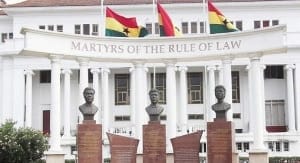
The Supreme Court has ruled that the High Court has the authority to investigate the revocation of licenses of banks and specialized deposit-taking institutions (SDIs) by the Bank of Ghana (BoG), especially in cases involving alleged breaches of fundamental human rights.
The court’s decision was based on the understanding that Section 141 of the Banks and SDI Act, 2016 (Act 930), which stipulates arbitration as the means of seeking redress for those aggrieved by the BoG’s license revocation, does not exclude the High Court’s jurisdiction to assess the propriety of such revocations.
In a unanimous decision, a five-member panel of the apex court overturned the ruling by the Court of Appeal, which had upheld that an arbitration tribunal, not the High Court, was the appropriate venue for seeking redress against BoG’s license revocation.
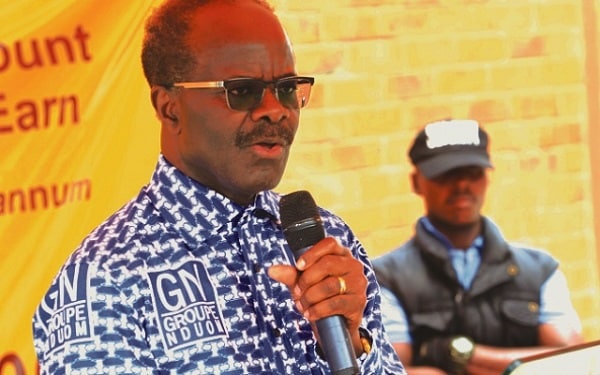
The appeal was brought by Dr. Papa Kwesi Nduom, the Founder of the now-defunct GN Savings and Loans, who challenged the revocation of GN’s license by the BoG in 2019.
Dr. Nduom and two affiliated entities approached the High Court with a human rights application, arguing that the license revocation was unfair and unreasonable, violating their right to administrative justice as guaranteed under Article 23 of the 1992 Constitution.
The BoG objected to the jurisdiction of the High Court, citing Section 141 of Act 930 as the provision that mandated arbitration as the proper venue for seeking redress against license revocation by the central bank.
However, the High Court dismissed the objection, leading the BoG to appeal the decision at the Court of Appeal.
On June 2, 2022, the Court of Appeal, in a unanimous decision, ruled in favor of the BoG, holding that the High Court lacked jurisdiction to entertain the case due to the explicit provision of arbitration as the means of seeking redress under Section 141 of Act 930.
The Court of Appeal halted the proceedings at the High Court and referred the dispute to the Ghana Arbitration Centre.
Dissatisfied with this outcome, Dr. Nduom appealed to the Supreme Court, which eventually ruled in his favor, upholding the jurisdiction of the High Court to inquire into the matter of BoG’s license revocation.
The Supreme Court has awarded businessman and politician, Paa Kwesi Ndoum permission to appeal GN Bank’s license revocation to the High Court.
This comes after the Supreme Court overturned an earlier ruling by the Court of Appeal that barred it from fighting the revocation in the High Court.
GN Bank, which operated under the Groupe Nduom brand, was one of several financial firms whose licenses were terminated in 2018 as part of a banking sector clean-up effort.
Paa Kwesi Nduom, the bank’s founder, filed an action in the High Court to challenge the revocation.
However, respondents in the case, including the Bank of Ghana, asked the Court of Appeal to rule that the proper mechanism for disputing the revocation under the Specialized Deposit-Taking Institutions Act is through arbitration.
The Court of Appeal granted their application, suspended the proceedings in the High Court, and ordered the parties to arbitrate.
Following the Court of Appeal’s judgment, Groupe Nduom petitioned the Supreme Court for a reconsideration of the Court of Appeal’s decision.
After hearing the case, the Supreme Court ruled in favor of Paa Kwesi Nduom.
In an alarming development, an individual whose identity remains unknown has transmitted a video message directly to the Bank of Ghana, publicly announcing his plans to carry out a robbery at the institution. The man not only disclosed his intention but also issued a warning to the Ghana Police and Soldiers, urging them to be prepared for his impending arrival.
The alarming video, which has since gone viral on social media, shows the man making daring threats as he directly addresses the Bank of Ghana.
In the video, the yet-to-be-identified man said; “Tell the Ghana Police and the soldiers that, I am coming to the Bank of Ghana, I am coming with my squad to rob.
“So, they should prepare themselves to await our coming,” he said.
The man’s boldness is evident as he delivers his threatening message with noticeable confidence.
He concludes the video by urging viewers to share his message with the security services.
“We are coming with all our guns and ammunition to take all the monies they have gathered.
So, share it with the soldiers, they should be alert. I will not say when I am coming but I have said it that we are coming to the bank of Ghana,” he added.
This follows series of robberies witnessed in recent times.
The recent of a robbery case occurred on Thursday, June 22, 2023. Two unsuspecting individuals on a motorbike entered a Star Oil filling station at Ablekuma and robbed a bullion van. The incident sadly led the death of the police officer who was accompanying the van.
A monetary policy report released by the Bank of Ghana (BoG) reveals that lending to the private sector experienced a notable rise in February 2023, reaching GH¢65.50 billion.
This marks a substantial increase from the previous year, where lending stood at GH¢50.59 billion in February 2022.
‘’Outstanding credit to the private sector at the end of February 2023 was GH¢65.50 billion, compared with GH¢50.59 billion recorded in February 2022. In real terms, private sector credit contracted by 15.3 percent compared with 1.2 percent contraction recorded over the same comparative period,’’ the report said.
In line with the observations made by the Central Bank, lending to the private sector in February 2023 exhibited several factors contributing to its growth. The increase was attributed to portfolio reallocation by banks and the revaluation of foreign currency denominated credit due to exchange rate fluctuations.
The service sector, which experienced significant growth of 10.1 percent in the first quarter, received the highest share of credit at 30 percent among various sub-sectors within the private sector. The Central Bank highlighted that credit allocation remained concentrated in sectors such as services, import trade, manufacturing, mining and quarrying, and agriculture, forestry, and fisheries.
Compared to the same period in 2022, private sector credit constituted a larger proportion, accounting for 86.4 percent of the overall credit flow to both private and public institutions in February 2023, compared to 84.9 percent previously.
Fitch Solutions, in its assessment of the Ghanaian banking sector, echoed the Central Bank’s findings and predicted that banks would focus more on lending to the private sector rather than the public sector due to the fiscal consolidation program under the International Monetary Fund (IMF).
The rating agency further anticipated that banks would adopt a more selective approach, particularly regarding sub-sectors with high non-performing loan ratios.
It agreed with the Central Bank’s findings on lending to households and firms as demand for loans by firms and households experienced a net decline in the same month.
While the Central Bank blamed the decline in lending to households to a net decline in the demand for mortgages, the rating agency blamed it on rising interest rates.
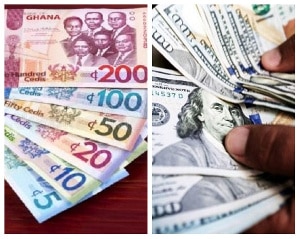
Bank of Ghana’s Interbank forex rates on July 13, 2023, indicates that the Ghana Cedi is currently being traded against the US Dollar at a buying price of 10.9961 and a selling price of 11.0071.
In Accra’s Forex bureau, the Dollar is being bought at a rate of 11.50 Cedis and sold at a rate of 11.90 Cedis.
Against the Pound Sterling, the Cedi is being traded at a buying price of 14.2839 and a selling price of 14.2993.
At a forex bureau in Accra, the Pound Sterling is being bought at a rate of 14.70 Cedis and sold at a rate of 15.40 Cedis.
The Euro is being traded at a buying price of 12.2263 and a selling price of 12.2373.
In Accra’s forex bureau, the Euro is being bought at a rate of 12.30 Cedis and sold at a rate of 12.90 Cedis.
The South African Rand is currently being traded at a buying price of 0.6045 and a selling price of 0.6050.
In Accra’s forex bureau, the South African Rand is being bought at a rate of 0.30 Cedis and sold at a rate of 0.90 Cedis.
The Nigerian Naira is being traded at a buying price of 71.0860 and a selling price of 71.1406.
In Accra’s forex bureau, the Nigerian Naira is being bought at a rate of 13.00 Naira for every 1 Cedi and sold at a rate of 19.00 Naira for every 1 Cedi.
For the CFA Franc, it is being traded at a buying price of 53.6031 and a selling price of 53.6513.
In Accra’s forex bureau, the CFA Franc is being bought at a rate of 17.00 CFA for every 1 Cedi and sold at a rate of 21.00 CFA for every 1 Cedi.
Note that these rates may be different at a forex bureau near you. Our forex bureau rates are provided by Afriswap Bureau De Change in Osu, Accra.
Our forex bureau rates are provided by Afriswap Bureau De Change in Osu, Accra.
Deputy Ranking Member on the Finance Committee of Parliament, Isaac Adongo, has strongly criticized the Governor of the Bank of Ghana (BoG), Dr. Ernest Addison, for failing to file the financial statements of the central bank in due time.
Mr Adongo argues that the law mandates the Bank of Ghana to publish its assets and liabilities every 15 days and submit the financial statements by the end of each month. However, the Bank of Ghana has failed to comply with this requirement.
In a media address, the MP for Bolgatanga Central expressed his intention to take steps to summon Dr. Ernest Addison, citing perceived mismanagement of the economy.
“There’s a very sad development in our country today. We are all aware that our economy is in a mess, and part of the reason we are in this mess is that Dr. Addison of the Bank of Ghana has mismanaged the Bank of Ghana. As we speak today, the BoG under the leadership of Dr. Addsion is always quick to revoke the licences of financial institutions that are not complying with the BoG Act. But the BoG itself is not complying with its own Act.
Deputy Ranking Member of Parliament’s Finance Committee, Isaac Adongo
“And it raises serious red flags for our country, the BoG printed and pumped a lot of money to fund the government activities last year and the year before. Leading to very high levels of inflation, interest rates and an unprecedented depreciation of the cedi.
“We have been waiting for the gazetting and publication of the BoG’s own financial statements, which, by law, should have been published by the end of April of the year. We are now half a year through the year, and all the banks have complied with the filing of their returns to the Bank of Ghana.
“Those reports include what we call long-form reports, which are very detailed audited reports of the banks. Breaking down every single item of the balance sheets of the banks. The Bank of Ghana is not able to comply with its own law to do the very things the other banks are doing”.
He said they will ensure that the Governor of BoG accounts for his deeds.
“And at the end of the month, they are supposed to file. It’s been almost six months now, and the Bank of Ghana is in clear violation of these provisions. I want to serve a warning to Dr. Addison that he should remember that he had dragged people to court over violations of the BoG Act. He should know that the same level of accountability will be served him,” Mr Adongo cautioned.
More than 420 individuals working for loan apps have been taken into police custody.
The Bank of Ghana (BOG), the Economic and Organized Crime Office (EOCO), and the Cyber Security Authority coordinated their efforts to carry out a well-planned operation that resulted in the capture of the suspects.
Authorities launched raids on numerous alleged owners of digital lending applications, often known as loan apps, in the Greater Accra Region as part of this coordinated operation.
The people behind these apps engage in a variety of illegal acts, including cyberbullying, extortion, the unauthorized use of data and privacy, and, in the most extreme situations, issuing death threats.
In a statement issued by the authority, it was stated, “The three collaborating institutions carried out a targeted operation in the early hours of Monday, July 10, 2023, as part of a joint effort by the Cybersecurity Committee, resulting in the arrest of more than 420 suspects.
In the third quarter of 2023,Bank of Ghana(BoG) has announced its plan to sell $120 million to Bulk Oil Distribution Companies (BDCs) through the FX Forward Auction Calendar.
As per the schedule outlined in the calendar, $40 million will be auctioned in July, August, and September 2023 respectively. In July, $20 million will be sold on both the 14th and 28th. In August, $20 million will be sold on both the 15th and 30th. Lastly, in September, $40 million will be sold, with $20 million each being sold on the 14th and 29th.
The aim of this FX support to the BDCs is to alleviate the dollar liquidity constraints faced by oil importers, which will help enhance the supply of petroleum products and stabilize prices at fuel stations.
Bank of Ghana (BoG)
The Bank of Ghana emphasizes that the BDCs Forex Forward Auction will be governed by guidelines published and available on its official website.
Interested parties are invited to submit bids in the prescribed format to purchase United States Dollars against Ghana cedis, separately on each auction date, via the dedicated email bogforwards@bog.gov.gh.
It is important to note that the International Monetary Fund (IMF) has previously advised the Central Bank to consider suspending the program due to concerns over the emergence of multiple exchange rates resulting from the BoG’s occasional provision of forex support at rates that differ from those prevailing in the market.
The IMF expects the BoG to ensure that its forex liquidity is provided at market exchange rates and to implement measures supporting the unification of exchange rates across the board.
The Bank of Ghana (BoG) is optimistic about its four-year agreement with the International Finance Corporation (IFC) to enhance the capacity and training of financial sector participants through the implementation of the Integrated Environmental Social Governance Principles (IESG).
The BoG believes this partnership will complement efforts to ensure a resilient and sound financial sector in the country.
The IESG Ghana Programme, supported by funding from the Swiss Economic Corporation (SECO), is a four-year initiative by the IFC.
It aims to foster an enabling environment for sustainable banking and strengthen capacity for improved Environmental, Social, and Governance (ESG) practices among financial intermediaries and corporate clients.
The programme aims to promote the growth of sustainable local businesses, encourage investments in key sectors, and contribute to a diversified and resilient economy.
Through collaboration with the BoG, the IFC will assist in implementing the Ghana Sustainable Banking Principles, enhance the capabilities of local training partners on ESG matters, and support the BoG’s regulatory developments related to ESG for banks and other regulated entities.
During the signing ceremony, the Second Deputy Governor of the Bank of Ghana, Elsie Addo Awadzi, expressed the central bank’s expectation that this new partnership will firmly establish sustainable banking practices within the Ghanaian banking sector in the coming years.
“We see the launch of the IESG partnership today as a major milestone for promoting the resilience of the banking sector and the economy as a whole. Sustainable banking can be a crucial tool for addressing the structural vulnerabilities of our economy, and can create long-term value for all economic actors, by promoting a more sustainable and equitable future”.
Engaging the media at the signing ceremony, Senior Country Manager of IFC, Kyle Kelhofer said the partnership will provide players in the financial sector the tools to better address and assess risks while improving sustainability in long-term performance.
“This means not only is Ghana becoming more sustainable green today but becoming more sustainable green for future generations on climate change. This also means the banking system is being more sustainable and bankable so there is room for the banks to grow now as it embraces credit worthy sustainable principles,” MyJoyOnline quoted him to have said.
Meanwhile, the Swiss Economic Corporation and Development Ghana said it is committing $1.5 million to ensure financial sector players are trained on Environmental Social Governance Principles for the next four years.
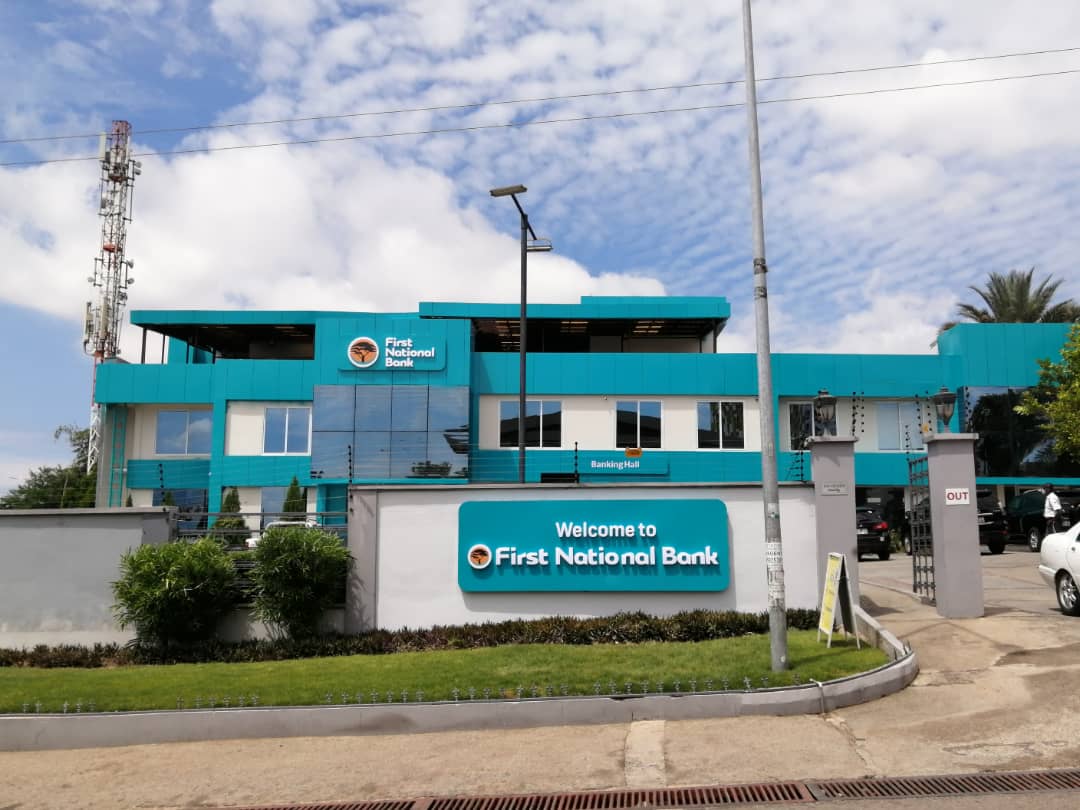
The National Association of Financial Market Professionals, (ACI-Ghana), has reassured its members and the general public about maintaining confidence in the forex exchange market, despite the recent suspension of forex licenses of Fidelity Bank Ghana Limited and First National Bank by the Bank of Ghana.
In a statement, the association announced the establishment of an independent committee to thoroughly investigate the actions that led to the sanctioning of the two banks.
ACI Ghana acknowledged the regulatory role of the Bank of Ghana in ensuring transparency and adherence to standards within the financial sector.
While the licenses of Fidelity Bank Ghana Limited and First National Bank have been suspended, the statement clarified that this measure does not affect the interbank forex market, as all other banks continue their operations without interruption.
ACI Ghana urged the public to seek education from professionals and cautioned against spreading false information, particularly on social media platforms. This responsible behavior is crucial to maintaining a sense of calm and fostering confidence in the forex market.
The association reiterated its unwavering commitment to upholding the highest standards of professionalism and ethics among its members. It also expressed its dedication to collaborating with the Bank of Ghana and all stakeholders in order to maintain a sustainable financial ecosystem.
The two banks will not be able to engage in any forex transactions from 29th June 2023 to 28th July 2023, according to a press statement signed by Sandra Thompson, the Secretary of the BoG.
They have also been fined 1000 penalty points each, for breaching sections 3.4, 3.5, and 3.9 of the Ghana Interbank Forex Market Conduct.
In response to the revocation of forex licence, Fidelity Bank and First National Bank have rendered an unqualified apology to their customers.
The banks have however in the interim reached agreements with their partner banks to aid in seamless completion of foreign exchange transactions on their behalf.
According to the two financial institutions, they are are working with the Central Bank to resolve the current challenges.
The Bank of Ghana’s interbank forex rates on July 4, 2023, shows the Ghana Cedi is currently being traded against the US dollar at a buying rate of 10.9914 and a selling rate of 11.0024.
At a forex bureau in Accra, the US dollar is being bought at 11.45 and sold at 11.90.
In relation to the Pound Sterling, the Cedi has a buying rate of 13.9536 and a selling rate of 13.9686.
At a forex bureau in Accra, the Pound Sterling is being bought at 14.60 and sold at 15.30.
The Euro has a buying rate of 11.9979 and a selling rate of 12.0098.
At a forex bureau in Accra, the Euro is being bought at 12.20 and sold at 12.80.
For the South African Rand, the buying rate is 0.5860 and the selling rate is 0.5864.
At a forex bureau in Accra, the South African Rand is being bought at 0.30 and sold at 0.90.
The Nigerian Naira has a buying rate of 68.1528 and a selling rate of 68.9003.
At a forex bureau in Accra, the Nigerian Naira is being bought at a rate of 13.00 Naira for every 1 Cedi and sold at a rate of 19.00.
Regarding the CFA, it has a buying rate of 54.6185 and a selling rate of 54.6727.
At a forex bureau in Accra, the CFA is being bought at a rate of 17.00 CFA for every 1 Cedi and sold at a rate of 21.00 CFA for every 1 Cedi.
The latest Interbank forex rates provided by the Bank of Ghana on July 3, 2023, indicates that the Ghana Cedi is being traded against the US dollar at a buying price of 10.9917 and a selling price of 11.0027.
In Accra, at a Forex bureau, the dollar is being bought at a rate of 11.40 and sold at a rate of 11.90.
Against the Pound Sterling, the Cedi has a buying price of 13.9803 and a selling price of 13.9954.
At a forex bureau in Accra, the pound sterling is being bought at a rate of 14.50 and sold at a rate of 15.30.
As for the Euro, it is being traded at a buying price of 12.0013 and a selling price of 12.0132.
At a forex bureau in Accra, the euro is being bought at a rate of 12.10 and sold at a rate of 12.80.
The South African Rand is trading at a buying price of 0.5836 and a selling price of 0.5839.
At a forex bureau in Accra, the South African Rand is being bought at a rate of 0.30 and sold at a rate of 0.90.
The Nigerian Naira is trading at a buying price of 68.7639 and a selling price of 68.8575.
At a forex bureau in Accra, Nigerian Naira is being bought at a rate of 12.00 Naira for every 1 Cedi and sold at a rate of 19.00.
For the CFA, it is trading at a buying price of 54.6030 and a selling price of 54.6572.
At a forex bureau in Accra, CFA is being bought at a rate of 17.00 CFA for every 1 Cedi and sold at a rate of 21.00 CFA for every 1 Cedi.
Our forex bureau rates are provided by Afriswap Bureau De Change in Osu, Accra.
Note that these rates may be different at a forex bureau near you. Our forex bureau rates are provided by Afriswap Bureau De Change in Osu, Accra.
Less than 24 hours following the temporary suspension of its forex license bythe Bank of Ghana (BoG), First National Bank has promptly informed its clients about the measures it has implemented to safeguard their funds.
In a statement, the Bank revealed that it has established temporary agreements with partner banks to facilitate and finalize foreign exchange transactions on behalf of the company and its customers. This move aims to ensure uninterrupted forex services during the suspension period.
We can confirm that we have temporarily halted the processing of new or pending foreign exchange transactions for the next 30 days.
As we cooperate with the BoG, be assured that your business and all other banking relationship with us will not be impacted. #TheChangeablespic.twitter.com/h7B7Qi1wHQ
— First National Bank GH (@firstnatbankgh) June 29, 2023
On June 29, the Bank of Ghana (BoG) suspended the forex licences of Fidelity Bank Ghana Limited and First National Bank Ghana Limited for violating the rules of the Ghana Interbank Forex Market.
The two banks will not be able to engage in any forex transactions from 29th June 2023 to 28th July 2023, according to a press statement signed by Sandra Thompson, the Secretary of the BoG.
They have also been fined 1000 penalty points each, for breaching sections 3.4, 3.5, and 3.9 of the Ghana Interbank Forex Market Conduct.
Fines and Suspension of Forex Licences of Fidelity Bank Ghana Limited and First National Bank Ghana Limited pic.twitter.com/WjGVpIeDme
In response, First National Bank apologised to its customers and announced that it has began engaging the Central Bank to address the challenges.
Meanwhile, Fidelity Bank has also rendered an unqualified apology to its customers.
“We apologize for any inconvenience this announcement may have caused, and we reassure all our valued customers that we are actively engaging the Bank of Ghana to resolve the issue as soon as possible,” Fidelity Bank said in a statement.
Also, the bank indicated that it has in the interim reached agreements with its partner banks to aid in seamless completion of foreign exchange transactions on its behalf.
Ghana Interbank Forex Market Conduct
Section 3.4 indicates that LFXDs are required to update indicative quotes for buying and selling US dollars at regular intervals, on the Reuters and Bloomberg information systems. Indicative quotes shall be updated at intervals of no more than 30 minutes. (This will show the price at which a market-maker is prepared to buy and sell at the minimum traded lots).
Trade Reporting on Platforms captured in 3.5 requires that all interbank FX trades must be booked on the Reuters platform and appropriately confirmed within five (5) minutes after the trade is concluded. These trades must also be reported in the daily FX report submitted to the Bank of Ghana.
Section 3.9 on the other hand, mandates the Bank of Ghana to publish the Ghana Cedi reference rate with respect to the US dollar on the Bank of Ghana website by 16:30 hours GMT daily except on holidays.
“The reference rate shall be computed using the weighted average exchange rate of all eligible US dollar transactions that are reported to the Bank of Ghana by the cut-off time of 15:30 hours GMT. The Bid and Offer reference rates are calculated by taking a +/- 0.05% bid/ask spread around the weighted average exchange rate. The reference rate will also be published on Reuters and Bloomberg by 16.30 hours GMT,” it adds.
Source: The Independent Ghana | Andy Ogbarmey-Tettey
Fidelity Bank Ghana says it is actively addressing the issues highlighted by the Bank of Ghana (BoG) which has resulted in the temporary suspension of its Foreign Exchange trading license.
The bank in a statement said it is highly committed to upholding stringent operational compliance standards in all aspects of its operations and further assured its esteemed customers that they (Fidelity) will be actively involved in discussions with the Bank of Ghana to promptly resolve the matter at hand.
“As a Bank, we strive to maintain the highest levels of operational compliance across all our business activities, and we reassure all our valued customers that we are actively engaging the Bank of Ghana to resolve the issue as soon as possible,” it said.
Fidelity Bank, in a statement released to the press, stated that its regular operations remained unaffected by the regulatory penalty.
According to a statement signed by Eric Frempong Amponsah, Head of Marketing, Fidelity Bank the Bank has entered into a temporary agreement with its partner banks to facilitate the smooth execution of foreign exchange transactions.
“All Branches, Agent Points and digital platforms continue to provide our customers with the full range of financial services as usual,” it said
It apologised to its customers for the inconvenience caused them following the regulator’s punishment.
The Central Bank Thursday announced that it had fined the First National Bank Ghana Ltd. and Fidelity Bank Ghana Limited a combined 1000 penalty points each for breaching sections 3.4, 3.5, and 3.9 of the Ghana Interbank Forex Market Conduct rules.
Additionally, their forex trading had been suspended for one month, effective June 29.
The Bank of Ghana (BoG) has suspended the forex licences of Fidelity Bank Ghana Limited and First National Bank Ghana Limited for violating the rules of the Ghana Interbank Forex Market.
The two banks will not be able to engage in any forex transactions from 29th June 2023 to 28th July 2023, according to a press statement signed by Sandra Thompson, the Secretary of the BoG.
They have also been fined 1000 penalty points each, for breaching sections 3.4, 3.5, and 3.9 of the Ghana Interbank Forex Market Conduct.
Section 3.4 indicates that LFXDs are required to update indicative quotes for buying and selling US dollars at regular intervals, on the Reuters and Bloomberg information systems. Indicative quotes shall be updated at intervals of no more than 30 minutes. (This will show the price at which a market-maker is prepared to buy and sell at the minimum traded lots).
Trade Reporting on Platforms captured in 3.5 requires that all interbank FX trades must be booked on the Reuters platform and appropriately confirmed within five (5) minutes after the trade is concluded. These trades must also be reported in the daily FX report submitted to the Bank of Ghana.
Section 3.9 on the other hand, mandates the Bank of Ghana to publish the Ghana Cedi reference rate with respect to the US dollar on the Bank of Ghana website by 16:30 hours GMT daily except on holidays.
“The reference rate shall be computed using the weighted average exchange rate of all eligible US dollar transactions that are reported to the Bank of Ghana by the cut-off time of 15:30 hours GMT. The Bid and Offer reference rates are calculated by taking a +/- 0.05% bid/ask spread around the weighted average exchange rate. The reference rate will also be published on Reuters and Bloomberg by 16.30 hours GMT,” it adds.
Fines and Suspension of Forex Licences of Fidelity Bank Ghana Limited and First National Bank Ghana Limited pic.twitter.com/WjGVpIeDme
Meanwhile, the Central Bank has cautioned forex market players including banks, forex bureaus, forex brokers, and money transfer operators (MTOS) to adhere strictly to the applicable forex market regulations and guidelines.
The BoG is the regulator and supervisor of the banking and non-banking financial institutions in Ghana. It is also responsible for ensuring the stability and soundness of the financial system. The BoG has recently clamped down on forex activities in the country to curb illegal transactions and protect the local currency.
In May 2023, the BoG revoked the licences of five forex bureaus for various offences including operating without authorisation, failure to comply with anti-money laundering requirements, and falsification of documents. The affected forex bureaus were Ocean Drive Forex Bureau, Kafsons Forex Bureau, Fatcoms Forex Bureau, Nabrim Forex Bureau and Sears Forex Bureau.
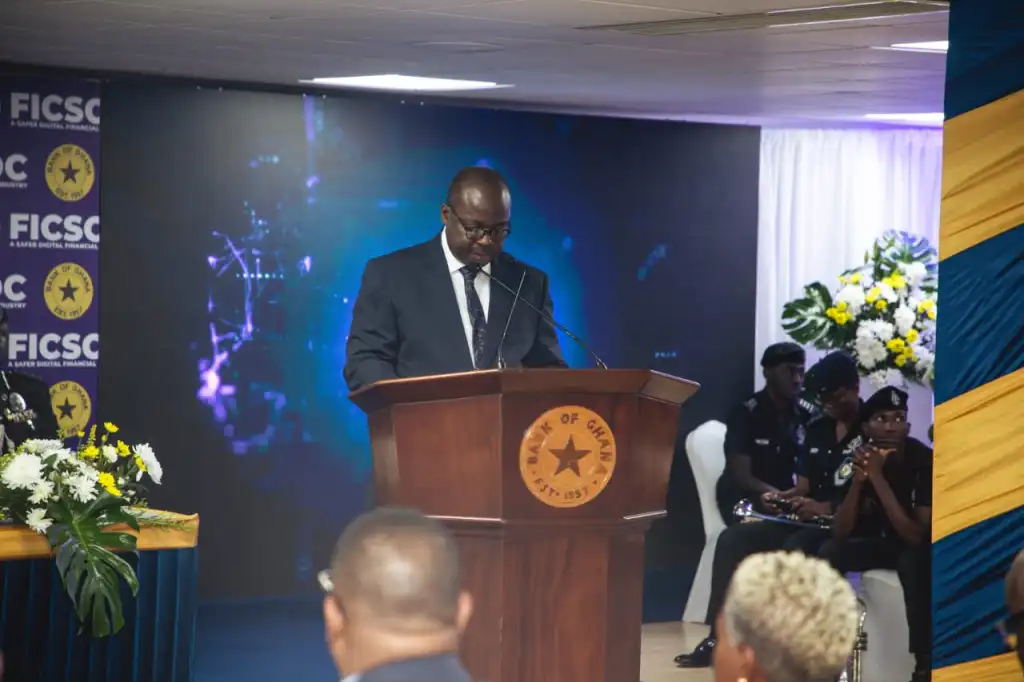
Good evening. It is a great pleasure to be here and thank you very much for the kind invitation to join in the launch of this book titled “Central Banking in Ghana and the Governors (Institutional Growth and Economic Development)”.
The Bank accepted to be part of this book launch because primarily it focuses on the central banking in Ghana, the key roles played by successive Governors towards the achievement of the Bank’s objects and long-term sustainability, and ultimately the economic development of Ghana.
Mr. Chairman, Ladies and Gentlemen, let me commend the author, Mr. Ivor Agyeman-Duah, who has written extensively and contributed to several publications, and this time the focus is on the world of central banking in Ghana. The Bank is indeed supportive of the book’s publication due to its contribution to the literature on central banking in Ghana, with emphasis on monetary policy, and regulatory and supervisory operations of the Bank.
We do acknowledge that books and articles written on the Bank of Ghana hardly touch on the individual governors who have led the institution and the philosophies that underpinned their economic and the monetary policy decisions.
This book, however, does that and would therefore go a long way to fill the gap in the body of knowledge on the economic thinking of the various governors that have transitioned through the Bank.
So, on behalf of Governor Ernest Addison, let me therefore take this opportunity to express the Bank’s appreciation to the author for the vision and efforts put in to publish this book.
Undoubtedly, I believe this book will enhance public understanding on the workings of the central bank, particularly, the much-debated concept of the institutional operational independence and accountability of central banks.
Mr. Chairman, distinguished Ladies and Gentlemen, although my task here precludes the review of this book, a task which will be performed by another speaker shortly, permit me to share a few thoughts on the evolution of monetary policy formulation and strategies mentioned in the book.
I found the author’s exposition on the tools of monetary policy insightful, especially the direct control and inflation targeting, expansionary and contractionary monetary policy stance and contemporary monetary strategies. In all of these narratives, inflation targeting is deemed the most robust monetary policy formulation strategy that has impacted positively on the objectives of central banks, including the Bank of Ghana.
Even though this book could be deemed as a mirror that reflects the work of all governors of the Bank since its establishment, but like the mirror, the reflection on the work of any of the governors may invariably differ depending on the reader’s economic philosophy or ideology.
I am certain that the discussion on monetary policy and many other contents of the book will provide a good basis for constructive and intellectual public discourse on the author’s views and assertions. Similarly, I trust that the author, being a seasoned scholar and academic, will readily respond to any constructive critique and commentary that may arise from economists, academics and other reviewers of this book.
This notwithstanding, this book will serve as a useful resource for central bankers, academics and students of economics in and outside Ghana. So, I highly recommend Central Banking in Ghana and the Governors (Institutional Growth and Economic Development) to everyone.
On this note, Mr. Chairman, Distinguished Invited Guests, Ladies and Gentlemen, join me to congratulate the author, Mr. Ivor Agyeman-Duah for the successful publication and launch of the book.
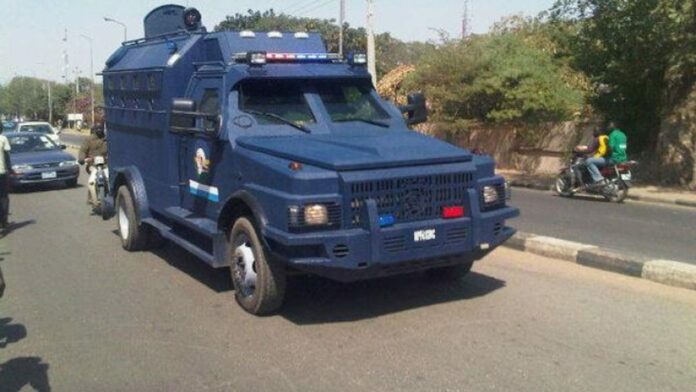
Reports have it that the Bank of Ghana (BoG) has ordered all banks across the country to with immediate effect commence the use of armoured-plated bullion vans for cash movement operations.
The directive is said to have been issued in a letter dated June 23 and signed by Secretary of the Central Bank, Sandra Thompson.
“Failure to comply with this directive in all cash-related activities across the country shall attract severe sanctions,” a letter from the apex bank to the MDs read in part.
According to the Central Bank, this is to ensure “security of cash-in-transit activities and to underscore the Bank’s commitment to protect the lives of both Security Personnel and Bank Staff involved in all cash movements.”
The directive comes after a recent bullion van attack at Ablekuma Fanmilk at the premises of Star Oil filling station where a police officer was shot dead.
The incident reignited calls for the deployment of armoured bullion vans for cash-in-transit (CIT) operations.
Meanwhile, the BoG’s directive goes to supersede a Ghana Association of Banks’ (GAB) directive that starting July 1, all banks are to start using armoured-plated vehicles for CIT activities.
The Association of Bullion Van Owners of Ghana (ABOG) has also said it has 150 of such vehicles to be deployed come July 1.
The Ghana Cedi is currently trading against the dollar at a purchasing price of 10.9843 and a selling price of 10.9953, according to the Bank of Ghana’s interbank exchange rates for Wednesday, June 20, 2023.
At a forex bureau in Accra, the dollar is being bought at a rate of 11.50 and sold at a rate of 12.00.
Against the Pound Sterling, the Cedi is trading at a buying price of 14.0555 and a selling price of 14.0707.
At a forex bureau in Accra, the pound sterling is being bought at a rate of 14.40 and sold at a rate of 15.10.
The Euro is trading at a buying price of 12.0020 and a selling price of 12.0129.
At a forex bureau in Accra, Euro is being bought at a rate of 12.40 and sold at a rate of 12.90.
The South African Rand is trading at a buying price of 0.6035 and a selling price of 0.6040.
At a forex bureau in Accra, South African Rand is being bought at a rate of 0.30 and sold at a rate of 0.90.
The Nigerian Naira is trading at a buying price of 61.1003 and a selling price of 61.1913.
At a forex bureau in Accra, Nigerian Naira is being bought at a rate of 12.00 Naira for every 1 Cedi and sold at a rate of 19.00.
For the CFA, it is trading at a buying price of 54.6044 and a selling price of 54.6540.
At a forex bureau in Accra, CFA is being bought at a rate of 17.00 CFA for every 1 Cedi and sold at a rate of 21.00 CFA for every 1 Cedi.
Our forex bureau rates are provided by Afriswap Bureau De Change in Osu, Accra.
Note that these rates may be different at a forex bureau near you. Our forex bureau rates are provided by Afriswap Bureau De Change in Osu, Accra.
A well-known finance lecturer and president of the Ghana Fintech Academic Network, Dr. Mark Tampuri, has called attention to the grave consumer protection issues raised by the proliferation of unregulated online loan apps using predatory lending techniques.
His research presentation at the prestigious RegTech Africa Conference, held between May 24 and May 26, 2023 at Oriental Hotel, Lagos, Accra, brought together key stakeholders from the financial sector, including central banks, financial institutions, Fintech companies, and industry experts.
It is believed that Dr. Tampuri’s insights have influenced the recent warning issued by the Bank of Ghana (BoG) on June 14th, 2023, cautioning individuals against the risks associated with these unscrupulous loan apps . During a follow-up telephone interview, Dr. Tampuri shed light on the predatory nature of these unregulated loan apps, highlighting their ability to operate beyond the confines of regulatory oversight. One significant concern is the unrestricted access these apps have to borrowers’ data, which is often sold to third-party entities. Even more distressing is their ability to track users’ precise locations, posing substantial threats to privacy and security.
Numerous individuals have come forward, sharing harrowing experiences related to these loan apps. Reports include instances of public shaming aimed at defaulters, as well as aggressive harassment tactics directed at borrowers’ friends and family.
Dr. Tampuri expressed his deep concern, stating, “Through my research, I discovered that two out of ten loan apps would unexpectedly credit users with small amounts, even without any request for a loan. However, these apps would later impose exorbitant fees and interest rates. Borrowers often face annual interest rates of up to 500% or monthly rates as high as 40″.
In light of these pressing issues, Dr. Tampuri emphatically called for collaboration between the Bank of Ghana and the digital marketplace or platform, urging them to swiftly remove these illegal loan apps from their platforms.
He also emphasised the importance of working closely with participants in Ghana’s payment systems, encouraging them to report any suspicious transactions related to these unregulated loan apps. Dr. Tampuri stressed the need to identify and hold accountable those responsible for facilitating these operations through Ghana’s payment infrastructure.
Furthermore, Dr. Tampuri offered valuable advice to the public, cautioning individuals to exercise caution when dealing with loans offering excessively high-interest rates. He emphasised the importance of making informed financial decisions and seeking reputable, regulated lending options.
Addressing the prevalent predatory lending practices displayed by these unregulated loan apps demands immediate action. Protecting consumers’ interests and ensuring their financial well- being should remain a top priority as Ghana’s financial landscape continues to evolve.
By proactively addressing these concerns and fostering collaboration among relevant stakeholders, the Bank of Ghana can effectively shield individuals from exploitative financial practices, thereby cultivating a secure and trustworthy financial environment.
In light of the increasing risks posed by uncertified loan applications, cybersecurity analyst Maximus Ametorgoh has urged the Bank of Ghana to enhance its regulation of loan applications.
This call comes following the recent crackdown by the Bank of Ghana on 97 loan apps that were found to be engaging in unlicensed lending activities, thereby violating the Banks and Specialized Deposit-Taking Institutions Act, 2016 (930).
In an interview with Citi Business News, Mr. Ametorgoh emphasized the importance of collaboration between the Bank of Ghana, telecom service providers, value service providers, and app developers to ensure the secure operation of loan apps and safeguard vulnerable borrowers.
He highlighted that individuals seeking loans often face economic pressures that drive them to explore digital lending options, without necessarily being aware of whether these apps are certified or authorized.
To address this issue, Mr. Ametorgoh proposes that “the Bank of Ghana engages in dialogue with telecom service providers, value service providers, and app developers, establishing a baseline regulation that requires any payment platform, electronic money issuer, or loan provider operating on the internet to obtain approval from the central bank.”
By implementing this measure, any financial service available online would be presumed certified, ensuring that borrowers can make informed decisions without the risk of falling victim to unlicensed lending activities.
Additionally, Mr. Ametorgoh suggests the development of a short code or an app that individuals can utilize to verify the certification and legitimacy of loan apps.
This verification mechanism would provide borrowers with the necessary information to assess the credibility and compliance of these digital lending platforms, thereby mitigating the chances of fraudulent or predatory practices.
Vice president, Dr. Mahamudu Bawumia has reiterated his dedication to propelling Ghana towards enhanced transformation and economic progress under his potential presidency.
Following the submission of his presidential nomination form at the party headquarters in Accra on Friday, June 16, Dr. Bawumia addressed enthusiastic party supporters and promised to change the fortunes of the country under his presidency.
He expressed his intent to build upon the strong foundation laid by the current administration led by President Akufo-Addo.
“I believe that it is time to move Ghana to the next level by building on the foundations we have put in place so far…Together with you, I want to see a Ghana where we leverage technology, data and systems for inclusive economic growth. I want to make Ghana the digital hub of Africa. I want us to bridge the digital divide and apply digital technology and artificial intelligence for the transformation of healthcare, education, and public service delivery amongst others”.
He further emphasized his unwavering dedication to the New Patriotic Party (NPP) and Ghana throughout his 22-year journey, spanning from his tenure as Deputy Governor of the Bank of Ghana during the Kufuor era to the present government.
“Over the last 22 years, I have worked hard with you for the NPP and for Ghana from during the Kufuor era as Deputy Governor of the Bank of Ghana, through our years in opposition and now in government.
“During this period, I have sacrificed for the party, I have defended the party in good times and in challenging times, I have never wavered nor slacked. Never! and I have built a solid track record of performance as Vice President with an unflinching loyalty to our party and government through rain or shine,” he added.
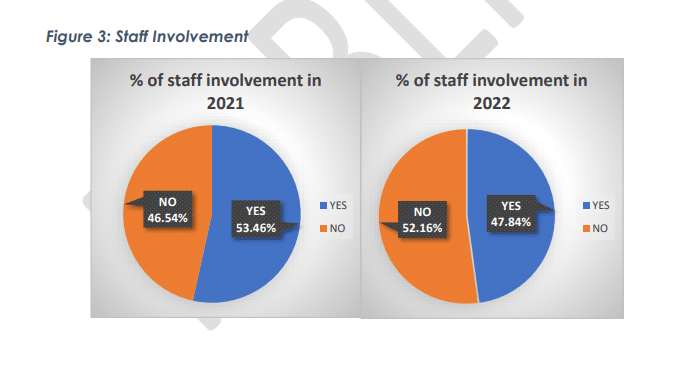
The Bank of Ghana has highlighted the “significant decline” in fraud activities at financial institutions involving company staff.
The Central Bank in its 2022 Fraud Report for Banks, SDIs and PSPs, recorded a 5.62% decline in staff-fraud cases from 53.46% in 2021 to 47.84% in 2022.
This has been attributed to the constant improvement in the internal controls of Banks and Specialised Deposit-taking Institutions (SDIs).
“Another factor is the stiff punishment that has been meted out by the courts to the culprits which has served as a deterrent to others,” the BoG further noted.
According to the Central Bank, a total of GH¢82 million were stolen by fraudsters in 2022.
The report comes at a time when some fraud activities by bank staff have left many Ghanaians and social media users shell-shocked.
25-year-old Emmanuel Sakyi Afriyie, a contract staff of one of the major banks in the country has been arrested during an escape attempt after allegedly stealing close to GH¢1.2million from customers’ bank accounts.
Emmanuel Sakyi Afriyie is facing charges on various crimes, including stealing and forgery of other documents and falsification of accounts.
Per reports from the complainant, who is the Head of Fraud Detection and Operations at the bank, Emmanuel secretly used a mobile phone to film his boss while she was entering her password to gain access to the monies from the customers’ accounts.
He allegedly used part of the money to buy a mobile phone, Iphone 14 Pro Max, a vehicle, Toyota Camry, moved some to his account in another bank and that of his accomplices’ accounts – 17 in total – in various banks and their mobile money accounts.
Emmanuel had been put before court together with some of his accomplices and was granted bail after pleading not guilty to the offences.
But on June 4, 2023, the accused together with his girlfriend, who stood as surety for him attempted to escape from the jurisdiction to Dubai, but were arrested at the Kotoka International Airport by the Ghana Immigration Service and handed over to the police.
Emmanuel is set to reappear before the court on June 16, 2023.
In a related event, Martha Amakye, a 34-year-old outsourced worker of Stanbic Bank, has been jailed 8 years for swindling numerous customers of the bank out of GHS1.8 million by an Accra High Court.
Amakye has been convicted of exploiting 246 bank customers from 2015 to 2016. She deceived these customers by collecting money from them, claiming that she would invest it in fixed deposits with lucrative monthly interest rates. However, it was later discovered that she had fabricated these fixed deposits without the bank’s approval.
Originally faced with 31 charges of defrauding by false pretense, Amakye initially pleaded not guilty. However, the court ultimately found the prosecution’s case to be convincingly proven beyond a reasonable doubt.
Although the number of staff involved in financial fraud has declined, the Bank of Ghana remains vigilant to nip the canker in the bud.
As such, management of banks and Specialised Deposit-taking Institutions (SDIs) have been admonished to undertake proper background checks of all prospective temporary and permanent employees.
A total amount of GH¢27 million was lost as a result of mobile money fraud incidents recorded by Payment Service Providers (PSPs) in 2022, according to the Bank of Ghana.
In its 2022 Fraud Report for Banks, SDIs and PSPs, the Central Bank however noted that the figure decreased to approximately GH¢26 million due to some recoveries made.
Per the report, the value of loss in 2022 increased significantly as compared to a loss of GH¢12 million in 2021, representing an increase of 117%.
In contrast, the number of mobile money fraud cases saw a marginal decrease. A total of 12,166 cases were recorded in 2022, as against 12,350 cases recorded in 2021.
According to the BoG, mobile money fraud has become very predominant, especially, to the vulnerable who mostly are unable to read.
“The aged and uneducated users of mobile money are not very conversant with the application. They would usually handover the phone to other people to do transactions on their behalf. Their PINs are compromised since they have to give it out to a third party to do the transaction,” the Central Bank explained.
The BoG further revealed that there is a lack of attention to security by most people in using the mobile money application.
“Also a general lack of security awareness has largely contributed to victims easily falling prey to fraudsters. Some users of mobile money do not periodically change their PIN making them easily prone to fraudsters,” the report added.
To address this, the Bank of Ghana has engaged the financial entities to put in stringent measures to mitigate the impact of this fraudulent activity.
The Bank of Ghana has advised that the sensitization programmes should be in multiple local languages to enable the vulnerable, in particular, and the public in general to appreciate it.
Fraudsters managed to steal GH¢82 million from various financial institutions in Ghana in 2022, according to a report by the Bank of Ghana (BoG).
The report covers the fraud incidents and losses recorded by banks, specialised deposit-taking institutions (SDIs) and payment service providers (PSPs), which include mobile money operators.
Out of the total amount stolen, GH¢56 million came from banks and SDIs, while GH¢26 million came from mobile money accounts.
The report reveals that the number of fraud incidents decreased slightly from 15,350 in 2021 to 15,164 in 2022, but the value of losses increased by 7.88% from GH¢61 million in 2021 to GH¢82 million in 2022.
The report also identifies the top five fraud methods that caused the most losses in 2022. They are:
Forgery and manipulation of documents:Fraudsters created or altered documents to deceive financial institutions and customers. This method accounted for GH¢33 million of the losses, a 334.99% increase from GH¢7 million in 2021. Most of the cases involved universal banks (commercial banks).
Fraudulent withdrawals: Fraudsters accessed customers’ accounts and wallets without their consent and withdrew money. This method accounted for GH¢7 million of the losses, a 1039.09% increase from GH¢620,000 in 2021. Most of the cases involved the banking sector.
Cheque fraud: Fraudsters used fake or altered cheques to withdraw money from accounts. This method accounted for GH¢5.1 million of the losses, a 1254.46% increase from GH¢370,000 in 2021. Most of the cases involved universal banks and rural and community banks.
Cyber/email fraud: Fraudsters sent malicious emails to trick recipients into giving up sensitive information or transferring money to them. This method accounted for GH¢4.3 million of the losses, a 65.55% increase from GH¢2.6 million in 2021. Most of the cases targeted universal banks.
Cash theft/cash suppression: Fraudsters stole cash from customers’ accounts or suppressed cash deposits by staff. This method accounted for GH¢3.9 million of the losses, a 7.12% decrease from GH¢4.2 million in 2021. Most of the cases occurred in the SDI sector, especially rural and community banks.
Other fraud methods that caused smaller losses included impersonation, ATM/card fraud, lending/credit fraud, burglary and remittances.
The report also shows that 188 bank staff were involved in fraud cases in 2022, a decrease from 278 in 2021. Most of them were involved in cash theft or suppression.
The BoG said that the report aims to provide an overview of the fraud situation in Ghana’s financial sector and to inform stakeholders on how to prevent and combat fraud.
The Bank of Ghana (BoG) has cautioned the public against engaging in transactions with some 97 unlicensed entities that are engaged in the provision of loans through mobile applications to the Ghanaian public.
The Bank of Ghana has also cautioned the operators of such platforms to desist from the acts or face prosecution after investigations.
The Bank of Ghana reiterated that the activities of the 97 entities significantly breach customer data and privacy laws, as well as consumer protection requirements and norms, with unfavourable implications on the integrity and well being of their patrons.
“Banks, Specialised Deposit-Taking Institutions and Payment Service Providers are cautioned not to facilitate the illegal transactions of unlicensed loan applications. The general public is encouraged to patronise the various types of digital credit products approved by Bank of Ghana and delivered by banks and specialised deposit-taking institutions in partnership with mobile money operators,” a BoG said in a statement.
The central bank assured that it will continue to take action against the entities in collaboration with relevant state agencies to promote the integrity of financial service delivery.
It therefore advised the general public to desist from doing business with all unlicensed loan providers.
The Bank of Ghana has provided an update on the current status of three key commodities that Ghana trades in, namely cocoa, crude oil, and gold.
In its May 2023 Monetary Sector Report, the Central Bank noted that in the first four months of 2023, cocoa prices were generally positive.
This was driven by lower production volumes, higher grinding in top-grower Ivory Coast and increased global demand.
Per the report, prices began the year at US$2,539.86 per tonne in December 2022, and rose to US$2,924.37 per tonne in April this year. This represents 15.2 percent year-to-date increase and 13.0 percent on year-on-year terms.
With regard to crude oil, prices have broadly trended downwards since June 2022.
From US$117.2 per barrel in June 2022, prices plunged to US$81.3 per barrel in December 2022, before moving slightly up to US$82.7 per barrel in April 2023.
Prices were pressured by concerns over the health of the global economy and prospects of oil demand, despite the announced production cut by OPEC+, the Central Bank noted.
Meanwhile, the BoG says gold has remained strong so far this year.
Spot gold started the year at US$1,796.2 per fine ounce and surged to an all-time high US$2,000.7 per fine ounce in April 2023, representing a 3.4 percent year-on-year growth.
This was prompted by economic uncertainty amid fears of recession, expectation of lower rate hikes as inflation eases, and the banking crisis in the U.S. and Europe.
“The weighted average price of the three major commodities exported by Ghana (cocoa, gold and crude oil) increased by 3.9 percent in April 2023.
The increase in the overall index was on the back of increases in all the three commodities, with the cocoa sub-index increasing by 4.9 percent, the crude oil sub-index by 3.9 percent, and the gold sub-index by 3.7 percent,” the report added.
The Bank of Ghana has revealed that the country recorded a gain in its domestic Value Added Tax (VAT) collection in 2023.
In its May 2023 Monetary Sector Report, the Central Bank indicated that domestic VAT collections increased by 92.4% on a year-on-year basis from GHS649.93 million to GHS1.250 billion.
Cumulatively, total domestic VAT for the first quarter of 2023 went up by 76.8% to GHS3,196 billion compared to GHS1.808 billion for the corresponding period of last year. This implies that consumer spending soared during the period in question.
Total direct taxes collected also observed a hike, increasing by 37.7 percent year-on-year to GHS4,788.55 million in March 2023, relative to GH¢3,478.67 million recorded in the same period in 2022.
According to the Bank of Ghana, this pushed direct taxes collected for the first quarter of this year up by 65.0 percent to GHS10,773.16 million, from GHS6,529.91 million for the same period last year.
In terms of contributions of the various sub-tax categories, corporate tax accounted for 59.9 percent, Income tax (PAYE and Self-employed) accounted for 27.6 percent, while “Other Tax Sources” contributed 12.5 percent. This arose from activities in the manufacturing sub-sector, the Central Bank noted.
Also, retail sales, which involves selling goods or services directly to individual consumers for personal use or consumption, posted a strong positive performance in March 2023.
Retail sales increased by 44.9 percent year-on-year to GHS165.20 million in March 2023, up from the GHS114.05 million recorded in the same period in 2022.
On a month-on-month basis, retail sales improved by 19.2 percent in March 2023 from GHS138.60 million in the preceding month. In cumulative terms, retail sales for the first quarter of 2023 went up by 30.3 percent.
So far, the government’s Success of the Gold for Oil program has validated the viewpoints of Vice President Dr. Mahamudu Bawumia and Energy Minister Dr. Matthew Opoku Prempeh.
Dr Bawumia who has been driving the policy from the presidential level, and Dr Opoku Prempeh who is the implementation anchor at the ministerial level, have persistently drummed home the inherent benefits of the programme and promised that the government will do everything possible to ensure that Ghana reaps maximum benefits from it.
According to Dr Bawumia, since its operationalisation, the Gold for Oil policy has stabilised the exchange rate and is expected to save the country approximately $4.8 billion annually.
Also speaking at the 2023 energy sector retreat, Dr Opoku Prempeh stated that his ministry will religiously monitor every step in the Gold for Oil value chain to ensure that the purposes for which the programme was birthed, are not defeated.
Positive effects
The Gold for Oil policy has been credited as one of the measures that have led to stable fuel prices.
The Head of Financial Markets at the Bank of Ghana, Steven Opata, said the government’s policy had resulted in increased competition among traders of refined petroleum products, leading to reductions in prices at the pumps.
As a result of the implementation of the policy, petroleum prices, which hovered averagely at GH¢15 in January 2023, now sells at about GH¢12 on the average and are expected to further go down in the coming months.
As of May 29, 2023, the price of gasoline in Ghana was GH¢13.2 per litre, roughly $1.19, indicating a decrease from the prices in December 2022 .
This has brought relief to motorists as they are able to work within their budgets.
Also, the increases in transport fares that characterised the year 2022 have died down, bringing relief to passengers.
Furthermore, the drop in fuel prices has impacted on the drop in inflation, since fuel prices are a major driver in economic activities.
From a high of 54.1 per cent in December, 2022, inflation has consistently dropped, reaching 41.2 per cent in April. This signifies a positive outlook for the economy.
At a time West Africa’s biggest economy, Nigeria is struggling to deal with surging oil prices , which has led to two states in Africa’s most populous nation of 221 million people cutting down working days to three in a week, many see Ghana’s Gold for Oil policy as a significant step in bringing relief to Ghanaians and driving economic growth.
Achieving policy objective
The implementation of the Gold for Oil programme commenced with the arrival of the first consignment of about 40,000 metric tonnes of diesel on January 15, 2023, valued at about $40 million.
The National Petroleum Authority (NPA) in a statement said the prime objective of the programme is to use additional foreign exchange resources from the Bank of Ghana’s Domestic Gold Purchase programme to provide foreign currency for the importation of petroleum products for the country which currently stands at about $350 million per month.
Payment for oil supply is to be done in two channels: by way of barter trade where gold is exchanged for oil or via broker channel where the gold is converted into cash and paid to the supplier.
The first consignment of 40,000 metric tonnes of diesel constitutes about 10 percent of the country’s combined monthly demand for petrol and diesel.
According to the NPA, the plan is to gradually increase imports under the programme to constitute about 50 per cent of the country’s total demand for petrol and diesel.
The implementation of the programme will ease pressure on the dollar (the currency used for the importation of petroleum products) and avoid the occasional increases in petroleum prices resulting from the depreciation of the cedi against the dollar.
In addition, the programme will ensure that the cost of importing the products from international oil traders will be comparatively cheaper.
The consequent reduction in foreign exchange pressures and premiums charged by international oil traders as well as efficiency gains from the value chain will lead to lower ex-pump prices in the country.
Outstanding move
The Group Chief Executive Officer and Managing Director of GOIL Plc, Kwame Osei-Prempeh, described the policy as outstanding.
He said his outfit is benefiting from the deal because the policy is good.
He, therefore, dismissed allegations in certain quarters that the programme has negatively affected some Oil Marketing and Bulk Distributing Companies.
In an interview with Joy Business at the 54th Annual General Meeting of the company, Mr Osei-Prempeh explained that measures have been put in place by the shareholders of the company to take advantage of the deal to protect the interest of consumers and partners.
“We are not kicking against it. It has really taken some of our stress because at a point we needed to push for dollars and all but now it is fine,” he said.
A former Group Chief Executive Officer of GOIL, Patrick Akorli has also described the programme as innovative.
Speaking with Citi News, Mr Akorli said the success of the policy depends on the honesty of the government.
He stated:” It is a very innovative one. What the government is saying is that we need about $400 million almost every year [to get oil], so if we have gold and the gold can be exchanged at a given price to get dollars dedicated to the oil downstream market, then at least we are assured that prices will be stable.”
Top Gold Producer boost
Meanwhile, the Gold for Oil policy is set for a major boost after Ghana recaptured the position of Africa’s biggest gold producer from South Africa.
Industry watchers believe that increased gold production gives the indication that the nation is well-positioned to pursue the policy, which is seen as a game-changer for Ghana’s economy.
The Russia war in Ukraine has upended the fragile economic recovery from the COVID-19 pandemic, setting in motion a crisis that is devastating global energy markets, the United Nations has stated.
Consequently, the government of Ghana has been looking for avenues to overcome the challenges.
Experts who spoke to The Thunder over the weekend said Ghana will see a rebuilding of its gold reserves, which will enhance the trading of oil products.
Reuters reported on June 9, 2022 that Ghana recorded a 32 per cent increase in gold production in 2022, enabling the country to win back the top spot from South Africa as the largest gold producer in Africa.
Ghana lost the position to South Africa in 2021 after a drastic fall in output.
Quoting Joshua Mortoti, the President of the Ghana Chamber of Mines, the report said gold output rose to 3.7 million ounces in 2022 from 2.8 million ounces the previous year, driven by growth in the output of both large and small-scale sectors.
“The large-scale gold sub-sector recorded its highest output in the country’s history in 2022,” Mortoti said.
The government’s suspension of foreign debt service contributed to the current account balance turning positive.
According to data from the Bank of Ghana, the trade surplus widened in the first 4-months of 2023, hitting $1.6 billion (2.2% of Gross Domestic Product) compared to the ¢1.2 billion (1.6% of GDP) recorded in the same period last year.
The wider trade surplus was supported by a sharper compression in total imports to $4.0 billion (-13.9% year-on-year) compared to a 3.6% year-on-year decline in total export revenue ($5.6 billion).
The wider trade surplus combined with an improvement in the services accounts swung the current account balance from a deficit in quarter 1, 2022 into a surplus of $661.4 million (0.9% of GDP) in first quarter of 2023.
The Bank of Ghana attributed the improved services account balance to the suspension of external debt service and higher remittance inflows.
During quarter 1, 2023, inward remittances increased by 16.3% year-on-year to $1.2 billion, combining with the debt service suspension and the trade surplus to churn out a surplus on the current account.
IC Research said “given that ongoing negotiations with external creditors could stretch into late 2023, the suspension of external debt service should anchor the current account balance in 2023. However, a potential resumption of external debt service in 2024 will revive pressure on the current account balance if debt restructuring is not secured ahead of debt service resumption”, it said.
Ghana received the first tranche of the International Monetary Fund cash of $600 million under the ongoing Fund programme.
The forex inflow supported the gross international reserves, according to the Bank of Ghana, to $5.7 billion, equivalent to 2.6 months of import cover as of May 19, 2023.
This IC Research suggests a lingering weak external account buffer with a limited capacity to fund real sector demand, emphasising the vulnerability to exchange rate shocks and a bearish outlook for real GDP growth.
Minister of Communications and Digitalisation, Ursula Owusu-Ekuful, has revealed that Mobile Network Operators (MNOs) are partnering with the Bank of Ghana to facilitate the retrieval of locked Mobile Money (MoMo) belonging to customers of telcos whose SIM cards have been blocked.
The collaborative effort, according to the Minister, seeks to address concerns of affected subscribers and also aims to streamline the process of retrieving locked funds in mobile money accounts.
Updating Parliament on the status of the SIM re-registration exercise in Parliament on Thursday, June 8, the Minister assured affected subscribers that while they won’t be able to conduct mobile-related transactions with their deactivated SIMs, their funds will be recovered through the necessary processes.
“We have been made aware of the difficulties facing subscribers in accessing their funds on their mobile money wallets. “These subscribers will not be able to transact money mobile-related activities, however, we are working with the Bank of Ghana to ensure that these subscribers are able to retrieve funds upon the presentation of a valid ID and going through the required processes,” she said.
Telco subscribers who have not registered their SIM cards are unable to access their mobile money funds since their SIM cards have been blocked.
The locking of funds has resulted in inconvenience and frustration for affected individuals who rely on mobile money services for their daily financial transactions. Although some have accepted blame for the development, others have attributed their failure to register their SIM cards to failure of the National Identification Authority (NIA) to issue their Ghana Cards to them.
In view of this, the Communications Minister urged the NIA to expedite processes in printing out and issuing of outstanding Ghana Cards.
“We continue to encourage the National Identification Authority (NIA) to assist people to acquire their Ghana Card.
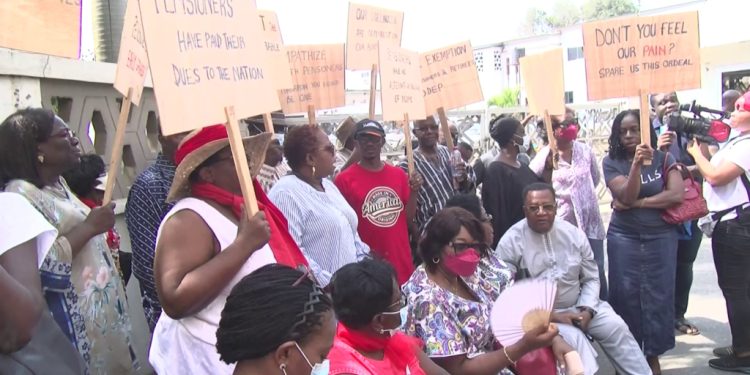
Pensioners won’t quit picketing outside the Finance Ministry, until their coupons are paid according to the convener of the Pension Bondholders Forum, Dr. Adu Anane Antwi.
According to Dr. Anane Antwi, pension bondholders will resume picketing on Friday, June 2, to demand payment of what is owed them.
He, however, stated that the Forum will give the Ministry a breathing period of three days starting from Monday, June 5 to Wednesday, June 7 for the Ministry to commence the payment.
The former Director-General of theSecurities and Exchange Commission (SEC), says the pensioners will however converge on the Ministry on Thursday if nothing reflects in their accounts by the grace period given.
“We are expecting actual payment so while the payment starts, we will stop picketing. Until we see something, that is the decision we have taken. Until we see payment nothing will move us from here because we have done it. We have moved on it based on these promises and it is not coming.
“Within the week, every Monday a coupon or two will mature … so if the coupon matures on Monday, we won’t stop. We think that if the government wants to pay, we will see a sign. If by Wednesday we haven’t seen a sign, then we take it that government is unable to pay and then we come here on Thursday,” he noted.
His comment was in response to a Deputy Minister for Finance, Abena Osei-Asare’s plea with the Forum to suspend their picketing at the Ministry.
The Atiwa East MP said the Ministry was engaging the Bank of Ghana (BoG) to pay them.
She thus asked the pensioners to exercise patience with the government as everyone knows the financial difficulties the government finds itself in.
“We don’t intentionally stop them, sometimes it’s difficult, it is the ability to pay and so when it is not there it becomes a challenge. But, we also have to communicate that to you. So, for now, our focus should be on the five outstanding, and then we talk about how we will manage the principal payment.“
“I sincerely appreciate where you are coming from. This has never happened when coupons are ready for payment and the government is struggling to pay, but currently, we all know the circumstances we find ourselves in, so I will plead with you that let’s sit and clear, and then we will see the way forward,” she appealed.
Members of the Forum resumed their picketing on Thursday, June 1, over the government’s failure to pay their matured coupons.
Meanwhile, the Finance Ministry has scheduled a meeting with leaders of the Forum on Friday to discuss the way forward.
But the pensioners insist on gathering while their leadership engages the Ministry.
A Deputy Minister for Finance, Abena Osei-Asare has passionate appealed to Pensioner Bondholders to suspend their picketing the Ministry.
The Atiwa East MP said the Ministry was engaging the Bank of Ghana (BoG) to pay them.
She thus asked the pensioners to exercise patience with the government as everyone knows the financial difficulties the government finds itself.
Deputy Finance Minister, Abena Osei-Asare
“We don’t intentionally stop them, sometimes it’s difficult, it is the ability to pay and so when it is not there it becomes a challenge, but we also have to communicate that to you. So, for now, our focus should be on the five outstanding, and then we talk about how we will manage the principal payment.“
“I sincerely appreciate where you are coming from. This has never happened when coupons are ready for payment and the government is struggling to pay, but currently, we all know the circumstances we find ourselves in, so I will plead with you so let’s sit and clear, and then we will see the way forward.”
Members of the Forum resumed their picketing the Finance Ministry on Thursday, June 1, over the government’s failure to pay their matured coupons.
In a statement announcing their decision, the forum indicated that the government despite its initial agreement to pay the outstanding coupons on May 15, 2023, as agreed in a meeting with the Finance Ministry, failed to redeem its promise.
They explained that as a result, there have been two additional coupons since the agreement was made adding to the already existing coupons due.
The Forum said that they wrote to the Ministry on May 15 and May 22 to demand payment and warned they would resume picketing if their payments were not made, however, they are yet to get a response.
“As at today, the 29th of May 2023, there remain four outstanding coupons and four outstanding principals to be paid by the Ministry. The first principal has been outstanding for 98 days, the second for 84 days, the third for 42 days and the fourth is due today,” the forum stated.
“Naturally, we have to and had indicated to the Ministry that we shall demand interest on the delayed principals as the government has deprived investors involved of their capital for re-investment to earn returns,” they added.
Banking consultant Dr. Richmond Atuahene has criticized the Bank of Ghana’s efforts to restore confidence in the financial sector, stating that they are insufficient.
Dr. Atuahene’s comment comes in response to the International Monetary Fund’s suggestion that some financial institutions may face collapse due to the impact of the debt exchange and the subsequent IMF program.
The IMF has recommended that the government encourage these institutions to engage in mergers and acquisitions to prevent a financial sector collapse.
Highlighting the impact of the domestic debt exchange program, Dr. Atuahene mentioned that the banking sector, in particular, has been severely affected, leading to international banks initiating capital planning measures.
However, he noted that local banks are unable to adequately plan for the next four years, despite the support from the Central Bank.
“From where I sit, it would be very difficult to say what we have put in place will be quite sufficient to deal with the programme for the next four years,” he said.
He called for further action to be taken to prevent a collapse in the banking sector.
Speaking on JoyNews’ PM Express, Dr. Atuahene emphasized that the erosion of banking capital is just one of the many challenges facing the banking sector and the broader financial sector as the country begins its IMF program.
“..the confidence in the industry, both in the financial industry including the banking sector is not going to recover as people think that it will recover. It’s going to take a long time.
“For the liquidity, I’ve always said that because of information asymmetry in the industry, nobody is running here and there look for their monies. And I believe that we could have done better because the banking sector or the financial sector would need at least 3 billion to be able to recover. Including the pensions, insurance and the banks,” he said.
An expert in banking and finance, Dr. Richard Atuahene, has asked the Bank of Ghana (BoG) and the government to boost the Ghana Financial Stability Fundin order to guarantee the survival of struggling local banks.
During an appearance on The Big Issue on Citi TV and Citi FM, Dr. Atuahene emphasized that, in the wake of the domestic debt exchange programme, properly establishing the Ghana Financial Stability Fund would provide significant relief for struggling banks.
“The way out is when the Ghana Financial Stability Fund is done perfectly…If you call on the shareholder to recapitalize these losses whereas the state which brought these losses does nothing, it worsens our fiscal situation.”
Dr. Atuahene also cautioned against the government’s excessive borrowing, emphasizing that it could become costly for the country if the borrowed funds are not utilized productively.
“The way we are borrowing out and not putting it to productive use, a time will come, we will have to pay through our nose.”
The Ghana Financial Stability Fund was established with a target size of GH¢15 billion to be provided by the Government of Ghana and its development partners.
The Fund is aimed at providing liquidity to financial institutions that participated fully in the Domestic Debt Exchange.
All financial institutions (banks, SDIs, pension schemes, collective investment schemes, fund managers, broker/dealers, insurance firms) that fully participated in the Debt Exchange could access the GFSF for augmented liquidity support, with effect from the date of completion of the Debt Exchange.
The Fund is managed by theBank of Ghanaunder unique operational guidelines being developed by the Financial Stability Council.
The Bank of Ghana’s interbank forex rates for today, May 26, 2023, show that the Ghana Cedi is trading versus the dollar at a purchasing price of 10.7747 and a selling price of 10.7855.
At a forex bureau in Accra, the dollar is being bought at a rate of 11.30 and sold at a rate of 12.00.
Against the Pound Sterling, the Cedi is trading at a buying price of 13.2938 and a selling price of 13.3082.
At a forex bureau in Accra, the pound sterling is being bought at a rate of 13.80 and sold at a rate of 14.80.
The Euro is trading at a buying price of 11.5589 and a selling price of 11.5693.
At a forex bureau in Accra, Euro is being bought at a rate of 11.80 and sold at a rate of 12.60.
The South African Rand is trading at a buying price of 0.5456 and a selling price of 0.5462.
At a forex bureau in Accra, South African Rand is being bought at a rate of 0.30 and sold at a rate of 0.90.
The Nigerian Naira is trading at a buying price of 43.0961 and a selling price of 43.1323 .
At a forex bureau in Accra, Nigerian Naira is being bought at a rate of 13.00 Naira for every 1 Cedi and sold at a rate of 18.00.
For the CFA, it is trading at a buying price of 56.6981 and a selling price of 56.7491.
At a forex bureau in Accra, CFA is being bought at a rate of 17.00 CFA for every 1 Cedi and sold at a rate of 21.00 CFA for every 1 Cedi.
Our forex bureau rates are provided by Afriswap Bureau De Change in Osu, Accra.
Note that these rates may be different at a forex bureau near you. Our forex bureau rates are provided by Afriswap Bureau De Change in Osu, Accra.
Governor of the Bank of Ghana (BoG), Dr Ernest Addison, says the Financial Industry Command Security Operations Centre (FICSOC) is a key component of the systems to address the challenges of cyber security.
He said the Centre would help provide real-time visibility into cyber threats and attacks targeting the banking sector.
Dr Addison was speaking at the commissioning of the FICSOC Project in Accra.
He said in October 2018, the Bank of Ghana issued the Cyber and Information Security Directive for banks and other Bank of Ghana-regulated financial institutions to implement the required Information Security Management Systems (ISMS) controls.
He said it was to ensure the delivery of a safer digital financial Industry.
The implementation of the Directive was phased over 36 months, and through effective monitoring and supervision among regulated banks.
He said as these institutions worked towards full implementation of the directive, it became evident that the Central Bank had to establish an industry Security Information and Event Management (SIEM) system to enable those institutions implementing SIEMs to send logs/alerts, aggregate information and reports.
“To achieve this, the Bank initiated the SIEM project which we call the FICSOC Project,” he added.
Dr Addison said the FICSOC Project, which had now been completed and operational with reports/alerts in the form of threat intelligence provided to the banks to improve their incident response mechanisms.
He said three years ago, the Bank started working with commercial banks as key external stakeholders to create a secure cybersecurity environment in the financial sector, hence the completion of the FICSOC project.
He said the Bank and the Cyber Security Authority were collaborating to improve the cybersecurity posture in the banking sector.
The two institutions are discussing various ways to approach the implementation of the Cybersecurity Act, 2020 (Act 1038) for the sector.
He commended the implementation partner, Virtual InfoSec Africa, and the FICSOC Consultant, Mr Samuel
Amoah, and BoG FICSOC Project Team members for their commitment and diligence in achieving the success of the project.
The Bank of Ghana’s Monetary Policy Committee (MPC) has decided to maintain the policy rate at 29.5%, marking the first time since July 2022 that it remains unchanged.
Governor of the Bank of Ghana, Dr Ernest Addison explained that the tight monetary policy through additional liquidity management operations to address excess liquidity conditions in the market, relative stability in the local currency, and easing of ex-pump petroleum prices have supported the disinflation process.
He added that the Bank of Ghana has signed the Memorandum of Understanding on zero financing to the budget to eliminate fiscal dominance and allow for a faster ease in inflation towards the target band.
With an unchanged policy rate, the cost of credit is expected to remain high with the average lending rate going for about 31.5%.
Last week, the International Monetary Fund (IMF) announced that the Bank of Ghana will continue to pursue a tight monetary policy until inflation shows a consistent downward trend.
Under the programme, the focus will be on implementing monetary and exchange rate policies aimed at curbing inflation and rebuilding foreign reserve buffers.
Since July 2022, the policy rate has gone up by 10.5 percent.
Reports indicate that as part of Ghana’s International Monetary Fund (IMF) programme, revisions will be made to the Bank of Ghana (BoG) Act to enhance the independence of the central bank and address fiscal dominance.
The amendments to the Act will introduce a stricter limit for monetary financing, establish mechanisms for monitoring and enforcing compliance, and provide a clear definition of emergency situations in which the limit can be temporarily lifted.
To meet the requirements set by the IMF, the Bank of Ghana and the Ministry of Finance have already signed a memorandum of understanding (MoU) aimed at eliminating monetary financing during the programme, pending legislative changes.
Additionally, an updated Safeguards Assessment is underway to support the development of further changes to the Bank of Ghana Act. This assessment will review the risks associated with the government’s gold purchase and gold-for-oil programmes.
The debt restructuring process is expected to impact the balance sheet of the Bank of Ghana.
A report from the IMF states that the government and the central bank will assess the effects of the restructuring and work on plans for the recapitalization of the bank with technical assistance support from the Fund.
Recent events have exposed card fraud schemes that have left some consumers suffering from unauthorized money transfers and subsequent avoidance of mandatory charges.
The issue has raised concerns among financial institutions and regulatory bodies, prompting investigations including the Bank of Ghana (BoG) and card providers.
The fraudulent schemes revolve around cliques that manipulate unsuspecting individuals into granting access to their cards. Once a group gains control, they exploit the cards to conduct unauthorised money transfers – cunningly sidestepping the charges that are typically associated with such transactions. Multiple banks have reported incidents of customers falling victim to this deceptive practice in recent times.
An insider who spoke to the B&FT on the condition of anonymity, owing to the sensitive nature of the case said: “As you may recall, we chatted about some developments in the use of cards by some customers leading to them being debited then they started raising hell… some people may be victims of a clique hiding behind simple requests to have access to friends’ cards. Then they use these cards for money transfers to avoid paying the necessary charges. Some banks have suffered this in recent times”.
One website that has come under scrutiny is an unauthorised money transfer organisation (MTO) that operates outside the purview of BoG’s regulations. It has been discovered that customers utilised their cards on this platform, unaware of the illicit nature of their transactions. These transactions were initially misclassified as the purchase of large digital goods, masking their true nature as cross-border money transfers – which violate card-issuer rules.
Under normal circumstances, cross-border transactions like these would incur Optional Issuer Fees (OIF), also known as currency conversion fees. However, it has been revealed that these fees were not applied in real time – resulting in inappropriate charges being omitted from the transactions. This irregularity was rectified once the true nature of the transactions came to light.
One of the financial institutions affected by the fraudulent scheme took immediate action by reporting the incident to both the BoG and a card-issuer. Consequently, the authorities have launched investigations into the matter to ascertain the full extent of the fraud and hold those responsible accountable.
Furthermore, due to involvement of the country’s hard-earned foreign currency in these unauthorised transfers – which could be considered economic crimes, the Economic and Organised Crime Office has been alerted in compliance with the Economic and Organised Crime Act, 2012, Act 804.
Responses from the BoG, EOCO and other relevant stakeholders were not ready at the time of filing this report.
In light of these disconcerting events, consumer protection and responsible online practices have taken centre-stage. Experts urge individuals to exercise caution and take necessary precautions to safeguard their cards and personal finances.
To protect themselves from falling prey to fraudulent schemes, consumers have been advised not to share their card details with anyone, and to verify the authenticity of requests for card access. Additionally, it is crucial that they adopt responsible online behaviour; such as using secure payment platforms and conducting thorough background checks on websites and organisations before engaging in financial transactions.
This comes at a time when digital fraud cases are on the ascendancy following the sharp rise in electronic payments. In a similar development, in 2021 the financial sector witnessed a substantial surge in fraud cases – resulting in a loss of GH¢61million compared to GH¢25million in 2020.
This represents a staggering 144 percent increase year-on-year. The primary contributors to this concerning figure were various types of fraud: namely automated teller machine (ATM) card/point of sale (POS) fraud; impersonation; lending and credit fraud; forgery and manipulation of documents; cash suppression and E-money fraud.
Specifically, ATM card/POS-related fraud accounted for the highest loss, totalling GH¢22.99million. Universal banks accounted for nearly all the loss for ATM/POS fraud. The banks recorded a rate of 99.98 percent, with 0.02 percent for the Savings and Loans sector.
Negligence on the part of some customers and weaknesses in the systems of certain financial institutions were identified as contributing factors to this alarming trend.
The need for improved customer vigilance and stronger security measures within financial institutions has become more evident than ever, in order to combat these fraudulent activities and mitigate the financial losses associated with them.
Also – according to recent reports collated by moneytransfers.com – credit card issuers, merchants and consumers collectively incurred a staggering credit card fraud loss of US$28.58billion in 2020. Specifically, global general-purpose brand cards experienced a credit card fraud loss amounting to US$25.27billion during the same year.
Alarmingly, projections indicate that the global loss attributed to credit card fraud is expected to surge to an estimated US$49.32billion by 2030. These figures highlight the increasing prevalence and financial impact of credit card fraud, emphasising the urgent need for enhanced security measures and fraud prevention strategies in the industry.
A financial analyst, Joe Jackson has opined that former President,John Dramani Mahamawould face a difficult task in restoring the licenses of banks that, in his opinion, were unjustifiably collapsed during the Bank of Ghana (BoG) clean-up opeation.
Speaking to the media on Monday, May 15, he “It is going to be a tough one”.
However, he welcomed the promise by Mr Mahama to encourage more local participation in Ghana’s financial sector.
MrJacksonsaid Ghana really needs more of the indigenous people to have active participation in the sector.
“There is something else that should excite a little about what he said. Some of us have in time past worried about the concentration of foreign ownership in our financial sector.
“Unfortunately, the closure of [some of the local banks] meant that the concentration of foreign ownership became higher because our local institutions have had issues with governance.
“[John Mahama] says they will be encouraged, that is a good one and I pray it happens because we definitely do need Ghanaians in the final institutions, we definitely need financial institutions that are sympathetic to the Ghanaian course but which will hold themselves to the highest standards of behaviour especially in governance,” he said while reacting to a promise by the newly-elected flagbearer of the National Democratic Congress to restore the license of the banks that unjustifiably collapsed.
Delivering his formal acceptance speech at the University of Development Studies (UDS) on Monday, May 15 after his victory as flagbearer of the National Democratic Congress (NDC) on Saturday, May 13 he said “we shall promote robust, local participation in our banking and financial, telecommunication, tourism, mining and agric and manufacturing sectors to grow our economy and create sustainable employment for our youths.
“We will restore indigenous Ghanaian investments in the finance and banking sector and we will create a tier banking system that will serve various segments of the market.
“We will give the opportunity to experience banking hands who were laid off needlessly to secure their careers once more and move away from the menial jobs that they were compelled to take.
“As far as practicable the banking licenses that were unjustly canceled by this government will be restored.”
Some local banks collapsed when the central bank revised the minimum paid-up capital for existing banks and new entrants from GHS120 million to GHS400 million.
According to the regulator, this was to test the viability of the banks.
The banks that were unable to meet this new requirement were either merged or collapsed.
Some nine local banks, 23 savings & loans companies, 347 microfinance institutions, 39 finance houses and 53 fund management companies closed down during the exercise.
UniBank, The Sovereign Bank, The Beige Bank, Premium Bank, The Royal Bank, Heritage Bank, Construction Bank, UT Bank, Capital Bank all collapsed. Some analysts and observers criticized the BoG and the Finance Ministry over the collapse of the banks because in their views, these banks could have been saved to continue employing Ghanaians.
The market expects the Bank of Ghana’s Monetary Policy Committee (MPC) to follow a policy-hold strategy this week at its 112nd meeting by keeping the rate at 29.5 percent as inflation continues to move downward.
Consumer prices slowed for the fourth month running in April 2023 to 41.2 percent year-on-year, -3.8 percent from March 2023 – thus 12.9 percent since start of the year; sustaining the disinflationary run that commenced in January 2023 following a peak of 54.1 percent in December 2022.
To reinforce the pace of disinflation and re-anchor inflation expectations, the central bank’s MPC tightened financing conditions further – hiking the policy rate by a cumulative 250 basis points (bps) to a record high of 29.5 percent in Q1-2023 while increasing the cash reserve ratio (CRR) by 200bps to 14 percent.
Apakan Securities, in its review of the April 2023 inflation data and outlook, said: “We perceive a hold-to-cut policy rate scenario by the Bank of Ghana MPC on the horizon. As inflation continues to trend downward, we expect the MPC of the Bank of Ghana to adopt a policy-hold strategy at its next meeting in May-2023”.
Moderating price pressures from volatile inflation triggers – the instability of local currency, continuous decline of petroleum prices at the pumps – and the favourable base effects underpin the easing inflation expectations despite renewed upside risks from increased GH¢ liquidity and new revenue interventions.
The cedi has been relatively more resilient against its major trading currencies thus far in 2023, limiting indirect pressure from the pass-through effects of depreciation to general prices. Additionally, petroleum prices continue to decline at the pumps, which underpins deflation from the transport division for the second consecutive month.
Apakan Securities further projects a policy rate cut in the range of 100 to 200 basis points (bps) in subsequent meetings of the MPC if inflation declines much quicker.
“We expect the favourable base effect to impact positively on headline inflation in Q2-2023, driving our disinflationary view in Q2-2023. We also expect the full impact of higher-base effects to reinforce a further decline in headline inflation for Q2-2023. The scenario of a stable local currency performance and stable prices for petroleum products at the pumps support the view of declining inflation in Q2-2023.
“Additionally, the central bank’s adherence to zero financing of government’s budget could also support monetary policy effectiveness to help tame and re-anchor inflation expectations,” the market observer noted.
Barring any shocks, the market expects a further decline of headline inflation in May-2023.
GCB Capital, in its analysis of inflation and implications for interest rates and monetary policy, maintained hope for continuous disinflation through 2023; supported by favourable base drift and easing price pressures from the primary drivers of inflation.
Nonetheless, it expects the price effects of new and revised taxes, particularly the Excise Tax Amendment Act, to trigger the re-pricing of goods from the May 2023 inflation data window. Thus, the anticipated price effect of these tax measures – the lagged impact of the utility tariff adjustments and the simmering food price pressures – represent upside risks to inflation in the near-term, potentially moderating the pace of disinflation through Q2 2023.
In view of this, the market observer said: “We expect the central bank to maintain a cautious policy stance to anchor the disinflation process”.
“The interbank market is still awash with liquidity despite the hike in policy rate and the cash reserve ratio in March-2023. While the Bank of Ghana is regularly mopping up GH¢ liquidity through the weekly 56-day OMO bill, the pent-up liquidity on the interbank market remains an upside risk to inflation; and we expect the Monetary Policy Committee to maintain the tight policy stance to anchor the disinflation process in the immediate term, albeit at a slower pace,” GCB Capital said.
Today, on May 16, 2023, the Ghana Cedi is trading against the dollar at a purchasing price of 10.9580 and a selling price of 10.9690, according to the Bank of Ghana’s Interbank Foreign Exchange Rates.
At a forex bureau in Accra, the dollar is being bought at a rate of 11.40 and sold at a rate of 11.90.
Against the Pound Sterling, the Cedi is trading at a buying price of 13.7194 and a selling price of 13.7343.
At a forex bureau in Accra, the pound sterling is being bought at a rate of 14.00 and sold at a rate of 15.20.
The Euro is trading at a buying price of 11.9165 and a selling price of 11.9273.
At a forex bureau in Accra, Euro is being bought at a rate of 12.30 and sold at a rate of 13.30.
The South African Rand is trading at a buying price of 0.5750 and a selling price of 0.5755.
At a forex bureau in Accra, South African Rand is being bought at a rate of 0.30 and sold at a rate of 0.90.
The Nigerian Naira is trading at a buying price of 42.1800 and a selling price of 42.2630.
At a forex bureau in Accra, Nigerian Naira is being bought at a rate of 14.00 Naira for every 1 Cedi and sold at a rate of 19.00.
For the CFA, it is trading at a buying price of 54.9963 and a selling price of 55.0461.
At a forex bureau in Accra, CFA is being bought at a rate of 17.50 CFA for every 1 Cedi and sold at a rate of 21.00 CFA for every 1 Cedi.
Note that these rates may be different at a forex bureau near you. Our forex bureau rates are provided by Afriswap Bureau De Change in Osu, Accra.
The Ghana Cedi is currently trading against the dollar at a purchasing price of 10.9543 and a selling price of 10.9653, according to the Bank of Ghana’s interbank exchange rates for Wednesday, May 11, 2023.
At a forex bureau in Accra, the dollar is being bought at a rate of 11.60 and sold at a rate of 12.10.
Against the Pound Sterling, the Cedi is trading at a buying price of 13.8298 and a selling price of 13.8448.
At a forex bureau in Accra, the pound sterling is being bought at a rate of 14.30 and sold at a rate of 15.20.
The Euro is trading at a buying price of 12.0207 and a selling price of 12.0316.
At a forex bureau in Accra, Euro is being bought at a rate of 12.60 and sold at a rate of 13.30.
The South African Rand is trading at a buying price of 0.5803 and a selling price of 0.5809.
At a forex bureau in Accra, South African Rand is being bought at a rate of 0.30 and sold at a rate of 0.90.
The Nigerian Naira is trading at a buying price of 54.5195 and a selling price of 54.5690.
At a forex bureau in Accra, Nigerian Naira is being bought at a rate of 14.00 Naira for every 1 Cedi and sold at a rate of 19.00.
For the CFA, it is trading at a buying price of 54.6217 and a selling price of 54.6713.
At a forex bureau in Accra, CFA is being bought at a rate of 17.00 CFA for every 1 Cedi and sold at a rate of 21.00 CFA for every 1 Cedi.
Note that these rates may be different at a forex bureau near you. Our forex bureau rates are provided by Afriswap Bureau De Change in Osu, Accra.