The final ruling in the protracted lawsuit against the Bank of Ghana (BoG), the Attorney General, and the GN Savings Receiver is imminent. Originally, Finance Minister Ken Ofori-Atta was a respondent but was later removed during the proceedings.
The Accra High Court, presided over by Appeals Court Judge Gifty Agyei-Addo, initially scheduled a judgment for October 26, 2023, but the court did not convene on that day.
Subsequently, a meeting was held on October 30, 2023, to review the case files. The judge then set November 14, 2023, for all parties to appear in court, with the expectation that the judge would announce the date for her ruling on that day.
The lawsuit, Nduom and others versus BoG, has been ongoing since August 2019. Dr. Papa Kwesi Nduom and two other GN Savings & Loans shareholders contest the Bank of Ghana’s decision to revoke the institution’s license, alleging collusion between the Bank of Ghana and the Minister of Finance to “maliciously” understate GN Savings & Loans’ assets.
Dr. Nduom claims that the Governor of the Bank of Ghana, Dr. Ernest Addison, convinced him to request reclassification from a universal bank to a savings and loans institution during a 2019 meeting.
However, the savings and loans license was abruptly revoked despite promises of an upgrade to universal bank status contingent on government agencies settling outstanding receivables owed to Groupe Nduom companies.
According to an affidavit deposed to by Dr. Nduom sighted by Today, the Bank of Ghana had reached an “unfounded, unproven, unverified and bizarre conclusion in respect of GN Savings’ financial position” because of their “failure or malicious refusal to take into account GN Savings’ assets that were and are still with the Government and its MDAs.”
Noteworthy is the fact that the Supreme Court is still considering a case pertaining to GN Savings’ asset management. With the value of the assets taken over by the Receiver appointed by the BoG declining, perhaps the Supreme Court will rule on this issue.
The Bank of Ghana anticipates that the ongoing disinflation process will persist, ultimately leading to a return of headline inflation to the target within the medium-term.
Nevertheless, the bank advises vigilance regarding potential risks to this disinflation path, such as heightened utility tariffs and fluctuations in commodity prices, with a particular focus on the volatility of crude oil prices.
“The disinflation process is expected to continue to ensure that headline inflation returns to target in the medium-term. However, risks to the disinflation path include increased utility tariffs and volatility in commodity prices, especially, crude oil prices”.
“These risks to the inflation outlook will be moderated by the tight monetary policy, relative stability in the local currency, and some base drift effects”, it said in the September 2023 Monetary Policy Report.
The Central Bank further stated that headline inflation has seen a cumulative decrease of 14.0% since its peak at 54.1% in December 2022.
Additionally, non-food inflation has significantly dropped by nearly 20%, indicating the overall effectiveness of monetary policy.
“All the Banks’ measures of core inflation are on a downward trend, indicating continued easing of underlying inflationary pressures. In addition, one-year ahead survey-based inflation expectations seem well anchored”.
Inflation in September 2023 decreased to 38.1% from the August 2023 figure of 40.1%, as reported by the Ghana Statistical Service.
The data reveals that both food and non-food inflation experienced reductions. Food inflation dropped to 49.4% from the previous 51.9% recorded in August 2023, while non-food inflation decreased to 29.3% from the 30.9% recorded in August 2023.
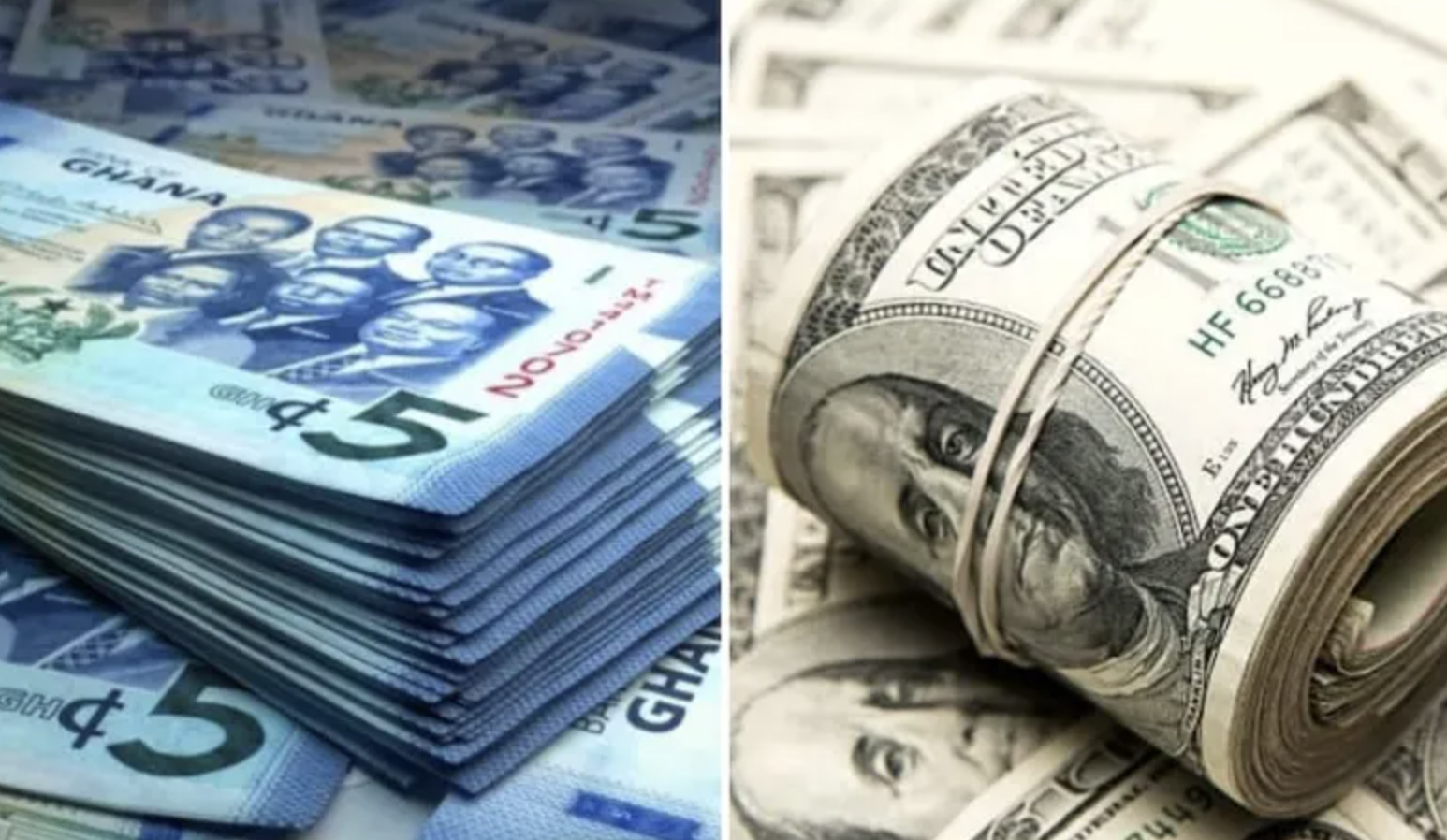
On October 16, 2023, the Interbank forex rates from the Bank of Ghana indicate that the Ghana Cedi is trading against the US Dollar at a buying price of 11.3057 and a selling price of 11.3171.
In Accra’s Forex bureau, the Dollar is bought at 11.75 and sold at 11.95 Cedis. Against the Pound Sterling, the Cedi is bought at 13.7252 and sold at 13.7400.
In the same Forex bureau, the Pound Sterling is bought at 14.30 and sold at 14.70 Cedis.
The Euro is bought at 11.8843 and sold at 11.8951.At the Forex Bureau in Accra, the Euro is bought at 12.20 and sold at 12.60 Cedis.
The South African Rand is bought at 0.5950 and sold at 0.5955.
In the Forex bureau, the Rand is bought at 0.35 and sold at 0.95 Cedis. The Nigerian Naira is bought at 68.0296 and sold at 68.1180.
At the Forex bureau, 1 Cedi can be exchanged for 10.00 Naira when buying and 15.00 Naira when selling.
For the CFA, it is bought at 55.1451 and sold at 55.1953.
In Accra’s Forex bureau, 1 Cedi can be exchanged for 16.50 CFA when buying and 19.00 CFA when selling.
Our forex bureau rates are provided by Afriswap Bureau De Change in Osu, Accra.
Note that these rates may be different at a forex bureau near you. Our forex bureau rates are provided by Afriswap Bureau De Change in Osu, Accra.
A former Deputy Minister of Finance, Kweku George Ricketts-Hagan, has asserted that the case of William Ato Essien, the founder of the defunct Capital Bank, clearly illustrates the Central Bank’s failure to fulfill its regulatory responsibilities.
Ato Essien was sentenced to 15 years of imprisonment with hard labor after being convicted of embezzling over GH¢90 million in Bank of Ghana’s liquidity support provided to the now-defunct financial institution. Despite being granted multiple opportunities to reimburse the state, he failed to repay the full amount.
In December 2022, he initially paid GH¢30 million and was required to make a GH¢20 million initial installment of the outstanding GH¢60 million by April 28, 2023. However, he could only manage to pay ¢5 million.
In May, he was granted until July 4 to liquidate his assets and pay the state GH¢55 million, but this deadline passed without any payments being made.
Mr. Ricketts-Hagan, speaking on JoyNews’ Newsfile on Saturday, October 14, argued that, due to the inherently self-centered and self-interested nature of human beings, even those with the best intentions may seek to maximize their own gains.
This is precisely why, he contended, central banks and other regulatory bodies exist to oversee such activities. However, the weaknesses in the bank’s regulatory system allowed Mr. Ato Essien to evade accountability for his actions.
“It is clear that it is not only the board that failed in its fiduciary responsibility in terms of governance but the Central Bank itself also failed in its supervisory and regulatory responsibilities,” he said.
He expressed surprise that some board members of the bank and officials from the Bank of Ghana have not faced questioning regarding the matter.
On the same program, Sylvester Tetteh, the Member of Parliament for Bortianor-Ngleshie Amanfro, praised the Attorney General for successfully recovering GH¢37 million from Ato Essien. Tetteh, who also serves as the Vice Chairman of Parliament’s Communications Committee, commended the AG’s office for this achievement, highlighting that it is one of the largest amounts the state has been able to recover from a criminal case under the Fourth Republic.
He emphasized that, if this money had not been retrieved, the convict would have been able to enjoy his gains at the expense of the state upon his release from prison.
Tetteh called on the Attorney General to include the board members who are believed to be implicated. He suggested that unless this is done, the conviction of Ato Essien alone may not serve as a sufficient deterrent to dissuade others from engaging in such illegal activities.
“I think this is good for the country because a lot has been lost in respect of this banking sector clean-up because we had an ailing banking sector and if that hadn’t been done, it would have been a catastrophic event.”
“So I think the Attorney General and the investigators have done a good job for the recovery made.”
Governor of the Bank of Ghana (BoG), Dr. Ernest Addison, has advocated for an expedited debt restructuring process for vulnerable members of the G20, which includes countries such as Ghana, Ethiopia, and Malawi.
This call follows recent agreements made between Zambia, Chad, and their respective creditors, highlighting the importance of shielding these nations from potential domestic financial market instability.
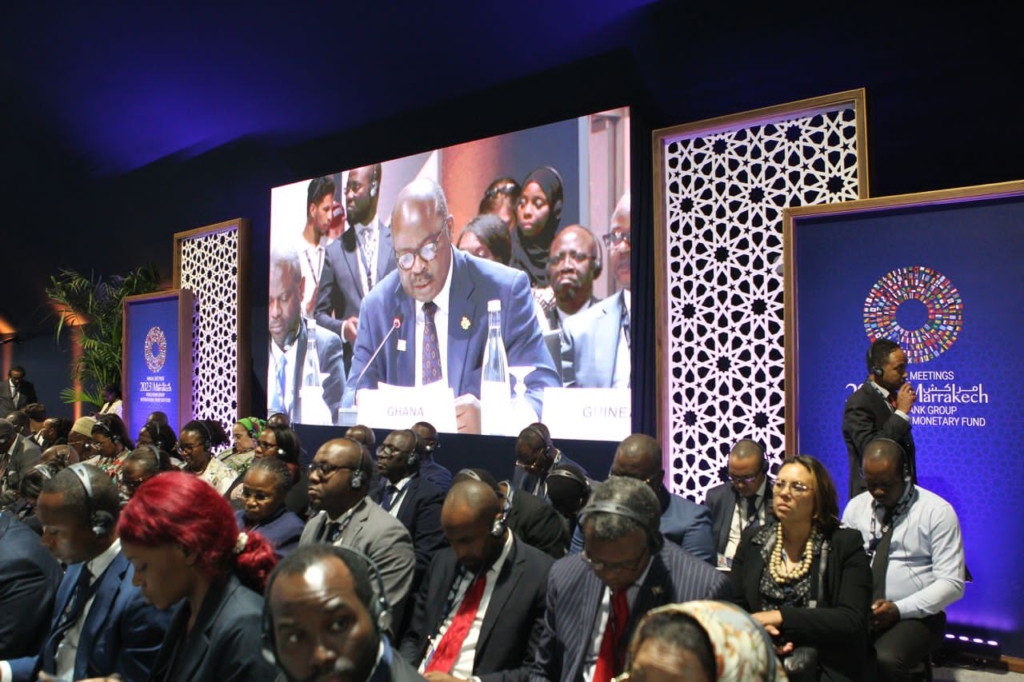
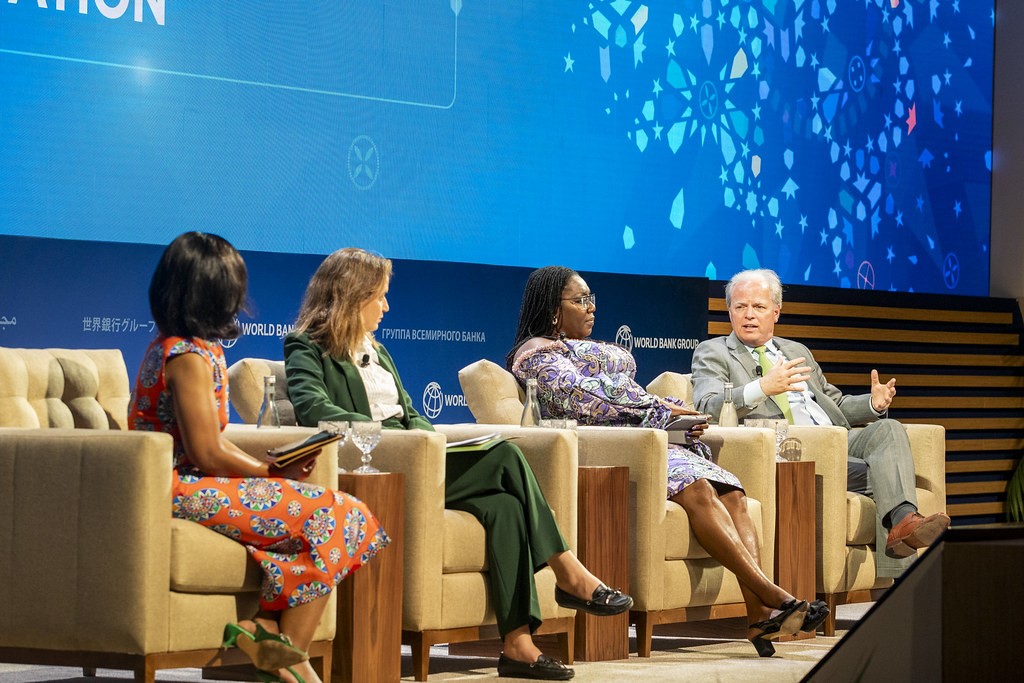
Dr. Addison made these remarks during an African Caucus Meeting focused on the theme of “Leveraging Public Debt for Sustainable Growth in Africa” held at the ongoing International Monetary Fund (IMF)/World Bank Group (WBG) Annual Meetings in Marrakech, Morocco.
“While welcoming the latest developments on Zambia and Chad, we underscore the need to revamp the G20 Common Framework (CF) to ensure timely, orderly, equitable, inclusive, and transparent debt restructuring for distressed members in the region (including, Ghana, Ethiopia, and Malawi),” he said.
“We also call for a carefully designed debt resolution mechanism, especially, for vulnerable members with large-domestic creditors (as in the case of Ghana) to help avert domestic financial market instability,” the BoG Governor added.
The Governor emphasized the significance of enhanced engagement between debtors and creditors, emphasizing the need for an improved Global Sovereign Debt Roundtable (GSDR) and enhanced technical support. These measures are essential to facilitate a more efficient, proactive, and systematic debt restructuring process.
“We also reaffirm the request for debt standstill during times of negotiations to offer immediate relief to debtors and restate our request for multilateral debt cancellation for the most vulnerable members facing acute debt challenges,” Dr Addison said.
He emphasized the need for improved cooperation between the IMF and Multilateral Development Banks/Regional Development Banks to ensure the prompt delivery of financial aid to G20 member countries grappling with substantial debt and growth difficulties.
“In this context, we restate the call for new SDR allocation through the MDBs/RDBs’ (including the African Development Bank – AfDB), given their multiplier effects in achieving climate and development goals,” he said.
“Given the fragmented global financial architecture, we urge the IMF to remain steadfast and adapt its lending toolkits to changing global conditions to serve its G20 vulnerable membership better,” Mr Addison advocated.
Speaking on this issue at a press briefing on Thursday, Kristalina Goergieva, Managing Director, IMF, said: “The Common Framework has been slow to deliver to countries that turn to it for support.”
She noted, however, that: “We see an encouraging sign that the time taken to reach an agreement among creditors is short with every step.”
She pointed out that the process took varying durations, with Chad’s creditors taking 11 months to provide the necessary financial assurances to the Fund, followed by nine months for Zambia, six months for Sri Lanka, and five months for Ghana.
The Managing Director of the IMF elaborated that the complexity of creditors and the unique arrangements in each case made debt restructuring an arduous task since it necessitated unanimous agreement from all creditors.
She suggested adopting a case-specific approach to identify creditors and establish a Creditors’ Committee, with the IMF and World Bank outlining the key parameters that require agreement.
“This is the way that today, debt restructuring is delivered, ” Goergieva said, adding that “my plea is, pressure for speed and efficiency, but don’t throw the towel on the Common Framework, because if we lose it, then we’re back in a much less predictable environment.”
Numerous African economies find themselves confronted by severe debt issues, accentuated by the growing demands for social and infrastructure investments. These challenges are exacerbated by the ramifications of the COVID-19 pandemic, the conflict in Ukraine, tightening global financial conditions, and climate-related disasters.
In light of these circumstances, it has become imperative for these nations to regain control over their debt situations and foster inclusive, sustainable growth across the continent. Achieving these goals hinges on effective debt management, particularly concerning external creditors.
Today, October 12, 2023, the Ghana Cedi is trading versus the dollar at a purchasing price of 11.2603 and a selling price of 11.2715, according to the Interbank exchange rates provided by the Bank of Ghana.
At Forex bureaus in Accra, the US Dollar is bought at a rate of 11.70 and sold at 11.90.
Against the British Pound Sterling, the Cedi is traded at a buying price of 13.8389 and a selling price of 13.8538. In Accra’s Forex Bureaus, the Pound Sterling is bought at 14.25 and sold at 14.65.
The Euro’s exchange rate stands at a buying price of 11.9404 and a selling price of 11.9522. In Accra’s Forex Bureaus, the Euro can be bought at 12.20 and sold at 12.60.
The South African Rand is trading at a buying price of 0.5974 and a selling price of 0.5979. In Accra’s forex bureaus, the South African Rand is bought at a rate of 0.35 and sold at a rate of 0.95.
The Nigerian Naira is trading at a buying price of 67.9928 and a selling price of 68.0816. At forex bureaus in Accra, the Nigerian Naira can be bought at a rate of 10.00 Naira for every 1 Cedi and sold at a rate of 15.00.
For the Central African CFA Franc (CFA), the exchange rate is at a buying price of 54.8817 and a selling price of 54.9359. In Accra’s forex bureaus, the CFA can be bought at a rate of 16.50 CFA for every 1 Cedi and sold at a rate of 19.00 CFA for every 1 Cedi.
Note that these rates may be different at a forex bureau near you. Our forex bureau rates are provided by Afriswap Bureau De Change in Osu, Accra.
Our forex bureau rates are provided by Afriswap Bureau De Change in Osu, Accra.
Ghana, once heralded as a pioneering African economic success story, now finds itself grappling with an unparalleled financial crisis.
In recent days, the streets of the capital city, Accra, have witnessed hundreds of protestors demanding the resignation of the governor of the Bank of Ghana and his two deputies due to a staggering loss of approximately 60 billion Ghanaian cedis ($5.2 billion; £4.3 billion) during the 2022 financial year.
This demonstration, known as #OccupyBoG, was spearheaded by the opposition National Democratic Congress (NDC) party. The protesters, adorned in red attire, including shirts, scarves, and berets, voiced their grievances through songs and displayed banners bearing messages such as “stop the looting, we are suffering.”
The opposition alleges that the central bank engaged in unlawful money printing to extend loans to the government, resulting in the devaluation of the currency and severe inflationary pressures.
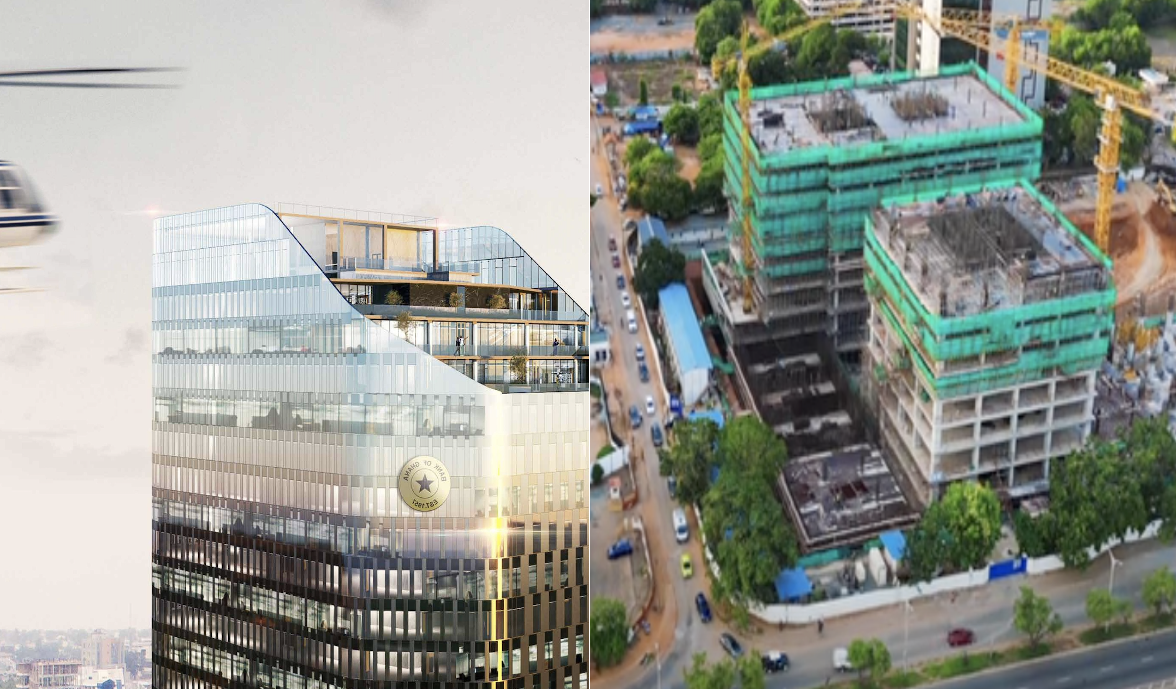
Furthermore, the NDC has voiced criticism against the bank for its expenditure, including over $762,000 on both domestic and international travel, marking an 87% increase compared to the previous year, and $250 million on a new office complex. These financial details, according to the opposition, are documented in an internal audit.
The NDC has accused Dr. Ernest Addison, the governor of the central bank, of acting recklessly and mismanaging the financial situation. While the bank has faced mismanagement allegations in the past, the magnitude of this particular loss is unparalleled.
“We have never seen anything like this in our history. If the Bank of Ghana wants to recover from this loss… it will take them more than 45 years,” says economist Professor Godfred Bokpin, from the University of Ghana.
The bank refutes allegations of mismanagement and asserts that the losses were primarily attributable to exchange rate fluctuations and the failure of state institutions to repay their loans. Additionally, it points to the government’s decision to borrow $700 million from the bank and not fully repay it as a contributing factor to the ongoing crisis.
Critics have also accused the bank’s leadership of exacerbating rampant inflation and economic hardship through their actions. Lawyer Martin Kepbu questions, “During the period when they were printing billions for the government, did they not anticipate the potential repercussions?”
Why has this happened?
Ghana is currently grappling with its most severe economic crisis in a generation. In the previous year, the inflation rate soared to a historic high of 54%, and it continues to hover above 40%. Multiple credit rating agencies have downgraded the country, making it challenging to secure international borrowing.
As of September 2022, Ghana’s total debt had surged to $55 billion, necessitating that over 70% of the government’s income be allocated to service this debt—an unsustainable situation that led to defaults on a significant portion of its debt payments.
In response, the government sought assistance from the International Monetary Fund (IMF) and secured a $3 billion bailout earlier this year, contingent upon meeting specific requirements. Chief among these was the need to reduce the nation’s debt interest payments to a manageable level by 2028, thereby ensuring sufficient resources for economic governance.
To fulfill this commitment, Ghana’s government initiated a debt restructuring process by renegotiating terms with creditors, proposing reduced interest rates and extended repayment periods to alleviate the strain on public finances. However, some creditors declined to participate in this debt exchange program.
On August 9th, the Bank of Ghana released a statement indicating that the government had informed it of its inability to meet the IMF’s requirement, and, as a result, would not repay half of the $700 million borrowed from the bank. Instead, these funds would be allocated to the debt restructuring process, with no interest payment to the bank.
The Bank of Ghana, as the lender of last resort, has been accused of having its status misused by the government, led by President Nana Akufo-Addo, and of violations of the bank’s regulations.
“The Bank of Ghana Act is very clear that printing money or financing the government is limited to 5% of the previous year’s fiscal revenue, which means that in principle supporting the government is not a crime but don’t go beyond 5%,” says Professor Bokpin.
If the 5% threshold is exceeded, the bank’s officials are required by law to report to parliament. Failure to report could result in a fine or a term of jail of up to two years.
Implications for the bank
However, it’s important to note that the Bank of Ghana’s financial situation doesn’t imply insolvency.
Unlike commercial banks, it doesn’t operate with the primary goal of generating profits, and thus, this loss shouldn’t disrupt its regular operations. Furthermore, as the lender of last resort, it possesses the capability to create its own currency as needed.
Nonetheless, experts argue that the central bank’s loss carries significant consequences. It erodes the moral authority of the bank in its role of overseeing Ghana’s commercial banks and erodes confidence in the nation’s financial system.
While central banks worldwide have encountered similar challenges, what sets Ghana apart is the scale of the loss relative to the size of its economy.
In contrast, the Bank of England, for example, anticipates a net loss of approximately $180 billion over the next decade, which will be covered by the UK government. However, the UK’s economy is measured in trillions of dollars, making the loss proportionally less impactful.
Inflation in Ghana is still running at more than 40%
According to Bright Simons, a Ghanaian social innovator and writer, the bank’s losses cannot be compared to those of other countries. “Their attempt to deflect blame by pointing to losses by other central banks makes no sense because the magnitude of their losses far outweighs those of other peer banks.”
“A lot of the mess is down to the bank’s accommodative stance on the government’s loose fiscal policy,” he says.
In other words, by creating money the bank has allowed the government to live beyond its means.
Human Impact
According to a recent report by the World Bank, as of last month, an estimated 850,000 Ghanaians have been pushed into poverty due to soaring inflation.
The income levels of Ghanaians have been steadily eroded, significantly impacting their purchasing power. The persistently high prices of essential commodities such as food, fuel, and utilities have placed a heavy burden on many households, making it increasingly challenging to make ends meet.
Adding to the country’s woes, the central bank is now facing scrutiny both domestically and from the IMF. As per the terms of the IMF loan agreement, should the government seek additional bailouts, the central bank’s hands will be tied, forcing it to decline such requests.
The Deputy National Communications Officer of the opposition National Democratic Congress (NDC), Godwin Ako Gunn, has strongly criticized the Central Bank’s governor, Dr. Ernest Addison, characterizing him as an arrogant and discourteous public official.
According to Ako Gunn, he believes that if he were not representing the NDC, he would have used the term “mentally unstable” to describe Addison.
“It is unfortunate that the governor has chosen to disrespect Ghanaians. He opened his mouth and made reckless and irresponsible remarks about people whose taxes pay him. Hooligans are lawless people, and describing taxpayers who pay his monthly salary demonstrates how disrespectful he is,” Mr Ako Gunn stated
The only appropriate observation in this situation is that he lacks self-respect, and as a result, he lacks respect for the people of Ghana. His remarks were deeply troubling. He is employed in an institution plagued by theft, corruption, and mismanagement. If this were not the case, there would be no justification for spending GHC 135 million on car repairs.
The Governor of the Bank of Ghana has informed Central Banking that he rejects the call from the country’s primary opposition party for his resignation. On October 3, the Minority group marched to the central bank’s headquarters, demanding the resignations of Dr. Addisson and his deputy governors, citing the bank’s reported GHC 60 billion loss for the 2022 fiscal year.
Ernest Addison, on the other hand, claims that “the demonstration was completely unnecessary” and that neither he nor his deputies intend to resign.”
Reacting to the comments, Ako Gun said ”I would have declared him mentally unstable if I weren’t a communicator for the NDC. Listen to what I’m saying; I didn’t insult him. I only stated that I would have; I did not describe him as such.”
He made the remarks during an interview on Rainbow Radio 87.5 FM’s Nyankonton Mu Nsem.
1. Your response to the tax payers and demonstrators is unprecedented. You want to determine how they voice their dissatisfaction about your abysmal performance? You described them as hooligans for demonstrating against you? Please who are you? Are you a demi-god or some deified ancestor-incarnate? It appears you have a very infinitesimal understanding of the system of government we have decided to operate and I strongly recommend that you take lessons in the tenets of democracy, that creates the kind of environment conducive for your work and for all us to thrive. Otherwise, your attitude is going to be the cause of many demonstrations that would peak our political temperature and create unnecessary tension.
2. Isn’t it under your watch that the BoG has negative equity? If my understanding of negative equity is correct, it means the BoG has no money to operate, and if so, where are you getting money for the construction of your new Headquarters? Borrowing to soak us into more debt or printing more money?
3. The BoG is currently insolvent under your watch and it doesn’t lie in your mouth to offer your own definition of what insolvency is. It is an insult to our intelligence to get us into this quagmire, and still marshal the audacity to tell us that the BoG is technically not insolvent because, it is a state entity. If there’s no money, there’s no money.
4. You spent about 137 million on vehicle maintenance; collapsed over 400 banks and micro-finance companies; printed over 700 trillion within 2 years; and depleted our foreign reserves. Yet you still want to determine how the tax payer reacts to your decision to choose excessive partisanship over competence? Your attitude and response epitomizes what my father referred to as IMPUNITY PERSONIFIED. The President of the land has received several calls for his resignation and your boss, Ken Ofori Atta is still being asked to resign or be sacked. None of these have responded arrogantly like the way you have.
5. Please Governor, printing money does not make you owner of human life and human rights and respectfully, sir, you portray a certain high level poverty, if all you have, is the money you have printed, which makes you arrogant in insulting tax payers who are unhappy with your abysmal performance. This isn’t how Governors G.K Agamah, K. Dufuor, P. Acquah, and N. Ishahakku handled the BoG. These chaps were simply sober and competent.
6. Whether you resign or not, you would by all means, account one day, for your stewardship either in heaven or in hell or in prison or in your home. One thing is certain to me and must be clear in the minds of all, if we survive 2024, the conduct of governance, politics and the management of our economy wouldn’t be business as usual. Things would change to the glory of God, for the betterment of lives of Ghanaians, and to the shame of wicked and incompetent leadership.
Thank you
Yaw Gyampo A31, Prabiw PAV Ansah Street Saltpond & Suro Nipa House Behind Old Post Office Larteh-Akuapim
DISCLAIMER: Independentghana.com will not be liable for any inaccuracies contained in this article. The views expressed in the article are solely those of the author’s, and do not reflect those of The Independent Ghana
Deputy Chief Executive of the National Youth Authority, Akosua Manu, has shared her thought on the recent #OccupyBoG protest, asserting that it was misdirected.
She emphasized that the Bank of Ghana (BoG) does not involve itself in food crop cultivation for estimating food inflation.
During her appearance on TV3’s New Day, Akosua Manu acknowledged the significance of holding institutions accountable but underscored the importance of ensuring that such actions remain within the institution’s proper jurisdiction.
“Some of the things that the minority talked about, if they are talking about factors that affect inflation, including food, it is not BoG that plants maize or plantain to determine that. It doesn’t come to them. Secondly, if you want to have a conversation about him resigning, he doesn’t appoint himself; take it to the right authority for that to happen, so it becomes a question of gimmicks and games,” she stated.
Manu also pointed out that it was fitting for the government to seek assistance from the BoG, as it falls under the government’s purview. She contended that the Bank of Ghana could potentially extend financial support to the government, including options like an overdraft, in a manner it deems appropriate.
However, Manu criticized Dr. Ernest Addison, the Governor of the Bank of Ghana, for labeling demonstrators as “hooligans.”
She disagreed with his choice of words, stating, “In the end, I disagree with the description of the protesters as hooligans; he performed poorly on that front. No one can make me believe that they were the right words to use.”
Nevertheless, Manu took issue with Dr. Ernest Addison, the Governor of the Bank of Ghana, for characterizing the protesters as “hooligans.” She expressed her disagreement with his language choice, remarking, “Ultimately, I do not agree with referring to the demonstrators as hooligans; he fell short in that regard. I am not convinced that those were the appropriate words to use.”
The Minority coalition in Parliament, comprised of members representing the National Democratic Congress (NDC), CPP, PNC, and other civil society organizations, orchestrated the Occupy Bank of Ghana (BoG) demonstration on Tuesday, October 3, 2023.
Their primary demand was the immediate resignation of the BoG Governor and his two deputies. The protest saw the participation of thousands of individuals who marched along the main thoroughfares of Accra.
The group’s key grievances encompassed the GH¢60 billion loss incurred by the Central Bank in the 2022 fiscal year and the controversial new central bank headquarters project, projected to exceed $250 million USD in cost.
Host of Metro TV’s ‘Good Evening Ghana’ programme, Paul Adom Otchere, has slammed the Minority leader in Parliament, Dr Ato Forson and the entire leadership of #OccupyBoG protest, for refusing to hand over their petition to the Head of Security at the Bank of Ghana, Wing Commander Kwame Asare Boateng.
On Tuesday, the Bank of Ghana Governor, Dr Ernest Addison failed to show up to receive the petition from the NDC MPs who participated in the #OccupyBoGprotest.
The leadership of the OccupyBoG protest was met by Wing Commander Kwame Asare Boateng and a host of the Bank’s leaders, who told the protesters that Dr Addison was in a meeting with a team from the International Monetary Fund (IMF) and was therefore unavailable to receive the petition.
But the leadership of the protest refused to hand over the petition to him as they considered him as out of place to receive such a petition.
“I feel very disrespected as the Leader of the opposition in Parliament. For a simple reason that we demanded to present a petition to the Governor of the Central Bank of the Republic of Ghana otherwise known as the Bank of Ghana. The Governor has two deputies, namely Deputy 1 and Deputy 2.
“Unfortunately, he has decided to disrespect us and his two deputies have also decided to disrespect us by not being here to accept the petition. We never said we are going to present our petition to the head of security or someone responsible for security with all due respect.
But Paul Adom Otchere has described the act of refusal by the NDC as insolent and condescending towards BoG’s head of security.
“Does he denote some low player or something like that? That is what I want to correct. And I don’t understand why minority leader like Casiel Ato Forson, one who is looking to rule the country, looks at someone and says, oh you are head of security at bank of Ghana and I don’t want to deal with you. That was total disrespect. Not just to this man. But also if you look at this man’s profile and Ato Forson’s profile, given that Ato Forson has been elected by some people, I respect that. But if you look at the two profiles Ato forson should not be able to tell him that you have disrespected me because they say you should come for the petition. I’m very disappointed in Casiel Ato Forson and the NDC leadership. Why do you disrespect such an important person because he is called security?”, Paul Paul Adom Otchere expressed.
Meanwhile, Dr Casiel Ato Forson says protesters demanding the resignation of Bank of Ghana (BoG) Governor, Dr Ernest Yedu Addison will not stop until they meet and present their petition to him.
Dr Ato Forson said their petition contains more than just the resignation of BoG leadership.
So the Governor sending security officers to receive the petition is disrespectful.
He added that they will not present the petition but they will look for another time to exactly so.
On Tuesday, October 3, Bank of Ghana Governor, Dr. Ernest Addison was notably absent when the NDC MPs attempted to present their petition during the #OccupyBoG protest.
Instead, the OccupyBoG protest’s leadership encountered Wing Commander Kwame Asare Boateng (retired) and several Bank officials.
They were informed that Dr. Addison was engaged in a meeting with a delegation from the International Monetary Fund (IMF) and was unavailable to receive the petition.
MP for Ningo-Prampram, Sam Nartey George, was upset that a “watchman” had been sent to receive the delegation.
“We were told stories that he wasn’t well and later told that he would come and receive our petition and we stood there for an hour and more and still failed to show up and sent a watchman to come and meet us,” he said.
But who is Wing Commander Kwame Asare Boateng (retired).
Wing Commander Kwame Asare-Boateng Rtd (Esq) joined the Bank of Ghana in 2019, assuming the role of Director responsible for the Security Department. During his tenure, he has significantly revitalized and enhanced the effectiveness of the Security Department.
Prior to his service at the Bank of Ghana, Mr. Asare-Boateng dedicated 26 years of his career to the Ghana Air Force, where he ascended through the ranks to the position of Wing Commander. He also held the role of Deputy Director of the Legal Directorate at the Air Force Headquarters. Throughout his military service, he held various key roles, including those of an Intelligence Operator, Administrator, and Legal Officer.
Mr. Asare-Boateng participated in numerous operational assignments, including serving as the Force Conduct and Discipline Officer with the United Nations Interim Force in Lebanon (Unifil) and as the Force Intelligence Officer during his tenure as a UN Observer in Liberia.
He was admitted to the Ghana Bar in 2007 after successfully completing his professional law program. In addition to his legal qualifications, he holds a Master of Arts Degree in International Relations and a Bachelor of Arts Degree, both awarded by the University of Ghana.
Mr. Asare-Boateng’s distinguished service has been recognized through several awards and United Nations Medals, highlighting his professionalism and unwavering dedication to both his nation and the United Nations.
Minority Leader in Parliament, Dr Cassiel Ato Forson, has noted that the protestors involved in the #OccupyBoG demonstration would only hand over their petition to the Governor of the Central Bank, Dr Cassiel Ato Forson.
Engaging the press today during the protest, the Minority leader noted that no other staff would be engaged.
Should Dr Addison fail to receive the petition, the protestors have pledged to remain at the Central Bank until he does so.
“I together with the leadership of the NDC Minority in Parliament must be allowed to walk to the Central Bank to present a petition that should be received by the Governor himself.
“He must be the one to receive our petition. We won’t just hand it over to him; we will read it to his hearing. And we will demand his exit today.
“If he fails to exit, there will be a series of actions against him. Then we will not leave there,” Dr Ato Forson said.
The Minority has expressed dissatisfaction over the unauthorized printing of over GH¢80 billion by the central bank for the Akufo-Addo government.
According to the Minority, the Central Bank, by so doing, has pushed some 850,000 Ghanaians into poverty. They therefore have called for the removal of Dr Ernest Addison.
Official sources within the Bank of Ghana (BoG) have discredited a video circulating on social media that purportedly shows stacks of cash, allegedly printed by the BoG on behalf of the government for election-related purposes.
The BoG sources have unequivocally labeled the video as “fake” and “propagandish.”
The widely circulated video is accompanied by commentary suggesting that the money was intended for election-related activities. However, the central bank has dismissed these claims.
According to the BoG, a careful examination of the purported cash stash revealed that the currency displayed in the video is not denominated in Ghana cedis.
Furthermore, sources within the Bank of Ghana have urged the Ghanaian public to disregard the “propaganda” video and to “treat it with contempt.” They have clarified that it is an old video that resurfaces periodically for propaganda purposes.
The BoG has urged the public to exercise caution and refrain from disseminating misinformation based on this “misleading” video.
The Bank of Ghana has affirmed that Ghana’s International Monetary Fund (IMF) program is delivering positive outcomes, citing improved economic indicators in recent months.
Dr. Ernest Addison, the Governor, highlighted positive trends in factors such as the exchange rate and inflation during a press briefing by the Monetary Policy Committee on September 25, 2023. He stated, “The Committee has noted the overall improvement in domestic macroeconomic conditions, with robust economic growth and a decrease in inflation in August.
These developments indicate that the policy framework established under the three-year IMF Extended Credit Facility is starting to show results.”
“Economic activity is rebounding strongly, the exchange rate is stabilising, inflation is declining, and the level of foreign exchange reserves has improved. Sustained improvement in these indicators should result in the restoration of real incomes and purchasing power,” he said.
Ghana anticipates the arrival of the second portion of the IMF loan by year-end, according to the Governor. He emphasized that “During the final quarter of the year, reserve buildup will be reinforced by anticipated funds from the cocoa syndication loan, the second installment of the IMF ECF program, and additional multilateral inflows.”
The Monetary Policy Committee of the Bank of Ghana (BoG) has chosen to maintain the key lending rate to commercial banks at its current level.
Following their review of economic developments, they have decided to keep the rate steady at 30 percent.
Speaking to the press, Dr. Ernest Addison, the Governor of the Bank of Ghana, highlighted that this decision was based on the positive response of all macroeconomic indicators to previous measures taken to control inflation.
“Given these considerations, the Committee decided to maintain the policy rate at 30.0 percent. The Committee further indicated that while the expectation is for continued disinflation, it stands ready to respond appropriately should inflation deviate from these broad expectations”, he said.
Regarding inflation dynamics, Dr. Addison elaborated that the ongoing commitment to a stringent monetary policy stance and the stability of the exchange rate have played crucial roles in driving the observed disinflation process throughout the year.
He further stated that Headline inflation has decreased by a cumulative 14.0 percent since it peaked at 54.1 percent in December 2022.
Dr. Addison also noted that non-food inflation has experienced a substantial decline of nearly 20 percent, underscoring the overall effectiveness of the monetary policy measures.
“All core inflation measures, monitored by the central bank are trending downwards, indicating continued easing of underlying inflationary pressures. In addition, one-year ahead survey-based inflation expectations seem well anchored”.
He emphasized that although the disinflation process has resumed, it is anticipated to lead to a gradual return within the target range over the medium-term, unless unexpected shocks, increases in global crude oil prices, or adjustments in utility tariffs disrupt this trajectory.
Dr. Addison highlighted that these factors continue to pose risks to the inflation outlook, which will require careful monitoring and management through vigilant monetary policy measures.
Governor of the Bank of Ghana (BoG), Dr. Ernest Addison, has declared that the economy’s outlook is favorable, with macroeconomic indicators showing signs of improvement.
“We are quite confident about the outlook of the economy, as just last week we had a new reading of inflation, and this is the first time we have stayed on the disinflation path with inflation declining by three percentage points,” he said.
The Governor made these remarks during the 47th meeting of the Committee of Governors of Central Banks of the West African Monetary Zone and the 62nd Ordinary meeting of the Committee of Governors of Central Banks of the Economic Community of West African States (ECOWAS).
This program was a part of the 2023 Mid-Year Statutory Meetings hosted by the Government of Ghana under the auspices of the Ministry of Finance and the Bank of Ghana, which included the West African Institute for Financial and Economic Management (WAIFEM), West African Monetary Institute (WAMI), and West African Monetary Agency (WAMA).
Notably, inflation decreased from 43.1 percent in July to 40.1 percent in August, following its peak at 54.1 percent in December of the previous year.
Dr. Addison, who delivered the keynote address, highlighted that in 2022, Ghana faced an economic crisis, prompting the government to seek an Extended Credit Facility of $3 billion from the International Monetary Fund (IMF) to restore macroeconomic and debt sustainability.
He further emphasized that the government is currently prioritizing the implementation of measures aimed at reestablishing macroeconomic stability and fostering inclusive economic growth.
“There are important lessons to be learnt from the ECF IMF programme which we will share with our colleagues in these meetings,” Dr Addison stated.
He mentioned that the meeting served as a platform to evaluate the progress of the member states within the Economic Community of West African States (ECOWAS) in their pursuit of a unified currency.
Dr. Addison emphasized that the program, of greater significance, offered a chance to reassess the roles of monetary institutions like WAIFEM, WAMI, and WAMA in the roadmap leading to the launch of the ECO currency next year. It also provided an opportunity to delve into other economic and monetary developments within the West African Monetary Zone (WAMZ).
“The question facing us at this meeting is what we shall do differently after 36 years since the inception of the ECOWAS Monetary Co-operation and 23 years since the second WAMZ was instituted,” he stressed, saying, “And this leaves next year a critical year in the lead up to the launch of the ECO under the roadmap in line with the new macroeconomic convergence,” he said.
Dr. Olorunsola Olowofeso, the Director-General of WAMI, noted that macroeconomic vulnerabilities had escalated within the West African Monetary Zone (WAMZ).
These vulnerabilities were prompted by factors such as high inflation rates, an expanded fiscal deficit, increased debt burdens, currency depreciation, and restrictive financial conditions.
“Recent political instability had added to the woes of pre-existing insecurity challenges in ECOWAS, exposing the fragile recovery of the WAMZ economies to the risk of reversal of macroeconomic gains and creating an environment of uncertainty,” he stated.
The Bank of Ghana (BoG) paid a colossal amount of US$117,150,255.37 to contractors for various projects in the country in 2022, when Ghana witnessed an economic crisis.
According to the Auditor-General in its report christened “Consolidated Statements of Foreign Exchange Receipts and Payments of the Bank of Ghana (BoG) for the year ended 31 December 2022”, the amount paid was 263.3 per cent higher than US$32,246,487.75 for the corresponding period of 2021.
“The upsurge was attributable to the construction of Bank of Ghana Corporate Office in Tamale and Sports infrastructure for the hosting and organization of the 13th African Games, Accra 2023 accounting for 30.7% and 30.5% respectively of the total amount of US$117,150,255.37,” the report added.
In a breakdown, it was revealed that Messrs Goldkey Properties Limited received payment of $35,909,067.50 for the construction of a new corporate head office for Bank of Ghana.
An amount of $35,701,405.64 was paid to Messrs Contracta Construction UK Limited for the Sports Infrastructure for the Hosting and Organisation of 13th African Games, Accra 2023.
Messrs Maripoma Enterprise Limited was paid $20,788,740.83 for the rehabilitation of Ofankor-Nsawam Road (Dual Carriageway)
Economic crisis in 2022
In early 2022, sovereign spreads on Ghana’s Eurobonds widened, and Credit Rating Agencies further downgraded Ghana’s sovereign debt rating.
This, the Central Bank noted effectively blocked Ghana’s access to the international capital markets in 2022, a resource which the budget had relied on to borrow about US$3 billion annually to help close the financing gap.
Losing access to the international capital market for new financing immediately triggered a liquidity crisis for Government, spilling over into a balance of payments crisis as the country had to continue to honour its debt service obligations, energy payments, and import bill.
In keeping up with these critical external payments, the Bank of Ghana lost US$500 million in external reserves in just two months, with no new inflows of foreign currency from the usual annual Eurobond issuance by Government to replenish its reserves.
Furthermore, to help address Government’s liquidity crisis, the Bank extended additional overdraft to the government to address auction failures and prevent domestic default, and enabled government to meet domestic debt obligations and other critical payments needed to avoid a disorderly halt to economic activity.
Throughout the first half of 2022, there was no new foreign financing until July when the Afrexim Bank stepped in to support with US$750 million.
These circumstances led the Government to approach the IMF for support in July 2022.
Among the corrective measures that were put into place in 2022 to manage the crisis, in particular the major policy effort designed to put Ghana’s debt on a sustainable path included the Domestic Debt Exchange (DDE) program, where the stock of Government of Ghana/public sector debt was to be halved from 105 percent of GDP to 55 percent of GDP by 2028.
Minority reacts
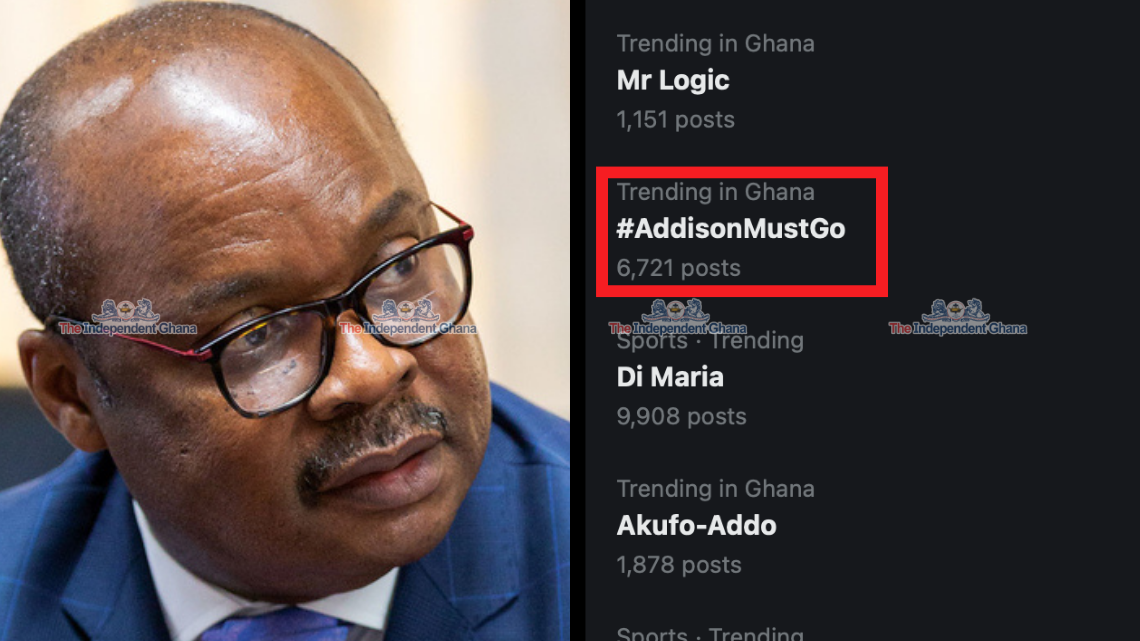
On August 9, the Minority in Parliament issued a twenty-one-day ultimatum for the Governor to resign, which has now elapsed. According to the minority, the Governor has overseen irresponsible government spending and has contributed to the persistently high inflation rate, which remained above 40% in August 2023.
Furthermore, the minority contends that the Central Bank engaged in extravagant expenditures in 2021 and 2022, leading to such a substantial loss. They pointed out that the Bank of Ghana’s foreign and domestic travel expenses amounted to a staggering GHS97.4 million, marking a 246% increase from the previous year.
Additionally, the Bank of Ghana allocated GHS8.6 million solely for Director’s remuneration, signifying an 87% increase from the previous year’s expenditure. Furthermore, the decision to invest $250 million in the construction of a new head office in Accra was questioned.
In contrast, Finance Minister Ken Ofori-Atta believes that the central bank remains financially prudent, robust, and is operating efficiently.
Minority leader in Parliament, Dr Ato Forson has reminded the Bank of Governor, Dr Ernest Addison and Finance Minister, Ken Ofori-Atta that their day of accountability is nigh.
He made this known in a rebuttal statement in connection with Mr Ofori-Atta’s “Stand with Bank of Ghana Governor” agenda. In a write up, the Finance Minister argued that Dr Ernest Addison is a competent professional who should not lose his job for protecting the economy.
“Governor Addison, just like me, has faced major economic hurdles since 2017, inheriting a derailed International Monetary Fund programme and a highly impaired and ethically strained financial industry from our predecessors, having to navigate the serious revenue shocks on the back of COVID-19 and distortions to our supply chain induced by both Covid-19 and international geopolitics,” he wrote.
The Finance Minister also defended the construction of a new headquarters for the Central Bank, arguing that it is “befitting”.
In response, Dr Ato Forson noted that the need to justify the “gross incompetence and misgovernance of the leadership of the Bank of Ghana,” by the Minister of Finance, Ken Ofori-Atta “ended up worsening the case of the central bank and deepening its credibility crisis.”
He noted that it is legitimate for citizens to seek clarifications regarding value for money considerations in executing such a project and whether current circumstances justify a project of that nature as the central bank has made losses in three of the past six years; and is projected to declare a loss again in 2023 and possibly in 2024.
“The Minister should rather welcome the call for an independent audit into the project and to ensure value for money at the end of the day,” he added.
Dr Ato Forson concluded by reminding Governor Addison and Mr. Ken Ofori-Atta that “the day of reckoning is very near and they will be held accountable for their collective mess.”
On August 9, 2023, the Minority issued a 21-day ultimatum for the resignation of the governor of the Bank of Ghana and his deputies. The ultimatum has elapsed, however, the Minority has threatened to protest to demand their removal.
Ranking Member of Parliament’s Finance Committee, Isaac Adongo, has refuted Finance Minister Ken Ofori-Atta’s characterization of Bank of Ghana Governor Ernest Addison as a capable professional.
Mr Adongo, who also serves as the Member of Parliament for Bolgatanga Central, asserted that Addison’s management of the economy has been nothing short of calamitous.
“Is that how you describe someone as professional? That you ignore the laws and wipe out the entire money reserve that is the basis of all monetary policy actions of the government? You have destroyed all of them making the BoG unfit for purpose,” Adongo said in an interview on Eyewitness News on Citi FM on Thursday.
Mr. Adongo additionally alleged that Dr Addison had not effectively overseen the management of the cedi.
“If the cedi stabilises at 30% in 2016 and you have moved it to 54%, we should praise you because you managed it better some time ago? Why have you suddenly forgotten how you did it if you are a professional?” Adongo asked.
Adongo’s remarks came in response to Ofori-Atta’s defense of Addison’s performance, as articulated in an article titled “Citizens – Standing Strong with the Bank of Ghana.”
Ofori-Atta cited several accomplishments during Addison’s tenure, including safeguarding the stability of the banking system, the establishment of the Consolidated Bank of Ghana (CBG) and the Development Bank of Ghana, successful fundraising exceeding $10 billion in the Eurobond market and AfriExim bank, achieving a historic reduction in inflation to 7.9%, and maintaining a commendable period of currency stability in the nation.
However, Adongo dismissed these achievements, asserting that they were overshadowed by Addison’s shortcomings.
“What the Central Bank Governor has done is the worst record that wipes off his entire career in the sector,” Adongo said.
Finance Minister Ken Ofori-Atta has appealed to the Ghanaian populace for their support in the construction of the new headquarters for the Bank of Ghana (BoG).
He emphasized that the central bank requires a modernized infrastructure to align with its evolving operations, especially as Ghana is the host country for The African Continental Free Trade Area (AfCFTA) headquarters and aspires to become the financial services hub of the continent.
“With respect to the BoG’s new headquarters, the evidence is clear that decisions to build had already been made long before these ‘losses’ occurred.”
“It is important for us to support such a critical institution to modernise its operations and have a befitting office space for a country that hosts the AfCFTA and has the vision to become the financial services hub of the continent,” he said in a write up issued on Thursday, September 14.
Mr. Ofori-Atta additionally expressed his backing for the Governor of the central bank to remain in his position, opposing the Minority’s call for his removal or resignation in the wake of the bank’s financial losses in 2022.
He asserted that Dr. Ernest Addison is a dedicated professional who is actively contributing to the country’s development.
“Governor Addison is a competent professional of quiet courage. In these nearly seven years, we have worked together to ensure: the inviolability of the banking system; the establishment of the Consolidated Bank of Ghana (CBG) and the Development Bank of Ghana; the raising of over $10 billion in the Eurobond market and AfriExim bank.”
“He brought inflation down to single digits of 7.9% for the first time; and managed an impressive period of currency stability in our country including the implementation of the Gold-for-Oil programme.
“It is either simply the height of irony or a sad reflection of the state of public discourse in our country that this man, steps up in a period of unprecedented global economic meltdown and domestic economic crises, and he is being pilloried for his good work.”
The Minority in Parliament has criticized the Governor of the Central Bank and his deputies following the announcement of a ¢60.8 billion loss for the year 2022.
Dr. Cassiel Ato Forson, the Minority Leader, has raised concerns about Dr. Ernest Addison’s decision to allocate $250 million for the construction of a new central bank headquarters while the Bank is facing financial challenges. He has accused the BoG Governor of resorting to printing money to fund this project.
“The Bank of Ghana does not have money but spending $250 million for a new head office, which means he is printing additional money to finance this project,” Dr Forson alleged.
During a news conference held on Monday, August 8, Minority Leader Dr. Forson declared that if Dr. Addison and his deputies do not step down from their positions, the NDC will organize and rally concerned citizens to occupy the central bank.
But in a response, the BoG explained that the current “building also does not have the required strength to withstand the expected imposed significant earthquake loads that would be expected to occur in the Accra area.
It said, “Based on the above and looking at the strategic objective of positioning Ghana as the financial hub of the subregion, with prospects of a potential Headquarters for a future regional Central Bank, the Board and Management of the Bank considered a new Head Office building as the most important priority project to support the operational efficiency of the Bank.”
The Bank said it also places it “in a very good position to be the host of the regional Central Bank as we currently host the West African Monetary Institute (WAMI) of the Sub-region.”
There is an anonymous quote that says “banks are to the economy what the heart is to the human body. They cycle necessary capital through the whole and they are barely noticed until pressure, necessity, or crises.”
In much the same way, our Central Bank these past almost seven years has been prudent, strong, resilient, and functioning efficiently, and been barely noticed until the interruption of unprecedented global events.
Our Central Bank’s assets have grown almost in tandem with the size of our financial sector and economy. From GHS53b in 2016, the Bank’s assets have grown by nearly one and half to GHS126b as at the end of 2022.
The foundation has never been conspicuous – our revenue has more than doubled since 2016, with total revenue increasing from GHS32b in 2016 to GHS96.7 (end December 2022). The size of our economy has also more than doubled from a GDP value of GHS219.6b in 2016 to an estimated GHS610.2b by the end of 2022; and more pragmatically the number of active contributors on the SSNIT register has increased from 1.3 million in 2016 to over 1.8 million in 2022.
We can all attest to the progress made in digitization, infrastructure, the armed forces and police, public spending on education, agriculture (cocoa and PFJ), health, and school feeding among others. Indeed, spending on the education sector including our universities, second-cycle institutions and basic schools collectively constitute about 20% of tax revenue – and includes compensation, goods and services, and GETFund spending on infrastructure, while the health sector consumes about 8-10% of tax revenue, among others.
However, the vision for and progress in social mobility and economic freedom is often in budget conflict with short-term macroeconomic volatility, where the activist roles of fiscal and monetary policy, and if blessed with a Keynesian benefactor or fiscal windfall, must be deployed to ensure that these gains are not eroded.
This is especially the case in instances where the volatility is mainly induced by cataclysmic events such as pandemics and geo-politics – the controls are often outside the remits of small open economies with independent central banks like Ghana.
It is within this context that since 2017 and especially between November 2019 and now, both the Ministry of Finance and the Bank of Ghana have shown the strongest collaboration yet to reset the financial architecture and to keep the economy strong.
In managing its balance sheet, the Bank of Ghana (BoG) issues currency, conducts foreign exchange operations, invests its own funds, engages in emergency liquidity assistance, conducts monetary policy operations, and liquidity management, last but not least, for a developing country, serves as a banker to Government which role may include bridge financing to support budget, in line with the applicable laws. In essence, this makes the central bank balance sheet, in the long run, central to its operations.
However, as many central banks, including Bank of Ghana, moved away from pursuing quantitative targets of monetary policy towards price targets, dominance of the Central Bank’s balance sheet as the key metric has waned in many economies and in academic literature as well.
In practice, many central banks have incurred losses, and we can cite as examples, the Bank of Jamaica, the central banks of Argentina, Brazil, Chile, the Philippines, Singapore, Turkey, and UK. Historically, some central banks have operated with negative equity (as a result of losses) yet fully met their policy objectives, as long as they remain policy solvent.
The pandemic and Russia-Ukraine war have reinforced and increased the number of Central banks that have moved into negative equity and have thrown light into this ‘new normal.’ Thus, the Central Banks of Chile, Czech Republic, Israel and Mexico have experienced years of negative equity.
The Reserve Bank of Australia fell into negative equity in 2022 due to valuation losses on its bond holdings, and the bank stressed that it will not affect its mandate or operational efficiency. And unheard of in the modern financial setup, the German central bank, that citadel of fiscal purity, recorded a loss in 2022.
The US Federal Reserve Bank in April 2022 also declared a negative equity position, on account of the rapid rise in rates that began in 2022, renewed interest expenses on commercial bank reserves deposits, and low income on its security holdings, including US Government securities. In fact, as indicated by the Brookings Institution, “the Fed’s cumulative losses came to more than $52 billion as at the end of April 2022, exceeding its paid-in capital and surplus, and in effect, leaving it in negative equity.”
(I cite these examples just to make the point that hitherto unheard of things have been happening in central banks around the world recently.)
Accordingly, as the focus shifts from direct targets of money supply to interest rates as operational targets, the framework for analysing central bank balance sheets has shifted, enabling central banks to play more interventionist roles in the economy than before.
As seen during the 2007 global financial crisis and the COVID era, over $16 trillion of quantitative easing (QE) was reported to have been spent by the G7 countries.
The modern economic policy consensus is clear: central banks can and do run on negative equity and they can make losses to support economic recovery; and these losses will not be counted as failure as in commercial banks and enterprises.
In fact, as some critics of the Central Bank in our country do observe, the primary objective of a central bank is not to make profit but to be managed as a financially sustainable institution. We must in these extraordinary times deploy all the instruments we have available and sail together through this odyssey. The call for us as Citizens, is not to be seen as punishing the Bank of Ghana for pitching up to support the greater public good!
It is probably a good time to recall the wise words of the late Professor P.A. V Ansah that even as we educate and inform, we must foster national cohesion because “…national cohesion is the foundation upon which any and everything is built.”
The Government’s debt operations that commenced in 2022, and executed this year, has had a significant impact on Bank of Ghana’s balance sheet while reducing the amount of money spent on interest payment for the
Government. As of 2022, the Central Bank held about GHS42.3b of Government’s domestic debt, out of the total (domestic) debt stock of GHS194.3b. This debt holding, in addition to others, resulted in a loss impairment provision of about GHS48b for the Bank in 2022.
As indicated by the IMF, the BoG was the loss absorber for the debt exchange to ensure that in light of the concessions to other domestic bondholders, its burden share of the debt exchange will enable the economy to still achieve the overall objectives of the Exchange – the Domestic Debt Exchange Programme will ensure the NPV of the stock of public sector debt is halved from the then 105 percent of GDP (later recalculated as 89%) to 55 percent of GDP by 2028, thereby putting the country on a sustainable debt trajectory.
As indicated by the Board of Directors of the Bank in their 2022 annual reports, all efforts will be made to restore the balance sheet of the Bank in the medium term, continue to improve the efficiency of their operations, and resort to the Government for recapitalization over the medium to long term if necessary. There is, therefore, no need for a direct attack on the leadership of the Central Bank.
As the Minister for Finance, I do have opinions about the reforms needed to strengthen the governance of many financial institutions including the Bank of Ghana.
But this requires a positive and sober national debate on the governance structure; should we, for example, revisit a separate chairmanship and governorship (such was the case prior to governor Dr. Agama’s years) and whether our democracy and institutional experience support Governors playing both board leadership and management roles as enshrined in our laws. We also need to have the discourse for policy clarity on what the operational independence of the central bank implies, especially in a Lower-Middle Income Country and transformational economies such as ours.
I do personally believe that central banks must have independence in executing their monetary policy mandate especially if it is based on a price target, where the Government sets the price targets, and Central Banks, in our case, BoG, independently uses its operational tools to achieve it.
Governor Addison, just like me, has faced major economic hurdles since 2017, inheriting a derailed IMF programme and a highly impaired and ethically strained financial industry from our predecessors, having to navigate the serious revenue shocks on the back of Covid-19 and distortions to our supply chain induced by both COVID-19 and international geopolitics. In resolving these, we have all had to make sacrifices, and the BoG balance sheet was significantly affected.
With respect to the BoG’s new headquarters, the evidence is clear that decisions to build had already been made long before these “losses” occurred. It is important for us to support such a critical institution to modernize its operations and have a befitting office space for a country that hosts the AfCFTA and has a vision to become the financial services hub of the continent.
Governor Addison is a competent professional of quiet courage. In these nearly seven years, we have worked together to ensure: the inviolability of the banking system; the establishment of the Consolidated Bank of Ghana (CBG) and the Development Bank of Ghana; the raising of over $10 billion in the Eurobond market and AfriExim bank.
He brought inflation down to single digits of 7.9% for the first time; and managed an impressive period of currency stability in our country including the implementation of the Goldfor-Oil programme. It is either simply the height of irony or a sad reflection of the state of public discourse in our country that this man, steps up in a period of unprecedented global economic meltdown and domestic economic crises, and he is being pilloried for his good work.
The challenges that confront us are surmountable, as we can all bear witness to the fact that the economy is beginning to turn the corner, and we are confident that “He who began a good work in [us] will carry it on to completion” (Phil 1:6).
Some developments appear expensive in the short term but will actually turn out to provide the right impetus for more innovation and reforms and a can-do spirit for the long term. l will urge this mindset for us to address our common future. I therefore ask for restraint in our choices and actions as we pursue our democratic rights… for “’All things are lawful,’ but not all things are helpful. ‘All things are lawful,’ but not all things build up” (1 Cor 10:23). National cohesion should remain paramount for us all.
These are critical times when the two institutions, MoF and BoG, have synchronized their efforts to achieve expedited responses from the IMF, the World Bank, the Paris Club, and China to enable us to rebuild confidence and for our economy to turn the corner in record time as evidenced by a 4.2% growth in GDP, declining inflation, and a stabilized currency.
We have in the past few weeks successfully completed the DDEP with over 90% tendering of cocoa bills, domestic dollar bonds, and pension fund investments while making the first DDEP coupon payments of GHS2.4 billion to honour the government’s obligation to domestic bondholders on 22nd August 2023 and about GHS2.3 billion on 5th September 2023 to pension funds bondholders. We are in like manner, looking forward to successful negotiations with the Paris Club and our Eurobond investors.
This should be a period to build hope and hitch all our wagons together in order to take our community across the Jordan. This is a period in which we must as a nation work with equanimity and dispel any cloud of nihilism. We cannot continue to contend with the old Promethean punishment which frustrates the steady regeneration of our economy.
We must be mindful and deliberate in fighting with a fierce sense of urgency to guarantee economic freedom and social mobility for all and critically social cohesion. We must work together with a spirit to build up and not to tear down, as we progress our democracy.
I am confident that working together, this nation will not only prevail, but enjoy prosperity for “Behold, the people are one, and they have all one language… and now, nothing will be restrained from them which they have IMAGINED” (Genesis 11:6).
DISCLAIMER: Independentghana.com will not be liable for any inaccuracies contained in this article. The views expressed in the article are solely those of the author’s, and do not reflect those of The Independent Ghana
Banks and Specialized Deposit-Taking Institutions (SDI) collectively issued and registered secured loans with a total estimated value of GHS5.9 billion in the second quarter of 2023, according to the Bank of Ghana.
This figure reflects a notable growth of 15.5% compared to the previous year.
According to the second quarter Collateral Registry Report released by the Bank of Ghana (BoG), banks were responsible for ¢4.9 billion of these secured loans during the same period in 2023.
This represents a substantial increase of 14.8% compared to the second quarter of 2022. The banks’ share of the total secured loans constituted 83.7% of the overall figure.
In contrast, Specialized Deposit-Taking Institutions recorded a total of GHS971.1 million in secured loans during the second quarter of 2023. This share accounted for 16.5% of the total secured loans and marked a significant rise of 19.1% from the ¢815.0 million recorded during the equivalent period in 2022.
Quarter 1, 2023
The value of secured loans for which collateral was registered by banks and SDIs was GHS5.26 billion in Q1:2023, relative to GHS 6.5 billion in Q1:2022, indicating a year-on-year decline of 19.23 percent.
Banks accounted for GHS 4.3 billion of total secured loans, representing 25.1 percent decrease from GHS 5.8 billion recorded in Q1:2022 and a share of 82.4 percent out of the total secured loans . On the other hand, the SDIs recorded a total amount of GHS 924.7 million secured loans representing a share of 17.6 percent and an increase of 29.8 percent from the GHS 712.6 million recorded for the same period in 2022.
Quarter 2, 2023
In the second quarter of the year, banks continued to hold the lion’s share of secured loans, accounting for a substantial 83.7% of the total.
Savings and Loans companies, on the other hand, saw their portion of secured loans increase to 9.8% compared to the same quarter in 2022. In contrast, Finance Houses experienced a decline, with their share dropping to a mere 0.3% from 0.8% in the second quarter of 2022. Microfinance Companies also saw a slight uptick, claiming 1.1% of the secured loans, up from 0.9% during the corresponding period in the previous year.
During the second quarter of 2023, a total of 50,695 collateral registrations were recorded, marking a growth of 15.5%. This is in comparison to the 43,861 registrations seen in the same quarter of 2022, representing a 15.6% year-on-year increase.
Breaking down these registrations across various categories of lenders, Savings and Loans Companies dominated the landscape with 39,796 registrations in the second quarter of 2023, indicating a significant surge of 23.8% from the 32,147 registrations recorded during the second quarter of 2022.
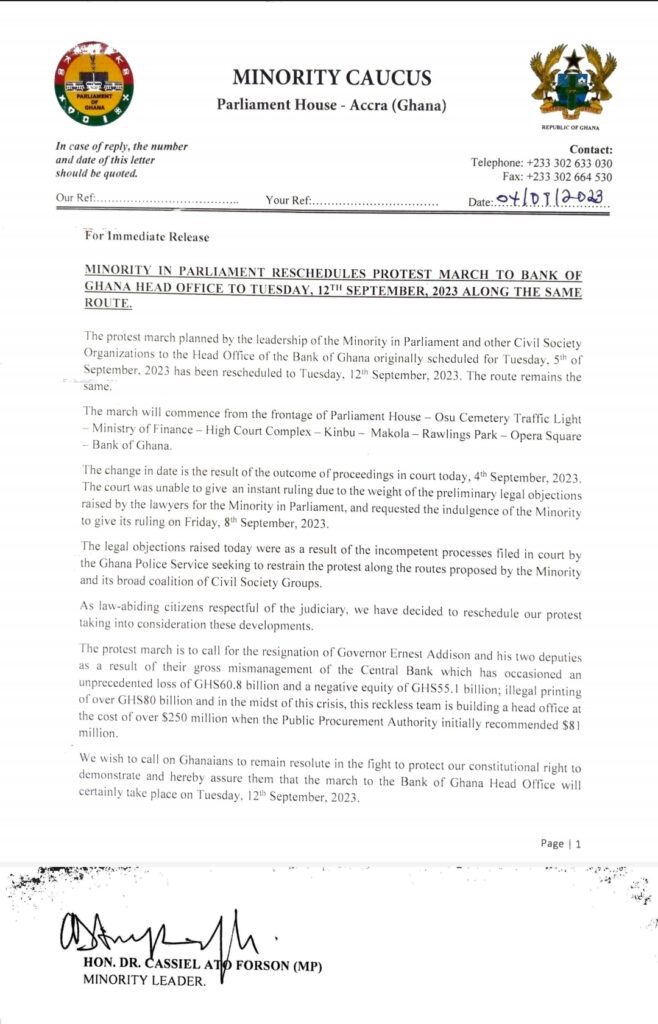
Minority Leader in Parliament, Dr Cassiel Ato Forson, has announced that the protest to the Head Office of the Bank of Ghana (BoG), originally scheduled for Tuesday, September 5, 2023, has been rescheduled to Tuesday, 12th September, 2023.
According to the Minority in a statement dated Monday, September 4, protestors would use its earlier proposed route.
The march will commence from the frontage of Parliament House – Osu Cemetery Traffic Light Ministry of Finance – High Court Complex – Kinbu – Makola – Rawlings Park – Opera Square – Bank of Ghana.
According to the Minority, the change in date is the result of the outcome of proceedings in court today, September 4, 2023, following an injunction filed by the Police Service.
The court was unable to give an instant ruling due to the weight of the preliminary legal objections raised by the lawyers for the Minority in Parliament, and requested the indulgence of the Minority to give its ruling on Friday, September 8, 2023.
In its statement, the Minority noted that “the legal objections raised today were as a result of the incompetent processes filed in court by the Ghana Police Service seeking to restrain the protest along the routes proposed by the Minority and its broad coalition of Civil Society Groups.”
“As law-abiding citizens respectful of the judiciary, we have decided to reschedule our protest taking into consideration these developments,” the statement added.
The protest march by the Minority is to call for the resignation of Governor Ernest Addison and his two deputies over the alleged gross mismanagement of the Central Bank which has occasioned an unprecedented loss of GHS60.8 billion and a negative equity of GHS55.1 billion.
Also, the Central Bank has been accused of illegally printing over GHS80 billion for the government and being “reckless” for building a head office at the cost of over $250 million when the Public Procurement Authority initially recommended $81 million.
Meanwhile, the Minority in Parliament has called on all and sundry to remain resolute in the fight to protect the constitutional right to demonstrate.
On September 1, 2023, lawyers representing the Minority in Parliament submitted an affidavit at the High Court in Accra, contesting the police’s application to prohibit their planned picketing in front of the Bank of Ghana (BoG).
The Minority intended to march through key streets and the Bank of Ghana’s premises, demanding the resignation of the central bank’s Governor and his deputies, alleging mismanagement of the institution.
Following a meeting with the police, the Minority was advised to alter their planned routes, a suggestion they rejected. Consequently, the police filed an application seeking to halt the protest, prompting the Minority to respond with a counter-affidavit.
The court is scheduled to hear the application on Monday, September 4, 2023, while the protest is set for September 5.
In a statement, the Minority explained, “Lawyers for the Minority in Parliament yesterday filed with the registry of the High Court in Accra, an affidavit in opposition to the ill-advised and unfortunate application by the Accra Regional Police for an Order to prohibit our upcoming #OccupyBoGProtest march slated for Tuesday, 5th September 2023.”
They further stated, “The Minority in collaboration with Arise Ghana, other Civil Society Organisations, and well-meaning Ghanaians are resolved to embark on this historic protest march to demand the immediate resignation of the Governor of the Bank of Ghana and his two Deputies, for superintending a colossal loss of GHS66.8 billion in 2022 alone, which has occasioned a Negative Equity of GHS55.1 billion, as well as other acts of financial malfeasance that have completely destroyed the Central Bank.”
The Minority and allied progressive groups affirmed their commitment to their cause, vowing not to relent until the Governor, his deputies, and the Board of Directors resigned.
Their message was clear: “The Minority group and other progressive forces remain focused and will not relent until Misgovernor Addison, his complicit Deputies, and pliant Board of Directors resign. Aluta continua Victoria aserta!”
Veteran journalist and managing editor of the Insight Newspaper, Kwesi Pratt Jr., has strongly criticised officials from the Bank of Ghana regarding the condition of Ghana’s economy.
Addressing an Arise Ghana gathering in Accra on Thursday, August 31, 2023, Kwesi Pratt remarked that officials from the Bank of Ghana, including the governor, primarily emphasize their academic credentials but lack effectiveness in managing the country’s economy.
He further commented that despite their extensive academic qualifications, the scholars working at the central bank were unable to prevent the deterioration of Ghana’s economy.
“Nonsense… all of those universities and those degrees have not prevented the cedi from losing value from GHS4.20 to $1, today, we are exchanging the cedi at GHS12 for $1. No Harvard degree managed to stop this. So, don’t waste our ears with your Harvard degree. We don’t care,” he said.
The veteran journalist made these remarks as he was kicking against the notion that statutory state institutions, like the Bank of Ghana and their heads, should be treated as independent and devoid of interference by the central government.
According to him, it does not make sense that the president of the republic who appoints the heads of these state institutions is answerable to the people of Ghana but these heads, like the governor of the Bank of Ghana, are not.
Pratt, therefore, called for a review of the 1992 Constitution of Ghana so these state institutions can be checked.
Mr. Pratt, who was particularly not happy about the independence of the Bank of Ghana, indicated that academics and the technocrats at the central bank have messed up Ghana’s economy because they answer to nobody.
“The independence of the governor and so on must be thrown into the wastepaper basket, thrown into the dustbin. It has no relevance throughout our history. In whatever we do, it is the will of the people which does matter.
“In whatever we do, it is that taxi driver, that ‘nika nika’ operator, that chop bar operator, it is their while, their interest which must move us forward and not the interest of some godforsaken academics, whose only boast is that they went to Harvard and they have doctorates in economics and so on,” he said.
IMF Resident Representative in Ghana, Dr. Leandro Medina, has stated that the involvement of the Bank of Ghana in the government’s Domestic Debt Exchange Programme (DDEP) has played a role in reducing its net equity to a negative figure.
He explained that the Central Bank’s participation in this debt exchange is part of an initiative to distribute some of the responsibilities that the DDEP places on government debt holders, including banks, financial institutions, pension funds, and individuals.
During an interview with the B&FT newspaper, Dr. Medina pointed out that an analysis conducted by the Fund revealed that “this situation does not hinder the BoG from effectively executing its policy mandates, including the vital task of guiding inflation back to its 8-percent target in a gradual manner”.
“Fundamentally, the BoG’s net equity is expected to improve over time, ultimately resulting in a return to positive territory,” the IMF resident representative for Ghana added.
In the meantime, the Central Bank has periodically clarified that it was compelled to absorb the larger portion of the reductions linked to the government’s debt exchange initiative introduced in December 2022.
The Bank specified that it bore nearly 50 percent of the adjustments, resulting in a substantial segment of the GH¢60 billion impairment loss documented in the 2022 fiscal year.
Nonetheless, the Central Bank has assured that its financial standing will remain unaffected during the subsequent phase of the DDEP, which aims at addressing US dollar-denominated bonds, pension funds, and cocoa bills.
Korle Klotey constituency’s Member of Parliament, Dr Zanetor Agyeman-Rawlings, has firmly stated that the Minority in Parliament will persist in guiding Ghanaians to ensure the government is held accountable and to uphold principles of effective governance.
Dr Agyeman-Rawlings conveyed that Ghanaians are weary of the irresponsible conduct exhibited by certain individuals holding positions within the Akufo-Addo administration. She particularly highlighted Dr Ernest Addison, the Bank of Ghana Governor, who oversaw the Central Bank’s losses amounting to approximately GHS 60.8 billion in 2022.
In addition to that the Bank of Ghana has allocated $250 million for the construction of a new headquarters, a move that has sparked public outcry at a time the country’s economy has declined.
Speaking on Dwaboase on TV XYZ, the MP argued that the explanation given by the governor, Dr Ernest Addison about the losses the Bank incurred did not make sense and that is the reason the Minority wants him and his deputies out of office.
The Minority has planned to march to the BoG headquarters in protest of what the group terms as gross recklessness led by Dr Addison.
Asked what the Minority would have achieved with the protest dubbed #OccupyBoG, the MP said the losses had not happened before and the group would have made its case clear with the march.
“There is no business as usual; what has happened has not happened before. As the leader in a particular place, when that place goes wrong, the most dignified thing to do is to step down,” she stated.
According to her, if even Dr Addison refuses to resign, posterity will judge them and the world will know they didn’t superintendent over wrongdoing.
Meanwhile, Dr Ernest Addison has dismissed claims that the Central Bank breached procurement laws in pursuit of the construction of the edifice.
The police have stated that the Minority in Parliament’s planned protest and picketing around the Bank of Ghana (BoG) headquarters could potentially pose risks to public order, safety, and essential services.
In response to the opposition MPs’ intention to stage a demonstration demanding the resignation of BoG Governor, Ernest Addison and his deputies over allegations of fiscal mismanagement, the police have suggested an alteration in the protest route.
The Accra regional police commander, Sayibu Pabi Gariba, stated in a notice to the organizers that, “The Bank of Ghana is a security installation, and accordingly the protest and picketing around the installation may endanger public order, public safety, and the running of essential services.”
The police expressed concerns about the chosen route, pointing out that the area from Makola through Rawlings Park and Opera Square is typically congested with human and vehicular traffic.
“The Bank of Ghana is a security installation, and accordingly the protest and picketing around the installation may endanger public order, public safety and the running of essential services,” Sayibu Pabi Gariba, the Accra regional police commander, said in a notice to the organisers.
“That the route from Makola through Rawlings Park and Opera Square are always overcrowded and over populated due to human and vehicular traffic,” the notice continued. “Thus, considering the nature of activities during the day, security can easily be compromised. In that regard, using such route may lead to violence.”
“As requested today during our engagement, the command wishes to reiterate that you relocate the route and the destination for the picketing and therefore propose in the interest of public order, public safety among others that you commence the protest from the frontage of Parliament House through Osu Cemetery Traffic Light and terminate at the Independence Square,” Gariba said.
This congestion could potentially compromise security and lead to violence, according to the police notice.
As a safer alternative, the police recommended that the protest route be changed to begin from the frontage of Parliament House, proceed through Osu Cemetery Traffic Light, and culminate at Independence Square.
The opposition National Democratic Congress (NDC) has issued a 21-day ultimatum for the governor and his deputies to step down, accusing them of mismanaging the economy. If the governor does not comply by September 5, the Minority MPs have pledged to picket at the central bank’s headquarters.
This call for action has garnered support from various quarters, including the pressure group AriseGhana. Comrade Rex Omar, the convener of AriseGhana, highlighted concerns over the alleged mismanagement of funds by the Bank of Ghana in their 2022 Report and financial statements. He specifically criticized the unauthorized printing of money to finance government activities, emphasizing the need for accountability and condemning such actions.
It remains to be seen how the situation will unfold, given the opposition’s determination to demonstrate and the police’s insistence on altering the protest route due to security concerns.
Ghana is considering various strategies to combat the illicit trade of gold, with the goal of maintaining the gold-for-oil policy.
Energy Minister Matthew Opoku Prempeh has suggested that individuals who expose smugglers through whistleblowing might receive rewards in the form of gold in the near future.
The objective is to control the outflow of gold from the country, ensuring the Bank of Ghana continues to possess sufficient gold for exchange to obtain cost-effective fuel.
Dr. Prempeh articulated his belief that enlisting Ghanaians as watchdogs against gold smuggling would bolster the program’s viability.
He proposed a 20% gold reward for those whose tips lead to arrests, a step that is currently under consideration for formal policy adoption.
“We’re saying anybody who gives a tipoff or tells us and identifies anybody smuggling gold and leads to an arrest, that person will get 20% of the gold. And I’m sure very soon they’ll come up’, he said, adding: “Because I believe that nobody makes 20% of this whole business, the person who is coming to buy the gold doesn’t make 20%”.
“So, if Ghanaians who are aiding them to smuggle the gold now can benefit from 20%, [it’ll curb the smuggling],” he said.
“The level that is being exported to lobby is gradually tipping, so, we might come up formally and announce that policy,” he said at the Rotary Club of Accra Ring Road Central on Tuesday, 22 August 2023.
The Menzgold scandal, which has put thousands of clients in financial trouble, is the fault of the Nana Addo Dankwa Akufo-Addo-led administration, according to attorney Maurice Ampaw.
He contends that the government as a whole, as well as other organizations, like the Bank of Ghana and the Securities and Exchange Commission (SEC), ought to bear responsibility for their incompetence in permitting Menzgold to function and then failing to track the revenues of its operations.
On August 21, 2023, he made the case in an interview with Neat FM that the government officials who permitted Menzgold to operate illegally should instead be under pressure rather than only Nana Appiah Mensah (NAM1), the CEO of Menzgold.
“Menzgold lost it because they didn’t listen to my advice. I am scared and worried that Menzgold customers are still hoping to get their money back from NAM1, but the focus should not have been on NAM1, but on the government of the day, which allowed Menzgold to allegedly operate illegally.
“Additionally, many regulatory bodies, including the finance minister and the Bank of Ghana, and the Security and Exchange Commission (SEC) failed to do due diligence.
“For some of us, the processes in the NAM1 saga are nonsense…and the government of the day led by Nana Akufo-Addo should be held responsible.”
Over the weekend, NAM1 faced significant backlash following his proposal that disgruntled customers should pay a verification fee of 650 cedis in order to gain access to their frozen funds.
In an interview with Serwah Amihere on the X space, NAM1 initially put forward the verification fee, but he later retracted this suggestion. He asserted that more than 5000 individuals had already received payments over a period of time.
In 2018, Menzgold was directed by the Securities and Exchange Commission (SEC) to halt its public gold trading activities. The SEC’s directive was based on Menzgold’s involvement in the acquisition and acceptance of gold collectibles from the general public.
Menzgold was also found to be issuing contracts with guaranteed returns to its clients without holding a valid license from the Commission.
This was in contravention of “section 109 of Act 929 with consequences under section 2016 (I) of the same Act,” according to the SEC.
NPP’s Deputy Director of Communication, Ernest Owusu-Bempah, has called upon the Bank of Ghana (BoG) to offer a comprehensive and improved clarification regarding both the matters concerning its upcoming headquarters construction and the GHC60.8 billion deficit it experienced in the previous year.
According to Mr. Owusu-Bempah’s perspective, these matters are evolving into significant challenges for the government, particularly for its communication team. As a result, he emphasizes the necessity for the central bank to provide a simplified explanation of the unfolding situations.
The Minority in Parliament has been asking the central bank to provide answers to questions relating to the new headquarters for the central bank.
The Minority is requesting, among other things, information on the processes involved in the procurement of the land for the construction of the new headquarters building.
They also want to know the names of consultants and project managers.
Speaking to journalists in Accra Monday, August 21, Mr Owusu-Bempah said “The whole brouhaha with the Bank of Ghana is becoming a problem for the government and party in power and so if they have anything to explain, they should. NPP as a political party we don’t condone wrongdoing, we don’t condone anything to do with alleged malfeasance or corruption.
“This particular issue is becoming an albatross around the neck of the government and the party in power. So they need to come out clean, the explanation that they are giving, we don’t get it so they should come out and explain better.
“The Governor of the Bank of Ghana needs to sit up and come clean so that the government will look good. This issue is becoming a danger for the political fortune in the 2024 elections. Financially, we are going through turbulence, but as a party, we have done a lot in managing the economy and then the next day you hear this scandal coming from the Bank of Ghana.
“As a spokesperson for the NPP, I want to tell the Bank of Ghana to come clean and let us know exactly what is going on. They cannot sit somewhere and be explaining things the way they want.
“There is an allegation of missing money and there is another allegation of building a $250million headquarters, this is a serious thing. Bank of Ghana is a big financial economic institution of the state that runs the whole economic activities of this country. So you cannot just come out and throw issues out there just like that and expect the ordinary Ghanaian to understand what is going on. So they need to come out clean and let the people of Ghana understand so that party communicators can go out there and explain the issues better,” he said.
It would be recalled that in a press statement issued by the Member of Parliament for Bawku Central, Mahama Ayariga, who is also a private legal practitioner, he called on the Governor of Bank of Ghana to provide specific details on the project.
They have chosen Tuesday, September 5 as the date to march to the head office of the Bank of Ghana in an escalated action to force the Governor and his two deputies to resign.
The National Democratic Congress (NDC) Members of Parliament (MPs) gave Dr Ernest Yedu Addison and the two Deputy Governors – Dr Maxwell Opoku-Afari and Elsie Addo Awadzi – 21 days to resign after they posted a GHC60.8 billion in 2022.
The Minority Leader, Dr Cassiel Ato Forson, on Monday, August 21 wrote to the Accra Regional Command of the Ghana Police Service to notify them of the action to “occupy” the Bank of Ghana.
“The purpose of this protest is to express our revulsion against the illegal printing of money (about GHC80 billion) between 2021 and 2022 by BoG for the corrupt Akufo-Addo/Bawumia/NPP government which led to a hyper-inflation rate of 54.1% in December 2022,” the Minority indicated in its letter.
Governor of the Bank of Ghana (BoG), Dr. Ernest Addison, has strongly asserted that the institution did not violate any procurement laws during the process of constructing a new headquarters for the Central Bank.
This statement from the BoG comes in response to concerns raised by Samuel Okudzeto Ablakwa, the Member of Parliament (MP) for North Tongu, regarding the increasing cost of the new headquarters situated in Ridge, Accra.
Ablakwa noted that the cost of the office had escalated “from an initial US$81.8 million to US$121 million and is currently threatening to exceed US$250 million.” He further alleged that the construction firm chosen for the project through a single-source Public Procurement Authority (PPA) process was not even a registered entity in the country.
In his response, Dr. Addison clarified the timeline and reasoning behind the decision to embark on the construction of the new head office. He explained that the choice to proceed with the construction was made in 2019, driven by the Bank’s profits at that time.
While acknowledging the concerns raised by the MP, Dr. Addison maintained that all actions taken were conducted within the boundaries of the law and adhered to proper procedures.
“The Bank of Ghana as far back as the 1990s began the search for suitable and secured land for a new Head office. In 2012, the Bank was allocated an unnumbered 5.19-acre land at Accra Central by the Lands Commission which also had issues. The Bank did not have access to the land since the Ministry of Foreign Affairs and Regional Integration refused to give the Bank vacant possession on the grounds that they had never agreed to give up ownership of the land. The Bank continued to search for suitable land for its Head Office throughout the period from 2013 to 2016. More recently in 2018, the Bank approached the SIC to acquire its vacant land at Ridge near the Ridge Hospital.
“The Government issued an Executive Instrument to allow the Bank of Ghana to acquire that Land and SIC was duly compensated. The Bank then began to plan the building of its new Head Office, taking into consideration the need to ensure the building meets all the requirements of a modern central bank of international standards (similar to central bank head office buildings in Abuja and Dakar), and includes provision for data centres, currency processes, vaults, and other sensitive installation. It is not just a simple ordinary building. Let me re-emphasize that the Bank followed all the necessary public procurement processes in this endeavour.
“No procurement laws were broken. I have requested that a more detailed response to the issues raised in the public discourse on the Bank’s new Head Office building be published on our website immediately after this press engagement today.
“The decision to commence construction was taken in 2019 when the Bank generated profits. Appropriations for the Head Office were made each year from profits in 2019, 2020, and 2021. The project has, therefore, been going on for over 3 years. The DDEP only took place in January 2023. If we were to be taking the decision today, building a legacy Head Office would not have been a priority.
“However, this is a project that has been running for 3 years and about 50 percent complete. The Bank is fully aware of its responsibilities to ensure that the costs do not escalate beyond reasonable levels and that many of the original design features to including data centre, currency processing centre, ICT equipment, and specialized security features have been deferred and only grey boxes provided for future use to manage costs.”
Deputy Director of Communications for the National Democratic Congress (NDC) in the Bono Region, Eric Adjei, has alleged that in the past two years, the government has borrowed a total of GHC75 billion from the Bank of Ghana (BoG).
He claims that in 2021, the Central Bank lent GHC35 billion to the government, and GHC40 billion the year after.
Mr Adjei made these allegations during an interview on Peace FM’s Kokroko show.
“In 2021, Bank of Ghana printed GH35 billion. In 2020, the money spent by the government was GH55 billion. Five percent of GH55 billion is around GH2.8 billion. Government repeated the same thing in 2022, of which they printed an extra GH40 billion,” he said.
He added: “Section 30 clause 3 of the law does not permit continuous borrowing if the borrower fails to make payments to the lender.
In the wisdom of Akufo-Addo, after failing to pay the earlier loans, the Bank of Ghana provided more loans.”
The Bank of Ghana has clarified its financing actions during the years 2020 and 2022, both marked by economic challenges arising from external and internal factors. The central bank disclosed that it provided substantial support to the government during these periods.
In 2020 and 2022, when the economy faced the impact of both external shocks and the COVID-19 pandemic, the Bank of Ghana extended financial assistance to the government. Specifically, the central bank allocated GHS10 billion in 2022 to address the COVID-19 crisis, and it initiated the COVID-19 Pandemic Bond on behalf of the government.
“First, it will be important to recall the circumstances under which the Government of Ghana decided to seek International Monetary Fund support. Ghana had lost access to the International Capital Market, domestic revenue was significantly underperforming and not realised, pushing the state of government finances into near external and domestic default. With the above, the policy choices were not that of business as usual but rather a more challenging conduct of macroeconomic policy in the context of crisis”.
“The government needed to finance critical expenditures for which Bank of Ghana needed to provide the necessary financing to avert a disorderly default of both servicing for domestic and external debt including financing critical imports to keep the economy on the stable path”, it added.
Furthermore, due to the closure of the capital market in Ghana, the central bank disbursed GHS37.9 billion in 2022 as budgetary support to enable the government to manage essential expenses such as salaries and debt obligations.
The National Democratic Congress (NDC) Deputy Director of Communications for the Bono Region, Eric Adjei, has accused the New Patriotic Party of bribery over the construction of the new Bank of Ghana (BoG) headquarters.
In an interview on the Kokroko show on Peace FM, Mr Adjei claimed that communicators of the ruling party received cash from the Central Bank to argue for the construction of its headquarters.
According to him, NPP Communicators were paid GHS1000 to convince Ghanaians of the need for the construction of a new headquarters.
“The NPP is doing something, the way they are doing things, it may lead to the elimination of the moral aspect.
“When this Bank of Ghana issue surfaced, one Opata, I don’t know whether he is a PRO or not. He came to meet NPP communicators. Be honest to yourself, don’t lie.
“They gave the communicators GHS1000 so they lie about the details, you are being dishonest to yourselves. You are a Bank of the nation and not a political party,” he said.
The Central Bank of Ghana has provided justification as to why the institution is investing $250 million in a new headquarters amidst an economic crisis.
In a press statement, the Bank of Ghana explained that the need to construct a new headquarters stems from the threat of seismic activity.
According to the Central Bank, its current structure, built in the 1960s, lacks structural integrity, and is therefore incapable of withstanding an earth tremor.
This comes after the Minority in Parliament questioned the investment being made by the Bank of Ghana under the supervision of Governor Dr Ernest Addison.
Minority Leader, Dr Cassiel Ato Forson at a National Democratic Congress (NDC) press conference on Tuesday, August 8, labelled the Bank of Ghana as insensitive over its decision.
The ongoing project is a 21-storey structure situated in Ridge, adjacent to the Greater Accra Regional Hospital, Ridge.
The project, said to be approximately 50% finished, has been awarded to De Simone Limited.
Some 249 individuals will commence their roles as permanent employees at the Office of the Special Prosecutor (OSP) in September this year.
“The development is a significant milestone as the office operated without permanent staff since its establishment in 2018,” a report issued by the Special Prosecutor, Mr Kissi Agyebeng and copied the Ghanaian Times has stated.
The report titled “Two Years on, Gains So Far!” said in addition to retrofitting 10 storey structures from zero to 249 permanent staff, the report stated that the OSP extended its three-bedroom house to 10-storey building.
Mr. Agyebeng listed several ongoing investigations, which encompass cases involving the Electricity Company of Ghana Limited, unauthorized mining, the National Sports Authority, Ghana Water Company, the Customs Division of the Ghana Revenue Authority, Airbus SE, Bank of Ghana, Ghana Police Service, and the assets of Kwadwo Owusu-Afriyie also known as Sir John.
He said the OSP had improved citizens’ engagement through a functioning website and social media handles.
According to Mr Agyebeng, ongoing trials in five cases in three regions were at various stages.
The cases were the Republic v. Adjenim Boateng and another, the Republic V. Issah Seidu, the Republic v. Alexander Kwabena Sarfo-Kantanka, the Republic v. Sumaila Abdul Seidu and Andrew Kuundaari, OSP v. Charles Owusu and another (Estate of Kwadwo Owusu-Afriyie), and OSP v. Cecilia Abena Dapaah.
Mr Agyebeng said his office completed investigations into the case of Charles Adu Boahen, former Deputy Minister of Finance, Gaming Commission, and Charles Bissue, former Presidential and awaiting consequential orders.
He said the OSP stopped payment of Northern Development Authority (NDA) contract sum in excess of GH¢5m.
Investigating issuance of customs advance rulings and markdowns, investigating irregular auction of sales of vehicles, and recovery of a little over GH¢ 1 million.
The OSP said the European Union (EU) was funding cybersecurity lab including forensic laboratory, operational vehicles and vehicles for senior staff.
To ensure good governance, Mr Agyebeng said the OSP had intensified public education on corruption- issued two major special corruption reports; Customs-Labianca report, NDA report, public education on role and functions of the OSP, compliance of prevention of corruption directive to Ghana Revenue Authority (production of Integrity plans) and publication of up-to-date Statutory Half Yearly report and a toll free line for filing of complaints.
The Minority caucus within Parliament has issued a demand to the Bank of Ghana (BoG), stipulating a seven-day timeframe for the provision of details concerning the expenses related to its forthcoming headquarters in Accra, as outlined in accordance with section 18 of the Right To Information Act (ACT 989).
The caucus is requesting various information from the bank, including details about the land procurement process for the new headquarters building, as well as the names of consultants and project managers.
This request was communicated through a press statement issued by Mahama Ayariga, the Member of Parliament for Bawku Central, who is also a private legal practitioner.
“My name is Mahama Ayariga Esq, and I am the representative of Bawku Central constituency in Parliament on the ticket of the NDC. Kindly provide information within 7 working days from the date of this letter.
“Could you also provide clarification on the acquisition of the land on which the ongoing construction of the Bank of Ghana’s new headquarters at Ridge in Accra is situated? Specifically, we request information on the procurement process, the associated costs, the arrangement particulars, and the parties involved,” he added.
In response to the scrutiny, the central bank released a statement on August 9, explaining that a structural assessment had deemed the current Bank of Ghana (BoG) Head Office building, constructed in the 1960s, inadequate for its purpose.
It further disclosed that the building could not withstand significant seismic activity or strong winds, and that the decision to construct a new headquarters aimed to support operational efficiency and establish a potential future regional Central Bank headquarters.
The controversy was sparked when the Minority Leader, Dr. Cassiel Ato Forson, revealed that the BoG was allocating $250 million for a new headquarters while facing financial challenges.
Dr. Forson accused the Governor of printing money to fund the project, claiming that the Bank was financially strained.
He demanded the Governor and his deputies’ resignation within 21 days, stating that their actions set a concerning precedent.
Dr. Forson stressed that their call for resignation was driven by concerns over accountability and transparency.
“The Bank of Ghana does not have money but spending $250million for a new head office, which means he is printing additional money to finance this project,” Dr Forson said.
“We have to get this Governor out and let us have a new Governor. If we allow him to stay in the office, we will set bad precedent for future managers to do the same,”
“We demand the immediate resignation of the Governor and his deputies within 21 days. We will march to occupy the central bank to save the Bank of Ghana if he fails to reign. The March will ensure accountability. He has messed us up so much that we cannot wait to see his back,” he said.
The Bank of Ghana clarified its financing actions during the years 2020 and 2022, both marked by economic challenges arising from external and internal factors. The central bank disclosed that it provided substantial support to the government during these periods.
In 2020 and 2022, when the economy faced the impact of both external shocks and the Covid-19 pandemic, the Bank of Ghana extended financial assistance to the government. Specifically, the central bank allocated ¢10 billion in 2022 to address the Covid-19 crisis, and it initiated the Covid-19 Pandemic Bond on behalf of the government.
“First, it will be important to recall the circumstances under which the Government of Ghana decided to seek International Monetary Fund support. Ghana had lost access to the International Capital Market, domestic revenue was significantly underperforming and not realised, pushing the state of government finances into near external and domestic default. With the above, the policy choices were not that of business as usual but rather a more challenging conduct of macroeconomic policy in the context of crisis”.
“The government needed to finance critical expenditures for which Bank of Ghana needed to provide the necessary financing to avert a disorderly default of both servicing for domestic and external debt including financing critical imports to keep the economy on the stable path”, it added.
Furthermore, due to the closure of the capital market in Ghana, the central bank disbursed ¢37.9 billion in 2022 as budgetary support to enable the government to manage essential expenses such as salaries and debt obligations.
The Bank of Ghana defended its actions by highlighting the dire circumstances that necessitated its involvement. The government faced challenges with access to the international capital market, plummeting domestic revenue, and a risk of default on both domestic and external debt payments. Given this context, the bank viewed its financial support as critical to maintaining stability and averting disorderly defaults.
The central bank clarified that its financing actions were part of crisis management strategies rather than business-as-usual decisions. It emphasized that the suspension of the Fiscal Responsibility Act, 2018 (Act 982) by the Ghanaian Parliament in 2020 due to the Covid-19 pandemic crisis contributed to the circumstances.
Addressing concerns about parliamentary oversight, the Bank of Ghana addressed a claim from the opposition. The majority leader, Osei Kyei Mensah-Bonsu, stated that the Bank of Ghana was not legally required to seek parliamentary clearance before exceeding the 5% budget deficit financing threshold. He explained that the central bank’s obligation was to report foreign exchange receipts to Parliament, a mandate that it had consistently fulfilled.
Economist and political risk analyst, Dr Theo Acheampong, says it is unacceptable for the Bank of Ghana (BoG) to absolve itself of blame with regards to the GHS60 billion loss recorded in the financial sector for the 2022 fiscal year.
He noted that the Central Bank is pushing a narrative where this grave anomaly is being pinned on the Domestic Debt Exchange Programme (DDEP) being spearheaded by the government through the Ministry of Finance.
In an interview on JoyNews, the analyst stressed that in this current situation where probing is required, the Central Bank cannot parade itself like Pontius Pilate in the Bible, who washed off his hands over the killing of Jesus Christ of Nazareth.
“During that time, in my view, it would have made sense to at least force that decision. And then subsequently, when things improve, you go back and then you look at the numbers. But the big point is there are two issues we need to discuss. The deficit financing or the root cause of the crisis that we’re talking about, that leads to the almost $60 billion cutoff that the central bank is taking.
“And then there’s another issue which is to do with the bank’s own internal sort of operation in that context. And I think that the bigger issue for me is the deficit financing. And there are things that we need to unpack because in my view, the Bank of Ghana is behaving like Pontius Pilate in the Bible by basically washing their hands and telling us that, you know, all of this mess and all of this headcraft is fundamentally down to the finance minister and the minister of finance. And so they cannot be blamed for the crisis and the challenges that the economy has gone through,” he said.
In his view, the administration of the Bank of Ghana must provide answers to the relevant authority as to how they could not prevent such a situation.
“And that’s where I think substantively, we should be debating and trying to unpack whether indeed that is the case or whether the bank actually has some questions to answer when it comes to their management of the economy,” he stated.
According to the Central Bank’s Annual Report and Financial Statements, the loss is attributed to a decline in the Group’s net worth position due to the impact of the Domestic Debt Exchange Programme (DDEP) and the impairment of some assets.
Again, its total liabilities and subsidiaries exceeded its total assets by ¢54.52 billion.
The Minority in Parliament is demanding the presence of Bank of Ghana Governor, Dr Ernest Addison, to answer for the 5% budget deficit financing for the government without parliamentary approval.
Also, the Minority was the Governor sacked for the alleged mismanagement of the bank.
On Dr Addison’s appearance in Parliament, Majority Leader, Osei Kyei-Mensah-Bonsu has noted that no law that mandates the BoG to report its daily activities to Parliament.
Rather, he said, the law only mandates the Central Bank to report foreign exchange receipts to Parliament, and the BoG has thus always complied with this provision.
“Constitution says that if you pass any law that is inconsistent with the Constitution, that law is null and void. It is either the minority are over exaggerating issues or have not had time to examine the facts of the matter”.
“Yes, the country went through some difficulties which required that the BoG must intervene. If not for the international reserves built by the BoG, which was close to $10 billion, we would have really suffered. The BoG supported the country with about 4 billion of its 10 billion international reserves to support the situation”, he added.
Director of Local Government Services at the Office of the President, Dennis Miracles Aboagye, has disclosed that the government’s outreach to the Bank of Ghana (BoG) for assistance was confined to the years 2020 and 2022.
Speaking in an interview, he noted that this move represented a strategic approach to addressing specific financial challenges during those periods, until COVID-19 hit the shores of the country.
“Whatever is happening today stems from issues arising from 2020 till date as earlier stated by the government.
“Government did not borrow from the bank in 2017, 2018, 2019, it was in 2020 during COVID that the government sought assistance from the Apex Bank. In 2021, the government did not go there but in 2022, the government went there.
He further stressed that this confirms the government’s claim that Ghana’s economy was doing well until COVID-19 struck.
“And this basically comes to confirm the long standing position of the government that Ghana’s Economy was doing very very well and was on a growth path between 2017 and 2019 until COVID arrived,” he added.
The Director of Research at the Institute of Economic Affairs (IEA), John Kwakye, says the Bank of Ghana (BoG) cannot be faulted for being forced into the government’sDomestic Debt Exchange Programme (DDEP), which resulted in the central bank’s 2022 financial loss.
He admitted that the BoG should be blamed for over-lending to the government, but insisted that the central bank cannot be faulted for taking a “haircut.”
The BoG recorded a staggering loss of GH60.8 billion within the 2022 fiscal year.
The Minority in Parliament has on a number of occasions called on the Governor of the Bank of Ghana, Dr Ernest Addison, and his deputies to resign for being reckless in the management of the central bank.
Speaking on the Point of View on Citi TV, hosted by Bernard Avle, the Director of Research at IEA, he stated, “As central bankers, financing the government’s deficit is the most inflationary thing to do. That is why the central banks set lending limits for their governments.
“What has happened in our case [BoG] is that it looks like BoG went far beyond the sealing Act of last year’s revenue of 5%. We are told that they lent almost GH44 billion, and that is the magnitude. Once you do that, you are already getting yourself into serious trouble.”
“BoG over-lent to the government, and then you bring in this DDEP, which qualifies us for the IMF programme, and the IMF compels BoG to be part of it. Out of the GH60.8 billion loss they have declared, GH53.1 billion is coming directly from DDEP. So the question is, will you fault them for that?
“We can fault them for over-lending to the government; that is the problem, but why they were being forced to be part of the DDEP is also another. That one, you can’t fault them for that”.
He further took a dig at the IMF for forcing the BoG to be part of the DDEP in order to secure the $3 billion bailout.
“I also have a problem, why did the IMF force our central bank to be part of the DDEP? Just because they wanted us to meet the requirement for the ECF”.
According to him, the government should rather be blamed for the loss incurred by the BoG for failing to cut down on its expenditure.
“The blame, I think, should be at all various levels, first the government for causing all these deficits, which require some financing. We have been calling on the government to try to live within its means,”.
Director of Finance at the Bank of Ghana (BoG), Charles Elias Reindorf, has noted that the decision to construct a new headquarters was not taken in a rash.
In an interview on Asempa FM, Charles Elias Reindorf stated that management of the Central Bank, as far back as 2020, had drawn up plans to relocate.
In 2021, construction work began on the project, which has currently courted public dissatisfaction.
“That building has been on the drawing board for a while. We didn’t start last year.
Management saw the need, that once we realized that our building may be under threat and we will put the lives of people in danger once something drastic happens, they put measures in place to put up a new building.
It was started about two years ago, in 2021. But it has been on the drawing board for a long time. We started in 2020 or so,” he recounted.
The Central Bank is said to be investing $250 million in its new headquarters.
When asked by the host of Ekosisen, Philip Osei Bonsu, on the amount of money being committed by the Bank of Ghana, Mr Charles Elias Reindorf said: “I don’t have the figure in my head. I don’t have the full compliment of figures at this moment.”
Why a new headquarters
In a press statement, the Bank of Ghana explained that the need to construct a new headquarters stems from the threat of seismic activity.
According to the Central Bank, its current structure, built in the 1960s, lacks structural integrity, and is therefore incapable of withstanding an earth tremor.
The ongoing project is a 21-story structure situated in Ridge, adjacent to the Greater Accra Regional Hospital, Ridge.
The project, said to be approximately 50% finished, has been awarded to De Simone Limited.
Respone
Minority Leader, Dr Cassiel Ato Forson at a National Democratic Congress (NDC) press conference on Tuesday, August 8, labelled the Bank of Ghana as insensitive over its decision.
The Bank of Ghana (BoG) is facing a public backlash after it revealed that it incurred a loss of GHC 60 billion in 2022. Many Ghanaians are calling for the resignation of the BoG Governor, Dr Ernest Addison, and his deputies, accusing them of mismanaging the central bank and the economy.
The BoG’s 2022 annual report and financial statement showed that the bank’s total liabilities exceeded its total assets by GHC 54.52 billion, resulting in a negative equity position.
The report also disclosed that the bank spent millions of Ghana cedis on administrative expenses, such as motor vehicle maintenance, foreign and domestic travels, directors’ remuneration, banking supervision, computer and communication expenses, among others.
The BoG has defended its loss, saying that it was mainly due to the government’s Domestic Debt Exchange Programme (DDEP), which involved a 50 per cent principal haircut on the bank’s holdings of government securities and COCOBOD loans.
The bank said that it took this action to save the economy from total collapse and to meet the requirements for the approval of the IMF programme.
However, this explanation has not satisfied many stakeholders, who have expressed their dissatisfaction with the BoG’s performance and policies.
Some opposition politicians, such as NDC’s Sammy Gyamfi, Kofi Adams, Cassiel Ato Forson, etc., have demanded that the BoG Governor and his deputies resign or be sacked for their alleged incompetence and recklessness.
The public outrage has also spilled over to social media, where the hashtag #Addisonmustgo has been trending on Twitter since Monday, August 14, 2023.
Many Twitter users have shared their views and criticisms of the BoG’s loss and its implications for the economy and the people. Some have also questioned the credibility and accountability of the BoG and its leadership.
Here are some of the tweets using the hashtag #Addisonmustgo:
All our warnings were ignored. Only last week, the Annual Report and Financial Statement of the Bank of Ghana was released. #AddisonMustGo#OccupyBoGProtest
This means the recklessness and ineptitude of the Governor of the Central Bank has cost us twice what we have laboured and are sacrificing to receive from the IMF.#AddisonMustGo#OccupyBoGProtest
The recklessness and ineptitude of the Governor and his team has called into question the wisdom of leaving him at the helm of affairs of the Central Bank as we seek to get ourselves out of this mess. #AddisonMustGo#OccupyBoGProtest
New Patriotic Party (NPP) Communication Member, Awal Mohammed, has slammed the Minority Members of Parliament for lashing out at the Central Bank over some payments made in the 2022 fiscal year.
In its 2022 Annual Report & Financial Statements, the Bank of Ghana noted that it spent GHS1.6 billion as personnel cost for 2,215 staff.
President of IMANI Africa, Bright Simons, has also alleged that each independent director serving on the Bank of Ghana’s board receives a monthly payment of US$8,000, equivalent to GH¢89,852.36.
This revelation, among other concerns, has garnered dissatisfaction with the Bank of Ghana. In view of this, the Minority has called for the dismissal of the Central Bank governor, Dr Ernest Addison.
“There is an urgent need for BoG’s internal operations to be reviewed to ensure that no losses would be posted or repeated this year.
“The Governor, his deputies and entire Board have failed the nation and must resign without delay to begin the process of saving the BoG,” the Minority noted.
But in response, Awal Mohammed has described the Minority’s demands as baseless.
In an interview on Peace FM, the NPP Communication Member argued that 2022 was a difficult year as such government stepped in to alleviate the plight of public office workers.
According to him, government raised the income of public sector workers by 30 percent.
He therefore noted that as the Bank of Ghana is a State Owned Enterprise, it was prudent for its director to benefit from such adjustment.
“In 2022, the President had not budgeted to pay public sector workers more money.
But at a point in time, we realized that there was hardship so we gave Cost of Living Allowance for public sector workers. For six months, we were paying. Again for the first time, in the history of the 4th Republic, there was 30 percent increment in salaries of public sector workers.”
He added: “So the Director at the Bank of Ghana does not deserve to have his salary increased? They should have their salaries without any increment?
That’s why I am saying they are a bunch of inept leaders. Because you don’t mention the nominal figures. You come and say they increase their salary by 8.7 million. What is the percent to that?”
Minority Leader, Dr. Cassiel Ato Forson, has urged President Akufo-Addo to deliver a national address outlining the government’s strategies to revive the Bank of Ghana (BoG), which he characterized as facing an unprecedented collapse.
In a Facebook post, Forson emphasized the need for decisive actions to restore solvency to the central bank.
“Given the unprecedented collapse of our central bank, it is imperative for the President of Ghana to urgently address the nation. During this address, the President should outline the decisive actions that the government plans to implement in order to restore solvency to the Bank of Ghana,” Mr Forson said in a Facebook post on Monday.
Forson highlighted that when a regulated institution’s financials or liquidity position is compromised, the BoG typically enforces directives, including withholding dividend payments even in profitable situations.
“Granting of new loans will be put on hold; Appointment of new directors will be restricted; Capital expenditure will be temporarily suspended and staff recruitment will be paused, and other similar measures will be taken,” he added.
Other measures, such as suspending new loans, restricting director appointments, pausing capital expenditure, and halting staff recruitment, are also implemented.
Additionally, Forson dismissed claims by Richard Ahiagbah, Director of Communications for the New Patriotic Party (NPP), that Forson was a member of the BoG Board during the initiation of processes for the bank’s new head office construction.
Forson refuted these assertions in a press release, characterizing them as a “desperate attempt” by the NPP to defend their actions.
Forson clarified that during the Mahama/NDC administration, the Bank of Ghana never entered into a contract for the new head office’s construction nor purchased land in Accra for the building.
He criticized the decision to construct the new head office given the bank’s substantial loss and negative equity, deeming it a reckless and misguided priority.
Forson concluded by asserting that no attempt at equalization can absolve the current government and Governor Addison’s management from the historical collapse and mismanagement of the Bank of Ghana.
He maintained that the countdown to the resignation of the Governor and his deputies is ongoing.
“For the record, I was not part of the processes for the construction of this new Head Office building, and the Bank of Ghana Board never began such processes for the construction of this new Head Office building at Ridge. We maintain that the decision by the current Bank of Ghana Management and Board to construct an ultra-modern Head Office building at a time when the Bank of Ghana has recorded a loss of GhS60.8 billion and a negative equity of GHS55.1 billion; at a time when the ordinary Ghanaian is struggling to make ends meet, is a reckless and misplaced priority.”
“No attempt at equalisation can redeem the historical collapse and mismanagement of the Bank of Ghana by this Akufo-Addo/Bawumia NPP government, alongside Governor Addison and his management. The countdown to the resignation of the Governor and his deputies is still on,” Dr. Forson added.
Former Acting General Secretary of the PNC, Atik Mohammed, has raised apprehensions regarding reported instances of financial misconduct attributed to the Bank of Ghana during Dr. Ernest Addison’s tenure as the bank’s Governor.
It has been alleged that the bank suffered a financial loss of GHC 60.8 billion in the previous year as a result of poor management.
“This is twice the amount we are to receive from our recent IMF bailout,” Minority Leader, Ato Forson told Journalists during a “Moment of Truth” event organised by the opposition National Democratic Congress on Tuesday, August 8.
He further stated, “the bank has also recorded a negative equity of over GHS55.1 billion. What this simply means is that the Bank of Ghana is insolvent” and blames the Akufo-Addo government, saying “the once prestigious Bank of Ghana, the mother of all banks in Ghana, has been bankrupted and collapsed by this NPP economic management team led by Dr Mahamudu Bawumia with the complicity of the Governor of the Central Bank”.
But the authorities of the Bank of Ghana have refuted the financial mismanagement claims.
BoG Response
“Bank of Ghana released its full-year 2022 audited financial statements on July 28, 2023. The financial statements reported a total loss of GHS 60 billion, which has since become a matter of unfortunate politicisation. It is noteworthy that $53.1 billion of those losses were a direct result of of the Government’s domestic debt restructuring exercise.
“It is important to put the Bank of Ghana’s 2022 financial results in proper context with a clear statement of the problem that Ghana faced and the chronology of events in Ghana since 2019.
There was a clear mismatch between revenue inflows and expenditure financed in 2020 by exceptional support from the IMF and World Bank resources, in addition to financing from the Bank of Ghana through the issuance of the GHS10 billion COVID-19 bond”, the bank’s website disclosed.
The bank report also said; “This triggered a liquidity crisis, spilling over into a balance of payments crisis. External and domestic payments needed to be made, the domestic auction was failing, and the Bank of Ghana had to step in to arrest a major economic and social crisis.
“A major plank of the corrective action required for the IMF programme was the Domestic Debt Exchange, where the stock of Government of Ghana debt was to be halved from 105% of GDP to 55% of GDP by 2028. The holders of Government debt had their debt instruments exchanged for new ones with lower interest payments and longer terms.
“Despite the losses inflicted on households and banks, the threshold of 55% of GDP was not met. The Bank of Ghana was used to close the gap to enable Ghana to meet the debt threshold that qualified Ghana for the IMF programme (Bank of Ghana therefore, acted as a loss absorber).”
It further established that “the Bank of Ghana had to abort a 50% haircut on its non- marketable holdings of Government debt instruments. This singular act led to significant impairment losses of GHS 32.3 billion to the Bank’s accounts. Impairments of marketable instruments also accounted for another GHS16.1 billion, bringing the total impairments of Government holdings to GHS48.4 billion” and continued that “as experienced by central banks globally, price and exchange rate movements led to a loss of GHS5.2 billion, while impairments of Cocobod loans amounted to GHS4.7 billion. This is the reason the Bank of Ghana reported a loss of GHS 60 billion in 2022″.
BoG revealed that the money covered their vehicle maintenance expenses, stating “fuel cost for all BoG operations, insurance of all BoG fleet of vehicles, car part replacements, and other maintenance costs. Historically, fuel costs have accounted for about 90 percent of this vehicle maintenance expense line. For 2022, the fuel cost increased by 123.3 percent compared to 28.9 percent in 2021”.
Atik Questions BoG
But Atik Mohammed has taken the Bank of Ghana’s statements with a pinch of salt.
Speaking on Peace FM’s “Kokrokoo” morning show, he found the bank’s explanations and expenses untenable.
“The question to ask is what is number of the Central Bank’s fleet of cars? How many cars do they have moving currency all over the country? The second question is on average, how many times do these vehicles carry or move currency from the Central Bank to these commercial banks and all other financial institutions? In a week, on average, how many times do they move?”, he asked for further clarifications.
“These are very critical questions that require answers because those answers will weather the expenditures they incurred are justifiable or not. But on the face of it and given the explanation they’ve given us, they are not tenable,” he told host Nana Yaw Kesseh.
Atik called for investigations into theBoG issue, stressing that “it greatly saddens me that a major player in Ghana’s economic policy could be this reckless as far as spending is concerned”.
Former Member of Parliament (MP) for Tamale Central, Inusah Fuseini, has voiced his opinion that the Bank of Ghana (BoG) embarking on a new construction project is imprudent given the financial challenges currently faced by the institution.
He highlighted that the Bank of Ghana bears a fiduciary duty to the citizens of Ghana, as the institution is the collective asset of the entire Ghanaian population.
Speaking on JoyNews’ Newsfile on Saturday, Mr Fuseini said that decision taken by BoG must be taken prudently and that the bank should be accountable.
“No one is saying that they conceived the idea of building a bank in 2017, no one has said that, but building the bank in 2021 at the height of our economic and social crisis, was it a prudent decision?
“That goes to show that the bank has been so mismanaged and the managers of the bank have not exercised prudence in their decision making and that has led us to the situation in which we are,” he said.
The former Roads and Highways Minister’s assertion follows the BoG’s recent statement that it is spending $250 million to build a new head office because its current office which was built in the 1960s has failed a structural integrity assessment.
It said, the edifice “is no longer fit for purpose and could not stand any major earth tremors.”
In a press release on Tuesday, August 9, the central bank explained that “The outcome of the structural integrity work was that the main building does not satisfy the full complement of excess strength required for a building to be considered safe for usage.
“This means that in the case of a worst-case gravity and wind loading scenario, for example, unusually strong wind, the building may be significantly affected.”
On the back of this, Mr Fuseini said that it is not prudent for BoG to start the building of a new headquarters after recording a GH¢60.8 billion loss and negative equity of 55 per cent for 2022.
“The project is ongoing! If you know a project life, there’s a budget for it and the project has a gestation period. The project is still ongoing, the current crisis in which we are, the project is still ongoing. ….. it’s not that the money is sitting in the bank, if the money were sitting in the bank, they wouldn’t have a negative equity of the 55% for 2022,” he said.
The lawyer emphasised that “At the time the project was starting, no reasonable bank manager would have committed to invest when we were still suffering the ravages of Covid-19 on the economy and the projections said that our economy was going to slow down. No reasonable person would do that, when countries were taking steps to protect the economic fundamentals of their countries.”
Meanwhile, the Minority in Parliament has called out the Governor of the central bank and his deputies after the lender of last resort reported a ¢60.8 billion loss for 2022.
The Minority Leader Dr Cassiel Ato Forson has questioned why Dr Ernest Addison is spending $250 million to build a new head office for the central bank at a time the Bank is in financial difficulties.
He accused the BoG Governor of printing money to finance this project.
President of Imani Africa, a policy think tank, Franklin Cudjoe, is urging that individuals accountable for the Bank of Ghana’s GHC60 billion loss in 2022 should face surcharges as a means to recover the funds.
Mr Cudjoe criticised the Central Bank for displaying negligence and neglecting its responsibilities, factors he believes were responsible for the incurred loss.
“If you are suggesting to us that because you supported the government and so the loss should be taken, then you are simply saying that your fundamental duty as an independent arbiter in disputes among government institutions should be thrown to the dogs.”
He told Selorm Adonoo on The Big Issue on Citi TV that it is standard practice to surcharge individuals responsible for financial infractions in an audit and so it will be prudent for the conversation about the resignation of the Central Bank’s governor and his deputies to also gravitate toward surcharging them and any other person responsible for the losses.
“The auditors were quite clear about the mandate of the Bank and as to why all these infractions are coming out tells me one thing, that the right procedures were not adopted by the central bank and if that is the case, why are we running around to get a solution? What I know is that if you are audited as an independent organization and certain infractions are found, you are surcharged, so my point is, are we not supposed to be looking in that direction as well?”
“This should go beyond calls that people should resign, I think we must also find out if some surcharging will be done because this is substantial money.”
Policy solvency constitutes a vital element in the management of central banks, embodying their capacity to uphold and reestablish financial stability while effectively carrying out their policy objectives.
The recent financial outcomes of the Bank of Ghana have revealed notable instances of mismanagement, notably a substantial operating deficit of GHC60.81 billion in the year 2022. Within this article, we will delve into the concept of policy solvency, make parallels with the practices of other central banks to underscore exemplary approaches, and pinpoint avenues for enhancement within the Bank of Ghana.
Understanding policy solvency
Policy solvency is a fundamental concept that lies at the core of a central bank’s operations and responsibilities. It refers to the ability of a central bank to effectively implement its monetary policies while maintaining financial stability and credibility. A solvent central bank possesses the capacity to manage its balance sheet efficiently, meet its financial obligations, and instill confidence in the financial markets and the broader economy.
Central banks are key institutions entrusted with the task of formulating and implementing monetary policies that influence the money supply, interest rates, and overall economic activity. They serve as the backbone of a country’s financial system, playing a pivotal role in regulating banks and financial institutions, overseeing payment systems, and safeguarding the stability of the nation’s currency.
Policy solvency is vital as it ensures that a central bank can fulfill its mandate of promoting price stability, fostering economic growth, and maintaining financial integrity. By effectively managing its balance sheet, a solvent central bank can navigate economic fluctuations, manage risk exposure, and address potential financial crises.
A central bank’s balance sheet comprises assets and liabilities, with assets including foreign reserves, government securities, loans and gold reserves. On the liabilities side, it includes currency in circulation, deposits from banks, and government deposits. Policy solvency depends on the bank’s ability to maintain a robust and sustainable balance sheet, ensuring that assets are of high quality and can withstand adverse economic conditions.
A solvent central bank is better equipped to respond to various economic challenges, such as inflationary pressures, exchange rate fluctuations, and financial market volatility. It can adjust its monetary policy tools – such as open market operations, reserve requirements, and interest rates – to achieve its policy objectives effectively.
The credibility of a central bank is closely linked to its policy solvency. A financially sound institution that manages its affairs prudently instills confidence in market participants, investors, and the public. Credibility fosters predictability, which is essential for economic agents to make informed decisions and plan for the future. A credible central bank enjoys greater policy effectiveness, as its announcements and actions are trusted and taken seriously.
During times of economic crisis or uncertainty, policy solvency becomes even more crucial. A solvent central bank can act as a stabilising force, providing liquidity and support to the financial system, ensuring the smooth functioning of payment systems, and mitigating systemic risks.
Impact analysis
The Bank of Ghana, as indicated in its financial statement, possesses total assets amounting to GHC118.68billion for the bank and GHC125.97billion for the group. These assets include cash and balances with correspondent banks, gold reserves, balances with IMF, securities, loans and advances, and other investments, among others. The bank’s financial standing reflects its capacity to manage its balance sheet efficiently and meet financial obligations, essential traits for maintaining policy solvency.
In contrast, the bank’s total liabilities amount to GHC173.80billion for the bank and GH¢179.90billion for the group. These liabilities consist of deposits, derivative financial liability, bridge facilities, liabilities under the money market, allocations of special drawing rights, liabilities to IMF, lease liabilities, and other financial obligations. Maintaining a balanced and sustainable liability structure is critical for ensuring policy solvency and safeguarding financial stability.
The Bank of Ghana’s shareholders’ funds indicate an equity attributable to equity holders of the bank at negative GHC55.12billion, whereas non-controlling interests contribute GHC591.43million. This demonstrates that the bank’s equity position requires careful management and improvement to enhance policy solvency and restore financial stability.
Perception-wise, the Bank of Ghana’s financial position, as evident from its Consolidated and Separate Statement of Financial Position, may influence how other central banks view its stability and credibility. A central bank’s financial health is a crucial factor when establishing relationships, engaging in currency swaps, or collaborating on monetary policy initiatives. A weakened financial position might lead to concerns about counter party risk, potentially affecting the willingness of other central banks to engage in transactions or partnerships.
Practically, the Bank of Ghana’s financial position can impact the terms and conditions of transactions with other central banks. The ability to negotiate favourable terms, such as interest rates in currency swaps or the terms of collaborative agreements, may be affected by the Bank of Ghana’s perceived financial stability. Central banks often engage in transactions to manage liquidity, stabilise currency values, or address economic challenges. A central bank with a strong financial position is better positioned to influence and manage such transactions effectively.
Furthermore, a weaker financial position could limit the Bank of Ghana’s capacity to provide financial assistance or participate in initiatives led by other central banks, potentially impacting its influence within regional or international financial networks. The financial strength of a central bank contributes to its overall influence and ability to contribute meaningfully to discussions and decisions on global monetary matters.
Conclusion
Policy solvency remains a pivotal aspect of effective central bank management. By analysing the financial positions of central banks like the Bank of Ghana, alongside other central banks in similar economies, policy-makers can gain valuable insights into best practices and identify areas of improvement.
As central banks continue to navigate economic fluctuations and global challenges, maintaining strong policy solvency is essential to fulfill their mandate of promoting price stability, fostering economic growth, and safeguarding financial integrity for the benefit of their respective nations and economies.
Senior Lecturer at theKumasi Technical University, Dr Samuel Afriyie, is alarmed by the amount of money spent by the Bank of Ghana on communication during the 2022 fiscal year.
The Annual Report and Financial Statement of the Bank of Ghana reveals that the institution spent GHS32,020,000 on Communication.
The BoG noted that the major item under communication is electronic data transmission charges, including the Reuters and Bloomberg platforms which support its reserve management and management of petroleum funds as well as currency and exchange rate constituted about 57.4% of the total communications cost.
This was followed by the publications and Gazettes (15%), Advertisement (10%), Newspapers local (0.75%) and Newspapers foreign (0.46%).
The jump in computer expenses was mainly the result of the Bank’s asset replacement policy which was implemented in 2022 where most of the Desktop computers were replaced with laptops.
All these hardware and software license purchases were in US dollars and the exchange rate depreciation and the inflation both domestically and globally impacted the cedi equivalent on the books of the central bank.
Speaking on Hello FM on August 10, Dr Samuel Afriyie, noted that the reasons being provided by the Central Bank do not add up.
He questioned the large sums of money spent on visiting the sites of Bloomberg and Reuters.
Concerned by the figure, he quizzed the Bank if it was running an advertisement for the late Queen Elizabeth II.
He said: “They cannot convince us. If you use data to check Bloomberg.. How is that expensive. We all use that site. Some of these things we need to be careful. I thought they had built a pole but heading to Bloomberg and Reuters…
“It’s like when you do something you look for ways and means to make things balance, but they need to come and convince us.
“Why, do you adversite for the Queen on Bloomberg? It is a data platform where you get information. How much would you pay?” he quizzed.