Tag: Economy

  • We didn’t expect it this fast – President Mahama on Ghana’s “economic turnaround”

    We didn’t expect it this fast – President Mahama on Ghana’s “economic turnaround”

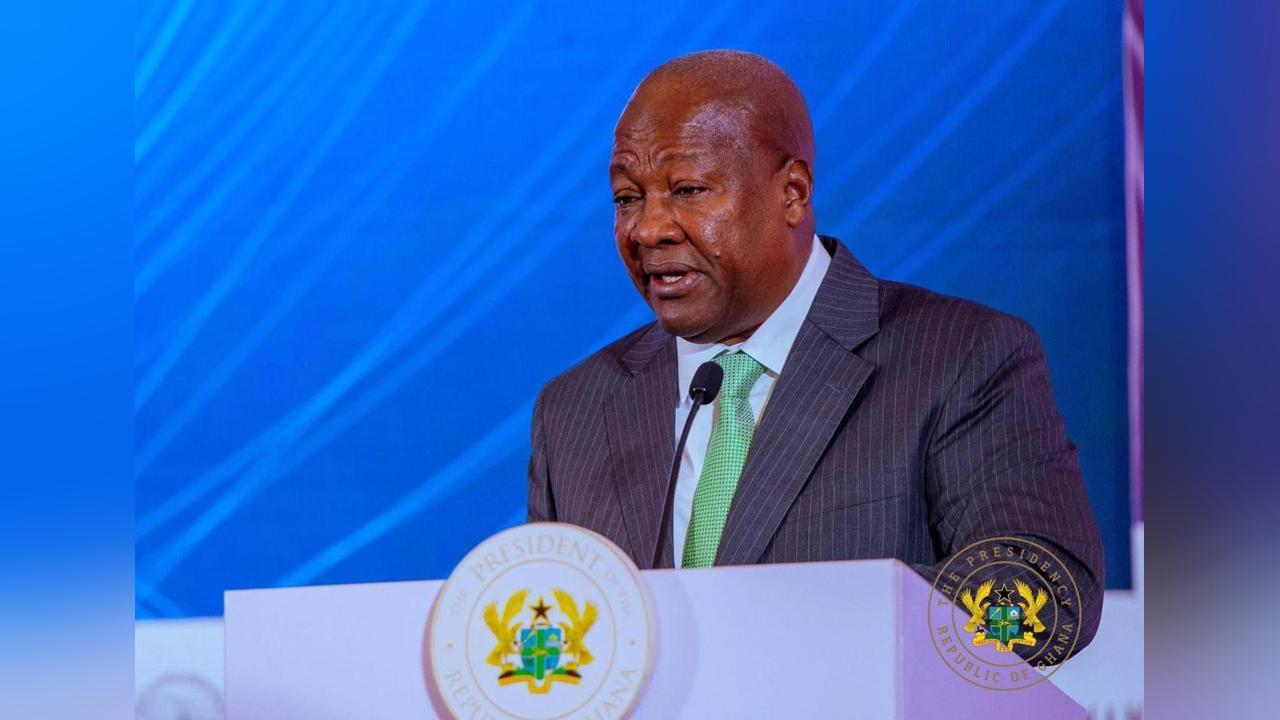
    President John Dramani Mahama has lauded his administration for what he described as a rapid and unexpected recovery of the Ghanaian economy.

    Speaking to congregants at the First Sky Group’s Thanksgiving Service in the Northern Region on Sunday, January 25, he noted that he had anticipated it would take about two years for Ghana’s economy to stabilise, but the turnaround has happened much faster than expected.


    According to him, his government inherited an extremely difficult crisis which seemed impossible to overcome. However, he said the intervention of God has played a significant role in the country’s recovery.

    He emphasised that the swift turnaround has left the International Monetary Fund (IMF) and the World Bank surprised by the pace of Ghana’s economic recovery.


    “I have done this job before, and the crisis we faced was extremely difficult. In my own estimation, I thought it would take about two years to see an economic turnaround. But this is how far God has brought us.


    “We are all surprised and shocked at the speed of the recovery. Whenever I meet IMF and World Bank officials, they are amazed at what has happened in Ghana. Today, Ghana has become something of a poster child for the IMF and the World Bank.

    Bringing inflation down from 23.8 per cent to 5.4 per cent within a year, and seeing the cedi appreciate by 37 per cent in the same period, can only be attributed to the grace of God,” the President added.

    In a New Year message to the nation, President Mahama noted that Ghana has begun its recovery under the “Reset Ghana” agenda, and he was confident that the economy, which he inherited and which was on its knees, is now stabilising, jobs are being created, infrastructure is improving, and governance is being strengthened.


    Consequently, he called for unity and collective effort for national development in 2026. Ahead of his calls, he listed six key highlights of his one-year governance as president. He stated:


    “We have accomplished a lot together in the past twelve months. Through prudent management and difficult but necessary reforms, we have reduced inflation from distressing levels of 23% and above by the end of 2024, and we are hopeful of ending 2025 with inflation in the single digits, just above 5%. We have achieved relative currency stability and are on track to be ranked among the world’s best-performing currencies in 2025. We are accelerating economic growth and creating more opportunities for our young people.


    We have restored business confidence and have seen a significant increase in both domestic and foreign direct investment. We have restored Ghana’s credibility with international partners, completed the renegotiation of our debt obligations on terms that protect our sovereignty while ensuring sustainability. We are beginning the process of exiting the IMF programme with dignity, not as supplicants, but as partners.”


    On the targets for 2026, President Mahama added that, “We shall accelerate and expand, assuring Ghanaians that,


    “In 2026… every child deserves a world-class education. We will continue digitalising our schools and ensure every classroom has the tools for 21st-century learning. We shall operationalise Universal Health Coverage through the Free Primary Health Care Programme, ensuring that no Ghanaian is denied care due to inability to pay. Through the Ghana Medical Trust Fund, we will stretch a hand of support to our people suffering from non-communicable diseases. We shall make Ghana food self-sufficient and transform agriculture from subsistence to a thriving commercial enterprise through mechanisation, value addition, and market access.


    We are working to achieve a 30% share of renewable energy in our national energy mix, reducing costs and protecting the environment. We shall deliver social housing units through public-private partnerships. We shall intensify the fight against corruption with no sacred cows. Every cedi belongs to the people and must be accounted for. We will implement the recommendations of the Constitution Review Committee to make our 1992 Constitution an even greater guide for the consolidation of our democracy.”


    To attain these goals, he called for national unity and collective effort to consolidate these gains in 2026, positioning Ghana for sustained growth, social protection, and renewed global leadership.


    In a related development, flagbearer aspirant of the New Patriotic Party (NPP) and former Vice President of Ghana, Dr Mahamudu Bawumia, congratulated President John Dramani Mahama for his first year in office since his takeover following the December 2024 elections.


    The former vice president sent the congratulatory message in a New Year message shared on January 1, 2026, through his official social media platforms (Facebook and X/Twitter).

    He highlighted several national issues, including the need to uphold the country’s democracy, and called on President Mahama to deliver on his promise to the Ghanaian youth, particularly with regard to employment and his flagship programme, the 24-hour economy.


    According to him, the mandate the president has earned was given to him by the good people of Ghana to promote livelihoods and ensure safety and growth, hence the need for President Mahama to guard it jealously and deliver to the utmost satisfaction of the people.


    He said, “A lot has happened since 7th December 2024, and I know many of us continue to reflect on it every day. I congratulate President John Dramani Mahama on his first year in office, and I sincerely wish him well in the discharge of his mandate. The Ghanaian people have bestowed a sacred trust on him, and he cannot afford to fail them. I therefore urge him to continue to guard the peace, stability, and unity of our nation jealously. Ghana has always stood out as a beacon in a region that has seen too much turmoil and instability.”


    He went on to address the plight of some citizens over the last year, describing it as a challenging one for many, particularly for youth and parents. Consequently, he urged President Mahama to fulfil his promise of providing jobs to the youth populace through the 24-hour economy.


    The NDC government’s proposed “24-Hour Economy” is designed to expand economic activity beyond the traditional 8 a.m.–5 p.m. workday to create millions of jobs and improve wages. It is aimed at transforming Ghana’s labour market by creating 1.7 million employment opportunities and improving wages.


    The former vice president noted, “A new year gives us a pause, a moment to reflect on where we are coming from, the choices we have made, and the future we still hope to build together with quiet thought and renewed resolve. I know that for many Ghanaians, the past year has not been easy. Parents have worried about providing for their families, and unemployed young people have wondered when the 24-hour economy will provide the promised jobs.”


    According to him, the president is expected to deliver on his promise and promote stability and growth, as he inherited a strong economy from the erstwhile government, of which he was a major part.


    “The foundation President Mahama inherited was solid in many ways. It is imperative that we build on it and not let it slip. I say this because this matters more now than ever,” he added.


    A major highlight in the presidential aspirant’s message was his concern about the country’s ranking in terms of peace.
    Referring to the way the dismissal of former Chief Justice Gertrude Torkonoo was handled, Dr Bawumia stated that Ghana, which has maintained a reputation as a beacon of democracy and peace, has now fallen six places in the 2025 Global Peace Index—a drop he described as “gaping cracks.”


    “You may have heard about the results of the 2025 Global Peace Index. Ghana has dropped six places to 61st in the world, and from fourth to seventh in sub-Saharan Africa. These results point to growing security worries and pockets of unrest in the country. One of Ghana’s greatest strengths since the inception of the Fourth Republic has been the independence and credibility of our democratic institutions. The world looks at us and says, ‘This is how democracy should work.’ But in the course of the year, we have seen gaping cracks appearing.”

  • Ghana’s economy slows to 4.5% in July 2025, down from 8.3% last year

    The Ghana Statistical Service (GSS) has introduced a new index aimed at filling the information gap between quarterly GDP releases, providing policymakers and investors with a more immediate measure of economic performance.

    Data from the index indicates that the economy continued its growth momentum, with the MIEG rising to 110.2 in July 2025, up from 105.4 in the same period last year.

    Despite the positive trend, the latest figures point to a slowdown compared to the 8.3 percent growth recorded in July 2024. The expansion was largely supported by a strong rebound in agriculture, which grew by 8.0 percent, and steady growth in the services sector at 6.4 percent.

    The industrial sector, however, showed minimal growth, recording only a 0.1 percent increase.

    Presenting the findings, Government Statistician Dr. Alhassan Iddrisu said the MIEG provides “timely insights to support swift and evidence-based policy responses.”

    He added that the new measure serves as a “leading high-frequency indicator of GDP growth,” enabling better tracking of policy impacts and improving the forecasting of economic trends.

    According to the sectoral analysis, services contributed 2.63 percentage points to the 4.5 percent total growth, while agriculture accounted for 1.67 percentage points. The industrial sector made a modest contribution of 0.04 percentage points.

    Although industrial gold production increased, the GSS noted that this was largely offset by a decline in petroleum and gas output.

    The MIEG, which uses 2023 as its base year with an index of 100, is provisional and may be revised as more comprehensive data becomes available. The next update, covering August 2025, is scheduled for release on November 12.

    Meanwhile, the World Bank has made a U-turn on its earlier prediction of Ghana’s 2025 economic growth, upgrading the forecast from its previous estimate to 4.3 percent.

    This was contained in the October 2025 edition of Africa’s Pulse Report, released by the Bank in Washington, D.C. In April this year, the World Bank projected Ghana’s economy to expand by 3.9%.

    The Bank attributed weather-related uncertainties as factors that could influence the country’s overall economic performance. Meanwhile, the World Bank expects Ghana’s December inflation to close at 15.4%.

    Earlier in September, the World Bank disbursed $360 million from its International Development Association (IDA) to Ghana.

    This funding was made possible through the Second Resilient Recovery Development Policy Financing operation, to support Ghana’s efforts to restore macroeconomic stability.

    Parliament gave the nod in July after the World Bank Board approved the facility in June. The World Bank Group is a family of five international organizations that provide leveraged loans to developing countries. It is the largest and best-known development bank in the world, serving as an observer at the United Nations Development Group.

    The Bank is headquartered in Washington, D.C., United States. Its objectives are to restore fiscal sustainability, support financial sector stability and private sector development, improve energy sector financial discipline, and strengthen social and climate resilience.

    The recent disbursement comes at a time when Ghana’s local currency, the cedi, has been ranked as the worst-performing currency in a recent report published by the global financial news outlet Bloomberg.

    Ghana cedi’s strong performance was a central theme highlighted by President John Mahama during an interaction with potential investors in Singapore and Japan weeks ago. President Mahama emphasised the robust performance of the local currency to underscore Ghana’s macroeconomic stability and attractiveness as a destination for foreign capital.

    However, the cedi’s brief gains were short-lived after its rapid depreciation made it the worst-performing currency. According to Bloomberg’s recent report released on Thursday, September 4, the Ghana cedi is the worst-performing currency among all trading currencies, attributing the depreciation to a surge in demand for dollars by companies paying for imports.

    “A surge in demand for dollars by companies paying for imports has ended the Ghana cedi’s recent strong performance,” Bloomberg said.Bloomberg attributed the new development to the “strong gold prices,” while emphasizing that Ghana’s cedi has seen more than a ten percent (10%) depreciation in the current quarter.

    This, Bloomberg noted, has erased the fifty percent gain against the dollar in April and June. According to Bloomberg, the cedi traded 0.1 per cent weaker at GH¢11.9507 per dollar at 1:50 a.m. Despite the losses, it has gained 23 per cent so far this year.

    “Now, the currency, which had ranked first globally on the back of strong gold prices, has weakened by 13 per cent in the current quarter. Bloomberg data showed this was the steepest fall worldwide, erasing part of the 50 per cent gain recorded between April and June,” the report said.

    But Bloomberg has indicated that “Despite the losses, it has gained 23 per cent so far this year based on market data.” Reacting to Bloomberg’s report, the Bank of Ghana (BoG) noted, “The cedi should be stable within a reasonable range,” the central bank said in an emailed response.

    “Our role is to ensure fluctuations remain orderly, that they reflect fundamentals, and that they do not undermine confidence in the broader economy.”

    Bloomberg, in April this year, ranked the cedi as the best-performing currency with a sixteen percent (16%) gain against the dollar. What made the cedi earn the tag as the worst-performing currency is the steepest decline on the global level.

  • World Bank injects $360m into Ghana’s economy

    World Bank injects $360m into Ghana’s economy

    The World Bank has disbursed $360 million from its International Development Association (IDA) to Ghana. This funding was made possible through the Second Resilient Recovery Development Policy Financing operation, to support Ghana’s efforts to restore macroeconomic stability.


    Parliament gave the nod in July after the World Bank Board approved the facility in June. The World Bank Group is a family of five international organizations that provide leveraged loans to developing countries. It is the largest and best-known development bank in the world, serving as an observer at the United Nations Development Group.

    The Bank is headquartered in Washington, D.C., United States. Its objectives are to restore fiscal sustainability, support financial sector stability and private sector development, improve energy sector financial discipline, and strengthen social and climate resilience.

    The recent disbursement comes at a time when Ghana’s local currency, the cedi, has been ranked as the worst-performing currency in a recent report published by the global financial news outlet Bloomberg.


    Ghana cedi’s strong performance was a central theme highlighted by President John Mahama during an interaction with potential investors in Singapore and Japan weeks ago. President Mahama emphasised the robust performance of the local currency to underscore Ghana’s macroeconomic stability and attractiveness as a destination for foreign capital.


    However, the cedi’s brief gains were short-lived after its rapid depreciation made it the worst-performing currency. According to Bloomberg’s recent report released on Thursday, September 4, the Ghana cedi is the worst-performing currency among all trading currencies, attributing the depreciation to a surge in demand for dollars by companies paying for imports.


    “A surge in demand for dollars by companies paying for imports has ended the Ghana cedi’s recent strong performance,” Bloomberg said.
    Bloomberg attributed the new development to the “strong gold prices,” while emphasizing that Ghana’s cedi has seen more than a ten percent (10%) depreciation in the current quarter.


    This, Bloomberg noted, has erased the fifty percent gain against the dollar in April and June. According to Bloomberg, the cedi traded 0.1 per cent weaker at GH¢11.9507 per dollar at 1:50 a.m. Despite the losses, it has gained 23 per cent so far this year.


    “Now, the currency, which had ranked first globally on the back of strong gold prices, has weakened by 13 per cent in the current quarter. Bloomberg data showed this was the steepest fall worldwide, erasing part of the 50 per cent gain recorded between April and June,” the report said.


    But Bloomberg has indicated that “Despite the losses, it has gained 23 per cent so far this year based on market data.” Reacting to Bloomberg’s report, the Bank of Ghana (BoG) noted, “The cedi should be stable within a reasonable range,” the central bank said in an emailed response.

    “Our role is to ensure fluctuations remain orderly, that they reflect fundamentals, and that they do not undermine confidence in the broader economy.”


    Bloomberg, in April this year, ranked the cedi as the best-performing currency with a sixteen percent (16%) gain against the dollar. What made the cedi earn the tag as the worst-performing currency is the steepest decline on the global level.

    The cedi’s appreciation in the last eight months helped ease inflationary pressures, pushing consumer inflation down to 21.2 per cent, the lowest in eight months at the time.


    Ghana’s import-dependent economy brings in a wide range of goods, from food to machinery, with demand typically rising toward the end of the year as businesses prepare for the Christmas season.

    The higher demand for dollars has piled pressure on the cedi, while the Bank of Ghana’s (BoG) limited supply of foreign exchange has added to the strain.


    Head of Market-Risk Management at UMB Bank, Mr. Hamza Adam, said banks that submitted dollar requests on behalf of clients to the Bank of Ghana last week received only half of what they asked for. “This week the central bank is trying to meet all demand,” he said by phone from Accra on September 3, 2025.


    Meanwhile, before Bloomberg reported on the cedi, BoG addressed the concerns of Ghanaians concerning the fast depreciation of the cedi, calling for calm. Bank of Ghana Governor, Dr. Johnson Asiama, during an interview with Joy Business, which was aired on Wednesday, August 27, mentioned that the current depreciation of the cedi was temporary, assuring a comeback soon.


    “The Bank of Ghana operates a managed floating system in terms of framework; therefore, these blips will happen. But the assurance is that this is a short-term issue, and the challenges are being addressed,” he assured.


    According to data from the Bank of Ghana, which was shared on 23rd August, the Ghana cedi had seen a five percent (5%) depreciation. Between August 23 and August 28, the Ghanaian cedi depreciated from GH¢10.43 to around GH¢11.00 per US dollar.


    The sharpest movement was between August 23 and 24, where the cedi depreciated from GH¢10.43 to GH¢10.90. The dollar was selling at GH¢10.43 on August 23, GH¢10.90 on August 24, and between August 25–27, it staggered between GH¢10.85–11.00.


    As of August 28, it had crossed GH¢11, sparking major concerns. On Dr. Johnson Asiama’s part, the current depreciation is a result of the temporary shortage of foreign exchange supply in the market, resulting from the effects of the currency appreciation coupled with other phenomena that, “…we are beginning to see those phenomena at play. Imports become a lot cheaper, so it’s just natural to begin to see pressure build up on the currency.”


    He said there is no need for panic as the economic indicators are obviously strong, giving signs of a cedi recovery soon enough. Dr. Asiama attributed the depreciating cedi to the decline in remittance inflows, sharp appreciation of the cedi, and limited interbank trading.


    “…what is happening is just because of the sharp appreciation, we are beginning to have some cash flow problems, specifically because we have seen some decline in terms of remittance inflows. Also, imports become a lot cheaper, so it’s just natural to begin to see pressure build up on the currency. Over the last two months, we have also seen very limited interbank trading,” he stated.


    The Ghana cedi saw a remarkable appreciation against major trading currencies worldwide over the past six months. During the presentation of the 2025 Mid-Year Fiscal Policy Review on July 24, the Minister for Finance, Dr. Cassiel Ato Forson, revealed that the cedi has recorded a remarkable turnaround in the first six months of 2025, appreciating by 42.6% against the US dollar.

    Dr. Forson described the cedi’s performance as “impressive” and the first of its kind in the history of Ghana’s economy. The cedi, which was initially always experiencing depreciation, is currently showing resilience against the dollar.


    He noted that the cedi, which was previously trading at about GH¢17.0 to the US dollar, had strengthened to GH¢10.4 as of July 23.


    “Mr. Speaker, the cedi’s performance in the first half of this year has been impressive! The Ghana cedi experienced significant appreciation against all major trading currencies in the first six months of 2025. I am happy to inform the House that our precious cedi, which once upon a time was trading at about GH¢17.0 to the US dollar, was trading at about GH¢10.4 as of yesterday, 23rd July, 2025,” he revealed.


    In high spirits, the minister adopted the catchphrase from Ghanaian highlife musician King Paluta’s energetic party anthem “For the Popping (Apicki),” released on December 27, 2024, and said, “This level of appreciation of the Ghana cedi has never happened in the history of our nation. Ghanafo, cedi no apicki! Apicki apicki apicki!”


    He continued that the strength of the cedi has not appreciated against just the US dollar but against the British pound as well. The cedi also gained 30.3% against the British pound and 25.6% against the euro during the same period.


    This marks a sharp contrast to the same period in 2024, when the cedi depreciated by 18.6% against the dollar, 17.9% against the pound, and 16.0% against the euro.


    “Similarly, the cedi, which was once trading at GH¢21.0 to the Great British Pound, was trading at about GH¢14.1 as of yesterday, 23rd July. Mr. Speaker, as of the end of June 2025, the cedi appreciated by 42.6% against the US dollar, 30.3% against the British pound, and 25.6% against the euro.

    With these gains over the past few months, Dr. Cassiel stated that all the losses in the previous years had been reversed. “Mr. Speaker, I repeat, so far, we have almost reversed all the cedi depreciation in 2022, 2023, and 2024,” he mentioned.

  • GAB reports recovery of banks from economic shocks

    GAB reports recovery of banks from economic shocks

    President of the Ghana Association of Banks (GAB), Kwamina Asomaning, has expressed confidence in the ongoing recovery of Ghana’s banking sector, stating that the industry is gradually stabilizing after enduring major economic disruptions.

    Speaking on Joy News’ PM Express Business Edition on Thursday, March 20, Asomaning acknowledged the turbulence the financial sector has experienced in recent years but highlighted the progress being made toward stability.

    “I have been in the banking sector for some years, and the only constant is change. Each period has come with its fair share of challenges,” he remarked.

    “I wouldn’t say one period has been more turbulent than others by a significant degree, but we’ve gone through a few shocks.”

    Asomaning, who is also the Managing Director of Stanbic Bank Ghana, cited the COVID-19 pandemic and Ghana’s sovereign debt crisis as key disruptions that severely impacted the banking sector.

    Despite these challenges, he noted that the sector is showing signs of resilience and improvement.

    “I think it’s fair to say that we are on a path to recovery. We’re not completely out of the woods, but if you look back to where we were in 2022 and 2023, there has been significant improvement on the broad macros and in the sector in particular,” he stated.

    Ghana’s financial institutions faced severe strain following the country’s debt restructuring process, which affected banks with significant exposure to government bonds. Liquidity constraints and eroded investor confidence compounded the difficulties faced by the industry.

    However, Asomaning believes the worst is behind them, as positive trends continue to emerge. He commended the Bank of Ghana for playing a crucial role in stabilizing the financial system.

    “The regulator has been very instrumental in ensuring that the right policies and measures are put in place to restore confidence in the sector,” he said.

    Economic indicators such as inflation, exchange rate stability, and growth forecasts have shown improvement, reinforcing cautious optimism among industry players.

    While acknowledging that challenges still exist, Asomaning emphasized the need for banks to stay adaptable and forward-thinking to maintain the gains made.

    “As banks, we must remain agile and innovative. The challenges we have faced only reinforce the importance of resilience and adaptability,” he noted.
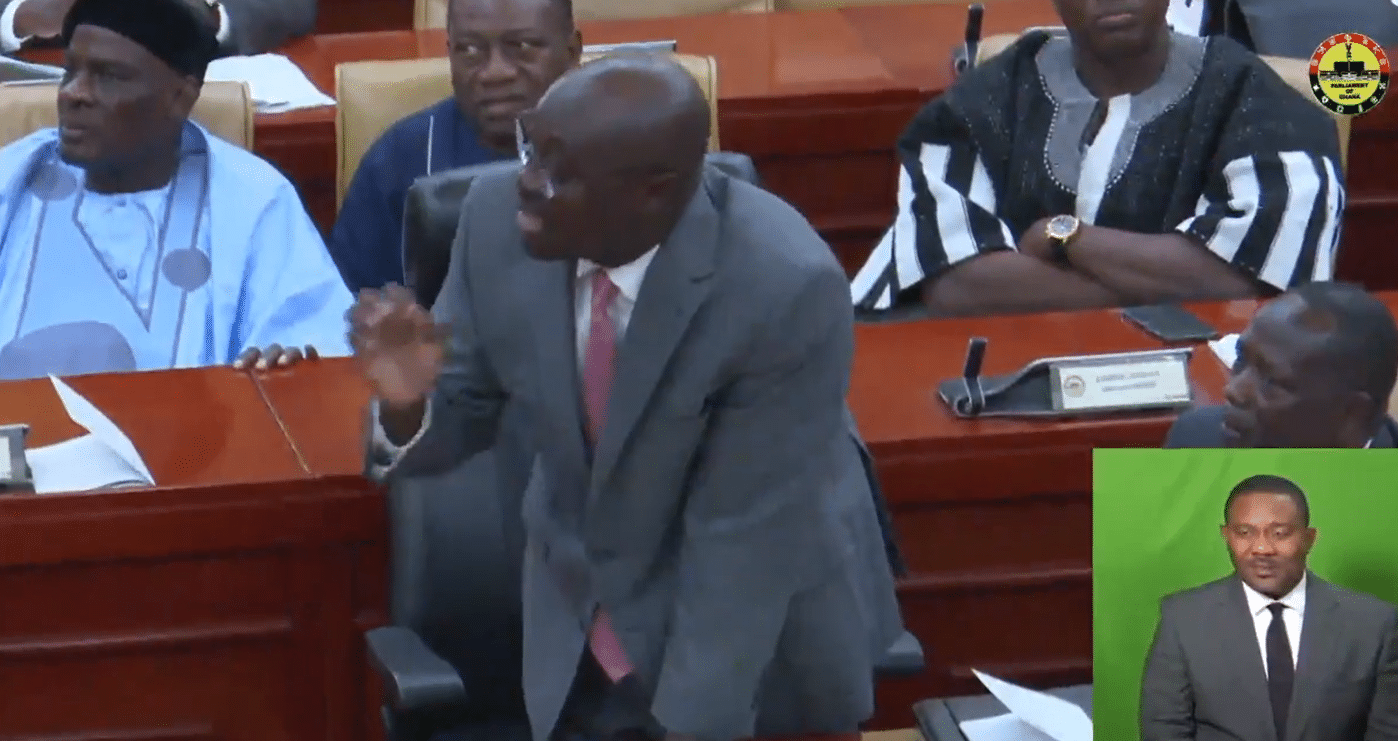
    The banking sector continues to work closely with regulators to strengthen the industry and position it for long-term growth.

  • Ghana’s economic growth fueled by digitalisation – Gideon Boako

    Ghana’s economic growth fueled by digitalisation – Gideon Boako

    Tano North Member of Parliament, Dr Gideon Boako, has highlighted the significant role digitalisation is playing in driving Ghana’s economic growth, shifting away from traditional revenue sources like cocoa, gold, and oil.

    Contributing to the debate on the 2025 budget statement, Dr Boako pointed out that recent data from the Ghana Statistical Service (GSS) shows an unprecedented shift in the country’s economic trajectory.

    “Mr Speaker, throughout my formative years, I was taught that the backbone of Ghana’s economy was cocoa, gold, and later oil. For years, we struggled to find a way to properly diversify beyond these resources,” he noted.
    According to Dr Boako, the GSS report indicates that in 2024, Ghana’s economy expanded by a record GHC1.2 trillion in nominal terms. Unlike in the past, this growth was not primarily fueled by traditional exports but by digital transactions, including data and SMS services.

    “For the first time, the massive growth recorded in 2024 did not come from cocoa, gold, or oil but was driven by data and SMS transactions—that is, digitalisation,” he explained.

    He described this shift as a turning point in Ghana’s economic development, underscoring the increasing influence of technology and digital services.

    Dr Boako credited the digital transformation to the policies of the previous administration, particularly the efforts of former Vice President Dr Mahamudu Bawumia.

    “Mr Speaker, digitalisation efforts championed by the former Vice President over the last eight years have significantly contributed to this economic growth, and he must be commended,” he stated.

    His remarks emphasize the growing impact of digital infrastructure and technology in shaping Ghana’s future economy, marking a departure from reliance on natural resources.

  • Economic indicators confirm healthy economy we handed over – Minority

    Economic indicators confirm healthy economy we handed over – Minority

    The Minority in Parliament has defended the economic record of the previous New Patriotic Party (NPP) government, insisting that key indicators prove they left behind a strong and stable economy before handing over to the National Democratic Congress (NDC) administration.

    Addressing a press conference on Thursday, March 13, former Finance Minister and Ranking Member of Parliament’s Finance Committee, Dr. Mohammed Amin Adam, accused Finance Minister Dr. Cassiel Ato Forson of distorting fiscal data to create a false impression of economic mismanagement under the previous government.

    “Ladies and gentlemen, as you know, the manipulation of the fiscal data notwithstanding, the strong health of the economy the NPP handed to the new NDC government continues to be vindicated by other economic indicators,” he stated.

    Dr. Amin Adam pointed to Ghana’s Debt-to-GDP ratio, which stood at 61.8% at the end of 2024, as proof of prudent economic management. He attributed this achievement to “skilled negotiations and the implementation of a good debt strategy” by the previous administration, criticizing Dr. Forson for omitting this in his budget speech.

    “The Hon. Minister could not even acknowledge this important development by the imminent absence of this ratio in his budget speech. Sad!” he remarked.

    He further argued that the NPP’s economic policies had positioned Ghana for long-term growth, dismissing claims that the previous administration left the economy in distress.

    Concluding his remarks, Dr. Amin Adam expressed confidence that history would recognize the achievements of the Akufo-Addo government.

    “Whether we like it or not, it is historic, and history indeed will be kind to the Nana Akufo-Addo government,” he declared, urging the current administration to build upon the solid foundation laid by its predecessor.

  • A nation’s progress should be measured by the well-being of its citizens – Haruna Iddrisu

    A nation’s progress should be measured by the well-being of its citizens – Haruna Iddrisu

    The Minister for Education, Haruna Iddrisu, has stressed that true development goes beyond economic growth, asserting that the well-being of Ghanaians should be the real indicator of progress, not just numerical gains.

    Speaking on Joy FM’s Super Morning Show on Wednesday, March 12, he acknowledged that while the government has made some economic strides, the reality for many citizens does not reflect these improvements.

    “The Finance Minister, in the 2025 Budget Statement, shared the state of the economy, an economy hard-hit by debt, in crisis, and on the verge of collapse,” he noted.
    Haruna Iddrisu pointed out that while economic theories suggest growth figures as indicators of progress, they do not necessarily translate into better living standards.

    He used the decline in the cocoa sector as a prime example to support his argument.

    “The Ghana Cocoa Board, which was once the backbone of the economy, providing employment, foreign exchange, and stable income for farmers, is now heavily indebted,” he stated.
    He noted that the 2025 Budget Statement revealed extensive national debt exceeding GH₵750 billion, along with substantial liabilities tied to the cocoa, energy, and road sectors.

    In his view, the President’s first budget should not be seen as an instant remedy for all economic difficulties.

    “That is why the Finance Minister called on Ghanaians to join him in building the Ghana we want,” he explained.
    Mr. Iddrisu underscored the importance of correcting the missteps of past economic policies.

    “The NPP government under Nana Akufo-Addo and Dr. Bawumia often claimed they were superior managers of the economy. Where was that superior sense when they only led the country into unsustainable debt?” he questioned.
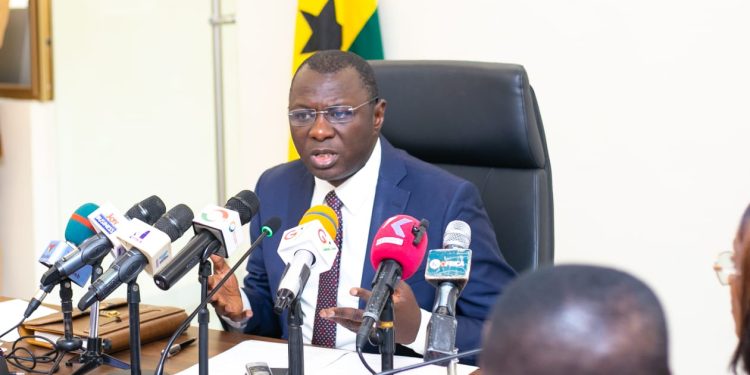
    He further pointed out that Ghana will have to bear a significant financial burden in the years ahead.
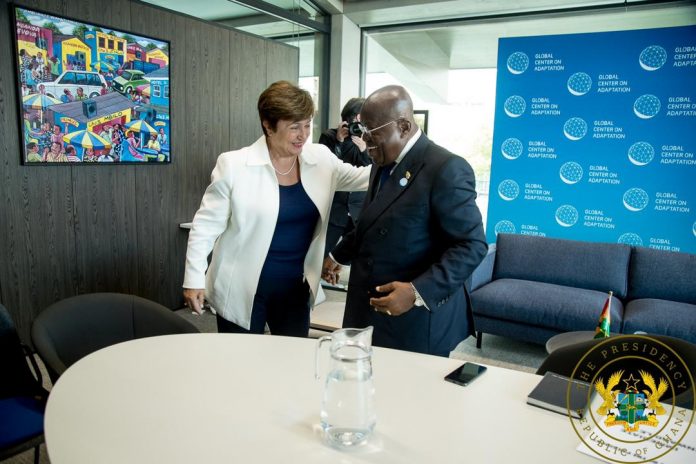
    “Between now and 2026/2027, the burden is heavy. We have no excuse—we must service our debt,” he stressed.

  • We will fix the economy with discipline, transparency – Finance Minister

    We will fix the economy with discipline, transparency – Finance Minister

    Ghana’s economic recovery will demand sacrifices, discipline, and honesty from all stakeholders, Finance Minister Dr. Cassiel Ato Forson has said. 

    Presenting the 2025 Budget Statement to Parliament on Tuesday, he acknowledged the deep financial challenges facing the country but assured that the government is committed to taking bold measures to turn things around.

    Dr. Forson stressed that restoring stability requires a responsible approach, starting with the government itself. He maintained that truthfulness and transparency would be central to the administration’s efforts to rebuild the economy.

    “Rt. Honorable Speaker, it is what it is. The state of our economy is troubling, but we will fix it. We will fix it, but Mr. Speaker, it will require some sacrifices, truthfulness, transparency, and discipline. We will take strong measures to confront the situation head-on. The sacrifice must come from all stakeholders, beginning with the government,” he stated.

    He blamed the country’s economic distress on excessive debt, financial sector obligations, and what he described as reckless spending by the previous New Patriotic Party (NPP) administration. He argued that these factors had derailed fiscal consolidation efforts, even under the International Monetary Fund (IMF) programme introduced in 2023.

    “Mr. Speaker, hands on heart, we inherited an economy in deep crisis. Mr. Speaker, an economy hit with debt… and financial sector payments. Re-commitment control and reckless spending have reversed the progress made in fiscal consolidation even under the IMF programme that commenced in the year 2023,” he said.

    Despite efforts to stabilize the economy through the IMF-backed programme, Dr. Forson admitted that the nation remains in financial distress. He noted that while some progress had been made, the burden of economic mismanagement continues to weigh heavily on Ghanaians, especially domestic bondholders, external creditors, and taxpayers.

    “Mr. Speaker, notwithstanding the gains made under the IMF-supported programme that was to be achieved through the painful sacrifice of domestic bondholders, external creditors, and taxpayers, the economy remains in distress,” he added.

    Ghana’s economic landscape entering 2025 has been a mix of progress and persistent challenges. The cedi, which struggled against major trading currencies in 2024, recorded a 2.06% depreciation against the US dollar, British pound, and euro in January, according to the Bank of Ghana. This marked an improvement compared to December 2024, when the cedi depreciated by 19.2% against the dollar, 17.8% against the pound, and 13.7% against the euro.

    Inflation has also shown a slight decline, dropping to 23.1% in February 2025 from 23.5% in January. However, the rate remains well above the central bank’s target range of 6% to 10%.

    As part of the government’s broader economic plan, several key macroeconomic targets have been set for the 2025 fiscal year. The government aims to achieve a real GDP growth rate of at least 4.0%, with non-oil real GDP growth projected at 4.8%.

    Inflation is expected to drop further to 11.9% by the end of the year. Additionally, the government is targeting a primary balance surplus of 1.5% of GDP, while maintaining gross international reserves sufficient to cover at least three months of imports.

    Dr. Forson assured Parliament and the public that with the right policies and a commitment to responsible governance, the government is determined to navigate Ghana out of its current economic turmoil.

  • We inherited an economy in deep crisis – Ato Forson

    We inherited an economy in deep crisis – Ato Forson

    Finance Minister, Cassiel Ato Forson has reiterated concerns over the economic challenges inherited by the National Democratic Congress (NDC) government from the Akufo-Addo administration.

    Presenting the highly anticipated 2025 Budget Statement to Parliament on Tuesday, Dr. Forson described the economy as being in a dire state due to excessive debt, financial sector obligations, and unchecked expenditures.

    “Mr Speaker hands on heart we inherited an economy in deep crisis, Mr Speaker, an economy had hit with debt,.. and financial sector payments. Re-commitment control and reckless spending have reversed the progress made in physical consolidation even under the IMF programme that commenced in the year 2023.

    Despite the measures introduced under the IMF-supported programme, the Finance Minister noted that economic distress persists.

    He attributed this to the heavy sacrifices made by domestic bondholders, external creditors, and taxpayers, emphasizing that the nation is still grappling with the consequences of past mismanagement.

    “Mr Speaker not withstanding the gains made under the IMF supported programme that was to achieve through the painful sacrifice of Domestic Bondholders external creditors and taxpayers the economy remains in distress,” he added.

    The 2025 Budget is expected to outline strategies aimed at restoring economic stability and addressing the fiscal challenges confronting the country.

  • The reset agenda is both ambitious and necessary – Naana Jane Opoku Agyemang

    The reset agenda is both ambitious and necessary – Naana Jane Opoku Agyemang

    Vice President Prof. Naana Jane Opoku-Agyemang has described Ghana’s economic recovery plan as both bold and essential, emphasizing the government’s unwavering commitment to revitalizing the economy through structural reforms and private sector collaboration.

    Speaking at the closing session of the 2025 National Economic Dialogue, she highlighted the administration’s resolve to implement key recommendations aimed at fostering macroeconomic stability, sustainable development, and long-term resilience.

    “The reset agenda is both ambitious and necessary. It requires a concerted effort from all of us—that is, from the government, private sector, civil society, and every Ghanaian citizen,” she stated.

    Prof. Opoku-Agyemang assured stakeholders that the government was fully dedicated to turning policy resolutions into meaningful action that would bring relief to businesses and citizens.

    “I want to assure you that the government of Ghana is fully committed to translating these resolutions into concrete action,” she reiterated.

    She further acknowledged the expectations set during the dialogue, pledging that the government would work diligently to meet them.

    “I have noted all the homework you have given us. Our promise is to collaborate with all sectors and sections of Ghana to ensure that we deliver a homework worthy of an A,” she added.

    The two-day dialogue focused on six priority areas, including macroeconomic stability, and outlined a strategic roadmap for economic recovery. The Vice President reaffirmed that the administration would work closely with the private sector and civil society to ensure the successful implementation of its economic reset agenda.

  • Take responsibility for the dire economic situation you’ve created – Minority to govt

    Take responsibility for the dire economic situation you’ve created – Minority to govt

    The Minority has challenged the government to acknowledge its role in Ghana’s economic difficulties instead of deflecting blame.

    Addressing a press conference on Monday, March 3, on behalf of the Minority in Parliament, former Finance Minister Dr. Mohammed Amin Adam accused the administration of failing to implement effective policies to stabilize the economy. He argued that the government’s approach has led to worsening financial conditions for Ghanaians.

    “It is evident that the NDC government is merely stalling for time, hoping to shift blame instead of taking responsibility for the dire economic situation they have created. This is a deliberate strategy to cover up their incompetence,” he stated.

    Dr. Amin Adam pointed to rising inflation, excessive taxation, and a struggling private sector as signs of poor economic management. He asserted that rather than addressing the crisis head-on, the government continues to engage in public discussions such as the National Economic Dialogue to create distractions.

    “We will not allow the NDC to deceive the people of Ghana with rhetoric and excuses. The economic hardship is real, and the government must take full responsibility for its failures,” he concluded.

    The Minority reaffirmed its commitment to holding the administration accountable, insisting that Ghanaians deserve transparency and decisive leadership in resolving the country’s economic woes.

  • We need bold, strategic decisions to address Ghana’s fiscal challenges – Ato Forson

    We need bold, strategic decisions to address Ghana’s fiscal challenges – Ato Forson

    Finance Minister Dr. Cassiel Ato Forson has underscored the urgency of Ghana’s fiscal crisis, calling for decisive measures to restore economic stability.

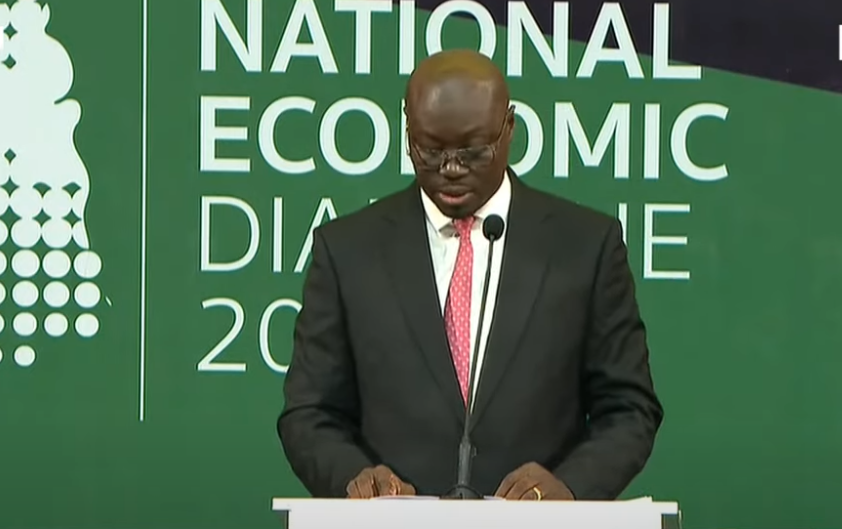
    Addressing the opening session of the National Economic Dialogue on Monday, March 3, 2025, Dr. Forson painted a stark picture of the country’s financial difficulties, citing high debt levels, revenue shortfalls, and rising government expenditure as key concerns.

    “We face serious fiscal challenges that demand bold and strategic decisions. We must ensure fiscal discipline and implement reforms that will restore confidence in our economy,” he stated.

    He stressed that overcoming these difficulties would require a collaborative approach involving policymakers, businesses, and citizens.

    Describing the National Economic Dialogue as a crucial platform for solutions, Dr. Forson urged stakeholders to use the discussions as an opportunity to develop forward-thinking policies that prevent future economic downturns.

    “This dialogue is a critical step in assessing our economic situation and finding practical solutions to move our country forward,” he added.

    Reaffirming the government’s commitment to reforms, the Finance Minister assured Ghanaians that efforts were underway to stabilize the economy and create conditions for sustainable growth.

    He encouraged all participants to actively engage in shaping policies that would steer Ghana toward a more resilient financial future.

  • We won’t recall our struggles but focus on the path of growth trajectory – Mahama

    We won’t recall our struggles but focus on the path of growth trajectory – Mahama

    President John Dramani Mahama has reaffirmed his administration’s commitment to economic transformation, urging Ghanaians to shift their focus from past challenges to finding solutions that will drive sustainable growth.

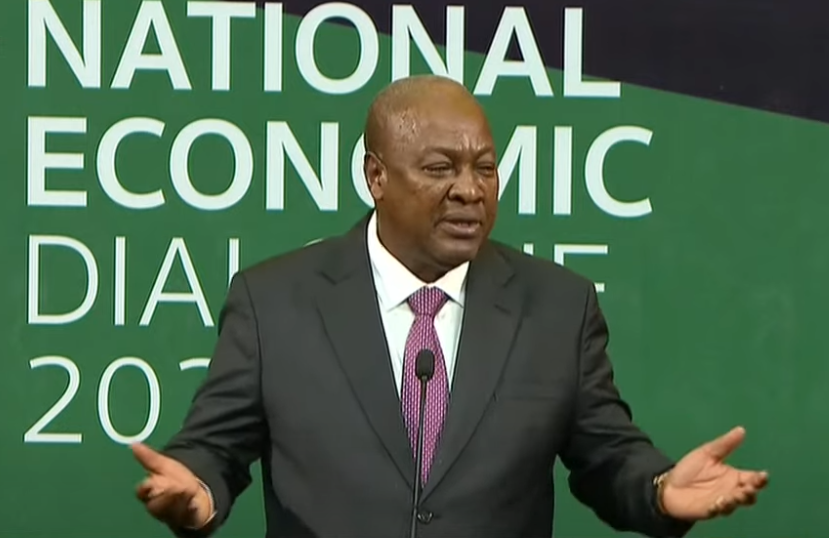
    Speaking at the opening of the National Economic Dialogue on Monday, March 3, 2025, President Mahama emphasized that the forum was not merely a reflection on the country’s economic struggles but a platform to chart a new course toward prosperity.

    “We are not here to recount our struggles nor are we here to resign ourselves to economic stagnation. We are here to seek solutions that will put us on a path of growth trajectory and to ensure that we build an economy that works for every Ghanaian,” he stated.

    He described the reset agenda as a shared national responsibility, calling on all stakeholders to work together in rebuilding the economy for the collective benefit of citizens.

    “For me, this is not just another policy discussion, it is an urgent call to action. A crucial moment for us, as stakeholders, to purpose and resolve the challenges that face us,” he added.

    The National Economic Dialogue brings together policymakers, business leaders, economists, and development experts to formulate strategies for economic recovery and long-term resilience. The discussions are expected to yield actionable measures that will drive structural reforms and enhance economic stability.

  • Ghana’s economic crisis isn’t over – Finance Minister

    Ghana’s economic crisis isn’t over – Finance Minister

    Finance Minister Dr. Cassiel Ato Forson has cautioned that Ghana’s economic challenges are far from over, stressing the need for tough decisions to secure long-term stability.

    Addressing participants at the National Economic Dialogue on March 3 at the Accra International Conference Centre, he outlined the hardships Ghanaians have endured, including severe currency depreciation, hyperinflation, steep tax hikes, and rising costs of fuel, electricity, and interest rates.

    “Fellow countrymen and women, the economic crisis is not over. We still have difficult decisions to make to ensure long-term stability,” he stated.

    The two-day forum is aimed at diagnosing the country’s economic difficulties and developing sustainable solutions.

    President John Dramani Mahama is set to deliver the keynote address on the theme “Resetting Ghana: Building the Economy We Want Together.” The dialogue is part of a broader strategy to engage citizens in shaping policies and fostering collaboration among key stakeholders.

    The event has brought together representatives from the private sector, academia, civil society organizations, and public policy institutions. Discussions are expected to focus on macroeconomic stability, economic transformation, infrastructure development, structural reforms, private sector growth, governance, and anti-corruption measures.

    Participants are expected to propose actionable steps that will drive economic recovery and resilience in the long term.

  • 2-day National Economic Dialogue to bolster, reset economy commences today

    2-day National Economic Dialogue to bolster, reset economy commences today

    The Government of Ghana, led by President John Dramani Mahama, is set to open the National Economic Dialogue today, March 3, at the Accra International Conference Centre. 

    The two-day event is designed to tackle the country’s economic challenges and identify solutions for sustainable growth and development.

    President Mahama will deliver the keynote address under the theme “Resetting Ghana: Building the Economy We Want Together.” The dialogue is part of the government’s effort to ensure citizen participation in shaping economic policies and fostering collaboration among key stakeholders.

    The forum will bring together representatives from the private sector, academia, civil society organizations, and public policy institutions. 

    Discussions will focus on achieving macroeconomic stability, promoting economic transformation, advancing infrastructure development, implementing structural reforms, ensuring private sector-led growth, and restoring good governance while combating corruption.

    Participants are expected to work towards clear commitments and actionable steps that will drive economic recovery and long-term resilience. 

    The government sees this initiative as a crucial step in revitalizing the economy, strengthening business opportunities, and improving the livelihoods of Ghanaians.

    As the discussions unfold over the next two days, the government remains committed to fostering consensus and engaging all sectors in shaping a prosperous future for the nation.

    The Ghanaian economy is facing many challenges including the depreciation of the Ghana cedi against international currency, surging public debt stock and high interest rates and inflation.

  • Economic mess is being fixed by the govt – Defence Minister

    Economic mess is being fixed by the govt – Defence Minister

    Defence Minister Dr. Edward Omane Boamah has assured Ghanaians that the government is working swiftly to reverse the economic downturn attributed to the actions of the previous administration.

    In a Facebook post on Friday, February 21, Dr. Boamah criticised the New Patriotic Party (NPP) government for what he described as reckless borrowing, which, he said, had plunged the nation into a severe debt crisis.

    Describing the situation as a “momentous messy national debt,” he warned that the consequences of such fiscal irresponsibility could weigh heavily on future generations.

    His comments came after President John Dramani Mahama’s first Cabinet meeting on Thursday, where the state of the economy was a central focus.

    Reflecting on the country’s economic challenges, Dr. Boamah highlighted the significance of Ghana’s democratic resilience but noted that the financial situation was dire. “It is regrettable that a ‘We Told You So Moment’ is manifesting,” he remarked.

    He also pointed out that the true extent of the crisis goes beyond reported debt figures, drawing on economist N. Gregory Mankiw’s concept of “uncounted liabilities” to emphasize hidden financial burdens.

    Dr. Boamah recalled his earlier warnings about the dangers of excessive borrowing, issued well before the onset of the COVID-19 pandemic. “Like many others, I knew the signs of economic gloom and doom were on the wall,” he stated, lamenting that poor financial management had severely impacted investments, including the savings of pensioners and the middle class.

    In a satirical jab at the growing national debt, he quoted comedian George Carlin, saying, “I think we ought to just go ahead and make ‘zillion’ a real number.”

    During the recent Cabinet meeting, the Finance Minister reportedly laid out the full scope of the economic decline, reinforcing the need for immediate action.

    Dr. Boamah reassured citizens of the government’s determination to restore economic stability. “We are fixing the economic mess the NPP created,” he affirmed, pledging decisive measures to bring much-needed relief to Ghanaians.

  • World Bank cautions Ghana against immediate return to capital market amid economic recovery

    World Bank cautions Ghana against immediate return to capital market amid economic recovery

    The World Bank has warned Ghana against hastily returning to international capital markets, cautioning that a premature move could undermine the country’s recent financial stability and reverse progress made under its debt restructuring programme.

    Robert Taliercio, the World Bank Country Director for Ghana, Liberia, and Sierra Leone, raised these concerns during the launch of the institution’s latest Public Finance Review report, titled “Building the Foundations for a Resilient and Equitable Fiscal Policy.” He cautioned that an early return to borrowing could erode investor confidence, reintroduce unsustainable debt burdens, and derail Ghana’s ongoing economic recovery.

    “The risk now is falling into complacency with these achievements and returning to a business-as-usual mindset – a recurring error in the past. Ghana has requested a record 17 IMF programs and has been under active IMF supervision for 40 out of its 68 years of independence,” Taliercio remarked.

    Ghana recently restructured both domestic and external debts as part of its economic reform programme under the $3 billion IMF Extended Credit Facility (ECF). Despite these gains, Taliercio cautioned against repeating past financial missteps, warning that a rushed return to dollar-denominated borrowing could result in high interest rates and renewed fiscal instability.

    Since 2022, Ghana has been shut out of international capital markets due to excessive debt levels, sluggish economic growth, and external imbalances. While the government is eager to regain access, the World Bank emphasizes that a disciplined and well-timed approach will be crucial in ensuring long-term economic stability.

  • Stop doing politics with the economy; sustain the gains we began – Former Finance Minister to Mahama

    Stop doing politics with the economy; sustain the gains we began – Former Finance Minister to Mahama

    Dr. Mohammed Amin Adam, the immediate past Minister for Finance, has expressed hope that the new administration led by President John Mahama will focus on consolidating the country’s economic recovery rather than engaging in political maneuvering.

    Speaking on Joy News’ PM Express Business Edition on Wednesday, Dr. Amin Adam emphasized the progress made in stabilizing the economy despite external challenges. He cautioned against reversing these gains for partisan reasons.

    “I do not disagree that the economy was the major issue on the ballot because we all knew that the economy was difficult,” he admitted.

    “But as I explained, it wasn’t only the Ghanaian economy. Most incumbents across the world who went through elections around the same time lost, so it wasn’t peculiar to Ghana. The economy really dominated the political debate.”

    Defending the previous administration’s handling of the economic downturn, he pointed out that external factors played a major role in the crisis and that Ghana managed to recover faster than anticipated.

    “If you look at the data from 2022 to 2023 and then 2024, you will see that the turnaround was quick. The recovery was faster than even anticipated by the World Bank, IMF, and many economic analysts, even in Ghana,” he explained.

    “We were of the view that once the economy had turned around, the recovery was swift. Conditions were improving. We were getting stability—macro stability—which is a condition for economic growth.”

    Dr. Amin Adam highlighted that Ghana’s ability to sustain positive growth during a period of debt restructuring was a testament to the resilience of the economy.

    “Even after doing a debt restructuring—where countries that have done restructuring usually record negative growth—we were recording an average of about 6.4% last year,” he stated.

    “It just shows that the economy was turning to positive levels, which, when sustained, could really reduce the suffering and economic hardship faced by the people.”

    While acknowledging that Ghanaians voted for change in the last election, he urged the Mahama administration to build on the foundation laid by its predecessors rather than dismantle it for political reasons.

    “The Ghanaian people decided that they wanted a change, and this is why I expect the new government to sustain the gains that we have made so that they translate into tangible benefits for the people,” he said.

    “But if you come in to do politics as usual, you lose the point, and you are not really able to sustain those gains. And this is what I’ve seen President Mahama doing.”

  • Social media platforms generating revenue within our economy must meet their tax obligations – Mpraeso MP

    Social media platforms generating revenue within our economy must meet their tax obligations – Mpraeso MP

    The Member of Parliament for Mpraeso, Davis Ansah Opoku, has called on the government to ensure multinational social media companies operating in Ghana fulfill their tax obligations.

    Addressing Parliament, he expressed concern over the Ghana Revenue Authority’s (GRA) inability to effectively tax these digital platforms despite their significant financial activities in the country.

    “While we embrace digitalisation to enhance revenue collection, we must also ensure Ghana benefits financially from these digital transactions. If social media platforms generate revenue within our economy, they must meet their tax obligations,” he stated.

    Opoku made these remarks while contributing to a discussion on Ghana’s digital economy, following a statement by Dr Zanetor Agyeman-Rawlings, MP for Klottey Korle, and Kennedy Osei Nyarko, MP for Akim Swedru. The discussion focused on the need for stronger regulations to govern digital transactions and tax compliance.

    Other contributors, including Samuel Nartey George, Minister for Communication, emphasized the role of social media companies in fraud prevention and revenue accountability.

    Opoku further highlighted that revenue generated from taxing these platforms could be channeled into critical national development projects, including road infrastructure and other essential services.

    He called for a structured approach to prevent Ghana from missing out on potential financial inflows, urging Parliament and relevant authorities to implement robust digital tax policies.

  • Ghana is not broke, we are handing over almost $8bn in international reserves – Akufo-Addo

    Ghana is not broke, we are handing over almost $8bn in international reserves – Akufo-Addo

    Outgoing President Nana Akufo-Addo has emphasized that Ghana is not financially distressed, citing nearly $8 billion in gross international reserves as his government prepares to leave office.

    Addressing Parliament during his final State of the Nation Address, President Akufo-Addo stated that the economy was showing strong signs of recovery, with improved fiscal stability and debt sustainability.

    “The economy is rebounding strongly. Our fiscal position is more stable. Our debt sustainability has significantly improved,” he noted.

    Rejecting claims that the country was bankrupt, he added, “Mr. Speaker, the country is not broke as some propagandists want us to believe. We are handing over the country with gross international reserves of almost $8 billion. This is more than the $6.2 billion gross international reserves my administration inherited in 2017.”

    Data from the Bank of Ghana (BoG) confirms the reserves, showing an increase from $7.83 billion in September to $7.92 billion in November 2024.

    Despite the positive outlook on reserves, Ghana’s debt stock remains a challenge, reaching GH₵761.2 billion as of July 2024, representing 75.7% of the country’s Gross Domestic Product (GDP).

    This marks a significant rise compared to the GH₵587.7 billion recorded during the same period in 2023, which accounted for 70.3% of GDP.

    The Bank of Ghana’s September 2024 Summary of Economic and Financial Data also indicated that the external component of the debt increased to $31.6 billion from $30 billion a year earlier, representing 46.1% of GDP.

    Meanwhile, the domestic debt component stood at GH₵290.9 billion, equivalent to 28.5% of GDP.

    The government’s Domestic Debt Exchange Programme (DDEP) was introduced to address the rising debt by restructuring existing liabilities.

  • It is Ghana’s loss if a new govt decides not to continue 24-hour economy after my term – Mahama

    It is Ghana’s loss if a new govt decides not to continue 24-hour economy after my term – Mahama

    The National Democratic Congress (NDC) flagbearer, John Dramani Mahama, has asserted that abandoning the 24-hour economy initiative after his presidency would be detrimental to Ghana’s progress.

    Speaking to the British Broadcasting Corporation (BBC) in an interview with Thomas Naadi ahead of Ghana’s December 7 elections, Mahama emphasized the transformative potential of the 24-hour economy, stressing that its benefits would extend beyond his administration.

    When asked about the continuity of the agenda after his term, Mahama stated, “Four years, is that the end of Ghana? So after four years, that’s it? It would be Ghana’s loss if the government that succeeds mine decides no longer to implement the 24-hour economy.”

    Mahama explained that the concept is a gradual process and not a one-time event. “You can’t put a cost on it immediately. A 24-hour economy is not an event; it is a process. And so, even while we are stabilizing the macroeconomic environment and bringing inflation down and interest rates down, we will be implementing the 24-hour economy.”

    On whether the goal is achievable within four years, Mahama remarked, “We will start at least.”

    A 24-hour economy refers to an economic system where businesses, services, and activities operate continuously throughout the day and night. This system encompasses various sectors, including retail, transportation, entertainment, and public services, catering to consumer needs at any time.

    Mahama emphasized at the 9th Ghana CEO Network Business Cocktail that the 24-hour economy policy would be a game-changer, pledging that a future NDC administration would actively pursue projects to transition Ghana into a fully-fledged 24-hour economy. He outlined that this vision aligns with the NDC’s goal of creating an industrialized, inclusive, and resilient economy.

    In addition to the 24-hour economy, the former president addressed other pressing issues, including illegal mining (galamsey) and Ghana’s controversial anti-LGBTQI bill. He stated that his administration would tackle illegal mining by halting operations in forest reserves and on water bodies.

    Regarding the ongoing prosecution of anti-galamsey protestors, Mahama criticized the high-handedness of the approach, describing it as excessive. “To be remanded to custody for two weeks because of going on a protest, I think it was high-handed,” he said. He assured that he would direct the Attorney-General to “file a nolle prosequi and stop their prosecution.”

    The protests in question, held in September, led to the arrest of 53 demonstrators, including prominent activists Oliver Barker Vormawor, Grace Asantewaa, Felicity Nelson, and Elorm Ama Ababio, also known as Ama Governor. The charges against them range from unlawful assembly to assault on a public officer.

    On the anti-LGBTQI legislation, formally titled the “Human Sexual Rights and Family Values Bill,” Mahama noted that he would only assent to it after a thorough review. “It depends on what is in the Bill,” he stated.

    The BBC interview also revealed that the New Patriotic Party (NPP) flagbearer and Vice President, Dr. Mahamudu Bawumia, declined a request for an interview. The broadcaster confirmed reaching out to both frontrunners, noting, “The BBC has asked for an interview with the other main presidential candidate, Ghana’s current Vice President Mahamudu Bawumia, but he has declined.”

    The ruling party has yet to comment on Dr. Bawumia’s decision to decline the BBC’s invitation.

  • Akufo-Addo must apologise for destroying the economy, not me – Man who scowled at president

    Akufo-Addo must apologise for destroying the economy, not me – Man who scowled at president

    The young Ghanaian man, who became the center of attention after giving President Nana Akufo-Addo a stern, piercing look during the funeral rites of Akyempimhene Oheneba Adusei Poku in Kumasi on November 18, has broken his silence.

    In a recent video, the man noted that he had been cautioned and instigated to apologise to the president for his action.

    The reason behind the man’s scowling eyes is clear. He is dissatisfied with the running of the economy by the president. In his video, the man noted he finds no fault with his actions and would not apologise.

    He rather noted that President Akufo-Addo must apologise to Ghanaians for failing to execute his promises and make their lives better.

    https://twitter.com/eddie_wrt/status/1859521046858080603

    In the previous video gone viral, the unidentified man is seen fixing his gaze on the president as he passed by, maintaining his intense expression until his attention was taken by an unknown individual.

    The incident comes at a time of heightened public dissatisfaction with the current administration, with many Ghanaians blaming President Akufo-Addo for the country’s ongoing economic challenges. Rising inflation, mounting public debt, soaring food and transportation costs, and the perceived lack of significant developmental projects have led to widespread criticism of the government.

    The funeral, held in Kumasi, attracted a host of prominent dignitaries, including Asantehene Otumfuo Osei Tutu II, former President John Agyekum Kufuor, government officials, and business mogul Nana Kwame Bediako, also known as Cheddar. Otumfuo Osei Tutu II struggled to hold back tears during the final rites of the late Akyempimhene.

    https://twitter.com/MaameAmaAdoma/status/1858779501213159574

  • DDEP: Thank you for your sacrifice – Bawumia thanks bondholders

    DDEP: Thank you for your sacrifice – Bawumia thanks bondholders

    The flagbearer of the New Patriotic Party (NPP), Dr. Mahamudu Bawumia, has extended heartfelt gratitude to Ghanaian bondholders, citizens, and other stakeholders for their sacrifices in supporting the government’s Domestic Debt Exchange Program (DDEP).

    Speaking at the Ghana CEO Presidential Gala at the Movenpick Hotel on Thursday, November 7, Dr. Bawumia commended the business community and bondholders for their pivotal role in advancing the country’s economic recovery.

    “I would like to take this opportunity to show gratitude to the Ghanaian people, especially the business community and the bondholders, for the sacrifices you all made in supporting government’s efforts to restructure our debts and safeguard the economy,” he remarked.

    Dr. Bawumia highlighted the impact of the debt restructuring initiative, which he said has helped stabilize Ghana’s economy amid significant challenges. He shared an optimistic outlook, noting that the restructuring efforts are laying a solid foundation for sustainable growth.

    “The good news is that Ghana’s economy is on the path to recovery,” he added, underscoring the importance of collective action in building resilience.

    The NPP flagbearer expressed confidence in the nation’s economic future, noting that continued cooperation among sectors would ensure Ghana emerges stronger and more resilient. The DDEP, which closed on February 10, 2023, saw over 80% participation of eligible bonds and is designed to protect the economy and bolster the country’s debt-servicing capabilities.

  • Ghana’s economy lagging public investment and stability – IEA

    Ghana’s economy lagging public investment and stability – IEA

    The Institute of Economic Affairs (IEA) has hinted that Ghana’s economy is not reaching its full potential because of several issues.

    These issues include low government investment, unstable economic conditions, and high business costs.

    In its latest report, the IEA suggested that for Ghana’s economy to grow faster, the country needs to make better use of its natural resources to increase investment in infrastructure and education, lower business costs, and keep the economy stable.

    Recent data from the Ghana Statistical Service (GSS) showed that the economy has generally improved between the second quarter of 2023 and the second quarter of 2024, with the GDP (a measure of economic growth) increasing from 2.5% to 6.9%.

    Similarly, growth in non-oil sectors rose from 3.1% to 7.0% during this period.

    Looking at different sectors, agriculture saw steady growth, ranging from 4.3% to 5.4%, while the services sector also grew, with rates between 3.2% and 6.0%.

    In contrast, the industrial sector had some ups and downs, shrinking in the second and third quarters of 2023 but recovering with growth rates between 1.6% and 9.3% in later quarters. The IEA linked these ups and downs to irregular oil production.

    The International Monetary Fund (IMF) recently increased its growth forecast for Ghana from 3.1% to 4.0%, suggesting that Ghana’s economy is bouncing back more strongly from the impacts of Covid-19 and other recent economic challenges.

  • Don’t vote for Mahama, he doesn’t appreciate digitisation – Bawumia warns

    Don’t vote for Mahama, he doesn’t appreciate digitisation – Bawumia warns

    The presidential candidate for the New Patriotic Party (NPP), Dr Mahamudu Bawumia, has criticized the National Democratic Congress (NDC) flagbearer, John Dramani Mahama, for underestimating the importance of digitalization in driving Ghana’s economic growth.

    Bawumia contends that Mahama’s dismissal of digitalization’s significance overlooks its contributions to the economic difficulties encountered during his presidency.

    Highlighting the benefits of digital advancements for both citizens and the country’s overall progress, Bawumia addressed a group of young voters on Sunday, November 3.

    He urged them to reject Mahama in the upcoming 2024 elections, emphasizing Mahama’s perceived lack of comprehension regarding the role of digital technologies in the economy.

    “Today, he [Mahama] says, there’s no link between digitisation and the economy. Right? How can that be? In this 4th industrial revolution, how can we have a leader who doesn’t appreciate the value of digitisation, in a digital global economy?

    He went on to assert, “He should not be allowed close to the presidency, with that mindset, he shouldn’t be allowed close to the presidency. A leader who doesn’t understand digitisation in today’s world wants to be President of a country like ours, trying to move forward into the future, no.”

    Bawumia further challenged Mahama’s claim that infrastructure development is his primary achievement, arguing that it pales in comparison to the current administration’s focus on digital transformation.

    He suggested that digitalization should be regarded as the cornerstone of progress, overshadowing traditional infrastructure as the key driver of Ghana’s economic development.

    “His signature 24-hour economy has defied explanation and understanding. It’s basically a case of one day one explanation, including the rearing of lions and elephants. In me, you will have a brand new, tear-rubber president, not a second-hand failed president.”

    Mahama clarified that his proposed “24-Hour Economy Policy” is designed to rejuvenate Ghana’s economy by implementing specific, targeted interventions aimed at enhancing productivity and stimulating growth.

  • No importation of goods for one year if I’m elected – Hassan Ayariga

    No importation of goods for one year if I’m elected – Hassan Ayariga

    Presidential Candidate of the All People’s Congress (APC), Hassan Ayariga, has expressed concerns about Ghana’s reliance on imported goods and unveiled his ambitious plans to address this issue if he wins the 2024 election.

    In an interview on Channel One TV’s Face to Face with Umaru Sanda Amadu, Ayariga suggested bold steps, such as potentially halting the importation of food products and other goods, as a way to drive local production and consumption.

    Ayariga’s strategy involves initiating an economic “lockdown” within his first 100 days in office, aimed at stimulating domestic manufacturing and reducing import dependence.

    He believes this move would promote economic self-reliance, stabilize the cedi, boost productivity, and create jobs for Ghanaians.

    To bring this plan to life, Ayariga intends to establish round-the-clock manufacturing hubs, ensuring that Ghana produces its own goods, becomes self-sufficient, and reduces reliance on foreign markets.

    “Ghana will stop the import… When you turn that country into a production-manufacturing nation, what it means is that we’re going to have an economic lockdown. I’m going to lock down this economy for one year. Nobody is importing anything anymore.

    “So, from the first day I become President, the next year, Ghana is going to experience what is called economic lockdown. What is an economic lockdown? We import to consume, we import to wear, and we import to survive. We’re going to lock down this economy and not importation. Right now we have to change our consumption pattern to produce what we eat and eat what we produce.

    “We have to change our standard of living, we have to begin to manufacture our clothing, and we have to live in a country where no other country exists.

    “The purpose of the economic lockdown is to make our economy independent, stabilise our cedi, increase our productivity, increase job creation.”

  • Moody’s upgrade demonstrated the NPP’s capability to restore the economy – Ahiagbah

    Moody’s upgrade demonstrated the NPP’s capability to restore the economy – Ahiagbah

    Communications Director for the New Patriotic Party (NPP), Richard Ahiagbah, views Moody’s recent upgrade of Ghana’s outlook as evidence of the economy’s recovery.

    According to Ahiagbah, this reflects the NPP government’s capability to restore economic stability.

    In a post on X, he responded to Moody’s upgrade of Ghana’s outlook from ‘stable’ to ‘positive,’ stressing the significance of this achievement.

    He also called on former President John Dramani Mahama to recognize the progress made and give due acknowledgment to the government’s efforts.

    Read his post below:

    Moody’s has raised Ghana’s credit rating to Caa2, with a positive outlook signaling future fiscal stability. This encouraging update validates the ongoing economic recovery, highlighted by the stronger-than-expected growth rate of 5.8% on average during the first and second quarters of 2024.

  • GSS records 6.9% economic growth in 2024 Q2

    GSS records 6.9% economic growth in 2024 Q2

    Ghana’s economy grew by 6.9% in the second quarter of 2024, according to provisional figures released by the Ghana Statistical Service (GSS). This marks an increase compared to the first quarter’s growth of 4.7%.

    The Services sector continued to lead as the largest contributor to the country’s growth in Q2 2024, accounting for 44.2%. The Industry sector followed with a 32.2% contribution, while the Agriculture sector contributed 23.6%.

    Within the Services sector, the Information and Communication subsector expanded the most, recording a year-on-year growth of 12.8%, and a quarter-on-quarter growth of 2.9%.

    In the Industry sector, the Mining and Quarrying subsector experienced significant growth, expanding by 14.8% year-on-year and 3.8% quarter-on-quarter.

    The Agriculture sector saw notable growth in the crops subsector, which expanded by 6.4%.

    Despite the overall economic expansion, some subsectors faced contractions. The Forestry and Logging subsector recorded a growth of -5.2%, while Water Supply, Sewerage, Waste Management, and Remediation activities contracted by -9.6%. In the Services sector, Personal Services activities also saw a decline of -3.1%.

  • Ghana’s economy requires more than a reset – Obiri Boahen to Mahama

    Ghana’s economy requires more than a reset – Obiri Boahen to Mahama

    Nana Obiri Boahen, who previously served as Deputy General Secretary of the ruling New Patriotic Party (NPP), has criticized the flagbearer for the National Democratic Congress (NDC) John Dramani Mahama’s commitment to resetting Ghana’s economy.

    Mr Boahen, a private legal practitioner, dismissed the idea of “resetting” the economy, likening it to a trivial task, such as adjusting a wristwatch.

    In contrast, Mahama, has asserted that the party’s manifesto launch on August 24, 2024, will mark the beginning of their effort to rejuvenate the economy.

    He promised to initiate a national economic dialogue, rationalize taxes, and implement emergency measures to stabilize the Ghana cedi.

    Additionally, he vowed to investigate the NPP’s “opaque gold-for-oil deal” and review the Bank of Ghana’s Gold Purchase Programme.

    However, responding to these promises, Nana Obiri Boahen argued that Ghanaians have not forgotten the economic challenges under Mahama’s previous administration.

    He claimed that Mahama’s proposed “reset” of the economy might lead to the cancellation of key initiatives such as free SHS, the restoration of nursing and teacher training allowances, and other programs introduced by the current government.

    “How do you reset this economy? Is it a wristwatch that you will reset it on? We don’t need to reset the economy; we need an upgrade. If you try to rest the economy, or in trying to rest the economy, you will cancel the free senior high school policy. Resetting means the nursing and teacher trainee allowances will be cancelled. We cannot reset this economy, and Ghanaians should not allow themselves to be deceived by the lofty promises of the NDC.”

    “We need an upgrade, not a reset. I am not saying the NPP is a saint and everything is perfect, but we have achieved a lot, and a Bawumia-led administration will upgrade the economy to a much better place,” he said.

    He emphasized that John Dramani Mahama has a dismal track record, marked by poor economic management, corruption, deteriorating living conditions, and an extended period of dumsor that lasted for years and led to the collapse of numerous businesses.

    “Mahama is behaving as if, excuse me, we have water in our brains and short memories. We saw his leadership and terrible record. We cannot vote for him again. He is not only incompetent but also lacks credibility and integrity. He cannot be trusted to deliver. He has been president before, and we saw his record. Bawumia, on the other hand, is a man of credibility. He is competent enough to continue and build on the legacies of President Akufo-Addo,” he said.

  • There’s more to do – World Bank tells govt amid economic recovery signs

    There’s more to do – World Bank tells govt amid economic recovery signs

    The World Bank has entreated the Government of Ghana to be cautious despite the progress toward economic recovery, particularly in areas such as inflation control, debt restructuring, and fiscal consolidation.

    World Bank Country Director, Robert Taliercio O’Brien, praised the government’s efforts but stressed that further work is essential to fully stabilize the economy.

    In an interview on Joy News’ PM Express on Thursday, O’Brien commended the government’s policies that have led to a downward trend in inflation.

    “Inflation has been reduced, so it’s on a declining path, and it needs to keep declining. It’s still too high, but good progress is being made, thanks in part to the policy position of the government,” he explained.

    The World Bank official also highlighted Ghana’s progress on debt restructuring, a critical reform area.

    “Ghana implemented the domestic debt restructuring in 2023 and reached an agreement under the G20 Common Framework with its official creditors,” O’Brien noted.

    He emphasized that a Memorandum of Understanding for restructuring official bilateral debt has been established and is actively progressing.

    O’Brien further pointed out that as of June, the government had reached an agreement in principle with commercial bondholders, marking another significant step in the debt restructuring process.

    “So again, very good progress, but more to do,” he stated, underscoring the need for continued efforts in this area.

    In addition to debt restructuring, O’Brien commended the government’s fiscal consolidation efforts, which led to a notable reduction in public spending.

    “We saw very important measures taken by the government to reduce expenditures last year, which resulted in a 7.9 percentage point decrease in spending,” he said, describing this as a critical step toward restoring fiscal discipline.

    Despite these achievements, the World Bank official urged the government to remain focused on addressing the remaining challenges.

    “There’s more to do,” O’Brien reiterated, acknowledging the progress made while emphasizing that the road to full economic recovery requires sustained commitment.

  • Present challenges haven’t affected Ghana’s economic growth – Deloitte

    Present challenges haven’t affected Ghana’s economic growth – Deloitte

    Deloitte Ghana has indicated that despite recent economic challenges, Ghana’s economy continues to show signs of recovery.

    This observation was made in Deloitte’s review of the 2024 Mid-Year Budget, based on information provided by Finance Minister Dr. Mohammed Amin-Adam.

    The review highlighted that the 2024 mid-year budget statement did not include a request for additional allocations from Parliament, unlike in previous years.

    Instead, the focus was on tracking the progress of the 2024 budget’s implementation and revising key economic indicators. According to Deloitte, the data shared by the Finance Minister underscores the resilience of the economy, noting, “The information shared by the finance minister suggests the economy is recovering despite economic challenges in recent years.”

    Deloitte also pointed out that the improved economic performance in the first half of 2024 has bolstered the government’s confidence, which is expected to positively influence investor sentiment.

    A significant highlight in the review was the strong performance of the industry sector, which expanded by 6.8% in the first quarter of 2024.

    This marks a notable rebound following a contraction in 2023 and only marginal growth in the years preceding it. The mining and quarrying subsectors were identified as the primary drivers of this growth, registering a 12.9% increase, attributed to a rise in global commodity prices.

    Deloitte noted, “We expect to see a positive impact on the economy as jobs, wages, and community infrastructure are all expected to increase.”

    For 2024, overall Gross Domestic Product (GDP) growth is now projected at 3.1%, slightly higher than the initial forecast of 2.8%. Non-oil GDP growth has also been revised upward to 2.8% from the earlier estimate of 2.1%. Looking ahead, overall GDP is expected to grow at an average rate of 4.4% per annum between 2024 and 2027. In 2023, Ghana’s economy grew by 2.9%, surpassing the revised target of 2.3%, with non-oil GDP expanding by 3.3% compared to the revised target of 2.8%.

    The growth in 2023 was largely driven by the services sector, which grew by 5.5%, and the agriculture sector, which expanded by 4.5%, while the industry sector saw a contraction of 1.2%.

  • Only hard work can save Ghana’s economy destroyed by reckless borrowing – Eric Opoku

    Only hard work can save Ghana’s economy destroyed by reckless borrowing – Eric Opoku

    The Minority in Parliament has asserted that the National Democratic Congress (NDC)’s proposed 24-hour economy is a strategic response to the economic crisis exacerbated by the Akufo-Addo-led New Patriotic Party (NPP) government.

    The caucus contends that the current administration’s imprudent borrowing practices have ballooned the national debt to over GHC740 billion without delivering tangible benefits.

    In a media interview on Monday, July 29, Eric Opoku, Ranking Member on the Food, Agriculture, and Cocoa Affairs Committee, highlighted the transformative potential of the 24-hour economy initiative. He noted that the policy is designed to generate more employment opportunities, expand the tax base, and offer increased prospects for the youth.

    The Asunafo South MP criticized the Akufo-Addo administration for its financial mismanagement, asserting that reversing the economic downturn will require significant effort and expertise.

    “We have been reckless and irresponsible with our borrowing over the past seven years. From March 6, 1957, to January 7, 2017, Ghana’s total debt was GHC120 billion. In the last seven years alone, we’ve amassed a debt of GHC742 billion, reflecting an unprecedented borrowing spree of GHC622 billion during this period,” he said.

    “To address this crisis, we need to work diligently. We’ve traditionally worked for 8 hours a day, but what we’re proposing is to utilize the remaining 18 hours productively. We must leverage every hour to restore our economy,” he emphasized.

  • Mid Year Budget: There’s nothing ‘growth’ about Ghana’s economy – Economist

    Mid Year Budget: There’s nothing ‘growth’ about Ghana’s economy – Economist

    Economist and University of Ghana lecturer Prof. Patrick Asuming has challenged the government’s assertions of a robust economic recovery, arguing that the actual situation contradicts these claims.

    Prof. Asuming contended that the economy is not improving but instead stagnating, contrary to the government’s positive reports.

    This critique follows Finance Minister Dr. Mohammed Amin Adam’s statement during the 2024 Mid-Year Budget Review on July 23, where he claimed that the economy is rebounding more strongly than expected.

    In an interview with Selorm Adonoo on The Big Issue on Channel One TV, Prof. Asuming noted that the Minister’s remarks do not align with the ongoing struggles faced by Ghanaians.

    He highlighted issues such as the fluctuating exchange rate, frequent power outages known as ‘Dumsor,’ and high unemployment as evidence that challenges persist and the true economic conditions are being misrepresented.

    “From my point of view, recovering and strongly are not descriptions I will give to the economy as you know today.

    I think the Finance Minister is right to say the growth rate of last year [2023], is higher than the revised targets from the Mid-Year Budget. But we have to understand that even the higher-than-expected growth rate was still lower than the 2022 growth rate.

    He emphasised, “And we all see 2022 as a really bad year for the Ghanaian economy and yet, the growth rate of last year [2023] that we say is higher than expected is still lower. Yes, of course, we set a lower target and we beat it, it doesn’t in any way tell us that the economy is on a strong footing.

    “We don’t measure the progress of the economy by the GDP growth without paying attention to where the growth rate is coming from. And the extent to which Ghanaians are benefitting.

    I think if you go on the streets and ask many Ghanaians, what they will tell you is completely at variance with what the finance minister said that the economy is recovering strongly… The statement that the economy is recovering strongly is a lot of overstatement.

    “Simply quoting that the exchange rate is lower than it used to be doesn’t really tell the full picture.

    The stabilisation we saw is kind of stalling.”

  • Ghana’s economy is on autopilot – Minority

    Ghana’s economy is on autopilot – Minority

    Minority Leader Dr. Cassiel Ato Forson has criticized the 2024 Mid-Year Budget Review, declaring that Ghana’s economy is on autopilot under the governing New Patriotic Party (NPP).

    His comments came after Finance Minister Dr. Mohammed Amin Adam presented the budget review on Tuesday, July 23, highlighting the government’s efforts to reverse negative economic trends and control expenditures.

    Dr. Ato Forson expressed his disappointment, stating that the budget review reflects the NPP’s impending transition to the opposition.

    Despite the Finance Minister reporting a provisional total debt of GH¢742 billion (US$50.9 billion) as of June, representing 70.6% of GDP, and assuring that the government is living within its budget, Dr. Ato Forson criticized the review for failing to address key issues.

    He condemned the government’s refusal to abolish certain taxes, such as the COVID levy, E-levy, and emission levy, which he believes have contributed to Ghana’s high tax regime and driven businesses and citizens out of the country.

    Dr. Ato Forson described the review as a “missed opportunity” lacking new policies and ideas, referencing the majority caucus’s jubilant song “Abamu awie” by asserting that they are “on their way to opposition.”

    “At the very least, Ghanaians expected that this mid-year review would have removed or abolished a number of taxes that have made Ghana a high tax regime to the extent that businesses are moving out of the country and ordinary Ghanaians are leaving the shores of this country. For example, the COVID levy, E-levy, ‘Borla’ tax, tax on domestic electricity, and emission levy,” he stated.

    “Mr. Speaker, this is a missed opportunity. Mr. Speaker, instead, the minister did not announce one single new policy. The minister did not introduce new ideas. Mr. Speaker, unfortunately, Ghana is on autopilot, and our economy is on autopilot. All I want to tell them is that they are bereft of new ideas, and I’m happy that they sang ‘abamu awie’; you are on your way to opposition,” Dr. Ato Forson concluded.

  • FULL TEXT: Where Ghana’s economy is heading to in 2024

    FULL TEXT: Where Ghana’s economy is heading to in 2024

    On Tuesday, July 23, Finance Minister Mohammed Amin Adam delivered the 2024 mid-year budget review to Parliament.

    During his presentation, Dr. Amin Adam reassured that the government remains committed to adhering to its budgetary allocations despite the ongoing economic challenges.

    He expressed optimism about the country’s efforts to manage the budget deficit, enhance revenue generation, and control expenditures.

    Dr. Amin Adam reiterated the administration’s dedication to maintaining fiscal discipline and ensuring budgetary control.

    Here is a detailed report on the progress and challenges facing the Ghanaian economy in 2023 and the first half of 2024.

  • Ghanaian businesses are struggling to work in an unpredictable economy – Economist

    Ghanaian businesses are struggling to work in an unpredictable economy – Economist

    Economist Dr. Ishmael Yamson addressed escalating economic crisis in the country, calling it the toughest period for businesses in decades.

    In a time of engagement with the media, he shared that the ongoing economic decline is troubling him deeply, keeping him awake at night as he wonders, “What went wrong?”

    “It has been tumultuous…the last six months have been quite unsettling, volatile, and difficult for our business. I can say with certainty that I’ve never seen anything like this in the past 40 years,” he said on Thursday.

    The former Unilever Ghana boss continued, “Look at the depreciation of the cedi, which hit an all-time high last month. I thought we might see some improvement, but it continues to depreciate.

    “This period is the most difficult time that Ghanaian businesses have faced. You need a predictable economy, but we currently have a completely unpredictable economy.

    “The most difficult aspect is that there doesn’t seem to be a real effort from the government or anyone else to change direction, and I can’t see anything indicating that the economy is improving.

    He remarked that the sharp decline of the local currency against major international currencies, the inflation rate, and other economic indicators are not aligning as expected.

    “If you are a businessman in this economy today, you probably sleep with nightmares. You wake up the next morning not knowing what will hit you next, and it’s been especially tough for manufacturers.

    “Having spent 30 years with the multinational company Unilever, I can really sense their frustrations in the current crisis.

    “This is because you don’t have control over your costs, absolutely no control. All your costs are determined by factors outside your control as a business.

    “If anybody asks me what keeps me awake at night, I will tell you it is the Ghanaian economy.”

  • Ghana’s economy is recovering – BoG reiterates

    Ghana’s economy is recovering – BoG reiterates

    Governor of the Bank of Ghana (BoG), Dr. Ernest Addison, has emphasized recent positive economic indicators indicating a recovery during his address at the SME Growth and Opportunity Summit in Accra on July 16, 2024.

    The Governor pointed to data from independent sources supporting arguments for economic stabilization.

    Addressing attendees, Dr. Addison highlighted the stabilization of the exchange rate following uncertainties related to debt restructuring negotiations with external creditors. He attributed this stability in part to the successful performance of the Bank of Ghana’s Gold Purchase program.

    Regarding Ghana’s Gross International Reserves, Dr. Addison reported a significant improvement, noting that by the end of April 2024, reserves had increased to US$6.59 billion, providing a 3.0 months import cover, compared to US$5.91 billion at the end of December 2023.

    Dr. Addison underscored the BoG’s commitment to supporting small and medium-sized enterprises (SMEs), acknowledging their crucial role in Ghana’s economy. He announced ongoing initiatives, including a collaborative study with the Development Bank of Ghana and the University of Ghana Business School, aimed at understanding SME constraints and formulating targeted policies to foster growth.

    Furthermore, the Governor urged increased investment in the SME sector to boost Ghana’s exports, emphasizing the potential of SMEs in driving economic expansion and job creation. He assured stakeholders of the BoG’s continued efforts to enhance SMEs’ access to financial services and digital literacy training, thereby facilitating their integration into cross-border trade activities.

    In conclusion, Dr. Addison reaffirmed the Bank of Ghana’s commitment to implementing comprehensive financial development programs that support SMEs, promote economic stability, and contribute to Ghana’s sustainable growth trajectory.

  • Implement sustainable revenue measures to restore macroeconomic stability – Gov’t told

    Implement sustainable revenue measures to restore macroeconomic stability – Gov’t told

    Policymakers and academics have emphasized the urgent need for the government to adopt sustainable revenue collection measures, effectively manage debt, and enhance monetary policy to address the nation’s economic challenges.

    Dr. Nii Kwaku Sowa, Country Director of the International Growth Centre (IGC-Ghana), underscored the importance of improving revenue collection efficiency without imposing additional taxes.

    He highlighted the burden that numerous taxes and levies place on businesses, advocating for a streamlined approach to taxation.

    “If you ask me to give you a hint as to what can be done about revenue, I will say improve the efficiency of collection of the revenue. Don’t add one single tax more; it becomes a burden to the Ghanaian. There are too many taxes in this system. If you have a business permit, they’ll collect another business permit from you. Too many taxes and levies are killing our businesses, and we should not introduce a new one,” Dr. Sowa stated.

    Professor William Baah-Boateng, Head of the Department of Economics at the University of Ghana, led the discussion on fiscal policy.

    He pointed to a lack of political will as a significant factor behind the country’s economic crisis and called for a commitment to prudent expenditure management rather than mere cuts.

    “In Ghana, the government is too heavy on the system. Maybe I can put it this way; politics is too heavy on the economy,” Professor Baah-Boateng observed.

    Discussing debt sustainability, Professor Peter Quartey, Director of ISSER, stressed the importance of responsible borrowing and debt management.

    He emphasized the need to consider multiple economic indicators, including export revenue growth compared to interest rates, to ensure sustainable debt levels.

    “I think the issue of debt healing is very crucial. Just like Prof. Ackah said, we don’t have one indicator; we have several of them. We have to look at them, look at our economy. We haven’t used export GDP; we have used growth in export revenue compared to your interest rate. If your export revenue is growing by 2% or 3% and your interest rate is 10%, then it tells you, you are going to have issues, and we have to borrow responsibly,” Professor Quartey explained.

    During the monetary policy discussion, panelists addressed the role of monetary policy in maintaining macroeconomic stability. They highlighted the need for a balanced approach to ensure long-term economic health.

    Delivering the keynote address, Abena Osei-Asare, Minister of State at the Finance Ministry, reaffirmed the government’s commitment to restoring macroeconomic stability.

    She outlined the government’s plans to implement stringent fiscal policies, manage public debt sustainably, and enhance transparency and accountability in public finance management.

    “We are committed to implementing stringent fiscal policies to reduce deficits and manage the public debts sustainably. We are also committed to transparency in public finance management, fully implementing the PFM Act and enhancing accountability mechanisms to ensure the efficient and effective use of public funds,” Osei-Asare stated.

  • We have brought the economy back to life – Finance Minister

    We have brought the economy back to life – Finance Minister

    Finance Minister Amin Adam has made claims that efforts and policies by the current government has successfully revitalized and improved the country’s economic situation.

    The Minister’s statement likely aims to reassure citizens and stakeholders that the government is effectively managing the economy.

    Implying that various economic indicators, such as GDP growth, employment rates, and investor confidence, have shown significant improvement.

    Despite the finance minister’s remarks, the rising prices of food, services, and petrol, along with poor salaries, paint a different picture.

      Read the post below

    1. The economy continues to show strong signs of recovery – Finance Minister

      The economy continues to show strong signs of recovery – Finance Minister

      Ghana’s Finance Minister, Dr Mohammed Amin Adam, has delivered optimistic news about the country’s economic trajectory, highlighting resilient growth and positive indicators during the first quarter of 2024.

      Speaking at a press briefing on Monday, Dr Adam underscored the robustness of Ghana’s economic recovery, noting that growth has surpassed initial projections.

      He attributed this strong performance to ongoing stability in the macroeconomic environment, supported by the government’s steadfast adherence to the IMF-supported program.

      Industry emerged as a frontrunner in driving economic growth, achieving a notable 6.8% increase, followed by agriculture at 4.1% and services at 3.3%. Dr Adam highlighted that these sectoral performances contributed to Ghana’s highest GDP growth rate since the fourth quarter of 2020.

      The Finance Minister reiterated the government’s commitment to sustaining macroeconomic stability and fostering sustainable growth.

      He emphasized that the IMF‘s approval of the second review of Ghana’s US$3 billion, 36-month Extended Credit Facility (ECF) Arrangement in May 2023 was pivotal. This approval facilitated an immediate disbursement of approximately $360 million, bringing Ghana’s total disbursements under the arrangement to about $1.6 billion.

      Dr Adam further announced that the third tranche of the IMF’s disbursement, amounting to $360 million, was expected to be received on Monday, July 1, 2024. This financial injection underscores international confidence in Ghana’s economic reforms and governance.

      Looking ahead, Dr Adam expressed confidence in Ghana’s economic prospects for the remainder of the year, citing the positive momentum observed in various sectors. He affirmed the government’s dedication to enhancing economic policies that support inclusive growth and development across the country.

    2. Ghana’s economic growth has proven more resilient than expected – IMF

      Ghana’s economic growth has proven more resilient than expected – IMF

      Ghana’s economic growth has shown remarkable resilience, exceeding initial expectations, according to the International Monetary Fund (IMF).

      The IMF’s Executive Board recently completed the second review of Ghana’s $3 billion, 36-month Extended Credit Facility (ECF) Arrangement, first approved in May 2023.

      This milestone allows for an immediate disbursement of SDR 269.1 million (approximately $360 million), bringing the total disbursements to about $1.6 billion under the arrangement.

      The IMF highlighted that Ghana’s economic reform program is delivering on its objectives. Despite acute economic and financial pressures in 2022, the Fund-supported program has provided a credible framework for the government to adjust macroeconomic policies and implement crucial reforms.

      These measures are aimed at restoring macroeconomic stability and debt sustainability while laying the foundation for higher and more inclusive growth. The positive outcomes of these efforts are clear: growth is more robust than initially projected, inflation is decreasing rapidly, and both fiscal and external positions are improving.

      The IMF commended Ghana’s strong performance under the program, noting that all quantitative performance criteria for the second review and almost all indicative targets were met. Significant progress has also been made on key structural reforms, despite some delays.

      In their comprehensive debt restructuring efforts, the Ghanaian authorities have made notable advancements. On June 11, 2024, an agreement was reached with Ghana’s Official Creditor Committee (OCC) under the G20’s Common Framework, formalizing a debt treatment agreement. This agreement provided the necessary financing assurances for the completion of the second ECF review. Additionally, an agreement in principle was reached with Eurobond holders on a restructuring plan, subject to confirmation of comparability of treatment by the OCC.

      Ghana’s primary fiscal balance improved by over 4 percent of GDP last year. Looking ahead, the authorities are committed to further fiscal consolidation, aiming for primary fiscal surpluses of ½ percent of GDP this year and 1½ percent of GDP in 2025.

      These efforts are supported by reforms to enhance revenue mobilization, streamline non-priority expenditures, and expand social protection programs to mitigate the impact of fiscal adjustments on vulnerable populations.

      Measures are also being taken to strengthen tax administration, expenditure controls, arrears management, fiscal rules and institutions, and the management of state-owned enterprises (SOEs), particularly in the energy and cocoa sectors.

      The Bank of Ghana (BoG) has maintained a prudent monetary policy stance to support rapid inflation reduction and has taken steps to rebuild international reserves.

      The BoG has also strengthened measures to ensure financial sector stability, including the implementation of banks’ recapitalization plans. The Ministry of Finance has initiated the recapitalization of state-owned banks in line with available resources.

      Ambitious structural reforms aimed at creating a more conducive environment for private sector investment and enhancing governance and transparency are gaining prominence. These reforms are crucial for boosting the economy’s potential and supporting sustainable job creation.

      Sustaining macroeconomic policy adjustments and reforms is essential for fully restoring macroeconomic stability and debt sustainability, especially during the upcoming electoral period. These efforts are vital for fostering sustainable economic growth and reducing poverty.

    3. Our economy is going to surprise the whole world before 2024 ends – Amin Adams

      Our economy is going to surprise the whole world before 2024 ends – Amin Adams

      Finance Minister Mohammed Amin Adam is confident that Ghana’s economy will deliver a remarkable growth this year.

      Amin Adam sees the recent 4.7% growth in the first quarter as a positive indicator, especially considering the World Bank’s projection of 3.1%.

      Addressing a town hall meeting in the UK on Saturday, Adam expressed his optimism.

       “This year our economy is going to surprise the whole world.”

      “I can tell you that this economy is rebounding strongly. We are rebounding strongly, and it is surprising the world even the IMF and the World Bank.”

      He added “They are all surprised. Last year, they projected our economy will grow at 1.5%, we grew at 2.9%. This year in the first quarter of this year, they projected we will grow at 3.1% we grew at 4.7%.” “This economy will grow, and it will grow faster than everybody thinks.”

    4. Ghana’s economy to grow to 4.3% in 2024 – Fitch Solutions updates projection

      Ghana’s economy to grow to 4.3% in 2024 – Fitch Solutions updates projection

      Fitch Solutions has revised its projection for Ghana’s real Gross Domestic Product (GDP) growth for 2024, increasing it from the previous estimate of 3.8% to 4.3%.

      The adjustment reflects stronger than anticipated economic activities expected in the upcoming quarters. The firm also forecasts an economic expansion of 4.5% in 2025.

      In its report, Fitch Solutions highlighted the basis for this optimistic revision. “We believe that economic growth over the coming quarters will remain markedly stronger compared to the last two years,” the report stated.

      This growth is attributed to several factors, including an expected decline in inflation and increased government spending ahead of the December general elections.

      Despite inflation remaining high at an average of 24.2% in the first quarter of 2024, Fitch Solutions expects a downward trend, predicting it will reach 19.5% by year-end. This anticipated decrease is primarily due to statistical base effects. The combination of slowing inflation and increased government spending is expected to bolster consumer activity and boost domestic demand.

      Fitch Solutions also pointed to a recovery in fixed investment in 2024. Although interest rates remain elevated due to the Bank of Ghana’s significant rate hikes from 2021 to 2023, business confidence is expected to improve, leading to stronger corporate investment. The central bank had increased rates by a cumulative 1,550 basis points since mid-2021.

      Supporting this positive outlook, the Ghana Statistical Service released data on June 18, 2024, showing that real economic growth accelerated to 4.7% year-on-year in the first quarter of 2024, up from 3.8% in the fourth quarter of 2023.

      This marks the fastest expansion in over two years. The industrial sector saw solid growth of 6.8%, driven by increased output in mining, quarrying, and oil and gas operations.

      From an expenditure perspective, economic growth was primarily driven by a significant 13.8% expansion in fixed investment and healthy growth of 11.2% in private consumption.

    5. Ghana’s economic development is not advancing as desired – African Center for Economic Transformation

      Ghana’s economic development is not advancing as desired – African Center for Economic Transformation

      Founder of the African Center for Economic Transformation, Dr. Kingsley Y. Amoako, has expressed concerns over Ghana’s faltering progress in economic transformation.

      Speaking at the Ghana Compact Citizens Convention at the University of Ghana, Dr. Amoako emphasized that the nation has lost its footing in advancing its economic agenda.

      The Citizens’ Convention is a pivotal part of the Ghana Compact process, an initiative aimed at fostering inclusive dialogue among all stakeholders to develop a comprehensive vision for Ghana’s political and economic future.

      The primary goal of the convention is to finalize a ‘Social Contract’—a strategic agreement between Ghana’s leaders and citizens that outlines the country’s collective aspirations and objectives through 2050.

      This Social Contract is designed to delineate the responsibilities and commitments of both the citizenry and leadership, ensuring that the established goals are effectively pursued and achieved.

      During his address, Dr. Amoako pointed out that despite some sectors experiencing growth, Ghana’s overall economic transformation has lost momentum.

      He highlighted the economy’s ongoing vulnerability to crises and its failure to substantially uplift the livelihoods of its people.

      In discussions with the media, Yaw Baah, the General Secretary of the Trade Union Congress, underscored the significance of the compact.

      He noted that it will serve as a benchmark for electing future leaders, ensuring that they remain accountable to the nation’s objectives.

      Additionally, Kodjo Mensah Abrampah, Director-General of the National Development Planning Commission, announced plans to restructure the National Development Planning Committee.

      This restructuring aims to enhance the committee’s efficiency in fulfilling its core functions and integrating feedback from citizens.

    6. The thriving industries in Africa

      The thriving industries in Africa

      The continent is currently experiencing an influx of ideas, innovations, and revenue, driving a relentless economic transformation.

      Africa is growing in population, splendor, and strength, presenting significant financial potential through its people and resources.

      The economies of countries such as Nigeria, South Africa, and Kenya have significantly boosted the continent’s overall revenue.

      New market potentials, combined with Africa’s arable and resource-rich lands, have led many experts to predict that Africa could become a major economic player on the global stage, provided the wealth pouring into the continent is properly managed.

      So, what are the most lucrative sectors to invest in now? Read on to find out…

      Several sectors are directly tied to the population growth of an economy, and transport and logistics are prime examples.

      Interstate and overseas travel are at an all-time high, and local transportation demand has never been greater. Logistics, too, is booming as the need to transport cargo increases.

      For instance, Lori, a Kenyan e-logistics company digitizing haulage, has helped thousands of shippers and carriers move over $10 billion of cargo across the continent since its founding in 2017. This is just one of the many logistics companies making significant strides in the African economy.

      Real estate is another market directly tied to population growth. As the population increases, so does the need for housing, land ownership, real estate investments, and infrastructure.

      AfricaWorks, a flexible co-working space provider, exemplifies success in this sector. Recently listed as the 4th fastest growing company in Africa by Financial Times, AfricaWorks proves the real estate market in Africa is ripe for investment.

      Africa’s internet penetration is low compared to other continents, making this market’s future very promising. As technology becomes more accessible and affordable, more people will adopt it.

      Telecom companies are already raking in billions of dollars in annual revenue. For example, in 2021, MTN Group, Africa’s largest telecommunications provider, had an annual revenue of $5.6 billion with 277.3 million subscribers. Orange Africa and Vodafone also reported significant revenues and user bases. Telecommunications is a sector that’s here to stay.

      This sector merges agriculture with technology, creating tech-driven solutions that the African agricultural sector desperately needs. These digital solutions inspire more innovative minds to contribute to this growing industry. For example, Nigerian agri-tech startup ThriveAgric raised $58.15 million, the largest fundraising in the AgriTech sector this year. Ghanaian-based Agtech Farmerline also raised $12.9 million in equity debt to help farmers access quality supplies.

      The fintech explosion in Africa is largely due to the penetration of mobile phone technology. This sector attracts substantial funding each year and is home to several tech unicorns. Notable fintech startups like Flutterwave, Chippercash, and Fawry are solving real problems for large user markets. The space also includes ‘soonicorns’—companies on their way to becoming future unicorns—such as TeamApt and Kuda Bank.

      Africa’s economic landscape is evolving rapidly, and these sectors offer lucrative opportunities for investment and growth.

    7. 10 ways ‘failed’ BoG’s Ernest Addison destroyed the Ghana Cedi and the Ghana economy

      10 ways ‘failed’ BoG’s Ernest Addison destroyed the Ghana Cedi and the Ghana economy

      Ghana’s central bank, the Bank of Ghana (BoG), has faced criticism for various reasons contributing to economic challenges.

      Here are 10 reasons often cited for why it is perceived to have failed the economy:

      1. High Inflation Rates:

      The BoG has struggled to control inflation, which has remained persistently high. This erodes purchasing power and savings, leading to reduced consumer confidence and economic instability.

      In January 2023, Ghana’s inflation rate surged more than expected in December, driven by steep increases in food, transport, and housing costs in the West African country.

      Annual inflation quickened to 54.1% in the world’s second-largest cocoa producer, from 50.3% a month prior, government statistician Samuel Kobina Annim told reporters.

      As of April 2024, the country’s inflation stood at 25%.

      2. Currency Depreciation:

      The Ghanaian cedi has experienced significant depreciation against major currencies. This instability affects import costs, increases inflationary pressures, and undermines investor confidence.

      In 2022, Ghana’s cedi slumped to become the world’s worst-performing currency as investors continued to squeeze foreign capital into the West African country before a deal with the International Monetary Fund.

      The cedi continues to depreciate faster against the dollar and other international currencies. In the first four months of 2024, the cedi has depreciated by 14% against the dollar.

      3. High Interest Rates:

      In attempts to curb inflation and stabilize the currency, the BoG has maintained high interest rates. This makes borrowing costly for businesses and individuals, stifling economic growth and investment.

      Ghana’s central bank in July 2023, called for tighter fiscal policy to help bring down stubbornly high inflation as it hiked its main interest rate by another 50 basis points to 30.0%

      As of May 27, 2024, the central bank held its main interest rate steady at 29% for the second meeting in a row, as a slide in the local cedi currency has slowed inflation’s decline.

      4. Poor Monetary Policy Implementation:

      Critics argue that the BoG’s monetary policies have been ineffective or poorly timed, failing to address underlying economic issues or exacerbating existing problems.

      In a recent announcement, the Bank of Ghana (BoG) has decided to maintain its Monetary Policy Rate at a significant 29 percent. This decision comes after a prior 100-basis-point cut in the policy rate took it to the current 29 percent back in January.

      There have been several calls by stakeholders for a reduction in the monetary policy rate. Economist and Director of Research at the Institute of Economic Affairs (IEA), Dr John Kwakye, wants the policy rate slashed by at least 200 basis points.

      5. Weak Financial Sector Oversight:

      The BoG has been criticized for inadequate regulation and oversight of the banking sector, leading to a banking crisis with the collapse of several banks and microfinance institutions, which shook public confidence.

      In 2017, the BoG Director, Dr Ernest Addison admitted that “the poor banking practices, coupled with weak supervision and regulation by the Bank of Ghana has significantly undermined the stability of the banking and other non-bank financial institutions and we all know some of the consequences by now—revocation of licenses of two banks while other banks were placed under comprehensive capital restoration plans.”

      6. Lack of Transparency and Accountability:

      There have been concerns about the transparency and accountability of the BoG’s operations, including its handling of monetary policy decisions and financial sector interventions.

      In 2022, the Minority noted that the money said to have been injected into the economy by the central bank was done illegally, “hence the 33.8% growth in BoG’s balance sheet as at June 2022.”

      In its defence, the Bank of Ghana said the amount of GH¢22.04 claimed to have been printed represented net claims on Government, and not new currency printed to support the Government’s budget.

      7. Debt Management Issues:

      The BoG has struggled with managing the country’s debt levels, contributing to high public debt. This impacts the economy by diverting resources from development projects to debt servicing.

      Ghana’s public debt increased by GH¢46.4 billion in the first two months of 2024, reaching GH¢658.6 billion ($53.1 billion), according to data from the Bank of Ghana.

      This total public debt stock is equivalent to 62.7% of the country’s Gross Domestic Product (GDP).

      The Central Bank’s May 2024 Summary of Economic and Financial Data revealed that the country’s debt, which ended 2023 at GH¢611.2 billion, increased to GH¢626.0 billion in January 2024 and further to GH¢658.6 billion in February 2024.

      With a public debt of GHC 658.6 billion and a population of 33.48 million, the average Ghanaian owes approximately GHC19,671.45.

      8. Ineffective Communication:

      The central bank’s communication strategies have often been deemed insufficient, leading to a lack of clear guidance for the market and the public on policy intentions and economic outlook.

      9. Outrageous $250m new Headquarters

      The Governor of the Bank of Ghana, Ernest Addison is seeing to the use over $250 million dollars, an equivalent of GH¢2.8 billion to build a new central bank headquarters despite seeing to losses totalling GHS60 billion cedis.

      These factors collectively highlight the challenges the BoG faces in stabilizing and growing Ghana’s economy effectively.

      BoG has strongly defended its decision to construct a new headquarters, stating that its current office is no longer suitable due to safety concerns. The Central Bank stressed a new head office is a necessary investment to ensure the operational efficiency of the bank and to position Ghana as a financial hub in the sub-region. 

      10. Printing of money without discretion

      The Bank of Ghana (BoG) has engaged in an alarming spree of money printing over the past three years.

      The Central Bank printed a staggering GHS35 billion in 2021 and GHS42 billion in 2022 to support the Akufo-Addo-led government.

    8. Ghana cedi faces continues depreciation amid corporate demand and economic factors

      Ghana cedi faces continues depreciation amid corporate demand and economic factors

      The Ghana cedi is expected to face further depreciation against major trading currencies this week due to persistent corporate demand, as noted by currency analysts and traders who requested anonymity.

      They attribute the cedi’s weakened performance to both internal and external factors, including the strengthening US dollar against Emerging Markets currencies.

      April 2024 witnessed a slight decrease in inflation to 25% year-on-year from March 2024’s rate of 25.8%, largely driven by a reduction in food inflation to 26.8%.

      Some analysts anticipate potential inflationary pressures, which could stimulate additional speculative demand for the US dollar, consequently weakening the cedi. The cedi has been among the worst-performing currencies globally this year.

      Moreover, the upcoming announcement of April 2024 inflation by the US Federal Reserve may provide insights into the Fed’s policy rate trajectory during the June 24, 2024, meeting.

      Recent US data also revealed a rise in unemployment benefit claims last week to the highest level in eight months.

      These developments suggest a slowdown in consumer demand, likely attributed to a tight labor market, which could alleviate inflationary pressures, thereby easing the challenges faced by the cedi to some extent.

      Cedi depreciates by 17.32% to dollar

      Despite the Central Bank’s sale of an estimated $23 million on the spot market last week, the local currency experienced significant depreciation against major trading currencies.

      On the retail foreign exchange market, the cedi depreciated by 2.89% week-on-week against the dollar (-17.32% year-to-date) and weakened against the Euro (-3.52% week-on-week; -15.20% year-to-date) and pound (-3.03% week-on-week; -16.63% year-to-date).

      Currently, the cedi is being traded at GH¢14.90 at forex bureaus, while the Bank of Ghana quotes one US dollar to GH¢13.01.

    9. Africa projected to become 8th largest global economy by 2050 – Report

      Africa projected to become 8th largest global economy by 2050 – Report

      Secretary General of the African Continental Free Trade Area (AfCFTA) Secretariat, Wamkele Mene, has revealed Africa’s anticipated rise to become the world’s 8th largest economy, reaching an estimated $16.3 trillion by 2050.

      Addressing day one of the 3i Africa Summit in Accra, Mene emphasized the significance of businesses harnessing fintech to optimize outputs. He highlighted the imperative for governments across Africa to utilize all available technological resources to drive growth and sustainability in their economies.

      “The existential economic sovereignty of our continent is precisely why the African Continental Free Trade Area was established so that we can leverage on this market of 1.4 billion people, which by 2050 is projected to be the 8th largest economy in the world with $16.3 trillion 27 years from now but if we don’t deploy these digital technologies, all of us are going to be discussing where we got it wrong.”

      “The emerging global geo-political context should compel us Africans to collaborate to find ways of coming out of the challenges we are facing,” Mr. Mene added.

      The summit, themed ‘Unleashing the Fintech and Digital Economic Potential of Africa’, aims to convene prominent figures from the finance sector across Africa and globally.

      Organized by the Bank of Ghana (BoG) and the Development Bank Ghana (DBG), in collaboration with Elevandi and facilitated by the Monetary Authority of Singapore, the event will host plenary speeches and discussions involving heads of state, senior government officials, investors, industry leaders, policymakers, and innovators.

    10. Ghana losing favourable business destination position due to exit of multinational firms – GNCCI

      Ghana losing favourable business destination position due to exit of multinational firms – GNCCI

      Chief Executive Officer of the Ghana National Chamber of Commerce and Industry (GNCCI), Mark Badu-Aboagye, has expressed concern over Ghana’s diminishing appeal as a favourable business destination in the West African Sub-region.

      According to him, the purchasing power of the average Ghanaian has declined over time, leading to reduced patronage of goods and services. This economic trend has contributed to the closure or exit of some small-margin businesses from the Ghanaian market.

      Speaking on Joy FM, Badu-Aboagye attributed the rising cost of living in Ghana to these economic conditions, which have resulted in businesses folding up and frequent employee layoffs, worsening the unemployment situation.

      According to him, the exit of multinational companies from Ghana is “sending a signal that there’s something fundamentally wrong with the business environment.”

      “If you take for instance, Jumia and also Glovo, in a situation as we find ourselves with a high operational cost, high interest rates and the rest, you realized that the companies that will fall quickly and earlier are those with the smallest margin, because their business model depends on the ability of the Ghanaian to purchase a product.”

      “If Ghanaians are not buying it means Glovo and Jumia will not be there to distribute. And of course Ghanaians are not buying because sales have gone down, purchasing power has gone down and the businesses that are supposed to make profit to take care of employees are also closing down,” he added.

      He therefore noted that Ghana is “gradually losing our position as a favourable investment destination in West Africa.”

      In late April, the delivery service platform Glovo announced its intention to cease operations in Ghana from May 10, 2024. Additionally, there were media reports in early May suggesting that French bank Société Générale (SG) Ghana planned to exit the country’s banking sector.

      However, at SG-Ghana’s 44th Annual General Meeting in Accra, Managing Director Hakim Ouzzani refuted these reports, stating that they were mere rumors and did not originate from the bank.

      Professor Kojo Yankah, founder of the Pan African Heritage Museum (PAHM), has urged support for indigenous businesses following reports of expatriate companies exiting Ghana.

      He views the departure of foreign companies as an opportunity for local entrepreneurs.

    11. “If you don’t solve those economic hardships coups are going to happen” – Prof Atuguba to govt

      “If you don’t solve those economic hardships coups are going to happen” – Prof Atuguba to govt

      The Dean of the University of Ghana School of Law, Prof. Raymond Atuguba, has attributed the increasing frequency of coups d’état in West Africa to economic hardships.

      He highlighted that some countries in the region have witnessed coups because leaders ignored calls for solutions to address these challenges.

      During an appearance on JoyNews AM Show on May 2, Prof. Atuguba noted that coup perpetrators have indicated specific factors that motivated them to seize power and alter the existing order.

      “Coup leaders cite five issues consistently as causing the coup. The first is economic hardship. You see why I am talking about the economy a lot and the debt crisis and the outward-oriented economies.

      “If you don’t solve those economic hardships coups are going to happen.  Democracy is going to reverse. We are going to live under repressive regimes,” he said.

      Prof. Raymond Atuguba also identified the phenomenon of sit-tightism as another factor contributing to the occurrence of coups. He explained that some leaders develop a sense of entitlement and refuse to relinquish power, treating their position as a family possession.

      “Sit-tightism is now recognised as a word where a leader sits tied on the seat and refuses to go. That is where Togo comes in. In other words, the situation in Togo is one of the things that ignites coups,” he said.

      Prof. Raymond Atuguba also highlighted the closing of democratic spaces as another contributing factor.

      He pointed out that in countries such as Ghana, Mali, or Burkina Faso, certain actions by democratic governments can lead to the closure of democratic spaces and sometimes prompt a reaction from the people.

      Additionally, he mentioned corruption and violent extremism as factors that exacerbate these issues. He emphasized the need for measures to be taken to address these threats.

      “So we need to focus on these five issues. If we want to end the phenomenon of coups. We can’t wish it way. We can’t deal with the five issues by shouting good governance all around the country.

      “We have to get to work and address it. The saddest part of it is the evidence appears to be that when a country goes into undemocratic rule or military regime, under a military regime they appear to be doing better economically,” he argued.