The introduction, and successful implementation of the National Export Development Strategy (NEDS) will transform Ghana’s economy from import dependency to export-driven and contribute to resolving trade imbalances.
It will build, strengthen, and create an enabling environment for local industries to increase production and add value to their products to significantly contribute to the country’s industrialization agenda to generate income.
Dr Martin Akogti, the Zonal Director of the Ghana Export Promotion Authority (GEPA) in charge of Upper East and Upper West Regions, said this at Navrongo as part of the nationwide district level sensitisation workshop on the implementation of NEDS and AfCFTA.
He said it would also help to reposition Ghana’s economy and local businesses to take full advantage of the Africa Continental Free Trade Area (AfCFTA) and increase foreign exchange earnings to address the economic challenges.
NEDS is a 10-year policy document, designed by GEPA and other relevant institutions is meant to empower businesses in Ghana especially those in Non-Traditional Exports (NTEs) sector to diversify production and contribute to the country’s industrialisation agenda.
It seeks to build the capacities of exporters and businesses to increase production and non-traditional exports to significantly contribute to achieving the revenue target of at least US$25.3 billion (about $78 per person in the US) by 2029.
Dr Akogti said it was about time stakeholders paid attention to promoting the consumption of locally produced products and adding value to the products for export, to help address challenges facing the country.
He said the NEDS would not only open opportunities for the export value chain actors but would help producers expand the supply base and add value to local products, create enabling business environment and build capacity of human capital.
The Regional Director urged the various Metropolitan, Municipal and District Assemblies to identify at least one exportable product and invest in it to ensure that actors in the value chain increased production to enhance exportation.
“Currently, the cedi is suffering a lot because we import virtually everything and that is why the programme is about making sure that the economy is stable and we are calling on everybody to stimulate the interest of people to begin thinking about export,” he added.
Alhaji Yakubu Yussif, the Representative, National Coordination Office, AfCFTA Ghana, explained that the implementation of AfCFTA was creating a convenient and borderless market opportunities for African countries to increase trade and generate revenue.
He said the government was committed to facilitating trade of Ghanaians businesses with other African countries through the roll out of the National Policy Framework for Action Plan and urged Ghanaian exporters and stakeholders in the export value change to add value to their products and take advantage of the market.
“We are looking at increasing African export by 81 per cent and increasing export within Africa by 29 per cent, so it is our responsibility to work with the relevant stakeholders to ensure that the tariffs and non-tariffs barriers are worked on so that our exporters in Ghana will have access in moving their goods across African continent to access the market,” he added.
Mr Joseph Adongo, the Kassena-Nankana Municipal Chief Executive, noted that shea butter, groundnut and rice were the major products in the Municipality and noted that NEDS would build the capacity of producers and exporters to add value to their products and access quality market.
The engagement was on the theme, “Driving export through the National Export Development Strategy” and brought together stakeholders in the value chain of groundnut and shea butter production and processing.
Vice President Mahamudu Bawumia says for Ghanato address her current economic crisis, it is imperative to restore fiscal and debt sustainability, limit import dependency and retain the chunk of her foreign exchange earnings.
He said, for instance fiscal and debt sustainability was one of the key issues the Government put on the table in the negotiations with the International Monetary Fund.
“For us to address the current economic crisis, we have to take bold, difficult and firm decisions and adjust to the global and domestic realities,” Vice President Bawumia said this in a keynote address delivered at the second edition of Standard Chartered Digital Banking Innovation and FinTech Festival in Accra on Wednesday.
The Vice President underscored the need for the nation to be self-reliant with regards to the mode of production of basic consumer items such as rice, tomatoes and toothpicks, adding; “We have to reduce import dependency as a nation”.
“Our foreign exchange regime is quite loose, and we must tighten it. We must change the nature of production and trade services because most of our foreign exchange earnings on trade do not stay in Ghana and so we’ve been having recurrent account deficit,” Dr Bawumia added.
The two-day forum was on the theme: “Towards a Digital Economy; Positioning Africa as a FinTech Innovation Hub,” which attracted entrepreneurs, government officials, policymakers and financial and fintech experts across the globe to brainstorm on how to build robust digital economies in Africa.
He said it was also prudent to digitise the African economies to enhance financial inclusion and take advantage of the fourth industrial revolution.
Ghana, he said, was leading the way in Africa in terms of digitising her economy, noting that she reached a maturity stage in access to financial inclusion.
“Just this morning I was reading that Ghana has reached a maturity stage in access to financial inclusion at the ongoing MobileWorld Conference in Rwanda,” Dr Bawumia said, saying; “Ghana scored 100 per cent financial inclusion”.
He attributed the successes chalked in her financial inclusion journey to the various digital infrastructure, mobile money interoperability payment system, Universal QR Code, Ghana.gov payment platform and other policy interventions rolled out by the government.
Dr Maxwell Opoku-Afari, First Deputy Governor of the Bank of Ghana, in an address, said the Central Bank in the past few decades had been at the forefront of implementing innovative policies to propel the country’s digital economy forward and promote efficient digital ecosystem anchored on robust interbank infrastructure.
He cited various legal and regulatory frameworks rolled out to promote mobile financial services including the enactment of the Payment System and Services Act, 2019 (Act 987).
Madam Mansa Nettey, the Chief Executive Officer of the Standard Chartered Bank, in her welcome remarks, said digital banking was at the core of ensuring effective and efficient services and, thus, outlined various interventions the bank had rolled out to meet its clients’ banking needs.
She commended the Bank of Ghana and Vice President Bawumia for the strategic role they had played in the country’s digital revolution.
The Member of Parliament (MP) for Suame, Osei Kyei-Mensah-Bonsu, has cautioned his colleague parliamentarians over their push for the sack of Finance Minister Ken Ofori-Atta.
Speaking on the floor of Parliament on Tuesday, October 26, Kyei-Mensah-Bonsu said that sacking the Offori-Atta now might have a devastating impact on the economy.
He intimated that sacking the finance minister while he is leading Ghana’s bailout negotiation with the International Monetary Fund might have disastrous consequences.
“My own personal thinking is whether or not could be done midstream into the negotiations with the IMF and again midstream in the crafting of a budget.
“What will be the effects of this (the sack) in the negotiation and even its impact on the performance of the currency as we see now? And so Mr. Speaker these are matters that we should interrogate,” Kyei-Mensah-Bonsu, who is also the leader of the majority caucus, said.
The Minority and Majority Members of Parliament seem to be on the same page following the call to remove the finance minister from office.
While the Minority in Parliament has filed a motion to have Ken Ofori-Atta sacked, the Majority also threatened to boycott the 2023 budget presentation if the finance minister is not relieved of his post.
The MPs explained that their position follows several concerns over the poor management of the economy, which has forced the government to seek IMF assistance.
On Tuesday, October 25, about 80 Members of Parliament within the governing New Patriotic Party (NPP)were reported to have signed a petition demanding the removal of Ken Ofori-Atta as finance minister.
The group, through a press conference, also demanded the removal of Charles Adu Boahen, who serves as a Minister of State at the finance ministry; a close ally of Ken Ofori-Atta.
The MPs explained that their position follows several concerns over the poor management of the economy, which has forced the government to seek IMF assistance.
The group added that should the president fail to heed to their call, they will no longer do business with the government nor support the 2023 budget.
The MP for Asante-Akim North, Andy Kwame Appiah-Kubi, who introduced himself as the spokesperson for the Majority Caucus, said that several concerns raised on economic management have been sent to government, but are all yet to yield the intended results.
In the wake of the development, some Ghanaians on social media have lauded the confidence of the majority MPs.
Although President Nana Addo Dankwa Akufo-Addo has on numerous occasions backed down against calls to change his finance minister, the pressure now appears to be mounting from within his own party.
Some citizens have also already concluded that the president would likely not dismiss Ken Ofori-Atta, basing their assumption on the close family ties Akufo-Ado has with the finance minister.
While this is yet to come to fruition, GhanaWeb Business has compiled a list of potential candidates who are likely to be the best replacements if Ken Ofori-Atta is taken off the job at the Ministry of Finance.
Dr Mark Assibey Yeboah
Dr Assibey-Yeboah is a former Chairman of the Finance Committee of Parliament. During his tenure as chair, he led many engagements toward sound economic indicators of government.
He has also earned himself a reputation for being an economic guru among his peers.
Prior to Ghana returning to the IMF, Dr Assibey-Yeboah warned of harsh economic conditions and therefore called on the government to resort to the Fund at an earlier time ahead of its July 1, 2022 decision.
He also cast doubts on the government’s ability to raise the projected GH¢6.9 billion revenue target from the controversial Electronic Transfer Levy (E-Levy), insisting they would not be able to realise the intended target – a prediction which came to be.
Dr. Assibey-Yeboah holds a BSc (Hons) in Agricultural Economics degree from Kwame Nkrumah University of Science and Technology (KNUST). He also holds an MS (Agricultural and Resource Economics) from the University of Delaware, USA.
He has earned an MA and a Ph.D. both in Economics from the University of Tennessee, USA specializing in International Macroeconomics, Monetary Economics and Econometrics.
Dr Assibey-Yeboah has worked in various capacities, locally and abroad. He has served as lecturer at the University of Tennessee, USA and worked in a similar capacity as an Adjunct Faculty at Milligan College, Tennessee-USA.
The former lawmaker has also served as a senior economist at the Bank of Ghana and has been a lecturer at the Ghana Telecom Technology University College and Ghana Institute of Management and Public Administration (GIMPA).
Professor Gyan-Baffour
Prof. George Yaw Gyan-Baffour is a Ghanaian development economist. He was in charge of the former Ministry of Planning, Monitoring and Evaluation.
He is credited for the introduction of Ghana’s first Monitoring and Evaluation mechanism which was used for assessing the progress of national development and dubbed the ‘Annual Progress Report’.
Despite the ministry no longer being in existence, the mechanism continues to be used in the monitoring and evaluation tool of Ghana’s development agenda.
He also supervised the preparation of the Coordinated Program for the Economic and Social Development of Ghana (2002-2012), which is a constitutional requirement for the President of the Republic of Ghana.
Prof. Gyan Baffour is also credited for leading the team that prepared Ghana’s first compact under the Millennium Challenge Account.
Prior to leaving for the USA to further his education, Prof. Baffour worked at the Ministry of Industrial Science and Technology from 1974 to 1984.
He is a fellow of the Institute of Chartered Economists of Ghana and has served on various boards of institutions, including the Bank of Ghana.
He holds a Ph.D. from the University of Wisconsin, Madison in Industrial Relations; a Post Doctorate diploma from Harvard University, John F. Kennedy School of Government; an MA in economic policy from University of Wisconsin, Madison; a BSc. (Hons) degree in Economics from the University of Ghana.
Kwame Pianim
Kwame Pianim is not a stranger when it comes to finance and economic management in Ghana.
The renowned economist is a management and investment consultant who has served in various capacities in government and the private sector.
He served as an Economic Research Officer of the United Nations-USA, from 1964 to 1970.
He was the Acting Principal Secretary of the Ministry of Finance and Economic Planning from 1970 to 1972 and served as Deputy Managing Director of Ghana Aluminum Products Limited, Tema. He was also Chief Executive Officer of the Ghana Cocoa Marketing Board from 1978 – 1979.
The veteran economist also served as the Chairman of Ghana Financial Services Limited at Bayport Financial Services Limited and was the Chairman of the Public Utilities and Regulatory Commission (PURC).
Kwame Pianim attended Achimota Secondary School and holds a B.A. Double Honors in Economics and Political Science from the University of New Brunswick, Canada (1963) and M.A. in Economics from Yale University (1964).
With additional files from the Chamber of Independent Power Producers
Dr. Ernest Addison
Dr. Ernest Kwamina Yedu Addison is an economist and the 15th Governor of the Bank of Ghana.
He attended the Methodist College and the Mfantsipim School for his primary and secondary education. Dr. Addison then proceeded to the University of Ghana and earned a Bachelor of Arts Degree in Economics from 1982 to 1986.
From 1987 to 1989, he obtained an M.Phil in Economics and Politics from the University of Cambridge in England and later a Doctor of Philosophy degree in Economics from McGill University in Canada.
Before he was appointed Governor of the BoG, Dr. Addison served as the former Director of Research at the Bank of Ghana from 2003 to 2011, as well as an Economist at the African Development Bank.
He specializes in financial policy and economic management.
One person has been injured and at least one vehicle has been set on fire following a dispute over a piece of land in Central Dzorwulu, Accra.
The police in a Facebook post on Tuesday, October 25, 2022 , indicated that the burnt car belonged to two men who hired some thugs to destroy a four-bedroom flat.
“The Police responded to the scene to restore calm. Police later had information that one of the vehicles belonging to the suspects, Nana Owusu Banahene and James Quainoo, run into a ditch and was attacked by a mob who pelted them with stones, injured one of the suspects, James Quainoo, and set his car ablaze,” the police added.
The thugs in an attempt to flee from the police whilst executing the assigned task entered into a ditch.
Information gathered by the police shows that before the demolishing began, the perpetrators attacked the occupants of the house.
On Monday, October 24, 2022, a video which saw a middle-aged man driver bleeding profusely in the middle of the streets went viral on Twitter.
A voice was heard from the video stating that someone had been shot.
However, the police have thus far established that nobody was shot during the incident as per what has been circulated.
The law enforcement body, have also stated that the two culprits are in police custody.
In the meantime, while efforts are being made to apprehend all of the other culprits, the injured suspect is receiving medical care at the hospital.
Also, the police has asked the public to maintain calm adding that it is in control of the situation and would update the public on any development.
“The Police are in control of the situation and calm has since been restored. We, therefore, wish to urge the public to remain calm. Further developments will be shared in due course,” the police added.
The New Patriotic Party (NPP) has reportedly suspended its polling station organizer in the Manhyia North Constituency of the Ashanti Region, named Andy, who begged former President John Dramani Mahama’s forgiveness for voting against him.
In a viral video sighted by GhanaWeb on October 20, Andy berated President Akufo-Addo for his poor handling of Ghana’s economy while expressing regret for his decision to vote against former President John Dramani Mahama.
“Honourable Mahama, please forgive me. Mahama, forgive me. I did not know that things were going to be like this. If I knew that this was what was going to happen, I would not have voted against you. Mahama, please forgive me.
“… As for you, Akufo-Addo, I am not going to say anything against you. After all these (difficulties), you are also insulting us by telling us that nobody held our hands to vote. 2024 will be here soon and you will see your stance.
“A dollar is almost GH¢15 and you’re telling us it is because of the Russia-Ukraine war. A gallon of petrol is now GH¢70. We can no longer buy cement. We have all packed our cars. Mahama please forgive, please forgive,” he said in Twi.
In another video sighted by GhanaWeb, Andy, who disclosed his suspension from the NPP, said that he has no regret for the comments he made.
He added that his suspension will not affect him in any way since the NPP has done nothing for him for the 12 years he has been serving the party.
“Yesterday, the dollar was GH¢14 plus. Today it is GH¢15, why? You have suspended me for speaking the truth.
“It has never been my intention to contest for a position in the NPP; it has never been my intention. Also, the NPP has never gotten me a job. I have been a member of the NPP for 12 years and you have not gotten me a job. And so, what is the essence of your suspension?
“… I will continue to seek Mahama’s forgiveness because I did not know this was how things were going to be. I have supported the NPP with my resources. I have used my money for posters, banners and other things. I don’t want to hold any position in the NPP and I will continue to beg Mahama for his forgiveness,” he said in Twi.
Reggae/Dancehall artiste, Samini, has hinted at releasing a song that will speak to the current economic travails confronting the country.
The musician on Sunday, October 23 took to his Facebook page to express his disquiet about the economic crunch stressing that he supported President Akufo-Addo to bring ‘change and stability’ but with two more years to go, his ‘soul weeps’.
He lamented that the local currency continues to perform woefully against international trading currencies such as the dollar emphasizing that the situation was making the investment of everyone wash away.
“Dear @NAkufoAddo.I supported you to bring change and stability. I believed in the vision and your concept of change! But with 2 years to go, my soul bleeds. Our investments wash away daily as the dollar openly whips our Cedi. Your people are crying. We cannot pretend all is well. But if God has blessed Ghana with anything, it is our ability to stare difficulty right in the face and say, it will #bealright. Ghana must work again! Where is the Nana Addo who begged us for the mandate?
“The indiscipline in high and low places of government must be checked. We go keep hope alive and continue to soldier on. What’s a man without hope? We can only continue to pray for a better tomorrow. To all my high graders out there, I say it again , we will #bealright,” Samini wrote on his Facebook page.
The musician further noted in a reply to a fan who asked him to use his craft to address his concerns that “…watch out for a release on 25th. #bealright”.
Musicians over the years have taken to their craft to sometimes express their concern over happening in the country
Sarkodie is one key person who had in the past released a song which addressed the problem at the time. His song ‘Inflation’ lambasted the then government over the higher inflation rate, intermittent power outages popularly known as “dumsor”, Cedi depreciation as well as increasing cost of fuel.
Government has come under criticism from a cross-section of the public due to the current economic crisis.
In the wake of this, Finance Minister, Ken Ofori-Atta, has been at the receiving end from almost all and sundry.
While the “ordinary citizens” have been agitating on and off social media, Ghanaian celebrities have also not held back from expressing their dissatisfaction against government.
In the past week, some Ghanaian celebrities have called on President Akufo-Addo and the Minister of Finance to sit up and address the economic crisis fraught the country.
Below are some celebrities who have waded into the national conversation
Prince David Osei
The Ghanaian actor is one of the familiar supporters of the ruling government. He, alongside other celebrities like Kalybos was seen to be involved heavily clothed in NPP paraphernalia campaigning for the then Presidential Candidate, Nana Addo Dankwa Akufo-Addo.
However, the movie star has openly displayed his disappointment in the government. In a tweet sighted by GhanaWeb, Prince called on government to seek help.
“Can we all put aside politics, humble ourselves and seek help from whoever has the ideas or in-depth knowledge on how to stop the further depreciation of our currency and stabilize our economy,” he tweeted.
Yvonne Nelson
The movie producer and actress is another popular figure who has not held back from bashing the government and calling for urgent steps to change the current tides.
In 2015, Yvonne Nelson led a demonstration against power cuts in Ghana, popularly known as “Dumsor”. Being a citizen and not a spectator as President Akufo-Addo implored Ghanaians, the model has this time taken to Twitter to quiz the President over his governance.
“Are you still the President? Are you still in this country? Are you this heartless? Do you hear people crying? Are you this heartless? No more campaign ahead so you are unbothered. You obviously feel nothing for Ghanaians. Such a disappointment”, she lamented.
Lydia Forson
The Ghanaian actress and social critic have also been vociferous over the state of affairs. She has opined that the Minister of Finance, Ken Ofori Atta, needs to resign.
According to her, the minister has performed woefully and thus is unfit to continue occupying his position.
Furthermore, she has asked the government to take a cue from Britain, whose Prime Minister has resigned her inability to lead.
“I really wish Gabby Otchere Darko’s obsession & admiration for the UK parliament included taking pointers as well on resignations and firing. It makes absolutely no sense that Ken Ofori Attah is still the finance minister; how? He’s lost the confidence of the people! She said in a tweet.
Nana Aba-Anamoah
The Ghanaian media personality and General Manager of GHOne TV and Starr FM has penned a long letter to Ken Ofori Atta.
The TV host in the letter discusses how the minister has failed in his capacity and needs him to resign. She called the minister an absolute failure in managing the economy and driving it into an abyss.
A portion of the letter reads, “Hmm. Maybe a part of you wants to leave and your cousin (President Akufo Addo-Addo) is backing you to the hilt on the altar of loyalty. But for God’s, spare the entire nation this prolonged spectacle of failure and let go of the burning rod.”
President Akufo-Addo has expressed optimism over the ability of his government to remedy recent economic headwinds the country is facing.
In an interview on Republic 97.5 FM, the president said the solutions being sought will fix the fundamentals of the economy and by so doing justify the government’s aspirations.
“I am confident that where our economy is now, we will find a solution to it and with that, the whole world will see that the fundamentals of the Ghanaian economy, the things we set out t do, we were right in identifying those things.”
He identified specifically the areas of food security and industrial development and expansion as major planks of the new economy being built.
On the causes of the current crisis, Akufo-Addo, who is currently touring the Eastern Region, put it down to the inability this year to raise funds on the capital markets.
“One of the most fundamental is our capacity to raise money on the international capital markets, this year that has been compromised. Largely as a result of issues in the global economy, which meant that all budgets of countries have been thrown out of gear,” he stated.
The economy is facing major headwinds that have been characterized by galloping inflation, consistent depreciation of the cedi and general high cost of living and of doing business.
The government is hoping to reach a deal with the International Monetary Fund, IMF, for an economic support programme aimed at shoring up the economy and easing the burden on ordinary Ghanaians.
Samuel Bryan Buabeng, a presidential staffer admits that times are hard and the government is working to bring relief to the citizenry in the short to medium term.
He is, however, not convinced that the main opposition leader, former president John Dramani Mahama, given his previous record can make things any better for Ghanaians.
Commenting on the prevailing economic difficulties via an October 21, 2022 tweet, Buabeng restated his belief that the government will soon fix the problem with the economy.
“We won’t be cowered or deceived by Mahama and his enablers. He doesn’t have the magic hands to make Ghana any better, we still have receipts of his moribund government, never again! We shall overcome. We have done it before. This, too, shall pass.”
The economy is facing major headwinds that have been characterized by galloping inflation, consistent depreciation of the cedi and general high cost of living and of doing business.
The government is hoping to reach a deal with the International Monetary Fund, IMF, for an economic support programme aimed at shoring up the economy and easing the burden on ordinary Ghanaians.
Former President, John Dramani Mahama, has expressed concern about the state of Ghana’s economy and called on the citizenry and the media to “come on board” to salvage the situation.
He said the economy was in a “terrible” situation and urged government to “come clean on the state of the economy” and “rally the people” to fix it.
The former president made the call when some executives of the Ghana Journalists Association (GJA) paid a courtesy call on him at his office in Accra on Friday, October 21, 2022.
The purpose of the visit was to among others, introduce the new executives to the former President and officially invite him to the 2022 GJA Media Awards scheduled for November 12, 2022.
Former President Mahama, who is also a communications expert, is a member of the GJA.
Ghana currently has an interbank exchange rate of GHS11.5 to US$1, inflation rate of 37.2 per cent, and a monetary policy rate of 24.5 per cent.
Mr Mahama urged the media to continue to play its “watchdog” role to build confidence and restore faith in the country’s democracy.
He urged the Government to take urgent steps to restore the economy and halt the rapid depreciation of the Cedi.
“The economy is in danger of crushing if we don’t get an IMF programme. How to even survive until that IMF Programme is going to be very difficult.
“In circumstance like this, what you do is to rally the country…We have come to the reality of the situation, and we all need to come on board and see how we can salvage it,” he said.
Mr Mahama commended the GJA for playing a “strong role” in broadening the media space since the promulgation of the 1992 Constitution, which, he said, had guaranteed the freedom of the press.
He expressed worry that Ghana dropped to 30 places in the latest World Press Freedom Index, describing the country’s performance as “poor”.
Mr Mahama asked the GJA to rise against any form of attack on journalists and defend its members from harassment in accordance with the provisions of Chapter 12 of the 1992 Constitution.
“One of your own, Ahmed Suale paid the ultimate prize and as at now, there seem not to be any movement in apprehending the people who assassinated him.
“I think that it is something that you (GJA) must not sleep on. Continue to fight to make sure that whoever was responsible for that murder is brought to book,” he said.
Mr Albert Dwumfour, President of GJA, commended the former President for his role in promoting press freedom during his tenure as President.
He said the vision of the new administration was to ensure the welfare of journalists through professional development, investing in human capital, and building capacities to meet emerging trends.
Mr Dwumfour said the Association would soon launch the “Journalists Support Fund” to provide legal services and other interventions to journalists attacked in line of duty.
“The Fund will put together a team of legal brains who will tell and see to the logical conclusion of such cases,” he said.
Renowned gender advocate, Nana Oye Bampoe Addo (Previously Nana Oye Lithur), has called on President Akufo-Addo to resign, if he cannot resolve the prevailing economic crisis.
According to the former Gender Minister, there is no need for the President to stay at post, if he lacks the ability to lessen the prevailing hardship.
Speaking in an interview on the AM Show on Thursday, she bemoaned the present state of the economy and lamented government’s inability to meaningfully address the challenges.
The former government appointee said the increasing cost of living has become a headache for many citizens, hence the need for government to fast track efforts to make the situation better.
“The President, Nana Addo Dankwa Akufo-Addo get serious. This is leadership. You undertook to lead Ghana and lead our government. We have a problem. Solve that problem or resign. People are dying. People are stressed out. People are hungry. The economy of Ghana has collapsed. We’re in a dire situation”, she told host, Benjamin Akakpo.
In her submissions, the former Gender Minister added that the widespread public anger needs to be addressed by government.
According to her, the angst amongst the masses is similar to what fueled the 1948 riots, hence government must take a serious view of the President’s recent booing.
Madam Oye Bampoe Addo’s comments adds to the series of lamentations about government’s failure to better the situation.
Currently, Ghana is in a dire economic situation with citizens feeling the brunt of the hardship.
The economic crisis is evident in the constant depreciation of the local currency, in addition to the rising rate of inflation.
These developments have become very topical, with stakeholders constantly bemoaning the situation.
Meanwhile in the wake of the widespread public agitations about the state of the economy, government maintains that it is working tirelessly around the clock to put the smiles back on the faces of Ghanaians.
According to the government, the economic situation has been exacerbated by the Russia-Ukraine war, as well as the effects of the COVID-19 pandemic.
President Akufo-Addo has indicated that he should be blamed for the current economic difficulties that Ghanaians are going through.
According to him, even though as the President the buck stops with him, the COVID-19 pandemic as well as the Russia-Ukraine war cannot be left out of the contributory factors to the economic headwinds.
During an interview with Kumasi-based OTEC FM as part of his four-day tour of the Ashanti Region, the President admitted there are hardships and explained that the country’s micro-economy continues to be challenged.
“I am the leader and I take responsibility,” President Akufo-Addo said.
Akufo-Addo was, however, optimistic that the economy will recover before he finishes his term “I hope the IMF support is concluded in the middle of November so we can feed it into our budget,” adding, “my hope is to take Ghana out of IMF before I finish my term.”
Ghana currently has a delegation in the United States led by Ken Ofori-Atta to conclude the IMF negotiations.
The Finance Minister led the Ghanaian delegation to the G7 meeting with African Finance Ministers but stated that will be staying after the meeting to conclude negotiations with the International Monetary Fund, IMF, before coming back to Ghana.
“We still are working through and as you know, we are staying beyond the Fund, the World Bank meetings through, maybe the 20th, so we will continue with the Mission and the work. We pray that that may give us enough time to be able to come to some fair decisions on the outlook.
“I can tell you that the Fund staff is very motivated, which is good and we are 24/7, so the combination of their own enthusiasm and our clarity on the work that has been done to fulfil the President’s promise.
“If you look at the turnout of discussions for this annual meeting clearly, the world is recognizing that something different has to be done,” Ken Ofori-Atta said as quoted by Accra-based 3news.
Former Finance Minister, Seth Terkper, is advising the government to be transparent as much as possible with data on revenue, expenditure and arrears in order not to delay the urgent economic programme from the International Monetary Fund (IMF).
Ghana’s economy is reeling under severe pressures, from rapid currency volatility, to higher inflation and interest rates.
Speaking at a media dialogue on Ghana’s negotiations with the IMF, Mr. Terkper said if the government fails to exhibit transparency with the data, the country will not get the programme as expected on time and that will hurt the economy more.
“What has dominated the discussions during the first round and going into the second round is a possible debt restructuring, refinancing or however, you may call it. And, we will give some examples and that is because we all know that debt is a problem that faces the nation. But I also want to remind us that debt is the outcome of raising revenue and borrowing beyond that revenue to the point we are in debt distress….there should be no question about that. And therefore, we have also faced downgrade.”
He mentioned that in a typical IMF programme, it will start from revenue, expenditure, and management of arrears “to give us the fiscal balance and go all the way to the fiscal and go into debt – where we are facing the difficulty”.
“Everything shows clearly that we are protecting certain expenditures as seems to be what is coming from some government officials, then a Fund [programme] is a non-starter. Because it means that you are saying that the Fund gives you money to continue with the pattern of your behaviour. You should know that the Fund knows it all; if you read Article 4, they follow our debates, they know what is going on, they have an office here”, Mr.Terkper disclosed.
He further pointed out that a fast programme from the IMF will depend on whether the country can provide all the available date for scrutiny and approval.
“So I think whether we can do a fast programme or not depends on whether we can lay it all on the table. It can be shocking, but we need to lay all on the table”, he added.
Mr. Terkper also dismissed the perception that the ratings agency have been harsh to developing countries, saying, the developed countries have not been left out of the equation, citing the United Kingdom as an example.
The National Communication Officer of the National Democratic Congress, Sammy Gyamfi, has reacted to taunts by New Patriotic Party followers after he was slapped with a GHȼ500,000 damages in a libel suit, by ridiculing the economic prowess of Vice President Dr. Mahamudu Bawumia, in the face of the recent sharp depreciation of the Ghana Cedi.
Followers of the New Patriotic Party, especially fans of Matthew Opoku Prempeh, MP for Manhyia South and Minister for Energy, have been trolling Sammy Gyamfi since Thursday when a court found him guilty of libel and imposed the damage, in addition to a GHȼ50,000 cost.
In a Facebook post on Friday however, the NDC spokesperson said the legal battle was far from over, and rather asked those taunting him to worry about the national economy instead.
Sammy Gyamfi asked of the whereabouts of the Veep and head of government’s economic management team, who he said has been paraded by his supporters as an ‘economic wizkid’.
He said that no amount of distractions would derail him.
“Knowing your long-standing hatred for me and your determination to see my downfall, I can understand the desperation on display.
“For your information, I remain focused, unshakable, impregnable and unbreakable. None of these things move me. Know this truth and stop wasting your time and data on me.
“The dollar has shattered the 8 and broken the 12. Where is your economic wizkid, Dr Mahamudu Bawumia now?”, portions of the post read.
The comments by Sammy Gyamfi also follow news of the Cedi’s further depreciation against the dollar on Friday.
The Ghana cedi breached the ¢12 to the dollar mark on Friday, October 14, 2022; selling at ¢12.10 at most forex bureaus or the retail market.
This development comes within a week after the cedi earlier depreciated against the dollar.
A visit by Joy Business to some forex bureaus indicates that most of the operators are selling the dollar for more than ¢12. They claim supply of dollars has reduced significantly.
Again, the cedi is losing grounds quickly against the pound and euro. Whilst a pound is going for about ¢12.70, one euro is selling at ¢11.10.
Within a week (October 10-October 14), the local currency has lost more than 6% value to the dollar. This means the year-to-date depreciation of the cedi is hovering around 46%.
By this rate of depreciation, the working capital of businesses, particularly manufacturers that depend on raw materials from overseas, have gone down by about 46% since January 1, 2022.
Meanwhile, scores of Ghanaians have taken to social media to bemoan the situation; urging government to take urgent steps to address the consistent depreciation of the country’s currency.
Former President of Ghana, John Dramani Mahama, has observed that Ghana’s four-year term for every government is insufficient for the needed investment in developing the country.
He indicates that, unlike other countries where governments have ample time to roll out their ideas and ensure seamless development, the same cannot be said about Ghana.
“We have a four-year term like they have in America and not as they have in other countries where there are five terms, so it is very little you can do in terms of infrastructure; we will do our best.
We will Invest in the health sector, invest in Education, invest in the economic infrastructure, but all these must be geared towards creating opportunities, especially for young people to be able to realize their full potential and be able to find jobs in the economy. I think that’s what we will be looking at,” he said in an interview on Voice of America.
The leader of the National Democratic Congress (NDC) in the 2020 election said another focus of a new NDC government would be strengthening public institutions in the country and intensifying the fight against corruption.
He reiterated his calls for the review of the 1992 constitution. He believes that after 26 years of using the constitution, it will be right that some tweaking is done to help build the country.
Jobs growth in the US has slowed for a second month, in a sign that the labour market in the world’s largest economy may be starting to cool.
US employers added 263,000 new jobs in September, the fewest since April 2021.
Despite the lower figure, analysts said the US central bank will need to do more to slow the economy if it wants to rein in rapidly rising prices.
The dollar strengthened following the report, as investors expect interest rates to continue to rise.
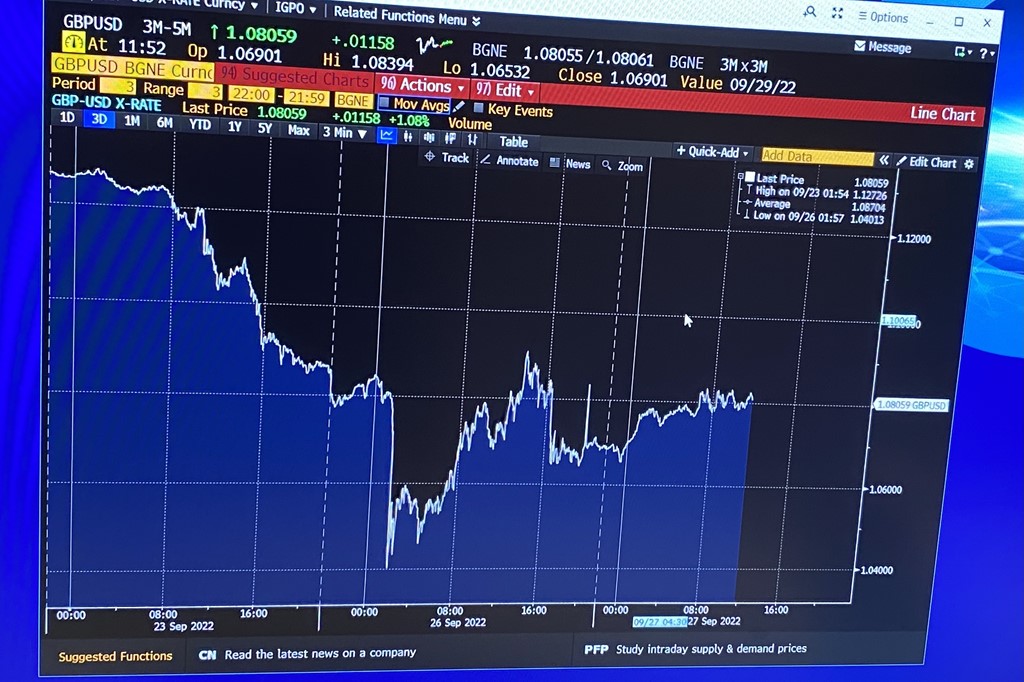
This strengthening pushed the pound down to $1.11, having been above $1.12 before the jobs figures were released.
The labour market in the US is being closely watched, as the US central bank raises borrowing costs sharply.
Officials hope the higher interest rates will cool demand for big-ticket items such as homes and cars, and ease the pressures that are pushing up prices at the fastest pace since the 1980s.
They have warned that the slowdown in activity is likely to lead to some job loss, but say they hope to avoid a sharp economic downturn.
Analysts said that Friday’s report from the US Labor Department showed the jobs market remains relatively tight, as a backlog of unfilled positions pushes companies to continue to hire despite fears of wider economic slowdown.
Restaurants, bars and health care firms led the job gains last month, while the unemployment rate fell from 3.7% in August to 3.5%, returning to a 50-year low.
The average hourly wage in September was also 5% higher than a year earlier.
While that lags the inflation rate, analysts said the gains still put upward pressure on prices, especially as the pool of workers with jobs or looking for work has remained stubbornly below pre-pandemic levels.
“Although this month’s jobs report is weaker than the figures recorded last month, the labour market remains relatively strong,” said Richard Flynn, managing director at Charles Schwab UK.
“The Fed has been increasingly clear that substantial weakness in the economy may be the expense for a return to lower inflation. As rate hikes feed through to the real economy in the months ahead, the labour market may weaken further, reflecting investors’ recessionary concerns.”
Consumer spending – the main driver of the US economy – has held up in recent months, despite the spike in prices eroding purchasing power.
But anecdotal reports of job losses are rising, as firms announce job cuts or hiring freezes, especially those in the housing and tech sector. Peloton this week announced its fourth round of job cuts this year, shedding another 500 positions – or roughly 12% of its workforce.
Some retailers have also scaled back hiring plans. Walmart, for example, has said it is hiring 40,000 workers for the holiday season, after taking on 150,000 last year.
President Akufo-Addo has directed the Director-General of State Interests and Governance Authority (SIGA) to work with the Auditor-General to look into the causes of the infractions cited in the latest Auditor-General’s report, identify persons responsible and make the necessary recommendations as prescribed by law.
According to President Akufo-Addo, the 2021 Auditor-General’s report has reported an increase in the number of infractions committed by specified entities, and this demands answers from chairpersons of these entities.
He made this known on Monday, October 3, 2022, when he held a meeting with the Director General of SIGA, and Chairpersons of specified entities at Jubilee House, the seat of the nation’s presidency.
President Akufo-Addo explained that specified entities have been set up to provide efficient public services, promote public economic activities, contribute to our GDP, reduce imports, increase exports, and strengthen our economy whilst creating jobs for our people.
In addition, he indicated that specified entities have a duty to create the economic superhighway.
“However, the current trend of affairs neither portrays that picture, nor reflects positively on the managers of our specified entities, oversight institutions, and the government itself. It is a clear indication of poor supervision and management, as well as poor enforcement of implementation and sanctions of the needed measures,” President Akufo-Addo said.
He continued, “I appointed you as leaders of these specified entities with the strong belief that you would ensure a positive change in the narrative of loss-making entities and build value for the people of Ghana. That has not happened, so I expect more from you.”
The President thus urged heads of specified entities to drill down and agree on the causes and find solutions to address the infractions pointed out by the Auditor-General and the 2020 State Ownership Reports.
“I want to see a marked improvement in these reports next year. Things must change. Your hard-earned reputation and honour are at stake if things crumble under your watch, and there are also serious sanctions in the SIGA Act and other laws for mismanagement, negligence and outright malfeasance,” he added.
Whilst urging Chairpersons to help change the narrative of specified entities, the President charged that “the Director-General of SIGA to work with the Auditor-General, who is here with us, to drill down to the causes of the infractions, identify persons responsible and make the necessary recommendations as prescribed by law. I am giving them four (4) weeks from now to submit a report to the Chief of Staff.”
He, thus, advocated for good corporate governance practices in specified entities, stressing that boards must desist from interfering in day-to-day management of their respective Specified Entities, and making unwarranted demands on their management.
“You must remember that, in each of your entities, you have, apart from SIGA, an overall supervisor or monitor, which is the relevant sector Minister, and, ultimately, the Minister for Public Enterprises. If the hierarchy is rigorously maintained, we are guaranteed an enhanced performance and output of your various entities,” he stated.
President Akufo-Addo encouraged heads of the specified entities to trade amongst themselves, increase production and patronage of domestic products and services, adding that “I pledge my full support to SIGA and other oversight institutions to exercise their authority, without any fear or favour.”
An Economist, Lord Mensah, has backed assertions of Ghana’s economy by the World Bank.
According to him, the World Bank being an external body gives an accurate measure of the country’s debts and growth prospects.
He noted that the stakeholders in Ghana do not capture the true state of Ghana’s situation in its accounting of the country’s debts.
“Being an external stakeholder of this economy, it is anticipated that once in a while, they’ll come and give us their perspective of the Ghanaian economy. And truly, what they said is a reflection of what is happening on the grounds,” he is quoted by myjoyonline.com.
He added that: “Looking at our debt, I think we’ve been calculating our debt without the contingent liabilities over the years, and if I say contingent liabilities, what I mean is the liabilities that have some inflows to them so we think it is not debt.”
“And we should know that all those inflows that are tied to this debt operate under a certain umbrella which is the economy. So, if the economy is not doing well, obviously those inflows will also be impaired and it can affect your debt payment,” Lord Mensah explained.
The World Bank in the latest report stated that Ghana is currently a high-debt-distressed country with a debt-to-GPD ratio of 104%.
Meanwhile, data released by the Bank of Ghana suggested that Ghana’s public debt stands at GH¢402 billion representing 68% of GDP.
Liz Truss refers to the European war, COVID’s aftermath, and the current global economic crisis when she describes the task as being of “immense proportions.”
She says more government intervention makes people feel smaller and means you “feel it’s less worthwhile working the extra hour, going for a better job”.
She says stamp duty is being cut, the National Insurance rise is being reversed next month, corporation tax cut, and the basic rate of income tax brought down.
She mentions her U-turn on cutting the 45p rate of income tax and says it was a distraction.
“That is why we are no longer proceeding with it,” Ms Truss admits.
“I get it and I have listened.”
The PM gets a chuckle as she says she was in shock when she opened her first paycheck to see how much money the taxman had taken out.
“That is why we must always be careful with taxpayer’s money,” she says.
“And it is why this government will always be fiscally responsible.”
A central bank poll,indicates that the business climate for Japanese manufacturers deteriorated in three monthsbetween July and September as the third-largest economy in the world struggled with rising expenses, a falling yen, and pandemic restrictions.
Big manufacturers’ business outlook fell to plus 8 in September from plus 9 in June, the Bank of Japan’s “tankan” survey showed on Monday.
Service sector sentiment improved slightly from three months ago, the survey showed, although retailers were less optimistic due to rising living costs stemming from higher commodity prices and the weakening yen.
The index measures corporate sentiment by subtracting the number of companies saying business conditions are negative from those that view them as positive.
Japan’s economy is under strain as the plummeting yen exacerbates the cost of living pressures sparked by Russia’s invasion of Ukraine.
The declining value of the yen, which last month hit a 24-year low against the US dollar, has driven up the cost of food and energy imports, burdening households and retailers.
Asia’s second-largest economy, which has struggled with stagnant growth for decades, is also grappling with more than two and a half years of pandemic-related border restrictions that are set to be lifted from October 11.
Japan’s economy grew an annualised 3.5 percent in the second quarter, but analysts expect it to have slowed in the third quarter as slowing global demand and rising materials costs sap exports and consumption.
Madeline Ratcliffe, a journalist for Sky News, reports that the trading floor is calmer and traders are more at ease today, however one dealersays the market is still bumpy.
I spoke to the senior trader at Monex Europe, Michael Quinn, who told me the quieter markets today were because traders were digesting after initially being spooked by the mini-budget.
That said, the weak pound was a sign investors were losing faith in the UK economy.
“Foreign currency markets are far more driven by sentiment, than by economic reality,” he said.
He added that the Bank of England was “very conscious” of being seen to do a “bad interest rate hike”, or a panicked hike.
“There’s a very real risk that that would be seen as a panic move from the Bank of England, and that’s why they’re having to tread very carefully.
“Fundamentally, more than anything, the Bank of England needs the UK economy to start recovering and there’s only a limited amount that monetary policy can do to address that,” Mr Quinn continued.
“So as things stand at the moment, the situation from a markets perspective looks fairly grim because the general expectation is that the Bank of England is going to have to hike interest rates fairly sharply in a bid to combat inflation.
The Long-Term Local-and Foreign-Currency Issuer Default Ratings (IDRs) of Ghana have been once again downgraded by the international credit rating agency, Fitch Ratings.
The rating agency, in August 2022, downgraded Ghana’s Long-Term Foreign-Currency (LTFC) Issuer Default Rating (IDR) to ‘CCC’ from ‘B-‘.
“Fitch Ratings has downgraded Ghana’s Long-Term Local- and Foreign-Currency Issuer Default Ratings (IDRs) to ‘CC’, from ‘CCC’. Fitch typically does not assign Outlooks to issuers with a rating of ‘CCC’ or below,” parts of the release read.
The ‘CCC’ rating implies that Ghana is considered a “junk” country in terms of investment and any investor who buys a bond issued by the Government of Ghana is at a high risk of not getting his/her investment.
On the reasons for the downgrade to CC, Fitch indicated that “The downgrade reflects the increased likelihood that Ghana will pursue a debt restructuring given mounting financing stress, with surging interest costs on domestic debt and a prolonged lack of access to Eurobond markets. There is a high likelihood that the IMF support programme currently being negotiated will require some form of debt treatment due to the climbing interest costs and structurally low revenue as a percentage of GDP.
“We believe this will be in the form of a debt exchange and will qualify as a distressed debt exchange under our criteria. The government has not confirmed or denied press reports that Ghana is preparing to negotiate a restructuring.
“Interest costs on external debt are lower than for domestic debtand near-term external debt amortizations appear manageable. However, we believe there could be an incentive to spread a debt restructuring burden across domestic and external creditors and therefore do not have a strong basis to differentiate between Foreign- and Local-Currency ratings at this time,” it added.
The country is at the present facing a number of economic challenges which has been caused by both internal and external factors such as the depreciation of the cedi, revenue generation constraints, the effects of the COVID-19 pandemic, the fallouts of the Russia-Ukraine war, among others.
While the major cause of these factors may be debatable, the Public Enterprises Minister believes Ghana can adopt a number of measures which can propel the Ghanaian economy.
“How can we export Gold, bauxite, manganese, coal, timber, oil etc. and go broke and continue to find ourselves in this situation?” the Member of Parliament for Effia constituency wondered.
He also called for a rethink of the educational system in order to ensure it moves beyond just theory and rhetoric, to achieve much more in order to improve economic development by leveraging on vast natural resources.
Read the full statement below:
REORGANIZING AND RESTRUCTURING OF GHANA’S ECONOMY – WHAT THE YOUNGER GENERATION SHOULD BE TAUGHT
Good morning, folks. For the past three to four days, I’ve had an intense engagements with my “A’-Level Classmates on our WhatsApp platform. It’s been an interesting and productive interaction. I learnt that what we’ve been taught early days in school is what we continue to believe in our current stations in life, in spite of real-world evidence pointing to the contrary. The question below came up from the engagements and I would like to share my response to the question with you;
THE QUESTION:
Joe, let me ask this ignorant question. Maybe it’ll give you the opportunity to expand your ECONS 101 lecture.
How can we export Gold, bauxite, manganese, coal, timber, oil etc. and go broke and continue to find ourselves in this situation?
1. TIMBER: Do not expect a country that cut and sell big trees in the 21st century to be a rich country. Cutting and selling trees called timber from natural forest is primitive. Note that the country that buys the trees (timber) and processes them into wood products and sell back to the primitive economy will be the rich country.
2. BAUXITE: Don’t expect a country that scoops a type clay from the ground and sell in the 21st Century to be rich. The country that buys the clay and refines it into alumina and then to Aluminium and then produce Aluminium products from it will be the rich country and the one that export the “mere clay” called bauxite will remain poor.
3. GOLD: A country that digs the ground and looks for a certain type of rocks that bears gold and then uses poisonous chemicals like cyanide, arsenic and mercury to search for unrefined gold and sell it is doing a primitive job. The country that buys the unrefined gold, refines it, assays it, and produces high valued jewels or uses the gold as reserves to back its currency will be the rich country. The one doing the primitive job of mining the gold will perpetually be poor.
4. OIL: A country that doesn’t have its own capital to risk and explore for its own crude oil and when it finds one, appraise it by itself and finance the development of the crude oil production facilities and then produce and sell will be the poor one. On the contrary, the country that can raise tha risk capital which is used to search for oil and can also raise the capital required for developing the production facilities will be a richer country than the country which merely has the crude oil under the sea/ground but cannot bring it out by itself.
5. MANGANESE: Manganese is also a type of rock we mine and sell these rocks primitively just like we were doing during Guggisberg’s time in the 1920s. Manganese is used to produce a variety of important alloys and to deoxidize steel and and as desulfurizer. It is also used in dry cell batteries. Further, Manganese is also used as a black-brown pigment in paints. Of all these industrial uses of manganese, we do not carry out a single one here as a country. If you ask even tertiary students in Ghana the uses of manganese, they wouldn’t even know. Meanwhile, primitively, we still dig the grounds for the rock and sell and expect to be rich. Unfortunate
6. COCOA: Kofi, you didn’t add cocoa but let me say that a country that clears the bush, plants a tree, waits for three years or more for the tree to bear fruits and then go through a laborious series of tasks to crack the pods, dry the beans, bag the beans and haul them to the ports to sell to other countries to process them in few days and rather sell at higher values, is just doing a primitive economic activity. You can’t expect to be rich.
7. From the points 1 to 6 above, you realize that we are in this world today in 2022 (Two Thousand and Twenty Two Years) after the death of Christ) still largely undertaking SLOW, PRIMITIVE AND LESS VALUED ECONOMIC ACTIVITIES and using the little proceeds of foreign exchange to import FAST FACTORY PRODUCED ITEMS like petrol, diesel, phones, cars, Aluminium products, electrical products, electronic products, bottles, computers, Tyres, drinks, aboboyaa , motor cycles, chocolate drinks, photo frames, clothes, paints, footwears, steel, automobiles, air conditioners, machine tools, pizza and other food items, etc, etc.
8. Unfortunately, we expect to be a rich country from our primitive economic activities. Your cedi will continue to fall saaaa until you understand what President Nana Addo Dankwa Akufo-Addo is doing through the Alan driven 1D1F program and Vice President Bawumia driven Ghana Card and Digitalization program to solve pretty much robustly and “permanently” the unemployment and frequent country-broke, frequent IMF, and the weak cedi we have always had.
9. Our education system and our old economists should stop teaching we export this, we export that and all that primitive economic stuffs and psyche all of us to move in the direction of high value economic activities like factory production, service deliveries and technological innovations and deployment. I’m personally sick and tired of hearing we export this, we export that when the exports are just clay, rocks, metals, beans, and some crude liquid.
10. This is what we should use the over 500 FM stations in Ghana to teach ourselves and deploy or educational facilities to achieve. Mindset changing time is here, KOFI.
Thanks for the question!
HON JOSEPH CUDJOE
MP FOR EFFIA CONSTITUENCY
MINISTER FOR PUBLIC ENTERPRISES
The International Monetary Fund(IMF) is set to deploy another mission to Ghana in the coming weeks, Gerry Rice, the Director of Communications for the IMF, said at a media engagement.
“We had an IMF staff team in Accra in July to begin initial discussions with the Ghanaian authorities. And we characterized that mission as constructive, kickstarted the process, and laid the groundwork for engagement, which now continues.
“Our Mission Chief for the IMF also recently visited Accra, again, to meet with key counterparts. And we’re hoping for another visit in the coming weeks; I don’t have a date for you, but in the coming weeks.”
Ghana’s economy races against time to tie down a bailout programme as the economy struggles against the backdrop of higher inflation, tighter financial conditions, and weaker growth.
The country’s inflation rate climbed to the highest level in 21 years in August, fueled by a slide in the cedi. Consumer prices surged 33.9% in August from 31.7% in July.
Ghana needs a $3 billion package from the fund to shore up its economy.
Nigerian economist and entrepreneur Anthony Onyemaechi Elumelu is one of Africa’s leading investors and businessmen. Tony Elumelu, as he is popularly known across the world, believes strongly that the private sector has all it takes to fuel innovation and foster social wealth creation and sustainable economic growth in Africa.
He is currently the Chairnman of Transcorp PLC, the United Bank for Africa (UBA)) and Heirs Holdings.
Tony Elumelu is actively committed to the African economic transformation by creating an enabling an environment for young entrepreneurs to thrive. During his recent interview with the NewAfrican Magazine, he highlighted some valuable business lessons that could help aspiring entrepreneurs and business owners.
1. Don’t be shortsighted
Tony Elumelu advised young African entrepreneurs to seek opportunities and platforms to implement their vision. When asked, “Would you say there are more opportunities now than when you started?”, Tony Elumelu replied that opportunities are always there, but now it seems to me that we have more opportunities in the world around us than ever before. The digital world is a whole new economy that never existed when we started. Use your brain, discipline, and expertise, and then the world comes to you. Think long term, 10 years ahead, not just for tomorrow.
2. Avoid emotional decisions
I advise young entrepreneurs to take a step back, understand their business, and look at the forces. These factors shape their business, and dispassionately reassess and see what you need to do differently. Tony Elumelu replied to the question saying:
“For young entrepreneurs who had their business collapse during this pandemic, what they must do to get back on track? Tony further stated that we live in a world of knowledge and information accessible with a click on your device. Quitting is not something I advise people to do, but please don’t make a sentimental or emotional decision. Think it through very well; if you have mentors, sit with them. Don’t be dispassionate in your business decisions, as businesses fail because people are not making passionate decisions.”
3. Make sacrifices
Tony Elumelu was very clear with his assertions about making business sacrifices and advised young entrepreneurs to learn. He had sacrificial views when asked about his opinion about what young entrepreneurs should aim for. He said that the Tony Elumelu you see today has not always had everything.
“In the past, for example, I have decided not to buy a car and planned instead to use the money to make investments. I waited for the proceeds of that investment to buy the car. When I say sacrifices, I mean you must learn to defer consumption. It would be best if you thought long term. When you visualize success, you can make sacrifices. Then you can apply the rigor and energy that will lead you to success.”
4. Be Hardworking
Tony Elumelu emphasized hard work, staying focused, and sacrificing for a better tomorrow. In his own words, “my advice to budding young entrepreneurs when I interact with them is to be hardworking, don’t be scared to dream but know that dreaming is less than 1%; the 99% is about translating your dream into action, translating your dream to reality. That is what makes the difference.”
5. There’s no easy way out
The successful Nigerian business mogul encouraged young African entrepreneurs to ignore shortcuts and be very determined and prepared for success. When the interviewer asked him about the essential things one must have before embarking on an entrepreneurial journey, he began by stressing that “the road to success is not linear. It is up and down. You must be very determined and prepared to do whatever is required for your success. And you have to know what success looks like in your chosen field. It is the same if you want to succeed in business. That kind of discipline and training helps a great deal. To become an entrepreneur, you must acknowledge that it is not a bed of roses.”
6. Think Longevity’
The businessman wants young entrepreneurs to think long-term. When asked about the people he admired the most, Tony mentioned Steve Jobs, amongst others. Elumelu picked Steve Jobs because the business he founded became the first to cross a trillion-dollar market cap even after his death. He said:
“I think the key aspirations for every business in the world should be building a business that lasts and not be one you live and die with. I believe that when you are gone, the business should still be there and grow better. That is what Steve Jobs did. Steve Jobs has changed the world through his wonderful devices. Long after his death, the company he founded was the first to cross a trillion. I like that guy because, in addition to all the other aspects, he showed discipline and everything he has achieved in the short period he was on earth.”
Companies with outstanding financial structures benefit from Africa’s fast-growing population and rich resources. This article looks at the fastest-growing businesses in Africa. These businesses are selected based on their growth rate and revenue generation potential.
Note that we consulted several reliable sources while compiling this list. These sources include the World Bank, Market Watch, Nairametrics, Tech Crunch, Africa Business Communities, etc.
1. Financial Technology Business
Financial technology businesses continue to outshine many startups in the African continent with problem-solving innovations. According to Tech Crunch, Africa is the world’s second-fastest-growing and profitable payments and banking market after Latin America. The continent is home to over 500 financial technology firms, most in Nigeria, South Africa, and Kenya.
According to The World Bank, about 66% of Sub-Saharan Africa’s population is unbanked. The unbanked population is another reason financial technology businesses thrive in the continent. They leverage technology to modify, automate and enhance financial services for consumers and businesses.
According to Business Elites Africa, 75% of Nigerian financial technology startups earn an average of $5 million annually. Given the continuous funding for financial technology companies in Africa, the sector will continue to grow with internet penetration and smartphone usage.
2. Food Business
With many investors benefiting from Africa’s resources, the food business is one of the businesses in the continent with a fast growth percentage. According to Business Standard, Africa’s food industry recorded a growth of 3.6% in 2020-21 and 3.9% in 2021-22. Food is a basic need for everyone, making it profitable for businesses for entrepreneurs in the sector.
The growth is driven by soaring demands for packaged and processed foods and the high consumption of frozen and dairy products. The food and beverage industry expansion and innovation are other growth contributing factors. According to Nairametrics, a more significant food Crisis is looming in Africa.
The Russia-Ukraine war, low purchasing power, political instability, and conflicts are soaring food prices to unprecedented levels in the continent. Meanwhile, Agro entrepreneurs are benefiting from feeding over one billion people. Entrepreneurs earn huge rewards locally by storing and packaging food products with an excellent transportation network.
3. Real Estate Business
With Africa’s large population, there is a high demand for commercial and residential properties, making the real estate business thrive. According to Nairametrics, The Nigeria real estate market grew by 1.77% in 2021 and 10.84% in the first quarter of 2022. The Egyptian real estate market generated $10 billion, representing a growth of 8% in 2021.
According to Nairametrics, Egypt’s real estate market has a growth projection of 6.5% in 2022. Kenya’s real estate market rose by 5.2% in Q3 2021 and is projected to grow by 5.9% in 2022. The real estate business is one of the most valued in Africa, with entrepreneurs earning from leasing, buying, and renting commercial and residential properties.
The real estate business is highly profitable but requires knowledge and experience. To get started in Africa’s real estate business, consider seeking advice from experienced realtors and learn from previous mistakes. Learn the industry’s strengths, weaknesses, and how it works.
4. E-Commerce Business
Electronic commerce is a fast-growing African business due to technological advancement and innovation. Firms in this sector allow individuals and companies to trade goods and services through the internet. According to Vanguard Newspaper, Africa’s real estate market value has a projection to reach $180 billion by 2025. The report further disclosed that Africa’s eCommerce ventures secured funding of more than $256 million in 2021, representing a 40% growth from 2020.
According to Africa Business Communities, the e-commerce industry is expected to generate annual revenue of $46.1 billion by 2025. The lucrative industry business involves facilitating the sales of goods and services between companies and their customers. E-commerce ventures also facilitate the sales of goods and services through third parties. Jumia, eBay, Konga, and Kilimall are a few examples of African e-commerce platforms.
5. Logistics Business
Logistic business is a lucrative and fast-growing business in many African countries. Whether in Mauritius, South Africa, Ethiopia, Ghana, Kenya, or Nigeria, entrepreneurs earn considerable rewards in the industry. According to Market Watch, Africa’s logistics market rose from millions to Multi-million dollars from 2017 to 2022. Reports from Sawya show that Egypt’s Suez Canal recorded a revenue of $704 million in July 2022, representing an increase from the $531.8 million reported in July 2021.
According to Research and Markets, Nigeria’s Logistics and Freight Market is expected to grow with a compound annual growth rate (CAGR) of over 3% from 2022 to 2027. The business is profitable in various African countries with the rise of delivery agencies working hand-in-hand with traditional and online retailers. Delivery agencies streamline the transfer of goods to customers’ destinations. Consider researching the business’s strengths and weaknesses before investing and focusing on building an online presence for promotions
Vice President Dr Mahamudu Bawumia has urged Ghanaians to be optimistic in the competent management of Ghana’s economy as it had begun to show strong signs of recovery following the global impact of the outbreak of the Coronavirus (COVID-19) pandemic.
He said the exceptional economic prowess and intelligence of the managers of the economy led by President Nana Addo Dankwa Akufo-Addo was key to wealth creation to reduce poverty, attract investments, empower businesses to expand to create jobs, and deliver quality education to bring the economy to yield prosperity for all.
The Vice President gave the assurance at the Central Regional Tertiary Students Confederacy (TESCON) conference held on Saturday at the University of Cape Coast.
Speaking on the theme: “Breaking the Eight: the role of TESCON”, Dr Bawumia praised the country’s discernment, good judgment, and management of exchange rate and described it as “the best since 1992 and the performance in 2020 and 2021 simply superb.”
Regardless of the World recession due to the outbreak of COVID-19, Dr Bawumia, said Ghana’s economy had witnessed one of the lowest inflation rates in about two decades and emphasized that at the peak of the pandemic, inflation was 11.8 percent but dropped to 10 percent in May and further drop to 7 percent as of June 2021.
He said the prudent management of the economy had ensured that the overall Gross Domestic Product (GDP) excluding oil which declined by 5.8 percent and three percent in the first and second quarters of 2020 had rebound strongly and registered a positive growth of four percent by the last quarter of 2020.
Dr Bawumia said the growth momentum had continued in the first quarter of 2021 as the economy registered further non-oil growth of 4.6 percent.
The Bank of Ghana (BOG) Composite Index of real sector activities, according to him, had also seen a strong pick-up in the economic activities recording a 33.1 percent annual growth in 2021 as compared to a contraction of 10 percent in 2020.
The economic feat signified a restoration of momentum of growth the country, lost at the heart of the pandemic last year.
On the country’s debt management, Dr Bawumia particularly praised BOG saying the stability of the Cedi had been the same after every election year under the Fourth Republic notwithstanding the COVID-19 impact.
Touching on the national debt, the Vice President acknowledged that debt levels had gone up but pointed out that economic management variables were exceptionally bright and hopeful.
“The debt level had increased, but the government wants to maintain a prudent debt level management because if you don’t manage your debt level properly, it will affect your interest rate, exchange rate, inflation rate, and growth rate”, he indicated.
“When the National Democratic Congress (NDC) was in government, their economic mismanagement took us to HIPIC because they had mismanaged the debt level such that, there was high inflation, exchange rate, interest rate, and low growth and later had to be bailed by the IMF,” the Vice President noted.
Growth has picked up in the domestic economy since the sharp contraction in the second quarter due to the novel coronavirus, the Bank of Ghana (BoG) has indicated.
A recent Monetary Policy Committee press release issued by the central bank, which disclosed this, emphasized, “All the high-frequency indicators of economic activity have rebounded, consumer and business confidence levels are back at pre-lockdown levels and there are indications of steady growth in the private sector credit. However, the renewed threat from the second-wave of the pandemic has again heightened uncertainty and could hamper the recovery process in the near-term.â€
Banking Sector Well Capitalised
According to the BoG, the banking sector was well-positioned to continue with the core objective of financial intermediation and providing support to the growth recovery process. Banks are expected to sustain the strong performance under mild to moderate stress conditions, barring more severe consequences on the real sector from the second wave of the pandemic. Policy and regulatory reliefs granted to the industry would be reviewed alongside close monitoring and prompt supervisory actions which would be taken to address emerging potential vulnerabilities in the financial sector arising from the pandemic.
It said the current account balance turned out better than earlier anticipated. However, lower-than-projected FDI flows and portfolio reversals resulted in a lower buildup of reserves than earlier projected.
Assurance
The BoG continued that gross reserves at US$8.6 billion, which translated into 4.1 months of import cover, would provide adequate cushion against potential external vulnerabilities in 2021.
Need For New Revenue Measures
It also noted that the prospects of a sharp fiscal correction in 2021 now looked unlikely amidst the second wave of the pandemic which would be requiring additional spending to provide testing, vaccines, etc. To put debt on a sustainable path and to ensure sustainability in policies, some new revenue measures and expenditure rationalization efforts will have to be pursued within the context of the medium term fiscal framework to allow for the generation of primary surpluses.
Inflation
Headline inflation, while on steady, declined in the early months of the last quarter of 2020, jumped in December to 10.4 per cent, outside the target band of 8±2 per cent, driven by food prices. However, the bank projects headline inflation to return to target in the second quarter of 2021. Risks to inflation in the near-term are broadly contained, but short to medium-term risks emanating from the fiscal expansion and rising crude oil prices are emerging.
Policy Rate Maintained
Under the circumstances, and given the balance of risks to inflation and growth, the committee announced that it had decided to keep the policy rate at 14.5 per cent.
President-elect, Nana Addo Dankwa Akufo-Addo has resolved to work extra harder to turn the fortunes of the country around.
He also expressed gratitude to Ghanaians for giving him a resounding victory in the 2020 presidential elections.
Addressing party officials and faithful at his him after the declaration of the presidential results by the Returning Officer of the 2020 presidential election, Jean Mensa, on Wednesday Nana Akufo-Addo said he is committed to put the country on the road to prosperity by working hard.
“Just as I have been doing since 2017, I give you my word, that I will continue to work very hard to build a prosperous and progressive Ghana for which we yearn. The size and margin of this election constitute for me an endorsement of the policies and programs initiated by my government.â€
“I am determined to do all in my power to accomplish the task of this new mandate and thereby justify the confidence reposed in me. I assure you fellow Ghanaians that I will do my best not to let you down.â€
He also committed to working together with the minority in parliament in the interest of the nation.
“The Ghanaian people through the results have made it loud and clear that the two parties must work together for the good of the country. Now is the time for each and every one of us, irrespective of our political affiliations, to work hard and place Ghana where we want it to be.â€
The President-elect said he seeks to “reverse the adverse effect COVID-19 has had on our economy and lives†in his second term.
Nana Akufo-Addo, who led the New Patriotic Party into the December 7 polls, obtained 6,730,413 votes out of a total of 13,434,574, representing 51.59% while the flagbearer of the National Democratic Congress (NDC), John Dramani Mahama placed second, garnering 6,214,889 which represents 47.36% of the total ballots cast.
The huge shock to many of the world’s biggest economies from the coronavirus pandemic may not be quite as bad as economists feared just a few months ago.
In a report published on Wednesday, the Organisation for Economic Cooperation and Development upgraded its forecast for global economic output this year, noting that while declines were still “unprecedented in recent history,” the outlook has improved slightly since June.
The Paris-based agency said it now expects the world economy to shrink by 4.5% in 2020 before expanding by 5% in 2021. Previously, the OECD said it thought the global economy would contract by 6% this year and grow 5.2% next year.
But the agency, which represents the world’s biggest economies, warned that headline figures mask major discrepancies. While it significantly boosted its 2020 forecasts for the United States and China, and slightly raised the outlook for Europe, the OECD lowered its expectations for developing countries such as Mexico, Argentina, India, South Africa, Indonesia and Saudi Arabia. OECD economists said the downgrades reflected “the prolonged spread of the virus, high levels of poverty and informality, and stricter confinement measures for an extended period.”
China is the only G20 country for which output is projected to rise in 2020, with its economy growing 1.8%, compared to a 3.8% contraction in the United States and a 7.9% decline among the 19 countries that use the euro. Beijing reported Tuesday that retail sales were higher in August than they had been the previous year — the first time sales have increased in 2020.
The OECD noted the earlier timing of the country’s outbreak and its ability to swiftly bring it under control, as well as policies that paved the way for a rapid bounce back in activity, pointing to strong infrastructure investment in particular.
Meanwhile, South Africa’s economy could shrink by 11.5% this year, according to the OECD. Mexico and India’s economies are both on track for a 10.2% contraction.
That’s worse than the forecasts for developed economies with the exception of Italy, which is due to shrink 10.5% after it was hit hard by the virus.
‘Uncertainty remains high’
The OECD cautioned that its outlook is far from set, and much depends on the trajectory of Covid-19 infections and ongoing support from policymakers. It added that the global recovery “lost some momentum over the summer months” after an initial burst of activity.
“A recovery is now under way following the easing of strict confinement measures and the reopening of businesses, but uncertainty remains high and confidence is still fragile,” the agency said in its report.
Some of its estimates are also contingent on policy assumptions that may not materialize.
The OECD assumes, for example, that the United Kingdom will reach a “basic” free trade agreement for goods with the European Union. But talks could be crushed by a controversial bill introduced by Prime Minister Boris Johnson’s government, which would break the terms of a previously-negotiated divorce agreement.
The agency expects the UK economy to shrink by 10.1% this year, a slight improvement over its last estimate.
The OECD is also counting on US lawmakers to approve another stimulus package worth up to $1.5 trillion this fall, though negotiations have reached an impasse. Reaching an agreement may be more difficult as the November election approaches.
The group’s predictions for the global recovery in 2021 are slightly lower than they were in June. OECD economists made clear they see a long road ahead.
“In most economies, the level of output at the end of 2021 is projected to remain below that at the end of 2019, and considerably weaker than projected prior to the pandemic, highlighting the risk of long-lasting costs from the pandemic,” the report said.
Outlook for top global economies is improving, OECD says
The clean-up exercise undertaken by the Bank of Ghana (BoG) that led to collapse of some nine local banks in 2018 inadvertently prepared the financial sector of the Ghanaian economy to deal with the impact of the coronavirus pandemic, Mrs Elsie Addo Awadzi, Second Deputy Governor of the BoG, has said.
Speaking at a forum themed “MSME Manufacturing Capabilities, Responding to COVID-19 and Opportunities Beyond,†she said : “The successful completion of major reforms in the banking, savings and loans and microfinance sectors by the Bank of Ghana prior to the onset of the pandemic, has played a significant role in cushioning the impact of the pandemic on our economy.
“Banks and other financial institutions are now better able to support their customers at this critical time. Smaller financial institutions, however, are themselves at high risk given that many of their clients are MSMEs who are significantly impacted by the pandemic and as a result have had difficulty in servicing their loans.
“Regulatory reliefs recently provided by the Bank of Ghana to the savings and loans, microfinance, and rural and community bank sectors, were therefore designed to help ease the burden on them and by extension their clients.â€
Mrs Addo Awadzi added that : “It is encouraging to see that banks and SDIs have responded to policy and regulatory measures recently announced by the Bank of Ghana. For example, bank and SDI lending rates have declined on average by about 2 percentage points (200 basis points) since the end of March 2020, and banks have recently advanced new loans in the region of GH¢3 billion to support manufacturers of pharmaceutical products and PPEs, to help in the fight against the pandemic. What is more, banks and SDIs have agreed to defer some customer loan repayments by granting moratoria from about 3 months to 12 months. Fees on a number of electronic payments and related transactions have also been waived or reduced.
“While these policy and regulatory interventions have been the initial responses to help contain the impact of the pandemic, the real work lies ahead of us all. How will our economy recover from this unprecedented major shock? How will our MSME sector recover? What would the post-COVID economic landscape in Ghana look like?
“As challenging as the current situation is, we must not lose hope. No one knows how long the pandemic will last for, but surely a day will come when we can put it behind us. It is important, in the meanwhile, that intentional efforts are made to keep the MSME sector alive so that it can support the post-COVID economic recovery effort. It represents, after all, 85% of our national economy.
“Notably, the MSME story in Ghana has not been a single-sided story. In spite of the enormous challenges the sector faced before and during the pandemic, the resilience of this sector has also been evident. Even during the lockdown, small food processing businesses, eateries, and others worked hard under very difficult and risky conditions to produce food and other products and services for households and other clients.
“Micro and small fashion businesses very quickly stepped in to help produce face masks for use by the public. Production of hand sanitizers and other health and safety products suddenly became possible in Ghana. With the continued easing of COVID-related restrictions, it is heart-warming to see that the MSME sector is slowly, but surely, bouncing back.
“This is a part of the MSME story that needs to be amplified. I have always been intrigued by the relentless spirit of the Ghanaian entrepreneur, who against all odds, always finds a way to move forward in their business endeavours. It is this spirit that needs to be promoted and supported to help build a stronger and more resilient Ghanaian economy, post-COVID 19.
“In planning for the post-COVID economic recovery, we need to address a few critical issues. How can the MSME sector be supported and positioned to help turn the disruptions in global supply chains into a national advantage, and thereby build a more self-reliant and resilient economy? How can we ensure that the post-COVID Ghanaian economy leaves no one behind?
“To do this, we need critical public-private sector investments in key infrastructure over the medium-term to increase the manufacturing capacity of our economy. We need to re-tool and re-equip the MSME sector to leverage technology for more innovation. We need to increase access to finance for MSMEs. We need a renewed focus on equitable and inclusive growth to ensure that the MSME sector, and in particular, women and youth entrepreneurs are not left behind. I am very glad to see that you have lined up very distinguished speakers who will be speaking on these issues at this forum.â€
The European Central Bank has taken further dramatic measures try to boost the eurozone economies, amid their biggest recession since World War Two.
Just months after emergency measures, the central bank said it would increase the size of its bond buying programme by €600bn (£546bn) to €1.35tn.
The programme will run until June 2021, six months longer than planned.
The move will keep borrowing costs low for countries and firms as they face huge budget deficits and recessions.
The purchases support “funding conditions in the real economy, especially for businesses and households,” the ECB said.
The central bank also decided to hold its interest rates at record lows.
The extra bond buying “is likely to push European government bond yields even further into negative territory, and investors in search of positive returns will be forced to take more risk,” said Rachel Winter, associate investment director at investment firm Killik & Co.
The bond purchases are often referred to as Quantitative Easing (QE). When central banks buy bonds with printed money, the value of the bonds rise and borrowing costs drop.
Some market commentators wonder how much money can safely be printed without causing the value of money to decrease.
‘Fiscal box’
“Although inflation is currently very low, these levels of asset purchases are causing some concern about inflation further down the line,” said Ms Winter.
“Economic theory tells us that that inflation is linked to the supply of money in the economy, and if the money supply is being drastically increased to fund quantitative easing then long-term inflation ought to rise too. These fears of long-term inflation have stoked demand for gold recently.”
Gold is trading at about $1,717 (£1,368) an ounce, down from highs of $1,766 earlier in the month, but up compared to a price of $1,324 one year ago.
In many ways, the ECB is playing catch-up with other central banks, said Neil Williams, senior economic adviser at US-based money manager Federated Hermes.
“After lagging the US and UK, the fiscal box is now opening, he said. The planned spending works out at about €100bn a month, higher than the €80bn spent in the wake of the European sovereign debt crisis, he points out.
The world economy is projected to shrink by 3.2 percent in 2020 after the coronavirus pandemic sharply restricted economic activity, increased uncertainty and sparked the worst recession since the depression, the United Nations said on Wednesday.
A report by the U.N. Department of Economic and Social Affairs said there would likely only be a gradual recovery of lost output in 2021. In January, the department had projected world economy growth of between 1.8 to 2.5 percent this year.
“The world economy is expected to lose nearly $8.5 trillion in output in 2020 and 2021, nearly wiping out the cumulative output gains of the previous four years,†the report released on Wednesday said.
The new coronavirus, which causes the respiratory illness COVID-19, has infected some 4.3 million people globally and more than 291,000 have died, according to a Reuters tally. The virus first emerged in the Chinese city of Wuhan late last year.
Businesses were shut down and hundreds of millions of people around the world were told to stay home to stop the spread as scientists rush to develop treatments and a vaccine. The U.N. report said the pandemic showed how economic and public health “are inextricably linked and mutually reinforcing.â€
“Countries may seek to reduce inter-dependence, and shorten supply chains, as many may consider the potential costs of a crippling pandemic too high relative to the benefits they receive from economic integration and interdependence,†it said.
“The fight against the pandemic — if it continues for too long and its economic price becomes too high — will fundamentally reshape trade and globalization,†it added.
The report also warned that the massive loss of employment and income due to the pandemic will exacerbate global poverty.
“According to baseline estimates, 34.3 million additional people — including millions working in the informal sector — will fall below the extreme poverty line this year, with African countries accounting for 56 per cent of this increase,†it said.
The data published by the IMF on the macro-fiscal situation of Ghana is the true state of the Ghanaian economy, Business School Lecturer, Professor John Gatsi has said.
According to him, whiles Ghanaians know the fiscal deficit to Gross Domestic Product in 2019 to be 4.5%, the Fund knows the true state of the budget deficit in 2019 as 7.5%.
“The clarification by the IMF will generate further political debate about the economy. The data published by the IMF shows the true state of the economy.
“The whole issue about misreporting is not about misreporting of economic data to IMF but to the people of Ghana through the budget. We believe the data published by the IMF to be true. So, what is the IMF explaining to us?”, he questioned.
Below is the article by Professor John Gatsi, Business School Lecturer and Head of Finance at the University of Cape Coast;
IMF clarification on macro-fiscal data does not change the true state of the Ghanaian economy – Prof. John Gatsi
The clarification by the IMF will generate further political debate about the economy. The data published by the IMF shows the true state of the economy.
The whole issue about misreporting is not about the misreporting of economic data to the IMF but to the people of Ghana through the budget. We believe the data published by the IMF to be true. So what is the IMF explaining to us?
The people of Ghana know the deficit in 2019 to be 4.5% but the IMF knows the true state of the deficit in 2019 was 7.5%.
We believe the correct data was presented to IMF and what is now known as misreporting is to Parliament via the budget.
The explanation by IMF is strange and may be tagged as involved in domestic politics. We are guided by our Constitution and financial management principles, objectives and strategy enshrined in the public financial management act,2016 (Act 921) in which the Finance Minister is the main executive member with financial management responsibility.
It is, therefore, the Finance Minister who should face the country to explain the data agreed upon with the IMF. It is unnecessary for the IMF to attempt to do what the Finance Minister should be doing.
Now to the substantive issues. Take for example that Ghana raised $2bn in a year but spent $3bn and decided to divide the extra $1bn into $600M and $400M and stated in its financial statement that over expenditure was $600M but disclosed in the notes to the financial statements that the country overspent another $400M which was also approved by Parliament.
Now how much is the over-expenditure that parliament approved on behalf of the people? The answer is $1bn.
Now why did IMF accept the figures presented by government in its dataset? Answer is that it is the true picture about the Ghanaian economy therefore the true picture of the deficit, reserves, debt to GDP ratio and primary balance as well as GDP growth presented by IMF from the data supplied by government remain the true state of the Ghanaian economy.
Ask any of the IMF team, a member of the minority or member of government that if they are taken as consultants to look at the macro-fiscal data in the budget and that of IMF data for a client to provide the macro-fiscal situation of Ghana to take/make critical and informed decisions will they look at the true state as presented by IMF or not?.
Accountants will tell you the purpose of the notes to an account gives extra critical information that you must use without which your assessment of the account is meaningless and incomplete.
The separation or no separation of financial sector and energy costs does not take away the fact that the true state of the economy is what the IMF data presented and the granting of the $1bn Rapid Credit Facility was based on the true state of the macro-fiscal situation that is why the IMF attached it to the disbursement letter to Ghana.
The Ministry of Finance has urged the general public to check with them on issues relating to the economy and macroeconomic data before making public pronouncements.
The Ministry described as false and misleading, report by the fact-checkghana.com of the Media Foundation for West Africa (MFWA) suggesting that Government has shared different macroeconomic data with Ghanaians and the International Monetary Fund (IMF).
Factcheck-ghana.com has said it crosschecked the data submitted to the IMF by Ghanaian authorities and what has been previously shared with Ghanaians and published by the Ministry of Finance.
“Based on the figures, we conclude that indeed, the data presented by the government to the IMF are different from those in budget statements.
“The fact-checking team found disparities between the data published in the statement of the IMF and data from the Budget Statements of 2019 and 2020 that the Minister of Finance, Ken Ofori Atta, presented to Parliament.â€
But the Finance Ministry urged the public to reject this claim.
A statement from the Ministry on Sunday, May 10 said: “Our attention has been drawn to a publication by fact-checkghana.com of the Media Foundation for West Africa suggesting that Government has shared different macroeconomic data with Ghanaians and the International Monetary Fund (IMF). We wish to state that this assertion is false and misleading.
“May we state that the Ministry of Finance welcomes discussions of the economic information we provide. Such discussions help us in managing the economy. We also operate an open-door policy.
“We urge the public to seek clarification on matters they may have difficulty with and we would be happy to help resolve any misunderstanding. Publishing such wrong claims about the economy is not helpful.â€
Ghana is in talks with the International Monetary Fund (IMF) to secure a total of at least one billion dollars of support to prop up its foreign exchange reserves, the Ministry of Finance said on Thursday.
The negotiations, which dominated meetings between the Ghanaian delegation and the IMF officials at this year’s spring meetings in Washington, would continue in Accra next week. “We discussed programme options, which are essentially the standby arrangement, or Poverty Reduction and Growth Facility (PRGF),” the Ministry said in a written statement signed by spokeswoman Cecilia Kwetey to the Ghana News Agency in Accra. Ghana is currently grappling with a swelling budget deficit and trade imbalances after the cost of imports surged to record highs last year.
The statement said the PRGF had an advantage of concessional funding, at a fixed 0.5 percent interest rate payable over 10 years, as opposed to a market-based interest rate on the stand-by which also has a shorter repayment period of less than five years. In addition, Ghana expects to receive 420 million dollars in the third quarter of this year as part of IMF’s new post-G20 summit commitment to increase its allocations of Special Drawing Rights (SDRs) to member countries, the Ministry said. The SDR is an international reserves asset, created by the Fund to supplement the existing official reserves of its members. The fund also agreed to support Ghana’s balance of payments gap, the Ministry added.
“Preliminary indications are that the Fund’s support could be in the order of around 600 million dollars over a two-three-year period, which together with the additional special drawing rights allocation, would boost Ghana’s gross foreign exchange reserves by around 1 billion dollars,” it predicted.
Ghana is also suffering from the impact of lower remittances sent home by workers abroad as the global economic crisis bites. Ghanaians living abroad send home about $3 billion each year, almost a fifth of the gross domestic product. In a speech in London as part of a three-day visit to Britain, President Evans Atta Mills said the economy he inherited was not as robust as it was said to be, but added that Government was not interested in blame game. He reassured that his administration was prepared to take the challenges to turn the economy around. While welcoming assistance from development partners for the growth of the economy, President Mills stressed that Ghana could not forever rely on donor hand-outs. “The time has come to look for home-grown solutions,” he said, adding, “our team is capable of putting the economy on a strong foundation”. President Mills assured investors of a sound investment climate that hinged solidly on open, transparent, honest and accountable governance. Ghana’s budget deficit currently stands at a provisional 14.9 percent of Gross Domestic Product in 2008 — a gap the new government plans to narrow to 9.4 percent of GDP by the end of 2009. President Mills had earlier debunked allegations that Government was spending lavishly on visit which was at the instance of Britain. 7 May 09
President of the Private Newspaper Publishers Association of Ghana (PRINPAG), Mr Andrew Edwin Arthur, has commended the Ghanaian media for the role they play in building the economy with their reportage.
He commended the media on the day of the World Press Freedom Day on Sunday, May 3.
He said: “Today is the celebration and the commemoration of the World Press Freedom Day. On this special occasion, the executives of PRINPAG celebrate all gallant members of the media, particularly members of PRINPAG. Our hard work has seen all sectors of the economy growing from strength to strength.
“We have partnered both government and the private sector in ensuring that, the national agenda succeeds. We have lived up to our constitutional mandate in spite of a few challenges. On behalf of the executives, I salute all members of the media, particularly you members of PRINPAG, and encourage you to continue your good works.
“Let us continue to lend support to the fight against the further spread of Covid-19. Let us observe all the protocols and if it is not necessary to go out, please stay at home but if you have been assigned or have to go out, please wear your face mask.
“The media fraternity and indeed PRINPAG, need all journalists and media practitioners alive, to help propel the country to greater heights for the benefit of all of us. Going forward, I intend to lead a discussion as the President of PRINPAG at both the level of the Association and at the national level, for a paradigm shift in the administration of our media Associations in the country.
“My position is that the leadership of all media groupings should consider instituting aggressive welfare and pension schemes for our members, to guarantee and safeguard the future of our members. I have taken this position in view of my discussions with some of our seniors who have retired from active media work.
“I am of the view that, if these schemes are put in place, they will go a long way to help all categories of our workforce and to guarantee our future. We will initiate discussions on this in the coming days and weeks so that you give us your inputs and ideas as to how to make this work on a sustainable basis. Once again, congratulations on this occasion of the celebration of the World Press Freedom Day.
“Let us stay safe and may the Lord continue to protect us all as we strive to live up to our constitutional mandate. I wish all of us a happy celebration.â€
China’s economy has just experienced its worst three-month period in decades as the coronavirus pandemic forced much of the country to shut down for weeks on end.
The world’s second largest economy contracted 6.8% in the first quarter of 2020 compared to a year earlier, according to government statistics released Friday. That’s even worse than the 6.5% decline that analysts polled by Reuters predicted.
The plunge is the worst for a single quarter that China has recorded since it started publishing such figures in 1992. It’s also the first time China’s economy has shrunk since 1976, when Communist Party leader Mao Zedong’s death ended a decade-long social and economic tumult in China.
The country where the coronavirus outbreak started was almost completely shut down in late January as the government sought to stem the spread of the virus.
Beijing’s dramatic measures appear to have brought the virus under control, though. The number of locally transmitted infections that the country has reported have plummeted, and a lockdown on Wuhan — ground zero of the pandemic — was lifted earlier this month.
China’s economy shrank for the first time in decades in the first quarter of the year, as the virus forced factories and businesses to close.
The world’s second biggest economy contracted 6.8% according to official data released on Friday.
The financial toll the coronavirus is having on the Chinese economy will be a huge concern to other countries.
China is an economic powerhouse as a major consumer and producer of goods and services.
This is the first time China has seen its economy shrink in the first three months of the year since it started recording quarterly figures in 1992.
“The GDP contraction in January-March will translate into permanent income losses, reflected in bankruptcies across small companies and job losses,” said Yue Su at the Economist Intelligence Unit.
Last year, China saw healthy economic growth of 6.4% in the first quarter, a period when it was locked in a trade war with the US.
In the last two decades, China has seen average economic growth of around 9% a year, although experts have regularly questioned the accuracy of its economic data.
Its economy had ground to a halt during the first three months of the year as it introduced large-scale shutdowns and quarantines to prevent the virus spread in late January.
As a result, economists had expected bleak figures, but the official data comes in slightly worse than expected.
The Pan-African Heroes Foundation has adjudged the Member of Parliament for Bolgatanga Central constituency, Mr Isaac Adongo, as the 2019 Most Influential Economist of the seventh Parliament of the 4th Republic of Ghana.
The award honors hardworking Africans who are working to improve the lives of ordinary citizens.
The organizers of the awards scheme presented the citation to the opposition lawmaker at his office in Parliament on Tuesday, 18 February 2020.
The Pan-African Heroes Foundation held the awards ceremony in December 2019 but the NDC MP could not attend at the time, as he was in his hometown, Bolgatanga to perform the funeral rites of his late mother.
Leading food manufacturing company Promasidor Ghana, over the weekend organized a banquet themed awards night for its distributors.
The annual event was held at the plush Atlantic hotel in Takoradi to appreciate and also reward deserving distributors for their immense contribution to the growth of Promasidor for the year 2019. A total number of 106 individual awards including the national top three best awards were presented to deserving distributors at the exciting night of awards.
Awards presented include best performing distributors for Cowbell, Miksi, Yumvita and the Onga family for all regions across the country.
Speaking in a media interview, Commercial Director for Promasidor Ghana Mr. Samir Sadaoui, expressed his excitement about the event and further thanked the distributors for their contribution to the success of the business for the year 2019.
He also took the opportunity to congratulate all awardees and also urged the other distributors to strive for awards for the year 2020.
A total award package valued at four hundred and fifty thousand Ghana cedis (GHS450,000) was presented to various distributors at the event. The 3rd and 2nd national best distributor awards went to Giant Traders from Ashanti region and Maaltima from the Northern region, they were both presented with citations and cash prizes. Tonifel Enterprise from Greater Accra region walked home with the ultimate prize for the overall national best distributor for the period.
A special award package was also presented to Jumbolink Ltd as the national fastest growing distributor for the year. Each of the top 4 national best distributors walked home with cash prizes in addition to an all-expense paid vacation to Dubai for the themselves and their partners.
The awards night was preceded by a conference with the distributors to review and discuss pertinent issues that affect performance of distributors and how best they could be resolved. The business also took the opportunity to introduce new policies and initiatives to bolster the partnership between distributors and Promasidor.
Some distributors took the opportunity to thank the business and expressed their excitement about the event.
Saturday’s edition of the Newsfile news analysis programme on Joy FM turned into a battle of ideas, facts and figures between Dr Gideon Boako, an aide to Vice President Dr Mahamudu Bawumia and Mr John Jinapor, an aide to former Vice President and President John Dramani Mahama.
The debate followed last Tuesday’s presentation by Vice President Dr Mahamudu Bawumia, where he told Ghanaians that the Akufo-Addo administration has kept faith with Ghanaians, with all indications pointing to a Ghana on the rise.
With about 10 months left for the government to end its four-year mandate, the Vice-President said the NPP administration had delivered on 78 per cent of the 388 promises it made during the 2016 electioneering.
There has been some public suggestions that when Dr Bawumia speaks on the economy, the opposition National Democratic Congress (NDC) finds it difficult finding someone of his caliber to respond.
A day after Dr Bawumia’s presention, Mr John Jinapor, a former aide to Mr John Dramani Mahama when he was Vice President and later promoted to the position of Deputy Minister of Power also made a presentation at a dialogue session organised by the opposition National Democratic Congress (NDC) where he claimed the NPP administration had performed poorly in the energy sector and was mismanaging resources in that area.
So when Dr Gideon Boako and Mr John Jinapor, currently the Member of Parliament for Yapei/Kasawugu in the Northern Region met on the weekend news analysis programme, it was the public’s expectation of an opportunity to checkmate each other on facts and figures.
Earlier, a member of the NDC and former Central Regional Chairman of the NDC, Mr Bernard Allotey Jacobs had indicated that, the NDC had to be strategic such that when Dr Bawumia speaks on the economy, the party should not just release “mere communicators” to respond but should release people of same “pedigree” to respond.
Saturday’s edition of the Newsfile programme certainly lived up to the bill as a political battle between aides of Vice Presidents.
Some reactions on social media indicated that the show ended with Dr Gideon Boako making mince of John Jinapor but there were those who also disagreed and concluded Mr Jinapor punched holes in the Vice President’s presentation.
John Jinapor who was the former deputy minister in the erstwhile President John Dramani administration according to some social media users bit more than he could chew when he sought to battle the Spokesperson and Economic Advisor for the Vice President on the Newsfile radio and television programme.
To them, Dr Boako’s intellectual discussion was more admirable than that of Jinapor as the two engaged in a battle of facts checking on the economic achievements of the current government compared to the previous administration.
On social media, many were full of admiration for Dr Boako for his intellectual dexterity on economics and governance issues.
After leading the public dialogue to counter the comprehensive presentation by the Vice President a day earlier at the maiden Regional Results Fair in Kumasi, many were those who expected that the former deputy power minister was going to shred the vintage of Dr Bawumia into pieces.
It appeared however that Mr Jinapor failed to tackle the issues raised by the Vice President head-on with facts and figures.
From the general economy to energy and agriculture, the NDC MP resorted to what social media users said were tangential arguments and sought to set his own facts and interrogate them instead of responding directly to evidence presented in Kumasi by Dr Bawumia.
With the young Economist holding him in check and occasionally checkmating, Mr Jinapor at a point seemed frustrated and almost lost his temper and the programme had to take an unplanned break.
There were however those who thought Mr Jinapor was on top of the issues.
The Founder of policy think tank, Imani Africa, Franklin Cudjoe, has indicated that the New Patriotic Party (NPP) government has done more on the economy than it has highlighted.
Speaking on the PM Express television programme on Joy News on Tuesday evening [February 11, 2020], Mr Cudjoe said the NPP was understating its achievements after Vice President Dr Mahamudu Bawumia rendered an account of NPP manifesto promises delivered and delivering.
Mr Cudjoe appeared on the television programme as part of the analysis of the 78 per cent manifesto promises fulfilled as put out by Vice President Dr Bawumia in Kumasi on Tuesday.
Mr Cudjoe observed that there were significant commonalities between the Imanifesto work his outfit did in tracking government performance and what government did.
According to Mr Cudjoe, the government has done more than what Dr Bawumia presented on Tuesday and encouraged the government to revisit the Imanifesto, which according to him shows more achievements.
“If you look at the area of the economy for instance, we at IMANI believe government has done fantastically well and that ought to be highlighted “, he said.
“I think they [NPP] have done far better in infrastructure than they think they have” Mr Cudjoe noted.
The Townhall meetings create avenues for government officials to discuss with participants government policies by using a combination of graphs, tables and text to provide evidence to buttress claims that the Akufo-Addo administration had largely delivered on most of its promises.
Mrs. Kate Quartey-Papafio, Chief Executive Officer of indigenous cable manufacturing giant Reroy Cables Limited has called on the Trade Ministry to help promote indigenous content to help grow and build the nation’s economy. She made this call during the Association of Ghana Industries, 59th Annual General Meeting (AGM) held in Accra last Thursday.
This year’s AGM was themed “Positioning Local Industries for Global Competitivenessâ€
Mrs. Papafio said the Trade Ministry should Pick up a product and set up a five (5) year target to make it a household name to help grow local brands to match international brands in the global market space.
She emphasized we have to build a culture to have contagion effect on buy Ghana build Ghana creating market for local industries in the global market space.
She again said Ghana as a country has to transform its culture from being a liability into an asset for it competitiveness globally when realistic target are set to build local brands to earn the country more foreign exchange.
She finally said visionary skills and technical expertise will drive this agenda.