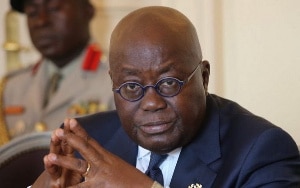
Following persistent negotiations with Chinese authorities for debt cancellation, President Akufo-Addo is sure Ghana will achieve a final agreement with the International Monetary Fund for a bailout by the end of this month.
He claims that a meeting with the Chinese Exim Bank is going well and suggests that the nation may close a deal with the Paris club.
At the annual gathering of ambassadors and high commissioners yesterday night at the Peduase lodge, he made this statement in a speech.
“Just as we managed to get the staff level agreement in recorded time in December last year, whose terms we’re systematically fulfilling including the difficult but ultimately highly successful process of the domestic debt exchange programme, I’m confident that with the cooperation that we’re receiving from the Paris Club and the People’s Republic of China which has sent a delegation from China’s EXIM Bank to Accra over the weekend to meet with officials of the Ministry of Finance, we shall be able to go to the board of the Fund to conclude finally the agreement by the end of March. This will set the stage for the strong recovery of Ghana’s economy,” he said.
His assurance follows his appeal to Germany to “encourage” China, an ad hoc member of the Paris Club, to support Ghana’s debt restructuring efforts.
In order to support the initiatives that would enable Ghana to resume economic growth, he said it is imperative that the Paris Club quickly creates a creditors committee with the participation of other official creditors.
When the German Finance Minister, Christian Lindner, visited the President at Jubilee House in Accra, the President made the call.
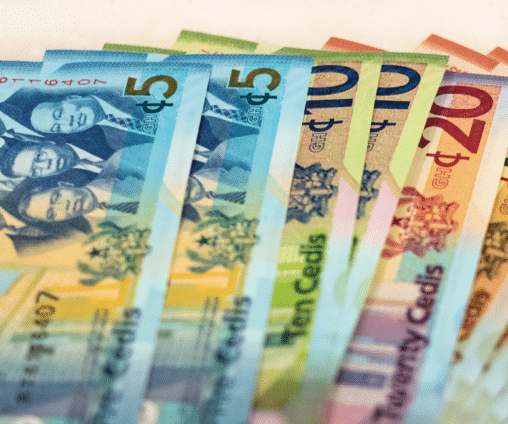
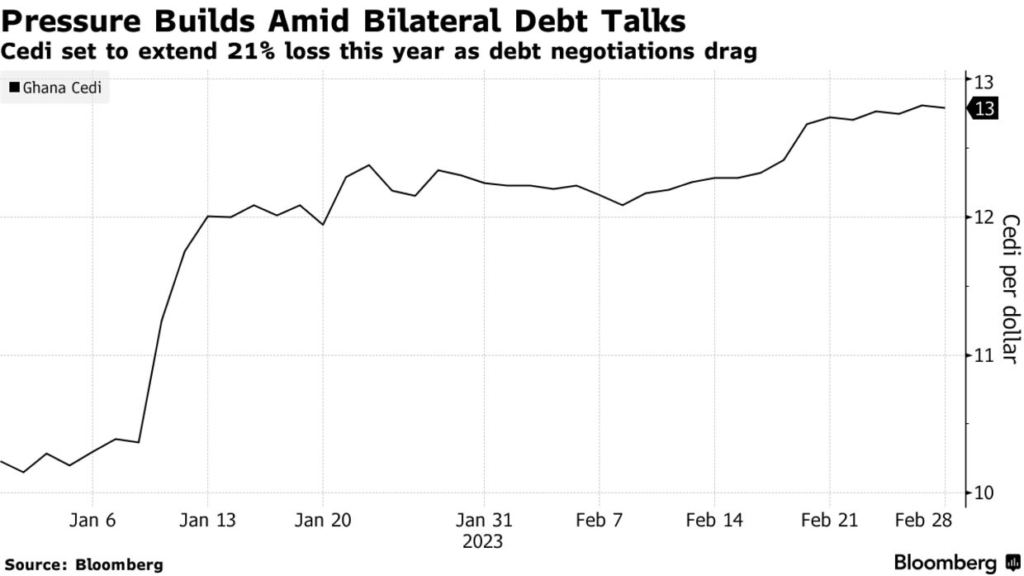
Ghana’s local currency, cedi, the second-worst performing currency in the world this year, is doomed to further suffering after the nation missed a deadline it set for itself to restructure its bilateral debt and go closer to receiving international aid.
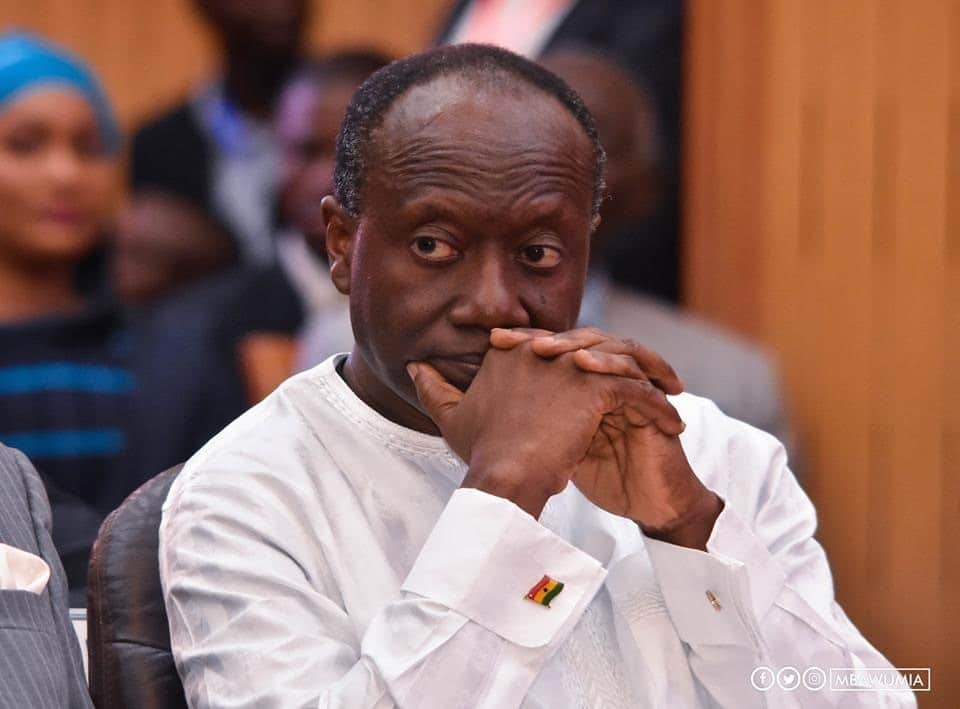
In order to be eligible for a $3 billion International Monetary Fund program, Finance Minister Ken Ofori-Atta wanted to negotiate a restructuring agreement with bilateral creditors by the end of February.
Ghana has only partially finished the exchange program’s domestic debt component so far.
After the Lebanese pound, the cedi has underperformed among the more than 100 currencies tracked by Bloomberg, falling 21% versus the dollar in 2023.
Still, the missed deadline doesn’t automatically derail the talks.
Rather, it highlights the difficulties Ghana faces as it tries to reduce its debt load and contend with critics ranging from international bondholders to local trade unions.
“For the foreseeable future the cedi will continue to be volatile until we are able to make substantial progress on the external debt restructuring front,” Kweku Arkoh-Koomson, an economist at Databank Group, said by phone.
“The IMF deal is what will cause a clear stability in the cedi.”
Local bondholders have been asked to voluntarily exchange ¢130 billion of debt for new bonds that will pay between 8.35% and 15% interest, compared with an average of 19% on old bonds.
Ghana stands to ask external creditors to write off as much as 50% of the debt it owes them — far higher than the 30% the government initially considered, S&P Global Ratings said in a report Tuesday.
“Uncertainty on when the rest of the restructuring will be completed” is influencing cedi volatility, said Courage Boti, an economist at Accra-based GCB Capital Ltd.
“To the extent that those things are hanging in the balance now — in that timelines are not very certain — the volatility of the cedi will continue.”
To date, local investors have exchanged ¢87.8 billion, or 67.5% of bonds under restructuring, for new securities, against an overall target of 80%.
The country will have to reorganize obligations owed to local pension funds to complete the domestic exchange, a move that’s running into criticism from trade unions.
The government aims to start “substantive” discussions with international bondholders and their advisers in the coming weeks, Ofori-Atta said last month, offering eurobond holders some losses while seeking to reschedule payments on bilateral obligations.
Finance Minister, Ken Ofori-Atta, has given heads up on the imminent collapse of Ghana’s economy in the coming days.
According to the minister, if an agreement is not reached with the International Monetary Fund (IMF) to secure the $3bn credit facility, the economy will be derailed and eventually collapse.
Addressing pensioner bondholders who were displeased over their inclusion in government’s Domestic Debt Exchange Programme (DDEP) on February 6, 2023, the minister said “We need to be mindful that we really need to be successful in going to the fund by this March to avoid what we all experienced last year which we all don’t want to experience again.”
Here is what will happen if Ghana’s economy collapses:
1. Banks would close, which means Ghanaians would likely lose access to credit.
2. Demand would outstrip supply of food, gas, and other necessities.
3. If the collapse affects local governments and utilities, then water and electricity might no longer be available.
4. Interest rates would skyrocket. Investors would rush to other currencies, such as the dollar, yuan, euro, or even gold.
5. The situation would create not just inflation, but hyperinflation, as the cedi would lose value to other currencies.
6. There would be extreme poverty and hunger leading to deaths.
Convener of Individual Bondholders, Michael Harry Yamson has expressed disappointment in Parliament for disappointing Ghanaians on issues regarding the economy.
According to him, Parliament failed Ghanaians because it failed to resume sitting quickly when the Domestic Debt Exchange Programmme (DDEP) was announced at the initial stage and interrogate it thoroughly.
Speaking on the State Affairs Program on GHOne TV, Mr. Yamson stated that even when the Executive failed to seek Parliament’s view on the DDEP it was incumbent on Parliament to act fast on behalf of Ghanaians.
“Our Parliament is ill-resourced to go toe to toe with the Executive when it comes to economy, matters of national finance and matters of governance, they are not resourced. We were talking about DDEP but the issue goes well beyond it and Parliament simply didn’t have the means to say hang on. This budget will not stand the test of time because it is deeply flawed.
“You don’t have the revenues to meet the debt obligations that are staring at you in the next few years and the budget was passed. Immediately it got passed all our hands were tied and the only answer was this disaster,” Mr. Yamson stated.
He continued: “We are all talking about DDEP but what really we need to say is that how is it for our parliament, our representative are so ill equip to interrogate and challenge the policy of the government when it comes to the affairs of our money.”
Background:
The Finance Minister, Ken Ofori-Atta, has declared that all pensioners who declined to submit their old bonds for new ones under the Domestic Debt Exchange Programme (DDEP) have been exempted from the programme.
Briefing Parliamentarians on the state of the Domestic Debt Exchange Programme, in Parliament House on Thursday February 16, 2023, Ken Ofori-Atta urged the pensioner bondholders some of who, were in Parliament not to be troubled as all their coupons will be honoured when they mature.
“Government remains committed to the wellbeing of our senior citizens. It has caused me great distress that a number of our pensioners have picketed at the premises of the Finance Ministry since Monday, February 6, 2023. I have already indicated in my press release dated 14th February 2023 that government will honour their coupons payments and maturing principles like all government bonds in line with government’s fiscal commitments.”
He added: “Mr Speaker, in seeking to understand the concerns of our senior citizens, I have met with them on three occasions, the recent was yesterday 15th February 2023 where I explained the terms of the new bonds. Mr Speaker, I subsequently wrote to their convener letting him know that all pensioners who did not participate in the bond offering are exempted.”
Ghana’s bilateral lenders are discussing the formation of an official creditor committee, a first step needed to engage in debt relief talks for the country, according to two sources with direct knowledge of the matter.
The Paris Club of creditor nations has contacted other bilateral creditors, such as China and India, to engage in forming the committee and deciding who would chair it, one of the sources said.
“Hopefully, it should be resolved soon,” a second source added, without providing further details on the timing.
Ghana in January became the fourth nation to apply to the common framework platform, an initiative of the Group of 20 major economies launched in 2020 to streamline debt restructuring efforts for poorer countries.
China is Ghana’s single biggest bilateral creditor with $1.7 billion of debt, while Ghana owes $1.9 billion to Paris Club members, according to data from the Institute of International Finance (IIF).
Chinese lending represents around 80 per cent of non-Paris Club debts. The country’s total external debt is $28.4 billion.
The government decided to restructure its domestic debt in December, and after five extensions, it announced on Tuesday that they have received support from 80 per cent of creditors.
Also, the largest holders of Ghana’s overseas debt formed a creditor group in December for debt rework talks with the government.
Fitch Ratings – Hong Kong – 14 Feb 2023: Fitch Ratings has downgraded Ghana’s Long-Term (LT) Local Currency (LC) Issuer Default Rating (IDR) to Restricted Default (RD) from ‘C’. The issue ratings on local-currency bonds issued domestically have also been downgraded to Default (D) from ‘C’. Fitch has affirmed Ghana’s Long-Term Foreign Currency (FC) IDR at ‘C’. Fitch typically does not assign Rating Outlooks to sovereigns with a rating of ‘CCC+’ or below.
A full list of rating actions is at the end of this rating action commentary.
Key Rating Drivers
Local Currency Debt Restructuring Confirmed: The downgrade of Ghana’s local-currency denominated debt follows the completion of a domestic debt exchange offer by the Republic of Ghana. This transaction is an element of the recovery programme for which the government is seeking the support of the IMF. On Dec. 12, 2022, Ghana and the IMF reached a Staff-Level Agreement on a three-year arrangement under the Extended Credit Facility (ECF) of about USD3 billion.
Material Reduction in Terms: All holders, except pension funds, of 67 eligible bonds governed by Ghanaian law and denominated in Ghanaian Cedis (GHS) were invited to exchange their holdings into new bonds with the same aggregate principal amount, plus applicable capitalized accrued and unpaid interest, which have in the aggregate a lower average coupon and extended average maturity than the old bonds.
Collective investment schemes and individual holders below the age of 59 will receive bonds maturing in 2027 and 2028 with a 10% coupon. Individual holders aged 59 or older will receive bonds maturing in 2027 and 2028 with a 15% coupon.
All other participating holders will receive a set of bonds with maturity dates ranging from 2027 to 2033 in exchange of bonds maturing in 2023, and a set of bonds with maturity dates ranging from 2027 to 2038 in exchange of bonds maturing after 2023.
All these bonds will pay a 5% cash coupon and a paid-in-kind coupon of 3.35% to 5.00% until Feb. 13, 2025, and cash coupons ranging from 8.35% to 10.00%, depending on the specific series, from Feb. 14, 2025.
Distressed LC Debt Exchange: In Fitch’s view, this debt exchange constitutes a distressed debt exchange under the agency’s criteria, given this material reduction in terms vis-à-vis the original contractual terms, and given that the exchange is needed to avoid a traditional payment default.
According to Fitch’s sovereign rating criteria, a ‘RD’ rating is consequently assigned to the Long-Term Local Currency Issuer Default Rating. Among the 67 eligible bonds that could be tendered, six are rated by Fitch. A ‘D’ rating has been assigned to these six bonds.
Missed LC Principal Payment: A GHS4.2 trillion principal payment was due on Feb. 6, 2023. In the second amended and restated exchange memorandum released on Feb. 7, authorities announced that eligible holders holding this bond would not receive a final interest payment and a final principal payment, regardless of whether an eligible holder has tendered or not.
In a press release issued on Feb. 14, 2023, authorities announced that coupon payments and maturing principals would be honoured “in line with Government fiscal commitments.” This announcement does not clarify yet when the payment will be made to holders who opted out of the domestic debt exchange.
In particular, it does not clarify whether a principal payment will be made before the expiration of the grace period for this specific issue. This security is one of the six issues that have been downgraded to ‘D’.
Interest Payments to Be Significantly Reduced in 2023: Outstanding principal of eligible bonds amounts to GHS132.4 billion (22% of 2022 estimated GDP). Assuming an 80% participation rate equally distributed among eligible bonds and eligible bondholders, the domestic debt exchange would allow Ghana to reduce its interest payments by 1.5 to 2.0 percentage points of GDP in 2023, not considering the cost, in 2023, of rolling over bonds that would have matured in 2023.
Foreign-Currency Debt Not Affected: Fitch downgraded the Long-Term Foreign Currency Issuer Default Ratings (IDR) to ‘C’ from ‘CC’ on Dec. 21, 2022 following the government’s announcement of a suspension of payments on selected external debt.
Ghana subsequently asked official creditors for a restructuring of its external debt under the G20 Common Framework. A Eurobond coupon payment, due on Jan. 18, 2023, has not been honoured. Fitch has affirmed the LT FC IDR at ‘C’ but will downgrade it to ‘RD’ after the end of the grace period for this coupon payment that expires on Feb. 17, 2023.
Partially Guaranteed Notes Not Affected: Fitch downgraded the issue rating on Ghana’s U.S. dollar-denominated notes due October 2030 to ‘CC’ from ‘B-‘ on Dec. 21, 2022. The notes benefit from a partial credit guarantee (PCG) backed by the International Development Association for scheduled debt service payments up to 40% of the original principal.
Fitch had assigned a multiple-notch uplift to the notes to reflect its view that the PCG reduces the bonds’ potential for default and increases the possible recovery in the event of issuer default. The ‘CC’ rating for the partially guaranteed U.S. dollar-denominated notes due October 2030 has been affirmed.
ESG – Governance: Ghana has an ESG Relevance Score (RS) of ‘5’ for both Political Stability and Rights and for the Rule of Law, Institutional and Regulatory Quality and Control of Corruption. These scores reflect the high weight that the World Bank Governance Indicators (WBGI) have in our proprietary Sovereign Rating Model.
Ghana has a medium WBGI ranking at 50.8, reflecting a recent track record of peaceful political transitions, a moderate level of rights for participation in the political process, moderate institutional capacity, established rule of law and a moderate level of corruption.
ESG – Creditor Rights: Ghana has an ESG Relevance Score (RS) of ‘5’ for Creditor Rights as willingness to service and repay debt is highly relevant to the rating and is a key rating driver with a high weight. The current rating action reflects Fitch’s view that Ghana is in default.
RATING SENSITIVITIES
Factors that could, individually or collectively, lead to negative rating action/downgrade:
–Failure to make scheduled coupon or maturity payments on Ghana’s foreign-currency bonds within the grace period would lead to a downgrade of Ghana’s LT FC IDR to ‘RD’;
–The partially guaranteed notes could be downgraded depending on the evolution of the debt restructuring;
–Failure to honour interest and principal payment on maturing bonds to holders who opted out of the debt exchange during the grace period could result in a prolonged ‘RD’ LT LC IDR.
Factors that could, individually or collectively, lead to positive rating action/upgrade:
–Following the completion of the domestic debt exchange, Fitch will assign Ghana’s Long-Term Local-Currency Issuer Default Rating based on a forward-looking assessment of its willingness and capacity to honour its local currency debt;
–Once Ghana reaches an agreement with private creditors on the restructuring of its foreign currency-denominated debt and completes that restructuring process following the Common Framework official creditors’ claims treatment, Fitch will assign a Long-Term Foreign-Currency Issuer Default Rating based on a forward-looking assessment of its willingness and capacity to honour its foreign-currency debt;
–Evidence that the partially-guaranteed notes will be excluded from the external debt restructuring could lead to an upgrade of the issue rating on the partially guaranteed notes.
Sovereign Rating Model (SRM) and Qualitative Overlay (QO)
Fitch’s proprietary SRM assigns Ghana a score equivalent to a rating of ‘B-‘ on the Long-Term Foreign-Currency IDR scale. However, in accordance with its rating criteria, Fitch’s sovereign rating committee has not utilized the SRM and QO to explain the ratings in this instance. Ratings of ‘CCC+’ and below are instead guided by the rating definitions.
Fitch’s SRM is the agency’s proprietary multiple regression rating model that employs 18 variables based on three-year centred averages, including one year of forecasts, to produce a score equivalent to a LT FC IDR.
Fitch’s QO is a forward-looking qualitative framework designed to allow for adjustment to the SRM output to assign the final rating, reflecting factors within our criteria that are not fully quantifiable and/or not fully reflected in the SRM.
Best/Worst Case Rating Scenario
International scale credit ratings of Sovereigns, Public Finance and Infrastructure issuers have a best-case rating upgrade scenario (defined as the 99th percentile of rating transitions, measured in a positive direction) of three notches over a three-year rating horizon; and a worst-case rating downgrade scenario (defined as the 99th percentile of rating transitions, measured in a negative direction) of three notches over three years. The complete span of best- and worst-case scenario credit ratings for all rating categories ranges from ‘AAA’ to ‘D’.
Best- and worst-case scenario credit ratings are based on historical performance. For more information about the methodology used to determine sector-specific best- and worst-case scenario credit ratings, visit https://www.fitchratings.com/site/re/10111579.
REFERENCES FOR SUBSTANTIALLY MATERIAL SOURCE CITED AS KEY DRIVER OF RATING
The principal sources of information used in the analysis are described in the Applicable Criteria.
ESG Considerations
Ghana has an ESG Relevance Score of ‘5’ for Political Stability and Rights as World Bank Governance Indicators have the highest weight in Fitch’s SRM and are therefore highly relevant to the rating and a key rating driver with a high weight. As Ghana has a percentile rank above 50 for the respective Governance Indicator, this has a positive impact on the credit profile.
Ghana has an ESG Relevance Score of ‘5’ for Rule of Law, Institutional & Regulatory Quality and Control of Corruption as World Bank Governance Indicators have the highest weight in Fitch’s SRM and are therefore highly relevant to the rating and are a key rating driver with a high weight. As Ghana has a percentile rank above 50 for the respective Governance Indicators, this has a positive impact on the credit profile.
Ghana has an ESG Relevance Score of ‘5’ for Creditor Rights, as willingness to service and repay debt is highly relevant to the rating and is a key rating driver with a high weight. The distressed debt exchange reflected in the ‘RD’ LT LC IDR has a negative impact on the credit profile.
Ghana has an ESG Relevance Score of ‘4[+]’for Human Rights and Political Freedoms as the Voice and Accountability pillar of the World Bank Governance Indicators is relevant to the rating and a rating driver. As Ghana has a percentile rank above 50 for the respective Governance Indicator, this has a positive impact on the credit profile.
Except for the matters discussed above, the highest level of ESG credit relevance, if present, is a score of 3. This means ESG issues are credit-neutral or have only a minimal credit impact on the entity, either due to their nature or to the way in which they are being managed by the entity.
Two economic experts say but for the central bank’s GH¢44.5 billion support to the government, the economy would have crashed last year.
Dr Said Boakye of the Institute for Fiscal Studies (IFS) and Prof. Peter Quartey of the Institute for Statistical, Social and Economic Research (ISSER), however, noted that the quantum of the central bank support was concerning.
They concurred in separate interviews that while the action was suboptimal, it helped to mitigate the impact of the crisis that the economy was embroiled in.
They cited delayed payment of salaries, insufficient imports, including fuel and medical supplies, and a general breakdown of economic activities as some of the challenges that the country could have been submerged in had the central bank not stepped in with funding.
Given that the international capital market was shut to the country last year, at a time when revenues and treasury auctions were not encouraging, Dr Boakye and Prof. Quartey said the economy could have ground to a halt if the central bank had not intervened with the funding.
Their position confirms the central bank’s assessment on the matter, which was contained in a statement issued on February 8.
In that statement, the BoG said its net advances to the government totalled GH¢44.5 billion in 2022 to save the economy from getting into a ditch.
Public outcry
The two economists were speaking with the Graphic Business during a recent public discussion on the central bank’s funding of the budget in 2022.
The BoG and the International Monetary Fund (IMF) have described the action as a temporary solution to the crisis that the economy faced last year.
In siding with that position, Dr Boakye, who is the Head of Research at the IFS, said 2022 was particularly difficult for the economy, such that unpopular policy choices, such as deficit financing, were necessary.
“Truly speaking, it was very tough in 2022,” he said.
The government had budgeted to go for about US$3 billion from the Eurobond market, but the downgrading of the economy from B plus to B minus and subsequently to C took Ghana off that international finance market; revenues were not coming in and the auctions were also failing.
“So things were very rough and the central bank had to step in to keep the country running and that is understandable,” he said.
Flexibility
Between 2016 and 2020, the country operated a zero deficit financing policy based on a memorandum of understanding (MoU) between the Ministry of Finance and the BoG, in line with the requirements of the IMF under the country’s 16th fund-assisted programme.
In 2020, when the COVID-19 pandemic peaked, the central bank suspended the policy under a certificate of emergency to purchase a GH¢10 billion sovereign bond that it said would help ease the financial constraint emanating from the crisis.
It, however, restored the policy in 2021, only to set it aside again last year in the wake of the economic crisis.
It is understood that the IMF now seeks to codify the policy under the US$3 billion programme that is being financed; given that economic emergencies can occur.
Dr Boakye of the IFS, however, said it was interesting that the IMF was asking the country to legalise zero deficit financing of the budget.
He mentioned the United States of America (USA) and the United Kingdom (UK) as developed economies whose central banks still financed their governments in times of crises and wondered why a developing country such as Ghana would seek to tow the opposite direction.
“If borrowing from the central bank is a sign of irresponsibility, then the Bank of England and the Federal Reserve Bank of USA have been culpable.
“Yes, the borrowing from the central bank adds to the momentum in inflation but there should be some flexibility,” he said.
“To me, the zero financing policy is not justified but I can understand,” he said citing the wanton abuse of the policy in previous years.
Although the Bank of Ghana Act requires that financing of the deficit should not exceed five per cent of the previous year’s revenues, the figure has often exceeded the five per cent limit in years when the central bank had to intervene.
Bitter pill
On plans to cut off central bank financing, Prof. Quartey, for his part, said it was a tough but necessary action.
He said the country needed to mature to the point where policies that spurred growth and sustainability were encouraged over short-term strategies that had long-term implications.
The representative for Nsawam-Adoagyiri, Frank Annoh-Dompreh, believes that Ken Ofori-Atta, the finance minister, can restore Ghana’s economy.
According to the MP calls by some of his colleagues in parliament for the president to dismiss the finance minister will rather stagnate the efforts of government to restore the economy.
Speaking in an interview on Badwam on Adom tv, Annoh-Dompreh noted that the finance minister should be allowed to work as he revives the Ghana economy.
“I think we are making progress. The times dictate that we should be at peace with each other. Before I say anything it means I have spoken to people. Now it appears things are getting better so we have to keep things running,” the Majority Chief Whip said.
His statement comes on the back of a call by the Member of Parliament for Asante Akim North, Andy Appiah-Kubi for president Nana Addo Dankwa Akufo-Addo to honour his promise to fire Ken Ofori-Atta.
Ofori-Atta was untouched in a recent ministerial shakeup that saw Akufo-Addo nominate seven persons for ministerial and deputy positions in his government.
Annoh-Dompreh also called on the NPP in parliament to unite in breaking the 8 in the 2024 election by allowing the finance minister to retain his office.
“We are ready to break the 8 but we need unity among ourselves, “he said.
The majority chief Whip who has openly declared his support for the Vice President believes the majority in parliament should look at the larger picture of the 2024 general election, though he respects the views of those calling for the removal of the finance minister.
The assertions of Annoh-Dompreh have been shared by some members of the majority who are confident the finance minister should be allowed the fix the economy rather than replace him.
Since the end of 2020, according to data from the Bank of Ghana, consumer and corporate confidence in the overall economy has been declining.
Since January 2021, the Consumer and Business Confidence Indices have both constantly remained below the 100 level.
In this time, the consumer confidence index has averaged 86.13, while the corporate confidence index has averaged 88.19.
In the meantime, in October 2022, the consumer and business confidence indexes hit record lows of 73.9 and 72.6, respectively. The indexes increased to 79.2 for consumer confidence and 75.7 for business confidence in December 2022.
https://datawrapper.dwcdn.net/gGotm/1/
According to the Bank of Ghana, consumer confidence improved on the back of the reductions in ex-pump petroleum prices and transportation fares in December 2022.
Business confidence also turned positive due to achievement of short-term targets and confidence about company and industry prospects, following the appreciation of the local currency during the month.
The confidence indices
Consumer confidence index (CCI) measures how optimistic or pessimistic consumers are regarding their expected financial situation.
The CCI is based on the premise that if consumers are optimistic, they will spend more and stimulate the economy but if they are pessimistic then their spending patterns could lead to an economic slowdown or recession.
According to the Organisation for Economic Co-operation and Development (OECD), an indicator above 100 signals a boost in the consumers’ confidence towards the future economic situation, as a consequence of which they are less prone to save, and more inclined to spend on major purchases.
Values below 100 indicate a pessimistic attitude towards future developments in the economy, possibly resulting in a tendency to save more and consume less.
The business confidence index provides information on future developments, based upon opinion surveys on developments in production, orders and stocks of finished goods in the industry sector.
It can be used to monitor output growth and to anticipate turning points in economic activity.
Ghana’s Real Composite Index of Economic Activity (CIEA)
This indicator has moved from 39.4% in April 2021 and slid continuously to 10.2% in November 2021 and by November 2022 moved to -6.2%.
It is worth mentioning that the second half of the 2022 economic year was characterized by high fuel prices, high inflation and excessive depreciation of the Ghanaian cedi and this may explain why economic indicators showed negative growth especially during this period.
Ghana’s Real Composite Index of Economic Activity (CIEA)
The annual growth of Bank of Ghana’s Real CIEA also shows a dip to an all-time low in November 2022 of -6.2%. This is indicative of a worsening outlook on domestic economic activity.
This indicator has moved from 39.4% in April 2021 and slid continuously to 10.2% in November 2021 and by November 2022 moved to -6.2%.
It is worth mentioning that the second half of the 2022 economic year was characterized by high fuel prices, high inflation and excessive depreciation of the Ghanaian cedi and this may explain why economic indicators showed negative growth especially during this period.
Ambassador Edward Boateng, Director-General of the State Interests and Governance Authority (SIGA), has directed the CEOs and board chairs of the designated state entities to make every effort to revive Ghana’s economy.
He stressed that the nation was not experiencing normal times and urged the CEOs to contribute to the recovery of the economy.
“We in this room control a substantial portion of the Ghanaian economy, so let’s be positive that we can solve the problems in the economy,” he stated.
Ambassador Boateng charged heads of state entities to put in many efforts to achieve the president’s vision of contributing significantly to Ghana’s GDP.
Speaking at the opening ceremony of the two-day Annual Stakeholders meeting organized by the State Interests and Governance Authority (SIGA) at Kwahu-Nkwatia in the Eastern Region, Amb. Boateng said, “We all have to work very hard to jump-start Ghana’s economy. In our agencies, what are we doing to help? He quizzes the CEOs.
He added, “We have to work as a team, we cannot continue to work in silos and expect things to work.”
Amb. Boateng further entreated well-performing state entities to share their success stories for others to emulate.
“Most of us are also doing good things, don’t be shy to go on the media and talk about the success stories.”
Despite a steep 0.5% decline in economic output in December, which was partially caused by strikes in the health, transportation, and postal services, this is still the case.
Chancellor Jeremy Hunt said the figures show “underlying resilience” but said “we are not out of the woods”.
The Bank of England still expects the UK to enter recession this year.
But it will be shorter and less severe than previously thought.
Mr Hunt said that high inflation remains a problem and continues to cause “pain for families up and down the country”.
Inflation – or the rate at which prices are rising – is slowing but at 10.5% remains close to a 40-year high.
Additionally, it updated its data for July and September to show that the GDP contracted by 0.2% rather than the 0.3% previously predicted.
When the economy shrinks for two consecutive three-month periods, it is considered to be in a recession.
But December’s numbers came in worse than anticipated.
Darren Morgan from the ONS said there was a fall in health services with fewer operations and GP visits. He also said that sporting activities, particularly football, were impacted because of the World Cup.
He people were not “able to enjoy top flight football due to the absence of Premier League football until Boxing Day, as the World Cup continued”.
“And finally rail and postal industries had a poor month. We certainly saw the impact of strikes as both fell heavily in December,” he said.
Strike action on trains caused disruption on the railways and on the roads in December. Postal workers also went on strike on a series of days in the run-up to Christmas.
Over 2022, gross domestic product (GDP) grew by 4% – the biggest increase of all G7 nations for last year.
However that compares to 7.6% growth in the previous year and the UK economy is still 0.8% smaller than it was before the Covid pandemic.
Rachel Reeves, Labour’s shadow chancellor, said the latest figures show the economy “is stuck in the slow lane”.
She added: “We must bring in urgent measures to prevent yet more harm from the cost of living crisis, using a proper windfall tax on oil and gas giants to stop the energy price cap going up in April so that people have more money in their pockets.”
Liberal Democrat MP Sarah Olney, said: “Britain is dangling on over the edge of a recession after months of economic vandalism and chaos in Government.
“The blame for these gloomy figures lies squarely with the government, who have botched budgets, failed to tackle inflation and have no plan for growth.”
Former Chairperson of the Convention Peoples Party (CPP), Bernard Mornah, has accused President Akufo-Addo for demeaning the reputation of the Ghanaian presidency.
According to him, President Akufo-Addo has now resorted to begging world leaders to help Ghana with the county’s huge debts.
Speaking in an XYZ TV interview, on Wednesday, February 8, 2023, which was monitored by GhanaWeb, Mornah alleged that President Akufo-Addo recently begged the foreign minister of Germany to plead with the Chinese government to give Ghana more time to repay its debts.
“It is so sickening that when you have messed up the economy to this extent, the president will again decide to debase the Office of the President.
“When the finance minister of Germany came to Ghana for a visit, our president told him to go and beg China so that they will forgive some of Ghana’s debts. This is what the president told the finance minister of Germany.
“He did not even call the Chancellor of Germany who is his counterpart… when you (Akufo-Addo) were going for the loan did you call the German foreign minister? When you were telling us that you were doing bauxite for infrastructure did you go to tell the Germans,” he said in Twi.
The former CPP chairperson said that rather than the government engaging the Chinese directly on its debts, the president is “going round calling subordinate ministers to go and talk on his behalf”.
“You (Akufo-Addo) are reducing the presidency,” he reiterated.
Finance Minister, Ken Ofori-Atta, has revealed that the country’s economy will crash in March 2023 should current economic conditions remain the same.
Mr Ofori-Atta disclosed the information on Monday when he engaged Pensioner bondholders who picketed at the Finance Ministry today.
According to the Finance Minister, Ghana is “in a crisis, (and) we cannot put our heads under the sun and pretend that we are not.”
“We need to be mindful that we really need to be successful in going to the fund by this March to avoid what we all experienced last year which we all don’t want to experience again,” he added.
Ghana since the beginning of 2022 began witnessing its economic growth decline. The regression has been attributed to the COVID-19 pandemic and the Russian-Ukraine war, as well as some internal activities such as heavy importation.
In July 2022, government formally engaged the International Monetary Fund (IMF) after months of declining suggestions to seek assistance from the Fund.
For close to eight months, the government and the IMF have been discussing initiatives that must be put in place to ensure Ghana receives a credit facility worth 3 billion dollars.
Among the conditions is a debt restructuring programme which would ensure Ghana does not default is debt. Government in December introduced the Domestic Debt Exchange Programme (DDEP), however is yet to see its implementation.
The DDEP is currently being analsyed critically following concerns from pension holders and individual bondholders.
Government is concerned that without its debt exchange programme in place, Ghana would not be able to receive assistance from the IMF.
This is because growth will be boosted by anticipated improvements in economic activity, particularly in the extractive industry.
The Fund estimated Ghana’s GDP to be 2.8% in 2023, but they anticipate a higher growth rate in 2024.
Division Chief of the Research Department Daniel Leigh responded to press inquiries at the recently concluded World Economic Forum in Davos, Switzerland, by stating that this year’s growth will slow down in part due to the global headwinds that will influence the Ghanaian economy.
“On Ghana, we do expect growth to slow this year. This is partly because of the global headwinds that Pierre Olivier [Chief Economist and Director Research Department] has been discussing. So, it’s a difficult time for the global economy that affects Ghana”.
“But also, there are some domestic headwinds. In particular, inflation has increased significantly. And so, the Central Bank is tightening monetary policy, but that is cooling the economy domestically. Plus, the fiscal policies are tightening to address the elevated debt. This is the cooling in 2023”, he pointed out.
“But in 2024, we see a rebound in particular in the extractive activities. And that is going to support Ghana in 2024”, he added.
Mr. Leigh also spoke of the $3 billion extended credit facility that Ghana is seeking from the IMF, saying, “The goal of that program is to reestablish macroeconomic stability, debt sustainability, and create the foundations for higher and inclusive growth over the medium-term”.
“I would add that right now — so just very recently — the IMF team went to Ghana, reached agreement with the Ghanian authorities on an economic reform program that will be supported under a $3 billion extended credit facility. And the goal of that program is to reestablish macroeconomic stability, debt sustainability, and create the foundations for higher and inclusive growth over the medium-term”.
Despite a slight upward revision since October, growth in sub-Saharan Africa is predicted to be mild in 2023 at 3.8% with ongoing COVID-19 pandemic effects before accelerating to 4.1% in 2024.
Ghanaian economist, Kwame Pianim is currently trending on Twitter following his comment on Ghana’s economy.
Kwame Pianim in an interview with TV3 said government is sitting on a timebomb if it goes ahead to implement the Domestic Debt Exchange programme.
He further said that Ken Ofori-Atta’s irresponsibility and recklessness has led the country into a ditch, which has resulted in the need for the country to undertake a debt restructuring exercise for an IMF bailout.
“…I would have been proud as a Ghanaian to contribute to the debt restructuring exercise but I will not contribute one pesewa for Ken Ofori-Atta leading this, he led us into the gutter…” he stressed.
Following his comment, he has topped Twitter trends with many social media users reacting to his statement.
“AIR -Arrogance, Incompetence and Recklessness. Renowned economist Dr. Kwame Pianim. Who is he referring to?” Nelson Bonkena quizzed.
“We have men like Kwame Pianim in this country but we no dey mind them…” Mr_Kormy Tweeted
Below are some of the tweets
Kwame Pianim dropping common sense but it look like gems! NPP is so arrogantly ignorant and dvmb esp their supposed economic team and Ghanaians are so docile and stvpid allowing these to go on unstopped! And funny enough #BawumiaNeverLies is trending at 1 pic.twitter.com/uv7nnpCG2t— JESUS Is King ????✨ (@GhanaSocialU) January 12, 2023
Ken Ofori Atta is behaving like a child who killed both parents and when he was charged for murder, pleaded he should be pardoned because he is an orphan.
~Kwame Pianim
— Suadique Musah???? (@Suadiquemusa) January 12, 2023
i can sit and listen to kwame pianim for a whole day.
pure wisdom !
— Rahman™???????? (@rahmann_23) January 12, 2023
If we have people like Kwame Pianim in this country and still leaders in this country does not seek advice from him hmmmm….what an intelligent man ,God bless him and may he live long..@kwamepianim#Tv3newday #JohnniesBite— Pocket_Money (@jacobAmarquaye1) January 12, 2023
Legal Practitioner, Godwin Edudzi Tameklo, has asked government to gather mettle and acknowledge the blame of the current emergency the Ghanaian economy is confronting instead of fault the worldwide emergency.
According to him, the current government’s incompetence is why the country has colossal debt despite having more revenue sources than any other government since 1957.
Speaking on TV3’s big issues, he said this government should man up and take responsibility for the failure of the economy instead of engaging in blame game.
“What is our total debt today? Do you know by their reason of incompetent management of the exchange rate, they added 98 billion Ghana cedis to our public debt? So please stop globalizing your incompetence, face the fact, man up and say that look I have been irresponsible for the debt situation and that is why we are here.”
Edudzi Tamaklo said there is much expectation from this government because of the excess revenue they have made in the last 6 years in government.
“Do you know that the Akufo-Addo/Bawumia government have gotten more revenue than all administration since 1957? In fact, by the time NDC left office, the overall financial revenue sources available to the NDC in 8 years was 248 billion Ghana cedis, as I speak to you within the space of 6 years this government, if you put loans, grants, and tax revenue together, this government has gotten in excess of 560 billion just in six years. The bible says to whom much is given much is expected. In the midst of plenty, you have run us aground, what to do is to demonstrate humility,” he said in the interview.
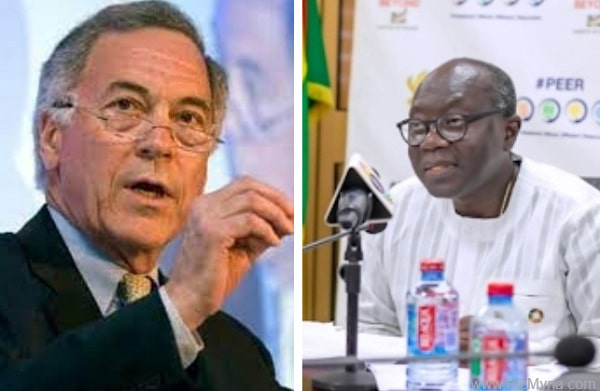
Prof. Steve Hanke, an American economist, has continued to criticize Minister of Finance Ken Ofori-Atta for using biblical allusions to support his claims of an economic revival.
The Economist cited a reference to Scripture the Minister made late last year in a report headed “Ghana has negotiated a preliminary IMF deal and halted debt payments,” which Hanke wrote on January 2, 2023.
“Ghana’s Finance Minister Ofori-Atta justified defaulting on debt by quoting the Bible: “nothing will be lost, nothing will be missing.”
“The Bible is a poor guide for macroeconomics. It’s time for Ofori-Atta to stop bamboozling Ghanaians and get real,” he emphasized.
When Ofori-Atta launched a Domestic Debt Exchange program, one of the crucial requirements that led to a government and International Monetary Fund (IMF) Staff-Level Agreement days later, he made the biblical allusion.
Ghana's Finance Minister Ofori-Atta justified defaulting on debt by quoting the Bible: "nothing will be lost, nothing will be missing." The Bible is a poor guide for macroeconomics. It’s time for Ofori-Atta to stop bamboozling Ghanaians and get real https://t.co/iY1Q1LTVVC
The intention to include pensions in the Exchange program, which plan has been cancelled with individual bonds now implicated, was a particular point of contention for the administration with labor.
Ghana experienced a disastrous 2022 as a result of an economic crisis that compelled the government to apply for a loan from the IMF at a time when the cedi was fast losing value, inflation was out of control, and the government was subject to many downgrades by rating agencies.
The government has serially blamed the crisis partly on the aftershocks of the COVID pandemic and the ongoing Russia-Ukraine war.
It has promised to turn around the economic fortunes of the country after sealing a Staff-Level agreement with the IMF with the hope that funds from the US$3 billion facility will be released early this year.
Doris Oduro is seated at her modest, nearly empty shop in Odorkor, a suburb of Accra, the capital of Ghana. The mother of two feels frustrated on her own.
She has been in business for 15 years, but she is now thinking about closing since she can’t afford to replenish because of the increasing cost of living.
“I am running at a big loss,” Oduro, 38, told Al Jazeera. She sells imported items, including juices, biscuits, soft drinks, toiletries and sweets, but Ghana’s economic crisis is taking a huge toll on her business.
“Prices of goods keep soaring, and it is affecting my principal capital,” she said. “I want to close my store and find something else to do. Things are tough for me because I can’t sustain the business and I have a family to keep.”
Ghana, a country once described as Africa’s shining star by the World Bank, had the world’s fastest-growing economy in 2019 after it doubled its economic growth. But today, it is no longer the economic poster boy of West Africa.
Despite being a major cocoa and gold exporter, it is currently battling its worst financial crisis in decades with inflation hovering at a record 50.3 percent, the highest in 21 years.
Ghana’s economic successes were in the limelight when the new government of President Nana Addo Dankwa Akufo-Addo took power in January 2017 and brought down inflation significantly.
Under the previous government in 2016, it was 15.4 percent, and it fell to 7.9 percent by the end of 2019 and remained in single digits until the pandemic hit in March 2020.
Ghana’s budget deficit, which was about 6.5 percent of the nation’s gross domestic product before Akufo-Addo’s government came to power, was brought down to under 5 percent of GDP by the end of 2019.
“The growth that we experienced around 2017 to 2019 was actually coming from the oil sector,” Daniel Anim Amarteye, an economist with the Accra-based Policy Initiative for Economic Development, told Al Jazeera.
“We were so excited that the economy was growing, but we couldn’t devise strategies to ensure that the growth reflects in the other sectors of the economy,” he said. “For instance, we neglected the agriculture sector, and we couldn’t do any meaningful value-added investment in that sector. The government became complacent.”
According to the United Nations’ Food and Agriculture Organization, agriculture represents 21 percent of Ghana’s GDP and accounts for more than 40 percent of its export earnings. At the same time, it provides more than 90 percent of the food the country needs.
“Over the years, the government failed to invest in increasing output in the agricultural sector that will eventually lead to economic growth and transformation and food security. We are a major cocoa growing country, but we didn’t pay attention to increasing yields to translate into more foreign exchange earnings to drive economic growth and employment,” Amarteye said.
Ghanaian traders, who contribute significantly to the economy, mostly buy and sell products they import from Western countries and China, including home appliances, consumables, cars and second-hand clothes.
Due to the nature of their businesses, there is a persistent strong demand for the US dollar to pay for imports. This led to the continuous depreciation of the local currency, the cedi, which was recently described as the worst-performing on world markets.
As inflation surges, rising prices keep the cost of living accelerating for Ghanaians.
“Things are not the same anymore,” said Francis Anim, a vehicle spare parts importer. “I used to spend $5 a day with my wife and child on food alone early this year. Now we spend close to $10 [for the same amount of food]. Why?”
“We are feeling the heat,” he said. “The import duties are very high at the ports, so we have to pass on that burden to retailers, and eventually the consumer suffers. This has resulted in a high cost of living in Ghana, and the economy is not helping us either.”
Pension funds should be exempted from the debt exchange initiatives – Haruna Iddrisu
0 seconds of 1 minute, 39 secondsVolume 90%
A nation in crisis
The president conceded in a recent address to the nation that the West African country is in crisis. He blamed the situation on external shocks – the pandemic and Russia-Ukraine war.
However, analysts say the government took certain political and economic decisions that would have eventually exposed the weaknesses in the system even without those external factors.
For instance, to fulfil one of Akufo-Addo’s most expensive campaign pledges, his government launched a free education programme in public high schools nine months after he took office. It also provided free meals to students at primary and secondary levels.
Also in 2017, the governing New Patriotic Party scrapped what it called 15 “nuisance taxes”. These included the 17.5 percent value added tax on financial services, real estate and selected imported medicines. They also reduced import duties on spare car parts, abolished the 1 percent special import levy and the 17.5 percent VAT on domestic airline tickets.
“This brought a massive reduction in government revenue,” Williams Kwasi Peprah, a Ghanaian associate professor of finance at Andrews University in Michigan, told Al Jazeera. “To make up for the revenue shortfall, the government adopted borrowing. This increased Ghana’s bond market activities domestically and externally and, as a result, a high debt-to-GDP exposure, leading to the current debt unsustainability levels.”
From August 2017 to December 2018, Akufo-Addo’s government spent more than $2.1bn on what it called the “banking sector clean-up”.
The central bank said some banks were insolvent and were operating on life support, putting the interests of depositors at risk. The clean-up saw a reduction in the number of banks from 33 to 23 while more than 340 other financial institutions, such as savings and loans companies, had their licences revoked.
The government aimed to restore confidence and reposition the banking sector to support economic growth.
“The financial sector clean-up also cost the country more than anticipated in attaining a robust financial sector before 2022,” Peprah said.
He said the discovery of two more oilfields in 2019 led to the anticipation of more revenues. The government responded by issuing more domestic and external bonds, increasing its debt and raising spending on interest payments, social programmes and employment.
The government is Ghana’s largest employer, primarily in the fields of education, healthcare and security. It spends almost half of its budget on wages; this year, it raked in $8.2bn in estimated revenue and used about $4.2bn to pay salaries of public sector workers.
In 2017, the government also restored allowances for trainee nurses and teachers. President John Mahama lost to Akufo-Addo in the 2016 election partly for suspending those allowances two years earlier. They put a huge strain on the public purse. For the nurses’ allowances alone, the government paid more than $2.5 million annually.
“That was a poor political and economic decision the Akufo-Addo government made at that time because the country was faced with revenue challenges,” said Kwasi Yirenkyi, a financial analyst with Accra-based Data Crunchers. “The government was spending more than it was receiving, and at the same time, it failed to widen the tax net. We were slowly heading for disaster.”
Ken Ofori-Atta outlines Domestic Debt Exchange programme
0 seconds of 4 minutes, 7 secondsVolume 90%
The pandemic and debt load
There was a significant drop in revenue in 2020 coupled with a rise in government expenditures. They were mainly COVID-related as the government adopted a populist approach, provided free water and electricity to citizens and fed 470,000 households during a three-week lockdown that cost the nation $9.4m.
In August 2021 Akufo-Addo began what he later admitted was “an overly ambitious” construction project of 111 hospitals with an estimated price tag of more than $1bn. Pressure kept mounting on his government to fulfil a plethora of other electoral promises, such as the construction of roads, schools and markets, forcing the government to keep borrowing and leaving an economy dogged by high public debt. The most recent data released by the central bank put the country’s debt load at $48.9bn as of September. That represents 76 percent of GDP.
“Largely, the debt that we accrued were not actually prudently used to drive economic growth,” Amarteye said. “If that was done, we could have generated sufficient inflow to be able to meet repayment obligations. Borrowing is not a bad thing, but how you use it is critical. On our part, the managers of the economy failed to invest it in the critical sectors of the economy.”
The oil-exporting country produced 39.15 million barrels of crude oil from January to September, according to the 2023 budget statement read by Finance Minister Ken Ofori-Atta in Parliament in November. They brought in $873.25m in revenues for the eighth-largest oil producer in Africa. Although oil production declined between January and June, according to a report by the Public Interest and Accountability Committee, a surge in prices resulted in the government taking in more revenue than it had expected.
“Where did all the oil revenue go to?” opposition member of parliament Isaac Adongo asked. “The economy has been on life-support system because this government kept borrowing. We have now hit the ceiling, and there is no way out.”
In spite of the challenges, the government had been optimistic that the economy would bounce back after the pandemic. However, Russia’s war in Ukraine has derailed Ghana’s economic recovery. The cedi, its currency, lost more than 50 percent of its value between January and October 2022, causing Ghana’s debt burden to rise by $6bn.
“The war affected global economies and exposed fundamental weaknesses,” Peprah said. “Within a short period, prices in Ghana had increased, leading to hyperinflation and currency devaluation affecting both macro and micro levels of the economy. The Bank of Ghana did not have the needed dollars to pay for the country’s commitments. The balance of payment had deteriorated, leading Ghana to insolvency.”
Workers and traders protested from July to September over price hikes, which have increased the cost of electricity by 27 percent and water by 22 percent.
Activists and anti-corruption campaigners have also accused the government of mismanaging public finances.
“We have gold, oil and cocoa, yet we’re still foundering as a nation,” said Bernard Mornah, a leading member of the Arise Ghana pressure group. “The level of corruption under this government is unprecedented. There are so many revenue loopholes that must be blocked. Government officials are looting state funds and assets, so how do we develop?”
A 2021 Transparency International study on perceptions of corruption in Africa ranked Ghana ninth out of 49 Sub-Saharan African countries.
Government to extend expiration date for domestic debt exchange to December 30 – Ofori-Atta
0 seconds of 27 secondsVolume 90%
Investor confidence dims
Investors began to lose confidence in the economy as the government grappled with liquidity challenges. They started moving their money out of Ghana. In May, Minister Ofori-Atta introduced an unpopular e-levy, which placed a 1.5 percent tax on all electronic and merchant payments, bank transfers and remittances as part of measures to increase revenue. It brought in a paltry 10 percent of its targeted amount in its first month.
In the middle of this economic storm, credit ratings firms such as Moody’s downgraded Ghana to junk status, pushing even more investors away. At this point, Ghana was forced in July to turn to the International Monetary Fund (IMF) for relief.
It was a difficult decision for Akufo-Addo to make after he had condemned his predecessor for mismanaging the economy and taking an IMF bailout.
In December, the government reached an agreement with the IMF for a $3bn loan. However, the West African country needs to carry out a comprehensive debt restructuring in order to receive the funds.
This means that Ghana will have to renegotiate the terms of its debt with its creditors, including extending repayment period, lowering the interest rate, or reducing the overall balance owed.
Formerly regarded as an investor favourite, Ghana has also suspended payments on part of its foreign debt to preserve the fast-depleting international reserve of the central bank. There is also a freeze in hiring into the public sector among many other measures taken to cut expenditure.
“The story would have been different but for the pandemic and the Russia war in Ukraine,” Deputy Finance Minister Abena Osei-Asare said. “We have instituted clear policies to return to economic growth. We are very hopeful the economy will bounce back.”
The economy has made some gains since Ghana reached the agreement with the IMF. The cedi is recovering against the US dollar, appreciating by 63.7 percent in mid-December, according to the Bank of Ghana, after suffering a year-to-date depreciation of 54.2 percent at the end of November. But economists and scholars such as Peprah believe the long-term solution is for the government to live within its means.
“The solution to the current problem is for the government to reduce expenditure and increase revenue,” Peprah said. “It needs to ensure efficient and effective allocation of resources backed by accountability.”
For his part, Amarteye said the government must be downsized, and he called for stringent measures to check corruption.
“We have to ensure that every cedi that is extended to government agencies are accounted for,” Amarteye said. “The Office of the Special Prosecutor should be empowered to be able to deal with corruption in the system. There should be fiscal discipline, and also we have to add value to our produce by supporting the private sector to lead that particular space.”
“If that is done, jobs will be created and also the economy will bounce back,” he said.
In Odorkor, shop-owner Oduro, like many Ghanaians, wants to see a thriving economy again, one in which she can do business and feed her family.
“I have played my part as a voter,” she said. “The government must play its part too – fix the economy. This is not the Ghana we came to meet.”
We at Multisoft Solutions Limited, a top supplier of business management software to Ghanaian companies, would like to talk about the top 10 reasons why companies fail in Ghana.
Well, before we look at the top 10 causes, let us look at what is meant by business failure.
According to thelawdistionary.org, a company has failed if it is unable to make a profit or to bring in enough revenue to cover its expenses.
Now, let us look at the top 10 factors that cause business failures in Ghana.
#1: Starting Business for the Wrong Reasons
The core mission for a business must be to solve a problem or meet a need for a target group of people! When your business meets your customer’s needs and meets them well, then your business will flourish and be successful!
Building a business is hard and you need a higher purpose and passion to drive you and keep you going when the going gets tough. Starting a business solely because you have excess cash or because others are doing the same is the wrong reason to start a business.
There is a higher chance of success when you develop your business around your interest or what comes naturally to you.
#2: Having No Driving Core Values or Concrete Mission Statement
The core values of a business are the guiding principles and fundamental beliefs that drive the operation of the business. The core values and the mission tell exactly why the business exists and what it exists to do. The core value of the business also spells out the business ethics that governs all business dealings.
It is amazing how some businesses in Ghana just do factors without any clear guiding principle and still expect to do well!
#3:Lack of Planning
Deriving from the quote “failure to plan is planning to fail”, the entrepreneur’s inability to develop both short-term and long-term plans for the business is one of the top 10 causes of business failures. There must be a clear strategic plan governing the operation of the business!
Failure to set SMART (specific, measurable, attainable, realistic and time bound) goals and objectives for all areas of the business and holding people including yourself accountable for these goals. Without this focus, factors will be done unsystematically with no specific way of measuring results leading to business failures.
#4: Leadership Failure
Businesses fail because of poor leadership. John C. Maxwell, the leadership expert said, “Everything rises and falls on leadership!” Business leadership is very important!
To thrive, the leadership or management of the business must constantly make the right operational, financial, and marketing decisions.
#5: No Differentiation or Competitive Advantage
It is not enough to have a great product; you must have a great competitive advantage!, These are the unique value propositions that set your business apart from the competition.
It is also important to understand the competition so you can know what to do to get the upper hand! Failure to understand the competition will lead to business failure.
#6: Neglecting Customer’s Needs
Every business owner will tell you that the customer is #1 but it is only a small percentage that acts that way. Businesses that fail are those that lose touch with their customers.
Get to your customers and find out if they love your products or services, get to know their likes and dislikes, and solicit their recommendations. All these will help you to deliver the best and give you a competitive advantage in your field!
#7: Inability to recover from our mistakes.
It is true that mistakes are usually painful and can lead to losses. Yet, you will scarcely do business without making mistakes. So the key is for you to learn from your mistakes and keep moving forward!
However, businesses that fail, do so because they fail to recover from their business mistakes. The cumulative mistake results in excessive burden ultimately leading to business failure.!
#8: Poor Record Management
Records management is the organization, storage and archiving of documents, both electronic and paper. Record management systems especially accounting records are not always the core functions of businesses and organizations, yet these systems are crucial to the proper running of a company. Poor records management has very negative effects, both legally and financially.
Management decisions are made with reference to company records. This means that without the proper records, an organization risks making unfounded decisions resulting in losses, corruption and mismanagement and ultimately business failure. Good records are directly linked to increased transparency and effective corporate governance.
Considering a good accounting software for your business? Try SageOne Accounting software.
#9: Poor Location
The location of a business is very important to the progress and growth of the business. In this era, a business is disadvantaged if it has only a physical location and even more disadvantaged if it’s physical location is far from its customers.
Take advantage of the internet system and locate your business on it. In this way you will be globally located and thus accessible by the whole world.
#10: No Profit & Personal Use of Business Funds
Profit allows growth! A business is doomed to failure if there is little to no profits and yet high expenses. Aside this, your business is not your personal bank account. Failure to separate your personal account from your business account and manage your business finances well through proper accounting practices will lead to the end of your business.
Here you are with the top 10 factors that cause business failures in Ghana. Kindly share your comments below!
It is the goal of Multisoft Solutions Limited to enhance and ensure the growth of small-to-medium enterprises in Ghana and abroad whilst partnering the larger corporates to achieve the desired business objectives. Thus we provide the best business management, accounting, payroll, taxation and various kinds of business software to ensure business success.
In the first of a series of joint quarterly district dialogue held in Asankragua, in the Wassa Amenfi West district, the district assembly, representatives from other government agencies, cocoa companies, gold mining association and community representatives came together to discuss various commitments made that would support the elimination of forced and child labour in the local communities.
While progress has been made in recent years towards eradication of child labour, especially the impact of Covid-19 which saw schools shut down around the globe has exacerbated the situation putting an additional 9 million children at risk of child labour globally.
Ghana and Côte d’Ivoire account for over 60% of global cocoa production. While this significantly boosts the country’s economy, it has also brought serious challenges, including a rise in forced labour and child labour due to several factors including the above.
The government of Ghana and cocoa companies have made a lot of effort in interventions towards eradicating child and forced labour.
Nonetheless, the menace still persists and is a cause of concern to both producing and consuming countries.
It is because of this concern that the Norwegian government with funding through NORAD is working with Rainforest Alliance together with communities through its local partners, the Center for Social Impact Studies and New Generation Concern, to curb the menace.
In a plenary after group discussions, community representatives presented their concerns about interventions being implemented at the community level by government and cocoa companies/gold associations to eradicate child labour in the last four months. They also advocated for inclusion in discussions that leads to choice of interventions by companies and government that will best meet their needs and make an impact.
The Wassa Amenfi Municipal Assembly, as part of its commitment to eliminating child labour and the worst form of child labour, indicated that they will support community self-help initiatives in mining and cocoa communities to eradicate child labour.
To this end, the Municipality is urging local communities to submit to the District Assembly such initiatives for validation and support.
A Development Planning Officer of the Assembly, Cyril Ankomah, made this known at a dialogue on child and forced labour by the RainForest Alliance and their local partners in Asankragua.
According to the Assembly, reporting child labour cases is free, and called on people to support the Municipality in dealing with the menace.
Representative from CHRAJ, Social Welfare and NCCE present also mentioned what they have been doing so far and pledged their continuous support to collaborate with other stakeholders in raising awareness.
The Sustainability Officer of Touton Ghana Cocoa Buying Company, Manasseh Ameworlor, who spoke on behalf of cocoa companies at the meeting, reiterated their total commitment towards eliminating child labour in their operational areas.
He said the companies would continue to support schools with furniture, reading materials, and playgrounds and form climate-smart groups.
He urged RainForest Alliance and their local partners to organize regular dialogues since it keeps everyone in check regarding child and forced labour.
A consultant on the project, Elizabeth Adubofour, encouraged the stakeholders to work assiduously towards preventing, identifying and addressing forced and child labour whiles she encouraged the community members to be diligent in their work and contribute their quota towards this shared responsibility as they have roles to play in its eradication.
The Senior Project Manager (Forced and Child Labour), RainForest Alliance, Joyce Poku-Marboah, drew attention to the fact that there is difference between child work and child labour and not every work a child gets involved in is child labour.
She also called on government, cocoa and gold-mining companies to fulfill their commitments and be more proactive by committing to their own plans, strategies and activities designed to eliminate child and forced labour.
She said the district dialogue was premised on the grounds that child labour was a shared responsibility that required the involvement of all stakeholders to work to eliminate the practice from the sector.
“We Need to Collaborate. Together We Can!”
Present at the district dialogue were representatives from the district assembly (representing government), cocoa companies and goldmining associations, religious leaders, social welfare and community development, NCCE, CHRAJ and community volunteers and opinion leaders.
The President, Nana Addo Dankwa-Akufo-Addo, has urged Ghanaians in privileged circumstances to give back to the less fortunate individuals in society during this holiday season.
He further urged Ghanaians to offer some comfort to people who are in distress to avert any untoward circumstances in their lives.
The President believes the gesture will put some smiles on the faces of the poor and the needy.
“I urge all of us, to celebrate the season safely and responsibly, if you are in a more fortunate position, remember to lend a helping hand to those who are in need, let each one of us do our bit to help feed those who are hungry and offer comfort to those who are in distress,” the President said this his Christmas message to Ghanaians.
He expressed hope that Ghana will rise up again as his government works around the clock to prudently manage the economy.
“I am happy that in spite of it all, we are beginning to emerge out of the difficulties which encourages me to say that with hard work, dedication and continued prudence in the management of the affairs of our nation, we will rise up again,” the President added.
The Minister of Trades and Industry, Alan Kyerematen, says enhancing agricultural production is the surest way of reviving Ghana’s ailing economy.
He is hopeful that, with policies such as the 1D1F Enable Youth Initiative, government is on course to boost the economy through agriculture.
“Agriculture without industrialization is not sustainable. That is why we have been struggling with our agricultural sector for many years because we are unable to process what we process and produce. So the industrialization aspect of this program is going to further enhance and deepen agricultural productivity and that is very important for the industrialization of our country”, he stressed.
Alan Kyerematen was speaking at the official launch of 1D1F Enable Youth Initiative in Accra on Friday.
There, the Minister indicated that the programme would help create sustainable jobs and also enhance agricultural production to boost the country’s economy.
“It is going to bring our youth to support our country’s macro-stability effort. If we are able to replicate what we are doing with our youth-owned and managed companies, it means that, we will be able to reduce the amount of foreign exchange that we are currently spending on importing almost everything that we can produce.”
“At the same time, we are going to enhance our capacity to be able to export more to earn foreign exchange which is the only way to stabilize the local currency. If you are thinking in the long term of avoiding what we are going through today, it is through initiatives of this nature”, Alan Kyerematen emphasized.
He also revealed that the government’s newly launched 1D1F Enable Youth Initiative will tackle youth unemployment by creating 16,000 jobs for the youth in the country.
About 1.74 million (13.4 percent) of the total working population of 13 million in the age bracket of 15 years and above were unemployed in the first quarter of the year, a study conducted by the Ghana Statistical Service (GSS) revealed.
The high level of unemployment in the country has been described by many as a national security threat.
However, Mr Kyerematen said the unemployment in the country will be drastically reduced through the introduction of the 1D1F Enable Youth Initiative.
According to him, the program will directly create employment for 3,000 youth and over 16,000 indirect jobs for unemployed persons across the country.
“It is an uncontestable fact, that one of the problems confronting our country is how we deal with youth unemployment. This particular initiative will contribute to employing almost 3000 youth. It is also going to contribute indirectly to creating over 16, 000 jobs.”
Additionally, he urged consulting engineers in the nation to create organizations that value good governance, provide job security for workers, support rotational positions, and enable young engineers to contribute their cutting-edge ideas to the long-term viability of the company.
At the Ghana Consulting Engineers’ annual general meeting and conference on 2022 urban environment sustainability on Thursday in Accra, Ing. Magnus made these recommendations.
Under the theme: “Sustainability: Promoting Circular Economy and Governance”, Ing. Magnus Lincoln Quarshie explained that in Ghana, most of businesses lack basic systems that could help them to build sustainable enterprises.
Most businesses in Ghana die with the exit of the owners because of lack of succession plan and sustainable culture.
The keynote speaker for the occasion, Dr Eric Twum, CEO of Institute of Environmental Assessment, said a circular economy was a model of production and consumption, which involved sharing, leasing, reusing, repairing, refurbishing and recycling existing materials and products as long as possible.
He further said the circular economy was a systems solutions framework that tackles global challenges like climate change, biodiversity loss and waste.
He also hinted that in Ghana, one-third of food produced for human consumption goes to rot or waste.
Other speakers who spoke on Promoting Circular Economy at the conference included: Arch. Esinam Tagboto, Ing. Bernadette Dzifa Agbefu, Ms Keziah Quarshie and was moderated by Ing. Kwabena Bempong.
The amount given is larger than what Ghana anticipates from the IMF if an agreement is reached.
Additionally, Fitch predicted that Ghana will pay $3 billion in interest and amortization as part of its debt service obligations in 2023.
Ghana continues to borrow money to fund its projects and flagship programs, which has resulted in a debt-ridden economy.
Bloomberg in its December 9, report said “Ghana, a regular client of the IMF — this is its 17th request to the fund — has often failed to meet targets set in previous programs, including the last one, which ended in 2019 with a waiver from the fund, essentially rubber-stamping its lack of progress. The government’s decision to aggressively tap Eurobond markets in 2020, so soon after that program ended, spooked investors and led the agencies to revisit their ratings.”
“A government plan to slash expenditure by 20% did little to assuage the market,” it added.
After continuous downgrades by rating agencies since the beginning of the year which saw Ghana get kicked out of the international capital market, the country has battled with harsh economic conditions coupled with high inflationary pressures, soaring interest rates, and cost of borrowing as well as a depreciation of the cedi.
However, bondholders and creditors have expressed their disagreement with the programme. According to them, proper consultation and consensus-building have not been achieved.
“There is no more stigma around defaulting or restructuring, and this is quite unusual in the context of emerging markets history. It is part of the natural economic cycle,” Yerlan Syzdykov, a global head of emerging markets at Amundi SA, Europe’s biggest money manager that is a member of the Ghana bondholders committee was quoted by Bloomberg.
As part of the IMF conditionalities as noted, the finance minister also announced a freeze in public sector employment in 2023 and an increase in the Value Added Tax by 2.5%.
He claims that in order to lessen the burden on the government, reduce the national debt, and minimize public sector corruption, successive governments have not been able to provide the conditions for everyone to participate in the development process.
Togbe Afede claimed in a piece spotted by GhanaWeb Business that the few programs aimed at assisting the private sector have become politicized over time.
“Tax waivers, duty exemptions and other incentives have become a privilege reserved for loyal party supporters instead of being targeted at sectors of the economy that need support to become globally competitive,” he stressed.
He also noted that great ideas and initiatives by entrepreneurs and the private sector have not been supported merely due to selfish or political reasons.
“Crony capitalism has spelt doom for the genuine entrepreneurs, ensuring the happiness of a few, and discontent, misery and suffering of the majority,” he wrote.
“Poorly planned initiatives like NABCO have been the preferred short-term political reaction to the unemployment problem. But these, we all know, do not create real jobs, and thus cannot provide sustainable solutions to the youth unemployment problem,” he noted.
Although the bond market has recently experienced a modest uptick, distressed debt in emerging nations continues to be a severe weakness in the world economythat is gearing up for a downturn.
Governments in developing countries need to refinance $215 billion of debt coming due in the next two years.
But many can no longer borrow. Among those most exposed to distressed debt are asset managers such as Allianz SE, BlackRock Inc and Fidelity Investments.
“We expect the borrowing conditions for emerging markets to stay difficult and rates to remain high,” said Guillermo Osses, head of emerging-market debt strategies at hedge fund manager Man GLG, which has run the best performing EM fund this year.
“Around 15 countries have sovereign bonds trading at distressed levels, and there is no option for them to refinance the current level of debts at these rates. They will have to either go to
the IMF, devalue their currencies or restructure the debt.”
Along with dozens of other developing countries Ghana benefited from a debt-relief initiative run by the IMF and World Bank in the early 2000s, which wiped about $4 billion off its debt stock by 2006. That shift from mostly concessional funding before 2007 to largely commercial borrowing afterwards was transformational for Ghana, says Bright Simons, an analyst at the Accra-based think tank Imani Centre for Policy and Education.
“This new source of funding was completely different from what we’d experienced in the past — this money was going directly to the budget like a steroid injection straight into
the bloodstream,” said Simons.
The cathedral “is the perfect example of the spending spree: Ghana behaving like a fabulously
rich sultanate in the Gulf rather than a developing country just attaining frontier market status.” Erasing the ‘stigma of default’ Ghana spent years pitching itself as a business-friendly country that offered political stability, and a place for foreign investors to make outsized returns that they would easily be able to repatriate.
Foreign Direct Investment soared to nearly $4 billion in 2019, regularly outstripping neighboring
Nigeria, which has an economy over five times larger.
But, as Simons notes, Ghana’s FDI-stock-to-GDP ratio of nearly 80% — compared with a continental average of around 25% — makes it “highly vulnerable to global shifts in sentiment.”
Those shifts have caused domestic problems for President Nana Akufo-Addo. Store closures and street protests over the cost-of-living crisis have sprung up around the country.
And the majority of his own ruling party has called for the resignation of Ken Ofori-Atta, the finance minister, who faces a censure motion from parliament over his management of the economy, including spending on the cathedral.
The beginning of commercial oil production in 2010 helped shape Ghana’s economic ascent, but stresses in the system have become more apparent. Crude production figures have never matched government projections — it sits at under 200,000 barrels per day, less than half of earlier predictions — and investment in the sector has slowed in recent years.
Along with the impact of the pandemic and the Ukraine war on the economy the government and opposition largely blame each other’s overspending for the crisis that the country finds itself in. Some current ministers point to a slew of lucrative take- or-pay power contracts awarded by the previous government between 2013 and 2015.
Designed to solve a short-term electricity crisis, the deals resulted in private producers setting up plants that can supply 4,600 megawatts, nearly double national peak demand of 2,700 megawatts — leaving the country paying $500 million a year for power it does not use and cannot store.
Debt owed to fuel suppliers and the power companies could reach $12.5 billion by 2023.
Member of Parliament for Ajumako Enyan-Esiam Constituency in the Central Region of Ghana, Cassiel Ato Forson has asked members of parliament to, as a matter of urgency, act to ensure the removal of the finance minister from office to save the country.
The ranking member on the finance committee of the parliament alleged that, due to the mismanagement of the economy by the finance minter Ken Ofori Atta, Ghanaians are leaving the country for neighbouring countries.
“Mr, Speaker, it should be noted that if you are to meet an average Ghanaian or ordinary Ghanaian, their wish is to leave the country, sadly, their wish is to leave the country.
Mr Speaker, if we do not act now, we will wake up one day and we will not have constituents, Mr speaker almost everybody will leave our country to Togo and we will have no country if you fail to act,” he said.
The National Democratic Congress (NDC) MP said this in his submission on the floor of parliament when the house debated the report of an ad hoc committee that looked into a vote censure that was before the Minister of Finance, by the Minority.
The censure motion against Ken Ofori-Atta is grounded, among other things, on accusations of financial recklessness, conflict of interest, and gross mismanagement of the economy against the minister.
Meanwhile, the minority in parliament is confident that the motion against the minister will succeed.
In an interview with the GNA, Mr. Doho stated that farming was profitable and that young people should get involved in it in order to earn a livelihood rather than waiting for nonexistent white-collar jobs.
I want to cultivate to generate enough food for the nation and for export, he declared.
I decided to go into farming because the cost of food is increasing because our nation doesn’t produce enough.
Mr Doho who spoke to the Ghana News Agency (GNA) during a visit to his 625 acres of maize and a hundred soya field located in the Duu East about three hours’ drive from Tumu said: “Just see how this year, how every country is panicky over food and that’s the reason I think we support ourselves to produce enough food.
Mr Doho said the size of his farm would be for three or four communities saying, “If one person can farm this big, then it means with the right support, we can have a lesser number of people who can feed the country and develop others to produce to export, so in effect, fewer regions could take care of the country`s food needs”.
On challenges confronting him, Mr Doho stressed the need for banks to lower their interest rates and keep staff who understand farming to deal with farmers’ needs. “I have banked with over two banks and none of them is ready to give me any facility, what they tell me is that farming is risky and therefore getting equity is a problem and this is not good for agribusiness”.
“If I have a combine harvester, a hectare of a planting distance of 48,655 plants will give you four to five metric tonnes per hectare could easily be harvested in real-time and reduce too many hands and also encourage large fields’ cultivation and quick harvest”.
He also expressed concern about the poor roads leading to food producing centres saying, “Most roads to farming centres have remained deplorable with weak bridges and in most cases non-existing culverts over streams that hinder the transport of machinery, inputs and foodstuff to homes and market centres”.
Mr Doho stressed the need for the government to create a portfolio for agriculture, where a dedicated fund must be earmarked for agricultural production for the youth to be encouraged to the sector and said he was expecting to harvest about 1,250 metric tonnes of maize and reiterated the need for a fund for commercial farmers to partner smallholder farmers to make Ghana’s food secure.
Mr Doho Sumaila, who is also the Presiding Member of the Sissala East Municipal Assembly, called on the government to encourage communities to allocate lands for agricultural purposes across the country.
Mr Doho’s company `Farmer Pride` has plans to expand the farm size, construct a dam, rear animals and procure a combine harvester and other machinery to mechanize agriculture to feed the country, export and provide job avenues for the youth.
Former President Mahama’s special aide, Joyce Bawah Mogtari, has described the Akufo-Addo government as “clueless” when it comes to the current economic turmoil and reducing the worsening plight of Ghanaians.
According to her, this government is to be blamed for the high cost of living, inflation, corruption among others and ought to find measures in resolving them.
Speaking on the Good Morning Ghana show monitored by GhanaWeb, she indicated that government lacked sensitivity when it comes to the current cost of living which continues to worsen.
“… for an administration that was propelled to this level of popularity on the back of demonstrations in regards to the reduction of VAT, it is mind-boggling that today we speak about a 2.5 per cent increment. Ghanaians know what the difference is. VAT is now 15 per cent. Go out to the market and see how businesses are closing down, letting staff go because they can no longer afford to pay them, buy one item and see the number of taxes on it.
“There is nothing such as burden sharing and there is nothing about the government taking responsibility, there is nothing about any sensitivity on the part of government. Government is currently clueless regarding what to do.” She said on Good Morning Ghana
She added, looking at the state of the economy, “Ghana is ranked at par with Sri Lanka and yet the government is increasing the contingency vault from where it was to GHC1.4 billion, a figure larger for all the ministries put together at the time where Ghana is almost at a standstill.”
He stated in a 4-minute address that the announcement was in line with government’s Debt Sustainability Analysis as contained in the 2023 budget he presented to Parliament on November 24.
The Minister laid out among others the exchange of existing domestic bonds with four new ones as well as their maturity dates and terms of coupon payments.
He also addressed the overarching goal of the government relative to its engagements with the International Monetary Fund as well as measures to minimize impact of domestic bond exchange on different stakeholders.
Announcement by Ken Ofori-Atta,
Hon Minister for Finance
Ghana’s Domestic Debt Exchange
4th December 2022
Good Evening Ghanaians,
In the Budget Statement presented to Parliament on November 24th, I announced that government will undertake a debt operation programme.
The broad contours of the Debt Sustainability Analysis has been concluded and I am here this evening to provide some details on Ghana’s Domestic Debt Exchange which will be launched tomorrow. External debt restructuring parameters will be presented in due course.
Under the Programme, domestic bondholders will be asked to exchange their instruments for new ones. Existing domestic bonds as of 1st December, 2022 will be exchanged for a set of four new bonds maturing in 2027, 2029, 2032 and 2037.
The annual coupon on all of these new bonds will be set at 0% in 2023, 5% in 2024 and 10% from 2025 until maturity. Coupon payments will be semi-annual.
Our commitment to Ghanaians and the investor community, in line with negotiations with the IMF, is to restore macroeconomic stability in the shortest possible time and enable investors to realize the benefits of this Debt Exchange.
The Government of Ghana has been working hard to minimize the impact of the domestic debt exchange on investors holding government bonds, particularly small investors, individuals, and other vulnerable groups.
In line with this:
• Treasury Bills are completely exempted and all holders will be paid the full value of their investments on maturity.
• There will be NO haircut on the principal of bonds.
• Individual holders of bonds will not be affected.
The Government recognizes that our financial institutions hold a substantial proportion of these bonds. As such, the potential impact of this exchange on
the financial sector has been assessed by their respective regulators.
Working together, these regulators have put in place appropriate measures and safeguards to minimize the potential impact on the financial sector and
to ensure that financial stability is preserved.
Specifically:
– The Bank of Ghana, the Securities & Exchange Commission, the National Insurance Commission, and the National Pensions Regulatory Authority will ensure that the impact of the debt operation on your financial institution is minimized, using all regulatory tools available to them.
– A Financial Stability Fund (FSF) is being established by Government with the help of development partners to provide liquidity support to banks, pension funds, insurance companies, fund managers, and collective investment schemes to ensure that they are able to meet their obligations to their clients as they fall due.
These are difficult times and we count on the support of all Ghanaians and the investor community to make the exercise successful.
We are confident that these measures will contribute to restoring macroeconomic stability. With your understanding and support and that of the entire investor community, we shall overcome our current difficulties, and with the help of God, put our economy back on the path of renewed and robust growth.
As 1st Samuel 30:19 says, nothing was missing, small or great. I say to you, nothing will be lost, nothing will be missing, and nothing will be broken. We will, together, recover all.
A banking consultant has said that Ghana’s economy may be headed toward a recession if the financial managers do not act appropriately.
According to Dr. Richmond Atuahene, the country’s high debt levels, which have led to debt restructuring, will make 2023 quite difficult if things are not aligned properly.
“We’re not going to have it easy. It’s going to be very difficult because everybody is talking, but they haven’t taken into consideration the debt-restructuring process. That itself can affect the economy so much that we will possibly go into recession,” myjoyonline.com quoted him.
Dr. Atuahene added that when recessions occur, the affected countries are not able to bounce back within a short period.
According to him, measures such as; debt-reduction, debt profile, debt restructuring, debt rescheduling, and debt swap as cited in the 2023 budget, hinder cash flow, therefore businesses are bound to suffer when these measures are indulged.
Meanwhile, a financial analyst, Professor Williams Peprah, has stated that the government should not conduct debt restructuring in a way that discourages investors from investing.
According to him, interest payments can be postponed whiles principals are paid under the possible programme.
Earlier, reports have revealed that some domestic investors were losing their investments due to an order from the Securities and Exchange Commission to banks.
The supposed order was for banks to use the mark-to-market approach to pay investors.
The investors have since lamented the inconveniences that this has caused while adding that some have begun losing part of their principal.
However, Prof. Peprah advised the government to restructure debt in a way that gives room for people to be able to access their principal when they want due to rising inflation in the country.
He said: “For the bonds, loss of confidence in the Ghanaian economy, it is better to defer interest payments and then pay principals so that people will be able to get cash flow to survive.”
“The reason why we’re seeing a lot of people trying to dump or discount their bonds now is because they need cash to survive because of the high inflation. So, government will have to have a metric where a certain class of investors is allowed to receive some funds to survive,” he said.
Elvis Afriyie Ankrah, General Secretary aspirant of the opposition NDC, has described the constant blame of Ghana’s collapsing economy on the war between Russia and Ukraine as “hogwash”.
According to him, Ghana’s economy started collapsing before the war in Russia-Ukraine started so it is not right for anybody to use that as an excuse to tell Ghanaians that things were going on well but the war brought about hardships.
He said, Ghana’s economy should have turned around when it received money from World Bank and IMF during the pandemic but those handling the affairs decided to share the money among themselves.
Afriyie Ankrah speaking on GhanaWeb’s Election Desk programme noted that, the over 23 billion that came into the country was used to buy the 2020 general elections to make sure that the NPP remains in power.
“When we had the energy crisis, was it not due to exogenous factors? Is John Mahama the one to rain into the Akosombo dam?… Was there Russia-Ukraine when this government realised that the cedi was collapsing, set up an economic advisory something with 30 people including Franklin Cudjoe and co…?” he questioned.
“So, the cedi started performing badly long before Russia-Ukraine. Now, look at the Auditor-General’s report, look at the infractions; at the time we were leaving office in 2016, the cumulative infractions for that year was about 957 million cedis – which for us was horrible – from that time [till now] what are the infractions according to Auditor-General’s report; was it Russia-Ukraine?
“Was it Russia-Ukraine that caused us to have these infractions? Was it Russia-Ukraine that came and made Ken Ofori-Atta that any time we go for Eurobond he…benefits from those transactions such that he goes to the Euro market with that thinking because his company benefits?
“This is complete hogwash. These Russia-Ukraine here and there is complete hogwash. Before Russia-Ukraine came, all the fundamentals started going down.” Elvis Afriyie Ankrah told Edward Smith Anamale.
He continued: “Indeed, the World Bank and IMF warned us that the way we were going about collecting loans was unsustainable and we will get here. Was it Russia-Ukraine that caused us to go and borrow 13 billion cedis… in any case, Ghana benefited from COVID-19…cumulatively over 23 billion came into this economy that should have been a turnaround for this economy.
“You know what they did, they chopped the money; they shared the money…the real root of the problem is that in 2020 these people poured the money and bought the election.”
Elvis Afriyie Ankrah alleged that the Akufo-Addo-led government wanted to win the election at all cost, therefore, they had to be paying people so that they win the elections.
“They paid people, they spent the money; that is the issue that we must face and confront and stop talking about Russia-Ukraine,” he said.
Leader of the Ghana Freedom Party, Madam Akua Donkor, has been sharing her thoughts on Ghana’s economy on the GTV Breakfast Show on Wednesday, November 17, 2022.
She suggested that Ghana needed to begin to refine petroleum as a sure way to reduce prices.
Madam Akua Donkor said she can support the government in achieving this feat.
She advocated “bringing back” road tolls to cushion the economy.
Banking sector:
The GFP leader stated that the forex market should be streamlined in order to deal with the cedi’s depreciation against major currencies.
She joined in the “eat what you grow”, mantra, to eliminate the overdependence on foreign goods.
A member of the Alan for President 2024 campaign team, Hopeson Adorye, has indicated that the Trade and Industry Minister; Alan Kwadwo Kyerematen, will heed the calls to resign to pursue his ambitions of leading the New Patriotic Party (NPP) for the 2024 general elections only if the economy stabilises.
According to him, Mr Kyerematen has a role to play in ensuring Ghana’s economy is brought back on track.
He said Mr Kyerematen cannot afford to put his ambition ahead of the overall interest of the party going into the next elections.
He said the party, and for that matter the government’s successes will be the vehicle Mr Kyerematen will run on as flagbearer for the 2024 general elections.
He admitted there have been calls from all quarters pushing for the Minister to resign from the government to pursue his dreams of leading the party to break the eight-year political jinx.
“Even last night, I had calls from as far as the Upper East and Upper West Regions seeking answers to why Alan was still part of the government when he is supposed to be campaigning to make his ambitions of leading the party a reality,” he revealed.
“Alan Kyerematen is not resigning now because as a country we are in crisis and all hands are needed on deck,” he explained.
He was quick to add that the trade minister will humbly tender his resignation if the party opens nominations for the position of flagbearer.
Mr Adorye made the revelation in an interview with Nana Otu Darko, the sit-in host of the Ghana Yensom morning on Accra 100.5 FM on Wednesday, November 16, 2022.
“I know many people are worried about Alan’s delays in resigning to pursue his ambitions,” he noted and added “Alan would have to campaign on the successes chalked on the economy that will be bequeathed to him by the current president Nana Addo Dankwa Akufo-Addo.
Government Spokesperson on Governance and Security, Palgrave Boakye-Danquah, has expressed optimism for Ghana’s economy to rebound soonest despite the prevailing economic challenges.
Palgrave Boakye-Danquah assured Ghanaians that the Akufo-Addo-led government would leverage the economic policy initiatives to drive growth and prosperity.
The government, he indicated, had outlined a series of economic measures, including seeking the assistance of the International Monetary Fund (IMF), in the short term, to help repair our finances.
The challenges of the COVID-19 pandemic, as well as the Russian invasion of Ukraine, Palgrave Boakye-Danquah stated, had greatly compromised the country’s economy.
He stated that “the government would revive and revitalize the country’s economy and put it back on the path of rapid growth,” Palgrave Boakye-Danquah exclusively told Kwaku Owusu Adjei (Patoo) on Adwenekasa on Accra-based Original FM 91.9.
He attributed the situation to “so many malevolent forces,” which he said have come together at the same time to cause the current economic turmoil bedeviling the country.
He mentioned that no party in Ghana has displayed the organizational skills and capacity that the NPP has.
Charles Nii Teiko Tagoe, Executive Assistant & Head of Social Media, Office of the President, has chastised investigative journalist, Anas Aremeyaw Anas over his latest investigative work dubbed ‘Galamsey Economy‘.
He described the investigative work of the journalist as ‘sheer wickedness and evil’.
The Presidential Staffer noted that Anas Aremeyaw Anas is known for recording people and editing them to suit his narrative, something that the former Ghana Football Association President, Kwesi Nyantakyi suffered in the Number 12 documentary by Tiger Eye PI, Anas’ investigative firm.
He extended his criticism to Abdul Malik Kweku Baako, Anas’ boss when he was commenting on the investigative work which triggered the dismissal of Charles Adu Boahen, Minister of State in charge of Finance.
“I’m soo soo disappointed in my senior brother and mentor Abdul Malik Kweku Baako. Anas Aremeyaw Anas was my classmate at Secondary School and still a very good friend of mine.
“Recording people and editing the recording with your own voice-over to suit your story is nothing but share (sic) wickedness and evil. He did it to Kwasi Nyantakyi and the country looked on. All I can say is that, we are all in the hands of the Lord,” Charles Nii Teiko Tagoe wrote on his Facebook timeline.
Charles Adu Boahen, the dismissed Minister of State in charge of Finance had earlier alleged that the Vice President, Dr. Mahamudu Bawumia will require $200,000 as an appearance fee to meet prospective investors.
This was revealed in Anas’ ‘Galamsey Economy’ investigation.
The investigative journalist noted that Adu Boahen, in the undercover piece told his Tiger Eye PI team members posing as investors that Dr. Bawumia would also require some positions from the investor for his siblings, in orfer to get his backing and influence in establishing a business in Ghana.
But Dr. Bawumia in a statement on Monday, November 14, denied the accusations and called for an investigation into the allegations.
Charles Nii Teiko Tagoe’s post has since been deleted.
A leading member of the New Patriotic Party (NPP), Dr Charles Wereko-Brobby, has berated President Nana Addo Dankwa Akufo-Addo for the current hardship in the country.
According to him, Ghana’s economy is in this state because the president refuses to listen to sound advice.
Dr Wereko Brobby, who made these remarks in a Neat FM interview monitored by GhanaWeb, added that Akufo-Addo and his appointees are doing the same things he (Akufo-Addo) criticised the NDC government for when he was in opposition.
“(The country) is in this current state because of stubbornness. Because from the beginning, we at Alliance for Change used to criticise the NDC for the size of their government, accusing them of squandering the country’s resources with the number of ministers they had appointed.
“Now, this my brother (Akufo-Addo) comes to power, and the 85 ministers of Mahama we were complaining was too much, [he] increased it to 125. So, is this progress?
“When we spoke about it, he said that the number of his ministers is insignificant but what matters is their output. This means that we criticised the NDC only to come and do worse than they did. This is why we are where we are today… If you decide not to take the advice on things we have spoken about, this is what happens. Today, inflation is over 40 percent, and it will be worse,” he said.
Dr Wereko-Brobby added that the failure of the government to stabilise the nation’s currency and the prices of petroleum products is the cause of the hardships in the country.
Undoubtedly, the current economic crisis has had a negative toll on many lives across the country.
High inflation, coupled with the astronomical hike in fuel prices, and transport fares, is making life unbearable for the ordinary Ghanaian.
Many Ghanaians have lamented the current situation, with many calling on the government to immediately roll out measures to mitigate the impact of the hardships.
On Saturday, November 5, 2022, some angry Ghanaians hit the streets of Accra to protest the situation.
The protest dubbed Kumepreko was led by Private Legal Practitioner, Martin Kpebu.
Clad in red and others in black, the angry protestors marched from the Obra spot in Accra to the Independence Square.
Their message was simple; President Akufo-Addo, the Vice President Dr Mahamudu Bawumia and the Finance Minister, Ken Ofori-Atta must resign for supervising the current economic hardships.
One of the aggrieved protestors, who spoke to The Independent Ghana, opened up about how the economic situation is wrecking havoc in his home.
According to him, his wife has threatened to divorce him because he can no longer provide her with money for her business.
“My wife is about to divorce me because I give her GHC 600 a month for her trade activities. Now, she says things are expensive on the market so I should add more of the money. But there hasn’t been any increase in my salary, as a result, I can’t yield to her demand so I’ve asked her to go back to her parents if she can’t cope with the situation. If my wife divorces me, it’s Akufo-Addo’s fault,” he said.
Meanwhile, today, Wednesday, November 9, 2022, marks the deadline of the four-day ultimatum issued by the protestors to the President, his deputy, Dr Mahamudu Bawumia and the Finance Minister, Ken Ofori-Atta to resign.
They have threatened to impeach the aforementioned persons is they fail to heed to their request. Lead convenor of the protest, Martin Kpebu, has disclosed that an online petition has been initiated to solicit signatures for the impeachment of the said government officials.
To grow the local economy and industry the government must lead the way by ensuring it prioritizes sourcing from local businesses and institutes policies to check foreign competition for such entities.
Players in the manufacturing sector believe these parameters are critical amidst the present economic turmoil and will improve the country’s fortunes.
Elisabeth Owusu Gyebi the Public Relations Officer for Interplast limited further highlighted the struggle manufacturers in the country are currently battling due to the prevailing economic challenges.
She stated that “we are spending more money to get the same raw materials that we were getting a couple of months ago and this has to be carried on to the consumer because we have tried our best to absorb these extra expenses that came.”
She added that she believes the government’s engagement with local industries is critical to turning the situation around.
“Government need to take the bold step by buying made in Ghana products themselves for all these projects they get themselves into.”
Sherif Abdellah Sherif is the assistant marketing manager at Golden Africa Ghana, which is into manufacturing and export of soap, he believes the government must also prioritise providing businesses like his with incentives over foreign competition.
“A lot of tough competition comes from imported goods and because of that many manufacturing firms cannot sustain locally due to a lot of cutthroat competition in the market.”
“So if we can prioritise the people who are manufacturing locally with local resources then I think that can give some space for the industry.”
Both business leaders spoke to Citi Business News on the sidelines of the National Consumers’ Choice Awards Ghana 2022.
At a time when inflation is at an all-time high, utility tariffs are up and the cost of fuel in the country keeps hiking, manufacturers are amongst the worst affected.
The cedi has significantly depreciated by about 40 per cent this year and traded at some point last month at about GHS16 to the dollar.
The fluctuations of the currency pose a major challenge for industries that have a hard time figuring out how to price their products.
This led to some locally made commodities like oil seeing their prices on the market more than double.
Flagbearer hopeful of the opposition National Democratic Congress(NDC) and former Finance Minister, Dr. Kwabena Duffuor, says he was serious about paying arrears to contractors and other persons who had worked for the government while he was in office.
According to him, the regular payment of arrears went a long way in boosting the growth of the economy.
“We never joked with expenditure. I was not making payments when there was not enough money. But as soon as money hit government account, I paid off people who government owed. We managed government bill very well. I never joked with arrears. I never denied contractors their money. I ensured I paid regularly in bit until all the debt is cleared,” Dr Kwabena Duffuor said on Ghana Kasa show on Kasapa 102.5FM/Agoo TV on Monday.
He added: “When we paid contractors, their work also progressed, and we also took the taxes. You pay arrears with your right hand, and you take taxes with your left hand. That is how it is done. If a contractor has executed a project worth GHC10m and you say you’ll not pay him, how does he take care of the workers? The money is not for him; it is for the workers. When he pays them, then you also take the tax from them. That helps the economy to grow very fast, and a lot of taxes are paid. If government does not pay contractors, their businesses collapse, and there’ll not be enough taxes to build the country.
Flagbearer hopeful of the opposition National Democratic Congress(NDC) and former Finance Minister, Dr. Kwabena Duffuor says he was serious with paying arrears to contractors and other persons who had worked for the government while he was in office.
According to him, the regular payment of arrears went a long way in boosting the growth of the economy.
“We never joked with expenditure. I was not making payments when there was not enough money. But as soon as money hits government account, I paid off people who government owed. We managed government bill very well. I never joked with arrears. I never denied contractors their money. I ensured I paid regularly in bit until all the debt is cleared,” Dr Kwabena Duffuor said on Ghana Kasa show on Kasapa 102.5FM/Agoo TV on Monday.
He added: “When we paid contractors, their work also progressed and we also took the taxes. You pay arrears with your right hand and you take taxes with your left hand. That is how it is done. If a contractor has executed a project worth GHC10m and you say you’ll not pay him, how does he take care of the workers. The money is not for him, it is for the workers. When he pays them, then you also take the tax from them. That helps the economy to grow very fast and a lot of taxes are paid. If government does not pay contractors their businesses collapse and there’ll not be enough taxes to build the country.
A Chairman hopeful of the opposition National Democratic Congress (NDC), in the Greater Accra Region, Mr. Joseph Ade-Coker has boldly stated that he can match his opponent in the ruling New Patriotic Party (NPP) boot for boot to win massively in the next general elections in 2024.
He said the NDC needs a courageous person like him to lead the battle and amass votes for the party to be at the helm of affairs in the country.
Interacting with NDC delegates during his campaign tour, Mr. Ade Coker said, “I have demonstrated that l have the courage to fight the NPP, they should also watch the posture of the NPP, they have been telling us that they are going to break the eight-year jinx, …If that is the case, the NDC needs a very courageous, bold and articulate person to be able to lead them in the battle in the Greater Accra region, which always determines the winning votes of the NDC. They should vote for me, I have come to you with a message and with a plan.”
The incumbent Greater Accra regional Chairman of NDC said the calibre of regional executives the delegates will elect internally will determine the party’s chances in the 2024 general elections.
“The calibre of people you elect tomorrow will determine the success of the NDC going into the 2024 general elections. If you elect people who are not mature, competent, tried and tested, the results will be GIGO, Garbage in Garbage out,” he warned.
He further advised delegates to desist from being influenced by money and enticing goodies.
The NDC is expected to elect its regional executives on November 12-13, 2022, to steer the affairs of the party.
The Minister for Foreign Affairs and Regional Integration, Shirley Ayorkor Botchwey, has said austerity measures are inevitable in efforts to stabilize the economy.
On the path to full recovery from Ghana’s economic crisis, the people are bound to face either IMF conditionality or home-grown tough decisions that will affect the domestic market, Shirley Ayorkor Botchwey observed.
“The road back to robust growth, which Ghana and a number of African countries experienced successively in the years before COVID-19 struck, is currently a choice between the devil and the deep blue sea. We have to either impose IMF-guided austerity, potentially leading to labour retrenchment and accompanying social instability, as witnessed in Argentina and elsewhere, or home-grown yet equally tough decisions to satisfy the markets and, hopefully, pave the way back to a functioning economy.
“The harsh sacrifices required, themselves, have become a source of instability and an invitation to malign actors,” she said in a statement on the sidelines as Ghana assumes Presidency of the United Nations Security Council.
Already, the Minority in Parliament has signaled an imminent debt restructuring billed to happen in the next 14-days that will possibly affect the investor community as part of the IMF negotiations.
President Akufo-Addo in an address on the economy on Sunday assured Ghanaians that no individual or institutional investor, including pension funds, in government treasury bills or instruments will lose their money, as a result of the ongoing IMF negotiations.
However, in reaction to the remarks by the President, the minority leader Haruna Iddrisu maintained that contrary to assurances by the President that there will be ‘No haircuts’, investors in government bonds and other pension funds will be adversely affected by the move.
Below is the Statement by the Foreign Affairs Minister:
We Are Running Out of Time
By Shirley Ayorkor Botchwey, Minister for Foreign Affairs and Regional Integration, Republic of Ghana.
I was told many years ago about a common refrain in newsrooms: “If it bleeds, it leads”. In other words, the bloodier an event, the more prominent its place in the newspaper or bulletin. I believe this axiom still holds true today. It explains why the catastrophic sights and sounds – the bleeding – in Ukraine is top of mind for the world. And justifiably so.
However, as Ghana assumes the Presidency of the United Nations Security Council in November, the world cannot afford to focus solely on events in Ukraine, its impact on the living conditions of people everywhere notwithstanding. We cannot forget that before the invasion of Ukraine, COVID-19 had exposed the lack of resilience of the economies in which the majority of the global population live. In fact, the war in Ukraine exacerbated the harsh effects of the downturn many countries were already experiencing, deepening poverty, unemployment and food insecurity.
We cannot forget either that the UN Security Council faced a leadership crisis in finding better ways to respond to threats to international peace and security, as the nature of those threats were, themselves, changing. Africa, for instance, has become the epicentre of terrorism. Meanwhile, in the countries where the UN maintains its signature peacekeeping missions, some of the host countries have chosen, instead, to engage third parties, sometimes in conflict with the operations of UN peacekeepers.
It is clear that the ways in which the Security Council approaches the mandate for international peace and security ought to change, if we are to have sustainable peace, which is a prerequisite for achieving the sustainable development goals (SDGs) by 2030. Right now we are running out of time in transforming the lives of people and saving our planet.
At the UN, Security Council reforms are often seen only in terms of expanding the permanent membership and power of veto to make the council more representative of all of the peoples of the world. Those reforms are important and necessary. But we believe that it is equally important to look at another area of reforms that would enable peace to serve the needs of ordinary people for resilience and a good quality of life.
In this we are inspired by the example of the second Secretary‐General of the UN, Dag Hammarskjold, who had an innovative approach to the possibilities of the UN and its Charter, and is credited with the introduction of peacekeeping. The bold act of adopting a General Assembly Resolution on 7 November, 1956, which launched the first peacekeeping operation in history, the UN Emergency Force in the Middle East (UNEF), at a time when it was urgently needed, should inspire us in our time to act equally boldly because circumstances have changed.
Like Hammarskjold, we must recognize that “the purposes of the Charter (are) fixed and binding, but the working methods of the Organization must be flexible and innovative”.
President Nana Addo Dankwa Akufo-Addo of Ghana and I are calling on the Council to consider that time has come for another departure from the norm as Hammarskjöld did when UNEF was established.
As my country, Ghana, prepares to preside over two high level debates of the Council, we want to focus, like a laser beam, on the security gap and the need for a new and innovative template for success. That template should take into account the factors that make peace keeping operations almost permanent, and why individuals and communities become susceptible to radicalization and recruitment as terrorists, driving the new face of threats to international peace and security.
In the Sahel and coastal West Africa, the countries that were the most successful in reaching striking distance of the SDGs, especially on poverty reduction and education, now find themselves struggling, as poorer countries rather shoulder the worst impacts of the COVID-19 pandemic, Climate Change and conflict in Europe. High fiscal deficits, escalating debt and downturns in economic activity are pushing us out of the bond markets at a time when inequality soars and unemployment and underemployment of millions is turning frustration into hopelessness. Increasingly, even some among the middle classes in Africa and other developing countries are beginning to lose faith in the democratic systems they fought so hard to establish.
The road back to robust growth, which Ghana and a number of African countries experienced successively in the years before COVID-19 struck, is currently a choice between the devil and the deep blue sea. We have to either impose IMF-guided austerity, potentially leading to labour retrenchment and accompanying social instability, as witnessed in Argentina and elsewhere, or home-grown yet equally tough decisions to satisfy the markets and, hopefully, pave the way back to a functioning economy. The harsh sacrifices required, themselves, have become a source of instability and an invitation to malign actors.
In the Sahel, climate-induced insecurity, poverty, high illiteracy rates and education that neither teaches skills nor a culture of peace and non-violence (SDG Target 4.7), youth unemployment and the absence of the State in large swathes of territory have created the environment in which terrorists thrive and undermine the effectiveness of the kinetic military operations to root them out.
It is clear that the critical need to fill the security gap brought on by economic and other root causes of conflict should be a priority for the promotion and maintenance of international peace and security. Secretary-General Antonio Guterres has been insistent on the need for funding the entire peace continuum, including increasing resources for programmatic financing, and for a mechanism for fighting terrorism in Africa.
The Council can no longer turn a blind eye to the accumulating evidence before us. That means ensuring that UN Security Council-mandated peace support missions or counter terrorism have a balanced approach to both the military and civil components, with as much resources devoted to building community resilience, access to good quality education and training, and mitigating climate impacts and reclaiming land and water bodies on which communities depend.
It means standing with other organs of the UN to advocate for a new model of development cooperation that reinforces the capacity of developing countries to deepen their development resilience. I know that these may not make for easy headlines but we must bring attention to, and act on, them as a matter of preventive urgency.
It is time for bold thinking and bolder action or we shall simply run out for time, leaving us with neither peace nor development – except bloodier headlines.
Chief Executive Officer of Ghana Investment Promotion Centre (GIPC), Mr. Yoofi Grant, said billion-dollar opportunities exist in the green and circular economy in Africa alone.
He has, therefore, advised young entrepreneurs to embrace it to reap the enormous benefits to grow their businesses.
Delivering a keynote address at the third edition of the GrEEn Investment Forum in Kumasi, Mr. Grant entreated young entrepreneurs to endeavour to factor green and circular economy into their business module strategies.
With funding from the European Union (EU), the GrEEn Investment Forum was organised by the Netherlands Development Organisation (SNV) and targeted investors in Ghana and abroad, as well as key business stakeholders and green businesses in the Ashanti Region.
The event, which was held on the theme: “Pathway to Promoting Investment Opportunities in the Green and Circular Economy,” was part of the GrEEn Project’s objective of promoting sustainable development and growth of green Small and Medium Enterprises (SMEs) at the local level.
The overall goal of the forum was to highlight economic opportunities in the green and circular economy in the region and explore workable solutions to the challenges that limit investments in the green economy.
Mr Grant said youth empowerment in Africa would be the fulcrum of the economy of the continent going forward since youth constituted about 60 per cent of the population in Africa.
“Even in creating new policies, youth engagement is critical to ensure that they are engaged at both the policy and implementation stages because whatever we talk about today is for the benefit of the youth,” he stated.
He said the youth could positively contribute to global efforts to combat climate change in line with the Sustainable Development Goals through behavioural change.
The importance of the youth adopting SDG compliant businesses, he noted, was very critical to the sustainable growth of the economy, stressing the need for the youth to be part of the conversation of funding for SMEs because most of the emerging SMEs were owned by people in the youth bracket.
He implored the youth to take advantage of the numerous youth-focused policies introduced by the Government to establish and grow their own businesses.
Mr Laouali Sadda, Manager of the GrEEn Project, said the forum provided a platform for experts and experienced personalities in the SME eco-system to help discuss and provide solutions to challenges confronting the sector.
He said the three-day event also comprised presentations, panel discussions, pitch sessions and an exhibition aimed at improving the awareness of economic opportunities in Ghana’s green and circular economy.
It also sought to increase the understanding of the investment landscape for green entrepreneurs in Ghana.
Ms. Genevieve Parker-Twum, Senior Incubation and Acceleration Advisor of the GrEEn Project, said over 100 businesses had been incubated and supported to streamline their businesses under the project.
The Chief Executive Officer of Dalex Finance and Leasing Company Limited, Mr Kenneth Thompson, has dramatically begged President Nana Addo Dankwa Akufo-Addo to take decisive actions and save the economy from total collapse.
Speaking on Face to Face on Citi TV, Mr Thompson went down on his knees and called on the President to put in place measures that will ensure that majority of Ghanaians are not plunged into poverty and further suffering.
“His Excellency Nana Addo Dankwa, what I can see coming is not good, I can see poverty I can see job losses, I can see business closures, I can see prices of electricity going up, I can see it. I lived through the 70s and I saw it,” Mr Thompson said.
The 61-year-old businessman added, “I can’t do much about the problem now but you can and I am begging you, please take decisive actions because I believe that you are capable of doing something and let’s move this country forward.”
Prices of fuel, goods and services have rapidly soared in the last few months plunging several households into a living crisis.
In October, Ghana’s currency depreciated as much as 3.3%, before paring the loss to 11.2750/$ in the capital, Accra. That took its losses this year to more than 45%, the most among 148 currencies tracked by Bloomberg.
President Akufo-Addo on Sunday admitted to Ghana’s economic crisis, describing it as a ‘historic’ development. Addressing the nation on Sunday evening, the President conceded to the country’s ballooning debt stock, rising inflation, free fall of the local currency, and the depletion of macroeconomic variables.
According to him, the situation is due to many ‘malevolent forces’ which are currently working together. In his speech, he, however, reiterated the commitment of the government to dealing with the present economic decline.
“We are in a crisis, I do not exaggerate when I say so. I cannot find an example in history when so many malevolent forces have come together at the same time. But, as we have shown in other circumstances, we shall turn this crisis into an opportunity to resolve not just the short-term, urgent problems, but the long-term structural problems that have bedevilled our economy”, the President said.
Veteran broadcaster, Kwasi Kyei Darkwah (KKD), is wondering how much the president, Nana Addo Dankwa Akufo-Addo owes his cousin, Ken Ofori-Atta, for which he cannot sack him from government.
Speaking on Accra-based Joy News, the media personality claimed that the finance minister’s continuous stay in office could be due to the undisclosed debt.
He stated that parliament in their quest to trigger a motion for a vote of censure on Ken Ofori-Atta, must also probe for any debt Akufo-Addo may be owing him.
He noted that the finance minister’s performance in the current administration has been abysmal, therefore, he needs to be shown the exit.
“Ken must go. Ken must go…How much money do you alone want to have? Why? Databank alone, how many of your staff are in government at the moment?
“How much money does Nana Addo owe you? In fact, Parliament must ask this question … I think the President owes him.
“Because if the President doesn’t owe him, what is it that is so beholding to this gentleman that with what he’s done with our economy, he is still allowed to be at post?” KKD asked in his interview.
KKD’s concerns add to the consistent calls for the removal of the finance minister due to the current economic hardship the country is facing.
These calls have become rife across both social and traditional media, with many accusing the Finance Minister of steering Ghana’s economy into a ditch.
Members of the Minority have signed a motion for a vote of censure on Ken Ofori-Atta
As part of their reasons, the minority cite the overall mismanagement of the economy and ethical concerns, among others.
Parliament is yet to hear the motion with the Speaker having added it to this week’s order of business.
Joe Jackson, a financial analyst with Dalex Finance, has stated the removal of Ken Ofori-Atta, the Finance Minister, won’t solve Ghana’s current economic hardships.
According to him, real change will happen only after the entire process of managing the economy and problematic policies are given a second look.
Speaking on Accra-based TV3, in an interview monitored by GhanaWeb, Mr Jackson explained “the most important thing we can do today is cut the size of government, send a signal to all of us that we are prepared to face our problems.
“If we change the people and we don’t challenge the policies, we don’t change the process, if we don’t change the thinking, nothing will change. I wish that those backbenchers had not just demanded somebody be changed but some people completely removed.
“It is not handing over from Ofori-Atta or Charles Adu Boahen to another person who will do the same thing.”
Some members of the Majority caucus on Tuesday, October 25 demanded the removal of Ken Ofori-Atta, and the Minister of State at the Ministry, Charles Adu Boahen.
The MP’s during a press conference stated “we are by this medium communicating our strong desire that the President changes the Minister of Finance and the Minister of State in the Finance Ministry without further delay.”
“We want to serve notice, and notice is hereby served that until such persons as aforementioned are made to resign or removed from office, we members of the Majority Caucus here in Parliament will not participate in any business of Government by or, for the president by any other Minster,” leader of the bloc, Andy Appiah-Kubi, Asante-Akyem North MP said.
After a subsequent meeting with President Akufo-Addo, it emerged that the president had appealed for some time for his embattled ministers especially as Ghana is negotiating a deal with the International Monetary Fund (IMF) and the 2023 budget is also being compiled.
A former Energy Minister, Boakye Kyeremanteng Agyarko, has projected that it will take between five (5) to seven (7) years for the economy to stabilise, given the current economic crisis.
Speaking on Peace FM’s morning show, Kokrokoo as part of conversations on the current economic situation, he noted that “2 years is not enough to stabilise the economy.”
He further asserted that the U.S $3 billion IMF bailout government is seeking is not enough to restore the economy. According to him, “the economy needs an injection of about U. S$ 6 to 7 billion in order to be stable.”
Proposing the way forward, however, he mentioned that government must hold regular meetings with members of the various trade unions in the country to deliberate on the way forward with regards to how to alleviate the economic hardship.
As part of the measures to restore Ghana’s economy to prosperity, the government have outlined some steps to be taken to stabilise the economy by 2028.
This was outlined by the president during his address on October 30.
Here are some of the measures Akufo-Addo outlined
1. To restore and sustain debt sustainability, we plan to reduce our total public debt to GDP ratio to some fifty-five per cent (55%) in present value terms by 2028, with the servicing of our external debt pegged at not more than eighteen per cent (18%) of our annual revenue also by 2028.
2. We are committed to improving the revenue collection effort, from the current tax-revenue to GDP ratio of thirteen (13%) to between eighteen and twenty per cent (18-20%), to be competitive with our peers in the West Africa Region. The GRA is rolling out an extensive set of measures to support this enhanced revenue mobilisation. All of us must do our patriotic duty and support the GRA in this exercise.
3. We are aiming to restore and sustain macroeconomic stability within the next three (3) to six (6) years, with a focus on ensuring debt sustainability to promote durable and inclusive growth while protecting the poor.
4. We have decided to review the reforms in the energy sector, capping of statutory funds, implementation of the exemptions Act and a new property rate regime. We have decided also to continue with the policy of thirty percent (30%) cut in the salaries of political office holders including the President, Vice President, Ministers, Deputy Ministers, MMDCEs, and SOE appointees in 2023, just as we will continue with the thirty percent (30%) cut in discretionary expenditures of Ministries, Departments and Agencies.
5. we will review the standards required for imports into the country, prioritise the imports, as well as review the management of our foreign exchange reserves, in relation to imports of products such as rice, poultry, vegetable oil, tooth picks, pasta, fruit juice, bottled water and ceramic tiles, and others which, with intensified government support and that of the banking sector, can be manufactured and produced in sufficient quantities in Ghana.
6. We must, as a matter of urgent national security, reduce our dependence on imported goods, and enhance our self-reliance, as demanded by our overarching goal of creating a Ghana Beyond Aid.
7. We must work to ensure that the majority of goods in our shops and market places are those we produce and grow here in Ghana. That is why we have to support our farmers and domestic industries, including those created under the 1-District-1-Factory initiative, to help reduce our dependence on imports, and allow us the opportunity to export more and more of our products, and guarantee a stable currency that will present a high level of predictability for citizens and the business community. Exports, not imports, must be our mantra! Accra, after all, hosts the headquarters of the Secretariat of the African Continental Free Trade Area.
8. Enhanced supervisory action by the Bank of Ghana in the forex bureau markets and the black market to flush out illegal operators, as well as ensuring that those permitted to operate legally abide by the market rules. Already some forex bureaus have had their licenses revoked, and this exercise will continue until complete order is restored in the sector;
9. Fresh inflows of dollars are providing liquidity to the foreign exchange market and addressing the pipeline demand;
10. The Bank of Ghana has given its full commitment to the commercial banks to provide liquidity to ensure the wheels of the economy continue to run in a stabilised manner till the IMF Programme kicks in and the financing assurances expected from other partners also come in;
11. Government is working with the Bank of Ghana and the oil-producing and mining companies to introduce a new legal and regulatory framework to ensure that all foreign exchange earned from operations in Ghana is initially paid to banks domiciled in Ghana to help boost the domestic foreign exchange market; and
12. The Bank of Ghana will enhance its gold purchase programme.
The minority in parliament have been wearing black to parliament since they reconvened on October 25.
According to the minority, their reason for wearing black is to communicate their dissatisfaction with the country’s current economic situation, including the cedi depreciation.
On Wednesday, October 26, almost all the MPs who showed up in parliament were dressed in black attires.
The Minority and Majority Members of Parliament seem to be on the same page following the call to remove the finance minister from office.
While the Minority in Parliament has filed a motion to have Ken Ofori-Atta sacked, the Majority also threatened to boycott the 2023 budget presentation if the finance minister is not relieved of his post.
The MPs explained that their position follows several concerns over the poor management of the economy, which has forced the government to seek IMF assistance.
While addressing the parliamentary press corps, the minority urged the majority to not relent on calling the finance minister out.
The Deputy Minority Chief Whip, Ahmed Ibrahim, noted “as representatives of the people and as duty bearers, we must move a motion to call for the end of the Finance Minister.
“Our brothers in the Majority believe in this. What they should do is to support the call of the Minority Leader and the motion for the Minority Leader for the dismissal of the Finance Minister.”