Tag: finance minister

  • Accra-Tema motorway to be reconstructed – Finance Minister

    Accra-Tema motorway to be reconstructed – Finance Minister

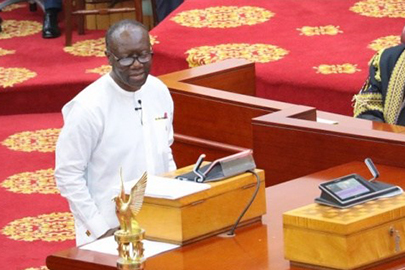
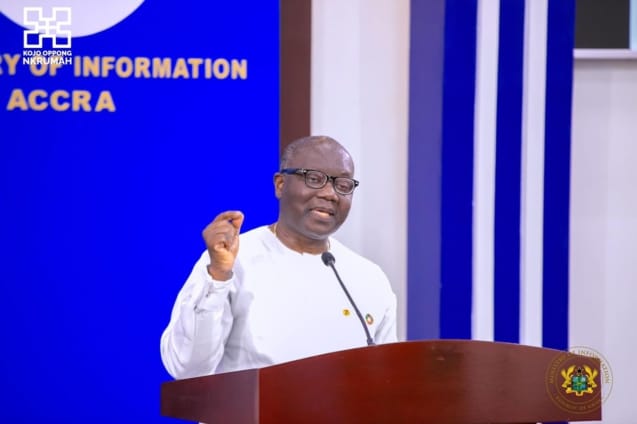
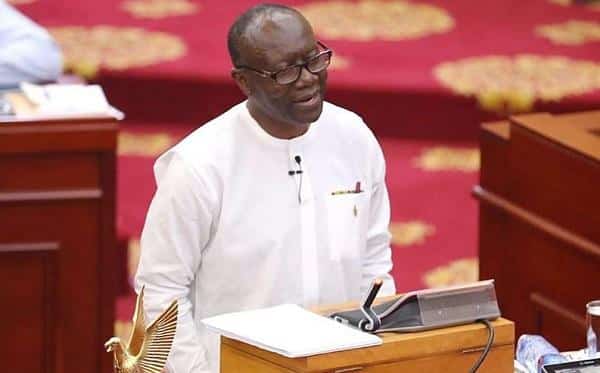
    The dilapidated Accra-Tema motorway is set to undergo reconstruction, according to Finance Minister Ken Ofori-Atta.

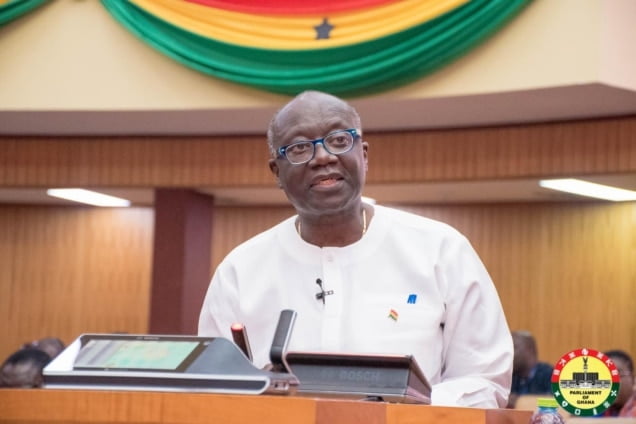
    In Parliament on November 15, while presenting the 2024 budget statement, Mr Ofori-Atta revealed that “preparation for the reconstruction of the Accra-Tema Motorway under the Road Sector’s Public Private Partnerships (PPP) with Ghana Infrastructure Investment Fund (GIIF) is on course.”

    The Concession Agreement and draft Engineering Procurement and Construction (EPC) agreement, he noted, have been approved by
    Cabinet and will be submitted to Parliament for approval “shortly.”

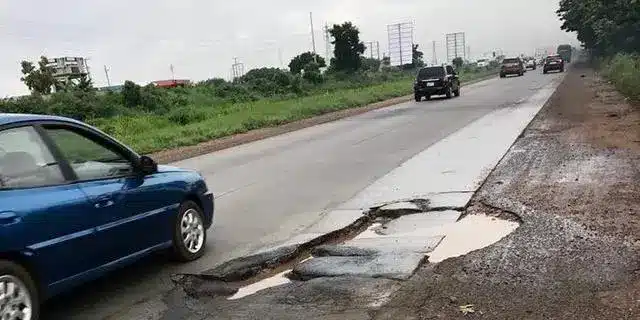
    The Accra-Tema motorway is currently filled with potholes, which has led to several road accidents and adversely impacted the durability of cars on the road. As such, many called on the Ministry of Roads to take charge and have the challenges addressed.

    The Finance Minister noted that the government’s infrastructure progamme will also be anchored on strong private sector collaboration.

    “Government will continue to pursue the Mining Sector Roads rehabilitation projects to improve the road network in mining communities,” he added.

    Ongoing and completed road projects by the government

    • Kumasi Lake Road and Drainage Extension project (completed)
    • Reconstruction of Bechem-Techimantia-Akomadan road (71 percent complete)
    • Construction of the Flyover on the Accra-Tema Motorway from the Flowerpot roundabout (60 percent complete)
    • Phase 2 of the Tema Motorway Roundabout (including construction of the 3rd tier of the interchange) is 56 percent complete
    • Construction of 4 major by-passes at Osino, Anyinam, Enyiresi and Konongo along the Accra-Kumasi Highway commenced in 2023 and are at various stages of completion.
    • Reconstruction of Agona Nkwanta-Tarkwa road (44 percent complete)
    • Dualization of Ho Main Roads (Sokode-Gborgame-Civic Centre) and Traffic Management Works (10.5km) is complete
    • Selected Roads in Sekondi and Takoradi Phase 1 (28 percent completed)
    • Dualization of Nsawam-Ofankor road (including widening of the road to 10–lanes with a 6–lane expressway and 4–lane service road with interchanges at Amasaman, Pobiman, Medie and Nsawam Junction) (30 percent completed)
    • Construction of a 4-tier interchange at Suame in the Ashanti Region has commenced

    The following projects under the Master Project Support Agreement (MPSA) with Sinohydro Corporation Limited have been completed:
    i. Tamale Interchange Project (100 percent);
    ii. Western Region and Cape Coast Inner City Roads- 32.19km (100
    percent);
    iii. Construction of Hohoe-Jasikan–Dodi-Pepesu – 66.4km (100 percent);
    iv. Upgrading of Selected Feeder Roads in Ashanti and Western Regions –
    68km (100 percent);

    However, the following are at various stages of completion:
    i. Sunyani Inner City Roads (39km) – 81 percent completed;
    ii. Construction of Sunyani and Berekum Inner City Roads (39km) – 81
    percent complete; and
    iii. PTC roundabout interchange project, Takoradi – 80 percent complete.

  • Why govt has failed to totally remove taxes on sanitary pads

    Why govt has failed to totally remove taxes on sanitary pads

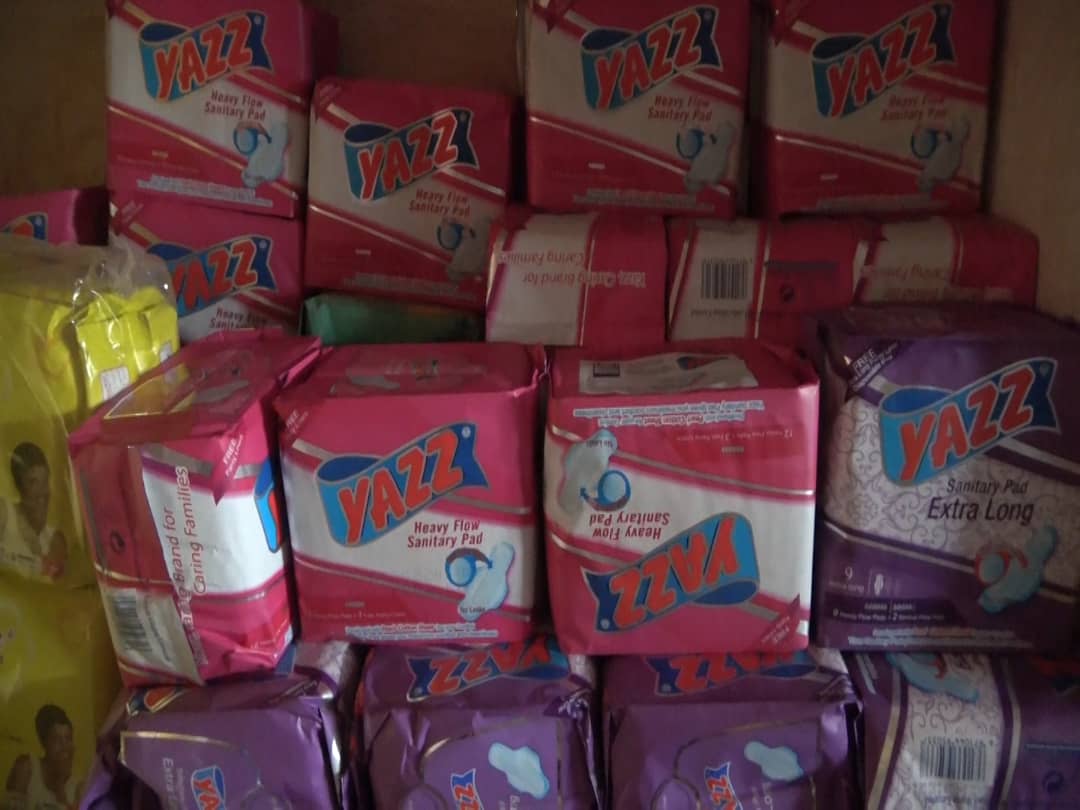
    Government has failed to totally scrap the taxes on sanitary pads in its 2024 budget statement presented by Finance Minister, Ken Ofori-Atta today.

    According to the Finance Minister, this is because, in the short term, fiscal sustainability requires that the country improve its tax ratios significantly; otherwise, its long-term competitiveness will be eroded despite believing in lower taxes for industry.

    In the interim, government says it is considering some reliefs that have been prioritised for implementation.

    Among these reliefs is a zero-rate VAT (value-added tax) on locally produced sanitary pads.

    Also, the government is looking at granting import duty waivers for raw materials for the local manufacture of sanitary pads.

    This implies that the cost of local sanitary products will decline when implemented. However, imported sanitary pads will continue to see the current taxation measure.

    Sanitary products are currently enlisted in chapter 96 of the Harmonized System, and that attracts a 32.5% tax on imported sanitary pads, which comprises a 20% import duty and a 12.5% Value Added Tax

    The other relief measures are as follows:

    • Extend zero rate of VAT on locally manufactured african prints for two (2) more years.
    • Waive import duties on import of electric vehicles for public transportation for a period of 8 years.
    • Waive import duties on semi-knocked down and completely knocked down Electric vehicles imported by registered EV assembly companies in Ghana for a period of 8 years;
    • Extend zero rate of VAT on locally assembled vehicles for 2 more years;
    • Grant exemptions on the importation of agricultural machinery equipment and inputs and medical consumables, raw materials for the pharmaceutical industry;
    • A VAT flat rate of 5 percent to replace the 15 percent standard VAT rate on all commercial properties will be introduced to simplify administration.
  • Government targets GHC176.4bn revenue for 2024

    Government targets GHC176.4bn revenue for 2024

    Government’s revenue mobilisation target for next year has been pegged at GH¢176.4 billion, which is equivalent to 16.8 percent of the Gross Domestic Product (GDP).

    According to the Finance Minister, Ken Ofori-Atta, the projected revenue included monies generated internally and grants that will be provided to the country.

    Mr Ofori-Atta made this information public on Wednesday when he appeared before Parliament to present the 2024 budget statement.

    On the other hand, the government projects that its expenditures for 2024 will exceed the amount of revenue it generates. “Total Expenditure (commitment) is projected at GH¢226.7 billion (21.6 percent of GDP),” Mr Ofori-Atta said.

    Based on the estimates for total revenue & grants and total expenditure (including arrears clearance), the overall budget balance to be
    financed is a fiscal deficit of GH¢ 61.9 billion, which is equivalent to 5.9 percent of GDP.

    The Finance Minister also used the opportunity to provide details on how the country performed fiscally in the first eight months of this year. They are as follows:

    i. Total Revenue and Grants was GH¢79.1 billion (9.3 percent of GDP), 2.8 percent lower than the programmed target of GH¢82.2 billion (9.6 percent of GDP);

    ii. Total Expenditure (Commitment) was GH¢104.6 billion (12.2 percent of GDP), 14.1 percent lower than the target of GH¢121.8 billion (14.2 percent of GDP);

    iii. Primary Expenditure (Commitment) was GH¢84.7 billion (9.9 percent of GDP), 6.0 percent lower than the target of GH¢90.1 billion (10.5 percent of GDP);

    iv. Primary Balance (Commitment) was a deficit of GH¢5.5 billion (0.7 percent of GDP) compared to the target deficit of GH¢7.9 billion (0.9 percent of GDP);

    v. Overall Fiscal Balance (Commitment) was a deficit of GH¢25.4 billion (3.0 percent of GDP) compared the target deficit of GH¢39.6 billion (4.6 percent of GDP); and

    vi. Overall Fiscal Balance (Cash) was a deficit of GH¢26.1 billion (3.0 percent of GDP) compared the target deficit of GH¢44.6 billion (5.2 percent of GDP).

  • Ghana’s economy will be valued at GHC1 trillion under Akufo-Addo – Ken Ofori-Atta

    Ghana’s economy will be valued at GHC1 trillion under Akufo-Addo – Ken Ofori-Atta

    The Ghanaian economy is expected to be valued at over GH¢1 trillion in 2024 under the administration of President Akufo-Addo, according to the Finance Minister.

    Finance Minister Ken Ofori-Atta made the projection during his presentation of the 2024 budget statement in Parliament today.

    According to him, from the GH¢219.5 billion Gross Domestic Product (GDP) in 2016, the economy will increase by over GH¢750 billion.

    “Mr. Speaker, the 2024 Budget is even more significant because we will cross the GH¢1 trillion Gross Domestic Product (GDP) mark for the first time in our economic history.

    “Let me repeat, Mr. Speaker, Ghana’s economy under President Akufo-Addo’s final year in office is projected to be valued over GH¢1
    trillion in 2024 from the GH¢219.5 billion in 2016,” he said.

    He noted that the government’s task now and in the medium-term is two-fold: to maintain stability and to keep on growing.

    “We are determined to remain on this course of increased growth, currency stability, and disinflation over the medium-term. Our future
    growth prospects are certainly brighter.

    He expressed optimism that the ”Nkunim” Budget will ensure that “we boldly walk on a sustainable path toward creating decent jobs and wealth for our people.”

    “For with national dedication, the Lord will continue to give us treasures of dark places and hidden riches in secret places,” he added.

  • Issues of high taxes, rising cost of doing business will be dealt with in 2024 – Finance Minister

    Issues of high taxes, rising cost of doing business will be dealt with in 2024 – Finance Minister

    The Finance Minister, Ken Ofori-Atta, has revealed that the 2024 budget will introduce programs and initiatives aimed at tackling the elevated cost of conducting business in the country.

    He also provided assurance that the budget would address concerns about excessive and numerous taxes that impact the private sector.

    Mr. Ofori-Atta shared this during an appearance on the PM Express Business Edition with host George Wiafe on October 19, 2023.

    “It’s very important that looking at where we are as country , everything must be done to support the private sector to help them play a critical role in the recovery of the economy”, he said.

    “We have met all the interest groups from the private sector and their concerns will definitely be taken on board when it comes to the 2024 budget,” he promised.

    Mr. Ofori-Atta further stated that the ministry has engaged in discussions with all relevant stakeholders and labor unions.

    “We have also met with Association of Ghana Industries, Ghana Chamber of Commerce and Industry, and the Ghana Union of Traders Association, and predominately issues about taxes have been their major priority and we have to deal with it”, he said.

    He mentioned that there will be a Mutual Prosperity Dialogue with the private sector before the budget presentation.

    Regarding the budget’s focus, the Finance Minister also revealed that the government is actively working to restore the stability of the private sector.

     “This is because government cannot do everything, so the private sector needs to be supported to help managers of the economy, when it comes to job creation”, he added.

    As per Ghana’s Financial Administration Act, Parliament is required to consider and approve the Annual Budget for the upcoming financial year by December 31 of each financial year. Following this directive, the 2024 Budget should be presented by the end of November 2023. This schedule will provide sufficient time for Parliament to thoroughly examine and discuss the budget before the start of the New Year.

    The Finance Minister also revealed that the 2024 Budget will be influenced by the Post-COVID Programme for Economic Growth, which is supported by the IMF. This program includes various initiatives aimed at aiding the economic recovery.

    “We are targeting to present the Budget to parliament by November 15 2023” the Finance Minister disclosed.

    The Finance Minister further revealed that the government is set to implement programs designed to expand the economy and maintain the recent recovery. Additionally, he mentioned that the government is aiming for growth to surpass 2.5 percent by December 2023.

    “The IMF expected Ghana to do averagely about 1.5 percent, but they have already indicated that they will be reviewing that projection going forward. We believe that we are going to do better when it comes to the expansion of the economy,” he said. 

    “We are committed to instituting programmes that will help sustain the numbers that we are witnessing when it comes to growth,” he added.

    Mr. Ofori-Atta emphasized that the government is committed to addressing youth unemployment and will be introducing new programs to tackle this issue effectively.

  • Govt has completed re-evaluation of Free SHS, other programmes – Finance Minister

    Govt has completed re-evaluation of Free SHS, other programmes – Finance Minister

    With the support of the World Bank, the government has successfully concluded the process of rationalizing certain social intervention programs, including the Free Senior High School (SHS) initiative.

    Some of these programs have drawn increased attention from the nation’s development partners due to concerns about rising expenditures.

    The primary objective is to encourage the government to reduce the country’s growing debt burden and create additional fiscal space. As part of this rationalization, certain programs may undergo reviews regarding their funding.

    Finance Minister Ken Ofori-Atta will provide further insights into this development during an upcoming episode of the PM Express Business Edition, scheduled to air on Thursday, October 19, 2023.

    “These are parts of the structural benchmarks that were needed for the (IMF) approval,” he said.

    Mr. Ofori-Atta emphasized the importance of reviewing these programs to facilitate the disbursement of approximately $500 million by the World Bank under the IMF program for Ghana by December 2023.

    He further revealed that a total of around 17 programs were evaluated and will be included in the 2024 budget, with comprehensive information provided.

    Characterizing the forthcoming funds from the World Bank as well-timed, Mr. Ofori-Atta underscored that this development underscores the government’s commitment to meeting all the necessary benchmarks for fully restoring the economy to a path of recovery.

    “If you look at everything, it continues to show the favour that we have found and the hard break that we have done”, he said.

    Additionally, Mr. Ofori-Atta mentioned that the Ghana Financial Stabilization Fund will lead to an injection of approximately $250 million from the World Bank to bolster this financial institution.

    He expressed optimism that this funding will contribute to the reinforcement of bank recapitalization efforts, especially local banks that have been significantly impacted by the Domestic Debt Exchange Programme.

  • Job creation must be the focus for 2024 – Govt told

    Job creation must be the focus for 2024 – Govt told

    The Ghana Federation of Labour (GFL) is anticipating that the 2024 Budget will place a significant emphasis on generating employment opportunities in both the public and private sectors.

    The organization underscores the government’s responsibility to implement practical measures aimed at strengthening the economy.

    GFL is advocating for the enactment of robust economic policies designed to bolster revenue collection, foster job creation, and promote private sector growth.

    Additionally, it is urging the government to take actions to reduce the cost of living and eliminate taxes that hinder the growth of businesses, regardless of their size, be it small, medium, or large enterprises.

    In a document addressed to the Minister of Finance, Ken Ofori-Atta, titled “GFL’s Inputs for the Formulation of the 2024 Budget Statement and Government Economic Policy,” the federation highlighted the persistent issue of unemployment, emphasizing that it poses a significant national security concern, especially with the ongoing rise in youth unemployment in Ghana.

    The paper, co-signed by Caleb Nartey and Abraham Koomson, President and Secretary General of GFL, respectively, pointed out that the local textile manufacturing industry once provided employment for over 25,000 individuals.

    However, it has faced severe challenges, resulting in the reduction of its workforce to less than 2,000 employees. The main difficulties cited were related to unfair competition from imported pirated and smuggled printed fabrics.

    The Federation said the Finance Ministry granted zero VAT to the sector to help revive the local manufacturing companies, but “unfortunately, the VAT exemption would be terminated by December 2023.

    “The recovery of the sector is gradual and yet to overcome the debilitating challenges to improving employment capacity.

    “The GFL submits that an extension of the zero VAT regime for seven years is critical to saving the ailing industry from collapse. The industry currently provides jobs for over 3,000 Ghanaians”.

    The GFL has suggested a revision of the Minerals and Mining Act of 2006, with a specific focus on Section 25, which currently mandates a royalty rate increase from 6 percent to approximately 15 percent.

    In line with GFL’s recommendations, this review should extend to the existing taxation structures for mining concessions, with the aim of boosting government revenue.

    “It is the GFL’s honest position that a proper fiscal assessment of the natural resource sector will offer better insight into what opportunities exist for the government to leverage to mobilise the required revenue to prosecute government business.

    “The government must be committed to the review of its flagship programmes, such as the Free SHS, Planting for Food and Jobs, One-District, One-Factory, Infrastructure for Poverty Eradication Programme, Ghana School Feeding Programme, Railways Development, Agenda 111, and Coastal Fish Landing Sites.

    “Is it the firm position of the Federation that a critical assessment is conducted to determine the viability of these projects with respect to the size of the resources invested and the corresponding short-term benefit to the state?

    “Further, the outcome of such a comprehensive assessment should offer some suggestions on protecting the vulnerable in society, creating jobs, and promoting a sound economic and fiscal outlook”.

    In preparation for the forthcoming presentation of the 2024 budget and in accordance with Section 21(1) of the Public Financial Act 2016 (Act 921), the Ministry of Finance has formally requested labor unions and specific interest groups to provide their input for inclusion in the 2024 Budget and Economic Policy.

  • IMF pushes govt to seek debt relief from foreign creditors before next bailout tranche

    The International Monetary Fund (IMF) is nudging the Ghanaian government to reach an agreement on external debt restructuring with the Official Creditor Committee.

    Director of Communications at the IMF, Julie Kozack, noted during a press conference that the agreement must be done within the shortest possible time as discussions are ongoing.

    “The next steps on debt restructuring are for the Official Creditor Committee to agree with the authorities on the specific modalities of debt relief and for the authorities to continue to engage with their external private creditors for relief on their external debt. These discussions are ongoing, and we hope that the OCC, the Official Creditor Committee, and the Ghanaian authorities will find an agreement soon. The government has recently finalized the restructuring of its domestic debt”, Julie Kozack said.

    Ghana’s total debt, which amounts to $52.3 billion, has over half of it owned by external creditors, including Eurobond holders and certain banks. Consequently, a substantial reduction from external creditors is seen as crucial for the country’s efforts to significantly reduce its debt burden.

    Both UK-based Fitch Solutions and the Economist Intelligence Unit (EIU) share the belief that Ghana will reach an agreement with the Official Creditor Committee by the end of the year, paving the way for the commencement of external debt restructuring.

    An IMF Mission is presently in Accra, Ghana, to evaluate performance and engage in discussions regarding policies for the first review of the program. The objective is to present this review to the Executive Board in November 2023.

    Ghana’s program encompasses three key goals: restoring macroeconomic stability, ensuring the sustainability of debt, and establishing the groundwork for increased and more inclusive economic growth. The program includes a comprehensive set of reforms aimed at enhancing resilience while safeguarding the most vulnerable segments of the population.

    Regarding the sub-Saharan Africa region, Julie Kozack mentioned that the Fund will be publishing its regional economic outlook in the forthcoming weeks.

    “We will be releasing that outlook and that will contain detailed information on the region. I think it’s fair to say that the region is still undergoing what we called in April [2023] the big funding squeeze. The region has been very much affected by the succession of shocks, the pandemic, the cost of living crisis, food insecurity. And in addition, the region has been affected, of course, by tightening global financial conditions, and that has led to what we’re calling the funding squeeze”.

    “All of that has happened in a situation where the region is facing also, in some countries, high debt. So the challenges, of course, are very significant in Africa. But I would be remiss if I don’t also mention the opportunities in the sense that Africa is a continent with a youthful population, which presents tremendous opportunities for the region as well”.

  • Alan Kyerematen faults Ofori-Atta for Ghana’s economic woes

    Former Minister of Trade and Industry, Alan Kyerematen, has shifted blame for the country’s current economic challenges to the Minister of Finance, Ken Ofori Attah.

    Alan, who resigned as Trade Minister earlier this year to vie for the NPP’s flagbearership, recently left the NPP to run as an independent candidate.

    During an interview on UTV on Tuesday, September 26, Alan, a former member of the government’s Economic Management Team, sought to distance himself from responsibility for the country’s current economic difficulties. He emphasized that the Finance Minister has the ultimate authority to make decisions on economic matters.

    “The Minister of Finance is the one who oversees the economy,” said Alan Kyerematen.

    “He is in charge and he takes the final decision. I can only make contributions but he makes the final decision,” Alan said, as he rebuffed suggestions that as a member of the EMT, he should share in the blame

    “I cannot take responsibility for decisions made by the finance minister. Is that what you are asking me to do?” he noted.

  • Ghana banned for 32-months from global bond market – Economist alleges

    Ghana banned for 32-months from global bond market – Economist alleges

    Chartered economist, Bernard Oduro Takyi, has alleged that Ghana is facing a 32-month suspension from the international bond markets due to allegations of economic mismanagement and the implementation of the Domestic Debt Exchange Programme (DDEP).

    This suspension has effectively prevented Ghana from accessing funds through international bond markets. Mr. Takyi made this revelation in response to the Finance Minister’s claim that the Ghanaian economy is rebounding, which has led to continued loans from donor partners.

    He challenged the Finance Minister to try borrowing from the bond market if the economic situation is as positive as claimed.

    During an interview on Accra 100.5 FM’s mid-day news on September 18, 2023, Mr. Takyi emphasized that there is a 32-month injunction on Ghana’s ability to access the international bond market.

    He expressed concern that it could take Ghana approximately 50 years to recover from the current economic challenges, which he attributed to the actions of the Finance Minister, the Bank of Ghana, and other state institutions.

    Mr. Takyi also criticized the Finance Minister for engaging in public relations efforts on behalf of the Bank of Ghana, especially in light of allegations that the bank had printed around 38 billion Ghana Cedis for the government.

    “The Finance Minister in an article titled: ‘Citizens – Standing Strongly With The Bank of Ghana’, hinted at certain corporate governance amendments at the central bank.
    “As the Minister of Finance, I do have opinions about the reforms needed to strengthen the governance of many financial institutions including the Bank of Ghana”, he said, indicating: “But this requires a positive and sober national debate on the governance structure”.
    The analyst said that the country’s economic development, which was tallied under the National Democratic Congress administration led by former President John Dramani Mahama, was cosmetic rather than true growth.

  • ‘Addison is a competent professional’ – Finance Minister dismisses #OccupyBoGprotest by Minority

    ‘Addison is a competent professional’ – Finance Minister dismisses #OccupyBoGprotest by Minority

    Minister for Finance, Ken Ofori-Atta has expressed his backing for the Governor of the Central Bank, Dr Ernest Addison, to remain in his position.

    He opposes the Minority’s call for his removal or resignation in the wake of the Bank of Ghana’s financial losses in 2022.

    In a write-up on September 14, the Finance Minister asserted that Dr. Ernest Addison is a dedicated professional who is actively contributing to the country’s development.

    “Governor Addison is a competent professional of quiet courage. In these nearly seven years, we have worked together to ensure: the inviolability of the banking system; the establishment of the Consolidated Bank of Ghana (CBG) and the Development Bank of Ghana; the raising of over $10 billion in the Eurobond market and AfriExim bank.”

    “He brought inflation down to single digits of 7.9% for the first time; and managed an impressive period of currency stability in our country including the implementation of the Gold-for-Oil programme.

    “It is either simply the height of irony or a sad reflection of the state of public discourse in our country that this man, steps up in a period of unprecedented global economic meltdown and domestic economic crises, and he is being pilloried for his good work.”

    The Minority in Parliament has criticized the Governor of the Central Bank and his deputies following the announcement of a GH¢60.8 billion loss for the year 2022.

    Dr. Cassiel Ato Forson, the Minority Leader, has raised concerns about Dr. Ernest Addison’s decision to allocate $250 million for the construction of a new central bank headquarters while the Bank is facing financial challenges. He has accused the BoG Governor of resorting to printing money to fund this project.

    “The Bank of Ghana does not have money but spending $250 million for a new head office, which means he is printing additional money to finance this project,” Dr Forson alleged.

    During a news conference held on Monday, August 8, Minority Leader Dr. Forson declared that if Dr. Addison and his deputies do not step down from their positions, the NDC will organize and rally concerned citizens to occupy the central bank.

    But in a response, the BoG explained that the current “building also does not have the required strength to withstand the expected imposed significant earthquake loads that would be expected to occur in the Accra area.

    It said, “Based on the above and looking at the strategic objective of positioning Ghana as the financial hub of the subregion, with prospects of a potential Headquarters for a future regional Central Bank, the Board and Management of the Bank considered a new Head Office building as the most important priority project to support the operational efficiency of the Bank.”

    The Bank said it also places it “in a very good position to be the host of the regional Central Bank as we currently host the West African Monetary Institute (WAMI) of the Sub-region.” 

    On the matter, the Finance Minister has appealed to the Ghanaian populace for their support in the construction of the new headquarters for the Bank of Ghana (BoG).

    He emphasized that the central bank requires a modernized infrastructure to align with its evolving operations, especially as Ghana is the host country for The African Continental Free Trade Area (AfCFTA) headquarters and aspires to become the financial services hub of the continent.

    “With respect to the BoG’s new headquarters, the evidence is clear that decisions to build had already been made long before these ‘losses’ occurred.”

    “It is important for us to support such a critical institution to modernise its operations and have a befitting office space for a country that hosts the AfCFTA and has the vision to become the financial services hub of the continent.”

  • Bond payments shows government’s dedication to success – Deputy finance minister

    Bond payments shows government’s dedication to success – Deputy finance minister

    The payment of the first coupons under the Domestic Debt Exchange Programme (DDEP) is a sign of the government’s dedication to the program’s success, according to Deputy Finance Minister Dr. John Kumah.

    He added that the action done by the government solidifies the legitimacy of the domestic debt operations carried out by the government.

    On August 22, 2023, the deputy minister stated that the payment of the bonds will increase investor confidence on Citi FM’s Eyewitness News.

    John Kumah said, “This is a confirmation of the government’s commitment to the continued success and credibility of the domestic debt operations that the government undertook in the early part of the year.”

    “It is a good thing, and it assures the market of confidence and the government will continue to keep to its obligations as far as the debt operations and restructuring is concerned,” he added.

    The Deputy Minister of Finance provided reassurance to the citizens of Ghana, particularly those holding government bonds, regarding the government’s unwavering dedication to fulfilling its responsibilities. The commitment entails making the appropriate payments once all the coupon payments have reached their maturity dates.

    On Tuesday, August 22, 2023, the Ministry of Finance declared that the initial matured coupons from bonds issued as part of the Domestic Debt Exchange Programme (DDEP) were prepared for distribution.

    This announcement was made by the ministry through a post on the microblogging platform Twitter, which was previously referred to as X.

  • GN Savings And Loans Collapse: Ex employees call on Finance Minister, BoG to reinstate the firm

    GN Savings And Loans Collapse: Ex employees call on Finance Minister, BoG to reinstate the firm

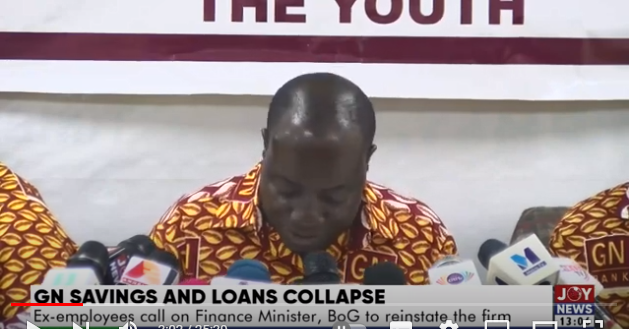
    Concerned ex-employers of GN Savings And Loans Bank have appealed to government to issue an executive order for the Governor of Bank of Ghana, Dr Ernest Addison to reinstate the firm.

    Speaking at a press conference to commemorate 4 years of the license revocation, the convenor of the group, Kofi Fosu said, the move will restore lost jobs and strengthen the jeopardized economy.

    “Life after the revocation of GN license has been terrible nightmare for majority of the employees. Most ex-staff have remained jobless as a result of the limited job opportunities in the country as well as the stigmatization associated with the revocation of licence.”

    Mr. Ofosu explained that it is imperative for them to get rid of the stigma that is likely to influence other employers to deny them job opportunities.

    He added that the revocation of the license has had an adverse effect on their pension.

    “Majority of the ex-employees are unable to make contributions towards their pensions for the last 4 years since revocation.”

    The Bank of Ghana revoked the licences of twenty-three (23) insolvent savings and loans companies and finance house companies (see Annex 1) on 16th August, 2019.

    These actions were taken pursuant to Section 123 (1) of the Banks and Specialised
    Deposit-Taking Institutions Act, 2016 (Act 930), which requires the Bank of Ghana to
    revoke the licence of a Bank or Specialised Deposit-Taking Institution (SDI) where the
    Bank of Ghana determines that the institution is insolvent.

    The revocation of the licences of these institutions became necessary because they
    are insolvent even after a reasonable period within which the Bank of Ghana has
    engaged with them in the hope that they would be recapitalized by their shareholders
    to return them to solvency.

    Below are the list of Banks that were closed down by BoG;


    1 Accent Financial Services Ltd. Finance House
    2 Adom Savings and Loans Ltd. Savings and Loans Company
    3 AllTime Finance Ltd. Finance House
    4 Alpha Capital Savings and Loans Ltd. Savings and Loans Company
    5 ASN Financial Services Ltd. Savings and Loans Company
    6 CDH Savings and Loans Ltd. Savings and Loans Company
    7 Commerz Savings and Loans Ltd. Savings and Loans Company
    8 Crest Finance House Ltd. Finance House
    9 Dream Finance Company Ltd. Finance House
    10 Express Savings and Loans Company Ltd. Savings and Loans Company
    11 First African Savings & Loans Company Ltd. Savings and Loans Company
    12 First Allied Savings and Loans Co. Ltd. Savings and Loans Company
    13 First Ghana Savings and Loans Co. Ltd. Savings and Loans Company
    14 FirstTrust Savings and Loans Ltd. Savings and Loans Company
    15 Global Access Savings and Loans Company Ltd. Savings and Loans Company
    16 GN Savings and Loans Ltd. Savings and Loans Company
    17 Ideal Finance Ltd. Finance House
    18 IFS Financial Services Ltd. Finance House
    19 Legacy Capital Savings and Loans Ltd. Savings and Loans Company
    20 Midland Savings and Loans Company Ltd. Savings and Loans Company
    21 Sterling Financial Services Ltd. Finance House
    22 Unicredit Savings and Loans Ltd. Savings and Loans Company
    23 Women’s World Banking Savings and Loans Co.
    Ltd.

  • Dismissal calls justified, but I had “a duty to serve” – Ken Ofori-Atta

    Dismissal calls justified, but I had “a duty to serve” – Ken Ofori-Atta

    Finance Minister, Ken Ofori-Atta, has acknowledged that the calls for his removal from office were valid within the context of the nation’s democratic structure.

    In an interview with GTV over the weekend, Mr. Ofori-Atta emphasized that, as a public figure, people possess the right to voice their demand for his dismissal.

    However, he noted that he was incapable of abandoning the country when it mattered most.

    “In the period of censure, in which Parliament then voted against it, but more importantly, you were in a situation where you were battered and broken. [But] you do not leave a ship at that time. And given the urgency of ensuring the IMF programme goes through, for me, it was a duty to serve, and there was no running away from it,” the Finance Minister said.

    In 2022, the Finance Minister encountered criticism, with certain members of the New Patriotic Party (NPP) advocating for his removal, holding him accountable for the country’s economic difficulties.

    Furthermore, the National Democratic Congress presented a censure motion aimed at his expulsion, citing reasons such as significant incompetence and potential conflicts of interest.

    The MPs cited the following reasons as justification to revoke Ken Ofori-Atta’s appointment:

    • Despicable conflict of Interest ensuring that he directly benefits from Ghana’s economic woes as his companies receive commissions and other unethical contractual advantage. particularly from Ghana’s debt overhang.
    • Unconstitutional withdrawals from the Consolidated Fund in blatant contravention of Article 178 of the 1992 Constitution supposedly for the construction of the President’s Cathedral;
    • Illegal payment of oil revenues into offshore accounts in flagrant violation of Article 176 of the 1992 Constitution;
    • Deliberate and dishonest misreporting of economic data to Parliament
    • Fiscal recklessness leading to the crash of the Ghana Cedi which is currently the worst performing currency in the world;
    • Alarming incompetence and frightening ineptitude resulting in the collapse of the Ghanaian economy and on excruciating cost of living crisis;
    • Gross mismanagement of the economy which has occasioned untold and unprecedented hardship.

    Amid the vote to remove the Finance Minister from his position, the Majority staged a walkout, preventing the Minority from forming the quorum needed for Mr Ofori-Atta to be removed from office.

    The proponents of the motion needed the votes of 183 legislators to have the motion passed against Mr. Ofori-Atta.

  • Finance Minister says BoG’s GHS60.8bn loss is a technical loss

    Finance Minister says BoG’s GHS60.8bn loss is a technical loss

    Finance Minister Ken Ofori-Atta has confirmed reports that the Central Bank registered a loss of GH¢60.8 billion in its audited financial statement for the fiscal year 2022.

    However, the Finance Minister noted that the loss recorded is technical, as “it is not monies that was given that will never be paid.”

    Mr Ofori-Atta made this known during an appearance on GBC’s Talking Point programme over the weekend.

    He further explained that these losses were accrued after the Central Bank failed to balance its assets, liabilities, and shareholders’ equity. According to the Finance Minister, some revenue as interest that should have been generated by the Central Bank could not come through.

    “The issue of debt exchange, in which certain interest was expected to be paid had been cut, resulting in those type of losses. Then you’ll have to impair the balance sheet because of expected revenue that was coming will not come. So that is what is happening”, he further explained.

    The BoG attributes this substantial loss primarily to the government’s actions in debt restructuring.

    Meanwhile, the Finance Minister, has expressed confidence in BoG’s ability to reclaim all its losses.

    “As I told you, the impairment on the banks was also quite dramatic. The first half year, we have seen a strong response from them. It’s the same way in which the balance sheet of restructuring is also occurring at the Central Bank and will build up towards reclaiming where we should be”, he concluded.

  • Palgrave Boakye-Danquah lauds Ofori-Atta; labels him “best Finance Minister in 4th Republic”

    Palgrave Boakye-Danquah lauds Ofori-Atta; labels him “best Finance Minister in 4th Republic”

    Government representative specializing in governance and security matters, Palgrave Boakye-Danquah, is against the assertion that Finance Minister Ken Ofori-Atta is incapable of handling the country’s economy.

    The Finance Minister’s competence has been questioned by many as Ghana faces an economic crisis.

    Critics of Ken Ofori-Atta argue that had he effectively managed the country’s finances, there would have been no need for the nation to seek assistance from the International Monetary Fund (IMF) for a bailout.

    But according to Palgrave Boakye-Danquah, Mr Ofori-Atta has been more than helpful. He noted that the Finance Minister has been able to stabilise the economy despite the many challenges.

    “How can you label someone who was able to produce single digit for 2017, 2018 and 2019 as the worst Finance Minister in history? I must state emphatically that the honourable Ken Ofori-Atta is the best Finance Minister this country has ever had under this 4th republic…,” he said.

    He stated that under Ken Ofori-Atta’s leadership at the Finance Ministry, a process of scrutiny has been initiated, leading to the revelation of numerous instances of corruption previously perpetrated by former ministers in the same role.

    “His censorship at the Ministry helped to unearth the massive corruption at the ministry an how they badly negotiated the IPP deals. We have also seen how this has helped to renegotiate this deals and helped the country to save up to about US $4 million…,” he said.

    To him, critics of the Finance Minister are only just grateful and playing politics ‘because for me, he is one of the most wisest, smartest, most intelligent and more respectable finance minister under this fourth republic…,” he said.

  • T-Bills won’t be part of debt exchange program – Ofori-Atta

    T-Bills won’t be part of debt exchange program – Ofori-Atta

    Minister of finance, Ken Ofori-Atta, has promised that the government will not include Treasury Bill instruments in its Domestic Debt Exchange Program (DDEP).

    He added that the country’s inability to access the global capital markets as a result of the current economic crisis forces the government to focus on the domestic market in order to restore macroeconomic stability and achieve debt sustainability.

    “I can very comfortably say that that Treasury Bills will not be touched in the on-going DDEP. We are not ready to go into the international capital market as the pricing will be horrendous with credit downgrades being placed on most economies.”

    “We are keeping borrowing externally low and therefore we must work within the domestic market and that has to have the confidence and trust that is required.”

    On Sunday, August 6, 2023, during an interview on GTV’s Talking Point program, Finance Minister Ken Ofori-Atta made this statement.

    In the meantime, the government has started a second phase of DDEP that targets pension funds, local bonds denominated in US dollars, and cocoa bills.

    The choice is one of the requirements set by the Ghanaian government in order to get a second tranche of a bailout credit facility from the IMF worth $600 million.

  • The game is not over because Ofori-Atta is “turning the corner,” deputy finance minister on mid-year budget

    The game is not over because Ofori-Atta is “turning the corner,” deputy finance minister on mid-year budget

    The recent “turning the corner” remark made by the finance minister, Ken Ofori-Atta, at the 2023 mid-year budget review in parliament, according to deputy finance minister Dr. John Ampontuah Kumah, has drawn criticism.

    He asserts that the phrase does not imply that the nation’s economic problems have been fully handled but rather that it has made some progress and can now clearly see a road to recovery.

    “Let me start with the meaning of turning the corner and how it’s being interpreted. Clearly, the Minister for Finance spoke with all humility and he understands the challenging current global and domestic financial situation we find ourselves in.

    “So our choice of the phrase ‘turning the corner’ should not in any way be interpreted as we are out of the woods so we have seen full recovery but as we can understand from the metaphor, when you’re driving and you turn the corner, it means you see a way clearer. It means that your path is rather now straight to a better destination.

    “So let us not misinterpret the phrase when we say we have turned the corner,” he said on JoyNews’ Newsfile on Saturday.

    He clarified that the minister’s use of the phrase was accurate because all the facts he presented during the budget review showed that the nation has, in fact, “turned the corner.”

    This, he continued, is further considered as evidence that the administration has already complied with some IMF recommendations.

    “Some finance experts have taken on the Finance Minister over his ‘turning the corner’ comment regarding the economy.

    “This ‘turning the corner’ is underpinned by the investments and sacrifices we have collectively made during this difficult period since March 2020,” said the Minister.

    “Mr. Speaker, we have turned the corner and, more importantly, we are determined to continue down that path. Soon, we expect the measures taken to result in economic activity greater than anything experienced in the history of the Fourth Republic. Our plans and programmes should soon lead to a sustained increase in domestic production, including manufacturing and farming, replacing many of the products that we are used to importing,” he said.

    However, according to Finance Lecturer Professor Godfred Bokpin, the government’s attitude of not carrying out fundamental duties is stunting the nation’s economic progress.

    According to him, this is because the government has stopped paying interest on its external debt and is not in good standing when it comes to paying contractors, such as Independent Power Producers (IPP), who have accumulated arrears.

    He claims that the government has not upheld its duties to significant economic interests.

    “The economy is not in full gear because we’re not honouring important obligations. They have suspended debt servicing on our external debt, we are not in optimal position with all payments to arrears to contractors, independent power producers, important stakeholders within the economy,” he said

    “So if you see some stability and you interpret it that to mean you have turned the corner, you may be surprised if pressures from all these begin to mount then you’ll see that the stability you’re talking about is actually not durable,” Prof Bokpin added.

  • Finance Minister ordered to present DDEP for Parliamentary consideration

    Finance Minister ordered to present DDEP for Parliamentary consideration

    Parliament has approved a minority motion that compels Finance Minister Ken Ofori-Atta to present the government’s Domestic Debt Exchange Programme (DDEP) to the House for evaluation.

    Speaker of Parliament Alban Bagbin has instructed Ken Ofori-Atta to provide comprehensive details to Parliament via its Finance Committee.

    The committee will then review the program and decide whether to endorse or reject it.

    During the motion’s presentation in the House, Minority Leader Dr. Cassiel Ato Forson contended that the Finance Minister should obtain Parliament’s consent before proceeding with debt restructuring.

    However, the Minister failed to go by it, according to Dr Ato Forson. He added that the Minister “decided to organise a press conference at the Ministry of Information and informed the nation without coming to Parliament.”

    He continued “If the Minister for any reason has decided to write off the debt that government owes to the central bank, it is only right for the Minister responsible for Finance to bring the document before us and to inform us that we are going to write off a certain debt.

    “The Minister cannot unilaterally write off debt owed to the central bank. It is for that reason that I request the Minister of Finance to present to us the details of government’s debt restructuring programme.”

    According to him, Parliament must be made to scrutinise and assess the impact of the programme.

    “Mr Speaker, it is not right for the Minister to take this major single policy initiative without parliamentary approval. Mr Speaker, I urge you to write to the Minister responsible for finance to direct him to present the entire debt restructuring programme,” he said.

    In reply, the Majority Chief Whip, Frank Annoh Dompreh, stated that the Majority faction does not object to the motion.

    He acknowledged it as a reasonable request from the initiators of the private member’s motion to call for the Finance Minister’s presentation of the DDEP details.

    Nevertheless, he highlighted that existing parliamentary procedures could address this matter. He suggested that the Finance Committee could deliberate on the issue and then present a suitable report to the plenary for discussion and approval.

    “When the Minority Leader was moving the motion, I turned to look at order 155. Mr Speaker, we have a Finance Committee of Parliament clothed with legal powers so for me, this matter should not have taken members to move a private member motion,” he said.

    The motion was then put to a vote by the Speaker of Parliament, Alban Bagbin and was approved.

    “The motion is accordingly adopted, Honourable members, what we’ve just done is to call upon the Minister to present the government debt restructuring programme for consideration by the House,” the Speaker said.

    He directed for the presentation to be done by the Finance Minister before Parliament’s Finance Committee, adding that the Committee will subsequently report a comprehensive detail to the House for consideration.

    “Chairman, Ranking member of the Committee of Finance should take up this matter. Get the Minister to appear before the Committee to present the government’s debt restructuring programme. The Committee together with the Ministry will deliberate over it, then the Committee will then submit what they have in the form of a report to the House for consideration either for adoption or rejection; I so direct.”

  • Vim Lady goes hard on Finance Minister over ‘turning the corner’ comment

    Vim Lady goes hard on Finance Minister over ‘turning the corner’ comment

    TV personality Afia Pokua, commonly known as Vim Lady, has voiced her criticism towards the Minister of Finance, Ken Ofori-Atta, for his assertion that Ghana has fully overcome its economic challenges.

    Addressing Parliament on the 2023 Mid Year Budget Review on Monday, July 31, Finance Minister Ken Ofori-Atta indicated that the “investments and sacrifices government
    made during this difficult period since March, 2020, are “turning the corner.”

    He further gave an assertive statement that “we have turned the corner” from the dire period of economic uncertainties and despondency Ghana faced.

    In response, Vim Lady expressed her dissenting viewpoint, contending that Ghana’s economy is, at most, in a state of stabilization, and the difficulties are far from resolved.

    She believes that the observed stability is primarily attributed to the oversight of Ghana’s affairs by the International Monetary Fund (IMF), rather than the actions solely taken by Ken Ofori-Atta.

    During her Egyaso Gyaso show on Okay FM, Vim Lady referenced a recent survey conducted by the Ghana Centre for Democratic Development (CDD-Ghana), which revealed that nearly 70% of Ghanaians hold the belief that the nation’s economy is moving in an unfavorable direction.

    Vim Lady is not the only media personality criticising the Finance Minister.

    General Manager of Citi FM & Citi TV, Bernard Koku Avle, disagrees with the Finance Minister’s assertion that government has been able to turn the corner with respect to the management of the economy.

    The conclusion that government has turned the corner, according to Mr Avle is a hasty decision taken by the government.

    He argued that the macro economic indicators remain troubling from their worsened state a year ago.

    According to him, July 2022 was when Ghana’s economic mess came to light with the cedi depreciating further and inflation skyrocketing.

    “In July, you had the dollar being bought for GH6, went to GH8 and by November it was around GH15.

    “Inflation moved from the 20s to the 50s. Reserves eroded. The major economic indicators all went south.

    “So if on 31st July 2023, the Minister of Finance comes and says we have turned the corner. Is he saying that from the context of the Economic managers or from economic agents,” he said.

    He argued that the macro figures themselves “don’t point in my view to a serious corner being turned.”

    Inflation eased from January but it has started picking up slightly again. Currency depreciation has stabilized but some people say the reason for that is because we are not making payments. We have accumulated 20 percent in our debt from end of last year to now,” he added.

  • TURNED THE CORNER: Bernard Avle’s strong reservation to Ken Ofori-Atta’s claim

    TURNED THE CORNER: Bernard Avle’s strong reservation to Ken Ofori-Atta’s claim

    General Manager of Citi FM & Citi TV, Bernard Koku Avle, disagrees with the Finance Minister’s assertion that government has been able to turn the corner with respect to the management of the economy.

    Addressing Parliament on the 2023 Mid Year Budget Review on Monday, July 31, Finance Minister Ken Ofori-Atta indicated that the “investments and sacrifices government
    made during this difficult period since March, 2020, are “turning the corner.”

    He further gave an assertive statement that “we have turned the corner” from the dire period of economic uncertainties and despondency Ghana faced.

    The conclusion that government has turned the corner, according to Mr Avle is a hasty decision taken by the government.

    He argued that the macro economic indicators remain troubling from their worsened state a year ago.

    According to him, July 2022 was when Ghana’s economic mess came to light with the cedi depreciating further and inflation skyrocketing.

    “In July, you had the dollar being bought for GH6, went to GH8 and by November it was around GH15.

    “Inflation moved from the 20s to the 50s. Reserves eroded. The major economic indicators all went south.

    “So if on 31st July 2023, the Minister of Finance comes and says we have turned the corner. Is he saying that from the context of the Economic managers or from economic agents,” he said.

    He argued that the macro figures themselves “don’t point in my view to a serious corner being turned.”

    Inflation eased from January but it has started picking up slightly again. Currency depreciation has stabilized but some people say the reason for that is because we are not making payments. We have accumulated 20 percent in our debt from end of last year to now,” he added.

    Inflation

    The year-on-year inflation rate as measured by the CPI was 53.6 percent in January 2023. The inflation rate dropped to 52.8% in February; and further to 45.0% in March, 43.9 % in April; 42.2% in May.

    Ghana’s annual inflation rate rose slightly to 42.5% in June.

    Cedi depreciation stabilization

    While presenting the Mid-Year budget review, Finance Minister Ken Ofori-Atta noted that from February to July this year, the local currency has depreciated by “an impressive 1.84%”.

    Cumulatively, the Ghana cedi depreciated by 22.1 percent against the US Dollar
    in the year to July 17, 2023.

    This is in comparison to 21.1 percent depreciation recorded in the same period in 2022.

    Statements from the Finance Minister indicates that in January 2023 alone, the cedi depreciated by 20 per cent.

    According to the Minority, the success chalked is due to an external debt default.

    “The Ghana cedi has stabilized relatively because we have defaulted in the payment of our external debt.

    If you are to look into the budget, we should have serviced our external debt, approximately 11 billion Ghana cedi,” Minority leader Dr Cassiel Ato Forson stated.

  • Finance Minister assures robust growth despite fiscal limits

    Finance Minister assures robust growth despite fiscal limits

    The Minister of Finance, Ken Ofori-Atta, has assured Ghanaians that the government is fully committed to implementing a strong growth strategy within the country’s limited fiscal space.

    This strategy includes a fiscal consolidation program aimed at fostering economic prosperity.

    Mr. Ofori-Atta emphasized that achieving this goal will involve attracting both domestic and foreign private sector investments and promoting the expansion of production.

    “This will be done by attracting domestic and foreign private sector investments and expanding production, which will be encouraged and stimulated by government policies and agencies,” he added.

    The government will actively encourage and stimulate such investments through favorable policies and the support of relevant agencies.

    The Minister presented these assurances during the Mid-Year Fiscal Policy Review of the 2023 Budget Statement and Economic Policy of the Government of Ghana in Parliament, held in Accra on Monday.

    He further highlighted the importance of the government’s Mutual Prosperity Dialogue with the private sector, which aims to improve the ease of doing business in the country. By creating a conducive environment, the government aims to attract more private domestic and foreign investments.

    In addition to economic matters, Mr. Ofori-Atta acknowledged the growing number of West African nationals seeking refuge in Ghana due to various factors, including regional instability and terrorist attacks.

    He reiterated the government’s commitment to prioritize national security and mentioned that a review of security expenditures within the limited fiscal space has become necessary to address these challenges.

    In summary, the Minister’s address underscored the government’s determination to foster economic growth through strategic investments and policies while maintaining a focus on national security in the face of evolving regional challenges.

    “Security continues to be a priority of Government. The United Nations recently reported that over 1,800 terrorist attacks, resulting in nearly 4,600 deaths, were recorded in our region – West Africa in the first six months of this year. Due to this instability among others, increasing numbers of West African nationals are seeking refuge in our country. This has required a review of our security expenditures within our limited fiscal space,” he stated.

  • Tax evasion: Govt will review structure, nature of taxes – Finance Minister

    Tax evasion: Govt will review structure, nature of taxes – Finance Minister

    Finance Minister, Ken Ofori-Atta has revealed that the government is putting measures in place to check the “structure and nature of the taxes” in the country.

    This, he said, is to address the challenges faced by the government to rake in more revenue to save the grappling economy, partly due to tax evasion, 

    He made the disclosure during a meeting with the business community on July 24, 2023, in Accra to solicit their inputs to revise this year’s budget. 

    Mr. Ofori Atta raised concerns about tax evasion, charging them to be diligent in their tax payments as the country strives to revive its grappling economy.

    Tax evasion is the act of intentionally and illegally avoiding paying taxes or underreporting income to reduce tax liability.

    He said the government is putting measures in place to check the “structure and nature of the taxes”. 

    “What do we do when all of these religious people sit in the front seat of the church and still no one wants to pay taxes? To a certain degree, yes,the structure and nature of the taxes must be relooked at,” he fumed.

    The minister acknowledged that revisiting the structure and nature of taxes was essential to ensuring greater public compliance.

    During the meeting, the Finance Minister acknowledged the existence of inefficiencies and concerns in the way the country’s budgetary deficit has been managed.

    In 2022, total revenue and grants amounted to GH¢65,399 million (11.0 percent of GDP), compared with the target of GH¢67,307 (11.4 percent of GDP) and the GH¢49,108 million (10.7 percent of GDP) recorded in the corresponding period in 2021, according to the Finance Ministry.

    Compared to the target for the period, the outturn for total revenue and grants represented a short fall by GH¢1,909 million or 2.8 percent and a year on-year growth of 33.2 percent. The shortfall in revenue stemmed from the less robust performance recorded in all the revenue types. 

    In 2023, the government intends to collect total revenue and grants of GH¢143,956 million (18.0% of GDP) and is supported by permanent revenue measures – largely tax revenue measures – amounting to 1.35 percent of GDP.

  • Capitation grant for basic schools must be increased – EduWatch to govt

    Capitation grant for basic schools must be increased – EduWatch to govt

    Ahead of the Mid-Year Review of the 2023 Financial Year’s Budget Statement and Supplementary Estimates to Parliament, the Executive Director of Africa Education Watch (EduWatch), Mr. Kofi Asare, is advocating for a 100% increment in the Capitation Grant for basic schools nationwide.

    This measure, he believes, will address the challenges associated with achieving universal education in the country.

    During an Economic Forum in Accra, Mr. Asare emphasized the need for the capitation grant to be raised from ¢10 to ¢20.

    “We expect to hear a 100% increment in the capitation grant from ¢10 to ¢20,” he said. “We also want an assurance from the Finance Minister that the disbursement regime where the grant is disbursed as a token ends and that there is a clear disbursement roadmap to assure stakeholders that the grant will not be in arrears.”

    Additionally, he called for an assurance from the Finance Minister that the current disbursement regime, where the grant is provided as a token, will be replaced with a clear disbursement roadmap to prevent delays.

    “We also want to hear from the Ministry of Finance about plans to pay the arrears that have accumulated over the years. There are headteachers who have taken loans to run schools, and they are owing in their communities. We don’t want to encourage that,” he added.

    Addressing the issue of accumulated arrears, Mr. Asare urged the Ministry of Finance to outline plans for settling these outstanding payments.

    Many headteachers have been burdened with loans to run schools, leading to debts in their communities, a situation that EduWatch seeks to discourage.

    Furthermore, Mr. Asare highlighted the urgent need for the government to announce a supplementary budget to support the provision of desks in schools.

    The lack of desks has been a significant challenge in the education sector, affecting over two million children.

    He emphasized the importance of real commitment in the supplementary budget to address this pressing issue and support the procurement of desks through the GETFund Formula.

    “One of the biggest challenges in the education sector is the issue of desks. Over two million children have been struggling with the issue of desks. We’ve seen some efforts by some stakeholders, district assemblies, and others to support, but the most recent data we have from the Ministry of Education suggests that we need one million desks. So we want to see some real commitment made in the supplementary budget to support the limited amount of funding that was made available for the procurement of desks in the GETFund Formula,” he added.

  • Read mid-year budget before July 27 – Speaker urges Finance Minister

    Read mid-year budget before July 27 – Speaker urges Finance Minister

    Speaker Alban Bagbin has called on Finance Minister Ken Ofori-Atta to present the Mid-Year Review of the Budget Statement and Economic Policy of the Government and Supplementary Estimates for the 2023 Financial Year before July 27, 2023.

    According to the Speaker, government’s decision to deliver the mid-year budget on the said date will keep the House occupied after August 8, thereby affecting its other important commitments.

    “The House has to rise before August 9 because there are commitments that the House cannot ignore which we will have to be part of”, Mr Bagbin announced in parliament.

    He therefore wants the Minister of Finance to submit the mid-year budget and supplementary budget review earlier to enable Parliament approve it before August 10.”

    “And, so, the last day we could get to convene and sit here could be only August 3, and we cannot go beyond that because even with the August 3, we would have been late to attending the Commonwealth Parliamentary Association [programme].”

    The Mid-Year Fiscal Policy complies with both the Public Financial Management Act of 2016 (Act 921) and Article 179 of the 1992 Constitution.

    The Act requires that the Finance Minister or any other minister designated by the President in the absence of the Finance Minister present a Mid-Year Budget Review to Parliament six months after the presentation of the main budget for that fiscal year.

    Meanwhile, industry players have already made requests to the government, urging them to utilize this chance to eliminate certain taxes, such as the levy on sanitary pads, among others.

  • Introduce tax relief measures in mid-year budget review – Business community to govt

    Introduce tax relief measures in mid-year budget review – Business community to govt

    Stakeholders in the business community have called on the government to introduce tax relief measures during the upcoming mid-year budget review.

    As per Section 28 of the Public Financial Management Act, the Finance Minister is required by law to present this review to Parliament within six months of the financial year’s commencement.

    The presentation for this year is scheduled for July 27.

    The business community highlights the importance of addressing taxation concerns and creating a favorable environment for businesses to flourish.

    The CEO of the Ghana National Chamber of Commerce and Industry, Mark Badu Aboagye, suggests that the government should focus on broadening the tax base instead of burdening a few individuals with taxes.

    “Let us find more innovative ways to increase revenue without necessarily burdening the private sector and businesses. Increasing your tax revenue is not about introducing new taxes or increasing the rate of existing taxes. It’s about how efficient you are.”

    “We have gotten to a level where businesses are at the peak of stress. If you are introducing a new tax, you are in a way killing all the businesses. Let us be efficient in the collection of taxes to improve. The more you increase tax rates, the less your tax revenue,” Mr. Aboagye said.

  • E-levy: Finance minister snubbed my tax proposals – Speaker claims 

    E-levy: Finance minister snubbed my tax proposals – Speaker claims 

    Speaker of Parliament, Alban Bagbin has accused finance minister Ken Ofori-Atta of refusing to listen to his alternative suggestions for raising revenue without imposing the controversial e-levy.

    The e-levy bill, which was passed by parliament on Tuesday, March 29, 2022, will introduce a 1.5 percent tax on electronic money transfers and transactions. The government has said the move will help address problems from unemployment to Ghana’s high public debt.

    However, the bill faced significant opposition, with seven out of ten people expressing their disapproval of the levy, according to the Afrobarometer Survey.

    The minority group in parliament also staged a walkout before the bill was passed, claiming it would hurt the poor and undermine the digital economy.

    Mr Bagbin said he had suggested several ways for the finance minister to generate revenue by including more people in the informal sector in the tax net. He said a large proportion of individuals in the informal sector of the economy are not captured in the tax system due to a lack of documentation, so the government is unable to tax them.

    During a meeting with the management of Media General in Accra on Thursday, June 29, Mr Bagbin said “I made it known to the finance minister long ago that there are so many areas where we can raise revenue, not e-levy. But if you wanted to use e-levy, let us start from zero point something percent and then go up. You have an informal economy where a large percentage of the people are outside the tax net. Because of no documentation, you will never know their income. There are things that you have to do to bring them into the formal sector. I suggested to him the lottery tax.”

    Lottery tax, compulsory health insurance for people flying into the country, and taxing the use of narcotics, particularly “weed”, were among the sources of revenue suggested by Mr Bagbin.

    He explained “The lottery tax is very simple; you use tax receipt numbers to play the lotto, and every week, one tax receipt number will win, and you can give a pickup to the person. So everybody now comes in because the person wants to win a pickup, and so they start issuing receipts.”

    He added “Look at insurance; there are countries that have moved on now and said any person flying into their country has to take medical insurance, and that is factored into your ticket. So in case you land and there is a problem, they just rush you to the hospital and treat you because you are insured. Nigeria and the rest have taken that; that is another way of raising revenue.”

    He also pointed out “Look at the gaming commission; there is a lot of money in the gaming sector, but you are not taxing them; many countries are taxing it, and they are getting a lot of revenue.”

    Another source of revenue Mr Bagbin suggested was taxing the use of narcotics; “weed”, which has become a major component in pharmaceutical products recently. He said “One of the areas is narcotics, weed because they use it in pharmaceuticals. Now you go for a surgical operation, and most of the things they inject you with are from weed; the place becomes numb so when they cut you don’t feel anything at all.”

    He maintained that these suggestions have been implemented in countries such as Malaysia among others where they have recorded over 500 percent increase in revenue. He claimed that he discussed these ideas with Mr Ofori-Atta but Mr Ofori-Atta did not listen.

    He said “We tried to get the finance minister to understand this thing but he would not understand it. We are looking more outside than inside [for revenue].”

    Source: The Independent Ghana | Abigail Twumwaa Ampofo

  • Govt to soon settle debts owed IPPs – Mines Minister

    Govt to soon settle debts owed IPPs – Mines Minister

    Chairman of Mines and Energy Committee in Parliament, Samuel Atta-Akyea, has stated that the government is taking steps to prevent power plant shutdowns by Independent Power Producers (IPPs) on July 1.

    According to him, the government is taking the necessary precautions to avoid the disastrous effects of the IPPs cutting power.

    Speaking to the media in Parliament, Samuel Atta Akyea refuted allegations that the GH1.7 billion debt owed to the IPPs was paid in part.

    “The independent power producers are concerned about the necessity that they should be paid and if you pay one, and you don’t pay the other and the power is withdrawn, what will be the consequences, and so I don’t think that the Minister of Finance will do that kind of thing of paying some and not paying others.”

    “The government is acutely aware of the implication of withdrawing power from the system and so the government is doing everything to ensure that it doesn’t come to that.”

    He also called on the Minister of Finance, Ken Ofori-Atta to engage with the IPPs to clear outstanding arrears owed to the IPPs.

    “It is a financial matter and the Finance Minister must find a way to ensure that even if they will be met in some reasonable terms, they should do it. If you don’t have the money, but there is goodwill to pay some of the money, it will urge them to give you the power and so that is the whole point of the matter but when you take a stand against you not paying them at all, then you are trying to dare them to cut the power.”

  • Mid-year budget review scheduled for July 27

    Mid-year budget review scheduled for July 27

    Finance Minister, Ken Ofori-Atta is scheduled to present the Mid-Year Budget Review to Parliament on Thursday, July 27, 2023.

    The presentation of the review is mandated by Section (28) of the Public Financial Management Act, 2016 (PFMA) Act 921.

    This provision requires the finance minister to present a Mid-Year Review to parliament six months after the main budget is presented for the fiscal year.

    The Majority Leader of Parliament, Osei Kyei Mensah Bonsu, made this announcement on the floor of parliament.

    The Mid-Year Budget Review has been marked for Thursday, July 27, 2023, which coincides with the last Thursday of July.

    This review provides an opportunity to assess the government’s fiscal performance and make necessary adjustments to the budget.

    The finance minister’s presentation will shed light on the country’s economic progress and outline any revisions to revenue targets, expenditures, and policy measures.

    In anticipation of the Mid-Year Budget Review, some industry players have expressed concerns and called on the government to withdraw certain tax measures.

    They argue that these measures are contributing to excessive hardship on companies.

    Their concerns are heightened by the recent passage of crucial bills in Parliament, including the Excise Duty Amendment Bill 2022, the Growth and Sustainability Levy Bill 2022, the Ghana Revenue Authority Bill 2022, and the Income Tax Amendment Bill 2022.

    These bills are significant components of Ghana’s $3 billion bailout from the International Monetary Fund (IMF).

    However, the government has defended these tax measures, asserting that they are aimed at enhancing revenue mobilization for the country.

    The government maintains that these measures are crucial for sustainable economic growth and development. T

    he Mid-Year Budget Review will provide an opportunity for the finance minister to address these concerns and clarify the government’s stance on tax policies.

    As the date for the Mid-Year Budget Review approaches, stakeholders, including businesses and citizens, will eagerly await the finance minister’s presentation.

    They will be keen to understand the government’s plans to stimulate economic growth, manage fiscal challenges, and alleviate the burden on companies.

    The review will also offer insights into the government’s broader economic vision and its commitment to addressing the country’s financial needs effectively.

  • We’ll settle your coupons, be patient – Osei Asare to Pensioner Bondholders

    We’ll settle your coupons, be patient – Osei Asare to Pensioner Bondholders

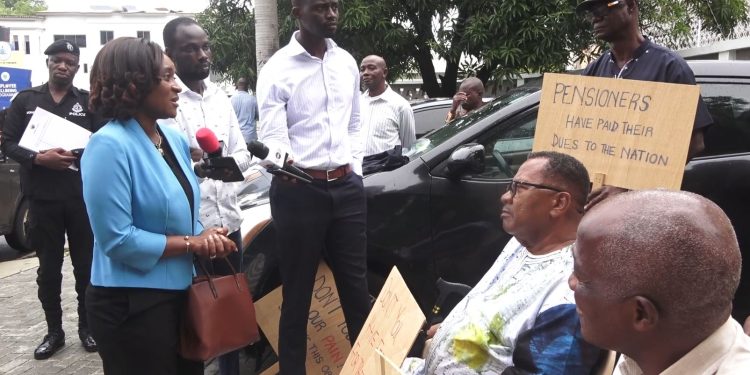
    The deputy finance minister, Abena Osei Asare, has made a heartfelt appeal to pensioner bondholders, pleading with them to be patient as the government works to get the funding needed to settle their outstanding matured coupons.

    Despite rainy weather conditions, members of the Pensioner Bondholders Forum resumed their picketing at the Finance Ministry on Thursday, June 1, to demand the payment of their outstanding coupons and principals.

    After a meeting between the Ministry and the Pensioner Bondholders, the group temporarily suspended their protest with the understanding that all overdue coupons would be paid, while discussions regarding principal payments would continue.

    However, after two weeks the government has yet to engage the pensioners on the way forward, with some coupons still outstanding.

    In light of these developments, the pensioners have resumed their protest, hoping the government will address their demands.

    However, the deputy Finance Minister earnestly implored the pensioners to temporarily suspend their protest while the government actively seeks funds to fulfil their obligations.

    She emphasized that the government is not intentionally neglecting the payment of outstanding coupons. Instead, the delay is primarily caused by the unavailability of funds and the prevailing economic crisis.

    “We don’t intentionally stop them, sometimes it’s difficult, it is the ability to pay and so when it is not there it becomes a challenge, but we also have to communicate that to you. So, for now, our focus should be on the five outstanding, and then we talk about how we will manage the principal payment.

    “I sincerely appreciate where you are coming from. This has never happened when coupons are ready for payment and the government is struggling to pay, but currently, we all know the circumstances we find ourselves in, so I will plead with you so let’s sit and clear, and then we will see the way forward.”

  • We must know what IMF’s $600m will be used for – Gyantuah to Finance Minister

    We must know what IMF’s $600m will be used for – Gyantuah to Finance Minister

    Lawyer Kwame Gyantuah, the Chairman of the Political Affairs Committee of the Convention Peoples Party (CPP), is calling for transparency regarding the utilization of the first tranche of the International Monetary Fund (IMF) loan, as Ghana prepares to receive it today.

    The IMF recently announced the approval of a $3 billion facility aimed at revitalizing Ghana’s struggling economy, with the initial installment of $600 million expected to be disbursed to the government today, May 19, 2023.

    While the government is hopeful that this funding will positively impact the lives of many Ghanaians, the Minority in Parliament holds a differing view.

    During an interview on the Weekend Review Segment on Starr FM, Kwame Gyantuah emphasized the need for transparency and raised questions about why the government has not taken adequate measures to transform the economy.

    As the loan is set to be received, Gyantuah’s demand for clarity on the specific utilization of funds underscores the importance of accountability and ensuring that the loan is effectively and efficiently utilized for the betterment of the nation.

    “… I heard the Finance Minister when he said the IMF $600 first tranche that is coming we are going to use it for government programmes, what programmes? Like before, oh, we are using it for X, but we are doing Y. You don’t delve deep into the nitty gritty for people to understand. You have to delve into it.

    “We are getting $604 million between now and the next tranche that will come in, number one, number two, number three…this is how we will expend it, these are some of the returns we are looking. Has that been done, has that been told us? Should that transparency not start, because you say this IMF thing that is coming in is to build confidence in the economy, that confidence in the economy where should it start from? shouldn’t it start locally? why is it that we are always thinking of international and we are thinking of going back to the bond market and get loans, why?” Kwame Gyantuah asked.

  • Ghana’s fate on $3bn loan request from IMF to be known by May 17 – Media advisory

    Ghana’s fate on $3bn loan request from IMF to be known by May 17 – Media advisory

    On May 17, 2023, the International Monetary Fund (IMF) is anticipated to make a decision about Ghana’s request for a $3 billion Extended Credit Facility.

    According to a media advisory captured on the Fund’s website, the Executive Board of the Fund brief will hold a virtual press conference on Thursday, May 18 at 10.30 am Washington D.C time to brief journalists on the outcomes.

    Key persons to partake in the press briefing is the IMF Mission Chief for Ghana, Stephane Roudet, Ghana’s Finance Minister, Ken Ofori-Atta, Bank of Ghana Governor, Dr Ernest Addison and Tatiana Mossot, Senior Communications Officer with the IMF.

    The press briefing will be held via Zoom but will be televised on most channels in Ghana at 14:30 GMT, according to a circular issued by Ghana’s Ministry of Finance on May 16, 2023.

    Ahead of this development, Minister of State in charge of Finance, Dr. Mohammed Amin Adam disclosed that the first tranche of the loan facility consisting of $600 million is expected to be disbursed into the Central Bank’s account by Wednesday, May 17, 2023.

    He added that the second tranche of the funds will also hit the Central Bank’s account by November or December this year after the Fund has conducted a successful review of the first loan tranche under the programme.

    Dr Amin Adam added that the rest of the funds will be disbursed in equal tranches of $360 million after the IMF has further completed its semi-annual reviews of the extended credit facility.

    “The funds will boost Ghana’s coffers and help it work towards the target of foreign reserves amounting to the equivalent of three months of imports by 2026,” the minister of State earlier told Reuters.

  • Today in History: Gov’t intended to collaborate with Amazon to operate in Ghana – Finance Minister

    Today in History: Gov’t intended to collaborate with Amazon to operate in Ghana – Finance Minister

    Ghana’s Finance Minister, Ken Ofori-Atta, stated exactly two years ago that the country was putting up a lot of effort to bring Amazon to Ghana.

    He claimed that the action was taken to strengthen the entrepreneurial technological ecosystem for Ghanaian businesspeople.

    Read the full story originally published on May 15, 2021 by Ghanaiantimes.

    The Ghana Investment Promotion Centre (GIPC) is working assiduously to attract Amazon to Ghana, Finance Minister, Ken Ofori-Atta, has said.

    According to the Finance Minister, the move was to deepen the technological entrepreneurial ecosystem for Ghanaian entrepreneurs.

    Addressing the country on the measures being introduced by the government to prop up the economy and create jobs for the youth in line with social media campaign protest dubbed “FixTheCountry”, Mr Ofori-Atta said aside Google setting up its regional Artificial Intelligence Centre in Accra, Twitter recently announced to establish its Africa Headquarters in Accra.

    He said the decision of such global tech giants to come to Ghana demonstrated the confidence investors had in the Ghanaian economy.

    Mr Ofori-Atta said the presence of Amazon in Ghana would help create jobs for the youth and prop up the Ghanaian economy.

    He said since assuming office, the government had worked hard to put the economy on a better footing and positioned it to be hub of trade in Africa.

    Mr Ofori-Atta indicated that the country won the bid to host the Secretariat of the African Continental Free Trade Area (AfCFTA), positioning Ghana and Ghanaian businesses as the gateway partner and spearhead Ghana as a hub for the Africa region.

    “Until we were hit by the COVID-19 pandemic in March 2020, we were on course to achieving the objective to stabilise and grow the economy, create jobs especially for the Youth, modernise, digitise and formalise the economy, provide social protection for the vulnerable and create a safe and secure environment for citizens and businesses to thrive,” the Finance Minister said.

    Mr Ofori-Atta opined that the government implemented flagship initiatives such as 1 District 1 Factory, 1 Village 1 Dam, Planting for Food & Jobs, and IPEP in the Real Sector to accelerate economic activities and help create jobs.

    The Finance Minister said the government as part of measures to transform the economy, implemented several initiatives to digitalize the economy.

    “We implemented several digitalisation programmes to transform the economy, formalise the informal sector, and increase efficiency in public service delivery,” Mr Ofori-Atta stressed.

    Finance Minister mentioned some of the initiatives as the issuance of over 15 million National ID Cards, the digital addressing system for over seven million homes, mobile money payment interoperability system, and the introduction of the paperless port system.

    The others, Mr Ofori-Atta stated were the automation of driver’s license and vehicle registration, renewal of National Health Insurance Scheme registration, land records digitisation with block-chain technology, and automation of passport application,” Mr Ofori-Atta said.

    “After four years of implementing these prudent measures, the Ghanaian economy witnessed a turnaround. Between 2017 and 2019, the economy grew by seven per cent on average in response to Government’s prudent management of the economy and implementation of government flagship programmes, being one of the highest and sustained growth periods,” the Finance Minister stressed.

    That Mr Ofori-Atta observed culminated in a single-digit inflation of 7.9 percent, reduced fiscal deficits with three consecutive years of primary surpluses, relatively stable exchange rate, significant improvement in the current account with three successive years of trade surpluses, strong foreign exchange reserve buffers covering 4 months of import cover.

    The Finance Minister pledged that government would continue to work to put the economy on a better footing and bring relief to the citizens.

  • “On every loan, he has a commission” – Mahama lunges at Ofori-Atta over debts

    “On every loan, he has a commission” – Mahama lunges at Ofori-Atta over debts

    Former President John Mahama has blamed Ghana’s high debt on the Finance Minister, Ken Ofori-Atta’s alleged taste for loans.

    According to the former statesman, the Finance Minister is unable to stay away from acquiring loans for the country due to the commissions he reportedly receives from every transaction.

    “On every loan, he has a commission. That’s why he likes loans,” Mr Mahama said during a meeting at the Obogu Lorry Station as part of his campaign tour ahead of the 2024 general elections on Friday.

    He also asserted since the entire Akufo-Addo-led government benefit from the deals, the president is unable to relieve the Finance Minister of his responsibilities despite calls from the opposition and some Ghanaians.

    Mr Mahama observed, insisting that is the reason why the Finance Minister continues to stay in office even when NPP MPs have called for his resignation.

    The presumptive Presidential Candidate of the NDC also alleged that Mr Ofori-Atta pockets commissions from the loan agreements.

    “They benefit from the loans,” he said on Friday.

    Per reports, over GH¢450 billion of loans contracted by the ruling party since assuming office in 2017.

    Due to the continuous presence of Mr Ofori-Atta at the Finance Ministry, Mr John Mahama is of the notion that the government is running a ‘family and friends’ business with the state coffers.

    Meanwhile, government is working on restructuring its debt to win a credit facility worth $3 billion from the International Monetary Fund (IMF) in order the economy currently in crisis.

    Source: The Independent Ghana

  • World Bank pledges $250m commitment support to GFSF

    World Bank pledges $250m commitment support to GFSF

    According to the Minister for Finance, Ken Ofori-Atta, the World Bank has committed $250 million to Ghana Financial Stability Fund (GSFS).

    While engaging the press in Washington DC, the minister noted that the said amount would hit the country’s account by the third quarter.

    “The World Bank has committed $250 million,” he is quoted to have said by JoyNews.

    He explained that the stability fund is being established to ensure that government can intervene in the event of any solvency and liquidity issues.

    The Finance Minister noted that currently, talks are underway for donor partners such as the African Development Bank for further resources into the fund.

    He added that government will also deposit some money into the fund, and further encouraged other multilateral development banks and bilateral partners to assist the Government of Ghana to secure the stability of the country’s financial sector.

  • You have ‘raped’ the public purse, leave pension funds – Sam George to govt

    You have ‘raped’ the public purse, leave pension funds – Sam George to govt

    Member of Parliament for Ningo-Prampram, Sam Nartey George, has demanded that government excludes pension funds from its latest planned debt restructuring deal. 

    Finance Minister Ken Ofori-Atta has formally written to the Board of Trustees of Pension Funds.

    He noted that the revised proposal is expected to adequately compensate pension funds for the value of their current holdings while easing the government’s cash flow concerns in the years to come.

    Reacting to this, Mr Nartey George stated that it is unacceptable that government seeks to torment Ghanaians, particularly when it has already subjected them to torture while undertaking its Domestic Debt Exchange Programme (DDEP).

    http://backend.theindependentghana.com/i-was-very-distressed-at-the-sight-of-picketing-pensioners-ofori-atta/

    Speaking on TV3 on Monday, he also accused the “wicked” government of stealing from the public purse.

    “They have raped the public purse. They have stolen the purse, people lost money in financial clean up, debt exchange and now you are going for pensions funds and you say we shouldn’t talk,” he said.

    “This is a wicked, clueless and incompetent government,” the Ningo-Prampram MP added.

    The proposed offer entails exchanging current Treasury Bond, ESLA Bond, and Daakye Bond holdings for a selection of the currently outstanding new bonds. These bonds, issued in February 2023, mature in 2027 and 2028, respectively, and feature an average coupon of 8.4% with a ratio of 1.15x, thus entailing an increase in patrimonial value. 

    The proposal also includes an additional cash payment of 10% (strip coupon). The stream of coupons to be received as part of this proposal will, therefore, be 21% compared to the current 18.5% of the outstanding old bonds.

    http://backend.theindependentghana.com/govt-engages-pensioners-individual-bondholders/

    Meanwhile, Mr. Ofori-Atta has revealed that government aims to finalise the offer by the end of April 2023.

    Source: The Independent Ghana

  • Akufo-Addo’s govt is wicked and incompetent – Sam George on proposed new debt restructuring

    Akufo-Addo’s govt is wicked and incompetent – Sam George on proposed new debt restructuring

    The Akufo-Addo administration has been characterized as wicked and incompetent by Samuel Nartey George, member of parliament representing Ningo Prampram.

    His comment follows the invitation to pensioners by the Finance Minister Ken Ofori-Atta to partake in a new debt restructuring he is proposing.

    Speaking on the Big Issue on TV3 Monday April 17, he said “They have raped the public purse. They have stolen the purse, people lost money in financial clean up, debt exchange and now you are going for pensions funds and you say we shouldn’t talk.”

    “This is a wicked, clueless and incompetent government,” he added.

    But the Member of Parliament for Ngleshie-Amanfrom, Sylvester Tetteh said the Finance Minister is not forcing pensioners to take part in the proposal for new debt restructuring,

    He says the Minister is only inviting the Pensioners.

    (The Finance Minister) is only making a proposal and inviting people into it,” he said.

    “He is not putting gun on the neck of the people,” he added.

    Mr Ofori-Atta has proposed a new debt restructuring.

    He is invitting Board of Trustees of pensions funds to permit pension funds to be added in the new proposal.

    He explained that the proposal has been “crafted to facilitate the execution of the MoU, addressing the Government financial needs while maintaining the value of the pension funds.”

    The proposed offer entails exchanging your current holdings of Treasury Bonds, ESLA bonds and Daakye Bonds for a menu of the currently outstanding New Bonds (issued in February 2023 and maturing in 2027 and 2028 respectively. New Bond 2027 and New Bond 2028 featuring an average coupon of 8.4 % with a ratio of 1.15x, thus entailing an increase in patrimonial value.

    This complemented by an additional cash payment of 10% (strip coupon). The stream of coupons to be received as part of this proposal will therefore be 21% compared to the current 18.5% of the outstanding of old bonds.”

    He further indicated that “in 2023 and 2024, both instruments will pay 5% coupon in cash and the remainder will be capitalized into the nominal amount of the two bonds in order to comply with the cash constraints and the macro-framework defined under the programme with International Monetary Fund (IMF).”

  • Finance Minister highlights 5 measures Ghana must take to secure IMF deal

    Finance Minister highlights 5 measures Ghana must take to secure IMF deal

    The Finance Minister, Ken Ofori-Atta, has identified five crucial steps that will guarantee Ghana’s success in obtaining financial assistance from the IMF.

    At the ongoing IMF/World Bank Spring Meetings in Washington, D.C., USA, the minister provided an overview of these in the Investors’ Presentation.

    Electricity tariff hikes

    Ghanaians have experienced a continuous hike in electricity and water tariffs since August 2022. According to the government, the tariff increments were necessary to ensure that the Electricity Company of Ghana and Ghana Water Company operate efficiently.

    The tariff hikes since then have accumulated to an increase of about 60%. Ofori-Atta noted that this was a necessary condition for Ghana to move ahead with its talks with the International Monetary Fund.

    Revenue enhancing measures, including an increase in VAT, E-Levy review

    The government, in the 2023 Budget, announced an increment in the VAT rate from 12.5 percent to 15.0 percent, which subsequently took effect on January 1, 2023. Also, the rate for the Electronic Transaction levy was reviewed from 1.5% to 1%. Also, the government is looking to implement some new taxes, including lottery and bet tax, amended excise duty, withholding taxes, etc.

    An ambitious 2023 budget

    This includes reaching a 1.5% of Gross Domestic Product primary surplus in the medium term, bringing inflation below 8% in the medium term, and restoring external buffers with gross international reserves reaching 3 months of import cover by 2026.

    This also includes the government achieving a real Gross Domestic Product growth target of 5% over the medium-term and enhancing competitiveness with exports surpassing 37% of GDP in the medium run.

    Another key measure is to ensure fiscal and debt sustainability.

    Ofori-Atta said the government is committed to rebuilding reserve buffers, mobilizing external concessional financing from multilateral and bilateral partners, and suspending external debt service payments.

    However, the minister assured that government will safeguard social protection programmes and ensure the burden of adjustment is fairly distributed.

    “It will reinforce and improve the targeting of social spending to protect the most vulnerable from the impact of the economic crisis, as well as fast-track the implementation of growth-oriented socio-economic policies, such as Ghana CARES, to mitigate the impact of the pandemic and support economic recovery,” the minister said.

  • It is terrible to shift IMF deal timelines – Prof Lord Mensah

    It is terrible to shift IMF deal timelines – Prof Lord Mensah

    An economist, Prof. Lord Mensah has said that shifting timelines to secure IMF deal is terrible.

    According to him, the market relies on management information, so when management information turns out to be uncertain, it does not help.

    “It’s a terrible one,” he said in an interview on Joy FM’S Top Story on Friday.

    He said that the Finance Minister and team do not appreciate the complexity of the situation [economic downturn or debt situation].

    According to him, the analysis of the situation in an article in Financial Times over the debt situation points out that Ghana won’t get a debt restructuring soon.

    He cited a case with Zambia.

    “Zambia is an African country. Zambia was in debt restructuring limbo for over two and half years before they even switched to default.”

    His comments come after President Akufo-Addo earlier disclosed that the IMF staff will present Ghana’s request for a loan programme to its executive board by the end of March.

    Also, the Finance Minister, Ken Ofori-Atta reiterated that government was hoping to secure an International Monetary Fund (IMF) Board approval by March 2023.

    “We are currently working to go to the IMF board in March 2023 and possibly secure the Board’s approval for Ghana’s Programme”, he disclosed on PM Express, Business Edition with host, George Wiafe.

    However, the March date elapsed and the country has not been able to get a deal.

    Meanwhile, addressing Eurobondholders at an Investors Presentation Forum on Thursday, Mr. Ofori-Atta said Ghana should expect an International Monetary Fund (IMF) Board approval for a programme by the close of May 2023.

    According to him, Ghana has made significant progress, hence the need for it to get approval as soon as possible.

    But reacting to this, Prof Mensah noted that although there may be verbal commitments from the creditors, it has not been documented for which it can be relied on to determine the timeline.

    He added that the country would not be able to secure an IMF bailout now until the first quarter ends.

  • Seth Terkper warns against GHS 22bn “fiscal offset” in 2023 Budget

    Seth Terkper warns against GHS 22bn “fiscal offset” in 2023 Budget

    Former Finance Minister, Seth Terkper, has reiterated his advice to the government not to engage in what appears to be another “fiscal offset” in the 2023 budget, similar to what occurred in the government’s 2017 budget.

    In this context Mr. Terkper has called on the government to disclose its plan for dealing with a large GHS 77bn pipeline of arrears and contracts in the 2021 Budget Performance Report. He noted that a similar plan was used to deal with the “single spine” wage arrears in 2020.

    He has argued that, given that the budget overruns are at the core of most debt challenges, transparency and accountability in government finances are crucial for securing an IMF programme. Moreover, they are also needed for sustainable economic growth and development.

    Mr. Terkper has argued that the treatment of the banking and energy sector bailout costs as memoranda items, rather than adding them to the country’s deficit and public debt stock, creates a false impression of fiscal consolidation.

    The former minister has pointed out that this practice by Government resulted in the rapid financial market rating downgrades of the country’s sovereign bonds and eventual debt default, with the deficit revised upwards to 7% and 7.2% for 2018 and 2019 respectively, when the IMF and ratings agencies adjusted Ghana’s fiscal deficit and public debt figures.

    Mr. Terkper recalled that in 2017, the incoming Akufo-Addo administration accused the John Mahama administration of overlooking arrears of about GHS 7bn. However, only about GHS 2bn was carried forward to the 2017 fiscal year after an apparent offset of GHS 5bn against total expenditures. At the time, Mr. Terkper opposed the move in various articles and interviews.

    In a similar move, Mr. Terkper notes that the 2023 budget shows another apparent offset of GHS 22bn that also appears to reduce the deficit from about GHS 60bn to approximately GHS 38bn. As with the 2.3% reduction in the budget or fiscal deficit in 2017, the repetition of the fiscal move results in a “paper” reduction by 3.7% of GDP.

    The former minister has warned that this practice by government creates a false impression of fiscal prudence, which is unsustainable in the long term. He has argued that such moves lead to a lack of transparency and accountability in government finances, which can lead to financial instability and economic turmoil.

    Mr. Terkper’s concerns reflect a broader need for transparency and accountability in government finances in Ghana. The government must address these concerns to build trust with its citizens, investors, and international partners. Failure to do so could lead to further economic instability and harm the country’s long-term economic prospects.

  • Palestinian people are not drawing censure from the US – Israeli official

    Palestinian people are not drawing censure from the US – Israeli official

    Bezalel Smotrich, Israel’s far-right Finance Minister, said over the weekend that there is no such thing as the Palestinian people or a nation. This came after Smotrich called for the “erasure” of a Palestinian community just a few weeks earlier.

    Jewish nationalist Smotrich asserted that the Zionist drive to build modern-day Israel was the catalyst for the invention of Palestinian nationalism in the previous century.

    “Who was the first king of Palestine?
    What dialects speak the Palestinians?
    Has Palestine ever had its own currency?
    Exists a Palestinian culture or history?
    Nothing.
    In a speech in Paris, Smotrich asserted that there is no such thing as the Palestinian people.

    US National Security Council Spokesman John Kirby on Monday objected to the comments, saying they would not help to calm tensions in the region.

    “We utterly object to that kind of language. And It’s extremely unhelpful to – again – trying to de-escalate the tensions and trying to find a viable two-state solution going forward,” Kirby said, speaking to Israeli Channel 13. “We don’t want to see any rhetoric, any action or rhetoric – quite frankly – that can stand in the way or become an obstacle to a viable two-state solution, and language like that does.”

    The Palestinian Authority presidency slammed Smotrich’s remarks as “racist,” calling them “an attempt to falsify history.”

    In a statement, the PA asserted that the Palestinian people “have existed on this land forever.”

    Hamas, the militant Palestinian Islamist movement that runs Gaza and calls for Israel’s destruction, also called Smotrich’s comments racist, saying they “clearly reflect the fascist policies of colonial settlement expansion and forced eviction of the Palestinian people, on which the occupation state was founded,” in reference to Israel.

    Smotrich’s appearance in Paris also caused a diplomatic incident between Israel and Jordan. The podium he was standing at was draped in what appeared to be a variation of the Israeli flag displaying an enlarged map of Israel that included the occupied West Bank, Gaza and most of Jordan.

    A spokesperson for Smotrich said the flag used at the event he attended was “set decoration” put there by the conference organizers and that the minister was only a guest, according to Reuters.

    Jordan summoned the Israeli ambassador to Amman on Monday in protest, citing Smotrich’s use of the map.

    Jordan’s foreign ministry “warned of the seriousness of the continuation of these extremist racist actions issued by the same minister who had previously called for the erasure of the Palestinian village of Huwara.” It added that Smotrich’s actions were a violation the Jordanian-Israel peace treaty.

    Israel’s foreign ministry tweeted in response saying it was “committed to the 1994 peace agreement with Jordan” adding that Israel “recognizes the territorial integrity” of Jordan.

    Tzachi Hanegbi, head of Israel’s National Security Council, also said he spoke with Jordan’s Foreign Minister Ayman Safadi to reaffirm Israel’s commitment to Jordan’s territorial integrity and the Israel-Jordan peace treaty.

    Smotrich’s comments came on the same day that Israeli and Palestinian officials met in Sharm El Sheikh, Egypt, to try and calm tensions ahead of the Ramadan and Passover holidays. Among other agreements the two sides pledged “to develop a mechanism to curb and counter violence, incitement, and inflammatory statements and actions.”

    The minister, who also has some powers over the Israeli unit that controls border crossings and permits for Palestinians, has a long history of denying the existence of a Palestinian nation and has previously made controversial statements about them as well as on other issues like LGBTQ rights.

    Earlier this month, he made incendiary comments saying that the Palestinian town of Huwara in the West Bank “needs to be erased” after two Israeli brothers were shot and killed while driving through the town. Israeli settlers went on revenge attacks in the aftermath, where one Palestinian man died. Smotrich later apologized for the remarks saying they had been made in a “storm of emotions”.

  • Drivers threaten to halt operations if road tolls are not scrapped

    Drivers threaten to halt operations if road tolls are not scrapped

    The government’s decision to reinstate road tolls has drawn criticism from the Alliance of Drivers.

    This comes after the announcement of the rates for the proposed road tolls that would be implemented once again this year.

    Referring to a press conference they had in the past at Kasoa, in a statement issued on Tuesday, 14 March 2023, requesting that government scraps road tolls, the Alliance of Drivers, highlighted some of the key issues touched on, for suggesting scrapping of the road tolls, including the “dust and dirt on the roads, unnecessary congestion and traffic, high cost of fuel as a result of delay in traffic among others.”

    According to the group, the belief has been that the issues raised during their press conference also “influenced” government’s decision to scrap road tolls and “it has been better since.”

    The group is therefore questioning the “sudden reintroduction of road tolls and a marginal increase in the fares [tolls] as well.”

    The group wants government to explain to its members “the reason for this sudden diversion as the recent economic hardship is not even favourable for paying road toll.”

    It noted that if government fails to heed its call to scrap road tolls, it will urge its members to halt operations.

    “If the above suggestions are not adhered to by the government, we will urge all drivers and transport operators to put on hold all transport business.

    “We believe it can be done and be done well if proper consultation is done on these key, decisions as the negative impact it’s having on the ordinary Ghanaian is unbearable,” it projected.

    It urged: “Let’s all have the country at heart and work together to raise the name of this country high.”

    Finance Minister Ken Ofori-Atta in a letter to the Minister for Roads and Highways proposed charges for the road tolls for confirmation by the latter.

    Road tolls were cancelled in 2022 following the introduction of the Electronic Transaction Levy (E-Levy).

    The road tolls were, however, re-introduced during the 2023 budget presentation on Thursday, 24 November 2022.

    The Finance Minister had said: “The fiscal policy measures to underpin the 2023 Budget for consideration and approval by Parliament include the reintroduction of tolls on selected public roads and highways with a renewed focus on leveraging technology in the collection to address the inefficiencies characterised by the previous toll collection regime.”

  • Finance Minister ‘begs’ China Exim Bank delegation to save Ghana from economic collapse

    Finance Minister ‘begs’ China Exim Bank delegation to save Ghana from economic collapse

    Ghana’s Minister of Finance, Ken Ofori-Atta, has implored a delegation from the China Exim Bank to assist Ghana in overcoming its current economic challenges.

    China Exim Bank bears more than 40% of Ghana’s debt to China. The Chinese delegation was in Ghana before Ghanaian officials traveled there to negotiate debt reduction.

    The Finance Minister made the plea at a farewell dinner for the Chinese delegation from the China Exim Bank, which was in Accra to work with the government on efforts to restructure an estimated $1.9 billion in debt owing to China.

    Ghana’s current condition is “difficult,” according to Mr. Ofori-Atta.

    “What Ghana needs as we go through our current challenging economic and financial circumstances is strong support from our lasting partners, including China, to restore lasting growth and support the vulnerable,” he said.

    A report on the Ministry of Finance website stated that the delegation is in Accra on a three- day mission, ahead of Ghana’s upcoming mission to China, all in line with ongoing negotiations for a sovereign debt treatment.

    Ken Ofori Atta will lead a high-powered government delegation to China to plead for the acceptance of the country’s proposal for debt cancellation.

    Ghana is hoping to restructure $5. 7 billion with China holding a third of it amounting to $1.7 billion dollars.

    Ghana is currently restructuring its debt both domestically and externally in order to access support from the IMF.

    China is Ghana’s single biggest bilateral creditor with $1.7 billion of debt, while Ghana owes $1.9 billion to Paris Club members, according to data from the Institute of International Finance (IIF).

    Source: The Independent Ghana

  • NIA will receive funds necessary to carry out its activities – Ofori-Atta

    NIA will receive funds necessary to carry out its activities – Ofori-Atta

    The National Identification Authority (NIA) has been assured by Finance Minister Ken Ofori-Atta that the GHC20 million budget allocation will be released so that the authority may carry out its functions and issue Ghana Cards to the public.

    Speaking in Parliament on Tuesday, February 28, he assured that the government was ready to support the electoral process.

    “We agreed on a hundred million cedi transfer and 80 million has been put into the accounts and 20 million will be done by the close of business today.

    “We are very comfortable about the situation to ensure the needed cash will be given to the NIA to do its work,”Mr Ofori-Atta said.

    He added “The government has been extremely good about funding elections and once the NIA’s job is liked to the elections, we can assure the House that the resources needed will always be provided.”

    Finance Minister, Ken Ofori-Atta has assured the National Identification Authority that the GHC20 million budget allocation will be released to enable it go ahead with its operations.#3NewsGH pic.twitter.com/LWC4IpxnXn

    — #TV3GH (@tv3_ghana) March 1, 2023

    Officials of the NIA and the Electoral Commission (EC) were in Parliament on Tuesday to brief the House on the proposed Constitutional Instrument (CI) that is seeking to make the Ghana Card the sole identification document for voter registration.

    The Chair of the EC Jean Mensa told Parliament that the use of the Ghana Card as the sole identification document for voter registration will ensure a credible voter roll.

    She said it will also prevent minors and foreigners from getting onto the electoral register to vote.

    Madam Jean Mensa said “The use of only Ghana Card will ensure and guarantee the credibility of the register and elections, prevent enrolment of minors, prevent foreigners from voting, eliminate the guarantor system which is prone to abuse.”

    “The Ghana Card will not be used for voting in 2024, it will be used to register,” she said.

    Regarding a revelation by Tamale South Member of Parliament Haruna Iddrisu that there were about 3.5million people without Ghana Crad, she said the National Identification Authority (NIA) has told the commission that ” there are 3.5 blank cards in the warehouse, money have been released and funds are being released.”

    The Minority have been raising issues against the proposed CI.

  • Election funding by government has been excellent – Ofori-Atta

    Election funding by government has been excellent – Ofori-Atta

    According to Finance Minister, Ken Ofori-Atta, government has been excellent about funding Ghana’s elections and will continue in that stead.

    He said these in Parliament when he joined officials from the Electoral Commission (EC) and the National Identification Authority (NIA) to brief the House on the proposed Constitutional Instrument that is seeking to make Ghana Card the sole identification document for voter registration.

    “The government has been extremely good about funding elections and once the NIA’s job is liked to the elections, we can assure the House that the resources needed will always be provided.”

    Finance Minister, Ken Ofori-Atta has assured the National Identification Authority that the GHC20 million budget allocation will be released to enable it go ahead with its operations.#3NewsGH pic.twitter.com/LWC4IpxnXn

    — #TV3GH (@tv3_ghana) March 1, 2023

    The Chair of the EC Jean Mensa for her part said among other things that the Ghana Card will not be used to vote in the 2024 general elections.

    She said the Commission is seeking to use the card for the voter registration exercise.

    Madam Jean Mensa said “It is important to rehash that the use of the Ghana Card as the sole document of identification will ensure and guarantee the credibility and integrity of our register and elections, it will prevent the enrolment of minors to register, it will prevent foreigners from being registered to vote and it will eliminate the guarantor system which is prone to abuse and which promotes conflicts and violence.”

    “The Ghana Card will not be used for voting in 2024, it will be used to register,” she added.

  • Which areas should govt cut down expenditure?- Pius to German Ambassador

    Which areas should govt cut down expenditure?- Pius to German Ambassador

    The Akufo-Addo administration was recommended to slash expenditures and the size of the government by the German ambassador to Ghana, Daniel Krull.

    But, Daniel Krull has been instructed to be more explicit about the areas in which he wants the government to cut spending.

    The Chief Executive Officer of the National Youth Authority (NYA) Pius Enam Hadzide indicated that the easiest thing to do is to just call for cuts in government spending and not give specifics.

    The German Ambassador while addressing the press on Friday, wondered why Ghana has been crying to the international community for help when the country continues to operate a large size government bigger than that of Germany.

    “I only can compare with other countries like my own and I can just come to the conclusion that the number is much higher than in my country. So that might bring me to the conclusion that maybe there’s room for improvement.”

    “Well, of course, it depends very much on what kind of expenditures you’re looking at… I’m convinced this is true for if I look at the budget of the German Foreign Ministry of the German government, I’m convinced there are important tasks that can be cut without hurting economic development. And I’m convinced without going into details this also is true for Ghana. There are certain expenditures that can be lowered substantially and make an important impact, and it has to be part of the package.

    “I mean, I cannot go out to the international community and say I need help, but I’m not willing to cut my own budget expenditures. I have to be careful not to cut the social expenditures that are destroying lives and families. I have to be very careful not to take measures that might negatively impact economic growth.

    “But I’m convinced there are many expenditures that could be looked at very carefully and can be lowered substantially,” he said.

    But speaking on the Big Issue, on TV3 Tuesday February 28, Mr Hadzide said “First of all, I think that we must understand that there are rules that govern international diplomacy, and as much as Ambassadors and representatives of sovereigns are allowed certain levels of laxity, there are rules within the Vienna Convention that must guide our narrative.

    “I have listened to the Ambassador, he said a lot of good things and he had a lot of vote of confidence for what is happening within our jurisdictions.

    “It is reported that he said something about the size of the government, I heard him say that we need to cut public expenditure. If it is about cutting public expenditure, we are aligned with that one. Mr President himself has said, members of the government have said and I have said that we need to find the balance for public expenditure and public government revenue. So yes, it is easy to say we should cut our expenditure but expenditure in what [areas]? We should cut expenditure in the road sector because that is public expenditure or expenditure in education or we should cut our expenditure in the health areas?

    “So our development partners must appreciate the severity of our problems and the need for us to jump-start if we have to compete on equal terms. It is easy for them to say cut expenditure here, cut expenditure there.

    “I hold the view that these our development partners or bilateral partners and so on, they are not really and truly out there in our best interest. If they had their way, Africa would be a production force for them to be feeding their economies, that was the intention that even drove them to come in the first place to colonize us.”

    Mr Hadzide further indicated that it is not automatic that the country should implement whatever demands that are made by the partners.

    “When they make their subscriptions, we must look at it in our own context and take our own decisions.”

  • DDEP: Economist urges government to strengthen industrialization policies

    DDEP: Economist urges government to strengthen industrialization policies

    Economist and currency analyst at GCB Capital Limited, Courage Boti is urging government to strengthen its industrialization policies as it moves to negotiate with China for debt forgiveness.

    He demystifies perceptions that China may seize the opportunity to take over the local industries if the negotiations are successful.

    However, Finance Minister, Ken Ofori-Atta, has disclosed that government’s planned high-level meeting with Chinese creditors over Ghana’s debt restructuring has been postponed to late March 2023.

    Speaking to Citi Business News Economist Courage Boti argued that the perception of importation of inferior goods from China is subjected to the purchasing power of the importers.

    “In a bargain, concessions must be made .I think at this point in time the most pressing issue is that our debt is not sustainable and we must find a way to return it to sustainable path. Negotiating with them will mean that we’re trying to get them on our side so that they could cooperate with debt restructuring,” he said.

    “The question is, it will come at what cost? Will it mean dampening of Chinese goods?,” He quizzed.
    Again the Chinese goods on our market on our market: the quality argument and associated perceptions, our traders decide what they bring in and so the quality we talk about are determined by what we are willing to buy,” he stated.

    “Another question is, do we as a local economy immediately have capacity to produce the things that we ordinarily import from China? Our industrialization policies are not up and running. So I don’t see what China will demand from us differently from what we have in place”, he added.

  • Dr Duffuor’s flagbearship bid is a wild fantasy – Kwakye Ofosu

    Dr Duffuor’s flagbearship bid is a wild fantasy – Kwakye Ofosu

    An Aide to former President John Mahama, Felix Kwakye Ofosu has ridiculed former Finance Minister, Dr Kwabena Duffuor over his decision to contest in the National Democratic Congress (NDC) flagbearership race.

    This follows the picking of nomination forms on Thursday on his behalf by the Ashanti Regional Women’s Organiser, Gloria Huze, who led a delegation to the party headquarters.

    Commenting on the development in an interview on Joy FM’s Top Story on Thursday, Mr Felix Kwakye Ofosu said although the John Mahama campaign team has enormous respect for Dr Duffour, “the truth is that Dr Duffuor flagbearership is such a wild fantasy.”

    For this reason, the former Deputy Information Minister expressed his astonishment that “it is being tabled as a serious opposition” to ex president Mahama.

    Explaining the reason for his statement, Mr. Kwakye Ofosu asserted that Dr Duffuor does not stand the chance of becoming the NDC flagbearer.

    “Not that he is not quality material, he is by every stretch of the imagination, but there is a much better candidate in the shape of former President Mahama who can guarantee the NDC victory in 2024,” he added.

    He went on to say that the general election in 2024 is not one to be trifled with, therefore the need for the party to put their best foot forward, adding that “President Mahama as far as the NDC is concerned, is the best candidate we can present for that election for many reasons.”

  • Ofori-Atta’s incapacity is now legendary – Minority

    Ofori-Atta’s incapacity is now legendary – Minority

    The Minority Caucus in Parliament has again attacked Finance Minister Ken Ofori-Atta in light of the difficulties he is having trying to revive the Ghana’s economy.

    The Minority also reiterated its call for the resignation or removal of the Finance Minister from office.

    “We reiterate our call for the dismissal of the Finance Minister, Ken Ofori-Atta whose gross incompetence in managing our economy has assumed legendary status. The President must spare Ghanaians the agony of waking up tomorrow to see Ken Ofori-Atta still in charge of the economy,” the Minority Leader, Dr. Cassiel Ato Forson said.

    Mr. Forson took the swipe at Ofori-Atta during a press conference on Monday, February 20, 2023, ahead of the vetting of newly appointed ministerial nominees.

    He made the remark while calling on the president to reduce his government size.

    The Minority Caucus also called on the President, Nana Addo Dankwa Akufo-Addo, to merge some ministries.

    The Minority Caucus wants the Ministry of Food and Agriculture merged with the Fisheries Ministry and the Chieftaincy Ministry merged with the Tourism Ministry. The Minority is also calling for the Sanitation and the Local Government Ministry to be merged to help reduce the size of the government.

    The caucus also wants the Information and Communication ministries to be merged and the Transport and Railways ministries also merged.

  • Minority files motion to ensure Finance Minister submits DDEP for approval

    Minority files motion to ensure Finance Minister submits DDEP for approval

    In an effort to push the Finance Minister, Ken Ofori-Atta, to submit the Domestic Debt Exchange Programme (DDEP) for approval to Parliament, the Minority has submitted a private members’ motion.

    The NDC MPs are asking that the whole government’s debt restructuring package be brought before the House for additional discussion in a motion filed on Friday, February 17.

    They hold the opinion that in their capacity as Ghanaians’ representatives, they must necessarily contribute to the program.

    Minority MPs file motion to compel Finance Minister to submit DDEP to Parliament for approval 

    Already, the Minority Leader, Dr Cassiel Ato Forson has said his side will also file a motion to compel government to exempt individual bondholders from the programme.

    Speaking in an interview with JoyNews on Thursday, the  Ajumako Enyan Essiam legislator said they will do whatever is possible to ensure investors are protected. 

    “Our intention today was to serve notice that tomorrow the NDC Minority will be filing a motion to compel the government to exempt individual bondholders and pension funds and pensioners from the domestic debt exchange.”

    Dr Ato Forson explained that the decision to file the motion is to ensure that an issuer exemption is granted to bondholders who had faith in the NDC government to invest in risk-free bonds.

    This, he asserted, is because “the Constitution is clear that before you go for a loan, the terms and conditions must be approved by Parliament.”

    Following an economic downturn and difficulties in servicing its debt, the government implemented the domestic debt exchange programme to give itself more time to meet its fiscal obligations.

    However, the programme upon its announcement faced stiff opposition from groups and individuals. 

    Without the debt exchange programme, the government warned that the nation’s economy would collapse.

    Ghana is currently requesting a $3 billion bailout from the IMF to bolster the struggling national economy.

    Before the Bretton Woods institution’s board would evaluate Ghana’s request, one of the requirements is the domestic debt restructuring scheme.

    A staff-level agreement between Ghana and the IMF was achieved in December, opening the door for the $3 billion rescue.

    Source: MyJoyOnline