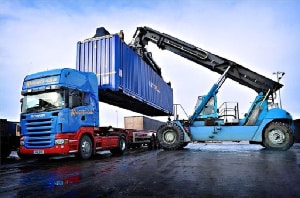
Ghana spent a total of GHS 6.8billion (equivalent to US$560 million at current market rates) on rice imports last year.
This is according to data from IDH Sustainable Trade, a foundation headquartered in The Netherlands.
While total rice consumption stood at 1.4 million metric tonnes in 2022, imports valued at US$560 million accounted for 800,000 metric tonnes (mt) of the consumption figure, with domestic production catering for the remaining demand – according to data from IDH Sustainable Trade, a foundation headquartered in The Netherlands.
Similarly, according to the Ministry of Food and Agriculture, between 2010 and 2020 the country’s rice imports hit a staggering US$8billion. This, in addition to imports of other food items that can be produced locally, has been a major source of concern for stakeholders.
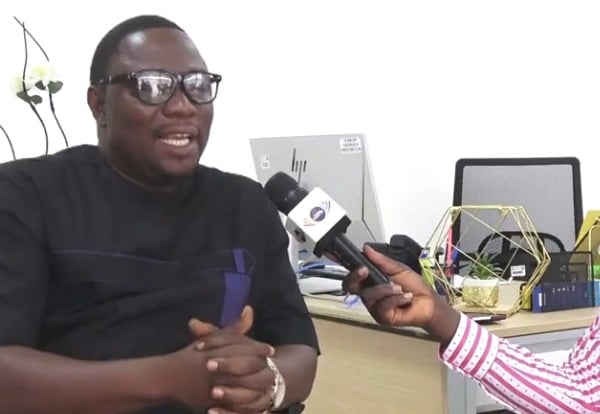
This high dependence on imports of food staples like rice, despite vast untapped domestic potential, however comes with ramifications for the cedi and local job prospects, warns Country Director for IDH, Robert Asugre.
Just like many other industry watchers and economists, Mr. Asugre is of the view that rising consumption of the grain presents huge opportunities for real value creation and jobs if the right investments and policies on local production are prioritised.
“The rice value chain in Ghana, when supported, will lead to increased commercialisation and improved production of high quality and quantities that are competitive,” he said. This, he added, will help to reduce the impact of rice imports on the economy.
Mr. Asugre spoke on the sidelines of the National Rice Fair held in Walewale in the North-East Region, and called for greater commitments from government and the private sector to ease the import burden on the economy of rice and other foodstuffs which can be produced locally.
Buttressing his point, he said northern parts of the country alone, for instance, have potential to meet the rice needs of Ghanaians if the right investments into infrastructure – including irrigation systems, milling machines and storage facilities as well as suitable policies – can be put in place.
He added that the result of such investments will have far-reaching impacts on the economy, as it will retain value within as well as creating sustainable jobs for the country’s teeming youth.
Rice has become the second staple food consumed in the country after maize, with production increasing from 48,800mt in 1970 to 925,000mt in 2019; growing at an average annual rate of 9 percent, according to the Food and Agriculture Ministry.
Though the figures depict high potential for growth in local production, challenges including access to finance, skilled labour, shortage of combine harvesters, milling machines and storage infrastructure continuously threaten the crop’s production.
Though one of the first countries in the sub-region to launch the National Rice Development Strategy, challenges still persist – with Ghana having already missed out on its local rice production agenda as part of the Coalition for African Rice Development policy.
That strategy, which was unveiled in May 2008 as the National Rice Development Strategy for the period 2009-2018, aimed at increasing domestic production up to 70 percent and promoting consumption through quality improvement, targetting both local and international markets.
The strategy ended almost four years ago, albeit rather achieving an opposite figure of 70 percent imports with the Ghanaian consuming public still largely dependent on imported rice brands.
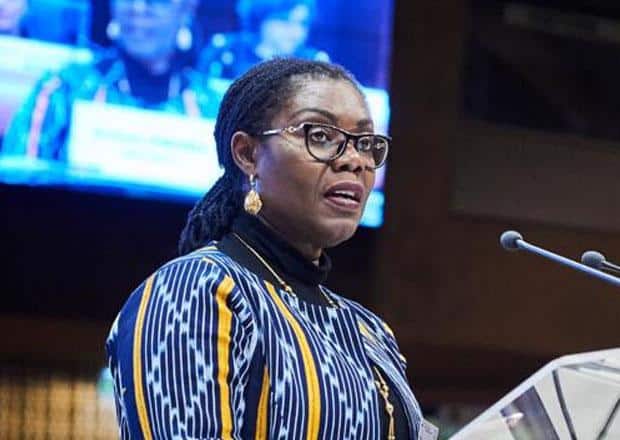
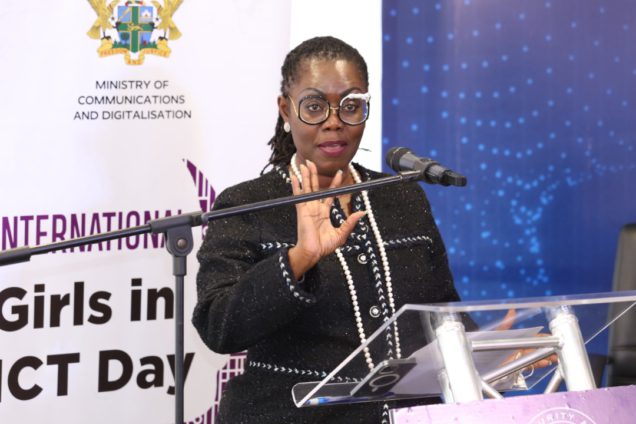
Minister of Communications and Digitalization of Ghana, Mrs. Ursula Owusu-Ekuful says the addition of Ghana as a Member State of the Digital Cooperation Organization (DCO) will aid in knowledge sharing and cooperation on fostering flourishing digital economies for prosperity and rapid growth.
Speaking on Ghana’s membership of DCO, she mentioned that she “believes our membership of DCO will enable us achieve this faster, working in partnership with, learning from and sharing the experiences of our member states and observers. Ghana is committed to DCO because cooperation promotes economic growth through coordinated economic and social development programmes”.
H.E. Deemah AlYahya, Secretary-General of the DCO on her part said: “I am very pleased to welcome the Republic of Ghana to the DCO. Ghana is one of the leaders among African nations in adopting new technology and in the wise use of policies, such as its Digital Finance Policy, that support new areas of development and bring positive benefits to the community. The DCO was created to encourage knowledge sharing and exchange for the good of all nations, and I believe that Ghana has many lessons to share with the DCO and our ecosystem of nations.”
Ghana’s addition to DCO is to make the international mission realize its digital prosperity for all.
Ghana becomes the twelfth nation to ascend to the DCO, an international organization that was founded to support countries to build their digital economies as an essential driver of sustainable growth and development.
Ghana is well-established as a leader in utilizing the power of communications and digital technologies to support economic growth.
Ghana was the first country in sub-Saharan Africa to launch a cellular mobile network in 1992, and one of the first countries in Africa to be connected to the internet and to introduce ADSL broadband services.
Ghana is also a leader in digital payments and mobile money, with the second-highest data penetration rate and fastest-growing mobile money market in sub–Saharan Africa which has greatly enhanced financial inclusion. As the newest member of the DCO, Ghana will now bring that experience and expertise to share with the other Member States.
The DCO brings together the Ministries of Communications and IT of 12 nations – Bahrain, Cyprus, Djibouti, Ghana, Jordan, Kuwait, Pakistan, Oman, Nigeria, Rwanda, Morocco, and Saudi Arabia. – that collectively represent nearly $2 trillion in GDP and a market of nearly 600 million people, more than 70% of whom are under the age of 35.
The DCO is focused on empowering youth, women, and entrepreneurs, leveraging the accelerative power of the digital economy and leapfrogging with innovation to drive economic growth and increase social prosperity.
Through cooperation, dialogue, and the creation of mutually advantageous cross-border legislation, we seek to establish within our member nations the optimal infrastructure and policies for the rapid creation of inclusive and equitable digital economies within which all people, businesses, and societies can innovate and thrive.
In pursuit of our members’ common interests – for example, in the areas of digital skills training, data protection, intellectual copyright, regulation, taxation, and entrepreneurship – DCO works collaboratively with governments, the private sector, international organizations, NGOs and civil society to enable more inclusive digital transformation and the growth of digital industries.
The DCO’s key initiatives include programs to enhance cross-border data flows, promote market expansion for SMEs, empower digital entrepreneurs and advance digital inclusion among women and youth, and other underrepresented populations.
The Ghana Police Service is looking into the alleged murder of a Ghanaian woman based in Italy who returned to Ghana for holidays.
The woman, known only as Maa Akos, was allegedly killed by one of her neighbours at Sepe Buokrom, near Kumasi, a report by myjoyonline.com has said.
According to the report, Maa Akos sustained stab wounds from her 20-year-old neighbour, identified as Baafi.
Baafi is also said to have often visited the deceased.
According to the account of an eyewitness, Baafi was seen fleeing the scene of the crime after he had jumped out of a window in Maa Akos’ apartment.
The report added that the suspect might have used the window as access to the victim, who was in her late fifties, seeing that she lived alone on the second floor of the building.
The report also stated that some residents explained that Baafi attempted to break into the apartment some weeks ago.
That issue was however resolved, they added.
However, on the day of the crime, an eyewitness said his attention was drawn to the scene after he heard a noise suggestive of a tussle.
The noise, coming from Maa Akos’ apartment, further alarmed other residents.
Hamidu Issah, one of the residents, said “I had to call other tenants to help me break into the room. We could still hear them struggle. One tenant peeped through the window and saw blood, so we had to intensify efforts to break into the room. We entered to find a pool of blood, but the body wasn’t there. We later found it in the bathroom.
“One of the tenants saw the suspect jump out of the window. He saw blood in his palms and raised alarm.”
Some other neighbours subsequently got Baafi after tracing him.
“He pulled out a gun, threatening others. With the gun he escaped, but some people were able to arrest him and drag him back,” Hamidu added.
“Investigations are still ongoing,” the report added.
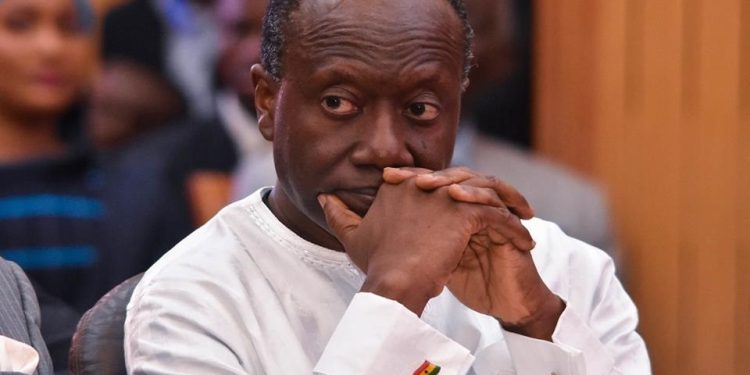
Finance Minister, Ken Ofori-Atta, has revealed that the country’s economy will crash in March 2023 should current economic conditions remain the same.
Mr Ofori-Atta disclosed the information on Monday when he engaged Pensioner bondholders who picketed at the Finance Ministry today.
According to the Finance Minister, Ghana is “in a crisis, (and) we cannot put our heads under the sun and pretend that we are not.”
“We need to be mindful that we really need to be successful in going to the fund by this March to avoid what we all experienced last year which we all don’t want to experience again,” he added.
Ghana since the beginning of 2022 began witnessing its economic growth decline. The regression has been attributed to the COVID-19 pandemic and the Russian-Ukraine war, as well as some internal activities such as heavy importation.
In July 2022, government formally engaged the International Monetary Fund (IMF) after months of declining suggestions to seek assistance from the Fund.
For close to eight months, the government and the IMF have been discussing initiatives that must be put in place to ensure Ghana receives a credit facility worth 3 billion dollars.
Among the conditions is a debt restructuring programme which would ensure Ghana does not default is debt. Government in December introduced the Domestic Debt Exchange Programme (DDEP), however is yet to see its implementation.
The DDEP is currently being analsyed critically following concerns from pension holders and individual bondholders.
Government is concerned that without its debt exchange programme in place, Ghana would not be able to receive assistance from the IMF.
The National Petroleum Authority (NPA) has made it clear that the choice to control fuel prices under the “gold for oil” program is just temporary and will cease if significant quantities of consignment arrive in Ghana.
The Communications Manager of the NPA, Mohammed Abdul-Kudus, in an interview on the Citi Breakfast show on Monday explained that the decision is to ensure that the prices of petroleum products imported under the Gold-for-Oil (G4O) programme reflect at the pumps to benefit consumers.
“Currently they are commingling, what it means is that they are taking from the G4O and what they take from the prevailing market price, so the pricing dynamic is different. So when the volume increases when we have OMCs taking mainly from G40 then we don’t need to put our eyes on it because then the pricing is clear.
“It is because of the non-clarity and difficulty in arriving at the price because of the insignificance of the quantity that has warranted our monitoring. We hope that when the product supply increases over time and hopefully takes off the current arrangement over time and we are able to tell that this OMC is not selling any product apart from G4O then pricing is easier and we are not going to have any difficulty in monitoring,” Mr Abdul-Kudus told host Bernard Avle on Monday.
The NPA has also announced that it will work with the Bulk Oil Storage and Transportation (BOST) Company Limited to negotiate prices with international oil traders to ensure that the landed cost of products procured under the programme is always competitive.
The NPA also disclosed that the initial 40,000 tonnes of diesel that arrived in January under the Gold-for-oil policy were valued at US$40 million.
The clarification by the NPA comes after several calls by industry experts including the Institute of Energy Securities for the government to provide details on how much it spent on the initial consignment.
The company’s production and free cash flow generation should be aided by investment in Ghana, which will cut net debt and strengthen Tullow’s balance sheet.
More than $100 million of the total will go toward infrastructure.
Tullow stated in an update to investors that the planned expenditure figure represents an increase of US$50 million compared to 2022 after deferrals from 2022, increased equity in Ghana for the entire year, and ongoing infrastructure investment in Jubilee South East, which will account for about 40% of the Ghana capital spend in 2023.
“Capital investment in 2023, particularly in Ghana, is expected to support production growth through to 2025 and free cash flow generation of US$700-800million at US$80/bbl for the two years 2024 and 2025 based on 2P reserves only; which will further reduce net debt and strengthen Tullow’s balance sheet,” the update read in part.
Tullow mentioned that the additional equity in the Jubilee and TEN Fields acquired through the pre-emption transaction in Ghana for US$126million had already been paid back by 31 December 2022.
In 2023, Tullow expects Jubilee oil production to average approximately 95 thousand Barrels of Oil Per Day (kbopd) (about 37 kbopd net), with a total of up to six new wells expected to come online starting from middle of the year. Gross oil production from the Jubilee Field is expected to exceed 100 kbopd once all these wells have been brought online.
“The focus on operational excellence in production, drilling and major project delivery in recent years has yielded appreciable value and will continue to be an area of leverage for Tullow,” the company highlighted.
Production from the Jubilee Field averaged 83.6 kbopd (31.9 kbopd net) in 2022. A good operational efficiency of circa 97 percent was achieved, and production was supported by four new wells (one producer and three water injectors) brought online in early 2022.
Tullow said that two wells were drilled in the Jubilee South East area in the second half of 2022, and a third well is currently being drilled. “First oil from the Jubilee South East project will be a significant milestone, bringing previously undeveloped reserves to production.
“The transition of operatorship to Tullow on the Jubilee FPSO took place in July 2022 and represented a major step in becoming a leading low-cost deep-water operator, realising improvements in safety, reliability and cost. Following the transition, FPSO uptime averaged about 99 percent in the second half of 2022 compared to 95 percent in the first half,” the company said.
TEN Field
In the case of the Tweneboa, Enyenra, Ntomme (TEN) Field, Tullow expects to focus on sustaining the strong operational uptime and improving gas-handling on the FPSO this year.
“Thisis will be implemented during a planned maintenance shutdown scheduled for the year’s third quarter. Increased gas handling capacity will also significantly reduce flaring and increase gas injection to support oil production,” it said.
“The longer-term plan is to monetise the significant remaining TEN resources through infill drilling particularly on Ntomme, phased development of new areas near existing infrastructure, development of the significant gas resources and drilling of prospective resources,” it added.
Tullow expects to submit a plan of development to the government of Ghana later this year.
In 2023, TEN production is expected to average about 20 kbopd (11 kbopd net), including the planned two-week maintenance shutdown. A water injection well (En16) that was brought online in December 2022 is expected to provide pressure support for production from Enyenra in 2023.
However, Tullow indicated that there are no new wells planned to be added in TEN for 2023.
Production from the TEN Field averaged 23.6 kbopd (12.5 kbopd net) in 2022. A good operational efficiency of c.98 percent was achieved with overall production at the lower end of guidance.
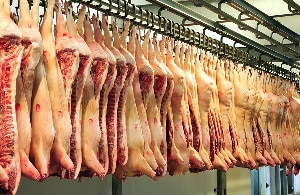
Kwame Appiah Dankwah, President of the Pig Farmers Association of Ghana, is unhappy about the importation of pork from the United States (U.S) into the country.
He claimed that such a move would bring Ghana’s poultry industry to its knees.
Ghana has officially opened its market to pork and pork products from the United States.
According to a statement posted on the website of the United States Department of Agriculture (USDA), the USDA has received official correspondence from Ghana’s Ministry of Food and Agriculture acknowledging receipt of the FSIS’ proposed certificate of export of pork and pork products and confirming its acceptance.
Mr. Appiah Dankwah, in response, stated that the move is not good and should be reconsidered.
“The importation of pork products from the United States will cause the Ghanaian industry to collapse. Several factories in Ghana produce pork products. As a result, the importation of such products will deprive us of our jobs and livelihood. You introduced pig rearing for food and jobs and gave people piglets. These farmers are about to benefit as you announce the importation of pork products,” he said.
“This is a terrible decision. It would aggravate the cedi’s depreciation. If the government wants us to produce more to meet demand, we should talk about it and figure out how to do it instead of importing.”
The facility would become Africa’s top location for large-scale aircraft maintenance and crew training to enable quick reaction when disasters occur, with a focus on tourism and aviation excellence.
In order to significantly increase intra-African trade through the African Continental Free Trade Area, the action is in line with the government’s agenda for economic development (AFCTA).
He said the project would facilitate tourism, trade, and connectivity to generate economic growth, jobs, alleviate poverty and improve living standards.
With the strategic location of Ghana in global trade, the facility would become a vehicle by converging the 54 African countries into a single market of 1.3 billion people through the ACFTA.
Mr Ayeh said a focus on more intra-African trade in industrial goods would promote Ghana’s industrialisation and the advancement of its manufacturing sector, providing more employment opportunities for the growing youth population.
It would also entice global business giants to participate in ready market due to the prime location of the region.
Touching on the siting of the project at Komenda instead of Cape Coast, Mr Ayeh explained that a baseline study of geographical, topographical, and layouts in six different locations; comprising two each in Takoradi, Komenda, and Cape Coast, identified the best location to be Komenda.
“An in-depth spatial survey was carried out on these sites and Komenda site one was chosen as the best location based on social, environmental, and economic indices,” he said.
The Takoradi-Cape Coast Highway would be converted into a double carriageway to ease commuting challenges as part of the project.
Relatedly, a railway line would be constructed to link the two cities to carry goods to and from the Cape Coast Airport to the Takoradi Harbour.
On educational benefits, he said an aviation school would be established to provide to provide air transport training for effective civil aviation management services.
Mrs Justina Marigold Assan, the Central Regional Minister, called for the unalloyed support of all stakeholders to make the project a reality.
She said considering the enormous socioeconomic benefits, it remained pivotal to turning the fortune of the region around.
Arranged by the Regional Coordinating Council, the forum was graced by officials from the Environmental Protection Agency, Ghana Export Promotion Authority, Lands Commission, Ghana Chamber of Commerce and Industry, Ghana Union of Traders Association, Ghana Water Company Ltd and the MMDAs among others.
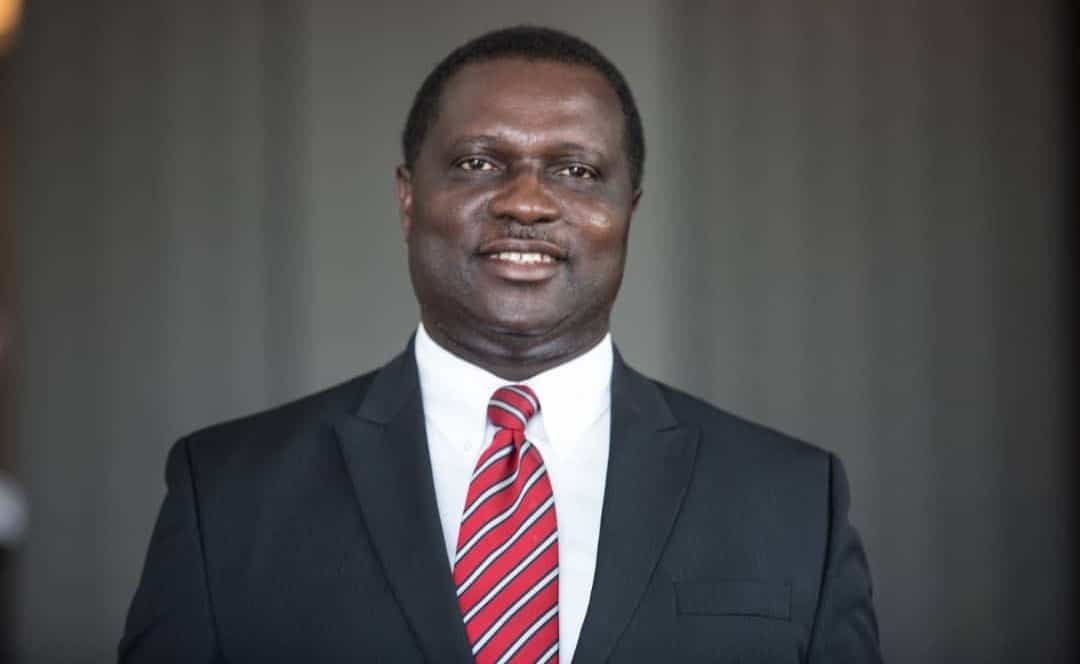
The Education Minister, Dr Yaw Osei Adutwum, has says he’s committed to enhancing the education system in country.
According to him, his zeal to facilitate an improved sector during his tenure goes beyond mere rhetorics.
The Minister has come under criticism recently for some public comments regarding Ghana’s approach to educating its populace.
But speaking in an exclusive interview on the AM Show, the educationist insisted that his speeches are only geared towards drawing attention to the problems to create a sense of urgency among the stakeholders.
“I think we create awareness by telling people so that there is a sense of urgency and by the way, this is what is going on. It doesn’t mean that you are just talking about it and you are just one of them,” he said.
However, Dr Adutwum told JoyNews that it does not end there.
He told host, Bernice Abu-Baidoo Lansah that many of the challenges he talks about are at various stages of being addressed.
“I should create a sense of urgency for all of us that something is not right. I need to fix it but I’m a fixer, not a talker. So if something is not right, I’ll talk about it but if they follow me, they will see that I’m doing something about what I’m talking about,” he concluded.
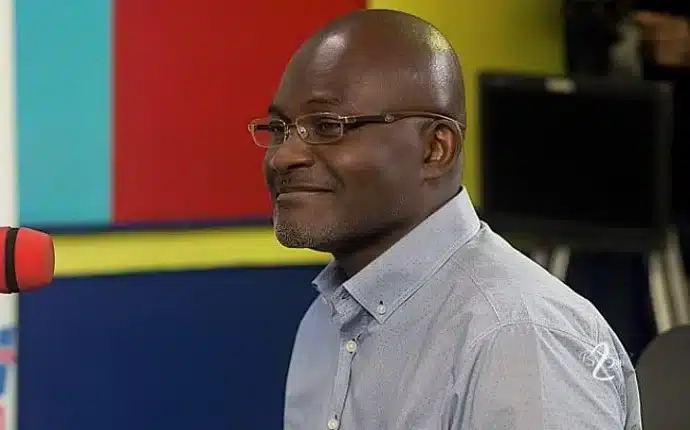
Member of Parliament for Assin Central, Kennedy Agyapong, has again justified his decision to become President of the republic.
He says he doesn’t want to go to his grave with his vision for the country.
“I don’t want to die with my vision and the only way to let Ghanaians know that a Ghanaian can also do it is to vie for this presidency,” he said in an interview on Good Evening Ghana.
During his interaction with host, Paul Adom Otchere, the Assin Central MP painfully revealed that he has on various occasions proposed innovative solutions to the country’s many woes in the various sectors of the economy. However, all these suggestions have been ignored. He, thus, believes that the only way to make these solutions materialise, is to become the President of the country.
“I’ve always thought that I could effect change in people’s lives without necessarily being President but I’ve come to realise that, especially with the COVID and Russia-Ukraine war; I feel whatever pragmatic approach I have towards development, I should only be President so that my vision will come through and I’ll be able to change the fortunes of this country.
“I have tried it in business fields, I employ a lot of young people but there are still many young people that are not working which clearly indicates to me that being only a businessman, I cannot help this youth enough but indeed if I become president, I can express my views and vision to everyone and bring the whole country together to move this country,” he said.
Despite an initial claim he made in 2021 on the Good Evening Ghana show to the effect that he had no presidential ambition, the legislator made a sudden u-turn and disclosed his intentions to run for presidency.
Touching on this, he noted that: “Indeed previously I wasn’t interested but now I am because successive governments have done their part when it comes to education for instance, most structures in the educational sector are just theory; we need abstract thinkers and pragmatic solutions to our problems.”
This is because growth will be boosted by anticipated improvements in economic activity, particularly in the extractive industry.
The Fund estimated Ghana’s GDP to be 2.8% in 2023, but they anticipate a higher growth rate in 2024.
Division Chief of the Research Department Daniel Leigh responded to press inquiries at the recently concluded World Economic Forum in Davos, Switzerland, by stating that this year’s growth will slow down in part due to the global headwinds that will influence the Ghanaian economy.
“On Ghana, we do expect growth to slow this year. This is partly because of the global headwinds that Pierre Olivier [Chief Economist and Director Research Department] has been discussing. So, it’s a difficult time for the global economy that affects Ghana”.
“But also, there are some domestic headwinds. In particular, inflation has increased significantly. And so, the Central Bank is tightening monetary policy, but that is cooling the economy domestically. Plus, the fiscal policies are tightening to address the elevated debt. This is the cooling in 2023”, he pointed out.
“But in 2024, we see a rebound in particular in the extractive activities. And that is going to support Ghana in 2024”, he added.
Mr. Leigh also spoke of the $3 billion extended credit facility that Ghana is seeking from the IMF, saying, “The goal of that program is to reestablish macroeconomic stability, debt sustainability, and create the foundations for higher and inclusive growth over the medium-term”.
“I would add that right now — so just very recently — the IMF team went to Ghana, reached agreement with the Ghanian authorities on an economic reform program that will be supported under a $3 billion extended credit facility. And the goal of that program is to reestablish macroeconomic stability, debt sustainability, and create the foundations for higher and inclusive growth over the medium-term”.
Despite a slight upward revision since October, growth in sub-Saharan Africa is predicted to be mild in 2023 at 3.8% with ongoing COVID-19 pandemic effects before accelerating to 4.1% in 2024.
Ghana is known as a secular country with a high Christian population and a favorable Islamic following too. In spite of these two dominant religious groups the country also enjoys the existence of shrines and traditional deities.
It is believed a greater part of the population Christians and Muslims alike patronize these shrines for quick solutions to their problems, request and otherwise.
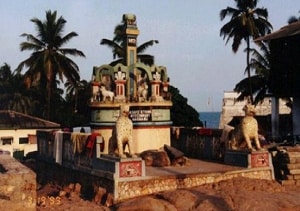
In view of that MyNewsGh.com brings to you a regional breakdown of the most popular, powerful and feared shrines in Ghana. Many of these shrines have interesting statues and architecture.
Ashanti Region – Antoa Nyamaa
Antoa Nyamaa is a popular river god deity, with its shrine located at Antoa in the Ashanti Region in Ghana. The Antoa Shrine is harboured in a small stream called Asuo Nyamaa.
Antoa is about seven miles away from Kumasi specifically in Kwabre East. Antoa Nyamaa is a very renowned deity and the people in the Ashanti Region often use it to seek answers to their problems.
In 2015 however thieves broke into the strong room of the shrine and stole its gold ornaments, idols and other valuables worth thousands of cedis.
Upper East Region – Tengzug Shrine in the Tongo Hills
Located in the Talensi District of the Upper East Region, the shrine requires you to be topless before entering the spiritual and holy space whether man or woman.
The Tengzug Shrine, is very famous for its religious animal sacrifices for good luck and to please the ancestors of the Talensis land.
During the Talensi in July 2015, Bernard Antwi Boasiako alias Chairman Wontumi, Ashanti Regional Chairman of the New Patriotic Party (NPP), led some party members to the shrine, including the then-parliamentary candidate now DCE for the area.
Eastern Region – Akonedi Shrine
This is a shrine located at Larteh Kubeasi in the Eastern Region of Ghana, 56km north of Accra, on the Akwapim Ridge. It is very popular and believed to be one of the most powerful shrines among the Akuapims.
The shrine is an important place of traditional healing and religious ceremonies where herbal medicine, as well as psychic healing, is practiced by the fetish. A fee is charged to observe religious ceremonies. Major spirits worshiped at the Akonnedi shrine in Larteh include: Akonnedi, Esi Ketewa, Adade Kofi, Asuo Gyebi and Tegare.
Volta Region – Nogokpo
Nogokpo is considered by many to be the quickest results-oriented shrine in Ghana. It is located in the Ketu South Municipality of the Volta Region of Ghana along the Trans–West African Coastal Highway.
It is patronized both by locals and foreigners to seek answers of whatever kind either their destiny or revenge. Sometimes people jokingly use the name to frighten people but it is believed such acts can anger the gods.
Volta Region – Klikor Shrine
This shrine is in the Volta region. The natives in that area get ‘spiritual summons’ when they are alleged to steal an item.
It is believed that when someone reports you to the shrine and you are unable to pay the debt, your relative (mostly women) will have to serve the deity.
Bono East – Nana Yaw Bosam
This shrine has been in existence for several years. It served as a spiritual connection between the living and the living and the dead.
It’s very popular within the Bono and Ahafo enclave where people go to seek insight into their destiny, go for spiritual healing and make requests of the gods.
It is a shrine that connects with only male priests who serve as the mouthpiece of the gods.
Greater Accra – Brekete Shrine
The Brekete shrine in Ghana features northern gods dancing at a triennial cow sacrifice. There are major and minor gods.
The major gods are Kunde (father and hunter); Ablewa/Tseriya (Mother); Sanya Kompo (God of the stone, linguist and secretary); Bangle/Ketetsi (warrior and soldier); Sakra Bode (god of the land and Bangle’s stool); and Wango (god of the waters and roads).
The minor gods, all of which work with Bangle, are Tsengé (god of the seven knives), Gediya (policeman), and Surugu (lieutenant).
Brekete is a relatively new cult that found its way around the 1930s to the southeastern coastal villages of what was then the Gold Coast and has since spread throughout.
Ashanti Region – ‘Kofi o Kofi’ shrine (Akomadan)
This is a shrine that is managed by Nana Kwaku Bonsam, whose name, “Bonsam” translates literally as “Devil”.
Kwaku Bonsam a well-known witch doctor in Ghana and beyond, gained international prominence when he claimed to put a voodoo curse on the Portuguese footballer and superstar Cristiano Ronaldo not to score against Ghana in the 2014 World Cup in Brazil.
He has also said in the past some popular pastors in Ghana come to his ‘Kofi O Kofi’ gods and shrine for charms and powers to woo their congregations.
Greater Accra Nana Agraada Sika Gari
It was seen as a powerful place where those who patronized the shrine got their answers until the priestess of the shrine one day announced she was no more interested in the work of smaller gods but in the Almighty God.
Nana Agradaa, known in real life as Patricia Asiedua, has since burnt all the idols in her shrine after she confessed giving her life to Christ. The shrine was destroyed by a team of prayer warriors and powerful prophets selected by herself.
Some of her famous spiritual activities were the ‘Sika Gari’ where she claimed to double money for people.
Nana Agradaa christened her evangelism as ‘Agradaa Ministries International’ however some people believe her activities as a vessel of God are even worse than when she used to be a fetish priestess duping people in the process.
These are just a few of such shrines in Ghana; however, there are some community shrines in several parts of the country that people revere and go to for spiritual interpretations and powers.
Ghana’s balance of payments further deteriorated to a deficit of $3.64 billion in December from a $3.4 billion deficit the previous quarter, central bank data showed on Saturday.
The West African nation is facing an economic crisis that saw consumer inflation rise to 54.1% last month. The cedi currency has depreciated around 50% annually, and interest payments on government debt have swelled to between 70% and 100% of GDP.
Recent balance of payments woes have been largely driven by a sharp reversal in capital flows, with Ghana’s capital account deficit having worsened to $2.18 billion in December from $1.64 billion in September.
At the same time last year, Ghana had a capital account surplus of more than $3.3 billion.
Ghana secured a $3 billion staff level bailout from the International Monetary Fund late last year, but must restructure its debts in order to obtain executive board approval.
The country has requested to restructure its bilateral debt under the Common Framework platform supported by the Group of 20 major economies, and is currently negotiating terms for a domestic debt exchange programme with local bond holders.
A group of private seedlings producers and suppliers to the State have made a passionate appeal to the government of Ghana to, as a matter of urgency, pay them their arrears from as far back as two years.
The group explained that they have not been paid any of their monies, some of which are as much as GH¢100,000, even though they have received countless assurances that it is being processed.
Speaking exclusively to GhanaWeb, one of the leaders, who wants to remain anonymous, stated that they are very aware that in the last year, the government of Ghana received a lot of monies to ensure that it successfully conducted the 2022 Greening Ghana project.
This, he added, has however not benefitted them although they fulfilled their side of the bargain and supplied all the seedlings needed for the government exercise.
“Since last two years, the suppliers in the country that we have made was paid partially. Just the Green Ghana Project monies were paid. The other ones that went to the forest for enrichment programs of our deplorable forests have not been paid throughout the country as at now.
“Besides, the whole of last year, the Greening Ghana one, about 20 million seedlings that were planted, none has been paid, as well as the ones they took for other (sic) programs in our forests. It cuts across all the regions in the southern part of the country.
“As I’m speaking, none of the money has been released for both the Greening Ghana and the (sic) projects, meanwhile Ghana government received huge sums of monies last year for the climate change and for that of the planting of the seedlings in our forests in order to curb the climate change, through the Greening Ghana project i.e. galamsey enrichment projects, or (sic) projects, planting trees across the country and that of the forests,” he explained.
He also explained some of the frustrations they have had to endure in this whole period, especially because their creditors have been breathing down their necks for repayment.
Attempts to get progress on what is being done about their monies, he said, have not been successful either.
“We have been told by our association leaders that last year November, they met the government and the government of Ghana said that up to 27th December, they would start issuing the cheque, at least for the Greening Ghana but 27th came but they did not do so.
“We are yet to hear anything meaningful from them. You find out from the regional and district directors of Forestry Commission and they’ll tell you that they have submitted everything necessary to be submitted to the State,” headed.
The supplier, who is in the Ahafo Region, further pleaded for help from the government so that they are able to get their monies from the Forestry Commission of Ghana paid them.
This, he added, is to allow them adequately prepare for new seedlings to be supplied in the year, all in an attempt to ensure Ghana’s forests are not depleted of the right supply trees.
“We need help so that we can pay some of our creditors and we can collect some of the seeds for this year’s production because this is the time that the seedlings are matured to be collected from farmlands and from the forests,” he added.
The seedlings suppliers are said to be scattered across the southern belt of the country, including the Ashanti, Eastern, Western, Western North, and Central Regions of Ghana.
Majority of drivers both commercial and private do not see any benefit from insurance companies in Ghana due to the perceived unwillingness and refusal of payments of claims.
The event, which brought together stakeholders from various sectors took place on Wednesday January 25, 2023 in Accra, to launch YAFO “Driver MO” report and to find ways of improving the insurance sector.
He said the drivers only showed interest in vehicle insurance because it was mandatory and enforced by the police.
He said drivers complained about delays in insurance claims and sometimes to the extent of not being paid by the insurance company.
He said 82 percent of Ghanaian drivers often did not have an interest in filing complaints due to bureaucratic delays in the process.
The research stated that insurance companies required some documents such as doctors’ report, car papers, police commentary reports, passports, ID card, and witnesses, among others, making drivers reluctant to collect insurance claims.
After critical evaluation of the research, it was noticed that insurance regulations are generally favourable to insurance companies, the National Insurance Commission and insurance companies needed to do more to provide better and innovative services in response to the needs of the average vehicle owner.
However, YOFA recommended that insurance companies should abolish the third party and categorize comprehensive insurance, digitise the issuance of insurance stickers and build trust between the insurers and vehicle insurance subscribers.
It noted that most vehicle insurance policyholders were not aware of the documents needed to access claims.
Insurance is unlikely to be a factor in good driving behaviour in a situation where insurance is purchased at a fixed rate for all drivers, as is the case in Ghana.
In contrast, in other countries, vehicle insurance is based on an individual profile rather than a fixed fee. A driver’s insurance premium is determined by the individual’s profile.
Moreover, concentrating more on individual drivers’ safety measures, and behavioural patterns as a consideration in determining insurance coverage might lead to drivers/vehicle owners placing a higher value on vehicle insurance.
However, Young Africans for Opportunities (YAFO) is an independent, non-profit, non-commercial organization with the core aim to educate, train, and inspire students, entrepreneurs and young professionals to create, innovate, and promote entrepreneurship through public policy advocacy for a free and prosperous Africa.
YAFO expressed hope that the transformative dialogue and recommendations will act as a catalyst for the much-needed reform in Ghana’s vehicle insurance market.
It outlined that, “issues relating to COVID-19 continue to impact research into internet adoption, so actual internet user figures may be higher than the published numbers suggest”.
Meanwhile, on the social media front, Ghanaian user activity reached 8.80 million in January 2022.
This was equivalent 27.4 percent of the total population at the beginning of 2022.
The Digital 2023 Global Overview Report however noted that the figure for social media users may not necessarily represent unique individuals that use various platforms.
Ghana’s internet penetration rate stood at 53.0% of the total population at the start of 2022, as 16.99 million internet users were recorded in January 2022.
According to the Digital 2023 Global Overview Report, internet users in Ghana increased by 350,000 (+2.1 percent) between 2021 and 2022.
The report further revealed that 15.07 million people in Ghana did not use the internet at the start of 2022, meaning that 47.0% of the population remained offline at the beginning of the year.
Ghana’s total population stood at 32.06 million in January 2022.
The report, however, said “issues relating to COVID-19 continue to impact research into internet adoption, so actual internet user figures may be higher than the published numbers suggest”.
Social media users stood at 8.80m in January 2022
Meanwhile, the report stated that there were 8.80 million social media users in Ghana in January 2022.
The number of social media users in Ghana at the start of 2022 was equivalent to 27.4% of the total population.
But the report said it’s important to note that social media users may not represent unique individuals.
Asamoah Gyan, Ghana’s all-time leading scorer, has suggested that the Black Stars require a coach who will be resolute in making his own judgments and not submit to direction from the Ghana Football Association (GFA).
He believes that having a tough coach will put the Black Stars back where they belong and that having specific attributes could help the team.
Following Otto Addo’s resignation from his position following the Black Stars’ early withdrawal from the Qatar 2022 FIFA World Cup, the Ghana FA is looking for a new head coach.
James Kwasi Appiah, who wants to lead the club for a third time, and Chris Hughton are two coaches who are considering applying for the open position.
“We need an experienced coach, someone with strong credentials…Even if he is an inexperienced coach we should be able to identify what the coach has taught the players in terms of their style of play,” he is quotes by JoySports to have told Dan Kwaku Yeboah on YouTube.
“You can take an inexperienced coach but make sure he understands the game, someone who will make the people understand his philosophy,” he added.
“Someone who can take charge, not someone who takes orders, you have to be strict and take charge of what you are doing,” Gyan added.
Before the Black Stars reassemble for the next phase of the 2023 Africa Cup of Nations qualifying matches, a new head coach is anticipated to be selected.
In contrast to other movie industries outside of Ghana, the Ghanaian film industry is said to have been seeing a drop in output for some time now, making it a less serious and vibrant industry.
Regardless, actress cum producer, Yvonne Nelson has said that she is sick and tired of talking about how industry players can help revive the movie industry.
In an interview with 3Music TV, she stated that she was doing her part and hoped it was enough to restore the movie industry to its former splendour.
“I don’t blame anyone but I believe you guys (media) talk about what you see. It’s obvious the industry is not as vibrant as before and I am sick and tired of talking about this subject. I am tired of it. For me, I am doing my part.
“It works and for me, it’s a business and I have the passion. I just cannot see myself not producing anymore. I believe I am going to be around for a long time. The thing is my colleagues and I have to invest,” she said.
Yvonne further said that she thinks many people have already given up on the movie industry and that locals need to learn to invest in what is theirs because outsiders won’t do it for them.
“We have to invest in the industry, and if we don’t, we don’t expect outsiders, people who don’t even know anything about the business to come and invest. Because we know it and this is what we do.
“So I was expecting to see John Dumelo start directing. I am always bugging Majid to direct you know. It’s really just us, and I feel like we’ve given up too easily, and things are the way they are because of us. We have to sit up and do something about it,” she added.
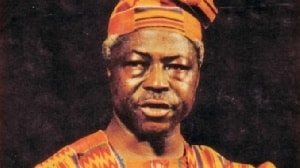
On the announcement of his death on January 23, 1998, the Washington Post reported it as “Hilla Limann, 64, who was ousted as president of Ghana in a 1981 coup after a brief rule, and who tried to reclaim the post in elections 11 years later, died Jan. 23 at a hospital here.”
He is reported to have died of a heart ailment.
Twenty-five (25) years on, GhanaWeb looks back on the life of Ghana’s only elected president in the third republic.
Who was Dr. Hilla Limann?
Former president Hilla Limann, who died at the Korle-Bu Teaching Hospital, was born at Gwollu in the Upper Region in 1934.
Dr. Limann, a career diplomat, was born to Mr. Limann and Madam Hayaba. He had his elementary education at Lawra Confederacy Native Authority Primary Boarding School from 1941 to 1945 and the Tamale Middle Boarding school from 1946 – 1949.
He taught as a pupil teacher at Tumu for one year after receiving his standard seven leaving certificate. Dr. Limann entered the government teacher training college at Tamale and passed out with the teacher’s certificate “B”. At the college, he took part in local and district council politics. From 1952 to 1955, he served on the Sissala District Council as a local and district councillor, and he was the council’s chairman for two years (1953-55).
Dr. Limann studied at the London School of Economics from where he obtained his B.Sc. Economics. He also studied at Sorbonne University – Cours De La Langue Et De La Civilisation Francaise (School of French Language and Civilisation) and obtained a Higher Diploma in 1962.
From 1962-65, he studied at Faculte De Droit Et De Sciences Economiques (Faculty of Law and Economics) at Paris, France, and obtained a doctorate et Science politique et de droit constitutionnel (Doctorate in political science and constitutional law) in 1965.
From 1965 until January 1979, Dr. Limann was foreign officer. He was head of chancellery at the Ghana Embassy in Lomé from 1969-71. From 1971 to 1975 he was counsellor for the Ghana permanent mission in Geneva.
Dr. Limann was elected the presidential candidate of the People’s National Party (PNP), the successor of the CPP, for the 1979b elections.
He polled 631,559 votes (35.32 percent) in the June 18 elections to beat nine other candidates. He went into a run-off with Mr. Victor Owusu, the Popular Front Party (PFP) candidate who had 533,928 (29.86 percent) of the votes.
During the second round in July 1979, Dr. Limann convincingly beat Mr. Owusu to be elected president of the third republic. He was sworn into office on September 24, 1979, and took over from Flight Lieutenant Jerry John Rawlings and the Armed Forces Revolutionary Council (AFRC).
He was plagued by internal squabbles in the party, leading to his overthrow by Flt. Lt. Rawlings on December 31, 1981. Dr. Limann formed the People’s National Convention (PNC) to contest the 1992 elections when the ban on political activities was lifted. He came a distant third to President Rawlings of the National Democratic Congress (NDC) and Professor Albert Adu Boahen of the New Patriotic Party (NPP).
Dr. Limann surprised many people when he stepped down for Dr. Edward Mahama as the presidential candidate of the party during the 1996 polls. He was in and out of hospital for heart ailment of over the past couple of years. Dr. Limann is survived by a wife, Fulera, and six children – Sibi, Sammoi, Hagommie, Leda, Danni-Hasi, Habuguwie.
The government’s compensation package, in the opinion of the landlords whose properties have been impacted by the Lake Road construction, is insufficient and cannot be compared to the price of a home in Ghana right now.
Because of this, the impacted landlords want the government to enhance the compensation.
“We want them to add more to the compensation because in this Ghana, inflation has gone up. The only thing we need government to help us [with] is that, they must increase the compensation or to set up a committee, to sit down and negotiate with us,” one said.
According to the landlords, the notice is also too short compared to the amount being paid them as compensation.
They therefore want the initial 10 percent being paid as compensation by the contractor to be increased to at least two-thirds of the amount of the compensation.
An affected landlord noted: “Even if they pay half or two thirds… So we’re pleading with government to intervene so that everything will go smoothly,” one of the affected landlords said.
“Because of the date, the money is too small, I didn’t collect it. Because the notice is too short, they expect me to move out right after taking the money, even when you’re renting a room and you’re given a notice of eviction, if you don’t find a place, you can still negotiate for more time, but why is it that they expect us to move out immediately so demolishing can take place? It does not work that way.”
A demolishing exercise has to be carried out in order to make way for the construction of the road, hence efforts to have the owners of the affected houses compensated to make way for the project.
The Member of Parliament for Ningo Prampram has called on religious leaders to dissociate themselves from the construction of the National Cathedral.
Speaking on GHOne TV, the lawmaker expressed worry about religious leaders allowing themselves to be connected to the construction of the controversial edifice.
He described as untenable the decision by religious leaders in the Christian faith to continue to sit on the National Cathedral Board.
“Many of you, gave off your use for the propagation and establishment of the gospel. Especially in the charismatic faith in our land. We love you and we cherish you and it breaks our heart that you allow crooks in government to use your face as a smoke screen to steal from the poor.
“You have taught us in many Sunday sermons to speak truth to authority. And as your son, I make an appeal to you, the Apostolic fathers, to save yourself and your dignity. And disassociate yourself from the blatant stealing. Do not be accomplices to ask what Ananias and Saphira did,” the lawmaker stated.
The MP asked the religious leaders to read Amos: 5:21-24 which mainly points to what God told his people not to do.
“…I want nothing to do with your religious projects, your pretentious slogan and goal. I am sick of your fund-raising schemes, your public relations and image-making. I have had all I can take of the noisy ego music. When was the last time you sang to me? Do you know what I want?”
According to Sam George his call to the National Cathedral Secretariat is to demand justice for the people of Ghana adding that “I want fairness, rivers of it, that’s all I want.”
“Is there anything fair about the scandals that have rotted the building of that so-called cathedral? That is not a cathedral, it is a multipurpose meeting home. Do not allow yourselves as Apostolic fathers, matriarchs and patriarchs of our faith to be used to do this smoke screen.”
Sam George also added that the prevailing economic mess that the government is struggling to fix is also a result of the happening with the construction of the National Cathedral.
“What you have are fraudsters in the government, bandits in cassock trying to use the name of God to steal. To steal in the name of God is a curse and that is why our country is in the mess that it is. Because you cannot use the name of God in vain. God will not be mocked and that is why he has turned his back on this nation.”
He said that he cannot comprehend why the majority of the youth in Ghana are not in meaningful employment in spite of their educational attainment and skills.
Speaking in a UTV interview monitored by GhanaWeb, Ken Agyapong added that he has now come to the realisation that his vision for the youth and the country as a whole can only come to fruition with him as the president of Ghana.
“And I have realised that the vision I have for Ghana will only come to pass if I am the one leading the country. And that is why I have decided to contest.
“…I’m coming for the youth of this country. I feel so bad and guilty that my children in America get jobs as soon as they complete university. So, why is it that in Ghana our children have to be home for 6, 7 years or more after completing university before they get jobs?” he said in Twi.
He said that he believes in the youth of Ghana and their ability to thrive when given the needed opportunities, which will be one of his major aims as president.
Veteran media personality, Nana Aba Anamoah has hit back at an American woman believed to be a member of the Latter-Day Saint after the latter described Ghana as a place of filth and a poverty-stricken country.
In a viral video, the American, identified as Jessie Clark Funk, while talking about the humanitarian activities of the Latter Day Saint worldwide, revealed how her experience in Ghana gave her the impression that Ghanaians, who she described as poverty-stricken, hungry and living in filth would prefer the church donates its resources to their welfare than to build magnificent temple of worship.
Reacting to the comments of Clark Funk on her official Instagram page, the General Manager of EIB network cautioned her against pushing a false narrative of Ghana for her parochial interests and urged her to quit pushing the impression that Ghanaians are against the Church of Latter Day Saint.
She wrote, “Here you are, @jessieclarkfunk. I knew I’d find you. Those lies you spewed about Ghana made you look less intelligent. That we hate the Mormons? Madam, are you okay? No one resents your temple. The area your temple (the church of Latter-Day Saints) stands in Accra (Ridge) is one of the richest, most peaceful and prestine neighborhoods. “
“I’ll forgive your imbecilic comments about the poverty stricken and hungry people you claim you saw around that temple and assume you just wanted to appear relevant. You looked pathetic instead.”
Nana Aba also took time to educate her on the realities of living in Ghana.
“Indeed, we do have poor people here just as your country does too. There are so many Americans who call cars, shacks, tents and boxes their homes. It’s 2023. Grow up. It’s time to unlearn the truckload of lies you’ve been fed by some of the painfully lazy media platforms in your country about Africa.”
She added, “ I’m willing to help you speak sensibly next time about a country that’s been kind to your ilk, church and any other organisation from your country. To be honest, they’d be shocked to the marrow to hear you speak this way about Ghanaians. You lot need to stop making Africa a victim of your incredibly dumb agenda,” parts of her post on Instagram read.
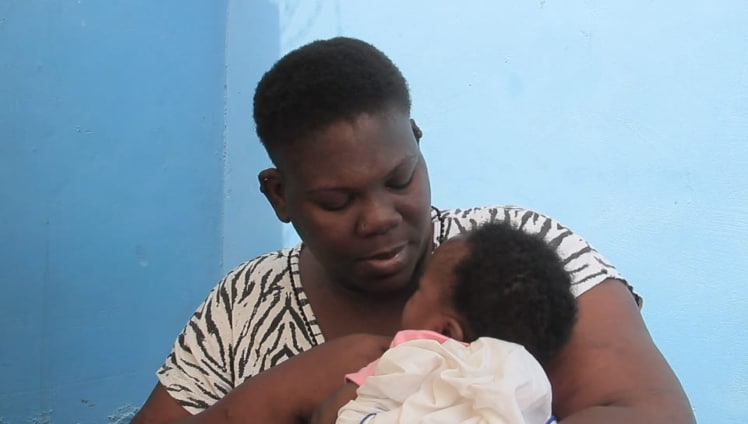
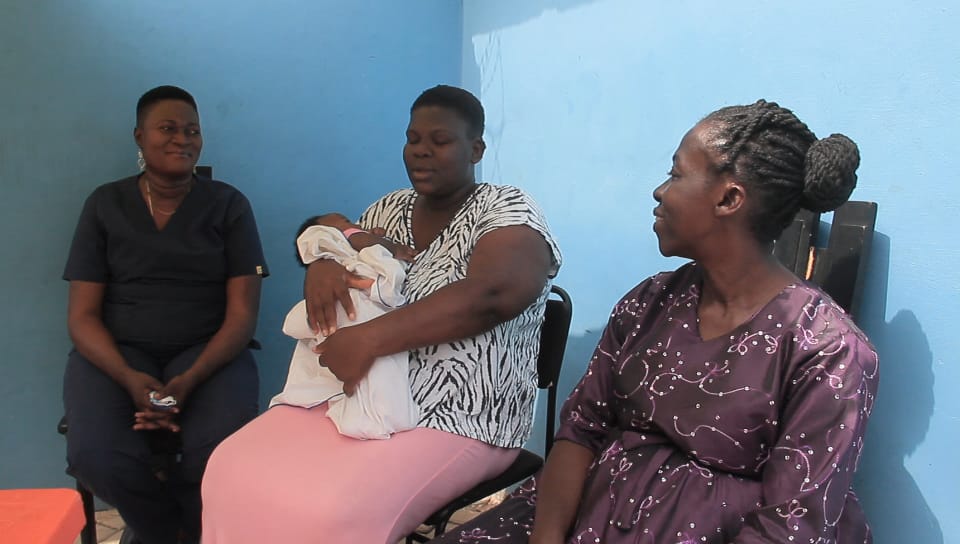
After months of attempting to repatriate a Nigerian citizen through the Embassy in Ghana, the Commissioner and other officials don’t seem ready to help.
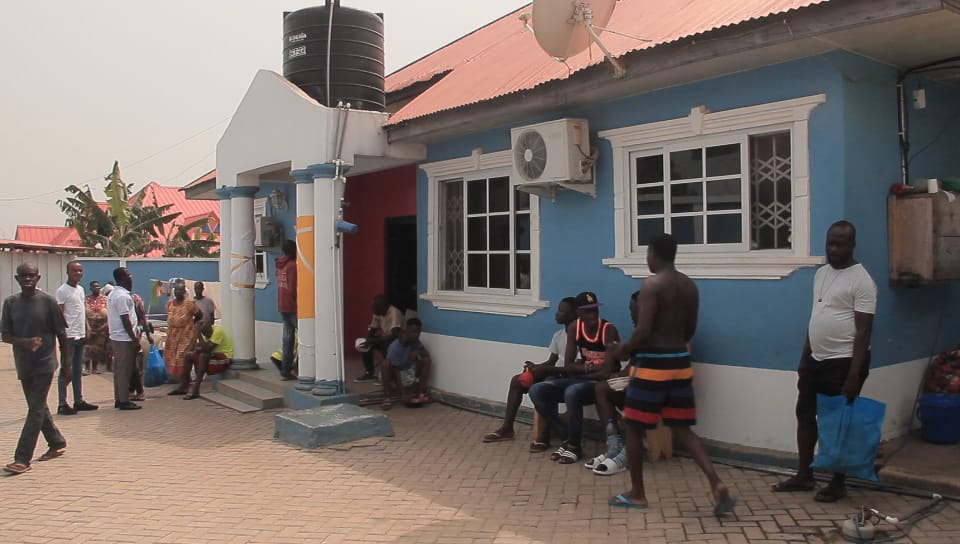
The Willingway Foundation took custody of Blessing Okoye from the streets of Kumasi, Ghana’s second-largest city, while she was seven months pregnant.
The 32-year-old woman has been in the charitable organization’s care and charge since August 2022.
Blessing was enticed to Ghana by some friends who promised her jobs and other exciting experiences, but she later developed a mental illness, which tragically crashed her dreams of living in Ghana.
Blessing, who is now in stable condition, wants to bring her lovely daughter back to Lagos, but she has been unable to obtain assistance from the Nigerian Embassy.
Lydia Abena Manu, the founder and executive director of the foundation, stated that despite sending numerous emails and visiting the Embassy with a letter requesting assistance, the officials appear uninterested.
“Two weeks after picking her, we went to the Embassy, we sent a letter, we drew their attention that there’s somebody like that in our facility but we haven’t heard from them. We keep sending them mails and we haven’t heard anything from them,” she said.
Mrs. Manu added that action is being taken to reunite some of the patients who are in stable condition with their families.
She stated that in addition to the Embassy, they also got in touch with the Nigerian Committee branch in Kumasi where the lady’s information was obtained, but there hasn’t been a reply yet.
Mrs. Manu pointed out that while mental health is a serious issue in Ghana, previous administrations and the general public have not given it much attention.
People’s misconceptions and other beliefs, according to her, have made the situation even worse because they think mental illness and spirituality are related.
“The perception about mental health in Ghana is so bad, and it’s so poor because many people don’t pay attention to mental illness. People have their own misconceptions about it. They believe it’s a spiritual disease, they believe those affected are paying back for some bad things they did in the past, so because of that people are not willing to support,” she explained.
Given the high cost of food and medical supplies, Mrs. Manu indicated that feeding and treating patients with mental health issues is very difficult and stressful.
She made an appeal to the general public, charitable organizations, and the government to help them rid the streets of mentally ill people.
The Ashanti Regional Mental Health Coordinator, Mrs. Faustina Nuako, stated that although her organization has made efforts to remove mental health patients from the streets, they are being hampered by financial issues.
According to her, despite numerous requests to the Kumasi Metropolitan Assembly (KMA) for support, none has been received.
“I have those proposals there, in fact we sat down and wrote it with them but at the end nothing came and this is not the first time, it’s because we love the job. Sometimes you will become frustrated and may even want to leave,” she said.
She cautioned people to treat mental issues seriously and not attribute it to witchcraft or other forms of spirituality.
Mrs. Nuako also urged the public to help the Regional Mental Health Directorate and the Willingway Foundation grow and treat a lot more mental health patients.
The sale of electric cars is growing. Globally, some 2 million electric vehicles were sold in the first quarter of 2022 – 75% more than in the first three months of 2021. Most, though, are sold in high income countries.
As transport electrification takes hold in rich countries to reduce emissions that lead to climate change and air pollution, increasing numbers of internal combustion engine vehicles are likely to land in used vehicle markets.
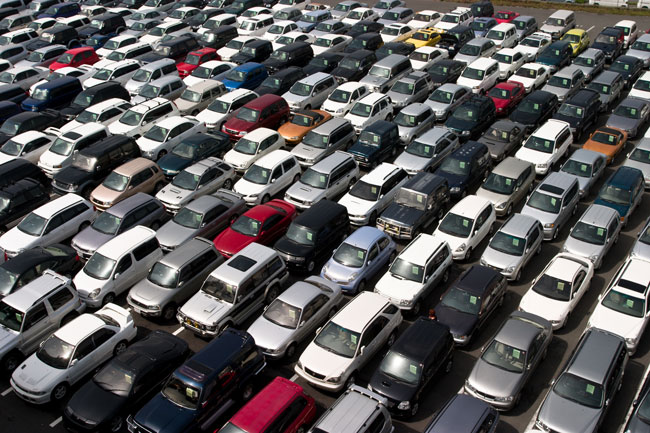
Africa is already one of the main destinations for used vehicles. Between 2015 and 2018, the European Union, Japan, and the United States exported 14 million used vehicles worldwide. Forty percent of these went to African countries.
Used vehicles serve real needs in the continent by supporting mobility and generating livelihoods for millions of people, including mechanics, sprayers, and other garage operators. But they also contribute to its public health and environmental problems through crashes and pollution.
Get your news from people who know what they’re talking about.
Get newsletter
This is largely because the vehicles that are exported to African countries run mainly on fossil fuel and tend to be over-aged, highly polluting and prone to malfunctioning. Sometimes, modifications to these vehicles – such as the removal of catalytic converters to source precious metals – make them even more polluting.
Africa’s dependency on used vehicles is often attributed to low incomes and weak regulation. The cost of new vehicles and limited access to loans put new vehicles beyond the financial reach of the majority. Environmental and public health protection standards against used vehicle harms are weak and poorly enforced in many African countries. The cost of repairing old vehicles, too, is relatively low.
Together, these factors tend to elevate demand for used vehicles. And supply is ready because wealthy countries have stringent recycling policies. However, this is not the full picture.
Our recent paper explores Ghana’s dependence on used vehicles. We found that low incomes and poor regulation tell us only so much about it. This explanation also tends to limit the policy tools to bans and import restrictions. We argue that a more holistic view reveals more at play and opens up more policy options.
Used vehicles in Ghana
Ghana has revised some planning laws inherited from its colonial experience. Nevertheless, as with their counterparts in other African countries, the attitudes and practices of Ghanaian politicians and professionals around planning, transport and land use still reflect colonial frameworks and mentalities.
These practices continue to promote the spatial separation of work and other activities like shopping for food far from home. This compels or encourages people to travel more. Road construction gets priority over public transport provision. Roads have huge political value in Ghana. Voters love roads, and constructing them generates great opportunities for kickbacks and profiteering.
These dynamics create incentives for investing ever more in roads. Indeed, the Ghanaian Ministry of Transport reports that over 80% of the government’s annual transport budget goes into road projects. Roads induce more spread-out land use – requiring more travel.
The roads are primarily designed for cars – they often lack pedestrian pathways, crossovers and bicycle lanes.
The construction of more and more roads, coupled with under-investment in public and non-motorised transport and the high social status attached to car ownership, encourages higher income individuals to import vehicles for their personal use.
The demand for private vehicles is easily met by importers focused on the cheaper used vehicles in abundant supply. Well-documented corruption in the Customs Service also undermines effective enforcement of regulations for importing used vehicles. Benefits accrue to powerful actors connected to the sector, and this is a very regressive approach.
The minibus (popularly called “tro-tro”) sector has stepped in to meet the high public transport demand. Some studies suggest that the sector serves about 60% of Ghana’s travelling public. The operators, however, remain highly fragmented and largely focused on individual short-term profits. Service improvements – like more efficient operations, fleet renewal or electrification – that require more capital are neglected.
The government of Ghana and its “development partners” direct their high quality bus investments into Bus Rapid Transit projects which do not always work as planned, leaving gaps. These conditions encourage the continuing purchase and use of second-hand minibuses, which are often poorly maintained and kept on the roads even as they get older and more dangerous. Their regular use means that large numbers of people are exposed to discomfort, air pollution, poor safety and other problems. Research shows that poor minibus (tro-tro) transport experience adds to the factors that push people towards used private car consumption in Ghana.
Big picture view of the problem
Currently, a focus on weak regulation and poverty leads to bans and penalties on used vehicle imports as the primary policy response to Africa’s used vehicle dependency. A broader view, incorporating land-use patterns, and investment in public transport, provides new policy options for reducing used vehicle and vehicle consumption generally.
The options could include:
changing town and city planning to allow people to live, work and shop in the same area and therefore travel less
investments to make public transport as well as walking and cycling cleaner, safer, efficient, affordable and attractive
investments in public transport infrastructure like dedicated bus lanes and proper bus stops, stations and passenger information
tax relief and financial support for new public transport vehicles – minibus recapitalisation programmes like South Africa’s can introduce higher occupancy, low emissions and safer vehicles
minibus electrification and investment in emerging local electrification initiatives.
Overall, there is a need for policy shifts from just banning used vehicle imports, and building more and more expensive roads. A broader range of interventions exists that can shift Ghana and other countries away from automobile dependency and all the socio-environmental harms that this brings.
DISCLAIMER: Independent Ghana.com will not be liable for any inaccuracies contained in this article. The views expressed in the article are solely those of the author’s, and do not reflect those of The Independent Ghana
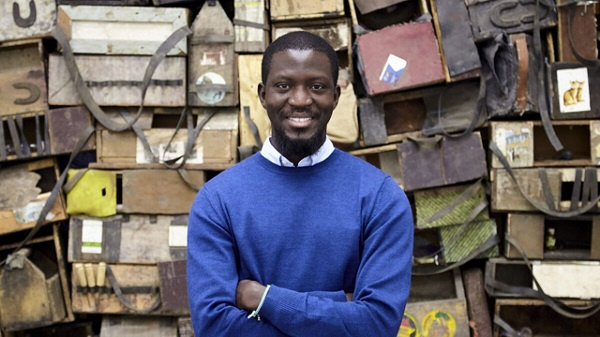
He is known for his unique ability to create art out of what most people will consider as junk.
From old materials including sacks, old sewing machines among other things, Ibrahim Mahama the Artist has made a name worldwide with his distinct art which not only promotes Ghana but has historical significance.
In 2021, the artist emerged as one who bought some of Ghana’s old planes to create a museum and community space in Jenakpeng in the Northern Region.
Using proceeds from $1m of sales, he bought these planes which now serve not only as a tourist attraction but a learning hub for students in the engineering field among others.
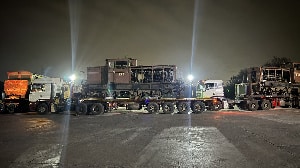
In his latest move, the artist, Ibrahim Mahama has acquired some of Ghana’s very old trains from some parts of the country and transported them to the North as part of his collection at the Red Clay Studios.
Revealing this in a tweet, he said;
“Taking history up north to build new histories. From Gold Coast Railways to Ghana Railways and beyond. Trains crossing River Pra at Beposo Western Region of Ghana”.
According to Samuel Okudzeto Ablakwa, a member of parliament for North Tongu, there is justification to assume that American rapper Meek Mill’s apology to Ghanaians is genuine.
In a Facebook post sighted by GhanaWeb, the MP has called on Ghanaians to forgive the rapper, who has been under heavy criticism for sharing snippets of a music video with shots from Ghana’s presidency.
“It does appear Meek Mill’s multiple apologies to Ghanaians are quite sincere & should be accepted by all,” he wrote.
The rapper, following widespread criticism coupled with allegations of him desecrating the Jubilee House, issued an apology to Ghanaians, saying he never meant to disrespect the country or the presidency.
“To the people of Ghana no video I drop is ever meant to disrespect the people of Ghana …. The fastest way to make connection is thru music and I wanted to do that with displaying art … im in my 30’s from America and didn’t know much about the lifestyle here,” his first apology shared in a series of tweets on Monday, January 9, 2023 said.
“My apologies to the people if any disrespect! We still gonna push to make the connection between black people in America and Africa … what I’m trying to do is more than a video and you should see coming soon! My apologies to the the office also!” it read.
“I don’t think they knew it was video footage when we asked to shoot its a small camera and one kid … in America we didn’t know this existed and was excited to show because they don’t show Ghana on our media much! So I’ll take responsibility for my mistake! Not intentional,” he added.
Despite asking that the rapper be forgiven for his gaffe, Mr. Ablakwa, who has asked for a probe into the incident and appropriate sanctions to be applied to culpable individuals, said the admission by Meek Mill has further justified his call.
“My only serious reservation, however, is his claim that he engaged in all that deplorable desecration & major security breach on the blind side of officials.
“Is the President safe? Is Ghana safe?” he questioned.
“This has, without a scintilla of doubt, further justified earlier demands for urgent investigations & severe sanctions,” the opposition MP added.
Meek Mill shared the video on his Instagram page after he visited the presidency following his recent trip to Ghana.
In the video shared by the rapper on his Instagram page, Meek Mill is captured in different places at the presidency from the frontage, through the main corridors, in the main conference hall—at a point positioned behind the presidential lectern—and later in a sitting area rapping.
His critics have cited security and moral concerns about the rapper’s actions.
Meanwhile, Meek Mill has since deleted the video, which has gone viral on social media.
Ghana’s president Akufo-Addo has praised the country for adopting democracy as a system of government.
In a national address on Friday in honor of the 4th Republic’s 30th anniversary, the president declared that Ghana “is a beacon of democracy and stability in Africa.”
He stated that we have been able to oversee eight presidential elections in the Fourth Republic because we uphold the values of democratic accountability, human rights, and the rule of law.
He also said that democracy has helped in “five presidential transitions, and three peaceful transfers of power, through the ballot box, from one party to another.”
He further stated that “the celebration of the 30th anniversary of the 4th Republic should inspire us, even further, to hold on to this status.”
“Tomorrow, Saturday, 7th January 2023, will be exactly 30 years since the Constitution of the 4th Republic came into force, with the inauguration into office of the first President of the 4th Republic, His Excellency the late Jerry John Rawlings.
“It has inspired the longest period of stable constitutional governance in ourhistory, with a consensus emerging strongly that the democratic form of governance is preferable, and the benefits are showing. Hence the decision to celebrate 7th January as Constitution Day,” he added.
Despite the fact that only poor countries are qualified for the G20 Common Framework program, Ghana is planning to request a debt relief through it.
The nation has reportedly asked for assurances that the negotiations can move quickly before continuing.
According to the report, Ghana contacted the Paris Club of Creditor Nations in December 2022 to request guarantees that the Common Framework process, established by the Group of 20 Leading Economies in 2020 in response to COVID-19, might be sped up.
According to a source who spoke to Reuters under the condition of anonymity, if the assurances are positive, the government would quickly sign up the Common Framework.
While declining to provide any information, a Paris Club representative told Reuters that the organization had received a letter from the government of Ghana.
It is difficult to imagine Ghana doing anything other than agreeing to the Common Framework because they have given themselves no other options, according to a source with knowledge of Ghana’s debt restructuring.
According to Reuters, a third person who is acquainted with the IMF’s thinking said Ghana participating in the Common Framework program was under consideration and would likely be the best option for the Paris Club.
Only less wealthy countries are permitted to apply for a Common Framework initiative. As a result, a formal creditors committee was formed, and the World Bank and the International Monetary Fund supported the negotiations.
However, a nation seeking to restructure its debt might also do so by engaging in one-on-one discussions with each creditor.
The Common Framework, designed to allow for speedy debt reworks, has been widely criticised for its glacial progress.
Chad, Ethiopia and Zambia signed up in early 2021. While Chad secured a deal with creditors in November, Zambia is still locked in talks. Ethiopia’s progress was held up by civil war.
Ghana’s public debt hits ¢467.4bn in September 2022
Ghana’s public debt stock hit ¢467.4 billion ($47.7 billion) in September 2022, of which about $4 billion was bilateral. $1.9 billion was held by Paris Club countries and $1.7 billion by China.
President Akufo-Addo in July 2022 directed the Finance Minister, Ken Ofori-Atta, to begin formal engagements with the IMF for a Fund-support.
A statement signed by the Information Minister, Kojo Oppong Nkrumah, and dated July 1, 2022 indicated that there had already been a conversation between the IMF boss, Kristalina Georgieva and President Akufo-Addo, conveying the government’s decision to engage the Fund.
The IMF-support programme will inject $3 billion into the country’s economy as balance of payment support.
Ghana must restructure its debt to get the final approval to access the IMF funds.
In December 2022, Finance Minister, Ken Ofori-Atta launched a domestic debt exchange and later said it would default on nearly all of its $28.4 billion of external debts.
The International Monetary Fund’s (IMF) president, Kristalina Georgieva, has indicated that her organization has contacted debtor countries’ creditors to try to resolve their debts.
She claims that the major argument behind their campaign is the urgency of preventing the spread of financial crisis at a critical juncture for the world economy.
Debt resolution is the process of working with your creditors to come to a deal that will satisfy the debt for less than what is outstanding.
Georgieva identified the struggling countries in an interview with an American broadcaster, CBS, which included Lebanon, Suriname, Sri Lanka, Ghana, and three other African states.
“So far, the countries that are in debt stress are not systemically significant to trigger that crisis (debt distress contagion globally), let’s just look at the map. Which are these countries, Chad, Ethiopia, Zambia, Ghana, Lebanon, Suriname and Sri Lanka.
“It is very important for their people that we find a resolution to the debt problem but the risk of contagion is not as high,” she assured.
However, she emphasized that the IMF will need to recalculate some of its statistics and take more drastic measures to safeguard the world economy if the risk persists and 25% of emerging markets are wading in debt trouble.
Last November, when the budget was presented by Minister of Finance Ken Ofori-Atta, Ghana officially acknowledged its debt-distress status. In order to stabilize the economy, the government has also reached a staff-level agreement for a $3 billion facility.
The Paris Club is an informal alliance of creditor nations that meets once a month in the French capital to discuss practical solutions to the debtor nations’ financial issues.
The original eleven members have now become twenty: Australia, Austria, Belgium, Canada, Denmark, Finland, France, Germany, Ireland, Israel, Italy, Japan, the Netherlands, Norway, Russia, Spain, Sweden, Switzerland, the UK, and the USA.
Doris Oduro is seated at her modest, nearly empty shop in Odorkor, a suburb of Accra, the capital of Ghana. The mother of two feels frustrated on her own.
She has been in business for 15 years, but she is now thinking about closing since she can’t afford to replenish because of the increasing cost of living.
“I am running at a big loss,” Oduro, 38, told Al Jazeera. She sells imported items, including juices, biscuits, soft drinks, toiletries and sweets, but Ghana’s economic crisis is taking a huge toll on her business.
“Prices of goods keep soaring, and it is affecting my principal capital,” she said. “I want to close my store and find something else to do. Things are tough for me because I can’t sustain the business and I have a family to keep.”
Ghana, a country once described as Africa’s shining star by the World Bank, had the world’s fastest-growing economy in 2019 after it doubled its economic growth. But today, it is no longer the economic poster boy of West Africa.
Despite being a major cocoa and gold exporter, it is currently battling its worst financial crisis in decades with inflation hovering at a record 50.3 percent, the highest in 21 years.
Ghana’s economic successes were in the limelight when the new government of President Nana Addo Dankwa Akufo-Addo took power in January 2017 and brought down inflation significantly.
Under the previous government in 2016, it was 15.4 percent, and it fell to 7.9 percent by the end of 2019 and remained in single digits until the pandemic hit in March 2020.
Ghana’s budget deficit, which was about 6.5 percent of the nation’s gross domestic product before Akufo-Addo’s government came to power, was brought down to under 5 percent of GDP by the end of 2019.
“The growth that we experienced around 2017 to 2019 was actually coming from the oil sector,” Daniel Anim Amarteye, an economist with the Accra-based Policy Initiative for Economic Development, told Al Jazeera.
“We were so excited that the economy was growing, but we couldn’t devise strategies to ensure that the growth reflects in the other sectors of the economy,” he said. “For instance, we neglected the agriculture sector, and we couldn’t do any meaningful value-added investment in that sector. The government became complacent.”
According to the United Nations’ Food and Agriculture Organization, agriculture represents 21 percent of Ghana’s GDP and accounts for more than 40 percent of its export earnings. At the same time, it provides more than 90 percent of the food the country needs.
“Over the years, the government failed to invest in increasing output in the agricultural sector that will eventually lead to economic growth and transformation and food security. We are a major cocoa growing country, but we didn’t pay attention to increasing yields to translate into more foreign exchange earnings to drive economic growth and employment,” Amarteye said.
Ghanaian traders, who contribute significantly to the economy, mostly buy and sell products they import from Western countries and China, including home appliances, consumables, cars and second-hand clothes.
Due to the nature of their businesses, there is a persistent strong demand for the US dollar to pay for imports. This led to the continuous depreciation of the local currency, the cedi, which was recently described as the worst-performing on world markets.
As inflation surges, rising prices keep the cost of living accelerating for Ghanaians.
“Things are not the same anymore,” said Francis Anim, a vehicle spare parts importer. “I used to spend $5 a day with my wife and child on food alone early this year. Now we spend close to $10 [for the same amount of food]. Why?”
“We are feeling the heat,” he said. “The import duties are very high at the ports, so we have to pass on that burden to retailers, and eventually the consumer suffers. This has resulted in a high cost of living in Ghana, and the economy is not helping us either.”
Pension funds should be exempted from the debt exchange initiatives – Haruna Iddrisu
0 seconds of 1 minute, 39 secondsVolume 90%
A nation in crisis
The president conceded in a recent address to the nation that the West African country is in crisis. He blamed the situation on external shocks – the pandemic and Russia-Ukraine war.
However, analysts say the government took certain political and economic decisions that would have eventually exposed the weaknesses in the system even without those external factors.
For instance, to fulfil one of Akufo-Addo’s most expensive campaign pledges, his government launched a free education programme in public high schools nine months after he took office. It also provided free meals to students at primary and secondary levels.
Also in 2017, the governing New Patriotic Party scrapped what it called 15 “nuisance taxes”. These included the 17.5 percent value added tax on financial services, real estate and selected imported medicines. They also reduced import duties on spare car parts, abolished the 1 percent special import levy and the 17.5 percent VAT on domestic airline tickets.
“This brought a massive reduction in government revenue,” Williams Kwasi Peprah, a Ghanaian associate professor of finance at Andrews University in Michigan, told Al Jazeera. “To make up for the revenue shortfall, the government adopted borrowing. This increased Ghana’s bond market activities domestically and externally and, as a result, a high debt-to-GDP exposure, leading to the current debt unsustainability levels.”
From August 2017 to December 2018, Akufo-Addo’s government spent more than $2.1bn on what it called the “banking sector clean-up”.
The central bank said some banks were insolvent and were operating on life support, putting the interests of depositors at risk. The clean-up saw a reduction in the number of banks from 33 to 23 while more than 340 other financial institutions, such as savings and loans companies, had their licences revoked.
The government aimed to restore confidence and reposition the banking sector to support economic growth.
“The financial sector clean-up also cost the country more than anticipated in attaining a robust financial sector before 2022,” Peprah said.
He said the discovery of two more oilfields in 2019 led to the anticipation of more revenues. The government responded by issuing more domestic and external bonds, increasing its debt and raising spending on interest payments, social programmes and employment.
The government is Ghana’s largest employer, primarily in the fields of education, healthcare and security. It spends almost half of its budget on wages; this year, it raked in $8.2bn in estimated revenue and used about $4.2bn to pay salaries of public sector workers.
In 2017, the government also restored allowances for trainee nurses and teachers. President John Mahama lost to Akufo-Addo in the 2016 election partly for suspending those allowances two years earlier. They put a huge strain on the public purse. For the nurses’ allowances alone, the government paid more than $2.5 million annually.
“That was a poor political and economic decision the Akufo-Addo government made at that time because the country was faced with revenue challenges,” said Kwasi Yirenkyi, a financial analyst with Accra-based Data Crunchers. “The government was spending more than it was receiving, and at the same time, it failed to widen the tax net. We were slowly heading for disaster.”
Ken Ofori-Atta outlines Domestic Debt Exchange programme
0 seconds of 4 minutes, 7 secondsVolume 90%
The pandemic and debt load
There was a significant drop in revenue in 2020 coupled with a rise in government expenditures. They were mainly COVID-related as the government adopted a populist approach, provided free water and electricity to citizens and fed 470,000 households during a three-week lockdown that cost the nation $9.4m.
In August 2021 Akufo-Addo began what he later admitted was “an overly ambitious” construction project of 111 hospitals with an estimated price tag of more than $1bn. Pressure kept mounting on his government to fulfil a plethora of other electoral promises, such as the construction of roads, schools and markets, forcing the government to keep borrowing and leaving an economy dogged by high public debt. The most recent data released by the central bank put the country’s debt load at $48.9bn as of September. That represents 76 percent of GDP.
“Largely, the debt that we accrued were not actually prudently used to drive economic growth,” Amarteye said. “If that was done, we could have generated sufficient inflow to be able to meet repayment obligations. Borrowing is not a bad thing, but how you use it is critical. On our part, the managers of the economy failed to invest it in the critical sectors of the economy.”
The oil-exporting country produced 39.15 million barrels of crude oil from January to September, according to the 2023 budget statement read by Finance Minister Ken Ofori-Atta in Parliament in November. They brought in $873.25m in revenues for the eighth-largest oil producer in Africa. Although oil production declined between January and June, according to a report by the Public Interest and Accountability Committee, a surge in prices resulted in the government taking in more revenue than it had expected.
“Where did all the oil revenue go to?” opposition member of parliament Isaac Adongo asked. “The economy has been on life-support system because this government kept borrowing. We have now hit the ceiling, and there is no way out.”
In spite of the challenges, the government had been optimistic that the economy would bounce back after the pandemic. However, Russia’s war in Ukraine has derailed Ghana’s economic recovery. The cedi, its currency, lost more than 50 percent of its value between January and October 2022, causing Ghana’s debt burden to rise by $6bn.
“The war affected global economies and exposed fundamental weaknesses,” Peprah said. “Within a short period, prices in Ghana had increased, leading to hyperinflation and currency devaluation affecting both macro and micro levels of the economy. The Bank of Ghana did not have the needed dollars to pay for the country’s commitments. The balance of payment had deteriorated, leading Ghana to insolvency.”
Workers and traders protested from July to September over price hikes, which have increased the cost of electricity by 27 percent and water by 22 percent.
Activists and anti-corruption campaigners have also accused the government of mismanaging public finances.
“We have gold, oil and cocoa, yet we’re still foundering as a nation,” said Bernard Mornah, a leading member of the Arise Ghana pressure group. “The level of corruption under this government is unprecedented. There are so many revenue loopholes that must be blocked. Government officials are looting state funds and assets, so how do we develop?”
A 2021 Transparency International study on perceptions of corruption in Africa ranked Ghana ninth out of 49 Sub-Saharan African countries.
Government to extend expiration date for domestic debt exchange to December 30 – Ofori-Atta
0 seconds of 27 secondsVolume 90%
Investor confidence dims
Investors began to lose confidence in the economy as the government grappled with liquidity challenges. They started moving their money out of Ghana. In May, Minister Ofori-Atta introduced an unpopular e-levy, which placed a 1.5 percent tax on all electronic and merchant payments, bank transfers and remittances as part of measures to increase revenue. It brought in a paltry 10 percent of its targeted amount in its first month.
In the middle of this economic storm, credit ratings firms such as Moody’s downgraded Ghana to junk status, pushing even more investors away. At this point, Ghana was forced in July to turn to the International Monetary Fund (IMF) for relief.
It was a difficult decision for Akufo-Addo to make after he had condemned his predecessor for mismanaging the economy and taking an IMF bailout.
In December, the government reached an agreement with the IMF for a $3bn loan. However, the West African country needs to carry out a comprehensive debt restructuring in order to receive the funds.
This means that Ghana will have to renegotiate the terms of its debt with its creditors, including extending repayment period, lowering the interest rate, or reducing the overall balance owed.
Formerly regarded as an investor favourite, Ghana has also suspended payments on part of its foreign debt to preserve the fast-depleting international reserve of the central bank. There is also a freeze in hiring into the public sector among many other measures taken to cut expenditure.
“The story would have been different but for the pandemic and the Russia war in Ukraine,” Deputy Finance Minister Abena Osei-Asare said. “We have instituted clear policies to return to economic growth. We are very hopeful the economy will bounce back.”
The economy has made some gains since Ghana reached the agreement with the IMF. The cedi is recovering against the US dollar, appreciating by 63.7 percent in mid-December, according to the Bank of Ghana, after suffering a year-to-date depreciation of 54.2 percent at the end of November. But economists and scholars such as Peprah believe the long-term solution is for the government to live within its means.
“The solution to the current problem is for the government to reduce expenditure and increase revenue,” Peprah said. “It needs to ensure efficient and effective allocation of resources backed by accountability.”
For his part, Amarteye said the government must be downsized, and he called for stringent measures to check corruption.
“We have to ensure that every cedi that is extended to government agencies are accounted for,” Amarteye said. “The Office of the Special Prosecutor should be empowered to be able to deal with corruption in the system. There should be fiscal discipline, and also we have to add value to our produce by supporting the private sector to lead that particular space.”
“If that is done, jobs will be created and also the economy will bounce back,” he said.
In Odorkor, shop-owner Oduro, like many Ghanaians, wants to see a thriving economy again, one in which she can do business and feed her family.
“I have played my part as a voter,” she said. “The government must play its part too – fix the economy. This is not the Ghana we came to meet.”
President Akufo-Addo is projecting better days ahead for Ghana as the country ushers into a new year.
In a Twitter post on January 1, 2023, he wrote: “Wishing you, my fellow Ghanaians, a happy and prosperous new year. 2023 promises to be a good one for our country.”
The President, in his tweet, did not indicate how exactly his government would ensure a conducive environment for businesses and citizens in general.
However, government has on several occasions stated that its yet-to-be-finalised agreement with the International Monetary Fund (IMF) will augur well for Ghanaians.
Meanwhile, former President John Dramani Mahama has entreated Ghanaians to remain hopeful of an economic recovery this year.
Despite the economic setback the nation experienced in the previous year, he claimed that Ghanaians “cannot give up on our dear homeland Ghana” in the face of the sacrifices and austerity measures that 2023 will bring.
“As we face the future with fortitude, let us remember the solemn words of the hymnist, Johnson Oatman Jr, when he urges us to Count Our Blessings and Name Them One by One. We have been fortunate to survive as a nation and are lucky by the grace of the Almighty to be alive to see the dawn of a new year,” he said in a Facebook post.
He is optimistic that as long as Ghanaians have life, there will be ample opportunity to “be better versions of ourselves and work even harder towards salvaging our dear nation from the avoidable abyss into which she has been plunged.”
“May this new year open the pathway and bring us to the cusp of building the ‘Ghana We Want’— a Ghana of opportunities for all and one in which our individual and collective aspirations are achieved. I wish you all, my fellow countrymen and women, a very Happy and Prosperous New Year,” he shared.
Ghanaians have been encouraged by former President John Dramani Mahama to be hopeful in 2023.
Despite the economic setback the nation experienced in the previous year, he claimed that Ghanaians “cannot give up on our dear homeland Ghana” in the face of the sacrifices and austerity measures that 2023 will bring.
“As we face the future with fortitude, let us remember the solemn words of the hymnist, Johnson Oatman Jr, when he urges us to Count Our Blessings and Name Them One by One. We have been fortunate to survive as a nation and are lucky by the grace of the Almighty to be alive to see the dawn of a new year,” he said.
He is optimistic that as long as Ghanaians have life, there will be ample opportunity to “be better versions of ourselves and work even harder towards salvaging our dear nation from the avoidable abyss into which she has been plunged.”
“May this new year open the pathway and bring us to the cusp of building the ‘Ghana We Want’— a Ghana of opportunities for all and one in which our individual and collective aspirations are achieved. I wish you all, my fellow countrymen and women, a very Happy and Prosperous New Year,” he shared.
Regardless of the distance, the weather, or the amount of traffic, these agreements are fixed and cannot be altered. The inDrive app is the second-most-downloaded mobility app in the world with over 150 million downloads to its credit. The business is active across numerous African nations, including South Africa, Nigeria, Tanzania, Kenya, Namibia, etc.
Unlike other ride hailing companies, inDrive does not use pricing algorithms and does not increase trip fares during rush hours. Once registered, the passenger inputs the A and B points of their route and offers their price for the trip when prompted by the app. Offers from available drivers will pop up on the screen.
inDrive will not charge a service fee during the first stage of the launch in Accra. This means drivers who join the platform will be able to earn even more. inDrive’s unique business model keeps the company competitive without needing to raise substantial investments. Peer-to-peer pricing, combined with the lowest service fee in the world (under 10% without VAT), alongside impactful campaigns, help organically grow brand awareness.
About inDrive
inDrive is a global IT and transportation platform. inDrive is one of the world’s fastest-growing online ride-hailing services. Its services are available in over 700 cities in 47 countries throughout the world. The company’s app has been downloaded over 150 million times. inDrive offers other services, including intercity transportation, freight and cargo services, as well as delivery services in different markets of operations.
inDrive is based in Mountain View, California, and operates regional hubs in the Americas, Asia, the Middle East, Africa and the countries of the CIS, and employs over 2,400 people. In early 2021, inDrive closed a US$140 million investment round with Insight Partners, General Catalyst, and Bond Capital.
Oduro, 38, told Al Jazeera, “I am running at a tremendous loss.” She trades in imported goods including juices, cookies, soft drinks, soaps, and chocolates, but her business is suffering greatly as a result of Ghana’s economic woes.
“Prices of goods keep soaring, and it is affecting my principal capital,” she said. “I want to close my store and find something else to do. Things are tough for me because I can’t sustain the business and I have a family to keep.”
Ghana, a country once described as Africa’s shining star by the World Bank, had the world’s fastest-growing economy in 2019 after it doubled its economic growth. But today, it is no longer the economic poster boy of West Africa. Despite being a major cocoa and gold exporter, it is currently battling its worst financial crisis in decades with inflation hovering at a record 50.3 percent, the highest in 21 years.
Ghana’s economic successes were in the limelight when the new government of President Nana Addo Dankwa Akufo-Addo took power in January 2017 and brought down inflation significantly. Under the previous government in 2016, it was 15.4 percent, and it fell to 7.9 percent by the end of 2019 and remained in single digits until the pandemic hit in March 2020.
Ghana’s budget deficit, which was about 6.5 percent of the nation’s gross domestic product before Akufo-Addo’s government came to power, was brought down to under 5 percent of GDP by the end of 2019.
“The growth that we experienced around 2017 to 2019 was actually coming from the oil sector,” Daniel Anim Amarteye, an economist with the Accra-based Policy Initiative for Economic Development, told Al Jazeera.
“We were so excited that the economy was growing, but we couldn’t devise strategies to ensure that the growth reflects in the other sectors of the economy,” he said. “For instance, we neglected the agriculture sector, and we couldn’t do any meaningful value-added investment in that sector. The government became complacent.”
According to the United Nations’ Food and Agriculture Organization, agriculture represents 21 percent of Ghana’s GDP and accounts for more than 40 percent of its export earnings. At the same time, it provides more than 90 percent of the food the country needs.
“Over the years, the government failed to invest in increasing output in the agricultural sector that will eventually lead to economic growth and transformation and food security. We are a major cocoa growing country, but we didn’t pay attention to increasing yields to translate into more foreign exchange earnings to drive economic growth and employment,” Amarteye said.
Ghanaian traders, who contribute significantly to the economy, mostly buy and sell products they import from Western countries and China, including home appliances, consumables, cars and second-hand clothes.
Due to the nature of their businesses, there is a persistent strong demand for the US dollar to pay for imports. This led to the continuous depreciation of the local currency, the cedi, which was recently described as the worst-performing on world markets.
As inflation surges, rising prices keep the cost of living accelerating for Ghanaians.
“Things are not the same anymore,” said Francis Anim, a vehicle spare parts importer. “I used to spend $5 a day with my wife and child on food alone early this year. Now we spend close to $10 [for the same amount of food]. Why?”
“We are feeling the heat,” he said. “The import duties are very high at the ports, so we have to pass on that burden to retailers, and eventually the consumer suffers. This has resulted in a high cost of living in Ghana, and the economy is not helping us either.”
A nation in crisis
The president conceded in a recent address to the nation that the West African country is in crisis. He blamed the situation on external shocks – the pandemic and Russia-Ukraine war.
However, analysts say the government took certain political and economic decisions that would have eventually exposed the weaknesses in the system even without those external factors.
For instance, to fulfil one of Akufo-Addo’s most expensive campaign pledges, his government launched a free education programme in public high schools nine months after he took office. It also provided free meals to students at primary and secondary levels.
Also in 2017, the governing New Patriotic Party scrapped what it called 15 “nuisance taxes”. These included the 17.5 percent value added tax on financial services, real estate and selected imported medicines. They also reduced import duties on spare car parts, abolished the 1 percent special import levy and the 17.5 percent VAT on domestic airline tickets.
“This brought a massive reduction in government revenue,” Williams Kwasi Peprah, a Ghanaian associate professor of finance at Andrews University in Michigan, told Al Jazeera. “To make up for the revenue shortfall, the government adopted borrowing. This increased Ghana’s bond market activities domestically and externally and, as a result, a high debt-to-GDP exposure, leading to the current debt unsustainability levels.”
From August 2017 to December 2018, Akufo-Addo’s government spent more than $2.1bn on what it called the “banking sector clean-up”.
The central bank said some banks were insolvent and were operating on life support, putting the interests of depositors at risk. The clean-up saw a reduction in the number of banks from 33 to 23 while more than 340 other financial institutions, such as savings and loans companies, had their licences revoked.
The government aimed to restore confidence and reposition the banking sector to support economic growth.
“The financial sector clean-up also cost the country more than anticipated in attaining a robust financial sector before 2022,” Peprah said.
He said the discovery of two more oilfields in 2019 led to the anticipation of more revenues. The government responded by issuing more domestic and external bonds, increasing its debt and raising spending on interest payments, social programmes and employment.
The government is Ghana’s largest employer, primarily in the fields of education, healthcare and security. It spends almost half of its budget on wages; this year, it raked in $8.2bn in estimated revenue and used about $4.2bn to pay salaries of public sector workers.
In 2017, the government also restored allowances for trainee nurses and teachers. President John Mahama lost to Akufo-Addo in the 2016 election partly for suspending those allowances two years earlier. They put a huge strain on the public purse. For the nurses’ allowances alone, the government paid more than $2.5 million annually.
“That was a poor political and economic decision the Akufo-Addo government made at that time because the country was faced with revenue challenges,” said Kwasi Yirenkyi, a financial analyst with Accra-based Data Crunchers. “The government was spending more than it was receiving, and at the same time, it failed to widen the tax net. We were slowly heading for disaster.”
The pandemic and debt load
There was a significant drop in revenue in 2020 coupled with a rise in government expenditures. They were mainly COVID-related as the government adopted a populist approach, provided free water and electricity to citizens and fed 470,000 households during a three-week lockdown that cost the nation $9.4m.
In August 2021 Akufo-Addo began what he later admitted was “an overly ambitious” construction project of 111 hospitals with an estimated price tag of more than $1bn. Pressure kept mounting on his government to fulfil a plethora of other electoral promises, such as the construction of roads, schools and markets, forcing the government to keep borrowing and leaving an economy dogged by high public debt. The most recent data released by the central bank put the country’s debt load at $48.9bn as of September. That represents 76 percent of GDP.
“Largely, the debt that we accrued were not actually prudently used to drive economic growth,” Amarteye said. “If that was done, we could have generated sufficient inflow to be able to meet repayment obligations. Borrowing is not a bad thing, but how you use it is critical. On our part, the managers of the economy failed to invest it in the critical sectors of the economy.”
The oil-exporting country produced 39.15 million barrels of crude oil from January to September, according to the 2023 budget statement read by Finance Minister Ken Ofori-Atta in Parliament in November. They brought in $873.25m in revenues for the eighth-largest oil producer in Africa. Although oil production declined between January and June, according to a report by the Public Interest and Accountability Committee, a surge in prices resulted in the government taking in more revenue than it had expected.
“Where did all the oil revenue go to?” opposition member of parliament Isaac Adongo asked. “The economy has been on life-support system because this government kept borrowing. We have now hit the ceiling, and there is no way out.”
In spite of the challenges, the government had been optimistic that the economy would bounce back after the pandemic. However, Russia’s war in Ukraine has derailed Ghana’s economic recovery. The cedi, its currency, lost more than 50 percent of its value between January and October 2022, causing Ghana’s debt burden to rise by $6bn.
“The war affected global economies and exposed fundamental weaknesses,” Peprah said. “Within a short period, prices in Ghana had increased, leading to hyperinflation and currency devaluation affecting both macro and micro levels of the economy. The Bank of Ghana did not have the needed dollars to pay for the country’s commitments. The balance of payment had deteriorated, leading Ghana to insolvency.”
Workers and traders protested from July to September over price hikes, which have increased the cost of electricity by 27 percent and water by 22 percent.
Activists and anti-corruption campaigners have also accused the government of mismanaging public finances.
“We have gold, oil and cocoa, yet we’re still foundering as a nation,” said Bernard Mornah, a leading member of the Arise Ghana pressure group. “The level of corruption under this government is unprecedented. There are so many revenue loopholes that must be blocked. Government officials are looting state funds and assets, so how do we develop?”
A 2021 Transparency International study on perceptions of corruption in Africa ranked Ghana ninth out of 49 Sub-Saharan African countries.
Investor confidence dims
Investors began to lose confidence in the economy as the government grappled with liquidity challenges. They started moving their money out of Ghana. In May, Minister Ofori-Atta introduced an unpopular e-levy, which placed a 1.5 percent tax on all electronic and merchant payments, bank transfers and remittances as part of measures to increase revenue. It brought in a paltry 10 percent of its targeted amount in its first month.
In the middle of this economic storm, credit ratings firms such as Moody’s downgraded Ghana to junk status, pushing even more investors away. At this point, Ghana was forced in July to turn to the International Monetary Fund (IMF) for relief.
It was a difficult decision for Akufo-Addo to make after he had condemned his predecessor for mismanaging the economy and taking an IMF bailout.
In December, the government reached an agreement with the IMF for a $3bn loan. However, the West African country needs to carry out a comprehensive debt restructuring in order to receive the funds.
This means that Ghana will have to renegotiate the terms of its debt with its creditors, including extending repayment period, lowering the interest rate, or reducing the overall balance owed.
Formerly regarded as an investor favourite, Ghana has also suspended payments on part of its foreign debt to preserve the fast-depleting international reserve of the central bank. There is also a freeze in hiring into the public sector among many other measures taken to cut expenditure.
“The story would have been different but for the pandemic and the Russia war in Ukraine,” Deputy Finance Minister Abena Osei-Asare said. “We have instituted clear policies to return to economic growth. We are very hopeful the economy will bounce back.”
The economy has made some gains since Ghana reached the agreement with the IMF. The cedi is recovering against the US dollar, appreciating by 63.7 percent in mid-December, according to the Bank of Ghana, after suffering a year-to-date depreciation of 54.2 percent at the end of November. But economists and scholars such as Peprah believe the long-term solution is for the government to live within its means.
“The solution to the current problem is for the government to reduce expenditure and increase revenue,” Peprah said. “It needs to ensure efficient and effective allocation of resources backed by accountability.”
For his part, Amarteye said the government must be downsized, and he called for stringent measures to check corruption.
“We have to ensure that every cedi that is extended to government agencies are accounted for,” Amarteye said. “The Office of the Special Prosecutor should be empowered to be able to deal with corruption in the system. There should be fiscal discipline, and also we have to add value to our produce by supporting the private sector to lead that particular space.”
“If that is done, jobs will be created and also the economy will bounce back,” he said.
In Odorkor, shop-owner Oduro, like many Ghanaians, wants to see a thriving economy again, one in which she can do business and feed her family.
“I have played my part as a voter,” she said. “The government must play its part too – fix the economy. This is not the Ghana we came to meet.”
Although it is in a good position to cultivate and manufacture rice for domestic use and export, Ghana imports more than US$2 billion worth of rice yearly, according to him.
While we have access to water, fertile land, and favorable weather for growing crops, it is actually very criminal for the nation to keep importing rice to prevent any potential food crises.
“Since 2017, we’ve spent over a million dollars importing rice. What’s more embarrassing is that a country like Ukraine exports about 74 million tons of grains despite current conflicts, and you wonder why Ghana and Africa have fallen asleep.”
Touching on the implementation of the Ghana Cares ‘Obatanpa’ initiative, the Finance Minister said the programme seeks to offer an alternative to addressing the current economic crisis.
Ken Ofori-Atta was however optimistic that Thailand’s partnership with Ghana’s private sector will lead to the commercialization of rice production geared toward reducing dependency on imports.
Meanwhile, Dr. Joseph Siaw-Agyepong on his part explained that the decision to venture into rice production will require technical knowledge and skills to increase yields.
He responded to a Bloomberg article headlined “Why Ghana from Hero to Zero for Investors,” which was the source of his information.
According to Bloomberg, “Ghana, once an example of economic stability in Africa, has ceased to make interest payments on its foreign debt. How did things get so bad off course?
“Ghana is learning the hard way why oil can be a blessing and a curse. The onset of commercial crude production helped turn the West African nation into one of the continent’s top investment destinations but also prompted successive governments to borrow to the hilt. Skittish investors offloaded Ghana’s bonds and currency, the cedi, amid doubts over its ability to settle its debts.
“The concern proved to be well-founded: In December, the government caught bondholders by surprise by unilaterally suspending interest payments on its external debt ahead of restructuring talks aimed at pinning down a $3 billion loan from the International Monetary Fund,” it added.
Ghana has announced a debt exchange programme that is calling on domestic bondholders to exchange their bonds for fresh ones with new maturity dates.
The government also suspended debt payments for external debts. It is however seeking to get financial support from the International Monetary Fund. The government reached a staff-level agreement with the IMF awaiting approval from its board.
Between 2003 and 2006, Ghana received the second-highest amount of debt relief in Africa as a result of the HIPC program, and as a result, the percentage of government income used to service debt decreased from almost 40% to just over 10%.
Unfortunately, the rate at which the country accumulated debt soon outstripped the rate of growth in national output and government revenue. Between 2018 and 2021, domestic debt alone grew, on average, more than 26% per year.
Foreign borrowing also expanded dramatically from 2018 onwards, resulting in Ghana’s outstanding Eurobond debt more than tripling in just 3 years. Indeed, annual foreign borrowing exceeded $6 billion per year until the taps were shut in late 2021, when the government failed to raise a $1.5 billion facility in October of that year.
That failure triggered a spiraling loss of market confidence as investors looked more closely at Ghana’s books and saw clear signs of pending insolvency. For instance, debt servicing costs had started to consume more than 50% of domestic tax revenue (today, it tops 70%). A selloff of Ghana’s bonds then followed leading to massive losses for investors, belated ratings downgrades, and an estrangement of Ghana from the international capital markets.
In July of 2022, the government reversed earlier decisions not to return to the IMF for a bailout and soon thereafter faced up to the unsustainability of public debt. In October 2022, it began to explore a restructuring of its debt, as a precondition for securing an IMF program, and formed a five-member committee of eminent bankers to solicit viewpoints from across the financial industry. Repeated claims were made about the government’s commitment to a “market-led” (not just “market-friendly”) process that will embrace the perspectives of the country’s key creditors.
Then, almost out of the blue, Finance Ministry mandarins met finance industry stakeholders on December 2nd 2022, and abruptly announced an imminent debt restructuringin which many creditors on the domestic front stood to lose more than 60% of the value of their government of Ghana securities (i.e. debt instruments, mostly bonds). Not only had no report by the 5-member committee been disclosed to any of the creditor groups, none of the proposals presented by the government on December 2nd reflected any of the perspectives and suggestions the industry representatives had shared with the committee.
On 5th December, the government formally launched the debt restructuring program and set a two-week deadline for creditors to sign away billions of Cedis of asset value. Industry players were not even expected to seriously consult with legal and financial advisors. Theirs was merely to acquiesce.
Yet, the financial effect of the government’s initial proposal was far bigger than any tax or other fiscal burden ever imposed on any Ghanaian sector in one fell swoop. Had the proposals been accepted in the form presented, the financial industry and other creditors would have forgone nearly 27 billion GHS in 2023 alone.
In comparison, the government expects to receive, in 2022, 12.1 billion GHS from oil and gas; 1.19 billion GHS from donor grants; 12.75 billion GHS from personal income tax; 16.5 billion GHS from corporate taxes (by the end of September 2022, the government had made less than 10 billion GHS of this target amount); 15.4 billion GHS from VAT (barely 10 billion GHS accrued by end-September); and 8.573 billion GHS from import duties.
The same picture plays out in 2023, as readers can see below; no tax handle generates anywhere close to the amount of resources the government intends to mobilise from domestic investors through the debt restructuring exercise.
Bright Simons: 7 Flaws in Ghana’s debt restructuring and how to fix them The debt program therefore represents, undoubtedly, the largest single transfer of wealth from the Ghanaian private sector to the government in a single fiscal measure, in living memory. It is equivalent to doubling taxes on the entire corporate sector and giving the bill to only banks, insurance companies, pension funds and a few other investor categories to pay.
Whilst various exemptions since the original proposals were mooted have reduced the initial debt relief amount by some 15%, the “debt exchange” program still remains the biggest single domestic fiscal measure in the country’s history.
The least the government could have done before embarking on such a massive wealth transfer exercise was to have engaged closely with those whose wealth is being expropriated in the crafting of the overall program. This was not done. Instead, a fait accompli was presented to creditors.
Not surprising then to see the government postpone its unilateral deadlines twice, initially from 19th December to 30th December, and subsequently from 30th December to 16th January 2023.
In the rest of this short essay, we discuss the 7 main stumbling blocks in the way of a smooth debt restructuring program.
Poor Stakeholder Management As already hinted above, the poor stakeholder consultations characterizing the Ghanaian government’s approach strikingly differentiate it from the approach adopted in many other countries where similar exercises have taken place in the recent past. In the case of Jamaica, to name but one example, the Advisory Committee representing the interests of the creditors had full access to all financial data underlying the government’s assumptions. It held regular engagements on a wide range of design issues to inform and shape the overall strategy. And it was seen to be articulating the full range of concerns shared by all major creditors.
The Ghanaian government’s idea of consultations is a couple of meetings where monologues are exchanged and vague reassurances of “support” given, this having been how it has conducted all matters of policy since coming to power in 2017. Unfortunately, in a debt restructuring exercise of this magnitude, where such massive amounts of money are involved, its usual style simply won’t cut it.
Creditors are instead demanding to co-create the program through a formal committee process. Creditors are furthermore demanding the engagement of top-notch financial and legal experts to serve this advisory committee, paid for by the government. Failure to accede to these demands would likely lead to more feet-dragging by the major institutions holding a very significant proportion of the debt, and by implication the failure of the exercise.
Considering the government’s incredible good luck in not facing any actual organized opposition to the entire IMF and/or debt restructuring program, it is mindboggling how it has still succeeded in bungling the process so far by failing to engage critical stakeholders in good faith. Given the general sense of resignation across all factions of elite society about the inevitability of some kind of debt restructuring to salvage the economic situation, the government’s inability to build a strong national consensus around the measures needed for the recovery betrays a woeful lack of leadership.
Domestic investors may take some cold comfort from the fact that the government has not limited this practice to the home front. It announced a freeze on servicing external debt without bothering with the niceties of applying for consent from its foreign creditors.
It is true that there was no assurance that a “consent solicitation” of this nature would have been automatically granted. Zambia learnt that hard lesson in 2020. However, research shows that countries that default on their debt before initiating the restructuring process, as Ghana has done on the external front, tend to inflict greater losses on investors. This was the case in Russia in 2000 (50% NPV losses) and Argentina in 2005 (75% NPV losses), for instance.
By contrast, in situations where countries default only after the formal restructuring engagement has commenced, like Pakistan in 1998, Dominican Republic in 2005, and Uruguay in 2003, investors tend to face relatively lower losses (less than 5% NPV losses in the case of the Dominican Republic, for instance). Ghana’s decision to freeze debt servicing before prior consultations have, therefore, signalled an intent to be aggressive in the upcoming negotiations and to be dismissive of investor anxieties. Such vibes, unfortunately, could delay the reaching of an amicable settlement with foreign investors, thereby slowing the consummation of the provisional IMF deal announced on 13th December in the government’s preferred timeline of the 1st quarter of 2023.
It bears mentioning that the Ghanaian government’s timeline of weeks for the conclusion of the debt restructuring process, though not completely unrealistic, is highly optimistic.
Lebanon has been working on its restructuring program since early 2020; Zambia since late 2020; and Suriname since mid-2020. Belize needed 15 months to complete a homegrown program with only technical input, and no direct financial support, from the IMF.
Of course, there are also more encouraging episodes like Ecuador’s that took just 4 months to conclude (in the heat of the pandemic) and, also, the case of Argentina which required 5 months. Instructively, analysts have highlighted the sharp contrast between the Argentinian and Ecuadorian approaches; The latter did not allow a focus on haste to damage investor relations and thus obtained more quality concessions without the acrimony that characterised the Argentinian process.
However one looks at it, Ghana’s attempt to ram through the entire process in barely 3 weeks without even a formal creditor coordinating mechanism is somewhat unprecedented. A case can be made that haste is getting in the way of prudence.
2. Effective Burden-Sharing
Data from the IMF, Barclays Capital, and others on comparative debt relief levels recorded in various debt restructuring programs around the world reveal a worrying feature of Ghana’s debt crisis response plan: the government wants to shift too much of the common pain to investors.
Bright Simons: 7 Flaws in Ghana’s debt restructuring and how to fix them More than a few international analysts are complaining that the amount of government debt burden reduction being sought by Ghana relative to its overall public debt is considerably higher than was witnessed in many previous debt restructuring episodes around the world.
Bright Simons: 7 Flaws in Ghana’s debt restructuring and how to fix them Source: IMF & Barclays Capital Such a belief tends to quickly degenerate into suspicion that the debtor government is being strategic rather than fair and accommodating. Ghana’s behaviour is slowly beginning to resemble that of Greece during its 2011/2012 default episode, which eventually descended into legal squabbles and litigation.
Research by Moody’s shows that investors these days have, since 2015, become used to recovering on average more than 63% of the value of their investments during sovereign debt defaults instead of the 52% average recovery rate seen since 1983. The recovery rate in Ghana’s domestic exercise is lower than 45% for many creditors. The country’s unilateral debt service freeze signals for some analysts prospects of similar steep losses for external creditors too.
There is no doubt that investors have to take a major hit. They are better positioned to absorb financial losses than ordinary Ghanaian citizens are to suffer cuts in social services. But the government is even better placed to bear the mere political costs of cutting patronage spending and wasteful perks.
3. Credibility of the Fiscal Adjustment Strategy
Sovereign creditors get jittery from any sign that the sovereign debtor (Ghana in this case) is not willing to absorb its fair share of the harsh adjustments needed to balance the books and restore fiscal stability and macroeconomic health. Ghana’s seeming overreliance on debt relief and tax raises, and the authorities’ reticence in cutting expenditure by trimming wanton waste identified by many fiscal activists, appear to be steadily giving credence to such a suspicion.
Researchers, such as Veronique de Rugy and Jack Salmon, have shown however that fiscal adjustment programs that balance tax raises more robustly with meaningful expenditure cuts succeed 55% of the time versus only 38% for those that rely predominantly on tax raises.
Creditors worry about the credibility of the overall fiscal adjustment plan because they hate to be bitten twice. Supposing they give in to Ghana’s demands and accept the massive losses being proposed on the basis that half a loaf is better than none. If Ghana’s fiscal strategy turns out to be poor, they may end up losing the other half of the loaf should Ghana default again or start to show signs of future insolvency and the value of the already devalued debt they hold depress further.
The historical evidence does suggest that once a country has defaulted once, the prospects of a future default does go up, and, according to Tamon Asonuma, a subset of countries, about 24 or so of them being frontier economies, tend to default serially. On average, such countries have defaulted more than 4 times each at intervals of just a little over 3 years.
Thus, without considerable assurance about the fiscal consolidation strategy being pursued by the government, restructuring negotiations could drag out for months, as has been the case elsewhere.
4. Absence of Credit Enhancements in Exchange Instruments
Modern creditors have become used to receiving perks when sovereign debtors want debt relief through the exchange of new instruments for old. The new instruments can be enhanced in various ways to make up for the upfront losses. For example, when Seychelles defaulted in 2010 the new debt instruments it tendered to investors had a fresh guarantee backed by the African Development Bank (similar to how the US Treasury backed the “Brady Bonds” used in resolving the 1980s Latin America debt crisis). Even hard-handed Greece offered exchange notes that had English law protection to replace the old bonds that had less-valued domestic law protection. Russia, in a similar vein, added Eurobond features to its replacement bonds in 2000 in order to placate bond investors.
Ghana, by contrast, is pushing to insert single-limb collective action clauses into the new bonds that would make future defaults easier (because, unlike the case at present, a vote by a majority of creditors will impact all creditors). It is removing English law protection from the ESLA and Templeton bonds. And it is applying a total interest standstill that should all but eliminate tradeability of the new bonds in 2023 (an approach that demolishes the prospect of the new bonds providing the liquidity to satisfy redemption that some fund managers claim to be anticipating).
In short, the new lower-value bonds the government of Ghana is offering investors to replace their existing government bonds not only lack attractive enhancements, but they are also manifestly of lower quality in other respects too.
Everyone agrees with the general principle of debt restructuring leading to real liquidity relief and thus providing the government with fiscal room to reset the economy on a better trajectory of sustainable growth. The issue is one of fairness. Investors were actively courted to inject funds that made the government look good. If things have taken a turn for the worse, they can’t be milked twice to make the government’s life easy.
5. Lack of Legislative Guardrails
Much has been made of an advisory opinion by Ghana’s Attorney General suggesting that laws cannot be made to retrospectively attack the rights of creditors and that any such laws would be unconstitutional.
But this advice was quite pointless as that much has always been obvious. In the Greek debt default episode (2011 – 2012), which has become a benchmark of some sort, similar issues were exhaustively addressed. Eventually the statutes that were specially made for the occasion provided a kind of framework for government bankruptcy proceedings in relation to the voting mechanisms required to allow orderly resolution. They were not necessarily expropriation tools.
An example closer to home would be the 2016 law used to resolve Ghanaian banks, several of whom were founded before the law the passed. It would have been preposterous for anyone to argue that the law was being applied “retrospectively” to dispossess bank owners.
The simple fact of the current situation is that the government of Ghana needs to undergo some kind of bankruptcy process. The country is in completely uncharted waters. Rights and obligations are being improvised on the go. It helps to have laws passed on a bipartisan basis to clarify some of the grey areas and to elevate the weightiness of these momentous developments. To leave everything to the administrative fiat of the Finance Ministry is to seriously underestimate the scope of the crisis and its sociopolitical implications going forward.
6. Upside Sharing & Downside Mitigation
Because all debt restructuring programs are undertaken based on forward-looking assumptions, considerable uncertainty is usually a constraint on the calculations of the parties. For example, the government-debtor in making the case of its inability to service debts going forward does so based on macroeconomic projections several years into the future. But some of the anticipated trends could pan out differently. Growth may be higher, interest rates may rise, and inflation may stay stubbornly high.
The true value of the new bonds given to investors in place of their original holdings could thus fluctuate wildly based on how the macroeconomic winds blow. A government that anticipates hardship some years down the line could instead experience a commodity boom that dramatically transforms its finances. Or an influx of massive Chinese investment could change the original trajectory of public borrowing requirements. Or something else.
Moreover, some aspects of any economic improvement may well come from the fiscal room created by the debt restructuring and would in that sense have been partly paid for by investors.
Investors would hate to make massive sacrifices for the long-term only for the situation to abruptly improve and all the gains accrue to the government counterparty. Whilst this is not an easy concern to accommodate, the rise of contingency instruments has revamped the legal technologies available in crafting strategic options for both the government and its creditors to equitably share any windfalls or upside. Argentina in both 2005 and 2010, Ukraine in 2015, and Greece in 2012, all utilised so-called “GDP warrants” to offer investors assurance of higher earnings should the economy grow faster than the baseline. Grenada in 2015 tied its warrant offers to growth in government revenue, which is harder to game.
In a similar vein, some investors have sought protection from a worsening downturn that could exacerbate inflationary and interest rate conditions, whilst some government-debtors have sought to add additional cover for natural catastrophes and other severe reversals of fortune.
Ghana’s current proposals offer none of these creative possibilities. Perhaps it is time to think up one or two gaming-proof mechanisms.
7. Narrative Consistency
A sovereign debt default is a wealth destruction event of megaton proportions. In the panic, paranoia breeds. In such an environment, nothing muddies the waters like inconsistent messaging from the defaulting sovereign.
A. It started with the president and various of his assigns promising investors that there will be “no haircuts”. And then proceeding to unveil a debt exchange program with stiff haircuts. Current domestic bonds maturing, on average, within 3 years will be replaced with a new set maturing on average in more than 10 years. Coupon rates have been cut from an average of more than 20% down to an average of less than 10%. The only way to preserve the value of a bond after such heavy reprofiling (and thus avoid the equivalence of a principal haircut) would have been to increase coupon rates in latter years. Despite near-consensus among investors that there have been haircuts, government spin-doctors continue to persist in the false “no haircuts” narrative.
B. The government has made significant political capital from the decision to exclude treasury bills by presenting it as a gesture of compassion towards the many ordinary citizens who save through these instruments. The real reason of course is that with the bond market having collapsed, and the Eurobond market shut to Ghana, the only public financing lifeline available to the government is the treasury bill market. Some investors were thus surprised to see a caveat in the original exchange agreement hinting at the possible future inclusion of treasury bills in the exchange program.
Bright Simons: 7 Flaws in Ghana’s debt restructuring and how to fix them Extract from the Debt Exchange Prospectus C. Similar discrepancies between rhetoric and action can also be seen in the decision to abandon the earlier pledge to co-create the debt restructuring program with local creditors and the total reliance on foreign advisors and consultants when the actual process got underway.
It would be vitally important going forward that such twists and turns in the official narrative stop for the good of the program.
Conclusion: More Carrots than Sticks
On 24th December, the Ghanaian authorities announced a new deadline for the debt restructuring program of 16th January 2023. The announcement is the first acknowledgement that the government is beginning to take the concerns of creditors seriously.
In the new proposal, the authorities have increased the number of new instruments intended to replace the 69 extant bonds they are seeking to retire from 4 to 12. They also seem to have walked back on an earlier strategy to exempt non-institutional bondholders en masse. Coming on the back of a decision to exempt pension funds from the exercise, the revocation of the exemption for non-institutional bondholders has been interpreted variously as a shortfall-plugging mechanism and/or as an attempt to seal a loophole that would have allowed institutional holders to enjoy an exemption by transferring holdings to individuals and masking ultimate corporate beneficial shareholders through offshore trusts.
The new proposal, whilst showing capacity for flexibility, still falls short of the co-creation demands being made by creditors. It is not clear why the government prefers to engage with creditors without a coordinating mechanism such as a formal advisory committee representing the bulk of outstanding debt. Perhaps it fears that such a process might undermine its negotiation position by removing the “divide and conquer” option. The danger with the attempt to preserve the fragmentation of the creditor community is the likelihood of inertia being traded for lack of organised resistance.
At any rate, there are hints of external holders of domestic debt making preparations to litigate. A group holding derivatives that expose them to defaults on the underlying government of Ghana securities has already filed for an advisory opinion on whether Ghana is already in default.
With nearly 50% of domestic debt likely to fall under one or the other exemption even before formal, coordinated, negotiations, the government is watching in slow motion as bits and pieces of the estimated 22.5 billion GHS in possible liquidity relief for 2023 from the debt exercise start to vapourise.
It is natural in these circumstances for the Finance Ministry to harden its resolve and try and hold the line without further concessions. But such an approach would do little to deter holdouts. The leaked attorney general report has revealed major chinks in the government’s legal armor: there is very limited prospect that holdouts will get a worse deal from the Ghanaian courts. And given the one-year moratorium on interest payments affecting all creditors, the time delay penalty – stemming from litigation – is less onerous for holdouts if government chooses to outrightly default on their bonds.
The Finance Ministry has threatened to render old domestic bonds essentially useless by making it difficult for them to be treated as banking assets. But such threats seem foolhardy when the government’s number one risk management concern in this entire exercise is maintaining financial sector stability, for which cause it is even willing to relax prudential regulations.
There are further logistical complications stemming from the decision to allow exemptees like pension funds to enjoy the full value of old bonds, which presumably means the ability to trade them. Trying to implement elaborate rules on the GFIM trading platforms, including the CSD settlement system, to discriminate against certain old bonds could lead to serious confusion, and would at any rate take time as international contractors and IP owners are involved in managing the platform. And should holdouts exceed 40%, the logistical issues will merely compound.
In a previous essay, we pointed out how certain holders of government debt, like insurance companies, operate in a sensitive market such that any attempt by the government to selectively default on their holdings would trigger various other contagion effects. Similar to the banks, it is not in the government’s interest to take actions that could destabilise insurance companies due to the sensitive intermediation roles they play within the financial system.
All told, therefore, the authorities have very few sticks to coerce the kind of rapid capitulation they have been hoping for since the onset of the debt restructuring program. What they have going for them is the widespread convergence across the entire society on the view that debt restructuring is inevitable. The government should not squander this real benefit. Rather, it should look carefully at its stock of less expensive carrots and leverage them to the hilt. Most of its cards centre around the engineering of consensus by giving creditor groups the sense of truly being part of the solution rather than the problem. A time-bound co-creation process, supported by the industry’s preferred expert modellers, may be far less costly and program-derailing than the government fears. In fact, if designed effectively, it may even save time and considerably nudge the participation rate towards the highly optimistic 80% target the Finance Ministry has now set itself.
The government would do well to move decisively in addressing at least some of the issues raised in this essay well before the 16th January 2023 deadline. If by then teething issues still remain, it would be wise not to announce another new unilateral deadline. Whatever announcements it makes from here on out should be done with the full acquiescence of the leadership of the key creditor groups in a show of collective purpose.
Such optics are hugely critical in dispensing with the image of high-handed fiat the government’s tactics have to date painted. And, even more critically, they are needed to salvage what credibility remains in the government’s ability to steer a successful debt restructuring program and progress from there to successfully launch the new IMF deal.
With an anticipated $5 billion in remittances for 2023, following a $4.7 billion inflow of remittances in 2022, the strain on Ghana’s foreign exchange is anticipated to diminish.
The remittance for the following year is anticipated to help the government’s efforts to establish a stable economy and greater macroeconomic confidence, together with the $3 billion loan-support package from the IMF.
The company celebrated the Christmas with families who received money through them by giving locally produced rice and cooking oil to about 1,000 families who received remittances through the company.
Mr Mawutor was confident that the financial technology (fintech) sector would still be strong in 2023 and said: “I’m forecasting that the amount of remittances coming into the country would grow from $4.7 billion this year to $5 billion next year.”
He said the 4.4 per cent growth in remittances for 2022, per data by the World Bank Migration and Development Brief, which made Ghana, the second largest recipient of remittance in Africa would grow in 2023.
Mr Mawutor, therefore, called for a stronger collaboration between the Bank of Ghana (BoG) and all sector players to ensure that Ghana earned more foreign exchange next year, noting that: “This would massively change the economy.”
He said: “This would make the IMF not that bad because it would ease the pressure on the Cedi and the pressure on the economy and make the Government to find some money to improve not only the economy’s health, but the life of everyone.”
On the issue of some remittance companies short-changing the Government in terms of revenue, the Growth Director said the Central Bank had put together a regulatory framework to make Ghana get what it was due.
He said that the Fintech and Innovation Office of the Bank granted licenses to fintech, remittance and consulting firms, worked with third parties and monitored their operations within the sector to makemonies pass through banks.
He said: “All our foreign entry inflows are still being Seen and going through an arm of the Bank of Ghana regulators. Now, it is up to them to work out how they can make some revenue from that source.”
Mr Wawutor, then cautioned against putting tax on remittance, saying: “Any tax on remittance would lead to people sending less. If people send less, there would be less foreign exchange in the country and there would be little foreign capital, which would negatively impact the economy.”
The Growth Director for Tap Tap Send, then asked the Government to come up with innovative ways to make commercial banks and license holders thrive and build a system to make some revenue from there.
He expressed their willingness to support the government to ensure that more revenue was generated to support national development and improve the livelihoods of the people.
Regarding the celebration of the festive season with their customers, Mr Mawutor said: “We’ve lots of
Loyal customers who send money through us every time, so, we’re saying thank you to them by helping them celebrate Christmas better by providing them with some items for their loved ones in Ghana.”
Madam Oforiwaa Yartey, who received a package of rice and cooking oil, told GNA that she was happy because it was the first time in more than five years that a company had made such a gesture.
The hemp association lamented Ghana’s politicians and administration for being slow to act in the face of a multi-billion dollar worldwide business that has the potential to soon outpace the value of crude oil.
Ghana is said to make an amount of US$56 million in five years from both the cultivation and exportation of industrial hemp pending parliamentary approval.
Having about 100 acres of land ready for business, The Hemp Association of Ghana (HAG) signed a Memorandum of Understanding (MoU) with a Ghanaian-owned cannabis operator based in Portugal for this ‘mouth-watering’ deal.
Every year, a sum of US$11.2 million will be accrued for HAG therefore, at the end of the agreement in five years, a total of over US$50 million will be generated revenue.
A representative of Soringa TM, Raphael Ofori-Adeniran bemoaned that “it is unfortunate that the Ghanaian government and lawmakers are dragging their feet in this burgeoning multi-billion dollars global industry-an industry that can exceed the value of crude oil in the nearest future.”
He continued that “There are Ghanaians living in countries that are eagerly lifting restrictions of Cannabis (especially industrial hemp which does not have any psychoactive effect) and these people are not waiting for the Ghanaian authorities to come off their stupor. We are putting our best foot into the doorway of this growing industry. It will be unfortunate that all the revenues that Ghana could have made from its citizens involved in the industry are made to stay outside Ghana and for foreign economies to enjoy the tax benefits”.
This deal comes on the back of some African countries including Zambia and Uganda making billions of dollars after the legalisation of cannabis in their countries.
But the story in Ghana is different as Parliament is hesitant to decriminalise the growing, use, and export for medical and cosmetic purposes.
Meanwhile, stakeholders, including Ras Mubarak, Blakk Rasta have over the years called for the decriminalization of the use of cannabis popularly known as ‘wee’ in the country.
Though the new Narcotics Control Commission Bill has been placed before Parliament, when passed would replace the existing Narcotics Drugs (Control, Enforcement, and Sanctions) Law, PNDC 236, 1990 which does not really give attention to the benefits of the substance.
According to them, the bill when implemented would create more jobs as well as increase the revenue of the country.
Ghana’s CHAN team, the Black Galaxies will play a friendly game against the national U20 team of Egypt, the Young Pharaohs at the Cairo International Stadium on Tuesday, December 27, 2022 at 2:45pm.
Ghana’s homebased national team are currently in Cairo as part of preparations for the upcoming TotalEnergies African Nations Championship(CHAN) which will be staged in Algeria from January 13- February 4, 2023.
A delegation made up of players, technical staff and officials arrived in Cairo on Saturday and held an intensive training session at the Pyramid FC training pitch on Monday morning.
Tuesday’s friendly against Egypt’s U-20 will be the first of friendly games the Black Galaxies will play during their stay in Egypt.
Ghana makes a return to the CHAN tournament for the first time since 2014 when they lost on penalties to Libya in the final match.
They say returns are low and that they are struggling to break free from poverty.
“Cocoa’s future is very poor. It’s very poor. It’s very poor. We don’t like it. We want the government to just increase everything for us because we spend time, our energy mostly on the side of the cocoa business, but after all, we get nothing”, said Bensil Aryetey, a farmer.
Millions of small farmers in Ivory Coast and Ghana, which together grow 60 percent of the world’s cocoa, live in grinding poverty.
The day that was originally set aside to commemorate the birth of Jesus Christ has evolved beyond its original meaning and is now considered a social occasion honoring family togetherness and love.
‘Kill fowl’
“Bronya akoko” it is called. Across the length and breadth of the country, most homes will at least slaughter a fowl to celebrate the arrival of Jesus Christ.
Only a few things compare to the excitement of sitting together as siblings de-feathering the fowl for the soup.
‘Borga’ will come home
Whether from the United States, United Kingdom or from the big cities, most homes are likely to host a relative who for the most part of the year was at another place hustling or engaging in some economic activities.
The ‘borga’ will sponsor the family’s Christmas activities with ‘soft drinks’ on the table.
Christmas outfit
Be it the Santa hat, fresh dress from the tailor or dressmaker, a Ghanaian will at least see some Christmas-tuned dress.
For most Christians, the first Sunday of the festivities is white Christmas so churches are usually packed with people in white clothes while the following Sunday usually sees red-dominated clothes.
Give out to the needy
This is fast becoming a feature of Christmas celebrations in urban areas with well-to-do families preparing dishes and presenting them to the less privileged.
What used to preserve corporate institutions is now being embraced by homes as they donate food to street hawkers and others.
In the villages, families cook and share with other members who are financially not in a place to at least buy ‘bronya akoko”.
Non-alcoholic drinks dominate family gatherings
Alongside the special Christmas, food is special drinks, usually non-alcoholic drinks, as the day of the Saviour is supposed to be kept holy.
If you happen to be the youngest in such homes, you will most likely get half a bottle of the drink as you cannot share the same amount with your parents and elder siblings.
Ultimately, the day is marked with loads of fun in Ghana.
The government today announces its decision to extend the expiration date of the invitation from Friday, December 30, 2022, at 4 p.m. (GMT) to Monday, January 16, 2023, at 4 p.m., according to a press release from the ministry of finance dated Saturday, December 24, 2022.
“The Settlement Date for the Invitation is now expected to occur on Tuesday, January 24, 2023, or as soon as practicable thereafter, but no later than the Longstop Date which is now scheduled for Tuesday, January 31, 2023, unless further extended by the government under the Invitation”, the ministry added.
“The Announcement Date is now expected to occur on or about January 17, 2023,” the statement further announced.
Also, the government has modified the terms of the programme as follows:
Offering accrued and unpaid interest on Eligible Bonds, and a cash tender fee payment to holders of Eligible Bonds maturing in 2023;
Increasing the New Bonds offered by adding eight new instruments to the composition of the New Bonds, for a total of 12 New Bonds, one maturing each year starting January 2027 and ending January 2038;
Setting a non-binding target minimum level of overall participation of 80% of the aggregate principal amount outstanding of Eligible Bonds; and
Expanding the type of investors that can participate in the Exchange to now include Individual Investors.
“These modifications will be set forth fully in an Amended and Restated Exchange Memorandum which is expected to be published during the week of 26th December 2022. Conforming changes (including adding and modifying defined terms) in respect of the above amendments and modifications to cure ambiguity, omission, defect, error or inconsistency may be included in the Amended and Restated Exchange Memorandum,” the ministry noted.
The government launched the programme on December 5, 2022.
Accordingly, the government invited holders of approximately ¢137.3 billion of the principal amount outstanding of some of Ghana’s domestic notes and bonds issued by the Government, E.S.L.A. Plc or Daakye Trust Plc to exchange their Eligible Bonds for a package of new bonds to be issued by the government.
The government then extended the expiration date to Friday, December 30, 2022, and the settlement date to Friday, January 6, 2023.
Per the memorandum, the government “reserves the right, in its sole discretion, to extend the timetable for the Invitation at any time and to make amendments to the Invitation at any time”.
“Any Eligible Holders whose Eligible Bonds are held on its behalf by a broker, dealer, bank, custodian, trust company or other nominees must contact such entity if it wishes to participate in the Invitation, as such entities may establish an earlier deadline to receive instructions to tender Eligible Bonds,” the Finance Ministry said.
It noted at the time: “In making this decision to extend and the modifications described herein, the Government considered feedback from the financial sector about the need to secure internal approvals”.
“Further, this extension affords the Government of Ghana the opportunity to consider suggestions made by all stakeholders with the aim of adjusting certain measures acceptable within the constraints of the Government’s Debt Sustainability Analysis.”
According to the writs issued, the Plaintiff, a limited liability firm involved in the supply of collateral management, product control, and management services, is attempting to recover more than USS514,054.68.
The plaintiff is also asking for general damages for contract breach, cost reimbursement in full, interest on the amount at the current commercial bank rate from October 2021 until the date of the final payment, and any other judgment or relief the court may find appropriate.
The second Defendant, the plaintiff stated, is a limited liability company operating in the petroleum sector trading and supplying crude oil and other refined products to various oil marketing companies and other bulk users in Ghana.
Plaintiff states that “on or about July 2019, Plaintiff, the Defendants and Tema Oil Refinery executed an Agreement described as a TriPartite Stock Control and Management Agreement for the monitoring of crude delivery through a refining process and subsequent sale to bulk distribution companies as well as exports.
Plaintiff says it was appointed per the TriPartite Stick Control and Management Agreement by the 1st Defendant to provide the service in respect of crude oil to be delivered from time to time, and other refined products by the first Defendant to the second Defendant.
Plaintiff contends that its appointment was required to enable the 1st Defendant to properly monitor the supply of crude oil, its refining into various energy products yields and sale to the 2nd Defendant and over which the 1st Defendant had a lien.
Mandate per contract
Plaintiff also says the services included inspecting adjoining facilities to detect any challenges during discharge as well as ascertaining the quantities of crude oil discharged upon arrival of vessels and reconciling same with quantities on discharge documents issued at the port of discharge.
“The Agreement also imposed post-discharge roles on the Plaintiff which included, among others, identification of nominated tanks for refined products, taking daily measurements of stored products, verification of daily quantities of crude processed and product yields, releasing product yields to off-takers per release instructions of the 2-Defendant as well as issuing required daily and progress reports to the respective parties,” the plaintiff stated in its Statement of Claims.
The plaintiff states that per the express terms of the Tripartite Agreement the fees payable for the services based on the total outcome of the crude oil and refined products, “an outstanding balance of Five Hundred and Fourteen Thousand, Fifty-four United States Dollars and Sixty-eight Cents (US514,054.68),” the Statement of claims noted.
Termination of agreement
It is the case of Plaintiff that “the Defendants have evinced a clear intention not to pay the outstanding amount and proceeded to instruct Plaintiff to cease providing the services and hand the same over to them, which Plaintiff has dutifully done.
“Plaintiff also says that the Defendants have ignored demand notices served on them for the payment of the outstanding amount and have not dignified the same with the courtesy of a response.”
“Plaintiff further says that the termination of the Agreement by the Defendants was contrary to the express terms and in breach of the prior notice period condition for termination spelt out in the Tripartite Agreement.
“Plaintiff finally says it has suffered hardship due to the unjustifiable and unlawful refusal of the Defendants to pay the outstanding amount and they will persist in their refusal to pay unless compelled by this honourable Court,” the Plaintiff averred.
The defendants have since entered appearance in the matter before the Commercial Division of the Accra High Court.
The Deputy Minister for Energy, William Owuraku Aidoo, has said that Ghana’s Ghana Scaling-up Renewable Energy Program (SREP) will unlock additional financing opportunities to achieve accelerated and sustainable development of the country’s renewable energy sector and contribute to the goals of the country’s energy transition efforts.
The deputy minister made this revelation when he represented energy minister, Dr. Matthew Opoku Prempeh, to launch the SREP and also inaugurated the SREP Steering Committee (SREP SC) and the Net-Metering Solar PV project Governance Council (SREP NMPV GC), at the Accra City Hotel.
The Ghana SREP is a multi-donor initiative of the Climate Investment Fund (CIF), the African Development Bank (AfDB), the Swiss Government acting through its donor agency SECO and the Government of Ghana aimed at mobilizing financial resources to catalyze investment in renewable energy solutions, increase access to clean and reliable electricity services and support Ghana’s energy transition efforts.
William Aidoo, who is also the MP for Afigya Kwabre South, added that the Ghana SREP will thus contribute significantly to the electrification of the last-mile rural communities and the attainment of the universal access to electricity target by 2025, as well as increase Ghana’s energy security through the increased renewable energy contribution in the generation mix of 10% by 2030.
He stated that in May 25th 2022, Ghana signed two separate agreements with AfDB and SECO which consummated the mobilization of a total of US$85.18m as follows;
1. Climate Investment Fund contribution amounting to US$28.49 Million, 2. African Development Bank contribution amounting to US$27.39 Million, 3. SECO contribution in parallel co-financing amounting to US$14.00m specifically to fund the NMPV Component, and 4. Government of Ghana Counterpart Funding amounting to US$16.00m.
The US$85.18m will fund two flagship project components: (1) Mini-grid & Standalone Solar Home Systems project and, (2) Net-metered Solar PV Project, as well as the associated project management costs
“The Mini-grid and Solar Home Systems project, will deliver 35 mini-grids, standalone solar PV systems for 750 SMEs, 400 schools, 200 health centres and 100 communities’ energy service systems in rural Lakeside and island communities in the Savanah, Northern, Bono East, and Oti Regions,” the deputy minister stated, adding that an estimated 84,255 Ghanaians living in remote rural communities will have access to clean and affordable renewable electricity.
The Net metering solar PV (NMPV) project, he said, will deliver 12,000 units of roof-mounted net-metered solar PV systems to reduce the public sector electricity debt, impact positively on the Energy Sector Recovery Program (ESRP) and, improve energy security for small and medium-sized enterprises (SMEs) and households in the urban areas.
The deputy minister expressed government’s deep appreciation for the support it has enjoyed and continues to enjoy from the donor community, particularly the AfDB and the Swiss Government through SECO, and gave the assurance that Government of Ghana will honour all her obligations under the project.
The association also appealed to “the public and members in the sector of second hand clothing business, to adjust their prices accordingly for consumers to have a positive feel of the trend.”
The suspension includes payment obligations on Eurobonds, commercial term loans, and most bilateral debt.
According to a statement issued by the Ministry of Finance on Monday, December 19, 2022, the move is part of a comprehensive debt sustainability programme by government to evaluate its debt portfolio and put in place appropriate measures that will help bring the country’s debt situation to sustainable levels with a debt to Gross Domestic Product (GDP) target of 55 per cent by 2028.
“We are also evaluating certain specific debts related to projects with the highest socio-economic impact for Ghana which may have to be excluded. This suspension is an interim emergency measure pending future agreements with all relevant creditors”, the statement explained.
The statement added that the government stands ready to engage in discussions with all of its external creditors through a fair, transparent and comprehensive debt restructuring exercise in line with international best practices.
Already, the announcement of the suspension is generating a high level of support from the investor community with some anonymous sources describing it as a “friendly match”, indicating that government should make it a point to share detailed economic and financial information throughout the process.
Meanwhile, government has also taken steps to restructure its domestic debt through an exchange programme. The programme, launched on December 5, 2022, is designed to offer relief to the country’s fiscal accounts through an exchange in coupon package on domestically issued bonds providing a solid foundation for Ghana to in the long-term downsize its debt and reboot the economy.
The finance minister, however, stated that so far, the announcement has in part helped the cedi stage a remarkable rebound against its major trading partners, as the demand for forex has significantly reduced, thereby helping the government to conserve its foreign reserves that have come under serious pressure in recent months.
Analysts expect that the suspension of external debt payments will help the cedi continue its upward trajectory against major trading currencies.
On Monday, December 5, 2022, the government announced the commencement of the domestic debt exchanage program, which aims to restructure the nation’s domestic debt to assure sustainability.
This program is especially pertinent given Ghana’s present economic difficulties, which include high inflation and interest rates, a declining cedi, and recent multiple credit rating downgrades as a result of a worsening economic climate.
Overall, government’s policy for investors in this domestic debt exchange programme appears to be focused on minimising the impact on individual bondholders and assuring them that their investments will not be affected.
Government states that it will not implement a principal haircut on eligible bonds and that Treasury bills will be completely exempted from the exchange programme. Individual bondholders will not be affected and will be able to exchange their existing bonds for new ones with longer maturities and stepped-up interest rates.
Government also emphasises that this domestic debt exchange programme is part of a broader agenda to restore debt and financial sustainability, and that it is working toward a restructuring of its external indebtedness. It is also seeking support from the International Monetary Fund.
Leading Indicators
Inflation in Ghana has been on the rise in recent months, reaching an annual rate of 50.3% in November 2022. This has put pressure on the country’s central bank to raise interest rates to curb inflation.
The monetary policy committee (MPC) of the Bank of Ghana (BoG) concluded its last MPC meetings of the year in November 2022 by raising the benchmark interest rate another 250bps to 27.0% – continuing its fight against surging inflation and re-anchoring inflation expectations. This brings full-year rate increases to a historic 1,250bps (12.50%) in 2022.
A higher benchmark rate is targeted at reducing demand for goods and services, thus slowing the rate of inflation. However, this can also have negative consequences for the financial market as higher interest rates can make it more difficult for businesses to access credit, which could in turn slow economic growth and job creation.
Headline inflation is expected to peak in Q1-2023 and settle around 25% at end of Q3-2023 in their baseline scenario. However, implementation of the 2.5% increment in VAT and the pass-through effects of exchange rate losses remain significant risks.
The cedi, Ghana’s currency, has also been struggling in recent months – depreciating against the dollar and other major currencies. The cedi lost 0.73 against the greenback on the BoG’s interbank market in Nov 2022.
Cumulatively, the local currency has depreciated by some 52% this year, rendering imported goods more expensive and reducing the purchasing power of businesses. This has also made it more difficult for government to repay its foreign debt, as it must use more cedis to buy the same amount of dollars or other foreign currencies.
Per 2023 budget, the Public Debt-to-GDP ratio stood at 75.9 percent at the end of September 2022; largely reflecting the impact of currency depreciation. The external debt as a percentage of total debt stock was 58.1 percent as at end of September 2022, up from the 48.4 percent recorded in 2021.
The sharp growth in external debt stock was largely on account of the local currency’s sharp depreciation. The Ghana cedi’s depreciation added GH¢93.86billion to the external debt stock compared to the transaction effect of GH¢7.55billion.
Overall, the rate of debt accumulation increased from 20.7 percent at end-December 2021 to 32.7 percent for end-September 2022; reflecting the impact from depreciation of the Ghana cedi on external debt.
Impact on the financial market
Against this backdrop, the Domestic Debt Exchange programme can be seen as a potentially positive development for the financial market in Ghana. By swapping high-interest domestic bonds with lower-interest ones, the programme can save government millions of dollars in interest payments, which could be used to help boost the economy and address other challenges such as inflation and the depreciating cedi.
However, the DDE programme could also have negative consequences for the financial market which might be complex and very much uncertain. While it has potential to improve the country’s fiscal health and reduce the debt burden, it could also lead to increased volatility in the market.
The proposed interest rate being offered in this domestic debt exchange programme is 10% per year, with a stepped-up schedule starting at 0% in 2023, 5% in 2024 and 10% from 2025 until maturity. This proposed interest rate may have a number of impacts on investors.
Instructively, one potential impact of the DDE programme is on attractiveness of the new bonds compared to existing ones. Given that the current interest rate on existing bonds hovers around 38.82% for the 2-yr note and 48.71 % for the 20-yr bond, the proposed interest rate of 10% per year may be seen as less attractive to investors.
The debt restructuring programme’s details further dampened investor sentiment and sent investors into a quandary, as there could be a potential loss on their investment in the long term. Signals from the secondary market as of Friday, December 9, 2022 showed selling interest remained elevated while buying interest was elusive.
Trading activities hovered around the medium- to long-term papers. At the far end of the curve, Jul-2033 (Coupon of 11.65%) was actively traded and settled at 40.50%, while Nov-2026 (Coupon of 19.00%) at the belly of the curve cleared at 39.03%.
The market very much expects yields to continue their upward trajectory as participants offload their holdings to reduce exposure amid elevated risk due to the proposed debt exchange programme.
In the context of Ghana’s current economic challenges – including elevated inflation, a depreciating cedi and interest rate increases – it will be important to closely monitor the effects of the DDE programme and make any necessary adjustments to ensure its success.
It is worth noting that the exchange programme is not the only measure being taken by the government of Ghana to address the country’s economic challenges. For example, government has also implemented measures to increase revenue and reduce spending, such as increasing taxes and cutting subsidies.
Additionally, government has been working with international organisations such as the International Monetary Fund (IMF) to obtain financial assistance and support as the staff level agreement (SLA) has been achieved in record time, marking a significant milestone in Ghana’s quest for policy support for its post-COVID-19 economic recovery efforts.
Disputes over the proposed DDE programme
Despite any possible success the domestic debt exchange programme could make, it has faced opposition from some groups within the financial sector and the public at large. These groups have argued that the programme is not sustainable in the long-term, and that it exposes investors to significant risks.
One of the main concerns raised by opponents of the programme is lower interest rates on the new instruments being offered as part of the exchange. These lower rates may not be sufficient to compensate investors for the risks associated with holding Ghanaian debt and may make the new instruments less attractive to investors. This could limit the programme’s overall success, and hence make it more difficult for government to attract investors’ participation.
Another concern raised by opponents of the programme is its potential impact on the country’s credit rating. The programme will successfully reduce the overall cost of Ghana’s domestic debt, but has led to further a downgrade of the country’s credit rating since it was first announced. This could make it more difficult and expensive for government to borrow in the future and could have negative consequences for the country’s economy.
Despite these concerns, government remains committed to the domestic debt exchange programme and continues to believe it is a necessary and effective tool for addressing the country’s economic challenges.
The programme has been adjudged appropriate for reducing overall cost of the country’s domestic debt, and improving investor confidence and liquidity in the domestic debt market. This, when fully completed, will afford government some fiscal space to operate – as it envisages reducing, particularly, the domestic interest cost in 2023; which is estimated at GH¢31.29billion out of the total GH¢52.55billion.
These could lay the foundation for a more sustainable financial market in Ghana, and also contribute to overall stability of the country’s economy.
Addressing investors’ concerns
Government can take steps to address concerns about the programme’s potential impact on the country’s credit rating. These could include implementing policies that improve overall sustainability of the country’s debt and reduce the risks associated with holding Ghanaian debt. By taking such steps, government could help convince the financial sector that the domestic debt exchange programme is a worthwhile investment and can help attract more investors.
Overall, Ghana’s government will need to take a proactive approach to address the concerns raised by opponents of the domestic debt exchange programme. By implementing policies that increase the attractiveness of new instruments being offered as part of the exchange, and which provide investors with greater confidence in the programme’s long-term sustainability, government can convince the financial sector to join the programme and support the country’s economic growth and development.
What’s next?
In conclusion, the Domestic Debt Exchange programme is a significant initiative that has potential to improve the country’s fiscal health and reduce its debt burden. The proposed interest rate may have an impact on the overall level of interest rates in the economy.
If government is successful in attracting a large number of investors to participate in the exchange programme and the new bonds are widely held, this could lead to an increase in overall supply of government bonds in the market. This, in turn, could put downward pressure on interest rates more broadly, as the increased supply of bonds may lead to a decline in their prices and a corresponding increase in their yields.
On the other hand, if government is unable to attract sufficient investor interest in the new bonds, this could lead to a decline in the supply of government bonds – which could put upward pressure on interest rates.
However, it is important to carefully monitor its implementation and effects and take any necessary steps to ensure its success. By working together, government, the financial market and other stakeholders can help to support the stability and growth of Ghana’s economy.
It is also worth noting that success for the DDE programme will not depend only on the actions of government and the financial market. The broader economic environment will also play a role in determining the programme’s success. For example, factors such as global economic conditions and commodity prices could impact Ghana’s economy, and in turn effectiveness of the DDE programme.
Furthermore, the DDE programme’s success will also depend on the willingness and ability of Ghanaians to support and participate in it. For example, individual investors and institutions holding domestic bonds will need to willingly exchange their bonds for new ones with different terms for the programme to achieve its goals.
To support the DDE programme’s success, it will be important for government to communicate clearly and transparently with the public about the programme and its benefits. By providing clear and accurate information, government can help build trust and support among the public – which will be essential for the programme’s success.