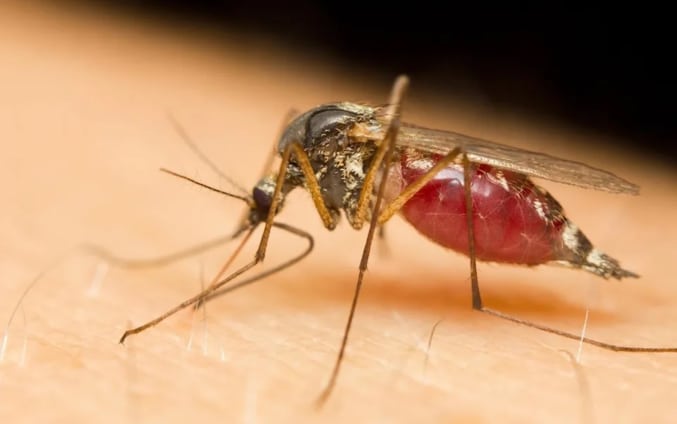
A new kind of mosquito that is more harmful than anopheles has invaded Ghana, according to the Ghana Health Service (GHS).
The new breed known as Anopheles Stephensi, is also a malaria-transmitting mosquito, very invasive, spreads faster, and can adopt to a myriad of climate conditions according to the World Health Organization.
GHS has established its presence in Tuba and Dansoman, and has warned residents to protect themselves.
The Anopheles Stephensi first invaded Africa in 2019, the countries include Ethiopia Sudan, Somalia, and Nigeria and unfortunately confirmed in Ghana just this March.
This breed produces both Plasmodium Falciparum (the deadliest species of plasmodium which causes malaria) and P Vivax Malaria parasites.
Also, a recent mathematical modeling study by the World Health Organization showed the spread of An. stephensi and the implication for malaria transmission and control in Africa.
One study projected that An. stephensi could put an additional 126 million people in Africa at risk of malaria if the mosquito vector were to spread unchecked.
The statement also reveals that this breed is resistant to multiple insecticides which makes control very difficult. It is not known yet what really can kill it.
The GHS has set up a taskforce, to implement a number of measures including the removal of water collection points in and around homes and communities to minimize the breeding sites
Avoiding mosquito bites by using insecticide-treated mosquito nets is also a measure that has been advised to boost prevention.
Meanwhile, Ghana is the first African country to approve a new malaria vaccine from Oxford University as part of efforts to combat the disease.
MOSQUIRIX from British drug maker GSK, was last year endorsed by the World Health Organization.
The 2022 Country Reports on Human Rights Practices in Ghana have been published by the US State Department.
On the State Department website, the executive summary of the study stated that Ghana would continue to experience significant human rights problems in 2022.
It cited violence against the LGBTQI community in Ghana and the enactment of legislation to criminalise LGBTQI activities as serious human rights issues in the country.
Other human rights issues cited in the report included the unlawful killings of persons, serious restrictions to free expression and media, baseless arrests and prosecutions of journalists as well as restrictions to freedom of assembly.
“Significant human rights issues included credible reports of: arbitrary or unlawful killings including extrajudicial killings; torture or cruel, inhuman or degrading treatment or punishment by the government or on behalf of the government; arbitrary arrest or detention; serious restrictions on free expression and media, including violence and threats of violence against journalists, and unjustified arrests or prosecutions of journalists,” parts of the executive summary read.
The other human rights issues include “substantial interference with the freedom of peaceful assembly; serious government corruption; lack of investigation of and accountability for gender-based violence, including domestic or intimate partner violence; crimes involving violence or threats of violence targeting lesbian, gay, bisexual, transgender, queer or intersex persons; laws criminalizing consensual same-sex sexual conduct between adults, although not fully enforced; and crimes involving violence or threats of violence targeting persons with disabilities”.
The report also indicated that even though the government is taking steps to resolve issues of corruption and human rights abuses by officials, the “impunity remained a problem”.
According to David Tenkorang, general secretary of the Ghana Registered Nurses and Midwives Association(GRNMA), the senior health professionals leaving to other countries are the experienced and competent ones.
He said if this situation is not attended to immediately, it will have a dire impact on healthcare delivery in Ghana.
Mr Tenkorang identified what is causing the brain drain among health workers after indicating that the salaries of nurses and midwives are not the best.
Also, he said, the general condition of service for health workers is poor.
He was commenting on the red listing of Ghana by theWorld Health Organisation(WHO) and the United Kingdom (UK).
Ghana was included on a list of 54 countries that should not be targeted for recruitment by health and social care employers in the UK due to a UHC Service Coverage Index lower than 50 and a density of doctors, nurses, and midwives below the global median.
Mr Tenkorang told Martin Asiedu Darteh on the Midday Live on TV3 Wednesday, April 12 that “it is quite a disturbing issue because it is going to negatively impact the healthcare delivery in Ghana.
“The government has set out to build Agenda 111 and all these hospitals will have to be populated by nurses and midwives. If we don’t take in drastic actions to stop the situation, it will certainly adversely impact healthcare delivery.”
He added: “As far as 2020, we saw this coming even before Covid reared its ugly head because some of the Scandinavian and European countries have had their nurses move out of UK and therefore we have a certain kind of attrition. The salaries of midwives and nurses in Ghana is nothing to write home about.”
“We need our skilled manpower to take care of the good people of this country. Those who are leaving are not the ones who just completed school, they are the experienced ones, those who have ten years to go on retirement, those who have fifteen years.
“So there is going to be a vacuum because these are the very experienced, competent nurses and midwives who should mentor the newly recruited. If we allow them to leave the way they are leaving, then we will have problems.”
The Supreme Court (SC) of Norway have declined to grant leave to Messrs Jongsbru AS, a party to the Norway Court of Appeal decision ruled in Ghana’s favor on November 2, 2022.
This was a preliminary decision by a three-member panel of the SC to Norwegian civil procedure rules.
The case concerns the litigation over the purchase of a property previously identified by the Republic of Ghana for use as a chancery building inOslo.
Per the Norwegian law, if a Court of Appeal gives a judgement in a civil case and same is appealed at the SC, the court, would first, make a preliminary decision by taking into consideration, whether a new or major issue of law is raised in the matter.
The Norway SC does not hear an appeal on matters concerning the facts or evidence in a civil matter.
This judgement brings finality to the four year litigation in which the Attorney General and Minister of Justice, Mr Godfred Dame represented Ghana.
The Court of Appeal on November 2, 2022 awarded cost of $250,000 in favour of Ghana.
The SC ordered Jongsbru to compensate Ghana nominal legal costs of USD 1 871.
Mr Dame said he was elated by the decision of the SC.
He explained that the cost awarded to Ghana, which was still outstanding, would be used to defray his travel expenses and those of witnesses from Ghana’s Ministry of Foreign Affairs, who testified on behalf of Ghana.
Prior to the decision of the SC, Mr Dame explained that, under Norwegian civil procedure rules, any civil judgment of the Court of Appeal may be appealed to the SC but the hearing of that appeal is not as of right.
In the appeal at the SC, Jongsbru contended that the decision of the Court of Appeal was too short, vague, unclear and contained deficiencies, which rendered a proper appeal on the merits impossible and therefore, the judgment had to be “repealed.”
An application for a judgment to be repealed, in Norwegian law, is similar to a request to set aside the judgment.
History records the numerous inter-tribal conflicts that early immigrants in what is now Ghana engaged in to assert their superiority and claim the areas they desired.
From the Ga-Fante War to the Ashanti–Akim–Akwapim War to the Ashanti–Fante War to many others not listed, feuding factions certainly went into battle with strategies they believed would give them victory.
While the strategies of some factions worked for them, that of others didn’t and they sadly had to accept defeat.
One group of people whose strategy worked for them well was the people of Amedzofe who currently occupy the highest human settlement in Ghana, about 2,400 feet above sea level.
The people of Amedzofe were part of the Avatime people who migrated from Ahanta in the Western region to Dodowa.
They then moved to Agotime Kpetoe but due to their ‘war-like’ nature, they couldn’t co-exist with the people there so they had to move again to Matse and Taviefe.
Their love for war made it impossible for them to reside in the same place with these people as well so they had to move again.
Their next place of settlement was Nkoroso, a community near Biakpa, and there they spread out to check the whole area to find a final place to settle.
While their counterparts settled within the valley, the people of Amedzofe climbed up the mountain to find a suitable place to settle.
The site-manageress of the Amedzofe eco-tourism centre, Rubby Ameh, who shares this history with Wonder Hagan on People & Places said “before the people of Amedzofe got here, there were some giants on this land and they were known as Baya.”
The people of Amedzofe settled at Kukuava, where the Ote waterfalls is located, and from there, they spied on the Baya to know their strength while developing strategies with which they can defeat the giants.
“They sent their warriors to come and make peace with the people of Baya. So they made peace with them through the sharing of drinks and after that, they were able to conquer them, marry their wives and share them among the seven communities as well,” Rubby shared.
Wondering how they conquered them with drinks? Well, very simple, the drinks were poisoned.
In the early days, to prove you are really for peace, you are expected to take the first bite of anything you present to your foes so one warrior from Amedzofe sacrificed his life so his people can be victorious.
He took the first sip of the drink his people presented and when the poison started taking effect, they claimed he was drunk and took him away before he died.
The warriors of Baya then took the drinks and died, leaving behind their wives and children who were shared among the seven communities under the Avatime traditional area.
Bright Simons, the vice president of IMANI Africa, has provided some clarification about claims that the government of the United Kingdom (UK) has prohibited the hiring of health professionals from Ghana and 53 other nations.
Simons claims that contrary to popular belief, Ghanaian healthcare professionals are still permitted to come to the UK, but that active recruitment from Ghana and the other countries on the list has been suspended by local recruitment firms.
The UK government red-listed recruitment from the 54 countries, according to the IMANI vice president, in a series of tweets sent out on April 10, 2023, because the World Health Organization (WHO) has been requiring it to do so since 2020.
He added that the WHO had placed Ghana on its safeguard list to prevent the requirement of health professions from the country because they are needed locally.
“Reports that the UK has now placed Ghana & Nigeria on a ‘red list’ of countries from which nurses, doctors & care workers cannot migrate to the UK to work is NOT correct. Rather, Ghana & Nigeria have been on a WHO Safeguard List barring ‘active recruitment’ since 2020.
“The List, based on WHO’s 2010 Global Code of Practice, is voluntary. The UK has been lax in enforcement despite domesticating the code. WHO reaffirmed the list in Jan 2023 & pressure from UK health unions increased on the UK to comply & stop recruiting from Red List countries.
“The List, based on WHO’s 2010 Global Code of Practice, is voluntary. The UK has been lax in enforcement despite domesticating the code. WHO reaffirmed the list in Jan 2023 & pressure from UK health unions increased on the UK to comply & stop recruiting from Red List countries.
“Red List Health Workers themselves are not barred from migrating. But their “active recruitment” is barred. What this means is that employment agencies must not seek to attract health workers from such countries. The issue is that many intending migrants rely on such agencies,” parts of the tweets he shared read.
1/ Reports that the UK has *now* placed Ghana & Nigeria on a "red list" of countries from which nurses, doctors & care workers cannot migrate to the UK to work is NOT correct. Rather, Ghana & Nigeria have been on a WHO Safeguard List barring "active recruitment" since 2020. pic.twitter.com/SNbxXzTS2D
3/ Red List Health Workers themselves are not barred from migrating. But their "active recruitment" is barred. What this means is that employment agencies must not seek to attract health workers from such countries. The issue is that many intending migrants rely on such agencies.
In a statement, the National Health Service (NHS) of the UK stated that the listed nations have a UHC Service Coverage Index below 50 and a doctor, nurse, and midwives density below the worldwide median (48.6 per 10,000 population).
The list doesn’t stop specific health and social care workers from applying on their own initiative and without being targeted by a third party, like a recruitment agency or employer, to health and social care employers for employment in the UK. This is known as a direct application.
The countries placed on the red list of ‘No active recruitment’ under the code are Afghanistan, Angola, Bangladesh, Benin, Burkina Faso, Burundi, Cameroon, Central African Republic, Chad, Comoros, Congo, Democratic Republic of Congo, Côte d’Ivoire, Djibouti, Equatorial Guinea, Eritrea, Ethiopia, Gabon, The Gambia, Ghana, Guinea, Guinea-Bissau, Haiti, Kiribati, Lao People’s Democratic Republic, Lesotho, Liberia.
The rest are Madagascar, Malawi, Mali, Mauritania, Federated States of Micronesia, Mozambique, Niger, Nigeria, Pakistan, Papua New Guinea, Rwanda, Samoa, Senegal, Sierra Leone, Solomon Islands, Somalia, South Sudan, Sudan, United Republic of Tanzania, Timor-Leste, Togo, Tuvalu, Uganda, Vanuatu, Republic of Yemen, Zambia, and Zimbabwe.
In a world where HIV-positive individuals are often ostracised and discriminated against, the Human Compassion Organisation in Accra, Ghana stands out as a beacon of hope.
Here, children affected by HIV are given a chance to grow, learn, and play together without fear of discrimination.
The orphanage is home to 11 boys and girls aged 3 to 18, all of whom have one thing in common – they are growing up without parents. Many of the children were born to HIV-positive parents who were also alcohol or drug abusers, and in some cases, these parents don’t even know where their children are now.
For almost 2 decades, Kwesi Boye Mensah has been running this facility, which offers a family-like care environment where these young individuals find solace in the arms of those who understand their struggles. Here, solidarity prevails, and kids both infected and unaffected co-exist in harmony, removing the fear of judgment.
Kwesi Boye Mensah’s late wife was HIV positive. “We come into contact with some of these kids through HIV/AIDS support groups. We do psychosocial counseling for those affected and come across children who have lost their parents to HIV”
Each child, whether HIV positive or negative, follows their tailored morning routine, which includes taking medication if needed. While the older HIV-negative children understand how the virus is transmitted, everyone here is well-aware that there’s no danger of contracting the virus from HIV-positive children.
For Dr. Gamji Rabiu, this orphanage model goes a long way to help the kids living with HIV. He noted that infected kids would have a better chance out in the world living in such a family setting.
“This orphan gives us an example of what it means to choose your family and mentors”.
Despite their situation, the children still endeavor to approach their HIV infection with confidence, determined not to be defeated by the stigma of their diagnosis. Growing up with HIV can be challenging, and the stigma associated with the condition only makes it worse.
HIV is a virus that attacks the immune system, making it difficult for the body to fight off infections and diseases. It is primarily spread through sexual contact, sharing needles, or from mother to child during pregnancy, childbirth, or breastfeeding. There is currently no cure for HIV, but antiretroviral therapy (ART) can help people with the virus to live long and healthy lives.
The toll that the infection takes on the already fragile bodies of these children is heartbreaking. As each day passes, they know that their fate is uncertain, with a lifetime of medications and uncertainty to come. Without any family or place to go, they are left here alone, wondering when and if their suffering will ever end.
Unless they are adopted, they will likely be left to fend for themselves for the rest of their lives. It is a somber scene as the day closes at the Human Compassion Organization, but it is also a scene of hope. Hope that one day, these children will find a loving and accepting family to call their own.
This orphanage serves as a shining example of hope and acceptance for all children, reinforcing the importance of equal treatment regardless of whether a child is positive or negative for HIV. The children follow tailored morning routinesand receive equal care and attention from dedicated staff. Despite the challenges still faced, such as limited resources and pervasive stigma towards HIV, the Pokuase orphanage remains committed to providing a stable foundation for the children’s future.
By fostering a positive and stable environment, the orphanage provides a profound impact on their growth, development, and overall well-being. For these children, the Pokuase orphanage is a beacon of hope and a testament to the power of love and acceptance.
According to theWorld Bank‘s April 2023 Africa Pulse Report, Ghana’s growth rate has been reduced to less than 2.0% in 2023, ranking it 29th in Sub-Saharan Africa.
This is lower than the 2.7% it earlier projected.
According to the Bretton Wood institution, the expected low growth rate in the country is due to deleterious global shocks and heightened macroeconomic instability.
“In Ghana, more timely data highlight the weakness of economic activity amid the deleterious global shocks and heightened macroeconomic instability”.
It further said government consumption has declined on the back of high debt service and restricted access to international capital markets, adding, business and consumer confidence slumped in late 2022. However, the Purchasing Managers Index is gradually picking up and signaling an expansion in economic activity (50.2 in February 2023).
Continuing, it pointed out that the Ghanaian economy has been struggling with high levels of public debt and elevated inflation fueled by a sharp weakening of the cedi.
“Growth in Ghana is expected to have slowed in 2022 to 3.2%, down from 5.4% in 2021 and far below the country’s average pre-pandemic performance (6.1%)”.
“The economy has been struggling with high levels of public debt and elevated inflation (52.8 percent in February 2023) fueled by a sharp weakening of the cedi (a cumulative depreciation of 40 percent in 2022 and about 20 percent in 2023 so far)”, it added. World Bank lowers Ghana’s growth rate to below 2% in 2023
To curb the rising inflation, it said the Bank of Ghana raised its policy rate by a record 1,500 basis points to 29.5% in March 2023, from 14.5% in December 2021.
The World Bank added that the recovery of economic activity in Sub-Saharan Africa is multispeed, with wide variation across countries.
Sub-Saharan African countries growth characterised as divergent and multispeed
Congo DR will become the fastest growing country in Sub-Saharan Africa in 2023.
The World Bank said the recovery of economic activity in Sub-Saharan Africa is multispeed, with wide variation across countries.
“The region’s moderate growth in 2022 was associated with large countries on the continent registering growth rates that were lower than their long-term average”.
Broadly, more than half of the countries in the region are growing at rates below their long-term average. Among the 10 largest economies in Sub-Saharan Africa—which represent more than three quarters of the region’s GDP—eight are growing at rates that are below their long-term average growth.
Sudan, Nigeria, Angola, and Ethiopia are among the countries with weaker performance compared to their long-term growth rates.
Economy to grow at 2.8% in 2023 – Finance Minister
Finance Minister, Ken Ofori-Atta during the presentation of the 2023 Budget in November said the economy will expand by 2.8% in 2023.
“The economy is expected to rebound from 2024 and grow steadily in the medium term to record an average growth of 4.8 percent over the period (between) 2024 and 2026,” he said.
The services sector would “remain the dominant sector over the medium term in percentage contribution to overall national output, followed by industry and agriculture,” he pointed out.
France is totally committed to helping Ghana and its neighbors battle terrorism in the area, according to Madam Chrysoula Zacharopoulou, the FrenchMinister of State for Development, Francophonie, and International Partnership.
Speaking at a press conference held to climax her three-day visit to Ghana which is part of the Three Nations African Tour (Benin, Togo and Ghana), she said both Ghana and France have a common determination to promote peace and stability which is a key aspect of democracy in the sub-region.
“Just to speak about the regional situation, we share a common determination to promote peace, stability and democracy and of course dialogue in this region. France is fully committed to supporting Ghana and the neighbour countries in the fight against terrorism,” she said.
She went on to highlight the relationship betweenGhanaand France, describing it as an excellent relationship that needs to be strengthened even more.
“Ghana is a very important partner for France, we have excellent relations and it is a crucial time for your country and it was very important for me to be here and to re-assess the friendship, and my strong commitment” she added
Madam Chrysoula appreciated the efforts of the President Akufo-Addo and Ghanaians for her reception into the country
“I would like to thank President Akufo-Addo and all the Ghanaian people for the welcome. I would like to say that I was impressed by the activity and the vitality and innovation of your country and of course your people. And I saw that there is a profound desire to deepen our relationship with France” she stressed.
The minister’s visit to Ghana comes on the back of the visit of the US Veep, Kamala Harris to Ghana.
Ghana has lost its status as an agricultural nation to service, according to Godfred Bokpin, a professor at the University of Ghana Business School.
Even with the service status, he said, it is only based on retail and wholesale thereby relying heavily on importation.
Once the country imports heavily, it creates jobs for others countries and creates unemployment domestically, he added.
Speaking at the 3Business Economic SustainabilitySummit held in Accra on Tuesday April 4, Prof Bokpin said “Ghana, from independence, was known for agriculture but today Ghana is not known for agriculture. Ghana is known for service but the question is, is Ghana really a service-based economy?
“The answer is no. Typically, if you look at the economic transformation when a country begins from agriculture and suddenly service is leading it tells you that that economy is matured so it has gone through that process but in the case of Ghana we started off agriculture being the leading contributor to the GDP and then we skipped industry, that is what the data is telling us and then we jumped straight to service.
“That service sector is actually not quality service, it is the sector that is driven by retail and wholesale, largely import. Once your service sector is leading particularly in the area of retail and wholesale, once your industry isn’t doing well then it means the bulk of what is happening is going to be important, typically once you import, you are important unemployment.”
North Tongu MP, Samuel Okudzeto Ablakwa, has again lamented over the country’s poor economic conditions.
His utmost concern was with the fact that Ghana is on a begging spree but has refused to live within its means.
According to the North Tongu Member of Parliament, the extravagance lifestyle President Akufo-Addo is living amid the obese government he has refused to downsize should be a cause of worry to every Ghanaian.
The lawmaker.has berated the government for the self-inflicted difficulties the government has plunged the nation into, subjecting the citizenry into excruciating hardship.
Mr. Okudzeto Ablakwa was speaking on the additional hands the government has employed at the Office of the President making the total number rise from 998 to 1048 with Alfred Ocansey on Ghana Tonight Thursday, March 30, 2023.
“So you wonder if really, this is the country going through the most excruciating economic meltdown in living memory.
“A country that’s telling everybody that this economy has been destroyed, self-inflicted, with over-borrowed debt to GDP, with excess over 100% so we cannot meet our obligations to you. You cannot get your coupons, you can’t get back your life investment, Finance minister has just returned from China on a begging mission. When Vice President Kamala Harris came here few days ago, you heard President Akufo-Addo begging her to talk to the Paris Club on our behalf. So you’re begging everybody and yet look at your conduct. You cannot lead by example,” he indicated.
He was surprised that the “2021 list was so high with dubious positions and we expected him to downsize by being considerate and respectful and give some dignity to us his employers” but the President chose to increase the numbers.
Below is the full text detailing the Annual report on the office of the President staffing:
Full text: Annual report on Office of the President staffing
Accra, 30th March, 2023 – Pursuant to section 11 of the Presidential Office Act, 1993 (Act 463), the President of the Republic has submitted to Parliament the Annual Report on the staffing position of the Office of the President for the period 1 st January to 31st December, 2022.
The report covers three key areas, namely the number of Presidential Staff employed at the Office of the President during the period, the ranks and grades of these staff, and employees of other Public Services assigned to the Office of the President.
During the reporting period, there were two (2) Ministers of State and forty-four (44) Senior Presidential Staffers at post. The other Political Appointees at the Office of the President numbered three hundred and fifteen (315). This brings the number of political appointees to three hundred and sixty-one (361).
It is important to note that out of the 361 persons who are political appointees at the Office of the President, only 163 work physically at the Jubilee House. The others work in the offices to which they have been assigned.
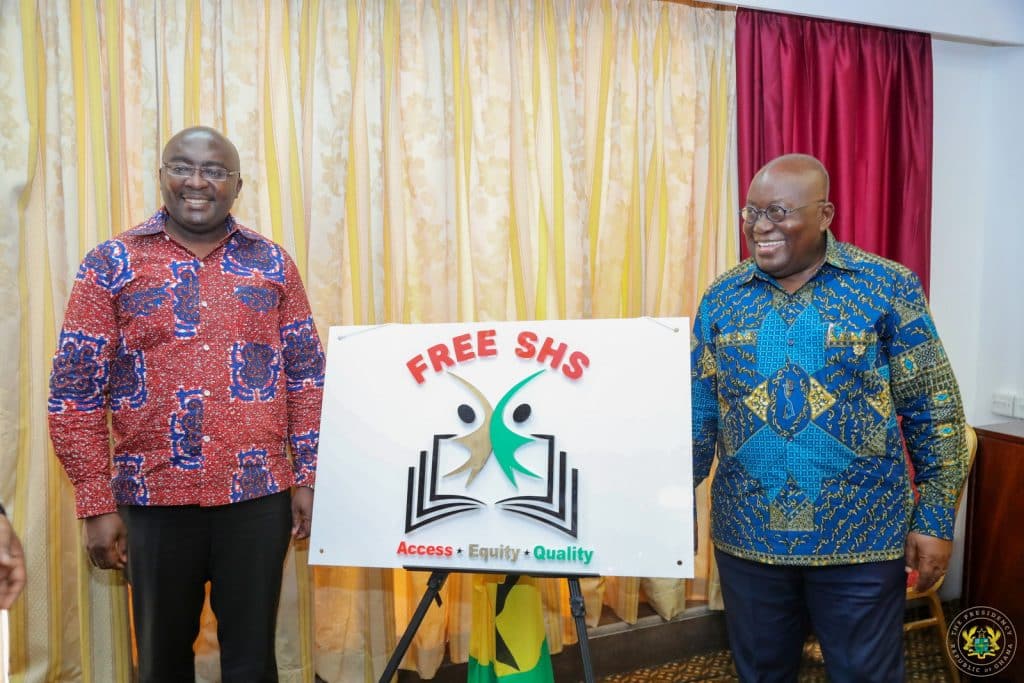
It is also instructive to note that, in keeping with the established practice of previous governments of the 4th Republic, the 315 other political appointees include Special Assistants, Executive Assistants, Personal Assistants to Ministers of State and Regional Ministers, employees in the Office of the Vice President, Aides and Assistants assigned to the First Lady and Second Lady, as well as employees assigned to Government agencies under the Office of the President, such as NEIP, Free SHS Secretariat, MASLOC, Special Development Initiatives Secretariat, Monitoring and Evaluation Secretariat, Zongo and Inner Cities Development Secretariat, amongst others.
Moreover, in addition to the political appointees at the Office of the President, employees of Public Sector Organizations assigned to the Office were also included. These categories of staff were from different classes, including Administrative, Executive/Clerical, Records, Secretarial, Budget, Procurement and Supply Chain Management, Presidential Household, and staff from the Department of Parks and Gardens, Ghana Health Service, Controller and Accountant General’s Department, Ghana Audit Service, Ghana National Fire Service, Public Works Department (Prestige), and Ghana Postal Company. The total number of these categories of staff was six hundred and eighty-seven (687). These categories of staff were appointed by their respective public institutions, and the Civil Service and have always been assigned to the Office of the President during previous governments.
The submission of this report is a clear indication of the President’s commitment to transparency and accountability. It provides a comprehensive overview of the staffing position of the Office of the President, and it is expected to inform decision making processes.
Inadequate engineering and upkeep, particularly on the Accra-Tema Motorway, can result in the deterioration of road surfaces, including the wearing away of bitumen, according to Carlos Ahenkorah, the MP for Tema West.
Bitumen is a common material used in road construction and is known for its durability and resistance to water and other environmental factors.
Asaase Radio has commenced a public interest campaign series that will spotlight the importance of maintaining critical infrastructure and citizens’ power in bringing about change. The campaign promises to bring critical attention to an issue that affects the lives of many Ghanaians, starting with the Accra-Tema Motorway.
Speaking to Asaase News, Ahenkorah said maintaining roads in Ghana should be the priority of officials.
“It can still be affected by heavy traffic, weather, and other factors,” the lawmaker said. “To prevent the wearing away of bitumen, proper engineering and maintenance practices are essential.”
He proposed creating a maintenance budget to sustain the temporary bituminous patches on the motorway.
Watch excerpts of the interview conducted by Asaase 99.5 Accra’s Caleb Ahinakwah: About campaign
The Accra-Tema Motorway is an essential artery for Ghana’s economy, linking the largest port in the country with the capital city.
However, years of neglect and lack of maintenance have left the N1 in a state of disrepair, leading to accidents and traffic congestion.
In line with #SeeSomethingSaySomething and the government’s efforts to urge all Ghanaians to be active “citizens, not spectators”, the #SafeMotorway4All campaign will identify key challenges to the smooth working of the N1 and push for action to address these.
Don’t forget to join the campaign by sharing your experiences, appeals and solutions on social media with the hashtags #SafeMotorway4all.
The government, according toDr. Kwame Asah-Asante, is fast to propose new tax bills but are unable to give specific accounting of the money collected through these levies.
“The issue is that, are we going to be able to manage the resources so well that will be derived from this revenue? We have seen it time and again that our leaders are quick to come out with tax or taxes, but the money generated from it, we find it difficult to account for them,” he said on Monday.
On March 31, Parliament approved three new tax bills proposed by the Finance Minister, Ken Ofori-Atta.
According to Mr Ofori-Atta, the bills are crucial for the progress of government’s pursuit of an International Monetary Fund (IMF) deal.
The new tax bills include; the Income Tax Amendment Bill, The Excise Duty Amendment Bill and the Growth and Sustainability Amendment Bill and are expected to rake in close to GHs4 billion.
Speaking on the AM Show on JoyNews’, Dr Asah-Asante reiterated that the passing of the bills “is a good beginning for our journey to the IMF” but indicated that those in charge have not been accountable.
The political scientist lamented citizens’ inability to demand accountability and as a result, government always slaps taxes on the people without disclosing details of revenues gained.
Meanwhile, he added that the government’s energy that is being used to make sure that it gets the basics right in securing an IMF deal could be channelled into creating home–grown solutions where there would be no need to seek an IMF bailout.
“If you look at how government wants to meet all the specifics directed by the IMF, right? They want to get all those basics right to have the facility.
“Then I ask myself; that energy that you derive from the system to pursue this programme, couldn’t you have used it in your economy, build the necessary capacity that you don’t go to the IMF,” he said.
According to him,Ghana always finds itself “in tears” as a result of some unfavourable conditions attached to the IMF deal.
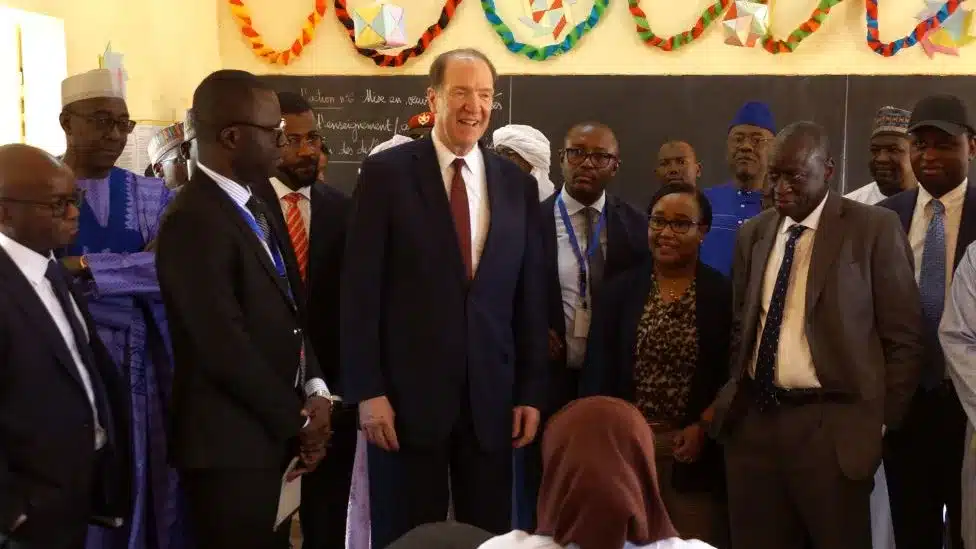
According to the BBC, the World Bank’s president is worried about some of the loans China has been providing to developing nations in Africa.
The terms and conditions need to be “more transparent,” according to David Malpass.
It happens amid concerns that some nations, including Ghana and Zambia, are having trouble paying back their debts to China.
According to China, all such lending complies with international laws.
Developing nations frequently take out loans from foreign countries or multilateral organizations to fund economic growth-oriented industries like infrastructure, education, and agriculture.
However steep increases in interest rates in the US and other major economies over the last year are making loan repayments more expensive because lots of that borrowing is done in foreign currencies such as US dollars or euros.
It is a particularly acute problem for developing economies who can struggle to find the extra money that is required as the relative value of their own currency falls.
China refutes suggestions that it is exploiting other countries with its financial support.
At a press conference this week Foreign Ministry Spokesperson Mao Ning said China “respects the will of relevant countries, has never forced any party to borrow money, has never forced any country to pay, will not attach any political conditions to loan agreements, and does not seek any political self-interest”.
Image caption,Ghana’s Finance Minister Ken Ofori-Atta travelled to Beijing this month for talks on restructuring its debt repayments. The country also got $3bn from the IMF in December.
Mr Malpass said the problems were not unique to Chinese financing but things were improving.
“If you think of the history of Western lending, sometimes it’s not for the full benefit of the people in the countries [being lent to]. Even World Bank loans haven’t always been for the best that could have been done in a country.”
“So what we’re trying to do, and I think everyone should be trying to do, is improve the quality of the lending.
“One of the techniques is to unbundle the loan, meaning if there’s an investment project, let’s say you’re building a train, describe the project and what the cost will be. And then separately, arrange the financing.
“If you bundle them together, it makes it very hard to know, am I getting a good deal on the train or on the financing.”
Food and energy concerns
The outgoing World Bank president is also concerned that higher food, fertiliser and energy prices, as a result of the war in Ukraine, are sapping government budgets in poorer countries. While that could deepen the economic challenges they face there is relief that price rises are now starting to ease.
“The immediate crisis is over but one thing that’s been left is that countries didn’t use enough fertiliser, so their soil is depleted. So the yields are expected to be lower next year than normal.”
“So a farmer that was just making ends meet, she didn’t get fertiliser, and now her land is not as productive. And so where’s the food going to come from for the family and for the community? That’s the big immediate problem. What we’re trying to do is help countries directly with fertiliser [and] with food.”
Image caption,Many of the world’s poorest economies have been hit hard by higher food prices as a result of the war in Ukraine
The World Bank is concerned that these challenges will worsen a first-ever increase in the global extreme poverty rate – people getting by on less than $1.90 per day. As a result of the coronavirus pandemic it rose from 8.4% to 9.3%.
The planet’s leading development body hopes that its upcoming showpiece joint Spring Meetings with the IMF in Washington will help it raise more money to tackle its key mission.
“The ambition is there,” says Mr Malpass, “but the needs are much bigger than the amount of flows” of money coming in.
It is a “double whammy and it means that [economic] growth is going to be slower”, says Mr Malpass.
US-China rivalry
Tackling that challenge and its consequences was one of the main reasons for this week’s visit by US Vice-President Kamala Harris to three African countries. It is a visit that comes with big commitments of financial support to Tanzania and Ghana.
There is a growing rivalry with China for influence in the continent, whose abundance of natural resources include the metals, such as nickel, crucial for the batteries needed for technology such as electric cars.
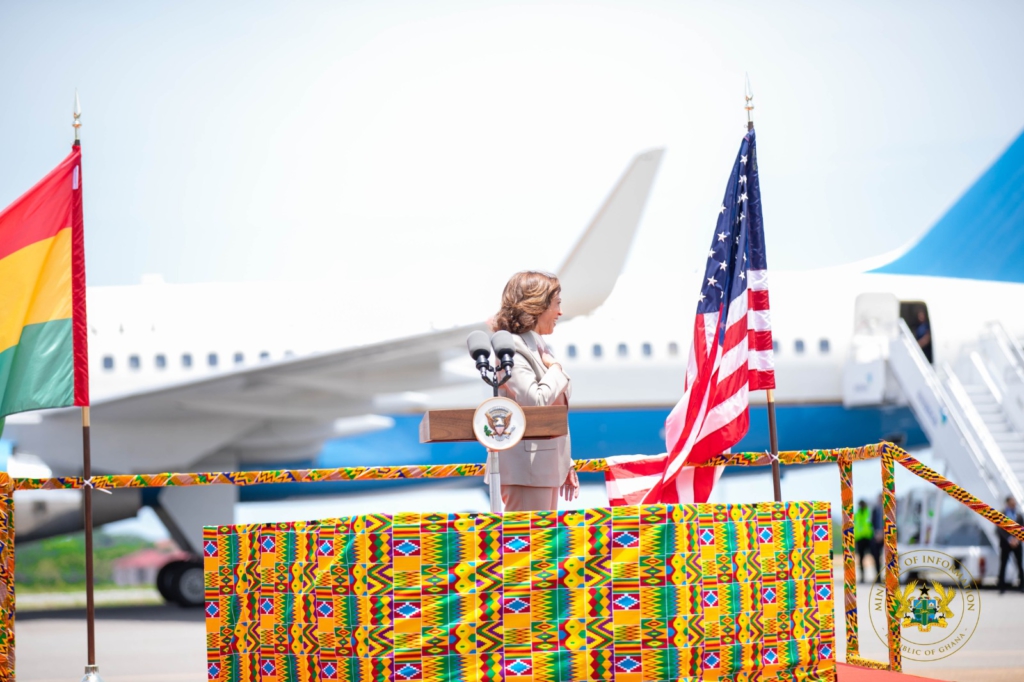
Speaking in Ghana’s capital, Accra, she said “America will be guided not by what we can do for our African partners, but what we can do with our African partners”.
While highlighting a new nickel processing facility in Tanzania Ms Harris said the project would be supplying the US and other markets by 2026 and that it would “help address the climate crisis, build resilient global supply chains, and create new industries and jobs”.
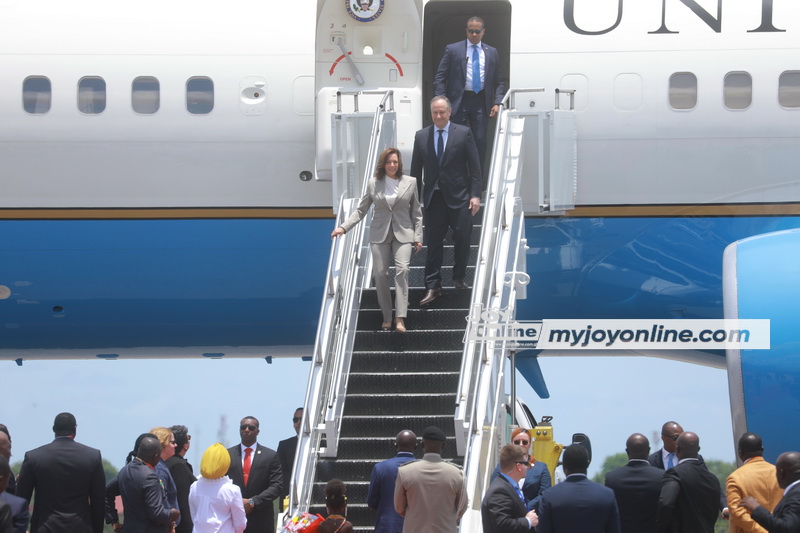
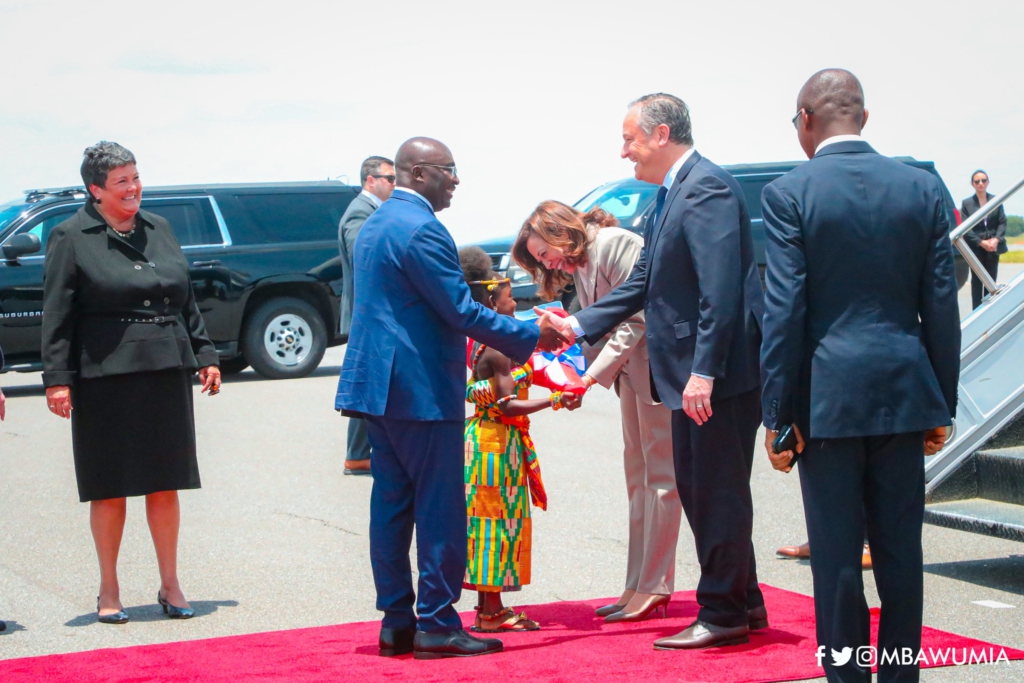
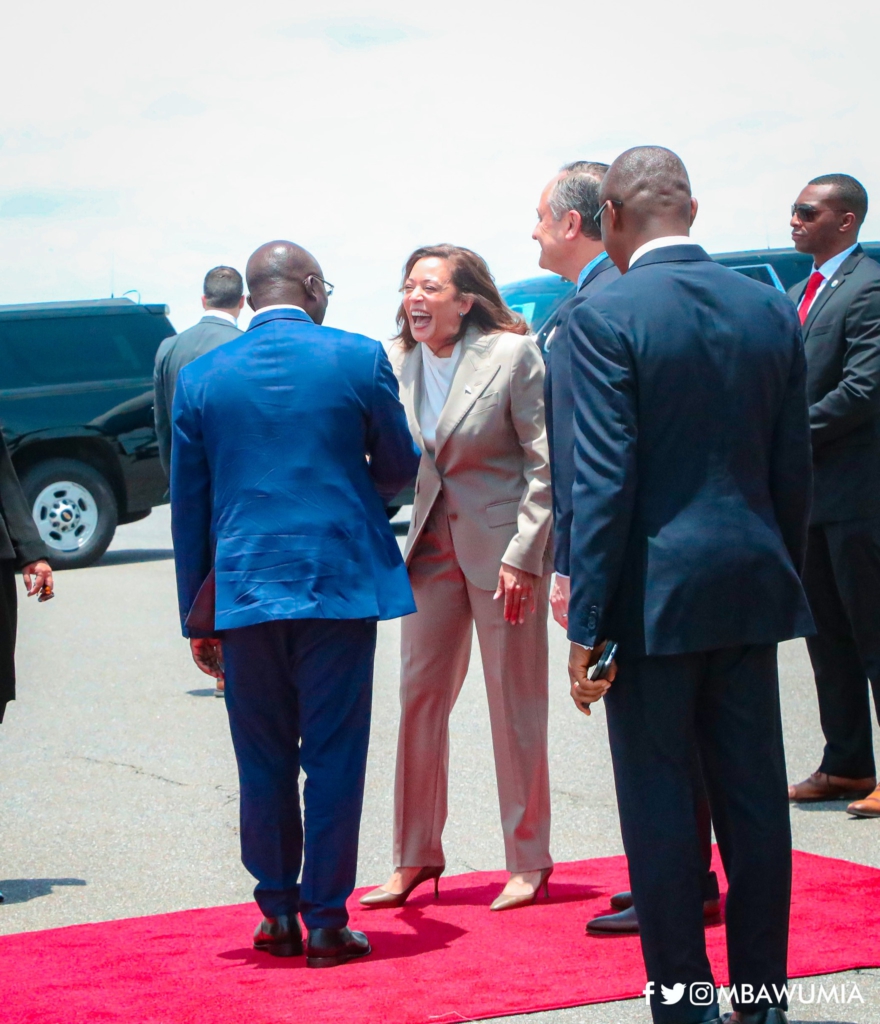
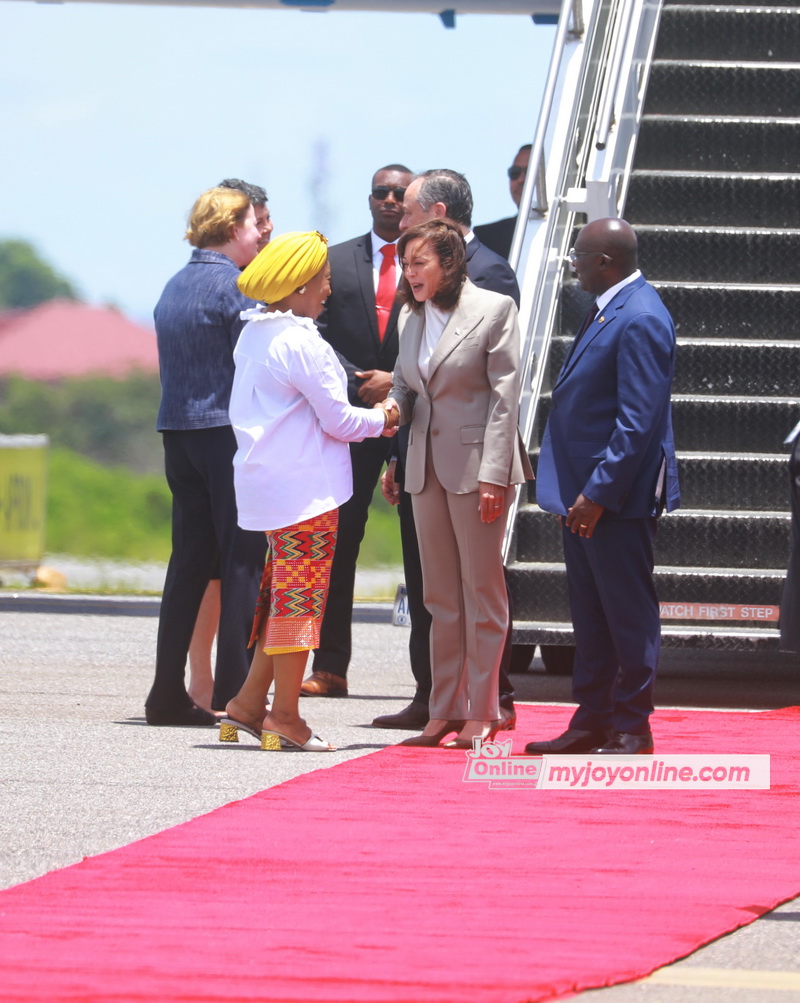
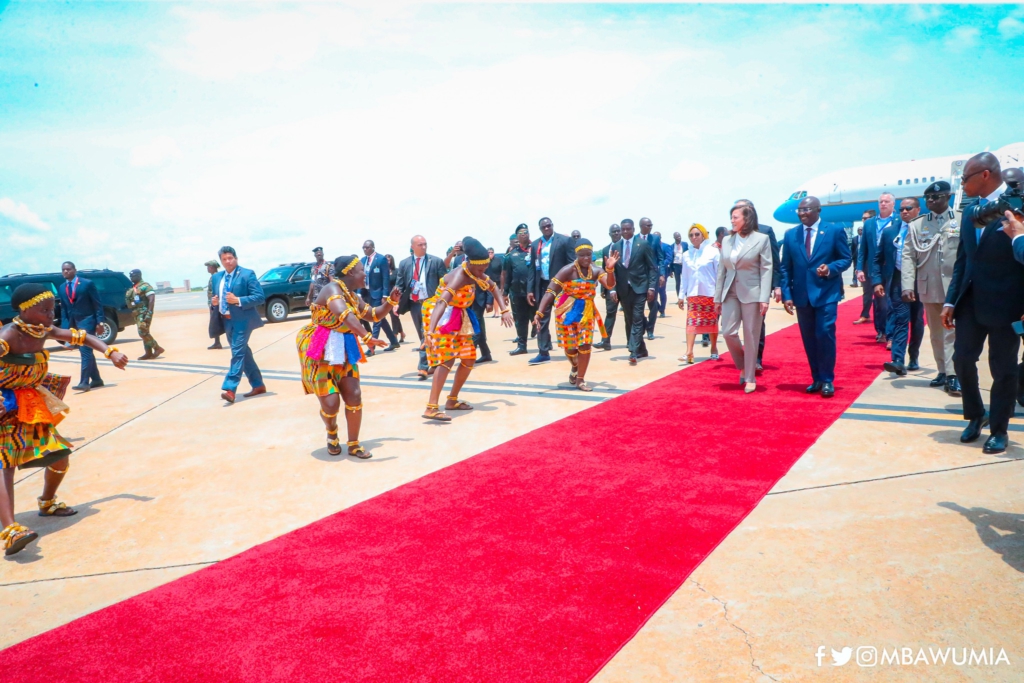
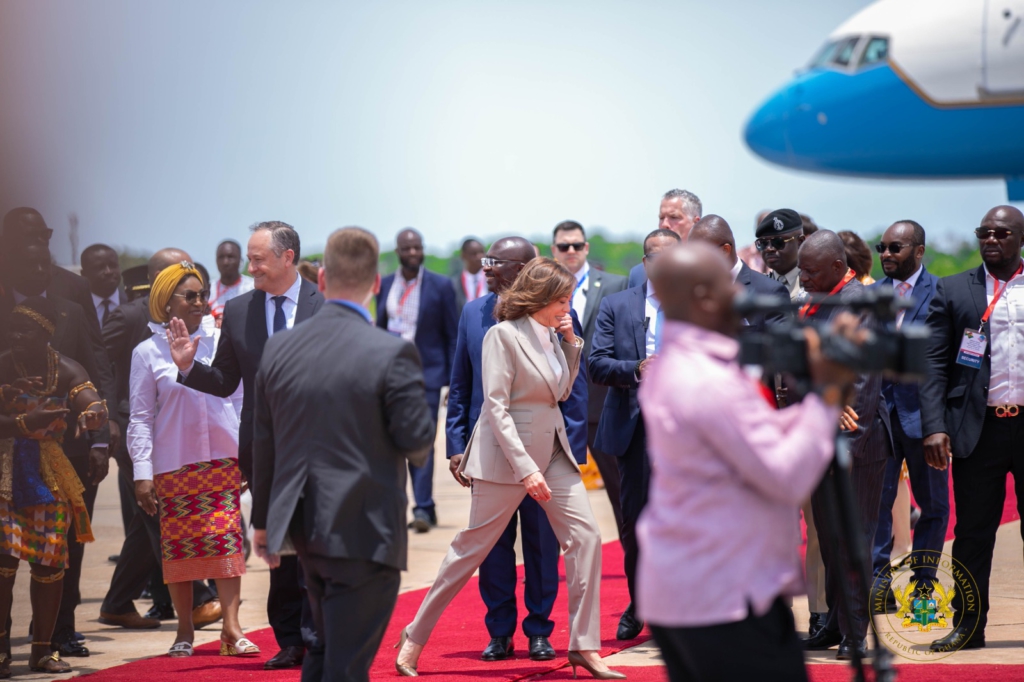
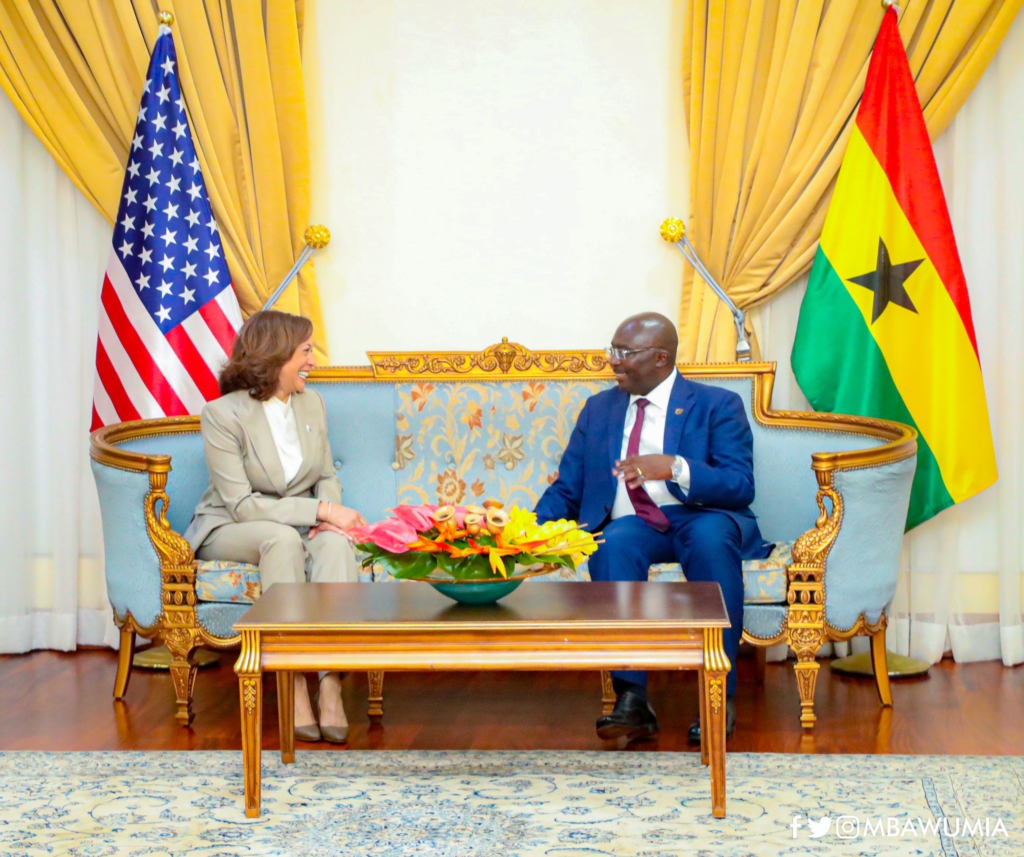
Image caption,US Vice-President Kamala Harris was warmly welcomed in Ghana’s capital, Accra, by Vice-President Mahamudu Bawumia as she sought to strengthen economic ties
That collaborative approach was praised by Mr Malpass who said the competition between the world’s two biggest economies was “maybe healthy for developing countries” as it provided different options.
“What I encourage strongly is that they be transparent in their contracts. That’s been one of the problems; if you write a contract and say ‘but don’t show it to anybody else’, that’s a minus. So get away from that.”
There was also a warning that “for governments in Africa, they shouldn’t be offering collateral as an inducement to make a loan, because it locks it up for generations. That’s been happening with China.”
Beijing has become one of the biggest sources for loans to developing economies in recent years. A new study led by the Kiel Institute for the World Economy shows that globally China lent $185bn (£150bn) in bailouts to 22 countries between 2016 and 2021.
When I received the call to make a statement here today, I was initially stunned, then excited, and then really anxious. I asked myself, why me? But then I asked myself, why not me?
I am a veil-wearing Muslim woman from one of the smallest regions in Ghana; the Upper West, among one of the smallest ethnic groups in the country, the Wala. In many ways, I am a minority of a minority. In many spaces I’ve been in, I am often the exception and hardly the norm.
But that has never held me back. The more down the ladder I appear to be, the higher up the ladder I have always aspired to reach. I became one of the first from my immediate family to attain a university education and one of the first, or perhaps, the only woman from my community to have had a primetime voice on radio and television. My exposure and impact helped inspire many young women, particularly, Muslim girls across the country to pursue a career in media and journalism.
I have worked on many development projects to empower marginalised and underrepresented communities and am currently, a founding member of the Alliance for Women in Media Africa, inspired by a similar organisation in the US. Our young dynamic group of media women are working to advance the welfare and visibility of women in media and ensure that the voices, stories and images of African women and girls are equitably represented.
These examples are not cited to wallow in whatever modest successes I may have achieved, but to demonstrate how far I have come, from how far back I am coming from. I may have walked a few steps up to this platform today, but my journey, like the journey of several others, goes many steps back across multiple generations within many spaces, too numerous to mention.
But let me at least mention my maternal grandmother Alima, an enterprising generous woman who did not have any formal education but encouraged in her daughter an appetite for learning and put her in school. Let me talk about my mother, Hajia Rahmat, who after numerous domestic chores at home had to go out to sell food before she could go to school. She was often late, but she kept going.
My mother says she often walked barefoot to school under the hot sun which will make the ground heat up and burn the soles of her feet. When it became too hot, she would find a patch of grass for a moment’s respite. But she kept going. She became the first woman within her immediate family to attain higher education by progressing to the training college and becoming a teacher and a headmistress. And dare I say she could have gone even further, but she sacrificed her dreams at some point to stay at home to raise her children.
It is because my mother walked for her dreams that today I can run for mine and tomorrow my two daughters will fly for their dreams. That is how progress is made; inch by inch, generation by generation. We keep hitting at it until we completely shatter our glass ceilings. Daughters are the dreams come true of their mothers, and mothers are the greatest hopes for their daughters.
But this is not just a story about mothers and daughters and the power of education to transform, it is also a story about Ghana, about Africa. As a continent that ranks low in many development indices, as we make our way up the ladder for better representation of women, better healthcare, better education, better infrastructure, and better employment, amongst others, the journey up can be daunting with many reasons to despair. Some young Africans may feel that their economic salvation lies elsewhere across the Sahara, beyond the Mediterranean. But no matter how hot the ground gets beneath our feet, the solution is not across but within. We just have to keep going. We have to keep putting in the work. And generation by generation, we will shatter the ceiling for Africa’s economic prosperity.
To attain the Africa We Want, we must embrace our diversity. One important lesson I learnt early on is the value of community and inclusion. My dear father Mr Ismail Muslim was one of the earliest young men to leave his hometown up in the North to set up a base in the capital down south. He found success early, established a home here and opened up his doors to his community. I grew up not only with my siblings but with aunties, uncles, cousins and close and distant relatives. Our house was a gateway for a whole generation. I learnt the values of service, diversity and inclusion early. My father showed me that you indeed rise by lifting others. And that is a lesson my husband and I are teaching our two sons—and our daughters too.
Africa as the most diverse continent in the world, more than anywhere else, must uphold the value of inclusion. We are so fragmented in nations, ethnicities, gender, class and others that unless we work honestly together for the common good, we cannot lift ourselves and our continent. And in lifting ourselves up, we cannot count our success by the very few who reach the top, but by the many who leave the bottom.
To make progress in Africa, we acknowledge that we have to forge meaningful partnerships. In 2010, I had the rare privilege of being amongst the very first cohort of President Obama’s YALI programme. At the Whitehouse, I was lucky enough to be spotted by him to ask a question. I asked whether it was possible to have a true partnership between a superpower like America and a developing country like Ghana. Obama believed that such a partnership was possible because we have many aligning interests.
Over the years, I have reflected on and refined my question even further. Would America, or the developed world, still be interested in Africa without its natural resources?
Much as this is an important question for our partners to reflect on, it is an even more important question for us in Africa to answer. How else can we maximize the benefits of our natural resources and what new value can we harness the energies and innovations of our young people to create to benefit our people and the world? We must begin to reflect on and act for An Africa Beyond Natural Resources.
And it is gratifying to note that there are many young Africans already working to create value across creative and digital spaces, and others. And in so doing, expanding opportunities as well as solving critical problems in their economies.
Examples abound like Miishe Addy, co-founder of startup logistics powerhouse Jetstream; Maya Famodou working in the venture capital space to inject resources into innovative African Startup; Ama Asantewaa of Black Girls Glow focusing on creating safe spaces for creatives go grow; Mahmoud Jajah of Zongo Innovation Hub training young people in predominantly underserved Muslim communities to become software developers and tech entrepreneurs. Young Africans are putting in the work.
It will be important to acknowledge some support they are already receiving. For instance, the US government is investing USD 350 million in the Digital Transformation with Africa programme to create a transformative ecosystem for technology entrepreneurship. In my part of the country, the USAID Sustainable Shea Initiative is empowering over 400,000 women across Northern Ghana for economic and social impact through the shea industry. We look forward to the sustainable impact of such programmes.
We call on African governments to commit to passing affirmative action policies to help bridge the gender and diversity divide. And to treat with the utmost urgency the need to open up major opportunities for Africa’s ballooning youth population.
In 2011, I had the privilege of meeting Michelle Obama at a forum for young African women leaders in South Africa. She spoke about the need for women to step up and own the spaces they occupy. My life’s journey has been about owning the spaces I occupy. And where those spaces do not exist, to create them. Today I call on all women and youth of Africa to step up and own your space because why not you?
I feel honoured today to share this stage, this space, with a phenomenal woman who has not only stepped up to own her space but is actually rocking it. The highest-ranking female official in the United States who has had her fair share of “firsts” and broken several glass ceilings on her way to the top. It is a delight to welcome Vice President Kamala Harristo Ghana, the Center of the World, the black star rising. Martin Luther King Jnr, Malcolm X and Maya Angelou were here. Clinton, Bush and Obama were all here. And now it is her turn. I believe we can all affectionately say… AbenaKamala, you made it.
Although it will take a lot for a Head of State to resign, the act could also prove a daunting task for the future of any developing nation like Ghana.
Long after Ghana gained independence in 1957, the country was subjected to autocratic rule or quasi-democracy due to the many coup d’états the country witnessed, until the tide turned and we got the longest democratic rule, which began in 1992 under the late former president Jerry John Rawlings and is still going strong.
Despite the tedious responsibilities associated with being president, only one Head of State has been on record to have resigned in the history of Ghana.
While the decision to resign is controversial, there have been arguments about many Ghanaian presidents who may have long gotten away with acts that require their resignations.
But as a parable says, ‘Two wrongs don’t make a right’.
In GhanaWeb’s history class, we take a look at the only Ghanaian Head of State who resigned from the position.
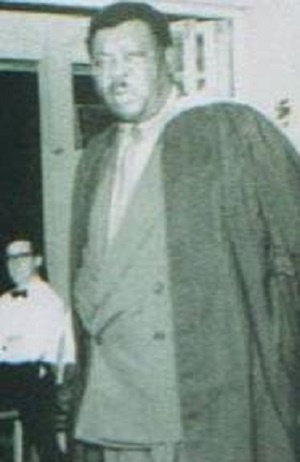
Lieutenant General Joseph A. Ankrah resigned from office on April 2, 1969. Prior to this, he became Head of State in 1966 after Ghana experienced its first coup d’état following the overthrow of the Kwame Nkrumah government, sparking the formation of the National Liberation Council.
Following the coup, General Ankrah became the first Chairman of the National Liberation Council (NLC).
According to eaumf.org, General Ankrah resigned after having admitted that he had received money for political purposes from a private company. While serving as Head of State, his tenure was marred with various bribery scandals.
Notable among the scandals was the admission of taking a bribe from a Nigerian businessman named Arthur Nzeribe.
The allegation, at the time, was that results of an opinion poll conducted by Anthony Nzeribe and contracted by the NLC for that purpose, showed General Ankrah as the most popular person in Ghana from a field of prominent politicians, including General Afrifa and Kofi Abrefa Busia.
Upon the revelation, the Commission of Enquiry was formed and determined that General Ankrah had received C6,000.00 from Nzeribe, which might have influenced the outcome of the opinion polls.
Although, there were suspicions that other political factors were at play beyond the bribery scandal, General Ankrah was forced to resign as Head of State on April 2, 1969.
About General Ankrah
Joseph A. Ankrah was born on August 18, 1915, in Accra to Samuel Paul Cofie Ankrah, an overseer for the Christian Missionary Society and Beatrice Abashie Quaynor, who was a trader.
Ankrah began his schooling in 1921 at the Wesleyan Methodist School in Accra, where his nickname was ‘Ankrah Patapaa’ for his “forcefulness in arguments and always playing leadership role among his mates.”
In 1932, he entered Accra Academy where he established himself as a good football player. He obtained the Senior Cambridge School Certificate in 1937.
Years after, he joined the Ghana Civil Service and later joined the Ghana Army.
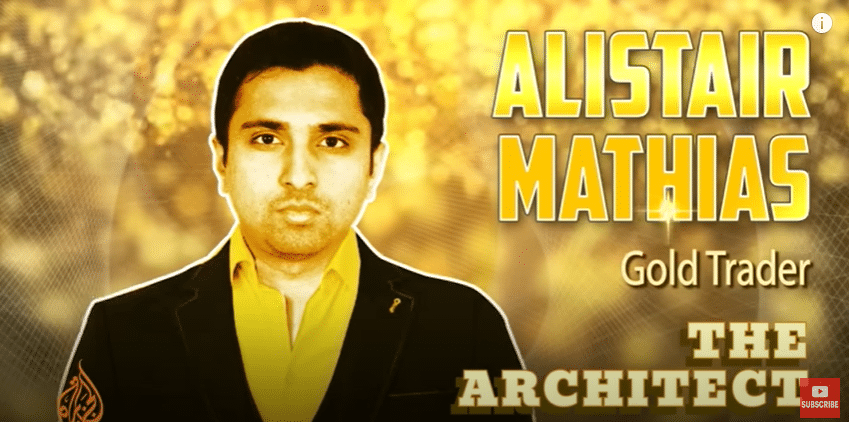
The first of a four-part investigative series on the smuggling of gold in Africa released by Al Jazeera last week, Alistair Mathias, illegally exports gold worth $40 million from Ghana each month
The episode reveals the perpetrators of the crime in numerous African countries, including one who admitted to transporting gold worth $480 million out of Ghana every year. Alistair Mathias is the man’s name.
According to reports, Alistair Mathias, a Canadian citizen located in Dubai, aids in money laundering around the globe and uses a network of businesses and refineries to make sure his operation is successful. Russians and African leaders are among his clients.
He is said to be the partner of Ewan Macmillan, another alleged mafia exposed in the series.
During his meeting with Al Jazeera’s undercover reporters, Mathias said aside Ghana, he moves gold worth between $70million and $80million from Zimbabwe monthly. South Africa was also on his list.
According to Al Jazeera, “When asked for a formal comment about the findings of Al Jazeera’s investigation, Mathias denied that he designed mechanisms to launder money and said that he had not laundered money or traded illegal gold for Russian clients or anyone else. He told us he had never had any working relationship with Macmillan.”
Alistair Mathias accused of duping Ghanaian businessman
This isn’t the first time Alistair Marthias’ name is being tagged with crime, in 2014, he was accused swindling a Ghanaian businessman of over $4million in a gold trade.
According to the businessman, Henry Osei, he opened a branch of his company in Dubai and gave Mathias the role of clearing and forwarding gold shipments to the refinery in Dubai as well as receiving proceeds for transfer to the Ghanaian company back home in Accra, since the latter was a resident of UAE.
He said things run smoothly at the beginning of the partnership but in December 2013 and March 2014, Mathias failed to transfer proceeds of $4million to Ghana though checks had revealed the refinery in Dubai had paid him for the sale of gold.
“After all my efforts to retrieve my money back proved futile, it left me no choice than to file a criminal case against him for his arrest. Mr Matthias was subsequently arrested when he came to Ghana and was granted bail in less than an hour at the Police Headquarters. As I speak the man has travelled back to Dubai,” Mr Osei noted in a Dubai court.
Though Alistair pleaded not guilty to the charge of misappropriating the said amount, the court judged in favour of the complainant.
Alistair’s account of partnership
Alistair Mathias said he came to Ghana in 2009/10 in search for investment opportunities and settled on mining.
He acquired a concession in the Eastern Region after registering his company, M.A. Resources Ltd. in 2010 and in 2011, he met Henry Osei and his business partner.
They were both directors and shareholders of Guldrest Resources Company Limited, a local company involved in gold business with a vast network across the country.
According to Alistair, he started financing his new business partners to buy gold for his company in UAE, Mathias Holding and things went well until Guldrest Resources lost huge amounts of money in 2012/13 due to a sharp decline in gold prices.
To help Henry Osei out of his dilemma, Alistair said he formed a company with the Ghanaian in UAE, Guldrest Resources FZC.
He was therefore surprised to find out Mr Osei lodged a complaint with Ghana’s Criminal Investigations Department of the Ghana Police, accusing him of defrauding him (Osei) to the tune of four million dollars.
Though he was in Dubai at the time the complaint was filed, Alistair said he “immediately flew to Ghana to respond to the rather baseless claims made against me by a man whose company was owing me large amounts of money.”
While this was happening, Henry Osei also went to UAE to make a similar complaint to the police.
“According to court documents, Henry’s claims to the police were that as manager of Guldrest Resources FZC, Alistair could not account for $4,054,024.10 out of a total transaction volume of $83,927,240.10 by way of…failing to send the value of the gold sent thereto…’,” a report on myjoyonline.com stated.
In his absence, the Sharjah Public Prosecution went to court, after preparing a docket, seeking to try Alistair in absentia.
After failed attempts to prevent him from flying outside Ghana, Alistair said he arrived in Dubai a few days before judgment was going to be passed on him, without knowing that was even happening.
According to myjoyonline.com, “Sharjah Court of Misdemeanour reviewed the case, in the presence of the appellant (Alistair) along with his [legal] representative, as well as the [legal] representative of the claimant (Henry) and upon asking about the charge levelled against him, he denied the accusation.”
The report further mentioned that “according to the court, Henry submitted an expert accounts report prepared by an “expert consultant.” The lower court itself appointed an accounting expert who concluded Alistair owed $3,638,504.24.
“The Court of Appeal further stated that Alistair, raised “objections on the appointed expert report before the lower court because the expert relied on documents that were not translated and the expert did not seek the support of an expert in minerals specialized in gold.”
Alistair who wasn’t satisfied with the lower court’s ruling filed an appeal at the UAE Court of Appeal and there, the case against him was dismissed.
According to the court enough evidence had been provided to prove that Alistair Mathias was totally innocent of the charges brought against him by the country’s public prosecutors.
The court also ruled that Henry Osei rather owed Alistair more than USD $9.2 million.
“The three-member panel held that Mr Henry Osei’s complaint which formed the basis for the charges against Mr Mathias was founded on contradictory, unproven and unsubstantiated claims.
“The Sharjah Second Penal Court of Appeal consequently ruled that “the misappropriation crime levelled against [Alistair] [are] totally void and there is no proof or even indication that [he] committed such a crime…”
“The court found, that contrary to claims by the Ghanaian, Henry Osei, that his estranged business partner owed him $4 million, Mr Osei’s Guldrest Resources Ghana Company Ltd., rather owes Mr Mathias about $9.2 million,” myjoyonline.com reported.
The new Electoral Commission‘s Constitutional Instrument (CI) which intends to make the Ghana Card the only document for continuous voter registration in the country has been rejected by Parliament.
The House has rejected the move by the Electoral Commission (EC) to make the Ghana Card the only document for continuous voter registration in the country.
Parliament has also maintained that the guarantor system which is a means of getting an eligible voter with the required document registered must also be maintained.
A report of the Committee of the Whole also objected the EC’s move to limit continuous registration exercises to the regional, district capitals and offices determined by the commission.
Al Jazeera’s recent undercover report has revealed that Ghana serves as one of the many conduits used for money laundering by one ‘financial architect’.
The exposé dubbed “Gold Mafia” recorded Ewan Macmillan, a retired Zimbabwean businessman also known as “Mr Gold” in the shady business, recommending his Canadian colleague, Alistair Mathias, to the undercover reporters who sought his assistance to launder money.
“There is an opportunity, a hell of a big opportunity to wash money here. You want US dollars in a bank account which would be better to have a bank account in Dubai, US dollars. The best thing is to meet my partner from Dubai. He knows how we do things here. He can help you with how you can bring the money here, no problem. I can give my partner gold in Dubai and he can just pay you anywhere in the world.
I need him to come up with a plan of how to wash your money. And he’s clever. He washes money for the Russians,” Mr Macmillan said.
It was during the encounter with Mr Alistair Mathias, who is based in Dubai, that it was revealed that some African countries have been heavily utilised for close to 13 years for money laundering.
Ghana, Zimbabwe, South Africa, Zambia and Mozambique are just a few regions Alistair Mathias exploits to launder money.
“I’ve been doing it for about 13 years now, 14 years. In Ghana I do one ton. I do $40 million every month out of Ghana,” Mr Mathias said.
Alistair Mathias’ posture as he engaged the undercover reporters
Mr Alistair Mathias, with the period given, has smuggled gold worth 6,720 billion out of Ghana.
“This region (Zimbabwe), I do probably about 500 to one ton again. I do roughly about $70 to $80 million every month. We can export from Zambia. I can export from South Africa,” he is recorded to have said.
The report does not provide additional information such as the mode in which he is able to launder money and the agents that aid this work.
Meanwhile, Al Jazeera has released the second episode of the four-part investigative series into gold smuggling in Africa.
Russian Embassy in Accra has disputed some allegations made by American Vice President Kamala Harris during her visit in Ghana for three days.
The precise remarks related to concerns about food security in relation to the war between Russia and Ukraine, with Harris allegedly blaming Moscow of starting a scenario where grain exports have been halted.
The Embassy tweeted a picture that referred to Harris’ remarks as being false and listed what they claimed to be the facts of Russia’s grain supply.
Their tweet was captioned: “The recent visit of US Vice President Kamala Harris to Ghana hasn’t gone without another portion of anti-Russian fakes that do not stand a simple fact-checking.”
What Kamala reportedly said:
“In terms of the Russia’s unprovoked war in Ukraine. There have been a number of impacts globally and to the United States included. In particular, it relates to the prevalence of our ability to have access to certain foods, and grain in particular, globally has been an issue.”
The facts as stated by the Embassy
FACT: European officials acknowledged that Ukraine has already supplied 53 million tonnes of grain and other food products – its annual export amount (for comparison: in 2019-2020 season – 54.9 M tonnes, in 2020-2021 – 44.9 M tonnnes.
QUESTION: Why is then Africa facing food insecurity?
ANSWER: 1) Because of EU and US sanctions that block the RUSSIAN grain export.
2) Because 45% of the total volume of grain exported from Ukraine went to Europe and only 3% went to Africa.
The recent visit of US Vice President Kamala Harris to Ghana hasn't gone without another portion of anti-Russian fakes that do not stand a simple fact-checking. pic.twitter.com/jQuvK3GJJG
— Russian Embassy in Ghana (@RusEmbGhanaEng) March 29, 2023
Member of Parliament for the Ningo Prampram Constituency, Sam Nartey George, has criticized Kamala Harris, the Vice President of the United States of America, for her remark regarding LGBT+ (lesbians, gays, bisexuals, transgender, and questioning) activities in Ghana.
Sam George claims that the vice president is unqualified to instruct Ghanaians on human rights concerns because human rights abuses are widespread in her native nation. The vice president is now in Ghana to develop ties between Ghana and the United States.
He proceeded by suggesting that Americans should understand the legislative process in order to address such a difficult problem because human rights issues are prevalent in the US.
Speaking in an interview with Citi FM on March 28, 2023, Sam George added that the American people should visit Ghana and learn a few things about the lawmaking process from our parliament because they are willing to assist them.
“For the president to run away from his own government’s position on the Bill is unbelievable and worrying but let me assure you that we are not going to be cowed by the undemocratic comments of the American Vice President.
“The American people should be coming to Ghana to learn a few things from our Parliament when it comes to issues of lawmaking because we will be in a good position to help them,” he stressed.
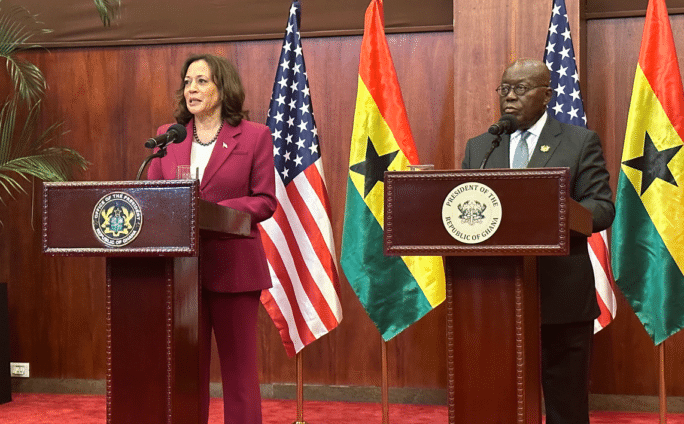
He voiced unhappiness with President Akufo-Addo for his recent remarks regarding the LGBTQI+ bill when he spoke with Kamala Harris at a joint press conference.
President Akufo-Addo is quoted to have said that the anti-LGBT bill, which was championed by “only a hand full of MPs”, is currently being considered by Parliament.
Akufo-Addo added that even if the bill is passed, it will still have to be ratified by him.
It may be recalled that Kamala Harris spoke on the issue of LGBTQ+ activities while responding to a question at Jubilee House, in Accra, on Monday, March 27, Kamala Harris said that for her, the LGBTQ+ issue was one that bordered on human rights.
She added that every person has the right to live as he/she wants.
“Let me be clear about where we stand. First of all, for the American press who are here, you know that a great deal of work in my career has been to address human rights issues and equality issues across the board including those related to the LGBT community.
“And I feel very strongly about the importance of supporting freedom and supporting and fighting for equality among all people and that all people be treated equally.
“I will also say that this is an issue that we consider and I consider to be a human rights issue and that will not change,” she stressed.
The US government has pledged to give five countries in West Africa $100 million to help fight potential extreme terrorism.
The countries include Côte d’Ivoire, Ghana, Benin, Guinea, and Togo.
This is in line with the US initiative to boost it eliminate violence and propel stability in areas vulnerable to conflict. US commits $100m to help combat terrorism in coastal West Africa
This was announced by US Vice President Kamala Harris during her visit to the Jubilee House in Accra.
She was hosted by President Akufo-Addowhere they both held pertinent discussions of mutual interest.
“Today I am pleased to announce $100 million in support of Benin, Ghana, Guinea, Cote d’Ivoire and Togo,” she said on Monday.
“Last week President Joe Biden announced a strategic plan for coastal West Africa as part of the United States strategy to prevent conflict and promote stability.”
She expressed hope that the funding will help implement the policy outlined by US President Joe Biden in the strategic plan. US commits $100m to help combat terrorism in coastal West Africa
Madam Harris is currently embarking on a one-week tour which will see her visit Ghana and two other African countries – Tanzania and Zambia.
A gold merchant exposed by Aljazeera, Alistair Mathias has confessed that he sneaks out of Ghana with $480 million tons of Gold every year.
In a recent investigation themed “Gold Mafia,” the international media exposed a group of criminals responsible for billions of dollars’ worth of money laundering and gold smuggling in Southern Africa.
The International media’s most recent investigation, Gold Mafia, Al Jazeera exposed a group of criminals responsible for billions of dollars’ worth of money laundering and gold smuggling in Southern Africa.
Al Jazeera’s latest investigation, Gold Mafia, has uncovered a band of criminals driving gold smuggling and money laundering worth billions of dollars in Southern Africa.
However, those involved in this gold smuggling syndicate have business networks that stretch across the continent and operate in many other countries including Ghana.
Alistair Mathias, described by the investigative reporters as a financial architect who builds money laundering schemes for corrupt politicians, was approached by undercover journalists posing as Chinese criminals to help them launder money from China.
While assuring the undercover reporters of his competence, he revealed that he has been smuggling $40million worth of gold from Ghana monthly, which is $480 million worth of gold annually.
“I’ve been doing it for about 13 years now, 14 years. In Ghana I do one ton. I do $40million every month out of Ghana. This region I do probably about 500 to one ton again. I do roughly about $70 to $80 million every month. We can export from Zambia. I can export from South Africa,” he told the reporters.
He then urged the undercover journalists to set up a company in Dubai that they could claim was involved in the gold trade in order to help them launder their money.
Al Jazeera has only released the first episode of the four-part investigative series into gold smuggling in Africa.
Five countries in coastal West Africa will benefit from a $100 million aid to help combat possible extreme terrorism.
This was announced by Vice President of the United States, Kamala Harris, on the second day of her visit to Ghana.
The countries include Côte d’Ivoire, Ghana, Benin, Guinea, and Togo.
This is in line with the US initiative to boost it eliminate violence and propel stability in areas vulnerable to conflict.
This was announced by US Vice President Kamala Harris during her visit to the Jubilee House in Accra.
She was hosted by President Akufo-Addo where they both held pertinent discussions of mutual interest.
“Today I am pleased to announce $100 million in support of Benin, Ghana, Guinea, Cote d’Ivoire and Togo,” she said on Monday.
“Last week President Joe Biden announced a strategic plan for coastal West Africa as part of the United States strategy to prevent conflict and promote stability.”
She expressed hope that the funding will help implement the policy outlined by US President Joe Biden in the strategic plan.
Madam Harris is currently embarking on a one-week tour which will see her visit Ghana and two other African countries – Tanzania and Zambia.
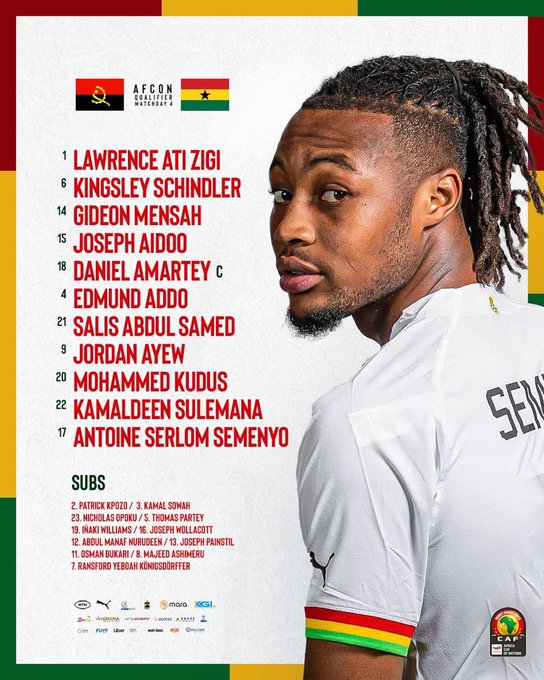
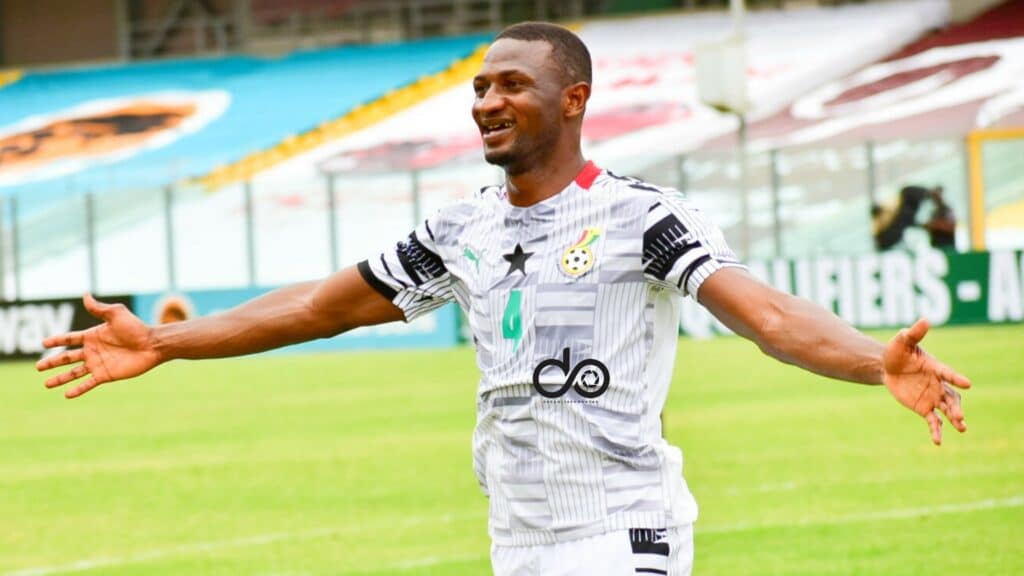
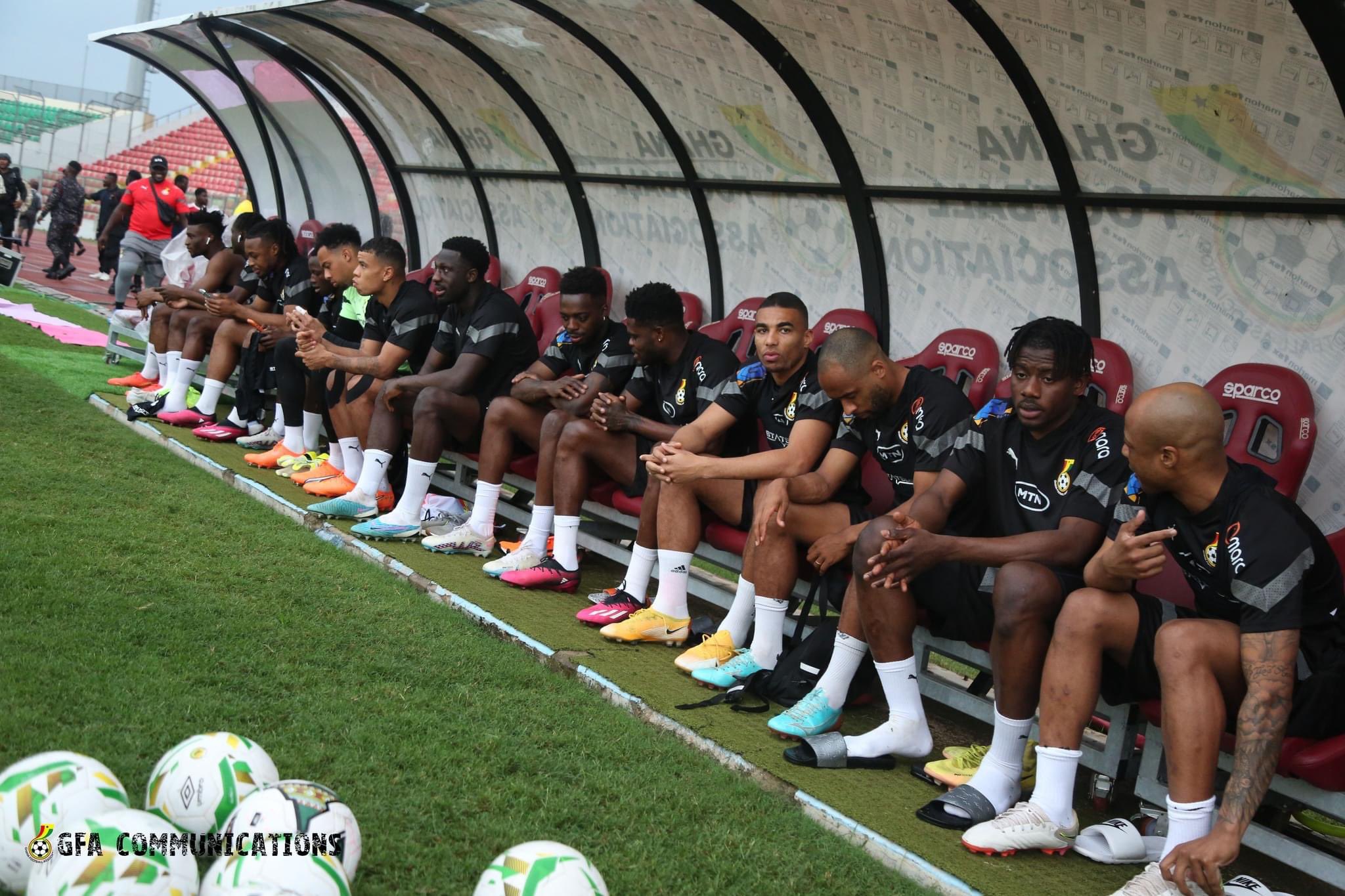
Black Stars captain Thomas Partey is not part of Chris Hughton’s starting eleven who are to come up against Angola in the return leg today.
Daniel Amartey will lead the Stars today as its captain.
The starting XI include Lawrence Ati Zigi, Kingsley Schindler, Gideon Mensah, Joseph Aidoo, Edmund Addo, Salis Abdul Samed, Jordan Ayew, Mohammed Kudus, Kamaldeen Sulemana and Antoine Selorm Semenyo.
Those benched include Thomas Partey, Patrick Kpozo, Nicholas Opoku, Inaki Williams, Abdul Manaf Nurudeen, Osman Bukari, Ransford Yeboah, Kamal Sowah, Joseph Wollacott, Joseph Painstil and Majeed Ashimeru.
Ghana played Angola last Thursday at the Baba Yara Sports Stadium in Kumasi. Palancas Negras lost by a goal to nil.
First it was the US secretary of state who visited Africa, then the vice president, and later in the year the president is anticipated to go.
This flurry of trips by senior US government officials reflects a growing understanding that the country has to strengthen its ties to Africa.
All of this occurs in the face of escalating opposition from other major world powers, particularly China and Russia.
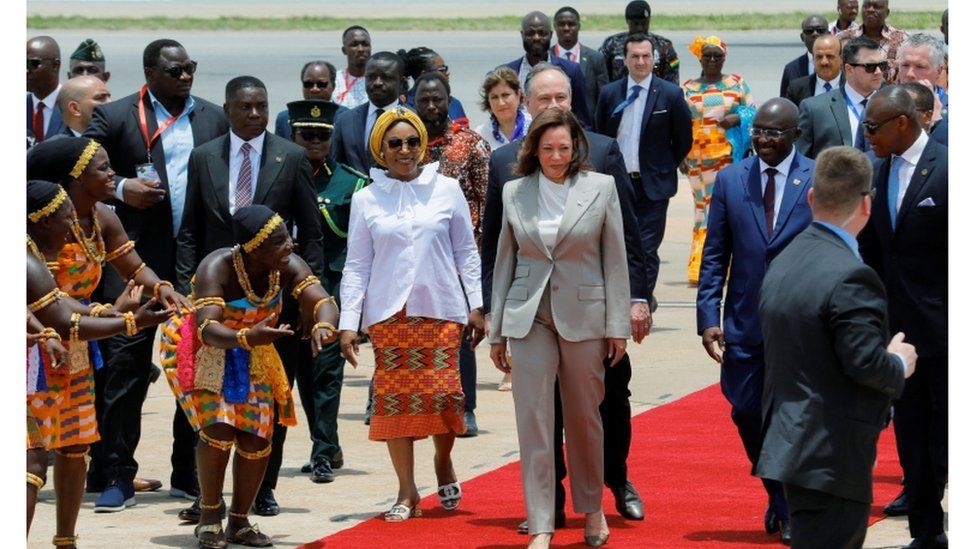
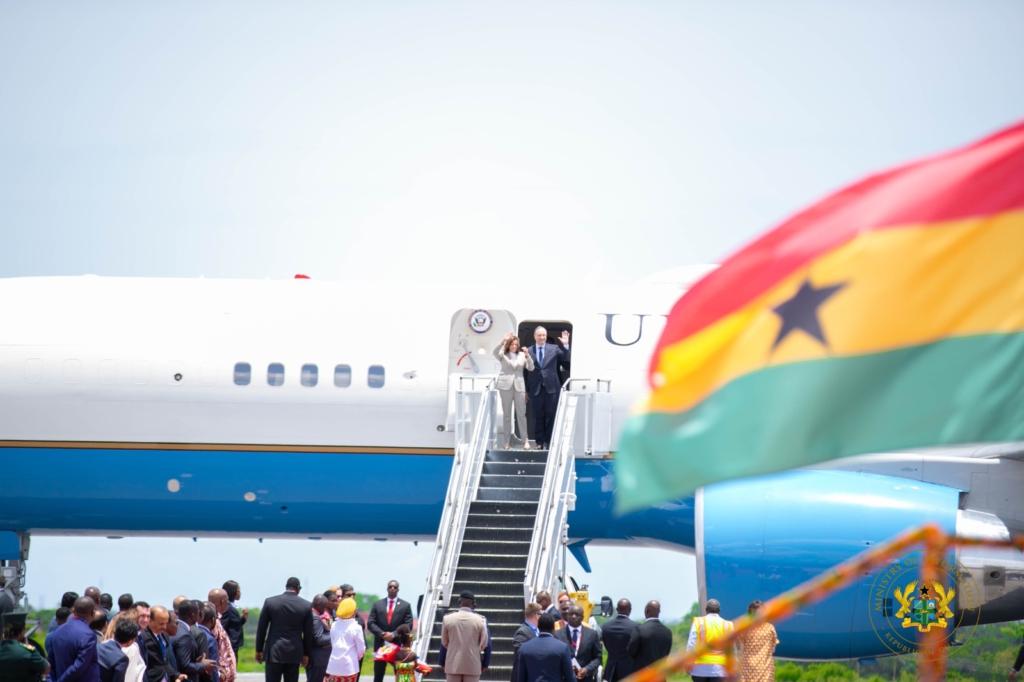
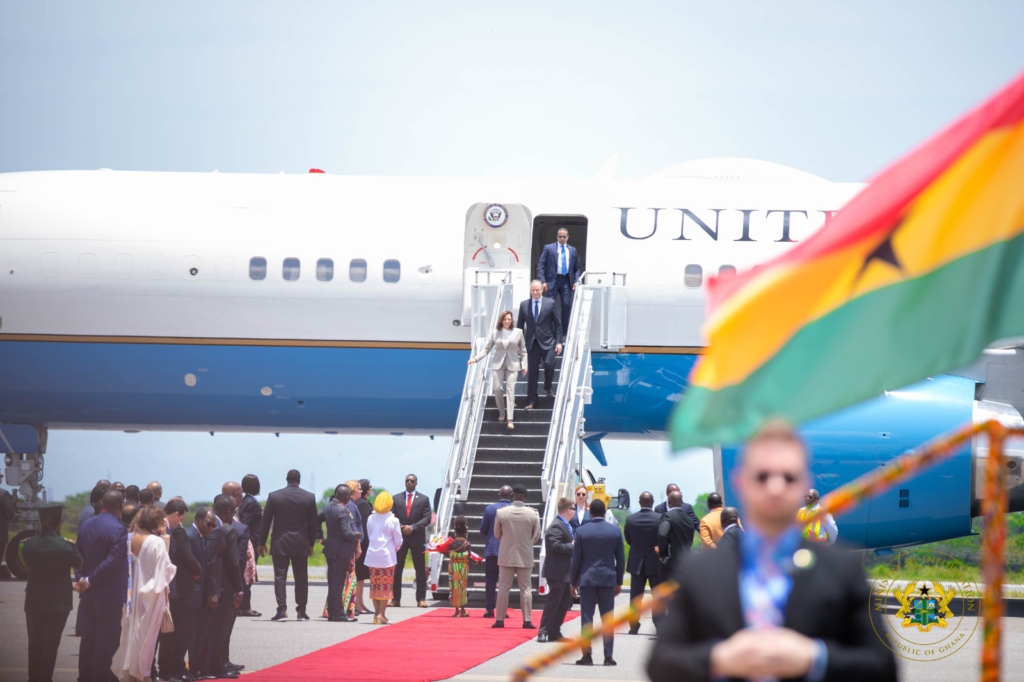
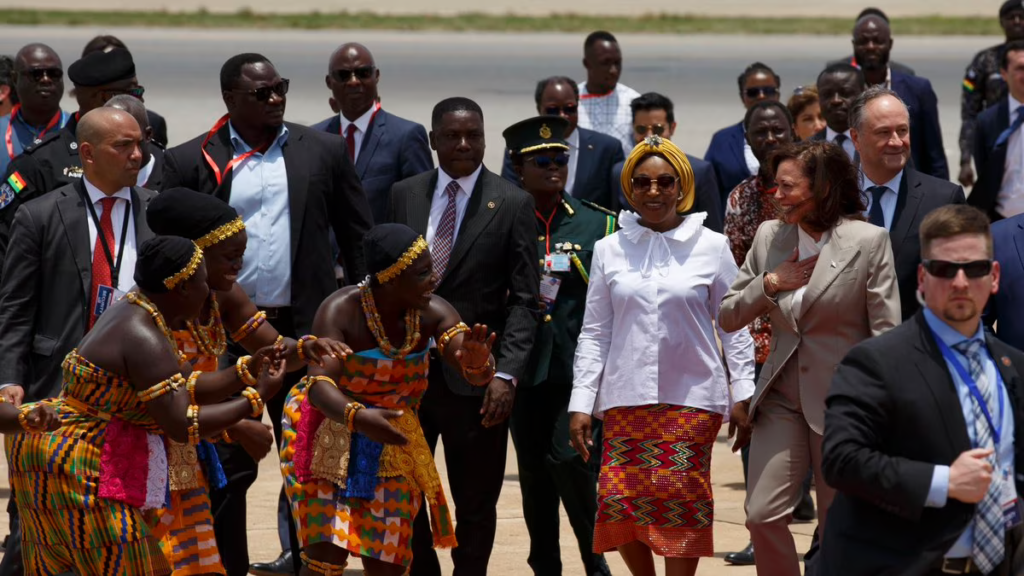
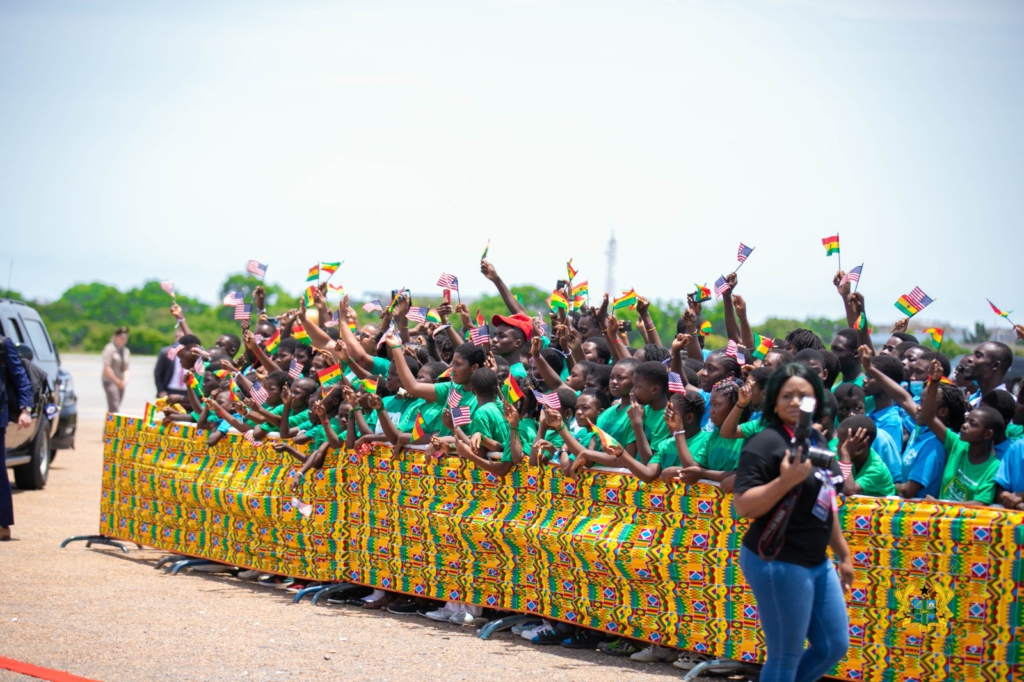
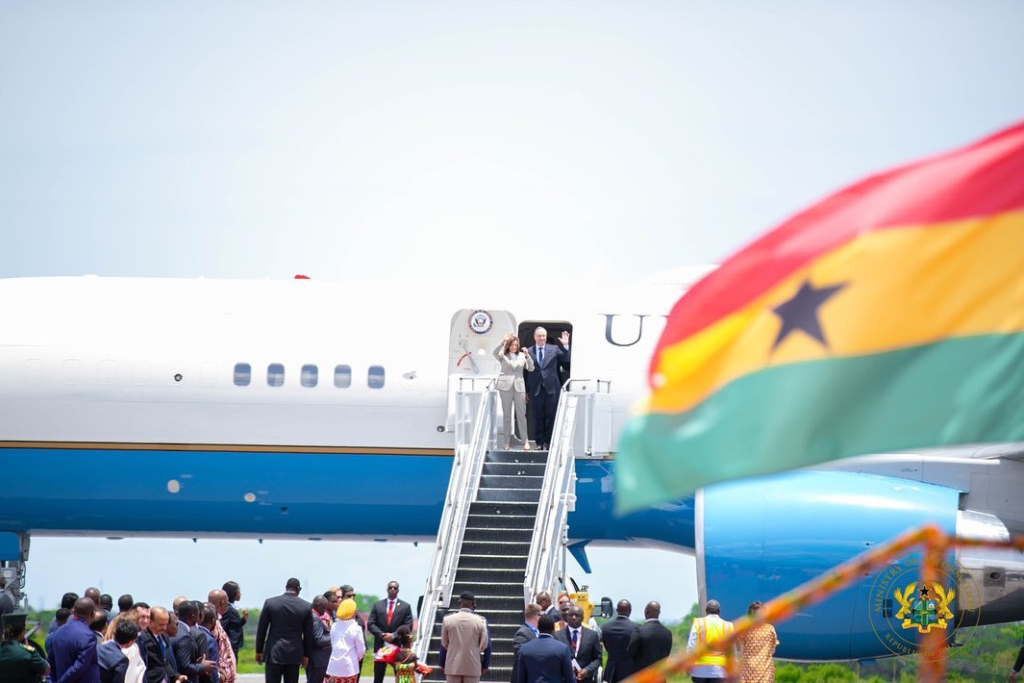
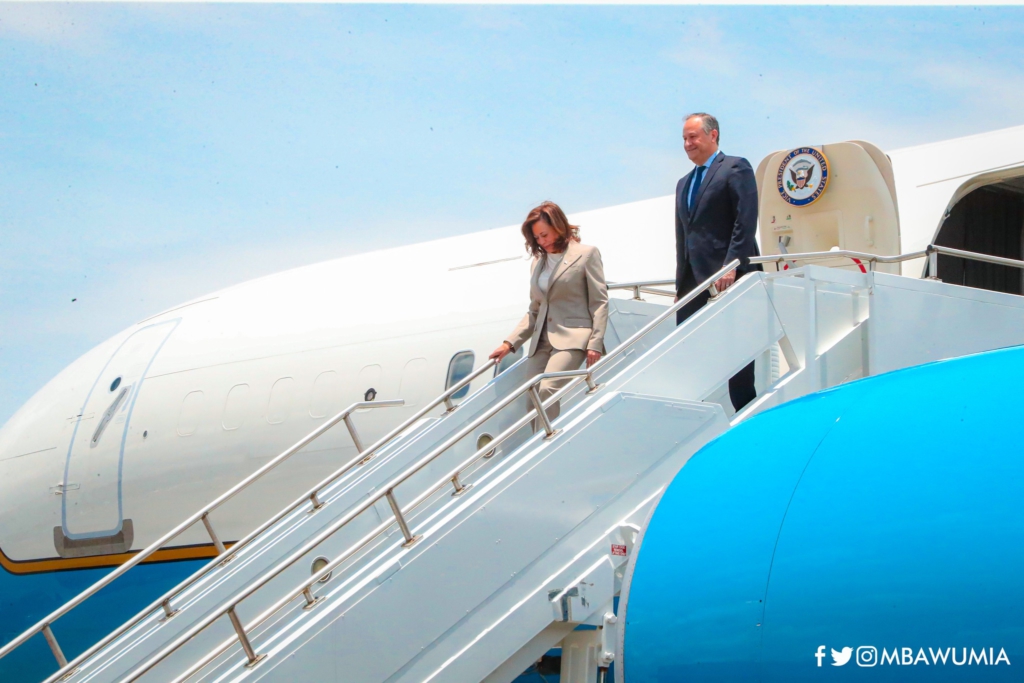
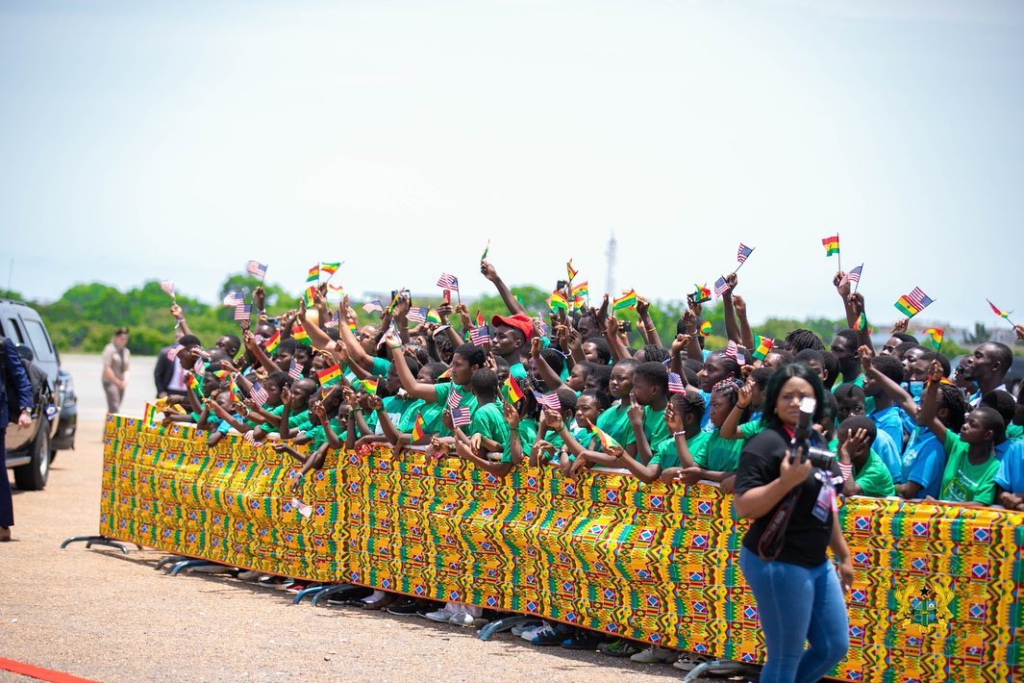
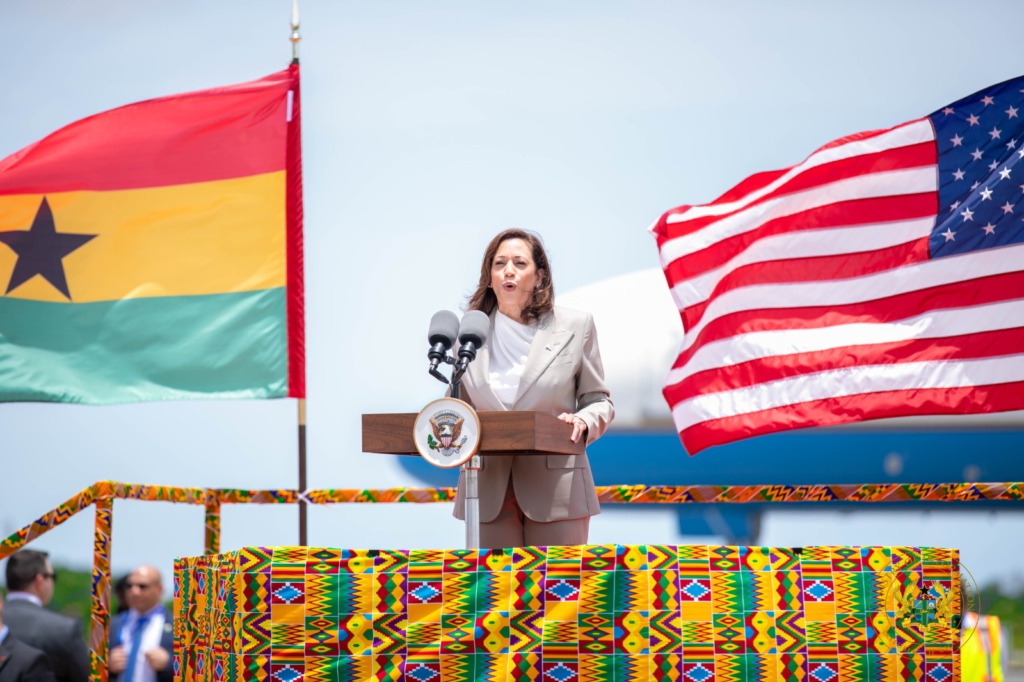
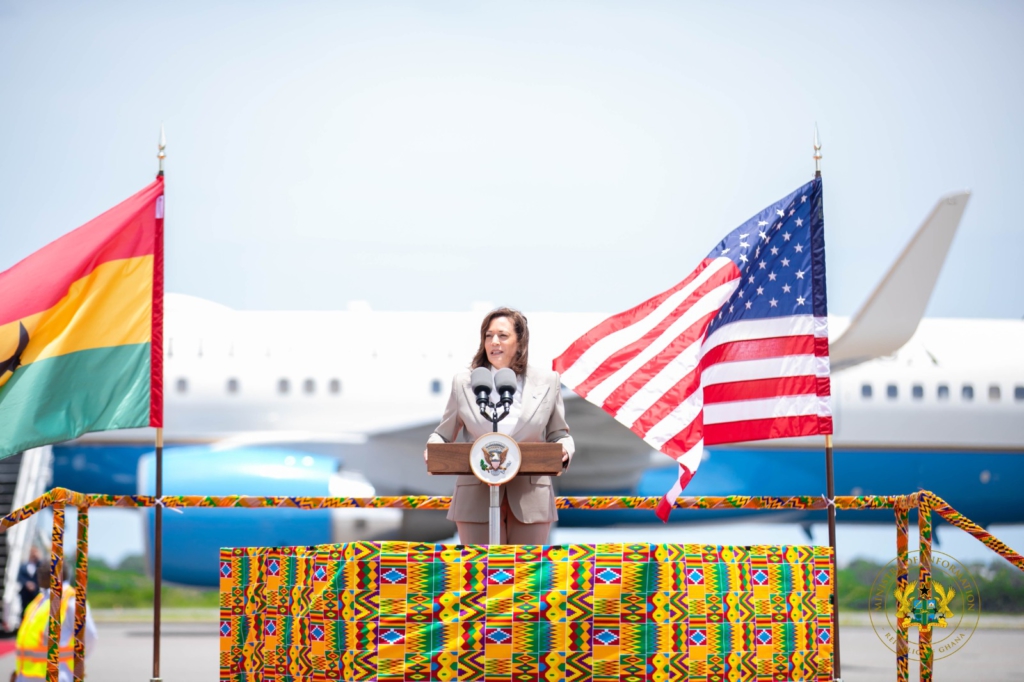
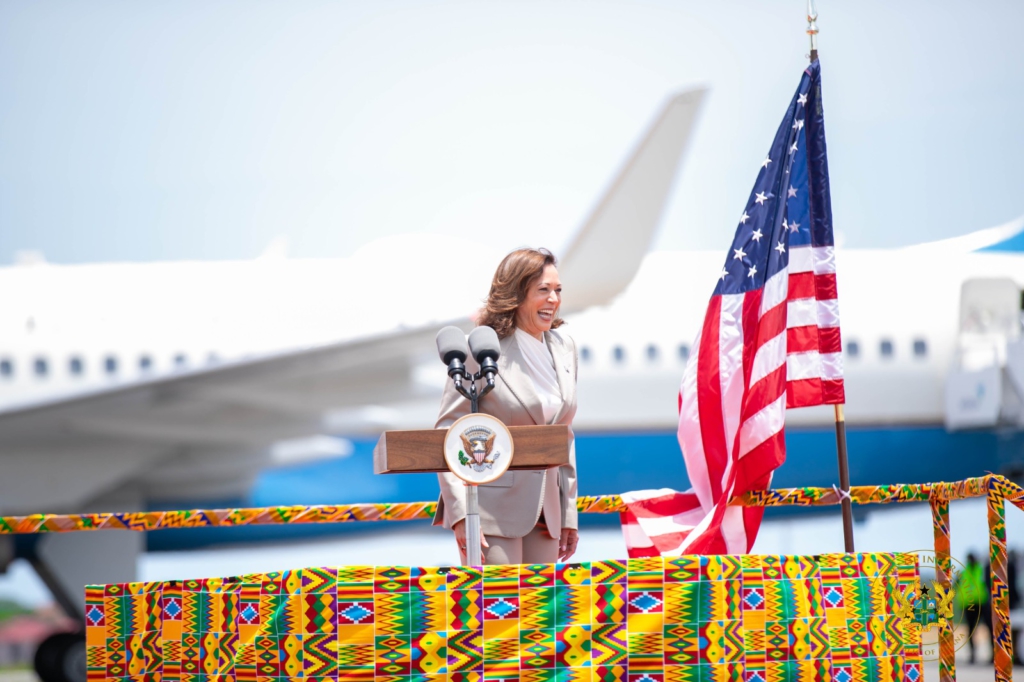
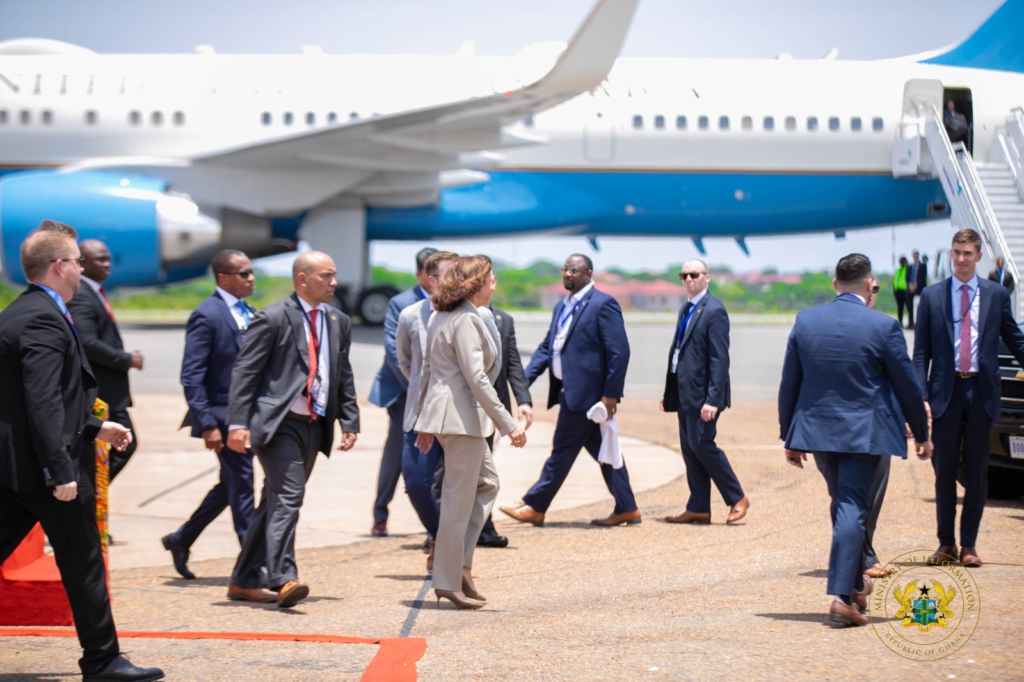
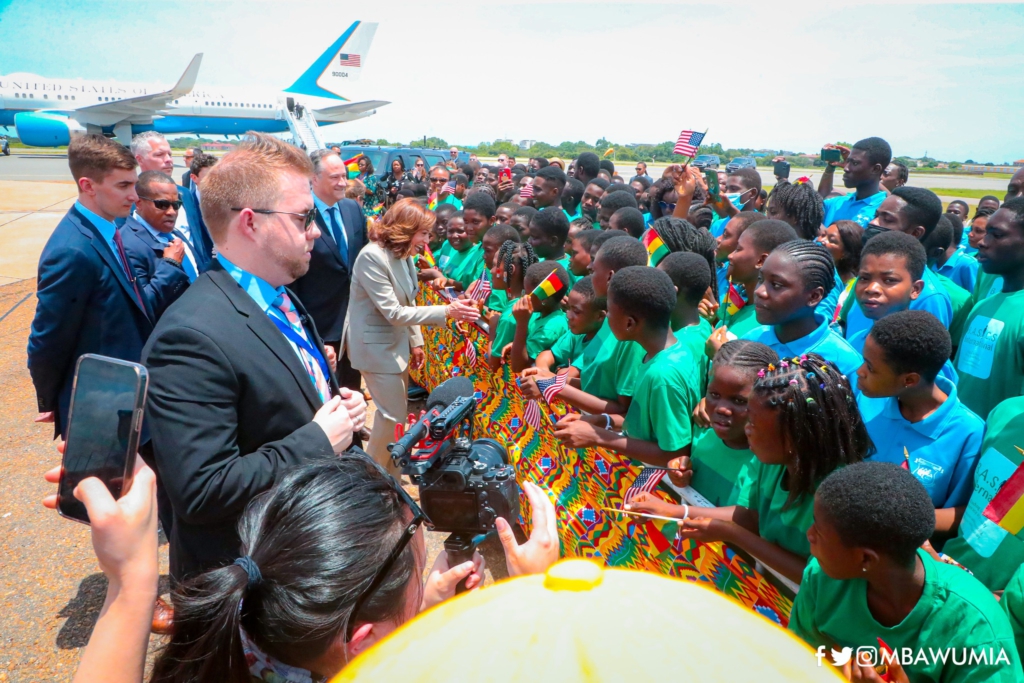
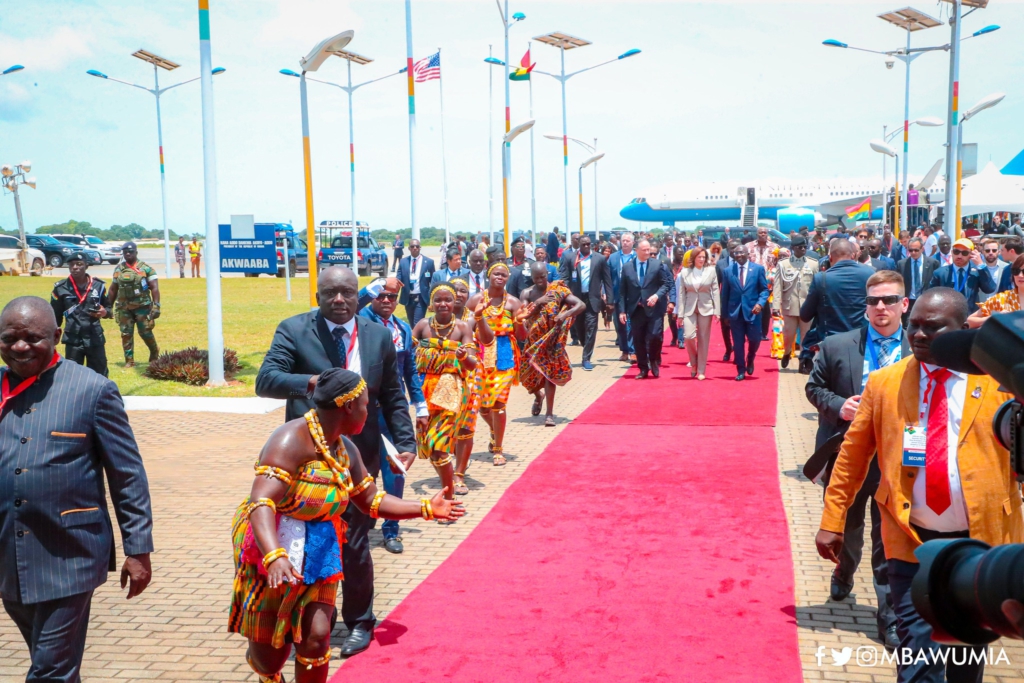
Vice-President Kamala Harris started her nine-day trip in Ghana on Sunday, where she was greeted by drummers and dancers at Kotoka International Airport. She will later go to Tanzania and Zambia.
Ghana, with its focus on strengthening ties with the African diaspora as well as a record of several peaceful democratic transfers of power, provides an ideal launchpad for Ms Harris.
Her trip, according to an official statement, is intended to “build on” December’s US-Africa summit in Washington where President Joe Biden said the US was “all in on Africa’s future”.
But it is that future, boosted by a youthful and growing population as well as the continent’s immense natural resources, that have attracted a lot of other powerful nations vying for influence.
While Secretary of State Anthony Blinken’s recent visit to Ethiopia and Niger focused on these countries’ security challenges, the vice-president’s tour will take her to nations facing serious economic problems.
Ghana’s once-thriving economy is going through its most difficult financial crisis in decades.
The country is seeking to restructure its debt amid surging inflation of over 50%. Finance Minister Ken Ofori-Atta has just been in Beijing leading negotiations with the Chinese government.
“So far, very positive and encouraging meetings in China,” the finance minister tweeted as he expressed optimism that it would secure external assurances “very soon”.
It needs the assurances to unlock financial support from the International Monetary Fund (IMF).
It is not clear what, if any help, Ms Harris can offer, but it will be under pressure to act like a willing partner in the wake of Mr Ofori-Atta’s China visit.
‘US a friend – like China and Russia’
Economist and professor of finance at the University of Ghana, Godfred Alufar Bokpin, does not think the visit will deliver “an immediate dividend” to help alleviate the country’s financial woes.
“Having China on board is complicated,” he said, while noting that Ms Harris’ visit was “a very important” one for Ghana as it “elevates our relationship with the US to another level”.
He told the BBC the interest the US is showing in the country and its debt crisis “is good” but he is worried about what he described as “unfavourable terms of trade” with creditor nations.
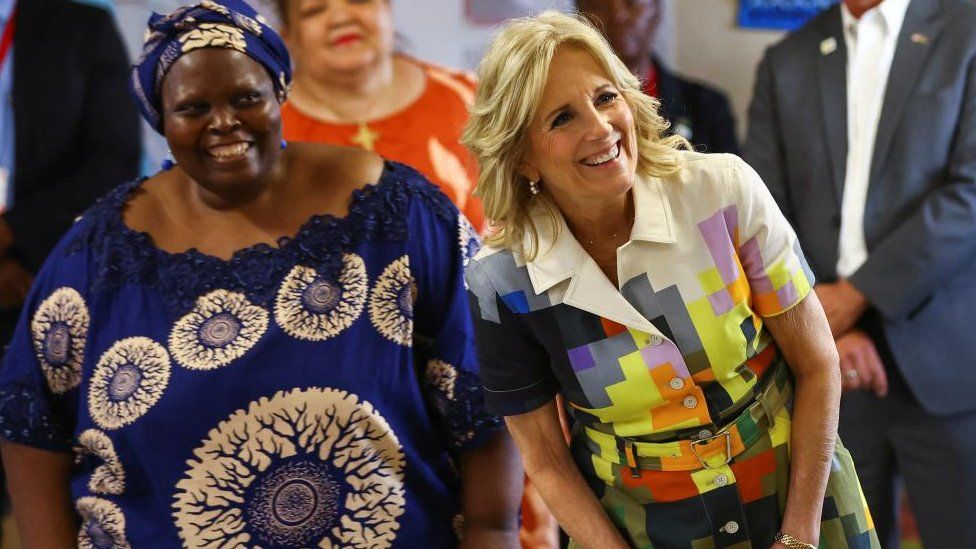
Image caption,First Lady Jill Biden, seen here in Namibia in February, was another US dignitary to have recently visited the continent
Zambia finds itself in a similar position to Ghana.
The copper-rich nation became the first African country to default on its debt when the Covid pandemic hit.
It is in prolonged discussions with China to restructure its debt and has also sought financial support from the IMF.
The Reuters news agency quotes a senior US official as saying Ms Harris “would discuss the best ways for the international community to address debt challenges faced by Ghana and Zambia”.
Like Prof Bokpin, Zambian analyst Dr Sishuwa Sishuwa thinks China holds more influence when it comes to restructuring debt. But the US wants to be seen as the more reliable partner.
There is a growing sentiment on the continent that Africa should have a free choice in its relationships with the rest of the world.
“Zambia sees the United States in the same way as it sees China and Russia – a friend,” Dr Sishuwa told the BBC.
“When a country turns to China, or Russia, or the US for support, this should not be seen as snubbing one major power bloc or the other.”
He said attempts to seek exclusive relationships with African countries may be counterproductive and unsustainable.
This echoed South African President Cyril Ramaphosa’s comments during a visit to Washington last year when he said: “We should not be told by anyone who we associate with.”
Senior US officials have told the BBC it is not their intention to tell African countries who they can be friends with.
The US has however been keen to emphasise its focus on democracy in its relationships with African countries, something the vice-president is also expected to discuss during her visit.
President Hakainde Hichilema of Zambia is due to co-host a virtual Summit for Democracy, along with four other heads of state including President Biden, shortly before receiving Ms Harris in the country.
It is one of the values, along with human rights and good governance, that the US government says underpins its relationships with the continent – and sets it apart from China and Russia.
Scepticism in Africa
China has a non-interference policy in countries’ internal political affairs – something that has smoothed its engagement with autocratic leaders.
And Russia’s presence in African countries that have experienced coups recently – Burkina Faso and Mali – has led to a souring of relations between them and the West, especially France, the former colonial power which had maintained close ties to both countries.
Russia’s invasion of Ukraine has no doubt given Western nations an added sense of urgency in winning over more African countries. UN votes to condemn it divided African nations which accounted for half of all abstentions, including Tanzania which is also on Ms Harris’ itinerary.
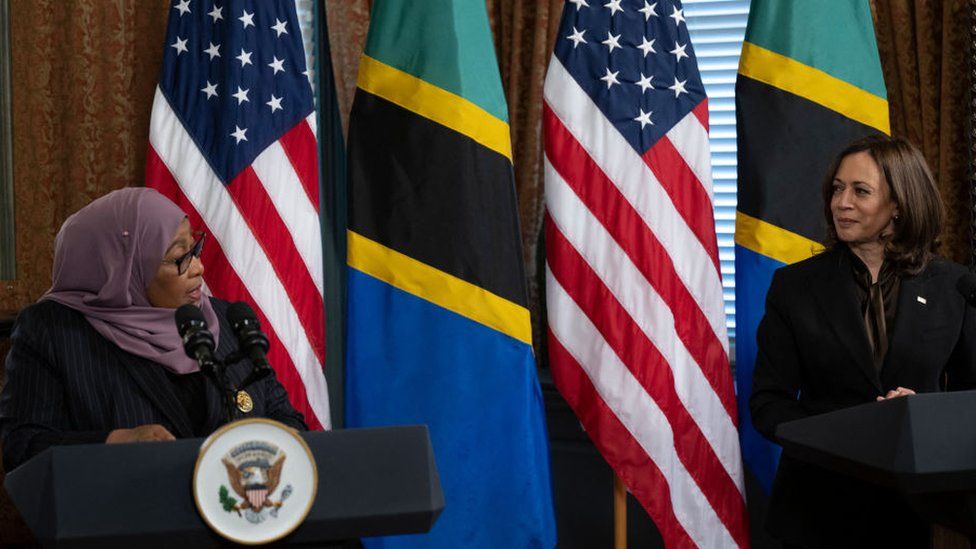
Image caption,Tanzania’s President Samia Suluhu Hassan first met Vice-President Harris in Washington nearly a year ago
The US vice-president – the first woman to hold that position – will meet President Samia Suluhu Hassan, her country’s first female head of state.
This shared experience of being pioneering women is creating a buzz in Tanzania.
Many are also touting the visit as an endorsement of the progress the country is making and its growing visibility on the global map.
It was not that long ago that Tanzania was something of an outcast under the presidency of John Magufuli, who was seen as having autocratic tendencies, curtailing the activities of the opposition and independent media.
Ms Harris is the most senior US official from the Biden administration to visit Africa and the fifth since December’s US-Africa summit.
Others have been the Treasury Secretary Janet Yellen, US ambassador to the UN Linda Thomas-Greenfield, First Lady Jill Biden and Mr Blinken.
But with the renewed interest comes a demand from the continent to be treated fairly.
Ghana’s Prof Bokpin said there was a level of scepticism about the heightened interest in Africa.
“There’s a belief that a new Scramble for Africa is in play,” referring to the subdivision of the continent by European nations in the late 19th Century which led to decades of colonialism and exploitation.
“This engagement needs to emphasise mutual respect,” he added.
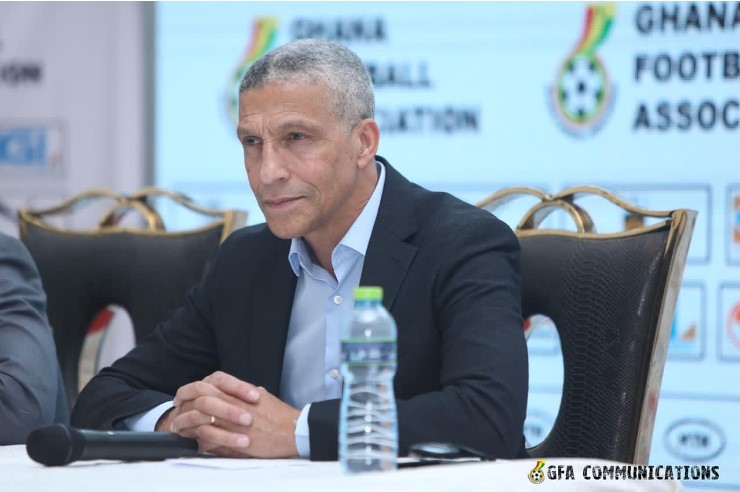
Black Stars head coach, Chris Hughton, has pledged to ensure that his side leaves no stone unturned when it comes to defense and attack in the return leg against Angola.
Sharing his take ahead of Monday’s game that takes place in Luanda, he said “the approach is that we are up against a good team. I can say something quite obvious, that we will have to defend well and we will have to attack well.
For Hughton, it is important that there is a balance.
“We have to make sure that we are compact as team – this is for sure, because they are a good quality and they a very technical team. But we are here to win the game and you can’t win the game unless you give yourself an opportunity to attack and to attack well. We have to be careful how we do this.”
“If the game becomes too open, if it becomes end to end then of course it can be for any team so we have to have a strategy going into the game as we would in any game,” he added.
According to him, the Palancas Negras will fall on the support from their supporters, however, that would not matter much since “we are a good team.”
“We managed to get the victory a few days ago and it’s something we want to build on,” he added.
Ghana beat Angola by a goal when they clashed at the Baba Yara Sports Stadium in Kumasi last Thursday.
Ghana Black Stars and Angola face off today in Luanda at 4pm for the Africa Cup of Nations Group E clash.
The Palancas Negras came up against the Black Stars last Thursday at the Baba Yara Sports Stadium and lost by a goal at the eleventh hour.
Chris Hughton’s side which arrived in Luanda on Saturday night has recorded some injuries. Andre Ayew couldn’t make the trip as he has been ruled out due to injury.
Other players who didn’t make the trip include Alexander Djiku, Mohammed Salisu and Denis Odoi.
The Black Stars head coach travelled with 21 players.
Meanwhile, Nicholas Opoku has joined the Black Stars in Luanda for today’s game.
The Amiens defender has been drafted in to provide options for Chris Hughton following the absence of Salisu Mohammed and Alexander Djiku.
Nicholas made his Black Stars debut in July 2017, and has gone on to play for Ghana 13 times and scored one goal. He is expected to provide competition for Joseph Aidoo and Daniel Amartey who are the only recognized central defenders in the team.
It is a wonderful honor for her to be in Ghana and on the African continent, according to US vice president Kamala Harris.
During her arrival in Accra on Sunday, schoolchildren, dancers, and drummers greeted the delighted second most important person in America.
As she starts her three-day official visit to Ghana and a nine-day visit to Africa, she was beaming with smiles on a journey intended to deepen U.S. relationships as China extends its capture of the continent.
An excited Kamala Harris could not hide her joy as she was welcomed by vice president Dr Mahamudu Bawumia and other government officials.
With a hand placed on her heart, she smiled as she passed by the hard-hitting drummers and the graceful dancers.
On her left-hand side were children cheering and waving both the Ghanaian and American flags.
“What an honour it is to be here in Ghana and on the continent of Africa,” Harris said.
“I’m very excited about the future of Africa.”
She said she wanted to promote economic growth and food security and welcomed the chance to “witness firsthand the extraordinary innovation and creativity that is occurring on this continent.”
“We are looking forward to this trip as a further statement of the long and enduring very important relationship and friendship between the people of the United States and those who live on this continent,” Kamala Harris said.
The Vice President of the United States of America has started her much anticipated diplomatic visit of Africa.
On Sunday, March 26, 2023, Kamala Harris landed to Ghana’s Kotoka International Airport.
The Vice President expressed her desire to strengthen ties between the United States and Ghana and the continent while present with her husband, Douglas Emhoff, and other top US officials.
Kamala Harris arrived in Ghana on Sunday, March 26, 2023. Photo Credit: Ministry of Information via Facebook
Madam Harris is embarking on a one-week tour which will see her visit Ghana and two other African countries – Tanzania and Zambia.
US Vice President, Kamala Harris in the company of her husband and other top US officials. Photo Credit: Dr Mahamudu Bawumia via Facebook
Delivering her first address, Madam Harris highlighted the significant role of Africa in the world .
She, therefore, hoped that her engagements while on the continent will foster investment in Africa.
These are some of the forever-frozen moments of Madam Harris’ memorable visit to Ghana.
Kamala Harris descended from the plane after touching down at Ghana’s Kotoka International Airport. Photo Credit: David AndohA young Ghanaian presents a bouquet of flowers to the US Vice President. Photo Credit: Dr Mahamudu Bawumia via FacebookVice President of Ghana, Dr Mahamudu Bawumia, welcomes US Vice President, Kamala Harris. Photo Credit: Dr Mahamudu Bawumia via FacebookKamala Harris exchanges pleasantries with Ghana’s Foreign Affairs Minister. Photo Credit: David AndohCulture on full display as Ghana welcome US Vice President, Kamala Harris. Photo Credit: Dr Mahamudu Bawumia via FacebookKamala Harris walks to the podium to deliver the first speech of her three-nation African tour. Photo Credit: Ministry of Information via FacebookSome Ghanaian students wave flags to welcome US Vice President. Photo credit: Ministry of Information via FacebookUS Vice President Kamala Harris touched by the warm welcome. Photo Credit: Ministry of Information via FacebookKamala Harris delivers the first speech of her one week diplomatic tour of Africa. Photo Credit: Ministry of Information via FacebookAmong other things, Madam Harris hoped her engagements during the tour would increase investments in Africa. Photo credit: Ministry of Information via FacebookKamala Harris radiantly smiles at the students who gathered at the Airport to welcome her. Photo Credit: Ministry of Information via FacebookUS Vice President walks towards students gathered on the grounds. Photo Credit: Ministry of Information via FacebookKamala Harris interacts with students who cheered on her arrival. Photo Credit: Dr Mahamudu Bawumia via FacebookKamala Harris escorted to the Jubilee Lounge after her address. Photo Credit: Dr Mahamudu Bawumia via FacebookGhana’s Vice President, Mahamudu Bawumia interacts with US Vice President Kamala Harris at the Jubilee Lounge. Photo Credit: Dr Mahamudu Bawumia via Facebook
In the next ten years, if the government’s Free Senior High School (FSHS) program is not well structured, Haruna Iddrisu, a former minority leader, has warned, it may collapse.
He contended that the program must include a means testing mechanism to determine who can pay and who cannot pay.
The Tamale South MP indicated that organizations likeUNESCO have all advised on the matter which the government has ignored for political expediency.
“Mr. Speaker, we are doing what we ought to have done several years back, UNESCO was established somewhere 95 and Ghana has benefited enormously from them. Ghana needs to take advantage of UNESCO’s advice on secondary education. How accessible is it, what is the quality, are we running a secondary education that produces quantity and not quality?
“Ghana needs a test mechanism to determine who can pay and who cannot pay. This political thing of wanting to please everybody at the detriment of quality will hang in this country in the next decade if we don’t look back,” he stated.
Government has between 2017 and 2021 spent over 5 billion cedis on the free SHS policy.
Reacting to the assertion of Haruna Iddrisu, majority Chief Whip Frank Annoh-Dompreh stated the program is work in progress and thus will in future accommodate the suggestions of means testing.
The Nsawam-Adoagyiri MP however argued the policy has brought relief to many families.
Chris Hughton, the coach of the Black Stars, has given an explanation for why captain Andre Dede Ayew was left out Ghana’s starting XI in the game against Angola.
The Black Stars defeated the Palancas Negras of Angola 1-0 on Thursday, March 23, 2023, at the Baba Yara Sports Stadium in Kumasi with captain Andre Dede Ayew sitting on the bench.
After the game, the absence of the Nottingham Forest star dominated the headlines, despite Thomas Partey taking over the captaincy duties and leading the club to victory.
Chris Hughton, who emphasized the captain’s qualities when discussing his decision to bench Andre Ayew at the post-game press conference, said that he made the right choice for the team.
“As a head coach, you have to make difficult decisions. You know the quality that Andre possesses, but you also know the quality of the rest of the squad,” Hughton said.
“Ultimately, it was my choice not to play him, but that doesn’t reflect on his abilities as a player. He remains a valuable member of the team.”
The Black Stars after beating Angola 1-0 are now on top of the Group E table with 7 points ahead of the return leg in Luaanda on Monday, March 27, 2023.
China would like to enhance communications with Ghana to seek proper resolution of Ghana’s debt issue, its foreign ministry said on Thursday,
Spokesperson Wang Wenbin made the remark in response to a question on Ghana’s finance minister visiting Beijing for a proposed restructuring of Ghana’s debt.
According to former president John Mahama, 60 ministries and deputies are sufficient to manage the country.
He asserted that this will guarantee the effective use of Ghana’s limited resources for the benefit of all citizens.
According to him, this will also curb the disparities in privileges enjoyed by political officeholders and citizens.
The National Democratic Congress (NDC)’s 2024 Presidential Candidate hopeful said this is part of amendments that he will make to the 1992 constitution.
“We plan to take up and conclude the constitution review process that started underPresident John Evans Atta Mills. The reforms will include a review of the controversial Article 71,” he said.
“I still believe that in this crisis period, Ghana can be managed with not more than 60 ministers. And to cut down on the number of officeholders and remove the disparities in privileges and emoluments.”
Mr Mahama said this at a programme organised on Wednesday, March 22, on the theme “Financing political campaigns in Ghana we want: A case for more transparent and broad-based citizen participation.”
He had earlier announced that if elected President in the 2024 general elections, he will assemble a government made up of only 60 ministers and deputy ministers.
“I shall assemble and operate the leanest but most efficient government under our fourth republic. We will reduce, significantly, the size of the government,” he explained.
“As I announced in my Ghana We Want address at UPSA late last year, I will form a government of less than sixty (60) ministers and deputy ministers of state.”
Ahead of today’s game, Chris Hughton noted that his side is prepared for whatever the Palancas Negras’ throw at them.
“I look at my involvement in the team, the squad and association was before I was made head coach so I was aware of course as soon the campaign started and the draw was made that we will play against Angola. So yes, as each coach will do, I have studied them in their last five, six, seven games.”
“They are technically a very good team and obviously with Portuguese influence and a lot of good technical players so I am in no doubt that they are strong and tough opposition so we have to plan for that as we will do for any opposition. But certainly they have the capabilities and very much aware that they can cause us a lot of problem and we have to be prepared for that,” he said on Wednesday while addressing the press.
The Baba Yara Sports Complex in Kumasi was packed when Black Stars coach Chris Hughton conducted his penultimate practice before the match against Angola.
On Thursday, March 23, the Black Stars will welcome the Angolan Palancas Negras in Kumasi for the opening leg of a doubleheader to qualify for the 2023 Africa Cup of Nations.
Chris Hughton’s house was finished with Abdul Salis Samed’s arrival, who was unable to meet up with his international teammates in Ghana on time due to a delay at the airport in France.
After having less time to train under the new management, Abdul Salis Samed participated in team training, although it is unclear if he would start the match against Angola.
Goalkeeper Jojo Wallacott who got injured after the goalpost fell on him during the session on Tuesday, March 21, also took part in the final training after he was cleared by the medical team.
Mohammed Salisu was the only player who couldn’t complete the final training session after he was escorted to the dressing room over injury concerns.
The Southampton defender is now a doubt for the game against the Palancas Negras according to head coach, Chris Hughton.
An economist, Professor Lord Mensah, has argues that if government reduces spending and effectively restructures its debt, the country’s credit rating will improve.
Fitch has raised Ghana’s Long-Term Local-Currency Issuer Default Rating from RD to CCC.
The issue ratings on domestically issued local-currency bonds that have not yet matured have also been upgraded to ‘CCC’ from ‘D’.
In response to this development, Professor Lord Mensah stated that the government must seek advice on how to improve the economy in order to have a positive outlook.
“If government will listen and try as much as possible to reduce expenditure, that will improve, probably, the rate we find ourselves in. We can even do better. So, there is always room for improvement. Let’s see what comes out in the coming weeks when we get our external debts restructured and then get the IMF programme which could improve the ratings further.”
Fitch typically does not assign Outlooks to sovereigns with a rating of ‘CCC+’ or below.
According to Fitch, the upgrade of Ghana’s LC-denominated debt follows the completion, effective 21 February 2023, of the domestic debt exchange programme by the Republic of Ghana.
Fitch viewed the debt exchange programme as a distressed debt exchange in a context of heightened fiscal pressures, with interest costs amounting to 54% of revenues in 1H22, and a lack of access to international capital markets.
The issue ratings on local-currency notes issued domestically that had a maturity date of 6 February 2023 and for which the remaining due principal payments were made on 13 March 2023 have been withdrawn given the expiry of these notes.
Meaningless upgrade
ButMember of Parliament for Bolgatanga Central and member of Parliament’s Accounts Committee, Isaac Adongo has discredited Fitch’s upgrade.
The Bolgatanga Central lawmaker says there is nothing to celebrate about the upgrade because the reality on the ground is that of hardship and suffering visited on investors and pensioners through the government’s infamous domestic debt exchange programme.
Speaking in an interview on Eyewitness News on Citi FM, Mr. Adongo said that though Fitch thinks Ghana has made some gains with the domestic debt exchange programme, what the government has actually done is postpone the problem of default.
“Fundamentally, there is nothing worthy to celebrate about the upgrade because what they have simply done is deny poor people and pensioners their monies and Fitch is celebrating that as a gain but to the people affected, they will not be happy and will not celebrate such a rating.”
All areas of life are impacted by climate change, but those that depend on the environment are most vulnerable. One example is rural areas with farms.
Economic and non-economic effects of climate change on farmers are the two categories into which they are most frequently divided. Losses that may be calculated or assessed in monetary terms are considered economic consequences.
Losses that cannot be assessed or quantified in monetary terms are referred to as non-economic impacts. Loss of indigenous knowledge, cultural heritage, and a sense of location and belonging are a few examples.
Research and policy strategies have focused on understanding and addressing the economic effects of climate change. Less so the non-economic aspects. I study food and agricultural systems in Ghana. In a recent paper my colleagues and I sought to understand the non-economic effects of climate change on farmers in Ghana.
Our findings have implications for climate change adaptation strategies and policies across the global south.
It is important to note that our research is not in any way suggesting that climate change is the only process driving changes in the farming systems and local culture in Ghana. But, based on the interviews we did, we argue that climate change is playing a role.
Our research and its findings
We conducted 30 in-depth interviews and a focus group with farmers in Offinso, a farming area in southern Ghana. Offinso is traditionally known for both food and cash crops production in Ghana. Farmers in the area produce crops that include maize, vegetables, pawpaw and cocoa. Agriculture in the area is largely rain-fed.
Farmers were asked to describe the weather patterns over a 30-year period. Their responses showed that they had experienced variable weather patterns, a situation that is affecting their farming activities.
For example farmers were no longer able to predict rainfall patterns and farming seasons. Farmers indicated that 30 years ago, the rains were constant during specific months of the year. This enabled them to plan and organise themselves for their yearly farming activities, as they were able to predict rains and start of the farming season.
But rainfall patterns have become very variable.
A consequence of this was that farmers could no longer exchange labour in a system known as Nnoboa. Farmers explained that when they could predict the farming season, they organised themselves at the start of the farming season for Nnoboa. This is often based on the principle of helping one another on the farm as a way of building social bonds. Nnoboa was largely practised at the start of the rainy and farming seasons, when land preparation and planting of crops are required.
But the variable nature of the rains had distorted the farming seasons and organisation of Nnoboa – communal labour. Instead farmers were relying on their nuclear families or hired labour. This reflected a much more individualist – as opposed to a communal – approach to farming.
We also asked farmers to describe how climate change affected their mental well-being. We asked them to describe climate change effects that made them anxious, depressed, grief, helpless, hopeless and sad.
They explained that extreme weather events such as storms and droughts destroyed their crops, leaving them emotionally distressed, helpless and sad. It was clear from the responses that extreme weather events are not new to farmers. Nevertheless, they expressed the view that major changes in weather patterns had become more frequent.
Way forward
Global efforts are underway to curb carbon emissions. Nevertheless changing weather patterns, drought and storm conditions continue to pose both economic and non-economic effects on vulnerable people.
The neglect of the non-economic aspects of climate change in research and policy threatens to worsen the vulnerability of farmers. This gap needs to be filled so that appropriate conventional and local adaptation strategies and policies can be designed to address the effects of climate change in developing countries.
This article is republished from The Conversation Africa under a Creative Commons license.
Ghana is facing a severe economic crisis and seeking a $3 billion credit facility from the International Monetary Fund (IMF) to avoid a potential collapse.
However, securing the support of its creditors is essential to obtain the IMF loan, and China is a significant creditor of Ghana.
As a result, Ghana’s President Akufo-Addo has appealed to Germany’s Finance Minister Christian Lindner to encourage China’s participation in the country’s economic recovery programmes.
Germany’s Finance Minister Christian Lindner
“We have good relations with China. We would like you to encourage China to participate in these programmes as quickly as possible,” President Akufo-Addo said.
In response, German Ambassador to Ghana, Daniel Krull, advised that Ghana reduces the size of her government to reflect the current economic challenges.
“I can only compare with the other countries like mine and I can come to the conclusion that there is a huge number, the number is much higher than in my country, so that may bring me to the conclusion that there is room for improvement,” he said.
Ghana’s Finance Minister Ken Ofori-Atta also initiated talks with China in February 2023 to discuss the former’s debt situation and explore possible solutions.
Finance Minister Ken Ofori-Atta
However, some experts are sceptical that Ghana’s engagement with China will be productive due to the country’s unique debt circumstances.
According to Dr. Ishmael Hlovor, an international development expert, Ghana’s debt situation is more complicated than the debt of the 27 countries whose debts China cancelled in 2019.
These debts were getting to maturity, and there was something small left on them, whereas Ghana’s debt has more commercial lending components.
“In 2019 for instance, about 27 countries’ debts were cancelled. But if you scrutinise those loans, they were loans that were getting to maturation and there was something small left on them, but our situation is a little bit complicated because of commercial lending,” he told JoyNews.
Therefore, Ghana should lower its expectations about debt cancellation and seek other ways to restructure its debts, such as extending the repayment period, lowering interest rates, or swapping debts with other creditors.
Moreover, there is another school of thought that believes that Ghana’s stance on the Russia-Ukraine war could further complicate its negotiation with China, given China’s friendly relationship with Russia.
On February 24, 2023, Ghana supported a UN General Assembly resolution condemning Russia’s invasion of Ukraine, along with Nigeria, Ivory Coast, Egypt, and Kenya.
UN General Assembly
President Akufo-Addo emphasized that “great powers trampling on small nations is not something that we welcome,” and Ghana would continue to hold its position. However, China has not directly condemned Russia’s invasion of Ukraine or otherwise and called for a cease-fire and peace talks instead.
Prior to this, President Akufo-Addo ratted out Burkina Faso, accusing the neighbouring country inviting in mercenaries from Russian firm Wagner.
“To have them operating on our northern border is particularly distressing for us in Ghana,” he said in December 2022.
China has close ties with Russia, as evidenced by the “no limits” partnership agreement signed between Beijing and Moscow in February 2022. More interesting is Chinese President Xi Jinping’s visit to Russia and their subsequent signage of another partnership agreement that seeks to deepen China-Russia relations.
Xi Jinping and Vladimir Putin
It remains uncertain how China will respond to Ghana’s request for debt relief.
However, Ghana’s engagement with China could provide an opportunity for both countries to strengthen their economic ties and collaborate on infrastructure and development projects.
Ghana could leverage China’s Belt and Road Initiative, which aims to promote trade, investment, and connectivity between China and countries along the ancient Silk Road, to enhance its transport, energy, and communication infrastructure.
Nonetheless, Ghana must balance its engagement with China’s economic interests and its foreign policy objectives and ensure that it pursues sustainable and equitable development.
Minister of Foreign Affairs and Regional Integration, Shirley Ayorkor Botchwey, has expressed the highest optimism over Ghana acquiring full membership status of the International Organsiation of La Francophonie.
The International Organsiation of La Francophonie also known as Organisation internationale de la Francophonie is an international organisation representing countries and regions where French is a lingua franca or customary language, where a significant proportion of the population are francophones, or where there is a notable affiliation with French culture.
Ghana is currently an Associate state of the organisation and is hopeful to attain full membership by the end of 2024 in order to strengthen cooperation between itself and its neighbours.
Speaking at a flag-raising ceremony to commemorate the 53rd anniversary of the International Organisation of La Francophonie, OIF, Foreign Affairs Minister, Madam Ayorkor Botchwey, noted that “I believe La Francophonie is more poised than ever to take up the challenges of the 21st century through economic cooperation and the development of cultural and creative industries in the quest for a better life for the younger generations.
“Ghana is therefore very excited to become a full member of this essential organisation, whose relevance to the socio-economic development of our country cannot be overlooked. We are happy to be part of this drive, which aligns with the vision of the government of Ghana,” she added.
The 53rd anniversary of the International Organisation of La Francophonie, OIF, was held in Accra.
During the event, Madam Ayorkor Botchwey underscored the relevance of supporting education and research in French. This, she believes, will promote economic cooperation between Ghana and Francophone countries in line with sustainable development.
“The various agreements and memoranda of understanding signed between Ghana and the OIF have accorded Ghanathe opportunity to enjoy fruitful collaboration with organisations and its head member states. The linguistic plan signed in May 2018 and the teacher mobility program are notable examples of our engagements. Within the context of the Teacher Mobility Programme, Ghana has played host to over 20 French teachers drawn from various Francophone countries who are helping to improve the quality of teaching and learning French in all the regions of the country across various sectors,” she noted.
The International Organisation of La Francophonie is an 88-member Francophone community that has, for the past 53 years, become a diverse political, economic, and cultural space, contributing to maintaining global peace, cooperation, and sustainable development.
It accounts for more than one-point-five million people in the world, representing one third of UN member countries. With nearly 20 percent of global trade, the organisation accounts for 16 percent of the world’s GDP. Ghana is closely associated with the Francophonie and shares its principles of peace, diversity, democracy, and human rights, among others.
Ghana has, since 2006, had the status of an associate member within the International Organisation of La Francophonie. Madam Ayorkor Botchwey was hopeful Ghana will achieve full membership status at the 2024 summit of the organisation.
The national team of Angola has arrived in Kumasi for the opening leg of the two-match qualification series for the 2023 Africa Cup of Nations against Ghana.
The Palancas Negras arrived at the airport in Kumasi directly from their headquarters in Algeria, where they were camped out in preparation for the two games.
After replacing the trio of Nurio Fortuna, Zito Luvumbo, and Nelson Da Luz with Augusto To Carneiro, Loide Augusto, and Geraldo Costa Bartolomeu, respectively, Pedro Goncalves has the complete complement of players he invited to play against the Black Stars.
Goncalves has acknowledged that the game against Ghana will be challenging, therefore his team must play well, and they are prepared for that.
“We know the difficulties we are going to encounter, but we are ready to play a good game in Kumasi,” he told reporters
“It is obvious that Ghana has changed coach but I believe there won’t be much change in what from their performance at the World Cup.”
The Black Stars host the Palancas Negras at the Baba Yara Stadium this Thursday, March 23 before the second leg Tuesday, March 27, 2023, at Estadio 11 de Novembro in Luanda.
Black Stars head coach, Chris Hughton, will address the press today ahead of Thursday’s TotalEnergies Africa Cup of Nations qualifier between Ghana and Angola
The engagement will take place at the media centre of the Baba Yara Sports stadium from 16:45 to 1700.
Ghana will play Angola on Thursday, March 23, 2023 at Baba Yara Stadium at 1600.
According to the Ghana Football Association, the first 15 minutes of the training session will be open to the media.
Meanwhile, the Angola national team have arrived in Kumasi.
Last Friday, in Accra, a first-ever ceremony was held to commemorate the almost 70 years of friendship and bilateral ties betweenGhana and India.
Dubbed: ‘India-Ghana Partnership Day’, the ceremony afforded the two countries the opportunity to reaffirm their commitment to work together to scale-up bilateral relations for their mutual benefit.
They also expressed their commitment to strengthen political, economic, cultural and multilateral-level partnerships, while advancing collaboration in areas such as arts and culture, medicine, security, agriculture, technology, cyber security and education.
The celebration brought together dignitaries, including Members of Parliament(MPs), traditional leaders, state officials and members of the business community, at the residence of the Indian High Commissioner in Accra.
They included the National Security Minister, Albert Kan-Dapaah; the Volta Regional Minister, Dr Archibald Yao Letsa; a Deputy Minister of Foreign Affairs and Regional Integration, Kwaku Ampratwum-Sarpong; the Agbogbomefia of the Asogli State, Togbe Afede XIV; a member of the Council of State, Sam Okudzeto; the MP for Tema West, Carlos Ahenkorah, and some alumni of the Indian Technical and Economic Cooperation (ITEC).
India-Ghana Day will be celebrated annually to bring together stakeholders to discuss issues concerning both countries for their mutual benefit.
Strong bond
Addressing the gathering, the Indian High Commissioner to Ghana, Sugandh Rajaram, said India and Ghana had enjoyed intense bilateral relations for years, adding that India had been supporting Ghana’s development by providing assistance in developmental projects through the provision of lines of credit (LoC) and grants.
“In the last two decades, we have extended more than half a billion dollars of concessional credit to Ghana for development projects and another half a billion dollars for new projects for critical infrastructure,” he said.
Mr Rajaram said India had entered a critical phase of its development trajectory in the next 25 years and expressed the hope that it would scale up the economic relationship between Ghana and India to new heights.
“We are looking at building a new economic India and the element to achieve that is to focus on small and medium enterprise capacity expertise to transform the economy through the use of new technologies,” he said.
He said a strong partnership with Ghana was critical to take charge of issues concerning the global south at the global level.
“Our developmental partnership with developing countries is also to ensure that the rich resources of Africa are used for the development of African countries through capacity building,” he added.
He thanked stakeholders of the two countries for partnering not only in the political and the economic spheres but also among the people of societies.
Development
Mr Ampratwum-Sarpong, for his part, said the celebration was timely, as it offered the two countries the opportunity to raise awareness of the collaborative endeavours between them, while taking stock of collective achievements and challenges.
He said Ghana had benefited from various training programmes and educational opportunities in diverse fields through the ITEC, which was established in 1964 to build the capacity of India’s friendly international partners, including Ghana.
He thanked the businesses and leaders of the Indian community for partnering Ghanaian businesses and contributing significantly to Ghana’s economy and expressed Ghana’s readiness to work with them to develop both countries.
Ghana’s objective to receive a credit facility worth $3 billion from the International Monetary Fund (IMF) by the end of March seems to be on tenterhooks.
This is because, on the IMF Executive Board Calendar, the Fund has not made room for a discussion on Ghana’s request for economic support.
From March 22 to 29, 2023, the IMF will be in Papua New Guinea, Peru and Colombia.
In Papua New Guinea, the IMF Board will be looking at the Request for the Extended Credit Facility/Extended Fund Facility.
The IMF Board will have a 2023 Article IV Consultation Meeting and 2023 Article IV Consultation with Peru and Colombia respectively.
The IMF Board per the calendar has no official business up until March 27, 2023, when it engages Burkina Faso over its Request for Disbursement Under the Rapid Credit Facility.
The Board’s final engagement in March happens on March 29, 2023. It will be providing a World Economic Outlook; Global Financial Stability Report; Fiscal Monitor.
According to the IMF on its website, its calendar is subject to change, however the agenda for each meeting is typically finalized the day before the meeting.
President Akufo-Addo has assured that Ghana would receive support from the IMF by the end of this month.
While presenting the State of the Nation’s Address on March 8, he said “we are on course for the IMF Staff to present to the IMF Executive Board Ghana’s programme request for a $3 billion extended credit facility by the end of the month.”
The Minority Leader, Dr Cassiel Ato Baah Forson, is however, pessimistic about Ghana making headway in its engagement with the Fund.
He argued that Ghana is yet to receive financing assurances from its creditors, hence his posture on the subject.
“We need to get China to give Ghana financing assurance that they are ready to accept a haircut. Aside that, we are also expected as a country to get financing assurance from the Paris club, including Germany, who are telling us to go and cut down the size of our government and reduce government expenditure yet we don’t seem to care,” he said.
It has been eight months since the Akufo-Addo-led government reached out to the IMF – believed to be the seventeenth time Ghana has gone to the Fund.
Meanwhile, Finance minister Ken Ofori-Atta will travel to Beijing on Wednesday to meet Chinese officials to discuss a proposed restructuring of Ghana’s debt.
On February 6, 2023, President Akufo-Addo announced China’s relevance in steps towards the recovery of the Ghanaian economy.
Engaging the Finance Minister of Germany, Christian Lindner, the President asked that he put in a word for Ghana to convince President Xi Xinping to assist the West African country.
“We have good relations with China. We would like you to encourage China to participate in these programmes as quickly as possible,” President Akufo-Addo said.
Fifteen days later, reports emerged that Ghana had personally initiated talks with China.
Finance Minister Ken Ofori-Atta planned to visit China, which it owes about $1.7 billion according to Reuters, and holds $5.7 billion of its external bonds by the end of the week (February 26).
Due to the National People’s Congress of China meeting scheduled for March 5, 2023, the meeting was postponed.
On Monday, March 20, 2023, Mr Ofori-Atta left Ghana for China to resume discussions on a debt cancellation.
Ghana is among 40 countries who are currently unhappy in theworld.
According to the World Happiness Report Ghana is 111th out of 146 countries.
The 11th annual World Happiness Report is based on economic and social data as well as surveys of people’s perceptions of their happiness.
A statement issued by Dr Isaac Newman Arthur, National Public Relations Officer of the Ghana Psychological Association(GPA), copied to the Ghana News Agency said “Happiness is a human right. Everyone deserves to be happy. Most of our human adventures and interventions are geared towards making happiness possible anytime, anywhere”.
It noted that happiness reflects how satisfied a person was with their quality of life, and it was at the heart of all mental health issues.
It said it was surprising the United Nations had set aside 20th March every year as International Happiness Day to serve as a reminder that happiness was a human right.
The statement said the UN General Assembly in its resolution 65/309 in 2011, encouraged member countries to enact policies that will improve the quality of life of its citizens, and to use various indicators of happiness to guide policy decisions.
It said each year, countries were ranked based on how happy their citizens were using the Gallup World Poll’s 14 indicators of happiness.
It said it included citizen engagement, emotions (wellbeing), diversity, education and families, business and economy, energy and environment, government and politics, law and order, religion and ethics, health, transportation, communication and technology, work, and food and shelter.
The statement said member countries were urged to build societies that ensured that the needs of their citizens were met.
It said all mental disorders affect several areas of a person’s functioning which robs the person of the happiness they deserve or wish for.
“Mental illnesses negatively impacts a person’s ability to cope and adjust to normal life situations, and live independently, form and maintain meaningful relationships, maintain a positive self-identity, and contribute meaningfully to society.” The statement said.
“Ghana has come a long way to improve on mental health services for her citizens, supported by individuals and organizations.”
It said the GPA, together with other mental health organisations had contributed immensely to this cause.
“Can everyone be happy in Ghana, and in other parts of the world? Yes, we can! By actively engaging in activities which maximize our mental wellbeing, that is having a positive attitude towards life, entertaining positive friendships or networks, having ample rest, moderate exercises,
learning to say ‘No’ when overwhelmed with avoidable schedules, having good nutrition, being thankful and grateful by counting our blessings amidst challenges, feelings of contentment, setting realistic goals and expectations, praying and meditating, engaging in hobbies and activities that create humor, forgiving ourselves and others, avoiding needless risks, and endeavoring to take informed decisions in life”.
It said above all, seek professional help if in distress by contacting mental health professionals.
“On this day, International Happiness Day, we wish all Ghanaians, and everyone anywhere a Happy Life.”
Regional Youth Resource Center at Adaklu in the Volta Region hosted Ghana’s 66th Independence Day celebration with the motto “Our Unity, Our Strength, Our Mission.”
The president chose the region to host the yearly celebration in accordance with his personal pledge to rotate the event across the regions to strengthen national solidarity, according to Lord Commey, Director of Operations in the president’s office.
The occasion was graced by the President of Guinea Bissau, Umaro Sissoco Embalo who doubles as the Chairman of the Economic Community of West African States (ECOWAS) as the special guest of honour, as well as some powerful chiefs in the region including Togbe Afede XIV, the Agbogbomefia of Asogli State, Togbui Sri III, Togbui Fiti among others.
While speaking at the anniversary, President Nana Akufo-Addo praised some individuals from the region who have greatly contributed to the nation’s development.
“Ladies and Gentlemen, this is part of Ghana has produced, arguably, the nation’s two greatest composers, Ephraim Amu, composer of that great anthem, Mia denyigba lorlor la (Yen Ara Asase Ni), who taught us to take pride in our culture, and Phillip Gbeho, composer of Ghana’s vibrant and much loved national anthem; Daniel Chapman Nyaho, one of Ghana’s most eminent administrators who, at independence, helped ensure a seamless transition when the British left; the Reverend Ametorwobla, that powerful orator who proved you could be both a priest and a politician; and Esther Ocloo, née Nkulenu, trail-blazer and industrialist extraordinaire, whose entrepreneurial spirit lives on.
“This is the part of Ghana that also gave us Komla Agbeli Gbedemah, Ghana’s first Minister for Finance and one of the founding fathers of our nation, and the charismatic Jerry John Rawlings, first president of the Fourth Republic and Ghana’s longest serving head of state,” part of the president’s speech said.
GhanaWeb has compiled a list of all the seven Voltarians lauded by the president during his speech at the 66th Independence Day celebration.
1. Jerry John Rawlings
John Jerry Rawlings was the first president of the Fourth Republic and Ghana’s longest-serving head of state. He was a Ghanaian military officer and a politician who led the country in 1979, and then from 1981 to 2001. He was born on June 22, 1947, and died on November 12, 2020.
2. Ephraim Amu
He was born on 13 September 1899 at Peki-Avetile of the Volta Region and died on 2 January 1995.
Ephraim Amu was a Ghanaian composer, musicologist, and teacher. He is well known as the composer of one of Ghana’s most popular patriotic songs, ‘Yen Ara Asase Ni’.
3. Komla Agbeli Gbedemah
He was a Ghanaian politician and the first ever Ghana Minister of Finance in Nkrumah’s government between 1954 and 1961. He is popularly known as ‘Afro Gbede’. Gbedemah was born at Anyako in the Volta region on June 17, 1913, and died on July 11, 1998.
4. Phillip Gbeho
Philip Comi Gbeho was a Ghanaian musician, composer, and teacher
He was born on January 14, 1904, in a fishing community at Keta in the Volta region and died on September 24, 1976.
Philp Gbeho is also known as the composer of the Ghana National Anthem; God bless our homeland Ghana.
5. Daniel Ahmling Chapman Nyaho
Daniel Ahmling was a Ghanaian statesman and a diplomat. He was born on July 5, 1909, at Keta in the Volta region and died on July 13, 20221 at age 92.
Chapman Nyaho was one of Ghana’s most eminent administrators who, at independence, helped ensure a seamless transition when the British left.
6. Esther Ocloo
Esther Afua Ocloo was a Ghanaian businesswoman, who was among the founders of Women’s World Banking in 1976. She was born on April 18, 1919, at Peki Dzake and died on February 8 2002 at age 82.
7. Reverend Ametorwobla,
Reverend Ametorwobla was a powerful orator who proved that one could be both a priest and a politician.
Although Ghana’s debt to the IMF remained constant at $1.70 billion in January 2023, it has however been ranked the most indebted African country to the IMF.
According to the Fund’s Quarterly Finances ending January 31, 2023, Ghana’s outstanding loans to the International Monetary Fund stood at 1.278 billion Special Drawing Rights (SDR 1.278 billion) at the end of January 2023, equivalent to $1.708 billion.
This is out of Africa’s total loans outstanding of SDR 16.15 billion to the Bretton Woodinstitution as of January 31, 2023.
The country has, however, so far repaid SDR 53 million, equivalent to $75.7 million to the IMF.
Ghana’s loan exposure to the Bretton Woods institution is classified as concessional lending. Concessional loan comes with a low-interest financing.
Democratic Republic of Congo and Kenya were ranked 2nd and 3rd in Africa with the largest outstanding loans of SDR 1.142 billion and SDR 1.015 respectively to the Fund as of January 2023.
They have also received a disbursement of SDR 304 million and SDR 239 to boost their balance of payments.
Sudan and Uganda were 4th and 5th respectively with their exposure to the Fund estimated at SDR 992 million and SDR 632 million. Uganda has also received a disbursement of SDR 180 million to aid its fiscal economy.
The rest of Africa was indebted to the tune of SDR 10.1 billion to the IMF. The African countries have so far received disbursement of SDR 1.25 billion post-Covid-19.
In order to avoid being disconnected, Parliament has paid theElectricity Company of Ghana(ECG) about GH8 million of the GH13 million debt it owe.
The payment comes after revenue mobilization task force from ECG visited Ghana’s legislative house with the intention of disconnecting it from the national grid.
The exercise is part of the power distributor’s effort to recover over GH¢5 billion of debt accrued by private and state institutions for non-payment since August last year.
The exercise began today, March 20, 2023, after ECG announced the closure of its main offices except for customer support departments in order to embark on a one-month-long exercise.
The taskforce is currently heading to another institution.
Several clergy have offered their personal opinions and suggestions on the best course of action that the government should take on the national cathedral debate as it continues to soar in the current economic climate.
Latest among them is a reverend minister of the Global Evangelical Church – Ghana, Rev. Calvin Klabi, who has indicated that, Ghana does not need a consensus to build the national cathedral.
Speaking on the HardTruth show on Ahomka FM and Ocean 1TV, Rev. Klabi reiterated that, from the time of Ghana’s first president Osagyefo Dr. Kwame Nkrumah through Flt. Lt. Jerry John Rawlings to H.E Nana Addo Dankwa Akufo Addo, Ghana has never had a consensus in any of its projects; from the construction of the Tema motorway, to the building of the Akosombo Dam, the National Theater, Jubilee house, the University Medical Center and now to the National Cathedral.
He, however, advised that the country needs a national policy or agenda that will drive it for a long time and which will seek to direct the policies of the successive government.
Rev. Calvin Klabi encouraged government to give a listening ear to suggestions and comments from other stakeholders in ensuring that, the interest of the ordinary Ghanaian is championed at all times.
Former President of Ghana, John Dramani Mahama has asserted that the country’s economic challenges will recover after it has gone through “default settings”.
The flagbearer aspirant of the main opposition National Democratic Congress (NDC) noted that Ghanaians are not only suffering but also businesses are collapsing under Akufo-Addo’s administration.
He said irrespective of the hard times businesses are going through, the government is also harassing owners with taxes and threatening to shut them down if they do not pay the taxes.
Mr Mahama said he would have opted not to contest the Presidency again because he has done his part but due to the bad economic situation, he will not be able to sleep if he does not come back and deliver the economy.
He said his next government will reset the nation to a default setting to build a stronger foundation to enable the younger generation to build on it.
Mr Mahama was addressing delegates of the NDC in the Nhyiaeso Constituency of the Ashanti region as part of his three-campaign tour of the region.
Mr Mahama’s visit to all constituencies across the country is on.
He has so far covered 47 constituencies in four regions, traveling a minimum of 2,708 kilometres to meet and interact with branch and constituency executives.