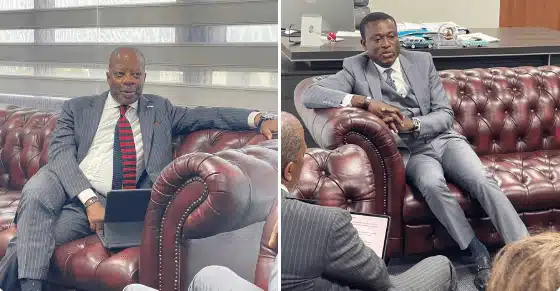
The Office of the Special Prosecutor(OSP) has received the United States’ Assistant Secretary for International Narcotics and Law Enforcement Affairs, Todd D. Robinson.
He arrived in Ghana on Tuesday, May 9.
He had a series of discussions with Special Prosecutor Kissi Agyebengat the office of the Special Prosecutor in Accra.
The discussions centred on cooperation and shared commitment on detecting and deterring corruption.
Assistant Secretary for International Narcotics and Law Enforcement Affairs of the US, Todd D. Robinson, has paid a working visit to the OSP.

Discussions with the SP, Kissi Agyebeng, centred on cooperation and shared commitment on detecting and deterring corruption. pic.twitter.com/hZdgOYevYS

— Office of the Special Prosecutor-Ghana (@ospghana) May 9, 2023
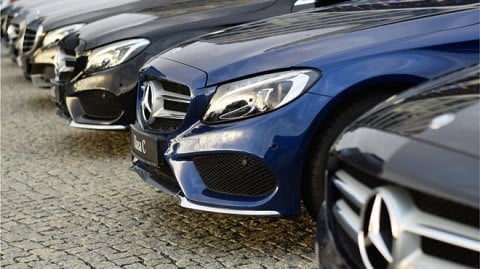
The Federal Bureau of Investigation (FBI), a domestic intelligence and security department of the United States of America (USA), has been able to trace a modern Maserati that was snatched at gunpoint and had its owner fatally shot in the US to Ghana, The New Publisher can disclose.
The FBI were able to locate the vehicle shipped on their blind sight before it was cleared from the Tema Ports.
The FBI reportedly flew to Ghana even before the car arrived at the country’s ports. This was to allow them to obtain finger prints and other crucial clues to identify those responsible for the victim’s murder and the theft of his car.
According to insiders, the FBI flew to Ghana before the car arrived at the country’s ports in order to take finger prints and other crucial leads to identify those responsible for the victim’s murder and the theft of his car.
Security agents in Ghana towed the car from the ports of entry and collaborated with the FBI to unravel the case.
Since completing their initial investigations, FBI agents have left the country to further investigate the matter.
It is said that the vehicle was put in a container with some other luxurious vehicles that made way to the Tema Port.
Sources told The New Publisher for weeks since it was taken by the security agencies, no one has come forward to claim ownership with titles.
In a related story, the Economic and Organized Crime Office (EOCO) three weeks ago announced that some Ninety-Five(95) luxurious cars have been frozen by its Executive Director.
These cars which are in the possession of some individuals and car dealerships were supposed to be brought to the offices of EOCO no later than May 3, 2023.
Owners of these vehicles were expected to come along with the needed documents.
The statement from EOCO said if owners of the said vehicles do not report with them on the said date, it will take the needed steps to confiscate them in accordance with the law.
It would be recalled that in December last year, the Economic and Organized Crime Office (EOCO) in collaboration with the Royal Canadian Mounted Police and the FBI busted a vehicle stealing syndicate in Ghana.
A statement from EOCO said an Intelligence-led operation resulted in the retrieval of some luxury cars stolen from the United States of America and Canada.
During the operation, which took place on December 9, 2022, thirty-seven (37) of the cars were retrieved from garages in Accra.
Ten people were also arrested in the process. The suspects have since been questioned and granted bail.
The March 2023 Cocoa Market Report by the International Cocoa Organisation states that due to global changes, the cocoa industry has seen its second reversal in farmgate prices over the previous five mid-seasons.
The report shows that the farm-gate prices in US$ nominal terms have been higher in Ghana than in neighbouring Côte d’Ivoire over the past five mid-seasons. However, the situation was reversed during the mid-crops for 2021/22 and 2022/23 seasons – mainly due to substantial depreciation of the cedi (GH¢) vis-à-vis the US dollar.
For the 2022/23 mid-crop, the Ivorian and Ghanaian regulators have left unchanged the fixed farmgate price at 900 XOF per kg (US$1,507 per tonne) and GH¢12,800 per tonne (US$1,206 US per tonne) respectively.
The report further indicates that the reversal of farm-gate prices in Ghana’s cocoa industry is largely attributed to the global economic challenges which have affected Ghana’s currency. The depreciation of GH¢ vis-à-vis US$ is a result of several factors – including the COVID-19 pandemic, low commodity prices and the country’s debt burden.
Cedi’s worst run
The cedi wobbled after a wave of sovereign downgrades and speculations. The GH¢ endured a torrid 2022, ending the year as the fourth worst-performing currency globally and trading at a mid-rate of GH¢11.60 /US$ (YTD loss of 44.05%). The local unit suffered from a raft of sovereign downgrades that dimmed investor confidence. Fitch and Moody’s ratings downgraded Ghana into negative outlook territory at the start of 2022, leading to a loss of access to the international capital market (ICM). The loss of access to the ICM posed some risks to international reserves and the country’s ability to meet external financing obligations.
The cedi endured its worst run of form yet, as it depreciated 33.22 percent from Sep-22 to Nov-22 to emerge as the worst-performing currency globally. During this period, the GH¢ was quoted at 15/US$1 on the forex market as speculative attacks severely weakened the local unit. However, the local unit gained 27.16 percent to end Dec-22; primarily due to positive sentiments from an IMF staff-level agreement, reduced speculative attacks and softened stance of the US Fed.
Despite the challenges faced by Ghana’s cocoa industry, the country has made significant strides in boosting its cocoa production over recent years. Several initiatives have been implemented to support the industry, including the Cocoa Farmers Pension Scheme, the Cocoa Rehabilitation Programme, and the Cocoa Disease and Pest Control Programme.
Ghana surpasses Ivory Coast in cocoa production
Ghana has surpassed Ivory Coast in cocoa production over the half-year 2022/23 crop season, according to the ICCO report. As of 31 March 2023, cumulative arrivals of cocoa beans in Ivory Coast were lagging behind previous season levels, while the volumes of graded and sealed cocoa beans purchased in Ghana since start of the 2022/23 season was reported at 566,846 tonnes; representing an 18 percent increase from the previous year.
Despite an increase in the country’s cocoa production, total supply of cocoa beans from the top-two world cocoa producers for the first half of 2022/23 is estimated at 2,345,846 tonnes, slightly down by 0.2 percent compared to the previous season.
The ICCO report states that the year-on-year reduction of 89,000 tonnes in Ivory Coast’s cumulative ports’ arrival of cocoa beans over the first half of the 2022/23 cocoa year, combined with the increase of 85,360 tonnes over the same period in Ghanaian purchases of graded and sealed cocoa beans, results in a slightly negative net effect.
The report also stated that the current state of play is subject to change as the mid-crop progresses. However, the current situation shows that Ghana has overtaken Ivory Coast in cocoa production; a significant development in the global cocoa market.
The domestic cocoa industry is facing significant challenges due to global developments, including depreciation of the GH¢ vis-à-vis the US$. However, the Regulator remains committed to supporting its cocoa farmers and improving the industry’s performance through various initiatives.
The reversal of farmgate prices in the past five mid-seasons is a concern, but Ghana’s cocoa industry is expected to bounce back with the right support.
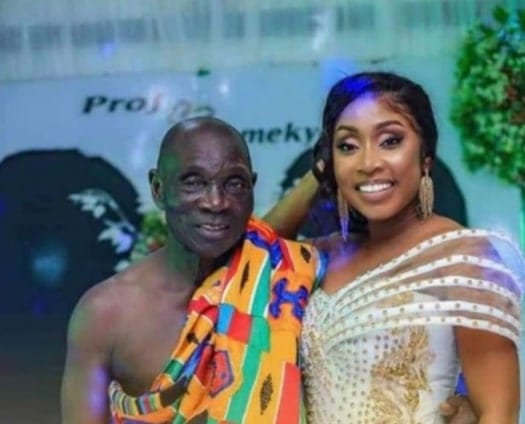
Former Education Minister, Professor Dominic Fobih, has denied claims that he has recently married for the ninth time.
Videos of the colourful marriage ceremony of the 80-year old former Member of Parliament for Assin South went viral on social media over the weekend.
What got tongues wagging was the claim that the young and beautiful wife of the Octogenarian was 27-year-old and the fact that it was the politician’s 9th union.
A video clip from the occasion captured the good old Professor in a kente cloth excited and dancing with his new wife who wore a white and gold beaded-laced corset gown.
The two danced to Dada KD’s love song ‘Fatia Fata Nkrumah’ amid cheers from the audience as the old man was holding his wife’s waist, while the woman had her hands on his shoulders.
But reacting to the claims about his marriage in an exclusive interview on Morning Starr on Starr FM Tuesday, Prof. Fobih stated that the report about his latest marriage is borne out of ignorance as it contains lies which has misled the public.
“I don’t have nine wives, I have one wife, I just got married. I didn’t have a wife before so I’ve just got married. Who inGhana has nine wives. If anybody is commenting on nine wives the person has been misled. Those who are commenting are commenting on what they’ve read and that is borne out of ignorance.”
The former Cabinet Minister also dismissed claims that his young wife is 27-years-old and disclosed that “She’s 31 years now and a Medical Personnel.”
He described himself as a strong-willed person who knows what is best for him.
“I’m a very strong willed person and I’m always convinced about what I decide to do and is best for me. I know why I’m doing this and so they can tell all sort of things. I didn’t marry for anybody, I married for myself,” Prof. Fobih added.
Born on July 16, 1942, Dominic Fobih was a legislator from January 2001 to January 2017 on the ticket of the New Patriotic Party. He was also the Minister of Lands, Forestry. and Mines during Ex-President John Agyekum Kufour’s administration.
On Friday, May 12, 2023, government will borrow $3.33 billion from the Treasury Market to partially refinance maturities totaling $2.31 billion.
The media understands that part of the ¢3.33 billion will be used to settle coupon payments of the pension bondholders.
The amount which will be the biggest so far this year will be issued via the 91-day, 182-day and 364-day Treasury bills.
Analysts perceive investors bidding higher yields on liquidity squeeze, as inflation data for April 2023 is expected to be release on May 10, 2023.
But the $750 million loans approved by the Parliament of Ghana last week may help slow down the rise in money market yields.
However, the cost of borrowing remains a concern to many analysts and market watchers.
The T-bill auction on Friday, May 5, 2023, was oversubscribed, as the treasury raised ¢2.57 billion, exceeding the gross target by 40.01%.
According to the auction by the Bank of Ghana, the government accepted a significant ¢2.56 billion from the bids submitted by the investors, largely the banks.
Yet again, majority of the bids came from the 91-day T-bills as ¢1.62 billion were tendered. All the bids were consequently accepted.
Also, almost all the ¢380.75 million of bids submitted for the 182-days T-bills were accepted.
The founding president of the Association of Ghana Industries, Prince Kofi Kludjeson say Ghana can leverage on an estimated US$6 billion revenue in the galamsey sector which was revealed in Professor Frimpong-Boateng report.
Professor Frimpong-Boateng’s investigation on galamsey revealing the roughly billion in assets that Ghana can use.
Mr Kludjeson, who is one of the pioneers of Ghana’s telecom industry and one of the main brains behind the creation of the Ghana Stock Exchange, told Korku Lumor on the Class Morning Show on Monday, 8 May 2023, that: “If you take Ghana today, the biggest headache we are having today is looking for US$3 billion dollars and you’ll never get it until you have a button on an equity”.
The founder of the Ghana Chamber of Telecommunication noted: “If you look at Frimpong-Boateng’s report, if I were the government and all those who are fighting him, [they] should look closer at the report, [and] will see the answers there”.
“The answer is that so-called galamsey or illegal mining has about US$6 billion floating out there, ‘go and pick it’. That was in the report. ‘And I’m telling them, as a doctor, or as a surgeon, I’ve seen these lapses, so, let’s focus and go and solve the problem so that the gold that is not owned by AshantiGold and all that, we are Ghanaian-owned, not bounded by equity, let’s go and find a way to optimise it and transform it into money’”.
“These are my understandings as a businessman. That is the positive thing that the Frimpong-Boateng report has put out there”, Mr Kludjeson said.
The 37-page leaked report on galamsey authored by Prof Frimpong-Boateng, who once chaired the Inter-Ministerial Committee on Illegal Mining while he was the minister of environment, science, technology and innovation, named some top government officials, including people at the presidency, for supporting and engaging in galamsey.
In the report, the world-renowned heart surgeon said: “Throughout our struggle with illegalities in the small-scale mining sector, what baffled me was the total disregard of the president’s commitment to protect the environment”.
“I can state without any equivocation that many party officials from the national to the unit committee level had their friends, PAs, agents, relatives, financiers or relatives engaged in illegal mining”, parts of Prof Frimpong-Boateng’s report read.
Reacting to the allegations in a statement, the office of the president indicated that the report was not an official document delivered submitted to the presidency.
It described it as a catalogue of personal grievances by Prof. Frimpong-Boateng, intended to respond to some issues he faced as Chairperson of the IMCIM.
The statement explained that the document was handed to the chief of staff at the office of the president on 19 March 2021, at an informal meeting, where Prof Frimpong-Boateng complained about public attacks and criticisms made about his tenure as chairperson of the IMCIM.
“This was after Prof. Frimpong-Boateng’s tenure as Minister had not been renewed by the president of the Republic in his second term. The document did not have a transmittal or cover letter nor, indeed, an addressee, such as to suggest that it was submitted to the chief of staff for action. It is noteworthy that the IMCIM was a creature of cabinet, and any formal report on its activities would, normally, be submitted to cabinet through the cabinet secretary, or directly to the president of the Republic as chairperson of cabinet. Till date, Prof. Frimpong-Boateng has done neither,” the statement said.
It added that while Prof. Frimpong-Boateng makes serious allegations against some government appointees, as having been involved in, supporting or interfering with the fight against illegal mining, not a single piece of evidence was adduced or presented to enable the claims to be properly investigated.
The office of the president described the allegations contained in the document as hearsay.
According to the statement, since Prof. Frimpong-Boateng’s meeting with the chief of staff in March 2021, he has taken no step nor acted in furtherance of the matters contained in his report.
The statement assured the public that the president’s commitment to fighting illegal mining is unassailable, and the office of the president welcomes any information on illegal mining activities which provides a credible basis for investigations to be conducted by the Criminal Investigations Department of the Ghana Police Service.
South Tamale Former minority leader and MP Haruna Iddrisu has endorsed former president John Dramani Mahama’s bid to lead the National Democratic Congress (NDC) as its flagbearer.
Haruna was joined by a number of MPs from across the Northern Region at a campaign stop for John Mahama on May 8, 2023.
Haruna stressed that it was time for Mahama to return to the presidency with the focus on saving the country and the economy as well as save jobs and inspire young Ghanaians.
“It is John Mahama’s time, his time to lead the NDC, his time to lead and save this country and save the economy of Ghana and save jobs and inspire hopes in the youth of our country.
“It is the time for John Mahama to rescue Ghana and rescue the Ghanaian economy,” Haruna Iddrisu emphasized to rapturous aplause.
The NDC enters homestretch for campaigns towards its May 13 presidential and parliamentary primaries expected to take place nationwide.
The presidential primary will pitch Mahama against former finance minister Kwabena Duffuor and former Kumasi mayor Kojo Bonsu. The former president is, however, expected to win the race by a large margin.
Delivering remarks at the Tamale South rally, Mahama reiterated that party faithful will be catered for when the NDC returns to power.
He has made that point and the issue of decentralizing their campaigns and policing of the 2024 polls a keen plank of his campaigns across the 14 regions as he prepares to cover the remaining two regions in the coming days.
“We are also going to reward you and so any branch that gets the target votes that we are going to give, all the nine-member executives, we are going to give you a very handsome reward so that we can work hard.
“If we are hiring school feeding caterers, our women organizers too know how to cook, we will come and take our women organisers and you also go and cook for the primary school children and make some money for yourselves and so you are going to get your fair share of everything the country has to offer,” John Dramani Mahama said.
A private legal practitioner, Kofi Bentil, has said that it is illegal for police to confiscate a vehicle over the driver’s inability to provide the original driving license at the time.
Speaking to the media he said “carrying a photocopy of a drivers license is entirely lawful as a prima facie proof of the existence of that license. The Police can request that the original be produced in 24hours without impounding the car”.
“The law in Ghana does not allow you to impound cars because the driver doesn’t have his or her license with them. the car is not evidence in that context!! there is no probable cause or justification for impounding the vehicle,” he added.
Mr Bentil indicated that the law in Ghana allows the driver to produce the license in 24 hours.
“You don’t have any right to amend that on your whims,” he told the Police.
Some police officers have been reported to have impounded vehicles that the drivers did not have the original copies of the lives on them.
But Mr Bentil who is also Vice President of Imani Africa said in a Facebook post that “If you continue infringing peoples rights like these, one of these days someone will sue the Ghana Police for impounding their vehicle without probable cause and take damages for distress and loss of use from the Police (Not DVLA).”
Beos is his full statement…
Dear GHANA POLICE / DVLA
The LAW in Ghana DOES NOT ALLOW YOU TO IMPOUND CARS BECAUSE THE DRIVER DOES NOT HAVE A LICENSE ON HIM!! the car is NOT Evidence in that context!! there is no probable cause or justification for impounding the vehicle.
The law in Ghana allows the driver to produce their license in 24 hours. You dont have any right to amend that on your whims.
Carrying a photocopy of a drivers license is entirely lawful as a prima facie proof of the existence of that license. The Police can request that the original be produced in 24hours WITHOUT IMPOUNDING THE CAR.
If you continue infringing peoples rights like these, one of these days someone will sue the Ghana Police for impounding their vehicle without probable cause and take damages for distress and loss of use from the Police (Not DVLA).
YOU HAVE TO HAVE THE SYSTEM (AND I BELIEVE YOU DO) TO TAKE THE PERSONS PARTICULARS AND REQUEST THEM TO REPORT AT A POLICE STATION WITH THE NECESSARY PAPERS FAILING WHICH YOU CAN CAUSE THEIR ARREST.
On Wednesday, May 4, 2023, Dr Yaw Twerefour was appointed as Registrar and Chief Executive Officer (CEO) of the Mortuaries and Funeral Facilities Agency by President Akufo-Addo.
Despite the agency being in existence for over a decade, the appointment of Dr Twerefuor brought into discussion especially on social media the role and relevance of the state-owned institution.
Mandate and service
MoFFA was established on December 31, 2011 through an Act of Parliament, the HealthInstitutions and Facilities Act 2011 (Act 829), to license, regulate and monitor facilities related to the storage, transportation and disposal of human remains.
The Act further specifies the mandate of the institution to include the oversight responsibility on facilities into the storage, transportation and disposal of the body of a still born child and any part of the body removed in the course of surgical operation
Vision and Mission
Being a subsidiary of the Ministry of Health, MoFFA by its mission seeks to “protect public health incidences in the funeral and death care industry through a process of impartial enforcement, inspection, licensing and education in order to guarantee that services provided by all agents in the sector are conducted professionally and ethically.”
The vision of the agency is to become the “best one stop agency for the regulation of funeral facilities in the interest of public health in Ghana.”
Scope of regulatory mandate
MoFFA declares as offence contrary to its mandate the: Practice of operating a transportation, storage or disposal of human remains facility without registration as a practitioner except a licenced pathologist; Usage of a facility for services other than what is licensed for; failure to license a facility and making a false declaration in an application for registration or for a licence; failure to renew the registration or licence to operate a facility.
Others include: the obstruction of an inspector; pollution of the environment in the course of operations under Act 829; acceptance, release or disposal of human remains in contravention of the provision of the Regulations; burial of human remains in a place other than an authorized burial ground; as well as the exhumation or after burial, removal of any human remains without authority.
Ghana andFrance have reached an agreement to boost the country’s health sector.
Under the agreement, additional support will be offered to the country for scientific research into the most appropriate way to implement secondary prevention of cervical cancer among women living with HIV.
The €2.8 million grant, which was made possible through Expertise France to the Ghana Health Service (GHS) and the Noguchi Memorial Institute for Medical Research (NMIMR), will also support the country’s response against diseases such as malaria, tuberculosis and human immunodeficiency virus (HIV).
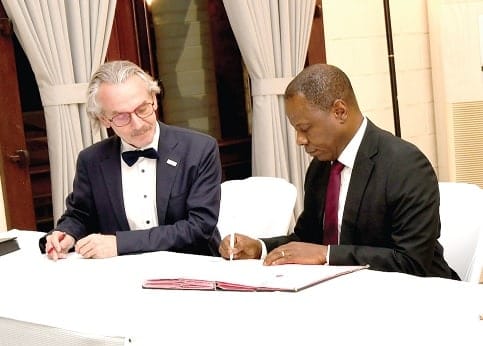
The agreement was signed between the two countries at the Residence of the France Ambassador to Ghana in Accra last Thursday.
The Director-General of the GHS,Dr Patrick Kuma-Aboagye, initialled on behalf of the beneficiaries, while the Head of Cooperation at the French Embassy in Ghana, Julien Lecas, signed for his country. Investment
Mr Lecas, who represented his ambassador, said Ghana had received support from the Global Fund for over 20 years, with significant investment on HIV, tuberculosis and malaria pandemics.
“And as you may know, France is a major donor to the Global Fund. This week, the team of L’Initiative from Expertise France is here in Accra, together with the Global Fund country team.
“It is our hope that this visit will trigger further development of L’Initiative’s portfolio in Ghana.
“We at the French Embassy in Ghana are very pleased to be able to officially launch the two programmes funded by L’Initiative to strengthen and evaluate the quality of health services by the GHS on one hand.
“And on the other hand, it is also aimed at supporting the secondary prevention of cervical cancer among women living with HIV through the NMIMR,” he said.
The Technical Director at Expertise France Groupe, Eric Fleutelot, said his outfit was pleased to support Ghana improve on its health care.
“And I know that we are already making progress”, however, more efforts were needed to reduce vertical transmission of HIV, he added. Community scorecard
Dr Kuma-Aboagye said the grant was offered through a community scorecard initiative by the GHS.
He said the initiative, which was introduced in 2018, was aimed at strengthening community participation in health care and also improving accountability in service delivery.
According to him, the grant would help extend the scorecard implemented to include HIV and tuberculosis.
An Associate Professor in charge of Medicine, Molecular, Microbiology and Virology at NMIMR, Prof. George Kyei, said there was the need for a national policy to integrate cervical cancer screening into routine HIV care.
In BBC’s series of letters from African journalists, it received one from Elizabeth Ohene who considered how the coronation of King Charles III would go if it were in Ghana, known as the Gold Coast when it was a British colony.
The first change would be in the king’s title.
Instead of King Charles, he would be Nana Charles, Nii Charles, Naa Charles or Togbega Charles – the terms for king or chief in different Ghanaian languages.
I will stick to Togbega Charles.
Royalty is not exactly a strange or unknown phenomenon to us here in Ghana.
We have lots of royal houses instead of the single royal house of the British. Our social and political setup before the advent of colonialism was very much based on royal houses being in charge.
Today, we have a constitution with the full panoply of institutions and officials: a parliament, a judiciary, a president and ministers.
And side-by-side with this republic are our kings, queens and chiefs.
Even though on paper they might not have much power, there are very few Ghanaians who would refuse to obey a call by the chief in their village.
There is certainly no talk here of abolishing the monarchy.
So, if the coronation of King Charles was taking place somewhere in Ghana, he would not have to worry about the possibility of being the last monarch.
Journalists would not be looking with extra interest at how or whether the prime ministers of Australia, Canada and New Zealand bow as an indication of the likelihood of those countries giving up the British monarch as their head of state.
Nor would the Caribbean leaders at the ceremony be scrutinised for signs of an impending declaration of republican status.
We in Ghana are quite comfortable with being both a republic, and having kings and queens.
We also know a lot about organising royal events, and we have great sympathy for the difficulties King Charles has had with drawing up the guest list for the ceremony.
It would be a full-scale nightmare here, but people would be accommodated.
In Ghana, there would be no story in a tabloid newspaper trying to rub it in that Miss Ohene had not got an invitation, as Togbega Charles and the organisers would go to great lengths to try and satisfy everybody.
It means invitations would continue to be sent out all the way until the morning of the event.
Half the people would not send an RSVP and therefore the organisers would not be certain of the numbers. Also it does not matter how boldly it is written on the invitation card that it is meant for the named person only, some people would bring a friend along.
An attempt will be made to squeeze maybe 2,000 people into a space that can only take 1,500 people.
As for King Charles’ coronation, a critical part of the preparations towards the big day would be centred on the clothes that would be worn – firstly by the king himself, then his elders, who play an important role in the events, and of course, the women – both those who are playing roles and those who are guests.
The kente cloth weavers would be extremely busy and so would our designers and tailors, for no-one would survive being seen in something worn by anyone else.
Every kente would have a name that tells a story.
Special cloths would be designed and printed with the photo of the king on it and we would all try to outdo each other with the most outlandish styles.
I know the British Crown has a legendary collection of jewellery, gathered from around the world, but on a coronation day here, that would be no match.
We would display enough gold to dazzle anyone and demonstrate that ours is indeed, the land of gold.
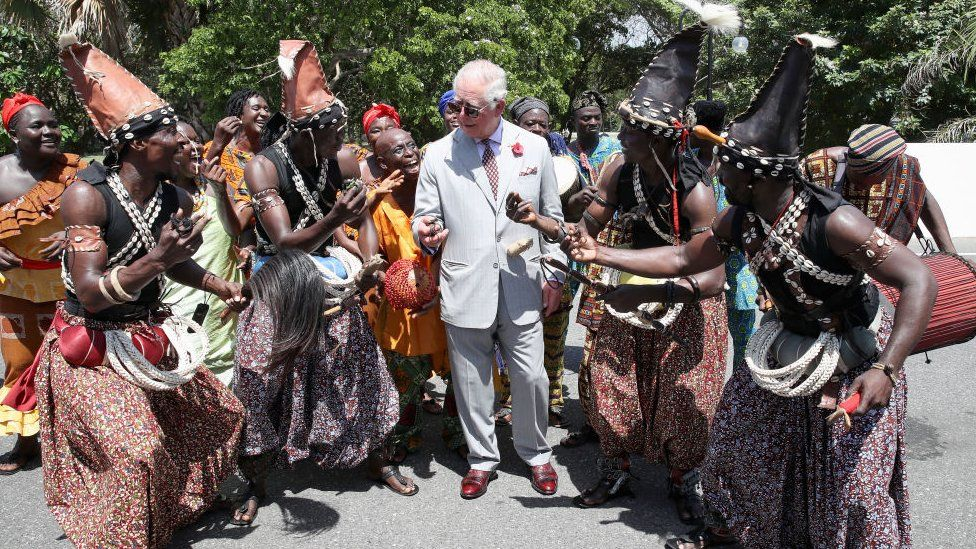
We would guarantee a riot of colours at the event. It will be noisy, very noisy, and there would be drums and drummers and drumming that would blow your mind.
If you are new to these parts, it would be helpful to have a local nearby to explain some of the dances to you because each one would be telling a story.
And please come well prepared, for the event would last much longer than advertised.
The ceremony in Westminster Abbey will be rolled out with military precision and exactly as planned and rehearsed.
In Ghana, part of the attraction is the organised chaos and the unknown factor.
The elders who are responsible for the ceremony prefer to keep the details secret and there are always some surprise elements. Everybody who attends the function will feel he has played a part in the proceedings.
I am not sure how Queen Camilla will take this bit, but once enthroned, the elders would offer a “throne wife” to Togbega Charles.
She is not meant to displace Queen Camilla and it is not obligatory that the new king takes her, but she will be offered.
It is part of the custom.
DISCLAIMER: Independentghana.com will not be liable for any inaccuracies contained in this article. The views expressed in the article are solely those of the author’s, and do not reflect those of The Independent Ghana
The International Monetary Fund (IMF) and the Government of Ghana cannot reach an agreement in the second quarter of 2023, according to Minority Leader Dr. Cassiel Ato Forson.
The Government was hopeful of securing the deal at the end of May following an engagement with bilateral and multilateral partners at the recent IMF and World Bank Spring meetings in America.
But Dr Forson said the earliest the government can secure the $3 billion deal with the Bretton Woods Institution will be in the third quarter.
“I can confirm to you that it is not going to happen by the end of May, it is not going to happen, I will urge our Minister responsible for Finance to be truthful to the people of Ghana and be candid enough to say that yes, the timelines that we have, we said A, B and C but we cannot make it. The earliest is beginning 3rd Quarter, July August, that is the earliest,” Dr Ato Forson said in an interview with TV3.
His comment comes after Deputy Finance Minister, John Kumah, assured Ghanaiana at a press briefing that discussions towards securing the fund have been fruitful and the government was waiting for a bailout to balance the economy.
Government has already renegotiated its domestic debt and is hopeful of securing the Paris Club financing assurances within the shortest possible time.
The country’s economy could grind at a halt if the deal is not secured soon but analysts believe the government is to blame for seeking a bailout from the IMF late.
Currently, Ghana has secured a staff-level agreement with the IMF since December last year and now asking lenders to provide financing assurances which is a condition for the IMF’s board to sign off the programme.
The Chinese government which Ghana owes has given an ndication that it is willing to help Ghana secure the balance of payments bailout from the Fund.
The Chinese government has said it has an obligation to ensure the Ghanaian economy does not collapse.
Females account for two-thirds of the unemployed in Ghana, according to the 2022 Annual Household Income and Expenditure Survey Third Quarter Labour Statistics Report, which was released on Wednesday, May 3, 2023.
The Government Statistician,Professor Samuel Kobina Annim, emphasized at the report launch that the high rates of female unemployment were not solely due to their gender.
He stated that the unemployment rate for females was almost double that of males. “Unemployment among females was close to twice of males,” he said.
In the first three quarters of last year, about 157,000 individuals, which accounted for roughly 13.2% of the labour force, experienced a spell of unemployment lasting one or more days.
Other findings
According to the report, around 7.5 million individuals held their jobs continuously for three quarters out of approximately 11 million employees in each quarter. This suggests that roughly 3.5 million individuals were experiencing employment fluctuations over the three quarters, indicating vulnerability.
67% of jobless Ghanaians are women
Another important discovery was that the likelihood of shifting from informal employment to unemployment is five times greater on average than transitioning from formal employment to unemployment.
In Q3, two out of every three individuals who were unemployed but had been employed in Q1 were in precarious employment during the first quarter.
Lastly, the group of people who are burdened by the triple threat of being unemployed, food insecure, and multidimensionally impoverished increased by almost 55,000 between Q2 and Q3.
Seventy-four Ghanaian who caught up in the conflict happening in Sudan have arrived at Kotoka International Airport.
On Tuesday, April 25, the Ministry of Foreign Affairs and Regional Integration successfully organised the safe transfer of 76 Ghanaians from the Republic of Sudan to Ethiopia. Following that, on Tuesday, May 2, 74 of them were evacuated to Ghana.
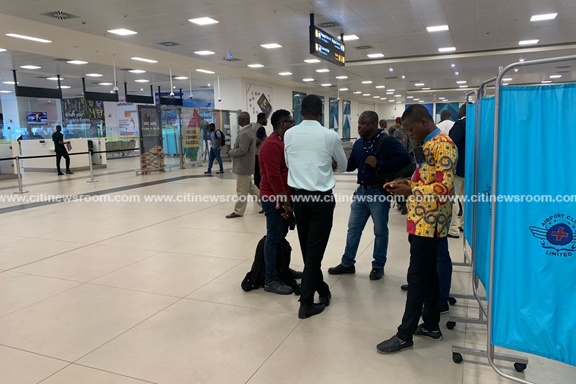
The airport’s Terminal 3 welcome lounge was a happy place for the individuals and their families.
The Deputy Foreign Affairs and Regional Integration Minister, Kwaku Ampratwum-Sarpong was also there to welcome the citizens.
Sudan has been gripped by a deadly conflict between the Sudanese Armed Forces and the paramilitary Rapid Support Forces, resulting in avoidable casualties in the past week which has forced many countries to evacuate their citizens from the country.
The governmentis making efforts to lessen the effect of the Domestic Debt Exchange Programme (DDEP) on the financial industry, this is according to President Akufo-Addo.
Speaking at the 2023 International Labour Day parade he stated that among other things the government has established the Ghana Financial Stability Fund as earlier announced as part of the process of ensuring the finance sector is aided amid the debt restructuring.
This fund he noted would provide, amongst others, solvency and liquidity support to eligible financial sector institutions, which may be affected by the Domestic Debt Exchange Programme.
“In addition, the Bank of Ghana and the regulators in the financial sector space have provided some regulatory reliefs to support affected institutions.
“In keeping with our common objective, the government, through the Financial Stability Council, will monitor continuously the impact of the Domestic Debt Exchange Programme on financial institutions to enable it to take remedial action, if and when necessary.”
President Akufo-Addo added that this would ensure that measures put in place to safeguard incomes, deposits, pensions, investor funds and assets are effective.
Meanwhile, he also assured organised labour of the protection of their pension funds as the government continues its debt restructuring programme aimed at securing an IMF deal.
President Akufo-Addo noted that his outfit is aware of the impact of the restructuring on workers and as such aimed to explore other beneficial options within debt sustainability limits with the cooperation of both Government and Organised Labour.
He said that “In undertaking the Domestic Debt Exchange Programme, we have been very mindful of its potential impact on the pension funds of workers.
“We will not act in any way to short-change workers in protecting their pensions.”
After a decade-long absence from Ghanaian screens, Kumawood actress Rose Mensah, also known as Kyeiwaa, has announced her return to Ghana.
The actress has been seeking greener pastures abroad, but now says she is back home to engage in other possible works.
Akua Atta, who gained fame for her role in the popular movie ‘Kyeiwaa,’ spoke about her struggles abroad in an interview on her YouTube channel, including doing menial jobs such as dishwashing and selling food at an eatery to make ends meet.
“It is difficult getting white-collar jobs to do in the States, hence the menial jobs are easy to come by. There is no shame in working in a restaurant and washing dishes as I did. I was fortunate to get help from a woman who asked me to come work at her restaurant, and I’m grateful for her,” she said.
Despite her challenges abroad, Kyeiwaa is open to any possible movie roles should any producer want her service. She also offered advice on how to revive the movie industry’s former glory, stating that industry players and stakeholders should come together as one, support each other, and help restore the craft.
Recall that the Kumawood actress relocated to the U.S. after an abortive wedding with Daniel Osei in 2015 which caused her heartbreak.
The plan was to have a church wedding later on, but shortly after the marriage, Kyeiwaa discovered that Osei was already married to another woman and had children with her. Devastated by the news, Kyeiwaa ended the marriage just four days after the ceremony.
She found love again and tied the knot in a traditional ceremony in 2020 with Mr Michael Kissi Asare in a private ceremony attended by close family relations and friends in 2020.
The return of Kyeiwaa is a welcome development for the Ghanaian movie industry, which has seen a decline in recent years.
Rex Omar, a well-known highlife musician, has criticized theAkufo-Addo-led government for what he claims is their inability to support Ghana’s creative arts sector.
Speaking to Nana Romeo on Accra FM, the veteran highlife singer explained that, across all the various sectors of the creative arts industry in Ghana, the government has failed to initiate any substantive policy nor has the government invested much in the creative arts industry. He added that, unfortunately, the government has failed to heed the cry for investment in the creative arts industry.
He explained, “When you talk about music, films, fashion and all these things, we have done zero as a state and for a country that says we want to create jobs for the youth, an investment in the industry would have sufficed such a purpose, but we have failed.”
Rex Omar called on the government to consider the benefits Ghana derives from its social initiative, “The Year of Return” and the milage it has given Ghana to invest more in the creative arts industry.
He said, “The government should look at only the ‘Year of Return’ campaign and how it has given Ghana exposure internationally, so you can imagine the gains we would make as a country if we have developed infrastructures and put other policies in place to ensure the growth of the creative arts industry.”
Slim Buster, a singer from Ghana, has accused influential people in the country’s music industry of impeding the careers of other artists.
Speaking in an interview with GH Page on April 23, 2023, he identified Fred Nuamah, Kwasi Aboagye, Abeiku Santana, and others as people who have created enemies with artists and facilitated their downfall, adding that he, along with other musicians like EL, were victims of these industry influencers whom he called “secret enemies.”
According to Slim Buster, these individuals use their power and influence to block the success of up-and-coming musicians.
He claimed that Kwasi Aboagye and Abeiku Santana among others demand payment from artists in exchange for playing their music on radio, and if an artist refuses to pay, they instigate other DJs to block their music.
“I am telling you, the house I built is through music and a lot of things that I did was through music. But the problem is, in Ghana when you are growing up in music, you tend to meet your enemies, that is why I told you that people fall back because we meet our enemies on the way.
“And I can mention names of the people who blocked the chances, one has to do with the Ghana Music Awards…fortunately and unfortunately, we had somebody like Fred Nuamah who is another bad actor, a bad human being who collapsed the industry.
“We have people like Fred Nuamah, we have people like Kwasi Aboagye, who will tell you that they won’t play your music if you don’t pay them…these are the people that blocked a lot of musicians, and I am saying this confidently because I don’t hate anybody and they don’t invest anything.
Slim Buster expressed frustration that Ghanaian musicians often have to invest significant amount of money in their careers, only to be held back by these influential figures. He believes that their actions are holding back the Ghana music industryfrom reaching its full potential.
The musician emphasized that he does not hate anyone and that his claims were based on personal experiences.
“You come to Ghana, invest a lot of money, and meet these people who become your secret enemies. And one thing is that when you get an issue with him, he will call all other DJs and ensure they block you. They did it to me and not me alone, they did it to Nana Kwame, they did it to EL. The problem is when you invest money and have people like these presenters, who want to become stars…the Abeiku Santana’s and co, then there is a problem…that is why our music doesn’t go far,” he added.
This year, YANGO Transport Services will serve as the official ride-hailing company for the Vodafone Ghana Music Awards (VGMA).
The partnership does not benefit only Yango and VGMAbut also the general community of riders especially music lovers.
Well known for its affordable prices, safe travels and service quality, Yango intends to give more to riders during this year’s VGMA season.
The benefits include a discount to and from the Grand Arena of the Accra International Conference Centre during the main VGMA night on May 6, luxury shuttle services for celebrities and special guests of the VGMA and give-aways of up to 50 tickets to its loyal patrons to experience this year’s event.
According to Yango Country Manager for Ghana, Tom Ofonime, in every market of its presence, Yango is looking to engage with the activities that matter.
“For us, partnering with Ghana Music Awards means supporting the spirit of the youth and the artistes who are most relevant. Just recently, it has been revealed that one of the things that people cherish most about their experience in Yango is good music during rides. Yango will help you get wherever you need to go with grace, style and good music.”
Speaking on the partnership, Head of Public Events & Communications of Charterhouse, organisers of music awards, Robert Klah said, “a great VGMA experience starts with the ride that brings you to the grounds. While we are keen on providing you an unforgettable 24th VGMA, we also care about how you get to your destination safely when the programme is over. That is where Yango comes it. We are happy for such partnerships.”
Since its launch in 2019, Yango has experienced strong growth in Ghana. For people of the country, the Yango brand has already become synonymous with fast, comfortable and safe travel.
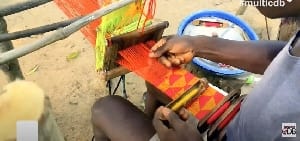
With a history that dates back several centuries, Kenteis one of Ghana’s most popular cultural goods.
Over the years, the craft has seen many evolutions but the good thing is that, Ghana’s Kente, has not lost its authenticity and value, thanks to the painstaking efforts of talented and hardworking weavers like Dakudzi Yohanes.
The 22-year old young man, earns his living from weaving kente in Ziavi, a small community in the Volta Region where he plies his trade.
In an interview, the skilled weaver disclosed that he got into the Kente business in 2015, learning the art from his big brother in Kpetoe, a town in the Agortime Ziope District, also in the Volta Region of Ghana, and has not looked back since.
Kente, although historically originating from Bonwire, a village in the Ashanti Region, has spread to many parts of the country, with each ethnic group having their own unique designs and names for their fabrics.
On what he does before commencing any weaving, the talented weaver stressed that it was important for a weaver to set up his weaving machine properly with the yarns carefully worked on one after the other.
He admitted though, that not all kente weavers adhere to this “rule”, which he said was fundamental to the success of the project; but went on to reiterate its importance saying it ensures orderliness in one’s work.
He cited sitting for long hours as one of the major challenges every kente weaver faces. Also, one is likely to make a mistake with the yarns in the course of weaving because of how fast the weaving process is. When that happens, the weaver is expected to reverse the yarn and make amends before proceeding.
Yohanes also shared that the recent economic downturn across the country has affected the kente business too, resulting in the increment of raw materials for production which consequently affects the selling price; but expressed optimism that business would soon pick up to make it easier for interested buyers to patronise him.
The price of a female designed kente cloth, he said, was doubles the price of a male designed kente fabric.
On his customers and their preferred designs, he intimated that while some customers prefered to determine their design, others allowed him put together his own designs for them.
In a day, a kente weaver, he revealed, could weave a maximum of sic kente fabrics but in the case where the design is too cumbersome, it would be impossible to weave more than two kente fabrics.
The young kente weaver urged all interested individuals to venture into kente weaving because it is easy to weave, pays well, and is a craft that everyone, regardless of gender, could take on and succeed at.
Given the involvement of numerous parties, the Economist Intelligence Unit (EIU) projects that the International Monetary Fund board approval for Ghana would be postponed due to protracted external debt-restructuring negotiations.
The UK-based company predicted that Ghana would reach restructuring agreements on its public external debt during 2023–2024, involving both official and private creditors. This prediction was made in its 2023 Country Report on Ghana.
This will incorporate a mix of write-offs, maturity extensions, and interest rate decreases.
“We expect official creditors to agree to a deal in 2023, and this, combined with the domestic debt restructuring that has already been secured, should provide enough reassurance to reduce Ghana’s risk of debt distress and allow the IMF to approve the agreed programme”.
“However, there is a material risk that IMF board approval will be delayed owing to prolonged external debt-restructuring negotiations, given the involvement of multiple stakeholders in the process”, it cautioned.
Already, there had been mixed expectations of the IMF support programme by May 2023.
Ghana first requested an IMF extended credit facility (ECF) programme in early July 2022 against a backdrop of unsustainable debt levels, soaring debt-service costs, a severely weakened currency and large twin fiscal and current account deficits.
The local-currency debt swap that was announced by the government in early December 2022, and confirmation of plans to launch an external debt-restructuring programme, paved the way for the government to reach a staff-level agreement with the IMF for a three-year, $3 billion ECF arrangement on December 12, 2022.
Soon afterwards, in mid-December, the country announced the suspension of payments on most of its external debt, setting the stage for a restructuring process.
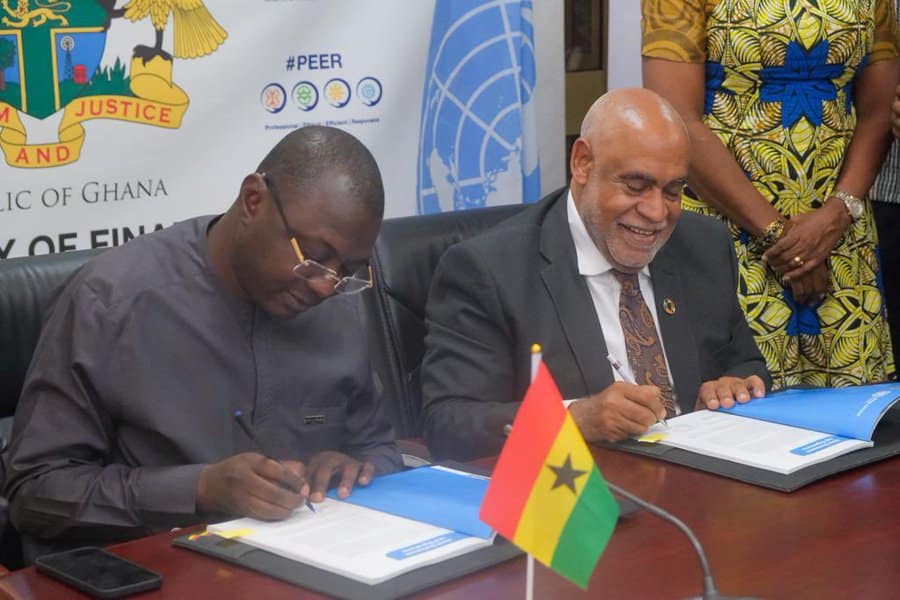
The United Nations Sustainable Development Cooperation Framework (UNSDCF) 2023–2025 has been ratified by both the Ghanaian government and the UN.
According to the Ministry of Finance, the agreement signed on April 28, will help Ghana achieve its plan for economic reform and resilience while also accelerating the achievement of the Sustainable Development Goals (SDGs).
The contract was signed on behalf of the Ghanaian government by Dr. Mohammed Amin Adam, Minister of State in the Finance Ministry.
The three-year, $517 million agreement between Ghana and the UN will enable institutions and individuals to develop the economy inclusively and provide everyone with equal access to fundamental social services.
The 3 year US$517m compact between Ghana and the UN will empower institutions and people towards an inclusive economic transformation, equitable access to basic social services and durable peace and security in Ghana and across the sub-region. pic.twitter.com/4cxhBIFTuR
— Ministry of Finance, Ghana (@MoF_Ghana) April 28, 2023
Additionally, it will strengthen the institutions’ ability to maintain long-term security and peace in Ghana and the surrounding region.
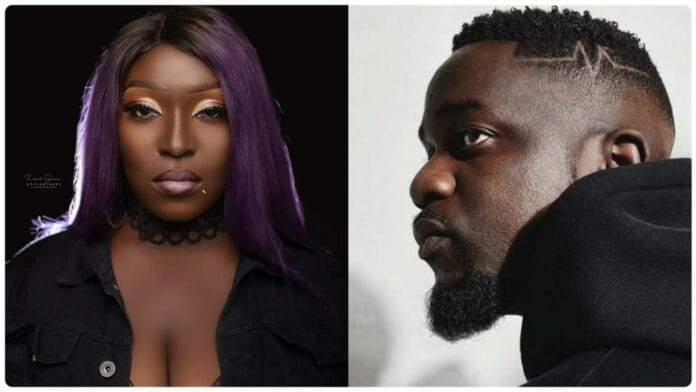
Sarkodie is not the landlord of Ghana rap, this is according to Ghanaian artist, Eno Barony.
According to her, there is no single person who owns or lords the Ghanaianrap industry.
The reason she believes that the ascription of the ‘landlord’ title to Sarkodie is a wrong move considering that other formidable rappers like herself are still around.
In her latest rap track, Eno Barony sent a daring message toSarkodieeven after quashing the Landlord’s title.
“We living on the land with no lords. No Man’s land, Nobody be landlord.”
Sarkodie has been locally hailed as the Landlord of Ghanana rap and to a large extent the one icon of the Ghanaian music industry.
In fact, Obidi is viewed as the most popular Ghanaian artist who has a wide international audience that his music appeals.
Therefore, many believe with his body of work, relevance, impact and how long he has been around, it is not far-fetched for Sarkodie to be seen and described as the Landlord of Ghana Music.
Eno Barony disagrees.
What, many think could settle this, is for Sarkodie and Eno Barony to lock horns in a musical rap beef to ascertain who’s who.
The Ghanaian afrobeats musician and composer arrived in Uganda this week, where he spoke with a number of prestigious media outlets, including NBS TV Uganda and NRG Radio Uganda, to talk about his career and love of music while also presenting some brand-new songs off his “A Life Time Is Not Enough” EP.
Processed with Lensa with Magic Correction & PT1 filter
Earlier, he was in Kenya, where he shared his forecast for the year with some of the industry’s bigwigs, including Soundcity Radio Kenya, Capital FM Kenya, and Pulse Kenya.
Later this month, Camidoh is anticipated in Tanzania to wrap up his media appearances and activations throughout East Africa.
Meanwhile, Camidoh has released a video for “Adoley,” the second track off his “A Lifetime Is Not Enough” EP.
Directed by Ghana’s finest director, REX, the clip comes with a touch of urban and indigenous Ghanaian and Nigerian street vibes, which in all gives it a global appeal.
A Life Time Is Not Enough arrived in January this year as the Ghana native’s official sophomore studio record after chalking up industry success with his 2020 Contingency Plan.
The new EP has six songs and features guest contributions from Ghanaian singer-songwriter Cina Soul.
Since its release, the project has earned positive reviews from industry executives, music writers, and critics and is currently enjoying massive airplay across the country.
The Ghana and Ajax midfielder, Mohammed Kudus, might sign with an English team during the summer transfer season.
The 22-year-old attacking midfielder has been linked with a move to Manchester United, with Arsenal also monitoring his progress.
Although no concrete move has been made, Kudus, who came close to joining Everton last summer, is expected to leave Ajax at the end of the season.
He will however come at a huge price for any club interested in his services with 12 months remaining on his contract.
Kudus has scored 18 goals and provided five assist across all competitions this season.
“It looks like an open situation for Mohammed Kudus, things could happen with him this summer,” transfer expert, Fabrizio Romano wrote in his column for CaughtOffisde.
“I’m not aware of anything concrete at this stage with Man United or Arsenal; but he always had the dream to play in Premier League so the situation will be one to watch in the summer.”
Kudus joined Ajax in the summer of 2020 from Danish club FC Nordsjaelland.
Former Captain Jamal Tanzua Seid, who served as Operation Vanguard‘s legal counsel, has said that the entire exercise was poorly planned.
According to him, the establishment of the taskforce lacked the required planning that would have engendered the kind of success that was envisaged.
Speaking in an interview on TV3’s Ghana Tonight on Thursday, April 27, ex-Captain Tanzua Seid explained that, “The operation itself was not well thought-through. The evidence is what has become of it. You would find out that the Commander-in-Chief of the Ghana Armed Forces would deliver a speech and on the basis of that speech, the joint taskforce is established and the mandate of the taskforce was to immediately stop illegal mining operations. That’s very vague. We already have regulatory institutions.”
Ex-Captain Seid stressed that the establishment of the taskforce was needless.
“We already have laws governing these operations. If they prove to be inadequate, you don’t need a knee jerk reaction to resolve that. In any case, are we looking at long term solutions or short-term solutions. We should also think about the implications of such operations on the tax payer. So, if all that was contemplated was to get into the field and uproot illegal mining, that obviously wasn’t going to solve the problem,” the former legal advisor to Operation Vanguard noted.
Operation Vanguard is a presidential initiative aimed at ending illegal mining activities otherwise referred to as ‘galamsey’ in the country.
Touching on the burning of excavators as part of the exercise, the former military officer explained that although there are laws on mining in Ghana, the burning of excavators was not explicitly covered by any such legislative framework.
According to him, the legal framework at the time did not support the burning of excavators, thus if persons whose excavators were burnt had taken on the government, they had the legal basis to do so.
“There has always been a constitution and we have always had mining laws, and these are clear on what is permissible and what is not permissible. So, I would say that there was a legal framework, but as to whether that framework supported the specific operation that was being mounted, I would say it was inadequate,” he said.
“Some equipment were burned in Tamale. I don’t know what the affected persons did, but they would be within their rights to seek appropriate remedies in terms of the violation of their property rights,” ex-Captain Seid added.
It would be recalled that Operation Vanguard, a Joint Military and Police Taskforce (JTF) of 400 personnel, comprising 200 military and 200 police personnel, was formed in July 2017 to deal with illegal mining activities.
This became necessary because the ‘galamsey’ menace was degrading the country’s forests and polluting the rivers and water bodies.
The taskforce was deployed to the most affected areas in the Eastern, Western and Ashanti regions.
In order to ensure that the results of the general election are accepted by all parties, Dr. Kojo Pumpuni Asante, Director of Advocacy and Policy Engagement, Centre for Democratic Development (CDD) – Ghana, has asked the Electoral Commission (EC) to foster trust among the political parties.
He said building trust in the electoral processes, extending the time frame for election, planning and increasing public access to key data results were necessary to improve the nation’s democratic governance.
Dr Asante gave the advice during a panel discussion on the 2022 Kenya and 2023 Nigeria general elections and the lessons for Ghana ahead of the 2024 General Election.
It was important for the EC to correct the growing negative perception about the institution, which was not good for the country’s democratic development, he advised.
Dr Asante referred to the numerous legal challenges faced by both the Kenyan and Nigerian electoral management bodies, saying it would be better for Ghana’s EC to ensure the timely conclusion of its legal reforms ahead of the general election.
He explained that whatever the EC needed to do should be done early and clarified so that the stakeholders would understand and appreciate their relevance.
Dr Asante also recommended the reforming of the process of appointment to the EC Board, saying that the current method did not make it transparent and inclusive.
Dr Bright Akwetey, Executive Director, Institute of Democratic Development, Ghana (IDEG), for his part, urged the EC to set a time frame and limit for political parties to campaign for general elections.
In bothKenya and Nigeria, he said, had their electoral management bodies regulating the periods and duration of political campaigns.
Ghana’s lack of such measures were not helping, he noted.
“We are told that in Kenya they do 50 days for election campaign and Nigeria does 150 days, but ours is limitless, which is not helping…. We have been pushing for a long time that we should have a campaign season and our parties should not only be about elections after elections,” he said.
He, therefore, urged the political parties not only to focus on election-related issues but innovate development-oriented policies to benefit the people.
Dr Edward Ampratwum, a representative of the United Nations Development Programme (UNDP), advised political parties to commit to dialogue, consensus building and resolving their differences with peaceful means.
They should also work with the people towards creating the desired future.
He said election was one of the major triggers of violence across the globe, having led to democratic reversals and unconstitutional changes in government, especially in Africa.
Mr Mulle Musau, Coordinator, Elections Observation Group, Kenya, stated that Ghana should have clear electoral laws, which must be adhered to by all the political parties -thus learning from both the Kenyan and Nigerian experiences.
He said the various components of the electoral processes, such as voter identification, registration and verification must be transparent and inclusive.
Ms Cynthia Mbamalu, Director of Programmes Yiaga Africa, Nigeria, emphasised that the EC should not create doubt about the electoral processes so that outcome of the elections would be accepted by all the parties.
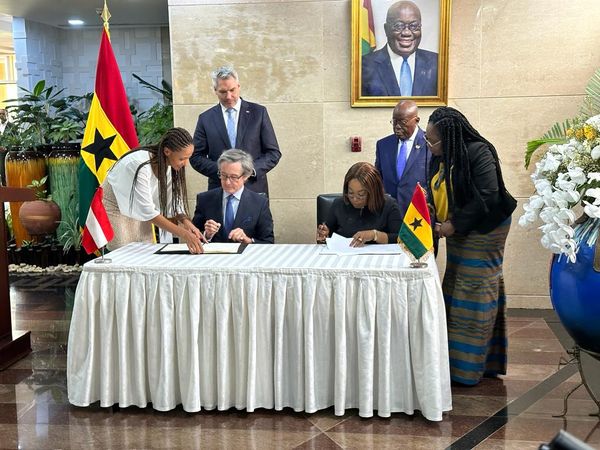
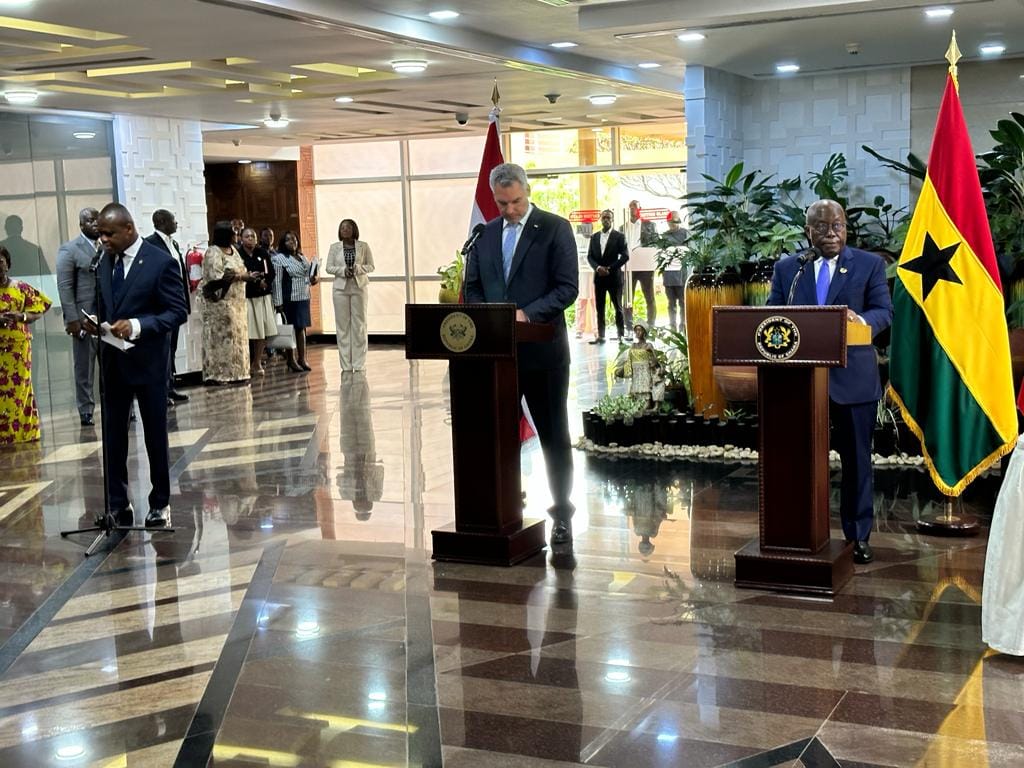
President Akufo-Addo and the Chancellor of the Federal Republic of Austria, Karl Nehammer have agreed on key areas of cooperation primary on strengthening existing bilateral ties between the two countries.
The two parties signed a Memorandum of Understanding ( MOU) on Political and Economic Consultations between the Ministry of Foreign Affairs and Regional Integration of the Republic of Ghana and the Federal Ministry of European and International Affairs of the Republic of Austria which was signed by Shirley Ayorkor Botchwey, Minister for Foreign Affairs and Regional Integration of Ghana, and Amb. Peter Launsky-Tieffentha, Secretary General of the Federal Ministry of European and International Affairs of Austria.
The other was an Agreement between the Government of the Republic of Ghana and the Government of the Federal Republic of Austria on Defence Cooperation which was initialed by Hon. Dominic Nitiwul (the Minister for Defence) for Ghana and Amb. Peter Launsky- Tieffentha for Austria.
This was upon the visit of the Austrian Chancellor to Ghana, the first of an Austrian Chancellor since bilateral ties begun between the two countries, today Wednesday, April 26, 2023 at the Jubilee House in Accra.
In his brief remarks after the bilateral talks, President Akufo-Addo disclosed that, “a major outcome of our meeting today, is the affirmation of our commitment to collaborate further on tackling emerging security threats within the region, particularly on issues of terrorism, border security and maritime barriers. We also have resolved to work together to promote democracy in the region, and reiterate and affirm our mutual stance against unconstitutional changes in government.”
Austrian Chancellor Nehammer and President Akufo-Addo
He stated that, “Ghana has also called on Austria to lend it’s support to the African Continent Free Trade Area, whose Secretariat is located in Accra. The AfCFTA intends to link fifty-four (54) markets, covering 1.3 billion people with the combined GDP of some 3 trillion United States Dollars.”
He added that, “by 2050, it will cover an estimated 2.5 billion people, and have over a quarter of the world’s working age population. Investment and business opportunities offered to the Austrian private sector, by the infrastructure, required to link these markets more effectively, are enormous.”
President Akufo-Addo stated further that, due to the fact that vulnerable countries suffer the most devastating effects of climate change, the two countries have also agreed to cooperate on increasing efforts to limit global emissions towards achieving the 1.5 degree Celsius goal whilst working together to push for the expeditious implementation of the process of UN Reforms, based on the Ezulwini Consensus and ensure that the matter of UN reform, be restored as a priority item to the global agenda.
“It is time to correct the longstanding injustice that the current structure and composition of the UN Security Council represent for the nations of Africa,” he added.
On the issue of migration, President Akufo-Addo bemoaned the high numbers of young people and added that, “Africans taking distressing risks across the Sahara and around the Mediterranean trying to reach a better life in Europe. Whilst we strive to provide the youth with the right environment in Africa, which will enable them enhance their skills, receive appropriate training and have access to digital technology and enhance economic opportunities.”
He revealed that, he Austrian Chancellor and his delegation have reiterated their determination to champion the need for humane treatment of illegal migrants as well as the protection of both their human rights in accordance with international law both in Austria and in the European space. Our discussions also centered on the threats of Russian invasion of Ukraine, coupled with the effects the COVID 19 pandemic are having across the world.
On the situation in Ukraine President Akufo-Addo, explained that, “the reason why Ghana led the fight for the liberation of the African continent from colonialism and imperialism and became of the five initiators of the historic Non-Aligned Movement is because of our history which has always been against great power domination of the affairs of the world.”
Therefore, he continued, “It is this same principle, that led us to vote in the United Nations General Assembly in favour of the motion condemning the Russian invasion of Ukraine and this is a position that we continue to hold. Great powers of whatever make, including friendly ones trampling on small nations is not something we will welcome and within our modest means, we will register our disapproval of that. “
According to Chancellor Nehammer, Austria will work towards setting up an embassy in Ghana to assist and further deepen and bi-lateral engagements.
The GH2.5 million allocated for this year’s activity, according to Benito Owusu-Bio, Chairman of the 2023 Green Ghana Project, is grossly insufficient.
In order to achieve its goal of planting 10 million trees, the government would need assistance from the private sector, according to Benito Owusu-Bio who spoke with CitiNews.
“As we speak, our approved budget by the Ministry of Finance for the Green Ghana this year is GH¢2.5 million. But we are not going to say we won’t do it, so we have started appealing for funds. Last year we got in excess of GH¢2 million so this year, we expect that with the pledges and commitments, we will get something to shore up.”
Launching this year’s Green Ghana Project, Lands and Natural Resources Minister, Samuel Abu Jinapor said several factors accounted for the government’s failure to meet last year’s target.
“On the maiden edition of the Green Ghana Day, we targeted 5 million trees and with your support, over 7 million trees were planted. Last year, we raised our ambition and targeted at least 20 million trees, and again, with your support, 24 million trees were planted, bringing the total number of trees planted to over 30 million trees.
“So far, the field assessment report shows that, on average, we had a 72 percent survival rate last year as compared to the 81 percent survival rate in 2021. While adequate measures were put in place to ensure the survival of all trees planted, a number of external factors accounted for the survival rates including rainfall patterns, wildfires, and soil fertility,” he added.
Celebrated on the theme, ‘Our Forests, Our Health,’ Mr Jinapor indicated the reduction in the number of trees to be planted in this year’s Green Ghana Day will help create ample time for the nurturing of the already planted trees to enhance the survival rate.
“The survival rate shows that we still have some 23 million trees to nurture. It is for this reason that this year, the government has decided to revise our target downwards to 10 million trees to give us some devoted resources and attention to the trees planted over the last two years while not wasting momentum on our quest to restore our degraded landscape.”
Fitch Ratings has downgraded Ghana’s Long-Term Local-Currency (LTLC) Issuer Default Rating (IDR) to ‘RD’ from ‘CCC’.
It has also downgraded to ‘CC’ from ‘CCC’ and subsequently withdrawn the issue ratings on five local-currency bonds issued prior to the domestic debt exchange.
It affirmed the issue rating of local-currency bonds issued on the completion date of the domestic debt exchange at ‘CCC.’
It attributed the rating action to missed payments on some of the local-currency bonds issued prior to the domestic debt exchange.
“The downgrade of Ghana’s LTLC IDR to ‘RD’ reflects the missed payments on some local-currency-denominated bonds that were not tendered or that are held by entities not eligible for participating in the domestic debt exchange”.
These five bonds are ISIN no. GHGGOG044744, GHGGOG066150, GHGGOG043563, GHGGOG065475, GHGGOG044751.
Uncertainty regarding clearing of missed payments
Following a meeting with representatives of individual bondholders and pension funds, the government announced having reached an agreement on a pathway towards the settlement of the outstanding debt obligations by April 28, 2023.
Fitch said it its view, this announcement does not clarify whether missed payments will be settled to all categories of holders of ‘old bonds’ or only to these two categories.
New Local-Currency bonds affirmed
Fitch affirmed the ‘CCC’ issue rating of local-currency bonds issued on the completion date of the domestic debt exchange programme (the “new bonds”) that was assigned on March 22, 2023.
The first coupon payments on the new bonds are due in August 2023.
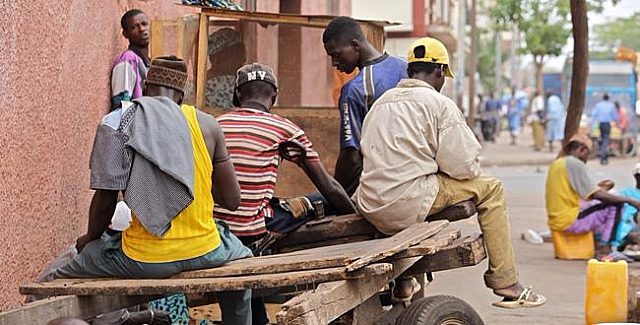
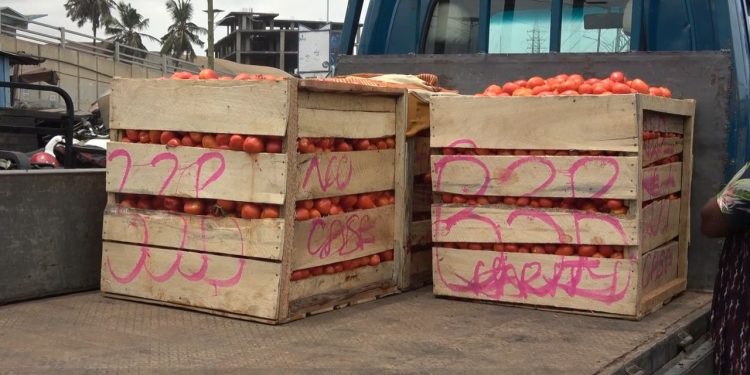
The National Tomato Transporters and Sellers Association has blamed the recent spike in tomato prices on the ongoing challenges in importing from Burkina Faso.
According to the Queen Mother of the Greater Accra Tomato Transporters and Sellers Association, Otumfuor Charity, Ghana relies heavily on imports to meet its demand for tomatoes, but recent disruptions to the supply chain from its northern neighbour have left retailers struggling to keep up with demand.
Speaking to Citi News, Otumfuor Charity explained, “There is indeed a shortage of tomatoes, but it is not intentional. In Ghana, from December to May, we do not harvest tomatoes. The tomatoes we consume are from Burkina Faso during this period. This year there have been ongoing conflicts in Burkina Faso, so entering the country has become increasingly difficult. Every year we go for tomatoes, but the prices don’t increase to this extent. This year has been different.”
She also lamented the increase in the price of the product.
“Right now, a crate of tomatoes goes for over 130,000 CFA. The high exchange rate is also not helping matters. You also need to pay for transportation, so if you borrowed money for your trade, you need to pay for the debt.”
Bintu Mohammed, a tomato import trader, explains the dangers she went through these past few days to bring tomato products into the country.
“It takes three days to harvest tomatoes and bring them into Ghana. When it gets here, some of the tomatoes start to rot. There are conflicts where we go to buy the tomatoes. It takes heart to travel and come back. We sometimes do not eat or drink water for the three days we travel. Human beings are beheaded before our eyes. They do not attack Ghanaians. If you show them your Ghana card, they will let you go. We do not understand the conflict. We are only there to buy tomatoes to come and sell here.”
According to the 2023International Monetary Fund(IMF) Regional Economic Outlook Report (Sub-Saharan Africa), Ghana’s net international reserves will complete the year 2023 with almost three weeks of import coverage (0.8 month).
Again, the report said Ghana’s reserves stood at a little above two weeks (0.6 month) of import cover in 2022.
This is contrary to the Bank of Ghana’s Summary of Economic and Financial Data that the country’s reserves in 2022 was estimated at 2.7 months of import cover.
The implication is if foreign inflows are to stop today, the country’s economy will be in severe trouble, as there are only few dollars in the reserves for balance of payment transactions.
This makes the IMF bailout ($3 billion loan) critical to the country’s economic stability going forward.
The report also said the country’s reserves is expected to grow to about 1.7 months of import cover in 2024. Ghana’s reserves almost empty; to end 2023 at nearly 3 weeks of import cover – IMF
In Sub-Saharan Africa, Zimbabwe (0.2 month), South Sudan (0.5 month) and Ethiopia (0.6 month) are the only countries expected to record import cover lower thanGhana.
Ghana’s reserves stood at $2.62bn – BoG
The Bank of Ghana in its March 2023 Summary of Economic and Financial Data said Ghana’s net international reserves improved slightly to $2.62 billion, about 2.8 months of import cover in February 2023.
Ghana is not on the schedule of meetings for the Board of the International Monetary Fund (IMF) for the rest of April 2023.
This comes after the government missed an initial March 2023 deadline to present Ghana’s $3 billion bailout programme to the IMF board announced by President Nana Addo Dankwa Akufo-Addo and the Minister for Finance Ken Ofori-Atta.
The schedule of meetings for the board, on the IMF website, shows that it will meet five countries including Moldova, Central African Republic, Nepal, Eswatini and Lao People’s Democratic Republic between April 26, 2023 and May 3, 2023.
The IMF, however, indicated that its schedule is subject to change and “the agenda for each meeting is typically finalized the day before the meeting”.
Ghana missing out on the IMF board’s meeting for April casts doubt as to whether Ghana will be getting the $3 billion bailout in mid-May as some proponents of the government have indicated.
This is because the IMF board might take weeks to approve Ghana’s bailout even if it receives the country’s programme in the first week of May 2023.
The Fund is expected to assess whether the country’s policies are consistent with debt sustainability when it receives the programme from the government of Ghana.
“This assessment is based on a Debt Sustainability Assessment (DSA) conducted jointly by the IMF and World Bank to determine whether the government is able to meet all its current and future payment obligations.
“It is a forward-looking exercise that needs to take into account the authorities’ policies. In the case of Ghana, the DSA document will be presented to the Board at the same time as the program request,” a statement on the IMF website read.
Meanwhile, the Minister for Finance, Ken Ofori-Atta has indicated that Ghana has met all the pre-conditions, hence government will get a programme with the IMF.
“What the IMF is looking forward to before it can go to its board for Ghana’s programme approval is the assurance from the Paris Club of Bilateral Creditors that that group is committed to extending the needed financing support,” Ofori-Atta said.
View the schedule of the IMF for the rest of April 2023 and the 1st Week in May below:
The surname of Dr. Kofi Abrefa Busia, who served as prime minister of Ghana from 1969 to 1972, has been scrutinized due to its true meaning or nomenclature, according to tales and occasionally what others have asserted to be facts.
While the actual meaning of the name Busia cannot be independently stated by GhanaWeb, some people believed the name was rather an abbreviation.
According to a report published by OnuaOnline.com, it is claimed that Busia was a name that was accorded to Ghana’s second prime minister by the colonial masters.
The details of the report have it that Nicholas Osei, popularly known as Prophet Kumchacha, founder and leader of Heaven’s Gate Ministries, claimed this during a radio interview.
He is said to have stated that he believes that Busia was the “truest brilliant scholar he has ever heard of,” while adding that even the composition of his name was an abbreviation.Interestingly, he claimed the name “BUSIA” is the acronym for “Best University Scholar in Africa.
“The claim, however, has been challenged by a scholar with close ties to the former prime minister.Actually, this scholar, Kofi Abrefa Busia, –a man named after Dr. Busia who teaches history and social studies at the Seventh Day Adventist at Bekwai, said that this assertion is wrong.
Dr. Kofi Busia stated that his father was a personal secretary to Prime Minister Busia in the 1960s and that the original name was Bosea (gravels), and not Busia as known now, the report added.”The name Busia is of a typical Wenchi origin.
The name was Bosea, which is gravel, meaning ‘many’.”He was called Bosea because he had charisma and could draw a lot of people around him wherever he goes. So just as gravels are many, he was associated with it considering the number of people he could garner within his circus wherever he would be found.
But it was adulterated by the white teachers during his (Dr. Busia’s) primaryeducation, and Bosea became Busia.”Modern scholars have tried to give another meaning to the name because of his wonderful academic performance, thus “Best University Scholar in Africa.”
The name came before the acronym,” he told OnuaOnline.He further explained the relationship his father had with Dr. Kofi Abrefa Busia and how he came to understand the true meaning of the name.”My father is from Wenchi.
He was a politician and personal secretary to Dr. Busia in the 1960s. So he named me after him. About 20 years ago, I went to Wenchi, the hometown of Dr Busia, and paid a courtesy call to the queen mother, where I got the opportunity to ask for the origin and the meaning of the name “Busia”, and she gave me that explanation,” the report added.
About Dr. Kofi Abrefa Busia:Kofi Abrefa Busia (July 11, 1913 – August 28, 1978) was a Ghanaian political leader and academic who was Prime Minister of Ghana from 1969 to 1972. As a nationalist leader and prime minister, he helped restore civilian government to the country following military rule.Busia was born a Bono prince in the traditional kingdom of Wenchi, in the then Brong Ahafo region of Ghana.
He was educated at Methodist School, Wenchi, Mfantsipim School, Cape Coast, and then at Wesley College, Kumasi, from 1931 to 1932. He taught at Wesley College and left to study at Achimota College in 1935 and taught there.
He gained his first degree with Honours in Medieval and Modern History from the University of London through correspondence during this period. He then went on to study at University College, Oxford, where he was the college’s first African student.He returned to the Gold Coast in 1942.
He took a BA (Hons) in Philosophy, Politics, and Economics (1941, MA 1946) and a DPhil in Social Anthropology in 1947 at Nuffield College, Oxford, with a thesis entitled “The position of the chief in the modern political system of Ashanti: a study of the influence of contemporary social changes on Ashanti political institutions”.
He was a Fulbright scholar in 1954.Busia served as a district commissioner from 1942 to 1949 and was appointed the first lecturer in African Studies. He became the first African to occupy a chair at the University College of the Gold Coast (now the University of Ghana). In 1951, he was elected by the Ashanti Confederacy to the Legislative Council.
In 1952, he was the leader of the Ghana Congress Party, which later merged with the other opposition parties to form the United Party (UP).As leader of the opposition against Kwame Nkrumah, he fled the country on the grounds that his life was under threat.
In 1959, Busia became a professor of sociology and culture of Africa at the University of Leiden near the Hague, Netherlands. From 1962 until 1969, he was a Fellow of St. Antony’s College, Oxford.
He returned to Ghana in March 1966, after Nkrumah’s government was overthrown by the military, to serve on the National Liberation Council (NLC) of General Joseph Ankrah, the military head of state, and was appointed as the Chairman of the National Advisory Committee of the NLC.
In 1967/68, Busia served as the Chairman of the Centre for Civic Education.He used this opportunity to promote himself as the next leader. He also was a Member of the Constitutional Review Committee. When the NLC lifted the ban on politics, Busia, together with Lawyer Sylvester Kofi Williams and friends in the defunct UP formed the Progress Party (PP).
In 1969, the PP won the parliamentary elections with 105 of the 140 seats. This paved the way for him to become the next Prime Minister. Busia continued with NLC’s anti-Nkrumaist stance and adopted a liberalised economic system.
There was a mass deportation of half a million Nigerian citizens from Ghana, and a 44 percent devaluation of the cedi in 1971, which met with a lot of resistance from the public.While he was in Britain for a medical check-up, the army under Colonel Ignatius Kutu Acheampong overthrew his government on January 13 1972.
Busia remained in exile in England and returned to Oxford University, where he died from a heart attack in August 1978.Busia’s name is associated with Ghana’s political right, along with J. B. Danquah and S. D. Dombo.
Ghana is not among a list of countries with the highest alcohol consumption rate on the African continent.
The drinking habits on the African continent may vary from country to country but it’s turning out to be that there are some shockers in the forerun as countries with high alcoholic consumption.
Attitudes towards alcohol consumption may differ in countries likewise religious beliefs about consuming alcohol may also differ but people take it as a source of relief. Alcohol intake has become probably the only source of relief for those out of work, the only source of relief from extreme poverty or joblessness in some cases, and people drink their problems away.
Reliable statistics on global alcohol consumption are hard to come by, but some institutions have tried to put some figures together it will surprise you with some of the leading counties in the world and Africa.
Even though Ghana has a huge range of alcoholic bitters and alcoholic drinks, which are very strong and very cheap, it seems the country is missing out on the bar of alcoholic standards.
alcohol.org is an organ that investigates the alcohol consumption levels of countries and ranks them. Even though some countries refute the statistics often given, it is evident that most of the government regulations to restrict the production, selling, and advertising of alcohol are not as effective as some governments assume them to be.
A majority of the top 10 alcohol-consuming countries are located in Europe but the continent of Africa is known to have some pretty heavy drinking cultures. The statistics vary each year. Surprisingly heavy alcohol-consuming countries like Cameroon, Nigeria, and Ghana didn’t make the cut in 2021. The statistics are measures based on the average citizen of the countries and not population hence without any further ado, below are the top 10 alcohol-consuming countries in Africa
10. Uganda- 26 liters per year
The use of alcohol in Uganda has been a course of content not only because of the high prevalence of it but also consumption amongst pregnant women patients, especially diabetics, and teenagers. Alcohol use during pregnancy is seen to be high which has been associated with several births and development disorders.
Besides pregnant women consuming alcohol, consumption is predicted to be the seventh leading cause of death in 2030 as alcohol consumption influences diabetes evolution.
According to the WHO, alcohol can interfere with self-care which is an important determinant of diabetes practices. Also in the wake of the COVID-19 pandemic, there has been an increase in domestic violence for which alcohol consumption is a risk factor. These aspects have not only cost Ugandans a lot in terms of socio-economic values but have placed them as the 10th alcohol-consuming nation in Africa in 2021.
9. Botswana- 26.2 liters per year
It goes without saying that alcohol has been a part of Botswana’s history for many years and decades and has been an important component of cultural festivals, weddings and all the traditional ceremonies with changing social organization, values, lifestyles, and much more and day-to-day rivalries, and other places activities multiplying over the years so have drinking activities, the number of drinkers and the amount of drinking.
This has made harmful drinking difficult to control, however, the government has demonstrated its commitment to addressing problems related to harmful alcohol consumption and has over the last decade put in place a number of policy and programmatic measures to control correlated harm.
The majority of the alcohol consumption in Botswana is beer with 56 % while 12% is from Juan, 11% is from the spirit and 21% is from all the local brews.
8. Libya -26.4 liters per year
All is usual talk in Libya that’s how it sells and how to sell it is the daily talks but Libyans are also unaware and unsure about what to do with another kind of highly-priced liquid in the country alcohol.
The consumption and sale of alcohol are illegal in Libya but it hasn’t stopped the oil-rich nation from topping the charts of the highest African consumers as it’s not only popular but is available on the black market.
Along with Mauritania and Sudan, Libya is one of only 3 Afghan countries that bans alcohol which has led to the popularization of another method of producing its home production. Alcohol in Libya is easy to find but only expensive given that it’s contraband another reason why the level of alcohol consumption is strange given the country is mostly Muslim but banned or not banned, tradition and religion or not Libyans are the eighth alcohol-consuming country in Africa 2021.
7. Zimbabwe- 27.2 liters per year
A study aimed at determining the drinking habit of Zimbabweans indicated that the overall prevalence of current drinking was 28.9% with a 95% confidence interval with 35.2% in women and 57.7% in men 40% of the current drinkers reported having at least one binge-drinking weekly.
The prevalence of current drinking increases with age and education among women and with income among men, no consistent partner was observed in binge drinking by education in both genders and by annual income among men but it was significantly less frequent among the more affluent women.
6. Lesotho-28.2 Litres per year
Though Lesotho’s total alcohol consumption filtrated substantially in recent years. It tended to decrease from 2000 to 2018 the period ended at 7.89 liters in 2018.
5. Algeria-29.1 liters per year
Coming heavily at number 5 is surprising another mostly Muslim majority nation. Algeria’s total alcohol consumption in Algeria in 2021 is estimated at 29.1 liters per year, taking a lead over countries like Turkey with 28..5 liters per year and Iran with 28.4 liters per year.
4. South Africa-29.9litres per year
Drinking 48% of beer, 18% of wine, and 17% from other alcohol sources. South Africa consumes almost 30 liters of alcohol per annum. Even though South Africa is the wine capital of the continent and one of the biggest wine producers. The majority of its alcohol consumption comes from beer.
3. Namibia-32.4 liters per year
Speaking of substances of abuse, Namibia is known to have a high prevalence of tobacco smoking and alcohol consumption. Alcohol consumption is very high as both sexes are highly invested in the habit. A study carried out among men and women aged between 15 and 64 years indicated that the prevalence of alcohol is 53.1%.
2. Eswatini-34.4 Litres per year
The effort made by the government of this small nation to curb alcohol consumption has been geared towards mitigating the effects of alcohol on the health of its citizens. Research shows that the notable prevalence of alcohol use on misuse among people living with HIV in Eswatini was higher amongst males, less educated, never married and those reported to have HIV stigma.
The former Minister of Environment, Science, Technology, and Innovation, Prof. Kwabena Frimpong Boateng, has been challenged by the Director of Operations at the Presidency, Lord Commey, to give proof of his involvement in an unlawful small-scale mining practice (galamsey).
According to Lord Commey, the allegation made by Prof. Frimpong Boateng that he (Commey) is involved in illegal small-scale mining should be ignored by Ghanaians.
In a statement copied to GhanaWeb, the director of operations at the presidency said that he has never been involved in galamsey, and has never used his position to protect someone in the menace.
“For purposes of setting the records straight, I wish to state without shred of doubt that I have never engaged in or supported illegal mining as contained in the said report. There is no point prior, during and after the appointment of the said Minister have I called, text or even assigned anyone to seek favour in respect of engaging in illegal mining to warrant his unsubstantiated allegations against me.
“I therefore challenge him to prove beyond reasonable doubts claims that I was either promoting or engaging in illegal mining or I would use available legal means to protect my hard-won reputation.
“Until proven otherwise, I would urge all to treat the claims of Professor Kwabena Frimpong Boateng with the contempt they deserve,” parts of the statement read.
Background
A former Minister of Environment, Science, Technology, and Innovation, Prof Kwabena Frimpong Boateng, named members of parliament and top government officials who are allegedly involved in illegal small-scale mining (galamsey) in Ghana.
Portions of a report on illegal small-scale mining (galamsey) in Ghana by Prof Frimpong Boateng, indicated that these MPs and government officials were either directly involved in galamsey or were using their power to protect relatives who were involved in the menace.
The 36-page report, which Prof Frimpong addressed to the Chief of Staff and the Ghana Police Service, according to myjoyonline.com, implicated the former MP for Manso Nkwanta, Joseph Albert Quarm; director of operations at the presidency, Laud Commey; executive assistant and head of social media at the presidency, Charles Nii Teiko; and Frank Asiedu Bekoe, director of political affairs at the Office of the Chief of Staff.
“He (the former NPP MP) used his position as a member of the Minerals Commission to acquire several dozens of large-scale concessions in his district, ostensibly for community mining purposes. He ended up selling these concessions to private individuals, including party members for GH¢2000 per concession.
“Throughout our struggle with illegalities in the small-scale mining sector, what baffled me was the total disregard of the president’s commitment to protecting the environment. I can state without any equivocation that many party officials from the national to the unit committee level had their friends, PAs, agents, relatives, financiers, or relatives engaged in illegal mining. Most of them engaged Chinese working for them.
“There are appointees in the Jubilee House that are doing or supporting illegal mining or interfering with the fight against the menace. Examples are Laud Commey, Charles Nii Teiko, and Frank Asiedu Bekoe (Protozoa),” parts of the report read.
The report also indicated that members of the opposition National Democratic Congress (NDC) had also acquired several mining concessions, especially in the Western Region.
“In the Wassa East District, a former NDC Deputy Minister who is also MP for the Wassa East constituency has been actively mining in the Subri forest for years,” the report also stated.
According to Professor Kwabena Frimpong-Boateng’s final report majority of the ministers appointed to the Inter-Ministerial Committee on Illegal Mining (IMCIM) abandoned the committee.
The only ministers who remained a part of the Committee, according to Professor Kwabena Frimpong-Boateng’s report, were the Ministers of Sanitation and Local Government and Rural Development.
The Committee was set in March, 2017 by President Akufo-Addo in the fight against illegal small-scale mining.
Among the ministries which formed the Committee are Environment, Science, Technology and Innovation (MESTI), Lands and Natural Resources (MLNR), Local Government and Rural Development (MLGRD), Chieftaincy & Religious Affairs, Regional Re-Organisation and Development, Monitoring and Evaluation, Water and Sanitation, Interior, Defense and Information.
Among the tasks of the Committee was to sanitise and regularise small-scale mining activities in the various mining districts to ensure that miners work within legal framework.
But the Committee was dissolved shortly after the 2020 elections.
Committee Chairman Prof Frimpong-Boateng, who was Minister of Environment, Science, Technology and Innovation, accused some elements at the Jubilee House of hampering the efforts of the inter-ministerial committee.
In his report, sighted by 3news.com, the respected heart surgeon listed abandonment of members as the first challenge his committee faced.
“Apart from the Ministers for Sanitation and Local Government and Rural Development, all the others abandoned the Committee,” he stated in the report, said to have been submitted on March 19, 2021.
“To make matters worse, the Chairman was personally attacked, vilified and framed for things he had not done.
“Such assaults came from many people, including some of the ministers who effectively left the committee.”
He cited Information Minister, Kojo Oppong Nkrumah, and then Senior Minister, Yaw Osafo Mafo, as among ministers who deliberately worked against the committee.
Former dean of the School of Information and Communications Studies at the University of Ghana,Professor Audrey Gadzekpo, has urged media owners to address the miserable working conditions for journalists.
She challenged media owners to improve the appalling working conditions of journalists.
A recent report by the University of Ghana’s Department of Communications Studies in collaboration with the Media Foundation for West Africa (MFWA) dubbed, ‘the State of the Ghanaian media report,’ exposed the poor working conditions of many journalists in Ghana.
The average Ghanaian journalist according to the report earns GH¢500 and GH¢1,000 monthly with many owed arrears over the years.
Speaking to Citi News, Professor Audrey Gadzekpo said the poor working conditions of journalists make them vulnerable.
“Working conditions of journalists are very poor and it makes the practice of journalism even more precarious than you will think it should be. And I really do think that media owners and media managers must be engaged on this very critical issue. Of concern is the politicisation in media ownership, and the fact that it’s opaque, it’s not transparent,” Professor Audrey Gadzekpo suggested.
Some key findings in the report
FINANCIAL VIABILITY OF MEDIA
■ Generally, many media organisations in Ghana are not profitable; they only break even
■ The financial viability of many media organisations in Ghana is threatened.
■ Media in Ghana are creatively exploring new business models to stay alive; including digitization, conglomeration, events marketing and crowdfunding.
■ Digital technologies are fast-changing media financing models in Ghana.
■ Digital media are now a major source of income in the Ghanaian media.
■ One of the biggest threats to the financial health of the media is industry saturation.
WORKING CONDITIONS IN THE GHANAIAN MEDIA
■ Recruitment into the Ghanaian media is generally untransparent.
■ Many people working in the media do not have contracts.
■ There are no established structures for promotion in most media organisations; promotion is largely based on ‘whom you know’ and owners’/managers’ whims.
■ Salaries in the media are woefully low. Some employees work long months without pay.
■ Most media employees have no healthcare support
■ Most media organisations do not provide counselling support for employees who experience trauma in the line of work.
MEDIA OWNERSHIP AND REGULATION
■ In Ghana, media pluralism has not necessarily served the public interest, due mainly to concentration of media in a few hands.
■ Media ownership is shrouded in opacity.
■ There is a growing tendency towards media empire-building.
■ Political faces behind broadcast media ownership mean that partisan actors and governments can control public discourse.
■ The NCA has a laissez-faire attitude to questions about transparency in media ownership.
■ The current regime for broadcast regulation allows considerable power and influence to those whose conduct the media are supposed to check.
SAFETY OF JOURNALISTS
■ There is a growing sense of insecurity among journalists in Ghana
■ Violations of journalists’ safety are quite common in Ghana.
■ Male journalists are more at risk of attacks than females.
■ Investigative journalists are the most at risk of attacks
■ State actors, including political appointees and police are the worst perpetrators of attacks on journalists.
■ Journalists feel that law enforcement agencies and the judiciary do little to protect their safety.
Approximately 180 community people from 3 districts in the transitional landscape have been trained by EcoCare Ghana, Tropenbos Ghana, and the Ghana National Fire Service to act as the first responders to fire prevention, monitoring, and control with financial assistance from the European Union.
The first batch of fire volunteers squad was inaugurated on Wednesday, January 25 and equipped with basic fire-fighting tools to aid their work.
Speaking at the inauguration, the Co-founder and Managing Campaigner for EcoCare Ghana,Obed Owusu Addai, stated that it was important to train and equip community members on wildfire management to protect EcoCare Ghana and Tropenbos Ghana’s landscape restoration efforts and enhance food security.
He said through the European Union-funded LEAN Project, the two organisations have invested heavily in tree planting and supported farmers to adopt climate-smart agriculture practices across the landscape and would be catastrophic if the gains made are lost to indiscriminate bush-burning.
He noted with regret that, despite the constant education, bushfires are still rampant in the landscape.
He added that the incidents have contributed to biodiversity loss, reduced soil fertility and contributed to poverty.
He advised the fire volunteer squads and stakeholders to increase education in their communities on the impacts of indiscriminate bush burning and support the fire services to carry out their mandate in curbing wildfires.
The Fire Safety Officer at Bono East Regional Fire Service, Imoro Ibrahim, acknowledged that the Ghana National Fire Service needs to collaborate with community members to end the menace of wildfires.
He added that there have been several attempts to set up fire volunteer squads in the landscape, however, due to limited resources they haven’t been able to equip them to work effectively.
He was optimistic that the support given to the volunteers through the LEAN Project will go a long way to help combat wildfires and reduce their destructive impact.
The Deputy Bono East Regional Forestry Commission Director, Rev. Obour-Wiredu, reiterated the need for stakeholders in the transition landscape to collaborate.
He cautioned farmers within the landscape to protect the environment against wildfires to safeguard food security for the country.
The training of the fire volunteer squad is part of the Landscapes and Environmental Agility across the Nation (LEAN) Project.
The four-year project is funded by the European Union’s flagship GCA+ initiative that aims to conserve biodiversity, build climate resilience, reduce emissions from land-use changes and help smallholder farmers improve their livelihoods.
The project is being implemented in Ghana by a consortium of four partners: Rainforest Alliance in the High Forest Zone, World Vision Ghana in the Savannah and Tropenbos Ghana and EcoCare Ghana in the transition landscape respectively.
The trained fire volunteers were selected from 15 communities in the Techiman Municipal and Offinso North and South Districts. Persistent wildfires during the dry season have become a norm in Ghana, contributing to the rapid loss of forest cover and high carbon emission which leads to climate change.
The World Economic Forum in 2021 estimated that wildfires cost $50 billion globally per year and emit 6450 tonnes of Carbon dioxide into the atmosphere.
In Ghana, the transition landscape is one of the most wildfire-prone areas, leading to invaluable loss of farmlands and biodiversity.
A member of the Communications Team of the opposition National Democratic Congress (NDC), Dr Sammy Ayeh, has said that has no hand in current economic recovery of the country.
Inflation for the month of March lowered to 45 percent from 52.8 percent in February, earning the praise of the Ghana Union of Traders’ Association (GUTA).
The country is also nearing its negotiations with the International Monetary Fund (IMF) for the Executive Board’s approval of the $3 billion being sought.
Speaking on TV3‘s New Day on Wednesday, April 19, Dr Ayeh said the marginal improvement in economic conditions in the country has nothing to do with any policies of the government.
There is no ingenuity on the part of the government for what is being witnessed, he insisted.
“They have no hand in it,” he added.
He said no policy by government can take Ghana out of the current economic “mess” created by the Akufo-Addo-led government.
Dr Ayeh cited how the President had been flying in luxurious jets at the expense of the tax payer while government expenditure ballooned within a short spate of time.
He expressed doubt that the current alternative proposal to roll out another debt restructuring programme will yield any positive result.
According to Isaac Opoku Asamoah, a senior technical official at theGreater AccraRegional TB Control, Ghana has 125 new cases of tuberculosis (TB) and 30 fatal cases each day.
He said tuberculosis is a silent killer, and adults in most parts of the developing world, including Ghana, are unknowingly exposed to TB bacteria.
Asamoah, who was speaking with the Ghana News Agency, mentioned that the progression from latent to active TB disease depends on the individual’s immunity.
He said among people with a higher risk of progressing to the disease are smokers, alcoholics, prisoners, people living in crowded and poorly ventilated rooms, mineworkers and individuals exposed to silica.
The technical officer said individuals with lowered immunity caused by medical conditions such as HIV, diabetes, cancer, kidney failure and malnutrition are also at higher risk.
Asamoah said the 2023 World TB Day in Ghana was commemorated with a series of activities, including nationwide screening, especially in densely populated communities, intensifying advocacy and sensitisation, among others.
He said that the Ghana Paediatric Society had offered a webinar to paediatricians to increase their awareness of childhood TB and enable them to screen more children in all facilities.
He said, “This is because TB in children is difficult to diagnose, and research done last year in Komfo Anokye [Teaching Hospital] found 50 TB cases among severely ill children on admission from January to June.”
Asamoah stressed that TB is a preventable and curable disease and said free diagnosis and treatment are available at all public and accredited private health facilities.
According to the International Monetary Fund’s April 2023 Regional Outlook Report, Ghana used over 45% of its total revenue, excluding grants, to pay interest in 2022.
This pushed the nation to the top spot in Sub-Saharan Africa.
The high interest payments was due to the elevated public debt of the country estimated at 575 billion or $44 billion as of November 2023.
Though the government suspended interest payments on some selected external debts, the interest costs of domestic debt was very high.
Now, the interest payments to be paid this year will depend on a successful external debt restructuring with its creditors – bilateral, multilateral and Euro bondholders.
This may lead to suspension of some of the interest payments or extend the maturity period.
The government in 2023 announced it was highly debt distress, leading to a debt restructuring programme.
Meanwhile, Malawi and Zambia placed 2nd and 3rd respectively in Africa with the highest interest payments in 2022.
They were expected to have spent about 37% and 31% of their revenue excluding grants to pay interest payment.
Sub-Saharan Africa’s public debt ratio at 56% of GDP reaches alarming levels
The IMF said sub-Saharan Africa’s public debt ratio at 56 percent of Gross Domestic Product in 2022—has reached levels last seen in the early 2000s.
“Since the pandemic, the debt increase has been driven by widening fiscal deficits because of overlapping crises, slower growth, and exchange rate depreciations”, it added.
Furthermore, the Fund said elevated public debt levels have raised concerns about debt sustainability, with 19 of the region’s 35 low-income countries already in debt distress or facing high risk of debt distress in 2022—the same situation reported in the October 2022 Regional Economic Outlook: Sub-Saharan Africa.
Government spent ¢33.61bn on interest payments in 2021
In 2021, the government spent ¢33.61 billion on interest payments, the Bank of Ghana Monetary Policy Report disclosed.
According to the report, domestic interest payments accounted for 78.9% of the total interest payments. Total interest payments, however, constituted about 50.4% of domestic revenue.
President Akufo-Addo has been speaking to Al Jazeera news network about his supposed relationship with ‘notorious Gold smuggler’ Alistair Mathias who was fingered in a recent expose smuggling Gold worth $40 million out of Ghana each year.
Doha-based international news channel, Al Jazeera have revealed that president Nana Addo Dankwa Akufo-Addo responded to their request for information in respect of an allegation made against him by a notorious gold smuggler.
The self-acclaimed smuggler Canadian Alistair Mathias is on record as saying Akufo-Addo was his friend and lawyer whiles speaking to undercover agents in a four-part documentary on Zimbabwe known as ‘Gold Mafia.’
At the tail end of the fourth episode of Gold Mafia titled ‘Have the King With You,’ a number of the accused persons including Alistair denied all the things they had said on tape and which had been recorded by undercover agents.
The part specific to Ghana read: “Mr Mathias denied ever being awarded any tender by the Ghanaian government or entering any government contracts in any African country.
“President Akufo-Addo of Ghana told us that he had no recollection of acting as a lawyer for Alistair Mathias or his company,” a text-on-screen by Al Jazeera read.
‘Akufo-Addo has not been in private practice since 2000’ – Lawyer dispels links to notorious gold smuggler
Kow Essuman, lawyer to President Nana Addo Dankwa Akufo-Addo, has revealed that the president hasn’t been in private practice in the past 23 years.
Essuman was responding to allegations by Alistair Mathias, a Canadian gold smuggler, that the president is his friend and lawyer.
In a tweet shared on Sunday, April 16, 2023, Kow Essuman affirmed that the president’s law firm has also not in any way represented Alistair Mathias as he claimed in the Al Jazeera investigative film.
“The President has not been in private practice since 2000, neither has the President nor his law firm, Akufo-Addo, Prempeh and Co, acted as a lawyer for this Alistair Mathias or Guldrest.
“The President does not know this Mathias or Guldrest. Ignore the spurious allegations,” the tweet he shared read.
What Alistair Mathias said about Akufo-Addo:
Alistair Mathias, who smuggles $40 million worth of gold from Ghana every month, disclosed the kind of close relationship he has with Ghana’s president, Nana Addo Dankwa Akufo-Addo.
Alistair Mathias, who is a gold trader with expertise in designing money laundering schemes for Africans, said that his work has given him access to every president or head of state on the continent.
Speaking in the final episode of the undercover investigations of gold smuggling in Africa by the Investigative Unit of Al Jazeera, Alistair Mathis, who is one of the main characters in the video, boasted about his relationship with the Ghanaian president.
He (described as a financial architect) told the undercover reporters, who had posed as Chinese criminals seeking to launder dirty money from Africa, that his relationship with Akufo-Addo is a close one.
He also claims that the Ghanaian president is his lawyer.
“There’s no head of state or president that either of us can’t get to on this continent. Next door in Swaziland, the king is a close friend of mine. Zambia’s president is a close friend of my friend. DRC Congo, the president has invited me several times to come and build a refinery.
“Ghana’s president is a good friend of mine. In fact, he was my lawyer. Cyril Ramaphosa here; I know him. I know his kids,” he bragged.
Lover Esegragbo took control in Sierra Leone on April 29 through a military coup and Melvin Strasser became the youngest president of Africa in 1992. His 25th birthday had just passed three days prior to this.
Capt. Valentine Strasser became a leading member of a group of six equally young fellow officers who overthrew President Joseph Saidu Momoh and established a military junta called the National Provisional Ruling Council (NPRC).
How Valentine Strasser became president at 25
The young military officer, who was born on April 26, 1967, in Freetown, Sierra Leone, and had enlisted in the Republic of Sierra Leone Military Forces (RSLMF), probably never imagined being the world’s youngest leader and founding leader of the NPRC at the age of 25.
Events that unfolded landed him these huge opportunities.
The young and ambitious Strasser had then been dispatched to the eastern district of Kailahun to deal with a rebellion and insurgency that was led by a former army corporal who was fighting against the legitimate government of Momoh.
As things heated up at the war front, Strasser and his colleague soldiers ran out of supplies such as boots and other necessary military equipment.
Their numerous appeals to the Sierra Leonean government to get them these items fell on deaf ears, coupled with the frequent delays in their salaries.
According to a face2faceafrica.com report, on April 29, 1992, Strasser led a team of young soldiers to march in their combat gear from Kailahun to the State House in protest of their conditions.
Reports say that the appearance of the soldiers in the capital shocked many, with President Momoh even being forced to flee the country into exile in Conakry, Guinea.
This created a power vacuum, and Strasser and his men took advantage of that; they seized power, formed the NPRC and made Strasser its leader and Head of State.
Young people were so elated to have Strasser in power, with the belief that he had come to fight for their cause.
Strasser’s youthfulness, however, became his doom, according to records. Right after coming to power, he pursued the rebel war against rebel leader Foday Sankoh and made it one of his top priorities. But he was not successful.
He was further accused of killing 29 unarmed Sierra Leoneans six months after coming into power, as well as the torturing of several other unarmed civilians.
His reign did not last as long as he would have expected.
In January 1996, after nearly four years in power, Strasser was ousted in another military coup, this time coming from his own NPRC members who were not satisfied with the way he handled affairs.
It became a sad event for his rule.
Valentine Strasser’s Leg Sadly Amputated in Ghana
In a July 4, 2019 report, it said that family sources of the former president in Sierra Leone confirmed that Valentine Strasser’s left leg, which had been tormenting him for many years, was, unfortunately, cut-off for medical reasons.
This took place at a hospital in Ghana’s capital, Accra.
Reports say the surgery was only done in Ghana as a last resort because Valentine Strasser could not be taken to the United States or Europe for advanced medical treatment, as advised by doctors, where his leg could have survived the sad amputation.
“Unfortunate that a former African leader who needed further medical assistance to prevent amputation could not receive it due to the lack of financial help,” a surgeon in Ghana is reported to have said.
Where is Valentine Strasser?
After his overthrow in January 1196, Strasser left for the United Kingdom, where he studied law at the University of Warwick in Coventry, England.
For reasons unknown, he stopped his studies after a year and left for the Gambia in 2000, only to have his entry to that country denied.
He then moved back to Sierra Leone where he reportedly lived a rather poor life, unlike that of a a retired leader.
It is, however, unclear where his current whereabout is, although there are reports that he is under house arrest in Sierra Leone.
A retired Ghanaian man who lives in Frankfurt, Germany, has expressed bitterness over going abroad.
The man, identified only as Expensive Joe, remembered that despite being able to use his abilities as a shoemaker and a carpenter to run his own business back in Accra, Germany did not permit him to do so.
“I travelled to Nigeria and Libya and finally settled in Frankfurt in 1991. We normally don’t say it, but if I am to speak for myself, I will it is the wasted years of my life. Travelling abroad didn’t help me. I was a shoemaker and carpenter back in Ghana. I was my own boss back in Accra.
“But when I came to Germany, I couldn’t make use of my skills because the system here is different. I believe if I had been given that chance, I would have made fortunes while I was here,” he explained.
Touching on his family, he reiterated that he was also not fortunate with women, as he has suffered 2 divorces – from a German woman who removed her womb, and from a Ghanaian woman he sponsored abroad.
“About family, my first wife, who was a German, told me she had removed her womb so she divorced me after 3 years. After that, I brought a Ghanaian woman here. She came with her 2-year-old child. We had 2 children later together. However, we have been divorced for almost 10 years now,” he said.
Even though he is being taken care of by the German government, Expensive Joe advised young Ghanaians to think deeply about travelling overseas for greener pastures.
“Now I am a pensioner, but my first child is 21 years. I am not working at the moment, so I am being taken care of by the government. I will advise young people to really take their time. If you have the money to travel, it would be proper to stay and work in Ghana with that,” he advised.
John Mahama campaign tour | Interacts with Nsawam Delegates || WoezorTV live https://t.co/VFlCLeRXe3— John Dramani Mahama (@JDMahama) April 12, 2023
John Mahama campaign tour | Interacts with Nsawam Delegates || WoezorTV live https://t.co/VFlCLeRXe3
Mariana van Zeller’s investigation for the National Geographic Channel has disclosed a car smuggling organization that was linked to Ghana.
The investigation that led to the publication of the film a week ago began in the United States of America, when the investigative journalist monitored a gang’s theft of high-end vehicles.
Some of the gang members who spoke to Van Zeller explained to her how they undertake their activities and the structure of the international crime syndicate where cars stolen on the streets of America end up in third world countries such as Ghana.
Van Zeller travelled to Ghana to meet some of the local players.
She met a hacker/black market trader and another person who handles the business aspect of the enterprise.
The two gave the journalist insights into the local trading of stolen cars and how they are able to get the cars into the Ghanaian system without raising any red flag.
With import duties costing as much as 20% of the value of a car in Ghana, the hacker told van Zeller that he is able to hack into the system of the Customs Division of the Ghana Revenue Authority to help the syndicate get away with paying the required import duties.
“It is my duty to attack the Tema Harbour… We make it seem as if you’ve paid everything,” the hacker stated.
Being the people at the end of the trail, the Ghanaian syndicate are deemed as being at the summit of the international car smuggling syndicate.
Calling himself Ivan, a man who leads the importation and selling of stolen cars in Ghana opened up more about the operations of the gang to the journalist.
“It is possible that most of these cars are stolen. Most of the boys come here to hang out. There are top guys that are in the business now; the stolen cars business. This is how some family generations have made money,” Ivan told the journalist while they drove through some areas in Accra where nightlife is buzzing.
In all, the investigation uncovered the Ghanaian players as those sitting on top of the international car theft ring. They make the most money from a criminal enterprise that sees cars belonging to people in America, stolen and shipped some six thousand miles away from their owners.
The University of Cape Coast‘s senior personnel have started an indefinite strike because their agreed allowances, conditions of employment, and promotions are taking too long to be implemented.
The local chapter of the Senior Staff Association of the Universities of Ghana at the University of Cape Coast says its members are not happy over delays on the part of management of the University to resolve certain pertinent issues regarding its members.
According to the group, issues and grievances such as negotiated allowances, issues of condition of service for its members have not been implemented, promotion of its members and the inclusion within theSenior Staffrank have been tabled before management since last year but have not seen the light of day hence the action.
Some members of the group who had red bands on their wrists and hands insisted that they will not work until their grievances are met.
“We are not going to resume work until they fix the situation,” they said.
The Association is also worried that the issues its members are fighting for have been negotiated and approved by other universities, but the situation is different at the University of Cape Coast.
Political science lecturer Dr. Kwame Asah- Asanteargues that history has demonstrated that voters are more receptive to communications that speak to their hearts and brains than to overtly inciting ones.
‘’No one has won an election, using hate speech,’’ he asserts.
While contributing to a discussion on Joy News on Hate Speech, Dr. Asah-Asante said that in Ghana, everything points to the fact that the conduits of hate speech have not entirely been helpful to the political process.
He said it is important to institute safeguards that would protect or punish persons who fall foul in a bid to serve as a deterrent to others.
As a way to protect Ghana’s democracy, Dr. Asah-Asante suggested that the media boycott the activities of political actors who consistently use inciteful language or hate speech while communicating with the electorate.
According to Richard Ahiagbah, the director of communications for the ruling New Patriotic Party (NPP), the effects of Covid-19 and the Russia-Ukraine war on the world economy are visible.
He told Ghanaians not to be deceived by the main opposition National Democratic Congress(NDC) to think otherwise.
Despite the effect of these two exogenous factors, he said, the government of Ghana continues to pay salaries and provide essential public services.
“Ghanaians, we are going through difficulties, but we continue to pay salaries and provide essential public services.
“The impact of Covid-19 and Russia-Ukraine war on the global economy is real. Let’s not be deceived by NDC to think otherwise,” he tweeted.
Ghanaians, we are going through difficulties, but we continue to pay salaries and provide essential public services. The impact of Covid-19 and Russia-Ukraine war on the global economy is real. Let's not be deceived by NDC to think otherwise. #CitiCBS #CitiNewsroom #JoyNews… pic.twitter.com/1krde4mSex

— Richard Ahiagbah (@RAahiagbah) April 13, 2023
The Managing Director of the International Monetary Fund (IMF) Kristalina Georgieva has also repeated her comment that Ghana’s economy has been negatively impacted by the Russia-Ukraine war.
She described Ghana as an innocent bystander that has been hit by the Covid pandemic and the war.
Speaking at the ongoing IMF/World Bank Spring Meetings in Washington, she said “we have been in constant contact with authorities in Ghana, we have worked very hard and very swiftly to have the programme, $3bn support programme, for Ghana in place.
“We have been urging Ghana’s creditors to act swiftly. My appreciation also for the proactive role of the Minister of Finance of Ghana in reaching out to the creditors. We are expecting that next week there will be discussions among creditors.”
She further indicated that the Fund has asked Ghana’s creditors to act swiftly to ensure that the deal that the country is seeking with the Fund is approved.
“I can tell you that I use every opportunity myself to urge them to act swiftly. Let us remember that Ghana for a long time has done really well to tap markets to finance its growth paths.
“It has been like all innocent bystanders hit by Covid, hit by the war in Ukraine. it caused complicated domestically, the ability to Finance the budget. So a country that has a long track record of sound macroeconomic management.”
According to the results of a recent nationwide poll conducted in April 2023 by Global InfoAnalytics, 71% of respondents believeAkufo-Addo is leading Ghana in the wrong direction.
The poll said 65 percent of voters disapprove of his performance, up from 59 percent in January, while 29 percent approve of his performance, down from 32 percent.
While 58 percent of NPP supporters approve of the president’s performance, 38 percent disapprove.
For supporters of the National Democratic Congress(NDC) engaged, the poll uncovered that 11 percent approved his job performance whilst 86 percent disapproved his performance.
Meanwhile, 15 percent of floating voters approved of President Akufo-Addo’s performance compared to 77 percent who disapproved of his performance.
“71 percent of voters believed Ghana is headed in the wrong direction, unchanged from January 2023 poll. 19 percent believed it is headed in the right direction and a further 10 percent did not have opinion,” parts of the survey by Global InfoAnalytics revealed.
For the NPP primaries, the poll shows Hon. Kennedy Ohene Agyapong (KOA) surging among general voters but not enough to overtake Hon Alan Kwadwo Kyeremanten (AKK) and H.E. Mahamudu Bawumia (DMB) in the race to lead the NPP into the 2024 elections.
While for the NDC polls, John Dramani Mahama has a big gap over other flagbearer aspirants.