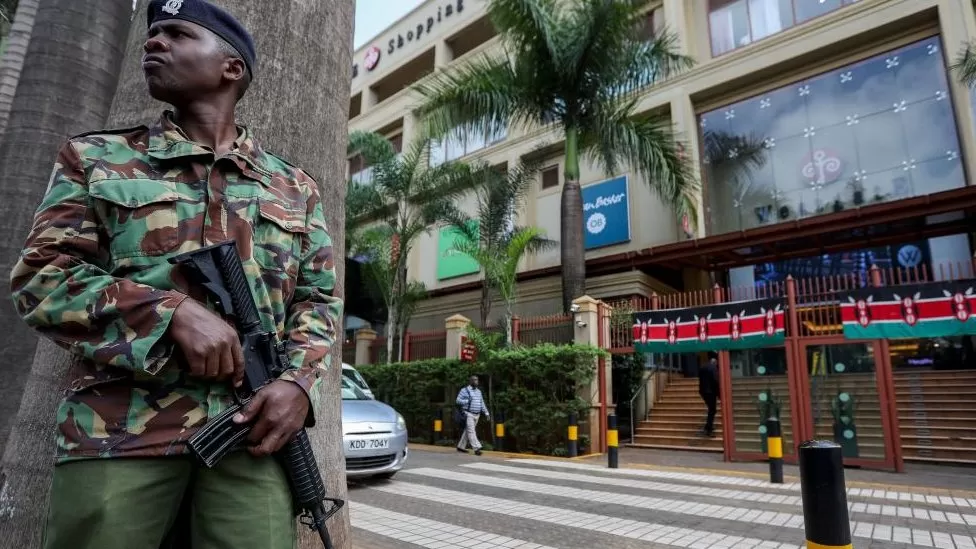
Kenya’s First Lady, Mama Rachel Ruto, has revealed plans for a prayer strategy team to support Kenyan police officers embarking on a peacekeeping mission in Haiti.
This announcement came during the launch of the ‘Fourth Man’ EP by 1005 Songs & More at Weston Hotel on Saturday.
Emphasising the importance of prayer, Mama Rachel emphasised that it’s crucial for the officers to be covered in prayer before their deployment to Haiti.
“We have come together to say we want to form a prayer strategy, and we would like you to join us in praying for this great country of Haiti because we know the Lord can transform Haiti. We have seen what God has done for the nation of Kenya, and we believe God can do the same for nations of the world.
“We cannot allow our police to go to Haiti without prayer. We had pastors from Haiti and America, and we are seeing how these three countries can come together to pray because we believe with prayer everything is possible,” First Lady Mama Rachel Ruto stated.
She urged everyone to join in prayer for Haiti, expressing faith in God’s transformative power for nations.
The initiative follows President William Ruto’s recent discussions with international leaders regarding the situation in Haiti, including plans for Kenya to deploy a reconnaissance mission once a viable administration is established.
Mama Rachel highlighted ongoing efforts to collaborate with pastors from Haiti and America, underlining the unity in prayer across nations.
As diplomatic efforts intensify for a UN-backed deployment to Haiti, Kenya remains committed to supporting Haiti during this challenging period.
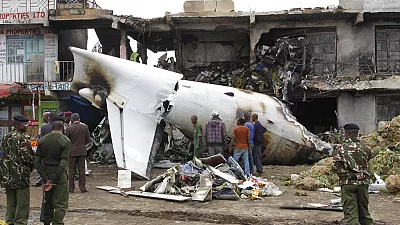
A collision between two planes occurred at Nairobi National Park, resulting in at least two fatalities. Fortunately, 44 others escaped unharmed during the incident on Tuesday morning.
Involved in the collision was a Dash 8 aircraft owned by Safari Link, carrying 44 passengers and crew en route to Diani. The other aircraft was a Cessna plane conducting a training session with two occupants.
The Cessna crashed within the park, while the Dash 8 safely returned to Wilson Airport. Both planes had departed from Wilson Airport, as confirmed by officials who also reported two fatalities in the accident.
Safarilink Aviation confirmed the incident but assured that none of their passengers sustained.
“Safarilink Aviation wishes to report that this morning at 9:45 Local Time our flight number 053 with 39 passengers and 5 crew on board headed to Diani experienced a loud bang soon after take-off.”
“The crew decided to immediately turn back to Nairobi-Wilson Airport for further inspection and assessment and landed safely. There were no casualties reported,” the operator said.
According to their statement, Safarilink Aviation and the appropriate authorities have been notified and are jointly investigating the incident.
In Kenya, a company is exemplifying the adage, “one person’s waste is another person’s treasure,” by transforming plastic waste into valuable assets.
On a February morning, a team of women gathers on a Mombasa beach to collect plastic waste, which will be repurposed to construct freezers.
The collected waste is sold to Kuza Freezer, where workers process it into pellets before molding it into cold storage units.
Each freezer is equipped with a battery that can be recharged using a solar panel.
With just a two-hour charge, the freezers can operate for up to seven hours.
“Kuza Freezer is a youth-led company based in Mombasa, Kenya. And we are focused on providing cold storage solutions to small-scale businesses in the fish value chain and enabling them to sustainably improve their income and reduce post-harvest losses,” says Purity Gakuo, CEO Kuza Freezer.
Kuza Freezers, operational for three years, has distributed over 350 units to various customers, including fish traders, poultry and milk vendors, and ice vendors.
Gakuo, a representative of the company, highlights the diverse range of products available, from static freezers for fishing boats to units suitable for installation at premises. Additionally, they offer a motorbike-mounted freezer with a 70-liter capacity, facilitating efficient fish delivery.
The company provides complimentary installation and training to customers, along with fitting each unit with a tracking device for maintenance monitoring.
Priced at Ksh 100,000 ($700), the freezers are available with installment payment options, proving to be a worthwhile investment for many.
For customers like Abdalla Ali, adequate storage is critical. Ali emphasizes the challenges faced with storing fish, particularly during transportation, where ice depletion and hot weather can jeopardize the quality and result in losses.
Nickson Otieno, CEO of a Nairobi-based sustainability consulting firm, underscores the significance of the product in addressing two major challenges in Kenya: pollution and hunger.
“Number one is the issue of food security resulting from food losses.
Food losses come about because we produce food which are perishable, but then we do not have enough infrastructure to deliver that food to the end consumers in time while it is fresh,” says Otieno.
“Secondly, we have a lot of issues of waste and especially plastic waste, which is choking our environment. By them taking up this waste, recycling it, and using it to make the external body of the freezers, also addresses the challenge of this waste,” the CEO of Nikogreen concludes.
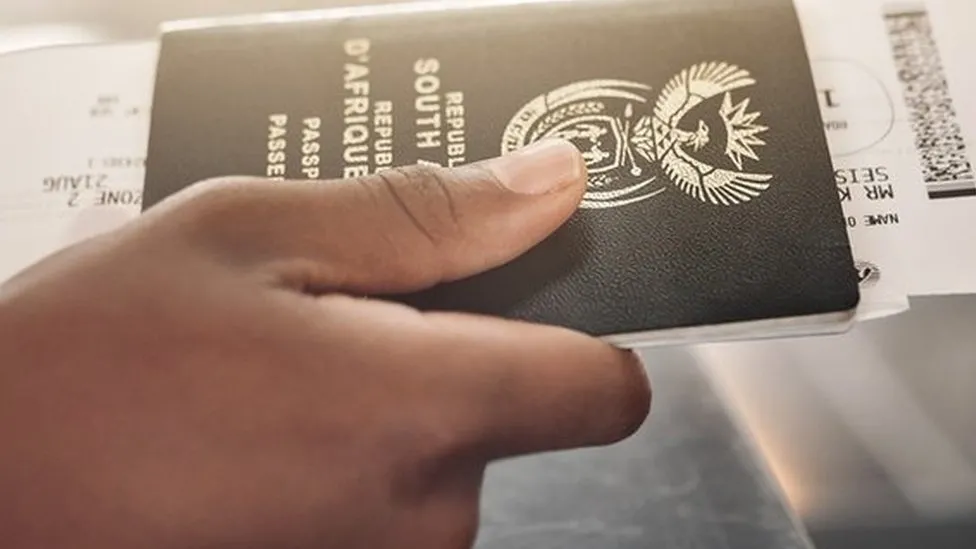
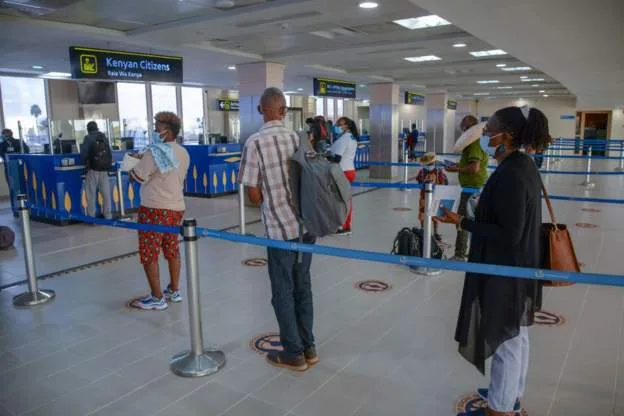
Kenya has waived the entry fee for passport holders from South Africa and six other countries, following a backlash against the unpopular fee introduced last month.
The fee exemption applies to visitors from countries that previously did not require visas to enter Kenya.
Last month, the Kenyan government abolished visa requirements for all foreign passport holders in an effort to boost tourism and attract business travelers.
However, a $30 entry fee was introduced, causing widespread criticism.
The exemption from the entry fee now extends to passport holders from Ethiopia, Eritrea, Congo-Brazzaville, Comoros, Mozambique, and San Marino, in addition to South Africa. These countries have either entered visa abolition agreements or signed bilateral visa waiver agreements with Kenya.
Despite the fee waiver, travelers from these countries will still need to obtain an electronic travel authorization (ETA) document in advance. The ETA is valid for single entry and lasts for 90 days. Applicants must provide details such as flight information and proof of accommodation.
Kenya is set to resume avocado exports in two weeks, marking the end of a four-month hiatus imposed by the Agricultural Food Authority (AFA).
The ban, which was instigated by the Horticultural Crops Directorate (HCD) in November last year to ensure the maturity and quality of exported fruit, will be lifted on March 1.
However, exports of Fuerte and Hass avocado varieties by sea will remain restricted to size code 20 (184 grams) until the commencement of the open export window.
Previously, the government had suspended the sea export of Hass, Pinkerton, Fuerte, and Jumbo avocado varieties, opting for air transport for limited quantities to prevent the export of unripe fruit, which had previously damaged Kenya’s reputation in international markets.
The decision to lift the suspension came after avocado field surveys conducted by the AFA between January 7 and 12 to evaluate the maturity and volume of fruit in key production areas across the country.
According to Christine Chesaro, the acting Director-General of AFA, a month ago, the fruit was deemed insufficient, necessitating the extension of restrictions on avocado shipments by sea.
However, recent assessments have indicated that the fruit is now ripe on farms and meets the required volumes.
“All export produce is subject to inspection by AFA-HCD inspectors. Exporters are required to apply for inspection at least three days prior to shipment,” said a memo dated February 14 to all avocado traders.
Exporters must submit a list of their Horticultural Produce Marketing Agents (HPMAs) or suppliers by February 26, according to a directive issued by the Agricultural Food Authority (AFA).
The directive underscores the importance of avocado traders monitoring production and post-production processes to ensure compliance with both regulatory and market standards.
AFA has implemented stringent measures, including penalties, for exporters or their agents found transporting avocados without crates or in open pick-up trucks, which violates the Horticultural Regulations.
Kenya’s avocado exports, primarily consisting of Hass, Fuerte, Pinkerton, and Jumbo varieties, are often referred to as the ‘green gold’ of the future.
Last year, avocado export earnings surpassed Sh20 billion, with the majority of exports destined for Europe and Middle Eastern countries, making it a significant source of foreign exchange for Kenya.
Despite challenges such as smuggling attempts and market price fluctuations, Kenya has emerged as a key player in the global avocado trade, surpassing South Africa in export volume. Additionally, the emergence of local cottage industries specializing in avocado oil extraction has further bolstered the country’s growing avocado industry.
Kenya’s former world record holder, Henry Rono, passed away at the age of 72 after a brief illness, Athletics Kenya confirmed on Thursday morning in Nairobi.
Rono etched his name in history during a remarkable feat in 1978 when he shattered four world records within a span of 81 days, setting new benchmarks in the 3000m, 5000m, 10,000m, and 3000m steeplechase disciplines.
Notably, he also surpassed his own record in the 5000m in 1981.
After relocating to the United States in 1986, Rono resided there for more than three decades before returning to Kenya in 2019.
This news arrives amidst ongoing mourning for Kelvin Kiptum, the marathon world record holder, who tragically lost his life in a road accident last Sunday, further adding to Kenya’s and the world’s somber sentiments.
Rose Tata Wekesa, a science teacher from Kenya, appears to have set a potential world record for the longest uninterrupted science lesson.
The classroom laboratory, situated in Nairobi, Kenya’s capital, erupted with cheers as the clock reached 50 hours.
However, Ms. Wekesa did not stop there and continued beyond the 50-hour mark. The validity of the record will now be assessed by Guinness World Records.
She teaches biology and chemistry at St. Austin’s Academy, an international school in Nairobi.
In an interview with the privately owned Citizen Digital news website last month, she explained that she undertook the challenge to showcase the practical and fascinating aspects of science.
“I want to inspire young students who aspire to become teachers by demonstrating that a teacher can achieve remarkable feats beyond the classroom,” she said.
Police have reported the re-arrest of a man accused of murdering his girlfriend in Boston, who had fled to Kenya and escaped from a Nairobi police station nearly a week ago.
Kevin Kinyanjui Kang’ethe, 42, was apprehended on Tuesday at a relative’s residence in Ngong, a suburb of the Kenyan capital, following a tip-off, according to Nairobi police chief Adamson Bungei speaking to CNN.
Bungei assured that Kang’ethe is now in custody at a different police station and that his extradition process to the United States will proceed.
US investigators allege that Kang’ethe boarded a plane to Kenya shortly after the murder of his girlfriend, Margaret “Maggie” Mbitu, on November 1, 2023. Mbitu’s body was discovered in Kang’ethe’s SUV in a parking garage at Boston Logan International Airport two days after she was reported missing.
Bungei described Kang’ethe’s escape from a heavily guarded Nairobi police station last Wednesday as a consequence of “unethical conduct.”
According to police reports, Kang’ethe fled “by running away” after a man claiming to be his lawyer arrived at the station seeking to speak with him. Officers released Kang’ethe from his cell and left them alone in an office, from where he escaped.
Kang’ethe had previously been arrested outside a nightclub in Nairobi on January 30. After a US extradition request, Kenyan authorities initiated the formal extradition process to return him to Boston to face murder charges.
Jacque Maribe and her former fiancé Joseph Irungu, also known as “Jowie”, were said to have killed businesswoman Monica Kimani at her house in Nairobi in 2018.
Ms Kimani was discovered by her family tied up in a bathtub after they couldn’t get in touch with her.
Last Friday, the Kenyan High Court said Ms Maribe is not guilty, but said Irungu is guilty of the murder.
Judge Grace Nzioka from the High Court said that the prosecution did not charge Ms Maribe with the right things and there is no proof that she was at Ms Kimani’s home when she was killed.
The DPP’s office wants to appeal the decision of the High Court because they are not happy with the defendant being found not guilty.
The trial of the person who killed Ms. Kimani from South Sudan is getting a lot of attention in Kenya, even though it’s not clear why she was killed.
Kenya’s Kelvin Kiptum, the world record holder in the men’s marathon at 24 years old, tragically passed away in a road accident in his homeland.
The accident claimed the lives of both Kiptum and his coach, Rwanda’s Gervais Hakizimana, as they were travelling on a road in western Kenya on Sunday.
Kiptum had emerged as a formidable competitor to his compatriot Eliud Kipchoge, widely regarded as one of the greatest marathon runners.
His breakthrough came in 2023, notably surpassing Kipchoge’s achievement by clocking 26.2 miles (42km) in an impressive two hours and 35 seconds during the Chicago Marathon last October.
Both Kiptum and Kipchoge had been included in Kenya’s provisional marathon team for the upcoming Paris Olympics later this year, showcasing the promising future that Kiptum’s career held before this tragic incident.
Paying tribute to Kiptum, Kenyan Sports Minister Ababu Namwamba wrote on X: “Devastatingly sickening!! Kenya has lost a special gem. Lost for words.”
Kenya’s opposition leader and former prime minister, Raila Odinga, said the country had lost “a true hero” and was mourning “a remarkable individual… and Kenyan athletics icon.”.
Sebastian Coe, the president of World Athletics, said Kiptum was “an incredible athlete leaving an incredible legacy.”
The road accident happened at about 23:00 local time (20:00 GMT) on Sunday, police were quoted as saying by the AFP news agency.
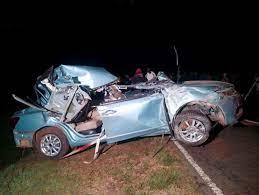
Giving further details of the crash, police said Kiptum was the driver, and the vehicle “lost control and rolled, killing the two on the spot”.
Kiptum’s car
A spokesman quoted by AFP added that the third passenger, who was female, had been injured and “rushed to the hospital.”.
Just a week ago, his team revealed plans for him to attempt breaking the two-hour barrier at the Rotterdam marathon, a monumental feat yet to be achieved in open competition.
The ascent to stardom for this father-of-two was meteoric; he embarked on his first full marathon journey only in 2022.
Making an immediate impact, he clinched victory at the Valencia Marathon with the then-fourth-fastest time on record (2:01:53), followed by setting a course record of 2:01:25 at the London Marathon in April 2023.
In a remarkable display of talent, just six months later, Kiptum shattered the world record in Chicago in only his third marathon, cutting an impressive 34 seconds off the previous record.
His tactical prowess was evident, employing a distinctive strategy of sticking with the pack for 30 kilometres before accelerating and seizing control of the race on his own.
Kiptum’s journey began in 2018 when he competed in his first major event, donning borrowed shoes due to financial constraints that prevented him from purchasing his own pair.
He represented a new generation ofKenyan athletes who launched their careers in road racing, departing from the conventional path of starting on the track before transitioning to longer distances.
In an interview with the BBC last year, Kiptum attributed his unconventional trajectory to the simple reality of lacking resources.
“I had no money to travel to track sessions,” he explained.
His coach, Hakizimana, 36, was a retired Rwandese runner. Last year, he spent months helping Kiptum target the world record.
Their relationship as coach and athlete began in 2018, but the pair first met when the world record holder was much younger.
“I knew him when he was a little boy, herding livestock barefoot,” Hakizimana recalled last year. “It was in 2009; I was training near his father’s farm; he’d come kicking at my heels and I would chase him away.
The boat lets college students and recent graduates study at sea for a semester, traveling to different countries to learn about their histories and cultures.
“On the ship, there are 763 people. 585 of them are students who will go on educational tours, explore the city, and visit wildlife parks while they are in Kenya,” the Kenya Ports Authority posted on X.
The university also welcomes people who are 30 years old or older and want to keep learning, as well as teachers and employees.
The hospital says that Kenyans don’t have to go to other countries anymore for the procedure.
Dr Charles Waihenya and Dr. Paul Njogu, the main doctors, said that the laparoscopic kidney transplant has many good things like less pain, less bleeding, faster healing, lower costs and better looks.
Kidney transplants using laparoscopic surgery are done a lot in many places, but they are not used very much in African countries because of problems with the hospitals and doctors.
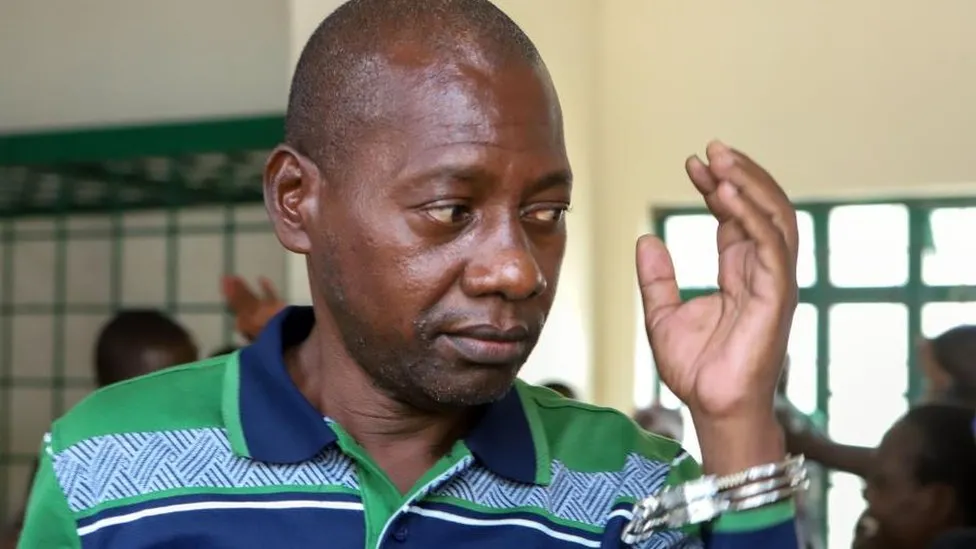
Survivors and families of those who were hurt say Paul Mackenzie told his followers to stop eating so they could “go see Jesus”.
He and 29 other people said they did not do the crime in a court in the town of Malindi by the ocean.
Mackenzie has been accused of doing scary and mean things to kids, but he says he didn’t do it.
The police and lawyers think that, besides not having enough food, some people may have been killed by choking, not being able to breathe, or being hit with a hard thing.
30 people are accused of killing 191 others.
“I’m still afraid of him,” one person who survived the incident told the BBC when asked what she would say to Mackenzie if she ever saw him.
“I never want to see him,” said the 29-year-old mom with four kids.
In 2022, she went to Shakahola, a forest about 70km (43 miles) west of the town, because she heard that the church leader had moved there with other members of the church.
Shakahola has very few people living there and is being watched by the police all day and night. The police are investigating it as a crime and nobody can go in.
At first, the worshippers went there and then came back home. But starting in late 2022, the followers say they were not allowed to go.
Neema was having her fourth baby and was only two months along when she went to the forest for the last time. She said she couldn’t leave and the guards kept hurting and forcing women to have sex.
“The speaking stopped,” she said. “They said we’re finished learning and we’re just waiting to see Jesus. ”
At first, the people in the forest would get a little bit of tea and a piece of bread for breakfast.
That’s all for today.
But later, Neema said they were told that there would be no more food or water.
“We would go into the bushes and gather wild berries to eat when the guards stopped to have their meals,” she said.
They would also pick up water from the ground and drink using their hands.
When she couldn’t take it anymore, she made a plan to run away with two of her friends. Coming up with a plan was hard because we weren’t allowed to talk in groups. They had to be quiet.
They waited for the guards to take their usual break, then they closed the door to their hut, made a hole in the back wall, and ran away.
“We were not strong,” Neema said.
However, they kept going because they were desperate to get away.
Fortunately, when they reached the main road, they found a driver who gave them a ride to the hospital.
Many people, including lots of kids, were not as fortunate.
They were the first group to decide not to eat until they fell asleep, as told by the survivors.
Women were supposed to obey them.
Changawa Mangi is an old man from Shakahola village.
He said he met Mackenzie when he went to buy land there because he wanted to start farming.
“We said hello to him. ”
Over time, the people who lived there noticed that Mackenzie often had a lot of guests.
That’s when they discovered he was in charge of a church, but it didn’t bother them.
Their presence helped local businesses because the church’s followers shopped there.
But that suddenly stopped. Mackenzie’s friends no longer went to the village stores. Then the signs that something bad might happen soon started showing up.
Mr Mangi said that three young people came to his house asking for help.
They looked very thin. So, he gave them food to eat.
Mr Mangi said one of them had diarrhea for three days, and it looked like soil.
The leader told the government about the problem, but they were slow to respond.
The young men from the village made a plan to ride their motorbikes into the area. But they were greeted with anger, pushed away by the guards and had two motorcycles burned.
It became clear that they could only get inside with police help.
Francis Wanje, a 59-year-old teacher from Mombasa, went to check if his daughter and her family had moved to the forest because he heard rumors about it.
He told the police but they didn’t do anything right away.
What he saw in Shakahola surprised him a lot.
He couldn’t save some of his grandchildren in time, but he found his nine-year-old grandson.
“He said he saw [his brothers and sisters] die. He saw them not getting enough food from their mom and dad. It’s a story he will always remember. ” “He won’t forget. He thought he would be the next one, but luckily he was saved,” Mr. Wanje said to the BBC.
The mother of the boy, who is Mr. Wanje’s daughter, and her husband are still missing. He also saved another kid he found there.
Mr Mangi also assisted in the rescue work.
“Some people looked weak and like they might die soon,” he said.
Some people were stronger but didn’t want any help. They asked Mr Mangi: “Why are you bothering us when we want to go see Jesus. You will also die someday, won’t you. ”
When Stephen Mwiti, a 45-year-old dad with six kids, found out about the rescue, he thought he might learn about what happened to his children. His wife had taken them to the forest.
He showed a photo of the family to some of the people who were saved.
They confirmed his children’s names and told him the very sad news. “They told me that my kids are gone. They were not given enough food and died.
They told Mr Mwiti that the children – Jacob, Lillian and Angelina – had been buried with seven other people in a large grave.
Hellen and Samwel were saved, but they hadn’t eaten for four days and thought they might have died before they talked to their worried father.
One more baby born in Shakahola also passed away.
Neema, the lady who ran away, said that mothers would be told not to feed their babies milk so that they would also “go to Jesus”.
The cult said not to use modern medicine and told members not to vaccinate kids.
Mackenzie and his friends are in jail after he turned himself in to the police last April. The bodies of people were found in the forest.
They said they didn’t make anyone go without food. At one time, Mackenzie told the court that the police didn’t give him any food when he was in custody.
A BBC review of Mackenzie’s sermons on video does not have him telling people to fast, but he talks a lot about followers giving up important things, even their lives.
But out of all the 400 bodies in the morgue, only 39 have been identified using DNA testing and connected with their families.
Other family members are still suffering through a painful wait.
Mr Mwiti said that justice can’t bring back his family.
On Saturday, President William Ruto said that bad and dishonest government workers are responsible for letting the plant operate in a neighborhood where people live.
A truck with gas exploded in Embakasi district at around 11:30 pm, causing a big fire, said a government spokesperson.
Homes, stores, and cars were destroyed, and there was a big fire near apartment buildings.
Before, the government said that the explosion happened at a gas factory. The reason is still being figured out.
Embakasi’s top police officer, Wesley Kimeto, said that a child was one of the people who died in the explosion. He also mentioned that the number of people who died could increase.
The Kenya Red Cross helped 271 people get to the hospital and treated 27 more at the scene.
The explosion sent a fireball in all directions, and according to the government spokesman Isaac Mwaura, a gas cylinder hit a warehouse full of clothes and fabric, causing it to catch fire and burn down.
“The fire hurt more cars and stores, including a lot of small and medium-sized businesses,” he said in a statement.
“Unfortunately, the homes in the area also caught on fire while many people were still inside, because it was late at night. ”
People told the news that they felt shaking right after the explosion.
One person named Boniface Sifuna said to the news agency Reuters, “I got burned by a gas canister that exploded when I was trying to get away. ”
“It blew up in front of me and the force knocked me down and the fire surrounded me. ” I feel fortunate that I was able to escape because I was strong enough.
James Ngoge, who lives nearby, said he heard a big explosion from his house when the blast happened.
“It seemed like it might fall down. ” At first, we didn’t know what was happening, it felt like an earthquake.
“My business in the street was all wrecked. ”
A reporter from the Nation newspaper who lives in the area said that everyone had left their homes after the explosion.
The Kenya Red Cross posted on social media that people have been working very hard to put out the fire.
Mr Mwaura, who speaks for the government, said that the explosion area is safe now and a place to command the rescue work has been set up.
The Kenyans are told to stay away from the area that is blocked off so that the rescue mission can happen without problems.
Ekuru Aukot was able to successfully stop the army from being sent out by taking the case to court. He believes that only the president has the power to send out the army, not the police.
The court said that the mission was not allowed by law.
MrRuto said on Tuesday that the mission could happen “as soon as next week” if all the necessary paperwork is completed to meet the court’s requirements.
In November, Kenya’s government approved sending 1,000 officers to lead a group of countries’ force in Haiti. This is because gangs in Haiti are trying to take over more areas.
Last week, a judge said that the National Security Council in Kenya, which is led by the president, cannot send regular police to other countries.
It said that the council can only send soldiers, not police, to keep peace in places like Haiti.
The court said both countries need to agree before the soldiers can go there.
Justice Chacha Mwita said Kenya’s plan to send police to Haiti is a good idea, but it must follow the law.
Mr Ruto said at a meeting in Rome that he thinks a request will come soon to meet the Kenyan court’s demands.
“The mission is going as planned. ” He said the mission is a big job for all people.
When they asked if Haiti is trying to get what it needs, Mr. Ruto said “Yes, definitely. ”
“Haiti wrote this formally, not recently, but several months ago,” he said.
Korir Sing’oei, a high-ranking official in Kenya’s foreign ministry, said on X that sending police to another country would not break the law if it follows a mutual agreement between the two countries.
ButAukot believes that the deployment needs more than just the agreement between two countries.
Understand Justice Mwita’s thoughts on the differences between ‘service’ and ‘force’. According to the law and the constitution, you can’t send the police to work in another country, Mr. Aukot said on X. He accused the foreign affairs official of giving the president incorrect information.
During the interview on Tuesday, Mr. Ruto emphasized that it was carried out by the police instead of the military.
The Kenyan government said it would ask for another decision in court.
Last week, the US said it backs Kenya’s plan to challenge the court’s decision.
The Kenyan opposition told the US to stay out of Kenya’s business.
It is not clear when the Kenyan government will go to court and if other countries who promised to send small forces to support the multinational mission will do it on their own.
Some countries including the Bahamas and Antigua and Barbuda will send their military forces, and the US will give $200 million to help with the mission.
An official from the United Nations said last week that the violence caused by gangs in Haiti has become very serious, with almost 5,000 deaths reported last year.
In November, the High Court said that the 1. 5% monthly charge was not fair to Kenyans who have regular jobs and told them to stop paying it.
On Friday, the court said that people don’t have to pay the tax until the case is finished.
The government wanted to start collecting the tax again for now.
It started taking 1. 5% of the total wages of both local and foreign workers last July. This money is being used to build cheap houses for people with low incomes.
The new tax upset the opposition and many Kenyans who already feel overwhelmed by the many taxes President William Ruto has introduced.
The government said that if they stopped the tax, many people working on the housing program would lose their jobs and it would break the contracts that had already been made.
Many people in Kenya feel better about the decision, even though the Court of Appeal has not made its final ruling.
The decision was made just one week after the appeals court approved a new healthcare insurance fee. This fee will require people to give 2. 75% of their monthly salary to a social healthcare program.
The housing levy case on Friday has caused a disagreement between the judges and the president. President Ruto said that some judges are working with the opposition to stop development projects and are corrupt.
Ekuru Aukot, a leader from the opposing side, said that this was a victory for Kenya. He added that the country cannot afford to send officers elsewhere before dealing with its security issues.
Mr Aukot said that President William Ruto was using the deployment to improve his image and get support from Western countries like the US.
President Ruto said Kenya has done a great job in helping keep peace in other countries.
He said that sending officers there would help them get better at keeping things safe.
Before the decision was made, a police officer told the media without giving their name that they had received two months of very focused training.
He said that the classes included learning how to use weapons, studying international laws, and understanding the land of Haiti.
President William Ruto wants to make sure that every person in Kenya can get healthcare they can afford. This is called the Social Health Insurance Fund (SHIF).
But a lot of people don’t like it because they think it’s a new tax.
Critics say the fee will make the cost of living higher, which caused a lot of protests last year.
This made President Ruto upset, along with the suspension of a controversial housing tax. He recently accused some judges of corruption in public. He said the courts were teaming up with the other party to stop his government’s plans, which made lawyers protest.
The SHIF is replacing the old National Health Insurance Fund because a lot of money from taxpayers has been lost due to corruption.
On Friday, a group of judges ended the ban because they thought it was a threat to the health rights of many people who were not involved in the case.
However, the court stopped the parts that made it necessary for people to sign up for the program.
All employees need to give 2. 75% of their pay to the new health fund.
The new rule doesn’t say what happens if people can’t pay, but President Ruto promised that the government would cover the costs for them.
People who don’t like the new health plan say that the 2. 75% deduction is a big increase from what they used to pay to the NHIF. This is in addition to the recent increase in fuel prices and living costs.
Some people worry that the new healthcare organization will use most of the money it collects for things like paperwork and office expenses, instead of using it for actual healthcare.
Last year in June, Mr. Ruto approved a new law called the Finance Act. This new law made both employers and employees pay a 1. 5% housing levy, which many people did not like.
The government wants to offer housing that low-income people can afford. The levy is being disputed in court.
David Kiplangat, a 60-year-old elder who also served as an assistant pastor at an SDA church in Ketitui, met an unexpected demise while spending an evening at a lodging in Kapsoit, located in Kenya’s Kericho region, accompanied by a female companion.
The lifeless body of Kiplangat was discovered by the woman, who promptly informed the lodging’s management before fleeing the scene.
Belgut sub-county police commander Charles Kibati reportedly confirmed the incident, stating that Kiplangat was found dead with no visible injuries and without any clothing.
A used contraceptive was found at the scene.
He was found dead with no visible injuries. He had no clothes at the time,” he is quoted to have said.
The body has been moved to the mortuary of the Kericho County Referral Hospital, where an autopsy is planned.
Meanwhile, investigators are actively pursuing leads to locate and identify the woman who was in the company of Kiplangat.
This tragic incident is not the first of its kind in the region. In a similar occurrence last year, a Catholic priest from St. Peters Ruai passed away under mysterious circumstances in a hotel.
The priest, accompanied by a woman described as his girlfriend, was rushed to the hospital after feeling unwell. Unfortunately, he was pronounced dead upon arrival.
According to the earlier case’s police report, the priest’s girlfriend had alerted the hotel management when he started feeling dizzy and unconscious.
The priest passed away in his car, with white foam oozing from his mouth and nose.
Subsequently, the body was moved to Mater Hospital mortuary in Nairobi for autopsy, and the food and drinks consumed during their night out underwent investigative analysis.
As authorities delve into the circumstances surrounding Assistant Pastor David Kiplangat’s death, similarities with previous incidents raise concerns about the safety and well-being of individuals, especially those in religious positions, while engaging in personal activities outside their pastoral duties.
Investigations are ongoing to unravel the mysteries behind these unfortunate events.
Kenyan police arrested a person from another country for killing a 20-year-old Kenyan student.
He got arrested on Tuesday when he tried to leave Kenya with a Mozambican passport, according to the authorities.
Rita Waeni’s body was found cut into pieces last Sunday at a temporary apartment in Nairobi.
Her family thinks that someone tricked her and then tried to get money from them, even after they killed her.
The person who killed Ms. Waeni sent three messages from her phone on Sunday morning. They said her family had to pay 500,000 Kenyan shillings (about $3,100 or £2,400) within 24 hours to get her back. Her family told this on Wednesday.
Her head was cut off and her body was discovered soon after.
“Unfortunately, the family didn’t get more information about the ransom or a chance to try this option. ” In addition, the family said that some requests were made after she had already been killed. They said this in a statement on Wednesday.
The police are searching for Ms. Waeni’s head, which was taken by the person who killed her, along with her phone and other things that belonged to her.
The family said that their lives have been completely destroyed by the murder, especially because of the way she was killed.
The police are also trying to find out if the person captured by security cameras picking up the keys to the rental apartment is the same as the suspect.
Two more people who may have been involved in the murder have been taken into custody.
Investigators looked at Ms. Waeni’s Instagram and think that the person who killed her tricked her using the app.
Many people in Kenya are very upset and angry about the recent killing of Ms. Waeni and other women. This has led to an online campaign to protect girls and women.
Less than two weeks ago, a popular person from Kenya was also killed in a similar way.
429 people, including children, have been found buried in a remote forest called Shakahola, which is about a two-hour drive west of Malindi. Many looked very hungry, but some, including children, may have been hurt.
Mr Mackenzie is said to have told people in his church to go there and get ready for the end of the world.
One person told the media that in January of last year, they were told to start fasting so they could “go to heaven. ”
Mr Mackenzie said the deaths couldn’t be his fault because he closed his church in 2019.
The investigators asked for him to stay in jail for a longer time while they kept looking for evidence.
They said they have enough proof to accuse him and the others of crimes like murder, assault and helping a terrorist act.
They are also accused of “hurting a child on purpose”, according to a statement from the head of public prosecutions.
The list of charges came out a week after the court told the prosecutors they had two weeks to share them, or the suspects might be let go.
64 out of the 95 people suspected of being involved were found in Shakahola. At first, they were thought to be victims and were taken to a rescue center.
However, investigators later discovered that a lot of them had kids who had passed away in the forest.
Some people had lied about their names and who they were and didn’t say where their kids were.
Last November, Mr Mackenzie was found guilty of running a film studio without a valid filming license. He was also accused of distributing films without permission.
Many lawyers in Nairobi, Kenya are protesting because President William Ruto is not following court orders.
The lawyers are walking in a protest from the highest court to the president’s office. The protest was arranged by the Law Society of Kenya (LSK).
President Ruto was strongly criticized last week for saying he might not follow court orders. He claimed that some judges were working with opposition politicians and other groups to stop his government’s plans.
The leader of this country must follow the laws, just like everyone else. So we don’t think he should speak as if following court orders is a special thing he’s doing for the country. “It is a rule in the constitution,” said LSK president Eric Theuri during a press conference on Thursday.
Mr Theuri said that LSK will think about starting the process to remove Mr Ruto from his position because he is not following the rules of the constitution if he keeps criticizing the judiciary.
LSK has put together a group of lawyers to submit a request to the High Court to say that Mr. Ruto broke the rules of the constitution, Mr. Theuri told the privately-owned Standard newspaper.
Many well-known Kenyan lawyers, like former Vice-President Kalonzo Musyoka and former minister Eugene Wamalwa, who are now opposition politicians, have joined the protest.
The top judge and a political leader told Mr Ruto that not following the court’s decisions could cause chaos in the country.
Kenya is getting negative feedback for allowing all foreigners to enter the country without a visa. Some people think it’s too busy.
Last month, President William Ruto said he wants people to be able to travel around Africa without needing a visa.
Kenyan officials have said that people can enter the country without a visa, but they still need to get permission to travel by filling out a form and paying a $30 fee.
This rule also applies to countries whose citizens used to be able to go to Kenya whenever they wanted.
By Sunday, Kenya got over 9,000 visa requests online, according to officials.
However, some people from other countries are now complaining about the government. They say that the new rule has caused problems and made it harder and more expensive to travel to Kenya.
“Hey Africans, Kenya is lying about being visa free. It’s actually harder for Africans to visit now. ” – Hopewell Chin’ono, a well-known journalist from Zimbabwe, said on X.
“Until 24 hours ago, I could easily wake up, buy a ticket, and fly to Kenya from Malawi without needing a visa. ” “Kenya no longer requires a visa for people visiting, but now everyone has to pay a $30 fee 3 days before traveling. ” What Busy,” Malawian business owner Jones Ntaukira said on X.
Some people in Kenya are worried that the strict rules could make foreigners not want to visit, or that other countries might make their rules stricter too.
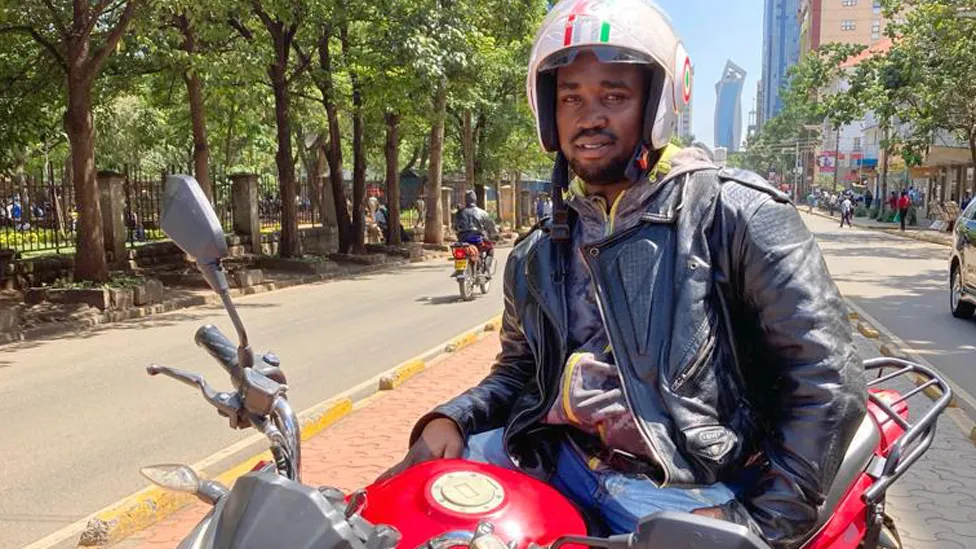
The main reason the 27-year-old motorbike taxi rider wants to switch to an electric bike is to save money as fuel prices continue to go up.
Motorbike taxis are very common in Kenya and other African countries because they are cheaper than cars and can be better for getting around in the heavy traffic in Nairobi.
Mr Lugalia has been driving a motorbike taxi in Nairobi for five years, taking people and things to different places.
He used to spend about 1,000 Kenyan shillings per day, which is a little over $6 or £5, on fuel for his petrol bike.
Nairobi drivers usually make around $10-15 every day, according to the Boda-Boda Association of the country.
Ever since he started using an electric system, Mr. Lugalia says he only spends $1. 42 This means he is making more money and it makes him really happy.
“Since petrol is expensive, I can save a lot by using my electric bike,” Mr. Lugalia said happily.
Instead of putting petrol in his bike, Mr. Lugalia now changes the electric battery once or twice a day at one of the many swap stations in Nairobi. A full battery will let him drive for about 80km (50 miles), which is almost a whole day’s work.
“Mr Lugalia says that electricity is the way forward for Kenya,” he said to the media.
The Kenyan government also believes so. William Ruto, the President, started a national program for using electric vehicles on 1 September 2023.
Motorbikes and tuk-tuks are being used to make transportation more eco-friendly and reduce pollution in the air.
The government wants boda-boda drivers to consider using cheaper fuel to save money.
In Kenya, there are around three million boda-boda riders, and the UN thinks that about five million people rely on their money.
Riding a boda-boda is a good, quick, and cheap way to travel.
Many motorcycles are old, not taken care of, and create a lot of pollution. Although they don’t produce as much carbon dioxide as cars, they release a lot of nitrogen oxides and hydrocarbons, which can hurt the air and the climate.
Nairobi is one of the busiest cities in the world with a lot of traffic. During busy times, the number of people in the city goes up from 4. 5 million to over six million.
The traffic jams every day can be really bad for people who travel to work – the vehicles make about 40% of Nairobi’s dirty air, and about 20% of the world’s pollution that makes the Earth warmer, according to the Clean Air Fund.
Other big reasons for climate change are cutting down trees, farming, making things in factories, and burning trash in the open.
Africa doesn’t produce a lot of greenhouse gases, only about 2% to 3% of the world’s total. But it is affected the most by climate change, according to the UN Environment Programme.
However, the Kenyan government believes that moving towards eco-friendly transportation is important in order to help achieve its climate targets. It aims to have over 200,000 electric bikes on the streets by the end of 2024.
E-bikes usually release 75% fewer harmful gases into the air.
Only 2,000 boda-boda drivers have changed from using petrol to using electric power.
“Kenya is a great place for electric motorbikes to be sold. ” About 85% of the electricity comes from sources that can be renewed like water, sun, heat from the earth, and wind.
In the past few years, Kenya has had very bad droughts, which have affected its hydro-power. But there is a lot of potential to increase its use of geothermal, solar, and wind energy.
A few new companies in Kenya have started making and selling electric motorcycles in the last three years.
They are working with lenders to provide affordable loans, so boda-boda drivers can buy their own motorcycles.
Mr Lugalia sold his old gas bike and used some of the money to put a deposit on an electric bike. Then he paid the remaining $1,500 in small payments every day for a year.
He fully owns the bike, but not the battery.
“That wouldn’t be a smart decision for the business,” says Steve Juma, co-founder of the electric bike company Ecobodaa, because the battery is the priciest part of an electric bike.
It would nearly double the price.
The sellers still own the batteries and have made many places in the city where you can swap them, like in malls, gas stations, and fast food places.
Mr Lugalia says he can easily find a place to switch batteries. He uses an app on his phone to open a cabinet. Then, he puts his used battery in a locker and gets a new fully charged one from a different locker.
But if you leave the city, things are different. Many boda-boda drivers I talked to in Nairobi are not interested in going outside the city because it’s not worth it for them.
“I’m not ready to use green energy because I can’t go to a place where I can’t charge the battery,” a man said.
Some people didn’t want electric bikes because they thought they cost more than petrol ones. Some people think that the distance an electric bike can go – between 60 and 80 kilometers – is not enough.
The government wants to replace traditional boda-bodas with e-motorcycles in Kenya to make the streets quieter.
The electric vehicle infrastructure is not very developed outside of Nairobi, so there is a lot of work still to be done.
The government thinks that businesses, which are already investing in Nairobi, can also play an important role in other places.
“We believe that if we improve the roads and buildings in Nairobi, more investors will want to invest there,” said Kenyan Cabinet Secretary for Roads and Transport, Kipchumba Murkomen, in an interview with the BBC.
Some companies have already said they will do big things in the future.
Masalule Kituyi from Roam said his company will make 8,000 electric motorcycles next year.
Spiro, a company that works in some African countries, wants to build 3,000 places in Kenya where people can charge or swap their batteries.
In 2024, a Nairobi start-up called Arc-Ride plans to make 1,000 electric cars and create over 300 places to charge their batteries in Nairobi.
Only 1% of the people who drive in the industry are women, but Arc-Ride thinks electric bikes could get more women to join. Some people have been asked to try out their new e-boda motorcycles, and Carol Kamal is one of them.
She learned about news, but couldn’t find a job. So, she became a boda-boda driver instead.
She really liked the electric boda-boda because it was quiet and worked well. Now she is saving money to buy one.
Judges in Kenya have criticized the president for saying he might not follow court orders.
President William Ruto has promised to get rid of people he thinks are causing problems for his government by using the courts to stop his plans. Even though people are saying to respect the courts, he still wants to do this.
The president said that no money should be used to bribe any officer, even though some officers are honest.
He said that he won’t allow anyone to bribe judges to stop Kenya from changing for the better.
Chief Justice Martha Koome and opposition leader Raila Odinga said that Mr Ruto is trying to scare the judges, and a group of lawyers want to have demonstrations.
Gen Dagalo, also known as Hemedti, said on social media that he shared his plan to end the war and start talking with the Sudanese army.
Gen Dagalo has been trying to make regional leaders like him by visiting them. He wants to get more power than his rival, Gen Abdel Fattah al-Burhan. He even visited Ethiopia’s Prime Minister Abiy Ahmed.
He has talked to Sudan’s old Prime Minister Abdallah Hamdok and promised to release many prisoners. He also said he would open up ways for humanitarian aid to reach areas hurt by the fighting.
Gen Dagalo and Gen Burhan took control of the government in a coup in 2021, stopping Sudan’s progress towards democracy under Mr Hamdok.
Last year, two men got into a fight and it caused a civil war in the country. Many people have died and millions have had to leave their homes because of it.
The RSF is in charge of a lot of land in Khartoum, Wad Madani, and western Darfur.
The local police have reported the discovery of the body of Ugandan athlete Benjamin Kiplagat in Kenya, indicating a possible murder with a knife wound to his neck.
Various media outlets, including Uganda’s Daily Monitor, have reported that Kiplagat, 34, was stabbed to death.
Kiplagat, originally from Kenya, had represented Uganda in the 3,000-meter steeplechase at various international events, including the Olympic Games and World Championships.
His lifeless body was found in a car on the outskirts of Eldoret, situated in the Rift Valley, on Saturday night.
Eldoret is renowned for being a hub for athletes who undergo training in the high-altitude region.
“An investigation has been launched and officers are on the ground pursuing leads,” local police commander Stephen Okal told reporters in Eldoret on Sunday.
He said Kiplagat’s body had a deep knife wound to his neck, suggesting he was stabbed.
‘Shocked and saddened’: condolences pour in
“World Athletics is shocked and saddened to hear of the passing of Benjamin Kiplagat,” the global athletics governing body said in a statement on X, formerly Twitter.
“We send our deepest condolences to his friends, family, teammates and fellow athletes. Our thoughts are with them all at this difficult time.”
Peter Ogwang, state minister forsports in Uganda, expressed similar sentiments on X.
Effective January 2024, Kenya will eliminate visa requirements, opening its borders to all foreign nationals.
Africans planning to visit Kenya will no longer need visas but will instead require advance electronic travel authorization.
Kenyan President William Ruto, in his announcement on December 12, 2023, emphasized that the country is transitioning to a visa-free status, eliminating the need for individuals to go through the visa application process before visiting.
Ruto stated, “This is to echo a message to humanity to welcome everyone home…this is why the government of Kenya has abolished the requirements of visas for all visitors,” he noted.
“To implement this policy, we have developed a digital platform to ensure that all travellers to Kenya are identified in advance on an electronic platform.
Consequently, all travellers will obtain electronic travel authorization as they come to Kenya,” President Ruto added.
To implement this policy, a digital platform has been developed to identify all travelers in advance on an electronic platform.
Consequently, travelers will obtain electronic travel authorization before coming to Kenya.
President Ruto initially announced the visa-free initiative in October 2023, highlighting that visa requirements were hindering trade, tourism, and overall development.
He emphasized the impact on business people and entrepreneurs when travel is restricted.
“When people cannot travel, business people cannot travel, entrepreneurs cannot travel, we all become net losers,” President Ruto earlier said.
Kenya’s move mirrors a recent visa waiver agreement between Ghana and South Africa.
Both countries declared that Ghanaians and South Africans can travel to each other’s countries without a visa, effective from November 1, 2023.
Kenyans want to know why the whole country had no electricity late on Sunday, leaving them in the dark.
It happened around 8:00 PM local time (5:00 PM GMT) – Kenya’s third complete power outage in the last four months.
The power cut caused problems for many services, including at the main airport in the capital city, Nairobi. Two terminals were without electricity for a few hours.
A lot of Kenyans are unhappy with the government because they keep having power outages.
By Monday morning, electricity was back on in most of the country. Some areas in Nairobi and the Coast region are still waiting for the power to come back.
“We are working nonstop to make the remaining areas normal again as soon as we can,” said Kenya Power, the government-owned power company, in its latest update.
Kenya Power should pay people when they lose electricity and it causes them to lose money, food, or time. “Kenya Power needs to take responsibility for the power outages,” a Kenyan said on X.
People are mad at Mr. Murkomen because there was another power outage at the Jomo Kenyatta International Airport, even though he said it wouldn’t happen again after a big power outage in August.
The power cut affected two of the busiest JKIA terminals. The airport authority said that the back-up generators for those terminals did not start right away.
Mr Murkomen believes that the power cut might have been done on purpose.
“He posted on X that because of how often the power goes out and how important JKIA is, we want the National Police Service to look into the possibility that someone is deliberately causing the power outages and hiding it. ”
Recently, Kenya has had a lot of times when the electricity stopped working all over the country. It happened on 11th November, 25th August, 4th March, and also in November and December of last year.
TikTok has revealed its intention to introduce a subscription model for content in Kenya, following the success of similar models in other African nations.
The short-form video hosting platform plans to adopt insights gained from its positive experiences in other African countries.
Fortune Mgwili-Sibanda, the Director of Government Relations and Public Policy for TikTok in Sub-Saharan Africa, mentioned that the initiative to charge for content is still a work in progress.
While speaking in Nairobi on Wednesday, Mgwili-Sibanda indicated that TikTok is contemplating the implementation of a firewall, requiring users to subscribe to access content.
“In terms of some of the features we have launched, the Tiktok Series allows them (content creators) to put their content around firewalls and have people subscribe.
“It is not yet in full force in Kenya as it is in other African countries. But that is something that we are working very hard on to make sure that we can roll it out here [in Kenya] so that we can address some of the concerns that the Kenyan government has raised with us.”
The social media platform notes that “as of June 6, 2023, creators in select regions who are 18 years or older, have an account that is at least 30 days old with at least 10K followers, have posted more than three public videos in the last 30 days, and have at least 1K authentic video views in the last 30 days, are eligible to join Series.”
According to the company, creators who don’t have 10,000 followers yet still fit the other requirements can apply by using the TikTok app’s Creator Center to share a link to premium content they’ve previously sold on other platforms.
“Application does not guarantee access,” it added.
The widely used social media application features user-generated videos ranging from three seconds to 10 minutes, enabling users to create, view, and share content recorded on mobile devices or webcams.
Kenya has emerged as the leading country globally in TikTok usage, accounting for 54% of the platform’s global activity, according to the Reuters Institute Digital News Report 2023 survey. Notably, 29% of TikTok activity in Kenya focuses on staying informed through news updates.
TikTok is recognized as one of the fastest-growing social networks, with 44% of survey respondents reporting its use, especially among the 18 to 24 age group. Following Kenya, Thailand and South Africa rank second and third in TikTok usage.
Fortune Mgwili-Sibanda made these remarks during the launch of TikTok’s collaboration with Yunus Social Business (YSB). The partnership aims to provide financial investment to selected social enterprises and deliver training and mentorship on various aspects, including branding, sales, e-commerce, and leveraging digital platforms for business success. Through this initiative, they plan to offer support to chosen social enterprises.
Youth, Creative Economy and Sports Cabinet Secretary Ababu Namwamba said: “TikTok has had an impact beyond entertainment and social interaction; it has influenced various aspects of society, education and philanthropy, positioning itself as an impact organisation by providing a platform for people from diverse backgrounds to share their stories, talents and creativity.”
The leader of Kenya’s senate is being accused of acknowledging that Somaliland is an independent country, even though that goes against Kenya’s official stance.
Tuesday, Speaker Amason Kingi posted on social media that he talked with Somaliland’s “ambassador to Kenya”.
He said they met to find new ways for our governments to work together.
Principal Secretary of Foreign Affairs, Mr. Korir Sing’Oei, was one of the people who said that Mr. Kingi made a mistake by acknowledging the government of Somaliland in his post, which he later deleted.
Mr Sing’Oei said that Kenya’s foreign policy, like the African Union, only recognizes Somalia as a state.
“Somaliland is part of Somalia and has an office in Nairobi for doing business. ” “This place is not a embassy. ”
Some people think the speaker should not get involved in foreign policy because it’s not their job.
In 1991, Somaliland decided to break away from Somalia. However, other countries and organizations like the UN and African Union don’t officially consider it a separate country.
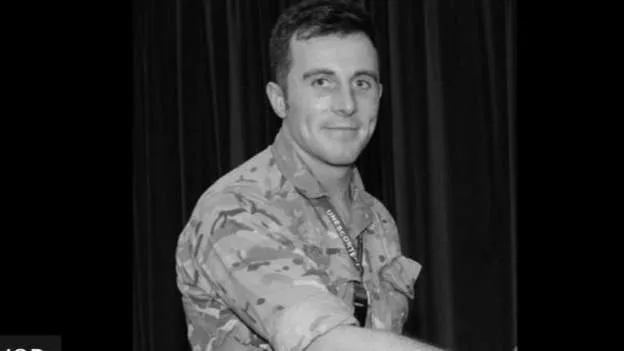
A high-ranking police officer, who didn’t want to give their name, told the media that investigators from Britain and Kenya went to the place where the crime happened near Nairobi.
The team is “almost ready to catch people,” the officer said.
He said that Maj Kevin McCool was riding his motorcycle outside of the base when a group of gunmen attacked him.
A group of men followed and attacked him when he drove into Vet Farm, a popular hiking spot about 25 km (16 miles) from Nairobi.
The men asked for money and the phone. Then one of them took out a gun, according to the officer.
Maj McCool’s father said before that his son thought the gun wasn’t real.
People who saw it happen told the police that the soldier was quickly taken to the hospital, where doctors said he had died.
Grant Shapps, who is in charge of the military in Britain, said that Maj McCool’s death is very sad.
The British army has a place it always stays at just outside Nairobi. They go there to practice and get ready for missions.
In a heart-stopping moment, a man narrowly avoided a fatal accident when his Toyota Prado collided with a trailer in Kenya.
Displaying profound gratitude, the fortunate driver rushed towards a nearby wall, where he knelt on the ground, offering thanks to his Maker.
Despite the vehicular chaos, the driver miraculously emerged unscathed, while his Toyota Prado bore the scars of the dramatic collision.
“This is the driver who came from under the Prado without a scratch; that is when I knew that if God is with you, he is with you no matter the situation,” said @stanleyodom1.
The video serves as a powerful testament to the delicate nature of life and the enigmatic forces that occasionally intervene during moments of imminent danger.
The man’s silent expression of gratitude against the wall resonates with the profound reality that, even in the midst of chaos, divine protection can defy the odds, leaving an individual untouched by the hands of peril.
On a somber note, the National Road Safety Authority (NRSA) branch in the Greater Accra Region has documented 4,876 road accidents and 399 fatalities from January to October 2023.]
Ezra Quansah, Assistant Planning Manager for NRSA in the Greater Accra Region, highlighted in an interview with the Ghana News Agency in Tema that these accidents, involving 8,804 vehicles, were predominantly caused by human errors.
Among the statistics, 2,776 individuals sustained injuries in road accidents, with 866 involved in pedestrian knockdowns, resulting in 206 fatalities.
Quansah, addressing a road safety workshop for drivers in Tema, emphasized that commercial vehicles contributed to 2,294 incidents, causing 928 injuries and 94 deaths. In the case of private vehicles, there were 5,122 crashes, leading to 843 injuries and 134 deaths.
“For the motorcycle crashes, there were 1,388; 1,005 injured; and 166 deaths,” Quansah is quoted as saying.
He pointed out that among all the recorded road crashes, there were 70 female fatalities and 329 male fatalities. Emphasizing the upcoming Christmas season, he urged drivers to prioritize safe driving practices to reduce the risk of road accidents.
Additionally, he advised against the use of unauthorized lights on vehicles, cautioning drivers to avoid such.
Cameroon’s Health Minister, Dr. Manaouda Malachie, wants people to believe in the government’s health plan, even though some people are unsure about the new malaria vaccines that came to the country nine days ago.
On Wednesday, he talked about the RTS,S vaccine and how it helps fight malaria. He said the testing in Kenya, Ghana, and Malawi was good.
“Because the vaccine worked well in the tests, it will be introduced for use. ” We can help all kids and save 2,000 lives each year by making sure all children receive these services throughout their childhood.
Cameroon was the first African country to get the RTS,S vaccines after the pilot phase ended.
However, in a country where many people are unsure about vaccines, the government has not been able to convince a lot of Cameroonians to accept the arrival of over 330,000 vaccine doses.
“We lived in a warm place, so we’re used to getting malaria. ” “I don’t understand why they have to give the vaccines to kids,” a person in the area told the media.
She said, “I won’t give my kids vaccines. I won’t let them get vaccinated at school either. ”
Every year, 6 million people in Cameroon get malaria and 4,000 of them die in hospitals, according to the WHO. Most of the people who are impacted are kids younger than five years old.
The governor of Kenya‘s capital, Nairobi, has contacted a 14-year-old Burundian boy who was harassed by county officials for selling peanuts on the street.
A video of a boy crying after county officials allegedly scattered peanuts on the street went viral Tuesday, drawing sympathy for the boy and anger from county officials.
This prompted a response from Nairobi Governor Johnson Sakaya, who on Wednesday revealed that the boy was a Burundian minor who had been sold to Kenyan traffickers.
He added that he had held talks with the Burundian ambassador about the boy’s return to school.
However, he denied the allegations of molestation and said district officials did not allow the boy to sneak out after hours.
He added: “Unfortunately, when he was caught and police officers confiscated his belongings, the minor struggled to reach the bucket and the contents of the bucket spilled onto the ground after the handle broke.” Sakaya said she would work with the State Department to address child trafficking and illegal immigration.
Authorities have previously said that foreigners, including children and the disabled, are being brought to Kenya to work, often as beggars or traders.
Kenya’s Vice President Rigathi Gachagua said that the government won’t give money to help with the floods, even though the country is facing one of the worst floods in a long time.
The governor of Mombasa disagreed with Mr. Gachagua’s earlier statement that the government sent 10 billion Kenyan shillings to counties for flood response. This comes after Mombasa has been heavily affected by ongoing floods.
Flash floods last week killed at least 13 people in Mombasa and three nearby counties.
“We are surprised that governors are saying they still haven’t gotten money for El Nino from the national government. They won’t be getting that money,” Mr. Gachagua said on Wednesday.
“We want them to use money set aside for emergencies or move money around in their budget to help the people they are in charge of. ”
The Kenya Red Cross said that 71 people have died from the floods in the country.
The non-profit Oxfam says that the continuous heavy rains and flooding caused by El Niño have led to the deaths of 130 people in Ethiopia, Kenya, and Somalia.
President William Ruto wants to help Kenyans get jobs in Germany because there are not enough jobs in Kenya.
He created the plan just before leaving for Europe for a G20 meeting.
Over twelve African leaders are going to Berlin, Germany to look for ways to boost Africa’s economy, like exporting workers and getting more money invested in their countries.
The leader of Germany visited Kenya around three to four months ago. I am going to Germany tonight because he said he will make sure 200,000 people get jobs. I need to go check out those chances,” Mr Ruto said on Sunday.
Chancellor Olaf Scholz has been visiting Africa, including Kenya and Nigeria. He is interested in increasing investment in Africa, especially in minerals and green energy.
This meeting called G20 Compact with Africa wants to make the economy stronger by connecting African countries with G20 countries.
Thirteen African countries are in the program – Benin, Burkina Faso, Ivory Coast, Democratic Republic of Congo, Egypt, Ethiopia, Ghana, Guinea, Morocco, Rwanda, Senegal, Togo, and Tunisia.
Leaders from other African countries, like Kenya and Nigeria, are coming to the event as special guests.
Kenya’s police and prison officers are going to get a 40% raise in their pay over the next three years. This is based on a review of the security sector, said President William Ruto.
The pay raise is meant to make people feel better and make them feel more secure.
A group that studied how to make policing better in the country suggested it.
Kenyan police are known for being violent and taking bribes, but people are also worried about their well-being.
They don’t get much money and some have turned to crime. In the past few years, some police officers have died by suicide and it’s been acknowledged that many of them are having a hard time with their mental health.
In the past, there were attempts to increase their salary, but it did not make Kenyans think of them differently.
“We will look at the rules for our military to make them happier and improve our safety. ”
He said the suggestion to increase pay by 40% over three years was “carefully thought out. We will now wait for the Salaries and Remuneration Commission to make the needed changes so we can carry out the decision.
The president promised to be tough on corruption in the police and acknowledged that it is a big problem.
He said that the raise in pay and other changes they want to make will solve the problems the task force found – not enough money, bad leadership, problems with the structure and organization, and corruption.
The group, led by David Maraga, was created in December after Mr. Ruto became president.
We were asked to find ways to make the working and living conditions better for police, prison, and NYS officers, and also to suggest other changes.
The task force suggested that people should be at least 21 years old to join the police force, not 18. It was also recommended to require a C-minus grade for admission to secondary school and to spend more time on training. Currently, the minimum grade for admission is a D-plus.
The task force also wants to improve medical and housing benefits, decrease overcrowding in prisons, and grow the NYS program, which teaches young people important life and work skills.
Mr Ruto said the government will do all the things that were suggested, but it might take some time because they have to change some laws and policies.
Time Magazine has named Kenya’s President William Ruto as one of the top 100 leaders in the world who are making a big difference in helping the environment.
He announced the list during the week when he organized a national holiday to plant 100 million trees in one day.
Mr Ruto was chosen with the mayor of Freetown, Yvonne Aki-Sawyerr.
Architect Francis Kéré from Burkina Faso and entrepreneur Kidus Asfaw from Ethiopia were also on the Time list.
The “Time 100 Climate” ranking was released on Thursday. It’s the first time the magazine has tried to name people who are important in addressing climate change around the world.
Time chose those who have made big progress in fighting climate change while also creating value for their businesses.
The magazine chose the honourees because they have recently made successful and measurable progress in fighting climate change, instead of just making promises and announcements.
The special day to plant trees on 13 November was a small part of his big goal for Kenya to plant 15 billion trees in 10 years.
In September, he held the first Africa Climate Summit in Kenya’s capital, Nairobi. They asked big polluters to give more help to poorer countries.
Some environmentalists say Mr. Ruto is a hypocrite because he promotes planting trees but doesn’t stop illegal logging in public forests.
Last month, a court that deals with issues about the environment stopped Mr Ruto from lifting a ban on logging that was put in place in 2018.
In October, he said that people should be made to leave the 380,000-hectare Mau Forest.
Some people who care about the environment think it’s good to protect the forest. But others say the government kicked out the Ogiek people, who have lived there for a long time, just to make money from carbon offsetting.
MrRuto is being recognized as a leader for taking action on climate change. The World Bank said on Friday that if Kenya doesn’t do something about climate change, its economy could shrink by 7. 25%
Time named Francis Kéré an architect for his creative and environmentally friendly building designs. He worked on projects like state houses in Benin and his own country, Burkina Faso.
In 2022, he was the first black person from Africa to win the important Pritzker Architecture Prize.
Mr Asfaw has a small business that turns old plastic into cheap and eco-friendly building materials.
Time magazine said that his new company provides a fast and long-lasting way to fix the lack of houses as the population in Africa keeps increasing.
Mayor Aki-Sawyerr was recognized for “working to protect the environment and make the city better prepared for climate change. ” She did things like creating a plan to deal with climate change in Freetown and hiring someone to help with extreme heat in the city, which had never been done in Sierra Leone or Africa before.
Kenyan preacher Paul Mackenzie faced legal repercussions in a high-profile trial, but surprisingly not for the deaths of over 400 individuals associated with his doomsday cult.
The senior resident magistrate in Malindi, Olga Onalo, instead convicted Mackenzie for operating a television studio and distributing films without the necessary licence from the Kenya Film Classification Board.
The preacher, detained for more than six months following his April arrest, was linked to the discovery of numerous bodies in mass graves across his expansive 800-acre property in the coastal Kilifi county.
Allegations suggest that Mackenzie directed his followers to abstain from food, supposedly to encounter Jesus. Despite multiple court appearances, he has not faced formal charges related to these deaths, although the Office of the Director of Public Prosecutions identified him as the primary suspect.
On Friday, Mackenzie was acquitted of additional charges, including influencing children against school attendance and employing radical sermons to provoke Christians against Hindus, Buddhists, and Muslims. His sentencing for the film-related offenses is scheduled for December 1, potentially carrying a maximum penalty of five years in prison.
Prosecutors have sought a six-month extension for Mackenzie’s custody to finalize investigations, including the search for numerous missing individuals. This case has sparked conversations about the need for government regulations concerning churches in Kenya.
The family of a person who loved hiking and died from falling off a mountain in Africa has started collecting money for the guide who also died while trying to rescue her.
Shilpa Shah, who is from London, climbed Mount Kenya for the first time. However, while coming down, she fell and her guide, Kelvin Mariuki Mwithi, tried to catch her.
Ms Shah’s family said that they had to take action when they found out that he had a wife and a child who was either two or three years old.
The charity event has already received more than £35,000 in just one week.
The Shah family wants the money to help the Mwithi family have a better future, even though they have experienced a tragic loss.
Shilpa’s niece Neha Shah said that we hope to have enough money to support ourselves and our future family forever.
Thinking about her aunt’s death, Neha said: “She was the greatest aunt that any girl could ever have. ”
“She was always there, and she always gave the best guidance. ”
Ms Shah really enjoyed being outside and going hiking. She went on a trip to Kenya with seven other women.
“I enjoy hiking because of her,” Neha said.
She has motivated and encouraged all of us. We will all really, really miss her a lot.
The family said that Shilpa was a kind person with a lovely smile who always helped others without wanting anything back.
Assistant guide Alexandre L’Heureux, who had gone up Mount Kenya with Mwithi, said that his colleague was a wonderful person with a gentle and caring nature.
Authorities from both the United States and Kenya have initiated a joint effort to apprehend the perpetrator responsible for the tragic death of a Kenyan-American woman, whose lifeless body was discovered at Boston Logan International Airport in Massachusetts.
The victim, identified as Margaret Mbitu, aged 31, was found in a horrifically injured state while in the passenger seat of a vehicle parked at the airport.
The primary suspect in this case is believed to be Ms. Mbitu’s partner, Kevin Kangethe. He is suspected of having fled to Kenya after leaving her body at the airport.
According to Ms. Mbitu’s mother, who spoke with Boston’s 25 News channel, her daughter had been in the process of ending her relationship with Mr. Kangethe.
The last confirmed sighting of Ms. Mbitu occurred as she departed from her workplace on Monday night. Both US and Kenyan authorities are actively working to unravel the circumstances surrounding this tragic incident.
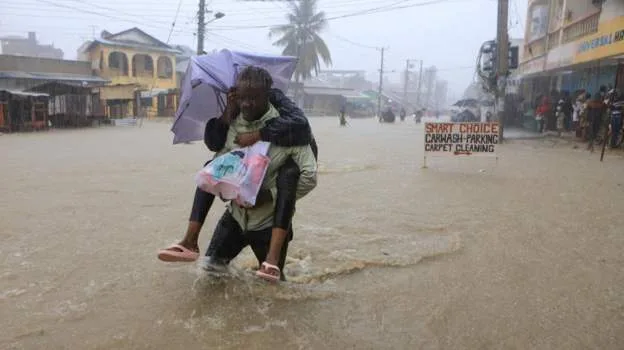
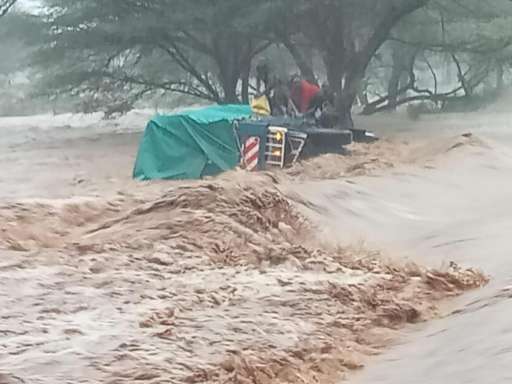
Recent flash floods have struck parts of Kenya, resulting in road closures and submerged vehicles.
In Mombasa, a coastal city, roads in a section of the city were severed by floodwaters, compelling many motorists to abandon their cars and resort to motorbikes to reach the airport and train station on Friday.
In northern Kenya’s Isiolo County, locals are engaged in a search for a young man who was swept away by floods while riding a motorbike on Thursday.
Additionally, the conservation organization Save the Elephants executed a daring rescue mission, saving eight individuals from a sinking lorry on Thursday after they became trapped in floodwaters.
This is not the first instance of a conservation group intervening to save people from floods in Kenya. Earlier this year, The Sheldrick Wildlife Trust used their helicopter to rescue a stranded driver.
The Kenyan meteorological department had previously issued warnings of potential El Niño rains, anticipated to affect Kenya and other East African nations from mid-October, potentially leading to flooding, infrastructure damage, and loss of life.
Additionally, neighboring Tanzania and Somalia have also witnessed heavy rains in recent days.
However, on October 22, Kenyan President William Ruto stirred controversy by asserting that the country would not experience El Niño, a natural weather phenomenon, contrary to earlier predictions.
“The meteorological department has now said there will be no El Niño. We will only have heavy rains but they will not reach a destructive level,” Mr Ruto said.
As well as causing changes to rainfall, global temperatures typically increase during an El Niño episode.
Rwanda has declared that citizens of other African nations would be able to enter the East African nation without a visa.
The most recent nation on the continent to enact a law aimed at promoting human freedom of movement is Rwanda.
At the World Travel and Tourism Council’s 23rd Global Summit, President Paul Kagame made the announcement.
Despite Africa’s reliance on foreign tourists which is manifested by 60% of its tourist being foreigners, Paul Kagame, at the event, pitched Africa’s potential as “a unified tourism destination”.
“Any African, can get on a plane to Rwanda whenever they wish and they will not pay a thing to enter our country.”
“We should not lose sight of our own continental market. Africans are the future of global tourism as our middle class continues to grow at a fast pace in the decades to come,” he added.
Starting November 2023, Ghanaians will enjoy visa-free travel to South Africa, enabling citizens of both nations to visit each other without the requirement of a visa for stays up to 90 days.
Additionally, Kenya has revealed its intentions to facilitate the unrestricted entry of Africans into the country.
Upon implementation, Rwanda will become the fourth African country to eliminate travel restrictions for its citizens. The Gambia, Benin, and Seychelles have already exempted African citizens from visa requirements.
In 2016, the African Union introduced the African passport with the goal of unleashing the continent’s potential, mirroring the European Union’s model.
The African Passport and the concept of free movement for people aim to eliminate constraints on Africans’ ability to travel, work, and reside within their own continent, according to the AU’s website.
It’s worth noting that, until now, the travel document had only been issued to diplomats and AU officials.
Queen Camilla fed a baby elephant from a bottle when she went to visit a place in Kenya called an orphanage. This place is for baby elephants whose parents were killed by poachers.
On the second day of the queen’s visit to Kenya, she assisted in feeding the elephants at the Sheldrick Wildlife Trust Elephant Orphanage.
She and King Charles learned about helping and healing baby elephants who don’t have any parents.
Elephants also have to worry about deforestation and drought, in addition to poaching.
If members of the royal family go to a lot of places where they can take pictures, there are not many places that could be as cute as an elephant orphanage. If the first part of the state visit was about discussing the problems caused by colonialism, this second part was made lighter with a visit to Nairobi National Park.
A baby elephant held onto a bottle with its trunk while the Queen helped caretakers feed the orphaned elephants.
The King was chatting with the staff at the park while a young elephant was gently biting the trousers of one of the keepers.
The wildlife center cares for 316 baby elephants who have no parents and are in danger. This is because people are taking over their land and causing problems for them.
The park also has a place where a lot of illegally hunted elephant tusks were set on fire by the authorities. This was done to demonstrate the country’s dedication to ending the illegal trading of animal products. The King showed his support for protecting the environment and making sure our resources last longer during his trip to Kenya.
He went to a United Nations office in Nairobi to learn about what they are doing to help the environment. Then, he planted a tree with a 10-year-old girl named Karen Kimani, who wrote to him about the importance of protecting the environment.
On Wednesday, it was announced that the King would give a speech at the upcoming COP28 climate change summit in Dubai.
Last year, there were hints of disagreements with the British Prime Minister’s office because the King couldn’t go to the previous meeting.
The King of an important kingdom visited Kenya. This was the first time he visited a country in the Commonwealth since he became king. During his visit, he gave a very important speech about the impact of colonialism.
He didn’t fully say sorry, but he expressed his deep sadness and regret for the violent acts done to Kenyans during their fight for independence.
Caleb Mwangi was given a severe beating at his school in Kenya because he took more food during breakfast. As a result, he was put into a coma and had to spend 11 days in a special hospital unit for critical care.
When I arrived, he was unable to get out of bed. “He was unable to talk,” said Fred Mwangi, his father, in an interview with the BBC.
This happened almost two years ago when Caleb was 13 years old. Right now, he is sitting on the sofa in his home in Mombasa, a city on Kenya’s coast, with his mom and dad. He mentions that he sometimes spaces out or loses focus.
The young person feels really angry and sometimes hits the wall. He says that the trauma of almost dying has an impact on a person.
Mr Mwangi asked his son to lift his shirt and show a big, angry scar that covers almost his whole back.
He says his wounds were very bad, so the surgeon had to take big pieces of skin from his thighs to cover them up. “This is him at the hospital,” says his mom Agnes Mutiri, showing pictures of Caleb on her phone. The pictures are too explicit to share. ” He is lying on the bed with wounds on his legs, back, arms, and face. There were almost 100 in all.
In Kenya, corporal punishment has been used in schools for a long time. It started when missionaries and colonizers used it to show that they were in charge.
In 2001, the government of Kenya made a rule that says schools cannot do it, but it has been more difficult to change how people think.
The latest Violence Against Children report, which surveyed households in Kenya in 2019, found that over half of young adults aged 18 to 24 agreed that teachers should be allowed to physically punish students.
BBC Africa Eye has found out that there is a concerning rise in the amount of serious cases being reported.
Caleb said that Nancy Gachewa, who is the director of a school in Bamburi near Mombasa, was the person who hurt him first and told other students to do the same. Gachewa says that she wasn’t at the school when it happened and she denies it.
“I was very hungry, so I ate five chapatis with tea,” Caleb explains.
Ms Gachewa and another student, Idd Salim, were taken by the police and accused of hurting someone and causing serious physical harm. Last year, Salim was given a punishment of four years in jail. As part of a deal, he has given evidence against Ms Gachewa in court.
Caleb’s situation is really terrible, but it is not something that only happens to him. A person working at the Teachers Service Commission in Kenya talked to BBC Africa Eye without revealing their identity.
They said that in the past three years, the number of severe school beatings that have been reported has increased more than fourfold, going from seven to 29. Many incidents are not told to anyone.
This situation is getting worse and we think it is getting harder to control now. Children getting hurt and losing body parts. They said that some of these situations have caused very serious outcomes, including death.
According to the source, when cases of school beatings are reported to the TSC at the county level, they often do not progress. The source also mentioned that these incidents are “covered up” and never become known to the public.
Many times, when the case comes to us, a lot of evidence has been damaged or destroyed. Sometimes, we are unable to contact the witnesses.
Most people can’t imagine that a student could die because of teachers or other school staff who should keep them safe. But in the last five years, the media has reported over 20 deaths that were connected to beatings at schools. They said that in the last three years, the number of reports of the most severe school beatings has increased by more than four times – from seven reports to 29 reports. Many times, people do not tell anyone about things that happen to them.
The situation is getting very serious and we think it is getting harder to control now. Children getting hurt and disabled. “Some of these situations have led to very serious outcomes, including death,” they explained.
The person who shared this information said that when incidents of school beatings are reported to the TSC at the county level, they usually don’t get addressed further. They mentioned that these incidents are often hidden or ignored.
Many times, when we receive a case, a lot of the evidence has been spoiled or damaged. Sometimes we can’t even contact the witnesses.
BBC Africa Eye reached out to the TSC to answer these claims, but the TSC did not respond.
The idea of a student dying because of teachers who are supposed to keep them safe is hard to believe for many people. However, in the past five years, the media has reported over 20 deaths caused by beatings in schools. In January of last year, Elizabeth Wairimu Gatimu, who used to be the assistant head of Ebbie’s school, was taken into custody by the police for committing a murder. She says she didn’t do what they’re accusing her of.
“I will do whatever it takes for as long as I’m alive to make sure my child gets the justice they deserve,” Mrs. Samuels She is still waiting to find out what will happen in the case.
I said to myself: ‘I won’t let anyone quiet me down. I will not stay silent. I won’t stop fighting. It might be the day I give up when I sleep peacefully like my daughter. But as long as I am alive, I will not quit.
BBC Africa Eye asked to talk to the Kenyan Ministry of Education, but no one was willing to say anything.
One group working for change is Beacon Teachers Africa. Started in Kenya four years ago by the Plan International, a non-governmental organization, along with the TSC, its purpose is to allow teachers to keep children safe in schools and their communities.
It currently has a group of 50,000 teachers in 47 countries in Africa. Robert Omwa is a teacher in Kenya. There are 3,000 teachers like him working for Beacon. In addition to teaching children about their rights, he also runs workshops to teach teachers how to discipline students without physical punishment.
“At first, I didn’t believe it. ” I used to believe that it was a common belief in the Western world that African children should be punished by beating them. However, when I gave it a go, I felt a sense of comfort and relief, like a teacher. I felt less heavy or burdened. He said that the children were starting to like him more.
In Mombasa, Caleb and his family are waiting to find out what will happen to his school director. Ms Gachewa says she did not do the crime.
The 15-year-old still struggles to understand and deal with what happened to him.
“I want this woman to go to prison so that I can get the fairness I deserve. “
The Kenya Human Rights Commission, a group that is not part of the government, is asking King Charles III to say sorry for the wrong things done by Britain when they ruled Kenya.
The king is going to Kenya for four days, starting on Tuesday, to try and understand the hardships people faced there.
Over 10,000 people were killed by British authorities during the 1950s when they stopped a group that wanted independence. About 1,000 individuals were hung after quick trials.
The rights group said they want the king to apologize in a clear and definite way.
Ten years ago, the British government officially accepted that torture had happened when the colonial administrators were in charge.
The organization said sorry and promised to give money to many veterans of the rebellion.
Some tribes in Kenya, such as the Nandi, Kipsigis, and Pokot, are asking the UK government to say sorry and give them money for the wrong things done to them during colonial times.
Some communities want the UK to give back their old objects and lands that were taken by the colonial government and are still owned by British groups.