Tag: Kenya

  • Kenya’s hard-won victories against malaria jeopardised by rising temperatures

    Kenya’s hard-won victories against malaria jeopardised by rising temperatures

    Mary Achieng’s family frequently stays in the malaria ward at Nightingale Hospital in western Kenya every month. During her trip in late August, she and her two sons, who are 4 and 12 years old, are receiving medical care. All three are getting better from a sickness that has caused a lot of damage in their area for a long time.

    Malaria has affected my family severely. I spend around $35 on medication every month. Then, the next month, someone gets sick again. “I’m currently at the hospital, my children are not at school, and I haven’t been able to start my business,” she said to CNN.

    Achieng lives in a place called Kisumu in Kenya. It’s a hot and sticky area near a lake, which is perfect for mosquitoes that spread malaria. She is one of 14 million people in Kenya who live in places where malaria is common. These people face the challenge of dealing with a disease that causes around 10,000 deaths in the country each year.

    There are worries that malaria is spreading to new places in the country. This is concerning because a new vaccine for mosquitoes is being developed, and people hope it will help get rid of the disease forever.

    The reason for something happening is climate change.

    Mosquitoes like warm and humid weather. The human-caused climate crisis is making heat waves and storms happen more often, creating more places for mosquitoes to breed.

    In Kenya, like in other parts of Africa, mosquitoes that spread malaria are causing problems for communities where malaria outbreaks used to be rare.

    Kenyan scientists from KEMRI are studying cases of malaria in people who haven’t traveled to areas where malaria was common before.

    This includes areas like the Kikuyu highlands, which are near the capital city Nairobi. Scientists recently discovered malaria-carrying mosquitoes there for the first time. According to a recent report, there has been a big rise in temperatures in the area. Over the past 60 years, it has warmed up by about 1. 3This increase could be one of the main reasons for the changes happening.

    Steve Ngugi, who lives in Kikuyu and is 45 years old, was surprised to find out in February that he had malaria even though he hadn’t been to a place where there is malaria. It was the first time in his life that he got the disease. He was very sick and scared for his life because of malaria for three months, since he had almost no protection against it. He felt very weak during this time.

    Gitahi Githinji, who works for the nonprofit organization Amref Health Africa in Nairobi, said that the way mosquitoes spread malaria is changing quickly because of global warming. “And we can see that the public health system is not ready for this sudden increase,” he said to CNN.

    This is a big problem in Africa. Africa has 95% of the cases of malaria. This disease kills over 600,000 people every year, and many of them are children.

    A new report discovered that mosquitoes that spread malaria are now flying at higher elevations in sub-Saharan Africa. On average, they are climbing 21 feet higher each year for the past 120 years. According to the report authors, it is a speed that happens as a result of climate change.

    Richard Munang, who works for the UN’s environmental agency, said that as cooler places are getting warmer, the mosquito population is growing and causing more cases of malaria in those areas.

    Experts are saying that the climate crisis is speeding up and that other continents are also in danger.

    Munang said that what is happening in Africa will slowly happen in other places too. This is because as the climate gets warmer and temperatures change, mosquitoes that carry malaria are moving to other places where they can survive well. He said that as the bugs go to new places, people will need to leave.

    We have good news about fighting malaria. Scientists and health experts have made progress in fighting the disease in the past 20 years by using different ways to prevent it.

    In Kenya, giving out bednets with insecticide and giving medicine to prevent malaria, along with campaigns that inform everyone in the country, have helped malaria go down a lot.

    Now that the first malaria vaccine is available, people are hopeful that malaria can eventually be completely eradicated.

    About 17 million children in Kenya, Ghana, and Malawi have received the vaccine since it was introduced in 2019. This has led to a significant decrease in the number of severe malaria cases and child deaths.

    So it’s a sad situation that while Kenya is celebrating the progress it has made, there are now new types of malaria and more cases appearing in areas that used to have a low risk.

    Damaris Matoke-Muhia, a scientist at the Malaria Lab of KEMRI, said that we were very close to reducing the number of cases to a very low level, almost undetectable.

    But climate change means there are more mosquitoes now, she told CNN. We are discovering new types of living things. “We are noticing malaria spreading to unexpected locations,” she said. “She said we are starting from the beginning again. ”

    If the Earth keeps getting warmer, Matoke-Muhia believes that the situation with malaria might be different in the future.

    “If things keep happening this way,” she said, “we need to start over, come up with new ways to help. ”
  • Kenya wagers on carbon credits as it holds first-ever climate summit in Africa

    Kenya wagers on carbon credits as it holds first-ever climate summit in Africa

    Deep within the rugged landscape of Kasigau, a sprawling wilderness inhabited by elephants, a team equipped with clipboards and measuring tapes is diligently examining an unassuming tree. Despite its gnarled and leafless appearance, this tree holds significant value: it serves as a carbon store. The team’s mission is to precisely quantify the amount of carbon locked within this semi-arid, 200,000-hectare woodland in southern Kenya.

    “We want to make absolutely sure we account for every single tree,” asserts Geoffrey Mwangi, the lead scientist at the US-based company Wildlife Works, as the “carbon samplers” gather data from another thorny specimen.

    This data translates into carbon credits, and these credits have become a valuable commodity, fetching millions of dollars when sold to corporate giants like Netflix and Shell. These companies purchase these credits to offset their greenhouse gas emissions, enhancing their environmental credentials.

    With climate change intensifying and mounting pressure on companies and nations to address their environmental impact, the demand for carbon credits has surged, despite facing scrutiny over their effectiveness.

    Cash-strapped African countries are now seeking a larger share of the $2-billion carbon credits market, which is projected to grow five-fold by 2030. Africa is home to the planet’s second-largest rainforest and extensive carbon-absorbing ecosystems, such as mangroves and peatlands, yet it only produces 11 percent of the world’s carbon offsets.

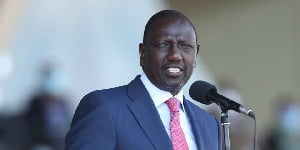
    Kenyan President William Ruto, who is hosting a climate summit in Nairobi, expressed the view that Africa’s carbon sinks represent an “unparalleled economic goldmine” with the potential to absorb millions of tons of CO2 annually, translating into billions of dollars.

    A single carbon credit represents one tonne of carbon dioxide removed or reduced from the atmosphere. Companies acquire these credits through activities such as renewable energy projects, tree planting initiatives, or forest protection programs.

    Carbon markets operate with minimal regulation, and accusations have arisen that certain carbon offsets, particularly those tied to forests, yield limited environmental benefits or exploit local communities, leading to a drop in prices.

    Kenya already leads Africa in generating carbon offsets and envisions a substantially larger domestic industry capable of creating jobs and driving economic growth, despite the market’s uncertainties.

    “We have massive interest. We currently hold 25 percent of the African carbon credits market in Kenya, and we aim to expand this,” says Ali Mohamed, the president’s special envoy for climate change.

    In Kasigau, Wildlife Works runs a flagship carbon credit project, compensating landowners and communities for preserving the forest. Revenue from the project has supported approximately 400 jobs and funded essential infrastructure, including water, education, and healthcare, in an underserved area of Kenya.

    Wildlife Works founder Mike Korchinsky affirms that over half of the revenue goes to these communities. The protected forests were previously cleared for firewood and charcoal, leading to the degradation of a vital carbon sink and critical wildlife habitat. Preventing deforestation helps achieve climate goals by retaining carbon in the soil and trees, preventing its release into the atmosphere.

    The Kasigau Corridor REDD+ Project was the world’s first to generate certified credits in this manner, with independent verification conducted nine times since 2011, preventing roughly 22 million tonnes of CO2 emissions.

    While Kenya emits approximately 70 million tonnes of CO2 annually, projections suggest that Africa could generate 300 million carbon credits annually by 2030, a 19-fold increase from current levels. For Kenya, this would equate to over 600,000 jobs and $600 million in annual revenue.

    However, these projections rely on carbon prices significantly higher than current levels and a substantial increase in financing. Carbon markets are grappling with trust and integrity issues in an environment characterized by volatility.

    Ahead of the Africa Climate Summit in Nairobi, over 500 civil society organizations called on President Ruto to steer the conference away from carbon markets and “false solutions” driven by Western interests. They argue that these approaches will allow wealthy nations and large corporations to continue polluting while undermining Africa’s interests.

    Joseph Nganga, Ruto’s appointee to lead the summit, contends that carbon markets should act as a means of ensuring accountability rather than an excuse for emissions. He believes that the cost should be borne by wealthy polluting nations.

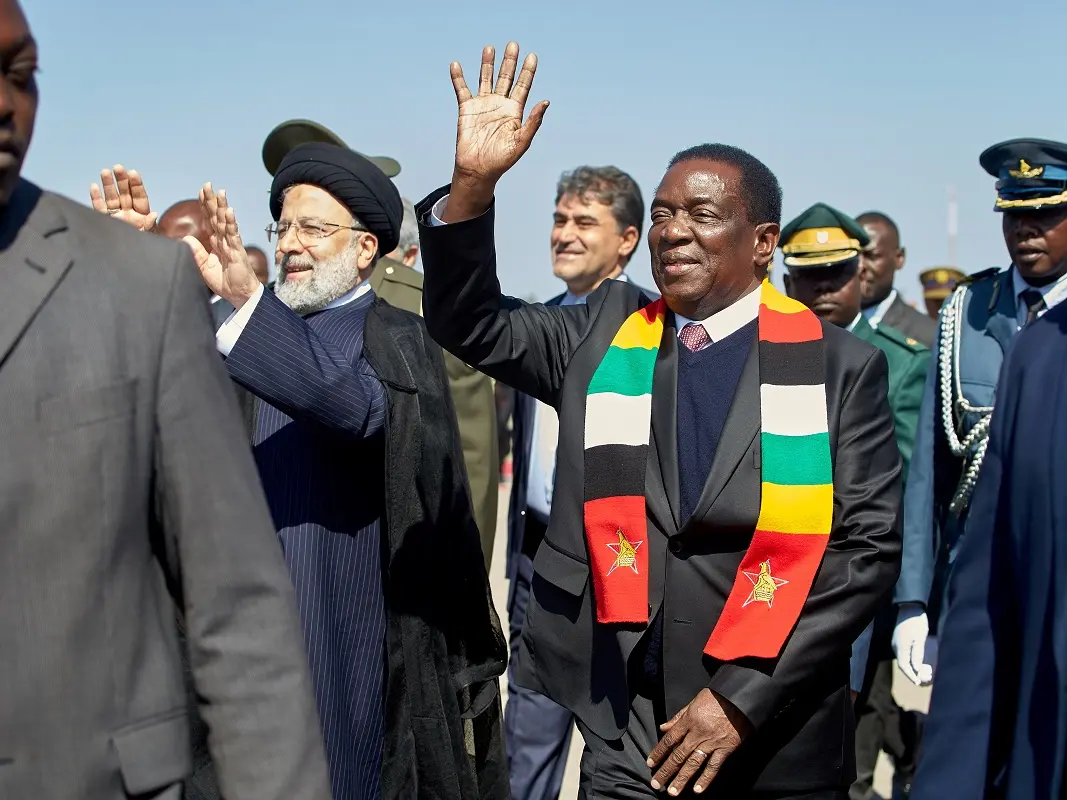
    Countries are moving to regulate the carbon credit sector. Zimbabwe, for instance, announced plans to appropriate half of all revenue generated from carbon credits on its land, sending ripples through the markets. Kenya is also finalizing its own legislation to ensure transparency and a fair share for communities without discouraging investors.

  • Kenyan man found guilty of baby theft following BBC exposé

    Kenyan man found guilty of baby theft following BBC exposé

    A person who works in a hospital in Kenya was caught by the BBC trying to sell a baby illegally. This person has now been found guilty of child trafficking.

    Fred Leparan, who worked at Mama Lucy Kibaki hospital in Nairobi, was caught on video accepting $2,050 (£1,600) in exchange for selling a baby boy who was being cared for at the hospital.

    He got taken by the police in 2020 after an investigation by BBC Africa Eye.

    Leparan and another hospital worker named Selina Awour were accused of stealing a child.

    Awuor was found guilty of not taking care of children, but she was cleared of the charge of illegally moving children around.

    The couple will receive their punishment on 26 September.

    An Africa Eye reporter pretended to be interested in buying something from Leparan. They did this because they had heard from someone that Leparan, who works as a senior social worker in a hospital, was involved in illegally selling children.

    A meeting was set up at the hospital. Leparan asked the secret reporter some quick questions about her situation. She mentioned that she and her husband had trouble having a baby. Without much thought, Leparan agreed to sell the baby boy.

    On the day when the baby boy was supposed to go from the hospital to a special home for children run by the government, someone named Leparan was caught on camera changing the important documents for the transfer. Leparan made it look like only two children were coming to the home instead of three.

    The BBC team made sure that all three children were taken to their new home. They filmed Leparan fixing some paperwork and telling the family that they could now officially adopt the child.

    Even though there was proof that said he was guilty, the court case continued for over two years. Leparan had a very good lawyer in Kenya, but when he was questioned in court, what he said didn’t match up and he avoided giving direct answers.

    He had to admit that it was him in the secret video, but he tried to say that someone else’s voice was speaking, even though his mouth was moving along with the words. Afterwards, he confessed that some of the words were his.

    Leparan said he couldn’t remember parts of the hospital where he had worked for three years. In court, they showed a video of Leparan planning to steal and move the baby boy without anyone knowing.

    The BBC found out that Mama Lucy sold a child illegally. However, a former worker, who asked not to be identified, told Africa Eye that they knew of 12 children from the hospital who disappeared in only two months.

    A lot of people are dishonest. “He said that when they receive something small, they stay silent and never speak,” he mentioned, talking about the bribes provided to the employees.

    Many people in Kenya still want to buy stolen children because they believe in false stereotypes about being infertile or adopting legally being difficult.

    The hospital scam run by Leparan is just one part of this complicated issue. Africa Eye also recorded people who buy and sell babies in illegal clinics on the streets, and the open stealing and selling of babies from homeless mothers in the city.

    Mary Auma, who operated a clinic for struggling mothers to give birth and sell their babies to her, so that she could then sell them for money, went missing after our undercover team captured her on camera. When we returned to Nairobi, we couldn’t find Auma and her clinic was closed.

    However, newborns are still being taken away from their parents without permission in Nairobi. Near the entrance of the closed clinic, a lady came up to us and showed us a paper with a picture of her five-year-old granddaughter, Chelsea Akinye.

    Chelsea’s grandmother, Rosemary, told us that Chelsea had been taken from the street one year and six days ago. She said she had been looking for Chelsea every day, putting up flyers in the neighborhood and other areas.

    She said that the little girl was happy and doing well in school.

    Rosemary said that when she returned from school, she would ask someone nearby for help with her homework before going out to play.

    “I have looked for Chelsea all the way to Busia. ” Since that day, I start my search for her very early in the morning, sometimes as early as 4am.

    Like other parents or grandparents who have had the horrible experience of having a child taken away, Rosemary sometimes wishes for some kind of resolution or conclusion.

    I think someone might have left her somewhere, or she could have been killed and left somewhere. “And then I go and bury her, and it makes me sad,” she explained.

    There is not much information available on the exact number of children who are being trafficked in Kenya. According to Florence Bore, who is in charge of labor and social protection in the country, a total of 6,841 children went missing from July 2022 to May 2023. Only 1,296 people have been able to be reunited with their families.

    Mueni Mutisya, who works for the Child Trafficking Unit of the Directorate of Criminal Investigations, said to the BBC that their unit usually receives about five new cases of child abduction every week. Mostly, the lowest income families are impacted, according to Ms.

    The day after we first shared our findings in 2020, Kenya’s former minister in charge of labor and social protection, Simon Chelugui, promised that the government would take strong measures to stop the illegal trafficking of children. He assured that those responsible would be punished to the fullest extent of the law.

    Last year, Kenya implemented new laws to make sure children are better protected. However, according to Ms. Mueni, there is still more work to be done. She asked for new rules that would make it necessary for people to tell authorities if they think a child has been hurt or taken away without permission.

    “She said we should all work together to keep children safe. ”
    The children who are most at risk are still those who come from the poorest families. Maryana Munyendo, who leads the charity Missing Child Kenya, says this. The charity provides a free phone line for people to report cases of child abductions.

    “Ms Munyendo said that in Nairobi, we continue to have many cases coming from the poor neighborhoods. ” She mentioned that her phone still gets three missing child reports every day on average.

  • Meet the Kenyan woman who quit bank job to run and thriving private school

    Meet the Kenyan woman who quit bank job to run and thriving private school

    Founder of St. Bakhita School, Felista Muthoki Mutinda, made a bold career change, leaving her secure job as a services executive in the banking industry to pursue her passion for education. At the age of 52, Mutinda embarked on a journey to create an educational institution that prioritized holistic child development, parent involvement, and life skills alongside academics, believing that traditional schools were falling short in these aspects.

    Many around her initially questioned her decision to abandon her 14-year banking career for entrepreneurship in education. Despite her lack of experience in the field, Mutinda attended workshops and conducted extensive research to bring her vision to life.

    Starting her venture required a significant financial commitment. Mutinda used her personal savings, received financial support from her parents and husband, and even tapped into her pension fund. She began with one kindergarten located in a renovated house in South B, a suburb of Nairobi. Over time, the school expanded to encompass two kindergartens, two primary schools, and a junior school, serving a total of over 2,700 students and employing 327 staff members.

    St. Bakhita School quickly gained popularity, attracting 32 students in its first year as an alternative to a nearby kindergarten that had closed down. Within five years, enrollment had grown to 172 students, prompting the school’s expansion into adjacent properties. The kindergarten even had a two-year waiting list within its first five years of operation.

    Mutinda attributed the rise of private schools to a policy change in 2003 that led parents to seek quality education in private institutions. The number of private schools in Kenya surged from 7,742 to 16,594 between 2014 and 2020.

    Inspired by the success of the South B kindergarten, Mutinda ventured into opening a franchise in Machakos in 2011, which enrolled 53 children in its inaugural year. In 2017, when the Kenyan government introduced a new curriculum aligned with St. Bakhita’s educational approach, Mutinda expanded her enterprise by establishing two additional primary schools to meet evolving community needs.

    In 2020, Fanisi Capital, a private equity firm, acquired a minority stake in St. Bakhita Schools for approximately $2.5 million, aligning with the school’s growth strategy.

    Mutinda’s advice to aspiring entrepreneurs is, “There is so much potential in every one of us. We shouldn’t look at our businesses just as a form of sustenance but as a source of employment with the ability to transform society. You can take your business from one level to another by creating workable structures.”

  • Police in Kenya salvage 26 trafficked women after raiding a house

    Police in Kenya salvage 26 trafficked women after raiding a house

    In the central town of Murang’a, Kenyan police made a discovery on Monday night, uncovering 26 Ethiopian women who had been held captive by human traffickers in a partially constructed house.

    The women had endured confinement in the small house for approximately one week, with only a solitary mattress on the bare floor.

    These women had reportedly been trafficked into Kenya through the Moyale border point, with their ultimate destination being South Africa.

    Law enforcement authorities have taken the women into custody, seizing their passports and mobile phones in the process.

    Furthermore, the proprietor and the guard responsible for the house have been apprehended, as the investigation to locate the human traffickers remains ongoing.

  • Akufo-Addo speaks from Kenya, says ban on galamsey produced positive results

    President Akufo-Addo has indicated that Ghana is making strides in its effort to lower carbon emissions, primarily due to two of its flagship policy initiatives.

    Speaking at the 2023 Africa Climate Summit in Nairobi, Kenya, the president pointed out the ban on illegal mining and the Green Ghana Day initiative as the forerunners to the enhancement of the nation’s resilience to the adverse effects of climate change.

    He explained that the waterbodies and vegetation cover are being saved from pollution, and more trees have been planted to save the depleting vegetation cover due to the aforementioned initiatives.

    “We placed a ban on illegal mining the phenomenon we call galamsey which was destroying our water bodies, vegetation and our forest. Some 20, 000 young people have been engaged to plant more than 30 million trees in two years to create jobs and restore degraded lands.

    “These policy initiatives are already yielding positive results in the attainment of SDG Goals, particularly the goal of reducing our carbon emissions,” President Akufo-Addo said.

    President Akufo-Addo therefore urged other African nations to follow suit by implementing similar measures to decrease their carbon emissions and bolster their capacity to withstand the consequences of climate change.

    In January 2023, Ghana became the second African country, after Mozambique, to receive compensation from a World Bank trust fund dedicated to curbing emissions resulting from deforestation and forest degradation, known as REDD+.

    Ghana received a payment of $4,862,280 from the World Bank’s Forest Carbon Partnership Facility (FCPF) for its successful efforts in reducing carbon emissions by 972,456 tons during the initial monitoring period of the program, spanning from June to December 2019.

    Ghana has developed an Energy Transition Framework to facilitate work on the global, long-term goal of net zero. This Framework seeks to guide the country’s transition to a net-zero economy by 2070 in a just and equitable manner and to minimize possible stranded assets and job losses in Ghana’s oil and gas sector.

    The Framework provides the optimal and sustainable pathway for fuel supply security, diversified energy mix and cost-efficient electricity generation, with an estimated generation tariff of less than U.S. $4.5 cents per kilowatt hour to accelerate Ghana’s socio-economic development.

    Although the government asserts that the ban on illegal mining has been effective, much more needs to be done as reports indicate that galamsey activities are underway in forests and waterbodies.

    Due to the havoc caused by illegal miners, the Chiefs and residents of Akyem Hemang, a farming community situated in the Fanteakwa South District of the Eastern Region, have issued a 10-day ultimatum to the Ghana Police Service, Eastern Regional Coordinating Council, and the local assembly. 

    They are demanding that these authorities take immediate action to either remove or apprehend illegal miners who have been polluting water bodies and causing damage to farmlands in the area.

    The Chiefs have made it clear that if these agencies do not intervene and put a stop to the mining activities within the stipulated 10-day period, the community will resort to taking matters into their own hands to safeguard their water resources and agricultural lands.

    Chief of Akyem Hemang, Osabarima Mmirrikkissi Okasum Apori Atta, expressed his frustration, stating that the community can no longer tolerate the ongoing environmental degradation caused by illegal mining activities.

    “We know you have done your best, but it is not good enough, if you can’t do it, give us about 10 policemen to accompany us. Who has authorised them to come and mine our waterbodies in the first place? We cannot build Ghana in this way…I cannot hold back the anger of my people again.

    “Within 10 days, if we don’t hear anything we will apply officially, to follow due process to go on demonstration and we will need police guard to drive them away. If there are no laws in this land, let us know so we take the laws into our own hands.”

  • Africa demands  funding as the climate summit begins in Kenya

    Africa demands funding as the climate summit begins in Kenya

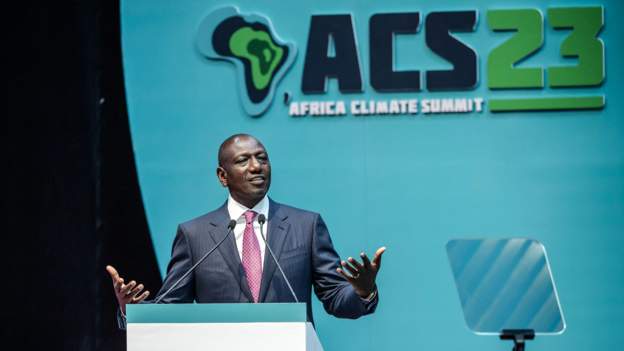
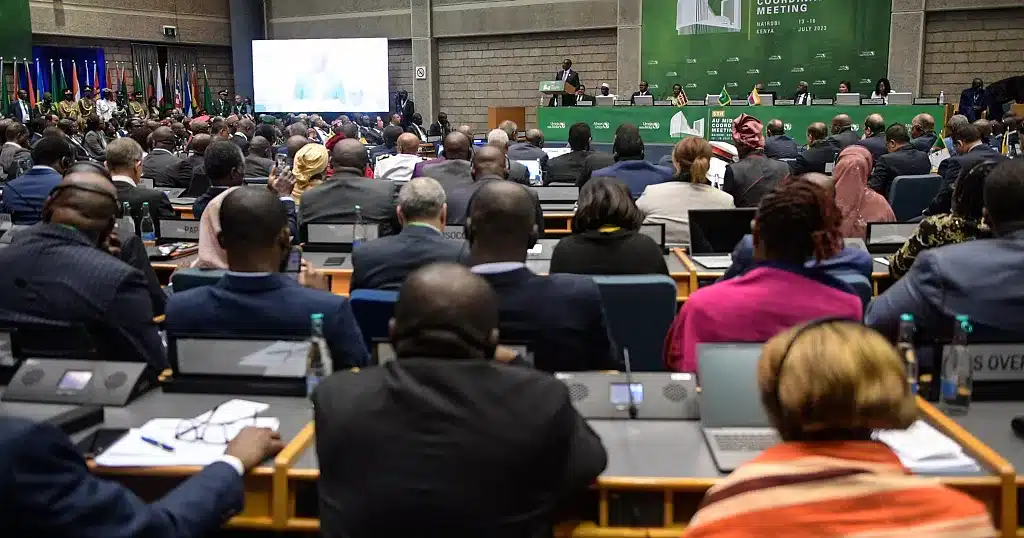
    The inaugural African Climate Summit is set to host over a dozen heads of state from African countries, marking an important step for the continent in addressing a global crisis to which it contributes the least.

    The event, launched in Nairobi by Kenyan President William Ruto’s government and the African Union, aims to enhance Africa’s global influence and secure increased funding and support for climate initiatives.

    President Ruto emphasized the enormous opportunities presented by the climate crisis, including multibillion-dollar economic prospects, innovative financial structures, Africa’s vast mineral resources, and the goal of shared prosperity. He stressed that the summit is not intended to catalog grievances but rather to seize opportunities.

    Despite Africa’s limited contribution to global emissions, there is frustration about being urged to develop cleaner economies, especially when many promised financial aids have not materialized.

    Mithika Mwenda of the Pan African Climate Justice Alliance pointed out that annual climate assistance to the continent falls far short of the required amount and is only a fraction of some polluting companies’ budgets.

    In 2020, over $83 billion in climate financing was provided to poorer countries, a 4 percent increase from the previous year but still below the $100 billion annual goal established in 2009.

    Mohamed Adow of Power Shift Africa emphasized the need for funding from wealthy nations that have benefitted from Africa’s struggles to unlock the continent’s abundant clean, renewable energy resources.

    The ONE campaign warned in a report before the summit that high-interest rates and insufficient capital from institutions like the World Bank are making debt unsustainable for low-income countries and hindering financing for climate solutions.

    Notable participants from outside Africa include John Kerry, the United States government’s climate envoy, and United Nations Secretary-General Antonio Guterres, who will address finance as a central issue in the climate crisis.

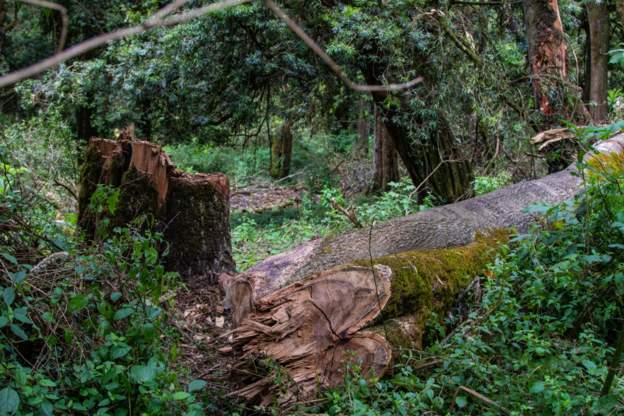
    While President Ruto emphasized tree-planting in his video welcome for the summit, he did not mention his government’s decision to lift a long-standing ban on commercial logging earlier this year, which raised concerns among environmental watchdogs. The decision is currently under legal challenge, with the government asserting that only mature trees in state-run plantations would be harvested.

  • Kenya’s Ruto pondering over visa-free travel

    Kenya’s Ruto pondering over visa-free travel

    Kenya’s President William Ruto has announced that the country is actively exploring the possibility of eliminating visa requirements within the coming months.

    President Ruto emphasized that Kenya, being the cradle of humankind, finds it unjust to impose visa requirements on visitors, considering that they are essentially returning to their ancestral home.

    “A few kilometres from where you are seated, scientists discovered and located the earliest remains of man on earth. In other words, this is where humanity began. Therefore, allow me to welcome you home. In a few months, we are seriously considering abolishing any visa requirement because it is unfair to ask anybody coming home for visa,” Mr Ruto said on Monday.

    He made the comment while opening the Africa Climate Summit in Nairobi to African and international leaders and delegates.

    Since taking office as President in September 2022, Mr. Ruto has already lifted visa requirements for several nations, including Eritrea, Djibouti, Comoros, the Democratic Republic of Congo, and Indonesia.

    President Ruto has previously announced his administration’s intention to eventually eliminate visa requirements for all countries within the African Union.

  • Kenya considering traveling without visa – Ruto

    Kenya considering traveling without visa – Ruto

    Kenya’s President, William Ruto, has expressed interest in getting rid of the need for visas in the country.

    Mr Ruto said that Kenya was where humans first started, so it wasn’t right to make visitors get visas because they were returning to their “home”.

    Not far from where you are right now, scientists found and marked the oldest human remains ever discovered. Basically, this is where humans first started. So, let me greet you and say welcome back to your home. We are thinking about getting rid of the need for visas in a few months. Asking people to have visas when they come back home is not fair. Ruto said this on Monday at the Africa Climate Summit in Nairobi, where African and international leaders and delegates were gathered.

    Since Ruto became president in September 2022, he has removed visa restrictions for some countries like Eritrea, Djibouti, Comoros, the Democratic Republic of Congo, and Indonesia.

    President Ruto said before that he wants to remove the rules that make it hard for people from all countries in the African Union to visit.

  • Kenyan authorities retrieve seized islands from Indian Ocean

    Kenyan authorities retrieve seized islands from Indian Ocean

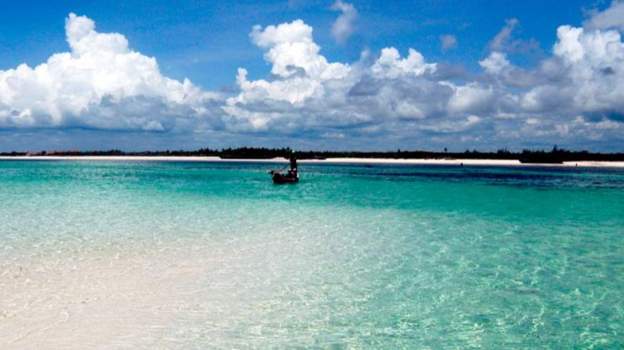
    Kenya‘s agency against corruption stated that it has taken back three islands in the Indian Ocean that were unlawfully taken by three individuals.

    The person speaking for the agency, Eric Ngumbi, said that they are trying to get back a fourth island. The person they are accusing of taking it won’t give it back.

    According to a government body in Kenya called the Ethics and Anti-Corruption Commission, the four islands have a value of 305 million Kenyan shillings, which is equal to 2 million US dollars or 1. 6 million British pounds.

    The islands became a protected area in 1978 under the Kisite Mpunguni Marine Reserve. After that, the Kenya Wildlife Service (KWS) legally owned and took care of the country’s wildlife resources.

    Mr Ngumbi said to the press that if individuals privately own the islands, it could be dangerous because people might do illegal things there without the government knowing. The islands are hidden and two hours away from the mainland by water.

  • Africa must find climate solutions to avoid becoming victims

    Africa must find climate solutions to avoid becoming victims

    African heads of state have convened in Kenya for the inaugural Africa Climate Summit, focusing on the continent’s strategy to address climate change.

    This gathering in Nairobi marks a historic event in Africa and seeks to formulate a unified plan to be presented to global leaders during the upcoming COP 28 United Nations climate summit later this year.

    During the three-day summit, attendees will explore a novel financing approach to support governments in their efforts to mitigate carbon emissions.

    Kenyan President William Ruto emphasized that Africa should actively contribute to combating global warming rather than merely being impacted by it.

    “For a very long time we have looked at this as a problem. It is time we flipped and looked at it from the other side,” he told delegates at the opening of the meeting.

    “There are opportunities, immense opportunities as well. And that is why we are not here to catalogue grievances and list problems, we are here to scrutinise ideas, assess perspectives, so that we can unlock solutions.”

    African nations suffer from some of the greatest effects of climate change despite being among its smallest contributors.

  • Worldcoin orb scans’ security source of concern in Kenya

    Worldcoin orb scans’ security source of concern in Kenya

    A Member of Parliament in Kenya has expressed worries about the health effects of the infra-red light used by Worldcoin‘s eye-scanning orbs. This concern was raised during a government investigation into the cryptocurrency project.

    Worldcoin was giving people digital coins in exchange for scanning their eyeballs. However, it was told to stop allowing Kenyan users to sign up last month because there were concerns about the privacy of their data.

    MP Shakeel Shabir expressed his concerns when Health Minister Susan Nakhumicha attended the parliamentary committee meeting on Thursday.

    Five people have sent me letters saying that they had a lot of pain after this medical test. “They had pain in their eyes,” he said.

    Ms Nakhumicha explained that since the orb was not brought into Kenya specifically as a health device, its infra-red light has not been tested. She encouraged Kenyans who might be experiencing health problems to go to the doctor for help.

    Kenyan experts will share the findings of their investigation on Worldcoin‘s orb next week.

    Please rewrite this passage in simpler language: Please rewrite this text in easier words.

    The Worldcoin Foundation said to the BBC that iris and facial scanning are safely used and recorded by private companies, health organizations, and governments all around the world. Worldcoin is just as safe as other cryptocurrencies.

    Over two million people from across the globe have signed up with Worldcoin. We haven’t heard any reports of people getting sick from using the orb to prove they are human.

    Tools For Humanity, the company that made the orb used by Worldcoin, has also posted a message on Twitter.
    To say the device “meets the requirements of international industry standards”.

  • Drama in conflict over Kenya’s largest sugar factory

    Drama in conflict over Kenya’s largest sugar factory

    There has been a big change in the fight to take control of Kenya’s main factory that produces sugar.

    Mumias Sugar, which is partly owned by the government, has been facing difficulties since 2019 and is looking for new investments.

    It has become unpleasant because many rich and powerful people, including some from Uganda, want to take over the company.

    Then President William Ruto stepped in and issued a warning to the fighting groups.

    When he went to places where sugar is grown in the west, he said that they are taking advantage of farmers and people who buy sugar, using strong words like “crooks, thieves, and conmen”. He also mentioned that he gave them three choices. They have three options: leave Kenya, go to jail, or go to heaven. There is no other choice available.

    The comments made by someone upset human rights organizations. However, these comments persuaded one of the businesspeople to no longer be interested in Mumias Sugar. They dropped several legal cases on Thursday.

    This has made things more exciting for people who enjoy the drama, but the future of Mumias Sugar is still uncertain.

  • Kenyan women rewarded for consistency and hardwork

    Kenyan women rewarded for consistency and hardwork

    Kenya stood out as the top African team in this year’s World Athletics Championships held in Hungary, clinching 10 medals and securing fifth place overall. Notably, Kenya outperformed neighboring rivals Ethiopia by securing one more gold. An interesting aspect of Kenya’s gold medal achievement was that, for the first time in the competition’s history, none of its male athletes claimed the top prize.

    Faith Kipyegon made history by becoming the first woman to win gold in both the 1500m and 5000m events. Mary Moraa added Kenya’s third gold by triumphing in the women’s 800m, celebrating with a distinctive dance at the finish line, earning her the moniker “Kenya’s dancing queen.”

    Uganda celebrated two gold medals, while Ethiopia’s performance might have left them wanting more, securing only two golds—half of their tally from the previous year’s Championships where they ranked second overall behind the hosts, the USA.

    Letsile Tebogo of Botswana, hailed as Africa’s emerging sprint star, impressed by earning silver in the men’s 100m and bronze in the 200m. He attributed part of his success to quitting social media. His silver in the 100m marked the first time an African man medaled in the event at the Championships.

    Burkina Faso’s Hugues Fabrice Zango made history by capturing gold in the triple jump, marking the continent’s most notable result. This victory not only earned Burkina Faso’s first gold in the Championships but also the first such title for any African nation in the discipline. Zango, also a PhD candidate in electrical engineering, achieved a full set of medals in the triple jump across the last three World Championships—gold, silver, and bronze.

    In the face of political instability in his country, Zango expressed hope that his gold medal could bring positive emotions to his fellow citizens.

  • Kenya addresses passport backlog as anger rises

    Kenya addresses passport backlog as anger rises

    Due to printing equipment failure, nearly 60,000 Kenyans who applied for passports since March have been left without them. The government has now declared that it will borrow machines from private companies to reduce the backlog.

    Kithure Kindiki, Kenya’s Cabinet Secretary for Interior and National Administration, claims that the issue extends beyond the state of the nation’s present passport production equipment. Additionally, dishonest individuals demand bribes from applicants.

    He promised last week to overhaul Kenya’s immigration department, and on Monday it was revealed that daily passport printing would increase to 5,000.

    Kenyans have become increasingly frustrated and dissatisfied in recent months as a result of delays in the issuance of identity cards, driver’s licences, birth certificates, and police clearance certificates due to administrative inefficiencies.

  • Kenya Airports manager fired after outrage over power cut

    Kenya Airports manager fired after outrage over power cut

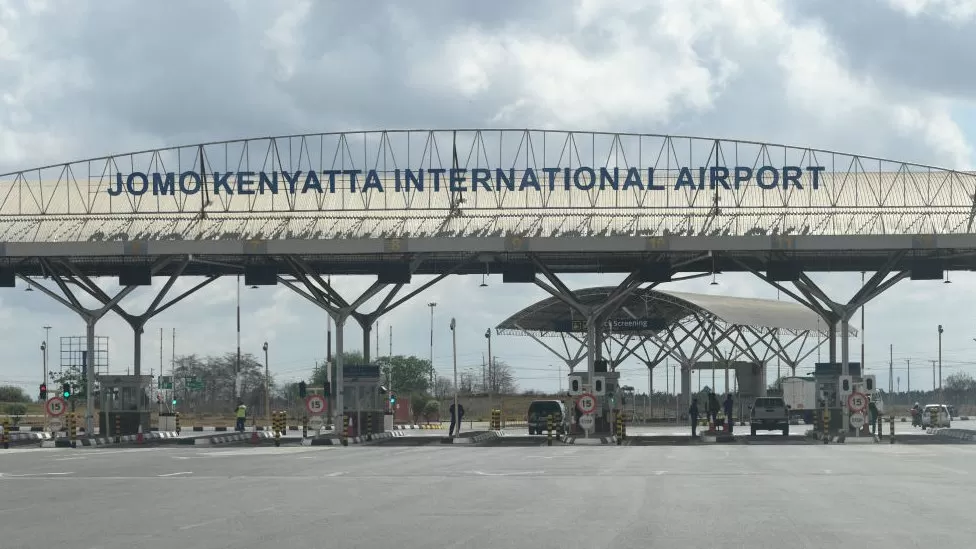
    The head of Kenya’s airports authority was dismissed due to a power failure that left passengers stranded without light for an extended period at Nairobi’s main airport.

    Alex Gitari was dismissed by Transport Minister Kipchumba Murkomen, who expressed remorse for the chaotic situation.
    He said that when politics gets involved, it makes the workers feel down and unorganized.

    The power company,which is mostly owned by the government, has not clearly stated the reason for the power outage that happened in the whole country.

    Even though power has been fixed in some places,many homes and businesses in the country are still experiencing a power outage that started on Friday.

    Tourism is really important for Kenya’s economy. It makes up around 10% of the money that the government has. The sector is also a major way for the East African nation to earn money in a different currency.

    People in Kenya are really angry on social media because the main airport didn’t have working backup generators.

    Apart from Mr. Gitari, another important official from the civil aviation authority has been fired. The manager of Nairobi’s Jomo Kenyatta International Airport has been moved to a lower position at Mombasa’s main airport.

    In Kenya, there was a lot of confusion and long lines at the entrances to the national parks because the digital payment system didn’t work.

    Power cuts happen often in Kenya, but it is not common for the entire country to have a long period without electricity. This recent outage affected important places like Nairobi’s main airport, hospitals, and even the State House.

    When things don’t go well, Kenyans often blame corruption – the massive stealing of public money has been a major obstacle for the country’s progress.

    The minister in charge of transportation said that two power generators that were bought for the airport two years ago still have not been put into use.

    It would be cool to find out how much they cost, who got the contract, and why they have not been installed yet.

  • A day in the life of a couple who have given up on each other

    A day in the life of a couple who have given up on each other

    It’s no mystery that sometimes relationships don’t work out. Though, they don’t always end when they should.

    Deborah Krevalin is using the video-sharing app Kenyans disagree on petition to outlaw TikTok to reach a wide audience with her relationship advice. As a licensed psychotherapist, Krevalin used her expertise in a recent video to shed light on the subtle signs that may indicate a breakdown in communication and connection within a romantic partnership.

    This is a day in the life of a couple who has given up on each other.

    Describing “a day in the life of a couple who have given up on the relationship and each other,” Krevalin paints a bleak picture of two people who have become isolated within their own relationship.

    The day starts with an absence of the basic pleasantries that often fuel a couple’s connection. 

    No words are exchanged in the morning, and no texts or calls are made during the day.

    It’s not just the morning when they isolate from each other. The partners’ lack of mutual interest manifests in their daily routine as well.

    “Neither partner reaches out during the day. No text message, no phone call saying, hey, how’s your day going? What do you want to do for dinner? None of that. Partners are focused solely on themselves and their own needs,” Krevalin says.

    Waking up and going through the day like this can be a harsh reality. What can a couple who are experiencing this do?

    According to psychologist Sandra E. Cohen, Ph.D., people often feel isolated in a relationship due to communication. But what happens when the lack of communication doesn’t stop when they get home at the end of the day?

    Dinners are eaten alone with no plans to catch up about each other’s day.

    When one comes home at “6:00 with some sushi” and the other an “hour later with a salad,” there’s no intention of sharing a meal or spending time together. Instead, they eat separately, reflecting a profound disconnect. Their evenings are spent in different rooms, engaging in solitary activities.

    “They don’t eat together. In fact, they don’t show any interest in spending any time together. No bonding, no nothing. They’re just merely existing, sharing space, like roommates,” Krevalin says.

    What once might have been a loving relationship has transformed into a situation where two individuals are “just merely existing,” their connection lost. 

    The lack of interaction and engagement extends into the bedroom. 

    Before going off to sleep, there’s no conversation, no affectionate gestures, and not even a word of acknowledgment, whether they share a bed or sleep separately.

    “The partners may sleep in separate bedrooms, but if they share a bed, there’s no chatting. There’s no snuggling. There’s no real interaction of any kind. The couple is beyond unhappy because there’s a loneliness factor that’s pervading. They’re totally disconnected,” Krevalin adds.

    Krevalin’s depiction resonates as a cautionary tale, offering insight into what can happen when couples allow communication to break down and fail to prioritize their relationship.

    The depiction is not merely an abstract concept but a reflection of a real crisis that many couples face. 

    What can be learned from Krevalin’s observations? Perhaps a warning that paying attention to the small details, the simple acts of kindness, communication, and interest in one’s partner, is crucial in maintaining a healthy relationship. And what should people who feel they are in a lonely relationship?

    Cohen revealed that there are four things partners should consider when feeling lonely in a relationship. She advises to “communicate clearly and effectively, “be more vulnerable with each other,” “spend time together,” and, if all else doesn’t work, “consider the possibility of ending the relationship.”

    DISCLAIMER: Independentghana.com will not be liable for any inaccuracies contained in this article. The views expressed in the article are solely those of the author’s, and do not reflect those of The Independent Ghana

  • Church of a well-known Kenyan televangelist given reprieve

    Church of a well-known Kenyan televangelist given reprieve

    A court in Kenya has reversed its decision to revoke the license of a church owned by Pastor Ezekiel Odero, a renowned TV preacher.

    The Prayer Centre and Church in Kilifi is very popular and draws many people to worship there.

    Justice Jairus Ngaah stated that it was a short-term break while they investigated if the authorities followed the law when they cancelled its license in May.

    Pastor Odero kept preaching even though the Registrar of Societies said he shouldn’t.

    The government took away the Kilifi-based church’s permission to operate while they look into the pastor’s connection with a controversial cult leader named Paul Mackenzie Nthenge.

    The police have kept Pastor Mackenzie in custody since April because they believe he told his followers not to eat, causing hundreds of them to pass away.

    Pastor Odero, who was arrested in April but released on bail, says he has nothing to do with the starvation cult and strongly disagrees with its beliefs.

    His lawyers told the court that the New Life Prayer Centre and Church, along with its businesses, were very important for the economy of Kilifi because they provide jobs for 8,000 people.

  • Kenya to start polio immunisation programme after receiving positive confirmation of cases

    Kenya to start polio immunisation programme after receiving positive confirmation of cases

    Kenya is scheduled to begin the process of administering polio vaccinations on 24 August, few weeks after polio cases were found in the northeastern part of the country.

    The vaccination campaign is aimed at 7. 4 million young children (aged below five). It will focus on 10 counties that are at high risk, including Garissa county where the recent outbreak occurred.

    Dr Patrick Amoth, Kenya’s health director-general, said in a meeting with the media that around 3% of children in Kenya have not received the polio vaccine.

    In 2014, Kenya got rid of wild poliovirus, which is the main type of polio.

    But in July, the World Health Organization (WHO) said that Kenya is at a high risk of having vaccine-derived polio. This is a type of poliovirus that affects communities with low rates of vaccination.

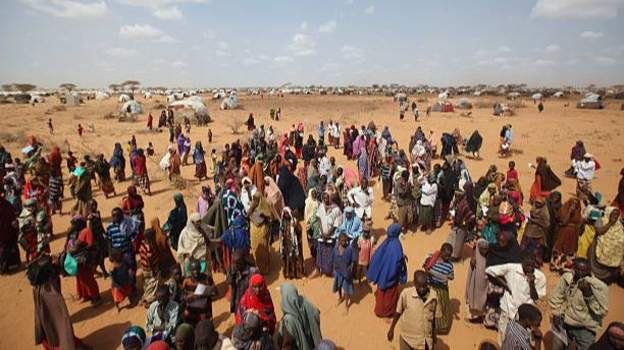
    WHO said that the risk of polio in Kenya is highest in the refugee camps. These camps are often very crowded and have bad sanitation. Many people there also suffer from malnutrition and move frequently to and from Somalia, where polio has been spreading recently because of the polio vaccine.

    The national vaccination program aims to make vaccines easier to get and increase the number of people in Kenya getting vaccinated for polio.

  • Kenyan alleged to have stolen coffins from funeral company

    Kenyan alleged to have stolen coffins from funeral company

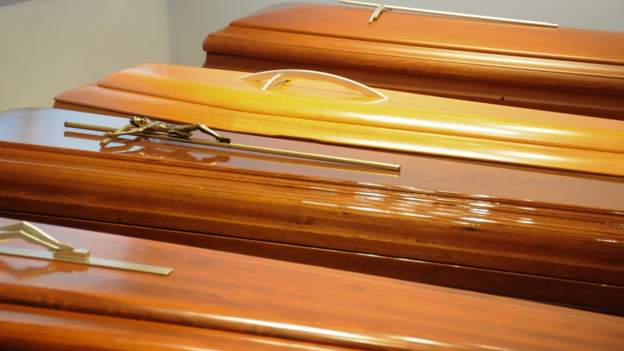
    A salesperson in Nairobi, Kenya has been accused of stealing two coffins and 26 coffin handles, as reported by local sources.

    Maureen Khikani, who used to work at St Augustine Funeral Services, is being accused of taking things without permission for a whole week in May of the previous year. She says that she did not do anything wrong.

    The coffins were worth 90,000 Kenyan shillings, which is equivalent to $622 or £488. The handles were worth $810.

    The magistrate court Ben Mark Ekhubi has decided that the bail amount will be $1,380.

    The lawyer who was helping Ms Khikani asked for easier bail conditions, highlighting that she is a mother who takes care of her children on her own.

  • Ghana among top ten African nations with highest tax payments

    Ghana among top ten African nations with highest tax payments

    In the rankings of African countries with the highest corporate taxes, Ghana secures the 10th position on the continent.

    As indicated by a survey conducted by OnDeck, the average corporate tax in Ghana stands at approximately $25,000.

    A number of African nations surpass Ghana in terms of corporate tax payments. These countries include South Africa ($28,000), Ethiopia ($30,000), Kenya ($30,000), Nigeria ($30,000), and Cameroon ($30,800).

    The survey incorporated corporate tax data from 200 countries.

    OnDeck Capital, an online small business lending company based in the United States, highlights that corporate tax rates exhibit significant diversity globally, aligning with each nation’s distinct economic requirements.

    For instance, countries endowed with substantial natural resources frequently generate a significant portion of their tax revenue through elevated corporate taxes imposed on oil and natural gas enterprises. This approach enables other industries to function within a relatively low-tax environment.

    OnDeck Capital underscores that Africa possesses some of the least competitive tax rates among all continents.

  • Kenyan sets himself ablaze due to high cost living

    Kenyan sets himself ablaze due to high cost living

    On Thursday afternoon in the seaside city of Mombasa, a Kenyan man allegedly set himself on fire in protest at the exorbitant expense of living.

    He lit himself on fire after ascending a statue in the midst of a busy roundabout. The man is seen clutching the Kenyan flag in a video that has since gone viral. He then shouts, and a second later, a massive flame engulfs him.

    He was saved by witnesses who swiftly assisted in putting out the fire, and he was then rushed to the nearby Coast General Teaching and Referral Hospital where he is currently receiving treatment.

    The unidentified man explained to onlookers that he was protesting the high cost of living and the “stolen” presidential election from the previous year, in which Raila Odinga lost to President William Ruto. In court, the victory was affirmed, and Mr. Odinga’s charges of irregularities were rejected.

    In recent weeks, dozens of people have died in Kenya as a result of police crackdowns on large-scale demonstrations calling for election reforms and an end to inflation.

  • Kenyan senator detained in connection with a scholarship scandal

    Kenyan senator detained in connection with a scholarship scandal

    A Kenyan senator has been apprehended in connection with a scholarship scandal.

    Jackson Mandago, along with three others, faces a total of 11 charges, encompassing accusations of theft and misuse of authority.

    Allegedly, Mandago participated in a scheme that purportedly conspired to embezzle approximately 1.1 billion Kenyan shillings (equivalent to $7.6 million or £5.9 million). These funds were originally intended to facilitate higher education opportunities for Kenyan students in Finland and Canada.

    Local media reports have indicated that numerous students who had made payments for overseas education were left stranded within Kenya due to these purported actions. For those who had already commenced studies abroad, the situation posed the risk of homelessness, expulsion, and deportation as the county government ceased disbursements for accommodation and tuition.

    The allegations come to light during a period when Mr. Mandago was serving as a governor.

    It has been noted that Mr. Mandago has previously denied any misappropriation of the funds in question, as reported by Kenya’s Star newspaper.

    According to an additional report, Mr. Mandago, along with the incumbent Uasin Gishu county governor, has undertaken an agreement to facilitate refunds for the affected individuals.

    The scandal’s perpetrators have been warned to promptly return the funds for the Finland and Canada Overseas Education Program under penalty of “trouble” by President William Ruto, who also made a statement on the subject.

    He declared that he would provide local scholarships to individuals affected once the investigations were completed.

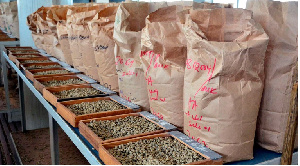
  • Kenya’s coffee exports reaches 14-year high due to increased yields

    Kenya’s coffee exports reaches 14-year high due to increased yields

    In May, Kenya witnessed the largest volume of coffee exports in 14 years, driven by increased local production attributed to favorable weather conditions.

    According to recent data from the Central Bank of Kenya, the country exported 6,447 tonnes of coffee in May, the highest since May 2009 when exports reached 7,401 tonnes.

    These exports were valued at Ksh4.83 billion ($33.84 million), with each tonne selling for Ksh750,543 ($5,257), the highest value since August 2022.

    Kenya has experienced significant growth in coffee production in recent months, with a 50.24 percent increase recorded in the financial year 2021/22, marking the highest annual crop yield in two decades.

    National coffee production rose from 34,512 tonnes in the 2020/21 crop year to 51,853 tonnes in 2021/22. The auction volumes and direct sales volumes also witnessed substantial increases.

    Coffee companies have benefited from this bumper harvest, with firms like Eaagads, a coffee seller listed on the Nairobi Securities Exchange (NSE), reporting a 14 percent increase in net profit for the financial year ending in March.

    Increased coffee sales led to a revenue surge, with the company’s earnings reaching Ksh234 million ($1.64 million) from Ksh142 million ($994,746) the previous year.

    “In the year under review, the company achieved sales of 348 tonnes of coffee compared with 185 tonnes in March 2022,” said the firm.

    “The increase was mainly attributed to the favourable weather experienced in the year which enhanced bean development.”

  • Kenyan govt orders cryptocurrency project Worldcoin to stop signing up new users

    Kenyan govt orders cryptocurrency project Worldcoin to stop signing up new users

    The Kenyan government has issued an order to the cryptocurrency project Worldcoin, instructing them to halt the registration of new users due to data privacy concerns. Worldcoin, a venture founded by US tech entrepreneur Sam Altman, has been offering free crypto tokens to individuals who consent to have their eyeballs scanned.

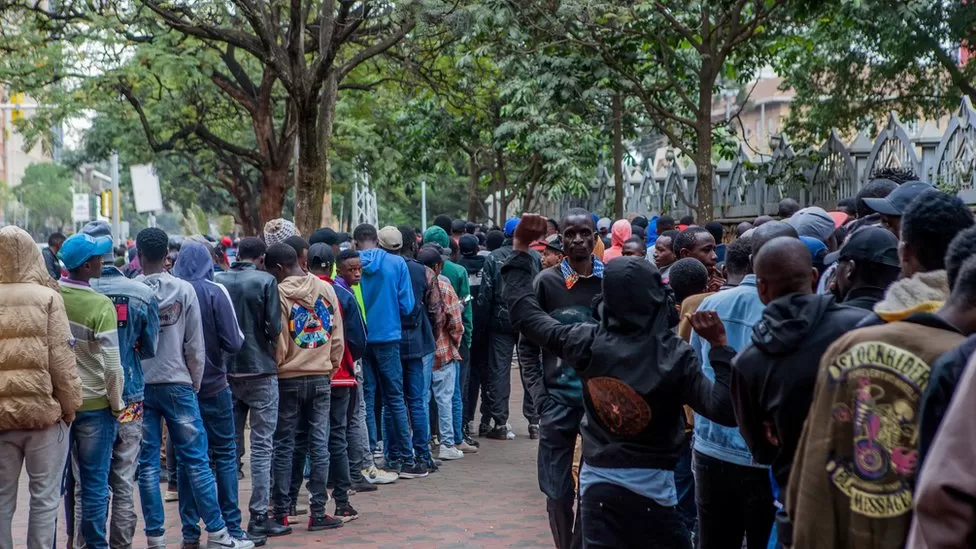
    In response to this offer, thousands of Kenyans have been lining up at registration centers to avail themselves of the currency, which is valued at approximately $49 (£39).

    However, the Kenyan government has expressed caution and urged citizens to be wary of sharing their personal data with private companies. The Communications Authority of Kenya raised specific concerns, including the storage of biometric data, the exchange of money for data, and the potential risk of such vast amounts of data being in the hands of a private entity.

    In light of these concerns, the Ministry of the Interior has launched an investigation into Worldcoin’s operations. Additionally, they have called upon security services and data protection agencies to ascertain the legitimacy and legality of Worldcoin’s activities in the country.

    Many people were barred from participating in the registration process on Wednesday at one of the pop-up registration centers in Nairobi, the country’s capital, since the massive crowd was deemed a “security risk.”

    “I’ve been coming here almost three days to line up and register. I want to register because I’m jobless and I’m broke, that’s why I’m here,” Webster Musa told the BBC.

    “I came here yesterday. I waited until my phone died. So I came again today but I’ve missed the registration again. I really like Worldcoin because of the money. I’m not worried about the data being taken. As long as the money comes,” added Dickson Muli.

    Worldcoin says it cannot say how many people have had their eyeballs scanned in Kenya.

    It claims to be creating a new global “identity and financial network”.

    “We are creating the world’s largest identity and financial network as a public utility, giving ownership to everyone. And establishing universal access to the global economy regardless of country or background,” a statement on the Worldcoin website reads.

    The endeavor, according to Mr. Altman, who established Open AI and created the chatbot ChatGPT, aims to determine if a person is human or a robot. He adds that although it is unclear how, this might result in everyone receiving a universal basic income.

    The company maintains that it does not store any data. However, privacy experts express concerns that sensitive data collected from iris scanning could potentially fall into the wrong hands.

    The Office of the Data Protection Commissioner (ODPC) in Kenya has urged the public to exercise heightened vigilance when using Worldcoin’s services, emphasizing the need for the company to demonstrate proper safeguards in accordance with the Data Protection Act 2019.

    The Kenyan Capital Markets Authority (CMA) also voiced its worries regarding the ongoing registration process and informed Kenyans that Worldcoin is not regulated in the country.

    According to Kenyan law, individuals have the right not to have their personal information unnecessarily requested or disclosed.

    Mercy Mutemi, a digital rights lawyer, expressed that there are less intrusive methods to obtain the information that Worldcoin seeks. She suggested that simply proving one’s human identity could be achieved without resorting to such invasive measures.

    Worldcoin explained to the BBC that it chose Kenya as its first African launch country due to the thriving tech space in the region and the substantial number of Kenyans already engaged in cryptocurrency trading, totaling more than four million individuals.

    The platform has also been introduced in several other countries, including Indonesia, France, Japan, Germany, Spain, and the UK. Data protection authorities in some of these countries have already confirmed that they are investigating Worldcoin’s operations.

  • Salvaged Kenyan cult followers to be charged with murder

    Salvaged Kenyan cult followers to be charged with murder

    Earlier this year, forty-one individuals were rescued from a doomsday cult in Kenya. However, instead of being free from legal repercussions, they now face serious charges, including murder and other offenses, alongside the cult’s leader.

    According to prosecutors, these rescued individuals, who were either parents or grandparents, are now considered suspects as they were responsible for the well-being of children who died or went missing within the cult.

    The cult’s leader, Paul Mackenzie, is alleged to have played a significant role in the tragic events. He is accused of promoting the belief that followers should starve themselves to death in order to achieve entry into heaven before the world’s end.

    The police, while investigating what appears to be a mass suicide, have uncovered a startling number of bodies—over 400—exhumed from the Shakahola forest in the south-eastern region of Kenya.

    More than 600 people are still missing.

  • Haiti accepts Kenya’s offer to lead a multinational force

    Haiti accepts Kenya’s offer to lead a multinational force

    Haiti has expressed great interest in Kenya’s offer to lead a multinational force to restore order in the country.

    Haiti’s Foreign Minister, Jean Victor Geneus, conveyed his appreciation for the expression of African solidarity.

    Amidst a surge in gang violence and facing a deep security, political, and humanitarian crisis, Haiti seeks assistance in stabilizing the situation.

    Kenyan Foreign Minister Alfred Mutua acknowledged that an immediate resolution to Haiti’s problems might not be feasible. However, the mission aims to bring stability to the nation and facilitate the training of a competent Haitian police force.

    Mr. Mutua emphasized that the people of Haiti have endured significant suffering, and Kenya feels a sense of responsibility to support their brothers and sisters in the African diaspora.

  • Herbert Mensah welcomed by Kenya as rep of World Rugby chairman

    Herbert Mensah welcomed by Kenya as rep of World Rugby chairman

    Herbert Mensah, the recently elected President of Rugby Africa, the governing body of rugby in Africa, has a scheduled five-day visit to Kenya. During his stay, he will act as the official representative of World Rugby Chairman Sir Bill Beaumont at the World Rugby U20 Trophy tournament, where he will have the honor of presenting the highly coveted trophy.

    The World Rugby U20 Trophy is an international rugby union competition organized by World Rugby, featuring men’s junior national teams with players under the age of 20 showcasing their skills and passion for the sport.

    All 16 matches of the World Rugby U20 Trophy are currently being held at the Nyayo National Stadium in Nairobi, Kenya, after the tournament’s commencement on July 15.

    This marks the second time Kenya is hosting the U20 Trophy, having previously done so in 2009 when the tournament was known as the Junior World Rugby Trophy.

    Beyond the prestige of the trophy, the eight competing teams will be vying for a spot in the World Rugby U20 Championship next year in South Africa. The winners will be promoted to the U20 Championship, replacing Japan, as the team that finished at the bottom of that competition (held from June 24 to July 14 in South Africa) will drop down to the U20 Trophy in 2024.

    The participating teams have been divided into two challenging pools. Pool A includes Scotland, Uruguay, USA, and Zimbabwe, while hosts Kenya join Hong Kong China, Samoa, and Spain in Pool B. This lineup promises an intense and captivating display of rugby talent and teamwork.

    “The World Rugby U20 Trophy not only showcases Kenya’s capability as a world-class sporting destination but also represents the collective spirit and passion for rugby that resonates across Africa. Together, we stand united in celebrating Africa’s presence on the global rugby stage,” said Herbert Mensah, President of Rugby Africa.

    Herbert Mensah‘s presence during the World Rugby U20 Trophy reflects the significance of this event and his representation of World Rugby Chairman Bill Beaumont symbolizes the strong collaboration between Rugby Africa and the global rugby community.

    “Africa hosting two World Rugby U20 tournaments consecutively will be exciting to witness and serves as the perfect build-up to Rugby World Cup 2023 which is just under three months away. Both South Africa and Kenya have proven their ability to host global age-grade competitions in the past and I have no doubt that these editions will be successful with great interest from local crowds”, said World Rugby Chairman Sir Bill Beaumont.

    As Kenya continues to welcome the world for the World Rugby U20 Trophy. Follow the journey, witness remarkable athleticism, and celebrate the passion for rugby in one of Africa’s most vibrant nations.

    The newly elected President of Rugby Africa will embark on a five-day visit to Kenya where he will officially represent World Rugby Chairman Sir Bill Beaumont

    About Rugby Africa:

    Rugby Africa (www.RugbyAfrique.com) is the governing body of rugby in Africa and one of the regional associations under World Rugby. It unites all African countries that play rugby union, rugby sevens, and women’s rugby. Rugby Africa organizes various competitions, including the qualifying tournaments for the Rugby World Cup and the Africa Sevens, a qualifying competition for the Olympic Games. With 39 member unions, Rugby Africa is dedicated to promoting and developing rugby across the continent.

    Generate

  • Raila Odinga declines President Ruto’s invitation for talks

    Raila Odinga declines President Ruto’s invitation for talks

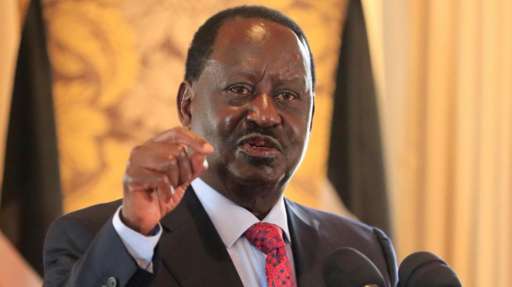
    The head of the opposition in Kenya, Raila Odinga, called President William Ruto’s offer to hold discussions over anti-government demonstrations “not serious at all” and rejected it.

    Following weeks of demonstrations against the growing cost of living and the implementation of new levies, Ruto stated on social media on Tuesday that he was ready to see Odinga “anytime.”

    Nevertheless, the leader of the opposition Azimio alliance claimed to Al Jazeera on Wednesday that the president’s offer to hold discussions was merely a “public relations exercise”.

    “If he wanted to meet with me he would not have invited me through social media,” Odinga said, speaking from Nairobi. “He knows my address, he knows my telephone number. He is basically just playing games.”

    “We have a crisis in this country that requires a serious approach,” Odinga said. “We are ready anytime, when they are ready for those talks”.

    Critics accuse Ruto of increasing taxes at a time when the economy of the nation is collapsing due to spiraling inflation and of going back on his election campaign pledges from 2022, when he ran as the candidate for the underprivileged Kenyans and promised to improve their economic circumstances.

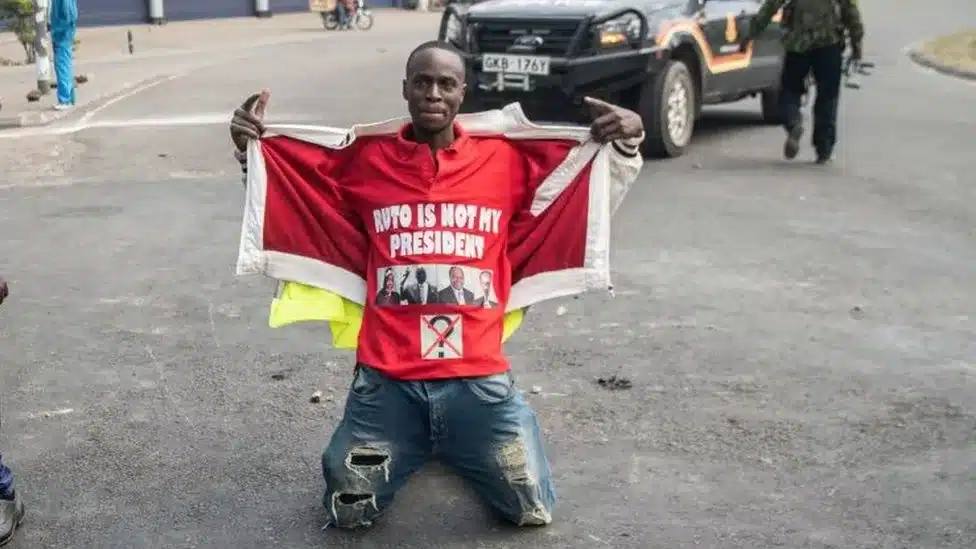
    Since the opposition leader asked Kenyans to demonstrate in the streets in March, his coalition has organized nine days of anti-government demonstrations, with the gatherings occasionally degenerating into looting and violent altercations with the police.

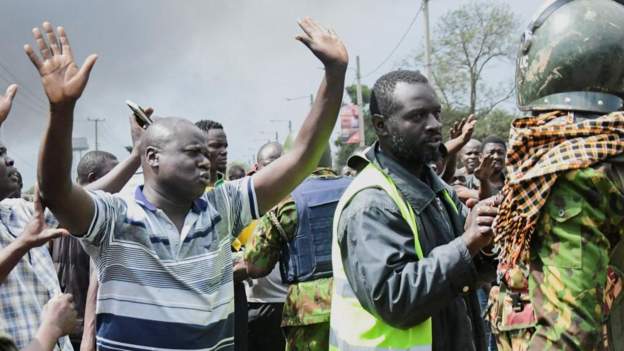
    Human rights organizations report that at least 30 individuals have died. Odinga, who claims that the presidential election from the previous year was “stolen” from him, has charged the government with “unprecedented police brutality.”

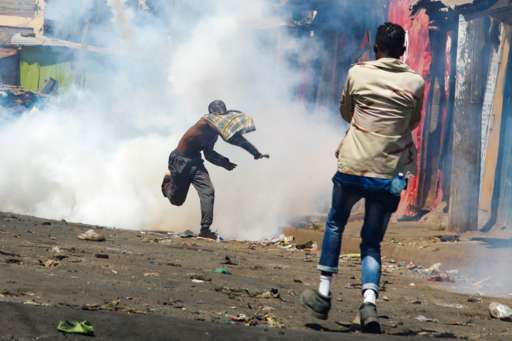
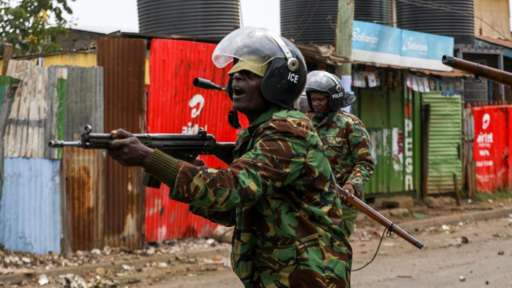
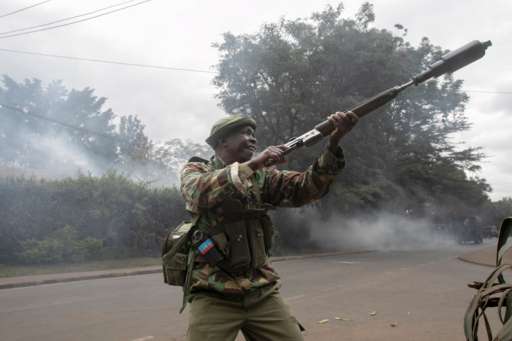
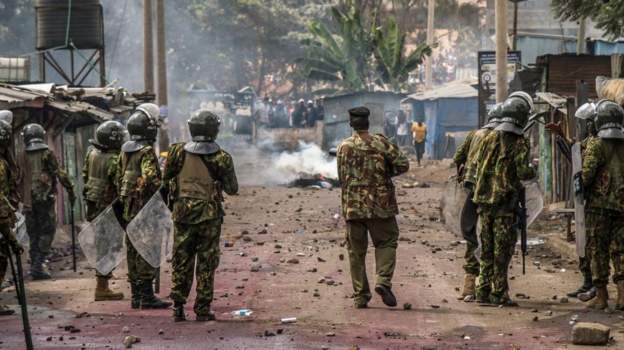
    Human rights activists have denounced the police for using live ammunition and tear gas to disperse demonstrators throwing rocks.

    Amnesty International and more than two dozen other rights organizations said last week that they had proof of 27 “extrajudicial, summary, and arbitrary executions” in July alone.

    Accusations of “extrajudicial executions and/or excessive use of force… are malicious, false, and intended to distort public opinion,” the interior ministry stated on Tuesday.

    Odinga canceled his protests in April and May when Ruto agreed to talk, but after the negotiations stalled, this month saw a number of protests.

    On Wednesday, Odinga also urged Kenyans to attend vigils in memory of anti-government demonstrators who had died in the protests.

    His coalition urged “Kenyans to come out and light candles and lay flowers, preferably white, in remembrance of and respect for the victims.”

  • President Ruto to meet Odinga amid tension in Kenya

    President Ruto to meet Odinga amid tension in Kenya

    Kenya’s President William Ruto has expressed his willingness to meet with opposition leader Raila Odinga in the wake of the ongoing cost-of-living protests that have led to dozens of fatalities.

    Mr. Odinga has been at the forefront of these demonstrations, urging the government to take measures to reduce taxes and alleviate the burden of other price increases.

    In response to the escalating situation, President Ruto has indicated his readiness for a meeting with Mr. Odinga to address the pressing concerns raised by the protesters.

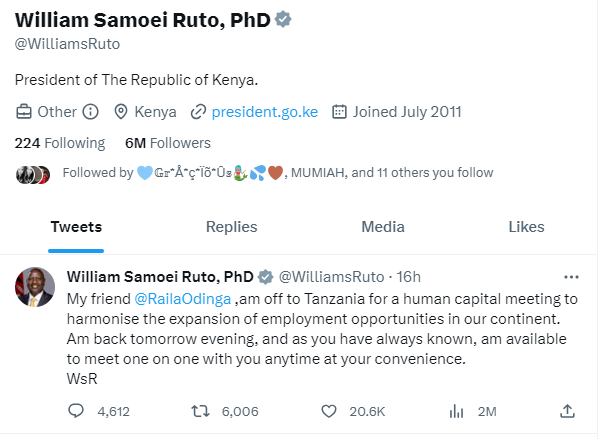
    “My friend @RailaOdinga, I am off to Tanzania for a human capital meeting to harmonise the expansion of employment opportunities in our continent. I’m back [on Wednesday] evening, and as you have always known, I’m available to meet one on one with you anytime at your convenience,” he tweeted.


    Following a media briefing by Mr. Odinga, where he asserted that President Ruto had turned down an offer by the Tanzanian president to mediate between the government and the opposition, President Ruto has expressed his readiness to meet with the opposition leader amid the ongoing cost-of-living protests that have resulted in numerous casualties.

    Mr. Odinga has strongly criticized the police for their harsh treatment of the protesters and has called for vigils on Wednesday to honor those who lost their lives during the demonstrations.

  • Odinga says he stayed away from protests due to a bad flu – Odinga

    Odinga says he stayed away from protests due to a bad flu – Odinga


    Kenyan opposition leader Raila Odinga
    cites a “bad flu” as the reason for his absence from the three-day street protests, which he had initiated to protest against the rising cost of living and tax hikes.

    “It is not a must that opposition leaders have to be seen on the streets,” Mr Odinga told a Kenyan TV station about the protests that are due to end today.

    The veteran politician, who lost disputed presidential elections last year, said “game-changing” demonstrations belonged to the people and were not his alone.

    He denied suggestions his absence was a ploy to do a deal with President William Ruto, adding he was not seeking to be a part of the government.

    “We have not, and we will not seek a ‘handshake arrangement’,” the opposition leader said referring to the name for the deal he made with the previous President, Uhuru Kenyatta.
    President Ruto remains firm in his stance, asserting that he will not enter into any negotiations with Mr. Odinga to address the current deadlock.

    Last Thursday, he commended the police’s response to the protests after the police chief expressed concerns about the demonstrations posing a threat to national security.

    Riot officers were deployed across the country in response.

    However, the security forces’ handling of the protesters has drawn criticism, resulting in multiple fatalities.

    This week’s anti-government protests have seen significantly lower participation compared to previous demonstrations.

    On Wednesday and Thursday, many individuals chose to stay at home, apprehensive of potential violence.

    Nonetheless, as Friday dawns, there are signs of a return to normalcy, with schools and businesses reopening.

    Major bus stations in the capital, Nairobi, and other cities are slowly resuming operations.

    The opposition’s three designated meeting points for Friday’s protests, including one in Nairobi’s central business district, seem deserted with little or no activity.

  • Protection or terror, division within police in Kenya

    Protection or terror, division within police in Kenya

    In spite of a top rights organization calling their response to recent opposition protests “an act of terrorism,” Kenyan President William Ruto hailed the police for maintaining order.

    Several people have died throughout the four months of protests, including 10 who were shot dead by police last week. Six individuals were reportedly killed on Wednesday after battles with the police, according to local media.

    The Kenya Human Rights Commission (KHRC), which is an NGO, said there was “a troubling pattern to show that [the] police’s actions and use of lethal force were premeditated”.

    But Mr Ruto characterised the response as the police protecting people and property.

    “I congratulate the police for standing firm, for ensuring peace prevails and ensuring that all criminals are dealt with,” Mr Ruto said.

    The official death toll has not been released, but according to Amnesty International, at least 30 people have been killed by the police since the start of the anti-government protests in March.

    A member of a civil society network that monitors the police’s response to protesters in Kisumu and Migori, two western counties, reported that security forces appear to be under a “shoot-to-kill order.”

    This anonymous activist revealed having photographic evidence showing individuals shot in the back with live ammunition.

    “Last week on Wednesday, one police officer refused to follow the order to shoot at protesters and was beaten up by his colleagues and was hospitalised,” the person added.

    The opposition has called a series of rallies against the introduction of new taxes and the rising cost of living. Currently the country is experiencing the second day of a three-day protest.

    Local and international groups and foreign diplomats have expressed deep concerns over the situation in Kenya and are urging both sides to seek a negotiated solution.

  • How a sense of betrayal is fueling Kenya’s protest

    How a sense of betrayal is fueling Kenya’s protest

    At least 24 people have been shot dead in recent months as Kenyan police have clashed with demonstrators during the most recent opposition demonstrations against the growing cost of living and tax increases.

    James Wainaina, a taxi driver in Nairobi’s capital city, supported William Ruto in the previous election because he ran as the representative of the country’s “hustler nation”—common people struggling to make ends meet.

    However, Mr. Wainaina is now backing the protests because he feels misled.

    Prices have increased since President Ruto took office despite his government raising taxes.

    Mr Ruto says the extra revenue is needed for escalating debt repayments and to fund projects to create jobs, but the tax rises have made life even harder for the poorest Kenyans.

    Mr Wainaina’s daughter, a high school student, recently stayed at home for three weeks because he was unable to pay her 14,000-shilling ($100; £75) school fees.

    Mr Wainaina says his business has declined because of the cost-of-living crisis.

    He gets fewer clients and nearly all his earnings now go into simply keeping his car on the road.

    Five years ago, he could make up to 4,000 shillings a day, enough to cover his basic necessities, including school fees, he says.

    He laments there are times he now goes home with just 500 shillings after expenses “which is not enough to fuel the car the next day”.

    “It is very difficult for us,” he says. The government, he adds, has not made it easy for small businesses, especially the “hustlers” .

    Mr Wainaina says they were lied to.

    “It doesn’t seem like things will be better, you see [the president] lied to us, we are being oppressed, things are becoming difficult. When the cost of fuel goes up, the price of everything else goes up, even electricity. Things are becoming worse.”

    Even those who still support the government are expressing “a considerable level of unhappiness with the current state of affairs”, according to the latest survey by a local polling firm, Tifa.

    Its survey shows that 56% of Kenyans think the country is heading in the wrong direction, up from 48% in March.

    The polling firm suggests the discontent may be feeding into support for the protests called by the Azimio opposition coalition, led by Raila Odinga, who was defeated by Mr Ruto last year.

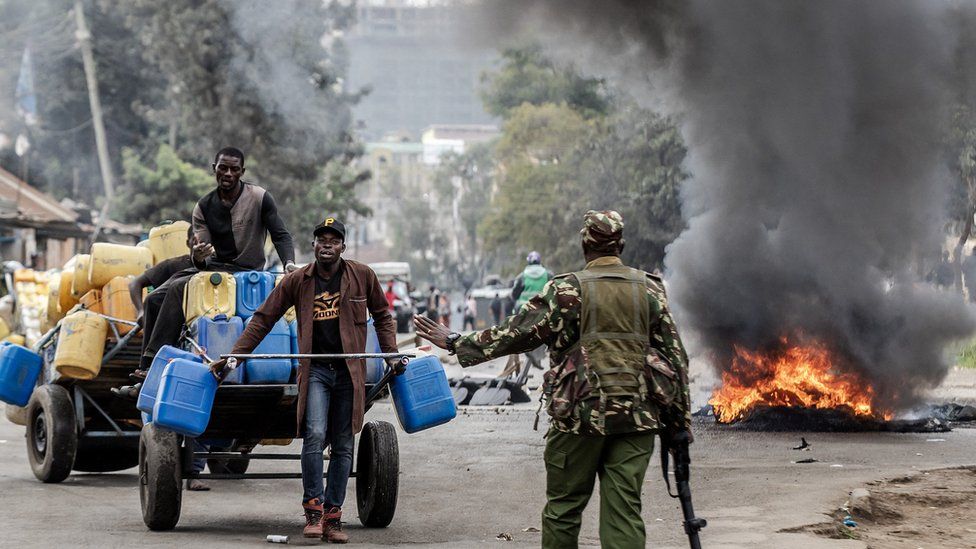
    A Kenya Police officer stops some workers at a closed road during demonstrations in Nairobi, Kenya on July 12, 2023
    Image caption,At least 24 people have been killed in recent protests

    Government data show that the prices of some key food products have risen considerably in the 12 months to June – with the staples – maize, grain and flour – increasing by up to 30%, rice and potatoes by nearly 20% and sugar costing nearly 60% more.

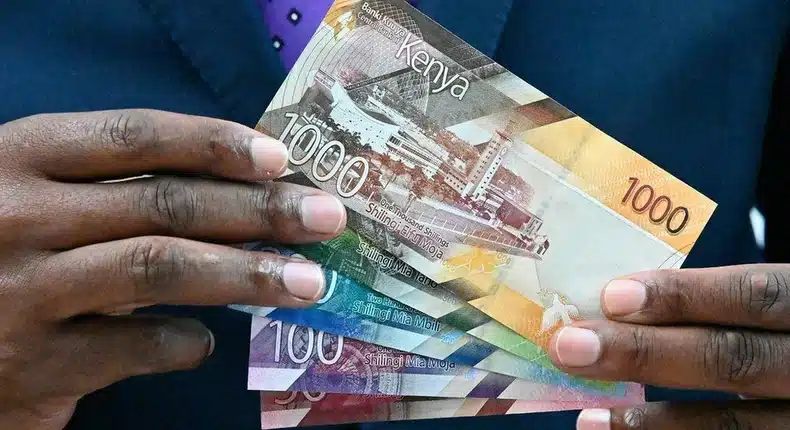
    Despite that, in the finance bill which became law on 1 July, the government doubled the value-added tax on fuel products from 8% to 16%, and introduced a 1.5% housing levy on employees’ basic pay, with an equivalent amount paid by the employer.

    The levy is supposed to go to a fund to construct homes for the less well-off while creating jobs.

    Besides that, taxes on sales (Turnover Tax) were tripled to 3% for small businesses, and income tax for high-earning employees was raised from 30% to a maximum of 35%.

    The government defends the new taxes – now temporarily suspended by a court – as necessary because of the country’s high debts.

    It accuses the previous administration of massively adding to the country’s debt burden by spending huge amounts of money on infrastructure projects that did not help the ordinary Kenyan.

    Mr Ruto served in the previous government as deputy president, but he distanced himself from it after falling out with then-President Uhuru Kenyatta.

    He and government officials have told Kenyans that paying the taxes is a short-term “sacrifice” for the future of the country.

    But Mr Wainaina is not convinced. Likewise, Edwin Simiyu, a boda boda (motorcycle taxi) rider in Kiambu town near the capital regrets voting for the current administration.

    “[The president] said we should give him one year and then we’d see positive changes. Now when he is in, he changes the tune and says we should wait for years before things become better. We are suffering, we have been totally betrayed, we’ve been forgotten,” he says.

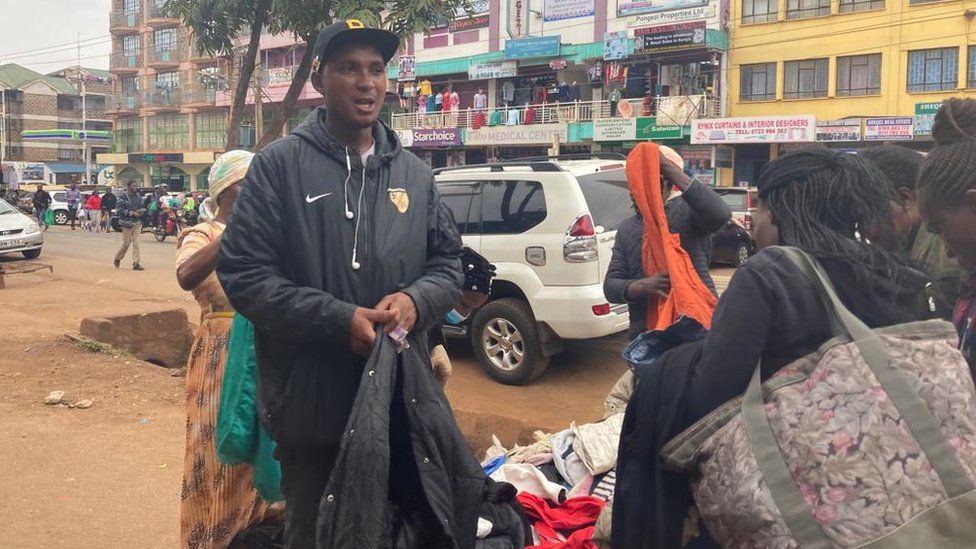
    Charles Kaindo is hard at work in the same town selling second-hand clothes on a pavement.

    The hawker tells the BBC it is unfortunate the government has broken its promises.

    He says there will be a time when people will say “enough is enough” – explaining that hard-working people will turn to crime and others “may even take their lives when the suffering becomes too much”.

    A hawker in Kiambu town outside the capital Nairobi
    Image caption,Charles Kaindo says the government broke its promises

    But not everyone thinks that higher taxes are a bad thing.

    Jane Njeri, an accountant in the private sector, says she does not envy the government – which needs the money to pay off the huge debts that Kenya owes.

    The Kenya shilling has been steadily weakening against the US dollar in recent months, making the cost of debt repayments even higher.

    “It’s not going to be an overnight thing. We are at a bad place, depreciating shilling, debt and unemployment,” she says.

    The disquiet in Kenya arises from the “sense of contradiction” between the “hustler narrative” about easing the cost of living that was sold during the campaign and the “reality where we are seeing taxes being increased on everyday goods”, according to Ken Gichinga, chief economist at business consulting firm Mentoria Economics.

    He says rather than focusing on consumption taxes that raise the cost of living, the government should do more to spur private-sector growth.

    He argues against the government housing projects being funded by the new levy, saying it is unlikely to resolve either the housing or unemployment problem.

    “Lower interest rates, lower taxation, and loosen regulation. Do those three and the whole economy will be able to create jobs. Let the free market work.”

    However, economic analyst Odhiambo Ramogi says he is convinced that that the president’s intentions are noble – though the methods “are wrong”.

    He says the government should first cut waste before asking ordinary Kenyans to pay more.

    The government accepts this point – David Ndii, its chief economic adviser, has acknowledged on Twitter that the government was “wasteful”.

    Ndindi Nyoro, chairman of the parliamentary budget committee, told the BBC that the government’s tax plan was to ensure that government was not digging a bigger debt hole by borrowing more. He said the focus was on creating a balance to ensure what “will make Kenyans take part in baking the national cake”.

    But a growing number of Kenyans do not think this is working and are taking to the streets to make their point.

  • Kenyan Police fire teargas at protestors in Wednesday protest

    Kenyan Police fire teargas at protestors in Wednesday protest

    Kenyan authorities have deployed security officers in key towns following the resumption of cost-of-living protests organized by the opposition.

    The demonstrations, which began on Wednesday, saw clashes between protesters and police in the capital city of Nairobi, where tear gas was used against stone-throwing demonstrators.

    As a precautionary measure, the government ordered the closure of schools in Nairobi and the coastal city of Mombasa, anticipating potential violence during the protests. Consequently, the city’s central business district remained quiet, with many shops closed.

    Protesters have taken to barricading roads in Nairobi and other parts of the country. In Nakuru, located in the Rift Valley region, police dispersed protesters who had blocked roads and set fires by using tear gas.

    The opposition in Kenya has organized these protests in response to rising discontent over recent tax increases implemented by President William Ruto’s government.

    During last year’s election campaign, Ruto had promised to champion the interests of the poor. However, since assuming office, the cost of living has continued to rise, and taxes have been raised, fueling public dissatisfaction.

    The situation remains tense as the protests unfold, and authorities are working to maintain stability while addressing the concerns of the demonstrators.

  • Cost-of-living protests in Kenya force schools to shut down

    Cost-of-living protests in Kenya force schools to shut down

    The nationwide cost-of-living protests that commenced on Wednesday, has led to the shut down of schools in Kenya’s capital, Nairobi, and the coastal town of Mombasa indefinitely.

    This measure has been taken to ensure the safety of students and to mitigate any potential disruptions caused by the ongoing demonstrations.

    The protests, which began last week and turned violent, tragically claimed the lives of at least 14 individuals. In light of these events, the decision to shut down schools aims to prevent further casualties and maintain a secure environment for the students.

    “The government has received credible security intelligence that criminal elements planning to unleash terror and violence on the public [on Wednesday] intend to engage in armed skirmishes with security agencies around certain schools within Nairobi and Mombasa counties,” the interior ministry said.

    Despite the rejection by the high court on Monday of a request to declare the anti-tax hike protests illegal, Police Chief Japheth Koome has declared them illegal. The conflicting statements create ambiguity regarding the legality of the protests.

    Tragically, during similar protests last Wednesday, at least 10 people were shot by the police. Additionally, over 50 schoolchildren in Nairobi were subjected to tear gas while inside their classrooms, resulting in their unconscious state and subsequent hospitalization.

    There have been reports of the police firing tear gas canisters at protesters in various neighborhoods around Nairobi. In western Kenya, protesters armed with crude weapons have resorted to barricading roads and extorting money from road users.

    The excessive use of force by the police has drawn strong criticism from human rights organizations, who condemn their actions.

    Both local and international groups, as well as foreign diplomats, have expressed deep concerns regarding the situation in Kenya. They have called for dialogue as a means to address the underlying issues that have sparked these protests.

  • Saving northern white rhinos; new embryos made

    Saving northern white rhinos; new embryos made

    A team in Kenya has successfully generated five brand-new embryos of the northern white rhino species, marking a significant step forward in the ongoing efforts to prevent their extinction.

    The organization responsible, BioRescue, revealed that these embryos were derived from 18 eggs that were gathered from Fatu, one of the last surviving northern white rhinos.

    Fatu and her mother, Najin, currently reside in the Ol Pejeta Conservancy located in central Kenya.

    Originally born in a Czech Republic zoo, they were later relocated to their native environment in 2009.

    “Four years since the start of this ambitious project to save the northern white rhino from extinction, the BioRescue consortium has made significant progress towards its ultimate aim,” the project, funded by the German education ministry, said on Facebook.

    “The sperm for fertilisation came from two different bulls, thereby improving genetic diversity.”

    BioRescue has announced that they have achieved a significant milestone in their conservation efforts by creating the highest number of embryos to date through egg collection, a complex and perilous process.

    With the recent success, the total number of embryos generated by BioRescue now stands at 29. These embryos undergo cryopreservation, a technique that involves storing them at extremely low temperatures, in anticipation of future transfer to surrogate southern white rhino mothers.

    The reason for using surrogates is that neither Fatu nor Najin, the remaining northern white rhinos, are capable of carrying a pregnancy themselves.

    The Ol Pejeta Conservancy reports that the BioRescue team has taken another promising step forward in the species’ preservation by identifying two female southern white rhinos from the wild as potential surrogate mothers.

    Previous attempts to implant embryos into southern white rhinos housed in zoos have proven unsuccessful. However, this latest development offers renewed hope for the successful implementation of the surrogate programme.

    “A huge congratulations to the team for their phenomenal dedication and hard work that has made this all possible,” the conservancy said.

    While it is a race against time to save the northern white rhino, the southern white rhino is also under threat, with just 18,000 of them left in the wild.

  • Kenya’s Del Monte pineapple guards accused of injuring 2 teens

    Kenya’s Del Monte pineapple guards accused of injuring 2 teens

    Del Monte, a multinational fruit company, is facing allegations that its security guards in Kenya ran over and injured two teenagers at a pineapple farm.

    The Bureau of Investigative Journalism reported that the victims were knocked off their motorbikes following a 15-minute pursuit by Del Monte guards driving four-wheel drive vehicles.

    This incident follows previous reports by the same organization in June, which revealed that six people had been killed by guards over the past decade, with some of the victims accused of stealing pineapples from the farm.

    In response to these allegations, Del Monte, a major supplier to supermarkets worldwide, has stated that it takes the accusations seriously and is conducting its own investigations into the matter.

  • Televangelist in Kenya acquitted of child trafficking

    Televangelist in Kenya acquitted of child trafficking

    A self-proclaimed preacher, Gilbert Deya, who had been accused of abducting five children, has been acquitted by a court in Kenya.

    Prosecutors had alleged that Deya used the children to support his claim of being able to assist infertile couples in conceiving babies through prayer.

    However, the magistrate ruled that the prosecution had not presented sufficient evidence to support the charges.

    Deya had resided in the United Kingdom for many years, where he established several Pentecostal churches. Following a lengthy legal battle, he was extradited to Kenya in 2017 to face the charges.

    Notably, over a decade ago, Deya’s former wife, Mary Deya, was convicted and sentenced to three years in prison for stealing a baby from a Nairobi hospital and falsely claiming to have given birth to the child.

    More than a decade ago his then-wife Mary Deya was given a three-year sentence for stealing a baby from a Nairobi hospital and pretending she had given birth to the child.

  • Kenya’s Ruto calls for stronger, financially autonomous A.U. at Mid-Year Meeting

    Kenya’s Ruto calls for stronger, financially autonomous A.U. at Mid-Year Meeting

    African leaders gathered Sunday (July. 16) in Gigiri, Nairobi County for the African Union’s fifth Mid-Year coordination meeting.

    The summit aimed among other things to address critical issues of African integration and division of labour.

    The meeting was led by Kenya’s President. William Ruto called for a reform of the AU focusing on the body’s financial autonomy.

    “The pan-African movement has always been about sovereignty and agency,” the leader said.

    “First and foremost, chronic dependence even on well-meaning partners is inconsistent with the aspiration of independence, sovereignty and agency. And I therefore believe that we must take seriously the recommendations that have been made towards making our organization an organization that stands on its feet, and an organization that is funded by us.”

    According to A.U. figures, less than 40% of Member States pay their yearly contributions to the institution.

    A piece on the body’s website titled _”_African Union sustainable funding strategy gains momentum” broke down the institution’s2020 budget as follows:

    US$157.2 million to finance operational budget of the Union ; US$216.9 million will go into the program budget and US$273.1 million will finance peace support operations.

    “Peace support operations will be funded by member states and international partners. Of the total budget, 38% is to be assessed on Member States while 61% will be from partners. The operating budget will be fully funded by Member States while the programme budget will be funded 41% by Member States and 59% solicited from international partners,” the document read.

    Debt burden

    President Ruto pointed to the burden of debt many countries on the continent carry, championing a fairer financial system. 

    A UN report found that, African nations are disadvantaged borrowers compared to the wealthiest European nations.

    “The UN secretary general himself has said that our continent pays anywhere up to 8 times more than our brothers and sisters elsewhere do. It is only fair that we have a financing mechanism that treats everybody equally.”

    The focus of the 5th Mid- Year Coordination Meeting was the AU theme of the year “Acceleration of the African Continental Free Trade Area Implementation.

    The Regional Economic Communities, the Regional Mechanisms and AU Member States attended the meeting which ended on Sunday. They convened under the AU theme of the year Acceleration of the African Continental Free Trade Area Implementation.

    The President of Comoros Azali Assoumani, who currently chairs the Union, was also in attendance.

    Also present were Bola Tinubu (Nigeria), Abdel Fattah (Egypt), Macky Sall (Senegal), Ismail Guelleh (Djibouti) and Ali Bongo (Gabon) among others.

    The summit had been preceded by the Ordinary Session of the Executive Council.

  • Kenya president ‘bans’ opposition protests

    Kenya president ‘bans’ opposition protests

    In a strong warning to the opposition, Kenya‘s President William Ruto has said “protests will no longer take place in our nation. The one they have planned for Wednesday will not be possible.”

    He was speaking to supporters in Naivasha, central Kenya, two days after at least 10 people died during clashes between protesters and security forces.

    Opposition leader Raila Odinga has launched a series of demonstrations against tax rises, including the doubling of the tax on fuel, that were signed into law last month.

    “Elections ended on 9 August last year. You cannot look for the leadership of this country using the blood of the citizens, the death of the citizens and the destruction of property,” Mr Ruto said .

    “These demos will not happen. Listen to me carefully: you cannot use extrajudicial, extra-constitutional means to look for power in Kenya.”

    Mr Odinga had earlier said that next week will see three more days of protests beginning on Wednesday.

    According to the constitution, people organising protests must inform the authorities of their intentions, but the president does not have the power to ban demonstrations.

  • End of logging ban sees invasion of forests in Kenya

    End of logging ban sees invasion of forests in Kenya

    Environment Minister Soipan Tuya has accused individuals of unlawfully encroaching upon forests and engaging in activities such as charcoal burning, which violate Kenya‘s laws.

    This development was observed since the announcement of the lifting of a logging ban earlier this month.

    Environment Minister Soipan Tuya said “the lifting of the ban only applies to commercial forests” and involves less than 8% of the tree cover in the country.

    “We have Kenyans who think the forests are free for them to go and erect structures and engage in illegal activities as well as lease out forest land,” Ms Tuya added.

    According to reports, President William Ruto lifted the ban on logging imposed since 2018, in order to create jobs and open up sectors of the economy that depend on forest products.

    The move came as the government pushes on with its plan to plant 15 billion trees over 10 years to increase the country’s tree cover.

  • African Union: High-level meeting opens in Nairobi

    African Union: High-level meeting opens in Nairobi

    On Thursday, the African Union, the Regional Economic Communities, and the Regional Mechanisms organization convened a high-level session in Nairobi, Kenya.

    From July 13 to July 16, 51 foreign ministers from AU member states will attend the 5th Mid-Year Coordination Meeting. 15 heads of state will gather on Sunday at the United Nations African office in Gigiri, Nairobi.

    The summit is following the AU theme for 2023, “Acceleration of African Continental Free Trade Area Implementation” (AcFTA) and will explore ways to enhance integration across the continent and boost trade.

    Kenyan Foreign Affairs Cabinet Secretary Dr Alfred Mutua said that the meeting would also consider the AU’s financial budget for 2024. 

  • Ebrahim Raisi’s visit of Africa ends as  Zimbabwe, Iran sign agreements

    Ebrahim Raisi’s visit of Africa ends as Zimbabwe, Iran sign agreements

    Ebrahim Raisi, the president of Iran, arrived in Zimbabwe on Thursday for what is anticipated to be his final stop on a threenation journey to Africa, and was greeted by residents shouting anti-Western chants.

    Emmerson Mnangagwa, the president of Zimbabwe, welcomed Raisi at the international airport in Harare and congratulated him for demonstrating “solidarity.”

    Both nations are subject to U.S. economic sanctions, and Raisi’s journey to Africa, which has already included stops in Kenya and Uganda, exemplifies Iran’s efforts to forge new alliances in an effort to lessen the impact of those severe economic restrictions.

    Iran and Zimbabwe already have a joint permanent commission on political and trade relations.

    They also share historical ties and Mnangagwa thanked Raisi for Iran’s help in a liberation war in the 1970s that eventually led to the southern African nation breaking free of white minority rule.

    “When we went to war, Iran was our friend. I am happy you have come to show solidarity,” Mnangagwa said in brief remarks on the tarmac at the Robert Gabriel Mugabe International Airport named after the late Zimbabwean leader Mnangagwa helped oust in a coup in 2017.

    Dozens of supporters came out to see Raisi arrive, with some waving Zimbabwe’s and Iranian flags, and some holding placards with Raisi’s face on them. They also sang songs criticizing the West as “white masters” intent on interfering in Zimbabwe.

    Members of Zimbabwe’s Muslim community also came to the airport to welcome Raisi and he inspected an honor guard by Zimbabwe’s military.

    On his visit to Uganda on Wednesday, Raisi sharply criticized Western nations’ support for homosexuality and LGBTQ+ rights, calling it “one of the dirtiest things.” He said Uganda’s recently-passed anti-gay legislation and Western criticism of it was “another area of cooperation for Iran and Uganda.”

    Zimbabwe also has anti-gay laws, and homosexuality and same-sex marriages are illegal. However, Mnangagwa has not attacked homosexuality, unlike his predecessor, the late Mugabe, who described gays as “worse than dogs and pigs.”

    The last visit by an Iranian leader to Zimbabwe was in 2010 by then-President Mahmoud Ahmadinejad.

  • Kenyan doctor provides free services to save 53 tear-gas infested children

    Kenyan doctor provides free services to save 53 tear-gas infested children

    A Kenyan physician told the BBC that 53 children were treated at his hospital without charge after police on Wednesday used tear gas in their school.

    “As a parent, you positively and fearfully react, which compelled me to act without asking for money,” Dr Aron Shikuku, from the private Eagle Nursing Home hospital in the capital, Nairobi, told the BBC’s Newsday programme.

    According to the most recent data from 2018, only 19% of the population in Kenya has access to any type of medical insurance, making healthcare highly expensive.

    While receiving care at a private hospital is sometimes more expensive and can result in crippling medical debt, the nation’s public hospitals are typically grossly understaffed and underequipped.

    The children were treated for shock and respiratory issues brought on by the tear gas, according to Dr. Shikuku, and then released.

    He said they were being monitored as they settle back into their school, which is in Kangemi, a slum area in the north-west of the city.

    There were demonstrations around the country called by the opposition over the rising cost of living, but they turned deadly.

    Six people were killed, the authorities said.

  • Kenyan shot dead in Emali protest

    Kenyan shot dead in Emali protest

    Local media reports indicate that a man was fatally shot during protests in Emali, a town located approximately 100km (62 miles) from Nairobi, Kenya‘s capital.

    According to sources, police fired upon demonstrators who allegedly set a police vehicle on fire and pelted stones at a local bank.

    Emali is situated along the Nairobi-to-Mombasa highway, and as reported by K24 website, hundreds of protesters barricaded the road on Wednesday morning, causing a complete halt in traffic.

    Despite authorities declaring the protests illegal, opposition demonstrators have persisted with their actions.

    At present, there has been no official statement or comment from the police or local authorities regarding the death of the protester.

  • Cult in Kenya said to be the worst ever on security violation

    Cult in Kenya said to be the worst ever on security violation

    Kenya’s security minister says the deaths of more than 300 people linked to a doomsday cult in the Shakahola forest is the worst security breach in the country’s history.

    Ten more bodies were exhumed from the forest on Tuesday raising the death toll to 360.

    Appearing before a Senate committee, the minister, Prof Kithure Kindiki, further said that the suspected cult leader, Paul Mackenzie Nthenge’s activities, were reported from as early as 2020.

    “A report was filed at the Langobaya police station. No action was taken. Some of the officers and judicial officers must answer that question,” he said.

    It is estimated that at least 339 members of the Good News International Church either starved to death, were brutally beaten, or were strangled in the Shakahola forest in southeast Kenya.

    Mr. Mackenzie, the cult leader, allegedly persuaded his members to starve to death so they might see Jesus while preaching that the world was going to end.

    Mr. Mackenzie is not currently officially charged.

  • Kenyans arrested over alleged order to strip-search women to check if they’re menstruating

    Kenyans arrested over alleged order to strip-search women to check if they’re menstruating

    A reports by local media says three employees of a well-known food manufacturing company in Kenya have been arrested after allegations surfaced of them forcibly stripping female staff members to ascertain their menstrual status.

    Brown’s Food Company expressed deep regret over the incident, emphasizing that such actions are not in line with the company’s established procedures and values.

    The incident gained public attention when Senator Gloria Orwoba highlighted it through a Facebook post, condemning the company for period shaming and sexual harassment. The controversy arose when a senior company official discovered a sanitary towel in the wrong disposal bin.

    According to Senator Orwoba’s post, the official proceeded to gather female employees from the department in question, urging them to admit to the incident. When these attempts were unsuccessful, it is alleged that the senior official demanded that the women strip in order to verify their menstrual status.

    In response to these serious allegations, Brown’s Food Company has suspended the accused individuals pending a thorough investigation. The company is committed to addressing the matter transparently and ensuring appropriate action is taken to uphold accountability.

  • Concerns grow as Kenya’s deteriorating economy necessitates   borrowing

    Concerns grow as Kenya’s deteriorating economy necessitates borrowing

    Growing concerns have been raised regarding the impact of the weakening shilling on Kenya’s debt profile, particularly as foreign debt accounts for 52.9% of the country’s total debt.

    During the first half of the fiscal year 2022-23, the devaluation of the shilling against the US dollar resulted in Kenya borrowing Sh3.43 billion to cover the budget deficit in foreign debt service commitments, as reported by the Auditor-General.

    To safeguard taxpayers from increased debt service requirements caused by foreign exchange exposure in the public debt stock, the Auditor-General has urged the Treasury to consider adopting hedging strategies.

    Based on information provided by the Controller of Budget, the Auditor-General highlighted that Sh3.43 billion was allocated in the first half of 2022-23 to cover deficits in payments on external debt resulting from fluctuations in foreign currency rates.

    These concerns arise at a time when recent data from the Central Bank of Kenya (CBK) reveals that Kenya’s public debt stock stood at Sh9.63 trillion as of April 2023, with foreign debt accounting for 52.9% of the total debt. This percentage has increased from 50.9% in January, reflecting the impact of the weakening shilling on the country’s debt profile.

    According to CBK statistics, the shilling has depreciated by 13.9% against the US dollar since the beginning of 2023, with the exchange rate currently at 140.52 units.

    In an attempt to alleviate pressure on the local currency, the government announced a credit agreement in March to purchase petroleum products from Saudi Aramco and the Abu Dhabi National Oil Company over a six-month period.

    Additionally, the Office of the Auditor General has raised concerns over the payment of commitment fees amounting to Sh680 million for unused loans during the first half of the fiscal year 2022-23. The Auditor-General has emphasized the need for greater transparency and criticized the lack of clarity in recording liabilities at both the national and local government levels.

    “There is the non-disclosure of loans and overdrafts held by other national and county government entities as well as other government liabilities such as pending bills and pension arrears. The government continues to pay commitment fees on undrawn amounts in respect of loans signed between the government of Kenya and foreign lenders. Within the first half of 2022/23, the National Treasury paid commitment fees worth Sh680 million,” the audit office reports.

  • Kenya: Wife of cult leader granted bail

    Kenya: Wife of cult leader granted bail

    A Kenyan court has granted bail to Rhoda Maweu, the wife of Paul Mackenzie, a cult leader and self-proclaimed pastor accused of being responsible for the deaths of hundreds of people.

    Rhoda Maweu had been held in custody for 62 days but has now been released on bail.

    However, the court ruled that Paul Mackenzie and 16 other co-accused should remain in custody for an additional 30 days.

    There has been a legal debate surrounding the prolonged detention of the suspects, but the magistrate justified their continued custody, citing it as being in the public interest.

    The case involves the Good News International Church, with at least 339 people believed to have died from starvation, severe beatings, or strangulation in the Shakahola Forest in southeastern Kenya.

    The Kenya Red Cross reports that 600 people are still missing.

    The state emphasized that the investigations were ongoing and that the hunger strike staged by the suspects in custody had hindered the progress of the case.

    Wycliffe Makasembo, the suspects’ lawyer, argued that the prosecution and the police were conducting a fishing expedition, lacking clarity on the potential charges and whether the respondents would be charged. Two other lawyers representing the suspects have recused themselves.

    The next hearing is scheduled for August 1st.

  • Kenyan marathon runner Titus Ekiru slapped with 10 years ban in doping case

    Kenyan marathon runner Titus Ekiru slapped with 10 years ban in doping case

    Marathon runner Titus Ekiru is facing a potential 10-year ban following a doping investigation related to the race that currently places him as the sixth-fastest man in the event’s history.

    The Athletics Integrity Unit (AIU) has announced that the 31-year-old Kenyan athlete is confronted with two charges for positive doping tests and two additional charges of tampering.

    In May 2021, Ekiru achieved a remarkable time of 2 hours, 2 minutes, and 57 seconds to secure victory at the Milan Marathon.

    This performance currently ranks him as the sixth-fastest marathon runner of all time, just behind the world record of 2:01.09 set by Eliud Kipchoge in Berlin the previous year.

    During the Italian race, Ekiru tested positive for the corticosteroid triamcinolone acetonide, a substance prohibited for use during competition unless an athlete obtains a medical exemption.

    The AIU initially closed the investigation into the positive test in Milan but reopened it after Ekiru subsequently tested positive for a synthetic opioid while winning in Abu Dhabi in November 2021.

    “The athlete tested positive for pethidine after winning in Abu Dhabi, and again claimed the outcome resulted from legitimate medical treatment,” the AIU said.

    The track and field investigation body said it noticed the “emergence of a pattern of triamcinolone acetonide use among Kenyan athletes.”

    The substance is perhaps best known for being used with a medical exemption by British cyclist Bradley Wiggins before competing in the 2012 Tour de France, a race which he won.

    Ekiru was provisionally suspended one year ago and was later charged with suspected doping violations in March and April, the AIU said.

    Two more charges of tampering have now been added for the runner “submitting falsified medical explanations and documentation to the AIU for both positive tests,” the AIU said.

    “This means the elite marathoner — who has the right to defend himself before the Disciplinary Tribunal — is facing a potential 10-year ban,” said the Monaco-based investigation unit, which praised the cooperation it got from Kenyan authorities.

    Ekiru also won the half marathon title at the 2019 African Games.