The Kenyan authorities have penalised an online lender $3,700 (£3,400) over allegations of intruding and sharing customers’ personal data.
It followed complaints lodged against it by users over personal data breaches.
The Office of Data Protection said it received close to 150 complaints against Whitepath Ltd, alleging the lender’s mobile app was mining phone contacts data to engage in debt-shaming practices.
The lender’s staff were also accused of harassing the complainants and their friends and relations through phone contacts obtained irregularly.
A company that sells office space, Regus Kenya, was also fined a similar amount after being accused of spamming complainants despite efforts to make them stop.
Kenya’s data commissioner, Immaculate Kassait, said that data protection was the responsibility of every data controller and processor.
A group that oversees the anti-doping program for international sports has made claims that Kenyan athletes are receiving help from local medical professionals to conceal drug violations.
Two athletes used similar explanations to explain medical anomalies, leading the Athletics Integrity Unit (AIU) to the same conclusion.
The runners, Eglay Nafuna Nalyanya and Betty Lempus, had allegedly produced forged paperwork to support their claim to have had an intramuscular injection at the same hospital.
Athletics Kenya said last week that it had been promised $5m (£4m) a year to combat doping.
New demands from Kenya’s opposition leader Raila Odinga have the potential to scuttle the bipartisan negotiations that President William Ruto began on Sunday.
Once the opposition’s protests were put on hold, the two, who ran against one other in the 2016 presidential election, decided to initiate discussions over the electoral commission’s reconstitution.
The opposition’s demands that the topic also address the nation’s skyrocketing cost of living have gone unmentioned by President Ruto, who is adamant that the bipartisan negotiations should be conducted through parliament.
On Tuesday, Mr. Odinga requested that President Ruto take the conversation outside of parliament in order to address the issue of rising costs.
He said a strictly parliamentary process may not address their concerns and proposed broad-based talks akin to what led to the 2008 National Accord – a post-election deal brokered by the then UN chief Koffi Annan.
“We assure our people and Kenyans that our eyes are firmly on the ball, and reiterate that we shall go back to the people at the earliest sign of lack of seriousness by the other side,” Mr Odinga said.
The opposition chief also claimed there were attempts to tamper with the electoral servers, which he demands to be forensically audited.
The ruling United Democratic Alliance (UDA) party has accused Mr Odinga of holding the proposed talks at ransom and dismissed his fresh demands as unreasonable.
Speaking in Rwanda on Tuesday, President Ruto ruled out the possibility of any agreement that would co-opt the opposition into his government.
Mr Odinga had last month launched twice-a-week protests to push for what he termed as electoral justice and action on the cost-of-living crisis.
Kenya is getting ready to launch its first ever earth observation satellite, marking a significant milestone in the nation’s space research endeavors.
Next week, the SpaceX Falcon 9 rocket carrying Nation-1, also known as Taifa-1 in Swahili, is set to blast out from the Californian Vandenberg Space Force Base.
According to a joint announcement from the Kenya Space Agency and the Ministry of Defense, the satellite is intended to deliver earth observation data for use in agricultural, food security, and environmental management.
It was “fully designed and developed” by Kenyan engineers in collaboration with a Bulgarian aerospace manufacturer, the statement added.
A delegation from Kenya is expected to travel to the US for the launch.
The mission is seen as a significant milestone for Kenyan scientific innovation. The country is suffering its worst drought in decades after five failed rain seasons.
In 2018, Kenya launched its first experimental nano-satellite from the International Space Station.
The head of the opposition, Raila Odinga, has told the international media that Kenyan President William Ruto’s decision to abandon a harsh stance in the face of opposition protests to open the door for discussions.
Once the protests over the high cost of living and suspected electoral irregularities started, President Ruto spoke to the nation for the first time on Sunday.
The president agreed to one of Mr Odinga’s demands – a bipartisan engagement in parliament on the formation of the next electoral commission.
But he suggested he won’t engage the opposition leader on his other demands, including the cost of living and legitimacy of his presidency.
In a BBC interview, Mr Odinga welcomed Mr Ruto’s “climbdown” and insisted that all issues must be put on the table.
Quote Message: Mr Ruto came up with what you can call an olive branch. He said he’s now ready to do negotiations. This is basically a climbdown.”
Mr Ruto came up with what you can call an olive branch. He said he’s now ready to do negotiations. This is basically a climbdown.”
Quote Message: That’s why we said that we can embrace dialogue so long as he’s ready to put all the issues that we are talking about on the table.”
That’s why we said that we can embrace dialogue so long as he’s ready to put all the issues that we are talking about on the table.”
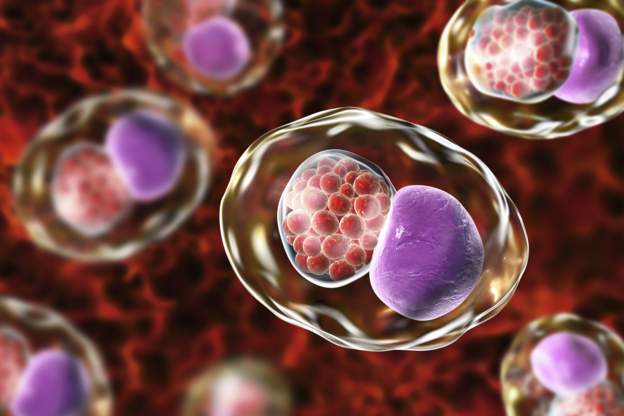
A group of women in a community in western Kenya were found to carry two new strains of two common sexually transmitted illnesses.
More than 400 women over the age of 15 have been given new mutation-positive diagnoses for gonorrhea and chlamydia.
Because the town of Busia is near the border and truck drivers stop there, the experts from the Kenya Medical Research Institute worry that the sickness may spread to Uganda, a neighboring country.
The risk of contracting HIV and other sexually transmitted diseases is higher for this group of persons.
To determine the extent of the sickness and whether the novel mutations can be treated by conventional antibiotics, the researchers intend to undertake additional investigations.
They said the changes on the genetic makeup of the virus had not been seen before.
Four opposition Kenyan MPs have had their charges against them dismissed a day after opposition leader Raila Odinga agreed to call off rallies and seek discussions with President William Ruto.
Thousands of people rushed to the streets when the four were detained for unlawful assembly a fortnight ago.
Following his rejection of the results of the election from the previous year and his criticism of the government’s response to the cost-of-living crisis, Mr. Odinga had called for rallies twice a week.
Several altercations took place between police and young protesters.
The country’s stability has been challenged by the conflict between Kenya’s rival politicians, so any chance of discussion is warmly welcomed.
The leader of the Kenyan opposition, Raila Odinga, has alleged a deadly threat on his life on Friday March 31 2023, during the anti-government protests in Nairobi.
Odinga claimed that as he was travelling around the city, organizing protests, his car was shot at several times.
He displayed to reporters bullet-related dents on his armored truck.
“There is no mistaking, for that the intention was basically to kill,” Odinga said. The politician accused the government of being behind the incident.
“I don’t think any police officer could aim to come to shoot and assassinate politicians without being commanded from the very top,” Odinga said.
Two escort cars also had their rear windscreens shattered. Inside the vehicles, the strong smell of tear gas was still present. Odinga said he had instructed his lawyers to proceed to court over the incident.
The 78-year-old long-time candidate for president is one of the leading figures behind anti-government demonstrations. He insisted the protests will only stop after the government lowers the cost of basic food items and allows access to the 2022 election results from the electoral commission’s main computers.
The opposition is blaming President William Ruto for the rising cost of living and alleges he illegally manipulated his election in last year’s polls, although the Supreme Court has upheld the validity of the election results.
President Ruto, who on Thursday arrived back in the country from a four-day trip in Belgium and Germany, has remained adamant that the ongoing protests are illegal.
Police have been using force to disperse protesters and so far four people are reported to have died since the protests started last week. The protests have sparked counter violence against opposition targets.
The independent Policing Oversight Authority is investigating four incidents of police shooting and killing protesters as well allegations that police failed to respond to a report on the damaging of private property. The authority has urged police to abide by the law while protecting life and property.
Civil society groups that include Amnesty Kenya and the Kenya Human Rights Commission have expressed concerns over the abuse of human rights by the police during the protests and urged police to uphold their service to humanity.
Shatta Wale received a warm welcome when he touched down in East African country, Kenya, for a business trip and also to promote his new album, MAALI, released in March.
The Dancehall musician was ambushed by the media who engaged him on the purpose of his visit and plans of working with any of their artistes.
When asked what he loved most about the people of Kenya, the Ghanaian musician gave an answer that got the people laughing.
“I think the Kenyan women, I like them. They look like models, like top models and that is how I see them. I think the boys are a little bad like me,” said Shatta.
Upon further interrogation, Shatta intimated that he wouldn’t mind being in a relationship with a Kenyan woman adding that he is currently not seeing anyone.
“I am single and so I will try and see,” he laughed.
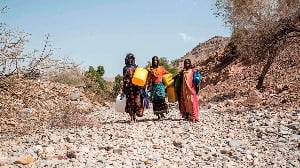
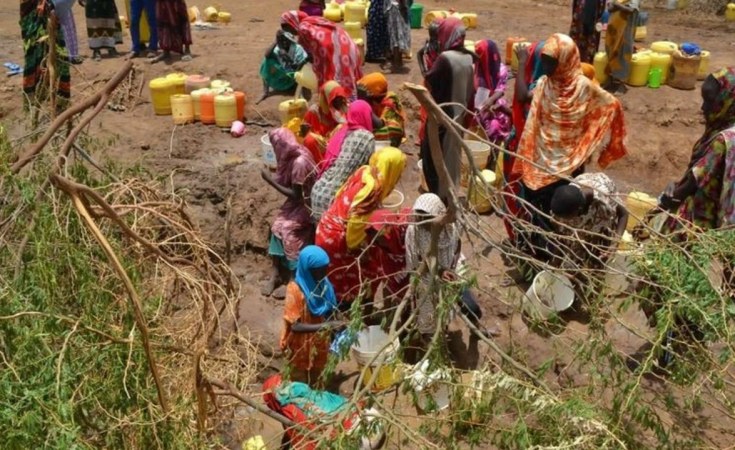
Kenya, Somalia, and Ethiopia are countries in the Horn of Africa and will require more than $2.68 billion to fulfill crucial sectoral requirements over the next four months as a result of the severe drought in the area.
The Intergovernmental Authority on Development (Igad), a regional organization, made an urgent request for humanitarian assistance on Wednesday to provide individuals suffering from drought with basic necessities like water, food, and pasture.
Dr. Workeneh Gebeyehu, the executive secretary of Igad, claimed that the region’s capacity to feed its people adequately has been severely hampered by the protracted drought, which has been characterized by five consecutive seasons of below-average rainfall.
“The consequences of the drought are terrible in some pastoral and agropastoral areas of Ethiopia, Kenya and Somalia, and has resulted to severe water and pasture shortages, one million displaced people, over 10 million livestock and wildlife deaths, reduced crop and livestock production, all of which are increasing food insecurity,” he said.
Shorter than normal season
Igad says that despite heavy rainfall recently recorded, there are signs the season might be shorter than normal, bringing lingering effects in the three states.
“Forty-seven million of our brothers and sisters are highly food insecure and some risk dying of starvation. Seventy percent of these 47 million people live in Ethiopia, Kenya, and Somalia. This is why we solemnly call on the international community to help us prevent a major humanitarian disaster by committing requisite resources to save lives and livelihoods in the short-term, and continue investing in resilience building in the medium and long-term,” said Dr. Gebeyehu.
Somalia is the most affected and needs $1.6 billion to provide food and non-food items to the communities affected by drought and internally displaced people in the next four months whereas Kenya requires $378 million to provide food, water and vaccination to the affected counties until October 2023.
Timely and effective responses
Igad, in its report this week, indicates Ethiopia needs $710 million to provide support to key sectoral needs until August this year.
The regional body says member states are also working on strengthening disaster risk governance capacity to ensure timely and effective responses to drought and other disasters in the region.
“Our recovery will require resources and time, and we must work to prevent future disasters from having such severe impacts. Igad has outlined mid to long-term priorities to make the region more resilient and sustainable,” said the Igad boss.
As earlier reported, hundreds of protesters have occupied a farm owned by the clan of former Kenyan president Uhuru Kenyatta as nationwide demonstrations against the country’s high cost of living break out.
On the vast property outside of Nairobi, the invaders used power saws to fell trees and took hundreds of animals with them.
The vast plot of land will be used to build a luxury housing development.
At the time of the occurrence, there were no police or security personnel present.
Local journalists covering the invasion were also attacked by the mob, meanwhile, businesses near the farm have been shut down.
Opposition leader Raila Odinga called for nationwide protests over allegations that last year’s elections were stolen.
He also says President William Ruto has failed to address the high cost of living in the country.
Mr Odinga, a former prime minister, lost to Mr Ruto in the elections last August. He was backed by former President Uhuru Kenyatta.
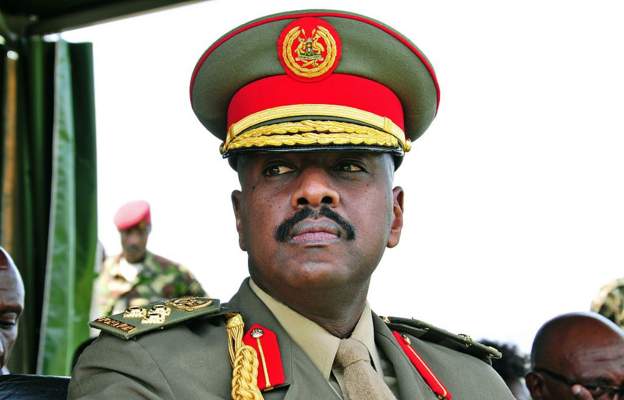
The eldest son of President Yoweri Museveni of Uganda has announced that he will leave the army this year after nearly three decades of service.
The army commander, Muhoozi Kainerugaba tweeted the information.
“I will be retiring from the UPDF this year,” he tweeted.
He made a similar announcement on Twitter in March last year when he was the commander of land forces. But the army said it had not officially received Mr Kainerugaba’s retirement request.
His latest retirement remarks come days after he deleted a tweet announcing that he will stand for the presidency in 2026.
The tweeting general has not hidden his ambition to take over the top job from his 78-year-old father, who has led Uganda since 1986.
The Ugandan law does not allow serving soldiers to participate in politics.
The interior ministry of Kenya is recommending amendments to security regulations that will make it harder for people to stage rallies.
Kenyans are granted the freedom to congregate, protest, and picket under the constitution, but all participants must do so peacefully and without weapons.
One university student was killed during protests last week in areas where the opposition is strong after police used tear gas and live bullets to disperse crowds.
The changes proposed by the ministry seeks to limit the number of people holding protests at any particular occasion, and makes protesters pay the costs of cleaning up.
Protesters must also seek consent from the people affected by the protests. The demonstrators will also be liable for paying damages to those harmed by their activities.
In the proposed changes, the interior ministry also seeks the demarcation of areas where people can assemble and hold protests.
“It is not feasible for security organs to allow masses of people to roam streets and neighbourhoods of their choice carrying stones and other offensive weapons while chanting political slogans and disrupting the daily activities of others,” the ministry said in a statement.
The proposed changes have been criticised by some as “an affront to the foundations of an open and democratic society” and as a “law that contravenes the constitution”.
It comes as a defiant opposition vows to continue with protests over the high cost of living and alleged electoral malpractices.
Despite a police ban, Kenyan opposition leader Raila Odinga said protests against PRairesident William Ruto’s administration over the high cost of living would proceed as planned.
Hours after accusing Vice President Rigathi Gachagua of “coordinating a campaign of mayhem” against the anticipated demonstrations, Odinga called for protests on Monday and Thursday in a tweet.
Last week, violent protests broke out in Nairobi and other places, resulting in the death of one person. More than 200 persons were detained by the police, including members of both chambers of parliament who are affiliated with Odinga’s One Kenya Coalition Party.
The protests organized by Odinga are now prohibited, according to Kenya’s police chief, who also noted that such actions are still illegal.
“We have been restraining ourselves. We cannot do that any more,” Inspector General of Police Japhet Koome told reporters at a media briefing. “We are ready as the police force to maintain peace.”
During last week’s protests, police used tear gas and water cannon, including at Odinga’s convoy. Nairobi’s central business district had a heavy police presence before Monday’s planned rallies.
Odinga, 78, has called for indefinite twice-weekly protests, citing the high cost of staples such as maize flour, which has kept inflation high. He also has accused Ruto of cheating in last year’s presidential election.
In preparation for the anti-government demonstrations that opposition leader Raila Odinga has called for on Monday, the Kenya Railways Corporation has halted all commuter train service in the nation’s capital, Nairobi.
In a statement on Sunday, the Kenya Railways management attributed the decision to “unavoidable circumstances.”
“We do sincerely apologise to all our esteemed customers for any inconvenience caused,” it said.
However, the train operator said all its commuter trains between the old railway station in the city centre (Nairobi Central Station) to the Nairobi-Mombasa railway station (Nairobi Terminus) – would run as scheduled.
The opposition coalition is holding protests in Nairobi and other parts of the country to push for electoral reforms and reduction of prices of basic commodities.
On Sunday, the police chief banned the protests, but the opposition has maintained that the protests will be held within the law.
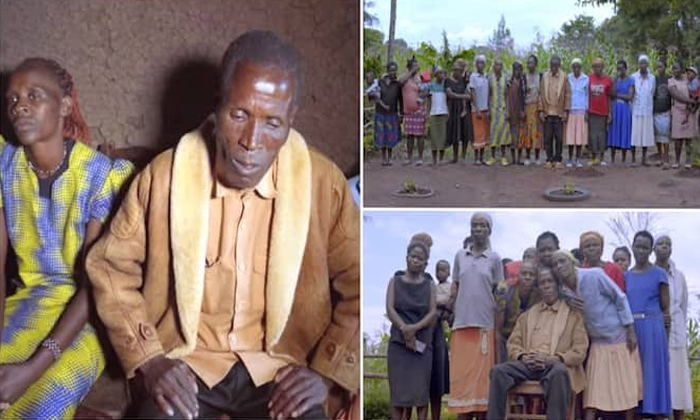
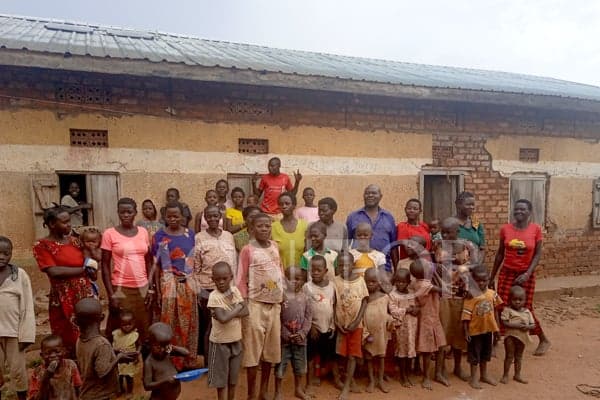
Kenyan man, David Zakayo Kalukhana, a resident of Teresia Village located at the periphery of Kakamega County, has 107 offspring from his eight wives and seven concubines.
The 63-year-old, who hails from a village situated on the vast Nandi escarpment in Kakamega North sub-county, entered into his first marriage in 1987 but later decided to take on more partners.
“A head like mine cannot be managed by one woman. It is like a big sack of maize which has to be divided into smaller parts for ease of movement. I need many wives so that they can manage the amount of brains and ideas in my head. I am too smart for one wife,” Mr Kalukhana told the Sunday Nation.
Mr Zakayo’s Financial Status: Provision for Family
Although he has 107 children from his multiple wives and concubines, David Zakayo Kalukhana does not consider himself wealthy based on local standards.
He mentioned owning only a half-acre plot of land where he grows maize to feed his family and sugarcane. To provide for his large family, he undertakes menial jobs, such as landscaping activities.
His compound comprises three semi-permanent houses that have mud walls and iron sheet roofs. Despite the challenges he faces in providing for his extensive family, Mr Kalukhana remains resolute and compares himself to the biblical King Solomon, who had 700 wives and 300 concubines.
“I have wives in different places, including in the neighbouring Nandi County. When I’m not farming, I go out to do menial work, including constructing stone fences around people’s homes. The work is well-paying and it has helped me make some money to keep my family going. They will never sleep hungry as long as I’m alive,” said Mr Kalukhana.
Motive for Marrying Multiple Wives
“When I married my first wife Jesca Asembo in 1987, I felt like she was not up to the task. I have added more but I still have the urge to add more. All my children of school going age attend school.
I toil daily to raise money to ensure they are in school to get an education for their future. I don’t believe in religion. I live my life through my own intervention because I am a genius,” he said.
Jealousy Amongst Wives
The wives of David Zakayo Kalukhana, who belong to various age groups, work and dine together, sharing their meals. They also collaborate on household tasks and treat their husband with great reverence. In photographs, they are seen laughing and teasing each other while feeding each other joyfully.
According to one of his wives, Ms Asembo, she has never experienced any jealousy towards the other wives.
“I love my husband and that is all that matters. Even if he brings in additional wives, I will not be bothered because I understand him. He is a responsible man and whatever he does is always right because he takes his time to decide on what to do,” said Ms Asembo.
Dorine Kalukhana, Mr Kalukhana’s seventh wife, admitted to feeling envious when she first got married but eventually grew accustomed to the situation.
“Today, there is no jealousy. We all live in harmony and no woman feels jealous of the other. Our man treats us equally,” she said.
Roadside signage announcing initiatives to foster “resilience” among pastoralist communities may be seen all throughout the dry landscape of northern Kenya. Frequent droughts, animal sickness, insecurity, and structural exclusion all have an impact on pastoralists’ means of subsistence in this area.
The numerous externally sponsored programs and hundreds of millions of dollars invested over the past few decades have all been motivated by the idea of resilience, which is the ability to alter or recover swiftly from challenges.
On the drylands, resilience projects frequently encourage pastoralists to “modernize” their production or give up keeping cattle entirely. These pastoralists typically operate in groups. Projects may involve breeding better livestock, reseeding grasslands, building fodder banks, modernizing market infrastructure, or providing livestock insurance. A variety of “alternative livelihoods” programs are integrated with investments in water resources, roadways, and other infrastructure.
The value of this approach is under scrutiny amid one of the most severe droughts of the past century in northern Kenya. Over 2.5 million livestock have already perished for lack of food and water, and human lives are threatened. At least 4.5 million people are in need of external assistance. Decades of investment in “resilience” clearly hasn’t been working. The question now is whether there are different ways of supporting pastoralists’ ability to prepare for and respond to droughts and other shocks.
Over the past four years, we have been studying how Borana pastoralists in Isiolo county in northern Kenya manage drought, conflict and other uncertainties. In recent years, the area has suffered recurrent droughts, alongside locust and animal disease outbreaks.
Pastoralist livelihoods are increasingly vulnerable. Land is being encroached from all sides by neighbouring groups and conservation areas expanded. Building resilience has become increasingly essential.
Our research has pointed to the importance of local networks of mutual support, solidarity and redistribution that enable pastoralists to adapt to changing circumstances. These types of “moral economy” practices could be the basis for drought preparedness and response.
We have concluded from our research that, instead of the deluge of external interventions, ways must be found to build resilience from below, drawing on local practices and networks.
Why top-down projects haven’t worked
Our research has found that there are three main reasons that existing project interventions are failing to protect populations from recurrent drought and other shocks.
Misplaced narratives: Behind these interventions is the idea that pastoralism is outdated and that alternatives to livestock keeping must be found. Since the colonial era, controlling livestock movements and settling pastoralists have been central to policy prescriptions. Calls to encourage pastoralists to change their ways are always accentuated during and after major droughts.
Pastoralists, the argument goes, would do better if they settled in one place and farmed. The biases against pastoralism are very evident in education programmes, water investments for irrigated farming and livelihood diversification projects outside the pastoral economy.
Yet, despite the drought and the loss of animals, pastoralism can make the best use of highly variable dryland environments, where alternative ways to make a living are extremely limited. Supporting rather than abandoning pastoral systems makes much more sense.
Poor project design: All too often, development projects don’t fit the local context. Fancy new livestock markets promoted by donors are frequently in the wrong place, while dispersed “bush markets” are more accessible and cheaper to use. Many boreholes function for a while, but the cost of repairs is often high and so they fall into disrepair. The roads may go to the wrong places, diverting trade and transport from places that matter.
Not all development efforts are wasted. Take the new A2 highway built by the Chinese from Isiolo to the Ethiopia border town of Moyale and beyond. This has reduced travel times dramatically, allowing hay to be transported for hungry livestock across the region. Also, maintained government boreholes, now often with solar pump facilities, have been essential for keeping animals alive during the drought.
But the idea that resilience can be generated through a technical or financial fix is prevalent. In so many cases the same interventions that failed a few decades before are just being repeated with new branding.
Ignoring the social context: Since devolution in Kenya in 2010, there has been emphasis on decentralised activities led by county governments. Many groups and committees have been established by a plethora of projects. Too often these are focused on implementing an externally designed activity or feeding information upwards. This creates a lot of confusion.
Such projects seldom engage with the social context, involving local networks or mobilising local expertise and experience. Frequently the projects fold as soon as the funds dry up.
Towards resilience from below
In the drylands, drought is part of normal life in a highly variable environment. Climate change is making matters worse, as droughts are more prolonged and the pattern of rainfall changes. And shrinking access to land and water due to encroachment of other land uses make drought impacts harsher.
Yet, as our research has shown, herders have a long-established repertoire of drought responses. This is not just passive “coping”, but is well planned.
Pastoralists’ practices combine livestock movement, sharing and distribution of animals through loans, splitting herds and flocks, supplementary feeding and watering, careful herding, negotiating access to farmland or conservation areas, shifting species compositions, selective marketing of animals, and diversification to other income sources to support the herd or flock.
Rather than creating new resilience projects, separate from local practices, why not build on these responses?
Pastoralism, as described by researcher Emery Roe, can be seen as a “critical infrastructure”, where “high reliability professionals” ensure that the system doesn’t collapse. Such professionals are central to pastoral systems. They connect herders through diverse social networks; for example with motorbike transporters, those who offer credit, and local specialists such as healers and forecasters.
Our work in northern Kenya and southern Ethiopia is exploring more deeply who these “high reliability professionals” are and what they do to transform very uncertain conditions into a more stable, reliable supply of goods and services, so helping to avert disasters.
A group of 43 Facebook moderators sacked in January have said they are pursuing a lawsuit in Kenya against the social network’s parent company Meta for, among other things, “unlawful dismissal,” according to a statement posted Monday.
Meta, which also encompasses Instagram and WhatsApp, has undertaken to reduce its workforce by nearly 25% in less than six months, a symbol of the difficulties faced by the tech sector.
“In January, 260 content moderators working at Facebook’s moderation center in Nairobi, Kenya, were informed that they would be let go by Sama, the outsourcing company that has run the office since 2019. Overnight, these moderators doing critical work for East and Southern Africa have lost their jobs,” the statement said.
“43 moderators at Facebook‘s moderation center in Nairobi are filing a lawsuit against the social media company and its contractors for firing the entire workforce – and for blacklisting all the fired workers,” the statement continued.
In December 2022, a Kenyan NGO and two Ethiopian citizens filed a complaint in Kenya against Meta, accusing the platform of not fighting enough online hate and demanding the creation of a fund of 1.6 billion dollars to compensate victims.
After posting insolent growth since its creation, Facebook, which became Meta at the end of 2021, has been suffering from a slowdown in online advertising since last year.
Protests are being held across the country in opposition to President William Ruto‘s election victory and Kenya’s rising cost of living.
Although hundreds of people demonstrated against President William Ruto, the high cost of living, and allegations of election fraud, the Kenyan police deployed tear gas and detained many key opposition members.
Veteran political figure Raila Odinga, who lost to Ruto in August’s poll, has urged nationwide protests as he attempts to harness dissatisfaction with the president.
The discontented include some who voted for Ruto and feel he has not delivered on pledges to help the country’s forgotten “hustlers”, or working-class Kenyans.
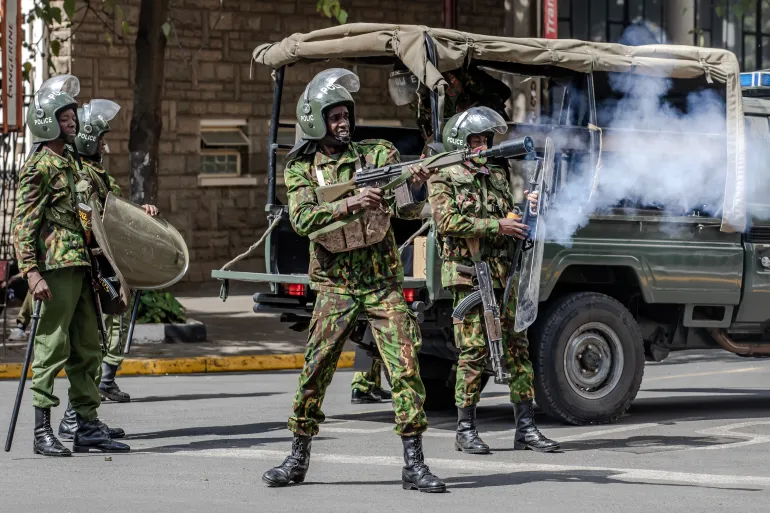
Police officers in riot gear fired tear gas at hundreds of rock-throwing protesters in the capital Nairobi’s vast Kibera slum, who chanted: “Ruto must go.”
They also used tear gas to disperse demonstrators trying to gather in the Central Business District, from where Odinga has called for a march towards the president’s State House residence, Reuters reporters said.
In the western city of Kisumu, an Odinga stronghold, police fired barrages of tear gas in the direction of protesters who had started fires in the road, footage on Citizen TV showed.
At least four members of parliament were arrested during protests in Nairobi, including the minority leaders of the National Assembly and Senate, Odinga’s spokesman, Dennis Onyango, said.
Nairobi police chief Adamson Bungei told reporters he would have details about the arrests later in the day.
Despite Ruto’s promises to bring down living costs since taking power in September, inflation has remained high in East Africa’s economic powerhouse, rising to 9.2 percent in February.
Ruto has said his government is laying the foundations of a healthier economy, including by cutting reliance on borrowing.
Odinga, who has lost five presidential elections, has cast the demonstration as an opportunity to protest against the August vote, which he says was tainted by fraud.
He challenged the results in the Supreme Court last year, but the court affirmed Ruto’s win and there was little of the violence that marred elections in 2007 and 2017.
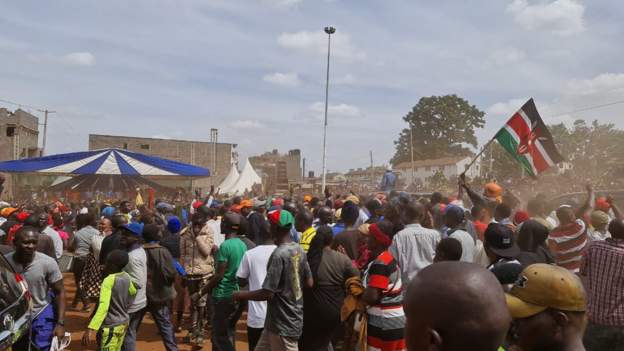
On Monday March 20 2023, Kenya’s seasoned opposition leader Raila Odinga called for weekly rallies as confrontations broke out between police and demonstrators protesting the country’s rising cost of living.
“Every Monday there will be a strike, there will be a demonstration,” he told crowds of chanting followers in Nairobi. “The war has begun, it will not end until Kenyans get their rights.”
“Are you ready?” he said to cheers from his supporters.
Odinga had called Monday’s demonstrations against the government of President William Ruto in protest at soaring prices of basic goods in Kenya and what he said was last year’s “stolen” election.
The opposition leader narrowly lost his fifth tilt at the presidency in the August poll despite being backed by former president Uhuru Kenyatta.
Riot police had earlier fired tear gas and water cannon on Odinga’s motorcade near a Nairobi hotel, where he had been due to hold a press conference before being forced to leave.
In a brief speech to protesters lining up to greet him as he entered Nairobi on Monday, former prime minister and leader of the Kenyan opposition Raila Odinga called for weekly nationwide demonstrations against the high cost of living.
According to his senior adviser Makau Mutua, moments earlier, police in Nairobi shot tear gas and water cannons at his car as they barred his supporters from entering the Serena Hotel, where he was scheduled to hold a news conference.
The protest leader was then forced to move to another part of Nairobi as police prevented his car from entering the Central Business District, where demonstrators and police have been fighting since early in the morning.
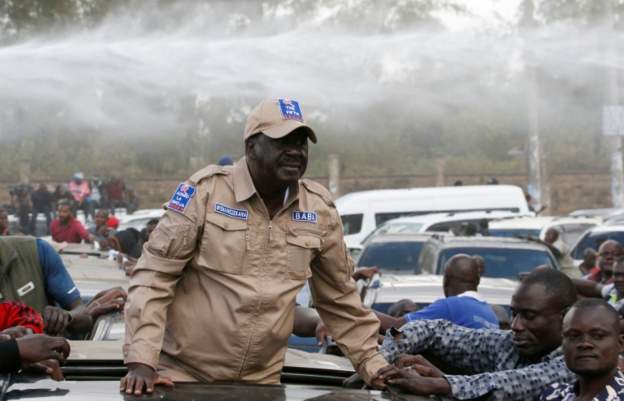
“We shall use all available, peaceful, and constitutional means to vindicate our rights,” Odinga said from the sunroof of his car.
Afterward, Odinga drove around Nairobi alongside protesters following his motorcade, which has been repeatedly tear-gassed.
Hundreds of people across the country have taken to the streets to protest against the high cost of daily life.
arrested protesters, including senior opposition politicians, as demonstrations escalated by mid-day local time Monday.
Odinga, who lost the presidential election for a fifth time in August, called for nationwide protests to demonstrate against what he claims, without evidence, is an illegitimate government that stole the election.
Kilifi county senator Stewart Madzayo and Ugunja sub-county lawmaker Opiyo Wandayi were among those arrested and held in Nairobi, according to Odinga’s senior adviser Mutua. Six other officials were also arrested in the capital, he confirmed to CNN, adding the party was still trying to assess the number of arrests.
Members of Odinga’s party accused police of disrupting what they said were peaceful protests and demanded authorities immediately release the arrested politicians.
Police clashed with protesters in Nairobi’s city center, with businesses in the city center shuttered for the day, and in Nairobi’s Kibera slum, where Odinga has substantial support. Clashes were reported in the city of Kisumu, in western Kenya, which is considered a stronghold for Odinga.
High inflation and soaring food prices in the country has led to a cost-of-living crisis for many in Kenya. “We will sustain the protests [beyond Monday] until we get what we deserve,” Mutua said.
A spokesperson for the Kenyan police could not be immediately reached.
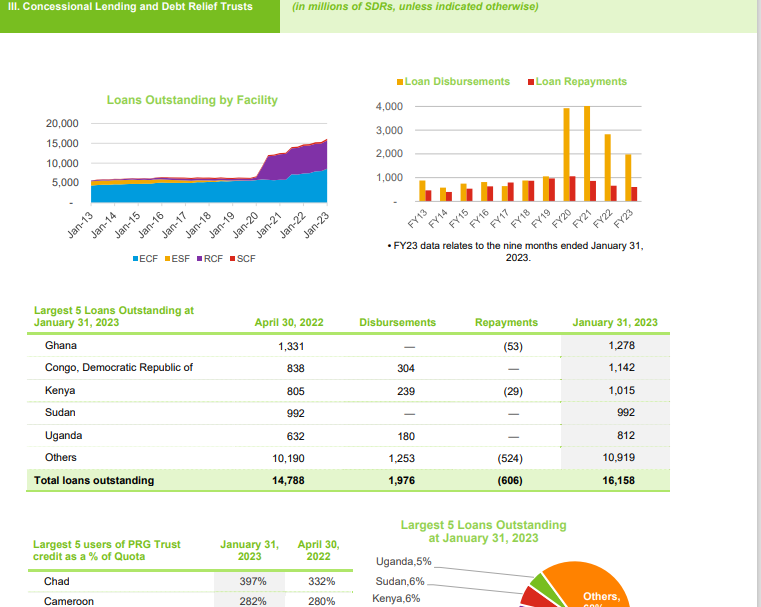
Although Ghana’s debt to the IMF remained constant at $1.70 billion in January 2023, it has however been ranked the most indebted African country to the IMF.
According to the Fund’s Quarterly Finances ending January 31, 2023, Ghana’s outstanding loans to the International Monetary Fund stood at 1.278 billion Special Drawing Rights (SDR 1.278 billion) at the end of January 2023, equivalent to $1.708 billion.
This is out of Africa’s total loans outstanding of SDR 16.15 billion to the Bretton Woodinstitution as of January 31, 2023.
The country has, however, so far repaid SDR 53 million, equivalent to $75.7 million to the IMF.
Ghana’s loan exposure to the Bretton Woods institution is classified as concessional lending. Concessional loan comes with a low-interest financing.
Democratic Republic of Congo and Kenya were ranked 2nd and 3rd in Africa with the largest outstanding loans of SDR 1.142 billion and SDR 1.015 respectively to the Fund as of January 2023.
They have also received a disbursement of SDR 304 million and SDR 239 to boost their balance of payments.
Sudan and Uganda were 4th and 5th respectively with their exposure to the Fund estimated at SDR 992 million and SDR 632 million. Uganda has also received a disbursement of SDR 180 million to aid its fiscal economy.
The rest of Africa was indebted to the tune of SDR 10.1 billion to the IMF. The African countries have so far received disbursement of SDR 1.25 billion post-Covid-19.
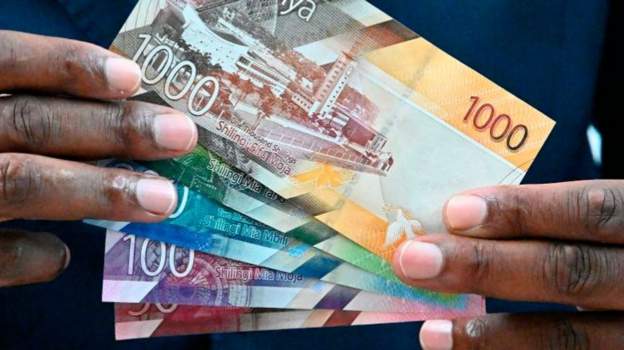
After 60 days of falls, the Kenyan shilling experienced its longest losing streak since records began in 1988.
By 10:55 a.m. in Nairobi, the shilling was down 0.1% against the dollar, bringing its year-to-date loss to more than 5%.
According to Genghis Capital, which forecasts the shilling to trade as low as 161.40 to the dollar by year’s end, worries about rising US interest rates, declining foreign-exchange reserves, and a deteriorating balance of payments have hurt the currency of East Africa’s largest economy.
That would mark the biggest annual depreciation since 2008, when the currency tumbled 23%, according to data compiled by Bloomberg.
Kenya’s foreign-exchange reserves dropped to $6.56 billion as of March 16, an 11-year low and sufficient to cover just 3.66 months of exports. The central bank’s statutory requirement is to maintain at least four months of coverage.
The central bank will probably raise its benchmark interest rate from 8.75% at its next Monetary Policy Committee meeting on March 29, Genghis said, after annual inflation quickened for the first time in four months to 9.2% in February.
Commercial lenders in Kenya are charging an average spread of 7.50 shillings on the official exchange rate, with some charging as much as 10.50 shillings, Genghis said.
Africa’s second largest home of crocodile has completely dried up due to failed rainy seasons.
Lake Kamnarok in Kenya’s Rift Valley was once home to 10,000 crocodiles, second to Lake Chad in holding capacity.
But the ox-bow lake has been shrinking over the years, largely due to fluctuations in weather systems.
It has also been draining its water to a nearby river through a natural fissure, according to local reports.
Crocodile carcasses are now scattered on its cracked floor. The few remaining crocodiles have relocated to nearby private dams, a resident told NTV television station.
He said they are worried of increased human-wildlife conflict because of encroachment.
Zambia and Kenya have conditionally agreed on a deal under which the Lusaka government will give Kenyan commercial farmers land to produce maize.
A local media report has it that,a memorandum of understanding (MOU) permitting Kenyan farmers to grow maize in Zambia will be signed.
“I am happy the Zambian government has agreed to offer Kenyan farmers land for large-scale farming in Zambia. Kenyan farmers will in turn be required to export their yields back to Kenya in order to boost our food supply and security,” Linturi is quoted as saying.
He stated that the agreement was reached during a meeting he had on Monday in Lusaka with his Zambian counterpart, Reuben Mtolo, although he did not provide a date for its signing.
According to Linturi, the proposed MOU is anticipated to lower the price of maize and its products in both countries.
“Based on the projections he shared with us, the farmers will be able to achieve the objective of bringing down the cost of unga (maize meal) because, clearly, they got it right and there is something to learn from them.”
He said officials from the two countries would work out the price at which Zambia would sell the maize to Kenya, which “of course, (would be) a much lower price than we are currently getting from the traders.”
Farmers in Zambia would gain from the agreement as well because Kenya would receive short-term access to Zambia’s surplus maize.
Following a recent shortfall of maize meal in Kenya, which Linturi attributed to farmers stockpiling in anticipation of higher producer prices, an agreement with Zambia is now being negotiated.
An increase in fuel prices and a depreciating local currency has contributed to the high cost of electricity in Kenya by 10% in the most recent monthly adjustment.
The fuel cost tax (FCC), which was Ksh6.59 ($0.051) per kilowatt-hour (kWh) last month, has increased to Ksh8.3 ($0.064) per kWh by the Energy and Petroleum Regulatory Authority (Epra).
It is the highest rate of the fuel energy component since June 2012 when it hit a record Ksh9.03 ($0.070) per kWh.
The Epra has also raised the foreign exchange rate fluctuation adjustment (Ferfa) to Ksh2.16 ($0.017) per unit from Ksh1.85 ($0.014) per unit last month due to the weakening shilling against the dollar.
This has raised the unit cost of power for lifeline consumers to Ksh22 ($0.17) per unit up from Ksh20 ($0.15) last month which will force customers to pay more for the same quantity of electricity.
New power tariffs
This comes weeks before the country’s energy regulator is expected to publish new power tariffs that will significantly further raise power prices.
Epra is expected to put in place new tariffs that will be in effect from April 1 for the next three years.
This comes as global crude oil prices have been fluctuating in recent weeks, but analysts project prices to go up in the coming months owing to increased demand, especially from China.
The Kenya shilling – which was trading at 128.36 against the US dollar on Wednesday – has continued to lose value against the greenback, piling more pressure on firms like Kenya Power which have a huge demand for dollars.
Rising inflation
The utility says its total monthly average use of foreign currency is $50 million and €20 million.
The higher power prices are set to heavily hit consumers at a time when inflation in Kenya has increased to end a three-month consecutive decrease.
Inflation climbed to 9.2 percent in February, coming after it slowed for three consecutive months to hit 9 percent in January.
Kenya National Bureau of Statistics’ Consumer Price Index (CPI) showed that in that month, food commodities contributed greatly to the high inflation.
The high inflation has heavily hit Kenyan businesses which saw demand for goods and services shrink for the first time in six months, according to Stanbic Bank’s Purchasing Managers Index (PMI).
The PMI fell below the 50-neutral mark to 46.6 last month – the first time it has fallen below the neutral point since August last year.
“The reading indicated a solid deterioration in operating conditions, driven by renewed contractions in many of the covered metrics,” said the report.
Four of the five monitored sectors in the survey saw new orders decrease, with particularly sharp falls seen in manufacturing, wholesale and retail, while agriculture was the only sector where sales increased.
Consumers in Kenya are currently dealing with new fuel shortages as a result of major oil marketing firms (OMCs) in Nairobi running out of petrol and turning away drivers due to severe cash flow issues brought on by the dollar scarcity.
Many filling stations in Nairobi, the capital of Kenya, had ran out of petroleum supplies as of the weekend, with those owned by Vivo Energy being among the hardest impacted, according to a spot-check by The EastAfrican.
By Sunday afternoon, several outlets by Vivo under the Shell brand had run out of super petrol, with attendants giving motorists the option of buying the company’s V-Power brand. The situation deteriorated Monday with some of the Shell outlets reporting total depletion of products including super petrol, V-Power and diesel.
Vivo did not respond to our queries over the scarcity of fuel at its retail outlets even though insiders and an industry association attributed the situation to a dollar shortage.
Insufficient dollars
“There is sufficient fuel at the depots but the major oil companies are not evacuating it because they do not have sufficient dollars,” said Petroleum Outlets Association of Kenya (POAK) Chairman Martin Chomba.
Vivo Energy is the largest OMC in the country with a market share of 23.83 percent, having sold 1.36 million cubic metres of fuel products in the financial year to June 2022.
The major oil companies such as Vivo, TotalEnergies, Rubis and Ola Energy buy fuel in bulk and supply it to the smaller independent retail outlets, meaning that a shortage at these top firms cascades down to the smaller players.
Kenya is currently battling an acute shortage of US dollars primarily due to pressure exerted by external debt repayments.
Data from the Central Bank of Kenya (CBK) released on Friday shows forex reserves dropped to $6.6 billion (Ksh845.46 billion) on March 2 from $6.86 billion (Ksh878.76 billion) on February 23. This translates to 3.69 months of import cover, which is below the set threshold of four months and comes despite CBK Governor Patrick Njoroge constantly downplaying the shortage.
Higher global prices
Demand for forex has shot through the roof in recent months as importers seek more dollars to finance imports owing to higher global prices of fuel, food products, cooking oil, steel and other imports.
“Yes, talk to the big OMCs. It is a crisis,” said an executive of a smaller oil marketing company who requested anonymity.
The Energy and Petroleum Regulatory Authority (Epra) has also failed to fully withdraw the subsidy on diesel which has compounded the cash-flow woes of the OMCs.
Epra last month partially reinstated a margin of Ksh2.54 ($0.020) per litre of diesel, but amid continued delays by the National Treasury in releasing subsidy funds, the firms have been pushing for the termination of the scheme to ease their cash crunch.
Muted fuel sales
The OMCs have been borrowing to fulfil their cash needs for fuel imports, but muted fuel sales owing to the tough economic conditions that have seen many motorists park their cars in favour of public transport have compounded their woes.
Should the fuel supply hitch evolve into a full-blown fuel scarcity crisis, it would mirror a similar crisis that began in late March last year after OMCs resorted to hoarding fuel in protest against the government, which had accumulated subsidy arrears of Ksh13 billion ($101 million).
President William Ruto’s government has resorted to government-to-government procurement of fuel, which will see state-owned Gulf companies supply fuel to one local OMC of their choice, who will in turn distribute it to other local players.
The government has already floated a tender of nine months for the fuel supply through the new arrangement, which is a temporary move away from the open tender system where some 112 OMCs compete to procure fuel on behalf of the others.
The government says the new system will help to reduce pressure on forex reserves considering that in the government-to-government fuel purchasing, payment for the cargo will be made after six months compared to the current system where the firms have to pay for the cargo every week.
A Kenyan man who was charged with selling potato chips that had been fried in transformer oil receives a two-year prison term or a Ksh.200,000 ($1,500) fine. Elijah Mwangi Muthoga allegedly had 11 liters of transformer oil in his possession when he was apprehended in December 2021, according to Citizen Digital. In the country of East Africa, the accused man is a hotelier.
In addition to being repackaged and sold as popcorn oil, the poisonous fluid was also used to fry potato chips before they were sold, according to court filings. The person who supplied the transformer oil received a sentence of 10 years in prison or a fine of KShs. 10 million (about $77,000).
“This ruling is a big boost to the Company’s effort to fight transformer vandalism as the stiff penalties and jail terms will deter vandals,” Kenya Power’s Ag. Manager for Security Services Maj. Paul Nyaga (Rtd) said.
Kenya Power also stated that one of the main reasons behind power outages in the East African nation was vandalism on transformers. “In addition to undermining the quality and reliability of the electricity supply, transformer vandalism poses a risk of electrocution and exposes the Company to financial losses in lost sales and the cost of replacing the transformers,” Kenya Power said.
As previously reported by Face2Face Africa, Kenya Power also said the thieves who extract the toxic fluids pass them on to cartels who later sell them as cooking oil to restaurants and roadside stalls.
Officials said the upsurge in vandalism is because of the increasing price of cooking oil. As a result, businesses are adopting unconventional methods to remain in business. Although cooking oil and transformer oil look similar, health experts warn the latter is dangerous for human consumption and causes grave health risks.
Six suspected livestock rustlers from Kenya who were detained in Uganda’s Turkana area’s Karamoja region have been handed over.
The Ugandan military turned over the suspects to the Turkana County administration as a “gesture of East African Community partnership and as a show of peaceful coexistence.”
The practice supervised by Brig Gen Felix Busizoori of the Uganda People’s Defence Forces (UPDF) was done in Moroto Army Barracks in northern Uganda and attended by Turkana County secretary and head of public service, Peter Eripete.
“The Turkana suspects were arrested alongside their kinship, the native Matheniko in different cordon and search operations where they were engaged in cattle rustling in Karamoja sub-region between 20th February to 26 February 2023,” the UPDF said Monday.
Brig Gen Busizoori urged Kenyan authorities to “penalise the suspects for abusing the peaceful co-existence and cross-border security arrangements”, saying letting them off the hook would encourage impunity.
He warned that those caught violating Ugandan laws would face the law in the country.
UPDF said eight Matheniko suspects arrested alongside the Turkanas would be subjected to Uganda’s courts of law.
Last month, Kenya and Uganda initiated talks to open a one-stop border post in Lokiriama in northwest Kenya, that would seek to open up trade and fight livestock raids.
The two countries revived their September 2019 memorandum of understanding that sought to enhance cross-border trade between the Turkana and Karamoja, by establishing immigration and customs border points at Lokiriama, Nawountos and Nakitong’o.
The border region is mainly occupied by the Turkana and Pokot ethnic communities in northwestern Kenya, and the Karamajong, an ethnic group of agro-pastoral herders living in the northeast of Uganda.
These communities have over the years engaged in banditry, making the region unsafe. The two countries, however, see the opening of the border post as one of the measures to end cattle rustling or stock theft, an age-old tradition that has been commercialised by international criminal networks in East Africa and the Horn.
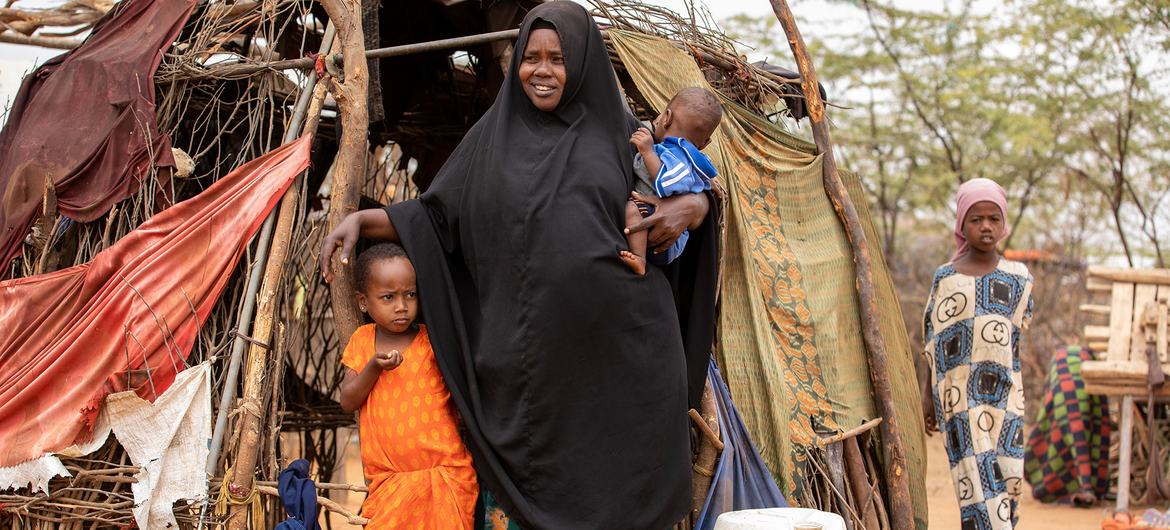
Today inSomalia, Ethiopia and Kenya, more than eight million people require food assistance and around 332,000 “urgently need food, otherwise their lives are at risk”, said UNHCR spokesperson Olga Sarrado.
A full eight in 10 of the displaced are women and children, the UNHCR official continued, while UN migration agency, IOM, warned that failed rains and conflict in Somalia, “could force tens of thousands of people” to seek refuge in major cities and towns, particularly in Baidoa and Mogadishu where IOM projects that approximately 300,000 people could be newly displaced by July 2023”.
In an appeal for $137 million to maintain vital humanitarian programmes this year, UNHCR’s Ms. Sarrado said that well over three million refugees and internally displaced people have already been forced to leave their homes in Somalia, Ethiopia and Kenya.
Struggle to survive
Survival is a struggle for these uprooted communities, amid scarce water sources, hunger, insecurity and conflict. They need safety and assistance, just as much as host communities do too, the UN agency insisted.
“While famine has so far been averted in Somalia, mostly due to a stepped-up humanitarian response, people continue to battle life-threatening food and water shortages resulting from massive losses of harvests, livestock, and income,” Ms. Sarrado explained.
Price to pay
The UNHCR spokesperson warned however that prices of essential foodstuffs and other commodities “remain at an all-time high, out of reach for many. The dangerous confluence of climate and conflict in the region is worsening an already dire humanitarian situation.”
In Somalia alone, since the start of the year, 288,000 people have become internally displaced, because of conflict and drought, UNHCR data shows.
More than 180,000 refugees from Somalia and South Sudan have also crossed into drought-affected areas of Kenya and Ethiopia, the UN agency noted.
In Ethiopia’s Somali region – itself already suffering deeply from drought – nearly 100,000 people have arrived in Doolo in recent weeks, after fleeing conflict in the Somalia’s Laascaanood area.
Desperate testimony
In Kenya’s Dadaab camps, UNHCR also reported the testimony of a 60-year-old woman from Somalia who said that she had endured three decades of conflict in southern Somalia, but that it was extreme hunger that forced her to flee for her life.
“Most of the newly displaced might never go back to their places of origin because the land can no longer provide, and insecurity will only increase as competition for the already scarce resources grow,” IOM said in an alert for the record 3.8 million people now displaced in Somalia. “As a result, entire families will be born and raised in informal settlements amid unsuitable living conditions.”
Humanitarian action
As part of its response, UNHCR plans to provide more basic relief items including emergency shelter and household items for new refugee arrivals and displaced people in Somalia, Ethiopia and Kenya.
Water trucking supplies will be increased, while additional boreholes will be drilled and existing water and sanitation systems refurbished.
Cash assistance will be prioritized for the most vulnerable to help them supplement their own food needs, while also encouraging traders to make food and other necessities available.
Health facilities will also be supported to step up nutritional assistance for women and children through high-nutrient feeding and medical treatment for related diseases.
“This additional assistance and protection is required urgently…to save millions of lives,” said UNHCR’s Ms. Sarrado, who noted that last year’s appeal garnered less than half of the required amount needed to respond to the drought.
Netflix recently reduced its subscription prices in more than 30 countries across Asia, Europe, Latin America, sub-Saharan Africa, and the Middle East.
The streaming firm made this announcement on Thursday as it attempts to attract more subscribers amid various stiff competition and tight consumer budget.
Netflix had in recent times reduced prices in India and some parts of South-East Asia following a decline in growth. However, Thursday’s decision only affects countries that account for a small fraction of its customer base.
Subscription charges have been lowered in Yemen, Jordan, Libya, Iran, Kenya, Croatia, Slovenia, Bulgaria, Nicaragua, Ecuador, Venezuela, Malaysia, Indonesia, Thailand, and the Philippines, amongst others.
The cuts apply to certain price plans, with subscription charges falling by half in some cases.
The company did not name the UK or the US as countries where it had cut its prices.
According to a statement from Netflix, it said “We’re always exploring ways to improve our members’ experience. We can confirm that we are updating the pricing of our plans in certain countries”
The firm’s shares closed 3.4% lower in New York on Thursday after the Wall Street Journal first reported the story.
Furthermore, the company has clamped down on subscribers sharing their login details and passwords. In some countries, Netflix introduced limits on password sharing, requiring customers to pay extra charges if they want friends and family to share their subscriptions.
Netflix previously expanded password sharing in countries including Canada, New Zealand, Portugal, and Spain; the feature was previously piloted in Latin America. The users will no longer be able to share passwords, they can however transfer profiles.
However, people using an account can now easily transfer a profile to a new account, which they have paid for; keeping their personalized recommendations, viewing history, My List, saved games, and more.
(Image credit: TRE / JBKlutse Foundation)
Also, members of a household can still easily watch Netflix on their personal devices or log into a new TV, like at a hotel or holiday rental. Aside from this, the users’ Standard or Premium plan in many countries (including Canada, New Zealand, Portugal, and Spain) can add an extra member sub-account for up to two people they don’t live with; each with a profile, personalized recommendations, login, and password — for an extra CAD$7.99 a month per person in Canada, NZD$7.99 in New Zealand, Euro 3.99 in Portugal, and Euro 5.99 in Spain.
This news will come as a relief for Netflix users considering the high inflation rates around the world at the present time. Users can now enjoy watching Netflix at a lower price.
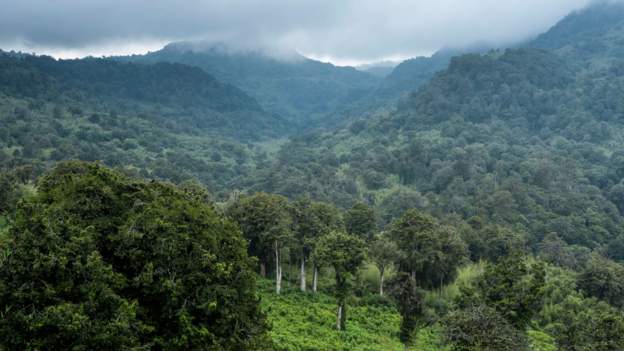
In the Aberdare Mountain Range in central Kenya, wildfires have damaged more than 40,000 acres (16,000 hectares) of forest.
Despite hundreds of firefighters being sent to the area to attempt and put out the flames, which were initially spotted in the woodlands of the Aberdare National Park two weeks ago.
On the second day, as they raced to the scene, two Kenya Wildlife Service (KWS) rangers were murdered when their vehicle rolled.
The BBC was informed by Bakari Mungumi of KWS’s Mountain Conservation that the cause of the fire was still under investigation.
Long periods of drought on the moorlands and forests leads to dry brush, which is a risk if a fire starts.
“Rising temperatures and dry matter are causing flare-ups on the moorlands, hence making it difficult to put out the fires,” Mr Mungumi said.
This is not the first fire in the region. In 2012, a fire destroyed more than 70,000 acres of the forest.
Aberdare is the third highest mountain range in Kenya, reaching a summit of around 4,000m (13,100ft).
South Asian-native mosquitoes that are resistant to insecticides used in Africa have been found by Kenyan researchers.
Anopheles stephensi was the mosquito that experts from the Kenya Medical Research Institute (Kemri) detected during a regular monitoring in the northern Marsabit county.
Even though it was not the typical season for the disease because local mosquitoes don’t perform well in arid locations, data from hospitals there also revealed an increase in malaria cases.
This invasive mosquito can spawn anywhere and flourish in both dry and wet weather. Its larvae have been discovered in urban water containers in several nations.
Experts are concerned that malaria transmission will now continue all year round instead of being seasonal.
“Unfortunately, this detection in Kenya may translate to higher malaria transmission in urban and peri-urban settings in the country and could reverse gains made in the fight against malaria,” said Kemri’s director-general, Dr Samuel Kariuki.
It will also make it difficult to eradicate malaria, which is one of the top killers of children below five years.
The researchers are urging Kenyans to use available malaria control tools such as sleeping under treated mosquito bed nets, use of repellents and wearing long-sleeved clothing to prevent mosquito bites.
In Africa, the mosquito was first detected in Djibouti 10 years ago and has now been spotted in Ethiopia, Sudan, Somalia and Nigeria.
Head of the UN’s International Organisation for Migration, there are now significantly more women and children moving to the Gulf States from the Horn of Africa.
The International Organisation for Migration (IOM) chief has expressed concern about the growing number of women and children travelling from the Horn of Africa to Gulf nations via Yemen (UN).
According to IOMDirector General Antonio Vitorino, the number of people making the perilous journey through Yemen from Ethiopia, Somalia, and Djibouti has increased by 64% in the last year as a result of people looking for better livelihoods and an increase in the number of women and children travelling alone.
In the past, women and children would often opt out of the dangerous journey through the desert mostly made on foot. Previously, men would leave their families behind and make the trek in the hope of finding jobs and sending money back home.
“The pressure is mounting” as the numbers of migrants rise, said Vitorino, who was in Kenya for the launch of an $84m appeal to support more than one million migrants using the route through Yemen.
The desperate migrants are vulnerable to criminal gangs along the route and need protection against rape, violence, traffickers and smugglers, he said.
Some of the migrants are unaware of the dangers – including the war in Yemen – and the UN’s migration organisation needs to improve awareness of the perils, he said. For migrants who still choose to take the journey, the organisation should offer basic healthcare and other services and in some cases return them to their countries of origin, he said.
“Last year, we have returned voluntarily to Ethiopia 2,700 migrants and upon arrival we provided post-arrival assistance to support them to move back to their regions of origin,” Vitorino said.
Also rising is the migration of people from West Africa through Libya to Europe, and the plight of those migrants, particularly those who are detained in conflict-stricken Libya, is a global concern, he said.
“We know where the official detention centres are and we have access to them, not permanently, never alone, but under surveillance of security guards. But we have access to provide assistance,” said Vitorino.
But the UN organisation does not have access to the unofficial detentions centres, which are particularly worrying, as there are reports of widespread abuses in them, he said.
The IOM is striving to get more migrants into voluntary return programmes in order to reduce those in detention, he said. It’s difficult because the number of migrants who want to return is much higher than available flights from Libya, he said.
Vitorino said he hopes the factors that lead to increased migration, like climate change and conflict, can be addressed to reduce the number of people moving away from their homes.
He stressed the need for migrants to pursue legal migration routes, adding that although the process is complicated and cumbersome, it cannot be compared to the life-threatening conditions along illegal routes.
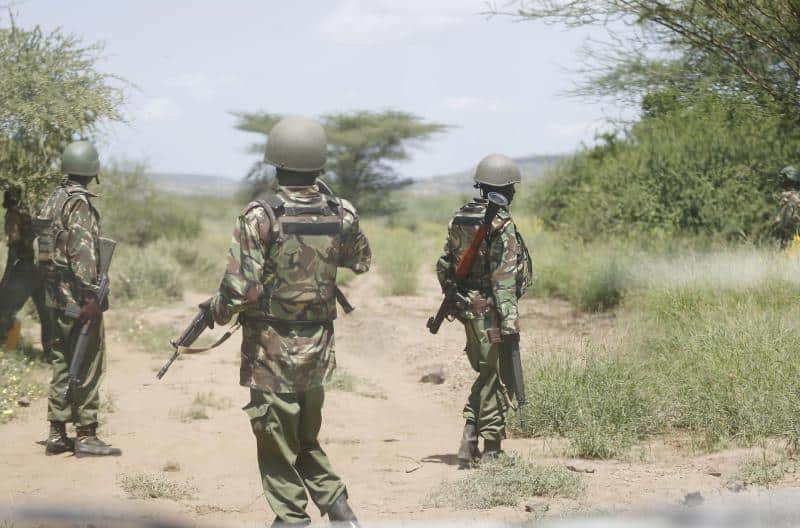
Kenya’s President William Ruto has taken his biggest security decision on the domestic front since taking office about five months ago by ordering the military to join police in tackling bandits and cattle rustlers in a restive northern region.
Attempts by previous administrations to disarm the heavily-armed bandits operating with impunity in Turkana county have failed.
The recent killing of 16 police officers by the bandits proves how challenging the operation will be.
At the centre of the attacks is the lucrative meat trade. Locals rely on it for their livelihood.
Thousands of cattle are stolen every month and driven hundreds of kilometres away for slaughter for sale in the local or international market.
“The meat you eat on your plates in Nakuru and Nairobi, 70% of it is from these criminal activities. The bandits are paid a paltry Sh7,000 ($55; £45) per head, with the same being sold for up to Sh100,000 ($800),” Trans-Nzoia Governor George Natembeya, who previously served in the region as a top government officer, said.
Ethnic rivalry instigated by politicians and competition for natural resources are also factors behind the banditry.
Analysts say that to resolve the security challenge, the government should prioritise dialogue, and improve the economic well-being of communities.
Kenya’s Prime Cabinet Secretary, Musalia Mudavadi, has refuted reports that the families of former presidents Jomo Kenyatta and Daniel Moi were being targeted for tax evasion.
Mr Mudavadi said President William Ruto had not mentioned any names in his push for tax compliance, and claimed the reports were inferences made by the media.
He however insists that everyone must pay taxes to help the government run its activities.
It follows the circulation of a video on social media of former First Lady Ngina Kenyatta, in which she publicly stated her family had paid all taxes due.
She added that she was ready to be investigated for tax evasion and would pay up any arrears if claims of unpaid taxes can be substantiated.
After asserting that the East African nation lacked jurisdiction over its operations, parent company Meta tried to stop a court case accusing it of having exploitative working conditions but was unsuccessful.
After a former worker sued the social media giant, citing subpar working conditions, a Kenyan labour court on Monday decided that Facebook’s parent company, Meta, can be sued.
By saying that the East African nation’s courts lack jurisdiction over Facebook’s operations, Meta argued for the dismissal of the case.
However, Judge Jacob Gakeri said, “Since the petition has raised certain actual issues that are yet to be determined, it would be inopportune for the country to strike out the two respondents from the matter.”
Why did an employee take action against Facebook?
A former Facebook moderator in Kenya accused the company of exploiting poor working conditions.
Daniel Motaung said that while working as a moderator, he was exposed to content such as rape, torture, and beheadings. He said this put his and his colleagues’ mental health at risk.
He said Meta did not offer any support to employees regarding such issues. In addition, staff were allegedly required to work unreasonably long shifts, and offered minimal pay. Motaung was employed in Facebook’s African hub in Nairobi, which is operated by Samasource Ltd.
Following Monday’s ruling from Judge Gakeri, the next step in the process will be considered by the court on March 8.
Meta also faces Ethiopia lawsuit
Meta is also facing legal action in which two Ethiopians say hate speech was promoted on Facebook in the midst of the country’s Tigray conflict.
The suit was filed in Kenya in December by two Ethiopian researchers and a Kenyan rights group, the Katiba Institute. According to court documents, the plaintiffs accuse Meta of not only failing to moderate violent posts about the conflict, but also blame the social media giant for amplifying the most virulent ones.
One of these posts preceded the murder of a plaintiff’s father, their filing said.
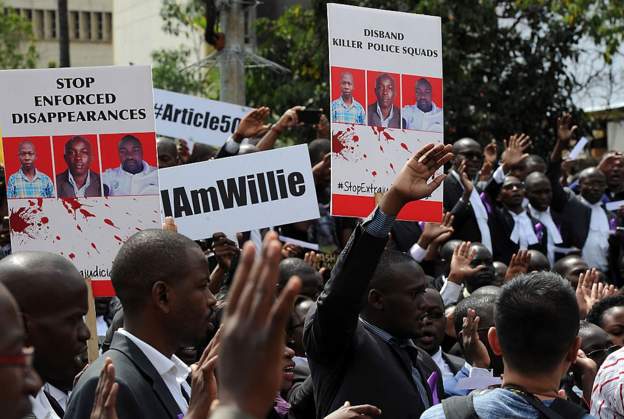
In a case that shocked the country, a Kenyan court has sentenced a former policeman to death for the murder of a human rights lawyer and two others.
For the June 2016 killings of attorney Willie Kimani, his client, and a taxi driver, two additional police officers and a civilian were also given sentences between 20 and 30 years.
Three counts, including murder, led to the conviction of the four.
Kenya commutes death sentences for murder to life in prison.
The 2017 Supreme Court decision, however, gave judges the authority to determine whether the death penalty can still be imposed.
An army officer behind an attempted coup in 1982 was the last person to be executed in Kenya.
The murder of Kimani highlighted the many extrajudicial killings and disappearances that have been blamed on the Kenyan police.
Former police officer Fredrick Leliman, who was sentenced to death, and the other three convicts, can appeal against their conviction and sentencing within 14 days.
In her judgement on Friday, Judge Jessie Lessit, said evidence produced during the trial had shown that the murders were premeditated and the victims brutally tortured and killed.
“No-one should experience what these three went through, especially from the same people mandated to protect them,” said Benson Shamala, the country director of International Justice Mission, where Kimani worked.
“Sadly, since the deaths of our three friends, we have continued to witness more killings by police,” he added.
The bodies of Kimani, Josephat Mwenda and Joseph Muiruri were found dumped in a river on the outskirts of the capital, Nairobi.
Kimani was defending motorbike taxi driver Mwenda who had accused policeman Fredrick Leliman of shooting him for no reason at a traffic stop in 2015.
Kimani, Mwenda and their taxi driver Muiruri were last seen on 23 June 2016 at a police station.
Their mutilated bodies were recovered two weeks later in a river almost 100km (62 miles) from the city.
Kenya’s Independent Policing Oversight Authority has recorded more than 6,000 complaints, according to data the agency has gathered since its creation 11 years ago, but few officers have been prosecuted.
An ex-policeman who killed a well-known human rights attorney and two other people more than six years ago has been found guilty in Kenya and given the death penalty.
Even though the death penalty is legal, Kenya does not actually execute death row inmates.
For the June 2016 killings of attorney Willie Kimani, his client, and a cab driver, two additional ex-policemen and a citizen received sentences ranging from 15 to 39 years in jail.
On three charges, including murder, the four were all found guilty last year.
Each of the four has a 14-day window in which to contest their verdict and sentence.
Justice Jessie Lessit stated in her ruling that the evidence presented throughout the trial had demonstrated that the killings were premeditated and the victims had been cruelly tortured and executed.
On the outskirts of Nairobi, the bodies of Willie Kimani, Josephat Mwendwa, and Joseph Muiruri were discovered after being discarded in a river.
In 2015, police officer Fredrick Leliman, one of the three officers found guilty, was accused of shooting motorbike taxi driver Josephat Mwenda without cause during a traffic stop. Mr. Kimani was defending Mwenda.
Mr Kimani, Mr Mwenda and their taxi driver Joseph Muiruri were last seen on 23 June 2016 at a police station.
Their mutilated bodies were recovered two weeks later in a river almost 100km (62 miles) from the city.
Three former police officers and a civilian aredue to be sentenced by a Kenyan court for the 2016 murder of renowned human rights attorney Willie Kimani.
Last year, a jury found the four defendants—Fredrick Leliman, Stephen Cheburet, Sylvia Wanjiku, and Peter Ngugi—guilty of killing Mr. Kimani, his client Josephat Mwendwa, and taxi driver Joseph Muiruri.
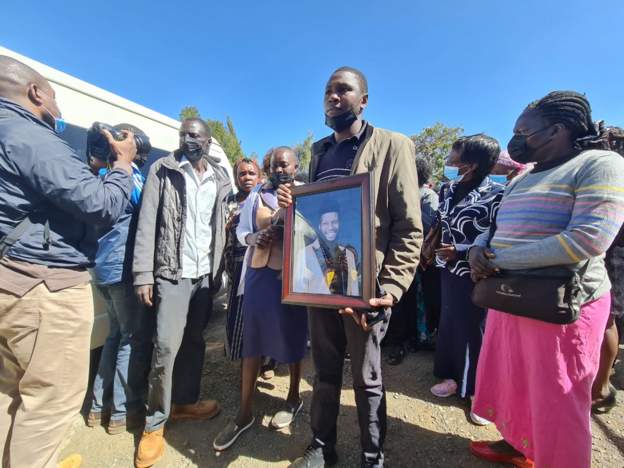
The late lawyer’s wife and family have already arrived at the crowded courthouse in Nairobi, the country’s capital.
After being dumped in a river outside of Nairobi, the bodies of Mr. Kimani and the other two victims were discovered.
The lawyer was defending Mr Mwendwa, a motorbike taxi driver who had accused Mr Leliman – one of the three officers found guilty – of shooting him for no reason at a traffic stop in 2015.
Mr Kimani, Mr Mwendwa and Mr Muiruri were last seen on 23 June 2016 at a police station.
Their mutilated bodies were recovered two weeks later in a river almost 100 kilometers (62 miles) from the city.
The sentencing comes at a time when Kenya’s police service is under yet more scrutiny over extrajudicial killings and abductions.
President William Rutohas already disbanded several special units accused of civilian murder and kidnapping.
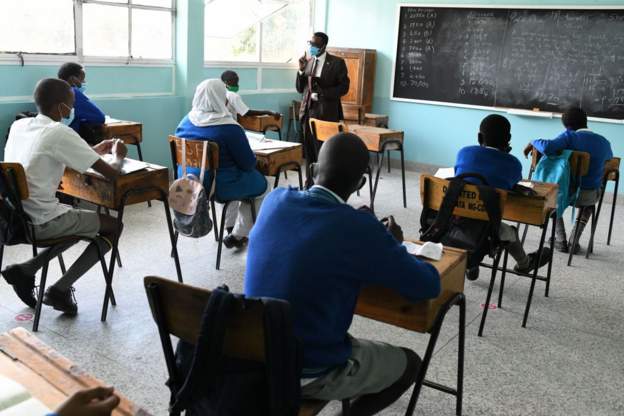
Kenya’s Education Minister Ezekiel Machogu has banned early morning and late evening studies in schools, saying “we don’t want to subject the kids to strain – kids should sleep for nine hours”.
Mr Machogu directed that classes in both private and public primary schools be held between 08:00 and 15:45 to ensure learning takes place within the designated times.
“The syllabus should be covered appropriately between the stipulated time. Let us not subject pupils to unnecessary mental torture,” he added.
The minister said he had noticed a trend where school buses pick children up as early as 05:00 and drop them off as late as 20:00.
The issue of school reporting times has been contentious in Kenya.
The BBC carried out an investigation in 2021 when there was a spike in arson cases in secondary boarding schools, and revealed that students were in class as early as 04.30 up to 22:00.
Students who were interviewed then complained of a tight academic schedule and lack of extra-curricular activities.
InsectiPro is a Kenyan company that cultivates black soldier flies and crickets on a commercial scale.
Talash Huijbers was planning on farming fish in her native Kenya. The tilapia species, to be exact. Today, however, she supplies insect protein from black soldier flies to four large animal feed mills. Her company, InsectiPro, is also testing the market’s appetite for dried crickets.
It started with Huijbers’ realisation that in Kenya, tilapia farming was difficult to run as a profitable venture despite the country’s ideal conditions. The main reason is the high cost of fish feed, which makes up between 60-80% of the production cost of fish in East Africa, as opposed to 30-50% in Europe. This is because of the shortage of protein sources like fishmeal and soy in Kenya. Huijbers researched alternative options and saw the potential in bugs.
To make the proposed venture feasible, Huijbers needed to find customers for her insect protein. And so, one day in October 2018, Huijbers, dressed in a somewhat dirty white T-shirt and gumboots from being on her father’s farm earlier, walked into the offices of the largest feed miller in Kenya and declared to the production manager that she had a protein alternative.
“As a cocky 23-year-old, I casually asked: ‘What would your potential order be?’. To this, he calmly responded that the company would take 500 tonnes per month, immediately,” she remembers. “I walked out of there, calling my dad and telling him that we were starting the very next day!”
Setting up production
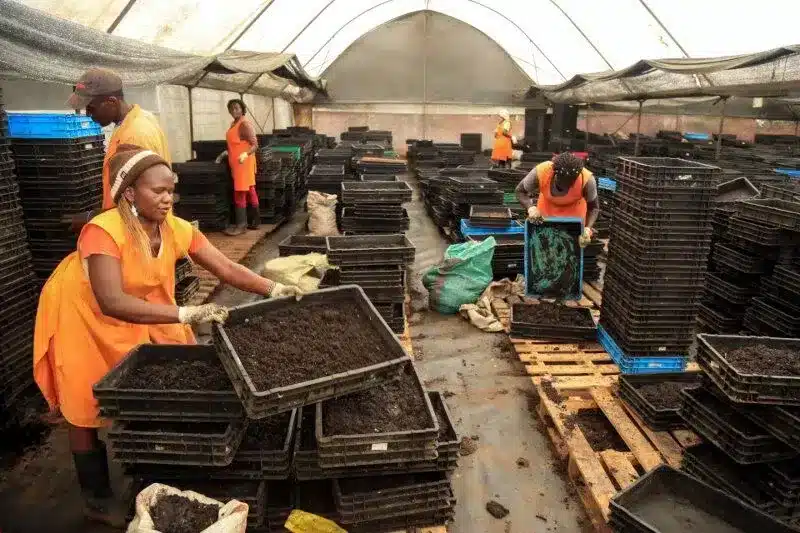
Huijbers’s father grows garden plants for export to Europe and offered her one acre of land on his farm. She funded the venture with her own money and financial support from family members who believed in her business pitch. The company has now grown to produce one tonne of product from its black soldier fly operations daily, as well as between 100-200kg of dried crickets a month.
“I am probably the most productive smallholder farmer in Africa,” she jokes. From that one acre, the company does US$1,000 to $2,000 worth of product per day.
InsectiPro began operations with black soldier fly production, obtaining its first colony from the International Centre of Insect Physiology and Ecology in Nairobi. The company processes the flies into three products: black soldier fly meal (the protein component for animal feed made from the defatted fly), frass (organic fertiliser made from the left-over product after growing the larvae), and chitin (a natural polymer found in the exoskeleton of the flies and used in the pharmaceutical industry).
Two years later, a supplier of nutritional products for school feeding programmes visited the facility and inquired about insect protein for their products. Though InsectiPro was not growing insects for human consumption at the time, it secured the order and began producing crickets shortly after.
The company, which currently employs 82 people, has already established satellite farm sites next to large-scale manufacturers that produce unwanted organic waste. “It is a decentralised model. We take ourselves closer to the waste, 80% of which we get for free. For most large corporates it is an attractive narrative where they can state that they’ve gone from waste dumping to upcycling,” she says.
Farming crickets for food security and nutrition
Eating crickets has been a tradition for thousands of years. They are a high-protein food source, with studies showing they can contain up to 73% protein. Huijbers notes that only 20g of crickets, or a handful, is needed daily to meet one’s nutritional needs.
InsectiPro grows crickets in stackable crates, utilising the space-saving benefits of insect farming. Each female cricket can lay 300-400 eggs over a period of two to three weeks. After 10 days, the crickets are moved to feeding trays and are ready for harvesting after five weeks. They are then frozen, thawed, and baked for consumption.
Currently, the company offers three cricket protein products. The first is a crunchy snack called Chirrup’s, made from cricket flour, which is available in four flavors (barbecue, plain, caramel cinnamon, and salt and vinegar) and sold in colourful 20g packets with playful branding featuring an illustrated cricket character engaging in different activities. Chirrup’s can be found on Greenspoon.co.ke, an e-commerce platform for health products in Kenya. Additionally, Insectipro produces a cricket powder under the name PET and a porridge that is used for feeding schemes.
InsectiPro’s branded Chirrup’s snack brand made from cricket flour.
Huijbers explains that it can be challenging to sell the product as a whole cricket, but sees potential in the powder form as it can be easily incorporated into various dishes and drinks, such as smoothies and school meals, without broadcasting the source.
“I find the cricket side of the business very stimulating, creatively,” she says. “We are working with chefs all across the country, encouraging and daring them to put it on their menu. We are testing different products.”
Growth potential
Eating insects is a growing trend in Europe, while in many parts of Africa it is a cultural norm. Huijbers states that the company has received export requests, but the administrative and paperwork requirements make it unviable at this time. As the industry of insect farming for human consumption is relatively new, internationally recognised standards are not yet fully established. InsectiPro has obtained certification from the local bureau of standards and is currently focusing on regional markets. It has already appointed a Ugandan CEO and will expand there in 2023. Rwanda is lined up for 2024.
“We will stick to the insects that people are used to eating in a specific location,” says Huijbers. In Uganda and Rwanda that would be grasshoppers. InsectiPro also has a small project running in partnership with the Bill & Melinda Gates Foundation in the Republic of Congo that focuses on palm weevils but is not planning to scale this commercially.
Huijbers believes a more eco-conscious generation will drive insect consumption in the future. “There is a younger generation that is not only worried about cost. They want to know about the impact, both positive and negative, of a product before they consider buying it. And they are looking at environmentally friendly alternatives that are available locally.”
The Kenya Wild Service (KWS) has explained circumstances surrounding a caged lion’s need for a vasectomy a week ago.
KWS had initially said the procedure was meant to control the lion’s breeding, but Kenyans questioned why it could not instead be released into the wild amid a decline in the endangered species.
But the KWS has explained that the big cat would be vulnerable in the wild, and noted that breeding was not permissible in captive facilities.
“When wild animals are hand-reared, they lose their natural instincts and if released back to the wild, they are vulnerable. The cat family end up being problem animals as they look for easier prey,” it said in a statement.
KWS said human-wildlife conflict leading to injury and retaliatory killings was among the main threat to lion conservation in the country.
Currently, Kenya’s lion population is estimated at 2,589, according to the KWS.
Farmers in Kisumu County claim that the red-billed quelea bird population has exploded there, ravaging 300 acres (120 hectares) of rice.
To the satisfaction of the farmers, the ministry of agriculture authorised spraying of avicide
“West Kano alone is producing 5,000 metric tonnes (of rice) but three-quarters of that is consumed by the birds and I know that our farmers are borrowing money from the bank and after borrowing they intend to return the money with some interest. This has been a hindrance in terms of paying back and now we are overburdened by loans,” expressed Jared Odoyo, chairman, West Kano Irrigation Scheme.
The government started looking at approaches of controlling the bird and the quick fix for the government — they looked at aerial spraying using avicides and these are chemicals which they spray over the birds and the birds die.
Environmental lobby groups say it is a “quick fix” that has adverse effects on the environment. They say the avicide is toxic to humans but also to non-targeted organisms.
According to Paul Gacheru, wildlife ecologist, Nature Kenya, a local affiliate of Birdlife International, it is important for the government to consider other environmentally-friendly methods.
“It is unfortunate that this species has already been considered as a pest within our law. However, aerial poisoning of this bird is a bigger danger to the ecosystem because this would kill other species which are not targeted in this control and this by itself increases the risk of environmental contamination which is a danger to us and a danger to the entire ecosystem.”
“The control measures that we want the government to think of is something which would minimise the risk of killing other species and also promote other agricultural practices that would help not to proliferate this bird to become in big numbers …. .. I think agricultural systems can be improved and helped to control this bird because spraying is not the right way of controlling this specie,” he added.
An ongoing drought has decimated the horn of Africa and led to a reduction in native grass — the quelea’s main source of food.
This leaves the birds with no alternative but to feed on grain fields.
According to the Food and Agricultural Organization, a single quelea can eat up to 10 grams of grain in a day.
In 2021, crop losses attributed to the bird amounted to $50 million.
A gold mining company said that three workers have been killed after a blast in western Kenya and blamed illegal mining activities.
Karebe gold mining company said in a statement late Monday (Jan. 23) that a wall built to prevent flooding and illegal incursion was blasted by illegal miners, causing an explosion.
Three other workers were injured and hospitalized for treatment. Their conditions weren’t immediately available.
Karebe said it had been reaching out to local government officials since 2021 to intervene and stop illegal miners from encroaching in its license area.
The company said an official had visited the area on Monday (Jan. 23) and instructed illegal miners to stop their activities.
Kenya’s opposition leader, Raila Odinga, has said his political coalition does not recognise William Ruto as the President of Kenya and declared the new Kenyan government as “illegitimate”.
Mr Ruto beat him in last August’s poll, but Mr Odinga – who appeared at Nairobi’s Kamukunji Stadium along with his running mate Martha Karua, and other allies – repeated claims that the results were manipulated. Claims that had already been rejected in court.
He declared that he and his movement “reject the 2022 election result totally”, which was received with great cheers and applause from an adoring crowd.
“We cannot and we don’t recognise the Kenya Kwanza regime,” he continued.
The 2022 election was Mr Odinga’s fifth attempt at the presidency, but he was beaten by Mr Ruto who was declared winner in the absence of four election commissioners who dissented and accused the commission chairman of delivering what they called “opaque” results.
Mr Raila then rejected the results and took the case to court .
But the Supreme Court upheld Mr Ruto’s victory. The aftermath has been dramatic with accusations and counter accusations.
Election chief Wafula Chebukati has claimed he was under intense pressure from unspecified forces to announce different results, and most recently, President Ruto sensationally said there had been an assassination plot against Mr Chebukati.
Some of Mr Odinga’s partners in his Azimio Coalition have since decamped and declared their support for the Kenya Kwanza administration.
Others have remained steadfast with him in this renewed fight for what they call electoral justice.
The next general election is four years away, however the main opposition is already calling for sweeping electoral reforms, and is calling for the current administration to leave office.
Kenya’s President William Ruto has made sensational accusations of a plot to abduct and kill the head of the electoral commission in the run-up to the announcement of the presidential results last year.
Mr Ruto was declared the winner of the presidential election held in August 2022, taking 50.5% of the vote, amid dramatic scenes at the vote tallying centre.
At the time, electoral commission chairman Wafula Chebukati said he had done his duty despite receiving threats.
On Tuesday the president claimed the plot to abduct Mr Chebukati was sanctioned by the “highest” office, according to local media reports.
“We know that there was a direct attempt to abduct Mr Chebukati and murder him so that the commission would be paralysed, or a compliant commissioner take over and subvert the people’s sovereignty. It was a hard, cold and lonely time, the threats were dire, the promised rewards lavish and the pressure relentless,” President Ruto said.
He made the remarks during a meeting with commissions and independent offices at State House, Nairobi.
The president’s rival at the elections, Raila Odinga’s party, ODM, has scoffed at the remarks, calling it a “well-choreographed chorus”.
“They should present the claims before a commission of inquiry when it is formed.”
Gay rights campaigner from Kenya, Edwin Kiprotich Kiptoo, who went by the name Chiloba, will be laid to rest on Tuesday in the western community of Sergoit.
His body was found two weeks ago dumped in a metal box by the roadside near the town of Eldoret.
The government’s chief pathologist said he died due to suffocation caused by stuffing of pieces of cloth in his mouth and nose.
Friends and family collected his body from a mortuary on Tuesday morning.
A family spokesperson, Gaudencia Tanui, has said everyone is welcome to pay their last respects.
Ms Tanui said she was hopeful that Mr Chiloba’s killers would be brought to justice and that the homicide department was in constant touch.
Five suspects, including Chiloba’s partner, are in remand as police conclude investigations before formally pressing charges.
Ms Tanui also told the BBC that they were shocked by the social media vitriol directed at the family, which she said had left them deeply hurt.
In East Africa, Karim Madonga is well-known for his extravagant boasts about his boxing prowess and goes by the moniker “mtu kazi,” which translates to “a fighter” in street Kiswahili.
He referred to his punch as a “heat-seeking missile” in his most recent fight. Prior to their fight on Saturday, he likened his punch to a “Ukrainian missile.”
The 43-year-old has drawn one fight, lost three, and won three fights.
He drew crowds as he walked around the Kenyan capital, Nairobi.
“I have been received well in Kenya. I started boxing in 2002, and boxing has made me a brand. Boxing took me to the city. I am the only boxer who became a star after losing a fight. And when I am beaten, I talk about it, when I win, I talk more about it. In boxing, you have to know how to talk and fight. I know both. Wanyonyi will be beaten,” Mandonga told BBC Sport Africa.
His opponent, 39-year-old Daniel Wanyonyi, says Mandonga’s personality is good for the sport.
“His talk makes him popular. We love such boxers. I am good at boxing, he is good at talking. I am ready for the fight tomorrow, it will be 10 rounds. There is pressure because we are at home and everyone is expecting me to win… However, I am telling Kenyans to leave that to me, victory will remain at home,” Daniel said .
Their fight will serve as a curtain raiser for the main fight between Kenyan boxer Rayton Okwiri and Tanzanian boxer Ally Ndaro.
A total of 11 fights will take place at the Kenyatta International Conference Centre (KICC). Organizers are hoping that the event will raise the profile of the sport, which has waned over the years.
A pathologist has revealed the most recent details of a murder that has angered the public: Kenyan LGBT activist Edwin Chiloba was smothered to death.
Johansen Oduor claimed that the man had socks shoved into his mouth and that a piece of denim from a pair of jeans was tied around his face.
The pathologist continued “He died from asphyxia, which is caused by smothering”.
Chiloba’s body was discovered last week in a metal box dumped by the side of the road not far from Eldoret, a town in western Kenya where he attended university.
The murder drew global condemnation, with human rights groups linking it to his sexuality.
But police have not done so, and have not yet given a motive for the murder.
Five people have been arrested in connection with the murder, including Chiloba’s long-time friend Jackton Odhiambo, who police have identified as the primary suspect.
A magistrate gave police permission on Monday to detain the five for a further 21 days, as they continue with their investigations.
The five have not yet been charged with any crime.
Dr Oduor, the chief government pathologist, said the postmortem also revealed that Chiloba’s nails were discolored, indicating that he died from a lack of oxygen.
Chiloba had not sustained any other injuries, Dr Odouor said, dismissing media reports that his eyes had been gouged out.
Tributes on social media described the activist, who was in his mid-20s, as “an amazing human” and an “iconic fashion designer”.
He had moved to Eldoret from the capital, Nairobi, in 2019 to study fashion and was beginning to make a name for himself in design, a friend said.
Last month Chiloba wrote on Instagram that he was “going to fight for all marginalised people”, saying that he himself had been marginalised.
Human rights groups have called on police to swiftly resolve his killing.