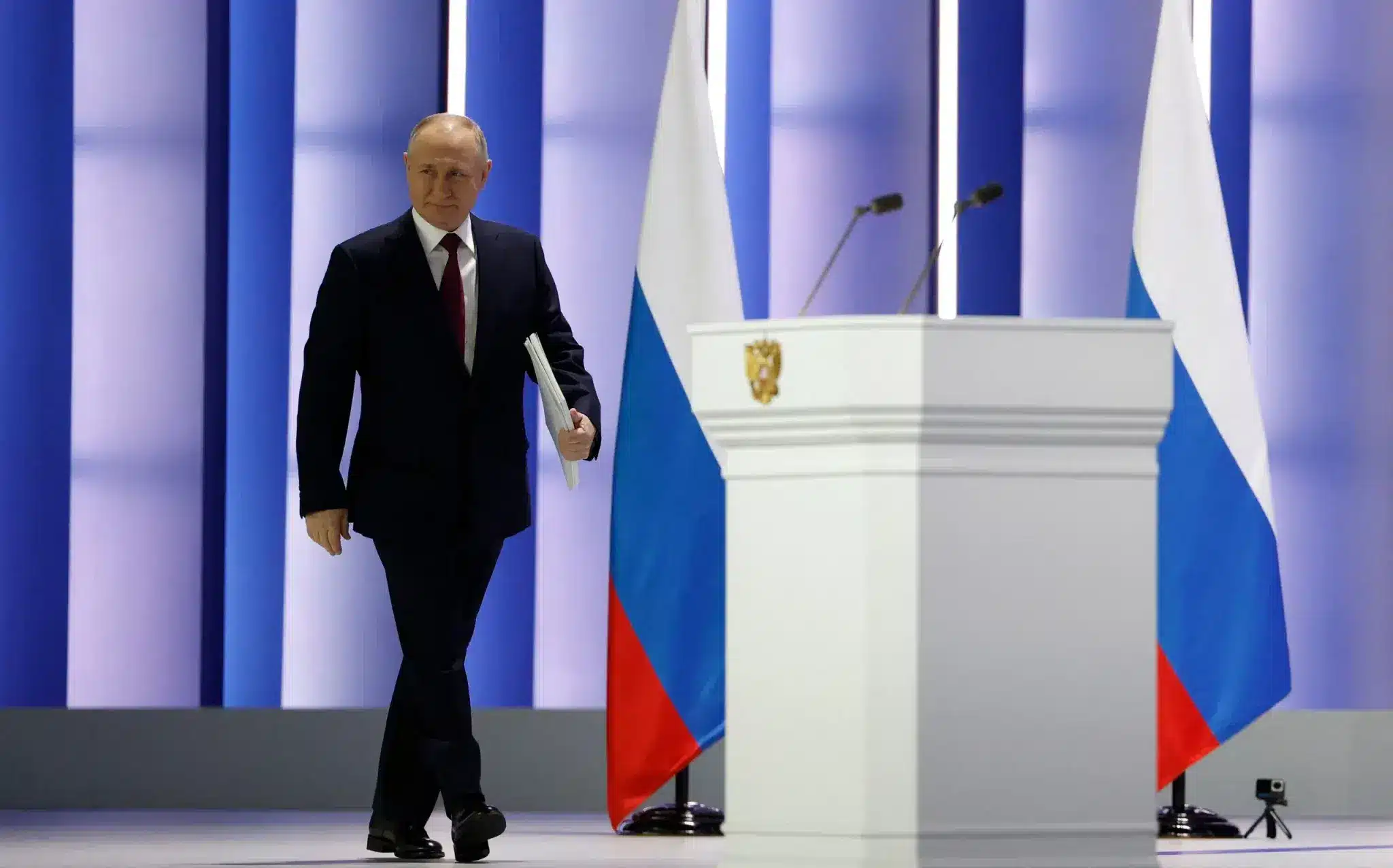
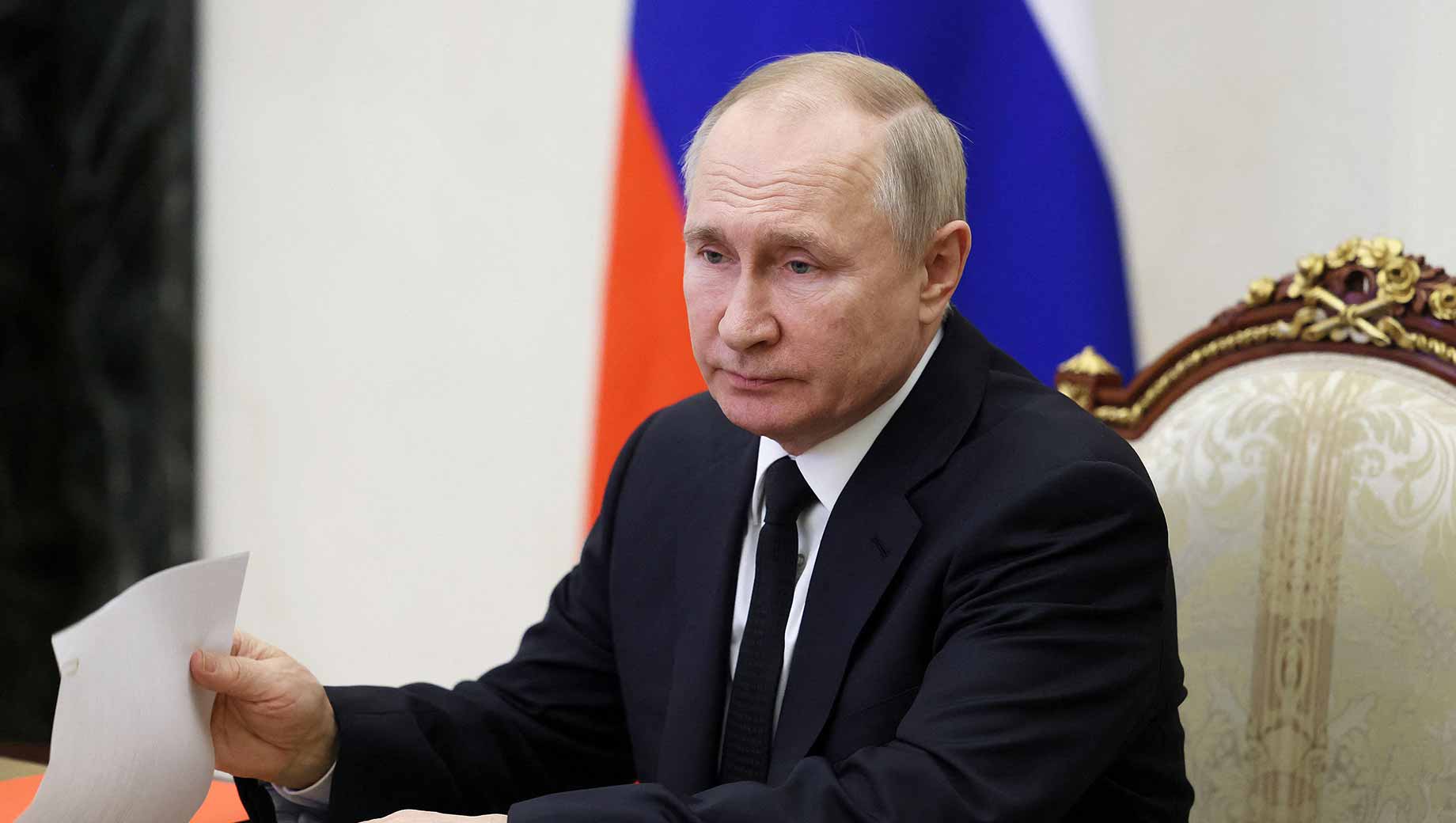
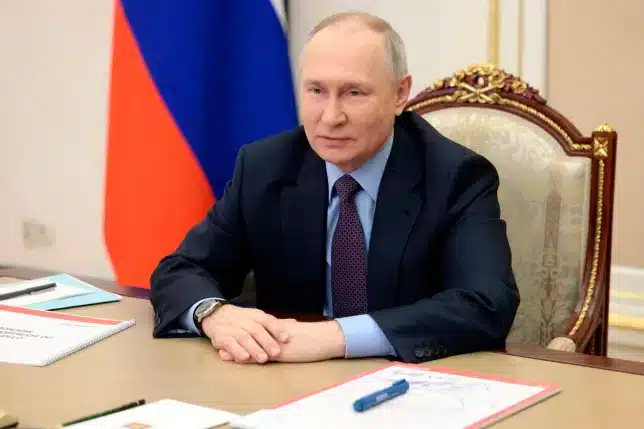
Former Russian President Dmitry Medvedev has called the bluff of the International Criminal Court (ICC) over the arrest warrant issued against President Vladimir Putin.
Responding to the ICC’s directive, Dmitry Medvedev noted that the Court would not be able to lift a finger against the Russian President due to the repercussions they believe might ensue.
According to him, the ICC’s assertion is not far from the truth as “It is quite possible to imagine a hypersonic missile being fired from the North Sea from a Russian ship at The Hague courthouse.”
“That’s why they won’t start a war either. They’ll be afraid to,” he added in a lengthy Telegram post.
He further noted that the court is “only a miserable international organization, not the population of a NATO country.”
Medvedev also advised the court’s judges to “look carefully into the sky.”
He again stated that the arrest warrant for Putin heralds the collapse of international law, calling it “a grim sunset of the whole system of international relations.
This came a day after the UN denounced the forced deportations as war crimes.
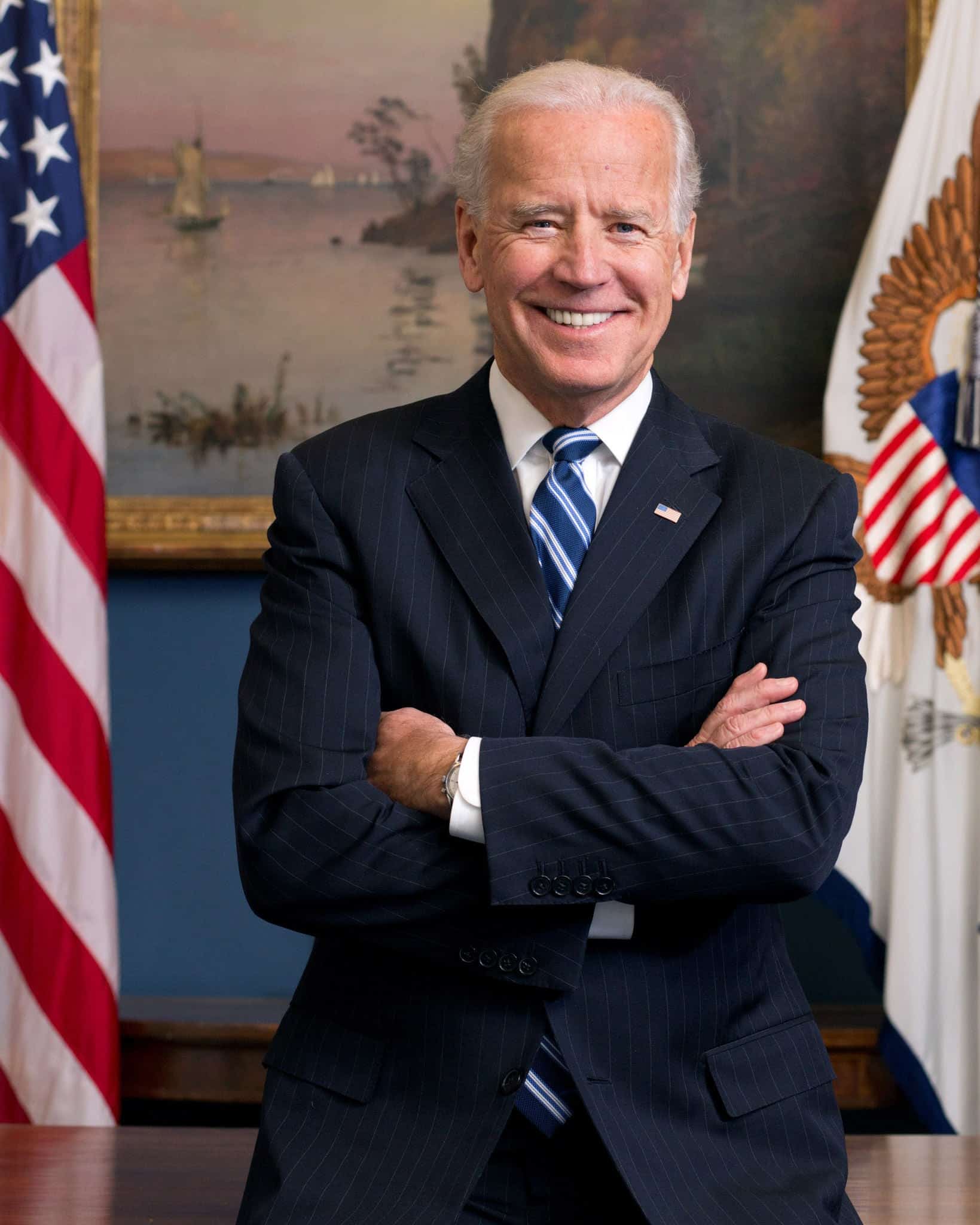
US President Joe Biden says the arrest warrant for Putin is justified.
According to the warrant, Putin might be detained in any of the more than 100 nations that acknowledge the ICC’s jurisdiction.
Putin joins former presidents of Sudan and Libya, Omar al-Bashir and Muammar Gaddafi, as the third sitting president to be named in an ICC warrant.
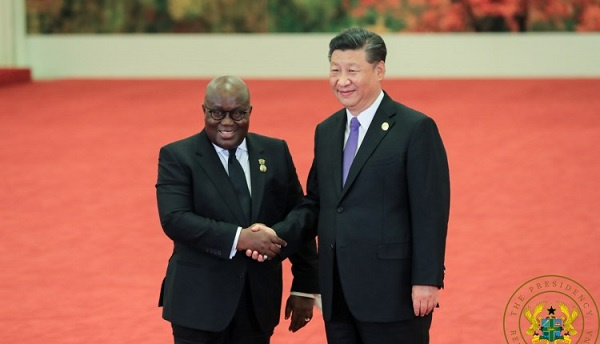
It has been a week since the arrest warrant was issued and President Putin, who recently hosted China President Xi Jinping, remains a free man.
Later this year, Putin is scheduled to attend a five-nation economic meeting in South Africa. The South African administration has stated that it will seek clarifications before Putin’s arrival.
Ghana is facing a severe economic crisis and seeking a $3 billion credit facility from the International Monetary Fund (IMF) to avoid a potential collapse.
However, securing the support of its creditors is essential to obtain the IMF loan, and China is a significant creditor of Ghana.
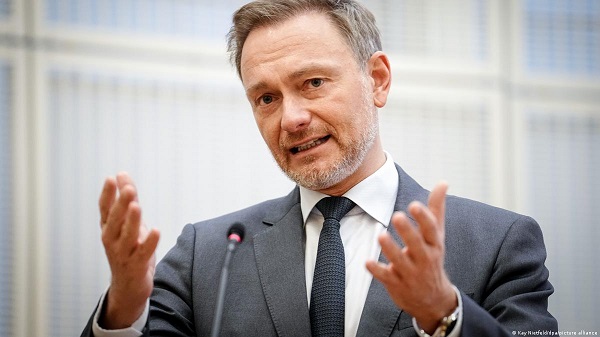
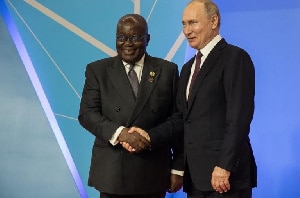
As a result, Ghana’s President Akufo-Addo has appealed to Germany’s Finance Minister Christian Lindner to encourage China’s participation in the country’s economic recovery programmes.
Germany’s Finance Minister Christian Lindner
“We have good relations with China. We would like you to encourage China to participate in these programmes as quickly as possible,” President Akufo-Addo said.
In response, German Ambassador to Ghana, Daniel Krull, advised that Ghana reduces the size of her government to reflect the current economic challenges.
“I can only compare with the other countries like mine and I can come to the conclusion that there is a huge number, the number is much higher than in my country, so that may bring me to the conclusion that there is room for improvement,” he said.
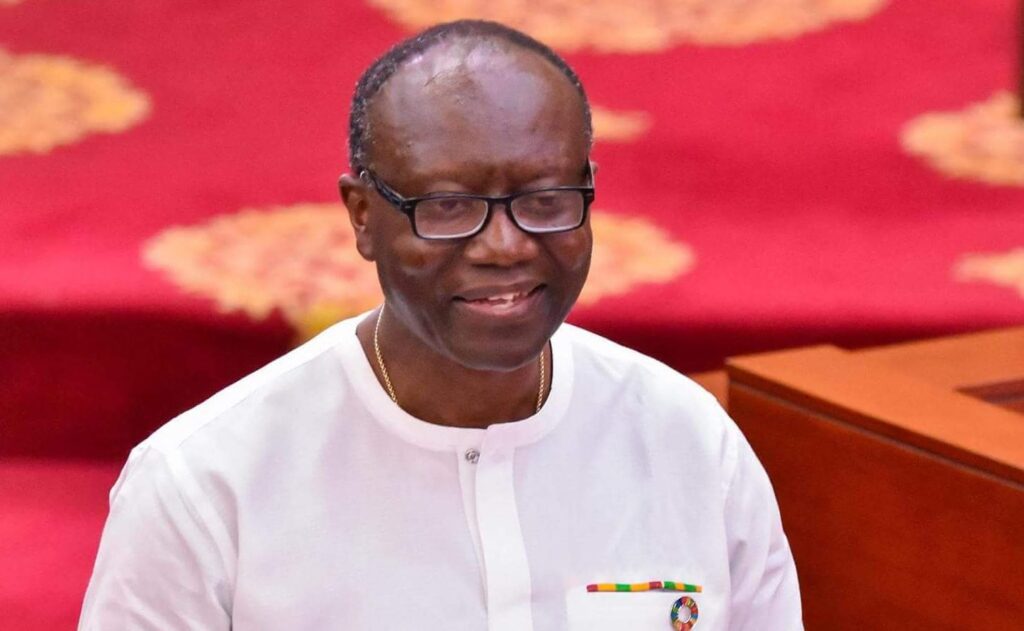
Ghana’s Finance Minister Ken Ofori-Atta also initiated talks with China in February 2023 to discuss the former’s debt situation and explore possible solutions.
Finance Minister Ken Ofori-Atta
However, some experts are sceptical that Ghana’s engagement with China will be productive due to the country’s unique debt circumstances.
According to Dr. Ishmael Hlovor, an international development expert, Ghana’s debt situation is more complicated than the debt of the 27 countries whose debts China cancelled in 2019.
These debts were getting to maturity, and there was something small left on them, whereas Ghana’s debt has more commercial lending components.
“In 2019 for instance, about 27 countries’ debts were cancelled. But if you scrutinise those loans, they were loans that were getting to maturation and there was something small left on them, but our situation is a little bit complicated because of commercial lending,” he told JoyNews.
Therefore, Ghana should lower its expectations about debt cancellation and seek other ways to restructure its debts, such as extending the repayment period, lowering interest rates, or swapping debts with other creditors.
Moreover, there is another school of thought that believes that Ghana’s stance on the Russia-Ukraine war could further complicate its negotiation with China, given China’s friendly relationship with Russia.
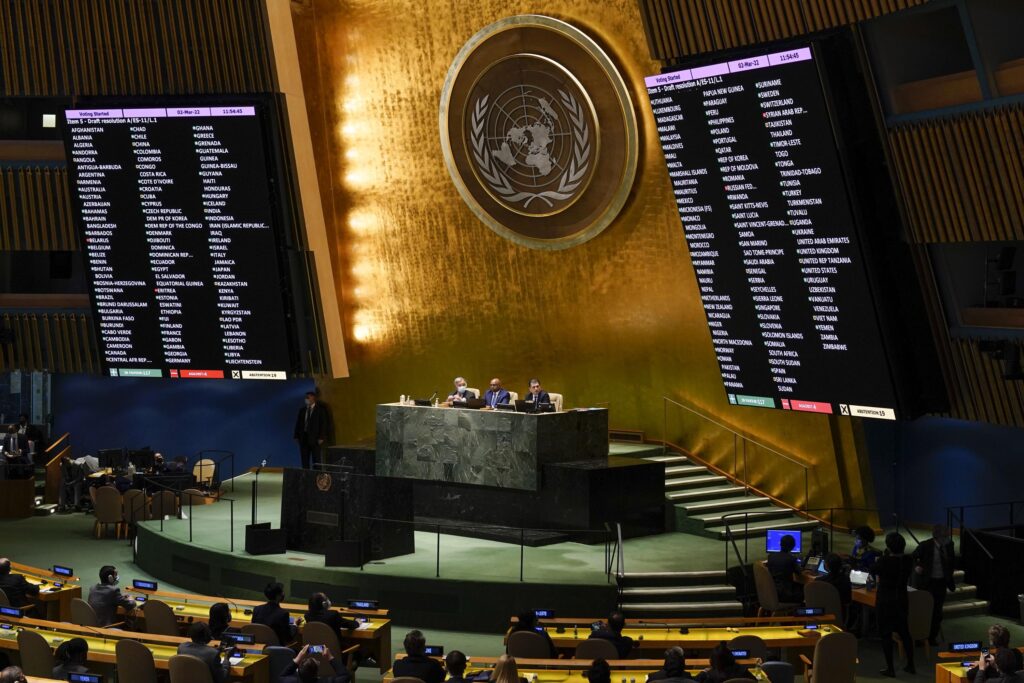
On February 24, 2023, Ghana supported a UN General Assembly resolution condemning Russia’s invasion of Ukraine, along with Nigeria, Ivory Coast, Egypt, and Kenya.
UN General Assembly
President Akufo-Addo emphasized that “great powers trampling on small nations is not something that we welcome,” and Ghana would continue to hold its position. However, China has not directly condemned Russia’s invasion of Ukraine or otherwise and called for a cease-fire and peace talks instead.
Prior to this, President Akufo-Addo ratted out Burkina Faso, accusing the neighbouring country inviting in mercenaries from Russian firm Wagner.
“To have them operating on our northern border is particularly distressing for us in Ghana,” he said in December 2022.
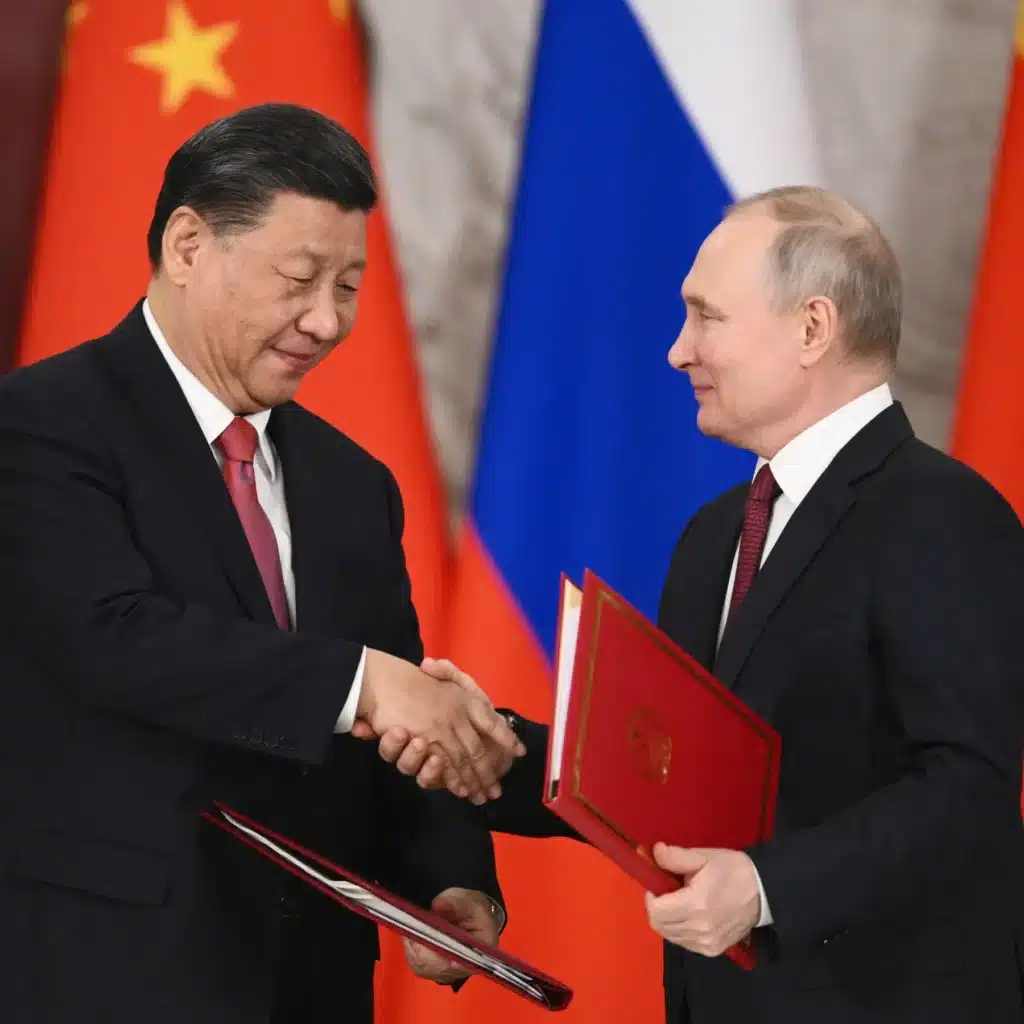
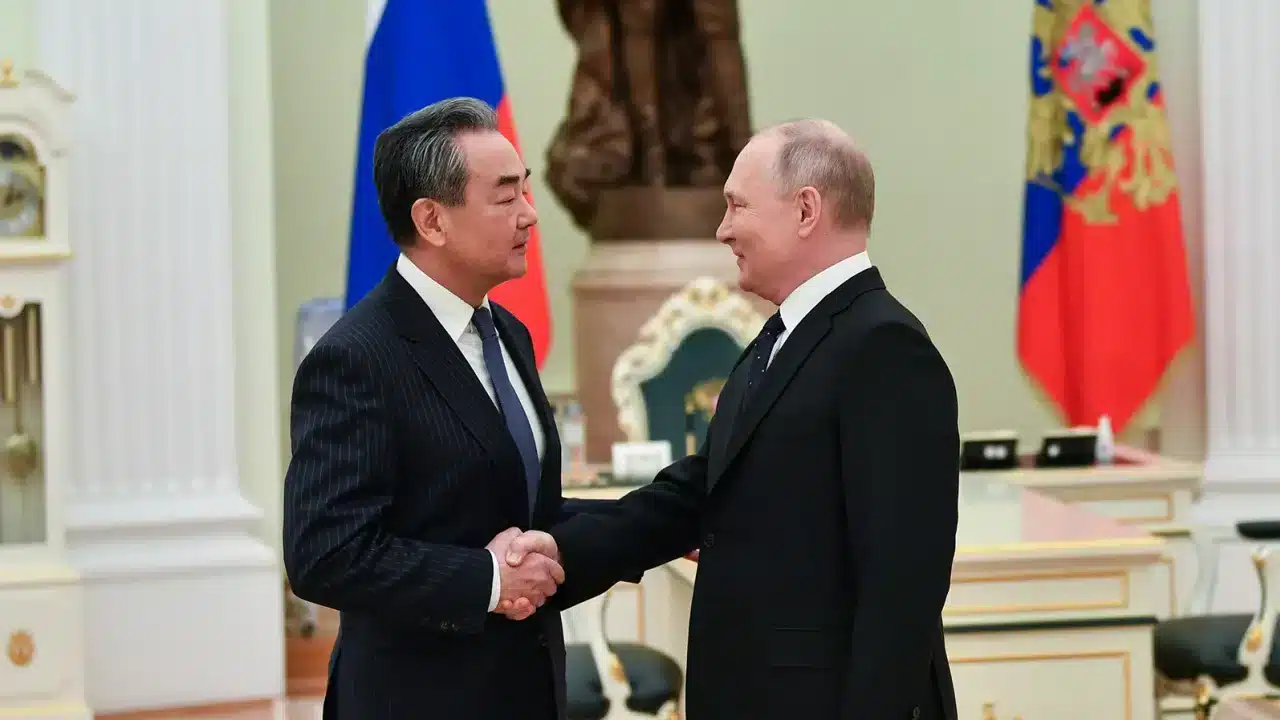
China has close ties with Russia, as evidenced by the “no limits” partnership agreement signed between Beijing and Moscow in February 2022. More interesting is Chinese President Xi Jinping’s visit to Russia and their subsequent signage of another partnership agreement that seeks to deepen China-Russia relations.
Xi Jinping and Vladimir Putin
It remains uncertain how China will respond to Ghana’s request for debt relief.
However, Ghana’s engagement with China could provide an opportunity for both countries to strengthen their economic ties and collaborate on infrastructure and development projects.
Ghana could leverage China’s Belt and Road Initiative, which aims to promote trade, investment, and connectivity between China and countries along the ancient Silk Road, to enhance its transport, energy, and communication infrastructure.
Nonetheless, Ghana must balance its engagement with China’s economic interests and its foreign policy objectives and ensure that it pursues sustainable and equitable development.
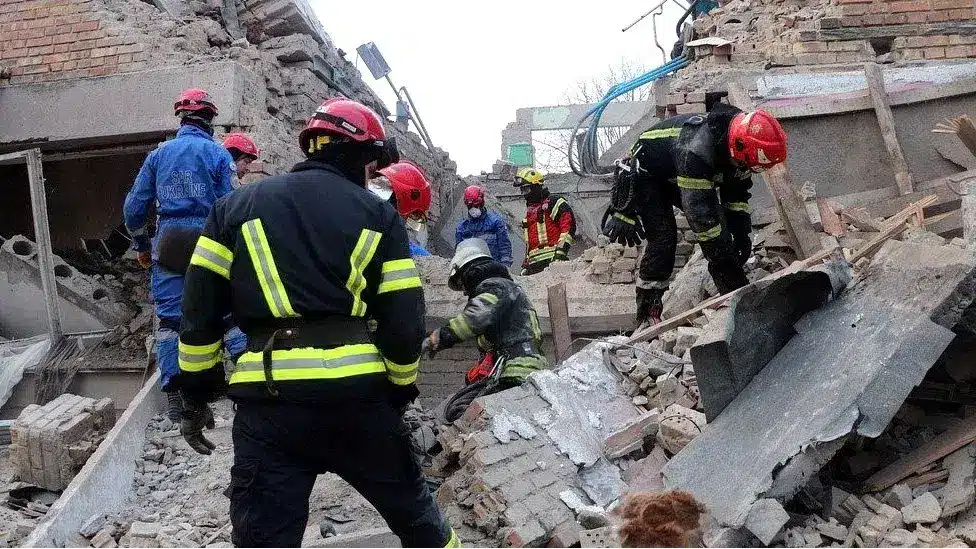
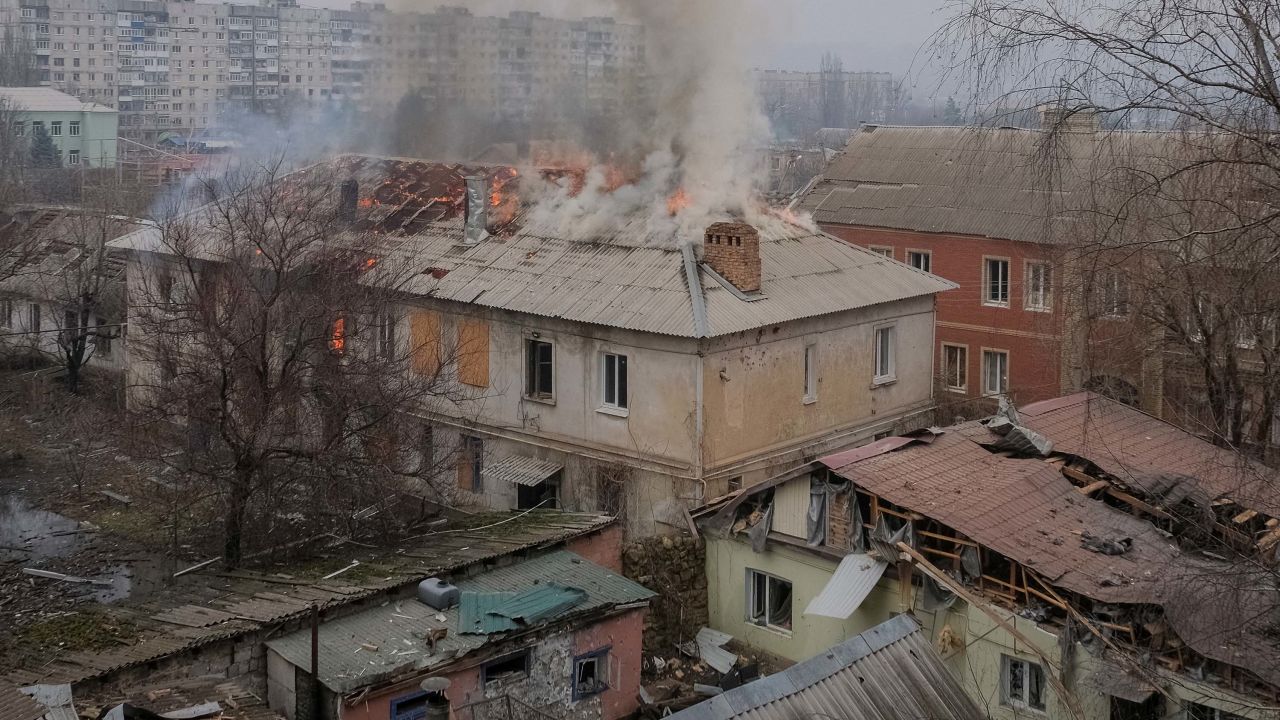
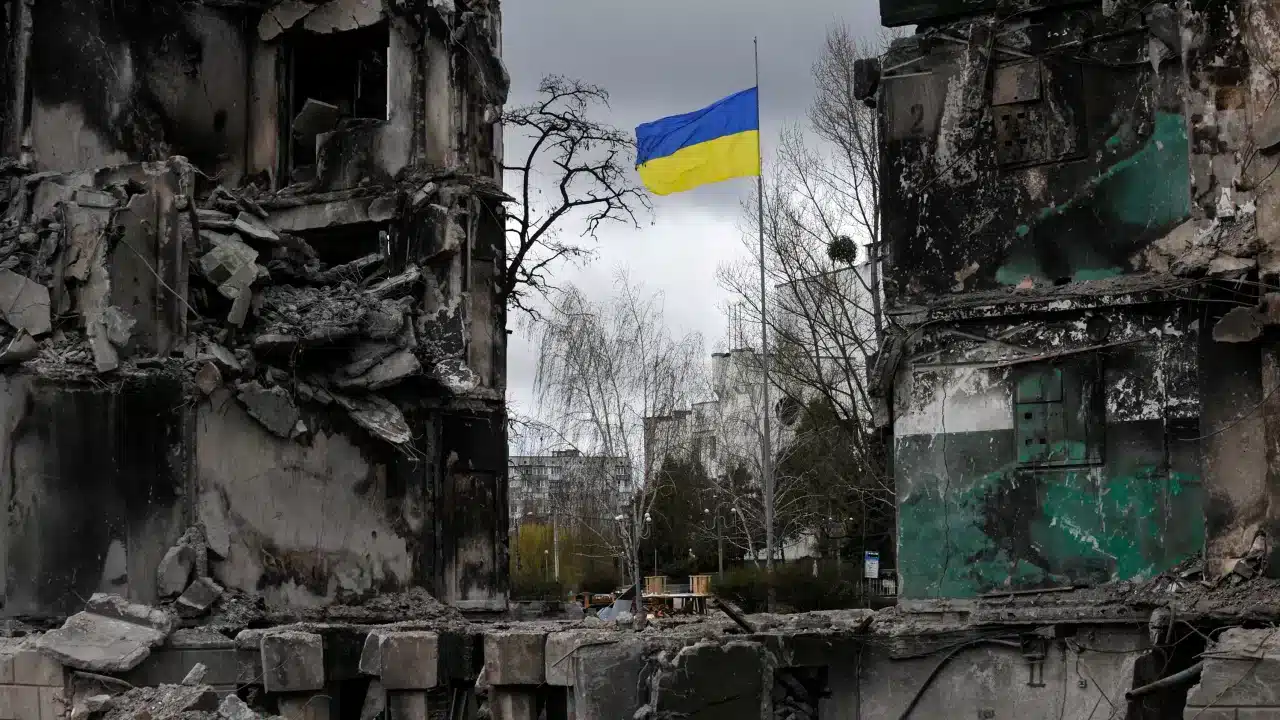
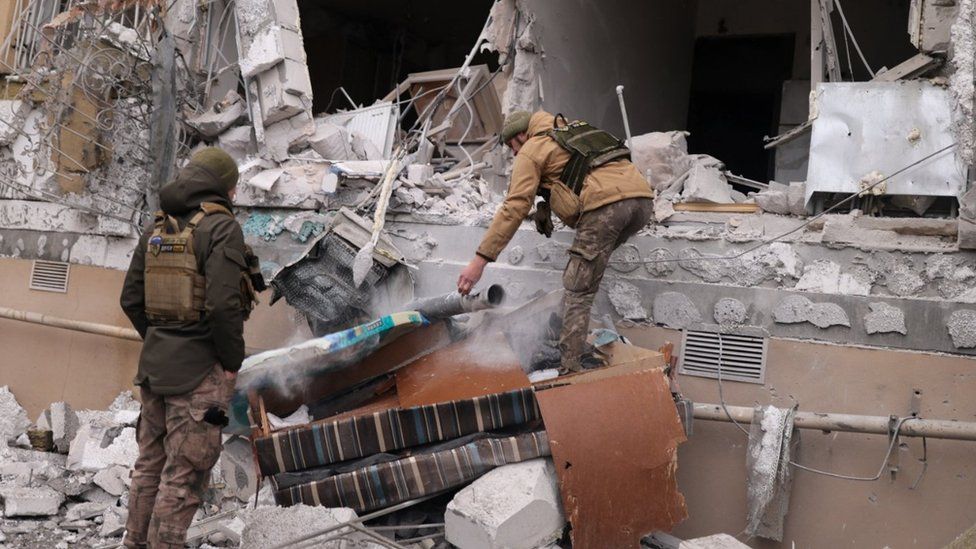
At least three persons have been killed by a drone strike on a residential area in the Kyiv region as a result of Russian forces attacking multiple Ukrainian cities.
In the early hours of Wednesday, two residential buildings in the nearby city of Rzhyshchiv suffered damage to their upper floors.
According to rescue services, one of the victims was 11 years old.
Separately, officials in the Crimea that Russia has annexed said that a drone attack by the Ukrainian military had been repelled.
Residents of the port city of Sevastopol reported hearing explosions.
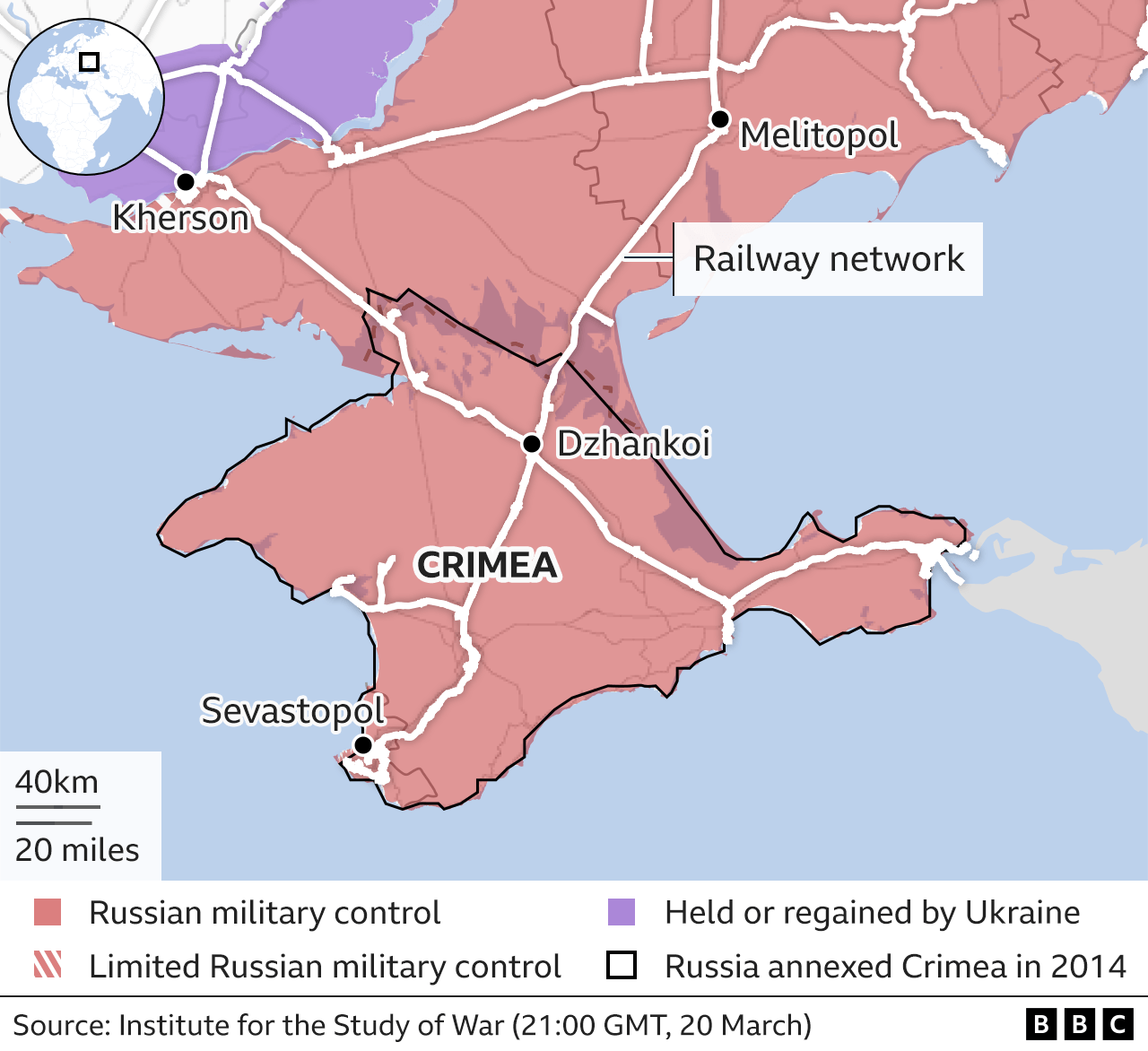
There was no comment from Ukraine’s military, which said earlier this week it had destroyed missiles destined for the fleet at a rail hub in Dzhankoi in northern Crimea.
Ukrainian President Volodymyr Zelensky said Russia had launched more than 20 “killer drones”, as well as missiles and shells.
Referring to Chinese President Xi Jinping’s departure from Russia hours earlier, he said that every time “someone tries to hear the word ‘peace’ in Moscow,” another order was given to launch attacks.
On Tuesday President Vladimir Putin said that many provisions of a 12-point Chinese peace plan “can be taken as the basis for settling of the conflict in Ukraine, whenever the West and Kyiv are ready for it”.
The plan makes no specific proposals and does not call explicitly for Russian forces to leave Ukraine’s sovereign territory.
In a separate Russian attack, three people were wounded in the southern city of Odesa, when a three-storey building was hit in the grounds of a monastery, presidential chief of staff Andriy Yermak said.
Drones were also fired at the north-western region of Zhytomyr, but no-one was reported hurt. Ukraine’s military said 16 of the 21 drones launched on Wednesday were shot down.
Air raid sirens rang out across Ukraine hours afterwards, amid reports that Russian warplanes carrying long-range missiles had taken to the air.
Russian “Kalibr” cruise missiles that were being transported by train in the town of Dzhankoi, in Russian-occupied Crimea, were destroyed, according to a strike, the Ukrainian Ministry of Defense announced late Monday.
Although they did not officially take credit for the attack, Ukrainian authorities claimed it further “demilitarizes Russia and prepares the Crimean peninsula for de-occupation.”
The region’s air defense system was activated, and Sergei Askyonov, the Russian-installed leader of the annexation-affected peninsula, confirmed there had been an attack. According to Askyonov, one individual was hurt and two buildings sustained damage.
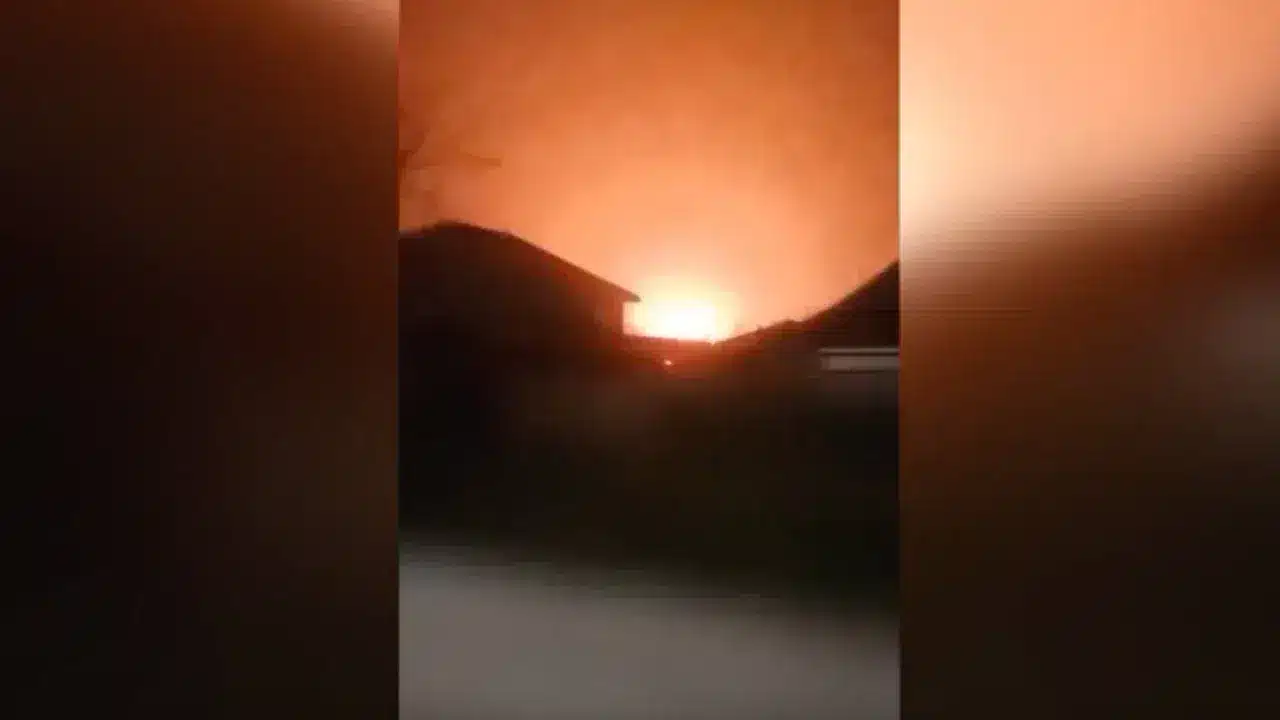
Amateur video geolocated by CNN shows a large explosion and resulting fireball. An individual is heard saying off-camera the strike hit the train station. However, the video did not clearly show what had been hit and CNN hasn’t been able to confirm the exact location of the strike.
Two of Russia’s most important military airfields in Crimea are located in Dzhankoi and Gvardeyskoye, Britain’s Ministry of Defense said in 2022.
“Dzhankoi is also a key road and rail junction that plays an important role in supplying Russia’s operations in southern Ukraine,” it said.
Crimea also hosts an important port and a major naval base for Russia’s Black Sea fleet in the city of Sevastopol. Some of Russia’s most important warships have been docked there, including surface ships equipped with cruise missiles.
The US has previously accused Russia of using cruise missiles fired from ships in the Black Sea to hit civilian targets in Ukraine.
Since Russia’s full-scale invasion in February 2021, Ukraine has launched multiple strikes against Russian positions in Crimea and operations that its military said destroyed Russian Kalibr cruise missiles.
Ukrainian officials, including President Volodymyr Zelensky, have repeatedly vowed to liberate the peninsula, which was annexed by Moscow in 2014. Zelensky has previously stressed that for Ukrainians, Crimea is “not just some territory” but “a part of our people, our society.”
The strike follows Russian President Vladimir Putin’s visit to Crimea on Saturday to mark the ninth anniversary of its annexation. The visit, which also included a stop in Russian-occupied Mariupol, came just days after the International Criminal Court accused the Russian president of committing war crimes in Ukraine and issued a warrant for his arrest over an alleged scheme to deport Ukrainian children to Russia.
The ICC charges are the first to be formally lodged against officials in Moscow since it began its unprovoked attack on Ukraine last year. The Kremlin has labeled the ICC’s actions as “outrageous and unacceptable.”
The strike comes as Putin hosts Chinese leader Xi Jinping at the Kremlin in Moscow. During a meeting on Monday, Xi told Putin that China and Russia have “similar goals” and he expressed support for Putin to be reelected. The war in Ukraine was raised in the first hours of their meeting, and is expected to be a key point of discussion throughout Xi’s three-day visit.
Putin stated on Monday that if the Black Sea grain agreement is not extended in May, Russia will give grain to African nations gratis.
Speaking to participants at a Russia-Africa parliamentary conference, Putin noted that only a small portion of the deal’s unblocked grain exports had made it to the continent and that it was in Africa’s best interests if Russia met its conditions for the deal’s renewal.
Moscow further declared that it would not consent to extend the grain agreement past May unless problems with the Swift financial messaging system are fixed and additional restrictions are lifted.
On its website, the Russian foreign ministry said Moscow had decided to limit the deal’s extension to 60 days, until May 18, over what it called “a lack of progress… on normalisation of domestic agricultural exports”.
A government spokesperson stated on Friday that Moscow rejects theInternational Criminal Court’s (ICC) decision to issue an arrest warrant for Russian President Vladimir Putin.
The official at the centre of an alleged plot to forcibly deport thousands of Ukrainian children to Russia, Maria Lvova-Belova, received a warrant from the ICC as well.
Russia views the warrants as having “no meaning,” including from a “legal point of view,” according to Maria Zakharova, a representative for the foreign ministry of Russia.
“Russia is not a member of the Rome Statute of the International Criminal Court and bears no obligations under it,” Zakharova said. “Russia does not cooperate with this body, and possible (pretenses) for arrest coming from the International Court of Justice will be legally null and void for us.”
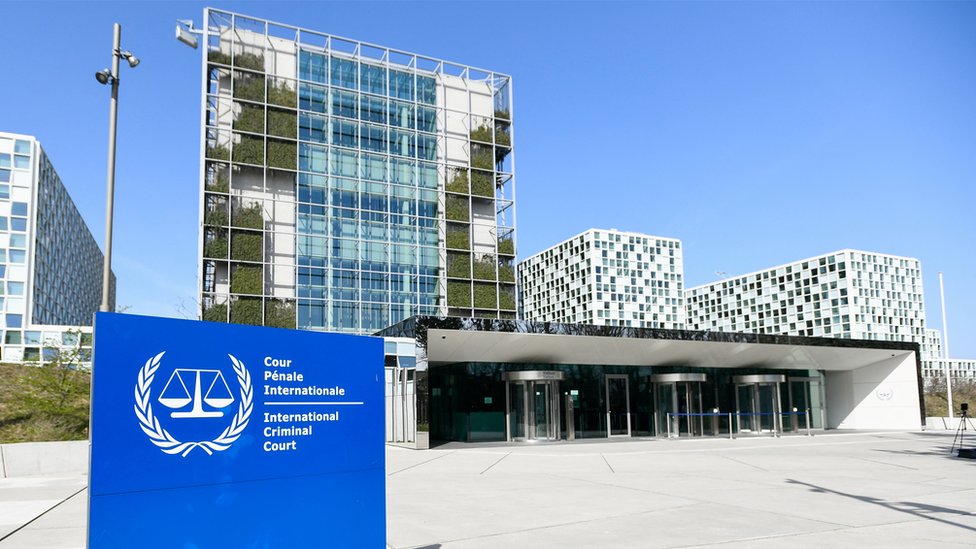
How war crime prosecutions work: Located in The Hague, Netherlands, and created by a treaty called the Rome Statute, the International Criminal Court operates independently.
Most countries on Earth are parties to the treaty, but there are very large and notable exceptions, including — pivotally — Russia, the US and Ukraine.
Anyone accused of a crime in the jurisdiction of the court, which includes countries that are members of the ICC, can be tried. The court tries people, not countries, and focuses on those who hold the most responsibility: leaders and officials.
While Ukraine is not a member of the court, it has previously accepted its jurisdiction.
However, the ICC does not conduct trials in absentia, so Putin or any other Moscow official would either have to be handed over by Russia or arrested outside ofRussia to face ICC proceedings.
The International Criminal Court, which operates independently, is located in The Hague, Netherlands, and was created by a treaty called the Rome Statute first brought before the United Nations.
Most countries on Earth – 123 of them – are parties to the treaty, but there are some notable exceptions, including Russia, as well as the US, Ukraine and China.
The ICC is meant to be a court of “last resort” and is not supposed to replace a country’s justice system. The court, which has 18 judges serving nine-year terms, tries four types of crimes: genocide, crimes against humanity, crimes of aggression and war crimes.
Putin arrest warrant: The ICC on Friday issued an arrest warrant for Russian President Vladimir Putin and the Russian commissioner for children’s rights, Maria Lvova-Belova, for an alleged scheme to deport Ukrainian children to Russia.
The court said there “are reasonable grounds to believe that Mr Putin bears individual criminal responsibility” for the alleged crimes, for having committed them directly alongside others, and for “his failure to exercise control properly over civilian and military subordinates who committed the acts.”
Reports of Ukrainian children in Russia: The Ukrainian government says many missing children have been forcibly taken to Russia. The Russian government doesn’t deny taking Ukrainian children and has made their adoption by Russian families a centerpiece of propaganda.
Some of the children have ended up thousands of miles and several time zones away from Ukraine. According to Lvova-Belova’s office, Ukrainian kids have been sent to live in institutions and with foster families in 19 different Russian regions, including Novosibirsk, Omsk and Tyumen regions in Siberia and Murmansk in the Arctic.
In April 2022, the office of Lvova-Belova said that around 600 children from Ukraine had been placed in orphanages in Kursk and Nizhny Novgorod before being sent to live with families in the Moscow region. As of mid-October, 800 children from Ukraine’s eastern Donbas area were living in the Moscow region, many with families, according to the Moscow regional governor.
UN report on alleged war crimes: The UN on Thursday said in a report that war crimes perpetrated by Russia included “attacks on civilians and energy-related infrastructure, wilful killings, unlawful confinement, torture, rape and other sexual violence, as well as unlawful transfers and deportations of children.”
So, will Putin actually be arrested?: Probably not.
Anyone accused of a crime in the jurisdiction of the court, which includes countries that are members of the ICC, can be tried. The court tries people, not countries, and focuses on those who hold the most responsibility: leaders and officials. While Ukraine is not a member of the court, it has previously accepted its jurisdiction.
The ICC does not conduct trials in absentia, so Putin would either have to be handed over by Russia or arrested outside of Russia. That seems unlikely.
An important human rights organization has declared Vladimir Putin to be a “wanted man” after the International Criminal Court (ICC) issued an arrest order for him on charges of war crimes in Ukraine.
The Russian president is the subject of a warrant that seeks to extradite him to The Hague, Netherlands, to stand trial for allegedly smuggling Ukrainian minors into his nation.
Since the beginning of the large-scale invasion, reports by the UN, many human rights organizations, and the US-based Conflict Observatory have described a “vast network” of detention centers and convoys.
The charges laid down by the ICC this afternoon relate to the ‘unlawful deportation’ of children from occupied areas of Ukraine into Russia and states that there are grounds to believe the two suspects bear ‘criminal responsibility’ for the alleged crimes.
Human Rights Watch (HRW) is working to document war crimes and has previously told of ‘unspeakable stories’ regarding alleged executions, torture, rape and looting by Moscow’s troops.
Balkees Jarrah, associate international justice director, said: ‘This is a big day for the many victims of crimes committed by Russian forces in Ukraine since 2014. With these arrest warrants, the ICC has made Putin a wanted man and taken its first step to end the impunity that has emboldened perpetrators in Russia’s war against Ukraine for far too long.
‘The warrants send a clear message that giving orders to commit or tolerating serious crimes against civilians may lead to a prison cell in The Hague. The court’s warrants are a wakeup call to others committing abuses or covering them up that their day in court may be coming, regardless of their rank or position.’
In April last year, HRW crisis and conflict director Ida Sawyer spoke of harrowing cases of human rights abuses by the Kremlin’s troops.
Victims and witnesses who spoke to the non-profit organisation told of rape, summary executions, unlawful violence and threats.
Cases of ‘forcible transfers’ of Ukrainian civilians into Russia or other occupied areas have also been documented by the group in what it has described as ‘a potential crime against humanity’.
International Criminal Court issues arrest warrant for Vladimir Putin
The warrant for Mr Putin and another for Maria Alekseyevna Lvova-Belova, Russia’s commissioner for children’s rights, relate to the alleged trafficking of children across the border into Russia.
ICC president Piotr Hofmanksi said: ‘It is forbidden by international law for occupying powers to transfer civilians from the territory they live in to other territories.
‘Children enjoy special protection under the Geneva Convention.’
Mr Hofmanski added: ‘This is an important moment in the process of justice before the ICC.
‘The judges have reviewed the information and evidence submitted by the prosecutor and contend there are credible allegations against these persons for the alleged crimes.
‘The ICC is doing its hard work as a court of law, the judges issued arrest warrants, the execution depends on international co-operation.’
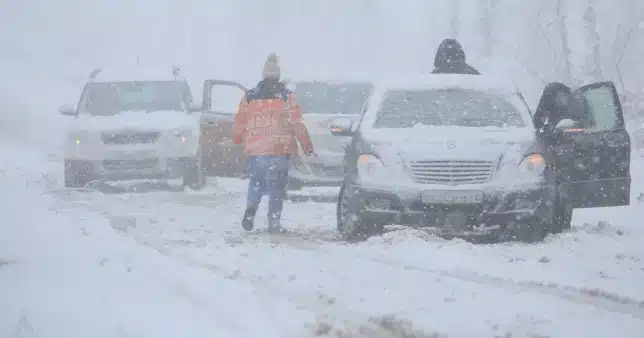
Snowfall has prompted an amber weather alert, with “severe disruption” predicted for Thursday afternoon and Friday morning.
From Stoke-on-Trent to Durham, the afflicted region, there are problems.
The Met Office has issued a warning that there is a chance of travel delays, rail delays, and power outages.
According to the forecast, the area will experience “severe winds producing blizzard conditions” from Thursday at 3 p.m. until Friday at noon, along with 30 to 40 cm of snow.
10 day weather trend: Snow moving north (Mar 8-17)
There is also ‘a good chance’ that some rural communities could become cut off as a result of the wild weather.
Snowfall in much of the country will continue until Friday, with a yellow warning for snow covering all of the UK north of Birmingham spanning from 3am on Thursday until 6pm on Friday.
A yellow warning for snow and ice also covers London and the south from midnight on Wednesday until 9am on Thursday.
Large parts of the UK woke up to a fresh blanket of snow on Wednesday.
People play in the snow on the Dunstable Downs in Bedfordshire .
Night-time sub-zero temperatures are predicted in all four UK nations until at least Friday.
Leading charities have encouraged the elderly to take ‘simple precautions’ as the country grapples with snow and freezing temperatures.
Caroline Abrahams, charity director at Age UK, said: ‘With much of the UK waking up to snow this morning we are urging older people to do all they can to keep warm and take care.
‘With high energy bills and food prices still rocketing it is understandable that many may think they have to cut back on food and turn their heating off, but prolonged exposure to cold temperatures can have a substantial impact on their health.
A snowy Stonehenge in Wiltshire today.
‘Having plenty of hot food and drinks throughout the day can help keep the health risks of the cold at bay, as can taking simple precautions such as wrapping up warm when going outside and sleeping with the windows closed at night.’
The cold snap comes as energy prices have risen dramatically since last year following Russia’s invasion of Ukraine.
Ofgem, the government’s independent energy regulator, said information and advice for consumers can be found on their website, and that the Energy Bills Support Scheme can provide ‘valuable extra cash for bills’.
A spokesperson for the ENA, which represents the UK’s energy network operators, said: ‘We’ve provided information to help at powercut105.com, including what to do if the power goes out.
‘The energy networks will be monitoring the weather forecast closely as it develops this week and are ready to take action if needed.’
This morning, Ukraine was the target of a round of Russian airstrikes, according to reports.
The attacks mark the largest day of Russian missile attacks on Ukraine since late January, when dozens of structures were hit across numerous areas, killing 11 people.
Power outages were caused by a mass missile attack that hit an energy facility in the port city of Odesa, according to its governor Maksym Marchenko. Even though there were no casualties reported, residential areas were also impacted.
“About 15” strikes hit Kharkiv city and region, with “critical infrastructure facilities” and a residential building targeted, regional administration chief Oleg Synegubov said.
In western Ukraine, at least five people were killed in Lviv after a rocket hit their home, the region’s governor Maksym Kozytskyi said on Telegram.
One person has died and two others were injured following drone and missile strikes in the Dnipropetrovsk region, according to governor Serhii Lysak.
Europe’s largest nuclear power plant has been left without an electricity supply following a Russian strike and is currently running on diesel generators, says Ukraine’s nuclear energy operator.
“The last line of communication between the occupied Zaporizhzhia NPP and the Ukrainian power system was cut off as a result of rocket attacks,” Energoatom said in a statement.
Russia-installed officials in the Moscow-controlled part of Ukraine’s Zaporizhzhia region said the halt in electricity supplies from Ukrainian-held territory was “a provocation”.
The complex has been under Russian occupation since early March last year, although Ukrainian technicians still operate it.
Both Ukraine and Russia accuse each other of repeatedly shelling the plant amid global concerns it could lead to a major radiation incident.
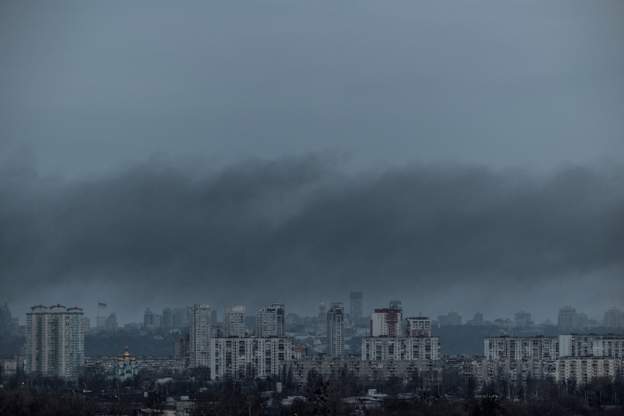
At least six people have been killed and power at Europe’s largest nuclear plant has been lost after Russia launched missiles across Ukraine.
The attacks hit cities from Kharkiv in the north to Odesa in the south and Zhytomyr in the west.
Buildings and infrastructure were hit in Kharkiv and Odesa, with power blackouts in several areas. Attacks on the capital Kyiv are also reported.
Ukraine said Russia fired 81 missiles, in what is the biggest strike in weeks.
The military claimed it successfully shot down 34 cruise missiles and four of the eight Iranian-made Shahed drones fired.
In western Ukraine, at least five people were killed in Lviv after a rocket hit their home, the region’s governor Maksym Kozytskyi said on Telegram.
One person has died and two others were injured following drone and missile strikes in the Dnipropetrovsk region, according to governor Serhii Lysak.
Nuclear energy operator Energoatom said a strike at the Zaporizhzhia plant, which is Europe’s largest, meant the “last link” between the facility and the Ukrainian power system was cut off.
Russia-installed officials in the Moscow-controlled part of Ukraine’s Zaporizhzhia region said the halt in electricity supplies to the power station from Ukrainian-held territory was “a provocation”.
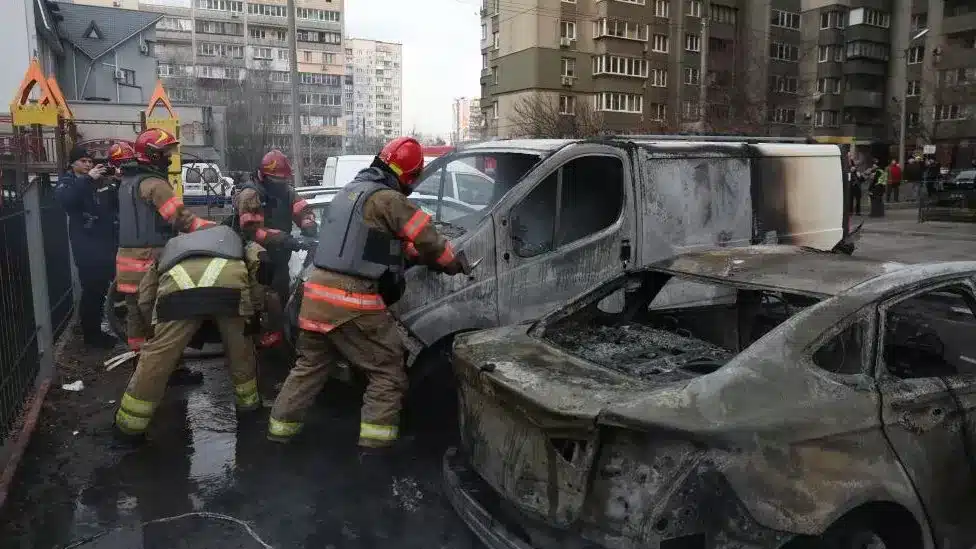
In Kyiv, emergency services are at the scenes of blasts in western and southern districts of the capital where the mayor, Vitaly Klitschko, said explosions had taken place.
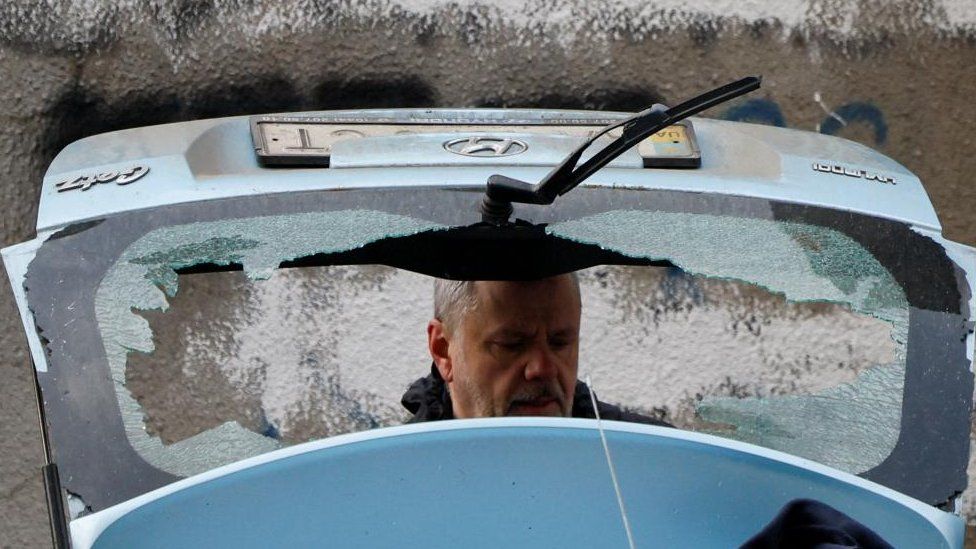
Mr Klitschko said cars were burning in the courtyard of one residential building and he urged people to stay in shelters. Much of the city has been left without electricity, with four in 10 people without power, he added.
A mass missile attack struck an energy facility in the port city of Odesa, triggering power cuts, its governor Maksym Marchenko said. Residential areas were also hit but no casualties were reported, he added.
“About 15” strikes hit Kharkiv city and region, with “critical infrastructure facilities” and a residential building targeted, regional administration chief Oleg Synegubov said.
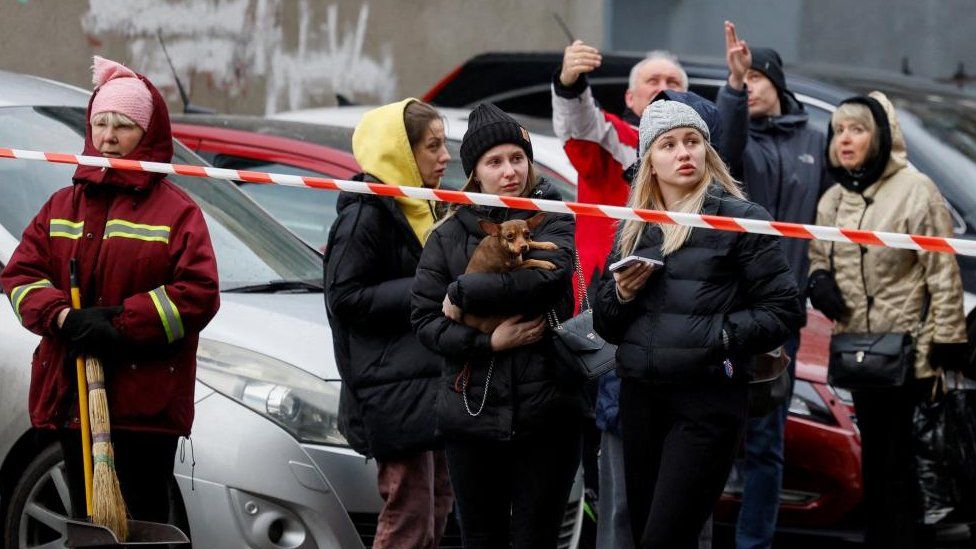
Image caption,People gathered outside a residential building in Kyiv following the strikes
Other regions hit include Vynnytsia and Rivne in the west, and Dnipro and Poltava in the centre of the country.
The attacks mark the biggest day of Russian missile strikes on Ukraine since the end of January, when 11 people died after dozens of buildings were struck in several regions.
Russian President Vladimir Putin launched his invasion just over a year ago. Since then tens of thousands of combatants and civilians have been killed or injured and millions of Ukrainians became refugees.
The US Director of National Intelligence, Avril Haines, suggested on Wednesday that President Putin might be planning to drag out the war for years but that Russia was not strong enough to launch major new offensives this year.
She said the war in Ukraine had become a “grinding attritional war in which neither side has a definitive military advantage”.
“We do not foresee the Russian military recovering enough this year to make major territorial gains, but Putin most likely calculates the time works in his favour, and that prolonging the war including with potential pauses in the fighting may be his best remaining pathway to eventually securing Russia’s strategic interests in Ukraine, even if it takes years,” she said.
Image caption,The aftermath of missile attacks on Ukraine’s capital, Kyiv
Ms Haines said Russia might turn to defending the territories it now occupies, adding that it would need additional “mandatory mobilization and third-party ammunition sources” to sustain even its level of operations in Ukraine.
Ukraine’s military says it has pushed back intense Russian attacks on the embattled eastern city of Bakhmut despite Russian forces claiming to have taken control of its eastern half.
Moscow has been trying to take Bakhmut for months, as both sides suffer heavy losses in a grinding war of attrition.
“The enemy continued its attacks and has shown no sign of a let-up in storming the city of Bakhmut,” the general staff of the Ukrainian armed forces said. “Our defenders repelled attacks on Bakhmut and on surrounding communities.”
Between 20,000 and 30,000 Russian troops have been killed or wounded in the battle for the Ukrainian city of Bakhmut since it began last summer, Western officials say. The figures cannot be verified independently.
After weeks of brutal battle steadily wore down an unyielding Ukrainian opposition, Russian soldiers are inching closer and closer to taking the city of Bakhmut.
Bakhmut is a relatively small town in eastern Donetsk that has been out of reach of Russia’s plodding ground assault for many months, which is not the kind of city Moscow had hoped to be fighting for in the second year of its invasion.
Yet, if it were taken, Russian President Vladimir Putin would have made some military progress and would have given his army the chance to conduct aerial assaults on more western major centers.
Here’s what you need to know about the battle for Bakhmut.
Ukraine’s biggest challenge at this moment is defending Bakhmut, President Volodymyr Zelensky said in his nightly video message Tuesday.
Russian forces have been making incremental gains around the city, but Ukrainian forces are yet to retreat, creating a standoff that recalls drawn-out battles for other eastern cities such as Severodonetsk over the past year.
On Saturday, Land Forces of Ukraine said on its Telegram channel that “the enemy keeps trying to break through the defenses and take Bakhmut” and that the commander of Ukraine’s Eastern Military Group, Colonel-General Oleksandr Syrskyi, had visited units that are defending the city and its approaches.
Alexander Rodnyansky, an economic adviser to Zelenksy, told CNN on Tuesday that “the situation is difficult. There is no secret about that.”
“Russia is trying to encircle it right now and they’re using their best Wagner troops, apparently, the most well trained and experienced,” the adviser added. “Our military is obviously going to weigh all of the options. So far, you know, they’ve held the city, but, if need be, they will strategically pull back because we’re not going to second guess all of our people just for nothing.”
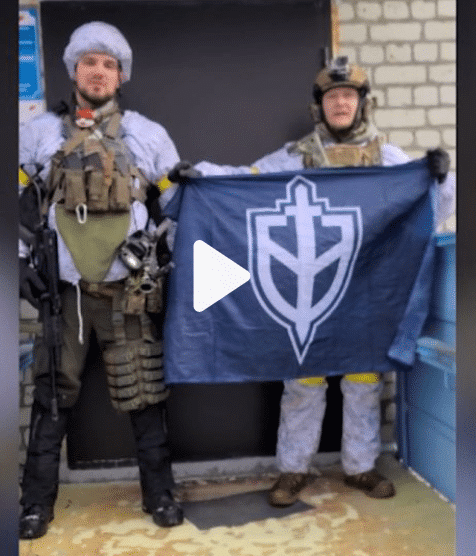
The Ukrainian military has also confirmed that Russian forces are employing more experienced fighters from the ranks of the Russian private military company Wagner as they attempt to capture the town.
There are still around 4,500 civilians in Bakhmut, including 48 children, as Russian forces continue to advance on the city, the spokeswoman for the Ukrainian Donetsk regional military administration Tetiana Ignatchenko told CNN on Wednesday.
She called on people to evacuate the city due to the danger but said they had enough supplies.
“There is food, water and medicine in the city. People were provided with everything in advance,” Ignatchenko said. “Still, everyone has to leave. The situation is extremely dangerous for civilians.
A soldier from Ukraine’s 93th Brigade says his country’s forces are still standing in Bakhmut, with no plans for a retreat.
“We are standing in Bakhmut. No one is going to retreat yet,” the soldier said a video posted by the Ukrainian military on Wednesday. “We are standing. Bakhmut is Ukraine.”
The soldier also claimed the situation in Bakhmut was a bit calmer than in previous days.
“We have muffled the enemy down a little bit. It’s a little calmer, but there are still gunfights on the outskirts,” he said. “There are isolated explosions, bombs are flying.”
But Ukrainian troops have acknowledged that it is becoming harder to hold onto the city as the routes in from the west are squeezed by Russian forces, who have advanced both to the north and south of Bakhmut.
“The situation in Bakhmut is very difficult now. It is much worse than officially reported,” a soldier who didn’t want to be named told CNN on Tuesday. “In all directions. Especially in the northern direction, where the (Russians) have made the biggest advance between Berkhivka and Yahidne.”
The city sits towards the northeast of the Donetsk region, about 13 miles from Luhansk region, and has been a target for Russian forces for months. Since last summer the city has been a stone’s throw from the front lines, so its capture would represent a long sought-after success for Moscow’s forces – and bring some limited strategic value.
The city has important road connections to other parts of the Donetsk region; eastwards to the border with Luhansk, north-west to Sloviansk and south-west to Kostiantynivka.
For several weeks the routes into Bakhmut have gradually come under the control of Russian forces. Rather than drive directly towards the city center, Wagner groups have sought to encircle the city in a wide arc from the north. In January they claimed the nearby town of Soledar, and have since taken a string of villages and hamlets north of Bakhmut.
If the Russians can take the high ground to the west of the city, nearby industrial towns Kostiantynivka and Kramatorsk would be at the mercy of their artillery and even longer range mortars. And it is unclear where exactly Ukrainian forces would fall back to should they retreat from the city.
But experts say capturing Bakhmut is unlikely to dramatically alter the overall picture of the war in eastern Ukraine, where little territory has changed hands in 2023. And it would in some ways signal the overriding failures of Russia’s invasion that, early in its second year, the capture of a relatively small city has required such a long and costly assault.
While Bakhmut’s strategic importance should not be overstated, its capture could still carry a very welcome symbolic impact for Russian President Vladimir Putin.
When Russian troops took the town of Soledar in mid-January, it marked a first gain in the Donbas for months. Six weeks on, the capture of Bakhmut would represent the completion of the next step.
It matters too to oligarch Yevgeny Prigozhin, who runs the Wagner group and has frequently criticized the Russian Defense Ministry’s management of the “Special Military Operation” in Ukraine.
His Wagner fighters, many of them former prison inmates, have taken heavy casualties in what has become a battlefield of trenches and mud, reminiscent of World War I. After months in which the Russian Ministry of Defense delivered nothing but retreat, Prigozhin has been keen to show his men can deliver with the seizure of Soledar and now Bakhmut.
Nonetheless, urgent questions will remain for Putin even if his forces pull off a successful assault on Bakhmut.
“The specter of limitless Russian manpower is a myth. Putin has already been forced to make difficult and suboptimal choices to offset the terrible losses his war has inflicted on the Russian military, and he will face similarly difficult choices in 2023 if he persists in his determination to use military force to impose his will on Ukraine and the West,” the Institute for the Study of War (ISW) think tank wrote on Sunday in an update on the state of Russian forces and firepower.
“Russia can mobilize more manpower, and Putin will likely do so rather than give up. But the costs to Putin and Russia of the measures he will likely need to take at this point will begin to mount rapidly,” the ISW wrote.
Russian and Ukrainian forces are fighting in the streets of Bakhmut – but Russia does not control the eastern city, its deputy mayor has said.
Oleksandr Marchenko also told the BBC the remaining 4,000 civilians are living in shelters without access to gas, electricity or water.
Mr Marchenko said “not a single building” had remained untouched and that the city is “almost destroyed”,
Bakhmut has seen months of fighting, as Russia tries to take charge.
“There is fighting near the city and there are also street fights,” Mr Marchenko said.
Taking the city would be a rare battlefield success in recent months for Russia.
But despite that, the city’s strategic value has been questioned. Some experts say any Russian victory could be pyrrhic – that is, not worth the cost.
Thousands of Russian troops have died trying to take Bakhmut, which had a pre-war population of around 75,000. Ukrainian commanders estimate that Russia has lost seven times as many soldiers as they have.
Now, after fierce shelling, Russian forces and troops from the Wagner private army appear to have surrounded much of Bakhmut,.
On Saturday, UK military intelligence said Russian advances in the northern suburbs have left the Ukraine-held section of the city vulnerable to Russian attacks on three sides.
Mr Marchenko accused the Russians of having “no goal” to save the city and that it wanted to commit “genocide of the Ukrainian people”.
“Currently there is no communication in the city so the city is cut out, the bridges are destroyed and the tactics the Russians are using is the tactic of parched land,” Mr Marchenko told the Today programme.
Earlier this week, Ukraine’s President Volodymyr Zelensky said that the situation in the area was becoming “more and more difficult” – although the Ukrainian military said it had repelled numerous attacks since Friday.
The commander of Ukraine’s ground forces, Col Gen Oleksandr Syrskyi, visited Bakhmut on Friday for meetings with local commanders.
“I believe we shouldn’t give any inch of our land to the enemy,” Mr Marchenko said. “We should protect our land, we should protect our people and we should protect the businesses that are on this land.
“And the reason why we shouldn’t give it to them is because it will be very hard to take it back, to regain the control after Russians capture it.”
Russia claimed the Donbas town of Soledar, about 10km (6.2 miles) from Bakhmut, in January following a long battle with the Ukrainian forces.
Soledar, too, was reportedly reduced to a wasteland of flattened buildings and rubble by the time the Ukrainian army retreated.
On Friday, President Zelensky stressed that artillery and shells were needed to “stop Russia”.
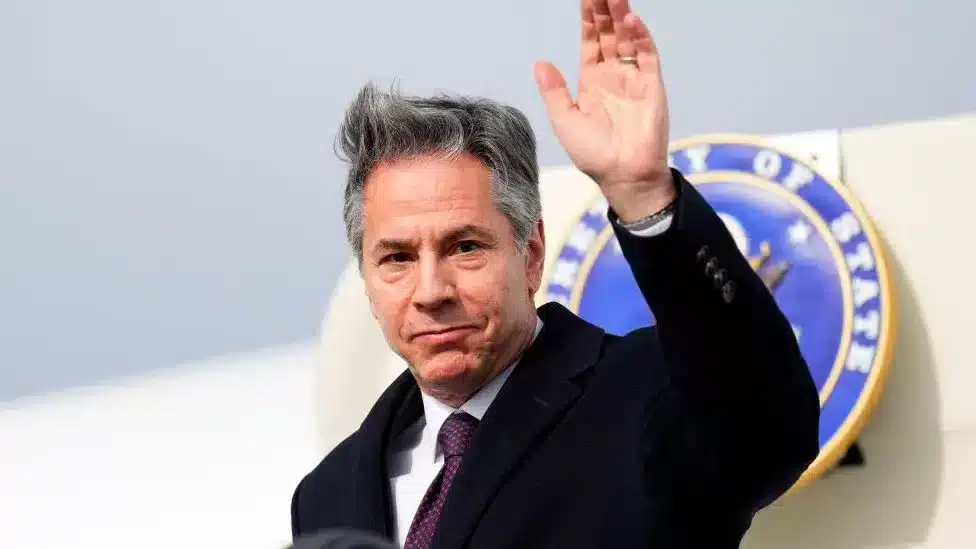
US Secretary of State Antony Blinken said the country’s latest package included high-precision Himars artillery rockets and howitzers “which Ukraine is using so effectively”.
On Thursday, Russian security officials reported that a small Ukrainian armed group had entered the southern Bryansk region from Russia. Kyiv denounced these claims as a “typical planned provocation” by the Moscow.
In a statement distributed through state-run media outlet RIA Novosti on Thursday, the Security Service of Russia (FSB) said that the organization was conducting operations in response to “armed Ukrainian nationalists who broke the state border” in the area. A local official reported that two civilians died in the incident, and President Vladimir Putin later referred to it as a terrorist act.
CNN cannot independently verify the Russian claims, and local media have not carried any images of the supposed incidents, any type of confrontation or an alleged raid reported by Russian authorities.
US and Ukrainian officials have in the past warned that Russia has planned so-called “false flag” attacks along Russia’s border with Ukraine as a pretext for military escalation, including Russian claims ahead of last year’s full-scale invasion that Ukraine was sending “saboteurs” over the Russian border.
The Bryansk region shares a border to its south with Ukraine, and to its west with Belarus, the close Russian ally nation that helped facilitate Putin’s invasion of Ukraine last year.
The governor of the region, Alexander Bogomaz, said Wednesday on his Telegram channel that in the village of Lyubechan, two civilians were killed and a 10-year-old child was injured. In the village of Sushany, also located in the Klimovsky district, Bogomaz said a residential building caught fire from a shell dropped from what he claimed was a Ukrainian drone, according to RIA Novosti.
Putin canceled a planned trip to southern Russia due to the incident in Bryansk, his spokesman Dmitry Peskov said earlier on Thursday. While making remarks on the incident, Putin didn’t specify if the group had crossed the border from Ukraine, but blamed the attack on “neo-Nazis,” without giving additional details. He also promised to “put them away.”
“Today, [they] committed another terrorist act, penetrated the border area and opened fire on civilians,” Putin said during a televised meeting on Thursday. “They saw that civilians and children were sitting there, [in] an ordinary Niva (car). They opened fire on them.”
An adviser in Ukrainian President Volodomyr Zelensky’s office, Mykhailo Podolyak, said the alleged raid was either a Russian provocation, or the work of local partisans taking a stand against the Kremlin, denying any Ukrainian involvement.
“Ukraine is not attacking,” Podolyak said. “This is either a provocation by the Russian side or Russian partisans who are beginning to dismantle the Putin regime. Because they still want to preserve some political chances for the post-war future of Russia, which will lose this war.”
Podolyak also said this type of operation was consistent with previous Russian provocations.
“This is classic Russia. It always goes for provocation, lies, it always creates information pretexts,” he said. “Ukraine does not attack Russian territory, does not send special reconnaissance groups there, does not kill people, especially civilians. Ukraine does not need this. This is not a strategic object and there is no point in going there.”
“Or it is something else,” he also said. “Either Russian partisans are actively starting to show their personality because they want to prove that a protest movement is also possible in Russia.”
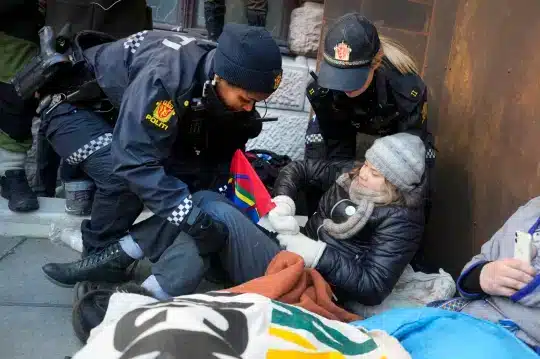
After her appearance at a march in Germany in January against the construction of a coal mine, the Swedish activist has been photographed being dragged away by police twice in the past two months.
Following today’s protest in Oslo, Greta and the other participants were briefly detained before being released. She was holding a red, blue, yellow, and green Sámi flag.
The demonstrators were calling for the removal of wind turbines from reindeer pastures on land belonging to the Sámi, an indigenous group living in central and northern Norway, Sweden and Finland, as well as parts of Russia.
Supporters say the transition to green energy should not come at the expense of Sámi rights.
In 2021, Norway’s supreme court ruled that two wind farms at Fosen, near Trondheim, violated the indigenous people’s rights under international conventions.
However, the turbines remain in operation 16 months later.
Reindeer herders say the sight and sound of the giant machinery frighten their animals.
In recent days, Greta joined protestors blocking access to some government buildings.
Greta Thunberg joined other protestors who blocked access to the energy ministry building yesterday (Picture: AP)The activist was briefly detained by Norwegian police before she was released (Picture: EPA)
The increased focus on the issue led the energy minister Terje Aasland decided to call off an official visit to the UK.
In an interview with Reuters yesterday, Greta said: ‘Indigenous rights, human rights, must go hand-in-hand with climate protection and climate action.
‘That can’t happen at the expense of some people. Then it is not climate justice.’
The images of the 20-year-old being lifted by police echoed January’s protest at Luetzerath, near Dusseldorf.
Demonstrators gathered at the abandoned German village to try and prevent the expansion of the Garzweiler coal mine by energy company RWE.
In response to an alleged Ukrainian sabotage gang that has “taken hostages” in Russia, Vladimir Putin is anticipated to convene a meeting of his national security council today.
Unverified reports out of Moscow claim that up to 50 Ukrainians crossed the border in the Bryansk area.
‘An armed group of Ukrainian nationalists’ had penetrated, according to the Federal Security Service, which said in a statement to Russian news media that both its own forces and the army were attempting to exterminate them.
Some disinformation experts have already branded this as propaganda on Twitter, and a ‘possible false flag operation and disinformation campaign’ coming from the Kremlin.
Mykhailo Podolyak, adviser to Volodymyr Zelensky, also stressed this was ‘classic deliberate provocation’ from the invader.
In a statement on Twitter, he said: ‘Russia wants to scare its people to justify the attack on another country and the growing poverty after the year of war.
‘The partisan movement in Russia is getting stronger and more aggressive. Fear your partisans.’
Details remain unclear, but Bryansk governor Alexander Bogomaz said they had shot and killed one person.
‘Today, a Ukrainian sabotage and reconnaissance group penetrated the Klimovsky district in the village of Lubechanye,’ Bogomaz said on his Telegram channel.
‘Saboteurs fired on a moving car. As a result of the attack, one resident was killed and a 10-year-old child was wounded.’
He said Ukrainian armed forces had launched a drone attack and fired artillery shells at other areas near the border.
The state-owned RIA Novosti news agency reported on its Telegram channel that Kremlin spokesperson Dmitry Peskov said that Putin cancelled a planned trip to Stavropol ‘due to the situation in the Bryansk region’.
The president told the FSB this week that it needed to step up its guard against espionage and what he called terrorist threats emanating from Ukraine and the West.
‘Your task is to put a barrier in the way of sabotage groups, to stop attempts to illegally transport weapons and ammunition into Russia,’ he said in a speech on Tuesday.
Life for us is split into “before” and “after” the war.
In reality, we were aware of Russia’s plans as early as November 2021. After that, the possibility that they would invade Ukraine was frequently mentioned in the media and on social media, which made me feel worried and anxious.
I had a hard time getting ready for it.
A common expression among friends and family was the ‘anxiety suitcase’, which was the bag you kept ready in case of invasion. People often discussed how they might get out from under rubble if the worst happened.
‘Nothing is off the table’ when it comes to support for Ukraine says Sunak
Video Player is loading.
Current Time 0:00
Duration 5:53
But I – like most Ukrainians – did not believe that war would actually come.
The night before it happened, I was in my home in the western part of Ukraine – the city of Lviv – choosing gifts for my birthday in early March and planning the celebration. In just a few hours, that all lost relevance.
Each of us has a frozen image in our head of that terrible morning, which was accompanied by the sounds of explosions and sirens.
For me, that day began with calls from my friends and the dreadful phrase: ‘The war has begun.’ All my subsequent actions were chaotic.
I ran to the pharmacy because I wanted to buy first aid medicine and pain relief, but when I got there at 9am, there were already long queues and empty shelves.
It was safer in Lviv, but of course not completely (Picture: Iryna)
Still not understanding the seriousness of the situation, I went into work that day – as a manager of a national cheese-producing company – by public transport, which was crowded with passengers carrying large suitcases and confusion in their eyes.
Even though all my colleagues came in that day, it was not productive at all – we just kept reading the news. When it was time to clock out, we received a message from our manager saying that he understood if people needed to leave Ukraine because it was too dangerous to continue living in Lviv.
Several people confirmed they were resigning, but I was not one of them. I was not ready to go anywhere and leave my parents. My dad could not leave the country because he was of military age.
In the first few weeks, I was afraid to go to bed so as not to miss the air raid sirens. The fear was so strong that I got under the covers in my clothes and was always ready to run.
I continued to go to work, but my daily routine changed a lot – there were no more catch-ups with friends in cafes, trips to the cinema, or other pleasant things. Some of my friends lost their jobs, while others had to relocate.
Over the last year, the Ukrainian people became very strong (Picture: AFP PHOTO / HANDOUT / UKRAINIAN PRESIDENTIAL PRESS SERVICE)
It was safer in Lviv, but of course not completely. There was no respite anywhere in Ukraine as rockets would fly into my city. In fact, one morning, I woke up to see my house shaking from an explosion nearby, which absolutely terrified me.
After Russia was pushed out of cities such as Bucha and Irpin in April, we saw terrible photos of murdered civilians and people tortured to death. It felt like a horror movie had come to life.
But in the middle of this pain, something appeared that I don’t think we had before – all the people in the country became one.
We were all united by grief and a common goal. We volunteered, wove camouflage nets – green nets that the army needed to mask military equipment – pensioners gave all their savings to the army, and children made jewellery and sold it.
Everyone worked together and no one was left behind.
I arrived in England on 19 December (Picture: Iryna)
In this terrible situation, I was impressed not only by the Ukrainians, but also by the British. We heard the incredible news that they were opening their homes to Ukrainians and were ready to host us.
I understand the worries that British people could feel inviting complete strangers to their home with different values and culture, but this did not stop them.
So after 10 months of war in Ukraine, I decided to save my mental health and use the sponsorship programme.
Finding a sponsor and compiling all the relevant documents was very simple. However, the physical road to the UK was difficult because there are no planes flying from Ukraine – I had to get to Poland first.
Rockets would fly into my city (Picture: REUTERS/Andrii Gorb)
Leaving home was very sad and painful because I didn’t know if something would happen in Lviv and I’d never see my relatives again. All my relatives are still in Ukraine because they believe we’ll win the war soon.
I arrived in England on 19 December.
From my experience, I can say that the British are people with incredible empathy, kindness, and their help is not limited to providing housing – they do much more for us.
I live in Tonbridge, Kent, with a young couple, Jamie and Molly.
In addition to providing housing, they’ve given me moral support. In the early days, they were always there for me to help with documents, but also invited me to celebrate a British Christmas with their families.
How can you not believe in a miracle after that?
I found a job in Kent that packs and ships stationary, so I work with a great team. I’m glad to be safe but I don’t know what my future will look like and we don’t know when the war will end so I can’t make any plans.
Over the last year, the Ukrainian people became very strong.
We began to appreciate every day because we saw how quickly and suddenly it can be taken away from us. We looked death in the eye, but we continue to believe in the victory of good over evil.
As Russia invaded Ukraine in full force a year ago, starting the largest land conflict in Europe since 1945, it also engaged in a fight within its own borders, stepping up its information censorship in an effort to maintain control over its own people.
Most independent journalists fled the country as a result of the brutal new censorship rules that targeted any media still operating outside of Kremlin authority. Russians were cut off from Western news and social media sites due to the strengthening of the digital Iron Curtain.
In addition, as police arrested thousands in a crackdown on anti-war demonstrations, a culture of fear spread throughout Russian cities and villages, preventing many people from publicly expressing their genuine opinions on the war.
One year on, that grip on information remains tight – and support for the conflict seemingly high – but cracks have started to show.
Some Russians are tuning out the relentless jingoism on Kremlin-backed airwaves. Tech-savvy internet users skirt state restrictions to access dispatches and pictures from the frontlines. And, as Russia turns to mobilization to boost its stuttering campaign, it is struggling to contain the personal impact that one year of war is having on its citizens.
“In the beginning I was supporting it,” Natalya, a 53-year-old Moscow resident, told CNN of what the Kremlin and most Russians euphemistically call a “special military operation.” “But now I am completely against it.”
“What made me change my opinion?,” she contemplated aloud. “First, my son is of mobilization age, and I fear for him. And secondly, I have very many friends there, in Ukraine, and I talk to them. That is why I am against it.”
CNN is not using the full names of individuals who were critical of the Kremlin. Public criticism of the war in Ukraine or statements that discredit Russia’s military can potentially mean a fine or a prison sentence.
For Natalya and many of her compatriots, the endless, personal grind of war casts Russian propaganda in a different light. And for those hoping to push the tide of public opinion against Putin, that creates an opening.
“I do not trust our TV,” she said. “I cannot be certain they are not telling the truth, I just don’t know.
“But I have my doubts,” she added. “I think, probably, they’re not.”
Natalya is not the only Russian to turn against the conflict, but she appears to be in the minority.
Gauging public opinion is notoriously difficult in a country where independent pollsters are targeted by the government, and many of the 146 million citizens are reluctant to publicly condemn President Vladimir Putin. But according to the Levada Center, a non-governmental polling organization, support dipped by only 6% among Russians from March to November last year, to 74%.
In many respects, that is unsurprising. There is little room for dissenting voices on Russian airwaves; the propaganda beamed from state-controlled TV stations since the onset of war has at times attracted derision around the world, so overblown are their more fanatical presenters and pundits.
In the days leading up to Friday’s one-year anniversary of war – according to BBC Monitoring’s Francis Scarr, who analyzes Russian media daily – a Russian MP told audiences on state-owned TV channel Russia-1 that “if Kyiv needs to lie in ruins for our flag to fly above it, then so be it!”; radio presenter Sergey Mardan proclaimed: “There’s only one peace formula for Ukraine: the liquidation of Ukraine as a state.”
And, in a farfetched statement that encapsulates the alternate reality in state TV channels exist, another pro-Russian former lawmaker claimed of Moscow’s war progress: “Everything is going to plan and everything is under control.”
Such programming typically appeals to a select group of older, more conservative Russians who pine for the days of the Soviet Union – though its reach spans generations, and it has claimed some converts.
“My opinion on Ukraine has changed,” said Ekaterina, 37, who turns to popular Russian news program “60 Minutes” after getting home from work. “At first my feelings were: what is the point of this war? Why did they take the decision to start it? It makes the lives of the people here in Russia much worse!”
The conflict has taken a personal toll on her. “My life has deteriorated a lot in this year. Thankfully, no one close to me has been mobilized. But I lost my job. And I see radical changes around me everywhere,” she said.
And yet, Ekaterina’s initial opposition to the invasion has disappeared. “I arrived at the understanding that this special military operation was inevitable,” she said. “It would have come to this no matter what. And had we not acted first, war would have been unleashed against us,” she added, mirroring the false claims of victimhood at the hands of the West that state media relentlessly communicate.
Reversals like hers will be welcomed in the Kremlin as vindication of their notorious and draconian grip on media reporting.
“I trust the news there completely. Yes, they all belong to the state, (but) why should I not trust them?” Yuliya, a 40-year-old HR director at a marketing firm, told CNN. “I think (the war) is succeeding. Perhaps it is taking longer than one could wish for. But I think it is successful,” said Yuliya, who said her main source of news is the state-owned Channel One.
Around two-thirds of Russians rely primarily on television for their news, according to the Levada Center, a higher proportion than in most Western countries.
But the sentiment of Yuliya and Ekaterina is far from universal. Even among those who generally support the war, Kremlin-controlled TV remains far removed from the reality many Russians live in.
“Everything I hear on state channels I split in half. I don’t trust anyone (entirely),” 55-year-old accountant Tatyana said. “One needs to analyze everything … because certain things they are omitting, (or) not saying,” said Leonid, a 58-year-old engineer.
Several people whom CNN spoke with in Moscow this month relayed similar feelings, stressing that they engaged with state-controlled TV but treated it with skepticism. And many reach different views on Ukraine.
“I think you can trust them all only to an extent. The state channels sometimes reflect the truth, but on other occasions they say things just to calm people down,” 20-year-old Daniil said.
Vocal minorities on each side of the conflict exist in Russia, and some have cut off friendships or left the country as a result. But sociologists tracking Russian opinion say most people in the country fall between those two extremes.
“Quite often we are only talking about these high numbers of support (for the war),” Denis Volkov, the director of the Moscow-based Levada Center, said. “But it’s not that all these people are happy about it. They support their side, (but) would rather have it finished and fighting stopped.”
This group of people tends to pay less attention to the war, according to Natalia Savelyeva, a Future Russia Fellow at the Center for European Policy Analysis (CEPA) who has interviewed hundreds of Russians since the invasion to trace the levels of public support for the conflict. “We call them ‘doubters,’” she said.
“A lot of doubters don’t go very deep into the news … many of them don’t believe that Russian soldiers kill Ukrainians – they repeat this narrative they see on TV,” she said.
The center ground also includes many Russians who have developed concerns about the war. But if the Kremlin cannot expect all-out support across its populace, sociologists say it can at least rely on apathy.
“I try to avoid watching news on the special military operation because I start feeling bad about what’s going on,” Natalya added. “So I don’t watch.”
She is far from alone. “The major attitude is not to watch (the news) closely, not to discuss it with colleagues or friends. Because what can you do about it?” said Volkov. “Whatever you say, whatever you want, the government will do what they want.”
That feeling of futility means anti-war protests in Russia are rare and noteworthy, a social contract that suits the Kremlin. “People don’t want to go and protest; first, because it might be dangerous, and second, because they see it as a futile enterprise,” Volkov said.
“What are we supposed to do? Our opinion means diddly squat,” a woman told CNN in Moscow in January, anonymously discussing the conflict.
The bulk of the population typically disengages instead. “In general, those people try to distance themselves from what’s going on,” Savelyeva added. “They try to live their lives as though nothing is happening.”
And a culture of silence – re-enforced by heavy-handed authorities – keeps many from sharing skepticism about the conflict. A married couple in the southwestern Russian city of Krasnodar were reportedly arrested in January for professing anti-war sentiments during a private conversation in a restaurant, according to the independent Russian monitoring group OVD-Info.
“I do have an opinion about the special military operation … it remains the same to this day,” Anna told CNN in Moscow. “I can’t tell you which side I support. I am for truth and justice. Let’s leave it like that,” she said.
Keeping the war at arm’s length has, however, become more difficult over the course of the past year. Putin’s chaotic partial mobilization order and Russia’s increasing economic isolation has brought the conflict to the homes of Russians, and communication with friends and relatives in Ukraine often paint a different picture of the war than that reported by state media.
“I have felt anxious ever since this began. It’s affecting (the) availability of products and prices,” a woman who asked to remain anonymous told CNN last month. “There is a lack of public information. People should be explained things. Everyone is listening to Soloviev,” she said, referring to prominent propagandist Vladimir Soloviev.
“It would be good if the experts started expressing their real opinions instead of obeying orders, from the government and Putin,” the woman said.
A film student, who said she hadn’t heard from a friend for two months following his mobilization, added: “I don’t know what’s happened to him. It would be nice if he just responded and said ‘OK, I’m alive.’”
“I just wish this special military operation never started in the first place – this war – and that human life was really valued,” she said.
For those working to break through the Kremlin’s information blockade, Russia’s quiet majority is a key target.
Most Russians see on state media a “perverted picture of Russia battling the possible invasion of their own territory – they don’t see their compatriots dying,” said Kiryl Sukhotski, who oversees Russian-language content at Radio Free Europe/Radio Liberty, the US Congress-funded media outlet that broadcasts in countries where information is controlled by state authorities.
“That’s where we come in,” Sukhotski said.
The outlet is one of the most influential platforms bringing uncensored scenes from the Ukrainian frontlines into Russian-speaking homes, primarily through digital platforms still allowed by the Kremlin including YouTube, Telegram and WhatsApp.
And interest has surged throughout the war, the network says. “We saw traffic spikes after the mobilization, and after the Ukrainian counter-offensives, because people started to understand what (the war) means for their own communities and they couldn’t get it from local media.”
Current Time, its 24/7 TV and digital network for Russians, saw a two-and-a-half-fold increase in Facebook views, and more than a three-fold rise in YouTube views, in the 10 months following the invasion, RFE/RL told CNN. Last year, QR codes which directed smartphone users to the outlet’s website started popping up in Russian cities, which RFE/RL believed were stuck on lampposts and street signs by anti-war citizens.
But independent outlets face a challenge reaching beyond internet natives, who tend to be younger and living in cities, and penetrating the media diet of older, poorer and rural Russians, who are typically more conservative and supportive of the war.
“We need to get to the wider audience in Russia,” Sukhotski said. “We see a lot of people indoctrinated by Russian state propaganda … it will be an uphill battle but this is where we shape our strategy.”
Reaching Russians at all has not been easy. Most of RFE/RL’s Russia-based staff made a frantic exit from the country after the invasion, following the Kremlin’s crackdown on independent outlets last year, relocating to the network’s headquarters in Prague.
The same fate befell outlets like BBC Russia and Latvia-based Meduza, which were also targeted by the state.
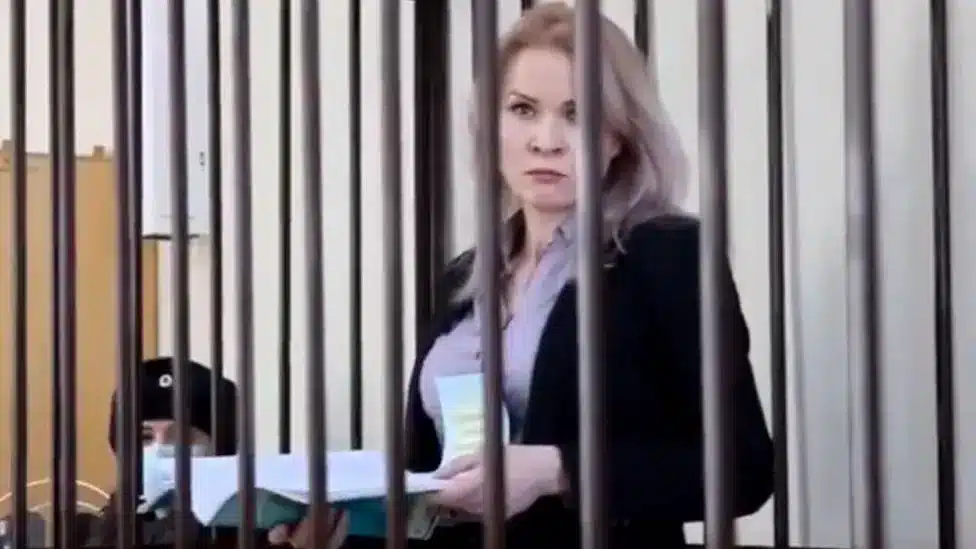
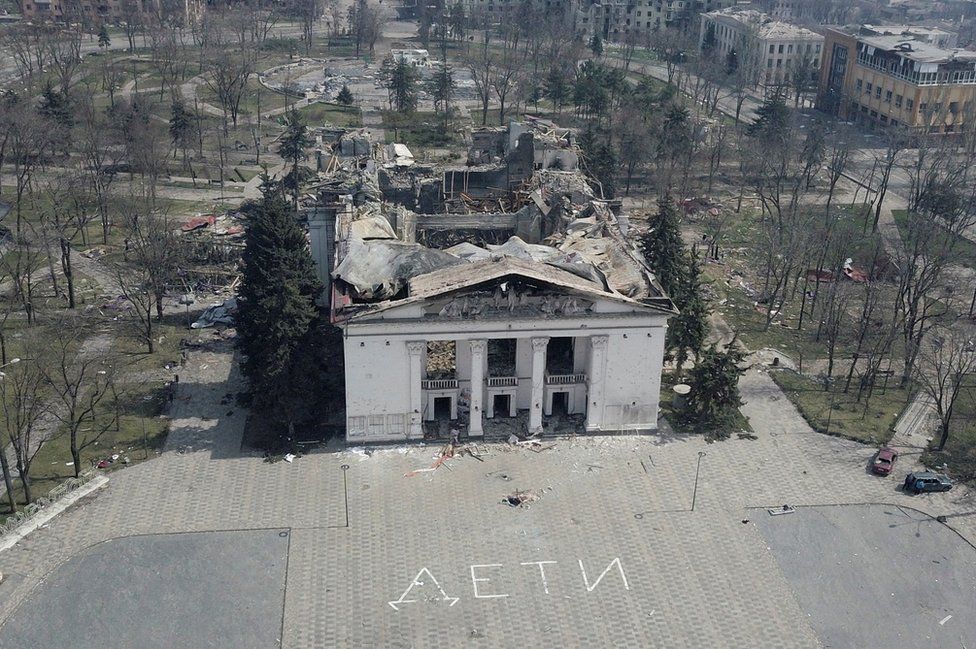
A new law made it a crime to disseminate “fake” information about the invasion of Ukraine – a definition decided at the whim of the Kremlin – with a penalty of up to 15 years in prison for anyone convicted. This month, a Russian court sentenced journalist Maria Ponomarenko to six years in prison for a Telegram post that the court said spread supposedly “false information” about a Russian airstrike on a theater in Mariupol, Ukraine, that killed hundreds, state news agency TASS reported.
“All our staff understand they can’t go back to Russia,” Sukhotski told CNN. “They still have families there. They still have ailing parents there. We have people who were not able to go to their parents’ funerals in the past year.”
His staff are “still coming to terms with that,” Sukhotski admitted. “They are Russian patriots and they wish Russia well … they see how they can help.”
Outlets like RFE/RL have openings across the digital landscape, in spite of Russia’s move to ban Twitter, Facebook and other Western platforms last year.
About a quarter of Russians use VPN services to access blocked sites, according to a Levada Center poll carried out two months after Russia’s invasion.
Searches for such services on Google spiked to record levels in Russia following the invasion, and have remained at their highest rates in over a decade ever since, the search engine’s tracking data shows.
YouTube meanwhile remains one of the few major global sites still accessible, thanks to its huge popularity in Russia and its value in spreading Kremlin propaganda videos.
“YouTube became the television substitute for Russia … the Kremlin fear that if they don’t have YouTube, they won’t be able to control the flow of information to (younger people),” Sukhotski said.
And that allows censored organizations a way in. “I watch YouTube. I watch everything there – I mean everything,” one Moscow resident who passionately opposes the war told CNN, speaking on the condition of anonymity. “These federal channels I never watch,” she said. “I don’t trust a word they say. They lie all the time! You’ve just got to switch on your logic, compare some information and you will see that it’s all a lie.”
Telegram, meanwhile, has spiked in popularity since the war began, becoming a public square for military bloggers to analyze each day on the battlefield.
At first, that analysis tended to mirror the Kremlin’s line. But “starting around September, when Ukraine launched their successful counter-offensives, everything started falling apart,” said Olga Lautman, a US-based Senior Fellow at CEPA who studies the Kremlin’s internal affairs and propaganda tactics. “I’ve never seen anything like it,” she said.
Scores of hawkish bloggers, some of whom boast hundreds of thousands of followers, have strayed angrily from the Kremlin’s line in recent months, lambasting its military tactics and publicly losing faith in the armed forces’ high command.
This month, a debacle in Vuhledar that saw Russian tanks veer wildly into minefields became the latest episode to expose those fissures. The former Defense Minister of the Moscow-backed Donetsk People’s Republic, Igor Girkin, sometimes known by his nom de guerre Igor Strelkov – now a a strident critic of the campaign – said Russian troops “were shot like turkeys at a shooting range.” In another post, he called Russian forces “morons.” Several Russian commentators called for the dismissal of Lieutenant General Rustam Muradov, the commander of the Eastern Grouping of Forces.
“This public fighting is spilling over,” Lautman told CNN. “Russia has lost control of the narrative … it has normally relied on having a smooth propaganda machine and that no longer exists.”
One year into an invasion that most Russians initially thought would last days, creaks in the Kremlin’s control of information are showing.
The impact of those fractures remains unclear. For now, Putin can rely on a citizenry that is generally either supportive of the conflict or too fatigued to proclaim its opposition.
But some onlookers believe the pendulum of public opinion is slowly swinging away from the Kremlin.
“One family doesn’t know of another family who hasn’t suffered a loss in Ukraine,” Lautman said. “Russians do support the conflict because they do have an imperialistic ambition. But now it is knocking on their door, and you’re starting to see a shift.”
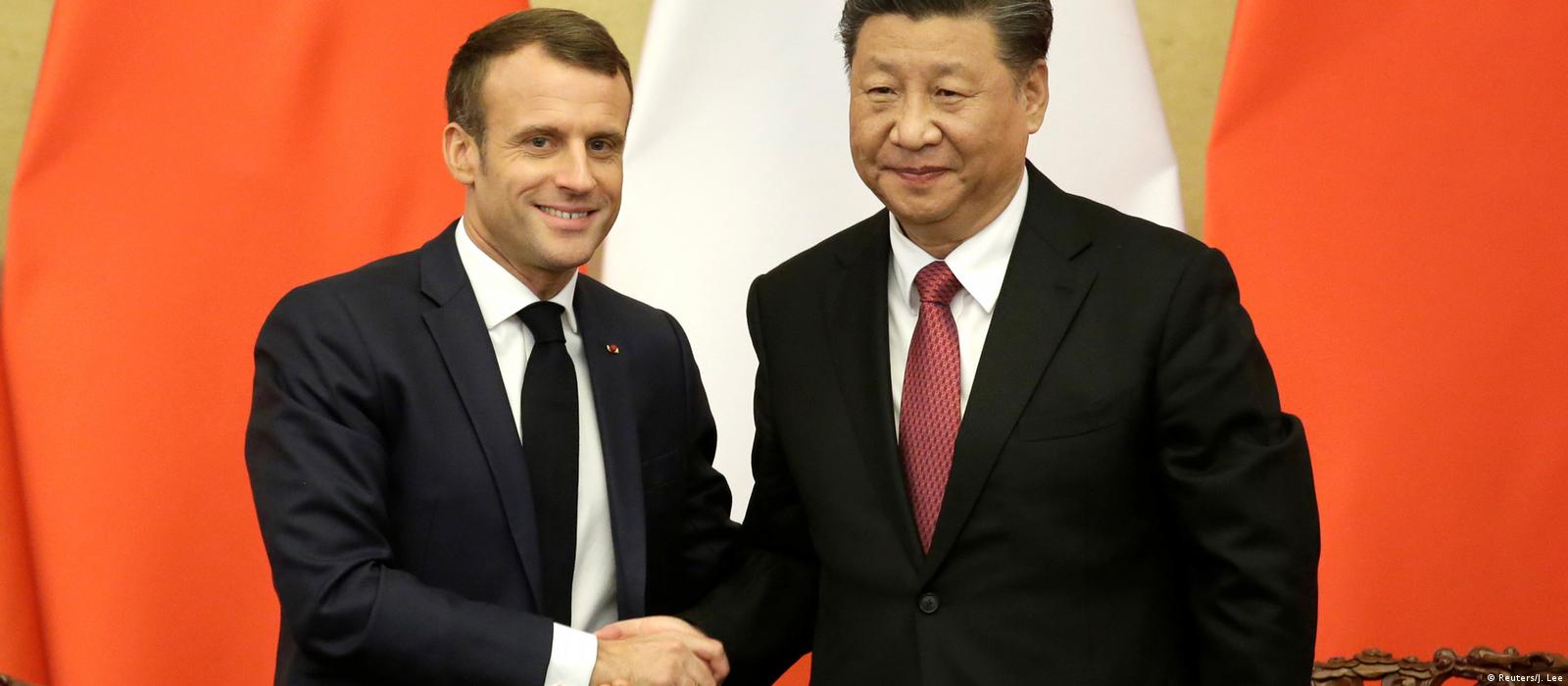
In order to end Russia’s invasion of Ukraine, French President Emmanuel Macron has announced that he will travel to China in April.
The declaration was made on Saturday, following the publication by China of a 12-point position paper that demanded an end to the year-long conflict through a “political settlement” and a cease-fire.
At a Paris agricultural expo, Macron announced that he would travel to China in “early April.”
“The fact that China is engaging in peace efforts is a good thing,” the French leader said, stressing that peace was only possible if “Russian aggression was halted, troops withdrawn, and the territorial sovereignty of Ukraine and its people was respected”.
“China must help us put pressure on Russia so that it never uses chemical or nuclear weapons … and that it stops its aggression as a precondition for talks,” he added.
Beijing has sought to position itself as a neutral party on the conflict, even as it has maintained close ties with Russia and helped scuttle a joint statement condemning the war at a G20 gathering in India.
The Chinese position paper, published on the anniversary of the conflict, said war benefits no one and urged all parties to “support Russia and Ukraine in working in the same direction and resuming direct dialogue as quickly as possible”.
Released by the foreign ministry, the plan urges an end to Western sanctions against Russia, the establishment of humanitarian corridors for the evacuation of civilians and steps to ensure the export of grain after disruptions caused global food prices to spike last year.
It also made clear its opposition to the use and threat of deploying nuclear weapons after Russian President Vladimir Putin threatened to use Moscow’s atomic arsenal in the conflict.
As diplomats from the two nations clashed during a Security Council meeting on the anniversary of their war, Russia’s envoy to the UN interrupted a moment of quiet for Ukraine.
Dmytro Kuleba, the foreign minister of Ukraine, suggested a tribute “in memory of the victims of the invasion” as he wrapped off his speech in the chamber.
Vasily Nebenzia, the representative of Russia to the United Nations, remained seated and requested the floor as everyone in the council room stood silently.
He then broke the silence, saying: ‘We are getting to our feet to honour the memory of all victims of what has happened in Ukraine starting in 2014 – all of those who perished.’
His use of 2014 and double emphasis on the word ‘all’ referred to Russia’s claims that the conflict began that year after Ukraine’s Moscow-friendly president was driven from office by mass protests.
The Kremlin responded by seizing the Crimean Peninsula and throwing its weight behind an insurgency in the mostly Russian-speaking Donbas region, which Putin has also now annexed.
Nebenzia went on: ‘All lives are priceless, and that is why we’re rising to honour the memory of them all.’
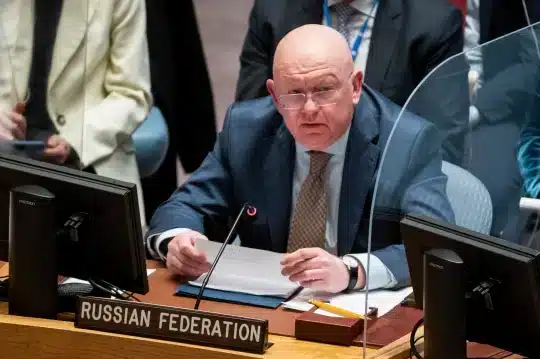
Vassily Nebenzia, permanent representative of Russia to the United Nations, speaks during a meeting of the UN Security Council (Picture: AP)
Earlier, he accused Malta, which holds the council’s rotating presidency, of giving Ukraine preference in choosing it to speak first just because it is ‘part of your geopolitical project’.
He also objected to foreign ministers of 14 European countries on the speakers list along with the European Union’s foreign policy chief Josep Borrell, saying they all have the same EU position ‘and will bring no added value’ to the debate.
Malta’s Foreign Minister Ian Borg responded that the European ministers flew to New York and asked to speak because ‘they feel that their countries have been and are still being directly impacted by this war’.
Kuleba told the council that ‘Ukraine will resist as it has done so far, and Ukraine will win’. And he declared that Russian President Vladimir Putin ‘is going to lose much sooner than he thinks’.
UN Secretary-General Antonio Guterres opened the meeting recalling his plea to the council for peace just before Russian troops and tanks crossed the border on February 24, last year.
He similarly repeated his warning that war could be the worst since the beginning of the century, with consequences not only for Russia and Ukraine but potentially for the world economy – all of which has proven true in the past year.
The UN chief lamented that ‘peace has had no chance’ and ‘war has ruled the day’, unleashing widespread death, destruction and displacement and leaving 17.6 million Ukrainians, nearly 40% of the population, in need of humanitarian assistance and protection.
This Friday, Yaryna Arieva and Sviatoslav Fursin won’t be commemorating their first wedding anniversary.
The Ukrainian couple were hitched on the same day that Russia began a full-scale invasion of their nation. Ukraine is still at war a year later. People are still dying as a result of fallen Russian rockets.
They claim that there isn’t much to celebrate. At her and Fursin’s Kyiv house, Arieva told CNN, “A year has gone and all the memories are starting to come back.”
She said that, for months, she avoided wearing a suit she got just days before the invasion because it was bringing back memories of the darkest moments of her life.
“It’s not the memories you want to have in your head all the time,” she said.
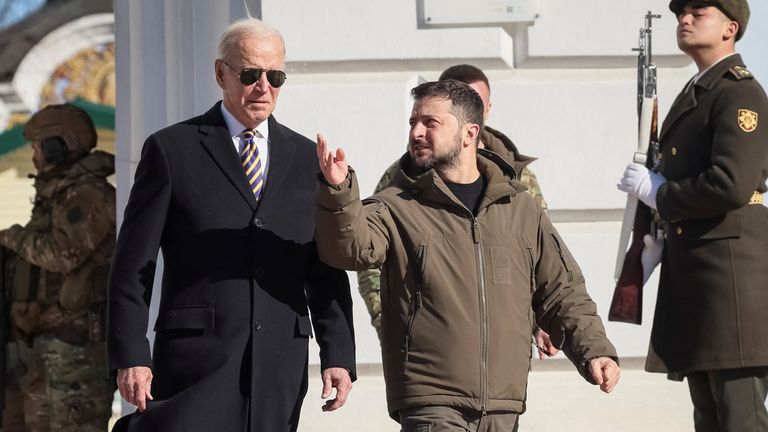
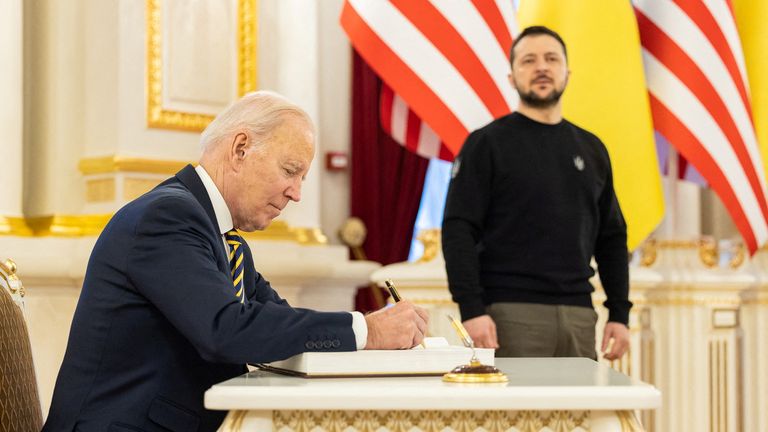
Arieva, 22, and Fursin, 25, rushed to tie the knot in St. Michael’s Golden-Domed Monastery on February 24, months before their planned wedding in May. They wanted to be together, whatever came next. The place has since become a favorite spot for visiting foreign dignitaries on their show-of-support trips to Kyiv. Most recently, US President Joe Biden was photographed there with Ukraine’s leader Volodymyr Zelensky during his surprise visit on Monday.
“I remember my wedding ceremony and that feeling of not knowing anything. That unpredictable and really scary future,” Arieva said.
The same day, they collected their weapons and signed up as volunteers with their local unit of territorial defense force, the volunteer branch of Ukraine’s armed forces, determined to defend their city. Arieva serves as an elected Kyiv City councilor, a part-time unpaid government position that meant she was given a weapon.
Fursin was immediately sent toward the front lines. He told CNN he saw a bus full of volunteers and simply jumped in, unsure where it was headed.
He and other volunteers were forming the second line of defense north of Kyiv, in Irpin, Hostomel and other areas that quickly became key battlegrounds.
“The first night, we were totally not ready. We didn’t have any trenches, nothing,” he said.
Fursin was put in charge of a group of 10 people, mostly other very young men. His qualifications? He was the only one of the 11 who had held an automatic weapon before.
“The commander watched how I handled the weapon and said: ‘Take these people and make shelters and ambush positions and think about which way you will run,’” Fursin related. “We were digging trenches. Just digging, digging, digging, all night.”
Arieva, meanwhile, was back at the base of their territorial defense unit in Kyiv, trying to be helpful.
“The first night when I was waiting for my husband, when he left for his first battle, I think it was the scariest night of my life, because of course, I couldn’t call him because he had to turn his phone off,” she said.
“I wasn’t religious but at that moment I prayed to all [the] gods I know for him to come back safe.”
The next month and a half is a blur.
Fursin kept going on missions. He was mostly manning checkpoints and forming a second line of defense, but he did find himself face-to-face with Russian troops a couple of times and was trained in firing anti-tank missiles. He refuses to go into details beyond saying he had used his weapons during that time. “We were told not to talk about it,” he said.
Arieva, meanwhile, was working in a tiny office with eight other people, 7 a.m. until 10 p.m. every day. There were three small tables with barely enough space for the computers, let alone the people. Bounty and Snickers bars, cigarettes and tobacco sticks became hard currency during that time.
They both admit the experience was a tough one.
“In our dreams, when we were imagining it, we were so heroic and strong. And the reality was that we washed once a week because there were no showers in there and it wasn’t very pleasant, [with] the lack of sleep and sometimes food,” she said.
Still, they look back at the time with pride and fondness.
“Everyone forgot who they are, if they were very famous or very, very rich or very [influential] politicians, they were just helping each other, standing together smoking and not knowing what was going on,” Arieva said.
Arieva said she quit smoking just days before the war began, but her determination didn’t last.
“I said I will quit on victory day, but I might have to try earlier,” she said.
When Russian troops withdrew from the Kyiv region in early April, Arieva and Fursin’s time in the territorial defense came to an end. The military decided it needed to make the volunteer units more professional and only those with previous military experience were allowed to stay.
Fursin and Arieva were asked to leave the force.
“It was hard to become civilians again, because we didn’t want to be protected, we wanted to do something,” she said.
They tried to enjoy the small things, like the first cappuccino since the start of the war.
“It was the tastiest thing. That cappuccino with the foam, that beauty, that taste, it [the war] has really made us value things much more,” she said.
For Fursin, last year’s invasion was the second of his life. He grew up in Crimea and was living on the Ukrainian peninsula when Russia forcibly annexed it in 2014. His grandmother was too ill to travel at the time, so they stayed.
“I remember how the place has changed after that. We used to joke that you go to sleep in one country and wake up in another,” he said.
When Fursin’s family finally left Crimea, they settled in Irpin. Just three years later, their home was, once again, invaded by Russian troops.
The couple describes the shock of coming back to Irpin after it was liberated in early April. The town north of Kyiv became the front line during the battle for the capital city. It was here that Ukrainian forces managed to repel the attack.
The family home was still standing, but was severely damaged, with windows shattered and half of the building scorched.
Back in the civilian world, the couple began volunteering, bringing food and basic supplies to liberated settlements north of Kyiv. The demand was so overwhelming that sometimes they had to make multiple trips a day.
“I remember Katyuzhanka, because we brought a lot of bread and macaroni and some pasta sauce and batteries and there was a huge amount of people waiting. We gave out everything we had and we had to go back and bring more bread because more than half [of the] people didn’t get anything and they didn’t have a slice of bread in that town,” Arieva said.
She still remembers people sharing terrifying stories of life under occupation and bursting into tears upon hearing strangers speak Ukrainian.
“It was really … hard to even listen to these stories, it hurts,” she said.
Slowly, life started to return to normal. It was spring, and Kyiv was in full bloom. It really felt like renewal, they said.
They had their official town hall wedding and a small celebration in May, mostly because the deposit was paid and non-refundable. Arieva finally got to introduce her husband to her 97-year-old great-grandmother.
They had both lost their jobs right at the beginning of the invasion. Arieva was working for the Committee of Voters of Ukraine, an observer organization, and Fursin for a housing co-op in Irpin.
As they started running out of money, they decided to focus on work and their studies.
Over the summer, Fursin finally graduated from university. He began his degree in Crimea, but when his family fled the occupied peninsula in 2019, he had to start over. He is now working on and off on software development projects.
Arieva, meanwhile, decided to focus on learning to code. Tech is the only sector that is still growing in Ukraine, because it allows people to work remotely.
But their plan to work and study remotely got derailed when Russia launched a wave of attacks on Ukraine’s energy infrastructure in the fall. Working was quickly becoming impossible.
“We would have two hours of electricity, then five hours without electricity, then three hours of electricity, it was really demoralizing,” Arieva said.
“The worst thing about that was that the streets weren’t lit. And not all people use their torches or have [reflective] jackets to be seen on the road. And every week I would see a car crash from my balcony and some people died,” she added.
In the fall, they adopted a cat and called him Kus, Ukrainian for “bite.” Even now, months later, Fursin’s arms are covered in cat scratches.
As Christmas started approaching, the couple, along with their families, decided to switch the date they’d celebrate the Christmas holiday.
Instead of January 7, which marks the birth of Jesus according to the Julian calendar, still used by the Russian Orthodox Church, they celebrated on December 24, which marks the birth of Jesus according to the Gregorian calendar.
“So we had two Christmases in 2022,” Arieva said.
Ukraine’s Orthodox church announced in the fall that it would allow its churches to celebrate Christmas in December.
“It makes more sense. It was more symbolic and I really liked it. And also it feels good that we are not celebrating with Russians anymore,” Arieva said.
The family didn’t have the usual full spread of 12 dishes for Christmas dinner, because the electricity was on for just six hours that day. They cooked Kutia, the traditional Ukrainian porridge-like Christmas meal that consists of wheat or rice, raisins, walnuts, honey and poppy seeds, using the emergency gas cylinder.
As the first anniversary of the war — and their wedding — approaches, Arieva and Fursin are reflecting on how the year has changed them.
Arieva said she is a completely different person. “I became less naive and less childish. And maybe it has made me a little bit stronger. Because what doesn’t kill us, makes us stronger, of course,” she said.
“Only when you see this, you understand the value of life. And for me, this is 100%,” Fursin said. “What we went through together, I understand that [we are] completely different. And that we [continue] to love each other, that, for me, is maybe the biggest sign that it’s true love,” he said.
Explosions could be heard during the early hours of Russia’s full-scale invasion of Ukraine when Miia Mitskevych was born.
Several commentators predicted that in a matter of days, the Kremlin’s tanks would roll into Kyiv as she opened her eyes in a maternity hospital.
Miia spent her first night of existence in a bomb bunker beneath the hospital, where workers kept the facility running even as missiles pounded the city.
Svitlana, 38, and Igor, 47, will celebrate their daughter’s birthday with cake and a wish for “calm skies” one year from today.
Svitlana, a lawyer, recalled a family life which had been insulated from news of the massing Russian forces
‘We were the happiest ever,’ she says. ‘We were shopping, decorating the room… Igor, my husband, kept me away from the news about the war.
‘Therefore it was shocking for me.’
Miia was born after her parents made a dash to a maternity hospital while air sirens rang out (Picture: Svitlana Mitskevych/Facebook)
In the early hours of February 24, the family, also including their son, Maksym, then aged eight, were awoken by the sound of an explosion outside the windows of their 15-floor apartment in Kyiv.
‘I screamed and jumped out of bed,’ Svitlana says.
‘Then I ran to the next room to calm the eldest son. The explosion was very powerful, I had the feeling that there were planes dropping bombs.’
The family dressed, took food and water and went down to an underground car park which is used as the apartments’ bomb shelter.
Svitlana felt stressed and realised that she was having contractions.
They had the choice of the baby being delivered with the help of a next-door neighbour, a surgeon with no specialism in maternity, or to make the dash to the Kyiv Perinatal Centre.
They struggled to get network coverage but Igor managed to connect after going back upstairs to the apartment and calling their doctor at the hospital, who said Svitlana could be admitted.
Miia and Maksym meet for the first time in a car park used as a shelter under the family’s apartment (Picture: Svitlana Mitskevych/Facebook)
As air raid sirens rang out, the couple made the trip by car and she gave birth in a delivery room while rockets exploded in and around the city.
Miia was born at 6.55pm. Her first journey was seven floors down to the hospital’s bomb shelter, where the trio spent the night while Maskym was at home with his grandparents and hamster.
Despite power outages and the barrages of missiles, shells and kamikaze drones, the centre has continued operating 24/7 since the outset of hostilities. Eight days before the invasion, staff gathered to sing the national anthem in a show of solidarity for their homeland.
Svitlana is expectant in a loving embrace with her son Maksym and husband Igor before the full-scale invasion (Picture: Svitlana Mitskevych/Facebook)Svitlana is preparing to mark her daughter Miia’s first birthday with a cake and a wish for her to live in peace (Picture: Svitlana Mitskevych/Facebook)
‘Doctors are heroes for whom I will pray all my life,’ Svitlana says.
‘They left their own families and came to the hospital in order to save other people’s lives.’
The next day Miia had her first car trip and got acquainted with her brother, who turns 10 on Monday. The family spent the first week in Kyiv where they were afraid to go near the windows in their home, with Russian cruise missiles slamming into residential buildings in the city.
On March 3, Igor drove Svitlana and the children to the relative safety of the Zakarpattia region in western Ukraine.
A month later he returned to Kyiv to continue working as an IT specialist.
Svitlana stayed until the summer and while she felt safe she wanted to reunite the family after months on her own with the two children.
Miia sleeps in the car park during an air raid alert in Kyiv (Picture: Svitlana Mitskevych/Facebook)Svitlana has adapted to family life in wartime conditions (Picture: Svitlana Mitskevych/Facebook)
‘It was important for me to preserve the integrity of our family,’ she says.
‘In September my husband persuaded me to return to Kyiv, although I did not understand how I could live under the missile strikes.’
In October, Russia began to strike Ukraine’s civilian infrastructure, causing power outages across the country in an apparent attempt by Vladimir Putin to freeze the population into submission.
‘We were not prepared for the blackout, even for four hours, but you can get used to everything,’ Svitlana says.
Svitlana and the children on the way to the Zakarpattia region in western Ukraine (Picture: Svitlana Mitskevych/Facebook)
‘We have learned to live without electricity. We bought a charging station, autonomous lamps, additional power banks and a gas stove to heat food for Miia. It is difficult, but these are not the same difficulties as our soldiers suffer in the trenches, without proper water and food.
‘This price we pay is worth being at home.
‘No matter wherever you are, under what conditions, your city, Kyiv, gives you strength, energy and motivation for life.’
After a year of war, the couple feel ‘stronger and braver’ and hope that Miia will have a future in a free, independent country.
‘The most terrible thing about February 2022 was the uncertainty,’ Svitlana says.
‘At the time, we didn’t even know what a missile strike sounded like.
‘Today we know everything Russia is capable of but we are ready for it.
‘We are stronger and braver and remain irrepressible, because we feel the support of the strongest countries in the world. And we are grateful to them, especially to Great Britain, for protecting us.’
Maskym shows his affection for his new sister in the relative safety of the Zakarpattia region (Picture: Svitlana Mitskevych/Facebook)
Svitlana has only one birthday wish for her daughter.
‘I wish my daughter a peaceful sky, because she has never seen it,’ she says.
‘This is the most important thing. We will be able to give her everything else.
‘I will pray for this heaven every day of my life until it become reality.’
The one-year anniversary falls at a time when intense fighting continues to rage in the east of Ukraine, with both sides expected to launch major assaults as spring approaches.
Svitlana prays that Miia will one day live in an independent Ukraine which is free from war (Picture: Svitlana Mitskevych/Facebook)
‘We can’t celebrate when our country is at war,’ Svitlana says.
‘We will not have guests because they are far away. But we will be together; the godmother and grandparents will come. I will bake a cake.’
The anniversary itself brings mixed emotions.
‘The day of February 24 is the most terrible for us as well as for all Ukrainians,’ Svitlana reflects.
‘But it’s one of the happiest days in our life at the same time.
‘Nothing in the world is absolutely black or absolutely white. It will forever remain a combination of opposite emotions which we experienced that day.
‘But Miia’s birth for us is a ray of hope that life goes on and we will win.’
On Thursday, the UN General Assembly in New York overwhelmingly backed a resolution denouncing Russia’s invasion of Ukraine over a year prior.
Fifteen African countries abstained and 28 supported the vote
South Africa, Ethiopia, Algeria, Angola, Burundi, Namibia, Central Africa Republic, Congo-Brazzaville, Gabon, Guinea, Mozambique, Sudan, Togo, Uganda and Zimbabwe abstained in the vote.
The resolution demanded an end to hostilities in Ukraine and the departure of all soldiers. Though not legally binding, the measure has political influence.
141 countries voted in favor, 32 abstained, and seven countries opposed. Africa represented over half of the abstentions.
Eritrea and Mali were the only African countries who voted against.
Senegal, Burkina Faso, Cameroon, Equatorial Guinea, Eswatini and Guinea-Bissau did not take part in the voting.
Nigeria, Ivory Coast, Egypt, Ghana and Kenya were among the African countries who backed the vote.
Ukraine’s President Volodymyr Zelensky welcomed the resolution which he described as a powerful signal of global support.
Friday marks exactly a year since the full-scale invasion began.
The #UNGA 11th ESS (resumed) just adopted draft resolution A/ES-11/L.7 on Principles of the Charter of the #UN underlying a comprehensive, just & lasting peace in #Ukraine (by recorded vote: 141 in favour-7 against-32 abstentions) – FULL TEXT 🔗 https://t.co/cY7MpDcTt5@UN_PGApic.twitter.com/wCtq8719t5
In order to replace the spacecraft that suffered a coolant leak in December and left two cosmonauts and one NASA astronaut without a means of transportation down to Earth, Russia launched a Soyuz spacecraft.
The Soyuz MS-23 spacecraft was launched on Thursday at 7:24 p.m. ET, which is 5:24 a.m. local time, from Kazakhstan’s Baikonur Cosmodrome launch facility.
Almost two days will pass in orbit as the unmanned spacecraft makes its way towards the International Space Station. Just after 8 p.m. ET on Saturday, it is anticipated to dock with the Russian-run Poisk module on the space station.
The Soyuz MS-23 will be the return vehicle for cosmonauts Sergey Prokopyev and Dmitri Petelin and NASA astronaut Frank Rubio, all of whom traveled to the space station aboard the Soyuz MS-22 capsule in September.
Rather than flying with crew members aboard, the Soyuz MS-23 launched on Thursday with only a “Zero-G indicator,” which can be any object that is left in the cabin and is designed to float freely when the capsule enters microgravity. For this mission, the indicator is a teddy bear tethered by a string inside the cabin.
About two months into the three men’s journey, the MS-22 experienced a coolant leak, leaving the cabin at temperatures deemed unsafe for the crewmates to use for their return journey. The Russian space agency Roscosmos and NASA quickly worked to establish plans to send areplacement vehicle. Roscosmos officials said they had determined that the leak resulted from a small hole caused by an impact with a micrometeoroid.
Plans to launch the rescue vehicle, however, were drawn into question when a Russian cargo ship, called Progress, experienced a similar coolant leak after docking with the space stationon February 11. Three days later, Roscosmos had said in a post on the social media site Telegram, that it would delay the Soyuz MS-23 launch until at least March while the agency investigated the cause of the Progress vehicle’s coolant leak.
On Tuesday,however, Roscosmos said in an updated Telegram post that it had determined the cause of the Progress spacecraft leak was “external influences.”
“The Russians are continuing to take a very close look at both the Soyuz and the Progress coolant leaks,” Dana Weigel, the space station’s deputy manager for NASA, said during a Wednesday briefing.
“They formed a state commission that is assessing the anomalies,” she added, noting that the team is analyzing potential causes from the time the capsules launched through their journey in orbit.
Originally, Roscosmos cosmonauts Oleg Kononenko and Nikolai Chub and NASA astronaut Loral O’Hara were expected to launch to the space station on March 16 aboard MS-23.
Instead, Prokopyev, Petelin and Rubio’s time will be extended on the space station until they can return to Earth aboard Soyuz MS-23 later this year. That return could happen in September, according to a report from Russia state-run media outlet TASS.
If that timeline holds, the three crewmates will have extended their expected six-month stay in space to about one year.
When asked about the extended stay, Joel Montalbano, the space station’s program manager for NASA, said the crew remains in good health and there is no reason to expedite their journey home.
The crew is “willing to help wherever we ask,” Montalbano said during a January 11 news conference. “They’re excited to be in space, excited to work and excited to do the research that we do on orbit. So they are ready to go with whatever decision that we give them.”
He added,“I may have to fly some moreice cream to reward them.”
The launch of the Soyuz MS-23 spacecraft comes just days before NASA and SpaceX will launch their Crew-6 mission. Expected to lift off early Monday morning, Crew-6 will carry NASA astronauts Stephen Bowen and Warren “Woody” Hoburg as well as Sultan Alneyadi, an astronaut with the United Arab Emirates, and Roscosmos cosmonaut Andrey Fedyaev.
Shortly afterthose four arrive at the space station, NASA’s Crew-5 astronauts will return home from their five-month staythere aboard the SpaceX Crew Dragon capsule.NASA officials said this week that the coolant leaks experienced on the Soyuz and Progress vehicles would not have any impact on the SpaceX missions and that no similar issues were discovered on Crew Dragon vehicles.
On the one-year anniversary of Russia’s invasion of Ukraine, China has reaffirmed its support for a peaceful resolution to the conflict as Beijing comes under increasing criticism from Washington and its allies over its expanding ties with Moscow.
Friday saw the issuance of a position paper from China’s Foreign Ministry, which reiterated the country’s opposition to the use of nuclear weapons and calls for the restart of peace negotiations and the lifting of unilateral sanctions.
The 12-point plan is a part of Beijing’s most recent attempts to position itself as a neutral peace broker as it juggles its deteriorating relations with the West and its “no-limits” relationship with Moscow as the war grinds on.
“Conflict and war benefit no one. All parties must stay rational and exercise restraint, avoid fanning the flames and aggravating tensions, and prevent the crisis from deteriorating further or even spiraling out of control,” the paper said.
Beijing’s claim to neutrality has been severely undermined by its refusal to acknowledge the nature of the conflict – it has so far avoided calling it an “invasion” – and its diplomatic and economic support for Moscow.
Western officials have also raised concerns that China may be considering providing Russia with lethal military assistance, an accusation denied by Beijing.
The paper reiterated many of China’s existing policy positions, which includes urging both sides to resume peace talks. “Dialogue and negotiation are the only viable solution to the Ukraine crisis,” it said, adding that China will play a “constructive role,” without offering details.
Despite claiming the “sovereignty, independence and territorial integrity of all countries must be effectively upheld,” the document failed to acknowledge Russia’s violation of Ukrainian sovereignty.
And in a thinly veiled criticism of the US, the paper said “Cold War mentality” should be abandoned.
“The security of a region should not be achieved by strengthening or expanding military blocs. The legitimate security interests and concerns of all countries must be taken seriously and addressed properly,” it said, apparently echoing Moscow’s view that blames the West for provoking the war through the expansion of NATO.
It also appeared to criticize the wide-ranging economic sanctions imposed by the US and other Western countries on Russia. “Unilateral sanctions and maximum pressure cannot solve the issue; they only create new problems,” it said. “Relevant countries should stop abusing unilateral sanctions and ‘long-arm jurisdiction’ against other countries, so as to do their share in deescalating the Ukraine crisis.”
The paper was swiftly criticized by American officials, with US National Security Advisor Jake Sullivan saying the war “could end tomorrow if Russia stopped attacking Ukraine and withdrew its forces.”
“My first reaction to it is that it could stop at point one, which is to respect the sovereignty of all nations,” Sullivan told CNN. “Ukraine wasn’t attacking Russia. NATO wasn’t attacking Russia. The United States wasn’t attacking Russia. This was a war of choice waged by Putin.”
In Beijing, the ambassador of the European Union to China, Jorge Toledo, told reporters at a briefing that China’s position paper was not a peace proposal, adding that the EU is “studying the paper closely,” according to Reuters.
Ukraine, meanwhile, called the position paper “a good sign” but urged China to do more.
“China should do everything in its power to stop the war and restore peace in Ukraine and urge Russia to withdraw its troops,” Ukraine’s Chargé d’Affaires to China Zhanna Leshchynska said at the same briefing in Beijing.
“In neutrality, China should talk to both sides: Russia and Ukraine, and now we can see China is not talking to Ukraine,” she said, noting that Kyiv was not consulted before the release of the paper.
The position paper was first discussed last week by top diplomat Wang Yi at a security conference in Munich, as he attempted to cast Beijing as a responsible negotiator for peace during a diplomatic charm offensive in Europe.
Wang visited Moscow as the final stop of his European tour, and met with Putin on Wednesday.
Putin, who welcomed Wang with outstretched arms as the Chinese diplomat entered the meeting room, said relations between Russia and China are “reaching new milestones.”
“Russian-Chinese relations are developing as we planned in previous years. Everything is moving forward and developing,” Putin told reporters as he sat beside Wang. “Cooperation in the international arena between the Russian Federation and the People’s Republic of China, as we have repeatedly said, is very important for stabilizing the international situation.”
Wang said the two countries “often face crisis and chaos, but there are always opportunities in a crisis.”
“This requires us to identify changes more voluntarily and respond to the changes more actively to further strengthen our comprehensive strategic partnership,” Wang said.
President Nana Addo Dankwa Akufo-Addo has clarified why Ghana took a stance against Russia in a United Nations General Assembly resolution in October 2022.
The vote was to condemn Russia’s annexation of three Ukrainian regions months after Moscow launched an onslaught on Kiev.
“This is something I need to put on record,” President Akufo-Addo stated whiles speaking with a German delegation led by Svenja Schulze, German Federal Minister for Economic Cooperation and Development.
Akufo-Addo added that Ghana, for good reason led the independence fight in Africa, because of a historic position of being against great power domination of the affairs of the world.
That was the basis on which Ghana joined over 140 other nations to vote against Russia, “and it is a position we will continue to hold. Great powers trampling on small nations is not something that we welcome. Within our modest means we will register our disapproval of that.”
The war on Ukraine clocks a year today (February 24) with allies of Ukraine especially the United States promising to stand by them in the fight to resist Russia.
Ghana votes against Russia
Ghana voted in favour of a United Nations General Assembly resolution condemning Russian aggression on Ukraine by way of the recent annexation of four regions after a controversial referendum.
Ghana was one of 143 nations that voted ‘YES’ with 35 ‘ABSTENTIONS’ and five ‘NO’ votes.
A UN statement on the vote read: “The results were 143 Member States in favour, with five voting against, and 35 abstentions. The countries who voted against were Belarus, the Democratic People’s Republic of Korea, Nicaragua, Russia and Syria.
“A majority of those countries abstaining were African nations, alongside China and India.
“The resolution “defending the principles” of the UN Charter, notes that the regions of Donetsk, Kherson, Luhansk and Zaporizhzhia are temporarily occupied by Russia as a result of aggression, violating Ukraine’s territorial integrity, sovereignty and political independence,” it added.
The YES vote is consistent with Ghana’s position that Russia must end the war it started on February 24, 2022 and to respect all territorial arrangements that existed prior to the commencement of hostilities.
It was the second pro-Ukraine resolution Ghana has backed. The earlier one was in March, weeks after the war started, with Ghana voting to condemn Russian aggression on Ukraine.
The level to which the West has been reminded of its principles and purpose may be the biggest surprise in where we find ourselves now, especially if you remember the Europe of a year ago with clarity.
The unintentional cure to six years of awkward populism and the devastating economic and psychological effects of the pandemic was Russia’s unprovoked invasion of Ukraine. Also, it helped dispel the notion that morality and values were becoming less important in the face of the numerous difficulties brought on by global problems.
It shouldn’t have taken the deaths of thousands of innocent Ukrainians, the threat of nuclear attack, and the leveling of so much of a country, to make this point. But it’s perhaps the revulsion to Putin’s brutal and inept war that helped Europe and the rest of the West rediscover a collective sense of purpose.
The eyes of three old men thrust into our van in Posad Pokhrovka, in the early days of the war, desperate to flee shelling that had torn their world apart, still haunt me: Not even the Nazis beat them like that, they said, sobbing. They never thought they’d live long enough to see worse than the 1940s.
Wars can intensify scrutiny of both sides’ conduct to the point where each can be accused of some degree of wrongdoing. So, it’s important to pause at this point and consider the ugliness of the way Russia has waged this war.
Firstly, Moscow won’t even admit that it’s at war – a sign of the fictional landscape in which it wishes to fight.
Secondly, Moscow has burned through its professional army so fast, it is press-ganging students to the front, and resorting to unleashing human waves of Russian prisoners at Ukrainian trenches. Some return in coffins, the injured are sent back to fight.
Thirdly, the lack of sophistication – or even basic self-awareness – is striking. The Russian high command doesn’t even seem to want to address how bad it is. In the background, the threat of nuclear force has been brandished so ineptly – in chest-pounding signals from a weak Kremlin which is losing the most conventional of fights – it appears to have had the almost opposite effect, galvanizing the West into concerted action in the face of what amounts to nuclear blackmail.
Ukraine’s response has been further fuel to Western unity. Ingenuity has bolstered the Ukrainians’ defense. A territorial defense fighter, known as “Graf,” could talk in Kramatorsk for hours about the complexities of syncing drone surveillance to artillery, then switch to the role of Western private contractors in the war, and end with a blistering critique on the role alcoholism and corruption would have on the bones of Russia’s nuclear program.
Ukraine is sending its best and brightest to fight, and adapting to warfare faster than imaginable, while Russia is forcing convicts to run straight into the hail of bullets from Kyiv’s machine guns.
In the past year, fear of Moscow has begun to evaporate. The Cold War foe that could vaporize our world – whose warheads were the menace behind so many childhood animations and movies in the 80s – has not recovered and lost the internal blindness and shoddiness that led to the Soviet collapse. It’s as bad as it was, only more desperate – its elite twice-humiliated, first in the 90s, and now.
The Russian dead I witnessed, sprawled all over the roadside as Ukraine advanced in Kherson this summer, were scruffy, with a sleeping mat and workout gloves for comfort, and only rusting armor at their backs.
There is something tragic about how fast Russia has fallen. Deservedly so, perhaps, but pause also to remember that the first Putin years contained, despite their massacres in Chechnya and slow strangulation of dissent, a kernel of economic reform and progress for ordinary Russians. Putin was creating the middle class that would ultimately risk his downfall.
Now all that is gone, and a shrinking population will rasp on the edges of Europe for years to come. Whether Russia requires a harsh reprimand or not, the impact of its demise will be another problem Europe has to endure up close.
What’s most startling about the choice Moscow has imposed on the West – to seek its strategic defeat in Ukraine rather than its limited appeasement – is that Europe was heading in the other direction a year ago.
Defense budgets were growing in recognition of Russian malice, but the broad hope was that Putin would be a benign, grumpy neighbor arguing over the border fence, rather than a savage marauder bent on restoring an empire so aged in concept not even he was old enough to have seen it in full.
The West is engaged in an act of full-throated support of Ukraine that it’s fair to say most of its officials would have deemed far too provocative a year ago. Sending tanks, thinking of F16s, training troops… It’s hard to argue this isn’t already NATO’s war too, fought by proxy.
Is that a bad thing? For Ukraine, yes, whose sacrifice should never have had to happen. So much loss remains hidden: I recall being inside and shivering outside the administration building of Mykolaiv at the start of the war. Now all I can think of is how many must have been inside it when a missile tore it in two in March.
But this is a more limited scenario for Russia’s defeat than NATO war planners could have gamed. The Great Power was never meant to falter so explicitly, or so ineptly inspire unity in the foes it had worked so hard to divide.
A pattern of miscalculation and misstep by Moscow is not entirely comforting. It leaves the use of its nuclear arsenal as something of a wild card still. We know the consequences of nuclear weapons use for their victims and ordinary Russians. But that’s not stopped Putin up to now.
The possibility Russia’s nastiest toys also fail in their most destructive use – that the nuclear button just smokes and whirrs when struck – is perhaps what is holding Putin back, or the same streak of self-preservation that has guided his every move.
It is perhaps the innate selfishness and myopia of Russia’s system that reduces this threat and has enabled such a meaty Western response. The year ahead will likely see the non-conventional menace of a desperate Russia grow, and the slow tiring of Western support, as elections churn and budgets are strained.
But a wider victory has already been achieved in a year – in that unity of purpose and substance of support have prevailed, where Moscow sought to seek selfishness and division. That moment of clarity can’t be erased, no matter how long it endures.
China has categorically denied the US’s suggestion that it is considering giving Russia arms and ammunition for the Ukraine conflict.
According to last week’s remarks by US Secretary of State Antony Blinken, American information indicates Chinese companies may provide ‘lethal support’ to the Kremlin.
Beijing quickly brushed aside the suggestion as false and accused Washington of ‘finger-pointing’.
Antony Blinken and China’s top foreign diplomat, Wang Yi (Picture: AP)
But whether this will happen is not clear-cut, Bill Browder, once the largest foreign investor in Russia and now an outspoken Kremlin critic, told Sky News.
‘Russia used to be a big arms exporter but they’re in such bad shape they’ve had to go to the only two countries that are so sanctioned they don’t care – North Korea and Iran.
‘If China were to enter the game and give them weapons, that would be a game-changer for Russia. That would be terrible for Ukraine and it could lead to a third world war.’
But Browder raised his eyebrow at the likelihood of China actually flogging military supplies to Russia, stressing the nation ‘survives off of selling stuff’.
‘To us and many other people, if they all of a sudden were doing this nasty killing of Ukrainians – if we see an unexploded Chinese missile on the ground of Ukraine – that’s gonna lead to many people’s call for sanctions, economic counter-measures,’ he said.
Western officials have become increasingly concerned over China siding with Russia and arming the nation (Picture: AP)Russian President Vladimir Putin met with Wang Yi this week
‘And does China really want that, when that’s their economy? What’s in it for them, other than poking NATO, America and the UK in the eye.’
Browder said he isn’t surprised ‘at all’ the war is still dragging nearly a year on, with the one-year anniversary of the invasion tomorrow.
Now a brutal, bloody slog, the chief executive of Hermitage Capital Management said: ‘Neither side has any incentive to compromise in any way – Putin can’t.
‘For him, compromise or negotiation is a sign of weakness and weakness would mean putting him at risk of losing his power.
‘He’s committed so many gross atrocities, murders, rape, destruction of territory, that the Ukranians have no willingness to negotiate either.
‘So both sides are going to fight on.’
China has said it is an ‘impartial position’ over the Russia-Ukraine war
With neither side having a ‘military advantage’ over the other, Browder said he expects the war to keep ‘grinding on and on and on’.
‘It will go on until one side collapses or the other side collapses,’ Browder said, adding that Ukrainian soldiers could ‘physically’ push Russia out of the country to end the conflict.
That is why support for Ukraine from world leaders is both powerful and fragile, he said, noting that a simple change of government in the US could completely upend the playing field.
‘I can imagine we’ll be sitting here a year from now having the same conversation,’ Browder added.
Putin warmly welcomed China’s top foreign policy official, Wang Yi, to Moscow yesterday in a clear sign the Kremlin is keen to keep Beijing in its corner.
‘Our relations have never been directed against third countries,’ Wang told Putin, per reports. ‘Our relations have withstood pressure from the international community and are developing very stably.’
The Russian president earlier said he was looking forward to meeting with his ‘friend’ Xi Jinping, the Chinese leader, in Russia soon.
Bill Browder said he is not surprised that Putin’s war has stretched out for nearly a year (Picture: Getty Images)
Though, Wang met with Putin after a week-long tour of western Europe in which he insisted to European leaders China is not supporting the president’s invasion.
The office of French President Emmanuel Macron said the two discussed the war, agreeing they had ‘the same objective of contributing to peace in line with international law.’
Amid fears of the war escalating, Blinken told Mega TV on Tuesday: ‘Well, we are certainly not talking about World War III.
‘And what we want to do is not to broaden this war in any way but hopefully, bring it to an end.
State-run RIA Novosti news agency said the outage was caused by a distributed denial of service attack.
Radio Mayak – also blocked – said the web channels were hit by hackers.
Before the speech started, state TV broadcast a segment showing technical preparations, saying the live stream would be carried across all major networks.
In his rambling address to the country, Putin claimed he ‘didn’t start the war’, referring to it as a ‘special military operation’.
He claimed Ukrainians have been waiting for his troops to ‘come to their help’ and that the West released a ‘genie in a bottle.’
The screen announced ‘Mistake 500’ (Picture: RossiyaTV/e2w)Putin said the West ‘started the war’ in the address to the nation (Picture: AP)
‘They started the war and we used the force to stop it,’ he said.
Putin repeatedly addressed the situation in the Donbas region – where vast areas are controlled by Russian separatist groups as a result of the war.
In his speech, he continued: ‘Step by step, carefully and consistently, we will resolve the tasks facing us.
‘Since 2014, the [people of the] Donbas had been fighting, defending their right to live on their own land, to speak their native language.
Putin: Ukraine started the war, West have kept it going
A family watches the broadcast of Vladimir Putin’s address in Moscow (Picture: AFP)
‘They fought and did not give up in the conditions of blockade and constant shelling, undisguised hatred on the part of the Kyiv regime.
‘We patiently tried to negotiate a peaceful way out of this most difficult conflict, but a completely different scenario was being prepared behind our backs.’
According to the Foreign Ministry, China’s top diplomat will travel to Russia this month. This will be the first trip to Russia by a Chinese ambassador in that position following Moscow’s unprovoked invasion of Ukraine.
The eight-day international trip by Wang Yi, who was appointed last month as the top foreign policy advisor to Chinese President Xi Jinping, will begin on Tuesday and include stops in France, Italy, Hungary, and a speech at the Munich Security Conference this weekend, where US Secretary of State Antony Blinken may also be present.
The foreign itinerary is Wang’s first after leaving his post as Foreign Minister and taking up his new role, and it could provide a test of the diplomat’s ability in balancing Beijing’s close ties with Moscow, while also attempting to boost China’s image and relations in Europe – and by extension the United States.
Wang’s attendance at the Munich Security Conference, which Blinken is expected to attend, could provide a chance for the two to meet in person for the first time since US-China tensions again flared after a suspected Chinese surveillance balloon entered American airspace late last month.
The fallout from the balloon has been swift, with Washington accusing China of overseeing an international surveillance program – and Beijing denying those claims and in turn accusing the US of “illegally” flying high-altitude balloons into its airspace more than 10 times since the start of last year. China maintains the balloon, which US forces identified and then downed earlier this month, is a civilian research aircraft accidentally blown off course.
The incident also had an immediate impact on what had been seen as an opportunity for the US and China to stabilize relations, as Blinken postponed an expected early February visit to Beijing after US officials announced they were tracking the device.
State Department spokesperson Ned Price on Monday declined to confirm that Blinken would attend the Munich conference and said there was no meeting with a Chinese official scheduled. He noted, however, that the US was “always assessing options for diplomacy,” including meeting in third countries.
Chinese Foreign Ministry spokesperson Wang Wenbin did not mention any potential meeting with Blinken when announcing Wang Yi’s travel plans during a press briefing on Monday.
Wang’s itinerary would bring an opportunity for China to work for “new progress in bilateral relations” with France, Italy and Hungary, as well as “promote China-EU strategic mutual trust,” the spokesperson said.
China’s relationship with Europe has come under significant stress in the wake of the Ukraine war.Beijing has refused to condemn the invasion outright or support numerous measures against it in the United Nations. China has also continued to partner with the Russian military during large scale exercises, while boosting its trade and fuel purchases from Moscow.
According to China’s Foreign Ministry spokesman, Wang’s visit to Moscow will provide an opportunity for China and Russia to continue to develop their strategic partnership and “exchange views” on “international and regional hotspot issues of shared interest” – a catch-all phrase often used to allude to topics including the war in Ukraine.
The Foreign Ministry did not specify whether Wang would meet with Russian President Vladimir Putin.
“China is ready to take this visit as an opportunity and work with Russia to promote steady growth of bilateral relations in the direction identified by the two heads of state, defend the legitimate rights and interests of both sides, and play an active role for world peace,” spokesman Wang Wenbin said.
Wang’s visit may also foreshadow a state visit by Chinese leader Xi Jinping to Moscow later this year. Putin extended an invitation to Xi during a customary end-of-year call between the two leaders, but China’s Foreign Ministry has yet to confirm any plans.
On Monday, Japan vowed to provide $5.5 billion in humanitarian assistance to Ukraine, virtually quadrupling the sum Tokyo had previously promised to Kiev since Moscow invaded its neighbour almost a year ago.
According to Prime Minister Fumio Kishida, “Japan is in a position to lead the world’s efforts to support Ukraine in its struggle against Russian aggression and to defend a free and open international order based on the rule of law.”
Tokyo had previously pledged to send Kyiv $600 million in financial assistance and $700 million worth of humanitarian aid including medical supplies and food assistance. It also joined Western allies in imposing strict sanctions on Russia over its invasion.
Last summer, Kishida said in a speech that Russia’s invasion gave warning that “Ukraine today may be East Asia tomorrow” – and he echoed that language Monday.
“Russia’s aggression against Ukraine is not just a European matter, but a challenge to the rules and principles of the entire international community,” he said.
He added that Japan faces its “most severe” security environment since World War II, citing North Korea’s growing nuclear missile program and “attempts to unilaterally change the status quo by force in the East and South China Seas.”
Kishida did not name specifics, but Tokyo has seen itself increasingly at odds with Beijing over islands claimed by both Japan and China in the East China Sea. Meanwhile, Kishida and other Japanese officials have previously said that peace across the Taiwan Strait is of extreme importance to Japan’s security.
Late last year, Kishida announced a large increase in Japanese military spending and Tokyo’s intention to acquire long-range weapons to counter threats to Japan’s security.
Kishida also announced on Monday that he will host an online summit of G7 leaders with Ukrainian President Volodymyr Zelensky on Friday, the first anniversary of Moscow’s invasion and ahead of the annual G7 summit in Hiroshima in May.
The Japanese leader said Hiroshima was an appropriate venue for the summit as the city was the site of an atomic bombing during World War II and Moscow’s invasion of Ukraine is raising new nuclear fears.
“Due to Russia’s actions, the world now faces a real threat from nuclear weapons,” Kishida said. “It is important to convey the reality of the atomic bombings to the world, including the G7 leaders, as the starting point for all efforts toward nuclear disarmament.”
The president was seen strolling around the city with Volodymyr Zelenskyy as he revealed that America would launch a new $500 million military aid package for Kyiv on Tuesday.
The White House claimed that Mr. Biden would announce additional penalties against Russia as well as military aid for Ukraine, including artillery shells, anti-armour systems, and air surveillance radars.
Ukraine’s president says the pair discussed long-range weapons and described negotiations as “very fruitful”.
Image: Mr Biden and Mr Zelenskyy walk next to Saint Michael’s cathedral in Kyiv
‘Negotiations were very fruitful’
In a statement from the White House, the president said his visit to Kyiv would “reaffirm our unwavering and unflagging commitment to Ukraine’s democracy, sovereignty, and territorial integrity”.
He added that there will be more sanctions on Russia “against elites and companies that are trying to evade or backfill Russia’s war machine”.
“Negotiations today were very fruitful, very important and very crucial,” he said, adding that the results will “definitely” have an impact on the battlefield.
Please use Chrome browser for a more accessible video player Biden condemns ‘barbaric’ invasion
The White House said it did notify the Kremlin of the president’s visit “some hours” before his departure.
“We did so some hours before his departure for deconfliction purposes. Because of the sensitive nature of those communications I won’t get into how they responded or what the precise nature of our message was,” US National Security Adviser Jake Sullivan said.
Trip marks ‘historic moment’
Mr Biden said the package would also provide more ammunition for High Mobility Artillery Rocket Systems in Ukraine’s possession.
Speaking from Kyiv, Sky’s security and defence editor Deborah Haynes said the visit is a “historic moment” and came with “extraordinary security lockdowns” with the whole centre of the capital locked down this morning.
The unannounced trip comes after the White House said last week that there were no plans for the president to cross into Ukraine during his visit to Poland this week, to mark the anniversary of Russia’s invasion.
His visit came a day before Mr Putin was due to make a major address, when he is expected to set out Russia’s aims for the second year of the invasion he launched last year.
In December, Mr Zelenskyy visited President Biden at the White House on his first trip out of Ukraine since the war began.
The symbolism of this trip is important but so too is the substance
History was made in Kyiv today with the first visit to Ukraine by Joe Biden almost one year on from a Russian invasion that was designed to topple the government.
In the ultimate snub to Vladimir Putin, the American leader met with his Ukrainian counterpart at the presidential palace before paying tribute to the many tens of thousands of Ukrainian military lives lost fighting to expel Russian invaders.
“Good morning, Mr President” was the greeting in English given by Mr Zelenskyy as Mr Biden emerged from a motorcade of vehicles that brought him to the capital in secrecy and under an unprecedented security lockdown.
A memorial wall to the soldiers who have died fighting Russia’s war, which began in 2014 with the annexation of Crimea but was significantly amplified last year with the all-out invasion, frames one side of the square outside St Michael’s monastery.
The US president visited the memorial, where a US and a Ukrainian wreath were laid next to each other.
The symbolism of this trip is important but so too is the substance.
Mr Biden wanted to make clear in his words and pledges, including new weapons and ammunition for Ukraine, that the United States would support Kyiv “for as long as it takes”.
The US and its allies know that the Kremlin believes time is on Russia’s side, suspecting the West will become distracted by other priorities or will fail to make the military investments necessary to keep supplying the Ukrainian military with the hardware it needs to fight.
By visiting Ukraine himself, with the risk that entails, the American president will be hoping he sends a clear message to Mr Putin that US support is here to stay.
Mr Biden’s trip comes as Ukrainian and Russian forces continue to fight for control of the eastern city of Bakhmut in the Donetsk region.
While Mr Zelenskyy has said that Ukraine will maintain its months-long defence of the city, he warned “not at any price”.
He told Italian daily Corriere Della Sera: “It is important for us to defend it, but not at any price and not for everyone to die.”
Russian forces have besieged Bakhmut since July and, led by the Russian Wagner Group mercenaries, they have made small gains in nearby villages.
According to US Secretary of State Anthony Blinken, China is considering sending Russia arms and ammunition for the conflict in Ukraine.
According to Mr. Blinken, CBS News has learned that Chinese businesses are already giving Russia “non-lethal support” and that Beijing may do so in the future.
He warned that this escalation would have “severe ramifications” for China.
China has refuted claims that Russia has asked for military hardware.
Chinese President Xi Jinping is an ally of Russian President Vladimir Putin and is yet to condemn Russia’s invasion – but he has sought to remain neutral in the conflict and has called for peace.
Mr Blinken was speaking to CBS after he met China’s top diplomat, Wang Yi, on Saturday at the Munich Security Conference.
He said that during the meeting he expressed “deep concerns” about the “possibility that China will provide lethal material support to Russia”.
“To date, we have seen Chinese companies… provide non-lethal support to Russia for use in Ukraine. The concern that we have now is based on information we have that they’re considering providing lethal support,” he said.
He did not elaborate on what information the US had received about China’s potential plans. When pressed on what the US believed China might give to Russia, he said it would be primarily weapons as well as ammunition.
The US has sanctioned a Chinese company for allegedly providing satellite imagery of Ukraine to the mercenary Wagner Group, which supplies Russia with thousands of fighters.
Mr Blinken told CBS that “of course, in China, there’s really no distinction between private companies and the state”.
If China provided Russia with weapons, that would cause a “serious problem for us and in our relationship”, he added.
Relations between Washington and Beijing were already poor after the US shot down an alleged Chinese spy balloon in early February. Both sides exchanged angry words, but equally both sides appeared embarrassed by the incident and seemed ready to move on.
But if China were to deliver weapons to help Russian forces in Ukraine, then US-Chinese relations would deteriorate much more severely.
Mr Blinken’s warning seems to be clearly designed to deter China from doing that.
Mr Blinken also said the US was worried about China helping Russia evade Western sanctions designed to cripple Russia’s economy. China’s trade with Russia has been growing, and it is one of the biggest markets for Russian oil, gas, and coal.
Nato members, including the US, are sending a variety of weapons, ammunition and equipment to Ukraine, including tanks. They have stopped short of sending fighter jets, and Mr Blinken would not be drawn on whether the US would help other countries supply jets.
“We’ve been very clear that we shouldn’t fixate or focus on any particular weapons system,” he said.
He did, however, say that the West must ensure Ukraine had what it needed for a potential counter offensive against Russia “in the months ahead”. Russia is currently trying to advance in eastern regions of Ukraine, where some of the fiercest fighting of the war has taken place.
Mr Wang said in Munich yesterday that China had “neither stood by idly nor thrown fuel on the fire” for the Ukraine war, Reuters reported.
Image caption,Chinese foreign affairs Minister Wang Yi delivered a speech in Munich on Saturday
China would publish a document that laid out its position on settling the conflict, Mr Wang said. The document would state that the territorial integrity of all countries must be respected, he said.
“I suggest that everybody starts to think calmly, especially friends in Europe, about what kind of efforts we can make to stop this war,” Mr Wang said.
He added that there were “some forces that seemingly don’t want negotiations to succeed, or for the war to end soon”, but did not say who he meant.
The Chinese President, Mr Xi, is scheduled to deliver a “peace speech” on the anniversary of Russia’s invasion of Ukraine on Friday, 24 February, according to Italy’s foreign minister Antonio Tajani.
Mr Tajani told Italian radio that Mr Xi’s speech would call for peace without condemning Russia, Reuters reported.
During their meeting, Mr Blinken and Mr Wang also exchanged strong words on the deepening row over an alleged Chinese spy balloon that was shot down over the US.
Mr Blinken said during the meeting that the US would not “stand for any violation of our sovereignty” and said “this irresponsible act must never again occur”.
Mr Blinken told CBS that other nations were concerned about what he called China’s “surveillance balloon program” across five continents.
Mr Wang, meanwhile, called the episode a “political farce manufactured by the US” and accused them of “using all means to block and suppress China”. China has denied sending a spy balloon.
And on Sunday morning, Beijing warned that the US would “bear all the consequences” if it escalated the argument over the balloon. China would “follow through to the end” in the event “the US insists on taking advantage of the issue”, it said in a foreign ministry statement reported by Reuters.
This year’s gathering is centred on Russia’s invasion of Ukraine. Attending the annual high-level conference are representatives from 96 different nations.
The Russian invasion of Ukraine, the main topic of discussion at this year’s high-level gathering, served as the backdrop for the opening of the annual Munich Security Conference (MSC) on Friday.
Representatives from 96 nations will discuss important defence topics over the coming days.
‘No alternative to Ukrainian victory’ — Zelenskyy
Ukraine’s President Volodymyr Zelenskyy made the opening address by videolink and urged allies to speed up support for his country, warning that lives were hanging in the balance.
“We need to hurry up. We need speed — speed of our agreements, speed of our delivery… speed of decisions to limit Russian potential. There is no alternative to speed because it is the speed that the life depends on,” Zelenskyy told those gathered, stressing there was “no alternative to a Ukrainian victory.”
Zelenskyy likened the battle against Russia’s invasion to the biblical fight between David and Goliath and said that while Ukraine had David’s courage, it still needed the sling with which to defeat “the Russian Goliath.”
Scholz calls on allies to send tanks to Ukraine
German Chancellor Olaf Scholz told the conference that Putin’s “revisionism” would not prevail and called on allies who were in a position to do so, to send battle tanks to Ukraine.
“Those who can send such battle tanks should really do so now,” Scholz said.
In January, Germany approved the export of Leopard 2 battle tanks to Ukraine from its own stocks as well as from third-party allies.
The German chancellor said that his country would provide support with training, supplies and logistics.
In a sentiment shared by other speakers, Scholz was of the opinion that there war in Ukraine would not be over soon.
“I think it’s wise to prepare for a long war,” Scholz told the conference.
‘Not the time for dialogue’ — Macron
French President Emmanuel Macron took the podium after the German leader and said there needed to be readiness for “prolonged conflict” in Ukraine, while calling on EU members to invest substantially in defense spending.
“We absolutely need to intensify our support and our effort to the resistance of the Ukrainian people and its army and help them to launch a counter-offensive which alone can allow credible negotiations, determined by Ukraine, its authorities and its people”, Macron said
The French president also said that it was not the time to attempt dialogue with Russia as it ramped up hostilities in the east of Ukraine.
Putin committed ‘breach of civilization’ — Heusgen
The conference is being chaired for the first time this year by Christoph Heusgen — former foreign policy advisor to ex-German Chancellor Angela Merkel — and successor of Wolfgang Ischinger who served as chair for 15 years.
Heusgen began proceedings by saying the 2022 conference had closed with the hope that Russian President Vladimir Putin “would be impressed by the unity the international community demonstrated … We all know what happened,” Huesgen said.
“Vladimir Putin committed a breach of civilization,” the MSC chair said, adding that it was the first time since World War II, that a country in Europe “denied the right of existence of another country and started an all out war.”
First conference for Pistorius as German defense minister
Ahead of the conference, German Defense Minister Boris Pistorius reaffirmed the need to boost military funding by going beyond the target of 2% of gross domestic product, while highlighting the importance of the platform. The MSC “has always been a place of understanding and dialogue,” he said.
“What is new is that all this is taking place while a war is being waged on European soil by Russia against Ukraine,” Pistorius added.
It will be Pistorius’ first MSC in office, and NATO Secretary-General Jens Stoltenberg’s last as he plans to step down from his post in October.
Participants at the conference include 40 heads of state and government and nearly 100 ministers.
Who is attending?
Russia will again be a notable absence, with its leadership for the first time in two decades not being invited.
Other high-profile speakers expected on Friday include China’s top foreign policy official Wang Yi and US Vice President Kamala Harris.
Due to his violation of the UK’s Official Secrets Act, David Ballantyne Smith received a 13-year prison sentence. He was apprehended during a British-German sting operation and extradited to London.
A British man who was a security guard at the British Embassy in Berlin when he passed information to Russia was sentenced to 13 years and two months in prison on Friday.
David Ballantyne Smith, 58, of Paisley, west-central Scotland, was apprehended in a sting operation in August 2021 and previously entered a guilty plea to eight offences under the UK’s Official Secrets Act.
Smith, a five-year employee at the embassy, acknowledged informing General Major Sergey Chukhrov, the Russian military attache in Berlin, of information.
During sentencing at the Old Bailey Court in London, Judge Mark Wall said that Smith had “developed anti-British and anti-Western feelings” during his employment and that his co-workers had “formed the impression you were more sympathetic to Russia” and to President Vladimir Putin.
Wall described how Smith would go into offices in the embassy while it was empty at night and take pictures of files marked “secret.”
“You were paid by the Russians for your treachery,” the judge told him, rejecting Smith’s evidence that he felt remorse as “no more than self-pity.”
The charges for which Smith was sentenced involved conduct between 2020 and 2021, but Wall noted that his “subversive activities had begun two years before.”
Smith wanted to damage UK’s interests
During his trial, it was revealed that Smith collected highly sensitive information, including “secret” government communications with Prime Minister Boris Johnson from two cabinet ministers.
The court heard he made several videos of sensitive areas inside the Berlin embassy building.
Wall had previously dismissed Smith’s claims that he had passed intelligence only twice in order to cause “embarrassment” to the UK.
The military veteran “was motivated by his antipathy towardsBritain and intended to damage this country’s interests by acting as he did,” the judge said during the trial.
Smith apologized for ‘grievance’
Earlier this week, Smith told the court that he started collecting confidential information during a dispute with colleagues and while suffering from depression “to give the embassy a bit of a slap.
“I can only apologize for any distress I’ve caused to anyone,” he said. “I didn’t set out to harm anyone in any way. I just had a bit of a grievance and I just wanted to embarrass the embassy.”
Smith denied that he was anti-UK or pro-Russian Putin, adding: “My thoughts on Mr. Putin are neither here nor there.”
He also said he had served in Britain’s Royal Air Force for 12 years.
After British and German authorities found out about his spying, they formed a plot to try to catch Smith in the act.
Smith was arrested after communicating with two MI5 officers posing as Russian nationals “Dmitry” and “Irina.”
President Alexander Grigoryevich Lukashenko has announced Belarus’ readiness to join the Russia-Ukraine war.
It is however on the condition that Ukraine attacks Belarus.
President Lukashenko made this known while interacting with international media during an interview on Thursday, February 16, 2023.
“I’m ready to provide [territory] again. I’m also ready to wage war, alongside the Russians, from the territory of Belarus. But only if someone – even a single soldier – enters our territory from there (Ukraine) with weapons to kill my people.”
Military cooperation between Russia and Belarus has been on the increase, with joint drills and the formation of a joint military grouping. But so far the Belarusian leader has avoided sending his troops into Ukraine to fight alongside Russian forces.
The UK, EU and the United States do not recognise Alexander Lukashenko as the legitimate president of Belarus. In 2020 Belarusians poured on the streets to accuse him of stealing the country’s presidential election. The protests were brutally suppressed.
Mr Lukashenko used Thursday’s event to blame the West for the war in Ukraine. He accused Western governments of fuelling the conflict and engaged in a touch of Putinesque nuclear sabre-rattling.
“If you continue this escalation, you will get nuclear weapons and Russia has more than anyone,” he said.
“So, you should stop this. If a nuclear war starts, Belarus will cease to exist. We need to sit down at the negotiating table, because nuclear war will wipe out the USA too. No-one needs this.”
Having facilitated the Russian invasion of Ukraine one year ago, the Belarusian leader now claims he can help negotiate peace.
Mr Lukashenko suggested that next week would be a good time to start, with US President Joe Biden due to visit Poland.
“I invite [President Biden] to Belarus,” Mr Lukashenko said. “It’s not far from Warsaw, Thirty minutes and he’ll be in Minsk. He could land his plane here. I will persuade the president of Russia to come. I invite him too to Minsk, as well as Biden. We will sit down and reach an agreement.”
The authoritarian leader of Belarus is a firm Kremlin ally and backer of what Mr Putin refers to as the “special military operation” – what most of the world calls Russia’s war in Ukraine.
Since his full-scale invasion of Ukraine a year ago, Mr Putin hasn’t sat down with Western journalists.
Volodymyr Zelensky, the president of Ukraine, has ruled out ceding any land to Russia as part of a future peace agreement.
In an interview with the BBC to commemorate a year since Russia’s invasion, he cautioned that giving up land would allow Moscow to “keep coming back,” while Western weaponry would advance the cause of peace.
A expected spring offensive, according to Mr. Zelensky, has already started. “Russian attacks are already happening from several directions,” he said.
He does, however, believe Ukraine’s forces can keep resisting Russia’s advance until they are able to launch a counter-offensive – although he repeated his calls for more military aid from the West.
“Of course, modern weapons speed up peace. Weapons are the only language Russia understands,” Mr Zelensky told the BBC.
He met UK and EU leaders last week in a bid to bolster international support and to ask for modern arms to defend his country. When Ukraine’s president asked for modern fighter jets, UK Prime Minister Rishi Sunak said “nothing is off the table”.
But Kyiv has become increasingly frustrated with the speed with which Western weapons have arrived. Deliveries of battle tanks – promised last month by a swathe of Western countries, including Germany, the US and the UK – are still thought to be weeks away from arriving on the battlefield.
President Zelensky also addressed a threat by Belarus leader Alexander Lukashenko to wage war alongside Russian troops from his territory if a single Ukrainian soldier crossed the border.
“I hope [Belarus] won’t join [the war],” he said. “If it does, we will fight and we will survive.” Allowing Russia to use Belarus as a staging post for an attack again would be a “huge mistake”, he added.
Russian forces launched part of their full-scale invasion from Belarus 12 months ago. They drove south towards Ukraine’s capital Kyiv but were fought back and made to retreat within weeks, after suffering heavy casualties.
When asked if he was surprised by Russia’s tactics in the war, Mr Zelensky described them as “valueless”.
“The way they destroyed everything. If their soldiers received [and carried out] those orders, that means they share those same values.”
Ukrainian data released this week suggested Russian troops in Ukraine were dying in greater numbers this month than at any time since the first week of their invasion. The figures cannot be verified, but the UK’s Ministry of Defence said the trends were “likely accurate”.
“Today, our survival is our unity,” said Mr Zelensky on how he thought the war will end. “I believe Ukraine is fighting for its survival.” His country was moving towards Europe economically, as well as through its values, he said.
“We chose this path. We want security guarantees. Any territorial compromises would make us weaker as a state.”
“It’s not about compromise itself,” he said. “Why would we be afraid of that? We have millions of compromises in life every day.
“The question is with whom? With Putin? No. Because there’s no trust. Dialogue with him? No. Because there’s no trust.”
For writing on social media about a devastating strike by Russian jets on a theater in Ukraine, Russian journalist Maria Ponomarenko has been sentenced to six years in prison.
She was found guilty of distributing “false news” by a Siberian court in Barnaul as a result of new rules intended to silence opposition to the invasion of Ukraine.
Additionally, she was prohibited from working as a journalist for five years.
When the Mariupol theater was bombed in March of last year, hundreds of civilians perished.
Weeks after the bombing, in April of last year, Ponomarenko was jailed for stating that the strike had been carried out by Russian airplanes despite the Russian defense ministry’s denial.
She is one of a growing number of Russian dissidents jailed for criticising the war in Ukraine.
Some 1,200 civilians were seeking shelter inside the theatre when it was bombed by Russian fighter jets. Ukrainian authorities believe 300 people were killed but an Associated Press investigation said the number was closer to 600. Many of the bodies were found in the basement.
Amnesty International said it was a war crime carried out by Russian forces and the international monitoring group OSCE said it had not received any indication to back up Russian allegations that a Ukrainian battalion had blown up the theatre.
Prosecutors said Maria Ponomarenko had committed a criminal offence brought in within days of the invasion of spreading “knowingly false information” about the Russian armed forces.
Image caption,Residents had written the Russian word for “children” outside the theatre in an attempt to stop Russian airstrikes
Addressing the court ahead of her sentence she stressed that under Russia’s constitution she had done nothing wrong: “Had I committed a real crime then it would be possible to ask for leniency, but again, due to my moral and ethical qualities, I would not do this.”
Declaring herself a patriotic, opposition pacifist, she ended her address by saying: “No totalitarian regime has ever been as strong as before its collapse.”
The journalist and activist, who has two young children, has suffered mental health problems in jail, according to her lawyer, and last year compared her conditions in pre-trial detention to torture.
Last summer, Moscow councillor Alexei Gorinov was jailed for seven years after he was filmed speaking out against Russia’s war in Ukraine in a city council meeting. Earlier this week a UN working group called for his release, concluding that his detention was arbitrary and contravened the Universal Declaration of Human Rights.
In December one of Russia’s most prominent opposition figures, Ilya Yashin, was jailed for eight-and-a-half years for spreading “fake news” about the military after he went on YouTube to condemn the killing of hundreds of Ukrainian civilians by Russian occupying forces in Bucha, near Kyiv.
The new governor of Iran’s central bank, Mohammadreza Farzin, declared last week that Iran and Russia have made significant progress towards connecting their banking infrastructures in the face of Western sanctions: “The financial channel between Iran and the world is being restored.”
The Central Bank of Iran (CBI) claims that after years of effort, the two nations have connected Iran’s SEPAM national financial messaging service to Russia’s Financial Messaging System of the Bank of Russia. Russia has not yet responded (SPFS).
The Society for Worldwide Interbank Financial Telecommunication (SPFS) is the Russian equivalent of SWIFT, the international system for financial messaging and transfer, and its objective is to connect it with other significant powers like China and India. It started developing SPFS when it was previously threatened with expulsion from SWIFT for annexing Crimea in 2014.
The entirety of the Iranian banking system is cut off from SWIFT as a result of waves of US sanctions that started in 2018 when then-President Donald Trump unilaterally withdrew from Iran’s 2015 nuclear deal with world powers. Talks to restore the nuclear accord remain deadlocked.
But now, Iran says, all of its several dozen financial institutions can connect with Russian banks, in addition to more than 100 banks from 13 other – mostly Eurasian – countries that have access to SPFS.
The announcement comes as Tehran and Moscow have increasingly grown closer in the past year following Russia’s invasion of Ukraine, which triggered more Western sanctions against Russia. Iran has also been targeted for supplying Russia with drones, which it says were delivered before the invasion of Ukraine in February 2022.
Advancing economic ties is central to the relationship, with bilateral trade growing to more than $4bn last year for the first time ever, according to Iranian and Russian officials.
The Iranian government said last week that Russia, with $2.7bn, was by far the largest investor in the sanctioned Iranian economy in the first year since the August 2021 start of the presidency of Ebrahim Raisi.
‘The political will is there’
To further expand economic relations, Iran and Russia needed a stronger banking link and now the missing technical infrastructure seems to be in place for that.
Before the Ukraine war and the sanctions it brought on Moscow, Iran was more interested than Russia in structured banking cooperation, but now it seems Russia is pushing for it too, according to Hamidreza Azizi, a fellow at the German Institute for International and Security Affairs.
“In that sense, it seems that for the first time in the past decades, there is a strong will on both sides to enhance and institutionalise economic relations,” he told Al Jazeera. “So, the political will is certainly there.”
However, Azizi said, at least in the short term, the Russian system will not turn into a viable alternative to SWIFT as it needs other big economies like China and India to join or even take the lead.
“As both countries are still quite cautious with regard to their relationship with the West, this will take a long time, if at all, to materialise. It also depends, to a great extent, on the future of the global rivalry between Washington and Beijing,” he said.
For Iran, simply linking its financial messaging system to Russia’s does not automatically strengthen banking relations because the banks connected to SPFS still need to decide if they want to work with Iranian customers and establish correspondent accounts with Iranian banks.
“It’s like a person is in the telephone network and can connect to anyone, but you can only say there’s communication when it actually happens,” Mohsen Karimi, CBI’s deputy for international affairs, told the state-linked Tasnim agency last week.
“I even have doubts whether all Russian banks are equally interested in doing so, as some of them still have interests in Europe and elsewhere that could be in jeopardy if they work with Tehran,” he said.
‘Lack of liquidity’
Tehran and Moscow are also pursuing to strengthen the use of their national currencies in trade to try to gradually weaken the impact of the US dollar and the euro on their economies.
In July last year, the Russian rouble was officially added to the basket of currencies that are offered in NIMA, a state-run foreign exchange market for Iranian importers and exporters launched in 2018 and overseen by the central bank.
Then-CBI chief Ali Salehabadi had said the rouble-rial market was launched with a deal worth 2 million roubles (about $28,300), also encouraging Iranian exporters to Russia to offer their roubles in the market.
NIMA now maintains a fixed rate, artificially lower than the open market, in an effort to prevent further depreciation of the embattled Iranian currency that has recently seen new all-time lows amid protests and ongoing tensions with the West.
Officials have not disclosed any data on the volume of rial-rouble deals in NIMA, or exactly how much of their overall bilateral trade is currently done in national currencies.
Making it possible for banks to process cross-border payments does not mean that trade will automatically increase, asRussian and Iranian traders continue to face challenges, according to Esfandyar Batmanghelidj, CEO of the Bourse & Bazaar Foundation, an economic think tank.
“There remains a lack of liquidity in the foreign exchange market for roubles and rials,” he told Al Jazeera.
“The Russian and Iranian economies also lack basic compatibility. The two countries export and import the same goods, meaning that they are competitors in those few markets that remain open to engagement in sanctioned trade.”
In this vein, Batmanghelidj said the announcement on the banking link is notable as it signals Russian and Iranian policymakers are working to overcome some of the technical barriers to increased trade, but it is not a “game-changer” by itself.
Russian Foreign Minister Sergei Lavrov has arrived in Mali for talks with the military leadership of the country.
Mr Lavrov, who was in Iraq on Monday, was welcomed on arrival by his counterpart Abdoulaye Diop and did not make any statement to journalists.
The Russian minister is expected to hold talks with the country’s interim president, Assimi Goïta and the foreign affairs minister.
The Russian news agency Tass said the two sides would discuss issues of co-operation – including military ties and the shipment of Russian grain, fertiliser and oil products to Mali.
The talks will also touch on issues about the war in Ukraine and on tackling terrorism in the Sahel region.
This is Mr Lavrov’s second trip to Africa in two weeks – after touring South Africa, Angola, Eswatini and Eritrea in January.
Russia’s influence in Mali has steadily increased since the deployment of Wagner Group mercenaries in December 2021.
Despite recent memories of Russian aggression and occupation, some Eastern European countries still fall for Russian disinformation.
Russia’s large-scale invasion of Ukraine, launched a year ago, changed Europe overnight. It has set in motion tectonic shifts in political and economic relations, disrupting energy markets and upending existing supply chains. It has challenged the very core of the post-World War II European project: peace.
The brutal attack on Ukraine has been particularly unsettling for Eastern Europe, which has relatively recent memories of Russian hostility and occupation. This explains why there was such significant support in the region for severe sanctions on Russia, financial, military, and humanitarian aid forUkraine, reinforcement of NATO’s eastern flank and a warmwelcome for millions of Ukrainian refugees.
Yet, there are some countries in Eastern Europe that still harbour baffling sympathies for Russia, despite having faced Russian aggression in the past. Slovakia, Bulgaria and Hungary have stood out over the past year as particularly pro-Russia in their attitudes.
A September poll conducted in Slovakia shows that the majority of Slovaks would welcome a Russian military victory over Ukraine. In another survey conducted in May, only 33 percent of Bulgarians and 45 percent of Hungarians perceived Russia as a threat. Hungary, Slovakia, and Bulgaria also tend to show the weakest support in the region for European Union sanctions against Russia, according to a Eurobarometer survey conducted in the fall of 2022.
These attitudes have been reflected in government policies and rhetoric. Bulgaria and Hungary are the only NATO and EU members to have officially refused to deliver arms to Ukraine, echoing the popular belief that doing so would drag these countries into the conflict. Bulgaria’s previous government had to secretly provide Kyiv with ammunition and fuel, concealing the fact from the public.
While the Slovak government has extended bold and open help to Ukraine, including supplies of heavy weaponry, and is among its top backers internationally in terms of aid given as a percentage of gross domestic product (GDP), it has sided with Hungary when it comes to economically uncomfortable decisions, such as last year’s EU oil ban, for which it negotiated an exemption.
Both Bratislava and Budapest have also threatened to pay for Russian gas in roubles, if push came to shove, following Moscow’s decision to receive gas payments only in its currency. The Hungarian administration has repeatedly blocked sanctions against Russia in Brussels, while ramping up domestic anti-EU propaganda.
The persistent pro-Russian sentiments in these three countries have a lot to do with recent history and Russian opportunism.
The transition from communism in Eastern Europe came with high expectations for freedom, democracy and prosperity that have not always been met. The pursuit of the Western model of development not only failed to deliver in the eyes of some Eastern Europeans, but produced feelings of inadequacy and disillusionment.
This disappointment created a space for foreign malignant interference, buttressed by the growth of social media and other unregulated digital spaces in the past 15 years. Moscow, using its Cold War propaganda toolkit, cleverly tapped into these anxieties and irrational nostalgia for the “comfort” of communism, exploiting the ideas of pan-Slavic unity, and similarities across languages, history, and culture.
Of course, these strategies succeed better where weak democratic fundamentals enable them to. Surging energy prices, the cost-of-living crisis, poverty, and high inflation have also fed popular frustration and further fuelled pro-Russia sentiments.
This is not just Slovakia, Bulgaria and Hungary’s problem, but the EU’s at large and it must be addressed. Clinging to such attitudes perpetuates the long-standing east-west rift within the EU, weakens the EU resolve on backing Ukraine, and opens the door to Russia’s “divide and conquer” tactics.
Tackling the economic crisis and intergenerational change in institutions can help mitigate some factors that feed Euroscepticism and pro-Russia sentiments. But they are in no way a comprehensive solution.
Pro-Russian propaganda across Eastern (and Western) Europe should be tackled head-on.
The average share of Eastern European households withinternet access has risen markedly compared to a decade ago, to 93 percent in 2022, providing malignant actors with an excellent opportunity to reach the masses. Social media platforms have been, indeed, shaping the ways in which events – such as the COVID-19 pandemic or the war in Ukraine – are understood, narrated, and remembered.
That is why Moscow has ramped up its disinformation campaign after the full-scale invasion of Ukraine. Restrictions imposed by the EU on its propaganda channels, such as RT and Sputnik, have not limited the reach of its fake news.
The Kremlin has not only looked for new online channels to reach targeted audiences, but also weaponised its diplomats and expanded a network of paid commentators in various European countries, who push its propaganda on traditional media channels. In Bulgaria, for example, a senior member of the previous government revealed that public figures are paid 2,000 euros ($2,150) to spread pro-Kremlin propaganda in the public space.
There are several things that can be done to take the narrative back. In Europe, the war has highlighted the benefits of information space regulation, personal data protection, policies that increase the transparency of online platforms, and understanding of algorithms and content moderation.
Awareness campaigns that caution users about online spaces’ misuse and risks should be instituted to shield the general public, especially vulnerable groups, such as the elderly, as social media platforms are now a dominant source of information, as well as a space for social interaction.
Brussels is also late to adopt policies on digital literacy for children and young adults. In a 2021 study, only about half of 15-year-olds in the EU reported being instructed on how to detect fake or biased information, despite the pandemic having hastened the trend towards internet use and online learning. The displacement of traditional, more carefully curated information sources, such as encyclopedias and journals, demands new skills, including fact-checking and critical thinking, for students and teachers to be able to navigate this new complexity.
Indeed, information resilience may look like an uphill battle, but it is crucial for the EU to pursue it. The unhindered spread of falsehoods can threaten the integrity and security of entire nations and undercut an effective EU response to the war in Ukraine.
DISCLAIMER: Independentghana.com will not be liable for any inaccuracies contained in this article. The views expressed in the article are solely those of the author’s, and do not reflect those of The Independent Ghana
According to ambassador Alexander Bikantov, there are currently 1,890 Russian instructors in the C.A.R., according to a Friday interview with the Russian state-owned news agency RIA. The government wants to increase their population. Bangui just recently submitted the necessary application to the UN Security Council.
Yevgeny Prigozhin founded The Wagner Group, which has since grown to be a significant player in CAR, largely replacing former colonial power France.
The mineral-rich Central African country is one of the poorest countries in the world. Wagner initially intervened on the side of the government to quell a civil war which has raged since 2012.
Western countries and the United Nations have accused the mercenaries of committing human rights abuses in the country and elsewhere in the Sahel.
“They essentially run the Central African Republic” and are a growing force in Mali, General Stephen Townsend, the commander of US armed forces in Africa, told a Senate hearing in March 2022.
Wagner, which is deeply involved in the Ukraine war, has recruited extensively in Russia’s penal system and has previously deployed to Syria, Libya and Mali, among other countries.
It has been two years since a major wave of street protests provoked by the arrest of opposition leader Alexey Navalny hit Russia. To many, the events of January and February 2021 may seem unrelated to the war in Ukraine, but they are, in fact, closely linked.
Let us remember how this story unfolded. In August 2020, Navalny suffered a near-lethal poisoning, which landed him in a German hospital. An investigation by Bellingcat and Der Spiegel established with a high level of certainty that he was poisoned by Russian secret service operatives.
Having barely recovered from the poisoning, Navalny surprised many by returning to Russia five months later. He was apprehended at the airport and has been in jail ever since.
In the following weeks, hundreds of thousands of people demonstrated in 185 cities across the country, calling for the opposition leader’s release. According to OVD-Info, a group monitoring political repression in Russia, more than 11,000 people were arrested, dozens were injured and about 90 people faced criminal charges.
President Vladimir Putin’s main dark art, which has helped him stay in power for so long, is that of shifting public attention away from domestic troubles. Less than two months after the Navalny protests were suppressed, he ordered the deployment of a massive force at the Russian border with Ukraine in what became a prelude to the full-scale invasion of this country a year later.
These two themes – Russia’s internal instability and the war in Ukraine – are fundamentally interlinked. By waging a war in Ukraine, Putin is avoiding confrontation with his own population and keeping the opposition at bay. He has essentially outsourced his domestic conflict to Russia’s neighbour Ukraine.
Domestic unrest was certainly not the only reason why Putin started preparing for the invasion. That same fateful month, which saw Joe Biden enter the White House, Ukrainian President Volodymyr Zelenskyy made a drastic change of tack in his Russia policy.
He launched an attack on Putin’s chief ally in Ukraine, Viktor Medvedchuk, whose party climbed to the top of opinion polls in December 2020. Simultaneously, he initiated much-publicised campaigns for joining NATO and doing away with the Nord Stream 2 gas pipeline project.
With Medvedchuk still in the game, Putin could have safely counted on the political environment in Ukraine gradually changing in the way that was conducive to his political goals of ending the conflict in the eastern Ukrainian region of Donbas on his terms. But the forceful removal of his ally from the political scene and the destruction of his increasingly influential media empire made this impossible, prompting the Russian president to resort to a more drastic line of action.
Yet it is on the domestic front where Putin has achieved the most by triggering an escalation in Ukraine. Rising tensions served as a smokescreen for the ultimate destruction of Navalny’s movement and the Russian opposition.
There is a perverse logic to the Kremlin’s actions if you look at the events from its vantage point. Putin and his entourage genuinely believe that Navalny and his supporters are paid agents of the West intent on staging a Russian version of the Maidan protests.
Russia’s initial attack on Ukraine in 2014 was a way of punishing it for its Maidan revolution but, even more importantly, of showing the Russian public what they would face if they followed the Ukrainian example.
The 2014 invasion allowed Putin to quash what remained of the Bolotnaya protest movement, which rocked Moscow in 2011 and 2012. But the relatively calm years following the hot phase of the war in Ukraine in 2014 and 2015 saw public attention in Russia shift again to domestic grievances.
In 2017 and 2018, opinion pollsters started picking up a dramatic shift in public sentiment: The demand for stability was diminishing in favour of political change. In 2018, a Levada Centre poll showed 57 percent of respondents believed “full-scale changes” were needed in the country. This figure rose to 59 percent the following year.
That was also the time when Navalny launched his presidential campaign and set up the largest opposition network in recent history, opening offices in most regions of the country. Fearful of his movement and its Maidan potential, the Kremlin first knocked Navalny out of the presidential race on a made-up pretext and then tried to poison him.
The escalation and eventual full-scale invasion of Ukraine, allowed Putin to do away with the Russian opposition and remove the threat to his regime. This was reflected in opinion polls as well. The share of Russians hoping for change fell to 47 percent in 2022 in Levada’s poll.
Today, Navalny is lingering in jail where he is being treated in a way that borders on outright torture. Every other major opposition politician is either jailed, under house arrest or in exile. Hundreds of thousands of anti-Putin Russians have fled the country, including pretty much all independent journalists and most civil society activists.
As a result, Putin’s political regime appears to be more stable than ever – even if it loses the war in Ukraine. At the end of the day, there is nothing more stable than an isolated authoritarian regime under Western sanctions. Iran, Cuba and North Korea are a testament to that.
A hostile, isolated Russia is also good for the war hawks in the West and in Eastern Europe promoting hardline policies and militarisation. Meanwhile, pro-Ukrainian infowar groups and hawkish commentators in the West are bashing the Russian opposition with even greater fervour than Putin’s regime while also calling for the breakup of Russia.
There is a steep learning curve ahead for Russian leaders and activists before they formulate their (as well as Russia’s) genuine interests and learn to tell friends from foes in the political terrarium of the visionless and disoriented West of the Trump and Brexit epoch. Western ambiguity on Russia’s future does not help when it comes to promoting anti-Putin sentiments in Russia.
That explains why the main figures in Navalny’s movement are keeping a fairly low profile in Western media while focusing on developing a propaganda machine to reach out to audiences in Russia, mostly via YouTube. They are also attempting to relaunch the movement’s regional network, but we won’t hear much about the progress for some time, given that these days activist can only operate in clandestine mode.
In the meantime, with the war raging, Putin can consider himself fairly Maidan-proof.
DISCLAIMER: Independentghana.com will not be liable for any inaccuracies contained in this article. The views expressed in the article are solely those of the author’s, and do not reflect those of The Independent Ghana
Allowing Russia to participate in the 2024 Paris Olympics, according toUkrainian President Volodymyr Zelensky, would amount to demonstrating that “terror is somehow acceptable.”
He mentioned that he had discussed the matter with Emmanuel Macron, the president of France.
He continued, “Moscow must not be permitted to use the Olympics for propaganda.”
According to the International Olympic Committee (IOC), athletes from Belarus and Russia may participate in the Olympics as neutrals.
But Ukraine has threatened to boycott Paris 2024 if Russian and Belarusian athletes are allowed to compete.
Attempts by the IOC “to bring Russian athletes back into the Olympic Games are attempts to tell the whole world that terror is somehow acceptable”, Mr Zelensky said in his nightly video address.
Russia must not be allowed to use the Games “or any other sport event as propaganda for its aggression or its state chauvinism”, he added.
The IOC said this week that Russian and Belarusian athletes could compete as “neutral athletes”, stating that “no athlete should be prevented from competing just because of their passport”.
But Mr Zelensky says there can be no neutrality in sport while his country’s athletes are dying on the battlefield.
He also drew comparison with the 1936 Olympic Games in Berlin when the Nazis were in power.
“There was a major Olympic mistake,” he said. “The Olympic movement and terrorist states definitely should not cross paths.”
The UK government has also condemned the plan to allow athletes to compete neutrally as a “world away from the reality of war”.
Image caption,Russian forces have been bombarding Kherson all weekend
Six others were wounded, two of them when a hospital was hit, local officials say.
The Kherson regional administration said the region was shelled almost 40 times on Saturday and was pounded continually on Sunday.
Kherson was the only regional capital to have fallen to Russian forces since the February 2022 invasion, but they were forced into a humiliating retreat in November.
President Zelensky said Russia had also stepped up its attacks in the eastern Donetsk region. He said his forces needed new weapons to confront a “very tough” situation of constant attacks.
“Russia wants the war to drag on and exhaust our forces. So we have to make time our weapon. We have to speed up events, speed up supplies and open up new weapons options for Ukraine,” he said.
After a US general raised eyebrows with a memo predicting war in two years, a top Republican in the US Congress claims the likelihood of conflict with China over Taiwan “is very high.”
In a memo dated February 1 but released on Friday, General Mike Minihan, who heads the Air Mobility Command, wrote to the leadership of its roughly 110,000 members, saying, “My gut tells me we will fight in 2025.”
Michael McCaul, the new chairman of the Foreign Affairs Committee in the US House of Representatives, on Sunday told Fox News “I hope he is wrong… I think he is right though.”
General Minihan’s views do not represent the Pentagon, but show concern at the highest levels of the US military over a possible attempt by China to exert control over Taiwan, which Beijing claims as its territory.
Both the US and Taiwan will hold presidential elections in 2024, potentially creating an opportunity for China to take military action, Minihan wrote.
If China failed to take control of Taiwan bloodlessly then “they are going to look at a military invasion in my judgement. We have to be prepared for this”, McCaul said.
He accused the Democratic administration of President Joe Biden of projecting weakness after the bungled US pullout from Afghanistan, which could make war with China more likely.
“The odds are very high that we could see a conflict with China and Taiwan and the Indo-Pacific,” McCaul said.
The White House declined to comment on McCaul’s remarks.
‘Highly unlikely’
Representative Adam Smith, the top Democrat on the House Armed Services Committee, said he disagreed with Minihan’s assessment.
Smith told Fox News Sunday that war with China is “not only not inevitable, it is highly unlikely. We have a very dangerous situation in China. But I think generals need to be very cautious about saying we’re going to war, it’s inevitable”.
The United States needs to be in a position to deter China from military action against Taiwan, “but I’m fully confident we can avoid that conflict if we take the right approach”, Smith said.
US Secretary of Defense Lloyd Austin said earlier this month that he seriously doubted that ramped-up Chinese military activity near the Taiwan Strait was a sign of an imminent invasion of the island by Beijing.
On Saturday, a Pentagon official said the general’s comments were “not representative of the department’s view on China”.
In the lead-up to Russia’s invasion of Ukraine, Boris Johnson says Vladimir Putin threatened him with a missile strike during an “extraordinary” phone call.
It “would only take a minute,” according to the then-prime minister, who quoted Mr. Putin.
The remark, according to Mr. Johnson, was made following his warning that the war would be an “utter catastrophe.”
A BBC documentary on Mr. Putin’s interactions with world leaders over the years makes the assertion that this was a “lie,” the Kremlin spokesman declared.
Mr Johnson warned Mr Putin that invading Ukraine would lead to Western sanctions and more Nato troops on Russia’s borders.
He also tried to deter Russian military action by telling Mr Putin that Ukraine would not join Nato “for the foreseeable future”.
But Mr Johnson said: “He threatened me at one point, and he said, ‘Boris, I don’t want to hurt you but, with a missile, it would only take a minute’ or something like that. Jolly.
“But I think from the very relaxed tone that he was taking, the sort of air of detachment that he seemed to have, he was just playing along with my attempts to get him to negotiate.”
President Putin had been “very familiar” during the “most extraordinary call”, Mr Johnson said.
No reference to the exchange appeared in accounts released to the media of the call given by both Downing Street and the Kremlin.
From the 2014 seizure of Crimea to the invasion of Ukraine, this is the inside story of a decade of clashes – as told by the Western leaders who traded blows with Putin’s Russia
It is impossible to know if Mr Putin’s threat was genuine.
However, given previous Russian attacks on the UK – most recently in Salisbury in 2018 – any threat from the Russian leader, however lightly delivered, is probably one Mr Johnson would have had no choice but to take seriously.
Image caption,Boris Johnson received a call from President Putin the day after he met Volodymyr Zelensky in Kyiv
In his response, Mr Putin’s spokesman said the former prime minister’s claim was “either a deliberate falsehood, in which case you need to ask Mr Johnson why he lied, or it was not a deliberate lie. That is, he didn’t understand what President Putin was saying to him”.
“There were no threats to use missiles,” Dmitry Peskov told the BBC.
The Kremlin leader, he said, had simply pointed out that “if Ukraine joined Nato the potential deployment of Nato or US missiles near Russia’s border would mean that any missile could reach Moscow within minutes”.
Since the invasion, President Putin has warned countries that may try to interfere, that Russia’s response would be immediate – even hinting at the use of nuclear weapons.
Nine days after Mr Johnson’s conversation with President Putin, on 11 February, Defence Secretary Ben Wallace flew to Moscow to meet his Russian counterpart, Sergei Shoigu.
The BBC documentary Putin Vs the West reveals Mr Wallace left with assurances that Russia would not invade Ukraine, but he said both sides knew it was a lie.
He described it as a “demonstration of bullying or strength, which is: I’m going to lie to you, you know I’m lying and I know you know I’m lying and I’m still going to lie to you.
“I think it was about saying ‘I’m powerful’,” Mr Wallace said.
He said the “fairly chilling, but direct lie” had confirmed his belief that Russia would invade.
As he left the meeting, he said Gen Valery Gerasimov – Russia’s chief of general staff – told him “never again will we be humiliated”.
Another significant encounter in the months leading up toRussia’s invasion of Ukraine was with CIA director William Burns, who landed in Moscow on 2 November 2021.
Mr Burns had been circling the Russian capital for hours, as heavy fog prevented his landing, but when he finally arrived at the Kremlin he discovered Mr Putin was not there. Instead, he was sheltering in the southern Russian city of Sochi amid a spike in Covid infections.
The pair spoke over the phone.
The CIA director said he was direct in laying out the message President Biden had sent him to deliver: the US knew what Mr Putin was up to and he would pay a heavy price if he launched such an invasion.
He said the Russian president did not deny planning was underway and listed grievances about Ukraine and the West.
“I was troubled before I arrived in Moscow. And I was even more troubled after I left,” Mr Burns added.
Less than a fortnight after theUK defense secretary left Moscow, as tanks rolled over the border on February 24, Mr. Johnson received a phone call in the middle of the night from President Zelensky.
“Zelensky’s very, very calm,” Mr Johnson recalled. “But, he tells me, you know, they’re attacking everywhere.”
Mr Johnson says he offered to help move the president to safety.
“He doesn’t take me up on that offer. He heroically stayed where he was.”
Putin vs. the West will be broadcast on Monday, January 30 on BBC Two at 21:00 and will be available on the iPlayer in the UK.
Denial follows US accusations that North Korea had provided rockets and missiles to the Wagner Group, a Russian military contractor.
After the United States accused North Koreaof supplying rockets and missiles to the Russian Wagner Group and supporting Moscow’s forces in Ukraine, Pyongyang denied arming Russia.
In a statement released on Sunday, a senior North Korean official denounced the US accusations as “baseless rumour” intended to support Washington’s own military assistance to Ukraine.
As a result of the private military organization’s alleged weapons transactions with North Korea, which are forbidden by United Nations Security Council resolutions, the US designated Wagner as a “transnational criminal organisation” earlier this month.
The White House also showed what it said were US intelligence photographs of Russian rail cars entering North Korea, picking up a load of infantry rockets and missiles, and returning to Russia.
But the director general of the North Korean Department of US Affairs, Kwon Jong Gun, rejected the accusations on Sunday, warning that the US will face a “really undesirable result” if it persists in spreading the “self-made rumour”.
“Trying to tarnish the image of [North Korea] by fabricating a non-existent thing is a grave provocation that can never be allowed and that cannot but trigger its reaction,” Kwon Jong Gun said.
He added that the US move was “a foolish attempt to justify its offer of weapons to Ukraine”.
Earlier this week, US President Joe Biden promised 31 Abrams tanks, one of the US army’s most powerful and sophisticated weapons, to help Kyiv fight off Moscow’s invasion.
The move drew a rebuke Friday from Kim Yo Jong, the powerful sister of North Korean leader Kim Jong Un, who accused Washington of “further crossing the red line” by sending the tanks into Ukraine.
Kwon Jong Gun reiterated Pyongyang’s concerns over the tank transfer on Sunday, calling it an “unethical crime” aimed at perpetuating an unstable international situation.
Along with China, Russia is one of North Korea’s few international friends.
Russia, one of the five permanent members of the UN Security Council, has long held the line against increasing pressure on nuclear-armed North Korea, even asking for relief from international sanctions for humanitarian reasons.
Meanwhile, other than Syria and Russia, North Korea is the only country to recognise the independence of Luhansk and Donetsk, two Russian-backed separatist regions in eastern Ukraine.
In November, after the White House said Pyongyang was covertly supplying Russia with a “significant” number of artillery shells, North Korea said it had never had arms dealings with Russia and had no plans to do so.
The International Olympic Committee says it will “explore a pathway” for athletes fromRussia and Belarus to compete in the Paris Games.
However, Ukraine has warned that ,if Russian and Belarusian athletes are permitted to compete in the Paris Games, it will boycott the 2024 Summer Olympics.
According to the Ukrainian sports minister, Vadim Guttsait, Russian and Belarusian athletes shouldn’t participate in international competitions as long as there is a war in Ukraine.
Russia’s major ally, Belarus, served as a staging area for Russia’s full-scale invasion of neighbouring Ukraine.
After the International Olympic Committee (IOC) declared it would “explore a pathway” for athletes from the two countries to compete as neutrals, Guttsait made his remarks.
“Work is currently under way on further possible steps and first steps to continue sanctions and prevent Russians and Belarusians from international competitions,” Guttsait said in a post on Facebook.
“If we are not heard, I do not rule out the possibility that we will boycott and refuse participation in the Olympics,” he added.
Guttsait, who is also the president of Ukraine’s National Olympic Committee, added that talks with national sports federations over a possible boycott had already begun.
IOC ‘disregarding Russian war crimes’
Since Russia’s invasion of Ukraine in February last year, many international sports bodies have suspended Russian and Belarusian teams or athletes in protest against the war. Others have been permitted to compete under a neutral flag.
Just days after Russia launched its offensive on February 24, the IOC had urged sporting governing bodies and organisers to exclude Russian and Belarusian athletes and officials from international events.
But on Wednesday, in an apparent change of course, it said the possibility of athletes from the two countries competing in sporting events as neutrals should be “further explored”.
“No athlete should be prevented from competing just because of their passport,” the IOC said in a statement following a meeting of its executive board.
Following that announcement, the Olympic Council of Asia said on Thursday it had offered athletes from both countries the chance to compete in this year’s Asian Games, giving them a qualification pathway for the Paris Games through Asia rather than Europe, where they could face boycotts and hostility.
The move was met with dismay and anger in Kyiv.
Ukrainian President Volodymyr Zelenskyy said he had told his French counterpart Emmanuel Macron on Tuesday that Russia should have “no place” in the Olympics.
Foreign Minister Dmytro Kuleba also weighed in, urging all “sports figures to make their stance known”.
“[The] IOC has been disregarding Russian war crimes, claiming that ‘No athlete should be prevented from competing just because of their passport’, while Ukrainian athletes continue to be killed by Russia because of their passports,” Kuleba said.
‘The wrong path’
There was no immediate response from the French government, but other European countries backing Ukraine in the war also criticised the IOC’s decision.
British Culture Secretary Michelle Donelan said the organisation’s stance was “a world away from the reality of war being felt by the Ukrainian people”.
In Germany, Interior Minister Nancy Faeser called it “the wrong path”.
But in Russia, there was praise for the IOC’s approach from Igor Levitin, an aide to President Vladimir Putin and senior vice president of the Russian Olympic Committee.
“I think it is already a success. Olympic society understands that the Olympic Games cannot be staged without Russia,” Levitin was quoted as saying by the state-owned TASS news agency.
“We wish to reiterate that we hope and pray that the conflict comes to an end, that no more lives are taken, and that we can run sports and politics separately,” Andrew Parsons, the IPC’s president, said in a statement.
The Paris Games are scheduled to take place from July 26 to August 11 next year.
The body of a Tanzanian national who was killed in Ukraine fighting with Russian forces returned to his home country on Friday.
Nemes Tarimo, 37, died three months ago after agreeing to sign up with the Russian mercenary group Wagner.
His body was received by his family at the main airport in Dar es Salaam with burial scheduled for Saturday in his home village in the southern highlands of country.
Mr Tarimo had been in Moscow as a business informatics master’s student at the Russian Technological University. But he was then imprisoned some time after January 2021 for what were described as drugs-related offences.
Last year, he was enticed with a deal: sign up with the Russian mercenary group Wagner and be pardoned or stay in prison.
The Treasury Department has placed restrictions on 16 organizations, including the Changsha Tianyi Space Science and Technology Research Institute.
The company has offices in Beijing and Luxembourg and is also known as Spacety China.
Wagner provides Russia with thousands of fighters for the conflict in Ukraine.
Spacety According to a statement released on Thursday by the US Treasury Department’s Office of Foreign Assets Control, China had given Terra Tech, a technology company with offices in Russia, synthetic aperture radar (SAR) satellite images of locations in Ukraine.
“These images were gathered in order to enable Wagner combat operations in Ukraine,” it said. The department has also sanctioned Spacety’s Luxembourg-based subsidiary.
Under the sanctions, there can be no transfer, payment, or export of any property or interests in the United States to the targeted entities.
Spacety China has yet to respond to the move.
China, a close ally of Russia, has attempted to position itself as a neutral party with regard to the Ukraine war. It has been criticised by the US and its allies for refusing to condemn Russia’s invasion of Ukraine.
On its website, Spacety China describes itself as a “pioneer” in providing commercial SAR technology and says it wants to “make SAR imagery of every point on earth accessible and affordable” to users all over the world.
SAR is a type of radar technology that can deliver higher resolution images using shorter antennas.
The site also lists a number of working partners, including state-owned enterprises such as China Aerospace Science and Industry Corporation and China Electronics Technology Group Corporation, as well as the University of the Chinese Academy of Sciences.
Image caption,On its website, Spacety China describes itself as a “pioneer” in providing satellite technology
In addition to Spacety China, 15 other entities, eight individuals and four aircraft – many of them based in Russia – that allegedly form part of Wagner’s global support network also received US sanctions.
These include Sewa Security Services based in central Africa and Kratol Aviation based in the United Arab Emirates, which allegedly provided aircraft to move personnel and equipment between central Africa, Libya and Mali.
Wagner now commands some 50,000 fighters in Ukraine, according to estimates from the White House. The organization plays a key role in Russia’s war efforts, and has been heavily involved in attempts to capture Bakhmut, a city in eastern Ukraine.
“Today’s expanded sanctions on Wagner, as well as new sanctions on their associates and other companies enabling the Russian military complex, will further impede Putin’s ability to arm and equip his war machine,” said US Treasury Secretary Janet Yellen.