Tag: Uganda

  • Mary Ashun among 10 finalist for Africa Education Medal 2023

    Mary Ashun among 10 finalist for Africa Education Medal 2023

    Principal of Ghana International School (GIS), Mary Ashun is among the top 10 finalist for the Africa Education Medal 2023.

    Founded last year by T4 Education and HP in collaboration with Microsoft, the Africa Education Medal is Africa’s most prestigious education accolade.

    The Africa Education Medal was established to recognise the tireless work of those who are transforming education across the continent – to celebrate the stories of those who have lit the spark of change so others will be inspired to take up the torch. It is given to an outstanding individual who has demonstrated impact, leadership, and advocacy in the field of education.

    Mary Ashun is Principal of Ghana International School (GIS), an independent not-for-profit school that provides an internationally diverse experience which instils mutual understanding, promotes holistic development, and teaches life skills to produce responsible global citizens.

    Projects she has championed through GIS include support for students from under-equipped schools, teacher training and resource capacity building in remote villages, collaborative international educator visits as well as fostering student efforts to be innovative in the Arts and Sciences.

    Dr. Ashun advocates for all children, especially the marginalised in education. In March 2021, she learned about a young man who sat entrance exams and gained admission to the most prestigious public boarding school in Ghana. On checking in to his dormitory he was denied entry because he had dreadlocks. Dr. Ashun wrote a paper titled “The Issue of the Other When it Comes to Admissions” and published it on Ghanaweb. The ensuing heated national discourse on whether a Rastafarian student could be denied his place in a public boarding school put her opinion and that of others of like minds at the centre of a national debate. While the issue raged on in the court of law, a group of committed GIS parents worked with her and a scholarship was arranged for him. She admitted the student in question to GIS, making a statement of inclusion and acceptance. In advocating for his right to an education

    irrespective of his religion, she showed her students the power of their voices and the need to live out the school motto of ‘Understanding Of Each Other’.

    Prior to joining GIS, Dr. Ashun was a school principal in Canada and also taught Sciences and Maths from K – 12 and lectured at Redeemer University (Ontario) in the Faculty of Education, teaching and supervising pre-service and in-service teachers.

    Dr. Ashun created a teacher conference called TIME (Teachers, Inspiring, Motivating & Empowering). At these conferences, researcher teachers are able to share their action research, master teachers share strategies that work well in different kinds of classrooms, and administrator teachers share insights relating to parent engagement, supporting teacher growth and self-care for educators. Each year, a fifth of the spaces are reserved for educators from underserved regions.

    As Chair of the Mastercard Foundation Young Africa Works Advisory Board, Dr. Ashun has been a panellist on EdTech Mondays, a programme that showcases technological innovation in schools. This is streamed online and is a key component of Mastercard Foundation’s drive to make learning relevant and accessible across Africa.

    Her work with the African Leadership Academy and the Anzisha Fellowship also allows her to mentor the next generation of African entrepreneur educators. Through the programme she has mentored educators from Algeria, Uganda, Zimbabwe, South Sudan, Egypt, Senegal, Nigeria, and Congo, sharing her experiences with them as they transform education in refugee communities or innovate with micro-schools in North Africa.

    Mayank Dhingra, Senior Education Business Leader, Southern Europe, Middle East and Africa, at HP said:

    “My warmest congratulations to Mary Ashun on being named a Top 10 finalist for the Africa Education Medal 2023. Her tireless work to improve education stands as an inspiration to us all and I hope many others will follow in her footsteps to become leaders in the field.

    “HP has a bold goal to accelerate digital equity for 150 million people globally by 2030. Only by joining forces and aligning with NGOs, government, educators and businesses can we truly improve the education environment. The Africa Education Medal brings together all those who are changing the face of African education, whose vital work deserves to be celebrated.”

    Vikas Pota, Founder and CEO of T4 Education, said:

    “Africa’s teachers and school leaders, and its leaders of governments, NGOs and businesses, all play a crucial part in unlocking the continent’s potential through quality education. African education stands at a crossroads in the wake of the pandemic, but if leaders from across the continent in every field can work together then they can build the lasting change needed.

    “I congratulate Mary Ashun on her achievements in leading Ghana International School and I hope her success serves as a rallying cry for changemakers to come forward and make a difference.”

    The Top 10 finalists for the Africa Education Medal are:

    Mary Ashun, Principal of Ghana International School, Ghana
    Laura Kakon, Chief Growth & Strategy Officer of Honoris United Universities, Morocco
    Rogers Kamugisha, Country Director of Educate!, Rwanda
    Grace Matlhape, CEO of SmartStart, South Africa
    Mary Metcalfe, former policymaker and CEO of Programme to Improve Learning Outcomes (PILO), South Africa
    Martha Muhwezi, Executive Director of FAWE, Uganda
    Jean-Claude Nkulikiyimfura, Executive Director of Agahozo-Shalom Youth Village, Rwanda
    Simi Nwogugu, CEO of JA Africa, Nigeria
    Sara Ruto, Former Chief Administrative Secretary of Kenya’s Ministry of Education and former CEO of PAL Network, Kenya
    Snehar Shah, CEO of Moringa School, Kenya

    Nominations for the Africa Education Medal opened in February 2023 for individuals working to improve pre-kindergarten, K-12, vocational and university education who are either educators, school administrators, civil society leaders, public servants, government officials, political leaders, technologists, or innovators.

    The winner of the Africa Education Medal will be announced in July. Finalists will be assessed by a Jury comprising prominent individuals based on rigorous criteria.

    ABOUT T4 EDUCATION:

    We believe every child everywhere deserves a good education. We are building the world’s largest community of teachers and schools to achieve this. Together. Our digital media platform provides opportunities for educators to network, collaborate, share good practices, and support each other’s efforts to improve learning and school culture. We work to amplify teachers’ voices because the world we want to see will only be built by listening to those at the heart of education.

    Our global community of over 200,000 teachers and our digital media platform provides an engine for organisations to run education prizes that cut through in both the international media and the public consciousness.
  • Deputy Ugandan Minister shot dead by bodyguard

    Deputy Ugandan Minister shot dead by bodyguard

    A government minister who was under the care of a Ugandan national army member has been shot dead.

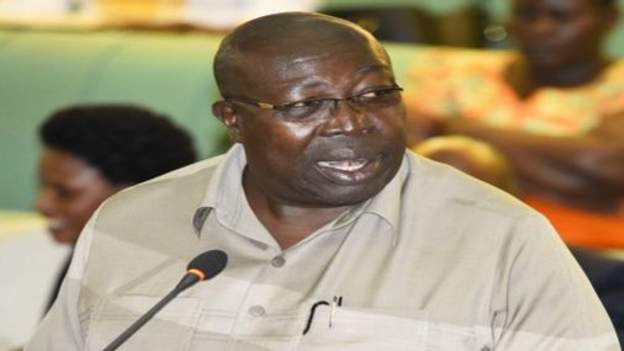
    The deputy minister of labor, retired colonel Charles Okello Engola, was shot on Tuesday morning at his residence in Kampala, the country’s capital.

    It is still unclear if the soldier and his employer had a disagreement.

    According to other eyewitnesses, the soldier shot into the air as he went through the neighborhood.

    Minutes afterwards, the soldier, whose identity has not yet been officially released, shot himself to death.

    Reports say a number of people were injured in the incident.

    Videos on social media show locals gathering at the scene in shock.

    Col Engola had previously served as a deputy minister for defence.

  • Camidoh tours Uganda, Tanzania and Kenya

    Camidoh tours Uganda, Tanzania and Kenya

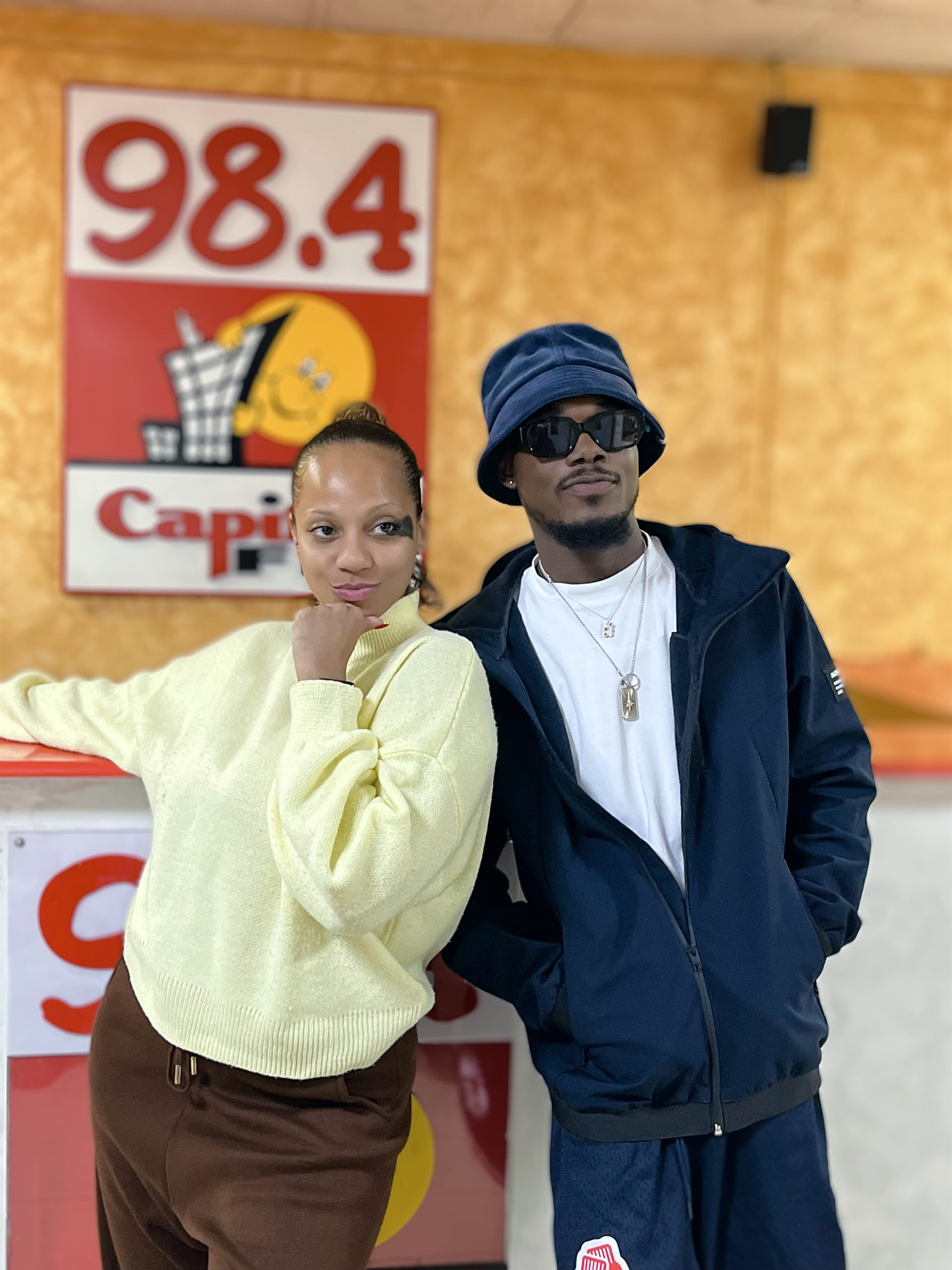
    The Ghanaian afrobeats musician and composer arrived in Uganda this week, where he spoke with a number of prestigious media outlets, including NBS TV Uganda and NRG Radio Uganda, to talk about his career and love of music while also presenting some brand-new songs off his “A Life Time Is Not Enough” EP.

    Processed with Lensa with Magic Correction & PT1 filter

    Earlier, he was in Kenya, where he shared his forecast for the year with some of the industry’s bigwigs, including Soundcity Radio Kenya, Capital FM Kenya, and Pulse Kenya. 

    Later this month, Camidoh is anticipated in Tanzania to wrap up his media appearances and activations throughout East Africa. 

    Meanwhile, Camidoh has released a video for “Adoley,” the second track off his “A Lifetime Is Not Enough” EP.

    Directed by Ghana’s finest director, REX, the clip comes with a touch of urban and indigenous Ghanaian and Nigerian street vibes, which in all gives it a global appeal. 

    A Life Time Is Not Enough arrived in January this year as the Ghana native’s official sophomore studio record after chalking up industry success with his 2020 Contingency Plan. 

    The new EP has six songs and features guest contributions from Ghanaian singer-songwriter Cina Soul.

    Since its release, the project has earned positive reviews from industry executives, music writers, and critics and is currently enjoying massive airplay across the country.

  • Uganda is pushing for more deals with China

    Uganda is pushing for more deals with China

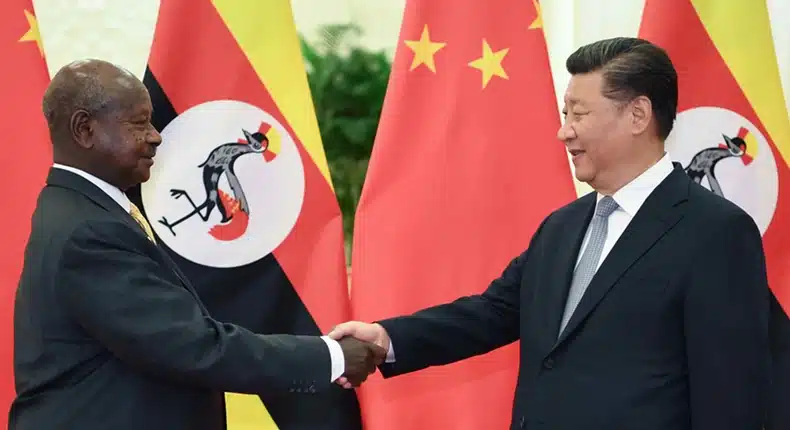
    The government of Uganda has decided to collaborate with business giant China in order to advance technology.

    Through such partnerships, the government believes that thousands of “unemployed youths will benefit from technological skills that will in turn aid job creation.”

    “Uganda is privileged to have China as a creditable development and business partner.” We commit to continue promoting and supporting the mutual collaboration between Ugandan and Chinese companies,” Opolot Okaasai, the state minister for energy in Uganda, said on April 25 in Kampala at the China-Uganda Investment Economic and Trade Promotion.

    Okaasai added that Uganda admires the Asian country’s growth trajectory, which has made it a worldwide economic powerhouse.

    The minister claimed that when Chinese businesses take advantage of Uganda’s mineral-rich sector and invest there, many partnerships can be realized.

    “The country presents great opportunities in the oil and gas sector in several projects, including the East African Crude Oil Pipeline (EACOP) Project, Kingfisher Development Project, Tilenga Project, which is ongoing, and oil and gas exploration through the upcoming third licensing round, together with investment in the downstream segment of the oil and gas sector,” he said.

    The East African nation is also seeking to develop and modernize its energy sector, which, as the minister noted, gives a number of chances for investment and collaboration between Chinese and Ugandan businesses.

    According to reports, China made $131 million in direct investments in Uganda in 2022, placing it tenth among all African nations. Zhang Lizhong, the Chinese ambassador to Uganda, noted in his speech that investments between China and Uganda in the areas of transportation, energy generation and transmission, oil development, and industrial parks have progressed well.

    “In 2022, the economic cooperation between China and Uganda withstood the test of uncertain factors in the post-pandemic era and showed a good momentum of steady progress. The bilateral trade volume rose by 6.6% against the trend, reaching $1.14 billion. China granted zero-tariff treatment for 98% taxable items to Uganda and will support Uganda in exporting more value-added products into the Chinese market,” the ambassador remarked.

    The envoy disclosed that a new direct route between Entebbe, Uganda, and Guangzhou, China, is anticipated to launch shortly to promote trade and intercultural interchange.

  • 11 female lawmakers in protest arrested by Ugandan police

    11 female lawmakers in protest arrested by Ugandan police

    In Uganda, 11 female opposition parliamentarians have been detained while embarking on a demonstration over alleged police violence.

    The legislators took to the streets Thursday to voice their dissatisfaction over what they are calling a violation of the rights of women and a threat to their lives, which they say also violates the Constitution.

    Scuffles erupted between the women and police as the legislators tried to make their way to the Ministry of Internal Affairs.

    “Susan Mugabi was beaten, was tear-gassed,” she said. “There were bullets fired. Her sister was beaten, and fondled by police officers. Almost undressed her. Her mother was also arrested ahead of the celebrations. Her father was locked in the house. So, all these violations.” One of the lawmakers, Joyce Bagala, detailed some of the women’s grievances.

    According to local media reports, Police officials were not readily available for comment. They were meeting with the speaker of parliament at the central police station where the legislators were being held.

    The female opposition legislators are asking for parliament and the internal affairs ministry to acknowledge that the actions of security officers in blocking Women’s Day celebrations were illegal, irrational, and an affront to the right to associate and assemble.

  • Ugandan MPs agree to reconsider  anti-gay law

    Ugandan MPs agree to reconsider anti-gay law

    The anti-gay bill that was approved by parliament a month ago will now be sent back to the house for further review, according to Uganda’s ruling party.

    At a meeting with President Yoweri Museveni, who is the party chairman, the MPs resolved on “proposals for improvement” to the bill, according to a statement from the caucus chairperson of the National Resistance Movement (NRM).

    The bill prescribes life imprisonment for people identifying LGBT and the death penalty for what is referred to as aggravated homosexuality, among other clauses.

    It is not yet clear what amendments the president would like to be made to the proposed law.

    When legislation is passed by parliament, the president has about a month to sign it, veto it or return it to the MPs for amendment and re-tabling.

    On several occasions, President Museveni has said the topic of homosexuality needs more discussion and understanding.

    The bill was passed with majority support from across the ruling party and the opposition.

    The ruling party dominates parliament – and their position on any legislation always prevails.

    Critics have argued that the law promotes homophobia, is against the country’s constitution and that anyone suspected to be LGBT will be affected.

  • Uganda sees rise in teenage pregnancies over failure to prosecute rapists

    Uganda sees rise in teenage pregnancies over failure to prosecute rapists

    When it was announced that there had been a more than four-fold increase in those aged 10 to 14 getting pregnant in the wake of the pandemic, it became clear how shockingly sexual abuse of young girls had increased in northern Uganda.

    The local council chairman inquires about the hugely pregnant girl’s most recent doctor visit as she looks down at her hands and is no older than twelve years old.

    Family members need to be asking this kind of question, but this pregnancy is not typical.

    The girl is due to give birth any day and lives alone in a modest house in the Kitgum district.

    Her parents’ cassava business failed, so they returned to their village to find money for the family.

    “She was left here because here is a little bit nearer to the schools,” chairman Obita David Livingstone says.

    “But the unfortunate part, the next room here is where people drink. That alone has exposed her to a lot of challenges.”

    No-one knows who the father is, or what happened.

    ‘Three cases a week’

    BBC Africa Eye is only allowed to film this girl, who we are not naming, because Mr Livingstone said he wanted to raise awareness of the sexual violence happening in the community.

    “In a week, we always have like three cases of defilement. Sometimes when we get the perpetrator, we have to tie them with ropes and take them, escort them to the police. But they don’t bother to follow it up.”

    He is fed up with such levels of impunity.

    “There is nobody who can really support the person who has been raped. To me I look at this justice as a weak justice,” the local chairman says.

    Defilement means unlawful sexual intercourse with a girl below the age of 18.

    According to Uganda’s Health Management Information System, pregnancies among girls between the ages of 10 and 14 increased by 366% during the country’s first Covid lockdown (March-June 2020).

    At the regional general hospital in Gulu nearly a quarter of all pregnancies in the last financial year were girls under 18, the age of consent in Uganda.

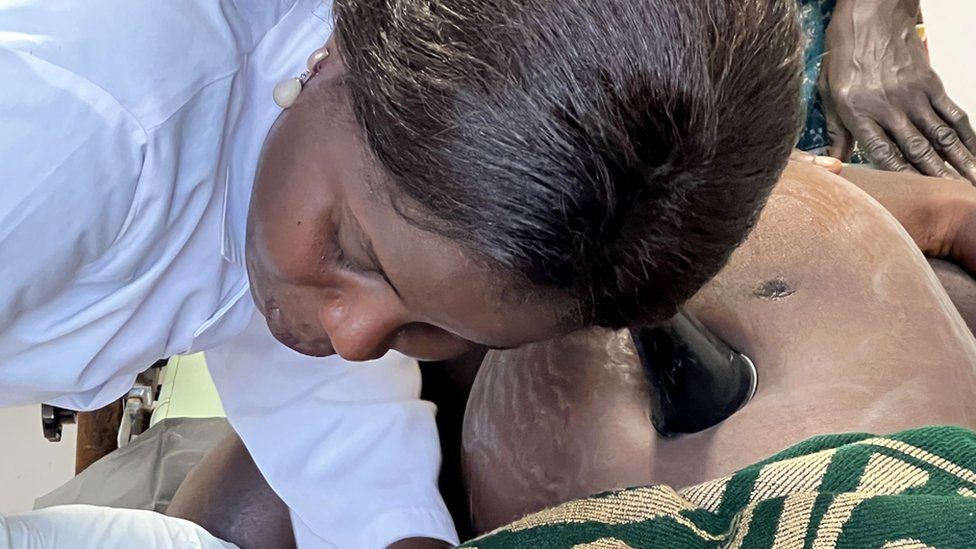
    Doctor listening to a baby's heart beat
    Image caption,Dr Baifa Arwinyo sees a lot of pregnant teenagers who were victims of rape

    Dr Baifa Arwinyo, the head of obstetrics and gynaecology, said: “If I am talking of teenage mothers, all of them are defiled. They are teenagers, they are not supposed to be pregnant.

    “You will find that young mothers are the highest proportion of those dying of obstructed labour. The younger the mother, the more the complication.”

    ‘Sexual abuse was a war strategy’

    The high levels of sexual violence are thought to be a legacy of the two-decade conflict in northern Uganda, which was infamous for its brutality.

    The war was started by Joseph Kony, head of the Lord’s Resistance Army (LRA), a rebel group that wanted to overthrow the government.

    His fighters were known for their inhumane treatment of those they abducted: maiming, cutting off lips and limbs, and forcing people into submission through fear.

    It is estimated 40,000 children were abducted, forced to become soldiers or sex slaves, and 1.7 million people lived in internally displaced camps.

    The rebels moved on from Uganda in 2008, but the after-effects of their atrocities are still present today, according to gender rights activist Pamela Angwech, director of Gulu Women Economic and Globalisation, a grassroots non-governmental organisation (NGO).

    “Living within a toxic, minefield environment had long-term effects on the community. People are used to seeing dead bodies, people are used to seeing death. Sexual abuse was used as a military strategy by the LRA team.

    “I describe it as the war was fought in the body of the woman and the woman became the battlefield.”

    Few people ever saw justice for the heinous crimes committed during the war.

    One LRA commander, Dominic Ongwen, was tried at the International Criminal Court (ICC) and found guilty of 61 counts of war crimes and crimes against humanity in February 2021.

    Kony is also wanted by the ICC but his whereabouts remain unknown.

    Woman talking to a group
    Image caption,Lawyer Eunice Lakaraber Latim speaks to community members about the level of child abuse

    According to lawyer Eunice Lakaraber Latim, who works for NGO Caritas, that legacy of a lack of accountability thrives in northern Uganda to this day.

    “Growing up from Gulu, I saw so many children getting defiled, and most of those parents did not have the resources to pursue the justice that their children deserved.”

    ‘My child lives in pain’

    Ms Latim took Africa Eye to the family of a three-year-old girl who was raped by a relative.

    The mother only found out after she noticed the child’s style of walking changed. When the police came to arrest her relative, she says they asked her for money to “transport him”.

    “I was then expected to feed the prisoner,” says Ms Latim.

    “You have to literally pay your way to get justice. You have to pay money for fuel to have the suspect apprehended.

    “You’re supposed to provide feeding for them while they’re still at the police station.”

    The suspect was held for six months, but because some of the correct legal procedures were not followed, he was released on bail. The mother simply did not have the means to keep pursuing the case.

    Police and medical reports confirm that the three-year-old had been infected with a sexually transmitted disease.

    “My child is still in pain, even now. The infection has never healed,” her mother said.

    “He should face a prison sentence. I didn’t want it to end this way.”

    Ms Latim says it is not unusual for the justice system to fail victims, saying they have had a number of cases that have fallen apart.

    “There is a lot of corruption. People don’t fear committing crimes here, because they say, if you have money, you will get out. That is what is happening.”

    Nachula Damalie, the regional police commander of Aswa, acknowledges the problems with how some cases are handled, but she denied corruption is rife.

    “We are not supposed to ask a victim to pay for our services. But sometimes I should accept that we can run out of fuel. Yes.

    “Now with the corruption, it has been a general perception that police officers are corrupt, but not all are corrupt, just like any other institution would be. We have good ones and bad ones.”

    The Minister of State for Northern Uganda, Grace Freedom Kwiyucwiny, also admits there are problems.

    “I can’t deny corruption. Corruption is there. It’s at all levels, even at ministries’ level,” she says.

    “We have laws on defilement, we have laws on incest, but somehow again, people just go behind the law and bribe police and then police say, ‘OK, go and settle it at home.’ There are cases which have been prosecuted, but the number is not high.”

    None of the suspects in any of the cases BBC Africa Eye investigated were prosecuted.

    Source: BBC

  • Watch how Ugandan Ghetto kids made history at Britain’s Got Talent

    Watch how Ugandan Ghetto kids made history at Britain’s Got Talent

    Uganda Ghetto Kids, an orphanage home in Uganda, have left an indelible mark on the British reality television show Britain’s Got Talent for the first time since its inception.

    Their performance was so electrifying that they made history, which is, the golden buzzer, which is to be pressed after the end of the show, was pressed in the middle of the performance by one of the judges who couldn’t control his joy while he saw the kids perform.

    Headed by Daouda Kavuma, the said orphanage provides shelter to homeless children.

    According to its founder, Ugandan ghetto kids exist to support the children in every aspect of their lives and also use music and drama to make life better.

    Daouda Kavuma has been committed to music and drama, and truly, they are using music and drama to make life better.

    The Ugandan ghetto kids have attracted the attention of the world with their outstanding performances in dance. The hard work they invest in dance has earned them both national and international recognition.

    These individuals wanted their talent to gain wider recognition; therefore, they decided to try out in the popular British television reality show, British Got Talent.

    The group was able to land a spot in the competition show, and their performance was one to write home about.

    Ugandan Ghetto Kids lit up the room with their first performance and got the audience as well as the judges up on their feet, and they were thrilled at what the children were doing.

    The video of the group’s performance at the show flooded social media and has accumulated about 178 thousand views, especially on the Twitter app.

  • Village attacks kill dozens in DR Congo

    Village attacks kill dozens in DR Congo

    According to local activists and news sources, dozens of civilians have died as suspected armed groups assaulted villages in the Democratic Republic of the Congo (DRC).

    The attacks happened on Friday in the province of Ituri, which has been a frequent target of community-wide attacks since 2017. Ituri is located near the country’s northeastern border with Uganda.

    Charite Banza, the head of local civil society, told the Reuters news agency that Friday’s attack killed about 30 people, “both women and men”.

    “They set fire to several houses, looted property,” Banza explained.

    Other sources told the AFP news agency that the death toll exceeded 40. A regional administrator named Innocent Matukadala told the news outlet that 36 bodies were found in the town of Kilo Etat, plus another eight in Matete and more in Itendy.

    Robert Basiloko, another civil society leader from the area, told AFP he estimated 43 were killed, including five children. “Every day there are deaths,” he said. “We’re tired of it.”

    Sources quoted in both Reuters and AFP identified a group of militias called the Cooperative for Development of the Congo, or CODECO, as the suspected culprit in the attacks.

    The United Nations reports that violence and insecurity have caused an estimated 1.5 million people to be displaced in Ituri over the past six years.

  • Saga involving Ugandan roofing sheets: Minister denied bail

    Saga involving Ugandan roofing sheets: Minister denied bail

    A second time bail has been rejected for a Ugandan cabinet minister accused in a scandal involving the theft of thousands of metal roofing sheets.

    The sureties put out by Mary Goretti Kitutu Kimono’s attorneys were rejected by a magistrate at the anti-corruption court as insufficient.

    After entering a not guilty plea to corruption last Thursday about 14,500 corrugated iron sheets that were supposed to be delivered to at-risk villages in the northeastern Karamoja region but never arrived, Mrs. Kitutu was remanded in detention.

    The 60-year-old politician is the minister for the region that for decades has faced persistent droughts and flooding when it rains, leaving many in the semi-arid area dependent on aid.

    At least 10 other senior government figures are alleged to have received some of the stolen metal sheets.

    These include the vice-president, the prime minister, the parliamentary Speaker and other ministers.

    Earlier this week, police said more files related to the scandal had been sent to the prosecutors and indictments may follow.

    President Yoweri Museveni has said those who took the corrugated iron must return them or pay back the cash equivalent.

  • The impact of telemedicine on Uganda’s health system

    The impact of telemedicine on Uganda’s health system

    In this episode of Inspire Africa, host Jerry Fisayo-Bambi makes a triumphant comeback with fresh tales of individuals bringing about innovation, social influence, and transformation across the continent.

    The first instance of this was in Uganda, where a group of medical professionals responded to the need for early patient diagnosis and treatment by beginning telephone consultations.

    The initiative has now grown from providing phone consultations to offering personalised, affordable and quality health care through 24/7 doctor teleconsultations, pharmacy deliveries, lab sample pick-ups and tests. And, their AI-powered application has been reported to pin 90 per cent of conditions patients suffer from.

    We spoke with Dr. Davis Musinguzi, the brain behind the innovation that is changing the face of medicine in Uganda

    Then, we hear the story of Green Scooter, a South African ride hailing service started by Fezile Dhlamini who for many years had his application for a job with ride hailing giants rejected. Today, Dhlamini wants to see South Africans embrace the use of electric vehicles.

    And later host Fisayo-Bambi speaks with Somi Nwandu, the Nigerian art curator and founder of “afrofoutourism” an exhibition promoting the works of digital artists on the continent.

  • Don’t accept homosexuality -President of Uganda to Africa leaders

    Don’t accept homosexuality -President of Uganda to Africa leaders

    The president of Uganda, Yoweri Museveni, has urged African countries to lead in opposing the promotion of homosexuality, citing same-sex unions as a serious threat to human reproduction.

    “Africa should provide the lead to save the world from this degeneration and decadence which is really very dangerous for humanity. If people of opposite sex stop appreciating one another then how will the human race be propagated?” he asked, according to an article dated April 2 and posted on his personal website.

    Museveni was speaking to a delegation of Members of Parliament from over 22 African countries and the United Kingdom.

    The MPs were in the East African country for a 2-day first ever Inter-Parliamentary Conference on Family Values and Sovereignty that ran under the theme ‘Protecting African Culture and Family Values’.

    The delegation led by a Ugandan MP, Sarah Opendi, during a courtesy call, thanked Museveni for his firm stand against homosexuality.

    The Conference which was also attended by medical experts enlightened participants on the causes of homosexuality and possible remedies to the vice.

    President Museveni noted that initially the practice that was thought to be a deviation from the normal is more dangerous than drugs. He therefore sought the identification of the focal point of homosexuality as it is neither genetic nor hormonal, a statement posted on his website noted.

    Uganda’s parliament recently passed an anti-LGBTQ+ bill which is yet to be transmitted to the president for assent into law.

    Museveni has stated his readiness to convene a meeting with lawmakers and take steps to sign it into law once he receives it. The legislation has roundly been criticized by development partners and the United Nations as draconian.

  • Chinese citizen jailed in Uganda after tragic accident

    Chinese citizen jailed in Uganda after tragic accident

    In connection with a Tuesday morning car accident that claimed the lives of two pupils and injured three others, police in central Uganda have apprehended a Chinese national.

    Zhao Haizhanga is accused of knocking students at Kamusenene Village along Lubaali-Bukuya Road in Kassanda District as he tried to pass a truck carrying logs, according to a statement from the police.

    “He killed two instantly and injured the other three yet to be identified,” the police statement said.

    The two bodies were taken to a local mortuary awaiting post-mortem.

    Mr Haizhanga was detained by police as investigation on the incident continues.

  • Uganda detains Chinese national after fatal road crash

    Uganda detains Chinese national after fatal road crash

    In connection with a Tuesday morning car accident that claimed the lives of two pupils and injured three others, police in central Uganda have apprehended a Chinese national.

    Zhao Haizhanga is accused of knocking students at Kamusenene Village along Lubaali-Bukuya Road in Kassanda District as he tried to pass a truck carrying logs, according to a statement from the police.

    “He killed two instantly and injured the other three yet to be identified,” the police statement said.

    The two bodies were taken to a local mortuary awaiting post-mortem.

    Mr Haizhanga was detained by police as investigation on the incident continues.

  • Uganda’s ‘draconian’ sentences for LGBTQ+ offenses will shock you

    Uganda’s ‘draconian’ sentences for LGBTQ+ offenses will shock you

    The Ugandan Parliament has pronounced sentences for persons found guilty of LGBTQ+ and its related activities.

    The sentences are to serve as deterrents to persons with intentions to engage in the act, following the passage of the Anti-Homosexuality Bill 2023, which was passed on March 21, 2023.

    A statement announcing them said: “The Parliament of Uganda has unanimously considered and passed the Anti-Homosexuality Bill 2023 with maximum penalty of death sentence and imprisonment for other offenses.”

    According to the statement, persons convicted of aggravated homosexuality will face a death penalty. Secondly, persons who commit the offense of homosexuality will face a 20-year sentence.

    Additionally, a person convicted of promotion of homosexuality will be subjected to a jail term of 20 years.

    A person recruiting children into homosexuality will face a 20-year jail sentence, if found guilty.

    Persons who are convicted of attempted aggravated homosexuality will face a 14-year jail sentence. 

    Under the new law, persons convicted of attempted homosexuality will face a 10-year jail sentence. 

    Also, the owner of the premises that promote homosexuality will face a jail term of 10 years.

    Children have not been left out in this as Uganda has pronounced sentences for children such that a child found guilty of homosexuality will be jailed 3 years.

    Media houses that publish materials that promote homosexuality will be fined 1 billion shillings and also have their licenses revoked for 10 years.

    About the Anti-Homosexuality Bill 2023

    The Anti-Homosexuality Bill, 2023 is a Ugandan parliamentary bill that restricts freedom of speech on LGBT topics and criminalises homosexuality. Parliament assented to the bill, which was then sent to President Yoweri Museveni, on 21 March 2023.

    The bill has been condemned by the United States, United Kingdom, Canada, Germany, and the European Union, as well as several local and international NGOs.

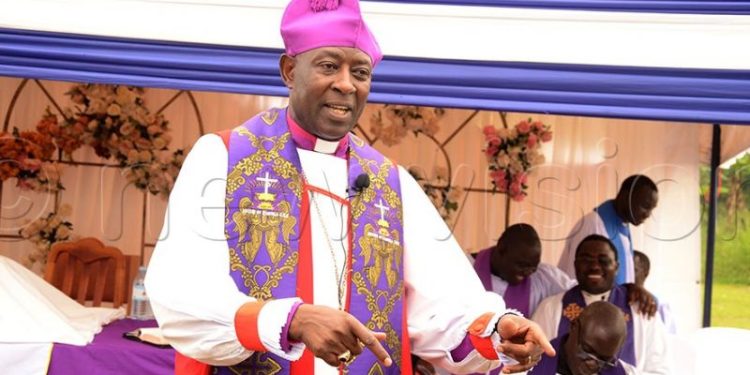
  • No woman wins Ugandan archbishop’s virginity prizes – New Vision

    No woman wins Ugandan archbishop’s virginity prizes – New Vision

    The state-owned New Vision website quotes Uganda’s Anglican archbishop as claiming that he is stuck with awards intended for virgin brides.

    As it was challenging to establish men’s virginity, according to Archbishop Stephen Kaziimba Mugalu, the project concentrated on women.

    The website claims that it comprises a “large sum of money” that has never been won.

    The final winners were to be confirmed by a group of female Mothers Union members.

    “This is the only project I have ever started with cash prizes, but failed to find one to take the cash,” he is quoted as saying over the weekend.

    He said the initiative was inspired by Mary the mother of Jesus who Christians believe was made pregnant miraculously by God while she was still a virgin.

  • Call me a ‘Putinist’ if you will – Son of Uganda’s president express support for Putin

    Call me a ‘Putinist’ if you will – Son of Uganda’s president express support for Putin

    General Muhoozi Kainerugaba of the Ugandan Army has declared that uganda will stand by Russian President Vladimir Putin if he is attacked.

    Muhoozi, president Yoweri Museveni’s son, declared that Uganda would send troops to Moscow if it became essential to assist Putin in battling what he called “imperialists.”

    “Call me a ‘Putinist’ if you will, but we, Uganda shall send soldiers to defend Moscow if it’s ever threatened by the Imperialists!” he tweeted on March 30, 2023.

    Believed to be eyeing the presidency when next elections are held, Muhoozi, a controversial figure leading a group called ‘Muhoozi Movement’ has serially used Twitter to make controversial takes bordering on diplomacy, politics and personal life.

    He recently criticised the decision by some Ugandan journalists to visit Kiev to report on the Russia-Ukraine war.

    “In Africa, we only believe in President Putin when it comes to Eastern Europe. The West is wasting its time with its useless pro-Ukraine propaganda. Russia, China, Africa, India, South America shall win in Ukraine. 75% of humanity shall win against 15%,” another of his pro-Russia tweets read.

  • Kenyan President renounce LGBTQ+ during dialogue with German broadcaster

    Kenyan President renounce LGBTQ+ during dialogue with German broadcaster

    The president of Kenya, William Ruto, has renounced same-sex couples and emphasized that his nation will firmly adhere to what its customs, traditions, and 2010 Constitution say regarding marriage and relationships.

    He praised the constitution as one of the most advanced documents for the range of human rights it established and declared that Kenyans would respect all rights to the extent that they were recognized by law.

    He stressed in an interview with a German broadcaster, however, that his country has no issue with how marriage is interpreted or understood in other jurisdictions.

    “In Kenya, the only understanding of relationships around marriage is around men marrying women, that is the context of relationship that exist in Kenya and is provided for in our constitution.

    “It (same-sex marriage) can happen elsewhere, we have no issue with people celebrating their issues in America in other countries, that is their choosing,” he stressed when asked about a recent anti-same-sex law promulgated in neighbouring Uganda.

    “In Kenya, we have taken a position that position of the Constitution, the position of the laws as it is today, if that is what they want to do, we cannot dictate to Germans or French or Americans or Ugandans if that is what they want to do.

    “That is theirs to do, for us as a country, we have taken a position that is informed by our culture, our tradition, our Constitution and our laws,” he stressed.

  • School in Uganda temporarily closed over claims of sex abuse

    School in Uganda temporarily closed over claims of sex abuse

    Authorities in Uganda have shut down the boarding portion of a primary school in the central Mubende district after seven students claimed that the school’s caretaker had sexually assaulted them.

    According to local media, the caregiver entered a guilty plea to the allegations last week in court and is awaiting sentencing.

    Joyce Moriku Kaducu, the state’s minister of primary education, claimed on Sunday that the overcrowding in the classroom had created “fertile ground” for student abuse.

    According to the Daily Monitor website, the school’s 350 boarders slept in five cramped rooms on triple-deck beds.

    “I want you [school management] to tell the parents that you have been operating an illegal boarding section and no guidelines were being followed,” the minister said when she visited the school.

    She also faulted local education officials for not inspecting schools.

    Schools in Uganda require a government licence to operate boarding sections.

  • Ugandan govt tells the US to ”stop wasting humanity” over  anti-LGBTQ+ law

    Ugandan govt tells the US to ”stop wasting humanity” over anti-LGBTQ+ law

    The government of Uganda has responded to the government of the United States after a threat of economic repercussion over a recently passed law that discriminates against same-sex relationships and the LGBTQ+ community.

    President Yoweri Museveni was quoted in the statement that was shared on the social media site Twitter as strongly opposing same-sex relationships in Uganda.

    The response posted on social media platform, Twitter, comprised quotes by president Yoweri Museveni stating the country’s strict opposition to same-sex relations.

    The government’s official Twitter handle posted a quote from Museveni’s recent response on the issue when he appeared before Parliament to deliver an address.

    “The western countries should stop wasting the time of humanity by trying to impose their practices on other peoples. Europeans and other groups marry cousins and near relatives.

    “Here, to marry within the clan, is taboo (Omuziro). Should we impose sanctions on them for marrying relatives?” a follow-up tweet read.

    In another response, the handle specifically quoted a tweet by Anthony Blinken, the US Secretary of State with a quotation by Museveni in a 2014 interview with CNN.

    The quote read: “If the West doesn’t want to work with us because of homosexuals, then we have enough space here to live by ourselves and do business with other people.” (CNN, 2014).

    QUOTE

    “If the West doesn’t want to work with us because of homosexuals, then we have enough space here to live by ourselves and do business with other people” (CNN, 2014).-@KagutaMuseveni https://t.co/VOxRE5UPg3

    — Government of Uganda (@GovUganda) March 23, 2023

    White House warns of potential ‘repercussions’ if LGBTQ law takes effect

    The United States on Wednesday, March 22, warned of sanctions if Uganda’s anti-Lesbians, Gay, Bisexual, Transgender, Queer legislation is signed into law.

    “We would have a look at whether or not there might be repercussions that we would have to take, perhaps in an economic way, should this law actually get passed,” John Kirby, spokesperson for the National Security Council said in a media briefing at the White House.

    Lawmakers in the East African country had by a majority voted to pass the legislation a day earlier to much uproar by activists and rights groups.

    Elements of the bill include:

    – A person who is convicted of grooming or trafficking children to engage them in homosexual activities faces life in prison.

    – Individuals and institutions which support or fund LGBT rights activities also face prosecution.

    Local news channels also reported a proposed 20-year jail term for ‘any entity that funds or promotes any form of homosexuality’.

    Uganda is a deeply traditional and religiously conservative country. The president is known to have harsh words for homosexuals and LGBTQ persons have routinely been raided.

    The final leg of making the bill into law is the signature of president Yoweri Museveni.

  • The law in Uganda makes it illegal to identify as LGBTQ+

    The law in Uganda makes it illegal to identify as LGBTQ+

    In Uganda, a law was approved that will subject those who just identify as LGBTQ+ to up to 10 years in prison.

    Once the new legislation was enacted, cheers could be heard throughout the Kampala Parliament building.

    It gives authorities considerable authority to target Ugandans who identify as LGBT, who already experience legal discrimination and gang violence.

    Same-sex relationships are currently prohibited in more than 30 African nations, including Uganda.

    But Human Rights Watch warned this appears to be the first to outlaw identifying as lesbian, gay, bisexual, transgender and queer.

    The 2023 Anti-Homosexuality Bill confirms an already existing punishment of life in prison for same-sex conduct, while also increasing to 10 years the sentence for an attempt at same-sex conduct.

    Violations draw severe penalties, including death for ‘aggravated homosexuality’ and life in prison for gay sex.

    ‘Aggravated homosexuality’ involves gay sex with people under the age of 18 or when the perpetrator is HIV positive, among other categories, according to the law.

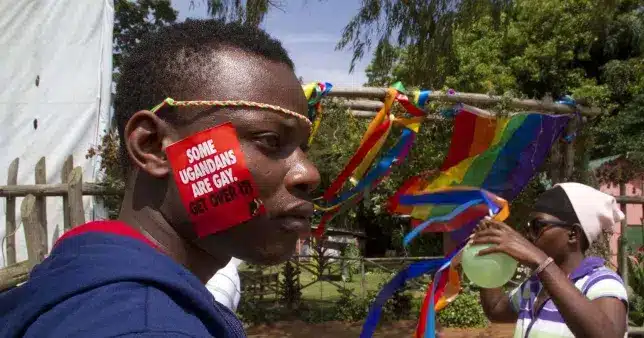
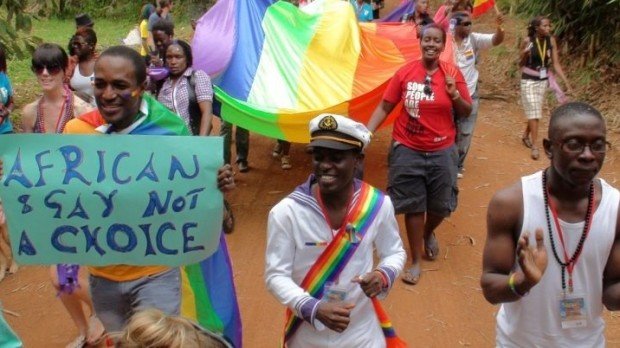
    People holding rainbow flags take part in the Gay Pride parade in Entebbe on August 8, 2015. Ugandan activists gathered for a gay pride rally, celebrating one year since the overturning of a strict anti-homosexuality law but fearing more tough legislation may be on its way. Homosexuality remains illegal in Uganda, punishable by a jail sentence. AFP PHOTO/ ISAAC KASAMANI (Photo credit should read ISAAC KASAMANI/AFP via Getty Images)
    People holding rainbow flags take part in the Gay Pride parade in Entebbe on August 8, 2015 (Picture: AFP)

    It also creates new offences that will further curtail any activism on LGBTQ+ rights, which supporters say threaten traditional values in the conservative and religious nation.

    Anyone advocating for the rights of LGBTQ+ people, or financially supporting organisations that do so, could face up to 20 years’ imprisonment.

    The bill also criminalises any person who fails to report someone they suspect of participating in same-sex acts to the police, calling for a fine or imprisonment for six months.

    Effectively, this targets families or friends of LGBTQ+ people failing to report their loved ones.

    Member of Parliament from Bubulo contituency John Musira dressed in an anti gay gown gestures as he leaves the chambers during the debate of the Anti-Homosexuality bill, which proposes tough new penalties for same-sex relations during a sitting at the Parliament buildings in Kampala, Uganda March 21, 2023. REUTERS/Abubaker Lubowa
    Member of Parliament from Bubulo contituency, John Musira, dressed in an anti-gay gown (Picture: Reuters)

    ‘Our creator God is happy [about] what is happening. I support the bill to protect the future of our children,’ lawmaker David Bahati said during a debate on the bill.

    ‘This is about the sovereignty of our nation, nobody should blackmail us, nobody should intimidate us.’

    The legislation will be sent to president Yoweri Museveni to be signed into law.

    Frank Mugisha, a prominent Ugandan LGBTQ+ activist denounced the legislation as ‘very extreme and draconian’.

    ‘It criminalises being an LGBTQ+ person. They are also trying to erase the entire existence of any LGBTQ+ Ugandan,’ he warned.

    President Museveni has not commented on the current proposal but he has long opposed LGBTQ+ rights.

    But in 2013 he signed an anti-LGBTQ law that was widely condemned by Western countries before a domestic court struck it down on procedural grounds.

  • UN High Commissioner opposes Uganda’s anti-LGBTQ bill

    UN High Commissioner opposes Uganda’s anti-LGBTQ bill

    The anti-LGBTQ law enacted by Ugandan parliament has been considered deplorable by the UN and the NGO Amnesty International.

    President Yoweri Museveni of Uganda was urged by the UN High Commissioner for Human Rights to veto the anti-homosexuality law.

    The anti-gay legislation that Uganda’s parliament passed imposes severe penalties on same-sex partnerships there.

    Despite a hectic session, the House of Representatives conducted its last vote on the bill on Tuesday, and the Speaker of the House determined that the “Ayes have it,” according to AFP news.

    Even though homosexuality is already illegal in the country, the anti-gay legislation proposes that anyone in the conservative East African nation who engages in same-sex activity or who identifies publicly as LGBTQ could face up to 10 years in prison.

    In a report by Africanews.com, the UN High Commissioner for Human Rights, Volker Türk, called on Museveni on Wednesday not to enact the law.

    “The passage of this discriminatory text -probably the worst of its kind in the world– is a deeply troubling development,” he said in a statement.

    “If signed into law by the president, (this law) will make lesbians, gays and bisexuals criminals in Uganda simply by existing (…). It could give carte blanche to the systematic violation of almost all their human rights,” he added.

    Amnesty’s director for East and Southern Africa, Tigere Chagutah, in a statement said “this ambiguous, vaguely worded law criminalizes even those who promote “homosexuality”.

  • LGBTQ+ bill: US threatens Uganda with economic sanctions

    LGBTQ+ bill: US threatens Uganda with economic sanctions

    In the event that Uganda’s anti-LGBTQ+ legislation is passed into law, the United States has threatened to impose economic sanctions.

    Calls for Ugandan President Yoweri Museveni to veto the “appalling” anti-gay bill were spearheaded by the United Nations and the United States on Wednesday (March 22).

    “We would have a look at whether or not there might be repercussions that we would have to take, perhaps in an economic way, should this law actually get passed,” John Kirby, spokesperson for the National Security Council is quoted to have said.

    Lawmakers in the East African country had by a majority voted on March 21 to pass the legislation, elements of which include:

    – A person who is convicted of grooming or trafficking children to engage them in homosexual activities faces life in prison.

    – Individuals and institutions which support or fund LGBT rights activities also face prosecution.

    A local media outfit, @ubctvuganda also reported a proposed 20-year jail term for ‘any entity that funds or promotes any form of homosexuality’.

    Uganda is a deeply traditional and religiously conservative country. The president is known to have harsh words for homosexuals and LGBTQ persons have routinely been raided.

    The final leg of making the bill into law is the signature of president Yoweri Museveni.

    A number of African countries have in the recent past rejected LGBTQ+ orientation. Uganda’s neighbours Kenya have had the president, first lady and deputy president openly speak out against LGBTQ+.

    Ghana is also in the process of passing an anti-LGBTQ+ law, a legislation that is believed to ave the backing of majority of lawmakers including the Speaker of Parliament, Alban Bagbin.

  • Uganda’s new anti-gay law criminalizes anyone who identifies as LGBTQ

    Uganda’s new anti-gay law criminalizes anyone who identifies as LGBTQ

      The Ugandan parliament just passed comprehensive anti-gay legislation that would outlaw anyone who identifies as LGBTQ and would impose severe new punishments on same-sex partnerships.

      The new law approved on Tuesday appears to be the first to outlaw merely identifying as lesbian, gay, bisexual, transgender, and queer (LGBTQ), according to Human Rights Watch, even though same-sex relationships are already prohibited in more than 30 African nations, including Uganda.

      Parliamentary Speaker Anita Annet Among declared after the last vote that “the ayes have it” and noted that the “law passed in record time.”

      Legislators amended significant portions of the original draft law, with all but one speaking against the bill. Supporters of the tough legislation say it is needed to punish a broader array of LGBTQ activities, which they say threaten traditional values in the conservative and religious East African nation.

      The legislation will now be sent to President Yoweri Museveni to be signed into law.

      Museveni has not commented on the current legislation but has long opposed LGBTQ rights and signed an anti-LGBTQ law in 2013 that Western countries condemned before a domestic court struck it down on procedural grounds. Nevertheless, the 78-year-old leader has consistently signalled he does not view the issue as a priority and would prefer to maintain good relations with Western donors and investors.

      Discussion about the bill in parliament was laced with homophobic rhetoric, with politicians conflating child sexual abuse with consensual same-sex activity between adults.

      “Our creator God is happy [about] what is happening … I support the bill to protect the future of our children,” legislator David Bahati said during the debate on the bill.

      “This is about the sovereignty of our nation, nobody should blackmail us, nobody should intimidate us.”

    • How Gregory Rockson is enhancing health services in Africa

      How Gregory Rockson is enhancing health services in Africa

      A world where a mother has to choose between medications for her health or education for her child is an unjust world.” This quote on Gregory’s LinkedIn page is an insight into the mission of mPharma, an innovative technology-driven health inventory and retail pharmacy company operating in nine countries; Ghana, Kenya, Nigeria, Ethiopia, Zambia, Gabon, Rwanda, Malawi, and Uganda.

      The company is building a community of pharmacies across Africa to provide easier and better quality healthcare service to the millions of people on the continent.

      Gregory Rockson is the co-founder and CEO of mPharma, its inventory management system is used in over 850 pharmacy stores in Ghana, Kenya, Nigeria, Ethiopia, Zambia, Gabon, Rwanda, Malawi, and Uganda.

      The company is working to improve access and affordability of high-quality drugs for patients across Africa. It has 155 hospital partners, 850 pharmacies and drug stores, and over 2 million patients. Its intervention in the healthcare industry has helped over 400,000 patients purchase high-quality medicine at a cheaper cost.

      mPharma was founded in 2013 by Gregory Rockson, Daniel Shoukimas, and James Finucorie as a pharmacy offering high-quality medical and pharmaceutical supplies in Ghana. Within a few years, the healthcare business has expanded to nine African countries, with its headquarters in Ghana, and is building a scalable drug inventory management using the Airbnb model to enable vendor-managed inventory for healthcare providers in Africa.

      Gregory and his co-founders are focused on building an Africa with good health by developing a tech system for medical practitioners and medical offices to leverage in solving challenges in the provision of good healthcare. mPharma’s objective is to connect patients, hospitals, and pharmacies; to enable doctors, hospitals, and patients to know the exact location and availability of medicines for better access.

      By increasing patients’ access to drugs at reduced costs while sustaining quality, mPharma is continually improving health interventions, bridging gaps in healthcare provision, and bringing vital services closer to communities through online and offline channels.

      The company launched ‘bloom,’ a flagship software product defined as the operating software for the modern African pharmacy. It extends beyond most hospital software used in easing workflows and capturing data, as well as tablets or computing. It is directly tied to mPharma’s core value proposition of vendor-managed, data-driven, diverse management, data management, and e-commerce services; and is an interface that enables pharmacies to connect to mPharma and offer value to their patients.

      In recent months, mPharma is strategically diversifying its assets and expanded operations with the acquisition of a 55% stake in Vine Pharmacy in Uganda, and a franchise agreement with Belayab Pharmaceuticals in Ethiopia. It acquired Halton’s pharmacy in Kenya and a majority stake in Nigeria’s HealthPlus.

      In July 2022, mPharma launched ‘Facility Insight,’ an optimized customer-centric product designed to aid clinical decision-making. The easy-to-use online platform generates real-time accurate data 24/7, including sales, profits, product reports, and other insights. The new system provides information to aid well-informed decision-making for pharmacy management.

      Gregory Rockson is a Ghanaian who holds a Bachelor of Science degree in Political Science and Government from both Westminster College and the University of Copenhagen. He studied Policy and International Affairs at Princeton University and holds a Bachelor of Science degree in Biological Sciences from the University of Ghana.

      Aside from mPharma, he is the Executive Chairman of ‘Vine Pharmaceuticals,’ and also the Executive Chairman of Holtons Limited, and was named one of the 100 Most Influential Africans in 2020 and 2022 by the New African Magazine.

    • Lorry rams into classroom in Uganda, kills three students

      Lorry rams into classroom in Uganda, kills three students

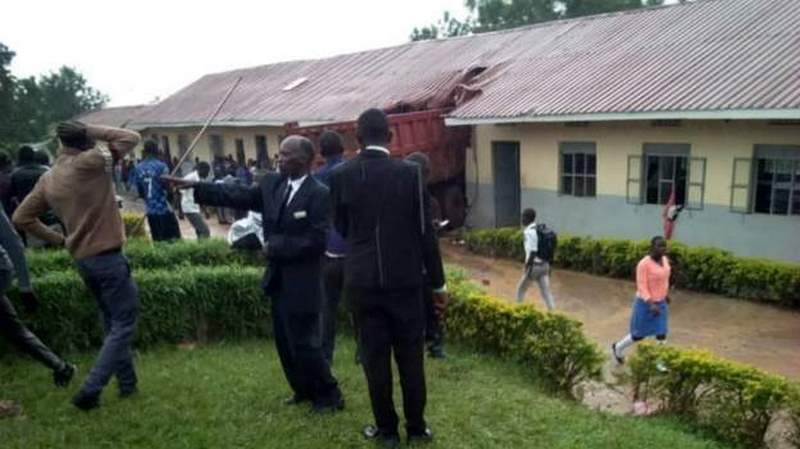
      At a school outside the capital of Kampala, three Ugandan pupils have been killed after a vehicle crashed into their classroom.

      Reports say at least 18 additional students got hurt in the incident on Tuesday afternoon at Kasaka Secondary School.

      The vehicle tore up a portion of the roof after entering the structure about halfway.

      Uganda police say the lorry driver lost control and drove through the school fence before hitting the school’s computer laboratory that was occupied by students.

      The driver, a 26-year-old man, has been arrested to help with investigations, police said.

      The school is located in the country’s central district of Gomba, about 130km (80 miles) away from Kampala.

      Learning has been suspended for week and the students have been sent home.

    • Largest act of human terrorism committed in this century was the attack on Gaddafi – Ugandan general

      Largest act of human terrorism committed in this century was the attack on Gaddafi – Ugandan general

      A general from Uganda named Muhoozi Kainerugaba has called the destruction of Libya by western nations in 2011 a crime against humanity.

      On March 13, 2023, Muhoozi—the president of Uganda’s son—tweeted his opinions.

      He also urged Africa to save Libya from collapse, denouncing unnamed western powers for criticizing the Democratic Republic of the Congo (DRCinsecurity )’s despite their involvement in Libya.

      “The largest crime against humanity committed in the twenty-first century was the destruction of Libya by the West in 2011!
      And these same individuals have the audacity to discuss M23 in the DRC?
      Africa must save Libyans (Africans) from extinction “read the tweet.

      Libya was thrown into a state of insecurity in 2011 after NATO-backed rebels ousted Gaddafi and overthrew the central government.

      Over the last decade, there has been several attempts at establishing a government to steer affairs of the country which at a point was divided between rival forces in the East and an internationally-backed government in the capital, Tripoli.

      One African leader who has consistently lamented the failure of Africans to defend Gaddafi is Ugandan president Yoweri Museveni who is on record as saying Africa failed the late Libyan leader by sitting back as foreigners ousted him.

    • Kenya receives six cattle rustling suspects from Uganda

      Kenya receives six cattle rustling suspects from Uganda

      Six suspected livestock rustlers from Kenya who were detained in Uganda’s Turkana area’s Karamoja region have been handed over.

      The Ugandan military turned over the suspects to the Turkana County administration as a “gesture of East African Community partnership and as a show of peaceful coexistence.”

      The practice supervised by Brig Gen Felix Busizoori of the Uganda People’s Defence Forces (UPDF) was done in Moroto Army Barracks in northern Uganda and attended by Turkana County secretary and head of public service, Peter Eripete.

      “The Turkana suspects were arrested alongside their kinship, the native Matheniko in different cordon and search operations where they were engaged in cattle rustling in Karamoja sub-region between 20th February to 26 February 2023,” the UPDF said Monday.

      Brig Gen Busizoori urged Kenyan authorities to “penalise the suspects for abusing the peaceful co-existence and cross-border security arrangements”, saying letting them off the hook would encourage impunity.

      He warned that those caught violating Ugandan laws would face the law in the country.

      UPDF said eight Matheniko suspects arrested alongside the Turkanas would be subjected to Uganda’s courts of law.

      Last month, Kenya and Uganda initiated talks to open a one-stop border post in Lokiriama in northwest Kenya, that would seek to open up trade and fight livestock raids.

      The two countries revived their September 2019 memorandum of understanding that sought to enhance cross-border trade between the Turkana and Karamoja, by establishing immigration and customs border points at Lokiriama, Nawountos and Nakitong’o.

      The border region is mainly occupied by the Turkana and Pokot ethnic communities in northwestern Kenya, and the Karamajong, an ethnic group of agro-pastoral herders living in the northeast of Uganda.

      These communities have over the years engaged in banditry, making the region unsafe. The two countries, however, see the opening of the border post as one of the measures to end cattle rustling or stock theft, an age-old tradition that has been commercialised by international criminal networks in East Africa and the Horn.

    • Teacher detained in Uganda for allegedly having same-sex relationships

      Teacher detained in Uganda for allegedly having same-sex relationships

      A 43-year-old Ugandan teacher and her suspected accomplice are still being held despite coming forward to Jinja police over the weekend.

      Uganda’s colonial-era laws against same-sex relationships have been strengthened by more modern anti-homosexuality legislation, the most recent of which is now being developed by parliament.

      On Friday, parents of students at PMM Girls school stormed the building demanding to withdraw their children, amid online allegations accusing a teacher there of promoting same-sex relations.

      Kiira Region Police Spokesman James Mubi told the BBC that the teacher is being investigated over sexual harassment allegations. Her alleged partner is a 30-year-old who is neither a student of the school nor was living there.

      He also said there have been no complaints from the students so far against the teacher but it was necessary to keep holding her as well as her alleged partner for their own safety.

      Over a week ago, muslims in Jinja and other parts of the country heeded a call by the Uganda Muslim Supreme Council to protest against what they say is a rise in the promotion of same-sex relations in the country.

      LGBTQ rights campaigner Frank Mugisha warned at the time that Uganda could see an increase in the targeting of people in same-sex relations in villages and communities.

    • Ugandan nurse risks life to deliver vaccines

      Ugandan nurse risks life to deliver vaccines

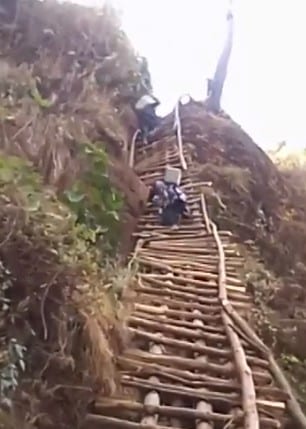
      A nurse from Uganda has received praise for completing a perilous journey up an improvised wooden stairway across a hill to administer immunizations to children in a far-off community in the country’s eastern region.

      As she ascended the steep hill on her way to immunize kids in Masheluse village, the nurse, known as Agnes Nambozo, was captured on camera.

      As “nurse of the year,” Health Minister Jane Aceng praised her.

      But some Twitter users in the country said the footage was an indictment of the government’s poor record on infrastructure.

      “It’s a shame after over 50 years of self-rule citizens have to be subjected to this nonsense,” said Chris Ngaruthi.

      “I am very sure she will be a happy person if she is awarded a safe way to reach her people when providing medical care,” said Eve Zalwango.

      Source: The Independent Ghana

    • President of Uganda claims Europe is attempting to force homosexuality on his nation

      President of Uganda claims Europe is attempting to force homosexuality on his nation

      President Yoweri Museveni of Uganda, on Thursday, February 16, 2023, accused Europe of attempting to “impose” homosexuality on the African nation, where LGBTIQ people are oppressed and subject to several stigmas.

      According to the Ugandan official, who was speaking during a rally to mark the 46th anniversary of the death of that country’s archbishop Janani Luwum, killed by the government of Idi Amin (1971-1979).

      “I want to congratulate Ugandan believers for rejecting homosexuality. Europeans don’t listen to us when we tell them that this problem of homosexuality is something we should not normalize or celebrate,” he added.

      According to Museveni, “It is true that there were some homosexuals (in Uganda) before the Europeans arrived, but it was a deviation from the norm, like a person with six fingers instead of five.”

      The Ugandan President made these comments a day after the Uganda Inter-Religious Council (IRCU) said it intended to bring back to the country’s parliament a bill introduced years ago to punish “repeat homosexuals” with life imprisonment.

      In February 2014, Museveni ratified that bill, but Uganda’s Constitutional Court struck down the law six months later, arguing that there was not a sufficient quorum during its vote in parliament.

      Discussions about this law – mainly driven by popular evangelist pastors – triggered a wave of attacks on LGBTIQ people in Uganda, leading to the murder of some of them.

      Today, Uganda’s penal code still has a law that dates back to 1950 – 12 years before the country gained independence from the UK – which penalizes same-sex sexual relations with up to seven years in prison.

      Source: angope.ao

    • Ugandan watchdog wants LGBTQ activities banned

      Ugandan watchdog wants LGBTQ activities banned

      The Ugandan government is pushing for the criminalization of LGBTQ organizations and their operations there.

      The country’s laws should be changed to make homosexual and bisexual behavior illegal, according to a report released in January by the NGO Bureau, an official agency that regulates the activities of NGOs.

      In the alternative it urges the enactment of a new law “that prohibits the promotion of LGBTQ activities in the country”.

      It further says the government needs to provide more resources to the NGO Bureau so that it can “identify and weed out those that are involved in activities that are prejudicial to the interests of the people of Uganda”.

      Gay relationships are illegal in Uganda, where they can be punished by up to life in prison for committing “unnatural offences”.

      The report is a result of a year-long investigation into activities of NGOs involved in sexual minorities’ rights work in Uganda.

      The bureau says it received concerns regarding various organisations, but did not state the source of the concerns.

      In total 26 NGOs were investigated but the probe is yet to conclude its work on many of them.

      It says that Sexual Minorities Uganda, one of the most prominent LGBTQ organisations in the country, was neither officially registered as an NGO nor as a business.

      The NGO Bureau ordered the closure of the organisation in August 2022, but the organisation has since filed a case at the East African Court of Justice contesting its closure.

      Registration applications of at least three other organisations to the bureau were rejected due to their involvement in LGBTQ human rights work.

      In recent weeks, several government officials and leaders in the country have been speaking out against the “promotion of gay activities” in the country.

      Last week, Archbishop Stephen Kaziimba, the head of the Anglican Church of Uganda, spoke against the recent Church of England’s decision to bless same-sex marriages.

      Archbishop Kaziimba said that homosexuality was a sin and that the Anglican church in Uganda would not endorse it.

      There have also been renewed calls in parliament for a new anti-gay bill to be drafted and tabled for debate.

      Uganda received global attention when it passed an anti-homosexuality law in 2013. It later annulled it in 2014 when a court ruled that it had been passed without the required quorum in parliament.

      Source: BBC

    • No more cameras at University graduation – Ugandan university

      No more cameras at University graduation – Ugandan university

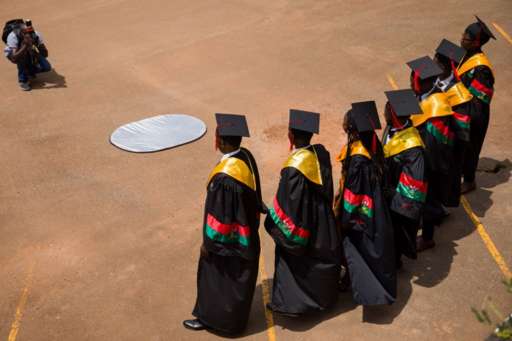
      The use of cameras, phones, and video cameras while attending a graduation ceremony has been outlawed by one of Africa’s most esteemed universities.

      A five-day graduation ceremony will begin on Monday at Makerere University in Uganda’s Freedom Square. Throughout the week, different graduation dates have been assigned to faculties.

      The graduation square has a camera ban in place, but no explanation has been given for it. Alcohol, cigarettes, canned food, and bottled beverages are also not allowed at the ceremony.

      “A detailed list of prohibited items has been inserted in the graduation invitation package that is presented to the graduands and invited guests,” the head of ceremonies committee, Prof Patrick Mangeni, said.

      A total of 13,221 students are scheduled to graduate, with each allowed to invite only two guests.

      First Lady Janet Museveni, who is also the minister of basic education, is expected to attend the ceremony on Monday.

    • CHAN 2022: Each member of Uganda Cranes to receive Sh9m

      CHAN 2022: Each member of Uganda Cranes to receive Sh9m

      The president of the local football governing body, FUFA, Eng. Moses Magogo, has revealed that every member of the team (players and officials) that was in Algeria for the 2022 African Nations Championship (CHAN) will receive a package of $2,500 (about Shs9m).

      Uganda Cranes’ journey at CHAN came to an end last Sunday following a 3-1 defeat to Ivory Coast at Nelson Mandela Stadium in Algiers, Algeria.

      The team finished third with four points in a group that included Senegal, Ivory Coast, and DR Congo.

      Speaking at the luncheon on Sunday at the FUFA Complex in Mengo, Magogo applauded the 23-man squad despite failing to qualify for the knockout stage for the first time in six attempts.

      “I know many people look at results on the field, but as administrators, we consider a number of factors. There was a huge difference between the team that played at CHAN in Cameroon and the current squad. The difference this time, there were positives in terms of the performance of players,” said Magogo.

      “I have always said that results do not paint the whole picture. We know this team is in a transitional period, and whatever we are going through is part of the process. Unfortunately, the fans and everyone else want to win, but world-over transitions take time. It can even take two or three generations to return to the best,” he added.
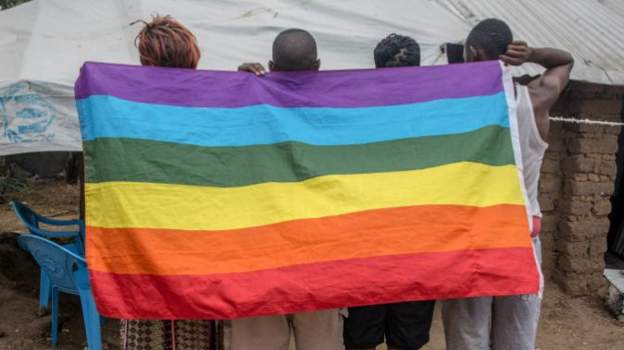
      Magogo said that as FUFA, they were supposed to reward everyone with about $1,800 (about Shs6.6 million), but they decided to make it $2,500 (about Shs9 million) as a way of motivating the squad.

      Meanwhile, FUFA will receive $300,000 (about Shs1.1 billion) from Confederation of African Football (CAF) as prize money for Uganda Cranes after the team finished third in Group B at the ongoing CHAN tournament in Algeria.

      The winner will receive $2 million, an increase from Morocco’s $1.25 million for winning the 2020 edition in Cameroon.

      Also, before the tournament, FUFA received Shs2 billion from the government to prepare for the competition.

    • Imprisoned Arsenal fans released in Uganda

      Imprisoned Arsenal fans released in Uganda

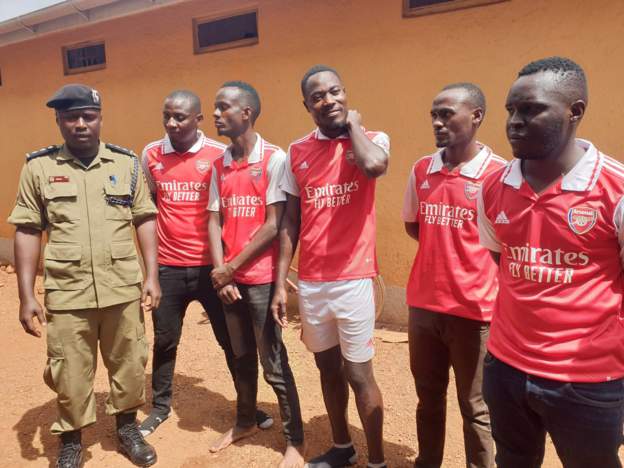
      Eight Arsenal supporters who were imprisoned in Jinja, Uganda after being caught celebrating the team’s Premier League victory over Manchester United, have since been released.

      They were wearing the club’s red jersey and carrying a symbolic trophy during their arrest on Monday.

      Police said they didn’t have a permit to hold the procession which is a public order offence.

      But on Tuesday a joint security team agreed to free them with a caution, said James Mubi, the regional police spokesman.

      One of the fans told journalists that they would “seek for permission [to celebrate] if Arsenal wins the premier league”.

      “We shall have the celebrations in Bugembe stadium,” the self-proclaimed ambassador of Arsenal in Uganda added.

      The police spokesman claimed the fans did not know the basics about the club – that they didn’t know which year Arsenal had their unbeaten run and had named a former Ugandan goalkeeper as an Arsenal player.

      Source: BBC

    • Uganda begins its first oil drilling operations with focus on 2025

      Uganda begins its first oil drilling operations with focus on 2025

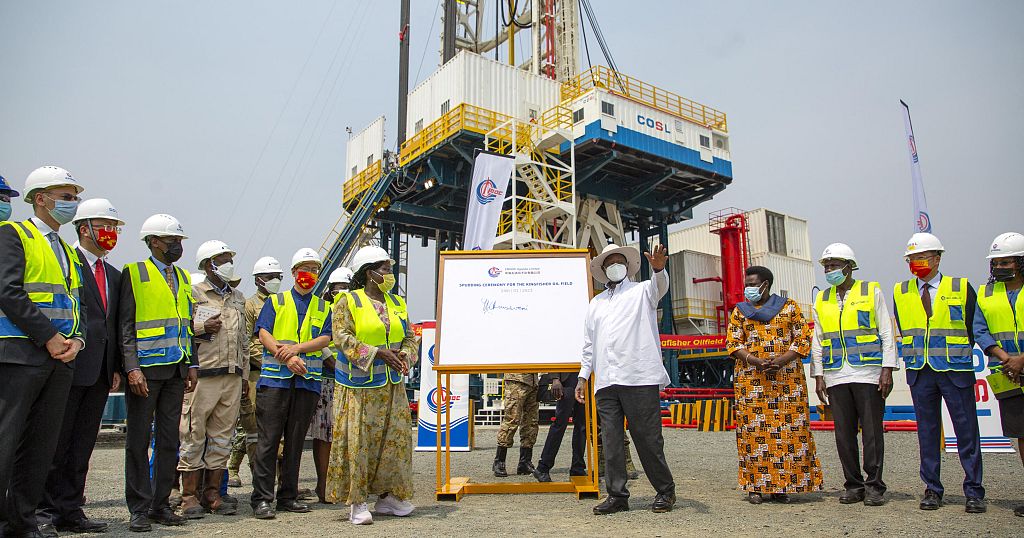
        In an effort to fulfill its goal of producing its first oil in 2025, Uganda has begun drilling its first oil well on Tuesday January 24, 2023.

        President Yoweri Museveni cut the ribbon at a site operated by China National Offshore Oil Company (CNOOC) near Lake Albert in Kikuube district. 

        The field, known as Kingfisher, is expected to produce 40,000 barrels of oil per day at its peak, according to Uganda’s oil industry regulator.

        The development comes 17 years after the discovery of commercial oil deposits in the east African country.

        France’s Total, the operator of the second project, known as Tilenga is expected to begin drilling in March.

        Uganda last week issued a licence for the construction of a $3.5 billion pipeline set to carry crude oil from the country to international markets.
        Last year, the oil majors signed a $10-billion agreement to develop the Ugandan oilfields and build the pipeline.
        At peak, Uganda plans to produce about 230,000 barrels of crude oil per day.

        Uganda’s reserves are estimated 6.5 billion barrels of crude, of which about 1.4 billion are considered recoverable.

        Source: African News

      • Uganda starts its first oil drilling operation

        Uganda starts its first oil drilling operation

        Uganda has officially began drilling for crude oil in the Kikuube and Hoima districts’ Kingfisher Oil Field (KFDA).

        Several government representatives and President Yoweri Museveni will be present for the ceremonial start of drilling.

        The China Offshore Oil Engineering Company and the China Petroleum and Construction Corporation’s joint venture received the KFDA.

        The oil field, previously known as Exploration Area 3A, is part of the Kingfisher Field Development Area (KFDA) and is operated by Cnooc Uganda Ltd.

        Energy and Minerals Minister, Ruth Nankabirwa says the launch will involve commissioning of the Kingfisher drilling rig for all 31 oil wells.

        The process is expected to lead to commercial production by 2025 or 2026.

        The KFDA is estimated to contain 800 million barrels of oil, with 25% of that being developed in the first phase.

        This will result in a peak production of 40,000 barrels of oil per day.

        The capital expenditure for the development of the KFDA is $2 billion.

      • Uganda to launch its first oil well drilling

        Uganda to launch its first oil well drilling

        Uganda will on Tuesday start drilling its first oil well in the Kingfisher oil field, the state petroleum agency said.

        It is hoped that by 2025 the first of a potential 1.4 billion barrels of oil will be pumped from wells across the mid-western region.

        “Today we mark another milestone and move a step closer to first oil with the launch of the drilling of development and production wells for the Kingfisher oil fields,” the Petroleum Authority of Uganda (PAU) said on Twitter.

        President Yoweri Museveni is due to officiate the event.

        The Kingfisher oil field is operated by China’s CNOOC, while the second Tilenga oil field is operated by France’s TotalEnergies.

        Source: BBC

      • Ugandan promoter accused of fatal stampede

        Ugandan promoter accused of fatal stampede

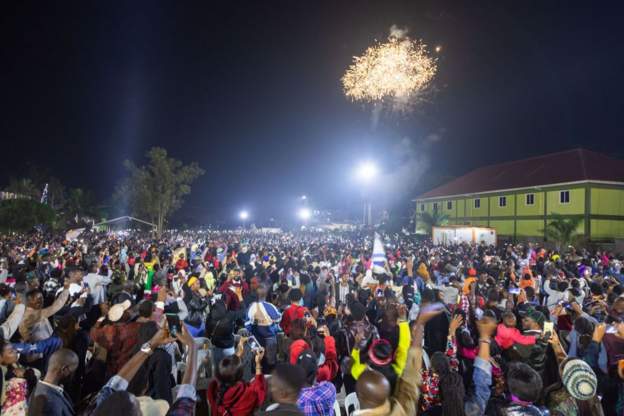
        In connection with the 10 fatalities in a stampede on New Year‘s Eve at a concert in the nation’s capital, Kampala, a music promoter in Uganda has been charged with nine counts of negligence.

        On Tuesday night, Abbey Musinguzi appeared before the Makindye Chief Magistrate’s Court. He was remanded to Luzira prison after denying the accusations.

        The prosecution claims that when he shut down the mall’s entrances, leaving only one gate open for more than 20,000 people to leave, he started a stampede at Freedom City Mall.

        The 52-year-old was arrested on Monday.

        His lawyer claims his client is being targeted because he is a known supporter of opposition National Unity Platform leader Robert Kyagulanyi, also known as Bobi Wine.

        Meanwhile, the police have summoned more people, including the owner of the building, to record statements over the deadly incident.

        Source: BBC.com
      • Ten killed in Uganda mall crush

        Ten killed in Uganda mall crush

        On Monday, Ugandan police announced that they had detained one of the party’s organizers after a crush during the event claimed the lives of ten revelers.

        Local media identified the man as music promoter Abbey Musinguzi of Abitex Promotions.

        He is well known for organising major events in the capital Kampala; his party was in the popular Freedom City shopping mall in the city’s Namasuba suburb.

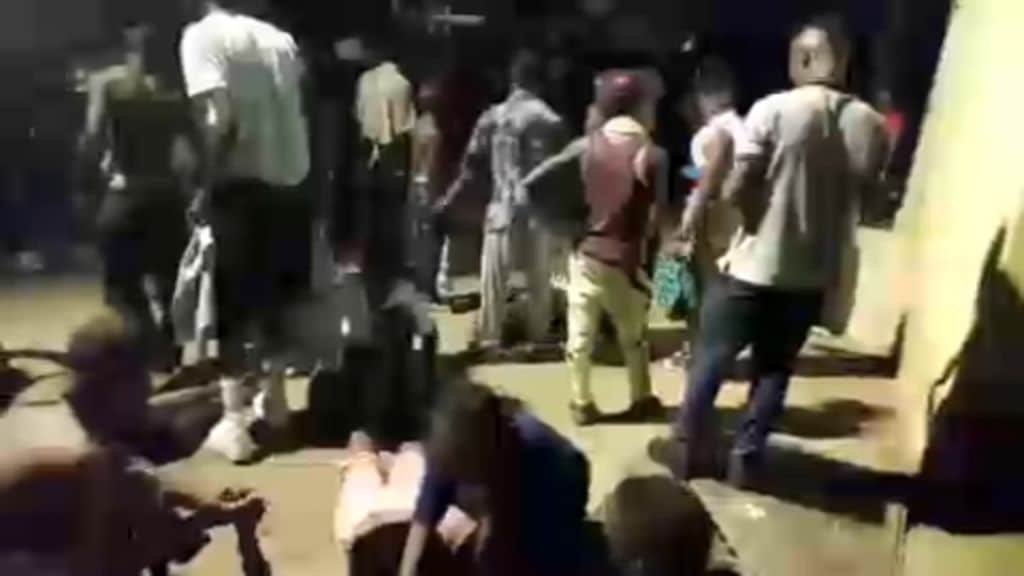
        Police initially said five people had died at the scene and four others died of their injuries at the hospital where they had been taken for treatment. 

        The victims were among a crowd that packed into a small passageway to watch the fireworks display outside.

        According to a police spokesman, Fred Enanga, the public found themselves in this bottleneck because the organisers of the evening had closed four other exit points. Investigators are trying to find out if the tragedy was caused by their “negligence,” he added.

        “We have arrested the promoter of this New Year’s concert,” he said adding we “are actively looking for other organisers and promoters” of the event.”

        “The public had only one entry and exit point. As a result, several victims found themselves trapped in this narrow passage,” he said.

        These New Year celebrations in Uganda were the first in three years, after restrictions due to the Covid-19 pandemic and security problems.

        Source: Africa news

      • U.S. couple accused of torturing 10-year-old foster son in Uganda

        A U.S. couple, who have been living and working in Uganda, were accused of torturing their 10-year-old foster child.

        According to People, Nicholas and Mackenzie Spencer welcomed three foster children from a local Christian ministry in 2018. A Ugandan police statement alleges the couple kept the child in question “barefoot and naked throughout the day,” and allegedly forced him to “squat in an awkward position” on occasion. The alleged victim also slept on a bare wooden platform without a mattress or bedding.

        A caregiver for the child told The Daily Monitor that she reported the Spencers to the police after noticing his deteriorated state. She alleges the couple considered the child to be stubborn, hyperactive, and mentally unstable. In a statement to authorities, the caretaker claims the child was forced to sleep in a small room with a cold tiled floor. “I wanted to leave the job, but I knew if I left without doing something about it, the torture would continue,” she said. 

        The couple was taken into custody on Dec. 9, and have not been granted bail after prosecutor Joan Keko argued the two pose a “flight risk,” adding, “Their likelihood to abscond from bail is really, really high.” 

        The Spencers were initially charged with aggravated torture of a 10-year-old boy, and could face life in prison if found guilty. An additional aggravated child trafficking charge was recently tacked on, but they have yet to enter a plea. In response to the child trafficking charge, which carries the death penalty if convicted, their attorney Leila Saaliwulide sa

        A U.S. couple, who have been living and working in Uganda, were accused of torturing their 10-year-old foster child.

        According to People, Nicholas and Mackenzie Spencer welcomed three foster children from a local Christian ministry in 2018. A Ugandan police statement alleges the couple kept the child in question “barefoot and naked throughout the day,” and allegedly forced him to “squat in an awkward position” on occasion. The alleged victim also slept on a bare wooden platform without a mattress or bedding.

        A caregiver for the child told The Daily Monitor that she reported the Spencers to the police after noticing his deteriorated state. She alleges the couple considered the child to be stubborn, hyperactive, and mentally unstable. In a statement to authorities, the caretaker claims the child was forced to sleep in a small room with a cold tiled floor. “I wanted to leave the job, but I knew if I left without doing something about it, the torture would continue,” she said. 

        The couple was taken into custody on Dec. 9, and have not been granted bail after prosecutor Joan Keko argued the two pose a “flight risk,” adding, “Their likelihood to abscond from bail is really, really high.” 

        The Spencers were initially charged with aggravated torture of a 10-year-old boy, and could face life in prison if found guilty. An additional aggravated child trafficking charge was recently tacked on, but they have yet to enter a plea. In response to the child trafficking charge, which carries the death penalty if convicted, their attorney Leila Saaliwulide said the charge “doesn’t make sense.” 

        Source: Complex.com

      • American couple could face death penalty for allegedly torturing foster child in Uganda

        An American couple living in Uganda accused of torturing their 10-year-old foster child could face the death penalty if convicted of their latest charge, prosecutors said.

        Nicholas Spencer and Mackenzie Leigh Mathias Spencer, both 32, were arrested and charged earlier this month with aggravated torture, which carries a life sentence if convicted, for alleged abuse spanning two years.

        This week, they were also charged with aggravated child trafficking, which carries the death sentence if convicted, Joan Keko, an attorney with the Ugandan state prosecutor’s office, confirmed to ABC News.

        The Spencers previously pleaded not guilty to the aggravated torture charge, The Associated Press reported. They will be able to plead to the new charge once the case moves to a higher court, according to the AP.

        The two are being detained at a maximum-security prison in Luzira, a suburb of the capital of Kampala, and were not granted bail after being determined a flight risk, Keko said.

        The couple allegedly “constantly tortured” the foster child between 2020 and 2022, which “attracted the attention of neighbours,” who notified Kampala Metropolitan police, according to a statement from the Uganda Police Force.

        American couple could face death penalty for allegedly torturing foster child in Uganda
        PHOTO: American couple Nicholas Spencer and Mackenzie Leigh Mathias Spencer, both 32, stand in the dock at Buganda road court, where they were charged with torturing a 10-year-old, in Kampala, Uganda, on Dec. 14, 2022. (Abubaker Lubowa/Reuters)

        The child was allegedly locked in an empty room, without clothes, food or water, and a medical report showed beating marks on his body, according to Kampala Metropolitan spokesperson Luke Owoyesigire.

        Police received video evidence from a neighbor and nurse who were checking on the child, a Kampala police source told ABC News.

        he Spencers are originally from South Carolina, according to Keko. They moved to Uganda in 2017 as volunteers, police said.

        The couple fostered three children in 2018, including the one they were alleged to have tortured, from an organization called Welcome Ministry, in Jinja City, police said. The couple then joined a private company and moved to Upper Naguru, a neighborhood in Kampala, police said.

        Their work permit expired in 2021, according to Keko.

        Source: BBC

      • American couple could face death penalty for allegedly torturing foster child in Uganda

        An American couple living in Uganda accused of torturing their 10-year-old foster child could face the death penalty if convicted of their latest charge, prosecutors said.

        Nicholas Spencer and Mackenzie Leigh Mathias Spencer, both 32, were arrested and charged earlier this month with aggravated torture, which carries a life sentence if convicted, for alleged abuse spanning two years.

        This week, they were also charged with aggravated child trafficking, which carries the death sentence if convicted, Joan Keko, an attorney with the Ugandan state prosecutor’s office, confirmed to ABC News.

        The Spencers previously pleaded not guilty to the aggravated torture charge, The Associated Press reported. They will be able to plead to the new charge once the case moves to a higher court, according to the AP.

        The two are being detained at a maximum-security prison in Luzira, a suburb of the capital of Kampala, and were not granted bail after being determined a flight risk, Keko said.

        The couple allegedly “constantly tortured” the foster child between 2020 and 2022, which “attracted the attention of neighbours,” who notified Kampala Metropolitan police, according to a statement from the Uganda Police Force.

        American couple could face death penalty for allegedly torturing foster child in Uganda
        PHOTO: American couple Nicholas Spencer and Mackenzie Leigh Mathias Spencer, both 32, stand in the dock at Buganda road court, where they were charged with torturing a 10-year-old, in Kampala, Uganda, on Dec. 14, 2022. (Abubaker Lubowa/Reuters)

        The child was allegedly locked in an empty room, without clothes, food or water, and a medical report showed beating marks on his body, according to Kampala Metropolitan spokesperson Luke Owoyesigire.

        Police received video evidence from a neighbor and nurse who were checking on the child, a Kampala police source told ABC News.

        he Spencers are originally from South Carolina, according to Keko. They moved to Uganda in 2017 as volunteers, police said.

        The couple fostered three children in 2018, including the one they were alleged to have tortured, from an organization called Welcome Ministry, in Jinja City, police said. The couple then joined a private company and moved to Upper Naguru, a neighborhood in Kampala, police said.

        Their work permit expired in 2021, according to Keko.

      • 2-year-old survives hippo attack in Uganda

        A two-year-old boy in southwest Uganda has survived a hippopotamus assault that occurred close to his home.

        Iga Paul was having fun near the Lake Edward shoreline when the hippo attacked.

        According to authorities, the hippo seized the child and “swallowed half of his body,” adding that a local guy used stones to fend the animal off.

        The BBC was informed by Uganda’s wildlife authority that this claim is false and that the youngster was really attacked rather than swallowed.

        The toddler was rushed to a local medical facility after the attack, which happened on December 4, where he received treatment for his wounds, according to authorities.

        Later, he was sent to Bwera Hospital, where medical staff vaccinated him against rabies as a precaution.

        According to the police, this was the first occasion a hippo had left the lake and assaulted someone. However, the animals, which can weigh up to 1.5 tonnes (1,500kg), are thought to be responsible for the deaths of 500 or so Africans each year.

        And officers warned locals that the animals can “see humans as a threat” and said that “any interaction can cause them to act strangely or aggressively”.

        Hippos are the third largest living land mammal and their teeth can reach up to 50.8cm (20 inches) in length. Despite their size, they can also reach speeds of up to 20 mph (32 km/h).

        While the animals are herbivores, they can become highly aggressive when they feel threatened or their habitats are disturbed.

      • Ebola vaccines have arrived in Uganda for testing

        Uganda’s health minister will receive a shipment of Ebola vaccine candidates on Thursday, which will be used in a clinical trial.

        Since announcing an outbreak of the Sudan strain of Ebola in September, the country has confirmed 142 cases, with 56 deaths.

        The consignment will be received from World Health Organization representatives at a warehouse near the capital, Kampala, according to health ministry spokesman Emmanuel Ainebyoona in a tweet.

        According to the AFP news agency, the health minister is expected to announce the start date of the trials.

        Uganda has not registered any new positive Ebola cases in over three weeks, indicating that the outbreak might be under control.

      • Kneeling doctors petition Museveni to run for a seventh term

        Over the weekend, a group of doctors in Uganda caused a stir by kneeling before long-term President Yoweri Museveni and asking him to run for a seventh term.

        The 78-year-old ruler has ruled since 1986. The next general election is scheduled for 2026.

        According to media coverage of the event, the doctors from the Uganda Medical Association (UMA) were attending a patriotism symposium in Kampala when they were led by their leader to kneel before the president.

        Nile Post news site reported that UMA boss Dr Samuel Odongo Oledo praised the president in his speech for transforming the country’s health system and improving the welfare of medical workers.

        He went ahead to ask President Museveni to vie again in 2026 as a presidential candidate, the NTV television station reports.

        The gesture sparked controversy on social media, with many accusing the group of being subservient to politicians.

        But in a tweet, the UMA distanced itself from the gesture, saying it did not “represent modus operandi of the association”.

        It said: “Uganda Medical Association has always engaged with the president through formal, professional ways including appreciating him through our annual awards.”

      • ‘Vagabond’ penal code outlawed in Uganda

        After a rights group argued in court that the law was being unfairly applied against the most marginalized members of society and that it was being used to extract bribes from them while they were in custody, a colonial-era law against being a “rogue or vagabond” has now been declared unconstitutional in Uganda.

        Hawkers and other petty traders, sex workers, drug users and the homeless are who most often receive these charges of vagrancy under the country’s Penal Code Act, said Adrian Jjuuko representing the Human Rights Awareness and Promotion Forum.

        “Anyone found walking the streets could be rounded up and charged for being a vagabond. It is a convenient charge because it is vague,” he tells the BBC.

        Sex work is illegal in Uganda, and hawking is not permitted in some areas of the capital Kampala. It is common for the police and city authorities to carry out mass swoops against hawkers and sex workers.

        On Friday Uganda’s constitutional court ruled that anyone under arrest should be clearly informed of what they are being charged with, that the legal provisions for “rogue and vagabond charges” are unconstitutional, and that the Penal Code Act clauses are against freedom of movement, and freedom of liberty from arbitrary arrest and detention – which is every Ugandan’s right.

        Judges however said that the petitioners did not provide enough evidence to justify that the clauses are used to discriminate between the poor and the rich.

        “This gives us motivation to draw up petitions on clauses such as those on being a common nuisance or idle and disorderly. When certain provisions have been declared unconstitutional, then it signals to parliament that the entire law is up for amendment,” Mr Jjuuko tells the BBC.

      • President Uganda extends 21-day quarantine for Ebola epicentre

        President Yoweri Museveni of Uganda has extended a quarantine imposed on two districts at the epicentre of the country’s Ebola outbreak by 21 days, saying his government’s response to the disease was successful.

        The presidency announced late Saturday that movement into and out of Mubende and Kassanda districts in central Uganda will be restricted until December 17. It was imposed for 21 days on October 15, then extended for another 21 days on November 5.

        The purpose of the extension was to “further sustain the gains in Ebola control that we have made, and to protect the rest of the country from further exposure.”

        The government’s anti-Ebola efforts were bearing fruit, with two districts now going nearly two weeks without new cases, according to the president.

        “It may be too early to celebrate any successes, but overall, I have been briefed that the picture is good,” he said in a statement.

        The East African nation has so far recorded 141 infections. Fifty-five people have died since the outbreak of the deadly haemorrhagic fever was declared on September 20th.

        Although the outbreak was gradually being brought under control, the “situation is still fragile,” Museveni said, adding that the country’s weak health system and circulation of misinformation about the disease were still a challenge.

        The Ebola virus circulating in Uganda is the Sudan strain, for which there is no proven vaccine, unlike the more common Zaire strain, which spread during recent outbreaks in neighbouring Democratic Republic of Congo.

      • Uganda now seeks commercial loans from global market

        Uganda is back to the global market hunting for commercial loans to pay soldiers’ salaries, finance classified expenditures and meet other financial obligations.

        Topping the priority list is paying Uganda Peoples Defence Forces salary enhancement which was supposed to start July 1. Other public servants too want money. In the second week of November, the intern medical staff went on strike as had local government workers earlier, who also demanded the government honour promises made regarding salary increases. A few months ago, the teachers were on strike over a pay dispute when the government offered to raise the salaries of only science teachers.

        In what some interpret as signs of a broke government, even Parish Development Model, which President Yoweri Museveni has touted as a model that will transform Uganda from a peasant economy to middle-income status, has suffered the same fate: Lack of funds.

        The government did not release adequate funds in the first quarter of the current financial year, resulting in government agencies going without enough funds for their projects, except for payment of salaries and funding for defence and security projects.

        Workers not fully paid

        Many public servants were also not fully paid by the end of the quarter. The Finance Ministry has indicated that it seeks to borrow Ush3.7 trillion ($986.2 million) from commercial lenders — a major shift from concessional credit options that the country has been depending on to finance its budget deficit.

        “We are looking for loans with favourable terms,” Finance Minister Matia Kasaija told The EastAfrican on November 16 without delving into the loan terms.

        Mr Kasaija said with an economy that has been battered by Covid-19, inflation, and prolonged drought, the pressure was high, confirming that he was worried.

        On November 7, Mr Kasaija placed a notice calling lenders to express interest in advancing Uganda Ush1,948.2 billion ($519.6 million) loan. The government asked private sector lenders to advance €500 million (Ush1.9 trillion) to close a 2022/2023 budget gap.

        “Due to strict implementation guidelines, we request you to submit your expression of interest by the closure of November 18,” Mr Kasaija’s wrote.

        Uganda’s budget

        In the same week, on November 2, 2022, Uganda lawmakers approved a request by the government to borrow $464 million (about Ush1.7 trillion).

        Uganda’s 2022/23 budget is Ush48 trillion ($12.8 billion), with about 71 per cent allocated for recurrent expenditure and 29 per cent planned for development.

        Some experts have argued that the rush to borrow from private lenders, despite the availability of bilateral and multilateral lenders could be because the country is avoiding scrutiny, especially at a point where the previously borrowed money has ended up in consumption expenditure rather than development.

        Opposition politicians such as leader of opposition Mathias Mpuuga say the government should reduce politically motivated public expenditure, make money cheaply available to the critical sectors, to ensure that jobs are sustained.


        Source: Ghanaweb

      • Trucks trapped at Uganda-DR Congo border amid fighting

        As fighting intensifies in eastern Democratic Republic of Congo, hundreds of cargo trucks are stuck on the Ugandan side of the Ishasha border crossing.

        Sostine Buregyeya, a local leader and businessman in Ishasha, told the BBC that some of the trucks had been stuck at the border for three weeks due to security concerns in the Democratic Republic of the Congo.

        Ugandan exports to the DR Congo are worth more than $300 million (£252 million), and Ishasha is one of the main crossing points between the two countries.

        “We used to go to the [DR Congo] twice a month, but now there is no business,” Geoffrey Opiyo, a Ugandan fish exporter told the BBC.

        Mr Opiyo said that he was forced to sell some of his dried fish cargo locally at throw away prices and is still stuck with some 40 tonnes in a store at the border.

        He brought the cargo to the border in late October after sourcing it from Uganda’s Lake Kyoga in the east, .

        “Some of the trucks which had already crossed have returned to Uganda,” Mr Opiyo added.

        Fighting between the Congolese government and the M23 rebels has intensified in recent weeks, with the rebels capturing more territory.

        The M23 are said to be advancing on several fronts and have been sighted about 35km (22 miles) from Ishasha border.

        The rebels have also been advancing towards the strategic city of Goma.

        The fighting has displaced thousands of people in the region.

        Efforts to bring peace to eastern DR Congo are being championed by East African Community leaders, as well as Angolan President João Lourenço, who is hosting a summit in the capital, Luanda, on Wednesday.