A 24-year-old man infected with Ebola has died in central Uganda in a fresh outbreak confirmed by health officials.
The health minister has told journalists that the victim had exhibited symptoms before succumbing to the disease.
He was a resident of Ngabano village in Mubende district, about 147km (91 miles) from the capital, Kampala.
The case of the relatively rare Sudan strain was confirmed by the Uganda Virus Research Institute, the World Health Organization (WHO) said in a statement.
It says eight people with suspected symptoms are receiving medical care, and that it is sending staff to the affected area.
“Thanks to its [Uganda] expertise, action has been taken to quickly to detect the virus and we can bank on this knowledge to halt the spread of infections,” said Dr Matshidiso Moeti – WHO regional director for Africa.
Uganda confirms an outbreak of Ebola Virus Disease (EVD) in Mubende District, Uganda.
The confirmed case is a 24 year old male a resident Ngabano village of Madudu Sub County in Mubende District presented with EVD symptoms and later succumbed. pic.twitter.com/36i9xyxdxm
Burundi’s ministry of culture has expressed displeasure over what it describes as the “misuse of Burundian sacred drum” at the Nyege Nyege music festival which concludes on Monday in neighbouring Uganda.
The ministry posted its message on Twitter alongside widely shared pictures of two male performers dancing suggestively with female revellers near the venerated drum.
They called the image an “exploitation” of Burundi’s royal drumming heritage, which was recognised by Unesco in 2017.
“We will never tolerate anyone who violates Burundian culture and customs… any offender will be prosecuted for penalties provided by law,” the post said.
Ritual drumming in Burundi is performed during national or local feasts and to welcome important visitors, and is said to awaken the spirits of the ancestors and drive out evil spirits, according to Unesco.
Its performers are recruited from across the country, many of whom are the descendants of drum sanctuary guards.
It is not yet clear whether the government of Burundi will sue the drum performers at the Nyege Nyege festival.
It is however not the first time that Burundi authorities have issued similar warnings to drum performers in foreign countries.
It is also not the first time that the Nyege Nyege festival has attracted controversy.
Uganda’s authorities threatened to ban the four-day festival before it opened claiming that it was a “breeding ground for sexual immorality” and “homosexuality”.
Some 12,000, including 5,000 foreign tourists, have attended the event which is being held at the scenic Itanda Falls on the banks of the River Nile, AFP news agency reports.
Uganda‘s parliament is scrutinising a proposed law that would enable organ transplants to happen in the country for the first time, transforming the lives of thousands hoping for operations.
Annita Twongyeirwe had pictured a different future for herself.
But since being diagnosed with kidney failure three years ago, the 28-year-old is preoccupied either by having dialysis or thinking about the next session.
“It has taken over my life,” she says, looking defeated.
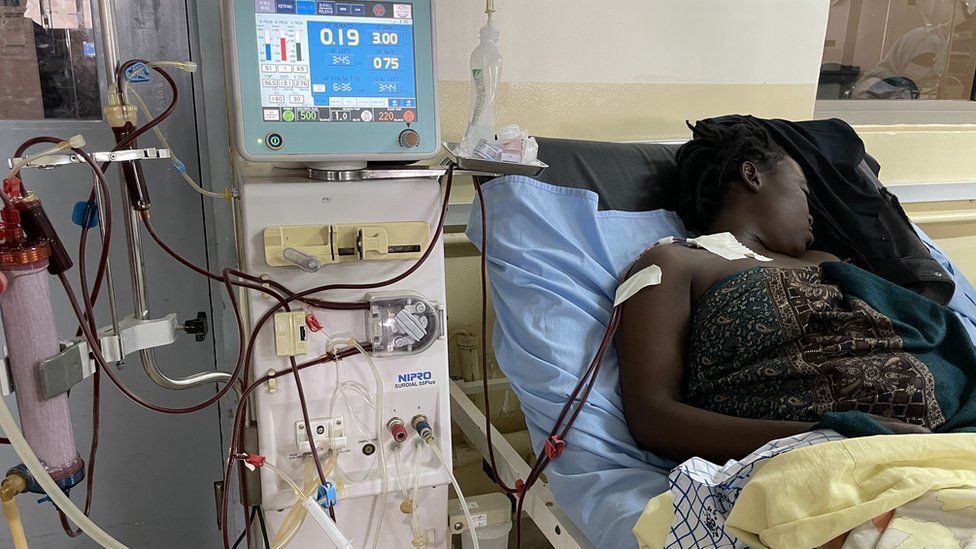
During dialysis a machine essentially performs the kidneys’ function and cleans the blood of waste products and excess fluids.
Each session lasts about four hours and she has to go to hospital twice a week. In between sessions she spends most of her time at home – a relative’s house – helping out with chores where she can, and keeping an eye on a WhatsApp group she created through which friends and well-wishers can donate money.
“I was this ambitious girl. I wanted to go further with studies. I would probably be somebody’s girlfriend or wife, so all that life is cut short. It took away all the dreams I had,” she adds.
But an operation abroad, currently the only option, comes with a price tag of about $30,000 (£26,000) – and is out of reach of most.
Hundreds of Ugandans, who like Ms Twongyeirwe cannot afford this, live on dialysis for as long as possible. But even at the subsidised price of around $100 a week for the treatment and drugs, that is more than five times the average total income in Uganda and so is only an option for a small fraction of the population.
The ward at Kiruddu National Referral Hospital on the edge of the capital, Kampala, is the only public health facility in the country that offers this service. Almost 200 patients attend the clinic regularly, many of them traveling long distances.
But they represent only a fraction of those countrywide living with kidney failure and in need of specialised care.
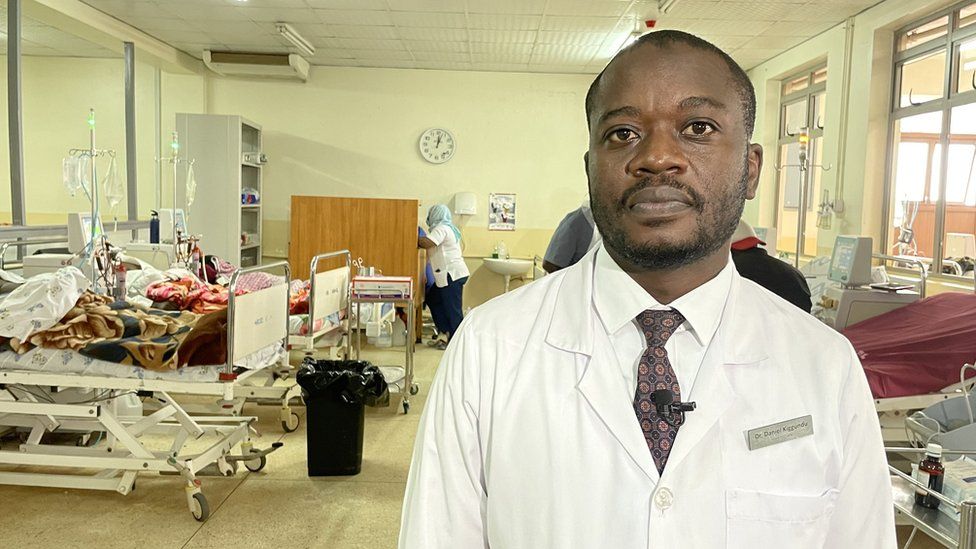
“They leave their families and livelihoods behind to live close to the hospital. This is an unnatural situation,” Dr Daniel Kiggundu, the only kidney specialist working at the unit, tells the BBC.
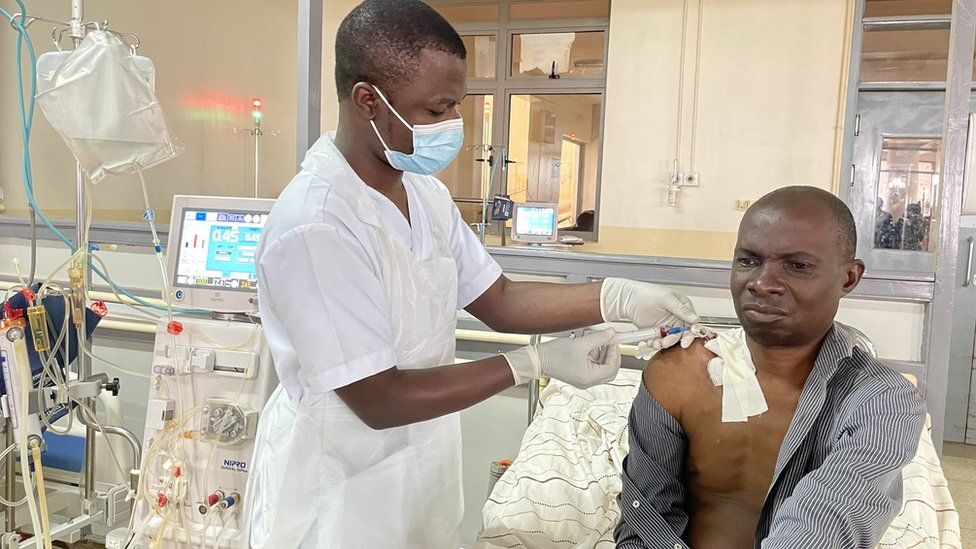
Image caption, Kiruddu hospital offers dialysis to about 60 patients each day and each patient has to visit at least twice a week
The ward is a cacophony of beeping machines, as nurses weave through dialysis stations attending to patients.
Some of those getting treatment seem extremely weak, drifting in and out of sleep, while others sit up and chat with their carers.
The clinic runs two shifts each day, each of them taking in about 30 patients. It operates dangerously close to full capacity and there is little spare time to prepare the patients for treatment.
When Ms Twongyeirwe is due for a session, she spends the night at the hospital in order to be ready in time.
She first realised she was unwell when her entire body began to swell in 2018 and she spent 18 months going from clinic to clinic before she got the right diagnosis.
Her life was turned upside-down.
She had to drop out of university where she was studying law and she lost her job. She also moved from her family home in western Uganda to Kampala, to live close to the hospital.
At home, the soft-spoken woman goes about washing dishes with such grace that, save for the plaster on her arm, it is hard to tell that she has just returned from a dialysis session.
‘I feel like a burden’
“When I return from the hospital I rest because the whole body is weak. Later, I do some work around the house to stay active,” she explains.
Ms Twongyeirwe raises the money needed each week from friends and family.
“I feel like a burden to people who help me pay for dialysis. Whenever somebody sees your call, they know you want money from them.”
She has also turned to family members to see if someone would want to donate a kidney.
She says a cousin had been willing but then changed their mind.
Even if that offer had remained, Ms Twongyeirwe would still have had to raise more money and get approval from the medical authorities to fly abroad for the operation. If the new law is passed then one of the hurdles would be removed.
Image caption, Specialist Dr Daniel Kiggundu hopes that transplants and treatment can be offered countrywide
Uganda would be joining a short list of African countries, including South Africa, Tunisia and Kenya, that have both the regulations and health facilities for organ transplants to be possible within their borders.
At the moment India and Turkey are the most popular destinations for Ugandan kidney patients. Only close relatives are allowed to be donors and trips have to be approved by the Uganda Medical Board – to prevent organ trafficking or people being coerced to offer their organs.
But if parliament approves the new measure, then the process should be more straightforward and the cost for surgery and recovery care could come down to about $8,000.
Those backing it say Uganda needs special legislation to create a safe framework under strict regulation to make sure there is no abuse.
The proposal includes the creation of a national waiting list of organ recipients as well as the establishment of specialised transplant centres around the country. An operating theatre has already been set up at the main national hospital in Mulago, Kampala.
Organ banks will also be created for those who want to donate – and not just for kidneys
“We are [also] thinking of corneal transplants for the eyes [and] skin banks for patients who have burns,” says Dr Fualal Jane Odubu, chairperson of the Uganda Medical Board.
Image caption, Each dialysis session takes about four hours
About 100 Ugandan health workers, including surgeons, nurses and post-surgery specialists have already been trained abroad, mostly in carrying out kidney transplantations.
Despite the hope that this could bring, there will still be a waiting list and the need to raise money.
Ms Twongyeirwe says that despair is never far away.
“The other patients and I have become family. The most difficult days are when you turn up at the clinic and find that someone died. We lost a little boy recently and that was very hard to cope with,” she says, holding back tears.
But for her the new law could be transformational.
“It would help patients like us be able to get transplants. Donating a kidney is giving someone another life.
“Some people fear incurring all the costs of traveling abroad, and you might get there, and the donor changes their mind. So if the transplant is being done here at home it’s less stressful.”
Uganda’s parliament has condemned a resolution by the European Union parliament entreating the country and Tanzania to halt the work of their oil and gas projects in the East African region.
Uganda’s Deputy Speaker Thomas Tayebwa in a session on Thursday, said the resolution was based on misinformation and deliberate misrepresentation of key facts on environment and human rights protection.
According to him, it represents the highest level of neo-colonialism and imperialism against Uganda and Tanzania’s sovereignty.
It comes as Uganda and Tanzania are building the East African Crude Oil Pipeline (Eacop) project, stretching 1,443km (896 miles) from Lake Albert in western Uganda to the Tanzanian port of Tanga on the Indian Ocean.
Once completed, it will be the longest heated oil pipeline in the world.
The EU parliamentresolution passed on Thursday warned of human rights abuses and the social and environmental risk posed by the Eacop project.
The EU parliament advises its member states not to provide any diplomatic or financial support to Uganda’s oil and gas projects.
Environmentalists have opposed the project as it straddles protected areas and sensitive ecosystems.
According to tweets from the Uganda Red Cross, a landslide early on Wednesday triggered by heavy rains in the Kasese district on Tuesday night killed at least 16 persons in western Uganda.
Most of the recovered bodies were women and children, the red cross said. Six people were also injured and are receiving treatment at a local hospital, the red cross spokesperson Irene Nakasiita tweeted.
Emergency workers have been shoveling through the mud in search of survivors. Kasese district, where the disaster occurred, is prone to landslides, especially during the rainy season, because it sits in the foothills of the Rwenzori mountains that straddle the border with the Democratic Republic of Congo.
After a prolonged drought, heavy rains have fallen on much of Uganda since late July, causing deaths and flooding, and the destruction of crops, homes, and infrastructure.
In July, flooding caused by heavy rains killed at least 24 people in the Mbale district in eastern Uganda.
The country’s weather agency had warned it would be hit by unusually strong and destructive rains in the August-December season and advised people living in mountainous areas to be vigilant or evacuate to safer areas
More than 300,000 people have been affected by floods and landslides in Uganda’s eastern and western regions, according to a report by the United Nations Office for the Coordination of Humanitarian Affairs. An estimated 65,000 people have been displaced, the report added.
The government’s decision to give the event the go-ahead has angered some MPs.
One lawmaker questioned whether the government had taken into consideration its capacity to handle emerging health concerns like a global outbreak of monkeypox which mostly affects men who have sex with men.
Nyege Nyege has been a big draw for music fans in the region and beyond and showcases artists from across the continent, along with those in the diaspora.
Ugandan musicians are up in arms over their share of benefits from the Caller Ring Back Tone (CRBT) scheme.
Purchasable ringtones, usually snatches of popular songs, generate a lot of money – up to $20m (£17m) in Uganda in 2019 – according to the Ugandan National Cultural Forum.
That money gets shared among the telecom companies, the government and the artists who create the music.
But the musicians feel cheated, saying their proportion of the profits is too small and the Ugandan Musicians Association has petitioned the government asking for a larger share.
“When it comes to tax collection, the taxman takes 50% of earnings,” Phina Mugerwa, musician and secretary of the association, told BBC Focus on Africa radio.
“Telco companies take 35%. The artist, the owner of the work, gets 1.8%,” she explained.
“We are appealing to the justice ministry that at least we should get 60%.
“You see musicians [have] big names but they don’t have money.”
The third day of the World Athletics Championships taking place in Eugene, Oregon, in the United States saw the men’s 10,000 metre race won by the defending champion and world record holder Joshua Cheptegei.
Uganda‘s cabinet has approved the adoption of Swahili as an official language, according to a statement.
The cabinet also recommended that the teaching of Swahili in primary and secondary should be made compulsory.
Swahili, which originated in East Africa, is one of the world’s 10 most widely spoken languages with about 200 million speakers.
The language and its dialects is spoken from parts of Somalia down to Mozambique and across the Democratic Republic of Congo.
In a tweeted statement, the Ugandan cabinet said the decision followed a directive by the East African Community bloc to adopt the language to ease communication among member countries.
Cabinet approved the implementation of the 21st EAC Summit directive in Uganda to adopt ðŠðˆð’ð–ð€ð‡ðˆð‹ðˆ ð€ð’ ð€ð ðŽð…ð…ðˆð‚ðˆð€ð‹ ð‹ð€ðð†ð”ð€ð†ð„ of the community. Cabinet also recommended that the teaching of Kiswahili in primary and secondary should be made compulsory. pic.twitter.com/LfBPJs2ruK
— Government of Uganda (@GovUganda) July 5, 2022
It is emerging that more and more students of the Ghana School of Law want their leaders to account for their stewardships as executives of the Students Representative Council (SRC).
As the tenure of the current student administration comes to an end later this year, pressure has started mounting on the executives to present an account to the students.
Information available to GhanaWeb indicates that some of the students are asking their Secretary, Safo Kwame Oheneba, to account for the expenses he made on his official trip to Uganda.
Sources within the Ghana School of Law expressed the belief that there is no other time to demand accountability from their leaders than now when the school is in the spotlight for some financial improprieties.
On March 14, 2022, the SRC Secretary of the Ghana School of Law, Safo Kwame Oheneba, left for Uganda on an official SRC visit and returned on March 21, 2022.
But almost a month after his return, the students claim he has not accounted for the over GH¢20,000 of the SRC money he was given for the trip.
“The practice is that when you go on an official trip in the name of the SRC, you are supposed to write a report and account for your trip within two weeks.
“Almost a month after his return, a Secretary who is clothed with the duties of writing, has not accounted and we find it worrying,†a source said.
The tenure of the current 7-man SRC executives comes to an end later in 2022, after which an audit would be carried out to pave way for the handing over to new executives who would have been elected by then.
The current executive council of the SRC consists of a president, and three vice presidents, with each representing all three campuses of the school at Makola (Accra), GIMPA, and Kumasi.
The rest are the secretary, organizing secretary and a treasurer.
Uganda has proposed steep penalties for anti-vaxxers in a new bill being studied by parliament, as the country doubles down on its Covid-19 vaccine mandate.
A parliamentary health committee said Tuesday it was considering proposed legislation to fine or imprison unvaccinated people in the East African country of around 45 million people.”Parliament’s Committee on Health has started the consideration of the Public Health (Amendment) Bill, 2021 that among other things seeks to ensure mandatory COVID-19 vaccination,” the parliament said in a statement on its website.
“According to the proposal, those who do not get vaccinated against Covid-19 will be fined Shs 4 million (around $1,137) or a jail term of six months.”Uganda has administered around 16 million Covid vaccines since it began inoculation against the virus in March last year. But the country has grappled with a series of lockdowns to manage the pandemic amid misinformation and hesitancy towards Covid vaccines by anti-vaxxers.
Uganda reopened for business last month after two years of severe containment measures which had seen schools and trading activities shut down. More than 15 million Ugandan students had their education disrupted by the two-year lockdowns, which the United Nations described as the longest disruption of educational institutions globally due to the Covid pandemic.
Speaking to members of parliament on Monday, health minister Dr. Jane Ruth Aceng said the proposed fine of 4 million Ugandan shillings was an amendment to the current fine of 2,000 shillings ($0.57).
Aceng added that the bill seeks to “protect the vulnerable” and “create mass immunity.”
“When we introduce new vaccines, we need to get a mass of people so we create mass immunity. It is important that whoever is supposed to be vaccinated, is vaccinated,” Aceng was quoted in the parliament’s statement.Uganda has recorded more than 163,000 cases of coronavirus and 3,500 deaths, according to government figures.
The parliament said its health committee “has commenced interacting with different stakeholders to enrich the bill,” but no timeline was given for its endorsement of the legislation.
CNN has made attempts to reach the health committee and ministry spokesperson for comment.
The International Court of Justice (ICJ) at The Hague is expected to hand down a verdict in the long-running case between the Democratic Republic of Congo and Uganda.
Both countries are demanding reparations from each other in relation to conflicts in the DR Congo’s mineral-rich Ituri province from 1998 to 2003.
The court in 2005 ruled that Uganda must pay compensation to DR Congo for its occupation and looting in Ituri.
It also found DR Congo culpable for an attack on Uganda’s embassy in the capital, Kinshasa, and ordered it to pay compensation.
The court ordered the neighbours to negotiate mutual reparations – but they were unable to reach an agreement, with Kinshasa pushing the case back to the court in 2015.
DR Congo is claiming more than $11bn (£8bn) in compensation for Uganda’s occupation, which Kampala has rejected as “disproportionate”.
⭕8 bodies have been retrieved so far. The 9th is a child that was caught up by the mudslide while running; so no one knows where exactly to dig, (still missing)
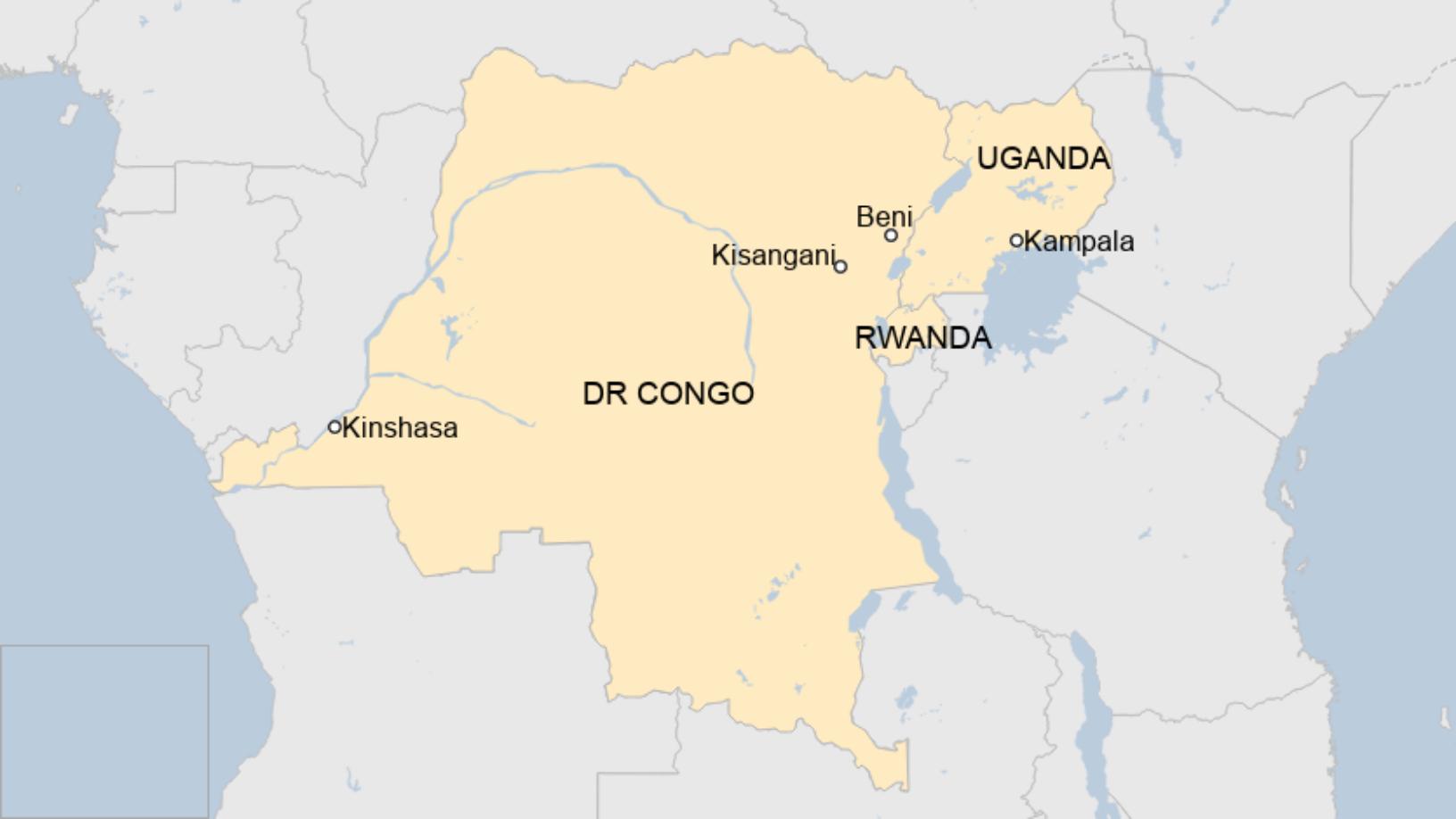
Ugandan forces have once again crossed the country’s western border to go into the Democratic Republic of Congo.
Previous incursions have been extremely controversial with troops in the past fighting soldiers from Rwanda, carrying out atrocities and plundering the country’s natural resources.
But this time it is with the approval of DR Congo’s government.
Why are Ugandan troops in DR Congo?
Speaking a few days after a suicide attack last month in the heart of the capital, Kampala, President Yoweri Museveni called on those responsible to surrender: “My advice to all of them… if they do not come out, they will die.”
The government was clearly determined to pursue the militants wherever they may be.
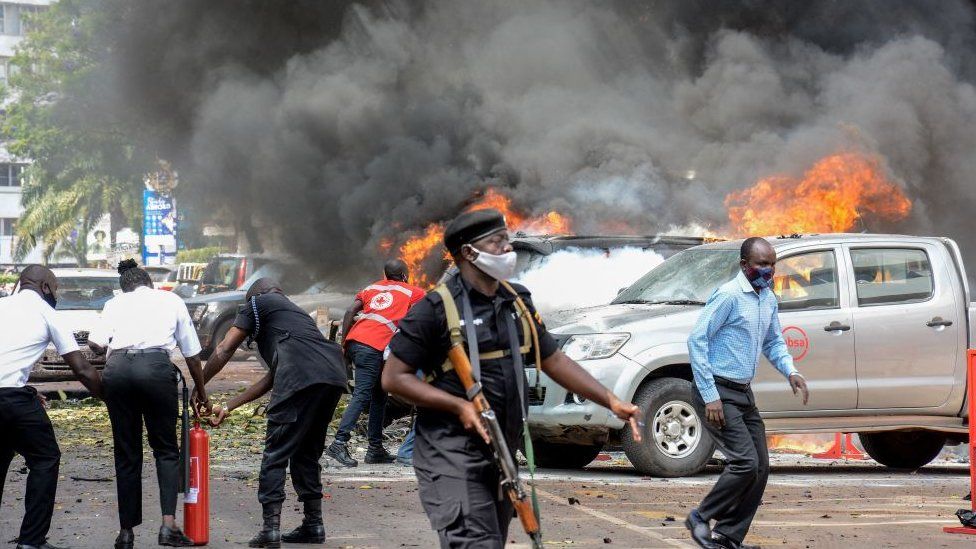
In the last and most audacious of a series of attacks on 16 November, three bombers blew themselves up and killed at least four others in the process.
The government blamed a militant Islamist rebel group called the Allied Democratic Forces (ADF), which was founded in Uganda but was then forced into DR Congo. It says it is now part of the Islamic state group.
Image caption, The suicide attack in central Kampala shocked Uganda
On Tuesday, the Ugandan army confirmed that it had carried out airstrikes on ADF targets across the border. Then on Wednesday hundreds of Ugandan troops were seen crossing into DR Congo.
The Congolese government said it had invited its neighbour’s armed forces into the country as the ADF is one of many armed groups wreaking havoc in eastern DR Congo.
The ADF, flushed out of Uganda in the early 2000s, has been attacking and looting Congolese villages, killing people and forcefully recruiting children for at least the last decade.
How serious is the fighting?
A resident of the city of Beni, near the border, told the BBC that he could hear the sound of explosions.
“There is serious fighting. The Ugandan soldiers entered on foot and with vehicles. We have seen drones flying.”
Video clips have circulated on social media showing villagers close to Beni watching columns of Ugandan soldiers march past.
But officials from both the Ugandan and Congolese governments have not given many details away, save to confirm the presence of Ugandan troops.
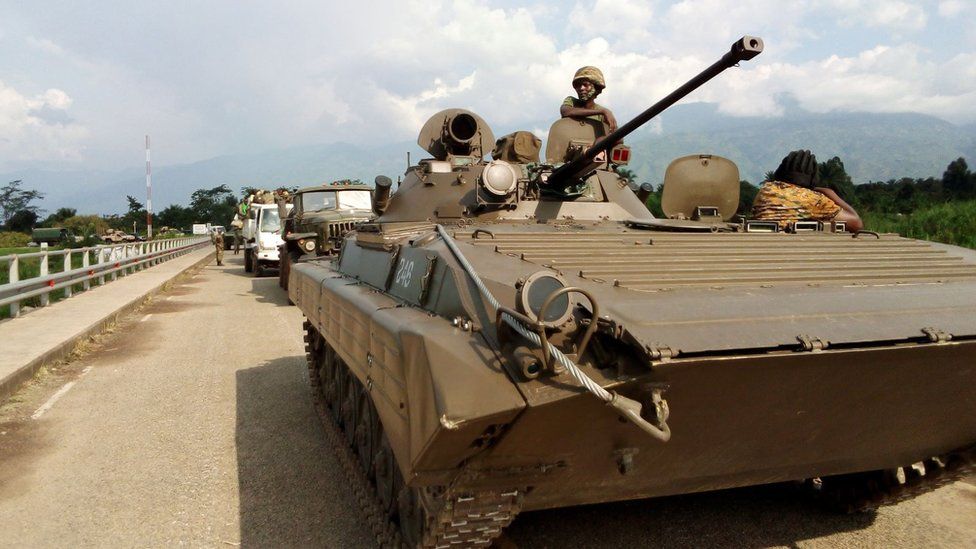
The Uganda army has released a series of photos which show columns of soldiers in DR Congo accompanied by armoured vehicles and tanks.
It says thousands of ADF fighters were killed in the airstrikes but has not provided any evidence and it has not been possible to verify.
The operation will be reviewed every two months, it said in a statement.
The spokesperson for the Congolese army, Gen Leon Kasonga, said the fighting was happening in remote areas, including in the middle of a forest and the Virunga National Park, which stretches along the two countries’ border.
He added that troop movements, the duration of the operation and casualty figures were confidential.
What has been the reaction in Uganda?
Opposition politicians and some commentators have strongly opposed the troops’ incursion into DR Congo.
This is partly because the deployment was carried out without consulting or getting approval from parliament, as the constitution requires.
But Uganda has ignored this before. There was no consultation when troops went into DR Congo in the 1990s. And in 2013, Ugandan forces crossed over into South Sudan to support President Salva Kiir without parliament’s approval.
What about in DR Congo?
While many Congolese are desperate to see an end to ADF attacks, some do not have good memories of previous Ugandan incursions.
The reaction of Congolese Nobel Peace Prize winner Dr Denis Mukwege sums up some of the concerns.
Image caption, The ADF has been blamed for numerous attacks in eastern DR Congo
“No to arsonists/firefighters, the same errors will produce the same tragic effects. Stand up Congolese, Nation in danger!” he tweeted earlier this week.
Activist group Lucha has also expressed concern, saying that this was not the way to bring peace to the troubled region.
Addressing the Congolese army, it said in a statement that “confidence… has to be earned. The people need to have a government and an army in which they can really place all their confidence.”
A spokesperson for Monusco, the UN force in DR Congo, said inviting the Ugandans was a legitimate choice and the UN encouraged “regional countries to work together to solve the cross-border threat”.
Monusco has previously conducted joint operations with the Congolese army to try and stop the ADF attacks but they still continue.
What happened the last time?
The Ugandan army has a soiled reputation for its incursions in DR Congo in the 1990s and early 2000s.
In 1999 and 2000, Ugandan and Rwandan armed forces, each backing a different faction of the RCD rebel group, clashed in the Congolese city of Kisangani.
Image caption, Uganda has sent tanks and armoured vehicles into DR Congo
The RCD was fighting to overthrow the president at the time, Laurent Kabila.
In what has come to be known as the Six-Day War, over 1,000 people are said to have been killed in June 2000, as Ugandan and Rwandan forces fought to take control of the city.
Ugandan troops were accused of human rights abuses against the population during this phase of fighting.
Among the claims were that they sexually exploited local women.
The Ugandan forces were also accused of plundering the DR Congo’s vast natural resources.
A 2001 UN report said forces from Uganda, as well as other neighbours, looted minerals, coffee, timber and livestock.
In 2005, the International Court of Justice said Uganda had to pay reparations to DR Congo for the illegal invasion. The money has still not been handed over.
Why is eastern DR Congo a haven for rebel groups?
The resource-rich region has attracted rebels for decades. Some reports suggest there could be at least 120 different militant groups based there.
The fighting has become as much about control of the country’s riches as political power. Some neighbouring countries have been accused of backing rebels in order to benefit from the chaos through plunder.
Despite President Felix Tshisekedi declaring what was termed a “state of siege” – essentially martial law – in the two affected provinces, attacks and killings of residents have continued.
The Ugandan weightlifter missing since Friday from a training camp in Japan has been found “safe and sound”, announced Tuesday the Japanese police.
Julius Ssekitoleko had disappeared after failing to appear for a Covid-19 test.
“Today (Tuesday), the man was found in the prefecture of Mie (center) without any injury and without any criminal involvement,” an official of the Osaka police told AFP.
The 20-year-old athlete had disappeared from the hotel in Izumisano, near Osaka (west) where he was staying with his group, announced the authorities of this municipality which hosts their base camp.
The Ugandan weightlifter “had on him his identity card and identified himself. We do not know to whom we should refer the man, to the team or to the embassy,” added the police officer.
Julius Ssekitoleko, who recently won the bronze medal at the African Weightlifting Championships, was on a waiting list for the Olympics but recently lost all hope of participating due to Olympic quotas. He was expected to return to his country soon.
He was part of the first group of nine Ugandan athletes, coaches and managers who arrived in Japan in mid-June, and two of whose non-athletic members tested positive for the coronavirus shortly afterwards. The entire group had to undergo quarantine afterwards.
Police said Tuesday that the man had traveled to Nagoya and then to Gifu Prefecture, before heading south to Mie.
“He was found in a house belonging to people connected to him,” the police official said, adding that the sportsman had offered “no resistance. We are still questioning him about his motives”.
Drastic restrictions have been planned in Japan for all participants in the Tokyo Olympics (July 23-August 8), while the health crisis worsens in the country.
The athletes must be tested daily and their movements are extremely restricted, limited between their accommodations, their training centers and their competition places.
Almost all the events of the Games will take place besides behind closed doors, decided the organizers last week.
Ten years ago, ragga singer Bobi Wine, sporting dreadlocks and oversized black sunglasses, regularly appeared in music videos surrounded by women, driving a Cadillac with a joint hanging out of his mouth.
Today the star, whose real name is Robert Kyagulanyi, is an MP dressed in dark, tailored suits who is fighting to become president of Uganda in Thursday’s election.
The 38-year-old former pop star has become the main challenger to President Yoweri Museveni, 76, who came to power in 1986 and is the only president that many in Uganda have ever known.
Arrests
While Wine has been arrested numerous times since 2018, and says he was sometimes tortured, he has accused the regime of going to extremes to crack down on his campaign in recent weeks.
He has taken to wearing a bulletproof vest and combat helmet on the campaign trail, where his meetings have often ended in a cloud of teargas and with live rounds fired.
The hashtag #WeAreRemovingADictator has spread on social media among the supporters of his National Unity Platform (NUP).
Fight against injustice
Wine grew up in one of Kampala’s biggest slums, Kamwokya, where thousands of Ugandans struggle to get by and feel forgotten by Museveni’s government.
While he went on to study music and drama at university and now lives in a better neighbourhood, he still sees himself as the “ghetto president”, a nickname he earned through his songs denouncing social and economic injustice.
His modest origins and youth are key to his popularity in a poor country where 40 per cent of voters are under 30 years old and have known no president but Museveni.
As an MP, Wine notably fought against a tax on social media, widely seen as unfair and limiting freedom of speech.
“Having lived in the ghetto he appreciates how the poor like us live,” said supporter and businessman Charles Mbagga, 37, who lives in the Gayaza slum, 15 kilometres (nine miles) north of the capital.
“Bobi Wine is popular because of his message for change, fight against injustice, corruption and unemployment among the poor and the youths.”
Buganda kingdom
He originally hails from the dominant Buganda kingdom — one of several traditional kingdoms which were forced together under colonialism — and is popular there.
“(The) Buganda kingdom is an important factor in the political context of Uganda. Bobi Wine has always been very careful with Buganda, making sure he has them on his side,” said Kristof Titeca, a researcher at the University of Antwerp in Belgium.
But analysts are sceptical over Wine’s capacity to pull off an election win. The country is still traumatised by the tyranny of brutal dictator Idi Amin, who Museveni helped oust, ushering in peace and stability.
Rural areas and some groups like the military remain firmly behind the president.
‘Dictatorship in panic’
Nevertheless, the regime has shown in recent weeks, a certain anxiety towards the young upstart who Museveni has in the past referred to as “our grandson, the undisciplined Bobi Wine”.
In mid-November, at least 54 people were killed in clashes with police which were sparked by Wine’s umpteenth arrest. In December a member of the singer’s security team was killed by the army, according to his National Unity Platform (NUP).
At the end of December, election rallies — already restricted to a quick address from the roof of a car — were banned in Kampala and 10 other key districts.
Officially, this was due to Covid-19, but Wine and observers have seen this as a deliberate bid to frustrate his campaign.
“The dictatorship is in panic. They’ve been surprised by the massive enthusiasm and support we’ve been received within all parts of the country,” Wine wrote on Twitter.
Titeca argues the regime may have shot itself in the foot by cracking down on him, and the repression may help Wine win even more votes.
“The fact he has been able to face that crackdown, people getting killed around him, him not backing down on everything that is happening, it has made him a martyr in a way, somebody who dares to stand up to the current system,” said the analyst.
Ugandan opposition presidential candidate Bobi Wine said soldiers raided his home on Tuesday and arrested his security guards, two days before an election.
“The army has this morning raided my home, arrested all my security guards and anyone they could see around my premises,†Wine, who is the opposition frontrunner, said on Twitter.
“No reason for the arrest was given,†he said.
Spokesmen for the military and the police did not respond to phone calls seeking comment.
Ugandans vote on Thursday in elections pitting long-time leader Yoweri Museveni against 10 candidates including Wine, a singer-turned-lawmaker whose star power has rattled the ruling party.
Wine also said in a separate post on Twitter that soldiers raided the home of one of his aides overnight and took the man to an unknown destination.
Uganda’s State Minister for the Elderly and Disabled, Sarah Kanyike, has said the government is reviewing the 80-years cut-off age for beneficiaries of the Senior Citizens Grant programme to at least 60 years to accommodate more older persons.
The Social Assistance Grants for Empowerment (SAGE) scheme is a social welfare programme whose pilot was launched in 2010.
A monthly stipend of Shs25,000 is given with the intention to benefit the elderly, who lack stable sources of income, family support structures and live below the poverty line.
Previously, 65-year-olds and above in 57 selected districts were receiving the funds monthly, however, effective July 1 last year, it was raised to 80 years to enable the programme roll out to all districts.
“The issue of cut-off age of 80 years is being looked into by government and at an appropriate time, government will come back with a solution,†Ms Kanyike said.
Ms Kanyike said the current cut-off age of 80 years for SAGE beneficiaries leaves out a huge population of the vulnerable elderly.
She was last week on a field visit to Kayunga District to witness the implementation of the SAGE programme.
Ms Kanyike also interacted with SAGE beneficiaries who were receiving their Shs100,000 for the past four months at Seeta Primary School in Kangulumira Sub-County.
Kayunga District is one of the districts where the programme started.
Ms Kanyike said the senior citizens grant has been impactful on the lives of the beneficiaries.
She added: “This is evident in areas of access to services such as education and healthcare, food and nutrition as well as production.â€
At Seeta Primary School, many of the SAGE beneficiaries confessed that the programme had changed their lives with two of them saying they have been able to build houses for themselves.
The minister, who commended the district for the successful implementation of the programme, said currently 304,155 older persons (179,750 females and 124,805 males) are benefiting from the grant countrywide.
In Kayunga District alone, a total of 2,816 are beneficiaries.
China’s Supreme Court has hired Uganda’s former Chief Justice, Bart Katureebe, as a member of its expert committee on adjudication of international commercial disputes.
Justice Katureebe will sit on the committee for the next four years.
He retired from Uganda’s Supreme Court in June after reaching the mandatory retirement age of 70 years.
“I am profoundly excited about this appointment, for it is a high-level committee that will keep me professionally connected,” he is quoted as saying in a statement tweeted by Uganda’s judiciary
.The expert committee, established in August 2018, is part of the China International Commercial Court (CICC) which is an organ of China’s Supreme Court.
The committee is comprised of 31 leaders of international organisations, legal experts, scholars, judges and lawyers selected from different countries, the statement by Uganda’s judiciary added.
It mediates international commercial disputes assigned to it, provides legal opinion on foreign laws when asked and gives advice on the future of the CICC.
The Chinese embassy in Uganda has congratulated Justice Katureebe on his appointment.
We warmly congratulate retired Chief Justice Bart Magunda Katureebe on his appointment as a member of International Commercial Expert Committee of the Supreme People's Court of the People's Republic of China. pic.twitter.com/Ds69j1Sc9S
The government has banned media houses from hosting politicians wearing the red beret, which was gazetted as attire for the army.
While addressing media owners, government spokesperson, Mr Ofwono Opondo warned that those who insist on hosting these individuals will be breaching the regulation and will be arrested going forward.
“Anyone who wanted to stop the process would have sought a court injunction. But since no one has not gone to court, it is illegal to use the beret. Those who are found culpable will be arrested,†Mr Opondo said.
This was during an engagement between media owners and security agencies at the Chieftaincy of Military Intelligence offices on Tuesday.
In the same meeting, the media owners under their umbrella body, the National Association for Broadcasters (NAB), petitioned security agencies over the arrest and brutality meted out to journalists and panelists.
In their petition, the media owners said the most fundamental principle defining credible elections entails the expression of the people, transparency, and inclusiveness.
Their key points in the petition include respect and protection of members of the fourth estate and according them support when executing their duties, refraining from arresting guests of media houses at their premises before, during and after talk shows, and according safe passage to those moving after curfew hours.
They urged the security agencies to: “Respect and stop interfering with our programmes and desist from issuing unnecessary threats to media houses. In cases you believe, some of the programmes breach any regulations, the issue should be followed up with the relevant regulators and continue to support media houses and our journalists to operate 24/7 during curfew, election period and even after.â€
The Internal Affairs minister, Gen Jeje Odongo, who chaired the meeting, said they had reached a compromise to come up with a committee to monitor the safety of journalists and receive all complaints in that regard.
“It is unfortunate that these issues have been happening and we have heard them. The security is committed to protecting journalists while in line of duty. We have come up with a committee that will handle the matters during the election period,†Gen Odongo said.
According to the different leaders, the 10-member committee will be chaired by Mr Ofwono, a representative from Uganda Communication Commission, Electoral Commission, and three members from NAB.
The other four members will be from the security agencies, including, Internal Security Organisation, External Security Organsation, Chieftaincy for Military Intelligence as well as Uganda Police Force.
The security in the recent past has been in the spotlight for arresting, brutalising and confiscating equipment of journalists while in the field.
If the road to hell is paved with good intentions, that to lasting peace with neighbours is layered with bitumen and straddled by high-voltage electricity lines.
That appears to be the lesson from the Uganda government’s strategic shift in its regional policy towards the Democratic Republic of Congo, its large, rich, but a troubled westerly neighbour.
After two-and-a-half decades of testy relations, including an armed invasion in 1997 that contributed to one of the world’s deadliest conflicts since World War II, Uganda is betting that infrastructure investments and shared economic benefits will build better relations and long-term stability.
Uganda’s cabinet recently approved plans to build three roads inside the DRC, continuing the country’s recent strategy of growing its influence in the Great Lakes region riding on infrastructure diplomacy.
Jointly funded by the two countries, the roads will run from some of Uganda’s border towns into DRC: one will run from Kasindi to Beni (80km) and another will integrate the Beni-Butebo axis (54km). The third will stretch for 89 kilometres from the border town of Bunagana, through Rutshuru to the strategic city of Goma, the capital of the North Kivu Province in DRC.
Uganda’s Works and Transport Minister, Gen Edward Katumba Wamala told The EastAfrican that while details remain unclear, the project has been approved in principle. “What has been approved by the Cabinet is the concept,” he said. “Both governments will contribute to the funding with DRC taking the biggest part and Uganda will make a contribution,” he said.
He added that Kinshasa will have to approve the projects and sign a memorandum of understanding.
The Cabinet approval followed the Uganda-DRC Business Forum in November 2019 in Kampala, which included a bilateral meeting between Presidents Felix Tshisekedi and Yoweri Museveni at State House, Entebbe.
The two presidents, together with Presidents Paul Kagame of Rwanda and João Lourenço of Angola, also participated in a teleconference on October 7 which discussed regional security and collaboration.
Last week Uganda’s Finance Minister Matia Kasaija presented a supplementary budget request to Parliament for the construction of the roads. From the request, Uganda is expected to contribute $65.9 million out of the total bill of $334.3m but officials say it is a small investment for a project with economic, political and strategic importance.
Cross-border trade
Economically, the road will double trade volumes between the two countries in the short term, according to Gen Wamala, the Transport minister. In 2018, Uganda exported goods to DR Congo worth $532 million, including an estimated $312 million in informal exports.
Uganda’s top exports to DRC include cement, sugar, rice, beer, wheat flour, biscuits and beauty and make-up products while importing include iron, pearls, mineral fuels, wood, charcoal, spices, vegetable fats and oils, rubber among others from its western neighbour.
Trade across the border has however been hampered by a poor road network inside DRC which Ugandan traders say increases the cost of doing business. Insecurity in the region has also been a hindrance to smooth cross border trade between the two countries. The road is thus expected to speed up trade and increase transparency in the cross-border flows of goods.
Politically, Uganda is banking on infrastructure to strengthen relations which thawed somewhat under former president Joseph Kabila but remained frosty due to instability in eastern DRC and a $10 billion bill imposed on Kampala in 2005 by the International Court of Justice.
The ongoing rapprochement has been helped by a new outward-looking regional policy from Kinshasa under President Tshisekedi. Since taking office last January, the new Congolese leader has visited all nine countries with contiguous borders in a clear change of approach from his more introverted predecessor.
Five of those neighbouring countries are in the East African Community and last year President Tshisekedi wrote to the seeking to have his country admitted to the regional bloc, a decision that is under review. The new leader has openly spoken of Congo’s new foreign policy objectives.
“We are committed to change,” President Tshisekedi said recently.
“We are discussing economic integration, peace between our peoples and at our borders,” he added.
Marching east
DRC’s pivot from a primarily francophone central African locus to the mainly anglophone eastern Africa has not gone unnoticed by state and non-state actors in Kampala or in other capitals in the region. In August, the Nairobi Securities Exchange-listed Equity Group Holdings Plc completed the acquisition of a majority stake in Congolese lender Banque Commerciale Du Congo.
The pivot east started during the Kabila administration when, in 2007, DRC and Uganda agreed to pursue joint oil and gas exploration activities near their common border, before similar agreements with Tanzania in 2016 and Rwanda in 2017. The tentative steps have turned into a goose march east under President Tshisekedi.
In March 2019 Rwanda and DRC signed an air transport agreement opening up their respective airspaces to Congo Airways and Rwandair, allowing the latter to launch flights to and open an office in Kinshasa.
Earlier this month, after a special envoy from Kinshasa visited Bujumbura, the DRC and Burundi agreed to “regulate and increase cross-border trade in the best interest of the economies of the two countries” and to jointly fight against “negative forces and other armed groups destabilising our two countries, in particular by organising coordinated patrols on both sides of the common borders,” according to a communique issued after the visit.
However, coming 18 months after Rwanda closed its border with Uganda and with it a major trade artery into the heart of the continent, DRC’s overtures present a strategic work-around for Uganda’s geo-political planners. The road to Goma, in particular, while longer that the existing route through Rwanda, would provide an alternative ingress into the lucrative Congo market.
With its population of 84 million, the DRC is already one of Uganda’s biggest trading partners in the region and Kampala is keen to build even stronger ties to replace other shrunken regional export markets, including South Sudan which remains politically and economically volatile.
Apart from the road projects, Uganda is dusting off plans from 2013 to build a 396-kilometre high voltage electricity transmission line from Nkenda sub-station in Kasese near the border, to Beni, Butembo and Bunia towns all in DRC.
Hotspot
Uganda’s infrastructure diplomacy in Congo is not new. The country has built or contributed to building roads in Kenya and in South Sudan, schools in Tanzania and Rwanda, and has made the crude-oil export pipeline through Tanzania a major tool of cooperation with Dar es Salaam. Plans to build a standard gauge railway to extend a similar line from Naivasha in Kenya to Uganda and the border with Rwanda have since stalled on weak underlying economic fundamentals.
The east of DRC, which borders Uganda, Rwanda and Burundi, has long been a hotspot for insecurity with various militia including the Allied Democratic Forces, the Democratic Forces for the Liberation of Rwanda (FDLR), and Movement 23. It is also a perennial source of refugees, with the UNHCR reporting that more than 3,000 have crossed from Congo to Uganda since July, raising to 360,000 the number of Congolese who have sought sanctuary in the neighbouring country.
After years of unsuccessfully waging war to bring peace to the region, the two governments are hoping that trade and good roads can finally deliver the goods.
The party offices of Ugandan presidential aspirant Robert Kyagulanyi, popularly known as Bobi Wine, are being raided by dozens of armed soldiers and police officers.
Documents are reportedly being taken from the premises as well as red military-style berets and overalls.
Uganda police spokesperson, Fred Enanga, told the BBC: “We are carrying out operations on misuse of some of the uniforms and accoutrements that are gazetted”.
In September last year, the government designated the red beret worn by Bobi Wine and his supporters as military uniform meaning anyone deemed to be possessing or wearing them illegally could be prosecuted.
Mr Enanga said the operation was ongoing and that officers would search other premises as well as the offices of the National Unity Platform party.
Bobi Wine has said state operatives are targeting him and his party as they prepare to challenge President Yoweri Museveni in the general election in early 2021.
But the police spokesperson insists the operation is not politically motivated.
Local television station NTV Uganda has tweeted a video of the raid:
VIDEO: This is the situation at the @NUP_Ug offices right now as the raid and search on the party's offices in Kamwokya by security operatives continues. Both parties are yet to speak out on the incident. #NTVNews#UGDecides2021
Education officials in Uganda have warned parents not to pack hand sanitisers for their children returning to school on Thursday, fearing that it could result in alcohol abuse, Daily Monitor reports.
Schools should instead ensure there’s water and soap at different sites, Benson Kule, the commissioner directorate of education standards, said.
Mr Kule said that if students were allowed to carry hand sanitisers some could use the opportunity to bring alcohol to school.
“Sanitisers can be used for offices and teachers alone and not for learners. The alcohol content is very high. Learners are young people. They should be protected. Some will be carrying waragi [gin] saying it is a sanitiser and you will not be able to tell. You will end up with a drunk school,†he said.
Final year students in primary and secondary schools will resume learning on Thursday, six months after the country imposed a lockdown to deal with the Covid-19 pandemic.
The government will monitor the performance of the phased reopening before other classes are allowed to join in, the Daily Monitor reports.
"Learners are young people. They should be protected. Some will be carrying waragi (gin) saying it is a sanitiser and you will not be able to tell. You will end up with a drunk school” https://t.co/XWyxgDtCzW#MonitorUpdates
The virus has kept schools in Uganda closed since March. While salaries for teachers employed in government schools have kept coming, an estimated 150,000 teachers in private schools have not been paid for months.
Now, some like Brenda Kemigisha are doing small businesses to survive. She has started a shop selling children’s clothes and shoes.
Until March, she had made her living as a secondary school teacher.
But all that changed when the coronavirus pandemic hit Uganda.
“After March the directors said they couldn’t manage to do other payments so we should look for means of survival,” Kemugisha says.
Luckily, she had already launched the shop just a few months before the school shut down. So she invested her savings and expanded the business to make it her main source of income.
It makes her around $20 a week – much less than her $100 teacher’s wages, but critical money at this difficult time.
Around her shop, text books are a reminder of her previous profession. Kemugisha intends to return to teaching when her school reopens, But she has reevaluated how much time she will spend on the job.
“I love children, I have passion for children so I will go back and teach,” she explains.
“But I know I will not give it more time the way I used to because even my business needs me. So, I will give some time to the school and some time to the business.”
With the shop as a safety net, Kemugisha is one of the lucky ones.
No help from government
Official records from 2017 report more than 14,000 private schools in Uganda – more are thought to have opened since those figures were calculated.
They employ an estimated 150,000 teachers.
The Uganda Private Teachers’ Union has raised concerns over how its members are coping financially.
With no help from the government, most teachers have tried to open business, sell street food, get cleaning jobs or offer their services as home tutors.
But the union also reports cases where its members have turned to prostitution or have committed suicide due to their desperate situation.
“The government of Uganda sanctioned a food relief when COVID hit and people were in lockdown but very distinctly his Excellency the president of Uganda shared that people who are salaried will not be part of the people to benefit from that food relief. And by assumption he categorically even mentioned teachers,” says Juma Mwamula, general secretary of Uganda Private Teachers’ Union.
“I think he had been hoodwinked to imagine that even the teachers in private schools continue to receive salaries as their counterparts in the government schools.”
Enterprise
At Hana International School, there are no pupils in class – but the rooms aren’t totally empty. The teachers have spotted a business opportunity in the midst of the pandemic. Thirty-six of them have come together to make face masks.
The classroom has become a small factory for their idea. It’s one of a number of money-making ventures they have tried.
“When this COVID came in we used the money from our SACCO, from the savings, to start a number of projects. The first project that we started was making paving stones. So, as well as bricks. So, when we started that project we realised that we needed something else to add on it. Because not every day that people buy the pavers (paving stones) and we needed to survive,” explains Fredrick Oduor, a geography and Kiswahili teacher.
“Some that’s when we came up with this other project of making masks, face masks. Because we released that there was need for face masks.”
It took the teachers a week to master the skills of tailoring and making the masks.
It has been an important lesson for them. They have realised they need more than academic knowledge to get by.
“We have learnt that we don’t have to depend on salaries alone. So we need to have multiple baskets where we can get money to feed our families. Two, we have also learnt that we need multiple skills because these skills are what we are using today to feed our families,” says Oduor.
When the school reopens, they will consider teaching their pupils some of these newly-acquired skills.
In the mean time, the classroom chalk board is the perfect place to make some calculations about their budding mask business.
National Drug Authority (NDA) has impounded government drugs worth Ghc250 million from illegal dealers in Kampala.
Two dealers were as a result arrested Thursday night in Nansana and Kampala during a special operation with police to crack down on unscrupulous and illegal operators in pharmaceuticals not authorized by NDA.
The Authority said such unscrupulous operators compromise the quality of health services where medicines available on the market fail to treat the stated diseases and conditions resulting in treatment failures result in a rising number of deaths.
“NDA conducted an overnight operation in Nansana West 2B Zone and in Lusaze, Mapeera Zone. Two suspects have been arrested. Margaret Namutembi of Nansana West 2B Zone and Edith Kunihira of Lusaze, Mapeera Zone. They are being held at Nansana Police Station and Old Kampala Police Station respectively,” the press statement reads in part.
The NDA said the arrested dealers will be charged on three counts of operating a business of a pharmacist without a license contrary to Section 14 (1) of the National Drug Policy/Policy Act 2002; unlawful possession of government stores contrary to Section 316 of the panel code Act and unlawful possession of classified drugs contrary to section 27(2) of the National Drug Policy/Policy Act 2002.
“Drugs and other health products you buy from unlicensed operators can expose you to health risks during the fight against COVID-19. Strictly buy drugs from outlets licensed by the National Drug Authority and take medicines as prescribed by a qualified health worker,” further reads the press statement.
Background
In February this year, the NDA impounded government drugs worth Shs90 million from private pharmacies and clinics in Bugisu and Sebei sub-regions in the eastern region.
The drugs were recovered during an operation to crack down on drug outlets that are not complying with licensing requirements and dealing in unregistered medicines.
The operations, which took place at the weekend, covered six districts of Mbale, Sironko, Bulambuli, Sironko, Kapchorwa, Kween, and Namisindwa.
Among the impounded drugs included unregistered medicines such as viagra and postinor not meant for the market in Uganda, Kenya, Malawi, and Zambia.
Uganda will begin human trials of a Covid-19 vaccine in November, the Daily Monitor newspaper reports quoting ministry of health officials.
The vaccine, called Self Replicating RNA, has been developed through a partnership between Uganda Virus Research Institute (UVRI) and Imperial College in the UK.
The head of a presidential taskforce on epidemics, Monica Musenero, is quoted as saying the first trial will be conducted on 10 Ugandans.
If successful, a second trial will involve about 100 to 200 people followed by a final trial of between 1,000 and 3,000 people, she said.
The bulk of the project is being financed by the UK university.
The East Africa country has to date confirmed more than 7,000 coronavirus cases and 75 deaths.
Seven of the 219 prisoners who escaped from Singila prison in north-east Uganda have been captured.
The prisoners shot and killed a soldier who tried to intercept them, before heading for Mount Moroto on Wednesday afternoon.
Prisons service spokesperson said they have deployed three helicopters and soldiers on foot to pursue the fugitives. Two of them have been shot dead.
The escapees are thought to be trying to use mountain routes to cross the border into Kenya.
The prison facility, usually with a population of over 600 inmates, has been put under lockdown as investigations into how the jailbreak happened get underway.
The army has released a picture of their hunt of the escapees:
Scientists from Uganda’s Makerere University and the national army have launched a study to find out whether plasma from recovered coronavirus patients has an effect on those having the virus.
This is the country’s first Covid-19 convalescent plasma study.
Plasma is the clear, straw-coloured liquid portion of blood that remains after red blood cells, white blood cells, platelets and other cellular components of blood are removed.
Convalescent plasma is that taken from individuals who have recovered from an infection, and may contain antibodies against that particular disease.
The team has collected the first 162 units of plasma from donors.
The units collected had to be tested for infections, including Covid-19, HIV, Syphilis and Hepatitis, and can only qualify to be used if they are disease-free.
The researchers say that there is emerging evidence to support the use of convalescent plasma for the treatment of Covid-19, especially among severe cases.
They add that there is an urgent need to determine the efficacy of convalescent plasma.
There is currently no cure or vaccine for Covid-19.
Uganda has reported more than 5,000 cases of the virus and 58 deaths.
Police in Uganda say the severed head a child – carried by a man who had attempted to gain access to parliament on Monday – belongs to a headless body found in Masaka, south-west of the capital, Kampala.
The man who carried the gruesome package, 22-year-old Joseph Nuwashaba, is being held by the country’s Criminal Investigations Department (CID).
A family in Masaka had reported their child missing and police want carry out a genetic test to establish whether the victim was their child.
The family told local media that they had employed Mr Nuwashaba as a farm hand. He is scheduled for a mental examination.
Mr Nuwashaba told police officers after his arrest that he had intended to deliver the severed head to parliamentary speaker Rebecca Kadaga.
The speaker has not commented on the incident.
She told MPs on Tuesday that she was waiting for the outcome of police investigations.
A man carrying a parcel containing the severed head of a child has been arrested at the gate of Uganda’s parliament.
Joseph Nuwashaba, 22, is being held by the country’s Criminal Investigations Department (CID).
It is not yet clear what he intended to do with the parcel or where and how he acquired the head.
A CID source said that a child was reported missing in Masaka, south-west of the capital, Kampala, on Sunday.
A headless body has also been recovered in that district.
Investigators are working to find out whether it may be related to the head that Mr Nuwashaba was carrying when he was detained, reports the BBC’s Patience Atuhaire in Kampala.
In the 1990s and early 2000s, Uganda experienced a wave of kidnappings and killings of children. Their body parts were believed to have been used in rituals.
Police in Uganda are investigating an attack on government spokesperson’s home outside the capital, Kampala.
The spokesperson, Ofwono Opondo, tweeted on Thursday night that he had lost contact with his family members who had been attacked at home.
Mr Opondo told local media that “many people” gained entry into his home and bundled his family into one bedroom as they ransacked the rest of the rooms.
Deputy police spokesperson Polly Namaye confirmed that the residence was attacked and said the family was safe but shocked.
Bloggers, internet publishers, and broadcasters have until October 5 to seek permits from the Uganda Communications Commission (UCC) in new regulations that tighten State control on the dissemination of information.
“All persons currently offering or planning to commence the provision of online data communication and broadcasting services including but not limited to blogs, online television, radios, online newspapers, audio over Internet Protocol (AoIP), Internet Portal TV, Video on Demand digital audio radios and television, internet/ web radio and internet/web television, to obtain authorisation from UCC before providing such services to the public,†the statement released on Monday by the regulator reads.
“If your social media page is used to transmitting sound, video or data intended for simultaneous reception by the public (broadcasting) and by data, we mean electronic representation of information in any form including audiovisual, you need authorisation as a data communicator,†added UCC.
Reaction
Ugandans have criticised the new directive coming at a time the country is headed for a general election in February next year with campaigns having kicked off, though unofficial.
Due to the COVID-19 pandemic, the electoral body has directed that political parties conduct “scientific campaigns†online, through the media and other non-contact means as a preventive measure to stop the spread of Coronavirus.
“One buys data to use the internet, then pays OTT [over-the-top tax] to use social media, and now one has to pay to post on social media? Why introduce this tax in a situation of digital campaigns?†Narith, a Twitter posed.
Ivan Bwowe, a lawyer and human rights activist, has warned that the directive infringes on the constitutional right to freedom of expression and communication.
Farmers in Uganda have produced a bumper harvest, but disruption of transport and reduced demand for their crops has led to a collapse in food prices.
Agriculture continued throughout the coronavirus pandemic, but now farmers are being forced to sell their produce at almost giveaway prices, because shops and traders have cut the amount of food they are buying.
It is common to see food dumped around marketplaces and farms in Uganda, as prices of fruit and vegetables are half what they were five months ago.
Dr James Kanyije, the Chief Executive of KK Fresh Foods, which exports food to Europe, has told the BBC that the industry has been hit hard by rising costs and disruptions to transport.
He is especially concerned about the high costs of sending food to Europe by air cargo.
“The exports and prices of food have fallen due to high costs of flights into the European Union and the demand yield has been affected by late movement of products due to transport,†he said.
He also reminded us about the impact of telling people to stay at home, as part of measures to contain the spread of COVID-19.
“In April it was almost 90 percent reduction due to total lockdown of all transport means.â€
Mr Kanyjie is also hopeful of recovery for exports of food when aviation is fully reopened, saying “it will only increase when the airports and all value chains are reinstated across the world.â€
The decision by the government of Uganda to introduce a fee for voluntary tests for Covid-19 threatens to disrupt travel and the resumption of tourism, as well as trade.
It will even affect the return of Ugandan citizens from abroad.
On Sunday evening, the government issued a directive requiring agencies to charge $65 (£50) per test.
It affects cross-border truck drivers, visitors to the country and Ugandans who go home.
Organisations that plan to test their staff and individuals, who want to know if they have contracted the virus, will also have to pay.
The government in Kampala says the fee will contribute to the cost of managing the pandemic. So far, 350,000 people have been tested, revealing about 2,900 positive cases and at least 30 deaths.
People who have developed symptoms, or have been in contact with someone who has contracted Covid-19, will not have to pay.
It is feared the charge may undermine efforts to contain the virus, by discouraging people from getting tested.
It could also increase the cost of imported goods as truck drivers have to pay, as do any potential tourists.
Uganda’s President Yoweri Museveni has declared Saturday a national prayer day for Covid-19.
The president said he got the idea from a Ugandan citizen who had a vision from God.
“God had told him in a vision that I should organise national prayers, scientifically organised, for God to deliver us from Covid-19… I declare 29 August 2020, a day of national prayers and a public holiday. Stay in your houses or compounds and pray,” Mr Museveni said in a social media post
Uganda has so far recorded 2,679 coronavirus cases and 28 deaths.
The government imposed strict restrictions in March after confirming the first case.
Uganda’s foreign ministry has recalled some members of staff in its embassy in Denmark to pave way for investigations following a newspaper report of a plot to misappropriate public funds.
The Ugandan Daily Monitor newspaper highlighted a leaked audio recording of people discussing the plan. But there has been no official confirmation that the voices belong to embassy staff.
The foreign ministry, through Permanent Secretary Patrick Mugoya, has released a statement saying it will investigate the report.
“In the meantime, the officers implicated have been recalled to the ministry headquarters to pave way for investigations. Depending on the outcome of the investigation additional measures may be taken as appropriate,” he said.
📌NOTICE📌
OFFICIAL STATEMENT IN RESPONSE TO THE DAILY MONITOR NEWSPAPER ARTICLE OF 24TH AUGUST 2020 TITLED " EMBASSY STAFF PLOT CASH THEFT ON ZOOM" pic.twitter.com/jv4TeQERTi
— Ministry of Foreign Affairs – Uganda 🇺🇬 (@UgandaMFA) August 24, 2020
The US government has filed fraud and money laundering charges against those behind an adoption scheme that placed Ugandan children who were not orphans with US families.
Two Americans, Margaret Cole and Debra Parris, and a Ugandan lawyer, Dorah Mirembe, are accused of conspiring to corruptly procure the children and transfer them to American adoptive parents, making hundreds of thousands of dollars in the process.
The Ugandan children were allegedly removed from their families with a promise that they would be enrolled in special education programs in the United States.
Instead they were presented to courts as orphans for adoption by Americans.
The US Treasury has imposed economic sanctions on the Ugandan lawyer, her husband and two Ugandan judges, who allegedly took bribes to sign off on the adoption cases.
A 19-year-old Ugandan has picked nomination papers to vie for the presidency in the upcoming general elections.
Hillary Humphrey Kaweesa said he had always been a leader and was qualified to lead the country.
He said he would fund-raise for the 20m Ugandan shillings ($5,400;£4,100) nomination fees.
Mr Kaweesa is also required to collect 100 signatures in every district for his nomination. The country has more than 100 districts.
The constitution allows any Ugandan citizen who is above 18 years to vie for the presidency.
The teenager joins legislator Robert Kyagulanyi popularly known as Bobi Wine and former army general Henry Tumukunde who have declared interest to run against the incumbent President Yoweri Museveni.
The government has been taken to court in Kampala for allegedly interdicting a laboratory technologist illegally.
The respondents in the case before the High Court are the Attorney General (AG) and Uganda Cancer Institute where he worked.
In his lawsuit , Mr David Wycliffe Mpiima claims that he was on July 1, 2014 appointed by the Health Service Commission to work under the Institute as the laboratory technologist receiving a monthly gross salary of about Shs1 million.
On March 28, 2019, he was suspended from duty on allegations that he was running an illegal laboratory and carrying out investigations in a manner that was contradicting the Uganda Cancer Institute Laboratory and private service guidelines.
“When I was called, I told them my story and the committee promised to start investigations into the matter and also start hearings into the allegations immediately,†Mr Mpiima states.
However, to date Mr Mpiima states that he has never been called for disciplinary action neither has any court process been instituted against him.
Mr Mpiima further narrates that on various occasions he had been assigned to do various duties by the Institute which he performed to its satisfaction.
According to the court documents, copies of which were seen by this publication, Mr Mpiima states that on March 28, 2019, he was put on a half pay by the Institute , restricted his movements outside the country with permission of the executive director of the institute and his access to the entity.
He states that this has caused him severe suffering and anguish for the last one year while awaiting the illegal interdiction to be lifted but to no avail.
Mr Mpiima contends that the decision was not only erroneous in law and fact, unreasonable, illegal or unfair and an abuse of power but also in breach of principles of fair hearing.
“I have written various communications to the first respondent (Institute) requesting to appear before the disciplinary committee or notify me about the status of the allegations against me but in vain,†he narrated.
He now wants an order quashing the decision of the Institute of interdicting him from his job.
He also wants an order restraining the institute and AG and all their agents, servants, agencies, departments, authorities and officials from interfering with his execution of lawful duties and travelling outside Uganda without permission from the responsible officer.
Ugandan opposition MP Robert Kyangulanyi, popularly known as Bobi Wine, has launched his National Unity Platform party ahead of next year’s general elections.
Bobi Wine said the party will be the political wing of his People Power Movement. The party symbol is a red and white umbrella.
He previously announced his intention to run for the presidency.
The East African nation is set to hold general elections in January 2021 when President Yoweri Museveni is expected to seek a sixth term in office.
The launch comes a day after Mr Museveni picked his nomination.
Uganda’s electoral commission banned campaigns because of the coronavirus pandemic.
Opposition figures have, however, criticised the ban saying it gives an unfair advantage to the ruling party whose members own media outlets.
Rwanda’s President Paul Kagame has complained about neighbouring nations Kenya and Uganda causing delays to imported goods because of the requirement to test truck drivers for Covid-19.
The Rwandan leader’s comments are prompted by long delays for road cargo, as drivers are tested at the border by the Kenyan and Ugandan authorities.
Rwanda is a landlocked country and imports either travel through a northern corridor from Kenyan port city Mombasa, or a route further south from Dar es Salaam in Tanzania.
President Kagame said “coronavirus is killing people, business and even relationships” and he called the delays “unfair”.
However, he did not mention how Rwanda was the first country in the region to close its borders, at the onset of the pandemic, which disrupted the transport of cargo to Burundi and the Democratic Republic of Congo.
Mr Kagame’s comments could raise tensions within the East African Community, at a time when the regional bloc needs political unity to cope with the economic impact of the pandemic.
Uganda’s central bank is threatening to put a cap on interest rates charged by commercial banks.
This comes amid frustration that the cost of getting a loan for businesses, or consumers, remains high – deterring entrepreneurs from borrowing money to invest in expanding a business to create more jobs.
In April, the Bank of Uganda cut its benchmark rate to 8% and then to 7% in June, hoping banks would take advantage of access to cheaper funds to lend more to businesses at lower rates.
However, between April and June, the average interest rate charged by banks on loans has ranged between 17% and almost 19%, significantly above the central bank’s benchmark.
It is a sign that banks want to protect profits from lending.
The central bank has warned the financial industry that it is ready to take advantage of legislation that allows it to set minimum and maximum interest rates.
The Bank of Uganda has previously resisted demands to intervene, to set rates, saying the government should not control bank profit margins.
The financial sector insists the interest rates reflect high operating costs and the risk of defaults on repayments.
The Nigerians in Diaspora Commission (NiDCOM) says 172 Nigerian evacuated from Uganda and Kenya arrived at the Nnamdi Azikiwe International Airport, Abuja at about 10:20 am local time on Wednesday.
The commission disclosed this in a statement by Mr Gabriel Odu of its Media, Public Relations, and Protocol Unit.
He said that the evacuees arrived via @flyairpeace Flight B777-200 from Nairobi, the Kenyan capital.
According to him, some of the evacuees disembarked at the airport in Abuja while others proceeded to the Murtala Muhammed International Airport, Lagos.
“The exercise was put together by our Mission in Nairobi, Kenya in collaboration with the Mission in Kampala, Uganda.
“All evacuees tested negative to #COVID19 and will now proceed on 14 days self-isolation as mandated by @NCDCgov, @Fmohnigeria and PTF on #COVID-19,†he said.
Ugandan nationals living in China have changed their minds on returning home and will not be included in repatriation flights, according to the foreign affairs ministry.
The ministry expects about 2,000 returnees from South Africa, Afghanistan, the US, United Arab Emirates and India.
Minister Henry Okello Oryem told Daily Monitor newspaper that many Ugandans in China had resumed work after their government intervened following reports of mistreatment.
The ministry termed the protests by Africans in China as having been a result of “miscommunication among local authorities about how to handle foreign nationals as they control the spread of Coronavirus”.
Ugandan nationals living in Sudan and Turkey were this week repatriated home:
The first batches of Ugandans who were stuck outside due to #COVID19 have been flown back home by the government. The groups from Sudan and Turkey were received at Entebbe International Airport by State Minister for Foreign Affairs @okelloryem.
📸 Julius Luwemba#VisionUpdatespic.twitter.com/0fLxmOkEMf
The government in Uganda has apologised to the family of a church leader who was shot dead by police in Kasese district, according to state-owned New Vision newspaper.
The local commissioner Joe Walusimbi attended the funeral of Rev Ordinand Benon Musiimenta and said President Yoweri Kaguta Museveni had told him to apologise.
“We are at fault. He [President Museveni] told me to have the soldier handled according to the law of the country and the Uganda People’s Defence Forces (UPDF) rules,” Mr Walusimbi is quoted by New Vision as saying.
The commissioner gave the widow 5m Ugandan shillings ($1,300; £1,047) which he said had been instructed by the president.
The church leader was shot dead on Wednesday as he was riding a motorbike with his wife to their farm. His wife was injured.
The officers involved were arrested and will appear at a military court according to the police spokesperson:
Uganda’s opposition figure Robert Kyangulanyi, also known as Bobi Wine, has said he will hold campaign rallies despite a ban by the electoral commission.
The People Power Movement leader said President Yoweri Museveni was using the coronavirus pandemic as an excuse to prevent opposition leaders from reaching voters.
The east African nation will hold a general election in January 2021 and the electoral commission has banned mass campaign rallies to protect voters against coronavirus. It encouraged aspiring candidates to campaign through the media
President Yoweri Museveni, who is serving his fifth term of office, is eligible for a fresh term but has not announced whether he will vie.
Bobi Wine said the electoral commission’s ban on rallies was not genuine.
“No Ugandan should be fooled into believing that Museveni is doing this for the safety of Ugandans. What Museveni fears is the people,” he said.
He said the government was using the pandemic to prevent a free and fair election process.
The banning of campaign rallies means that the opposition would be disadvantaged as radio is the most popular media in Uganda and most private stations are owned by politicians in the ruling party.
Disclaimer : “Opinions expressed in this article are the sole responsibility of the author(s) and do not in any way reflect those of backend.theindependentghana.com. Our outfit will hereby not be liable for any inaccuracies contained in this article.â€