Liz Truss has only been in Number 10 for a few weeks, but the possibility of her leaving in the coming months is being seriously considered.
The chancellor has been fired, which is the last resort for any Prime Minister.
Tory MPs including ministers tell me, Liz Truss, herself – prime minister for just five weeks – cannot survive and there is a discussion about how to remove her.
But removing a sitting prime minister who doesn’t want to leave office isn’t always easy. Here are some of the options.
She could resign
No prime minister wants to be hounded out of Downing Street but it could be that Ms Truss, fuelled by cabinet resignations, sees the writing on the wall and announces a Conservative leadership contest.
This is what the last two prime ministers, Boris Johnson and Theresa May, ended up doing after both won no-confidence votes of their MPs but their positions became untenable.
Both of them were in office for three years, though, not just a matter of weeks.
Vote of no confidence
Not so easy. The last Conservative leader to be ousted by their peers in parliament was Iain Duncan Smith in 2003.
Like Ms Truss, he was the choice of the party members, but not his MP colleagues (who favoured Ken Clarke); like Ms Truss, he was also accused of making things worse by not reaching out across the party when appointing his shadow cabinet, and he struggled to maintain authority.
But – thanks to a little-known rule of the backbench 1922 Committee – this is not currently an option.
When Mr Johnson became prime minister in the summer of 2019, the powerful committee decided that a new leader would get a “grace period” of a year before they could be challenged.
Some letters have gone in already, I’m told by MPs.
As one source on the 1922 Committee put it to me, committee chairman Sir Graham Brady “would have to act if we found ourselves in that situation”.
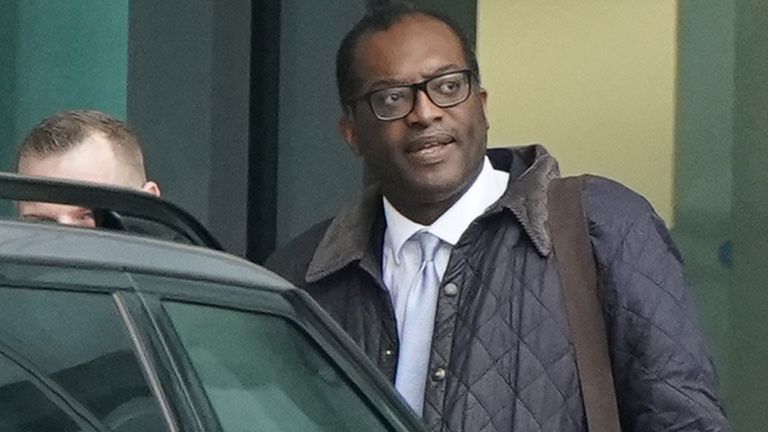
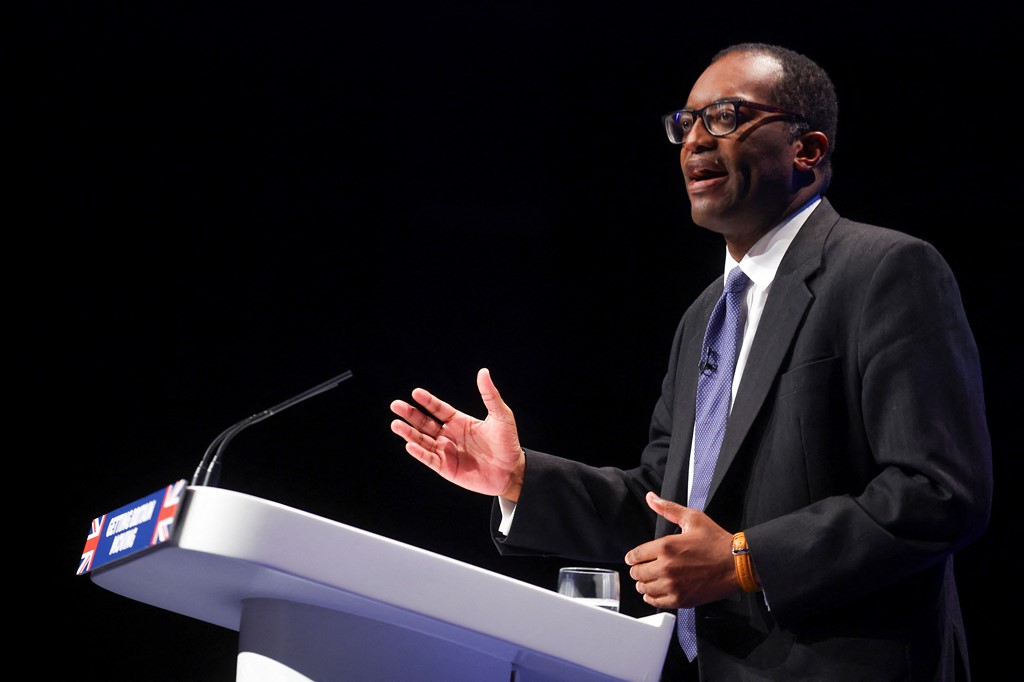
Image: Former chancellor Kwasi Kwarteng was sacked on Friday
A coronation
The problem is that many Conservative MPs feel it was the membership who chose Ms Truss – based on an unachievable prospectus – and they would rather not allow them to choose her successor.
This is much trickier, as the principle that the leader is “elected by the membership” is enshrined in Schedule 2 of the Conservative Party‘s written constitution, and overturning that would require a two-thirds majority in a vote of the National Conservative Convention, which has 800 members comprising the party’s senior officials including grassroots association chairs.
There is no guarantee of how that might go, and there would be accusations that it was shutting down party democracy.
One option would be for MPs to shortlist two candidates in a leadership contest, and for one of them to drop out – as Andrea Leadsom did in her contest with Mrs May in 2016.
The last candidate standing would become a leader “by acclamation” and that could happen quite quickly.
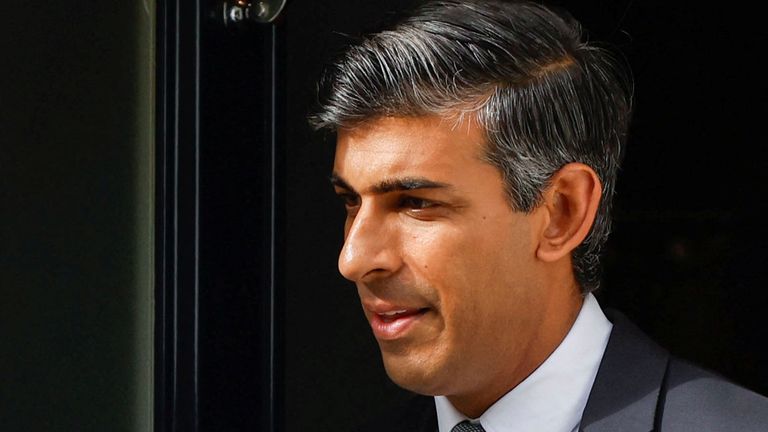
Image: Former chancellor Rishi Sunak
Or, as ConservativeHome’s Paul Goodman has suggested, MPs could set a higher bar of say 100 MPs supporting each candidate so there is only one possible winner.
But it’s not clear there is a unifying figure to undertake that role.
Rishi Sunak supporters believe he has been vindicated for predicting market turmoil, but it’s far from clear he would be accepted more widely.
An election
Ms Truss could make the extremely bold decision, given her party is now 30 points behind in the polls, to go for an election.
The Fixed Term Parliaments Act has been repealed so she would not need a vote in parliament to do this – to which you would imagine only Conservatives would be opposed.
Authorities in Kenya plan to exhume the body of a British tourist who died at the home of a controversial cult leader two years ago.
Luftunisa Kwandwalla was buried at a Mombasa cemetery in August 2020after reportedly dying of natural causes.
She arrived in Kenya as a tourist in August 2019 but her return to the UK was delayed due to lockdowns imposed in Kenya and Britain during the Covid pandemic.
Her family says she then joined a controversial cult in Mombasa.
The family alleges the 44-year-old was murdered and her body buried quickly to hide evidence.
Last week it obtained court orders for the exhumation to allow for a post-mortem examination to ascertain the cause of death.
The family told the BBC that the autopsy would be the first step in bringing closure to her death.
No one has been arrested in connection with the death and policerecords show that there are currently no active investigations.
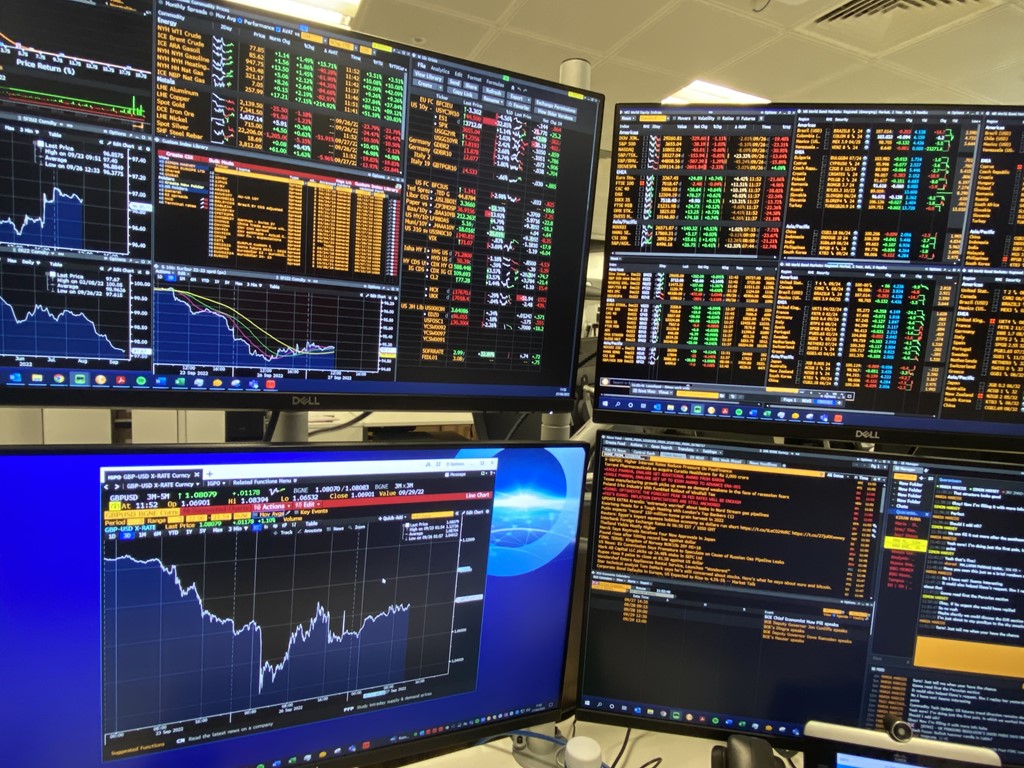
On Monday,the pound gained and government borrowing costs fell as investors welcomed the news that Chancellor Jeremy Hunt is speeding up tax and spending cuts.
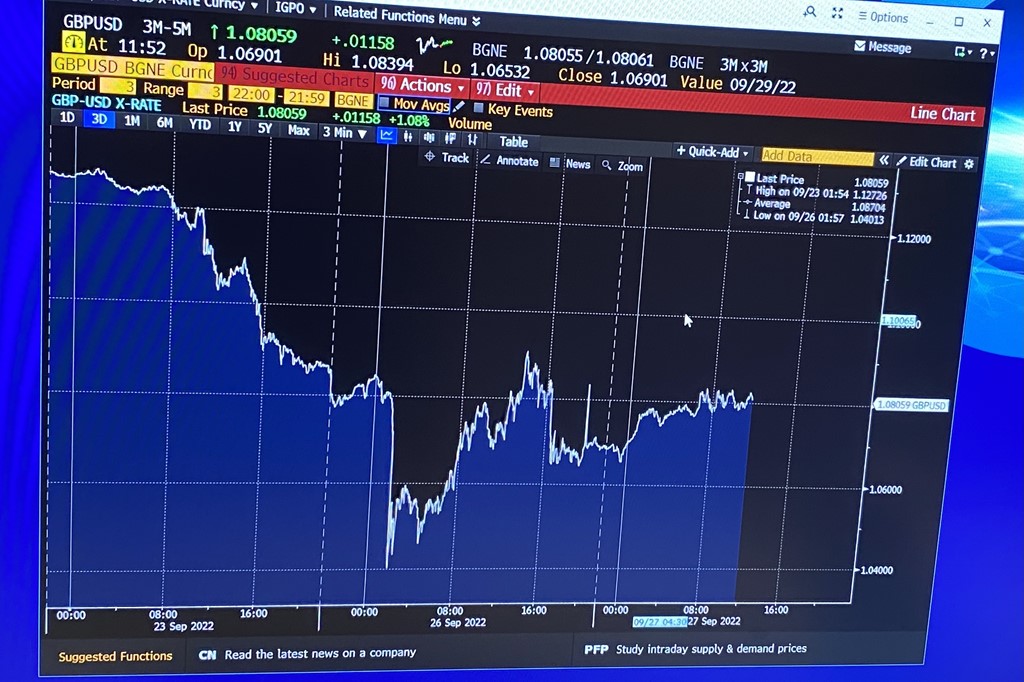
In morning trading, sterling gained 1% against the dollar, trading around $1.13.
The interest rate – or yield – on UK government bonds fell as a result of the announcement.
The drop in yields suggests financial markets are welcoming the prospect of changes to economic plans.
Monday is the first time the UK government bond market has reopened since the Bank of England’s emergency support programme ended on Friday.
On Friday, Prime Minister Liz Truss sacked Kwasi Kwarteng as Chancellor and said the mini-budget “went further and faster than markets were expecting”.
The mini-budget was blamed for causing turmoil in the financial markets. The aftermath of Mr Kwarteng’s announcements on 23 September saw the pound slumped to a record low of $1.03 and the cost of government borrowing rise sharply.
“The chancellor will make a statement later today, bringing forward measures from the Medium-Term Fiscal Plan that will support fiscal sustainability,” a Treasury spokesman said.
Mr Hunt is expected to fast-track many billions of pounds worth of tax and spending measures from his debt plan, announcing them a fortnight earlier than expected.
It is the latest of a series of U-turns on policies announced in the mini-budget.
The announcement of the £18bn U-turn on corporation tax on Friday and the firing of Mr Kwarteng did not appear to reassure investors, with UK government borrowing costs climbing on Friday afternoon.
Investors warned that whatever Mr Hunt announces will need to “add up”.
“I think you’ll see a positive reaction to the statement, assuming that the math adds up a bit more than it did before,” Shanti Kelemen, chief investment officer at M&G Wealth, told the BBC.
“What we saw on Friday, as we had markets rise in the lead up to the news that Kwarteng was resigning, but then as soon as it happened, we had a sell-off afterwards.
“So I think it’ll be important that the actual content of what’s being delivered adds up and has some more meat and numbers behind it than what we’ve seen previously.”
The Bank of England stepped in to stabilize the financial markets following the mini-budget, announcing an emergency bond-buying scheme.
Ms Kelemen said that the latest moves from the chancellor showed he acknowledged the government’s role in reassuring the markets.
“They’ve recognized that the uncertainty is damaging the economy,” she said.
“You also see the Bank of England won’t be supporting markets this week. So I think it shows the government is taking a bit more responsibility rather than relying on the Bank of England to buy all the debt.”
The shift in the government’s economic policies and market turmoil in recent weeks has led to Goldman Sachs downgrading its forecasts for UK economic growth.
The investment bank revised its 2023 UK economic output forecast from a 0.4% drop to a 1% contraction.
Goldman said it expected a “more significant recession in the UK” in part due to “significantly tighter financial conditions” and the planned higher corporation tax rate from next April.
Consultancy Pantheon Macroeconomics said the prime minister’s decision to appoint Mr Hunt as chancellorhad “done little to shrink the risk premium embedded in UK assets”.
“Households and businesses, therefore, are still facing a huge increase in their borrowing costs,” their analysts said.
They added the forthcoming real-term reduction in government spending looked “set to be bigger than in the 2010s”.
Earlier, Andrew Griffith told Sky News that Liz Trussstill has the support of her government despite troubling economic turmoil.
The Financial Secretary to the Treasury said: “Liz Truss has got the support of the government – it’s really important at this time that we have stability.”
Now, in an interview with Times Radio, he was pressed on whether Ms Truss will still be in Number 10 Downing Street at Christmas.
He dodged the question, instead reiterating his previous point.
“I think Liz enjoys the confidence of the government,” he said.
“She’s the prime minister and the last thing that I think anybody wants is to see more instability.
“I personally found the leadership election damaging. It was us talking about ourselves rather than the country.
“The quicker we can get back, and that work starts now, to good confidence in the markets, controlling what we can control, which is putting together sensible plans and bringing forward measures as we have with the energy price guarantee.”
Prime Minister Liz Trusshas released a comment piece she wrote for The Sun on Sunday, in which she calls it a “wrench” that “my buddy Kwasi Kwarteng has left government.”
She stressed on Twitter that she will always “act in the national interest, assisting people and businesses across our country.”
Ms Truss added: “We are going to do things differently, charting a new course for growth – it remains the core mission of this government.”
I will always act in the national interest, supporting families and businesses across our country.
We are going to do things differently, charting a new course for growth – it remains the core mission of this government👇https://t.co/CYWRRz27dn
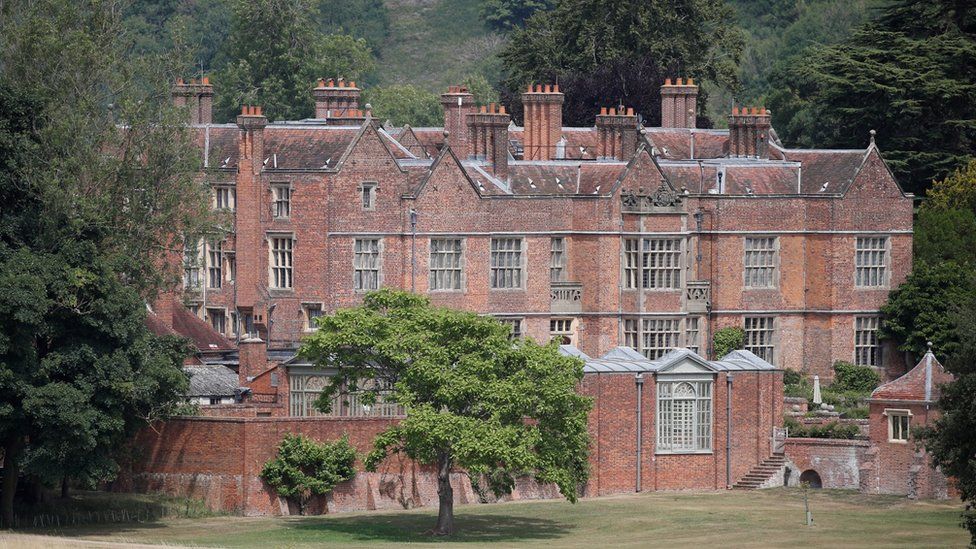
Prime Minister Liz Truss and Chancellor Jeremy Hunt will meet at Chequers today in an effort to restore the government’s economic confidence.
Mr Hunt, who took over for Kwasi Kwarteng, stated in a statement that his priority was growth “underpinned by stability.”
He warned of possible tax rises and savings in public spending, saying the mini-budget went “too far, too fast”.
Pressure is growing on Ms Truss, with reports that a group of Conservative MPs is seeking to remove her as PM.
According to former Home Office special adviser Mo Hussein, there are “definitely moves afoot behind the scenes”.
“People have been organised, some of the bigger names are getting their supporters in line,” he told BBC Breakfast, adding that the next few days would be tumultuous.
Talks of plans to oust Ms Truss come amid a series of interviews with her new right-hand man on Saturday.
Mr Hunt signalled a shift away from Ms Truss’s tax-cutting agenda and indicated he would reverse some of the key pledges made by his predecessor Mr Kwarteng, who was sacked on Friday.
He said this was necessary to ensure stability in the financial markets.
“Taxes are not going to come down by as much as people hoped, and some taxes will have to go up,” the chancellor told BBC Radio 4’s Today programme. “I’m asking all government departments to find additional efficiency savings.”
It comes as the Times reported that Mr Hunt planned to delay by a year a 1p cut to the basic income tax rate – a flagship part of the 23 September mini-budget.
However, the Treasury has so far refused to confirm the report, with a spokesman saying: “We cannot speculate on any tax changes outside of a fiscal event.”
IMAGE SOURCE, REUTERS Image caption, Truss and Hunt are meeting at Chequers, the official country residence of the prime minister
Mr Hunt is due to outline the government’s refreshed economic plan in a statement on 31 October, a task his predecessor was building up to following the aftermath of his mini-budget.
In his latest statement, released on Saturday night, Mr Hunt said: “My focus is on growth underpinned by stability. The drive on growing the economy is right – it means more people can get good jobs, new businesses can thrive and we can secure world-class public services. But we went too far, too fast.
He also said he intended to be “honest with people” about the “very difficult decisions” that had to be made “both on spending and on tax to get debt falling”.
“I will set out clear and robust plans to make sure government spending is as efficient as possible, ensure taxpayer money is well spent and that we have rigorous control over our public finances,” Mr Hunt added.
Meanwhile, the PM’s authority has come under increasing pressure – with some Tory MPs telling the BBC’s Laura Kuenssberg Mr Hunt’s appointment means Ms Truss is “in office, but not really in power”.
The prime minister’s hopes of survival could hinge on what she and her chancellor decide over the next two weeks.
There will be a budget at the end of the month that needs to convince financial markets and prove politically palatable to a fuming, mutinous Tory party.
Today’s meeting at the prime minister’s country residence is their first chance to have detailed discussions about the government’s new fiscal plan – which is expected to junk the tax-cutting agenda Liz Truss promised during the Tory leadership contest.
Jeremy Hunt has been clear that nothing is off the table and that tax rises and spending cuts will be needed. But many Conservative MPs are furious Liz Truss has led the government into this chaos and are talking privately about trying to turf her out.
One former minister predicted Ms Truss would be gone within weeks – but for now, she limps on, hoping the current turmoil subsides.
The imminent talks come as Andrew Bailey, the governor of the Bank of England, warned that interest rates may need to be raised higher than previously expected in order to keep UK inflation under control.
“As things stand today, my best guess is that inflationary pressures will require a stronger response than we perhaps thought in August,” Mr Bailey said in Washington, less than three weeks before the Bank’s monetary policy committee is due to meet.
Turning to his initial conversations with the new chancellor, Mr Bailey described an “immediate meeting of minds on the importance of stability and sustainability”.
Elsewhere in the US, President Joe Biden weighed in on the political situation in the UK, saying he “wasn’t the only one that thought it was a mistake” when asked about Ms Truss’s original economic plan.
He called the outcome “predictable” but said, while he disagreed with the prime minister’s policies, it was up to the British people.
Mr Biden also dismissed concerns about the strength of the dollar. “The problem is the lack of economic growth and sound policy in other countries,” he told a White House pool reporter.
Following the mini-budget, the pound plummeted to a record low against the dollar and the cost of government borrowing climbed as markets reacted to the package – which was not accompanied by an official assessment of how the UK economy would perform.
Just three weeks after the phrase was coined, so-called Trussonomics is no more.
Liz Truss’s ambitious plan for a high-growth, high-wage, low-tax economy didn’t even get off the launch pad. The new Chancellor Jeremy Hunt concedes that mistakes were made in how it was delivered.
In a remarkably frank interview with BBC Radio 4’s Today programme this morning, he admitted there would be difficult decisions ahead.
Some taxes would now go up, he said, and others may not come down as quickly as people want.
Spending will not rise as fast as previously planned. Hunt will now ask all government departments to look for efficiency savings – and said even health and defence are not immune.
He also admitted that “flying blind” was another big error. That was a reference to the failure of his predecessor to submit his plan to be stress-tested by the independent Office for Budget Responsibility (OBR) to make sure the sums added up.
The reaction from the business world has been mixed. One investment fund manager described the reversal in policy as a turning point and described Jeremy Hunt as someone the markets could trust.
But the chairman of supermarket giant Asda, Lord Stuart Rose, described Liz Truss as a “busted flush”, who in his view cannot bring stability to the economy.
The judgment from the markets will come when they re-open at 08:00 on Monday. It will be the first working day since the Bank of England stopped buying government bonds to try and stabilise the pension market. The price of government borrowing was already creeping up again at close-of-play on Friday.
Jeremy Hunt said he had been given a clean slate to re-work the mini-budget. He now has two weeks to make the figures work before delivering his economic plan on 31 October.
DISCLAIMER: Independentghana.com will not be liable for any inaccuracies contained in this article. The views expressed in the article are solely those of the author and do not reflect those of The Independent Ghana
Today marks the first anniversaryof Sir David Amess’s murder, which occurred during a constituency surgery at Belfairs Methodist Church in Leigh-on-Sea, Essex.
Liz Truss and Sir Keir Starmer led the tributes to Sir David, who served as an MP in Basildon and later Southend West for nearly 40 years.
On the anniversary of Sir David Amess’ death, we cherish his memory and remember his enormous contribution to politics, to the people of Southend and to the country.
My thoughts today are with his wife Julia, the Amess family and to all those who knew and loved him. pic.twitter.com/Tt44GQeHjG
The PM shared a statement along with Sir David’s parliamentary portraiton Saturday morning.
She said: “On the anniversary of Sir David Amess’ death, we cherish his memory and remember his enormous contribution to politics, to the people of Southend, and to the country.
“My thoughts today are with his wife Julia, the Amess family, and all those who knew and loved him.”
Remembering our friend & colleague David Amess, on the 1st anniversary of his senseless death.
David’s commitment to public service, carried out with inherent, consistent kindness, will forever be admired.
Thinking of his wife & children, hoping memories of him bring comfort.
Last night, after news emerged that Kwasi Kwarteng had been sacked as chancellor, several cabinet members spoke up in support of the prime minister.
Business Secretary Jacob Rees-Mogg
The prime minister has acted decisively to provide the economic stability our country needs.
As a government, we must now get on and deliver the pro-growth reforms that will lay the foundations for our future prosperity.
Chancellor of the Duchy of Lancaster Nadhim Zahawi
It’s time to get Britain moving. We are determined to grow the economy, eliminate the COVID backlog and protect people from Putin’s energy warfare. With Liz Truss, Jeremy Hunt and the rest of the team, we will do all of that and more.
Health Secretary Therese Coffey
The PM is right to act now to ensure our country’s economic stability – key for families and businesses – and reassure the markets of our fiscal discipline, especially in light of the worsening global economic conditions with Putin’s illegal invasion of Ukraine.
International Trade Secretary Kemi Badenoch
To say it’s been a difficult day would be an understatement. We knew the scale of the challenge this autumn given multiple global headwinds would be unprecedented. Our prime minister is working flat out to get the country through these turbulent times. She has my full support.
Netflix will introduce a new streaming alternative with advertisements in November, introducing a less expensive service as it battles to retain subscribers.
The plan will be offered in 12 countries, including the United Kingdom, the United States, Canada, Mexico, and Australia.
The service will cost £4.99 per month in the UK and $6.99 in the US, according to the company.
Netflix has been losing customers as competition and cost of living pressures mount.
The company lost more than 1 million subscribers in the first half of this year. It is due to provide an update of that figure to investors next week.
‘Price for every fan’
Netflix’s move into advertising is a big change for the company, which pioneered the idea of subscription-based streaming.
But as more entertainment companies roll out online streaming platforms, it has had a harder time retaining subscribers, especially as households concerned about the rising cost-of-living look for ways to cut back.
In the UK, the least expensive plan without commercials starts at £6.99 a month.
“We’re confident that … we now have a price and plan for every fan,” the company said in a press release.
“While it’s still very early days, we’re pleased with the interest from both consumers and the advertising community and couldn’t be more excited about what’s ahead.”
Subscribers to the new offering should expect to see an average of four to five minutes of adverts per hour, the company said.
Some films and TV series also will not be available due to licensing restrictions.
The company said it planned to expand the offering to more countries over time.
Many of Netflix’s competitors already combine streaming with adverts or have plans to.
Disney, for example, is due to roll out an advert-supported service in December in the US. That plan will start at $7.99 a month.
Jeremi Gorman, Netflix’s president of worldwide advertising, said it had nearly sold out all the available ad time for the launch, a sign of the interest from advertisers in reaching younger audiences that are increasingly turning away from traditional television.
Netflixis asking people who sign up for the ad service for gender and birth date information as part of efforts to target ads.
She has sacked her chancellor, committed a second major U-turn on her mini-budget, and junked the core of her economic policy.
And she did so, awkwardly and uncomfortably, in no more than 8 minutes.
In an excruciating new conference – so short that the gathered political press pack were left open-mouthed as she departed – Liz Truss made her already perilous political position even worse.
The aim of this breakneck change in direction was to attempt to calm markets and her Conservative colleagues, but instead, she left huge questions unanswered.
It’s worth underlining the significance of what the prime minister just announced.
First, on policy, she has buckled and reversed her position on corporation tax. She will now go ahead with the increase proposed by her leadership rival, Rishi Sunak.
During the contest to replace Boris Johnson as Tory leader, Ms Truss had said increasing the rate from 19% to 25% next April would “put off people who want to invest in Britain” and amount to “cutting off our nose to spite our face.”
It was a significant part of the platform on which she was elected Tory leader, now humiliatingly discarded in order to bring in around £18 billion to fill the black hole left by last month’s mini-budget.
She said it was a “down payment” on the medium-term fiscal plan due to be set out on 31 October – a signal to the markets that she’s prepared to make more reversals if necessary.
Does she still believe it will put people off investing? We don’t know because she didn’t stick around at the news conference long enough to be asked.
On the sacking of Kwasi Kwarteng as chancellor, she expressed her sorrow – but again, did not answer the obvious question about how she can possibly justify his departure without her own.
The chancellor, who was supposed to be one of her closest political friends, was also humiliatingly discarded – along with the government’s radical economic mission for which she had asked him to lead the charge.
The way in which the prime minister delivered this news really matters. Not just because of the lack of scrutiny that came from only taking four questions and barely engaging with them in the answers – but because her party, and indeed the markets, will have been watching to see how she handled the situation.
That news conference was not just about communicating with the public. The messages I received from Conservative MPs ahead of the news conference made clear that she needed to put in a really strong, reassuring performance.
Their fears are that she is out of her depth. They want to see that she can handle being prime minister. And the early signs are that her performance today failed on both fronts.
One MP has messaged me saying that it was “shockingly bad”, even by Liz Truss’s standards.
Jeremy Hunt’s installation as the new chancellor may be intended to show the ship is being steadied – that someone with deep experience in government is at the helm of the economy and that markets do not need to fear further surprises.
But power flows from Number 10. The prime minister is the head of government.
The prime minister is the person who must command the confidence of the Commons if they are to remain in post.
This prime minister looks out of her depth. “It’s not going to last,” is how one cabinet ministerput it to me.
DISCLAIMER: Independentghana.com will not be liable for any inaccuracies contained in this article. The views expressed in the article are solely those of the author’s, and do not reflect those of The Independent Ghana
Finally, Truss is asked about comments from former Chancellor Philip Hammondwho told the BBC earlier that she has “trashed” the Tory Party’s reputation.
She is asked by ITV’S Robert Peston if she will apologise to her party.
Truss responds that she is determined to deliver on what she set out when she campaigned to be party leader.
She says the UK needs to have a high-growth economy but recognises the “difficult issues” facing the country.
It was right in the national interest to make the decisions she has announced today, she adds.
And with thatshe ends the conference, saying “thank you very much”.
Liz Trusssays she “acted decisively” as her first consideration is what is in the national interest.
Asked why she should stay as prime minister now her economic plan has been dismantled, the PM says: “I am determined to see through what I’ve promised – deliver higher growth, a more prosperous the United Kingdom.”
Ms Truss says her priority is “delivering the economic stability this country needs”.
She repeats: “I have to act in the national interest as prime minister.”
PM Liz Trusssays she met the “former chancellor” Kwasi Kwateng today.
“I was incredibly sorry to lose him,” she says.
“He is a great friend and he shares my vision to set this country on the path to growth. Today, I have asked Jeremy Hunt to become the new chancellor. He’s one of the most experienced and widely respected government ministers and parliamentarians, and he shares my convictions and ambitions for our country.
“He will deliver the medium-term fiscal plan at the end of this month. He will see through the support we are providing to help families and businesses, including our energy price guarantee.
“That’s protecting people from higher energy bills this winter. And he will drive our mission to go for growth, including taking forward the supply-side reforms that our country needs. We owe it to the next generation to improve our economic performance, to deliver higher wages, new jobs, and better public services, and to ease the burden of debt.
“I have acted decisively today because my priority is ensuring our country’s economic stability as prime minister.”
Liz Trussis now giving a press conference in Downing Street.
She has confirmed that the corporation will rise to 25% from 19% in a major policy U-turn.
It is the second reversal of a mini-budget policy after the government decided not to scrap the 45p highest income tax threshold.
“It is clear that parts of our mini-budget went further and faster than markets were expecting, so the way we are delivering our mission now has to change,” she said
Jeremy Hunt has been made chancellor, Downing Street has confirmed.
This comes barely an hour after Kwasi Kwarteng was relieved of his duties by Prime Minister Liz Truss.
During the leadership contest over the summer, Hunt put himself forward to be the next Tory leader but after not gaining enough support from fellow MPs he supported Rishi Sunak’s bid.
Ed Argar will take over chief secretary to the treasury – the second in command over the country’s finances.
Argar will be moving from his role at the Cabinet Office as paymaster general, swapping roles with his predecessor Chris Philp, who becomes the new paymaster general.
Kwasi Kwarteng of Ghanaian descent has been relieved of his duties as the Finance Minister of the United Kingdom.
He was appointed on Tuesday, September 6, 2022 by newly sworn-in Prime Minister Liz Truss.
Mr Kwarteng was the first black person to assume such a position in the United Kingdom.
His dismissal comes amid speculation that Prime Minister Truss will today, October 14, announce a U-turn on parts of the mini-budget.
Mr Kwasi Kwarteng, serving for 39 days, becomes the second shortest-serving UK chancellor on record.
The shortest serving chancellor, Iain Macleod, died of a heart attack 30 days after taking the job in 1970.
Since 2019, the UK has had four chancellors, including Nadhim Zahawi who served the third shortest tenure with 63 days during a short-lived reshuffle under Boris Johnson, and Sajid Javid who served 204 days – the fourth shortest tenure on record.
Kwasi Kwarteng reacts
In a letter to the Prime Minister, Kwarteng said he took on the job “in full knowledge that the situation we faced was incredibly difficult”.
He wished Prime Minister Liz Truss well with her plans for the economy, noting that “we’ve been colleagues and friends for many years”.
He also promised to support Truss from the backbenches.
“Ghana has a population of about 31 million people, and receives 15 million used clothes each week – 40 percent of which goes to the graveyard.”
Trade data as of 2020 has shown that Ghana has become the biggest dumping ground of used clothing in the last decade.
The value of used clothing shipped into the country has tripled over the last decade from$65m in 2010 to over$180m in 2020.
“The UK alone shipped over $70m worth of used clothing to Ghana in 2020, accounting for close to 40 percent of the country’s import of used clothing.”
One is greeted with tangled pieces of textiles and discarded clothing washed up at the Korle-Gonno beach in Accra.
These tangled clothing are repeatedly swept along the shores by the changing tides. A closer examination shows that these clothes are burrowed deep into the sand like a new geological formation. “They go as deep as six feet,” said a local fisherman.
“Studies have shown that we have a lot more of such textile waste on the ocean bed,” Solomon Noi, Director of Waste Management for the Accra Metropolitan Assembly said. “This poses a significant threat to aquatic life.”
With the “choked landfills and limited control” over unwanted clothing exports into Ghana, Mr. Noi argues that managing discarded used clothing in Accra has become a “huge burden” for the city authorities.
“This is an area nobody is talking about, this is a real crisis,” he said.
A four-month investigation by Gideon Sarpong has shown that the negative impact of discarded used clothing on Ghana’s environment is fueled by unscrupulous merchants and charities, unsuspecting donors, and the global fast fashion business. Inaction on the part of government officials in Ghana and the UK has also contributed to this crisis.
Kantamanto – A morgue for UK’s used clothing
Kantamanto, the largest used clothing market in West Africa is its own market, distinct from many other markets in Ghana. On a typical day, you should expect to hear sounds of sellers hustling to lure consumers with many yelling things like, “five cedis, four cedis, pants and trousers.”
The market looks like a maze, with several rows of vendors selling their wares. There is a covered indoor market that extends onto surrounding sidewalks. Like any department store in the West, the market also has sections and a general sense of order.
Over the years, Kantamanto, located in Accra’s business district, has transformed into a morgue for UK’s used clothing. It now performs the final retail rites before 40 percentof the 15 million used clothes it receives each week are sent to the graveyard — at choked landfills at Old Fadama, and its surrounding areas in Accra.
Samuel Antwi Oteng, a researcher with The OR Foundation, an NGO which focuses on the intersection of environmental justice and fashion development. He explained how the overwhelming quantity of used clothing imported into Ghana every week was unsustainable for the population.
“Ghana has a population of about 31 million people, so thinking about the ratio between the people living in the country and the quantity (15 million) of clothing that is coming in every week, shows there is a great disconnect.”
The textile trash collected from Kantamanto is the “single largest consolidated waste stream in the entire city of Accra,” according to the Accra Metropolitan Assembly (AMA).
Nana Amo, a used clothing importer and trader at the Kantamanto market admitted to the negative impact of used clothing on the environment, describing clothing importation as a “risk-taking” business.
“The bale I import is sealed and i do not know what is inside. So, if you are a buyer and you detect that there are unusable clothes in there, there is little you can do but discard them and make a loss,” he said. “Unfortunately, improper disposal of these clothes means all our gutters are choked, with very negative consequences for us all.”
Trade data as of 2020 has shown that Ghana has become the biggest dumping ground of used clothing in the last decade. The value of worn clothing shipped into the country has tripled during the last decade from$65m in 2010 to over$180m in 2020.
The UK aloneshipped over $70m worth of used clothing to Ghana in 2020, accounting for close to 40 percent of the country’s imports and the UK’s biggest export product to Ghana.
Not everybody who donates their clothing to charities in the UK understands how charities like Oxfamsell donated clothes to merchants and retailers in nations like Ghana and Nigeria, many of which wind up in landfills, the ocean, and drains and harm the environment.
Ghana’s trade minister, Alan Kyerematen did not respond to several requests for comment on the dumping of used clothes in the country and his ministry’s actions to end it.
Samuel Antwi Oteng attributed a large part of the problem to the commercial practices of the fashion industry, which promote excessive consumption and waste.
“All of these fashion brands like Boohoo, Asos, Nike, H&M, Adidas, they produce clothes in excess, more than people need and so they build waste into their models. But there is a whole business built around donations and buybacks programs, where people and companies collect these clothes, sort them, bail them and ship them to countries like Ghana,” he explained.
In 2019, a UK House of Commons audit report on fast fashion found that fast fashion and consumption in the UK leaves developing countries, “with the bulk of the environmental and social costs.”
“There are too many UK fashion businesses who acknowledge the negative impacts of their operations on workers and the environment but do little or nothing to mitigate the harm they are causing,” said Dr. Mark Sumner, a lecturer in sustainability and fashion at the University of Leeds in astatement to the UK parliament.
Despite the environmental harm facing many societies as a result of fast fashion, the British government following the release of the audit report on “Fixing Fashion,” rejected recommendations made by a cross-political party committee to regulate the supply chain. This included the Government saying it wouldn’t consider improved clothing collection and sorting until 2025.
The report urged the British government to put more pressure on brands and retailers to take more responsibility for the global epidemic of throwaway clothing, including by imposing a tax on fashion manufacturers and requiring high-earning fashion stores to meet mandatory environmental standards.
Katharine Hamnett, a British activist and designer, described the government’s response as “tragic,” adding that the study “hadn’t been hard-hitting enough anyhow.”
Globally, the fashion industry is responsible for around 10 percent of all greenhouse gas emissions, according to the United Nations, and consumes more energy than the international aviation and shipping industries combined.
Madeleine Cobbing, a researcher at Greenpeace explained that most clothes are not designed for recycling.
According to her, most clothes are “blends of synthetic and natural fibers which are difficult to recycle, while the huge volumes of fashion being bought and thrown away prevent any meaningful attempt at circularity.”
Boohoo, and some other top UK fashion companies are currently under investigation by the UK competition watchdog, the Competition and Markets Authority for potential “greenwashing”, following concerns about the way the company’s products are being marketed as eco-friendly and sustainable when this is not the case.
However, Frank Egleton, corporate affairs manager of Boohoo, in an email insisted that “10 percent” of its cotton use is sourced from “Better Cotton farmers who produce cotton in a way that respects people and the environment and improves livelihoods.”
Unemployment, used clothing trade and Ghana’s government inaction
Facing one of the highest youth unemployment rates in the region of close to 40 percent, the government risks “incurring the wrath of workers” in the informal sector if it imposes a complete ban on used clothing said trader, Nana Amo.
“What jobs have the state created and what job will the government expect us to do if it bans the sale of used clothing,” he demanded. “After the state bans the sale and importation of used clothing, it should show us what we should do.”
The second-hand clothing industry directly employs over 35,000 in Ghana.
Samuel Antwi Oteng, argues that the problem of used clothing imports into Ghana, which dates to the 1960s, is far more complicated and needs to be addressed on a variety of levels, including cultural and socioeconomic.
He said: “sometimes when we discuss this issue, we overly focus on a complete ban but there are so many layers to it. We must look at past influences, and how colonialism has influenced. How politics affects it and how the neglect of the informal economy influences it.”
“If you think about the Kantamanto market, it is not as if the current president or previous ones created these jobs for the people there. The people that work there created these jobs for themselves,” he added.
Way Forward
In designing any lasting solution, Samuel recommends that: “we must include the secondhand community itself in the conversation. Thinking about the unemployment situation in the country, what other opportunities are out there if people want to leave the trade?”
For Solomon Noi whose responsibility it is to ensure that Accra always remains clean, the solution lies with producer tax and strict enforcement of textile standards.
“We must have external producer responsibility, so that right from the manufacturer, I think there should some percentage of cost that should be a slap on the product for disposal at the final destination of the product” he said.
Ghana, he maintained should, “tighten” its laws so that we adhere to “strict standards.”
“Beyond a certain minimum standard, the quality of the textile should be rejected.”
“If these cannot be achieved, then Europeans should rather dispose of worn-out clothing in their countries, they have the technology for it, rather than bringing it here [Ghana].”
Report by Gideon Sarpong. | Elfredah Kevin-Alerechi, Alix Smidman and Daniel Abugre Anyorigya contributed to this report.
This investigation was supported by Journalismfund.eu.
The Bank of England is set to stop its government bond-buying scheme today after attempting to reassure the UK’s financial markets.
The Bank launched the unprecedented intervention after the chancellor’s mini-budget caused chaos within the markets, as well as a potential pension pots crisis.
It promised to buy up to £65bn in government bonds – which are known as gilts – from those who wanted to sell them.
The government issues bonds to raise money for public spending, often used to service pension funds and the life insurance market.
Banks and big financial institutions that buy the gilts from the government at auction can sell them on to smaller financial institutions, traders or investors on the open market.
The price – or rate – at which they are bought and sold will be higher if investors think the government is able to repay the debt when the bond matures.
But when confidence in the UK economy falls, so does the bond price.
This increases the yield, the rate of interest, or the cost of borrowing, as investors seek to protect their money.
How much did the BoE spend on bonds?
The scheme launched by the Bank of England was designed to restore confidence in the government’s finances – increasing bond prices and decreasing the yields it has to pay on them.
Initially, the Bank’s intervention seemed to push down yields on these gilts.
But on Wednesday, yields had surged as high as 5.1%, the same level they reached before the Bank’s initial intervention.
As part of the programme, the Bank bought around £4.35bn of bonds on Wednesday and £4.7bn on Thursday in an increased effort to help soothe the markets.
It brings the total bond buying to £17.8bn.
Ultimately, it has helped to prop up pension funds at a time when they were already under a lot of strain from global financial pressures.
Another U-turn expected
Chancellor Kwasi Kwarteng and Prime Minister Liz Truss are now under pressure to reinstate a planned increase in corporation tax from April.
On Thursday night, the chancellor announced he would be returning to the UK from the US earlier than planned, amid growing expectations of a government U-turn on corporation tax.
The widely anticipated move appeared to reassure the finance industry after Bank of England Governor Andrew Bailey spooked the markets by insisting that the emergency support would not be extended.
Mr Kwarteng has also that there would be “no real cuts to public spending”, appearing to double down on comments made in the House of Commons by the PM on Wednesday.
The government’s plans revolve around securing an increase in economic growth – with a target of an annual rise of around 2.5% in gross domestic product.
The crucial date will be 31 October, when the forecasts presented by the Office for Budget Responsibility alongside the chancellor’s statement will give an assessmentof whether such a plan is realistic.
A neonatal nurse was accused in court of giving neonates insulin and air injections at a hospital in the United Kingdom while she was suspected of killing seven babies and trying to kill ten more.
Prosecutors accused Lucy Letby, 32, of being a “constant malevolent presence” at the hospital in northwest England in a years-long case that has sparked horror and fascination in the country. She has pleaded not guilty.
Prosecutor Nick Johnson told jurors that Countess of Chester Hospital, where Letby worked, saw a significant rise in deaths and “catastrophic collapses” in its neonatal unit between 2015 and 2016, according to the Associated Press.
Doctor accused of killing 14 patients with ‘excessive’ fentanyl doses
“Babies who had not been unstable at all suddenly deteriorated. Sometimes babies who had been sick but then been on the mend suddenly deteriorated for no apparent reason,” he said.
This led employees and investigators to suspect that “a poisoner was at work,” he said. Letby is accused of trying several times in some instances to kill one child.
Details from her trial, which could last months, were splashed across Britain’s newspaper front pages Tuesday morning.
Johnson told the court Monday that a premature baby who was killed in June 2015, one day after he was born, is believed to be Letby’s first victim. Doctors noticed that child A, as he was identified in court for privacy reasons, had an “odd discoloration” on his skin, Johnson reportedly said. An autopsy could not determine his cause of death.
An expert who looked into the case said the most likely cause was air injected into the bloodstream “by someone who knew it would cause significant harm,” the prosecutor said.
The question of whether the Bank of England was correct to indicate the end of its market intervention was repeatedly avoided by the business secretary.
Although he stated his support for the Bank of England governor, Jacob Rees-Mogg challenged the idea that pension funds face “systemic” risk.
Speaking to Sky News, the business secretary said “of course” he has confidence in Andrew Bailey, describing him as “respected”.
He questioned, however, whether there was a “systemic problem” with pensions after the Bank of England expanded its market intervention to help pension funds for the second time in two days on Tuesday by buying up index-linked gilts.
The Bank had warned of a “material risk to UK financial stability” with “fire sales” of assets if it did not act.
The business secretary said that on the whole, pension funds “aren’t at risk”, but added: “Some pension funds have taken some high risk investments.”
He told Sky News that the “rightly independent” Bank intervened to protect these “risky investments”.
The Bank confirmed yesterday that its emergency support operation to protect pension funds would end this week.
Mr Rees-Mogg repeatedly refused to be drawn on whether the Bank was right to signal an end to its market intervention.
“I’m not going to criticise the Bank of England or the governor,” he said. “It is not for me to speculate on what the Bank of England is doing.”
He also insisted to Kay Burley that parts of the economy were in a “good state” as he admitted that after the economic turmoil of recent weeks his own mortgage payments have gone up.
“Mortgage rates have gone up for everyone who has a mortgage, and I have a mortgage,” he said.
“Any floating rate mortgages have gone up.”
Earlier this morning, new Office for National Statistics figures indicated that the economy shrank by 0.3% between July and August, a fall from downwardly revised growth of 0.1% the previous month.
Mr Rees-Mogg urged caution in interpreting them.
“The previous quarter’s figure showed a contraction [and] was then revised to show economic growth. So, be very careful about how you interpret figures immediately after they’re released,” he told Sky News.
“It’s a small amount of a very large economy, but these figures are notorious for being revised afterward.”
The business secretary also refused to indicate his own view on whether benefits should rise in line with inflation, an issue that has split the Conservative Party.
“We haven’t yet had the inflation figure on which benefits will be set. So, that is something that will be decided once the figure is available,” he said.
“Most predictions, most economic forecasts, turn out to be inaccurate rather than spot on. So, one has got to be careful about forecasts.”
Are we set for another era of austerity?
‘Routine decision-making’
Mr Rees-Mogg said the decision on benefits would be made once inflation figures come out.
“There is a process for making this decision,” he said.
“The statutory instrument has to be laid in November to put through the increase. That will be done in the normal way. This is completely routine governmental decision-making.”
In the Commons on Tuesday Julian Smith, a former cabinet minister, warned Kwasi Kwarteng, the chancellor, that the government must not balance tax cuts “on the back of the poorest people in our country”.
The government has already been forced to abandon plans to scrap the top 45p rate of tax in the face of a threatened revolt.
Liz Truss, the prime minister, will face MPs in the Commons on Wednesday for the first time since Mr Kwarteng’s £43bn tax-cutting mini-budget caused economic turmoil.
On Tuesday, the International Monetary Fund warned that Mr Kwarteng’s package of unfunded tax cuts was making it harder for the Bank to get soaring inflation rates under control.
The Institute for Fiscal Studies has warned the chancellor he will have to find £60bn in public spending cuts if he persists with his tax plans.
In her later years, Princess Diana opened up about her struggles with an eating disorder.
She previously told a royal biographer she began experiencing bulimia following her engagement.
A new royal book claims that by the time of her honeymoon, Diana’s wedding ring was too big for her.
Princess Diana‘s struggle with bulimia took such a toll after her wedding that her ring had to be adjusted following her honeymoon, according to a new book.
Valentine Low, a Times of London royal correspondent, authored “Courtiers: The Hidden Power Behind the Crown,” which was released in the UK on Thursday. In the book, he traces the modern history of the royal family through the lens of courtiers, a term used for the people working within each royal household.
In the chapter “Growing Up,” Low covers the experience of Michael Colborne, a private secretary who worked for Charles and Diana early into their marriage. Colborne, the author wrote, witnessed not only the “disintegration” of the couple’s marriage, which began after their 1981 wedding but the beginning of Diana’s struggle with bulimia nervosa, an eating disorder.
According to Low, Charles had summoned Colborne to Balmoral, Scotland, where he and Diana spent some time following their tumultuous two-week honeymoon in 1981. It was there that Low wrote Diana opened up to the private secretary about how unhappy she was and, after an argument between her and Charles, that the prince threw her wedding ring at him.
“Colborne heard Charles and Diana having a massive row. Then Charles suddenly appeared, and threw something at Colborne: it was Diana’s wedding ring, which Colborne somehow managed to catch,” the author wrote.
“Diana had lost so much weight that it no longer fitted and needed to be adjusted,” he added.
Diana’s ring required an adjustment soon after their wedding in July 1981. David Levenson/Getty Images
Then 20 years old, Diana had already shown signs of her condition for months. The UK’s National Health Service describes it as an eating disorder and mental health condition which involves the individual eating “a lot of food in a very short amount of time (binge eating) and then making themselves sick” in order to prevent weight gain.
According to Andrew Morton’s 1992 biography, based on confession tapes recorded by the princess, Diana’s condition began before her wedding to Charles.
“The bulimia started the week after we got engaged and would take nearly a decade to overcome,” she said on the tapes, according to Vogue. “My husband put his hand on my waistline and said: ‘Oh, a bit chubby here, aren’t we?’ and that triggered off something in me.”
Her wedding ring is also not the only item to have been sized down due to her struggle with bulimia. As Vogue also reported, her wedding dress designer said when they began fittings for the big day, Diana’s waist measured between 26 to 27 inches. But by her wedding in July 1981, her waist dropped to 23 inches.
During a keynote address in 1993, she opened up public discourse surrounding eating disorders and touched on how they can affect an individual’s overall health.
The programme, according to the government and organisers, has expanded employment possibilities and access to culture in more than 100 towns, cities, and villages across the United Kingdom.
An investigation has been launched into the £120m “festival of Brexit” amid concerns visitor numbers were less than 1% of early targets.
A cross-party parliamentary committee has asked the National Audit Office (NAO), the public spending watchdog, to look into how the project was managedto “help get to the bottom of how so much taxpayer money could be frittered away for so little return”.
Originally unveiled in 2018 by Theresa May as Festival UK 2022 – it was supposed to be a nationwide celebration of creativity following the departure from the EU.
Jacob Rees-Mogg dubbed it the “Festival of Brexit“ before it was rebranded as the Unboxed festival.
However, earlier this year Politics Home reported that the festival – which is supposed to evoke the spirit of the Great Exhibition of 1851 and the 1951 Festival of Britain – had received 238,000 visitors compared with organizers’ initial “stretch target” of 66 million.
And last month the Commons Digital, Culture, Media and Sport Committee (DCMS) called for the investigation after finding it to be an “irresponsible use of public money” and criticising its planning as a “recipe for failure”.
Its chairman, the Conservative MP Julian Knight, said: “That such an exorbitant amount of public cash has been spent on a so-called celebration of creativity that has barely failed to register in the public consciousness raises serious red flags about how the project has been managed from conception through to delivery.
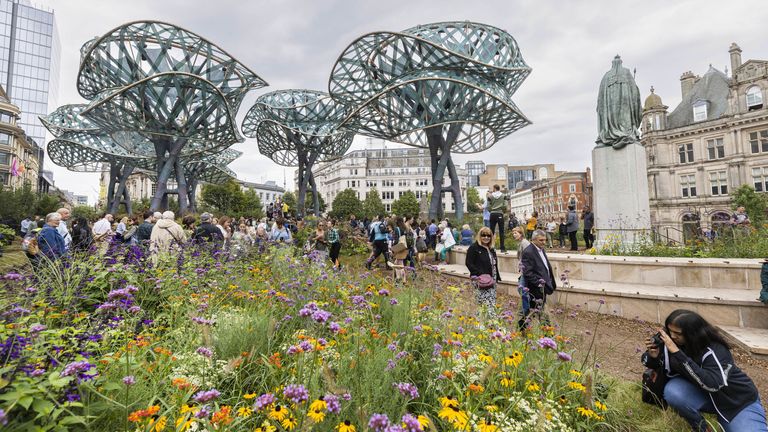
Image:People at the opening of PoliNations in Birmingham’s Victoria Square
Calling for the investigation in September, Mr Knight said the design and delivery of the festival “have been an unadulterated shambles”.
“The paltry numbers attracted to the festival despite such a hefty investment highlight just what an excessive waste of money the whole project has been,” he added.
The NAO’s comptroller and auditor general Gareth Davies has proposed a “short, focused report on Unboxed” which could be completed and published by the end of this year.
Meanwhile, the government and organisers claim the programme has reached every part of the UK, in more than 100 towns, cities, and villages, spreading work, and opportunities and opening up access to culture.
A spokesperson for the Department for Digital Culture Media and Sport(DCMS) said: “More than four million people have engaged in Unboxed programming so far and these numbers are set to rise further.”
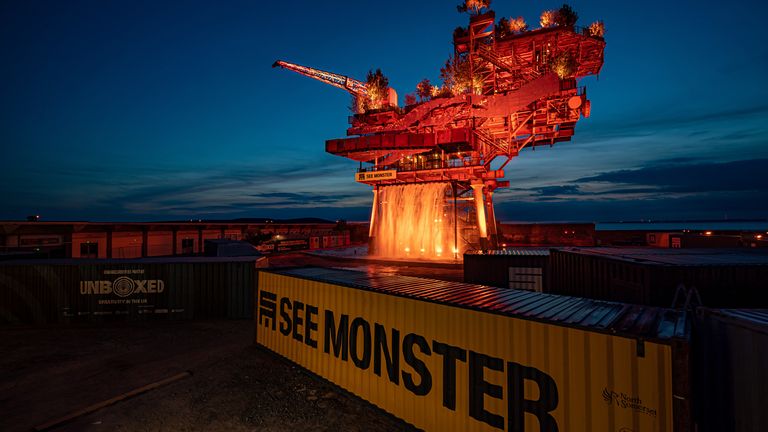
Image:The SEE MONSTER is a decommissioned North Sea offshore platform that has been transformed into one of Unboxed’s largest public art installations
And a spokesperson for Unboxed: Creativity in the UK said: “The numbers reported misrepresent the public engagement with Unboxed and reflect attendance at only eight of the 107 physical locations within the programme.
“Unboxed’s art, science, and tech commissions have been presented in over 100 towns, cities and villages, engaged millions across live and digital and employed thousands of creatives around the UK.
Ukraine “counts on Britain’s leadership”, President Volodymyr Zelenskyyhas said following a call with Prime Minister Liz Truss.
Ms Truss and Mr Zelenskyy spoke today following the wave of attacks which left at least 11 dead and 64 injured.
The missile and drone barrage was launched by Moscow in retaliation for the attack on a bridge linking Russia with Crimea.
The Russian attacks prompted an international outcry, with Ms Truss and fellow leaders of G7 nations expected to hold crisis talks on Tuesday.
Following the call with Mr Zelenskyy,a spokesperson for Ms Truss said the prime minister had stressed that the UK stood “wholeheartedly” behind the Ukrainian leader.
I’ve had a phone call with Prime Minister @trussliz. We count on 🇬🇧’s leadership in consolidating international political and defense support for Ukraine, in particular regarding the protection of our skies. And also in the further isolation of Russia.
The government has decided not to launch a public information campaign on reducing energy use this winter after the prime minister’s office raised objections, the BBC has been told.
A source said there was a “reasonably well-developed plan” to encourage household energy-saving.
But Climate Minister Graham Stuart denied a Times report that a campaign had been blocked by Downing Street.
He said UK energy was secure despite a National Grid warning of blackouts.
Its message about possible power cuts was based on a worst-case scenario of gas shortages if the energy crisis in Europe escalates.
The Department for Business, Energy and Industrial Strategy (BEIS) was considering plans to encourage households to switch off their appliances and heating to conserve energy whenever possible during winter.
However, the BBC was told the department was stopped from taking the plan forward because of objections from the prime minister’s office and the Department of Health and Social Care (DHSC).
DHSC sources said they did not believe they had played any specific role in any decision, but indicated there might be broad “concern about the elderly being afraid to turn on their heating”.
The Times newspaper reported that Downing Street’s intervention came on Thursday when National Grid issued its warning.
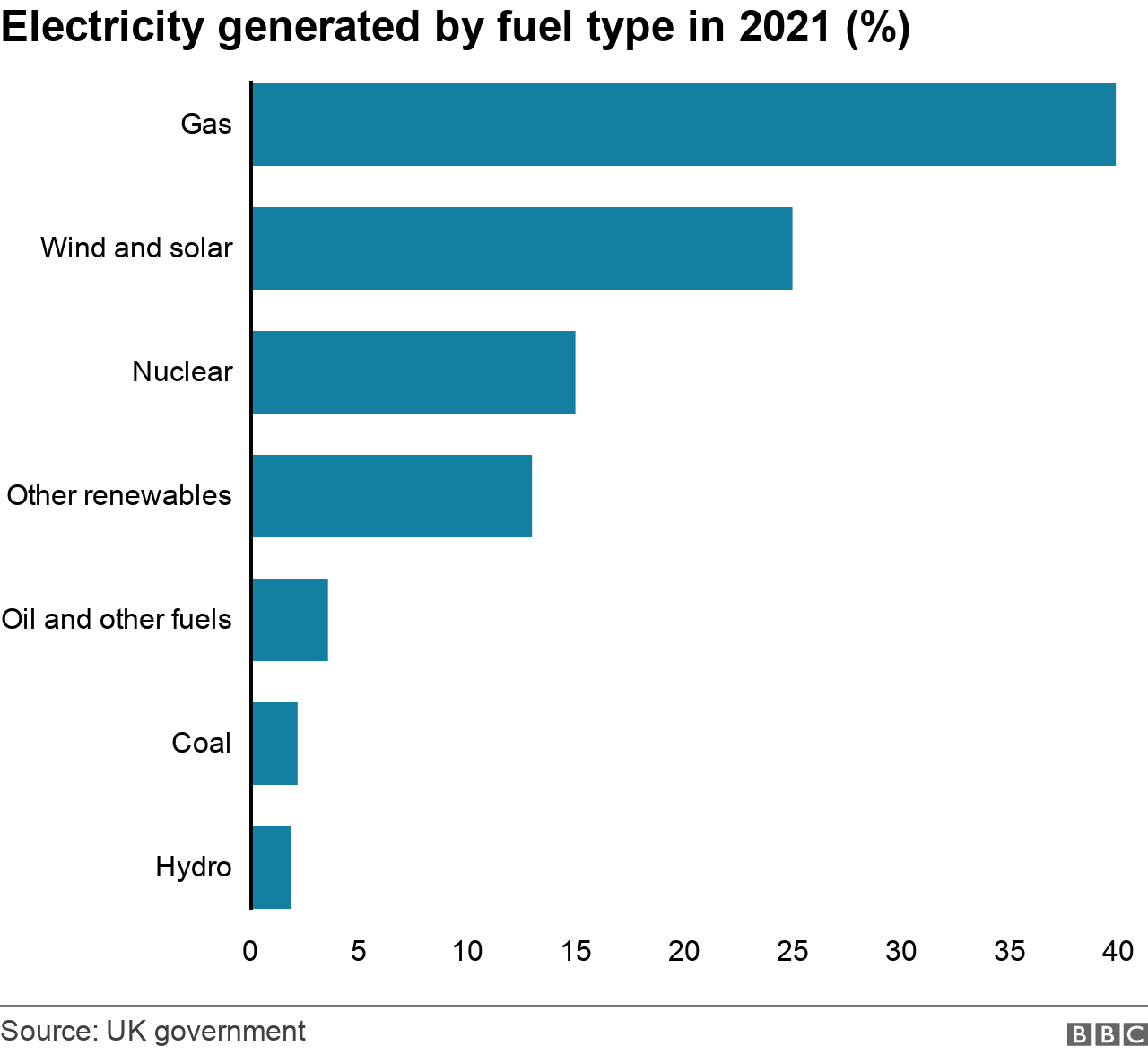
The UK is heavily reliant on gas to produce electricity, with gas-fired power stations generating more than 40% of the country’s electricity.
In the “unlikely” event that gas supplies ran extremely low, homes and businesses in the UK could face three-hour planned blackouts, National Grid said.
The government says National Grid has drawn up plans to launch a voluntary service to reward users who reduce demand at peak times.
Speaking on BBC Breakfast, Mr Stuart said he was “confident the government has done everything in its power” to make sure energy rationing would not be necessary this winter.
But he added: “We make plans for all scenarios.”
During the Conservative leadership campaign, Prime Minister Liz Truss pledged there would be no energy rationing this winter.
On Thursday, when asked if she could guarantee there would be no blackouts, Ms Truss said: “We do have a good supply of energy in the UK.”
In a statement, BEIS said: “There are no plans for the government to tell the public to reduce usage for the sake of our energy supplies.
“The UK has a secure and diverse energy system and we are confident that the steps we are taking will protect security of electricity and gas supplies.”
When asked to comment, Mr Stuart indicated there had been discussions within BEIS, but confirmed there would not be a government-led effort to get people to reduce usage, saying “it has been decided that there will not be a campaign”.
Mr Stuart also denied that a well-developed campaign had been prepared and then blocked by the prime minister’s team.
How will the demand flexibility system work?
National Grid wants to be able to reduce British energy demand at peak times if there is going to be a shortage.
This winter, starting in November, it is going to have 12 trial days where it asks customers who have signed up via their energy suppliers to reduce the amount of energy they are using at particular times of day.
They would be given a day’s notice that they would be asked to do this.
In return, they would be paid for using less energy. National Grid has not yet decided how this will work but has suggested that for the trial days customers might be able to make back £10 a day.
Expect National Grid to announce more details later this month with customers being able to sign up from 1 November as long as their energy suppliers are participating in the scheme.
The Times newspaper had reported that the prime minister had rejected plans for a £15m public information campaign, which was signed off by Business Secretary Jacob Rees-Mogg.
It suggested Ms Truss was “ideologically opposed” to the campaign amid concerns it would be too interventionist.
In her speech to the Conservative Party conference on Wednesday, the prime minister said her conservatism was about “freedom”.
“I’m not going to tell you what to do, or what to think or how to live your life,” she said.
Some question whether a campaign is needed at a time when many people are already changing their behaviour and saving energy where they can.
But those with knowledge of a campaign say they don’t understand the logic of blocking it. “Slightly mystifying,” they say.
In a tweet, Conservative MP Guy Opperman said he would he “fully behind” an energy-saving campaign that would help people and the taxpayer save money.
“This is not Nanny state,” he wrote, arguing it was about “preserving supply, saving money for everyone, and encouraging localism”.
Stew Horne, head of policy at not-for-profit organisation Energy Saving Trust, said the government needed to consider how to reduce demand this winter to increase energy security.
He said the European Commission had recently announced plans to reduce peak demand by 5% across EU member states. In Italy, central heating use will be reduced and households have been asked to turn down their thermostats to reduce energy demand.
Mr Horne said he “would welcome consideration of similar measures to improve energy security”.
Russia’s invasion of Ukraine has caused turmoil and volatility in the energy markets, sending fuel bills rocketing, and tightening supplies of oil and gas globally.
Ahead of winter, countries across Europe are scrambling to shore up supplies, as gas flows from Russia are restricted.
Since taking office Ms Truss’s government has been seeking to boost energy security, with a ban on fracking for shale gas in England lifted last month, and a new oil and gas exploration licensing round launched on Friday.
This comes after government stepped in with an energy support package to help people with soaring bills.
The Tory MP for Bournemouth West has also had the whip suspended while the complaint is investigated.
A No 10 spokesman said: “Following a complaint of serious misconduct, the prime minister has asked Conor Burns MP to leave the government with immediate effect.
“The prime minister took direct action on being informed of this allegation and is clear that all ministers should maintain the high standards of behaviour – as the public rightly expects.”
A whips office spokesman said: “We have suspended the whip pending an investigation into allegations of inappropriate behaviour earlier this week.
“We take all such allegations extremely seriously. The prime minister has been clear that the highest standards in public life must be upheld.”
He has been an MP since 2010 and held a number of ministerial positions under Boris Johnson, to whom he was fiercely loyal.
It comes after the annual Conservative Party conference took place in Birmingham from last Sunday to Wednesday.
Mr Burns, 50, has said he will cooperate fully with the probe and “looks forward to clearing his name”, according to The Sun.
He has been an MP since 2010 and held a number of ministerial positions under Boris Johnson, to whom he was fiercely loyal.
Earlier this year, he infamously claimed the former PM was “ambushed with cake” in defence of claims of a lockdown party in Downing Street.
The allegations against him are the latest to rock the Conservative Party following a string of scandals.
In July, former deputy chief whip Chris Pincherresigned from his post after he was accused of groping two men in a private members’ club – with the fallout ultimately leading to Boris Johnson’s downfall.
And in May, former Tory MP Neil Parish resigned after confessing to watching pornography in the House ofCommons“in a moment of madness”.
Just short of two weeks later, an unnamed Conservative MP was arrested on suspicion of rape and sexual assault offences spanning seven years.
Government minister Victoria Prentis said the allegations were “obviously concerning”, but she had been assured the matter was being taken “very seriously”.
“I think all I can say is that the Prime Minister has taken decisive action, and we’ll make sure that this is properly investigated,” she told Times Radio.
“In terms of politics as a whole it’s always worrying because we all expect and hope to maintain the highest standards in public life.”
They say there can be no new projects if there is to be a chance of keeping global temperature rises under 1.5C.
Both the Intergovernmental Panel on Climate Change (IPCC), the global body for climate science, and the International Energy Agency (IEA) have expressed such a view.
Business Secretary Jacob Rees-Mogg says the new exploration will boost energy security and support skilled jobs.
And supporters of new exploration insist it is compatible with the government’s legal commitment to reach net zero greenhouse gas emissions by 2050. They say the North Sea fossil fuel will replace imported fuel and so have a lower carbon footprint in production and transportation.
Licences are being made available for 898 sectors of the North Sea – known as blocks.
“Putin’s illegal invasion of Ukraine means it is now more important than ever that we make the most of sovereign energy resources,” Mr Rees-Mogg said in a statement.
The licensing process will be fast-tracked in parts of the North Sea that are near existing infrastructure and so have the potential to be developed quickly, according to the North Sea Transition Authority. It says the average time between discovery and first production is close to five years but that gap is shrinking.
Both campaigners and the oil industry agree that the reserves will not be large enough to have a significant impact on the prices consumers pay for energy in the UK.
“This government’s energy policy benefits fossil fuel companies and no one else,” said Philip Evans, energy transition campaigner for Greenpeace UK.
“New oil and gas licences won’t lower energy bills for struggling families this winter or any winter soon nor provide energy security in the medium term.”
North Sea oil and gas production peaked about 20 years ago and since then the UK has gone from producing more oil and gas than it needs, to importing it from other countries.
Offshore Energies in the UK, which represents the oil and gas industry says there could be as much as 15 billion barrels of oil left in the North Sea. It says that new fields will be less polluting than their predecessors and in a statement said there would be an environmental “bonus”.
The decision to launch a licensing round follows the publication of the government’s “Climate Compatibility Checkpoint”, which “aims to ensure” the new exploration aligns with the UK’s climate objectives.
The National Institute for Health and Care Research (NIHR), United Kingdom (UK) and the Department of Health and Social Care, UK, have scaled up efforts to combat Non-Communicable Diseases (NCDs) with approximately £10 million in funding for NCD research in Ghana, Burkina Faso and Niger.
NIHR, an institution at the forefront of tackling health issues, will provide support for the establishment of a Global Health Research Centre for Non-Communicable Disease control in West Africa to address the scourge of NCDs over a five-year period.
The centre will also develop the skills of local researchers and clinicians and will run a PhD and master’s programme to provide formal training for students in all three countries.
The centre will comprise the Ghana College of Physicians and Surgeons (GCPS) and the London School of Hygiene and Tropical Medicine (LSHTM) as the co-lead institutions working in partnership with other institutions, namely Ashesi University, Ghana; Catholic University of West Africa (UCAO-UUB), Burkina Faso and Laboratoire d’Etudes et de Recherche sur les Dynamiques Sociales et le Développement Local (LASDEL), Niger.
Dr Sylvia Anie at National Institute for Health and Care Research, UK, commented, “NIHR Global Health Research Centres will provide a sustainable platform for high-quality applied health research in low-and low middle-income countries (LMIC) to address the burden of NCDs and improve health outcomes. It is time to shift the centre of gravity to LMIC-led research.”
NCDs, also known as chronic diseases, are not passed from person to person. They include heart disease, stroke, cancer, diabetes and chronic lung disease.
Across the world, NCDs kill 41 million people yearly, equivalent to 74% of all deaths globally.
A report by WHO in April 2022 highlighted the alarming rate of deaths from NCDs in Africa, and the NCDs are increasingly becoming the main cause of mortality in sub-Saharan Africa, where the diseases were responsible for 37% of deaths in 2019, rising from 24% in 2000.
This project aims to improve the health and well-being of populations by developing the capacity for high-quality research to inform improved prevention, diagnosis, and treatment of inter-connected NCDs (hypertension, diabetes and co-existing stress, anxiety, and depression).
President of the International Union of Immunological Societies and Chair of the NIHR Global Health Research Centres Funding Committee, Professor Faith Osier, said “these new centres are truly ground-breaking – it’s the first time we’ve seen anything like this level of investment in non-communicable disease research in low and middle-income countries. The potential for this truly equitable partnership working between researchers in LMICs and in the UK is immense and we’re so excited to see the advances that the next five years will bring.”
On her part, the Director for NIHR Global Health Research Centres West Africa, Prof. Irene A. Agyepong welcomed the project and said the centre will make a difference in addressing challenges of non-communicable diseases.
“The fifteen countries of ECOWAS, like most LMICs, are increasingly challenged by rising illness and deaths related to NCDs.
“This is additional to their long-standing challenges from communicable diseases such as malaria and tuberculosis. Research is at the heart of the innovation needed to address these problems, and establishing the centre is a timely and welcome effort to make a difference”.
Co-Director for NIHR Global Health Research Centres West Africa, Professor Tolib Mirzoev said the project will go a long way to improve the control of non-communicable diseases.
“I am delighted to jointly lead the Stop-NCD programme together with Professor Agyepong from the GCPS. Our programme addresses an important and urgent need for high-quality research to improve the control of NCDs in West Africa.
“Through excellent science, comprehensive capacity strengthening and equitable partnerships involving research teams and key stakeholders, we will ensure the longer-term legacy of African-led research for improved policy and practice in NCD control.”
The official announcement and launch of the project was held in Accra, Ghana, on Wednesday, October 4 with the Minister of Health, Kwaku Agyemang-Manu as the special guest of honour.
Also present were the representative of the Minister of Health for Niger, M. Sabo Hassane Adamou, Deputy Secretary General and the representative of the Minister of Health for Burkina Faso, Baperman Abdel Aziz Siri.
Scientists, researchers and officials in the health sector from the UK and various West African implementing countries were present in Accra to grace the occasion.
In its latest economic update, Deutsche Bank said: “Since our last growth update, the UK economic outlook has weakened further.
“We now see the UK in a recessionary orbit with growth likely to remain subdued for much of the next year or so, with GDP slowing from 4.5% this year (previously: 3.5%) to -0.5% next year (previously: 0%), and rising by 1% in 2024 (previously: 1%).
“We now expect GDP to return to its pre-pandemic level only in 2024, with growth recovering to its trend rate (1.25%) around the middle of the decade.”
It is hoped that the offer of cash rewards for households participating in energy-saving schemes will lessen the possibility of blackouts during the upcoming chilly winter months.
The country has been put on notice that the chances of gas shortages this winter have risen markedly, prompting a contingency plan to prioritise heating.
National Grid’s Electricity System Operator (ESO) warned that planned three-hour power blackouts could be imposed in some areas, in the “unlikely” event supplies of gas fall short of demand.
It revealed the measure in an update on the UK’s state of energy readiness for the cold months ahead but it said that the risk of temporary power cuts could be avoided with help from the public.
The report showed, under a base case scenario, that margins between peak demand and power supply were expected to be sufficient and similar to recent years thanks to secure North Sea gas supplies, and imports via Norway and by ship.
A separate study by National Grid Gas Transmission, which is a separate business to the ESO, saw the potential for the shortfall in gas supplies within continental Europe – as a result of Russia’s war in Ukraine – to impact the UK’s usual ability to attract imports.
It suggested gas needed to power the UK’s electricity grid was expected to rise by nearly 22% – offsetting savings from lower household and business use – largely because of a need for power in France where many nuclear plants are offline.
It saw LNG (liquefied natural gas) from the US and Qatar acting as the new primary source of supply flexibility.
Gas accounts for over 40% of UK power generation – more if the wind fails to blow and other plants are offline for maintenance.
The ESO’s report marked a darkening in the prospect for disruption in the months ahead following a comparatively rosy early view report in July.
There was a clear sign of a shift in direction earlier this week when it emerged that the energy regulator Ofgem had warned of a “significant risk” of a gas supply emergency.
It blamed the international scramble for supplies because of the war, which has starved continental Europe of its main source of natural gas.
A gas supply emergency can be declared when suppliers are unable to safely get gas to homes and businesses.
It could mean that some customers, starting with the largest industrial consumers, will be asked to stop using gas for a temporary period.
The aim would be to keep gas and gas-generated electricity supplies stable for households for as long as possible.
For the electricity market, coal-fired power stations can be brought back online under what is known as a system notice to help fill stopgaps. This has traditionally happened when nuclear plants go offline or the wind fails to blow.
The hope is that these sorts of measures will not be necessary because of the looming demand for flexibility services.
It is expected to be implemented at least 12 times, whatever happens, from November to March to ensure a benefit for signatories.
The ESO’s director of corporate affairs, Jake Rigg, said: “If you put your washing machine or other electrical appliances on at night instead of the peak in the early evening, you can get some money back when we all need it.”
Energy bills have rocketed this year but now come under the protection of government caps on wholesale costs, shielding both households and businesses from the worst in the price surge ahead of winter.
It means the taxpayer will foot the bill for wholesale prices above the unit cap level.
The scheme does not cap your bill, which will continue to depend on the amount of energy used.
An Ofgem spokesperson said of the National Grid reports: “We have one of the most reliable energy systems in the world and we are in a favourable position.
“However, it is incumbent on a responsible and prudent energy sector to ensure the right contingency measures are in place, which is why we are working with the government, National Grid and key partners to protect consumers, so that Great Britain is fully prepared for any challenges this winter.”
During a meetingin Prague, Liz Truss had a conversation with Petr Fiala, her Czech counterpart.
The pair met ahead of the European Political Community’s inaugural summit.
A Downing Street spokesperson said: “The Prime Minister met the Czech Prime Minister Petr Fiala in Prague this morning.
“The prime minister thanked Prime Minister Fiala for hosting today’s gathering of European leaders, welcoming the important opportunity to discuss regional issues like energy security and migration.
“The leaders were in strong agreement on the importance of like-minded European democracies presenting a united front against Putin’s brutality.
“They discussed the UK and Czech Republic’s early supportfor Ukraine’s defence and the need to continue military aid, help on reconstruction, and sanctions on Putin’s regime.
“The prime minister and Prime Minister Fiala also noted opportunities for our countries to work together to secure long-term energy supplies, including cooperation on nuclear and renewables.
“Both leaders welcomed the prospect of the United Kingdom resuming participation in the North Seas Energy Cooperation group. The prime minister looked forward to work progressing at pace on developing next-generation energy interconnectors in the region.”
Kate, who has three children of her own — Prince George, Princess Charlotte, and Prince Louis — visited the Royal Surrey County Hospital Maternity Unit in Guildford, England, where she cradled a baby in her arms and spoke with several mothers.
PHOTO: Kate, Princess of Wales, leaves after a visit to Royal Surrey County Hospital Maternity Unit, in Guilford, England, Oct. 5, 2022. (Alberto Pezzali/AP)
PHOTO: Kate, the Princess of Wales, cradles baby Bianca as she speaks to her mother Sylvia Novak, during a visit to the Royal Surrey County Hospital’s maternity unit, in Guilford, England, Oct. 5, 2022. (Alastair Grant/Pool via AP)
“It was lovely to meet some of the new mothers and their babies who are supported by such a brilliant team at the hospital,” the Princess of Wales shared on the official Kensington Royal Twitter account. “Focusing on maternal mental health and pioneering overnight facilities, Royal Surrey County Hospital helps women feel safe, supported, and have the best chance of developing those all-important early attachments, crucial to ensuring their babies thrive.”
The visit to the hospital was a meaningful one for Kate, who has made early childhood development a focus of her royal work.
Also on Wednesday, Kate’s husband William, the Prince of Wales, visited St. George’s Park, the English Football Association’s national football center in Burton upon Trent, Staffordshire, to celebrate the venue’s 10th anniversary. William and Kate, then the Duke and Duchess of Cambridge, officially opened the facility in October 2012.
PHOTO: Prince William, the Prince of Wales and President of Football Association, visits England’s national football centre at St. George’s Park to mark its 10th anniversary as the home of English football, in Burton upon Trent, Britain, Oct. 5, 2022. (Rui Viera/Pool via Reuters)
As part of his visit, William met with Gareth Southgate, manager of the England national team, and several young players and athletes.
“Supporting our 🏴 teams at all levels, being a huge part of history-making moments like the Lionesses and helping inspire the next generation!” he wrote on the official Kensington Royal Twitter account. “Hopefully with much more success to come.”
Liz Truss refers to the European war, COVID’s aftermath, and the current global economic crisis when she describes the task as being of “immense proportions.”
She says more government intervention makes people feel smaller and means you “feel it’s less worthwhile working the extra hour, going for a better job”.
She says stamp duty is being cut, the National Insurance rise is being reversed next month, corporation tax cut, and the basic rate of income tax brought down.
She mentions her U-turn on cutting the 45p rate of income tax and says it was a distraction.
“That is why we are no longer proceeding with it,” Ms Truss admits.
“I get it and I have listened.”
The PM gets a chuckle as she says she was in shock when she opened her first paycheck to see how much money the taxman had taken out.
“That is why we must always be careful with taxpayer’s money,” she says.
“And it is why this government will always be fiscally responsible.”
The company warns its annual profits will be at the lower end of expectations as it invests in its prices and staff in a bid to bolster its defences against the challenge posed by discount rivals.
The boss of the UK’s biggest retailer says it is “inflating prices a little bit less and a little bit later” than the competition as families’ budgets are squeezed.
Tesco chief executive Ken Murphy made the claim as the chain revealed first-half profits that reflected, it said, its decision to maintain the best value possible for the customer as the cost of goods spiked amid the cost of living crisis.
Underlying retail operating profits fell 10%, the company said, to £1.25bn for the six months to 27 August.
It warned that, as a result of “significant” inflation pressures and consumer caution, annual profits would likely be at the lower end of its earlier guidance of between £2.4bn and £2.5bn by the same measure.
It reported that shoppers were trading down to own label products and frozen food, and buying fewer non-food products.
Tesco said contributing to that profit guidance too was a decision to freeze prices on more than 1,000 everyday goods.
It also revealed a second pay rise of the year for its staff amid pressure from unions which had declared that the UK’s grocery market leader had slipped behind rivals.
Shopworkers’ union Usdaw said that Tesco’s hourly-paid retail and customer fulfillment center staff would receive an additional 20p per hour increase from 13 November, taking the base rate from £10.10 to £10.30 per hour.
This was on top of an increase in July of 5.8%, taking the overall increase this year to 7.85%, it said while welcoming the move.
Tesco, like Sainsbury’s, Asda, and Morrisons, has been battling since the financial crisis a challenge to their dominance from discounters Aldi and Lidl.
Industry data from Kantar Worldpanel last month showed Aldi had overtaken Morrisons as the fourth largest chain by market share.
Tesco recorded UK like-for-like sales growth of 0.7% over the six months – recovering from a 1.5% decline in the first quarter – potentially reflecting a greater desire by shoppers to rein in their spending outside the home as energy and other costs surge.
“That’s why we’re working relentlessly to keep the cost of the weekly shop as affordable as possible, with our powerful combination of Aldi Price Match, Low Everyday Prices and Clubcard Prices, together covering more than 8,000 products, week in, week out.”
“By staying laser-focused on value and sticking to our strategy of inflating a little bit less and a little bit later, our price position has got even more competitive,” he added.
Shares – down by more than a quarter in the year to date – fell by 1.5% at the market open.
A 36-year-old man passed away after passing out close to the finish line of the London Marathon.
He received quick care between miles 23 and 24, according to the organisers, and an ambulance was on the way in three minutes. However, he eventually passed away in the hospital.
The man was from southeast England and no further details will be released as the family have asked for privacy.
Organizers ofthe event said in a statement: “Everyone involved in the organization of the London Marathon would like to express sincere condolences to his family and friends.”
More than 40,000 runners competed in Sunday’s event.
Kenyan Amos Kipruto won the men’s race in 2:04:39, while Ethiopian Yalemzerf Yehualaw was the fastest woman in 2:17.25.
Thousands lined the 26.2-mile route to cheer on the elite athletes and themasses of amateur runners who raise money for charity.
Giving his keynote Conservative Party conference speech following the 45p tax rate cut U-turn earlier this morning, Kwasi Kwarteng began by saying: “What a day.
“It has been tough, but we need to get on with the job in hand.”
The chancellor continues: “No more distractions, we have a plan and we have to get on and deliver it.”
But the chancellor acknowledges that his tax-cutting mini-budget caused economic turmoil, saying: “I know the plan we put forward 10 days ago caused a little turbulence. I get it.”
Next month, King Charles III will host South African President Cyril Ramaphosa for three days of high-level negotiations in the United Kingdom. This will be the first official visit since the king succeeded his late mother Queen Elizabeth II last month.
In a statement on Monday, Buckingham Palace announced that Ramaphosa has accepted Charles’s invitation for a state visit from November 22 to 24.
The South African leader will be accompanied by First Lady Tshepo Motsepe.
South Africa is a member of the Commonwealth, a political association of 56 countries, mostly former British colonies.
Ramaphosa’s predecessors Nelson Mandela, Thabo Mbeki, and Jacob Zuma, the other presidents the country has had since its first multi-ethnic elections in April 1994, have also previously made state visits to the UK.
While still the prince of Wales and the Duchess of Cornwall, Charles, and Camilla, the queen consort, welcomed former South African President Jacob Zuma to the UK at the start of a state visit in 2010.
The new monarch has visited South Africa on several occasions since 1997. At Mandela’s funeral in 2013, he said the world would be a “poorer place” without the man who led South Africa’s transition from apartheid to multi-ethnic democracy, adding that Mandela was owed “an enormous debt of gratitude” for his achievements.
The visit comes as Ramaphosa faces a huge scandal back at home. Arthur Fraser, the former head of the country’s spy agency has accused the president of kidnapping, bribery, money laundering, and “concealing a crime” in relation to the alleged theft of $4m in cash found at his Phala Phala game ranch in northern South Africa.
It’s hard to think of another episode like this. There have been budget U-turns before, but it’s hard to think of any which came so soon after they were announced and were not just an obscure technical consequence of a bigger measure (for instance George Osborne’s pasty tax).
The question now, however, is whether this change of mind changes the mind of the millions of investors who have, in the past week, been eschewing UK investments. That resulted in a fall in the pound and a sharp increase in government borrowing rates.
Yet – and this is something those inside Number 10 have pointed out themselves – the removal of the 45p rate was not all that expensive when compared to the other bits of the mini-budget: around £2bn of a total £45bn package.
They saw no arithmetic link between the measure in numerical terms and the reaction from currencies and bonds. The most straightforward conclusion, then, was that rather than responding to this 45p rate, investors seemed instead to be responding to something broader: a crisis of confidence in the government’s economic leadership.
Whether the abolition of the 45p rate is enough to change that view remains to be seen. In the immediate wake of the news, the pound rallied against the US dollar and money markets responded by reducing their expectations of future interest rates.
That is, from the government’s perspective, quite promising. But these are just small moves and we shall have to see what happens next.
Perhaps they will decide this is a sign of readiness from the government to try to rebuild their credibility; that they have moved away from the denial stage. Or perhaps not: we shall see.
DISCLAIMER: Independentghana.com will not be liable for any inaccuracies contained in this article. The views expressed in the article are solely those of the author’s and do not reflect those of The Independent Ghana
Source: Skynews, Ed Conway, data and economics editor
Ben Wallace, the governmentwill purchase two specialised ships to guard pipes and cables that are submerged in the ocean.
In remarks to the Conservative Party conference in Birmingham, the defence secretary referred to the “mysterious damage inflicted” last week following leaks in the Nord Stream gas pipelines in the Baltic Sea.
There have been suggestions that Russia could have been behind the alleged sabotage of the pipes, including Nord Stream 1 which was already shut but had previously pumped gas from Russia to Europe. Nord Stream 2 had not started operations.
Gas bubbles rise to the surface from the Nord Stream 2 leak
Mr Wallace said the pipeline incident “should remind us of how fragile our economy and infrastructure is to such hybrid attacks”.
“Our intent is to protect them. Our internet and energy are highly reliant on pipelines and cables. Russia makes no secret of its ability to target such infrastructure.”
He went on: “So for that reason, I can announce we recently committed to two specialist ships with the capability to keep our cables and pipelines safe.
“The first multi-role survey ship for seabed warfare will be purchased by the end of this year, fitted out here in the UK, and then operational before the end of next year.
“The second ship will be built in the UK and we will plan to make sure it covers all our vulnerabilities.”
The chancellor stated that the government has changed its mind about wanting to eliminate the 45p income tax rate.
Kwasi Kwarteng told the BBC the proposals, announced just 10 days ago, had become “a massive distraction on what was a strong package”.
“We just talked to people, we listened to people, I get it,” he added.
The decsion, which marks a humiliating climbdown for Prime Minister Liz Truss, comes after several Tory MPs voiced their opposition to the plan.
Ex-cabinet minister Grant Shapps had warned the prime minister would lose a Commons vote on the proposal.
The plan to scrap the 45p rate, paid by people earning over £150,000 a year, had been criticized as unfair at time of rising living costs.
On Sunday, the prime minister had told the BBC she was absolutely committed to it as part of a package to make the tax system “simpler” and boost growth.
But the measure has seen remarkable opposition from the markets, opposition parties and a growing number of Tory MPs.
Increasingly, it seemed Ms Truss did not have the numbers to get it through.
On Sunday, senior Tory Michael Gove hinted he would not vote for the plan when it came to Parliament, saying “I don’t believe it’s right”.
The former cabinet minister said the PM’s decision was “a display of the wrong values”.
Mr Shapps also urged Ms Truss to U-turn, warning her not to have a “tin ear” to voters’ concerns about rising living costs.
“I don’t think the House is in a place where it’s likely to support that,” he told the BBC on Sunday.
The U-turn, suggestions of which were first reported by the Sun, comes on the second day of the Conservative conference in Birmingham, with Mr Kwarteng due to speak later on Monday.
The currency touched a record low last week after Mr Kwarteng’s mini-budget – which contained around £45bn of unfunded tax cuts – created turmoil on the markets.
Sky News learns that Jingye Group has stated that without hundreds of millions of pounds in taxpayer subsidies, British Steel’s two blast furnaces will not be commercially viable.
Amidst fresh worries over the future of thousands of industrial jobs in the north of England, the owners of Britain’s second-largest steel manufacturer are pleading with taxpayers for an immediate package of financial assistance.
Sky News has learnt that Jingye Group, which bought British Steel out of insolvency in 2020, has told ministers that thecompany’s two blast furnaces are unlikely to be viable without government aid.
British Steel, which is headquartered in Scunthorpe, north Lincolnshire, employs about 4,000 people, with thousands more jobs in its supply chain depends upon the company.
The request from Jingye poses a major headache for Jacob Rees-Mogg, the new business secretary, on the eve of the Conservative Party’s annual conference in Birmingham.
While the precise scale of the support being sought by the Chinese industrial group was unclear this weekend, insiders suggested that it would need “hundreds of millions of pounds” to keep the Scunthorpe blast furnaces operational.
It was also unclear whether any financial subsidy would be in the form of a loan or grant.
One insider said that Jingye was prepared to make thousands of people redundant if ministers rejected its request.
It would then plan to import steel from China to roll at British Steel’s UK sites, according to the insider.
This weekend, the government confirmed that it was “working at pace with the company to understand the best way forward as it seeks to secure a more sustainable future”.
“We recognise that businesses are feeling the impact of high global energy prices, particularly steel producers, which is why we have announced the Energy Bill Relief Scheme to bring down costs,” a spokesman for the Department for Business, Energy and Industrial Strategy said.
Industrial consumers of energy have complained for months that soaring prices are imperilling their ability to continue investing, with continuing uncertainty about the duration and cost of a recently announced government subsidy scheme.
For Mr Rees-Mogg, who took over as business secretary less than a month ago, a decision over government support presents a politically undesirable menu of choices.
If no state funding is made available and significant numbers of jobs are axed, it would undermine a key tenet of the ‘levelling-up’ strategy that became a doctrine of Boris Johnson’s administration.
An agreement to provide substantial taxpayer funding to a Chinese-owned business, however, would almost certainly provoke outrage among Tory critics of Beijing.
China’s role in global steel production, after years of international trade rows about dumping, would make any subsidies even more contentious.
A British Steel spokesman said: “We are investing hundreds of millions of pounds in our long-term future but like most other companies we are facing a significant challenge because of the economic slowdown, surging inflation, and exceptionally high energy and carbon prices.
“We welcome the recent announcement by the UK government to reduce energy costs for businesses and remain in dialogue with officials to ensure we compete on a level playing field with our global competitors.”
It is the second time in little more than three years that serious doubt has been cast over British Steel’s future.
In May 2019, the Official Receiver was appointed to take control of the company after negotiations over an emergency £30m government loan fell apart.
As part of the deal that secured ownership of British Steel for Jingye, the Chinese group said it would invest £1.2bn in modernising the business during the following decade.
Jingye’s purchase of the company, which was completed in the spring of 2020, was hailed by Mr Johnson as assuring the long-term future of steel production in Britain’s industrial heartlands.
“The sounds of these steelworks have long echoed throughout Yorkshire and Humber and the North East,” he said.
“Today, as British Steel takes its next steps under Jingye’s leadership, we can be sure these will ring out for decades to come.
“I’d like to thank every British Steel employee in Scunthorpe, Skinningrove, and on Teesside for their dedication and resilience which has kept the business thriving over the past year.
“Jingye’s pledge to invest £1.2 billion into the business is a welcome boost that will not just secure thousands of jobs, but ensure British Steel continues to prosper.”
Tata, which owns the vast Port Talbot steelworks in Wales, remains Britain’s biggest steel producer.
It, too, has sought government support in recent months, with the Financial Times reporting in July that the Indian-owned group was seeking £1.5bn of taxpayer funding to help it decarbonize its operations.
Liberty Steel, the third-biggest player in the industry, saw a bid for £170m in state aid rejected last year by Kwasi Kwarteng, the then business secretary.
As chancellor, Mr Kwarteng will play a key role in determining the fate of Jingye’s request for support.
This weekend, it was unclear how quickly a decision would be reached by ministers or whether advisers had been drafted in to help negotiate on either side.
Climate experts have called for stricter regulations to prevent companies from buying ineffectual offsets in the future.
Nearly half of the carbon offsets held by energy company Centrica on behalf of its UK business and residential customers have such a poor reputation that the EU banned them from its own emissions trading system in 2013.
Centrica, which owns British Gas, says it is committed to a cleaner and greener future.
Like lots of companies involved in fossil fuels, Centrica compensates for its own pollution and boosts its climate credentials by purchasing credits from projects around the world that reduce or avoid greenhouse gas emissions.
This is called offsetting, and typically involves things like tree planting or nature restoration projects.
But it is an industry that has long been criticized for a lack of transparency and consistent standards.
Now records provided by Centrica to the Open Democracy news website and shared exclusively with Sky News, reveal that 44% of Centrica’s credits purchased between July 2020 and June 2022 come from a Chinese chemical company called Shandong Dongyue Chemical Company.
This company has sold carbon offsets in return for the safe disposal of a dangerous greenhouse gas called HFC-23.
HFC-23 is a by-product of a chemical commonly used in refrigerators and air-conditioners and it is thousands of times more potent than carbon dioxide.
Over a decade ago, EU and UN officials became concerned that HFC-23 credits weren’t actually benefiting the environment at all, and that companies like Shandong Dongyue were producing extra gas simply to sell more offsets and maximize profits.
Shandong Dongyue and other manufacturers denied this, but the offsets were widely discredited and eventually banned by a number of tightly regulated Emissions Trading systems in the EU and elsewhere.
There is no suggestion that Centrica has done anything illegal.
Shandong Dongyue, which has not responded to Sky’s request for comment, was able to continue to sell old credits to those who would accept them, in what’s known as the voluntary carbon market.
Still, to some, it is surprising that Centrica bought them in the first place.
Policy director at Carbon Market Watch Sam Van den plas told Sky News: “This is not a small company. “We’re talking about a large company that should do their due diligence.
“I believe they take their corporate image and their environmental objectives seriously, therefore, you don’t need to look very far in order to find out that those types of credits are highly unreliable and they have been widely critiqued in the past.
“We’re not doing anything meaningful to solve the climate crisis if you rely on these credits.
“On the contrary, you give your consumers the impressionthey do something good for the environment, whereas in reality it just contributes to increasing greenhouse gas emissions.”
Centrica would not explain why it purchased the credits in November 2021, or disclose the price it paid for them.
But in a statement, a company spokesperson told Sky News: “These carbon offsets were initially brought to back a tariff which has not been sold since 2019.
“We subsequently made the decision not to use them again as they were not aligned with our high environmental standards.
“The current Green Future tariff has achieved Gold Standard accreditation from USwitch since the scheme was launched two years ago.
“Any future offset purchases for British Gas will be of the same high standard associated with the Green Future tariff.”
But this is about much more than Centrica and one particular type of carbon offset.
The voluntary carbon market is essentially unregulated and it is growing at an extraordinary pace.
In fact, one estimate suggests that if demand continues to grow, by 2030 it could be worth nearly £50bn.
As more and more companies make serious net zero commitments and turn to the voluntary carbon market to help deliver on those promises, experts are calling for better transparency and consistency.
Rob Macqaurie, policy analyst and researcher and the London School of Economics Grantham Research Institute on Climate Change, told Sky News: “There are quite a lot of dodgy claims being made.
“Policymakers should be looking at potential rules and even watchdogs to govern the kind of information that companies are putting out about their use of carbon credits.
“There are rules emerging to help us understand what high quality looks like, the trick now is to take those rules and ensure that they’re really widely adhered to.”
One of the organizations working to put an agreed set of global standards in place for businesses purchasing carbon credits is the UN-backed Voluntary Carbon Markets Integrity Initiative (VCMI).
The group’s executive director Mark Kenber told Sky News: “Carbon credits can be a powerful tool for decarbonisation – but only if we can make sure they’re used correctly, above and beyond action companies are taking to cut their own emissions.
“Equally, companies must be clear with consumers about the action they’re taking to reach net zero, which is why we’re spearheading a more transparent and accountable way to make this the norm.
“VCMI’s Code of Practice – which is currently being trialed by leading climate-conscious businesses – will create a commonly agreed set of standards to allow companies who are genuinely making progress to demonstrate this.”3:36
William McDonnell, Chief Operating Officer of the Integrity Council for Voluntary Carbon Markets, which is attempting to build a globally accepted standard for the quality of carbon credits, told Sky News: “You need an independent body to clearly mark which credits are high quality, which is what we’re doing with the Core Carbon Principles.
“Once this is in place, it will be completely transparent which companies are choosing to buy junk credits, and that transparency will disincentivise companies from doing so.”
He continued: “The principles will underpin confidence, reduce confusion and fragmentation, and pave the way for scaled finance and investment so high-quality carbon credits can unlock additional urgently-needed private capital and channel it efficiently towards the most impactful, cost-effective climate mitigation activities globally, particularly in developing economies.”
After the inquest into Molly Russell, 14,’s death, Prince William stated that young people’s internet safety should be “a prerequisite, not an afterthought.”
A coroner concluded that the teenager from Harrow diedfrom an act of self-harm while suffering depression and the negative effects of online content.
Molly’s father Ian called for urgent changes to make children safer online.
The prince said: “No parent should ever have to endure what Ian Russell and his family have been through.”
It is unusual for any member of the Royal Family to make any comment during or following any legal proceedings – but mental health is a topic on which the new Prince of Wales has spoken and campaigned on regularly in the past.
Official estimates indicate that there are now over one million Covid infections in the UK.
The number of individuals testing positive increased by 14% in the week ending September 20. This is the highest increase since the summer.
But according to theOffice for National Statistics, there is no concrete indication that a fall Covid surge has begun (ONS).
More recent data showing a rise in hospital admissions with Covid has been called “a wake-up call”.
Dr Thomas Waite, deputy chief medical officer for England, told BBC News that a number of new sub-variants of Omicron were circulating at low levels, and could be behind the hospital figures.
Daily hospital admissions are lower than where they were for much of July but highest among the oldest age groups.
However, six out of 10 people with Covid in hospital are being treated for something else – not Covid-19.
“The fact there are people getting so seriously ill they need to go into hospital is a wake-up call to us all that Covid is still here,” said Dr Waite.
Health experts have warned of a flu and Covid “twindemic” this winter, urging those who qualify to get their free jabs now.
Too early to call
Although Covid is increasing in England and Wales, the trend is uncertain in Scotland and Northern Ireland, the ONS says.
Sarah Crofts, from the ONS Covid-19 Infection Survey, said: “It is too early to identify whether this is the start of a new wave of infections. We will continue to closely monitor the data.”
The ONS estimates are based on thousands of random tests on people in private households across the UK, whether or not they have symptoms.
In the UK as a whole, it is the first time estimated Covid infections have risen above one million since the end of August 2022.
In England, infections rose in the North West, Yorkshire and the Humber, the West Midlands, the East of England, London, and the South East – and in all age groups.
The tests found that about one in 60 people had Covid in the UK in the week to 20 September, up from one in 70 the week before.
But there were noticeable differences in trends in the four nations of the UK.
The ONS says Covid is infecting:
one in 65 people in England (up from one in 70)
one in 50 people in Wales (up from one in 75)
one in 80 in Northern Ireland (the same as the week before)
one in 45 in Scotland (up from one in 55)
Data is for the week ending 17 September 2022 for England, and the week ending 20 September 2022 for Wales, Northern Ireland and Scotland.
The most common Covid symptom is currently a sore throat, with fever and loss of smell much rarer, according to symptoms logged by 3,000 people testing positive via the Covid symptom app.
Booster jabs against Covid, alongside flu vaccinations, are now being offered to the most vulnerable to help protection over the winter.
Most people will receive a new type of vaccine – made by Pfizer or Moderna – which tackles both the original Covid virus and the recent Omicron variant, offering better protection.
‘Unpredictable’
There were 7,000 people in hospital in England with Covid last week – a 37% increase from the week before.
Hospital admissions with Covid were running at around 900 per day, compared to roughly 2,000 in early July during the last surge of Omicron infections.
Hospital patients and care home residents are no longer being tested for Covid in most of the UK unless they have symptoms.
Dr Mary Ramsay, director of public health programmes at the UK Health Security Agency, is expecting “an unpredictable winter” which will put additional pressure on health services.
“In the coming weeks, we expect a double threat of low immunity and widely circulating flu and Covid-19,” she said.
“While Covid-19 and flu can be mild infections for many,we must not forget that they can cause severe illness or even death for those most vulnerable in our communities.”
She urged people who were unwell this winter to stay at home and avoid contact with vulnerable people to help prevent infections from spreading.
UK intelligence has gathered that newly recruited Russian reserve troopshave been instructed to procure their own combat first aid supplies.
Female sanitary pads have been recommended to soldiers arriving at the front lines as a cost-effective alternative, which is just another indication of the problems hindering Kremlin forces.
The UK Ministry of Defence said on Twitter: “Medical training and first-aid awareness is likely poor.
“Some Russian troops have obtained their own modern, Western-style combat tourniquets but have stowed them on their equipment using cable-ties, rather than with the Velcro provided – probably because such equipment is scarce and liable to be pilfered.
“This is almost certain to hamper or render impossible the timely application of tourniquet care in the case of catastrophic bleeding on the battlefield.”
The MoD said this shortage of medical equipment is almost certainly contributing to a “declining state of morale and a lack of willingness to undertake offensive operations” in many units in Ukraine.
Latest Defence Intelligence update on the situation in Ukraine – 30 September 2022
Donetsk, Luhansk, Kherson, and Zaporizhzhia would never be accepted by the UK, according to Prime Minister Liz Truss.
In advance of President Vladimir Putin’s anticipated decision to recognise the territories once occupied by Ukraine as Russian following widely condemned referendums, she released a statement on Friday morning.
She said: “Vladimir Putin has, once again, acted in violation of international law with clear disregard for the lives of the Ukrainian people he claims to represent.
“The UK will never ignore the sovereign will of those people and we will never accept the regions of Donetsk, Luhansk, Kherson, and Zaporizhzhia as anything other than Ukrainian territory.
“Putin cannot be allowed to alter international bordersusing brute force. We will ensure he loses this illegal war.”
Unlike the UK, Ireland is not borrowing to fund tax cuts.
IMAGE SOURCE,PA MEDIA Image caption, People will now start paying the higher 40% rate of tax on income over €40,000
The minister said his budget was focused on helping families and businesses facing the cost-of-living crisis arising from the after-effects of the Covid-19 pandemic and the Russian invasion of Ukraine.
“As one of the most open economies in the world, we benefit when things are going well internationally, but when they reverse, we are also one of the most exposed,” he said.
Mr Donohoe also said that headline inflation in Ireland is now running at “highs not seen in many decades”, adding that the Department of Finance has updated its forecasts to headline inflation of 8.5% for 2022, and just over 7% for 2023.
People will now start paying the higher 40% rate of tax on income over €40,000 (£35,731).
Tax credits will be given to homeowners for fuel, and tax on petrol and diesel at the pump will remain unchanged.
Other announcements include:
Electricity credits for all households totaling €600 (£536) will be paid in three installments of €200 (£179)
An additional payment of €500 (£447) to those in receipt of the Working Family Payment will be paid in November
There will be €12 (£11) a week increase for those in receipt of social welfare
A packet of 20 cigarettes will go up by 50 cents (45p)
VAT on newspapers will be reduced from 9% to 0%
Mr Donohoe said there were many risks to the country’s finances but he concluded: “We can and should be confident about our future.”
As he unveiled a range of Labour plans to address the rising cost of living, Sir Keir Starmer accused the government of losing control of the economy.
As he delivered the Labour conference speech, the party’s leader said the Conservatives gave acted irresponsibly in a “spectacular fashion”.
“We’re determined to reduce debt as a shareof our economy,” he said.
“Every policy we announce will be fully costed, and we will set up an Office for Value for Money to make sure public spending targets the national interest.”
During his speech, Starmer pledged to set up a publicly-owned “Great British Energy” company within the first year of a Labour government.
He also said Labour help first-time buyers with a new mortgage guarantee scheme and will reform planning, so speculators can’t stop communities from “getting shovels in the ground”.
“Labour is the party of homeownership in Britain today, ” he said.
Starmer added that Conservatives have made a mess of public services.
He said it will take investment to fix the problem, and he will recruit, train and motivate doctors, nurses, teachers, and police officers
Madeline Ratcliffe, a journalist for Sky News, reports that the trading floor is calmer and traders are more at ease today, however one dealersays the market is still bumpy.
I spoke to the senior trader at Monex Europe, Michael Quinn, who told me the quieter markets today were because traders were digesting after initially being spooked by the mini-budget.
That said, the weak pound was a sign investors were losing faith in the UK economy.
“Foreign currency markets are far more driven by sentiment, than by economic reality,” he said.
He added that the Bank of England was “very conscious” of being seen to do a “bad interest rate hike”, or a panicked hike.
“There’s a very real risk that that would be seen as a panic move from the Bank of England, and that’s why they’re having to tread very carefully.
“Fundamentally, more than anything, the Bank of England needs the UK economy to start recovering and there’s only a limited amount that monetary policy can do to address that,” Mr Quinn continued.
“So as things stand at the moment, the situation from a markets perspective looks fairly grim because the general expectation is that the Bank of England is going to have to hike interest rates fairly sharply in a bid to combat inflation.