Tag: UK

  • Jeremy Hunt: Everyone will have to pay more tax

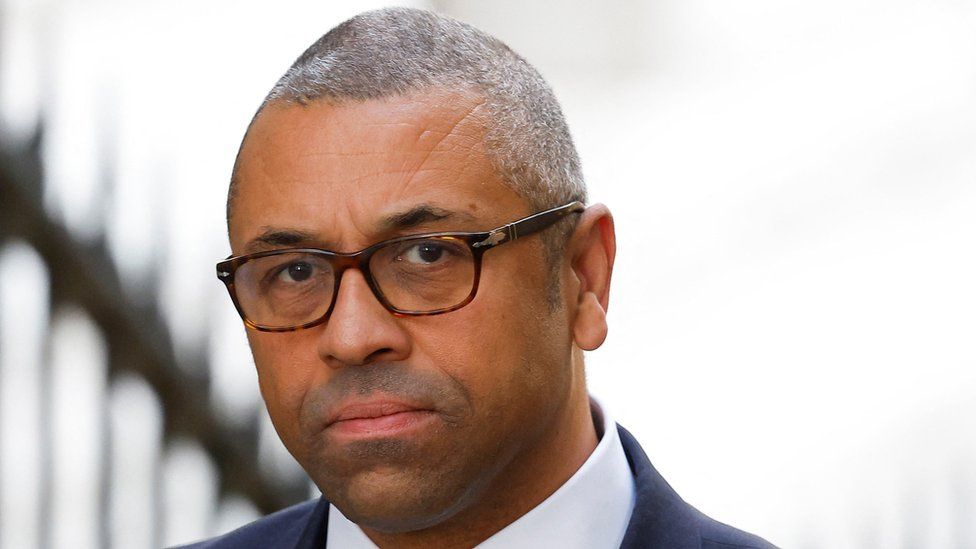
    Chancellor Jeremy Hunt says, everyone will have to pay more tax under plans due to be announced on Thursday.

    “I’ve been explicit that taxes are going up,” he told the BBC’s Laura Kuenssberg.

    He also confirmed that he would provide more information about additional assistance for people struggling with energy bills, but warned that there would be constraints.

    Labour accused the Conservatives of creating a “total mess” of the economy.

    Shadow chancellor Rachel Reeves said Mr Hunt was choosing to tax working people while doing “little to close tax loopholes which mean some of the wealthiest don’t pay their fair share”.

    Mr Hunt was speaking to the BBC just days before he is due to deliver his tax and spending plans in Parliament as part of the Autumn Statement.

    The BBC has been told the chancellor is set to announce spending cuts of about £35bn and plans to raise £20bn in tax.

    It comes as the UK faces major economic challenges, with soaring living costs and a warning from the Bank of England that the country is facing its longest recession since records began.

    It also follows the mini-Budget of former Prime Minister Liz Truss and her then chancellor, Kwasi Kwarteng, which led to market turmoil and a jump in government borrowing costs. Many of those policies have since been reversed by Mr Hunt.

    Independent forecasts are understood to have identified a gap of around £55bn in the public finances – although some economists have questioned the size of the ‘black hole’.

    ‘Unappetising announcements’

    Laura Kuenssberg, Presenter, Sunday with Laura Kuenssberg

    “Everyone is going to pay more tax” – not the kind of political message any minister would ever choose to say out loud.

    But that is the clear statement from Chancellor Jeremy Hunt, preparing the ground for a pretty unappetising set of announcements he is going to make this Thursday.

    As ever at this stage in the cycle, the occupants of No 11 are coy about giving any specifics. But alongside that bold and important statement that genuinely will affect everyone in one way or another, it is abundantly clear that public services are in for a hard time with no guarantee there’ll be extra cash to help them cope with the costs of inflation.

    And if that wasn’t enough, the help that everyone has been receiving with their energy bills will come to an end for many.

    These are important days for the new chancellor, and new Prime Minister Rishi Sunak, painting a grim scenario for the next few years.

    It will take much political skill to be able to get the public on their side, and back these decisions. Money is short, but significantly behind in the polls, and political goodwill towards the government is too.

    It also won’t have escaped people’s notice that the chancellor accepted Brexit had costs for the economy too. Wrapped up in suggestions that there were lots of opportunities still to come, it’s a rare acknowledgement from a Conservative politician.

    Speaking to the BBC, Mr Hunt acknowledged his plans would “disappoint people” – but he promised to protect the “most vulnerable”.

    “We have the plan to see us through choppy waters… we will make the recession we are in as short and shallow as possible.”

    The BBC has been told Mr Hunt is planning to freeze tax thresholds – the levels of income at which people begin to pay more tax – until 2028.

    While he did not confirm these plans when appearing on Sunday with Laura Kuenssberg, the chancellor said: “I think I’ve been completely explicit that taxes are going to go up, and that’s a very difficult thing for me to do because I came into politics to do the exact opposite.”

    He did not spell out which taxes could go up, but increasing income tax, VAT or National Insurance would break a promise made in the Conservative’s 2019 manifesto.

    Some Conservatives MPs have raised concern about increasing taxes, with former party leader Iain Duncan Smith telling Sky News it could lead to a “deeper” recession.

    Addressing the concerns of his colleagues, Mr Hunt said the previous leadership had tried that approach, “in other words a plan that doesn’t show how, in the long run, we can afford it”.

    “We have tried that, we saw it didn’t work.”

    On energy costs, Mr Hunt praised his predecessor Mr Kwarteng for introducing a price cap on the typical household energy bill.

    The energy price guarantee had been due to last for two years, but after taking over from Mr Kwarteng, Mr Hunt announced it would expire in April.

    Speaking to the BBC, he said he would set out what further support would be given to those struggling on Thursday.

    However, he emphasised that future help had to be “done on a sustainable basis” and there would have to be “some constraints”.

    Asked if he was ditching the energy plan set out by former prime minister Boris Johnson, the chancellor said he admired Mr Johnson’s “big visions” but added there were elements of “cakeism” – a reference to the phrase: “Have your cake and eat it.”

    He said he wanted to “deliver the exciting things he outlined” but that actions had to be credible and affordable.

    On whether Brexit had damaged the economy, Mr Hunt said: “I don’t deny there are costs, but there are also opportunities.”

    He said the coronavirus pandemic had prevented the UK from taking advantage of opportunities open to it after leaving the European Union.

    Labour’s Rachel Reeves said she recognised there would be “constraints” on what the government could do, partly because of “mistakes the government has made”.

    However, she added: “Just because you have to make difficult decisions it doesn’t mean you have to make the same decisions.”

    She said Labour had “no plans” to raise the income tax or national insurance and would focus on closing “loopholes” in the tax system.

    The Liberal Democrat’s Treasury spokesperson Sarah Olney said: “Hardworking families look set to be clobbered with yet more unfair tax hikes because the Conservative party crashed the economy.”

    Source:
     

  • UK “fastest growth in the G7” says Jeremy Hunt

    Jeremy Hunt previously told Laura Kuenssberg “this year we have the fastest growth in the G7. We’re catching up fast in that respect”.

    The International Monetary Fund (IMF) predicts that the UK economy will grow by 3.6% in 2022. This is faster than any other country in the G7, a group of the world’s richest countries.

    However, the latest figures show the UK economy shrunk by 0.2% between July and September and the Bank of England has forecast a “very challenging” two-year recession.

    Despite stalling growth at the moment, the UK economy is bigger than it was in 2021 when the country was under lockdown for the first few months of the year.

    The IMF now expects the UK to grow by 0.3% in 2023, down from its previous estimate of 0.5%.


  • Labour has no plans to raise income taxes

    Reeves is asked if she believes Labour can close all of the tax loopholes necessary to fund public services.

    She asserts that “there’s an awful lot you can get,” including windfall taxes, the global minimum rate of corporation tax, and changes to non-dom status proposed by Labour.

    She says: “The Tories keep coming back to working people and asking them to pay more and do little to close these loopholes that mean some of most wealthy people and businesses in society are still not paying their fair share.”

    She adds: “That is the difference between what Jeremy Hunt will be doing on Thursday and what I would be doing if I was Chancellor of the Exchequer.”

    Asked if that’s a guarantee that Labour would not put income taxes up, she says: “I’m not going to write my manifesto for the Labour Party on this programme but I’ve got no plans to increase income tax.”


  • Chancellor’s plan looks very different to his predecessor’s

    The chancellor has hinted that he could make changes to the labour market to try and drive growth.

    Jeremy Hunt said UK unemployment is at a 40-year low, but 600,000 people have left the workforce since the pandemic, and he admitted that has put a strain on businesses as they struggle to recruit.

    He said he will address this in Thursday’s Autumn Statement. Could it mean a change to immigration rules to allow companies to recruit more people from abroad?

    He also acknowledged that Brexit has brought in more costs for businesses, but said the UK needs to embrace the opportunities.

    His central message was that inflation is the biggest factor affecting household budgets. It “insidiously” eats away at people’s spending power, he said.

    The chancellor promised to set out a balanced and fair approach to address short-term pressures like energy prices and the cost of food and household goods. But he also wants to give businesses the tools to help them grow.

    Expect his plans to be vastly different from his predecessor’s uncosted tax giveaways. “We need a plan that stands the test of time,” he concluded.

    DISCLAIMER: Independentghana.com will not be liable for any inaccuracies contained in this article. The views expressed in the article are solely those of the author’s and do not reflect those of The Independent Ghana

    Source: BBC.com 

  • Two killed, one injured in Donetsk: Governor

    The governor of Ukraine’s Donetsk region says two civilians have been killed and another wounded during Russian strikes in the eastern region.

    “On November 12, Russians killed two civilians in the Donetsk region – in Bakhmut. In addition, law enforcement officers found the bodies of two died during the occupation: in Yampol and in Yarovaya,” Pavlo Kyrylenko said in a message on Telegram.

    Kyrylenko also reported that one person was injured due to strikes in the region.

    “It is currently impossible to determine the exact number of victims in Mariupol and Volnovakha,” Kyrylenko added.

    Source: BBC.com

  • Rishi Sunak promises to condemn Putin’s regime at the G20

    Rishi Sunak has promised to “call out Putin’s regime” at an international summit in Indonesia.

    On Sunday afternoon, the prime minister will travel to Bali for a G20 summit of the world’s largest economies.

    British officials had planned for this meeting assuming Russia‘s president would attend.

    The prime minister was expected to join other world leaders in publicly condemning Vladimir Putin.

    But Moscow said last week he wouldn’t be attending and the Kremlin would be sending Russia’s foreign minister, Sergei Lavrov, instead.

    So the words of anger will be directed at him.

    Speaking before setting off for Indonesia, the prime minister said: “Putin’s war has caused devastation around the world – destroying lives and plunging the international economy into turmoil.

    “This G20 summit will not be business as usual. We will call out Putin’s regime, and lay bare their utter contempt for the kind of international cooperation and respect for sovereignty forums like the G20 represent.”

    The G20 is a hotchpotch of countries with little in common beyond big economies.

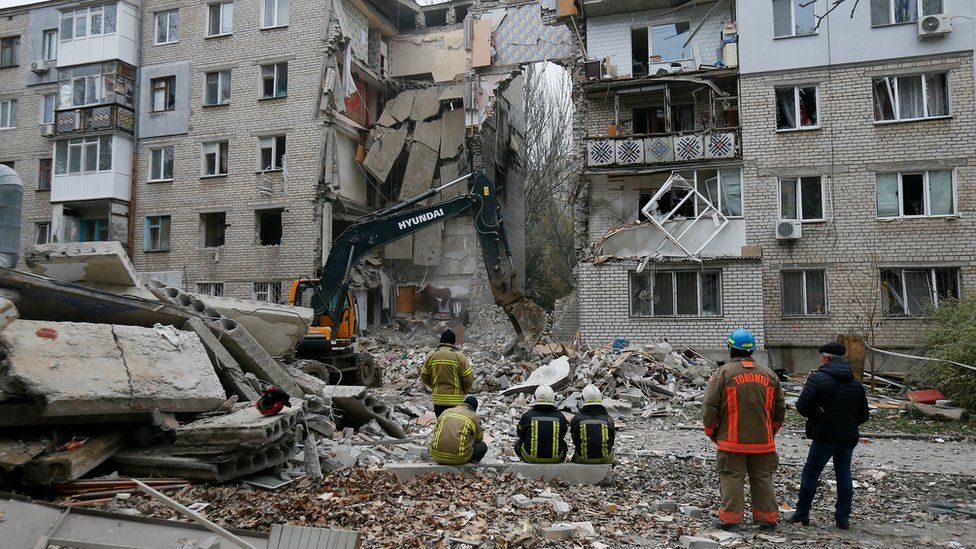
    A block of flats in Mykolaiv after being hit by a Russian missile
    IMAGE SOURCE, SHUTTERSTOCK Image caption, None of the other G20 leaders want to pose for a smiling photo with Russia amid its invasion of Ukraine

    An economic forum whose members have been hammered, economically, by one of their own, Russia.

    So the backdrop is awkward, to say the least.

    There won’t even be one of the basic diplomatic niceties of these gatherings this time, what is known as the family photo, where the leaders pose for a group picture.

    The other leaders refuse to be seen smiling in the presence of Russia.

    Recent precedent suggests another usual staple of these affairs, what is known as a communique, a set of agreed conclusions published at the close of the summit, probably won’t happen either.

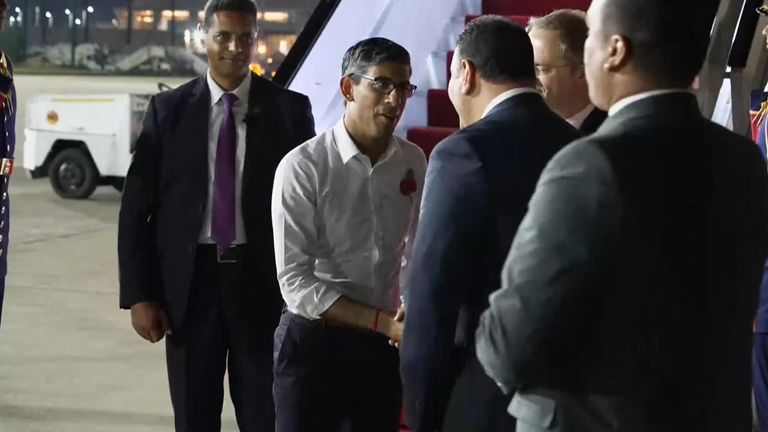
    Almost three weeks into the job, this is Mr Sunak’s second overseas trip as prime minister, after last week’s dash to the COP27 climate summit in Egypt.

    He managed to see a good number of fellow European leaders in Sharm el-Sheikh.

    The trip to Bali will mean he can meet plenty from the Indo-Pacific region, a part of the world the government has been increasingly focused on since Brexit.

    And, perhaps, a first chance to meet US President Joe Biden.

    Meanwhile, back home, as Laura Kuenssberg writes, Chancellor Jeremy Hunt will continue preparing what is called the Autumn Statement, a budget in all but name, to be delivered on Thursday, just hours after the prime minister gets back home.

    Downing Street is seeking to frame both the summit and the Autumn Statement as responses to the same shock: the consequences of the war in Ukraine.

    A desperate global economic situation, as they describe it, with big domestic implications, that they seek to be trusted to grapple with, after the chaos of the Liz Truss administration.

    But a fractious summit followed by what many will see as a bad news Budget won’t make for an easy week for Mr Sunak.


  • On Remembrance Sunday:UK to observe minute’s silence to remember war dead

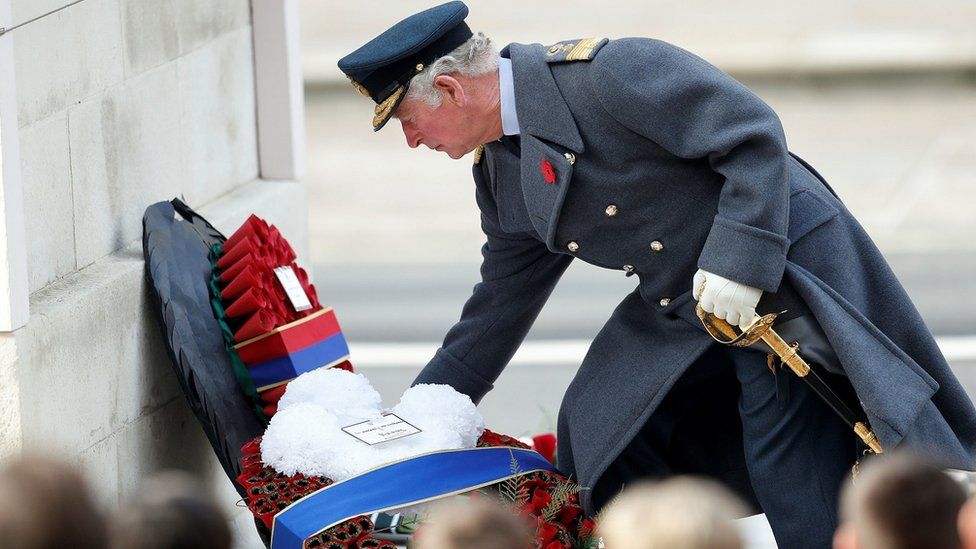
    Following the death of his mother, Queen Elizabeth II, King Charles will lead the Remembrance Sunday service at the Cenotaph for the first time as monarch.

    At 11:00 GMT, the United Kingdom will observe two minutes of silence to pay tribute to the war dead.

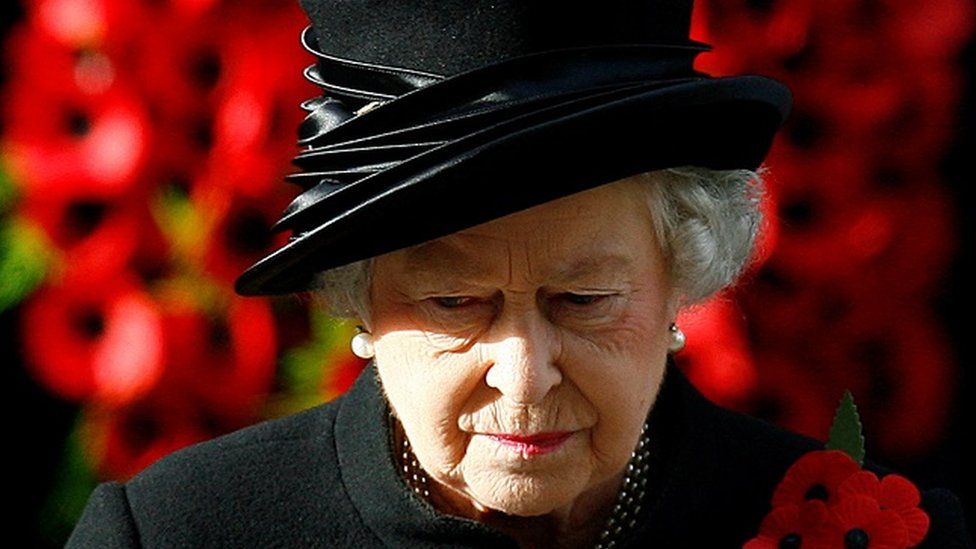
    Remembrance Sunday was one of the most important royal engagements in the late Queen’s calendar.

    The King, politicians, and religious leaders will lay wreaths at the central London memorial.

    King Charles’ ring of poppies will incorporate a ribbon of racing colours in a tribute to the ones used by the late Queen and his grandfather King George VI.

    During his time as Prince of Wales, King Charles represented the late Queen at the last five Cenotaph services and laid a wreath on her behalf, as she watched from the Foreign Office balcony that overlooks Whitehall.

    The beginning of the silence will be marked by Big Ben striking 11 times at 11:00.

    The bell has been largely silent for five years after it was dismantled and repaired in a renovation project. While it has run for events such as New Year’s Eve and the late Queen’s funeral, its tolling on Sunday will mark its official return to use.

    Charles lays a wreath at the cenotaph when he was Prince of Wales
    IMAGE SOURCE, PA MEDIA Image caption, King Charles III will lay a wreath for the first time as monarch

    The service, led by the Bishop of London, will also feature a march past by 10,000 Royal British Legion veterans, representing 300 different Armed Forces and organisations between them.

    Among those taking part will be World War Two veterans – fewer in number as each year goes by – and those who have served in more recent conflicts.

    To commemorate 40 years since the Falklands War, 400 members of the South Atlantic Medal Association will also take part.

    They will be joined by those who have lost loved ones in conflict, with the youngest marcher just eight years old.

    A further 10,000 members of the public will line Whitehall to watch the service.

    Along with King Charles, Camilla the Queen Consort, the Prince and Princess of Wales, the Earl and Countess of Wessex, Princess Anne and Vice Admiral Sir Tim Laurence, the Duke and Duchess of Gloucester, the Duke of Kent and Princess Alexandra, will attend the service.

    Queen Elizabeth on Remembrance Sunday
    IMAGE SOURCE, REUTERS Image caption, Queen Elizabeth II saw Remembrance Sunday as one of her most important engagements of the year

    The event will also be attended by senior members of the government.

    Speaking ahead of the service, Prime Minister Rishi Sunak and Defence Secretary Ben Wallace commemorated the fallen and also paid tribute to those fighting for Ukrainians’ freedom.

    Mr Sunak said: “This year more than ever, we are reminded of the huge debt of gratitude we owe those who lay down their lives to protect their country.

    “As we fall silent together on Remembrance Sunday, we will honour the memories of the men and women we have lost and pay tribute to the brave soldiers of Ukraine as they continue their fight for freedom.”

    His words were echoed by Mr Wallace, who said Remembrance Sunday was a time to reflect on the sacrifices made by our veterans and service personnel around the world.

    “We must never forget those who gave their lives in defence of our values and our great nation,” he said.

    “All of us will also be thinking of those brave Ukrainians who are fighting for their very own survival to defend freedom and democracy for all, just as the UK and Commonwealth soldiers did in both world wars.”

    More than 100 Falklands War veterans and family members of those who died in the war will take part in a remembrance service and parade in the capital Stanley on Sunday.

    They made the 8,000 miles (12,900km) journey via a special flight arranged by the Ministry of Defence, with many of the veterans making an emotional return to the Falklands for the first time since the war with Argentina broke out in 1982.

    Over the past few days the veterans, along with mothers, wives and children of those who died, have visited the battlefields where British forces fought, with some shedding tears and placing crosses at cemeteries for fallen comrades and family members.

    On Saturday, members of the Royal Family attended the annual Royal British Legion Festival of Remembrance at the Royal Albert Hall.

    On Friday, the UK held another silence on Armistice Day to commemorate the end of World War One in 1918.


  • Ukraine war: Celebration in Kherson – but war ‘far from over’

    Ukrainian officials have warned “the war is not over” after Russia’s withdrawal from Kherson, even as celebrations continue over the weekend.

    Cheering crowds welcomed Ukrainian troops to the city – the only regional capital taken by Moscow since February – on Friday.

    Similarly jubilant scenes were reported in other regions across Ukraine, including the capital, Kyiv, and Odesa.

    But despite the blow to Moscow’s ambitions, officials remain cautious.

    Yuriy Sak, an adviser to the Ukrainian defence minister, warned the BBC it was “too early to relax”.

    “We always believed that we would liberate Kherson,” he told Radio 4’s Today programme. “And we are confident that now Russians are beginning to believe that they will never be able to win this war. We see the panic in their ranks. We see the panic in their propaganda machine.

    “But of course, this is a very important moment, but… this war is far from over.”

    Kherson lacks running water, medicines and food, but emergency supplies are starting to arrive from nearby Mykolaiv, an aide to the city’s mayor says.

    The aide, Roman Golovnya, says 70-80,000 people live in Kherson now, out of a pre-war population of 320,000.

    President Volodymyr Zelensky said that “before fleeing from Kherson, the occupiers destroyed all critical infrastructure – communications, supply of water, heat, electricity”.

    It is not yet clear when electricity will be restored to the city – nearby areas are expected to get it back in a few days’ time. The power cuts prevented Kherson’s bakeries from making bread.

    Ukrainian forces have begun the huge task of dismantling Russian mines and booby-traps in and around Kherson, Mr Zelensky said.

    Meanwhile, Ukrainian TV has resumed broadcasts in the area – a key source of news for many Ukrainians.

    1px transparent line

    Yuriy Sak warned of the continuing risk of missile attacks – as did Oleksiy Kuleba, head of the Kyiv region’s military administration. Russia has been firing missiles at Ukraine’s energy infrastructure in recent weeks, severely damaging the country’s output.

    Mr Kuleba told the BBC: “Over the past month… we have seen massive shelling of peaceful settlements in Ukraine. Now I want to say that the threat of rocket attacks on the Kyiv region remains high.”

    Meanwhile, the former head of Ukraine’s National Security Council, Oleksandr Danylyuk, has warned that the Russian troops who have retreated from Kherson will have crossed the Dnipro river to “go into deep defence on the left bank”, telling the BBC “it will put them [at an] advantageous position”.

    Moscow said some 30,000 personnel had been taken out of the area – as well as around 5,000 pieces of military hardware, weaponry and other assets.

    As BBC international editor Jeremy Bowen points out, the decision to pull out “has preserved the lives of soldiers who might have died fighting a battle they could not win” and allowed them to be deployed elsewhere in the country.

    The UK’s Ministry of Defence noted on Saturday that it was “highly likely” Russian troops destroyed road and rail bridges over the Dnipro river as part of their retreat. Images emerged on Friday of the main river crossing – the Antonivsky Bridge – having partially collapsed. It remains unclear how the damage was caused.

    On Saturday morning, other images emerged showing damage to the Nova Kakhovka dam, some 58km (36 miles) north-east of Kherson city.

    US satellite imagery firm Maxar tweeted that “sections of the dam and sluice gates” had been destroyed. A road and railway line both run across the dam and Maxar’s photos show that they have been severed. It is not clear what caused the damage, which the BBC has not independently assessed.

    New video footage, verified by the BBC, shows a huge explosion at one end of the dam.

    Ukraine and Russia have accused each other of planning to breach the dam with explosives, raising the threat of flooding in the Kherson region.

    The withdrawal – which the UK’s Ministry of Defence suggests could have started as early as 22 October under the cover of the civilian evacuation – means Russia has lost the administrative capital of one of the four regions it illegally annexed in September.

    On Saturday, Moscow announced its temporary replacement capital would be a port city called Henichesk, more than 200km (125 miles) south-east of Kherson, near Russian-occupied Crimea.

    Russia’s Interfax news agency says the authorities evacuated all the regional offices, as well as “statues and historic artefacts”, from the west bank of the Dnipro river – that is, from Kherson city and its surroundings. More than 115,000 people were evacuated from that area, it reports.

    The UK’s Defence Secretary, Ben Wallace, said the retreat from Kherson marked “another strategic failure” for Moscow.

    “In February, Russia failed to take any of its major objectives except Kherson,” he said in a statement.

    “Now with that also being surrendered, ordinary people of Russia must surely ask themselves: ‘What was it all for?’”

    Source:  BBC.com

  • Dominic Raab is being investigated due to allegations of violent behavior

    Opposition parties have called for an investigation into cabinet minister Dominic Raab’s behaviour following allegations that he abused personnel during his former tenure as Justice Secretary.

    The Guardian stated that after his reappointment by Rishi Sunak, civil servants in his office were provided with a “route out.”

    The paper was told Mr Raab acted in a “rude” and “aggressive” manner between September 2021 and September 2022.

    His spokesman said he “always acts with the utmost professionalism”.

    The Guardian said it had spoken to multiple sources who claimed Mr Raab had created a “culture of fear” at the Ministry of Justice (MoJ), and who alleged his behaviour with civil servants had been “demeaning” and “very rude and aggressive”.

    The paper claimed several sources told it that about 15 members of staff from Mr Raab’s private office were taken into a room where MoJ officials acknowledged they may be anxious about his return and gave them the option of moving roles.

    It added it had been told that Antonia Romeo, the most senior civil servant in the MoJ, had spoken to Mr Raab on his return to the department to warn him that he must treat staff professionally and with respect.

    No formal complaints have been made against the cabinet minister.

    Labour has described the allegations as “deeply troubling” and has called for them to be investigated “urgently and independently”.

    The party’s deputy leader Angela Rayner said Prime Minister Rishi Sunak must “come clean” about whether he knew about the claims when he reappointed Mr Raab to the MoJ, and said it raised questions about the PM’s judgement.

    Ms Rayner said: “He claimed zero tolerance for bullying, promised a government of integrity and pledged to urgently appoint an ethics adviser, yet is falling far short on every promise.

    “Rishi Sunak is already showing he is not just failing to stop the rot but letting it fester.”

    Liberal Democrat deputy leader Daisy Cooper said the Tory government did not have “a shred of integrity left”.

    “These latest reports are deeply disturbing and must be investigated immediately by the Cabinet Office,” she said.

    Mr Raab, who was also previously deputy prime minister, was removed from his post by Liz Truss when she became prime minister in September.

    But he was re-instated as deputy prime minister and justice secretary by Mr Sunak in October.

    ‘Zero tolerance of bullying’

    A source close to Dominic Raab did not deny the option of a transfer was given to staff on his return, but pushed back against any suggestion of bullying.

    They said Mr Rabb could be direct with staff and had high standards, but stressed there had not been a significant turnover of employees.

    A spokesman for Mr Raab said: “Dominic has high standards, works hard, and expects a lot from his team as well as himself.

    “He has worked well with officials to drive the government’s agenda across Whitehall in multiple government departments and always acts with the utmost professionalism.”

    A MoJ spokeswoman said: “There is zero tolerance for bullying across the civil service.

    “The deputy prime minister leads a professional department, driving forward major reforms, where civil servants are valued and the level of ambition is high.”

    It comes after cabinet minister Sir Gavin Williamson resigned this week over allegations of bullying.

    He is accused of sending abusive messages to a fellow Tory MP last month and of bullying a senior civil servant as defence secretary.

    Sir Gavin said he “refuted” how his conduct had been characterized.

  • British Gas profit forecasts revised downward due to ‘warm weather’

    Centrica reveals more assistance for vulnerable households as it updates the market on its financial performance, predicting that the group as a whole will outperform many analysts’ expectations.

    The parent company of British Gas has announced additional assistance for struggling customers while lowering profit expectations for its household supply division due to lower demand.

    Centrica said: “Warmer than normal weather in October has contributed towards lower volumes and profits in British Gas Energy”.

    It also pointed to “broader inflationary and economic pressures” hitting the cost base and customer numbers in British Gas Services & Solutions.

    It added: “As a result, we expect adjusted operating profit in our retail division to be lower than current expectations.”

    Centrica made the announcement as consumer groups and surveys report surging numbers of households leaving the heating off as temperatures drop because of record prices for gas and electricity.

    While household energy bills have soared, the wider cost of living crisis is further squeezing spending power.

    Inflation is running at a 40-year high of 10.1% and is tipped by the Bank of England to peak at around 11% – lower than it had initially thought.

    That is largely because the government’s energy price guarantee covering wholesale prices will limit bill increases this winter.

    However, it sees rising interest rates to tackle inflation resulting in the average household facing a £3,000 annual increase in their mortgage costs.

    That more than outweighs any government help with energy bills.

    ‘I hope Sunak brings our energy prices right down’

    Centrica said of British Gas: “With over 10 million customers, we are acutely aware of the difficult environment facing many people and we remain committed to doing what we can to support those who need our help most.

    “Today, Centrica is announcing an additional £25m of help for our customers, taking the amount we have invested in voluntary customer support this year to £50m.

    Its shares soared by up to 9% on its wider trading update, however, as it was intended to set the market straight on the group’s financial performance as a whole.

    It indicated that many of the analysts who watch its performance might be making overly cautious predictions.

    Centrica said group earnings per share were likely to be closer towards the 26p that the most optimistic experts expect than the 15.1p that the most pessimistic have forecast.

    “Centrica has continued to deliver strong operational performance from its balanced portfolio since its interim results in July and now expects full-year adjusted earnings per share to be towards the top end of the range of more recent sell-side analyst expectations,” its statement said.

    The parts of the business that generate electricity and extract gas from under the ground have performed well in recent months.

    The company also announced a share buyback of around £250m.

  • The Royal College of Nursing has announced the first strike in its 106-year history

    The RCN had requested that its members be paid 5% more than the RPI inflation rate, which is currently above 12%.

    A nursing union representing hundreds of thousands of nurses in the United Kingdom has voted to go on strike for the first time in the union’s 106-year history.

    According to the Royal College of Nursing (RCN), the strike will affect the majority of NHS employers in the UK, as nurses protest pay levels and patient safety concerns.

    The union stated that many of England’s largest hospitals would go on strike, but that others “narrowly missed” the legal turnout thresholds required for action.

    All NHS employers in Northern Ireland and Scotland would be included and all bar one in Wales met the threshold, they added.

    RCN general secretary and chief executive Pat Cullen said: “Anger has become action – our members are saying enough is enough.

    “The voice of nursing in the UK is strong and I will make sure it is heard. Our members will no longer tolerate a financial knife edge at home and a raw deal at work.

    “Ministers must look in the mirror and ask how long they will put nursing staff through this.

    “While we plan our strike action, next week’s budget is the UK government’s opportunity to signal a new direction with serious investment. Across the country, politicians have the power to stop this now and at any point.

    Education Secretary Gillian Keegan: ‘No point’ for nurses to strike

    “This action will be as much for patients as it is for nurses.

    “Standards are falling too low and we have strong public backing for our campaign to raise them. This winter, we are asking the public to show nursing staff you are with us.”

    The union had urged more than 300,000 of its members to vote for industrial action over pay in the first statutory ballot on industrial action across the UK in the 106-year history of the Royal College of Nursing.

    It had called for its members to receive a pay rise of 5% above the RPI inflation rate, which currently stands at above 12%.

    This request has not been met by any UK nation.

    Recent analysis showed an experienced nurse’s salary has fallen by 20% in real terms since 2010, the RCN said, adding that nurses are working the equivalent of one day a week for nothing.

    Patient confronts PM on pay for nurses

    ‘Deep regret’ and ‘challenging times’ – health minister’s response

    Health and Social Care Secretary Steve Barclay said: “We are all hugely grateful for the hard work and dedication of NHS staff, including nurses, and deeply regret that some union members have voted for industrial action.

    “These are challenging times, which is why we accepted the recommendations of the independent NHS Pay Review Body in full and have given over one million NHS workers a pay rise of at least £1,400 this year.

    “This is on top of a 3% pay increase last year when public sector pay was frozen and wider government support with the cost of living.

    “Our priority is keeping patients safe during any strikes. The NHS has tried and tested plans in place to minimise disruption and ensure emergency services continue to operate.”

    ‘A strike across the NHS this winter isn’t inevitable’

    Wes Streeting MP, Labour’s shadow health secretary, said: “There were no strikes in the NHS during 13 years when Labour was last in government.

    “If we were in office today, we would be talking with the RCN and doing everything we can to prevent these strikes going ahead.”

    The British Medical Association, which represents doctors, offered “support and solidarity” to nurses, with deputy chair Dr Emma Runswick adding: “It is still within the government’s gift to pay healthcare staff fairly for the vital, often lifesaving work that they do.

    “We urge government to listen to the concerns of frontline health staff and deliver the investment that the NHS and its workforce so desperately need.”

    Meanwhile, health workers in other unions, including ambulance staff, hospital porters and cleaners, are also voting on industrial action over pay.

    UNISON head of health Sara Gorton said: “A strike across the NHS this winter isn’t inevitable.

    “Unions want to work with ministers to solve the NHS staffing crisis and its impact on patient care. But that must start with another pay rise for health workers. Otherwise, delays and waits for patients won’t reduce.”


  • At least 64 children have been killed in UK military operations in Afghanistan

    The UK government has paid out for at least four times the number of Afghan children killed than it previously admitted.

    In addition to the 16 publicly acknowledged children, compensation payments have been made to 64 others.

    Between 2006 and 2014, all were killed in fighting involving UK forces.

    The new figures are the result of Freedom of Information Act requests made by the charity Action on Armed Violence (AOAV).

    The most common causes of death listed were airstrikes and being caught in crossfire.

    According to AOAV, the number of civilian deaths caused by British forces is likely to be underestimated.

    Of those deaths that have been recorded, the actual number of children killed could actually be as high as 135, because some of the fatalities are described in Ministry of Defence (MoD) documents merely as sons and daughters – with ages and circumstances of deaths not always included.

    AOAV says it is possible some of those 135 were adults, but the likelihood of them having been under 18 is high because of the very young average age in Afghanistan.

    Most of the 881 fatality claims made to the British were rejected and only a quarter received compensation.

    Among those which were successful was one for eight members of the same Afghan family, killed in a coalition airstrike on a village in the Nawa district of Helmand in May 2009.

    A man asked for compensation for the deaths of his nephew, his nephew’s two wives and their five children.

    It took 144 days to settle the claim, for which he was awarded £7,205 ($8,260 using current exchange rate).

    In total, the MoD paid out £688,000 for 289 Afghan civilian deaths between 2006-14.

    AOAV says claimants were often required to provide photos, birth certificates as well as supporting letters before being paid and many were formally interviewed by British personnel to confirm they had no Taliban affiliation.

    Previous Freedom of Information requests show UK payments for deaths in Afghanistan have varied widely. In some cases, individuals received more for the loss of property or livestock than family members.

    In a statement, the MoD said: “Any civilian death during conflict is a tragedy, more so when children and family members are involved.”

    It said although its forces try to minimise injury to civilians, “regrettably it can never be entirely eliminated”.

    But Iain Overton, director of charity AOAV, criticised the lack of transparency over the deaths – with it having taken researchers years to obtain the information from the MoD.

    He also said the lack of debate around the deaths raised questions as to whether lessons had been learned.

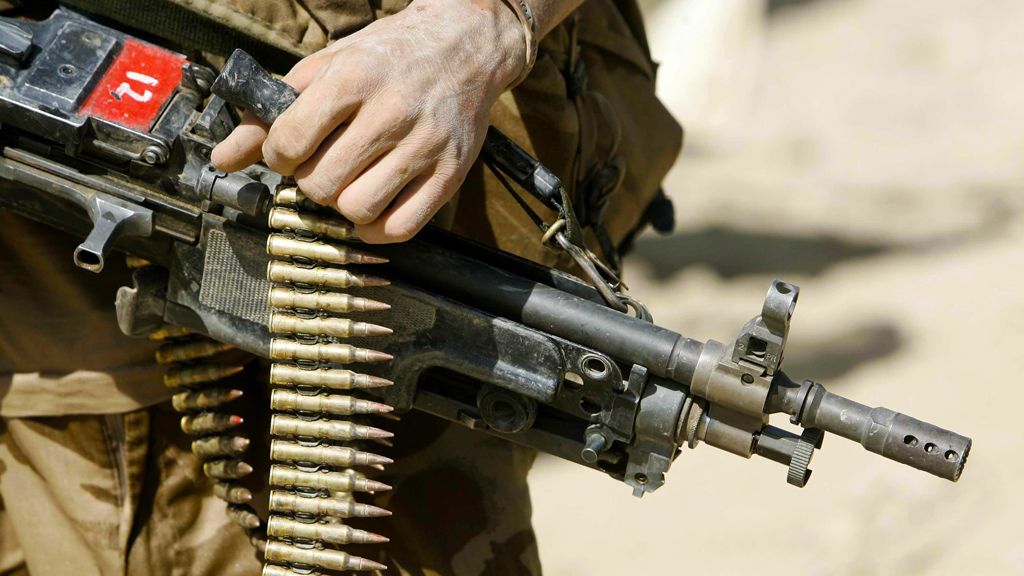
    UK soldier in southern Afghanistan, August 2007
    IMAGE SOURCE,PA MEDIA Image caption, UK soldier in southern Afghanistan, August 2007

    Human rights groups and charities have repeatedly criticised both the US and UK over the way they investigate and report civilian casualties in military operations.

    The MoD admits to just one civilian death caused by an RAF airstrike during its bombing campaign against the Islamic State group in Iraq and Syria.

    In contrast, US Defence Secretary Lloyd Austin recently ordered a major review of the way the Pentagon investigates civilian casualties. It came after a US airstrike during the withdrawal from Kabul last year – which killed 10 civilians.

    At first, the US claimed it had been targeting extremists, but journalists on the ground found evidence that all those killed were civilians.

    The US Civilian Harm Mitigation and Response Action Plan includes hiring more than 150 military staff to focus on mitigating harm to civilians, as well as better reporting and data collection of such incidents.

    The MoD said it was following the progress of the US review, but has not committed to any changes in the way it investigates or reports civilian deaths.

  • The key takeaways so far

    If you’re just waking up in the UK and catching up – it’s been a frenetic night with results coming in from all over the US in these midterm elections.

    But at this stage we still don’t know which party will control Congress once all the results are counted.

    Republicans are well-placed to win control of the House of Representatives, while the Senate remains too close to call.

    Here are the key takeaways so far.

    Little sign of “red tidal wave”: Some Republicans had predicted a big night for the party, but Democrats have fended off fierce challenges in closely watched races and performed better than many analysts had predicted.

    Abortion a key issue: The first batch of exit polls showed the economy was a major consideration for voters. But it also showed that for 3 in 10 of them, abortion was the most important issue. Experts suggest this is likely to have benefited Democrats as they poll as the most trusted party on abortion rights.

    DeSantis won big: It’s not surprising that Republican Florida Governor Ron DeSantis won re-election – but the scale of his victory exceeded almost all predictions. He won by nearly 20 points and also won a clear majority of the Latino vote. That’s a major boost for a man who is said to be considering a 2024 presidential nomination bid.

    A mixed night for Trump: On the subject of 2024, Donald Trump endorsed hundreds of candidates ahead of the midterms and their performance was always going to be viewed as a measure of his appeal ahead of a potential presidential run. But as things stand, his backed candidates have had a mixed night. Most of his high-profile picks have struggled.

    Source: BBC

  • Iran International: Iran has threatened journalists in the UK reports a TV channel

    Two British-Iranian journalists working for the UK-based Persian-language TV channel Iran International have been warned of a possible threat to their lives, according to a UK law enforcement source.

    The Metropolitan Police informed the pair of a recent increase in “credible” threats from Iranian security forces, according to parent company Volant Media.

    It condemned the “escalation of a state-sponsored campaign to intimidate Iranian journalists working in foreign countries.”

    The Iranian government has not responded.

    However, they announced sanctions against Iran International and BBC News Persian last month, accusing them of “incitement of riots” and “support of terrorism” over their coverage of the anti-government protests that have engulfed the country over the past two months.

    The two UK-based channels are already banned from Iran, but a press freedom watchdog says they are among the main sources of news and information in a country where independent media and journalists are constantly persecuted.

    Volant Media said in a statement that it was “shocked and deeply concerned” by the threats its journalists had received, which it attributed to Iran’s Islamic Revolution Guard Corps (IRGC), a powerful military force with close ties to the Supreme Leader, Ayatollah Ali Khamenei.

    “The Metropolitan Police have now formally notified both journalists that these threats represent an imminent, credible and significant risk to their lives and those of their families. Other members of our staff have also been informed directly by the Metropolitan Police of separate threats.”

    It added: “These lethal threats to British citizens on British soil come after several weeks of warnings from the IRGC and Iranian government about the work of a free and uncensored [Persian]-language media working in London.”

    Volant Media warned that the IRGC “cannot be allowed to export their pernicious media crackdown to the UK” and called on the British government to “join us in condemning these horrific threats and continue to highlight the importance of media freedom”.

    In a statement to the BBC, the Metropolitan Police said: “We do not comment on matters of protective security in relation to any specific individuals.”

    BBC home affairs correspondent Daniel Sandford reports that the UK law enforcement source would not discuss the suggestion in the Daily Telegraph that a “hostile Iranian surveillance team” was spotted outside the homes and offices of the journalists.

    Last year, United Nations experts expressed their “grave concern over the continuation of reported harassment and intimidation of the BBC News Persian staff and their family members, which appears to be aimed at preventing them from continuing their journalistic activities”.

    It set out the pattern of harassment that BBC journalists have suffered over the past decade, including “the systematic attacks, including harassment, asset freezing, serious threats, and defamation campaigns implemented by the authorities against BBC News Persian journalists”.

    The UN experts also raised concern about the surveillance of BBC journalists and the harassment of their sources in Iran, the interrogation of journalists’ family members, and the pressure placed on journalists “to leave their jobs” – all of which they said might have a “chilling effect” on journalism.

    Iran’s response to the UN experts accused the BBC journalists of aiming to “overthrow the Islamic Republic” – a claim the BBC insisted was false.

    US prosecutors also announced last year that four Iranian intelligence officials had been charged with plotting to kidnap a New York-based journalist critical of Iran. The indictment did not name the target, but Masih Alinejad, an Iranian-American author and activist, said it was her.

    Iran’s government said the allegations were “ridiculous and baseless”.

  • Former One Direction member Zayn Malik writes to the Prime Minister about free school meals

    Zayn Malik has asked Prime Minister  to “give all children living in poverty” a free school meal.

    In a letter to Rishi Sunak, the ex-One Direction member admits that as a child in Bradford, he relied on free school lunches.

    Children are stealing food from canteens “because they are so hungry but can’t afford to buy lunch,” he writes.

    He is supporting a Food Foundation campaign to make free school meals available to all children in Universal Credit households.

    The charity estimates 800,000 children in England live in poverty but do not qualify for free school meals.

    Although Malik, now known simply as Zayn, is not an ambassador for the charity, he said he felt compelled to write to the prime minister and to share his own experiences.

    He wrote: “These children are suffering from lack of concentration, some even resorting to stealing food from school canteens because they are so hungry but can’t afford to buy lunch.

    “They are also feeling shame which is directly impacting their physical and mental health.

    “I know what that shame feels like, I have seen it first-hand, as growing up in Bradford, I relied on free school meals.”


    He is the latest famous name to support wider access to free school meals, joining England football star Marcus Rashford and celebrity chef Jamie Oliver.

    Oliver has previously said he believed investing in free school meals for children would help the economy.

    He said: “The reality is, if you speak to the best minds in economics, in the country, in the world, they will tell you that if you output healthier kids, you’re going to have a more productive, more profitable country.”

    Teaching organisations claiming to represent a million teaching staff, governors and school trustees across the UK have also backed the campaign.

    They warned not expanding eligibility to all Universal Credit households “would undermine all the great efforts of the education workforce to tackle inequalities”.

    Zayn hopes his letter convinces the government to include a free school meal for all children living in poverty as part of the Autumn statement on 17 November.

    The government has previously said it has already expanded access to free school meals more than any other in recent decades.

    It has warned that the Feed the Future campaign has under-estimated the cost of expanding the scheme.

    The government has said that, during term time, the government “provides more than 1.6 million free school meals, providing pupils from the lowest-income families with a free, nutritious lunchtime meal”.

    Who is eligible for free school meals in England?

    About 1.9 million children in England are eligible for free school meals, the government says, 22.5% of all pupils.

    All infant-school pupils are eligible but children in Year 3 and above must live in a household receiving income-related benefits, with an annual income – after tax and not including welfare payments – no higher than £7,400.

    About 40% of people who claim universal credit already have jobs and may earn above this threshold.

    In Northern Ireland, the threshold is £14,000.

    Scotland and Wales have recently committed to offering free school meals to all primary pupils.

  • UK households start to receive £324 cost-of-living payments into bank accounts

    Almost one in four families across the UK will receive £324 from the government this month as the latest Cost of Living Payments are sent out from today (8 November 2022).

    Over 8 million households in England, Wales, Scotland and Northern Ireland who claimed qualifying means-tested benefits during the eligibility period will be automatically paid £324 this month, as part of £1,200 worth of direct help for households.

    The payments, starting today from the Department for Work and Pensions, are made directly into eligible recipients’ bank accounts, with no need for people to apply or do anything to receive it.

    The payment reference on DWP recipients’ bank accounts will be their national insurance number, followed by “DWP COL”. For HMRC recipients the payment reference will be “HMRC COLS”.

    Work and Pensions Secretary, Mel Stride said: “We understand that people are struggling and that is why we’ve consistently acted to ensure millions of low-income families are supported. We will continue to act with compassion as we navigate challenging global economic circumstances.”

    “As part of a wider £37 billion package of support, this latest £324 payment will help the most vulnerable people in our society who are worrying about their finances through the winter months.”

    The government’s £1,200 support package contains £400 for energy bills that is being paid in monthly instalments to all domestic energy customers between now and March 2023. It also includes a £150 Council Tax rebate for 85% of all UK households and the previous £326 Cost of Living Payment made by DWP in July and by HMRC in September.

    On top of this, nearly one in ten people received the £150 disability payment in September, and a £300 addition to Winter Fuel Payments will go to over eight million pensioner households over the winter.

    Chancellor of the Exchequer, Jeremy Hunt added: “Prices are rising across the world as we manage the aftershock of COVID-19 and Putin’s invasion of Ukraine. We recognise that families back home are struggling, which is why we’ve taken decisive action to hold down energy bills this winter, and provided hundreds of pounds of cash support for each vulnerable household.”

    “As part of that support, over 8 million vulnerable households – almost a quarter of families in the UK – will automatically receive a second cost of living payment worth £324 in their bank account from today.”

    “And while we can’t completely protect people from rising prices, my priority at the upcoming Autumn Statement will be to protect the poorest in society as we take the tough decisions necessary to fix our public finances.”

    Those eligible to receive the second cost of living payment from today include people on: Universal Credit, Income-based Jobseekers Allowance (JSA), Income-related Employment and Support Allowance (ESA), Income Support and Pension Credit.

    To be eligible, claimants must have been claiming and entitled to a payment between 26 August and 25 September 2022, with the exception of pensioner households, who may be able to have a new Pension Credit claim backdated.

    They have until 18 December 2022 to submit a valid claim for Pension Credit, which could entitle them to the £324 Cost of Living payment. Anyone can check their eligibility for Pension Credit using the online calculator or by calling the freephone claim line, on: 0800 99 1234.

    Even if you are not on a qualifying DWP benefit you may still be eligible for the £324 payment, as HMRC are also making payments to over a million people who receive Working Tax Credit or Child Tax Credit and no other eligible benefits. These will be paid between 23 and 30 November 2022 and customers do not need to contact the government or apply for the payment at any stage.

    The £324 payment and the overall £1,200 package come on top of wide-ranging government support with the cost of living this winter, including an extension to the Household Support Fund, which is providing an extra £421 million between October and March to help vulnerable people with the essentials.

    As well as this, the Energy Price Guarantee is ensuring people across the country pay significantly less for their energy bills, with a typical household saving around £700 this winter.

    Source: Gov.UK

  • UK, EU to collaborate to find solutions to the Northern Ireland Protocol

    The European Commission and UK leaders have agreed to collaborate to address “very real problems” with the post-Brexit trade deal.

    According to Sunak’s office, Britain’s Prime Minister Rishi Sunak and European Commission Chief Ursula von der Leyen have agreed to work together to resolve issues with the Northern Ireland Protocol – the post-Brexit trade deal.

    The discussion at the COP27 conference in Egypt on Monday came as Britain renewed its call to Brussels to end a delay in granting access to European Union scientific research, as agreed in the post-Brexit trade deal.

    Sunak inherited from his predecessors the problem of the Northern Ireland Protocol, which was designed to prevent a return to violence in Ireland by avoiding a hard border between Northern Ireland and the Republic of Ireland.

    Thus, although Northern Ireland remains part of Britain, it remains part of the EU’s trade bloc. But that means curtailment in its trade with the rest of Britain, which is vocally opposed by unionists who claim it cuts off the region from the rest of Britain.

    The post-Brexit solution is cited as the Democratic Unionist Party’s main reason for refusing to return to power-sharing.

    The instability in Northern Ireland has raised concerns in Dublin, Brussels and Washington and the row between Britain and the EU shows few signs of coming to a rapid conclusion, despite indications of a more positive tone from the British side in recent weeks.

    ‘Good first meeting’

    A Downing Street spokesperson said: “The prime minister reiterated the need to find solutions to the very real problems it had created on the ground in Northern Ireland. They agreed on the importance of working together to agree a resolution.”

    Von der Leyen called it a “good first meeting”.

    “We face many common challenges, from tackling climate change and the energy transition to Russia’s war against Ukraine,” she tweeted. She said she looked forward to “constructive cooperation” between the two countries.

    This comes as Britain’s Europe minister, Leo Docherty, in an address to British and European parliamentarians at Westminster, is expected to say that, in continuing to deny access to research programmes such as Horizon, the EU is failing to fulfil its part of the agreement.

    He will say that both sides stand to gain from cooperation on shared challenges, from climate change to global health and energy security.

    “The UK’s participation would be a clear win-win for the UK and the EU, but the UK cannot wait much longer,” he will say, according to advance extracts of his address.

    “The EU’s approach is causing intolerable uncertainty for our research and business communities.”

    Working together

    Although differences over the implementation of the Northern Ireland Protocol have dominated the recent dialogue between London and Brussels, Docherty’s comments underline that other sources of friction remain.

    In his speech, he will, however, emphasise how the war in Ukraine has demonstrated the importance of the two sides working together.

    “A clear lesson from the last nine months has been that, despite the challenges in our relationship, the UK and EU are effective allies where it matters most,” he will say.

    “The Ukrainians have stood firm against Vladimir Putin, in part because of the actions of our government and those across the EU.

    “That action has been stronger because it has been coordinated between us.

    “I urge our European friends to continue to work with us in providing more weapons, imposing more sanctions, and backing Ukraine to push Russian forces out.”

  • Number 10: Deal between the UK and France on small boat crossings is “in the final stages”

    Rishi Sunak promised “more details in the coming weeks” while promising to “grab this challenge” with his French counterpart.

    A deal between the UK and France to deal with people crossing the Channel in small boats is in its “final stages,” according to Downing Street.

    Rishi Sunak met with French President Emmanuel Macron earlier today at the COP27 climate talks in Egypt to discuss the issue, and the prime minister said he left “with renewed confidence and optimism.”

    Mr Sunak said there would be “more details in the coming weeks”.

    Pressed on those details later, his official spokesman revealed a deal was close to being done and talks on the specifics were taking place separately, indicating they would involve Home Office officials.

    Almost 40,000 migrants have arrived in the UK after crossing the Channel so far this year.

    Mr Sunak reportedly wants to agree targets with Mr Macron for stopping boats, and a minimum number of French officers patrolling beaches, and to be able to deploy Border Force officers in France.

    The prime minister said he was “determined to grip” the situation, but added there was “not one simple solution that’s going to solve it overnight”, pledging to work with other European leaders on the “shared challenge”.

    Speaking after the meeting, the French president also said he wanted better coordination between the two countries to cope with the issue.

    Earlier, Labour leader Sir Keir Starmer said he would “work upstream” with Mr Macron “to stop the smugglers in the first place” if he were prime minister, adding: “Before I was a politician, I was director of public prosecutions, I know how these cross-border operations work.

    “That is the discussion I would have, I hope it is the discussion that our prime minister will have.”

    ‘Challenge far from over’

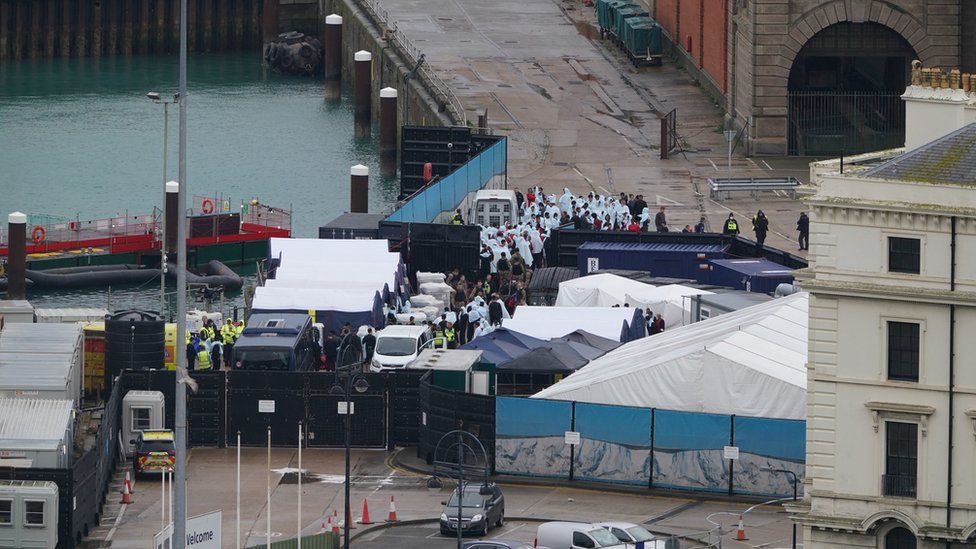
    The migrant crisis was brought into focus last week by overcrowding at the Manston processing centre in Kent, where 4,000 people who had made the crossing were packed into a space designed to hold 1,600.

    It led to growing pressure on Mr Sunak over his reappointment of Home Secretary Suella Braverman, with claims she ignored legal advice and blocked people being moved to hotels, accusations she denies.

    Speaking in the Commons this afternoon, Sir Roger Gale, the veteran Tory MP who had described the Manston situation as “a breach of humane conditions”, said: “We are now nearly back to where we need to be with the Manston processing centre operating efficiently.”

    He asked for assurance from Robert Jenrick, the immigration minister, that “Manston is a processing centre and not an accommodation centre”.

    Mr Jenrick said the numbers were now down to less than 1,600 and that it was not the government’s “intention that Manston is turned into a permanent site for housing migrants”.

    He said: “The population is now back at an acceptable level and that is a considerable achievement. It’s essential that it remains so and he is right to say that the challenge is far from over… we have to be aware of that and to plan appropriately.”

    Conservative MP for North Thanet Sir Roger Gale told Sky News last week that the situation in the Manston migrant centre was a ‘breach of humane conditions’.

    During the debate Lee Anderson, a Tory MP in Nottinghamshire, said that sourcing accommodation for “illegal immigrants” left him a “bitter taste” in his throat.

    “I’ve got 5,000 people in Ashfield who want to secure council housing and they cannot get one. Yet, we’re here debating this nonsense once again,” he said.

    “The blame lies in this place right now – when are we going to go back and do the right thing and send them straight back the same day?”

    Mr Jenrick said the government “should be guided by both our common desire for decency because those are our values, but also hard-headed common sense”.

  • Number 10: Rishi Sunak has ‘full confidence’ in Sir Gavin Williamson – despite bullying allegation

    Screenshots acquired by The Sunday Times appear to show Sir Gavin Williamson sending expletive-laden messages, including a warning that “there is a price for everything.”

    Downing Street has stated that Rishi Sunak has “full confidence” in Sir Gavin Williamson, despite the Cabinet Office minister being accused of bullying.

    Sir Gavin allegedly sent abusive text messages to ex-chief whip Wendy Morton, complaining about being barred from attending the Queen’s funeral for political reasons.

    However, Sir Gavin “expressed regret” about the messages sent to his colleague, according to the prime minister’s official spokesman.

    He went on to say that the PM has a zero-tolerance policy for bullying within government.

    “I think the prime minister has said that it’s right to let that process happen and he welcomes that Gavin Williamson has expressed regret about those comments, which as you say he doesn’t think are acceptable.”

    The spokesman added that Mr Sunak believes Sir Gavin has an “important contribution” to make to government.

    Mr Sunak is under pressure over bringing Sir Gavin back into the government.

    The PM’s official spokesman said at the time Mr Sunak “knew there was a disagreement”, but was not aware of the “substance” of the messages.

    Clarifying this on Sunday, Chancellor of the Duchy of Lancaster Oliver Dowden told Sky News’ Sophy Ridge on Sunday programme that the PM knew there was a “difficult relationship” between Sir Gavin and the-then chief whip, but “wasn’t aware” of “specific allegations” until Saturday evening.

    Williamson ‘shouldn’t have sent’ texts

    Mr Dowden added that Sir Gavin “regrets the language he used” and also suggested that a number of individuals had “a difficult relationship” with Ms Morton.

    “These were sent in the heat of the moment expressing frustration. It was a difficult time for the party. He now accepts that he shouldn’t have done it and he regrets doing so. Thankfully, we are in a better place now as a party,” he said.

    But Labour has called for an “urgent independent investigation” into the appointment of Sir Gavin, with shadow climate secretary Ed Miliband warning against a “cover-up” over the allegations.

    Speaking on Sky News’ Sophy Ridge on Sunday programme, Mr Miliband said the matter “really calls into question Rishi Sunak’s judgement and the way he made decisions about his cabinet”, adding Sir Gavin’s reappointment was “not in the public interest”.

    “There needs to be an urgent independent investigation into exactly what happened. We can’t have a cover-up, we can’t have a whitewash here,” he said.

    “What did Rishi Sunak know? When did he know it? What did Gavin Williamson do and what are the implications of that?”

    While Labour leader Sir Keir Starmer said Sir Gavin is “clearly not suitable” for the job, calling his appointment a sign of how “weak” Rishi Sunak is.


    “I think that the prime minister has got people who are clearly not fit for the job around the cabinet table,” he told reporters.

    Screenshots leaked to The Sunday Times appear to show expletive-laden messages from the South Staffordshire MP, including a warning that “there is a price for everything”.

    Another message reads “think very poor how [Privy Councillors] who aren’t favoured have been excluded from the funeral”.

    A source confirmed to Sky News that the contents of the messages were accurate.

    Former chairman of the Conservative Party, Sir Jake Berry, has said he told Mr Sunak a bullying complaint had been made against Sir Gavin a day before he entered Number 10.

    Sir Gavin has been approached for comment.

    The Sunday Times quoted the Cabinet Office minister as saying: “I of course regret getting frustrated about the way colleagues and I felt we were being treated. I am happy to speak with Wendy and I hope to work positively with her in the future as I have in the past.”

    Liberal Democrat deputy leader Daisy Cooper accused Mr Sunak of ignoring the complaint and called for Sir Gavin to be sacked.

    But former environment secretary George Eustice described the matter as “a storm in a teacup”.

    “I think Gavin’s apologised for this, he accepts it’s wrong to use that kind of language but equally he was very frustrated and I’m not quite sure why the chief whip referred this up the party instead of trying to resolve it between the two of them,” he told Sky News.

    Mr Eustice continued: “It was wrong, he shouldn’t have used that sort of language – and the chief whip probably should have been talking to him instead of texting him – but it is a storm in a teacup in the context of the great challenges we face”.

    At the weekend, a Tory party spokesman said: “The Conservative Party has a robust complaints process in place. This process is rightly a confidential one, so that complainants can come forward in confidence.”

    Sir Gavin was sacked as defence secretary in 2019 following the leaking of confidential information from the National Security Council.

    After being appointed education secretary by Boris Johnson, he was dismissed from cabinet again in 2021 following controversy around the grading of exams during the pandemic.

    It marks the second major controversy to erupt over Mr Sunak’s cabinet appointments, with the PM already under fire for making Suella Braverman his home secretary days after she was sacked for security breaches.

  • Boris Johnson blasts net zero ‘naysayers’ who want to ‘frack the hell out of the British countryside’ in appearance at COP27

    Boris Johnson referred to himself as “the spirit of Glasgow COP26,” calling for the legacy of last year’s climate summit, which was held in the UK, to be “taken forward” as a “joint global endeavor.”

    In his first appearance at the COP27 climate summit in Egypt, Boris Johnson slammed net zero “naysayers” who want to “frack the hell out of the British countryside.”

    On the first day of the summit in Sharm el-Sheikh, the former prime minister said the fight against climate change had become a “collateral victim” of the Ukraine war, causing “naysayers to adopt a corrosive cynicism about net zero.”

    In a swipe at other Conservatives – including his successor Liz Truss who had planned to lift the ban on fracking in England – Mr Johnson declared that it is “not the moment to ban the campaign for net zero” despite the ongoing energy crisis.

    Returning to the international stage, he also warned that countries “should not be lurching back to an addiction or a dependence on hydrocarbons” if they wish to keep global warming to 1.5C, adding: “The solution is to move ahead with a green approach.”

    Mr Johnson said nations must join together to “tackle this nonsense head on”.

    “This is not the moment to give in to Putin’s energy blackmail,” the former PM told the audience.

    “Yes, of course, we do need to use hydrocarbons in the transitional period and, yes, in the UK there is more that we can do with our own domestic resources.

    “However, this is not the moment to abandon the campaign for net zero, this is not the moment to turn our backs on renewable technology.”

    Mr Johnson also seemed to reject calls for climate reparations – sometimes referred to as “loss and damage” payments – which is a policy widely expected to dominate talks in Egypt.

    “Let’s look to the future, to trigger private sector involvement, I’d much rather look at what we can do now to help countries going forward,” he said.

    ‘I am here as a footsoldier’

    Describing himself as “the spirit of Glasgow COP26”, the former prime minister called for the legacy of last year’s climate summit hosted in the UK to be “taken forward” as a “joint global endeavour”.

    “Glasgow was a big moment, I want to see that legacy, it’s crucial the steering wheel is yanked back a bit to tackling climate change, clean green solutions to achieve net zero, that’s what I’m here to do,” he said.

    “We have got to end the defeatism, end Putin’s energy blackmail, keep up our campaign to end global dependence on hydrocarbons and keep 1.5C alive.”

    Probed on why he confirmed his attendance at COP27 before Prime Minister Rishi Sunak had, Mr Johnson replied: “I am here as a footsoldier and a spear carrier of the Conservatives… I am here in a purely supportive role and to remind people of the work we did in Glasgow which I think was fantastic.”

    Last week, Mr Sunak reversed his decision to skip the COP27 climate, bowing to pressure from environmental campaigners and MPs.

    PM arrives for COP27 in Egypt

    ‘Glad PM is here’

    Having originally said he would not attend due to “other pressing domestic commitments” back home – including preparing for the autumn statement on November 17 – Mr Sunak changed his position on Thursday, saying there is “no long-term prosperity without action on climate change”.

    Asked if he was concerned when Mr Sunak’s position was not to attend the climate conference, Mr Johnson added: “Look, the PM is here and I am glad he is here. He has made an outstanding speech the other day and I think he is on the right line.”

    Mr Johnson added that he supports what the government is doing back in the UK to help people facing rising bills.

    “In the short term of course you have to abate the cost, the impact for those who are feeling it – and that is why I support what the government is doing, what Rishi is doing, to help people through tough times,” he said.

    ‘People are struggling’

    But he reiterated his view that now is not the time for people to “go weak and wobbly on net zero”

    “People are struggling, people are hurting, they can feel the impact of the spike in energy prices. The answer is not to renew our addition to hydrocarbons, it’s to accelerate the adoption of green solutions,” Mr Johnson said.

    Ahead of the US midterm elections this week, Mr Johnson also noted that “it is very important for the rest of the world that America stays with the programme on climate change”.

    ather around the world, the former PM suggested that soaring temperatures back in July in the UK may have influenced the “unexpected political turmoil” in Westminster which saw him being ousted from Number 10.

    “Temperatures in London reached 40 degrees, which is unprecedented and unbearable, perhaps even contributing who knows to unexpected political turmoil that we saw in Westminster at that time,” he said.

    World leaders are attending the latest UN climate talks in Egypt amid tensions over who will pay for the damage caused by global warming.

    US President Joe Biden and French President Emmanuel Macron are among those others at the event.

    The climate summit will end on Friday 18 November.

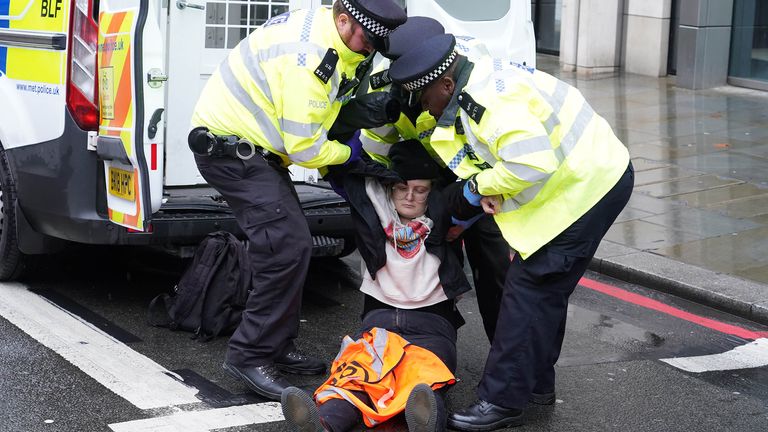
  • Just Stop Oil protesters scale motorway gantries, forcing parts of the M25 to close

    It comes after the Metropolitan Police “proactively” arrested Just Stop Oil protesters suspected of plotting an attack on UK highways.

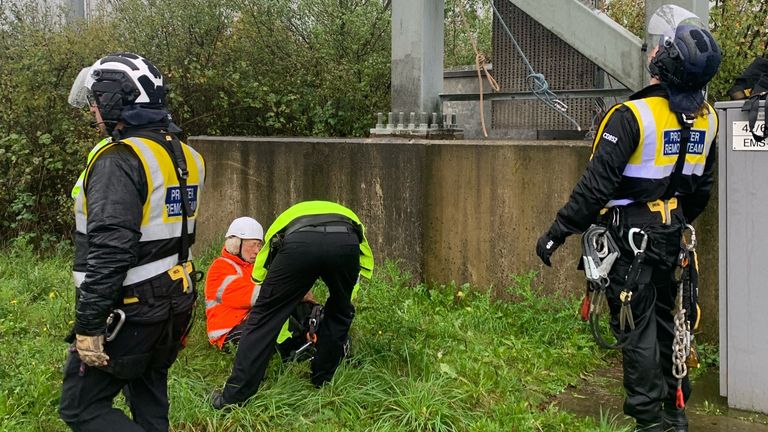
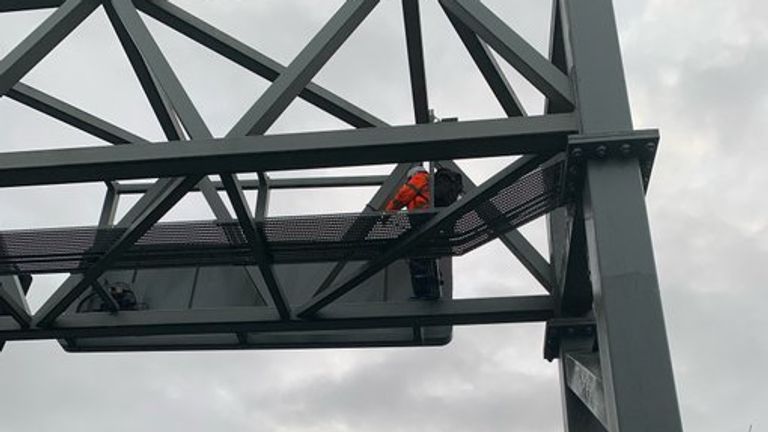
    Parts of the M25 were temporarily closed after Just Stop Oil protesters climbed overhead gantries and disrupted traffic on the major ring road that circles London.

    It comes after the Metropolitan Police “proactively” arrested campaigners suspected of plotting an attack on UK highways last night.

    Surrey Police stated that sections of the M25 were closed during the morning rush hour on Monday “for the safety of everyone” while officers removed activists.

    A protester is removed from an overhead gantry at J6 of the M25 motorway, London. Pic: Surrey Police
    Image: A protester is removed from an overhead gantry at J6 of the M25. Pics: Surrey Police
    Handout photo taken with permission from the twitter account @SurreyPolice of a Just Stop Oil protester who has climbed a gantry on the M25 between junctions six and seven in Surrey, leading to the closure of the motorway. Surrey Police said the decision was made to close the road "for the safety of everyone" while officers attempt to remove the activist. Picture date: Monday November 7, 2022.

    The force said it had received reports of protesters scaling gantries at several junctions along the M25 – including between junctions 6 and 7, and junctions 8 and 9.

    “We are here and dealing and will get this resolved as soon as possible,” it tweeted, adding activists had been removed from those sections of the motorway with traffic resuming.

    Officers were also attempting to remove an activist between junctions 9 and 10, with lanes reopening as soon as possible, it added.

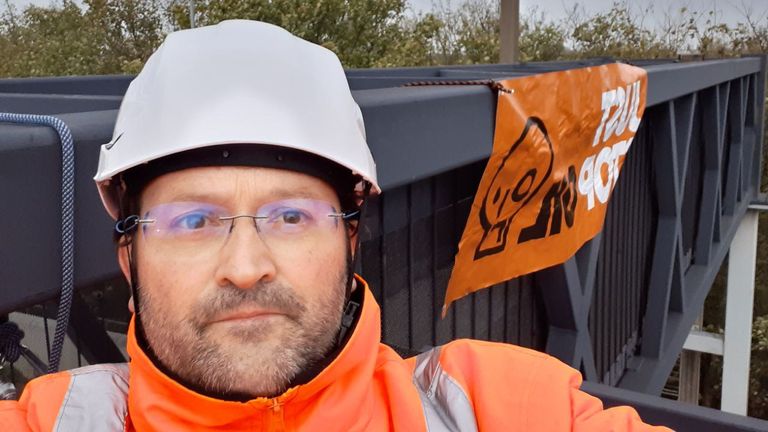
    Handout photo issued by Just Stop Oil of a protester who has climbed a gantry on the M25 between junctions six and seven in Surrey, leading to the closure of the motorway. Surrey Police said the decision was made to close the road "for the safety of everyone" while officers attempt to remove the activist. Picture date: Monday November 7, 2022.
    Image: A protester on the M25 between junctions 6 and 7. Pic: Just Stop Oil

    A protester also targeted junction 30 of the motorway, with Essex Police urging the public “not to intervene”.

    “We are continuing to work to resolve the situation on the #M25 as quickly and safely as possible. Officers responded quickly this morning and have already made arrests,” the force tweeted.

    Meanwhile, Hertfordshire Police said it was dealing with similar action on the M25 at junctions 22 and 23.

    “Officers intercepted a group of protestors at junction 22, and several people were arrested,” it tweeted.

    “We remain at the scene, alongside specially trained Protest Removal Team officers, and a road closure has been put in place to allow them to deal with the incident as swiftly and safely as possible. Please avoid the area and seek an alternate route where possible.”

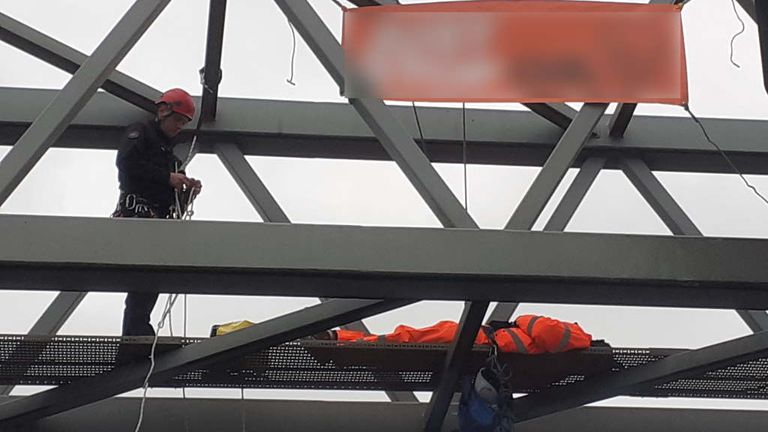
    A Just Stop Oil protester on an overhead gantry at J30 of the M25. Pic: Essex Police
    Image:A Just Stop Oil protester at J30 of the M25. Pic: Essex Police

    The Met had earlier said its “significant” operation had resulted in at least three people being detained, who the force had “strong reason to believe are intent on causing reckless and serious disruption to the public”.

    In a statement released late on Sunday, Assistant Commissioner Matt Twist said: “Acting on intelligence, this operation is fast-moving and will continue this evening and overnight with multiple arrest inquiries under way.

    “So far this evening we have made three arrests linked to this activity.

    “This is an evolving situation and we suspect the intent of these individuals is disproportionate to any legitimate right to protest and clearly crosses the line into unlawful activity.

    “Our investigation has strong reason to suspect the Just Stop Oil group intend to disrupt major motorway road networks which would risk serious harm to the public, with reckless action to obstruct the public on a large scale.”

    The suspects were arrested for allegedly conspiring to cause public nuisance, according to the Met Police.

    Mr Twist warned there “remains a possibility” that other suspects are “still intent on causing unlawful disruption to the public”.

    The Met has mobilised specialist teams and drawn police officers from across London to respond, he added.

    Police officers deal with activists from Just Stop Oil during their protest outside Harrods department store in Knightbridge, London. Picture date: Thursday October 20, 2022.
    Image: File pic

    ‘Unreasonable disruption’

    “We are calling on the public to assist us,” Mr Twist said. “Remain vigilant – if you see something suspicious or witness an attempt to cause disruption call 999 immediately.

    “Operations like these come at a cost. Since the start of October we have used more than 10,000 officer shifts to police Just Stop Oil protests.

    “These are officers who would otherwise be dealing with issues that matter to local communities, such as knife crime, safeguarding and responding to burglaries.

    “We are determined to bring to justice all of those who conspire to cause significant and unreasonable disruption to London, or cause damage to buildings, property or valuables.

    “It’s what the public expects, and we’ll work closely with the Crown Prosecution Service and courts to make sure this happens.”

    Who are Just Stop Oil?

    National Highways has secured a High Court injunction to prevent Just Stop Oil protesters disrupting England’s busiest motorway.

    The court has granted a further injunction which aims to stop unlawful demonstrations on the M25, which encircles Greater London, in an attempt to end disruption to the busy road by the environmental group.

    It means that anyone entering the motorway and fixing themselves to any object or structure on it, and anyone assisting in such an act, can be held in contempt of court.

    They could face imprisonment, an unlimited fine, and the seizure of assets.

    Just Stop Oil have attracted widespread attention, and fierce criticism, in recent weeks for their stunts which have involved spraying orange paint on buildings and scaling a bridge to force the closure of the M25 Dartford Crossing.

    The climate change activists staged 32 days of disruption from the end of September and throughout October, which the Met said resulted in 677 arrests with 111 people charged.

    The protesters have been calling on the government to abandon plans to licence more than 100 new oil and gas projects by 2025, and to do more to help people with their skyrocketing energy bills.

  • Nurses set to strike in first ever national action – as patients braced for disruption

    Nurses across the UK are set to strike in the first ever national action over a pay dispute.

    The strike ballot among more than 300,000 members of the Royal College of Nursing (RCN) was the biggest ever in the union’s 106-year history.

    Although counting is still under way, it is understood that RCN officials believe enough members have voted for winter industrial action which is set to take place within a few weeks, possibly before Christmas.

    RCN general secretary Pat Cullen said: “Our strike action will be as much for patients as it is for nurses – we have their support in doing this.”

    The exact nature of the strike action is yet to be determined, but it will likely see patients face disruption to operations and appointments while already facing record NHS waiting lists.

    A union source told the Observer newspaper: “This will see the majority of services taken out, and picket lines across the country.”

    The RCN said there are record nursing vacancies and in the last year 25,000 nursing staff around the UK left the Nursing and Midwifery Council register.


    Source: Sky News


  • Sunak and his chancellor have a series of difficult decisions to take on tax and spending

    It’s sort of discombobulated because we’ve been just running 100 miles an hour.

    It has calmed down a bit, but I would describe it as the calm before the storm – because of what we’ve seen in terms of the Bank of England‘s decision on lifting interest rates.

    But inflation is going to peak, quite soon, and lower than perhaps expected.

    They are also talking about a recession – a very long, potentially quite long recession – potentially the longest recession since records began.

    So that’s all worrying for the government at a time when there is this black hole in the public finances, exacerbated by the decisions that Liz Truss took… and Jeremy Hunt, the new chancellor, has now reversed.

    So Rishi Sunak and his chancellor have got a series of very difficult decisions to take on tax and spending.

    How are you going to get that through the party? There are so many different views about what he should do.

    Source: Skynews.com

  • Boris Johnson had the numbers to challenge Sunak says Sir Graham Brady

    Sir Graham Brady appears to have confirmed Boris Johnson’s claim that he had enough MPs to challenge Rishi Sunak in the leadership election last month.

    Mr Johnson dropped out of the Tory leadership race, claiming he had the necessary nominations but was unable to unite the party.

    Sir Graham, chair of the Tory party’s 1922 Committee, told the BBC that “two candidates” had reached the threshold, and “one of them decided not to then submit his nomination.”

    Sir Graham also spoke about his experiences meeting with former PMs Liz Truss and Mr Johnson at separate stages this year to tell them they no longer commanded majority support from their MPs.

    “I was reaching for my phone when I got a message saying the prime minister had asked to see me,” the Altrincham and Sale West MP told  BBC North West Tonight.

    “When I went in to see her with her chief of staff Mark Fullbrook, she asked me the question – she said ‘it’s pretty bad, isn’t it?’ To which I replied ‘yes, it is pretty bad’”.

    “She asked the second question, ‘do you think it’s retrievable?’. And I said ‘no, I don’t think it is’. And she replied that she didn’t either.”

    He said Mr Johnson had insisted he was “still determined to go on”,  but changed his mind overnight.

    After Mr Sunak was made PM uncontested, Mr Johnson tweeted: “Congratulations to Rishi Sunak on this historic day, this is the moment for every Conservative to give our new PM their full and wholehearted support.”

    The former premier offered his congratulations a day later than messages from outgoing PM Ms Truss and Mr Sunak’s fellow leadership hopeful, Penny Mordaunt

  • Government backs Sizewell C after reports nuclear power plant could be scrapped

    Rishi Sunak’s spokesperson says claims they are ditching the £20bn project are not accurate and the government hopes to get a deal over the line as soon as possible.

    But the site’s future was cast into doubt overnight after reports claimed it was being reviewed ahead of the chancellor’s autumn statement in just under two weeks – with Treasury sources telling Sky News “all options are on the table” to fill the fiscal black hole in government finances.

    Now, Rishi Sunak’s official spokesperson says the reports are “not accurate” and “our position remains the same”, adding negotiations are “ongoing and constructive”.

    The £20bn Sizewell C project aims to generate enough low-carbon electricity to supply six million homes and help protect the UK from energy market volatility.

    The plant is a joint endeavour with French energy giant EDF and is expected to take a decade to build.

    While it has the backing of the Labour Party and unions, critics say the plans are too expensive and the new power source will take too long to come online.

    Source: Skynews.com

  • Russian ambassador has ‘evidence’ UK special forces involved in attack on Black Sea fleet

    “The nuclear war cannot be won and it should never be fought. And we stick strongly to this statement,” Moscow’s ambassador to the UK, Andrey Kelin, told Sky News.

    The Russian ambassador to the UK has claimed Britain played a role in an attack on its warships – warning the country is “too deep” in the Ukraine war.

    In an interview with Sky’s Mark Austin, diplomat Andrei Kelin claimed he had ‘proof’ that UK special forces were involved in a Ukrainian drone assault on Russia’s Black Sea fleet in Crimea and had handed evidence to the British ambassador.

    Asked to provide evidence of Russia’s claims, Mr Kelin said: “We perfectly know about [the] participation of British specialists in [the] training, preparation and execution of violence against the Russian infrastructure and the Russian fleet in the Black Sea. We know that it has been done.”

    Russia's ambassador to the UK, Andrey Kelin
    Image:Russia’s ambassador to the UK, Andrei Kelin

    Pressed to give evidence to the public on Moscow’s accusation the attack on the Russian fleet in the Black Sea was carried out under the guidance and leadership of British Navy specialists, Mr Kelin said it had been handed to the British ambassador and added that “it will become public pretty soon,” perhaps today, perhaps tomorrow.

    He added: “It is dangerous because it escalates the situation. It can bring us up to the line of I would say no return, return is always possible. But anyway, we should avoid escalation.

    “And this is a warning actually that Britain is too deep in this conflict. It means the situation is becoming more and more dangerous.”

    The UK government has said such claims are false and are designed to distract from Russia’s military failures in Ukraine.

    A spokesperson said: “In recent days, Russia has made a range of allegations against the UK, clearly designed to distract attention from Russia’s illegal invasion of Ukraine; Russia’s losses on the battlefield and its bombing of civilian populations and energy infrastructure without any regard for international law and the loss of innocent life.

    “We do not plan to give a running commentary on these allegations; it is no secret that the United Kingdom has taken a public lead in our support to Ukraine – this has been enduring since Russia’s illegal annexation of Crimea in 2014.”

    Moscow has cast Britain as a particularly insidious Western foil to Russia. President Vladimir Putin has said the UK is plotting to destroy Russia and carve up its vast natural resources.

    A still image from video, released by the Russian Defence Ministry, shows what it said to be Russia's Yars intercontinental ballistic missile launched during exercises held by the country's strategic nuclear forces at the Plesetsk Cosmodrome, Russia
    Image: A Russian Yars intercontinental ballistic missile launched during nuclear exercises

    Ambassador denies Moscow would use nuclear weapons

    Speaking after Russia accused the West of “encouraging provocations with weapons of mass destruction”, Mr Kelin denied Moscow would use nuclear weapons in Ukraine.

    Mr Kelin said: “The nuclear war cannot be won and it should never be fought. And we stick strongly to this statement.”

    A still image from video, released by the Russian Defence Ministry, shows what it said to be Russia's Tu-95MS strategic bomber landing during exercises held by the country's strategic nuclear forces at an unknown locatio
    Image: A Russian Tu-95MS strategic bomber landing during exercises held by the country’s strategic nuclear forces

    Asked if Moscow could use a tactical nuclear weapon in the conflict, Mr Kelin replied: “No. The world has every assurance that Russia is not going to use [a] tactical nuclear weapon in [the] Ukrainian conflict.”

    Moscow has been ramping up its nuclear rhetoric since it invaded Ukraine, most recently by accusing Kyiv of planning to use a “dirty bomb,” though it did not offer evidence. Kyiv has denied it has any such plan.

    The Russian Foreign Ministry said it feared the five declared nuclear powers were teetering “on the brink of a direct armed conflict”.

    It added: “We are strongly convinced that in the current complicated and turbulent situation, caused by irresponsible and impudent actions aimed at undermining our national security, the most immediate task is to avoid any military clash of nuclear powers.”

  • Albania’s Prime Minister accuses the UK of ‘discrimination’ following migrant remarks

    The criticism comes after a senior British official singles out Albanians for their role in facilitating illegal migration to the UK.

    Albanian Prime Minister Edi Rama has accused the British government of “discriminating” against Albanians after a top UK official singled out the nationality for its role in illegal migration to the country.


    Small-boat crossings of the English Channel from mainland Europe have become a political headache for UK ministers, who promised that Brexit would lead to tighter immigration controls.

    Official statistics in the UK have said that Albanians are now the largest single group making small-boat crossings of the Channel.

    ‘Targeting Albanians’

    In a series of messages posted on his personal Twitter account on Wednesday, Rama said UK officials have been actively “discriminating” against Albanians.

    “Targeting Albanians (as some shamefully did when fighting for Brexit) as the cause of Britain’s crime and border problems makes for easy rhetoric but ignores hard fact,” Rama tweeted.

    “Albanians in the UK work hard and pay tax. UK should fight the crime gangs of all nationalities and stop discriminating … to excuse policy failures,” he added.

    Britain’s Home Secretary Suella Braverman was recently criticised for her choice of language during a heated Commons debate, when she alleged that there is an “invasion” of England by migrants.

    Braverman has also pointed the finger at Albanian asylum seekers, saying that many Albanian adult males who seek asylum in the UK have posed as children, a practice she intended to “clamp down” on.

    Albanian arrivals

    British MPs were told recently that 12,000 Albanians had arrived in the country after crossing the Channel so far this year, compared with only 50 in 2020.

    The number of migrant arrivals have reached record levels, causing delays in asylum applications and increasing costs in terms of housing and other social services.

    Albanian organised crime gang groups are believed to be among the main players in smuggling migrants across the Channel to Britain from northern Europe.

    Earlier this week, British and Belgian law enforcement officers said they had arrested three people suspected of being part of an Albanian people-smuggling ring.


  • Revealed: How much British people spend on takeaways

    Many of us are guilty of feeling too lazy to cook some nights, or needing a pick-me-up to cure a hangover – but how much are our takeaway meals costing us?

    The average person in the UK on an annual salary of £25,971 spends £641 a year on takeaways, according to KPMG data.

    Raisin UK has calculated the average person spends roughly £1,508 a year on food shops, breaking down to £29 a week – meaning the average percentage spent on takeaways is a huge 42.51%.

    It also calculated the top 20 takeaway hotspots in the UK – as in, the areas with the most options – and their favourite cuisine.

    But why are people still ordering takeaways even as money is tight?

    Chris Tompkins, a life coach and associate therapist for Theara, says that “even in financially sticky situations, there is an omnipresence of tempting social and food cues”.

    “This means the individual is fuelled by their emotional desire to eat takeaway and they push their financial logic to the side and revisit that logic after the meal has been consumed. Financial strain is no match for emotional self-control (or lack thereof),” he said.

    Plus, he added, takeaways are easy – there are no dishes to be washed or preparation to be done.

    So how can you cut down on costs?

    • Plan your meals ahead and make sure you have the ingredients in
    • Make sure you always have some basic ingredients in your cupboard
    • Try “fakeaways” – recreating your favourite takeaway meal
    • Have a list of reliable recipes that you enjoy making

     Source: Skynews.com


  • Your stories: Soon-to-be mum of triplets facing £40,000 a year childcare bill

    A soon-to-be mum of triplets facing a £40,000 a year childcare bill said working mothers are being penalised during the cost of living crisis.

    Vicki Sevgili, from Andover in Hampshire, is currently 28 weeks pregnant and has been told by the government and Citizen’s Advice Bureau she is better off “giving up work and living off the government” than returning to work once her maternity leave ends.

    She calculated the impending cost of childcare by researching how much it would cost for one child and then multiplying it by three.

    “The lowest figure I got was £38,000, and the highest was £54,000,” she told Sky News.

    This amount, she said, would swallow her entire wage: “I would be better off giving up work and living off the government.”

    She added: “I was told I would get support returning to the workplace.

    “But I enjoy my job and I want to keep it – not find a new one. Why can’t they support me to help me keep my job?”

    She is calling on the government to do more to support working mothers, to help them keep their jobs.

    Meanwhile, her mortgage has increased by £200 a month, as well as her energy bills rising and she is facing growing costs for groceries – all while needing to buy three of everything.

    Ms Sevgili said that while it would make more financial sense for her husband to stay home, he is in the UK on a spouse’s visa and would receive no monetary support.

    “When we first were told this, I went home and I said to my husband, let’s just move. The system just doesn’t work.

    “But I know the UK is the best place for our family to be, so we will make it work one way or another.

    Source: Skynews.com


  • Poll finds 44% of Britons think Braverman’s ‘invasion’ comments were inappropriate

    After Home Secretary Suella Braverman used the word “invasion” to describe the migration crisis in the Commons yesterday, a YouGov survey has found that 44% of Britons felt the word was “inappropriate”.

    The survey of 4,790 adults in the UK also found that 43% felt the word was “appropriate”.

    Meanwhile, 76% of Conservative voters felt the word was “appropriate” and 16% believed using the term was “inappropriate”.

    When it came to Labour voters, 16% said the word was “appropriate” and 74% felt that using the term was “inappropriate”.


    Source: Skynews.com


  • Labour MP says Braverman is “totally unfit for the job”

    Labour’s Andy McDonald reiterates the home secretary’s claim that she ignored legal advice on asylum seekers, citing her own admission that she violated security protocols six times by sending government documents to personal accounts.

    “How on earth can she stand at that dispatch box with a straight face and defend cruelty to the most desperate of people?” he asks.

    “Doesn’t she need to take a look in the mirror to see who is a threat to national security and accept she is totally unfit for the job?”

    Ms Braverman refers to her letter again, saying it gives “very fulsome” detail of what happened, and repeated her apologies.

    But she continues to deny she ignored legal advice.


  • Braverman’s back… but will the migrant crisis allow her to stay?

    Suella Braverman’s second term as home secretary has already been fraught with controversy.

    She admitted to breaking the ministerial code six times during her first tenure and is currently dealing with the south coast migrant crisis.

    Chief political correspondent Jon Craig said on the Sky News Daily podcast, “Clearly, there is a concern in Whitehall about her behaviour.”

    “And we know that Priti Patel never cared much for the rules and the protocol and the mandarins in the Home Office who tried to tell her what to do.

    “And it seems that Suella Braverman has even less time for all the protocols and rules about security and how you do business.

    “As a senior cabinet minister, she’s prepared to have a fight.”

    Meanwhile, John Vine, the UK’s first independent chief inspector of borders and immigration, said that “one single policy” will not make a difference.

    He added: “We need to think through the asylum and immigration system, and we need to decide how it’s going to operate.

    “And we need to stick to that.”

    On the Sky News Daily, Sally Lockwood is also joined by Conservative MP Sir Roger Gale, who explains his view of the current Home Office migration policy.


  • Braverman admits to mailing government information to personal email six times

    Suella Braverman has written to the House of Commons’ Home Affairs Select Committee to explain how she sent government information to a backbench MP.

    This action prompted Ms Braverman to resign as home secretary, only to be reappointed six days later (last week, upon Rishi Sunak, becoming PM).

    Ms Braverman also admitted to sending work emails to her personal address on six occasions, in violation of the ministerial code.

    In the letter, Ms Braverman says the information related to a written ministerial statement outlining immigration policy.

    She says the information would “outline the government’s position” – and allow the OBR to incorporate the position into their forecasts.

    The information was sent to Tory MP Sir John Hayes, with Ms Braverman saying she “intended to copy his secretary’s parliamentary email address” but she put the wrong email in. The information instead went to the secretary of a different MP.

    According to Ms Braverman,

    Suella Braverman has written to the House of Commons’ Home Affairs Select Committee to explain how she sent government information to a backbench MP.

    This action prompted Ms Braverman to resign as home secretary, only to be reappointed six days later (last week, upon Rishi Sunak becoming PM).

    Ms Braverman also admitted to sending work emails to her personal address on six occasions, in violation of the ministerial code.

    had “specifically requested” that the policy be discussed with “parliamentary colleagues”.

    The home secretary also gave her a timeline of events as she saw them on the day in question.

    She said it started with getting up at 4 am to go on a police raid, before travelling two hours by car to the Home Office.

    It was during this journey that Ms Braverman sent the email in question from her personal phone as she did not have her work phone with her.

    Following a morning of meetings, Ms Braverman says when she realised she had sent the email to a staffer of MP Andrew Percy by accident, she “decided to inform my officials as soon as practicable”.

    But before informing the civil service, Ms Braverman bumped into the chief whip and Mr Percy – a meeting during which Mr Percy raised his concerns.

    After this meeting, Ms Braverman asked a special adviser to tell the private secretary what happened.


  • Braverman scheduled to speak in the House of Commons this afternoon

    Suella Braverman, the Home Secretary, is expected to give a speech in the House of Commons this afternoon.

    It comes as she faces mounting scrutiny for her handling of government information and decisions to postpone the transfer of migrants from overcrowded detention centres to hotels.

    In a letter to the Home Affairs Select Committee published in the last hour, Ms Braverman admitted to breaching rules around using her personal email address for government business on six occasions.

    The home secretary has been urged to get a “grip” of the situation with migrants in the south of England.

    Some 4,000 people have been held at Manston in Kent, a facility designed to hold fewer than 2,000 people.

    It is believed her statement today will be on the situation in Manston.

    Almost 500 people crossed the Channel in small boats yesterday, and a person threw incendiary devices at a facility in Dover.

    Source: Skynews.com

  • Questions are stacking up for Suella Braverman – when will she answer them?

    There are two potential political scandals to address today, and both are on the home secretarys desk.

    First is the deteriorating situation at Manston processing centre in Kent, described by the chief inspector of prisons as “dangerous” and inhumane.

    It’s expected a minister will have to answer questions about it in Parliament this afternoon. Immigration Minister Robert Jenrick, who visited the site for three hours yesterday, may be asked to step in for Suellla Braverman to explain why the processing facility is almost three times over capacity and families were reportedly left sleeping in tents for weeks.

    If the Home Office does not offer up a statement from him, then they are likely to be forced to answer an urgent question.

    A government minister, Mark Spencer, appeared to confirm on Sky News this morning that failure to procure other accommodation was deliberate policy, saying that Ms Braverman had prevented people from being moved out of the site so they could be processed more quickly.

    But answers have been demanded by Labour, campaigners, and by Conservative MP Roger Gale, whose constituency in North Thanet includes the facility. He gave the home secretary and her predecessor both barrels on Sky News this morning.

    He said it was “clearly Home Office policy” not to book hotel accommodation for those held there for the past few years. He said this was a mistake, which has led to significant overcrowding, and that Mr Jenrick was in the process of moving people out.

    “I do believe that whoever is responsible, that is either the previous home secretary or this one, has to be held to account because a bad decision was taken and it has led to what I would regard as a breach of humane conditions,” he said. He added that the migrant issue should be addressed “in a grown-up fashion, not by dog whistle politics.”

    The home secretary – who the weekend papers reported has been nicknamed “Cruella” by officials – has been tasked with tackling the issue of migrants crossing the Channel in flimsy boats, with the numbers reaching a record 38,000 this year.

    MPs were told last week that just 4% of those who arrived last year have had their claims processed. Senior Conservatives are privately concerned that the home secretary – returned to her post by Rishi Sunak six days after she resigned over a security breach – is not the right person to sort out this complex issue.

    She may also need to answer questions today, or the next time she appears publicly, about the circumstances surrounding her resignation. She admitted a security breach and said she had reported it “rapidly” as soon as she realised.

    But Labour’s Yvette Cooper predicted that Ms Braverman would dodge questions on Manston today after revelations over the weekend that after sending the email from her personal account and realising it was to the wrong recipient, she told them – in an email seen by the BBC – to “delete the message and ignore.”

    Having been forced to resign once already, there are already questions about how long she can survive in the post.

    DISCLAIMER: Independentghana.com will not be liable for any inaccuracies contained in this article. The views expressed in the article are solely those of the author and do not reflect those of Independent Ghana

    Source: Skynews.com 


  • Dover migrant centre: Man discovered dead near the scene of a fire attack

    A man was discovered dead after incendiary devices were thrown at a Home Office migrant centre in Dover.

    The suspect threw two or three devices, which a witness described as petrol bombs, and was later discovered dead at a nearby gas station.

    Another device discovered in the man’s car was later rendered safe by the Explosive Ordnance Disposal Unit.

    The attack injured two people who were inside the centre.

    Kent Police, which is leading the investigation, is not currently treating the incident as terrorism.

    Home Secretary Suella Braverman described the attack as “distressing”.

    A photographer with Reuters news agency who witnessed the incident reported a man had thrown petrol bombs with fireworks attached before taking his own life.

    Dover MP Nathalie Elphicke also said she understood the suspect had killed himself.

    Police had been called at 11.22 GMT on Sunday to The Viaduct, Dover, where the devices thrown by the suspect had started a fire.

    Speaking to LBC radio, Ms Elphicke said the motivation of the perpetrator was so far unknown, but the centre is “a well-known facility” where small boats arrive before people are taken 20 miles away to the Manston asylum processing centre in Kent.

    The Dover site remained open but around 700 suspected migrants were moved to Manston – about 15 miles (24 km) away – for their safety during the initial stages of the police investigation.

    A group of migrants at the centre following the incident
    IMAGE SOURCE, PA MEDIA Image caption, Migrants were at the immigration centre following the incident in Dover

    Posting to Twitter earlier, Ms Braverman said: “I am receiving regular updates on the situation.

    “My thoughts are with those affected, the tireless Home Office staff and police responding. We must now support those officers as they carry out their investigation.”

    Conservative Dover MP, Ms Elphicke, said she was “absolutely shocked and appalled” by the incident and that “tensions have been rising” over the numbers of migrants arriving in the town.

    “I have expressed my concerns over the security of the centre in Dover,” she said. “I don’t think this is the appropriate place for a migrant-receiving centre. Dover is an extremely busy and open port.”

    Immigration Minister Robert Jenrick – who visited the Manston facility on Sunday – said he was being updated on the incident by Kent Police.

  • Scabies and overcrowding at immigration center: 100 charities call on home secretary to act

    More than 100 charities have signed an open letter to Home Secretary Suella Braverman, urging her to create a “kind and effective system” for asylum seekers in the UK.

    It comes amid growing concern about the Manston immigration detention centre in Kent, which was discovered to be housing more than twice the number of people it was supposed to.

    This problem has been exacerbated by this weekend’s petrol bomb attack on the Dover Tug Haven asylum site, which has resulted in the transfer of hundreds of people to the Manston processing centre.

    The facility was overwhelmed on Sunday night, with a reported 4,000 being housed there – it was initially intended to house 1,600 to be moved on and processed within 24 hours.

    Home Office minister Robert Jenrick visited Manston yesterday and admitted the situation there was “intolerable“.

    Mrs Braverman has been accused of failing to help solve Manston’s overcrowding problem. It was reported by The Times this weekend that she refused to approve new hotels where asylum seekers could be sent. It was said she ignored legal advice people should be moved.

    On conditions at the site, the Refugee Council said one boy had contracted scabies having stayed at the Manston facility for 19 days in “inhumane” conditions.

    The Home Office confirmed a small outbreak of diphtheria, a contagious bacterial infection that can prove fatal if it goes untreated, at the Kent site earlier in October.

    The letter from charities reads: “Home secretary when you talk of ‘safe and legal routes’, you must be aware that it is impossible to ask refugees to come exclusively through such a path when even Afghan interpreters who are eligible for one of our few existing schemes remain in hiding from the Taliban.

    “When you talk of ‘illegal migrants’, you must be aware that the top nationalities of people making dangerous journeys include Afghanistan, Eritrea, and Syria, and that at least 97% of asylum claims made by people from these countries are successful.

    “When you question the existence of ‘modern slavery’, you must be aware that you are dismantling your own party’s proud and internationally-recognized achievement in protecting the survivors of trafficking.

    “And when you complain about the cost of housing asylum seekers, you must be aware that, while people seeking safety did not choose to leave their homelands, they are willing to work and keen to contribute, if only the law permitted them.

    “You have referred to this country’s proud history of offering sanctuary, so we ask you to make this happen with a fair, kind, and effective system for refugees.

    “Deal with the backlog in asylum cases, create safe routes, respect international law, and the UN convention on refugees, and give refugees a fair hearing, however they get here. Then you would have really done something worth dreaming about.”

    The letter, co-ordinated by charity IMIX and coalition campaign Together With Refugees, was signed by groups such as Choose Love, Christian Aid, City of Sanctuary UK, Doctors of the World, English National Opera, Freedom from Torture, Good Chance Theatre, JCORE, Jesuit Refugee Service, Rainbow Migration, Refugee Action, Refugee Council, Scottish Refugee Council, Safe Passage and Save the Children.


  • Labour: Prime Minister should explain the Suella Braverman breach

    Labour is demanding that Rishi Sunak “come clean” about Suella Braverman’s security breach.

    Ms Braverman resigned as home secretary under Liz Truss last week after violating the ministerial code by sending an official document from a personal email account. Rishi Sunak reappointed her on Wednesday.

    Her reappointment has been criticized.

    Labour’s Shadow Home Secretary Yvette Cooper said her party will try to “force the government to come clean”.

    A number of sources have disputed Ms Braverman’s account of events.

    So far new Prime Minister Mr Sunak has resisted demands to launch an inquiry into Ms Braverman’s security breach, despite Labour and the Liberal Democrats raising “national security” concerns and calling for a Cabinet Office probe.

    Ms Braverman has also refused to appear before MPs to explain what happened.

    Labour wants ministers to share risk assessments of this and other alleged leaks, as well as the information given to the prime minister before he put her back in the Home Office.

    Shadow Home Secretary Yvette Cooper said Ms Braverman’s appointment “raises serious doubts” about the prime minister’s judgment and that the pair could not continue to hide from questions.

    She continued: “People need to know they can trust the home secretary with highly sensitive information and our national security.

    “Rishi Sunak’s decision to reappoint Suella Braverman was deeply irresponsible.

    “Labour will use every parliamentary mechanism open to force the government to come clean over her reappointment, to get answers, and to require detailed documents to be released to the Intelligence and Security Committee.”

    Sources dispute events

    BBC News has spoken to several people with knowledge of the events surrounding Ms Braverman’s resignation.

    A number of them dispute Ms Braverman’s claim to have reported her mistake to the cabinet secretary – the head of the civil service – as soon as she realised.

    When confronted about her transgression she attempted to play down and explain away what had happened, sources suggested.

    Ms Braverman had emailed a draft written ministerial statement on immigration policy to her close political ally, Conservative MP Sir John Hayes, using her personal email instead of her official government account.

    Speaking to reporters on Friday, Labour leader Sir Keir Starmer demanded the home secretary was fired, accusing Mr Sunak of brokering a “grubby deal trading security for support” in the Conservative leadership contest.

    But the prime minister insisted Ms Braverman had “learned from her mistake” and that he does not regret the appointment despite some Tory MPs adding also expressing concern.

    Backbench MP Caroline Nokes backed opposition calls for an inquiry and former Tory chairman Sir Jake Berry described the breach as “really serious”.


  • UK says Russia ‘peddling false claims’ over gas pipeline blasts

    The UK has hit back after Moscow accused a Royal Navy unit of causing explosions along a key gas pipeline between Russia and Europe.

    It said Russia had made the “false claims of an epic scale” to “detract from the disastrous handling of the illegal invasion of Ukraine”.

    It also mentioned “arguments going on inside the Russian government”, referring to reports of disquiet among Vladimir Putin’s top officials over the war situation.

    British military experts have said Russia’s claim is a “straight lie” and that the navy would not have the means to carry out such an attack.


  • Russia accuses the UK navy for explosions at a key gas pipeline

    Moscow has claimed that explosions at the Nord Stream 1 and 2 gas pipelines were caused by a UK navy unit.

    It provided no evidence to support its claim.

    Last month, at least 50 metres of the underwater pipeline that transports Russian gas to Europe were destroyed.

    Danish police have said “powerful explosions” caused four holes in the pipelines.

    German, Danish, and Swedish authorities have been investigating the incident but it is still not known who or what caused the blasts.

    In a statement, Russia’s Defence Ministry said: “According to available information, representatives of this unit of the British Navy took part in the planning, provision and implementation of a terrorist attack in the Baltic Sea on September 26 of this year.”

    Although Western leaders have not directly accused Russia of being behind the attack, the EU has previously said Moscow was using its gas supplies as a weapon against the West.

    The war in Ukraine has put pressure on gas supplies, pushing up prices for many European countries. 


  • UK ‘spending more of its aid budget at home than abroad’ in developing countries

    A large proportion of the pot – some £3bn – is being spent on housing refugees, mainly from Ukraine, according to the Centre for Global Development (CGD).

    The UK is now spending more of its aid budget at home than in poorer countries, development experts have said.

    That is because a large proportion of the pot – some £3bn – is being spent on housing refugees, mainly from Ukraine, according to the Centre for Global Development (CGD).

    The UK aid budget is around £11bn, with some £4bn going to multilateral institutions including the World Bank.

    Of the remaining £7bn, which is administered by the UK directly, more than half will be spent domestically this year, including some £3bn on housing refugees, according to CGD’s analysis.

    While the UK is allowed to count refugee-hosting costs as official development assistance (ODA) under internationally agreed rules, it is one of only a few countries – and the only one in the G7 – to fund all the costs of Ukrainian refugees from its existing aid budget, the Washington and London-based think tank said.

    Rishi Sunak was criticised for cutting the budget from 0.7% to 0.5% of national income during his time as chancellor, for setting a precedent for letting the Home Office and other departments use the pot, and for stretching the rules on what can be counted as aid.

    Ranil Dissanayake, the policy fellow at CGD, said: “The development budget – the pot of money we put aside to help the world’s poorest people – is being squeezed from every angle.

    “Not only was it slashed by almost a third, Rishi Sunak then set a precedent as chancellor for letting other departments claim whatever they could back from this pot.

    “Saying we spend 0.5% of our national income on aid is becoming meaningless, when such a huge proportion of this pot is being spent domestically, rather than on helping people facing enormous hardship across the world.”

    Key Tory rebel appointed to Foreign Office

    One of the key Tory MPs who rebelled against Mr Sunak’s aid budget cuts last year, Andrew Mitchell, has now been appointed by the prime minister as development minister in the Foreign Office.

    The appointment was seen as significant as Mr Mitchell, a former international development secretary, could increase pressure on Mr Sunak to honour his pledge to return to 0.7% international aid spending by 2024-25.

    However, the prime minister is considering freezing the budget for an extra two years – saving £4bn a year – as he eyes ways to plug a multi-billion pound fiscal black hole, the Telegraph reported.

    A spokesperson at the Foreign, Commonwealth and Development Office said: “Across government, there are significant pressures on the 0.5% ODA budget due to the costs of accepting refugees from Afghanistan and Ukraine as well as wider migration challenges. Obviously how many refugees arrive in any particular period is not certain, so there is not fixed cost.

    “We remain one of the largest global aid donors, spending more than £11 billion in aid in 2021, and UK aid has recently gone towards those in need in the Horn of Africa and Pakistan.”

    Source: Skynews.com


  • Trevor Noah: I never said the entire UK was racist comic says, after the Rishi Sunak controversy

    After a backlash over a skit he did about Rishi Sunak’s appointment as Prime Minister, comedian Trevor Noah says he did not claim “the entire UK is racist.”

    Earlier this week, Noah said on the US news show The Daily Show that there had been a “backlash” over Mr Sunak.

    In the UK, many people, including ex-chancellor Sajid Javid, called Noah’s remarks “simply wrong.”

    But Noah has now defended his segment, saying he was reacting to racists, and: “That’s why I said. ‘Some people’.”

    Mr Sunak is the UK’s first British Asian prime minister and officially took over as Conservative leader and PM on Tuesday, after a leadership process.

    In the original comments on the US programme, Noah – who is South African and grew up during apartheid – said: “You hear a lot of the people saying ‘Oh, they’re taking over, now the Indians are going to take over Great Britain and what’s next?’

    “And I always find myself going ‘So what? What are you afraid of? I think it’s because the quiet part that a lot of people don’t realise what they’re saying is, ‘We don’t want these people who were previously oppressed to get into power because then they may do to us what we did to them.’”

    During his skit, Noah played a clip from radio station LBC during the latest Conservative leadership race a week ago, when a caller falsely claimed Mr Sunak was “not even British”.

    Mr Javid tweeted in response that the comments from the comedian were “so wrong” and that Britain “is the most successful multiracial democracy on earth and proud of this historic achievement”.

    Former Tory leadership contender Rory Stewart said Mr Noah’s remarks were “completely bizarre” and an example of “lazy stereotyping”.

    Downing Street said on Thursday that Mr Sunak did not believe Britain was a racist country.

    Presenter Piers Morgan also tweeted that US media was “falsely portraying Britain as a racist country”.

    Noah finally responded on Friday evening, saying: “C’mon Piers, you’re smarter than that.

    “I wasn’t saying “The entire UK is racist”, I was responding to the racists who don’t want Rishi as PM because of his race. That’s why I said. “Some people”.”

    Presentational white space

    Noah has long spoken about racial equality, publishing a book in 2017 titled Born a Crime, a reference to the fact he was born in South Africa to a white Swiss father and a black Xhosa mother, at a time when such a relationship was punishable by imprisonment.

    He began his career in South Africa, releasing a string of stand-up specials and hosting a late-night talk show before relocating to the US in 2011.

    He has hosted The Daily Show – a late-night talk and satirical news programme – since 2015 but last month announced he would be standing down.

    Mr Sunak was born in Hampshire, south-east England, to Indian parents – a pharmacist mother and a GP father – and is married to Akshata Murty, with whom he has two young daughters Krishna and Anoushka.

    &


  • Cost of living crisis: People are avoiding purchasing soap and deodorant because they are already struggling to make ends meet

    People are avoiding buying soap and deodorant because they are already struggling to pay their other bills.

    Thousands of people are refusing to go to work because they cannot afford basic hygiene products, according to a charity.

    A report suggests that 3.2 million adults in Britain are in hygiene poverty and many are ashamed to go to work because they cannot afford items such as soap and deodorant.

    The Hygiene Bank, which conducted the research with YouGov, said 12% of people they’d questioned had avoided facing colleagues as a result of this “hidden crisis”.

    Chief executive Ruth Brock said: “It’s much more widespread than we feared, it’s increasing, and it’s disproportionately impacting the most vulnerable.

    “I think it just doesn’t occur to people in the same way that fuel and food poverty do.

    “But the truth is by the time you’re not switching on your heating or you’re going to a food bank for food essentials, you’ve stopped buying essential hygiene products weeks before.”

    According to the report, people in hygiene poverty were most likely to go without shaving products, deodorant, washing powder, and other cleaning products.

    A quarter of the 2,200 people asked said they had gone without a loo roll or soap, and 30% of women had not bought period products.

    Hygiene Bank was set up in 2018 after Lizzy Hall watched the Ken Loach movie I, Daniel Blake, in which a single mother steals sanitary towels and deodorant. People donate products to charity which are then distributed to organisations such as charities and schools which pass them on to people who need them.

    One mother said: “I wash my hair once a week now, used to be every other day… I don’t buy body wash anymore, I use the froth from the shampoo.”

    ‘A toss-up between toothpaste and heating’

    Another said that it was regularly a “toss-up” in her house between buying toothpaste or having the heating on for a few minutes.

    Half of the people in hygiene poverty said that it made them feel anxious or depressed and a similar number said they were ashamed and embarrassed.

    One person said: “I used to go out and see my friends, but I got anxiety about the way I looked and smelt, so I became a recluse, I was so upset that my life had changed.”

    Rising fuel and food prices have exacerbated the problem and new figures show almost half of UK adults are struggling to make ends meet.

    Data from the Office for National Statistics released on Tuesday showed that 45% of adults who pay energy bills were finding it very, or somewhat, hard to afford them, up from 40% in June.

    Separate data also showed that the price of the lowest-priced supermarket items had risen by 17%.


  • PM’s re-appointment of Braverman has come at a political cost

    In his first week in office, the PM is fighting a battle on two fronts: over his home secretary and the widely anticipated government spending squeeze.

    The latter has already stirred Tory unrest, with former minister Maria Caulfield suggesting the government should stick to the 2019 manifesto and saying indecision over pensions means “people start to worry”.

    The PM notably hasn’t ruled out that the pensions triple lock could be on the chopping board, unlike his predecessor Liz Truss, as speculation mounts over a new age of austerity when the chancellor unveils his budget plans next month.

    Rishi Sunak has repeatedly said “difficult decisions” are on the horizon.

    The more immediate threat, though, is Suella Braverman.

    The home secretary, whose backing boosted Mr Sunak’s leadership bid, broke the minister code “multiple times”, Tory MP Jake Berry said last night.

    The former party chairman’s comments were seized on by Labour this morning – and they show backbench MPs are already able to make Mr Sunak’s life difficult.

    This morning another Tory MP, Caroline Nokes, said there are “big questions hanging over this whole issue”.

    There are indeed questions: Was the PM warned by the cabinet secretary when he appointed Mrs Braverman (as one source told political editor Beth Rigby)?

    Why did he not heed that warning? And what were the exact circumstances of her breach of the ministerial code?

    For a new prime minister who says he wants to do things differently, Mr Sunak may well need to address these questions directly.

    One cabinet source told me the PM would not risk losing his home secretary, sacking her would certainly be a bold move that would rumble the carefully balanced semblance of party unity.

    The government says she admitted her mistake and is allowed a second chance, but it is clear Mr Sunak’s decision to appoint Mrs Braverman has come at a political cost.

    DISCLAIMER: Independentghana.com will not be liable for any inaccuracies contained in this article. The views expressed in the article are solely those of the author and do not reflect those of The Independent Ghana 

    Source: Skynews.com


  • Rochdale grooming gang: Adil Khan and Qari Abdul Rauf lose appeal against deportation to Pakistan

    In their application to stay in the UK, Adil Khan and Qari Abdul Rauf cited the European Convention on Human Rights and stated that they had renounced their Pakistani citizenship.

    Two members of a sex grooming gang in Rochdale have lost their long-running appeal against deportation to Pakistan.

    Adil Khan, 51, and Qari Abdul Rauf, 52, had fought the deportation on human rights grounds but an immigration tribunal said they should be removed from the UK.

    Judges said Khan had shown a “breathtaking lack of remorse” and that there was a “very strong public interest” in both men being kicked out.

    The decision was made in August and released publicly today.

    The pair were convicted in May 2012 and were part of the gang that groomed dozens of girls for sex in the Lancashire town.

    The gang of nine operated for two years from 2008, plying girls as young as 12 with alcohol and drugs and gang-raping them at various locations, sometimes “pimping” them out for money.

    As many as 47 girls were abused, according to police. The victims were often criminalized by authorities and were in and out of court.

    Khan’s abuse included getting a 13-year-old pregnant and using the threat of violence to pass a 15-year-old around to other men.

    He had argued at his last hearing in June that he shouldn’t be deported because his son needed a role model.

    Father-of-five Rauf also trafficked a 15-year-old girl for sex, driving her in his taxi to secluded areas and to a flat where he and others would abuse her.

    After being freed from jail in 2014 and 2016 respectively, Rauf and Khan mounted a long campaign to try to avoid being kicked out of the UK after their British citizenship was revoked.

    They cited article 8 of the European Convention on Human Rights, the right to a private and family life, as the reason why they shouldn’t be deported.

    Lawyers for the men also argued they were “stateless” because they had certificates showing they had renounced their Pakistani citizenship.

    Grooming victims ‘treated with contempt’

    The grooming case was dramatised in the BBC programme Three Girls, but there’s still anger in Rochdale that none of the men have been deported.

    The girl Khan got pregnant with reportedly once came “face to face” with him and a child in Asda and ran out of the shop crying.

    In April, Greater Manchester Police apologised to three victims for failing to protect them. The force admitted: “GMP could and should have done much more to protect you and we let you down.”

    Campaigners criticised the apology as being “10 years too late” and said the girls had been treated with contempt.

    A report also revealed that the ringleader of the Rochdale gang, Shabir Ahmed, had once been employed as a welfare rights officer by Oldham Council despite multiple concerns being raised against him.

    Ahmed is serving a 22-year sentence.

    A Home Office statement after the deportations were approved said: “The crimes committed by the Rochdale child sexual exploitation group who preyed on the young and vulnerable were truly appalling and have no place in our society.

    “That is why we are determined to take whatever action is available to us within the law to make sure perpetrators are brought to justice and to protect victims”


  • Qatar World Cup: LGBT football fans told to be respectful

    LGBT football fans attending the World Cup in Qatar should show “a little bit of flex and compromise,” according to Foreign Secretary James Cleverly.

    On Wednesday, he told LBC that fans travelling from England and Wales should be “respectful of the host nation,” where same-sex activity is illegal.

    Within hours, the prime minister’s official spokesman stated that LGBT World Cup fans should not be expected to “compromise who they are” if they visit Qatar.

    Labour called Mr Cleverly’s remarks “shockingly tone-deaf”.

    In a separate interview with Sky News, the foreign secretary reiterated his message when asked how the government was pushing for LGBT equality in Qatar.

    He said: “These are Muslim countries, they have very different cultural starting points for us. I think it’s important when you’re a visitor to a country that you respect the culture of your host nation.”

    Harry Kane wears LGBT captain's armband
    IMAGE SOURCE,GETTY IMAGES Image caption, During England matches, Harry Kane wears a white One Love captain’s armband, with a rainbow design in support of the LGBT community

    The decision to stage the World Cup in Qatar, a country where homosexuality can be punishable by death, has been criticised by LGBT groups.

    England and Wales have both qualified for the tournament, meaning they will each play three group matches, plus knock-out matches if they progress.

    England’s three initial matches are being played in Doha, Al Khor, and – against Wales – in Al Rayyan. Wales are playing all three of their matches in the latter city.

    Earlier this year, LGBT organisations engaging with Fifa said “progress has been slow” in ensuring the safety of LGBT fans – and that reassurances from Qatar had “not been adequate”.

    Some footballers have been taking a defiant stand in support of the LGBT community in the run-up to the World Cup. Footballer Harry Kane has said he intends to wear his OneLove rainbow captain armband during World Cup matches, even if it is not approved for use by the football’s global governing body, Fifa, which runs the World Cup.

    Fifa regulations state that a player’s kit and other “basic compulsory equipment. must not have any political, religious or personal slogans, statements or images”.

    Some politicians, including Labour leader Sir Keir Starmer, said they would not attend the tournament due to Qatar’s human rights record.

    Wales’s First Minister, Mark Drakeford, is still expected to be there.

    Mr Cleverly said he would be attending the World Cup, adding that the UK has “incredibly important partners in the Middle East”.

    Mr Cleverly’s remarks come as Qatari officials stopped UK campaigner Peter Tatchell from staging an LGBT rights protest in Doha on Tuesday.

    Mr Tatchell said he was “surrounded and interrogated” by authorities following the one-man protest, believed to be the first LGBT rights protest to take place in any Gulf state.

    The campaigner said the foreign secretary should not attend the World Cup, and instead “highlight the abuses being carried out by the regime”.

    By planning to be at the event, Mr Cleverly would be “colluding with a homophobic, sexist and racist regime“, he said.

    Shadow digital, culture, media, and sport secretary Lucy Powell hit out at the foreign secretary’s remark, describing it as “shockingly tone-deaf”.

    She said: “Sport should be open to all.

    “Many fans will feel they can’t attend this tournament to cheer on their team because of Qatar’s record on human, workers, and LGBT+ rights.

    “The government should be challenging Fifa on how they’ve put fans in this position, and ensuring the full safety of all fans attending, not defending discriminatory values.”

    James Cleverly
    IMAGE SOURCE, GETTY IMAGES Image caption, James Cleverly was appointed as the foreign secretary on 6 September by Liz Truss – and retained his position under Rishi Sunak

    Liberal Democrats MP Layla Moran criticised Mr Cleverly’s remarks and said: “The World Cup should be a celebration of the beautiful game, instead it’s being used by countries like Qatar to sport-wash their atrocious human rights records.

    “Any UK officials who attend should be using their position to highlight human rights abuses, not endorsing the regime.”

    The Foreign Office, which is now headed by Mr Cleverly, has always issued and updated official online travel advice for Britons when they travel to any country in the World. For Qatar, the relevant page says: “Homosexual behaviour is illegal in Qatar.


  • ‘Come back to us when Labour’s had a Jewish, woman and Asian PM’: Sajid Javid hits back at criticism of lack of women in cabinet

    Former home secretary Sajid Javid has responded to criticism about the number of women in Rishi Sunak’s cabinet by drawing attention to the party’s diversity.

    Earlier today, shadow women and equalities secretary, Anneliese Dodds, criticized the lack of women in the top jobs, pointing out that just one in five members of the cabinet were women.

    She said: “This isn’t a fresh start, it’s just jobs for the boys.”

    In response, Mr Javid said Ms Dodds should “come back to us” when  Labour had seen a Jewish, Asian, and female prime minister.

    Source: Skynews.com


  • PMQs gave an insight into what Sunak’s premiership will look like – and the obstacles he will face

    Today provided some insight into what a Rishi Sunak premiership would entail.

    The man who had just taken over at No. 10 appeared confident, relaxed, and ready for the challenges that lay ahead.

    Labour clearly think his vast personal wealth will put off voters, but the criticism couldn’t wipe the smiles from most Conservative faces.

    Desperate to put the past few weeks behind them, a majority of Tory MPs clearly feel they’ve got the unity candidate they need to begin the recovery.

    But there was also a hint of some of the obstacles he will face.

    Firstly, his newly appointed home secretary is already giving him a bit of a headache, with Labour calling for an inquiry into Suella Braverman’s recent security breach.

    Other issues will be his lack of mandate, the party’s tricky fracking policy, and, of course, the partygate inquiry which the opposition will try to drag him into.

    But so far he hasn’t stumbled.

    And although it was a low bar, he’s delivering on his promise to bring the party together and provide competent and professional leadership.

    Labour will be a little worried.

    DISCLAIMER: Independentghana.com will not be liable for any inaccuracies contained in this article. The views expressed in the article are solely those of the author’s, and do not reflect those of The Independent Ghana

    Source: Sky News, Liz Bates 


  • Sunak dodges the question of whether officials expressed reservations about Braverman’s appointment

    Sir Keir Starmer begins by welcoming Rishi Sunak at the despatch box.

    He congratulates Mr Sunak on becoming the first prime minister of British Asian descent.

    Unsurprisingly, Sir Keir starts with the home secretary, asking if Suella Braverman was right to stand down from that role last week.

    Mr Sunak says she made an “error of judgment”, but he was “delighted to welcome her back to the government.

    The PM labels Labour as “soft on crime”.

    But Sir Keir notes that he was “far from soft on crime” when he was head of the Crown Prosecution Service.

    He then asks if officials have raised concerns about the reappointment of Ms Braverman.

    Mr Sunak retorts by asking of Sir Keir would welcome “15,000 new police officers” – and says Labour backs “the lunatic protesting fringe”.

    Sir Keir notes this is not a “no” to his question about concerns from officials.

    “A grubby deal” is how Sir Keir summarises the reappointment of Ms Braverman – suggesting she got the job in exchange for supporting Mr Sunak.

    He says that as always the Tories have put “party first, the country second” Crown Prosecution Service.


  • World Bank warns that energy bill assistance for all is extremely expensive

    The World Bank has warned that it is too expensive for governments to assist everyone with their rising energy bills.

    According to the bank’s president, Covid support schemes were not targeted enough toward the most vulnerable, and the debt will take decades to repay.

    The same policy, according to David Malpass, is being implemented to assist people in dealing with rising energy bills.

    “Governments are saying we will take care of everyone, which is just too expensive,” he said.

    It is pushing global debt to record levels and people at the bottom of the income scale are hardest hit, he said.

    It comes as separate research suggests the UK’s own energy support scheme is far too expensive in its current form.

    The government is limiting average bills for households using a typical amount of energy to £2,500 a year for six months but will review the support offered from April.

    The National Institute of Economic and Social Research said the current scheme could cost some £30bn because it was untargeted.

    It also said households could save up to £20bn per year if they were incentivized to invest in energy-saving measures like solar panels.

    Covid comparison

    During the pandemic, governments borrowed billions of pounds to get through lockdowns.

    They paid for job retention schemes like furlough, increased benefit payments, and loans and grants for businesses that were forced to close.

    Mr Malpass told the BBC’s World Service there was an accepted economic view that there should be a social safety net, some protection for people during a crisis.

    The subsidies should be temporary and targeted to those who need them most, he said.

    But Mr Malpass said many of the Covid subsidies were not targeted. “They went to everyone…and now the consequences are coming home.

    “People will be left for years and even decades paying for that debt,” he added.

    The Institute of International Finance reports that global debt topped $305 trillion earlier in the year and is expected to increase further.

    The war in Ukraine is causing energy prices to spike. Across Europe, governments have introduced energy subsidies to help households pay for rising prices.

    The energy crisis comes at a time when governments have already run up large amounts of debt.

    Mr Malpass said he was concerned that the additional help for people will push inflation – the measure of rising prices – even higher.

    In the UK inflation is at a 40-year high of 10.1%.

    The International Monetary Fund expects global inflation to peak this year at 9.5% and says it will not begin to fall until 2024. It’s causing many low-income countries to default on loan repayments and pushing vulnerable people into poverty.