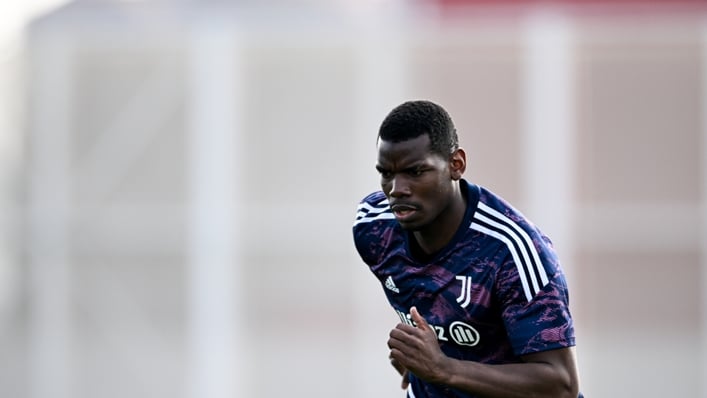
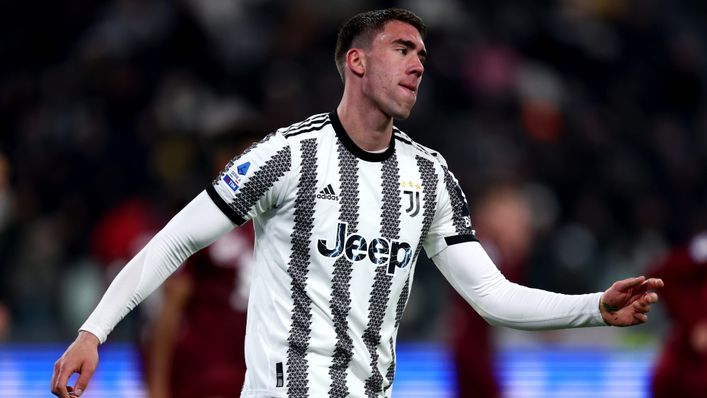
The France international reportedly arrived late for a team meeting on Wednesday and was left off Massimiliano Allegri’s squad when it was announced the morning of the first-leg match of the round of 16 on Thursday.
After returning to Juventus from Manchester United last July, Pogba has had a miserable start to his second stint with the team.
Multiple injuries have plagued the 29-year-old midfielder, who had to wait until February 28 to make his second debut. He came off the bench in the 4-2 derby victory over Torino and also made an appearance as a late substitute in Sunday’s 1-0 loss at Roma.
Thursday’s game against Bundesliga club Freiburg had been earmarked as one in which he could make a long-awaited start with Allegri outlining his optimism at the pre-match press conference.
However, widespread reports in Italy have suggested Pogba was late to a team meeting 24 hours before the game with Allegri subsequently opting to leave the player out completely.
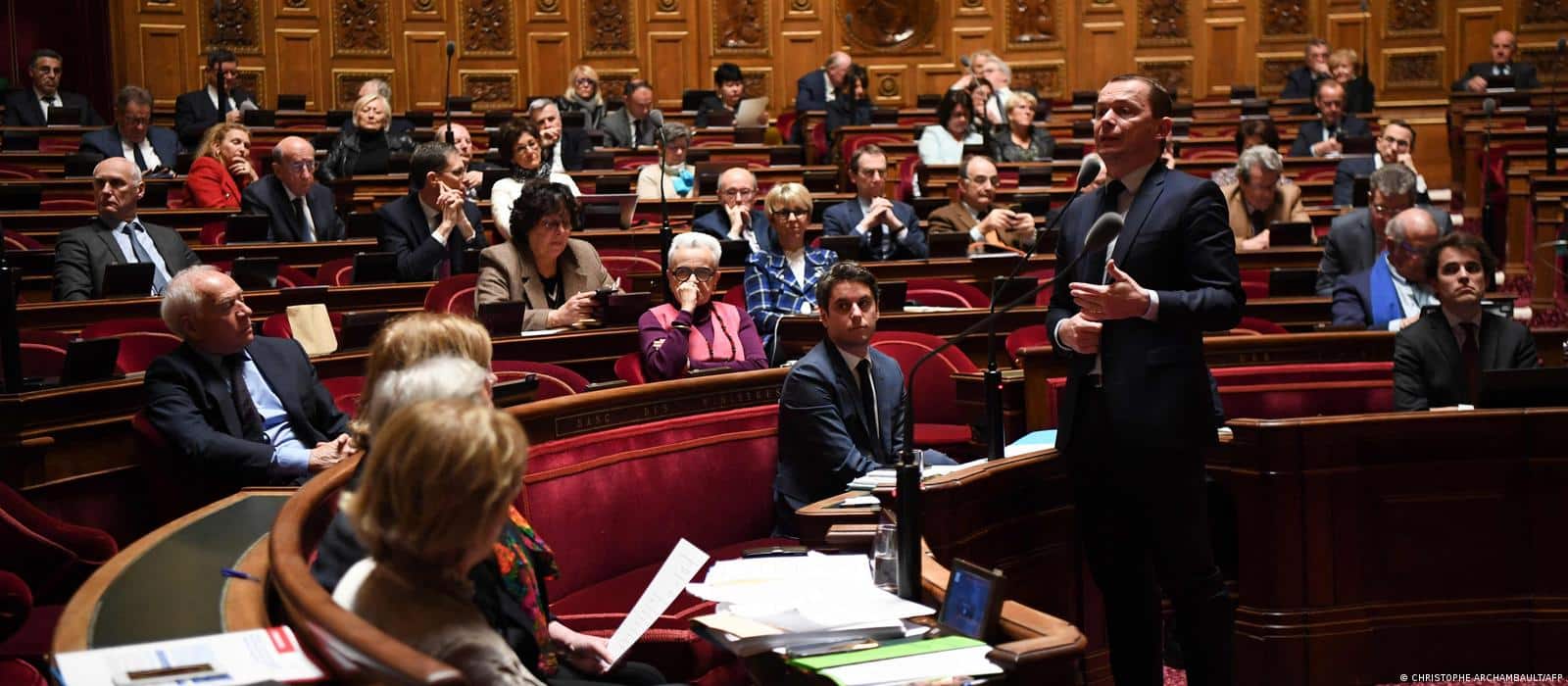
Despite weeks of demonstrations and strikes that drew thousands of workers, the French Senate decided to raise the retirement age from 62 to 64.
The proposal to raise the retirement age in France by two years, to 64, was approved by the Senate. The bill passed the Senate by a vote of 201 to 115.
The vote was held in the midst of widespread strikes and protests, which have paralysed many industries because employees in the public sector and other workers opposed President Emmanuel Macron’s proposal.
What is the deal?
The French government is looking to realign the country’s pension system despite strong opposition from labor unions, saying that it is financially unsustainable otherwise.
On top of pushing retirement age to 64, Macron is seeking to incerase the period of payment required to qualify for a full state pension.
Macron’s government argues that the unpopular measures are needed to shore up the scheme for the future.
Despite clearing the Senate on Thursday, the bill is still bouncing between France’s chambers of parliament.
President Emmanuel Macron’sadjustment of pensions also needs to be approved by the lower houseof the French parliament, the National Assembly, where majority support might not be as easy to come by.
The lower house is also working on proposed amendments in the form of a compromise plan that might also be sent to the Senate for a vote.
Strong opposition
The increase of retirement age and the proposed changes to the pensions face stiff opposition from parts of French society.
Left-wing politicians voiced anger after the Senate voted in favor of the reforms.
“Your name will forever be attached to a reform that will set the clock back almost 40 years,” Socialist Monique Lubin told Labor Minister Oliver Dussopt.
Labor unions have promised to increase pressure on the government by calling for mass action by workers across different sectors.
Fuel deliveries, schools, trains, and flights are being disrupted by the demonstrations.
Dock workers have joined strikes in a bid toconvince Macron to change his stance on the bill that he has championed in both of his presidential campaigns — he gave up on the proposed reforms amid the onset of the Covid pandemic in his first term.
Most other European countries have already hiked the retirement age to 65 or over, with France’s retirement system among Europe’s and particularly western Europe’s most generous.
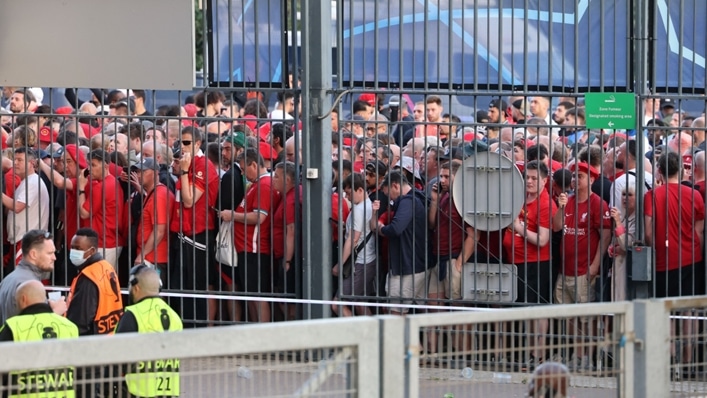
Real Madrid has criticised UEFA’s “inadequate” plan to reimburse some fans who attended the Champions League final in May, and has demanded that the governing body take responsibility for the chaos that surrounded the game.
A recent independent investigation concluded that UEFA was “primarily responsible” for the “numerous near misses that almost resulted in disaster” at the Stade de France.
French authorities initially placed the blame on Liverpool fans during chaotic scenes that put fans at risk of crushes as the start time in Paris was delayed.
Only a portion of the Madrid supporters will be affected by the UEFA’s plans to refund all 19,618 Liverpool fans who purchased tickets to the championship game on Tuesday.
However, a response issued by the European champions on Thursday called on UEFA to extend the offer to all attendees, describing overall conditions at the game as “unacceptable”.
“Given the conclusiveness of the experts’ findings and the seriousness of the events described, Real Madrid has been holding talks with UEFA with the aim of assessing the compensation that will be offered to fans,” the statement read.
“Our club was entirely confident that these solutions would be in line with the seriousness of the events, the extent of the damage caused and UEFA’s responsibility for them.
“Regrettably, our club believes that UEFA’s proposal, officially announced last Tuesday, is insufficient.
“The content of the report stresses that all fans attending the final were victims of its inadequate organisation and their safety and security were compromised.
“The fact is that all the fans experienced an unacceptable delay in the start of the match. In addition, there was unacceptable insecurity both in accessing and leaving the stadium, as well as additional harm such as theft, assaults and threats.
“For this reason, Real Madrid has decided not to cooperate in the restricted compensation procedure proposed by UEFA, which we ask to redress the situation and assume full responsibility.”
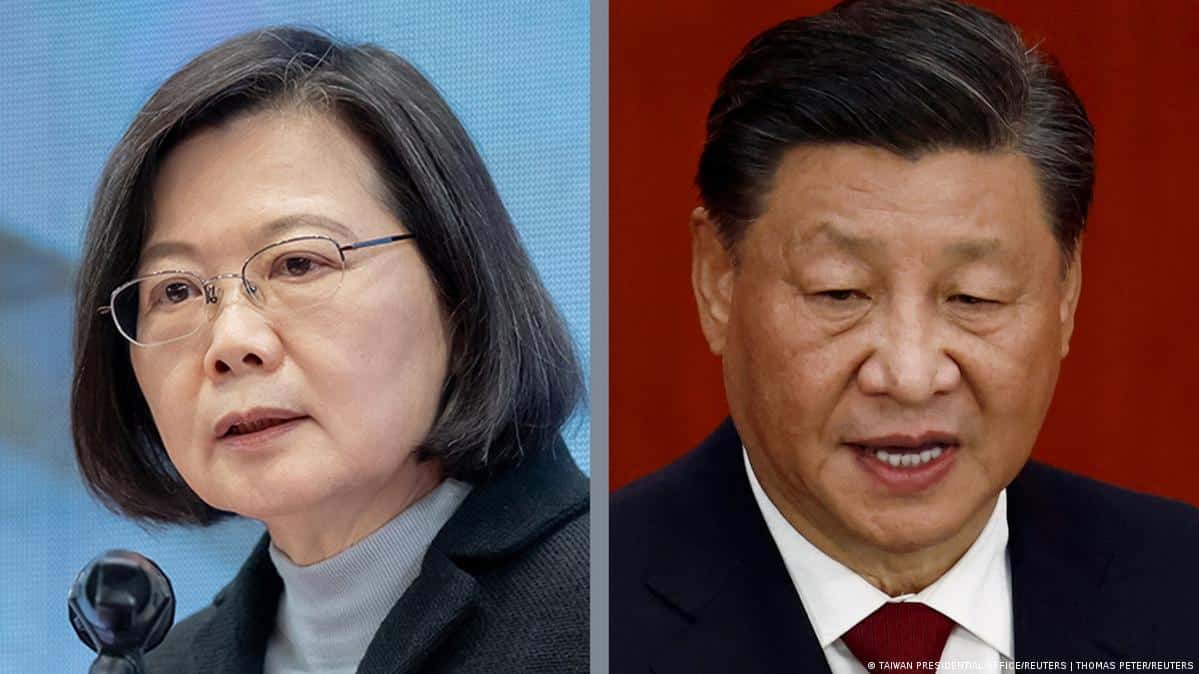
In an effort to strengthen ties, Taipei has agreed to resume flights to several cities throughout China.The situation will become more comparable to the pre-coronavirus norm once the flights are resumed.
On Thursday, the Taiwanese government announced that it had agreed to start operating more direct flights to China, which had been suspended following the coronavirus pandemic. It stated that this was done in an effort to promote “healthy and orderly exchanges” with Beijing in light of the ongoing tension in the area.
At the moment, Taiwan only permits air travel to Beijing, Chengdu, Shanghai, and Xiamen in China.
However, there were more nonstop flights from Taiwan to numerous Chinese cities prior to the pandemic.
Lights to improve ‘cooperative interactions’
Taipei’s Mainland Affairs Council has approved regular flights for 10 more cities, including the economic hubs of Guangzhou, Shenzhen, and Nanjing. Charter flights are also to be resumed for 13 Chinese cities.
The latest plan will incorporate 209 flights per week between the two countries. Of those, 99 flights will originate from China, and 110 from Taiwan.
Taiwanese health officials also said that covid testing would not be required at present for passengers arriving in Taiwan from China.
Chan Chih-hung, an official from the Council, told reporters that the move demonstrated Taiwan’s “most sincere goodwill.”
“We also hope to build on the foundation of these resumed flights to gradually increase the exchange of goodwill gestures and cooperative interactions by both sides,” he said.
‘Strained relations’
From 1949 to 2002, no direct flights were in place between Taiwan and China. Passengers had to transit through Hong Kong or Macau.
In 2003, the two began charter flights, after which regular direct flights were introduced in 2009.
When the COVID-19 pandemic struck the world in 2020, flights were again disrupted.
Taipei’s government has been attempting to resume its interactions with Beijing after they lifted the strict quarantine regulations last year. The island’s president Tsai Ing-wen said she hoped that the efforts would help improve China-Taiwan relations.
However, since China considers Taiwan as part of its own territory, Beijing does not hold formal diplomatic relations with Taipei.
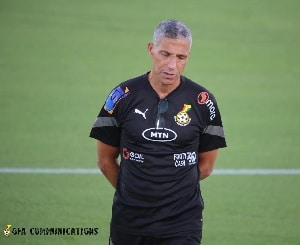
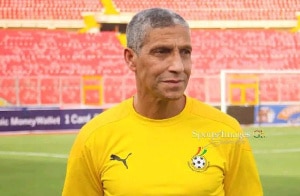
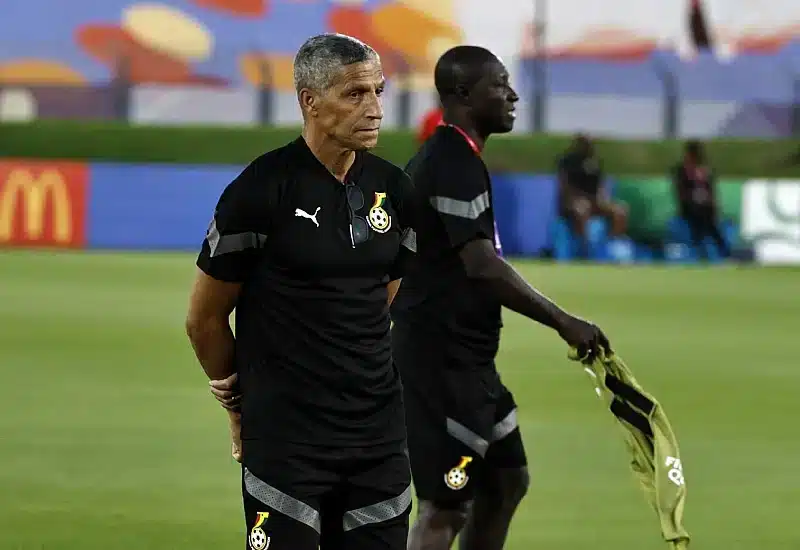
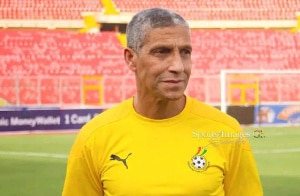
On Monday, March 20, 2023, Chris Hughton will be introduced as the Black Stars coach, according to theGhana Football Association (GFA).
Chris Hughton was elevated to head coach of the Black Stars on February 12, 2023, from his position as technical adviser.
There have been complaints about the delay in his formal introduction, but the Ghana Football Association (GFA) announced that Chris Hughton will be introduced three days prior to Ghana’s match against Angola on March 23, 2023, after releasing the Black Stars squad for the AFCON qualifiers.
Chris Hughton’s unveiling ceremony will take place at Kumasi’s Baba Yara Sports Stadium, according to a statement from the GFA.
“Black Stars Coach Chris Hughton will be unveiled in Kumasi on Monday, March 20, 2023, as part of the build-up to the match against Angola.
The former Brighton and Hove Albion and Tottenham Hotspur manager will be presented to the media to share his vision, ideology, and expectations with the public.
The first engagement between the coach and the media in Kumasi will be a platform for the Football Association to also make public the targets, terms of engagement, and other relevant information pertaining to the manager’s work.
The time and venue will be officially communicated in the coming days,” the statement read.
When Arsenal plays Sporting Lisbon on March 9 at 8 p.m., a number of important players may be absent. The first of the round of 16 Europa League matches between the two groups is scheduled to take place at Stadio Jose Alvalade.
The Gunners are on a scorching run of form, especially in the Premier League, where they have won 20 of their last 26 games.
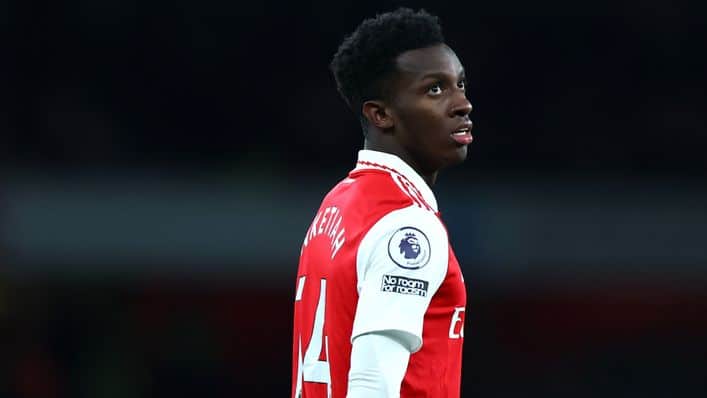
Leandro Trossard, Eddie Nketiah, and Kieran Tierney are not expected to travel to Sporting Lisbon with the Premier League’s top team, according to Metro UK.
Trossard is understood to be battling a groin injury suffered during his side’s 3-2 epic comeback win over Bournemouth. Nketiah, meanwhile, is said to be having an ankle problem, with Tierney out with illness. Arsenal get Jesus boost Despite the absence of the trio, Arsenal have been boosted by the return of Gabriel Jesus.
Jesus has been out injured since the World Cup and was forced to have knee surgery to help his recovery. The Brazilian forward has missed the better part of the second half of the 2022/23 season as he worked his way to full fitness.
However, the former Man City ace is closing in on a return to action after he was spotted in Arsenal training ahead of the Sporting Lisbon clash.
It remains to be seen if the star forward will be involved in the match. Jorginho’s mum reduced to tears Earlier, Sports Brief reported that a video of Jorginho’s mother getting emotional after she spotted the midfielder’s shirt in the Arsenal dressing room has emerged.
Jorginho sealed a sensational move to the Emirates during the January transfer window, swapping Chelsea for Arsenal.
Lionel Messi is the toughest opponent that legendaryReal Madrid defender Marcelo Vieira has ever faced. During their time in Spain, Messi, who was then playing for Barcelona, and the 34-year-old, who spent nearly two decades with Los Blancos, frequently ran into one another.
In one of their 2017 matches, Marcelo claimed credit for Leo Messi’s last-second goal on a counterattack, which led to a heartbreaking loss for Real Madrid.
“It was a mistake, it could happen to anyone, but I take the blame for the goal,” the Brazilian said via MARCA.
It thus comes as little to no surprise Marcelo picked the former Barcelona talisman as the toughest opponent he has encountered during an interview session at his unveiling as a new Fluminese player. When quizzed about his “toughest opponent”, the Madrid icon answered: “Messi.”
The 34-year-old’s career truly blossomed once he swapped his native Brazil for Spain.
He becameReal Madrid’s most decorated player, winning 25 trophies during his time with Los Blancos, per Reuters. Marcelo played 546 games for Madrid, notched 38 goals and provided 103 assists.
He spent 16 years with the Spanish giants before signing as a free agent for Olympiacos in Greece, which lasted for only 10 games.
Marcelo terminates Olympiacos contract
Meanwhile, Marcelo’s stint in Greece after leaving Real Madrid ended abruptly following the termination of his contract with Olympiacos.
The Real Madrid legend joined Olympiacos on a free transfer last summer after bringing an end to his 16-trophy-laden years at the Santiago Bernabeu.
In his brief stint in Greece, he made 10 appearances and scored three goals in all competitions for Olympiacos this season, according to Transfermarket.
Marcelo copies Ronaldo’s ‘Siuu’ celebration
Sports Brief also reported that Marcelo Oliviera stole Cristiano Ronaldo’s infamous ‘SIUU’ celebration as he scored for Olympiacos in the Greek Cup on Wednesday night. Olympiacos advanced to the quarterfinals of the Cup competition after drawing 2-2 with Atromitos at the Peristeri Stadium.
The 34-year-old paid a tribute to his formerReal Madrid teammate, Ronaldo, by hitting the legendary forward’s iconic goal celebration.
Social media users are ecstatic about Chris Hughton’s bold decision to leave Baba Rahman out of the most recentBlack Stars squad, which was unveiled by the coach.
Regarding their belief that Reading left-back has outstayed his welcome with the Black Stars, social media users appear to be in agreement.
Some people think Chris Hughton’s action is a sign of the kind of fair and firm decision-making he will employ when choosing players for the Black Stars.
One of the six players who made the World Cup roster but were not included in Chris Hughton’s first selection as Black Stars coach is Baba Rahman.
The returnees in the team include Jojo Wollacott Joseph Paintsil, Majeed Ashimeru, Ransford Yeboah Konigsdorfer, and Edmund Addo.
There was however no place for Felix Afena-Gyan, Ibrahim Danlad, Afriyie Barnieh, and a host of stars.
The 25-man is dominated by players who ply their trade in Europe with no local player making the cut.
The Black Stars will take on Angola at the Baba Yara Sports Stadium on March 23 in a game that will be Chris Hughton’s first as substantive manager of the Black Stars.
If Paris Saint-Germain truly has any aspirations of one day winning the UEFA Champions League, they should hire either Jose Mourinho or Diego Simeone.
Bayern Munich eliminated PSG in the round of 16 of Europe’s most prestigious club competition, causing them to experience heartbreak once more.
Former Liverpool midfielder Danny Mills told Talk Sport that the Parisians could only become European champions with a managerial change that included the appointment of Mourinho or Simeone.
“If PSG want to win the Champions League, there are two managers out there that they have to go for. One is Diego Simeone, because I think if you give him the tools for the job defensively, they’ll be so good.”
PSG appointed Christophe Galtier as manager this season, but the Frenchman looks destined to be on his way out after another disappointing Champions League campaign.
Galtier addresses his PSG future
Meanwhile, Galtier has admitted his future may be out of his hands following PSG’s early elimination from the UCL by Bayern Munich, PM News reports.
He blamed defensive errors for the Parisians’ loss to the Bavarians, after a 2-0 loss to the Bundesliga titans at the Allianz Arena on Wednesday night.
The loss ensured back-to-back last-16 eliminations for PSG, who have played 137 Champions League games without lifting the trophy.
Galtier laments Champions League exit
Sports Brief also reported on PSG coach, Galtier admitting their only option was to accept their latest early Champions League exit and move on.
The Frenchman insisted the outcome of the last-16 tie against Bayern would have been different had the visitors scored first in the second leg.
Football fans have made fun of Lionel Messi, the star player forParis Saint-Germain, on social media, particularly Twitter, for going eight years without taking home a UEFA Champions League trophy.
Many people thought the legendary football player would be inspired to end his lengthy quest for a fifth UCL championship after helping Argentina win the 2022 FIFA World Cup in Qatar.
But on Wednesday, March 8, 2023, at the Allianz Arena, Bayern Munich defeated PSG 2-0 (3-0 overall) to eliminate the French team, ending his quest to end the curse.
Choupo-Mouting and Serge Gnabry’s goals in the second half guaranteed Bayern’s qualification.
The exit means that the seven-timeBallon d’Or winner has now gone almost a decade without winning the competition. His last triumph came in 2015 when he inspired Barcelona to a 3-1 win against Juventus and his last goal in the final dates back to 2009.
This is also the second time the Argentine has suffered a round of 16 exit in his second season at PSG.
Following yet another disappointing night for Lionel Messi, some rival fans have branded his move to PSG as a bad investment by the club.
A section accused him of not turning up for his team in UCL when it matters most.
Others also argued that Messi’s biggest rival Cristiano Ronaldo, who has won the competition five times(won his last in 2018), would have done better and that the defeat typifies the difference between the two.
The manager of Arsenal, Mikel Arteta, has addressed rumours that he will leave the club to join Real Madrid. This season, Arteta has had a fantastic run of results with the north Londoners, and the Spaniard has put his team in a strong position to contend for the Premier League championship.
Arsenal currently enjoys a five-point advantage over Man City at the top of the standings, making them the clear favourites to win the domestic championship.
The team from the Emirates has reportedly won 20 of its last 26 Premier League games this season, leading the league with 63 points.
Real Madrid and Arteta are connected. But given that Real Madrid is reportedly interested, it appears Arteta may not stay long at the Emirates Stadium.
Mikel Arteta on Real Madrid links: "I’m fully focused on what I’m doing here at Arsenal" ⚪️🔴 #AFC
"I’m extremely happy, proud and grateful to be in this [Arsenal] football club". pic.twitter.com/Y3yCmirmjz
Speaking on the speculation, Arteta insisted that his focus is on the Arsenal job.
“Managers and players can’t control what is written by the press,” Arteta retorted. “What I can tell is that I’m fully focused on what I’m doing here and extremely proud and grateful to do what I’m doing in this football club. That’s it,” he added, as quoted by Metro UK.
Conte speaks on leaving Tottenham
Earlier, Sports Brief reported Tottenham Hotspur bossAntonio Conte has addressed his future with the club following his side’s elimination from the Champions League. Tottenham were bundled out of the European elite competition on Wednesday night by Serie A giants AC Milan.
The north Londoners had suffered a 1-0 defeat in the reverse fixture played in Italy and were hoping to overturn the scoreline when they hosted AC Milan in London.
Ghana Football Association(GFA) has reportedly offered a one-year contract to Chris Hughton, the newly appointed Black Stars coach, according to Original FM,
The Accra-based station claims that Chris Hughton was given a one-year contract offer, which he flatly declined.
According to the report, the former Brighton and Hove Albion manager wants a three-year contract because he thinks it will give him enough time to assemble a squad that is capable of winning championships.
According to the report, Chris Hughton would prefer a three-year contract from the FA, but the Ghanaian government, through its ministry of sports, is also in favour of giving him a one-year contract.
On February 12, the Ghana Football Association named Chris Hughton the new Black Stars head coach.
A statement on the FA’s website read, “The Ghana Football Association has the pleasure to appoint Chris Hughton as Head Coach of the Black Stars following extensive deliberations between the two parties.
“The appointment is in line with the vision of the GFA to continue with the project of building a formidable squad that started with Otto Addo in the lead-up to the FIFA World Cup Qatar 2022 tournament.”
Almost a month since the announcement, the Ghana Football Association are yet to unveil and announce contract details for Chris Hughton.
Henry Asante Twum, the spokesperson of the FA recently disclosed that the unveiling has been delayed due to the death of Chris Hughton’s father.
“Chris had to stay in the UK because he lost his dad and needed time with his family and plan the burial service. That’s why he’s not been to Ghana yet” Asante Twum said in an interview.
“We expect Chris in Ghana next week if everything goes according to plan. We are constantly engaging on his unveiling, media engagement, and build-up to the games,” Henry added.
“He is working, Chris and his assistants will be unveiled together. When he arrives we will communicate the date and venue for his unveiling and then use that as part of the build-up to the game against Angola.
“There will also be squad announcements, details of the contract, and the targets set for the new technical team.”
Ghana will play Angola in the Kumasi on March 23 before traveling to Luanda for the reverse fixture four days later. The Black Stars are joint top of Group E alongside Angola with four points after two games.
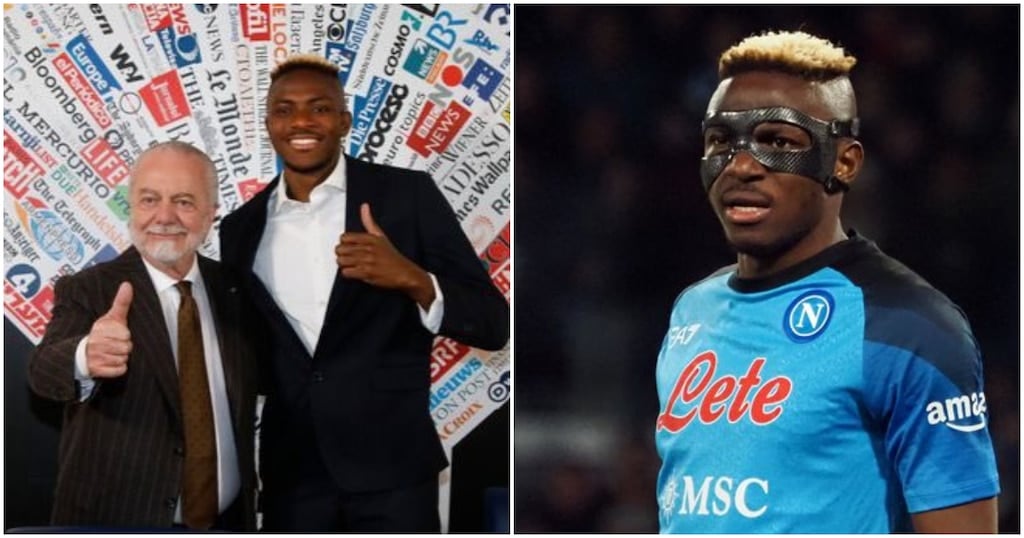
The Super Eagles striker deservedly received the honour following a stellar campaign in which he helped Napoli to the top of the standings with 19 goals.
The Naples club has relied heavily on Osimhen as they comfortably sit atop the table with a 15-point lead.
Thanks to the Nigerian forward, De Laurentiis’ dream of leading Napoli to Serie A victory appears to be coming true.
De Laurentiis celebrated Osimhen on social media after he won the Stampa Estera award.
“Thanks to the Foreign Press. A beautiful award ceremony for Victor and high-level exchange of views,” he wrote on Twitter.
A proud De Laurentiis had earlier posted a photo of himself and the player with the inscription, Victor. Osimhen’s time in Naples could end prematurely in the summer transfer window, with several clubs including Manchester United interested in his services.
The lanky forward has not hidden his desire of playing in the English Premier League.
The Super Eagles strongman has been in superb form this term at Napoli scoring goals and has been linked with a summer move to the Premier League. Clubs like Chelsea and Manchester United are reported as the two sides who are seriously looking for the signature of Osimhen and they will go into bid battle at the end of the season.
Osimhen pays tribute to Maradona Victor Osimhen has paid a touching tribute to late football icon Diego Maradona hailing the Argentine for his incredible contributions to the success of Napoli years back.
The Nigerian international claimed that what Maradona did for Napoli during his active playing days can never be overemphasized stressing that the Argentine did it alone while the present players are doing it as a team.
Osimhen added that what Maradona did for the Serie A giants cannot be forgotten stressing that there is no way the name of Napoli will be mentioned without remembering the late soccer star.
Cristiano Ronaldo has talked openly about how his ritual of talking to his late father and son motivates him to improve himself as a person. Due to his outstanding accomplishments, the Al-Nassr captain is regarded as one of the greatest footballers to ever play the game.
Despite being on the wrong side of 40, the 38-year-old has not lost his enthusiasm for his work and still strives for greatness in the latter stages of his professional life. After scoring eight goals in four games during the reviewed month, he was recently named the Saudi Pro League’s Player of the Month for February.
Cristiano Ronaldo has sent a plane load of care items to the victims of recent earthquakes in Syria and Turkey.
He has paid for tents, medical supplies, warm clothes, bedding, food and baby supplies to boost the aid effort 🙏 pic.twitter.com/ne4wK4n8tq
Aside from his prowess on the field, Ronaldo is also admired for his humanitarian works, which was evidenced as he sent relief items to victims of the Turkey and Syria earthquake. Ronaldo takes inspiration from dad and son Throwing light on where he derives his passion for striving to be the best version of himself, Ronaldo said, as quoted by Frank Khalid.
Ronaldo and his late dad
Although Ronaldo admits he never really shared a father-son moment with his late dad Jose Dinis Aveiro, the former Manchester United ace holds him in high esteem.
As a result of his father’s struggles with alcohol, the five-timeBallon d’Or completely abstains from alcohol. Ronaldo was just 20 when his father died in 2005, per the Sun. Cristiano loses baby son Ronaldo and his partner Georgina Rodriguez were expecting twins in April last year; however, one of the twins, his son, died during childbirth. He admitted the death of his son was the worst moment of his life.
“[It was] probably the worst moment that I passed through in my life since my father died,” the ex-Real Madrid forward said, as quoted by Eurosport. “When you have a kid, you expect that everything will be normal, and you have that problem, it’s hard…we had quite difficult moments because we don’t understand why it happened to us.
Kaka picks Ronaldo as GOAT Sports Brief previously reported that Lionel Messi and Cristiano Ronaldo have been compared as the greatest players in football history throughout their careers – but which one is the true GOAT?
Ronaldo and Messi have broken, rewritten, and set enough records to practically last a lifetime in their illustrious careers, some of which may never be matched. Kaka, who won the 2007 Ballon d’Or prize ahead of the GOAT duo, once described Messi as a genius while commending Ronaldo for his mentality.
Since the beginning of the year, health professionals and experts have lamented the nationwide shortage of childhood immunisation vaccines.
Even though the Ghana Health Service (GHS) has promised to restock the supply of vaccines soon, the situation doesn’t seem to be calming concerns. The necessity of the vaccines and the measles outbreak in some regions of the nation are to blame for this.
Dr. Hilda Manteybea Boye, president-elect of the Pediatric Society of Ghana, stated that the shortage “runs the risk of having children die” in an interview with JoyNews.
She has therefore pleaded with the Ghana Health Service to act quickly.
“It is the action that we are looking for. So whatever it will take for them to get us the vaccines like today, because every day we risk having children die from this shortage,” she said.
Currently, 16 districts in the Northern Region have recorded cases of measles.
Head of Pediatrics and Child Health at the Tamale Teaching Hospital, Professor Alhassan Abdul Mumin confirmed the measles outbreak, indicating that there is no district in the Northern Region, that has not recorded an outbreak of measles for most of the children who were born since 2022.
On his part, a Neurosurgeon and General Secretary of the Islamic Medical Association of Ghana, Dr. Hardy Abdullah says the shortage can affect the development of a child’s nervous system.
“The long-term effects, especially measles and Rubella could have an impact on the baby’s central nervous system. And so as a country, the fact that we can’t get the vaccine is unfortunate.”
The health experts and practitioners are therefore intensifying pressure on the government on the need to secure the three essential vaccines for babies.
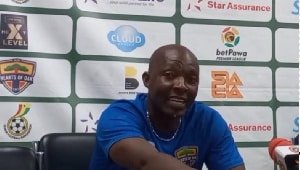
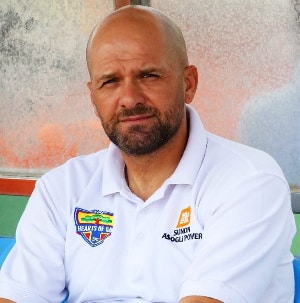
David Ocloo has been named the club’s interim manager by the Phobians, according to Accra Hearts of Oak board member Dr. Nyaho Nyaho Tamakloe.
The seasoned football official made it clear that Slavko Matic, the manager of Serbia’s national team, had not been fired but rather that a decision had not yet been made regarding his future.
In an interview with Asempa FM, Nyaho Tamakloe stated that the board will decide the Serbian’s future, and that the decision will be made public when it is appropriate.
“The future of Slavko Matic will be determined by the board. I cannot confirm if he is staying or not because we [the board] have not met to make a decision on that. If we meet and make a decision on the future of Matic, the fans and the public will be informed.”
He went on to disclose the appointment of David Ocloo is now the acting manager for the team.
“For now, the assistant coach, David Ocloo is in charge of the team now,” he added.
Matic has come under pressure following the club’s recent poor run of form that triggered some fans to sack him from the training grounds.
He penned a two-year contract with Hearts of Oak in October 2022, taking over from Samuel Boadu.
Hearts of Oak were at the bottom half of the table at the time of Matic’s appointment. At the moment, the Phobians are 4th with 31 points.
Following the chaos that ruined last May’s championship game in Paris,Liverpool supporters will receive a full refund for their Champions League final tickets from UEFA.
The “large number of near misses that almost led to disaster” at the Stade de France were “primarily responsible” for, according to an independent report published last month, by UEFA.
Authorities initially placed the blame on Liverpool fans during chaotic scenes that saw police use tear gas and others crowded in perilous bottlenecks outside the stadium.
After taking responsibility for a number of administrative errors that occurred prior to Liverpool’s 1-0 loss to Real Madrid, UEFA has now decided to reimburse all 19,618 Liverpool ticket holders.
UEFA general secretary Theodore Theodoridis said: “We have taken into account a huge number of views expressed both publicly and privately, and we believe we have devised a scheme that is comprehensive and fair.
“We value the input from the Liverpool FC supporter organisations Spirit of Shankly and Liverpool Disabled Supporters Association as well as the open and transparent dialogue throughout this period.
“We recognise the negative experiences of those supporters on the day and with this scheme we will refund fans who had bought tickets and who were the most affected by the difficulties in accessing the stadium.”
UEFA announces special refund scheme for fans following the 2022 Champions League Final in Paris.
We will refund fans who had bought tickets and were the most affected by the difficulties in accessing the stadium.
“This unprecedented move is the result of tireless work, alongside FSE [Football Supporters Europe] and Ian Byrne MP, to hold those responsible for the catastrophic events in Paris.
“With a promise to reimburse supporters, UEFA have gone some way to acknowledging their part in the fiasco.
“But it does not excuse UEFA, exempt them from criticism or lessen the need for them to implement all of the recommendations made by the independent inquiry.
“We will work alongside Liverpool and publish details once we know how and when refunds will be processed.”
The cost of refunding nearly 20,000 supporters is expected to be in the region of £3million (€3.4m), according to reports.
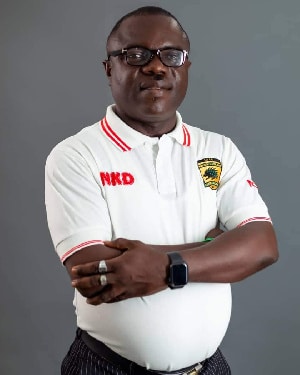
Nana Kwame Dankwah, the first vice chairman of Asante Kotoko’s National Circles Council, has said that the team won’t think twice about sacking Seydou Zerbo as head coach if the situation calls for it.
But he has made it clear that the fate of the gaffer won’t be decided until his performance has been fairly evaluated.
“Let’s review coach Zerbo performance if there is no improvement in his performance we must let him go,” the first vice chairman of the Asante Kotoko NCC said.
Meanwhile, Nana Kwame Dankwa has apoligised on behalf of the supporter’s leadership of the club for the defeat to Hearts of Oak on Sunday evening.
“We apologise to our fans for not winning over Hearts of Oak yesterday,” Nana Kwame Dankwah stressed.
“Organization was not at its best in this year’s edition president cup,” he continued to lament.
Asante Kotoko lost to Hearts of Oak on Sunday, which prevented the Kumasi-based team from winning the 2023 President’s Cup and cost them three points in Week 20 of the Ghana Premier League.
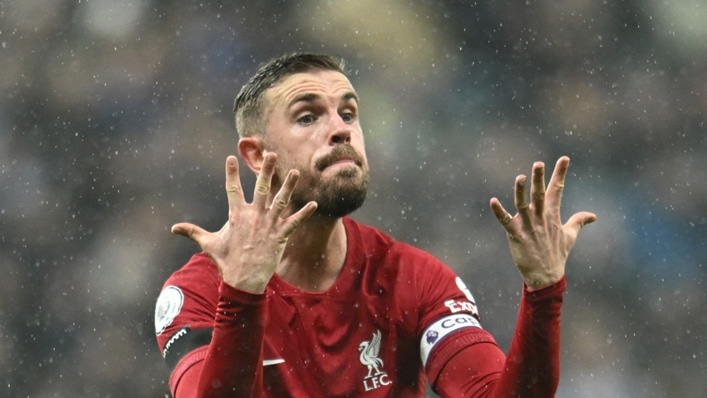
After Liverpool’s dominating 7-0 victory overManchester United, Jordan Henderson has cautioned his teammates not to overestimate their abilities.
In Sunday’s lopsided match at Anfield, the Reds handed their fierce rivals a record Premier League defeat and their joint-heaviest loss ever.
While Liverpool took particular pleasure in humiliating United, the outcome also brought them closer to fourth-place Tottenham with a game remaining by three points.
Newcastle, meanwhile, has two games remaining to catch Spurs and is four points outside of the Champions League spots.
Although Liverpool has now taken 13 of the last 15 available points, Henderson does not want his teammates to get too confident.
“Hopefully we can use it in the right way but you can’t get too confident or overconfident, for sure,” he told Liverpool’s official website.
“There are different tests along the way from now until the end of the season that will come and you need to stay positive, stay ready and stay hungry like we were [on Sunday].
“That will give us a good chance to finish the season well.”
Henderson made his 400th start for Liverpool in all competitions in their memorable victory over United, 20 of those coming in the 2022-23 campaign.
It has been a disappointing season for the Reds on the whole, but captain Henderson is pleased to have seen the Liverpool of old against United.
“The performance for the whole game was really good. Intensity and energy levels were high, and something that we have been missing for a while this season,” he said.
“I thought we performed to the levels we are capable of and when you do that you get your rewards with the goals.”
Liverpool scored from seven of their eight shots on target in a ruthless display, scoring as many goals as they managed in their previous eight league games combined.
“Everything seemed to go in,” Henderson added. “There was some great finishing, some great runs, movement and the delivery was good, so everything seemed to work.
“Hopefully this gives everyone the confidence to keep building, keep working and keep going right until the end of the season and see where we can get to.”
Liverpool return to action on Saturday with a trip to bottom side Bournemouth, before facing Real Madrid in the second leg of a Champions League last-16 tie they trail 5-2.
The Black Stars will play Angola in the 2023Africa Cup of Nations qualifiers during the first international break of the year.
Some athletes are presently recovering from injuries, but they might not be ready for the qualifiers in March 2023.
In the final week of March 2023, new Black Stars manager Chris Hughton is anticipated to select his team for the doubleheader.
At the Baba Yara Sports Stadium on March 23, Ghana will host Angola before leaving for the second leg four days later.
The Black Stars and Angola are tied for first place in Group E with four points each.
Here are players who would miss the games
Tariq Lamptey
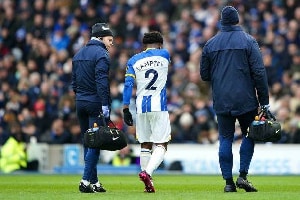
Tariq Lamptey is doubtful for Ghana’s games against Angola are low due to an injury he suffered during Brighton and Hove Albion’s win over West Ham United.
The right-back was substituted on the 16-minute after what is believed to be a knee problem.
Brighton coach Roberto De Zerbi said, “It’s not a big problem. It’s a small injury.”
His season is over and thus will not be available for the doubleheader.
Alidu Seidu
Black Stars defender, Alidu Seidu is currently going through his recovery process after suffering a meniscus injury.
Seidu has undergone surgery and is expected to be out of action for a month. Therefore, the right-back will not be available for Ghana’s AFCON qualifiers in March.
The two contend that it is impossible to display weakness at Anfield, but Manchester United misunderstood the venue and as a result, they were humiliated by their fiercest rivals.
On March 5, 2023, Manchester United, the newly crowned Carabao Cup champions, were humiliated and reduced to nothing at Anfield as Liverpool defeated their longtime rivals Manchester United with a crushing victory.
United has suffered its joint-heaviest defeat ever in competitive play since the club was founded in 1878 after conceding seven goals without a response.
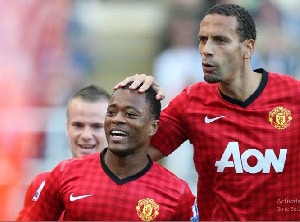
Reacting to the defeat, Patrice Evra and Rio Ferdinand revealed that Sir Alex Ferguson used to blacklist them for more than two weeks if they lose to Liverpool at Anfield so they were always afraid to disappoint him at the venue.
“Until you go to Anfield and play as a Man United player, you will never know what it is. It’s a cauldron and it’s fire. Ferguson used to rest players before our games at Anfield and it was not because those players were tied but was to prepare them mentally.
“Winning at Anfield is the best feeling and losing there is the worst feeling ever. Sometimes when we lose at Anfield, Fergusson won’t talk to us for two weeks,” the duo said in a podcast.
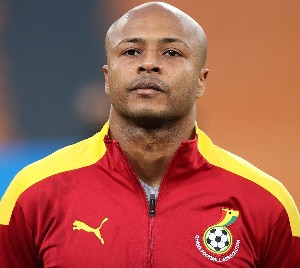
Andre Ayew Dede, the captain of theBlack Stars, is undoubtedly in the latter stages of his career, but the Nottingham Forest forward still has a lot to say.
Since making his national team debut in 2007, he has played a significant role. For 16 years and counting, he has had a successful international career.
With 113 appearances and 24 goals so far, Ayew holds the record for the most Ghanaian caps ever.
With eight goals, he holds the record for being Ghana’s top scorer at the AFCON. He has participated in seven editions of the tournament.
Many contend that Ayew has outlived his time with the national team because he has competed in three different World Cup competitions.
However, Andre Ayew appears to have some more to offer with the 2023 AFCON just around the corner.
Here are five reasons why Dede Ayew Andre
Experience
At age 33, Andre Ayew has literally gone through all the lessons football has to offer a player who played the highest level for this long.
In terms of national team football, Ayew has also gone through the highs and lows and has vast experience in adapting and solving certain situations.
He was the last skipper to lead Ghana to win silverware at the World Stage when the Black Satellites won the FIFA U-20 World Cup in 2009.
In the event that Antonio Conte’s team is eliminated from the Champions League, Manchester United reportedly believes they can lure Harry Kane away from Tottenham.
The prolific England captain, 30, is highly desired by the Red Devils, who are in the market for a star No9.
While United reportedly expects Spurs to lower their £100 million asking price if they do not place in the top four, The Sun reports that the North Londoners are frantically trying not to sell.
Tottenham would run the risk of losing their talisman for nothing if they allowed Kane to complete the remaining 12 months of his contract because his contract expires at the end of the upcoming season.
Conte’s side currently sit in the final Champions League spot but are coming under pressure from Liverpool, who hammered United 7-0 to continue their recent revival on Sunday.
That Anfield humiliation has highlighted the need for improvement at Old Trafford and spending is expected — especially if the Glazer family decide to sell the club.
Saliba has answered all Arsenal’s doubts – Arteta
Kane has 18 league goals this season — the ninth campaign in a row he has hit double figures in the top flight — and would offer a superstar option alongside Marcus Rashford, who is in the form of his life.
He was strongly tipped to move to Manchester City last summer and may see this as his final chance to make a career-defining move as he looks to break his trophy duck.
Napoli sensationVictor Osimhen is another United target but there will be aqueue of clubs fighting for the 24-year-old’s signature.
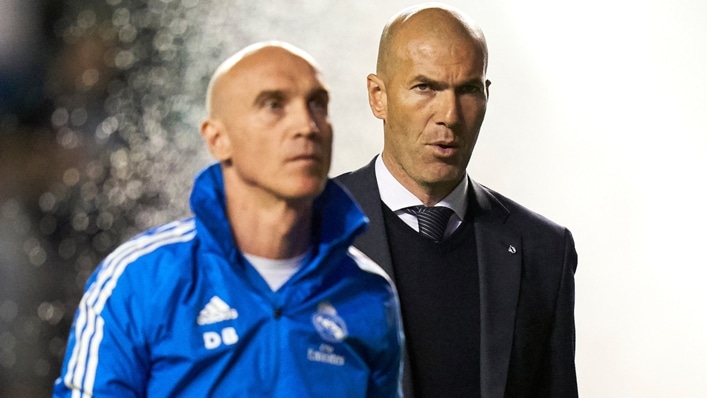
David Bettoni has been appointed boss of Sion, the club where Mario Balotelli plays, and that may mean Zidane will be looking for a new second-in-command when he returns to football.
Zidane recently has made no secret of his eagerness to get back into work, having walked away from the Madrid hotseat after the 2020-21 season.
A post with a big club likely awaits the France great, while Bettoni begins his life as a head coach with a ringing endorsement from his friend and former boss.
Bettoni has been appointed on a short-term basis initially, taking the job until the end of the season.
Sion president Christian Constantin told newspaper Le Matin he spent over an hour on the telephone with Zidane, joking that was more than former French Football Federation president Noel Le Graet was willing to give of his time.
Le Graet caused uproar in France at the start of the year when he said he would not even have answered his phone to Zidane if he had called to enquire about the France job. That was after Zidane saw his hopes of being made boss of Les Bleus scuppered by Didier Deschamps signing up for another World Cup cycle.
Constantin said of his chat with Zidane: “It made me very happy to be able to talk about football with him for an hour and a quarter. He had a much better reception with me than with Le Graet!
“He told me how loyal David had been to him, that he had never sought to find fault with him in his mission. Without him, he told me again, I would never have succeeded in doing what I achieved at Real during all his years.”
🔴 𝗖𝗢𝗠𝗠𝗨𝗡𝗜𝗤𝗨𝗘́ 𝗢𝗙𝗙𝗜𝗖𝗜𝗘𝗟
Le FC Sion annonce l’arrivée de David Bettoni comme entraîneur principal de la première équipe jusqu’au terme de la saison.
Bettoni, who first got to know Zidane when they were teenagers at Cannes, initially joined Madrid when Zidane was in charge of the youth side, before stepping up and helping his compatriot lead Los Blancos to three Champions League triumphs.
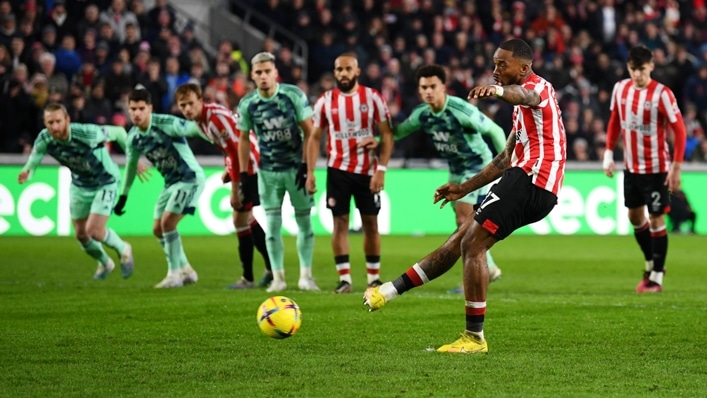
As Thomas Frank’s team defeated fellow unlikely European contenders Fulham 3-2 in the Premier League, the 26-year-old again stroked the ball into the bottom-right corner from 12 yards.
For Brentford, Toney has taken 22 penalties, 10 of which have been in the Premier League. He has successfully converted all 22 of them.
Only Yaya Toure, who scored on all 11 penalty attempts for Manchester City, has a better 100 percent conversion rate in the competition, but Toney explained that his penalty procedure is all about relaxation.
After being made to wait before putting Brentford 2-1 up in the 53rd minute at the Brentford Community Stadium, he told Sky Sports: “The wait doesn’t matter, the longer the better really because I can get away and think of other things like being away on holiday and chilling.
“The goalkeeper didn’t move but I have always got a spot where I put the ball.”
Toney has scored 27 of his 28 penalties in his professional career, with the only blemish a saved attempt for Peterborough United in a 4-0 defeat against Barnsley back in October 2018.
That miss was the catalyst for a technique alteration.
When asked when he changed his approach, he replied: “When I missed… I thought of different techniques to make sure I had a better chance of scoring and it’s working out alright at the moment, so touch wood, it continues.”
10/10 – Only Yaya Touré (11/11) has a better 100% record from the penalty spot in Premier League history than Ivan Toney (10/10). Inevitable. pic.twitter.com/eqMaSw7Rzi
Another strike against Fulham took Toney’s Premier League tally to 15 this season despite off-field issues.
He has been charged with 262 alleged betting violations by the Football Association, which took place over a four-year period, but hit out at English football’s governing body last weeks after reported media leaks.
Reports suggested Toney, who missed out onEngland’s World Cup squad in Qatar, would be banned for six months after pleading guilty to some charges – claims the forward strongly denied on social media.
Brentford head coach Frank previously defended his star attacker and reiterated his backing for Toney after the Fulham win.
“I take all the praise, it is solely me,” Frank initially joked to Sky Sports. “No it is Ivan, that is the technique he had when he arrived at Brentford.
“He is the best penalty taker in the world for a few reasons, his strategy, he practices it and he is very cool. He keeps doing it all the same.
“It is a unique skill with him. This situation with the [betting] case going on, he has a unique ability to focus on games and training and he has kept doing that so that doesn’t surprise me.
“He doesn’t like the situation but he has top focus. He is a special footballer, I think his character is unique in terms of leadership and driving his team.
“His link-up play and the way he sees his team-mates around in terms of combinations and then his ability to score goals. He is an all-round football player.”
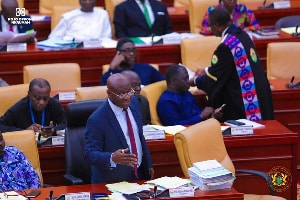
This comes in response to a protest made by Dr. Cassiel Ato Forson, the minority leader and ranking committee member.
Adansi Asokwa MP, who is visiting the Trades ministry on Thursday, lamented that the committee’s report was still pending more than ten (10) days after the nominees were vetted.
Frank Annoh-Dompreh, the majority chief whip, prayed for the report to be laid before the house.
Ato Forson disagreed, claiming that despite his contributions to the draught report, he had not seen the final version.
The objection however did not go down well with vice Chairman of the committee and deputy majority leader, Alexander Afenyo-Markin who explained there was an agreement with the front bench of the Minority for the report to be laid.
Speaker of Parliament, Alban Bagbin then ruled the report should go back to the committee for approval by members before a presentation to the plenary.
Subsequently, Afenyo-Markin stated the hurdles had been cleared for the report to be laid. That, however, could not happen to mean the nominees will have to wait a while longer to know their fate especially given the directive by the leadership of NDC for its MPs to reject the nominees.
The speaker took the opportunity to reprimand the leadership of some committees for failing to produce reports on time.
He singled out the Constitution, Legal and Parliamentary Affairs Committee which has failed to produce a report of the Anti-gay bill since last year for a mention. The former Nadowli-Kaleo MP warned of consequences if Committees fail to work as directed.
The Asantehene Otumfuo Osei Tutu II, according to certified economist Bernard Oduro Takyi, is the only one who can assist Ghana in overcoming the current obstacle preventing it from receiving the $3 billion bailout from theInternational Monetary Fund (IMF).
According to him, the only obstacle remaining before the government can convince the IMF board that Ghana’s debt is manageable and the $3 billion bailout should be approved is the Chinese government, which is now the only obstacle.
“The Chinese government is going to drag its feet and will not meet Ghana over the money we owe them. What they are likely to do is demand control of key assets of Ghana because we have failed to honour the agreement, we had with them.
“The only way out is for the government to fall on the Otumfuo. It took Otumfuo for Kufuor to get debt cancellation. The only way out is for the Otumfuo to lead the delegation anybody else forget it, it won’t wash.
“The Otumfuo’s seat goes beyond the country… in Africa, he is one of the most respected monarchs. He can speak to Buckingham Palace for the King of England to intervene for Ghana. If any other person leads Ghana’s delegation will not wash,” he said in Twi in an Onua TV interview, on Thursday.
Oduro Takyi, a leading member of the New Patriotic Party (NPP) who has defected to the National Democratic Congress (NDC), added that the last person to be leading the country to seek reprieve for its international debt is the Minister of Finance, Ken Ofori-Atta.
He explained that international lenders to Ghana including China see Ofori-Atta as the cause of the problems in Ghana and they will not be willing to sit with him to discuss the country’s debt.
The government of Ghana started engaging external debtors with the view to getting debt cancellation, especially from the Paris club of creditors.
China holds a third of Ghana’s external debts amounting to $1.7 billion out of a total of $5.7 billion.
Ken Ofori-Atta, according to a Joy News report, told Svenja Schulze, the German Development Minister that China has committed to a bilateral negotiation.
“The big elephant in the room is China as in how they will comport themselves in the comparability of treatment because China wants to do bilateral. We would be visiting China by the end of the week to really discuss how they can envelop as quickly as possible,” he said.
Svenja Schulze on her part assured of German support in helping Ghana to get fair treatment at the Paris club.
Jorginho was replaced by the 29-year-old as Arsenal defeated Newcastle to increase their lead atop the English Premier League standings.
After a shaky first half, Arsenal dominated the second half thanks in large part to another masterful performance from Partey.
Following Partey’s performance in the second half of the 4-0 victory over Everton at the Emirates, Arteta praised his tenacious performance.
“I’m really happy. It was a game that we had in hand against an opponent that we knew was going to make life really difficult for us, and we expected that at Goodison. We started the game with some frustration and not really understanding what we had to do, allowing them to run in certain transitions, but after 25 minutes I think we started to get much better and the timing of the two goals was key,” said Arteta after the game.
“We needed a magic moment there and Alex and Bukayo produced that, and then I think the team grew, especially with Thomas because Jorginho wasn’t feeling good today. When he came on he really gave us some presence and stability to the team, and I think the second half was superb,” he added.
Partey was making just his second appearance after his injury in February.
Asafa Powell, a Jamaican sprinter, has requested that running tracks be installed at stadiums all over the nation to help develop athletics in Ghana.
The former world champion in the 100 metres who visited the Accra Sports Stadium expressed his surprise and concern that the venue lacked running tracks for sporting events like athletics.
The retired athlete believed that the development of athletics facilities would advance the sport and inspire young athletes to remain committed to it.
The Jamaican Sprint King urged the government to support the growth of athletics by providing venues while visiting the National Sports Authority.
“I was surprised not to see running tracks walking around the Accra Stadium in the capital city and I believe something should be done about it.
“Athletics is big and I think it has a lot to offer talented athletes, especially from poor backgrounds by moving them out of poverty,” Powell said.
“I think the government must do something about it by ensuring every sporting facility in Ghana has a running track to help unearth and nurture talents for the future,” he said.
Asafa Powell who is married to Ghanaian-American, Alyshia Akua Miller arrived in Ghana on Monday, February 27, 2023.
Asafa Powell is expected to visit some schools in Ghana to inspire upcoming athletes in the country.
The Jamaican has also been scheduled to meet President Nana Addo-Dankwa Akufo-Addo.
Asafa Powell is the fourth-fastest man in history with a personal best of 9.72 seconds.
Graham Potter is not going to hide behind the backing he has received fromChelsea’s owners and is not paying attention to the commotion surrounding his future ahead of a match with Leeds.
Blues head coach Potter, who was only hired in September of last year, is under a lot of pressure as a result of an 11-game winning streak.
Chelsea lost its third straight game without scoring, falling to 10th place in the Premier League after a 2-0 London derby loss at Tottenham last Sunday.
When relegation-threatened Leeds visit Stamford Bridge on Saturday, Potter, who has the support of the Blues hierarchy, knows his team needs to stop the bleeding.
Asked if he still has support from the owners, Potter said: “There is support and I’ve spoken to them. But I’m not going to hide behind that. The results haven’t been good enough.”
He added: “My position is that I need to focus on the next game. Whatever the discussions are, that’s not for me.”
The former Brighton and Hove Albion boss is not paying much attention to speculation over his job during such a challenging period.
Asked how he copes with the noise, he replied: “By not listening too much to it is the honest answer. I take it step by step, focus on the next thing. You get through the days and the week.
“We’re fighting for improvement. Talking is one thing, we have to do it on the pitch.”
He said: “Supporters care and how that comes out is understandable. They’re hurting and we are too. We thank them for their support – and when you lose to the team that are bottom you expect a negative response.
“We’ve not given them enough to give them a reason to be excited about the team.”
Potter revealed Thiago Silva is expected to be out for around six weeks after suffering a knee injury, while Mason Mount will miss the game against Leeds due to an abdominal issue and Reece James is a doubt because of a tight hamstring.
N’Golo Kante (hamstring) came through a first full training session on Friday but needs time to step up his fitness, while Edouard Mendy (finger) is making progress.
The new facility will be a gathering place for fans of sports betting and provide a distinctive and engaging gaming experience. It is situated at No. 9 Adjoate RD. in Osu behind the Koala Shopping Mall on Oxford Street.
The centre, which is open seven days a week, will give customers access to a variety of sports betting and gaming options, including the creation of new accounts, insider knowledge about special promotions, customer support, and live streaming of sporting events.
Magnus Rex Danquah Jr., Country Manager, Operations for Betway Ghana, claimed that the new experience centre was created to provide sports betting enthusiasts with a top-notch gaming experience.
“We are delighted to be opening our new customer experience centre in Osu. This new facility will serve our patrons in the Greater Accra Region and offer them a world-class online betting and gaming experience. We are open to everyone, and we invite patrons to visit us to experience the new customer experience centre.”
During the launch event, Samuel James Nii Adjei Tawiah, the Municipal Chief Executive of the Korle Klottey Municipal Assembly, extended a warm welcome to Betway in Osu and urged them to actively participate in the development of the local community. He emphasized the significance of businesses in fostering sustainable economic and social growth in the area.
The launch of this new experience centre is a major milestone in the brand’s expansion within Ghana and brings the total number of centres in the country to three, with the other two located in Takoradi and Kumasi.
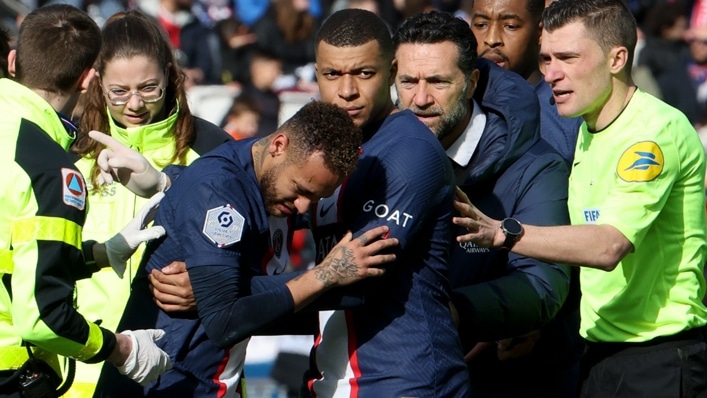
Neymar is anticipated to miss the second leg of Paris Saint-Champions Germain’s League match against Bayern Munich due to an ankle injury, according to head coach Christophe Galtier.
After being carried off the pitch during PSG’s dramatic 4-3 victory over Lille on February 19, scans revealed Neymar had damaged ankle ligaments.
As PSG needed to overturn a 1-0 deficit after losing the first leg at the Parc des Princes, where fellow attacking star Kylian Mbappe was forced to play only as a substitute due to injury, the Brazil international’s injury put his participation against Bayern in doubt right away.
PSG’s fears were confirmed as Galtier previewed Saturday’s Ligue 1 meeting with Nantes, saying: “In the next two games, we won’t have Neymar available.”
“I think he will miss out against Bayern Munich.”
A medical update issued by the club, meanwhile, said Neymar was continuing his rehabilitation and would be reassessed on Monday—two days before PSG’s trip to Germany.
Neymar’s absence did not hamper PSG last time out, as Mbappe and Lionel Messi starred in a 3-0 thrashing of Marseille to move the Ligue 1 leaders eight points clear at the summit.
That win saw Mbappe move level with PSG’s all-time record scorer Edinson Cavani with 200 goals for the club, while Messi claimed the 700th senior goal of his club career.
Having exchanged assists for all three goals, Messi and Mbappe have now combined for 10 goals in Ligue 1 this season, which is the most in the division and four more than Neymar and Mbappe.
However, Galtier dismissed suggestions PSG were a more balanced side with Neymar sidelined, saying: “Our block is much more compact, denser.
“With the absence of Neymar, instead of having two midfielders, we will be with three midfielders and two attackers.
“To tell you that Neymar’s absence is trivial… no. It’s a detrimental absence for us.”
While Wednesday’s trip to Bayern is viewed as make-or-break for PSG’s season, Galtier knows Nantes – who have won two of their last four league games against the Parisians – will provide a stern test.
“The most important game is the one that’s coming. Our squad is weakened by suspensions and injuries, we have to make our way in the league,” he said.
“I hope the players don’t have the game against Bayern on Wednesday in a corner of their heads. It’s important to have a third consecutive victory in the league.”
Chris Hughton, the yet-to-be-announced coach of the Ghana Black Stars, has lost his Ghanaian father.
Although Chris Hughton was chosen to lead the Black Stars, his introduction coincided with the passing of his father, Willie Houghton.
Chris is currently arranging for his father’s burial in the UK. After two weeks, it is anticipated that he will travel to Ghana to complete his introduction as the new Black Stars coach.
A Ghanaian living in London, Willie Houghton, has since passed away. He was married to Christine Bourke and worked as a postman before passing away.
Henry Asante Twum, the Ghana Football Association’s communication director, announced his passing tothe public.
In a tense first leg of the Copa del Rey semifinal, Barcelona defeated Madrid 1-0.
Prior to the match, however, Los Blancos supporters staged a protest outside their stadium, TalkSport reported. The protest was in relation to the recent news that Barcelona paid the former Vice President of the Referee’s Committee, Jose Maria Enriquez Negreira.
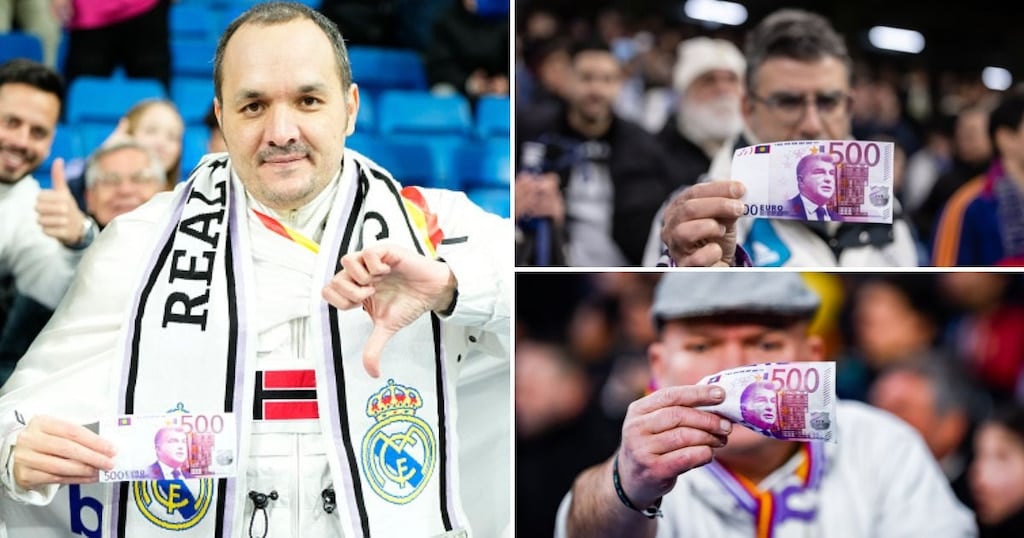
The Blaugrana have maintained that there was nothing untoward about the payments. Madrid fan’s don’t agree, and carried fake Euro notes to the game with Barcelona president Joan Laporta’s face on it. They also displayed a banner with “Corruption in the Federation” written on it, Goal noted. Following the game, Madrid fans continued to claim that Barcelona had paid off the referee, because they were unhappy with some of the decisions in the game.
Details about Barcelona refereeing payments
Earlier, Sports Brief reported things are not looking good for FC Barcelona. The club have denied any wrongdoing after allegations surfaced that they have been paying the Enriquez Negreira over the years, but new information could suggest otherwise. A registered letter from Negreira to Barcelona in 2018 has been made public. In the letter, Negreira threatened Barca after they tried to stop the payments.
Tebas wants Laporta to resign
Sports Brief reported that Joan Laporta’s reign as Barcelona president could be set for an abrupt end following the latest financial scandal rocking the Catalan club.
The five-time Champions League winners have been accused of paying more than €1.5 million to a company owned by the former Vice President of the Referees Technical Committee in Spain from 2016-18 La Liga president Javier Tebas has now called for Laporta to step down as the Barcelona president if he cannot explain the club’s 33 payments.
Agent to Manchester City striker Erling Haaland, Rafaela Pimenta, says Real Madrid is still the “dreamland” for all footballers.
Incredibly, Haaland has 33 goals for City this season, four more than any other player in the top five leagues in Europe. He has also broken numerous records.
The Norwegian international is currently playing at Etihad Stadium in the first year of a five-year contract, but he is still linked with a transfer to LaLiga powerhouse Real Madrid.
Haaland reportedly has a release clause in his contract that will allow him to join Madrid at the end of the upcoming season, but City manager Pep Guardiola previously denied those rumours.
But Haaland’s agent did little to quash talk of a future switch to the Spanish capital when asked about the 22-year-old’s future at the FT Business of Football Summit in London.
“There is the Premier League, and there is Real Madrid. Real Madrid has something of its own that makes it the dreamland for the players,” Pimenta said.
“Madrid keeps this magic going. They don’t have the league competition every week, but they do have the Champions League.”
Haaland has previously said the attractiveness of playing under Guardiola at a club where father Alf-Inge once played was too much to turn down.
However, Pimenta suggested the former Borussia Dortmund star already knows which club he will join next.
“We have to make a plan, we need to have a goal,” she said. “Maybe we won’t achieve it, but if we don’t know where we’re going, then for sure we don’t get there.
Haaland is one of a number of high-profile clients represented by Pimenta, along with the likes of Paul Pogba, Matthijs de Ligt, Marco Verratti and Ryan Gravenberch.
All of those players have either played in or been strongly linked with a move to the Premier League, which Pimenta feels is still the elite division in world football.
“When I started in this business, if I told [a player], ‘you’re moving to England’, they would ask me, ‘what did I do wrong?’,” she said.
“Now when we talk to players, and ask them what is their goal, they say the Premier League. They don’t say a team, City, Chelsea, Arsenal, they say ‘the Premier League’.
“This is the first time in 25 years that I hear so many players say I want to go to a league, not to a club. This is the place to be for an agent.
“An agent needs to be where a player wants to be. It’s a fantastic league. It’s so competitive, every game is a challenge, everyone wants to watch it.”
Slavko Matic, the head coach of Accra Hearts of Oak, was seen at the police headquarters in Accra after receiving threats from the team’s supporters.
Following a string of disappointing results in the current season, Accra Hearts of Oak supporters have been on the management and board’s tail to fire the Serbian manager, whom they believe is not the right fit for their club.
On Sunday, March 5, 2023, the Accra Sports Stadium will host the Super Clash match between rivals Asante Kotoko and the fans have threatened him not to attend.
Though Accra Hearts of Oak issued a statement on the morning of Friday, March 3, 2023, telling them to refrain from any violent act targeted towards their manager Slavko Matic, the fans ignored the directive.
The directive from the club didn’t work as the fans trooped to the training facility at Pobiman and prevented the coach from supervising the training session.
Graham Potter’s choice to leave at least four Chelsea players out of the matchday squad against Tottenham Hotspur is said to have disappointed them.
Chelsea’s first loss came by a score of 2-0 at their rival’s new home pitch, which made Potter’s issues even worse and made the possibility of missing out on playing in Europe next season a reality.
Harry Kane and Oliver Skipp both scored goals in the second half to tie Chelsea, who had only two victories in their previous 15 games.
Football London reports that at least four players were shocked to learn they wouldn’t be on the team before the game.
Chelsea’s huge squad
Apart from churning out good results, Potter is struggling to satisfy a bloated squad after the club’s intense forays in the transfer market that saw at least eight new players arrive in the January window alone. The former Brighton boss is spoilt with options, with many senior players struggling for game time.
For the Spurs clash, Marc Cucurella, Carney Chukwuemeka, David Datro Fofana and Trevoh Chalobah were reportedly disappointed after they failed to even make the bench. There was a place for Pierre-Emerick Aubameyang, who hasn’t been involved a lot in recent times for the Blues.
With time quickly running out for Potter, he will have to find a way to maintain squad unity as he attempts to get things in order. Chelsea’s next two games are vital clashes against Leeds United and Borussia Dortmund at Stamford Bridge.
What Potter needs to fix at Chelsea Sports Brief had earlier given a guideline of the things Potter needs to fix immediately at Chelsea to save his job.
He is arguably facing the greatest test of his career as he struggles to save a sinking Chelsea ship. Talks have been rife that perhaps managing a ‘top-six’ club came a tad bit too soon for a coach who had shown so much promise at Brighton and Östersunds.
As he may know by now, a draw and an ‘excellent performance’ without the results does not cut it at a club of Chelsea’s stature. His favourite excuse of the players giving everything after a loss has rubbedfans the wrong way.
Switzerland shipped 58.3 tonnes of gold to Turkey for a total value of 3.3 billion Swiss francs ($3.6 billion), according to Swiss customs data released on Tuesday according to records dating back to 2012,
Turkish demand for the metal has skyrocketed as astronomically high inflation erodes the value of the local lira currency. Gold is traditionally regarded as a safe way to store wealth.
The largest hub for the transit and refining of gold is in Switzerland. In contrast to just 11 metric tonnes in 2021, it shipped 188 metric tonnes of gold to Turkey last year, valued at 10.1 billion Swiss francs.
The shipments in January, however, show an increase. According to Swiss data, the amount of gold exported from Switzerland to Turkey in a single month has never surpassed 34 tonnes.
The quantity of gold flowing into Turkey has worsened Turkey’s current account deficit, which rose to $48.8 billion last year.
After earthquakes struck Turkey this month, causing thousands of deaths and huge economic damage, the government moved to reduce the amount of gold entering the country by suspending some imports and asking banks to widen the spread for gold transactions, making them costlier to curtail demand.
Switzerland’s shipments to Turkey accounted for 42% of its total gold exports in January.
The country sent 3.2 tonnes to India in January, the lowest for any month since May 2021, and 26.1 tonnes to mainland China, the least since May 2022.
India and China are the two biggest gold consumer markets and demand often rises when gold prices are low and falls when gold prices increase.
A treasure hunter is more convinced than ever that there is a cover-up and is equally committed to proving it as a result of the court-ordered disclosure of a vast collection of official photographs, videos, maps, and other documents relating to the FBI’s covert search for gold from the Civil War.
In Dents Run, Pennsylvania, where local lore holds that an 1863 shipment of Union gold vanished on its way to the U.S. Mint in Philadelphia, Dennis Parada engaged the FBI in a legal battle to compel the agency to turn over records of its excavation. The FBI has long maintained that the dig at Dents Run, where they went after cutting-edge testing suggested tonnes of gold might be buried there, turned up nothing.
Parada and his advisers, who have spent countless hours poring over the newly released government records, believe otherwise. They accuse the FBI of distorting key evidence and improperly withholding records in an apparent effort to conceal the recovery of a historic, extremely valuable gold cache. The FBI defends its handling of the materials.
Parada’s dispute with the FBI is playing out in federal court, where a judge overseeing the case must decide whether the FBI will have to release its operational plan for the gold dig and other records it wants to keep secret. The judge could also order the FBI to keep looking for additional materials to turn over to the treasure hunter.
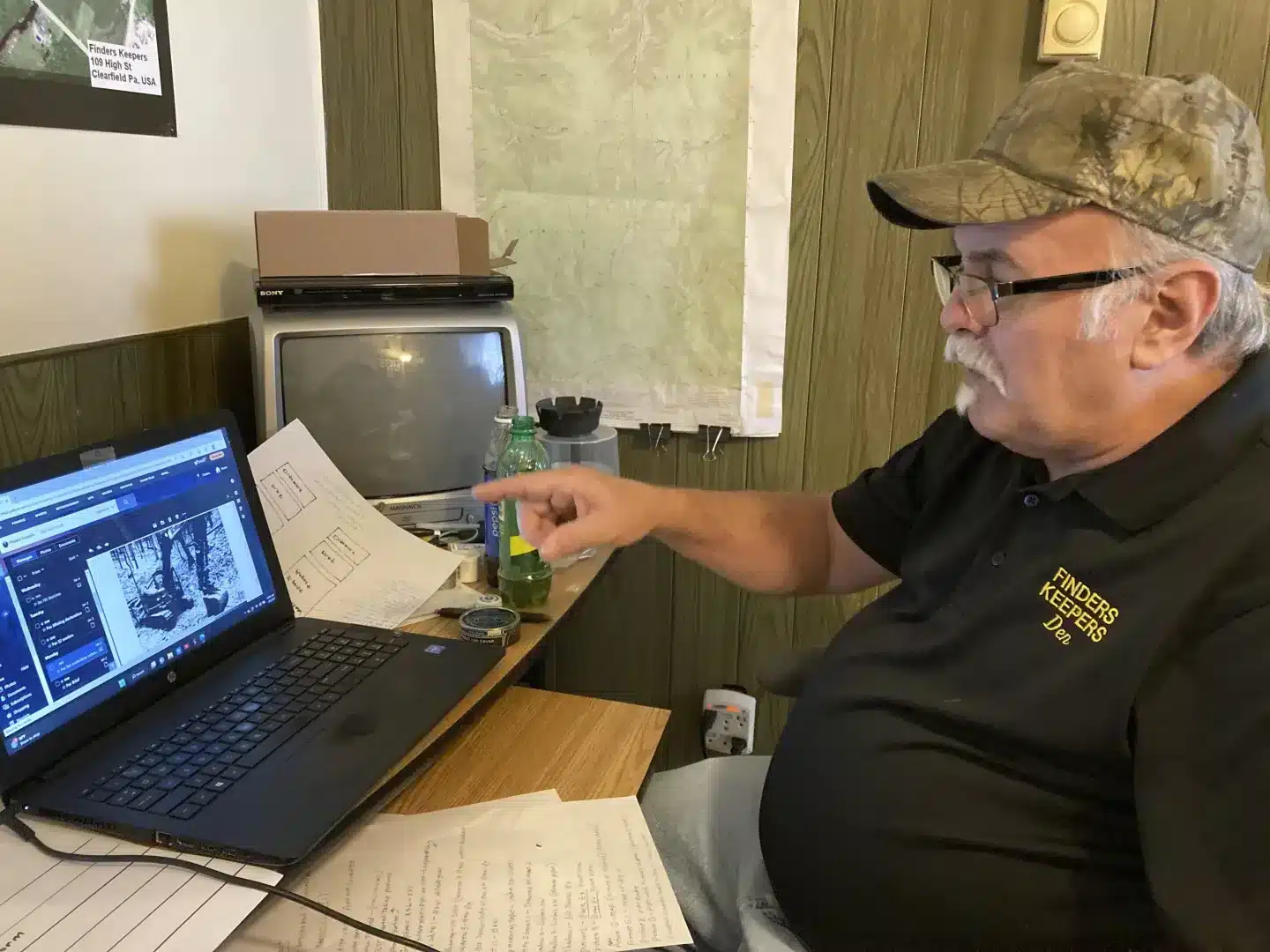
“We feel we were double-crossed and lied to,” Parada said in an interview at his cramped, wood-paneled office, where huge drill bits and high-end metal detectors compete for space with rusty miners’ picks, Civil War-era cannon parts and other odds and ends he’s dug up over the years.
“The truth will come out,” said Parada, co-founder of the treasure-hunting outfit Finders Keepers. Solving the mystery is not his only goal — he had hoped to earn a finder’s fee from the potential recovery of hundreds of millions of dollars worth of gold.
An FBI spokesperson declined to answer questions about the agency’s gold dig records or respond to the coverup allegations, citing the ongoing litigation. Last year, the FBI released a statement publicly acknowledging for the first time that it had been looking for gold in Dents Run. The statement said the FBI did not find any, adding the agency “continues to unequivocally reject any claims or speculation to the contrary.”
There is little evidence in the historical record to suggest that an Army detachment lost a gold shipment in the Pennsylvania wilderness — possibly the result of an ambush by Confederate sympathizers — but the legend has inspired generations of treasure hunters, Parada among them.
He and his son spent years looking for the fabled gold of Dents Run, eventually guiding the FBI to a remote woodland site 135 miles (220 kilometers) northeast of Pittsburgh where they say their instruments identified a large quantity of metal. The FBI brought in a geophysical consulting firm whose sensitive equipment detected a 7- to 9-ton mass suggestive of gold.
Armed with a warrant, a team of FBI agents came in March 2018 todig up the hillside. An FBI videographer was on hand to document it, at one point interviewing a Philadelphia-based agent on the FBI’s art-crime team who explained why the FBI was in the woods of one of Pennsylvania’s most sparsely populated counties.
“We’ve identified through our investigation a site that we believe has U.S. property, which includes a significant sum of base metal which is valuable … particularly gold, maybe silver,” the agent said on the video, his face blurred by the FBI to protect his privacy.
Calling it a “155-year-old cold case,” he said the FBI had corroborated Parada’s information about the location of the reputed gold through “scientific testing.” He stressed the test results did not prove the presence of gold. Only a dig would help law enforcement “get to the bottom of this story once and for all,” the agent said.
Parada obtained the video and other FBI records through a Freedom of Information Act lawsuit, hoping they would help answer lingering questions about what took place at Dents Run five years ago. Parada was mostly kept away from the dig site while the FBI did its work.
He suspects the agency conducted a clandestine, overnight dig between the first and second days of the court-authorized excavation, found the gold, and spirited it away. Residents have previously told of hearing a backhoe and jackhammer overnight — when the dig was supposed to have been paused — and seeing a convoy of FBI vehicles, including large armored trucks. The FBI has denied it conducted an overnight dig.
Parada and a consultant, Warren Getler, have focused on a handful of FBI photos and an accompanying photo log that have them questioning the FBI’s official gold dig timeline. At issue is the presence or absence of snow in the images and the timing of a storm that briefly disrupted operations. For example, an FBI image that was supposed to have been taken about an hour after the squall does not show any snow on a large, moss-covered boulder at the dig site. That same boulder is snow-covered in a photo that FBI records indicate was taken the next morning — some 15 hours after the storm.
They accuse the FBI of altering the sequence of events to conceal an overnight excavation.
“We have compelling evidence a night dig took place, and that the FBI went to some large effort to cover up that night dig,” said Getler, co-author of “Rebel Gold,” a book exploring the possibility of buried Civil War-era caches of gold and silver.
There are other seeming anomalies in the records, according to Finders Keepers’ legal motion. Among them:
— The FBI initially turned over hundreds of photos, but rendered them in low-resolution, high-contrast black-and-white, making it impossible to tell the time of day they were taken or even, in some cases, what they show. The treasure hunters went back and requested several dozen of the photos in color, which the FBI provided.
— The agency did not provide any video of the second and final day of the dig. Nor did it produce any photos or video showing what the FBI’s own hand-drawn map described as a 30-foot-long, 12-foot-deep trench — which the treasure hunters claim could have only been dug overnight. Government lawyers acknowledged these gaps in the photo and video record but did not elaborate in a court filing last week.
— The consulting firm hired by the FBI to assess the possibility of gold produced a report on its findings, but the version given to the treasure hunters seems to be missing key pages.
— The FBI did not provide any of its agents’ travel and expense invoices, which could shed further light on the dig timeline.
The records released so far “cast doubt on the FBI’s claim to have found nothing and raise serious and troubling questions about the FBI’s conduct during the dig and in this litigation, where it has gone to great lengths to distort critical evidence,” Anne Weismann, a lawyer for Finders Keepers, wrote in a legal filing that seeks records, including the FBI’s operational plan, that she says were improperly withheld.
The Justice Department did not address the treasure hunters’ most explosive claims of a possible coverup in its latest legal filing. The government instead told a federal judge in Washington, D.C., that the FBI had satisfied its legal obligation to the treasure hunters to search for its records of the dig, and asked for the case to be closed.
“I will stick at this until the end, until I know everything that happened to that gold,” he said. “How much, where it went to, who has it now. I gotta know.”
Learn how to navigate and strengthen trust in your business with The Trust Factor, a weekly newsletter examining what leaders need to succeed.
Real Madrid lost the first leg of their Copa del Rey semi-final 1-0 to a Barcelona team, according to Carlo Ancelotti,who is confident that Real Madrid has the strength to recover.
Thursday’s smash-and-grab victory by Barca at the Santiago Bernabeu gave them a slim lead heading into the second meeting at Camp Nou the following month.
The game-winning goal was scored by Franck Kessie in the 26th minute after Thibaut Courtois blocked his initial shot. Eder Militao assisted on the play.
Barca had the least amount of ball possession in a single game since Opta records began, with just 35.3% of the time, while Madrid dominated the other areas (2013-14 season).
Similarly, Barca had less than 50% of the ball in a game for just the third time since the beginning of last year.
Ancelotti was unimpressed by Barca’s performance and remains confident Madrid will reach the final, despite Los Blancos failing to get a single shot on target for only the third time in a decade.
“The team played well,” he told reporters. “Barcelona played like they didn’t want to play.
“We haven’t been good in the last third. Defeat hurts, but if we do the same in the second leg, we have a chance to progress.
“We played the game we had to play: pressing, playing with intensity. We lacked a goal, but they did nothing to score. They were lucky with the rebound. We have 90 minutes [to turn it around].”
He added: “We’ve failed, but we did not deserve to lose. But in 90 minutes we can score a goal in Barcelona.”
Despite the obvious frustration in his voice, Ancelotti was undoubtedly impressed with how Madrid managed to control the majority of the game, forcing Barca to play mostly on the edge of their own box.
Chris Hughton will be introduced as the new Black Stars coach prior to Ghana’s AFCON qualifying match against Angola, according to Henry Asante Twum, director of communication for the Ghana Football Association.
The former Tottenham Hotspurs manager Chris Hughton was promoted from his role as technical advisor to head coach of the Black Stars in February 2023, but he hasn’t yet been introduced.
There have been complaints regarding the delay, but Henry Asante Twum has clarified that the reason Chris Hughton hasn’t been introduced to Ghanaians as the new Black Stars coach is that he needed time to resolve some issues and because a family member passed away.
“Chris had to stay in the UK because he lost his dad and needed time with his family and plan the burial service. That’s why he’s not been to Ghana yet.”
“We expect Chris in Ghana next week if everything goes according to plan. We are constantly engaging on his unveiling, media engagement, and build-up to the games,” he told 3 Sports.
Henry Asante Twum added that the squad for the doubleheader against Angola will be announced shortly after Chris Hughton’s unveiling.
“He is working; Chris and his assistants will be unveiled together. When he arrives, we will communicate the date and venue for his unveiling and then use that as part of the build-up to the game against Angola. There will also be squad announcements, details of the contract, and targets set for the new technical team.”
Chelsea is thinking about signing Juventus striker Dusan Vlahovic this summer, according to reports.
Blues manager Graham Potter is under fire because his team has only scored 23 goals in 24 Premier League games this season.
Romelu Lukaku’s season-long loan at Inter Milan is set to expire, and there is no true No. 9, so Todd Bohely and company appear ready to spend big money once more before the start of the upcoming season.
Football Insider predicts that Chelsea will be successful in persuading Juve, who is short on cash, to sell 23-year-old Vlahovic for a reasonable price.
In other news
Multiple sources suggest Real Madridare monitoring Newcastle midfielder Bruno Guimaraes, 25.
The Times claim Chelsea have reignited their interest in RB Leipzig centre-backJosko Gvardiol, 21.
reportedly eyeing a summer swoop for Juventus striker Dusan Vlahovic.
The Blues have netted just 23 goals in 24 Premier League games this season, and under-fire boss Graham Potter is desperate to beef up his attack.
Lacking a true No9, and with Romelu Lukaku’s future uncertain when his season-long loan at Inter Milan comes to an end, Todd Bohely and Co are seemingly set to splash the cash once again before next term.
And Football Insider believes Chelsea will be able to persuade cash-strapped Juventus to part with 23-year-old Vlahovic at a reasonable price.
Liverpool are said to be in the driving seat to lure Mason Mount from Stamford Bridge if the England midfielder, 24, fails to agree a new contract, according to The Daily Mail.
Although Haaland, 22, is seemingly loving life in Manchester, Rafaela Pimenta has confirmed it would be a dream for her client to sign for the LaLiga giants.
In response to the team’s dismal run, Accra Hearts of Oak have pleaded with their supporters to abstain from any acts of violence directed at Slavko Matic, their manager.
The club noted that it had observed comments made in the media to incite the supporters against the manager in a statement issued on March 3, 2023.
Heart of Oak begged the supporters to keep their composure and take their complaints to the management for resolution.
“The management of Accra Hearts of Oak Sporting Club PLC has taken notice of comments made in the media inciting supporters to stop the Head Coach Slavko Matic from performing his duties.
“We kindly entreat All Phobians to desist from any act of violence but remain calm.
“We urge all Phobians to rather channel their petitions and or grievances if any, through the management to the Board for redress,” part of the statement reads.
The fans got triggered after Hearts lost 1-0 to their local rivals Great Olympics, who are positioned mid-table.
The club has been inconsistent in their last five matches winning two, losing two, and drawing one.
Disgruntled fans threatened to lock up the gates of their training ground to their coach Slavko Matic ahead of their game against Kumasi Asante Kotoko on Sunday, March 4, 2023.
The fans have sent word of caution to the Serbian trainer to stay away from their training ground and the Accra Sports Stadium on Sunday.
They believe that the club’s poor run in the league is due to the coach’s poor tactical tweaks and that they will not allow him to handle the game against Asante Kotoko.
One of Europe’s top wingers, Bukayo Saka, is a young player under Mikel Arteta who is trying to help Arsenal win the Premier League for the first time since the 2004 Invincibles. The Nigerian-born Saka’s career hit rock bottom in 2021 when he missed England’s fifth penalty attempt in the Gli Azzurri’s victory over England in the postponed Euro 2020 final.
Along with Marcus Rashford and Jadon Sancho of Manchester United, he also faced racist taunts. Unexpectedly, a young fan who wrote Saka a letter and included some pocket money offered him comfort.
Saka meets young fan who gave him his pocket money
As revealed in an episode of Arsenal’s All or Nothing documentary on Amazon Prime Sport, the 21-year-old met the boy named Teddy, who was invited to Emirates Stadium.
The most wholesome video you will watch today 🥰
Teddy sent Bukayo Saka a letter and his pocket money after his Euro 2020 penalty miss.
— Amazon Prime Video Sport (@primevideosport) March 1, 2023
Saka showed up in the dressing room, where the boy was already dressed in an Arsenal kit and asked what flavour of ice cream he wanted in reference to his request in the letter, and he responded with strawberry flavour.
When asked why he wrote the letter, the kid responded heartwarmingly and correctly pronounced the name Saka like the Yoruba people of South Western Nigeria, where Saka’s parents originated. ”Because people were being racist to Saka. Bullying him,” he said.
Arsenal target and AC Milan forward Rafael Leao has raised the excitement of the Gunners after he commented on Saka and Teddy’s video on Twitter.
Due to the Black Stars’ recent inability to consistently score goals in games, the team’s striking unit has become a major source of concern.
The Black Stars have scored seven goals and given up eight in their last five games combined.
At the FIFA World Cup 2022, Ghana’s goals were primarily scored by talented midfielders like Andre Ayew, Osman Bukari, and Mohammed Kudus.
Ghanaians would be hoping that Chris Hughton, the new Black Stars coach, would produce a lethal goal scorer who will enjoy the goals under his tutelage.
At Baba Yara Sports Stadium on March 23, Ghana would play Angola in the first leg of the 2023 AFCON qualifiers before facing them again days later.
Here are 6 strikers who could make Chris Hughton’s squad for Ghana’s clash against Angola.
Ernest Nuamah:
From the staples of Right to Dream and FC Nordsjaelland comes another Ghanaian star waiting to explode. At the age of just 19, Ernest Nuamah is doing great work in the Danish league. Ernest Nuamah has scored 8 goals with 4 assists in 20 matches for his side. The youngster’s 3 goals in 2 matches for FC Nordsjaelland in February is enough to win the heart of Chris Hughton to hand him a call-up. Ernest Nuamah was named in Ghana’s provisional squad for the world cup before it was reduced to 26. He has not made any appearance for Ghana at any level.
Patrick Twumasi
Not many remember Deportivo Alaves as a forward because of hisshort stint in the national team, playing just 3 matches after his 2017 debut. Twumasi, who has been away from the public buzz, has been doing the talking on the pitch. This season, though, the forward scored 8 goals with 2 assists in 21 matches for his Israeli club. Twumasi’s five consecutive goals in February are enough justification for his inclusion in Chris Hughton’s squad for the AFCON double header against Angola.
Bernard Tekpetey
The 25-year-old Ghanaian is arguably the most in-form striker abroad. Last season he netted 10 goals with 12 assists to be awarded the Best Foreign Player in Bulgaria. This season though, the forward has already equalled his 10 goals from last season and is on the verge of scoring more. However, despite his sharp form, Tekpetey has been overlooked by the national team. Since his two appearances at the 2017 AFCON, the striker has never been given a call-up. However, coach Chris Hughton might find him worthy in his squad for the Angola clash.
Jordan Ayew
Jordan is the most experienced striker in the Ghana national team but is experiencing a goal drought. His last goal was on the final day of 2022 when he scored in Crystal Palace’s 2-0 win over Bournemouth. Despite his deep form, Chris Hughton can count on the 31-year-old to create chances for his teammates as he did at the 2022 World Cup. Jordan Ayew has scored 19 goals in 87 appearances for the Black Stars since making his debut in 2010. Hughton might prefer to use Jordan as a substitute due to his age.
Inaki Williams
Despite being Ghana’s lead striker at the World Cup,Inaki Williams was unable to score a goal at the tournament. However, that has not stopped him from scoring goals for Athletic Club. This season, the striker has scored five goals with four assists in 26 matches. Although he has yet to score a goal in six matches, Ghanaians are assured that Inaki will start netting goals when he finally finds his footing; maybe his first match on Ghanaian soil will break the spell.
Antoine Semenyohttps://www.youtube.com/embed/Hu9E9vWulvg
Call him the super-sub because he knows how to score whenever he comes on as a substitute. He scored his first goal for the Black Stars as a substitute in the 2-0 win over Switzerland. The Black Stars striker is currently having a difficult time since joining Premier League side, Bournemouth. He scored 3 consecutive goals at the start of the season for his former side, Bristol City. It would be a big surprise if Hughton left him out of his squad.
On March 2, 2023, gunmen who attacked a supermarket inLionel Messi’s hometown of Rosario left him a threatening note. Messi is a forward for Paris Saint-Germain.
The family of Messi’s wife, Antonela Roccuzzo, who is also a native of the city, owns the grocery store “Unico,” which is situated in the Lavalle neighbourhood.
Police were called to the scene early on Thursday morning after it was reported that 14 shots were fired at the store’s shutters and front door.
After leaving the PSG with a menacing message, two people riding a motorcycle were seen escaping the scene.
“Messi, we are waiting for you,” the note read. “Javkin is a drug dealer. He is not going to look after you.”
The messages refer to Rosario’s mayor, Pablo Javkin, who after the incident spoke out on the level of violence and need for more policemen in a city where crime is on the rise.
Rosario is the largest city in Argentina’s central province of Santa Fe, located 300 kilometres (186 miles) north of Buenos Aires.
No people were harmed in Thursday’s attack, but significant damage is thought to have been done to the store.
Messi won FIFA’s Best Men’s Player 2022 award at an awards ceremony in Paris on Monday, having led his nation to their third world title in Qatar.
Argentina’s 2022 World Cup triumph was, of course, Messi’s first in an otherwise immaculate career, as he is widely considered one of, if not the, greatest players of all time.
The 35-year-old recorded a mammoth seven goals and three assists during the tournament, including a brace in a pulsating final in Lusail, as he got his hands on the coveted trophy at the fifth time of asking.
Messi’s heroics in Qatar came a year and a-half after winning his first major international trophy, the 2021 Copa America in Brazil.
The reaction of Argentina’s players at the full-time whistle,who ran to embrace Messi in unbridled joy, reflected the sentiment shared across the country for his endeavours over the years.
Because after years of hurt, including nearly calling time on his international career, Messi finally brought Argentina back to the top of the world stage. And for that, the PSG man enjoys hero status across his country and beyond.
No stronger is that felt than in his hometown of Rosario, where he left as a child to join Barcelona’s famed La Masia academy. Murals eulogising his greatness are commonplace, such as the 100ft-tall masterpiece unveiled after Argentina’s Copa America triumph.
Roccuzzo’s ties with Rosario are also strong. The 35-year-old grew up in Santa Fe’s largest city alongside Messi, where it is thought the couple’s relationship blossomed from 2007 onwards. They even returned to their hometown back in June 2017 to get married in a star-studded ceremony.
Thursday’s attacks, then, are all the more harrowing given the strong connection to Rosario shared by both Messi and his wife, especially considering the specific target of Roccuzzo’s family’s business.
Thus far, neither Roccuzzo nor Messi have commented on the matter. The couple is now based in Paris with their three children, with PSG next in action on Saturday at home to Nantes.
The owners ofNewcastle United chose to invest in the Magpies over clubs like Chelsea, Liverpool, and Tottenham because it was less expensive, according to director Amanda Staveley.
In October 2021, Staveley’s consortium bought Newcastle for about £300 million, along with the Public Investment Fund (PIF) of Saudi Arabia. She stated that one of the main reasons for doing so was so more money would be left over to invest in the club than if they had chosen a more expensive alternative.
Staveley mentioned the fans in his speech at the Financial Times Business of Football Summit as another factor in his decision to purchase the team.
“I think if we look specifically at Newcastle, we were very clear that prior to buying the club, we wanted a club with a very passionate fanbase,” she said. “But we also wanted a club that we could buy affordably, because we’re also partners with PIF and they are, effectively, a pension fund, managing money for future generations.
“So we wanted something that was very sustainable, and that we could build. We didn’t go for the wonderful Tottenham and Chelsea and Liverpool and obviously, everybody knows I was a massive Liverpool fan.
“We tried to buy Liverpool, and when we walked into the Newcastle game, we said ‘why spend x billion when you can actually spend 300 and some million and put in?’ I think we’ve put in £200+ [million] to date of new money since we bought the club. We had a particular business plan based on a five, 10, 15-year timeline.
“Critical to that plan was making sure we had the right partners…PIF are very long-term investors.”
‘Sports now is a real asset class, and it’s something that’s coming from the US’
Staveley also explained why it is unlikely that the PIF would also look to invest in another Premier League club, despite previous links to Manchester United.
“Mehrdad [Ghodoussi, co-owner and Staveley’s husband] and I are not wealthy,” she said.
“Jamie [Reuben, co-owner] obviously is an extraordinarily wealthy gentleman, we’re the poor partner, but that helps govern a lot of the decisions – so there’s no scenario where Saudi Arabia will decide to sell Newcastle to buy one of the mega clubs like Manchester United.”
Staveley spoke about the challenges since arriving at St. James’ Park, including in player recruitment where the owners are mindful about what head coach Eddie Howe wants for his team.
“If I did it all again. I think we should have probably brought in more people more quickly,” she said. “Players or staff… the players we had to be just very careful and analytical on everything we did and we still do that.
“Because we have an FFP budget we keep to… that guided a lot of our transfer policy but we couldn’t afford to have a dud player. And so we had to make sure that we built at the back so that we [could] start to play the football that Eddie wants to play, this fantastic pressing football that we love and exciting attacking football.
“But to do that we needed to make sure that we could really strengthen because we had, I think, the weakest defence in the whole league, and now we have one of the strongest. And that was really important.
“So we always want more players. But the problem is, especially when you’re running a football club, you don’t really want to lose the players that you’ve worked with, and Eddie’s the same, and so it’s really difficult. So we’ve got to do that.”
Andrey Santos,a Chelsea prospect, has taken a loan back to his old team, Vasco da Gama.
Up until the end of June, the 18-year-old midfielder will return to Brazil.
Before joining Chelsea in January and reportedly costing the Blues £18 million, Santos assisted Vasco in gaining promotion to the top flight the previous season.
Santos, despite being highly regarded, was unable to obtain a work permit for the United Kingdom, but reports suggest Chelsea is confident he will next year.
Although negotiations were said to have broken down over a disagreement over the loan’s term, Palmeiras had reportedly been in the lead for Santos.
It was claimed Chelsea wanted Santos back for next season, whereas Palmeiras wanted him until the end of their campaign, meaning he would not have been back at Stamford Bridge until December.
Due to a foot injury, Anthony Davis will join LeBron James in sitting out the Los Angeles Lakers’ game against theOklahoma City Thunder on Wednesday.
Davis missed 20 games earlier this season due to a stress injury to his right foot, according to the Lakers.
James (ankle) and D’Angelo Russell (foot) are already out for Darvin Ham’s 29-33 team as they attempt to mount a playoff charge. The Lakers are currently ranked 12th in the Western Conference heading into Wednesday’s game schedule.
Los Angeles was playing the second of a back-to-back after losing to the Memphis Grizzlies 121-109 in the first game on Tuesday.
Joel Embiid will also not play on Wednesday due to a sore foot, missing the Philadelphia 76ers’ clash with the Miami Heat.
The 76ers said it was left foot soreness, forcing him to miss a game for the 13th time this season.