In thePremier League title race, according to Pep Guardiola, “everyone is going to drop points” between now and the end of the season.
When they recently defeated rival Arsenal at the Emirates Stadium, Manchester City appeared to be taking the lead. However, after drawing with Nottingham Forest to give the Gunners the opportunity to reclaim first place, both teams won again the following weekend.
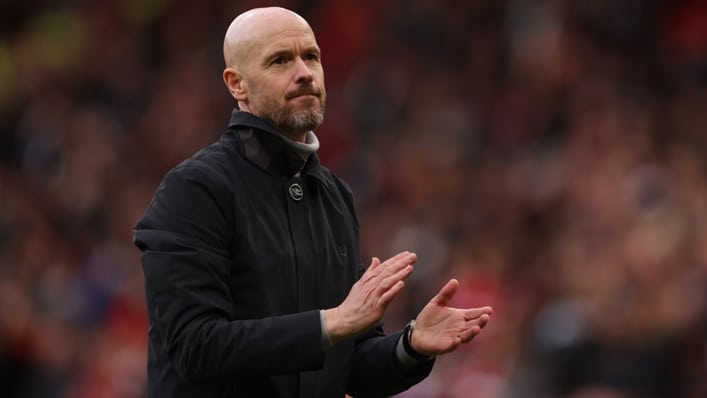
The race is expected to be close because third-place Manchester United is also closing in, but Guardiola is unconcerned by the ups and downs.
He made a sarcastic remark during a press conference prior to his team’s trip to Bristol City in the FA Cup fifth round: “After Nottingham we were not consistent, but now we are consistent because we won one game [against Bournemouth on Saturday].”
“In our game we are playing it is good, the results could be better in terms of winning at Spurs [1-0 away defeat] and Nottingham, but it is football, sometimes that happens. Of course, it is not exceptional, it is okay, it is good. No complaints for the way we are playing and fighting.
“After the last game I said the mood is exceptional and the guys are doing everything, that is enough for me.
“We are closing right to the last 10 games of the season, and that will define it.. I have the feeling in the Premier League many things are going to happen; everyone is going to drop points, but we cannot drop any; we want to fight until the end.”
27 – Erling Haaland's 27 Premier League goals this season is the most by a Manchester City player in a single top-flight campaign since Francis Lee's 33 in 1971-72. Bountiful. #BOUMCI
Kevin De Bruyne, John Stones and Aymeric Laporte were all absent from the 4-1 win at Bournemouth, though the Belgium midfielder was an unused substitute, and Guardiola updated to say: “[We] have training this afternoon. Kevin still has a little bit of illness but is much better.”
City’s trip to Bristol City on Tuesday will see them come up against a side who have not lost in 12 games (W6 D6) and sit 13th in the Championship.
“From my experience in this country when you go away from home in theFA Cup against a Championship side, always, always it is tough,” Guardiola said. “At home it would be a little bit different. Away, always it is tough in the FA Cup.
“That is why we are flying there tomorrow to do a good game and go through. It is a nice competition and we will do what we have to do.”
Ghanaian coach and scout Ebenezer Sefa has joined the blame game against referees, claiming that they are to blame for ruining thegame by making bad calls.
An established player scout claims that the penalty that referee Amadu Ibrahim gave Asante Kotoko in the 57th minute was what ultimately decided the MTN FA Cup Round of 16 match between Aduana Stars and Kotoko.
Sam Adams’ penalty goal on February 26, 2023, at Nana Agyemang Badu II Park decided the tightly contested match between Aduana Stars and Asante Kotoko.
In a post-game interview, Coach Sefah said the referees are ruining the game, claiming that the tackle by Mohammed Alhassan was insufficient to warrant a penalty.
“The referees our destroying our game; how can you take such a penalty against Kotoko? It was never a penalty,” coach Ebenezer Sefah stated during the post-match analysis.
Asante Kotoko has been eliminated from the MTN FA Cup six times since winning it in 2017.
Asante Kotoko will now have to win the Ghana Premier League to qualify for the 2023 and 2024 CAF Interclub competitions.
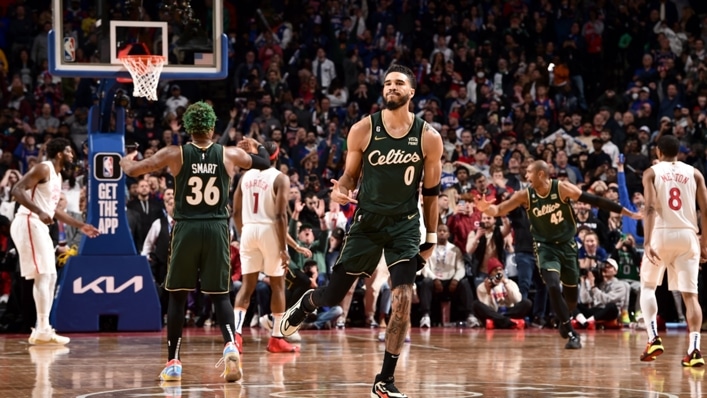
The Boston Celtics held on to defeat the Philadelphia 76ers 110-107 on Saturday after Jayson Tatum hit a crucial three-pointer and Joel Embiid’s full-court buzzer-beater was called back.
With just two seconds remaining, Marcus Smart’s deft pass to Tatum after Derrick White’s inbound was the game-winning triple.
Embiid attempted a last-ditch long-range shot, which he made, but replays revealed he let go of the ball after the shot had expired, giving the Celtics the victory.
Tatum finished the game with 18 points on 7 of 17 shooting after struggling to shoot the ball well throughout. However, he delivered when it counted. The MVP candidate also contributed six assists and 13 rebounds.
Al Horford turned the game around with four three-pointers in the third quarter as the Celtics rallied from a 15-point deficit to lead at the final change.
Horford finished with 15 points, while Jaylen Brown top scored for Boston with 26 points and three steals.
Embiid had 41 points for the game with 12 rebounds and five assists, while James Harden added 21 points with eight assists.
The Eastern Conference-leading Celtics have won three straight, improving their record to 44-17, while the 76ers, third in the East, are 39-20.
The Memphis Grizzlies blew away the Denver Nuggets 112-94 in a match-up between the Western Conference’s top two as Ja Morant scored 23 points with seven rebounds.
The Grizzlies led by as many as 35 points, opening up a 66-42 half-time lead and keeping the Nuggets to a season-low team score. Denver are 42-19 while Memphis are 36-23.
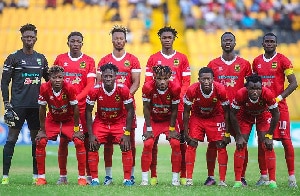
In March 2023, the Black Stars will play Angola twice as part of the AFCON qualifying tournament.
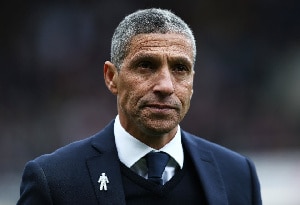
Some young, talented players have come to the attention of Black Stars coach Chris Hughton as he decides which players to call up for the upcoming matches.
This article will examine five players and explain why they ought to be on the Black Stars roster for the upcoming games.
Here are the five players who could make the squad
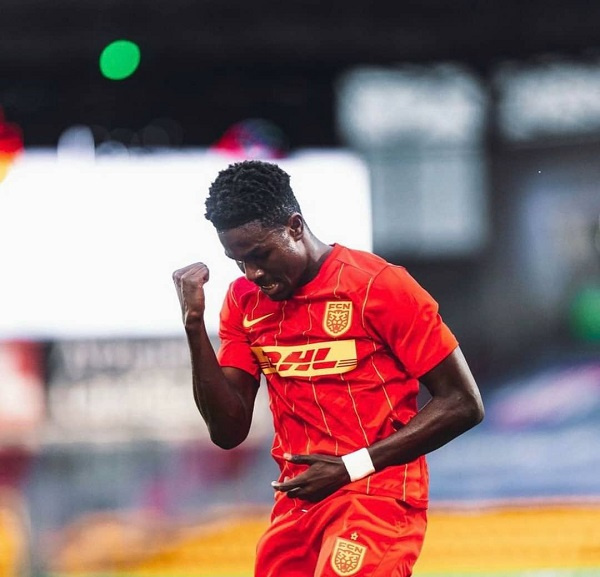
Ernest Nuamah
Ernest Nuamah plies his trade with Danish Superliga club FC Nordsjælland.
The forward made his professional debut in 2018 and has since become a key member of the squad, scoring seven goals in the 2019-20 season.
Derrick Kohn is a defender for Hannover 96 in the German Bundesliga. He joined the club in 2019 and has since become a regular starter, making 22 appearances in the current season. The young defender has scored 2 goals with 4 assists. He has played for Germany’s youth side only once.
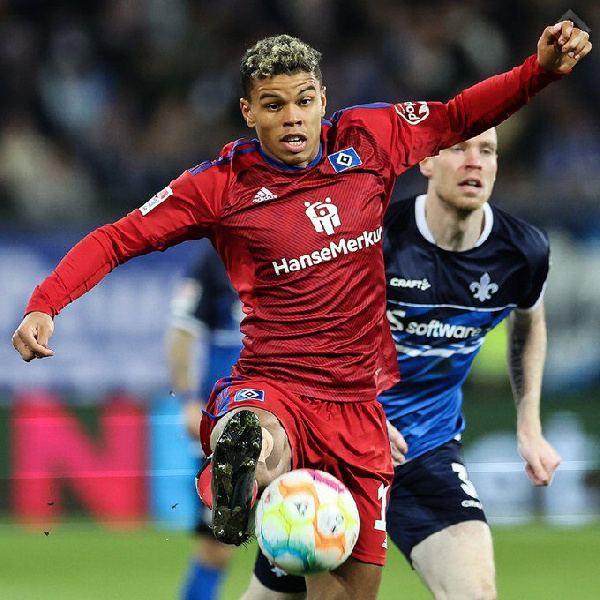
Ransford Yeboah Konigsdorffer
Ransford Yeboah Konigsdorffer is a right winger for Bundesliga 2 club Hamburger SV. The forward was one of the players who switched nationalities to play for Ghana last year. He made his debut for Ghana in the friendlies against Brazil and Nicaragua but was not included in the 2022 FIFA World Cup. Konigsdorffer could make his return to the Black Stars in the AFCON Qualifiers having scored 6 in 20 appearances.
Brenden Wiredu
Brenden Wiredu is a midfielder for English League One club Fleetwood Town. The player has been a regular starter for his club this season and has featured in 25 games with 1 goal and an assist. Although Ghana has many players in midfield, Wiredu is one of the players Ghana can tie down before England snaps on the young chap.
Patric Pfeiffer
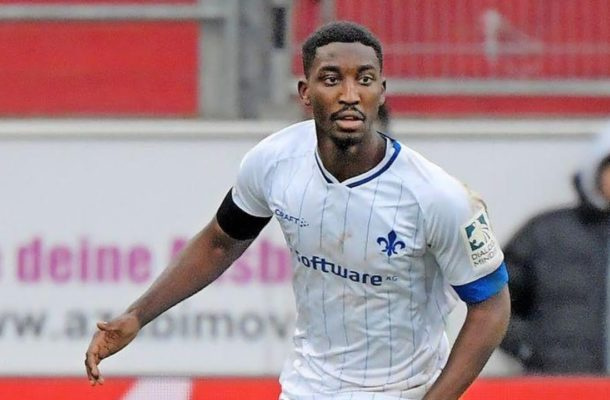
Among all the players to have switched nationalities for Ghana in 2022, Patric Pfeiffer remains the only player to have not received any call-up yet. The SV Darmstadt 98 defender in the German Bundesliga 2 is a strong shield in defence and has a good eye for goal due to his height. This season has scored 4 goals with his head in 16 appearances for his side.
Ibrahim Sadiq
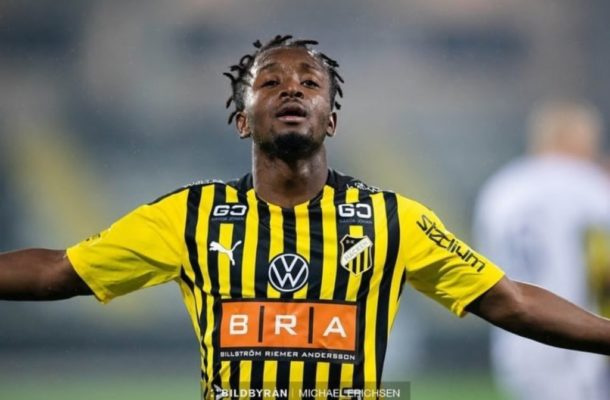
The former Ghana under-17 youth star has been in blistering form for BK Hacken in the Swedish Allsvenskan. The 22-year-old has scored 7 goals in 19 matches for his club this season. He recently scored a hat-trick against Trollhattan in his side’s 6-1 win. Sadiq has also represented Ghana at the under-20 and under-23 levels.
The Lakers were down 48-21 early in the second quarter before rallying to win 111-108, their third straight victory and biggest comeback since 2002.
trade deadline purchase In the victory over the Golden State Warriors on Thursday, Malik Beasley made his entrance known with a 25-point outburst, and this time, Jarred Vanderbilt proved why he has earned a spot in the Lakers’ starting lineup.
The rangy six-foot-eight defensive menace was everywhere, working as the primary defender on Luka Doncic on his way to 15 points (six-of-eight shooting), 17 rebounds (eight offensive) and four steals in his 27 minutes.
Anthony Davis was the star of the show on the offensive end, scoring a game-high 30 points on 12-of-20 shooting with 15 rebounds and four assists, and the league’s active leader for career blocked shots per game swatted away three Maverick attempts.
LeBron James had an injury scare, and while he is still not out of the woods, he stayed in the game and put up 26 points on 10-of-23 shooting with eight rebounds.
For the Mavericks, Luka Doncic and Kyrie Irving shot a combined 18-of-44 (40 per cent) from the field for 47 points, while the other three members of the starting line-up combined for 18 points.
With the win, the Lakers improved their record to 29-32 and now sit just one game out of the Play-In Tournament placings, while they are also just 2.5 games away from the Mavericks in the sixth seed.
The Blazers guard’s 71-point mark was both a franchise and career high, topping his previous record of 61.
Lillard had 41 points with eight triples by half-time, the most points of any player in a half this season. He shot 13-of-22 from beyond the arc for the game, having a perfect 14-of-14 from the line.
After 42 points and 12 three-pointers on Friday’s win, Klay Thompson led the Golden State Warriors to a 109-104 home win against the Minnesota Timberwolves.
The future Hall of Fame sharpshooter hit another six threes on his way to a team-high 32 points, shooting 12-of-23 from the field and six-of-14 from deep. Donte DiVincenzo was strong in a supporting role, chipping in 21 points (seven-of-13 shooting), eight rebounds, five assists and four steals.
After shooting a red-hot 43.1 per cent on a gaudy 11.6 three-point attempts per game in the month of January, Thompson has elevated even further this month, getting up 12.1 attempts per game and connecting at 45.9 per cent.
When making his FC Nordjaelland debut, the young Ghanaian player Ibrahim Osman said he was uneasy seeing more than 5,000 fans in the stadium.
The teenage sensation played for Nordjaelland in their 4-2 victory over Odense Boldklub last Friday, marking his first appearance for the team in the Danish Super Liga.
As Nordsjaelland defeated OB in a six-goal thriller, the young player came on to replace fellow countryman Ernest Nuamah in the 87th minute.
Osman admitted that seeing more than 5,000 spectators at the stadium made him feel uneasy after the game, but he described making his Nordjaelland debut as a dream come true.
“Making my debut in the Super League is a dream come true! It came as a surprise, especially since I was previously with the U19s. Skipping the U19 league and going straight to the Super League is a major accomplishment for me.
Even though I felt a bit nervous seeing over 5,000 fans, everything became normal once I stepped on the pitch”
Osman, who joined Nordsjaelland from the Right to Dream Academy, has been with the U-19’s but after showing enormous potential, manager Johannes Thorup invited him to the senior team.
Meanwhile, Wahidullah Faghir scored the first goal of the game in the 28th minute to put Nordsjaelland in the lead at the Right to Dream Park.
Wahidullah Faghir got his brace after a nicely worked goal in the 63rd minute for Nordsjaelland
Ernest Nuamah scored the third goal for Nordsjaelland in the 72nd minute before Emiliano Marcondes sealed the win with the fourth goal in the 80th minute.
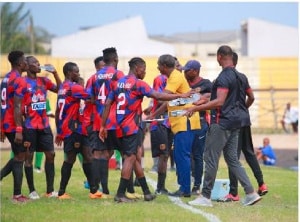
Supporters of Asante Kotoko have accused referee Amadu Ibrahim of being to blame for their MTN FA Cup Round of 16 loss to Aduana Stars on February 26, 2023, on various social media platforms.
Aduana Stars defeated the Porcupine Warrior at the Nana Agyemang Badu II in Dormaa Ahenkro, ending their chances of winning a second consecutive championship in the ongoing 2022–2023 football season.
Aduana Stars took the lead in the 57th minute after Mohammed Alhassan was ruled to have fouled his defender by the referee. The game was closely contested, and both teams missed opportunities.
Sam Adams converted the penalty kick to score the game’s lone goal, sending goalkeeper Fred Asare the wrong way.
The decision didn’t go down well with Asante Kotoko fans, including coach Seydou Zerbo, who laid the blame at the doorstep of referee Amadu Ibrahim.
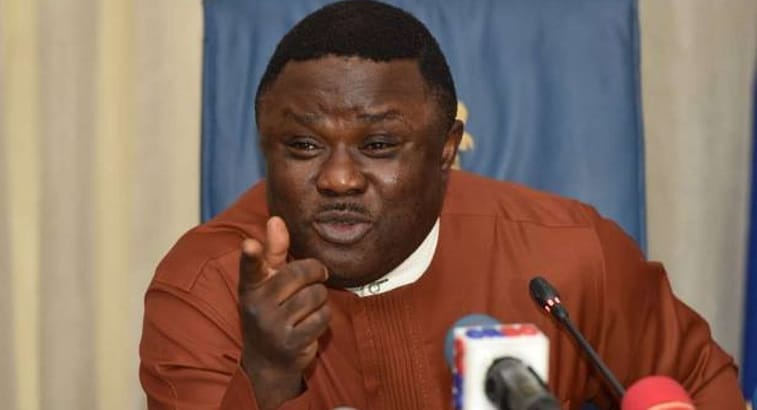
Ayade, who is nearing the end of his second term as governor, was a senator for the Cross River North from 2011 to 2015. He had hoped to serve in that capacity once more.
Sen. Jarigbe Agom-Jarigbe, the incumbent, won the election instead.
Ayade received 56,595 votes, while Agom-Jarigbe of the People’s Democratic Party received 76,145.
“By the powers conferred on me as the Returning Officer of the Northern Senatorial District, I hereby announce Jarigbe Agom-Jarigbe of the Peoples Democratic Party elected for the Northern Senatorial District,” the returning officer, Dr Emmanuel Emanghe, said.
Governor Ayade had risen to power as a member of the Peoples Democratic Party. He was elected into the Senate in 2011 as a candidate of the party in 2011 and as Governor in 2015. He was also re-elected governor as a PDP member.
The governor, however, defected to the All Progressives Congress in 2021. Agom-Jarigbe, however, chose to remain the PDP.
The 35-year-old, who retired from professional football last year, talked about his interactions with some of the coaches and teammates he played with during his 11-year stint at Stamford Bridge in an interview with Dubai Eye 103.8.
The winner of the 2013 Nations Cup also revealed some fascinating information about the warning signs that the club’s manager would be fired at a time when the team wasn’t doing well.
“We always had a meeting with Roman (Abramovich) once the team was not doing well. He comes in and has a chat with us (team), he sits down, and everybody sits.
“He had this guy who was his friend and interpreter, so he starts shouting and screaming in Russian and then goes off and says you guys go back now and play football and start winning.
“If we don’t do that, the next time he comes in, he flies in with his helicopter to the training ground and that is it, we know that the manager is gone.”
The ex-Super Eagles captain worked under eleven managers at Chelsea, including top football managers like Jose Mourinho, Carlo Ancelotti, and Antonio Conte.
He made 249 appearances for the Blues, winning the EPL, UCL, Europa League, FA Cup, and League Cup.
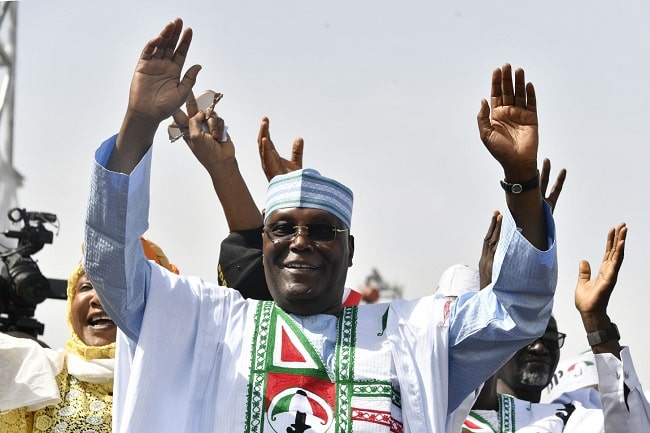
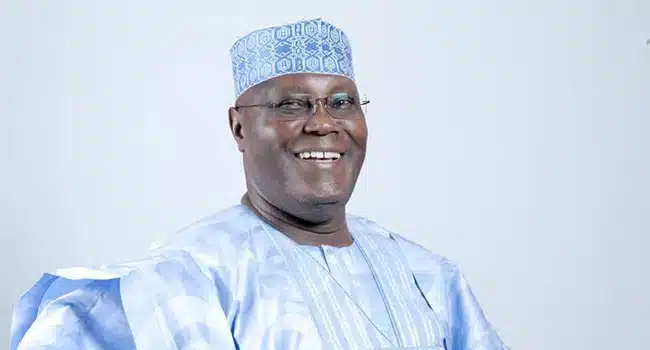
The Peoples Democratic Party’s (PDP) presidential candidate, Atiku Abubakar, won the Gombe State presidential vote on February 25.
In the 11 local government areas (LGAs) of the state, he received 319,123 votes, according to the results released by the Independent National Electoral Commission (INEC).
According to the Gombe State Collation Officer, Prof Maimuna Waziri, who announced the results around 1 a.m. on Monday, the PDP candidate received the most votes in the North-East state.
The former vice president defeated his closest competitors, Peter Obi of the Labour Party (LP), Bola Tinubu of the All Progressives Congress (APC), and Rabiu Kwankwaso of the New Nigeria Peoples Party (NNPP), by a margin of more than 160,000 votes.
When the results from 12 of the state’s 21 local government areas were totaled, the APC received 99,898 votes, PDP 213,117, NNPP 3,609, and LP 56,857.
Atiku Abubakar, the Peoples Democratic Party’s (PDP) nominee for president, is in the lead in his native Adamawa after winning all 12 local government areas (LGAs) that have been declared so far by the Independent National Electoral Commission (INEC).
The former vice president is currently ahead of his closest competitors, Peter Obi of the Labour Party (LP), Bola Tinubu of the All Progressives Congress (APC), and Rabiu Kwankwaso of the New Nigeria Peoples Party (NNPP), by more than 110,000 votes as of 8 o’clock on Monday
The collation of results in the state has since been postponed to Monday, by 10:00 in the morning.
The State collation officer, Professor Mohammed Mele announced the decision for the postponement after over one hour of waiting for the results of the remaining nine local government areas to arrive.
Mele at exactly 1:18 in the morning announced the decision to close the collation centre until 10:00 am.
So far, results from Lamurde, Guyuk, Gerei, Song, Numan, Fufore, Demsa, Yola South, Mayo-Belwa, Ganye and Shelleng local government areas have been collated.
Those remaining are Yola North (state capital), Jada, Gombi, Hong, Madagali, Maiha, Michika, Mubi North and Mubi South local government areas.
See results:
2023 PRESIDENTIAL ELECTION RESULTS FROM ELEVEN (12) LOCAL GOVERNMENT AREAS OF ADAMAWA STATE
01. LAMURDE LGA
TOTAL REGISTERED VOTERS – 76,097 ACCREDITED VOTERS – 25,105
Christophe Galtier hailed Kylian Mbappe for his “magnificent” feat of becoming Paris Saint-Germain’s joint-record goalscorer in Sunday’s dominant 3-0 win at Marseille.
Mbappe scored a terrific volley to match Edinson Cavani’s tally of 200 goals for PSG as the Ligue 1 leaders went eight points clear of their old rivals with a crushing win at the Stade Velodrome.
Mbappe and fellow attacking star Lionel Messi had earlier put PSG in command by exchanging assists before the break, and they have now combined for 10 goals in Ligue 1 this term — more than any other duo.
Speaking to Amazon Prime Video after the win, Galtier said: “Mbappe is a player who has a sense of movement, who obviously goes very fast; he is technically fast too.
“He not only has the legs but an exceptional speed of execution. These are players of stats and records; he equalled this magnificent record of Cavani, and it is obvious that he will beat it.
“His presence is important to the team, it gives us other options in the game, especially with our depth and his presence in front of goal.”
200 – Kylian Mbappé has scored 200 goals for Paris in all competitions, matching Edinson Cavani's record. History. #OMPSGpic.twitter.com/Tnee7KVFGm
PSG suffered an early setback when a tearful Presnel Kimpembe was carried off injured, but they hit the front 25 minutes in as Messi found space to send Mbappe through on goal, with the striker applying an unerring finish.
Mbappe repaid the favour four minutes later, combining with Nuno Mendes on the break before teeing Messi up for a tap-in with a pinpoint low cross.
Messi should have had a second when he somehow blazed over from just six yards out, before Marquinhos fired narrowly wide of the bottom-left corner after beating the hosts’ offside trap.
Mbappe nodded Vitinha’s cross narrowly wide of the left-hand post six minutes after the restart, but the France star had his landmark goal four minutes later.
A flowing move ended with Messi scooping a wonderful ball into the path of Mbappe, who lashed a left-footed volley beyond Pau Lopez to effectively end the contest.
Alexis Sanchez and Marseille’s Vitinha went close to pulling one back, but Gianluigi Donnarumma denied both with sharp saves to preserve PSG’s clean sheet.
⌛️ It’s over in Marseille! Our Parisians win #LeClassique and get the 3 points! ❤️💙
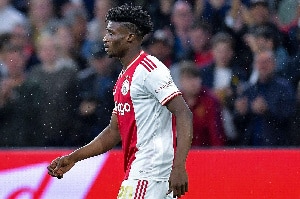
Ghanaian international midfielder for Ajax,Kudus Mohammed, has received high praise from Ghanaian international forward Inaki Williams for his outstanding performances for both club and country.
For the Dutch powerhouses this season, the 22-year-old has been in excellent form, tallying 15 goals across all competitions.
Despite the Black Stars’ early elimination, the midfielder performed admirably at the World Cup, scoring two goals and providing one assist.
Inaki Williams, who was a member of the Black Stars team for the World Cup, has praised Kudus Mohammed and called him an exceptional athlete.
“It’s incredible what I’ve had to experience since I decided to go with Ghana. I don’t regret anything. It’s continuous learning. I really enjoy watching young people like Kudus, who is exceptional. I’m very proud to be part of that group” he said.
Meanwhile, Inaki Williams is yet to score for the West African powerhouse since making his debut in November againstBrazil in a friendly.
As the visitors sprinted to a 2-0 halftime lead, Mbappe and Messi traded assists. Messi’s tap-in gave him 700 goals in senior football for Barcelona and PSG.
The pair saved their best for last, though, as Mbappe scored PSG’s 200th goal on a memorable night for Christophe Galtier’s team by volleying in Messi’s dinked pass to join Edinson Cavani in the feat.
The outcome put PSG eight points ahead of Marseille in the Ligue 1 standings, relieving Galtier of some of the pressure that had been mounting due to their lacklustre start to 2023.
200 – Kylian Mbappé has scored 200 goals for Paris in all competitions, matching Edinson Cavani’s record. History. #OMPSGpic.twitter.com/Tnee7KVFGm
PSG suffered an early setback when a tearful Presnel Kimpembe was carried off injured, but they hit the front 25 minutes in as Messi found space to send Mbappe through on goal, with the striker applying an unerring finish.
Red Devils march on to rd of 16 – Mangers reaction
Mbappe repaid the favour four minutes later, combining with Nuno Mendes on the break before teeing Messi up for a tap-in with a pinpoint low cross.
Messi should have had a second when he somehow blazed over from just six yards out, before Marquinhos fired narrowly wide of the bottom-left corner after beating the hosts’ offside trap.
Mbappe nodded Vitinha’s cross narrowly wide of the left-hand post six minutes after the restart, but the France star had his landmark goal four minutes later.
A flowing move ended with Messi scooping a wonderful ball into the path of Mbappe, who lashed a left-footed volley beyond Pau Lopez to effectively end the contest.
Alexis Sanchez and Marseille’s Vitinha went close to pulling one back, but Gianluigi Donnarumma denied both with sharp saves to preserve PSG’s clean sheet.
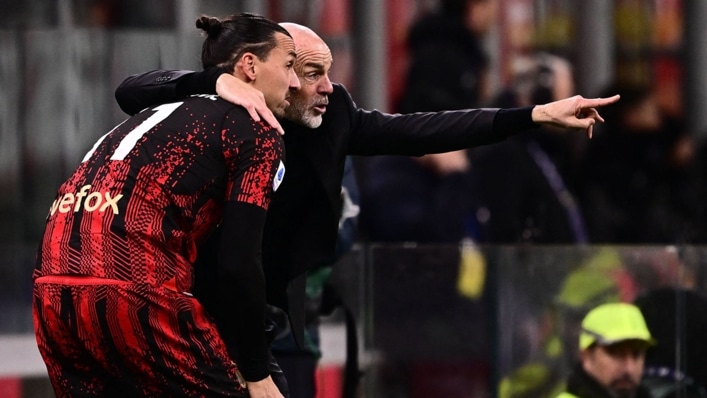
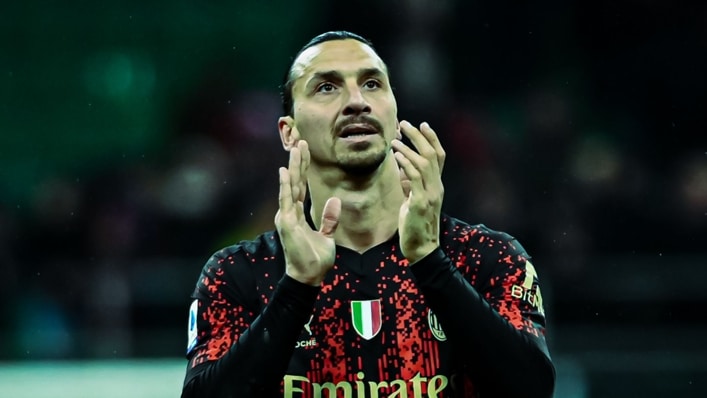
Zlatan Ibrahimovic and Mike Maignan made their comebacks in Milan’s 2-0 victory over Atalanta on Sunday, and Stefano Pioli praised their performances.
Ibrahimovic entered the game in the second half for the first time since May 2022, when he underwent knee surgery that many believed would put an end to his career.
Meanwhile, goalkeeper Maignan made his first appearance in goal since suffering an injury of his own in September and celebrated his return with a shutout.
Pioli is happy toe all of his players back, and the return of the pair comes at the perfect time for Milan, who have won four straight matches across all competitions.
“Mike and Zlatan are not only two excellent players, but also two leaders of the team,” Pioli, who was taking charge of his 800th career game as a coach, told DAZN.
“Having them on the pitch helps us a lot. Now we must think about the next match. We will have players absent for that game but will still put in a good performance.”
At 41 years and 146 days, Ibrahimovic overtook Alessandro Costacurta (41y, 25d) as Milan’s oldest player in Serie A in the three-points-per-win era (1993-94 season).
The veteran striker only had 14 touches of the ball in his 16 minutes in action and did not manage a shot, but Milan’s second goal arrived with him on the field.
Junior Messias clipped the ball over Juan Musso, who had earlier scored an unfortunate own goal when Theo Hernandez’s 25-yard volley hit the post and went in off his body.
It was a brilliant strike from Hernandez after Olivier Giroud had nodded the ball into his path, and the wing-back believes he should be credited with the goal himself.
“I consider it my goal,” he said. “I’m going to count it as mine. Thanks also to Oli for knocking it down for me. It was a good goal.
“It’s true that we went through a difficult time, but with this victory, we are getting back to being the Milan we were before.”
Milan have now won four games without conceding in all competitions for the first time since February 2018, with their latest victory moving them level with second-place Inter.
The Rossoneri wasted a number of good chances with the game at 1-0, but Atalanta failed to offer any sort of attacking threat.
Indeed, they had only three attempts all match – their lowest tally since April 2013 – and did not test the returning Maignan on a single occasion.
“We gave our all and tried everything, but Milan were superior on the night and we must learn from these games to focus on the next one,” Gian Piero Gasperini said.
“What we saw tonight was that despite our best efforts, it is evident Milan simply had more than we did.”
The only blemish for Milan is that Rafael Leao – who set up Messias’ goal – and Rade Krunic will miss next week’s trip to Fiorentina after being booked for the fifth time this term.
After making his comeback in Milan’s win over Atalanta following a nine-month injury layoff, Zlatan Ibrahimovic compared himself to basketball player Nikola Jokic.
The dependable striker entered in the second half of Sunday’s 2-0 victory at San Siro after going unused in three previous games this month.
At 41 years and 146 days, he broke the record for the oldest Serie A player for Milan during the three-points-per-win era (since 1993–94), Alessandro Costacurta (41y and 25d).
Similar to Denver Nuggets’ two-time NBA MVP Jokic, the international player from Sweden believes he still has a significant role to play even though he will turn 42 later this year.
“I want to help the team in every way by doing what I have to do to be there on the field,” he told Sky Sports. “I want to be there when the coach and the team need me.
“It’s obvious things change between the age of 30 and 41, but I feel like Jokic in the NBA.”
Ibrahimovic’s previous appearance for Milan came in a 3-0 win over Sassuolo on May 25 last year, with the former Barcelona striker injuring his knee and undergoing surgery.
Given his age at the time of the operation and the length of the layoff, many expected Ibrahimovic to call time on his legendary career.
“I’ve lived this year with great suffering,” he said when asked what it means to be back playing again at the highest level. “I’ve been out for a year.
“I didn’t feel well, and I couldn’t do what I wanted to do. I went on suffering to help the team, but in reality, I wasn’t well.
“Today I can say that I’m fine and that I can give what I can to the team. Then obviously the more you play, the more you train, and the more you improve.”
Juan Musso’s own goal—after Theo Hernandez’s volley hit the post and went in off the goalkeeper’s back—and Junior Messias’ late strike earned Milan a fourth win in a row.
That includes three Serie A wins on the spin without conceding for the first time in a year, helping to lift the Rossoneri level on points with second-place rivals Inter.
“I’ve done everything I can to recover, but in the last few weeks I’ve seen the team do well,” he said. “We must continue doing more if we are to do well.
“I feel important and have a great responsibility here. I started an adventure with this team and helped to bring it where we are today.
“When I’m not available, I suffer, and perhaps the team lacks a bit of my pressure as a result.”
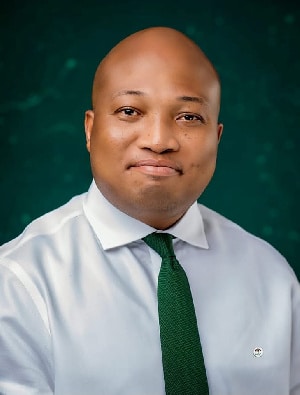
It seems to be a pleasant walk for the Member of Parliament for North Tongu, Samuel Okudzeto Ablakwa ahead of the primaries of the National Democratic Congress (NDC).
By the nomination deadline on Saturday, February 25, 2023, only the party’s third-term MP, Samuel Okudzeto Ablakwa had picked a form to run for the party’s seat in the North Tongu elections in 2024.
“We are running unopposed in the North Tongu NDC Parliamentary Primaries.
“Another reason to serve my beloved constituents better, stronger, harder & more innovatively.
“As you very well know, I don’t & will never take your support for granted. Glory be to God,” Mr Ablakwa wrote on his Facebook wall after nominations closed on Saturday.
The NDC, ahead of the 2024 presidential and parliamentary elections, has slated its primaries for May 13, 2023.
Mr Okudzeto Ablakwa was first elected in 2012.
He has also served as deputy minister for information and communication.
He is regarded as one of the most active MPs in the current 8th Parliament of Ghana’s Fourth Republic.
The absence of competition for Mr Ablakwa effectively means his fourth term bid is inching closer since North Tongu is classified as a safe seat of the NDC, being located in the party’s stronghold.
After shocking a success-starved Newcastle to victory in the Carabao Cup final,Manchester United is now rejoicing over winning the first significant trophy of the Erik ten Hag era.
Both teams entered the game hoping for a win that would serve as the impetus for a better future, but it was the steadily improving Red Devils who came out on top under the arch.
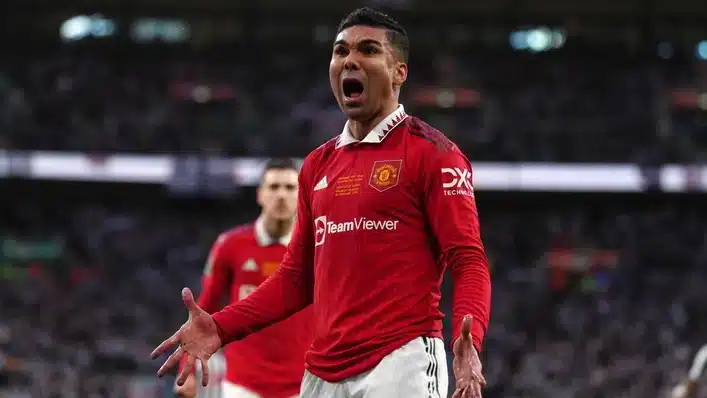
In a 2-0 victory over Newcastle at Wembley, Casemiro’s header and an own goal by Sven Botman put an end to United’s trophy drought, which had lasted since 2017.
Things could have been so different for Eddie Howe’s men had David De Gea not been alert to deny Allan Saint-Maximin’s close-range shot late in the first half.
Within seven minutes of that save the Red Devils had control of the final, with Casemiro heading home Luke Shaw’s free-kick before Botman deflected a Marcus Rashford strike over Loris Karius.
The third-choice goalkeeper, making his debut and first competitive appearance in 728 days, denied Wout Weghorst putting the game to bed in first-half stoppage time.
Newcastle returned brightly from the break but were unable to mount a comeback, extending their wait for a first trophy since their 1969 Inter-Cities Fairs Cup triumph.
As for the victors, Ten Hag’s first ever trip to Wembley saw him join Jose Mourinho as the only United managers to win a major trophy in their first season.
More could yet follow this season given the Dutchman’s transformational impact on the culture and quality at Old Trafford.
The sides were greeted by an incredible din at a packed Wembley, where expectant fans twirled red scarves at one end as a sea of black and white flags fluttered at the other.
The atmosphere translated into an intense, open start, only for poor decision-making to see moves break down.
There was no danger of Karius being beaten by United’s first shot on target as Weghorst failed to make clean contact under pressure, before easily holding onto an Antony attempt.
United fans turned their attention to their owners as the half wore on, with “we want Glazers out” bellowed in front of watching co-owner Avram Glazer.
A couple of breaks in play for treatment took the sting out of a final that had lost its early intensity, only for Newcastle’s first shot on target to spark a frantic conclusion to the half.
After a cross flew across the face of goal, Saint-Maximin took possession at the far post, jinked past Diogo Dalot and forced De Gea into an important stop from close range.
That 32nd-minute save proved a key moment as United were soon 2-0 up.
The first goal came after returning Bruno Guimaraes fouled Rashford on the left, with Shaw whipping in a fine free-kick that Casemiro met with a powerful header past Karius.
A nervy wait followed to check an offside, with the Brazilian punching the air when it was given the green light.
It was a gut punch that United quickly followed up in front of the dejected Newcastle end.
On-loan Weghorst smartly played through Rashford to get away a hopeful strike that was heading wide until Botman’s block inadvertently sent the ball looping over the goalkeeper.
Dan Burn headed narrowly off target as Newcastle attempted to claw one back, but they would have been further behind in stoppage time had Karius not superbly tipped over Weghorst’s effort from distance.
Dalot, who had been booked for a ninth-minute challenge on fleet-footed Saint-Maximin, was replaced by Aaron Wan-Bissaka at half-time, while Alexander Isak came on for Sean Longstaff.
Howe’s side were looking brighter as United slowed the tempo against a side Ten Hag had called “annoying” for their time-wasting antics in the build-up.
Newcastle could not turn possession into clear-cut chances, with inspired introduction Wan-Bissaka and Lisandro Martinez proving immovable objects.
Karius got down well to stop Rashford fizzing home from distance and dealt with a long-range Wan-Bissaka attempt as play became stretched with Howe’s side chasing a goal.
Newcastle saw penalty appeals overlooked and substitute Jacob Murphy fizzed a stunning long-range effort just wide.
The match ended with captain Harry Maguire being brought on, renewed chants against the Glazers, Karius denying Bruno Fernandes and De Gea becoming United’s record clean sheet holder with 181 shut-outs.
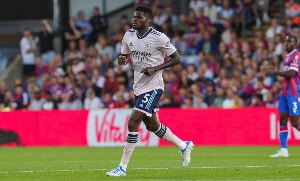
Thomas Partey’s return from injury, is believed to be a bump up for Ghana’s Black Stars as the team readies for AFCON 2023 qualifiers against Angola.
The Ghanaian midfielder participated in Arsenal’s 1-0 Premier League victory over Leicester City after being substituted in.
The Gunners lost three points to the defending champions because Partey was unable to play due to an injury sustained before their match against Manchester City.
The former Atletico Madrid player did not play in Arsenal’s 4-2 victory over Aston Villa last weekend.
However, Partey came on to replace Martin Odegaard in the 82nd minute as Arsenal were leading by a goal.
The Ghanaian played 13 minutes of action in the game and brought more stability to midfield for the Gunners.
Partey nearly created a goal-scoring chance in added time when he sent a cross to Eddie Nketiah but the ball was intercepted.
His injury comeback is huge boost for the Black Stars as new coach Chris Hughton prepares ahead of next month’s AFCON 2023 qualifiers against Angola.
Partey has been a key player for Arsenal this season, making 19 appearances and scoring two goals for the Gunnersin the English Premier League.
Brazilian forward, Gabriel Martinelli scored the only goal of the match a minute into the second half with an assist from Leandro Trossard whose earlier goal was ruled out by the Video Assistant Referee.
Arsenal are currently top of the table in the Premier League.
Inaki Williams, a forward for Athletic Bilbao, claims he doesn’t regret moving from Spain to Ghana.
In June 2022, the 28-year-old changed teams to play for the Black Stars. He was a member of the Ghanaian team that competed in the World Cup in Qatar.
Inaki Williams previously represented the Spanish national team before changing his nationality to Ghana.
“It’s incredible what I’ve had to experience since I decided to go with Ghana. I don’t regret anything. It’s continuous learning. I really enjoy watching young people like Kudus, who is exceptional. I’m very proud to be part of that group,” he said.
Inaki Williams has yet to score for the West African powerhouse since making his debut in November against Brazil in a friendly.
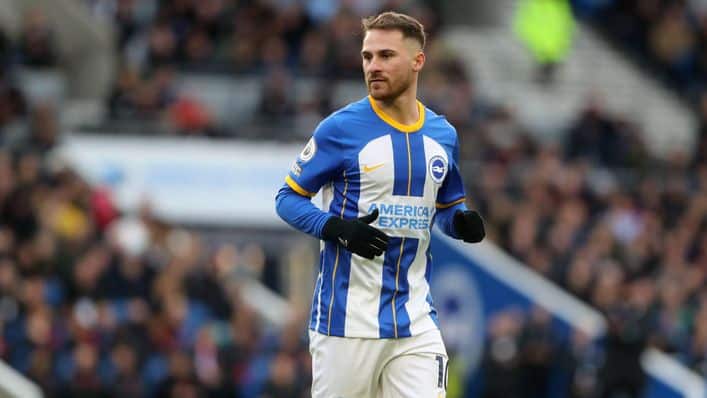
Since he returned from Qatar with a World Cup winner’s medal, the midfield wizard has been linked with a move away from the Seagulls, and Pep Guardiola could seize the opportunity when the transfer window opens.
The South Coast side’s 24-year-old Mac Allister has played in 19 Premier League matches this season, and he has five goals to his name as Roberto De Zerbi’s team keeps winning.
With two games remaining, Brighton, who is currently ranked eighth, has a chance to pass Fulham and Liverpool.
And the Argentina international has been a key part of a high-pressing setup that has seen the club pick up impressive wins over Chelsea, Liverpool and Manchester United in 2022-23.
Guardiola believes the midfielder would be the perfect addition to his world-class squad and would be willing to meet Brighton’s £70 million valuation.
The Spaniard is keen to freshen up his squad after a mediocre season so far has left the champions chasing Arsenal for the Premier League title.
Mac Allister’s contract runs until 2025, putting the Seagulls in control of the situation ahead of what is set to be another busy summer of spending for most clubs.
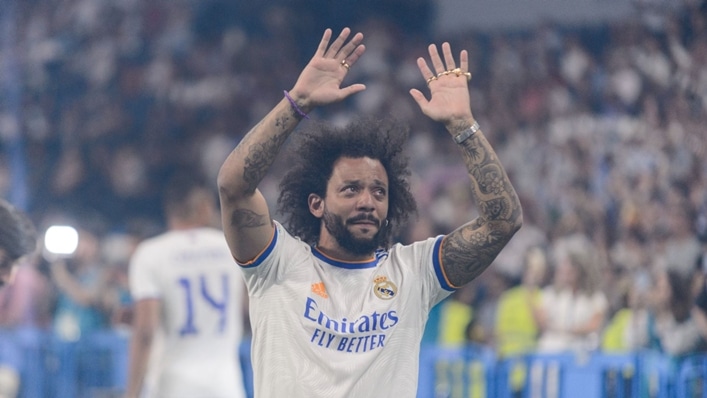
After more than ten years away, the seasoned left-back, who began his career with the Campeonato Brasileiro Serie A team, has returned to Brazil.
He progressed through the Rio de Janeiro team’s youth ranks before making his senior debut for them in 2005. He stayed with them until 2007.
After that, he joined Madrid, where he played an important role for the next 15 years and eventually became the most decorated player in Los Blancos’ history.
After leaving the Santiago Bernabeu, the 34-year-old signed for the Greek team Olympiacos in September, but he ended his contract last week.
That has paved the way for his return to Fluminense, who are looking to build on last year’s third-placed finish in Serie A as they head into the 2023 campaign.
The club previously expressed an interest in signing the defender last month, with Thiago Silva also mooted as a target.
Marcelo celebrated the announcement with a post to social media, simply writing: “Back to the place where it all started.”
During his time at Madrid, the defender won an unmatched 25 honours, including six LaLiga titles and fiveChampions League crowns, winning the double during his last campaign.
At international level, he won 58 caps for Brazil between 2006 and 2018, and was a member of the squad that claimed victory at the FIFA Confederations Cup in 2013.
In addition, he was a two-time Olympic medallist with their under-23 squad, taking bronze at Beijing 2008 and silver at London 2012.
Young Ghanaian Ibrahim Osman made his professional debut for Nordsjaelland on Friday in a 4-2 victory over Odense in the Denmark Superligaen.
In the 87th minute, the young player, who was promoted to the team from the Right to Dream Academy at the beginning of the year, took Ernest Nuamah’s place.
Nordsjaelland romped to a resounding victory that extended their lead at the top of the league standings thanks to a brace from Wahid Fagir, goals from Ernest Nuamah and Emiliano Marcondes, and goals from each of those players.
Following the game, Nordsjaelland praised Osman on social media for making his debut.
“A huge congratulations to Ibrahim Osman, who recently joined Farum as an U19 player from the Right to Dream Academy in Ghana, but already made his first team debut in the final minutes of Friday’s 4-2 win over OB.”
Osman will want to emulate other Ghanaians Mohammed Kudus, Kamaldeen Sulemana, Abdul Mumin, and Maxwell Woledzi who have all distinguished themselves in European football.
Real Madrid was forced to fight back in a frustrating 1-1 draw with 10-man rivalsAtletico Madrid, and Carlo Ancelotti admitted it will be “difficult” for Los Blancos to win LaLiga.
When Atleti substitute Angel Correa was controversially dismissed with Saturday’s derby tied at 0-0, Madrid would have liked their chances of closing the gap on league leaders Barcelona to five points.
Atleti then appeared to be heading for a memorable victory when Jose Gimenez gave them the lead at the Santiago Bernabeu, but late in the game, 18-year-old forward Alvaro Rodriguez saved Madrid’s face.
Ancelotti is aware of the difficulty of Madrid’s task given that the draw gives Barcelona the opportunity to extend their lead to 10 points when they travel to Almeria on Sunday.
Asked about the title race by DAZN, Ancelotti said: “It was already very difficult before this match, now it’s more. We are going to fight until the end, that’s what I can say.
“We lacked a bit of freshness. But mentally more than physically. At 1-0, it took us 10 minutes to compose ourselves, to reposition ourselves.
“In the first half there was a lack of intensity and in the second, we reached it at the end, but we didn’t fully take advantage of the numerical superiority.”
However, Ancelotti did reserve praise for Alvaro, who became the youngest player to score in a Madrid derby in LaLiga this century (aged 18 years and 226 days).
1 – Two different Uruguayan players (Álvaro Rodríguez and José María Giménez) have scored in a derby between Real Madrid and Atlético de Madrid in LaLiga for the first time in the 21st century. Equality. pic.twitter.com/ofGwFN6pwi
Former United players Peter Schmeichel, Roy Keane, Paul Scholes, Rio Ferdinand, and Gary Neville all now work in the media and frequently examine the club’s situation.
Following Ten Hag’s Europa League victory over Barcelona this week, some of those former players have praised the team. Schmeichel referred to Ten Hag’s performance as “vintage Sir Alex Ferguson,” which prompted comparisons to previous teams.
The Dutchman acknowledged that players were burdened by constant debate and scrutiny, but he also said they needed to be able to accept it as a necessary part of the job.
“Sometimes it’s difficult for the players of today because there are so many references to the past, a big history that former players made, and I can imagine those players saying it] because they love the club; it’s part of their lives,” Ten Hag said.
“What they love is what they criticise the most, so I understand, but it sometimes affects the players; it’s clear, but I also think it’s part of our job; you have to live with criticism and see it as a gift to do better.”
“They want to help you and as a player for Manchester United, you know you have to perform, win games and trophies. That can only be possible with togetherness, you can’t do it on your own, you need the team to perform.”
Ten Hag added that the only way to handle United’s trophy-laden past was to be part of a successful future. United can claim their first piece of silverware under Ten Hag when they face Newcastle United in Sunday’s EFL Cup final.
“That’s the point, you’re a player for Manchester United and you have to create your own legacy, therefore you have to win trophies and we have that opportunity on Sunday,” he said.
Before Sunday’s EFL Cup championship match against Manchester United, Newcastle United manager Eddie Howe wants his players to become accustomed to competing for trophies in championship games.
The Magpies haven’t participated in a domestic championship game in 24 years, and they haven’t claimed a significant victory since winning the Inter-Cities Fairs Cup in 1969.
Since the ownership changed in October 2021, which allowed for increased spending on the team, expectations have grown around Newcastle. The team is currently competing for a Champions League spot, sitting fifth in the Premier League.
Since Howe’s appointment in November 2021, the Magpies improved from relegation battlers to finishing 11th in the 2021-22 campaign, with their 2022-23 league position and cup final appearance seen as another step forward which the boss wants to become the norm.
“We want the players to become accustomed to these days and expect them, not look at this final as a one-off and a once-in-a-lifetime opportunity,” Howe told reporters.
“In our position, that wouldn’t be a healthy way to look at this game. We want to be very controlled in our emotions, use the energy of the crowd, but also have high expectations.
“This is the future we all want and we know only hard work and staying true to our principles will earn us the right to achieve it. We hope this is the start of an era where we compete for honours on a more regular basis.”
Howe was hopeful his side could use the final as a springboard to bigger and better things but insisted that defeat would not be devastating for the club.
“Winning would help us accelerate the process, for sure, but it isn’t the be-all and end-all for what lies ahead,” he said.
“Regardless, the club is in a good place and can grow from here. Of course,we want to put pressure on ourselves to achieve. There is no part of me that’s going to Wembley just to enjoy the day.”
Thuram has scored 14 goals in all competitions this season for Gladbach, having been part of France’s 2022 World Cup squad.
Marcus Thuram’s agent has offered the French forward to Barcelona as an off-season signing, according to Mundo Deportivo.
Thuram has interest from Chelsea, Manchester United, Paris Saint-Germain, Atletico Madrid, and Inter.
Barcelona’s economic challenges mean they have prioritised signing players on free transfers in recent times with Thuram offering that plus flexibility in attack.
ROUND-UP
Fichajes claims Cristiano Ronaldo wants Sergio Ramosto join him at Saudi Arabian club Al Nassr, with the defender’s contract with PSG to expire at the end of this season. Ramos will leave it late to make a decision, holding out hope for a PSG extension.
Liverpool will battle Bayern Munich in the off-season for the signature of Juventus striker Dusan Vlahovic, reports Calciomercatoweb.
Barcelona, Real Madrid and Chelsea are all interested in Inter’s Marcelo Brozovic,with the Serie A club open to selling him, according to La Gazzetta dello Sport.
Manchester Unitedare weighing up a move for Bayer Leverkusen right-back Jeremie Frimpong, reports Football Insider. Fabrizio Romano claims numerous top clubs are interested in the Dutch defender.
La Gazzetta dello Sport claims Liverpool are tracking Inter’s Nicolo Barella as they look to bolster their midfield options.
West Ham, Fulham, Crystal Palace and Brentford are all circling for Milan forward Olivier Giroud, who is open to a return to England, claims The Sun.
At the Vitality Stadium, Manchester City easily defeated Bournemouth thanks to a sharp offensive performance, pulling back to within two points of Arsenal at the top of the Premier League standings.
After the Gunners’ victory earlier on Saturday, the champions were under pressure, but it did not show as Pep Guardiola’s team cruised to a 4-1 victory on the south coast with a performance full of style and vigour.
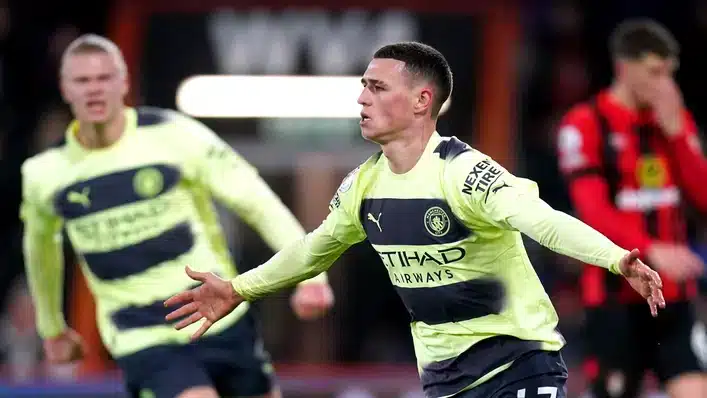
After City had taken a commanding lead earlier in the half thanks to goals from Julian Alvarezand Erling Haaland, Bournemouth contributed to their own demise by handing Phil Foden a goal just before halftime.
Chris Mepham’s own-goal added insult to injury for the Cherries who – for all their efforts – were outrun and outclassed.
Jerfferson Lerma’s late strike gave home supporters some momentary cheer, but this had been the champions’ day.
City opened the scoring after 15 minutes, the move beginning with a fine challenge by Rico Lewis, who started on the right of City’s midfield for his 11th appearance in the league, to win the ball out near the touchline.
From there, Ilkay Gundogan played it up to Foden, who was thwarted as he shaped to shoot but instead worked the ball to Haaland. After the striker’s effort smacked the underside of the crossbar, there was Alvarez, first onto the rebound to fire home from a yard out.
His ball into the middle again found Foden, who was knocked off it by Jordan Zemura. The defender’s intervention was in vain though, Haaland stealing in to tap home the loose ball to double City’s lead.
The visitors were cruising and had wrapped the game up before the break. The third goal was a calamity all of Bournemouth’s own doing.
Dominik Solanke failed to properly look up and played a lazy, aimless pass, square across the pitch from the touchline. That was pounced upon by Foden, alert to the opportunity, leaving him with the simple task of advancing on Neto’s goal and rolling the ball beyond the goalkeeper.
The Cherries were falling apart and their hopes of keeping the score respectable received a blow five minutes into the second half.
Lewis put in a good cross from the right which was cleared, but only as far as Foden, whose whipped ball in was blasted against Mepham by Alvarez for an own goal.
The hosts, for their troubles, fought gamely to pull a goal back, a goalmouth scramble midway through the second half leading to a VAR check for handball which ultimately did not yield a penalty.
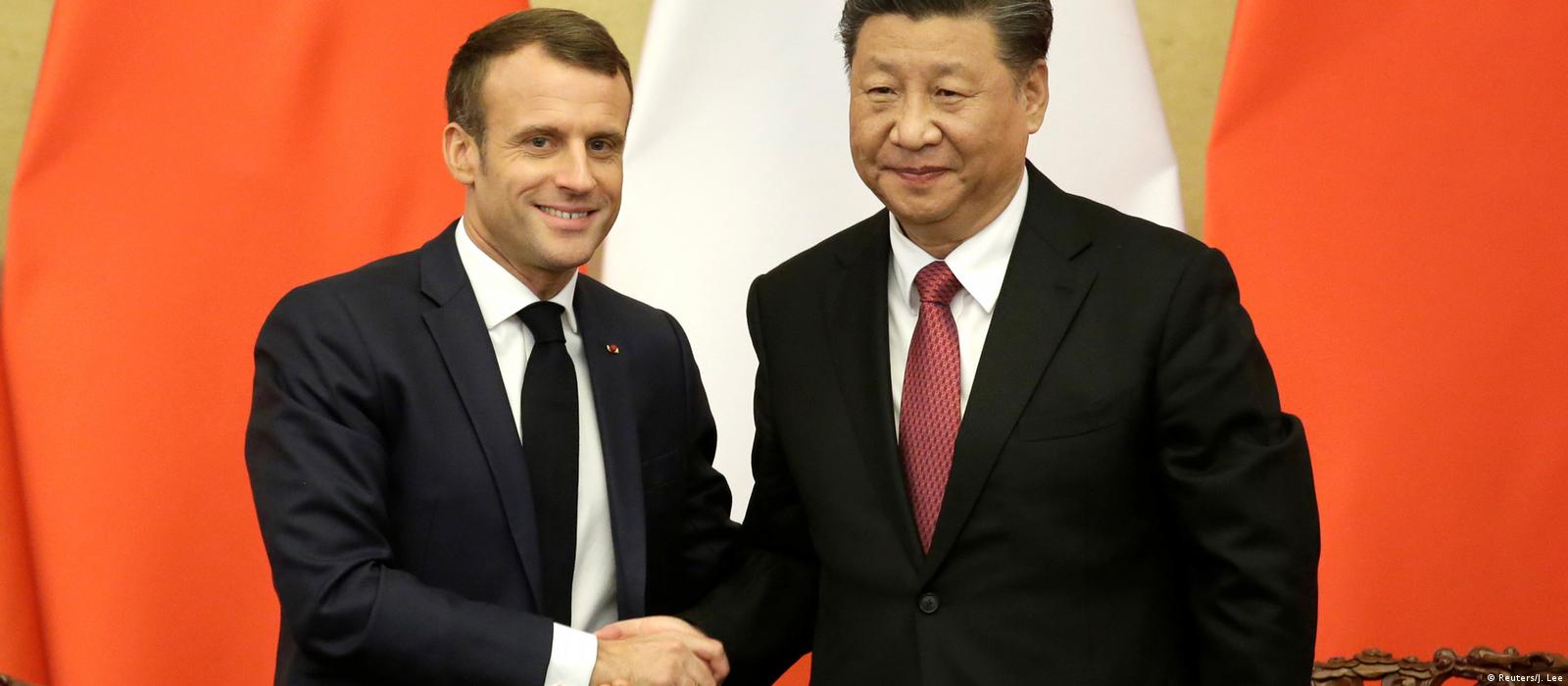
In order to end Russia’s invasion of Ukraine, French President Emmanuel Macron has announced that he will travel to China in April.
The declaration was made on Saturday, following the publication by China of a 12-point position paper that demanded an end to the year-long conflict through a “political settlement” and a cease-fire.
At a Paris agricultural expo, Macron announced that he would travel to China in “early April.”
“The fact that China is engaging in peace efforts is a good thing,” the French leader said, stressing that peace was only possible if “Russian aggression was halted, troops withdrawn, and the territorial sovereignty of Ukraine and its people was respected”.
“China must help us put pressure on Russia so that it never uses chemical or nuclear weapons … and that it stops its aggression as a precondition for talks,” he added.
Beijing has sought to position itself as a neutral party on the conflict, even as it has maintained close ties with Russia and helped scuttle a joint statement condemning the war at a G20 gathering in India.
The Chinese position paper, published on the anniversary of the conflict, said war benefits no one and urged all parties to “support Russia and Ukraine in working in the same direction and resuming direct dialogue as quickly as possible”.
Released by the foreign ministry, the plan urges an end to Western sanctions against Russia, the establishment of humanitarian corridors for the evacuation of civilians and steps to ensure the export of grain after disruptions caused global food prices to spike last year.
It also made clear its opposition to the use and threat of deploying nuclear weapons after Russian President Vladimir Putin threatened to use Moscow’s atomic arsenal in the conflict.
Large crowds of Nigerians hoping for a fresh start after years of escalating violence and hardship under outgoing President Muhammadu Buhari were not deterred, despite the lengthy delays and scattered acts of violence that took place on Saturday in Africa’s most populous country.
The official results could be anticipated late on Sunday, according to the electoral commission. By the time it was time to count the votes, some polling places had already closed, while others were still accepting votes.
Now, Sunday is anticipated to see some voting.
Regardless of the outcome, numerous crises will arise.
Africa’s biggest democracy is struggling with rebels in the northeast, an epidemic of kidnappings for ransom, conflict between herders and farmers, shortages of cash, fuel and power, as well as deep-rooted corruption and poverty.
The ruling All Progressives Congress (APC) and the outgoing administration have been credited for the ongoing cash and fuel crisis that has paralysed economic activity nationwide. Voters said they were showing their dissatisfaction at the polls.
“Everything that has happened in the past eight years has [been] draining for me,” Oyinkan Daramola, 29, told Al Jazeera. She declined to disclose whom she has voted for out of fear of possible reprisals but hinted at a disdain for the two dominant parties.
This was a common feeling in various locations visited by Al Jazeera across six local government areas in Lagos.
“We cannot keep doing the same thing over and over again and expecting different results,” Daramola said.
Buhari, a retired army general, is stepping down after serving the maximum eight years allowed by the constitution. The main contenders to succeed him are former Lagos governor Bola Tinubu, 70, of the APC, former Vice President Atiku Abubakar, 76, of the main opposition Peoples Democratic Party (PDP), and former Anambra State governor Peter Obi, 61, of the smaller Labour Party.
All three voted in their home states, surrounded by chaotic scrums of reporters and supporters.
Some states were expected to announce results on Sunday, and the final tally from all 36 states plus the federal capital Abuja was expected within five days of voting. National Assembly seats are also on the ballot in this election.
“Polling units in a number of areas closed and sorting and counting of ballot papers have commenced,” Mahmood Yakubu, Independent National Electoral Commission (INEC) chairman, said in a press briefing on Saturday evening.
Voting delays
In Mpape, a largely undeveloped but densely populated district within the capital territory, hundreds of weary voters were seen waiting to cast their votes.
“I’ve been here since 7am today just to vote. I came before the INEC officials even got here, and yet, I’m not ready to leave here until I have voted,” a 45-year-old school teacher, who gave her name only as Patricia, told Al Jazeera at approximately 3pm local time (14:00 GMT). She was one of nearly 700 people waiting to vote.
At 7pm (18:00 GMT), she was still in the queue, waiting her turn.
“I had to go home to feed my family, but I am back now,” she said. She was number 409 on the list of voters standing in the rain to cast their votes.
In Wuye District, a neighbourhood to the west of Abuja city centre, more than 100 people, mostly young, were seen still waiting to vote at nearly 8pm local time (19:00 GMT).
Officials from INEC cited technical problems with a new biometric antifraud voter accreditation system, the late arrival of vehicles to transport them and the absence of voter registers as causes of delays.
“It is frustrating that INEC are not prepared for us. All we want is just to vote,” said Sylvester Iwu, who was among a large crowd waiting at a polling station in Yenagoa, the capital of Bayelsa State in the southern oil-producing Niger Delta.
In a televised news briefing, INEC’s Yakubu said six biometric machines had been stolen in northern Katsina State and two in southern Delta State. He also acknowledged the delays but said voters would be able to cast their ballots.
“The election will hold, and no one will be disenfranchised,” he said.
Yakubu said at a later briefing that voting would take place on Sunday in several wards in Yenagoa that had experienced severe disruption on Saturday.
Morayo Ajayi, a 22-year-old undergraduate student in Akwa Ibom, said she is determined to vote for her candidate no matter how late it got.
“I don’t care if I have to sleep here, but I’m going vote for Peter Obi today,” she said. “Of course, I’ve been waiting for hours, but I don’t mind the wait. I will see this to the end,” she said.
Many youths across Nigeria are supporting the Labour Party’s candidate Peter Obi. Still, the APC’s Bola Tinubu and Atiku Abubakar of the PDP are widely seen as the candidates to beat
In Elegushi, an affluent area of Lagos, 54-year-old banker Osho Adekunle waited in line for five hours. He is voting for Tinubu because of his “antecedents” in Lagos, a fulcrum on which Tinubu’s supporters based his campaign.
“We that know about the history are not voting on sentiment but on practicality,” he said.
Voter frustration
There were reports of scattered violent incidents on Saturday, though not on the scale seen in previous elections in the country of more than 200 million people.
In northeast Borno State, suspected fighters from the Boko Haram group fired mortar shells in the rural Gwoza area, killing one child, wounding four others and disrupting voting, army sources said.
In Abuja, a team from the anti-corruption Economic and Financial Crimes Commission (EFCC) was attacked by thugs just after arresting a man on suspicion of paying for a group of people’s votes using a banking app, the commission said.
In most areas, however, the day appeared to have unfolded peacefully despite frustrations over the delays.
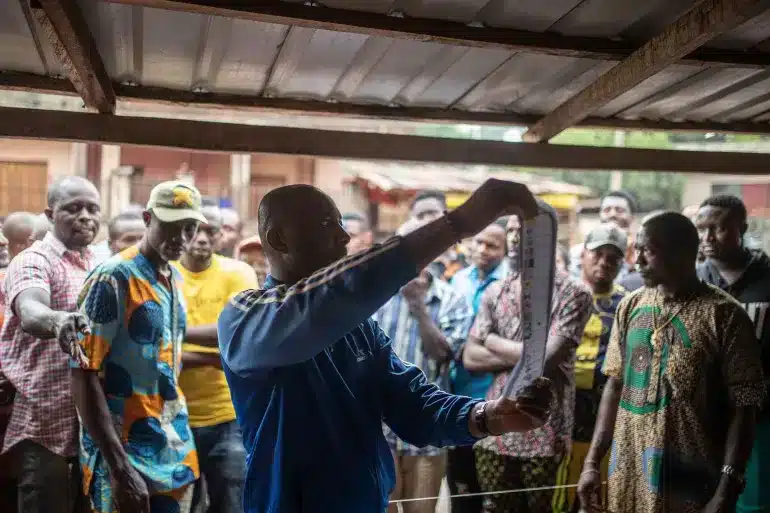
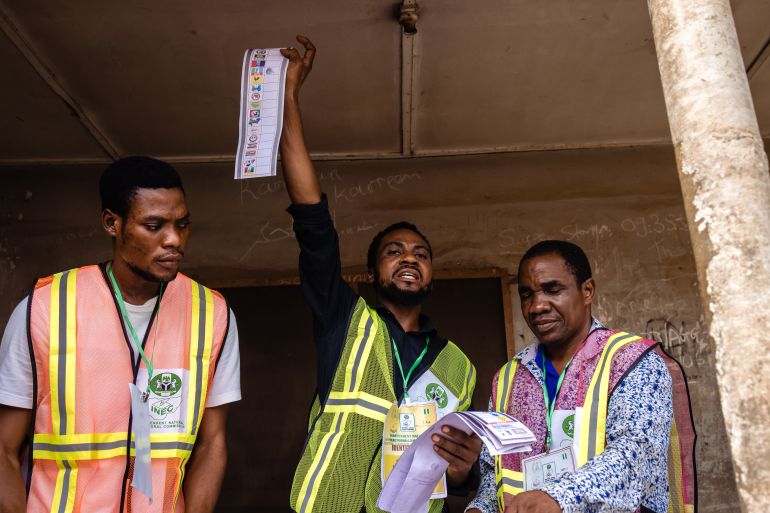
An INEC official holds up a ballot paper during the counting process at a polling station in Egbeda, Lagos, during Nigeria’s presidential and general election [Benson Ibeabuchi/AFP]
In Aguolu, Obi’s hometown in his native Anambra, voting went smoothly. EFCC officials stopped by to monitor voting there for any possible inducement of voters.
Across parts of Onitsha, Anambra’s commercial capital, and portions of nearby Asaba, the administrative capital of Delta state in the Niger Delta region, many old and young people said they were voting for Obi.
This, despite Delta state Governor Ifeanyi Okowa, an Igbo, being deputy governor on the PDP’s ticket alongside Atiku Abubakar, whom Obi ran with in 2019.
“That’s not my problem, ” Emmanuel Edozie-Uno, a 23-year-old student voting for Obi in Asaba, told Al Jazeera. “I voted for Obi.”
Wode Maya has been identified as the Ghanaian content creator with the highest number of subscribers, boasting a staggering 1.2 million subscribers.
Wode Maya, one of the best African digital content producers, is well known for using vlogging to promote the continent.
By using malware known as “Microstrategy,” the 32-year-account old’s was first compromised, and all of his videos were deleted as of February 24, 2023.
A recent check, however, shows that Google has completely deleted his page.
However, Wode Maya, whose source of livelihood has crumbled before his eyes, is yet to comment on the issue.
Earlier, in an interview with GhanaWeb TV’s Talkertainment, Wode Maya disclosed that one can make over 100,000 dollars monthly just by creating content on YouTube.
“I always tell people to use social media wisely, very wisely because it is a place where you can make very good income. As a Youtuber, you can go from 10 to 100 thousand dollars,” he told Elsie Lamar.
Wode Maya at the time listed some real estate projects he was able to pursue with YouTube proceeds.
“For now, it’s more like YouTube full-time, not just in Ghana. I do stuff in different African countries. My project is Africa to the world, more like being a real estate developer, but not in Ghana,” he established.
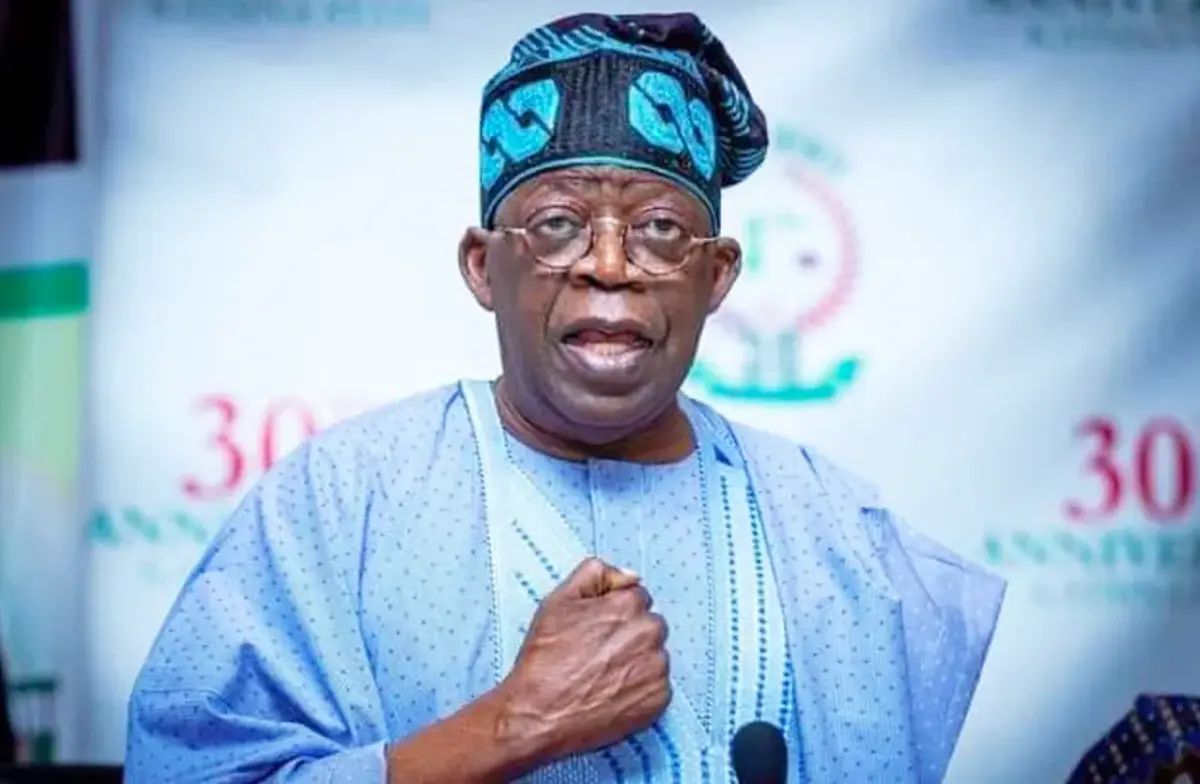
Bola Tinubu, the All Progressives Congress (APC) candidate for president, cast his ballot at a polling location in Bourdillion, Ikoyi, Lagos State.
He did so along with other party leaders and his wife Remi. Speaking to reporters, he declared that Nigeria’s democracy “is here to stay” and that he is “too confident of victory.”
He claimed that the voting process was “going well” and “going smoothly.”
On the turnout of voters, the APC candidate said, “This is expected; we need a good turnout, and that is the adoption and the commitment to democracy and the democratic process that must take place.”
Asked how certain of victory he is, Tinubu said, “I’m too certain.”
The APC flag bearer is one of the leading candidates in the race for Aso Rock. Tinubu’s major contenders include Atiku Abubakar of the Peoples Democratic Party (PDP), Peter Obi of the Labour Party (LP) and Rabiu Kwankwaso of the New Nigeria People’s Party (NNPP).
Accreditation and voting have commenced in many polling units across Nigeria as the 87.2 million voters with Permanent Voter Cards go to the polls to elect a new president and members of the country’s National Assembly.
Officials of the country’s electoral agency,the Independent National Electoral Commission (INEC), are on the ground at the 176,606 polling units scattered across the 36 states and the Federal Capital Territory that make up Nigeria.
Atiku Abubakar, thePeoples Democratic Party’s (PDP) presidential candidate, and his wife Titi have cast their ballots at Polling Unit 012, Ajiya Ward in Adamawa State’s Yola North Local Government Area.
Speaking to reporters, the former vice president expressed optimism and confidence that he would win the election for president and succeed President Muhammadu Buhari, whose two terms expire on May 29, 2023.
One of the front-runners in the race for Aso Rock is the PDP flagbearer. Bola Tinubu of the All Progressives Congress (APC), Peter Obi of the Labour Party (LP), and Rabiu Kwankwaso of the New Nigeria People’s Party (NNPP) are among Atiku’s top rivals.
Atiku was also the PDP candidate in 2019, and he came in second with over 11 million votes, right behind Buhari, who polled over 15 million votes.
Nationwide, officials of the country’s electoral agency, the Independent National Electoral Commission (INEC) have arrived at some of the 176,606 polling units scattered across the 36 states and the Federal Capital Territory that make up Nigeria.
Accreditation and voting commenced around 8:30 a.m. in some polling units in parts of Nigeria as the 87.2 million voters with Permanent Voter Cards go to the polls to elect a new president and members of the country’s National Assembly.
In light of his team’s struggles this year, Liverpool manager Jurgen Klopp asserts that “it is clear we have to do something in the summer.”
Tuesday’s first leg of theirChampions League match in the round of 16 saw Real Madrid defeat the Reds 5-2.
Despite having games in hand on some of their rivals, Liverpool is eighth in the Premier League despite having an erratic season.
“We know we have to improve and change things, and we will,” said Klopp.
“We cannot do it now but it’s already clear that we have to do something in the summer. For now, we just have to go through this and fight back.”
Liverpool midfielders James Milner, Naby Keita and Alex Oxlade-Chamberlain will be out of contract in the summer along with forward Roberto Firmino.
A number of players have also been struggling for form this season, with Klopp’s side seven points off a top-four spot in the Premier League heading into a game at Crystal Palace (19:45 GMT) on Saturday.
‘A few people are speeding up a little bit and you can’t ignore that’
Liverpool have played in the Champions League for the past five seasons, during which time they won it in 2018-19, while losing to Real Madrid in the 2017-18 and 2021-22 finals.
“It’s not helpful [if we don’t get in the Champions League],” said Klopp.
“We have to start doing work earlier before we know where we will end up position wise and European competition wise. These things are clear.
“We played five years in a row in the Champions League and went through to the final three times, which is massive from a money point of view.
“We built a stand and training ground – the club is in a really good place – but around us a few people are speeding up a little bit and you can’t ignore that. You cannot ignore these kinds of things.
“It’s still about finding in the right players. It’s not about bringing a lot, it’s about right [players].”
Injuries have also had an impact for the Reds during the current campaign but their exploits are in stark contrast to last season when they played every game possible, making 63 outings in pursuit of the quadruple.
They won the FA Cup and League Cup – competitions they exited at the fourth-round stage this season – but missed out on winning the Champions League and Premier League.
And, while Klopp said “this team has a wonderful history”, he added “one of the main reasons” he signed new contract until 2026 was because he knew there would be a period of transition.
“The way that this club is led is by not splashing the money. Our transfers always have to be on point. That makes it really tricky,” he said.
“We cannot make four transfers before we know who will leave the club and these kind of things.
“Last year was not a season for a big change. We played until the last moment and, if you want to change at this club, we cannot just bring in players and realise later that no-one wants to leave. It doesn’t work like that.
“It’s not possible to start it early because we have final after final, played the season until the last minute, played the Champions League final, then we had a short break, then a lot of injuries, and then the World Cup.”
Klopp’s comments follow Liverpool owner John Henry’s statement that he is not selling the Merseyside club.
“We have to make our own plans, and that’s what we do, but based on the way this club is led,” said Klopp.
“It’s obviously different to other clubs, that’s how it is. It worked out so far and we have to see if it will work still or if we have to adapt.
“That’s something for us in the offices when we are not on the training pitch and for my conversations with the owners and all these kinds of things.”
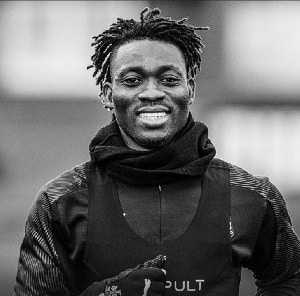
Before the President Cup match between Hearts of Oak and Asante Kotoko on March 5, 2023, the Ghana League Clubs Association (GHALCA) chairman Kudjoe Fianoo has announced that his organisation will pay tribute to Christian Atsu.
On February 6, 2023, an earthquake that hit Turkey and Syria claimed the life of Christian Atsu.
Twelve days passed while Atsu was missing before his body was discovered in the wreckage.
The deceased midfielder’s mortal remains were transported to Ghana on a Turkish Airlines flight on Sunday and have since been deposited at the 37 Military Hospital.
The former Ashantigold SC Chief Executive Officer hinted that Atsu would be honoured by GHALCA during the President Cup in an interview with Happy FM.
“We are all saddened by the demise of Atsu, however, if things go as expected, we will organise a curtain-raiser game for him before the President Cup,” he said.
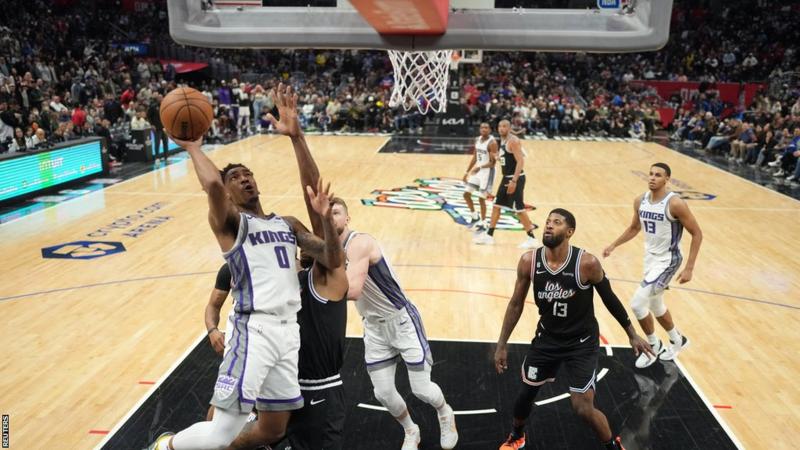
The Sacramento Kings defeated the Los Angeles Clippers 176-175 in a thrilling contest that surpassed the NBA record for most points scored by a game.
In the double overtime victory for the Kings, Malik Monk led all scorers with 45 points, while De’Aaron Fox chipped in with 42 points.
Both teams’ point totals set franchise records for themselves in the NBA.
The Detroit Pistons’ 186-184 victory over the Denver Nuggets in 1983 marked the highest scoring game in NBA history.
With three minutes and eighteen seconds left, the Clippers led 147-136, but the Kings scored 10 unanswered points to close the gap.
Monk made a three pointer with 2.1 seconds left to level the match at 153 apiece and send it into overtime, with a second extra period needed with the score at 164-164.
Fox gave the Kings a lead they would not lose with 36.5 seconds remaining, while Kawhi Leonard and Nicolas Batum each then missed shots that would have given the Clippers the lead.
Leonard was his side’s highest scorer with 44 points, while Russell Westbrook added 17 points and 14 assists on his debut for the Clippers.
“I thought it was a great game, especially for the fans,” said Clippers coach Tyronn Lue. “A crazy game, a lot of momentum shifts.”
The Milwaukee Bucks won their 13th game in a row with a 128-99 victory against the Miami Heat.
Bucks star Giannis Antetokounmpo had to go off with a right knee injury towards the end of the first quarter but his side still completed a win in which Jrue Holiday scored 24 points.
“I’m pretty sure that either on a drive or a screen or something like that, that he [Antetokounmpo] knocked knees with somebody and just wasn’t able to return,” said Bucks coach Mike Budenholzer.
Klay Thompson starred for the Golden State Warriors as they beat the Houston Rockets116-101.
Issaka admitted that after facing the former Chelsea player, he was forced to give up playing football in Ghana.
Sam Ardy, a late Ghanaian coach, reportedly told Awudu Issaka that Christian Atsu is a player who shares many of his characteristics.
“Atsu did not play for my team, but he has been a blessing to a lot of people. I got to know Atsu through Sam Arday while in Europe. Sam Arday called and told me we have gotten a player of my calibre in the person of Atsu. When I arrived in Ghana, I watched him and realized his potential,” he said as quoted by footballghana.com
“After my career in Europe, I came to Ghana. We played a game with Feyenoord, a team coached by Sam Arday at the time; in fact, that was the first time I played against Atsu and Harrison Afful. Truth be told, the two players gave me a tough time; they didn’t allow me to enjoy the game, and that is why I lost interest in playing in Ghana.”
Christian Atsu started his career at Gomoa Feteh Feyenoord and later joined Cheetah FC before securing a move to FC Porto in Portugal to kick-start his professional career.
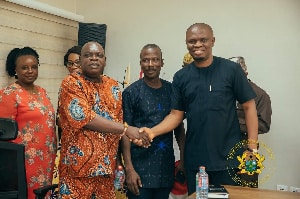
The family of Christian Atsu will meet withPresident Nana Addo Dankwa Akufo-Addo on Monday, February 27, 2023, to discuss the player’s funeral arrangements, according to a statement from the Ministry of Youth and Sports.
On Friday, February 24, 2023, Christian Atsu’s family, led by Nene Gabriel Kofi Tswasam, called Mustapha Ussif, Minister of Youth and Sports, to formally inform him of their son’s passing.
The meeting, according to the Ministry, also covered the late Black Stars winger’s burial and funeral, as the government had previously promised to pay for the funeral through Vice President Dr. Mahamudu Bawumia.
“On February 24, 2023, the family of the late Christian Atsu Tswasam called on the Minister for Youth and Sports, Hon. Mustapha Ussif, to officially inform him of the death of their son and to deliberate on the burial and funeral of the late Atsu.”
“After deliberating on the burial of the late Atsu, it was concluded that a meeting will be held with the President of the Republic of Ghana on Monday, February 27, 2023, to agree on a suitable date for his burial,” read part of the minister’s statement.
Background
Twelve days after a devastating earthquake struck parts of Turkey and Syria, Christian Atsu was discovered dead on the morning of Saturday, February 18, 2022, at the scene of his collapsed apartment.
Christian Atsu’s one-week celebration has been set for Saturday, March 4, 2023, in Accra.
Christian Atsu participated in four other African Cup of Nations competitions in addition to the 2014 FIFA World Cup in Brazil.
He played for the Black Stars in 65 games overall from 2012 to 2019, scoring nine goals.
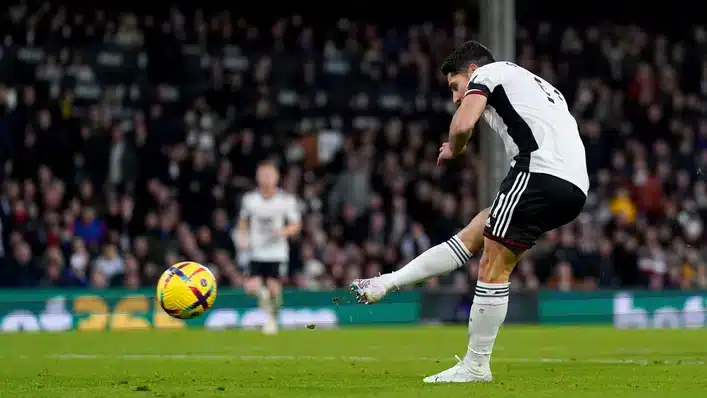
At Craven Cottage, Manor Solomon’s second goal as a substitute gave Fulham a 1-1 draw with Wolves.
The winger scored his third goal in as many games, cancelling out Pablo Sarabia’s first-half goal for Wolves. He had previously scored the game-winning goal at Brighton the previous weekend and against Nottingham Forest.
Wolves were just three points above the Premier League drop zone heading into the weekend, but they earned a crucial point against a high-flying Fulham side that had lost only two games since the World Cup break – at Newcastle and athome to Tottenham.
However, the Cottagers’ attacking prowess was diminished as talisman striker Aleksandar Mitrovic missed a second straight game due to a hamstring injury.
Fulham struggled to get going against a Wolves side who started quickly but there were few clear chances at the start of the match, with both sides struggling to find openings.
Wolves capitalised on their possession dominance when Sarabia fired the visitors into the lead in the 23rd minute.
Raul Jimenez knocked the ball down in the box to Sarabia, who had time to take a touch then fire past Bernd Leno for his side’s opener and his first goal for the club.
It was a rare goal for Fulham to concede, just a fifth in the league since the resumption of the Premier League in December.
It was an uncharacteristically flat start from the hosts but they did have a chance in the 37th minute, when Carlos Vinicius headed a Bobby De Cordova-Reid cross straight at Jose Sa.
From the final kick of the first half, Sa had to tip an Andreas Pereira free-kick over the bar but Fulham struggled to impose themselves, despite going into the weekend sixth in the table after an impressive first half of the season.
Fulham did not start the second half with significantly more attacking threat than the first, but they did strike an equaliser shortly after the hour mark.
Half-time substitute Solomon picked up the ball at the edge of the box and expertly curled past Sa and into the far corner.
Fulham had a late chance to wrap up the win, but Vinicius’ header was saved by a diving Sa and the points were shared.
Christian Atsu’s one-week observation has been set for March 4, 2023, at the Adjiringanor Astro-Turf.
The Ghana Football Association and the Sports Minister, Mustapha Ussif, met with the Twasam family on Friday, and they discussed the specifics of the one-week observation.
Confirming the date for the one-week observation, a spokesperson for the family, Robert Ani, said, “It’s been agreed that on March 4, the one-week observation will be held at the Adjiringanor Astro-Turf.”
On Saturday, February 18, 2023, Christian Atsu’s body was recovered from the rubble of a building following the devastating earthquake that struck Turkey in the early hours of February, where he had been trapped for over 12 days.
The Ghanaian-International forward’s mortal remains were returned to Ghana on February 19, and the family has announced that a one-week memorial service will be held on March 4, 2023.
31-year-old Christian Atsu left behind a wife and three children, who are all based in the United Kingdom.’
Employees were informed that if they did not remove the Chinese-owned social media website by March 15, they would lose access to their email accounts and video conferencing systems.
“To protect the Commission’s data and increase its cybersecurity, the EC [European Commission] Corporate Management Board has decided to suspend the TikTok application on corporate devices and personal devices enrolled in the Commission mobile device services,” bosses told staff in an email message.
TikTok is allegedly intended to collect more personal data than any other social media app or messaging service, according to experts.
This has sparked fears within Western governments that TikTok poses a potential security risk because of concerns over its Chinese parent company’s close relationship with Beijing.
The EU ban will also apply to its staffs’ personal phones if they have work-related applications installed on them.
It follows a decision by the US Congress to restrict TikTok usage on federal government devices.
The Dutch intelligence agency has also launched a probe into the risks posed by government workers with the app installed on their mobile phones.
Time for UK Government ban?
But as it stands, no European government has followed the US lead in officially banning the app.
At the time, Forbes reported the application was being used to spy on journalists covering its parent company ByteDance.
On Thursday, TikTok said that a decision by the European Commission to ban the video-sharing app on its staff’s official devices was based on mistaken ideas about its platform.
“We are disappointed with this decision, which we believe to be misguided and based on fundamental misconceptions,” a spokesperson for the Chinese-owned company said, after the Commission cited data protection concerns.
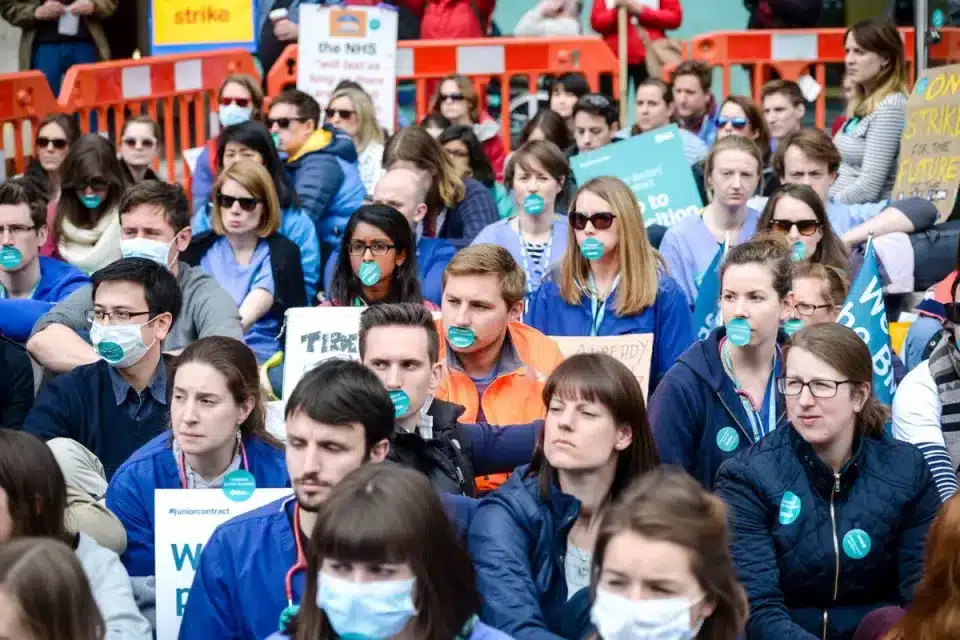
After voting overwhelmingly in favour of industrial action earlier this month, the British Medical Association (BMA) declared that the doctors had “no option” but to go on strike beginning March 13.
The BMA stated that junior doctors have requested an urgent meeting with health secretary Steve Barclay twice in the past week, but added that no time has been set.
The BMA reported that a meeting with Department of Health employees earlier this week had produced no appreciable advancement and that the minister had declined to attend.
The co-chairs of the BMA junior doctors’ committee, Dr Rob Laurenson and Dr Vivek Trivedi, said patients and the public alike need to know the blame for the strike action “lies squarely at the government’s door.”
They said: “Make no mistake, this strike was absolutely in the government’s gift to avert; they know it, we know it and our patients also need to know it.
“We have tried, since last summer, to get each health secretary we have had around the negotiating table. We have written many times, and, even as late as yesterday, we were hopeful Steve Barclay would recognise the need to meet with us to find a workable solution that could have averted this strike.
“We have not been told why we have not been offered intensive negotiations or what we need to do for the government to begin negotiations with us. We are left with no option but to proceed with this action.
“The fact that so many junior doctors in England have voted yes for strike action should leave Ministers in absolutely no doubt about what we have known for a long time and have been trying to tell them: we are demoralised, angry, and no longer willing to work for wages that have seen a real terms decline of over 26% in the past 15 years.
“This, together with the stress and exhaustion of working in an NHS in crisis, has brought us to this moment, brought us to a 72-hour walk out.
“How, in all conscience, can the Health Secretary continue to put his head in the sand and hope that by not meeting with us, this crisis of his government’s making, will somehow just disappear?
“It won’t, and patients and the public will continue to feel the brunt of his inaction, until he starts to negotiate with us and we agree a deal that truly values junior doctors and pays us what we are worth.”
The British Dental Association announced that dentists working in hospitals employed under the junior contract will join the 72-hour walkout after voting for industrial action.
British Dental Association chairman Eddie Crouch said: “This small but important group of dentists are working to the same contracts as their medical colleagues, and like them are not worth a penny less than they were 15 years ago.
Thomas Partey has not resumed full training since suffering a muscular injury, according to Arsenal manager Mikel Arteta.
Partey has been absent from Arsenal’s last three matches, during which time the Gunners have won one, drawn one, and lost one.
Partey’s ability to take part in training on February 24, 2023, will, according to Arteta, determine whether he is available for their gameday.
“Thomas hasn’t trained much but looks like he could be available.” Let’s see how he trains today.”
On February 26, 2023, Arsenal visits Leicester City as they continue their journey for the EPL championship.
The North London team has 54 points after 24 games and sits atop the Premier League standings. Thomas Partey has played in every game this season without losing.
Aare Afe Babalola, Elder Statesman and Founder of Afe Babalola University, Ado-Ekiti (ABUAD), has slammed the Federal Ministry of Education and the National Universities Commission (NUC) for ordering a mass closure of Nigeria’s universities due to the country’s upcoming elections.
Nigeria’s Minister of Education, Mallam Adamu Adamu, had on February 3, 2023, ordered the Executive Secretary of the NUC, Prof. Abubakar Adamu Rasheed, to shut down all universities in Nigeria between Wednesday, February 22, and Tuesday, March 14, 2023, on the ground of “concerns expressed on the security of staff, students, and properties of respective institutions.”
Babalola, a former pro-chancellor of the University of Lagos, was particularly incensed that the ministerial order to close all universities in Nigeria could be given to the NUC, the regulatory body for higher education in Nigeria, without any notice to or consultation with the vice chancellors, owners, and Board of Trustees of all private universities, who are significant players in the country’s educational landscape.
His words: “The forced closure of Nigeria’s universities by the Minister of Education and the NUC has done irreparable damage to students of Nigerian universities. Their problems have been worsened by the scarcity of money caused by banks and Automated Teller Machines (ATM), all of which made transportation back home more dangerous than ever before. Of course, the illegal closure has adversely affected the curriculum, particularly with respect to private universities, which are reputed for their predictable academic calendar and absence of strike actions.”
He was worried that Nigeria appears to be oblivious to the time-honoured maxim that “if you want to destroy a nation, you don’t need bayonets, bombs, or nuclear warheads. All you need is to destroy its education.”
Commending civilised nations for prioritisinghow not to disturb academic calendar of universities, the leading educationist recalled the events surrounding the COVID-19 pandemic, which shook the entire world to its very foundation between November 2019 and the better part of 2020, as a result of which the then British Prime Minister, Mr. Boris Johnson, stated loudly that “Covid 19 is a disaster, while the closure of schools is more disastrous. Keeping schools closed a moment longer than is absolutely necessary is socially intolerable, economically unsustainable, and morally indefensible. Without resumption of formal education, a generation of children is likely to have its employment and earning prospects blighted.”
Terrified by the ministerial directive which was taken by the NUC hook, line and sinker, the legal juggernaut who spoke at the induction of ABUAD’s newly qualified 123 Medical Doctors on Monday, raised the following posers: “Does the Minister of education have the statutory power to direct the NUC to close down universities on the ground of “the forthcoming elections and the concerns expressed on security of staff, students and properties of respective institutions?
“Does the NUC have the statutory authority to close all or any university in light of the upcoming election and the expressed concerns about the security of staff, students, and properties at respective institutions?”
“Are there no provisions in our law to deal with any security report by security agencies which allege concerns on security of staff, students and properties of respective institutions?
“Was the order to close down universities known to the President, the Minister of Defence, the Minister of Interior, or the Executive Council?” In answering these questions, Babalola relied on the combined effects of the NUC Act of 1974 and the Education (National Minimum Standards and Establishment of Institutions) Act of 1985 and returned the verdict that the minister has no statutory power to issue a directive to the NUC to close down Nigeria’s universities for the adduced reasons.
Section 4 (2) of the 1974 (NUC) Act says: “The minister may give the Commission directives of a general character relating generally to particular matters, with regard to the exercise of the Commission of its functions under this Act, and it shall be the duty of the Commission to comply with such directives.”
According to Babalola, the functions in respect of which the minister can give directives under this Act are non-compliance with the regulations on academic matters and not matters connected with election.
“Clearly, the minister has no statutory powerto give a directive to the NUC to close down universities.” he affirmed. Relying on Section 2(1) of the Education (National Minimum Standards and Establishment of Institutions) Act of 1985, Babalola said that: “It is abundantly clear that the NUC has no statutory power to carry out the instruction of the minister to close down all universities.”
It is also clear from the wording of the section of the Education (National Minimum Standards and Establishment of Institutions) Act of 1985 that the power of the NUC to close down a university is severely restricted to an institution which failed to comply with Section 19, 20 and 21 of Education (National Minimum Standards and Establishment of Institutions) Act of 1985 in respect of failure to comply with the NUC law on education.
Section 2 (1) of the Education Act of 1985 provides as follows: “Any institution established otherwise than in compliance with Section 19, 20, or 21 of this Act may be liable to closure by the appropriate authority, but before closing down any such institution, the appropriate authority shall afford the proprietor of the institution an opportunity to make representations for consideration by the appropriate authority not later than 60 days after receipt of notice by the proprietor from the authority of the intention to close down the institution.”
In his view, the time-honoured legal maxim of “Nemo dat quod non habet” which means, “No one can give what he does not have” should have been allowed to apply squarely in this case.
In place of the mass closure of universities, he pointed out that the government and law enforcement agents should have evoked the relevant provisions in the country’s criminal code and other legislations to deal with any person, whatever his class, who the security agents have reasons to believe as likely to put security of staff, students and properties of respective institutions in jeopardy.
Drawing an analogy to drive home his point, he said: “It would be improper to ask a landlord with his family to quit the family house because security agents are aware that some criminals want to attack his house. The prudent thing would be to beef up security around the house.”
The alternative, according to him, is that since security agents are of the view that the election will not be devoid of violence, they should have identified the problems that could engender violence during the election and evoke the law against offenders and not closure of universities.
To prevent a reoccurrence of this trend in future, the countrymust fashion out a new people’s constitution, which will not make politics the only lucrative business in town, but one which will allow only public-spirited and patriotic Nigerians to contest elections without the influence of godfathers and moneybags, thereby giving way to patriotic Nigerians who can serve the country pro bono or earn sitting allowances only. Olofintila writes in from Ado-Ekiti
Russia’s invasion of Ukraine has had an impact on Africa as well, where, according to German Minister for Development Svenja Schulze, Moscow is “trying to destabilise entire regions.”
The minister who is currently on a 5-day tour in West Africa said, the impact of the war was not only to be suffered by Ukraine but also by the ‘world’s poorest’.
In an interview with dpa in Abidjan, he mentioned that “this wasn’t only an attack on Ukraine but also an attack on the world’s poorest.”
“The shock waves of the war and the high prices for food, fertiliser, and energy have also reached West Africa and many other countries in the Global South,” the minister said ahead of the anniversary of the beginning of Russia’s invasion of Ukraine on Friday.
“Germany needed friends and allies everywhere,” Schulze said, adding that “Russia is also active in Africa and attempting to destabilise entire regions.”
Berlin, minister Svenja Schulze said they hadn’t forgotten the poorest nations, even though Ukraine has the most of their attention now, but they are doing all they can to expand their aid to Africa.
“We seek to strengthen and stabilise societies with our development programmes,” she added.
During their five-day trip to West Africa, Schulze and Hubertus Heil, the German Labor Minister, hope to promote more favourable working conditions and less environmental harm.
They will be in Ivory Coast, where they intend to visit a cocoa plantation, until Friday after spending two days in Ghana, where they among other things visited one of the biggest markets for secondhand clothing in the world.
The legendary international athlete born in Jamaica, Asafa Powell, has been confirmed by theGhana Olympic Committee (GOC) to visit Ghana from February 27 through March 9, 2023.
Asafa Asafa, a former 100-meter sprint world record holder who is married to Ghanaian model Alyshia Powell, will be joined by their two kids.
Powell, a native of Spanish Town, Jamaica, will visit the West African nation for the first time at the Ghana Olympic Committee’s (GOC) invitation.
Between June 2005 and May 2008, he twice broke the 100-meter world record with times of 9.77 and 9.74 seconds.
The powerful sprinter has never finished a race in more than 10 seconds, and his best time of 9.72 seconds places him in fourth place on the all-time list of men’s 100-meter runners.
Powell was credited with breaking the 10-second barrier more times than any other athlete on September 1, 2016: “97 times.”
Powell also once held the world record for the 100-yard dash with a time of 9.09 seconds, set on 27 May 2010 in Ostrava, Czech Republic.
At the 2016 Rio Olympic Games in Brazil, he added a gold medal to his collection in the 4 x 100 metres relay.
The President of the GOC, Mr. Ben Nunoo Mensah, confirmed that once in Ghana, the 40-year-old will be involved in a number of charity and social engagements that will be covered by the local and international media.
“Asafa will pay a courtesy call on H.E. the President of the Republic at the Jubilee House and also engage the Ministry of Youth and Sports (MOYS), the Ghana Olympic Committee (GOC), the Local Organising Committee of the African Games in Accra in 2023, as well as the Ghana Athletics Association (GAA) on how best Ghana sports can benefit from his huge image on the international sports arena.”
The Director of Communications at the GOC; Yaw Ampofo Ankrah, said these activities have been carefully put together by the GOC.
“Asafa’s visit is aimed at inspiring, motivating, and promoting the development of athletics and the interest of our youth in the sport.”
Apart from strengthening Ghana-Jamaica relations, Asafa’s visit will also see him hold various sports clinics and visit some senior and Junior High Schools, as well as all sports facilities under construction for the next All African Games, slated to be hosted in Accra.