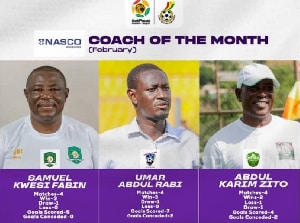
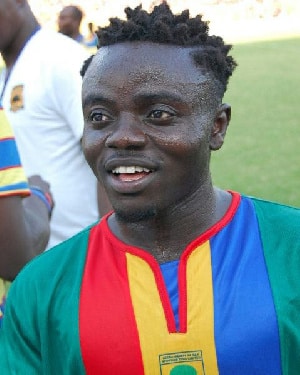
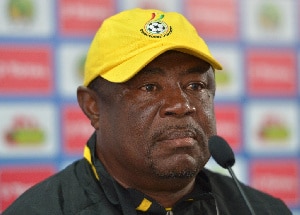
Coach Paa Kwesi Fabin of the Aduana Stars, Karim Zito of Dreams FC, and Umar Abdul Rabi, who recently left his position as coach of Medeama, are all on the short list.
In the month of February, the trio was in charge of their teams’ impressive performances.
Out of the four matches played last month, Paa Kwesi Fabin’s Aduana Stars won three and drew one. Without giving up a goal, his team scored five.
In the four games, Karim Zito’s Dreams FC won two, drew one, and lost one. They scored four goals while also giving up two.
Umar Abdul Rabi guided Medeama to three wins, and one draw in three games last month. They scored seven goals and conceded two.
The winner will receive a 43-inch NASCO television set from Electroland Ghana Limited.
The winner will be announced on the GFA News bulletin on Friday,March 3, 2023.
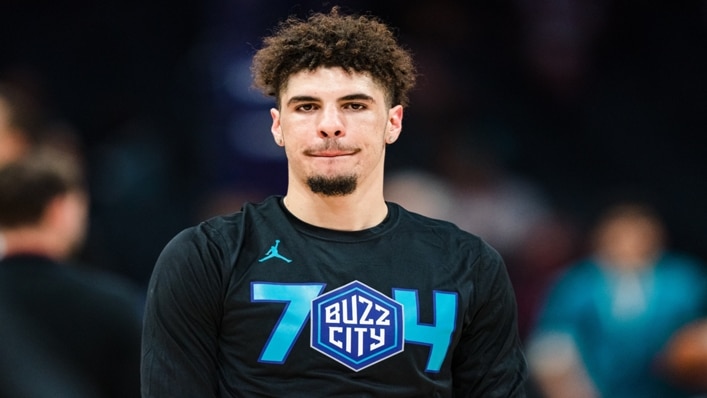
After undergoing surgery for a fractured right ankle, LaMelo Ball, a point guard for the Charlotte Hornets, will miss the remainder of the NBA season.
Ball was hurt during Monday’s 117-106 victory over the Detroit Pistons by the Charlotte Hornets.
During the third quarter, the 21-year-old fell awkwardly while holding the ball.
Ball underwent a successful operation, according to Charlotte, who also said that he will receive more updates on his recovery.
Ball, the third overall pick in the 2020 NBA Draft, had 36 games this season with an average of 23.3 points, 6.4 rebounds, 8.4 assists, and 1.3 steals.
He became the fourth-youngest All-Star in NBA history when he featured in the 2021–22 season finale.
Ball was named the NBA Rookie of the Year for the 2020-21 season, having averaged 15.7 points, 5.9 rebounds, 6.1 assists and 1.6 steals.
OFFICIAL: LaMelo Ball has undergone successful surgery to address a fracture in his right ankle.
All eight teams that qualified for the last eight of the FA Cup quarterfinal draw have now learned who their opponents will be. Grimsby is the lowest-ranked team currently vying for a semi-final spot, while both ends of theManchester United spectrum are among the top teams still competing.
According to Metro UK, United defeated West Ham United 3-1 in the fifth round on Wednesday night at Old Trafford, securing a spot in the quarterfinals. Burnley stunned Fleetwood 1-0, while City advanced after defeating Bristol City 3-0 on Tuesday.
In other matches, Sheffield United eliminated Southampton while Grimsby Town eliminated Tottenham Hotspur by a score of 1-0.
FA Cup quarter-final draw Fulham’s qualification for the quarters has now earned them a trip to Old Trafford to face quadruple-chasing Man United. Elsewhere, Vincent Kompany will return to his former club as his Burnley side take on Manchester City at the Etihad Stadium.
League Two side Grimsby Town have earned themselves a tie with Brighton, while Sheffield United are scheduled to face Blackburn Rovers in the next round.
FA Cup last eight draw in full: Manchester City vs Burnley Manchester United vs Fulham Brighton vs Grimsby Town Sheffield United vs Blackburn Rovers.
Man United fans in love with Rashford
Earlier, Sports Brief reported Manchester United fans could not help but admire Marcus Rashford’s reaction to his side conceding the first goal against West Ham in the FA Cup on Wednesday, March 1.
David Moyes’ side took the lead through Said Benrahma in the 54th minute, but they were pegged back as Nayef Aguerd scored an own goal after being put under pressure from Wout Weghorst.
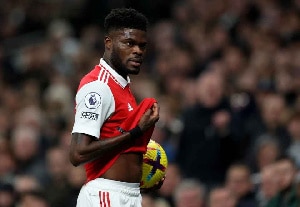
The Arsenal supporters are in a festive mood as they applaudThomas Partey for the impact he had during his 45 minutes of play in Arsenal’s 4-0 victory over Everton.
The manager of Arsenal, Mikel Arteta, substituted Partey for the Italian midfielder Jorginho in the second half.
Before he entered the game, Arsenal had a 2-0 advantage and appeared to be in complete control. The addition of the Ghanaian, however, enhanced the performance.
Partey takes charge and performs his duties with skill and steel as the Gunners stroll to a five-point lead at the top of the Premier League standings.
Thomas Partey contributed the assists for both of Arsenal’s goals in the second half.
He could have bagged two assists had Eddie Nketiah and Gabriel Martinelli connected to ridiculous dinked passes.
Partey’s return to the side is good news for Mikel Arteta as the midfielder missed three of Arsenal’s last four matches.
Black Stars coach Chris Hughton will also be happy with his return as he is now in the frame for selection for Ghana’s doubleheader against Angola later this month.
Saka and Martinelli got the first-half goals for Arsenal on Wednesday night before Ordegaard and Martinelli again capped off a splendid night for Arsenal with a goal each in the second half.
Arsenal now have sixty points, five points above second-placed Manchester City, and look set to qualify for the Champions League.
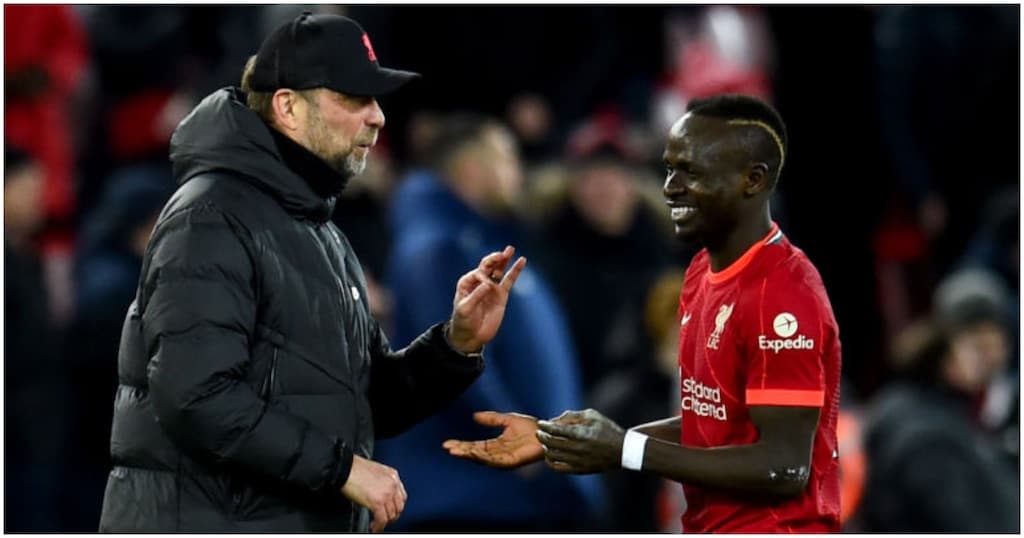
Sadio Mane was a member of Liverpool’s fearsome attacking trio, which also included Brazilian striker Roberto Firmino and Egyptian winger Mohamed Salah, which won every trophy under Jurgen Klopp. At the conclusion of the previous season, the Senegalese international announced his departure from Anfield and asked to be transferred; his request was granted. He joined Bayern Munich, the winning German team.
Due to a leg injury he sustained a few days prior to the tournament, the former Southampton forward missed the 2022 FIFA World Cup in Qatar. He made his comeback from the bench against Union Berlin at the weekend.
Mane confident in Klopp’s abilities
Liverpool are having a shaky season riddled with injuries and inconsistencies in performance and results, but the former Reds is confident in Jurgen Klopp to turn it around.
”Liverpool will be back. I’m convinced they will overcome this situation. They had many injuries and tough tests, but Jurgen Klopp is definitely the right man. He will lead Liverpool back up, from this season – the players love him,” he told German newspaper Bild.
The AFCON winner’s confidence is showing early signs of being right. After the 2-0 win over Wolves last night, Liverpool are six points behind Tottenham, who have played a game more in fourth.
As reported by Mirror UK, Mane scored 120 goals in 269 appearances for Klopp before he left for Germany. He won all possible trophies, including the UEFA Champions League and Liverpool’s first Premier League title in 30 years.
Klopp admits Liverpool miss Mane
It was earlier reported that Jurgen Klopp admitted Liverpool misses Mane, as the Senegalese’s departure has opened a void in the team’s front three. Mohamed Salah, Sadio Mane and Roberto Firmino formed a devastating front three, but with Mane’s departure and Firmino’s inconsistencies due to injury, the Egyptian is the only regular left among the three.
Avi Hernandez has announced the roster for Barcelona’s Copa Del Rey match againstrival Real Madrid. The Catalan powerhouses will travel to the Spanish capital to face Los Blancos in the first leg of the match on March 2 at the Santiago Bernabeu Stadium.
The Barcelona trio of Robert Lewandowski, Ousmane Dembele, and Pedri won’t be making the trip to Madrid for the upcoming El Clasico, claims Sports Mole. Lewandowski suffered a left hamstring strain in La Blaugrana’s unexpected 1-0 La Liga loss to Almeria on February 26.
Due to separate thigh issues, Dembele and Pedri are also out of the running and not on the 21-man roster.
Youngster, Ansu Fati is expected to deputise for Lewandowski through the middle but Ferran Torres should get the nod as the number nine, allowing Raphinha to return out wide after his peculiar post-Manchester United injury – damaging his foot by kicking a fridge out of anger following his substitution.
Lewandowski’s absence huge for Barcelona
Barcelona missing Lewandowski’s goalscoring services for the Copa del Rey semi-final against Real Madrid is regarded as a big problem, Goal reports. The Polish international is the Catalan club’s top scorer this season, with 25 goals in 31 matches, despite only joining the La Liga leaders in August.
Xavi’s team travels to Madrid to face their rivals in the first leg of a cup match that could also set the tone for the title run-in, following back-to-back losses to Almeria in La Liga and Man United in the Europa League.
Five memorable El Clasico games Real Madrid and Barcelona will once again serve football fans another spectacle when both teams clash in the Copa del Rey semi-final first-leg on March 2.
Sports Brief reported on the 252nd meeting between theSpanish giants defining both their seasons as Barca chases a domestic double and Real seeks redemption. Over the years, this fixture has given both sets of fans something to cheer on and has consistenly produced some of the best and most heated matchups in Europe.
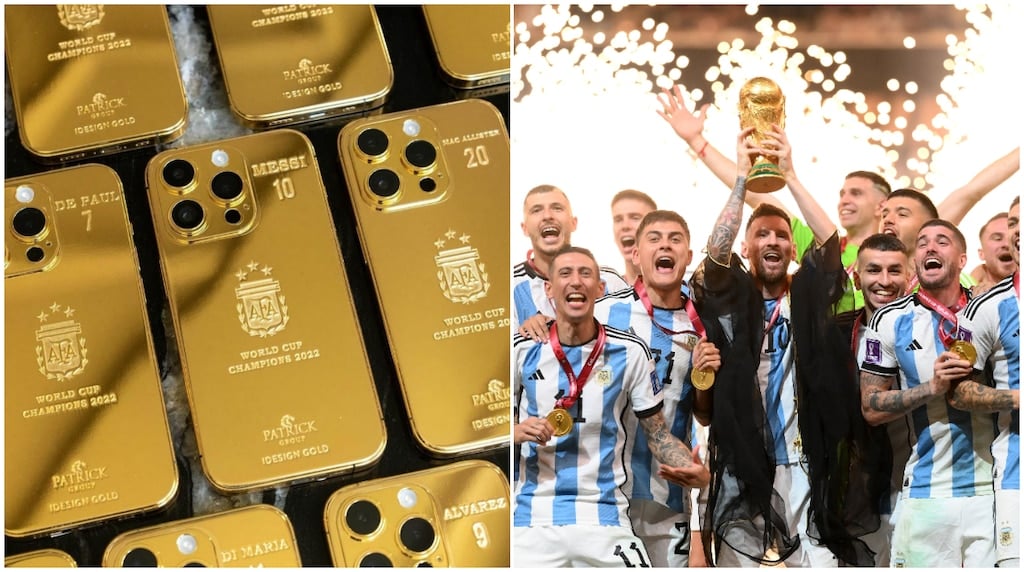
All of the Argentina players and staff who won the 2022 FIFA World Cup in Qatar will receive an impressive 35 gold-plated iPhone 14s as gifts from Paris Saint-Germain’s Lionel Messi. The brilliant number 10 led his nation to its third world championship, scoring seven goals, including two in that legendary final match against France.
The 35-year-old wants to thank his teammates for helping him realise a long-held dream because their support has helped him earn individual accolades that have helped him solidify his place among the pantheon of greats and garner praise as the GOAT.
How Messi rewarded his teammates
To recognise his teammates’ role in winning the World Cup after five attempts, Messi has teamed up with iDesign Gold to treat all his teammates and Argentina’s coaching staff to 24-carat Apple devices, per Roy Nemer.
According to a report by the Sun, the luxurious gifts have reportedly been successfully delivered to the French capital for distribution. Messi acknowledges his Argentina teammates After Messi was bestowed with the honour of being the best player in the world following a landmark year, he thanked his teammates at the awards ceremony.
“It’s amazing. It’s been a tremendous year, and it’s an honour for me to be here and win this award. Without my teammates, I wouldn’t be here,” he said via the BBC. “I achieved the dream I had been hoping for so long. Very few people can achieve that, and I have been lucky to do so.”
Messi named world’s best player
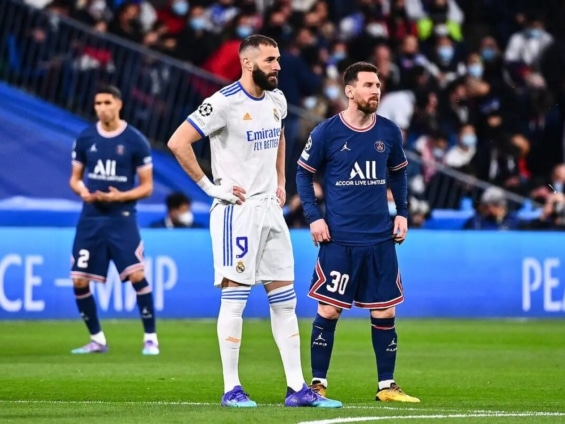
Sports Brief previously reported on Messi being announced the best player of 2022 at FIFA’s The Best Awards held in Paris on February 27. The legendary Argentine forward beat his PSG teammate, Kylian Mbappe and Real Madrid star, Karim Benzema, to win the top award. Messi led the South American nation to a third World Cup title in Qatar, capping off his tournament with a brace in the Mundial final.
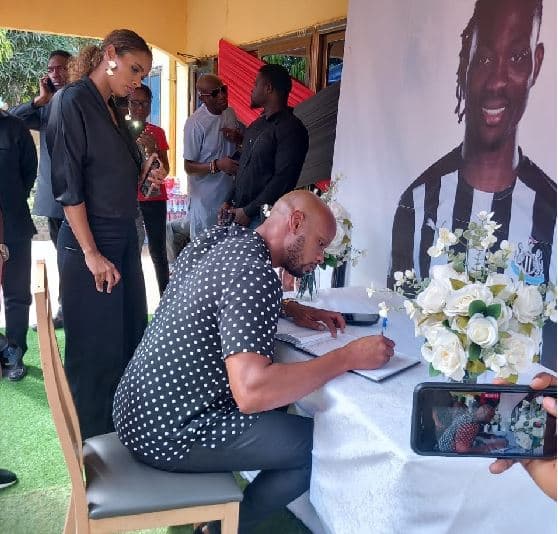
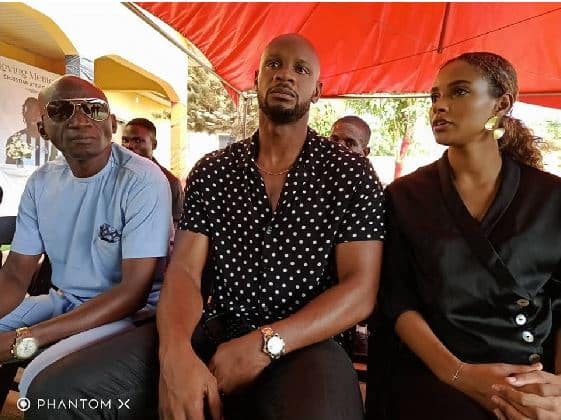
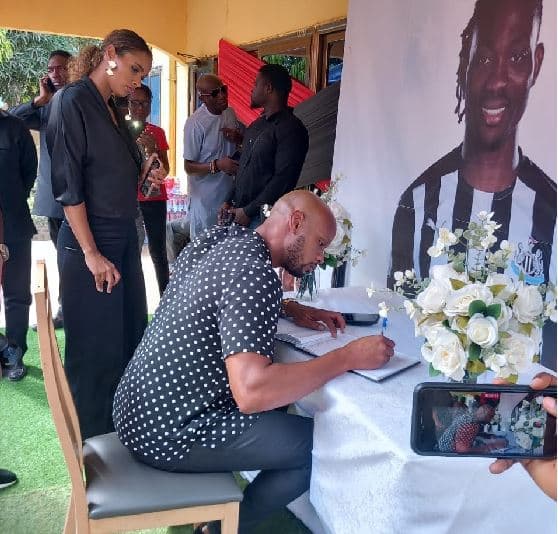
On Tuesday, March 1, 2023, Jamaican sprinter Asafa Powell and a few executive members of the Ghana Olympic Committee paid a visit to the home of the late Ghanaian footballerChristian Atsu.
Christian Atsu, a member of the Ghanaian Black Stars, lost his life in the February 6, 2023 earthquake in Turkey.
Following his passing, a number of athletes have paid their respects to the former Newcastle player, with Asafa Powell, the fourth-fastest man in the world, being the most recent.
The sprinting champion offered the grieving family some words of comfort and promised to be there for them during this trying time.
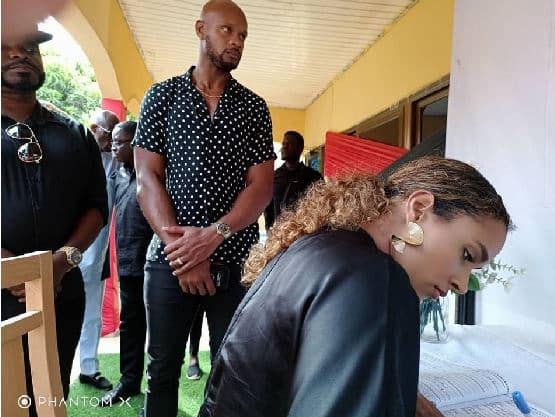
Asafa Powell also signed the book of condolence which has been opened at the family house of the late Ghanaian international.
Members of the Ghana Olympic Committee, were led their President, Ben Nunoo Mensah also made a financial commitment to the family as they prepare to lay their loved one to rest.
Asafa Powell, who is married to Ghanaian-American, Alyshia Akua Miller, arrived in Ghana on February 27, 2023. Asafa Powell is expected to visit some schools in Ghana to inspire upcoming athletes in the country.
The Jamaican has also been scheduled to meet President Nana Addo-Dankwa Akufo-Addo.
Marcus Rashford’s response after his team’s FA Cup match loss to West Ham on March 1 was something that Manchester United supporters could not help but admire. The United team overcame a goal deficit to defeat the struggling Hammers 3-1 in the Premier League.
Said Benrahma gave David Moyes’ team the lead in the 54th minute, but they were soon beaten when Nayef Aguerd scored an own goal while under pressure from Wout Weghorst.
As the game lurched towards a draw, Alejandro Garnacho rose to the occasion and curled a stunning goal past Alphonse Areola. Midfielder Fred then sealed the victory by steering in a goal in stoppage time.
Rashford was ready for action It was yet another win for Erik Ten Hag’s side, who are now unbeaten in 19 games at Old Trafford. The win was a bit different from what fans have gotten used to in recent months, as Rashford was not on the scoresheet this time.
However, the 24-year-old was ready for action as soon as United conceded the first goal. An interesting photo has emerged online showing Rashford asking Anthony Elanga for his shirt as he prepared to come on for his side, who were trailing at the time.
The photo, shared on ESPN’s Twitter, was a clear demonstration of the elite mentality Rashford currently has and the confidence that scoring for his team has brought to his game. Rashford clearly believed he was going to come on and score and help his side to extend their unbeaten run at Old Trafford.
The England forward currently has 25 goals this season across all competitions. Meanwhile, United’s quadruple hopes are still alive as they will face Fulham in the quarter finals of the FA Cup.
Kante has experienced injury problems, which have limited his playing time this year to just two games.
The summer marks the end of the Frenchman’s current contract at Stamford Bridge.
Kante has declined the chance to move elsewhere, despite the arrival of Enzo Fernandez and the anticipated signing of another central midfielder.
Instead, Kante is currently on the verge of signing a new contract with Chelsea as he resumes training under Graham Potter, who is currently facing criticism.
Kante “loves” the Blues, according to Fabrizio Romano, and wants to remain in London.
His report states an agreement is close, but the length of the deal remains under discussion.
Previous reports have suggested Atletico Madrid, Barcelona and Liverpool were all interested in signing the 31-year-old.
Injury issues are becoming progressively worse for Kante since the 2019/20 season.
Indeed, his last game for the club this season came in the 2-2 draw with Spurs on August 14.
His first season at Stamford Bridge in 2016/17 saw him miss just three league games, one of which was through suspension, as Chelsea lifted the title under Antonio Conte.
He then missed just five league games through injury in the next two seasons.
The 2019/20 season saw Kante miss 16 league games, before missing a further 18 league games in 2020/21 and 2021/22.
The 22 games Kante has missed this season is his worst injury at Chelsea to date.
Regardless, when fully fit there are few better ball-winners in world football.
The allegations made by Matthew Hoggard, Tim Bresnan, and others in the Azeem Rafiq racism case that they were not invited to participate in the investigation have been refuted by the England and Wales Cricket Board.
On Wednesday morning in London, the public Cricket Discipline Commission hearing into allegations of racism made by former Yorkshire player Rafiq got underway.
Michael Vaughan, a former captain of England, Hoggard, Bresnan, John Blain, Andrew Gale, and Richard Pyrah are all accused of using racially insensitive language.
The accusations made against former England bowler Hoggard by CB attorney Jane Mulcahy KC included the creation and use of the term “Rafa the Kaffir,” frequent use of the word “P***,” calling Rafiq and other players “you lot,” and the use of the term “you lot” and the term “TBM” (token black man) towards teammate Ismail Dawood.
Mulcahy then moved to “correct a number of misrepresentations” made by Hoggard, Bresnan and Pyrah, who have refused to attend the hearing along with Blain and Gale.
She said former Yorkshire all-rounder Pyrah asserted that ‘during the ECB investigation I was never once accused of, or asked about, any specific racism point against me. Then I found out I had been charged by the ECB on racism points that I had never heard of or (been) questioned on before’.
Mulcahy revealed the ECB had written to Pyrah on February 9 last year and received a response “in some considerable detail” on February 20.
Pyrah then requested an interview which was conducted on April 8, during which the allegations were put to him, Mulcahy said.
Matthew Hoggard claimed he was not invited to take part in the investigation (Simon Cooper/PA)
Former all-rounder Bresnan also claimed not to have been interviewed, saying “they just charged me… without even speaking to me”, which the ECB insists was “evidently incorrect” as it has a transcript of the interview.
Hoggard made a similar claim, with the ECB saying he “was provided with the opportunity to provide written responses to the allegations, which he did, before informing the ECB that he did not intend to respond further”.
oggard claimed that the ECB was “refusing to hand over evidence”, but the governing body insists this was incorrect and stated it had “provided the respondents with hundreds of documents and voluntarily waived privilege over all of its communications with individuals who are not witnesses in these proceedings”.
The ECB also highlighted that the five non-attendees had “denied themselves the opportunity to challenge Rafiq’s allegations” by withdrawing from the process.
Rafiq, 32, first spoke out about his experience of racial harassment and bullying across two spells with Yorkshire in 2020.
The ECB brought charges against seven individuals andYorkshire in June last year, with Rafiq succeeding in having the case dealt with in public by an independent panel (the CDC).
It was confirmed that the case against Vaughan would begin on Thursday. The former England captain denies the charges.
Another former player, Gary Ballance has already admitted a charge related to the use of racially discriminatory language. Yorkshire have also admitted four charges.
The CDC panel consists of former Derbyshire batsman Tim O’Gorman (chair), Mark Milliken-Smith KC and Dr Seema Patel.
While a third wrote: “We need him permanently, we need to have a big squad with quality.”
However, some fans noted the reason behind the number of posts could be related to United’s PR and marketing departments.
One fan argued: “Tbf the club definitely makes our players do this – look how suddenly two or three of our players have made TikTok accounts at the same time.”
A second user commented: “Man United have a PR team that handles Social Media for players. Bayern seem like they don’t.
“I am pretty sure it has been mentioned that a lot of United players have contractual obligations in their contracts regarding social media as well.”
“I mean, probably has a clause in his contract stating he has to post x-amount of posts for engagement/global branding,” added a third.
On the subject of a permanent deal for Sabitzer and Wout Weghorst, Erik ten Hag was coy.
He said: “I think it is much too quick [to decide]. [It is] much too soon to talk about that.
“First, we are in this season and that is where the focus has to be.
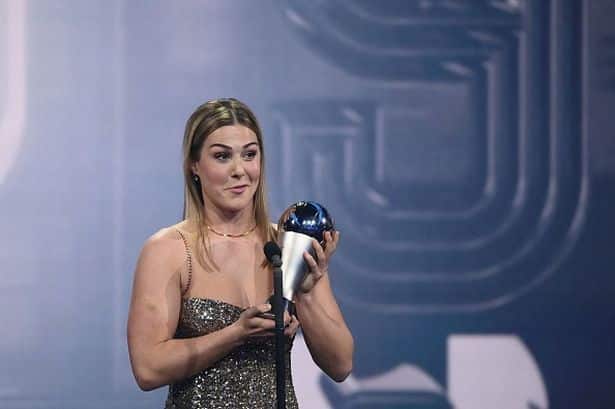
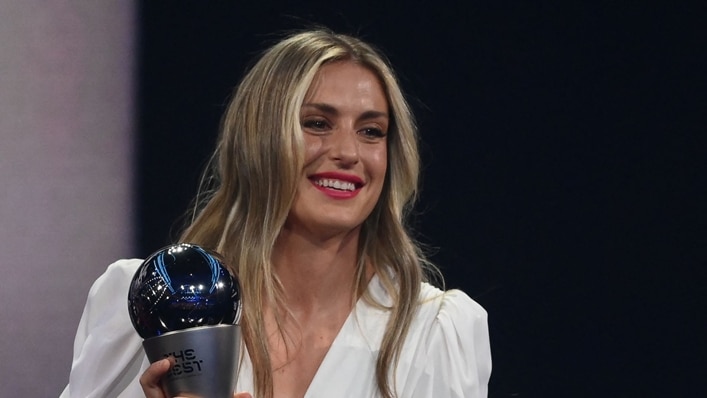
Manchester United boss Marc Skinner has hailed Mary Earps following her “thoroughly deserved” FIFA Best award.
Monday’s FIFA ceremony in Paris saw the 29-year-old United player, who was part of the England side that won the Euros last summer, named best women’s goalkeeper.
Skinner, speaking at a press conference on Wednesday ahead of Sunday’s Women’s Super League home clash with Leicester, said: “It’s a wonderful achievement and thoroughly deserved.”
“You never know how these awards are going to go, you never know whether the best person actually wins the award. But in this case, she certainly did.
“She brought it in this morning, the girls gave her a huge round of applause. They’ve all been in contact throughout anyway. And I felt the speech she gave afterwards was truly beautiful.
Earps on Monday said the award was “for anyone who has ever been in a dark place”, adding: “Just know that there’s light at the end of the tunnel. Keep going, you can achieve anything you set your mind to.
“Sometimes success looks like this, collecting trophies, sometimes it’s just waking up and putting one step in front of the other. There’s only one of you in the world, and that’s more than good enough. Be unapologetically yourself.”
Skinner spoke about Earps as an inspiration for youngsters, saying: “I think what it says is there is a platform here (at United) for you to go on to produce the qualities.
“You still have to do what Mary has done, which is to produce the qualities every day that make her better. But there is always an opportunity.
“What I think the power in it is, and I think Ian (Willcock, United’s goalkeeping coach) is going to try to capitalise on this, is that especially within England, especially within the local Manchester area, is to try to grow our own Mary Earps going forward, to promote that young players, who I’m sure she has inspired, can go on to aspire to be like Mary.”
A tricycle-mounted “fold-out health clinic,” the first of its kind in the UK, will be used by doctors to treat homeless people as they cycle around London.
The “Find and Treat” team at University College London Hospital aims to screen thousands of the capital’s most at-risk, homeless, and high-risk individuals each year for diseases like tuberculosis, HIV,and COVID-19.
As a result of their inability to access a GP because of a lack of documentation, many homeless people are forced to go to A&E for treatment or endure lifelong illnesses that are incapacitating.
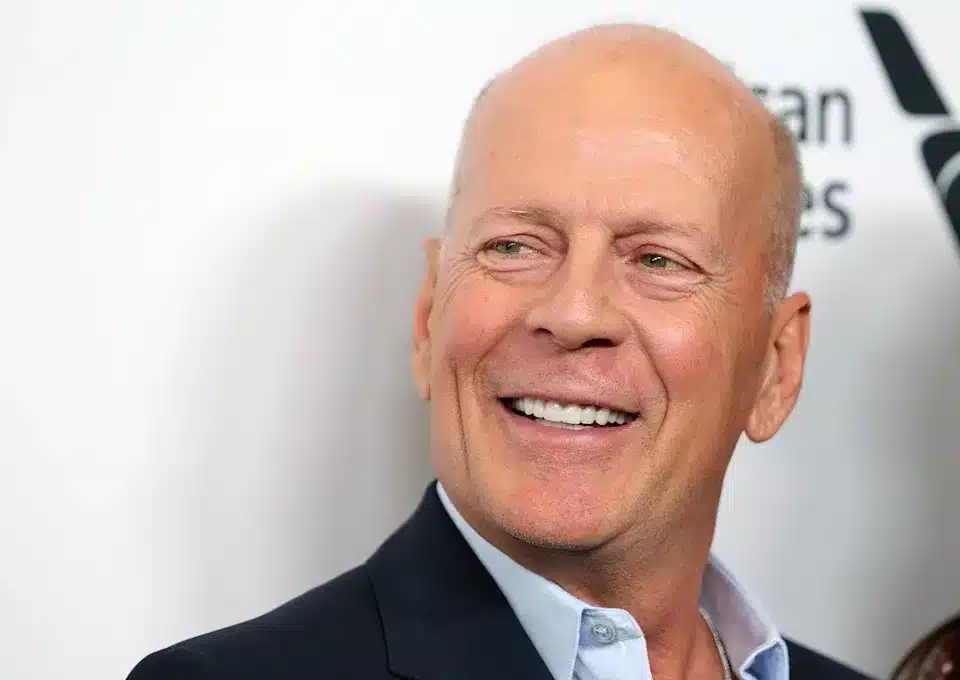
After receiving a diagnosis of aphasia, which affects speech and language, the actor, 67, ended his 40-year career in March.
His ex-wife Demi Moore, wife Emma Heming Willis, daughters Rumer, Scout, Tallulah, Mabel, and Evelyn have all released a joint statement on Instagram providing “an update” on his health.
“Our family wanted to start by expressing our deepest gratitude for the incredible outpouring of love, support, and wonderful stories we have all received since sharing Bruce’s original diagnosis,” the caption reads.
“In the spirit of that, we wanted to give you an update about our beloved husband, father and friend since we now have a deeper understanding of what he is experiencing.
“Since we announced Bruce’s diagnosis of aphasia in spring 2022, Bruce’s condition has progressed and we now have a more specific diagnosis: frontotemporal dementia (known as FTD).
“Unfortunately, challenges with communication are just one symptom of the disease Bruce faces.” “While this is painful, it is a relief to finally have a clear diagnosis.”
The family also explained on the Association for Frontotemporal Degeneration website, “FTD is a cruel disease that many of us have never heard of and can strike anyone. For people under 60, FTD is the most common form of dementia, and because getting the diagnosis can take years, FTD is likely much more prevalent than we know.
“Today there are no treatments for the disease, a reality that we hope can change in the years ahead.”
With them keen to “shine a light on this disease”, here’s what we know about the signs and symptoms of different types of dementia, including frontotemporal.
Watch: Bruce Willis diagnosed with frontotemporal dementia
What is dementia?
Dementia is a syndrome (a group of related symptoms) associated with an ongoing decline of brain function, according to the NHS. There are many different types, with many different causes, and it is not a natural part of ageing.
For example, Alzheimer’s disease and vascular dementia are two different types, with both of them making up the majority of cases. Other types include frontotemporal dementia, dementia with Lewy bodies (DLB), young-onset, as well as mixed dementia (more than one at the same time).
The condition can affect memory, as well as the way you speak, think, feel and behave.
There are currently around 900,000 people with dementia in the UK, projected to rise to 1.6 million by 2040, according to the Alzheimer’s Society.
The likelihood of developing dementia increases significantly with age. One in 14 people aged over 65 has the condition, which rises to one in six for those aged over 80. However, it can affect younger people too.
Alzheimer’s disease
The first signs of Alzheimer’s disease are usually minor memory problems. (Getty Images)
Alzheimer’s disease is the most common cause of dementia in the UK. It is a progressive condition, meaning symptoms develop gradually over many years, slowly becoming more severe.
The exact cause isn’t yet fully understood, though factors that can potentially increase your risk include age, a family history, untreated depression and lifestyle factors associated with cardiovascular disease.
The first sign is usually minor memory problems, such as forgetting about recent conversations or events, or forgetting the names of places and objects.
As the condition develops and symptoms become more severe, as listed by the NHS, these include:
Confusion, disorientation and getting lost in familiar places
Difficulty planning or making decisions
Problems with speech and language
Problems moving around without assistance or performing self-care tasks
Personality changes, such as becoming aggressive, demanding and suspicious of others
Hallucinations (seeing or hearing things that are not there) and delusions (believing things that are untrue)
Low mood or anxiety
Vascular dementia
Vascular dementia can make you feel disorientated. (Getty Images)
Symptoms of Alzheimer’s disease, such as problems with memory and language (many people with vascular dementia also have Alzheimer’s disease)
This can make daily life increasingly hard for someone with the condition, eventually preventing them from being able to look after themselves.
Dementia with Lewy bodies (DLB)
DLB can make you feel sleepy or disturb your sleep. (Getty Images)
DLB, also known as Lewy body dementia, is another common type of dementia. It is caused by the Lewy bodies, which are clumps of protein that appear in the nerve cells of the brain. As it shares symptoms with Alzheimer’s disease and Parkinson’s disease, it is often wrongly diagnosed.
Symptoms listed by the NHS include:
Hallucinations – seeing, hearing or smelling things that are not there
Problems with understanding, thinking, memory and judgement – this is similar to Alzheimer’s disease, although memory may be less affected in people with dementia with Lewy bodies
Confusion or sleepiness – this can change over minutes or hours
Slow movement, stiff limbs and tremors (uncontrollable shaking)
Disturbed sleep, often with violent movements and shouting out
Fainting spells, unsteadiness and falls
Frontotemporal dementia
Frontotemporal dementia can affect your motivation. (Getty Images)
Generally speaking, frontotemporal dementia is an uncommon type of dementia.While dementia generally mostly affects people over 65, this type typically starts at a younger age. Most cases are diagnosed in people aged 45-65, though it can also present in younger or older people.
Frontotemporal dementia affects the front and sides of the brain, and causes problems with behaviour and language. Similar to other types of dementia, it usually develops slowly and gets gradually worse over a long period of time.
Symptoms listed by the NHS include:
Personality and behaviour changes – acting inappropriately or impulsively, appearing selfish or unsympathetic, neglecting personal hygiene, overeating, or loss of motivation
Language problems – speaking slowly, struggling to make the right sounds when saying a word, getting words in the wrong order, or using words incorrectly
Problems with mental abilities – getting distracted easily, struggling with planning and organisation
Memory problems – these only tend to occur later on, unlike more common forms of dementia, such as Alzheimer’s disease
As well as mental symptoms, there may be physical ones too, such as slow or stiff movements, loss of bladder or bowel control, muscle weakness or difficulty swallowing. Frontotemporal dementia can also lead to someone being unable to care for themselves.
Sex education has been suspended in schools on theIsle of Man after allegations that a drag queen told 11-year-olds there are 73 different genders.
Parents raised concerns about the “graphic, disproportionate, and indecent presentation” of sexual acts and various gender identities that were allegedly taught in lessons, prompting the Isle of Man government to launch an independent review of its personal, social, health, and economic (PSHE) curriculum.
The Year 7 students at Queen Elizabeth II High School in Peel, Isle of Man, were instructed by a drag queen, who informed them that there are 73 genders, according to the parents of students there.
There are only two, and one “upset” student allegedly responded, to which the drag queen allegedly responded, “You’ve upset me,” and ordered the student to leave.
Some 11-year-olds at the school were taught about oral and anal sex, while another group learned about sex change operations and was shown how skin grafts taken from a girl’s arm could be used on an artificial penis, according to reports.
“A lot of children are just too traumatised to even talk to their parents,” Eliza Cox, vice chairwoman of the Marown Commissioners, told Energy FM Isle of Man. “As a parent, you don’t know what children are being taught.”
She said that one teacher on the island had told her she had to teach a group of boys and girls in Years 7 and 8 how to masturbate. Another teacher was said to be so uncomfortable with the content of the PSHE curriculum that they told pupils: “Please don’t listen to me” while they taught the lesson.
‘Alienating students’
A petition by parents of pupils at Queen Elizabeth II High School has been launched, calling for an “immediate investigation into the alleged actions of teachers delivering age-inappropriate material to children”.
The petition, addressed to the school’s headteacher and signed by more than 500 people, stated: “We consider the attendance of a ‘drag queen’ in class and alienating students who are clearly confused about the information discussed during this session wholly inappropriate.
“How, who and why was this guest speaker permitted to discuss gender issues to an inappropriate child audience by an inexperienced and untrained adult?”
The Isle of Man government said it would commission an independent review to “gain an independent understanding of what has taken place”.
Julie Edge, minister for education on the island, said the Department of Education, Sport and Culture has “taken the decision to pause all RSE delivery across primary and secondary schools, and will be unable to comment further until the facts have been established”.
Miriam Cates, the Conservative MP who sits on the House of Commons’ education select committee, has warned that parents in England are also being kept in the dark about age-inappropriate content being taught to children in sex education.
She said: “When parents raise serious safeguarding concerns about inappropriate and sexualising materials being used in sex education lessons in schools, the right response is to pause these lessons whilst the matter can be investigated.
“I applaud the authorities in the Isle of Man for making this decision. But similar – and worse – materials are being used in schools across the UK and the Department for Education has persistently ignored whistleblowers who raise concerns. The UK Government needs to take its lead from the Isle of Man.”
Charlotte Clarke, head of Queen Elizabeth II High School, said: “Having viewed a video which is currently circulating on social media relating to the school’s RSE curriculum and its delivery, we are concerned that there could be a number of inaccuracies with the information being shared.
“Given the concerns being raised, and in order to be open and transparent, we requested an independent review into the situation. As such I am happy to take part in the independent review which is being deployed by the Department of Education, Sport and Culture and would encourage our community to avoid speculation at this time.”
A spokesperson for the Department for Education said: “Schools must make sure all content they use is factual and age-appropriate, and engage with parents so they are aware of what their children are being taught.
“We will write to all schools this term to emphasise the rights of parents to see teaching materials being taught to their children in schools.”
“Blended” royal families have never received a lot of favours in fairy tales. The evil stepmother and ugly stepsisters in the story of Cinderella attempted to prevent the rightful owner of the glass slipper from marrying Prince Charming. The stepmother is always portrayed as the antagonist in Hansel and Gretel, Rapunzel, and Snow White.
There hasn’t been much done to dispel the myth of the “wicked stepmother,” not even in our own Royal family.
When it comes to adjusting to the arrival of their father’s second wife after the passing of their cherished mother, Diana, Princess of Wales, the Prince of Wales and the Duke of Sussex at times have resembled a modern-day version of the Brothers Grimm folk tales.
Indeed, Harry’s autobiography Spare, which was highly critical of the Queen Consort, did little to alter perceptions of tensions at the heart of the monarchy over the woman Diana famously described as the “third person” in her marriage to Charles.
Yet there is a changing of the guard under way in the Royal family which looks set to finally propel Camilla to the top of the House of Windsor hierarchy after two decades spent as her husband’s “plus one”.
As she prepares to be crowned alongside the King on May 6, the 75-year-old divorcee is set to be given equal billing at the biggest royal event in 70 years.
It is not only a reflection of Charles III’s sense of devotion to the woman he describes as the “love of my life” but also designed to reflect a sense of the Royal family’s “realness” back to the public.
Not so much a nuclear family, as a thermonuclear one, over recent decades The Firm’s family sagas have played out somewhat like a running soap opera.
Extramarital affairs, divorces, and separations used to be the common thread of the most sordid royal headlines—until Harry and Meghan started lobbing even more explosive grenades from across the pond.
Yet while the Duke and Duchess of Sussexes’ popularity has nosedived in the UK since they first started washing the family linen on Oprah Winfrey’s primetime laundrette, in the wake of “Megxit” the public appears to find the Royals even more relatable.
Yes – William and Kate’s reputations took a bit of a kicking with tales of hormonal disagreements and fights over dog bowls.
But one unintended consequence of Harry’s memoir has been to make his nearest and dearest appear, as the late Queen once put it, as “like all the best families” with its “share of eccentricities, of impetuous and wayward youngsters, and of disagreements”.
King Charles has insisted that Camilla be placed on an almost equivalent footing to his own – a reflection of his devotion to her – Chris Jackson/Pool via REUTERS
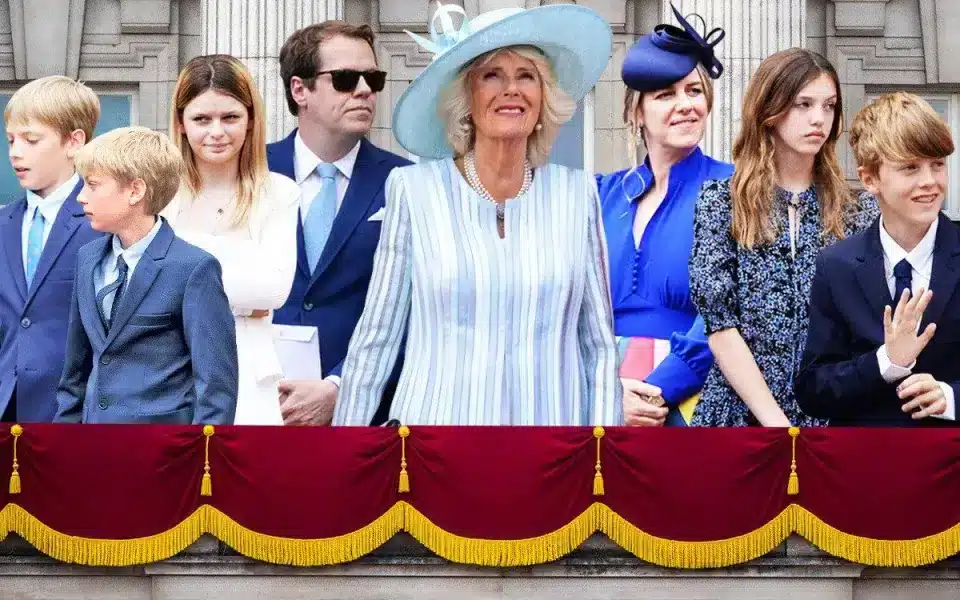
While described by one royal source as a “bold move”, the decision to include Tom Parker Bowles’s children Lola, 15, and Freddy, 13, in the coronation alongside Camilla’s daughter Laura Lopes’s children Eliza, 15, and twins, Louis and Gus, 13, speaks to a generation for whom blended families are now the norm.
It is still to be decided how the youngsters, who affectionately call the Queen Consort “GaGa”, are to be included in the ceremony amid suggestions they may be asked to carry the Coronation “canopy” under which their grandmother will be anointed by the Archbishop of Canterbury.
But regardless of the finer details, the inclusion of the five teenagers is designed to send a strong message that Charles and Camilla are a couple who reflect the realities of modern life.
Unlike in 1953, when royal children were seen and not heard at the coronation of Elizabeth II, step-parents and stepchildren are now common as a result of divorce. And as Buckingham Palace has stressed from the very beginning, the coronation “will reflect the monarch’s role today and look towards the future, while being rooted in long standing traditions and pageantry”.
A significant role is also being planned for Prince George, nine, not only as the King’s oldest grandchild but second in line to the throne. As one source told The Sunday Times: “It sends a nice signal and is quite a bold move. It is another example of the King and Queen Consort being unafraid to shake things up a bit to reflect the realities of modern life, of which a blended family is a central element.”
Yet what might this mean for frosty royal relations with Harry and Meghan? With the couple set to be invited to the long bank holiday weekend of celebrations, but with no word yet on whether they will actually attend, the move to include some grandchildren but not others is likely to ruffle feathers in Montecito.
Harry already felt forced out by the late Queen and his father seemingly prioritising public appearances with William and George to his own immediate family. What he is likely to make of the Parker Bowles clan being front and centre is anyone’s guess (although he is said to get on well with his stepsiblings Tom and Laura, who were both invited to the royal wedding in 2018).
Laura’s daughter Eliza has already had a taste of a major royal occasion having been bridesmaid at William and Kate’s wedding in 2011, when a then Prince Charles was pictured holding her on the Buckingham Palace balcony.
Charles holding Eliza – James Devaney/FilmMagic
Although now estranged from his youngest son, the truth is that Charles has grown extremely close to Camilla’s children and grandchildren, who spend a great deal of time at her private property, Ray Mill House, in Lacock, Wiltshire, which boasts an outdoor swimming pool. Although these teenagers may be strangers to the public – they are as much a part of the King and Queen Consort’s everyday lives as the likes of George, Princess Charlotte, seven, and four-year-old Prince Louis so it is only natural that the couple would want to include them.
As one royal aide stressed: “It is important to remember that this is a double coronation of both HMK and HMQC”.
With growing talk that she will soon drop the Consort title and be known simply as “the Queen”, the days of Camilla being the “other” woman are long gone.
Royalty has long been a family affair and the blended nature of Charles and Camilla’s brood shows the world that life in the monarchy isn’t a fairytale existence – but a lived experience.
Who’s who in the blended family
Tom – the Queen Consort’s eldest child – is an Eton-and-Oxford-educated food critic who is now in the unique position of having King Charles as both a stepfather and godfather. He started his career in publicity but made headlines for all the wrong reasons in 1999 – an incident involving cocaine at the Cannes Film Festival for which Charles gave him a stern telling off. That didn’t stop him carving out a successful career in food writing, which began with a column in Tatler magazine and has led to a career on television. He married magazine editor Sara Buys in 2005, with his cousin Ben Elliot as his best man. They have two children and separated in 2018.
At one point, there were two Parker-Bowles working at Tatler,as Camilla’s daughter Laura started there as motoring correspondent in 2001 before opening an art gallery in London called Eleven. Laura keeps a low profile. She married Harry Lopes, a Calvin Klein model-turned-chartered-accountant, in 2006, a year after the mother-of-the-bride tied the knot with Prince Charles. Prince William came to her wedding, with his brother and – in one of their early public appearances – Kate. The guests ate fish pie and the wedding cake, made of thousands of chocolate muffins, was cut with Brigadier Parker Bowles’s military sword. The couple have three children.
Harry has impeccable antecedents: on his father’s side he is grandson of Baron Roborough and great grandson of Earl of Mount Edgcumbe (a Royal aide to Queen Victoria), and on his mother’s, he is grandson of Baron Astor of Hever and great grandson of Field Marshal Douglas Haig. There are two stately homes, Gnaton Hall in Devon and the Skelpick estate in the Scottish highlands, in the family.
The Queen Consort’s eldest grandchild is the daughter of Tom Parker Bowles and Sara Buys. It was puzzle-loving Lola that Camilla referred to in a British Vogue interview last year. “I do Wordle every day with my granddaughter. She’ll text me to say, ‘I’ve done it in three’, and I say, ‘Sorry, I’ve done it in two today,’” she said. As a Parker Bowles, her ancestors include Dame Ann de Trafford, commissioner of the Commonwealth Girl Guides Association, and the Earls Cadogan.
You may remember Eliza from her role as the tiniest bridesmaid at Prince William and Kate Middleton’s wedding in 2011, when she was just three years old. Now, she’s all grown up. The Queen Consort has said: “The girls are beginning to get into clothes and make-up… it’s rather frightening when you see them, coming out with pierced ears and a lot of new make-up and funny-coloured hair and stuff.”
Twins Louis and Gus were born in 2009. They are similarly close to their royal Grandma, who is known as GaGa, and regularly visit when they are in London. Camilla says her grandchildren have given her TikTok training and shown her how to use the video-calling app Houseparty.
The youngest of Camilla’s grandchildren is Freddy, 13, son of Tom and Sara. He has grown up as one recipient of Britain’s most regal bedtime stories: Camilla is said to have loved reading with her grandchildren and favours Gangster Granny by David Walliams.
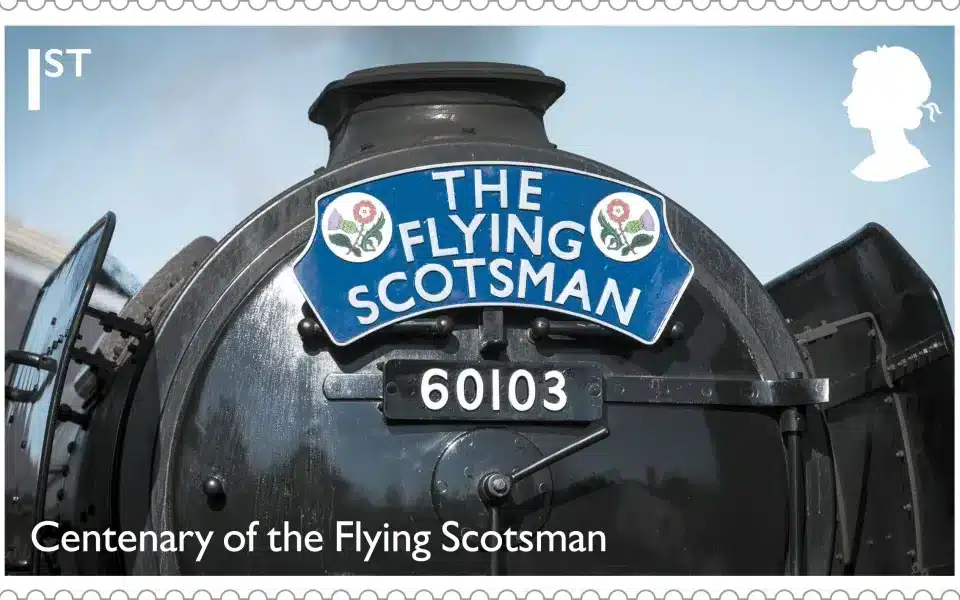
Royal Mail has unveiled the final set of stamps honouring the late Queen Elizabeth II.
Queen Elizabeth gave her blessing to the Flying Scotsman-themed Special Stamps collection before she passed away.
It will be the final set to feature Her Majesty’s silhouette before the new King Charles-themed stamps become available on April 4.
Stamps include London North Eastern Railway poster artwork from 1920s and 1930s
The Queen’s silhouette has been in constant use on Royal Mail’s Special Stamps since 1968 and for more than 50 years the programme has commemorated anniversaries and celebrated events related to UK heritage and life.
Stamps feature a close-up of the train at Shildon, Durham, as well as at London’s Victoria Station
The images feature the train in various locations across the country, such as in a blizzard at Heap Bridge on the East Lancashire Railway or steaming through the town of Blyth in Northumberland.
A further four stamps were released in a miniature sheet that show images of the Flying Scotsman and London North Eastern Railway (LNER) poster artwork from the 1920s and 1930s.
The train is pictured in a blizzard at Heap Bridge on the East Lancashire Railway
The stamps will be available to pre-order from Feb 28 on Royal Mail’s website, while the collection goes on general sale from March 9 priced at £17.70.
The other images on the stamps include the Flying Scotsman in the Yorkshire Dales National Park, crossing the Royal Border Bridge at Berwick-upon-Tweed and as a close-up at Shildon, Durham, as well as at London’s Victoria Station.
Four stamps show images from London North Eastern Railway poster artwork
David Gold, the director of external affairs and policy at Royal Mail, said: “Flying Scotsman is a national treasure of engineering and design that conjures up the golden age of steam travel.
“This remarkable locomotive epitomisesthe romance of rail travel and is loved by people all over the world. We are honoured to mark this landmark milestone with a set of Special Stamps.”
Images of Flying Scotsman were chosen from amongst hundreds of period photographs
Royal Mail worked closely with Bob Gwynne, the associate curator at the National Railway Museum, to select the images featured on the stamps. They were chosen from among hundreds of period photographs.
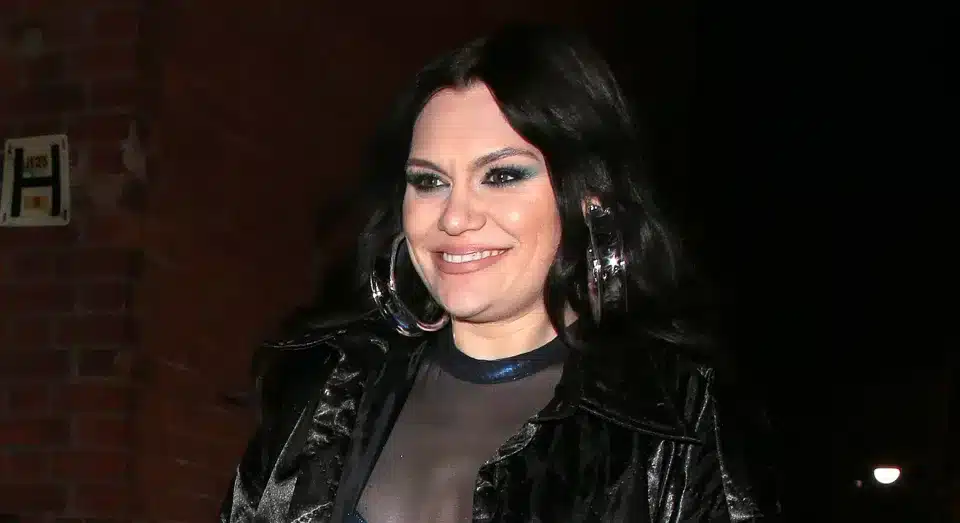
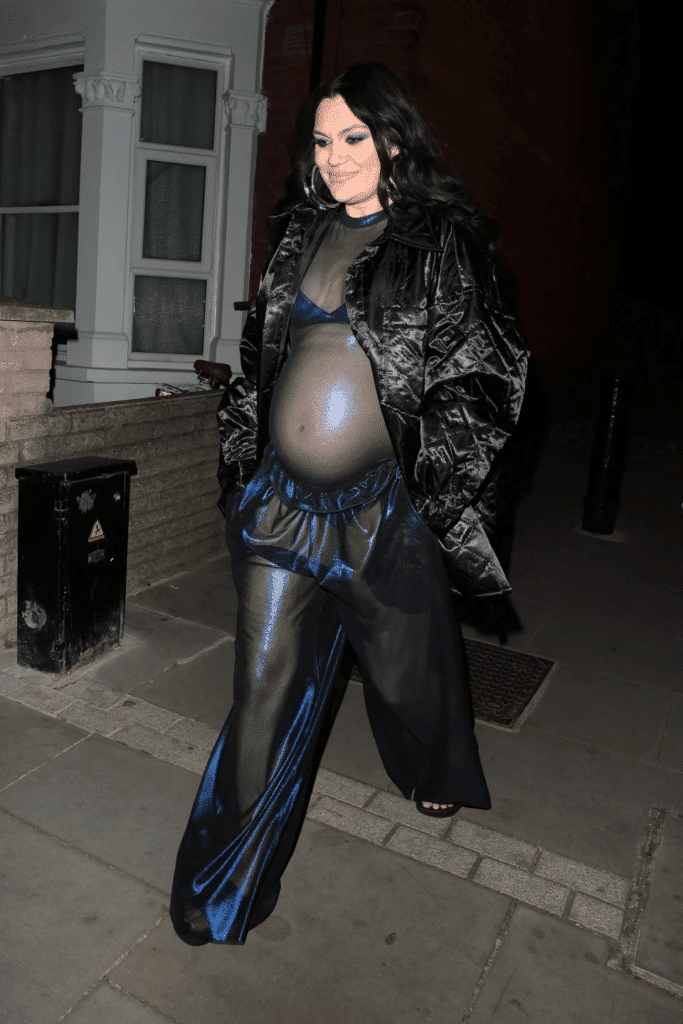
Then, just before the Brit Awards earlier this month, the singer – who has not shared her exact due date – confirmed that the couple were to have a son.
She posed on arrival at the star-studded event in an eye-catching red long-sleeved crop and matching leggings, which she dressed up with a voluminous coat and heels.
The pregnant star also recently attended the BRIT Awards 2023 in a head-turning ensemble. (Getty Images)
The surprise pregnancy news came just over a year after Jessie announced that she had sadly experienced a miscarriage.
In December 2021, she said she was “still not myself” after baby loss, and shared that she was crying herself to sleep “some nights”.
The star had revealed the previous month that she was left “heartbroken” after discovering there was no heartbeat at her third scan.
At the time she had been pursuing motherhood on her own because it was “all [she] ever wanted”.
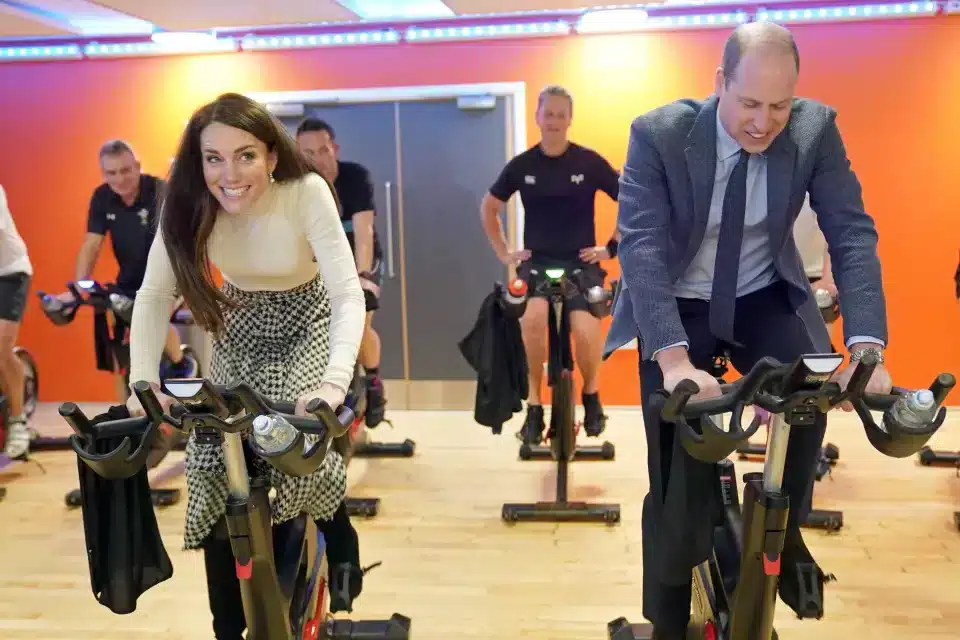
The Prince and Princess of Wales displayed their competitive side once more on Tuesday, when they participated in activities at Aberavon Leisure Centre in South Wales.
William, 40, and Kate, 41, jumped at the chance to get involved in a spin class at the Port Talbot Sports centre as the pair battled it out in the “Tour de Aberavon’ challenge.
Kate removed her smart cream coat, and hopped on the spin bike in her £19.99 Zara skirt and high-heeled black boots, while William, calmly confident, kept on his suit jacket for the 45-second competition.
Fellow class attendees cheered on both the Prince and Princess of Wales, but it was Kate who was ultimately victorious in the short, yes, strenuous, sporting challenge.
The Prince and Princess of Wales are visiting communities and several mental health initiatives in South Wales ahead of St David’s Day, which takes place on March 1. They visited Aberavon Leisure Centre to promote how sport can help improve mental health.
Their Royal Highnesses started their busy day with a visit to a drug and alcohol rehabilitation centre to launch their latest initiative: creating therapy gardens to offer mental health support across South Wales.
The initiative is a joint effort between the couple’s Royal Foundation and a social enterprise called Life at No.27, which uses horticulture and counselling to help improve its service users’ mental health.
While at Brynawel Rehabilitation Centre, Prince William and Kate visited the site that will be used for the new therapy allotment, which will feature a sensory and herbal garden, mud kitchen and an interactive learning space.
The Princess of Wales got stuck in on the allotments, helping to plant seeds for a flower called the ‘Sweet William’.
Afterbeing confronted about riding on the pavement, a 77-year-old cyclist fell into the path of a car, leading to the conviction of a partially-sighted, cerebrally-impaired pedestrian for manslaughter.
Celia Ward, a retired midwife, was confronted by Auriol Grey, 49, in a “hostile and aggressive way,” after which she stumbled into the path of a speeding car.
The moment Grey yelled at Mrs. Ward to “get off the [expletive] pavement” was caught on camera and played to Peterborough Crown Court in Cambridge.
A VW Passat strikes Mrs. Ward after she appears to stumble off the pavement and into the traffic in Huntingdon, Cambridgeshire. After being found guilty of manslaughter, Grey of Huntingdon, Cambridgeshire, will be sentenced on March 2.
The court heard the two women passed each other in opposite directions on the pavement of the town’s ring road pavement on October 20, 2020.
The prosecution claimed Grey was “angered by the presence of a cyclist on a footpath”.
Prosecutor Simon Spence KC said Grey shouted at Mrs Ward and “gestured in a hostile and aggressive way towards” her, causing her to fall off the bike and into the road, where she was hit by an oncoming car.
Jurors heard the vehicle had no chance to stop or take avoiding action and Mrs Ward died at the scene.
The court heard Grey left prior to emergency services arriving and went to Sainsbury’s where she bought groceries.
In a police interview, Grey, who has cerebral palsy, told officers she was partially sighted and described the pedal cycle as travelling “fast” in the centre of the pavement.
She stated she was “anxious that I was going to get hit by it”, adding she “may have unintentionally put” out her hand to protect herself.
But after being shown the CCTV footage, interviewing officer Det Sgt Mark Dollard asked her why she said what she said, to which she responded: “I don’t know.”
The court was told the police could not “categorically” state whether the pavement was a shared cycleway.
“Everyone will have their own views on cyclists, pavements and cycleways but what is clear is Auriol Grey’s response to the presence of Celia on a pedal cycle was totally disproportionate and ultimately found to be unlawful, resulting in Celia’s untimely and needless death.
“I am pleased with the verdict and hope it is a stark reminder to all road users to take care and be considerate to each other.
“I want to take the time to acknowledge Celia’s family and thank them for their patience and dignity throughout the entirety of the investigation and trial.”
The alleged deduction follows concerns that the Championship team may not have followed an EFL business plan.
A six-point deduction for Reading’s violation of financial regulations from last season has been suspended until the conclusion of the current campaign.
The Daily Mail reports that the delayed deduction is about to be initiated.
Reading allegedly failed to cut costs in line with a business plan they had with the EFL.
The EFL declined to comment on the matter.
A six-point deduction this season would see Paul Ince’s side drop from 14th to near the bottom of the Championship table, reducing their current points tally from 44 to 38.
However, the Royals would still have an eight-point cushion over Huddersfield in 22nd.
If the Glazers stay and make Erik ten Hag raise money, Manchester United may sell seven players this summer.
Despite months of rumours, the ownership situation of the Red Devils is still unknown.
Sheikh Jassim bin Hamad Al Thani of Qatar and British billionaire Sir Jim Ratcliffe have expressed interest in the club since the Glazers first hinted at selling it earlier this season.
However, some Manchester United supporters continue to worry that their hated bosses will decide to stay.
If that does happen, Ten Hag will likely be made to offload players in order to fund any new deals.
And The Mirror are reporting that as many as seven stars face the chop at Old Trafford.
Harry Maguire
Harry Maguire, 29, has started just five Premier League games this season as Raphael Varane and Lisandro Martinez continue to build a strong partnership.
And while Ten Hag has reassured him he is a big part of his plans, United could still sell as he would command a substantial fee.
Aaron Wan-Bissaka
Aaron Wan-Bissaka has proven his worth over the past few months following a poor start to life under Ten Hag.
But he could still demand a hefty price tag in the window. And with Diogo Dalot a long-term option at right-back, United may see him as expendable come the end of the season.
Brandon Williams
Brandon Williams has returned from last season’s loan spell at Norwich and been outcast by Ten Hag.
The 22-year-old has earned just one appearance this season – a five-minute outing in the Carabao Cup.
Luke Shaw and Tyrell Malacia are firmly ahead of him in the pecking order of left-backs, so he is an almost certain departure.
Donny van de Beek
Donny van de Beek has endured a torrid time since arriving from Ajax in 2020.
He made just four starts for United before being ruled out with a knee injury and that could cruelly signal the end of his spell at the club.
Anthony Martial
Anthony Martial seemed to be a favoured forward option for Ten Hag at the start of the season.
But continual injury issues have left him unable to establish a lengthy run in the team.
Six goals in 14 appearances is not a bad return, but his inability to remain fit could mean United show him the exit door at the end of the campaign as he enters the final 12 months of his contract.
Alex Telles
Alex Telles was sent out on loan to Sevilla following the arrival of Malacia in the summer.
But he has missed the last two months due to a knee injury and been unable to showcase his capabilities as a result.
With his contract up in 2024, expect him to be sold this summer.
The King has asked theDuke and Duchess of Sussex to move out of Frogmore Cottage for good to allow Prince Andrew to move in, The Telegraph understands.
It is understood that talks between Buckingham Palace and the couple have been going on for some time but have picked up pace recently.
A friend of the Sussexes suggested that they leave Frogmore, but the couple refused, stating that “they made that place their home.”
They are understood to view the cottage as “the only place left that’s safe” for them and their children in the UK, not least given the ongoing row between Prince Harry and the Home Office over its decision to withdraw his security detail.
It comes as the Duke of York had feared he would be forced out of the Royal Lodge by King Charles, who is on a drive to slim down spending.
The Duke is set to have his £249,000 annual allowance cut from April, and has told friends that this will leave him unable to maintain the 98-acre Windsor property.
However, the King does not intend to leave his brother “homeless or penniless,” a Royal source told The Telegraph, suggesting that alternative arrangements have been made for his accommodation.
Frogmore cottage is much smaller than Royal Lodge, a 30-room mansion at Windsor Great Park which has been the Duke’s home since 2003.
Frogmore cottage, with its relatively modest ten rooms, is much smaller than Royal Lodge – Westbury2006/flickr
The Duke and Duchess of Sussex lost their taxpayer-funded police protection in the aftermath of their quitting as senior working royals. In July, Prince Harry won the right to challenge a Home Office decision not to grant him automatic police protection whenever he is in the UK.
The Duke, 37, argued that he inherited a risk at birth and that, as such, he, his wifeMeghan, and their children, Archie, 2, and Lilibet, 1, should be afforded permanent protective security in the UK, regardless of their status as non-working royals.
Prince Andrew horse riding in Windsor Castle – Kelvin Bruce
In asking for a judicial review, he said he had been denied a “clear and full explanation” of the composition of the Executive Committee for the Protection of Royalty and Public Figures, otherwise known as Ravec, and others involved in the decision to rescind his security status.
Ravec said at the time that the Sussexes’ plan to live abroad as private citizens did not “fit readily” into any category of its framework.
However, it recognised that the Duke occupied a “particular and unusual position” and that he may need protection in certain circumstances, to be considered on a case by case basis.
The Sussex’ spokeswoman could not be reached for comment.
The future health of Germany’s youth is at risk, according toGermany’s agriculture minister, who has called for a ban on all child-accessible advertising of unhealthy food, including sweets and items with a high salt, fat, and sugar content.
The Greens’ Cem Zdemir said it was time to protect children from the effects of unhealthy food, such as obesity, diabetes, and other illnesses.
Some consumer groups said the proposals should go far further and include banning the strategic placement of confectionery—so-called “Quengelware” or “moaning goods”—at supermarket cash desks, where parents often feel pressured by children to buy them. Sweets and gums are often placed close to alcohol miniatures such as schnapps and the digestif Jägermeister.
An estimated one in two Germans is considered overweight, as are 15% of children, according to health professionals.
“We must ensure that children can grow up more healthily,” Özdemir said, adding that calls on industry to regulate itself had failed.
According to his plans, junk food advertising “in every medium relevant to children” including television, radio and YouTube and Instagram, should be reduced. In future such advertising should only be broadcast between 11pm and 6am, he said.
He stressed he was not in favour of a complete advertising ban, but said: “Advertising should no longer be directed at children.”
Print advertising in children’s magazines as well as billboard advertising in the vicinity of schools and leisure centres for sweets and confectionery should be banned. Zdemir stated that his definition of unhealthy food was based on World Health Organisation guidelines.
He said he would seek cross-party support for the initiative, but expected resistance.
Zdemir’s plan is consistent with the pre-election promise made by the Social Democrats, Greens, and the pro-business FDP, which stated that “Child-focused advertising of foodstuffs containing high sugar, fat, and salt content should in future not be allowed in broadcasting and other formats directed at children under the age of 14.”
Support and praise for the proposal came from consumer rights groups, the World Wildlife Fund and the German Obesity Society which said Özdemir had “delivered a big hit.” It said that obesity was a “key health problem” for children and that the advertising of unhealthy foods was an important contributory factor.
The German Society for Paediatrics and Adolescent Medicine (DGKJ) said it was behind the proposal. Its vice-president, Ursula Felderhoff-Müser, told German media that doctors and scientific associations as well as consumer protection groups had been calling for tighter regulation for years insisting that the efficacy of advertising directed at children was well documented.
The FDP and CDU were critical of the plans, while some within the ruling SPD also raised concerns.
Gero Hocker, agricultural spokesperson for the FDP said Özdemir would find no majority within the ruling coalition. He accused him of “trying to turn children unable to make decisions for themselves into citizens unable to do so”.
The CDU’s Steffen Bilger criticised Özdemir for, he said, “trying to smooth the way for dirigisme, bureaucracy and paternalism”.
The SPD’s leader, Saskia Esken, stated that while advertising should not be allowed to mislead, it was ultimately personal decisions that made a difference. “I believe that it’s still up to the parents to protect children from unhealthy foods.”
Arsene Wenger has weighed in on the never-ending debate overLionel Messi vs. Cristiano Ronaldo as the superior football player. The football landscape has been dominated by the Argentine genius and the Portuguese phenomenon for almost two decades, demonstrating their extraterrestrial endurance.
While the pair has provided football fans with mesmerising skills, spectacular goals, and breath-taking moments to savour, it has grown more and more challenging to choose the better of the two given their accomplishments. Nevertheless, the debate has shifted in Leo Messi’s favour as a result of his historic year, in which he finally motivated Argentina to win a third World Cup.
His triumph in Qatar with La Albiceleste has comfortably placed him among the pantheon of greats, per Sky Sports. Conversely, Messi’s longstanding rival Cristiano Ronaldo has endured an indifferent last 12 months. He was kicked out of Manchester United and saw his last dance at the World Cup end at the quarterfinal stage.
Regardless, after swapping Europe for Asia, the 38-year-old appears to have rediscovered his mojo and is firing from all cylinders. He was recently crowned the Player of the Month for February in the Saudi Pro League after notching eight goals and contributing two assists in four matches for Al-Nassr, MARCA reports.
While opinions are sharply divided on who the GOAT is between Messi and Ronaldo, Wenger has a more holistic view of the discussion.
“When they [Ronaldo and Messi] will not be there anymore. We will realize what they have given us, both of them. He added: “I always refuse to make a hierarchy on that because they are two different players. Completely different players, but two exceptional players who have shown the world for 15 years how great football can be.
Sports Brief earlier reported that Paris Saint-Germain superstarKylian Mbappe has appeared to change the tune on who is football’s greatest of all time between Lionel Messi and Cristiano Ronaldo. The debate on who is the better player between the two football icons remains divided among fans, pundits, and even footballers. Ronaldo and Messi have dominated the football scene for some time now, with the duo winning an incredible 12 Ballon d’Or awards between them.
Thelegendary France striker Just Fontaine, who passed away on Wednesday at the age of 89, will always be remembered for his incredible feat of scoring 13 goals at the 1958 World Cup, a feat that seems unlikely to be repeated.
Even though Fontaine only participated in one tournament and played in six games, only three players have ever scored more goals at the World Cup.
In Qatar, Lionel Messi equaled his previous total of goals scored, but it took him five World Cups to get there. Most people associate the 1958 World Cup in Sweden with the emergence of a 17-year-old Pele, who propelled Brazil to victory after scoring a hat-trick in their 5-2 semifinal victory over France.
Part of a wonderful attacking trident alongside Roger Piantoni and Raymond Kopa, Fontaine might never have gone to Sweden at all.
Only injuries to Thadee Cisowski and his Reims teammate Rene Bliard saw him make the squad and then the starting line-up.
“It was only at the airport before leaving for Sweden that Paul Nicolas (part of the national team staff) and Albert Batteux (the France coach), who didn’t really want me, told me I would be playing as centre-forward,” Fontaine told AFP in 2013.
Only Germany’s Miroslav Klose (16), Brazil’s Ronaldo (15) and Gerd Mueller, the West German hero of the 1970s who scored 14 times, have netted more World Cup finals goals.
Just two other players — Mueller with 10 in 1970 and Hungary’s Sandor Kocsis with 11 in 1954 — have reached double figures at a single World Cup.
Yet Kopa is remembered as the biggest French star of the era. When he died in 2017, Fontaine remembered fondly his “big brother”. “Raymond had character,” he said. “So did I, and that made us a magical duo.” Born in Marrakech in August 1933 to a French father and Spanish mother at the time of the French Protectorate in Morocco, Fontaine went to school in Casablanca, and began his football career there.
Career cut short by injury
In 1953 the stocky penalty-box poacher moved to France, joining Nice.
His three years there were spent combining football with military service,but Fontaine still won the French Cup in his first season and a league title in 1956. He then moved to Reims, the great French side of the 1950s who had just been beaten by Real Madrid in the first European Cup final and that summer lost Kopa to the Spanish giants.
He scored 10 goals in that European campaign, but 1958 was his crowning glory — in his second season with Reims, they won a league and cup double and he was the league’s top scorer with 34 goals.
However, his career ended in 1962 aged just 28. He had hardly played for two years after suffering a double leg fracture. In all he won 21 caps for France, scoring 30 goals. “We talk a lot about my record but I would definitely have swapped it for another five or six years, because football was my passion,” he said. “I was at the very top, and I was earning a lot of money at the time. It was not the money you see nowadays, it was five times the minimum wage, whereas now it would be more like one hundred times that.
Fontaine went into coaching and in 1967 took charge of France. However, he lasted just two games, both defeats in friendlies. A spell with Paris Saint-Germain was more successful, as “Justo” took the side from the capital into the top flight in 1974.
His career in football ended back where it began, in Morocco, as he led the national team to third place at the 1980 Africa Cup of Nations. He then retired to Toulouse, in the south-west of France.
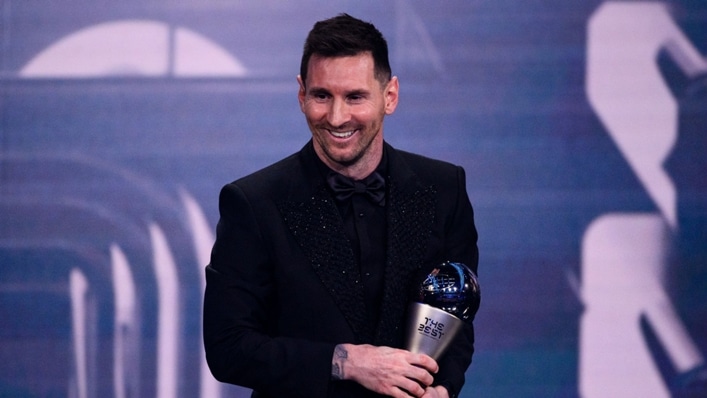
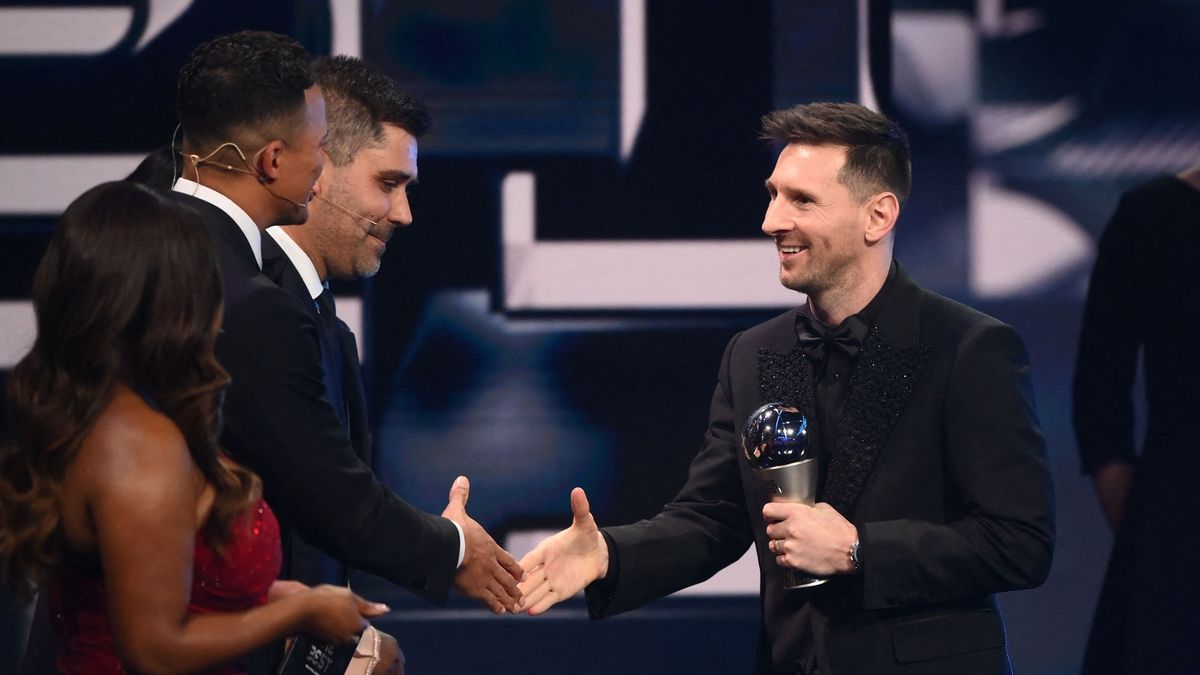
The playmaker from Argentina and Paris St. Germain won the coveted award for a record-extending seventh time. He defeated Kylian Mbappe and Karim Benzema in the final.
The award, which recognises the top male performer, was chosen by national team coaches, captains, eminent journalists, and fans from all over the world. FIFA reports that Messi received 52 points, Mbappe came in second with 44 points, and Karim Benzema of France and Real Madrid received 34 points.
Considering the long-standing sporting rivalry between Cristiano Ronaldo and Lionel Messi, the Iberian country was least expected to throw their weight behind the Argentine genius. How did Portugal vote? Sports Brief takes a look at how Portugal voted, especially with Cristiano Ronaldo failing to make the final shortlist.
Martínez, stepped down from his role as Belgium manager after their World Cup group stage exit, but received appointment as Portugal’s new boss after the Mundial. Hence the onus fell on him to vote for the Best Men’s footballer for 2022 at the gala held in Paris, France.
The 49-year-old interestingly threw away the rivalry between Ronaldo, perhaps Portugal’s greatest footballer in history and Leo Messi away to vote for the PSG playmaker.
Pepe – Portugal captain Kepler Laveran de Lima Ferreira, simply known as Pepe, was the players’ delegate to choose for Portugal.
Acting as Ronaldo’s deputy, Pepe naturally omitted Leo Messi from his preferred choice of winners. Instead, selecting Messi’s clubmate Kylian Mbappe, former Real Madrid teammate Luka Modric and current Ballon d’Or holder Karim Benzema in that order.
Pepe, aged 40, is regarded as one of the greatest defenders of his generation and is still performing at FC Porto.
The best football players in the world gathered under one roof as the world’s governing body of the sport honoured and praised their extraordinary efforts over the previous twelve months.
World Cup champion Lionel Messi of Argentina won the award for best male player of the year for the seventh time, defeating Ballon d’Or winner Karim Benzema and PSG teammate Kylian Mbappe.
Messi is joined by Champions League winner Luka Modric, former Bundesliga leading scorer Erling Haaland, and Africa’s Best Player Sadio Mane on the list of the top ten footballers in the world for 2022.
Along with Achraf Hakimi, who assisted Morocco in reaching the World Cup semifinals for the first time, Julian Alvarez, who also helped Argentina win the World Cup and Copa America, also made the top 10 list.
Brazil’s famous player Neymar and Kevin De Bruyne who is considered one of the best midfielders in the world completed the top 10 footballers in the world list.
Former Hearts of Oak player Joe Tagoe, also known as Bobby Short, has spoken out about his near-death experience after lying about his age at an Egyptian club.
Bobby Short, who enjoyed success with Hearts of Oak in the domestic league, revealed that he suffered a potentially fatal injury that kept him from playing for several months.
He made the decision to lower his age to make himself more appealing for clubs to sign him in an effort to get back into the game.
“I got injured and tried to get back. Nii Lante Bannerman wanted to help me, so I started training because by then I looked heavier than I am now. I went to Egypt and changed my age to 21,” Joe Tagoe told Dan Kwaku Yeboah
According to him, his coach, who thought he was 20 years old, made him undergo rigorous training, which could have cost him his life.
“The coach thought I was indeed 21 due to my height, so whenever we close from training, he will tell me to join the under-20 side to train.
“The way the boys were running I realized I couldn’t cheat nature and I don’t take care I will exchange my life with money so I had to come home,” Joe Tagoe said.
Upon returning to Ghana, Tagoe joined Cape Coast Ebusua Dwarfs but after a short stint at the club, the player bid farewell because they were unable to pay his meagre salary.
“When I returned home, I joined the Ebusua Dwarfs.” Over there, any time they have to pay me, they use this excuse of the club being a stepping stone for me. Meanwhile, I’m not a small boy; I have a family and a child to feed. I don’t even know which stepping stone again they are talking about so I had to quit because the pay was like 600 or 700 cedis in 2018,” he said.
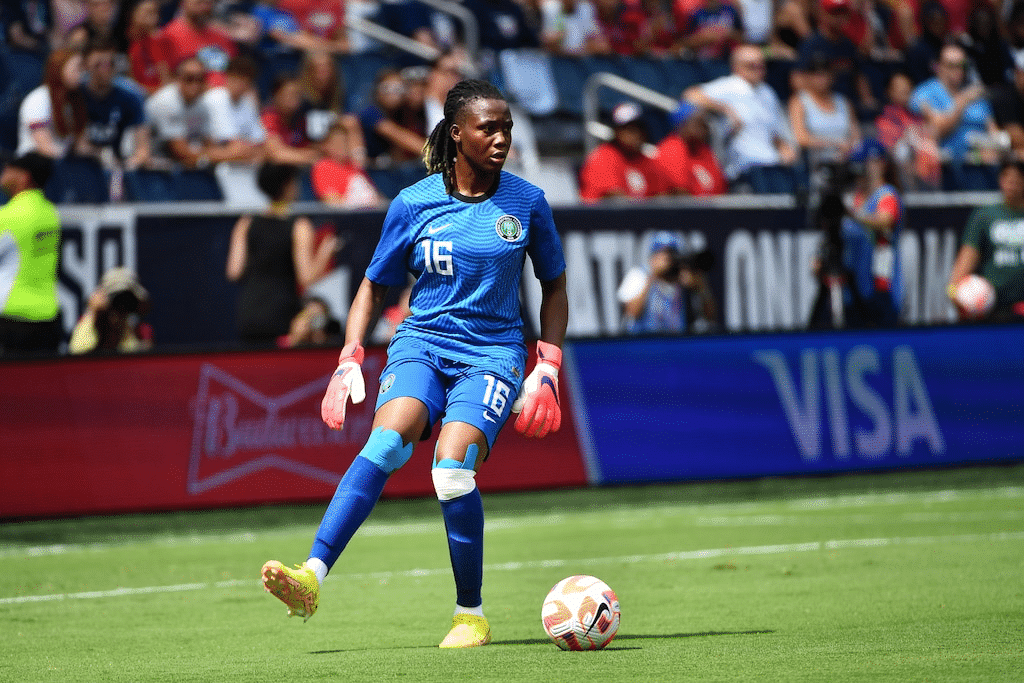
The Super Falcons’ goalkeeper, Chiamaka Nnadozie, shared some adorable pictures of herself posing with football greats at the2023 FIFA award ceremony in Paris. Since Nnadozie currently plays for Paris FC in the French Division 1 Feminine, she found it relatively simple to make the ceremony.
It’s interesting to note that numerous prominent football figures attended the awards ceremony to watch Paris Saint-Germain forward Lionel Messi be named the best player. Chiamaka Nnadozie, a goalkeeper from Nigeria, in action.
As per the photos Nnadozie posted on her Twitter page, the Nigerian was seen chilling with the likes of Virgil Van Dijk, Didier Drogba and Casemiro.
Lionel Messi wins award After steering Argentina to World Cup glory in an epic final against France last year in Qatar, Messi won the best player vote against Mbappe and Karim Benzema to secure the FIFA prize for the seventh time in 14 years.
The former Barcelona captain has also been tipped to win the 2023 Ballon d’Or award for the eighth time because of his impressive performances so far.
Meanwhile, Nnadozie is expected to be in goal for the Super Falcons in their campaign for this year’s Women’s World Cup in Australia and New Zealand. Nnadozie poses with Rolls Royce Earlier, Sports Brief had reported how the Super Falcons’ impressive goalkeeper, Chiamaka Nnadozie was spotted with an exotic Rolls-Royce Cullinan.
Sharing her New Years message to her Instagram followers, the shot-stopper was seen in front of a white Rolls-Royce as she posed for a photograph. Nnadozie had featured for Nigeria’s U17 and U20 women’s teams, before earning a call-up to the Super Falcons squad in 2018.
At age 19, she was part of the squad for the FIFA Women’s World Cup in 2019. She became the youngest goalkeeper to keep a clean sheet at the tournament, following Nigeria’s 2-0 win over South Korea in their opening game.
Thomas Partey, a midfielder from Ghana, has been declared likely to be fitfor Arsenal’s Premier League match against Everton on March 1, 2023, according to head coach Mikel Arteta.
Partey will train with the team on Tuesday, and that will determine whether he can play against Everton, according to Mikel Arteta during the pre-game press conference.
“He hasn’t trained much. He had a session & he will train today. It is what it is. He was out for a few weeks & he needs to get back into the rhythm.”
Thomas Partey suffered an injury in the lead-up to Arsenal’s 3-1 defeat to Manchester City on Wednesday, February 15, 2023.
The Black Stars midfielder went on to miss Arsenal’s next three games and returned over the weekend with a cameo performance in their 1-0 victory over Leicester on Saturday.
Thomas Partey has been integral in Arsenal’s chase for the title this season, with the Gunners yet to lose a game with him in the side.
His injury record is however a cause of concern for Arsenal who are believed to be on the market for a long-term replacement.
The Gunners were heavily linked with Brighton star, Moises Caicedo and it is believed that they will make another attempt in the summer.
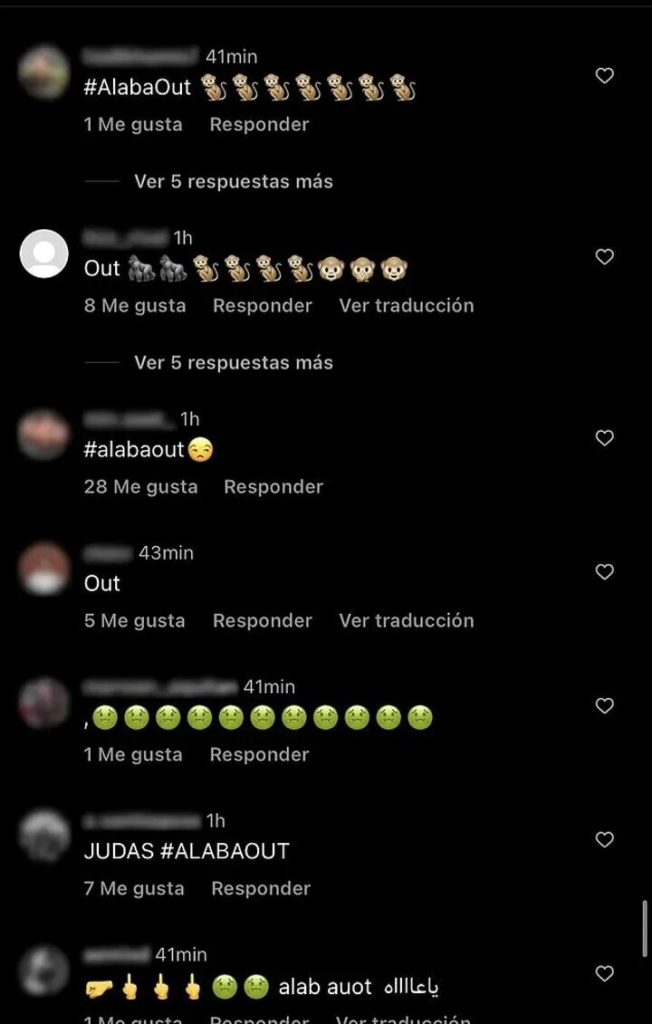
Racist insults were directed at the former star of Bayern Munich for not selecting Karim Benzema, a Real Madrid teammate, as his first choice.
The award is chosen by coaches, captains, and journalists from every country. Following Monday’s ceremony, FIFA released a complete breakdown of who received the most votes. According to this breakdown, Austria’s captain Alaba chose Messi over Benzema as his top pick.
Only a little more than two months have passed since Messi led Argentina to World Cup victory in Qatar before being named the best male footballer in the world at FIFA’s annual awards ceremony on Monday night.
Alaba’s vote did not go down well with Los Blancos supporters, so much so that he was targeted with vile racist messages and calls to leave their club on social media.
Yet after receiving the sickening abuse, Alaba has come out and clarified that Austria’s vote for Messi was a collective decision.
He posted on Twitter:‘Regarding FIFA The Best Award: The Austrian national team vote for this award as a team, not me alone. Everyone in the team council is able to vote and that’s how it’s decided.
‘Everyone knows, especially Karim, how much I admire him and his performances’.
Benzema had to settle for third in the voting despite inspiring Madrid’s astonishing Champions League triumph last season.
The France striker scored back-to-back hat-tricks in last-16 and quarter-final victories over PSG and Chelsea, before scoring a crucial goal in their second-leg win against the Blues.
He also fired home three goals across both legs as they got past Manchester City in the semi-finals.
In the upcoming 2023Africa Cup of Nations qualifiers, Angola’s head coach, Pedro Goncalves, has set a goal of two victories over Ghana’s Black Stars.
The first leg of the match between the Black Stars and Angola will be played at the Baba Yara Sports Stadium in Kumasi on March 23, with the return leg taking place in Angola on March 27.
Despite acknowledging that the Black Stars are a formidable opponent, Pedro Goncalves stated that they are still hoping to earn the maximum six points from the game.
“Well, I hope we have the strength for six points. We are going to play rounds three and four against Ghana. Ghana is one of the best teams in Africa.
“They were at the last World Cup. They represented very well, and we saw the power of the Black Stars. Only five African national teams represented the continent, and Ghana was there.
“They are one of the best teams. I watched their performance, and they are strong. They improved so much at the World Cup. They have a lot of very good players; they have more players abroad,” he said, as quoted by Ghanasportspage.com.
Both Ghana and Angola have been able to accumulate four points after playing two gameseach in Group E.
Mikel Arteta, manager of Arsenal, said he understood what Graham Potter is going through at Chelsea right now as pressure to fire the former Brighton & Hove Albion manager grows. The Englishman once more had nowhere to run as the Blues fell to Tottenham Hotspur 2-0 on February 26.
Following that loss, an intriguing petition to fire Potter was started, and according to The Mirror, up to 45,000 enraged fans have signed it. The ex-Seagulls manager, who still thinks he is the right person for the job at Stamford Bridge, lost Chelsea for the 10th time in 17 games during the London derby.
Potter interestingly cited Mikel Arteta and Jurgen Klopp as examples of coaches who had a positive impact on players in his post-game press conference.
Arteta spoke on Potter’s situation where he sympathised with the Englishman. “…We are colleagues and we all know the pressure and the demands and the uncertainty that this industry has,” he said. “At the end of the day, the ball has to go into that net, and there are many factors that can prevent that that are out of your control, so I fully empathise because you suffer and you know how it is when you are going through those moments”.
Not only has Potter had to deal with torrid results on the pitch, he also recently revealed his family had been subjected to death threats. Arteta felt sorry for the Chelsea coach, but did not want to reveal whether he had been a victim of similar threats when his Arsenal side was struggling three years ago.
“You can have difficulties and challenges in your job, which we do especially when you lose, but when you are winning as well because this job is so demanding, but you cannot destroy your life because of that,” Arteta added.
Meanwhile, the Gunners will go five points clear at the top of the table with a win over Sean Dyche’s Everton, who are battling relegation.
Aubameyang surplus to requirements? Sports Brief also reported on why Pierre-Emerick Aubameyang could be surplus to requirements at Chelsea, struggling to get minutes under Potter.
So far, the French-Gabonese player has only managed to feature in 11 English Premier League matches for the Blues and has scored just one goal. Most players who wore the No.9 shirt at Stamford Bridge lasted just one season because the manager and fans did not give them a second chance.
The right foundation is being laid by Erik ten Hag to get Manchester United back in contention for the top prizes, but according to him, it is still too early to declare the Red Devils’ return.
In the EFL Cup final on Sunday at Wembley, United defeated Newcastle United 2-0 to win their first significant trophy in six years. Goals from Casemiro and Marcus Rashford in the first half were enough to secure the victory.
It is Ten Hag’s most recent victory. Despite being eight points behind league-leading Arsenal, Ten Hag’s team still has FA Cup and Europa League aspirations, and a title challenge is not out of the question.
While acknowledging the upward trajectory Ten Hag has the club on, Red Devils legend Cole, a member of the illustrious 1999 treble-winning United team, cautioned there is still a long way to go to catch up to rivals Manchester City, who have won the title in four of the past five seasons and are only two points behind the Gunners this time around.
“We need to remember a lot of teams [used to] disregard the League Cup, now the League Cup has become a big competition,” Cole told Stats Perform.
“I’m very, very happy obviously we won the League Cup and with Ten Hag, but let’s put things into perspective here, it’s his first season. We’ve got to be very honest, we know there’s a big gap between ourselves and Manchester City.
“We can talk about at the present moment there’s only five points difference but if we look at the whole of the last few seasons we’ve not been close.
“So, I’m not going to look at this year and say, ‘we’re back’. It’s fantastic that we’ve had the opportunity to win the cup, but I think we’re still a little bit away. If we keep improving like we are at the moment, it won’t be too much longer.”
Cole, who scored 121 goals in 275 appearances for United, believes the EFL Cup triumph is only part of the process of getting the club challenging regularly for league titles once again.
“I was sitting here watching the game and hoping that this is the start of something new,” he added.
“To win the league you’ve got to be the best team for 38 games. So that’s the process; that takes time; that’s not going to take you one or two years, it’s going to take a little bit longer.
“If you look at for instance, Manchester City, they’ve won the League Cup numerous times, then they’ve gone on to win the league numerous times.”
“I think he’s [Ten Hag] building blocks. If you look at his building blocks, obviouslyManchester United are in a position where they’ve won the League Cup. But let’s build on that. Get from now until the end of the season, finish in the Champions League spot. And then you go to the next season.
“I’m not going to sit here and say Manchester United are going to win the league next season. I know how difficult that’s going to be. Just because we won the League Cup this season, I don’t believe we’re going to win the Premier League next season by 15 points. No, it doesn’t quite happen like that; everything is a process.”
United have had plenty of false dawns since legendary manager Alex Ferguson retired in 2013, with the likes of Louis van Gaal, Jose Mourinho and Ole Gunnar Solskjaer all ultimately falling short in their attempts to restore past glories – even though the two former coaches did win trophies.
Cole believes Ten Hag can lean on Ferguson for advice but ultimately step out of his shadow.
“I think with Ten Hag we all know he’s got a pinch on the game and how he wants to run the football club, he’s very good with discipline,” he said.
“From the outside looking in, I could say possibly that’s what Ten Hag is doing at Manchester United – leaning on Sir Alex Ferguson for his knowledge.
“But at some stage you’re going to look at things and address things in a totally different way. So, I think to take it on board that Sir Alex Ferguson is there and he’s going to be there period.
“There’s no point to try to fight against him because I think when people try and fight against it then it seems to cause more problems than anything else, it seems like they’ve got a very good relationship which is only a positive thing.”
Lucas Canizares, the goalkeeper for Real Madrid, has extended his contract with the LaLiga behemoths.
Canizares hasn’t taken the field for Madrid in a senior match yet, but he has been used as a substitute 10 times this year and was a member of the team that won the Club World Cup.
The 20-year-old, who is the prodigal son of former Madrid and Spain goalkeeper Santi Canizares, is ranked third in the hierarchy, behind Thibaut Courtois and Andriy Lunin.
He reportedly came close to leaving the team in January to pursue regular football, but he revealed on Monday that a new contract had been signed on his Instagram page.
“I’m very happy to expand my link with Real Madrid,” Canizares said. “Eager to return with work the trust deposited. Let’s go!”
Kylian Mbappe previously stated his opinions on the Cristiano Ronaldo vs. Lionel Messi debate for the title of greatest player of all time, but the Paris Saint-Germain star now seems to have changed his mind.
The star of Paris Saint-Germain Kylian Mbappe appears to have made a sharp about-face regarding who he thinks is superior to Lionel Messi and Cristiano Ronaldo.
The two forwards have developed a spirited rivalry over the course of their individual careers, which peaked during their time with Real Madrid and Barcelona. After finally winning a World Cup championship medal in Qatar last year, it seemed that Messi had put the discussion to rest.
Messi’s glorious campaign has also seems to have definitively changed the mind of his PSG teammate Mbappe. The Frenchman was previously a huge admirer of Portuguese icon Ronaldo.
The striker’s father admitted that the veteran was among Mbappe’s heroes within the game. Speaking in 2016, he said: “He [Mbappe] is a Real Madrid fan and his idol is Cristiano Ronaldo. He used to spend hours watching videos [of Ronaldo] on the internet.”
That was a claim that was backed up by Mbappe’s former teammate Abdou Diallo. He previously suggested that the striker was under no illusions over who was better.
Speaking in December, the defender said: “Cristiano Ronaldo is literally everything to Kylian Mbappe. If you mention Lionel Messi against Cristiano, Mbappe will debate with you for at least an hour. For him, Cristiano is untouchable.”
Mbappe performed his change of opinion on social media in the aftermathof The Best FIFA Awards. A glitzy ceremony was held in Paris on Monday evening to celebrate the best players in both the men’s and the women’s game in 2022.
Messi was named as the Best Men’s Player of the Year following his outstanding performances as Argentina lifted the World Cup, whilst he has also managed to find electric form. The veteran was also named in the FIFPRO Men’s World XI alongside his club teammate Mbappe.
The latter issued his response to the pair’s evening, whilst sending his congratulations to Messi with a telling message. Taking to Instagram, he wrote: “Another trophy at home. Big congratulations to @leomessi you are #TheBest.”
H.E. Nana Addo Dankwa Akufo-Addo, President of the Republic of Ghana, has stated that he will take all necessary steps to ensure that the late Black Stars winger Christian Atsu is given a respectable funeral.
The President made this statement on Monday, February 27, when he welcomed the player’s family and Ghana FA officials to the Jubilee House.
“I want the Chief of Staff to make sure we organise a state-assisted funeral for Christian Atsu depending on the date that you the members of the family and the GFA will select.
“Everything will be done from the point of view of the government to make sure that he is given a dignified exit. I owe it as my responsibility as President to make sure that that happens,” President Akufo-Addo stressed.
The Ghanaian President continued, “The decision as to when the funeral will take place depends on the family. That is the tradition in Ghana. Whatever the decision, whatever date you choose, you should know that the government will stand squarely behind you to make sure that we give him a fitting burial”.
Christian Atsu’s funeral has not yet been scheduled, but his family has set March 4 as the start of aone-week mourning period.
After winning the Best FIFA Men’s Player award for a second time, Lionel Messi thanked his Argentina team-mates for a “dream” year.
At the awards ceremony on Monday in Paris, the superstar from Paris Saint-Germain beat out Real Madrid striker Karim Benzema and clubmate Kylian Mbappe for the top prize.
Messi was a key player in Argentina’s victory at the 2022 World Cup, winning the Golden Ball after contributing to three more goals and scoring seven of his own.
In the first half of the 2022–23 season, which was considered in the voting, he also made an impression at the club level, contributing to 14 goals and 11 goals in 18 games.
That matched the 35-year-old’s total of 34 games during his first season at Parc des Princes in both categories.
Upon collecting his Best FIFA award, which he previously won in 2019, Messi said: “Wow, this is amazing. It’s been a tremendous year, and it’s an honour to win this award.
“Without my team-mates, I wouldn’t be here. I achieved the dream I had been hoping for so long. Very few people can achieve that and I have been lucky to do so.
Messi joins Cristiano Ronaldo and Robert Lewandowski as two-time winners of the trophy, with Luka Modric the only other winner since the award was first handed out in 2016.
Lionel Scaloni was crowned the Best FIFA Men’s Coach, meanwhile, and Emiliano Martinez ensured it was a clean sweep for Argentina by taking the Best FIFA Men’s Goalkeeper award.
In the women’s prizes, Sarina Wiegman took the Best FIFA Women’s Coach award for a third time and Alexia Putellas pipped Beth Mead to the Best FIFA Women’s Player accolade.
England and Manchester United goalkeeper Mary Earps was named the Best FIFA Women’s Goalkeeper.
In Monday’s opulent ceremony for the Best FIFA Awards in Paris, Lionel Messi, Lionel Scaloni, and Emiliano Martinez completed a clean sweep for Argentina.
Messi, a forward for Paris Saint-Germain, won the Best FIFA Men’s Player award, while Scaloni won Best FIFA Men’s Coach, and Martinez won Best FIFA Men’s Goalkeeper.
The award period runs from the start of the 2021–22 season until the conclusion of the 2022 World Cup, which saw Argentina snap a 36-year championship drought.
Martinez, who plays for Aston Villa, won the vote ahead of Thibaut Courtois and Yassine Bounou, who represent Real Madrid and Sevilla, respectively. Courtois did, however, make the FIFPro Men’s World 11 squad.
Scaloni was next to pick up an award after seeing off competition from Manchester City manager Pep Guardiola and Real Madrid head coach Carlo Ancelotti, who won the LaLiga and Champions League double last season.
#TheBest@lioscaloni 🗣️: "No hay cosa más linda que ver feliz a todo tu país. Ver a esa gente emocionada en las calles no tiene precio. Este triunfo es para ellos". pic.twitter.com/dJwErBiGI5
La Albiceleste have lost just one of their 23 games since the start of last season, with their solitary loss coming in their opening Qatar 2022 group game against Saudi Arabia.
Messi made it three from three for Argentina by claiming the top prize at the ceremony in the French capital, which started with a poignant tribute to Brazil great Pele.
Their domination on the men’s side was not quite matched by European champions England in the women’s prizes.
Mary Earps was named the Best FIFA Women’s Goalkeeper and Sarina Wiegman took the Best FIFA Women’s Coach award for a third time.
But Beth Mead was pipped to the Best FIFA Women’s Player accolade by Alexia Putellas, last year’s winner.
Other winners included Luka Lochoshvili, then of Austrian side Wolfsberger, in the FIFA Fair Play category for potentially saving the life of opponent Georg Teigl during a game after the Austria Vienna player fell unconscious mid-match.
Polish amputee footballer Marcin Oleksy won the FIFA Puskas Award for the best goal for his perfectly executed bicycle kick for Warta Poznan against Stal Rzeszow.
The Best FIFA Women’s Player award was given to Alexia Putellas, preventing England’s female representatives from winning every award at the ceremony on Monday.
Following England’s victory at Euro 2022 on home soil in 2017, Sarina Wiegman and Mary Earps were named Best FIFA Women’s Coach and Best FIFA Women’s Goalkeeper, respectively.
Beth Mead, who won the Golden Boot and Player of the Tournament awards at Euro 2022, lost out to midfielder Putellas of Barcelona and Spain.
Putellas, who won the Primera Division with Barcelona in 2021–22 but was sidelined with an ACL injury for the Euros, has now won the prize twice after taking first place the previous year as well.
The Blues have not triumphed since defeating Crystal Palace at Stamford Bridge on January 15 and are currently on a terrible run.
Only three points have been earned by Graham Potter’s struggling team in their last five Premier League games, and they lost 1-0 to Borussia Dortmund in the first leg of their round of 16 Champions League matchup.
The pressure on Potter increased after Sunday’s 2-0 loss at Tottenham, but James insists that everyone at the team is working hard to turn things around.
The England ace, who took the captain’s armband against Spurs when Thiago Silva was forced off by injury, said: “The media and everyone on the outside make a lot of noise about the form we’re in.
“We know where we are in the table, and we know the results haven’t been up to standard.”
“It’s something we are working on as a team and as a group. And as I said earlier, we’re sticking together to put this right.
“A lot has happened this season. We’ve had the change of ownership, new coaching staff come in and we’ve got a lot of new players and it’s not always easy to adapt straight away.
“We have to buy into what we stand for. We’re all working hard and hopefully better times are around the corner.”
Goals from Oliver Skipp and Harry Kane saw 10th-placed Chelsea leave the Tottenham Hotspur Stadium empty-handed.
And James was quick to admit that Skipp’s 46th-minute stunner was a bitter body blow.
He added: “We knew coming to Tottenham would be a tough game and our aim coming into the game was to win.
“Conceding so early in the second half didn’t help with our confidence but all we can do is work through this.
“We’re sticking together, we’re working hard and hopefully with time we can get to where we need to be.”
Chelsea host relegation-haunted Leeds in a must-win contest on Saturday before taking on Dortmund in the return leg of their knockout tie at the Bridge next Tuesday.
The superstar of Paris Saint-Germain assisted Argentina in winning the World Cup in Qatar, which was probably his final opportunity to win the biggest prize in international football.
Messi won the Golden Ball for the tournament’s best player after scoring seven times in as many games.
One of the greatest footballers of all time, his legacy was further cemented by victory in the Middle East. He contributed to PSG winning the Ligue 1 championship at home in 2022, scoring 17 goals and registering 24 assists in 37 appearances.
But it was an international calendar year which included 18 goals, six assists and a World Cup which put him above the competition. Recognition from FIFA means Messi has scooped the award for the second time since its inception in 2016.
And with a pair of gongs, he joins Cristiano Ronaldo and Robert Lewandowski as two-time winners. In the seven editions of the ceremony, Messi has only been out of the top 3 once and was a narrow runner-up to Robert Lewandowski 12 months ago.
In a typically humble acceptance speech, Messi said: “I’d like to express thanks to my team-mates, to Scaloni [Argentina coach] and without them I wouldn’t be here. My coach, he is part of this victory as well. I’d like to pay tribute to all of my team-mates. It was an amazing year and I achieved a dream I’ve been hoping for so long.
“Finally I achieved it. It’s a dream for any player. Very few players can achieve that and I’ve been lucky enough to do it.”
This time around, his main competition came from French duo Karim Benzema and Kylian Mbappe. Benzema won the Ballon d’Or back in October of last year thanks to his stunning performances during Real Madrid ’s run to the Champions League. Messi wasn’t even nominated for that particular award, although he appears a shoo-in for a record eighth in a matter of months.
As for Mbappe, he enjoyed a similarly historic World Cup to his PSG team-mate Messi. The 24-year-old was the top scorer in Qatar and became the first person since Sir Geoff Hurst to score a hat-trick in the final.
Due to a pay dispute, Canada Soccer is coming under increasing pressure from both its men’s and women’s teams.
Earlier this month, the women’s team had planned to strike, but they abandoned their plans when legal action was threatened.
They played instead “under protest” and openly discussed the possibility of boycotting an April camp if an agreement had not been reached by that stage.
However, given that both the men’s and women’s teams have asked for changes to Canada Soccer’s management, Bontis’ departure might be seen as a sign of progress.
As his exit – effectively immediately – was confirmed on Monday, Bontis said in a statement: “Canada Soccer and both of our national team programs have the real potential to sign a historic collective bargaining agreement.
“Once signed, it will be a landmark deal that will set our nation apart from virtually every other FIFA member association.
“While I have been one of the biggest proponents of equalising the competitive performance environment for our women’s national team, I will unfortunately not be leading this organisation when it happens. I acknowledge that this moment requires change.”
Daniel Amartey, a Black Stars defender, has given a man a car as a thank you for assisting him 12 years ago.
A local coach who used to train kids, including Daniel Amartey, received the car, according to a report by Saddick Adams of Angel FM.
The coach decided to buy mashed kenkey for the young Amartey on the fateful day in particular because he was moved by his performance on that particular occasion.
Amartey was at the time extremely hungry and had nothing to eat, so the food that was given to him turned out to be a life-saving act.
As a result, Amartey was still thinking about the act and decided to thank his coach some 12 years later by presenting him with aToyota Vitz.
Nicolo Barella, a star for Inter Milan, has been a target for Liverpool this summer as they look to improve their midfield options.
Jurgen Klopp is said to be desperate for fresh faces in the middle of the park with Jordan Henderson, Thiago and Fabinho all struggling to maintain a high level for the Merseyside club.
Since joining from Cagliari in 2020, Barella, 26, has played a crucial role for Simone Inzaghi and has gone on to win four prestigious awards with the Nerazzurri.
In blue and black this year, the box-to-box midfielder has contributed five goals and five assists, helping Inter to 47 points overall in Serie A and a comfortable second place.
But according to Italian sources, the 42-cap Italian international could be on the move after just three seasons in the capital.
Liverpool have reportedly sent scouts to watch the Scudetto winner and Klopp is said to have been a fan of the anchor for many years.
But any deal with the Premier League club would have to involve a significant fee with Barella valued at over £60million due to him having a contract that runs until 2026.
The midfield maestro’s arrival at Anfield would be in addition to another central reinforcement, with the German head coach looking to completely overhaul his squad at the end of the campaign.
The head coach of Aduana Stars, Paa Kwasi Fabin, has credited hard work and prayer for his team’s MTN FA Cup victory over Asante Kotoko.
On Sunday, February 26, the 2022/2023 Ghana Premier League’s top team advanced to the MTN FA Cup quarterfinals by eliminating Asante Kotoko with a 1-0 victory.
The penalty decision tainted the game, and many Asante Kotoko supporters blamed referee Amadu Ibrahim for their team’s loss.
At the post-game press conference, Paa Kwasi Fabin congratulated his team on a well-earned win.
“Like I told you it is hard work and a lot of prayer one game at a time. They understand each other it is not that it came by way of playing we have worked on it in training severally now they have understood it and it is working for us.”
“We will keep working Obeng just joined us from Chelsea, Mintah is now coming up so it will be up and down until it stabilizes. So we are still working on it,” Paa Kwasi Fabin said at the post-match conference.
Aduana Stars are currently leading theGhana Premier League table with 35 points while Asante Kotoko sit at the 3rd position with 28 points after 18 games.
The second goal in Manchester United’s 2-0 victory overNewcastle United in the EFL Cup final on Sunday has been officially attributed to forward Marcus Rashford.
The goal was credited as an own goal by Sven Botman at the time. It was scored six minutes after Casemiro had opened the scoring at Wembley.
Rashford’s shot was deflected by Newcastle’s Botman and looped over Loris Karius.
Rashford was the actual goal scorer, though, as United and the competition’s organisers both confirmed on Monday.
That means the in-form England international finishes as the 2022-23 EFL Cup’s top scorer with six goals, having found the net in every round United played in.
Rashford’s latest strike helped propel United to their first trophy under Erik ten Hag and their first of any sort since 2017 when they won the Europa League under Jose Mourinho.
On Sunday, February 26, 2023, at the Allianz Arena, Sadio Mane, a Senegalese international, made his first appearance since mid-November in Bayern Munich’s 3-0 victory over Union Berlin.
On Tuesday, November 8, 2022, during Bayern Munich’s victory over Werder Bremen in the Germain Bundesliga, Sadio Mane sustained an injury that prevented him from competing in the FIFA World Cup in Qatar.
The 30-year-old forward missed three months of play due to what the French newspaper L’Equipe believed to be a tendon injury.
Following the replacement of Kingsley Coman in the 65th minute against Union Berlin, Sadio Mane, who was sorely missed by Senegal during the World Cup, suffered an injury setback.
The Senegalese enjoyed 25 minutes of football as coach Julian Nagelsmann tried to introduce him gradually after being on the sidelines for a long time.
Sadio Mane’s return has been well received by Bayern Munich supporters as they prepare for the UEFA Champions League Round of 16 return leg game against Paris Saint-Germain.