According to Turkey’s Disaster and Emergency Management Authority (AFAD), there have now been 20,665 fatalities.
It stated that more than 166,000 people were involved in the rescue and relief efforts and that nearly 93,000 victims had been evacuated from the earthquake zone in southern Turkey.
More than 3,500 deaths have been reported in Syria in the meantime.
At least 870,000 people urgently needed food in the two countries after the quake, which has made up to 5.3 million people homeless inSyria alone, the UN warned.
Football player Christian Atsu’s partner has requested that equipment be sent to the building that has collapsed where he was living since Atsu has been missing since the Monday earthquake in Turkey.
Atsu, a player for the Turkish team Hatayspor, was reportedly pulled “with injuries” from a building.
But a day later, his agent stated that it was unknown where he was.
Claire Rupio, a resident of Newcastle, United Kingdom, told BBC News, “I still pray and believe that he is alive.”
Rupio says conflicting reports about his whereabouts have been “confusing” and “quite shocking”, revealing their children heard on the radio that he will still missing.
She said: “I appeal for the Hatayspor club, the Turkish authorities, and the British government to send out the equipment to get people out of the rubble—especially my partner and the father of my children.”
“They need the equipment to get them out—they can’t get that deep without the equipment.” “And time is running out.”
More than 21,000 people have died in southern Turkey and northern Syria since the earthquake and aftershocks that followed.
Taner Savut, the sporting director of Atsu’s club Hatayspor, and Atsu have not been seen since the quake on Monday.
On Tuesday, Hatayspor’s vice-president told Turkish media that Atsu had been found alive, but on Wednesday, other figures from the club as well as Atsu’s agent Nana Sechere said they had not been able to confirm this.
Rupio said that the agent is now in Turkey and attempting to get to the building in Hatay that Atsu is inside.
Sechere tweeted on Thursday: “The situation remains the same, Christian Atsu is yet to be found. Unless I see Christian, or speak with him, I have no further updates.”
“They know where the building is, and they’re trying their best to rescue everybody,” added Rupio.
“They know there are people still trapped under the rubble, but the problem is that they don’t have the equipment necessary to get them out.
“So he’s still missing, and we don’t know where he is.”
‘Atsu reports have been confusing and shocking’
Rupio last spoke to Atsu on Saturday morning. She described the inaccurate news from the club about Atsu having been rescued as “quite shocking.”
“The club were confirming that he was found and was alive and taken to hospital, and 11 hours later my children had to hear from the radio that they still did not know where he is,” she said.
“I know that his agent is there and that they are trying their best to find him.” He will obviously bring me news that I can trust if he sees or speaks to him. “Everything is quite confusing.”
Atsu, 31, played 107 games for Newcastle and had spells with Chelsea, Everton, and Bournemouth.
The Premier League has announced it will donate £1m to the Disasters Emergency Committee (DEC) Appeal to deliver humanitarian aid to those in Turkey and Syria in need of it.
Also, as a mark of respect to those who lost their lives, or are affected by these tragic events, Premier League players and match officials will wear black armbands at games this weekend.
The unmanned object, according to spokesman John Kirby, was “the size of a small car” and presented a “reasonable threat” to civil aviation.
Mr. Kirby stated that the object’s origin and purpose were unknown.
It occurs one week after American forces blew up a Chinese balloon over US airspace.
Speaking on Friday at the White House, Mr. Kirby noted that the object that was shot down on that day had a “much, much smaller debris field” than the balloon that was shot down last Saturday off the coast of South Carolina.
He said that the object was flying at 40,000ft (12,000m) over the northern coast of Alaska.
It had already flown across Alaska at a speed of 20 to 40mph (64km/h) and was out over the sea travelling towards the North Pole, when it was shot down.
Commercial airlines can fly as high as 45,000ft.
Helicopters and transport aircraft have been deployed to collect debris from the frozen waters of the Beaufort Sea.
“We do not know who owns it, whether it’s state owned or corporate owned or privately owned,” Mr Kirby said.
The object was first spotted on Thursday night, though officials did not specify a time.
He said two fighter jets had approached the object and assessed there was nobody on board, and this information was available to Mr Biden when he made his decision.
“We’re going to remain vigilant about our airspace,” Mr Kirby asserted. “The president takes his obligations to protect our national security interests as paramount.”
According to ABC News, the object seemed to have no propulsion.
It seemed to be floating, “cylindrical and silver-ish grey,” reports the network’s chief global affairs correspondent, Martha Raddatz, citing an unnamed US official.
Pentagon press secretary Brigadier General Pat Ryder said the object was “not similar in size or shape” to last week’s Chinese balloon.
Image caption,The Pentagon said an F-22, seen here in an archive photograph, shot down the object on Friday afternoon local time
The warplane was scrambled from Joint Base Elmendorf-Richardson in Anchorage.
Gen Ryder said a significant amount of debris had been recovered so far. It was being loaded on to vessels and taken to “labs for subsequent analysis”, he added.
Officials said they had not yet determined whether the object was involved in surveillance, and Mr Kirby corrected a reporter who referred to it as a balloon.
He did not specify where exactly the object was shot down, but the Federal Aviation Administration said it had closed about 10 sq miles of US airspace airspace above Deadhorse, northern Alaska, before the F-22 fired.
The site is about 130 miles from the border of Canada, whose Prime Minister Justin Trudeau said on Twitter he had been briefed on the “object that violated American airspace” and “supported the decision to take action”.
No other objects of a threatening nature have been identified above the US at this time, according to the White House.
Mr Kirby said the object did not appear to have the manoeuvrable capability of the Chinese balloon and seemed to be “virtually at the whim of the wind”.
Hours after the US shot down the balloon last Saturday, Defence Secretary Lloyd Austin called his Chinese counterpart via their special crisis line.
But Chinese Defence Minister Wei Fenghe declined to pick up, according to the Pentagon.
Chinese officials on Friday accused the US of “political manipulation and hype”.
In an interview on Thursday, President Biden defended his handling of the Chinese balloon, maintaining that it was not “a major breach.”
Late on Friday, five Chinese companies and one research institute were added to the US government’s trade blacklist. Organisations were placed on the list for their alleged support of Chinese military aerospace programmes, including airships and balloons, the US Commerce Department announced.
Following prolonged tensions between the two countries over COVID, Seoul decided to remove visa requirements for Chinese visitors.
In light of China’s improved COVID-19 situation, South Korea has decided to resume issuing short-term visas to visitors from China.
The government made the decision to resume regular short-term visa application procedures at its consulates in China on Saturday after a Friday anti-virus meeting.
However, officials warned that depending on how the virus evolved, the testing requirements might later be relaxed.
The move marks the end of a long COVID-related restriction that had sparked tensions with Beijing.
Seoul and Beijing at loggerheads
In December, China abruptly ended its stringent “zero-COVID” policy, leading to a wave of infections.
This raised the prospect of millions of Chinese travellers making their way abroad for the first time in three years.
In January, while China battled a surge of COVID infection cases, Seoul stopped issuing most short-term visas.
Travelers rush to take advantage of China reopening
This raised business concerns, as South Korea depends heavily on exports to China.
Seoul defended their actions, saying that the spread of thevirus in China was creating concern over the possible emergence of new variants.
It also accused the Chinese authorities of not being transparent with their COVID data.
South Korea’s Vice Interior Minister Kim Sung-ho, who is in charge of disaster and safety management, said the move to lift restrictions came after the number of infections among Chinese arrivals dropped significantly.
When the curbs were first introduced in January, 20% of Chinese travelers to South Korea had tested positive.
Last week only 1.4% of Chinese travelers tested positive on arrival.
Other restrictions, including testing requirements continue to remain in place.
Travelers from China have to produce a negative test before departure and undergo a PCR test upon arrival in South Korea.
Those who test positive are to stay quarantined for a week.
Daniel Levy, chairman of Tottenham, has acknowledged that supporters want to see more money spent, but he has cautioned that some Premier League clubs now have the “ability to distort the market.”
Levy claimed that the level of spending in the top division is “unsustainable” for the majority of clubs in a statement accompanying Spurs’ most recent financial results.
He also acknowledged that some recent hires did not pan out as expected.
“The landscape of the Premier League has changed significantly,” said Levy.
“It is understandable that some fans call for more spending, much of which is unsustainable for many clubs.
“We are competing in a league in which we have seen increased sovereign wealth ownership and consortia finance; and in a league where the spending power is now vested in the hands of a few who dominate and have the ability to distort the market.”
Manchester City were taken over by the Abu Dhabi United Group in 2008 while the Saudi Arabia Public Investment Fund (PIF) backed a £305m takeover of Newcastle in October 2021.
Meanwhile, Chelsea was sold for £4.25 billion to a consortium led by American investor Todd Boehly and private equity firm Clearlake Capital in May.
Levy said he welcomes changes to football governance, financial sustainability, and Financial Fair Play (FFP) regulations.
Last month,Tottenham fans protested against club owners ENIC and Levy at the club’s training ground over a lack of investment.
At that point, Spurs were yet to make a signing in the winter transfer window, but they later completed loan deals for Arnaut Danjuma from Villarreal and Pedro Porro from Sporting Lisbon.
According to the club’s latest financial report, Tottenham have invested more than £500 million in the men’s first team squad since April 2019—less than double what Chelsea spent (£288 million) this January alone.
“We walk a fine line between long-term investment and short-termism,” said Levy.
“This is why our recruitment must be first class as mistakes at this level have a financial and sporting impact for future seasons.
“We have felt, and continue to feel, the financial impact of supporting player purchases which have not worked out as planned.”
Tottenham, who are fifth in the Premier League, have only won one major trophy, the 2007-08 League Cup, since Levy became chairman of the club in 2001.
He said: “We share our supporters’ frustrations at so many ‘near misses’ resulting in a lack of trophies.
“Over the last two decades we have been in 14 semi-finals, made it to six finals and only won one of them. It must be our hope that we are soon celebrating a trophy win.”
Tottenham record increase in revenue
Tottenham were recently listed ninth in Deloitte’s Money League study from the 2021-22 season, which ranks the world’s richest clubs by revenue.
In their new financial report, Spurs announced a 22.7% increase in revenue to £444m for the year ending June 2022, up from £361.9m in the previous 12 months.
The club recorded a rise in match receipts from £1.9m to £106.1m in their first full season in the new Tottenham Hotspur Stadium.
It was also the first complete season that full-capacity crowds were allowed back into football grounds after two seasons of disruption caused by the Covid-19 pandemic, which Tottenham say resulted in the loss of approximately £200m in revenue.
Commercial revenue grew by 20.7% to £31.5m but they received less Uefa prize money following an early exit from the Europa Conference League – having reached the Europa League last 16 in 2020-21.
Tottenham’s finances were also boosted by majority shareholder ENIC Sports Inc. agreeing in May to put an extra £150 million into the club.
On Friday, former Khabarovsk region governor Sergei Furgal received a 22-year prison sentence.
He was found guilty of attempted murder and hiring hit men to kill competitors in the business.
Furgal disputed the allegations.
The former governor was convicted by a jury earlier this month of planning two homicides and one attempted homicide.
Russia’s prosecutor general’s office said: “The court established that Furgal and his accomplice, guided by selfish motives and a desire to increase the income of a commercial organization controlled by him … created an organised group in 2004 to commit murders of competitors.”
One of Furgal’s lawyers, Boris Kozhemyakin, said the verdict was “unlawful” and his team would seek an appeal.
Who is Sergei Furgal?
The 2020 arrest of the popular governor sparked a wave of protests in the Khabarovsk region.
Local media reported at the time that the demonstrations were largely peaceful and led to no arrests. The Agence France Presse (AFP) news agency said that one march in Khabarovsk drew a crowd of tens of thousands of people, with smaller demonstrations being held in Komsomolsk-on-Amur, Elban, Solnechny and other cities.
He was accused of committing the crimes in 2004 and 2005, when he was a prominent businessman in far eastern Russia.
Furgal’s supporters claim that the charges were politically motivated.
The former governor won a surprise election victory in 2018 on a ticket for the ultra-nationalist Liberal Democratic Party, securing 70% of the vote. The record win ousted longtime incumbent Vyacheslav Shport, who is a member of President Vladimir Putin’s United Russia Party.
Putin fired Furgal days after the former governor’s arrest, citing “loss of trust.”
The child was seen being carefully taken outside overnight, which the local media hailed as miraculous.
Four days after the disaster, there are fewer survivors to be found, and the chances are dwindling in the bitter cold.
However, search and rescue operations are still ongoing in Turkey and the neighbouring country of Syria, which was also hit by earthquakes.
A thermally blanketed newborn named Yagiz was seen being carried to an ambulance for medical attention.
His mother was brought out on a stretcher. There were no further updates immediately available over the health of both.
Istanbul Mayor Ekrem Imamoglu – whose teams were reportedly involved in the rescue – tweeted about the rescue, saying it happened in the town of Samandag.
Footage obtained by the Reuters news agency also showed a man being retrieved from the ruins, though it was not known if he had any connection to the other two.
More than 21,000 people have died – most of them in Turkey – after Monday morning’s initial 7.8-magnitude tremor and the hundreds of aftershocks that followed.
There have also been fears of a secondary catastrophe, as many people have been made homeless and are lacking shelter, water, fuel and electricity.
Opposition figures have accused Mr Erdogan of failing to prepare for the earthquake and have questioned how estimated 88bn lira ($4.6bn; £3.8bn) raised from an “earthquake tax” was spent. The levy – first imposed in the wake of a massive quake in 1999 that killed more than 17,000 people – was meant to have been spent on disaster prevention and the development of emergency services.
Kemal Kilicdaroglu, the leader of Turkey’s main opposition party said on Wednesday that Mr Erdogan’s government “has not prepared for an earthquake for 20 years”.
Despite the devastation, stories of remarkable escapes or heroic rescues have been emerging over the past days.
Thousands of people have offered to adopt a baby girl who was born under a collapsed building in north-west Syria.
When she was rescued, baby Aya – meaning miracle in Arabic – was still connected by her umbilical cord to her mother, who died along with other family members.
Authorities in Cameroon stated that the restrictions on border crossing were put in place because of “the high risk of importation” of the unknown illness.
Following “several unexplained deaths” from an unidentified illness that causes hemorrhagic fever, Cameroon has restricted travel along its border with Equatorial Guinea, according to Minister of Public Health Malachie Manaouda on Friday.
He stated in a statement that the restrictions were put in place due to “the high risk of importing this disease and in order to detect and respond to any cases at an early stage.”
With the assistance of specialists from the US Centers for Disease Control and Prevention and the World Health Organization (WHO), investigations are currently underway, and epidemiological surveillance has been strengthened.
“At the current stage … there is no reason to be worried,” Malachie said.
Equatorial Guinea said in a statement on Wednesday that it had registered an “unusual epidemiological situation” over the past weeks in its Nsok Nsomo district, Kie-Ntem province, that caused nine deaths in two adjacent communities over a short space of time.
A crisis commission set up by the health ministry reported a tenth death on Thursday.
The symptoms observed were fever, weakness, vomiting blood and diarrhoea. A team was sent to isolate contact cases and take samples that were sent to a regionalWHO lab for testing. A woman and her two children were taken to hospital, where they recovered after receiving mild treatment, the statement added.
A WHO spokesperson said the agency was supporting the testing of samples to identify what has caused the deaths and should get results within the coming days.
Cameroon said approximately 20 deaths had been recorded on Wednesday in villages in Equatorial Guinea’s Kie-Ntem province, which borders Cameroon’s Olamze district.
The symptoms of the “non-identified illness” were nose bleeds, fever, joint pain and other ailments that caused death within a few hours, the head of health for the district, Ngu Fankam Roland, said in a statement.
He told Reuters on Friday that no cases had been detected or suspected in Cameroon so far.
At about 3pm, a man and woman ran in, the man holding in his arms a small bundle, shouting that they needed a paediatrician. Their faces showed panic that had turned to despair. This was the sixth hospital they had run to with their precious bundle – baby Aya, who had just been born in the rubble of a collapsed building to a mother who had died.
A miracle in the rubble
Assuring them that he was a paediatrician, Maarouf gently took the baby from them but what he saw “terrified” him.
“I wasn’t sure she was even alive – she was pale, cold, silent. Her limbs were blue and her body was covered with bruises,” he recalled.
Then a faint pulse was discovered and he and his team sprang into action. They wrapped the baby with warmed blankets and placed her in an incubator, watching her until she warmed up enough that they were able to find a vein to hook her up to calcium and glucose solutions.
Baby Aya is not a fan of the stethoscope, but it helps the doctors determine that she is doing just fine [Ali Haj Suleiman/Al Jazeera]
The man who had brought her in – her aunt’s husband – and the woman who accompanied him – a neighbour – were relieved that Aya was going to be saved, but the cruel reality of that day meant they could not stay any longer by her side as they had to go find their own families, and possibly count and bury their dead.
Four days after baby Aya was first brought in and named by the hospital staff, Maarouf tells Al Jazeera that she is doing much better and that the hospital team has pulled together to make sure she is well taken care of. Although she still spends the day in an incubator, baby Aya is being breastfed by a volunteer who comes in several times a day, which provides her with the human, skin-to-skin contact babies need to thrive, in addition to the antibodies and nutrients that can only be found in human breast-milk.
And she has thrived, Maarouf says proudly, adding that she is putting on weight, showing all the positive indicators and all-around doing much better than he had expected. While he, as a father of seven, often finds himself too deeply moved by the baby’s plight to spend too much time at her side, many of the nursing staff visit her, sitting by her incubator and watching her sleep or coo and wave her arms.
Dr Maarouf is proud of how much Aya has thrived but, as a father of seven, he is deeply saddened by her plight [Ali Haj Suleiman/Al Jazeera]
The circumstances of baby Aya’s mother going into labour remain undetermined, but Maarouf says it is very possible for a woman to go into labour due to shock and for the labour to continue to its end regardless. That the rescuers on Monday heard baby Aya’s cries in the rubble and were able to remove her and get her to help within hours was “first and foremost due to God’s mercy”, Maarouf says.
Surprisingly, he adds, it was possible that the extreme cold complicating rescue efforts had played a role in keeping baby Aya alive until she was found. Because of the cold, she went into hypothermia, which is actually a therapy used in neonatal hospitals to save babies whose brains lack oxygen at birth. This would have preserved her brain function until the hospital staff were able to warm her up and start her care.
‘We’ll stay open, no matter what’
When Maarouf reassured baby Aya’s relatives that they would take care of the baby and that they should go check on the rest of their families, he was speaking with the full knowledge of the horror that had struck Afrin that day. And what war-ravaged Syria has been going through for the past 12 years, as he himself was displaced from Maaret al-Naaman to Afrin in 2019.
Dr Maarouf and his family were displaced from Maaret al-Naaman to Afrin in 2019 [Ali Haj Suleiman/Al Jazeera]
He had spent hours in the car with his wife and children on the day of the earthquakes until their house was deemed safe to go back into, and that day they had 40 people sheltering with them because they had nowhere else to go. It was that thought that pushed him to go back to work that day, that someone might need help.
“Us paediatricians, we’re not the heroes of these disasters, not by a long shot,” he told Al Jazeera. “The true heroes are the surgeons, the civil defence people who are literally saving lives every minute under the most horrible circumstances.
“This is not the first disaster to strike this region, God knows, we’ve had years of bombardment and war. Throughout that time, we are the second line of defence, we usually take care of children who need regular care, who have pre-existing conditions, who still need our care even as walls come falling down. That’s why I said that we would not close the hospital, we would stay open, no matter what.”
Even that was difficult in the first days after the quakes, which have killed more than 21,500 people to date. “The pharmacies closed, the medical depots closed, everything stopped. We were spinning in circles because we don’t have many medicines on hand in the hospital dispensary,” Maarouf said.
The team ran all the necessary checks and were amazed at how well Aya had come through her ordeal [Ali Haj Suleiman/Al Jazeera]
“One of the days, we needed a bit of formula for baby Aya because the volunteer hadn’t come in yet to nurse her. I was at my wit’s end until I remembered that I had a couple of small samples of formula somewhere in my office, so that situation was saved. Now, things are a little better, maybe at 50 percent.
“But that’s still not good enough. Look at how long we’ve been waiting for any kind of assistance! The border crossings are closed they said, those organisations and the UN. So they all can’t find a helicopter to fly aid into here?”
The northwestern part of Syria is held by forces opposed to President Bashar al-Assad in the country’s 12-year war. It is largely isolated, with only one approved land border crossing used to bring assistance via Turkey to its more than four million residents, most of whom are internally displaced.
No aid crossed the Bab al-Hawa crossing for three days after the earthquake due to extensive road damage in Turkey, but convoys resumed coming through on Thursday. The needs, however, remain enormous, with the World Food Programme warning on Friday it was running out of stock in northwest Syria and appealing for more corridors to be opened.
Many of the nursing staff visit Aya, sitting by her incubator to watch her sleep or coo and wave her arms [Ali Haj Suleiman/Al Jazeera]
In spite of the anger and sadness at the situation, or perhaps because of an inner resilience that has been built up over years of successive disaster for the region, he speaks in a remarkably calm voice and with a deep empathy for what everyone around him is going through.
Her aunt’s husband has come to visit baby Aya since, but it does not seem like the family is in any condition to come to take her in just yet, Maarouf said. And that is just fine with him, all the folks at Jehan Hospital are happy tending to baby Aya for as long as it takes.
DISCLAIMER: Independentghana.com will not be liable for any inaccuracies contained in this article. The views expressed in the article are solely those of the author’s, and do not reflect those of The Independent Ghana
The announcement follows a Belarusian court’s eight-year prison sentence for a journalist withPolish ancestry.
The Polish interior minister announced that Poland will close a crucial border crossing with Belarus until further notice as relations between Warsaw and Minsk reach new lows.
Relations between Poland and Belarus, which were already tense, became even more tense on Wednesday when a journalist with Polish ancestry was given an eight-year prison sentence by a Belarusian court in a case that Warsaw claims was politically motivated.
“Due to the important interest of state security, I decided to suspend until further notice from 1200 [11:00 GMT] on Feb. 10 this year traffic at the Polish-Belarusian border crossing in Bobrowniki,” Mariusz Kaminski wrote on Twitter.
Bobrowniki, more than 200km (125 miles) northeast of Warsaw, is one of the main crossing points between Poland and Belarus.
Anton Bychkovsky, a spokesman for the Belarus state border service, said the move was unwarranted and could cause the remaining crossings to become overloaded, Russia’s state TASS news agency reported.
Bychkovsky told the Belarus STV channel only two of the six main border posts would be operational, which he said would hurt truckers and citizens, according to TASS.
“The Belarusian side sees no objective reasons for taking such a decision given that there is no threat from the territory of Belarus,” TASS quoted him as saying.
Kaminski also said that as a result of the jailing of journalist Andrzej Poczobut, he would apply for further people connected with Belarusian President Alexander Lukashenko to be added to sanctions lists.
A Belarusian court on Monday sentenced Poczobut for “instigating hatred against religious and national groups, and rehabilitating Nazism”, the Polish state-run news agency PAP reported.
Poland has become a key refuge for opponents of Lukashenko as well as one of Ukraine’s staunchest allies since Belarusian ally Russia invaded the country in February last year.
Russia used Belarus as a staging post for its ultimately abortive advance on the Ukrainian capital Kyiv.
In 2021, Poland and the European Union said Belarus had engineered a refugee crisis on its borders, an accusation Minsk denies. More recently, Poland has condemned the vandalism of Polish graves in Belarus.
Thousands of people of Polish origin live in Belarus as the west of the country was Polish territory until borders were redrawn after World War II.
In the Turkish city of Hatay,Christian Atsu and an official of his club, Hatayspor, are still thought to be trapped inside the wreckage of the apartment building where they once resided.
According to reports in Turkish media, thermal cameras used at the Hatay Renaissance facility have verified that many people who were buried alive by the rubble after the earthquake on February 6 are still alive.
The facility, which has about 250 apartments, was occupied at the time of the incident, according to the media outlet Ajansspor.
“There are many living people, confirmed by thermal cameras. The building, where national handball player Cemal Kütahya and his family, Hatayspor manager Taner Savut, and football player Christian Atsu are located, is very crowded with a capacity of 1000 people,” Ajansspor tweeted with a video of experts at the site.
Christian Atsu and Hatayspor’s Sporting Director, Taner Savut are among the occupants of the facility believed to still be under the rubble.
Reports emerged that Atsu had been rescued alive and sent to the hospital after 26 hours (February 7) but that account was later dismissed as a case of mistaken identity.
The death toll continues to mount even as technical, logistical, and relief support from across the world pours in to help the country cope with the magnitude of death and destruction.
The engines on the most powerful rocket ever built, which is intended to eventually transport astronauts to the Moon and Mars, have successfully completed a test-firing by SpaceX.
At SpaceX’s Texas base, the 33 Raptor engines on the Starship’s first-stage booster underwent a static fire test on Thursday that appeared to break the previous record for the most thrust ever generated by a single space rocket.
Elon Musk, the founder of SpaceX, claimed that one engine was shut off just before the test began, and another engine shut itself off.
“So 31 engines fired overall,” Musk said in a tweet. “But still enough engines to reach orbit!”
SpaceX said the test lasted its “full duration”.
Giant sheets of orange flames erupted from the base of the rocket and clouds of smoke billowed into the air during the test-firing, which lasted several seconds.
NASA is counting on Starship to ferry astronauts to the surface of the Moon in a few years, linking up with its Orion capsule in lunar orbit. Further down the road, Musk wants to use the mammoth Starships to send people to Mars.
The 69-metre (230 ft) Super Heavy booster was anchored to the ground during the test-firing on Thursday to prevent it from lifting off.
Gwynne Shotwell, the president and chief operating officer of SpaceX, said at a conference in Washington, DC, on Wednesday that if the test was successful, the first orbital launch may take place within the next month or so. That launch, a test mission, would involve lifting off from Texas and landing off the coast of Hawaii.
“It’s really the final ground test that we can do before we light ’em up and go,” Shotwell said.
NASA has picked the Starship capsule to ferry its astronauts to the Moon as part of the Artemis 3 mission, set for 2025 at the earliest.
When mated to its upper-stage Starship spacecraft, the entire vehicle will stand taller than the Statue of Liberty at 120 metres (394 ft) high, forming the centrepiece of Musk’s ambitions to eventually colonise Mars. But plans call for it to first play a leading role in NASA’s renewed human exploration of the Moon.
Spaceflight enthusiasts lauded the engine test, describing it as “a big win” for SpaceX.
STATIC FIRE! Booster 7 fires up in a milestone test. We'll need SpaceX/Elon to confirm how many engines! But that looked super controlled, and everything appears intact (a big win!)https://t.co/kMGfaJbudDpic.twitter.com/kFb0m5DaJG
SpaceX foresees eventually putting a Starship into orbit and then refuelling it with another Starship so it can continue a journey to Mars or beyond.
Other super heavy rockets under development include Blue Origin’s New Glenn, China’s Long March 9 and Russia’s Yenisei.
Blue Origin, the private space company founded by US tech billionaire Jeff Bezos, was awarded its first interplanetary NASA contract on Thursday to launch a mission next year to study the magnetic field around Mars, NASA said.
Plans call for Blue Origin’s recently developed New Glenn heavy-lift rocket to blast off with NASA’s dual-spacecraft ESCAPADE mission in late 2024 from the Cape Canaveral Space Force Station in Florida, the agency said.
New Glenn, with a reusable first stage designed to be flown on at least 25 missions, is named for pioneering NASA astronaut John Glenn, who became the first American to orbit Earth in 1962.
Blue Origin has flown previous NASA missions with its smaller, suborbital New Shepard rocket, which can carry research payloads on short, microgravity trips to the edge of space and back.
Officials have reported that a new wave of attacks is targeting the city’s energy infrastructure in thesoutheast as well as in Kharkiv.
Russian missile attacks have reportedly targeted Zaporizhzhia in the southeast and Kharkiv, the second-largest city in Ukraine, officials said.
Friday morning saw at least 17 Russian missile strikes on Zaporizhzhia in the space of an hour, according to the city’s acting mayor, Anatolii Kurtiev, who also noted that the missiles were aimed at energy infrastructure.
Another nighttime attack campaign by Russian forces resulted in the loss of electricity in some areas of Kharkiv.
“The occupiers hit critical infrastructure. There were about 10 explosions,” Kharkiv Governor Oleh Synehubov said on Telegram. “In some regions, there are power cuts. Emergency services are on site.”
There were no immediate words on casualties in either Zaporizhzhia or Kharkiv.
Russian forces have been advancing recently for the first time in half a year, in hard-fought battles that both sides describe as some of the bloodiest of the war.
To avoid an economic collapse, Pakistan says it has reached an agreement with the International Monetary Fund (IMF) on the terms for releasing about $1.1 billion in financial aid.
Ishaq Dar, the finance minister, claimed that “routine procedures” were to blame for the payment delay as an IMF team left cash-strapped Pakistan on Friday after 10 days of negotiations with the government.
Pakistan and the IMF had agreed to a bailout package worth $6 billion in 2019, and another $1 billion was added to the programme the following year. Since December, the $1.1 billion first payment has been delayed.
“The prime minister has said we are committed … We will implement whatever has been agreed upon between our teams,” Dar told reporters.
“We will try to make sure Pakistan completes its second IMF programme in its history,” he added.
In a statement, Pakistan IMF Mission Chief Nathan Porter said “considerable progress” was made in their talks with the Pakistani government, adding that the negotiations will continue.
Dar said the government will implement fiscal measures demanded by the IMF, including raising 170 billion Pakistani rupees ($627m) through new taxes.
Also, commitments to increase fuel taxes will be completed, with diesel levies to be doubled to 5 rupees a litre on March 1 and again on April 1 this year.
Pakistan is battling an economic meltdown, compounded by a balance of payment crisis, record inflation and a plummeting rupee that has lost value more than 10 percent of its value in the last two weeks.
Prime Minister Shehbaz Sharif last week said the economic situation was “unimaginable”.
Catastrophic floods last year worsened the crisis, with food security concerns due to the floods, continuing political chaos and worsening security situation adding to it.
According to the central bank’s data on Thursday, the country’s foreign exchange reserves fell to $2.9bn during the week ending February 3.
Experts fear the reserves would last less than 20 days and any delay in an IMF payout could have serious consequences.
Asad Sayeed, a Karachi-based economist with the research firm Collective for Social Science Research, told Al Jazeera that while both the IMF and the government appear “moderately positive” over their talks, the next week is going to be critical for Pakistan.
“There are a lot of decisions to be made and they need to be done as soon as possible, which makes the next week so important. If the government does what the IMF wants, perhaps then we can see the completion of their agreement. But if it does not, it will be a red signal for the country.”
Economist Haris Gazdar pointed towards a “technical-political dichotomy” regarding the IMF deal.
“The technical agreement would already signal an IMF nod and the advantage it confers upon the government. The IMF obviously needs ‘political’ commitment before it confers that advantage,” he told Al Jazeera.
“The things they have asked us includes revenue collection, phasing out untargetted subsidies, non-interference with exchange rate etc. Since the relationship between these variables and actual economic outcomes is never precise, there is room for genuine disagreement on targets that must be met,” he said.
“So, negotiation is part of the deal. But how much space Pakistan gets in the end is partly political.”
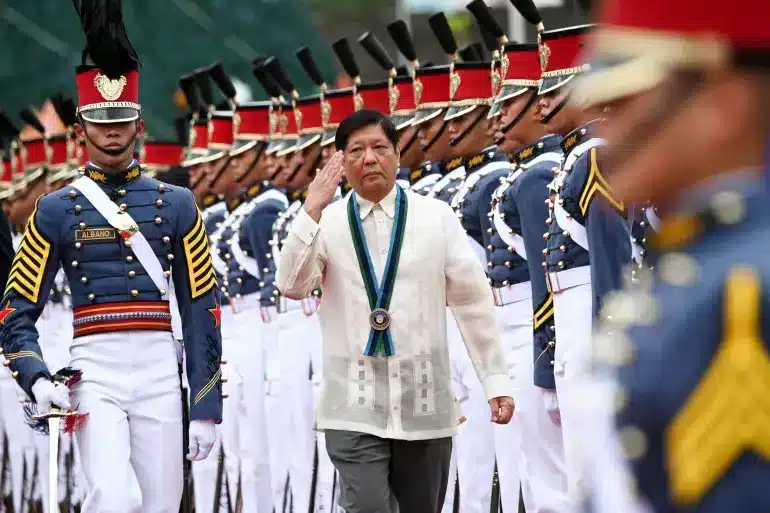
In order to give Japanese troops more access to Philippine territory, the leaders of Japan and the Philippines have agreed to strengthen their defence ties.
The defence agreement was signed on Thursday by Japanese Prime Minister Fumio Kishida and Philippine President Ferdinand Marcos Jr. It will enable Japanese troops to participate in training exercises to address natural disasters and humanitarian needs in the Philippines.
The agreement could lead to similar agreements between Japan and other countries in Southeast Asia, where competition for geopolitical influence has increased amid a more assertive Chinese presence in the region. It is seen as a step towards greater military cooperation between Tokyo and Manila.
Kishida said the countries will continue talks to further strengthen and streamline their militaries’ joint exercises and other operations, while seeking also to expand the transfer of Japanese defence equipment and technology to the Philippines as well as strengthening cooperation trilaterally with the United States.
“After our meeting, I can confidently say that our strategic partnership is stronger than ever as we navigate together the rough waters buffeting our region,” Marcos said at a joint news conference with Kishida.
Taiwan, which lies between Japan and the Philippines, has become a focal point of intensifying Chinese military activity that Tokyo and Washington worry could escalate into war as Beijing has promised to take back Taiwan, which it views merely as a rogue province and not a sovereign state.
Marcos’s visit to Japan come shortly after he and US Secretary of Defence Lloyd Austin reached an agreement on allowing the US more access to Philippine military bases to keep China’s territorial ambitions in check.
The Philippine and Japanese leaders “resolved” to increase the defence capabilities of their own countries and strengthen overall security cooperation with reciprocal port calls and aircraft visits and the transfer of more defence equipment and technology, according to a joint statement released late on Thursday.
It said Japan will transfer air surveillance radar systems to the Philippines and provide related personnel training.
The leaders “expressed serious concerns about the situation in the East and China Seas and strongly opposed the actions including force or coercion that may increase tensions,” the statement said.
Kishida and Marcos also agreed to strengthen economic and cybersecurity, and confirmed Japan’s continuing assistance to the Philippine coastguard in reinforcing its capabilities, including the improvement of port facilities at Subic Bay, a former US naval base.
“President Marcos’s visit here gives us impetus for Japan and the Philippines to further elevate our cooperation in recent years to even higher levels as we contribute to the peace and stability of the region and the international community,” Kishida said at the news conference.
The countries also agreed on loan arrangements and extensions for Philippine infrastructure projects, including $3bn to finance major commuter rail projects.
The agreement with Manila comes after Kishida’s government in December adopted key security and defence upgrades, including a counterstrike capability that breaks from Japan’s post-World War II principle of self-defence only, while also doubling defence spending within five years.
Japan is the Philippines’ biggest source of bilateral development assistance, according to Manila, and its second-largest trading partner. Japan is also the only country to have a bilateral free trade agreement with the Philippines.
Marcos met with Japan’s Emperor Naruhito and Empress Masako ahead of his talks with Kishida on Thursday and invited the imperial couple to visit the Philippines. He also plans to join talks with trade and business officials before returning to the Philippines on Sunday.
The Franco-German meeting with the Ukrainian leader in Paris, according to Prime Minister Giorgia Meloni, did not promote “unity.”
As a result of not being invited to a dinner in Paris with Ukrainian President Volodymyr Zelenskyy, Italian Prime Minister Giorgia Meloni has criticised France and Germany, causing a rift between the European Union’s allies.
Zelenskyy began a surprise trip to Western Europe on Wednesday with a stop in the United Kingdom. He then travelled to France, where, ahead of a Thursday EU summit, he had a late dinner with Macron and German Chancellor Olaf Scholz.
But unlike the previous year, when Macron and Scholz collaborated closely on Ukraine with the then-Italian Prime Minister Mario Draghi, Meloni was left out in the cold.
Speaking to reporters as she arrived at the Brussels summit on Thursday, Meloni, who took office last October, said she thought the snub was “inappropriate”.
“I think our strength in this fight is unity,” she added.
She later met Zelenskyy on the sidelines of the EU meeting.
Asked about her comments, Macron said he thought Wednesday’s dinner had been fitting.
“As you know, Germany and France have had a special role on the Ukraine question for eight years,” he told reporters, referring to joint mediation by the two countries that tried, and failed, to prevent conflict between Russia and Ukraine.
However, things were different when Draghi, a former president of the European Central Bank, was prime minister. Draghi travelled with Macron and Scholz to Kyiv by train last June and played a leading role with them in shaping EU opposition to Russia following its invasion of Ukraine.
Meloni has pledged to maintain the same pro-Ukraine stance, despite the misgivings of some of her coalition allies, telling reporters on Thursday that providing help to Kyiv was the best way to bring about peace.
Underscoring her willingness to support Kyiv, Italy and France finalised technical talks last week for the joint delivery of a SAMP/T-MAMBA air defence system to Ukraine early this year.
However, Meloni’s brand of nationalist politics has put her at odds with both Macron and Scholz on an array of other issues and the close ties that Draghi forged with Paris and Berlin seem a distant memory.
Paris last November accused Meloni’s new government of breaking a bond of trust and breaching international laws by refusing to take in refugees and migrants saved by a charity rescue ship. The boat eventually docked in France instead.
Earlier this week, French and German ministers flew to Washington together to discuss contested US subsidies with their US counterparts, excluding Italy, which is the second-largest manufacturer in the European Union after Germany.
The executive order establishing a transitional team for the upcoming general elections in Nigeria has been signed by President Muhammadu Buhari.
“The new executive order puts in place a legal framework for the seamless transition of power from one presidential administration to another,” he said.
I have signed Executive Order No. 14 of 2023 on the Facilitation and Management of Presidential Transitions. The new Executive Order puts in place a legal framework for the seamless transition of power from one Presidential Administration to another.
Leaders of the East African Community (EAC) have been urged to expedite the deployment of more soldiers to the regional force operating in the easternDemocratic Republic of the Congo.
According to the Luanda ceasefire agreement, more troops are required to take up positions in areas where armed groups have evacuated, according to former Kenyan president and mediator Uhuru Kenyatta for the East African Community (EAC) bloc.
Mr. Kenyatta expressed worry about the deteriorating security situation in the province of North Kivu, where M23 rebels have recently clashed with security forces.
After Burundi and Kenyan contingents arrived in eastern DR Congo last year to help end decades of instability, Uganda and South Sudan are preparing to send troops.
Mr Kenyatta welcomed recent calls by East African leaders for the cessation of hostilities by all sides in the conflict.
In a statement, the facilitator said he would intensify plans for the fourth round of talks in Nairobi by mobilising regional and international support for the meeting.
He has urged all parties involved to accelerate implementation of resolutions of the third consultative talks in Nairobi.
He has also appealed for urgent humanitarian support to more than half a million people displaced by the conflict in North Kivu province.
The conflict has strained relations with the DR Congo, which accuses neighbouring Rwanda of backing the M23 rebels.Rwanda denies the accusations.
In an effort to address an energy crisis, the president ofSouth Africa has declared a state of disaster.
The government now has more authority to address the crippling electricity shortages that have gotten worse recently thanks to Cyril Ramaphosa’s announcement on Thursday.
He insisted that South Africa would have an energy network that was more effective.
The opposition repeatedly interrupted the president’s annual speech to the legislature.
There was chaos in the chamber before his speech. At one point members of the Economic Freedom Fighters stormed the podium, before being forced to leave.
Mr Ramaphosa also said access to the witness protection programme for whistle-blowers that exposed government corruption was under way.
But that brings little relief to those whose relatives were murdered for exposing maladministration.
To address the rising cost of living, Mr Ramaphosa extended the relief funding which is earned by more than eight million unemployedSouth Africans.
Though the UN warned that the extent of the disaster is still not entirely clear, it is now known that more than 21,000 people died in the earthquakes that occurred on Monday in Turkey and Syria.
Rescuers are still looking through the rubble for survivors, but more than four days after the initial earthquake, optimism is waning.
After losing their homes, tens of thousands of people have spent a chilly fourth night in temporary shelters.
The president of Turkey dubbed the earthquake “the disaster of the century.”
A significant global relief effort is intensifying. The World Bank committed $1.78 billion (£1.38 billion) in aid to Turkey on Thursday, including immediate funding for the restoration of essential infrastructure and assistance for those impacted by the earthquakes.
Another donation came from the US, which pledged a package of $85m to both countries.
Meanwhile, the efforts of 100,000 or more rescue personnel on the ground are being hampered by logistical hurdles including vehicle shortages and devastated roads.
UN chief Antonio Guterres warned the full extent of the catastrophe was still “unfolding before our eyes,” especially in Syria, where a long-running civil war has devastated the country.
On Thursday, the first UN humanitarian aid crossed the border into north-western Syria through Idlib’s Bab al-Hawa crossing.
The crossing is the only way UN aid can reach the region without travelling through areas controlled by Syrian government forces.
Mr Guterres promised more help was on the way, and he urged the UN Security Council to allow supplies to be delivered through more than one border crossing.
“This is the moment of unity, it’s not a moment to politicise or to divide, but it is obvious that we need massive support,” he said.
Munira Mohammad, a mother of four who fled Aleppo in Syria after the quake, told Reuters on Thursday that her family was in desperate need of heating and more supplies, saying: “Last night we couldn’t sleep because it was so cold. It is very bad.”
The White Helmets rescue group said the only UN convoy that reached the region did not contain specialised equipment to free people trapped beneath the rubble.
Warnings of second disaster
Officials said on Friday that 18,342 people had died in Turkey, surpassing the more than 17,000 killed when a similar quake hit northwest Turkey in 1999.
An earlier update from Syria had put the toll there at 3,377.
The tremor ranks among the most deadly natural disasters of the century – surpassing others such as the 2011 earthquake and tsunami in Japan.
Resat Gozlu, a survivor in south-eastern Turkey who is now living on the floor of a sports complex with his family, said rescue workers did not arrive until three days after the quake.
He said many remain trapped under the rubble and others died of hypothermia.
“If this continues there could be serious health issues and illness,” he told the BBC.
The World Health Organization (WHO) earlier warned a second humanitarian disaster will strike unless survivors can get access to shelter, food, water and medicine “very fast”.
The WHO’s Regional Director for Europe, Dr Hans Kluge, told the BBC the organisation’s staff in Turkey’s Gaziantep were sleeping in cars because “there’s still hundreds and hundreds of aftershocks”.
Dr Kluge said communities in Syria depended on water reservoirs, which were the first to fall. He said the reservoirs need to be replaced or the country faces cholera outbreaks – which he said was an issue before the earthquake.
A US official says a suspected Chinese spy balloon that the US shot down this week was able to gather communications signals.
A senior State Department official revealed in a background briefing that it had numerous antennas capable of “intelligence collection operations.”
Congressmen from the US passed a non-binding resolution Thursday criticising China for the balloon.
China has refuted claims that the balloon was used for espionage.
It has claimed that the balloon was a weather instrument that got lost.
The US, however, believes the balloon is part of a wider fleet of surveillance balloons that has spanned five continents.
House of Representatives lawmakers called the balloon it a “brazen violation of United States sovereignty” as the body voted 419 to 0 on Thursday morning to condemn its use.
Its appearance in US airspace has provoked a diplomatic crisis and led US Secretary of State Antony Blinken to cancel a trip to China – the first such high level US-China meeting there in years. The US military used a fighter jet to shoot the balloon down over the Atlantic Ocean over the weekend.
China has said the decision to shoot down the balloon was “irresponsible” and did not “create a proper atmosphere for dialogue” between the two countries.
High resolution images revealed the balloon – which was about 200 ft (60 metres) tall – had large solar panels capable of operating “multiple active intelligence collection sensors” as well as antennas that were able to collect and geo-locate communications, the senior State Department official said on Thursday.
The US is considering taking action against groups linked to the Chinese government that were involved in the balloon’s flight, the State Department official said.
The latest US government information suggests that the craft indeed was some type of surveillance balloon, experts told the BBC.
“The types of antennas are meant for surveillance technology and this is not something you would expect for any type of scientific mission,” said Gregory Falco, an assistant professor at Johns Hopkins University’s Department of Civil and Systems Engineering.
It’s still not possible to glean exactly what type of data China might have been trying to gather on the balloon mission, experts said, but it may have intercepted radio, cell phone and other communications from the military bases it flew over, said Matt Kroenig, the senior director of the Scowcroft Center for Strategy and Security at the Atlantic Council.
The balloon’s large solar panels – as well as the fact that it was able to hover over US airspace for long periods of time – is concerning, Dr Falco said.
“They have a high-powered system that can do a lot of data relay,” said Dr Falco. “I don’t know exactly what they were collecting, but all the mechanics are there for getting a lot of data back to their satellites.”
The US may have taken countermeasures to prevent China from gathering data, including jamming equipment, Dr Kroenig said.
But it could have been “too little too late”, Dr Falco said, adding that there was likely a gap in time before the US was aware of the craft and could take action.
Watch: BBC security correspondent Gordon Corera explains the US/China row
US Congress hold balloon hearings
US intelligence, military and foreign policy officials began briefing members of Congress on Thursday about the balloon.
The hearings come amid mounting criticism of the Biden administration’s handling of the incident from his political opponents.
On Wednesday, an open letter from Republican Senators Marco Rubio and Roger Wicker said they lack “a clear understanding” of the government’s response to the balloon.
Speaking to senators, US Army Lieutenant General Douglas Sims said that “the risk of Chinese intelligence collection was low to moderate” as the balloon flew over the US.
The potential of harming civilians on the ground if it was shot down over land, conversely, was “moderate to significant”.
Officials also defended the timing of the balloon’s destruction, saying that doing so over rough terrain in Alaska or the cold waters of the Northern Pacific would have made recovery efforts difficult and dangerous.
At a Wednesday news conference, Defence Department spokesman Brigadier General Pat Ryder confirmed that the US believed similar balloons had operated over North and South America, South East Asia, East Asia and Europe.
According to President Recep Tayyip Erdogan, 16,170 people have died in Turkey alone. In Syria, 3,162 deaths have been reported.
The World Health Organization (WHO) says humanitarian organisations now have the challenge of ensuring those who survived the earthquakes continue to survive.
WHO’s incident response manager says there are thousands of people now surviving “out in the open, in worsening and horrific conditions”, with disrupted access to water, fuel, electricity and communications, amid sub-zero temperatures
Relief efforts in Syria have been complicated by years of conflict, but the first convoy of aid for opposition-held north-western Syria reportedly crossed into the territory from Turkey. Deliveries of life-saving aid had been halted for four days due to damage to roads and logistical issues
There has been anger in Turkey over claims that emergency services responded too slowly to the incident, with some people waiting days for help to reach them
Turkish President Recep Tayyip Erdogan yesterday accepted the government had encountered some problems, but said the situation was now “under control”.
The ratings agency Fitch suggests the disaster could cause economic losses exceeding $4bn (£3.3bn).
“Economic losses are hard to estimate as the situation is evolving, but they appear likely to exceed” $2 billion and could reach $4 billion “or more”, Fitch Ratings said.
Due to concerns about national security, Australia will remove surveillance equipment made in China from defence facilities.
It follows the discovery of 900 pieces of surveillance hardware made by the companies Hikvision and Dahua on government properties during an audit.
Similar actions were taken by the UK and the US last year due to concerns that the Chinese government might access the device data.
These worries are unfounded, according to Hikvision. A request for comment from Dahua has not been met.
In almost every department, including the departments of foreign affairs and attorney general, cameras and security equipment were found to be installed on more than 200 buildings.
At least one unit was also found in the defence department, but the total number at defence sites is unknown.
Defence Minister and Deputy Prime Minister Richard Marles on Thursday said the government would find and remove the cameras from any defence locations to make them “completely secure”.
“I don’t think we should overstate [the seriousness]… but it’s a significant thing that’s been brought to our attention and we’re going to fix it,” he said, adding the devices pre-dated his time in office.
Attorney General Mark Dreyfus said the government will review whether the cameras on other government buildings need to be removed as well.
Shadow Minister for Cyber Security James Paterson, who requested the audit, says they do.
Australia has “no way” of knowing whether data collected by the devices is being handed over to Chinese intelligence agencies, he said.
China’s national security law can be used to compel any organisation or citizen to “support, assist and co-operate with the state intelligence work”.
Senator Paterson also argued Australia should not be supporting Hikvision and Dahua for “moral” reasons. He said both companies have been directly implicated in the alleged human rights abuses and mass surveillance of Uyghurs in Xinjiang.
Hikvision says it is “categorically false” to represent them as a threat to national security.
“No respected technical institution or assessment has come to this conclusion,” a spokeswoman said.
The company says it cannot access end users’ video data and therefore cannot transmit it to third parties, she said.
But in November, the UK also blocked the installation of any new surveillance cameras made by Dahua and Hikvision on “sensitive sites” due to security concerns. It also said it would review whether devices already in place should be removed.
Days later the US banned the sale and import of new communications equipment from five China-based companies including Dahua and Hikvision.
Prime Minister Anthony Albanese said he was unconcerned about how the Chinese government might react to the move. “We act in accordance with Australia’s national interest. We do so transparently and that’s what we will continue to do,” he told reporters.
Ties between China and Australia soured after Canberra banned Huawei from its 5G network in 2018, and China responded with trade restrictions and tariffs on Australian exports such as coal, lobsters, and wine.
But relations have been improving under the centre-left government, which came to power in May 2022.
The president of Ukraine is in Brussels after pleading with the leaders of France, Germany, and the UK to donate fighter jets for the conflict with Russia.
On his second trip outside of Ukraine since the war started, President Volodymyr Zelensky is scheduled to lobby a summit of EU leaders and speak before the European Parliament.
Germany’s Olaf Scholz and France’s Emmanuel Macron reaffirmed in Paris that Russia cannot win the conflict.
France and Germany, according to Mr. Zelensky, have the potential to “change the game.”
The sooner Ukraine receives powerful, long-range weapons and cutting-edge aircraft, he said, “the quicker this Russian aggression will end.” He praised European unity.
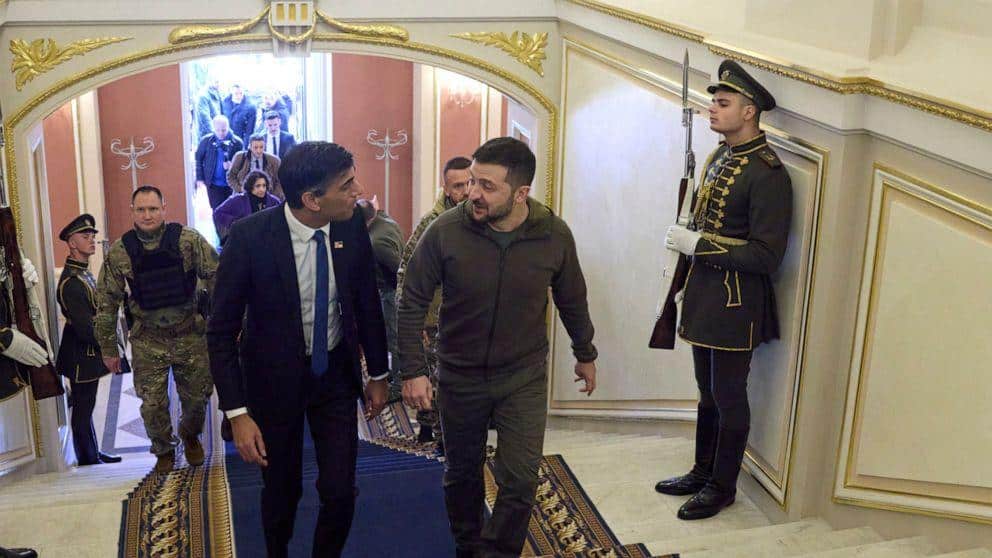
He had earlier addressed a joint session of the UK Parliament in Westminster Hall, underlining his plea for fighter jets: “Freedom will win – we know Russia will lose.” Prime Minister Rishi Sunak told him nothing was off the table.
Mr Zelensky flew to Brussels with President Macron on Thursday, after the French leader vowed Ukraine could count on his support, with France “determined to help Ukraine to victory and the re-establishment of its legitimate rights”.
Chancellor Scholz added: “The position is unchanged: Russia must not win this war.”
Although President Macron has previously signalled some openness to providing fighter jets, Mr. Scholz has not.
EU officials know that a strong focus of the Ukrainian leader’s message on Thursday will be on the speedy delivery of weapons already promised as well as the Western planes he is now heavily pitching for.
Mr Zelensky rarely leaves his own country and a senior Ukrainian official said that he travelled to obtain results.
However, Thursday’s EU leaders’ summit is not a forum for weapons pledges but a chance for Ukraine’s president to be in the room with all 27 EU leaders.
He says fighter jets and long-range missiles are important in addition to the Leopard 2 tanks that Western nations have recently committed to supplying. While Mr Zelensky said he had discussed the issue of combat planes in Paris, he warned there was “very little time” to provide much-needed weaponry.
Both the French president and German chancellor have at times faced criticism for being too slow to support Ukraine.
Mr Zelensky has previously expressed frustration with Mr Macron, who has continued to hold phone calls with Russian President Vladimir Putin after the invasion.
But the Ukrainian president told French newspaper Le Figaro he believed Mr Macron had changed. He said his commitment to support Ukraine to victory and the fact he “opened the door” to tank deliveries last month showed this.
The Russian embassy in London earlier warned the UK against supplying fighter jets, which it described as a step that would have ramifications for the whole world.
Moscow has repeatably warned the West against weapons deliveries since the war began, frequently threatening to retaliate against what it calls “provocations”.
Downing Street said UK Defence Secretary Ben Wallace was investigating what aircraft could potentially be offered but stressed that this was “a long-term solution” and that training pilots could take years.
Dissidents who support Bahraini political prisoners say that spyware was installed on their laptops.
Two dissidents who claim the Bahraini government used spyware to hack their laptops have fileda lawsuit in the United Kingdom, and the High Court in London has ruled that Bahrain cannot use state immunity to prevent that action.
The decision was made on Wednesday in response to claims made by Saeed Shehabi and Moosa Mohammed that the kingdom had infected their laptops with the surveillance programme “FinSpy,” which allowed authorities to access their files, control their laptops, and listen in on their communications.
They added that the software enables users to turn on microphones and cameras on electronic devices for live surveillance and location tracking.
Shehabi and Mohammed, who both live in theUK, have said Bahrain infected their laptops with FinSpy in around 2011, which allowed the kingdom to monitor their work with political prisoners in Bahrain, and are seeking damages for psychiatric harm.
Bahrain has denied hacking Shehabi and Mohammed’s laptops and said they have provided no evidence of how their computers were alleged to have been infected.
The kingdom had argued it was entitled to state immunity because any alleged hacking did not take place in the UK and that the psychiatric injuries claimed did not amount to personal injuries, for which there is an exception to state immunity in English law.
But Judge Julian Knowles on Wednesday dismissed Bahrain’s application, meaning Shehabi and Mohammed’s case can proceed in London.
“This decision demonstrates that we can prevail in our fight for justice and that our voices will not be muzzled by the Bahraini regime’s reprisals or intimidation,” Mohammed said in a written statement.
The Russian foreign ministry responded to an article by American investigative journalist Seymour Hersh that claimed the US military was responsible for the attacks on Nord Stream 2.
According to Russia’s foreign ministry, the United States needs to explain its alleged involvement in the explosions that destroyed the undersea Nord Stream gas pipelines last year.
It was a response to a blog entry written earlier on Wednesday by renowned American journalist Seymour Hersh, who claimed that President Joe Biden had authorised the operation and implicated the US military in the explosions.
Maria Zakharova, a spokeswoman for the Russian foreign ministry, urged the White House to respond to Hersh’s “facts.”
Quoting one unnamed source with “direct knowledge of the operational planning”, Hersh detailed how “skilled deep-water divers” from the US Navy planted C-4 explosives during a training exercise last June, then detonated the payload remotely three months later.
“President Joseph Biden saw the pipelines as a vehicle for [Russian President] Vladimir Putin to weaponise natural gas for his political and territorial ambitions,” Hersh wrote.
Hersh is a Pulitzer Prize-winning investigative journalist who exposed the 1969 massacre of Vietnamese civilians by American forces. He also broke the story of US troops brutalising Iraqi prisoners at Abu Ghraib after the US invasion in 2003.
Russia, without providing evidence, has repeatedly said NATO nations were behind last September’s explosionsaffecting the Nord Stream 1 and 2 pipelines – multibillion-dollar infrastructure projects that carried Russian gas to Germany under the Baltic Sea. Western officials have denied those accusations.
“The White House must now comment on all these facts,” Zakharova said in a post on her Telegram page, where she summarised Hersh’s main claims regarding the alleged US involvement.
The White Houseon Wednesday dismissed Hersh’s post. “This is utterly false and complete fiction,” said Adrienne Watson, a spokesperson for the National Security Council. A US Department of State spokesperson said the same.
A Central Intelligence Agency spokesperson echoed the White House denial, calling the report “completely and utterly false”.
‘Something to hide’ The US and NATO have called the Nord Stream explosions “an act of sabotage“.
Investigators from Sweden and Denmark – in whose exclusive economic zones the blasts occurred – have said the ruptures were a result of sabotage, but have not said who they believe was responsible.
Russia said the countries “have something to hide” and are purposefully blocking Russia from the investigation. Its defence ministry previously accused British navy personnel of blowing up the Nord Steam pipelines.
Construction of Nord Stream 2, designed to double the amount of gas Russia could send directly to Germany under the sea, was completed in September 2021. But the pipeline was never put into operation after Berlin shelved certification just days before Moscow sent its troops into Ukraine in February 2022.
As competition between the two nations grows, the fallout from the alleged Chinese “spy” balloon that flew over the United States has solidified a nearly bipartisan consensus in Washington about the need to “stand up” to Beijing.
Despite the heightened tensions, US officials emphasise that they are still open to dialogue with China. However, many politicians in Washington are using the incident as justification for tougher regulations.
During his annual State of the Union address, which was seen by an estimated 23.4 million TV viewers on Tuesday night, US President Joe Biden personally warned China against endangering US sovereignty.
“The Biden administration has shown that it is very concerned with attacks particularly from the right, from Republican critics, that they are being too soft on China,” said Tobita Chow, director of Justice Is Global, a project that advocates for a more sustainable international economy.
“And because of that pressure coming in from the right, I think we often see them leaning further in the direction of confrontational politics.”
US Secretary of State Antony Blinken postponed a previously scheduled trip to Beijing over the balloon incident, which the Biden administration has called an “unacceptable” violation of American sovereignty.
The US military shot down the balloon on Saturday as it flew over the Atlantic Ocean, after days of debate and congressional calls to bring it down.
In his State of the Union speech, Biden said the US is not seeking confrontation in its competition with China but warned that Washington will stand up for its interests against Beijing.
“As we made clear last week, if China threatens our sovereignty, we will act to protect our country — and we did,” he said.
What do we know about the balloon?
Little is publicly known about the Chinese balloon or what it was doing in US airspace. Nonetheless, its presence caused a significant political stir and produced countless news headlines and wall-to-wall coverage.
China initially expressed regret for the incident, describing the balloon as a civilian airship used for meteorological research that “deviated far from its planned course”. Beijing later condemned the US hit to bring down the aircraft.
But the Pentagon insisted it was a “high-altitude surveillance balloon”, although US defence officials said the balloon did not pose a “military or physical threat”.
Still, some Republican lawmakers kept describing the aircraft as a risk to national security.
Republican Senator Tom Cotton denounced the Biden administration for allowing the balloon to traverse the continental US for days before shooting it down.
Cotton told Fox News earlier this week that he felt the delay in Biden’s response was “dangerous for the American people”. He also accused the administration of pushing to salvage Blinken’s visit to Beijing, which he described as “already ill-advised”.
US officials had previously said that, if the balloon were brought down over land, falling debris could “potentially cause civilian injuries or deaths or significant property damage”.
Christopher Heurlin, an associate professor of government and Asian studies at Bowdoin College in the US state of Maine, said while the balloon may not have been a direct threat to Americans, it created a “shock” in the country.
“We like to think in the United States that we live in North America and we’re oceans away from any kind of competitors — and in that sense, not very vulnerable,” Heurlin told Al Jazeera.
“Whereas having the spy balloon flying overhead, I think, does create some kind of visceral sense of vulnerability in the collective psyche.”
China has condemned the US hit on the balloon [Chad Fish via AP Photo]
As for Blinken’s trip, Heurlin said “political considerations” played a role in the decision to postpone it.
“I’m not sure that politically Biden would have been able to get away with sending Secretary of State Blinken to China under these circumstances,” he told Al Jazeera.
Chow, the director of Justice Is Global, agreed that the “panic” over the balloon likely led to postponing the visit.
“I think the Biden administration correctly judged that the balloon was not really that big of a deal,” Chow told Al Jazeera. “But they felt overwhelmed by this wave of media coverage and this very extreme freakout from the right.”
How we got here
The balloon incident came against the backdrop of growing animosity between Washington and Beijing.
Last year, the White House released a national security strategy that described China as the “most consequential geopolitical challenge” for the US. The Pentagon also prioritised competition with Beijing in its defence strategy.
Both assessments primarily focused on China, not Russia, despite the latter’s invasion of Ukraine, which has disrupted global supply chains for vital goods like food and energy and ushered in the most intense violence in Europe since World War II.
Ties between Beijing and Washington have soured over numerous points of tension in recent years, including trade issues, the status of Taiwan, China’s claims in the South China Sea and an ongoing US push against growing Chinese influence in the Indo-Pacific.
The US has also been warning China against coming to Russia’s aid in Ukraine.
So how did we get here?
As Washington’s so-called “war on terror” — initiated during the aftermath of the 9/11 attacks — began to wind down, the US turned its focus to competing with China, whose economic power and push for global influence has been growing.
Chow said the root of the tensions is “neoliberal free-trade globalisation”. That economic framework, he explained, has been experiencing deeper systemic problems since the 2008 financial crisis and has led to “zero-sum competition, which then became the breeding ground for dangerous nationalist politics”.
Heurlin, the professor, linked the current state of affairs between the two countries to economics as well. He said that, with the loss of manufacturing jobs to outsourcing, the anger of many in the US has shifted to China
He added that since the rise of President Xi Jinping in 2012, Beijing has pursued an assertive foreign policy that includes a “vocal defence of Chinese interests”.
“That is something that they’ve been doing really to appeal to Chinese nationalists back home,” Heurlin told Al Jazeera.
“So I think on both sides, this is something that’s been happening for a while. And then especially once Donald Trump comes to the American presidency and starts the trade war with China, that’s when relations really start to bottom out.”
Ultimately, Heurlin said, the US government’s goal is to “maintain its status quo position as the most militarily and economically powerful country in the world”.
What’s next for US-China relations?
Despite the deteriorating relationship, officials in both countries continue to call for cooperation on shared global challenges — namely combatting climate change and the COVID pandemic — as well as warn against confrontation.
But for the foreseeable future, the tensions show no sign of subsiding.
“What we should anticipate is that conflict between the US and China is going to continue and build and escalate over time,” Chow said. “And if things don’t change, then yes, this is going to be a long-term great power conflict that is going to have enormous consequences for people in the US and China and around the world.”
Heurlin echoed that prediction but said he hopes that, with China ending its“zero COVID” policies, more people-to-people interactions between US and Chinese citizens would soften public opinion in both countries.
“It’s getting harder and harder to manage the US-China relationship from the perspective of both Beijing and Washington and I don’t think there really is any kind of magical solution,” he said.
While rescuers continue to work frantically to save survivors from the rubble of collapsed buildings in Turkey, the chances of finding many more people alive are fading rapidly more than 72 hours after the devastating earthquakes.
Turkey’s Disaster Management Authority (AFAD) said 12,873 people died in the country from the earthquakes on Monday, while 2,950 people died in Syria, bringing the confirmed total to more than 15,800.
In Kahramanmaras, one of the worst-hit Turkish cities close to the epicentre, rescuers worked relentlessly to pull people from the rubble.
Al Jazeera’s Resul Serdar, reporting in front of a collapsed hotel in Kahmaranmaras on Thursday, said that an estimated 60 people remained under the rubble of the building.
“Unfortunately, since last night, no one came out of the rubble alive,” he said. “But some dead bodies – completely burned – have been taken out from the rubble by the rescue teams. There is a fire – it’s not clear what the source is, but it’s making the extraordinary work of the rescue teams even more difficult.”
Nearly 1,000 buildings in the southern Turkish city have collapsed, and more than 600 people are confirmed to have died there.
Serdar said many people had gathered by the rubble of the hotel, waiting for news of their loved ones, but that it was extremely cold in the city – especially overnight.
“The rescue efforts here are frantic, but with every passing minute the hopes are fading,” he said.
He admitted to problems with his government’s initial response.
“Of course, there are shortcomings,” he said. “The conditions are clear to see. It’s not possible to be ready for a disaster like this.
He added his government’s target was to rebuild the destruction in one year.
“We will start construction of new houses in all those 10 cities to make sure nobody is without a shelter. It will take some time to build those buildings of course,” he said.
Rescue teams are at work in Kahramanmaras, southern Turkey [Ahmet Akpolat/DIA via AP]
Al Jazeera’s Stefanie Dekker, reporting from Gaziantep, near Turkey’s border with Syria, aftershocks were still continuing as rescuers searched for survivors and bodies.
More than 100 aftershocks have been registered since the first pre-dawn quake on Monday, increasing the risk of more buildings – as well as the mountains of rubble – collapsing.
Rescuers were at work to reach 22 people thought to still be trapped in a flattened building.
“Rescue workers have told us that as they have no longer heard any voices or sounds coming from under the rubble,” Dekker said. “This is now a recovery operation … no longer a rescue one.”
“As time goes on, the prospect of finding anyone alive under these crushing layers of concrete fades,” she added
Ayad Shakir, resident of Harem, in the northwest Idlib province, told Al Jazeera he had been searching for his cousin and his cousin’s family since Monday.
“We pulled out four people yesterday, his wife and three of his children. We came back today and pulled out the husband, who is my cousin,” he said.
“He has another son and a little daughter, and now we are waiting to get them out.”
Abada Zikri, civil defence volunteer, told Al Jazeera that his team had pulled out a man and young girl alive in from rubble in Harem after 50 hours of work, but said the challenges they faced were immense.
“The civil defence teams are struggling [to find enough] heavy machinery, due to the massive area that has been damaged,” Zikri said.
“Over 400 sites were destroyed completely, and over 250 sites are partially damaged. We urge the international community to help.”
Authorities met with Twitter to “remind Twitter of its obligations on content takedowns and disinformation,” according to Netblocks, and this led to the restoration.
Without offering an official justification, Turkish authorities expressed concern about online misinformation.
The observatory first reported restrictions on the social media platform on Wednesday. Twitter’s ownerElon Musk subsequently said Turkey had indicated it would restore access to the platform soon.
ℹ️ Update: Metrics confirm access to Twitter is being restored in #Turkey following hours of filtering. The restoration comes after authorities held a meeting with Twitter to "remind Twitter of its obligations" on content takedowns and disinformation.
The government’s attempt to have Martha Chizuma, the director of theAnti-Corruption Bureau (ACB), reinstated was rejected by a high court in Malawi.
Ms. Chizuma was detained due to the fact that she was charged with a crime for allegedly defaming several high-ranking government officials.
The allegedly defamatory statements are found in a covertly recorded private conversation she had with a non-officer. She was purportedly heard on tape accusing some of the highest-ranking members of the judiciary and government of undermining the fight against corruption.
Last year, the recording was produced and widely shared online. Malawi President Lazarus Chakwera claimed at the time that he had censured Ms. Chizuma for the remarks.
The president, however, said he would not sack her because he considered the secret recording and its circulation to be “corruption fighting back.”
The secretary to the president and cabinet, Colleen Zamba, nonetheless interdicted Ms Chizuma late last week.
The interdiction was set aside by court on Monday following an application by the Malawi Law Society.
On Tuesday, the government filed an urgent application to suspend the order that stopped Ms Chizuma’s interdiction, which the court has now rejected.
Early on Wednesday, the US and the UK – two of Malawi’s main donors – expressed “deep concern” with government actions which they said undermined the credibility of the country’s fight against corruption.
Ms Chizuma is seen as a committed anti-corruption crusader.
She has so far indicted the country’s Vice President, Saulos Chilima, and several other high-profile individuals over corruption and has hinted there will be even more arrests. The vice president has denied any wrongdoing, and his case is now awaiting the commencement of trial.
The window for finding survivors under the rubble is rapidly closing, experts have warned, but many distressed families claim that a lack of rescuers and supplies is reducing their chances of finding loved ones.
The president of Turkey has acknowledged that his nation’s response to the devastating earthquake that has claimed more than 15,000 lives has had “shortcomings.”
As the likelihood that more survivors will be discovered decreases, Recep Tayyip Erdogan is coming under increasing pressure from families who are frustrated by the rescue teams’ slow response.
At least 15,865 people across Turkey and Syria are now known to have lost their lives – 12,873 ofwhom were in Turkey.
Image:President Recep Tayyip Erdogan speaks to an earthquake survivor. Pic: AP
Many Turks have complained of a lack of equipment, expertise and support to help those who are trapped – leaving them helpless as they hear cries from under the rubble.
During a visit to Hatay province, where more than 3,300 people have died and entire neighbourhoods have been destroyed, Erdogan said: “It is not possible to be prepared for such a disaster. We will not leave any of our citizens uncared for.”
Similar issues are being reported in neighbouring Syria, with the country’s UN ambassador conceding the government has a “lack of capabilities and a lack of equipment”.
Across Turkey and Syria, many of those in areas hardest hit by the 7.8 magnitude quake – and subsequent aftershocks – are afraid of going back into buildings.
“We survived the earthquake, but we will die here due to hunger and cold,” one man in the Turkish city of Antakya said.
Some survivors are still being found – with footage showing a young girl in pyjamas and an older man holding an unlit cigarette between his fingers being lifted from debris.
https://imasdk.googleapis.com/js/core/bridge3.555.1_en.html#goog_1817367946Play Video – Dead bodies lie in the streetsDead bodies lie in the streets
Chances of survival are diminishing
According to experts, the survival window for those trapped is now closing rapidly – but nonetheless, it is too early to abandon all hope.
Natural hazards expert Steven Godby said: “The survival ratio on average within 24 hours is 74%, after 72 hours it is 22% and by the fifth day it is 6%.”
David Alexander, a professor of emergency planning and management atUniversity College London, said: “Statistically, today is the day when we’re going to stop finding people. That doesn’t mean we should stop searching.”
He went on to warn that the final number of fatalities may not be known for many weeks because of the sheer amount of rubble spanning Turkey and Syria.
https://imasdk.googleapis.com/js/core/bridge3.555.1_en.html#goog_635229091Play Video – ‘My children are in the building”My children are in the building’
‘Our hands cannot pick anything up’
While some rescue teams have access to excavators, others have little choice but to use their bare hands.
Ozel Pikal, who assisted with search efforts in the Turkish city of Malatya, fears some of those trapped may have frozen to death after temperatures fell to -6C.
“As of today, there is no hope left in Malatya. No one is coming out alive from the rubble,” he said.
Mr Pikal warned that damage to local roads – and a shortage of rescuers – was exacerbating attempts to save people.
He added: “Our hands cannot pick anything up because of the cold. Work machines are needed.”
Erdogan hits back at critics
Turkey’s president has pledged that the government will distribute 10,000 Turkish lira (£440) to families affected by the earthquake.
The natural disaster comes at a testing time for Mr Erdogan, who is facing an already challenging election campaign in May – fuelled by high inflation and an economic downturn.
Speaking to reporters, he criticised those spreading “lies and slander” about his government’s actions – and said it was a time for unity and solidarity.
“I cannot stomach people conducting negative campaigns for political interest,” he added.
Police in Turkey have been attempting to crack down on misinformation related to the earthquake response, and have arrested 18 people and identified over 200 accounts accused of “spreading fear and panic”.
Some internet service providers in the country have also restricted access to Twitter – affecting trapped survivors who have been using the social network to alert rescuers and their families.
The Turkish government has been known to temporarily restrict access to social media during national emergencies and terror attacks – and Twitter’s owner Elon Musk said: “We are reaching out to understand more.”
The situation in rebel-held northwest Syria is described as “tragic” and “permeated with the smell of death” by the Syrian Civil Defense group, which is appealing for donations of search and rescue equipment.
“The situation is tragic in every sense of the word. Unfortunately, hundreds of families are still under the rubble,” volunteer Asim Al-Yahya said, according to a tweet from the group, which is also known as the White Helmets.
“The situation is tragic in every sense of the word. Unfortunately, hundreds of families are still under the rubble. As the 3rd day of the earthquake enters, there is a great shortage of search & rescue equipment.”#WhiteHelmets volunteer Asim Al-Yahya#Syria#earthquakepic.twitter.com/NWDTmQW01r
In a separate tweet, the White Helmets said “death hangs over the neighbourhoods of Salqin”, a town west of the city of Idlib. “The smell of death is everywhere,” it said.
Death hangs over the neighborhoods of Salqin, west of #Idlib. The smell of death is everywhere. A number of #earthquake victims have been recovered in the city of Salqin, west of Idlib.#Syriapic.twitter.com/CnxKuV5FyY
The presidential office has announced that in addition to the aid already provided by the island, Taiwan President Tsai Ing-wen and Vice President William Lai will each donate one month’s salary for the relief efforts following the earthquake in Turkey.
The presidential office said in a statement that Tsai and Lai, who are widely anticipated to run for president in the elections scheduled for next year, “hope to do their part to help Turkey rebuild its homeland as soon as possible.”
Turkey, like the majority of nations, does not maintain formal diplomatic ties with Chinese-occupied Taiwan, but there are direct flights from Istanbul to Taipei, and the two nations do maintain de facto embassies in each other’s capitals.
“My heart goes with our people in Turkey,” Tsai wrote in a book of condolences when she went to the de factoTurkish embassy in Taipei.
7,000 jobs will be eliminated, according to Disney CEO Bob Iger, as part of a significant restructuring of the entertainment juggernaut.
The layoffs are a part of a strategy to save $5.5 billion and turn Disney+ into a profitable streaming service after it reported its first subscriber decline since 2019.
In his own words, Mr. Iger “did not make this decision lightly.”
Additionally, he presented the first set of financial figures since his return to the organisation in November, which showed Disney+’s ongoing losses.
“I have enormous respect and appreciation for the talent and dedication of our employees around the world,” Mr. Iger said in a statement announcing the job cuts. “And I’m mindful of the personal impact of these changes.”
He said the changes would “better position us to weather future disruption and global economic challenges”.
The job cuts amount to around 3.6% of Disney’s worldwide workforce. Meanwhile, Disney reported an 8% rise in sales to $23.5 billion (£19.45 billion) between October and December last year. Profit also rose, up by 11% to $1.3 billion.
However, Disney+ reported a $1.5bn loss and its subscribers fell by around 2.4m to 161.8m.
The plan will see the company restructure into three segments: entertainment, which will include film, TV, and streaming; sports-focused ESPN; and Disney parks, experiences, and products.
“This reorganisation will result in a more cost-effective, coordinated approach to our operations,” Mr Iger told analysts on a conference call.
The company’s streaming service remained its top priority, he added.
Disney share price rose by more than 5% in extended trade after the announcement.
The changes address some of the criticisms raised in recent months by billionaire activist investor Nelson Peltz, who criticised Disney of overspending on its streaming business.
In response to the announcement Mr Peltz’s Trian Group said: “We are pleased that Disney is listening.”
Mr Iger made a shock return as Disney’s chief executive, less than a year after he retired from the firm.
He was brought back to steer the company through turbulent times after its share price plummeted and Disney+ continued to make a loss.
Mr Iger, who had previously headed Disney for 15 years, replaced Bob Chapek, who took over as chief executive in February 2020.
Mr Chapek was ousted after Disney’s streaming business posted a $1.5bn quarterly loss.
Less than 24 hours after his return to Disney, Mr Iger said he was planning a major shake-up of the business.
At the time, he said he had tasked a group of executives with designing “a new structure that puts more decision-making back in the hands of our creative teams and rationalises costs.”
The King is modifying the royal family’s web pages, which his mother, Queen Elizabeth, was previously using.
King Charles III is updating communication methods that Queen Elizabeth II previously used.
King Charles released two statements on Thursday using the official accounts of the British royal family on Instagram, Twitter, and Facebook. The messages featured a new graphic. Following Queen Elizabeth’s passing in September 2022, Charles, then 74, took charge of the @RoyalFamily social media accounts.
The new graphics, which can be seen in news feeds, have white backgrounds with navy text watermarked with the British royal coat of arms.
Until now, King Charles had been making statements with the same navy graphic that Queen Elizabeth used. The old design featured large white text with a small royal coat of arms in the lower left corner.
Following his mother as monarch, Charles has used his royal signature, “Charles R.” The “R” stands for “Rex,” which means “King” in Latin. During her record-breaking reign, Queen Elizabeth would sign official communications as “Elizabeth R” — the “R” meaning “Regina,” or “Queen.”
The new graphic isn’t the only way King Charles is refreshing the royal family’s social media pages. In the fall, the sovereign’s office started a series called “The Royal Week,” sharing photos and short summaries on the latest engagements of the King, Queen Camilla, Prince William, Kate Middleton and the rest of the working royals.
Last week, Charles’ office started the clock for the countdown to his coronation in May.
“100 days to go until the Coronation!” the palace tweeted, sharing a recap of “what to expect” over the three-day weekend.
As PEOPLE previously reported, King Charles and Queen Camilla will be crowned in a ceremony at Westminster Abbey on May 6. “The Service will reflect the Monarch’s role today and look towards the future, while being rooted in longstanding traditions and pageantry,” courtiers said.
Following the service, King Charles and Queen Camilla will be joined by members of the royal family for the larger Coronation Procession back to Buckingham Palace, where they will all appear on the iconic balcony for the first time since the accession.
King Charles and Queen Camilla. ANDREW MILLIGAN/GETTY
The following day, the Coronation Concert will be broadcast live from Windsor Castle. The event will feature “global music icons and contemporary stars,” supported by a world-class orchestra and dancers. Free pairs of tickets will be made available to the public via national ballot, and the concert will also be attended by volunteers from some of the King and Queen Consort’s charity affiliations.
Synchronized with the concert, “Lighting up the Nation” will see iconic locations across the U.K. illuminated with projections, lasers and drone displays.
Also on May 7, citizens across the U.K. will gather with neighbors for the Coronation Big Lunch. Originally conceived by the Eden Project, the event is intended to “boost community spirit, reduce loneliness and support charities and good causes.”
Monday, May 8, was announced as a bank holiday by Prime Minister Rishi Sunak in November. U.K. citizens are invited to participate in the Big Help Out, a volunteering initiative
The UK needs to give Ukrainian troops the extra equipment they need to “defeat Putin and restore peace,” according to former prime minister Boris Johnson.
Speaking about the military assistance required to aid Ukraine in its conflict with Russia, Mr. Johnson urged Rishi Sunak to give Ukraine more tanks and jets.
He said: “We have more than 100 Typhoon jets. We have more than 100 Challenger 2 tanks. The best single use for any of these items is to deploy them now for the protection of the Ukrainians—not least because that is how we guarantee our own long-term security.”
The Tory MP went on to say that the investment would help push Mr Putin back and “make our world safer.”
“Now is the time to give them exactly what they need to finish the job,” he added.
Mr Johnson’s call reiterates comments he made during a tour of the US last week in which he called for the West to send F-35s and Typhoons to Kyiv.
The repeated call also comes in the wake of President Volodymyr Zelenskyy’s speech at Westminster Hall today.
Mr Zelensky used an address to the parliament to call for more fighter jets and said he wanted a coalition of nations to supply planes.
However, Mr Sunak continues to resist calls for fighter jets, with the PM’s spokesman saying it would take years to train pilots to fly the jets.
The firm says that its top priorities are the safety and wellbeing of its employees, but a union has complained that this claim is not taken seriously enough.
A legal agreement between McDonald’s and the equality watchdog has been signed in response to complaints about the company’s handling of sexual harassment claims made by UK employees.
In 2019, a union that represents some workers alleged that more than 1000 complaints had been filed.
In the wake of strikes that affected restaurants in several US cities in 2018 over the same issue, the Bakers, Food, and Allied Workers Union (BFAWU) claimed a “toxic culture” at UK locations.
The legally binding agreement with the Equality and Human Rights Commission (EHRC) commits the group to a number of measures to better protect workers in the UK.
They include communicating a “zero tolerance” approach to sexual harassment, to provide anti-harassment training and to improve policies to better respond to complaints.
Alistair Macrow, chief executive of McDonald’s in the UK stressed that harassment and abuse “have no place in our society or at McDonald’s”.
He responded: “As one of the UK’s leading employers, the safety and wellbeing of our people is our absolute priority.
“It is hugely important to me that everyone in our organisation feels safe, respected and included at all times – this is core to the values of our business.
“We already have a strong track record in this area and I now welcome the opportunity to work with the EHRC to further strengthen this.”
The group had committed, in 2021, to anti-harassment training for its global workforce after it emerged that at least 50 employees worldwide had filed charges against the chain over the previous five years.
Ian Hodson, national president of the BFAWU, said: “It’s shameful that one of the richest corporations on the planet doesn’t take sexual harassment seriously until we raise it.
EHRC chairwoman Baroness Kishwer Falkner said: “We are pleased that McDonald’s has signed this agreement to signal their intent to make their restaurants safe places to work.
“The improvements they put in place can set an example for others to follow, whether in the hospitality industry or elsewhere.”
The alleged botched response to the Halloween crowd crush that left 159 people dead was blamed on Lee Sang-min by the parliament.
Due to his actions following a fatal Halloween crush in October, South Korean lawmakers have voted to impeach interior minister Lee Sang-min, paving the way for him to become the first cabinet member to be dismissed by the legislature.
The October 29 incident, when partygoers flocked to Itaewon’s popular nightlife district to celebrate the first Halloween festivities without a coronavirus mask in three years, resulted in as many as 159 fatalities and 196 injuries.
To be approved, the motion required the backing of at least 150 members.
The Democrats and other opposition parties had pushed for the expulsion of the interior minister urging him to take responsibility for botched responses to the crush.
“I will fully cooperate with the constitutional court’s impeachment trial so that the ministry of interior and safety can be normalised at an early date,” the minister said in a statement.
The impeachment suspends Lee from his duties and the country’s Constitutional Court has 180 days to rule on whether to unseat him for good or give him back the job, a process that could take up to six months.
Vice Minister Han Chang-seob will step in as acting minister until the Constitutional Court decides on Lee’s fate.
President slams ‘shameful’ parliamentary politics
President Yoon Suk-yeol, who counts Lee as a key ally, had rejected the opposition’s demand that he sack the interior minister, and his office and ruling party denounced the Democrats for abusing their majority power to press ahead with the impeachment.
“It is the renunciation of parliamentary democracy,” Yoon’s office said in a statement after the motion passed. “It will be recorded as a shameful history in parliamentary politics.”
Lee’s impeachment came weeks after police announced they are seeking criminal charges, including involuntary manslaughter and negligence, against 23 officials, about half of them law enforcement officers, for a lack of safety measures they said were responsible for the crowd crush in Itaewon, a major nightlife district in Seoul.
The case also highlights the growing impasse Yoon faces in a parliament controlled by his liberal opponents and could further intensify the country’s partisan political fighting that has fuelled a national divide.
A presidential official said there was no evidence that the minister had severely violated the constitution or any law
‘Man-made disaster’
Lee faced huge criticism shortly after the crowd crush after he insisted that having more police and emergency personnel on the ground still wouldn’t have prevented the tragedy in Itaewon, in what was seen as an attempt to sidestep questions about the lack of preventive measures.
Despite anticipating a crowd of more than 100,000, Seoul police had assigned 137 officers to Itaewon on the day of the crush. Those officers were focused on monitoring narcotics use and violent crimes, which experts say left few resources for pedestrian safety.
Some experts have called the crush in Itaewon a “man-made disaster” that could have been prevented with fairly simple steps, such as employing more police and public workers to monitor bottleneck points, enforcing one-way walk lanes and blocking narrow pathways or temporarily closing Itaewon’s subway station to prevent large numbers of people moving in the same direction.
Tension flared this week between theSeoul government and families of the crush victimsafter they set up an unauthorised memorial in front of city hall. On Tuesday, city officials said the memorial violated rules and ordered its removal in a week.
In 2017, President Park Geun-hye became South Korea’s first elected leader to be expelled from office when the Constitutional Court upheld her impeachment. The court dismissed an impeachment motion in 2004 for President Roh Moo-hyun.
In her lawsuit against the duchess, Samantha Markle alleges that Meghan made “demonstrably false and malicious statements” to a “worldwide audience.”
Following the judge’s denial of a motion to halt the testimony, Prince Harry and Meghan Markle will be forced to testify under oath in a US defamation case brought by the duchess’s half-sister.
A lawsuit against the duchess for “defamation and injurious falsehood” was filed by Samantha Markle in 2021, following the couple’s high-profile tell-all interview with Oprah Winfrey.
Samantha Markle asserted in a document filed in March of last year that Meghan made “demonstrably false and malicious statements” to a “worldwide audience.”
The duchess previously filed a motion to stop a person from being forced to testify under oath during depositions, where a person is made to give testimony under oath, from taking place in the case.
However, this motion was dismissed by Florida judge Charlene Edwards Honeywell on Tuesday.
“Defendant Markle does not show that unusual circumstances justify the requested stay, or that prejudice or an undue burden will result if the court does not impose a stay,” the documents state.
“Defendant Markle does not satisfy the high standard required to stay discovery pending the resolution of a dispositive motion.”
Image:Samantha Markle is suing her sister for ‘defamation and injurious falsehood’
In their joint interview with US talk show host Winfrey in March 2021, Harry and Meghan spoke about both their families and made a series of allegations about the Royal Family.
Samantha Markle’s original complaint stated the comments made by the Sussexes during the interview had reached “roughly 50 million people in 17 countries”.
In the filing she alleged she was defamed by Meghan in the interview when the duchess “falsely and maliciously” said that she was “an only child”.
“Plaintiff – who suffers from multiple sclerosis and is confined to a wheelchair – brings this action for defamation based on demonstrably false and malicious statements made by her half-sister to a worldwide audience, including roughly 50 million people in 17 countries who watched the Oprah Winfrey interview with the defendant, Meghan Markle, and her husband, Prince Harry of England,” the filing stated.
“Meghan – who was featured with Prince Harry on the cover of Time Magazine’s annual feature on ‘The World’s Most Influential People’ published and disseminated false and malicious lies designed to destroy Plaintiff’s reputation and which have subjected Plaintiff to humiliation, shame and hatred on a worldwide scale.”
The filing also added that Meghan had used “the powerful resources of the royal family’s public relations operation” to disseminate and spread “lies worldwide” about Samantha Markle and their father, Thomas Markle.
“(It was) a premeditated campaign to destroy their reputation and credibility so they could not interfere with or contradict the false narrative and fairy tale life story concocted by the Defendant.”
The planned depositions come following the Sussexes’ explosive Netflix series and the publication of Harry’s memoir Spare last month.
The new governor of Iran’s central bank, Mohammadreza Farzin, declared last week that Iran and Russia have made significant progress towards connecting their banking infrastructures in the face of Western sanctions: “The financial channel between Iran and the world is being restored.”
The Central Bank of Iran (CBI) claims that after years of effort, the two nations have connected Iran’s SEPAM national financial messaging service to Russia’s Financial Messaging System of the Bank of Russia. Russia has not yet responded (SPFS).
The Society for Worldwide Interbank Financial Telecommunication (SPFS) is the Russian equivalent of SWIFT, the international system for financial messaging and transfer, and its objective is to connect it with other significant powers like China and India. It started developing SPFS when it was previously threatened with expulsion from SWIFT for annexing Crimea in 2014.
The entirety of the Iranian banking system is cut off from SWIFT as a result of waves of US sanctions that started in 2018 when then-President Donald Trump unilaterally withdrew from Iran’s 2015 nuclear deal with world powers. Talks to restore the nuclear accord remain deadlocked.
But now, Iran says, all of its several dozen financial institutions can connect with Russian banks, in addition to more than 100 banks from 13 other – mostly Eurasian – countries that have access to SPFS.
The announcement comes as Tehran and Moscow have increasingly grown closer in the past year following Russia’s invasion of Ukraine, which triggered more Western sanctions against Russia. Iran has also been targeted for supplying Russia with drones, which it says were delivered before the invasion of Ukraine in February 2022.
Advancing economic ties is central to the relationship, with bilateral trade growing to more than $4bn last year for the first time ever, according to Iranian and Russian officials.
The Iranian government said last week that Russia, with $2.7bn, was by far the largest investor in the sanctioned Iranian economy in the first year since the August 2021 start of the presidency of Ebrahim Raisi.
‘The political will is there’
To further expand economic relations, Iran and Russia needed a stronger banking link and now the missing technical infrastructure seems to be in place for that.
Before the Ukraine war and the sanctions it brought on Moscow, Iran was more interested than Russia in structured banking cooperation, but now it seems Russia is pushing for it too, according to Hamidreza Azizi, a fellow at the German Institute for International and Security Affairs.
“In that sense, it seems that for the first time in the past decades, there is a strong will on both sides to enhance and institutionalise economic relations,” he told Al Jazeera. “So, the political will is certainly there.”
However, Azizi said, at least in the short term, the Russian system will not turn into a viable alternative to SWIFT as it needs other big economies like China and India to join or even take the lead.
“As both countries are still quite cautious with regard to their relationship with the West, this will take a long time, if at all, to materialise. It also depends, to a great extent, on the future of the global rivalry between Washington and Beijing,” he said.
For Iran, simply linking its financial messaging system to Russia’s does not automatically strengthen banking relations because the banks connected to SPFS still need to decide if they want to work with Iranian customers and establish correspondent accounts with Iranian banks.
“It’s like a person is in the telephone network and can connect to anyone, but you can only say there’s communication when it actually happens,” Mohsen Karimi, CBI’s deputy for international affairs, told the state-linked Tasnim agency last week.
“I even have doubts whether all Russian banks are equally interested in doing so, as some of them still have interests in Europe and elsewhere that could be in jeopardy if they work with Tehran,” he said.
‘Lack of liquidity’
Tehran and Moscow are also pursuing to strengthen the use of their national currencies in trade to try to gradually weaken the impact of the US dollar and the euro on their economies.
In July last year, the Russian rouble was officially added to the basket of currencies that are offered in NIMA, a state-run foreign exchange market for Iranian importers and exporters launched in 2018 and overseen by the central bank.
Then-CBI chief Ali Salehabadi had said the rouble-rial market was launched with a deal worth 2 million roubles (about $28,300), also encouraging Iranian exporters to Russia to offer their roubles in the market.
NIMA now maintains a fixed rate, artificially lower than the open market, in an effort to prevent further depreciation of the embattled Iranian currency that has recently seen new all-time lows amid protests and ongoing tensions with the West.
Officials have not disclosed any data on the volume of rial-rouble deals in NIMA, or exactly how much of their overall bilateral trade is currently done in national currencies.
Making it possible for banks to process cross-border payments does not mean that trade will automatically increase, asRussian and Iranian traders continue to face challenges, according to Esfandyar Batmanghelidj, CEO of the Bourse & Bazaar Foundation, an economic think tank.
“There remains a lack of liquidity in the foreign exchange market for roubles and rials,” he told Al Jazeera.
“The Russian and Iranian economies also lack basic compatibility. The two countries export and import the same goods, meaning that they are competitors in those few markets that remain open to engagement in sanctioned trade.”
In this vein, Batmanghelidj said the announcement on the banking link is notable as it signals Russian and Iranian policymakers are working to overcome some of the technical barriers to increased trade, but it is not a “game-changer” by itself.
Zoom, a well-known provider of video conferencing services that saw a surge in remotework during the Covid pandemic, is dismissing 1,300 employees.
About 15% of its staff will be impacted by the change, which comes as user growth and profits have recently slowed.
Boss Eric Yuan announced that, as the company focuses on making sure it can weather the slowdown, he and other leaders will also take significant pay cuts.
It is one of many tech companies that are making similar changes.
“As the world transitions to life post-pandemic, we are seeing that people and businesses continue to rely on Zoom,” Mr Yuan wrote in a message to employees shared by the company.
“But the uncertainty of the global economy, and its effect on our customers, means we need to take a hard – yet important – look inward to reset ourselves so we can weather the economic environment, deliver for our customers and achieve Zoom’s long-term vision.”
Amazon and Salesforce are among the other heavyweights to have announced big job cuts, saying the boom in business they saw during the pandemic was ending.
More than 300 tech firms have laid off nearly 100,000 workers globally since the start of the year, according to Layoffs.fyi, which tracks such announcements.
Zoom especially has faced challenges as rival tech firms upgrade their video offerings.
The firm’s revenue more than tripled in 2020 and grew about 55% in 2021. But last year, the gains slowed to the single digits and its profits dropped sharply.
Shares in the company have plunged more than 80% from their 2020 peak.
Mr Yuan said the cuts would affect every part of the organisation and were aimed at reducing duplicative roles and refocusing on the firm’s top priorities.
Mr Yuan said he would also reduce his salary in the coming fiscal year by 98% and forego his bonus. Other members of the executive leadership team will see their base salaries fall by 20% and lose bonuses, he added.
“We worked tirelessly.. but we also made mistakes. We didn’t take as much time as we should have to thoroughly analyze our teams or assess if we were growing sustainably, toward the highest priorities,” Mr Yuan said.
“As the CEO and founder of Zoom, I am accountable for these mistakes and the actions we take today – and I want to show accountability not just in words but in my own actions.”
Shares in the firm jumped more than 8% following the announcement.
During this visit, the UK will provide additional support by way of training, equipment, and Russian sanctions.
Volodymyr Zelenskyy, the president of Ukraine, has travelled to the UK to meet with Rishi Sunak, the King, and Ukrainian troops.
He arrived in an RAF plane just before 10.30am on Wednesday for his first trip to the UK since Russia invaded Ukraine in February of last year, and the prime minister met him at Stansted Airport.
Since then, Mr. Zelenskyy has only taken one other trip outside of Ukraine: just before Christmas, he travelled to the United States and then stopped in Poland on the way back.
The Ukrainian leader will meet King Charles at Buckingham Palace this afternoon.
Before that, he and Mr Sunak will discuss the UK’s support for Ukraine, starting with an “immediate surge” of military equipment being sent to the country by the UK and the prime minister will reinforce his long-term support.
Shortly after Mr Zelenskyy landed, the UK announced further Russian sanctions, including against six entities providing military equipment, such as drones, to Russia, and eight individuals and one entity connected to “nefarious financial networks” helping maintain “wealth and power amongst Kremlin elites”, the government said.
Both Mr Sunak and Mr Zelenskyy will visit Ukrainian troops training in the UK later on Wednesday.
In December, Mr Sunak travelled to Kyiv for the first time since becoming prime minister in October where he pledged a £50 million package to boost Ukrainian air defence.
His predecessor, Boris Johnson, had a very close relationship with Mr Zelenskyy and was one of Ukraine’s most vocal backers.
Image:Mr Zelenskyy arrived in London on an RAF plane on Wednesday morning
Fighter jet pilot training
There are expectations the Ukrainian leader might also make his first visit toEuropean Union institutions since the war began, as leaders gather for a summit in Brussels on Thursday. However, this has not been confirmed.
On Wednesday, Mr Sunak will offer to bolster the UK’s training for Ukrainian troops, including to fighter jet pilots so they can fly NATO-standard fighter jets, Number 10 said.
He will also offer to begin an immediate training programme for marines.
Image:Rishi Sunak visited Ukraine in November
The UK has already trained 10,000 Ukrainian troops over the past six months and is planning to train 20,000 more this year as part of an international effort to scale up training of Ukrainian troops.
Downing Street said Mr Sunak will also offer to provide Ukraine with longer-range capabilities to “disrupt Russia’s ability to continually target Ukraine’s civilian and critical national infrastructure”.
Image:Defence Secretary Ben Wallace visiting Ukrainian troops being trained in the UK last year
Mr Sunak said: “President Zelenskyy’s visit to the UK is a testament to his country’s courage, determination and fight, and a testament to the unbreakable friendship between our two countries.
“Since 2014, the UK has provided vital training to Ukrainian forces, allowing them to defend their country, protect their sovereignty and fight for their territory.
“I am proud that today we will expand that training from soldiers to marines and fighter jet pilots, ensuring Ukraine has a military able to defend its interests well into the future.
“It also underlines our commitment to not just provide military equipment for the short term, but a long-term pledge to stand shoulder-to-shoulder with Ukraine for years to come.”
In an effort to recover what Washington claims was a Chinese “surveillance balloon,” which was shot down over the Atlantic Ocean after being spotted in US airspace last week, the US Navy has released the first official pictures.
A rigid-hull inflatable boat was pictured being leaned over by US Navy members from an explosive ordnance group as they pulled in large sections of the balloon’s white outer fabric and shell structure on Tuesday.
Using underwater drones, warships and inflatable vessels, the Navy is carrying out an extensive operation to gather all the pieces of the device, which spent several days flying over North America last week before being shot down on Saturday off the coast of South Carolina.
The balloon measured approximately 60 metres (200 ft) tall and was carrying a long sensor package underneath, which the head of US Northern Command, General Glen VanHerck, said earlier this week was about the size of a small, regional jet.
While Beijing has said the balloon was an “unmanned civilian airship” that was primarily gathering weather data and had blown off course, Washington denounced its presence in US airspace as an “unacceptable” violation of the country’s sovereignty.
VanHerck said on Monday that the teams involved in the balloon recovery efforts were taking precautions to safeguard against the chance any part of the balloon was rigged with explosives.
The Navy is also using ships to map and scan the sea floor for all remaining parts of the balloon so US analysts can get a full picture of what types of sensors were used and to better understand how the balloon was able to manoeuvre.
The incident has heightened tensions between the two countries, prompting US Secretary of State Antony Blinken to postpone a planned visit to the Chinese capital that had been expected to begin on Sunday.
China said the decision to shoot down the device “seriously impacted and damaged” its relationship with the US, butWhite House national security spokesperson John Kirby, on Monday, said Washington was not seeking confrontation.
Kirby dismissed China’s contention the balloon was for meteorological purposes, saying “it strains credulity … that this was some kind of weather balloon that was floating on the winds”.
On Tuesday, US Senate Majority Leader Chuck Schumer told reporters that “the [Biden] administration is looking at other actions that can be taken” in response to the balloon, though he did not provide further details.
While the top Democratic legislator acknowledged that US-China relations were “tense”, Schumer defended President Joe Biden’s administration amid criticism from Republicans, saying its actions were “calm, calculated and effective”.
“This is one area where we don’t need politics. So we need Democrats and Republicans to come together,” Schumer said.
This image provided by the US Navy shows sailors recovering the balloon off the coast of Myrtle Beach, South Carolina, February 5, 2023 [US Navy via AP Photo]
Members of the Republican Party have accused the administration of failing to bring down the balloon quickly enough and taking a “weak” stance towards China.
A Pentagon spokesman said on Tuesday that China declined a US request for a phone call between the US defence secretary, Lloyd Austin, and his Chinese counterpart, Wei Fenghe.
The Pentagon submitted the request for a secure call on Saturday, immediately after shooting down the balloon, Brigadier General Patrick Ryder said in a statement.
“Unfortunately, [China] has declined our request. Our commitment to open lines of communication will continue,” Ryder said.
Relations between the two powers have been strained in recent years by a number of issues, from disputes over technology and trade to the status of the self-ruled island of Taiwan, which Beijing sees as part of its territory.
Cooperation between the US and China, the first and second largest economies in the world, respectively, is critical to tackling global issues such as climate change.
Biden and Chinese President Xi Jinping – who held in-person talks on the sidelines of the G20 summit in Bali, Indonesia in November – have previously stressed they are not looking for confrontation or a new Cold War.
“An astonishing, confidential collection of 32 highly personal letters and cards written by the Princess of Wales to two of her closest friends,” is how Lay’s Auctioneers describes the correspondence.
Letters from Princess Diana to her friends during her divorce from the then-Prince Charles are being sold by her friends.
The sale of 32 letters that the late Princess of Wales wrote to Susie and Tarek Kassem over the course of her final two years has been announced by Lay’s Auctioneers.
The “highly personal letters and cards” were “astonishing” and “confidential,” according to the English auction house. On February 16, the notes are scheduled to be sold off in discrete lots at auction.
“Susie & Tarek Kassem have treasured these letters for more than 25 years as Diana, Princess of Wales’, close friends. They exhibit the unique
The auction house released a photo of one of the letters, dated February 17, 1996, on Kensington Palace stationery with Diana’s royal cypher.
“Darling Susie,”Diana began in the note. “Thank you for all the lovely things you said to me on the telephone tonight… You have no idea the joy and trust you and Tarek have introduced into my life and I count myself extremely fortunate both Tarek and you for believing in me…”
“Love, Diana,” she wrote, adding an “X” for a kiss.
Lay’s said that the Kassems decided to auction some of the correspondence “to give other people the opportunity of acquiring ‘a memento’ of the Princess, and in doing so, support causes that were important to her.” The charities that the sale of the letters will benefit were not named in the statement.
LAY’S AUCTIONEERS
“The Kassems have kept some of their more personal and confidential letters, but largely this collection of over 30 letters and notecards illustrate Diana’s immensely warm and loving disposition in a charming and delightful manner,” the release continued. “Some letters do touch on the enormous stress she was experiencing during periods of very public heartbreak, yet her strength of character and her generous and witty disposition shine through.”
“It is an extraordinarily poignant collection of correspondence, written by one of the most important and influential women of the 20th century, and documents one of her most valued and significant friendships during the last 2 years of her life,” it concluded.
TIM GRAHAM PHOTO LIBRARY
The letters fall within the time that Diana’s divorce from Charles was finalized. After 11 years of marriage, the pair separated in December 1992, with a divorce made official in August 1996. One year later, Diana died in a car accident in Paris at age 37.
In one letter shared by The Times, Diana wrote with candor to the Kassems, apologizing for canceling plans to go to the opera together because of the stress she felt.
“I am having a very difficult time and pressure is serious and coming from all sides. It’s too difficult sometimes to keep one’s head up, and today I am on my knees and just longing for this divorce to go through as the possible cost is tremendous,” Princess Diana reportedly wrote in a note dated April 28, 1996.
According to the outlet, Princess Diana also confided in the couple over fears that her phone at Kensington Palace was “constantly” bugged and thanked her friends for celebrating Christmas with her in 1995 when her sons,Prince William and Prince Harry, were at Sandringham with their father and the royal family.
Instead of addressing the concerns of NHS workers and teachers, Britain is plundering talent from Zimbabwe.
The United Kingdom, which is buckling under a deepening shortage of nurses and teachers after exiting the European Union, is raiding, among other countries, its former colony Zimbabwe for key public sector workers: nurses, doctors and teachers.
This is cruel. It appears unstoppable. Yet it also captures a vicious cycle in which foreign aid meant to help countries like Zimbabwe strengthen their education and health systems is undermined by migration of trained talent to those very same donor nations.
More than 4,000 nurses and doctors have left Zimbabwe since February 2021. The UK is by far the destination of choice: data from the British Home Office in 2022 reveals that Zimbabwe is now in the top five skilled worker visa recipient countries.
This is a big drain. According to the Zimbabwe Medical Association, the country has a paltry 3,500 doctors for a population of 15 million people. Access to nurses is poor, too — just 2.6 per 1,000 people as of 2017, reveals the World Bank. In a key 1,000-bed public hospital, managers told reporters that services were crippled when dozens of nurses and doctors left for the UK in 2021.
Of course, the UK — like any other country — must look after its interests first. But the imbalance between a $3.2 trillion economy (the UK) and a $28bn economy (Zimbabwe) is such that the scramble for medical personnel isn’t a fair contest.
Consider this: despite the woes of the National Health Service (NHS), the UK still has 8.5 nurses per 1,000 people — more than three times the number in Zimbabwe. And poaching talent from a country like Zimbabwe comes cheap. The UK spends £230,000 ($281,000) in training each doctor — much of which it saves when it imports trained and skilled medical professionals.
Simply put, at a time when healthcare workers are leaving the NHS in droves because of poor pay and conditions, the British government — instead of addressing their concerns — is plundering doctors and nurses from former colonies like Zimbabwe.
A classroom raid
If that’s not alarming enough, the UK is now wooing Zimbabwean teachers, too. From February 2023, Zimbabwe will join a select group of nations and territories whose educators will be eligible to get Qualified Teacher Status (QTS) which would allow them to work long-term as teachers in the UK.
Nigeria, Ghana and South Africa are the only other African nations on the list. Teacher unions fear that many of the country’s 135,000 public school teachers might be tempted to take up posts in the UK. For the last four decades, Zimbabwe has boasted one of Africa’s most impressive post-colonial educational outcomes with the World Economic Forum ranking it fourth-best on the continent in 2016.
Yet it is futile to blame the UK when Zimbabwe bears the lion’s share of responsibility for the crisis it now stares at. The country’s inability to pay doctors, nurses and teachers living wages is a key reason why they’re seeking greener pastures.
According to the Zimbabwe Statistics Agency, a state body, a quarterly survey in April 2022 showed that most workers in the country were earning an equivalent of $120 a month. Wages have fallen far behind skyrocketing inflation.
Zimbabwe’s government has demanded “compensation” from the UK for luring the nation’s healthcare workers. Zimbabwe reportedly spends $70,000 to train each doctor. But if the government was paying its doctors, teachers and nurses better in the first place, the temptation for them to move abroad would have been much lower.
In addition to unsatisfactory salaries, medical professionals and teachers complain that the basic tools they need to do their jobs are in shortage – the result of the underfunding of schools and hospitals, and costly corruption and leakages highlighted by Zimbabwe’s auditor general.
Give and take
Still, this outflow of skilled professionals from a struggling nation like Zimbabwe to the UK sets up an ironic dynamic. Last November, the UK was winning applause from the Global Fund, which is dedicated to fighting HIV, tuberculosis and malaria, for doling out a £1bn ($1.23bn) tranche of support to the initiative. The UK has set aside £35m ($45m) in aid specifically for “a resilient health system in Zimbabwe” from 2021 to 2025.
Yet, how can lavishing aid money on a poor country’s healthcare while raiding its most precious assets — nurses, paramedics, social workers and doctors — make it resilient? In June last year, peers in the UK’s own House of Lords described this practice as “immoral and wrong”.
Admittedly, morality hasn’t ever been a priority for the UK in its relations with African nations. And there’s little that’s right about the way Zimbabwe’s governments treat its healthcare workers, teachers or indeed, citizens in general.
Nevertheless, the results of the brain drain from Zimbabwe are clear: A sick system is getting even sicker.
DISCLAIMER: Independentghana.com will not be liable for any inaccuracies contained in this article. The views expressed in the article are solely those of the author’s, and do not reflect those of The Independent Ghana
Separatist fighters in Indonesia’s Papua region have kidnapped a New Zealand pilot.
The 37-year-old Mr. Mehrtens was taken into custody after his aircraft, carrying five passengers, was attacked after landing in the isolated mountain province of Nduga.
He is “safe,” according to his kidnappers, the West Papua National Liberation Army (TPNPB), who have spoken to BBC Indonesia.
However, they claim that they won’t let him go until West Papua’s independence is recognised.
Sebby Sambom, a TPNPB spokesman, told BBC Indonesia that the five additional passengers, including a child, had been freed because they were native Papuans.
Indonesian authorities say they are deploying a search and rescue team. But police noted it was logistically difficult because the remote area can only be reached by air.
Meanwhile New Zealand’s Prime Minister Chris Hipkins said the country’s embassy in Jakarta was “working on the case”. The foreign ministry had earlier said it was “well aware” of the situation.
The small passenger plane, which belongs to Indonesia’s Susi Air, had departed from the Mozes Kilangin airport in Central Papua early on Tuesday, and was meant to return a few hours later after dropping off the passengers in Nduga.
A TPNPB spokesman told BBC Indonesian that Mr Mehrtens had been moved to a stronghold district for the group in a remote area, and he would be used as “leverage” in political negotiations.
“The pilot is safe. That is our responsibility… We take him as our hostage in a remote area,” said Mr Samborn.
But he added the group would hold Mr Mehrtens captive until countries “like New Zealand and Australia” took responsibility for their role in the ongoing historical conflict and violence in Papua.
Papuan rebels seeking independence from Indonesia have previously issued threats and even attacked aircraft they believe to be carrying personnel and supplies for Jakarta.
The resource-rich region has been caught in a battle for independence since it was brought under Indonesia’s control in a UN-supervised vote in 1969.
Conflicts between indigenous Papuans and the Indonesian authorities have been common since, with pro-independence fighters mounting more frequent attacks since 2018.
The region is a former Dutch colony divided into two provinces, Papua and West Papua. It is separate from Papua New Guinea, which was given independence by Australia in 1975.
To commemorate the 75th anniversary of the North Korean army’s founding, Kim travelled with his daughter to see military officials.
During celebrations for the 75th anniversary of the founding of his army, North Korean leader Kim Jong Un praised the “irresistible might” of his nuclear-armed forces while paying a visit to military officials with his daughter.
The visit and speech to military leaders coincide with hints that North Korea is getting ready to hold a sizable military parade in the capital, Pyongyang, where the country’s expanding nuclear and conventional weapons programmes are anticipated to be on display.
Kim and his general officers paid a visit to their lodging on Wednesday, according to the official Korean Central News Agency (KCNA).
The visit comes a day after Kim presided over a meeting with his top military officials and called for an expansion of combat exercises aimed at sharpening war readiness.
State media photos showed military officials applauding at the banquet, which appeared to be held at Pyongyang’s Yanggakdo Hotel on Tuesday.
Kim and his daughter, believed to be nine or 10 years old, were dressed alike in black suits and white dress shirts and held hands as they walked down a red carpet alongside Kim’s wife, Ri Sol Ju.
In her fourth documented public appearance, Kim’s daughter stood closely with her father as he shook the hands of senior officials and sat next to him at a table surrounded by military officers.
Previously, she had been pictured attending an intercontinental ballistic missile test launch and accompanying her father during meetings with military scientists and an inspection of ballistic missiles.
“For the strengthening and development of our armed forces, let us all double our efforts and do more for the prosperous development of the socialist motherland,” Kim said during a speech at the banquet, according to KCNA.
In a separate report, KCNA cited Kim’s leadership of large-scale military drills last year, including the flights of hundreds of fighter aircraft, as “inflicting a strong blow on the largest joint air exercise ever conducted by the United States and its agents” in November.
Rob McBride, reporting from the South Korean capital, Seoul, said satellite images appeared to show that a set-piece parade was being prepared in the North Korean capital. Such a display of military hardware comes after an unprecedented year of approximately 80 ballistic missile launches by Pyongyang in 2022, he said.
Such parades are typically held in downtown Pyongyang’s Kim Il Sung Square and are often used to show off new weapons, including ballistic missiles designed to carry nuclear warheads.
The last four military parades have been held after dark.
Illuminated aircraft flew low over Pyongyang at about 1am on Wednesday (19:00 GMT, Tuesday), and music could be heard from the square, suggesting a parade was imminent, Seoul-based NK News reported, citing videos it obtained.
Yang Uk, a research fellow at the Asan Institute for Policy Studies think tank, told Al Jazeera that North Korea wants to show the world “that their tactical nuclear capability is real and it can operate in any situation”.
A deal allowing for closer security ties between the two countries is anticipated to be signed by Philippine President Aquino and Japanese Prime Minister Fumio Kishida.
The visit of Philippine President Ferdinand Marcos Jr. to Japan is expected to open the door for improved security ties between the two nations.
Following the signing of an agreement last week granting the United States increased access to its military bases, Marcos paid his first visit on Wednesday. Additionally, it comes after the Philippine president informed his Chinese counterpart, Xi Jinping, during a visit to Beijing last month that the Philippines would pursue an independent foreign policy.
At a press conference last week, Neil Imperial, the Philippines’ assistant secretary for Asian and Pacific Affairs, stated that Marcos wanted to “facilitate closer defense,
That sentiment is shared in Tokyo, which has been deepening security ties with nations that view China with concern.
“As the United States deepens its relationship with the Philippines, it’s important for regional security that Japan join in,” a Japanese defence ministry told the Reuters news agency. He asked not to be identified because he is not authorised to talk to the media.
In a pre-departure speech on Wednesday, Marcos said he would cultivate “complementary interests” which “converge with those of Japan.
“My bilateral visit to Japan is essential and is part of a larger foreign policy agenda to forge closer political ties, stronger defence, and security cooperation, as well as lasting economic partnerships with major countries in the region amid a challenging global environment,” he said.
President Ferdinand R. Marcos Jr. departed for Japan on Wednesday noon in a bid to strengthen Manila and Tokyo's collaboration in a wide range of areas, including agriculture, renewable energy, digital transformation, defense and infrastructure. Read: https://t.co/K7J8u1DNKupic.twitter.com/jxCZC26FjV
— Presidential Communications Office (@pcogovph) February 8, 2023
Marcos and Japanese Prime Minister Fumio Kishida are expected to sign an agreement on disaster relief that would facilitate joint drills in humanitarian assistance provision, according to The Japan Times. That agreement is seen as a possible first step towards establishing a broader legal framework that would allow Japanese forces to deploy to the Philippines more easily under a reciprocal access agreement, which sets out the legal status for visiting troops, The Japan Times reported.
It “would be a major contribution to the strategic alignment in the area from a deterrence standpoint”.
A year ago, Japan and Australia signed a visiting forces agreement, allowing them to deploy forces on each other’s soil, with Tokyo concluding a similar accord with the United Kingdom last month.
Those deals provide a framework for how Marcos and Kishida could also forge deeper military ties to counter their common adversary, say experts.
Japan plans to double its defence spending in the next five years, and Kishida’s government in December adopted key security and defence upgrades, including a counterstrike capability that breaks from Japan’s self-defence-only post-war principle.
Japan will also use its development assistance budget to support poorer nations as they strengthen their maritime safety and other security capabilities.
Japan’s Foreign Minister Yoshimasa Hayashi said it was “indispensable for Japan to not only fundamentally reinforce its own defence power but also to improve the deterrence capability of like-minded countries” and prevent one-sided changes to the status quo.
“The Philippines is a critical security partner for Japan,” said Narushige Michishita, a professor at the National Graduate Institute for Policy Studies in Tokyo. “Any conflict in the Taiwan Strait would make the Philippine Sea strategically important,” he added.
Taiwan, which lies between Japan and the Philippines, has become a focal point of intensifying Chinese military activity that Tokyo and Washington worry could escalate into war as Beijing tries to capture what it views as a rogue province.
A Japanese military presence in the Philippines could also help Marcos counter Chinese influence in the South China Sea, much of which Beijing claims, including territory that Manila considers its own.
Marcos has promised not to lose an inch of territory in the strategic waterway, through which $3 trillion in ship-borne trade passes annually.
Beijing has said its intentions in the region are peaceful.
Ukrainian President Volodymyr Zelenskyy will meet British Prime Minister Rishi Sunak during his first trip to the UK since Russia’s invasion last February, according to the UK prime minister’s office.
Zelenskyy will visit Ukrainian troops currently training in Britain and address the British parliament, the statement said on Wednesday.
Sunak’s office announced plans to expand training for the Armed Forces of Ukraine to sea and air – including fighter jet pilots and marines – and accelerate the supply of military equipment.
“President Zelenskyy’s visit to the UK is a testament to his country’s courage, determination and fight, and a testament to the unbreakable friendship between our two countries,” Sunak said in the statement.
News of Zelenskyy’s first wartime visit to theUK comes after the EU said it had invited the Ukrainian leader to Brussels.
The cache, which weighs 3.2 tonnes (3,200 kg) in total and is worth $500 million NZD (£263 million; $316 million), was discovered drifting hundreds of kilometers northwest of New Zealand.
Police were of the opinion that it was going to Australia, where it would have been sufficient to supply that market for a year.
Some of the packages’ labels featured a Batman symbol and were buoyantly strung together.
Coke packets labeled with a clover leaf symbol were also visible in images released by New Zealand police and defense officials.
“This is the largest find of illicit drugs by New Zealand agencies, by some margin,” said New Zealand’s police commissioner Andrew Coster on Wednesday.
“It is more than New Zealand would use in 30 years,” he added.
Image caption,Some bales had a Batman symbol on them…Image caption,and others were wrapped in brown paper with a clover leaf symbol
New Zealand’s navy deployed a vessel to retrieve the massive shipment last week, which comprised 81 bales of cocaine.
They were brought to Auckland in New Zealand’s North Island on Tuesday and taken to a security facility to be documented and destroyed, officials said.
“We believe we have dealt a significant blow to an international criminal syndicate’s operation,” Mr Coster said.


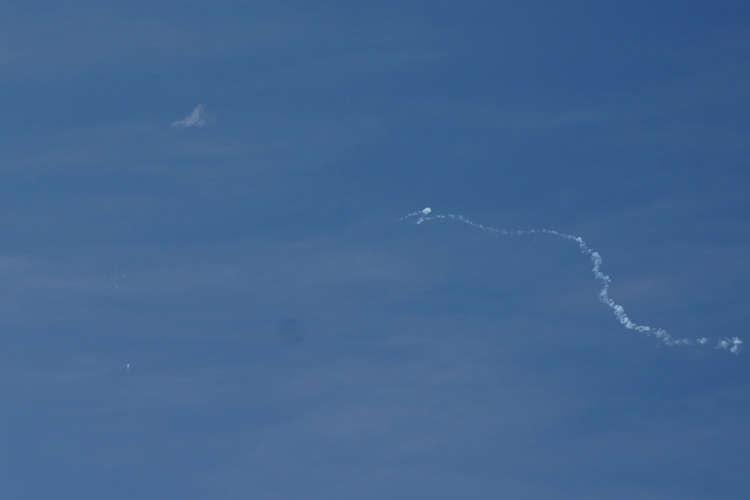
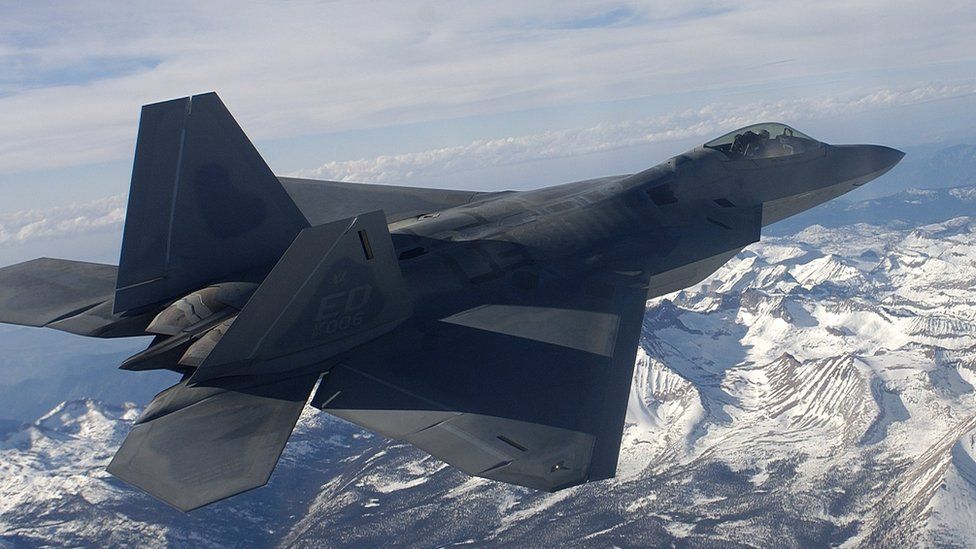


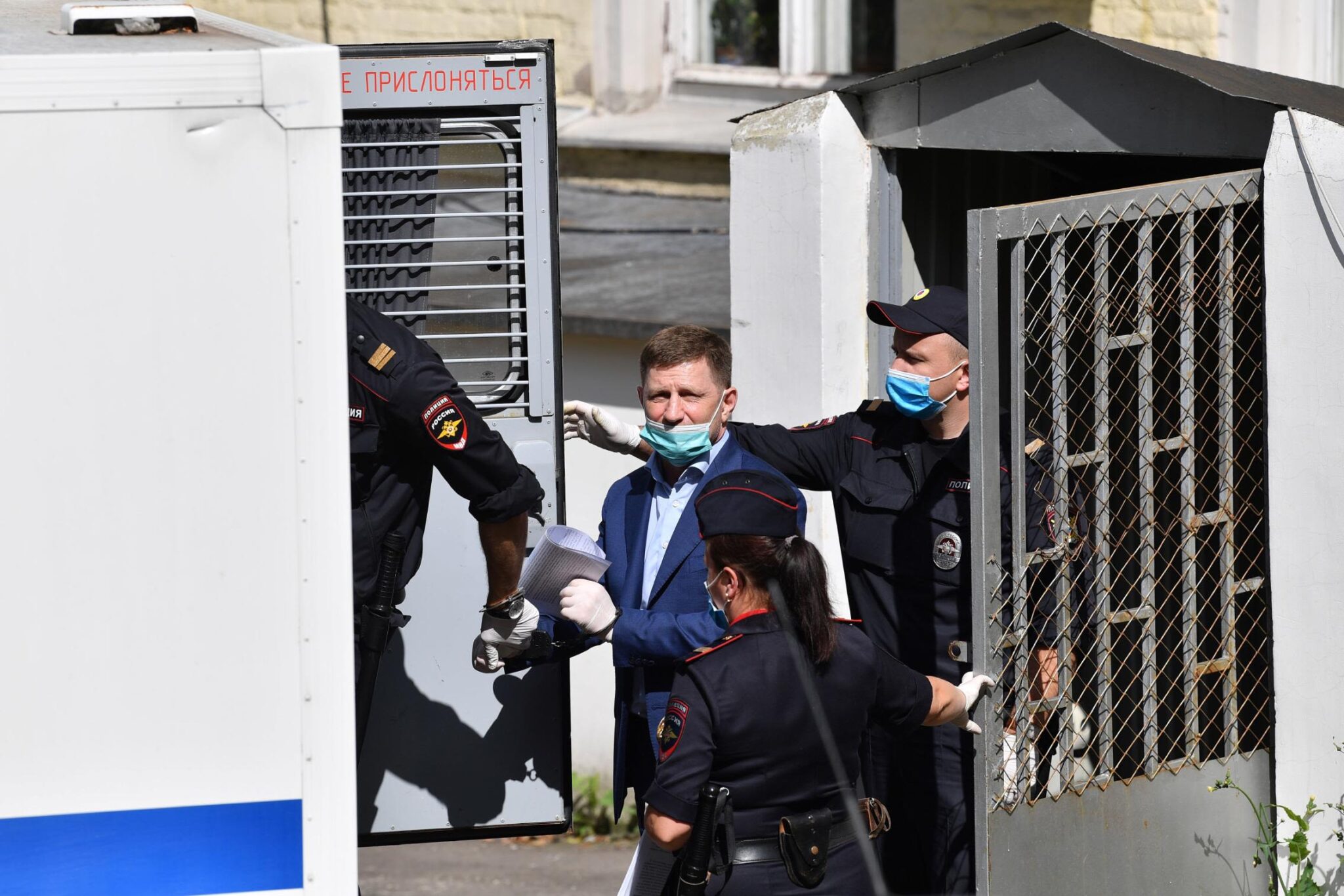


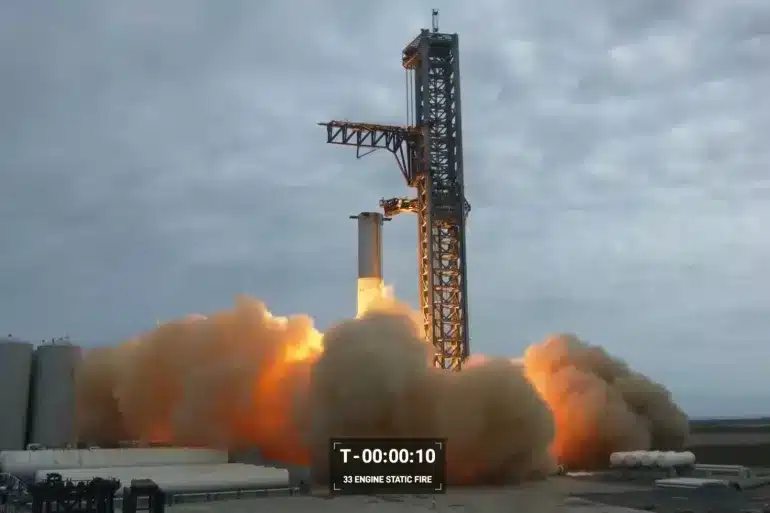

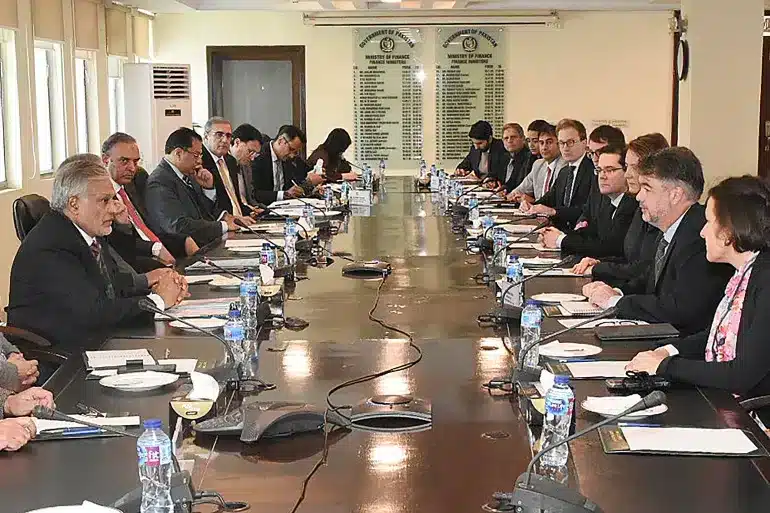

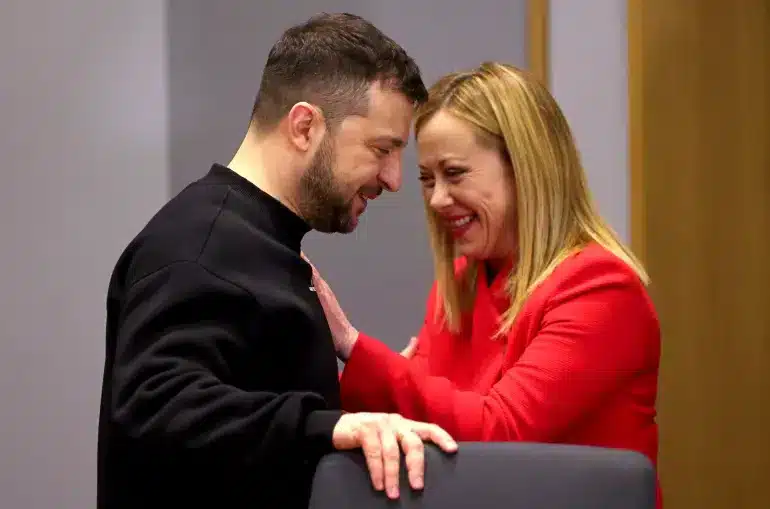


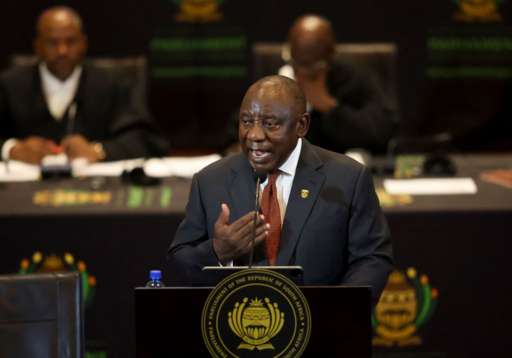
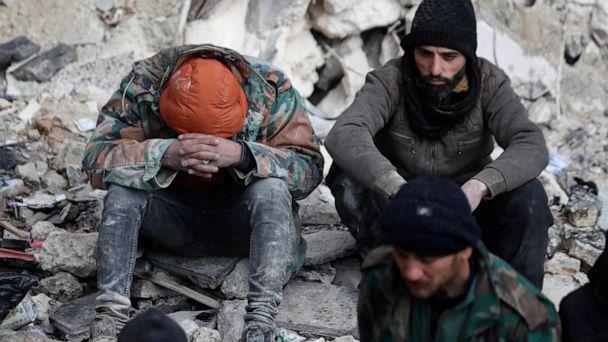
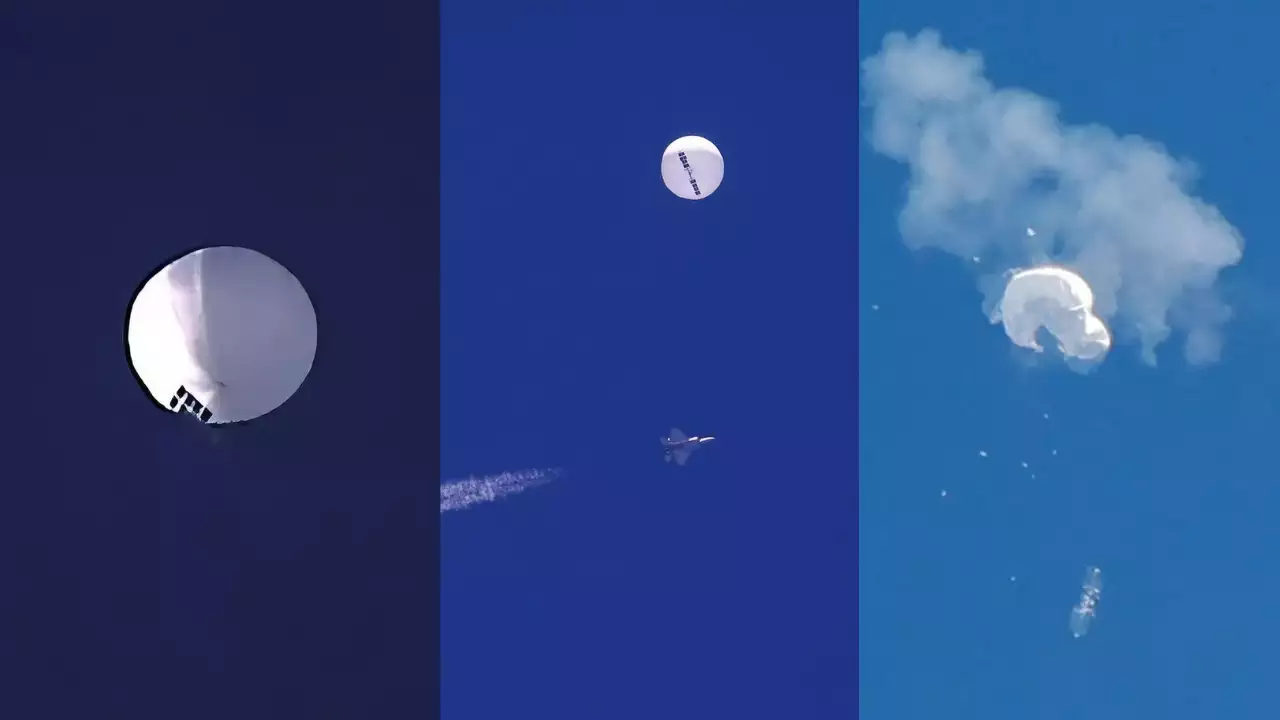

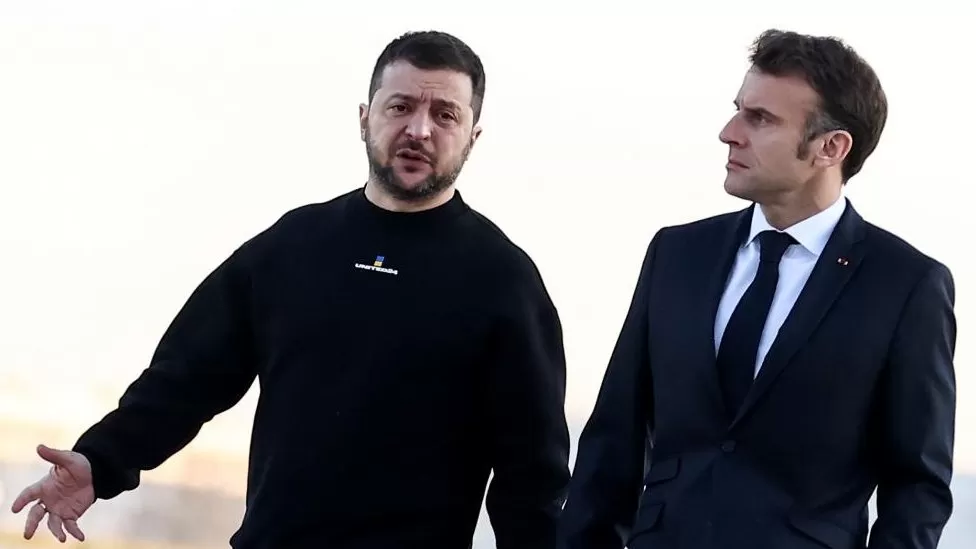

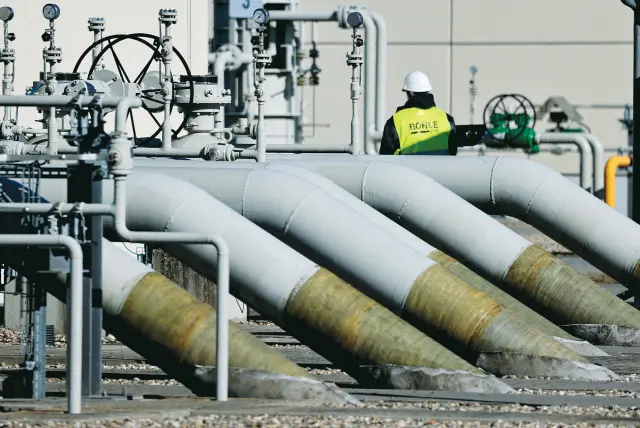
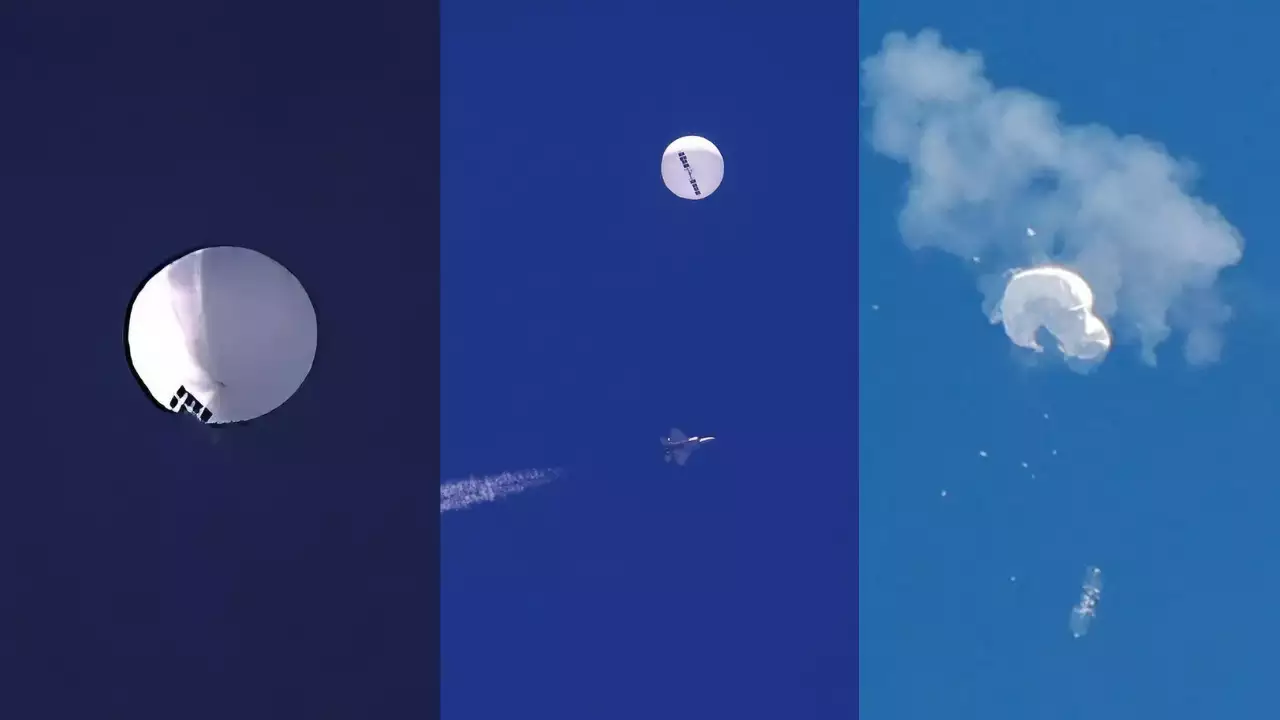

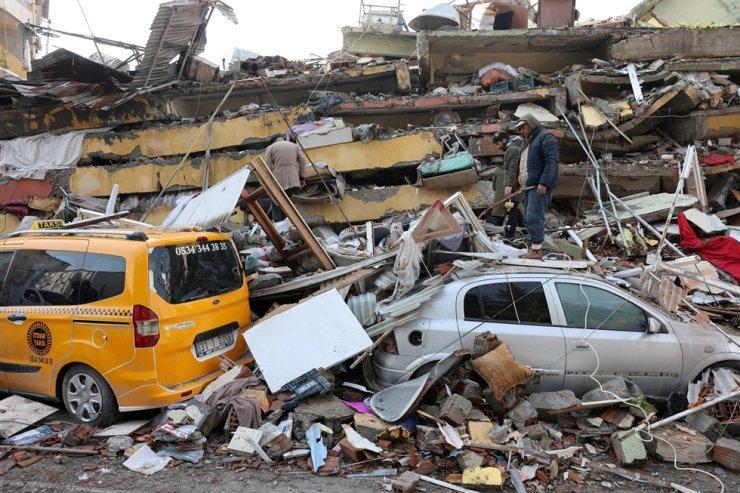


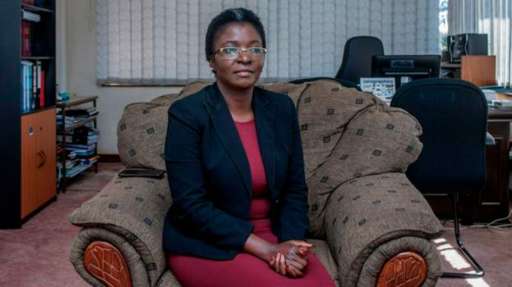
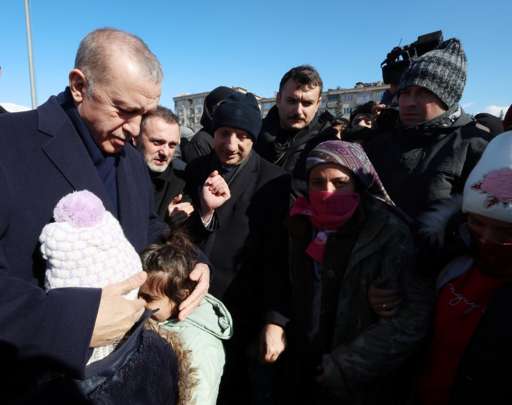
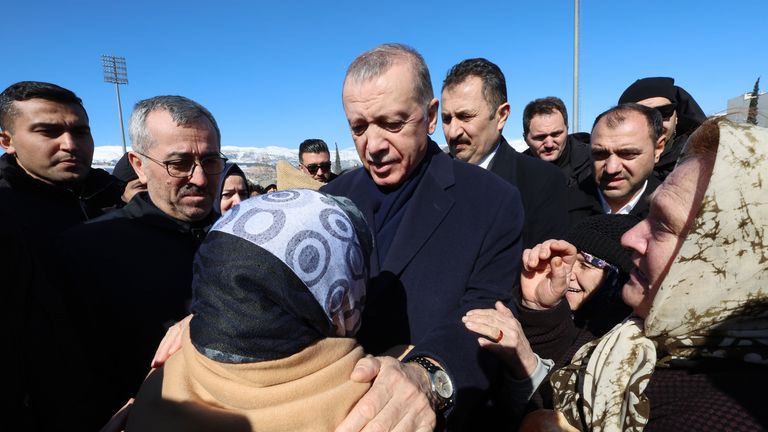
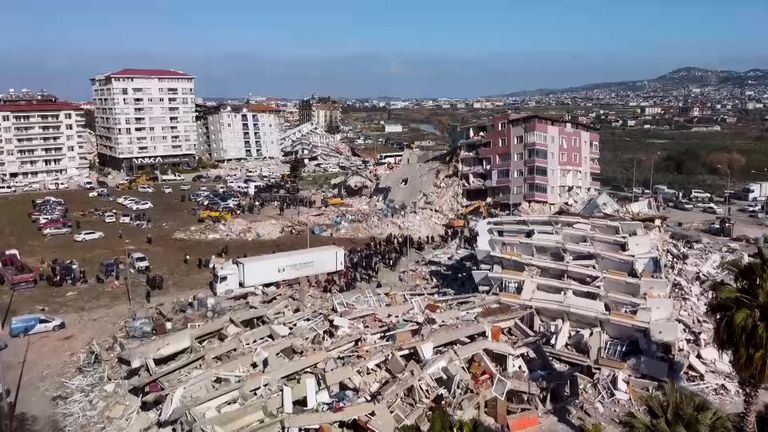
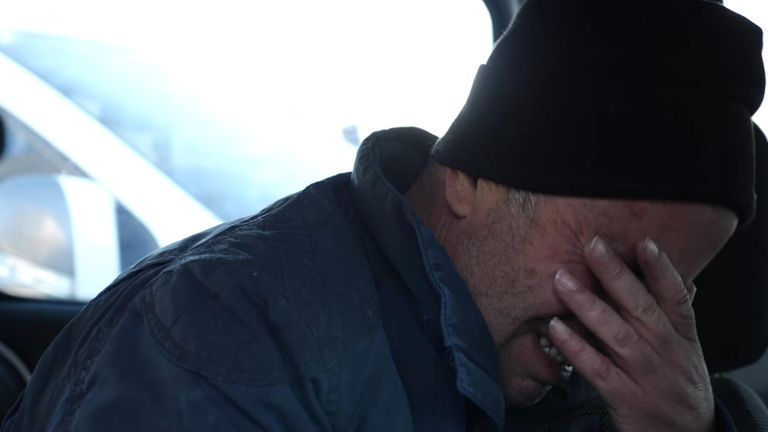
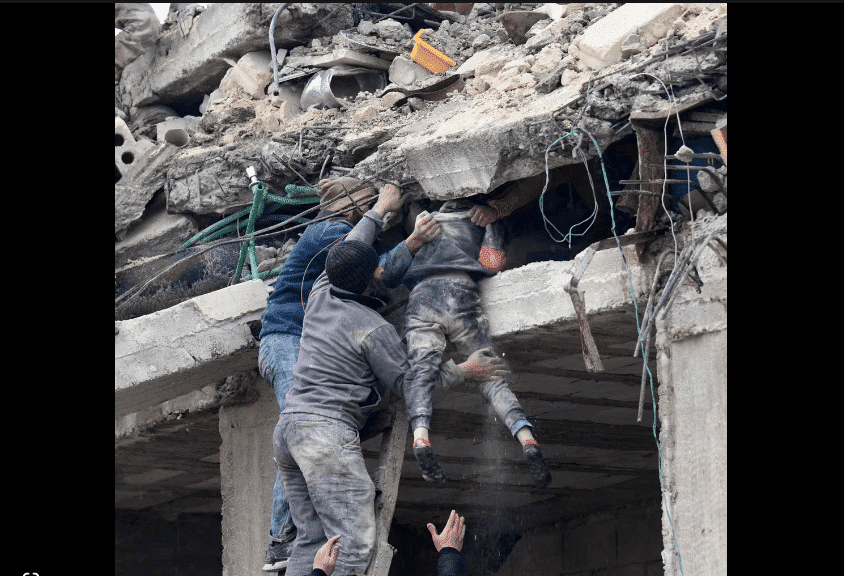
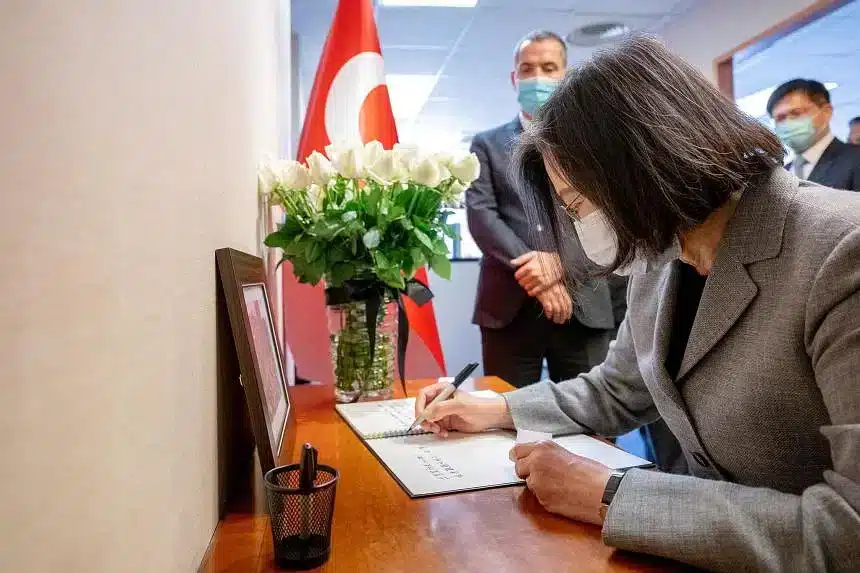

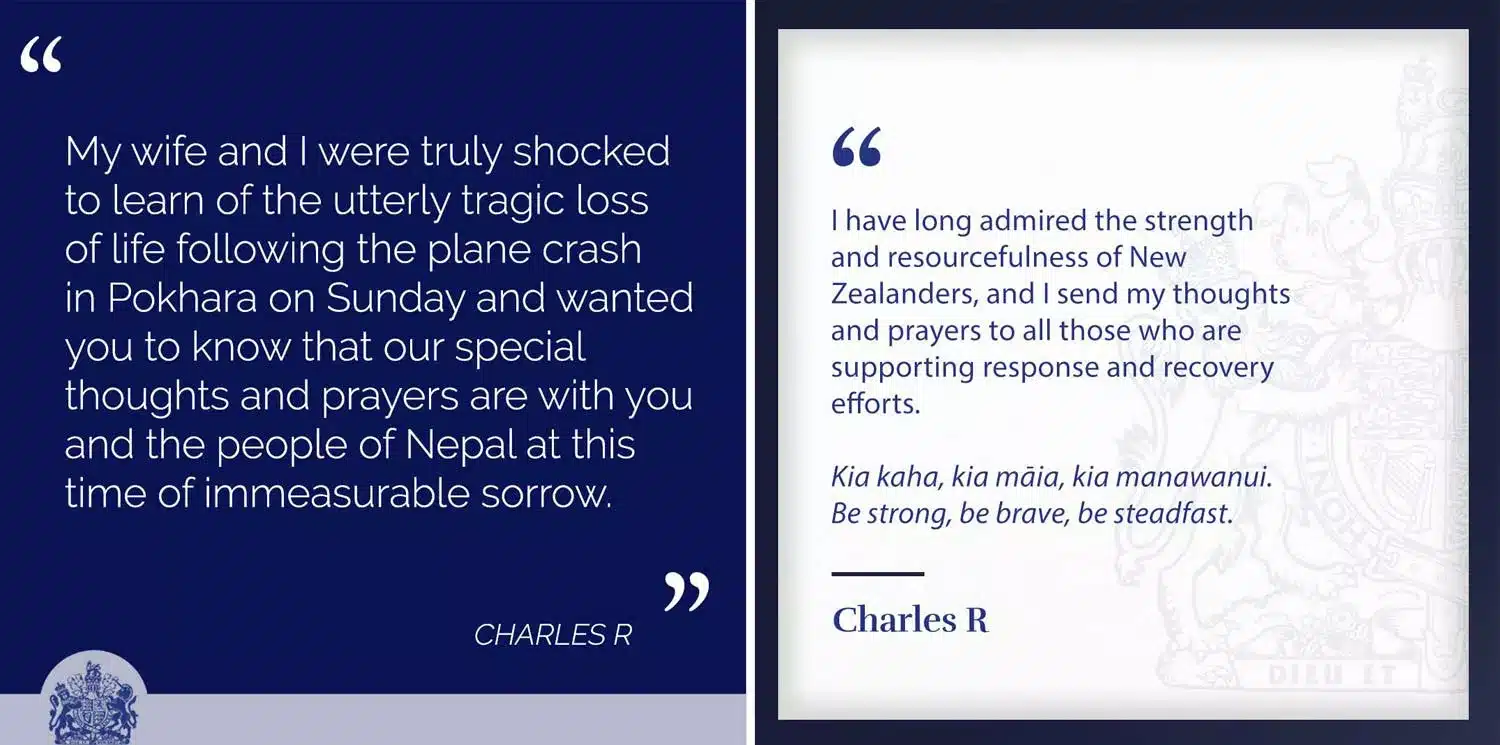
:max_bytes(150000):strip_icc():focal(479x339:481x341):format(webp)/king-charles-queen-camilla-Dunfermline-Abbey-112822-ccde35ded870486f90744036385f1e18.jpg)




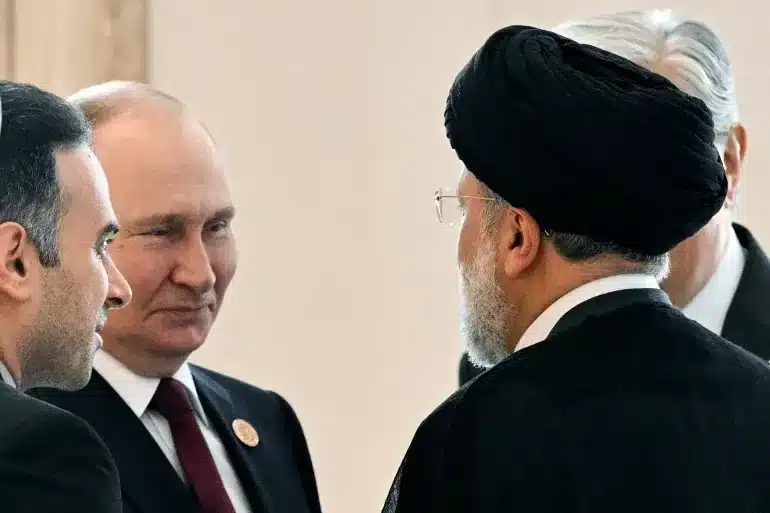

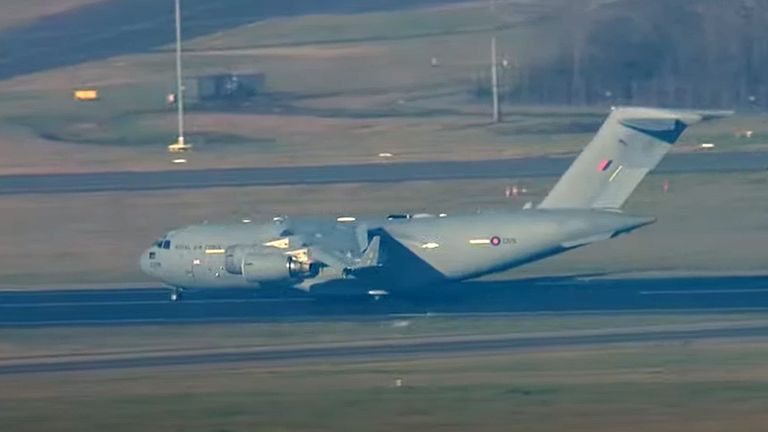
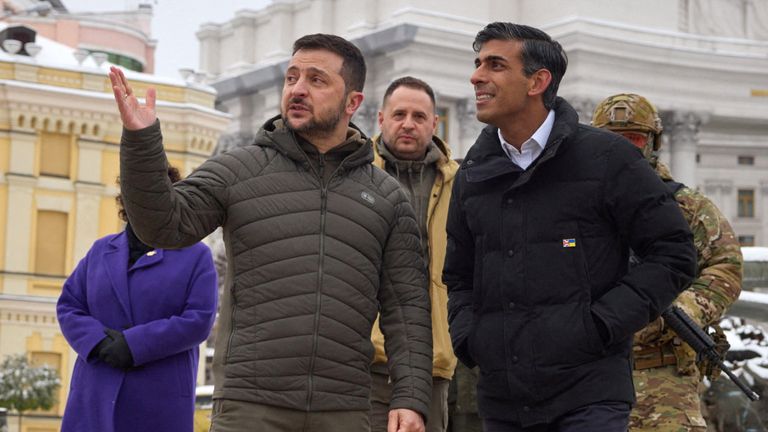
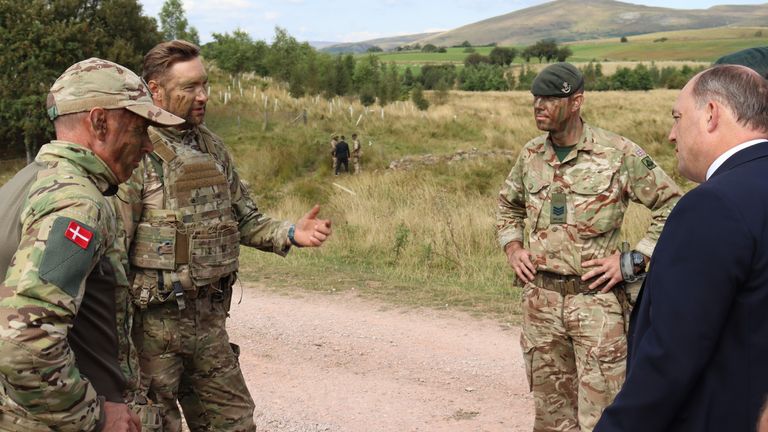
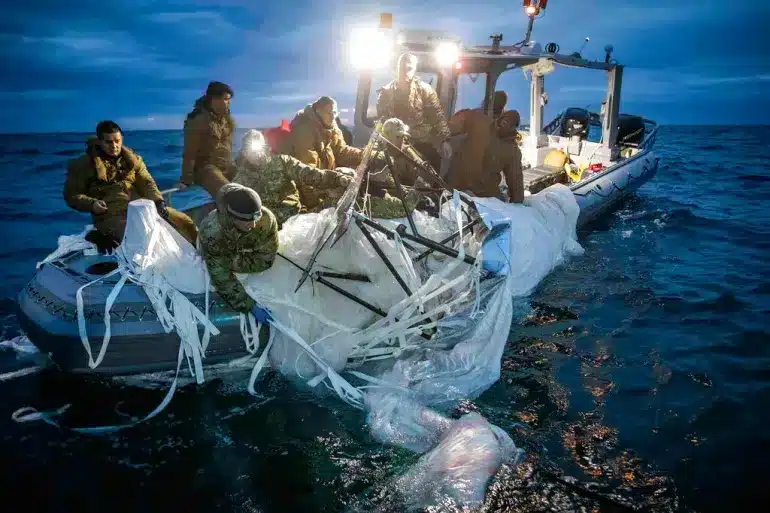

:max_bytes(150000):strip_icc():focal(704x290:706x292):format(webp)/princess-diana-letters-auction-020223-1-bf9da5d859204b9c8d45e97a85c73437.jpg)
:max_bytes(150000):strip_icc():focal(799x0:801x2):format(webp)/princess-diana-best-hair-5-bf1c9da0c5be417e8231316470c7afd1.jpg)