Graham Potter was under even more pressure after Saturday’s shocking 1-0 home loss to Southampton, and some Stamford Bridge supporters heckled the team at the end of the game.
Chilwell, who came out following the game to thank the fans who remained until the final whistle with fellow England international Mason Mount, believes the team is to blame.
The left-back said, “It is easy to say, but we really do have to work hard and turn this around.” James Ward-Prowse’s free kick did us in. We are the only ones who are capable of doing that.
“It is never nice for a very competitive group that wants to win stuff. Some of us a few years ago tasted winning a major trophy [the Champions League] and to be in this situation now does not feel good at all.
“It is understandable the fans are not happy. They expect Chelsea to win matches, which we also expect.
“I can stand here and say we created chances but it doesn’t really mean anything. We need to win these games.
“We need to work hard. It is a pretty flat dressing room at the moment.
“It is hard to get into it, in terms of what we did right and wrong, but we have time now until our next game to work hard.”
To compound matters for Potter’s struggling side, who currently sit 10th in the Premier League, skipper Cesar Azpilicueta was rushed to hospital after being kicked in the head by Saints sub Sekou Mara.
The Spaniard received lengthy treatment on the pitch but was able to clap the home support as he was given a standing ovation while being carried off on a stretcher.
And Chilwell, 26, was delighted to learn his team-mate was in good spirits after the worrying incident.
He added: “I was one of the closest players to it and I saw it in real time, it definitely was not a nice situation.
“Thankfully us as players, and then the staff that came on, acted very quickly and tried to give him the best help we could.
“We found out he went off to hospital to do the necessary procedures in this situation.
“He is also in contact with his wife and is stable, which is a positive to take. We are all thinking of him and it is one of those things bigger than football. We are all here for him.”
Hi everyone! Thank you all for your love and messages of support! My family and I would like to thank everyone who has been looking after me since yesterday’s incident… pic.twitter.com/suBCdIQbj6
English cricketer, Joe Root claims that the “kick up the backside” he received from his half-century in the second innings of England’s first-Test victory over New Zealand.
The former captain’s streak of seven Tests without a hundred is his longest in the past two years.
“I’ve not performed for a little while, so I had the bit between my teeth in the second innings,” said Root.
“It’s given me a little sharpener, a kick up the backside, that this is how I need to play my cricket, how I can be consistently useful in this group.”
Root was in unmatched form from the start of 2021 to the middle of last summer, scoring 11 hundreds in 24 Test matches while averaging 61.
Even though his captaincy collapsed , with England winning just one of his final 17 Tests, his batting form held up well.
After relinquishing the captaincy in May of last year, Root’s form initially remained strong, with three hundreds in four Test matches.
However, Root’s form has declined as England has improved under Stokes—the victory at the Bay Oval was their 10th in 11 games.
The 32-year-old believes it will “take some time” for him to fully adjust to England’s ultra-aggressive style under Stokes.
“There was the initial relief of coming out of the captaincy and now I’m just trying to find out what my role is within this team,” said Root.
“I’ve maybe got a bit caught up in it, but I’m not too far away from what’s given me success. I didn’t feel I tried to force it in the second innings and when I’m playing well that’s one of my strengths: I can score freely and I can rotate the strike.
“I felt like I found a really good tempo in how I wanted to bat. “
Under the leadership of Stokes and Brendon McCullum, England’s swashbuckling batting has seen Root regularly reverse-scoop pace bowlers.
In the first innings at Mount Maunganui he executed the stroke against left-armer Neil Wagner and picked up a boundary. When he attempted the stroke again, he was caught at slip to be dismissed for 14.
But the Yorkshire player says that setback will not stop him from attempting the shot again in Test cricket.
“You take calculated risks,” said Root. “I’ve got where I’ve got to by trusting my gut. It just didn’t quite work out.
“It’s not going to stop me playing it. It’s now part of my Test game and I’ll continue to utilise it when it’s the right time.”
England will look to win the series in the second and final Test in Wellington, which begins on Friday (22:00 GMT Thursday).
The tourists are aiming for a seventh successive Test win, a feat not achieved by England since Michael Vaughan’s team won eight in a row in 2004.
According to King Charles III, Queen Camilla is making progress following a COVID diagnosis.
The King, 74, made a fleeting remark about the condition of his wife while attending Milton Keynes’ celebration of becoming a city on Thursday. Wisher Tazmin Farringto visited Church of Christ the Cornerstone while out and about.
“After suffering the symptoms of a cold, Her Majesty The Queen Consort has tested positive for the Covid virus,” the palace said in a statement on Monday. “With regret, she has therefore cancelled all her public engagements for this week and sends her sincere apologies to those who had been due to attend them.”
The news came nearly a year to the day Camilla’s first COVID diagnosis was announced.
n asked the King how Camilla, 75, was doing.
“She’s getting better,” the sovereign said, according to Hello!.
Charles’ outing came three days after Buckingham Palace announced that the Queen Consort tested positive for the viral disease and would be canceling her week’s planned public engagements.
On Feb. 14, 2022, a spokesman at Clarence House said, “Her Royal Highness The Duchess of Cornwall has tested positive for COVID-19 and is self-isolating. We continue to follow government guidelines.” The palace added at the time that Camilla was tripled-vaccinated.
The Queen Consort had planned to join her husband in Milton Keynes before her latest COVID diagnosis. There, Charles ignored protestors holding “Not My King” signs when he arrived at Church of Christ the Cornerstone.
Royals correspondent Richard Palmer of the Daily Express tweeted that there were about 20 demonstrators. The effort was organized by the anti-monarchy group Republic, which plans to protest King Charles’ coronation on May 6.
Despite jeers from the crowd gathered outside of King Charles III’smost recent engagement, he maintained his composure and continued.
The King, 74, visited Milton Keynes on Thursday to mark the city’s promotion to that status as part of Queen Elizabeth II’s Platinum Jubilee. Protesters held up yellow signs that said “Not My King” as he approached the Church of Christ the Cornerstone.
Twenty protesters, according to Daily Express Royals correspondent Richard Palmer’s tweet, were present. The anti-monarchy group Republic, which intends to demonstrate against King Charles’ coronation on May 6, organised the effort.
The King appeared to ignore the protestors and seemed to be in good spirits as he shook hands with people who came out to see him, some waving Union Jack flags. As seen in a video shared on Twitter by Heart News East, a chorus of “God Save the King” rang out in a show of support.
ARTHUR EDWARDS/POOL/AFP VIA GETTY
In December, King Charles kept his cool during a walkabout in Luton when an egg was allegedly thrown in his direction. He was greeting well-wishers gathered outside Luton Town Hall when an egg flew towards where he stood, the Associated Press reported. According to the outlet, protection officers redirected the royal to another point, where he continued shaking hands with the people who came out to see him. Bedfordshire Police said that a man in his 20s was detained and taken into custody, the BBC reported.
Similarly, in early November, the King and Queen Camilla were on a walkabout in York when someone in the crowd threw eggs in their direction, the projectiles landing just inches away. King Charles and Queen Camilla, both 75, were out at Micklegate Bar, a historic gateway in the northern English city where the monarch traditionally enters, when the food was thrown. A protester — who reportedly called out, “This country was built on the blood of slaves” — was detained by four police officers, according to the Northern Echo.
Charles followed in his late mother’s footsteps at the Church of Christ the Cornerstone. The hub was the first ecumenical city centre church in the U.K. and was formally opened by Queen Elizabeth in 1992.
Inside, King Charles attended a reception to meet local groups dedicated to charity, business, faith, the environment and the arts in Milton Keynes, which is about a two-hour drive north of London. He then moved to the Milton Keynes Food Bank to learn more about the organization’s outreach and impact in the area.
The monarch gave a short speech, in which he said he was “delighted” to celebrate Milton Keynes’ new city status.
“So ladies and gentlemen, as you mark your well-deserved status as one of England’s newest cities, I can only offer my heartfelt congratulations and my very best wishes for the future,” he said.
MARK CUTHBERT/UK PRESS VIA GETTY
The sovereign was alone during Thursday’s outing, as his wife, Queen Camilla, has tested positive for COVID-19 for the second time. Buckingham Palace announced the news Monday and confirmed the Queen Consort would be canceling her engagements for the rest of the week.
“After suffering the symptoms of a cold,Her Majesty The Queen Consort has tested positive for the COVID virus,” the palace said in a statement. “With regret, she has therefore cancelled all her public engagements for this week and sends her sincere apologies to those who had been due to attend them.”
The Duke and Duchess of Sussex are still expected to attend King Charles’ coronation at Westminster Abbey on May 6, which also happens to be their son Archie’s fourth birthday, despite the fact that many royal experts have cautioned that their attendance could be a distraction. This is true despite all the confessions in “Spare” and the Netflix “Harry & Meghan” docuseries, which aired in December last year.
A royal insider reportedly told the Daily Mail that the Sussexes will “definitely” be at the coronation, but should not expect any apologies or reconciliation talks. “Members of the family have told me that both Harry and Meghan will definitely come. They fully expect that,” the insider said, adding, “And they should realize that there is only one subject that many members of the royal family will be willing to discuss… and that’s the weather.”
Another insider previously told The Independent that Prince Harry and Meghan would of course be invited, but noted that “it would be very hard” for them to be there “given everything that has been said.” Another source told The Mirror that Prince Harry doesn’t want to get on a plane to the U.K. until he has a summit with his father, King Charles, and brother, Prince William.
“Harry has been very clear and his position hasn’t wavered—he isn’t going to come if he feels the atmosphere will be as toxic as it was during the Queen’s Platinum Jubilee and funeral,” the source said. “He’s said he wants to reconcile with his family, and it’s their call, but so far nothing has changed.”
Although the royal family was reportedly hurt and blindsided when Prince Harry, 38, and Meghan Markle, 41, shockingly announced that they would be stepping down as working royals in January 2020, rumour has it that King Charles never actually wanted Meghan to be a working royal in the first place and actually wanted her to “carry on working” as an actress. Wow!
The unexpected revelation came from the Duke of Sussex himself, when recalling a conversation he had with his father about Meghan’s future in the royal family in his bombshell memoir, Spare.
When recalling a conversation he and his father had, King Charles reportedly asked his son, “Does she want to carry on working?” to which Prince Harry replied, “Say again?” King Charles then reportedly replied, “Does she want to keep on acting?” which led Prince Harry to say, “Oh. I mean, I don’t know. I wouldn’t think so. I expect she’ll want to be with me, doing the job, you know, which would rule out Suits… since they film in… Toronto.”
King Charles then allegedly said, “Hmm. I see. Well, darling boy, you know there’s not enough money to go around.” Prince Harry then wrote in his memoir that he “stared” at his father after he said this, and then thought, “What was he banging on about? He explained. Or tried to. ‘I can’t pay for anyone else. I’m already having to pay for your brother and Catherine.’”
It has been revealed that a sizable cache of Angkorian crown jewellery from Cambodia, some of which date as far back as the 7th Century, reemerged in London last summer.
The smuggled antiquities belonged to Douglas Latchford, a well-known antiquities trafficker.
The majority of the jewellery, according to experts, has never been seen before, and its presence is astounding.
The collection has been covertly transported back to Phnom Penh, the capital of Cambodia, and will soon be put on display in the nation’s museum.
In 2020, Latchford passed away while he was being tried in the US. After his death, his family promised to give Cambodia his stolen collection, but the authorities had no idea what would be given or how it would be done.
Brad Gordon, the head of Cambodia’s investigative team, became the first representative of the nation to see the jewellery when he visited London last summer. He told the BBC: “I was driven by a representative of the Latchford family to an undisclosed location.” In the parking lot was a vehicle with four boxes inside.
“I felt like crying. I just thought – wow – the crown jewels of ancient Cambodian civilization packed into four boxes in the back of a car.”
When it was all unwrapped, the resurfaced collection was found to contain 77 pieces of gold and jewel-encrusted jewellery, including crowns, belts and earrings. A large bowl is thought to date to the 11th Century and although it has yet to be tested, appears to be made of solid gold. Experts believe it could have been used as a rice bowl for Angkorian royalty.
Image caption: It’s possible some of the jewellery was looted from temples such as Angkor Wat
One of the crowns appears to be from the pre-Angkorian period, experts believe, and could have been made by artisans in the 7th Century. Other items, including a small sculpted flower, pose a mystery. Experts simply don’t know why it was made or how it was used.
It’s still unclear exactly how and when the jewellery was stolen and how it made its way to London. Many of the items can be matched to stone carvings in the walls of Angkor Wat, a Unesco World Heritage Site. The largest religious monument in the world, its construction began in 1122 as a dedication to the Hindu God Vishnu, though it transitioned into a Buddhist temple decades later.
Angkor Wat was heavily looted during the French colonial period. However, many of Cambodia’s other temples were looted during the Khmer Rouge era in the 1970s, and the turmoil that continued for decades.
Archaeologist Sonetra Seng studied Angkorian jewellery for years by examining temple carvings. Finally, she can hold the real thing.
“The jewellery proves what was on the carvings and what was rumoured is really true. Cambodia was really, really rich in the past,” she says. “Still, I can’t believe it, especially that it’s from one single collection found abroad.”
Image caption,Archaeologist Sonetra Seng recognised some of the jewellery from temple carvings
Some of the jewellery had surfaced before; Douglas Latchford included five items from the collection in a book titled Khmer Gold that he co-wrote with his collaborator, Emma Bunker, in 2008. Khmer antiquities expert Ashley Thompson describes this book and two others as elaborate sales brochures, giving private collectors a taste of what was being sold illegally behind the scenes.
“Publishing these materials, inviting other scholars to contribute and comparing the items to museum pieces was a way of validating them and associating them with known materials already in museums and effectively enhancing their value,” she explained.
Ms Thompson, a professor in South East Asian art at SOAS University of London, says it will take a long time for experts to piece together where the newly discovered jewellery really came from because the book contains so many half-truths.
“You certainly can’t take for granted anything that is said about the provenance or the current ownership,” she explained, as she flipped through the book and pointing to the way in which Latchford and Bunker described the ownership of the different pieces of jewellery. “Private Thai collection, private London collection, private New York collection, private Japanese collection etc. You have to be very wary.”
Image caption,There were 77 items recovered, some made of solid gold and some encrusted with jewels
The Cambodian authorities believe that more Angkorian jewellery is yet to be found. The Cambodians have evidence from Latchford’s email correspondence that he was attempting to secretly sell the collection from a north London warehouse as late as 2019.
We asked London’s Metropolitan Police if Latchford’s UK associates are also being investigated. They declined to comment – noting they do not identify anyone under investigation prior to being charged with a criminal offence.
Last year, the BBC travelled to Cambodia to meet looters turned government witnesses who identified items they say they stole from temples and sold to Latchford. Some of those items have been matched by investigators to museum pieces that are now in respected UK institutions like the British Museum and the V&A.
One of the women the BBC interviewed then – nicknamed Iron Princess – will also work to help identify some of the jewellery.
For now, the collection’s return will be welcomed by the country’s autocratic leader, Hun Sen. An election is coming up in July, and since his ruling party has effectively dismantled the opposition, this development will be painted as something Hun Sen has done to benefit his people.
Politics aside, ordinary Cambodians want all the looted items back. After decades hidden inside dusty boxes, it will soon go on public display in Phnom Penh, allowing this jewellery to shine once again.
Mensah Thompson, the executive director of ASEPA, claimed that a recent assault on retired Chief Justice Sophia Akuffo was regrettable, but that President Nana Addo Dankwa Akufo-Addo’s remarks on the subject are even more troubling.
On February 15, Thompson stated to Metro TV news that it appeared the president and the presidency had approved of Gabby Asare Otchere-Darko’s attack on the former CJ.
Otchere-Darko is a stalwart of the New Patriotic Party (NPP).
“Akufo-Addo, office of president, nobody has come out to issue a statement to categorically dissociate themselves from the statement of Gabby Asare Otchere-Darko.
“What it shows is that there is a certain level of tacit approval and support on the part of government and President Akufo-Addo for the comments of Gabby Asare Otchere-Darko.
“So, you will see that Gabby was insulting the Chief Justice on behalf of the president and that is the gospel truth. But who am I to intervene in a fight between two elephants?” he quizzed.
Thompson described Gabby as delusional and a spin doctor for government.
“Gabby has always been delusional we all know and we know one job he has been doing for this government is (as) a spin doctor. If you follow Gabby on social media, he is a spin doctor.
“What he does is that, he does damage control, political calumny, tries to drive attention from substantive issues, tries to set political agenda and try to dissuade people from taking certain decisions,” he stressed.
Gabby gets served by Sophia Akuffo
The ex-Chief Justice has become topical in the last few weeks after she joined colleague pensioner bondholders who had been picketing at the Ministry of Finance since February 6 demanding total exclusion from theDomestic Debt Exchange Programme (DDEP.)
Mrs. Akuffo’s involvement also saw her slam government’s handling of the programme and the general economic situation of the country.
She received heavy backlash via social media from New Patriotic Party (NPP) stalwart Gabby Asare Otchere-Darko.
In her second appearance at the picket this week, she responded to Gabby’s critique among others by referring to him as a nuisance who did not matter to her and her life.
Meanwhile, government has closed the subscription window for the DDEP announcing an 85% subscription rate.
Minister of Finance Ken Ofori-Atta told picketing pensioners on February 15 that their maturing coupons will be honoured even though they had opted against signing up, as in self-exempted from the programme.
Ofori-Atta appeared before Parliament to answer questions over the programme on February 16, 2023.
According to Mr. Blinken, Chinese businesses are already offering “non-lethal support” to Russia, and new data suggests Beijing may do the same.
He cautioned China that this escalation would have “serious consequences.”
Moscow reportedly requested military hardware, but China has denied this.
Despite being a close ally of Russian President Vladimir Putin, Chinese President Xi Jinping has not yet denounced Russia’s invasion and has advocated for peace.
China’s foreign ministry said it would not accept “finger pointing” and “coercion” from the US over its relations with Russia.
Mr Blinken was speaking to CBS after he met China’s top diplomat, Wang Yi, on Saturday at the Munich Security Conference.
He said that during the meeting he expressed “deep concerns” about the “possibility that China will provide lethal material support to Russia.”
“To date, we have seen Chinese companies… provide non-lethal support to Russia for use in Ukraine. The concern that we have now is based on information we have that they’re considering providing lethal support,” he said.
He did not elaborate on what information the US had received about China’s potential plans. When pressed on what the US believed China might give to Russia, he said it would be primarily weapons as well as ammunition.
The US has sanctioned a Chinese company for allegedly providing satellite imagery of Ukraine to the mercenary Wagner Group, which supplies Russia with thousands of fighters.
Mr Blinken told CBS that, “of course, in China, there’s really no distinction between private companies and the state.”
If China provided Russia with weapons, that would cause a “serious problem for us and in our relationship”, he added.
Relations between Washington and Beijing were already poor after the US shot down an alleged Chinese spy balloon in early February. Both sides exchanged angry words, but equally both sides appeared embarrassed by the incident and seemed ready to move on.
But if China were to deliver weapons to help Russian forces in Ukraine, then US-Chinese relations would deteriorate much more severely.
It would be the most “catastrophic” thing that could happen to the relationship between the two giants, said top Republican senator Lindsay Graham.
“It would be like buying a ticket on the Titanic after you saw the movie,” he told ABC News. “Don’t do this.”
Mr Blinken’s warning seems to be clearly designed to deter China from doing that.
Mr Blinken also said the US was worried about China helping Russia evade Western sanctions designed to cripple Russia’s economy. China’s trade with Russia has been growing, and it is one of the biggest markets for Russian oil, gas, and coal.
Nato members, including the US, are sending a variety of weapons, ammunition and equipment to Ukraine, including tanks. They have stopped short of sending fighter jets, and Mr Blinken would not be drawn on whether the US would help other countries supply jets.
“We’ve been very clear that we shouldn’t fixate or focus on any particular weapons system,” he said.
He did, however, say that the West must ensure Ukraine had what it needed for a potential counter offensive against Russia “in the months ahead”. Russia is currently trying to advance in eastern regions of Ukraine, where some of the fiercest fighting of the war has taken place.
The top US diplomat’s remarks come ahead of a scheduled visit by Mr Wang to Moscow, as part of the Chinese foreign policy chief’s tour of Europe.
Mr Wang said in Munich on Saturday that China had “neither stood by idly nor thrown fuel on the fire” for the Ukraine war, Reuters reported.
China would publish a document that laid out its position on settling the conflict, Mr Wang said. The document would state that the territorial integrity of all countries must be respected, he said.
“I suggest that everybody starts to think calmly, especially friends in Europe, about what kind of efforts we can make to stop this war,” Mr Wang said.
He added that there were “some forces that seemingly don’t want negotiations to succeed, or for the war to end soon”, but did not say who he meant.
The Chinese President, Mr Xi, is scheduled to deliver a “peace speech” on the anniversary of Russia’s invasion of Ukraine on Friday, 24 February, according to Italy’s foreign minister Antonio Tajani.
Mr Tajani told Italian radio that Mr Xi’s speech would call for peace without condemning Russia, Reuters reported.
During their meeting, Mr Blinken and Mr Wang also exchanged strong words on the deepening row over an alleged Chinese spy balloon that was shot down over the US.
Mr Blinken said during the meeting that the US would not “stand for any violation of our sovereignty” and that “this irresponsible act must never again occur.”
Mr Blinken told CBS that other nations were concerned about what he called China’s “surveillance balloon program” across five continents.
Mr Wang, meanwhile, called the episode a “political farce manufactured by the US” and accused them of “using all means to block and suppress China”. China has denied sending a spy balloon.
And on Sunday morning, Beijing warned that the US would “bear all the consequences”if it escalated the argument over the balloon. China would “follow through to the end” in the event “the US insists on taking advantage of the issue,” it said in a foreign ministry statement reported by Reuters.
The full interview with CBS, the BBC’s US broadcasting partner, is due to air on Sunday.
A state funeral will be held for thelate Christian Atsu, according to Vice President Dr. Mahamudu Bawumia.
The late Ghanaian international football player perished tragically on February 6 as a result of a powerful earthquake that shook parts of Turkey and Syria.
On the evening of February 19, during a brief ceremony to receive the late Atsu’s remains from Turkey, Dr. Bawumia declared that the nation had lost an accomplished son who would be missed.
“It is a very sad day that we are here to receive the remains of our brother, Christian Atsu. The earthquake that struck Turkey was devastating, and we prayed every day that passed for our brother to be found, but when he was found, he was no more,” he said.
“He was much loved, and we will surely miss him.” “It is a very painful loss, and we pray that the soul of our brother rests in the bosom of our maker,” he added.
“We extend our sincere condolences to the entire family for their loss, and I would like to say that the state will be fully involved with the family in providing him a befitting burial,” Bawumia declared.
A large Chinese balloon that the US shot down earlier this month off the coast of South Carolina has all of its debris recovered. Despite China’s denials, analysis to date indicates that the balloon was used for surveillance.
Officials claim that the US is confident that Navy, Coast Guard, and Federal Bureau of Investigation (FBI) personnel have recovered all of the balloon’s wreckage from the ocean floor, including crucial payload gear that might reveal what data the payload was able to monitor and collect.
The US Northern Command stated in a statement on Friday that the balloon’s final remains were being sent to the FBI for study and that recovery efforts had concluded on Thursday.
In a statement on Friday, the US Northern Command said that the last remnants of the balloon were being sent to the FBI for study, and that recovery efforts had concluded on Thursday.
“Final pieces of debris are being transferred to the Federal Bureau of Investigation Laboratory in Virginia for counterintelligence exploitation, as has occurred with the previous surface and subsurface debris recovered,” according to the statement.
The end of the recovery efforts came after several weeks of tense relations between Beijing and Washington, with China denying that the balloon was for surveillance purposes and accusing the US of overreaction.
Speaking to MSNBC News on Friday in Munich, US Vice President Kamala Harris said the US was confident that the balloon was being “used by China to spy on the American people”.
“That balloon was not helpful, which is why we shot it down,” Harris said.
The incident heightened tensions between the US and China.
Chinese military officials refused calls from their US counterparts after the balloon was shot down.
Earlier this month, US Secretary of State Antony Blinken postponed a scheduled visit to China following the balloon incident, which he said “undermined” the purpose of the trip. It has not been rescheduled.
However, the Biden administration has also said that the US is not seeking conflict with China, which has the second-largest economy in the world after the US and is seen as essential for tackling global issues such as the climate crisis.
“We are not looking for a new cold war,” Biden said in remarks on Thursday. “I expect to be speaking with President Xi. I hope we are going to get to the bottom of this, but I make no apologies for taking down that balloon.”
The US has also shot down three unidentified objects in US and Canadian airspace over the last several weeks, in a series of bizarre incidents that have prompted speculation and rumours about the origin and nature of the objects.
On Thursday, Biden said that the objects were harmless and probably connected to private entities or research, adding that it is not likely that the three objects were connected to the Chinese balloon that the US shot down off the coast of South Carolina on February 4.
Tensions between the two countries are not new: China and the US have previously traded accusations over issues like trade and technology, human rights violations, and China’s desire to bring the self-governing island of Taiwan under its control.
The crackdown on President Saied’s detractors has drawn criticism from around the world and raised concerns about a return to autocracy.
As she describes how her husband, Abdelhamid Jelassi, a former politician from the Ennahdha party, was taken into custody from their home in the Tunisian capital, Mounia Brahim trembles.
“About 8pm Saturday [February 11], there was a banging on the garden gate. In the time it took my husband to walk to the front gate [to see who it was], uniformed policemen were climbing over our garden wall, then walked straight into our apartment, taking his phone and iPad and my mobile and laptop,” she said.
Jelassi is among several people whose often-violent, night-time detentions have shocked the country and drawn international condemnation while raising fears over a crackdown on dissent. They include those with ties to the opposition, critics of President Kais Saied, businessmen, the head of a leading radio station, lawyers and a former diplomat.
Brahim said the men showed neither any police IDs nor a warrant even when she demanded, but she noted they were wearing the civil police uniform.
“They told me they were from the Ministry of Interior but wore civil police uniform,” she added, and then they took her husband. He is currently being held in pre-trial detention in Mornaguia prison.
‘Another round of dictatorship’
For Brahim, this is history repeating itself. She said she and her husband were imprisoned and tortured under Zine El Abidine Ben Ali, the former president who fled the country in 2011 following protests against his oppressive rule.
“We’ve returned to another round of dictatorship, but this time it is much tougher,” she said.
Referring to what felt like a home invasion, she added, “I feel that there is no longer any dignity. I’m under surveillance and I really fear for my safety.”
That same night, Khayam al-Turki, a member of the centre-left Ettakatol (Democratic Forum for Labour and Liberties) party, was taken from his house after midnight and is currently detained under terrorism laws from 2015.
Like al-Turki, businessman Kamal Ltaief, reputed to be a powerful lobbyist, was also held under the counterterrorism law.
Ltaief, who was once very close to Ben Ali and helped him rise to power in 1987, survived investigations during the 2011 revolution to continue his business and investment interests.
Former diplomat William Lawrence, a professor at the American University in Washington, DC, told Al Jazeera: “Ltaief likes to call himself Tunisia’s de facto vice president after 1989 [and] has been described as a power broker or kingmaker, he has that skill of brokering deals.”
Al-Turki’s lawyer, Ridha Bel Hadj, said his arrest is related to his meeting with two American diplomats. The police case notes mention the licence plate numbers of the diplomats’ cars, the lawyer said.
Bel Hadj explained that there has been no formal charge against al-Turki, but a suggestion of his “forming a criminal gang to harm the Tunisian state”.
“The case against them is empty. They are using the terrorism law to hold them for a maximum of 15 days without charge or consultation with a lawyer,” he said, explaining that it was used to gain time.
President Kais Saied has pledged to ‘purify the country’ using the justice system [File: Muhammad Hamed/Reuters]
Trampling dissent
Several arrests have been made since Saturday. Rights group Amnesty International has so far documented 10 arrests. Apart from politicians, those being held are accused of price fixing, market manipulation or creating food shortages.
Tunisians have for months been suffering from shortages of food – even basic necessities such as oil, sugar, milk and butter – with the government attempting to stave off bankruptcy while trying to negotiate a refinancing loan from the International Monetary Fund.
Saied has added fuel to the fire by accusing some of those detained recently of being responsible for the price increases and food shortages while pledging to “purify the country” using the justice system.
Chaima Aissa, a leader of the National Salvation Front, said al-Turki has been organising meetings of key opposition figures since December 27 to develop a roadmap to exit the crisis and rebuild the country.
Aissa is already facing charges of criticising the president on a radio interview under the cybercrime decree law of September 2022. She is currently at liberty, but under a travel ban awaiting trial in a military court and could potentially face years in jail if convicted.
Saied has faced criticism and scrutiny from both the international community and human rights groups for his use of military courts to try citizens.
“Saied is creating a diversion, he’s mixing political targets with criminal cases to give an impression that political actors are responsible for price rises and food shortages,” Aissa told Al Jazeera.
“Saied is using the terrorism act and price fixing accusations to get public sympathy, it’s pure populism,” said Bel Hadj, adding that it was merely a meeting of a group of politically like-minded people.
On Monday night, Ennahdha’s vice president and former justice minister, Nourredine Bhiri, 64, was taken into custody. The moderate Islamist party was the largest in parliament until the assembly was suspended in 2021 by Saied.
Bhiri had been previously arrested, and his location was only disclosed when he fell ill from being on a hunger strike. He was finally released in March 2022.
Bhiri’s lawyer Samir Dillou told Al Jazeera that police assaulted his wife, arrested him and later beat him in custody.
“His right shoulder was broken and he received other injuries to his leg,” said Dillou. “Surgery on his shoulder was delayed,” the lawyer added, also explaining the concerns as Bhiri is elderly, with diabetes and hypertension.
The arrest of Nourredine Battou, the director general of Mosaiq FM, the country’s largest radio network, on the night of February 13, has been condemned by the journalist and radio unions. He was known for giving a platform to those critical of Saied and his administration.
The radio station was a private company, but the state took part ownership after the 2011 revolution. Bel Hadj sees the arrest of Mosaiq FM’s head to gain control of its editorial line and silence critical debate and intimidate journalists.
On Thursday, the Tunisian journalists’ union SNJT demonstrated in front of government buildings, the Kasbah, denouncing the worsening working conditions and arrests.
Lawyers have also expressed concern over the surveillance that both Tunisian political figures and foreign diplomats are under.
Aissa noted that policing was back to the Ben Ali days when even being seenwith a foreign journalist in a car was dangerous. “They could make up a charge against me. Saied has arrived at a new level of harassment, he’s creating an atmosphere of fear and people are really afraid.”
A return to autocracy?
UN High Commissioner for Human Rights Volker Türk expressed concern “over the deepening crackdown against perceived political opponents and civil society”, while the US State Department’s spokesperson Ned Price said “it is a core US principle that people around the world should be able to express themselves without fear or reprisal”.
Lawrence said diplomats “almost always know when they are being surveilled, it is a standard part of diplomatic practice”, adding that reports of surveillance would be followed up with an investigation.
“The issue is that the US is a major security ally of Tunisia and the US is spending a lot of money to bolster security forces including surveillance [since the 2015-16 terror attacks on Tunisia],” he said.
Tunisia is turning its enhanced surveillance capacity on Tunisian politicians meeting with US diplomats and then accusing them of conspiracy to harm the state, he noted, adding that “all that bodes very badly for the US-Tunisia relationship going forward”.
“If he [Saeid] wants to supplant the American role with the Russians or Chinese, it doesn’t help his case for Tunisia to be a good security partner with others in the future.”
Lawrence added that “if he does this today with the US he could do [it] tomorrow with another security partner, it is security and diplomatic malpractice”.
Speaking on Tunisian television on Thursday, Dillou said 14 lawyers, including himself, have been summoned for trial in March.
He believes that they are being targeted because they are representing political figures and critics, and “the number will possibly be increased. Some could be arrested even before the date set for their court appearance.”
Local media reported that a Syrian family of seven, which included five children, perished in a fire that broke out in the Turkish home they had relocated to following last week’s earthquake.
The single-story home, where 14 people resided, caught fire on Friday, according to a written statement from the Konya Chief Public Prosecutor’s Office, according to the state-owned Anadolu Agency in Turkey. According to the report, seven accident victims were being treated.
According to Anadolu, just a few days prior, the family had relocated from the southeast Turkish city of Nurdagi in Gaziantep province to the central region of Konya.
“The necessary investigations were carried out at the scene and a committee of experts was appointed,” the statement said.
“We saw the fire but we could not intervene. A girl was rescued from the window,” resident Muhsin Cakir told Anadolu.
The five children who died were aged between four and 13, Anadolu said. Turkey is home to nearly four million Syrians.
Many of them live in southeastern regions devastated by last week’s disaster. The death toll from the quakes has surpassed 43,000 across southeastern Turkey and Syria.
Gaziantep, one of southern Turkey’s big cities, has a population of almost two million, and nearly one-third of them are Syrian refugees who fled the war in the Arab country that started in 2011.
On Thursday, the United Nations appealed for more than $1bn in funds for the earthquake relief operation in Turkey, just two days after an appeal for $400m for quake-hit Syria.
About 40 migrants appeared to have been being illegally transported by the vehicle. The survivors were transported to a hospital for medical attention.
According to the health minister, the people in the truck were chilly, damp, and hungry after several days.
It is thought to be the most fatal immigrant-related incident to have occurred in Bulgaria.
Large numbers of people attempting to enter the European Union from Turkey have long caused Bulgaria problems.
The truck, found near the village of Lokorsko, 12 miles (20 km) north-east of Bulgaria’s capital, Sofia, was illegally transporting the migrants hidden under some wood, the interior ministry said.
Health Minister Asen Medzhidiev described the conditions inside the truck: “There has been a lack of oxygen for those who were locked in this truck.””They were freezing and wet, and they hadn’t eaten in days.”
Fourteen people found alive in the truck, including eight in serious condition, were taken to the hospital, he added, while another 10 people were found hiding nearby and would be taken to the hospital for examination.
Police are searching for the human traffickers believed to have driven the truck and fled, officials said.
Bulgaria has faced accusations that it is abusing people attempting to enter from Turkey, with asylum seekers saying they have been blocked, arrested, stripped, and beaten.
As the Caribbean country of Haiti continues to suffer from economic and political unrest as well as violence, much of it fueled by organised criminal groups, Canada will send navy vessels there to gather intelligence.
At a gathering of Caribbean leaders on Thursday in the Bahamas, Canadian Prime Minister Justin Trudeau made the decision public. One of the subjects they discussed was the powerful armed gangs operating in the nation, which have generated numerous reports of murder, kidnapping, and sexual violence.
“Right now, Haiti is confronted with unrelenting gang violence, political turmoil and corruption,” Trudeau said. “Now is the moment to come together to confront the severity of this situation.”
The Canadian leader did not specify how many ships would take part in the effort or the duration of their mission. The announcement came during a meeting for CARICOM, the 15-member Caribbean trade bloc.
Haitian leaders including Prime Minister Ariel Henry have previously requested military assistance from the international community to help curb the escalating violence.
But some Haitians have pushed back against those calls, citing Haiti’s long and troubled history with foreign intervention.
Last Friday, United Nations human rights chief Volker Turk also called for an international force to help end the island’s “living nightmare”.
Haiti’s gangs have seen their power grow since the assassination of former Haitian President Jovenel Moise in July 2021. The UN estimated in December that 60 percent of the capital city of Port-au-Prince was under gang control.
For more than a month, starting last September, a powerful gang alliance known as the G9 Family and Allies also blockaded a key fuel terminal in the capital, effectively shutting down commerce for much of the city and sparking a humanitarian crisis.
With rubbish piling up and clean water growing scarce during the blockade, Haiti documented its first case of cholera in nearly three years. Since then, infections have shot up.
For many Haitians, the conditions amid the violence have become unbearable, with many seeking refuge abroad.
In January, the United States unveiled new rules that would allow up to 30,000 people a month to arrive from Nicaragua, Haiti, Venezuela and Cuba so long as they meet a strict set of requirements, including extensive vetting. But under the new programme, Haitians who try to cross into the US from Mexico would be turned away.
The UN has urged countries not to deport refugees and migrants back to Haiti, citing the dangerous conditions there.
Speaking at CARICOM on Thursday, Trudeau explained that Haiti’s plight “weighs heavily” on him. He also pledged $9.1m in humanitarian assistance, as well as $7.4m to help protect Haitian women and children along the country’s border with the Dominican Republic.
Tens of thousands of Haitians and people of Haitian descent have been deported from the Dominican Republic over the past year, despite international criticism against the removals.
Both Canada and the US have previously sent military hardware to the Haitian government and imposed sanctions on individuals accused of corruption or criminal ties in Haiti.
That tactic continued on Thursday, as US Secretary of State Antony Blinken announced further sanctions against “five individuals and seven family members” with links to criminal groups that “have threatened the livelihoods of the Haitian people and are blocking life-saving humanitarian support”.
Haiti’s Prime Minister Henry even suggested the US and Canada could lead the proposed foreign intervention. But neither country has offered to head such a force.
Most significant German airports, including the two busiest hubs in Frankfurt and Munich, are impacted in addition to Berlin’s. Participants include ground staff, employees from the public sector, and air traffic control.
Almost all passenger flights are being halted on Friday due to a 24-hour strike at seven major German airports.
A total of 294 flights have been cancelled, affecting about 295,000 passengers, including the foreign minister of Romania who was trying to attend the Munich Security Conference.
All regular passenger flights were halted at Germany’s two busiest hubs, Frankfurt and Munich, and airports in Bremen, Dortmund, Hamburg, Hanover, and Stuttgart were also affected by the strikes.
Berlin Brandenburg Airport was the largest hub spared the disruption, though it suffered a full-day warning strike late last month.
“When we look at the airport terminals this morning, it reminds us more of the worst days of coronavirus than of a warning strike,” Ralph Beisel of the ADV airports’ association told Bavarian public broadcaster Bayerischer Rundfunk on Friday.
Airports and airlines have questioned the extent of the industrial action and its appropriateness, while the Verdi trade union said it needed to send a “strong signal.”
Beisel said the terminals were empty, with advanced warning for the strikes meaning the vast majority of affected passengers at least knew not to come to the airports.
International flights were for the most part rescheduled, domestic travelers were mainly offered replacement rail tickets.
Who is on strike?
Ground personnel, air traffic controllers and public sector officials like firefighters are all on strike as part of major industrial action across multiple sectors by Germany’s second-largest trade union by membership, Verdi.
As the airports are state owned, most of their direct employees class as public sector employees, including IT officials, technicians and administrators, as well as ground staff like check-in or boarding assistants, refueling truck drivers or disabled passenger assistants.
This industrial action is a change of pace from the pilots’ strikes that led to repeated disruptions, particularly for the Lufthansa and Eurowings airlines, late last year.
Verdi is seeking improved pay and conditions for staff at airports in various functions, with a senior union representative saying the sector is hemorrhaging personnel even at a time when it is trying to recruit to fill gaps dating back to the serious reduction in air travel during the pandemic.
“If nothing changes on pay, then another chaotic summer awaits us all — and we must prevent that as a matter of urgency,” Verdi’s Christine Behle said on RBB-Inforadio early on Friday. “Many people did not just decide to switch workplaces during the pandemic, we all learnt that during last summer’s chaos.”
Ground staff went on strike on multiple occasions during 2022’s peak travel season in Germany, most notably during July.
A combination of staff shortages and rapidly recovering demand also led to chaos and overcrowding at a host of European airports, even on days with no industrial action.
Medical, aid, military, and government flights still in the air
Although almost all regular passenger flights to the affected airports were halted, some other crucial services were still operating.
Medical transports, aid deliveries — for instance following the major earthquake hitting Turkey and Syria — military flights and government flights were still running as scheduled.
This was particularly important for Munich International Airport, as the 59th Munich Security Conference formally opens on Friday.
Most visiting leaders and delegates could still fly into Munich on board government planes.
However, Romania’s Foreign Minister Bogdan Aurescu, who was scheduled to fly in on a commercial plane, would have to fly to Austria and then take a roughly four-hour car ride to Munich for the event, Romania’s embassy said.
Tyre Nichols was killed after a violent traffic stop in Memphis, which sparked protests and renewed calls for an end to police violence. In his death, five former US police officers have entered not guilty pleas.
On Friday, before a judge in Shelby County Criminal Court, Tadarrius Bean, Demetrius Haley, Desmond Mills Jr., Emmitt Martin III, and Justin Smith made their first court appearances with their attorneys.
In relation to the videotaped arrest of Nichols on January 7, the former officers entered not guilty pleas to charges of second-degree murder, aggravated assault, aggravated kidnapping, official misconduct, and official oppression.
The footage shows the officers beating the 29-year-old father and FedEx worker for three minutes in an assault that the Nichols family’s legal team likened to the 1991 police beating of Los Angeles motorist Rodney King, which was also videotaped.
“I am numb, just numb as I can be right now,” Nichols’s mother, RowVaughn Wells, said on Friday as she walked into the courtroom dressed in black.
After the court hearing, Wells dismissed the officers’ not-guilty plea, saying that it was expected.
“I’m going to leave it up to the district attorney’s office to get them prosecuted… and then they’ll find them guilty,” Wells told reporters outside the courtroom. “So, them saying they’re not guilty, that’s a preliminary thing. Everybody’s going to say that.”
She pledged to attend every session in court going forward.
“I want each and every one of those police officers to be able to look me in the face. They haven’t done that yet. They couldn’t even do that today. They didn’t even have the courage to look at me in my face after what they did to my son,” Wells said.
Nichols, who died in hospital three days after the traffic stop, attempted to converse with police as they shouted orders and threatened him with violence during the ordeal.
“You guys are really doing a lot right now. I’m just trying to go home,” he said at one point as he sat on the street and officers stood over him.
“Stop! I’m not doing anything,” Nichols said, just before breaking free and running.
The five officers, all of whom are Black, have been fired from the police force, and the special unit they were members of has been disbanded. They were all released on bond as they await trial. Their next hearing has been scheduled for May 1.
“Be patient. Work with your attorneys,” Judge James Jones Jr said to the officers during Friday’s court appearance. “There may be some high emotions in this case.”
Nichols’s case has recalled the 2020 killing of George Floyd, who died when a police officer knelt on his neck for more than nine minutes during an arrest in Minneapolis, Minnesota. His death set off mass protests worldwide that demanded an end to racism and police brutality.
Memphis police said Nichols had been suspected of reckless driving, but no verified evidence of a traffic violation has emerged in public documents or in video footage.
The city’s police chief, Cerelyn “CJ” Davis, has said she has seen no evidence justifying the stop or the officers’ response. Davis also previously said the video footage of the fatal incident depicted “acts that defy humanity”.
One white officer who was also involved in the initial traffic stop has been fired while an additional officer who has not been identified has been suspended.
The Memphis case has stood out for the speed in which the officers were fired and charged.
On Friday, civil rights attorney Ben Crump – who is representing Nichols’ family – warned against “any unnecessary delays” in prosecuting the former officers. “It’s important that we move swiftly towards justice,” He told reporters.
This year’s gathering is centred on Russia’s invasion of Ukraine. Attending the annual high-level conference are representatives from 96 different nations.
The Russian invasion of Ukraine, the main topic of discussion at this year’s high-level gathering, served as the backdrop for the opening of the annual Munich Security Conference (MSC) on Friday.
Representatives from 96 nations will discuss important defence topics over the coming days.
‘No alternative to Ukrainian victory’ — Zelenskyy
Ukraine’s President Volodymyr Zelenskyy made the opening address by videolink and urged allies to speed up support for his country, warning that lives were hanging in the balance.
“We need to hurry up. We need speed — speed of our agreements, speed of our delivery… speed of decisions to limit Russian potential. There is no alternative to speed because it is the speed that the life depends on,” Zelenskyy told those gathered, stressing there was “no alternative to a Ukrainian victory.”
Zelenskyy likened the battle against Russia’s invasion to the biblical fight between David and Goliath and said that while Ukraine had David’s courage, it still needed the sling with which to defeat “the Russian Goliath.”
Scholz calls on allies to send tanks to Ukraine
German Chancellor Olaf Scholz told the conference that Putin’s “revisionism” would not prevail and called on allies who were in a position to do so, to send battle tanks to Ukraine.
“Those who can send such battle tanks should really do so now,” Scholz said.
In January, Germany approved the export of Leopard 2 battle tanks to Ukraine from its own stocks as well as from third-party allies.
The German chancellor said that his country would provide support with training, supplies and logistics.
In a sentiment shared by other speakers, Scholz was of the opinion that there war in Ukraine would not be over soon.
“I think it’s wise to prepare for a long war,” Scholz told the conference.
‘Not the time for dialogue’ — Macron
French President Emmanuel Macron took the podium after the German leader and said there needed to be readiness for “prolonged conflict” in Ukraine, while calling on EU members to invest substantially in defense spending.
“We absolutely need to intensify our support and our effort to the resistance of the Ukrainian people and its army and help them to launch a counter-offensive which alone can allow credible negotiations, determined by Ukraine, its authorities and its people”, Macron said
The French president also said that it was not the time to attempt dialogue with Russia as it ramped up hostilities in the east of Ukraine.
Putin committed ‘breach of civilization’ — Heusgen
The conference is being chaired for the first time this year by Christoph Heusgen — former foreign policy advisor to ex-German Chancellor Angela Merkel — and successor of Wolfgang Ischinger who served as chair for 15 years.
Heusgen began proceedings by saying the 2022 conference had closed with the hope that Russian President Vladimir Putin “would be impressed by the unity the international community demonstrated … We all know what happened,” Huesgen said.
“Vladimir Putin committed a breach of civilization,” the MSC chair said, adding that it was the first time since World War II, that a country in Europe “denied the right of existence of another country and started an all out war.”
First conference for Pistorius as German defense minister
Ahead of the conference, German Defense Minister Boris Pistorius reaffirmed the need to boost military funding by going beyond the target of 2% of gross domestic product, while highlighting the importance of the platform. The MSC “has always been a place of understanding and dialogue,” he said.
“What is new is that all this is taking place while a war is being waged on European soil by Russia against Ukraine,” Pistorius added.
It will be Pistorius’ first MSC in office, and NATO Secretary-General Jens Stoltenberg’s last as he plans to step down from his post in October.
Participants at the conference include 40 heads of state and government and nearly 100 ministers.
Who is attending?
Russia will again be a notable absence, with its leadership for the first time in two decades not being invited.
Other high-profile speakers expected on Friday include China’s top foreign policy official Wang Yi and US Vice President Kamala Harris.
Syrian government forces and opposition groups reportedly engaged in combat overnight in northwest Syria, according to the Syrian Observatory for Human Rights (SOHR), a monitoring organisation based in the United Kingdom.
Since the devastating earthquakes that struck the area last week, gunfire has not broken out until now. Armed organisations opposed to the Damascus administration of President Bashar al-Assad are in charge of some areas of northwest Syria.
According to SOHR, government troops shelled the area around the rebel town of Atareb. It said that at a nearby front line, government and rebel forces were fighting with powerful machineguns at the same time.
SOHR reported that clashes also took place in another part of the northwest near the government town of Saraqeb, while government forces shelled the outskirts of two villages in Hama province.
Since the earthquakes last week, there have been approximately 4,700 aftershocks, or one every four minutes, according to Orhan Tatar,general director of earthquake and risk reduction at the nation’s disaster agency.
“Most of these aftershocks are palpable,” Tatar said, adding that about 40 of them were above magnitude 4.
“There are a number of factors that would explain why Erzin has been minimally touched in a province that has been devastated with about 14,000 deaths,” Ghoneim said.
“Erzin is about 40km [25 miles] west of a fault line; in between the fault line, there’s a mountain and that mountain likely created a barrier, experts say,” she added.
“In addition, it is at a higher sea level and a lot of the buildings are constructed on bedrock – harder ground that’s better able to withstand the swaying that occurs during an earthquake, unlike a city, for example, Antakya, which was levelled. There, buildings were constructed on sand and clay which is more vulnerable,” Ghoneim explained.
“Experts also say that there’s a longstanding issue across the southern region of the use of shoddy materials and lax enforcement of earthquake engineering standards and building codes.”
Still, Ghoneim noted that people in the city are angry because they say this impression of Erzin having fared quite well after the earthquake is preventing aid from getting here.
Sam Adekugbe, a Canadian football player who plays forTurkish club Hatayspor, has transferred to Galatasaray on loan after surviving last week’s significant earthquakes in southern Turkey.
The Canadian defender will play for Galatasaray for the remainder of the 2022–23 campaign, according to a statement from Galatasaray. Both clubs approved of Adekugbe’s temporary transfer to the Istanbul club, the statement said.
For a €1 million ($1.06 million) transfer fee, Galatasaray can make the agreement permanent.
Adekugbe, who appeared upset, expressed his gratitude to both teams in an emotional English-language video posted on Galatasaray’s Twitter page. He also urged people to help those who had been affected by the disaster more.
“I’m thankful to Hatay and Galatasaray for giving me this opportunity. But of course, we understand the situation that has occurred in the last week or so,” he said. Hatay, where Hatayspor is based, is one of the worst-affected provinces of Turkey.
“People need our help—in any way we can,” Adekugbe said. “We can help with money, we can help with donations, we can help in any way, but it is important that we help and that we stay together.”
Sam Adekugbe: “Önemli olan yardım edip kenetlenmemiz çünkü biliyoruz ki biz beraberken daha güçlüyüz.”
Hayatını kaybeden vatandaşlarımızı saygıyla anıyoruz, kalbimizdesiniz! ∞
ℹ️ Nef Stadyumu’ndaki yardım merkezimizde, afet bölgesine yapacağınız yardımlarınızı bekliyoruz. ❤️🤍 pic.twitter.com/ex2apxCfg9
Pyongyang has threatened an “unprecedentedly strong” response to the upcoming joint military exercises between theUS and South Korea. The allied efforts to more effectively combat North Korea’s threats include the exercises scheduled for next week.
As South Korea and the US get ready for their annual joint military exercises, North Korea on Friday threatened a “unprecedentedly persistent, strong” response.
Shortly after South Korea announced joint tabletop exercises for the following week, a statement was made.
“In case the US and South Korea carry into practice their already announced plan for military drills that [North Korea], with just apprehension and reason, regards as preparations for an aggression war, they will face unprecedentedly persistent and strong counteractions,” the North Korean Foreign Ministry said in a statement carried by state media.
Pyongyang called South Korea and the US “the arch-criminals deliberately disrupting” regional peace and stability.
“This predicts that the situation in the Korean Peninsula and the region will be again plunged into the grave vortex of escalating tension,” the statement said.
Planned simulated drill on North Korea’s use of nukes
The South Korea-US joint drills, called the Deterrence Strategy Committee Tabletop Exercise, are set to begin on February 22 at the Pentagon in Washington.
The drills are part of efforts to thwart North Korea’s increasing nuclear and missile threats.
The exercises would involve defense policymakers from both sides, Seoul’s Defense Ministry said.
Military drills with the United States had been scaled back during the coronavirus pandemic. But they are now being bolstered under South Korean President Yoon Suk Yeol, as he looks to reassure an increasingly nervous South Korean public of Washington’s commitment to deter Pyongyang.
North Korea condemns UN Security Council
North Korea’s Foreign Ministry also cautioned that if theUnited Nations Security Council (UNSC) continues to be “inveigled” by Washington, it will reconsider additional actions beyond normal military activities, without elaborating further.
The ministry has accused the US of fueling tensions and using UNSC as “a tool for illegal hostile policy” to pressure North Korea.
In 2022, North Korea conducted a record number of military tests, firing about 70 ballistic missiles.
The tests included nuclear-capable weapons with the ability to strike targets in South Korea or reach the US mainland.
The video-sharing app plans to add two more data centres in Europe, according to a senior executive.
According to a senior executive, Chinese social media companyTikTok plans to open two more data centres in Europe, which could allay worries about the security of user data and lessen regulatory pressure on the business.
TikTok has been attempting to reassure governments and regulators that users’ personal information cannot be accessed and that its content cannot be altered by the Chinese Communist Party or anyone else working for Beijing.
According to Rich Waterworth, general manager of operations for TikTok in Europe, the short video-sharing app wants to increase the amount of data it stores in the continent. TikTok is owned by the Chinese company ByteDance.
“We are at an advanced stage of finalising a plan for a second data centre in Ireland with a third-party service provider, in addition to the site announced last year,” he said.
“We’re also in talks to establish a third data centre in Europe to further complement our planned operations in Ireland. European TikTok user data will begin migrating this year, continuing into 2024,” Waterworth said.
The company on Friday also reported on average 125 million monthly active users in the European Union between August 2022 to January 2023, subjecting it to stricter EU online content rules known as the Digital Services Act (DSA).
The DSA labels companies with more than 45 million users as very large online platforms and requires them to do risk management, external and independent auditing, share data with authorities and researchers and adopt a code of conduct.
The European Commission had given online platforms and search engines until February 17 to publish their monthly active users. Very large online platforms have four months to comply with the rules or risk fines.
Alphabet provided one set of numbers based on users’ accounts and another set based on signed-out recipients, saying that users can access its services whether they sign into an account or when they are signed out.
It said the average monthly number of signed-in users totalled 278.6 million at Google Maps, 274.6 million at Google Play, 332 million at Google Search, 74.9 million at Shopping and 401.7 million at YouTube.
Earlier this week, Meta Platforms said it had 255 million average monthly active users on Facebook in the EU and about 250 million average monthly active users on Instagram in the last six months of 2022.
The party of Indian Prime Minister Narendra Modi has charged billionaire financier and philanthropist George Sor
os with attempting to undermine the country’s democracy by speculating that the difficulties facing the Adani Group would weaken the Hindu nationalist leader’s hold on power.
The Financial Times reported that 92-year-old George Soros, who was speaking at the Munich Security Conference on Thursday, claimed that business tycoon Adani and Prime Minister Modi “are close allies; their fates are intertwined” and that the conglomerate’s problems would “significantly weaken Modi’s stranglehold on India’s federal government” and “open the door to push for much needed institutional reforms.”
The seven listed companies of the apples-to-airports Adani Group have together lost about $120bn in market value since a January 24 report by Hindenburg Research alleged the conglomerate improperly used offshore tax havens and manipulated stock, and flagged concerns over its high debt levels.
Modi’s opponents say he has longstanding ties with Gautam Adani, the founder of the group, going back nearly two decades to when Modi was chief minister of the western state of Gujarat.
They also accuse the government of favouring the group in business deals, charges the government has rejected as “wild allegations”.
“A foreign power at the centre of which is a man named George Soros has announced that he will hurt India’s democratic structure. He has announced that Prime Minister Narendra Modi will be his main target. He has also announced that he will help build a system in India that will protect his interests, not India’s,” Smriti Irani, the federal minister for women and child development, told reporters at the Bharatiya Janata Party (BJP) office.
“This is not just an attempt to hurt India’s image. If you listen to him carefully, he talks of regime change,” she said. “India has always defeated foreign powers whenever it was challenged and will continue to defeat them in the future too.”
Modi has not referred to Adani by name since the crisis triggered by the Hindenburg report, but last week he told parliament that the “blessings of 1.4 billion people in the country are my protective cover and you can’t destroy it with lies and abuses”, as opposition legislators chanted “Adani, Adani”.
Due to his violation of the UK’s Official Secrets Act, David Ballantyne Smith received a 13-year prison sentence. He was apprehended during a British-German sting operation and extradited to London.
A British man who was a security guard at the British Embassy in Berlin when he passed information to Russia was sentenced to 13 years and two months in prison on Friday.
David Ballantyne Smith, 58, of Paisley, west-central Scotland, was apprehended in a sting operation in August 2021 and previously entered a guilty plea to eight offences under the UK’s Official Secrets Act.
Smith, a five-year employee at the embassy, acknowledged informing General Major Sergey Chukhrov, the Russian military attache in Berlin, of information.
During sentencing at the Old Bailey Court in London, Judge Mark Wall said that Smith had “developed anti-British and anti-Western feelings” during his employment and that his co-workers had “formed the impression you were more sympathetic to Russia” and to President Vladimir Putin.
Wall described how Smith would go into offices in the embassy while it was empty at night and take pictures of files marked “secret.”
“You were paid by the Russians for your treachery,” the judge told him, rejecting Smith’s evidence that he felt remorse as “no more than self-pity.”
The charges for which Smith was sentenced involved conduct between 2020 and 2021, but Wall noted that his “subversive activities had begun two years before.”
Smith wanted to damage UK’s interests
During his trial, it was revealed that Smith collected highly sensitive information, including “secret” government communications with Prime Minister Boris Johnson from two cabinet ministers.
The court heard he made several videos of sensitive areas inside the Berlin embassy building.
Wall had previously dismissed Smith’s claims that he had passed intelligence only twice in order to cause “embarrassment” to the UK.
The military veteran “was motivated by his antipathy towardsBritain and intended to damage this country’s interests by acting as he did,” the judge said during the trial.
Smith apologized for ‘grievance’
Earlier this week, Smith told the court that he started collecting confidential information during a dispute with colleagues and while suffering from depression “to give the embassy a bit of a slap.
“I can only apologize for any distress I’ve caused to anyone,” he said. “I didn’t set out to harm anyone in any way. I just had a bit of a grievance and I just wanted to embarrass the embassy.”
Smith denied that he was anti-UK or pro-Russian Putin, adding: “My thoughts on Mr. Putin are neither here nor there.”
He also said he had served in Britain’s Royal Air Force for 12 years.
After British and German authorities found out about his spying, they formed a plot to try to catch Smith in the act.
Smith was arrested after communicating with two MI5 officers posing as Russian nationals “Dmitry” and “Irina.”
After a deal to purchase arms from theIndonesian troops fell through, four Papuan men were killed and their bodies were mutilated.
According to a court document and local media reports, a military court in Indonesia’s unrest-plagued Papua region has imprisoned four soldiers for their roles in the brutal killing and mutilation of four civilians.
The four were found guilty of premeditated murder on Wednesday by a court in the provincial capital of Jayapura for the killing of the four men who attempted to purchase weapons from the soldiers in August 2022.
According to a court document seen by Reuters, two of the four soldiers were given life sentences in prison, a third was given a 20-year sentence, and a fourth was given a 15-year sentence.
The four, who appeared in court wearing military uniforms, were also fired from their positions in the Indonesian military, according to a local media outlet in Papua, Jubi News.
Jubi News reported on Thursday that a total of six soldiers and four civilians were charged with the killings. One of the six soldiers died before receiving a verdict and another received a life sentence last month. The trial of the four civilians was continuing, according to the news organisation.
According to reports, the four Papuan men were killed last year after a deal to buy weapons from the Indonesian troops went awry. After their deaths, the mutilated bodies of the four were placed in sacks which were then thrown into a river near the city of Timika on the southern coast of Papua.
Papua police said that one of the four people killed was linked to the West Papua National Liberation Army (TPNPB), a rebel group which has fought for decades to win independence from Indonesia. A spokesperson for the TPNPB last year called on the government to hold the perpetrators of the killing accountable or risk further violence.
Indonesia maintains a heavy military presence in Papua, where small groups of rebel fighters have for decades waged a low-level, but increasingly deadly, battle for independence.
Indonesia’s military has also faced accusations of human rights abuses in Papua, which it has denied, but investigations into such allegations are rare.
The TPNPB on Wednesday released images that they say showed a New Zealand pilot that they took hostage last week. The group said that pilot, Philip Mehrtens, would not be freed until Indonesian authorities acknowledge the independence of the region.
According to reports, the four Papuan men were killed last year after a deal to buy weapons from the Indonesian troops went awry. After their deaths, the mutilated bodies of the four were placed in sacks which were then thrown into a river near the city of Timika on the southern coast of Papua.
Papua police said that one of the four people killed was linked to the West Papua National Liberation Army (TPNPB), a rebel group which has fought for decades to win independence from Indonesia. A spokesperson for the TPNPB last year called on the government to hold the perpetrators of the killing accountable or risk further violence.
Indonesia maintains a heavy military presence in Papua, where small groups of rebel fighters have for decades waged a low-level, but increasingly deadly, battle for independence.
Indonesia’s military has also faced accusations of human rights abuses in Papua, which it has denied, but investigations into such allegations are rare.
The TPNPB on Wednesday released images that they say showed a New Zealand pilot that they took hostage last week. The group said that pilot, Philip Mehrtens, would not be freed until Indonesian authorities acknowledge the independence of the region.
Sebby Sambom, a spokesman for the TPNPB, shared photographs and videos of a man wearing a denim jacket, surrounded by a group of about a dozen fighters, some armed with guns and bows.
“The Papuan military that has taken me captive to fight for Papuan independence, they ask for the Indonesian military to go home to Indonesia and if not, I will remain captive for my life,” Mehrtens said at one point in the TPNPB video.
President Muhammadu Buhari of Nigeria has ordered the central bank to reintroduce the old 200 naira banknotes into circulation and allow them to coexist with the new ones until April 10th.
At that point, the old 200-naira banknotes will no longer be usable.
yastmastmastmastmastmastmastmastmastmastmastmastmastmasti as
Nigerians have experienced lengthy lines at the cash registers, and some have even camped out in front of banks in an effort to get money first.
In towns and cities, there have been irate demonstrations as people struggle to get help.
Nigeria last year started circulating newly designed 200, 500 and 1,000 naira notes.
The deadline to hand in old notes had been extended once, to February 10, after which the notes would become invalid. The deadline was, however, suspended by the Supreme Court last week.
President Nana Addo Dankwa Akufo-Addo nominated Ken Ofori-Atta to be Ghana’s finance minister in 2017. After the ruling New Patriotic Party (NPP) won the 2020 elections, Ofori-Atta was renominated.
On January 27, 2017, Ofori-Atta took over as minister of finance, and she has held that position for almost seven years.
However, the current administration is having economic problems, which have led to calls for the minister’s resignation, citing his responsibility for the suffering Ghanaians are currently going through.
On the other hand, the government has made an argument for why the current economic issues cannot be entirely attributed to poor economic management but rather partly to outside factors that are beyond its control pointing to the COVID-19 outbreak and the conflict between Russia and Ukraine as the key external drivers of the economic crisis.
Calls for the head of the finance minister intensified when the government announced plans to seek an International Monetary Fund (IMF) bailout.
Generally, the opposition party accused the minister of misleading Ghanaians because the latter had stated on various occasions that the government wouldn’t seek the IMF’s assistance, which in their opinion was a sign of incompetence and mistrust on the part of the minister; hence their call for his resignation or dismissal.
Meanwhile, the minister still holds his position despite several requests for his resignation and various attempts to have him removed from office.
GhanaWeb compiles five possible reasons why the minister still remains in office.
1. President Akufo-Addo’s refusal to sack the minister
Akufo-Addo has come under public backlash for his decision to keep the minister in his position.
It may be recalled that some 88 Members of Parliament held a press conference on Tuesday, October 25, 2022, to voice their disquiet and demanded the head of Ken Ofori-Atta and the Minister of State at the Ministry of Finance, Charles Adu Boahen.
The MPs demanded the resignation of Ken Ofori-Atta over the failing economy.
After meeting with the president and the national leadership of the NPP, the rebel MPs agreed to cooperate with the minister to present the 2023 budget, see to its appropriation and to also reach an initial agreement with the IMF.
The stated conditions have since been met and some of the rebel MPs have stated that they are waiting on the president to act on the agreement reached with the MPs.
However, the committee, at the end of their hearing said that they did not make any specific findings at the end of their job.
Presenting the report to parliament on December 8, 2022, co-chairman Kbina Tahir Hammond said: “The committee was not able to come out with any findings.”
Subsequently, the vote of censure failed because the majority caucus left the chamber during the voting and according to the constitution, the destiny of the minister must be decided by two-thirds of the house.
Before walking out, the leader of the majority side, Osei Kyei-Mensah-Bonsu said that his group is washing its hands off the process to remove the finance minister because it did not follow due procedures.
3. The family dynasty
President Akufo-Addo has been accused of feeling reluctant to relieve Ken Ofori-Atta of his post because they are related by blood.
Ofori-Atta is president Akufo-Addo’s cousin and the president is reported to be loyal to his family members hence the unwillingness to sack the embattled minister.
The Member of Parliament for Subin, Eugene Antwi, said in an interview that the president is being blinded by his relations with Ofori-Atta.
“New Patriotic Party, (NPP) is running a democracy and not a family dynasty. I do not think it is too much to ask the President to ask two people to step aside from his government,” he said.
But president Akufo Addo speaking in an interview with OTEC FM on Monday, October 17 2022, said he has full confidence in the Minister.
He insisted that Ofori-Atta cannot be blamed for the current economic woes the country is facing.
“I came to office in 2017 under a stringent IMF programme. This same man was able to manage the affairs of our economy in such a way that in my first term, we were one of the fastest-growing economies in the world.
“An average growth rate of 7% which allowed us to initiate programmes such as Planting for Food and Jobs. So, somebody who has been able to do that. The current difficulties are not his fault. So how do I do it (sack him)? What will be the basis? What will be the rationale,” the president said.
4. IMF deal
President Akufo-Addo is said to have told rebel MPs in a meeting last year to allow Ken Ofori-Atta to seal an IMF bailout for the country before his future is decided.
Reports and media statements by some persons who attended the meeting were that the president is convinced a deal could be reached with the IMF and a decision will be made afterwards.
Even though the MPs insist Ofori-Atta was tasked to deliver an initial agreement (i.e., a staff-level deal that was reached last December), others have interpreted the president’s words as the completion of the IMF talks.
Authorities say it is the first time Christian extremist ideology has been linked to a terror attack in Australia.
When Nathaniel, Stacey, and Gareth Train opened fire on a rural Queensland property last December, two police officers and a neighbour were killed.
After a protracted standoff with police, the trio was shot and killed.
Police have been looking into whether Nathaniel, Gareth, and Stacey, who had been married to each man at various points in their lives, were involved in any conspiracies.
Queensland Police Deputy Commissioner Tracey Lindford said on Thursday that their investigation had found the Trains “acted as an autonomous cell” and “executed a religiously-motivated terrorist attack.”
They subscribed to a Christian fundamentalist belief system known as “pre-millennialism”, and had targeted police.
“They did refer to police as monsters and demons – as evil.”
“Christian extremist ideology has been linked to other attacks around the world, but this is the first time we’ve seen it appear in Australia,” Ms Lindford said.
The attack was premeditated, she said, and investigators had found “significant evidence” of advance preparation and planning.
The property – owned by Gareth and Stacey – had been set up with camouflaged hideouts, barriers, dirt mounts, guns, knives, CCTV and mirrors on trees.
While there’s “no evidence” that any one else in Australia participated or assisted in the attack, Ms Linford said the Trains have been linked to individuals in the United States. Police have shared information with investigators there.
Image caption,Nathaniel Train had taught in schools in New South Wales and Queensland
Police had travelled to the remote inland property – about 270km (168 miles) west of Brisbane – on 12 December to check on Nathaniel Train who had been reported missing in New South Wales.
Four officers were inundated with gunfire after leaving their cars and approaching the house, owned by Gareth and Stacey.
Two constables – Matthew Arnold, 26, and Rachel McCrow, 29 – were hit immediately, then reportedly shot again, execution style. Another officer was injured but escaped, while the fourth was terrorised by the shooters who lit fires to try and flush her out.
A 58-year-old neighbour, Alan Dare, who turned up at the property to help, was fatally shot too.
Ms Lindford said there was “not one catalyst” for the trio’s extremism.
But Nathaniel’s 2021 heart attack “was a profound moment for him and his belief in God,” she said. Gareth and Stacey’s losing their school jobs due to COVID-19 vaccine mandates also increased their anti-government views.
Ms Lindford said their mental health had also been considered by investigators, but ruled an unlikely factor.
“We quite often do see in our terrorist investigations, people who are impacted by mental health because they are easily radicalised.”
“When you’ve got three people acting together, it’s challenging to say that there’s a mental health issue in this instance.”
The attack will be investigated during a coronial inquiry, which will make final determinations on the Trains’ motive, the police commissioner added.
Head of the UN’s International Organisation for Migration, there are now significantly more women and children moving to the Gulf States from the Horn of Africa.
The International Organisation for Migration (IOM) chief has expressed concern about the growing number of women and children travelling from the Horn of Africa to Gulf nations via Yemen (UN).
According to IOMDirector General Antonio Vitorino, the number of people making the perilous journey through Yemen from Ethiopia, Somalia, and Djibouti has increased by 64% in the last year as a result of people looking for better livelihoods and an increase in the number of women and children travelling alone.
In the past, women and children would often opt out of the dangerous journey through the desert mostly made on foot. Previously, men would leave their families behind and make the trek in the hope of finding jobs and sending money back home.
“The pressure is mounting” as the numbers of migrants rise, said Vitorino, who was in Kenya for the launch of an $84m appeal to support more than one million migrants using the route through Yemen.
The desperate migrants are vulnerable to criminal gangs along the route and need protection against rape, violence, traffickers and smugglers, he said.
Some of the migrants are unaware of the dangers – including the war in Yemen – and the UN’s migration organisation needs to improve awareness of the perils, he said. For migrants who still choose to take the journey, the organisation should offer basic healthcare and other services and in some cases return them to their countries of origin, he said.
“Last year, we have returned voluntarily to Ethiopia 2,700 migrants and upon arrival we provided post-arrival assistance to support them to move back to their regions of origin,” Vitorino said.
Also rising is the migration of people from West Africa through Libya to Europe, and the plight of those migrants, particularly those who are detained in conflict-stricken Libya, is a global concern, he said.
“We know where the official detention centres are and we have access to them, not permanently, never alone, but under surveillance of security guards. But we have access to provide assistance,” said Vitorino.
But the UN organisation does not have access to the unofficial detentions centres, which are particularly worrying, as there are reports of widespread abuses in them, he said.
The IOM is striving to get more migrants into voluntary return programmes in order to reduce those in detention, he said. It’s difficult because the number of migrants who want to return is much higher than available flights from Libya, he said.
Vitorino said he hopes the factors that lead to increased migration, like climate change and conflict, can be addressed to reduce the number of people moving away from their homes.
He stressed the need for migrants to pursue legal migration routes, adding that although the process is complicated and cumbersome, it cannot be compared to the life-threatening conditions along illegal routes.
Four infants from the neighbouring Democratic Republic of the Congo are allegedly being tried for trafficking by the four Croatian couples.
Following their rearrest last week while attempting to flee the country of Southern Africa, eight Croatians charged with child trafficking in Zambia were granted bail on Tuesday.
The four couples allegedly conspired with a Zambian immigration official on December 7 of last year to attempt to smuggle four kids out of the neighbouring Democratic Republic of the Congo.
The group claimed that they had legally adopted the one- to three-year-olds, but Zambian authorities have charged them with trafficking in children.
The prosecution had opposed the bail application, arguing that the eight were flight risks.
But magistrate Jennipher Bwalya said nothing excluded them from seeking bail if all conditions were met.
“I am inclined to grant the application as there is nothing in the law that stops foreigners from being granted bail,” Bwalya said on Tuesday in the northern city of Ndola, 300 kilometres (180 miles) north of the capital Lusaka.
They were ordered to pay 20,000 kwacha (about $1,000) each in bail fees and offer two sureties from reputable organisations.
The trial is set to commence on March 1. Nothing has been said in court about the whereabouts or status of the children.
The Croatians facing charges include Zoran Subosic, 52, a guitarist in a well-known band Hladno Pivo, or Cold Beer, Immovic Subosic, 41, an administrator, Damir Magic, 44, an electrical technician, Nadic Magic, 45, a technician, Ladislav Persic, 42, a medical doctor, Aleksandra Persic, 43, a hair salon attendant, Noah Kraljevic, 40, a programme director, and Uvona Kraljevic, 36, a dog handler. Zambian immigration official Gloria Sakulenga, 36, is also facing the charges.
The case has sparked a fierce public debate in Croatia and thrust international adoption into the spotlight in the Balkan nation, where potential adopters vastly outnumber eligible children.
It is extremely concerning that the Florida-sized glacier is melting because it could result in a significant rise in the sea level worldwide.
Warm water is reportedly seeping into the vast Thwaites Glacier in Antarctica, also known as the “Doomsday Glacier,” endangering both its survival and a significant rise in sea level.
Thwaites, which is about the size of Florida, has the potential to contribute more than half a metre (1.6 feet) to the rise in sea level globally. It also has the potential to destabilise nearby glaciers, which could result in an additional three metres (9.8 feet) of rise.
A group of 13 scientists from the US and UK spent about six weeks on the glacier in late 2019 and early 2020 as a part of the International Thwaites Glacier Collaboration, the largest field campaign ever attempted in Antarctica.
Using an underwater robot vehicle known as Icefin, mooring data and sensors, they monitored the glacier’s grounding line, where ice slides off the glacier and meets the ocean for the first time.
In one of two papers published on Wednesday in the journal Nature, led by Cornell University-based scientist Britney Schmidt, researchers found warmer water was making its way into crevasses and other openings known as terraces, causing sideways melt of 30 metres (98 feet) or more per year.
“Warm water is getting into the weakest parts of the glacier and making it worse,” said Schmidt. “That is the kind of thing we should all be very concerned about.”
The other paper’s findings, which Schmidt also worked on, showed about 5 metres (16 feet) per year of melt near the glacier’s grounding line – less than what the most aggressive thinning models previously predicted.
But she said the melting was still of grave concern.
“If we observe less melting … that doesn’t change the fact that it’s retreating,” Schmidt said.
‘Falling apart’
Scientists have previously depended on satellite images to show the behaviour of the ice, making it difficult to get granular details.
The papers represent the first time a team has been to the grounding line of a major glacier, providing a look right where “the action begins”, Schmidt said.
After warm water enters the crevices, fracturing “potentially accelerates the overall demise of that ice shelf”, said Paul Cutler, the Thwaites programme director for the National Science Foundation, who returned from the ice last week. “Its eventual mode of failure may be through falling apart.”
Ted Scambos of the National Snow and Ice Data Center, who was not part of the studies, said the results add to the understanding of how Thwaites is diminishing.
Chinese retirees have once again gathered in large numbers to protest the reduction of their medical benefits.
They gathered yet again on Wednesday in the cities of Dalian in the northeast and Wuhan, where Covid was first discovered.
Just weeks away from the annual National People’s Congress, which will elect a new leadership team, the second round of protests in seven days puts pressure on President Xi Jinping’s administration.
After provincial authorities announced they were reducing the amount of medical expenses retirees can claim back from the government, protests first broke out in Wuhan on February 8.
The majority of the protesters, according to social media footage, are elderly retirees who claim this is a response to the rising cost of healthcare.
Although such health insurance matters are handled at a provincial level, protests have spread to different parts of the country in what appears to be a renewed belief in the power of demonstrating in China.
At the end of last year, thousands of young Chinese took part in protests that eventually forced the government to overturn its strict zero-Covid measures – people had grown weary of the mass testing and sudden, sweeping lockdowns that had been smashing the economy.
But the abrupt change in policy placed China’s medical system under enormous strain, as the coronavirus quickly spread through the country. It led to an unknown number of deaths and reporting by the BBC appeared to show that a vast majority of those who died were elderly.
The plan has been sold as a means of trading off reimbursement levels to increase the scope of coverage to include more areas. However criticism of plan on social media has included the widely held view that Chinese officials are trying to recoup the vast amounts of money spent on compulsory Covid testing and other pandemic measures.
Officials in both Wuhan and Dalian said they had no knowledge of the most recent protests and, as such, had no comment to make. Calls to local police stations went unanswered.
Radio Free Asia reported that retired iron and steel workers made up a significant proportion of the original protest group in Wuhan.
The use of existing social network links could help to explain how these gatherings have been coordinated in a country where organising dissent against the government in any form is difficult and can lead to severe punishment, including prison sentences.
Video clips shared on social media showed elderly protestors singing the global Communist anthem, the Internationale. In the past, this song has been used as a means of indicating that demonstrators are not against the government or the Communist Party but merely want their grievances resolved.
A shopkeeper who witnessed this Wednesday’s protest in Wuhan told the BBC that police on both sides of a nearby road had blocked access to the area in order to prevent more people joining the hundreds of elderly demonstrators who were already chanting slogans.
Three years of the pandemic crisis followed by a tumultuous exit from zero-Covid have generated considerable public discontent over China’s health policies.
Image caption,China’s zero-Covid measures involved mass testing
Mr Xi had given the country’s Covid amelioration policies his personal stamp of approval and the Party has struggled to explain why such a sudden about-face was necessary.
The Chinese government had also publicly ridiculed other countries for opening up too early, claiming they had unnecessarily sacrificed their people as a result.
It then turned around and abandoned its own restrictions at an even greater speed than other nations had done, and did so after maintaining lockdowns and other harsh measures for much longer than anywhere else in the world.
Many here now believe that, as a result, livelihoods were unnecessarily destroyed.
On China’s Twitter-like Weibo social media platform, the hashtag #healthinsurance – in Chinese – has attracted millions of hits but was removed from the site’s “hot topics” section.
The hashtag matching the site of the most recent protests in Wuhan – Zhongshan Park – was censored and photos claiming to be of the demonstration have been removed.
In light of recent data showing that sea levels have risen quickly since 1900, United Nations Secretary-General Antonio Guterres has issued a warning about the threat that rising sea levels pose to hundreds of millions of people who live in low-lying coastal areas and small island states.
In a forceful speech to the first UN Security Council discussion on the effects of rising sea levels on international peace and security, Guterres stated that not only were large cities like Bangkok, Buenos Aires, Jakarta, Lagos, London, Los Angeles, Mumbai, Maputo, New York, and Shanghai threatened, but so were nations like Bangladesh, China, India, and the Netherlands.
“The danger is especially acute for nearly 900 million people who live in coastal zones at low elevations — that’s one out of 10 people on Earth,” he told the council on Tuesday.
Climate change is heating the planet and melting glaciers and ice sheets, which, according to NASA, has resulted in Antarctica shedding some 150 billion metric tonnes of ice each year on average, Guterres said. Greenland’s ice cap is shrinking even faster and losing 270 billion metric tonnes per year.
“The global ocean has warmed faster over the past century than at any time in the past 11,000 years,” the UN chief said.
“Our world is hurtling past the 1.5-degree warming limit that a liveable future requires and, with present policies, is careening towards 2.8 degrees – a death sentence for vulnerable countries,” he said.
Developing countries, in particular, must have the resources to adapt to a rapidly changing world and that means ensuring the $100bn climate finance commitment to developing countries is delivered, Guterres said.
The UN chief offered examples of the effects of a warming planet and rising sea levels on communities and countries stretching from the Pacific to the Himalayan river basins.
Ice melting in the Himalayas has already worsened flooding in Pakistan, he said. But as the Himalayan glaciers recede in the coming decades, the mighty Indus, Ganges and Brahmaputra rivers will shrink. Hundreds of millions of people living in the river basins of the Himalayas will suffer the effects of both rising sea levels and the intrusion of saltwater, Guterres said.
“We see similar threats in the Mekong Delta and beyond. The consequences of all of this are unthinkable. Low-lying communities and entire countries could disappear forever,” he said.
“We would witness a mass exodus of entire populations on a biblical scale.”
With rising sea levels creating new arenas for conflict as competition for freshwater sources and land intensifies, the secretary general said the climate crisis needs to be addressed at its root cause: reducing emissions to limit warming. Understanding the link between insecurity and a changed climate also requires developing early-warning systems for natural disasters, and legal and human rights provisions are also needed, particularly to address the displacement of people and loss of territories.
“People’s human rights do not disappear because their homes do,” Guterres said.
The meeting of the Security Council heard speakers from some 75 countries all voicing concern about the effect of rising seas, the Associated Press reported.
Speaking on behalf of the Alliance of Small Island States, Samoa’s UN ambassador, Fatumanava-o-Upolu III Pa’olelei Luteru, said alliance members were among the lowest to emit the greenhouse gases that had caused global warming and climate change.
“Yet, we face some of the most severe consequences of rising sea levels,” Lutero said, according to AP.
“To expect small island states to shoulder the burden of sea level rise, without assistance from the international community will be the pinnacle of inequities,” he said.
Ambassador Amatlain Kabua of the Marshall Islands said many of the tools needed to address climate change and rising seas were already known.
“What is needed most is the political will to start the job, supported by a UN special representative,” to spur global action, she said.
The Japanese defence ministry “strongly suspects” that Chinese spy balloons have three times since 2019 violated Japanese airspace.
As new information emerged suggesting that unidentified aerial objects that had entered Japanese airspace in recent years were probably Chinese spy balloon flights, Japan issued a warning to China that violations of its airspace by surveillance balloons were “totally unacceptable.”
“As a result of further investigation of specific balloon-shaped flying objects that were confirmed in Japan’s airspace in the past, it is strongly suspected that they were unmanned surveillance balloons from China,” Chief Cabinet Secretary Hirokazu Matsuno told reporters on Wednesday.
Japan’s defence ministry said on Tuesday that it “strongly suspects” Chinese surveillance balloons had entered Japanese territory at least three times since 2019.
The ministry also said that it had “strongly demanded China’s government confirm the facts” of the incident and “that such a situation not occur again in the future”.
“Violations of airspace by foreign unmanned reconnaissance balloons and other means are totally unacceptable,” the ministry added.
Japan’s government is now considering relaxing requirements on the use of weapons by its armed forces in order to defend against intrusions of its airspace, the Kyodo news agency reported on Wednesday.
Relaxing the rules on engagement would allow Japan to shoot down aerial objects that violate its airspace. Currently,Japanese forces can only open fire in cases of legitimate self-defence or to avoid clear and present danger, Kyodo news agency reported.
Beijing hit back on Wednesday, saying Japan lacked proof to support its accusations.
“Japan is making groundless accusations and smearing China without conclusive evidence. We are resolutely opposed to that,” China’s foreign ministry spokesperson Wang Wenbin told reporters.
Japan’s reassessment of past intrusions into its airspace has heightened since the United States shot down a Chinese balloon this month and briefed officials from 40 nations about the object, including Japan.
In the wake of the incident, the US military adjusted radar settings to detect smaller objects and discovered three more unidentified craft that US President Joe Biden also ordered shot down – one over Alaska, another over Canada and the third over Lake Huron off Michigan.
Melih Telci, a 28-year-old lawyer from Istanbul, knew what he had to do when he learned that a family of four had been made homeless in the province of Hatay following last week’s devastating earthquakes. He took his phone in hand.
He recalled calling them and telling them, “Come, our home is yours.”
The family arrived in Istanbul, where Telci met them and drove them to one of his family’s summer residences in Yalova, a northwest coastal town on the Sea of Marmara. “We set them up with everything—furniture, clothes, and food.” Now, I’m working on finding the father a job,” Telci said to Al Jazeera.
Telci’s family has two more summer homes in Yalova where they hope to welcome more families over the next few days.
They are among Turkish families across the county who are connecting with quake-stricken survivors through word of mouth, social media and the help of local authorities, and then giving shelter to the earthquake victims.
Ayse Arslan and her father in the garden of their family home in Armagan village in Trabzon, Turkey [Ayse Arslan/Al Jazeera]
‘I had to help’
Among those who have stepped forward are the people of Armagan village in the Black Sea province of Trabzon.
Located more than 500km (310 miles) north of the site of the deadly quakes that have left more than 41,000 people dead in Turkey and Syria, this small village of only a few hundred people is now hosting several families from Malatya – one of the 10 worst-hit southern Turkish provinces.
“When the earthquake hit, I knew I had to help,” said Ayse Arslan, a 51-year-old housewife from Armagan, currently living in Germany.
When she heard about her father’s friends – Nafiye and Mevlut Ozdemir in Malatya, who were stranded in subzero temperatures after their home was destroyed – she knew she had to do more.
“They were in desperate condition. I hadn’t much money, but I had a flat and that’s what I offered,” Arslan told Al Jazeera, explaining that she welcomed them into her empty apartment in Armagan.
“I imagined being in their shoes – losing everything. I’d need shelter to feel safe and dignified,” said Arslan, explaining that she encouraged her siblings and cousins to do the same.
“If we’ve a single loaf of bread, we must share it,” said Arslan, who bought the couple bus tickets to Trabzon.
Nafiye and Mevlut Ozdemir lost their home in Malatya due to the earthquake [Nafiye Ozdemir/Al Jazeera]
‘Opened her whole heart’
By the time the couple made it to Arslan’s place, they had experienced all kinds of hell.
“I don’t even want to remember those moments. I screamed till I lost my voice,” said Nafiye Ozdemir as she recounted the horrifying experience of the earthquake.
“Initially, we didn’t want to accept Ayse’s offer, but we really had no other option,” said the 54-year-old housewife. She detailed how she spent the first night sleeping in the snow without shoes or warm clothes.
The next three days, the couple – Mevlut is a cancer patient receiving chemotherapy – spent their nights at a hospital, then a school corridor and finally, holed up in a cave in the mountains.
“I am so grateful. Ayse not only opened her home to us, but her whole heart,” said Ozdemir.
Arslan and her community in Armagan have since taken in 21 survivors from Malatya, including two families with six young children now staying in two of her cousins’ flats.
With the help of family and friends in Germany, Arslan has so far fundraised more than 90,000 Turkish lire ($4,700) to support the families, securing everything from clothing to food and medication.
Rumeysa Otoman’s father, Ahmet Arkin (L) with his brother Sebhattin Arkin (R) who survived the earthquake in Hatay and came to stay with them in Bursa [Credit Rumeysa Otoman/Al Jazeera]
‘Our duty’
Turkish President Recep Tayyip Erdogan has promised a sum of 10,000 lire ($530) for each affected household and promised to rebuild the destroyed homes within a year.
In the meantime, the Turkish government is housing survivors in university dormitories, hotels, and restaurants, as well as setting up tents as temporary accommodation.
But with an overwhelming need for urgent shelter for more than two million displaced people, according to the presidency’s estimates, dozens of volunteer groups have popped up across the country to coordinate efforts to house the survivors.
Like many, Rumeysa Otoman, a 35-year-old Turkish woman living in Bursa, in northwest Turkey, believes the government cannot shoulder the brunt of this disaster alone.
“The state’s doing what it can. It’s our duty to step in and do the same,” Otoman told Al Jazeera.
She is originally from Hatay, one of the worst-hit provinces in southern Turkey, where 17 members of her extended family were killed in the earthquakes. Many more remain unaccounted for as rescue workers continue to dig through the rubble of thousands of destroyed homes.
To do her part, Otoman banded together with her family and friends and booked tickets for as many survivors in Hatay as she could host back in Bursa.
More than a week after the quakes, Otoman’s family is now hosting 60 survivors in Bursa and is working to bring more.
“They’ve lost everything in a blink of an eye,” said Otoman. “We’re one, and we’re here for them.”
An aid convoy has arrived in earthquake-stricken northwest Syria from the eastern Deir al-Zor province, showing how aid can cross a frontline in a country’s ongoing civil war.
According to the news agency, Syrian Arab tribes had organised it. As a result of the civil war in their country, many Syrians who were displaced from Deir al-Zor to the rebel-held northwest are members of powerful Arab tribes.
According to organiser Hamoud Saleh al-Darjah, more aid was being gathered. He told Reuters that the aid would be distributed equally throughout the northern region.
Following the tragic earthquakes on February 6, San Antonio Spurs head coach Gregg Popovich announced that he is aiding a school for orphans in Turkey.
Popovich expressed his sympathy and condolences to those impacted by the disaster, which has claimed the lives of over 35,000 people in Turkey and over 5,800 in Syria, in a video shared on Twitter. He declared that he would contribute money to the Darussafaka Schools in Istanbul, which have housed and educated orphans since 1863 and are supported by donations.
“The one thing that I would ask.” If there is anybody capable of helping monetarily, find a way to do that,” the 74-year-old said, adding that he had lived for a year in Diyarbakir and travelled to places like Gaziantep while he was young.
Popovich has been the Spurs’ head coach since 1996 and has won the NBA championship five times: in 1999, 2003, 2005, 2007, and 2014. He also coached the US men’s national team to a gold medal at the 2020Tokyo Olympics.
Gregg Popovich has announced his support for Turkey in the aftermath of the devastating earthquake that recently struck the country.
He has pledged to donate to Darüşşafaka, an institution that has been providing education opportunities to orphaned children for over a century. pic.twitter.com/dyAs3jBhME
A few days after Anadolu news agency reported that a border gate between Turkey and Armenia had been opened for the first time in 35 years to allow aid for victims, Mirzoyan’s visit, in which she is scheduled to meet with her Turkish counterpart Mevlut Cavusoglu, was announced.
Since the two nations have been at odds over the 1.5 million people Armenia claims were killed in 1915 by the Ottoman Empire, the forerunner of modern Turkey, Ankara has had no diplomatic or business relations with Armenia.
Killing, according to Armenia, is genocide. That label has been rejected by Turkey.
Last year, Turkish and Armenian leaders met informally at a European summit, which followed a foreign ministers meeting. Mirzoyan also intends to visit Armenian rescue teams working in Turkey during the trip, according to Armenia’s foreign ministry.
The Armenian FM has arrived in Ankara, Turkey.
FM Mirzoyan will meet Turkish FM Mevlut Cavusoglu during the visit.
FM Mirzoyan’s delegation includes VS of Parliament and the Special Representative of Armenia in the negotiations for normalization with Turkey Ruben Rubinyan. pic.twitter.com/OiMm9sY45z
Before Valentine’s Day, her husband gave her a lovely gift. Because it was given to Lady Julia by some famous Ghanaians, the gift presentation was noteworthy.
The team of celebrities was led by Bice Osei Kuffour, a former MUSIGA president and the current managing director of Ghana Post Company Limited, to present the gift to the Asantehene’s wife.
Actor and skit creator Ras Nene, also known as Dr. Likee, actress Matilda Asare, and Shiifo were among the dignitaries.
Photos posted on the Manhyia Palace’s official Facebook page showed the team dressed in attire resembling that of Ghana Post delivery personnel.
They held a rose flower, a large painting, and a box with undisclosed presents to be given to Lady Julia. She was full of smiles after receiving the items from Obour and the team.
Officials confirmed a child’s body was discovered on Wednesday in Hawke’s Bay, one of the worst-affected areas.
About 300 people who were trapped on rooftops there had been rescued by rescue helicopters.
Although the cyclone has left New Zealand, as of Wednesday, 10,500 people were still without homes.
On Wednesday night, Prime Minister Chris Hipkins noted that “several people are missing for whom the police do hold grave concerns.”
Meanwhile, a magnitude 6.0 earthquake was widely felt across the country late on Wednesday. There were no immediate reports of damage or casualties from the quake, which struck off the coast of the North Island near the capital, Wellington.
While the rain has ceased in most parts, many remote towns and areas remain cut off by high floodwaters and a lack of power.
New Zealand’s prime minister, Chris Hipkins, has called Hurricane Gabrielle the biggest weather event to hit the country in the past century. It’s estimated to affect at least a third of the country’s five million population.
The storm’s damage has been most extensive in coastal communities on the far north and east coast of the North Island – with areas like Hawke’s Bay, the Coromandel, and Northland among the worst hit.
The situation in Hawke’s Bay, a popular tourist destination with some remote towns, was of particular concern to the authorities, said Emergency Management Minister Kieran McAnulty.
As the cyclone hit on Monday night, residents in Hawke’s Bay had been forced to swim through bedroom windows as the water level rose.
“In some cases, flood waters were up to the second storey of homes where people were being rescued,” a military spokesperson said.
At least three people have died in the area. One woman was killed in a landslide at her home, while another was found dead on the shoreline, authorities said. The police said they believed the child was caught in rising water.
The body of a missing firefighter who had been caught in a landslide in west of Auckland was also found on Tuesday.
Mr McAnulty on Wednesday said it would be unsurprising if the death toll rose further.
But he hailed the “phenomenal” effort of rescue workers who plucked “roughly 300 people from rooftops” in Hawke’s Bay, with 60 people rescued from one large building marooned by floodwaters.
Watch: Helicopters reach flood-hit homes and assess cyclone devastation.
On Wednesday, more than 140,000 people across the island were still without power, although electricity had been restored to 80,000 homes.
Residents in hard-hit areas are also being asked to conserve water and food because of fears of shortages.
New Zealand announced a national state of emergency on Tuesday, which allows it streamline its response to the disaster.
The country has only previously declared a national state of emergency on two occasions – during the start of the Covid-19 pandemic and following the 2011 Christchurch earthquake.
New Zealand’s climate minister has attributed to the scale of the disaster to climate change.
“The severity of it, of course, [is] made worse by the fact that our global temperatures have already increased by 1.1 degrees,” said James Shaw in parliament on Tuesday.
“We need to stop making excuses for inaction.” We cannot put our heads in the sand when the beach is flooding. “We must act now.”
On 1 February, the group was discovered clinging to an esky cool box off the coast of Western Australia.
They allegedly told police that their boat capsized while they were out fishing.
However, they now claim that the men were involved in a drug shipment from abroad and are pleading with them to come forward.
When the trio was first saved near Eclipse Island, 17 km south of Albany in Western Australia, authorities applauded them and said in a press release that their case “highlighted the importance of wearing a lifejacket and carrying an emergency beacon.”
But WA police soon found inconsistencies in the trio’s story and contacted the Australian Federal Police (AFP), who started an investigation.
Six days after the men were rescued, a black plastic-wrapped package containing parcels of cocaine was found on a beach 54km (33 miles) west of Albany.
And the next day an overturned cabin cruiser was discovered with eight similarly wrapped packages, each containing about 40kg of cocaine.
Police believe the drugs were collected from the ocean and ferried to shore in the boat. How the drugs were initially left in the ocean is not known.
Detectives have now asked the public to help locate Mate Stipinovich, 49, and Karl Whitburn, 45, from Perth, and 36-year-old Aristides Avlontis, who is thought to be in the Northern Territory.
AFP Acting Commander Graeme Marshall said the seizure of the drugs would deal a “significant blow” to a “well-resourced syndicate”.
“The AFP estimates this seizure has saved the community more than $235 million in drug-related harm, including associated crime, healthcare costs, and loss of productivity,” he said.
In an effort to put an end to a brutal two-year civil war, Ethiopia’s government signed a peace agreement with forces from the northern Tigray region last November. However, locals and aid organisations have informed the BBC that attacks on civilians, particularly sexual assaults against women, have persisted.
This report contains content which some readers may find upsetting, including sexual violence
Letay spent the night hiding under a bridge as mortar rounds fell and exploded all around her on the day that representatives of the Ethiopian government shook hands with their rivals from Tigray to make peace. Both sides grinned as cameras captured the moment.
She had just escaped an Eritrean soldier’s rape while she was by herself in a remote area of north-east Tigray.
“After it happened, I was unconscious for a long time before I regained consciousness. I had to hide myself until they left.”
We have changed Letay’s name and those of the other rape survivors who shared their stories with the BBC to protect them from stigmatisation and retribution.
During the two-year conflict in northern Ethiopia, the systematic rape of Tigrayan women by Ethiopian soldiers, as well as their allies from neighbouring Eritrea and militia groups, has been documented by the United Nations, human rights organisations and journalists.
Forces from Tigray have also been accused of sexually assaulting women in the Amhara region as they made a push towards Ethiopia’s capital.
Image caption,Hundreds of thousands of people are thought to have died in the war
For two years, from November 2020, the two sides in the civil war fought for control of Tigray. The death toll could be in the hundreds of thousands.
There was hope that after the peace agreement was signed in November, the assaults on civilians would stop.
Women, health workers and aid organisations have told the BBC that they did not.
I spoke to Letay on a crackly phone line – journalists are not being given government permission to travel to Tigray.
“It happened to me twice. What have I done wrong? It seemed like I wished for it.”
“The two of them did what they wanted before asking the third one to do the same, except he said no. He said: ‘What will I do with her? She is already a corpse lying around.’”
After the first time she was raped, Letay sought medical and psychological help, joining a women’s support group for survivors. On the day of the peace deal Letay had rushed out to help a young girl who had also been raped before she was assaulted too.
It is difficult to know the true number of sexual assaults committed during the war.
Victims are often scared to speak out while telecommunications had been cut off during the fighting.
According to data from the official Tigray Health Bureau in November and December 2022 – after the peace deal was signed – 852 cases were reported in centres set up to help survivors.
Human rights workers and aid organisations operating in Tigray have also continued to document cases of sexual violence.
Image caption,Support groups have set up centres for survivors of sexual assault in the conflict
Adiama, who comes from the town of Zalambesa in north-eastern Tigray, said she was sexually assaulted by an Eritrean soldier at the end of last month.
“There were four of them but only one raped me. They even had plans to kill me but they left after I was raped.”
Sister Mulu Mesfin, who has worked with rape survivors since the start of the conflict at Tigray’s biggest hospital in the regional capital Mekelle, sent me a voice message as she walked through a ward.
According to Sister Mulu, and other health workers we have spoken to, most of these assaults in Tigray were committed by Eritrean troops, while militia from the Amhara region and federal government forces are also accused of committing rapes.
Eritrea shares a border with Tigray and has a long-standing rivalry with the region’s ruling Tigray People’s Liberation Front (TPLF) – one of the reasons why it joined the civil war backing the Ethiopian government.
Last week, Eritrea’s reclusive President Isaias Afwerki made a rare public appearance when he visited Kenya.
Coming from a country where a free press does not exist, Mr Isaias was visibly angry and frustrated when asked tough questions by journalists. He dismissed all claims of atrocities committed by his country’s forces in Tigray.
“Everybody talking about human rights violations [by Eritrean forces], rape, looting, this is a fantasy in the minds of those who own this factory, that I call a factory of fabricating misinformation,” he said.
Image caption,President Isaias Afwerki denies all allegations of atrocities by Eritrean forces
We have sent the allegations in this report to the Ethiopian government’s communications minister and the African Union, which brokered the peace deal, for comment, but neither have responded.
November’s agreement has brought positive change to Tigray. There is no active fighting. Aid, especially food and medication, is reaching more towns and cities, while banking and communication services have resumed.
Some families have been reunited and others have spoken to each other for the first time in more than a year. But according to article four of the agreement: “The Parties shall, in particular, condemn any act of sexual and gender-based violence.”
“Sexual violence is a violation of the agreement,” says Laetitia Bader, Horn of Africa Director at Human Rights Watch. “One of the issues we have been raising is the importance of the backers of the agreement to ensure that they are speaking out when there are violations”.
The organisation continues to call for independent investigators and journalists to gain access to northern Ethiopia.
“We are very concerned by the efforts of the Ethiopian government to try to end and undermine the work of the international commission of human rights experts of Ethiopia, which was established by the Human Rights Commission in Geneva,” she adds.
Ms Bader says investigations will be crucial if survivors are to get justice and for any reconciliation process.
“I never expected to be assaulted after the peace agreement,” says Hilina.
The mother of three had already fled her home in Humera to the town of Shirao where she worked as a street vendor selling maize.
She says on 16 November, she was late going home when two Eritrean troops stopped her for breaking the curfew. She told them she had no ID, and they took her to an empty house.
Satellite images taken on September 26 and released by the company Maxar Technologies showed the build-up of what appeared to be Eritrean or Ethiopian forces in Shiraro.
Image caption,The war raged for two years but was largely hidden from the world’s view, with communications cut off and entry restricted
Hilina says she could tell from the men’s appearance and the dialect in which they spoke that they were from Eritrea.
“They brought me to an empty house. They took out a gun and said: ‘If you keep quiet, we won’t harm you.’ So, I told them they could do what they wanted to but begged them not to kill me.”
Hilina says she was raped the whole night before they let her go in the morning. She has since had an abortion, saying she would rather die than give birth to a child from rape.
According to aid workers the BBC spoke to there are Eritrean troops close to Shiraro.
The peace deal requires them to leave Tigray and though they have pulled out of major cities and towns, they maintain a presence in areas close to their border with Tigray.
Shashu, an 80-year-old woman, cannot hold back her tears as we speak to her – again on a crackly phone line. We ask if she wants to continue with the interview and she agrees.
Like Letay, Shashu says she has been raped twice in this war – before and after the peace deal.
Gemfields Group, a precious stone miner, has left its Nairoto exploration camp inMozambique’s Cabo Delgado province after an attack on a nearby village.
The assault, which took place on Sunday, February 12, 2023, has been blamed on local insurgents.
Since 2017, the Cabo Delgado province has been battling an insurgency linked to the Islamic State that has claimed thousands of lives and halted multibillion-dollar mining and natural gas projects.
Gemfields owns three-fourths of the exploration camp, located approximately 15 kilometres south-west of the attacked village.
However, the flagship Montepuez ruby mine, which is approximately 83 kilometres north of the attacked village, remains operational and has not been affected.
According to information obtained by SaharaReporters, the governorship candidates who have been expelled by the African Action Congress intend to meet with Festus Keyamo, spokesman for the APC-presidential PCC’s campaign council, on Wednesday.
According to SaharaReporters, the estranged AAC candidates intend to meet with Keyamo in order to convince him of their commitment to the ruling All Progressives Congress and Bola Tinubu, the party’s presidential candidate.
Four of the party’s governorship candidates were kicked out: Iboro Otu, from Akwa Ibom; Ray Kene, from Enugu; Ahmed Aliyu, from Kwara; and Dr. David Joel Charima, from Taraba, for “gross violations of the party’s constitution.”
It was found out that
It was learnt that the meeting would be held to iron out monetary and other benefits they would get to switch alliances from the AAC to the APC.
“They have a meeting with Festus Keyamo on Wednesday. They plan to meet Keyamo to sell themselves to APC and Tinubu,” a source told SaharaReporters on Tuesday night.
The concerned state chapters of the AAC expelled the candidates after they refused to reply to queries issued to them within the stipulated period. Their actions or inactions were deemed to be “insubordination” to the party’s constitution and punishable under the same law.
Chariman of Taraba State was queried for engaging in anti-party activities but he ignored the query, prompting his expulsion.
Similarly, in Akwa Ibom State, Otu disregarded a query bordering on “gross violation of the constitution, set rules, and directives of the African Action Congress.”
The expelled candidates were “advised to desist from further transacting any business whatsoever on behalf of the Party or parading” themselves as its representatives.
Meanwhile, in a letter signed by fourAAC governorship candidates, the party was asked to reconsider the punishment meted out to their colleagues.
The letter was signed by Akeem Olayiwola, Lagos; Joseph Obele, Rivers State; Olugbeja Mekunnu, Oyo; and Benjamin Ewaoche, Benue State.
The statement read in part, “We humbly wish to appeal that the four (4) Governorship Candidates. They are Iboro Otu- Akwa Ibom. Ray Kene- Enugu; Ahmed Aliyu – Kwara and Dr. David Charima of Taraba state.
“Sir, we are solicitors in this regards. We are careful not to say anyone is wrong or right. But we cannot be careful to say our party needs unity and not division, we have however, spoken to ourselves (the candidates) and ready to work with the party and to get the desired results. We hereby appeal that the National Executive Council should reconsider our brethren, and consider others in various positions carrying the flag of the party with them in the states (Deputies, Senate’s, etc.).”
US air safety officials have announced that they will look into the circumstances surrounding how a Boeing 777 jet unexpectedly lost altitude and almost crashed into the Pacific Ocean. On December 18, United Airlines flight 1722 departed Maui and was ascending when it abruptly descended 1,400 feet (425 metres), according to reports.
It stabilised at a height of just 775 feet before safely landing in San Francisco 27 minutes ahead of schedule.
It adds to a string of close calls involving aircraft this year.
According to the aviation website Flightradar24, the flight was proceeding normally until 71 seconds after takeoff from Kahului Airport, when it abruptly lost altitude.
The National Transportation Safety Board (NTSB), which investigates US plane crashes, will produce a report about the incident within three weeks.
Passenger Rod Williams told CNN: “There were a number of screams on the plane. Everybody knew that something was out of the ordinary, or at least that this was not normal.”
He said it was “sobering” to think they were probably about five seconds away from hitting the water.
A United Airlines representative told BBC News that the flight’s pilots filed an internal safety report after landing. They have a combined 25,000 hours of flying experience.
An investigation by the airline resulted in additional training for the pilots, which United said was ongoing.
“Safety remains our highest priority,” a company official said in a statement.
The Federal Aviation Administration (FAA) also received a report of the incident and “took appropriate action.” It did not elaborate.
The incident is among a number of potentially dangerous events reported by US airlines recently, including two near misses in New York and Texas this year.
The NTSB is already looking into two close calls within the last month.
On 4 February, a FedEx cargo plane aborted its landing to avoid a Southwest Airlines plane at Austin-Bergstrom International Airport in Texas.
Williams was referred to as “a visionary whose creative universes expand from music to art to fashion” by the label.
In addition, he helped found the streetwear company Billionaire Boys Club.
High-profile designer Virgil Abloh, who passed away in 2021, previously served in the Louis Vuitton position.
Williams’ first collection for the label will be shown at Men’s Fashion Week in Paris in June.
“I am glad to welcome Pharrell back home, after our collaborations in 2004 and 2008 for Louis Vuitton, as our new Men’s Creative Director,” Louis Vuitton chairman and chief executive Pietro Beccari said in a statement.
“His creative vision beyond fashion will undoubtedly lead Louis Vuitton towards a new and very exciting chapter,” Mr Beccari added.
Louis Vuitton is one of the world’s leading international fashion houses. It is part of the luxury goods group LVMH, which is owned by the world’s richest person Bernard Arnault.
He has collaborated with sportswear giant Adidas and luxury brands Moncler and Chanel, and worked with Louis Vuitton designer Marc Jacobs to design eyewear for the label.
Williams was criticised last year when he attended a fashion show wearing a pair of diamond-studded Tiffany sunglasses.
Social media users highlighted similarities between the design and a pair of spectacles dating from India’s Mughal era.
Williams’ predecessor at Louis Vuitton, Virgil Abloh, was the founder of the Off-White fashion brand.
Known for fusing elements of streetwear with high fashion designs, he died from cancer in November 2021 at the age of 41.
His posthumous final menswear show was built around an elaborate “Dreamhouse” concept with angels, breakdancing models, and a disregard for gender in the designs.
The comments made by prominent NPP memberGabby Asare Otchere Darko towards the former Chief Justice for speaking out against the Debt Exchange Programme, according to Sagnarigu MP A.B.A. Fuseini, are proof of the arrogance of power.
According to former Chief Justice Alhassan Bashir Alhassan Fuseini, Sophia Akuffo should be praised for standing up for pensioners rather than condemned.
“This government has become so dead insensitive and arrogant,” he claimed.
“This speaks volumes about the kind of government that we have—the kind of government that shows not an iota of respect to people who have sacrificed their entire working lives for this country,” he said.
“They don’t care about the people of this country; this government is not interested in the people of this country.” “They are just interested in what they can make as a nation, and that is where the problem is, so for him to say things like this is very unfortunate,” he added.
He applauded the former Chief Justice for hitting back at Gabby Asare Otchere Darko.
He also commended Sophia Akuffo for picketing at the Finance Ministry in solidarity with the pensioner bondholders’ call for exemption.
“She has shown that she has the disposition to stand with the downtrodden, to stand with the long-suffering people of this country, and especially with the very vulnerable pensioners who have nobody to speak for them,” he added.
It would be recalled that on Friday, former Chief Justice, Sophia Akuffo joined the pensioner individual bondholders to picket at the Finance Ministry to call for an exemption from the Debt Exchange Programme.
But her decision to show solidarity with the pensioners was criticised by Mr Otchere Darko.
The cousin of President Akufo-Addo, in a series of tweets on Sunday, said the former Chief Justice should have taken the time to understand issues pertaining to the ongoing Domestic Debt Exchange Programme (DDEP) before choosing the side of the pensioners.
“For a former CJ to take up a noble cause such as she did but at such late hour when all was done and for all that publicity, she owed it to herself and her social standing to have understood the issues far better than what she exhibited last Friday. She is bigger than that,” Mr Otchere-Darko tweeted.
Meanwhile, former Chief Justice Sophia Akufo has fired back at the President’s cousin,Gabby Asare Otchere-Darko, describing him as a “disturbance.”
She said Mr Asare Otchere-Darko “can call me paranoid, but I don’t care,” adding, “He doesn’t decide for me what I need to do and not do.”




:max_bytes(150000):strip_icc():focal(749x0:751x2):format(webp)/king-charles-church-of-christ-021623-5-cc4f068e42f64c9caf5bde526b7c5152.jpg)
:max_bytes(150000):strip_icc():focal(749x0:751x2):format(webp)/king-charles-church-of-christ-021623-6-55e1027a8aea4ac7bbe9779d074d34d3.jpg)
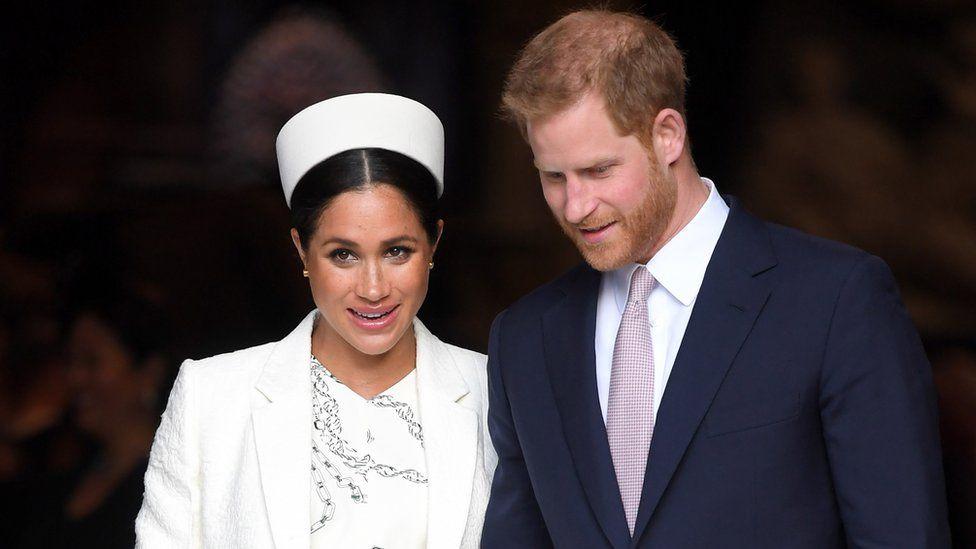



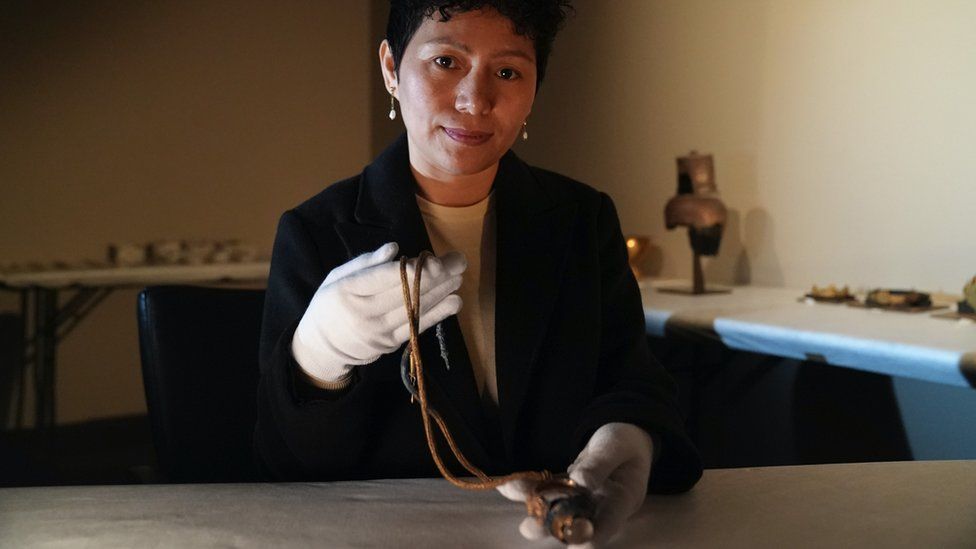
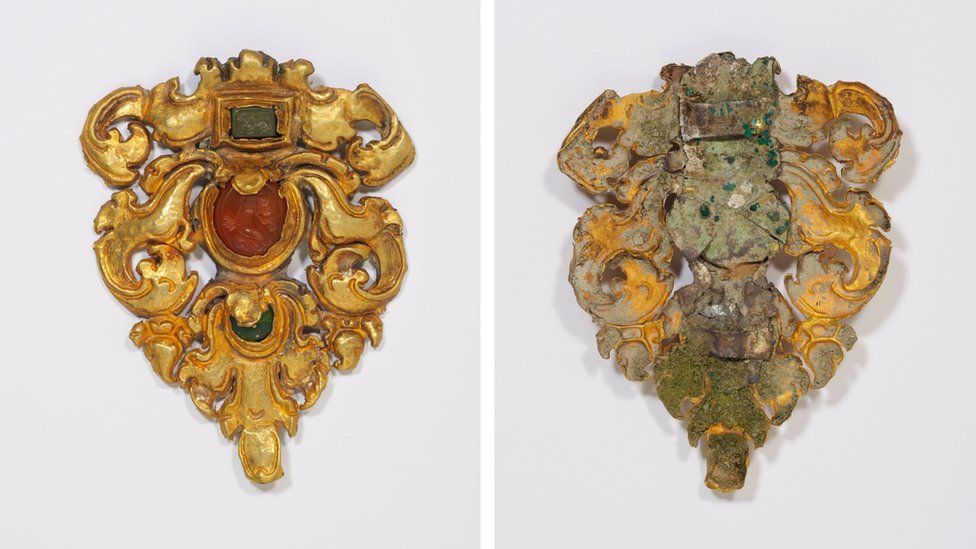

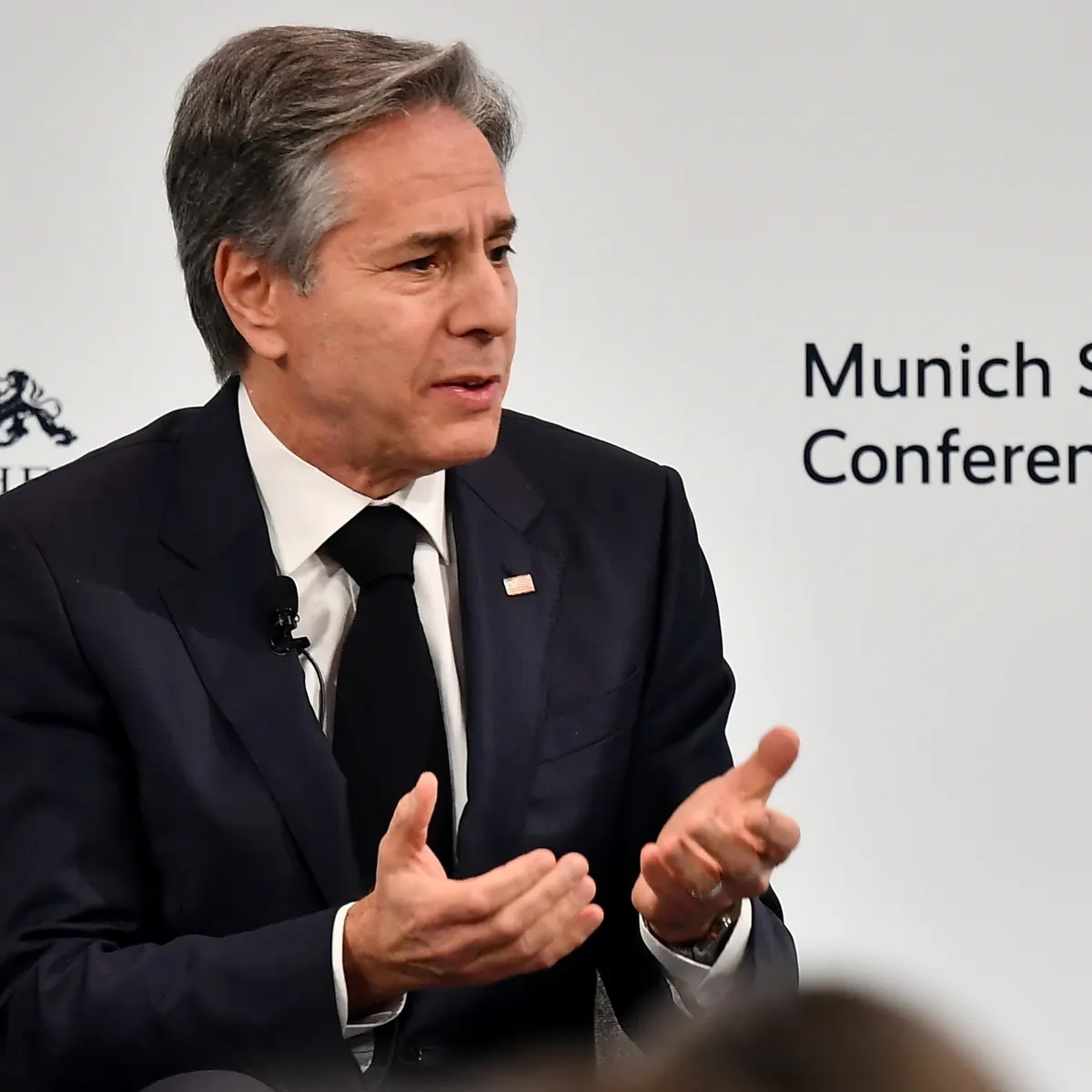


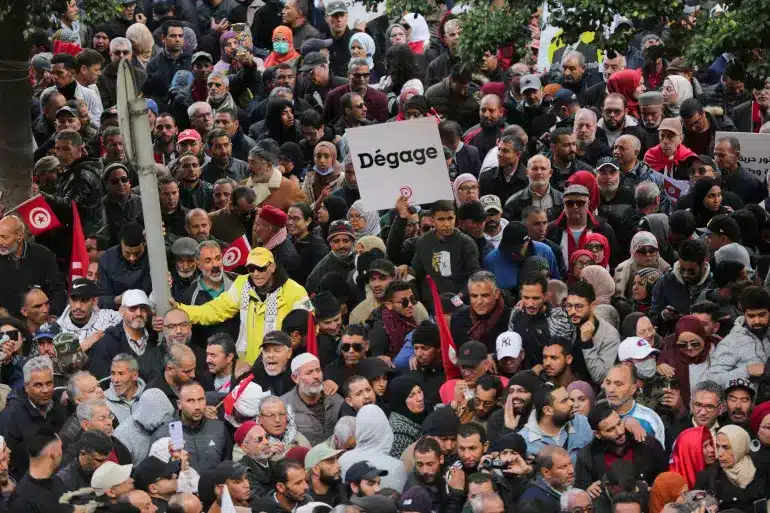


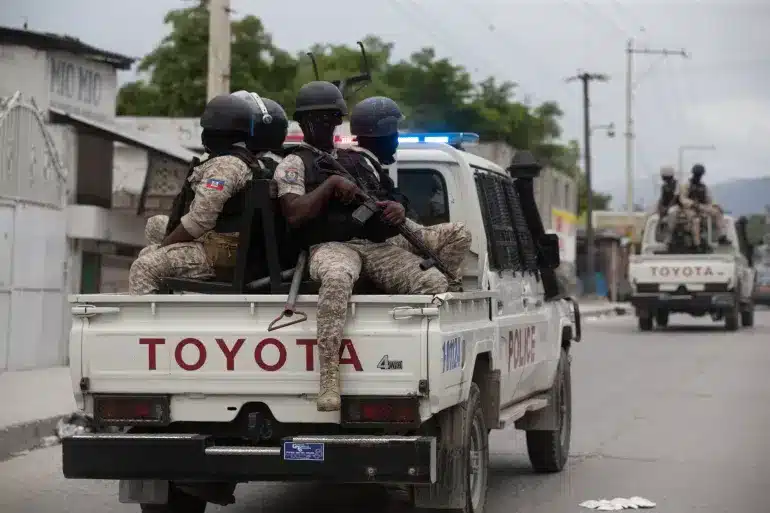
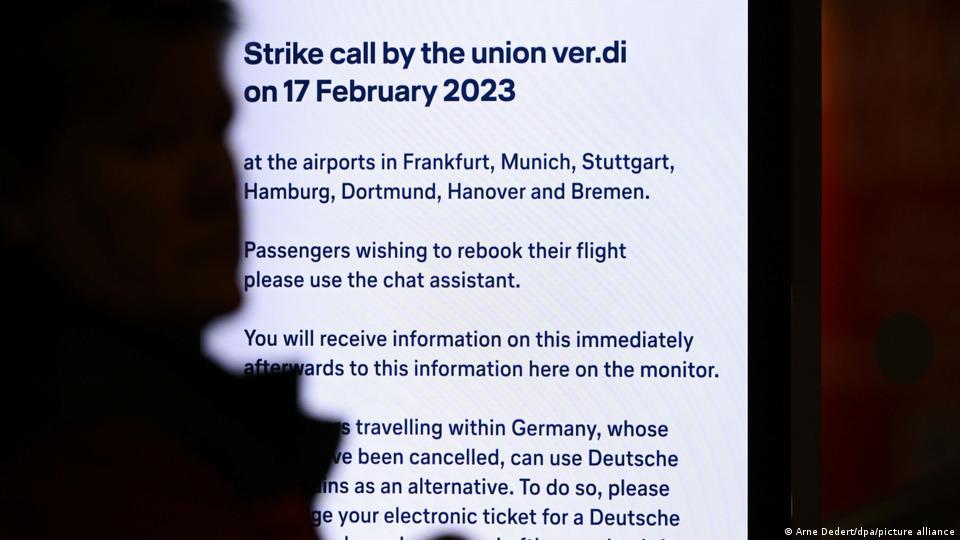

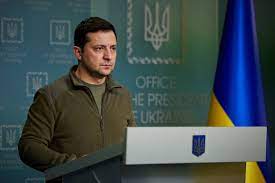
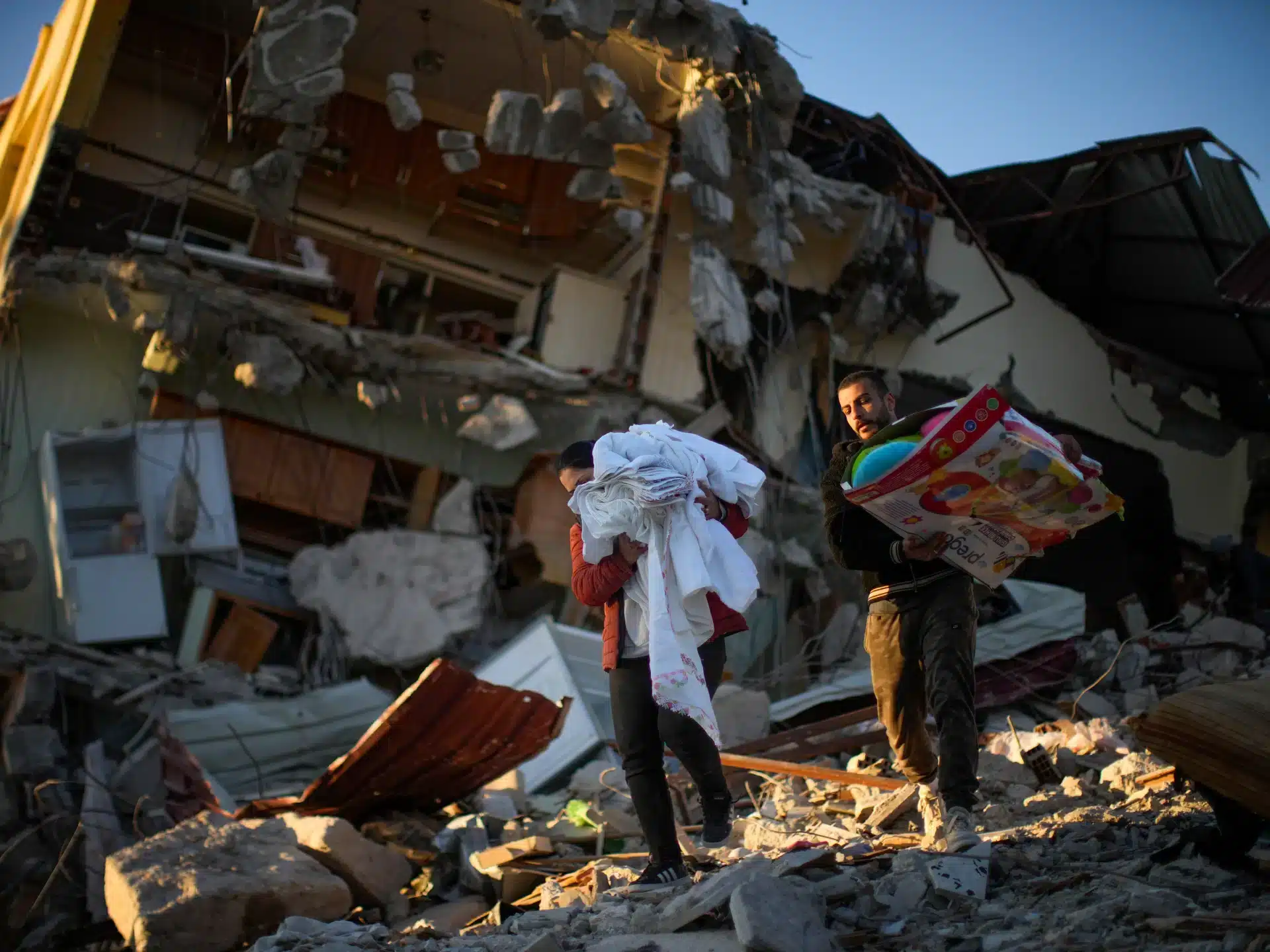
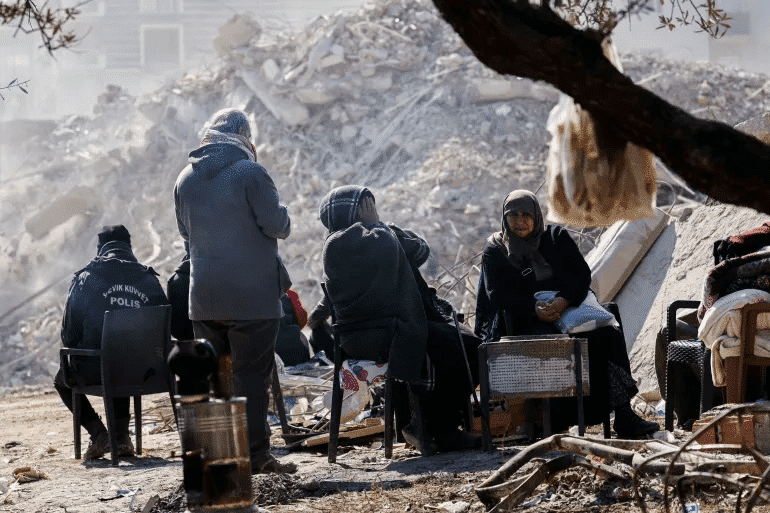
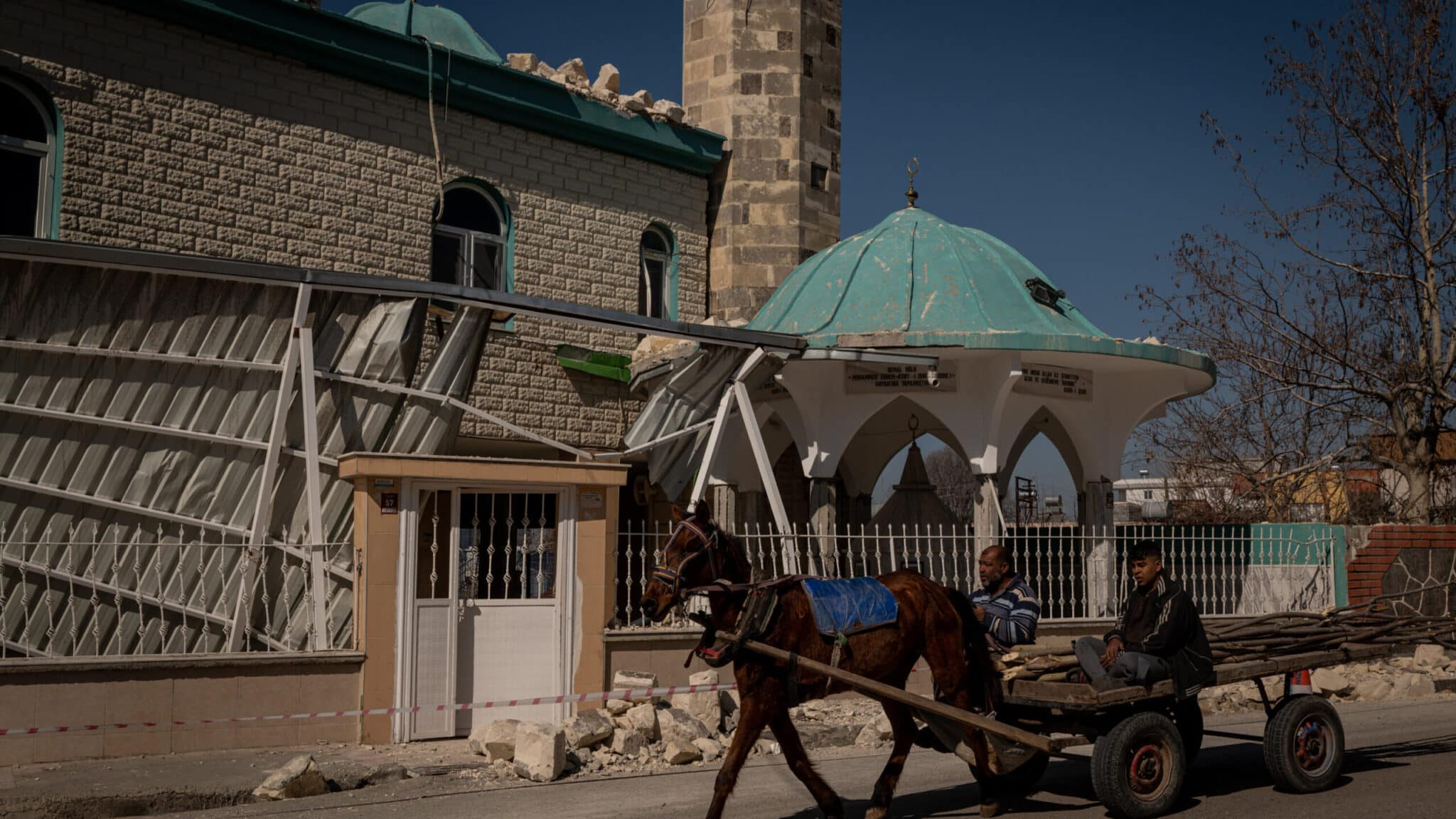

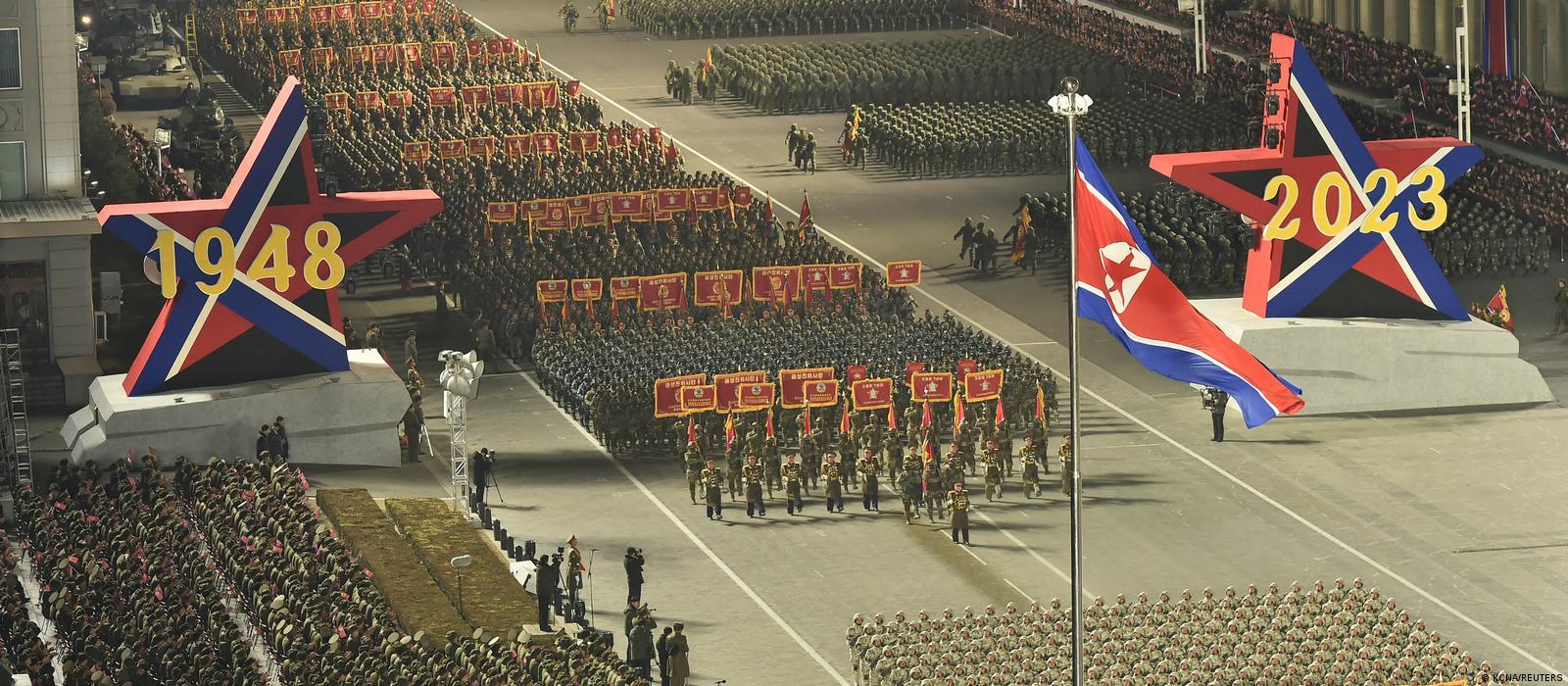

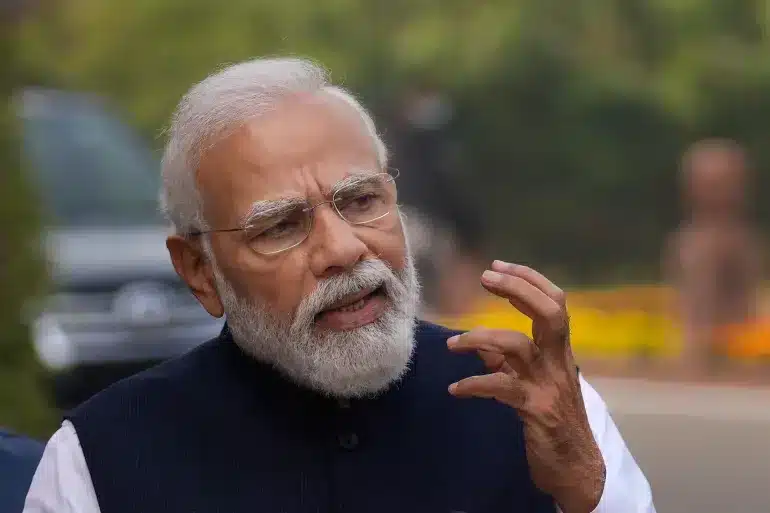

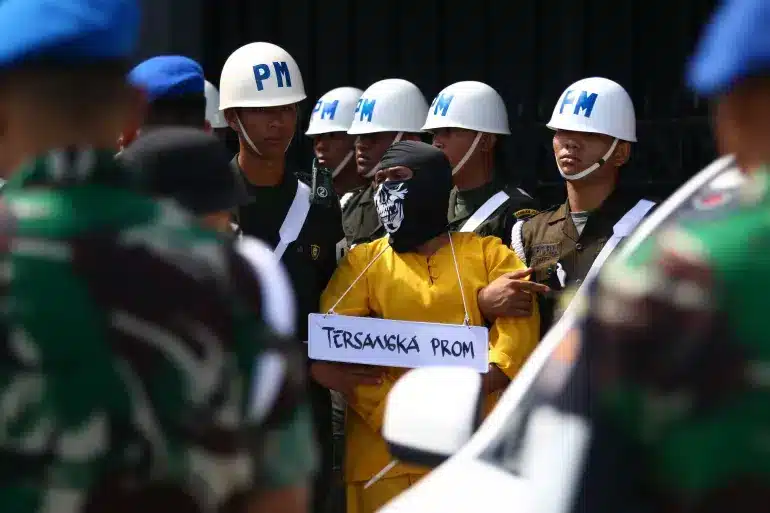

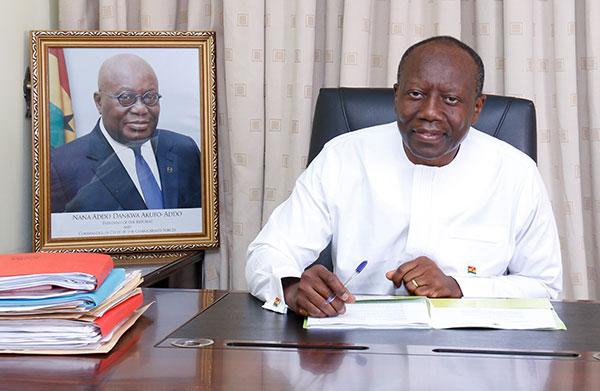



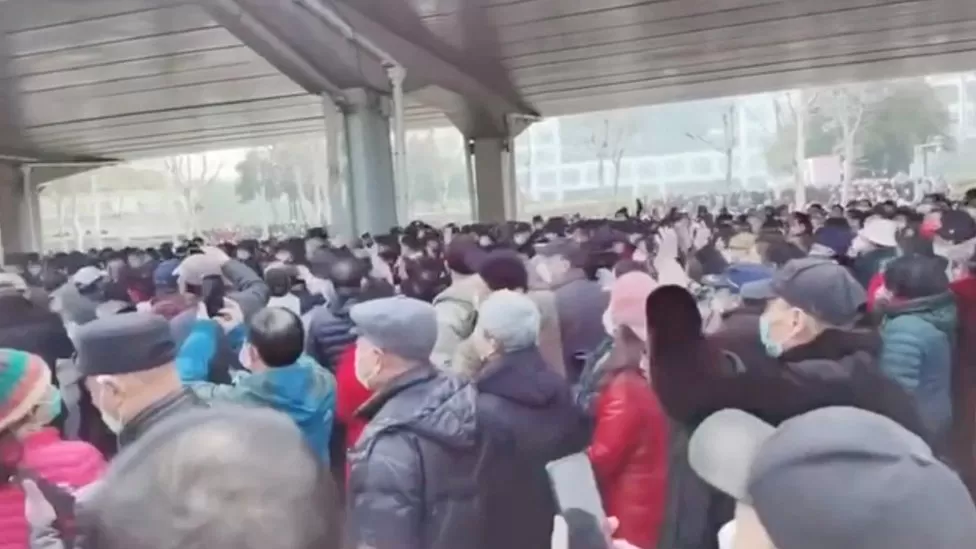
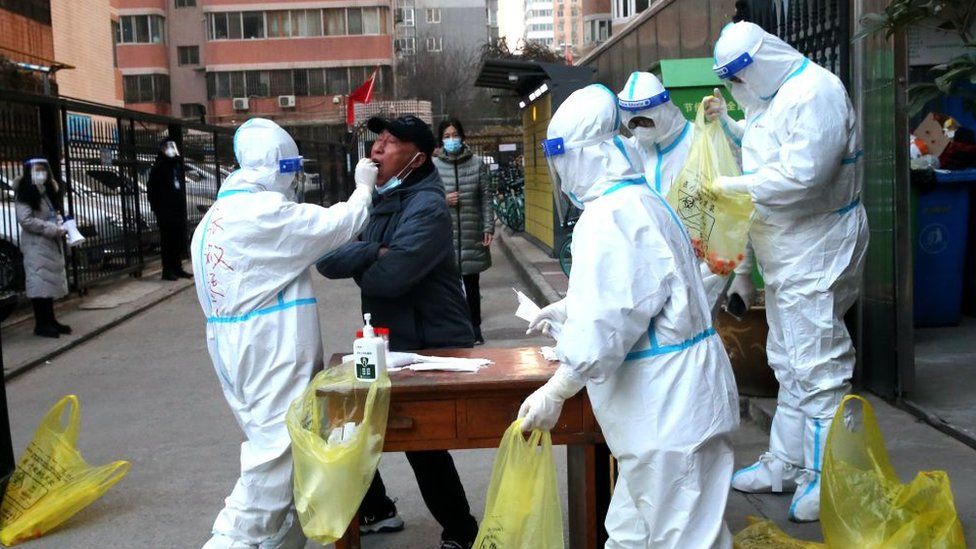
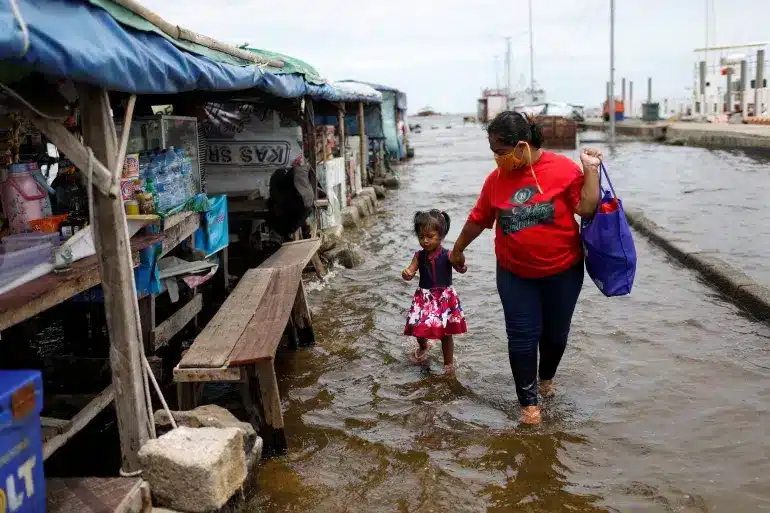

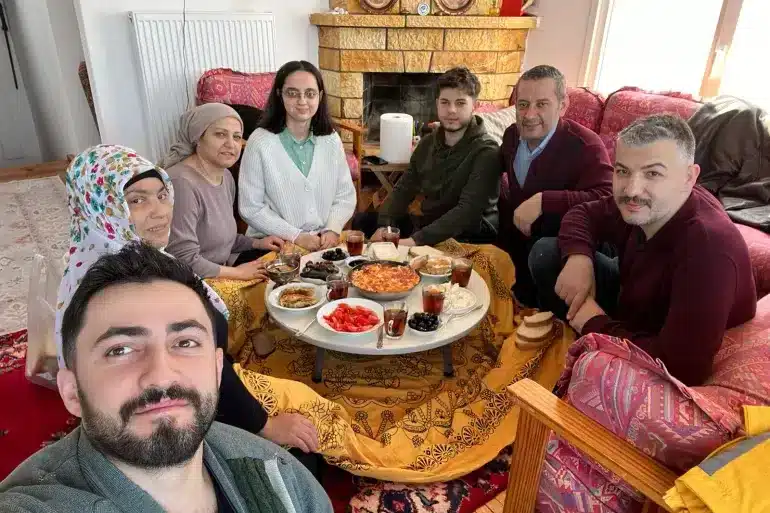


![Rumeysa Otoman's father, Ahmet Arkin (L) with his brother Sebhattin Arkin (R) who survived the earthquake in Hatay and came to stay with them in Bursa [Credit Rumeysa Otoman/Al Jazeera]](https://www.aljazeera.com/wp-content/uploads/2023/02/cd53bca1-25bc-4526-b549-040d8c1f4d90-2.jpg?w=770&resize=770%2C460&quality=80)