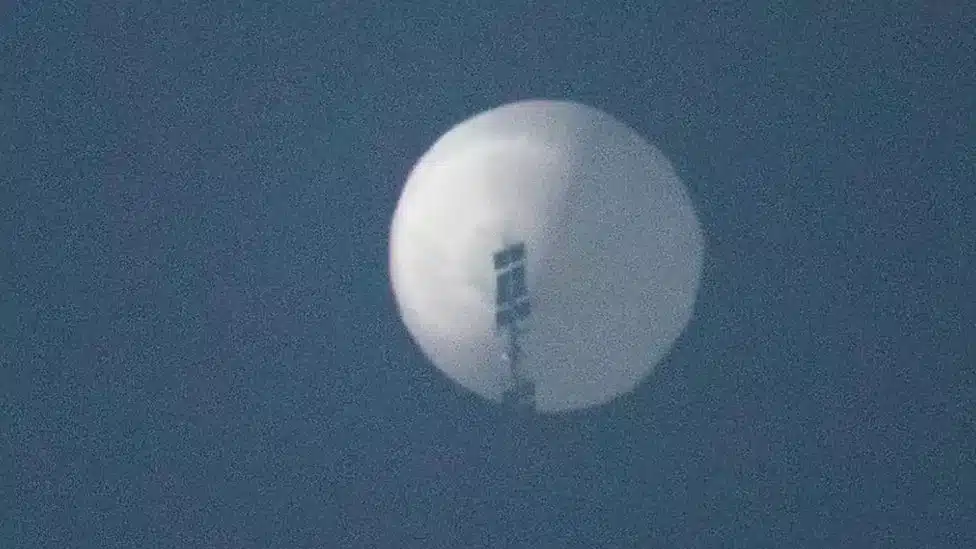
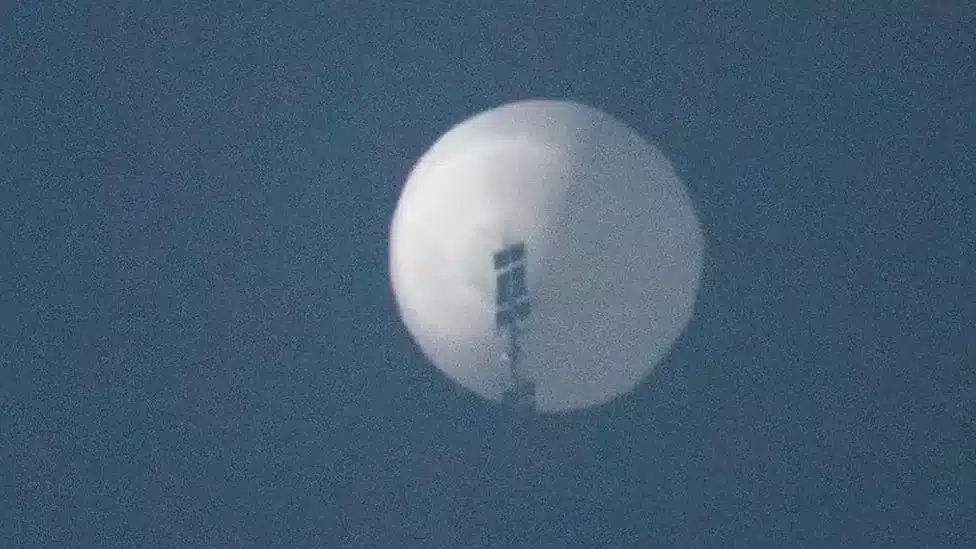
China’s foreign ministry has apologised for what it called a civilian balloon that erred and entered American airspace.
The ministry claimed in a statement on Friday that the balloon that the US believed was being used for surveillance was actually a civilian “airship” that was being used for research, primarily for meteorological purposes.
According to the statement, the airship has little ability to steer and “deviated far from its planned course” due to winds.
It decided not to shoot down the balloon, which was potentially flying over sensitive sites, because of concerns of hurting people on the ground.
Reporting from the White House in Washington, DC, Al Jazeera’s Kimberly Halkett said that the balloon was first spotted by bystanders in the state of Montana.
“It was spotted by people on the ground who were wondering what was in the sky. That is how the US government first learned about this, incredibly,” she said. “It was then that the US government started tracking it.”
“There are going to have to be some answers as to why it was bystanders who first spotted this and not the military or the US government,” added Halkett.
Trip to Beijing
The news came as US Secretary of State Antony Blinken was expected to make his first trip to Beijing this weekend. The visit has not been formally announced, and it was not immediately clear if the balloon’s discovery would affect his travel plans.
Chinese Ministry of Foreign Affairs spokesperson Mao Ning had earlier said she had no information on the trip. But she added China had “no intention of violating the territory and airspace of any sovereign country” and urged for calm while the facts were established.
Blinken would be the highest-ranking member of President Joe Biden’s administration to visit China, on a mission to mitigate a sharp downturn in relations between the countries amid trade disputes and concerns about Beijing’s increasingly aggressive stance towards Taiwan and in the South China Sea.
A senior US defence official told Pentagon reporters on Thursday that the US had “very high confidence” that the object spotted over its airspace in recent days was a Chinese high-altitude balloon and that it was flying over sensitive sites to collect information.
The official, who had spoken on condition of anonymity, had confirmed that one of the places the balloon was spotted was Montana, which is home to one of the nation’s three nuclear missile silo fields at Malmstrom Air Force Base.
The official also said the US had assessed the balloon had “limited” value in terms of providing intelligence that could not be obtained by other technologies, such as spy satellites.
He said the balloon was travelling well above the height commercial aircraft fly at and did not present a threat to people on the ground.
Biden was briefed and asked the military to present options, according to a senior administration official, who was also not authorised to publicly discuss sensitive information. The senior defence official said the US prepared fighter jets, including F-22s, to shoot down the balloon if ordered.
Defence secretary Lloyd Austin and Army General Mark Milley, chairman of the Joint Chiefs of Staff, advised against taking “kinetic action” because of risks to the safety of people on the ground. Biden accepted that recommendation.
Even though the balloon was over a sparsely populated area, its size would create a debris field large enough that it could have put people at risk.
The defence official would not specify the size of the balloon but said commercial pilots could spot it from their cockpits.
China’s brazen disregard for U.S. sovereignty is a destabilizing action that must be addressed, and President Biden cannot be silent.
The balloon’s appearance adds to national security concerns among US lawmakers about China’s influence in the country, ranging from the prevalence of the hugely popular smartphone app TikTok to purchases of American farmland.
“China’s brazen disregard for US sovereignty is a destabilising action that must be addressed,” Republican Speaker of the House Kevin McCarthy tweeted.
The Pentagon said on February 2, 2023, that it was tracking a Chinese spy balloon flying high over the United States that appeared to be surveilling highly sensitive nuclear weapons sites [File: Eva Hambach/AFP]
For almost three years, borders have been closed, dividing families and disrupting tourism and other industries.
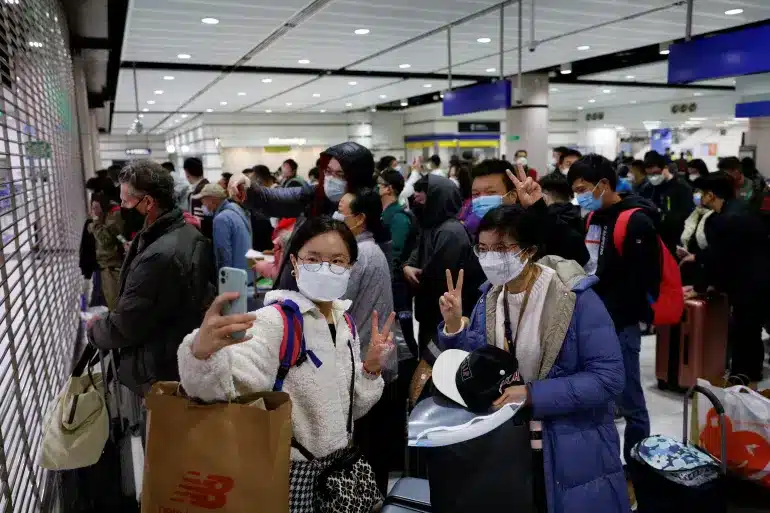
After nearly three years of closure, China has announced that it will completely reopen its borders with the territories ofHong Kong and Macau, eliminating COVID-19 testing requirements and daily quotas.
The Hong Kong and Macao Affairs Office of the State Council announced on Friday that all remaining restrictions would be lifted at midnight on February 6 and that group tours would be permitted to resume.
After Beijing abandoned the “zero COVID” strategy, which had divided families, cut off tourism, and choked businesses, limited border crossings between Hong Kong and the mainland resumed in January.
Hong Kong leader John Lee said on Friday that partial reopening had been “orderly, safe and smooth”.
Hong Kong has been largely sealed off for much of the past three years as its government sought to follow Beijing’s pandemic policies with mandatory quarantine of up to three weeks for arrivals, as well as intensive testing and screening.
The former British colony began to unwind some of its rules in the middle of 2022, and Lee announced that the territory would now scrap the longstanding requirement for all visitors to be vaccinated against COVID-19.
People from the mainland have long made up the vast majority of visitors to Hong Kong, with about 51 million arrivals in 2018, nearly seven times the city’s population.
The prolonged pandemic restrictions are estimated to have cost the territory about $27bn and local officials are hoping an influx of visitors will revitalise the once-vibrant tourism and retail industries.
The full opening of the borders comes a day after Lee rolled out a rebranding campaign to woo overseas tourists, pledging more than half a million free flights and “no isolation, no quarantine and no restriction.
Outdoor masking remains compulsory in Hong Kong, although Lee has said the policy could be scrapped once cases of flu ease.
Officials and witnesses say that on a ship carrying migrants and refugees, victims experienced hunger and cold.
According to authorities and witnesses, several people perished on board a refugee and migrant vessel in the central Mediterranean, including a pregnant woman and a baby who was four months old.
According to Filippo Mannino, mayor of the island of Lampedusa, the Italian coastguard “recovered eight bodies, five men and three women,” late on Thursday. Additionally, 42 survivors were brought ashore.
Uncertainty surrounds the tragedy’s exact cost.
Italy’s ANSA news agency said rescue services intervened in Malta’s Search and Rescue (SAR) region to assist a boat in distress. The bodies of two people were still missing, ANSA reported.
Rescuers found the passengers, who had boarded the six-metre-long boat in the Tunisian town of Sfax early on Saturday, soaked and experiencing extreme cold and dehydration after days at sea.
Survivors said one woman was travelling with her four-month-old baby, who died during the journey. She put the infant’s body in the sea in her grief, before she also died of cold and hunger
Prosecutors in the Sicilian city of Agrigento have launched an investigation into the incident.
The boat was 67km (42 miles) from Lampedusa, where it was headed.
The tiny islet has been dealing with the arrival of hundreds of refugees and migrants, with Mannino complaining that its inhabitants have been left “almost alone” in dealing with the reception.
The mayor on Thursday appealed to Prime Minister Giorgia Meloni, asking for the government’s support in managing “this enormous tragedy”.
“Help, we cannot handle it this way for much longer,” he said as he headed to the Favarolo port ahead of the survivors’ arrival.
The passengers, who hail from Mali, Ivory Coast, Guinea, Cameroon, Burkina Faso and Niger, have been taken to a reception centre on the island and will be questioned by prosecutors in the coming hours, ANSA reported.
The rate of arrivals appears to be increasing.
Almost 5,000 refugees and migrants have landed in Italy since the start of the year, according to the interior ministry, up from just over 3,000 in the same period last year, and 1,000 in 2021.
In recent months, hundreds have drowned off the Tunisian coast, with an increase in the frequency of attempted crossings from Tunisia and Libya towards Italy.
The coastline of Sfax has become a major departure point for people fleeing poverty and conflict in Africa and the Middle East for a chance of a better life in Europe.
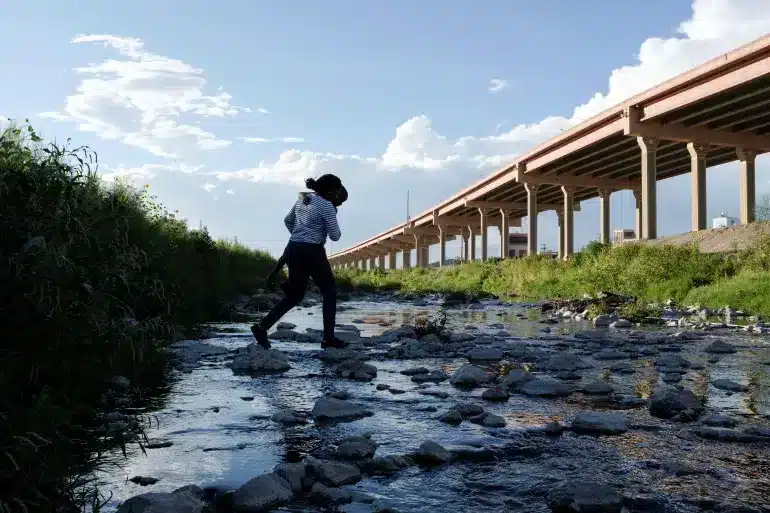
Nearly 1,000 children who were forcibly separated from their families at the US southern border as a result of a widely denounced US policy known as “family separation” have still not been returned.
According to officials, a task force established by President Joe Biden has helped about 689 children find their families. Before the task force was established, 2,176 additional children were reunited with their family members in part as a result of legal action taken by organisations like the American Civil Liberties Union (ACLU).
However, out of an estimated 3,881 children taken from their families between 2017 and 2021, a total of 998 remain separated as of February 1, the Department of Homeland Security (DHS) said in a fact sheet on Thursday.
But officials expressed optimism that the number would continue to decline as the task force uses governmental records and non-governmental organisations (NGOs) to locate fractured families.
“The number of new families identified continues to increase, as families come forward and identify themselves,” the DHS said in its statement.
Of the 998 children who have yet to return to their families, 148 are “in the process of reunification”, the fact sheet said. Another 183 families “have been informed of the opportunity to reunify” through an NGO.
In a meeting with reporters on Thursday, DHS Secretary Alejandro Mayorkas recounted meeting a mother who was separated from her 13-year-old daughter under the policy, then reunited years later when she was 16.
Mayorkas said the daughter “still could not understand how her mother would let her be separated. She didn’t understand the force behind the separation”.
Some families split apart by the separation policy have been connected with mental health resources, DHS officials said. But under the Biden administration, the US Justice Department has argued that victims of the policy are not entitled to restitution.
The family separation policy was initiated under formerRepublican President Donald Trump as part of a crackdown on unauthorised crossings along the US-Mexico border.
It was one of several controversial immigration policies enacted under the Trump administration, including an executive order to ban people from various Muslims-majority countries from travelling to the US.
Biden called the family separations a “human tragedy” and was highly critical of Trump’s hardline positions on immigration during his campaign for the presidency. Biden defeated Trump in the 2020 election and began his term in January 2021.
Shortly after entering office, Biden reversed several key Trump policies, including the executive order critics had dubbed the “Muslim ban”. In February 2021, Biden also created the Interagency Task Force on the Reunification of Families to address the separation policy. Thursday’s statistics mark the task force’s second anniversary.
However, Biden has come under fire from migrant and refugee rights groups as well as members of his own party for keeping some of his predecessor’s immigration policies in place.
One of the most high-profile is Title 42, a Trump-era policy that allowed the government to turn back asylum-seekers in the name of combatting COVID-19.
Immigrant rights groups have denounced the policy for infringing on asylum seekers’ right to due process, and the US Centers for Disease Control and Prevention has declared the policy “no longer necessary”.
The Biden administration initially tried to end the programme but Republican politicians pressed for Title 42 to remain in place, pursuing the matter in court. In December, the Supreme Court upheld the policy and is set to hear arguments over it this month
Under pressure from Republicans, as the number of border crossings surged, the Biden administration announced a plan in January to immediately turn away asylum-seekers from Cuba, Haiti and Nicaragua who arrived at the border – similar to a policy already in place for Venezuelans.
Instead, the administration said it would accept up to 30,000 people per month from those four countries through an application system that requires background checks and US-based sponsorship for each asylum seeker.
While the Biden administration maintains it “continues to prepare for the end of the Title 42”, critics of the new policy say it amounts to an expansion of Trump’s programme, with its automatic expulsions and rigid requirements.
In a press release, the ACLU said Biden’s decision “further ties his administration to the poisonous anti-immigrant policies of the Trump era instead of restoring fair access to asylum protections”.
Joe Frasure was shot on Monday in the Wyoming town and died in the hospital on Tuesday.
Police have stated that they thought the 28-year-old was a suspect in a burglary and that he drove a van at them.
His family, however, has disputed the account given by the authorities and demanded that the bodycam video of the incident be made public.
Police have said that they arrived at a residence on Durrell Avenue just after midnight on Monday following reports of a possible burglary.
They discovered two men in the back of the house who claimed Frasure did not respond to the officers’ commands and attempted to flee in a minivan. It is unclear whether Frasure was in the van when officers arrived or got in afterwards.
“The minivan reversed at a high rate of speed, before hitting a tree, at which point the vehicle accelerated rapidly at our officers,” said Wyoming Police Chief Brooke Brady.
She added that police fired four shots at the van and that Frasure was hit. The van then hit the building.
Ms Brady said the officers then pulled Frasure from the car and performed life-saving care on him before he was taken to the hospital.
The county coroner has listed Frasure’s cause of death as a police-involved shooting, WLWT news reports.
The second man at the back of the house has been identified as Frasure’s father. According to WCPO 9 News, Wyoming police have said that he is no longer “sought by police,” but would not provide any other details.
His brother has alleged that Frasure was shot in the back of the head, WCPO reports, in an apparent contradiction of what the police have said happened.
“I want to know why they killed my brother,” he said. “My brother was a father, a brother, a son, and a family member. A loving friend.”
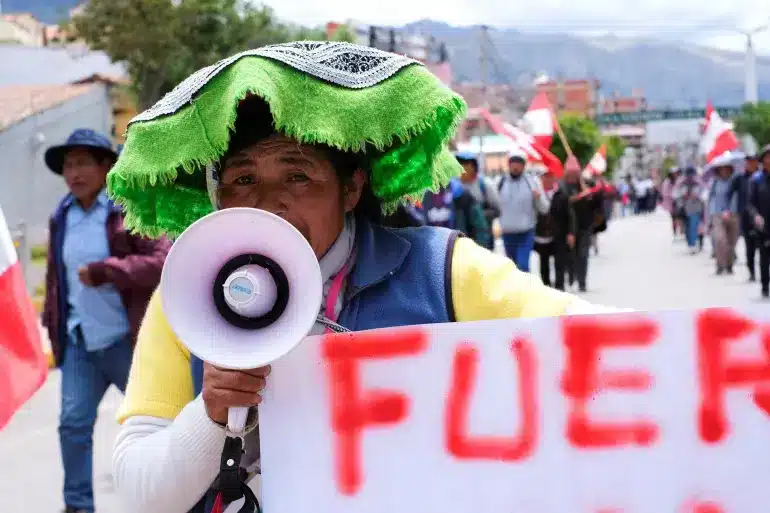
Following the rejection of a similar proposal the day before amid widespread protests that are causing the nation’s economy to suffer, the Peruvian Congress has now voted down a second proposal to move elections to 2023.
On Thursday, the Free Peru Party’s motion was defeated with only 48 votes in favour, 75 votes against, and one abstention.
Elections would be moved from April 2024 to July 2023, and the proposal also called for a referendum on establishing a constitutional convention, which was a key demand of the protesters.
President Dina Boluarte supported a similar motion the day before, but it did not receive enough support.
Peru has been embroiled in a political crisis with near-daily demonstrations since December 7, when then-President Pedro Castillo was arrested after attempting to dissolve Congress and rule by decree.
At least 48 people, including a police officer, have been killed in clashes between security forces and protesters, according to the human rights ombudsman’s office.
Protesters have erected roadblocks causing shortages of food, fuel and other basic commodities in several regions of the Andean nation.
The economic fallout of the demonstrations is hitting hard on workers. Luz Camacho, a local farmer who picks up pomegranates in the southern region of Ica has lost one-quarter of her wage, enough to not be able to pay her debt to the bank.
“It has affected us a lot because we haven’t worked and we have loans and debts. Where are we going to get an income?” Camacho told Al Jazeera.
The chamber of commerce estimates that the region has lost $300m since the crisis started in December.
“This political crisis is turning into a social economic crisis,” said Jose Luis Gereda, the director of Pomica, an Ica-based company that packs fruits to be shipped abroad. Gereda buys 70 percent of its products from small producers who have been prevented by protesters from accessing fields.
Chief adviser resigns
In December, lawmakers moved elections, originally due in 2026, up to April 2024, but as protesters dug in their heels, Boluarte called for holding the vote this year instead.
The unrest is being propelled mainly by poor Indigenous Peruvians from southern areas of the country.
They perceived Castillo, who is also from that region and has Indigenous roots, as an ally in their fight against poverty, racism and inequality.
Boluarte’s government began to show additional cracks on Thursday, with the departure of Raul Molina, a chief adviser.
Molina blamed Boluarte for a lack of “substantive political gestures” as well as for not establishing any clear suspects in the deaths of protesters during the crisis.
“Madam President, listen to our people, to the great majority who are asking for changes”, read Molina’s letter of resignation released on Thursday by the press.
People need food. Instead, they’re being fed nationalism by an authoritarian government that misreads the public’s mood.
There are reasons why half a million people are on strike in Britain. The reasons are low wages, poor working conditions, poverty and stress.
During the COVID-19 pandemic, public sector workers, particularly health service and local government, worked incredibly hard in often very difficult conditions in order to deliver a health service, and were applauded by everybody.
They are now being told: “We can’t afford to pay you properly. We’re going to continue underfunding all those services. And you are now officially an enemy of what the government is trying to achieve.”
Well, people do not like that. And people are very angry about that.
It is an unhappy, unsettled and divided country being fed a diet of excessive nationalism and excessive patriotism. This needs fixing as a society — not by individual endeavours and sharp elbows.
You go to people’s homes, and there is hardly any food in the house. They cannot afford to keep the lights on; cannot afford to heat the house. Children go to school hungry. There is a real issue of injustice and inequality. There is no shortage of food in the country. There is a shortage of the ability of public services to ensure that people can survive. And it all basically comes down to the level of wages that we have.
We are obsessed, as this government is, with the privatisation of public services, with disempowerment of working-class communities and the promotion of the individual at the expense of the collective. They have tried to turn Britain into an individualistic society rather than the post-war consensus, which was much more of a communal society.
Parliament has passed a bill that gives the government the power to enforce people to go to work, even though they are exercising the rights that they have to take industrial action. That to me is a threat to the rights and liberties of people.
The government has completely misjudged the public mood and many people who themselves are either unemployed or not in a union feel that the union leaderships are acting for them.
The government’s retreat into authoritarian legislation rather than negotiation is one of the big problems.
DISCLAIMER: Independentghana.com will not be liable for any inaccuracies contained in this article. The views expressed in the article are solely those of the author’s, and do not reflect those of The Independent Ghana
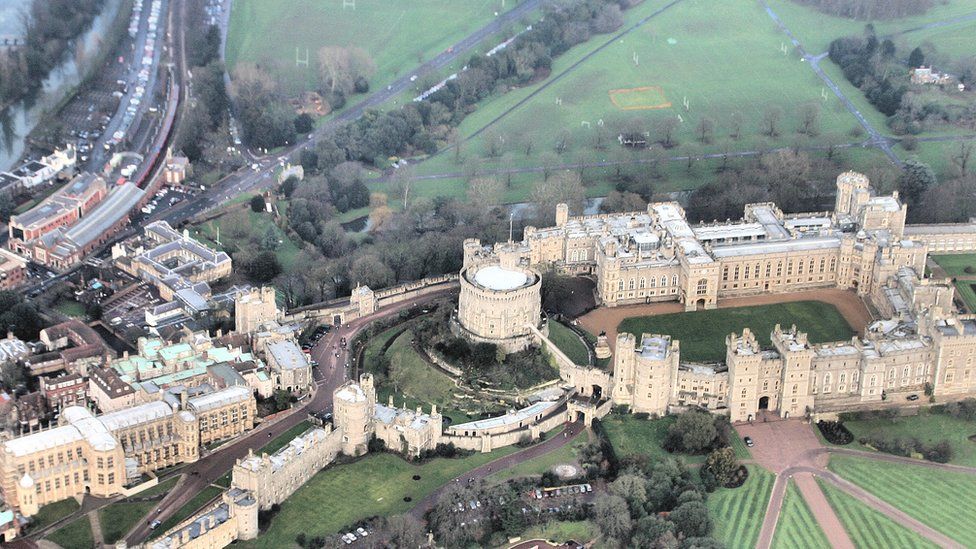
Due to the Covid pandemic, Jaswant Singh Chail, a resident of Hampshire, was detained on Christmas Day 2021 while the late monarch was residing at Windsor.
Chail, 21, earlier entered a guilty plea to three charges at the Old Bailey.
He is the first person to be found guilty of treason in the UK since 1981.
Chail, from North Baddesley, near Southampton, also admitted making threats to kill and possessing the loaded weapon in the castle.
Image caption,The Queen had been staying at Windsor, rather than spending Christmas as usual on her Sandringham estate
He was spotted by a royal protection officer in a private section of the castle grounds just after 08:10 GMT on 25 December 2021.
The officer was at a gate, leading to the monarch’s private apartments.
Chail had climbed into the grounds using a nylon rope ladder, and had already been there for about two hours.
He was wearing a hood and a mask, and was described as “like something out of a vigilante movie”.
The officer took out his Taser, and asked him: “Morning, can I help, mate?” Chail replied: “I am here to kill the Queen.”
The protection officer immediately told Chail to drop the crossbow, get on his knees, and put his hands on his head. Chail complied and then said again: “I am here to kill the Queen.”
Image caption,Jaswant Singh Chail climbed into the grounds using a nylon rope ladder
The crossbow was found to be loaded with a bolt and the safety catch was off.
Chail was also carrying a handwritten note, which read: “Please don’t remove my clothes, shoes and gloves, masks etc, don’t want post-mortem, don’t want embalming, thank you and I’m sorry.”
In a video posted on Snapchat minutes before he entered the castle, Chail said: “I’m sorry, I’m sorry for what I’ve done and what I will do. I will attempt to assassinate Elizabeth, Queen of the Royal Family.
“This is revenge for those who have died in the 1919 Jallianwala Bagh massacre. It is also revenge for those who have been killed, humiliated and discriminated on because of their race.”
Chail is currently inBroadmoor Hospital, where he appeared in court via a remote video link.
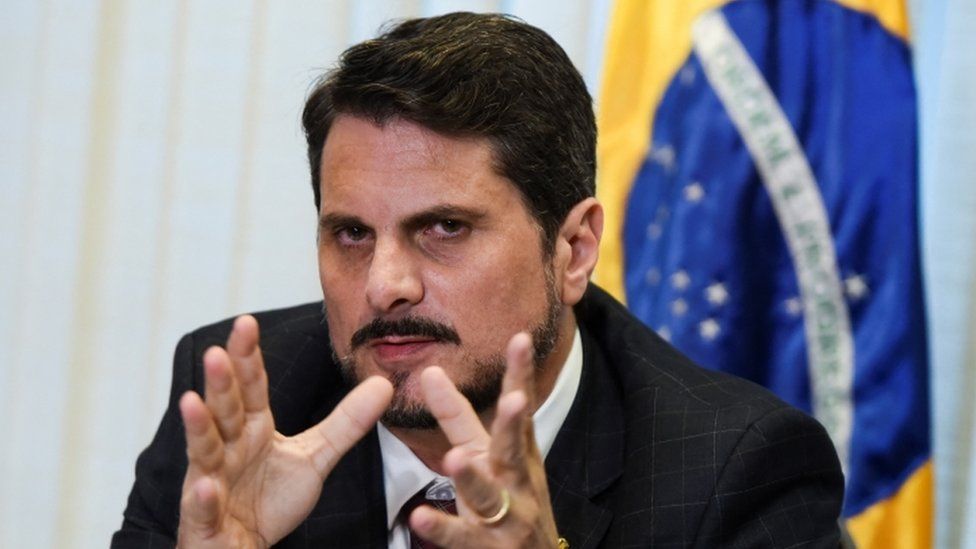
Marcos do Val asserts that he was asked to get the head of the electoral authority to compromise himself in order to call into question the validity of the presidential election.
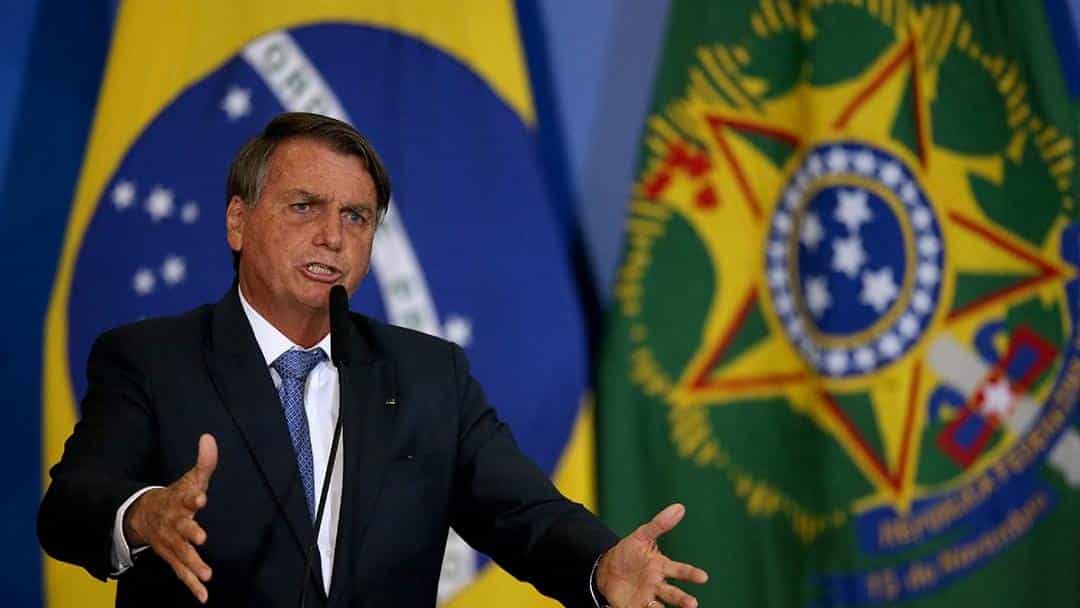
Mr. Bolsonaro’s supporters falsely accused voting fraud after his close loss in the election in October.
Despite the fact that his son has acknowledged the meeting actually occurred, he denies any wrongdoing.
Mr do Val told a news conference on Thursday that he was invited to a meeting on December 9 with Mr Bolsonaro by Daniel Silveira, a former lawmaker and a close ally of the former president. This was more than a month after Luiz Inácio Lula da Silva had won the election and three days before his presidency was formally approved.
Mr Silveira then allegedly asked Mr Do Val to get the head of the electoral authority, Justice Alexandre de Moraes, to make compromising comments on tape that would lead to his arrest.
“I immediately said that I would not do that, I would not do that type of thing,” said Mr do Val, who claimed that Mr Bolsonaro “sat in silence” while Mr Silveira laid out the details of the plot during the meeting.
However, he has denied suggestions that he was coerced by the former president, telling journalists he “was in a position similar to mine, listening to an odd idea by Daniel Silveira”.
Image caption,Marcos do Val denied that Mr Bolsonaro himself tried to force him to get involved in the plot
Mr do Val’s comments come after Mr Silveira was arrested on Thursday in relation to previous offences after his parliamentary immunity came to an end.
According to Reuters, Mr de Moraes has ordered Mr do Val to provide sworn testimony to federal police within five days as part of a Supreme Court investigation into the 8 January riots, in which Mr Bolsonaro has been named among those potentially responsible.
Thousands of Bolsonaro supporters stormed the country’s Supreme Court, Congress and presidential palace in the capital, Brasília, after camping in and around the city for weeks calling for a military coup.
Mr Bolsonaro has voiced “regret” for the unrest, but denies he caused it. Neither he nor his representatives have yet commented on Mr do Val’s remarks.
The former president is currently in Florida after leaving Brazil at the end of December, before his successor was sworn in. His lawyers have told the BBC he has applied for a 6-month US tourist visa.
The arrest of Edgardo Greco in Saint-Étienne by Italian authorities marks the second notable mafia arrest in recent weeks.
When Matteo Messina Denaro was apprehended while visiting a hospital in Sicily, he had been on the run for 30 years.
For carrying out gruesome murders in the 1990s, both men were wanted.
Greco was a member of the ‘Ndrangheta organised crime group, which has roots in the Calabria region of southern Italy, while Messina Denaro was the “boss of bosses” for Sicily’s notorious Cosa Nostra.
The ‘Ndrangheta are now the most powerful mafia in Italy and their tentacles stretch across Europe and South America.
Greco, 63, was wanted for the murder of two brothers during a “mafia war” between two gangs in the early 1990s.
Stefano and Giuseppe Bartolomeo were beaten to death at a fishmonger’s in the small town of Cosenza in January 1991. Their bodies were never found and are believed to have been dissolved in acid.
Greco was part of a rival gang and he was also accused of the attempted murder of another man later that year in the same town.
When a trial judge issued an arrest warrant for him in 2006, Greco went on the run.
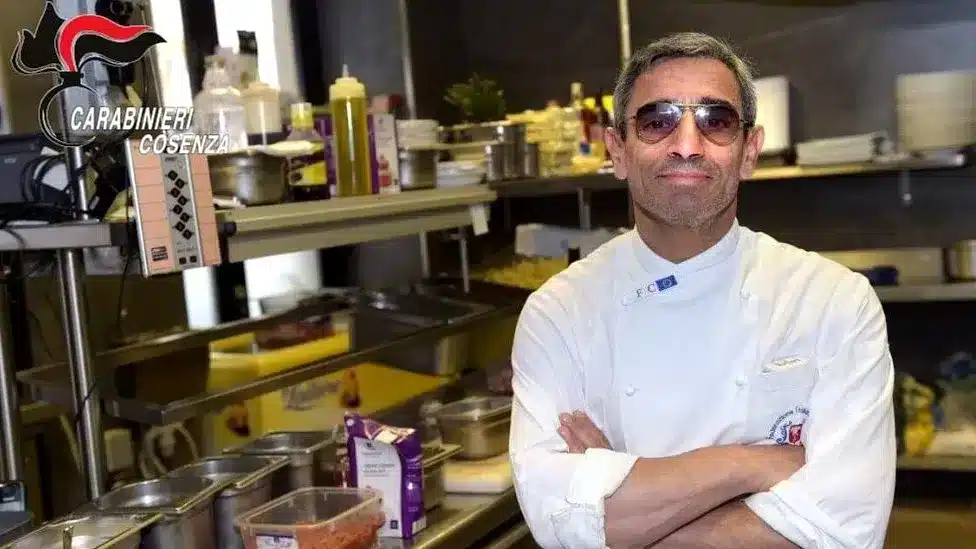
Eight years later, he settled in the French city of Saint-Étienne, south-west of Lyon, eventually taking up the job of pizzaiolo in an Italian restaurant.
Greco took on a new identity, calling himself Paolo Dimitrio. By now he had been given a life sentence back in Italy and was the subject of a European arrest warrant.
But in July 2021, he was sufficiently confident of his new alias that he appeared in a local newspaper feature, boasting of his restaurant’s “regional and home-made recipes,” such as ravioli, risotto, and tagliatelle.
Greco, using the name of a criminal from Puglia in the south-east of Italy, now had a grey beard and glasses. The article described him as an Italian by birth but a Saint-Étienne native at heart.
He was, however, still being pursued by Italy’s foremost anti-mafia prosecutor, Nicola Gratteri, who has spent decades tackling the rise of the ‘Ndrangheta.
Interpol said its anti-‘Ndrangheta operation also became involved, with French authorities carrying out surveillance of Greco’s location. Italian police then confirmed his identity and moved in to arrest him.
Italian Interior Minister Matteo Piantedosi praised the police for bringing to justice one of Italy’s worst criminals, while the head of the Calabria region, Roberto Occhiuto, said the arrest underlined Italy’s commitment to the fight against all forms of organised crime.
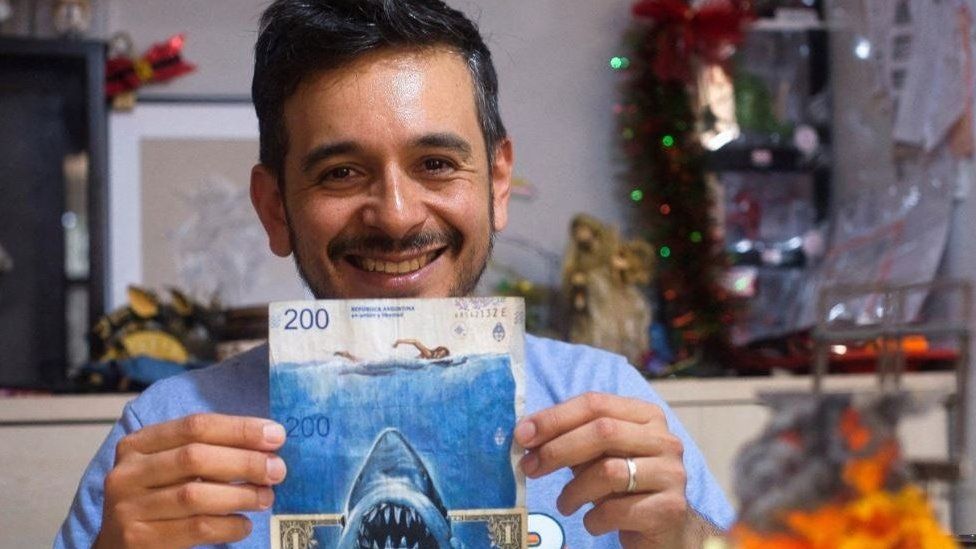
Argentina’s central bank (BCRA) has announced that a new 2,000 peso banknote will be released in response to the country’s skyrocketing inflation.
The new note, which will officially be worth $11 (£9), was introduced as a result of a nearly 95% increase in consumer prices over the previous year, which ended in December.
Since 1991, Argentina’s inflation rate hasn’t been this high.
On alternative markets, the 1,000-peso bill, which is the largest current bill, is only worth $2.70.
Writing on Twitter, the BCRA said the new note would “commemorate the development of science and medicine in Argentina”.
It will feature pioneering doctors Cecilia Grierson and Ramón Carrillo, it added – although it is not clear when the note will enter circulation.
El Directorio del BCRA aprobó la emisión de un nuevo billete de $2000 que conmemora el desarrollo de la ciencia y de la medicina en la Argentina y que tendrá como protagonistas al Instituto Malbrán, a la Dra. Cecilia Grierson y al Dr. Ramón Carrillo. ▶️ https://t.co/6j5Imp5XfR
The 27-year-old entered a guilty plea in a Canberra court after his attorneys were unsuccessful in getting the charge dropped due to his mental health.
During a quarrel in Canberra in 2021, Mr. Kyrgios pushed Chiara Passari onto the sidewalk, the court heard.
When sparing him a criminal record, the magistrate referred to the incident as “a single act of stupidity or frustration.”
In a statement following the decision, Mr. Kyrgios expressed his appreciation to the court for dismissing the charges without finding him guilty.
“I was not in good place when this happened and I reacted to a difficult situation in a way I deeply regret,” he said.
“I know it wasn’t OK and I’m sincerely sorry for the hurt I caused.”
Agreed facts tendered to the court say Mr Kyrgios pushed Ms Passari after she stopped his car from driving away while they were arguing on 10 January 2021.
Ms Passari reported the incident to police the next month but did not make a formal complaint. The couple reconciled and resumed a relationship, but after they broke up, Ms Passari made a formal complaint in December 2021.
Mr Kyrgios’ lawyer argued his client had been trying to de-escalate the fight bycalling an Uber and had repeatedly tried to “lawfully” move Ms Passari away from the car.
“It is in that context and the frustration that resulted, that my client reacted and the offence occurred,” Michael Kukulies-Smith said.
The court heard Mr Kyrgios had sworn at Ms Passari and told her to go away. He then put his hands on her hips and moved her an arms length from the door, but Ms Passari stepped back.
The tennis star then said: “I’m serious. I’m going to…” before pushing Ms Passari in the shoulder, causing her to fall.
According to the court, Ms Passari felt some pain and later noticed grazing on her knee.
The court heard Mr Kyrgios apologised the next day—an act that showed he accepted responsibility for his actions, his lawyer said.
Mr Kukulies-Smith also told the court on Friday there was: “a relationship between the mental health and the offending – even though he no longer suffers it to the same extent today.”
Mr Kyrgios’ psychologist, Sam Borenstein, told the court the tennis player’s mental illness was “recurrent” and he had suffered from thoughts of self harm – but his condition had been improving.
When sentencing Mr Kygrios, Magistrate Beth Campbell said he had been “a young man trying to extricate himself from a heighted emotional situation”.
“You acted in the heat of the moment,” she said.
“I am dealing with you in the same way I would deal with any young man in this court. You are a young man who happens to hit a tennis ball particularly well.”
She told Mr Kyrgios that references from family showed he had a lot of “love and support” around him.
The tennis player arrived at court on Friday on crutches following recent knee surgery. An injury forced him to withdraw from theAustralian Open last month.
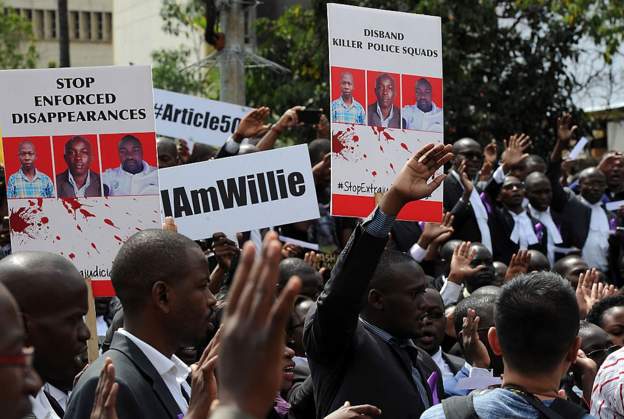
In a case that shocked the country, a Kenyan court has sentenced a former policeman to death for the murder of a human rights lawyer and two others.
For the June 2016 killings of attorney Willie Kimani, his client, and a taxi driver, two additional police officers and a civilian were also given sentences between 20 and 30 years.
Three counts, including murder, led to the conviction of the four.
Kenya commutes death sentences for murder to life in prison.
The 2017 Supreme Court decision, however, gave judges the authority to determine whether the death penalty can still be imposed.
An army officer behind an attempted coup in 1982 was the last person to be executed in Kenya.
The murder of Kimani highlighted the many extrajudicial killings and disappearances that have been blamed on the Kenyan police.
Former police officer Fredrick Leliman, who was sentenced to death, and the other three convicts, can appeal against their conviction and sentencing within 14 days.
In her judgement on Friday, Judge Jessie Lessit, said evidence produced during the trial had shown that the murders were premeditated and the victims brutally tortured and killed.
“No-one should experience what these three went through, especially from the same people mandated to protect them,” said Benson Shamala, the country director of International Justice Mission, where Kimani worked.
“Sadly, since the deaths of our three friends, we have continued to witness more killings by police,” he added.
The bodies of Kimani, Josephat Mwenda and Joseph Muiruri were found dumped in a river on the outskirts of the capital, Nairobi.
Kimani was defending motorbike taxi driver Mwenda who had accused policeman Fredrick Leliman of shooting him for no reason at a traffic stop in 2015.
Kimani, Mwenda and their taxi driver Muiruri were last seen on 23 June 2016 at a police station.
Their mutilated bodies were recovered two weeks later in a river almost 100km (62 miles) from the city.
Kenya’s Independent Policing Oversight Authority has recorded more than 6,000 complaints, according to data the agency has gathered since its creation 11 years ago, but few officers have been prosecuted.
It was worse than anticipated and represented the biggest decline since 2019.
The update came as numerous businesses issued warnings about a sudden slowdown in the economy, particularly in the tech sector, which experienced a boom during the pandemic.
Apple boss Tim Cook said the firm was navigating a “challenging environment”.
He blamed the sales decline on supply shortages due to Covid-19 disruption in China – where its phones are manufactured – and a strong dollar, as well as wider economic weakness stemming from rising prices, the war in Ukraine and lingering effects from the pandemic.
“As the world continues to face unprecedented circumstances … we know Apple is not immune to it,” he said on a conference call with investors.
Apple said the sales declines occurred throughout the world and hit most of its products.
Sales of its popular iPhones were down more than 8%, and sales of Mac computers dropped 29%.
The declines hit the firm’s profits, which fell 13% to $30bn (£24bn).
Paolo Pescatore, an analyst at PP Foresight, said the firm, like many electronics makers, is struggling to make the case that users should upgrade given “what is perceived to be incremental improvements on previous models.”
“More so when everyone is tightening their belts,” he added.
Globally the number of smartphones shipped sank 12% last year, according to market analysis firm Canalys.
Apple executives said they expected their services business, which includes Apple Pay and Apple News, to continue to drive growth, noting that there are now more than 2 billion active Apple devices around the world.
“When we look at the behaviour of our installed base, we think it’s very promising,” said chief financial officer Luca Maestri, while warning investors that the firm was expecting sales to continue to decline in the months ahead.
Other big tech companies also said they were feeling pressure in updates to investors.
Amazon, which has been struggling to re-ignite its e-commerce business, said sales at its online stores dropped 2% in the final three months of 2022, compared with a year earlier.
Overall, Amazon’s sales in the three month period rose 9% to $149.2bn (£121bn), lifted by stronger growth in its cloud computing business.
But its profits dropped sharply, falling to near zero from $14.3bn (£11bn) a year ago, a change that chief financial officer Brian Olsavsky warned investors was likely to continue in coming months.
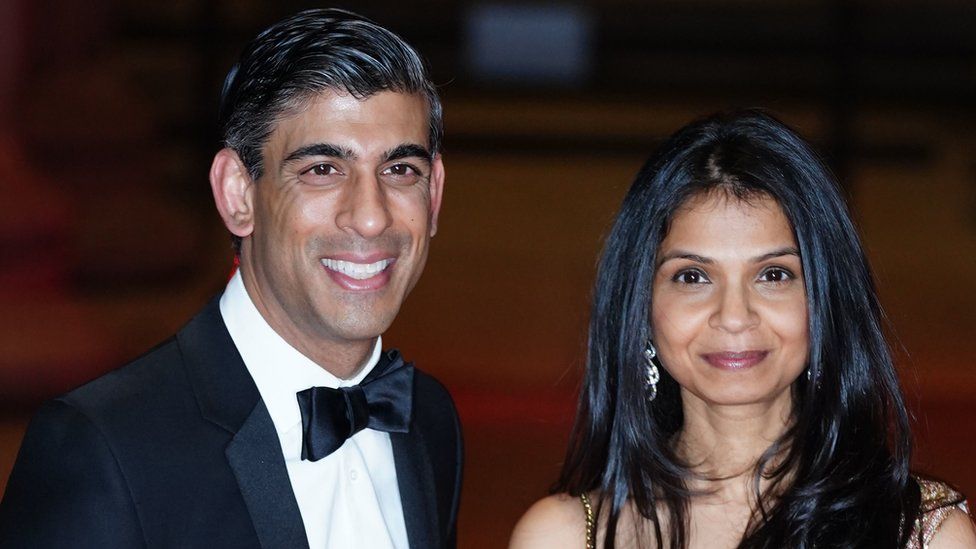
Prime Minister Rishi Sunak has reiterated his commitment to release his tax returns, telling TV host Piers Morgan that he would do so “shortly” after the interview.
Mr. Sunak stated that he was prepared to be “transparent” and publish the documents.
When it was discovered that the Prime Minister’s wife, Akshata Murty, was a non-dom, his financial affairs came under scrutiny last year.
Since then, opposition parties have urged Mr. Sunak to be transparent about his finances.
Last April, Ms Murty’s spokeswoman said she “has always and will continue to pay UK taxes on all her UK income.”
Mr Sunak first made the promise to publish his tax returns during his unsuccessful campaign to be leader of the Conservative Party last summer.
Since becoming prime minister, he said in December at the G20 summit that he would stand by the pledge, telling reporters he would seek advice and “figure out the right way that happens”.
Mr Sunak is thought to be one of Parliament’s wealthiest members, which Labour has used as an attack line during Prime Minister’s Questions.
While there is not a long tradition of prime ministers publishing their tax returns, some of Mr Sunak’s predecessors have chosen to do so in recent years.
In his interview with Morgan in 10 Downing Street, Mr Sunak said: “They will be published shortly.” As you know, the tax filing deadline was just a few days ago. So that’s why.
“So we do the tax-filing deadlines just passed, so they’re just being prepared and they will be released shortly.”
In another question about his financial affairs, Morgan asked Mr Sunak whether he was benefitting from a financial arrangement known as a blind trust.
Politicians with share portfolios and investments routinely set up blind trusts when they get government jobs. This allows them to continue earning income from their investments without knowing where the money is invested to avoid any conflicts of interest.
On the question of whether it was right forprime ministers to have blind trusts, Mr Sunak said: “I think that’s better than them having control over them.”
Image caption,Rishi Sunak said he proposed to his wife Akshata Murthy on bended knee on a cliff walk in California
The interview covered a wide range of topics, from serious ones about government policy, to light-hearted ones about his love life.
He was asked by Morgan to describe his “doctrine” and assess his first 100 days in office as prime minister.
Mr Sunak said he inherited “a challenging situation” but insisted he was “proud of what we’ve achieved” so far.
One of the most prominent issues of his time in office up to now has been the wave of public sector strikes over pay.
Mr Sunak said nurses should be treated as an “exception” and he would “love to give the nurses a massive pay rise” but insisted he could not, as doing so would stoke the rising cost of living.
Later in the interview, Morgan asked Mr Sunak for his definition of a woman. Mr Sunak replied “adult human female”, but suggested the TV presenter was actually asking about society’s handling of people questioning their gender identity.
Morgan brought up the case of Isla Bryson, a transgender woman convicted of raping two women while known as a man named Adam Graham. She was initially incarcerated in a women’s prison but has since been transferred to a men’s prison.
Morgan said it showed the problem of “limitless gender self-identity”. Mr Sunak said it demonstrated “some of the challenges”, but added “we must and should have enormous compassion and tolerance and understanding for those who are questioning their gender and identity”.
“But we have to recognise the challenges that that poses, particularly for women’s safety,” Mr Sunak said.
Asked about transgender women athletes competing in women’s sports, he said: “I think that doesn’t strike most people as being fair. That’s why, when it comes to these questions, biological sex matters.”
Also in the interview:
When Morgan challenged Mr Sunak on hospital car parking charges for nurses in England, he promised: “Of course, I’m happy to look at that.”
Mr Sunak also pledged to bring in tougher immigration and asylum rules to curb the number of people crossing the Channel in small boats
Asked why he wanted to become prime minister, he said: “I do ask myself the same question on occasion… there’s a concept in Hinduism called dharma which roughly translates into ‘duty’, and that’s how I was raised”
Morgan put to him that he was “stinking rich”, and after an awkward pause he replied: “I think most people would consider that I’m financially fortunate, yes”
He admitted rapping to Ice Ice Baby by Vanilla Ice but swiftly added “we will not do that now”
He said he was “batting above my average” when it came to his wife and recalled proposing to her while walking along the cliffs in Half Moon Bay in California.
Vladimir Putin, the president of Russia, has used a famous World War II victory over the Nazis to inspire his countrymen and declare victory in the conflict in Ukraine.
Putin placed a wreath at the eternal flame of the complex, honouring the fallen members of the Red Army in Volgograd, the city’s current name, to commemorate the 80th anniversary of the Soviet victory over Nazi German forces in the battle of Stalingrad.
“Unfortunately, we see that the ideology of Nazism in its modern form and manifestation again directly threatens the security of our country,” he said in a speech on Thursday. “Again and again we have to repel the aggression of the collective West.”
Putin and other Russian officials frequently characterise Ukraine as a hotbed of neo-Nazi beliefs, although Ukrainian President Volodymyr Zelenskyy is of Jewish descent.
Putin also lambasted Germany for helping to arm Kyiv and said he was ready to draw on Russia’s entire arsenal, which includes nuclear weapons.
“It’s incredible, but it’s a fact: They are threatening us again with German Leopard tanks with crosses painted on their armour,” Putin said.
“And they are again going to fight Russia on the territory of Ukraine with the hands of Hitler’s followers, the Banderites,” he said, referring to WWII-era Ukrainian nationalist leader Stepan Bandera, who was widely considered to be a Nazi collaborator.
Germany, which for months mulled over its decision to send tanks to Ukraine, aims to deliver them in late March or early April as part of an alliance of countries willing to supply the units to Kyiv.
Battle of Stalingrad
The battle of Stalingrad has deep resonance in Russia.
The five months of fighting between August 1942 and February 1943 is regarded as the bloodiest battle in history, with the death toll for soldiers and civilians reaching as high as two million. Most of the city was reduced to rubble before Nazi forces surrendered on February 2, 1943.
It was a major turning point in WWII and the battle remains an immense source of pride in modern Russia, lauded as a demonstration of military might and moral seriousness.
The city was renamed in 1961 as part of the Soviet Union’s rejection of dictator Joseph Stalin’s personality cult. Calls for the restoration of its old name have not received the Kremlin’s blessing.
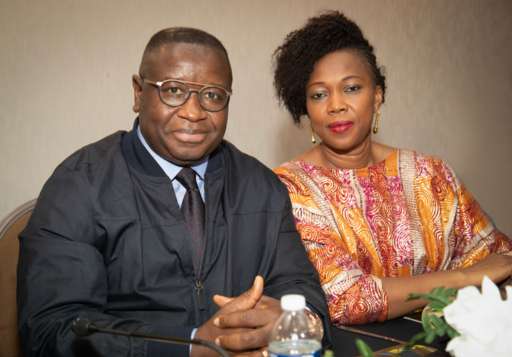
News outlets havereported that children were hurt on Thursdaywhen a railing at a stadium in Sierra Leone collapsed as the president and first lady were distributing free sanitary pads.
Social media videos depict people rushing out of a stadium in the city of Bo, many of them carrying what appear to be injured people, according to the AFP news agency.
President Julius Maada Bio tweeted, “My heart goes out to all the children affected and the families of the kids who sustained injuries in the unfortunate incident at the Bo Stadium today.”
“Our medical team is working assiduously to administer medical attention to the injured.”
My heart goes out to all the children affected and the families of the kids that sustained injuries in the unfortunate incident at the Bo Stadium today. I wish all the injured a speedy recovery. 1/2
The number of casualties was not immediately clear.
The accident happened when a “short section of metal guardrail on one of the levels of the stadium came apart“, a statement from the government’s office of the press secretary is quoted as saying.
The activists and politicians were apprehended in a dawn raid two years ago, and they are accused of organising an unofficial primary ahead of a legislative election that was later postponed.
On Monday, Hong Kong’s largest national security trial began with 47 pro-democracy activists and politicians accused of “conspiring to commit subversion” by holding an unofficial public vote in 2020, just days after a new, stringent security law was put into place.
16 people are anticipated to enter not guilty pleas, though that number may change by Monday as defendants consider their options in light of possible sentences.
Those charged include prominent activists “Long Hair” Leung Kwok-hung and Gordon Ng Ching-hang, who faces potential life imprisonment as one of five people accused of being a “major organiser” of a poll conceived as a way for the democratic camp to choose their strongest candidates for a Legislative Council election that was later postponed.
Defendants who plead guilty will be sentenced after the trial has concluded and include internationally-known activists like Joshua Wong, who has already been convicted on other charges, and Claudia Mo, a former journalist turned legislator. Together, the 47 account for much of what remains of Hong Kong’s pro-democracy leadership after mass protests calling for political reform in 2019 came to an inconclusiveend with the arrival of COVID-19, and the national security law pushed many into exile.
Unofficially on trial is the future of Hong Kong’s democracy movement, said Eric Lai, a non-resident fellow at Georgetown Center for Asian Law, as “pro-democracy activities and participating in the legislature” could be seen as threats to national security in the future.
“The majority of public opinion in the city, the pro-democracy camp, has received more than 60 percent of the vote in the previous decade’s elections and now the government chose to arrest and criminalise all the major leaders in Hong Kong,” Lai told Al Jazeera.
“In a way, it’s a trial for these leaders but also for their supports.”
Only a few of the 47 arrested have secured bail, including former legislator Helena Wong Pik-wan. The prosecutor’s appeal against the decision was rejected [File: Lam Yik/Reuters]
Under the security law, which took effect on June 30, 2020, the defendants face up to three years in prison for conspiracy to commit subversive activities, between three and 10 years imprisonment for “active participation” in the conspiracy, and between 10 years and life imprisonment if they are deemed “principal offenders”.
The latter charge applies only to Ng and four other defendants: former university professor Benny Tai, former legislator Au Nok-hin, and former district councillors Andrew Hiu Ka-yin and Chung Kam-lun.
Tai and Au face some of the most serious charges, according to court documents, for their “clear attempt to subvert the State power, paralyse the operation of the [Hong Kong] Government”, according to prosecutors. Prosecutors also allege the defendants hoped a crackdown on their activities would garner international support and lead to the imposition of sanctions on Hong Kong and Chinese officials.
Media ban
Held in July 2020, the vote was intended as an unofficial “primary” for pro-democracy candidates running in the planned September 2020 Legislative Council election.
Candidates hoped to secure a victory for the democracy camp and use the electoral majority to bring about democratic change in Hong Kong.
Some of the platform echoed demands from the city’s mass protests in 2014 and 2019, including the resignation of then-Chief Executive Carrie Lam, an independent inquiry into allegations of police brutality during the protests and political reform with the aim of introducing universal suffrage for the territory.
Under Hong Kong’s current political system, its leader is chosen by a group of people selected by Beijing and only a portion of its legislative seats are decided by the popular vote.
The July 2020 election drew more than 600,000 voters, many of whom waited in line for hours to take part, but the results were de facto voided when the government announced the legislative election would be delayed for a year due to COVID-19.
Following the poll, as Hong Kong locked down, police swooped on the 47 defendants and six other individuals in a dawn round-up of a kind typically reserved for organised crime groups.
The vast majority of the 47 have been kept in prison since their arrest in January 2021, with bail granted to just 13 people. Due to strict COVID-19 regulations, detained activists were unable to see their families and lawyers, or receive mail, for months.
Some defendants have reportedly been unable to access Statements of Facts detailing the charges levelled against them, so their lawyers have been forced to proceed blindly through the legal system. The case was subject to a media ban that was only lifted in August last year.
William Nee, a researcher and advocacy coordinator atChinese Human Rights Defenders, likens the trial to a “pre-emptive strike” against an entire generation of democracy activists and former legislators who range in age from 24 to 66.
“The charges are absolutely absurd from an international law point of view. People have the right to run for office. Once elected, they have the right to vote how they want. Clearly, Beijing is saying the mere fact you might want to run and cast votes that go against our wishes is a conspiracy to commit subversion is absolutely against international laws and standards,” Nee said.
“That’s what’s in many ways so egregious about this case. It’s a naked assault on democracy in Hong Kong.”
Unpredictable
Under Hong Kong’s common law system, criminal defendants can typically receive a reduction in their sentence of as much as 25 percent for pleading guilty on the first day of trial, but this does not apply to national security trials. Neither does the jury system, with this trial to be heard by a panel of three judges hand-picked by the city’s chief executive.
The trial is expected to last about 90 days with some defendants facing a life term for alleged ‘subversion’ [File: Isaac Lawrence/AFP]
Maya Wang, a senior China researcher at Human Rights Watch describes the national security system as a “Frankenstein” parallel system carved into Hong Kong’s once respected legal system.
The trial is expected to last about 90 days. It is possible that at the end of it, the accused will receive a reprieve of “time served” for their pre-trial detention but most face a minimum sentence of three years imprisonment.
“Everything is going to be quite unpredictable as we go along. I think what is quite clear is that Beijing is using fairly elaborate legalese to dismantle Hong Kong’s pro-democracy movement,” Wang told Al Jazeera.
“Seeing them on trial and being detained is such a cognitive dissonancefor so many people in Hong Kong. It really is a visual representation of repression.”
A few months ago, I survived a lynching: This is how I remember it.
I was out on a walk with a friend in Uyo, one of Southern Nigeria’s fastest-growing cities, when four young men accosted us. They first accused us of being homosexuals – as it happens, we are not, but same-sex relations of any kind are punishable by law in Nigeria.
They then demanded that we surrender our phones. When we tried to defuse the situation by trying to talk to them, the men began to attack us with machetes. My friend escaped, but I wasn’t as lucky.
What unfolded next was a long-dreaded nightmare. The young men attacked me with a barrage of machete strikes, punches, slaps and kicks. Within minutes, my face swelled up, bloodied. As a crowd gathered and people asked questions, the young men lied, claiming that I was a paedophile. I wasn’t surprised. Now that we were out in the open, it made sense to accuse me of something in order to justify this insane attack, this robbery.
‘Funny scene’
The next morning, a local journalist who had witnessed the incident would recount it on Facebook: “Yesterday, I witnessed a very funny scene…A guy was being beaten and manhandled by several other guys in the middle of the road and it caused a traffic gridlock.”
Public brawls are fairly common in Nigeria, so it’s possible for onlookers to observe, bemused, from a distance. But there was nothing funny about the incident.
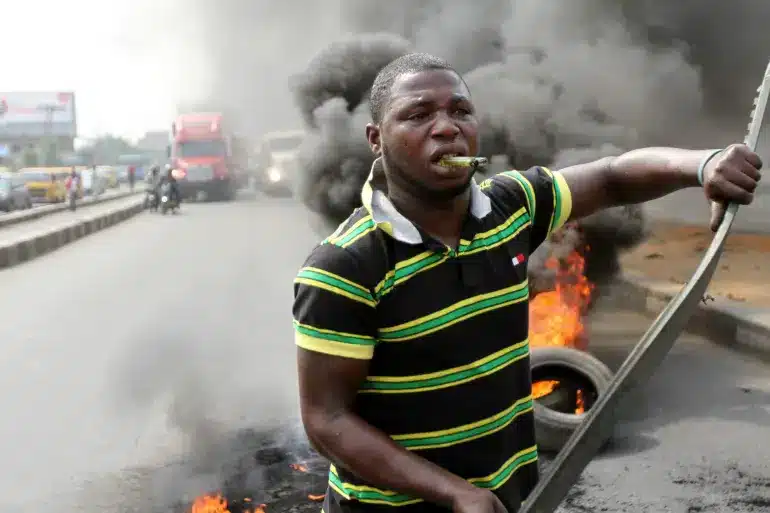
At the height of the attack, my assailants quickly sought out tyres, a cigarette lighter and diesel – the familiar tools of jungle justice. Here’s how the script usually plays out in such situations: After accused victims have been thrashed, bloodied and perhaps even stripped naked, a large tyre is placed around their body to limit movement – this act is called “necklacing”. Then the victims get a baptism of petrol or diesel and a lit match is thrown at them.
When one of the men charged towards me with a can of diesel, I broke away and tried to latch onto a moving tricycle. It was a recklessly futile effort. The men dragged me down and I fell hard on the road. I was already bleeding from the knees when one of them yanked me up and hit my face hard (my right eye would hurt for weeks after this). He had tripped and fallen after pulling me off the tricycle and was clearly infuriated.
“You’ve wounded me, right?” he said. “I will make sure you die tonight.”
I believed him.
Fire and blood
Central to Nigeria’s context of jungle justice is the role of state-sanctioned extrajudicial killings in creating this unfettered monster. When Nigeria was under military rule, executions of thieves by firing squad would be broadcast into living rooms. Meanwhile, the military increasingly acted with impunity away from the cameras, corruption was rampant and soon it was known that those who wanted justice had to bid for it.
Though democracy returned in 1999, justice didn’t.
In the early 2000s, state governors were unable to curb crime in Nigeriaʼs southeast region. So they hired a brutal vigilante group called the Bakassi Boys and gave them free rein to violently fight crimes, leading to a reign of terror marked by the public lynching of criminal suspects.
As faith in the law wilted, people channelled their hateful frustration towards low-level criminals. Scenes of flaming bodies ringed by frenzied mobs slowly became normal. In 2005, a short video of a 12-year-old boyʼs lynching circulated, shocking Nigerians.
Then on October 5, 2012, four students of the University of Port Harcourt, all between 18 and 20 years old, were lynched in an obscure southern village called Aluu. The young men, who tragically became known as the “Aluu 4”, constantly pleaded for mercy and stated their innocence, even as they were being tortured.
Gory videos of this attack went viral globally. The boys, it turns out, were not thieves as the mob had alleged – they had been set up by a debtor whom they had confronted to pay up. And most importantly, their names became known: Chiadika Biringa, Ugonna Obuzor, Lloyd Toku, and Tekena Elkanah. Outraged over their deaths, students of the University of Port Harcourt attacked local homes in Aluu.
Like many others, I was permanently scarred by the Aluu lynchings.
Defenders of jungle justice in Nigeria often say, “If we don’t beat and kill these criminals, they will bribe the police, go scot-free and return to deal with us. These people are dangerous!”
It is for this reason that survivors of lynching attempts are rare.
Nothing has changed
In March 2022, US President Joe Biden signed into law a bill that now makes lynching a federal hate crime within the United States. The Emmett Till Anti-Lynching Act was welcomed for its historic significance, although most Americans saw it as long overdue. Some even asked if lynchings were “still a thing”.
In Nigeria, they definitely are.
A survey in 2014 revealed that 43 percent of Nigerians had witnessed mob violence. According to a report by SB Morgen Intelligence, a Nigerian think tank, at least 391 persons were killed by mobs in the country between January 2019 and May 2022.
Often, I see headlines and social media posts arguing that Nigeria is descending into “chaos and anarchy”. While that might be true, such words serve only to mask the failure of the rule of law that is at the root of the country’s jungle justice – a problem so endemic that only a total overhaul of the present system will solve it. Nigerians are not inherently violent. They have merely lost so much faith in the law that mob action appears more effective.
After the Aluu 4 lynching, an anti-lynching bill was proposed in Nigeriaʼs legislature but fizzled out while it was being deliberated. You see, mob actions rarely ever ruffle the wealthy and powerful.
Perhaps one needs to remind Nigeriaʼs political elite that if they don’t take this seriously, the poor might soon tire of killing each other and turn their focus upon those who steal much more than mobile phones.
Rigorous sensitisation campaigns, an urgent reform of Nigeria’s correctional systems and an emphasis on restitution – not death – as the endpoint of criminal justice are some of the changes Nigeria needs.
At the centre of a mob on that cold July night, I knew better than to beg for mercy. Towards the end of my ordeal, a dark police patrol truck with tinted windows passed by, its occupants unfazed, even when it was clear that something was terribly wrong. The law did not help. The only thing I could do was to keep on asserting my innocence. I told anyone who would hear that I was simply the victim of plain armed robbery. Silently though, I prayed.
Somehow, I was able to convince a few people, until a brave stranger rescued me. Somehow, I survived, and for weeks afterwards, I slowly recovered.
I think of families whose loved ones have been murdered by this strangest and most elusive of killers: a mob that pounces, murders brutally and disappears into thin air. And for what? Because no one trusts the law any longer, because life itself has little value here.
Many people have told me that it was a miracle I made it home alive that night. I agree, even though I am aware that my survival has a dark underside – I can never fully recover.
DISCLAIMER: Independentghana.com will not be liable for any inaccuracies contained in this article. The views expressed in the article are solely those of the author’s, and do not reflect those of The Independent Ghana
Three former police officers and a civilian aredue to be sentenced by a Kenyan court for the 2016 murder of renowned human rights attorney Willie Kimani.
Last year, a jury found the four defendants—Fredrick Leliman, Stephen Cheburet, Sylvia Wanjiku, and Peter Ngugi—guilty of killing Mr. Kimani, his client Josephat Mwendwa, and taxi driver Joseph Muiruri.
The late lawyer’s wife and family have already arrived at the crowded courthouse in Nairobi, the country’s capital.
After being dumped in a river outside of Nairobi, the bodies of Mr. Kimani and the other two victims were discovered.
The lawyer was defending Mr Mwendwa, a motorbike taxi driver who had accused Mr Leliman – one of the three officers found guilty – of shooting him for no reason at a traffic stop in 2015.
Mr Kimani, Mr Mwendwa and Mr Muiruri were last seen on 23 June 2016 at a police station.
Their mutilated bodies were recovered two weeks later in a river almost 100 kilometers (62 miles) from the city.
The sentencing comes at a time when Kenya’s police service is under yet more scrutiny over extrajudicial killings and abductions.
President William Rutohas already disbanded several special units accused of civilian murder and kidnapping.
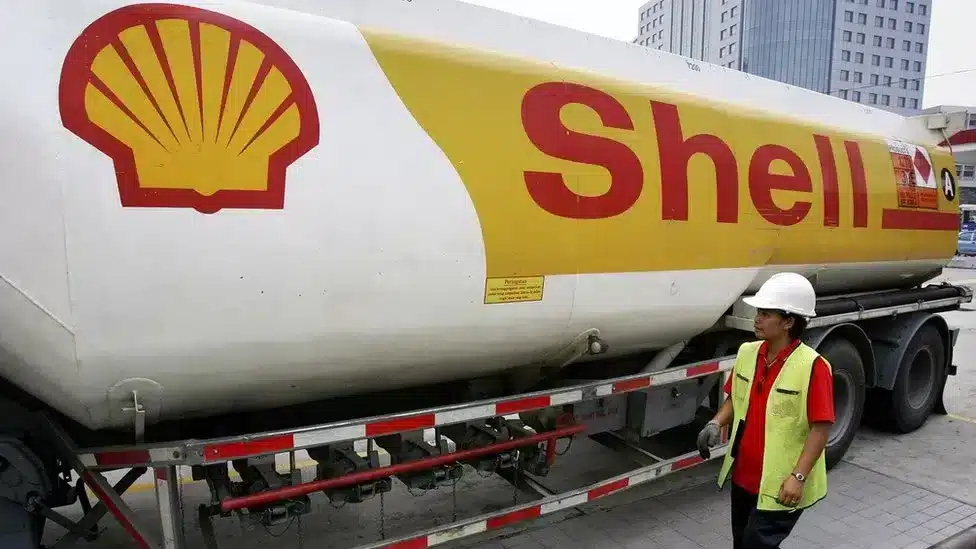
The latest development in a case that will test whether multinational corporations can be held liable for the deeds of their foreign subsidiaries is the lawsuit filed on Thursday by the UK law firm Leigh Day.
After years of oil spills had contaminated the land and groundwater, the UK Supreme Court permitted a group of 42,500 Nigerian farmers and fishermen to sue Shell in English courts in 2021.
According to the judges at the time, one of the largest energy companies in the world, Shell, could be held accountable for the incident because it had significant control over its Nigerian subsidiary, SPDC.
On Thursday, Leigh Day said it had filed claims on behalf of 11,317 people and 17 institutions including churches and schools from the Ogale community in the Niger Delta for compensation for loss of livelihoods and damage against Shell.
Leigh Day said the claim from Ogale adds to one brought by members of the Bille community in 2015. That brings the total number of villagers seeking compensation from Shell to 13,652.
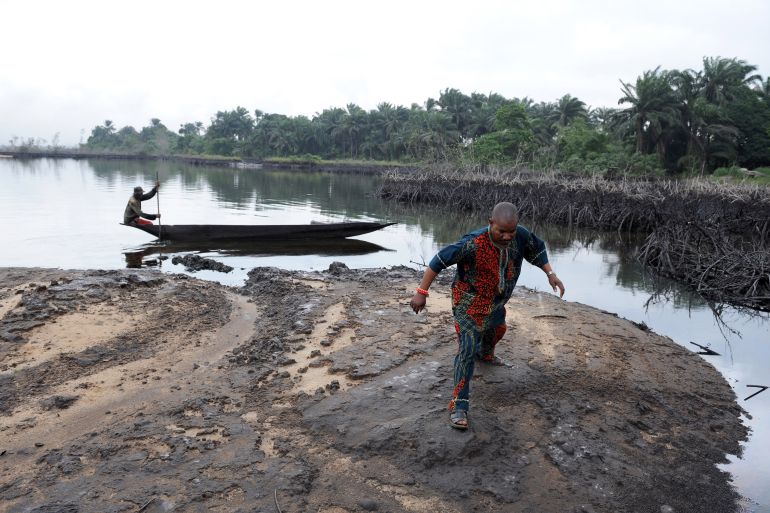
The claims said oil spills resulting from Shell’s operations in the Niger Delta have destroyed farms, contaminated drinking water and harmed aquatic life. The average life expectancy in the region is 41 years, 10 years lower than the national average.
“The next stage in the case is for a case management hearing to be set in Spring 2023, ahead of the full trial which is likely to occur the following year,” Leigh Day said in a statement.
A Shell spokesperson said the majority of spills related to the Ogale and Bille claims were caused by illegal third-party interference, including pipeline sabotage but that SPDC would continue cleaning affected areas.
“We believe litigation does little to address the real problem in the Niger Delta: oil spills due to crude oil theft, illegal refining and sabotage, with which SPDC is constantly faced and which cause the most environmental damage,” the spokesperson said.
Oil spills, sometimes due to vandalism or corrosion, are common in the Niger Delta, a vast maze of creeks and mangrove swamps crisscrossed by pipelines and blighted by poverty, pollution and oil-fuelled corruption.
In 2020 and 2021, Nigeria’s National Oil Spill Detection and Response Agency (NOSDRA) recorded 822 combined oil spills, totalling 28,003 barrels of oil spewed into the environment.
SPDC was culpable for most of them, residents said, but the company has often blamed sabotage for the spills.
In response to the progressivecongresswoman Ilhan Omar’s prior criticism of Israel, American Republicans have ousted her from the House Foreign Affairs Committee, provoking criticism and charges of bigotry from Democrats.
On a partisan party-line vote, the House approved a resolution on Thursday to revoke Omar’s committee assignment. Omar is one of two Muslim women serving in Congress and a former Somalian refugee.
Republican legislators claimed Omar’s “anti-Semitic” and “anti-Israel” rhetoric rendered her ineligible for the foreign policy panel.
But prior to the vote, Omar suggested that Republicans were targeting her because of her identity.
“There is this idea that you are a suspect if you are an immigrant or if you are from certain parts of the world or a certain skin tone or a Muslim,” Omar said. “It is no accident that members of the Republican Party accused the first Black president, Barack Obama, of being a secret Muslim.”
Representation matters.
We didn’t come to Congress to be silent.
We came to Congress to be a voice for families who are displaced in refugee camps and those seeking justice around the world.
Omar added that she will be undeterred by the Republican move.
“If I am not on this committee for one term, my voice will get louder and stronger and my leadership will be celebrated around the world as it has been,” the congresswoman said. “So take your votes or not. I am here to stay.”
She vowed to continue to speak up for those suffering from “unjust wars, atrocities, ethnic cleansing, occupation or displacement”.
The White House called the removal of Omar from the committee a “political stunt” and a “disservice to the American people”.
“Congresswoman Omar is a highly respected member of Congress,” White House spokeswoman Karine Jean-Pierre told reporters on Thursday, noting that Omar had apologised for previous comments relating to Israel.
In 2019, Omar faced bipartisan outrage when for suggesting that political donations from pro-Israel lobby groups — including the American Israel Public Affairs Committee (AIPAC) — drive support for Israel in Washington. She later disavowed that remark.
In the past two years, AIPAC and other pro-Israel organisations spent millions of dollars in congressional elections to defeat progressives who support Palestinian human rights.
While the Republican resolution accused Omar of anti-Semitism, it only invoked remarks relating to Israel, not the Jewish people.
For example, the measure calls out the congresswoman for describing Israel as an “apartheid state”, although leading human rights groups — including Amnesty International and Human Rights Watch — have also accused Israel of imposing a system of apartheid on Palestinians.
"I had a member of the Republican caucus threaten my life and the Republican caucus rewarded him with one of the most prestigious committee assignments in this Congress."
Watch Rep. AOC respond to Republicans' removal of Rep. @Ilhan Omar from the Foreign Affairs Committee ⬇️ pic.twitter.com/A22R7jQrlC
Republican Tennessee Representative David Kustoff accused Omar on Thursday of spreading “hateful beliefs”.
“As our nation’s leaders, we have the ability and the responsibility to help combat anti-Semitism and ensure that our children — tomorrow’s leaders — are taught that such rhetoric is unacceptable,” Kustoff said.
But several Jewish Democrats defended Omar. Dean Phillips — who, like Omar, represents a congressional district in Minnesota — called the Republican push against the congresswoman a “weaponisation of anti-Semitism”, which he said he finds “repulsive” as a Jewish person.
“The most dangerous acts by elected officials in a democracy are to silence voices of dissent, even those with which we fundamentally disagree,” Phillips said on the House floor.
Republicans stressed that the resolution to remove Omar was about accountability, not payback. Democrats had previously removed Republican Congresswoman Marjorie Taylor Greene from her assigned committees in 2021 over past conspiratorial, anti-Semitic and Islamophobic comments.
Alexandria Ocasio-Cortez, a leading House progressive, said the targeting of Omar was an extension of the legacy of bigotry against Muslim Americans since the September 11, 2001, attacks.
“There is nothing consistent with the Republican Party’s continued attack except for the racism and incitement of violence against women of colour in this body,” Ocasio-Cortez said.
The highly partisan vote to remove @Ilhan was not about accountability.
It was about political revenge.
I will move immediately to seat Rep. Omar on the House Budget Committee.
Where she will defend Democratic values against right-wing extremism.
As Arab, Muslim and Palestinian rights groups rushed to defend Omar before the vote on Thursday, the congresswoman co-sponsored a resolution titled “recognizing Israel as America’s legitimate and democratic ally and condemning antisemitism”.
The measure condemned anti-Semitic tropes of dual loyalty and describes Israel as a “Jewish and democratic state”.
Omar’s office did not immediately respond to Al Jazeera’s request for comment on how the congresswoman squared accusing Israel of apartheid while still recognising it as a “democratic” US ally.
“My critique of our foreign policy, Israeli’s policy towards Palestinians or that of any foreign nation will not change,” Omar wrote on Twitter later on Thursday. “As a person who suffered the horrors of war and persecution, my advocacy will always be for those that suffer because of the actions of governments.”
Congressman Brad Schneider, a staunchlypro-Israel Democrat, welcomed Omar’s support for the resolution.
“I have no doubt we will continue to disagree, sometimes vehemently. I will continue to call out antisemitism from wherever it comes, whether my side of the aisle or the other,” Schneider said in a statement.
The US is keeping tabs on a possible Chinese surveillance balloon that has recently been seen flying over important locations.
Defense officials stated that they had no doubt that China was the owner of the “high-altitude surveillance balloon.” Most recently, it was spotted flying over Montana in the west.
However, military authorities decided against shooting it down due to worries about the risk of falling debris.
China is yet to respond.
Canada announced on Friday that it was keeping an eye on “a possible second incident” involving a surveillance balloon, but it did not identify the possible perpetrator. According to the statement, it closely collaborates with the US to “protect Canada’s sensitive information from threats from foreign intelligence.”
The object flew over Alaska’s Aleutian Islands and through Canada before appearing over the city of Billings in Montana on Wednesday, officials said.
A senior defence official speaking on condition of anonymity said the government prepared fighter jets, including F-22s, in case the White House ordered the object to be shot down.
Top military leaders, including Defence Secretary Lloyd Austin and General Mark Milley, chairman of the US Joint Chiefs of Staff, met on Wednesday to assess the threat. Mr Austin was travelling in the Philippines at the time.
Montana, a sparsely populated state, is home to one of only three nuclear missile silo fields in the country, at Malmstrom Air Force Base, and officials said the apparent spy craft was flying over sensitive sites to collect information.
But they advised against taking “kinetic action” against the balloon because of the danger falling debris might pose to people on the ground.
The defence official, however, said there was no “significantly enhanced threat” of US intelligence being compromised because American officials “know exactly where this balloon is and exactly where it’s passing over”.
He added that there was also no threat to civilian aviation as the balloon was “significantly” above the altitude used by commercial airlines.
The official said the balloon is unlikely to give much more information than China can already collect using satellites.
The US had raised the matter with Chinese officials in their embassy in Washington DC and in Beijing, the official added.
During Thursday’s briefing at the Pentagon, officials declined to disclose the aircraft’s current location. They also refused to provide more details of the object, including its size.
“There have been reports of pilots seeing this thing even though it’s pretty high up in the sky,” the unnamed defence official said. “So you know, it’s sizable.”
They added that such surveillance balloons had been tracked in the past several years, but this one was “appearing to hang out for a longer period of time this time around”.
It confused social media users in Montana, with some posting images of a pale, round object high in the sky. Others reported seeing US military planes in the area, apparently monitoring the object.
Billings office worker Chase Doak told theAssociated Press news agency that he noticed the “big white circle in the sky” and went home to get a better camera.
“I thought maybe it was a legitimate UFO,” he said. “So I wanted to make sure I documented it and took as many photos as I could.”
Chinese state media has not reported on the incident, but it is being widely discussed on Chinese social media, with many amused at the reported use of balloons for surveillance.
“We have so many satellites, why would we need to use a balloon,” wrote one user on Weibo.
Senator Marco Rubio, the top Republican on the Senate Intelligence Committee, slammed China’s alleged balloon.
“The level of espionage aimed at our country by Beijing has grown dramatically more intense & brazen over the last 5 years,” he tweeted.
Montana Governor Greg Gianforte, a Republican, said in a statement that he had been briefed on the “deeply troubling” situation.
Speaking at an unrelated event in Washington DC on Thursday, CIA Director William Burns made no mention of the balloon, but called China the “biggest geopolitical challenge” currently facing the US.
The alleged spy craft is likely to increase tensions ahead of US Secretary of State Antony Blinken’s visit to China next week. It will be the first visit to the country by a Biden administration cabinet secretary.
The top US diplomat will be in Beijing to hold talks on a wide range of issues, including security, Taiwan and Covid-19.
He will also meet Chinese President Xi Jinping, as the Financial Times reported on Thursday.
Balloons are one of the oldest forms of surveillance technology. Compared to other airborne surveillance devices, they can be operated cheaply without personnel while remaining airborne for long periods of time.
The emaciated-looking jailed former Georgian President, Mikheil Saakashvili, has stirred calls among world leaders for his release.
The former president who appeared emaciated at a court hearing via video on Wednesday, has been in a Georgian prison since October 2021.
He was convicted of abusing his position of authority while in office, a charge he claims was politically motivated.
He was found guilty of abusing his position of authority. He claims the accusations were made for political reasons.
His health has significantly declined since his incarceration, and he alleges that authorities poisoned him.
Mr Saakashvili was arrested in 2021 after making a surprise return to Georgia by smuggling himself into the country on a ferry from Ukraine. He called for mass anti-government demonstrations but was quickly arrested by Georgian authorities.
He was convicted in absentia of abuses of power while in office.
The Georgian Justice Minister Rati Bregadze said he was self-harming and his condition was a result of his refusal to eat.
Mr Saakashvili’s medical team said his weight had dropped from 115 kg (254 pounds) to 68 kg (150 pounds) since his imprisonment.
Among the world leaders calling for his release were Ukrainian President Volodymyr Zelensky, who said authorities were “torturing and killing” him.
During a press conference, Mr Zelensky said he believed the current Georgian government was trying “to kill” Mr Saakashvili.
Mr Saakashvili was granted Ukrainian citizenship in 2015, and spoke only in Ukrainian at his court appearance, wearing a t-shirt with “I am Ukrainian” printed on it. He also served as the governor of the western province of Odesa between 2015 and 2016.
The Moldovan President Maia Sandu also called for Mr Saakashvili’s immediate release;
“Torturing an opposition leader to death is unacceptable for a country that wants to join the European Union,” she wrote in a tweet.
Empathy, an organisation supporting victims of torture in Georgia, alleged on 1 December that Mr Saakashvili had been diagnosed with illnesses “incompatible with imprisonment” and that Georgian and foreign medical experts had found evidence of heavy-metal poisoning.
On Thursday, the European Parliament debated Mr Saakashvili’s health, where the European Commissioner for Budget and Administration, Johannes Hahn, said the Georgian government was obliged to provide him appropriate healthcare.
Late last year, Mr Saakashvili gave French President Emmanuel Macron a hand-written note reading: “SOS. I am dying, I have very little time left.”
Georgian authorities have said Mr Saakasvhili is feigning his condition to secure his release from prison and have accused him of self-harm.
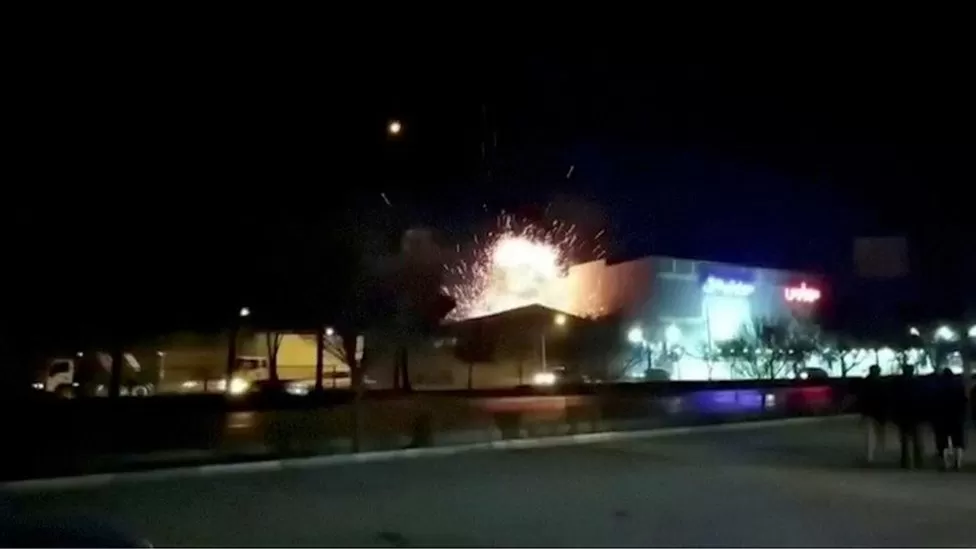
Findings showed that Israel “was responsible for this attempted act of aggression,” according to its ambassador to the UN.
Iran reserves the right, according to him, “to respond resolutely to any threats or wrongdoings” by Israel.
Iran claims the attack caused minor damage, but this has not been independently verified, and neither Israel nor Iran has admitted responsibility for the attack.
The two countries are arch-foes and in recent years have been engaged in what has been described as a “shadow war” of unclaimed attacks on each other’s assets, infrastructure and nationals.
Israel is mostly known to have carried out strikes on what it says are Iranian weapons transfers to militants in Lebanon and is also believed to have sabotaged Iran’s nuclear sites and killed Iranian nuclear scientists. Iran, which rejects Israel’s right to exist, has been accused by Israel of attacking and planning to attack Israeli and Jewish targets and people. Each side is also believed to have attacked the other’s shipping.
In a letter to the UN secretary general, Iranian ambassador Amir Saeid Iravani accused Israel of “an attempt… to launch a terrorist attack against a workshop complex” belonging to Iran’s defence ministry. He did not specify what evidence Iran had for this.
Mr Iravani said Iran reserved the right to respond “wherever and whenever deemed necessary.”
The purpose of the attacked site is unclear, though reports suggest it could be connected to missile production.
US media have quoted unnamed US officials as saying Israel carried out the attack, which Iran said involved three drones, on Saturday night at about 23:30 (20:00 GMT). Iran said one was destroyed by air defence systems and two were caught by “defence traps,” causing minor damage to a building and no casualties.
If confirmed it would mark the first such known attack on a facility in Iran under the current Israeli government which came to power under Benjamin Netanyahu at the end of December.
In an interview with CNN on Tuesday, Mr Netanyahu said Israel had been “taking action against certain weapons development” in Iran, but neither confirmed nor denied it had attacked the site in Isfahan.
“I never talk about specific operations… “And every time some explosion takes place in the Middle East, Israel is blamed or given responsibility—sometimes we are, sometimes we’re not,” he said.
The company that handles online payments claims that it was forced to make the choice due to “the challenging macro-economic environment.”
Following tens of thousands of layoffs by major technology companies in the past month alone, PayPal made its announcement.
Amazon, Microsoft, and Alphabet, the parent company of Google, have all announced significant job cuts this year.
“We must continue to change as our world, our customers, and our competitive landscape evolve,” PayPal’s chief executive Dan Schulman said in a statement.
Also on Tuesday, Snap – the parent company of social media platform Snapchat – warned that revenue for the three months to the end of March could fall by as much as 10%.
“We anticipate that the operating environment will remain challenging, as we expect the headwinds we have faced over the past year to persist throughout Q1,” the company told investors.
After the announcement, Snap’s shares fell by almost 15% in extended trade in New York.
At the start of this year, Amazon announced it planned to cut more than 18,000 jobs because of “the uncertain economy” and rapid hiring during the pandemic.
Also this month, Alphabet said it would shed 12,000 jobs, while Microsoft said up to 10,000 employees would lose their jobs.
Last week, Swedish music-streaming giant Spotify said it would cut 6% of its about 10,000 employees, citing a need to improve efficiency.
In another sign of the technology industry slowdown, US computer chip maker Advanced Micro Devices (AMD) on Tuesday reported a 98% fall in net income for the last three months of 2022.
The company also said it expects revenue to drop by as much 10% in the current quarter.
However, the figures were better than many investors had expected and AMD’s shares rose after the announcement.
In Asia on Wednesday, the world’s second-biggest memory chip maker, SK Hynix, posted its largest quarterly loss on record.
The South Korean company reported a worse-than-expected 1.7 trillion won ($1.4 billion; £1.1 billion) loss for the last three months of 2022, as sales fell by 38%.
The firm pointed to falling computer chip prices and joined rival technology giants in warning that it expects an industry-wide downturn to worsen in the coming months, before recovering later in the year.
It came after rival Samsung Electronics on Tuesday reported its lowest quarterly profit in eight years.
A long-running legal battle between Qatar Airways and Airbus over the safety of the A350 aircraft has been resolved.
The settlement was “amicable and mutually agreeable,” according to a statement released jointly by the companies on Wednesday.
The companies said in a statement, “A repair project is now underway and both parties look forward to getting these aircraft safely back in the air,’’
The “amicable settlement” ends a $2bn row over the safety of Europe’s premier long-haul jet – an unprecedented public rift that led Airbus to revoke dozens of other jet orders from Qatar ahead of a scheduled June court trial.
Qatar Airways grounded Airbus A350s over what it described as fuselages “degrading at an accelerated rate” in the long-range aircraft.
The airline had raised questions about the A350s’ carbon composite fuselage, designed to make the twin-aisle aircraft lighter and cheaper to operate by burning less jet fuel.
In December 2021, Qatar’s national carrier announced it was suing Airbus in London over what it described as the “accelerated surface degradation” of the wide-body A350.
Cracks in the painted surface exposed gaps in a sublayer of A350 lightning protection, prompting its regulator to ground 29 of the jets. Airbus, based in Toulouse, France, has acknowledged quality flaws but insisted the jets are safe.
The next month, Airbus terminated a multibillion-dollar order by Qatar Airways for 50 of its smaller single-aisle in-demand A321neo jets.
The termination of the Airbus contract for its A321neos followedQatar Airways’ refusal to take any more A350s until the problem was fixed.
The details of the settlement are confidential. The companies said the deal was not an admission of liability by either party, both of which would drop their legal claims and “move forward and work together as partners”.
French Finance Minister Bruno Le Maire welcomed the settlement.
The planemaker also said it would reinstate all orders it revoked as part of the dispute, but the first of 50 A321neos would now be delivered in 2026, three years later than the airline said this was scheduled.
The first of 23 undelivered A350s will be delivered this year, a spokesperson added.
This comes after the tiny nation signed a security agreement with Beijing last year, a move that took Washington and its allies by surprise.
It happened after the US announced it would open its Honiara post, which had been closed since 1993 due to worries about China’s expanding military aspirations.
The opening of the embassy on Wednesday was missed by the Solomons’ PM.
However a foreign ministry spokesman said the re-established US embassy was welcomed by the government.
The region is strategically crucial for the US as a gateway to Asia for Pacific allies like Australia. Washington’s diplomatic presence has until now largely been centred in its Papua New Guinea post.
But US Secretary of State Antony Blinken on Wednesday said the Honiara embassy would help advance the US-Pacific partnership goals – signed last year – of keeping the region a place where “democracy can flourish”.
The embassy opening comes at “an important moment for the region we share”, he said in a video statement.
“Because more than any other part of the world – the Indo-Pacific region including the Pacific islands – will shape the world’s trajectory in the 21st Century.”
The United States of America is pleased to announce the opening of its Embassy in Honiara. We are committed to strengthening the enduring relationship between the U.S. and Solomon Islands! pic.twitter.com/tLGR37TkCb
The BBC is not responsible for the content of external sites.View original tweet on Twitter
Concerns about Beijing’s increasing influence and military expansion in the Pacific has prompted the US and Australia to step up their focus there in recent years.
Last September, US President Joe Biden invited 14 Pacific island nations to theWhite House for the first-ever in-person summit. Washington signed a sweeping partnership and development agreement with the island nations.
Solomon Islands PM Manasseh Sogavare also signed up to the deal despite reports in the lead-up that he might abstain.
Beijing last year had also accelerated efforts to gain influence in the region – to mixed effect.
While it inked a security deal with the Solomons in March, it failed to secure a trade and security deal with 10 regional countries a few months later despite a lobbying tour from China’s then Foreign Minister Wang Yi.
“China has no intention of competing with anyone, let alone engaging in geopolitical competition, and has never established a so-called sphere of influence,” said Mr Wang during the tour.
In recent times, Fiji, one of the biggest and most influential Pacific islands, has also announced it will cancel a police training exchange with China – formerly a close partner.
Fiji’s new government – elected in December – has indicated it prefers stronger ties with its traditional Pacific partners Australia and New Zealand over China.
Australia and NZ are also both members of the Pacific Islands Forum (PIF) – the region’s main bloc.
Several Pacific countries have advocated for regional unity in the face of superpower tensions and on Monday, many welcomed the announcement that Kiribati would return as a member.
Kiribati had withdrawn from the PIF last year in a move the country’s opposition said had been influenced by Beijing. The country’s leader had then said the forum wasn’t adequately addressing the concerns of Micronesian countries.
Dr Meg Keen from the Australia-based Lowy Institute said the US re-engagement was welcomed but it would remain to be seen “if the announcements are backed up by actions”.
She said the region could see a “diverse range of partnerships” as Pacific islands pursue development goals and funding.
The new US embassy also comes as Washington has been re-negotiating agreements with three island nations in the North Pacific – Micronesia, Palau and the Marshall Islands – who give exclusive military use rights to the US.
On July 7, 2021, President Moise was assassinated at his home in the capital of Haiti by what the police described as a hit squad made up primarily of foreign mercenaries.
One of the suspects is Colombian, and three of the suspects are dual US-Haitian citizens.
Later on Wednesday, they are scheduled to appear in a Miami federal court.
The investigation being conducted into President Moise’s assassination in Haiti has stalled, with investigators and judges receiving death threats. But as the plan to kill Mr Moise was allegedly hatched by Haitian-Americans in Florida, investigations are proceeding in the US.
The transfer of the four men from Haiti to Florida has brought the total number of suspects in US custody to seven.
Three of those who moved to the US have been charged with conspiracy to murder President Moise. The fourth, Christian Sanon, was charged with smuggling bullet-proof vests to Haiti for use in the plot.
Those charged with conspiracy to commit murder are:
Prosecutors allege that James Solages and Christian Sanon met in Florida in April 2021 to discuss “regime change” in Haiti.
According to police in Haiti, Mr Sanon, a Haitian-American doctor and pastor, had “political objectives” to replace Mr Moise as president.
Haiti’s police chief at the time of President Moise’s killing also said that Mr Sanon was the first person one of the assailants called as police surrounded them after the murder.
In a statement, the US Department of Justice (DoJ) said that while Mr Sanon had not been charged with conspiracy to murder, he “participated in crimes that culminated in the assassination of the Haitian president”.
According to the DoJ, James Solages, Joseph Vincent and Germán Rivera had originally planned to kidnap President Moise and take him to an unknown location while a new president was installed in his stead.
But when they failed to get a plane to take the Mr Moise away, they allegedly changed their plan.
“It is alleged that on July 6, 2021, Solages, Vincent, Rivera and others met at a house near President Moise’s residence, where firearms and equipment was distributed and Solages announced that the mission was to kill President Moise,” the DoJ statement said.
The other man, German Alejandro Rivera, is suspected of having recruited the Colombian mercenaries who made up the hit squad hired for the purpose.
All four men were arrested in Haiti shortly after President Moise’s assassination and been held in the Caribbean nation until their transfer on Tuesday.
If found guilty, Mr Sanon could face up to 20 years in jail while the three other suspect could be sentenced to life in prison.
The political void left by the killings has led to a surge in violence and lawlessness across Haiti.
Cardinal George Pell’s funeral on Thursday in Australia, mourners murmured prayers and sang hymns; however, hecklers kept shouting his damnation.
The Catholic priest, who passed away last month at the age of 81 due to complications from surgery, leaves behind a difficult legacy.
He was once the top assistant to the Pope and the top Catholic in Australia.
But unsubstantiated claims that he committed child sexual abuse and covered it up damaged his reputation.
These accusations dominated Thursday’s events in Sydney. Police outside St. Mary’s Cathedral took action at one point to separate irate mourners from chanting protesters. One protester was earlier detained.
Inside the church, where Cardinal Pell served as the city’s archbishop for over a decade, dignitaries including former Prime Ministers John Howard and Tony Abbott filled pews. Hundreds more gathered in a forecourt to watch the requiem Mass on big screens.
Noticeably absent were Prime Minister Anthony Albanese and New South Wales Premier Dominic Perrottet – himself a devout Catholic. Both sent delegates.
In a message read to the congregation, Pope Francis praised Cardinal Pell’s “dedication to the gospel and to the Church”, while Archbishop of Sydney Anthony Fisher lauded him as “giant of the Catholic Church in Australia” who had been wrongly demonised.
Over six decades, Cardinal Pell rose to prominence in the Church as a strong supporter of traditional Catholic values.
He took on the role of Vatican treasurer in 2014 but left in 2017, returning to Australia to face trial on child sexual abuse charges. He was convicted, then later acquitted on appeal.
Many of Cardinal Pell’s supporters believe he was unfairly persecuted, and that his record on the issue of child sexual abuse is part of what made him great.
Mr Abbott, who spoke at the funeral, claimed Cardinal Pell had been the first Australian Catholic to sack child abusers and report them to police. Others pointed to the landmark – but controversial – compensation scheme he set up.
“He was greatest man I’ve ever known,” Mr Abbott said.
Image caption,Cardinal George Pell was Australia’s highest-ranking Catholic
Others who gathered to pay their respects said he was a kind man, quick to offer support and encouragement to those going through challenging times.
One mourner told the BBC he hopes the cardinal will be remembered “for the things he did and not for the things that he was accused of”.
“He was a good man,” Nathan, 33, added. “He fought for the rights of many people, contrary to popular belief.”
But outside the cathedral square, child abuse survivors remembered him as someone who had failed to protect them.
Some travelled from other states to tie ribbons to the church fence – a gesture seen in Australia as a tribute to victims of the Church abuse crisis. Most were cut down overnight on Wednesday by supporters of Cardinal Pell.
A landmark inquiry into Australian child sexual abuse found Cardinal Pell had personally known of abuse by priests as early as the 1970s and had failed to act. Cardinal Pell disputed the findings, saying they were “not supported by evidence”.
“I can’t let today pass without standing for him. He is not well enough to stand for himself,” she told the BBC.
Image caption,Maureen was among those who left hundreds of ribbon tributes for child sexual abuse survivors
Protesters gathering in parkland opposite the cathedral remembered Cardinal Pell as a “monstrous bigot”.
“Pell stood for blatant homophobia, misogyny… covering up abuse within the Catholic Church,” organiser Kim Stern told the BBC.
“We think it’s pretty disgusting he’s getting a send-off like this.”
Also out in force were police, trying to temper simmering tensions.
Thursday’s funeral follows weeks of tense debate in Australia about Cardinal Pell’s legacy.
Mourner Louisa Pastoois personally admired the cardinal, but she told the BBC she has accepted his legacy will be mixed.
“The legacy he leaves behind in the Church, and the world… is something different,” Louisa said.
“I think there needed to be someone to take the blame for all that’s happened in the church… there needs to be a face to the sins and unfortunately, it was his.”
Anthony Lowe, a 36-year-old black man with two amputees, was shot and killed on January 26 in the Los Angeles region.
He allegedly threatened officers after stabbing someone. The mother of Mr. Lowe stated, “They killed my son.”
It happens as police killings are being looked at more closely following the death of Tyre Nichols in Memphis, Tennessee.
Mr. Lowe’s incident took place in Huntington Park, and onlookers recorded it on camera.
The grainy video shows part of the confrontation, with Mr Lowe holding a long, shiny object and moving on the stumps of his legs away from officers. That clip does not show the shooting.
The Huntington Park Police Department said in a statement on January 30 that officers responded to a stabbing and that the victim provided a description of the suspect.
The suspect had allegedly left his wheelchair, approached the victim and stabbed him in the chest with a 12in butcher knife, before returning to the wheelchair and fleeing the scene.
The victim was left with “a life-threatening stab wound resulting in a collapsed lung and internal bleeding”, the police statement said.
When officers caught up with Mr Lowe, according to the police statement, he “ignored the officer’s verbal commands and threatened to advance or throw the knife at officers”.
Police say that after two unsuccessful attempts to use Tasers to subdue Mr Lowe, they shot him.
Huntington Park Police Lt. Hugo Reynaga told the Los Angeles Times that investigators had obtained video of the shooting from a nearby business but did not plan to release the footage.
He added that Huntington Park officers do not wear body cameras.
“He tried to run away, and every time he turned around and did the motion like he was gonna throw the knife at him, they tased him,” he told the newspaper.
“They were trying to give this guy the less-lethal Taser shock. And because it was ineffective, they had to go to something that was more effective.”
The two officers involved have been placed on paid leave amid an investigation. They have not been named.
On Tuesday, members of Mr Lowe’s family and activists demanded that the officers be held accountable for the shooting.
“They murdered my son, who was in a wheelchair with no legs,” Mr Lowe’s mother, Dorothy, said at a news conference. “They do need to do something about it.”
A spokesperson for the family told the BBC’s US partner, CBS, that Mr Lowe was suffering from a mental health crisis at the time of the shooting.
His sister told the LA Times that he had his legs amputated last year following an incident with police in Texas.
The Los Angeles County Sheriff’s Department homicide unit is investigating the Huntington Park shooting, as it does for other smaller police departments in the area.
According to the Mapping Police Violence database, nearly 1,200 people were killed by police in 2022. Officers were charged with a crime in nine of these cases.
According to a joint statement from the defence departments of the two nations, the Philippines and the United States have agreed to broaden their defence agreement, giving US troops access to four more military bases in the Southeast Asian country.
The deal was announced by US Defense Secretary Lloyd Austin while he was in Manila for talks with newly elected Philippine President Ferdinand Marcos Jr.
“The Philippines and the United States are proud to announce their plans to accelerate the full implementation of the Enhanced Defense Cooperation Agreement (EDCA) with the agreement to designate four new Agreed Locations in strategic areas of the country and the substantial completion of the projects in the existing five Agreed Locations,” the joint statement said. It was published on the websites of the US Department of Defense and on the Philippines’ Department of National Defense.
EDCA forms part of a decades-long security alliance between the US and the Philippines, and allows US troops to rotate through five Philippine bases, including those near disputed waters.
It also allows for the US military to store defence equipment and supplies on those bases.
The statement said the expansion would make the two countries’ alliance “stronger and more resilient” and “accelerate modernization of our combined military capabilities”.
The statement did not elaborate on the new locations, but said they would “allow more rapid support for humanitarian and climate-related disasters in the Philippines”. The US had allocated more than $82 million towards infrastructure investments at EDCA’s existing five sites, it added.
Ties between the Philippines and the United States have warmed since President Ferdinand Marcos Jr took office last year [Jam Sta Rosa/Pool via Reuters]
The expansion comes as China becomes increasingly assertive in pressing its claim to the self-ruled island of Taiwan, as well as in the South China Sea where it claims almost the entire waterway under its controversial nine-dash line. The Philippines, other Southeast Asian nations and Taiwan also have overlapping claims to the sea, which is a major global trade route.
The relationship between the Philippines and the US – longtime allies – was strained under Marcos Jr’s predecessor Rodrigo Duterte, who favoured China and threatened to sever ties with Washington and expel US troops.
But ties have warmed under the new administration, with US Vice President Kamala Harris visiting last November.
“This is really the dawn of a new era after a rocky few years,” said Al Jazeera correspondent Barnaby Lo, who is in Manila.
Tension in disputed seas
While most of the new bases are expected to be in Luzon, the western island of Palawan, facing the contested Spratly Islands in the South China Sea, is expected to get an additional base as well.
A senior US defence official told reporters on Wednesday that the Philippines was under “day-to-day pressure from (China) in ways that contravene international law”.
The US aims to ensure “they have the capability to defend their own sovereignty”, the official said.
The Philippines has often found itself on the front line of Beijing’s aggressive tactics in the South China Sea, where China’s maritime militia has established an almost constant presence in Manila’s exclusive economic zone.
In 2012, China took control of Scarborough Shoal from the Philippines after a months-long standoff that began when Manila discovered Chinese fishing boats around the rocky outcrops.
Tensions rose again in 2021 when the Philippines protested against China’s “continuing illegal presence and activities” near its islands in the South China Sea.
Beijing has ignored a 2016 international court ruling – in a case brought by the Philippines – that its claim to the South China Sea was without merit.
China also claims democratic Taiwan as part of its territory and has not ruled out the use of force to achieve its objective. Last year, after then US House Speaker Nancy Pelosi visited the island, Beijing conducted major war games around and across the island.
The Korean Peninsula’s situation has reached an “extreme red line” as a result of South Korea and the United States’ joint military exercises, according to North Korea, which has denounced them and warned that they could turn the area into a “huge war arsenal and a more critical war zone.”
In addition to threatening the “toughest” response, North Korea said in a statement released on Thursday that it was not interested in dialogue as long as Washington continued its so-called “hostile” policies.
Days after US Defense Secretary Lloyd Austin visited Seoul and promised to increase Washington’s deployment of cutting-edge military assets, such as fighter jets, to the Korean Peninsula, Pyongyang issued the warning.
The North Korean statement, attributed to an unidentified spokesperson of its Foreign Ministry, said the expansion of the allies’ drills is threatening to turn the Korean Peninsula into a “huge war arsenal and a more critical war zone”. The statement said Pyongyang is prepared to counter any short-term or long-term military challenge by the allies with the “most overwhelming nuclear force”.
“The military and political situation on the Korean Peninsula and in the region has reached an extreme red line due to the reckless military confrontational manoeuvres and hostile acts of the US and its vassal forces,” the spokesperson said.
The “DPRK will take the toughest reaction to any military attempt of the US on the principle of ‘nuke for nuke and an all-out confrontation for an all-out confrontation!’” the spokesperson said, referring to the country by its formal name, the Democratic People’s Republic of Korea.
“If the US continues to introduce strategic assets into the Korean Peninsula and its surrounding area, the DPRK will make clearer its deterring activities without fail according to their nature,” the spokesperson added.
North Korea for decades has described the US’s combined military exercises with South Korea as rehearsals for a potential invasion, although the allies have described those drills as defensive. North Korea last year ramped up its own weapons demonstrations as the allies resumed their large-scale training that had been downsized for years.
North Korea’s actions included a slew of missile and artillery launches that it described as simulated nuclear attacks on South Korean and US targets.
Jeon Ha Gyu, a spokesperson for South Korea’s defence ministry, said the ministry had no immediate comment in response to the North Korean statement.
He said the allies’ latest aerial drills – which took place on Wednesday and involved the US’s B-1B bombers and F-22 and F-35 fighter jets – were aimed at demonstrating the credibility of the US “extended deterrence”, referring to a commitment to use the full range of its military capabilities, including nuclear ones, to defend South Korea.
South Korea in recent months has sought stronger assurances that the US will swiftly and decisively use its nuclear capabilities to protect its ally in the face of a North Korean nuclear attack. More than 28,500 US troops are based in South Korea as a legacy of the 1950-1953 Korean War, which ended in an armistice rather than a peace treaty.
During a political conference in December, North Korean leader Kim Jong Un called for an “exponential increase” in nuclear warheads, mass production of battlefield tactical nuclear weapons targeting South Korea, and the development of more powerful long-range missiles designed to reach the US mainland.
Experts say Kim’s nuclear push is aimed at forcing the US to accept the idea of North Korea as a nuclear power and then negotiating badly needed economic concessions from a position of strength.
Nuclear negotiations between North Korea and the US have been derailed since 2019 because of disagreements over a relaxation of Washington-led economic sanctions against North Korea in exchange for steps by Pyongyang to wind down its nuclear weapons and missile programmes.
The North Korean spokesperson said Pyongyang was not interested in any contact or dialogue with the US as long as it maintains its “hostile policy and confrontational line”, accusing Washington of maintaining sanctions and military pressure to force North Korea to “disarm itself unilaterally”.
In its 115-year history, the company’s 2022 adjusted earnings of $39.9 billion (£32.2 billion) were the highest ever.
Following Russia’s invasion of Ukraine, oil and gas prices increased, which resulted in energy companies making record profits.
Given that households are struggling with inflation, the profits have increased pressure on businesses to pay windfall taxes.
Last year, the UK government introduced a windfall tax – called the Energy Profits Levy – on the profits of firms to help fund its scheme to lower gas and electricity bills.
Oil and gas prices had begun to rise after the end of Covid lockdowns but rose sharply after Russia’s invasion of Ukraine, resulting in bumper profits for energy companies.
The price of Brent crude oil climbed above $120 a barrel in March 2022, but has fallen back since. Oil prices are now below the level seen before the invasion of Ukraine.
Gas prices remain elevated but have been capped for consumers by the government.
Shell chief executive Wael Sawan said the firm’s results “demonstrate the strength of Shell’s differentiated portfolio, as well as our capacity to deliver vital energy to our customers in a volatile world”.
The Reserve Bank of Australia (RBA) states that the new design will honour “the culture and history of the First Australians.”
The current five dollar note features a portrait of the late Queen Elizabeth II.
After the Queen passed away in 2017, discussions about Australia’s future as a constitutional monarchy resurfaced.
“This decision by the Reserve Bank Board follows consultation with the Australian government, which supports this change,” the bank said in a statement.
“The Bank will consult with First Australians in designing the $5 banknote. The new banknote will take a number of years to be designed and printed. In the meantime, the current $5 banknote will continue to be issued. It will be able to be used even after the new banknote is issued,” it added.
The RBA currently has no plans to change the design of any other denomination of Australian banknotes, a spokesperson told the BBC.
It has not yet set a date for when it will reveal the new five dollar note design, they added.
The decision was welcomed by Aboriginal politicians and community leaders.
“This is a massive win for the grassroots, First Nations people who have been fighting to decolonise this country,” Lidia Thorpe, a Greens senator and DjabWurrung Gunnai Gunditjmara woman.
First Nations people lived in Australia for at least 65,000 years before British colonisation, according to recent estimates.
This is a massive win for the grassroots, First Nations people who have been fighting to decolonise this country. First Nations people never ceded our Sovereignty to any King or Queen, ever. Time for a Treaty Republic! pic.twitter.com/J4LjyFXwUe
The King became the British monarch after his mother’s death in September.
As the British monarch, he is also the head of state of Australia, New Zealand and 12 other Commonwealth realms outside the United Kingdom. The role is largely ceremonial.
The British monarch’s portrait has appeared on at least one design in every series of Australian banknotes.
However, in September Australia said the image of the new monarch would not automatically replace the Queen on its five dollar notes, and that she might be replaced by Australian figure.
Much of Australia’s currency already features Indigenous Australian figures and artworks.
In a 1999 referendum Australian voters chose to keep the British monarch as the country’s head of state.
In 2021, Australia officially changed its national anthem to remove reference to the country being “young and free”.
Following a trip to Jerusalem by Prime Minister Benjamin Netanyahu and then-President Idriss Deby, diplomatic relations betweenIsrael and Chad were restored in 2018.
Building on bilateral ties that were established five years ago, Chad will open an embassy in Israel on Thursday, according to the office of Israeli Prime Minister Benjamin Netanyahu.
The announcement was made on Wednesday as Chadian President Mahamat Deby’s office announced that he was visiting Israel for a 48-hour state visit but gave no other information.
The Chadian president would preside over the opening of the embassy, according to Netanyahu’s office.
Chad cut diplomatic ties with Israel in 1972 after the Organization of African Unity, the forerunner of the present-day African Union, ordered its member states to do so in support of the Palestinians.
But in November 2018, former Chadian President Idriss Deby, the late father of the current leader, paid a historic visit to Israel during which he spoke of the two countries committing to a new era of cooperation.
Netanyahu then visited Chad in January 2019, while the following year Israel signed normalisation agreements with Morocco, Bahrain, Sudan and the United Arab Emirates as part of a broader diplomatic push by the United States under President Donald Trump.
The agreements enraged Palestinians who condemned them as a “stab in the back” amid fears that they will weaken a long-standing pan-Arab position calling for Israeli withdrawal from territories it occupies illegally and acceptance of Palestinian statehood in return for normal ties with Arab countries.
It was not immediately clear where the Chadian embassy would be located. Most countries keep embassies in Tel Aviv.
Trump in 2017 provoked controversy by announcing he would relocate the US embassy from Tel Aviv to Jerusalem and officially did so a year later. The move infuriated Palestinians and spurred international condemnation.
Previous US presidents and the leaders of nearly every other country have refrained from opening embassies in Jerusalem until the city’s final status is resolved through Israeli-Palestinian negotiations. Palestinian leaders see occupied East Jerusalem as the capital of their future state.
Netanyahu, who returned to office last month, has cast the upgrade of relations with Chad as part of his outreach to Arab and Muslim countries, which he wants to expand.
The German Consulate in Istanbul warned citizens to avoid central areas of Turkey’s largest city and avoid crowds. Several European countries have warned of an increased risk of attacks in the wake of Quran burnings.
Germany temporarily closed its consulate in Istanbul on Wednesday, citing a heightened risk of attack in the Turkish city.
The move comes amid rising tensions after right-wing extremist and anti-Islam activists burned or destroyed Qurans in several European cities in recent weeks.
What did German officials say?
In posts on the consulate’s social media channels, German officials announced the consulate would be closed on Wednesday and that all visa appointments had been canceled.
“Following recent cases in several European capitals where the Quran was publicly burned or destroyed, security agencies believe the risk of terrorist attacks in Istanbul has increased,” officials said in a statement.
The statement advised German citizens to avoid Istanbul’s central district of Beyoglu and the popular Taksim Square. German officials also advised citizens to avoid areas with “international crowds” and steer clear of busy public places in general.
The German Embassy in Ankara remained open on Wednesday. It was unclear whether the consulate in Istanbul would remain closed later this week.
Both the Swedish Embassy in Ankara and the country’s consulate in Istanbul were also closed to visitors, a Foreign Ministry spokesperson in Stockholm told news agency dpa.
The British Consulate in Istanbul is also “currently not open to the public as a precaution,” according to a UK government travel advisory.
Tensions between Turkey and Europe
The warnings of potential attacks come after right-wing extremists repeatedly destroyed the Quran, the holy book of the Muslim faith, in several European cities.
The actions have sparked outrage in Turkey, particularly after the right-wing extremist Rasmus Paludan set fire to a Quran in front of a mosque in the Swedish capital of Stockholm. The Danish-Swedish politician later repeated the act in Copenhagen.
He threatened to continue until Turkey accepted Sweden’s bid to join the NATO military alliance.
Similar protests where a Quran was desecrated and torn up in the Netherlands prompted Turkey to summon the Dutch ambassador.
Several countries — including Germany, Sweden, Norway, Denmark and the United States — issued warnings last week of an increased risk of attacks in Turkey.
Turkey, in turn, also issued a travel alert for its nationals in Europe — saying that the recentanti-Muslim and anti-Turkish acts show the “dangerous level of religious intolerance and hatred” on the continent.
Both Sweden and Finland announced their intention to join NATO in the aftermath of Russia’s invasion of Ukraine. All current members of the trans-Atlantic military alliance must approve their membership bids, but Turkey and Hungary have not yet approved.
At Min Aung Hlaing’s request, Myanmar’s already two-year-old state of emergency was extended by another six months on Wednesday, according to state media.
It happened at the same time as the US and its allies announced new sanctions against the military regime.
On the second anniversary of the coup that overthrew the nation’s civilian government and resulted in Aung San Suu Kyi’s arrest, the National Defense and Security Council approved the extension.
The “state of emergency will be extended for another six months starting from February 1,” acting President Myint Swe was quoted as saying. “Sovereign power of the state has been transferred to commander in chief again,” he added.
State media also reported Min Aung Hlaing as saying on Wednesday that “Our government will work to hold elections in every part of the country so as the people will not lose their democratic right.”
The UN has warned that the promised elections will likely not be free and fair.
Junta slammed with new round of sanctions
Washington, along with Canada and the United Kingdom and Australia on Tuesday imposed sanctions on the Union Election Commission, mining enterprises, energy officials and others, as per a statement by the US Treasury Department.
The statement said this was the first time the US had targeted Myanmar Oil and Gas Enterprise (MOGE) officials, the managing director and deputy managing director. It is the country’s single largest revenue-generating state-owned enterprise.
Mining Enterprise No 1 and Mining Enterprise No 2, both state-owned companies, as well as the Union Election Commission, were also hit with sanctions by Washington.
Canada targeted six individuals and prohibited the export, sale, supply or shipment of aviation fuel. Australia targeted members of the junta and a military-run company.
The UK designated two companies and two people for helping supply Myanmar’s air force with aviation fuel used to carry out bombing campaigns.
The sanctions come as Myanmar’s military has conducted aerial bombings and other attacks against pro-democracy forces.
UN warns planned elections likely a ‘sham’
On the same day, the independent UN special investigator on Myanmar warned that the military junta plans to seek legitimacy by orchestrating a “sham” election this year.
“You cannot have a free and fair election when the opposition is arrested, detained, tortured, and executed, journalists are prohibited from doing their job, and it is a crime to criticize the military,” Tom Andrews said at the UN.
Myanmar’s junta last month outlined plans to hold an election later in the year.
To do that, it is supposed to lift the nationwide state of emergency six months beforehand. Observers had widely expected the military to announce it was preparing for the polls this week, with the state of emergency set to expire on Wednesday’s anniversary.
But on Tuesday, the junta-stacked National Security and Defense Council said the state of the country “has not returned to normalcy yet.”
The statement accused opposition political groups of trying to seize “state power by means of unrest and violence.”
Membership rules set high bar to qualify
The junta had recently introduced new rules for parties contesting elections, which include a huge increase in their membership, a move that could sideline the military’s opponents.
The rules favor the Union Solidarity and Development Party, which was defeated by now-jailed leader Aung San Suu Kyi’s National League for Democracy (NLD) party in the 2015 and 2020 elections. The party includes several former military generals.
The NLD and western nations have denounced the election and said they would not acknowledge the results.
John Sifton, Asia advocacy director for Human Rights Watch, told Reuters that the US has still not matched stronger sanctions imposed by the European Union.
“As a result, the measures taken so far have not imposed enough economic pain on the junta to compel it to change its conduct,” he said.
Myanmar’s top generals led a coup in February 2021. The country has since seen instability, with a crackdown on dissent.
According to the independent Assistance Association for Political Prisoners, a watchdog group that tracks killings and arrests in Myanmar, 2,940 civilians have been killed and 17,572 have been arrested by authorities since the army takeover.
NGO reports junta targeted religious sites
The London-based Myanmar Witness released a report on Wednesday saying troops of Myanmar’s military junta occupied a Catholic Church in Moe Bye and fired shells at civilians seeking refuge at the Mwe Daw Pagoda.
“Single events such as this help us to understand the bigger picture of daily life in Myanmar,” Dan Anlezark, Deputy Head of Investigations at Myanmar Witness, told DW.
Myanmar Witness reviewed videos and images captured during a flare-up of fighting in September last year, showing the Mary Mother of God Catholic Church seem to “have been the epicenter of the fighting.”
The destruction in the town reached a climax on September 16, when the Mwedaw Pagoda, which was providing shelter to people fleeing the fighting, was hit by artillery.
Footage collected by Myanmar Witness showed the impact sights and large blood puddles, footwear, and clothing in the pagoda courtyard.
“Two years after the military coup that overthrew democracy in villages and towns around the country, Myanmar Witness is regularly observing and investigating evidence of incidents and abuses of the type documented in this report,” he added.
Rachid Nekkaz, an activist and businessman from Algeria who had been imprisoned for calling for a boycott of hiscountry’s 2019 presidential election, was released on Wednesday, according to a rights organisation, following his announcement earlier this month that he would leave politics.
Nekkaz was released on “humanitarian grounds,” according to a Facebook post from the National Committee for the Liberation of Detainees.
The Algerian newspaper Le Soir d’Algerie claims that the 51-year-old has been granted a presidential pardon. In the 2019 election, Nekkaz made an unsuccessful attempt to run for office.
Nekkaz stated that he had written to President Abdelmadjid Tebboune the month prior to “officially” inform him of his decision in a letter from prison that was posted on his Facebook page on January 2.
Nekkaz said in the letter he would dedicate himself “exclusively” to writing, his family and addressing health issues.
He had previously been jailed between December 2019 and February 2021 for “incitement to violence on social media,” where he has a large following.
The French-born Nekkaz was detained once more in May 2021 and received a five-year prison term last year.
Despite having abandoned his French citizenship, a regulation prohibiting candidates who had ever held a nationality other than Algerian had determined that he was unable to run in 2019. Instead, he proposed his cousin, who shares the same name and works as a mechanic.
After widespread protests forced his predecessor to quit, Tebboune, a former premier under longtime dictator Abdelaziz Bouteflika, won the 2019 elections.
His government has outlawed the Hirak pro-democracy movement’s protests and intensified legal action against critics, activists, journalists, and intellectuals.
The US effort came after the failure of the Camp David negotiations in 2000 between Arafat and then-Israeli Prime Minister Ehud Barak. The talks followed the escalation of violence in the occupied territories of the West Bank and Gaza Strip.
According to the BBC documents, Bush expected early on that Ariel Sharon, who succeeded Barak, would use the Gaza Strip to sow divisions among the Palestinians.
The documents deal with discussions that took place between the United Kingdom and the US a few months after Bush and his administration, which was dominated by neoconservatives, entered the White House.
When Bush was inaugurated in January 2001, the second Palestinian uprising was at its height. It had erupted in late September 2000 when Sharon entered the courtyards of Al Aqsa Mosque, an act widely seen by Palestinians as a provocation.
The Bush administration called on Arafat to stop the uprising to lay the groundwork for the start of security negotiations with Israel. It also vetoed a draft resolution in the United Nations Security Council, which proposed sending a UN observer force to protect Palestinian civilians from Israeli forces in the occupied territories.
After the negotiations were aborted, telephone talks were held between Bush and then-British Prime Minister Tony Blair in which they discussed the Palestinian-Israeli conflict at length.
According to the minutes of the talks, the prime minister said Arafat was a liability.
He said the Palestinian leader “had reached the limits of what he can do constructively and he is only working to maintain his position”. He added that Arafat “no longer has anything to offer”, indicating that the leader had made all the possible concessions he could.
Bush endorsed what Blair had said, then described Arafat as “weak and useless”. He revealed that he had asked the CIA to search for possible successors to the Palestinian leader but said that the agency “researched the Palestinian scene thoroughly and concluded that there is no successor available”.
The British documents revealed that the US secretary of state at the time, Colin Powell, did not agree with Bush’s search for a replacement for Arafat.
Arafat died a few years later, on November 11, 2004, at a Paris hospital after a cerebral haemorrhage caused by a toxic substance – polonium – that was found on his clothes and body.
Palestinians and Arabs accused Israel of killing him. It denied any responsibility for his death.
When Bolivia struck an agreement with Canadian manufacturer Biolyse Pharma to provide it with COVID-19 vaccines for its people, the Canadian government did not take the necessary measures needed to greenlight the export.
When Uganda was trying to purchase doses of the AstraZeneca vaccine, it was charged triple per dose that richer European countries paid.
When India and South Africa led an alliance of most countries on Earth at the World Trade Organization to change its rules and allow COVID-19 vaccines to be produced wherever they could be, a small band of rich countries, led by the United States, the European Union and the United Kingdom, blocked them.
When the COVAX initiative was set up by rich countries and international organisations, it promised to purchase and distribute COVID-19 vaccines equitably across the globe, but it didn’t. Some wealthy countries, like the UK, received significant vaccine supplies from COVAX, while poorer countries were left waiting or had to rely on vaccine donations, which, too often, were of doses nearing expiry.
Today, the coronavirus pandemic may have subsided, but the real enemy of health has survived: a patent system that keeps medicine recipes secret, a trade system that allows corporations to price medicines out of reach, and a global governance system that keeps the power to change any of this from poor countries.
If we want a better international health system, we are going to have to build it ourselves. With Luiz Inácio Lula da Silva’s victory in Brazil and the rise of new progressive governments across the region, Latin America is well-poised to begin this urgent work.
In my previous roles as Ecuador’s health minister and director of the Health Institute at the Union of South American Nations (UNASUR), I have seen possibilities take shape when countries work together under the principles of equity and social justice, bound by a common vision, and with the power to bring that vision to life.
To break the current system’s power and forge a new one, we need to challenge it at four levels: transparency, knowledge, industry and governance.
First, we need collective pricing and purchasing. The primary reason companies get away with arbitrary pricing of drugs is secrecy in trade deals.
We can turn the tables by creating a Medicine Price Bank and begin to collectively purchase medicines. We launched such a bank in 2016 when I was director of health for UNASUR. It was a simple database of drug prices, made up of an initial list of 34 medicines. The 12 participating countries shared the prices they were offered by pharmaceutical companies – to, in turn, see the prices offered to others.
Armed with comparative stats, governments successfully drove down prices at the negotiating table, enhancing access to medicines for everyone in the region while challenging the secrecy built into big pharma contracts. At the time, UNASUR estimated that if all 12 countries bought necessary quantities of the 34 medicines listed at the lowest price in the region, total savings would amount to about $1bn per year.
We could relaunch this price bank and take it further. Once we have the price information in place, we could negotiate for collective purchasing, further driving down prices with our bulk ordering. Through collective purchasing, we can squeeze the inflated profit margins of big pharma and instead turn that into healthier lives for our peoples.
Second, we need shared capacities. Regulating new drugs and vaccines is not easy. Regulatory infrastructure takes years to establish, from training skilled technicians to building laboratories and setting up information sharing with regulatory agencies around the world. Where one country has a greater capacity to regulate vaccines and treatments, they can lend these capacities to countries that do not – a simple system of solidarity that speeds up access.
This is already happening in the region. During the pandemic, Mexico’s drug regulatory authority (COFEPRIS) supported the Paraguayan health agency to evaluate India’s Covaxin for emergency use approval, even though Mexico had no plans to use it. We can build on this and set up a region-wide mechanism.
Third, we need to establish and expand national production. Within months of scientists developing vaccines for COVID-19, rich countries bought up almost all available and future doses, leaving little for the rest of us.
Cuba was insulated from this failed system. It benefitted from decades of investment in public healthcare and domestic pharmaceutical production, which meant that it was able to develop two homegrown vaccines — with efficacy rates of over 90 percent – and swiftly start immunising its population. It sent its vaccines to other embargoed nations like Iran, Venezuela and Nicaragua, and signed agreements to collaborate on vaccine production with countries like Vietnam and Argentina.
Domestic pharmaceutical production in Latin America is expanding. Argentina has a significant manufacturing capacity with 190 factories and 40 public laboratories. Mexico plans to produce the country’s own COVID-19 vaccine candidate, Patria in its national pharmaceutical company Birmex. Brazil has a notable production capacity and Colombia, too, is looking to expand.
By nationalising production and developing our own industries, countries of the Global South can coordinate production and distribution, making sure health emergencies are tackled with the interests of our people in mind, not Global North corporations.
Finally, we also need coordinated action on the international stage. From pushing for international trade reform to co-sponsoring resolutions, and filing complaints together – we can be more effective by coordinating our actions.
When I was leading the Health Institute at UNASUR, we carved out a space for new forms of collective action within the region, renegotiating the terms of existing health policies at the World Health Assembly of the WHO. Between 2010 and 2016, 35 joint interventions were carried out at the WHA on behalf of UNASUR countries, on issues such as access to medicines, health as a fundamental human right, WHO reform, sustainable development goals, and others.
Similarly, when tobacco company Philip Morris attempted to sue Uruguay for initiating anti-smoking legislation, the Southern Common Market (MERCOSUR) managed to act as a bloc before the International Centre for Settlement of Investment Disputes (ICSID) to show their regional support. ICSID eventually ruled in Uruguay’s favour.
Acting as a bloc could support other efforts to secure compulsory licences to produce COVID-19 vaccines and medicines in Chile, Colombia, Bolivia and the Dominican Republic. Such licences, permitted within WTO rules, allow governments to start alternative production or importation of a generic version of a patented medical product without the prior consent of the permit holder. This is what Bolivia needs from the Canadian government so it can import 15 million doses of vaccine produced by Biolyse.
A progressive health bloc with collective purchasing, regulatory capacities, drug production and distribution capacities, could exert pressure to jointly achieve the right to produce life-saving medicines.
These ideas for building a new global health system from below could be put in place quickly and start improving the lives of our people.
Now is the time to bring together progressive governments, in Latin America and further afield, to end big pharma monopolies, democratise pharmaceutical production, reduce drug prices, build robust health systems that expand the public provision of health services, strengthen regulatory capacity and uphold the right to health for all.
We know what needs to be done, now we need to bring together the collective power to make it happen.
DISCLAIMER: Independentghana.com will not be liable for any inaccuracies contained in this article. The views expressed in the article are solely those of the author’s, and do not reflect those of The Independent Ghana
In its campaign againstBoko Haram in northeast Nigeria, the military reportedly used a covert abortion programme, according to a December report from Reuters.
A special panel appointed by Nigeria’s human rights commission has been tasked with looking into a Reuters report alleging that the military used a covert abortion programme to fight armed groups in the northeast.
The government-appointed National Human Rights Commission (NHRC) announced on its website on Tuesday that it would introduce the special panel in Abuja the following week.
“The National Human Rights Commission will on Tuesday (7th February 2023) inaugurate a Special Independent Investigative Panel on human rights violations in the implementation of counterinsurgency operations in the northeast,” NHRC said.
“The panel will, among other things, focus on investigating Reuters report which alleged that Nigerian Military was involved in abortion of many pregnancies in the North East in the last 10 years,” NHRC said.
The seven-member panel will be chaired by retired Supreme Court Judge Abdu Aboki and includes a retired major general, a representative from the Nigerian Bar Association and an expert in obstetrics and gynaecology, NHRC said.
It was not immediately clear how long the investigation would last and what the panel would do with its findings. NHCR has no powers to prosecute human rights violators but can recommend prosecution for offenders.
An NHRC spokesperson did not respond to calls and messages sent to their mobile phone seeking further details.
Reuters reported in December, based on dozens of witness accounts and documentation, that the military abortion programme involved terminating at least 10,000 pregnancies among women and girls, many of whom had been kidnapped and raped by rebel fighters.
He was the only player, according to Cricket Australia, who was unable to travel to India for the Test series.
Usman Khawaja, the Australian opener, missed the team’s flight to India for their four-Test tour due to a visa holdup, according to Cricket Australia (CA).
According to a CA spokesperson, the batsman, who was born in Pakistan, was the only member of Australia’s team who did not board the flight on Wednesday because his visa was late.
Khawaja posted online a meme from the popular Netflix series Narcos where infamous drug lord Pablo Escobar sits on a garden chair staring into space, with the caption “Me waiting for my Indian Visa like… #stranded #dontleaveme #standard #anytimenow”.
CA was expecting the visa to arrive later on Wednesday and said Khawaja had been booked on a flight out on Thursday.
Some team support staff are also flying out on Thursday.
In 2011, Khawaja had said he was denied entry into India “because he was not born in Australia”. However, since then Khawaja has visited India several times.
Pakistan and India have had fraught relations since partition in 1947 and those tensions have routinely seeped into sports.
Australia will try to win their first Test series in India in almost a decade. Tests will be played in Nagpur, New Delhi, Dharamsala and the last one at the world’s largest cricket stadium in Ahmedabad.
After being left out of the Test side for about two years, Khawaja made a stunning return against England in the 2021-22 Ashes.
He notched up his 4,000th Test run in a recent match against South Africa in Sydney, where he was 195 not out.
The alleged rape and human trafficking charges against the former kickboxer turned influencer, which he denies, have him in custody. Defense attorneys will attempt to counter that there is not enough evidence to keep him and his brother Tristan in custody today.
Additionally, two female suspects from Romania have been detained.
According to allegations, the Tate brothers lured their victims into relationships or marriages by seducing them.
Prosecutors say the women were then forced to produce pornographic content under duress.
Kickboxer turned influencer, Andrew Tate, is also accused of raping one of the victims last March. All four deny the allegations.
Image:Police officers escort Andrew Tate handcuffed to his brother Tristan Tate. Pic: AP
Earlier this month, a court extended their preventative custody period to 27 February.
Today, defence teams will try to argue that there is not enough evidence to continue to hold them.
The brothers’ legal team is also fighting for these items to be returned.
Image:Luxury cars were seized from the influencer’s villa earlier this month
Last week, Andrew Tate made his first comments since his detention.
“They know we have done nothing wrong,” he told reporters as he was brought in for further questioning by anti-organised crime prosecutors. “This file is completely empty. Of course it’s unjust, there is no justice in Romania unfortunately.”
Famous for misogynistic content, Tate has a huge following despite being banned from most mainstream social media platforms.
His Twitter account was reinstated in November after Elon Musk took charge of the company.
While regional leaders are gathered in the city to discuss their coordinated offensive against the al-Shabab militant group, mortar shells have exploded in Mogadishu, the capital of Somalia.
The presidential palace is closely guarded, and the four shells struck nearby areas.
There have been no reported casualties.
Following recent military successes by the Somali government against the Islamist militants, the leaders of Kenya, Ethiopia, and Djibouti will meet there on Wednesday.
Al-Shabab still controls large areas of Somalia and is continuing to carry out regular attacks.
But they have lost territory since the government, backed byUS and African troops,launched a new offensive last August.
Malawi President Lazarus Chakwera has reduced the size of his cabinet in a reshuffle that also saw the appointment of seven new faces, including an opposition lawmaker.
The list of ministers and deputy ministers has been reduced from 33 to 27, but critics say it is still too large.
The reshuffle was expected following reports that a number of ministers were implicated in a corruption investigation being carried out by Malawi’s Anti-Corruption Bureau (ACB) and the UK’s National Crime Agency.
In his New Year message, President Chakwera had promised to name a new and leaner cabinet.
The list of the new cabinet minister was released on Tuesday at around midnight local time.
Mr Chakwera has not allocated himself a ministerial portfolio as was the case previously. He also did not allocate ministerial responsibilities to his Vice-President Saulos Chilima – who is facing corruption charges that he denies.
The vice-president remains in office because under Malawi law he cannot be sacked.
Senior party members from the ruling coalition were also left out of the new cabinet.
The Ethiopian Embassy reported that one person was killed on Monday during gunfire that was directed at a group of Chinese nationals in Ethiopia’s unrest-plagued Oromia region.
Nine Chinese nationals were targeted by the gunmen during the incident in Garba Guaracha town, which is located about 160 kilometres (99 miles) north of Addis Abeba. One of the nine Chinese victims was killed.
It confirmed that “unfortunately one of them has passed away.”
The embassy has advised Chinese nationals to be more cautious and leave “high-risk areas” immediately.
In Oromia and bordering areas, “pernicious cases of armed attacks, kidnappings and robberies” are common, the embassy added.
The BBC’s attempt to reach to the region’s communications office was not successful.
While relative calm has returned to the war-hit northern region of Tigray following a peace deal signed in November, violence continues to surface in Oromia with fighting between government forces and rebel Oromo Liberation Army (OLA) reported.
Clashes around the region’s borders with neighbouring Amhara have also claimed lives in in the past few weeks.
Last week 20 workers of a factory owned by Nigeria’s Dangote Cement were kidnapped by unidentified gunmen in the region. They were later reported to have been released.
It was the second such kidnapping in recent weeks.
In Myanmar, resistance to military rule has been characterized by optimism.
On February 1, 2021, when the military first took over, there were massive, peaceful protests that resembled a jubilant street party. Demonstrators sang in the streets, carried amusing signs, and dressed silly.
In a nation where the armed forces have a history of using brutality against opponents, there were no illusions about what might happen next. One protester declared that they would be willing to sacrifice 100 or even 1,000 lives to see the military overthrown.
Two years on, some civilians have taken up arms and joined forces with ethnic armed groups that have been fighting for greater autonomy for years. The country now appears embroiled in a fully-fledged civil war and the military is increasingly using air power and heavy weaponry against their poorly-armed opponents.
Some estimates put the 2022 death toll at more than 20,000, including civilians and fighters – second only to Ukraine – but those determined to push the generals from power remain hopeful.
“Some of our comrades have died in battle but giving up now is not an option,” said Albert, a battalion commander for the anti-coup Karenni Nationalities Defence Force (KNDF), which primarily operates in Kayah State and southern Shan State, near the Thai border.
“There will be a breakthrough in 2023 if we can keep current momentum.”
New analysis (PDF) released on the eve of the coup anniversary by Tom Andrews, the United Nations special rapporteur on human rights in Myanmar, found there had been some 10,000 attacks and armed clashes between the military and opponents since the coup, and violent incidents in at least 78 percent of townships between July and December 2022.
While that suggests the regime is no closer to cementing its grip on the country, it does not look to be on the verge of collapse either.
“A new equilibrium has emerged. There must be significant developments on either side to change the current stalemate,” said Min Zaw Oo, executive director at the Myanmar Institute for Peace and Security, who has years of experience on conflict in Myanmar.
“The landscape has remained the same in overall 2022,” he said, adding that the military has failed to revert most theatres to “a pre-coup status quo”, while the resistance has been unable to “secure strategic areas”.
The ruins of a village school destroyed in a military air attack on Karen state’s Mutraw district earlier this month [File: Free Burma Rangers via AP Photo]
Anti-coup forces have sought to take control of several key urban centres – like the towns of Moebye in southern Shan State, and Kawkareik and Kyondoe in Kayin State. But while they are often successful at driving the armed forces out, the military’s increasing use of remote artillery and air power is making it hard to hold onto the territory they gain.
“Airstrikes have a big impact on this… We want to take control of cities and urban areas but without air defence, it is quite difficult. Even if we can seize an area, it’s difficult to control it without air defence,” said Taw Nee, spokesperson for the Karen National Union (KNU), one of Myanmar’s oldest and most powerful ethnic armed groups, which has allied with the pro-democracy resistance broadly known as People’s Defence Forces (PDF).
Min Zaw Oo also pointed out that the success rate of attacks on “fortified positions of the military” is about 40-45 percent, but resistance groups are often unable to hold and defend seized bases or outposts. Instead, they often opt to destroy them, as illustrated by the recent burning of an outpost in Kayah State’s Bawlakhe Township.
“The nature of the opposition’s strike is still a guerrilla attack,” Min Zaw Oo said.
Some conflict analysts have argued that resistance groups should continue to whittle away at the regime via guerrilla attacks, rather than trying to seize territory. Anthony Davis, a security analyst with the publication Jane’s Defence, warned in November against “attempting prematurely to transition from guerrilla tactics to semi-conventional operations”.
Shifting the balance
Min Zaw Oo said there are four “obstacles” for the resistance to overcome, including better access to weapons (he estimates only 10 percent of resistance fighters have automatic weapons), securing the backing of more powerful ethnic armed groups and an improved chain of command.
He says support from neighbouring countries such as China and Thailand is also necessary.
“Without overcoming these obstacles, the oppositions would not be able to make a shift in their favour,” he said.
While some major ethnic armed organisations have thrown their weight behind the pro-democracy movement – like the KNU, Chin National Front (CNF), Karenni Army and Kachin Independence Organisation (KIO) – others have been more cautious.
The country’s most powerful non-state armed group, the United Wa State Army, has instead taken advantage of the military’s weakened position to demand more formal recognition of the territory it controls. But in a potential game-changer, two other influential groups have increasingly shown signs of cooperating with anti-regime forces.
Albert says he has seen improvements for the KNDF in 2022 compared with the year before, including a more established chain of command, better access to modern weapons and more professional military training.
But he says there have also been setbacks, such as losing the early element of surprise, when the regime was caught off guard by widespread armed uprisings to its rule.
“In the past, the junta underestimated us… now they are well prepared. They plant many landmines around their bases. It takes weeks for retconning to attack them now,” he said.
“And we have to attack it quick and retreat because after 30 or 45 minutes… military jets will come.”
In recent months, the military has escalated its air campaign, shifting from its usual policy of mostly using air attacks to support ground troops or terrorise civilian communities it believes to be aiding resistance fighters.
Now, it is more regularly bombing high-level targets, often in the absence of ground fighting, such as a KIO event in November, the CNF headquarters in early January and a PDF base in late January.
Anti-regime armed groups and human rights activists have repeatedly called for the international community to declare a no-fly zone or impose an embargo on supplying aviation fuel to Myanmar. An Amnesty International investigation last year showed that even fuel sent to Myanmar ostensibly for commercial use was being accessed by the military.
Even in the face of this powerful onslaught, the resistance’s optimism remains apparent.
“We hoped the military would use airstrikes on us one day,” said Myo Thura Ko Ko, spokesperson for the mixed command Cobra Column, which operates under KNU and PDF leadership. He sees the regime’s increased reliance on air attacks as evidence it is losing ground.
“The military uses air strikes when their troops are losing on the battlefield or when their morale is low,” he added.
The military has turned increasingly to air attacks over the past year in a move opponents say is a sign of their weakness [File: Aung Shine Oo/AP Photo]
Htet Ni, a spokesperson for the CNF, agrees.
“We have to continue our revolution even if the worst happens. There is nothing else to say. The stronger the revolution becomes, the more the military’s airstrikes will come to us,” he said.
Htet Ni says the increased reliance on air attacks has only driven the established ethnic armed groups closer to their new PDF allies.
“It has created more unity among us… There will never be any retreat. This is our chance to overthrow the military, so we will go into battle with the people.”
The plaintiffs want damages that reflect Holcim’s contribution to the climate change that has made island life increasingly difficult.
When the first tidal wave struck Pari Island back in 2018, Arif Pujianto’s entire home was flooded for more than 24 hours, contaminating the well from where he sourced his drinking water, rusting his motorbike and leading timber panels to fall off the walls.
The 51-year-old fisherman was forced to abandon his belongings and flee with his wife and son to the other side of the Indonesian island, part of the famed Thousand Islands that lie off Java’s northwestern coast, staying with a friend overnight.
“I was afraid,” Pujianto told Al Jazeera. “I became a refugee on my own land.”
The low-lying island of Pari, about 40km (25 miles) north of Jakarta, is on the front lines of the world’s climate crisis. Extreme flooding is killing off trees and driving away tourists; chaotic weather has devastated fishing hauls; and rising sea levels are submerging the island of 1,500 residents.
On average, Pari lies about 1.5 metres (4.9 feet) above sea level.
“I am angry with the situation,” says Pujianto, who now uses rainwater to desalinate his well. “I want to protect my land. I think about the future of my son, my family.”
On Wednesday, Pujianto and three other plaintiffs on Pari announced that they had formally lodged a lawsuit against the Swiss-based cement producer Holcim for its alleged role in the climate crisis. In July 2022, they submitted a request for conciliation in Zug, Switzerland – where Holcim has its headquarters – but with no agreement reached, they have decided to sue the company in the Swiss civil court.
Low-lying Pari island sits off the northern coast of Java and was a popular destination with tourists [Peter Yeung/Al Jazeera]
Supported by the Indonesian Forum for the Environment (WALHI), Swiss Church Aid (HEKS) and the European Center for Constitutional and Human Rights, the plaintiffs are demanding that Holcim, the world’s largest manufacturer of building materials, reduce its carbon dioxide emissions by 43 percent by 2030.
They are also demanding the company co-finance adaptation measures on Pari such as mangrove plantations and, significantly, that it pays “loss and damage” for its role in the climate crisis.
According to a HEKS-commissioned study by the Climate Accountability Institute in the United States, Holcim emitted more than 7 billion tonnes of carbon dioxide between 1950 and 2021 – the equivalent of 0.42 percent of all global industrial emissions in human history.
The Pari claimants are seeking a total of 14,700 Swiss francs ($16,000), about $4,000 each, which has been calculated as proportional to Holcim’s contribution to overall climate damage.
“Holcim has been aware of the high emissions created by cement production and its impacts on the climate for at least 30 years,” says Lorenz Kummer, a campaigner at HEKS. “Nonetheless, over that time, the company more than doubled its emissions and those damaging effects are being felt by the people of Pari.”
A spokesperson for Holcim said in a statement that climate action was a “top priority” for the company and that it was “taking individual action and supporting global multilateral frameworks for collective impact to be part of the solution.”
The statement added: “We do not believe that court cases focused on single companies are an effective mechanism to tackle the global complexity of climate action.”
Arif Pujianto says he is worried about the increasing frequency of floods in Pari and wants to protect the island from more harm [Peter Yeung/Al Jazeera]
The Pari islanders’ case against Holcim, one of the first to be initiated by affected parties from the Global South, is part of a growing movement for “loss and damage” and could be the catalyst for more climate litigation.
The case marks the first time a Swiss company is being held accountable in the courts for its role in climate change.
“This kind of litigation shows that policymakers aren’t doing enough to address the needs of the people impacted,” says Noah Walker-Crawford, a researcher specialising in climate litigation at University College London.
“If the claimants were to win, it would set a massive precedent. It would make those responsible for the damage pay.”
‘Global justice’
Campaigners argue it is a matter of “global justice” that people living mostly in developing countries receive compensation as they have been disproportionately affected by climate-related damages and losses – through flooding, heat waves, storms, droughts and more – largely caused by industrialised countries and global corporations.
According to an analysis in July, the US has since 1990 inflicted more than $1.9 trillion in damages to other, mostly poor, countries as a result of its greenhouse gas emissions – through heatwaves, crop failures and other consequences.
At the United Nations Climate Change Conference (COP27) in November, European leaders acknowledged their role in the climate crisis and agreed to set up a “loss and damage” fund to help the most vulnerable but no concrete investment has yet been established, nor a mechanism by which the funds can be dispersed.
Bobi says he joined the case because he is worried no one will be able to live on the island in the future [Peter Yeung/Al Jazeera]The island is now hit by several floods every year and fishermen say their catch has been affected [Peter Yeung/Al Jazeera]
Several legal challenges have been brought over climate as time runs out for at-risk communities.
A Peruvian farmer and mountain guide are taking action against the German energy firm RWE, whose case is ongoing, while Friends of the Earth Netherlands won a landmark court ruling in 2021 that ordered oil giant Shell to reduce its carbon dioxide emissions by 45 percent in 10 years.
According to the latest report by the Intergovernmental Panel on Climate Change (IPCC), risks caused by sea level rise including erosion, flooding and salinisation are expected to “significantly increase” by 2100 along all low-lying coasts.
Data from Indonesia’s National Disaster Mitigation Agency shows that in 2021, there were 5,402 disasters, including 1,794 floods – up from the 3,814 disasters and 784 floods in 2019.
Yonvitner, a professor of fisheries and marine science at Indonesia’s IPB University, warns that if emissions continue on their current trajectory, “disaster” will strike the archipelago’s 17,000 islands and the 150 million people who live near the sea.
“This is a gravely serious issue,” he told Al Jazeera. “Not only Pari but all across the country’s coastal area, there is a significant influence of the climate crisis.”
‘Not normal’
WALHI and HEKS say 11 percent of Pari island has already been submerged over the last decade and that by 2050, most of it will be underwater.
“Indonesia is the largest archipelagic state in the world,” said Parid Ridwanuddin, officer for coastal, marine and small islands for WALHI. “If we continue on the same trajectory, in the future, many islands will disappear. Pari is in serious danger.”
Asmania and some other women have started growing vegetables because the flooding and changing climate has kept tourists away and destroyed their seaweed farm [Peter Yeung/Al Jazeera]
The inhabitants of Pari, which before the COVID-19 pandemic welcomed more than 1,000 tourists every month to its idyllic beaches, live naturally low-carbon lives, actively protecting corals and mangroves. Coconuts, bananas and papaya all grow on the island, and the mangroves teem with fish, crabs and even crocodiles.
“We’re close to nature here,” said Bobi, a 50-year-old fisherman who is one of the islanders involved in the case. “I cry when I imagine the future. Many houses will be destroyed. Nobody will be able to live here.”
“Industries should not only earn money and extract resources, they have to consider sustainability because we only have one planet, no alternative,” he added.
Suleiman, the island’s community leader, says tidal floods that previously occurred once every five years now strike the island several times annually, with three such floods occurring in 2022. Two boats, he says, sank at sea during rough weather.
“Weather changes are normal, they’re part of the season,” he said. “But when things became more serious, when houses were destroyed, I realised this is not normal.”
Asmania, who is also involved in the Pari litigation, says income for her guesthouse has halved since large-scale flooding on the island began.
“After the tidal waves hit the island, many tourists cancelled their reservations,” the 40-year-old said.
Asmania, who like many Indonesians has only one name, says the extreme weather destroyed her seaweed farm so she and several other women have been forced to grow crops on Pari, which is just 2.6km (1.6 miles) long and 430 metres (0.27 miles) at its widest point.
Before the pandemic, more than 1,000 tourists visited the island’s beaches and mangroves every month [Peter Yeung/Al Jazeera]
Edi Mulyono, another claimant and the sixth generation of his family on the island, has been a fisherman for three decades. He says that when previously he could catch in excess of 100kg (220 pounds), he is now lucky to return with 20kg (44 pounds).
As the sun begins to rise above the rows of coconut trees and clear blue waters along Pari, Mulyono is preparing his battered wooden boat for another day at sea.
“I could predict the weather before,” he said. “Across the 12 months of the year, there were seasons for different kinds of fish, like tuna and squid. But now it’s become chaotic. The Earth is getting old. It is in crisis.”