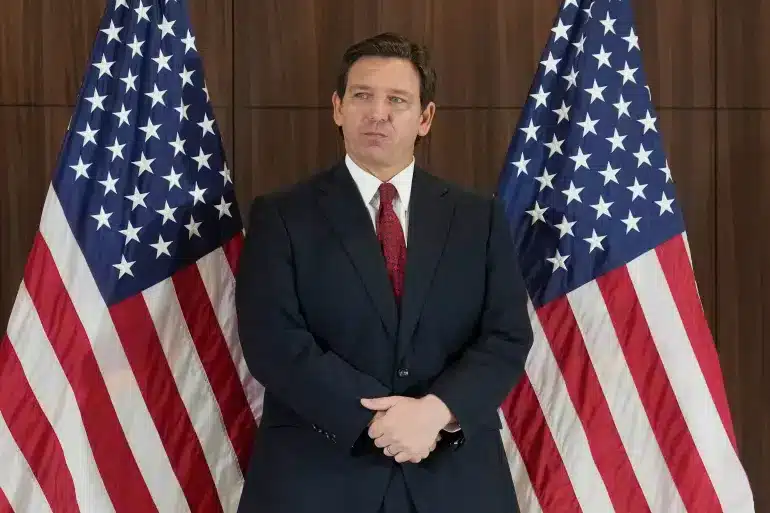
Florida’s governor, Ron DeSantis, has stated his intention to prevent state colleges from offering programmes on diversity, equity, and inclusion as well as critical race theory (CRT).
The proposal, which is a part of a larger higher education legislative package, was made public by the Republican governor on Tuesday. It is anticipated that the GOP-controlled state House of Representatives will consider it when its regular session starts in March.
DeSantis, a potential Republican presidential candidate in 2024, has harshly criticised DEI initiatives as well as programmes that examine diversity, equity, and inclusion (DEI), also known as DEI and critical race theory.
Critical race theory is a way of thinking about US history through the lens of racism. Scholars developed it during the 1970s and 1980s in response to what they viewed as a lack of racial progress following the civil rights legislation of the 1960s. It centres on the idea that racism is systemic in the nation’s institutions, which function to maintain the dominance of white people in society.
“I think people want to see true academics, and they want to get rid of some of the political window dressing that seems to accompany all this,” DeSantis said at a news conference in the coastal city of Bradenton.
In a statement, the governor’s office said the proposal “raises the standards of learning and civil discourse of public higher education in Florida” by “prohibiting higher education institutions from using any funding, regardless of source, to support DEI, CRT, and other discriminatory initiatives.”
DeSantis promised “no funding” for such programmes. “I think that that’s very important because it really serves as an ideological filter, a political filter,” he said.
The proposal was expected after the DeSantis administration requested in late December that state colleges submit spending data and other information on programmes related to critical race theory and diversity, equity and inclusion.
The governor is also pushing for education administrators to “realign” courses to provide historically accurate information and not include identity politics. DeSantis’s proposals have not yet been introduced as formal legislation, but the Republican-controlled state house is often eager to carry out his initiatives.
DeSantis and other conservatives have long argued that critical race theory and diversity, equity and inclusion programmes are racially divisive and discriminatory – and are often cited in criticism of what they often call “woke” ideology in education.
Last year, the governor signed legislation dubbed the Stop WOKE Act, which restricts certain race-based conversations and analysis in schools and businesses. The law bars instruction that says members of one race are inherently racist or should feel guilt for past actions committed by others of the same race, among other things.
This month, the DeSantis administration blocked a new Advanced Placement course – an undergraduate-level programme for high-school students – that would focus on African American studies, saying that teaching it in Florida public schools violates state law. He also accused the course of being historically inaccurate.
So far, at least 25 states have considered legislation or other steps to limit how race and racism can be taught, according to an analysis from Education Week. Eight states, all Republican-led, have banned or limited the teaching of critical race theory or similar concepts through laws or administrative actions. The bans largely address what can be taught inside the classroom.
New higher education proposal builds off our 2022 reforms: – Core courses rooted in Western tradition – Elimination of DEI/CRT bureaucracies – Bolster civics-focused institutes at UF, FSU and FIU – Additional accountability for tenured faculty pic.twitter.com/XV6mExlzHJ
Proponents of diversity programmes and critical race theory have argued they aim to counter institutional racism and teach an accurate version of US history that shows the racism African Americans and other ethnic minorities have faced.
Several Democrats have slammed DeSantis’s plans to interfere in public education. “Nothing says you oppose ideology on college campuses…. like pushing your ideology on college campuses,” Florida house member Anna Eskamani wrote on Twitter on Tuesday.
The governor’s move to block the Advanced Placement course on African American studies also drew outrage last week.
“Ron DeSantis banning AP African American Studies because it ‘lacks educational value’ is unmasked white supremacy,” Congresswoman Rashida Tlaib said in a social media post last week.
“You cannot teach the truth about American history without African American history. Period.”
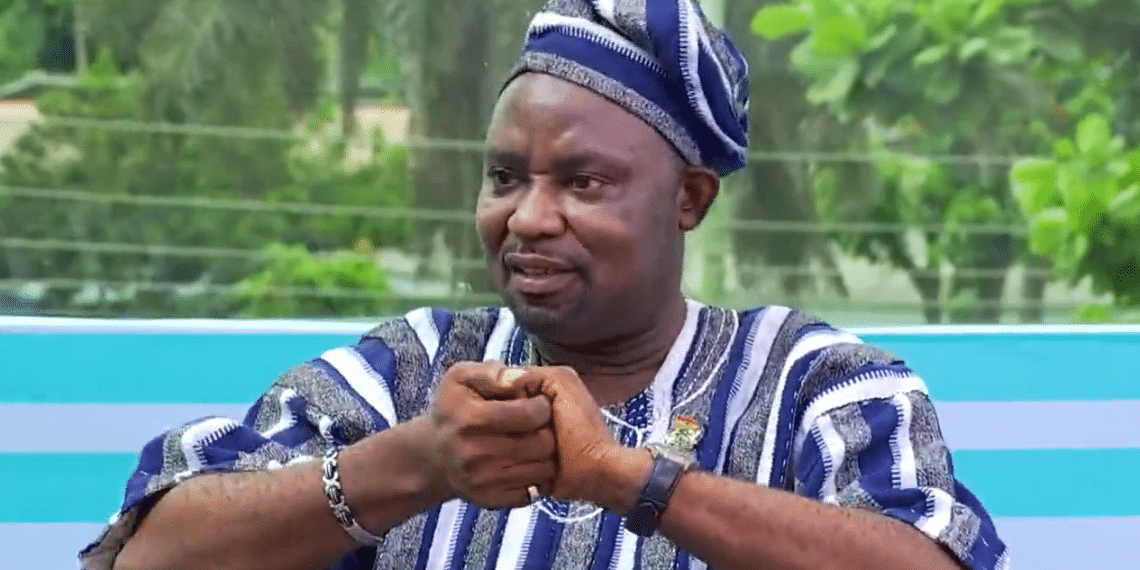
Head of the Rent Control Department, Emmanuel Hovey Kporsu says landlords are not legally empowered to evict tenants that default on their rent.
Mr. Kporsu said it is wrong to break into the premises of tenants after the expiration of their rent in an attempt to eject them.
He explained that: “the issue with rent in Ghana is that you cannot forcefully eject somebody from your premises after the contract has ended. The fact that the contract has expired and the tenant has not given you the keys to enter the place, you cannot enter the premises.”
Explaining the regulations surrounding the tenancy agreement in Ghana to Umaru Sanda Amadu onFace to Face on Citi TV, Mr. Kporsu said, “probably your tenancy has expired, and you’ve locked the premises, and then you ran away with the keys, the landlord cannot forcefully enter the premises because if he does and the tenant comes back and says he has lost a pot of flowers, the landlord is obliged to pay.”
He advised landlords to report any pertinent issues involving evictions to the Rent Control Department for amicable resolution which requires that, “you come and report to the Rent Control Department, and we make you swear an affidavit to indicate that the place belongs to you, and we give you a notice to be posted in front of the door for a period of two weeks and if the tenant does not appear, we go before a magistrate to seek an order to force open the premises.”
Mr. Kporsu also explained what happens after an entry order is granted by a magistrate.
“When we get the order to forcefully enter the room from the magistrate, we force open the premise and lease any item we see there and give it to the landlord for save keeping for a period of two weeks, and we go back to the magistrate to either auction the things or donate them after the tenant doesn’t appear.”
Residential renting in Ghana has been on an increasing trend for the past two decades. This is a result of the high demand for affordable rental properties. The problem is compounded by an uncompromising demand of landlords to collect a year or two years of prepaid rent from potential tenants.
Research has shown that only 5% of Ghana’s population can acquire their own homes without any form of assistance, with 60% requiring support that is facilitated by the state to access housing whilst 35% will require additional direct support before they can have access to housing.
The assistance required by the households falling into the 60% band comes in the form of supportiveregulations and competitively priced mortgages whereas the lower 35% band needs subsidies in addition.
Francis, 86, says that a “forgotten genocide” is happening in the DRC as he starts his journey through two African countries.
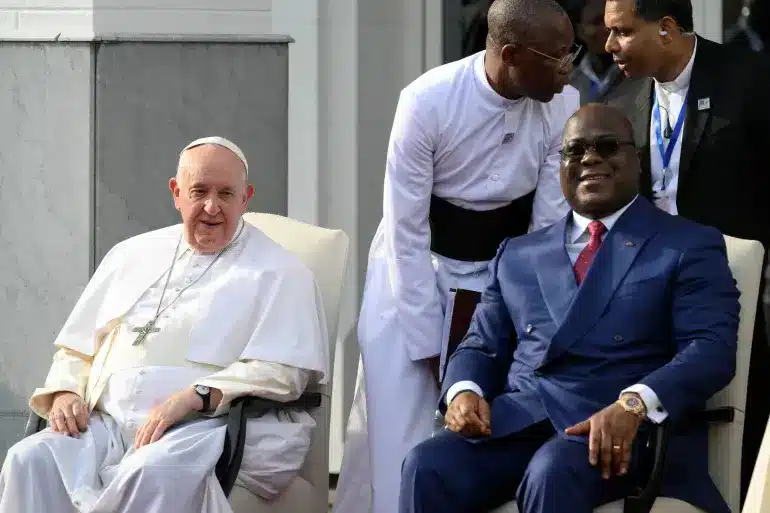
Pope Francis, who recently arrived in the Democratic Republic of the Congo as part of a trip to two African countries, has demanded that foreign nations stop stealing Africa’s natural resources for the “poison of their own greed.”
Since Pope John Paul II visited the Democratic Republic of the Congo in 1985, when it was still known as Zaire, Pope Francis, 86, is the first pope to make such a trip.
“Hands off the Democratic Republic of the Congo! Hands off Africa!” Francis said on Tuesday to applause in his opening speech to Congolese government authorities and the diplomatic corps in the garden of Kinshasa’s national palace.
Calling Congo’s vast mineral and natural wealth a “diamond of creation”, Francis demanded that foreign interests stop carving up the country for their own interests and acknowledge their role in the economic “enslavement” of the Congolese people.
“Stop choking Africa. It is not a mine to be stripped or a terrain to be plundered,” said history’s first Latin American pope, who has long railed at how wealthy countries have exploited the resources of poorer ones for their own profit.
Residents of Kinshasa welcome Pope Francis on his apostolic journey, in Kinshasa, the Democratic Republic of Congo, on January 31, 2023 [Justin Makangara/Reuters]
Francis pointed the finger at the role colonial powers such as Belgium played in the exploitation of Congo until the country, which is 80 times the size of Belgium, gained its independence in 1960. He also said neighbouring countries are playing a similar role today.
The 86-year-old didn’t identify Belgium or any neighbouring country by name, but he spared no word of condemnation, saying there was a “forgotten genocide” under way.
“The poison of greed has smeared its diamonds with blood,” Francis said.
“May the world acknowledge the catastrophic things that were done over the centuries to the detriment of the local peoples, and not forget this country and this continent.”
Pope Francis is welcomed by residents of Kinshasa on January 31, 2023 [Simone Risoluti/Vatican Media/Handout via Reuters]
Al Jazeera’s Malcolm Webb, reporting from Kinshasa, said hundreds if not thousands of people on the roads followed the pope’s motorcade on motorbikes to the presidential palace from the airport.
“The roads were lined up with church groups and schoolchildren from the many Catholic-run church schools run over here in Congo,” he added.
“The Catholic church runs about 60 percent of health and education services here … it’s what makes the Catholic Church such a significant institution here [in Congo],” Webb added.
About half of Congo’s population of 90 million are Roman Catholics.
The six-day trip, which also includes a stop in South Sudan, was originally scheduled for July 2022, but was postponed because of Francis’s knee problems, which were still so serious on Tuesday that he could not stand to greet journalists in the plane heading to Kinshasa and was forced to use a wheelchair on the ground.
Fighting in DRC
Francis was also supposed to have included a stop in Goma, in eastern Congo, but the surrounding North Kivu region has been plagued by intense fighting between government troops and the M23 rebel group, as well as attacks by fighters linked to the ISIL (ISIS) armed group.
The fighting has displaced some 5.7 million people, a fifth of them last year alone, according to the World Food Programme.
Congo accuses Rwanda of backing the M23 rebel group fighting government troops in the east. Rwanda denies this.
“As well as armed militias, foreign powers hungry for the minerals in our soil commit, with the direct and cowardly support of our neighbour Rwanda, cruel atrocities,” said Congolese President Felix Tshisekedi, speaking just before the pope on the same stage.
The pope said the Congolese people were fighting to preserve their territorial integrity “against deplorable attempts to fragment the country”. The pope did not name Rwanda in his address or take sides in the dispute.
Instead of travelling to Goma, Francis will meet with a delegation of people from the east who will travel to Kinshasa for a private encounter at the Vatican embassy on Wednesday.
The plan calls for them to participate in a ceremony in which they jointly commit to forgiving their assailants.
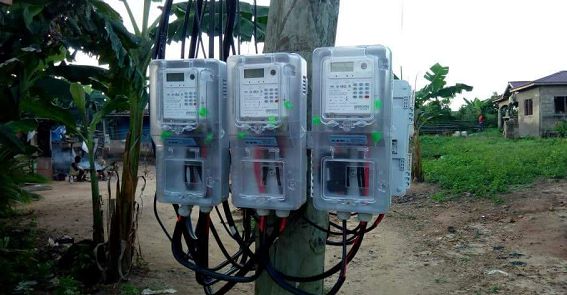
PURC increased the price of electricity by 30% on January 16 and water by 8.3% starting on February 1, 2023.
The PURC justified its decision to approve the increase by pointing to the depreciation of the cedi, skyrocketing inflation, and problems with power generation.
In a release issued by the Electricity Company of Ghana (ECG), the power distributor said it has cataloged all unit consumption and the expected cost in a “Reckoner,” which clearly explains how the tariff is applied and billed.
“Please note that individual customers’ tariff percentage increase will depend on customer classification and consumption category. The Reckoner will be displayed at all our districts and customer service centres nationwide to guide customers on their electricity purchases.”
“ECG, by this announcement, assures our customers and stakeholders of our commitment to ensuring a smooth implementation of the new tariff.”
Meanwhile, the ECG said it has established customer help desks in all districts and customer service centres to assist, explain and reconcile any challenge.
The move would restructure the federal response to treat the virus asan endemic public health threat, ending some government support.
United States President Joe Biden has informed Congress that his administration will formally end two national emergencies declared to address the COVID-19 pandemic on May 11, restructuring the federal response to the virus as an endemic public health threat.
The announcement on Monday came in a statement opposing resolutions being brought to the floor this week by House Republicans to bring the emergency to an immediate end. House Republicans are also gearing up to launch investigations on the federal government’s response to the virus.
“An abrupt end to the emergency declarations would create wide-ranging chaos and uncertainty throughout the health care system – for states, for hospitals and doctors’ offices, and, most importantly, for tens of millions of Americans,” the Office of Management and Budget wrote in a Statement of Administration Policy.
The announcement comes as legislators have already ended elements of the emergencies that kept millions of Americans insured during the pandemic. The change would also mean the response can be managed through public health agencies’ normal authorities.
The move, combined with the drawdown of most federal COVID relief money, would also shift the development of vaccines and treatments away from the direct management of the federal government.
Health and Human Services Secretary Alex Azar first declared a public health emergency in response to COVID on January 31, 2020 during the administration of then-President Donald Trump. In March 2020, Trump declared the pandemic a national emergency.
The measures have been repeatedly extended by Biden since he took office in January 2021. The Biden administration had previously considered ending the emergency last year, but held off amid concerns about a potential “winter surge” in cases and to provide adequate time for providers, insurers and patients to prepare for its end.
The Centers for Disease Control and Prevention has recorded 1.1 million COVID deaths in the US since 2020, although the death rate has dropped dramatically since vaccines became widely available. The agency said about 3,700 people died from the virus last week.
US legislators have already blunted many federal programmes related to COVID, refusing for months to fulfil the Biden administration’s request for billions more dollars to extend free vaccines and testing.
The costs of COVID-19 vaccines are also expected to skyrocket once the government stops buying them, with Pfizer saying it will charge as much as $130 per dose. Only 15 percent of US residents have received the recommended, updated booster that has been offered since the last year.
Free at-home COVID tests will also come to an end, and hospitals will not get extra payments for treating patients after the emergency ends.
On Monday, the World Health Organization said the coronavirus remains a global health emergency, even as a key advisory panel for the group found the pandemic may be nearing an “inflexion point” where higher levels of immunity can lower virus-related deaths.
Biden’s announcement comes as the House of Representatives was scheduled to vote on Tuesday on legislation that would terminate the public health emergency.
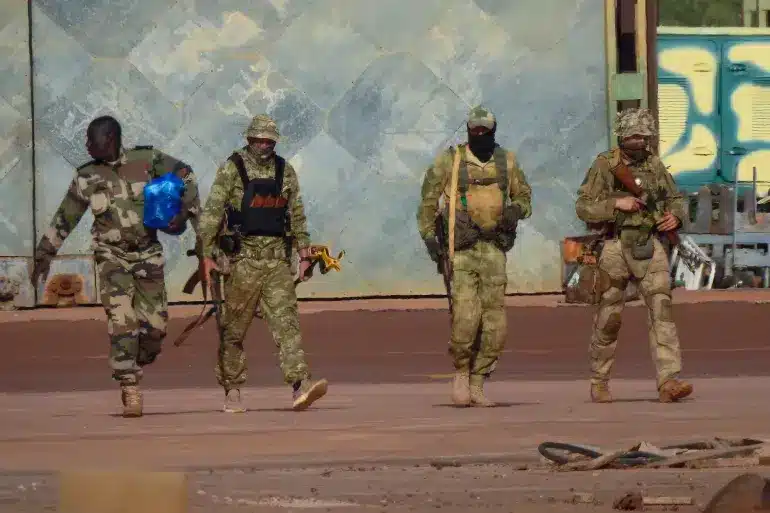
On Tuesday, UN experts demanded an impartial investigation into alleged war crimes and crimes against humanity committed in Mali by government forces and the Wagner Group, a Russian private military contractor.
Mali, whose government seized control in a military takeover in 2021, has previously claimed that Russian forces stationed there are not mercenaries but rather trainers assisting local troops with equipment purchased from Moscow.
According to Western powers, Wagner Group contractors are among the Russian forces in Mali.
“Since 2021, the experts have received persistent and alarming accounts of horrific executions, mass graves, acts of torture, rape and sexual violence, pillaging, arbitrary detentions and enforced disappearances perpetrated by Malian armed forces and their allies,” said the statement from the independent experts.
Mali’s army spokesperson did not immediately respond to a request for comment.
Russian President Vladimir Putin said last year that the Russian state had nothing to do with military contractors working in Mali, adding that the African country had the right to work with private Russian firms.
Mali is engaged in a fight against armed groups linked to al-Qaeda and ISIL (ISIS) who have waged a decade-long conflict that has spread to neighbouring countries.
Tuesday’s statement mentioned the Wagner Group by name, and described credible reports of the involvement of military personnel believed to belong to the group in a massacre of hundreds of people in March.
Survivors have said that white mercenaries suspected to be Russians took part in the massacre in Moura, a market town in central Mali. The incident sparked international uproar and prompted the UN to open an earlier investigation.
Mali’s army has denied any wrongdoing in Moura and said it killed 203 militants there during what it described as a military operation.
The Wagner Group has attracted international attention over its prominent role in fighting during Russia’s invasion of Ukraine.
Last week, the United States designated Wagner as a “transnational criminal organisation” responsible for widespread human rights abuses.
By vetoing the bill, the Conservative government in London exercised “muscular unionism.”
Late last year, Pope Francis was asked by a Spanish newspaper what role, if any, the Catholic Church should play in ending the constitutional standoff in Catalonia.
“Los ingleses resolvieron ‘a la inglesa’ las solicitudes de Escocia,” he replied. “The English resolved the requests of Scotland ‘in an English way.’”
As well as being cryptic, the remark was, I think, meant to be comparative: if the British authorities could facilitate a peaceful referendum on Scottish independence in 2014, surely the Spanish authorities could find a similar solution for Catalonia.
I used to spend a lot of time in Catalonia as a reporter and this was a common refrain among the independence supporters there. Britain is a democracy, they would tell me; Spain is not.
In 2023, however, that contrast – between British constitutional tolerance and Spanish intransigence – is becoming harder to sustain.
On January 16, the United Kingdom government did something it had never previously done in the 24-year history of Scottish home rule: it unilaterally vetoed a law that fell explicitly within Scotland’s devolved jurisdiction.
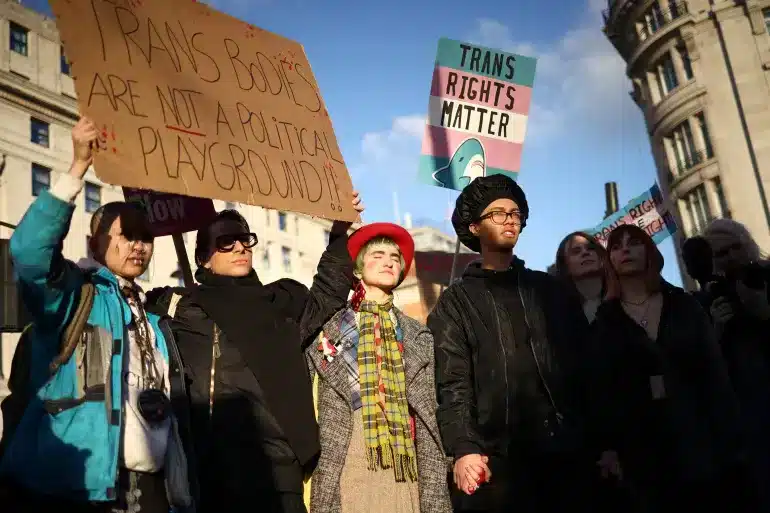
The law in question – which enjoyed cross-party support among Scottish parliamentarians – was aimed at making life easier for trans people by streamlining the otherwise stressful bureaucratic process of gender transition.
Speaking in the House of Commons, Alister Jack, the Conservative secretary of state for Scotland, argued that the bill risked violating aspects of UK-wide equalities legislation, although he struggled to explain which aspects it would violate and why.
Scotland’s first minister, Nicola Sturgeon, hit back. Jack’s decision to trigger a so-called “section 35 order” signalled a “full-frontal attack” on Scottish autonomy, she said, and underscored the Conservative Party’s “contempt for devolution”.
Sturgeon, the leader of the pro-independence Scottish National Party (SNP), isn’t exactly neutral in this debate, but she may have a point. In recent years, and specifically since Brexit, Tory politicians have become increasingly hostile to any institution that challenges the traditional pillars of power – Westminster, Whitehall, the monarchy – in British public life.
Michael Keating, a professor of Scottish politics at Aberdeen University, calls this trend “muscular unionism”. Another name for it might be Anglo-British nationalism: the belief that the UK is a unitary state, not a union, and that sovereignty in the British system lies exclusively with London.
Brexit turbocharged this “Anglo-British nationalism” because the vote to leave the EU was fuelled, in the first instance, by English eurosceptic sentiment and, in the second, by the rhetoric of “global Britishness”.
The conflation of “English” with “British” in the language of Brexiteers was partly unconscious: England is by far the largest country in the UK and its interests have historically overshadowed those of the smaller Celtic nations.
But it was also compensatory. Voters in Scotland did not in 2016, and do not today, want to be outside the EU. Yet the centralising logic of Brexit, rooted in a predominantly English desire to escape the continent’s “oppressive” political norms, dictates that they must.
Jack’s intervention dovetailed with another ongoing development on the British right: the rise of a reactionary cultural populism that has selected as its latest target the UK trans community.
Britain’s conservative media is in the midst of an incessant campaign against “gender extremism”. “Trans law ‘could turn parents into criminals’,” screamed one recent headline in The Daily Telegraph; “Why teenage girls are on the front line of the trans war,” screamed another.
This campaign has been stoked by Conservative policymakers.
Last October, during her brief tenure as prime minister, Liz Truss railed against the “absurdity” of gender self-identification laws for trans people. On January 21, Kemi Badenoch, the current Tory minister for women and equalities, said she thought “predatory” men would exploit Scotland’s gender recognition reforms to secure access to women-only spaces.
Neither Truss nor Badenoch produced any evidence to support their assertions – because there is no evidence that gender reforms of the sort being proposed by the SNP raise the risk of violence towards women and girls.
But for the British Tories, rational discourse is not the goal here.
After 14 years in power, and with the adrenaline surge of Brexit beginning to wear off, the party is flailing. It has burned through three leaders in the space of six months and is now staring down the barrel of a 20-point polling deficit. Meanwhile, the next UK general election hovers menacingly on the horizon.
The right’s full-blown embrace of transphobia should, then, be seen as a cynical attempt to excite a demoralised Tory base.
The twinning in Tory politics of culture war paranoia with a belligerent form of post-Brexit nationalism bears worrying implications for British democracy.
Alister Jack justified his decision to annul the SNP’s gender bill on the grounds that, once enacted, the new law could have unwanted spillover effects in England.
Yet, almost immediately, one of his Conservative colleagues gave the game away. The Scots have “the right to pass their own laws”, the Member of the Scottish Parliament, Rachael Hamilton, told Channel 4 News on January 17, but only if those laws are “good”.
Needless to say, this is not how devolution was meant to work when the Scottish Parliament was first established in 1999. Nor should the Tories – who haven’t won an election in Scotland for 70 years – act as sole adjudicators on the quality of Scottish legislation.
The problem for supporters of the Union is that Jack’s intervention has made Britishness itself synonymous with social intolerance – a sure-fire repellant for the liberal voters unionists need to stave off the SNP.
The UK once functioned, or was supposed to function, as a plurinational state composed of multiple territorial narratives and demands. Now, under a radicalised Tory party, when the peripheries step out of line, the centre stands ready to set them straight again.
Unfortunately, faced with this tightening constitutional trap, Scotland’s broader political options are limited.
In 2021, Boris Johnson summarily dismissed the SNP’s request for a second independence referendum. In 2022, the British Supreme Court ruled that only Westminster could legislate for a “legitimate” plebiscite on the breakup of Britain – Sturgeon’s central objective as Scotland’s first minister.
Pope Francis’s formulation makes more sense if inverted. For the time being, at least, the Scots will just have to learn how to live in a more English way.
DISCLAIMER: Independentghana.com will not be liable for any inaccuracies contained in this article. The views expressed in the article are solely those of the author’s, and do not reflect those of The Independent Ghana
Due to “surprisingly resilient” demand in the United States and Europe as well as the reopening of the Chinese economy after Beijing abandoned its strict zero-COVID strategy, the International Monetary Fund (IMF) has slightly increased its outlook for global growth in 2023.
However, the IMF’s most recent World Economic Outlook forecasts represent an improvement over an October prediction of 2.7 percent growth this year, with warnings that the world could easily tip into recession. The IMF predicted that global growth would still fall to 2.9 percent in 2023 from 3.4 percent in 2022.
For 2024, the IMF said global growth would accelerate slightly to 3.1 percent, but interest rate hikes by central banks around the world would slow demand.
IMF chief economist Pierre-Olivier Gourinchas said recession risks had subsided and central banks were making progress in controlling inflation, but more work was needed to curb prices, and new disruptions could come from further escalation of the war in Ukraine and China’s battle against COVID-19.
“We have to sort of be prepared to expect the unexpected, but it could well represent a turning point, with growth bottoming out and then inflation declining,” Gourinchas told reporters of the 2023 outlook.
Strong demand
In its 2023 gross domestic product (GDP) forecasts, the IMF said it now expected GDP growth in the US of 1.4 percent, up from the 1.0 percent predicted in October and following 2.0 percent growth in 2022.
The fund cited stronger-than-expected consumption and investment in the third quarter of 2022, a robust labour market and strong consumer balance sheets.
It said the eurozone had made similar gains, with 2023 growth for the bloc now forecast at 0.7 percent, compared with 0.5 percent in the October outlook, following 3.5 percent growth in 2022. The IMF said Europe had adapted to higher energy costs more quickly than expected, and an easing of energy prices had helped the region.
The United Kingdom was the only major advanced economy the IMF predicted to be in recession this year.
It forecast the British economy to shrink 0.6 percent this year, compared with a previous expectation for growth of 0.3 percent. People are struggling with higher interest rates, and government moves to further tighten spending are also squeezing growth, it said.
“These figures confirm we are not immune to the pressures hitting nearly all advanced economies,’’ Chancellor of the Exchequer Jeremy Hunt said in response to the IMF forecast. “Short-term challenges should not obscure our long-term prospects — the UK outperformed many forecasts last year, and if we stick to our plan to halve inflation, the UK is still predicted to grow faster than Germany and Japan over the coming years.”
China reopens
The IMF revised China’s growth outlook sharply higher for 2023, to 5.2 percent from 4.4 percent in the October forecast after its ‘zero-COVID’ strategy held back the economy. China’s growth rate was 3.0 percent in 2022, below the global average for the first time in more than 40 years.
Still, the fund added that China’s growth will “fall to 4.5 percent in 2024 before settling at below 4 percent over the medium term amid declining business dynamism and slow progress on structural reforms”.
At the same time, it maintained India’s outlook for a dip in 2023 growth to 6.1 percent but a rebound to 6.8 percent in 2024, matching its 2022 performance.
Gourinchas said together, the two Asian powerhouse economies will contribute more than 50 percent of global growth in 2023.
He acknowledged that China’s reopening would put some upward pressure on commodity prices, but “on balance, I think we view the reopening of China as a benefit to the global economy” as it will help ease production bottlenecks that have worsened inflation and by creating more demand from Chinese households.
Even with China’s reopening, the IMF is predicting that oil prices will fall in both 2023 and 2024 due to lower global growth compared with 2022.
Risks
The IMF said there were both upside and downside risks to the outlook, with built-up savings creating the possibility of sustained demand growth, particularly for tourism, and an easing of labour market pressures in some advanced economies helping to cool inflation, lessening the need for aggressive rate hikes.
But it detailed more and larger downside risks, including more widespread COVID-19 outbreaks in China and a worsening of the country’s property turmoil.
An escalation of the war in Ukraine could lead to a further spike in energy and food prices, as would a cold northern winter next year as Europe struggles to refill gas storage and competes with China for liquefied natural gas supplies, the fund said.
Gourinchas said central banks need to stay vigilant and be more certain that inflation is on a downward path, particularly in countries where real interest rates remain low, such as in Europe.
Democrats in the US House of Representatives have written a letter condemning the violent crackdown on protesters in Peru.
The Biden administration has been urged to halt all security assistance to Peru due to a “pattern of repression” against antigovernment protests that has resulted in more than 50 civilian fatalities by a group of Democrats in the US House of Representatives.
They requested in a letter shared with The Associated Press on Monday that the Biden administration halt its security assistance until it can certify that the crackdown in Peru has ended and the Peruvian officials accountable for violations of human rights have been brought to justice.
This week, Peru’s foreign minister is seeking international assistance for President Dina Boluarte’s government, which is coming under increasing pressure.
Peru’s foreign minister is in Washington, DC, this week seeking international support for President Dina Boluarte’s increasingly besieged government. Pressure has been mounting on Boluarte, formerly the vice president under ex-President Pedro Castillo, to resign the post she inherited last month when Castillo was impeached and arrested for his ill-fated attempt to close Peru’s Congress.
“Security forces have indiscriminately responded with almost no regard for protestors’ human rights,” according to the letter, which was signed by 20 mostly progressive House Democrats. “Rather than working to deescalate tensions, the Boluarte government has substantially increased tensions — including classifying protesters as ‘terrorists’ and limiting citizens’ right of movement.”
The US provides more than $40m annually to Peru in security assistance, according to the Washington Office on Latin America, a research nonprofit. The vast majority is aimed at helping Peru counter drug trafficking.
While protesters were initially demanding Castillo’s release from jail, the unrest has spread across the country, galvanising the support of many poor, Indigenous Peruvians who have benefitted little from Peru’s mining-driven economic boom.
Protesters demand that both Boluarte and Congress stand down and that new elections be held this year. Legislators rejected that on Friday. But after another protester died and Boluarte urged them to reconsider, Congress narrowly agreed on Monday to debate a proposal to hold elections in October, with 66 votes in favour, 49 opposed and six abstentions.
Meanwhile, as the protests stretch into their second month, beleaguered security forces have become more forceful.
Among the incidents cited in the letter, organised by Representative Susan Wild of Pennsylvania, was the national police raid on student dormitories at San Marcos University in Lima, which included the mass arrest of nearly 200 people. That shocked many Peruvians because campuses have long been off-limits to security forces except when crimes are being committed.
The campus invasion drew sharp condemnation from the Inter-American Commission on Human Rights, which said it collected testimony from civil society groups who alleged law enforcement officers invaded the bedrooms of student leaders, slung racist remarks at Indigenous activists, and forced women to strip naked and do squats.
Officials from the United Nations and European Union have strongly condemned what they consider the disproportionate use of force. The Biden administration has been more measured, calling for impartial investigations into abuses while also expressing support for Boluarte’s efforts to restore calm and seek a political solution.
Amid the unrest, outgoing US Ambassador Lisa Kenna announced an additional $8m in US support for coca eradication efforts in the remote Upper Huallaga valley, part of the Amazon basin in Peru. Kenna has also met with the defence minister and other Cabinet members.
Such actions send an “ambiguous message”, according to the letter, which was also signed by representatives Alexandria Ocasio-Cortez of New York, Pramila Jayapal of Washington state, and Jim McGovern of Massachusetts, a longtime voice for human rights in Latin America.
“The US government can and must do more,” they wrote. “We believe our proposed actions would send a powerful signal in support of fundamental rights and help promote effective engagement for a political resolution.”
International Monetary Fund (IMF) has said the UK economy will contract and perform worse than other advanced economies as household costs of living continue to rise.
The economy will shrink by 0.6% in 2023, not slightly grow as previously predicted, according to the IMF.
The IMF did add, however, that it believes the UK economy is now “on the right track” as a result of the Autumn Statement.
The UK outperformed many predictions last year, according to Chancellor Jeremy Hunt.
But shadow chancellor Rachel Reeves said the figures showed the UK “lagging behind our peers.”
In its World Economic Outlook update, the IMF, which works to stabilize economic growth, said the UK’s Gross Domestic Product (GDP) would shrink rather than grow by 0.3% this year.
GDP is a measure for how well, or badly, an economy is doing and in a growing economy, each quarterly GDP figure will be slightly bigger than the quarter before.
If a country’s GDP falls for two quarters in a row, it means it is in recession and its economy is doing badly. Typically, this means companies make less money and the number of unemployed people rises.
The IMF predicted the UK would be the only country—across the world’s advanced and emerging economies—to suffer a year of declining GDP. Even sanctions-hit Russia is now forecast to grow this year.
The IMF said its new forecast reflected the UK’s high energy prices and financial conditions, such as high inflation.
IMF chief economist Pierre-Olivier Gourinchas told the BBC that for 2022, the UK had had “fairly robust” growth at 4.1%, which he said was “one of the strongest growth numbers in Europe”.
“But it is true that we are forecasting a sharp slowdown in 2023, with growth that would turn even negative for the year.”
He said the revision reflected the “fact that we have a very challenging environment in the United Kingdom”, which he said was caused by high energy prices as well as “high dependence on liquid natural gas”.
Image caption, High energy prices are driving up UK inflation
The Bank of England has put up interest rates nine times since December 2021 in an attempt to reduce inflation – the rate at which prices rise. Mr Gourinchas said these rate rises fed “quickly into mortgages, because a lot of mortgages are adjustable rates”.
“So a lot of homeowners with mortgages are seeing an increase in their mortgage payments.”
Mr Gourinchas said another factor in the UK’s forecast was that employment was still below pre-pandemic levels.
He said the plans outlined by the Treasury in the months since the Autumn Statement showed the UK was “certainly trying to carefully navigate these different challenges and we think that they are on the right track”.
And the IMF said in 2024 it expected the UK economy to grow by 0.9%, up from a previous forecast of 0.6%.
‘Heading for recession’
Sophie Lund Yates, senior equity analyst at Hargreaves Lansdown, told the BBC’s Today programme the UK was not the only major economy struggling and there was a chance it could “squeak out a little more positivity” than the IMF had predicted.
“The Bank of England’s own predictions are slightly brighter than [the IMF’s’ have been],” she added.
“But overall, we are heading for recession, and the big question is how deep that’s going to be.”
Against the backdrop of growing expectations of a milder recession across the world, the IMF’s forecasts for the UK stand out, downgraded by just under a full percentage point since the autumn, and now expected to shrink by 0.6% this year.
The IMF attributes this to rapid interest rate rises, tax rises, higher borrowing costs for businesses, and still high domestic energy prices. The fund said the UK was having to navigate a very complex environment, and that since the Autumn Statement, British policy was now “on the right track.”
But if over the coming year this forecast proves to be correct, it raises questions as to why the UK will have missed out on a better global economic backdrop. The UK is now the only shrinking economy out of 15 published in this report.
The Bank of England will publish its new forecast for the UK economy later this week, alongside an expected further rise in interest rates.
The IMF’s bleak picture for the UK comes after Mr Hunt warned it was “unlikely” that there would be room for any “significant” tax cuts in the spring budget.
The chancellor, who has been under pressure from some in his party to cut taxes to stimulate the economy, has said that lowering inflation “is the best tax cut right now”.
Inflation hit 10.5% in the 12 months to December, close to a 40-year high.
Prime Minister Rishi Sunak has pledged to halve inflation by the end of the year, although some economists have said price rises will slow without government policies, due to commodity prices and shipping costs decreasing.
Andrew Bailey, the governor of the Bank of England, has also said inflation is likely to fall rapidly this year but has warned a UK recession is still on the cards.
While the IMF predicts the UK economy will contract, it forecasts economic growth of 1.4% in the US, 0.1% in Germany and 0.7% in France.
Mr Hunt said the IMF’s figures “confirm we are not immune to the pressures hitting nearly all advanced economies”.
“Short-term challenges should not obscure our long-term prospects – the UK outperformed many forecasts last year, and if we stick to our plan to halve inflation, the UK is still predicted to grow faster than Germany and Japan over the coming years,” he added.
Economic forecasters are not always 100% right when it comes to predicting the future. The IMF has said its forecasts for growth the following year in most advanced economies like the UK’s have more often than not been within about 1.5 percentage points of what actually happens.
The IMF said the trend of central banks putting up interest rates to try to curb inflation and the war in Ukraine continued to “weigh on economic activity” across the world.
According to experts in air defense, US-made F-16 fighter jets would give Ukraine an advantage over the Russian air force, but only if they were used in conjunction with potent missiles and targeting data that the West would also have to supply, drawing it more actively into the conflict.
Konstantinos Zikidis, a Hellenic Aerospace Industry aerospace engineer with extensive F-16 experience, said of the technology: “It’s not a panacea, not a game-changer.”
Despite President Joe Biden’s Monday statement that the United States would not send F-16s to Ukraine, the majority of NATO members in Europe have left the option open.
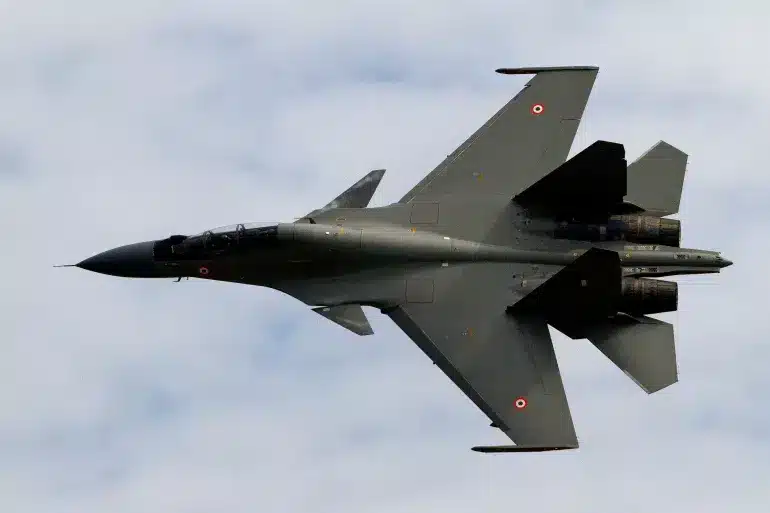
“The Sukhoi-35 is larger and faster and has a more powerful radar,” Zikidis told Al Jazeera of the Russian fighter jet the F-16 would be up against.
But the F-16 could overcome the Sukhoi-35 if it carried powerful Western missiles and received tracking data from airborne radar, Zikidis said.
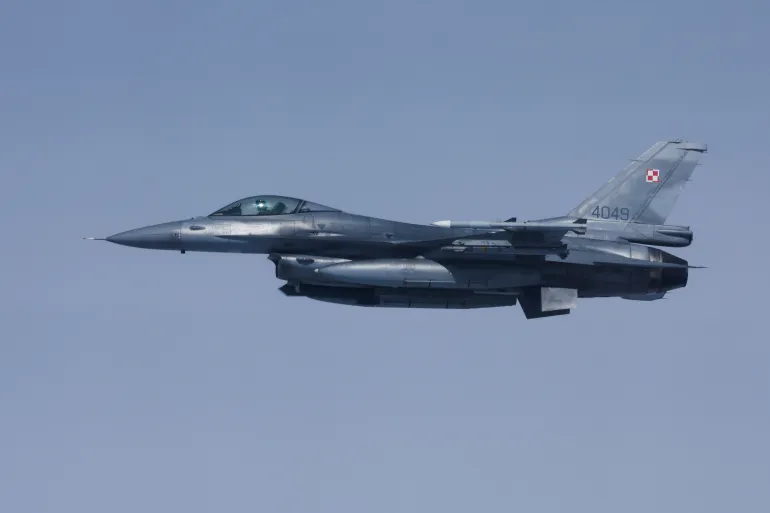
If Ukraine were to receive F-16s, they would likely come from Poland, which has said it is ready to hand over part of its fleet.
These carry the AIM-9X Sidewinder missile, a 10-20km (6-12-mile) range short-range infrared guided missile “undetectable by the target plane’s defence systems”, Zikidis said.
“And they have the AIM-120 AMRAAM, which covers larger distances of up to 100km (62 miles)… [and] can continue to receive target updates from the aircraft that fired it.”
Both missiles are among NATO’s most advanced.
Wing commander Thanasis Papanikolaou, who has flown and commanded formations of F-16s, agrees that, if networked, the F-16 would offer Ukraine a clear advantage.
“The Russians are using older tactics, whereas Western tactics have evolved to use planes in combination with the navy, ground forces, [airborne] and naval radar intelligence – this Western type of warfare is very advanced,” Papanikolaou told Al Jazeera.
“The Su35 may have great abilities, but it is behind the F-16 if equipped with Link 16,” said Papanikolaou, referring to a NATO communications technology that data-links planes, ships and ground forces. “This enables every asset on the battlefield to share the same picture.”
If NATO’s AWACS airborne radar were to operate at the limit of Romanian airspace, it could illuminate virtually all of Crimea, a territory Ukraine says it wants to recapture, and reports suggest the White House is willing to consider helping Ukraine do.
Ukraine wants new tech
Ukraine has suggested it wants some of the most advanced versions of the F-16.
“If we get them, the advantages on the battlefield will be just immense … It’s not just F-16s. Fourth-generation aircraft, this is what we want,” Yuriy Sak, an adviser to defence minister Oleksiy Reznikov, told Reuters.
Poland, which operates fourth-generation F-16 Block 52+ planes, confirmed on Monday it was prepared to send them to Ukraine if NATO approved the move.
Experts say these carry a “sophisticated” on-board computer and powerful radar.
At the beginning of the war, Ukraine’s air force was spearheaded by 50 MiG-29 fighters and 32 Sukhoi-27s, but they were “overmatched” said a recent RUSI report.
“Russian aircraft could generally see and shoot further while their countermeasures were effective against Ukrainian air-to-air munitions,” the report said.
Moscow’s highly publicised aircraft losses in the opening days of the war dropped after the Russian air force brought in air defences and started jamming Ukrainian radar and hunting Ukrainian anti-air batteries.
Ukrainian pilots partly compensated for their disadvantage in numbers and technology by flying below enemy radar, but the limitations of this tactic were made painfully obvious last October when a Ukrainian Sukhoi-27 and a Sukhoi-24 were shot out of the sky by Russian missiles after performing a “jump” – a brief thrust into higher altitude – to fire at kamikaze drones or enemy air defences.
Western airborne radar failed to spot the incoming missiles, leading to suspicion that Russia may have begun to deploy its fearsome R-37M, a hypersonic missile believed to have been fired more than 200km (124 miles) away by a Sukhoi-57, Russia’s still-experimental multirole stealth fighter.
Against such a combination of arms, even the F-16 Block 52+ may not be a match, say experts, but it does underline Ukraine’s need for a generational leap in air attack capabilities.
Can it be done?
There are clear advantages to the F-16.
It is the world’s most-produced fighter jet, with many being decommissioned in Europe as NATO members transition to the F-35.
Lockheed Martin, which produces the F-16, told the Financial Times it can increase production to replace planes sent to Ukraine.
COO Frank St John said the company was “going to be ramping production on F-16s in Greenville [South Carolina, US] to get to the place where we will be able to backfill pretty capably any countries that choose to do third-party transfers to help with the current conflict”.
The Netherlands’ foreign minister, Wopke Hoekstra, said there were “no taboos” on weapons supplies to Ukraine, and recent reports had suggested that the US Pentagon had seriously considered sending F-16s.
But there are practical and symbolic concerns.
Training Ukrainian pilots on F-16s might not be carried out in time to make a difference in the war this year, say experts.
“The altimeter in Western planes, for example, is in feet. The Soviet altimeter is in metres. It’s two different ways of thinking,” said Papanikolaou.
“It would take many months, and they might have to be piloted by [Western] volunteer veterans,” said Zikidis.
Bringing in Western pilots, even as privateers, could create political complications.
“The Russians will try to present that NATO is directly involved in the Ukraine war, and will threaten nuclear war,” said Papanikolaou.
Ukraine has reportedly prepared a batch of 50 pilots who have flown in Western military exercises and could be trained in three months. And US Congressman Adam Kinzinge introduced a bill to train Ukrainian pilots and support crew on F-15 and F-16 fighter jets as early as June 23 last year. That bill was approved.
The symbolic concern is over losses of aircraft.
Western weaponry has proven largely superior to Soviet-era weaponry during the course of the Ukraine war. But Russia’s development of hypersonic missiles could prove a match for the F-16, ending the narrative of NATO superiority.
“It carries a risk,” said Zikidis. “If you lose an F-16 it will be a big story. Sukhois are falling out of the sky, but that’s not a story.”
Perhaps for such reasons, there are still naysayers in the Western alliance.
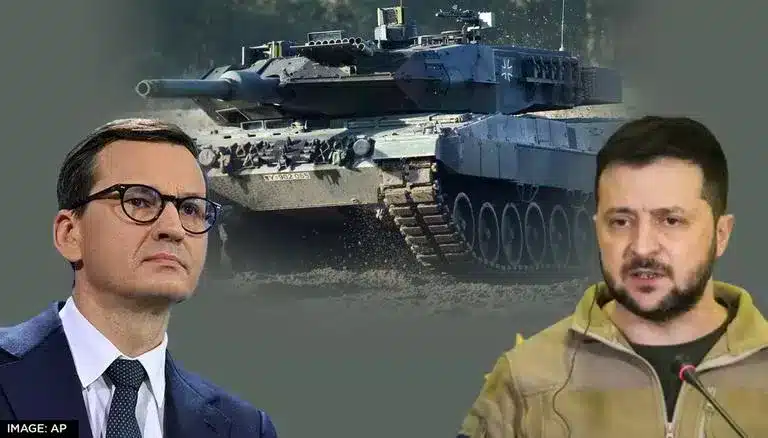
German chancellor Olaf Scholz, after bowing to pressure to send Leopard 2 battle tanks to Ukraine, said he would not be sending the jets.
“I made it clear very early on that we are not talking about combat aircraft, and I am doing the same here,” he told the Bundestag this month.
According to official government data, 87 rhinos were killed in Namibia last year, an all-time high compared to the 45 rhinos killed in 2021.
The demand for rhino horn, which is valued in East Asia as a purported medicine and as jewellery despite being made of the same material as rhino hair and fingernails, has caused a decimation of the rhino population in Africa over the years.
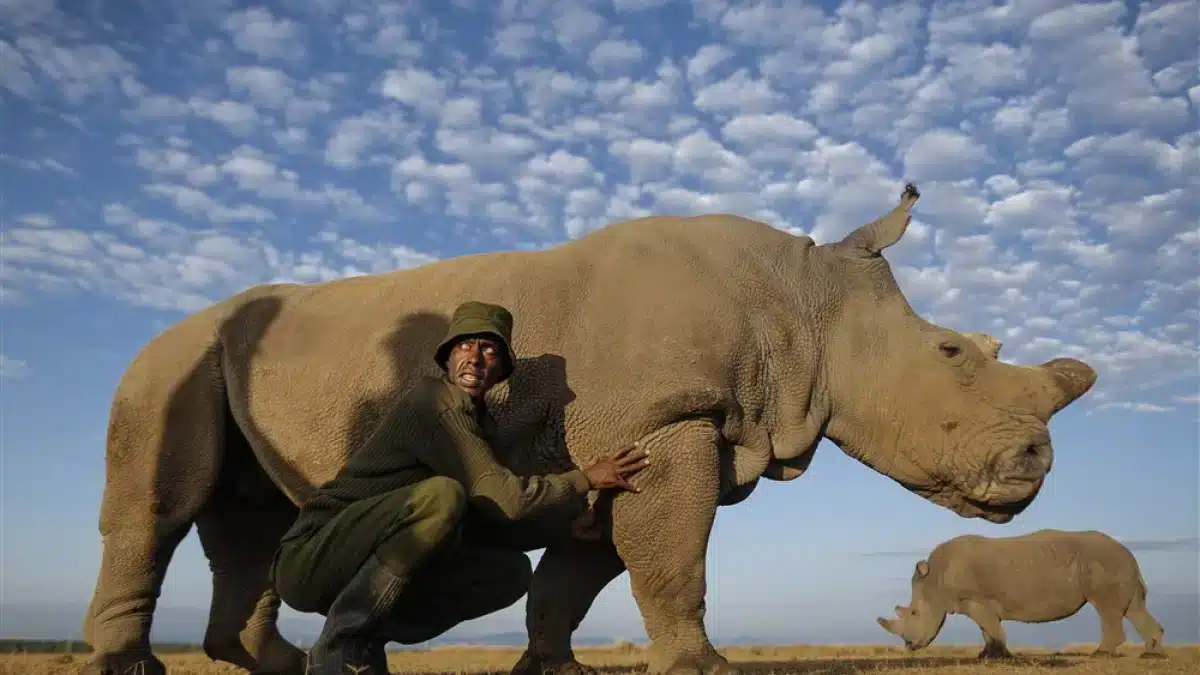
On Monday, Ministry of Environment, Forestry and Tourism spokesperson Romeo Muyunda said poachers killed 61 black and 26 white rhinos mainly in Namibia’s largest park, Etosha, where 46 rhinos were found dead.
“We note with serious concern that our flagship park, Etosha National Park, is a poaching hotspot,” Muyunda said, adding that the ministry and law enforcement officials have stepped up efforts against wildlife crime in the park to curb poaching.
The Southern African country is home to the only free-roaming black rhinos left in the world and also accounts for a third of the world’s remaining black rhinos.
Rhino poaching has plagued Southern Africa for decades, especially in neighbouring South Africa and Botswana, leading to anti-poaching programmes, including strict policing and dehorning, or removing horns from the rhinos as a way of discouraging poaching.
Namibia is also home to the second-largest white rhino population in the world after South Africa.
The Save the Rhino Trust estimates there are about 200 free-roamingblack rhinos in Namibia, mainly in the northeast.
Meanwhile, elephant poaching in Namibia has declined over the years, from a high of 101 in 2015 to a low of four elephants poached last year.
It has been two years since a major wave of street protests provoked by the arrest of opposition leader Alexey Navalny hit Russia. To many, the events of January and February 2021 may seem unrelated to the war in Ukraine, but they are, in fact, closely linked.
Let us remember how this story unfolded. In August 2020, Navalny suffered a near-lethal poisoning, which landed him in a German hospital. An investigation by Bellingcat and Der Spiegel established with a high level of certainty that he was poisoned by Russian secret service operatives.
Having barely recovered from the poisoning, Navalny surprised many by returning to Russia five months later. He was apprehended at the airport and has been in jail ever since.
In the following weeks, hundreds of thousands of people demonstrated in 185 cities across the country, calling for the opposition leader’s release. According to OVD-Info, a group monitoring political repression in Russia, more than 11,000 people were arrested, dozens were injured and about 90 people faced criminal charges.
President Vladimir Putin’s main dark art, which has helped him stay in power for so long, is that of shifting public attention away from domestic troubles. Less than two months after the Navalny protests were suppressed, he ordered the deployment of a massive force at the Russian border with Ukraine in what became a prelude to the full-scale invasion of this country a year later.
These two themes – Russia’s internal instability and the war in Ukraine – are fundamentally interlinked. By waging a war in Ukraine, Putin is avoiding confrontation with his own population and keeping the opposition at bay. He has essentially outsourced his domestic conflict to Russia’s neighbour Ukraine.
Domestic unrest was certainly not the only reason why Putin started preparing for the invasion. That same fateful month, which saw Joe Biden enter the White House, Ukrainian President Volodymyr Zelenskyy made a drastic change of tack in his Russia policy.
He launched an attack on Putin’s chief ally in Ukraine, Viktor Medvedchuk, whose party climbed to the top of opinion polls in December 2020. Simultaneously, he initiated much-publicised campaigns for joining NATO and doing away with the Nord Stream 2 gas pipeline project.
With Medvedchuk still in the game, Putin could have safely counted on the political environment in Ukraine gradually changing in the way that was conducive to his political goals of ending the conflict in the eastern Ukrainian region of Donbas on his terms. But the forceful removal of his ally from the political scene and the destruction of his increasingly influential media empire made this impossible, prompting the Russian president to resort to a more drastic line of action.
Yet it is on the domestic front where Putin has achieved the most by triggering an escalation in Ukraine. Rising tensions served as a smokescreen for the ultimate destruction of Navalny’s movement and the Russian opposition.
There is a perverse logic to the Kremlin’s actions if you look at the events from its vantage point. Putin and his entourage genuinely believe that Navalny and his supporters are paid agents of the West intent on staging a Russian version of the Maidan protests.
Russia’s initial attack on Ukraine in 2014 was a way of punishing it for its Maidan revolution but, even more importantly, of showing the Russian public what they would face if they followed the Ukrainian example.
The 2014 invasion allowed Putin to quash what remained of the Bolotnaya protest movement, which rocked Moscow in 2011 and 2012. But the relatively calm years following the hot phase of the war in Ukraine in 2014 and 2015 saw public attention in Russia shift again to domestic grievances.
In 2017 and 2018, opinion pollsters started picking up a dramatic shift in public sentiment: The demand for stability was diminishing in favour of political change. In 2018, a Levada Centre poll showed 57 percent of respondents believed “full-scale changes” were needed in the country. This figure rose to 59 percent the following year.
That was also the time when Navalny launched his presidential campaign and set up the largest opposition network in recent history, opening offices in most regions of the country. Fearful of his movement and its Maidan potential, the Kremlin first knocked Navalny out of the presidential race on a made-up pretext and then tried to poison him.
The escalation and eventual full-scale invasion of Ukraine, allowed Putin to do away with the Russian opposition and remove the threat to his regime. This was reflected in opinion polls as well. The share of Russians hoping for change fell to 47 percent in 2022 in Levada’s poll.
Today, Navalny is lingering in jail where he is being treated in a way that borders on outright torture. Every other major opposition politician is either jailed, under house arrest or in exile. Hundreds of thousands of anti-Putin Russians have fled the country, including pretty much all independent journalists and most civil society activists.
As a result, Putin’s political regime appears to be more stable than ever – even if it loses the war in Ukraine. At the end of the day, there is nothing more stable than an isolated authoritarian regime under Western sanctions. Iran, Cuba and North Korea are a testament to that.
A hostile, isolated Russia is also good for the war hawks in the West and in Eastern Europe promoting hardline policies and militarisation. Meanwhile, pro-Ukrainian infowar groups and hawkish commentators in the West are bashing the Russian opposition with even greater fervour than Putin’s regime while also calling for the breakup of Russia.
There is a steep learning curve ahead for Russian leaders and activists before they formulate their (as well as Russia’s) genuine interests and learn to tell friends from foes in the political terrarium of the visionless and disoriented West of the Trump and Brexit epoch. Western ambiguity on Russia’s future does not help when it comes to promoting anti-Putin sentiments in Russia.
That explains why the main figures in Navalny’s movement are keeping a fairly low profile in Western media while focusing on developing a propaganda machine to reach out to audiences in Russia, mostly via YouTube. They are also attempting to relaunch the movement’s regional network, but we won’t hear much about the progress for some time, given that these days activist can only operate in clandestine mode.
In the meantime, with the war raging, Putin can consider himself fairly Maidan-proof.
DISCLAIMER: Independentghana.com will not be liable for any inaccuracies contained in this article. The views expressed in the article are solely those of the author’s, and do not reflect those of The Independent Ghana
Marie Louise Wambale had to flee with almost nothing about ten years ago due to fighting between the M23 rebels and the DRC army in the country’s eastern region, and it took her years to rebuild her life.
She hoped, along with the majority of Catholics in the eastern DRC, that Pope Francis would bring a message of hope at a time when the rebels are posing their greatest threat to this region since 2012.
“Many people were disappointed because they wanted to welcome him to our home, for him to come here and live our suffering, to feel it with his own eyes,” she said. “We wanted him to live it because there are many people who have fled the war. There are pregnant mothers who gave birth in the camps in very bad conditions – many women and children are suffering.”
Now Wambale has been tasked with taking this message to the capital, Kinshasa, where she will be among the Congolese faithful chosen to meet Pope Francis.
His long-awaited visit to DRC and South Sudan this week comes after he postponed an earlier trip late last year that had originally included a stop in the volatile east for health reasons. Insecurity, though, has soared in the months since so the pope is limiting his visit to Kinshasa.
“It is clear to anybody that there is a danger. But the danger, I would say, even more than for the pope is for the people,” the Vatican’s ambassador to DRC, Archbishop Ettore Balestrero told The Associated Press news agency.
The security requirements to protect people at a papal mass would be hard under ordinary circumstances, but even more delicate in an already dangerous area like the east, he said.
An estimated two million Congolese are expected at the mass at Kinshasa airport on February 1, which he said would make it the largest crowd event in DRC’s recent history.
Fighting in the eastern DRC, which involves more than 120 armed groups, has simmered for years but spiked in late 2021 with the resurgence of the M23, which had been largely dormant for nearly a decade. The rebels have captured swaths of land and are accused by the United Nations and rights groups of committing atrocities against civilians.
The violence, which has displaced approximately half a million people, has triggered a diplomatic spat with neighbouring Rwanda. Kinshasa has accused Kigali of backing the M23, an allegation also made by UN experts and the European Union.
Rwanda denies backing the group, which continues to resist a concerted pushback from the Congolese military and a regional peacekeeping force.
The region is also increasingly grappling with violence linked to ISIL (ISIS) and al-Qaeda affiliates. Earlier this month, ISIL claimed responsibility for a bomb explosion at a church, which killed at least 14 people and injured dozens while they were praying.
In DRC, the Catholic church mediated rising tensions in 2016 after the government postponed elections, creating an agreement which led to the 2018 vote, said Katharina R Vogeli, founder of CapImpact, a peace-building organisation working in the Great Lakes region.
Religious advisers say people in countries with enormously entrenched problems need to be lifted out of a generational sense of dread and anxiety.
“It’s the message of eternal hope that transcends, which is what people need,” said Ferdinand von Habsburg-Lothringen, a peace-building expert and former adviser to the South Sudan Council of Churches.
“The church has enormous power,” he said. “Though they may not necessarily have political power, they have moral authority.”
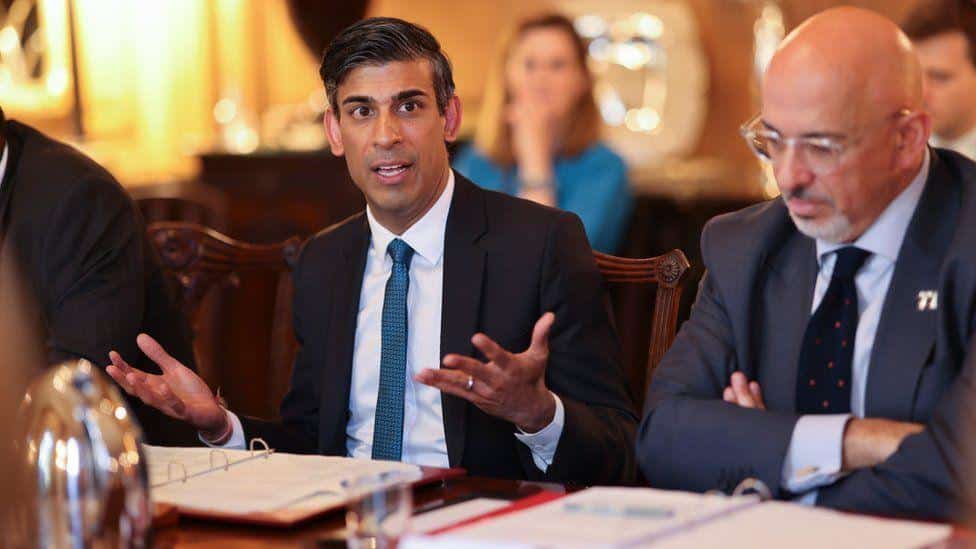
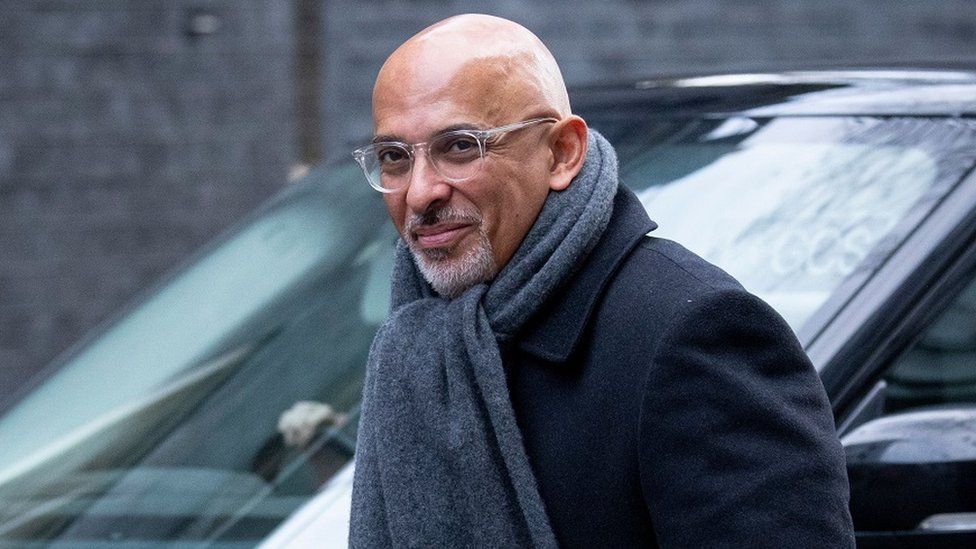
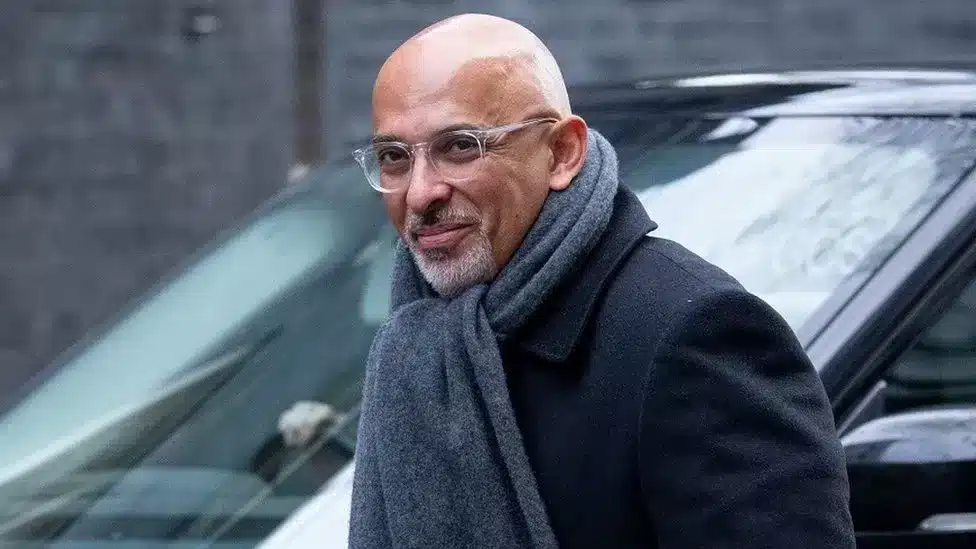
The Tory Party chairman, Nadhim Zahawi, was fired on Sunday,and Rishi Sunak has defended his handling of the situation by asserting that he followed “the right process.”
The PM’s ethics adviser conducted an investigation and found that Mr. Zahawi had violated the ministerial code seven times while concealing the fact that HMRC was looking into his tax affairs.
As soon as the investigation was over, Mr. Sunak claimed he “acted pretty decisively.”
According to Labour, Mr. Zahawi should have been fired by the prime minister “long ago.”
Deputy leader Angela Rayner called Mr Sunak a “hopelessly weak” prime minister who had “been dragged kicking and screaming into doing what he should have done long ago”.
“Rishi Sunak shouldn’t have needed an ethics adviser to tell him that Nadhim Zahawi’s position was untenable,” she said.
Ms Rayner and Labour Party chair Anneliese Dodds have now written to the prime minister asking him to “come clean” about when he was made aware of the HMRC investigation into Mr Zahawi.
But speaking in County Durham, the prime minister defended his handling of the situation and stressed his commitment to “integrity”.
“What I have done is follow a process, which is the right process,” he said.
“As soon as I knew about the situation, I appointed somebody independent, looked at it, got the advice and acted pretty decisively to move on.
“The things that happened before I was prime minister, I can’t do anything about. What I think you can hold me to account for is how I deal with the things that arise on my watch.”
Mr. Sunak also stated that he will “take whatever steps are necessary to restore the integrity of politics.”
Asked if Mr Sunak had ever asked Mr Zahawi about press reports about his tax affairs, his spokesman declined to comment, saying he wouldn’t discuss private conversations.
Speaking to reporters on Monday, the spokesman added that the PM had been advised there were were no outstanding issues involving HMRC when he appointed Mr Zahawi in October.
Image caption,Nadhim Zahawi had served as Conservative Party chairman and minister without portfolio in Rishi Sunak’s government
The BBC understands that Mr Zahawi had paid around £5m in total, including a penalty. At the time he was responsible for the UK’s tax system as chancellor under Boris Johnson.
Mr Zahawi has previously insisted that he acted properly, and that his tax error was “careless and not deliberate”.
Supporters of Mr Zahawi have raised concerns about the ethics probe with the BBC, saying he had only one meeting with the prime minister’s independent ethics adviser Sir Laurie Magnus.
They questioned whether due process had been followed and suggested Mr Zahawi had not been allowed to make sufficient representations.
‘Omissions’
Mr Sunak’s spokesman rejected suggestions the probe was rushed, insisting Sir Laurie had been given enough time to establish the facts.
Sir Laurie found Mr Zahawi’s “omissions” of information constituted a “serious failure to meet the standards set out in the ministerial code”.
He was also critical of the MP for describing news stories about his tax affairs as “smears” in July 2022, and failing to correct the record until earlier this month.
“I consider that this delay in correcting an untrue public statement is inconsistent with the requirement for openness,” he said.
After receiving the findings on Sunday, Mr Sunak wrote to Mr Zahawi to say he had decided to remove him from government.
Mr Zahawi thanked the prime minister and said he took pride in his role in the vaccine rollout and the Queen’s funeral – but did not offer an apology or mention his tax affairs.
He promised to support the prime minister “from the backbenches in the coming years.”
Timeline
April 2021: HMRC starts having interactions with Mr Zahawi, including a meeting with him and his advisers. Mr Zahawi – who was vaccines minister at the time – told Sir Laurie he believed he was “merely being asked certain queries” rather than being investigated. Sir Laurie says Mr Zahawi should have understood this was “a serious matter” and included it in his declaration of interests
15 September 2021: Mr Zahawi is made education secretary by then-Prime Minister Boris Johnson. Sir Laurie says Mr Zahawi again failed to declare his interest
5 July 2022: He is promoted to chancellor. He completes a declaration of interest for his new role but makes no reference to an investigation by HMRC
10 July 2022: Mr Zahawi describes reports he is being investigated by HMRC as “smears”
15 July 2022: He receives a letter from HMRC and subsequently updates his declaration of interests to acknowledge an investigation was under way.
August 2022: Mr Zahawi reaches an agreement with HMRC for failing to take “reasonable care”. The BBC has been told the total amount paid was about £5m
September 2022: A final settlement is agreed with HMRC but Mr Zahawi does not update his declaration of interest form with the new information
September and October 2022: Mr Zahawi becomes a levelling up minister under Liz Truss’s short-lived premiership and Tory Party chair under Rishi Sunak. Again, Mr Zahawi does not update his declaration of interest form
21 January 2023: Mr Zahawi issues a statement acknowledging he reached a settlement with HMRC following an investigation
23 January 2023: The prime minister asks his ethics adviser Sir Laurie to look into the disclosures made about the tax affairs of Mr Zahawi
29 January 2023: The PM receives Sir Laurie’s report, which found there had been a “serious breach of the ministerial code”, and Mr Zahawi is sacked.
The world’s largest humanitarian network says strong preparedness systems are ‘severely lacking’ despite three years of theCOVID-19 pandemic.
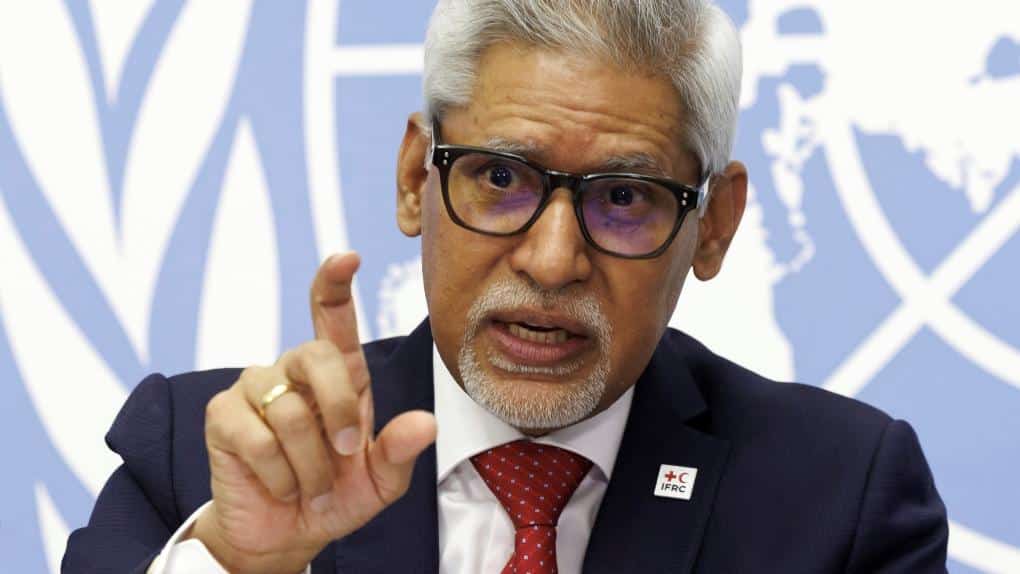
All countries remain “dangerously unprepared” for the next pandemic, the International Federation of the Red Cross and Red Crescent Societies (IFRC) has warned, saying future health crises could also collide with increasingly likely climate-related disasters.
Despite three “brutal” years of the COVID-19 pandemic, strong preparedness systems are “severely lacking”, the IFRC said in its World Disasters Report 2022, published on Monday. It called on countries to update their preparedness plans by year’s end.
The world’s largest humanitarian network said building trust, equity and local action networks were vital to get ready for the next crisis.
The recommendations were released on the third anniversary of the World Health Organization declaring COVID-19 an international public health emergency.
“The next pandemic could be just around the corner,” said Jagan Chapagain, secretary general of the IFRC, the world’s largest disaster response network. “If the experience of COVID-19 won’t quicken our steps toward preparedness, what will?”
The report said countries need to be prepared for “multiple hazards, not just one”, adding that societies only became truly resilient through planning for different types of disasters because they can occur simultaneously.
The IFRC cited the rise in climate-related disasters and waves of disease outbreaks this century, of which COVID-19 was just one.
It said extreme weather events are growing more frequent and intense “and our ability to merely respond to them is limited”.
The report said major hazards harm those who are already the most vulnerable. It called leaving the poorest exposed “self-defeating”.
The report also said countries should review their legislation to ensure it is in line with their pandemic preparedness plans by the end of 2023 and adopt a new treaty and revised international health regulations by next year that would invest more in the readiness of local communities.
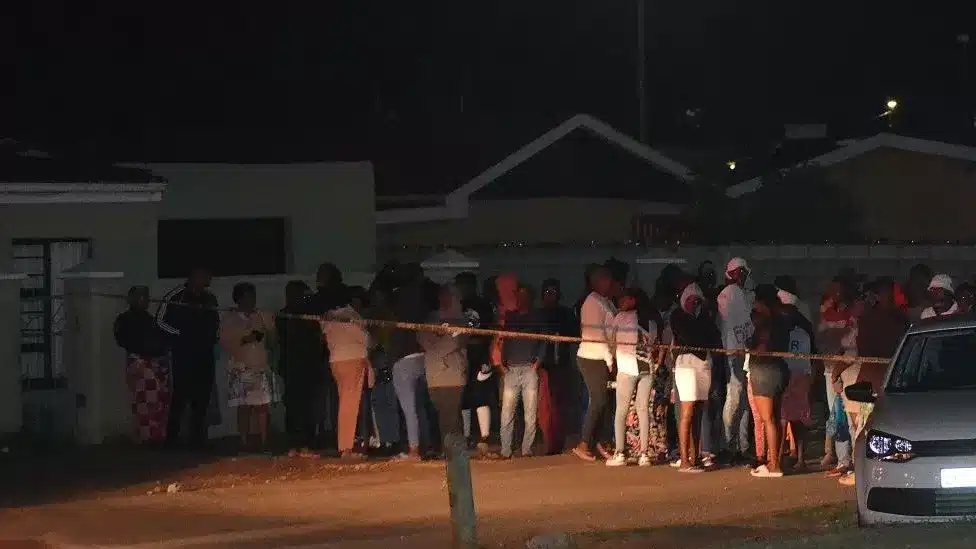
At a house party in Kwazakhele township, police claim that two unidentified gunmen “randomly shot at guests” who were dancing and mingling.
One of the victims was Vusumzi Sishuba, who would have turned 51 today.
Police have urged the public to share any information about the shooting despite the fact that no one has been arrested.
Mr Sishuba’s family is “in a state of shock and disbelief,” a relative told Reuters news agency.
Five men and three women, aged 20-64, have been identified as victims of Sunday night’s shooting.
“These victims were killed by criminals, and we will not rest until we find out what happened and who was responsible for [this] callous and cold-blooded attack on these unsuspecting victims,” said Eastern Cape Police Commissioner Nomthetheleli Lillian Mene.
The motive behind the attack is unknown.
Police Minister Bheki Cele visited the scene of the shooting on Monday and asked for patience while the investigation continued.
“We know everybody is angry and would love that we respond quickly, but we request a little bit of space so that we do the work thoroughly,” he told reporters in Gqeberha, formerly known as Port Elizabeth.
South Africa has one of the highest gun crime rates in the world but random mass shootings are uncommon.
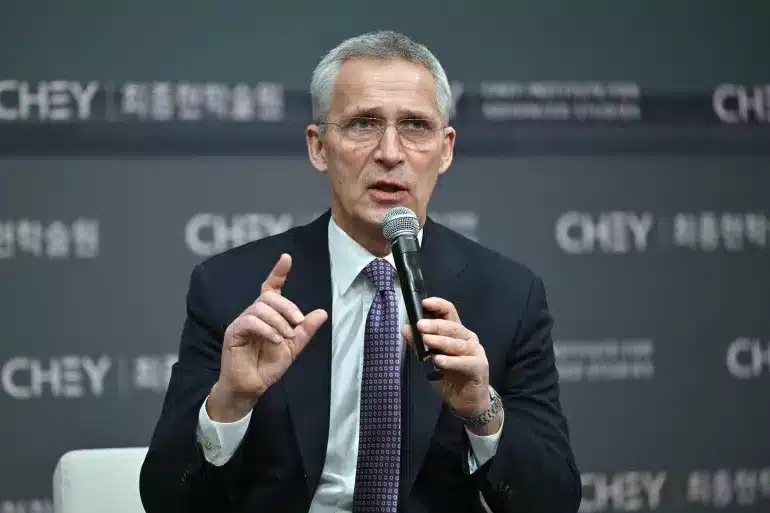
On Monday, Stoltenberg made the appeal in Seoul, the capital of South Korea.
He is in the city for the first leg of a trip to Asia that will also stop in Japan and is intended to strengthen ties with the democratic allies in the region in light of the conflict in the Ukraine and the escalating rivalry with China.
In meetings with senior South Korean officials, Stoltenberg argued that events in Europe and North America are interconnected with other regions, and that the alliance wants to help manage global threats by increasing partnerships in Asia.
Speaking at the Chey Institute for Advanced Studies in Seoul, he thanked South Korea for its nonlethal aid to Ukraine but urged it to do more, adding there was an “urgent need” for ammunition. Russia calls the invasion a “special operation”.
He pointed to countries like Germany and Norway that had “longstanding policies not to export weapons to countries in conflict” that were revised after Russian President Vladimir Putin ordered the invasion of Ukraine in February last year.
“If we believe in freedom, democracy, if we don’t want autocracy and totalitarian to win then they need weapons,” he said.
South Korea is an increasingly important global arms exporter and has recently signed deals to sell hundreds of tanks to European countries, including NATO-member Poland. But South Korean law bans the export of weapons to countries in active conflict, which Seoul has said makes it difficult to provide arms directly to Kyiv.
South Korea opened its first diplomatic mission to NATO last year.
Stoltenberg said it was unclear when the conflict in Ukraine would end, saying Putin was preparing for “more war” and actively acquiring weapons from countries, including North Korea.
Pyongyang on Sunday denied sending weapons to Moscow, accusing the United States of spreading a “groundless rumor”.
“Trying to tarnish the image of [North Korea] by fabricating a non-existent thing is a grave provocation that can never be allowed and that cannot but trigger its reaction,” said Kwon Jong Gun, director general of North Korea’s Department of US Affairs.
He also called it “a foolish attempt to justify its offer of weapons to Ukraine”.
Earlier this week, US President Joe Biden promised 31 Abrams tanks, one of the most powerful and sophisticated weapons in the US army, to help Kyiv fight off Moscow’s invasion.
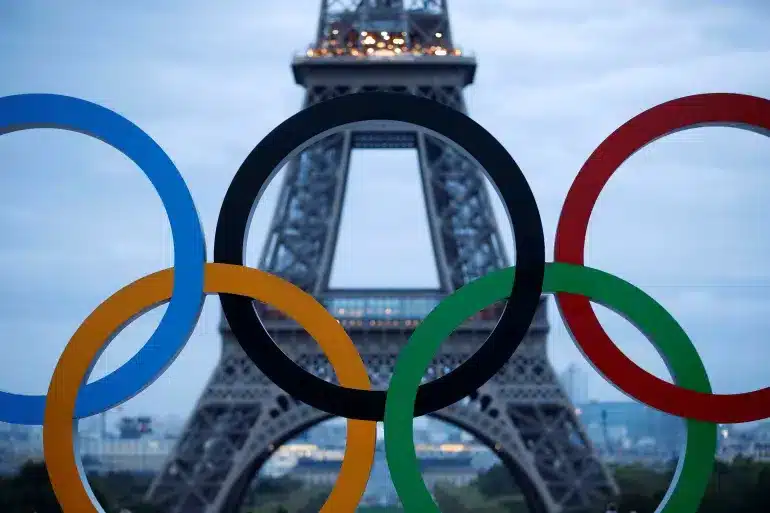
Allowing Russia to participate in the 2024 Paris Olympics, according toUkrainian President Volodymyr Zelensky, would amount to demonstrating that “terror is somehow acceptable.”
He mentioned that he had discussed the matter with Emmanuel Macron, the president of France.
He continued, “Moscow must not be permitted to use the Olympics for propaganda.”
According to the International Olympic Committee (IOC), athletes from Belarus and Russia may participate in the Olympics as neutrals.
But Ukraine has threatened to boycott Paris 2024 if Russian and Belarusian athletes are allowed to compete.
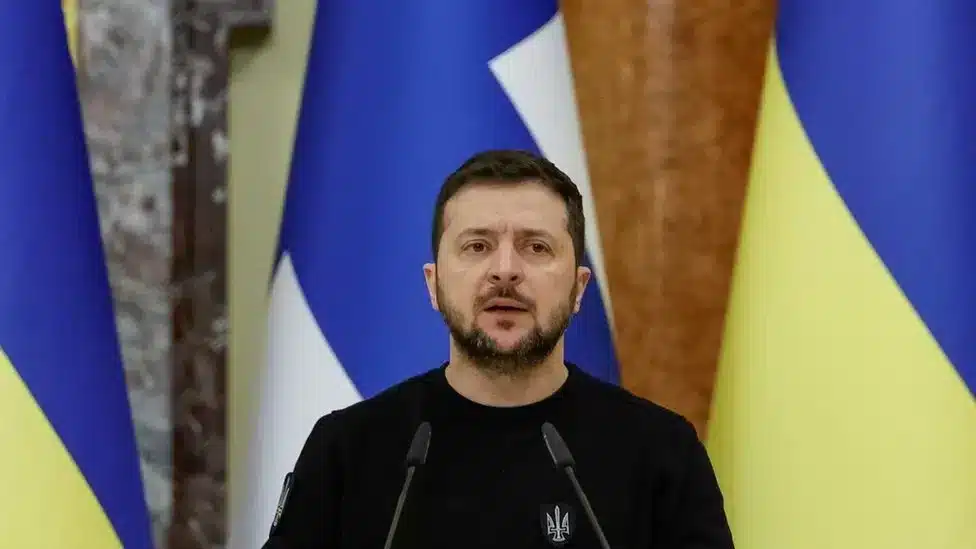
Attempts by the IOC “to bring Russian athletes back into the Olympic Games are attempts to tell the whole world that terror is somehow acceptable”, Mr Zelensky said in his nightly video address.
Russia must not be allowed to use the Games “or any other sport event as propaganda for its aggression or its state chauvinism”, he added.
The IOC said this week that Russian and Belarusian athletes could compete as “neutral athletes”, stating that “no athlete should be prevented from competing just because of their passport”.
But Mr Zelensky says there can be no neutrality in sport while his country’s athletes are dying on the battlefield.
He also drew comparison with the 1936 Olympic Games in Berlin when the Nazis were in power.
“There was a major Olympic mistake,” he said. “The Olympic movement and terrorist states definitely should not cross paths.”
The UK government has also condemned the plan to allow athletes to compete neutrally as a “world away from the reality of war”.
Image caption,Russian forces have been bombarding Kherson all weekend
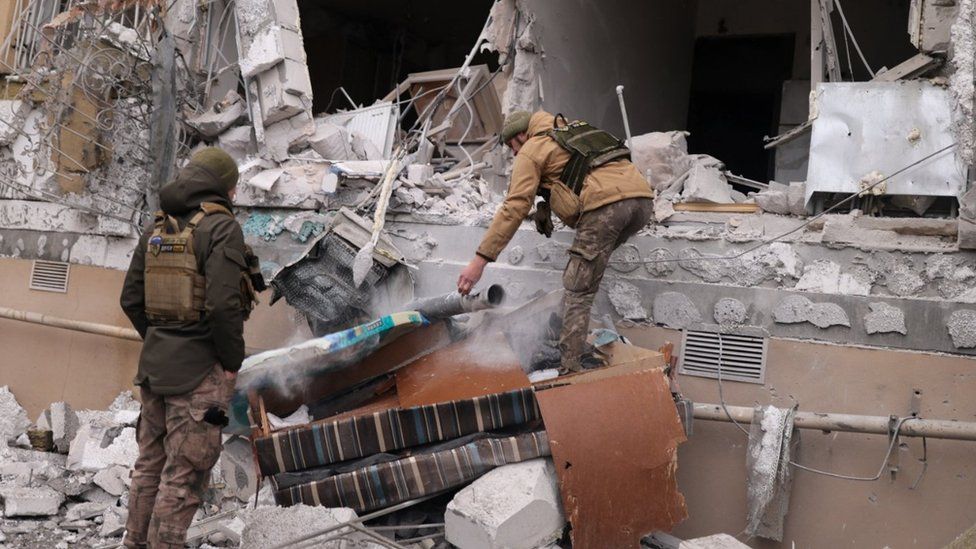
Six others were wounded, two of them when a hospital was hit, local officials say.
The Kherson regional administration said the region was shelled almost 40 times on Saturday and was pounded continually on Sunday.
Kherson was the only regional capital to have fallen to Russian forces since the February 2022 invasion, but they were forced into a humiliating retreat in November.
President Zelensky said Russia had also stepped up its attacks in the eastern Donetsk region. He said his forces needed new weapons to confront a “very tough” situation of constant attacks.
“Russia wants the war to drag on and exhaust our forces. So we have to make time our weapon. We have to speed up events, speed up supplies and open up new weapons options for Ukraine,” he said.
The Western policies towardRussia and the Balkans have received repeated criticism from President Zoran Milanovic.
On Monday, the president of Croatia criticised the West for arming Ukraine with heavy tanks and other weapons for its defence against invading Russian forces, saying that such deliveries would only serve to prolong the conflict.
Zoran Milanovic told reporters in the Croatian capital that it is “mad” to believe that Russia can be defeated in a conventional war.
“I am against sending any lethal arms there,” Milanovic said. “It prolongs the war.”
“What is the goal? Disintegration of Russia, change of the government? There is also talk of tearing Russia apart. This is mad,” he added.
Milanovic won the presidential election in Croatia in 2019 as a left-leaning liberal candidate, a counterpoint to the conservative government currently in power in the European Union and NATO-member state.
But he has since made a turn to populist nationalism and criticised Western policies toward Russia as well as the Balkans.
Milanovic has built a reputation of being pro-Russia, which he has repeatedly denied.
Yet in recent months, he has openly opposed the admission of Finland and Sweden into NATO as well as the training of Ukrainian troops in Croatia as part of EU aid to the embattled country.
After months of hesitation, the US said last week that it would send 31 of the 70-ton Abrams battle tanks to Ukraine, and Germany announced it will dispatch 14 Leopard 2 tanks and allow other countries to do the same.
Milanovic said that “from 2014 to 2022, we are watching how someone provokes Russia with the intention of starting this war.”
“What is the goal of this war? A war against a nuclear power that is at war in another country? Is there a conventional way to defeat such a country?” Milanovic asked on Monday.
“Who pays the price? Europe. America pays the least,” he said. “A year has passed and we are only now talking about tanks,” Milanovic said.
“Not a single American tank will go to Ukraine in a year. Only German tanks will be sent there.”
Although the presidential post is mostly ceremonial in Croatia, Milanovic is formally the supreme commander of the armed forces.
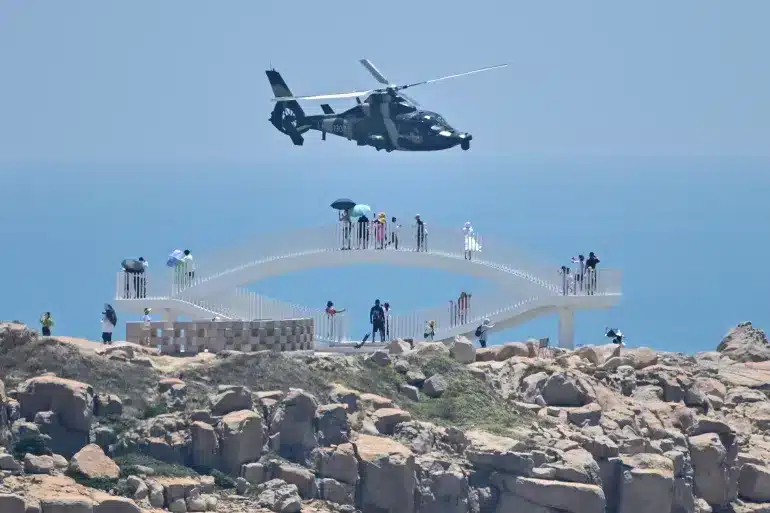
After a US general raised eyebrows with a memo predicting war in two years, a top Republican in the US Congress claims the likelihood of conflict with China over Taiwan “is very high.”
In a memo dated February 1 but released on Friday, General Mike Minihan, who heads the Air Mobility Command, wrote to the leadership of its roughly 110,000 members, saying, “My gut tells me we will fight in 2025.”
Michael McCaul, the new chairman of the Foreign Affairs Committee in the US House of Representatives, on Sunday told Fox News “I hope he is wrong… I think he is right though.”
General Minihan’s views do not represent the Pentagon, but show concern at the highest levels of the US military over a possible attempt by China to exert control over Taiwan, which Beijing claims as its territory.
Both the US and Taiwan will hold presidential elections in 2024, potentially creating an opportunity for China to take military action, Minihan wrote.
If China failed to take control of Taiwan bloodlessly then “they are going to look at a military invasion in my judgement. We have to be prepared for this”, McCaul said.
He accused the Democratic administration of President Joe Biden of projecting weakness after the bungled US pullout from Afghanistan, which could make war with China more likely.
“The odds are very high that we could see a conflict with China and Taiwan and the Indo-Pacific,” McCaul said.
The White House declined to comment on McCaul’s remarks.
‘Highly unlikely’
Representative Adam Smith, the top Democrat on the House Armed Services Committee, said he disagreed with Minihan’s assessment.
Smith told Fox News Sunday that war with China is “not only not inevitable, it is highly unlikely. We have a very dangerous situation in China. But I think generals need to be very cautious about saying we’re going to war, it’s inevitable”.
The United States needs to be in a position to deter China from military action against Taiwan, “but I’m fully confident we can avoid that conflict if we take the right approach”, Smith said.
US Secretary of Defense Lloyd Austin said earlier this month that he seriously doubted that ramped-up Chinese military activity near the Taiwan Strait was a sign of an imminent invasion of the island by Beijing.
On Saturday, a Pentagon official said the general’s comments were “not representative of the department’s view on China”.
A major mining company Rio Tinto, has apologised for losing a tiny radioactive capsule that was being transported across Western Australia.
Along the 1,400 km (870 mile) route, there is an urgent search for the object, which is about the size of a pea.
A tiny amount of radioactive Caesium-137 is present in the capsule, and anyone who comes into contact with it runs the risk of developing serious illness.
This might involve burns, radiation sickness, or skin damage.
Radiation detectors and other specialised equipment are being used by emergency services to find the device.
But Australia’s Department for Fire and Emergency Services said the silver capsule – which is just 6mm (0.24 inches) in diameter and 8mm long – was so small it might have become lodged in the tyre of a vehicle passing along the road.
The capsule may have gone missing up to two weeks ago.
Rio Tinto, which has big mining operations in Australia and has been the subject of a series of controversies in recent years, said it was sorry for the alarm that had been caused.
The firm would be launching its own investigation into what had happened, it said in a statement.
The lost device is part of a density gauge, common in the mining industry. It was being used at Rio Tinto’s Gudai-Darri mine in the remote Kimberley region.
The gauge was being transported by a subcontracted company, who picked it up from the mine site on 12 January to move it to a storage facility in the north-east suburbs of Perth.
When it was unpacked for inspection on 25 January the gauge was found broken apart and the radioactive capsule was gone. One of four mounting bolts and screws were also missing.
The authorities said vibrations during transit may have caused the bolts to become loose, allowing the capsule to fall through gaps in the casing and truck.
Analysis, Phil Mercer, Sydney
The search route is huge. It is roughly equivalent to the distance by road from John O’Groats in Scotland to Land’s End in Cornwall, or from Washington DC to Orlando, Florida.
Specialist radiation detection equipment is being fitted to patrol vehicles that will cover the length of it. Over five days, they will travel in both directions along the Great Northern Highway at speeds of around 50km/h (30mph).
Emergency authorities in Western Australia say the chances of finding the tiny device are “pretty good”. But if it has become lodged in another vehicle’s tyre it could be well outside of the search zone already.
Or if it is found by a member of the public, they might inadvertently keep it as a souvenir.
So the authorities are keen to stress that holding the capsule could result in radiation burns, while long-term exposure could cause cancer.
“As part of this investigation we are working closely with the contractor to better understand what went wrong in this instance,” said Simon Trott, chief executive of Rio Tinto’s iron ore division.
“Rio Tinto engaged a third-party contractor, with appropriate expertise and certification, to safely package the device in preparation for transport off-site ahead of receipt at their facility in Perth.
“Prior to the device leaving the site, a Geiger counter [a device to detect radioactivity] was used to confirm the presence of the capsule inside the package,” said Mr Trott.
Image caption,Rio Tinto’s Gudai-Darri mine is in a remote region of Western Australia
State officials have issued a radiation alert across a vast swathe of Western Australia as the search for the capsule continues.
Exposure to trace quantities of the metal is like “receiving 10 X-rays in an hour, just to put it in context, and… the amount of natural radiation we would receive in a year, just by walking around,” said Western Australia’s chief health officer Andrew Robertson.
The state’s desert is remote and one of the least populated places in the country. Only one in five of Western Australia’s population lives outside of Perth, the state’s capital.
However, officials say they are concerned that someone could pick up the capsule, not knowing what it is.
“If you have contact or have it close to you, you could either end up with skin damage, including skin burns… and if you have it long enough near you, it could cause what is called acute radiation sickness, and that will take a period of time,” Mr Robertson added.
This incident comes as Rio Tinto tries to repair its reputation in Australia after it was hit by a backlash for destroying sacred Aboriginal rock shelters in Western Australia.
In 2020, Rio Tinto blasted the 46,000-year-old rock shelters at Juukan Gorge to expand an iron ore mine, sparking a major outcry that led to several of the company’s top bosses standing down.
And last year, a parliamentary inquiry found sexual harassment was rife at Australia’s mining firms, after an internal review at Rio Tinto found more than 20 women had reported actual or attempted rape or sexual assault over five years.
In the lead-up to Russia’s invasion of Ukraine, Boris Johnson says Vladimir Putin threatened him with a missile strike during an “extraordinary” phone call.
It “would only take a minute,” according to the then-prime minister, who quoted Mr. Putin.
The remark, according to Mr. Johnson, was made following his warning that the war would be an “utter catastrophe.”
A BBC documentary on Mr. Putin’s interactions with world leaders over the years makes the assertion that this was a “lie,” the Kremlin spokesman declared.
Mr Johnson warned Mr Putin that invading Ukraine would lead to Western sanctions and more Nato troops on Russia’s borders.
He also tried to deter Russian military action by telling Mr Putin that Ukraine would not join Nato “for the foreseeable future”.
But Mr Johnson said: “He threatened me at one point, and he said, ‘Boris, I don’t want to hurt you but, with a missile, it would only take a minute’ or something like that. Jolly.
“But I think from the very relaxed tone that he was taking, the sort of air of detachment that he seemed to have, he was just playing along with my attempts to get him to negotiate.”
President Putin had been “very familiar” during the “most extraordinary call”, Mr Johnson said.
No reference to the exchange appeared in accounts released to the media of the call given by both Downing Street and the Kremlin.
From the 2014 seizure of Crimea to the invasion of Ukraine, this is the inside story of a decade of clashes – as told by the Western leaders who traded blows with Putin’s Russia
It is impossible to know if Mr Putin’s threat was genuine.
However, given previous Russian attacks on the UK – most recently in Salisbury in 2018 – any threat from the Russian leader, however lightly delivered, is probably one Mr Johnson would have had no choice but to take seriously.
Image caption,Boris Johnson received a call from President Putin the day after he met Volodymyr Zelensky in Kyiv
In his response, Mr Putin’s spokesman said the former prime minister’s claim was “either a deliberate falsehood, in which case you need to ask Mr Johnson why he lied, or it was not a deliberate lie. That is, he didn’t understand what President Putin was saying to him”.
“There were no threats to use missiles,” Dmitry Peskov told the BBC.
The Kremlin leader, he said, had simply pointed out that “if Ukraine joined Nato the potential deployment of Nato or US missiles near Russia’s border would mean that any missile could reach Moscow within minutes”.
Since the invasion, President Putin has warned countries that may try to interfere, that Russia’s response would be immediate – even hinting at the use of nuclear weapons.
Nine days after Mr Johnson’s conversation with President Putin, on 11 February, Defence Secretary Ben Wallace flew to Moscow to meet his Russian counterpart, Sergei Shoigu.
The BBC documentary Putin Vs the West reveals Mr Wallace left with assurances that Russia would not invade Ukraine, but he said both sides knew it was a lie.
He described it as a “demonstration of bullying or strength, which is: I’m going to lie to you, you know I’m lying and I know you know I’m lying and I’m still going to lie to you.
“I think it was about saying ‘I’m powerful’,” Mr Wallace said.
He said the “fairly chilling, but direct lie” had confirmed his belief that Russia would invade.
As he left the meeting, he said Gen Valery Gerasimov – Russia’s chief of general staff – told him “never again will we be humiliated”.
Another significant encounter in the months leading up toRussia’s invasion of Ukraine was with CIA director William Burns, who landed in Moscow on 2 November 2021.
Mr Burns had been circling the Russian capital for hours, as heavy fog prevented his landing, but when he finally arrived at the Kremlin he discovered Mr Putin was not there. Instead, he was sheltering in the southern Russian city of Sochi amid a spike in Covid infections.
The pair spoke over the phone.
The CIA director said he was direct in laying out the message President Biden had sent him to deliver: the US knew what Mr Putin was up to and he would pay a heavy price if he launched such an invasion.
He said the Russian president did not deny planning was underway and listed grievances about Ukraine and the West.
“I was troubled before I arrived in Moscow. And I was even more troubled after I left,” Mr Burns added.
Less than a fortnight after theUK defense secretary left Moscow, as tanks rolled over the border on February 24, Mr. Johnson received a phone call in the middle of the night from President Zelensky.
“Zelensky’s very, very calm,” Mr Johnson recalled. “But, he tells me, you know, they’re attacking everywhere.”
Mr Johnson says he offered to help move the president to safety.
“He doesn’t take me up on that offer. He heroically stayed where he was.”
Putin vs. the West will be broadcast on Monday, January 30 on BBC Two at 21:00 and will be available on the iPlayer in the UK.
Controversial Young Ghanaian actress Rosemond Brown, popularly known as Akuapem Poloo in the entertainment industry, has disclosed that, at one point in her life, she had to have affairs with married men in order to survive in Accra.
“I’ve been through a lot. I had to sleep with other people’s husbands, which I hated doing but had no choice. Because they are the ones who can help me”, Akuapem Poloo revealed
The actress stated that she had to resort to that because she was responsible for a baby who resided with her mother.
“When my baby was six months old, my mother took him and told me to go back to Accra to continue with my life. So I came back and started working as a salesperson, an actress, in music videos, and a whole lot more.
“Just imagine leaving my six-month old baby, it was hectic,” Akuapem Poloo told BRYT TV in an interview monitored by MyNewsGH.com.
She further revealed that, some women she dated their husbands cursed her at a point.
“I’ve gone through a lot to the extent that women I dated their husbands had to curse me. But after I became enlightened and started acting and met my new man, I stopped that,” she added.
With her undeniable talent, relentless work ethic, and keen business acumen, 34-year-old singer and entrepreneurRobyn “Rihanna” Fenty has cemented her place in history by becoming the youngest self-made billionaire in America, according to Forbes.
This extraordinary accomplishment is a testament to her unwavering dedication to her craft, her astute understanding of the fashion industry, and her ability to identify and capitalize on emerging opportunities in the market.
Rihanna’s multi-faceted success can be attributed to her flourishing cosmetics line, Fenty Beauty, her illustrious music career, and her innovative lingerie line, Savage X Fenty. Her net worth stands at $1.4 billion due to a slight decrease from the previous year’s valuation of $1.7 billion.
Her music career has been a major source of income for Rihanna, with hit albums and sold-out tours generating millions of dollars in revenue. But it’s her forays into the beauty and fashion industries that have truly propelled her to billionaire status.
Fenty Beauty, which she launched in 2017, has become a global phenomenon, for its inclusivity and wide range of shades for women of all skin tones. The brand has since expanded to include a variety of products, from concealers to lip glosses, and has been a major contributor to her fortune.
Similarly, her lingerie line Savage X Fenty, launched in 2018, has become a popular destination for women looking for comfortable and sexy undergarments.
These are the three assets that have helped Rihanna achieve billionaire status:
#1 Fenty Beauty
Her stake in the cosmetics company is worth $1.1 billion
Rihanna, the third R&B and hip-hop artist to become a billionaire, earned the majority of her $1.4-billion fortune from her cosmetics line, Fenty Beauty.
Launched in 2017 as a partnership with LVMH, the company’s products are available on Sephora shelves and online in over 150 countries, with 2020 revenue exceeding $550 million.
In 2022, Fenty Beauty launched in eight African countries, including Nigeria, South Africa, Botswana, and Kenya, as part of a strategy to expand the business and capitalize on opportunities on the continent.
In addition to Fenty Beauty, Rihanna’s lingerie line Savage x Fenty has also achieved billion-dollar success. In February 2021, the brand raised $125 million in a funding round led by Neuberg Berman, valuing the company at $1 billion. This brings its total venture capital funding since its launch to an impressive $310 million.
The company which is 30-percent owned by Rihanna launched in 2018 in partnership with TechStyle Fashion Group, boasts investors such as Jay-Z’s Marcy Venture Partners and private equity firm L. Catterton, which includes Bernard Arnault as a shareholder.
#3 Rihanna’s net earnings from her career
With a successful career spanning across music and acting, Rihanna has amassed a significant fortune, with estimates placing her net earnings at approximately $30 million. However, this figure has yet to be officially confirmed by the artist herself or by reputable sources such as Forbes.
What you should know
Rihanna is expanding her Fenty brand even further with the filing of two applications for Fenty Hair with the U.S. Patent and Trademark Office.
This move signals her intention to launch a comprehensive haircare line that will complement her already successful Fenty Beauty and Savage x Fenty lingerie lines.
Fenty Hair collection will encompass a wide array of hair accessories, including hairbands, bows, clips, ribbons, scrunchies, wigs, curlers, pins, brushes, and combs, further solidifying the Fenty brand’s dominance in the fashion and cosmetics industries.
Being elected as President of Ghana can be a daunting task that requires allies, friends, loyalists, and even family members at certain times.
In Ghana’s fourth republic, it has been somewhat accepted for presidents to appoint close family members to key positions in government, although the trend is frowned upon by many.
However, the term “family and friends government” has been coined in certain administrations of the two major political parties, the New Patriotic Party and the National Democratic Congress.
GhanaWeb shines a light on the siblings of Ghana’s presidents during the Fourth Republic, who you may not be familiar with.
Jerry John Rawlings and Judy Nkansah Nee John
The late Flight Lieutenant Colonel Jerry John Rawlings was Ghana’s first president in the Fourth Republic. He was born on June 22, 1947, to his mother, Victoria Agbotui, and James Ramsay John, his father.
Although little is known about his siblings, the late former president is known to have a paternal sister by the name Judy Nkansah Nee John, who is his only surviving sister.
Her maiden name was Judy John and she was the youngest daughter of James Ramsay John, their father.
Paying her final respects to a beloved elder brother in her tribute in November 2020, Mrs. Nkansah narrated how she got separated from J.J. Rawlings after they had to change schools because there had been a relocation of their basic school to a different area.
Despite this, however, she added that they continued to be a beautiful pair of siblings as she regularly got ‘constant Sunday afternoon visitations’ during their high school days.
John Agyekum Kufuor – Dr. Kwame Addo Kufuor and 8 others
After Jerry John Rawlings left office, the New Patriotic Party, under the leadership of John Agyekum Kufuor, assumed office.
Right by his side were appointees and loyalists who served him through thick and thin.
Key among them was his brother, Dr. Kwame Addo Kufuor who served as Minister of Defence in the early 2000s.
Although, J.A. Kufuor faced criticism over the move, the pair’s striking resemblance and speech were almost similar in nature.
In a book authored by Kwame Addo Kufuor, titled “Gold Coast Boy (A Memoir),” the brother of the former president details who his siblings are.
He revealed that in all, they were 10 children born to their mother, Nana Ama Ampomah Dapaah. Their father was Nana Kojo Agyekum III, the Oyokohene of Kumasi.
Their oldest sibling is Nana Akua, Francis was the second sibling, Rebecca comes third in the family while the fourth child, Kofi Boakye died in his infancy.
Marian who was as Chief State Attorney is the fifth child in the family. The sixth sibling is Cecilia who is a lawyer.
J.A. Kufuor was the seventh child who later became Ghana’s president from 2001 to 2008 while Kwame Addo Kufuor was the eighth child.
The ninth sibling who is George passed away in 2011 and the tenth sibling of the family was Josephine, who is also deceased.
John Evans Atta Mills – Dr. Cadman Mills – Samuel Atta Mills
John Evans Atta Mills served as president of the Republic of Ghana from 2009 until his demise in 2012. Prior to this, he was vice president of Ghana from 1997 to 2001 under the leadership of late former president Jerry John Rawlings.
He had two siblings who both served in his administration in different capacities.
Dr. Cadman Atta Mills is the senior brother of Prof J.E.A. Mills. He served as an economic adviser to the president in 2011.
Samuel Atta Mills is the younger brother of the late president. He also served as a Presidential Aide in the Office of the President from 2009 to 2012.
Samuel Atta Mills is the current Member of Parliament for Komenda Edina Eguafo Abrem constituency.
John Mahama – Ibrahim Mahama and 2 others
Former president John Mahama assumed office in July 2012 following the demise of Prof. J.E.A. Mills. He was elected president later that year and served until 2017.
He is the second born of four siblings. His elder sibling is Alfred Abdullai Mahama who is a project coordinator and environmental consultant.
Ibrahim Mahama is the third child of the Mahama family. He is the founder of a renowned engineering company and owner of a cement manufacturing company.
Ghana is known as a secular country with a high Christian population and a favorable Islamic following too. In spite of these two dominant religious groups the country also enjoys the existence of shrines and traditional deities.
It is believed a greater part of the population Christians and Muslims alike patronize these shrines for quick solutions to their problems, request and otherwise.
In view of that MyNewsGh.com brings to you a regional breakdown of the most popular, powerful and feared shrines in Ghana. Many of these shrines have interesting statues and architecture.
Ashanti Region – Antoa Nyamaa
Antoa Nyamaa is a popular river god deity, with its shrine located at Antoa in the Ashanti Region in Ghana. The Antoa Shrine is harboured in a small stream called Asuo Nyamaa.
Antoa is about seven miles away from Kumasi specifically in Kwabre East. Antoa Nyamaa is a very renowned deity and the people in the Ashanti Region often use it to seek answers to their problems.
In 2015 however thieves broke into the strong room of the shrine and stole its gold ornaments, idols and other valuables worth thousands of cedis.
Upper East Region – Tengzug Shrine in the Tongo Hills
Located in the Talensi District of the Upper East Region, the shrine requires you to be topless before entering the spiritual and holy space whether man or woman.
The Tengzug Shrine, is very famous for its religious animal sacrifices for good luck and to please the ancestors of the Talensis land.
During the Talensi in July 2015, Bernard Antwi Boasiako alias Chairman Wontumi, Ashanti Regional Chairman of the New Patriotic Party (NPP), led some party members to the shrine, including the then-parliamentary candidate now DCE for the area.
Eastern Region – Akonedi Shrine
This is a shrine located at Larteh Kubeasi in the Eastern Region of Ghana, 56km north of Accra, on the Akwapim Ridge. It is very popular and believed to be one of the most powerful shrines among the Akuapims.
The shrine is an important place of traditional healing and religious ceremonies where herbal medicine, as well as psychic healing, is practiced by the fetish. A fee is charged to observe religious ceremonies. Major spirits worshiped at the Akonnedi shrine in Larteh include: Akonnedi, Esi Ketewa, Adade Kofi, Asuo Gyebi and Tegare.
Volta Region – Nogokpo
Nogokpo is considered by many to be the quickest results-oriented shrine in Ghana. It is located in the Ketu South Municipality of the Volta Region of Ghana along the Trans–West African Coastal Highway.
It is patronized both by locals and foreigners to seek answers of whatever kind either their destiny or revenge. Sometimes people jokingly use the name to frighten people but it is believed such acts can anger the gods.
Volta Region – Klikor Shrine
This shrine is in the Volta region. The natives in that area get ‘spiritual summons’ when they are alleged to steal an item.
It is believed that when someone reports you to the shrine and you are unable to pay the debt, your relative (mostly women) will have to serve the deity.
Bono East – Nana Yaw Bosam
This shrine has been in existence for several years. It served as a spiritual connection between the living and the living and the dead.
It’s very popular within the Bono and Ahafo enclave where people go to seek insight into their destiny, go for spiritual healing and make requests of the gods.
It is a shrine that connects with only male priests who serve as the mouthpiece of the gods.
Greater Accra – Brekete Shrine
The Brekete shrine in Ghana features northern gods dancing at a triennial cow sacrifice. There are major and minor gods.
The major gods are Kunde (father and hunter); Ablewa/Tseriya (Mother); Sanya Kompo (God of the stone, linguist and secretary); Bangle/Ketetsi (warrior and soldier); Sakra Bode (god of the land and Bangle’s stool); and Wango (god of the waters and roads).
The minor gods, all of which work with Bangle, are Tsengé (god of the seven knives), Gediya (policeman), and Surugu (lieutenant).
Brekete is a relatively new cult that found its way around the 1930s to the southeastern coastal villages of what was then the Gold Coast and has since spread throughout.
Ashanti Region – ‘Kofi o Kofi’ shrine (Akomadan)
This is a shrine that is managed by Nana Kwaku Bonsam, whose name, “Bonsam” translates literally as “Devil”.
Kwaku Bonsam a well-known witch doctor in Ghana and beyond, gained international prominence when he claimed to put a voodoo curse on the Portuguese footballer and superstar Cristiano Ronaldo not to score against Ghana in the 2014 World Cup in Brazil.
He has also said in the past some popular pastors in Ghana come to his ‘Kofi O Kofi’ gods and shrine for charms and powers to woo their congregations.
Greater Accra Nana Agraada Sika Gari
It was seen as a powerful place where those who patronized the shrine got their answers until the priestess of the shrine one day announced she was no more interested in the work of smaller gods but in the Almighty God.
Nana Agradaa, known in real life as Patricia Asiedua, has since burnt all the idols in her shrine after she confessed giving her life to Christ. The shrine was destroyed by a team of prayer warriors and powerful prophets selected by herself.
Some of her famous spiritual activities were the ‘Sika Gari’ where she claimed to double money for people.
Nana Agradaa christened her evangelism as ‘Agradaa Ministries International’ however some people believe her activities as a vessel of God are even worse than when she used to be a fetish priestess duping people in the process.
These are just a few of such shrines in Ghana; however, there are some community shrines in several parts of the country that people revere and go to for spiritual interpretations and powers.
According to a report from the Centers for Disease Control and Prevention (CDC), the number of severe Covid cases and fatalities is on the decline.
It added that despite the fact that many people gathered with their families for the Lunar New Year holidays last week, there had been “no obvious rebound.”
Concerns have long been voiced regarding Covid reporting from China.
However, experts claim that the reported decline now fits with the anticipated timing of this major wave’s end.
The virus tore through Chinese cities and towns after authorities lifted zero-Covid restrictions in December. However, fever clinic visit rates have dropped over 90% through January, and hospitalization rates are down over 85%.
Fears that the virus could surge again during the festive period have also not yet been realised.
In its report, the CDC said: “There has not been an obvious rebound in COVID cases during the Lunar New Year holidays.”
“In this time, no new variant has been discovered, and the country’s current wave is coming to an end.”
It also reported a sharp decline in the daily Covid death toll reported by hospitals – from a peak of 4,300 deaths on 4 January to 896 deaths on 23 January.
Infectious diseases expert Hsu Li Yang told the BBC: “This drop in deaths follows the decline in the first huge wave of cases after China relaxed its restrictions, which is understandable and has been seen in virtually every country experiencing a large COVID wave.”
“We will know soon if the Lunar New Year celebrations will trigger another surge in China cases, but it is unlikely to match what was experienced in December and the earlier part of January 2023.”
One of China’s leading epidemiologists and former heads of the CDC, Zeng Guang, had earlier this month warned that cases would surge in rural areas during the new year.
However, the CDC said there had been no immediate spike following the holiday period.
It’s estimated that 226 million passenger trips were taken during the Lunar New Year festive season from 22-27 January – a 70% increase from last year when pandemic restrictions were still in place across many parts of China.
According to CDC data, Covid deaths halved in consecutive weeks in January. A total of 12,658 deaths were recorded between 13-19 January, while 6,364 deaths were recorded the following week.
In December, Beijing abruptly ended draconian Covid curbs that had seen millions of its citizens locked down over the past three years.
That led to a severe spike in Covid infections and deaths, with some experts estimating a majority of the population contracted Covid in the weeks following.
A Peking University study said that as of January 11, some 900 million people in China had been infected with the coronavirus, amid multiple reports of overcrowded hospitals and crematoria.
However, Chinese authorities initially maintained that there had only been seven deaths since the end of zero-COVID on December 7, after narrowing their definition of what counts as a COVID death.
The National Health Commission later reported almost 60,000 Covid-related deaths between 8 December and 12 January, after it began including deaths from underlying conditions as well as respiratory failure caused by Covid.
China’s official Covid data is believed to be vastly underreported, and authorities stopped releasing daily caseload reports last month.
Beijing has said it has been sharing COVID data in “a timely, open, and transparent manner in accordance with the law.”
According to authorities, an explosion at a mosque in the Pakistani city of Peshawar resulted in more than a dozen fatalities and numerous injuries.
At least 25 people were killed and at least 140 injured in the blast, a Peshawar police official told Al Jazeera.
The blast took place at the mosque where a large number of people had gathered for prayer, police official Sikandar Khan told Reuters news agency on Monday.
“A portion of the building had collapsed and several people are believed to be under it,” Khan added.
Al Jazeera’s Kamal Hyder, reporting from Islamabad, said emerging details suggested that the attack was carried out by a suicide bomber.
“The suicide bomber [was reportedly] sitting in the front row of the congregational prayer inside the mosque,” he added.
A 38-year-old police officer Meena Gul said he was inside the mosque when the bomb went off. He said he doesn’t know how he survived unhurt. He could hear cries and screams after the bomb exploded, he said according to AP news agency.
There were more than 150 worshippers inside the mosque when the bomb went off, Gul added.
Army soldiers and police officers clear the way for ambulances rushing toward a bomb explosion site, at the main entry gate of police offices, in Peshawar, Pakistan [Muhammad Sajjad/AP Photo]
As pressure over his tax affairs grew, Nadhim Zahawi was removed from office.
The investigation into Mr. Zahawi’s financial affairs, according to theprime minister, revealed a “serious breach of the ministerial code,” according to the prime minister.
After learning that Mr. Zahawi had paid a penalty to HMRC for previously unpaid tax while serving as chancellor, Rishi Sunak ordered the investigation.
According to Mr. Zahawi, HRMC acknowledged that the error was “careless and not intentional.”
In a letter to Mr Zahawi, Mr Sunak said the MP could be “extremely proud of your wide-ranging achievements in government over the last five years”.
He specifically cited Mr Zahawi’s work overseeing the Covid vaccine, saying it was “critical to ensuring our country came through this crisis and saved many lives”.
Mr Zahawi had come under increased scrutiny after he confirmed he had made a payment to settle a dispute with HM Revenue & Customs (HMRC).
The BBC understands the dispute was resolved between July and September last year, when he was chancellor and in charge of the tax system.
The total amount paid was in the region of about £5m, including a penalty, the BBC understands.
On Monday, Mr Sunak had asked his independent ethics adviser, Sir Laurie Magnus, to look into the disclosures about Mr Zahawi’s tax affairs, saying there were “questions that need answering”.
In his findings, sent to Mr Sunak on Sunday morning, Sir Laurie said Mr Zahawi had shown “insufficient regard for the principles of the general principles of the ministerial code and the requirements in particular under the seven Principles of Public Life, to be honest, open and an exemplary leader through his own behaviour”.
“I also fully appreciate the pressures faced by ministers as they address the complex issues of government and the difficulties they encounter in balancing the demands of their personal lives and their ministerial responsibilities.
“These factors, however, cannot mitigate my overall judgement that Mr Zahawi’s conduct as a minister has fallen below the high standards that, as prime minister, you rightly expect from those who serve in your government.”
Nadhim Zahawi’s tax affairs have been a headache for the government for the past 10 days.
Rishi Sunak has argued that due process is important. But he’s faced accusations he was weak for not acting earlier to get rid of Mr Zahawi.
The PM got the report from his ethics adviser early this morning. He spoke to Mr Zahawi to tell him he was being sacked, then it was confirmed publicly.
The report from Sir Laurie Magnus left little room for any other conclusion than Mr Zahawi’s departure.
The police chief “permanently deactivates” the unit that included the five officers charged over the death of Tyre Nichols.
The city of Memphis in the United States has disbanded a police unit that included five officers charged with the fatal beating of Tyre Nichols, a Black motorist.
Cerelyn ‘CJ’ Davis, the Memphis police chief, announced the move on Saturday, citing a “cloud of dishonour”.
Davis said in a statement it was imperative that the police “take proactive steps in the healing process” and that it was in “the best interest of all to permanently deactivate the Scorpion unit”.
She said she made the decision after speaking with members of Nichols’s family, community leaders and other officers.
Her announcement came a day after harrowing videos emerged of the police beating Nichols. It showed the 29-year-old Black man repeatedly screaming “Mom!” as officers kicked, punched and struck him with a baton in his mother’s neighbourhood after a January 7 traffic stop. He was hospitalised and died of his injuries three days later.
Five Black officers involved in the beating were charged on Thursday with murder, assault, kidnapping and other charges.
All have been dismissed from the department.
Protesters marching through downtown Memphis cheered when they heard the unit had been dissolved. One protester said over a bullhorn that “the unit that killed Tyre has been permanently disbanded”.
The unit is composed of three teams of about 30 officers whose stated aim is to target violent offenders in areas beset by high crime.
It had been inactive since Nichols’s January 7 arrest and subsequent beating.
Ben Crump and Antonio Romanucci, lawyers for the Nichols family, said the deactivation was “a decent and just decision”.
“We must keep in mind that this is just the next step on this journey for justice and accountability, as clearly this misconduct is not restricted to these specialty units. It extends so much further,” they said.
Demonstrators gather during a protest in Times Square on Saturday, January 28, 2023, in New York City, in response to the death of Tyre Nichols, who died after being beaten by Memphis police during a traffic stop [Yuki Iwamura/ AP]
Nichols’s death is the latest high-profile instance of police using excessive force against Black people and other minorities.
The 2020 murder of George Floyd, a Black man who died after a white Minneapolis officer knelt on his neck for more than nine minutes, galvanised worldwide protests over racial injustice.
Rallies calling for justice for Nichols took place in cities across the US on Saturday. Several dozen demonstrators in Memphis blocked the Interstate 55 bridge that carries traffic over the Mississippi River towards Arkansas, while crowds also marched in New York City, Los Angeles, California, and Portland, Oregon.
Human rights activists said the video of Nichols’s beating left many unanswered questions about the traffic stop.
“It just went to 100. … This was never a matter of de-escalation,” she said. “The young man never had a chance from the moment that he was stopped.”
Goss Andrews added that the video also raised questions about the other law enforcement officers who stood by as Nichols lay motionless on the pavement. “Nobody tried to stop anything,” she said. “They have a duty to intervene, a duty to render care.”
Davis, the Memphis police chief, told The Associated Press news agency that the department could not substantiate the reason for the stop.
“We don’t know what happened,” she said, adding, “All we know is the amount of force that was applied in this situation was over the top.”
Davis has said other officers are under investigation, and Shelby County Sheriff Floyd Bonner said two deputies were relieved of duty without pay while their conduct is investigated.
Rodney Wells, Nichols’s stepfather, said the family would “continue to seek justice”, and those who failed to render aid are “just as culpable as the officers who threw the blows”.
A Memphis police spokeswoman declined to comment on the other officers’ conduct.
Reverend Al Sharpton, a prominent human rights activist, said on Saturday that the beating was particularly egregious because the officers were also Black.
“Your Blackness will not stop us from fighting you,” Sharpton said in a speech in Harlem, New York. “These five cops not only disgraced their names, they disgraced our race,” he added.
Denial follows US accusations that North Korea had provided rockets and missiles to the Wagner Group, a Russian military contractor.
After the United States accused North Koreaof supplying rockets and missiles to the Russian Wagner Group and supporting Moscow’s forces in Ukraine, Pyongyang denied arming Russia.
In a statement released on Sunday, a senior North Korean official denounced the US accusations as “baseless rumour” intended to support Washington’s own military assistance to Ukraine.
As a result of the private military organization’s alleged weapons transactions with North Korea, which are forbidden by United Nations Security Council resolutions, the US designated Wagner as a “transnational criminal organisation” earlier this month.
The White House also showed what it said were US intelligence photographs of Russian rail cars entering North Korea, picking up a load of infantry rockets and missiles, and returning to Russia.
But the director general of the North Korean Department of US Affairs, Kwon Jong Gun, rejected the accusations on Sunday, warning that the US will face a “really undesirable result” if it persists in spreading the “self-made rumour”.
“Trying to tarnish the image of [North Korea] by fabricating a non-existent thing is a grave provocation that can never be allowed and that cannot but trigger its reaction,” Kwon Jong Gun said.
He added that the US move was “a foolish attempt to justify its offer of weapons to Ukraine”.
Earlier this week, US President Joe Biden promised 31 Abrams tanks, one of the US army’s most powerful and sophisticated weapons, to help Kyiv fight off Moscow’s invasion.
The move drew a rebuke Friday from Kim Yo Jong, the powerful sister of North Korean leader Kim Jong Un, who accused Washington of “further crossing the red line” by sending the tanks into Ukraine.
Kwon Jong Gun reiterated Pyongyang’s concerns over the tank transfer on Sunday, calling it an “unethical crime” aimed at perpetuating an unstable international situation.
Along with China, Russia is one of North Korea’s few international friends.
Russia, one of the five permanent members of the UN Security Council, has long held the line against increasing pressure on nuclear-armed North Korea, even asking for relief from international sanctions for humanitarian reasons.
Meanwhile, other than Syria and Russia, North Korea is the only country to recognise the independence of Luhansk and Donetsk, two Russian-backed separatist regions in eastern Ukraine.
In November, after the White House said Pyongyang was covertly supplying Russia with a “significant” number of artillery shells, North Korea said it had never had arms dealings with Russia and had no plans to do so.
26 opposition party members who were detained for hosting what the police claimed was an unlawful gathering were granted bail by aZimbabwean court on Friday.
Before a crucial election this year at a yet-to-be-announced date, fears of a crackdown on opposition politicians were stoked by the arrest of Citizens Coalition for Change (CCC) members, including two Members of Parliament.
“This confirms that the arrest was an abuse of process in the first place,” CCC spokeswoman Fadzayi Mahere told journalists outside court. “All this shows that the regime’s paranoia has reached fever pitch and they notice that they are staring defeat in the face.”
Zimbabwean police on Jan. 14 fired teargas at the CCC party gathering in Harare and arrested its members. The defendants’ lawyers argued that the arrests were unlawful as the gathering was at a private space.
Arguing against bail, prosecutors said the party had not sought clearance to hold the meeting. Zimbabwe laws require that political parties apply for approval from police two weeks in advance before holding a gathering.
The arrests came after a wave of politically motivated violence against opposition supporters in rural Zimbabwe, raising fears of repression ahead of this year’s presidential election.
The CCC, led by the youthful Nelson Chamisa, will battle President Emmerson Mnangagwa’s ZANU-PF for the second time at the poll.
The opposition party, born out of the old Movement for Democratic Change (MDC), enjoys massive urban support and is seen as a threat to ZANU-PF’s 43-year-old stranglehold on power.
Analysts caution that Netanyahu’s action could fuel the violence that has seen 32 Palestinians killed by Israeli forces this month.
In response to the rising violence in the occupied Palestinian territory, Israeli Prime Minister Benjamin Netanyahu has announced plans to make it simpler for Israelis to obtain firearms. This move is viewed as “collective punishment” and may lead to increased violence.
After calling a meeting of his security cabinet, which was populated by hardline politicians, in response to two shootings, including one in occupied East Jerusalem, Netanyahu announced the measure late on Saturday.
In the Friday shooting outside the East Jerusalem synagogue, seven people died.
The weekend shootings took place towards the end of a month of growing confrontation and follow an Israeli raid in the occupied West Bank city of Jenin that killed nine Palestinians and exchanges of fire between Israel and Gaza.
In all, Israeli forces have killed 32 Palestinians this month.
Israel had not carried out a raid on the scale of its operation in Jenin in years, but it is part of intensified military incursions by the Israeli army into the occupied West Bank, which killed at least 200 Palestinians in the past year.
On Saturday, Netanyahu promised to expedite gun permits for Israeli citizens and to step up efforts to collect “illegal weapons”. He added that the homes of the suspected assailants would also be sealed immediately ahead of demolition “in order to exact an additional price from those who support terrorism”.
His office later said social security benefits for the families of attackers will also be cancelled.
In addition, it promised new steps to “strengthen” illegal Israeli settlements in the occupied West Bank but gave no details.
‘Breach of human rights’
Al Jazeera’s Diplomatic Editor James Bays, reporting from occupied East Jerusalem, said Netanyahu’s plans to approve more gun permits for Israeli citizens come as Israeli police were also encouraging those with existing licenses to carry their guns.
“While Netanyahu is urging Israelis not to take the law into their own hands, he’s also putting more weapons into those very same hands,” said Bays, who went on to describe the measures against the Palestinian families as “collective punishment” and “a clear breach of human rights”.
Al Jazeera’s senior political analyst, Marwan Bishara, said arming civilians in Israel could further escalate violence.
“They are trying to further arm already armed people in Jerusalem and the West Bank,” Bishara said.
“More violence and more suffering will only play to the hands of the most extreme of the extremes [groups] in Israel and potentially in Palestine.”
A spokesperson for the Israeli military said an additional battalion had been sent to the occupied West Bank for reinforcement.
Analysts in Israel said Netanyahu was under pressure from hardliners in his cabinet, including National Security Minister Itamar Ben-Gvir.
The government in Israel is the most right-wing in Israeli history.
Ben-Gvir, who had pushed for more gun permits, said on Saturday that he would also push for the death penalty against “terrorists”.
“Itamar Ben-Gvir has a reputation of being a fireman and now Netanyahu is giving him a full container of oil,” said Akiva Eldar, a contributor to the Israeli daily newspaper Haaretz.
“I am afraid that Netanyahu’s hands are tied. Between two evils, he has to decide which side he takes, and I am afraid that there is no responsible adult in his cabinet that can stop him,” Eldar told Al Jazeera.
The latest measures on Saturday were announced as tens of thousands of protesters also gathered in the city of Tel Aviv to protest separate plans by Netanyahu’s government, which took office in December, to overhaul the country’s judicial system and weaken the Israeli Supreme Court.
The marchers also held a moment of silence in memory of the Jerusalem shooting victims.
The increasing violence has meanwhile raised questions about a third Palestinian uprising.
Basem Naim of Hamas, the group that rules the Gaza Strip, told Al Jazeera that they were ready to respond to further Israeli raids. He said the group was committed to defending its people and families, as well as Jerusalem and the Al-Aqsa Mosque compound.
“We are not planning or initiating any escalation or any violence campaigns. We are also ready, at the same time, to respond [to attacks] as usual,” he said.
Naim said Hamas would seek its people’s freedom with all available means, including diplomatic, political and armed means.
The Palestinian leadership in the occupied West Bank also upheld its decision to halt security coordination with Israel to protest the deadly raid in Jenin.
After a meeting headed by President Mahmoud Abbas in Ramallah, the Palestinian Authority called on the international community and the United States to force Israel to halt its raids in the West Bank.
New recommendations for how pediatricians should handle childhood obesity have drawn some criticism in the US.
The American Academy of Pediatrics has advised children as young as six to receive intensive therapy, and those in their early teens to receive weight-loss medications or surgery.
However, some worry that this strategy will compromise living a healthy and active lifestyle.
In the US, one in five children is obese.
According to doctors, early intervention is necessary to avert chronic conditions like diabetes.
I meet Tracy and her 14-year-old daughter, Jaelynn, in a suburb of Washington. They live in a residential complex surrounded by highways and a few patches of green grass.
Tracy is upset – she’s just received the news that Jaelynn’s school is getting rid of the Physical Education class and replacing it with a health course taught in the classroom.
She’s worried because her daughter already doesn’t get much chance to move and socialise with her classmates. She thinks the new class will make it even more difficult.
Jaelynn tells me that last year she enrolled in a summer camp organised by the YMCA. She would go on field trips during the day and spend plenty of time outside.
“It was really fun,” she says. “I felt better, I felt healthier, and I loved making friends.”
Jaelynn has suffered from kidney disease since she was a child, and her being overweight negatively impacts her condition. But her mum says during the summer things started to improve.
“She lost twelve pounds in three months,” Tracy says. “Her nephrologist was really impressed that she could lose so much so quickly. Her health improved and her confidence as well.”
This change, Tracy tells me, showed her how important it was for her daughter to do activities outside.
For years, doctors have promoted a healthy lifestyle as the best way to fight childhood obesity. But in recent weeks the debate over this issue has reignited, as the American Academy of Paediatrics issued new guidelines for the first time in 15 years.
They say that eating well and exercising is not always enough.
“Medical treatment and prevention need to go hand in hand,” says Dr Nazrat Mirza, one of the authors of the guidelines.
“Obesity is a chronic medical condition and in addition to healthy lifestyle changes, we have shown that medication works, and surgery also works.”
Dr Mirza says the guidelines want to shatter the double standards that people with obesity face by making medical treatments readily available, like for any other condition.
“Just like asthma, just like hypertension,” she says. “In hypertension you would tell somebody to cut salt, but then the blood pressure is still high, so you’re still going to give them medication.”
But some doctors are concerned by the emphasis on intensive early intervention.
Dr Katy Miller works with teenagers struggling with eating disorders at Children’s Minnesota, and she fears these guidelines might be “setting kids up for a challenging relationship with their bodies”.
“We are proposing treatment strategies that are expensive and even in the best circumstances are often unsuccessful,” she says.
“How can we ask someone to diet when we’re not addressing things like poverty, food scarcity and housing instability?”
“I had a 15-year-old patient who had been told by doctors to lose weight,” she adds, “and his family has been living in extreme poverty. They had a change in their financial circumstances, and he said to me ‘do you know what the best part about having money is? You can buy fruit that isn’t mouldy’.”
On a cold grey day, I meet Julia. She’s a mum of three and she has just finished a year-long support group on healthy cooking organised by the YMCA.
Image caption,Mother of three Julia Guevara was diagnosed with high cholesterol and prediabetes during pregnancy
“I am the one who cooks at home,” she tells me proudly, “so if I cook healthy food, my family stays healthy.”
She was referred to the program because she had been diagnosed with high cholesterol and prediabetes during pregnancy. Her teenage son, she tells me, was starting to have health issues as well, and that motivated her.
While she cuts some fruit for her toddler, I ask her what she thinks of the new guidelines.
She shakes her head.
“As a parent, I’d first try changing the food we eat and getting my children to do sports,” she says.
“In our country, kids don’t have that many opportunities to exercise, and schools don’t have enough sports programs. Only if I had tried everything, would I consider it.”
On the opposite side of town, Tracy agrees. “Surgery and medication should be the last resort,” she says.
Flybe has cancelled all flights to and from the United Kingdom as a result of going into administration.
The airline “ceased trading,” according to a statement on its website, and advised any passengers expecting to fly with it not to go to the airport.
It added that it would not be able to assist travellers in finding substitute flights.
The affected parties will receive guidance and information, according to the UK Civil Aviation Authority (CAA).
The business, which was only relaunched in April of last year, has been taken over by administrators.
In March 2020, it announced it would cease trading, citing the coronavirus pandemic as a contributory factor.
The company was rescued after being bought by Thyme Opco, a firm linked to US hedge fund Cyrus Capital and subsequently renamed Flybe Limited.
The airline resumed operations in April 2022, with a plan to operate up to 530 flights per week across 23 routes.
Until the most recent collapse, Flybe operated flights on 21 routes from Belfast City, Birmingham, and Heathrow to airports across the UK as well as to Amsterdam and Geneva.
A statement published on the Flybe website early Saturday said the High Court had appointed joint administrators for Flybe Limited.
“Flybe has now ceased trading, and all flights from and to the UK operated by Flybe have been cancelled and will not be rescheduled,” it read.
“If you are due to fly with Flybe today [Saturday] or in the future, please do not travel to the airport unless you have arranged an alternative flight with another airline.”
It added that anyone who had booked a flight with the airline via an intermediary should contact that intermediary directly.
One passenger who was due to take a Flybe service this morning was Chris Donnelly, who was scheduled to fly from Belfast City to Heathrow at 07:25 GMT.
At 03:07 he received an email from Flybe which stated his flight had been cancelled and the company had gone into administration, advising passengers not to travel to the airport.
Mr Donnelly, a school principal and political commentator, was on his way to the airport when he saw the email.
Image caption,Chris Donnelly was on the way to the airport when he read an email about his cancelled Flybe flight
He was able to book an alternative flight from Belfast to Gatwick, but doing so at short notice was inconvenient.
He added that he had booked train tickets from Heathrow into central London costing £50, which were of no use to him now.
Matthew Hall, chief executive of Belfast City Airport, which has the highest number of Flybe staff in the UK, with 138 employees, said his thoughts were “with Flybe employees and passengers”.
He said anyone booked onto Flybe flights should not travel to the airport, and eight of its 10 Flybe routes were covered by other providers.
‘How are they making a profit?’
The airline also flew from Cornwall, with routes from Newquay to London Gatwick and Manchester.
Louis Gardner, economy leader for Cornwall Council, said the news had come as a “real shock” and efforts would be made to find other providers for the routes.
Seamus McCoy, who used Flybe regularly to travel between Newquay and London, told BBC Radio Cornwall: “Every time I’ve flown, I’ve always thought: ‘How are they making a profit?’ because the planes have never been more than 50% full.”
CAA consumer director Paul Smith said: “It is always sad to see an airline enter administration and we know that Flybe’s decision to stop trading will be distressing for all of its employees and customers.
“For the latest advice, Flybe customers should visit the Civil Aviation Authority’s website or our Twitter feed for more information.”
The government said its “immediate priority” would be to support anyone trying to get home and Flybe staff who have lost their jobs.
“This remains a challenging environment for airlines, both old and new, as they recover from the pandemic, and we understand the impact this will have on Flybe’s passengers and staff,” it said.
It said most destinations served by Flybe in the UK were accessible through alternative means of transportation.
Customers should “almost certainly” get their money back from their card issuer or travel agent, the Independent’s travel correspondent Simon Calder said.
He told BBC Radio 4’s Today: “Of course finding alternative flights is going to be a problem, and they are going to be more expensive than the ones they originally bought with Flybe.”
He said while there had been a recent surge in demand for air travel, Flybe had “fairly thin pickings” of travel routes when it returned to operation, and had struggled with passenger loads on its flights.
The Sukhoi-30 and Mirage 2000 pilots are receiving assistance from rescue operations taking place in the state of Madhya Pradesh.
In an apparent midair collision that occurred during training about 300 kilometres (185 miles) south of the capital, New Delhi, two fighter jets of the Indian Air Force have crashed.
On Saturday morning, both aircraft took off from the Gwalior airbase, which is located about 50 kilometers (30 miles) east of where they crashed.
“We have located the wreckage of one of the planes and found an injured pilot in the Pahadgarh forests,” officer Dharmender Gaur told AFP news agency.
“The other plane has likely fallen further away from the site and we have sent teams to locate it.”
Meanwhile, local administrator Ankit Asthana told Reuters news agency two of the three crew members from one jet were rescued and rushed to hospital.
The status of the third crew member was not immediately clear, and no details were released on the crew of the second plane.
The aircraft that crashed in India’s Madhya Pradesh state were a Sukhoi-30 and a Mirage 2000, ANI news agency said in a tweet, citing defence sources.
Saturday’s is the latest in a string of aviation accidents involving India’s military air fleet.
Five army soldiers were killed last October when their helicopter crashed in Arunachal Pradesh state, near the country’s militarised and disputed border with China.
It was the second military chopper crash in the northeastern state that month, coming weeks after a Cheetah helicopter came down near the town of Tawang, killing its pilot.
Five former Memphis police officers have been charged with murder following a traffic stop, and video of the incident shows them punching and kicking a driver for several minutes as he cries out for his mother.
Tyre Nichols, 29, is beaten by police in the videos from his arrest on January 7; there are no indications that he was resisting.
US Vice President Joe Biden described the “horrific” video as “deeply painful.”
Attorneys for Mr. Nichols’ family compared the assault to the 1991 beating by Los Angeles police of motorist Rodney King.
Peaceful protests took place in Memphis on Friday night after the video was released, with some demonstrators blocking a major highway in the city, while small-scale demonstrations were held elsewhere in the country.
Many protesters held banners demanding justice for Mr Nichols and an end to “police terror”.
This article contains descriptions of violence that some people may find distressing
Police initially said Mr Nichols had been stopped on suspicion of reckless driving, which has not been substantiated. He died in hospital three days later, on 10 January.
Mr Nichols was black, as are all five officers charged in the case.
Memphis Police Department released four graphic videos of the traffic stop and its violent aftermath on Friday, totalling more than an hour of footage.
Image caption,Mr Nichols died three days after an encounter with police at a traffic stop
The first clip shows officers pulling Mr Nichols out of his vehicle and shouting at him to get on the ground.
“Get on the [expletive] ground!” one officer shouts, as another is heard saying: “Tase him!”
An officer shouts: “Put your hands behind your back before I break your [expletive].”
“You guys are really doing a lot right now,” Mr Nichols says to the officers. “I’m just trying to go home.”
Within seconds one of the officers fires a Taser at Mr Nichols, who leaps up and manages to run away.
A separate video, from a CCTV camera mounted on a utility pole, shows officers beating Mr Nichols after catching up with him in a residential area.
Two officers are seen holding Mr Nichols down while others take turns kicking and punching him and striking him with an expandable baton.
They drag him across the ground and prop him up against a squad car. More than 20 minutes elapse until an ambulance is seen arriving.
The third and fourth videos show police body camera footage of the beating, with Mr Nichols being held down, pepper-sprayed and assaulted as he repeatedly shouts: “Mom!”
The videos also show officers milling about recounting details of the incident as Mr Nichols lies slumped against the car.
Some of them claim Mr Nichols “swung” at them or reached for their guns, though neither allegation is clear from the released video.
Officers can also be heard saying that nothing was found in his car.
Mr Nichols’ mother, RowVaughn Wells, has said her son was only about 230ft (70m) from home when Memphis police officers “murdered him”.
Representatives of the family have described Mr Nichols as the father of a four-year-old son and a keen skateboarder who had recently enrolled in a photography class. He worked for the FedEx parcel delivery firm.
One of the lawyers, Antonio Romanucci, said: “This young man, by definition of the law in this state, was terrorised.”
Image caption,From left: Demetrius Haley, Desmond Mills, Jr, Emmitt Martin III, Justin Smith and Tadarrius Bean
The five officers – Tadarrius Bean, Demetrius Haley, Desmond Mills Jr, Emmitt Martin III and Justin Smith – were fired last week.
They were taken into custody on Thursday and each faces charges of second-degree murder, aggravated assault, aggravated kidnapping, official misconduct and official oppression.
Four of the five posted bail and were released from custody by Friday morning, according to jail records.
Lawyers for Mr Martin and Mr Mills have said their clients will plead not guilty.
Memphis Police Director Cerelyn Davis described the five officers’ actions as “heinous, reckless and inhumane”.
With protests anticipated, she told US media that local officials had decided to release the video on Friday evening so that schoolchildren and commuters would have time to get home.
Dozens of protesters shut down a road bridge in the Memphis area on Friday night, while small-scale demonstrations were held in other US cities, including New York and Washington DC.
The protests around the country were largely peaceful, which Mr Nichols’ family had called for, saying they didn’t “want any type of disturbance”.
One protester at the Memphis rally, 21-year-old Kyrion, told the BBC he had dreamed as a child of joining the city’s police force, but now that dream was shattered.”It’s just wicked, the system is forever going to be wicked,” he said. “Which is why I’m out here today, as of right now I can’t count on [police] to protect me.
“How do I know the man is not going to put his knee into my neck, or hold me down and beat me into a pulp?”
New regulations that have been announced in state media seem to be intended to prevent any significant opposition to the military.
The strict new law on political parties that Myanmar’s military, which took control in a coup almost two years ago, has announced is likely to cause more concerns about the integrity of the elections that are scheduled for August.
The law, which repeals legislation from 2010, prohibits parties and candidates from supporting people or groups that have been “designated as committing terror acts” or are otherwise deemed to be “unlawful.”
Parties that want to contest the national election will also need to secure at least 100,000 members within three months of registration and have funds of 100 million Myanmar kyat ($45,500), 100 times more than previously. The money has to be deposited with the state-owned Myanma Economic Bank.
The law, signed by coup leader Min Aung Hlaing, was published in the state-run Global New Light of Myanmar on Friday.
The military detained elected leader Aung San Suu Kyi and seized power on February 1, 2021, in the wake of an election that returned her National League for Democracy to office in a landslide.
The generals claimed without evidence that there was fraud in the poll. International monitors who observed the November 2020 election found it to be largely free and fair.
Aung San Suu Kyi, who remains hugely popular, has been jailed for more than 30 years following secretive trials on charges from illegally owning walkie-talkies to corruption that critics say are designed to remove her from the country’s political life. Other senior members of her party, including removed President Win Myint, have also been tried and jailed.
Amid widespread international criticism of the coup and sanctions from the United States and other countries, the military initially announced it would hold new elections within a year. It then backtracked to say they would be held between February and August 2023.
The new law states any existing party must apply for registration within two months of the legislation being announced or be “automatically invalidated”. Parties can also be suspended for three years, and ultimately dissolved, for failing to comply with the provisions of the new law.
The legislation also says parties are not allowed to lodge an appeal against election commission decisions on registration.
The coup plunged Myanmar into a political crisis as the military’s brutal crackdown on anti-coup protests led civilians to take up arms and join forces with ethnic armed groups in the country’s border regions.
Nearly 3,000 people have been killed by the military since it seized power, according to the Assistance Association for Political Prisoners, a civil society group monitoring the crackdown.
Thousands more have been detained with groups fighting against the military designated as “terrorists”.
Video footage of 29-year-old father Tyre Nichols being beaten by policein Memphis is being released later, with the city braced for protests. So what do we know about what is in it?
“Sickening” and “appalling” are just some of the words used by the few people to have already seen footage of Mr Nichols’s fatal encounter with police in the US city of Memphis, Tennessee.
He died in hospital days after being pulled over for alleged reckless driving, and struggling with five officers who have since lost their jobs and been charged with his murder.
Bodycam video of the arrest, which includes Mr Nichols calling out for his mother, is due to be made public on Friday.
Only a small number of people have seen it, including the family, their legal team and several officials.
Antonio Romanucci, a lawyer for the Nichols family, described the father-of-one as being treated like a “human piñata” in the footage.
The arrest “was an unadulterated, unabashed, non-stop beating of this young boy for three minutes,” he said.
Image caption,Mr Nichols died three days after an encounter with police at a traffic stop
The video will be released in four parts from around 18:00 local time (00:00 GMT).
In all, there is thought to be about an hour of footage, including a few minutes of Mr Nichols interacting with thefive officers accused of his murder. There will be redactions to anonymise those not employed by the police or the city.
An audio file of the police radio, which has been shared by various US outlets, gives some indication of the struggle that took place.
While details have so far been limited, the hope is that the video will provide a clear picture of the sequence of events that ultimately led to Mr Nichols dying.
This is what we know about the events of the night of 7 January which the video is expected to depict:
Mr Nichols, a black man, was stopped by five officers, who are also black, on his way home after taking photos of a sunset at a local park, an attorney for the family said
He was pulled over for alleged reckless driving, at which point the first confrontation occurred
A second confrontation took place after Mr Nichols fled on foot, and officers caught up with and tried to arrest him
Mr Nichols later complained of shortness of breath and was taken to hospital, where he was listed in a critical condition
Officials said Mr Nichols “succumbed to his injuries” on 10 January but provided no further details. An official cause of death has not yet been disclosed
At another press conference, David Rausch, director of the Tennessee Bureau of Investigation, said he was “sickened” by what he had seen.
The city’s police chief Cerelyn Davis, the first black woman to hold the role in Memphis, recalled hearing Mr Nichols “call out for his mother” in the video.
“The disregard for humanity… that’s what really pulls at your heartstrings,” she told CNN.
The five officers are in custody facing the same charges: second degree murder, aggravated assault, aggravated kidnapping, official misconduct and official oppression.
Poland will send an additional 60 tanks to Ukraine on top of the 14 German-made Leopard 2 tanks it has already pledged, the Polish prime minister said in an interview with Canadian television.
Warsaw, which has positioned itself as one of Kyiv’s staunchest allies, had pressed hard for Germany to send Leopard 2 tanks to Ukraine and to allow other countries to do so as well, a demand which Berlin agreed on Wednesday.
Zelenskyy thanked the Polish prime minister on Twitter; in Polish, he wrote, “Thank you, Andrzej Duda, Mateusz Morawiecki, Mariusz Blaszczak, Jacek Siewiera, and the nation of Poland for such important decisions to hand over 60 Polish tanks to Ukraine, 30 of which are the famous PT-91 Twardy and 14 Leopard-2 tanks. Like 160 years ago, we are together, but this time the enemy doesn’t stand a chance. Together, we will win!”
The International Olympic Committee says it will “explore a pathway” for athletes fromRussia and Belarus to compete in the Paris Games.
However, Ukraine has warned that ,if Russian and Belarusian athletes are permitted to compete in the Paris Games, it will boycott the 2024 Summer Olympics.
According to the Ukrainian sports minister, Vadim Guttsait, Russian and Belarusian athletes shouldn’t participate in international competitions as long as there is a war in Ukraine.
Russia’s major ally, Belarus, served as a staging area for Russia’s full-scale invasion of neighbouring Ukraine.
After the International Olympic Committee (IOC) declared it would “explore a pathway” for athletes from the two countries to compete as neutrals, Guttsait made his remarks.
“Work is currently under way on further possible steps and first steps to continue sanctions and prevent Russians and Belarusians from international competitions,” Guttsait said in a post on Facebook.
“If we are not heard, I do not rule out the possibility that we will boycott and refuse participation in the Olympics,” he added.
Guttsait, who is also the president of Ukraine’s National Olympic Committee, added that talks with national sports federations over a possible boycott had already begun.
IOC ‘disregarding Russian war crimes’
Since Russia’s invasion of Ukraine in February last year, many international sports bodies have suspended Russian and Belarusian teams or athletes in protest against the war. Others have been permitted to compete under a neutral flag.
Just days after Russia launched its offensive on February 24, the IOC had urged sporting governing bodies and organisers to exclude Russian and Belarusian athletes and officials from international events.
But on Wednesday, in an apparent change of course, it said the possibility of athletes from the two countries competing in sporting events as neutrals should be “further explored”.
“No athlete should be prevented from competing just because of their passport,” the IOC said in a statement following a meeting of its executive board.
Following that announcement, the Olympic Council of Asia said on Thursday it had offered athletes from both countries the chance to compete in this year’s Asian Games, giving them a qualification pathway for the Paris Games through Asia rather than Europe, where they could face boycotts and hostility.
The move was met with dismay and anger in Kyiv.
Ukrainian President Volodymyr Zelenskyy said he had told his French counterpart Emmanuel Macron on Tuesday that Russia should have “no place” in the Olympics.
Foreign Minister Dmytro Kuleba also weighed in, urging all “sports figures to make their stance known”.
“[The] IOC has been disregarding Russian war crimes, claiming that ‘No athlete should be prevented from competing just because of their passport’, while Ukrainian athletes continue to be killed by Russia because of their passports,” Kuleba said.
‘The wrong path’
There was no immediate response from the French government, but other European countries backing Ukraine in the war also criticised the IOC’s decision.
British Culture Secretary Michelle Donelan said the organisation’s stance was “a world away from the reality of war being felt by the Ukrainian people”.
In Germany, Interior Minister Nancy Faeser called it “the wrong path”.
But in Russia, there was praise for the IOC’s approach from Igor Levitin, an aide to President Vladimir Putin and senior vice president of the Russian Olympic Committee.
“I think it is already a success. Olympic society understands that the Olympic Games cannot be staged without Russia,” Levitin was quoted as saying by the state-owned TASS news agency.
“We wish to reiterate that we hope and pray that the conflict comes to an end, that no more lives are taken, and that we can run sports and politics separately,” Andrew Parsons, the IPC’s president, said in a statement.
The Paris Games are scheduled to take place from July 26 to August 11 next year.
In an effort to further its goal of transforming Africa’s largest economy into a cashless society and saving the nation foreign transaction fees, Nigeria’s central bank has launched a domestic card programme to compete with foreign cards like Mastercard and Visa.
Godwin Emefiele, the governor of the Central Bank of Nigeria (CBN), made the announcement on Thursday. The CBN had previously introduced the e-naira, Africa’s first digital currency, in October 2021.
Emefiele stated during the virtual launch of the AfriGo card programme that even though card payments have become more prevalent in Nigeria over time, many people are still left out.
“The challenges that have limited the inclusion of Nigerians include the high cost of card services as a result of foreign exchange requirements of international card schemes and the fact that existing card products do not address local peculiarities of the Nigerian market,” he said.
Emefiele said Nigeria was joining China, Russia, India and Turkey in launching a domestic card scheme. AfriGo is owned by CBN and Nigerian banks.
The operations of international card service providers like Mastercard and Visa would not end, he said, as AfriGo is meant to provide more options for domestic consumers in a “cost-effective and competitive manner”.
Nigeria, Africa’s biggest economy, has more than 200 million people and the majority still use cash because they live in rural areas where there are no banks.
To promote “financial inclusion” in remote areas, the central bank announced last week the launch of a cash swap programme introducing a redesigned version of the local currency, the naira.
In relation to alleged sexual offences, 98 officers from the second-largest police force in England are either under investigation or will face misconduct hearings.
This makes 1.2% of 8,000 officers he Greater Manchester Police (GMP).
After Metropolitan Police officer David Carrick recently admitted raping nine women, all forces have been asked to check their staff.
According to GMP, all complaints are “extremely seriously” considered and “objectively investigated.”
Kate Green, the newly-appointed deputy mayor for policing in Greater Manchester, said the figure of 98 officers being accused of sexual misconduct was “very, very disturbing.”
The number, which was revealed at a police and crime panel meeting on Thursday, included 82 police officers under investigation and 16 police officers awaiting a misconduct panel hearing.
Ms Green told BBC Radio Manchester: “That represents a small minority of GMP but we don’t want a single officer in our police service who is abusing their public office.
“I think it’s not different from wider society – we know we still have real issues around gender-based violence and misogyny.
“If we’ve got one officer responsible for this kind of behaviour, it means everyone loses trust in all of our policing and we can’t have that.”
‘Fully assessed’
Dismissals of GMP officers for sexual offences or misconduct more than doubled in the past twelve months, from five in 2021 to 12 in 2022, the force said.
Following Carrick’s guilty plea, the National Police Chiefs Council (NPCC) asked forces to check staff recruited before the introduction of tougher vetting in 2006.
Ms Green said GMP was “absolutely determined to root out every single officer who is responsible for this kind of sexual abuse” and they would be dismissed.
Image caption,Deputy Mayor for Policing Kate Green says the number of officers being investigated is “very disturbing”
“Where people believe officers have acted wrongly, I encourage them to make a complaint and assure them that all complaints are ethically recorded, fully assessed, and investigated objectively.”
US forces have reportedly killed 10 of Bilal al-Obaida’s Sudanese operatives and an Islamic State leader in northern Somalia, according to American officials.
After US special forces raided a remote mountainous cave complex in an effort to seize him, he was killed.
According to Defence Secretary Lloyd Austin, “Al-Sudani was responsible for fostering the growing presence of ISIS in Africa.”
Mr. Austin added that he is also accused of funding the group’s operations around the world.
Analysts say the fact that US troops were sent under orders of President Joe Bidento kill or capture Sudani, rather than using a less risky drone strike, indicates his significance.
Details about the nature of the operation have not been released, however the soldiers were drafted in via helicopter, according to the New York Times with Sudani killed after a gunfight broke out.
The operation comes after President Biden redeployed hundreds of US troops to the country after his predecessor, Donald Trump, pulled them out. However, those forces are reportedly only there to train Somali soldiers, rather than conduct operations.
In recent years, the Islamic State group has reportedly expanded its activities into several African countries, including Mozambique and the Democratic Republic of Congo.
However Islamic State is a relatively small group in Somalia, with the al-Qaeda linked group al-Shabab far more prominent – it controls many southern areas.
Prior to joining Islamic State, Sudani allegedly did operational work for al-Shabab, assisting with training fighters.
He is accused of playing a “financial role with specialized skills which made him an important target for US counterterrorism action,” an anonymous US official told the AFP news agency.
The operation to target Sudani is said to have taken months to plan.
Somalia has welcomed the killing of Sudani, according to the Voice of America news site.
“It’s a very positive and welcoming,” said Somali government security adviser Hussein Sheikh Ali.
He stressed that Islamic State was not as big a threat as al-Shabab in Somalia, but that Sudani was “dangerous”.
“The message is, that the leaders of all terror groups in Somalia are not safe,” he continued.
IS Somalia is one of the group’s smaller branches – claiming 32 attacks in 2022, mostly in the capital of Mogadishu.
One UN report from last year estimated the number of Islamic State fighters in Somalia was around 200 to 280 and that the country is used as a significant base to finance IS activity in Iraq and the Levant, but this has not been independently verified by the BBC.
Just last week IS published a rare propaganda video from its Somalia branch, which showed combat footage of clashes with Somali forces in a mountainous region in the north-eastern Bari region.
The raid comes less than a week after the US said a drone strike had killed 30 al-Shabab militants.
In recent months, pro-government forces in Somalia have been making progress against al-Shabab.
In response to rocket fire, Israel has launched airstrikes on Gaza as tensions rise following a deadly army raid in the occupied West Bank.
According to Israeli reports, six rockets were fired, and Israel responded by attacking what it claimed were militant sites.
No one on either side was reported to have been injured.
After nine Palestinians were killed in the Jenin raid, which Israel claimed was carried out to stop “imminent terrorist attacks,” militants threatened to retaliate.
Two rockets were fired around midnight (22:00 GMT Thursday) but were intercepted by Israel’s anti-rocket Iron Dome system, the Israel Defense Forces (IDF) said. Air strikes swiftly followed, targeting what the IDF said was an “underground rocket manufacturing site” in the central Gaza Strip belonging to the Islamist militant group Hamas, which governs the territory.
A second salvo of rockets was fired hours later, landing in open ground, shot down or falling back down in Gaza, the military said. Israel subsequently hit a site which it said was “a significant centre of Hamas terrorist activities” in the northern Gaza Strip.
No group admitted to firing the rockets, though Israel holds Hamas responsible for all attacks from Gaza.
The overnight exchange followed the deadliest incident of its kind in years after Israeli forces entered the West Bank city of Jenin to arrest an Islamic Jihad “terror squad”. The IDF said it was acting on accurate intelligence about plans by the cell to attack Israelis.
Forces surrounded a building in the city’s urban refugee camp where an intense gun battle erupted. Israel said three armed suspects were “neutralised” after they opened fire, while a fourth suspect surrendered. The IDF said troops were shot at by other Palestinian gunmen and returned fire, hitting targets.
The militant Palestinian Islamic Jihad group and Hamas said their fighters had targeted the troops with gunfire and improvised explosive devices.
The Palestinian health ministry said two civilians, including a 61-year-old woman, were among those killed. Twenty people were also wounded, four of them seriously, it said.
The Palestinian presidency accused Israel of a “massacre” and later announced it had ended co-ordination with Israel on security matters.
A 10th Palestinian was meanwhile shot and killed during a confrontation with Israeli troops in the town of al-Ram, near Jerusalem, as residents protested against the Jenin raid, Palestinian officials said.
At least 30 Palestinians have been killed by Israeli forces in theWest Bank so far this year, including militants and civilians, as the military continues operations there.
Last year in the West Bank more than 150 Palestinians were killed, nearly all by Israeli forces. The dead included unarmed civilians, militant gunmen and armed attackers.
A series of attacks by Palestinians and Israeli Arabs targeting Israelis, as well as militant gunfire at troops during arrest raids, meanwhile killed more than 30 people including civilians, police and soldiers.
They wanted to know if the FBI had additional information to support a ban in their state amid dire warnings by the law enforcement agency’s leadership and Republican governors that the Chinese-owned app posed serious threats to privacy and national security.
“Good morning gentlemen. We’re looking for any recommendations on TikTok after Maryland moved to ‘ban’ its use,” Jeff Brown, the chief information security officer for Connecticut, said in an email to a contact at the FBI on December 7.
“Our logic is captured below, but we’d be interested in your thoughts. Appreciate any feedback,” Brown said in the email, which was also sent to contacts at the Cybersecurity and Infrastructure Security Agency (CISA) and the Department of Homeland Security.
Brown included in his message an email chain in which he and Mark Raymond, Connecticut’s chief information officer (CIO), expressed agreement that Maryland’s ban appeared to be a case of “overreach”.
Offered a chance to provide additional information in support of a ban, the FBI contact declined.
[Connecticut Department of Administrative Services]
“I asked one of my analysts to reach out to our HQ,” the FBI agent, who leads a team in Connecticut focused on cybercrime, said in an email to Brown.
“She emailed me towards the end of the day to say that she couldn’t find evidence that we had any additional information to share.”
Maryland and other states that had announced TikTok bans appeared to have “based their decisions on news reports and other open source information about China in general, not specific to Tik Tok,” the FBI agent quoted his analyst as saying.
“Sorry we don’t have more to offer,” the FBI agent said.
The CISA contact, a cybersecurity adviser for Connecticut, told Brown he had “no additional” information and would recommend deferring to the guidance of the FBI.
Al Jazeera obtained the Connecticut state government emails, along with emails from several other state governments, after submitting public records requests with the 50 US states and the District of Columbia.
Cybersecurity officials in Connecticut last month asked the FBI for advice on banning TikTok [File: Yuri Gripas/Reuters]
Raymond, the Connecticut CIO, ultimately determined that the risk of TikTok was “low” based on the fact that, among other criteria, he had received no information suggesting Tiktok had misused data, concerns about the app appeared to have nothing to do with the platform itself, and a ban could “drive additional Chinese cyber activity and interest in Connecticut.”
He recommended that Connecticut Governor Ned Lamont, a Democrat, “take no action at this time” but continue to monitor the situation.
[Connecticut Department of Administrative Services]
When contacted by Al Jazeera for comment, Raymond said protecting state networks is an “extremely high priority for us”.
“We regularly review security threats against the state and act as warranted,” he said. “We are supportive of national action on topics that may threaten our national security and continue to work with all our partners on the most appropriate recommendations for our state.
The episode in Connecticut, which has not been previously reported, stands in contrast to the dire public warnings FBI Director Christopher Wray has made about TikTok.
Wray has repeatedly warned that China could use TikTok to “manipulate content” to carry out influence operations and steal personal data for espionage purposes.
“All of these things are in the hands of a government that doesn’t share our values, and that has a mission that’s very much at odds with what’s in the best interests of the United States,” Wray told a University of Michigan event last month. “That should concern us.”
In response to a request for comment, the FBI National Press Office directed Al Jazeera to past comments by Wray in which he said the agency is advising the Committee on Foreign Investment in the United States (CFIUS) amid its discussions with TikTok on ways to address national security fears and expressed concern about the Chinese government forcing companies to hand over sensitive data.
FBI Director Christopher Wray has repeatedly described TikTok as a national security threat [File: Graeme Jennings/pool via Reuters]
TikTok’s parent company ByteDance, which has its headquarters in Beijing and is incorporated in the Cayman Islands, argues that the FBI’s warnings about the app relate to purely hypothetical concerns and no evidence has been presented of wrongdoing.
ByteDance has long insisted it would never share user data with the Chinese government and says it is working to address hypothetical national security risks as part of a deal it is negotiating with CFIUS.
“As we have said before, these state and university bans are not driven by specific intelligence about TikTok and are driven by misinformation about our company and our service,” TikTok spokeswoman Brooke Oberwetter told Al Jazeera.
“We stand ready to fully brief state and local officials about our comprehensive plan to address national security concerns, plans developed under the oversight of our nation’s top national security agencies.”
Even as bans on TikTok gather steam, tech experts — and even some government officials, as in the case of Connecticut — acknowledge there is little technical evidence to justify the level of fear and anxiety the video-streaming platform, one of the world’s most popular apps, has inspired.
Instead, most arguments for restricting the app have rested on broader mistrust of Beijing, including fears the Chinese government could access users’ personal data or manipulate public opinion for nefarious ends.
“We haven’t seen any evidence that TikTok is a greater risk than any other social media platform,” Cliff Lampe, a professor of information at the University of Michigan, told Al Jazeera.
“The sole concern expressed is that its main owner is a Chinese company — even though most TikTok traffic in the US is managed on US servers. The logic is that the Chinese government could importune TikTok for private user data.”
TikTok’s parent company, ByteDance, has denied claims that the popular app poses a threat to privacy or national security [File: Dado Ruvic/Illustration]
While the Trump administration first put TikTok in the crosshairs in 2020 with proposals for an outright ban, efforts to stymie the app gained momentum after South Dakota announced its ban in November last year.
South Dakota Governor Kristi Noem claimed the Chinese Communist Party used the app to “manipulate the American people” and said her state would have no part in the “intelligence gathering operations of nations who hate us”.
Among Republicans, the party affiliation of Noem and other governors that rolled out early bans appears to have had some influence in persuading other states to follow suit.
In December last year, the Republican Governors Public Policy Committee (RGPPC), a public policy organisation for promoting conservative policy at the state level, sent out a newsletter to Republican-led state governments highlighting recent bans in South Dakota, South Carolina, Maryland and Texas.
“Within the past week, four Republican governors banned or limited the social media platform, TikTok, on state devices,” Zach Swint, a senior policy adviser for the RGPPC, wrote in the December 7 newsletter.
In North Dakota, which banned TikTok on state devices on December 13, the newsletter prompted the chief of staff to Governor Doug Burgum to request state cybersecurity officials to “quickly determine if we have any state devices using TikTok and if we should consider an action like other governors below”.
“Please expedite this and send a recommendation as quickly as possible,” Jace Beehler said in an email dated December 8.
Lampe, the University of Michigan professor, said that states appear to have looked to each other for lessons on how to handle TiKTok “given their lack of expertise in the area”.
“The danger of that, however, is that if the legislation is misguided then it will replicate itself quickly with little critical examination. My sense is that part of this is that legislatures are mostly run by older people, who may see a youth-oriented social platform as banal, so the danger of being too strict is low.”
Bipartisan concerns
At least 28 US states, including Texas, Alabama, North Carolina and Georgia, have introduced bans on TikTok for government devices so far. While a majority are led by Republican governors, Democratic-led states such as Wisconsin and North Carolina have also rolled out bans, which have increasingly attracted bipartisan support.
In December, US President Joe Biden signed legislation containing a ban for federal government devices, while a number of Republican politicians are pushing legislation to ban the app outright. Universities in Texas, Oklahoma, Arkansas, Georgia and Iowa have in recent weeks also announced bans for official devices.
Marc Faddoul, codirector of AI Forensics, a European non-profit that researches the mechanics of TikTok, said that concerns that the app has access to large amounts of personal data and could be used to sway public opinion are both reasonable and mired in hypocrisy.
“The concerns, I think, are legitimate but I think the US government’s position is hypocritical because the same concern is true for any other country with respect to the American platforms,” Faddoul told Al Jazeera, adding that it is also important to acknowledge that the US government has more respect for democratic norms than its Chinese counterpart.
“The US government could and has in the past leverage their power, their domestic companies for national security interests and could in the context of a war make use of it potentially to filter to promote specific types of information.”
Faddoul said discussions should focus more on protecting user data across the industry instead of just TikTok alone.
“I do believe that a better approach is to do something that is systematic for the whole industry in terms of data protection laws,” he said.
Connecticut Governor Ned Lamont has not announced restrictions on TikTok [File: Jessica Hill/AP]
Even as a majority of US states have rolled out TikTok bans, some state officials have expressed ambivalence about the app.
In some cases, state governments have carved out exemptions in recognition of the app’s usefulness for some official business.
In Utah, which banned TikTok on state devices on December 12, officials at the Division of Juvenile Justice and Youth Services sought an exemption to allow some staff to access the app, emails obtained by Al Jazeera through a public records request show.
In South Carolina, one of the first states to announce a ban, officials retroactively introduced changes to allow “identified” law enforcement personnel to access TikTok, according to emails obtained via a public records request.
In New Jersey, where Democrats control the governorship and both branches of the legislature, the state’s top cybersecurity official last month expressed a preference for restricting the app to “separate and isolated devices” rather than a total ban, according to emails revealed by Al Jazeera last month. New Jersey, like most other Democratic-led states, has yet to publicly announce restrictions on the app.
Some states appear to have preferred a quiet approach to limiting the use of TikTok.
In Michigan, Caleb Buhs, the state’s director of communications, told colleagues TikTok would be added to a list of social media platforms not approved for official use from the following month, emails show.
Michigan has not yet announced a ban on the app and Democrat Gretchen Whitmer, the state’s governor, continues to operate a TikTok account where she regularly posts videos.
Sara Collins, an expert in data protection and consumer privacy at the non-profit Public Knowledge, said TikTok’s links to China deserve scrutiny, but the controversy around the app has distracted from the broader lack of privacy protections in the internet age.
“Given China’s authoritarian government and its control of its corporations mean that TikTok rightly deserves additional scrutiny,” Collins told Al Jazeera.
“However, the discourse surrounding the TikTok bans have mostly moved away from addressing specific risks and become a convenient way for politicians to signal they are anti-China. TikTok, like all social media platforms, collects enormous amounts of data about its users. As we have seen with other major tech companies, this constant surveillance can cause harm.”
The biggest luxury brandin the world reported healthy sales fueled by the holiday shopping season.
LVMH claimed that despite geopolitical unrest and a high cost of living, they had a second consecutive record year for revenue and profits.
In the last three months of the year, sales increased by 9% to almost $25 billion (£19.9 billion).
Strong growth experienced by the company in the US, Europe, and Japan offset losses incurred in China as a result of COVID lockdowns.
In Asia, LVMH did experience a 20% drop in growth in the first nine months as the world’s second largest economy doubled down on its zero-COVID policy.
However, LVMH chairman and chief executive Bernard Arnault said he felt cautiously optimistic about “green shoots” in China.
“We have every reason to be confident, indeed optimistic about China,” Mr Arnault said at the group’s earnings presentation.
He pointed to their Macau stores as a sign of what could come. “Business is back, the Chinese are buying,” he said.
LVMH brands include Tiffany’s, Christian Dior, Sephora, Hennessey and Moët.
Its designer label Louis Vuitton did exceptionally well. Its revenue surpassed $21.7bn for the first time. The label recently launched a new collaboration with Japanese contemporary artist Yayoi Kusama, who is known for her art made of colourful dots.
LVMH’s earnings are viewed by analysts as a bellwether in the luxury market.
Bain and Company said they see a boost in spending on personal luxury goods overall.
“The personal luxury market is projected to see further growth of at least 3-8% next year, even given a downturn in global economic conditions,” according to a report from the consulting company.
Earlier this month, LVMH made changes to its leadership staff. Mr Arnault, one of the world’s richest men, appointed his daughter as the head of the fashion house Dior. Delphine Arnault, 47, replaced Pietro Beccari – who took over as chief executive of Louis Vuitton.
All five of Mr Arnault’s children hold management positions at brands in the group.
iNCOVACC, a product of Bharat Biotech, is a nasal drop that triggers an immune response in the tissues lining the nasal cavity.
A spray-based Covid vaccine for inhalation was authorised in China in September 2022.
In the lining of the nose and upper airways, where Covid typically enters the body, nasal vaccines, according to scientists, may provide supplemental immunity.
Nasal spray vaccines have also been the subject of investigation by research teams in the US and the UK.
In November, India’s drug regulator approved the use of iNCOVACC as a heterologous booster dose – a booster for people who had previously received two doses of Covishied or Covaxin, the two main Indian vaccines – in emergency situations among adults.
In December, it was approved by the drug regulator as a primary vaccine and as a subsequent booster shot in adults.
The vaccine will cost 800 rupees ($10; £8) per dose in private hospitals and 325 rupees per dose in government hospitals and can be booked on the government’s online platform. Two doses are to be taken 28 days apart.
iNCOVACC uses a adenovirus as a carrier for the genetic code that teaches the body how to fight the infection. Adenoviruses used in the vaccines are harmless transporters which have been modified so they cannot replicate or cause infection.
Dr Krishna Ella, chairman of Bharat Biotech, told ANI news agency that the vaccine was “easy to deliver” as it didn’t need a syringe or needle, and that it produced a broader immune response as compared to injectable Covid vaccines.
India has administered over two billion Covid jabs so far. More than 70% of the Indian population has taken at least two doses, according to the federal health ministry.
In January 2022, India began giving boosters to healthcare and frontline workers, and those above 60 years with comorbidities. It was later expanded to all adults. However, the pace of booster doses administrated has been slow.
Kuala Lumpur has declared that it is “appalled” by the recent recurrence of Islamophobic acts in the two European nations.
Demonstrators gathered outside the Swedish and Dutch embassies in Kuala Lumpur to protest the recent destruction of the Quran in both nations. Malaysia’s Ministry of Foreign Affairs has condemned “in the strongest terms” the desecration of the Quran by a far-right activist in the Netherlands.
The ministry’s statement on Friday was directed at Dutch far-right leader Edwin Wagensveld, who on Sunday tore pages from a Quran and trampled them in front of the parliament in The Hague.
On Thursday, the foreign ministry summoned Sweden’s envoy to express theMalaysian government’s “objection and disappointment” with Sweden for not taking action to stop Rasmus Paluda, a Danish far-right political leader, from burning a Quran on Saturday near the Turkish embassy in Stockholm.
“Malaysia is appalled that such an Islamophobic act has been repeated within the last few days despite global condemnation,” the ministry said.
“Malaysia reiterates that bigotry, racism and any form of desecration of the Holy Scriptures, regardless of religion is unacceptable and should be condemned,” it said.
The right to freedom of expression involves “certain responsibilities and should not be abused”, the ministry said, calling on the United Nations, the Organisation of Islamic Cooperation and the UN’s Human Rights Council to “urgently address” the issue of protection of religious scriptures around the world.
The foreign ministry pressed Sweden on Thursday to take “serious measures to combat all forms of violence and hatred against Islam”.
Failing to do so would allow Islamophobia and xenophobia to continue to prevail, the ministry said in a statement after its meeting with the Swedish charge d’affaires.
Local media in Malaysia reported that groups of protesters had gathered on Friday at offices housing the embassies of Sweden and the Netherlands to protest the desecration of the Quran. Estimates of the numbers of protesters ranged from dozens to 100 and possibly as many as 1,000, according to one report.
Al Jazeera’s Florence Looi, reporting from Kuala Lumpur, said anger generated by the burning of the Quran had not diminished and the protesters had marched to the Swedish embassy to hand in a protest note.
Malaysia’s Prime Minister Anwar Ibrahim had also weighed in on the matter, according to Looi, describing the desecration of the Quran as a “vile act” a “hate crime” and a “grave provocation to Muslims worldwide”.
Azmi Abdul Hamid, president of the Malaysian Consultative Council for Islamic Organisation, said there would be international consequences for what had taken place.
“You cannot say that this is a small matter. This will have an international repercussion,” he said at the protests.
Al Jazeera’s Florence Looi, reporting from Kuala Lumpur, said anger generated by the burning of the Quran had not diminished and the protesters had marched to the Swedish embassy to hand in a protest note.
Malaysia’s Prime Minister Anwar Ibrahim had also weighed in on the matter, according to Looi, describing the desecration of the Quran as a “vile act” a “hate crime” and a “grave provocation to Muslims worldwide”.