Author: Abigail Ampofo

  • Maiden Pharmaceuticals: Cough syrup deaths blamed on India firm by Gambia panel

    A parliamentary committee in The Gambia has recommended legal action against the Indian company that makes cough syrups, which is thought to be responsible for at least 70 child fatalities there.

    For exporting what it called contaminated medicine, it claimed Maiden Pharmaceuticals should be held accountable.

    In October, the WHO issued a warning urging authorities to halt the sale of the syrups.

    The accusations had been refuted by Maiden Pharmaceuticals.

    Government laboratories in India claimed that the syrups “complying with specifications” after testing them. Last week, an Indian official criticised the WHO for being “presumptuous” in blaming the syrups.

    But the global health body told the BBC it was only following its mandate and “stands by the action taken”.

    After weeks of investigation, the Gambian parliamentary committee has now recommended that authorities should take tough measures, including banning all Maiden Pharmaceuticals products in the country and taking legal action against the firm.

    The committee said it “is convinced that Maiden Pharmaceuticals [is] culpable and should be held accountable for exporting the contaminated medicines”.

    “The findings remain the same with the previous reports which indicates that Promethazine Oral Solution, Kofexmalin Baby Cough Syrup, Makoff Baby Cough Syrup and Magrip N Cold Syrup were contaminated with diethylene glycol and ethylene glycol,” the parliamentary committee said in its report.

    Diethylene glycol and ethylene glycol are toxic to humans and could be fatal if consumed. But the panel added that the exact scientific cause of the children’s deaths was still under investigation.

    The committee also wanted the country’s Medicine Control Agency to ensure all medicines imported into the country are properly registered and background checks conducted on manufacturers – including visiting their facilities.

    The report also revealed inadequacies in the country’s healthcare system urging the government to strengthen it and provide better equipment and medicines to the country’s hospitals.

    What happened?

    In late July, The Gambia detected an increase in cases of acute kidney injury among children under the age of five. The government later said around 69 children had died from these injuries.

    The WHO then identified four of the Maiden Pharmaceuticals’ medicines as potentially linked to the deaths of the Gambian children and issued a global alert.

    After the news broke in October, India said that it was investigating the products and ordered Maiden Pharmaceuticals to stop production at its main factory in the northern state of Haryana.

    On 13 December, Dr VG Somani, India’s drugs controller general, wrote a letter to the WHO saying that the samples it tested at a government laboratory “were found not to have been contaminated” with the compounds.

    “As per the test reports received from [the] government laboratory, all the control samples of the four products have been found to be complying with specifications,” he added.

    The test results are being further examined by a panel of Indian experts.

    A senior adviser to India’s information and broadcasting ministry told the BBC last week that the WHO had been “presumptuous” in blaming the cough syrups for the deaths of the children.

    “Subsequent inspections, tests and studies by Government of India’s notified bodies and technical team have shown that WHO’s presumptuous statement was untrue and incorrect,” said Kanchan Gupta, adding that the health body had “[jumped] the gun without valid scientific reasons”.

    India produces a third of the world’s medicines, mostly in the form of generic drugs.

    Home to some of the fastest growing pharmaceutical companies, the country is known as the “world’s pharmacy” and meets much of the medical needs of African nations.


  • US House panel votes to release Trump’s tax returns

    Six years’ worth of Donald Trump’s tax returns will be made public, according to a committee vote in the US House of Representatives.

    The decision by the US Supreme Court last month ends a nearly four-year legal battle by Democrats to obtain the documents.

    Even though US presidents are not required by law to release their tax returns, they have been doing so voluntarily for decades.

    The former president has made a significant effort to conceal his tax returns.

    The US House Ways and Means Committee voted 24-16 on Tuesday evening to publish the documents, with all Democrats on the panel in favour and all Republicans opposed.

    One of the committee members, Pennsylvania Democrat Brendan Boyle, said afterwards: “This is one of the most important votes I will ever cast as a member of Congress, and I stand by it 100%.”

    But Kevin Brady, the ranking Republican on the committee, said Democrats had just “unleashed a dangerous new political weapon”.

    “Congress’ enemies list is back,” said the Texas congressman. “Every American taxpayer who may get on the wrong side of majority in Congress is now at risk.”

    It is unclear when the public will see the financial documents which stem from 2015-20, when Mr Trump was running for president and serving in the White House.

    Lloyd Doggett, a Texas Democrat on the panel, told CNN the release of the files could take “a few days” in order to redact personal information such as Social Security numbers.

    The returns could offer a first-hand look into Mr Trump’s finances, including his assets, sources of income, charitable contributions and liabilities, including the possibility of loans owed to foreign entities.

    In 2016, Mr Trump became the first major-party presidential nominee since Richard Nixon in 1972 to decline to publicly release his tax returns while campaigning for office. At the time, he said he would do so after an Internal Revenue Service audit had concluded.

    However, on Tuesday Democrats on the panel said that Mr Trump was not actually under an audit in 2016, and that the Internal Revenue Service did not begin their official audit until 2019.

    The House Ways and Means Committee had first sought the returns when Democrats took over the lower chamber of Congress in 2019. The committee, citing a federal law allowing it to request special access to individual tax returns, said the information was necessary as a part of a review of federal tax law.

    Republican critics, however, have countered that such explanations were merely an excuse to access Mr Trump’s financial documents.

    The Trump administration refused to co-operate with the committee’s request, prompting a drawn-out legal battle that ended when the US Supreme Court, in an unsigned opinion, upheld an appellate court ruling that the Democrats were entitled to the returns.

    In 2020, the New York Times obtained leaked copies of 18 years of Mr Trump’s tax returns. In a series of articles on the topic, the newspaper reported that the president paid no federal taxes in 10 of those 18 years and only $750 (£615) in each of his first two years in the White House. It also disclosed that the then-president was in a fight with the Internal Revenue Service over the legitimacy of a $72.9m tax refund he had claimed and owed more than $400m in debt due by 2024.

    A representative of Mr Trump’s business empire denied the accuracy of the report at the time. Official copies of the former president’s tax returns, which are now expected to be released before Republicans take control of Congress on 3 January, should settle the matter.

    The vote comes one day after a Democratic-led congressional panel asked the US justice department prosecute the former president for insurrection and other criminal charges related to last year’s riot by his supporters at the Capitol in Washington DC.


  • Elon Musk to quit as Twitter CEO when a replacement is found

    Elon Musk has stated that he will step down as Twitter’s CEO once he finds someone “foolish enough to take the job.”

    Prior to this, the billionaire made a commitment to follow the outcome of a Twitter poll in which 57.5% of respondents favoured his leaving the position.

    He claims that even after a replacement is found, he will continue to lead the software and servers teams.

    The platform’s modifications since his takeover have drawn a lot of flak.

    The BBC is not responsible for the content of external sites.View original tweet on Twitter

    Since Mr Musk bought the social media site in October, he has fired about half of its staff and attempted a rollout of Twitter’s paid-for verification feature before putting it on pause. The feature was relaunched last week.

    Civil liberties groups have also criticised his approach to content moderation, accusing him of taking steps that will increase hate speech and misinformation.

    On Friday, Mr Musk was condemned by the United Nations and European Union over Twitter’s decision to suspend some journalists who cover the social media firm.

    The UN tweeted that media freedom was “not a toy”, while the EU threatened Twitter with sanctions.

    This is the first time the multibillionaire has responded to the poll launched on Sunday asking if he should resign. Finding someone to take over the social media platform may be a challenge, according to Mr Musk. Some people speculate Twitter co-founder Jack Dorsey could also come back to run the company. He resigned as chief executive in November 2021.

    “No one wants the job who can actually keep Twitter alive,” he tweeted following the poll.

    The BBC is not responsible for the content of external sites.View original tweet on Twitter

    Other names mentioned as possible replacements include Sheryl Sandberg, Facebook’s former chief operating office, Sriram Krishnan, engineer and close confidante to Mr Musk, and Jared Kushner, US former presidential adviser and son-in-law of Donald Trump.

    In the past Mr Musk has obeyed Twitter polls. He is fond of quoting the Latin phrase vox populi, vox dei which roughly means “the voice of the people is the voice of God”.

    The BBC is not responsible for the content of external sites.View original tweet on Twitter

    In response to a tweet saying Twitter Blue subscribers “should be the only ones that can vote in policy related polls. We actually have skin in the game”, Mr Musk said: “Good point, Twitter will make that change.”

    Twitter’s paid-for verification feature was rolled out for a second time last week after its launch was paused. The service costs $8 per month, or $11 for people using the Twitter app on Apple devices, and gives subscribers a “blue tick”.

    Previously a blue tick was used as a badge of authenticity and was free.

    For weeks, investors have called on Mr Musk to step down from running the social media platform, saying he has been distracted from properly running Tesla.

    Shares in the the electric car company have plummeted more than 65% over the past year.

    Mr Musk sold billions of dollars worth of Tesla shares to help fund his purchase, which helped to push the shares down.

    “Finally a good step in the right direction to end this painful nightmare situation for Tesla investors,” said Dan Ives from investment firm Wedbush Securities after Mr Musk’s tweet on Tuesday.


  • Peru protests :Stranded tourists stuck in Machu Picchu airlifted out

    Authorities in Peru have flown stranded tourists to the city of Cusco from the Inca mountaintop citadel of Machu Picchu.

    As protesters blocked roads and forced airports to close, thousands of tourists and Peruvians were trapped for days in various locations.

    After President Pedro Castillo was removed from office, a wave of protests swept across Peru.

    On whether to move up elections, Congress will vote later today.

    A month-long state of emergency remains in place but Peruvian authorities appear to have made some headway re-stablishing disrupted transport links.

    Officials in the South American country organised helicopters to evacuate tourists considered “vulnerable” from the ancient Inca citadel located at a height of 2,400m in the Andes.

    The ruins of the ancient Inca city of Machu Picchu, Peru. September 2000.
    Image caption, Machu Picchu is one of the main draws for tourists visiting Peru

    Hundreds had been stuck there for almost a week after the train line which many tourists take to the 15th Century site was cut by protesters placing boulders on the track. Some tourists had to walk along parts of the track before the boulders could be cleared.

    On Monday, the airport in Peru’s second largest city, Arequipa, reopened. The transport minister said the airports in the cities of Juliaca and Ayacucho would follow suit on Tuesday, while that in Cusco, which is used by many tourists visiting Machu Picchu, had reopened on Friday.

    The airports had closed after supporters of impeached President Castillo stormed them.

    The protesters are demanding that Mr Castillo – who is being held in pre-trial detention as prosecutors investigate him for alleged rebellion – be freed.

    They also want a general election to be held as soon as possible.

    The current political crisis was triggered by Mr Castillo’s attempt on 7 December to dissolve Congress and introduce a state of emergency, before the legislative body could hold an impeachment vote.

    The move was denounced as an “attempted coup” by the head of the constitutional court and Mr Castillo was detained as he tried to make his way to the Mexican embassy in Lima to seek political asylum.

    In the protests which followed more than 20 people have been killed and more than 600 injured, according to Peru’s ombudsman.

    Protesters also blockaded the border with Bolivia.

    Dina Boluarte, Mr Castillo’s former vice-president who was sworn in after he was impeached, wants general elections to be brought forward to December 2023.

    Congress voted against the earlier date just a few days ago but is due to hold a fresh vote later on Tuesday.


  • Afghanistan: Taliban bans women from attending universities

    A letter from the higher education minister has noted that , the Taliban have announced that women’s universities in Afghanistan will close.

    The change, according to the minister, is temporary. Immediate implementation is anticipated.

    Given that they are already prohibited from attending secondary school, it further restricts women’s access to formal education.

    Numerous women and girls took entrance exams for universities across Afghanistan three months ago.

    But sweeping restrictions were imposed on the subjects they could study, with veterinary science, engineering, economics and agriculture off limits and journalism severely restricted.

    After the Taliban takeover last year, universities included gender segregated classrooms and entrances.

    Female students could only be taught by women professors or old men.

    In November, the authorities banned women from parks in the capital Kabul, claiming Islamic laws were not being followed there.

    Source: BBC.com 


  • California earthquake: Tens of thousands lose power following disaster

    Following the 6.4 magnitude earthquake off northern California, reports of downed power lines, gas leaks, and damaged roads were made.

    Tens of thousands have lost power as a result of an earthquake with a magnitude of 6.4 that struck off the coast of northern California.

    According to the United States Geological Survey, the earthquake struck Tuesday at 2:34am (10:00 GMT) about 24 miles off the coast of the port city of Eureka (USGS).
    Despite the USGS stating that there was a low likelihood of casualties, two injuries were reported.

    Meanwhile, the National Tsunami Warning Center said a tsunami was not expected.

    Still, the earthquake cut power to more than 70,000 people in Humboldt County according to the outage tracker site, poweroutage.us.

    “Power is out across the county. Do not call 911 unless you are experiencing an immediate emergency,” the Humboldt County Office of Emergency Services tweeted.

    Local media reported the earthquake caused numerous gas leaks, downed powerlines and resulted in at least one structure fire in the city of Ferndale.

    Small rockslides were also reported and at least one roadway buckled during the quake, which was followed by dozens of small aftershocks.

    Humboldt County officials warned of reports of “widespread damages to roads and homes”, and urged residents to check gas and water lines for signs of leaks.

    Police in the city of Ferndale also moved to close a bridge that the California Highway Patrol reported had cracks following the quake, KRCR-TV reported.

    Caroline Titus, a resident of Ferndale, tweeted a video in her darkened home of toppled furniture and smashed dishes.

    “Our home is a 140-year-old Victorian. The north/south shaking is very evident in what fell,” she said.

    “That was a big one,” she added in a subsequent tweet.

    The earthquake followed a smaller magnitude 3.6 earthquake that struck about 402km (250 miles) near San Francisco on Saturday.

    California is regularly shaken by tremors and seismologists have warned an earthquake capable of causing widespread destruction is likely to hit the state in the next 30 years.

    A 6.7 magnitude earthquake in 1994 in Northridge, northwest of Los Angeles, left at least 60 people dead and caused an estimated $10bn in damage.

    A 6.9 magnitude quake in San Francisco in 1989 claimed the lives of 67 people.


  • Pakistan hostages: 33 terrorists slain at a Pakistan police station

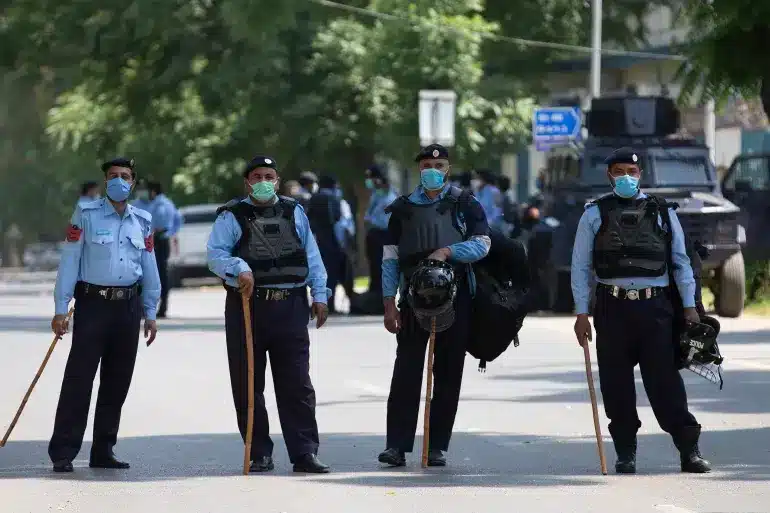
    The defence minister  reported that Pakistani security forces killed all 33 hostage-takers as they retook a police station that had been captured.

    On Sunday, Islamist insurgents from the Pakistani Taliban took control of the centre in the isolated Bannu district of the northwest.

    There were several people inside at the time, including security personnel.

    All hostages were released, two special forces were killed, and between ten and fifteen military personnel were hurt, according to Khawaja Muhammad Asif, the defence minister.

    According to a statement quoted by local media, the TTP (also referred to as the Pakistani Taliban) acknowledged responsibility for the assault.

    The group stepped up its attacks after ending a ceasefire with the government last month. The two sides have been locked in conflict for years.

    The group emerged in 2007 and was suppressed by a military operation in 2014, before re-emerging.

    It is separate to the Afghan Taliban, though it has been more active since the Afghans agreed a peace deal with the US in 2020, and took control of the country last year. The two groups share a hard-line Islamist ideology.

    The hostage incident unfolded in a region near the two countries’ shared border.

    Explaining events, Mr Asif told parliament that the 33 militants had links to different groups, and were being held in a counter-terrorism compound.

    He said the hostages were taken after one militant hit a guard on the head with a brick and snatched his weapon.

    The militants are said to have requested a safe exit in return for releasing the hostages. A standoff emerged as negotiation efforts failed.

    Army commandoes are said to have taken the chance to take back the police station at 12:30 local time (07:30 GMT) after the hostage-takers found themselves arguing among themselves.

    Witnesses of the siege reported explosions and heavy gunfire.

    Mr Asif told parliament that “all the terrorists” had been killed, and all the hostages freed – without specifying what the latter number was.

    He blamed a “total collapse” of the provincial Khyber Pakhtunkhwa government for the deadly incident.

    Nearby schools, businesses and roads remained closed on Tuesday, with police checkpoints in place.

    The incident came amid a wave of deadly attacks in Pakistan – many of these targeting the security forces.

    Four policemen were killed during a separate attack elsewhere in Bannu on Sunday.


  • Nigeria: Gay wedding raided by Islamic police in Kano city

    19 Muslims were detained by the Islamic police force in the largest city in northern Nigeria on suspicion of attending a same-sex marriage.

    According to the force’s spokesman Lawal Ibrahim Fagge, a tip-off led to the raid on the wedding in Kano.

    He added that the couple, who had not yet exchanged vows, had managed to escape and that police were looking for them.

    With a predominance of Muslims, Kano has both a secular legal system and an Islamic one.

    In Nigeria as a whole, where residents of the north are predominately Muslims and those of the south are predominately Christians, homosexual acts are prohibited by both legal systems.

    Kano’s Islamic police force is popularly known as the Hisbah and enforces a strict moral code.

    Mr Fagge told the BBC that the police force did not intend to punish the 15 male and four female wedding guests arrested during the raid on Sunday.

    Instead, the group – which he said included gay people and cross-dressers – was undergoing “counselling”, and their parents or guardians had been urged to come forward.

    “We’ll explore the avenue of change before we charge them in court. First we counsel them, and involve the parents and we hope they change their lifestyle,” the Hisbah spokesman said.

    Kano’s Islamic courts have never convicted anyone for being gay.

    Mr Fagge said that 18 people who attended a similar wedding ceremony last year had been released after signing a document that gave an “undertaking that they would change their lifestyle”.

    Rights groups in Nigeria have long campaigned for gay rights to be respected, but there is strong opposition to it in a country where many Muslims and Christians uphold conservative religious values.


  • Elon Musk: Only blue tick users allowed to vote in policy polls on Twitter

    After a majority of users voted for him to resign, Elon Musk declared that Twitter will only permit accounts with a blue tick to vote on changes to policy.

    In a poll that Mr. Musk posted on Twitter, asking if he should step down as CEO, 57.5% of respondents said “yes.”

    He hasn’t addressed the poll’s outcome directly since that time.

    But he has stated that Twitter will change its rules so that only subscribers will be able to vote on corporate policy.

    One user claimed that so-called bots appeared to have voted heavily in the poll about Mr Musk’s role at the firm. Mr Musk said he found the claim “interesting”.

    The billionaire had said when he ran the poll that he would abide by the result. If he does quit as chief executive, he will remain as Twitter’s owner.

    Bruce Daisley, former vice president of Twitter, compared any potential change to that of a football manager. “The chairman still remains and Elon Musk is going to be that ever-present voice in the back of the room,” he told the BBC’s Today programme.

    Elon Musk replying to Tweet

    In response to a tweet saying Twitter Blue subscribers “should be the only ones that can vote in policy related polls. We actually have skin in the game”, Mr Musk said: “Good point, Twitter will make that change”.

    Twitter’s paid-for verification feature was rolled out for a second time last week after its launch was paused. The service costs $8 per month, or $11 for people using the Twitter app on Apple devices, and gives subscribers a “blue tick”.

    Previously a blue tick was used as verification tool for high-profile accounts as a badge of authenticity and was free.

    On Monday, Mr Musk held a poll on his future as chief executive. More than 17.5 million users voted and the majority backed him stepping down.

    The BBC is not responsible for the content of external sites.View original tweet on Twitter

    While the poll was running he replied to one user suggesting there was no replacement chief executive lined up, saying: “No one wants the job who can actually keep Twitter alive. There is no successor.”

    The technology tycoon, who also runs electric car maker Tesla and space rocket firm Space X, has faced much criticism since taking over the site.

    He has obeyed the results of his Twitter polls in the past and quoted the phrase “vox populi, vox dei”, a Latin phrase which roughly means “the voice of the people is the voice of God”.

    Mr Musk bought Twitter for $44bn (£36bn) in October after attempting to back out of the deal.

    Since taking control, he has been criticised for his approach to content moderation, with some civil liberties groups accusing him of taking steps that will increase hate speech and misinformation.

    On Friday, he was condemned by the United Nations and European Union over Twitter’s decision to suspend some journalists who cover the social media firm. He has also fired about half of Twitter’s staff.

    Mr Daisley said through Mr Musk’s activity, you could “get a hint” over what he was thinking through his replies to users.

    “He does seem to be quibbling with the vote,” he added.

    Mr Musk has also been accused of neglecting his electric car company Tesla, which is where most of his wealth is. Tesla shares have lost more than 60% in value this year, with some saying his obsession with Twitter is destroying the brand.

    Last week, Leo KoGuan, the third largest individual shareholder in Tesla, called for Mr Musk to step down as the boss of the electric car maker.

    “Elon abandoned Tesla and Tesla has no working CEO. Tesla needs and deserves to have [a] working full time CEO,” he tweeted.


  • Kerala: Indian woman receives $54,000 in donations after asking for $5

    On social media, an Indian woman who needed assistance feeding her kids received millions of rupees in donations from complete strangers.

    After her husband passed away, Subhadra, 46, a resident of the southern state of Kerala, had asked her son’s teacher for 500 rupees ($6; £5) to buy food.

    The teacher launched a crowdfunding campaign on social media after being moved by her condition.

    The family had 5.5 million rupees in donations by Sunday.

    Subhadra, who goes by one name, had been having financial difficulties ever since her husband passed away in August.

    Because the youngest of her three sons has cerebral palsy and needs constant care, she was unable to look for work.

    She couldn’t look for a job as the youngest of her three sons has cerebral palsy and requires constant care.

    On Friday, she reached out to Girija Harikumar, a teacher at the local school where her middle child studies, for help as her children had nothing to eat.

    Ms Harikumar, a Hindi language teacher, told the BBC that she had asked the student, Abhishek, to tell her if his family was facing problems after his father’s death. This was the first time the boy or his mother had asked for help.

    “I gave her 1,000 rupees and told her I will do something,” Ms Harikumar says.

    She then visited the family and saw that they were living in grinding poverty.

    “There was just a handful of grains in the kitchen and the children had nothing to eat,” Ms Harikumar says.

    “I thought there was no point giving Subhadra small amounts of money now and then as it would be totally inadequate for the family,” she adds.

    On Friday evening, Ms Harikumar wrote a post on Facebook about the family’s plight and asked people to help by sending any money they could afford. She also shared Subhadra’s bank account details in the post, so that the money could be directly transferred to her.

    The post went viral and by Monday, Subhadra has received 5.5m rupees from kind strangers.

    Some of the money will be used to finish a house that Subhadra’s husband began building before he died. The rest will be deposited in the bank for their expenses.

    The fund-raising appeal has now been closed.


  • King Charles banknotes unveiled in UK

    The Bank of England has unveiled the new design for banknotes that feature the image of King Charles.

    The only change to the current designs of the £5, £10, £20, and £50 notes will be the portrait, which will go into circulation in the middle of 2024.

    The King’s portrait will appear on new notes on the front and in the transparent security window.

    After the new notes start to circulate, old notes will still be accepted in stores.

    Beginning in 1960, Queen Elizabeth was the first and only monarch to be depicted on circulating Bank of England banknotes. The monarch is not shown on the notes that Scottish and Northern Irish banks have issued.

    There are about 4.5 billion individual Bank of England notes worth about £80bn in circulation at present.

    First pictures of King Charles banknotes revealed
    The King’s cypher will also appear on the notes

    The Bank of England said that, following guidance from the Royal household, the new notes would only be printed to replace worn notes or to meet increased demand, in order to minimise the environmental and financial impact of the change.

    Bank of England governor, Andrew Bailey, said he was “proud” of a “significant moment” with the new design.

    Fifty pence coins bearing the image of King Charles III have already entered circulation via post offices across the country.

    An estimated 4.9 million of the new coins are being distributed to post offices – about half of the total number earmarked for circulation – to be given in change to customers.

    First pictures of King Charles banknotes revealed
    The new King Charles 50p coins have already entered circulation

    Coins carrying the image of the late Queen will still be accepted in shops, in the same way as banknotes.

    For anyone taking part in a family Christmas quiz this year, it is worth remembering that, in ascending order, the reverse side of current polymer Bank of England banknotes feature Sir Winston Churchill, Jane Austen, JMW Turner and Alan Turing.

    Cash use has become far less frequent when compared to debit cards, owing primarily to the use of contactless payments and then accelerated by the Covid pandemic. The buying power of specific coins and banknotes have also been diluted by rising prices.

    However, there is still keen interest from consumers and collectors about the images used on cash.

    Collectors will be particularly excited to get their hands on the lowest serial numbers of the new King Charles banknotes when they appear.

    Source: BBC.com 


  • Debt exchange programme: Government must be quick about labour strike, expert says

    Labour expert, YB Amponsah says, the government’s prompt action will help prevent the unions from completely shutting down the public service.

    Y B Amponsah, a labour expert, has urged the government to act quickly to allay labour unions’ worries following their reservations about the debt exchange programme.

    In keeping with the government’s efforts to restructure debt and restart the economy, Finance Minister Ken Ofori-Atta introduced the debt exchange programme on Monday, December 5.

    Amponsah said the government’s timely intervention will help avert a total shut down of the public service by the unions.

    At least seven labour unions – Teachers and Education Workers’ Union (TEWU), Ghana National Association of Teachers (GNAT), Ghana Registered Nurses and Midwives Association (GRNMA), National Association of Graduate Teachers (NAGRAT), Ghana Medical Association (GMA), Ghana Chamber of Commerce and the Trades Union Congress (TUC) – have raised red flags over the programme.

    In a media engagement, Amponsah said the government has been too slow in addressing the issue.

    “Is it too difficult for the government to call organised labour for a discussion? You have to engage them because that’s how you handle industrial relations.

    “If this matter was handled early, I’m sure there would’ve been some consensus by now,” he said. “This is a negotiable matter. The government is saying A, you want B so it’s a matter of discussion.”

    “If I was leading the negotiation, I’ll ask them (organised labour) to push their strike further down so you get some room for negotiation,” Amponsah added.

    Strike 

    Organised labour has declared an indefinite strike effective 27 December to force the government to exempt pension funds from the planned debt exchange programme.

    The Secretary General of TUC, Dr Yaw Baah, announced the industrial action at a press conference in Accra.

    “We have decided firmly that because the government has refused to grant us our request that all pension funds must be exempted from the domestic debt exchange programme, all workers of Ghana are going to strike on 27 December 2022. We will be on strike until our demand has been granted,” Baah said.

    “What it means is that all workers of Ghana should stay at home starting from 27 December. We will stay at home until the government acts. That is straight forward and very simple. We won’t sit down for the vulnerable people to suffer because somebody has made mistakes. We are going to be in our red dresses until we hear from the government,” he added.

    Extension of debt exchange programme

    Meanwhile, the Ministry of Finance has extended the deadline for the domestic debt exchange programme from 19 to 30 December, an official statement has said.

    A statement issued by the Ministry of Finance on Friday (16 December), said the extension will afford the government the opportunity to consider suggestions made by all stakeholders with the aim of adjusting certain measures acceptable within the constraints of the Debt Sustainability Analysis.

    “Considering these developments, and taking cognisance of the festive season, we have decided to extend the expiration date of the voluntary offer to Friday 30 December 2022, with a contemplated settlement date on Friday 6 January 2023,” the statement said.

    “This extension comes on the heels of the announcement of a Staff-Level Agreement (SLA) with the IMF on 13 December 2022,” the statement added.


  • Save yourself the embarrassment, WhatsApp allows you undo ‘Delete for Me’

    WhatsApp has introduced a feature that allows you to undo the “Delete for Me” action to avoid being embarrassed about accidentally deleting a message that you intended to delete for everyone on the app.

    The new “accidental delete” feature introduces a five-second window that enables users to reverse the action of deleting messages for themselves in an individual or group chat and delete them for everyone.

    When deleting an incorrectly sent message, users may inadvertently tap the “Delete for Me” button rather than the “Delete for Everyone” button.

    WhatsApp lets you undo ‘Delete for Me’ in case you hit that button too quickly

    The new feature aims to help users overcome those situations by getting the small window to reverse their original action.

    WhatsApp said its new offering would be available to all users on Android and iPhone. It was beta tested with some Android and iOS users in August, per a report by WhatsApp features tracker WABetaInfo.

    In 2017, WhatsApp introduced the “Delete for Everyone” option to let users recall a message for all people in a conversation.

    The feature was designed to address the issue of sending messages mistakenly in individual and group chats.

    Although the initial rollout of the option was limited to seven minutes, WhatsApp eventually extended that time limit to up to two days and 12 hours — or 60 hours — in August this year.

    Source: Myjoyonline.com 


  • Ghana Responsible Gold Mining Summit: Manhyia Palace to host in April 2023

    The Summit is scheduled to take place at the Manhyia Palace in Kumasi, in the Ashanti Region, on Tuesday, April 7, and Wednesday, April 8, 2023.

    His Majesty Otumfuo Osei Tutu II, the Asantehene, is making efforts to guarantee that gold purchased from Ghana is mined and traded ethically.

    To ensure that gold obtained from Ghana’s small-scale mining sector is responsibly mined and traded in accordance with international standards and best practises, Otumfuo Osei Tutu II has committed to establishing the “Ghana Responsible Gold Mining Summit.”

    His Majesty has demonstrated immense commitment to the eradication of illegal mining and promoting responsible mining, and at the Summit, he will work with stakeholders to ensure that interventions to halt environmental degradation are coordinated and fully supported.

    The Summit is scheduled to take place on Tuesday 7 and Wednesday 8 April, 2023 at the Manhyia Palace, Kumasi in the Ashanti Region, to precede the 24th Coronation Anniversary of Otumfuo Osei Tutu II.

    The Summit will be led by the Africa Responsible Mining in collaboration with E ON 3 Group and Ansong Askew Ltd. The event is supported by the Ministry of Lands and Natural Resources and its agencies, as well as the Organisation for Economic Co-operation and Development (OECD).

    Other stakeholders, including international market makers, will also provide some collaboration.

    Outputs

    Outputs from the Ghana Responsible Gold Mining Summit will focus on aligning Ghana’s small-scale mining sector with the expectations of international markets.

    This will include measures to increase transparency and accountability in the sector in line with international standards of responsible sourcing.

    Otumfuo’s commitment

    Otumfuo Osei Tutu II will work with the government of Ghana, traditional leaders, political leaders, and international stakeholders to ensure that gold sourced from the country is responsibly mined and traded.

    His Majesty is committed to building confidence in the international community about transparency and accountability in Ghana’s small-scale mining sector.

    The Asantehene’s quest for environmental protection and his abhorrence of illegal mining has been phenomenal. At various fora, he had minced no words about the need for Ghana to turn to responsible mining.

    At a Regional Consultative Dialogue on Small Scale Mining, in Kumasi in May 2021, Otumfuo Osei Tutu II threatened to sanction chiefs within his jurisdiction who engage or assist in illegal mining activities.

    Also addressing the Ashanti Regional House of Chiefs in Kumasi on October 14, 2022, Otumfuo Osei Tutu II, called out his sub-chiefs for not taking up the fight against illegal mining but rather, accepting monies from illegal miners thereby, making it difficult for their part to make any meaningful contribution to the fight against illegal mining.

    Again, in October 2022, when the US Ambassador to Ghana, Virginia Palmer, called on His Majesty at the Manhyia Palace, he touched on President Nana Addo Dankwa Akufo-Addo’s promise of putting his presidency on the line during the height of the war against the illegal mining menace and wondered why the President had even put his presidency on the line, and yet illegal mining was going on.

    And at the last meeting of the Ashanti Regional House of Chiefs for the year 2022, held in Kumasi on December 14, His Majesty re-emphasized his quest to root out illegal mining from his domain, and went head to state that, his office will from next year (2023), summon chiefs whose lands have been destroyed by illegal mining, for questioning.

    He warned that any chief who is unable to provide valid reasons would be sanctioned so that they will learn a lesson and protect their lands from illegal mining.

    Source: Asaaseradio.com 


  • Fortnite resolves allegations of child privacy and trickery

    The developer of the well-known video game Fortnite has agreed to pay $520 million (£427 million) to settle US regulators‘ charges that the game violated user privacy laws and deceived players into making purchases.

    According to the Federal Trade Commission (FTC), the company tricked players with “deceptive interfaces” that could prompt purchases even as the game was loading.

    Furthermore, it was charged with employing “privacy-invasive” default settings.

    Epic Games blamed “past designs”.

    “No developer creates a game with the intention of ending up here,” the company said. “We accepted this agreement because we want Epic to be at the forefront of consumer protection and provide the best experience for our players.”

    Fortnite, a battle royale game that became a global sensation after its launch in 2017, has more than 400 million players around the world. The game is generally free to download, but makes money from in-game purchases of items such as costumes and dance moves.

    The FTC said that the game, which matches strangers around the world for interactive battles, was aimed at children and teens, but despite that, its developers failed to comply with rules regarding parental consent – even after making changes to address internal and public concerns.

    “As our complaints note, Epic used privacy-invasive default settings and deceptive interfaces that tricked Fortnite users, including teenagers and children,” said FTC chair Lina Khan.

    “Protecting the public, and especially children, from online privacy invasions and dark patterns is a top priority for the commission, and these enforcement actions make clear to businesses that the FTC is cracking down on these unlawful practices.”

    The FTC said Epic would pay $275m – a record penalty for the consumer watchdog – to resolve the claims it collected child and teen data without parental consent, and exposed children and teens to bullying and harassment by turning on voice and text communications by default.

    Epic Games agreed to change its privacy settings for teens and children, and have chat communications turned off by default.

    The company will also pay a record $245m, to be used for refunds to customers, to settle a separate complaint about deceptive billing practices.

    The FTC cited a “counterintuitive, inconsistent, and confusing button configuration” that led to hundreds of millions of dollars in unauthorised purchases.

    It said the firm had resisted changing its design to add a separate confirmation step, worried that doing so “would add ‘friction’, ‘result in a decent number of people second guessing their purchase’, and reduce the number of ‘impulse purchases’”, according to the complaint.

    It said the company locked accounts of customers who disputed charges and “purposefully obscured cancel and refund features to make them more difficult to find”.

    Epic said it had been making changes and the practices detailed in the FTC’s complaints were “not how Fortnite operates”.

    “The laws have not changed, but their application has evolved and long-standing industry practices are no longer enough,” the company said, adding that it hoped to offer a model for the rest of the industry.

    The developer of the well-known video game Fortnite has agreed to pay $520 million (£427 million) to settle US regulators’ charges that the game.

    Source: BBC.com 


  • Suspected thief electrocuted to death after escaping from a store’s roof in Fadama

    A man believed to be a thief has reportedly been electrocuted to death in Fadama, a suburb of the Okaikoi South District of the Greater Accra Region.

    A viral video shared by Okay FM showed the lifeless body of a man mysteriously hanging over the roof of a container shop.

    The store the man was hanging over was closed which left many of the onlookers amazed at how he managed to get to the top of the container.

    The man, who appeared to be only in boxer shorts, was having an item in his hand.

    Some of the people around could be heard saying that the man was a thief who was trying to rob the store.

    Others were also heard crying. It is not clear whether they are related to the alleged thief.

    The residents did not go close to the alleged thief, probably waiting on the Ghana Police Service to come for his mortal remains.

    The police have, however, not commented on the incident.


  • Stay away from ‘risky activity during ambulance strikes, says minister

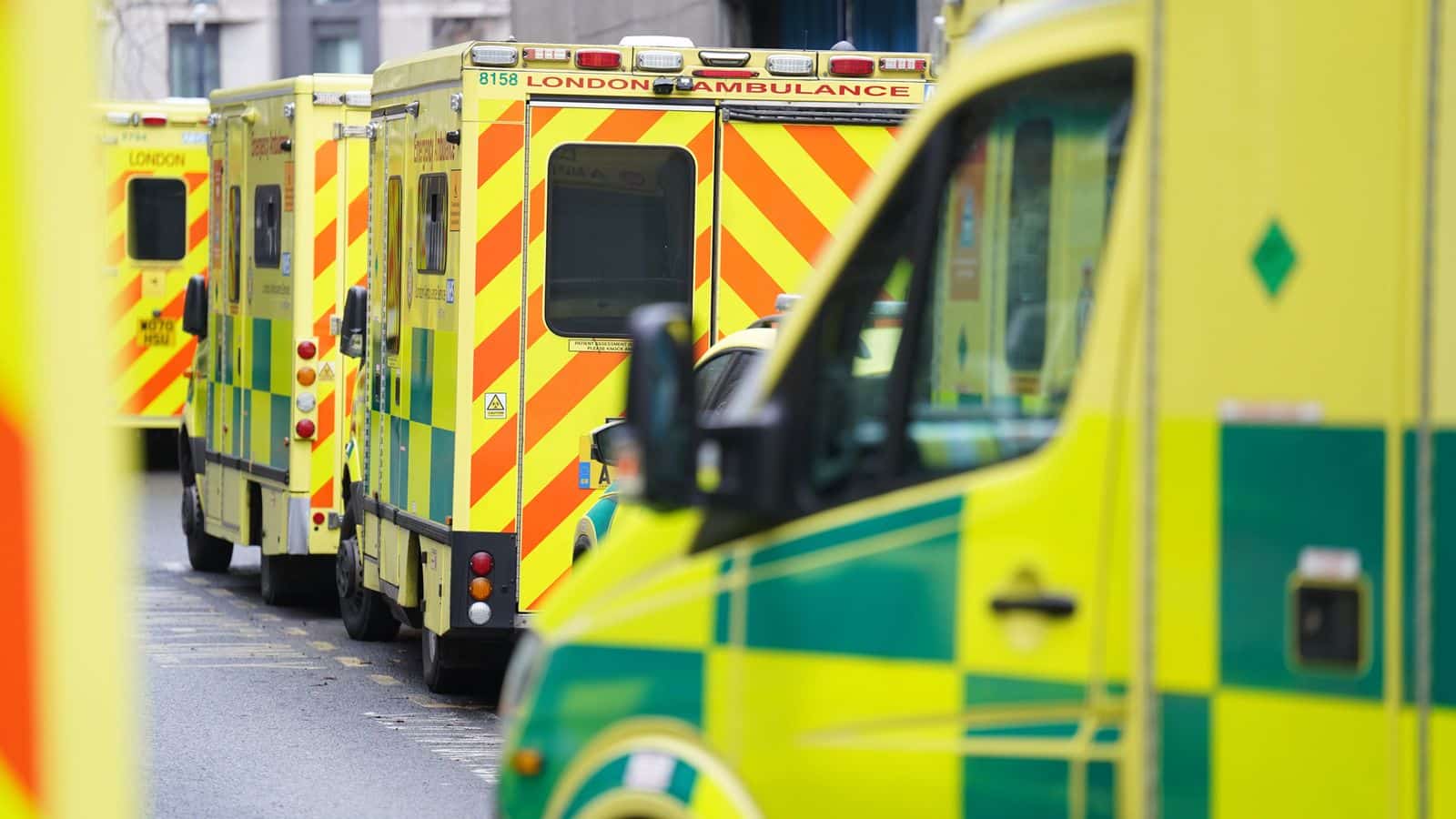
    A health minister has advised citizens to stay away from “risky activity” on Wednesday, when ambulance workers are scheduled to go on strike.

    Those in need of immediate assistance should continue to dial 999, but Will Quince warned that there would inevitably be service disruptions.

    To cover the walkouts in England and Wales, about 750 members of the armed forces are being called up.

    Ambulances should still answer the most urgent calls, according to Mr. Quince.

    Speaking on BBC Breakfast, he claimed that ministers wanted cardiac arrests and strokes, among other category 1 and 2 events, to be covered.

    Health Secretary Stephen Barclay will meet unions later to discuss staffing levels during the strikes.

    Mr Quince said the military staff drafted in for Wednesday would provide “support capacity” for individual NHS trusts.

    He added that they would not be able to drive ambulances under blue lights, go through red lights or break the speed limit – but would help ambulance staff to get people to A&E more quickly.

    Health chiefs have warned of “extensive disruption,” and urged hospitals to free up beds by safely discharging patients ahead of industrial action.

    Measures should also be put in place to make sure ambulance patient handovers are kept to no more than 15 minutes, they advise.

    Mr Quince said the government expected category 1 and 2 calls to be responded to. As well as cardiac arrests and strokes, these categories also include heart attacks, serious burns, and compound fractures, he said.

    Taxi bookings

    He added that for less serious categories, NHS trusts would be block-booking taxis to take people to hospital, and “encouraging people wherever possible” to find treatment by making journeys themselves.

    “There will be disruption to service. It is important that where people are planning any risky activity, I would strongly encourage them not to do so,” he added.

    Decisions on staffing are being taken on a local basis, meaning there will be potential variation in service by region.

    Wednesday’s action will involve members of the Unison, GMB and Unite unions. GMB members are also due to on strike again on 28 December.

    Unions representing NHS staff in England and Wales are pus

    hing for higher pay after being offered a below-inflation average 4.7% rises this year.

    Unison has said troops are “no substitute for trained ambulance staff” – and a rethink on NHS wages from the government could have averted action.

    The strike will follow strikes from nurses on Tuesday in England, Wales and Northern Ireland, who are taking their second day of action this month over pay.

    Source: BBC.com 


  • Russia-Ukraine war: Zelensky visits frontline city of Bakhmut

     President of Ukraine, Volodymyr Zelensky ,has paid an unannounced visit to Bakhmut, a city on the front lines where Ukrainian and Russian forces have been engaged in a bloody, months-long battle.

    According to the presidency, he met with soldiers and presented awards to soldiers.

    Bakhmut, which has sustained severe damage, has been a major target for Russian forces in the Donetsk region for months.

    The advance has been halted by Ukrainian forces, though.

    Presidential spokesman Serhiy Nikiforov said Mr Zelensky had already left the city.

    Bakhmut has been a focus of the Russian campaign for months and Moscow has thrown huge resources into capturing it.

    It would open the way to Sloviansk and Kramatorsk, the most important cities in the Donbas region still under Ukrainian control.

    Hanna Malyar with troops
    IMAGE SOURCE,UKRAINIAN DEFENCE MINISTRY Image caption, Ukrainian Deputy Defence Minister Hanna Malyar also visited Bakhmut

    Few civilians are now left in the city, which had a population of 70,000 before the war.

    Today is the 300th day since Russia’s invasion of Ukraine.

    Deputy Defence Minister Hanna Malyar, who also visited Bakhmut, wrote on Facebook: “What are 300 days in our more than 300-year struggle for liberation from Russia!

    “We’re standing. We’re fighting. We’re going to win!”

    Source: BBC.com 


  • 44-year-old Dagenham woman accused of murdering two young boys

    Two young boys who were discovered dead at a residence in east London have been charged with murder in relation to a 44-year-old woman.

    The bodies of two and five-year-old boys were discovered at a home in Cornwallis Road, Dagenham, on Friday. Kara Alexander, a resident of Dagenham, is charged with their murders.

    She will make an appearance later at Barkingside Magistrates’ Court.

    The Metropolitan Police stated that formal identification and post-mortem investigations will happen “in due course.”

    Family members have been informed of the deaths and continue to be supported by specialist officers, the force said in a statement.

    A man was also arrested but later released.

    Source: BBC.com 


  • Nazi typist: Irmgard Furchner found guilty of complicity in the murder of 10,500 people

    More than 10,505 people were killed, and a former secretary who worked for the head of a Nazi concentration camp has been found guilty of complicity.

    Irmgard Furchner, now 97, worked at Stutthof as a teenage typist from 1943 to 1945.

    Furchner, one of the few women to face Nazi-related charges in decades, received a two-year sentence with a suspended sentence.

    Despite the fact that she was a civilian employee, the judge found that she was fully informed of all activities at the camp.

    According to estimates, 65,000 people—including Jewish prisoners, non-Jewish Poles, and captured Soviet soldiers—died at Stutthof in appalling conditions.

    The court at Itzenhoe in northern Germany heard from survivors of the camp, some of whom have died during the trial.

    When the trial began in September 2021, Irmgard Furchner went on the run from her retirement home and was eventually found by police on a street in Hamburg.

    Stutthof commandant Paul-Werner Hoppe was jailed in 1955 for being an accessory to murder and he was released five years later.

    A series of prosecutions have taken place in Germany since 2011, after the conviction of former Nazi death camp guard John Demjanjuk set the precedent that being a guard was sufficient evidence to prove complicity.

    That ruling also meant that civilian worker Furchner could stand trial, as she worked directly to the camp commander, dealing with correspondence surrounding Stutthof detainees.

    It took 40 days for her to break her silence in the trial, when she told the court “I’m sorry about everything that happened”.

    As she was under 21 at the time, the trial took place in a special juvenile court. “I regret that I was in Stutthof at the time – that’s all I can say,” she said.

    Her defence lawyers argued she should be acquitted because of doubts surrounding what she knew, as she was one of several typists in Hoppe’s office.

    However, historian Stefan Hördler played a key role in the trial, accompanying two judges on a visit to the site of the camp. It became clear from the visit that Furchner was able to see some of the worst conditions at the camp from the commandant’s office.

    The historian told the trial that 27 transports carrying 48,000 people arrived at Stutthof between June and October 1944, after the Nazis decided to expand the camp and speed up mass murder with the use of Zyklon B gas.

    Mr Hördler described Hoppe’s office as the “nerve centre” for everything that went on at Stutthof.

    Nazi crime cases since 2011

    • John Demjanjuk – jailed in 2011 for five years for his part in the murder of more than 28,000 Jews at the Sobibor death camp but released pending an appeal and died the following year aged 91
    • Oskar Gröning – the “Bookkeeper of Auschwitz”, sentenced in 2015 as an accessory to the murder of 300,000 Jews. He never went to jail, dying in 2018 aged 96 during the appeals process
    • Reinhold Hanning – former SS guard at Auschwitz convicted of helping to commit mass murder in June 2016 but died a year later aged 95 with appeals still pending
    • Friedrich Karl Berger – former guard at the Neuengamme concentration camp, deported to Germany from the US in February 2021 aged 95. German prosecutors dropped charges against him and his current fate is unknown
    • Josef S – jailed for five years in June 2022 for assisting in the murder of more than 3,500 prisoners in Sachsenhausen concentration camp. Aged 101, he is the oldest person to be convicted for Nazi-era war crimes in Germany, but because of age and ill health is unlikely to spend any time in prison

    Furchner’s trial could be the last to take place in Germany into Nazi-era crimes, although a few cases are still being investigated.

    Two other cases have gone to court in recent years for Nazi crimes committed at Stutthof.

    Last year a former camp guard was declared unfit for trial even though the court said there was a “high degree of probability” he was guilty of complicity.

    In 2020, another SS camp guard, Bruno Dey, was given a two-year suspected jail term for complicity in the murder of more than 5,000 prisoners.

    Source: BBC.com 


  • Sam Bankman-Fried, the CEO of FTX, agrees to be extradited

    The CEO of the defunct cryptocurrency exchange FTX, Sam Bankman-Fried, has consented to extradition to the US to face charges, according to information obtained by the BBC.

    The 30-year-old, who resides in the Bahamas, is charged with committing “one of the largest financial frauds in US history,” according to US authorities.

    The BBC was informed by a source close to Mr. Bankman-Fried, who denies the accusations, that he had consented to be extradited.

    Many people are unable to withdraw money because FTX filed for bankruptcy.

    FTX owed its 50 largest creditors nearly $3.1 billion (£2.5 billion), per a court document.

    It is not clear when Mr Bankman-Fried will be extradited to the US, following his arrest on 12 December.

    Among the most serious allegations against him is that he used billions of dollars of customer funds to prop up his investment trading company Alameda.

    Last week, Damian Williams, the US Attorney for the Southern District of New York, said Mr Bankman-Fried was accused one of the largest frauds in US history.

    The FTX founder was also accused of using “tens of millions” in ill-gotten gains for illegal campaign contributions to Democrats and Republicans alike, Mr Williams said.

    The Securities and Exchange Commission said the man who was formerly nicknamed the “King Of Crypto” had built a “house of cards on a foundation of deception”.

    However, Mr Bankman-Fried has sought to distance himself from accusations of illegal activity and in a BBC News interview before his arrest said: “I didn’t knowingly commit fraud. I don’t think I committed fraud. I didn’t want any of this to happen. I was certainly not nearly as competent as I thought I was.”

    Mr Bankman-Fried has also denied allegations he must have been aware that Alameda Research was using FTX customer funds.

    The FTX exchange allowed customers to trade normal money for cryptocurrencies such as Bitcoin.

    Cryptocurrencies are not traditional currencies, but are stored online and act more like investment vehicles or securities – often with a high degree of volatility.

    FTX had an estimated 1.2 million registered users who were using the exchange, but many have been left wondering if they will ever get back their cash trapped in FTX’s digital wallets.

    Mr Bankman-Fried was once viewed as a young version of legendary US investor Warren Buffett, and as recently as late October had a net worth estimated at more than $15bn.

    Source: BBC.com


  • ‘Wrong and dangerous’ : North Korea blasts Japan’s military buildup, says it would take action

    The foreign ministry of North Korea calls Japan’s new $320 billion security strategy “wrong and dangerous” and vows to respond.

    Japan’s planned military buildup has been denounced by North Korea, which also promised to take action against Tokyo for making the “wrong and dangerous choice” to expand its defence industry.

    The statement on Tuesday from North Korea’s foreign ministry comes just days after Japan unveiled a new $320bn security strategy that outlined plans for Japan’s military to mount “counter-strike capabilities”, and to respond to the threats posed by China, Russia and North Korea.

    Japan’s sweeping, five-year military strategy will see the country become the world’s third-largest military spender after the United States and China.

    Japan’s new security strategy effectively formalises a “new aggression policy” and fundamentally changes East Asia’s security environment, a spokesperson for Pyongyang’s foreign ministry said in a report published by North Korea’s official Korean Central News Agency (KCNA).

    In response to Japan’s move to “realise unjust and excessive ambition”, North Korea “will continue to show how concerned and displeased we are with practical action,” the spokesperson said.

    They also blasted the US for “exalting and instigating Japan’s rearmament and re-invasion plan,” adding that Washington had no right to raise issue with Pyongyang’s efforts to bolster its own defences.

    North Korea’s efforts to upgrade military capabilities have included a record number of ballistic missile launches this year, including missiles capable of carrying nuclear payloads and with varying ranges that could reach the US mainland and allies South Korea and Japan.

    On Sunday, North Korea fired two projectiles that it said were were tests of its first military reconnaissance satellite and released low-resolution, black-and-white photos that showed a view from space of the South Korean capital, Seoul, and the nearby city of Incheon.


    Some analysts in South Korea said the images were too crude to be satellite photos, while the South Korean military maintained that Sunday’s launches were of two medium-range ballistic missiles.

    North Korea hit back at that criticism on Tuesday, with Kim Yo Jong, the powerful sister of North Korean leader Kim Jong Un, saying it was “inappropriate and hasty” to assess her country’s satellite capabilities from those two photos alone.

    Pyongyang’s efforts to develop a spy satellite were a “pressing priority directly linked to our security,” she said in a statement carried by the KCNA, adding that additional sanctions on her country would not stop such technological developments.

    She went on to dismiss the South Korean government’s assessment that North Korea still has key remaining technological hurdles to overcome for functioning intercontinental ballistic missiles (ICBMs) that can reach the US mainland – such as the ability to protect its warheads from the harsh conditions of atmospheric re-entry.

    She questioned how North Korea could have received data from warheads until they landed at targeted areas in the ocean in previous launches if the country truly lacked re-entry technology.

    “I think it’s better for them to stop talking nonsense, behave carefully and think twice,” she said.

    Kim Yo Jong also suggested North Korea might fire an ICBM at a normal trajectory instead of the lofted and steep angles that it currently uses to avoid neighbouring countries.

    A full range ICBM test could be considered as a much bigger provocation to the US as the weapon would fly toward the Pacific Ocean.

    “I can clear up their doubt about it,” she said.

    “They will immediately recognise it in case we launch an ICBM in the way of real angle firing straight off.”


    Source: Aljazeera.com 


  • Poachers now on a hippos giant teeth hunt in place of ivory

    Wildlife activists are warning that tighter controls on the trade in ivory have increased the demand for hippopotamus teeth, which could have negative consequences for a species that is already considered “vulnerable to extinction.”

    An animal welfare organisation looked into what transpired in three popular online marketplaces after the UK announced a nearly complete ban on the trade in elephant ivory in June of last year.

    “We found the increase in hippo ivory trade in the UK within a month after the near total-ban of elephant ivory was introduced,” says Frankie Osuch, lead author of a report released by Born Free in September.

    This was “deeply concerning evidence of increased demand for ivory from hippos, whose numbers in the wild are under threat” the report said.

    Researchers say this pattern was clear as far back as 1989, when a worldwide ban on trade in ivory was first agreed, and has only intensified as governments have brought in new measures to tighten the ban.

    Like ivory, hippo teeth and tusks are often used for decorative carvings, but they are cheaper and easier to obtain.

    Hippo body parts can still be traded under the Convention on International Trade in Endangered Species (CITES), though all international sales require an export permit.

    It’s been calculated that between 1975, when CITES records began, and 2017, 770,000kg of hippo teeth were legally traded. But there is also an illegal trade.

    In 2020 hippo teeth were among the mammal body parts most often seized in the EU, according to a European Commission report.

    “There are increasing cases of sniffer dogs detecting hippo teeth at different airports in Africa these days, and the detection does not mean all of them are caught, perhaps only half of them are,” says Philip Muruthy, vice-president of the Africa Wildlife Foundation.

    A study by the International Union for Conservation of Nature (IUCN) in 2016 estimated that the worldwide population of the common hippo was between 115,000 and 130,000 – a drop of 30% since 1994.

    Ten countries in West and Central Africa say there has continued to be a sharp decline in numbers, due to poaching and land degradation.

    They proposed a complete ban on trade in the run-up to a CITES meeting in Panama last month, but this would only have been possible under CITES rules if there had been more than 50% drop in the population in the last 10 years, and an IUCN analysis did not support this conclusion.

    The 10 West and Central African countries then suggested a move called “annotation” that would have resulted in a zero-quota for wild specimens traded for commercial purposes. But this proposal was not supported by the EU or by East and South African countries, who say hippo populations remain at a healthy level.

    Some of the East and South African countries – Tanzania, Uganda, Zambia and Zimbabwe – are also the source of three-quarters of the estimated 13,909 hippos whose parts and products were traded between 2009 and 2018.

    An ivory salesman in Goma, D R Congo, with carvings made of elephant and hippo ivory in 2006
    IMAGE SOURCE,GETTY IMAGES Image caption, Hippo tusks are used like elephant ivory for carved decorations

    Joanna Swabe, senior director of public affairs with Humane Society International, points out that little work has been done since 2016 to establish hippo numbers.

    “There has been very little scientific research on the actual population of hippos in all of these range countries,” she says. “While at the same time, range countries know what is going on with their hippos within their territories, so they should not be ignored.”

    Hippos have a low birth rate, producing only one offspring every other year, so a reduction in population size can have a long-term impact.

    Hippo facts

    • All hippos live in Africa – there are two types, the common hippo (population estimated at 115,000 to 130,000 in 2016) and the pygmy hippo (2,000-3,000)
    • The common hippo was classified as “vulnerable to extinction” on the International Union for the Conservation of Nature (IUCN) red list in 2016
    • The parts and products of an estimated 13,909 hippos were legally traded between 2009 and 2018 – three-quarters of them originated in Tanzania, Uganda, Zambia and Zimbabwe
    • 770,000kg of hippo teeth were legally traded between 1975 and 2017 – the size of the illegal trade is unknown

    Wildlife experts also say that the legal and illegal trade in hippo teeth needs to be closely monitored.

    The common hippo is listed in Appendix II of CITES meaning that it could be threatened with extinction unless trade is closely controlled.

    The 10 countries seeking a worldwide ban on trade note argue that there is strong evidence of the “co-mingling of legal and illegal hippo ivory”, suggesting that poached ivory is “laundered into the legal market”.

    Without stronger controls, campaigners warn, hippos may share the fate of elephants, which have become endangered – or critically endangered in the case of the African forest elephant – because so many were killed by poachers for their tusks.


  • Nigeria election: Campaign chief Doyin Okupe convicted of money laundering

    A prominent presidential candidate named Peter Obi’s campaign manager was found guilty of money laundering by a Nigerian High Court in the nation’s capital, Abuja.

    Doyin Okupe was found guilty of receiving more than $400,000 (£330,000) from a person without following the proper procedures in addition to other charges.

    The presidential campaign of Mr. Obi is likely to suffer a serious setback as a result.

    He has positioned himself as a departure from prior leaders and corrupted parties.

    Just two months remain until the elections. Okupe, a crucial ally and the director-general of Mr. Obi’s campaign organisation.

    Nigeria’s anti-corruption agency, the Economic and Financial Crimes Commission, had charged Okupe in 2019 for money laundering and diversion of funds.

    This was before he began working for Mr Obi. He was accused of accepting money in 2015 in excess of the amount that is allowed without having to declare it to the authorities.

    Delivering the judgement on Monday, Justice Ijeoma Ojukwu said that Okupe had violated the Money Laundering Act, and sentenced him to two years in prison – though there is the option to pay a fine.

    Neither Okupe’s lawyers nor the Obi campaign have yet reacted to the judgement.

    Mr Obi is running without the backing of either of Nigeria’s two main political parties but he has cultivated a lot of support among young people.

    Mr Obi is among a field of 18 candidates, including Bola Tinubu of the governing APC and Atiku Abubakar of the PDP – the country’s two main political parties.

    Source: NewsCentral.com 


  • Christmas in Russia: Ice soldiers mark Russia’s very patriotic Christmas

    On the main square of the Siberian city of Chita, a dozen Russian soldiers armed with Kalashnikovs stand motionless.

    When you factor in the wind chill, it’s -33 degrees Celsius. I’m wrapped in several layers of clothing, but I can feel my face freezing.

    People walking by stop and stare at the servicemen. Some of them take selfies.

    There’s a reason why the soldiers aren’t moving an inch. They’re made of ice.
    Chita is located 3,000 miles (4,830 kilometres) east of Moscow. The local government decided that militarised ice sculptures would be an appropriate decoration for this holiday season, encouraging a patriotic new year.
    The majority of people I talk to on the square agree.

    “We’re fighting a war,” Tatyana says, “so it’s right to have these ice soldiers here. They’re topical.”

    “It’s an unusual way of celebrating the New Year,” Ludmila tells me. “Normally you’d have Santa Claus, bunny rabbits or squirrels. But it’s a sign of the times.”

    Ludmila
    Image caption, Ludmila supports the Russian invasion of Ukraine – though she worries about friends who have been sent to fight

    Ludmila admits she’s worried by what’s happening in Ukraine.

    “We’ve got friends who’ve been mobilised and sent to fight there. We worry about them. We call to see if they’re OK. But whatever we may think of our government, our motherland is our motherland. If we don’t defend it, who will?”

    “Defend it from what? From whom?” I ask Ludmila. After all, on 24 February it was Russia that launched a full-scale invasion of Ukraine. Not the other way around.

    “Defend it from Nazis. There are a lot of them around,” Ludmila replies. “Russia’s being attacked on all fronts, including with LGBT propaganda. They’re trying to force this upon us. We reject these alien ideas. We embrace Russian values. It’s hard for me to explain this in words. I just feel it.”

    Russians never used to say these kinds of things to me on the street. They never talked about feeling threatened by “Nazis” in Ukraine, or about the need to fight for so-called “Russian values”. It’s one of the biggest changes I’ve noticed here this year.

    Having established total control of the media landscape in Russia, Kremlin propaganda has managed to convince many Russians that their country is now in some existential battle with the West. In conversations here now, I often hear people repeat – almost word for word – the anti-Ukrainian and anti-Western rhetoric they hear on Russian TV channels.

    You might think that people in Chita would have more pressing concerns than repelling the onslaught of “Western values”. Despite Siberia enjoying huge gas reserves, the city of Chita has still not been connected to Russia’s domestic gas network. From the hills above the city you can see clouds of smoke rising from coal-fired power stations and from the myriad of wooden houses that are still heated by firewood.

    Ice sculpture of a soldier in Siberia
    Image caption, The ice sculpture soldiers stand throughout the centre of Chita

    This winter, comfort and joy feel in short supply in Chita. But there’s patriotism aplenty. Outside the local concert hall, a stylised metal snowman is holding a Russian tricolour. On Lenin Square, the decorated fir tree shares centre stage with big signs bearing the letter “Z” – the symbol of the Kremlin’s “special military operation” in Ukraine. Watch the news on Chita TV, and you’ll see reports about local schoolchildren writing festive letters – not to Father Christmas, but to Russian soldiers in Ukraine.

    But not everyone in Chita shares this particular interpretation of patriotism.

    Across town I meet Ivan Losev. On social media recently, the 26-year-old sauna owner shared a bizarre dream he’d had in which he’d met President Volodymyr Zelensky of Ukraine.

    “I dreamt I’d been mobilised and sent to a training camp,” recalls Ivan. “Suddenly the Ukrainian army, led by Zelensky, attacked. Everyone was captured. They were about to shoot us, when Zelensky pointed to me. ‘I’ve seen your Instagram stories. Glory to Ukraine!’ he said. ‘Glory to the Heroes!’ I replied.”

    For posting about his dream – and for other comments he’d made on social media about the “special military operation” – Ivan was taken to court and fined 30,000 roubles (approximately £380) for “discrediting the Russian armed forces.”

    “The closer you get to the downfall of an empire, the more stupid the laws become,” Ivan tells me. “I think this will end with the downfall of Putin’s Russia.

    “Patriotism is loving your country, but criticising it to bring change. Patriotism is wanting to make your city better so that it prospers. So that people want to stay and live there and live well. But Russia’s patriotism is about bombing Ukraine to pieces. Our leaders don’t want our country to be better. They just want people in another country to live worse.”

    Image caption,

    Ivan Losev was fined for posting about a dream he’d had about Ukraine’s President Volodymyr Zelensky
    Image caption,

    Ivan Losev was fined for posting about a dream he’d had about Ukraine’s President Volodymyr Zelensky

    As I head back to the city centre, I pass another ice sculpture of a serviceman who has been left to guard a bus stop. By now it’s dark. The new year illuminations have been switched on and are casting a multi-coloured glow over Lenin Square. It’s such a bizarre sight. And rather unnerving. As the fairy lights change colour, so do the ice soldiers with their automatic rifles.

    It may be an attempt to foster a festive feel-good factor. But as this dramatic year nears the end, what exactly do Russians have to celebrate?

    Certainly not peace on Earth.

    “I worry that Russia will suffer from what is happening now,” says Margarita, with whom I get chatting on the square.

    “At the end of the day I would like there to be peace. I would like there to be no wars. We can do without those. But what will be will be.”


  • Trees store “twice as much carbon” as previously thought

    Researchers discovered that UK forests store twice as much carbon as previously thought by weighing individual trees using a 3D scanning technique.

    Lasers were used to map nearly 1,000 trees in Oxfordshire’s Wytham Wood.

    “We’ve found significantly more carbon stored here,” said Dr Kim Calders, from Ghent University.

    The research also reveals that mature trees, in particular, play a critical role in fighting climate change.

    Image created from laser scan of a group of trees in Wytham Wood, Oxfordshire
    IMAGE SOURCE,MARKKU AKERBLOM Image caption, Laser scans created a 3D map of each tree

    An accurate calculation of the amount of carbon trapped in UK woodland could help inform decisions about how to manage it – in addition to highlighting the cost to the environment of losing that woodland.

    Before 3D scanning techniques were available, weighing a tree would mean cutting it down.

    The latest research, published in the journal Ecological Solutions and Evidence, produced laser-scanned maps of each tree and converted those into a model.

    That gave a measure of each tree’s volume which the scientists used to calculate the amount of carbon captured in each tree’s trunk and branches. It showed that a patch of UK forest weighs about twice as much as previous calculations suggested.

    “When you know the density of the wood, you can convert volume into mass,” explains Prof Mat Disney, from UCL. “About half of that mass will be carbon, half is water.”

    Wytham Wood, one of the most scientifically studied forests in the world, is typical of UK deciduous woodland, meaning the area weighed by scientists affords an accurate estimate of the carbon value of forests across the UK.

    ‘Incalculable’ value

    As well as being important ecosystems, healthy forests remove planet-warming carbon dioxide from the atmosphere.

    Prof Disney says the new findings show that, for every square kilometre of woodland lost, “we potentially lose almost twice the carbon sink capacity we thought”.

    “This has serious implications for our understanding of the benefits of protecting trees in terms of climate change,” he explains.

    He adds that the complex structure of mature trees means they play a role that is very difficult to replace by simply planting more trees.

    “The value you have in large mature trees is almost incalculable, and so you should avoid losing that at any cost – regardless of how many trees you think about planting,” said Prof Disney.

    “Those large trees are incredibly important.”

    Source: BBC.com 


  • Harvey Weinstein found guilty by Los Angeles court in second sex crimes trial

    A Los Angeles jury has found former Hollywood film mogul Harvey Weinstein guilty of raping a woman.

    During the two-month trial, it was revealed that Weinstein had enticed women into private meetings with him before attacking them.

    When he is sentenced, the 70-year-old Oscar winner could spend up to 24 years behind bars.

    After being found guilty of rape and sexual assault at his first trial in New York two years ago, he has already completed serving 23 years in prison.

    Weinstein was found guilty on Monday of two counts of sexual assault and rape against an accuser who will only be identified as Jane Doe 1.


    The jury could not reach verdicts on allegations by Jennifer Siebel Newsom, the wife of California Governor Gavin Newsom, and a woman known as Jane Doe 2. A mistrial was declared on those counts.

    He was also acquitted of sexual battery against an accuser known as Jane Doe 3.

    The Shakespeare in Love and Pulp Fiction producer and co-founder of the entertainment company Miramax was wearing a grey suit and looked pale at the court in Los Angeles on Monday.

    He was not using a wheelchair as he had done at previous court appearances.

    When he heard guilty on count one, the former Hollywood producer looked down. Then the court clerk read guilty on count two and he looked at his lawyer. At one point he stared at the jury.


    The trial heard from dozens of witnesses in more than four weeks of often emotional testimony.

    But Monday’s verdict focused on allegations by four women stemming from 2005-13.

    The jury of eight men and four women spent nine days deliberating on three charges of rape and four other sexual assault counts.

    The woman whom Weinstein was convicted on Monday of raping, Jane Doe 1, was a Russian-born model.

    The trial’s first witness, she testified that she was in Los Angeles for an Italian film festival in February 2013 when the producer arrived uninvited at her Beverly Hills hotel room and raped her.

    She said after the verdict: “Harvey Weinstein forever destroyed a part of me that night in 2013 and I will never get that back.

    “The criminal trial was brutal and Weinstein’s lawyers put me through hell on the witness stand, but I knew I had to see this through to the end, and I did.

    “I hope Weinstein never sees the outside of a prison cell during his lifetime.”

    Ms Siebel Newsom gave emotional testimony that she was a documentary filmmaker when she was raped by Weinstein in a hotel room in 2005.

    California’s first lady said in a statement on Monday after the verdict: “Throughout the trial, Weinstein’s lawyers used sexism, misogyny, and bullying tactics to intimidate, demean, and ridicule us survivors.

    “The trial was a stark reminder that we as a society have work to do.”

    The only other of the four main accusers to publicly identify herself was Lauren Young.

    She said she was a model and aspiring actress and screenwriter when she met Weinstein about a script in 2013.

    Ms Young said he had trapped her in a hotel bathroom and sexually assaulted her.

    The jury was unable to reach a verdict on the charges involving her.

    A massage therapist, Jane Doe 3, testified that Weinstein had trapped and sexually assaulted her in a hotel bathroom in 2010. He was cleared of that attack.

    His conviction in New York in 2020 was a landmark moment for the #MeToo movement, which had been calling out widespread sexual abuse and harassment in the film industry for several years.

    Weinstein is currently appealing against the New York conviction.

    More than 80 women have come forward with accusations of sexual assault and misconduct against Weinstein spanning several decades.


  • S Jaishankar: As tensions rise along the China border, India beefs up its military

    The country has increased troop deployment along a contentious border with China to an unprecedented level, according to India’s foreign minister.

    S. Jaishankar continued by saying that India wouldn’t permit China to “unilaterally change” the current situation at the border.

    Days prior to his remarks, Chinese and Indian forces engaged in combat in a flashpoint region along the border in the state of Arunachal Pradesh.

    According to India, Chinese troops’ “encroachment” was the reason why the conflict started.

    China’s foreign ministry has said that according to their knowledge, the situation on the border was “generally stable” and the two sides were maintaining dialogue on the issue.

    India and China share a disputed 3,440km (2,100 mile) long de facto border – called the Line of Actual Control, or LAC – which is poorly demarcated. Soldiers on either side come face to face at many points, and tensions sometimes escalate into skirmishes or clashes.

    Both sides have been trying to de-escalate since a violent brawl in June 2020 in the Galwan Valley in the Ladakh region much further to the west – 20 Indian soldiers and at least four Chinese soldiers died in the battle.

    The latest flare-up – the first in more than a year – occurred on 9 December, and resulted in minor injuries to a few soldiers. Both sides immediately disengaged from the area, the Indian army said.

    Mr Jaishankar was answering questions about the incident while speaking at an event organised by media company India Today on Monday.

    “Today, you have a deployment of the Indian Army on China border that we never had. It is done to counter Chinese aggression. The Indian Army today is deployed to counter any attempt to unilaterally change LAC,” he said.

    China hasn’t responded to the comments yet.

    The latest clash had led to a political uproar in India last week, with opposition parties walking out of parliament after their demand for an immediate discussion of the border situation was denied.

    Rahul Gandhi, leader of India’s main opposition Congress party, has accused the government of ignoring the threat from China, and alleged that the country’s forces were “thrashing” Indian soldiers at the border.

    Speaking in parliament on Monday, Mr Jaishankar said that Mr Gandhi’s words “disrespected” Indian soldiers and denied that the government was indifferent to the situation.

    “If we were indifferent to China, who sent the Indian Army to the border? If we were indifferent to China, why are we pressurising China for de-escalation and disengagement today?” he said.


  • Trump faces four criminal charges from the Capitol riot committee

    US congressional investigation into the Capitol riot last year has revealed that, former President Donald Trump should be charged with crimes such as insurrection.

    The justice department should bring charges against Mr. Trump, was the unanimous vote of the Democratic-led committee.

    A fresh video of former Trump aide Hope Hicks warning him about his legacy was also shown on the panel.

    On January 6, 2021, Trump supporters stormed Congress and prevented Joe Biden from being sworn in as president.


    Trump, who insists he did nothing wrong, attacked the panel in a statement, calling it a “kangaroo court.”

    After spending around 18 months investigating the riot, the House of Representatives select committee recommended at their final meeting on Monday that Mr Trump face four charges:

    The justice department – whose prosecutors are already considering whether to charge Mr Trump – does not have to follow a congressional committee’s referral.

    While the panel’s actions are mostly symbolic, the chairman described the proposed charges as a “roadmap to justice”.

    A justice department spokesman declined to comment on Monday about the referral.

    “An insurrection is a rebellion against the authority of the United States,” said congressman Jamie Raskin, a Maryland Democrat who serves on the committee.

    “It is a grave federal offence, anchored in the Constitution itself.”

    The panel’s seven Democrats and two Republicans released their preliminary 161-page executive summary on Monday.

    It accused Mr Trump of a “multi-part conspiracy” to thwart the will of voters in the run-up to the Capitol riot and during the riot itself.

    The House committee has argued Mr Trump spread claims that he knew were false about the 2020 presidential election being stolen, before pressuring state officials, the justice department and his own vice-president to help overturn his defeat. The panel accuses him of inciting the riot at Congress in a last-ditch bid to block the peaceful transfer of power to Mr Biden.

    The full report, spanning hundreds of pages, is due to be released on Wednesday.

    On Monday, the panel also released a new video from their deposition with longtime Trump aide Hope Hicks, who said she had warned Mr Trump that by continuing to make false claims about the election, he and his team were “damaging his legacy”.

    Mr Trump had shrugged off her concern, she said.

    The then-Republican president, she testified, “said something along the lines of, ‘Nobody will care about my legacy if I lose, so that won’t matter.

    “‘The only thing that matters is winning.’”

    The committee also criticised the president’s eldest daughter Ivanka Trump, a former White House aide, for not being “forthcoming” with investigators.

    Ms Trump and White House press secretary Kayleigh McEnany “displayed a lack of full recollection of certain issues, or were not otherwise as frank or direct” as other aides to Mr Trump, the report said.

    Mr Trump’s presidential campaign, which he launched last month, released a statement accusing the committee of holding “show trials by Never Trump partisans who are a stain on this country’s history”.

    “This Kangaroo court has been nothing more than a vanity project that insults Americans’ intelligence and makes a mockery of our democracy.”

    A Trump bust being held up during the day of the riot at the US Capitol
    IMAGE SOURCE,GETTY IMAGES Image caption, A Trump bust being held up during the day of the riot at the US Capitol

    The committee also said it would refer four Republican members of Congress to the House ethics committee, including Republican leader Kevin McCarthy, for failing to comply with the committee.

    “If we are to survive as a nation of laws and democracy, this can never happen again,” said committee chairman Bennie Thompson, a Mississippi Democrat.

    “If the faith is broken, so is our democracy. Donald Trump broke that faith,” he added.

    More than 900 people have been charged in relation to the Capitol riot.

    Source: BBC.com 


  • British Airways: US flights departing grounded over technical issue

    After scheduled flights from the US were delayed for several hours, British Airways issued an apology.

    The airline reported that a technical problem with its third-party flight planning supplier was urgently under investigation.

    BA travellers have mentioned spending hours in lines at airports.

    The airline apologised for any inconvenience caused to its customers’ plans and said it tried to get planes out of the gate as quickly as possible.

    Passengers have taken to Twitter to report waiting at John F. Kennedy International Airport for more than three hours.

    Others said they had been sitting on planes parked on runways for hours, before being moved back to the airport.

    In a statement, British Airways said: “Our flights due to depart the USA tonight are currently delayed due to a technical issue with our third-party flight planning supplier, which we are urgently investigating.

    “We’re sorry for any disruption this will cause to our customers’ plans, our aim is for these flights to depart as quickly as possible.”

    Source: BBC.com 


  • Baby’s life likely saved by stem cells of umbilical

    A heart surgeon claims that by performing a “world-first” procedure using placental stem cells, he “probably saved the life” of a newborn.

    Baby Finley’s heart defect was fixed by Professor Massimo Caputo of the Bristol Heart Institute using cutting-edge stem cell “scaffolding.”

    He wants to advance technology to reduce the number of operations required for congenital cardiac disease patients.

    The two-year-old Finley is “now a happy growing little boy.”

    He underwent his first open-heart surgery at Bristol Royal Hospital for Children when he was only four days old due to the fact that the main arteries in his heart were positioned incorrectly at birth.

    Unfortunately the surgery didn’t solve the problem and his heart function deteriorated significantly, with the left side of the heart suffering from a severe lack of blood flow.

    His mother, Melissa, from Corsham, in Wiltshire, said: “We were prepared from the start that the odds of him surviving were not good.

    “After 12 hours, Finley finally came out of surgery but he needed a heart and lung bypass machine to keep alive, and his heart function had deteriorated significantly.”

    Melissa and Finley
    Image caption, Melissa celebrating Christmas with her two-year old Finley

    After weeks in intensive care it looked like there was no conventional way to treat Finley’s condition and he was reliant on drugs to keep his heart going.

    But a new procedure was tried, involving stem cells from a placenta bank.

    Prof Caputo injected the cells directly into Finley’s heart in the hope they would help damaged blood vessels grow.

    The so-called “allogenic” cells were grown by scientists at the Royal Free Hospital in London, and millions of them were injected into Finley’s heart muscle.

    Allogenic cells have the ability to grow into tissue that is not rejected and in Finley’s case, have regenerated damaged heart muscle.

    “We weaned him from all the drugs he was on, we weaned him from ventilation,” said Prof Caputo.

    “He was discharged from ITU and is now a happy growing little boy.”

    Stem Cell Scaffold
    Image caption, The stem cell scaffold can be bio-printed into any shape

    Using a bio-printer, a stem cell scaffold is made to repair abnormalities to valves in blood vessels, and to mend holes between the two main pumping chambers of the heart.

    Artificial tissue is normally used used on babies for cardiac repairs, but it can fail and it doesn’t grow with the heart, so as the children grow, they require more operations.

    Prof Caputo hopes a clinical trial on the patches will happen in the next two years, after successful laboratory work.

    13-year old Louie from Cardiff
    Image caption, Louie from Cardiff has a number of congenital heart defects

    The trial of the stem cell plasters offers hope for patients like Louie from Wales, who has a number of congenital heart defects.

    The 13-year-old from Cardiff had his first open heart surgery with Prof Caputo at just two weeks’ old and then again aged four to replace the material fixing his heart.

    But because the materials aren’t completely biological, they are unable to grow with him and he needs repeat operations.

    Like Louie, every day in the UK, around 13 babies are diagnosed with a congenital heart defect – a heart condition that develops before the baby is born, according to the British Heart Foundation.

    Because the materials used to fix the heart can be rejected by the patient’s immune system, they can cause scarring in the heart that can lead to other complications, and can gradually break down and fail in just a few months or years.

    A child might therefore have to go through the same heart operation multiple times throughout its childhood- around 200 repeat operations for congenital heart defects are carried out every year in the UK.

    Louie hopes the breakthrough means the number of operations he faces will be significantly reduced thanks to the stem cell technology and tissues able to grow with his body.

    “I don’t like having the procedures,” he said.

    “It’s not good in the long term, knowing every couple of years I need an operation so that would make me a lot more relaxed.”

    Prof Caputo and his team say the stem cell technology could save the NHS an estimated £30,000 for every operation no longer needed, saving millions of pounds each year.

    Dr Stephen Minger, an expert in stem cell biology and director of SLM Blue Skies Innovations Ltd, applauded the research.

    He said: “Most studies that I am aware of in adults with heart dysfunction or failure show only minimal therapeutic benefit with stem cell infusion.

    “I’m happy that the clinical team will go on to do a standard clinical trial which should tell us if this was a ‘one-off’ success and also give us some better understanding of mechanisms behind this.”


  • Russia-Belarus alliance: Ukraine to boost Belarus border defences

    Ukraine is beefing up border defences with Belarus amid fears that Russia is planning a new attack, according to a government official.

    According to Deputy Interior Minister Yevhen Yenin, Ukraine will reinforce its border with Belarus with armed forces and ammunition.

    The announcement came as Vladimir Putin was on his way to Minsk to meet Belarusian President Alexander Lukashenko.

    Belarus shares a border with both Russia and Ukraine.

    The Russian president later ordered the strengthening of Russia’s borders and of social control within Russia. He said the security services should quickly thwart any attempt to violate Russia’s borders, combat risks coming from abroad, and identify traitors and saboteurs.

    He also said the special services should ensure the safety of people living in the parts of Ukraine that Moscow claims as its own. In some of these areas, most notably Kherson, Russia recently suffered significant military reverses.

    Russia’s defence ministry announced that its troops stationed in Belarus would conduct joint military exercises with Belarus.

    Reacting to this and the visit Mr Yenin confirmed: “We are building up our defence lines all across the border with Russia and with Belarus.”

    While Belarus has not become involved in the war directly, it did allow Russian troops to use its territory to launch the invasion in February.

    Russia and Belarus holding joint military drills in February 2022
    IMAGE SOURCE,GETTY IMAGES Image caption, Russia and Belarus held joint military drills near the Ukrainian border in February – just days before Russia’s full-scale invasion

    Minsk is coming under increasing pressure from Moscow to step up its support in the “special military operation”.

    But Kremlin spokesman Dmitry Peskov dismissed the reports “as totally stupid, groundless fabrications”.

    President Putin flew to Minsk for talks with President Lukashenko – the first time in three-and-a-half years the pair have met in Belarus.1px transparent line

    The meeting has been described as a “working visit” and lasted for more than two hours.

    Speaking at a joint press conference President Putin said Russia did not want to “absorb” anyone. He also said that unspecified “enemies” wanted to stop Russia’s integration with Belarus.

    Speaking later on Monday, US state department spokesperson Ned Price said Putin’s statement was the “height of irony” given he was currently seeking to absorb Ukraine.

    Something rare happened today: Vladimir Putin got on a plane and flew to Minsk. Now, President Putin and President Alexander Lukashenko meet a lot – but in Russia.

    For the first time in three-and-a-half years, here was President Putin in Belarus. So why did he go… and why now?

    There were few clues at the joint press conference as the two leaders spoke a lot about economic relations, trade, but also security.

    President Putin indicated that some Belarusian military aircraft have been re-equipped to potentially carry nuclear missiles and that Russia is helping to train their crews.

    In return, President Lukashenko thanked him for providing Belarus with an S-400 air defence system and Iskander ballistic missile system.

    The word “Ukraine” was hardly mentioned – in public.

    But the visit has fuelled speculation that the Kremlin leader may be trying to pressure the leader of Belarus into joining a possible new ground offensive in Ukraine.

    This may indeed be just a rumour. Or a ploy by Moscow to make Ukraine expect a Belarusian offensive and so tie up Ukrainian soldiers in the north.

    But, there are reportedly several thousand Russian soldiers already in Belarus and there have been joint exercises.

    Until now Alexander Lukashenko has been reluctant to commit his own troops to fighting in Ukraine.

    All eyes are on Minsk to see if that remains the case.


  • Parliament votes in favor of PM Anwar Ibrahim’s motion of confidence

    After an unprecedented hung parliament resulted from the election last month, the victory is crucial support for Anwar’s premiership.

    Following last month’s election, which resulted in an unprecedented hung parliament, the Malaysian Prime Minister Anwar Ibrahim’s motion of confidence was approved by parliament, giving him crucial support for continuing as leader.

    After his rival and former prime minister Muhyiddin Yassin questioned his support, Anwar called a special session of parliament on Monday to demonstrate his majority.

    After the opposition argued against it because Anwar had already been formally sworn in as prime minister by the monarch, the confidence motion was approved by a simple voice vote with legislators supporting it.

    “The ayes have it … We have a sufficient majority, and it is two-thirds,” communications and digital minister Fahmi Fadzil said.

    “The unity government in Malaysia stands strong with solid support, and we will focus on the people’s welfare,” he added.

    The opposition bloc continued to question the number of legislators in the 222-seat parliament who supported Anwar and said they were ready to take over as ruling government “when the time comes”.

    “It can be any time; tomorrow, next week or next election,” said opposition leader Hamzah Zainudin.

    Anwar, 75, who is also finance minister, took steps to cement his support last week by signing a cooperation pact with smaller political parties.

    The parties agreed to ensure political stability after years of turmoil, spur the economy, foster good governance, and uphold the rights of the country’s majority Malay community and maintain Islam as its official religion.

    Anwar – who has spent more than two decades as an opposition figure – had previously been denied the premiership despite getting within striking distance of it.

    In between, he spent nearly a decade in jail for sodomy and corruption in what he says were politically motivated charges.

    In the closely contested polls last month, Anwar’s bloc did not win a simple majority. But he was appointed by Malaysia’s king and proceeded to form a coalition government with the help of other political blocs.

    His new government includes the previous ruling coalition Barisan Nasional, which he spent much of his political career seeking to overthrow.

    Source: Aljazeera.com 


  • Lionel Messi’s Argentina jerseys all sold out globally

    Following the soccer star’s first-ever FIFA World Cup victory, fans hoping to purchase his official Argentina jersey may be out of luck.

    Adidas announced in a statement to CNN that it has been “working to meet the extraordinary demand for jerseys” and that “more stock will be available soon” after selling out of Messi and Argentina team uniforms globally.

    On Sunday, in one of the most exciting finals in tournament history, Argentina defeated France to win the 2022 World Cup in Qatar on penalties. Messi, who was competing in his fifth World Cup, scored twice to solidify his status as a football legend.

    Messi’s Adidas jerseys had been sold out even before the game, according to multiple reports. A search on Adidas’ website shows that generic Argentina jerseys are sold out, but there some other team items still available, including a basketball top and T-shirts.

    Argentina's Lionel Messi
    Argentina’s Lionel Messi

    Searches for Messi Argentina jerseys on Amazon also show them sold out. StockX, a popular reseller website, has a few jerseys selling for as much as $500. Messi jerseys from Paris Saint-Germain, his European club, are wildly available online, however.

    Don’t fret though, Adidas (ADDDF) said it will soon unveil new merchandise.

    “Since their history-making win we have produced a range of immediately available celebratory apparel and we will also create a brand new version of their iconic jersey, featuring three stars to mark their third World Championship, for fans around the globe as soon as possible,” the company said.

    The World Cup has been a boon for Adidas’ bottom line. Adidas has sold around $424 million (€400 million) in “event-related sales” in the fourth quarter, with its soccer merchandise growing by 30% in the first nine months in 2022 compared to the year prior. Adidas said it’s also “seeing stronger demand” during this edition of the World Cup compared to the previous tournament.

    Source: CNN


  • US says it ‘looks forward’ to working with new Peru president

    Secretary of State Antony Blinken urged Peruvian political figures to lower tensions and seek “reconciliation.”

    After top US diplomat Antony Blinken spoke on the phone with the troubled South American leader, Washington said it “looked forward to working closely” on shared goals with the newly appointed Peruvian President Dina Boluarte.

    In light of the ongoing unrest in Peru following the ouster of President Pedro Castillo earlier this month, the US Department of State confirmed the talks between Blinken and Boluarte on Sunday. Two days earlier, the call had been made.

    “Secretary Blinken encouraged Peru’s institutions and civil authorities to redouble their efforts to make needed reforms and safeguard democratic stability,” the State Department said in a statement.

    Boluarte was sworn in by Peru’s Congress to replace Castillo on December 7 after lawmakers ousted the former president, who had announced plans to “temporarily” dissolve Congress and rule by decree in what he said was an effort to “re-establish the rule of law and democracy”.

    Boluarte previously served as vice president to Castillo, who has been arrested on charges of rebellion and conspiracy after his removal. On Thursday, a Peruvian court extended the left-wing leader’s pre-trial detention to 18 months.

    Castillo had faced multiple crises during his short tenure as president. Sworn in July 2021, the teacher and union leader from rural Peru faced corruption allegations, a grim approval rating, and a stillborn legislative agenda thwarted by an opposition-dominated Congress.

    Now Boluarte is facing a crisis of her own as demonstrators demand her resignation.

    Blinken’s call with Boluarte came amid political chaos and ongoing anti-government protests calling for early elections and Castillo’s release.

    “The United States looks forward to working closely with President Boluarte on shared goals and values related to democracy, human rights, security, anti-corruption, and economic prosperity,” the State Department said.

    “Secretary Blinken stressed the need for all Peruvian actors to engage in constructive dialogue to ease political divisions and focus on reconciliation.”

    In a national address on Saturday, Boluarte called on Congress to authorise early elections “in line” with the demands of the people of Peru.

    Boluarte’s administration had declared a nationwide state of emergency on Wednesday, suspending freedom of movement and assembly in a bid to quell the unrest, which has left several people dead.

    Earlier this week, Mexican President Andres Manuel Lopez Obrador slammed the measure, calling for respect for human rights and civil liberties in Peru.

    “Force must not be used, the people must not be repressed and freedoms must be guaranteed,” Lopez Obrador said during a news conference.

    Source: Aljazeera.com 


  • Thailand navy: Search party deployed in search for 31 missing sailors after warship sinks

    When HTMS Sukhothai was patrolling the Gulf of Thailand late on Sunday, it capsized in strong waves.

    Thirty-one sailors are missing after their warship capsized in rough seas in the Gulf of Thailand, and Thai navy ships and helicopters are searching for them.

    While on patrol late Sunday night, 37 kilometres (22 miles) off the country’s southeast coast, the HTMS Sukhothai capsized.

    The navy reported that as of Monday afternoon, 31 of the 75 crew members of the corvette were still missing. The navy reported that although the high waves that caused the accident had diminished since the sinking, they were still high enough to put small boats in danger.

    A statement from the air force on Monday said it was assisting in the operation. It did not give details.

    Prime Minister Prayut Chan-o-cha said the cause of the incident was being investigated. “I am following the news closely,” he said in a statement. “About five people are seriously injured.”

    A rescued crew member interviewed by Thai PBS television said he floated in the sea for three hours before he was rescued. He said the ship was buffeted by waves 3 metres (10 feet) high as it was sinking.

    “The waves are still high and we cannot search for them from the horizontal line,” navy spokesman Pokkrong Monthatphalin told Thai PBS. “We have to fly the helicopters and search for them from a bird’s eye view instead.”

    Army personnel and rescue crew gather at a makeshift rescue operation site during the search for survivors of the capsizing of the Thai naval vessel HTMS Sukhothai about 37 kilometres (22 miles) off the southeastern coast on Sunday night, at Bang Saphan Pier in Prachuap Khiri Khan district, on December 19, 2022. - Thai military frigates and helicopters were on December 19 searching for 31 sailors after a naval vessel sank, with dozens of others having been hauled from choppy waters. (Photo by Lillian SUWANRUMPHA / AFP)
    Military personnel and rescue crews have been deployed to search for survivors of the capsizing of the HTMS Sukhothai [Lillian Suwanrumpha/AFP]

    Eleven of the rescued sailors were being treated in hospital. The navy denied a local media report that one death had been confirmed, saying the fatality was from an accident involving another boat.

    Thailand’s Meteorological Department had issued a weather advisory for the general area just a few hours before the accident, saying thundershowers were expected in the Gulf of Thailand along with waves 2 to 4 metres (7 to 14 feet) high. It suggested that all ships “proceed with caution” and warned small craft not to go to sea until Tuesday.

    The Sukhothai was built in Tacoma, Washington, in the United States and was commissioned in 1987. It is a midsized corvette, an armed vessel typically used for patrolling close to shore waters. It has a maximum displacement of 959 tonnes and a length of 76.8 metres (252 feet).

    The warship had been on patrol 32km (20 miles) from the pier in Bangsaphan district in Prachuap Khiri Khan province. Pokkrong said the ship had been on a regular patrol to assist any fishing boats needing help.

    “Our top priority now is to rescue all the sailors,” he said. “We will plan to have the ship salvaged later.”

    Northern and central Thailand are seeing their coldest temperatures of the year, and far southern Thailand has been experiencing storms and flooding in recent days.

    Source: Aljazeera.com 


  • Jeremy Clarkson sorry for Meghan comments following backlash – including from his daughter

    In an article for The Sun, the former Top Gear host spoke about the Duchess of Sussex, which social media users called “entirely unacceptable”.

    The administration of US President Joe Biden has stated that Washington “looks forward to working closely” on shared objectives with newly appointed Peruvian President Dina Boluarte after top US diplomat Antony Blinken spoke on the phone with the troubled South American leader.

    The talks between Blinken and Boluarte were confirmed by the US Department of State on Sunday, as unrest in Peru persists in the wake of President Pedro Castillo’s ouster earlier this month. Two days prior, the call had occurred.

    “Secretary Blinken encouraged Peru’s institutions and civil authorities to redouble their efforts to make needed reforms and safeguard democratic stability,” the State Department said in a statement.

    Boluarte was sworn in by Peru’s Congress to replace Castillo on December 7 after lawmakers ousted the former president, who had announced plans to “temporarily” dissolve Congress and rule by decree in what he said was an effort to “re-establish the rule of law and democracy”.

    Boluarte previously served as vice president to Castillo, who has been arrested on charges of rebellion and conspiracy after his removal. On Thursday, a Peruvian court extended the left-wing leader’s pre-trial detention to 18 months.

    Castillo had faced multiple crises during his short tenure as president. Sworn in July 2021, the teacher and union leader from rural Peru faced corruption allegations, a grim approval rating, and a stillborn legislative agenda thwarted by an opposition-dominated Congress.

    Now Boluarte is facing a crisis of her own as demonstrators demand her resignation.

    Blinken’s call with Boluarte came amid political chaos and ongoing anti-government protests calling for early elections and Castillo’s release.

    “The United States looks forward to working closely with President Boluarte on shared goals and values related to democracy, human rights, security, anti-corruption, and economic prosperity,” the State Department said.

    “Secretary Blinken stressed the need for all Peruvian actors to engage in constructive dialogue to ease political divisions and focus on reconciliation.”

    In a national address on Saturday, Boluarte called on Congress to authorise early elections “in line” with the demands of the people of Peru.

    Boluarte’s administration had declared a nationwide state of emergency on Wednesday, suspending freedom of movement and assembly in a bid to quell the unrest, which has left several people dead.

    Earlier this week, Mexican President Andres Manuel Lopez Obrador slammed the measure, calling for respect for human rights and civil liberties in Peru.

    “Force must not be used, the people must not be repressed and freedoms must be guaranteed,” Lopez Obrador said during a news conference.

    Source: SkyNews.com 


  • Over 100 Rohingya adrift rescued in Sri Lanka navy in rough seas

    Sri Lanka Navy says , 104 people were discovered on board a trawler suspected of leaving Myanmar on its way to Indonesia.

    An official said that the Sri Lankan navy rescued 104 Rohingya refugees who were stranded off the Indian Ocean Island nation’s northern coast.

    A large number of mainly Muslim Rohingya suffer hardships in cramped refugee camps in Bangladesh after they escaped violence by the Myanmar military. The UN said the military operation was carried out with “genocidal intent,” and it was investigating Myanmar officials.

    Many Rohingya in Bangladesh and Myanmar risk their lives every year by attempting to reach Southeast Asian countries such as Malaysia and Indonesia on rickety vessels. Their numbers have surged following deteriorating conditions in the camps and last year’s military coup in Myanmar.

    The boat was first detected by the Sri Lanka navy when it was 3.5 nautical miles (6.5km) from the shore.

    Sri Lanka Rohingya
    The Sri Lankan navy boat towing the trawler [Sri Lanka Navy/Screengrab via Reuters]

    A search and rescue operation was launched to eventually tow the vessel to the island nation’s northern harbour on Sunday night, navy spokesman Captain Gayan Wickramasuriya said.

    “The people have been handed over to the police,” Wickramasuriya told Reuters news agency. “The police will present them before a magistrate who will decide the next step.”

    A navy statement said 104 Myanmar nationals were found on board the small trawler suspected to have originated from Myanmar and was heading to Indonesia when it ran into engine trouble in rough seas.

    Wickramasuriya said 39 women and 23 minors were among the rescued people. An 80-year-old man, as well as a woman and her two children, all suffering from minor sickness, were admitted to hospital.

    In 2017, more than 730,000 Rohingya fled to neighbouring Bangladesh following the Myanmar military crackdown that witnesses said included mass killings and rape.

    Myanmar authorities say they were battling an armed rebellion and deny carrying out systematic atrocities. But rights groups and media have documented killings of civilians and the burning of villages during the crackdown.

    Source: Aljazeera.com 


  • N Korea finalises ‘important’ test of spy satellite: State media

    North Korea has released satellite imagery of the South Korean cities of Seoul and Incheon, which are thought to have been shot during the test.

    North Korea has conducted a “important, final phase” test in the development of a military reconnaissance satellite, which the country plans to complete by April 2023, North Korean state media has reported.

    According to the Korean Central News Agency (KCNA), North Korea’s National Aerospace Development Administration conducted the test on Sunday at the country’s Sohae satellite launching station in Cholsan, North Pyongan Province.

    A rocket carrying what was described as a “test-piece satellite” — including multiple cameras, image transmitters and receivers, a control device and a storage battery — was launched at a “lofted angle” to an altitude of 500km (311 miles), according to KCNA.

    According to KCNA, the test was designed to review satellite imaging capabilities, data transmission, and a ground control system.

    “We confirmed important technical indicators such as camera operating technology in the space environment, data processing and transmission ability of the communication devices, tracking and control accuracy of the ground control system,” an unnamed North Korean aerospace spokesperson said in the KCNA dispatch.

    North Korea plans to complete “preparations for the first military reconnaissance satellite by April, 2023,” the official said in the KCNA report.

    South Korea’s Yonhap news agency reported on Monday that KCNA also released satellite imagery of the South Korean capital “Seoul and its adjacent city of Incheon presumed to be shot from the test-piece satellite”.

    On Sunday, North Korea also fired two medium-range ballistic missiles, which flew for an estimated 500km (311 miles) before splashing down in the sea off the country’s eastern coast. On Friday, Pyongyang announced that it had tested a high-thrust solid-fuel engine which experts said would facilitate quicker and more mobile launch of its ballistic missile arsenal.

    In an emergency meeting on Sunday, top South Korean security officials deplored what they described as North Korea’s continued provocations that they said came despite “the plight of its citizens moaning in hunger and cold due to a serious food shortage”.

    South Korea will respond by boosting trilateral security cooperation with the United States and Japan, according to South Korea’s presidential office.

    North Korean leader Kim Jong Un has promised to develop high-tech weaponry — including spy satellites and tactical nuclear weapons — as a means to both deter and provide real-time information on military actions by the US and regional allies South Korea and Japan, which he claims are threatening his country.

    Pyongyang has test-fired an unprecedented number of ballistic missiles this year, including a Hwasong-17 intercontinental ballistic missile (ICBM) — called the ‘monster missile’ —  in defiance of international sanctions.

    On Friday, the Japanese government adopted a national security strategy that would allow it to carry out preemptive strikes and double its military spending to give itself more offensive footing against threats from China and North Korea.

    The strategy marks a significant break from Japan’s strictly self-defence-only post-World War II military posture. The Japanese strategy names China as “the biggest strategic challenge”, ahead of North Korea and Russia, to Japan’s efforts to ensure peace, safety and stability.

    Japan’s Defence Ministry also said on Sunday that it had detected a fleet of five Chinese warships, including an aircraft carrier off the southern Japanese island of Okidaitojima the previous day. Ministry officials said Chinese fighter jets and helicopters were engaging in takeoff and landing exercises on the carrier and that Japan responded by scrambling fighter jets and dispatching a destroyer to the area.

    Source: Aljazeera.com 


  • Solihull lake tragedy: Four boys who died after falling through ice drowned, inquest told

    On Sunday, December 11, brothers Samuel and Finlay Butler, their cousin Thomas Stewart, and a fourth boy, Jack Johnson, fell through ice into Babbs Mill Lake.

    An inquest heard that four boys drowned after falling through the ice of a frozen lake.B

    Brothers, Samuel and Finlay Butler, their cousin Thomas Stewart, and a fourth boy, Jack Johnson, were “playing” when they fell into Babbs Mill Lake on Sunday, 11 December according to the inquest

    The four children were all in cardiac arrest when rescuers pulled them from the water and rushed them to the hospital.

    Two of the boys, Jack, 10, Thomas, 11,died later that day, while Finlay died the following day.

    Samuel, aged six, was taken to hospital in a critical condition, but died three days later, on December 14.

    Over the weekend, hundreds of people gathered for a vigil at a makeshift memorial near the scene to pay tribute to the boys.

    An initial inquest hearing, held on Monday in Birmingham, was told three of the boys were rescued after 22 minutes in the water, while a fourth was pulled from the lake after 31 minutes.

    Senior Coroner for Birmingham and Solihull Louise Hunt described the circumstances as a “devastating tragedy”, as she opened and adjourned the four inquests.

    A full inquest is due to be heard in July, with Ms Hunt saying the hearing will look at the “circumstances leading to the deaths and the cause of death.”

    She addressed her closing remarks to the boys’ families, none of whom were physically present in court, and said: “I’d like to offer you all my sincere condolences

    “Your boys’ deaths are a devastating tragedy for you all and it is difficult for us all to comprehend the pain and grief you all must feel at this terrible time.

    “In due course, I hope the inquest will help you understand what happened, including the valiant attempts by the emergency services to save the boys.”

    Detective Inspector Jim Edmonds, of West Midlands Police, who gave details of how people initially raised the alarm, also praised the subsequent “heroic efforts” of the emergency services to save the boys.

    He also told the inquest that emergency services had responded “at pace” after receiving initial reports.

    Last week, a relative of Jack warned children “not to take risks on open water” following the tragedy.

    The relative, who asked not to be named, told Sky News: “The kids were playing on the ice, they shouldn’t have been, but kids will be kids. They did not see the harm and danger, it was just fun for them.

    “We would hate for another family to go through this, please talk to your kids and explain to them not to take risks on open water.”

    The relative, who approached Sky News, referred to the boys who died in the incident as the “little princes”.

    Police divers search the lake in Babbs Mill Park in Kingshurst, Solihull

    Meanwhile, in a statement, released through West Midlands Police, the parents of Thomas, Finlay and Samuel, said: “As a family we are devastated at the loss of our beautiful boys Tom, Fin and Sam in such tragic circumstances.”

    Thomas’ older brother paid tribute to him and his cousin in a statement, writing: “Thomas was such a lively little soul, he had a big heart for such a young kid and he was so beautiful. He loved being outside playing with his mates.

    “I love you Tom, big bro will take care of the family and I will see you soon.”

    Paying tribute to his cousin, Finlay, he wrote: “Can’t forget about my dinosaur man Fin, he loved dinosaurs so much and always showing me new things he built on Minecraft and all the new stuff he learnt on it. Gonna miss you little man.”

    Source: Skynews.com 


  • It is now legal :Judges say Rwanda asylum bid now legitimate

    The controversial UK government plan to send asylum seekers on a one-way trip to Rwanda is legal, according to judges.

    Two High Court judges have ruled that the UK government’s plan to send asylum seekers on a one-way trip to Rwanda is legal, winning a victory for proponents of the divisive policy.

    However, the judges also stated on Monday that the government did not take into account the unique circumstances of those it attempted to deport, indicating that additional legal disputes will arise.

    The case has a court hearing scheduled for the following month, and appeals are most likely.

    Several asylum seekers, aid groups and a border officials’ union filed lawsuits to stop the Conservative government from acting on a deportation agreement with Rwanda that would see refugees who arrive in the UK by boat sent to the East African country.

    The asylum seekers would then have to present their asylum claims in Rwanda. Those not granted asylum in Rwanda would, under the plan, be able to apply to stay on other grounds or to try to get resettled in a third country.

    “The court has concluded that it is lawful for the government to make arrangements for relocating asylum seekers to Rwanda and for their asylum claims to be determined in Rwanda rather than in the United Kingdom,” Judge Clive Lewis said.

    But he added that the government “must decide if there is anything about each person’s particular circumstances which means that his asylum claim should be determined in the United Kingdom or whether there are other reasons why he should not be relocated to Rwanda”.

    “The Home Secretary has not properly considered the circumstances of the eight individual claimants whose cases we have considered,” the judge said.

    ‘Very disappointed’

    Ever Solomon, head of the charity Refugee Council, said the group was “very disappointed” by the ruling.

    “Treating people who are in search of safety like human cargo and shipping them off to another country is a cruel policy that will cause great human suffering,” he said.

    Al Jazeera’s Harry Fawcett, reporting from the Royal Courts of Justice in London, said the verdict, “a major decision made by the court in favour of the government”, could be appealed.

    “If the road runs out in the UK, there is also the possibility that it could go to the European Court of Human Rights in Strasburg as well,” he said.

    “And that’s where this potentially becomes even more controversial as the European Court of Human Rights has the power to rule government policy unlawful.”

    A protestor holds a placard while demonstrating outside the High Court
    A protestor holds a placard while demonstrating outside the High Court in London [Peter Nicholls/Reuters]

    More than 44,000 people who crossed the Channel in small boats have arrived in Britain this year, and several have died in the attempt, including four last week when a boat capsized in freezing weather.

    Human rights groups say the government’s deal with Rwanda is illegal and unworkable, and that it is inhumane to send people thousands of miles to a country they don’t want to live in.

    They also cite Rwanda’s poor human rights record, including allegations of torture and killings of government opponents.

    Britain has paid Rwanda 120 million pounds ($146m) under the deal struck in April, but no one has yet been sent to the country.

    The UK was forced to cancel the first deportation flight at the last minute in June after the European Court of Human Rights ruled the plan carried “a real risk of irreversible harm”.

    The British government is determined to press on with the policy, arguing that it will deter people-trafficking gangs who ferry migrants on hazardous journeys across the Channel’s busy shipping lanes.

    Home Secretary Suella Braverman, who has called the Channel crossings an “invasion of our southern coast”, told the Times of London it would be “unforgivable” if the government did not stop the journeys.

    Rwanda’s reaction

    Rwandan government spokeswoman Yolande Makolo welcomed the British court’s decision.

    “This is a positive step in our quest to contribute innovative, long-term solutions to the global migration crisis,” she said.

    The UK government has argued that while Rwanda was the site of a genocide that killed more than 800,000 people in 1994, the country has since built a reputation for stability and economic progress. Critics say that stability comes at the cost of political repression.

    The UK receives fewer asylum seekers than many European nations, including France, Germany and Italy, but thousands of refugees from around the world travel to northern France each year in hopes of crossing the Channel.

    Some want to reach the UK because they have friends or family there, others because they speak English or because it’s perceived to be easy to find work.

    The government wants to deport all people who arrive by irregular routes and aims to strike Rwanda-style deals with other countries.

    Critics point out there are few authorised routes for seeking asylum in the UK, other than those set up for people from Ukraine, Afghanistan and Hong Kong.


  • TTP seizes hostages at Pakistan counterterrorism center

    The facility in northwest Bannu town is the scene of a standoff after Pakistani Taliban men overpower security guards, steal weapons, and take hostages.Pakistani authorities have started negotiations in an effort to end a standoff with attackers who have taken over a counterterrorism facility in the country’s northwest and are holding several security personnel hostage.

    According to reports on Monday, security forces have encircled the heavily fortified military cantonment that houses the interrogation centre in Bannu district, where about 20 Tehreek-e-Taliban Pakistan (TTP) fighters — also known as the Pakistani Taliban — are holed up.

    Bannu is located just outside of North Waziristan, a region of Pakistan’s Khyber Pakhtunkhwa province that is dominated by tribes and borders Afghanistan. The area has long served as a refuge for TTP combatants.

    Pakistan has been fighting an armed rebellion by the TTP since 2007 when it emerged. The group associates itself with Afghanistan’s Taliban and is fighting for the enforcement of their strict interpretation of Islamic law in the country, the release of their members who are in government custody, and a reduction of Pakistani military presence in the country’s former tribal regions.

    There has been a surge in attacks on security forces since the TTP pulled out of peace talks with Islamabad last month.

    Pakistan Bannu
    Security officials stand guard on a blocked road outside the Bannu facility [Muhammad Hasib/AP]

    The incident in Bannu erupted late on Sunday and quickly evolved into a standoff.

    According to Mohammad Ali Saif, a provincial government spokesman, the attackers were demanding safe passage to Afghanistan.

    “We are in negotiations with the central leaders of the Pakistani Taliban in Afghanistan,” the Reuters news agency quoted Saif as saying.

    He said the authorities were yet to receive a response from the TTP, adding that relatives of the attackers and area tribal elders were also involved in initiating talks with the hostage-takers.

    Authorities said at least one counterterrorism official was killed by the attackers who snatched weapons from the guards during their interrogation, Reuters said.

    Several significant TTP members were present at the centre, Saif said.

    He did not say how many security personnel were being held hostage. An intelligence officer told Reuters, however, that there were six hostages – four from the military and two counterterrorism officials.

    Pakistan Bannu
    Security officials patrol near the counterterrorism centre in Bannu, Pakistan [Muhammad Hasib/AP]

    Pakistan’s Dawn newspaper on Monday said the situation at the facility remains tense 15 hours after it was seized and that there has been no breakthrough in negotiation with the TTP attackers.

    There were concerns that the military could storm the facility if the negotiations fail.

    In a video message circulating on social media, the hostage-takers threatened to kill the officers if their safe passage was not arranged.

    Pakistan’s military has conducted several offensives in the tribal regions since 2009, the time when the area was in full control of armed groups.

    The operations forced the groups and their leadership to run into neighbouring Afghanistan where Islamabad says they set up training centres to plan and launch attacks inside Pakistan, a charge Kabul denies.

    The attackers in control of the interrogation facility had demanded a safe passage to Afghanistan, a TTP statement sent to Reuters said. It added that the TTP had also conveyed the demand to Pakistani authorities, but hadn’t heard back any “positive” response.

    A statement by the TTP said the hostage-takers were demanding safe passage to North or South Waziristan districts and had “mistakenly mentioned Afghanistan” in a video they released on Sunday.

    The hostage situation came a day after the TTP claimed the killings of four policemen in a nearby district.

    Also on Monday, a roadside bombing targeted a security convoy in North Waziristan, killing at least two passersby, police said. No group immediately claimed responsibility for the bombing.

    The violence by TTP has strained relations between Pakistan and Afghanistan’s Taliban rulers, who had brokered the ceasefire with the group in May this year.

    Source: Aljazeera.com 


  • Swedish court denies extradition of Turkish journalist

    One of Ankara’s main demands in order to approve Stockholm’s NATO membership is the extradition of Bulent Kenes.

    Ankara’s main demand for Stockholm to ratify its NATO membership—the extradition of a Turkish journalist in exile—was rejected by Sweden’s Supreme Court.

    Bulent Kenes, the former editor-in-chief of the Zaman daily, was unable to return because of “several hindrances,” the court stated on Monday. Turkey accuses Kenes of taking part in an attempt to assassinate President Recep Tayyip Erdogan in 2016.

    The political nature of the case, some of the charges against Kenes, and the fact that he was granted asylum in Sweden made extradition impossible, the court added.

    “There is also a risk of persecution based on this person’s political beliefs. An extradition can thusly not take place,” judge Petter Asp said in a statement.

    As a result, “the government … is not able to grant the extradition request”.

    ‘Fabricated’ allegations

    Kenes, who now works for the Stockholm Center for Freedom – an association founde

    d by other Turkish dissidents in exile – told the AFP news agency that he was “happy” by the decision and stressed the allegations against him were “fabricated by the Erdogan regime”.

    The exiled journalist is the only person Erdogan has identified by name among dozens of people Ankara wants extradited in exchange for approving Sweden’s membership bid.

    When pressed about “terrorists” he wanted extradited from Sweden, Erdogan told reporters during a joint news conference with Swedish Prime Minister Ulf Kristersson in early November in Ankara that Kenes was on the list.

    Ankara has blocked Sweden’s membership process, with the extradition of Kurdish refugees and other Turkish dissidents the main sticking point.

    Stockholm has repeatedly stressed that its judiciary is independent and has the final say in extraditions.

    Source: Aljazeera.com 

  • Toronto area shooting leaves five dead, including suspect

    In a shooting that took place in the Toronto suburbs, five people were killed and another was injured.

    Police Chief Jim MacSween told reporters that the shooting occurred in an apartment complex and that the suspect also passed away on Sunday after exchanging gunfire with law enforcement personnel.

    A hospital was visited by the injured person, who had non-life-threatening wounds.

    Sunday night, police were called to the scene.

    “Once the officers arrived they were met with … a horrendous scene where numerous victims were deceased,” MacSween told reporters.

    Police are investigating the motive and whether there was a connection between the victims and the male suspect, who has not been named. The suspect allegedly acted alone.

    The victims were found in different apartments in the building, which is located in Vaughan, in the suburbs about 30km (20 miles) north of Toronto.

    Residents were evacuated immediately and dozens of ambulances and police officers were at the scene.

    Canada has experienced a surge in gun violence, which has prompted it to recently legislate to ban handguns.

    In April 2020, a gunman disguised as a policeman killed 22 people in the eastern province of Nova Scotia, Canada’s worst mass shooting.

    In September this year, a man stabbed 11 people to death and wounded 18 others, mainly in an isolated Indigenous community in Saskatchewan province.

    Firearms-related violent crimes account for less than 3 percent of all violent crimes in Canada – but since 2009, the per capita rate of guns being fired with intent to kill or wound has increased five-fold.

    Canada banned 1,500 types of military-grade or assault-style firearms in May 2020, days after the Nova Scotia shooting.

  • Kissinger’s call for peace talks with Russia draws criticism from Kyiv

    The Ukrainian government has rejected calls by seasoned US diplomat Henry Kissinger that the time had come for a negotiated peace with Russia in order to lessen the likelihood of a devastating world war as “appeasing the aggressor”

    The idea was put forth in an opinion piece written by former US Secretary of State Henry Kissinger and published in the Spectator magazine. Kissinger was the mastermind behind the detente policy toward the Soviet Union during the Cold War under disgraced US President Richard Nixon and later President Gerald Ford.

    “I have repeatedly expressed my support for the allied military effort to thwart Russia’s aggression in Ukraine,” Kissinger wrote.

    “But the time is approaching to build on the strategic changes which have already been accomplished and to integrate them into a new structure towards achieving peace through negotiation,” he wrote.

    “The preferred outcome for some is a Russia rendered impotent by the war. I disagree,” Kissinger continued.

    Former Secretary of State Henry Kissinger.
    Former Secretary of State Henry Kissinger in 2019 [File: Jaime R. Carrero/Reuters]

    “For all its propensity to violence, Russia has made decisive contributions to the global equilibrium and to the balance of power for over half a millennium. Its historical role should not be degraded. Russia’s military setbacks have not eliminated its global nuclear reach, enabling it to threaten escalation in Ukraine,” he added.

    Kissinger, who has met Russian President Vladimir Putin multiple times, proposed at the World Economic Forum in Davos in May that Ukraine should let Russia keep Crimea, which it annexed in 2014, and that Russia withdraw to the front lines before its February 2022 invasion.

    “Mr. Kissinger still has not understood anything … neither the nature of this war, nor its impact on the world order,” Ukrainian presidential aide Mykhailo Podolyak said on Telegram.

    “The prescription that the ex-Secretary of State calls for, but is afraid to say out loud, is simple: appease the aggressor by sacrificing parts of Ukraine with guarantees of non-aggression against the other states of Eastern Europe,” he said.

    Ukraine has said that it does not believe that Putin — who has said that he is prepared for a long war in Ukraine — is serious about peace, and that there can be no peace until every Russian soldier leaves its territory, including Crimea.

    Podolyak added: “All supporters of simple solutions should remember the obvious: any agreement with the devil — a bad peace at the expense of Ukrainian territories — will be a victory for Putin and a recipe for success for autocrats around the world.”

    Kremlin officials were not available for comment late on Sunday.

    In May, Ukrainian President Volodymyr Zelenskyy denounced suggestions that Ukraine should cede control of territory to Russia in order to secure peace, comparing such a move with the appeasement of Adolf Hitler’s Nazi Germany.

    Those “great geopoliticians” who suggest this are disregarding the interests of Ukrainians, “the millions of those who actually live on the territory that they propose exchanging for an illusion of peace”, Zelenskyy said at the time.

    “Whatever the Russian state does, you will always find someone who says, ‘let’s take its interests into account’,” Zelenskyy said.

    CIA Director William Burns said in an interview published on Saturday that while most conflicts end in negotiation, the CIA’s assessment was Russia was not serious yet about a real negotiation to end the war.


  • Mexico and the unbearable whiteness of advertising

    From beers to cars to supermarkets, Mexico and other postcolonial societies are grappling with a whiteness epidemic.

    Scrolling through Facebook recently on my phone in Mexico, I came upon an advertisement informing me in Spanish: “The moment has arrived to renew yourself.” A company based in the northern Mexican state of Nuevo León offered to loan me up to 250,000 pesos — more than $12,000 — to pursue the plastic surgery of my choice. An image of a bikini-clad white woman with blond hair provided additional encouragement.

    A perusal of the company’s Facebook page revealed that she was not the only white person selected to promote these surgically focused financial services. In fact, not a single non-white person had been chosen to embody “renewal”. This in a country where the vast majority of people are not white, and where a soaring national poverty rate — nearly 44 percent at the end of 2020 — means most folks could never afford a $12,000 loan.

    And yet the Nuevo León firm is scarcely alone in its extra-white marketing approach. Generally speaking, the chromatic composition of Mexican advertising exists in glaring defiance of the physical diversity of Mexico’s primarily mestizo (mixed heritage) and Indigenous population. As is the case elsewhere in Latin America and in other countries subjected to European colonial depredations, the Spanish colonial legacy in Mexico has meant that lighter skin is associated with societal superiority and economic advantage. And what is the point of advertising if not to make people want to be something “better” than they are?

    Nowadays in Mexico, the citizen-consumer is bombarded with advertising images that blatantly illustrate the overlap of racism and classism in the social hierarchy. From beer and car companies to department stores and supermarket chains, the whiteness of ads has become a sort of sinister elephant in the room, urging poor Mexicans to spend their way out of socioeconomic misery into an impossibly whiter future.

    As social anthropologist Juris Tipa notes in a 2020 peer-reviewed paper on “colourism” in Mexican advertising, the overwhelmingly dominant casting profile requested by firms for commercial advertisements is “international Latino” — which basically translates into someone with light skin, dark hair, and dark eyes, “reinforcing the imagery of a ‘Europeanised Latin Americanity’” at the expense of the average Mexican.

    Meanwhile, the Afro-Mexican population — which is more than 2.5 million strong — is effectively rendered invisible by the commercial advertising landscape, as Juris observes. In contributing to the perpetuation of a vicious cycle of colourist discrimination, advertising firms and their clients have helped maintain a colonial “pigmentocracy” in Mexico.

    Sometimes, the Mexican advertising industry gets publicly called out for its racist shenanigans — like in 2018 when an ad campaign for Indio beer featured a bunch of fair-skinned Mexicans sporting t-shirts on which the phrase “pinche indio” (“f****** Indian”, a prevalent insult in Mexico) was partially crossed out and replaced with “orgullosamente indio” or “proudly Indian”. According to the minds behind the campaign, its objective was to raise awareness of discrimination in the country — something that is clearly best achieved by having white people appropriate Indigenous identity.

    When I asked a middle-aged Mexican man — a descendant of Totonac people from the state of Veracruz — what he made of the faux wokeness of the whole Indio campaign, he shrugged and reckoned it was no worse than the ads from decades past for Mexico’s Superior beer brand, which had involved frolicking blond women, the US actress Farrah Fawcett, and the slogan “la rubia que todos quieren,” or “the blond that everyone wants”.

    Of course, the unbearable whiteness of advertising is hardly confined to Mexico. Travelling by bus years ago through Peru, I recall questioning the logic behind populating highway billboards with Scandinavian-type models in a country where the majority of humans are brown.

    From soda advertisements in El Salvador to laundry detergent ads in Colombia to the “Elite” toilet paper brand found throughout Latin America, the consensus appears to be that whiteness sells — a result, in part, of the superior societal value placed on white skin.

    On the other side of the world, too, colonial legacies of racist colourism die hard. In West Africa in 2017, the German company Nivea came under fire for promoting a cream that promised “visibly fairer skin”. That same year, Nivea was forced to pull a deodorant ad proclaiming “White Is Purity”. Naturally, the company is still making bank five years later. Welcome to capitalism.

    Speaking of capitalism, University of Hawaii professor L Ayu Saraswati, whose essay on “shaming the colour of beauty” in Indonesia was published in 2012 in the scholarly journal Feminist Studies, documents how transnational corporations like Unilever and L’Oreal have “aggressively marketed their skin-whitening creams throughout Asia, Africa, Europe, and the United States”. And while this may be business as usual in the globalised era, it also constitutes corporate complicity in the normalisation of racism.

    Unilever is the parent company of Dove, the US soap brand that had its own “oops” marketing moment in 2017 with an ad that showed a Black woman turning into a white woman. It bears mentioning, though, that the US is usually exempt from the unbearable whiteness of advertising, as the industry often instead prefers a multicoloured, multiethnic approach that projects an image of harmonious egalitarianism — and that stands in stark contrast to the domestic US reality of dog-eat-dog neoliberalism, institutionalised racism, and general non-democracy.

    Call it false advertising — and a handy justification for the US’s self-declared right to impose its will on the rest of humanity.

    But back to that Mexican financial services firm and the loan that can turn you into a blond white woman in a bikini. As the current US brand of racist capitalism wreaks havoc in Mexico and across the Global South — and poor people are taught to aspire to socioeconomic advancement in a system designed to keep them poor — all this whiteness looks pretty dark, indeed.

    DISCLAIMER: Independentghana.com will not be liable for any inaccuracies contained in this article. The views expressed in the article are solely those of the author’s, and do not reflect those of The Independent Ghana

    Source: Aljazeera.com 


  • Thai navy ship sinks, leaving scores of sailors missing

    When it sank in choppy waters in the Gulf of Thailand, the HTMS Sukhothai was carrying 106 passengers, according to the navy.

    After a navy ship sank in the Gulf of Thailand during a storm, Thailand’s military sent ships, helicopters, and planes to try and find the dozens of sailors who are still missing.

    The Royal Thai Navy reported that 106 people were aboard the HTMS Sukhothai when it went down late on Sunday night.

    31 sailors were still in the water as of Monday morning’s midday, according to the military, who reported that 75 sailors had been saved. The Bangkok Post newspaper claimed that at least three of the survivors had “seriously injured.”

    The HTMS Sukhothai had taken on seawater after it was hit by strong waves, causing it to tilt to one side, according to the Bangkok Post. The corvette class ship, which had been in use since 1987, also suffered a power blackout.

    The vessel sank at 11:30pm local time (16:30 GMT) on Sunday.

    The Thai navy said it had dispatched three frigates and two helicopters with mobile pumping machines to assist the disabled ship by removing seawater, but the rescue efforts were unsuccessful due to strong winds.

    A picture shared by the navy showed the grey vessel flipped over onto its side, while another image on a scanner screen showed the bow of the ship and a gun turret poking out above the waterline as it went down.

    The 31 sailors still missing are all believed to be afloat in the stormy sea, wearing life jackets, the Bangkok Post reported.

    The incident occurred while the warship was on patrol at sea 32km (20 miles) from the pier at Bangsaphan district in Prachuap Khiri Khan province.

    While northern and central parts are seeing their coldest temperatures of the year, far southern Thailand has been experiencing storms and flooding in recent days.

    Ships had been warned to stay ashore during the inclement weather.

    Source: Aljazeera.com 


  • World Cup: Hundreds of thousands of Argentine fans throng Buenos Aires streets after Argentina win

    Lionel Messi finally won the biggest prize in football – the only trophy to have eluded him – and it was he that fans back home hailed for their victory.

    Argentina’s triumph in the World Cup final has sent hundreds of thousands of ecstatic fans pouring out onto the streets of Buenos Aires.

    The rollercoaster game saw Lionel Messi’s team give up leads of 2-0 and 3-2 before ultimately prevailing over France in a nail-biting penalty shootout.

    Messi finally won the biggest prize in football – the only trophy to have eluded him – and it was he that fans back home called out for their victory.
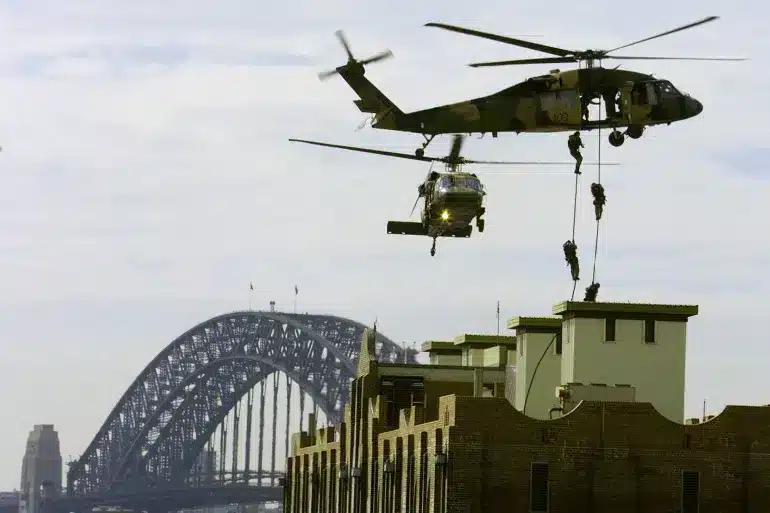
    Argentina fans are pictured climbing street lights as they celebrate winning
    Image:Argentina fans are pictured climbing street lights as they celebrate winning

    “I can’t believe it! It was difficult, but we did it, thanks to Messi,” said Santiago, 13, as he celebrated with his family outside the former home of Argentine football legend Diego Maradona.

    Bearing flags, hats and the country’s iconic blue-and-white jerseys, fans took over Buenos Aires’ downtown and other iconic spots within minutes of the win.

    “It is an immense joy after so much tension,” said lawyer Nicolas Piry, 46.

    “The harmony between the team, headed by a leader who plays at a level making him the best in the world, and the players’ condition in general led us to this well-deserved success. Let’s go Argentina!” he added.

    Soccer Football - FIFA World Cup Final Qatar 2022 - Fans in Buenos Aires - Buenos Aires, Argentina - December 18, 2022 General view as Argentina fans with a Diego Maradona banner celebrate after winning the World Cup by the Obelisco REUTERS/Agustin Marcarian
    Soccer Football - FIFA World Cup Final Qatar 2022 - Fans in Buenos Aires - Buenos Aires, Argentina - December 18, 2022 Argentina fans at the Obelisco celebrate winning the World Cup REUTERS/Martin Villar

    There were similar scenes of jubilation among Argentina fans who had travelled to Qatar for the tournament.

    “Probably for the people of my generation one of the biggest things we have ever lived (through),” one supporter told Sky News.

    “I thought I died for a moment, my heart stopped for a minute. It was a battle until the last minute.”

    There were more sombre scenes in the French capital, where dreams of two World Cup titles in a row for Les Bleus were dashed in heart-breaking fashion.

    In the packed Belushi sports bar in Paris, some stood still, shaking their heads in disbelief in the match’s aftermath as Kylian Mbappe’s historic hat-trick brought France just short of glory.

    “To lose on penalties is horrible,” said high school student Ousman Diaw, who used his French flag to shield him from the rain as he headed home.

    Soccer Football - FIFA World Cup Final Qatar 2022 - Fans in Paris watch Argentina v France - Paris, France - December 18, 2022 A France fan reacts as they watch the final REUTERS/Sarah Meyssonnier

    “Messi deserves it though. He’s a good player and he had done everything except this.”

    “It’s so disappointing. We came back and believed we could do it,” said supporter Romain Cyne.

    Riot police were seen moving towards fans along the Champs Elysee in Paris and in Nice, small fires were seen in one street as a group of people congregated with one holding a flare, as local media reported clashes.

    In Boulogne, scenes of violence were reported with police using tear gas.

    French President Emmanuel Macron, who watched the match from the stands, later consoled Mbappe on the pitch.

    “‘Les Bleus’ let us dream,” the President tweeted.

    Footballing legend Pele, who has received well-wishes from players during the tournament concerned for his health, said the match was “enthralling”.


    View this post on Instagram


    A post shared by Pelé (@pele)

    He said on Instagram: “What a gift it was to watch this spectacle to the future of our sport.

    “And I couldn’t fail to congratulate Morocco for the incredible campaign. It’s great to see Africa shine.

    “Congratulations Argentina! Certainly Diego is smiling now.”

    Messi’s club teammate Neymar posted his congratulations on Instagram, as social media was awash with people crowning the Argentine the greatest player of all time.

    Meanwhile, tweets came in praising Messi from the likes of Declan Rice and Andy Murray, who tweeted: “Is messi the best athlete of all time? Forget just football. What a man.”


  • UK to soon announce $304m in new military aid for Ukraine

    ‘Hundreds of thousands of rounds of artillery ammunition’ will be included in the new package, according to Sunak’s office, for use against Russia.

    A new $304 million package of military aid for Ukraine to support its counteroffensive against Russia will be announced by British Prime Minister Rishi Sunak.

    According to a statement from the prime minister’s office released on Monday, the package contains “hundreds of thousands of rounds of artillery” and is intended to guarantee “a constant flow of critical artillery ammunition to Ukraine throughout 2023.”

    Later on Monday, according to his office, Sunak will make the declaration at a Joint Expeditionary Force (JEF) summit in Latvia.

    The JEF summit brings together leaders from Denmark, Estonia, Finland, Iceland, Latvia, Lithuania, the Netherlands, Norway, Sweden and the United Kingdom, and was called to discuss the “ongoing efforts to counter Russian aggression in the Nordic and Baltic regions”, the statement said.

    At the meeting, Sunak will call on Nordic, Baltic and Dutch counterparts to maintain or exceed 2022 levels of support for Ukraine in 2023.

    “The UK is already Europe’s leading provider of defensive aid to Ukraine, including sending Multiple Launch Rocket Systems and recently, 125 anti-aircraft guns,” the statement added.

    “We have also provided more than 100,000 rounds of ammunition since February, with the deliveries directly linked to successful operations to retake territory in Ukraine.”

    Since Russia invaded Ukraine on February 24, the UK has committed some $7.43bn in aid, according to the Kiel Institute for the World Economy, a Germany-based group that tracks support for Kyiv.

    The UK is the second-biggest donor nation to Ukraine after the United States, which has pledged some $51bn in humanitarian, financial and military aid, according to the Kiel Institute.

    Sunak’s office said the British leader had updated Ukrainian President Volodymyr Zelenskyy on the latest aid last week.

    The pair had met in person when Sunak visited Kyiv last month.

    Zelenskyy is meanwhile expected to address the JEF summit in the Latvian capital, Riga, via video link, according to Sunak’s office.

    The JEF meeting will also discuss further air defence support for Ukraine, which has been scrambling to fend off Russian missile attacks on its critical infrastructure, including its power grid, it said.

    Source: Aljazeera.com 


  • Cost of living crisis: 130 bus companies cap fares at £2 to help passengers

    In light of the 10.1% inflation rate, the government initiative aims to make it easier for commuters to get to work, school, and appointments.

    130 operators outside of London have limited bus fares to £2 in an effort to assist commuters with the rising cost of living.

    The £60 million project, which will cap the number of single journeys, is funded by the Department of Transportation.

    The average bus fare in England is currently £2.80, but in rural areas with few services, that cost can increase to over $5.

    One-way ticket prices will now be capped at £2 by 130 bus companies, including National Express and Stagecoach. The programme is not applicable in London.

    Children’s tickets are also being frozen at £1 for a single journey.

    The government initiative hopes to help passengers get to work, school and appointments more cheaply amid 10.1% inflation.

    Buses minister Richard Holden said: “Brits love buses. They’re the most popular form of public transport in England, making up half of all journeys.

    “The scheme will also take two million car journeys off the road and it’s fantastic to see so many bus operators signing up.”

    National Express chief executive Tom Stables added: “More people using buses is good for the economy, environment and wider society.

    “Bus travel is simple, cheap and easy and there’s never been a better time to get onboard.”

    Source: Skynews.com