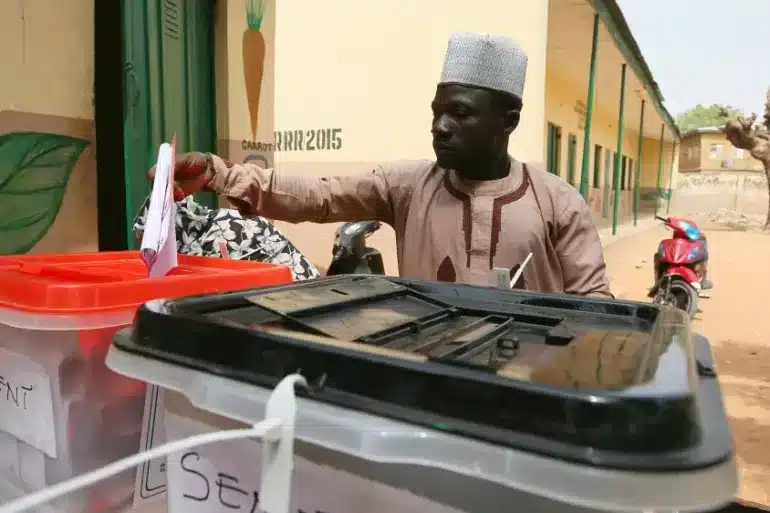
Between 2019 and 2022, there were 50 documented attacks on electoral commission offices nationwide.
The electoral commission has warned that failure to address insecurity could result in the cancellation or postponement of Nigeria’s general election in late February.
“If the insecurity is not monitored and dealt with decisively, it could ultimately culminate in the cancellation and/or postponement of elections in sufficient constituencies to hinder declaration of elections results,” said Abdullahi Abdu Zuru, chairman of the Independent National Electoral Commission (INEC)’s Board of Electoral Institute, on Monday.
President Muhammadu Buhari, who steps down after two terms, is leaving office without addressing insecurity that continues for 13 years due to armed groups like Boko Haram in the northeast, increased abduction and killings by bandits and herders in northwestern and central states, as well as separatist tensions in the southeast.
This could “precipitate [a] constitutional crisis”, he said, adding it “must not be allowed to happen and shall not be allowed to happen” before the February 25 vote. Security personnel and election officials needed to be fully equipped to deal with “any challenge at all times”, he said.
Zuru was speaking on behalf of INEC Chairman Mahmood Yakubu at the validation of election security training resources in the capital, Abuja, according to local daily The Cable.
He however asserted that Nigeria’s national security adviser, Mohammed Babagana Monguno, and INEC’s chairman had jointly “assured the nation that conducive environment will be provided for [the] successful conduct of the 2023 general election”.
“The Commission is not leaving anything to chance in ensuring that intensive and extensive security are provided for election personnel, materials and processes,” he said.
The threats facing Nigeria are multiple and widespread.
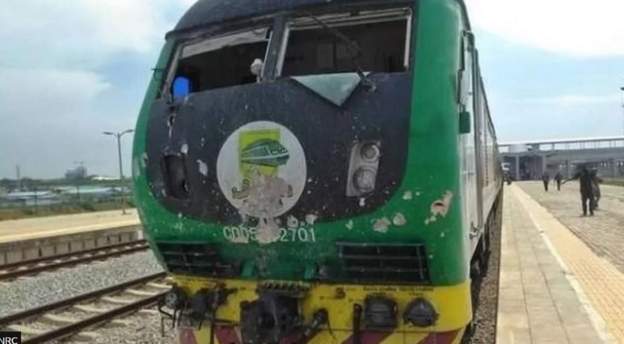
On Saturday, armed men attacked a train station in the southern state of Edo, kidnapping about 30 people and wounding others.
Kidnapping has become a serious problem, with “bandits” carrying out mass abductions, mostly in the northwest, though violence has spilled over to other regions.
INEC recorded 50 attacks on its offices between 2019 and 2022 in election-related violence, as well as protests and criminality unrelated to elections.
In July last year, armed men bombed a prison on the outskirts of Abuja, freeing hundreds of inmates in an attack claimed by ISIL (ISIS)-allied fighters.
The United States ordered diplomats’ families to leave Abuja in October due to what it called a “heightened risk of terrorist attacks” in the capital.
Authorities later said they had beefed up security.
Eighteen candidates are vying to replace Buhari, including Bola Tinubu of the governing All Progressives Congress (APC) party, Atiku Abubakar of the opposition Peoples Democratic Party (PDP), and Peter Obi of the Labour Party (LP).
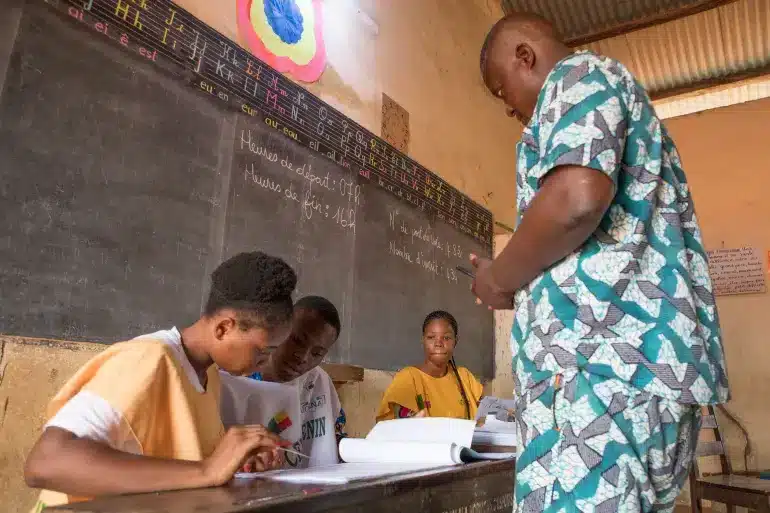
Preliminary results indicate that Benin’s opposition has returned to parliament after a four-year absence, winning 28 seats in elections dominated by President Patrice Talon’s allies.
The election on Sunday was a litmus test for the West African state where Talon has promoted development, but critics say his policies have come at the expense of Benin’s once-thriving multiparty democracy.
According to the CENA electoral authority, the main opposition party, the Les Democrates won 28 seats, while the Republican Bloc (BR) and Progressive Union for Renewal (UP-R) parties allied with Talon won 81 seats.
None of the remaining four parties competing for the 109 seats received enough votes to meet the 10% parliamentary representation threshold.
Final results are expected on Friday after a vote that went ahead peacefully and in line with the regulations, according to election observers from the regional bloc Economic Community of West African States or ECOWAS.
Voter turnout in the polls was a low 38.66 percent, the electoral commission said, despite analysts predicting it would be higher as more parties were involved.
Four years ago, opposition parties were effectively barred from participating in a legislative ballot due to a tightening of election rules, resulting in a parliament dominated by Talon supporters.
Most of Talon’s key opponents have also been jailed or forced into exile after the cotton magnate was elected in 2016 and later re-elected in 2021.
The 2019 legislative vote was marred by deadly clashes in an opposition stronghold, historic low turnout and an internet blackout.
On Sunday, seven parties – including three allied to the opposition – were allowed to participate.
Opposition leaders had hoped their parties would gain seats in preparation for the 2026 presidential election, when candidates will need the backing of lawmakers to be registered.
Four judges are appointed by lawmakers while three are chosen by the president.
Les Democrates, linked to Talon’s predecessor and rival Thomas Boni Yayi, also said it would seek to push an amnesty law in parliament to free jailed colleagues and allow the return of exiles.
In December 2021, Reckya Madougou was sentenced to 20 years in prison on a charge of “terrorism”, while Joel Aivo – another opposition leader and academic – was jailed for 10 years for alleged conspiracy against the authority of the state.
Both were tried by a special court dealing with “terrorism” and economic crimes, known as the CRIET. Critics say the court, opened by Talon’s government in 2016, has been used to crackdown on his opponents.
Sunday’s legislative vote took place as Benin and other Gulf of Guinea coastal countries, Ghana, Togo and Ivory Coast, face a growing threat from violence spilling over their northern borders with the Sahel.
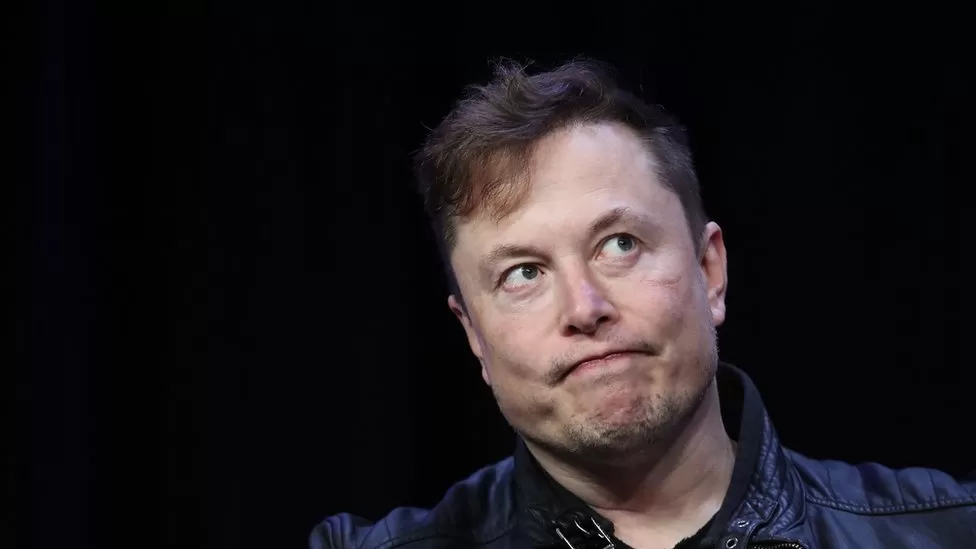
Elon Musk has set a new world record for the largest personal fortune loss in history.
Guinness World Records said in a blog on its website that he lost around $165 billion between November 2021 and December 2022.
The figures are based on data from the publisher Forbes, but Guinness believes Mr Musk’s losses could have been higher.
It follows a drop in the value of Mr Musk’s electric car company Tesla after he purchased Twitter last year.
Investors are concerned that Mr. Musk is no longer giving Tesla enough attention following his $44 billion (£36 billion) acquisition of the social media company.
Mr Musk’s losses since November 2021 surpass the previous record of $58.6 billion (£47 billion), suffered by Japanese tech investor Masayoshi Son in 2000.
The estimated loss is based on the value of his shares, which could regain their value, meaning Mr Musk’s wealth would increase again.
In December, the Tesla boss lost his position as the richest person in the world to Bernard Arnault, the chief executive of French luxury goods company LVMH, which owns fashion label Louis Vuitton.
The value of Tesla shares dropped around 65% in 2022, in part because of Tesla’s performance. The firm delivered just 1.3 million vehicles during the year, falling short of Wall Street expectations.
However, Mr Musk’stakeover of Twitter – where he has sparked controversy by firing large numbers of staff and changing content moderation policies – is behind most of the share slump.
Many Tesla investors believe he should be focusing on the electric vehicle company as it faces falling demand amid recession fears, rising competition, and COVID-linked production challenges.
“Long-term fundamentals [at Tesla] are extremely strong. Short-term market madness is unpredictable,” Mr Musk tweeted after the stock markets closed for the year in December 2022.
According to Forbes, Mr. Musk is now worth approximately $178 billion (£152 billion), while Bernard Arnault is estimated to be worth $188 billion (£155 billion).
US President Biden orders an investigation into the issue, as flights resume across the country
According to US authorities, federal authorities halted domestic flight departures for more than two hours on Wednesday due to a problem with a system used by pilots.
The US Federal Aviation Administration (FAA) announced Wednesday at 8:50 a.m. ET (12:50 GMT) that the “ground stop” had been lifted and that flights were gradually resuming across the country. Departures had been halted after the FAA stated that it was working to restore a system that alerts pilots to hazards and changes to airport facilities and procedures.
Authorities said the system had stopped processing updated information, known Notices to Air Missions, or NOTAMs, leading to hundreds of flight delays that were expected to persist throughout the day.
“We continue to look into the cause of the initial problem,” the FAA tweeted upon lifting the stop. The agency first tweeted about the issue at 6:29am ET (11:29 GMT).
White House Press Secretary Karine Jean-Pierre said in a tweet that US President Joe Biden had been briefed on the matter and had asked the US Department of Transportation to investigate the cause.
The President has been briefed by the Secretary of Transportation this morning on the FAA system outage. There is no evidence of a cyberattack at this point, but the President directed DOT to conduct a full investigation into the causes. The FAA will provide regular updates.
“There is no direct evidence of a cyberattack at this point,” Jean-Pierre tweeted.
However, Biden later told reporters he had spoken to US Secretary of Transportation Pete Buttigieg and that “they don’t know what the cause is.”
“I told him to report directly to me when they find out. Air traffic can still land safely, just not take off right now,” he said.
In a tweet, Buttigieg said he was in touch with the FAA and monitoring the situation. He later said the affected system had been “fully restored”.
“I have directed an after-action process to determine root causes and recommend next steps,” he tweeted.
FAA has determined that the safety system affected by the overnight outage is fully restored, and the nationwide ground stop will be lifted effective immediately. I have directed an after-action process to determine root causes and recommend next steps.
The issue caused arrival and departure delays at airports across the US affecting at least 5,800 flights, according to tracking website FlightAware. Further delays were expected as a knock-on to the morning outage. More than 250 flights had been cancelled by 10:30am ET (15:30 GMT).
In a tweet, the FAA said that all flights in the sky at the time of the issue were safe to land.
“Normal air traffic operations are resuming gradually across the US following an overnight outage to the Notice to Air Missions system that provides safety info to flight crews,” the agency tweeted shortly before 9am ET (14:00 GMT).
The FAA said that the first flights to resume were at the Newark Liberty International Airport in New Jersey and Atlanta Airport in Georgia.
More than 21,000 flights were scheduled to take off in the US Wednesday, mostly domestic trips, and about 1,840 international flights were expected to fly to the US.
Air Force spokeswoman Ann Stefanek said the US military flights were not impacted because the military has its own NOTAMS system separate from the FAA system, and the military’s system was not affected by the outage.
Before commencing a flight, pilots are required to consult NOTAMs, which list potential adverse impacts on flights, ranging from runway construction to the potential for icing. The system used to be telephone-based, with pilots calling dedicated flight service stations for the information, but has since been moved online.
The NOTAMs sent by the FAA are part of a global safety system managed through the United Nations’ aviation agency.
That agency has been leading an effort to overhaul the system to make it easier for airlines and pilots to filter the most important warnings and present them in clearer language, with the lengthy reports at times burying important updates.
For example, in July 2017, an Air Canada flight landed on the wrong runway at San Francisco’s airport and came within seconds of colliding with four other planes.
The notice of the closure of one of the two runways at the airport had been flagged in the pre-flight NOTAM – deep on page eight of a 27-page briefing – and missed by the pilots involved.
The latest incident comes as US travellers have faced several challenges amid a post-COVID lockdown boom in flying over the summer, with long lines, lost baggage, and cancellations and delays common.
At the end of 2022, winter storms and a breakdown with staffing technology at Southwest Airlines also created headaches for travellers in the country.
Masimba Mupavaenda, the school’s headteacher, stated that “stylish haircuts” were not tolerated at George Stark High School.
“Learners have a tendency of coming to school unprepared… there are some who have stylish hair, some have tints and all sorts of hairstyles which do not promote good learning,” Mr Mupavaenda said.
The just over two-minute long video shows him running a pair of scissors across the students’ hair.
Critics commenting on Twitter said his actions were an “abuse”, “colonial”, “ignorant”, “humiliating” and offensive”.
But one supporter applauded Mr Mupavaenda saying it was necessary to instil discipline.
“Thank you sir, as a former staff at the GSHS, it has been our mandate to bring discipline and sanity at the institute, keep up the good work sir. I am so delighted to see you pushing towards the disciplinary pole! keep it up.”
“Rules are there to be followed. The parents know the rules and so do the students. You either tow the line or face the music. Well done for implementing what we already know,” another said.
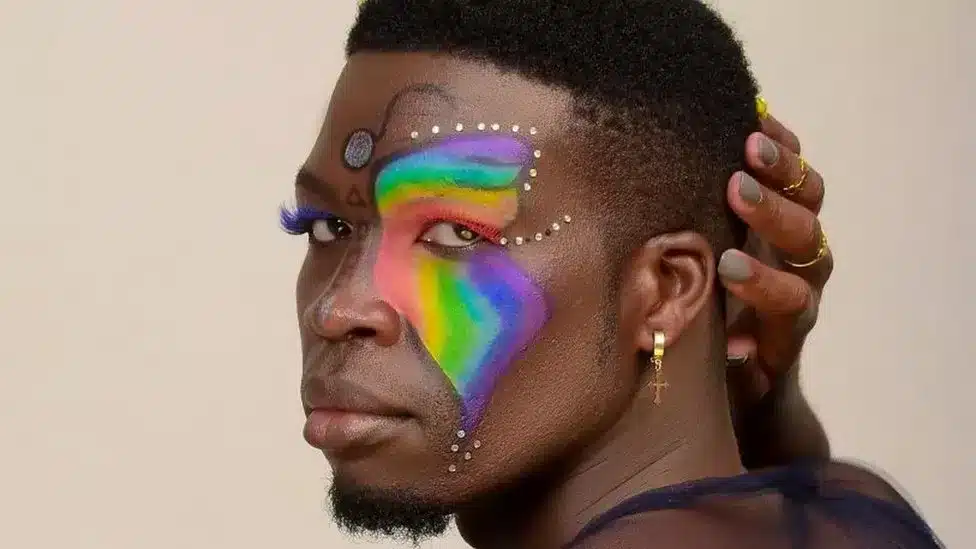
A pathologist has revealed the most recent details of a murder that has angered the public: Kenyan LGBT activist Edwin Chiloba was smothered to death.
Johansen Oduor claimed that the man had socks shoved into his mouth and that a piece of denim from a pair of jeans was tied around his face.
The pathologist continued “He died from asphyxia, which is caused by smothering”.
Chiloba’s body was discovered last week in a metal box dumped by the side of the road not far from Eldoret, a town in western Kenya where he attended university.
The murder drew global condemnation, with human rights groups linking it to his sexuality.
But police have not done so, and have not yet given a motive for the murder.
Five people have been arrested in connection with the murder, including Chiloba’s long-time friend Jackton Odhiambo, who police have identified as the primary suspect.
A magistrate gave police permission on Monday to detain the five for a further 21 days, as they continue with their investigations.
The five have not yet been charged with any crime.
Dr Oduor, the chief government pathologist, said the postmortem also revealed that Chiloba’s nails were discolored, indicating that he died from a lack of oxygen.
Chiloba had not sustained any other injuries, Dr Odouor said, dismissing media reports that his eyes had been gouged out.
Tributes on social media described the activist, who was in his mid-20s, as “an amazing human” and an “iconic fashion designer”.
He had moved to Eldoret from the capital, Nairobi, in 2019 to study fashion and was beginning to make a name for himself in design, a friend said.
Last month Chiloba wrote on Instagram that he was “going to fight for all marginalised people”, saying that he himself had been marginalised.
Human rights groups have called on police to swiftly resolve his killing.
The remaining ten senators’ terms have expired, so the Caribbean country is now devoid of all democratically elected institutions.
As the only remaining senators in Haiti saw their terms expire over night, the country’s escalating political crisis has once again come into focus. This is a worrying development in a nation where gang violence and instability are on the rise.
Although it had been reduced to just 10 members after Haiti failed to hold legislative elections in 2019 to fill open seats, the Senate was still the last democratically elected institution in the country. Ten senators were elected to represent a nation of almost 12 million people.
But since their terms in the House and Senate expired overnight on Tuesday, the Caribbean nation is now without a single lawmaker.
“It’s a very grim situation,” Alex Dupuy, a Haitian-born sociologist at Wesleyan University in the United States, told The Associated Press news agency. “One of the worst crises that Haiti has had since the Duvalier dictatorship.”
The bloody regime of Jean-Claude “Baby Doc” Duvalier, who fled the country in 1986 after succeeding his father, Francois “Papa Doc” Duvalier, marked the last time Haiti lacked elected officials.
Gang violence has been on the rise in Haiti in recent months, particularly after the power vacuum created by the July 2021 assassination of President Jovenel Moise, who had been ruling by decree.
The country’s de facto leader, interim Prime Minister Ariel Henry, whom Moise chose for the post just days before he was killed, has faced a crisis of legitimacy, with some Haitian civil society leaders urging him to hand power over to an inclusive, transitional government.
Henry has rejected that demand, saying Haiti needs new elections to chart a path out of the overlapping crises it faces.
But rights groups have questioned how to vote can be organised when instability appears to be worsening and most Haitians are living in fear of deadly violence on the streets, especially in and around the capital Port-au-Prince.
On January 1, Henry said that the Supreme Court would be restored and a provisional electoral council would be tasked with setting a reasonable date for elections, but he did not offer a specific timeline.
[1/2]
En cette année 2023, nous devrons apprendre à nous faire confiance les uns les autres. Et je vous demande de me prendre au mot quand je parle de la volonté de mon gouvernement de tout mettre en œuvre pour reconstituer nos institutions démocratiques. pic.twitter.com/jynJKUKwTq
Translation: “In this year 2023, we need to learn to trust each other. And I am asking you to take me at my word when I speak of my government’s desire to do everything possible to reconstitute our democratic institutions.”
In a series of posts on Twitter, Henry asked Haitians to trust each other, as well as to trust that his government wants to do all it can to rebuild Haiti’s democratic institutions.
Dupuy, the professor, said there currently are no checks and balances on Henry’s power, however. “As long as that situation continues, Henry is going to be behaving like a dictator,” he said.
A spokesperson for the prime minister declined to comment to The Associated Press.
The United Nations resident and humanitarian coordinator in Haiti warned in November that armed groups were “terrorising” residents of Port-au-Prince, with nearly 200 murders and more than 100 kidnappings reported during the previous month.
Haitian gang members also have used sexual violence, including rape, “to instill fear” in communities, Ulrika Richardson said at that time.
“We are scared to step out of our houses,” said Daniel Jean, 25, who sells phone chargers and other equipment in the capital. “We are cornered: kidnapping, extortions. Gangs are killing people because we don’t have ransom.”
Haitians have lost all trust in the democratic process, Jean told AP, adding that he will not vote if the same politicians and parties appear on the ballot: “They have more influence than the gangs. They control all the gangs.”
In October, Henry appealed for an international armed force to be deployed to Haiti to restore order and secure a humanitarian corridor to allow fuel and water deliveries in the capital.
The demand enjoyed the backing of the UN and the US, but it also set off new protests, with many Haitians, including civil society leaders, rejecting the prospect of foreign intervention.
Washington-led efforts to mount “a non-UN mission led by a partner country” to Haiti have stalled since then, as President Joe Biden’s administration so far has failed to get another nation to agree to lead such a force, US media outlets have reported.
The issue was expected to come up in discussions on Tuesday between Biden and Canadian Prime Minister Justin Trudeau, who are meeting in Mexico City for a “Three Amigos” summit hosted by Mexican President Andres Manuel Lopez Obrador.
For companies like Apple, decoupling from China can be an opportunity to improve their human rights record.
In late November, protests erupted in a factory manufacturing Apple products in the Chinese city of Zhengzhou amid workers’ discontent about pay. Footage and images from the site showed police beating protesters and arresting them.
The turmoil in Zhengzhou was the latest in a series of challenges that have delayed the manufacturing of Apple products in China and led to the company accelerating its plans to move its production elsewhere.
Other tech giants are seeking to do the same, concerned about tensions between the US and China and COVID-19-related shutdowns imposed by the Chinese authorities.
As these companies start to relocate their operations, they have the chance to account for their human rights record in the communist country. For years, they have bowed to state policies that restrict the fundamental freedoms of Chinese citizens.
These companies have to review their human rights records in authoritarian states and commit not to make the same mistakes in the countries where they will relocate their production or grow their markets. It is time for tech companies to undertake a human rights reset.
Compliance with censorship
Apple, the world’s richest company, has made a significant profit in China, which has also left it vulnerable to pressure from the local authorities to act against its stated human rights commitments. While the size of its production has been politically and economically important to the Chinese government, which in theory would have given the company leverage to oppose such rights abuses, Apple has been seemingly unwilling to push back in meaningful ways.
The company has complied with repressive legislation, such as the Cybersecurity Law and others, which require tech companies, among others, to monitor and report politically sensitive content, store Chinese users’ data in China and provide the authorities with access to it.
Apple has also engaged in censorship, deleting tens of thousands of apps from its Chinese App Store, including encryption and circumvention tools, such as VPNs needed to hop over the Great Firewall of China.
Most recently, in November, Apple limited the parameters for wireless filesharing on its app AirDrop after its use by anti-government protesters in China. The changes allow the option “share with everyone” to be active for just 10 minutes before it switches back to “contacts only”, effectively eliminating its utility during protests.
Apple is not alone. Microsoft, another US-based tech giant, has also been compliant with the repressive policies of the Chinese government.
Following the implementation of the Cybersecurity Law, the company partnered with the state-owned China Electronics Technology Group to develop a version of its Windows operating system specifically for Chinese government users. This has raised concerns about the company giving backdoor access to its software to the Chinese government.
Microsoft is also a member of the Internet Society of China and as such has made a pledge to block websites that offend the Chinese censors.
After most services offered by Google were blocked in China in 2010, Microsoft’s Bing has been the only major foreign search engine that works without a VPN. Surely, compliance with Beijing’s censorship demands helps keep it that way.
Similarly, LinkedIn, which Microsoft acquired in 2016, was the only big foreign social networking site available in China, after Twitter, Facebook, and YouTube were blocked in 2009. In late 2021, LinkedIn had over 57 million users, making China its third largest market after the United States and India. In exchange for access to this sizeable userbase, LinkedIn too was expected to play the censorship game.
The platform geoblocked content belonging to high-profile human rights defenders, such as Zhou Fengsuo, journalists like Bethany Allen-Ebrahimian, and corporate investigator Peter Humphrey, along with the posts of millions of Chinese users deemed “sensitive”.
Despite its record of compliance, in March 2021 the Cyberspace Administration of China rebuked LinkedIn for not censoring enough. Finally, in October 2021, Microsoft announced it was shutting down LinkedIn services in China due to a “significantly more challenging operating environment and greater compliance requirements”.
Clearly, the cost of tech companies doing business in China’s enormous market, whether producing or selling products and services, has long been to abandon their responsibilities to respect human rights. But it shouldn’t be this way.
A human rights reset
As big tech companies prepare to reduce their reliance on production in China, they have an opportunity to set new standards for human rights.
Apple is looking to shift its supply chain to India and Vietnam. But both of these countries are known to engage in severe censorship as well.
India leads the world in internet shutdowns, responsible for 106 of 182 shutdowns documented last year by the #KeepItOn Coalition. In recent years, the Indian authorities have enacted legislation that pressures tech companies to over-censor and retain user data to hand over to the government. It now looks to threaten end-to-end encryption.
India has ordered platforms to take down content it didn’t want and warned of severe penalties for noncompliance, including threatening Twitter staff with up to seven years imprisonment. Earlier this year, Twitter sued the government for such “overbroad and arbitrary” regulations.
It is also concerning that Apple is expanding into Vietnam, which ranks among the five worst internet freedom abusers in the world, according to US-based pro-democracy organisation Freedom House.
Like China, Vietnam’s Cybersecurity Law requires tech companies to comply with data localisation, actively censor content, and make user data available to the authorities. In November, its government announced plans for new rules that would require platforms to remove offending content within 24 hours.
Vietnam has also shown that it will hold tech companies financially hostage until they comply with its digital diktats. In 2020, following months of government-backed bandwidth throttling to drastically slow down its services, Facebook, which makes about $1bn a year in the country, agreed to increase censorship of “anti-state” content on its platform.
With such repressive policies in place in both India and Vietnam, Apple faces the risk of repeating the same mistakes it made in China unless it changes its approach to dealing with government pressure.
The company and other tech giants doing business with repressive states should heed their responsibilities under the UN Guiding Principles on Business and Human Rights (UNGPs) to address any adverse human rights impacts their activities may have, including on the rights to privacy, freedom of expression, and access to information online.
They should resist government orders to arbitrarily restrict freedom of expression and implement labour protections in their supply chains.
They should be fully transparent about how they negotiate market access and licensing agreements with governments and make such documents publicly available to empower independent oversight.
Companies should have a robust policy on how they will adhere to their human rights responsibilities in the face of government pressure and hold open consultations with civil society to establish clear benchmarks and red lines.
Companies must commit to independent human rights impact assessments, which should be revised as conditions change, and be publicly available.
Shareholder groups in these companies should also impress upon corporate leadership the importance of compliance with their human rights responsibilities.
Tech companies can and should do business without hurting human rights. Having a positive human rights record could be just as profitable as bowing down to repressive state policies.
DISCLAIMER: Independentghana.com will not be liable for any inaccuracies contained in this article. The views expressed in the article are solely those of the author’s, and do not reflect those of The Independent Ghana
The establishment of a subcommittee to look into the alleged “weaponization” of government was approved by theUS House of Representatives.
The United States House of Representatives, which is controlled by Republicans, voted on Tuesday to open an inquiry into what they refer to as Democratic President Joe Biden’s “weaponization” of the federal government. Democrats, on the other hand, have called it a partisan fishing trip.
Republicans have pledged to use their new majority to investigate former Republican President Donald Trump and his supporters who stormed the US Capitol on January 6, 2021. These investigations were conducted by the US Justice Department, the Federal Bureau of Investigation (FBI), and other federal agencies.
The party-line vote on Tuesday aims to do just that, setting up a “Select Subcommittee on the Weaponization of the Federal Government”. The body is set to launch a wide-ranging probe of Democrat Biden’s administration, which Republicans accuse of “weaponizing” the FBI against Trump.
Republicans will also investigate claims that the Biden administration has pressured big tech companies to censor views that run contrary to White House policy. The bill establishing the panel said legislators would probe how the executive branch works with the private sector, nonprofit groups and other agencies “to facilitate action against” American citizens.
“We need to get to work now,” Republican James Comer, head of the Oversight Committee, said in a speech on the House floor. “We must expose the abuses committed by the unelected, unaccountable federal bureaucracy.”
Among the federal agencies pinpointed are those looking into Trump’s attempt to overturn his 2020 defeat and alleged mishandling of classified documents. Trump has dismissed these probes as “witch hunts”.
Days after the August search of Trump’s Mar-a-Lago resort for classified material, Republican Representative Elise Stefanik promised to launch a probe of “Joe Biden and his administration’s weaponization of the Department of Justice and FBI”.
“The FBI raid of President Trump is a complete abuse and overreach of its authority,” she said.
Democrats have raised concerns about a provision that authorises the committee to probe “ongoing criminal investigations”, which are generally outside the purview of congressional oversight.
“This is a violation of separation of powers, and it’s also very dangerous,” said Jerrold Nadler, the top Democrat on the Judiciary Committee.
On Monday, the White House said that lawyers for Biden found classified documents at a Washington, DC-based think tank affiliated with the president.
Some Republicans compared that discovery to the criminal investigation into Trump’s removal of classified documents from the White House, though smaller numbers of papers are involved. Biden’s team said it turned the documents over upon discovery, while Trump resisted calls to return the paperwork and now faces an investigation into whether he obstructed justice.
Legal experts said federal law enforcement agencies would almost certainly reject any attempt by a congressional committee to obtain documents related to ongoing investigations.
Scott Perry, a Republican Judiciary Committee member whose phone was seized as part of the federal probe into efforts to overturn the 2020 election, is among those who might seek a subcommittee seat. That would create a situation where he could seek to oversee a federal investigation into himself.
Republican Representative Brian Fitzpatrick, a former FBI agent, told the Reuters news agency he supported the creation of the subcommittee.
But, he added, handing over information on an active investigation was “inconsistent with federal law”.
Activists vow to continue defending Luetzerath village in an effort to stop the Garzweiler mine’s expansion.
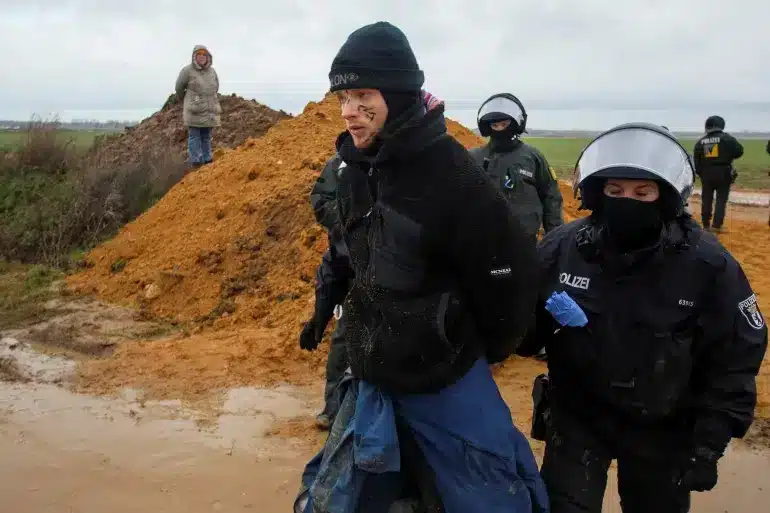
In a standoff over the expansion of a coal mine, German police have started evicting climate protesters from a deserted village.
Officers in riot gear entered Luetzerath on Wednesday morning, where hundreds of protesters had camped out in an effort to halt the expansion of the nearby RWE-operated Garzweiler coal mine.
In a standoff that highlights the tensions surroundingGermany’s climate policy, activists have been attempting to stop the village from being bulldozed to make way for the opencast lignite mine for the past two years.
Environmentalists say bulldozing Luetzerath would result in huge amounts of greenhouse gas emissions, but the government and RWE say coal is needed to ensure Germany’s energy security.
The protesters on Wednesday formed human chains, made a makeshift barricade out of old containers, and chanted “We are here, we are loud, because you are stealing our future”.
Some protesters threw beer bottles at the police. Officers said Molotov cocktails and stones were also hurled at them.
Al Jazeera’s Step Vaessen, reporting from Luetzerath, said protesters were “holding firm”.
“[Police] are in the streets, where the few houses of Luetzerath that remain are still standing,” she said. “Villagers left quite a while ago, but the village has been occupied for the last two years by climate activists.”
Luetzerath has become “an international symbol for the fight against climate change” because dozens of villages have been destroyed over the years to make way for this mine, she said.
“Now Luetzerath has to go as well, that is the government’s decision.”
‘We are here and we will stay’
Two days earlier, a regional court upheld an earlier ruling to clear the village, which is in the brown-coal district of the western state of North Rhine-Westphalia.
RWE, the company which owns the village’s land and houses, said on Wednesday it would start to demolish the remaining buildings.
“RWE is appealing to the squatters to observe the rule of law and to end the illegal occupation of buildings, plants and sites belonging to RWE peacefully,” it said in a statement.
“Nobody should put their own health and life at risk by participating in illegal activity.”
The flashpoint over the planned expansion of the Garzweiler mine highlights the growing tensions over Germany’s climate policy [Thilo Schmuelgen/Reuters]
Dina Hamid, who is protesting in Luetzerath, said the demonstrators are “prepared to stay” despite the police presence.
“We are squatting in all of the different structures in Luetzerath, and we are staying here because 280 million tonnes of coal are still supposed to be extracted from the Garzweiler mine,” Hamid said.
“We cannot stand that. We cannot stand that people are dying from the climate crisis right now, that’s why we are here and we will stay.”
Growing tensions over climate policy
Environmentalists say Germany’s climate policy has taken a back seat as Europe grapples with an energy crisis, in part driven by Russia’s invasion of Ukraine.
For many European nations, the crisis is forcing a return to dirtier fuels.
This is particularly sensitive for the Greens, a party now back in power as part of Chancellor Olaf Scholz’s coalition government after 16 years in opposition until 2021.
The fallout ofRussia’s offensive has prompted Scholz’s government to change course on previous policies.
Germany is now firing up mothballed coal power plants and extending the lifespan of nuclear power stations after Russia cut gas deliveries to Europe in an energy standoff that sent prices soaring.
The government has, however, brought forward the date when all brown coal power plants will be shut down in North Rhine-Westphalia, to 2030 from 2038, a campaign promise from the Greens.
The Garzweiler mine extracts about 25 million tonnes of lignite every year, according to RWE. The company has said it supports energy transition and a temporary increase in the use of lignite-fired plants to tide Germany through the energy crisis.
A senior police official confirmed that there were casualties from an explosion that was reported to have occurred near the foreign ministry in Kabul, Afghanistan.
Police spokesman Khalid Zadran stated that “security teams have reached the area” after the explosion occurred on Wednesday at around 4 p.m. local time (11:30 p.m. GMT).
Requests for comment on Wednesday went unanswered by the spokespeople for theTaliban-run interior and foreign affairs ministries.
Since General Soeharto’s coup in the middle of the 1960s, there have likely been more than 500,000 violent deaths.
The violent anti-Communist purge of the 1960s and human rights violations like the disappearance of student protesters in the late 1990s are just two examples of “gross human rights violations” that Indonesian President Joko Widodo has apologized for occurring in his nation.
In the middle of the 1960s, after a failed Communist coup, when then-General Soeharto and the military seized power, violence broke out across all of Indonesia, killing more than 500,000 people.
During the bloody episode in Indonesia’s history that ushered in the dictator Soeharto’s decades-long rule, one million or more people were imprisoned on suspicion of being communists.
“With a clear mind and a sincere heart, I as the leader of this country, admit that gross human rights violations have happened in several incidents and I regret they happened very much,” Widodo said in a speech at the state palace in the capital Jakarta on Wednesday.
The president, commonly known as Jokowi, cited 11 other incidents, spanning a period between 1965 and 2003 – prior to his tenure as leader – including the shooting deaths and abduction of students during protests in 1998 that brought down Soeharto.
“I have sympathy and empathy for the victims and their families,” Widodo said.
He said the government was trying to “rehabilitate” the rights of victims “without negating the judicial resolution”, though he did not specify how that would be achieved.
Students leading the protests in 1998 were abducted and disappeared and there were also many victims among the ethnic-Chinese community, a minority in Indonesia, who were resented for their perceived wealth.
Widodo also acknowledged rights abuses in Indonesia’s restive easternmost province of Papua, including a 2003 army and police operation that left dozens of civilians dead and where officers were accused of murder, torture and abduction.
Papua has been the scene of a decades-old rebellion aimed at gaining independence from Indonesia, which took control of the former Dutch colony in the 1960.
Human rights groups said Widodo’s expression of regret, like several other Indonesian leaders before him, did not go far enough as acknowledgement and expression of regret were not sufficient without crimes being legally resolved in court and perpetrators tried.
Indonesia’s late President Abdurrahman Wahid had also apologised for the 1960s bloodshed, while President B.J. Habibie formed a team to investigate the violence in 1998.
Rights activists also noted that cases had been thrown out by the Attorney General’s Office, which is tasked with investigating rights violations.
“The recognition is not enough. It should not have been only regret, but also apology,” Usman Hamid, director of Amnesty International Indonesia told Agence France-Presse.
Any expression of regret must also include a reaffirmation that “serious crimes of the past need to be resolved rightly and justly through judicial means,” he said.
Canada says, the sanctions were for human rights violations committed during armed conflict from 1983 to 2009.
Canada has imposed sanctions on four top Sri Lankan officials, including former presidents Mahinda and Gotabaya Rajapaksa, over “gross and systematic violations of human rights” during armed conflict in the island nation from 1983 to 2009, the Canadian foreign ministry has said.
The Sri Lankan government has taken “limited meaningful and concrete action” to uphold its human rights obligations, the foreign ministry said on Tuesday in a press release.
“The impact this will have on the [Rajapaksa] brothers in particular cannot be understated,” Mario Arulthas, a Phd candidate at SOAS, University of London and an adviser to People for Equality and Relief in Lanka, told Al Jazeera.
“Sri Lanka has been under pressure from countries such as Canada, the US and the UK for years, and has failed to deliver on repeated commitments it has made. This is a further signal, after similar sanctions by the US, that Sri Lanka will continue to be haunted by the crimes it committed against the Tamil people,” he said.
“Sanctioning individuals won’t be enough, however – ultimately there needs to be an international judicial mechanism that puts the perpetrators on trial.”
Alan Keenan, Senior Consultant, International Crisis Group, said that the sanctions “will not lead to quick or major changes within Sri Lanka”.
“But they are a timely reminder that continued impunity will bring increasing costs to the government’s international reputation at a time when it is desperately appealing for international financial assistance to address the economic crisis.”
Last October, the UN Human Rights Council renewed a mandate to collect and preserve evidence of atrocities during the decades-long civil war despite protests from Sri Lanka.
Sagara Kariyawasam, general secretary and member of parliament of the Rajapaksa-dominated Sri Lanka Podujana Peramuna (SLPP), said that all Sri Lankans must condemn the Canadian move.
“Sri Lanka faced the scourge of terrorism for 30 years. Not only a large number of civilians were killed from all communities but also Tamil politicians, intellectuals and civil servants. Even renowned Foreign Minister Lakshman Kadirgamar was killed by the LTTE,” he told Al Jazeera.
“Former presidents Mahinda and Gotabaya Rajapaksa played a great role in ending the war. Now people live without fear of bombs going off, no more body bags go to villages each day.”
Sri Lanka’s separatist war killed more than 100,000 people, according to United Nations estimates [File: Sri Lankan Government/Reuters Handout]
‘Culture of impunity’
Gary Anandasangaree, a Canadian liberal party MP, told Al Jazeera that there is a culture of impunity that has prevailed in Sri Lanka.
If the country is to move forward, it needs to be a state “based on the rule of law”, he said.
“I hope Sri Lanka takes the direction of strengthening the rule of law and begins to hold people to account,” Anandasangaree said.
“We are confident these sanctions will have a ripple effect with other countries undertaking similar measures based on their domestic laws,” he added.
Meanwhile, the Canadian foreign ministry in its statement said it supports efforts towards “urgent political and economic reforms to alleviate the hardships faced by the people in Sri Lanka”.
In response to the humanitarian crisis in Sri Lanka, Canada announced $3m to support the appeals launched by the UN and its partners to address “immediate needs, including food security and livelihoods, shelter and non-food items, as well as nutritional assistance and primary healthcare services for vulnerable children and women”, the statement said.
The number of people in Sri Lanka needing urgent humanitarian help doubled to 3.4 million, the UN recently said. It warned of a worsening food crisis in the south Asian island nation that declared itself bankrupt in July.
The island nation is facing its worst economic crisis since its independence from the United Kingdom in 1948 and has been enduring soaring inflation, power blackouts, and fuel rationing since last year.
Months of protests against high prices and shortages of food and medicines led to the toppling of President Gotabaya Rajapaksa last July. Mahinda Rajapaksa resigned as prime minister last May. The Rajapaksa brothers were blamed for the economic crisis due to the mishandling of government policy.
Since then, thousands with the support of civil rights groups and trade unions have rallied to express their anger over the economic situation and police brutality.
The disarmament is a key component of the peace agreement signed by the government and the rebel group two months ago.
Tigrayan rebels have begun handing in heavy weapons, a key component of a deal signed more than two months ago to end a gruelling conflict in northern Ethiopia, according to a spokesman for the rebel authorities.
A monitoring team comprised of members from both sides and a regional body, the Intergovernmental Authority on Development (IGAD), oversaw the handover in Agulae, about 30 kilometers (18 miles) northeast of the regional capital Mekelle.
The terms of a peace agreement signed on November 2 include disarming rebel forces, restoring federal authority in Tigray and reopening access and communications to the region, which has been cut off since mid-2021.
Fighting broke out in November 2020 when Prime Minister Abiy Ahmed deployed the army to arrest Tigrayan leaders who had been challenging his authority for months and whom he accused of attacking federal military bases.
“Tigray has handed over its heavy weapons as part of its commitment to implementing the #Pretoria agreement” that was signed between Ethiopia’s government and Tigrayan rebels, Tigray People’s Liberation Front spokesman Getachew Reda said in a tweet on Wednesday.
“We hope & expect this will go a long way in expediting the full implementation of the agreement.”
At the handover ceremony, Tigray Defence Forces (TDF) representative Mulugeta Gebrechristos said the start of the disarmament would play a major role in restoring peace.
“We are operating with the belief that if we are to have peace, all things that open the door for provocation must not be there. Peace is vital for us all,” Mulugeta said in a speech broadcast on the local Tigrai TV.
“We are all [part of] one Ethiopia. Both us and the TDF have moved from our respective defensive positions in peace, understanding and love,” Aleme Tadesse, a representative of the Ethiopian army, said.
A November 12 deal on the implementation of the agreement said the disarmament of heavy Tigrayan weapons would take place at the same time as the withdrawal of foreign and non-federal forces.
Neighbouring Eritea has supported the Ethiopian army in fighting in the region but Asmara did not participate in the Pretoria talks.
An Ethiopian government delegation, including the prime minister’s national security adviser Redwan Hussein and several ministers, visited Mekelle on December 26, marking a major step in the peace process.
A few days later, on December 29, Ethiopian federal police entered Mekelle for the first time in 18 months.
The US has accused Kremlin-backed Russian military contractors of meddling in African countries’ internal affairs and “increasing the likelihood that violent extremism will grow” in the Sahel region, which has seen an upsurge in attacks, an allegation Russia has denied.
At a UN Security Council meeting on West Africa and the Sahel on Tuesday, US Deputy Ambassador Richard Mills lashed out at the Wagner Group.
He accused the paramilitary force of failing to address the threat posed by armed groups, robbing countries of resources, violating human rights, and endangering the safety and security of UN peacekeepers and personnel.
France’s political counsellor, Isis Jaraud-Darnault, echoed Mills, saying the “model” used by Wagner mercenaries has proven “totally ineffective in combating terrorism”.
She cited the “nefarious” and devastating impact of their work and human rights violations, including the alleged killing of more than 30 civilians in Mali, and its pillaging of natural resources.
Britain’s Deputy Ambassador James Kariuki cited the deterioration of security in Mali, Burkina Faso, Nigeria and the Lake Chad Basin, and the fear of instability spreading to West African coastal countries. “You cannot ignore the destabilising role the Wagner Group plays in the region. They are part of the problem, not the solution,” he told the council.
Russia’s Deputy Ambassador Anna Evstigneeva rejected what she called attempts “to besmirch Russian assistance to Mali”, where Moscow has a bilateral agreement to assist the transitional government, “and in other countries in Africa”.
“Some countries once again today declared that Russia apparently is pillaging and looting the resources of Africa and is facilitating the growth of the terrorist threat,” she said, accusing those unnamed nations of doing the same thing “throughout the world and in Africa”, especially in neighbouring Libya, which destabilised the entire area.
“Accusations against Russia are just astonishing, given common sense,” and undermine African leaders trying to resolve their own problems and decide who they want to cooperate with, she said.
Evstigneeva never mentioned the Wagner Group by name. The group is run by Yevgeny Prigozhin, a close ally ofRussian President Vladimir Putin, and its mercenaries are accused by Western countries and UN experts of numerous human rights abuses throughout Africa, including in the Central African Republic, Libya and Mali.
Giovanie Biha, the deputy head of the UN Office for West Africa and the Sahel, told the council that “insecurity has again deteriorated in large parts of the region”, due to activities of armed groups, “violent extremists” and criminal networks.
As a result, she said, more than 10,000 schools across the Sahel have closed, leaving millions of children without an education. Nearly 7,000 health centres have also shut down.
Armed groups are fighting for supremacy and control of resources, she said, and the central Sahel is facing “unprecedented levels of security and humanitarian challenges; socio-political instability, further compounded by the impact of climate change; and food insecurity which was exacerbated by the conflict in Ukraine”.
She added that increasing attacks in countries along the Gulf of Guinea are threatening transport arteries to landlocked countries further north.
According to Secretary-General Antonio Guterres’ latest report issued this week, more than 18.6 million people in the region are experiencing “severe food insecurity” – an increase of 5.6 million since the end of June 2022 – with Burkina Faso, Niger and Nigeria being the hardest-hit. About 6.3 million people are displaced across the Sahel, an increase of 300,000 since June.
Russia’s Evstigneeva said Moscow shares concerns about the increasing number of threats in the region, ongoing inter-ethnic and inter-communal conflict, organised crime, drug trafficking and the killing of a large number of civilians by fighters in the second half of 2022.
She pointed to the withdrawal of French counterterrorism forces and the Takuba European military task force under their command on June 30, saying it wasn’t agreed on with Mali’s transitional government and is having “a negative impact” on the security situation in the short-term.
“Nonetheless,” she said, “there is already some progress” and Russia is providing Mali with “appropriate assistance”.
Mills, the US deputy ambassador, said the US is deeply concerned about the security, humanitarian and political crisis in the Sahel causing “a dramatic increase in the strength and influence of violent extremism”.
The problem requires “a democratic governance solution”, he said. “We are also gravely concerned about democratic backsliding across the region and urge the return of democratically elected, civilian-led governments.”
West Africa’s latest wave of coups kicked off in Mali in 2020, followed by another in Guinea in 2021, and then in Burkina Faso in January 2022.
Omar Alieu Touray, president of the West African regional groupECOWAS’ commission, told the council he was pleased to report that transitions to critical elections in the three countries are “on course”, with voting to take place in the next two years.
A knife attack occurred early on Wednesday at Paris’s international Gare du Nord station, leaving six people hurt, including one who is critically injured.
The man was stopped, according to Interior Minister Gerald Darmanin, by two police officers who were not on duty but were heading home after a shift.
He claimed that the alleged assailant had been shot three times and was taken to the hospital with serious wounds.
Authorities are attempting to determine whether the attack had a purpose.
The attack took place at 06:42 (05:42 GMT) – within one minute all six people were injured and the attacker was stopped.
Mr Darmanin thanked for police for their “brave and effective” intervention, which he said saved many lives.
He added that among the injured was one border force officer.
Police are yet to name the man, who did not have identity documents on him at the time he was taken to hospital.
Criminal investigators have taken control of the case for now, rather than anti-terror police, Mr Darmanin said.
The incident caused major delays to trains at the station in the early morning rush, with police cordoning off the station and setting up large white curtains around the attack scene.
Paris Gare du Nord is one of the busiest international railway stations in Europe – with about 700,000 travellers a day.
InCalifornia, where a powerful storm has caused flooding, strong winds, and torrential rains, at least 14 people have died.
While millions more are under severe weather warnings, thousands of people have evacuated their homes.
Data from Poweroutage.us show that nearly 188,000 homes and businesses were without electricity.
Much of the state is expected to experience heavy rain all day Tuesday, and some areas could experience hazardous mudslides as a result.
It has been referred to as “the most impressive storm since January 2005” by the National Weather Service (NWS).
The weather is expected to dump up to 7in (18cm) of rain in some parts by Wednesday and could produce additional flooding, mudslides and landslides. particularly in areas previously hardest hit by heavy rainfall, NWS officials warned.
“An enormous cyclone” is developing off the coast, officials said.
A five-year-old, who was swept away by floodwaters near Paso Robles on Monday, is still missing.
The boy and his mother were reportedly in a truck taking him to school when the vehicle was overcome by water. It sparked a seven-hour search that was called off when the conditions became too dangerous for divers. He has not been declared dead, local officials said, however details of when the search will resume have not been given.
Around 90% of Californians – some 34 million people in the most-populous US state – are under flood watch, according to the National Oceanic and Atmospheric Administration.
“This is not a day to be out doing anything you don’t have to,” Santa Barbara County Sheriff Bill Brown told the Los Angeles Times.
An order issued on Monday afternoon by the Montecito Fire Department directed residents of the town and nearby canyons: “Leave now!”
Residents unable to flee were told to move to their innermost room or high ground.
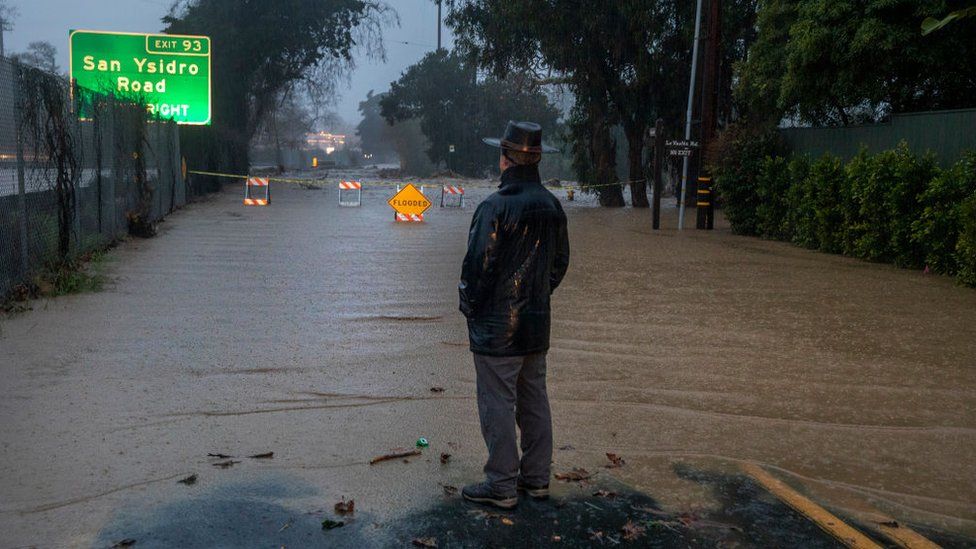
Image caption, Creeks in Montecito, and around California, have flooded into roadways
The NWS reported that up to 14in (35.5cm) of rain was dumped in the last 24 hours in the region.
Across the state, average rainfall totals have hit between 400% and 600% above average values, the NWS said on Tuesday.
People living in the elite coastal enclave of Montecito were among those ordered to leave their homes.
Montecito is home to many Hollywood stars, including actor Rob Lowe, and comedian Ellen DeGeneres, who posted a video from the banks of a flooded creek on Monday.
“This is crazy!” DeGeneres said. “This creek next to our house never flows, ever. It’s probably about nine feet up and is going to go another two feet up.”
The evacuation comes on the fifth anniversary of a mudslide in Montecito that killed 23 people and destroyed more than 100 homes.
This new round of severe weather will bring heavy rain onalready flooded rivers, damaging winds that are expected to topple trees and power lines, and heavy snow in the California mountains.
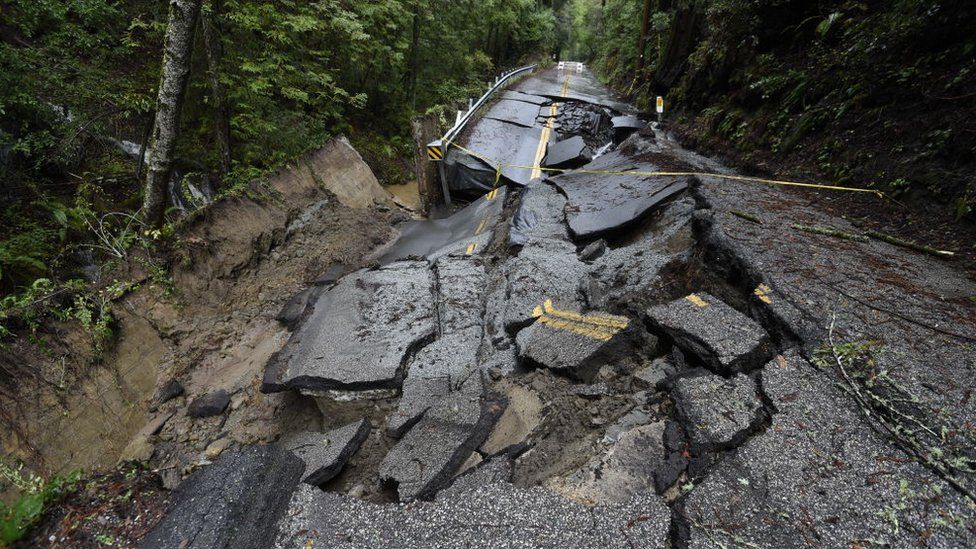
Image caption,A damaged road in the Santa Cruz mountains
The NWS forecasts the heaviest and most widespread rain to hit early Tuesday and into the afternoon. The agency issued a flood warning in areas around Los Angeles, including Orange County and the San Bernardino County Mountains.
Other evacuations have been ordered by officials, including in areas downstream of reservoirs that could overflow.
President Joe Biden declared a state of emergency for California on Monday, which allows the Federal Emergency Management Agency (Fema) to provide disaster relief.
What are atmospheric rivers and bomb cyclones?
In the last week, California has experienced two overlapping weather phenomena – an atmospheric river, where an airborne stream of dense moisture flows in from the ocean, and a bomb cyclone, a storm with a rapid drop in pressure that creates an explosive effect.
Watch: More perilous storms head to California and Oregon
Atmospheric rivers can cause extreme rainfall and floods. Bomb cyclones require a mix of high and low temperatures, rising and dropping air pressure, and moisture, often resulting in strong winds and severe storms.
Much of the area hit by heavy rain has been under extreme drought conditions. Last year, California capped how much water residents can use in an effort to conserve its depleting supply.
Despite the rain, much of the state remains under moderate to extreme drought warnings, according to the US Drought Monitor.
Experts have said that it would take many years of rain to reverse the two-decade drought that has hit the western US.
The passing of Afia Schwarzenegger’s brother, who died just days before their late father’sfirst anniversary, was reported on Tuesday.
On January 17, 2022, their father Augustine Agyei, who was 83 years old, passed away.
The well-known media personality pleaded with God in an Instagram post to show mercy and forgiveness if she had ever wronged him.
Her comment has received different interpretations from sympathizers. Friends and fans have sent their condolences to Afia Schwar and her bereaved family.
“God, forgive me if I have wronged you. Please God, please,” read the caption of the video that captured Afia and her late brother, Richard Osei Bonsu.
On January 10, the actress and media personality took to hersocial media pages to break the news by sharing some fond memories of her deceased brother.
“My brother Richard Osei Bonsu is dead. Just exactly 1 week to my father’s 1 year. Please, I beg everyone to give me and my family privacy in this difficult time. Thank you. It is well. Rest in peace Abban,” she wrote.
Popular media personality Nana Aba Anamoah has expressed her opinions on the Meek Mill saga, which has recently been a hot topic in the media.
Nana Aba contends that she is absolutely certain that the president was completely unaware of Meek Mill’s video shoot at the Jubilee House.
Following the release of Meek Mill’s video, in which he was seen getting cosy at some unauthorised locations at the Jubilee House, officials at the presidency, including President Nana Addo Dankwa Akufo-Addo, have experienced intense backlash on social media.
In the said video, the American rapper was spotted at different locations at the Jubilee House, from the frontage, through the main corridors, in the main conference hall, at a point positioned behind the presidential podium, and later in a sitting area rapping.
Some individuals who have been appalled by the development have since described it as a complete desecration of the seat of the president.
Others have launched a series of attacks on the president for enabling the act, while intermittently firing shots at Meek Mill.
But Nana Aba thinks that the government should be given some slack.
Wading into the discussion on Twitter, the popular broadcaster strongly believes that Meek Mill took those shots at the blind side of the presidency.
“I can bet my last coin that the President knew absolutely nothing about that shoot,” she wrote.
She did, however, insist that, while Meek Mill’s act is repugnant, the people who authorized it would not face any consequences.
“I however, doubt anything will happen to whoever authorized it (if they decide to investigate how Meek Mill desecrated the Jubilee House that way),” she added.
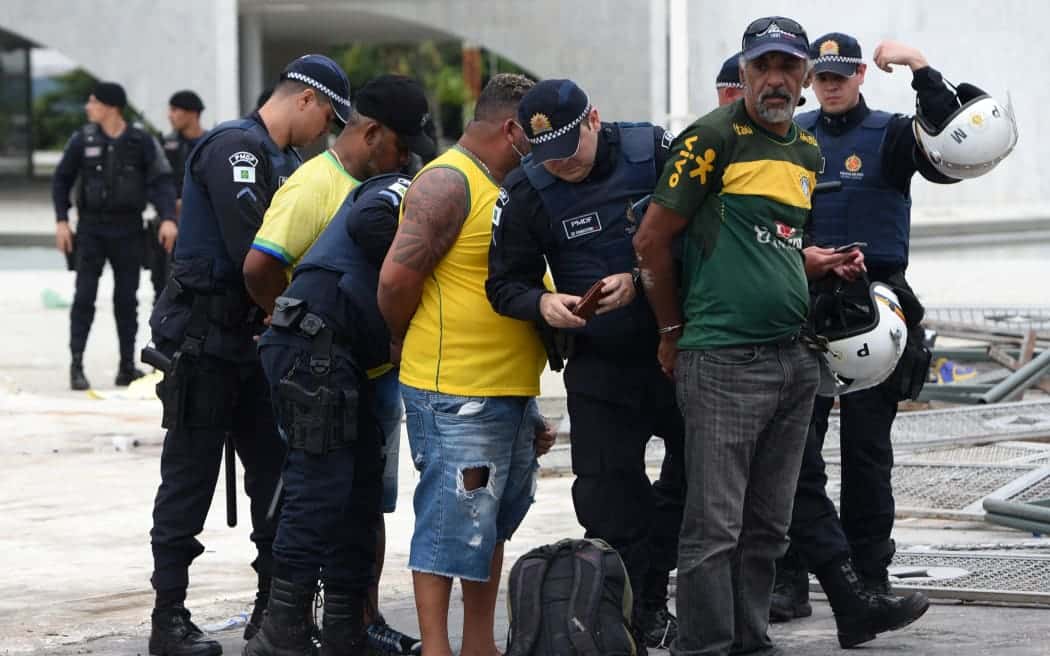
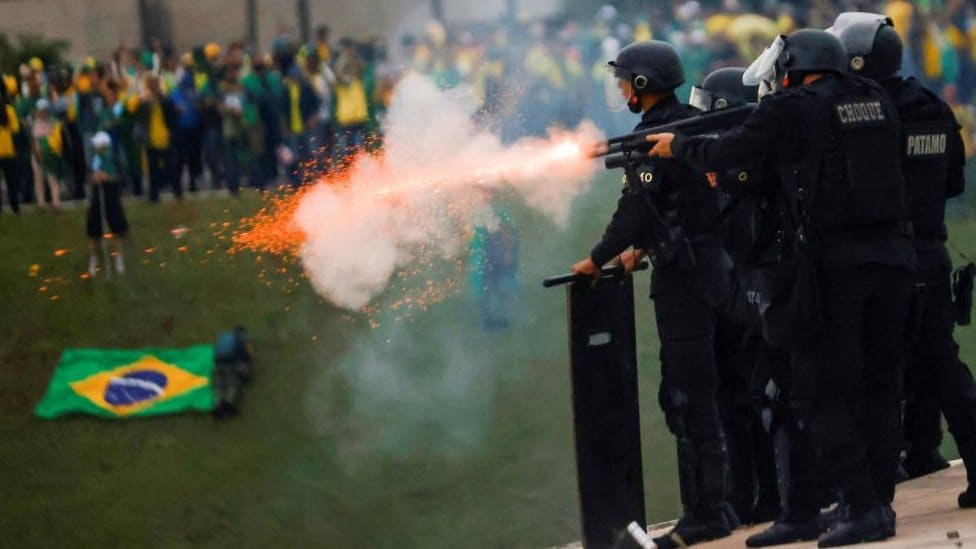
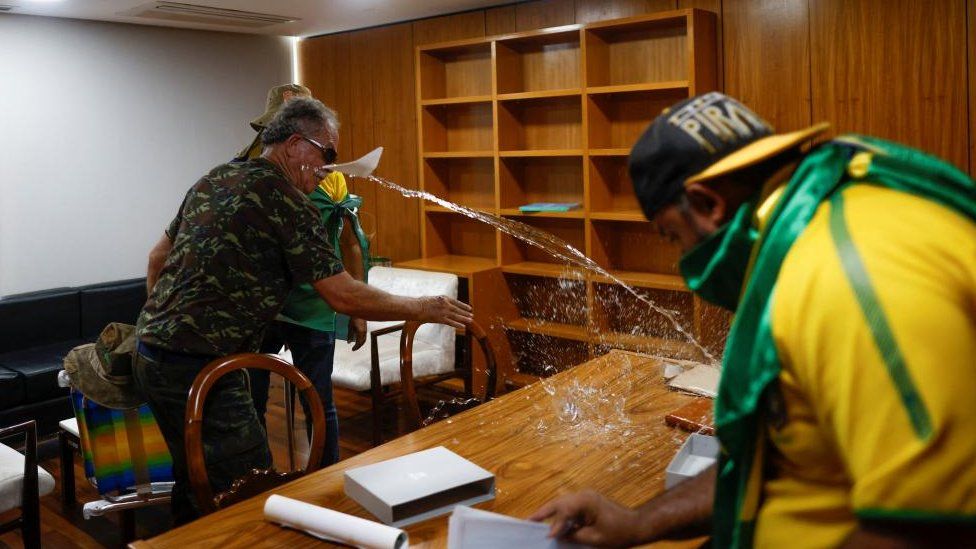
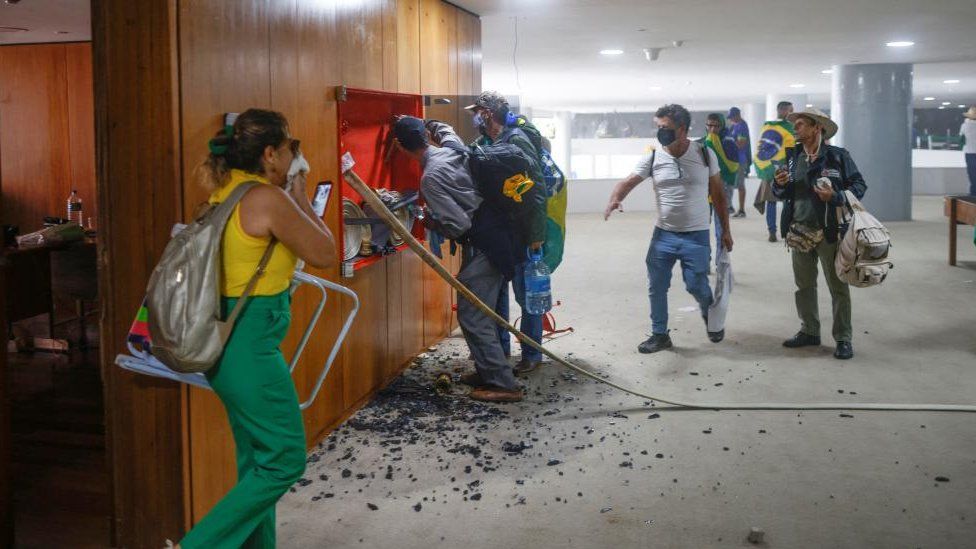
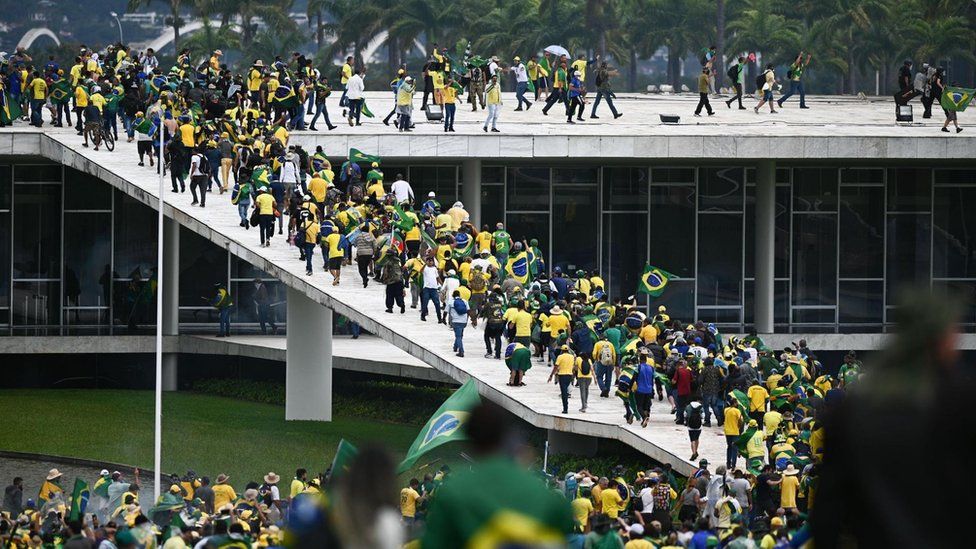
Rioters stormed key government buildings in Brasilia, prompting Brazilian judicial authorities to order the arrest of top public officials.
Local media has reported that, one official, the former commander of the military police, has been arrested.
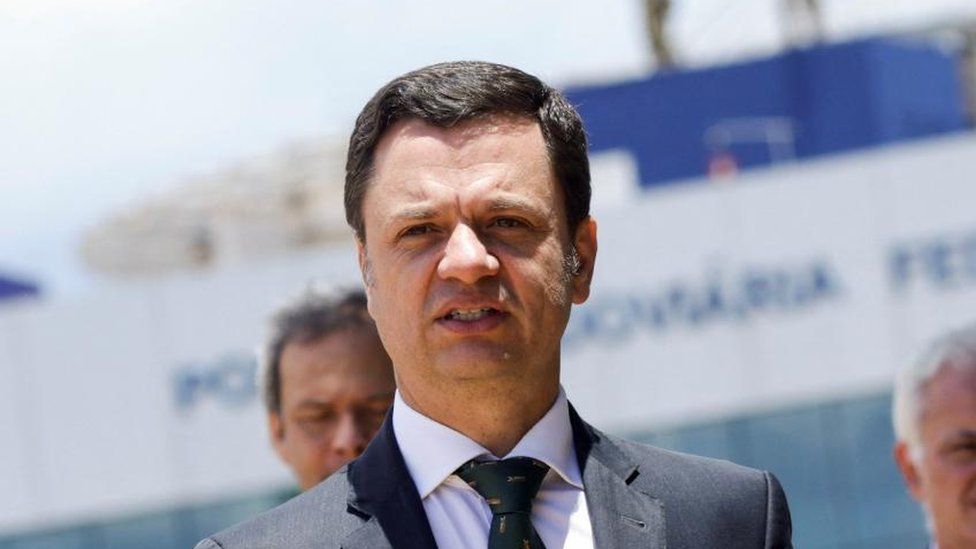
According to the solicitor general’s office, the officials also include Brasilia’s former public security chief Anderson Torres and others “responsible for acts and omissions” that led to the riots.
Mr. Torres has denied any involvement in the riots.
Colonel Fábio Augusto, the police commander, was fired after ex-President Jair Bolsonaro supporters stormed Congress, the presidential palace, and the Supreme Court.
The rioting came a week after President Luiz Inácio Lula da Silva, widely known as Lula, was sworn in.
The dramatic scenes saw thousands of protesters, some clad in yellow Brazil football shirts and waving flags, overrun police and ransack the heart of the Brazilian state.
Of the approximately 1,500 people arrested and brought to the police academy after the riot, officials say that nearly 600 have been taken to other facilities, where police officials have five days to formally charge them.
Image caption,Former Justice Minister Anderson Torres
Earlier on Tuesday, the federal intervenor in public security accused Mr Torres of “a structured sabotage operation”.
Ricardo Cappelli, who has been appointed to run security in Brasília, said there was a “lack of command” from Mr Torres before government buildings were stormed.
Lula’s inauguration on 1 January was “an extremely successful security operation,” Mr Cappelli told CNN.
What changed before Sunday was that, on 2 January, “Anderson Torres took over as Secretary of Security, dismissed the entire command and travelled”, he said.
“If this isn’t sabotage, I don’t know what is,” Mr Cappelli added.
Mr Torres said that he deeply regretted the “absurd hypotheses” that he played any part in the riots.
He said the scenes, which occurredduring his family holiday, were lamentable and said it was “the most bitter day” of his personal and professional life.
Lula has accused security forces of “neglecting” their duty in not halting the “terrorist acts” in Brasília.
Public prosecutors asked on Tuesday for a federal audit court to freeze Mr Bolsonaro’s assets in light of the riots.
The former president, who has condemned the riots, has not admitted defeat from October’s tight election that divided the nation, and flew to the US before the handover on 1 January.
On Monday, he was admitted to hospital in Florida with abdominal pain relating to a stabbing attack during his election campaign in 2018. Reports say he left the hospital on Tuesday.
Mr Bolsonaro said on Tuesday that he intended to return to Brazil, telling CNN that he would bring forward his departure from the US, which was originally scheduled for the end of January.
A day after the riots, heavily armed officers started dismantling a camp of Mr Bolsonaro’s supporters in Brasília – one of a number that have been set up outside army barracks around the country since the presidential election.
Mr Torres, who previously served as Mr Bolsonaro’s justice minister, was fired from his role as Secretary of Public Security on Sunday by Brasília governor Ibaneis Rocha.
Mr Rocha was himself later removed from his post for 90 days by the Supreme Court.
Lula has also taken aim at the security forces, accusing them of “incompetence, bad faith or malice” for failing to stop demonstrators accessing Congress.
“You will see in the images that they [police officers] are guiding people on the walk to Praca dos Tres Powers,” he said. “We are going to find out who the financiers of these vandals who went to Brasília are and they will all pay with the force of law.”
Video shared by the Brazilian outlet O Globo showed some officers laughing and taking photos together as demonstrators occupied the congressional campus in the background.
Protesters had been gathering since the morning on the lawns in front of the parliament and up and down the kilometre of the Esplanada avenue, which is lined with government ministries and national monuments.
Despite the actions of the protesters, in the hours before the chaos, security had appeared tight, with the roads closed for about a block around the parliament area and armed police pairs guarding every entrance into the area.
The BBC had seen about 50 police officers around on Sunday morning local time and cars were turned away at entry points, while those entering on foot were frisked by police checking bags.
According to Katy Watson, the BBC’s South America correspondent, some protesters aren’t just angry that Mr Bolsonaro lost the election – they want President Lula to return to prison.
Mr Bolsonaro has gone very quiet since losing October’s elections, she said, adding that in not publicly conceding defeat, he’s allowed his most ardent supporters to remain angry over a democratic election that he legitimately lost.
The former president condemned the attack and denied responsibility for encouraging the rioters in a post on Twitter some six hours after violence broke out.
On Tuesday, his son, Brazilian Senator Flavio Bolsonaro, said people should not try to link his father to the riots, stating that he has been silently “licking his wounds” since losing the election
The government of Rwanda has changed its position on President Paul Kagame’s stance that the nation will no longer provide asylum to individuals escaping conflict in the Democratic Republic of the Congo.
Refugees crossing the border into Rwanda, according to Mr. Kagame, are “not Rwanda’s problem.”
“I am refusing that Rwanda should carry this burden,” the president said.
But in a statement on Tuesday night, government spokesperson Yolande Makolo said Rwanda had no intention to expel or ban refugees.
She accused the media of misrepresenting President Kagame’s remarks.
“What the President addressed was the blatant hypocrisy in criticising Rwanda which simultaneously gets the blame for state failure in the DRC [DR Congo], and is then expected to accommodate those who seek refuge from the consequences of that failure,” she tweeted.
Rwanda has no intention to expel or ban refugees. We always welcome people fleeing insecurity, persecution and violence. We are asking for the international community to take responsibility for finding a durable solution for this forgotten group of refugees from the DRC. 4/4
Environmental activist Maria Marquez, who survived a 2019 assassination attempt, claims explosives were discovered close to her house.
The assassination attempt near Francia Marquez’s home was thwarted, according to the vice president of Colombia, who was elected on a historic ballot in August.
The nation’s first Afro-Colombian vice president, Marquez, announced on Twitter on Tuesday that her security had “deactivated and destroyed a high-capacity explosive device” in the road leading to her family’s home in the village of Yolombo in the country’s southwest.
Marquez said the device contained more than seven kilograms (15.4 lbs) of explosive devices and involved “a plastic bag containing a high-powered explosive substance made of ammonium nitrate, powdered aluminum, and… nails.”
She added that her security agents discovered the explosive after reports of suspicious behavior by “outside elements” in the area.
No further details were immediately available.
Integrantes de mi equipo de seguridad hallaron un artefacto con más de 7 kilos de material explosivo en la vía que conduce a mi residencia familiar en la vereda de Yolombó, en Suarez, Cauca. El mismo fue destruido de manera controlada por personal anti explosivos de la SIJIN. pic.twitter.com/gUpYQVOfFD
Marquez, a vaunted environmental activist, became part of Colombia’s first-ever left-wing government following her victory with President Gustavo Petro, a former mayor of Bogota and one-time rebel with the now-defunct M-19 movement.
The election underlined a drastic change in presidential politics in Colombia, a country that has long approached leftist candidates warily for their perceived association with decades of armed conflict.
Petro has attempted to end the continuing violence in the country by negotiating with left-wing rebels and armed groups such as drug traffickers, drawing criticism from right-wing factions.
‘Another attempt’
In her tweet on Tuesday, Marquez noted the incident represented “another attempt on my life”.
In 2019, following a series of death threats, Marquez was attacked in her conflict-wracked home region of Cauca by men wielding guns and grenades during a meeting with community leaders. She was not harmed.
Activists are often targeted in Colombia, where armed groups and criminal gangs remain active despite a 2016 peace deal between the government and the FARC rebel group. At least 138 human rights defenders were killed in 2021, accounting for more than a third of the global total.
Shortly after the swearing-in in August, a vehicle in Petro’s presidential motorcade also came under gunfire in the northeast of the country. The government said no one was hurt in the attack, which occurred at an illegal checkpoint.
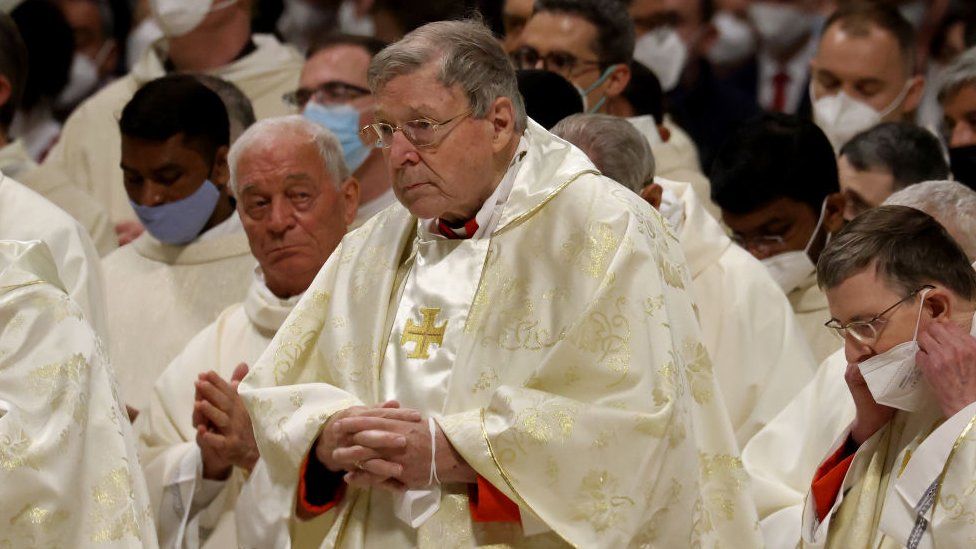
Pell passed away at the age of 81. TheCatholic Church was shocked by Cardinal George Pell’s conviction on child abuse charges, which was later overturned.
The former Vatican treasurer is the highest-ranking Catholic priest ever imprisoned in Australia and the most senior Church official ever.
Church officials claim that he passed away from heart issues following hip surgery.
Before becoming one of the Pope’s top advisors, Cardinal Pell served as both the Archbishop of Melbourne and the Archbishop of Sydney.
He was summoned to Rome in 2014 to clean up the Vatican’s finances, and was often described as the Church’s third-ranked official.
But the cleric left his post in 2017, returning to Australia to face trial on child sex abuse charges.
A jury in 2018 found he had abused two boys while Archbishop of Melbourne in the 1990s.
Cardinal Pell, who always maintained his innocence, spent 13 months in prison before the High Court of Australia quashed the verdict in 2020.
However a civil lawsuit – launched by the father of a choirboy that prosecutors alleged Cardinal Pell abused – is still under way.
Meanwhile a landmark inquiry found that he knew of child sexual abuse by priests in Australia as early as the 1970s but failed to take action.
The Child Abuse Royal Commission ran for several years, interviewing thousands of people, and its findings relating to Cardinal Pell were released after his acquittal. Cardinal Pell denied the allegation, insisting it was “not supported by evidence”.
Archbishop of Melbourne Peter Comensoli paid tribute to Cardinal Pell as “a very significant and influential Church leader” while Australian Prime Minister Anthony Albanese said his death would be a “shock to many”.
Image caption,Cardinal George Pell was Australia’s highest ranking Catholic cleric
Former Prime Minister Tony Abbott – a Catholic – praised the cleric as a “saint for our times” and “an inspiration for the ages”, saying the charges he’d faced were “a modern form of crucifixion”.
But Steve Dimopoulos – a government minister in Cardinal Pell’s home state of Victoria – was among those who voiced mixed feelings.
“Today would be a very difficult day for the cardinal’s family and loved ones, but also very difficult for survivors and victims of child sexual abuse and their families and my thoughts are with them,” he said.
The cardinal was a polarising figure, both in Australia and abroad, something he himself conceded.
He rose to prominence in theChurch as a strong supporter of traditional Catholic values, often taking conservative views and advocating for priestly celibacy.
Speaking to the BBC in 2020, Cardinal Pell said there was “no doubt” that his “direct” style and traditional approach to issues such as abortion had driven parts of the public against him.
“The fact that I defend Christian teachings is irritating to a lot of people,” he told BBC Radio 4’s Sunday programme.
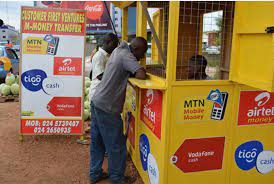
The revised Electronic Transaction Levy (e-levy) rate of 1.0% is expected to take effect today, January 11, 2022, as announced by the Ghana Chamber of Telecommunications.
A statement from the chamber confirming the implementation noted that “as captured in the Electronic Transfer Levy (Amendment) Act, 2022, Act 1089 which has been passed by parliament and assented to by the President, the levy on electronic transfers has been reduced from 1.5% to 1%, while the GH₵100 threshold remains unchanged.”
The directive is in line with policies outlined by the Finance Minister in the 2023 Budget Statement and Economic Policy.
Reading the Budget Statement, Mr Ofori-Atta noted the E-Levy Act will be reviewed “and more specifically, the headline rate will be reduced from 1.5% to 1% of the transaction value.”
He also announced the removal of the daily threshold of GH₵100, however, after debating the matter, Parliament approved only the revised rate.
The E-levy since its implementation has been greeted with mixed reactions from the public. While it’s implementers believed it was the surest way to raise revenue for the state, the tax measure was highly criticised by another section of the public who argued that it was not only a way of double taxing citizens or Mobile Money (MoMo) users, but also, it had the tendency of collapsing the MoMo business.
Nonetheless, the levy was approved by Parliament in a dramatic way, after which its implementation took effect on May 1, 2022.
Fews months later, the government disclosed that the tax did not rake in the expected revenue and a leading member of the New Patriotic Party (NPP), Gabby Otchere-Darko, stated that the levy generated only 10% of the expected revenue.
“After 5 months of stalemate and bashing, the e-levy, after implementation, is delivering only 10% of estimated revenues; our revenues remain very low as compared to the rest of the world; debt levels dangerously high, cedi, like most currencies, struggling against the US dollar,” he wrote in tweet.
Meanwhile, the Chamber has given the public the assurance that its members are working feverishly with theGhana Revenue Authority and other crucial institutions to ensure a smooth implementation of the updated electronic transfer levy.
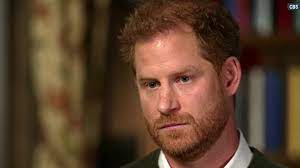
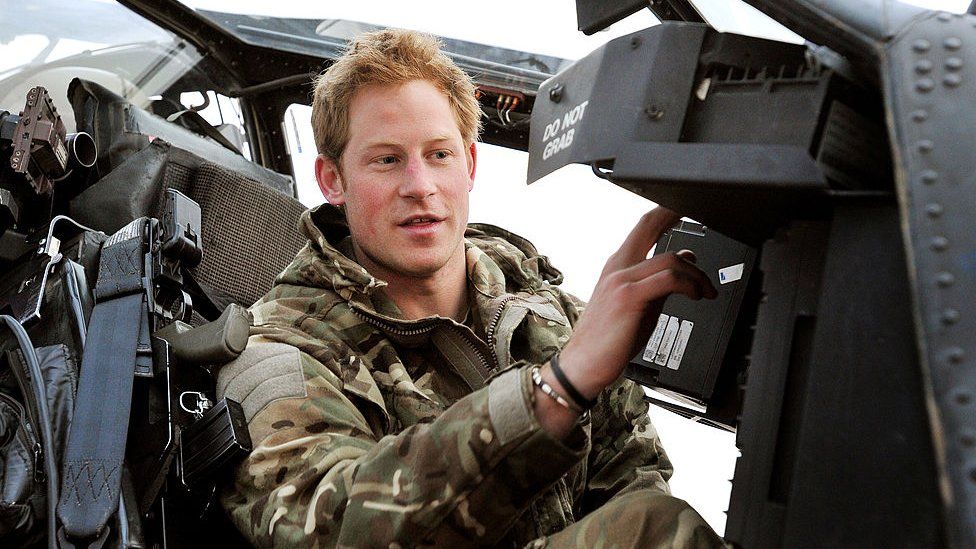
Accusations that Prince Harry boasted about killing 25 Taliban fighters while on duty in Afghanistan have been called a “dangerous lie,” according to Prince Harry.
Several military leaders criticized the prince for bringing up murders in Spare, claiming it was improper to refer to the deceased as “chess pieces.”
Harry, however, claimed on US television that the media misinterpreted what he said and threatened his family with the misinterpretation.
He also defended his remarks by saying that his goal was to lower veteran suicide.
Spare, which was published on Tuesday, has become the fastest-selling non-fiction book ever in the UK.
Some 400,000 copies of the memoir have been bought, despite many excerpts being leaked in the press ahead of its official release.
In a wide-ranging interview with Stephen Colbert on The Late Show – the first conducted after details from the book were published – Harry suggested there had been attempts to undermine his book, spoke of his fractured relationship with his brother, and attacked the “bigoted” British press.
Harry said writing the book had been a “cathartic” experience and the “most vulnerable I have ever been in my life”, while also leaving him feeling stronger.
But he added: “The last few days have been hurtful and challenging, not being able to do anything about those leaks.”
In his condemnation of the media coverage, Harry claimed outlets had intentionally chosen to “strip away the context” of his account.
“Without a doubt, the most dangerous lie that they have told, is that I somehow boasted about the number of people I killed in Afghanistan,” he said.
“If I heard anyone boasting about that kind of thing, I would be angry. But it’s a lie.
“It’s really troubling and very disturbing that they can get away with it… My words are not dangerous – but the spin of my words are very dangerous to my family. That is a choice they’ve made.”
He said he had wanted to be honest about his experience inAfghanistan, and to give veterans the space to share theirs “without any shame”.
“My whole goal and my attempt with sharing that detail is to reduce the number of [veteran] suicides,” he added.
Harry also claimed Buckingham Palace attempted to undermine the stories told in his memoir, assisted by the British press.
No names were mentioned but host Colbert asked if there had been attempts by the palace to undermine the book.
“Of course, and mainly by the British press,” he replied, without going into more detail.
In lighter moments during the interview, Harry drank Tequila with Colbert, joked that it felt like “group therapy” and performed a skit introducing the show with Hollywood actor Tom Hanks.
Image caption,Harry served as an Apache helicopter pilot in 2012-13
In Spare, Prince Harry reveals for the first time that he killed 25 enemy fighters during two tours in the Helmand region of Afghanistan.
“It wasn’t a statistic that filled me with pride but nor did it make me ashamed,” he writes.
“When I was plunged into the heat and confusion of battle, I didn’t think about those as 25 people. You can’t kill people if you see them as people.
“In truth, you can’t hurt people if you see them as people. They were chess pieces taken off the board, bad guys eliminated before they kill good guys.”
Subsequent media coverage of the comments, which were leaked to the press ahead of the book’s publication, drew criticism from figures in the military.
Ex-army officer Col Richard Kemp, who oversaw forces in Afghanistan, told the BBC he was concerned at references to dead Taliban insurgents as chess pieces, saying such descriptions could give “propaganda to the enemy”.
And Ex-colonel Tim Collins, who gained worldwide fame for an eve-of battle speech to troops in Iraq, said: “He has badly let the side down. We don’t do notches on the rifle butt. We never did.”
Going into ‘Three Amigos’ summit, the US, Canada, and Mexico will also pledge new cooperation on migration, climate change, and drugs, the White House says.
The White House has announced a series of pledges made withMexico and Canada ahead of the “Three Amigos” summit, and cooperation on bolstering the supply of semiconductors, a market currently dominated by Asia, topped the list.
The announcement on Tuesday came hours before US President Joe Biden, Mexican President Andres Manuel Lopez Obrador and Canadian Prime Minister Justin Trudeau were to meet for the 10th North American Leaders Summit in Mexico City. It also included a new agreement on addressing climate change, an updated strategy for dealing with drug smuggling and modest new measures aimed at stemming the region’s worsening migrant crisis.
Hours before Tuesday’s summit, Biden met one-on-one with Trudeau. On Monday, Biden and Lopez Obrador held talks, in which they discussed strengthening economic ties, fighting the illegal drug trade and reducing migration, the White House said.
“This is a relationship which is a fraternal relationship of friendship between our two peoples,” Lopez Obrador said ahead of the meeting on Monday, striking a warm tone despite the left-wing leader’s generally cool approach to Mexico’s northern neighbours since taking office in 2018.
After hailing Biden as a “humanistic president, a visionary president”, Lopez Obrador called on him to “turn away from this abandonment, this disdain and this forgetfulness for Latin America and the Caribbean”. He added that Biden holds the key to greater “economic, social integration” and a wider pivot away from a regional reliance on Asian manufacturing.
Biden, meanwhile, said the duo would address “strengthening our supply chains” while stressing the need to combat fentanyl smuggling, which has fuelled an addiction crisis in the US, and an increase in migrants and asylum seekers crossing the US-Mexico boder. Both are politically fraught issues in the US.
In turn, the US leader also pointed to the billions of dollars that Washington spends in foreign aid around the world, saying that “unfortunately, our responsibility just doesn’t end in the Western Hemisphere.”
In joint statements before their bilateral meeting, Trudeau and Biden also said the North American leaders will also focus on efforts to stabilise crisis-hit Haiti during the meeting.
“As we talk about issues, whether it’s Haiti, whether it’s some of the challenges in South America, whether we talk about critical minerals and energy, and how we’re going to move forward to create those efficient and resilient supply chains that we need, there’s a lot that we’re going to be able to do together,” Trudeau said.
Pledges on semiconductors, drug smuggling, migration
Among the early joint pledges announced by the White House on Tuesday was an agreement to hold a “first-ever trilateral semiconductor forum”, aimed at strengthening investment in the semiconductor supply chain.
Semiconductors are used in nearly all forms of modern technology and computing. The strategically significant industry has emerged as a top economic and security priority for all three countries due to supply-chain shortages in recent years that have stoked concerns of an over-reliance on Asia.
The three countries also pledged to adopt an “updated strategic framework” to address threats posed by illegal drug trafficking, including, among other measures, “increased information sharing” on the chemicals used to make fentanyl and other synthetic drugs.
On migration, the trio announced only modest pledges aimed at building on previous development agreements and increasing the availability of information for migrants and asylum seekers.
Those agreements were made after Lopez Obrador signalled on Monday that he was open to considering accepting more migrants and asylum seekers from Cuba, Nicaragua, Haiti and Venezuela who are expelled by the US. It now takes in 30,000 a month under a previous agreement with the Biden administration. US officials later said no increase had been agreed to.
Human rights groups have criticised the US policy for expelling asylum seekers who attempt to cross the border without offering them the opportunity to seek protection and instead sending them to an unfamiliar country. In return, under the Biden administration policy, 30,000 people per month from those four nations are eligible to work legally in the US for two years, granted they have sponsorship, pass background checks and take an airline flight to the country.
On climate change, the trio committed to reducing methane emissions from solid waste and wastewater by at least 15 percent from 2020 levels by 2030, the White House said.
The North American Leaders Summit is the second to be held since Biden took office in 2021 and resumed the gatherings, which were discontinued for four years under former President Donald Trump.
After the 2021 meeting in Washington, DC, the leaders hailed their reinvigorated partnership.
Still, relations have continued to chafe in some areas, notably over Mexico’s decision to give control of the country’s energy market to cash-strapped state energy companies, which Ottawa and Washington say undermines the United States-Mexico-Canada Agreement trade deal. Mexico and Canada have also voiced concerns over Biden administration policies that encourage the use of domestic manufacturers for public infrastructure projects.
Biden is the first US president to travel to Mexico since former President Barack Obama made the trip in 2014.
The sale of electric cars is growing. Globally, some 2 million electric vehicles were sold in the first quarter of 2022 – 75% more than in the first three months of 2021. Most, though, are sold in high income countries.
As transport electrification takes hold in rich countries to reduce emissions that lead to climate change and air pollution, increasing numbers of internal combustion engine vehicles are likely to land in used vehicle markets.
Africa is already one of the main destinations for used vehicles. Between 2015 and 2018, the European Union, Japan, and the United States exported 14 million used vehicles worldwide. Forty percent of these went to African countries.
Used vehicles serve real needs in the continent by supporting mobility and generating livelihoods for millions of people, including mechanics, sprayers, and other garage operators. But they also contribute to its public health and environmental problems through crashes and pollution.
Get your news from people who know what they’re talking about.
Get newsletter
This is largely because the vehicles that are exported to African countries run mainly on fossil fuel and tend to be over-aged, highly polluting and prone to malfunctioning. Sometimes, modifications to these vehicles – such as the removal of catalytic converters to source precious metals – make them even more polluting.
Africa’s dependency on used vehicles is often attributed to low incomes and weak regulation. The cost of new vehicles and limited access to loans put new vehicles beyond the financial reach of the majority. Environmental and public health protection standards against used vehicle harms are weak and poorly enforced in many African countries. The cost of repairing old vehicles, too, is relatively low.
Together, these factors tend to elevate demand for used vehicles. And supply is ready because wealthy countries have stringent recycling policies. However, this is not the full picture.
Our recent paper explores Ghana’s dependence on used vehicles. We found that low incomes and poor regulation tell us only so much about it. This explanation also tends to limit the policy tools to bans and import restrictions. We argue that a more holistic view reveals more at play and opens up more policy options.
Used vehicles in Ghana
Ghana has revised some planning laws inherited from its colonial experience. Nevertheless, as with their counterparts in other African countries, the attitudes and practices of Ghanaian politicians and professionals around planning, transport and land use still reflect colonial frameworks and mentalities.
These practices continue to promote the spatial separation of work and other activities like shopping for food far from home. This compels or encourages people to travel more. Road construction gets priority over public transport provision. Roads have huge political value in Ghana. Voters love roads, and constructing them generates great opportunities for kickbacks and profiteering.
These dynamics create incentives for investing ever more in roads. Indeed, the Ghanaian Ministry of Transport reports that over 80% of the government’s annual transport budget goes into road projects. Roads induce more spread-out land use – requiring more travel.
The roads are primarily designed for cars – they often lack pedestrian pathways, crossovers and bicycle lanes.
The construction of more and more roads, coupled with under-investment in public and non-motorised transport and the high social status attached to car ownership, encourages higher income individuals to import vehicles for their personal use.
The demand for private vehicles is easily met by importers focused on the cheaper used vehicles in abundant supply. Well-documented corruption in the Customs Service also undermines effective enforcement of regulations for importing used vehicles. Benefits accrue to powerful actors connected to the sector, and this is a very regressive approach.
The minibus (popularly called “tro-tro”) sector has stepped in to meet the high public transport demand. Some studies suggest that the sector serves about 60% of Ghana’s travelling public. The operators, however, remain highly fragmented and largely focused on individual short-term profits. Service improvements – like more efficient operations, fleet renewal or electrification – that require more capital are neglected.
The government of Ghana and its “development partners” direct their high quality bus investments into Bus Rapid Transit projects which do not always work as planned, leaving gaps. These conditions encourage the continuing purchase and use of second-hand minibuses, which are often poorly maintained and kept on the roads even as they get older and more dangerous. Their regular use means that large numbers of people are exposed to discomfort, air pollution, poor safety and other problems. Research shows that poor minibus (tro-tro) transport experience adds to the factors that push people towards used private car consumption in Ghana.
Big picture view of the problem
Currently, a focus on weak regulation and poverty leads to bans and penalties on used vehicle imports as the primary policy response to Africa’s used vehicle dependency. A broader view, incorporating land-use patterns, and investment in public transport, provides new policy options for reducing used vehicle and vehicle consumption generally.
The options could include:
changing town and city planning to allow people to live, work and shop in the same area and therefore travel less
investments to make public transport as well as walking and cycling cleaner, safer, efficient, affordable and attractive
investments in public transport infrastructure like dedicated bus lanes and proper bus stops, stations and passenger information
tax relief and financial support for new public transport vehicles – minibus recapitalisation programmes like South Africa’s can introduce higher occupancy, low emissions and safer vehicles
minibus electrification and investment in emerging local electrification initiatives.
Overall, there is a need for policy shifts from just banning used vehicle imports, and building more and more expensive roads. A broader range of interventions exists that can shift Ghana and other countries away from automobile dependency and all the socio-environmental harms that this brings.
DISCLAIMER: Independent Ghana.com will not be liable for any inaccuracies contained in this article. The views expressed in the article are solely those of the author’s, and do not reflect those of The Independent Ghana
In response to criticism of military failures, top Russian generals promise to strengthen the Russian army.
After a string of defeats on the battlefield in Ukraine, President Vladimir Putin’s defence minister promised to expand Russia’s arsenal of weapons, advance aviation technology to better evade air defences, and increase drone production.
The smaller Ukrainian army, which is backed by the United States and its European allies, has repeatedly outwitted and outmanoeuvred the once-mighty army of a former superpower since Putin sent troops into Ukraine on February 24.
The conflict has turned into a grinding war of attrition that has killed and wounded tens of thousands of soldiers on both sides, as well as Ukrainian civilians, though there is no end in sight, and both sides are re-arming as fast as they can.
Defence minister Sergei Shoigu told top generals that to renew the army, they would have to take account of the experience of fighting in the Syrian civil war – where Russia intervened on the side of President Bashar al-Assad – and in Ukraine.
Russian defence minister Sergei Shoigu speaks during a meeting with Russian high-level officers in Moscow, Russia [Russian Defence Ministry Press Service via AP]
“We need to constantly analyse and systematise the experience of our groups’ actions in Ukraine and Syria, and on that basis to draw up training programmes for personnel and plans for the supply of military equipment,” Shoigu said.
Putin, after meeting the mothers of dead soldiers, ordered Shoigu on January 2 to prepare a report on how military units are supplied, with details about weapons and equipment as well as proposals on how to improve the defence ministry’s work.
Russian troops take part in drills at an unspecified location in Belarus, December 28, 2022 [File: Russian Defence Ministry Press Service via AP]
Nuclear guarantee
Shoigu said Russia would continue to develop its nuclear triad of ballistic missiles, submarines and strategic bombers because such weapons were “the main guarantee of its sovereignty”.
On conventional weapons, Shoigu gave a remarkably frank analysis of where Russia needed to improve.
Nationalist critics of Shoigu have repeatedly asked why Russia failed to establish air superiority in Ukraine, why top generals made such grave tactical mistakes and why Russian soldiers were sent into battle without the right equipment, intelligence or even medical kits.
Shoigu said Russia would pay particular attention to the air force, build up its overall attack capabilities and improve command, communication and training.
Russia will “increase the combat capabilities of the aerospace forces – both in terms of the work of fighters and bombers in areas where modern air defence systems are in operation, and in terms of improving unmanned aerial vehicles”.
“Our immediate plans are to expand the arsenals of modern strike weapons,” he said. “We need to improve the management and communication system.”
Shoigu also said the military commissariats, which are responsible for drafting soldiers, needed to be modernised.
After Putin ordered on September 21 what he cast as a “partial mobilisation”, Russia’s first since World War II, about 300,000 additional men were drafted, though several hundred thousand more Russian men fled abroad to avoid being called up.
“It is necessary to digitalise databases, establish interaction with local and regional authorities, as well as industry,” Shoigu said of the commissariats.
Pashinyan is growing more and more angry atRussia for not securing free passage along a corridor connecting Armenia and Nagorno-Karabakh.
In a move that reflects growing hostility between Yerevan and Moscow, Armenia has announced that it will not host military exercises by the Collective Security Treaty Organisation (CSTO), an alliance of post-Soviet nations led by Russia.
Russian officials announced earlier this year that the group, which includes Russia, Armenia, Belarus, Kazakhstan, Kyrgyzstan, and Tajikistan, would hold its annual exercises in Armenia.
“The Armenian defence minister has informed the CSTO Joint Staff that in the current situation, we consider it unreasonable to hold CSTO exercises on the territory of Armenia. At least, such exercises will not take place in Armenia this year,” Interfax news agency reported Prime Minister Nikol Pashinyan as saying.
From left: Armenian Prime Minister Nikol Pashinyan, President of the European Council Charles Michel, and Azerbaijan’s President Ilham Aliyev [File: François Walscherts/AFP]
Kremlin spokesman Dmitry Peskov, when asked about the cancelled military drill, said Moscow would ask Yerevan to clarify its position.
“In any case, Armenia is our close ally, and we will continue our dialogue, including the most complex issues,” he told reporters.
Pashinyan’s move followed his refusal in 2022 to sign a concluding document from a meeting of the leaders of CSTO member nations in Yerevan, Armenia’s capital.
Nagorno-Karabakh
The tensions are rooted in Armenia’s conflicts with Azerbaijan over Nagorno-Karabakh.
The two ex-Soviet states maintain good relations with Russia despite its invasion of Ukraine; Armenia hosts a Russian military base and the Kremlin wants to maintain ties with oil-rich Azerbaijan.
Nagorno-Karabakh lies within Azerbaijan but has been under the control of ethnic Armenian forces backed by Yerevan since a separatist war there ended in 1994. That conflict left not only Nagorno-Karabakh itself but large chunks of surrounding lands in Armenian hands.
In 44 days of heavy fighting that began in September 2020, the Azerbaijani military routed Armenian forces, forcing Yerevan to accept a Russia-brokered peace deal that saw the return of a significant part of Nagorno-Karabakh to Azerbaijan.
The agreement also required Armenia to hand over swaths of land it held outside the separatist region.
Pashinyan has repeatedly criticised Russian peacekeepers for failure to secure free transit along a corridor linking Armenia and Nagorno-Karabakh.
The Lachin province, which lies between Nagorno-Karabakh and Armenia, was the last of three areas on the region’s rim that Armenian forces surrendered in December 2020.
Russia deployed nearly 2,000 peacekeepers to ensure safe transit across the region and monitor the peace deal.
But travel across the Lachin province has been blocked since December 12 by Azerbaijanis identifying themselves as environmental activists who say that Armenia has unlawful mining sites in the region.
Armenia has called on Russian peacekeepers unblock the road, but Moscow has adopted a backseat approach to the dispute, which has angered the Armenian government.
“Russia’s military presence in Armenia not only fails to guarantee its security, but it raises security threats for Armenia,” Pashinyan said on Tuesday.
He added that the blockade of the Lachin corridor is intended to “break the will of the people of Nagorno-Karabakh”, and that Armenia will also seek support from the US and the European Union to help ease the tensions with Azerbaijan.
Beijing halts the issuance of visas to citizens ofSouth Korea and Japan in what appears to be retaliation for the COVID-19 restrictions placed on Chinese travelers.
China has reportedly stopped issuing short-term visas to citizens of South Korea and Japan, according to its embassies in Seoul and Tokyo, in what appears to be retaliation for COVID-19 travel restrictions put in place for Chinese citizens following a rise in coronavirus cases in the nation.
After Beijing changed its strict “Zero COVID” policy last month in response to widespread protests, Seoul and Tokyo joined more than a dozen other nations in imposing new travel restrictions on travellers arriving from China due to worries about rising infection rates.
Beijing claims that the limitations imposed on its citizens are unjust and not supported by science.
“Chinese embassies and consulates in Korea will suspend the issuance of short-term visas for Korean citizens,” Beijing’s embassy in Seoul said, adding that the measures would be “adjusted again in line with South Korea’s removal of the discriminatory entry restrictions on China”.
Beijing’s embassy in Tokyo announced in a brief statement late on Tuesday that the issuing of visas for Japanese citizens would also be halted, giving no specific reason or indication of how long the measure would last.
The move came soon after Japan toughened COVID-19 rules for travellers coming directly from China, requiring a negative result for a PCR test taken less than 72 hours before departure, as well as a negative test on arrival in Japan.
Seoul introduced a host of measures for visitors from China last month, including visa restrictions and testing requirements.
Hospitals in China have been overwhelmed by cases since Beijing began opening up after nationwide protests fuelled by growing frustration at three years of harsh controls that failed to eliminate the virus.
But the virus is spreading among its 1.4 billion people, and worries over the scale and impact of its outbreak have prompted Japan, South Korea, France, the United States and other countries to require negative COVID-19 tests from travellers from China.
“China seems to be using South Korea and Japan to send a message to other countries, which have imposed restrictions on Chinese travellers in hopes that they will roll [them] back and it also wants these nations that are considering restrictions to think twice about it,” said Al Jazeera’s Katrina Yu, reporting from Beijing.
China currently issues no tourist visas and requires a negative COVID-19 test for all arrivals.
South Korea is also capping flights from China, and travellers from the mainland, Hong Kong and Macau have to test negative before departure – measures Seoul’s foreign minister has defended as being “in accordance with scientific evidence”.
Mainland visitors are also being tested on arrival and are required to quarantine for a week if they test positive, authorities have said.
China has stopped publishing daily infection tallies despite the facing worst outbreak in three years. It has been reporting five or fewer deaths a day since the policy U-turn, figures that have been disputed by the World Health Organization and are inconsistent with funeral providers reporting surging demand.
The WHO has called the precautionary measures “understandable” in light of the lack of information and urged Beijing to share more data on genetic sequencing, as well as figures on hospitalisations, deaths and vaccinations.
Some governments have raised concerns about Beijing’s data transparency as international experts predict at least one million deaths in China this year. Washington has also raised concerns about future potential mutations of the virus.
China dismisses criticism over its data as politically-motivated attempts to smear its “success” in handling the pandemic and said any future mutations are likely to be more infectious but less harmful.
“Since the outbreak, China has had an open and transparent attitude,” said Foreign Ministry Spokesperson Wang Wenbin.
But as infections surge across China’s vast rural hinterland, many, including elderly victims, are not getting tested.
Al Jazeera’s Yu said the move is going to impact all parties involved, given that China is South Korea and Japan’s biggest trading partner.
“There are plenty of Japanese and South Korean businesses with operations here and they will no longer be able to send their business people here to tend to those in person,” she said. “This will also impact China’s foreign economic bottom line. But Beijing says it has the right to impose countermeasures on these countries.”
The activist daughter of former Iranian president Akbar Hashemi Rafsanjani has been given a five-year jail term.
The charges against Faezeh Hashemi were not specifically stated by the attorney. However, according to the semi-official ISNA news agency, Hashemi was charged with “propaganda against the system” by Tehran’s public prosecutor last year.
She was detained in Tehran during protests after a young Kurdish woman died while in police custody, according to state media reports from September. The arrest was for “inciting riots.”
Since the 1979 revolution, the demonstrations have presented one of the biggest challenges to Iran’s clerical leadership.
“Following the arrest of Ms. Faezeh Hashemi, she was sentenced to five years in prison but the sentence is not final,” defence lawyer Neda Shams wrote on her Twitter account.
In 2012, Faezeh Hashemi was sentenced to jail and banned from political activities for “anti state propaganda” dating back to the 2009 disputed presidential election.
Her father died in 2017.
Former president Rafsanjani’s pragmatic policies of economic liberalisation and better relations with the West attracted fierce supporters and equally fierce critics during his life. He was one of the founders of the Islamic Republic.
According to the UN human rights chief, the spate of death sentences issued in Iran after the start of civil unrest constitutes “state sanctioned killing,” with executions being used to terrorise the populace and quell dissent.
Volker Turk, the UN High Commissioner for Human Rights, said in a statement on Tuesday that “the weaponization of criminal procedures to punish people for exercising their basic rights – such as those who participate in or organise demonstrations – amounts to state sanctioned killing.”
Such executions, he continued, were against international human rights law.
On Saturday, Iran hanged two men convicted of killing a member of the security forces during nationwide protests sparked by Mahsa Amini’s death in police custody in September.
The UN Human Rights office has received information that two further executions are imminent, the statement said.
As part of the ongoing crackdown, Iranian activist Faezeh Hashemi, daughter of former president Akbar Hashemi Rafsanjani, received a preliminary sentence of five years in prison for spreading “propaganda” and acts against national security, her lawyer, Neda Shams, said on Monday.
Hashemi was arrested in the capital Tehran on September 27 for encouraging residents to demonstrate. The 60-year-old former lawmaker and women’s rights activist was charged with “collusion against national security, propaganda against the Islamic republic and disturbing public order by participating in illegal gatherings”, Shams said.
Hashemi will be able to appeal the sentence.
The Islamic Republic has been rocked by a wave of protests since Amini’s death. The 22-year-old had been arrested for allegedly violating Iran’s strict dress code for women.
Iranian authorities said hundreds of people, including members of the security forces, have been killed and thousands arrested in connection with the protests, which they generally describe as “riots”.
Despite months of popular unrest, authorities have signalled an increased crackdown since the start of the year, with police warning that women must wear headscarves even in cars. Iran’s judiciary on Tuesday ordered police to “firmly punish” people who violate the country’s hijab law.
“Courts must sentence the violators, as well as fine them, to additional penalties such as exile, bans on practicing certain professions and closing workplaces,” Mehr news agency quoted the judiciary as saying.
Executions spark international concern
Oslo-based group Iran Human Rights (IHR) said on Monday that at least 109 protesters now in detention have been sentenced to death or face charges that can carry capital punishment.
In an updated death toll, IHR said 481 protesters have been killed, including 64 minors, since the unrest began.
The UN human rights chief’s statement is the latest reprimand from the international community.
The White House on Monday condemned Saturday’s executions, saying the United States stood with other countries demanding a halt to the death sentences.
“We condemn the executions of Mohammad Mehdi Karami & Mohammad Hosseini and the additional executions announced today,” US National Security Advisor Jake Sullivan tweeted.
“We join with partners around the world calling for an immediate cessation of these abuses. Iran will be held accountable.”
Canadian Foreign Minister Melanie Joly announced a new round of sanctions over Iran’s “brutal repression of brave Iranian voices.”
The European Union and several European countries, including Austria, Belgium, Britain, Denmark, France, Germany, the Netherlands and Norway summoned Iranian diplomats in protest.
On Monday,Pope Francis denounced recourse to the death penalty, saying it “only fuels the thirst for vengeance.”
He stressed that everyone had a “right to life” and “demanded greater respect for the dignity of women.”
Iran has blamed the unrest on hostile foreign forces, and the country’s supreme leader, Ayatollah Ali Khamenei, said on Monday that authorities had been dealing “seriously and justly” with those implicated in the “riots.”
For decades, Mexican leaders have promised more humane migration policies, only to wage a brutal war on migrants on behalf of the US.
For his first international foray of 2023, United States President Joe Biden has swung down to Mexico City to attend the latest iteration of the North American Leaders’ Summit, charmingly dubbed the “Three Amigos Summit”.
The meeting is kicking off on January 9 with a bilateral encounter between Biden and Mexican President Andrés Manuel López Obrador, also known as AMLO. The third “amigo” is Canadian Prime Minister Justin Trudeau.
One major topic for friendly discussion between Biden and AMLO will inevitably be migration, as the US continues to battle a “migrant crisis” of unprecedented proportions – a crisis that would hardly be so critical if the US simply refrained from messing up other people’s countries in the first place.
As of the end of the fiscal year on September 30, 2022, there had been no fewer than 2.38 million apprehensions of undocumented people on the US-Mexico border, an increase of 37 percent from the previous year. Between September 2021 and June 2022, meanwhile, Mexico detained a record 345,584 people transiting its territory, most of them en route to the US.
As the long-dead Mexican dictator Porfirio Díaz is said to have once observed: “Poor Mexico, so far from God, so close to the United States” – a proximity that in recent decades has meant that Mexico gets to perform the anti-migrant dirty work of its northern neighbour, self-appointed proprietor of the world’s number-one Very Important Border.
In 2021, I had the opportunity to witness just how dirty this work can be in Tapachula, the notorious “jail-city” in the Mexican state of Chiapas near the border with Guatemala which effectively serves as a trap for countless northbound asylum seekers from Central and South America as well as Asia and Africa. I was detained for one night in Tapachula’s Siglo XXI, Mexico’s largest immigration detention centre whose name means “21st century” in Spanish.
At the inauguration of the prison in 2006, then-Mexican President (and former Coca-Cola Mexico CEO) Vicente Fox had assured everyone that detainees would enjoy “all the comforts” – including human rights – in keeping with Mexico’s “humanist policy” vis-à-vis undocumented people on the move.
Fifteen years later, I got to experience firsthand the “comforts” of Siglo XXI for visa-related transgressions – the subject of my new book, Inside Siglo XXI. Needless to say, this is not something that normally happens to US citizens; a friend in Tapachula would later refer to me as the “gringa collateral damage” of imperial anti-migrant policy. My bags were confiscated at the door and affixed with premade printed tags, on which the word “CONGO” was crossed out in purple marker and replaced with “ESTADOS UNIDOS” (United States).
Inside the prison, the only real comforts were the compassion and solidarity exhibited by my fellow detainees, who unlike me had undergone arduous and often traumatising journeys to reach Mexico and were now only being further traumatised. There is a good reason that journalists are not allowed inside the overcrowded, abuse-ridden complex – except when, as in my case, they accidentally are.
AMLO, who before assuming office in 2018 had promised a more humane approach to migration, has been only too eager to go back on his word in order to kiss the gringos’ derriere, even while pretending that what he is really doing is upholding Mexican national sovereignty. In spite of his ostensibly left-wing orientation, AMLO managed to be pretty good amigos with Biden’s predecessor Donald Trump – a right-wing tyrant and source of the idea that Mexicans are drug dealers, criminals, and rapists.
In his book A la mitad del camino (Halfway There), the self-declaredly “post-neoliberal” AMLO jubilantly recalls his July 2020 summoning to Washington by the “gentleman” Trump for the signing of the US-Mexico-Canada Agreement (USMCA), otherwise known as NAFTA 2.0 and the updated version of neoliberal punishment of Mexico under the guise of free trade.
As journalist Garry Leech has pointed out in the book Asylum for Sale: Profit and Protest in the Migration Industry, the USMCA might “be more accurately called the United States Migrant Control Agreement”, thwarting as it does the free movement of Mexican and other labourers across borders while rolling out the red carpet for corporate capital.
Recounting his excursion to Washington, AMLO proposes a preposterous revision of that old phrase from Porfirio Díaz: “Blessed Mexico, so close to God and not so far from the United States”. He also pats himself on the back for reducing the movement of people trying to cross into the US by 75 percent over three months in 2019 after Trump had threatened to impose tariffs on Mexican imports (how is that for free trade?).
And Biden has only made it more fun to be “not so far from theUnited States”. In April 2021, White House press secretary Jen Psaki reported that, thanks to bilateral discussions, the Mexican government had “made the decision to maintain 10,000 troops at its southern border, resulting in twice as many daily migrant interdictions”.
Indeed, under AMLO, migration policy in Mexico has undergone unprecedented militarisation. Mexico’s National Migration Institute (INM) has been increasingly populated with current and former members of the armed forces, notwithstanding the military’s track record of torture and extrajudicial killings.
Behind all the dehumanised talk of “border security” and “interdictions”, of course, is the fact that this is an all-out war on extremely vulnerable people criminalised for their vulnerability.
The casualties of this war on migrants include a young Honduran woman named Kimberly, whom I met in Siglo XXI and who had fled Honduras after her two sisters were killed. They include the countless asylum seekers who have disappeared while transiting Mexico towards perceived safety. They include those subjected to a novel experiment in 2021, which entailed being flown from northern to southern Mexico and then expelled into the Guatemalan jungle.
In the end, this is not Mexico’s war. But by taking migration enforcement orders from the US and replicating the brutality of a US border security regime, Mexico is reinforcing a militarised US border that discriminates against Mexicans themselves – who regularly risk their own lives to cross it.
Whatever else happens at the Three Amigos Summit, Porfirio Díaz was right about one thing: the US is a terrible amigo.
DISCLAIMER: Independentghana.com will not be liable for any inaccuracies contained in this article. The views expressed in the article are solely those of the author’s, and do not reflect those of The Independent Ghana
The men, aged 28 to 48, were doing volunteer work and were last seen onFriday on their way to Soledar, where fighting has been fierce in recent days.
There has been no contact with them since then.
A Foreign Office spokesman said it was “supporting the families of two British men who have gone missing in Ukraine”.
The police department in the city of Bakhmut said they received a missing person’s report at 17:15 local time on Saturday, while appealing for any information that could help locate the two men.
Security forces have reportedly freed six people, including children, who were abducted by gunmen at atrain station in Igueben, according to authorities in Nigeria’s southern Edo state.
The police claimed that the victims were waiting to board a train when they were attacked and abducted by alleged criminal gangs, as we previously reported.
The train station has been closed indefinitely, and more than 20 additional hostages are still unaccounted for.
A suspect has been detained in relation to the kidnappings, according to the Edo State Spokesman.
Eyewitnesses of the Saturday incident said some of the passengers sustained gunshot injuries.
The Nigerian government has condemned the kidnapping of the passengers describing it as despicable and utterly barbaric.
The attack comes less than two months before Nigeria’s general election.
In March last year gunmen attacked a Kaduna-bound train in northern Nigeria, killing some passengers and kidnapping dozens of others.
Dozens of people showed up outside a prison in Iran overnight amid reports that the government was getting ready to execute two more anti-government protesters.
Videos of protesters yelling slogans in front of Karaj’s Rajai Shahr jail were posted online by opposition activists.
At the gathering, the mother of Mohammad Ghobadlou—one of the two men facing execution—made a clemency request.
On Saturday, two protesters were hanged, drawing condemnation from around the world.
The UN human rights office deplored the “shocking” executions of Mohammad Mahdi Karami and Seyed Mohammad Hosseini, which it said followed “unfair trials based on forced confessions”.
A Revolutionary Court found the men guilty of “corruption on Earth” over their alleged involvement in the killing of a member of the paramilitary Basij force in Karaj in November. Both denied the charge and said they were tortured.
They were the third and fourth people to be executed in connection with the protests that erupted in September following the death in custody of a woman detained by morality police for allegedly wearing her hijab “improperly”.
Authorities have portrayed them as “riots” and responded with lethal force.
It says that another 19,290 protesters have been arrested and that 111 of them are believed to “under the impending threat of a death sentence”, having been convicted of, or charged with, capital offences.
People gathered outside Rajai Shahr prison on Sunday night after activists warned that Mohammad Ghobadlou and Mohammad Boroughani had been transferred to solitary confinement in preparation for execution.
Opposition activist collective 1500 Tasvir published videos showing a crowd chanting slogans warning authorities against proceeding with the executions. Shouts included “I will kill who has killed my brother” and “This is the last warning. If you execute [them] there will be an uprising/revolt.”
Ghobadlou’s mother, who has previously said her son has bipolar disorder, was filmed telling the crowd that 50 doctors had signed a petition calling on the judiciary chief to establish a committee to review her son’s mental health.
“If he believed in God, he would have responded to these 50 doctors,” she said, asserting that her son is “ill”.
She also claimed that the policeman who he is accused of killing was “martyred somewhere else”.
1500 Tasvir also posted videos purportedly from the area around the prison in which gunshots could be heard.
The activist collective declared later on Monday that the protest had stopped the executions “at least up to this moment”.
Image caption,Mohammad Ghobadlou’s mother urged Iran’s judiciary chief to review evidence about his mental health problems
Ghobadlou, 22, had his death sentence upheld by the Supreme Court on 24 December. He was convicted of “enmity against God” after being accused of driving into a group of policemen during a protest in Tehran in September, killing one of them and injuring others.
He stood trial without his chosen lawyer, who said the prosecution had relied other flawed evidence.Amnesty International also said it was concerned that he was subjected to torture or ill-treatment in custody, citing a forensic report that pointed to bruising and injuries on his arm, elbow and shoulder blade.
Mohammad Boroughani, 19, was tried alongside Ghobadlou and was also convicted of “enmity against God”.
He was accused of allegedly wielding a machete, setting fire to a provincial government building and injuring a security officer. He was also accused of “encouraging” others to participate in protests via social media.
Amnesty International said he was found guilty after proceedings that “bore no resemblance to a meaningful judicial trial”.
In a separate development on Monday, the judiciary announced that a court in Isfahan had sentenced to death three people over an attack during protests in the city on 16 November in which three security personnel were shot dead.
Saleh Mirbasheri Boltaqi, Majid Kazemi Sheikh-Shabani, and Saeed Yaqoubi Kordsofla were convicted of “enmity against God”.
Two other defendants were sentenced to prison over their alleged involvement in the attack, including professional footballer Amir Nasr-Azadani. Nasr-Azadani, 26, was jailed for 16 years after being found guilty of three charges including “assisting in enmity against God”.
The trip came after the announcement of a new immigration policy that rights groups say could endanger the lives of asylum seekers.
US President Joe Biden visited the US-Mexico border for the first time since taking office in January 2022.
The hours-long visit on Sunday followed the Biden administration’s recently announced policy initiative to address an increase in undocumented border crossings.
The politically charged issue has dogged the Democratic president since he took office, with Republican critics accusing the administration of being too lenient and rights groups alleging that the newly announced measures will endanger the lives of asylum seekers.
The stop in the city of El Paso, Texas, took place as Biden travelled to Mexico, where he is set to meet President Andres Manuel Lopez Obrador on Monday before attending a three-way summit with Canadian Prime Minister Justin Trudeau the following day in Mexico City.
“They need a lot of resources. We’re going to get it for them,” Biden told reporters in Texas, where he met border agents at the Bridge of the Americas, which connects El Paso to the Mexican city of Ciudad Juarez, and is one of the busiest ports of entry between the two countries.
During the visit, Biden watched as border officers in El Paso demonstrated how they search vehicles for drugs, money and other contraband. He later inspected a section of the tall fencing along the border between El Paso and Ciudad Juarez.
Meanwhile, in a sign of the deep political tensions over immigration, Republican Governor Greg Abbott handed Biden a letter on his arrival that said the alleged “chaos” at the border was the “direct result” of the president’s failure to enforce federal laws.
Controversial asylum policies
Last week, the Biden administration unveiled new immigration rules it anticipates will “substantially reduce” the number of people seeking to cross the southern border, Biden told reporters at the time.
The rules create a new programme that allows a legal pathway for as many as 30,000 Cuban, Haitian, Nicaraguan and Venezuelan nationals to enter the US a month and receive two-year work permits, provided they have sponsors in the US and pass background checks.
In turn, the policy allows US authorities to expel to Mexico residents of those four countries who irregularly cross the border and bar them from accessing the programme. Mexico has agreed to accept 30,000 expelled residents of the four countries in a month, according to the administration.
Rights groups say the policy is harmful to individuals who have no other choice but to irregularly cross the border to seek asylum. They charge the new policy is an extension of the former President Donald Trump-era Title 42, which allows authorities to rapidly expel adult asylum seekers crossing the border, citing COVID-19 health concerns.
After a lengthy court battle, a US federal judge in November ordered Title 42 be lifted, but the US Supreme Court late last month agreed to consider whether Republican-led states can challenge the end of the policy, leaving it in place for the time being.
In the wake of last week’s announcement, Heidi Altman, policy director at the National Immigrant Justice Center, accused the Biden administration of “openly rejecting” US law, which “clearly says it is legal to arrive at the border & seek asylum”.
On board Air Force One on Sunday, Homeland Security Secretary Alejandro Mayorkas told reporters that the administration was trying to “incentivise a safe and orderly way and cut out the smuggling organisations”.
He said the policy was “not a ban at all”, but an attempt to protect migrants and refugees from the trauma smuggling can create.
Drugs, economy top Mexico visit
Following the border visit, Biden was set to continue on to Mexico, where the increase in crossings, as well as efforts to fight the trafficking of fentanyl and other drugs that have fuelled a deadly addiction crisis in the US, were set to top the agenda of the bilateral meeting with Lopez Obrador.
On Saturday, National Security Council spokesperson John Kirby said Washington was “making strides” with its partners to seize illicit opioids and other drugs, calling it an “ongoing effort”.
Mexico has long been plagued by cartel-related bloodshed that has seen more than 340,000 people murdered since the government deployed the military in its war on drugs in 2006. On the campaign trail, Lopez Obrador promised to move away from the militarised approach, but critics say he has made only superficial changes. Still, he has said that Mexico City is seeking investment in regional economic development from Washington.
Days before Biden’s visit, Mexican security forces captured a son of notorious drug kingpin Joaquin “El Chapo” Guzman, who is serving a life sentence in the US.
On Tuesday, efforts to strengthen economic ties are set to dominate a trilateral summit of the leaders of the US, Mexico, and Canada.
The meeting comes amid an ongoing Mexican energy dispute with the US and Canada, with Washington and Ottawa arguing that Lopez Obrador’s efforts to give control of the market to his cash-strapped state energy companies breach the United States-Mexico-Canada (USMCA) trade deal.
The US and Canada have launched dispute resolution proceedings against Mexico, casting a pall over hopes of supporting cooperation in jobs and investment.
Checking vaccinations is inconvenient, according to the health minister, and a panel of health experts has agreed to withdraw the new rule.
Thailand has revoked an entry policy announced two days ago that required visitors to show proof of aCOVID-19 vaccination, according to the country’s health minister, citing adequate immunization levels in China and globally.
Anutin Charnvirakul said on Monday that checking evidence of vaccinations was inconvenient, and that a panel of health experts had agreed to withdraw the new rule, which was announced on Saturday by aviation authorities ahead of an expected influx of visitors from China, where COVID cases have surged.
Charnvirakul said those not vaccinated would also be granted entry without restriction.
“Showing proof of vaccination would be cumbersome and inconvenient, and so the group’s decision is that it is unnecessary,” Anutin told reporters.
Tourism Authority of Thailand Governor Yuthasak Supasorn said there had been discussions over entry requirements but the issue had been resolved.
One of Asia’s most popular travel destinations, Thailand is enjoying an influx of visitors during its first peak season since the removal last year of tight entry restrictions that had caused its tourism sector to collapse.
In November, it recorded 1.75 million visitors, quadruple the number for the whole of last year when flights and foreign arrivals were limited.
Visitors from China
Chinese visitors have been crucial for Thailand, accounting for about a quarter of its annual visitors before the pandemic. Anutin said the government was now expecting seven to 10 million Chinese visitors, compared with an earlier estimate of five million.
The first flight from China arrived in Thailand on Monday, the first of a group of 3,465 passengers expected on the first day.
“We’re very excited to come back toThailand. We have been waiting for three years already,” said Wang Zhenyin.
“Before the start of COVID, we came here every year. And this time I take my family to come here.”
Thailand’s tourism authority is expecting arrival numbers for last year to have exceeded 11.5 million [Athit Perawongmetha/Reuters]
On Sunday, Beijing lifted a mandatory quarantine for arrivals from abroad imposed when the pandemic began three years ago. The move is expected to unleash large pent-up demand for outbound travel.
But so far, few flights have been restored. On Monday, a check of arrivals at regional airports found only a handful of flights coming from China. The largest share was travelling to South Korea.
The about-face on the vaccine rule follows similar policy U-turns by Thailand during the pandemic that have caused widespread confusion among travellers about its entry requirements.
Thailand will still require foreigners to show evidence of health insurance coverage forCOVID if their next destination requires a negative pre-entry test, Charnvirakul said.
Thailand’s tourism authority is expecting arrival numbers for last year to have exceeded 11.5 million, just over a quarter of the record of nearly 40 million in pre-pandemic 2019, who spent about 1.91 trillion baht ($55.2bn).
Waving the Palestinian flag, according to far-right security minister Itamar Ben-Gvir, is an endorsement of “terrorism.”
Itamar Ben-Gvir, Israel’s new far-right Minister of National Security, has ordered police to remove Palestinian flags from public areas because they constitute “terrorism.”
Israeli law does not forbid Palestinian flags, but police and soldiers are allowed to take them down if they pose a threat to the peace.
Sunday’s directive from Ben-Gvir, who heads the ultranationalist Jewish Power party in Benjamin Netanyahu’s new far-right government and as national security minister oversees the police, appears to signal a hardline and uncompromising attitude towards Palestinian expressions of identity and free speech and pro-Palestinian demonstrations.
The display of the Palestinian flag in Israel has, in practice, long been clamped down on by Israeli authorities, with Palestinians regarding such moves as an attempt to suppress Palestinian identity.
Ben-Gvir’s orders came after a mass anti-government protest in Tel Aviv on Saturday, where some demonstrators waved the Palestinian flag.
Protesters labelled the recently sworn-in government of Prime Minister Benjamin Netanyahu as “fascist” and advocated for equality and coexistence between Palestinians and Israelis.
Writing on Twitter, Netanyahu on Sunday said the presence of the Palestinian flag at the Tel Aviv protest was “wild incitement”.
Ben-Gvir’s directive also follows the release last week of a long-serving Palestinian prisoner, convicted of kidnapping and killing an Israeli soldier in 1983, who waved a Palestinian flag while receiving a hero’s welcome in his village in northern Israel.
Younis was convicted in 1983 for the killing three years earlier of an Israeli soldier, Avraham Bromberg, in the occupied Golan Heights [Ammar Awad/Reuters]
Ben-Gvir, in a statement, said waving the Palestinian flag is an act in support of “terrorism”.
“It cannot be that lawbreakers wave terrorist flags, incite and encourage terrorism, so I ordered the removal of flags supporting terrorism from the public space and to stop the incitement against Israel,” Ben-Gvir said.
Palestinian citizens of Israel account for about one-fifth of the population and most are descendants of Palestinians who remained within the state after its formation in 1948, an event known to Palestinians as the Nakba, or catastrophe.
The majority of the population of pre-1948 historic Palestine had been Palestinians.
They have long debated their place in Israel’s politics, balancing their Palestinian heritage with their Israeli citizenship, with the vast majority identifying as or with the Palestinians.
Many Palestinians, both in Israel and in the occupied territory, are fearful of the new government’s policies towards them, in light of the strong presence of far-right settler groups within it, with Ben-Gvir in particular previously convicted of inciting racism towards Arabs.
In some of its first moves over the past few days, the Israeli government rescinded the travel permit of the Palestinian foreign minister Riad al-Malki on Sunday and decided to withhold $39m in revenues from the Palestinian Authority on Friday.
The decisions were part of an effort to penalise Palestinians for asking the International Court of Justice to give an opinion on the Israeli occupation, which is illegal under international law.
Local health officials say, nearly 90% of people in Henan, China’s third most populous province, are now infected with Covid.
Kan Quancheng, a provincial official, revealed the figure, which amounts to approximately 88.5 million people, at a press conference.
After abandoning zero-Covid policies in December, China is dealing with an unprecedented surge in cases.
The move came in response to rare protests against lockdowns, quarantines, and mass testing.
Mr Kan did not provide a timeline for when all of the infections occurred, but given that China’s previous zero-Covid policy kept cases to a minimum, the vast majority of Henan’s infections are likely to have occurred in the last few weeks.
He said visits to fever clinics in Henan province peaked on 19 December “after which it showed a continuous downward trend”.
The Henan provincial figures are in stark contrast to Covid figures from the central government
According to official data, just 120,000 people in the country of 1.4 billion have been infected and 30 died since the shift in Covid policy.
Meanwhile on Sunday, authorities reported three Covid deaths in mainland China, one more than the day before.
However, with the definition of Covid deaths narrowed and mass testing no longer compulsory, government data is no longer reflective of the true scale of the outbreak.
Other local and provincial officials have also been providing very different data to that from the central government. On Christmas Eve, a senior health official in the port city of Qingdao reported that half a million people were being infected each day. Those case figures were swiftly removed from news reports.
Meanwhile Chinese health officials said they would not include Pfizer’s antiviral Covid medicine Paxlovid in its basic medical insurance schemes as a result of the high price quoted by the US firm.
The drug, temporarily covered byChina’s broad healthcare insurance scheme until 31 March, has seen a sharp increase in demand since China’s Covid cases surged last month.
Pfizer would continue to collaborate with the Chinese government and all relevant stakeholders to “secure and adequate supply” of the medicine in China, the company said in a statement.
On Sunday, Beijing also lifted mandatory quarantine for all international arrivals and opened its border with Hong Kong.
In the first wave of pre-holiday travel, official data showed that 34.7 million people travelled domestically on Saturday. This represented an increase of more than a third compared to last year, according to state media.
Infections are expected to soar as the country celebrates Lunar New Year later this month, with millions expected to travel from big cities to visit older relatives in the countryside.
Overall, more than two billion individual journeys are expected to take place, officials have said.
Dozens of families were evacuated from Joshimath in India’s Uttarakhand state after large cracks appeared in their homes and on the roads.
The area has been designated as “disaster-prone,” according to a district official.
So far, over 600 houses have developed cracks as a result of gradual land subsidence, which refers to the ground gradually sinking.
Officials stated that dry ration supplies and financial assistance were being provided to affected families.
According to Himanshu Khurana, the magistrate of Chamoli district, where Joshimath is located, two federal government teams are on their way to the town to assess the situation.
Around 68 families have been moved so far to temporary shelters that have been set up in hotels and guest houses in safer areas. More people will be evacuated today and in the coming days, officials said.
Residents of Joshimath, which is situated in the ecologically fragile Himalayan region, had been raising the alarm for months, but the issue only got widespread media attention recently after the cracks began widening.
Last week, local officials stopped several construction projects after thousands of protesters blocked a national highway. The protesters blamed rampant construction for the crisis.
A team of experts visited Joshimath last week and submitted a report to the government. The report has not been made public yet, but The Times of India newspaper, which accessed a copy, reported that the panel had recommended that the houses that had sustained the “maximum damage” be demolished.
It also quoted an unnamed senior official saying that that at least 25% of the area of Joshimath seemed to be affected by land subsidence. The BBC has not independently confirmed this.
Image caption,Around 68 families have been moved to temporary shelters so far
The problem of subsidence goes back decades; in 1976, a government committee flagged the risks of land sinking in Joshimath after residents complained of cracks in their houses. In its report, the panel also warned against allowing heavy construction work in the area.
But in the decades since, construction activity has only shot up in Uttarakhand, which is situated in the ecologically fragile Himalayan region. The state is home to a number of revered Hindu shrines that draw millions of pilgrims every year.
Experts have said that the rampant construction is damaging the ecological balance of the region, which is vulnerable to earthquakes and landslides.
On Sunday, the Prime Minister’s Office said that federal agencies were working with the Uttarakhand government to deal with the situation and ensure the safety of residents.
A Hindu religious leader has also approached the Supreme Court, asking it to urgently intervene and declare the crisis in Joshimath a “national disaster.” The matter was mentioned in court on Monday, legal website LiveLaw reported, adding that the Chief Justice had asked for it to be brought up on Tuesday.
In October, the BBC’s Vineet Khare had visited Joshimath and spoke to several residents who were living in fear.
“We leave the house the moment it starts raining because we’re scared,” Sumedha Bhatt, who lives in Ravigram village, told him.
On that visit, the BBC found that many people had already begun leaving their houses as the cracks had started widening after heavy rains. Some families had also resorted to makeshift measures, such as using polyethylene sheets to prevent seepage and wooden planks to offer additional support to their houses.
The government has confirmed that single-use items such as plastic cutlery, plates, and trays will be banned in England.
It is unclear when the ban will take effect, but it follows similar measures taken by Scotland and Wales.
Thérèse Coffey, theEnvironment Secretary, said the move would help protect the environment for future generations.
Campaigners applauded the ban but called for a more comprehensive plastic reduction strategy.
Government figures suggest that 1.1 billion single-use plates and more than four billion pieces of plastic cutlery are used in England every year.
Plastic waste often does not decompose and can last in landfill for many years.
Although it might be useful in terms of food hygiene, it can also end up as litter, in turn polluting soil and water.
The confirmation of the move from the Department for Environment, Food, and Rural Affairs (Defra) follows a long consultation, which will be published on Saturday, January 14.
Each person in England uses an average of 18 single-use plastic plates and 37 items of plastic cutlery every year, according to Defra, while just 10% of those are recycled.
Ms Coffey is set to ban a range of single-use plastic items mainly relating to takeaway food and drink.
“I am determined to drive action forward to tackle this issue head on. We’ve already taken major steps in recent years, but we know there is more to do, and we have again listened to the public’s calls,” she said.
“This new ban will have a huge impact on stopping the pollution of billions of pieces of plastic and helping to protect the natural environment for future generations.”
Similar bans have already been made in Scotland, while single-use plastic straws, stirrers and cotton buds were already banned in England in 2020.
Scotland introduced a ban on businesses using a range of single-use plastic goods in June last year. Laws for a similar ban in Wales were approved in December and will come into force later in 2023.
This latest measure does not, however, cover items found in supermarkets or shops. The government said it would address those by other means.
Megan Randles, a political campaigner for Greenpeace UK, said that the organization welcomed the ban but that further action was needed.
She said: “We’re dealing with a plastic flood, and this is like reaching for a mop instead of turning off the tap.”
She called on the government to deliver a “meaningful” strategy on how to reduce plastic use, which would also include stringent targets and “a proper reuse and refill scheme.”
Interpol has apprehended a Mozambican man accused of masterminding kidnappings for ransom in South Africa.
Esmael Malude Ramos Nangy is suspected of masterminding kidnappings for ransom worth millions of dollars over the last two decades.
South African police said he was apprehended during a raid on an upscale housing estate in Centurion, near Pretoria.
Over the weekend, police in Mozambique confirmed the arrest of the wanted man.
The news of the arrest of the 50-year-old Mozambican citizen was first issued by the international police. It followed an international arrest warrant issued in July last year by the Mozambican authorities.
A statement by the South African police said among the items seized at the home were a firearm, cartridges, five mobile phones and banks cards.
He is due in court on Monday.
Mozambique is seeking his extradition. A Mozambican police source said Mr Nangy was a suspect in a kidnapping that took place last year in the capital, Maputo.
Kidnapping for ransom is common mainly in Mozambican major cities and towns and the key targets have been business people of Asian origin or their relatives.
According to Mozambique’s National Criminal Investigation Service (Sernic), the country recorded 13 kidnappings in 2022 and 33 arrests linked to the crimes.
Gunmen wielding AK-47 rifles kidnapped at least 32 people from a train station in Nigeria’s southernEdo state on Sunday, according to the governor’s office.
The majority of the victims were people waiting to board a train from Igueben to Warri in neighbouring Delta state.
According to reports, the gunmen shot sporadically into the air during the attack on Saturday evening before seizing the hostages and transporting them to a nearby forest.
The train station has been closed, according to state spokesperson Chris Osa Nehikhare, as security forces and local hunters search for the hostages.
Eyewitnesses say some of those who escaped from the attackers sustained bullet wounds. The gunmen are also said to have released two children.
A woman with a baby also reportedly escaped from the attackers and found her way to a neighbouring community where she was rescued.
The incident comes as Nigeria prepares for next month’s general elections where rising insecurity has become a big campaign topic.
Last month, the rail service between the capital, Abuja, and the northern city of Kaduna resumed operations after being closed for nine months.
It followed an audacious hijacking of a high-speed train that left at least eight passengers dead and dozens of others kidnapped. The hostages were released months later.
Beginning on Monday, the streets of Kinshasa, the capital of the Democratic Republic of the Congo, will undergo renovations in preparation for Pope Francis’ visit at the end of the month.
The main city center will be cleaned up, according to Kinshasa Governor Gentiny Ngobila, and street vendors and abandoned vehicles will be removed from roads leading to the airport.
More than 120 people died as a result of the city’s worst floods in years last month.
This is the first time that the city of at least 14 million residents will be hosting Pope Francis.
A previous pope, the late John Paul II, visited the country twice, in 1980 and 1985, during the rule of former strongman Mobutu Sese Seko.
Catholics make up the majority of the country’s population.
A cargo ship that became stranded in the Suez Canal has been raised to the surface byEgyptian authorities.
Leth Agencies, a shipping company, had earlier reported that the MV Glory had grounded close to the northeastern city of El-Qantarah.
Later, it announced that 21 vessels would resume transiting the Suez Canal with only minor delays after being refloated by tugboats from the authority.
The vessel was listed as carrying over 65,000 metric tonnes of grain from Ukraine bound for China, the Associated Press agency reports.
In 2021 a giant container ship, the Ever Given, blocked the canal, disrupting global trade.
The Suez Canal is a vital waterway that connects the Mediterranean with the Red Sea, providing an avenue for vessels to pass between Asia and the Middle East and Europe.
Oil has been discovered in the Sallahey area of theMarodi-Jeh region, the self-declared republic of Somaliland has announced, according to a statement on Facebook from its ministry of energy and mineral resources.
After a black liquid leaked from a nearby waterwell drilling site, the ministry claimed it had launched scientific investigations, and the findings had supported the oil discovery.
The region’s first verified oil discovery was made here.
The statement added thatUK firm Genel Energy would start further oil exploration and production.
The discovery comes two weeks after the Somali federal government warned Genel Energy against oil exploration in Somaliland without authorisation from Mogadishu, saying the firm was undermining its sovereignty.
Somaliland, which declared independence from the south in 1991 and has since been unsuccessfully seeking international recognition, said thestatement from Mogadishu was meaningless.
This comes after a video that appeared to show a gang questioning and assaulting individuals holding an opposition meeting was widely shared on social media.
The incident has increased worries that some of the violence that has marred previousZimbabwean elections will reoccur during this year’s election.
The video purports to have been shot in Murehwa, northeast of Harare, and shows a woman questioning a group of people while criticising them for siding with the opposition.
After that, men beat an elderly man repeatedly with wooden poles while holding him down on the ground.
The punishment is carried out in front of a young child.
The opposition Citizens Coalition For Change says this is one of many pieces of evidence that show the governing Zanu-PF party has unleashed vigilante groups ahead of elections.
A Zanu-PF official in the area has distanced his party from the attack.
Rights groups have often accused the governing party of using systematic violence as a tool to win elections.
Brazil’s President Luiz Inácio Lula da Silva has threatened to punish supporters of the country’s former leader, Jair Bolsonaro, who stormed Congress.
Supporters of the deposed far-right leader also surrounded the presidential palace and stormed the Supreme Court.
However, after hours of fighting, police reclaimed control of the buildings in Brasilia’s capital on Sunday evening.
Lula visited the Supreme Court building upon his arrival in the city to inspect the damage.
According to the Civil Police of Brasilia, 300 people have been arrested.
The city’s governor, Ibaneis Rocha, has been removed from his post for 90 days by theSupreme Court. Justice Alexandre de Moraes accused him of failing to prevent the riot and of being “painfully silent” in the face of the attack. Mr Rocha has apologised for Sunday’s events.
Pro-democracy rallies are being called by leftist leaders and groups across Brazil.
The dramatic scenes – which saw thousands of protesters clad in yellow Brazil football shirts and flags overrun police and ransack the heart of the Brazilian state – come just a week after Lula’s inauguration.
The veteran left-wing leader was forced to declare emergency powers before dispatching the national guard into the capital to restore order.
He also ordered the closure of the centre of the capital, including the main avenue where governmental buildings are – for 24 hours.
Justice Minister Flavio Dino said some 40 buses that had been used to transport protesters to the capital had been seized, and he called the invasion an “absurd attempt to impose [the protesters’] will by force.”
Mr Bolsonaro has repeatedly refused to accept that he lost October’s election and last week left the country instead of taking part in inaugural ceremonies, which would have seen him hand over the iconic presidential sash.
The 67-year-old – who is believed to be in Florida – condemned the attack and denied responsibility for encouraging the rioters in a post on Twitter some six hours after violence broke out.
Speaking before he arrived in Brasilia, Lula said there was “no precedent in the history of our country” for the scenes in Brasilia and called the violence the “acts of vandals and fascists”.
And he took aim at security forces whom he accused of “incompetence, bad faith or malice” for failing to stop demonstrators accessing Congress.
“You will see in the images that they [police officers] are guiding people on the walk to Praca dos Tres Powers,” he said. “We are going to find out who the financiers of these vandals who went to Brasilia are and they will all pay with the force of law.”
Video shared by the Brazilian outlet O Globo showed some officers laughing and taking photos together as demonstrators occupied the congressional campus in the background.
Brazilian President Lula says Congress invaders will be punished
Some protesters smashed windows, while others reached the Senate chamber, where they jumped on to seats and used benches as slides.
Videos on social media show protesters pulling a police officer from his horse and attacking him outside the building.
Footage broadcast by national media show police detaining dozens of protesters in their yellow jerseys outside the presidential palace.
Other suspects – whose hands were bound behind their backs – are also seen being led out of the building.
Protesters had been gathering since the morning on the lawns in front of the parliament and up and down the kilometre of the Esplanada avenue, which is lined with government ministries and national monuments.
Despite the actions of the protesters, in the hours before the chaos, security had appeared tight, with the roads closed for about a block around the parliament area and armed police pairs guarding every entrance into the area.
The BBC had seen about 50 police officers around on Sunday morning local time and cars were turned away at entry points, while those entering on foot were frisked by police checking bags.
Image caption,Vandals inside a room in the presidential palace
Demonstrators were quick to defend their actions when approached by reporters.
Lima, a 27-year-old production engineer, said: “We need to re-establish order after this fraudulent election.”
“I’m here for history, for my daughters,” she told AFP news agency.
Others in the capital expressed outrage at the violence and said the attack marked a sad day for the country.
“I voted for Bolsanaro but I don’t agree with what they’re doing,” Daniel Lacerda, 21, told the BBC. “If you don’t agree with the president you should just say it and move on, you shouldn’t go hold protests and commit all the violence like they’re doing.”
And many are drawing comparisons with the storming of the US Capitol on 6 January 2021 by supporters of Donald Trump, an ally of Mr Bolsonaro.
Image caption,Bolsonaro supporters vandalising the interior of the presidential palace
Bolsonaro supporters created camps in cities across Brazil, some of them outside the military barracks. That is because his most ardent supporters want the military to intervene and make good elections that they say were stolen.
It looked like their movement had been curbed by Lula’s inauguration – the camps in Brasilia had been dismantled and there was no disruption on the day he was sworn in.
But Sunday’s scenes show that those predictions were premature.
According to Katy Watson, the BBC’s South America correspondent, some protesters aren’t just angry that Jair Bolsonaro lost the election – they want President Lula to return to prison. He spent 18 months in jail after being found guilty of corruption in 2017 and his convictions were later annulled, initially he had been sentenced to more than nine years.
Image caption,Police used tear gas in an attempt to repel protesters
Leaders from Latin America have condemned the violence:
Chilean President Gabriel Boric said Brazil had his country’s “full support in the face of this cowardly and vile attack on democracy”.
Colombian President Gustavo Petro said “fascism [had] decided to stage a coup”.
Mexican Foreign Minister Marcelo Ebrard said Mexico expressed “full support for President Lula’s administration, elected by popular will”.
US President Joe Biden tweeted: “I condemn the assault on democracy and the peaceful transfer of power in Brazil. Brazil’s democratic institutions have our full support and the will of the Brazilian people must not be undermined.”
Germany’s Chancellor Olaf Scholz wrote on social media that “the violent attacks on democratic institutions are an attack on democracy that cannot be tolerated,” while French President Emmanuel Macron said the “will of the Brazilian people and the democratic institutions must be respected”. Both have pledged their support to Lula.
“I condemn any attempt to undermine the peaceful transfer of power and the democratic will of the people of Brazil,” saidBritish Prime Minister Rishi Sunak
. “President Lula and his government have the United Kingdom’s full support, and I look forward to building on our countries’ close ties in the years ahead.”
John Deere has agreed to allow its customers in the United States to repair their own equipment.
Farmers were previously only permitted to use authorised parts and service facilities rather than cheaper independent repair options.
Deere and Company is one of the world’s largest manufacturers of agricultural equipment.
For years, consumer groups have urged businesses to allow customers to repair everything from smartphones to tractors.
The American Farm Bureau Federation (AFBF) and Deere & Co. signed a memorandum of understanding (MOU) on Sunday.
“It addresses a long-running issue for farmers and ranchers when it comes to accessing tools, information and resources, while protecting John Deere’s intellectual property rights and ensuring equipment safety,” AFBF President Zippy Duvall said.
Under the agreement, equipment owners and independent technicians will not be allowed to “divulge trade secrets” or “override safety features or emissions controls or to adjust Agricultural Equipment power levels.”
The firm looks forward to working with the AFBF and “our customers in the months and years ahead to ensure farmers continue to have the tools and resources to diagnose, maintain and repair their equipment,” Dave Gilmore, a senior vice president at Deere & Co. said.
Farmers are part of a grassroots right-to-repair movement that has been putting pressure on manufacturers to allow customers and independent repair shops to fix their devices.
In 2022, Apple launched a “self-service repair” scheme giving customers the ability to replace their own batteries, screens and cameras of recent iPhones.
The UK and European Union have policies enforcing manufacturers to make spare parts available to customers and independent companies for some electronics.
“Consumers have long been complaining that products not only tend to break down faster than they used to, but that repairing them is often too costly, difficult to arrange for lack of spare parts, and sometimes impossible,” according to the European Parliamentary Research Service.
Some US states like New York and Massachusetts and have passed similar measures. President Biden signed an executive order in 2021 calling on the Federal Trade Commission to draw up a countrywide policy allowing customers to repair their own products, particularly in the technology and agriculture sectors.