In New Jersey, a 29-year-old woman has been detained on suspicion of pretending to be a high school student.
Police have charged the woman, Hyejeong Shin, with enrolling in New Brunswick High School using a false identification.
Before teachers learned her age, Ms. Shin had been a student at the school for four days.
Police are looking into the situation, according to school officials, and the district’s enrollment procedure will be examined.
The matter was brought up at a local education board meeting on Tuesday, when Superintendent of the New Brunswick Public School District Aubrey Johnson informed the audience that Ms. Shin had been discovered at the institution.
The matter was brought up at a local education board meeting on Tuesday, when Superintendent of the New Brunswick Public School District Aubrey Johnson informed the audience that Ms. Shin had been discovered at the institution.
“Last week, by filing some false documents, an adult female posing as a student was able to be enrolled in our high school,” Mr Johnson said.
He added that she had been in a few classes and spent some time with guidance counselors, who tried to find out more information about her.
Ms Shin’s false age was then uncovered, Mr Johnson said, and the school immediately notified police.
She has since been arrested for providing a false birth certificate “with the intent to enroll as a juvenile high-school student,” the New Brunswick Police Department has said.
Students said the woman had texted some of them, asking them to hang out.
One told CBS New York that the girls “never showed up, and she [Ms Shin] started acting weird with them”.
This is not the first time an adult has been caught posing as a high school student.
A man named Brian MacKinnon posed as a fifth-year student in a high school near Glasgow in 1993 when he was 30 years old. He claimed to be a 17-year-old from Canada.
MacKinnon remained enrolled at the school for a whole year. He was exposed a year later when he was a student at Dundee University’s medical school, after a newspaper reported on his real identity.
His story drew worldwide attention and was the subject of a 2022 documentary film.
The Treasury Department has placed restrictions on 16 organizations, including the Changsha Tianyi Space Science and Technology Research Institute.
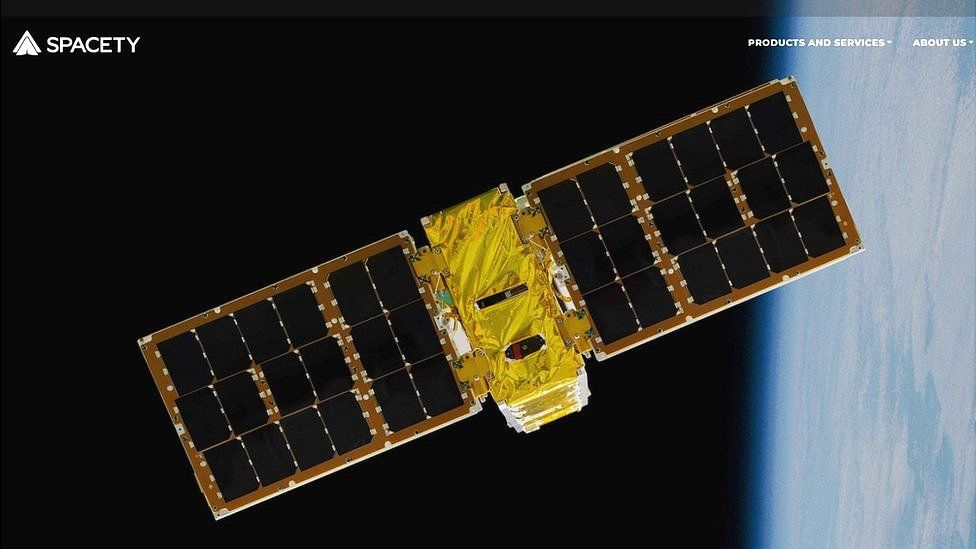
The company has offices in Beijing and Luxembourg and is also known as Spacety China.
Wagner provides Russia with thousands of fighters for the conflict in Ukraine.
Spacety According to a statement released on Thursday by the US Treasury Department’s Office of Foreign Assets Control, China had given Terra Tech, a technology company with offices in Russia, synthetic aperture radar (SAR) satellite images of locations in Ukraine.
“These images were gathered in order to enable Wagner combat operations in Ukraine,” it said. The department has also sanctioned Spacety’s Luxembourg-based subsidiary.
Under the sanctions, there can be no transfer, payment, or export of any property or interests in the United States to the targeted entities.
Spacety China has yet to respond to the move.
China, a close ally of Russia, has attempted to position itself as a neutral party with regard to the Ukraine war. It has been criticised by the US and its allies for refusing to condemn Russia’s invasion of Ukraine.
On its website, Spacety China describes itself as a “pioneer” in providing commercial SAR technology and says it wants to “make SAR imagery of every point on earth accessible and affordable” to users all over the world.
SAR is a type of radar technology that can deliver higher resolution images using shorter antennas.
The site also lists a number of working partners, including state-owned enterprises such as China Aerospace Science and Industry Corporation and China Electronics Technology Group Corporation, as well as the University of the Chinese Academy of Sciences.
Image caption,On its website, Spacety China describes itself as a “pioneer” in providing satellite technology
In addition to Spacety China, 15 other entities, eight individuals and four aircraft – many of them based in Russia – that allegedly form part of Wagner’s global support network also received US sanctions.
These include Sewa Security Services based in central Africa and Kratol Aviation based in the United Arab Emirates, which allegedly provided aircraft to move personnel and equipment between central Africa, Libya and Mali.
Wagner now commands some 50,000 fighters in Ukraine, according to estimates from the White House. The organization plays a key role in Russia’s war efforts, and has been heavily involved in attempts to capture Bakhmut, a city in eastern Ukraine.
“Today’s expanded sanctions on Wagner, as well as new sanctions on their associates and other companies enabling the Russian military complex, will further impede Putin’s ability to arm and equip his war machine,” said US Treasury Secretary Janet Yellen.
President Joe Biden is pleading with demonstrators in Tennessee to keep their demonstrations peaceful as authorities prepare to release video of an arrest that resulted in the death of a motorist.
Tyre Nichols, 29, was severely beaten, according to bodycam video of the encounter that will be released on Friday, according to the family’s attorneys.
After Mr. Nichols passed away a few days after a traffic stop on January 7, five now-fired police officers are being charged with murder.
Police in Memphis have increased patrols amid reports that the city is on edge.
“I’m sickened by what I saw,” Tennessee Bureau of Investigation director David Rausch said on Thursday after reviewing the footage, describing the officers’ actions as “absolutely appalling”.
Image caption,From left: Demetrius Haley, Desmond Mills, Jr, Emmitt Martin III, Justin Smith and Tadarrius Bean
Mr Nichols, a black man, was stopped by five police officers, who are also black, on his way home after taking photos of a sunset at a local park, an attorney for the family said.
Officials say he was suspected of reckless driving.
A first confrontation occurred as Mr Nichols attempted to flee on foot when officers approached his car, the local authorities said.
They said a second confrontation happened when officers tried to arrest him.
Mr Nichols later complained of shortness of breath and was taken to hospital, police said, where he was listed in a critical condition.
A lawyer for Mr Nichols’ family said the bodycam footage showed Mr Nichols being pepper-sprayed, struck with a stun gun, restrained and kicked.
He likened the incident to the notorious footage of Los Angeles police officers beating black motorist Rodney King more than 30 years ago.
All five of the officers face charges of second-degree murder, aggravated assault, aggravated kidnapping, official misconduct and official oppression.
Tadarrius Bean, Demetrius Haley, Desmond Mills Jr, Emmitt Martin III and Justin Smith were booked into jail on Thursday. They all joined the Memphis Police Department in the last six years, and were fired last week.
‘Failing of basic humanity’
President Biden released a statement on Thursday appealing for calm as authorities prepare to release the footage on Friday evening, local time.
“I join Tyre’s family in calling for peaceful protest,” he said. “Outrage is understandable, but violence is never acceptable.”
The city’s police chief, Cerelyn Davis, the first black woman in that role in Memphis, also called for calm amid what she said was a “failing of basic humanity toward another individual.”
“He was a human piñata,” lawyer Antonio Romanucci said of its contents. “It was an unadulterated, unabashed, non-stop beating of this young boy for three minutes.”
In a news conference on Thursday, lawyers for two of the ex-officers said their clients planned to fight the charges.
“No-one out there that night intended for Tyre Nichols to die,” said a lawyer for one of the men.
Officials said Mr Nichols “succumbed to his injuries” on 10 January, but provided no further details. An official cause of death has not yet been disclosed.
His family say he will be remembered as a “good kid” who enjoyed photography and skateboarding.
The father-of-one, who worked at the parcel delivery company FedEx, had Crohn’s disease and suffered severe weight loss, relatives say.
Reverend Al Sharpton, a US civil rights leader, told the BBC the alleged crime was particularly painful because of the officers’ race.
“We fought to put blacks on the police force,” he said. “For them to act in such a brutal way is more egregious than I can tell you.”
Watch: Emotional testimony by residents over deadly traffic stop
“I do not believe these five black police officers would have done this had he been a young white man,” he added.
California-based trial lawyer Adanté Pointer said instances of black men being killed by black officers rarely make the news.
“This case exemplifies that it is not simply a white versus black issue, but instead that this is a power dynamic that plays itself out no matter the race of the police officers,” he told the BBC.
The officers involved are members of a special team known as Scorpion – short for “Street Crimes Operation to Restore Peace in Our Neighborhoods”.
The unit, which was created to police high-crime areas, is now under review, along with all of the city’s specialised units, according to the city’s police chief.
This week, the threats were faxed to colleges and high schools from a Tokyo-registered number.
Police say they have not discovered any explosives in school buildings, and there have been no reports of attacks on students or staff to date.
In Japan, which is renowned for having a low crime rate, bomb threats are uncommon.
The first wave of messages began on Monday, reaching schools and universities across the country. In one prefecture, Saitama, more than 170 schools received bomb threats, according to officials.
Local media reported that one message claimed that over 330 bombs had been set up, while another read: “I planted a major bomb.”
Some reports said the messages demanded ransoms ranging from 300,000 yen (£1,870; $2,320) to 3 million yen.
On Tuesday, messages threatening to kill students and teachers with homemade weapons were sent from the same number to high schools in various prefectures including Osaka, as well as Saitama and Ibaraki near Tokyo.
The threats saw many schools in Japan shutting down as a precaution, though most had re-opened by Thursday.
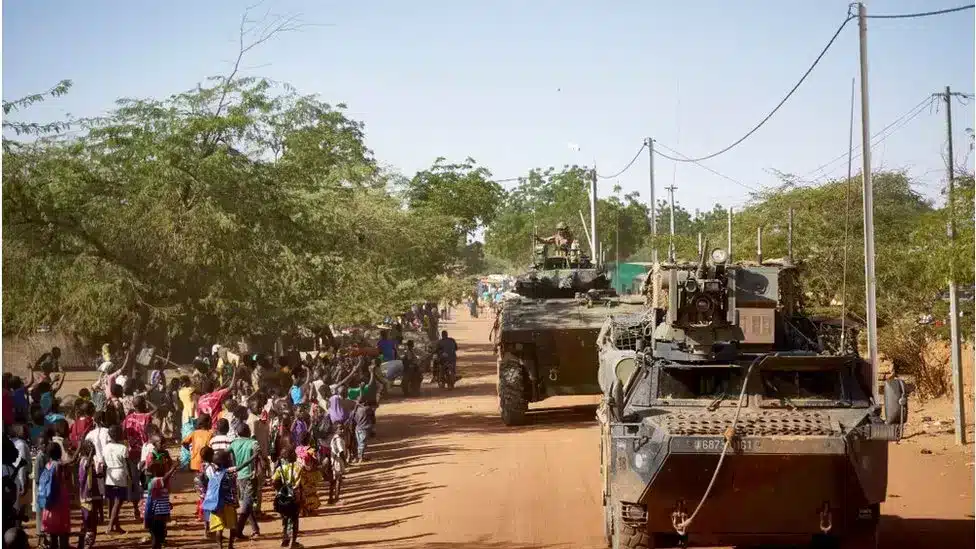
France has granted a request from the military authorities of Burkina Faso to remove all of its personnel from the nation.
Burkina Faso claims it wants to defend itself as it fights an Islamist insurgency at the moment.
Currently stationed in Burkina Faso are 400 French special forces, who have one month to leave.
France announced on Thursday that it would also summon its ambassador to the nation for consultations.
Burkina Faso’s junta had demanded the ambassador’s replacement over his comments about the country’s deteriorating security situation.
Last year French troops also left neighbouring Mali, where they had spent eight years fighting jihadists.
France has kept close military links with many of its former colonies in West Africa and has been helping several of them fight jihadists who are active across the region under the now terminated Operation Barkhane.
Some 3,000 French soldiers are still deployed in West Africa, mostly in Niger and Chad.
Its continued ties, especially economic, have led to some resentment of its influence, which Russia has tapped into.
Both Mali and the Central African Republic are now working with the Russian mercenary group, Wagner.
Burkina Faso has denied reports it will also engage the Wagner Group against the jihadists but a liaison team from the mercenaries has already visited, according to the AFP news agency.
A French foreign ministry spokesperson confirmed that the Burkinabè government had sent a written request for its troops to leave.
“We will respect the terms of the agreement by honouring this request,” the spokesperson said.
Burkina Faso has been hit by a decade-long insurgency that has forced nearly two million people from their homes.
Most recently, suspected jihadists kidnapped around 60 women who were foraging for food in the north of the country, and at the start of the month bodies of 28 people who had been shot dead were found in the north-western town of Nouna. The women have since been released.
The president of Ukraine thanked Western leaders for sending tanks to aid in the conflict with Russia, but he urged that they be delivered as soon as possible.
Volodymyr Zelensky also implored the West to send fighter jets and long-range missiles in his nightly address.
After the US and Germany said they would send Abrams and Leopard tanks to Ukraine, he made his remarks.
The announcement was denounced by Russia as a “blatant provocation,” and any tanks supplied would be totally destroyed.
The tanks would “burn like all the rest,” said Dmitry Peskov, President Vladimir Putin’s spokesman. “They are just very expensive.”
Mr Zelensky said he told Nato Secretary General Jens Stoltenberg that “progress must be made in other aspects of our defence co-operation” – with Ukraine seeking supplies of long-range missiles and artillery.
He pressed not only for a prompt delivery of Western tanks but also for significant numbers: “We must form such a tank force, such a freedom force that after it strikes, tyranny will never again rise up.”
While Mr Zelensky is likely to focus now on equipping the Ukrainian air force with more technologically advanced fighter jets after securing the tanks, many Western governments remain opposed to such a move – fearing the aircraft could be used to strike targets inside Russia.
In his speech to the Bundestag in Berlin on Wednesday outlining the details of the tanks plan, German Chancellor Olaf Scholz insisted there would be “no fighter jet deliveries to Ukraine”.
US President Joe Biden announced on Wednesday that the US would send 31 M1 Abrams battle tanks to Ukraine.
The decision to deliver the tanks was announced hours after Germany said it would send 14 of its Leopard 2s to the Ukrainian battlefield.
Berlin also cleared the way for other European countries to donate German-made tanks from their own stocks.
Ukraine has lobbied Western allies to send the equipment for months.
It hailed the twin announcements as a turning point that would allow its military to regain momentum and take back occupied territory almost a year after Moscow invaded.
It also said the tanks could help deter a potential Russian offensive in the spring.
Watch: Biden says tanks are not an offensive threat to Russia
Announcing the decision to put its tanks on the battlefield, US President Joe Biden said Mr Putin had expected Europe and the United States to “weaken our resolve”, adding: “He was wrong from the beginning and he continues to be wrong.”
“We’re also giving Ukraine the parts and equipment necessary to effectively sustain these tanks in battle,” he said.
“This is about helping Ukraine defend and protect Ukrainian land. It is not an offensive threat to Russia.”
A Ukrainian tank battalion typically consists of 31 tanks, which is why that number has been agreed upon, Mr Biden added.
The US decision, however, marks a reversal in their position as the Biden administration has insisted for some time that the heavy M1 Abrams tanks would be difficult to deliver, expensive to maintain and challenging for Ukrainian troops to operate.
The US-made military vehicle is one of the most modern battle tanks in the world and requires extensive training to operate.
The $400m (£323m) US package also includes eight recovery vehicles that can tow the tanks if they become stuck, as well as ammunition, equipment, and funding for training and maintenance.
But it is likely to be many months before the tanks reach the battlefield.
White House national security spokesman John Kirby said there were no excess Abrams tanks in the US inventory. As such, they will have to be purchased from private contractors or bought from another country,
The German-made Leopard 2 tanks, however, will be drawn from existing inventories and are expected to arrive in two to three months. They are widely seen as one of the most effective battle tanks available.
The decision to send the heavy weapons follows weeks of diplomatic wrangling. Germany faced mounting international pressure to send the tanks, and there are reports that the eventual decision to do so was conditional on the US doing the same.
When asked if the US decision was designed to give Germany cover to send tanks, Mr Kirby said: “I wouldn’t use the word cover. What this decision does do is show how unified we are with our allies.”
He attributed the change in Washington’s position to the conditions on the ground as well as Russia’s tactics, without giving further details.
Ukrainian crews would soon be trained to use the Leopard tanks in Germany, officials in Berlin said.
While the acquisition of tanks from the West will be considered a diplomatic coup for Mr Zelensky, he said on Tuesday that his country required at least 300 of them to defeat Russia.
Several European countries have Leopard 2 tanks in their inventories, and the German decision means some of these can also be sent to Ukraine. Germany hopes around 90 will ultimately be delivered to the battlefield.
Poland wants to export 14 Leopard 2 tanks to Ukraine and Norway announced later on Wednesday that it would send some of its armoured vehicles – although it did not state how many.
The UK was the first Nato member to donate modern tanks to Ukraine when Prime Minister Rishi Sunak’s government announced that 14 Challenger 2s – the British army’s main battle tank – would be provided.
After spraying the deodorant in her bedroom, 14-year-old Derby resident Giorgia Green suffered a cardiac arrest.
Since then, her parents have learned of other cases of young people who unintentionally choked to death on deodorant.
The British Aerosol Manufacturers’ Association (BAMA) responded by stating that deodorants have “very clear warnings.”
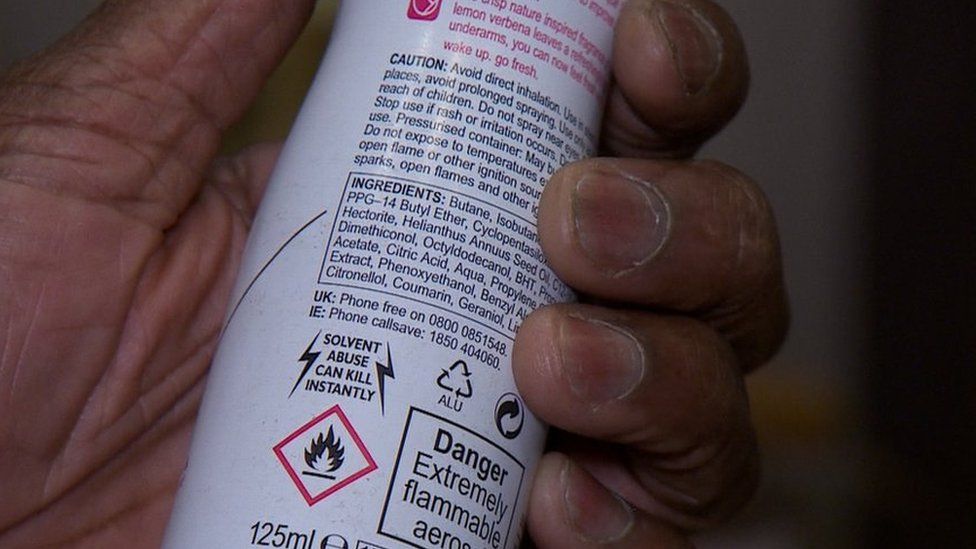
By law, aerosol deodorants must be printed with the warning “keep out of reach of children”.
However, Giorgia’s parents said the writing is small.
They believe many parents buy deodorant for their children without noticing the warning.
“People don’t know how dangerous the contents of those tins can be,” said her father Paul.
“I would like it so that no-one else in the country – or the world – would end up having to go through what we’ve personally gone through.
“We don’t want our daughter’s death to be in vain.”
Giorgia had autism and her father said she liked to spray deodorant on blankets as she found the smell comforting.
“The smell of it gave her a certain sense of relaxation,” said Mr Green.
“If she was feeling in any way a little bit anxious, she would spray this spray and it would give her a sense of comfort because it’s a deodorant my wife used.”
Giorgia’s older brother found her unresponsive in her bedroom on 11 May 2022.
“Her door was open, so it wasn’t as if it was an enclosed environment,” said her father.
“At some point her heart stopped as a result of breathing it in.”
An inquest was held into Giorgia’s death and the coroner recorded the conclusion as misadventure.
Her medical cause of death was “unascertained but consistent with inhalation of aerosol”.
Image caption,RoSPA said it is a “common misconception” that people only die when abusing aerosols
According to the Office for National Statistics (ONS), “deodorant” was mentioned on 11 death certificates between 2001 and 2020.
However, the actual number of deaths is likely to be higher than this, due to the fact that specific substances are not always mentioned on death certificates.
Giorgia’s death certificate referred to “inhalation of aerosol” rather than “deodorant”.
Butane – the main ingredient of Giorgia’s deodorant – was recorded as having been involved in 324 deaths between 2001 and 2020. Propane and isobutane – also in Giorgia’s deodorant – were mentioned in 123 and 38 deaths respectively.
The ONS said the substances have been linked to a number of deaths, noting: “The inhalation of butane or propane gas can lead to heart failure.”
The Royal Society for the Prevention of Accidents (RoSPA) said a number of people have died after over-spraying deodorants.
Ashley Martin, public health adviser at RoSPA, said: “It’s easy to assume they are completely safe and totally free from risk. The truth is they’re not.
“Inhaling large quantities of aerosols, not just deodorants, can lead to a whole host of life-endangering scenarios – from blackouts and breathing difficulties, to heart rhythm changes and sadly, death.
“There’s a common misconception that fatalities from aerosols only happen in a substance abuse scenario, but this is absolutely not true.
“We have seen a number of fatalities over recent years where children and young adults have over-sprayed aerosols – from teenagers conscious of body odour, to children seeking reassurance from familiar smells.”
What warnings are printed on aerosol deodorants?
Image caption,Giorgia’s parents believe warnings need to be clearer
By law, aerosol deodorants must be printed with the warning “keep out of reach of children”.
Most aerosol deodorants also have a warning that says “solvent abuse can kill instantly”. This is not a legal requirement, but is recommended by BAMA due to the risk of people inhaling aerosols to intentionally get high.
Giorgia’s parents believe the warning should be changed to “solvent use can kill instantly”, because Giorgia was not abusing deodorant.
Aerosol deodorants must also contain instructions on their correct usage, which are written following risk assessments carried out by the manufacturer. For example, the instructions might say “use in short bursts in well-ventilated places”.
If an aerosol deodorant is flammable there must also be a warning about this.
Image caption,The British Aerosol Manufacturers’ Association said it was “deeply saddened” to learn of Giorgia’s death
BAMA said in a statement: “The British Aerosol Manufacturers’ Association (BAMA) takes very seriously any incident involving aerosol products, and we were deeply saddened to learn of the death of someone so young.
“As an industry association we work with manufacturers to ensure that aerosols are made to the highest safety standards and are labelled with very clear warnings and usage instructions and recommend that anyone using an aerosol does so in accordance with the manufacturer’s instructions.
“We also recommend applying a number of additional warnings and usage instructions, beyond those required by regulation, and continue to review these to encourage the safe use of aerosols.”
During the weekend, Operation Hadin Kai troops in the northeastern Nigerian state of Borno were able to capture at least 100 Boko Haram terrorists.
On January 23, 2023, in Damboa, Borno state, troops from the 25th Task Force Brigade nullified a number of ISWAP terrorists as part of Operation Hadin Kai.
Along the road from Damboa to Maiduguri, the terrorists attempted to ambush the soldiers who were on fighting patrol in Komala village.
One Guntruck, MRAP, and three motorcycles were confiscated from the terrorists. ISWAP terrorists have continued to suffer strings of humiliating defeats at the hands of Nigerian troops. On January 13, the troops eliminated several of the terrorists and destroyed their MRAPs when they attacked their own troops in Azir.
In early January, Boko Haram took control of the operational bases of the Islamic State West Africa Province, ISWAP, forcing 11 leaders and militant clerics to flee.
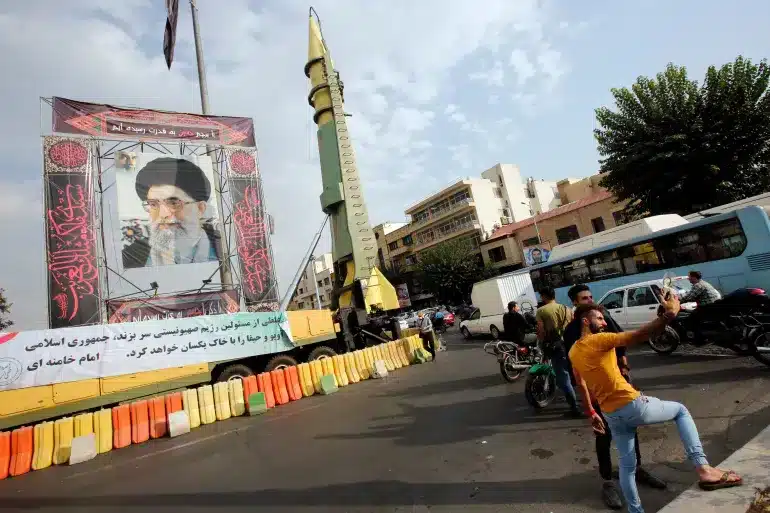
Three organisations, 22 people, a think tank, and eight UK officials have all been blacklisted by the foreign ministry in Tehran.
Iran has increased its sanctions against individuals and organisations from Europe for “supporting terrorism” and “fomenting unrest” inside Iran.
On Wednesday, its Ministry of Foreign Affairs blacklisted three entities and 22 individuals from the European Union, as well as one entity and eight UK officials.
The European Friends of Israel in the European Parliament, Radio J, and the Heberger construction company were singled out for “participation in the construction of factory equipment” for allegedly being used to produce chemical weapons used in the Iran-Iraq War in the 1980s.
It also blacklisted several members of the European Parliament, city officials, police and military commanders, and three executives of the French satirical magazine Charlie Hebdo, which recently published a string of caricatures mocking Iranian leaders.
Two Dutch far-right political leaders, Rasmus Paludan and Edwin Wagensveld, were sanctioned for “insulting the holy Quran”.
In the United Kingdom, Tehran blacklisted the Henry Jackson Society think tank in addition to the prosecutor general, several senior current and former military and intelligence officials, and a prisons authority chief.
The new measures are similar to several rounds of previous sanctions announced by Tehran, the latest of which came last month. They include entry bans into Iran and confiscation of any assets the targets may possess in the country.
The measures were announced two days after the EU and UK hit dozens of Iranian officials and entities with sanctions.
The EU, however, has said moving forward with a proposal to designate the Islamic Revolutionary Guard Corp as a “terrorist” organisation faces legal challenges.
Tehran has harshly condemned the proposal, which was one of several that were overwhelmingly ratified in a resolution by theEuropean Parliament last week.
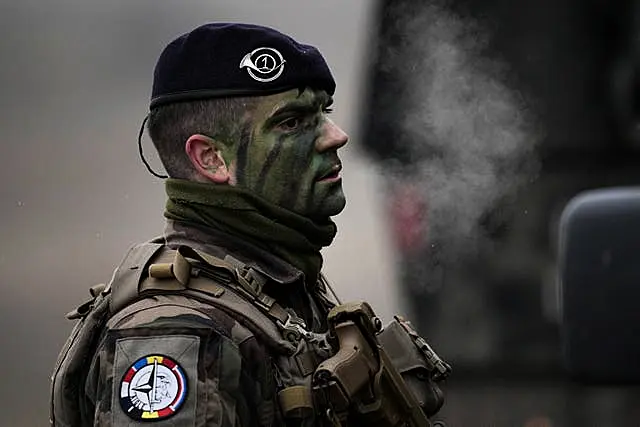
It is reported that about 600 French soldiers were deployed to take part in a military drill at a NATO battlegroup in Romania.
The aim was to test the 30-nation military alliance’s readiness on its eastern flank amid Russia’s war in neighbouring Ukraine.
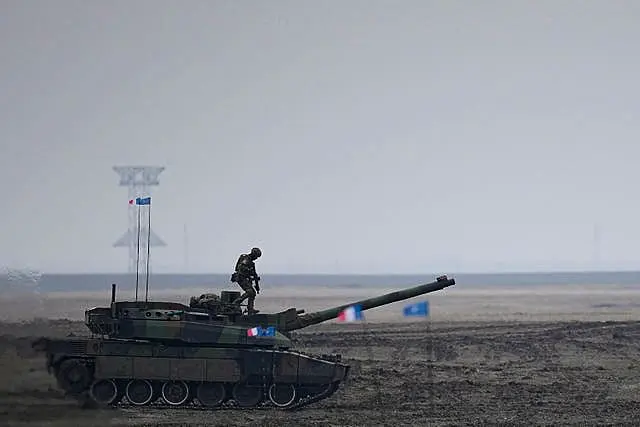
The drill at a training range near Romania’s eastern town of Smardan on Wednesday involved some 200 military vehicles, including four French Leclerc battle tanks that practiced firing live ammunition.
A French serviceman takes part in an exercise at a training range in Smardan, eastern Romania (Vadim Ghirda/AP)
Romania’s defense ministry said the main purpose of the exercise was to train the battlegroup “on the rapid deployment capability and execution of a combat mission” within a collective NATO defense operation.
The Leclerc tanks used are the same model French President Emmanuel Macron said on Sunday he asked his defence minister to “work on” possibly sending to Ukraine.
Kyiv has persistently requested tanks from its western allies to help its war efforts.
After much hesitation, that request was finally granted by Germany on Wednesday when Chancellor Olaf Scholz said his government would provide German-made Leopard 2 battle tanks and also approve requests by other countries to do the same.
A French serviceman stands on a Leclerc main battle tank during the exercise (Vadim Ghirda/AP)
In response to Russia’s invasion of Ukraine last February, Nato bolstered its presence on Europe’s eastern flank, including by sending additional multinational battlegroups to alliance members Romania, Hungary, Bulgaria and Slovakia.
This month, the alliance deployed two surveillance planes to Romania, from where they will fly missions for several weeks to monitor Russian military activity near Nato’s borders.
The Awacs aircraft, which Nato refers to as its “eyes in the sky”, belong to a fleet of 14 usually based in west Germany.
Since the war started, Awacs have patrolled regularly over eastern Europe and the Baltic Sea region to track Russian warplanes.
According to the GMB union, about 300 employees at Amazon’s warehouse in Coventry went on strike in protest of a “derisory” 5% pay increase to £10.50 per hour.
Workers complained to the BBC about “severe” working conditions, saying they are constantly watched and reprimanded for taking “idle time” that only lasts a few minutes.
A system “that recognises great performance” exists, according to Amazon.
If an employee isn’t meeting their performance goals, it “also encourages coaching to help them improve,” a spokesman said.
Two Amazon workers, who are members of the GMB, said the robots in the warehouse “are treated better than us”.
Darren Westwood and Garfield Hilton described to the BBC how even a trip to the toilet can lead to questions by managers.
“The thing with stopping work is that they want to know why,” said Mr Hilton. “So if the time is beyond a couple of minutes they can see it on the system.”
‘They will question you’
Mr Hilton, who has diabetes, said it is not always possible to find toilets close by in the building and the process of locating one and returning can sometimes take upwards of 15 minutes.
“They will then question you, ‘what were you doing?’”
Image caption,Amazon workers in Coventry voted in December to take strike action
The men said that managers track staff performance, and time that is not spent scanning items is accrued.
Workers at the Coventry warehouse scan stock which is sent out to Amazon fulfilment centres, to be shipped to consumers.
Instead of scanning, workers might be asked to handle pallets. “So when there’s problems with a pallet or a box, that time will accrue,” said Mr Westwood.
“Technically it could add up to 30 minutes. [The managers] will come down and say, ‘during today, you’ve had 34 minutes of idle time. What were you doing?”
A spokesman for Amazon said: “Performance is only measured when an employee is at their station and logged in to do their job.
“If an employee logs out, which they can do at any time, the performance management tool is paused.”
But Mr Westwood and Mr Hilton said some colleagues were working 60-hour weeks to keep up with the cost of living.
Mr Hilton said that he has seen workers falling asleep on the short bus ride to Amazon’s warehouse. “There’s a huge amount of them in the building virtually in ghost mode.”
He said Amazon wants “every minute in that building to be maximised”.
“You have to look at it this way, if the box with the product is not moving, you’re not making money. This is Amazon. If there’s a problem with a box, it’s a loss-maker. If the box leaves a building it is making money.”
In August, Amazon offered UK workers a 5% payrise, which was worth 50p outside London and the South East.
Inflation, the rate at which prices rise, is at a 40-year high, putting pressure on household budgets.
Bogdan, who is 29, has worked for Amazon since 2015. He said after workers put their health at risk to work during the height of the pandemic, the pay offer “insulted” staff.
He said one reason for striking was the public needed to “understand what is going on” behind the scenes every time they make an order.
He claimed Amazon portrayed an image that “everything is fine”, but he added: “It’s actually not true.”
Image caption,Amazon chairman Jeff Bezos, seen here with his partner Lauren Sánchez, has a $120bn fortune
An Amazon spokesman said it was “proud” of its “competitive” pay rates. He said the starting pay for workers was £11.45 an hour in London and the South East, and £10.50 an hour in the rest of the UK.
He said this marked a 29% increase in the minimum hourly wage paid to Amazon employees since 2018.
But union members want to be paid £15 an hour. Mr Westwood said the 50p offer was “a smack in the mouth”.
“These people had worked two years through the pandemic, that had seen Amazon’s shares go through the roof. They had seen the profits just become unimaginable,” he said.
Amanda Gearing, a senior GMB union organiser, told the BBC’s Today programme that Wednesday’s strike action would have a “massive impact” on the Coventry warehouse.
‘Only the start’
Of the 1,500 workers at Amazon’s Coventry site, around 300 will walk out, the union says.
“Coventry might be the start [of the strikes], but it won’t be the finish,” Ms Gearing said from the picket line. “We know there are workers in other centres that feel exactly the same.”
She added: “People are having to choose between heating their homes and… eating really, so it’s not good enough, not from someone like Amazon that’s got billions and billions of pounds of profit during the pandemic.”
Amazon’s global sales and profits soared as Covid restrictions forced people to shop online. Between 2019 and 2020, profits nearly doubled to $21.3bn (£17.2bn) and rose again the following year to $33.3bn.
Growth has been uneven since economies have reopened and after taking on thousands of staff since 2019, Amazon is now laying off 18,000 workers worldwide.
Mr Westwood said “people might think we’re being greedy” by asking for £15 an hour. But he pointed to Jeff Bezos, Amazon’s founder, executive chairman and space adventurer, who has a $120bn fortune according to Forbes magazine.
“We don’t want his boat or his rockets,” said Mr Westwood. “We just want to be able to live. I just want to be able to pay my bills at the end of the week. That’s all we’re asking for.”
Image caption,Amazon founder Jeff Bezos owns Blue Origin, a “space tourism” business
Amazon said a “tiny proportion” of its workforce was involved in the industrial action. It said “only a fraction of 1%” of its UK employees voted in the ballot, which included those who voted against industrial action.
But Mr Westwood said the numbers were “brilliant”. Amazon does not recognise unions but, according to the GMB, there are members scattered throughout the UK in varying numbers.
Amazon has been battling against unionisation in the US.
More than half of the 8,000 workers at a warehouse on Staten Island, New York, voted to join the Amazon Labor Union which has now been officially certified. However, the company has vowed to appeal the certification.
Mr Westwood said there was a huge range of different nationalities who work at Coventry. “They don’t understand this is the UK – we can organise a union, we can protest, we can withdraw our labour,” he added.
“[Our workers] need someone. I know it’s going to be a long slog, but these people need someone who’s not frightened. And I’m not frightened.”
According to the Chinese government, Washington should stop pressuring Beijing to reduce Zambia’s debt and instead concentrate on preventing a domestic government default that might have an impact on the world economy.
“The biggest contribution that the US can make to the debt issues outside the country is to cope with its own debt problem and stop sabotaging other sovereign countries’ active efforts to solve their debt issues,” the Chinese embassy in Zambia said in a statement on Tuesday.
The US government has a cap of $31.4 trillion on how much it can borrow, and it reached that limit on Thursday.
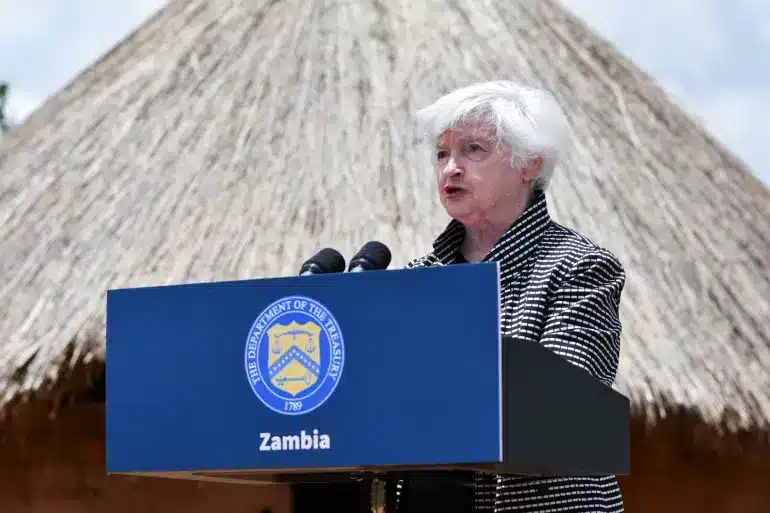
US Treasury Secretary Janet Yellen implemented “extraordinary measures” to ensure the US government can continue paying its bills in the short term and then travelled to Africa. On a visit to Zambia, she said it was crucial for the country to address its heavy debt burden with China.
The country failed to make a $42.5m bond payment in November 2020, becoming Africa’s first sovereign nation to default during the COVID-19 pandemic.
“It’s taken far too long already to resolve this matter,” Yellen said on Monday.
Washington is trying to woo African nations as the influence on the continent of its rivals Russia and China grows.
During her visit to Africa, which also included Senegal and South Africa, Yellen pushed to expand US trade and business ties.
“The United States is all in on Africa, and all in with Africa,” Yellen said on Friday in Dakar as she touted the fruits of a new “mutually beneficial” US economic strategy towards Africa.
In responding to Yellen, China zeroed in on the battle between Republican lawmakers and Democratic President Joe Biden’s administration over raising the US debt limit to allow more borrowing to keep the government running.
“Even if the US one day solves its debt problem, it is not qualified to make groundless accusations against or press other countries out of selfish interests,” the Chinese embassy statement said.
Chinese development banks have emerged as major lenders to poor countries around the world for natural resources, transport and power projects although that lending has fallen sharply and steadily since 2016, according to Boston University’s Global Development Policy Center.
New loan commitments dropped to eight projects totalling $3.7bn in 2021, down from a peak of 151 projects worth $80bn in 2016, according to data compiled by the centre.
At present, 22 low-income African countries are either already in debt distress or at high risk of debt distress, according to the UK-based Chatham House. Chinese lenders account for 12 per cent of Africa’s private and public external debt, which increased more than fivefold to $696bn from 2000 to 2020.
Washington has repeatedly expressed concern in recent weeks over Beijing’s alignment with Moscow as Russia wages its invasion of Ukraine.
Russian President Vladimir Putin in December said he expected his Chinese counterpart, Xi Jinping, to visit in 2023. If it were to take place, analysts say the visit could be interpreted as a public show of solidarity amid the war in Ukraine.
He also blamed the US for the deterioration in relations between the world’s two largest economies, saying Beijing has “firmly rejected” Washington’s “erroneous China policy” of applying pressure on trade and technology and criticising China over human rights and its claims to a broad swath of the Western Pacific.
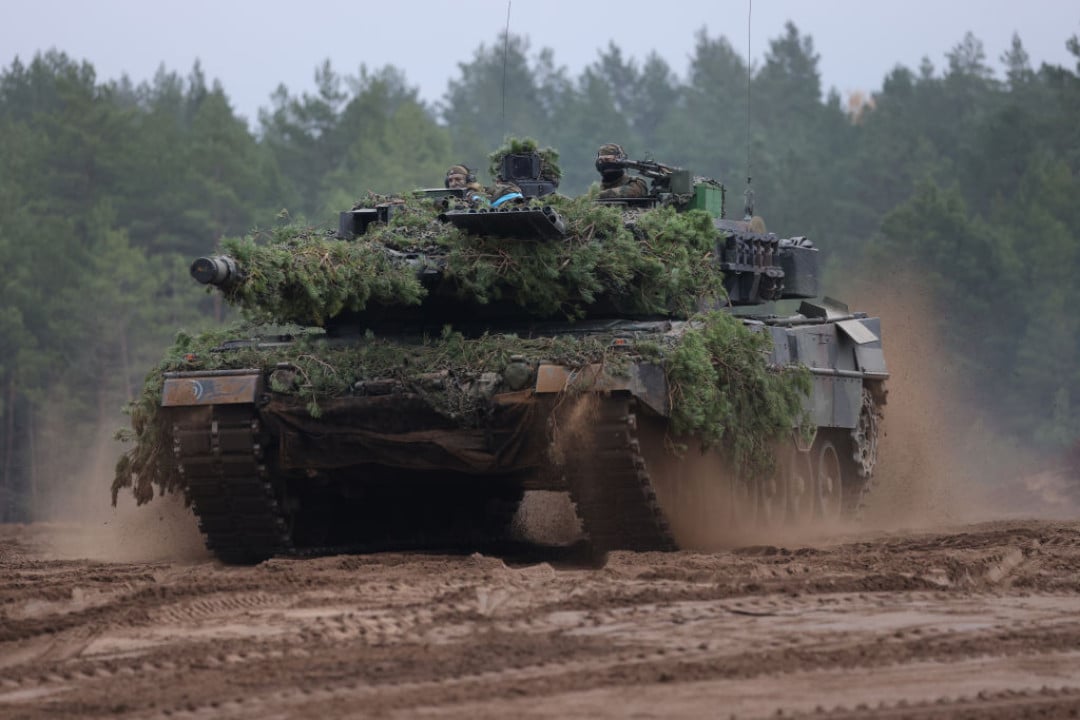
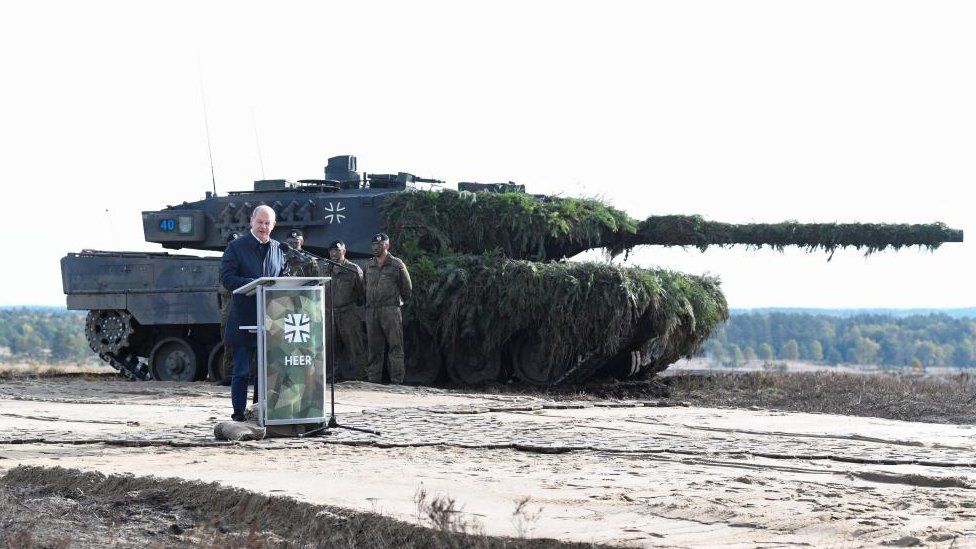
While the US is finalising plans to send about 30 Abrams tanks to Ukraine, Germany has agreed to send Leopard 2 aircraft to that country.
Olaf Scholz, the chancellor of Germany, has approved sending its Leopard 2 battle tanks to Ukraine.
The announcement coincides with rumours that Washington is preparing to send dozens of M1 Abrams tanks to the front lines in Ukraine.
The United States had been on the fence, just like Germany.
While Washington cited the logistical and maintenance difficulties the Ukrainians might encounter if they were to receive the Abrams, Berlin worried about the war’s potential to escalate.
Both armoured vehicles are considered state-of-the-art and are more powerful than many Soviet-era tanks fielded by both Russian and Ukrainian forces.
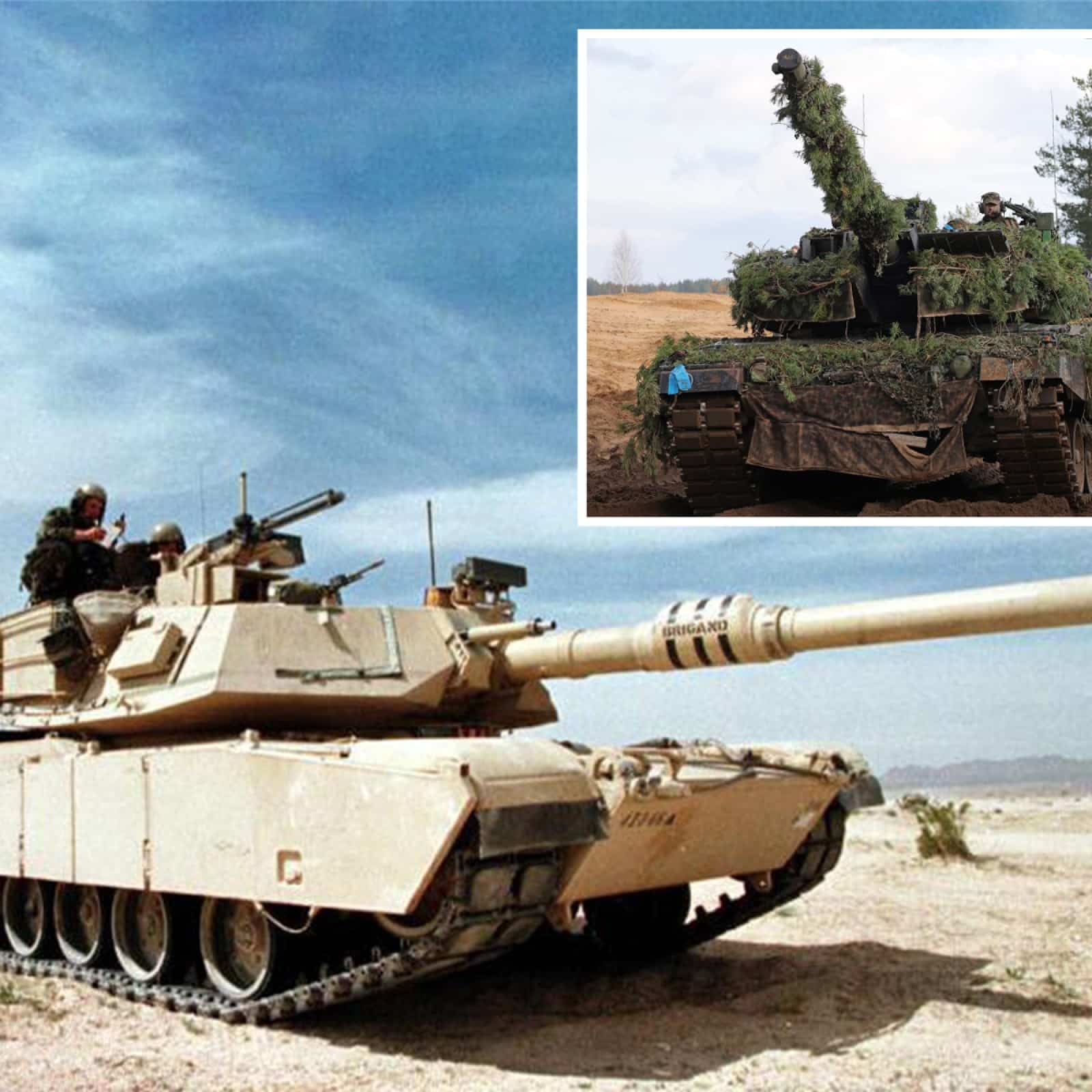
“The Leopard and American Abrams are actually twins,” Sydney Freedberg, contributing editor of the digital magazine, Breaking Defence, told Al Jazeera.
The Leopard 2 was first produced in 1979 by Krauss-Maffei for the German Ministry of Defence.
They are in service with the armies of Austria, Canada, Chile, Denmark, Finland, Germany, Greece, the Netherlands, Norway, Poland, Portugal, Singapore, Switzerland, Sweden, Spain and Turkey.
The first M1 tank was manufactured by General Dynamics Land Systems (GDLS) in 1978 and was delivered to the US Army in 1980.
“They are very similar. Big vehicles, heavily armoured. Much better protected than anything the Soviets built, or anything the Russians currently have,” said Freedberg.
The main difference between the Abrams and the Leopard is the engine.
The Leopard 2 has a diesel-powered MTU MB 873 engine, which is much easier to maintain and more widely used across Europe, while the Abrams uses a more powerful and more complex turbine engine.
According to Freedberg, because the Abram tanks are used significantly less across Europe, Ukraine may struggle to cope with logistic infrastructure such as obtaining spare parts, warehousing and general maintenance. The four-person tank will also require additional training on the complex machinery.
Russia’s ambassador to the US said the possible delivery of Abrams tanks to Kyiv by Washington would be “another blatant provocation” against Moscow and that the West would regret its “delusion” that Ukraine can win on the battlefield against Russia.
According to Alex Gatopoulos, Al Jazeera’s defence analyst, the latest-generation main battle tanks are vital for Ukraine if it wants to punch holes in Russian defensive lines and retake territory that Russian forces seized in the opening weeks of the invasion.
Southern Ukraine is flat and ideal tank territory. Russia has been building rows of trenches and fortified bunkers to stop a Ukrainian advance in the area.
In a Ukrainian offensive, tanks and troops protected by infantry fighting vehicles like the American Bradley, German Mardar and even the Russian-made BMP-2 would advance.
Amazonian indigenous communities are under attack as corporate interests aggressively expand their operations.
As illegal gold miners threaten them with violence and obstruct the delivery of supplies like food and medicine to their troubled region, Brazilian officials claim that the Yanomami Indigenous people are forced to live in appalling conditions.
Weibe Tapeba, the Indigenous Health Secretary, stated on Tuesday that the government needs to remove the miners, some of whom are heavily armed, from a section of the Yanomami reservation close to the Venezuelan border.
“It looks like a concentration camp,” Tapeba said of the Yanomami’s living conditions in a radio interview. “It’s an extreme calamity. Many Yanomami are suffering from malnutrition and there is a total absence of the Brazilian state.”
Under former far-right President Jair Bolsonaro, critics have said the government largely stood by as Indigenous rights were violated and forests were torched, allowing business interests to illegally extend their reach into the Amazon.
An April 2022 report by the Hutukara Yanomami Association found a 46-percent increase in the area of land on the Yanomami reservation that was scarred by “garimpo”, or wildcat gold mining, in 2021.
Tapeba also said that an invasion of about 20,000 illegal gold miners contaminated rivers and their fish with mercury, poisoning a food source for the Yanomami and causing children to lose their hair.
President Luiz Inacio Lula da Silva, who defeated Bolsonaro in the 2022 elections and was sworn in earlier this month, visited the region last weekend after photos were published of Yanomami children and elderly so malnourished that their ribs were protruding.
Lula has promised to crack down on illegal business activity in the Amazon, protect Indigenous communities and reverse the massive deforestation that proliferated during Bolsonaro’s time in office.
On Monday, Justice Minister Flavio Dino also stated that there was “evidence of genocide” that was under investigation.
“Health teams cannot get here because of the heavily armed bandits. This can only be resolved by removing the gold miners, and that can only be done by the armed forces,” said Tapeba, who was appointed by Lula’s government.
The group Survival International warned in December that malnutrition among the Yanomami was reaching critical levels, citing a report by UNICEF showing that children under the age of five were dying of preventable disease at 13 times the national average.
In a statement, Survival International director Fiona Watson called the situation “a deliberate, man-made crisis, stoked by President Bolsonaro, who has encouraged the mass invasion and destruction of the Yanomami’s lands”.
Bolsonaro’s government, which was in power from 2019 to 2022, has faced widespread criticism for turning a blind eye to illegal activities in the Amazon, leading to increased violence as the interests of loggers, miners and other illicit operations clashed with Indigenous people and land defenders.
In October 2021, the Catholic Church’s Indigenous Missionary Council said there were 182 murders of Indigenous people in 2020, compared with 113 murders in 2019, a 61-percent increase.
On Monday, Brazilian authorities said that a fish trader was likely behind the 2022 assassination of Indigenous expert Bruno Pereira and British journalist Dom Phillips in the Amazon.
The suspect, Ruben Dario da Silva Villar, allegedly ordered the murders because Pereira, a former employee of Brazil’s federal Indigenous agency FUNAI, was causing losses to his illegal fishing operation.
Deforestation also reached dizzying heights during Bolsonaro’s tenure, increasing 150 percent in December over the previous year. Bolsonaro, a noted agribusiness ally, had pushed for development in the Amazon as a way to increase economic activity and address poverty.
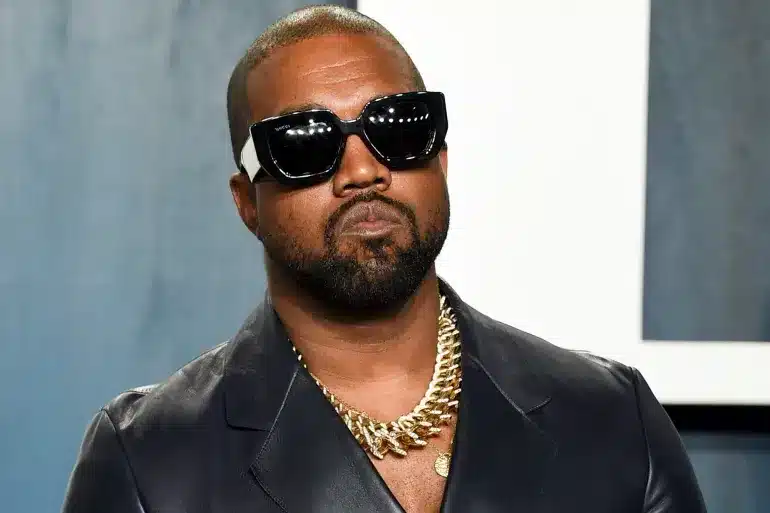
In response to the musician’s anti-Semitic remarks, pressure has increased to deny him an entry visa if he attempts to travel to Australia.
Ye, formerly known as Kanye West, the famous rapper, may not be granted a visa to enter Australia because of his anti-Semitic remarks, according to a minister in the Australian government.
In response to media reports that the American celebrity planned to visit the family of his new Australian partner Bianca Censori in Melbourne the following week, Australia’s Education Minister Jason Clare issued a statement on Wednesday.
Clare said he was unaware of Ye’s visa application but noted that anti-Semitic individuals have previously been denied entry to Australia.
“I don’t know if he’s applied for a visa yet but google it and you’ll see that it seems like he’s a pretty big fan of a person who killed six million Jewish people last century,” Clare told the Today show on Australia’s Nine Network television.
“People like that who’ve applied for visas to get into Australia in the past have been rejected. I expect that if he does apply, he would have to go through the same process and answer the same questions they did.”
A spokesperson for Ye did not immediately respond to a request for comment.
Seven Network News reported that Ye and Censori intend to visit her family who live in the northeast Melbourne suburb of Ivanhoe next week.
Last month, Ye praised Hitler in an interview with conspiracy theorist Alex Jones. Twitter suspended Ye after he tweeted a picture of a swastika merged with the Star of David. Ye has also been dropped by major corporate partners, including Adidas, over his comments.
Australia’s Migration Act sets security and character requirements for non-citizens to enter the country. Any decision on whether Ye gets an Australian visa would be made by Immigration Minister Andrew Giles, whose office said he could not comment on individual cases due to privacy reasons.
Australia has previously refused or revoked visas to far-right figures for failing the “good character” test. British conspiracy theorist David Icke had his visa revoked in 2019, just before starting a speaking tour.
Gavin McInnes, founder of the Proud Boys, a male-only group who identify as “Western Chauvinists”, was denied a visa in 2018 after a public campaign that included a petition with 81,000 signatories, according to local media.
Australia’s opposition leader Peter Dutton said if he were in government, he would be inclined to bar Ye on character grounds.
“My inclination would be not to allow him in,” Dutton told Melbourne’s Radio 3AW on Tuesday.
“His conduct and his behaviour is appalling, and he’s not a person of good character,” Dutton said.
The Liberal Party’s David Coleman said on Wednesday the decision to deny Ye a visa should be “easy”.
No way Kanye West passes the character provisions of the Migration Act. Easy decision for @andrewjgiles if he applies for a visa.
Peter Wertheim, co-chief executive officer of the Executive Council of Australian Jewry, met government officials on Tuesday to argue for Ye’s entry ban.
“We had a sympathetic hearing,” Wertheim said on Sky News.
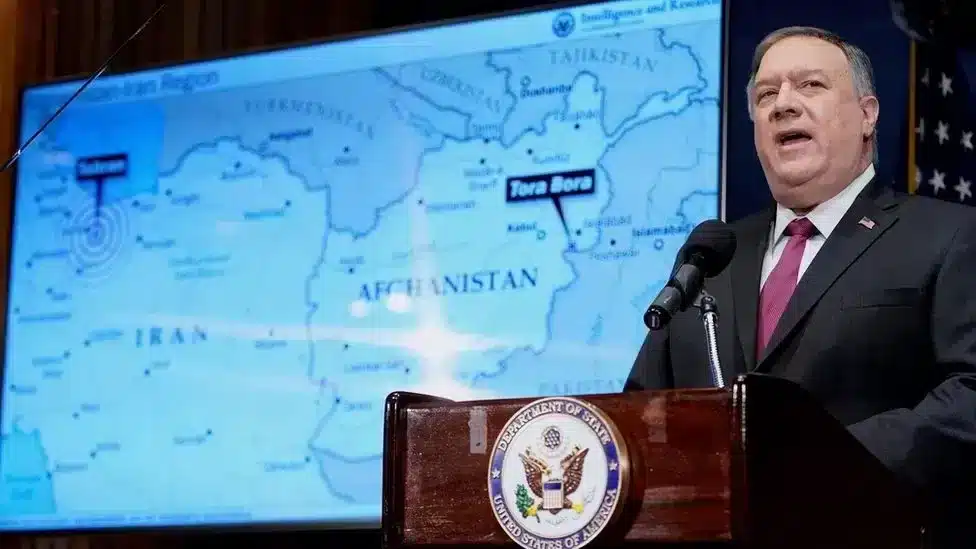
In his new memoir, former US Secretary of State Mike Pompeo mentioned that in February 2019, India and Pakistan were “close” to a “nuclear conflagration.”
Following an assault on Indian troops in Kashmir, Delhi launched airstrikes against militants in Pakistani territory.
At that time, Pakistan claimed to have downed two Indian military aircraft and captured a fighter pilot.
Kashmir is a region that both India and Pakistan claim as their own but only partially govern.
India has long accused Pakistan of backing separatist militants in the Kashmir valley – a charge Islamabad denies. The nuclear-armed neighbours have fought three wars since independence from Britain and partition in 1947. All but one were over Kashmir.
In Never Give An Inch: Fighting for the America I Love, Mr Pompeo says he does not think the world properly knows just how close the India-Pakistan rivalry came to spilling over into a nuclear conflagration in February 2019″.
“The truth is, I don’t know precisely the answer either; I just know it was too close,” he writes.
Mr Pompeo says he will “never forget the night” he was in Hanoi at a summit “negotiating with the North Koreans on nuclear weapons” when “India and Pakistan started threatening each other in connection with the decades-long dispute over the northern border region of Kashmir.”
After the attack on Indian troops that killed more than 40 soldiers – “an Islamist terrorist attack… probably enabled in part by Pakistan’s lax counter-terror policies”, according to Mr Pompeo – India had responded with air strikes inside Pakistan. “The Pakistanis shot down a plane in a subsequent dogfight and kept the Indian pilot prisoner.”
According to a statement from their families, two British volunteers who had been reported missing in eastern Ukraine were killed while attempting to evacuate aid workers from Soledar.
Early this month, 48-year-old Andrew Bagshaw and 28-year-old Christopher Parry vanished while travelling to Soledar, a salt mining town where Russian and Ukrainian forces were engaged in a fierce battle for control.
Both men’s deaths were confirmed by Parry’s family in a statement issued by the British Foreign Office.
“It is with great sadness we have to announce that our beloved Chrissy has been killed along with his colleague Andrew Bagshaw whilst attempting a humanitarian evacuation from Soledar, eastern Ukraine,” said the statement, which was released on Tuesday.
Ukrainian police said on January 9 that they had lost contact with Bagshaw and Perry after the two men left Kramatorsk for Soledar on January 6.
Sky News reported Bagshaw’s family as saying the two men were killed while trying to rescue an elderly woman.
The statement gave no details on the circumstances of the men’s deaths, adding that Parry “found himself drawn to Ukraine in March in its darkest hour at the start of the Russian invasion and helped those most in need, saving over 400 lives plus many abandoned animals”.
Former US Vice-President Mike Pence’s home has been found tocontain classified documents, marking the latest instance of top-level government officials’ homes being found to contain classified documents.
The documents, which were found by Mr. Pence’s attorney last week at his Indiana home, have been given to the FBI.
Investigators are already looking into the possession of documents by Vice President Joe Biden and former President Donald Trump.
Because of alleged paper handling violations, Mr. Trump is under criminal investigation.
Representatives for Mr. Pence informed the National Archives of the documents in a letter.
The FBI came to the former vice-president’s home to collect the documents, bypassing “standard procedures” and requesting “direct possession” of them, lawyers added in a separate letter.
Under the Presidential Records Act, White House records are supposed to go to the National Archives once an administration ends. Regulations require such files to be stored securely.
A “small number of documents bearing classified markings” were “inadvertently boxed and transported” to Mr Pence’s home at the end of Mr Trump’s presidency, his lawyer wrote in a letter shared with US media.
The latest development emerged after Mr Pence sought legal help from specialists in handling classified documents “out of an abundance of caution”.
He asked for help “after it became public that documents with classified markings were found in President Joe Biden’s Wilmington residence”, the letter read.
Lawyers found “a small number of documents that could potentially contain sensitive or classified information”, which were locked by the former vice-president in a safe.
An aide to Mr Pence told CBS News, the BBC’s US partner, that the documents were stored in boxes in an insecure area of Mr Pence’s home. The aide said they were taped shut.
According to US media, the documents are believed to have first been taken to Mr Pence’s home in Virginia before later being sent to Indiana.
After the letter became public, Mr Trump came to Mr Pence’s defence, taking to his Truth Social social media platform to say that he is “an innocent man”.
“He never did anything knowingly dishonest in his life,” Mr Trump wrote. “Leave him alone!!!”
Mr Pence had repeatedly said over the last months that he did not believe he was in possession of classified documents.
Earlier this month, he told CBS that he was confident reviews of documents in his home were done “in a thorough and careful way”.
President has no regrets about classified documents
Mr Biden previously said he had “no regrets” about not going public before the midterm elections with the news that classified documents had been discovered in his private office.
Six more classified files were found during a 13-hour search of President Biden’s home in Delaware on Friday, his lawyer Bob Bauer said in a statement on Saturday.
The documents unearthed so far are believed to be related to Mr Biden’s eight-year tenure as vice-president under former President Barack Obama.
Mr Biden offered access “to his home to allow DoJ [the Department of Justice] to conduct a search of the entire premises for potential vice-presidential records and potential classified material,” Mr Bauer added.
Earlier this month, Mr Biden’s lawyers said a first batch of classified documents had been found on 2 November at the Penn Biden Center, a think tank that the president founded in Washington DC.
A second batch of records was found on 20 December in the garage at his Wilmington home, while another document was found in a storage space at the house on 12 January, his lawyers said.
Representatives for former Presidents Obama and George W Bush told Reuters on Tuesday that their administrations had turned over all documents to the National Archives after leaving office.
Hundred of classified records were found at Mr Trump’s Florida Mar-a-Lago residence – Mr Trump and his lawyers resisted handing over the documents until the FBI raided the Florida holiday home last August.
He denied any wrongdoing, alleging that President Biden was being treated more favourably by the FBI.
Document discovery timeline
2 November 2022 – First batch of classified documents found at the Penn Biden Center, a think tank that President Joe Biden founded in Washington DC
20 December – Second batch of records found in the garage of Joe Biden’s Wilmington home
12 January – Document found in a storage space at Mr Biden’s Wilmington home
19 January – FBI agents come to Mike Pence’s Indiana home to collect files
20 January – Department of Justice investigators discover six more classified documents during a 13-hour search of Biden’s home in Delaware.
Two documentaries, All That Breathes and The Elephant Whisperers, as well as the catchy Naatu Naatu song, make the cut.
Getting three nominations for the 2023 Oscars, including one for the best original song and two for documentaries, is a big deal for Indian cinema.
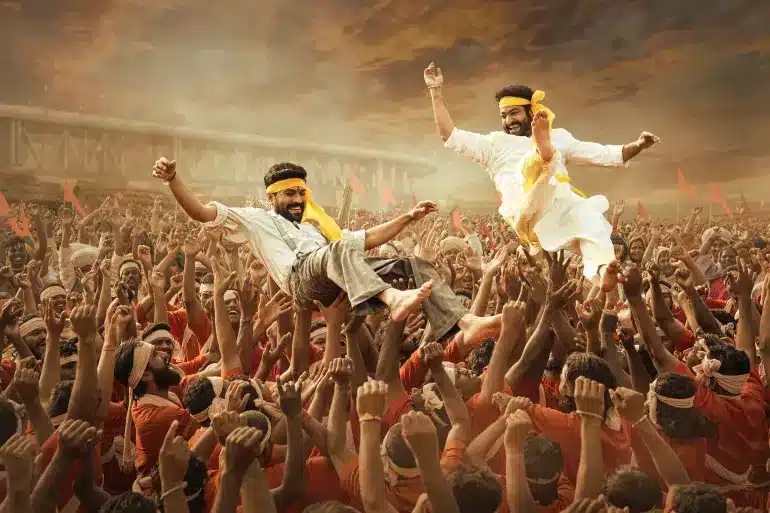
The three-hour Telugu epic RRR’s catchy musical number Naatu Naatu was included in the nominations revealed by the Academy of Motion Picture Arts and Sciences on Tuesday.
The nomination serves as an additional boost for the song, which earlier this month also took home the Golden Globe for best song, marking the first time an Indian film had won an honour at the ceremony.
“I feel like I’m on top of the world. This is the best feeling,” said music director M M Keeravaani, who added that he was not surprised with the nomination because he was “very confident in his work”.
Despite not being submitted as India’s official Oscars pick, RRR, an unapologetically over-the-top action flick, has built grassroots support to become a hugely popular favourite in Hollywood in recent months.
Its fans include Avatar director James Cameron, who was seen praising Rajamouli in a recent video that went viral on social media, prompting hopes of a best picture Oscar nomination.
The film India instead submitted for best international feature, Gujarati-language Chhello Show (Last Film Show) by filmmaker Pan Nalin, failed to land a nomination.
“No shade to the movie they did choose, which is actually very good, but RRR was a slam dunk,” Variety senior awards editor Clayton Davis said.
Two Indian-made documentaries also made it to the Oscars nominations: All That Breathes for the best documentary feature film and The Elephant Whisperers for the best documentary short.
All That Breathes, a story of two brothers trying to protect Delhi’s black kites, is only the second Indian-made documentary to be nominated in the long documentary format after Writing With Fire in 2021.
Shaunak Sen told India’s NDTV broadcaster it took his team three years to make the documentary, which he called an “ecological, emotional and sociopolitical history” of the older quarters of the city.
The 92-minute documentary, co-directed by Aman Mann and Teddy Leifer, has also been nominated for the prestigious BAFTA awards.
The Elephant Whisperers, by filmmaker Kartiki Gonsalves, depicts the caretakers of abandoned elephants in India’s southern Tamil Nadu state.
The mostly Tamil-language film follows Bomman and Bellie, members of an Indigenous tribe, treating two elephants Raghu and Ammu as their own children, “bringing to their jobs an intuitive understanding of the forest and its irreplaceable riches”, the film suggests.
“How on earth will Oscar voters find the strength to resist a documentary about two adorable baby elephants and their equally lovable elderly caretakers? Indeed, it will take a pachyderm’s hide – and a heart of stone – to ignore a 41-minute montage of ‘awwww’,” a piece in India’s Scroll.in website said.
We will know on March 12 when the Oscar awards ceremony will be held in Los Angeles.
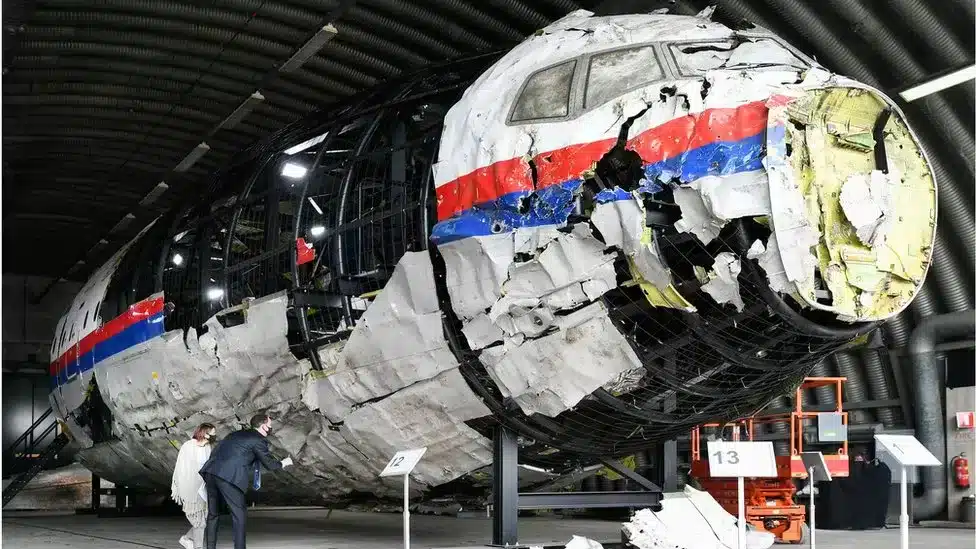
In relation to the downing of Flight MH17 in 2014, the European Court of Human Rights is about to say whether it will hear a Dutch case against Russia.
Russian misinformation regarding Moscow’s part in the incident, according to the Dutch government, violates the human rights of the relatives.
The accusations are rejected by Russia.
The decision will be read out at 14:30 local time (13:30 GMT).
The Boeing 777 was flying from Amsterdam to Kuala Lumpur when it was hit by a surface-to-air missile in July 2014 during a conflict between pro-Russia rebels and Ukrainian forces in the Donbas region of Ukraine.
The Netherlands argues that Russia played a key role in the air disaster and the case hinges on whether or not Moscow had “effective control” over the area of Ukraine where the missile was fired from.
At this stage, the ECHR will only rule on whether the criteria has been met for it to deal with this application.
Even if it decides to hear the Dutch case, it could be years before a ruling is issued. However, if the ECHR issues a guilty verdict against Russia, Moscow could be obliged to pay damages to the victims’ relatives.
Last September, Russia stopped being party to the European Convention on Human Rights, but the court can still deal with claims against Russia regarding actions up until that date.
In November, a Dutch court at the Schiphol Judicial Complex found three men – two Russians and a Ukrainian – guilty of murder in absentia for their part in the downing of MH17.
The court concluded that the missile had been fired deliberately to bring down a plane, even if the target had been military rather than civilian.
The three men were sentenced to life in jail but are all thought to be in Russia.
Since Moscow condemned the verdict as scandalous and politically motivated it is extremely unlikely that they will be handed over to face justice.
Russia has repeatedly denied involvement in the attack.
We are acting in a closely coordinated manner internationally.”
The goal is to establish two battalions with Leopard 2 tanks for Ukraine quickly, the statement said, adding Germany would first step in and provide 14 Leopard 2 tanks from military stocks.
Training of Ukrainian troops in Germany will begin soon, and Germany will also provide logistics and ammunition.
Poland’s prime minister Mateusz Morawiecki in a tweet expressed gratitude to the German Chancellor Olaf Scholz for his decision to send Leopard 2 tanks to Ukraine.
“Thank you @Bundeskanzler Olaf Scholz,” Mateusz Morawiecki wrote on Twitter.
“The decision to send Leopards to Ukraine is a big step towards stopping Russia.”
Students at Jawaharlal Nehru University (JNU) claimed administrators stopped the screening on Tuesday night by turning off the electricity and internet.
Officials from the university have not yet responded to the allegation.
According to India, the BBC documentary is “propaganda” and lacks objectivity.
It has invoked emergency laws to block the documentary on YouTube and Twitter.
The JNU administration had earlier asked the students’ union not to hold the screening, as it could “disturb the peace and harmony of the university campus”.
Although the power cut prevented the public screening, student leaders distributed QR codes to people and asked them to stream the video on their laptops and phones.
There was a heavy police presence on campus. A BBC Hindi reporter who was there said while students were watching the documentary, stones were thrown at them by “a group of 20-30 people”. Students say they have filed a police complaint.
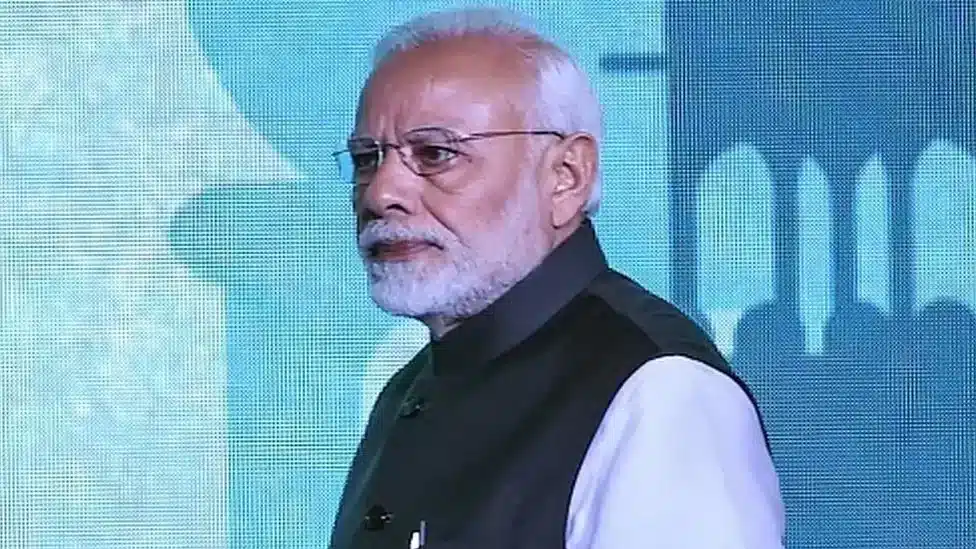
The first episode of India: The Modi Question – a two-part series – aired in the UK on 17 January. The second part was broadcast on Tuesday.
India’s foreign ministry has criticised the documentary, calling it “a propaganda piece designed to push a particular discredited narrative”.
The BBC said the series examines “the tensions between India’s Hindu majority and Muslim minority and explores the politics of Mr Modi in relation to those tensions”. In a statement it added that the Indian government was offered a right to reply, but had declined.
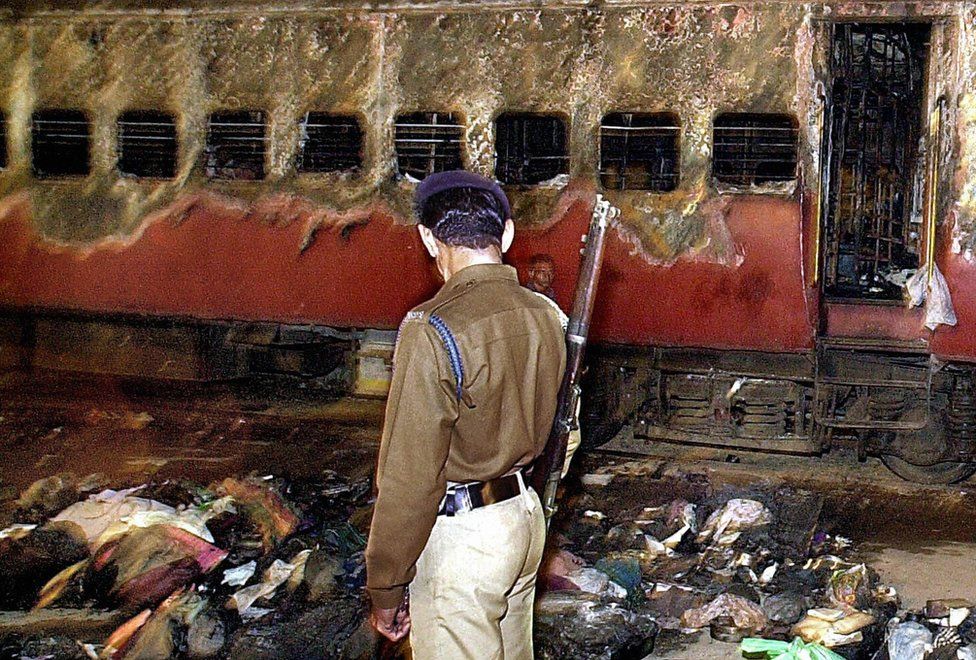
Image caption,The 2002 riots began after a fire on a passenger train in Godhra town killed 60 Hindu pilgrims
The first episode of the documentary tracked Mr Modi’s first steps into politics, from his rise through the ranks of the Bharatiya Janata Party (BJP) to his appointment as chief minister of the western state of Gujarat.
It highlighted a previously unpublished report, obtained by the BBC from the British Foreign Office, which raises questions about Mr Modi’s actions during the religious riots that broke out in Gujarat in 2002 after a train carrying Hindu pilgrims was set on fire, killing dozens. More than 1,000 people, mostly Muslims, died in the violence, one of the worst since Independence.
The report claims that Mr Modi was “directly responsible” for the “climate of impunity” that enabled the violence.
Mr Modi has long rejected accusations that he had any responsibility for the violence and has not apologised for the riots. In 2013, a Supreme Court panel ruled there was insufficient evidence to prosecute him.
Although the documentary was not aired in India, several opposition leaders and government critics shared links to it on social media.
Twitter confirmed to the BBC that it had blocked 50 tweets based on a request by India’s ministry of information and broadcasting on 20 January under the country’s information technology law.
A YouTube spokesperson said the video had been “blocked from appearing by the BBC due to a copyright claim”. A BBC spokesperson said: “As is standard practice, we follow procedure to have illegal uploads of any BBC content removed.”
The JNU students’ union has said it will hold another screening of the documentary. Several other organisations have also held screenings or announced plans to do so.
Pope Francis has called homosexuality laws “unjust,” saying God loves his children exactly as they are, and has urged Catholic bishops who support the laws towelcome LGBTQ people into the church.
“Being homosexual isn’t a crime,” Francis said during an interview with the Associated Press on Tuesday.
He acknowledged Catholic bishops in some parts of the world support laws criminalising homosexuality or discriminate against the LGBTQ community – and referred to the issue in terms of “sin”.
But he attributed such attitudes to cultural backgrounds and said bishops in particular need to undergo a process of change to recognise the dignity of everyone.
“These bishops have to have a process of conversion,” he said, adding that they should apply “tenderness, please, as God has for each one of us”
Some 67 countries or jurisdictions worldwide criminalise consensual same-sex sexual activity, 11 of which can or do impose the death penalty, according to The Human Dignity Trust, which works to end such laws.
Experts say even where the laws are not enforced, they contribute to harassment, stigmatisation and violence against LGBTQ people.
In the US, more than a dozen states still have anti-sodomy laws on the books despite a 2003 Supreme Court ruling declaring them unconstitutional.
Gay rights advocates say the antiquated laws are used to harass homosexuals, and point to new legislation, such as the so-called “don’t say gay” law in Florida, which forbids instruction on sexual orientation and gender identity from nurseries through to school year four, as evidence of continued efforts to marginalise LGBTQ people.
The United Nations (UN) has repeatedly called for an end to laws criminalising homosexuality outright, saying they violate rights to privacy and freedom from discrimination and are a breach of countries’ obligations under international law to protect the human rights of all people, regardless of their sexual orientation or gender identity.
Being homosexual is not a crime. It’s not a crime. Yes, but it’s a sin. Fine, but first let’s distinguish between a sin and a crime. It’s also a sin to lack charity with one another.
Declaring such laws “unjust”, Francis said the Catholic Church can and should work to put an end to them.
“It must do this. It must do this,” he said.
Francis quoted the Catechism of the Catholic Church in saying gays must be welcomed and respected and should not be marginalised or discriminated against.
“We are all children of God and God loves us as we are and for the strength that each of us fights for our dignity,” Francis said, speaking from the Vatican hotel where he lives.
Such laws are common in Africa and the Middle East and date from British colonial times or are inspired by Islamic law.
Some Catholic bishops have strongly upheld them as consistent with Vatican teaching that considers homosexual activity “intrinsically disordered”, while others have called for them to be overturned as a violation of basic human dignity.
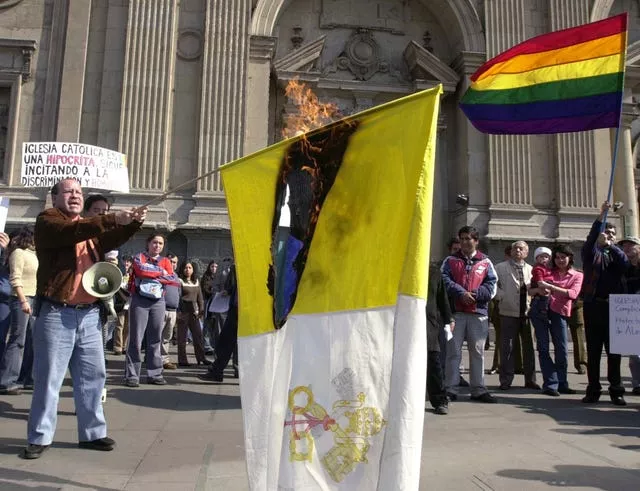
Rolando Jimenez, leader of a Chilean gay rights organisation, holds a flaming Vatican flag during a protest by gay activists against the Roman Catholic Church’s rejection of same-sex marriages, in front of a cathedral in Santiago, Chile, in 2003 (Santiago Llanquin/AP)
In 2019, Francis had been expected to issue a statement opposing criminalisation of homosexuality during a meeting with human rights groups that conducted research into the effects of such laws and so-called “conversion therapies”.
In the end, the pope did not meet with the groups, which instead met with the Vatican number two, who reaffirmed “the dignity of every human person and against every form of violence”.
On Tuesday, Francis said there needs to be a distinction between a crime and a sin with regard to homosexuality.
“Being homosexual is not a crime,” he said.
“It’s not a crime. Yes, but it’s a sin. Fine, but first let’s distinguish between a sin and a crime.”
“It’s also a sin to lack charity with one another,” he added.
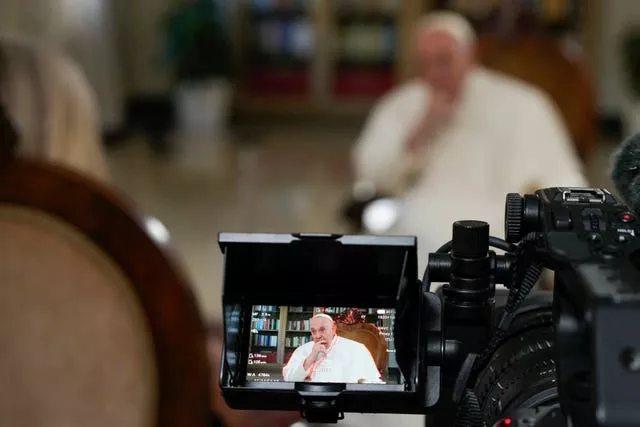
Pope Francis ponders a question during the interview (Andrew Medichini/AP)
Catholic teaching holds that while gay people must be treated with respect, homosexual acts are “intrinsically disordered”.
Francis has not changed that teaching but he has made reaching out to the LGBTQ community a hallmark of his papacy.
Starting with his famous 2013 declaration, “Who am I to judge?” when asked about a purportedly gay priest, Francis has gone on to minister repeatedly and publicly to the gay and trans community.
As archbishop of Buenos Aires, he favoured granting legal protections to same-sex couples as an alternative to endorsing gay marriage, which Catholic doctrine forbids.
Despite such outreach, Francis was criticised by the Catholic LGBTQ community for a 2021 decree from the Vatican’s doctrine office that the church cannot bless same-sex unions “because God cannot bless sin”.
The Vatican in 2008 declined to sign onto a UN declaration that called for the decriminalisation of homosexuality, complaining the text went beyond the original scope and also included language about “sexual orientation” and “gender identity” it found problematic.
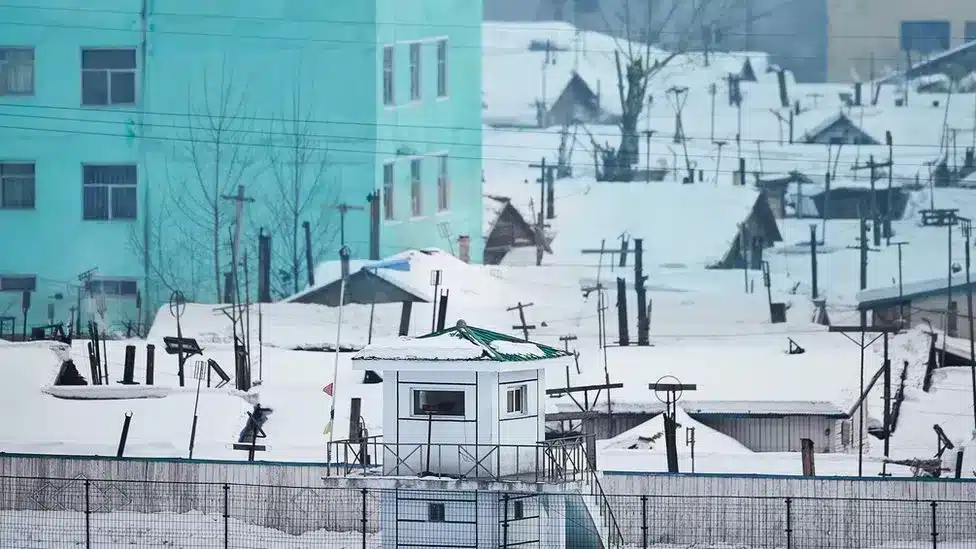
Authorities in North Korea have issued warnings about severe weather as a cold wave sweeps the Korean peninsula.
The poorest region of the country, the northern regions, are expected to experience temperatures below -30C, according to the state radio broadcaster.
High winds are also anticipated for coastal areas, according to state media.
Additionally, a cold wave warning has been issued for South Korea, and record-low temperatures have been recorded in northern China.
Temperatures are also expected to drop to their lowest in a decade in Japan this week.
While North Korea has been affected by extreme or adverse weather much like other places, little is known about the impact of this on its people.
Ryanggang, North Hamgyong and South Hamgyong, the country’s poorest provinces and those expected to be most vulnerable to climate shocks, are all located in the north.
Electricity is uncommon outside the capital Pyongyang, and households in these places reportedly burn wood, and dried plants for warmth during the winter, NK News has reported. It also says many merely use plastic wrap around their doors and windows for insulation.
Radio Free Asia reported in December that “large numbers” of people in the country had gone missing late last year during another extremely cold spell – many are thought to have either starved or frozen to death, as the mercury dipped below freezing and food became scarce.
Food insecurity in North Korea is said to be at its worst since a widespread famine in the 1990s, according to Lucas Rengifo-Keller, a research analyst at Peterson Institute for International Economics in the US.
In 2019, North Korea said it was suffering its worst drought in nearly four decades. This comes after the UN said that up to 10 million North Koreans were “in urgent need of food assistance,” reporting that the people had been surviving on just 300 g (10.5 oz) of food a day that year.
In 2020, North Korea was struck by five major typhoons, which caused major structural damage to buildings, roads, factories and water systems and displaced thousands of citizens.
Scientists say extreme weather, including cold waves, is becoming more common because of climate change.
Tuesday’s cold wave alerts come as Pyongyang prepares to celebrate the 75th anniversary of the Korean People’s Army next week.
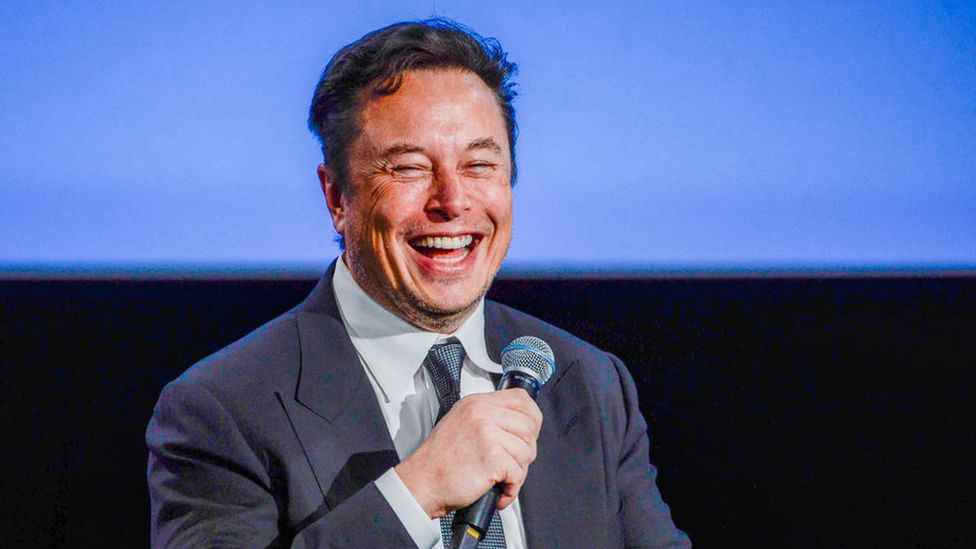
Elon Musk testified in court that, at the time he sent out the contentious tweet, he thought he had the support necessary to take Tesla private.
After investors claimed the 2018 tweet cost them millions of dollars when a deal fell through, the CEO of the electric car company is currently on trial.
According to Mr. Musk, a Saudi Arabian sovereign wealth fund told him they would support a deal during their meeting.
He added that if he needed money, he would have sold his shares in the rocket company SpaceX.
Mr Musk is accused of defrauding investors after he tweeted on 7 August 2018 that he had “funding secured” to take Tesla private at $420 per share, and that “investor support is confirmed”.
Am considering taking Tesla private at $420. Funding secured.
The tweet sent shares in Tesla soaring, but weeks later they fell back when Mr Musk said the plan was no longer going ahead, causing a significant backlash for the billionaire.
He was forced by the Securities and Exchange Commission, the US regulator, to step down as Tesla’s chairman and had to have any tweets related to Tesla vetted by an independent committee.
He and Tesla were also fined $20m each to settle a claim by the SEC that he had committed securities fraud.
On Monday, Mr Musk told a court in San Francisco that he had met with people from Saudi Arabia’s Public Investment Fund on 31 July, 2018.
He said that while a price for taking Tesla private was not discussed, he claimed that the representatives from the fund made it clear they backed a deal.
Mr Musk claimed Yasir Al-Rumayyan, the fund’s governor, then appeared to backpedal on the pledge.
“I was very upset because he had been unequivocal in his support for taking Tesla private when we met and now he appeared to be backpedaling,” he said.
‘Not a joke’
Mr Musk was also questioned about how he decided on a price of $420 a share and whether it was a reference to marijuana.
But, according to the SEC’s legal documents: “He rounded the price up to $420 because he had recently learned about the number’s significance in marijuana culture and thought his girlfriend ‘would find it funny, which admittedly is not a great reason to pick a price’.”
In American counterculture, 20 April is a day when thousands of people gather to celebrate marijuana. In the US, dates are written with number of the month first, then the day – in this case 4/20.
In court, Mr Musk said: “420 was not chosen because of a joke; it was chosen because there was a 20% premium over the stock price.
He added that there was “some karma around 420”, though “I should question whether that is good or bad karma at this point.”
Fernandez, the president of Argentina, and Lula da Silva, the president of Brazil, are considering the possibility of a common currency.
Luiz Inacio Lula da Silva, the president of Brazil, has arrived in Argentina for a summit where the two countries will collaborate to strengthen their trade relations.
Lula’s arrival on Monday followed the publication of a joint article by him and Alberto Fernandez, in which they stated that studies on a common South American currency were part of their goal for greater economic integration.
Brazilian Finance Minister Fernando Haddad downplayed the idea of Argentina and Brazil adopting a single common currency, saying late on Sunday that the nations were looking at ways to promote bilateral trade without eradicating their respective national currencies.
Haddad, who had floated the possibility of a common currency in an article last year, said removing trade barriers between the two largest economies in South America could involve using a single currency for commerce, given a lack of United States dollars in Argentina. But that does not spell the end of the Brazilian real, he said.
“Trade is really bad and the problem is precisely the foreign currency, right? So we are trying to find a solution, something in common that could make commerce grow,” Haddad told reporters as he arrived in Buenos Aires.
Haddad said Argentina’s trade with Brazil had suffered due to a lack of dollars in the southern neighbour, where an economic crisis has left the government battling to replenish foreign currency reserves, with an inflation rate of nearly 100 percent last year.
Haddad noted Argentina was an important buyer of Brazilian industrial goods and that “several possibilities” were being floated to circumvent its currency problems, though no decision had been made.
Asked if he could provide further details on the currency issue, Haddad confirmed he would clear the matter up in the coming days, “especially because some people are saying the real will end”
Brazil is Argentina’s largest trade partner, according to official figures published last week by the INDEC national statistics institute.
Brazil is the top destination for Argentine exports, amounting to 14.3 percent and $12.7bn in 2022.
Close to 20 percent of Argentina’s imports are from Brazil, worth just over $16bn last year.
“Argentina is the most important country in our diplomatic relations,” Feliciano de Sa Guimaraes, academic director for the Brazilian Center for Diplomatic Relations, told AFP.
Likewise, Fernandez’s government “depends a lot on Brazil”, not least in its negotiations with the International Monetary Fund (IMF), with whom Argentina has a $44bn debt.
Earlier on Sunday, Lula and Fernandez said in an article published on the Argentine website Perfil that they would “advance discussions on a common South American currency that can be used for both financial and commercial flows”.
The Financial Times had previously reported, citing Argentina’s Economy Minister Sergio Massa, that the neighbouring nations would announce this week they were starting preparatory work on a common currency.
Brazil and Argentina will sign a bilateral agreement creating a guarantee fund to stimulate Brazilian exports, a Brazilian government source told the Reuters news agency on Monday, as officials from both governments meet for a summit in Buenos Aires.
Under the deal, Argentina will have to provide a collateral guarantee for Brazil’s trade financing with international liquidity, the source said, adding that the two largest economies in South America will also establish a working group to study creating a single clearing account in the continent, Reuters reported.
The nation’s equality council issues a warning about the prevalence of sexual violence, noting that younger generations are the most vulnerable.
In its annual report, an equality watchdog established by the government claims that five years after the #MeToo movement began, French society “remains very sexist in all of its spheres.”
A national “emergency plan” was demanded on Monday by the High Council for Equality between Women and Men in order to combat “the massive, violent, and sometimes lethal consequences” of sexism. The council also raised concerns about the high rates of sexual violence that women report.
One-third of women who responded to a survey the council had commissioned said their partners had pressured them into having sex they did not want to have.
About one in seven respondents said men had forced sex on them, and a similar number reported having been hit and shoved by their partners, the council said.
Sylvie Pierre-Brossolette, the council’s president, expressed particular concern about sexism among younger men who had “bathed in social media, digital [technology], pornography”.
She said sexism must be ”fought from the youngest of ages”.
The council will present its findings to French President Emmanuel Macron on Wednesday.
“Young people in particular are brought up digitally on these scenes of mundane violence, of relations between men and women that are completely of domination and dominated and that has impregnated society,” Pierre-Brossolette said, speaking to the broadcaster France Inter.
“Uprooting sexism is very hard,” she said.
The council found that at least80 percent of women believe they are treated worse than men on account of their sex.
It said the number and severity of these incidents were rising in the public, professional, private and digital spheres. It saw a paradox in public opinion, which recognised the existence of sexism but did not reject it in practice.
Among men aged 25 to 34, almost a quarter said they sometimes feel compelled to use force to be respected.
Across all age groups, 40 percent of men thought it was normal for women to stop working to look after children.
Progress in some areas
The council proposed a 10-point plan of action, which includes tougher regulation of online content.
Other suggestions included making training against sexism obligatory in workplaces and banning adverts that suggest some children’s toys are for boys and others for girls.
While the findings seemed grim, France has made significant progress in some areas.
Prime Minister Elisabeth Borne is only its second woman to hold the post, and parliament’s lower house also installed its first female president, Yael Braun-Pivet, in June.
Macron’s government has increased police resources against domestic violence and offered free birth control to all women up to age 25.
Politicians are also working to constitutionally guaranteeFrance’s abortion rights with a bill intended to prevent any of the rollbacks in reproductive rights seen elsewhere, including in the United States.
Still, the equality council described the overall situation for women in France as “alarming”.
“Sexism is not retreating in France,” the council’s report said. “On the contrary, some of its most violent manifestations are getting worse, and the young generations are the most affected.”
Gambia bids farewell to Vice-President Alieu Badara Joof at the country’s parliament after his death last week at the age of 66.
He passed away while receiving treatment in India for an undisclosed illness.
Joof had only been Adama Barrow’s vice-president for nine months.
Thousands of mourners, including the president, attended the funeral to pay their respects to a man who was described as “modest and blunt.”
Mr Barrow remembered one of the late vice-president’s controversial statements and quoting him as saying: “You cannot make omelette without breaking the eggs. I will talk to the truth, if you want, let the president get me out. But I will say it as it is and I have been saying as it is in the cabinet.”
A rights organisation has warned that Andrey Medvedev, who is requesting asylum in the Nordic country,be sent back to Russia.
A former Wagner Group fighter who recently fled to Norway in search of asylum has been detained.
Andrey Medvedev might be deported to Russia, according to Gulagu.net, a Russian rights organisation that assisted in his escape.
The 26-year-old was detained on suspicion of entering the country without proper documentation, according to Jon Andreas Johansen, a police official in charge of immigration matters, who spoke to the Associated Press on Monday.
“It is being assessed whether he should be produced for detention,” Johansen said.
Medvedev crossed into Norway from neighbouring Russia on January 13, looking for shelter in the Nordic nation.
He claims to have climbed through barbed-wire fences at the 198 kilometre-long (123-mile) frontier, and evaded border patrol officials with dogs.
After witnessing the killing and mistreatment of Russian prisoners brought to the front lines in Ukraine to fight for the Wagner Group, Medvedev feared for his life.
The shadowy paramilitary organisation is closely aligned with the Kremlin and has been heavily involved in Russia’s invasion.
‘He has seen the light’
Gulagu.net, which campaigns for prisoners’ rights and has been in contact with Medvedev since he fled, said he had been detained and handcuffed on Sunday evening and told he was being taken to a detention centre for subsequent deportation.
There was no confirmation from Norwegian authorities of any plan to deport him.
Gulagu.net said Medvedev would face “brutal murder and death” for speaking out against Wagner if he was returned to Russia.
“We do not whitewash Medvedev. He has done many bad things in his life,” the rights group said.
“But he has seen the light, he has realised this, he is ready and willing to cooperate with the world, with the international investigation and with the authorities of Norway, he wants to live and testify” against Wagner and its founder Yevgeny Prigozhin, it added.
Medvedev is an orphan who joined the Russian army and served time in prison before joining the Wagner Group last July on a four-month contract.
He has reportedly told Gulagu.net that he is ready to expose everything he knows about the force of mercenary fighters, which Washington has said will be considered a criminal entity.
Airlines in Nigeria said on Monday that flights were being disrupted after ground staff began an indefinite strike to demand higher pay.
Air Peace, which has the biggest fleet in Nigeria, and smaller domestic carrier Dana Air said the strike by the Nigerian Aviation Handling Company (NAHCO) was delaying flights and they hoped the issue would be quickly resolve.
“The strike has affected all operations of all airlines being handled by the company [NAHCO],” Air Peace said in a statement.
British Airways and Qatar Airways, among the foreign airlines frequently flying to Nigeria, did not immediately respond to requests for comment.
The National Union of Transport Employees and Air Transport Services Senior Staff Association of Nigeria issued a notice last week that its members would go on strike from Monday to press NAHCO for better pay.
Flight disruptions are common in Nigeria due to issues surrounding logistics, labour union strikes and fuel scarcity.
In May 2022, the Airline Operators of Nigeria, an umbrella organisation of domestic airlines, suspended flights for days saying the price of jet fuel had jumped from 190 to 700 Nigerian naira per litre (from $0.45 to almost $1.70). The rise was primarily caused by the Russian invasion of Ukraine in February.
Following Moscow’s announcement that it was demoting diplomatic relations with Estonia, Estonia and Latvia instructed theirRussian envoys to depart.
According to Latvia’s top diplomat, the country will sever diplomatic ties with Russia in support of its neighbour Estonia and as a result of Moscow’s ongoing conflict with Ukraine.
“Due to the ongoing brutal Russian aggression against Ukraine and in solidarity with Estonia, Latvia will lower level of diplomatic relations with Russia effective February 24, demanding Russia to act accordingly,” Foreign Minister Edgars Rinkevics said on Twitter on Monday.
Earlier, Russia announced that it had downgraded diplomatic relations with Estonia and ordered its ambassador to leave, citing the Baltic nation’s “total Russophobia” following Tallinn’s recent decision to drastically reduce staff levels at the Russian embassy.
Moscow’s move on Monday marks the first time it has expelled an ambassador of an EU country since the invasion of Ukraine began on February 24.
“The Russian side decided to downgrade the diplomatic representative in both countries to charge d’affaires ad interim,” the foreign ministry said in a statement. “The ambassador of the Estonian Republic will have to leave the Russian Federation on February 7.”
Responding to Russia’s decision, Estonia on Monday said it would also expel the Russian ambassador from Tallinn in retaliation.
“We stand by the principle of parity in relations with Russia,” the Estonian ministry of foreign affairs said in a tweet.
#Estonia takes note of today’s decision by Russia to reduce diplomatic presence to the level of chargé d’affaires.
We stand by the principle of parity in relations with Russia, which means that the Russian Amb. will leave at the same time as the Estonian Amb. to Russia.
— Estonian MFA 🇪🇪 | 🌻 #StandWithUkraine (@MFAestonia) January 23, 2023
In a January 11 statement, Estonian Foreign Minister Urmas Reinsalu outlined plans to ease relations with Russia “to the absolute minimum”.
“Now we are setting a limit to the number of Russian diplomats working in Estonia in order to achieve parity. Today’s step is in correlation with the low point of our relations in general,” he said, referring to ties that have been harmed by Moscow’s invasion.
Estonian Ambassador Margus Laidre was informed of the decision after being summoned to the foreign ministry in Moscow, the ministry said, as it accused Estonia of “purposefully destroying” relations with Moscow.
Russia slammed Estonia’s “total Russophobia” and the “the cultivation of hostility” by Tallinn to the “rank of state policy”.
Commenting on the downgrading of ties, Russian foreign ministry spokeswoman Maria Zakharova said the Estonian government “got what it deserved”.
Estonia is a staunch ally of Ukraine and has called for Western countries to send tanks to Kyiv to counter Moscow’s offensive. In October, its parliament adopted a statement declaring Russia a “terrorist regime”.
The chief of EU foreign policy says that the bloc won’t classify the IRGC as a ‘terrorist’ organization for now.
The European Union will increase sanctions against Iranian officials thought to be involved in the nation’s ongoing crackdown on anti-government protesters, but it will hold off on designating Iran’s elite Islamic Revolutionary Guard Corps (IRGC) as a “terrorist” group until after additional legal procedures are finished.
“Ministers adopted a new package of sanctions against Iran, targeting those driving the repression,” the EU Presidency said in a tweet on Monday. “The EU strongly condemns the brutal and disproportionate use of force by the Iranian authorities against peaceful protesters.”
The decision saw 37 additional Iranian officials and entities placed on the sanctions list.
However, the EU’s foreign policy chief, Josep Borrell, had earlier told reporters that listing the IRGC could not happen until the designation had gone through a legal process first.
“It is something that cannot be decided without a court, a court decision first. You cannot say I consider you a terrorist because I don’t like you,” Borrell said.
In Iran, the government was adamant that any attempts to proscribe the IRGC were illegitimate.
“Based on the United Nations Charter and international law, blacklisting this state entity would constitute a clear violation of the Charter,” Nasser Kanani, the Iranian foreign ministry spokesman, said, touting the IRGC as an organisation that significantly contributes to the security of Iran and the region.
“Any violation of the IRGC would be a violation of Iran’s national security, and the repercussions would be directed at the violator,” Kanani added.
The European Parliament last week overwhelmingly voted for a resolution that called for the IRGC to be proscribed, in addition to the imposition of sanctions on Supreme Leader Ayatollah Ali Khamenei and President Ebrahim Raisi, among others.
The resolution condemned Tehran’s response to the country’s protests, which began last September, the executions linked to the protests, and drone sales to Russia. It is not binding and needs to be approved by the European Council’s consensus mechanism before being enforced.
In response, Iran’s parliament on Sunday tabled legislation to designate European armed forces as “terrorists”, which would be put to a vote if the bloc moves forward with its proposal.
Speaking to state media on Sunday, foreign minister Hossein Amirabdollahian claimed that he was assured in phone calls with Borrell and his counterpart from Sweden, the current presidency of the bloc, that the EU would not push the proposal through.
Iran has also warned that blacklisting the IRGC in its entirety would mean the death of stalled talks to restore the country’s 2015 nuclear deal with world powers, with Amirabdollahian saying on Sunday that he could not rule out an exit from the Non-Proliferation Treaty (NPT) if that happens.
The Iranian foreign minister also said on Monday that the United States has “constantly” sent messages in an effort to facilitate a return to the accord, officially known as the Joint Comprehensive Plan of Action (JCPOA).
“The Americans found out sooner than the E3 [France, Germany and the United Kingdom] that there is nothing behind the riots in Iran. They sent a message sooner and insisted on returning to the JCPOA,” Amirabdollahian said, in line with Tehran’s repeated stance that the West has been behind the country’s unrest.
The foreign minister’s comments come as Washington continues to publicly maintain that the talks are currently not a priority.
The US unilaterally abandoned the JCPOA in 2018, imposing harsh sanctions. If restored, the deal would lift sanctions on Tehran while re-introducing strict limits on its nuclear programme.
Lithia Motors is in advanced talks to acquire one of the largest groups of luxury car dealerships in Britain according to Sky News.
One of the largest automotive retail groups in Britain, Jardine Motors, is being considered for acquisition by a major American auto dealer for about £300 million.
Sky News has learned that Lithia Motors, which has a market capitalization of more than $6.5 billion on the New York Stock Exchange, is close to concluding a deal to acquire its UK-based rival.
One insider issued a warning that a deal was still being discussed and might still fall through.
If successfully completed, it would see Jardine Motors being sold by Jardine Matheson Holdings, the historic Hong Kong-headquartered conglomerate.
Jardine Matheson owns assets including the Mandarin Oriental hotel chain and Hong Kong Land.
Sources said a takeover would give Lithia a substantial foothold in the UK, with access to luxury car brands including Ferrari and Maserati.
Lithia is committed to using the Jardine Motors business as a platform for growth, they added.
It would be the latest in a string of attempted deals in the sector, with Pendragon recently having ended talks about a takeover by its largest shareholder.
Lithia itself also tried to buy Pendragon last year.
Other big players in the sector include Lookers, while major online competitors such as Cazoo have suffered from the global sell-off in technology stocks.
Jardine Motors was acquired as a single East Anglia dealership by Jardine Matheson in the early 1990s.
Brands sold at its dealerships include Ferrari, Jaguar, McLaren and Porsche.
Responding to an enquiry from Sky News on Monday, a Lithia spokesman said: “Lithia has a stated desire to expand into the UK market and has held discussions with Jardine Matheson with a view to investing in Jardine Motors Group UK.
“Jardine Motors Group UK is one of the UK’s leading automotive retailers and Lithia firmly believes that a combination of the two businesses will help to deliver significant value for employees, partners and customers.
“Lithia views the potential acquisition of Jardine Motors as a platform for future growth in the UK and plans to invest in the business, working with Jardine Motors’ market-leading management team to build on the strong momentum the Group has generated in recent years.
“Discussions around a potential transaction are ongoing and a further update will be issued in due course.”
Jardine Motors has yet to reveal financial results for 2022, but saw revenues rise 19% in 2021, with an operating profit of £28m.
A Jardine Motors spokesman declined to comment.
It was unclear whether its London-listed parent company would also issue a statement confirming the talks.
Rothschild is advising Jardine on the talks, while Deloitte is advising Lithia.
Israel intends to use a corridor in the occupied West Bank near Khan al-Ahmar to connect its illegal settlements.
At least 180 people live in the Palestinian Bedouin village of Khan al-Ahmar, which is located on the eastern outskirts of Jerusalem. Top Israeli politicians have threatened to forcibly evict this community.
After far-right politician and Minister of National Security Itamar Ben-Gvir declared he would push forward with the village’s forcible removal, and after plans for a visit to the site by far-right ministers, including Ben-Gvir and Bezalel Smotrich, emerged, the protest took place on Monday.
Politicians from Likud, the largest party in the Israeli parliament, eventually gathered nearby the village before dispersing.
Ben-Gvir on Saturday said the government of Prime Minister Benjamin Netanyahu “will not hold Jews to one legal standard and Arabs to another” after an illegal Jewish settlement outpost in the northern occupied West Bank was cleared by Israeli forces.
However, Palestinians have decried what they argue is the false equivalency between Khan al-Ahmar and Israeli settlements, which are illegal under international law.
“Since 1967, there have been military orders for demolishing homes, closed military zones and others, and then these areas are transformed into illegal settlements and nature reserves,” Eid Jahalin, who described himself as a spokesperson for the village, said at Monday’s protest.
“Our fate is to remain in this area,” Jahalin argued. “Whoever thinks that it is just Khan al-Ahmar – there are demolitions in the Jordan Valley, demolitions in Masafer Yatta, in Jerusalem city – it is something constantly happening across all of Palestine.”
The fate of Khan al-Ahmar has captured international attention for its years-long legal battle with Israeli authorities over its survival.
In September 2018, the Israeli Supreme Court greenlit the village’s removal, leaving it open to being demolished at any time, but demolition plans have been put on hold several times since then.
The government has until February 1 to explain to the Supreme Court why the village has not been demolished yet and to put forward a plan.
The Israeli government said the village was “built without a permit”, but authorities make it extremely difficult for Palestinians to obtain building permits in occupied East Jerusalem and in what’s known as Area C, which covers more than 60 percent of the occupied West Bank. Palestinians and human rights organisations say the policy is part of a larger Israeli strategy to strengthen and maintain a Jewish demographic majority in the area.
The forcible transfer of protected people in occupied territory is classified as a war crime under international law.
Amnesty International has previously called efforts to remove the residents of Khan al-Ahmar as “not only heartless and discriminatory [but also] illegal”.
“The forcible transfer of the Khan al-Ahmar community amounts to a war crime,” Amnesty said in 2018. “Israel must end its policy of destroying Palestinians’ homes and livelihoods to make way for settlements.”
Khan al-Ahmar is located in the West Bank, a few kilometres from Jerusalem and between two major illegal Israeli settlements, Maale Adumim and Kfar Adumim.
It lies along a key corridor stretching to the Jordan Valley where Israel aims to expand and link settlements, effectively cutting the West Bank into two.
“Our main message is to the Palestinian leadership: … If this village is uprooted. we will have the northern West Bank and the southern West Bank,” Jahalin said. “This is the importance of Khan al-Ahmar.”
Speaking to Al Jazeera, Maarouf Rifai, the legal adviser for the Palestinian Authority’s (PA) Committee Against the Wall and Settlements, said the PA would not allow the village to be demolished.
“This is Palestinian land. It is private Palestinian land,” he said. “There is no excuse for the Israeli government, other than to develop the ‘Greater Jerusalem’ plan and to link the settlements surrounding East Jerusalem in order to clear this area from Palestinian Arabs. We are here to raise our voices to say that we will not allow this to happen.”
Since its occupation of the West Bank began in 1967, Israel has forcibly evicted and displaced entire communities and demolished more than 50,000 Palestinian homes and structures, according to Amnesty International.
Another Palestinian community – a collection of villages known as Masafer Yatta, home to more than 1,000 Palestinians near Hebron in the southern West Bank – is also facing imminent forced displacement by the Israeli government.
Palestinian activist Khairy Hanoun, who was at the protest at Khan al-Ahmar, said, “We came here to challenge Ben-Gvir’s decision and the decisions of all of the right-wing government.”
“We came here to tell them, you demolished our villages, you demolished our cities and our homes, but you will not demolish our perseverance,” he told Al Jazeera.
Using the example of al-Araqib, a village that was demolished and rebuilt 211 times, Hanoun said: “If you demolish Khan al-Ahmar, even if you demolish it 100 times, we will keep rebuilding it.”
According to Bloomberg News, the Swedish audio streaming giant Spotify Technology is getting ready to announce layoffs as soon as this week, adding to the industry-wide carnage that has already cost thousands of jobs at Apple, Google, Microsoft, and Amazon.
Unnamed sources familiar with the situation told Bloomberg on Monday that it is unclear how many positions at the well-known streaming service will be eliminated.
In October, Spotify, which has about 9,800 employees, let go of 38 employees from its podcast studios Gimlet Media and Parcast.
Spotify, which saw its share price plunge 66 per cent last year, did not immediately respond to a request for comment.
Tech firms have cut thousands of jobs in the last year as slowing advertising revenues and recession fears prompt reassessments of headcounts that ballooned during the COVID-19 pandemic.
In recent weeks, Google parent Alphabet, Microsoft and Amazon have let go of a combined 40,000 employees, after Meta and Twitter cut more than 18,000 staff combined late last year.
Smaller tech players such as UK-based cybersecurity firm Sophos and cryptocurrency players such as Coinbase have also announced job cuts affecting up to 20 percent of their workforce.
More than 55,000 tech employees worldwide have been laid off during 2023 so far, according to data collected by the Layoffs.fyi website.
For the first time in more than five years, dolphins are once again swimming in the Bronx River in New York.
The animals haven’t been spotted in the Bronx River since 2017 despite being recently spotted in the city’s East River.
Authorities maintain a healthy fish population in the river, which they think may have attracted the dolphins.
A video of the dolphins was shared on Twitter by the city’s Department of Parks and Recreation.
It’s true—dolphins were spotted in the Bronx River this week! This is great news—it shows that the decades-long effort to restore the river as a healthy habitat is working. We believe these dolphins naturally found their way to the river in search of fish. (Video: Nick Banco) pic.twitter.com/40ZNgBjJZs
However, the joyous reception of the mammals’ arrival came with a warning. “Make sure that they’re comfortable during their visit by giving them space and not disturbing them,” wrote the department.
The Bronx River flows through Bronx borough, just north of Manhattan, and is the only freshwater river in the city.
The sightings were also confirmed by the Bronx River Alliance, a non-profit that works to protect and restore the waterway.
“There seems to be more dolphin pods swimming near NY Harbor!” it wrote on social media. “We are not sure why but authorities are further investigating their presence and we will keep you updated as we get more info.
Pollution and habitat destruction have caused numbers of bottlenose dolphins, which are found off both the Atlantic and Pacific coastlines, to drop. Some are also injured by fishing nets and die.
As a consequence, they are protected throughout the United States under the Marine Mammal Protection Act, which makes it illegal to feed or harass them.
Dolphinsare one of the most intelligent animals on the planet. The US military uses them to locate underwater mines and identify enemy military personnel.
Russia’s state-owned TASS news agency said, a warship outfitted with hypersonic cruise missiles will participate in joint exercises with the navies of China and South Africa in February.
The participation of the Russian frigate Admiral Gorshkov of the Fleet of the Soviet Union was first mentioned in an official report on Monday.
The frigate is equipped with Zircon missiles, which have a range of more than 1,000 km and can travel at nine times the speed of sound (620 miles).
The missiles and the Avangard glide vehicle, which entered combat service in 2019, are the centerpiece of Russia’s hypersonic arsenal.
“‘Admiral Gorshkov’ … will go to the logistic support point in Syria’s Tartus, and then take part in joint naval exercises with the Chinese and South African navies,” TASS said in its report, citing an unidentified defence source.
The South African National Defence Force has said the drills will run from February 17-26 near the port cities of Durban and Richards Bay on South Africa’s east coast.
It said on Thursday that the joint exercise aims “to strengthen the already flourishing relations between South Africa, Russia and China”.
The exercise will be the second involving the three countries in South Africa, after a drill in 2019, the defence force added.
The Gorshkov held exercises in the Norwegian Sea earlier this month after President Vladimir Putin sent it to the Atlantic Ocean in a signal to the West that Russia would not back down over the war in Ukraine.
Putin has previously said the frigate and its Zircon missiles have “no analogues in the world”.
The Russian president sees the weapons as a way to pierce the United States’s increasingly sophisticated missile defences.
Russia, the US and China are in a race to develop hypersonic weapons, seen as a way to gain an edge over any adversary because of their speed and their manoeuvrability, features which make them harder to detect.
Sally Azar,will lead the English-speaking congregation at the Church of the Redeemer in Jerusalem.
She was ordained in a Lutheran Church ceremony in Jerusalem, making her the first Palestinian woman to serve as a pastor in the Holy Land.
According to the Evangelical Lutheran Church in Jordan and the Holy Land (ELCJHL), Azar will be in charge of the Church of the Redeemer’s English-speaking congregation.
She was ordained on Sunday in front of a crowded audience inside the Old City church in occupied east Jerusalem.
“The rite of ordination is an honour. The chance to be ordained as a woman in my church is an added honour. I am happy to be a part of history and gender equity in my church. It is exciting, but there is some uncertainty, as well. I do not expect this to be an easy road,” Azar told The Lutheran World Federation last week ahead of her ordination.
In 2018, Azar graduated from the Near East School of Theology in Lebanon before heading to Germany where she studied Intercultural Theology at the University of Gottingen.
“I will be assigned to the ELCJHL English-speaking congregation in Jerusalem. I will also be responsible for bridging the Arabic-speaking congregation with the English-speaking congregation and working with the youth, which is important to me,” she added.
Azar is also a council member of the Lutheran World Federation.
LWF Congratulates Rev. Sally Azar and the Evangelical Lutheran Church in Jordan and the Holy Land.#GenderJustice@ELCJHL
— The Lutheran World Federation (@lutheranworld) January 22, 2023
The occupied West Bank and the Gaza Strip were home to about 47,000 Christians as of 2017, according to the Palestinian Central Bureau of Statistics. Most Palestinian Christians belong to denominations that do not allow female clergy.
A very small minority belong to Protestant congregations that have women as ministers.
The Evangelical Lutheran Church says it has approximately 3,000 adherents in Jerusalem, the West Bank and Jordan.
Azar will be one of five ordained women in the Middle East, joining one in Syria and three in Lebanon, according to the Middle East Council of Churches.
Sally Azar, centre, is applauded by clergy after her ordination as the first female pastor in the Holy Land, in the Old City of Jerusalem [Maya Alleruzzo/AP]
Police in Spain have demolished three illegal tobacco factories run by a motley crew that employed low-wage Ukrainian refugees.
27 people have been detained after the operations were discovered in three different regions of Spain.
The gang is accused of smuggling sizable amounts of tobacco that were used to make fake cigarettes.
The factories had the capacity to produce more than 500,000 cigarette packs per day, which were sold both domestically and abroad.
Police said the Ukrainians, who had fled Russia’s invasion of their country, were living “crammed” into prefabricated shelters within the factories.
They were working long hours and were not leaving, to avoid detection, as some had entered the country illegally.
Meanwhile, the bosses of the organization enjoyed a “life of luxury,” allegedly laundering money for their tobacco smuggling operation.
The authorities seized tobacco products worth €37.5m ($41m; £33m), luxury vehicles, jewellery and large quantities of cash during their raid. More than 20 homes, industrial buildings and shops were searched.
The first clandestine factory was found in a chicken shed near Seville in the south at the end of 2021 – leading the authorities to uncover two other operations, in the eastern Valencia region and La Rioja in the north.
Police said the gang was also diversifying production by developing large marijuana plantations.
The investigation got assistance from the European policing agency Europol.
According to the United Nations, there are nearly eight million recorded Ukrainian refugees across Europe, who fled Russia’s February 2022 invasion. More than 160,000 have been registered in Spain.
In November, lawmakers at the European Parliament reported that labor exploitation ofUkrainians was on the rise, saying the urgency of their situation and language barriers sometimes forced refugees to take on informal and underpaid work.
The parent company ofGoogle, Alphabet, will eliminate 12,000 positions, the most recent round of layoffs to affect the tech sector.
In an internal email, Sundar Pichai, the CEO of Google and Alphabet, stated that he accepted “full responsibility” for the cuts.
6% of Alphabet’s employees worldwide, including those in the engineering and recruitment teams, will be affected by the layoffs.
This comes after Amazon cut 18,000 jobs and Microsoft cut 10,000 jobs, respectively, in recent weeks.
Mr Pichai thanked staff for “working so hard” in their roles, adding that their “contributions have been invaluable”.
He wrote: “While this transition won’t be easy, we’re going to support employees as they look for their next opportunity.
“Until then, please take good care of yourselves as you absorb this difficult news. As part of that, if you are just starting your work day, please feel free to work from home today.”
According to a recent filing with Companies House, Google has more than 5,500 staff in the UK. But it is unclear how many of these will be affected by the cuts.
‘Unsustainable’
Mr Pichai announced severance packages for US employees, who will receive at least 16 weeks of salary, their 2022 bonus, paid vacations and six months of health coverage.
He said he remained “optimistic about our ability to deliver on our mission, even on our toughest days”.
Wall Street welcomed the cuts – Alphabet shares rose by 3.5% in electronic trading before the stock market opened.
Analysts have said tech’s big guns had previously overspent, not seeing a slowdown on the horizon.
Daniel Ives of Wedbush Securities said the layoffs highlight irresponsible spending across a sector basking in “hypergrowth”.
“The reality is tech stalwarts over-hired at a pace that was unsustainable and now darker macro is forcing these layoffs across the tech space,” he said.
According to tech site Layoffs.fyi, nearly 194,000 industry employees have lost their jobs in the US since the beginning of 2022, not including those announced by Alphabet on Friday.
Hewlett Packard and cloud computing giant Salesforce also announced major cuts this month, as rampant inflation and rising interest rates have slowed growth.
US tech giants have also been facing scrutiny in the European Union, which has started enforcing regulations to stop them avoiding tax, stifling competition, profiting from news content without paying and serving as platforms for disinformation and hate.
Amina Mohammed, the deputy secretary-general, has been in Kabul for four days in an effort to persuade the Taliban to change their minds.
The nation’s Islamist leaders outlawed all women from working for non-governmental organisations last month (NGOs).
Several aid organisations had to halt operations as a result of the action.
At the conclusion of her trip, Ms. Mohammed told the BBC that the majority of senior Taliban figures she encountered were eager to discuss women’s and girls’ rights.
However, she described the talks as tough and cautioned that it would be a very long journey before the leadership took the fundamental steps required for international recognition of their rule.
“I think there are many voices we heard, which are progressive in the way that we would like to go,” Ms Mohammed said. “But there are others that really are not.”
“I think the pressure we put in the support we give to those that are thinking more progressively is a good thing. So this visit, I think, gives them more voice and pressure to help the argument internally.”
Ms Mohammed also criticised the international community, including other Islamic states, for not doing enough to engage on the issue.
Since seizing back control of the country last year, the Taliban has steadily restricted women’s rights – despite promising its rule would be softer than the regime seen in the 1990s.
As well as the ban on female university students – now being enforced by armed guards – secondary schools for girls remain closed in most provinces.
Women have also been prevented from entering parks and gyms, among other public places.
It justified the move to ban Afghan women from working for NGOs by claiming female staff had broken dress codes by not wearing hijabs.
Ms Mohammed’s comments come as Afghanistan suffers its harshest winter in many years.
The Taliban leadership blames sanctions and the refusal of the international community to recognise their rule for the country’s deepening crisis.
Ms Mohammed said her message to Afghanistan’s rulers was that they must first demonstrate their commitment to internationally recognised norms and that humanitarian aid cannot be provided if Afghan women are not allowed to help.
“They’re discriminating against women there. for want of a better word, they become invisible, they’re waiting them out, and that can’t happen,” she said.
“They believe that… the law applies to anyone anywhere and their sovereign rights should be respected,” she said.
The Taliban health ministry has clarified that women can work in the health sector, where female doctors and nurses are essential, but Ms Mohammed said this was not enough.
“There are many other services that we didn’t get to do with access to food and other livelihood items that that will allow us to see millions of women and their families survive a harsh winter, be part of growth and prosperity, peace,” she said.
This visit by the most senior woman at the UN also sends a message that women can and should play roles at all levels of society.
Burkina Faso is dealing with rebel fighters associated with al-Qaeda and ISIL.
Two suspected attacks in Burkina Faso have killed at least 18 people, including 16 army supporters, according to security sources on Friday.
The attacks on Thursday in the country’s north and northwest were the latest to target a civilian auxiliary force that aids the military in its seven-year fight against rebels.
Burkina Faso, located in West Africa, is one of the world’s poorest and most volatile countries.
It has been grappling with violence spearheaded by rebel fighters affiliated with al-Qaeda and ISIL (ISIS) groups since 2015, which has killed tens of thousands and displaced nearly two million people.
The country is now the epicentre of a conflict that spilled over from Mali.
Thursday’s “first attack targeted an advance party of Volunteers for the Defence of the Fatherland [VDP] in Rakoegtenga”, a town in the northern province of Bam, a VDP official said.
Six auxiliaries and a woman died in the attack, the official said.
About 10 people were wounded, including some seriously, who were “evacuated to Ouagadougou for appropriate care”, he said.
The VDP official said the second attack killed about 10 vigilantes and a person in Nayala province in the northwest in the afternoon when a convoy they and soldiers were escorting was ambushed on the Siena-Saran road.
Security sources confirmed two “jihadist attacks” but gave no precise death toll, referring only to “a number of losses”.
The VDP, set up in December 2019, comprises civilian volunteers who are given two weeks of military training and then deployed alongside the army, typically carrying out surveillance, information-gathering or escort duties.
A surge in violence
Commentators worry that the poorly trained volunteers are easy targets for rebel fighters – and may dangerously inflame ethnic friction without proper controls.
Last week, about 60 women, girls and babies were abducted in the northern Djibo region while gathering wild fruit and other food, investigators said.
Violence targeting security forces and civilians has increased in recent months, especially in northern and eastern regions bordering Mali and Niger.
The escalating toll unleashed two military coups last year, launched by officers angered at failures to stem the bloodshed.
The latest strongman is Captain Ibrahim Traore, who on September 30 overthrew Lieutenant Colonel Paul-Henri Sandaogo Damiba.
A hearing to decide whether 140,000 women and children from Zambia can file a class action lawsuit against the mining corporation Anglo-American is currently underway in the High Court of South Africa.
Residents of the town of Kabwe, the alleged victims, assert that after nearly 50 years of metal mining and smelting operations by the company, they have experienced extremely high levels of lead pollution.
They contend that children living in one of the world’s most polluted areas have suffered serious brain damage.
A study in 2020 found average levels of lead in the blood to be nine times above internationally accepted thresholds.
Anglo-American contests the claim, which it calls opportunistic. It says it’s not responsible for lead poisoning.
The BBC has received reports from locals in various areas of Ethiopia’s northern Tigray region that soldiers from neighboring Eritrea are leaving the areas they have been in charge of in large numbers.
Eritrean army vehicles have been driving through Adwa town since Friday morning, a local witness told the BBC.
“They [soldiers] have been travelling in a lot of vehicles,” he said.
Describing the number of soldiers as “like ants” the resident said the vehicles “were sounding trumpets” and the soldiers were singing.
“They were singing with flags and also posting various slogans on their vehicles,” he added.
Meanwhile, the Ethiopian federal army was guarding the outskirts of the town, the resident said.
According to the peace agreement between the federal government and the Tigray People’s Liberation Front (TPLF), the withdrawal of foreign forces and non-federal armed groups from Tigray would take place when Tigray forces handed over their heavy weapons to the federal government, which they have.
Another resident of Aksum town also told the BBC that dozens of vehicles transporting Eritrean troops and weapons have been passing through the town.
“I have counted 70 vehicles, 12 tanks, and many others. The soldiers were in different vehicles. They are coming in the direction of Adwa and heading towards the city of Shire,” said Berihu Kahsay, who was among residents who lined the streets to witness the withdrawal.
Several sources in Eritrea have also confirmed the mass withdrawal of the troops and military equipment.
Eritrean soldiers were deployed in November 2020 to back the Ethiopian government’s offensive in Tigray.
Well-known journalist and government critic died in a car accident in Kigali, the country’s capital according to police
The Chronicles news site editor John Williams Ntwali passed away on Tuesday night when the motorbike taxi he had boarded was struck by a car in the Kimihurura neighborhood. The police informed his brother Emmanuel Masabo.
In order to confirm the identity of the body in a mortuary, Mr. Masabo claimed that he was contacted by the police on Thursday afternoon.
“When I arrived, they took me to the mortuary. I saw that it was him and I confirmed to them,” Mr Masabo told the BBC.
He added: “They did not provide with me more details… maybe they will later. I also had no energy to ask for more [at that moment].”
The Chronicles news site has also confirmed the death of the 43-year old journalist in a tweet. He had been the publication’s editor since 2021.
Mr Ntwali was critical of the government and the ruling party in his reports that focused on injustice and social issues facing Rwandans through his YouTube channel, Pax TV-Ireme news.
Government sympathisers criticised him of being “an extremist” and repeatedly attacked him on social media.
A BBC documentary on Prime Minister Narendra Modi that questions his leadership during the deadly riots in Gujarat in 2002 has been dismissed as “propaganda” by India’s foreign ministry.
When communal riots in Gujarat, a state in western India, left more than 1,000 people dead, the majority of them Muslims, Modi served as the state’s chief minister. After a train carrying Hindu pilgrims caught fire and killed 59 people, violence broke out.
The report of a United Kingdom inquiry showcased in the documentary refers to the events as a “systematic campaign of violence” which has “all the hallmarks of ethnic cleansing”, and places direct responsibility on Modi.
For me, the revelational and damaging part of the BBC documentary is former UK foreign secretary Jack Straw speaking on record for the first time about the finding of his own officials in Gujarat during the 2002 anti-muslim pogrom pic.twitter.com/i8asr4wA5h
The UK government report was never made public until it was revealed in the documentary.
According to the documentary, released on Tuesday, the inquiry team claimed that Modi had prevented the police from acting to stop violence targeted at Muslims and cited sources as saying Modi had specifically ordered authorities not to intervene.
Modi denied the accusations and was exonerated in 2012 following an inquiry by India’s top court. Another petition questioning his exoneration was dismissed last year.
Terming the BBC documentary a “propaganda piece” meant to push a “discredited narrative”, India’s foreign ministry spokesperson Arindam Bagchi said “bias”, “lack of objectivity” and “continuing colonial mindset” is “blatantly visible” in it.
“It makes us wonder about the purpose of this exercise and the agenda behind it, and we do not wish to dignify such efforts,” he told a news conference.
India’s Prime Minister Narendra Modi waves to his supporters in Gujarat state [File: Amit Dave/Reuters]
The BBC, contacted for comment, said the documentary was “rigorously researched” and involved a “wide range” of voices and opinions, including responses from people in Modi’s Bharatiya Janata Party (BJP).
“We offered the Indian government a right to reply to the matters raised in the series – it declined to respond,” a BBC spokesperson said.
Ongoing discrimination
The documentary also features a former top UK diplomat as saying the violence had been planned by the Vishwa Hindu Parishad (VHP) – an affiliate of the Rashtriya Swayamsevak Sangh (RSS), a Hindu nationalist paramilitary organisation. Modi joined the RSS at a young age in his home state of Gujarat.
The VHP “could not have inflicted so much damage without the climate of impunity created by the state government”, the inquiry team said.
Jack Straw, who was the UK’s foreign secretary at the time of the violence, was also interviewed in the documentary and said allegations against Modi undermined his reputation.
“These were very serious claims – that Chief Minister Modi had played a pretty active part in pulling back the police and in tacitly encouraging the Hindu extremists,” Straw said. “That was a particularly egregious example.”
“What we did was establish an inquiry and have a team go to Gujarat and find out for themselves what had happened. And they produced a very thorough report,” he added.
The report also claimed there was widespread rape of Muslim women during the 2002 violence. It added that the riots’ objective was to “purge Muslims from Hindu areas” – something critics today say has become state policy under the BJP’s Hindu nationalist agenda.
Under Modi, whose party has been in power since 2014, Muslims in India have repeatedly been subjected to violence and lynchings as well as blatant discrimination, which is often politically motivated.
Hindu supremacist groups and supporters of the governing BJP have also intensified calls to turn the country into an exclusive Hindu state.
The systematic, state-sponsored discrimination against Muslims includes laws that ban the hijab, a headscarf worn by many Muslim women, in certain parts of the country. Other controversial laws passed over the years include the Citizenship Amendment Act, which grants nationality to non-Muslim minorities from neighbouring countries.
The UK inquiry, according to the BBC documentary, shows that “reconciliation will be impossible” as long as Modi remains in power.
The Serbian-language videos were produced by the Russian Wagner mercenary group to promote recruitment for the conflict.
Aleksandar Vucic, the president of Serbia, responded angrily on public television.
“Why do you, from Wagner, call anyone from Serbia when you know that it is against our rules?” he said.
Critics frequently accuse Serbia of prioritising its long-standing friendship with Russia over its ambition to join the EU. But what has emerged in recent days in Belgrade shows that the picture is not so black and white.
Hinting at less-than-rosy relations with Moscow, President Vucic said that not only was Serbia “neutral” regarding the war in Ukraine, but that he had not spoken to Russian President Vladimir Putin for “many months”.
It is illegal for Serbians to take part in conflicts abroad.
The number of Serbian recruits involved does not appear be significant. Some did fight alongside Russian forces in Ukraine in 2014, but not with any sort of official endorsement.
In fact, Serbian courts convicted more than two dozen people for taking part in “fighting on foreign battlefronts”.
On Thursday, a Belgrade-based lawyer and anti-war groups filed criminal complaints against the Russian ambassador as well as the head of Serbia’s state security and information agency (BIA) for allegedly recruiting Serbians for the Wagner group.
In Belgrade, where provocative murals are numbingly common, the Wagner death’s head emblem appeared on a city-centre wall last week. It was signed by the People’s Patrols, an extreme right-wing organisation which has previously staged sparsely attended pro-Russia rallies.
Image caption,Serbia’s president Aleksandar Vucic made clear this week that his country’s trajectory was towards the West
None of the mainstream political parties have even hinted at support for the invasion of Ukraine.
Indeed, Serbia has consistently voted in favour of resolutions at the United Nations condemning Russia’s aggression.
President Vucic this week made Belgrade’s position crystal clear: “For us, Crimea is Ukraine, Donbas is Ukraine, and it will remain so.”
But Mr Vucic’s stance has not been enough to impress the European Parliament, because Serbia has repeatedly refused to impose sanctions on Russia.
For the second time, MEPs have passed a resolution calling for the suspension of membership negotiations until Serbia agrees to sanctions.
For as long as the EU showed little enthusiasm for expanding the bloc to include the countries of the Western Balkans, it made sense for Serbia to maintain friendly ties with Moscow.
It reminded Brussels that Belgrade had other options. Cheap gas supplies, Gazprom’s majority ownership of Serbia’s oil company NIS and Russia’s refusal to recognise Kosovo’s independence were practical reasons to stay on good terms.
But the invasion of Ukraine has shifted perceptions. Belgrade was not impressed when President Putin referred to Kosovo’s unilateral declaration of independence as justification for recognising the independence of areas of occupied eastern Ukraine.
Meanwhile, Brussels belatedly realised that its reticence towards the Western Balkans was leaving room for Moscow to meddle. Accession talks for Albania and North Macedonia were swiftly unblocked – and Bosnia received candidate status.
So if Serbia’s president has been waiting for a moment to pivot decisively to the west, it might just have arrived.
He has been warning of “very difficult” conversations with EU and US special envoys – and says he will address Serbians over the weekend to tell them “what is required and expected from Serbia regarding Kosovo and sanctions against Russia”.
Mr Vucic has made similar remarks before – without ever committing to a major policy change. But this week he once again reiterated that Serbia’s trajectory was towards the West.
“I know that the EU is our path,” he told Bloomberg News. “There are no other paths.”
More weapons have already been promised by the US and Europe.
At the Ramstein airbase, Mr. Zelensky remarked to the defence ministers, “Hundreds of thank yous are not hundreds of tanks.”
Particularly Germany is coming under increasing pressure to send its Leopard 2 tanks and to allow other nations to provide their own Leopards to Ukraine.
Before nations like Poland or Finland agree to commit to re-exporting them, the nation of manufacture must first give its consent.
Defence colleagues from more than 50 countries gathered at the airbase on Friday, a day after several nations pledged more equipment to help Ukraine fend off further Russia campaigns. US Defense Secretary Lloyd Austin told them it was time to “dig deeper”.
Almost 11 months into Russia’s war in Ukraine, Nato military figures believe Moscow is planning a renewed spring offensive with troop numbers bolstered by a partial mobilisation since the end of September.
Western officials believe there’s a “window of opportunity” in the coming weeks for Ukraine to push Russia forces back. They say Moscow is running short of ammunition and trained troops – despite efforts to replenish stocks and mobilise additional forces.
For its part, Russia has warned Western countries that providing tanks to its enemy would mark an “extremely dangerous” escalation in the conflict.
The UK has already announced it will send 14 Challenger 2 battle tanks. But Kyiv wants more tanks and UK Defence Secretary Ben Wallace said he hoped that the 50 allies would “all hear the message that unlocking the tank is part of 2023”.
Germany’s Leopard tanks are key to that equation. They’re in more plentiful supply than the British tank, and are operated by more than a dozen other nations.
Ahead of the Ramstein meeting Mr Zelensky criticised Germany’s hesitant attitude to sending tanks, assuring Berlin that the Leopards would only be used in self-defence and not go through Russia. “If you have Leopard [tanks], then give them to us,” he told German public TV.
Polish deputy foreign minister Pawel Jablonski indicated on Friday that Warsaw might be prepared to provide Ukraine with Leopards regardless of Berlin’s views. “We’ll see. I think if there is strong resistance, we’ll be ready to take even such non-standard action. But let’s not anticipate the facts,” he told Polish radio.
“Tanks for Ukraine are tanks for freedom,” Ukrainians defence ministry adviser Yuriy Sak told the BBC. If they were not sent, other countries might one day “have to use them themselves” against Moscow, he warned.
Image caption,German Chancellor Olaf Scholz is under pressure to allow Kyiv a supply of the Leopard 2 tank – pictured here last year
Berlin said this week that a decision on the Leopard was conditional on the US agreeing to send Abrams tanks, which it is not intending to do. But the new German defence minister, Boris Pistorius, said he was not aware of “such stipulation”.
There are fears of escalation in Berlin and of going it alone. Until recently Germany refused requests to send a Patriot air defence battery, but it relented as soon as the US did the same. On tanks too, Berlin would like to see the US take the lead.
Ben Wallace has rejected talk of escalation. Germany along with the US and UK, he argued, had already supplied artillery systems, like Himars, with a much longer range.
Mr Zelensky has repeatedly taken aim at Berlin’s perceived hesitancy and on Thursday criticised suggestions that the US and Germany were only planning to commit vehicles if the other nation did the same.
Retired US Army general David Petraeus said there was “legitimate reluctance” in Washington on the issue of sending Abrams tanks because it was difficult to maintain and had a jet turbine.
He told the BBC it was “imperative” that any Western tank donations were made “early enough, so [Ukrainian soldiers] can actually train on them”.
On Thursday, Western nations pledged to send more vehicles, artillery and munitions to bolster the Ukrainian war effort.
The US committed a new package worth $2.5bn (£2bn), saying this took its spend on Ukrainian support to $26.7bn since last February’s full-scale invasion by Russia.
Tanks were not included in the offer, but the Pentagon did promise an extra 59 Bradley armoured vehicles, 90 Stryker personnel carriers and Avenger air defence systems, among other provisions.
The announcement came after nine European nations promised more support of their own following a meeting in Estonia. This included:
UK – 600 Brimstone missiles
Denmark – 19 French-made Caesar self-propelled howitzers
Estonia – howitzers, ammunition, support vehicles and anti-tank grenade launchers
Latvia – Stinger air-defence systems, two helicopters, and drones
Lithuania – anti-aircraft guns and two helicopters
Poland – S-60 anti-aircraft guns with 70,000 pieces of ammunition
Czech Republic – produce further large calibre ammunition, howitzers and APCs
Netherlands – support expected to be detailed on Friday
His announcement coincided with Netflix’s end-of-year disclosure of a significant increase in subscriber numbers.
People were expected to cut back on streaming services when money was tight.
Netflix, however, defied expectations and added more than seven million new subscribers, bucking the trend.
The film Glass Onion, the new Addams Family spin-off series Wednesday, and Harry and Meghan’s revelations all attracted a lot of viewers.
“2022 was a tough year, with a bumpy start but a brighter finish,” the company said in a statement.
Mr Hastings’ long-planned move means he is leaving Netflix in a crowded market, with challenges ahead, but with 231 million viewers signed up around the globe.
Mr Hastings, who was an early pioneer in the streaming business and is seen as one of the original tech industry disruptors, will stay on as executive chairman.
The firm will now be run by Ted Sarandos and Greg Peters, both already in senior executive positions.
“Reed Hastings stepping down from his current role raises a lot of questions about Netflix’s future strategy,” said Jamie Lumley, analyst at research firm Third Bridge.
“Incoming Co-CEO Greg Peters will have a number of major decisions on his plate from managing high levels of expenses, password sharing, and cracking the code to find the next Stranger Things.”
Image caption,Reed Hastings and a former colleague Marc Randolph founded Netflix in 1997
Mr Peters has been given a strong start, with total subscribers for the last three months of 2022 up 7.66 million, when the firm had predicted a rise of around 4.5 million.
Alicia Reese from Wedbush Securities said there were two reasons Netflix had managed to keep subscribers from cancelling.
“First, viewership trends indicate better retention on popular shows; second, Netflix offering an ad-supported tier to anyone looking to cancel or pause their membership,” she said.
Both those factors limited customer “churn” she said.
Revenue rose to $7.9bn (£6.37bn) in the fourth quarter. However, profit was lower in this quarter than the same period a year earlier, and profit for the year as a whole was down from 2021.Although Netflix remained “ahead of its competitors” on profitability, said Ms Reese.
In early 2022, Netflix faced an uphill battle. It was facing increased competition from rivals such as Amazon, HBO, Apple TV and Disney. It cut hundreds of jobs, but still found it had to put up prices to customers to cover rising costs.
That dealt a blow to its subscriber numbers in the first half of the year.
In November, it introduced a cheaper ad-supported option in 12 countries, including most of Europe, the UK and the US,and signalled it would be less tolerant of password sharing in future. Netflix said it was “pleased with the early results” from the service.
But Paolo Pescatore at PP Foresight said that, as the new ad-funded service had only been introduced in November, most of the additional customers in the last three months of 2022 would be paying full price.
However, the coming year would be challenging for Netflix, he said, with a “significant slowdown” expected in the ad market.
“The year ahead is unlikely to be plain sailing as all media companies will have to contend with uncertainty,” he said.
Netflix shares, which had fallen by nearly 38% in the past year, rose in after-hours trading following the results announcement.
Netflix started out in 1997 as a mail-order film service. Customers ordered via the website and DVDs were posted to them at home.
Mr Hastings has sometimes said the idea for Netflix was sparked when he owed a large fine for forgetting to return a video cassette to rental shop Blockbuster and thought a model more like gym membership, with a monthly fee for renting films, would be better.
However, his co-founder Marc Randolph reportedly disputed this version, saying the pair had simply aimed to emulate Amazon.