With the withdrawal of some 300 British peacekeepers from Mali in the wake of frosty relations with Bamako over the involvement of Russian mercenariesin the fight against terrorist groups in the Sahel, some special forces are expected to arrive in Ghana.
In a report by UK-based ‘The Telegraph’ and sighted by GhanaWeb, British ministers are also expected to be in Accra to hammer out a new security agreement which will position Ghana and by extension Burkina Faso as the new frontline against terrorism.
It is unclear if the move is a face-saving operation in the wake of the mission in Mali being shut down or something more significant as British forces already train troops in Ghana.
Ghana, Togo, Benin and Cote d’Ivoire all signed up for the Accra Initiative in 2017. This is a coalition which aims at stopping insecurity spilling over their borders from the Sahel.
It was reported on Monday, November 14, that the UK will be withdrawing all of its troops from Mali, which until only a few months ago, Whitehall officials were describing as “the new frontline of the war on terror”.
Former Africa Minister Rory Stewart, who championed the so-called “pivot to the Sahel” under Prime Minister Theresa May, was scathing about the real purpose of the Ghana trip, suggesting it was no more than a face-saving operation.
“We struggled to maintain 300 troops in Mali, partly because it cost perhaps as much as a hundred million pounds from tightly stretched budgets,” he told The Telegraph. “I fear that the ‘pivot to Ghana and Burkina Faso‘ is largely a way of excusing our retreat from the Sahel and will ultimately add up to less than people pretend.”
“We have been worrying about Burkina Faso for some time. But without an embassy there or any significant investment, there is a real limit to what the UK can do,” Stewart added.
On November 15, 2022, personnel from Special Operations Command Africa and the Tanzania Marine Special Forces completed a Civil Affairs Joint Combined Exchange Training in Dar es Salaam, Tanzania.
The month-long training allowed service members from the United States and Tanzania the chance to forge and sustain vital military-to-military ties while enhancing joint and allied readiness and interoperability.
“This course is very crucial for our special forces because it enables us to be better prepared for various scenarios and upcoming duties,” said Tanzania Peoples Defence Forces Marine Special Forces Commander Lt. Col. Athumani Ghamunga. “It is also the opportunity to share experience and knowledge between our special forces.”
Your Friends Also Read:Kenya, Japan Set to Introduce Direct Flights
Joint exchanges between the two countries are nothing new, but this exercise assisted in the development of new skills and the integration of components from the civil affairs section.
“This was the first civil affairs focused JCET in Tanzania,” said U.S. Army Capt. Tyler Clarke, a civil affairs team lead. “The training focused on civil affairs and civil military operations to include civil reconnaissance, civil engagements, we discussed negotiations, mediations and tactical combat casualty care.”
The main goal of the JCET program is to train special operations units from partner countries in a way that will help to secure and stabilise Africa.
Your Friends Also Read:Sudan: Security Forces Crackdown on Anti-Coup Protesters
“Joint combined exchange training is the bridge and glue which binds together the relationship between Tanzania and the U.S.,” said Tanzania Peoples Defence Forces Brig. Gen. Iddi Nkambi.
U.S. Africa Command and special operations forces are committed to mutually beneficial engagements with partners.
A leading member of the New Patriotic Party,Gabby Asare Otchere-Darko, has described as refreshing a decision by a High Court to dismiss a suit challenging the election of Jomoro Member of Parliament, Dorcas Affo-Toffey.
According to him, the decision by the court among other things is a clear indication of the fairness of the judiciary system of Ghana
“Congrats! It is refreshing to be amply reminded that the legal system works! That, Lady Justice remains blind,” Mr Otchere-Darko wrote in a tweet in reaction to NDC member, Joyce Bawa Mogtari’s celebration of the court’s decision.
The opposition National Democratic Congress has over the period accused the bench of being bias against the party.
Some NDC members have cited the Supreme Court’s dismissal of the party’s petition against the 2020 presidential election result to back their claim.
However, the Sekondi High Court on Monday, November 21, 2022, dismissed a petition against the NDC Member of Parliament for Jomoro.
The case which had been ongoing for close to two years was decided when the court, presided over by Justice Dr. Richmond Osei Hwere dismissed the case on grounds that the MP was eligible to contest.
The court held that she lost her Ivorian citizenship at the very time she acquired her Ghanaian citizenship, thus, there was no merit in the petition seeking to annul her election on the basis of her having dual citizenship.
The petition was filed by one Joshua Emuah Kofie, who was challenging the eligibility of the MP to contest as a representative of the people in the constituency on the ticket of the National Democratic Congress (NDC).
He submitted that she had multiple nationalities, including American and Ivorian citizenships, which is against the 1992 Constitution.
While the court determined that she did not have Ivorian citizenship at the time of filing and contesting in 2020, the MP denied having American citizenship.
Mali’s militaryadministration has announced a ban on the operations of NGOs sponsored or supported by France, including humanitarian organisations, amid an escalating dispute between Bamako and Paris.
In a social media post on Monday, the country’s interim prime minister, Colonel Abdoulaye Maiga, justified the action as a reaction to France’s recent suspension of development aid to Mali.
Three months after concluding its withdrawal of forces from the nation, the French Foreign Ministry announced last week that it had made the decision in response to Bamako’s suspected employment of paramilitaries from the Russian Wagner group. Mali denies this, acknowledging only the support of Russian military “instructors”.
Maiga spoke in his statement of “fanciful allegations” and “subterfuge intended to deceive and manipulate national and international public opinion for the purpose of destabilising and isolating Mali”.
“As a result, the transitional government has decided to ban, with immediate effect, all activities carried out by NGOs operating in Mali with funding or material or technical support from France, including in the humanitarian field,” it said.
Last week a Foreign Ministry source said France would maintain its humanitarian aid as well as financing for “civil society organisations” in Mali.
Six senior members of Hong Kong’s defunct pro-democracy tabloid Apple Daily pleaded guilty to colluding with foreign forces on Tuesday, and could face life in prison.
Their convictions were part of a landmark case in which the city’s broad national security law, imposed by Beijing in 2020 to crush dissent, was used for the first time against a news organisation and its staff.
For years, Apple Daily was harsh in its criticism of the Chinese government, and it supported the pro-democracy protests that shook Hong Kong in 2019.
Its funds were frozen last year, and many senior staffers, including founder Jimmy Lai, were charged with national security violations.
Four former senior editors and two ex-executives pleaded guilty at the Hong Kong High Court on Tuesday to “conspiracy to collude with foreign forces to endanger national security”.
The former staffers included chief executive Cheung Kim-hung, associate publisher Chan Pui-man, chief editor Law Wai-kwong, executive editor Lam Man-chung, and senior writers Fung Wai-kong and Yeung Ching-kee.
The prosecution accused them of using Apple Daily to spread content that solicited foreign sanctions against China, presenting as evidence more than 160 articles it had published since April 2019.
The national security law that criminalised foreign collusion did not come into force until June 30, 2020.
Prosecutors shelved sedition charges, in exchange for the defendants pleading guilty to collusion, which carries a maximum punishment of life in prison.
The six have been in pre-trial custody for almost a year and a half, and will not be sentenced until the conclusion of the trial of Lai and three Apple Daily companies.
A lead prosecutor told the court that some of the six would give evidence in that trial.
Lai and the firms have pleaded not guilty. Their trial is due to begin in December.
Hong Kong steadily dropped in press freedom rankings after its 1997 handover to China, but that slide accelerated dramatically after Beijing launched its crackdown against dissent after the 2019 protests.
Despite the continued national campaign to reduce road deaths, the Central Region experienced a 5.7% increase in road accidents in the last three quarters of this year.
This year, 875 motor accidents were reported between January and October, compared to 828 during the same period in 2021.
The total number of vehicles increased by 10.9 percent, from 1,234 to 1,369.
However, the number of people killed in car accidents decreased slightly from 176 to 163, while the number of people injured increased from 1,169 to 1,260 during the same time period.
The Regional Head of the National Road Safety Authority (NRSA), Ms Linda Affotey-Annang, confirmed this to the Ghana News Agency in Cape Coast.
According to her, commercial vehicles recorded a 6.7 per cent dip in the number of crashes from 579 to 535, while private vehicles and motorcycle crashes surged.
“Road accidents involving private vehicles increased from 430 to 541 and motorcycles also increased from 235 to 293,” she said.
“Pedestrian knock-downs also increased considerably from 168 to 203, while pedestrian deaths decreased from 176 to 163 and injuries jumped from 1,169 to 1,260,” Mrs Affotey-Annang said.
Mrs Affotey-Annang attributed the menace to high speed distracted driving, driving tired, wrong overtaking, and inexperienced drivers at the wheels.
Notwithstanding, she commended the contributions of stakeholders towards preventing road crashes, particularly on the Winneba, Buduburam, Winneba Junction to Mankessim/Cape Coast-Komenda highway, among others.
Going forward, she encouraged drivers to strictly adhere to all directional signages to ensure safety.
“Drivers must be cautious on the road and stop engaging in mobile phone conversations or WhatsApp chatting while driving.”
For pedestrians, she cautioned all to give drivers enough indication of their intention to cross the road, avoid unnecessary obstructions and interference and stay focused when crossing.
She cautioned against the use of phones while crossing at the designated zebra crossing, footbridges, near intersections, junctions and roundabouts.
She pledged the Authority’s continuous commitment to sustaining public education to reduce road carnage in the months ahead with the tagline ‘Stop the devil’s work.’
The President of the Ghana Road Contractors Association of Ghana,John Afful, says most road projects in the country have stalled due to the non-payment of funds for already executed projects.
Ghanaians over the last few months have complained bitterly over the deteriorating nature of most roads in the country and some road projects which have been abandoned.
Despite some road projects progressing smoothly, several other roads have not received any facelift in the last few years, despite the government declaring 2021 as the year of roads.
Speaking on the Citi Breakfast Show on Tuesday, November 22, Mr Afful said the failure of the Ministry of Roads and Highways to pay contractors has saddled them with huge debts.
“Most road projects have stalled, and the contractors are not on-site, mainly because of non-payment of previous work done. If you go to the Road Fund of the Ministry of Roads and Highways, you will notice that there are huge arrears not paid to the contractors from as far back as 2016,” Mr Afful told sit-in host Nathan Quao.
He added, “It is something that is very worrisome that we are chasing, so when people go around, and they find out the projects are not being done, it is mainly because the projects are not being paid for, and it has affected all contractors in the country, and they have huge debts to pay.”
But the head of Public Relations at the Ministry of Roads and Highways, Ahmed Yartey, in a reaction said claims that all Government of Ghana-funded projects have stalled are not entirely factual.
According to him, some GoG-funded projects are progressing smoothly, however, due to inflation and increasing cost of living some projects have stalled.
“I can also say that about 95 percent of the asphalt overlay you see around are GoG-funded projects and not foreign-funded projects.”
Mr Yartey also admitted that some contractors are struggling with non-payment of already executed projects, but added that the government is putting in place measures to pay the contractors.
“Some local contractors are struggling, I will not say it is not a fact some are going through it…prices have gone up, prices of bitumen are up and all those things affect road construction and the capital of contractors.”
Member of Parliament for Madina,Francis-Xavier Sosu, has asked government to channel its efforts into stabilizing the economy to bring relief to citizens.
The country’s economy has been experiencing a downturn in recent times, with the inflation rate hitting an all-time record high.
Amid the challenges, the National Tripartite Committee announced an upward review of the minimum wage from the initial GH¢13.53 pesewas to GH₵14.88 pesewas.
But speaking to Citi News, Francis-Xavier Sosu said even though the increase was commendable, it will be insignificant if government fails to address the worsening economic situation
“When you review minimum wage and inflation and depreciation are still high, fuel prices are rising, these rises will eat off this increase. This means that government must come again by reviewing the wage. That will be great but more importantly, government must take urgent steps to stabilize the economy otherwise, I do not think that, this revision of minimum wage will have any real impact on the lives of ordinary workers in Ghana.”
Some Ghanaians have expressed disappointment over the announcement of a slight increase in the daily national minimum wage for 2023.
Scores of Ghanaian workers Citi News spoke to complained that they had expected something substantial and not the meagre GH¢2.35 that had been added to next year’s minimum wage.
Joseph Larbi, a taxi driver who drives on the streets of Accra, said he earns way below the National Minimum Wage. He said his daily wage is GH¢10.75 which translates into GH¢160 a month.
In spite of the Labour Ministry’s directive to establishments, institutions, and organizations to adjust their wages accordingly, Joseph Larbi said he has been on a GH¢160 monthly wage for the last decade.
The father of one lamented the rise in fuel prices, accommodation, and utilities and said life has been tough for his wife and child.
A private security guard who also earns below the National Minimum Wage said he has resorted to a bicycle to aid him to commute to his 7-day-a-week job.
Having no idea what a national minimum wage is, Yaw Twumasi Ankrah said it is difficult to come across any private security personnel that is paid beyond GH¢600 and that security guards are one of the worst-hit demographics of the current economic crisis.
He lamented the sufferings and difficulties he has to go through to cater for his family of five children and a wife with his GH¢450 monthly wage.
The challenges confronting the majority of respondents are uniform, ranging from high transport fares to astronomical rises in utility fees.
The Chairman of the New Patriotic Party’s Legal Committee, Frank Davies, has criticised the reliance on Jomoro MP’s expert in foreign law, whose testimony was key to dismissing the election petition in the constituency.
Speaking on The Point of View, he felt the judge should not have been bound by the expert witness, who was an Ivorian lawyer, and insisted further that the “man wasn’t an expert.”
“If you are a trained lawyer in Côte d’Ivoire and you have practised for 15 years, that does not make you an expert in foreign law… 15 years of practice does not make you an expert in foreign law.”
“It is the Ivorian nationality code which is in contest so as to whether an expert has given evidence or not, we can not shy away from the judge’s legal determination because, at the end of the day, you the judge are the arbiter of facts and the law,” Mr. Davies argued further.
The Jomoro MP, Dorcas Affo-Toffey, who stood on a National Democratic Congress ticket, faced the election petition because she was accused of having Ivorian citizenship ahead of the 2020 polls.
The MP however argued that she renounced her citizenship before formally contesting.
The court agreed with her, saying she did not have Ivorian citizenship at the time she filed her nomination forms to contest as an MP.
In the judgement, the judge said the petitioner also did not demonstrate that the MP was not qualified to contest the 2020 parliamentary election and did not produce any evidence.
The rugged, rural terrain would be tough on any car, but particularly models that have to lug around heavy batteries.
But Rwanda’s president Paul Kagame wants to transform the economy of the tiny, landlocked country.
A key part of the plan is to cut greenhouse gas emissions and reduce the nation’s dependence on imported fossil fuels, which account for 40% of the country’s foreign exchange expenditure.
So, the government has launched a range of incentives to encourage electric vehicles.
Electric cars, their spare parts, batteries and charging station equipment have been exempted from VAT, import and excise duties.
Meanwhile, electric vehicles can be charged at a heavily subsidised electricity tariff. The government also offers rent-free land for charging bays.
IMAGE SOURCE, JEROEN VAN LOON Image caption, Volkswagen launched its e-Golf in Rwanda
First proposed in around 2019, but held-up by the Covid pandemic, the incentives came into effect in April 2021.
Germany’s Volkswagen was one of the first beneficiaries of the government strategy. It launched the e-Golf model in Rwanda in 2019. The pilot project started with four of the cars and two charging stations in Kigali.
VW’s original plan was to expand the service to 50 cars and 15 charging stations, as part of its cab-hailing app called Move.
However, three years later, only 20 of the cars are on the road and they have been removed from the ride-hailing service. Instead they ferry customers from several high-end hotels, the international airport and the Kigali Convention Centre.
“The unevenness in road infrastructure and the height of speed-bumps turned out to be too challenging for the e-Golf, which has a relatively low ground clearance,” says Allan Kweli, head of operations at Volkswagen Mobility Solutions Rwanda.
There was particular concern about damaging the underside of the car, where the batteries are located.
Despite that misfire, VW remains optimistic about Rwanda. It is planning to import its ID.4 electric car, which has a higher ground clearance.
“The beauty of Rwanda is that the government has created a test scenario whereby you can prove your work in an African setup,” Mr Kweli says.
IMAGE SOURCE,JEROEN VAN LOON Image caption, Rwanda’s EvPlugin is planning to build 200 public chargers across the country
One glaring problem facing the carmakers is the lack of any charging facilities outside of Kigali.
In a developing country like Rwanda, it’s tough to justify large investments in a nationwide charging infrastructure.
Nevertheless, in partnership with the government and energy companies, Rwanda’s EvPlugin charging network is planning to build 200 public chargers across the country over the next two years.
Of those facilities, 35 will be suitable for cars while the others will serve electric motorbikes.
Japan’s Mitsubishi is dodging the problem by launching a petrol-electric hybrid car in Rwanda.
It has 135 of its Outlander cars on the roads of Kigali – 90 of which are leased, while the others are driven through a rental service.
“A hybrid vehicle eliminates the range anxiety as it can switch to gasoline, which is relevant as we are still far behind with charging infrastructure in Rwanda,” says Joshua Nshuti, from Greenleaf Motors, Mitsubishi’s official dealer in Rwanda.
He says demand has picked up recently.
“As fuel prices have increased by 60% in the last few months, we see a growing demand for the Outlander, as it gives clients the opportunity to half their fuel costs,” he says.
Critics question the positive environmental impact of the Outlander as, in hilly Kigali, it can only manage about 50km to 70km (30 to 44 miles) on battery power alone.
IMAGE SOURCE,JEROEN VAN LOON Image caption, Paul Mugambwa says his hybrid saves him more than $100 a month in fuel costs
That’s not a problem for Paul Frobisher Mugambwa, who works for an international accountancy firm in Kigali. His leased Outlander runs mainly on battery power, for his short 7km commute between his home and the office.
He says petrol used to cost him $150 (£128) a month, but reckons charging his Outlander costs $40 a month.
Ideally, he would like to switch to an all-electric car, but worries about the lack of mechanics in Rwanda who would be able to service and mend such a car.
“If you buy an imported Chinese electric SUV, who is going to fix your car when it breaks down,” Mr Mugambwa wonders.
Perhaps the biggest obstacle to developing an electric car market in Rwanda is the expense.
IMAGE SOURCE,GETTY IMAGES Image caption, In a rural, developing nation like Rwanda most people can’t afford to own a car
Although Rwanda has made economic progress over the last decade, about half the population still meets the UN’s definition of poverty – living on less than $2.15 a day.
While that makes owning an electric vehicle impossible, catching a ride on an electric motorbike is within the realms of possibility.
The company Ampersand has already managed to sell more than 700 e-motorbikes in Rwanda, where motor taxis are a very important mode of transport.
These so-called e-motos, with a battery swap system, are extremely popular, partly because they cost less to acquire and operate than a traditional motorbike.
IMAGE SOURCE,JEROEN VAN LOON Image caption, Electric motorbike taxis have had some success in Rwanda
Despite the challenges, many believe that Rwanda should push on with its electrification plans.
Michelle DeFreese, is a senior officer at Global Green Growth Institute, which assists the Rwandan government with training and advice regarding a plan for electric public buses.
She believes that Rwanda, which already produces 53% of its electricity from renewable sources, is in a good position to make the transition.
“The combination of transitioning to electric vehicles while investing heavily in renewable and clean energy resources is a powerful combination when it comes to reducing emissions,” she says.
Police in Indiahave arrested the parents of a young woman for allegedly murdering her and disposing of her body near an expressway.
On Friday, the woman’s body was discovered wrapped in plastic and stuffed in a red suitcase near Mathura in the northern state of Uttar Pradesh.
Her father, Nitesh Kumar Yadav, and mother, Brajbala, have not yet made any statements.
The police say they are treating the case as a suspected “honour killing”.
Honour killings – or crimes committed against people who are perceived as breaking age-old traditions – are reported regularly in India.
The victims are mainly young men and women who fall in love or marry against their families’ wishes outside of their caste or within their sub-caste.
The victim, Aayushi Chaudhary, was studying at a private college in Delhi, where she lived with her family, police said.
In a detailed press release on Monday, police alleged that the 22-year-old’s father murdered her on 17 November after a fight over her marriage with a man from another caste. They alleged that the parents packed the body in a suitcase and left it near the Yamuna expressway at night.
After the body was discovered a day later, a post-mortem was carried out which revealed injury marks on the woman’s head, face and other body parts, police alleged, adding that she died after being “shot twice in the chest”.
They have seized the father’s licensed gun and the car allegedly used in the crime.
World Health Organizationhas disclosed that, millions of people’s lives will be jeopardised in Ukraine this winter.
According to Dr Hans Henri P Kluge, WHO regional director for Europe, half of Ukraine’s energy infrastructure is damaged or destroyed, and 10 million people are currently without power.
Temperatures in some areas are expected to drop as low as -20C (-4F).
Since Russia’s invasion began, the WHO has documented 703 attacks on health infrastructure.
Russia hit more energy installations and civilian buildings last week in one of the war’s heaviest aerial bombardments.
This has been a recent Russian tactic following setbacks on the battlefield, and its impact is starting to be felt more acutely as winter sets in.
“Put simply, this winter will be about survival,” Dr Kluge told a news conference in the Ukrainian capital, Kyiv.
Ukraine’s health system is “facing its darkest days in the war so far”, and the best solution is for the conflict to end, he added.
Dr Kluge said hundreds of hospitals and healthcare facilities were “no longer fully operational, lacking fuel, water and electricity to meet basic needs” as a result of attacks. The WHO defines an attack as involving violence as well as threatened violence against hospitals, ambulance and medical supplies.
Maternity wards need incubators, blood banks need refrigerators and intensive care beds need ventilators, Dr Kluge said, adding that “all require energy”.
Image caption, “Put simply, this winter will be about survival,” Dr Kluge told a press conference in Kyiv
Dr Kluge said he was “very concerned” for 17,000 HIV patients in Donetsk “who may soon run out of critical antiretroviral drugs that help keep them alive”.
Much of Donetsk is under Russian control and Dr Kluge said he was “urgently calling for the creation of a humanitarian health corridor into all newly regained and occupied areas”.
There are also concerns about Covid cases rising.
“With low basic vaccination rates – let alone boosters – millions of Ukrainians have waning or no immunity to Covid,” Dr Kluge said.
There was renewed shelling at the plant over the weekend.
The head of the International Atomic Energy Agency (IAEA), Rafael Grossi, condemned the attacks, saying it was another “close call” at Europe’s biggest nuclear power plant.
IAEA experts toured the site on Monday, and the agency said they found widespread damage, but that there were no immediate nuclear safety or security concerns.
Russia and Ukraine have accused each other of carrying out the attacks.
Elsewhere in the war, Ukrainian prosecutors have given details of what they have found in four alleged torture chambers in Kherson after Russian troops left the southern city.
They say people were “brutally tortured”, and that batons, bullets and an electrocution device were discovered.
Last week, Ukraine said it had found the bodies of 63 civilians bearing signs of torture near Kherson. The BBC also spoke to two people who said they had been held for more than a month in “torture chambers”.
Russia denies committing abuses during its invasion.
Labour leader Sir Keir Starmer has told business leaders that the days of “cheap labour” must end in order to wean the UK off its “immigration dependency.”
Sir Keir advocated for a strategy to train British workers and transition the economy away from its “low-pay model.”
He did, however, acknowledge the need for skilled foreign workers and promised a “pragmatic” approach to immigration.
His speech comes at a time when businesses are urging more migrant workers to help boost economic growth.
Labour leader, Sir Keir Starmer delivered his speech to the Confederation of British Industry (CBI) conference in Birmingham on Monday, following Prime Minister Rishi Sunak.
Mr Sunak told business leaders having “proper control of our borders” was one of the immediate benefits of Brexit and said curbing illegal migration was the “country’s number one priority right now”.
He spoke after CBI director-general Tony Danker said the UK needed more foreign workers to drive economic growth as the country faces a deep recession.
“People are arguing against immigration – but it’s the only thing that has increased our growth potential since March,” Mr Danker said.
There was considerably less migration during the Covid-19 pandemic than in previous years and the number of EU citizens moving to the UK has dropped since the UK left the European Union.
In his speech, Sir Keir set out what the UK’s immigration policy would look like under a Labour government, should the party win the next general election.
He promised an immigration system that works better for the needs of business and recognises the need for skilled workers from abroad.
But he stressed that any changes to a points-based migration system “will come with new conditions for business”.
“We will expect you to bring forward a clear plan for higher skills and more training, for better pay and conditions, for investment in new technology,” he said.
“But our common goal must be to help the British economy off its immigration dependency. To start investing more in training up workers who are already here.”
Sir Keir outlined Labour’s plans for reform including:
Ensuring all employers able to sponsor visas are meeting decent standards of pay and conditions
Speed up visa delays to avoid labour shortages damaging the economy
Introduce training and plans for improving pay and conditions for roles that require international recruitment
Reforming the migration advisory committee to project future trends more accurately
Sir Keir spoke about immigration in an interview with the BBC last week, saying the UK was recruiting too many people from overseas into the NHS.
Keir Starmer believes, we are told, that there needs to be a fundamental rethink that involves training the domestic workforce rather than relying on immigration.
But there is a political calculation too.
Sir Keir wants to persuade the old Labour heartlands which voted for Brexit that he understands some of the concerns about high levels of immigration.
He also wants to try and convince them he is serious about making Brexit work – without freedom of movement.
But not everyone in the Labour Party will agree with the tone or the substance of his speech.
The rise of legal migration to the UK was one of the most prominent political issues in the country ahead of the EU referendum in 2016.
Former Conservative Prime Minister David Cameron once promised to get immigration down to the tens of thousands a year.
Net migration – the difference between people coming to the UK and those leaving – has been over 200,000 since the late 1990s.
Asked how Labour’s policy differed from that of the Conservatives, shadow business secretary Jonathan Reynolds said his party would demand businesses implement better pay and conditions, particularly in the care sector.
He also said Labour would introduce flexibility to the apprenticeship levy, so companies could spend the money on other forms of training.
Under Sir Keir’s leadership, Labour has ruled out a return to the EU single market, which guarantees citizens of member states the freedom to live and work anywhere in the bloc.
Labour’s policy on Brexit has divided the party, with some calling for a much closer relationship with the EU on different terms.
Sir Keir’s speech comes as Mr Sunak denied that ministers could look to realign the UK with EU laws.
Some Tories have been angered by suggestions the government was weighing up a Swiss-style relationship with the EU.
But the prime minister told the CBI conference on Monday that the UK “will not pursue any relationship with Europe that relies on alignment with EU laws”.
Police in Estonia have apprehended men suspected of running a $575 million (£485 million) cryptocurrency scam that affected hundreds of thousands of people.
Estonian police worked with the FBI to investigate the case, and US authorities want to extradite the Estonians Sergei Potapenko and Ivan Turogin.
The two 37-year-olds allegedly convinced people to invest in HashFlare, a cryptocurrency mining service, and Polybius, a bogus virtual bank.
A federal indictment has been issued in the United States.
A statement from the US Department of Justice (DoJ) says the pair are accused of wire fraud and conspiracy to commit money laundering – crimes punishable by up to 20 years in prison.
The defendants have appeared in court in the Estonian capital Tallinn and are being held pending extradition to the US, the statement says.
There was no immediate comment from their representatives.
Giving details of the alleged scheme, the DoJ says the two defrauded victims byoffering them the chance to buy into HashFlare’s cryptocurrency mining operations.
Crypto mining uses computers to generate virtual coins for profit – a process that consumes significant amounts of computing power.
Customers around the world are said to have purchased more than half a billion dollars’ worth of HashFlare contracts from 2015 to 2019. But the operation allegedly overstated its capabilities.
The DoJ alleges that victims were also promised dividends if they invested in Polybius, a virtual bank Mr Potapenko and Mr Turogin said they had set up.
The defendants are said to have raised $25m this way – but no bank was ever formed.
They used shell companies to launder criminal proceeds, buying at least 75 properties and luxury cars, DoJ says.
Oskar Gross of Estonia’s police cybercrime bureau described the joint investigation – which involved 100 personnel including 15 from the American side – as “long and vast”.
It was “one of the largest fraud cases we’ve ever had in Estonia”, he said on Monday, quoted by Estonia’s ERR news agency.
The country’s authorities also warned that technology had “broadened the risk of fraud”.
The case comes at a time of heightened nervousness in the cryptocurrency market, following the collapse of the world’s second-largest crypto exchange, FTX.
The firm filed for bankruptcy in the US last week,and owes its 50 largest creditors almost $3.1bn (£2.6bn), according to a court filing.
The truck driver allegedly lost control of his vehicle as it pulled a float in the festive parade.
Authorities in Raleigh, North Carolina are investigating the tragic death of a girl performer during a Christmas parade.
The girl was dancing with her troupe in the event when a truck driver lost control of his vehicle and hit her at a “low rate of speed” just after 10:00 a.m. Saturday, Raleigh police officers confirmed to ABC11.
The outlet added that the truck had been towing a float for the festivities when the girl was hit. Tragically, first responders were “unable to save her life,” added ABC11.
In a press release, the Raleigh Police Department identified the driver of the truck as 20-year-old Landen Christopher Glass, reported CNN.
He is now being held at the Wake County Detention Center on a $4,000 bond and facing charges of misdemeanor death by motor vehicle, unsafe movement and carrying a firearm in a parade, added the release, per CNN.
Glass is scheduled to appear in court Monday.
Raleigh Mayor Mary-Ann Baldwin spoke out about the tragic incident on her Twitter page.
“Our hearts are heavy as we mourn the loss of the young girl who lost her life today at the Raleigh Christmas Parade. Our prayers are with her family,friends and the dancers from CC & Co.,” Baldwin tweeted, adding “The community is here for you as we try to understand and process this shared tragedy.”
The state’s Governor Roy Cooper also tweeted his sympathy following the tragic event. “In a joyous season on what should be a happy day, we instead mourn for this family and their friends as we keep them in our prayers.”
Vice President Kamala Harris has reiterated the United States’ “unwavering” commitment to the Philippines during a visit aimed at rebuilding ties tested during the Duterte years, and countering China’s growing influence in the region.
Harris is the highest-ranking US official to visit Manila since President Ferdinand Marcos took power in June. She arrived in Manila as the Philippine military revealed a Chinese coastguard ship had on Sunday “forcefully retrieved” a floating object that was being towed by a Philippine vessel in the South China Sea, by cutting a line attaching it to the boat.
“We stand with you in defence of international rules and norms as it relates to the South China Sea,” Harris told Marcos at the start of talks in the presidential palace in Manila.
“An attack on the Philippine armed forces, public vessels or aircraft in the South China Sea would invoke the US mutual defence commitment … that is our unwavering commitment to the Philippines.”
The Philippines is one of a number of Southeast Asian nations with a claim to the South China Sea.
Beijing claims the waterway almost in its entirety and has become increasingly assertive in recent years, creating artificial islands and developing military bases.
Harris is due to visit Palawan, an island on the edge of the South China Sea,during her three-day visit to the Philippines and will also reaffirm Washington’s support for a 2016 international tribunal ruling that rejected China’s expansive claim to the waters, a senior US official said. Beijing has refused to accept the ruling.
The US has had a long and complex relationship with the Philippines and the Marcos family. Marcos’s dictator father ruled the former US colony for 20 years with the support of Washington, which saw him as a Cold War ally.
Relations between the two countries soured when Duterte became president, however. In 2016, Duterte called Barack Obama a “son of a whore” over warnings he would be questioned by the then US president over his controversial drug war in which thousands have been killed.
China has ignored a 2016 international court ruling that its claims to the South China Sea had no legal basis [File: Eloisa Lopez/Reuters]
Washington is now seeking to bolster its security alliance with Manila under his successor.
Marcos said he did not “see a future for the Philippines that does not include the United States”.
That includes a mutual defence treaty and a 2014 agreement, known by the acronym EDCA, which allows for the US military to store defence equipment and supplies on five Philippine military bases, and allows US troops to rotate through those bases.
The US and the Philippines have expressed support for accelerating EDCA’s implementation as China becomes increasingly assertive.
On Sunday, Vice Admiral Alberto Carlos, commander of the Western Command (WESCOM), said Philippine authorities had sent a vessel to examine an object seen floating in the South China Sea early on Sunday about 730 metres (800 yards) west of Thitu Island.
The team tied the object to their boat and started towing it before a Chinese coastguard vessel approached and blocked their course twice before deploying an inflatable boat that cut the tow line, then took the object back to the coastguard ship, the statement said without elaborating on the object or why China might have taken it.
China’s embassy in the Philippines did not immediately respond to a request for comment.
Thitu, known to Filipinos as Pagasa, is close to Subi Reef, one of the seven artificial islands in the Spratlys on which China has installed surface-to-air missiles and other weapons.
Thitu is one of nine features that the Philippines occupies in the Spratly archipelago and is the Southeast Asian country’s strategically most important outpost in the South China Sea.
The Philippine foreign ministry said in a statement it would conduct a thorough review of the incident and was awaiting detailed reports from maritime law enforcement agencies.
Rishi Sunakhas pledged £50m in defence aid to Ukraine as he met President Volodymyr Zelensky in his first visit to Kyiv since becoming prime minister.
Mr Sunak said it was “deeply humbling” to be in Kyiv and that the UK would continue to stand by Ukraine.
“Since the first days of the war, Ukraine and the UK have been the strongest of allies,” Mr Zelensky said following the meeting.
The aid package is intended to counter Russian aerial attacks.
The £50m defence aid comprises 125 anti-aircraft guns and technology to counter deadly Iranian-supplied drones, including dozens of radars and anti-drone electronic warfare capability.
Mr Sunak also announced the UK will increase the training offer to Ukraine’s armed forces, sending expert army medics and engineers to the region to offer specialised support.
It follows more than 1,000 new anti-air missiles announced by the UK’s Defence Secretary Ben Wallace earlier this month.
On his visit the prime minister saw captured Iranian-made drones which have been used to target and bomb Ukrainian civilians in recent months.
Mr Sunak also laid flowers for the war dead and lit a candle at a memorial for victims of the 1930s Holodomor famine, before meeting emergency workers at a fire station.
The prime minister said: “I am proud of how the UK stood with Ukraine from the very beginning. And I am here today to say the UK and our allies will continue to stand with Ukraine, as it fights to end this barbarous war and deliver a just peace.
“While Ukraine’s armed forces succeed in pushing back Russian forces on the ground, civilians are being brutally bombarded from the air. We are today providing new air defence, including anti-aircraft guns, radar and anti-drone equipment, and stepping up humanitarian support for the cold, hard winter ahead.
He added that it was “deeply humbling” to be in the Ukrainian capital and have the opportunity to meet people “paying so high a price, to defend the principles of sovereignty and democracy”.
Mr Sunak’s pledge to send more air defence support is exactly what President Zelensky would want to hear at a time when Russian airstrikes have destroyed nearly 50% of the country’s energy infrastructure, according to the government in Kyiv.
The men’s hopes for peace and a just outcome to the conflict may feel like distant prospects, but Mr Sunak’s promise to hold a reconstruction conference for Ukraine next year in London will be good news for the government and companies, which desperately need access to international finance.
During the visit, Mr Sunak also confirmed £12m for the World Food Programme’s response to Ukraine, as well as £4m for the International Organisation for Migration.
Downing Street said the funding would help provide generators and mobile health clinics, with the UK also sending tens of thousands of extreme cold winter kits for Ukrainian troops.
Labour’s shadow defence secretary John Healey tweeted: “The government continues to have Labour’s fullest backing to support Ukraine, reinforce Nato allies and confront Russia’s aggression.”
Ukraine has been requesting assistance from Western nations in recent months amid intense Russian aerial attacks on Kyiv and across the country.
Earlier in the week, Russia hit Ukraine with one of its biggest barrages of missiles yet, days after its troops were forced to withdraw from Kherson.
Kyiv was hitand there were strikes across the country, from Lviv in the west to Chernihiv in the north.
That attack coincided with the G20 summit in Indonesia this week where, in a virtual speech, Mr Zelensky said he was “convinced now is the time when the Russian destructive war must and can be stopped”.
IMAGE SOURCE,UKRAINIAN PRESIDENT’S OFFICE Image caption, Mr Sunak was shown destroyed military Russian vehicles by the Ukrainian president
While Mr Sunak was at the Bali summit, which was attended by Russia’s foreign minister Sergei Lavrov, the UK prime minister urged Russia to “get out of Ukraine” and condemned the country for its “barbaric invasion”.
He stressed the UK would “back Ukraine for as long as it takes”.
Britain is currently the largest provider of military aid to Ukraine aside from the US. So far the UK has committed about £2.3bn and has pledged to match that amount in 2023, according to the House of Commons library.
The UK is also hosting a programme which will aim to train 10,000 new and existing Ukrainian personnel within 120 days.
Mr Johnson became almost a cult figure in Ukraine, after he was one of the first international figures to publicly support Ukraine and send military assistance.
It is a tough comparison for Mr Sunak to live up to so early on in his premiership. Many people in Ukraine do not know the new prime minister well and they will want to see how committed he is to supporting the country.
The South African Constitutional Court has ordered that a convicted murderer serving a life sentence for the murder of anti-apartheid activist Chris Hani in 1993 be released on parole in 10 days.
Janusz Walus, a Polish immigrant who had gained South African citizenship, hoped the assassination would spark a racial war during the final days of the apartheid regime.
He has been imprisoned for the past 28 years, and parole requests have been strongly opposed.
On Monday, widow Limpho Hani said the decision to release her husband’s killer was “diabolical”.
Walus together with his co-defendant Clive Derby-Lewis, who died in 2016, were sentenced to death shortly after Hani’s killing, but the sentence was commuted to life after South Africa abolished the death penalty.
They both appealed for amnesty during the Truth and Reconciliation Commission (TRC)in 1997, with Walus saying that he was driven by political, anti-communist motives to kill Hani, who was then the secretary-general of the South African Communist Party (SACP), and also a leading figure in the armed wing of the African National Congress.
Walus’ imprisonment won sympathy and support from far-right groups in Poland.
Huge banners bearing his portraits and chants calling for his release have been a common feature at some football stadiums in Poland.
Merchandise like scarves and stickers celebrating Walus have also been sold online.
In 2016, Walus met Hani’s daughter, Lindiwe, in prison.
“He told her [that] when he lost his father [in 1997] then he understood that Chris Hani was not only a communist, but he was also a father and husband,” Polish journalist Cezary Lazarewicz told me in 2020.
“Walus told me that he was very sorry for killing Lindiwe’s father. But he never regretted [killing a] communist leader. He told me, in 1993, there was a war in South Africa and he felt like a soldier… he still believes in the system of racial segregation and that whites and blacks should live apart,” Mr Lazarewicz added.
In court on Monday Chief Justice Raymond Zondo said “the principle of equality before the law was not just written for those who fought apartheid – but those who actively supported it”, South African journalist Karyn Maughan reports.
But Limpho Hani, speaking minutes after the judgement was made, reacted angrily, “this judgment is diabolical, totally diabolical”.
Malawian Lazarus Chigwandali has faced many hardships in life because he was born with albinism but his passion for music brought him international fame and Madonna’s attention.
Born into a family of farmers in Dedza, central Malawi, Lazurus’s parents had five children and his younger brother was also born with albinism. The condition affects the production of the pigment that gives skin, hair and eyes their colour and also means that skin burns very easily.
“Our parents tied us on their backs when they worked in the fields. After a day in the sun, our whole bodies were full of blisters,” he told the BBC.
“We couldn’t afford sun cream, so our parents took the decision to literally lock me and my brother in the house to protect us from the sun.”
When Lazarus and his brotherdid go out, the other children threw stones at them, thinking they would catch albinism. Because of this deep-rooted discrimination, Lazarus’s brother Peter knew they would never be able to get work like other people in the village and he suggested they forge a path in music together.
They had no instruments, so they made their own and started to get noticed performing in the local village. Sadly, Peter developed skin cancer and died when he was 12. Lazarus was devastated, but decided to play on alone.
Many people in Malawi and other East African countries wrongly believe that the body parts of people with albinism can bring wealth or good luck. People with albinism are frequently abducted, murdered or mutilated to supply this grisly trade. It’s something that Lazarus has witnessed first-hand.
“One time when I was performing outside a mall, a woman came past driving a nice car. She said her husband would pay me to do an album of 10 songs and he’d pay 1m kwacha ($973; £825) for each song.”
Lazarus got in the car to meet her husband and whilst waiting in the car, a maid from the house came out and told him she had overheard the couple making plans to sell him in neighbouring Tanzania. She told him his life was in danger if he didn’t get out, so he ran.
Lazarus’s love for music finally paid off when a passing NGO worker videoed him busking and posted it online. It was shared around the world and seen by a UK-based record producer who then recorded an album with Lazarus, bringing him international attention.
He went on to perform for Madonna and at Malawi’s international Lake of Stars music festival.
“Meeting Madonna and watching her perform was an eye opener in many ways, but perhaps the biggest thing for me is just sleeping in my own house that has iron sheets above my head. That has brought me such a deep joy, it’s unimaginable.”
Palestinians say , Mahmoud al-Saadi,18, was killed by the Israeli army on his way to school from the Jenin refugee camp.
During an Israeli raid on the northern occupied West Bank city of Jenin, a Palestinian high school student was reportedly shot dead while on his way to school.
Mahmoud al-relatives Saadi’s confirmed to Al Jazeera that he was killed on Monday. According to the Palestinian Ministry of Health, he was 18 years old and was shot in the stomach.
According to the ministry and local journalists, at least four other Palestinians were injured after being shot.
The Palestinian Ministry of Education mourned al-Saadi in a statement on Monday. It said he was a student at the Farhat Hashad Boys Secondary School in Jenin and and that he had been killed on his way to school.
Local journalist Mujahed al-Saadi told Al Jazeera that the teen was his distant relative and that witnesses he spoke to confirmed that he was killed while standing on the street headed to the classroom.
“He was headed out of the camp. He was surprised by the army, and the army shot him moments before they pulled out [of the camp],” Mujahed told Al Jazeera.
The Israeli army said in a statement that they had returned fire during an operation to arrest nine wanted Palestinians.
“During the activity, shots were fired, and charges were thrown at the forces in the area, the fighters shot at suspects who shot at them,” the statement said.
The Palestinian foreign affairs ministry described the killing as a ” field execution” and a “heinous crime,” adding that it is “part of the daily series of killings against our people, with cover and approval at the Israeli political level.”
It said it holds the “Israeli government fully and directly responsible for this crime,” and called on “the international community to provide international protection for our people.”
Mujahed told Al Jazeera that Mahmoud was shot on the street adjacent to the one where Al Jazeera journalist Shireen Abu Akleh was shot dead on May 11 while she was covering an Israeli army raid on the Jenin refugee camp. Mujahed was a few metres away from Abu Akleh when she was killed.
Speaking about Mahmoud, Mujahed said his relative “was at the top of his class” and had three sisters.
While on his way to school this morning, the Israeli occupation forces shot dead the student Mahmoud Saadi in #Jenin. The MoE condemns the continuous targeting of Palestinian education & calls on the international community to stop the ceaseless Israeli aggression on Palestinians pic.twitter.com/7LerHpohVG
Dozens of Israeli armoured jeeps raided Jenin and its refugee camp on Monday, just before 8am (05:00 GMT). The raid lasted about an hour.
In the camp, Israeli forces besieged the home of a wanted Palestinian man, Rateb al-Bali, while his family, including his children, were inside, and targeted the house with bullets and missiles.
Mujahed said al-Bali was “at home with his father and other family members, including his nieces and nephews, and a pregnant relative”.
“The army targeted the home with Energa grenades and bullets,” continued Mujahed, noting that no family members were injured.
Al-Bali, who escaped unhurt, eventually emerged from the house with his father and handed himself over to the Israeli army.
He has previously spent a year in Israeli prisons under administrative detention without trial or charge.
Israeli forces have been carrying out near-daily raids, arrests and killings in the northern West Bank cities of Jenin and Nablus, where Palestinian armed resistance is growing.
Across the West Bank, however, Israeli forces have for decades regularly carried out raids into Palestinian cities and villages, often leading to injuries or killings of unarmed Palestinians.
This year marks the highest number of Palestinians killed by Israel in the West Bank since 2006.
Since the start of 2022, Israeli forces have killed at least199 Palestinians, including 47 children, in the West Bank, occupied East Jerusalem and the Gaza Strip.
Close to 8,900 others have been wounded by the Israeli army this year until November 7, in the West Bank alone, the UN has reported.
At least 25 people in Israel have also been killed this year in Palestinian attacks.
Zimbabwe’s President Emmerson Mnangagwawill on Wednesday formally open a new 650-seat parliament in the capital, Harare, that was funded by China.
President Mnangagwa will use the occasion to deliver a state of the nation address, the state-run Herald newspaper reports quoting the clerk of parliament.
The finance minister will on the next day present the 2023 national budget, the newspaper adds.
China funded the project as a gift to Zimbabwe. It houses the national assembly and the senate.
Uganda will be the third country to send troops to the eastern Democratic Republic of the Congo,following contingents from Kenya and Burundi.
Uganda’s army announced on Monday that it will send 1,000 troops to the neighbouring Democratic Republic of the Congo (DRC) by the end of the month to join a regional force tasked with ending decades of instability.
The seven East African Community (EAC) countries, which DRC joined this year, agreed in April to form a force to combat militia groups in the country’s east.
Uganda will be the third country to deploy troops, following contingents from Kenya and Burundi, according to Uganda’s army spokesman Felix Kulayigye.
In September, Uganda paid Congo $65m, the first installment of reparations amounting to $325m for losses caused by Ugandan troops occupying Congolese territory in the 1990s.
Eastern DRC already hosts hundreds of Ugandan troops, deployed nearly a year ago under a separate bilateral arrangement to help hunt down the ISIL-allied group Allied Democratic Forces (ADF).
Despite billions of dollars spent on one of the United Nations’ largest peacekeeping forces, more than 120 armed groups continue to operate across large swathes of eastern Congo, including M23 rebels, which Congo has repeatedly accused Rwanda of supporting. Kigali denies the claims.
The UN says it found evidence contrary to Kigali’s claims.
The M23 have staged a major offensive this year, seizing territory, forcing thousands of people from their homes, and sparking a diplomatic row between Congo and Rwanda.
On Friday, the EAC said Kenya’s former President Uhuru Kenyatta and Rwanda’s President Paul Kagame had agreed on the need for M23 rebels to cease fire and withdraw from captured territory.
Three pit bull dogs who had attacked a young girl were stoned to death and then burned by members of a community in Cape Town, South Africa.
The incident occurs as calls to outlaw the breed grow in South Africa.
A local animal welfare charity reported that the child was mauled in a field in the Gatesville neighbourhood of Cape Town. She “sustained severe injuries and had to be rushed to a nearby hospital for treatment”, the SPCA has said.
The dogs were then attacked, with people stoning, stabbing and hitting them “before burning them to death”.
Video of the burning shows people standing around the fire shouting approval, IOL news site reports.
“We are tired of these people wanting to parade with their pit bulls knowing they are a danger to society. It’s not enough our children are being slaughtered by vicious criminals, and brazen gangsters,” a resident is quoted by IOL as saying.
South Africa’s Supreme Court of Appeal has ordered former President Jacob Zuma to return to prison after upholding an earlier ruling that his medical parole had been unlawful.
But it is not clear if he will spend any more time in jail.
The 80-year-old was given a 15-month sentence last year for contempt of court over his refusal to testify during an investigation into corruption.
His imprisonment prompted violent protests in KwaZulu Natal province and other parts of South Africa that left more than 300 people dead.
Zuma was released after two months in jail, after his lawyers argued that he had an undisclosed terminal illness.
In their unanimous judgement on Monday, the judges said that prison authorities should decide if the time the former president has unlawfully spent out of prison should count towards his sentence or not.
The former president’s lawyers had argued that Zuma needed medical care that could not be provided in prison and now may take the matter to the Constitutional Court.
It’s a legal matter butone that has had political implications in the past. There are some concerns that his return to prison may lead to a repeat of the unrest see
Kenyan President William Rutohas directed the environment and forestry ministry to investigate the ongoing uprooting of baobab trees along the country’s coast.
It comes after reports that environmental experts are concerned about the export of massive trees from Kilifi country to Georgia.
The local newspaper Daily Nation reported last week that Kenyan authorities had granted a foreign company permission to cut the trees for botanical purposes for two years.
Last month, the Guardian newspaper said campaigners were accusing people of“biopiracy”. Buyers were persuading locals to part with the trees on their land.
But on Monday, Mr Ruto said there “must be adequate authorisation and an equitable benefit-sharing formula for Kenyans”.
He also asked the ministry to ensure that the uprooting “sits within the Convention on Biodiversity”.
I have instructed the Ministry of Environment and Forestry to look into the ongoing uprooting of Baobab trees in Kilifi County to ensure that it sits within the Convention on Biodiversity and the Nagoya Protocol.
Kenyan Catholic Archbishop Anthony Muheria has requested an apology from the country’s trade minister over commentshe made last week regarding concern about the use of genetically modified crops – or GMOs – in the country.
Debate around GMO use has been heating up after the government lifted a 10-year ban on their use in the face of a crippling drought and food shortage.
Last week, in a bid to persuade Kenyans to accept the crops, Trade Secretary Moses Kuria told Kenyans: “We have so many things that can kill us in the country. Being in this country, you are a candidate for death. And because so many things compete for death, there is nothing wrong with adding GMOs to that list.”
Archbishop Muheria said he found the comments “distasteful and disrespectful” and urged leaders not to “take Kenyans for granted” or “trivialise serious matters like food security”.
Winnie Odinga, daughter of opposition leader Raila Odinga and East Africa Legislative Assembly (EALA) member, told Kenyan radio station, Spice FM: “GMO is not something that is right for us right now.”
Debates around GMO use in the country have been building following the government’s recent reversal of a 10-year ban on the crops. A survey conducted by a non-governmental organisation, Route to Food Initiative, last year showed that 57% of Kenyans do not welcome GMOs, who will now have to be persuaded.
The government say the lifting of the GMO ban was prompted by the real need to ensure food security as Kenya is currently facing a severe water shortage caused by four failed consecutive rainy seasons, amid one of the harshest droughts the East African region has seen in four decades. This means crops are not able to grow, prompting warnings of potential famine.
Over 600 Tanzanians are expected to lose their jobs after the semi-autonomous government of Zanzibar granted a Dubai-basedcompany exclusive rights to handle ground services at a refurbished airport.
According to the Tanzania Air Operators Association (Taoa), the contract awarded to Dnata, which is listed on the London Stock Exchange, violated a law that prohibits any company from having exclusive rights to ground-handling services at major airports.
The process of awarding the tender to Dnata was not “transparent, and due process was not followed and it was conducted against the law”, the statement said.
Zanzibar’s President Hussein Mwinyi defended the government’s decision, saying the aim was “to provide world-class standards” at the new terminal at Abeid Amani Karume International Airport.
The new operator officially starts operations at the terminal from 1 December, which was built at a cost of $120m (£101m).
The expansion aims at increasing the number of passengers at the airport can handle from just under a million per year to 1.5 million, according to earlier reports by the government.
Tourism is the main source of income for Zanzibar and airline industry is a major stakeholder. The stand-off is expected to dominate politicsin the island.
The head of Ukraine’s biggest private energy firm says people should consider leaving the country to reduce demand on the country’s power network.
“If they can find an alternative place to stay for another three or four months, it will be very helpful to the system,” DTEK chief executive Maxim Timchenko told the BBC.
Russian attacks have damaged almost half of Ukraine’s energy system.
Millions of people are without power as temperatures drop for winter.
Blackouts – both scheduled and unscheduled –have become common in many parts of Ukraine, as Russia aims regular waves of missile attacks at parts of the energy infrastructure.
Earlier this week, Kremlin spokesperson Dmitry Peskov suggested that the strikes were a “consequence” of Ukraine’s refusal to negotiate with Russia.
Several Western leaders have said that targeting civilian infrastructure is a war crime.
Mr Timchenko, whose company supplies more than a quarter of Ukraine’s power, says the system becomes less reliable with each Russian attack, and reducing electricity consumption is the key to keeping it running.
The government has urged people to limit their use of domestic appliances such as ovens and washing machines.
But the damaged energy system is still unable to produce enough electricity to meet current needs, so any way of reducing usage – including leaving the country – should be seen as helping Ukraine to win the war against Russia, Mr Timchenko explained.
“If you consume less, then hospitals with injured soldiers will have guaranteed power supply. This is how it can be explained that by consuming less or leaving, they also contribute to other people.”
Russia’s attacks on infrastructure increased after a series of setbacks on the battlefield, including a major Ukrainian counter-offensive in the Kharkiv region and territorial gains in the south of the country, which eventually led to the recapture of the city of Kherson.
With temperatures in some parts of Ukraine already below freezing, there is concern that millions of people will be left without power and heating throughout the winter.
Until now, blackouts have generally been limited to a few hours, but more Russian attacks could lead to longer periods without power. Fixing the damaged infrastructure is also becoming more difficult.
“Unfortunately we have run out of equipment and spare parts… That’s why we appeal to our partners, government officials, companies and equipment producers to help us with the immediate supply of available equipment,” Mr Timchenko said.
Russia’s historical ties with Ukraine – including in developing its energy system – are also proving a problem.
“They were colleagues, now they are enemies,” Mr Timchenko said. “They bring all this knowledge to Russian military forces, educate them, make very concrete targets, know big parts of our grid or power stations.”
Despite the difficulties though, Ukrainian engineers continue to work in some of the most dangerous parts of the country, risking their lives to reconnect towns and cities to the grid.
On Monday, new legislation will be introduced in Westminster to give the Northern Ireland secretary the authority to reduce the salaries of assembly members.
As the executive had not been restored, Chris Heaton-Harris confirmed the move earlier in November.
The Executive Formation Bill will give parties more time to return to power-sharing government.
It will also clarify civil servants’ “limited decision-making” powers in the absence of ministers.
Extra provisions are also being made to allow a regional rate to be set, should an executive not be in place, as well as powers for the approval of some public appointments.
Mr Heaton-Harris said the bill would address the “realities of the governance gap in Northern Ireland during the present impasse”.
If the Democratic Unionist Party (DUP) refuses to end its boycott of the Stormont institutions by 8 December, Mr Heaton-Harris has the option to either call an election – which would be for some time between mid-January and the beginning of March – or extend the deadline by six weeks to 19 January.
If nothing changes by then, an election could take place by 13 April.
Setting out details of the bill, the secretary of state said people in Northern Ireland were being “denied full democratic representation”.
“The government’s priority is to see politicians elected to return to fulfil their roles in a strong, devolved, locally-accountable government as laid out in the Belfast Good Friday Agreement,” he said
“I urge the Northern Ireland parties to use this extended time to come together and deliver for the interests of all the people in Northern Ireland, particularly in this time of rising costs.”
Unionist politicians argue the post-Brexit trading arrangement undermines Northern Ireland’s position in the UK.
It keeps the region aligned with some EU trade rules to ensure goods can move freely across the Irish land border.
Despite an assembly election in May – in which Sinn Féin won the largest number of seats – and four attempts to elect an assembly speaker, the DUP continued to refuse to nominate executive ministers.
The UK and EU remain in talks about the protocol, in the hopes of getting a deal to suit both sides.
Analysis: More movable deadlines could come
Three weeks after he backtracked on his legal obligation to call an assembly election, Chris Heaton Harris is playing for more time.
By providing the extra space with two new deadlines, he hopes the UK and EU will strike a deal over the Northern Ireland Protocol, which could pave the way for the DUP’s return to the Northern Ireland Executive.
That is a big ask given the gaps which remain between London and Brussels.
Don’t be surprised if we end up with more dates to circle in the calendar once the two set today join the long list of Northern Ireland’s movable deadlines.
As for cutting assembly members’ salaries, let’s see if that is a threat the secretary of state will stick to.
The bill also gives the secretary of state the power to amend assembly members’ salaries while the assembly is “unable to conduct business and maintain public service delivery”.
This could see their wages cut by 27%, or just over £14,000, reducing their incomes from £51,500 to £37,337.
“At present MLAs (members of the legislative assembly) are not in a position to fulfil the full range of their duties, so it is right that we take steps to reduce their salaries, especially in the current economic climate,” Mr Heaton-Harris said.
After years of campaigning, veterans who took part in the UK’s nuclear testing programme will be awarded a new medal.
Around 22,000 veterans will be eligible for the Nuclear Test Medal, which was created to commemorate the 70th anniversary of the first test.
According to Downing Street, the award recognises the contributions of veterans, scientists, and local employees from the United Kingdom, Australia, New Zealand, Fiji, and Kiribati.
On Monday, a memorial service will be held at the National Memorial Arboretum.
The announcement comes after several years of campaigning by organisations such as the Labrats International charity for the recognition of atomic test survivors.
Alan Owen, who founded the charity for atomic test survivors, was inspired after his father James, from Cheltenham, took part in the nuclear testing on Christmas Island in 1962 when he was 21.
His father died from heart conditions at the age of 52 in 1994, but Mr Owen kept campaigning over the years for veterans to be honoured with a medal for their services.
He said: “It’s great the government is starting to recognise the veterans.
“For me it is going to be an emotional day because I will be representing him and my sister will be there and we will be laying flowers in his memory.”
Prime Minister Rishi Sunak described the medals as “an enduring symbol of our country’s gratitude” for those involved in the test programme.
He said: “Their commitment and service has preserved peace for the past 70 years, and it is only right their contribution to our safety, freedom and way of life is appropriately recognised with this honour.”
The prime minister will join Veterans’ Minister Johnny Mercer and Defence Secretary Ben Wallace as families commemorate veterans at the National Memorial Arboretum event in Staffordshire on Monday.
Mr Mercer said: “This medal honours those who served far from home, at a crucial time in our nation’s history.”
Those who worked under UK command during tests between 1952 and 1967 will be able to apply for the medal.
It can also be awarded posthumously to veterans’ families.
Downing Street said the first awards will be made next year.
It represents an about turn for the government, which previously said those who took part in the nuclear tests would not be eligible for a medal.
A spokeswoman said last year: “While it falls outside the criteria for medallic recognition, this in no way diminishes the contribution of those service personnelwho witnessed the UK’s nuclear tests.”
Prime Minister Rishi Sunakhas stated that the UK will not consider pursuing any post-Brexit relationship with the EU “that relies on alignment with EU laws.”
It comes after reports that some government officials want to move toward a Swiss-style agreement with less trade friction and more migration.
Switzerland can easily trade with the EU, but it must follow some EU rules.
Mr Sunak told business leaders that one of the immediate benefits of Brexit was greater control over migration.
Speaking at the CBI conference in Birmingham he said: “I voted for Brexit, I believe in Brexit.
“I know that Brexit can deliver, and is already delivering, enormous benefits and opportunities for the country.”
He argued that the UK was now able to “have proper control of our borders”.
He also said the UK was free to pursue trade deals with “the world’s fastest-growing economies”.
Over the weekend, The Sunday Times reported that senior government figures were considering pursuing a Swiss-style deal.
Government ministers as well as Downing Street have denied the story, but it still prompted concern from some Brexit-supporting Conservatives.
Former minister Simon Clarke tweeted: “I very much hope and believe this isn’t something under consideration. We settled the question of leaving the European Union, definitively, in 2019.”
And Lord David Frost, who negotiated the existing deal, said: “I hope the government thinks better of these plans, fast.”
Switzerland is not a member of the EU, but does have a several agreements with the trading bloc, and has access to the single market for most of its industries. It also pays into the EU budget and has freedom of movement, meaning EU citizens can live and work in the country.
Last week, Chancellor Jeremy Hunt said he hoped the UK would be able to remove trade barriers with the EU but added that it would “take time”.
“Having unfettered trade with our neighbours and countries all over the world is very beneficial to growth,” he said.
He was speaking after delivering his Autumn Statement in which he confirmed the UK was in recession and that the economy was due to shrink further.
The chancellor’s statement was accompanied by an economic forecast from the Office for Budget Responsibility which said Brexit had had a “significant adverse impact” on UK trade.
Asked if Brexit had damaged UK trade, Home Office Minister Robert Jenricktold the BBC it was hard to separate the disruption caused by leaving the EU, the coronavirus pandemic and the war in Ukraine.
“There will be challenges and disruption as a result of fundamentally altering our relationship with the EU,” he said but added that it was too soon to say whether or not that is going to be to the UK’s long-term economic disadvantage.
He said the government was determined to take advantage of the opportunities provided by Brexit, pointing to plans for the regulatory regime of the financial services, life sciences and the green economy.
He also insisted the government did not want to make any fundamental changes to the UK’s relationship with the EU, arguing that the country had settled on the right approach.
New Zealand’s Supreme Courthas ruled that the country’s current voting age of 18 is discriminatory, meaning parliament must discuss whether it should be lowered.
The case was brought by campaign group Make It 16, which wants the voting age reduced to include 16 and 17 year olds.
“This is history,” Make It 16 co-director Caeden Tipler said.
The group argued that young people should be able to vote on matters affecting them, such as climate change.
The issue must now be brought to parliament, after the court ruled that New Zealand’s minimum voting age of 18 was inconsistent with the country‘s Bill of Rights – which gives people who are 16 years and over the right to be free from age discrimination.
The ruling does not mean that the voting age will definitely be lowered.
Reacting to the ruling, Make It 16’s Caeden Tipler told the BBC the campaign had been an “up-hill battle” but they had always felt “confident” that the Supreme Court would support their case.
“We now have the legal backing for what we’ve always known,” they said.
The 17-year-old from Auckland said they had felt frustrated at not being able to vote on issues that mattered to them in the last election in 2020.
“I became incredibly frustrated. I felt like I knew just as much as the adults around me… I was more than capable of voting,” they said.
Following the ruling, Prime Minister Jacinda Ardern said she personally supported reducing the voting age to 16, but added that “it is not a matter simply for me or even the government, any change in electoral law of this nature requires 75% of parliamentarian support”.
Not all parties support the lowering of the voting age.
The centre-right National party opposes the move, while the Labour party is yet to state whether it would support a change in voting age or not.
People at a gayclub in Colorado have been hailed as heroes for apprehending a gunman and preventing a deadly shooting from becoming even worse.
During the shooting at Club Q on Saturday night, one patron grabbed the attacker’s own gun and hit him with it, according to Colorado Springs Mayor John Suthers.
Another clubgoer is said to have assisted in keeping the gunman pinned down until police arrived.
Before being apprehended, the gunman killed five people and injured 25 more.
The suspect, named by police as 22-year-old Anderson Lee Aldrich, is now in police custody.
Mayor Suthers described the intervention of several club-goers as an “incredible act of heroism”.
“The call came into the police at 11:57pm. Police were on the scene by 12:00 – an amazingly quick response,” he told CNN.
“This incident was over by 12:02, and that’s largely because of the intervention of at least one, possibly two, very heroic individuals who subdued this guy… appears to have taken his handgun with them… and used it to disable him… not shoot but hit him with the gun, and disable him.
“But for that, as tragic as this incident is… it could have been much, much worse but for these heroic actors,” the mayor added.
Praise also came from the governor of Colarado, as well as the owner of the club – who noted “dozens and dozens of lives” had been saved.
IMAGE SOURCE,REUTERS Image caption, Hundreds of mourners held a vigil in Colorado Springs on Sunday night
Police are still trying to confirm exactly how many people were injured, adding that some people took themselves to hospital.
An investigation is now under way to determine whether the shooting was a hate crime, and if more than one person was involved.
Questions are also being asked about the suspect, who appears to have previously come to police attention over an alleged bomb threat in 2021.
According to a police report at the time, his mother had called emergencyservices saying “he was threatening to cause harm to her with a homemade bomb, multiple weapons, and ammunition”.
‘Why did this have to happen?’
A statement on the Club Q Facebook page said it was “devastated by the senseless attack on our community”.
The venue was hosting a dance party at the time of the attack, and had planned to hold a performance event on Sunday evening to celebrate Transgender Day of Remembrance.
Joshua Thurman, 34, was in the club at the time of the shooting.
At first he thought the shots were part of the music, he told the Colorado Sun, but he later ran to take shelter in the club dressing room.
“When I came out there were bodies on the floor, shattered glass, broken cups, people crying,” he said.
“There was nothing keeping that man from coming in to kill us. Why did this have to happen? Why? Why did people have to lose their lives?”
Mr Thurman, who lives near the club, said it was an important part of the local gay community. He believes he knows one person who was killed.
Bartender Michael Anderson said he heard three bangs and saw the “outline of a gun” in the suspect’s hands.
“What I can’t stop thinking about is the visuals of the evening. Of the bodies, of the blood, of the broken glass, of the carnage in the wreckage and seeing a safe place turned into a war zone,” he told KKTV.
President Joe Biden said Americans “cannot and must not tolerate hate”.
“Places that are supposed to be safe spaces of acceptance and celebration should never be turned into places of terror and violence. Yet it happens far too often,” he said in a statement from the White House.
In 2016, 49 people were killed in a shooting at the Pulse gay club in Orlando, Florida. At the time it was the deadliest mass shooting in US history.
A classroom science experiment gone wrong has injured several studentsat a primary school in Sydney, Australia.
According to reports, at least two students were taken by ambulance to a hospital with severe burns. Another nine people are thought to have received minor burns.
According to initial reports, the experiment used sodium bicarbonate and methylated spirits, according to 9news.
At the scene, helicopters, paramedics, and fire trucks were seen responding.
On Monday, around 13:00 local time (02:00 GMT), the incident occurred at Manly West Public School.
New South Wales Ambulance Acting Superintendent Phil Templemen said the wind impacted the experiment and blew around some of the chemicals that were used.
The children – believed to be aged between 10 and 11, according to reports – suffered burns to their bodies, including on their face, chest, lower abdomen and legs, said the Sydney Morning Herald (SMH).
One teacher was also treated for minor injuries.
Several parents who dropped by the school on Monday afternoon said they had questions as to why the experiment took place, but added that the school had got things “under control”.
“We heard online what happened, it was a bit worrying but everything seemed to be under control quite quickly,” Mich Ashton, a parent at the school, told the BBC.
Another parent, who did not want to be named, said it was a “routine science experiment” that occurred, adding that the teacher involved was “much loved”.
One resident told the SMH that a teacher had emerged from the school earlier to speak to a group of people who had gathered outside.
“The teacher who addressed us said it was a science experiment that went wrong and some chemical burns were involved,” said Tyson Atkins.
One popular school science experiment that can be found online, called the Carbon Sugar Snake, uses methylated spirits and baking soda, also known as sodium bicarbonate.
It involves mixing sugar with baking soda, placing a small amount of the mixture in sand soaked with methylated spirits, and igniting the concoction.
Local officials have reported that , an earthquake struck the main Indonesian island of Java, killing more than 40 people and injuring hundreds more.
According to US Geological Survey data, the 5.6 magnitude quake struck Cianjur town in West Java at a shallow depth of 10km (6 miles).
The tremor was felt about 100 kilometres away in Jakarta, where people in high-rise buildings were evacuated.
Officials are warning of potential aftershocks and say the death toll may rise.
The area where the quake struck is densely populated and prone to landslides, with poorly-built houses. Rescuers have been trying to evacuate people from collapsed buildings, and managed to save a woman and her baby, according to local reports.
“Victims kept coming from many areas. Around 700 people were injured,” he told Kompas TV.
Gempa bumi dengan magnitude (M)5,6 dirasakan warga Jakarta dan sekitarnya. Pusat gempa berada di darat 10 km barat daya Kabupaten Cianjur, Provinsi Jawa Barat. Fenomena ini terjadi pada Senin (21/11), pukul 13.21 WIB. Dua warga meninggal dunia. pic.twitter.com/ziXZ590unX
Earlier, AFP news agency quoted him as saying most injuries were bone fractures sustained from people being trapped by debris in buildings.
“The ambulances keep on coming from the villages to the hospital,” he said.
“There are many families in villages that have not been evacuated.”
Videos on social media showed the destruction to houses and shops.
Dozens of buildings had been damaged in Cianjur region, the National Disaster Mitigation Agency said in a statement. They include a hospital and an Islamic boarding school.
In Jakarta, office workers rushed out of buildings in the civic and business district during the tremor, which lasted for about a minute.
“I was working when the floor under me was shaking. I could feel the tremor clearly. I tried to do nothing to process what it was, but it became even stronger and lasted for some time,” lawyer Mayadita Waluyo told the AFP news agency.
An office worker named Ahmad Ridwan told Reuters: “We are used to this [earthquakes] in Jakarta, but people were so nervous just now, so we also panicked.”
Earthquakes are common in Indonesia which sits on the “ring of fire” area of tectonic activity in the Pacific. The country has a history of devastating earthquakes and tsunamis, with more than 2,000 killed in a 2018 Sulawesi quake.
He has been rehired by the media conglomerate to guide it through turbulent times, as the company’s stock price has plummeted and Disney+ continues to lose money.
He succeeds Bob Chapek, who took over as CEO in February 2020.
Mr. Iger, who served as chairman until 2021, led the entertainment conglomerate for 15 years and oversaw a number of significant acquisitions for the company.
His decision to resign had surprised everyone.
As well as overseeing the launch of Disney’s streaming service, Disney+, he drove major acquisitions involving the likes of animation studio Pixar, comic book company Marvel, Rupert Murdoch’s 21st Century Fox, and Lucasfilm, the home of Star Wars.
These moves, as well as amusement park openings, helped the company’s market value increase five-fold during his time in charge.
Susan Arnold, who heads the company’s board, said in a statement that Mr Iger was “uniquely situated” to take Disney through “an increasingly complex period of industry transformation”.
But Disney shares have fallen by more than 40% this year and the company has poured billions of dollars into Disney+.
Mr Iger has agreed to stay in the job for two years, during which time he aims to find a successor to lead the company.
“I am extremely optimistic for the future of this great company and thrilled to be asked by the Board to return as its CEO,” Mr Iger said.
It comes in stark contrast to an interview he gave the New York Times in January, when he said it was “ridiculous” to suggest he might return.
“I was CEO for a long time,” he said. “You can’t go home again. I’m gone,” he told the newspaper.
Mr Iger has replaced Mr Chapek with immediate effect.
“We thank Bob Chapek for his service to Disney over his long career, including navigating the company through the unprecedented challenges of the pandemic,” Ms Arnold said in a statement.
IMAGE SOURCE,GETTY IMAGES Image caption, Bob Chapek’s tenure as the boss of Disney also included the shutdown of its theme parks due to Covid
It came just a couple of weeks after the company said Disney+ had lost nearly $1.5bn (£1.3bn) in the three months to the end of September.
Disney now has more than 235 million subscriptions across its three streaming platforms, which include the sports-focused ESPN+ and Hulu. It has outstripped Netflix, which has about 223 million subscribers by comparison.
Mr Chapek also faced pressure, however, over his response to Florida’s controversial “Don’t Say Gay” bill.
In March, he apologised for his “painful silence” on the sex education bill that critics had said would isolate LGBT youth and saw him blasted by employees.
He also fought a high-profile battle with movie star Scarlett Johansson over the release of the Black Widow film and Disney’s decision to release the Marvel superhero film on its streaming service while it was still showing in cinemas. The case was eventually settled, although details of the deal weren’t disclosed.
Walter Todd, president and chief investment officer of Greenwood Capital, told the BBC’s Today programme that the news of Mr Iger’s return was “very shocking”, but added that investors were likely to welcome it.
“Bob Iger is someone who’s synonymous with Disney – he oversaw some of the most successful acquisitions in the company’s history with Pixar, Marvel, Lucasfilm so I think there’s a fair amount of confidence in Bob in his vision for the industry.
“But it’s not going to be an easy task. He’s got a lot of work to do to get things right and it’s not going to happen overnight.”
Mr Todd said that Mr Iger’s track record at Disney was why he had such respect in the industry, but he added, “That will only get you so far, so I’ll be very interested to hear what his vision is for the company going forward.”
Even the co-chief executive of Disney rival Netflix tweeted about the Disney move. Reed Hastings wrote on social media: “Ugh. I had been hoping Iger would run for President. He is amazing.”
Mr Iger was also one of the last honorary knights to be approved by the late Queen Elizabeth IIin September, for his contribution to UK-US relations.
According to Vice Adm Carlos, the debris was discovered on Sunday at 06:45 local time (22:45 GMT Saturday) near the Philippine-controlled Pagasa Island, also known as Thitu Island.
Officers responded to the scene and discovered a “metallic” unidentified floating object.
As they were towing the object back, a Chinese coast guard vessel with the bow number 5203 approached their location and “subsequently blocked their pre-plotted course twice”.
He said the Chinese boat then “forcefully retrieved” the object by cutting the towing line attached to the Philippines’ rubber boat. No one was injured in the incident, he added.
Spokesperson Cheryl Tindog said the sailors did not fight the seizure since it was “not a matter of life and death”.
The Philippines’ Department of Foreign Affairs said they were aware of the incident and a review would be conducted.
Earlier this month, metal debris was similarly found off Busuanga island in western Palawan and in Calintaan town in Occidental Mindoro province.
Officials had said they believed the pieces were likely to be parts of China’s Long March 5B rocket, which blasted off earlier in November from the Wenchang Space Launch Centre on Hainan island.
Hainan island is slightly more than 1,000km (621 miles) away from where the latest object was found.
China has previously been criticising for allowing rocket stages to fall back to Earth.
US space agency Nasa has in the past called on China to design rockets to disintegrate into smaller pieces upon re-entry, as is the international norm.
The incident comes as the US Vice President is due to visit the Filipino island of Palawan, which lies along the hotly contested waters of the South China Sea.
Ms Harris is the highest-ranking US official to visit since President Ferdinand Marcos Jr took power, and the visit is likely aimed at reviving ties with Manila.
“We stand with you in defence of international rules and norms as it relates to the South China Sea,” Ms Harris told Mr Marcos at the start of talks.
The South China Sea is one of the most disputed regions in the world – with several countries claiming ownership of its small islands and reefs and with it, access to resources.
In recent years, China has been increasingly assertive over what it claims are its centuries-old claims to the contested region, and has been rapidly building up its military presence to back up those claims.
House Speaker Nancy Pelosisays she will not run for a leadership post, a move that marks the end of an era and sets up a major shakeup for House Democrats.
In a speech on the House floor Thursday, Pelosi touted the party’s legislative achievements under her leadership before saying: “Now we must move boldly into the future.”
“The hour’s come for a new generation to lead the Democratic caucus,” the speaker said.
Pelosi said she will continue “speaking for the people of San Francisco” as their congresswoman, but not seek re-election to a leadership post.
Her announcement comes after Democrats lost a majority in the lower chamber but maintained control of the Senate in the 2022 midterms, holding off a potentially larger “red wave.”
Pelosi said that when she first visited the capital as a child, she never imagined she would go “from a homemaker to House speaker.”
Precious Kolawole, a young woman from Nigeria, posted a video of her showing her excitement at witnessing snow for the first time in her life.
The young lady was bubbling with euphoria while revealing on her Twitter page that it was a historic event for her to witness snow falling in Canada.
Apparently, prior to her recent move to Canada,Precious had never actually seen snow before except, of course in movies and storybooks, both fictional and non-fictional.
As deduced from the accompanying video shared herein, Precious could not contain her joy as she displayed her room’s view of other buildings’ snow-covered roofs in the video she posted.
Because heaven is an unimaginable reality, Precious asked God in a rhetorical manner if she was there.
“I am excited. God, is this heaven? This is heaven on earth.It’s so cute”, she said in the clip. She also captioned her post; ”I cannot contain my excitement I saw snow for the first time today”.
Carllie Taggett, an American woman, says she is married to popular Nollywood actor Jim Iyke.
The woman who made the claims on social media presented a purported wedding certificate as proof, claiming that their union is still legally binding in the United States.
In an interview with Legit.ng, the young woman revealed that she and the actor married in Delkab County in January 2017.
She claims that the actor has since ended their marriage and has blocked all communications with her.
Taggett also accused him of “keeping secret families in different parts of the world such as France and Africa.”
She has, however, demanded a divorce from the actor in order for her to move on with her life.
Her words,
“It has been a pain I bore all these years, I have tried to be reasonable to understand why he abandoned our marriage without a divorce, but he has been evading me, that is why I decided to call his attention, pending when he decides to be reasonable or face the consequences of his actions in marriage court in the US,”
“All I have always asked is for Jim Iyke to be a man and come out to give me a divorce so that I can move on with my life because it is impossible to be remarried while my marriage to him is yet to be dissolved through a legal process.
“Let me reiterate the point that no one is against him, I just want him to voluntarily come to divorce proceedings or he can take the initiative of coming out for us to settle outside of divorce court if he is serious about it”, she added.
Gloria Steinem, along with several experts in intimate partner violence, are “deeply concerned” by the verdict in the defamation trial between Johnny Depp and Amber Heard.
Steinem and organizations including the National Organization for Women, the National Women’s Law Center, Equality Now and the Women’s March Foundation went public with an open letter in support of Heard Wednesday.
“The vilification of Ms. Heard and ongoing online harassment of her and those who have voiced support for her have been unprecedented in both vitriol and scale,” the open letter states. “Much of this harassment was fueled by disinformation, misogyny, biphobia, and a monetized social media environment where a woman’s allegations of domestic violence and sexual assault were mocked for entertainment.”
Gloria Steinem reflects on her decades-long fight for equality, the violence women face
The signees added: “The same disinformation and victim-blaming tropes are now being used against others who have alleged abuse.”
The experts called the verdict in Depp’s favor “a fundamental misunderstanding of intimate partner and sexual violence and how survivors respond to it. … We have grave concerns about the rising misuse of defamation suits to threaten and silence survivors.”
“We condemn the public shaming of Amber Heard,” the open letter concludes.
he outpouring of support for Heard comes one week after Depp’s appearance in Rihanna’s “Savage X Fenty Show Vol. 4” show, which stirred controversy.
What happened in the Johnny Depp vs. Amber Heard defamation trial?
Earlier this year, Depp faced his ex-wife Amber Heard in court during a highly contentious trial in which he accused Heard of defaming him in a December 2018 op-ed. In June, a Virginia jury awarded him more than $10 million in damages. Heard also partially won her countersuit with the jury awarding her $2 million in damages.
The trial resurfaced Heard’s allegations of abuse by Depp during intense testimony, which was steamed live daily. Depp said he never abused Heard and claimed she abused him.
Heard said after the trial she was “heartbroken that the mountain of evidence still was not enough to stand up to the disproportionate power, influence, and sway of my ex-husband.” She also voiced worry that it “sets back the clock to a time when a woman who spoke up and spoke out could be publicly shamed in humiliated.”
“Even somebody who is sure I’m deserving of all this hate and vitriol, even if you think that I’m lying, you still couldn’t look me in the eye and tell me that you think on social media there’s been a fair representation,” she later said in a “Dateline” interview with Savannah Guthrie. “You cannot tell me that you think that this has been fair.”
Meanwhile, Depp’s attorney Camille Vasquez told “Today” host Savannah Guthrie that the actor, who was not in the courtroom when the verdict was read, had an “overwhelming sense of relief.”
The attorney also shared that a mutual friend between her and Deppsaid, “I haven’t seen Johnny smile like that in six years.”
“We encourage all victims to come forward and have their day in court, which is exactly what happened in this case,” she added.
It’s never too late in life to follow a dream or pick up a new hobby—Angela Álvarez, a 95-year-old Cuban singer-songwriter who only began performing in her older age, proves that. But last night, Álvarez also proved that it’s never too late to receive one of the most esteemed honors for an emerging Latin musician: a Latin Grammy for Best New Artist.
In one of the most exciting coronations of last night’s ceremony at Las Vegas’ Mandalay Bay, Álvarez won the Best New Artist award. As yet another twist, Álvarez shared the title with Mexican musician Silvana Estrada, a rare tie. Going into the awards, Álvarez had already made Latin Grammys history as the awards’ oldest Best New Artist nominee. Now, she’s also the oldest winner.
Álvarez’s incredible life, a testament to her dedication and lifelong dreaming, was chronicled in the recent documentary Miss Angela. Forbidden by her family from becoming a singer in her youth, Álvarez settled into married life and started a family. During the Cuban Revolution, she sent her children to the United States as part of Operation Peter Pan, and didn’t see them for years. Finally, as an older woman, she got the long-overdue chance to pursue writing and performing music. She released her debut, self-titled album in 2021.
“To those who have yet to make their dreams come true, know that although life is hard, there’s always a way out,” Álvarez shared during her acceptance speech. “And with faith and love, everything can be achieved.”
Angela Alvarez, la persona más longeva en ganar un Latin GRAMMY
Other big winners of the night include Rosalía, who took home Album of the Year for her third album Motomami, and Bad Bunny. Although he didn’t attend the ceremony, Bad Bunny won five awards for his album Un Verano Sin Ti, which is also nominated for Album of the Year at the Grammys this year.
Commonly referred to as COP27, the conference has urged member states to take action on past climate change commitments with UN Secretary-General Antonio Guterres warning the world is “on a highway to climate hell”.
Indigenous leaders told Al Jazeera that they, too, need to have a prominent role in the process.
“Having us at the decision-making table is critical,” Jamie Lowe, CEO of Australia’s National Native Title Council, told Al Jazeera.
“We are at an unprecedented moment on Earth and we need unprecedented collaboration to work through solutions together.”
While stakeholders such as Indigenous groups have been given an opportunity to present at COP27, any final agreements and negotiations are restricted to UN member states.
Lowe – who is from the Gunditjmara and Djab Wurrung peoples – told Al Jazeera that this separation of decision-making powers constituted a “disconnect”.
“Decision makers go off into another room and make the decisions about our peoples’ future,” he said.
“We need to be at the decision-making table and making calls on what happens in regard to the globe and climate change.”
Drought, fire, floods
As parts of eastern Australia succumb to widespread flooding, two years after catastrophic bushfires burned communities to the ground and killed millions of native animals, Indigenous Australians are concerned their voice continues to be ignored despite the rapid rate of climate change.
Indigenous people successfully managed the land with which they have a unique spiritual and cultural relationship for more than 60,000 years. But 200 years after the British colonised Australia the environment has been devastated.
Nearly half of Australia’s bushland has been cleared, and Australia has the highest rate of mammal species extinction of any continent, with 500 species at risk of disappearing forever.
Les Schultz, from the Ngadju and Mirning peoples, is the chair and founder of Ngadju Conservation Aboriginal Corporation.
Also in attendance at COP27,he agreed with Lowe that Indigenous peoples need to be at the decision-making table in the fight against climate change.
“We [Indigenous peoples] look after 80 percent of the world’s biodiversity – we should be at the table,” he said.
Schultz helped establish one of the first Indigenous ranger programmes in Australia, which draws on traditional land management practices to reduce catastrophic bushfires, such as “cool burning”, a preventive fire burning technique.
“The Indigenous rangers are continuing thousands of years of practice so we have that knowledge base,” he told Al Jazeera.
“Indigenous rangers are extremely successful in Australia. There are a lot of benefits to the Australian Indigenous ranger program that could be copied across the globe in response to climate change.”
Along with the protection of biodiversity, Schultz said it was vital that Indigenous cultural heritage was protected.
In 2020, mining giant Rio Tinto destroyed the sacred Juukan Gorge cave which contained evidence of 46,000 years of Indigenous inhabitancy dating back to before the last Ice Age.
“We are also seeing a lot of cultural sites being desecrated,” said Schultz. “With ranger programmes in place a lot of that could be prevented.”
Chris Bowen, Australia’s minister of climate change and energy told COP27 the country was back as a ‘constructive, positive and willing climate collaborator’ [Peter Dejong/AP Photo]
Joshua Gorringe, the general manager of Mithaka Aboriginal Corporation, was also in Egypt and agreed with Schultz.
“Something the world has really got to consider is a lot of these First Nations peoples have been on the land and worked with the land,” he said.
“Yet a lot of Western agriculture works against the land. With better land practices we will get back to a more sustainable future.”
Gorringe, from the Mithaka peoples, said that Indigenous cultural practices were inherently centred on caring for the environment, which he referred to as “country”.
“Part of the culture is caring for the country and the way we managed that was that we worked with the country not against it,” he said.
“A lot of our ceremonies are connected to the way the land works with us, not against us. A lot of these practices really need to start being listened to.”
Priceless environment
Gorringe told Al Jazeera that his attendance at COP27 was to highlight the impact not only of mining, but also hydraulic fracturing – or “fracking” – on his traditional lands.
Fracking – a process which uses small explosions to break up shale rock formations to extract gas and oil – has been criticised for its potentially devastating environmental and health effects.
While a ban on fracking was recently reintroduced in the United Kingdom by new Prime Minister Rishi Sunak, energy company Origin was recently given permission to frack the delicate riverine region of Gorringe’s traditional homelands.
“In the world that we are in now where we are talking rising sea levels and climate damage surely the dollar is not worth as much as what the environment is,” he said.
“We successfully managed the country for 60,000 plus years and in just 200 years all that management practice has gone out the window because governments and other people thought they could manage it better. And the world is paying the consequences now.”
Australia’s efforts in tackling climate change are ranked 55 out of 63 countries, according to the global Climate Change Performance Index, up four places from last year when the country came last.
Not only is Australia’s 2030 emissions reduction target one of the weakest, it has also yet to start phasing out coal and gas production. Australia is currently the fifth-largest producer and the second-largest exporter of coal in the world.
In 2017, former Prime Minister Scott Morrison – then treasurer – even brandished a lump of coal in parliament in support of the coal industry, including the establishment of the giant Adani coal mine.
However, the government of Anthony Albanese, which was elected in May, has committed to addressing climate change, with the prime minister declaring shortly after his election victory that Australia had an opportunity to become “a renewable energy superpower”.
“Australia is back as a constructive, positive and willing climate collaborator,” climate change minister Chris Bowen told COP27, although he was later criticised for refusing to join a pledge to end public support for fossil fuel projects overseas.
Back home in Australia, the government is touting its recent “Rewiring the Nation” project, which includes a 1.5 billion Australian dollar ($1bn) pledge to fast-track renewable wind power in the state of Victoria.
While supportive of such initiatives, First Nations Clean Energy Network spokesperson Ruby Heard told Al Jazeera that in the race to combat climate change, Indigenous peoples should not continue to be overlooked as they had been in the past.
“It is a rapid transition, and it needs to be a rapid transition for our environment. But we have to take the time to do this part right,” Heard said.
“We are trying to avoid some of the mistakes and some of the problems that we’ve seen in the mining industry where our communities haven’t been given a fair go and they haven’t shared in benefits.”
Shifting mindset
Australia’s vast land mass may be attractive to green energy companies wishing todevelop banks of solar and wind power, and mine renewable energy resources for batteries and solar panels.
However, Heard – from the Jaru peoples – said that it was vital to develop business partnerships with Indigenous peoples and retain respect for sacred cultural sites.
There was outrage over miner Rio Tinto’s destruction of ancient rock shelters in the Juukan Gorge [File: Richard Wainwright/EPA]
“We really want to see co-ownership of projects,” she told Al Jazeera.
“We want our people to not just receive royalties for projects on their land but be more active participants in these projects and have a financial stake in them and have some ownership over them as well.
“We want to see our First Nations people have the option to say no if they don’t want a project on their lands or at least to be able to redirect the project away from significant sacred sites.”
Still, Heard is confident that green energy companies will be more respectful of Indigenous peoples than fossil fuel mining conglomerates.
“With renewable energy comes a slightly different mindset. It does tend to be a lot more socially and community focused,” she said.
“We are feeling really hopeful about resetting those relationships and taking this in a different direction – a better direction.”
The explosion of a gas cylinderstarted a fire in a residential area, injuring dozens and destroying several houses and vehicles.
The death toll from a gas cylinder explosion in a residential area of Sulaimaniyah, northern Iraq, has risen to 15.
The explosion on Thursday, which caused a house to collapse, also injured 16 people.
According to Sulaimaniyah’s civil defence, the rescue operation to find the victims lasted 17 hours.Firefighters were able to put out the fire that erupted after a gas cylinder exploded in the second-largest city in northern Iraq’s Kurdish region.
“A total of 15 bodies have been pulled out from under the rubble,” said the head of civil defence in the city, Diyar Ibrahim, according to the official Iraqi News Agency.
Ibrahim said search operations continued into the early hours of Friday, adding that there were no more bodies under the rubble.
The city’s emergency response chief, Saman Nader, blamed the blast on “a gas leak from a tank”.
The search for victims trapped under the rubble lasted 17 hours, Sulaimaniyah’s civil defence said [Shwan Mohammed/AFP]
Police said the fire damaged several houses and destroyed at least five vehicles. It also said at least three houses were destroyed by the explosion.
A cooking gas cylinder was installed on the rooftop of one of the homes in the residential area.
The governor of Sulaimaniyah province, Haval Abubaker, announced three days of mourning earlier on Friday. He added that at least one child was among the victims.
Masrour Barzani, prime minister of the Kurdistan Regional Government, has ordered an investigation.
Infrastructure tragedies are common in Iraq, which suffers from poorly enforced safety standards.
At the end of October, a gas tanker exploded in the Iraqi capital, Baghdad, killing at least nine people and injuring several others, security forces said.
In April 2021, at least 82 people were killed and more than 100 injured in a fire that broke out in the coronavirus intensive care unitof a Baghdad hospital, when improperly stored oxygen cylinders exploded.
The strike over rising living costs comes just a week before the final vote on the 2023 budget.
Thousands of doctors, nurses, teachers, and civil servants in Portugal have staged a walkout to demand wage increases amid rampant inflation, putting the majority Socialist government on the defensive just a week before a final vote on the 2023 budget.
Many schools and courts were closed on Friday across the country, hospital appointments and surgeries were cancelled, and garbage was left uncollected.
Because of high energy prices and rising living costs, many European countries are experiencing labour unrest.
The one-day strike was called by the Common Front of the Public Administration Union, which represents nearly half of Portugal’s 730,000 civil servants.
“This year all workers have already lost one month’s salary due to inflation,” union coordinator Sebastiao Santana told reporters. “We are getting poorer.”
“We are not on strike because we like to lose a day’s wage, we are on strike because the government has not responded to the issues we presented, mainly the need to compensate for high cost of living due to inflation,” Santana said.
The union is demanding a 10-percent salary increase, and a minimum of 100 euros ($103.67) a month for 2023, while the government has proposed an average pay rise of 3.6 percent. The government is forecasting inflation of 4 percent next year.
In October, the government, key business associations and the country’s second-largest labour union GUT struck a deal to raise the wages of private sector workers by 5.1 percent in 2023.
Workers at Volkswagen’s Autoeuropa car plant entered their second day of a partial strikedemanding an extraordinary pay rise. The strike at one of Portugal’s top exporters affects the first two hours of each of its four shifts.
Turkey’s President Tayyip Erdogan talked on the phone with Ukrainian counterpart Volodymyr Zelenskyy and congratulated each other for the extension of an UN-brokered grains deal, Erdogan’s office said.
Erdogan told Zelenskyy that the grains deal and the prisoner exchange between Russia and Ukraine were positive experiences and that the “extension of this understanding to the negotiation table” would benefit all parties.
Russia will wait until a full damage assessment to the Nord Streamgas pipelines is done before deciding on any repairs, Kremlin spokesman Dmitry Peskov said.
“The very fact that data has already begun to come in, in favour of confirming a subversive act or a terrorist act … once again confirms the information that the Russian side has,” Peskov told reporters.
“It is very important not to stop, it is very important to find the one behind this explosion.”
Swedish investigators have found traces of explosives at the site of the damaged Nord Stream pipelines, confirming that gross sabotage had occurred.
The Swedish Prosecution Authority said in a statement “Analysis that has now been carried out shows traces of explosives on several of the objects that were recovered.”
Adding that, the findings establish the incident as “gross sabotage”.
The EU’s energy policy chief told Reuters that the EU expects its regulations to be completed before introducing a G7 plan on December 5 to cap the price of Russian crude oil.
In addition, the EU will prohibit the import of Russian crude oil and Russian oil products beginning on February 5.
“Our sanctions will cover crude for EU member states, so we will not buy Russian crude oil starting December 5, and we covered the possible oil price gap for international buyers with our eighth package of sanctions,” EU energy commissioner Kadri Simson said.
“If the G7 will decide the exact price cap level, we also will need a council mandate for that,” she said on the sidelines of the COP 27 climate summitin Egypt this week.”
In addition, a G7 plan, intended as an add-on to the EU embargo, will allow shipping services providers to help to export Russian oil, but only at enforced low prices.
Russia’s President Vladimir Putinsaid Moscow is interested in working closely with Qatar to ensure stability in the global gas market during a call with Qatar’s Emir Sheikh Tamim bin Hamad Al Thani, the Kremlin said.
Putin congratulated Qatar on hosting the upcoming FIFA World Cup, which kicks off this weekend.
FIFA banned Russia, which hosted the previous tournament in 2018, from participating in its competitions earlier this year in response to Russia’s invasion of Ukraine.
At least six women have died in Poland after doctors refused to terminate their pregnancies due to the constitutional court’s ruling on abortions.
Fighting for justice and women’s rights in Poland has become an integral part of Barbara Skrobol’s life since September 22, 2021.
This was the day her sister-in-law, Izabela Sajbor, died of sepsis at a hospital in southern Poland after doctors refused to terminate her pregnancy after finding foetal defects, due to Poland’s stringent abortion rules.
“Iza was like a sister to me. She was always full of life and was also a role model to her nine-year-old daughter Maja. Her death shook our family,” Skrobol told Al Jazeera.
“When she got pregnant again, the news made all of us very happy. But 22 weeks into her pregnancy, Poland’s new abortion law dictated the course of her life,” she added.
Poland has some of the strictest abortion laws in Europe. In October 2020, the country’s Constitutional Tribunal ruled that abortion due to foetal defects was unconstitutional.
The court added that pregnancies could be terminated only in cases of rape, incest or if the mother’s life is in danger. This legislation was ratified by the Polish government in January 2021.
Izabela Sajbor became one of the first known victims of this de facto abortion ban and Skrobol has been lobbying hard for justice. She is also keen to ensure that no other woman endures a similar experience as her sister-in-law.
Skrobol shows a picture of Izabela on her phone [Valeria Mongelli/Al Jazeera]
Speaking at a public hearing on Poland’s abortion law at the European Parliament in Brussels onNovember 17, Skrobol described Izabela’s last moments at the hospital in Pszczyna.
“We were not let to visit her but received text messages from her saying the doctors were waiting for her fetus’s heartbeat to stop,” Skrobol said, adding that the doctors were following Poland’s abortion law of not terminating a pregnancy due to foetal issues.
“Iza knew her life was in danger but was keen to live for her family. Just hours before she died, her last text message said: ‘Women are being treated as incubators’,” Skrobol said.
She summoned the European Union to take a tougher stance on the matter so that stringent laws do not continue shaping women’s lives in Poland.
Widespread protests
Izabela’s death sparked widespread protests in Poland with women condemning the abortion law. Since her death, many have also become apprehensive about becoming pregnant.
According to an October 2022 report by the Polish newspaper Dziennik Gazeta, 52 percent of Poles believe the new abortion rules have made them less keen to have children. This is a 45 percent rise from last year.
Kamila Ferenc, lawyer at the Warsaw-based Foundation for Women and Family Planning (FEDERA), told Al Jazeera that since Poland’s restrictive family planning act was introduced in 1993, women have not been guaranteed their reproductive rights.
“The strong position of the Catholic Church has stigmatised abortion and our conservative government ratifying the October 2020 abortion legislation has made it very hard for many women. Even accessing contraceptives is hard,” Ferenc told Al Jazeera.
She highlighted that since the October 2020 legislation came into force, more than 70,000 Polish women have been affected and six women have died the same way as Izabela, as doctors refused to terminate their pregnancies.
“The case is against the doctors as well, because by not providing medical services when needed, they are neglecting the patient’s life,” Ferenc said.
While she is aware that some doctors are not carrying out abortions when needed due to fear of getting caught by government authorities, her organisation is trying to cooperate with them and help them.
“We organise workshops for them and try to change their attitude by making them aware of how brutal the government’s rules are, and how they as doctors should prioritise saving a person’s life over following a discriminatory law out of fear,” Ferenc said.
EU’s stance
The European Commissioner for Equality, Helena Dalli, has criticised the Polish abortion law.
The European Parliament adopted a resolution in November 2021, calling on Warsaw to lift the de facto ban that threatens women’s lives.
At a hearing in the European Parliament in Brussels this week, Polish politician Robert Biedron, who is also the chair of the European Parliament’s Women’s Rights and Gender Equality Committee, reported on a recent visit to Poland.
“We met many women, NGOs supporting pregnant women in need, government leaders and opposition party members. Under the current situation, access to legal abortion is still very limited,” he told reporters at a news conference at the European Parliament in Brussels.
“It is important for the EU to call on Poland to lift this ban and also ensure that every EU nation gives women the right to undergo abortions. This should be a part of the bloc’s strategy on health and reproductive rights,” Biedron added.
Since Russia’s full-scale invasion of Ukraine in February 2022, millions of Ukrainians have fled to neighbouring Poland and other EU nations.
Poland’s strict abortion rules have come as a brutal surprise to Ukrainian women, according to Ferenc.
“These women were used to a more liberal abortion legislation in Ukraine, and now, they are surprised that in Poland, which on one hand is giving them shelter, is not letting them exercise their fundamental reproductive rights on the other hand,” Ferenc told Al Jazeera, adding that they have not protested against the law but are instead “suffering in silence”.
Another challenge for Ukrainian women is how Polish law deals with abortion after rape. While abortion is allowed, women have to be able to prove they have been raped.
“This is already difficult for Polish women and will be even harder for Ukrainian women. But we at FEDERA help them get a certificate from a prosecutor,” Urszula Grycuk, the organisation’s coordinator for international advocacy, told Al Jazeera.
To support Ukrainian women further, Biedron told Al Jazeera that the EU should consider including a clause to let them seek abortion services freely in every EU country as a part of the bloc’s temporary protection directive, which gives Ukrainians the right to live and avail medical care, work opportunities and education till 2024 in the EU.
‘Let women protest’
Caroline Hickson, regional director of the International Planned Parenthood Federation European Network, highlighted the importance of protecting women’s rights to protest as the global battle to have abortion bans lifted magnifies with women protesting not only Poland’s laws but also more recently, the US’s abortion laws.
“Many women like Marta Lempart, who are leading the Polish women’s strike, have been slapped with charges for protesting the government’s laws. The right to peacefully protest needs to be protected in the EU because it can make a difference as it has in countries like Ireland,” she said at the European Parliament hearing.
“If it is not protected, more women will die and we will be here at a hearing again in 10 years,” she added.
Skrobol shared a similar view.
“Izabela’s daughter Maja takes her school artwork and a teddy bear and goes to visit her mother’s grave every single day,” she said.
“Let us not take away wives from their husbands and mothers from their children and continue fighting for our rights,” Skrobol added.
DISCLAIMER: Independentghana.com will not be liable for any inaccuracies contained in this article. The views expressed in the article are solely those of the author’s, and do not reflect those of The Independent Ghana



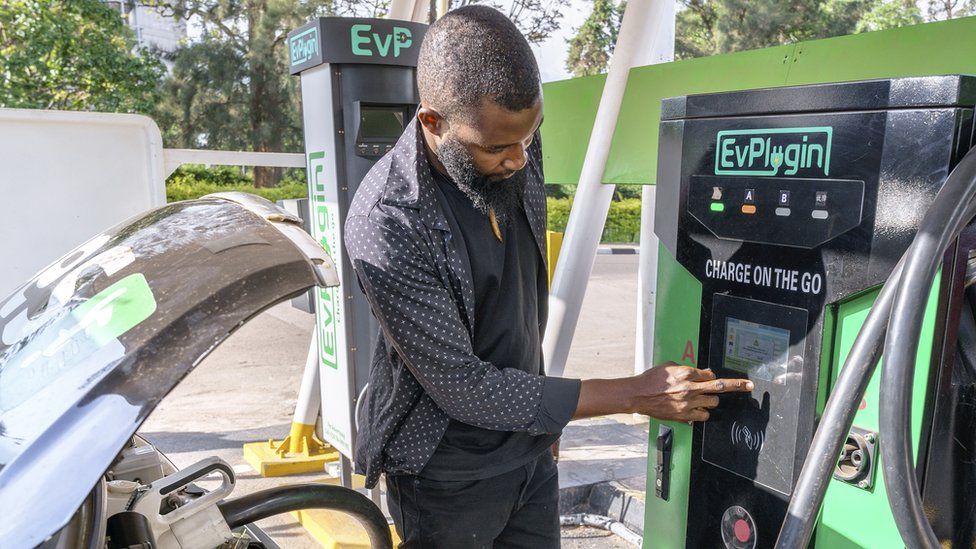
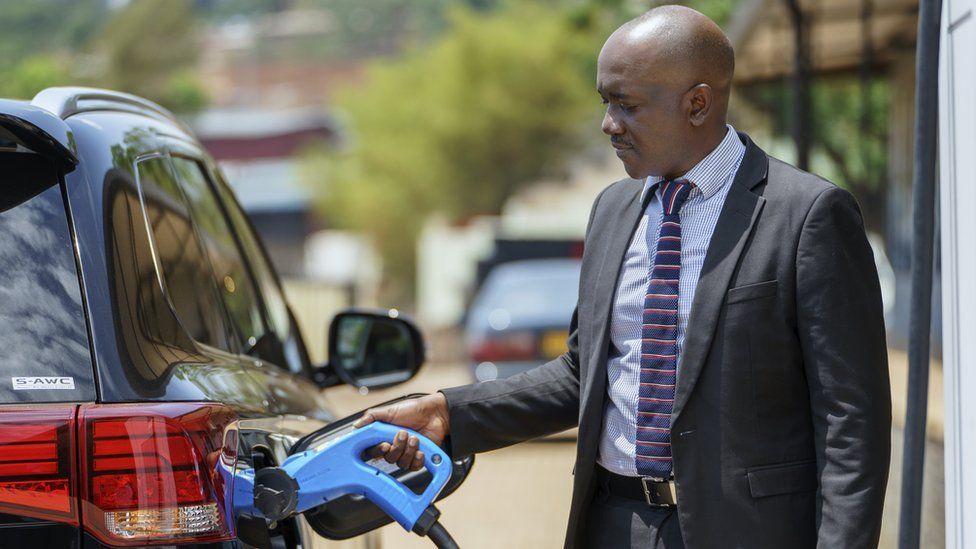

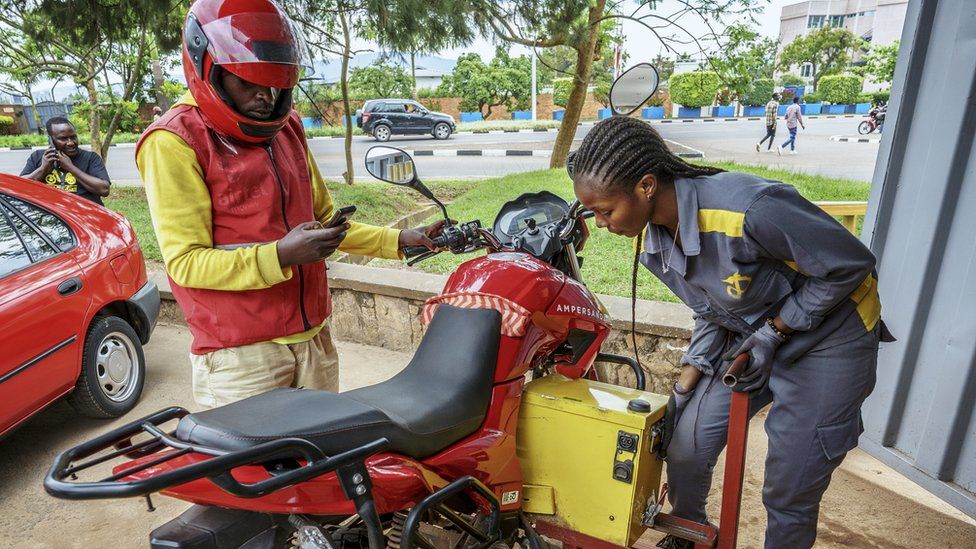
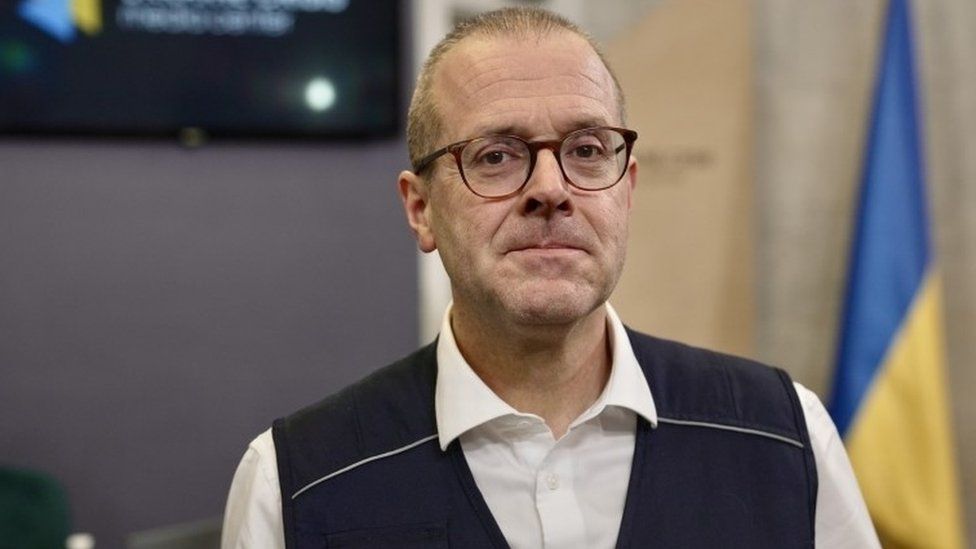



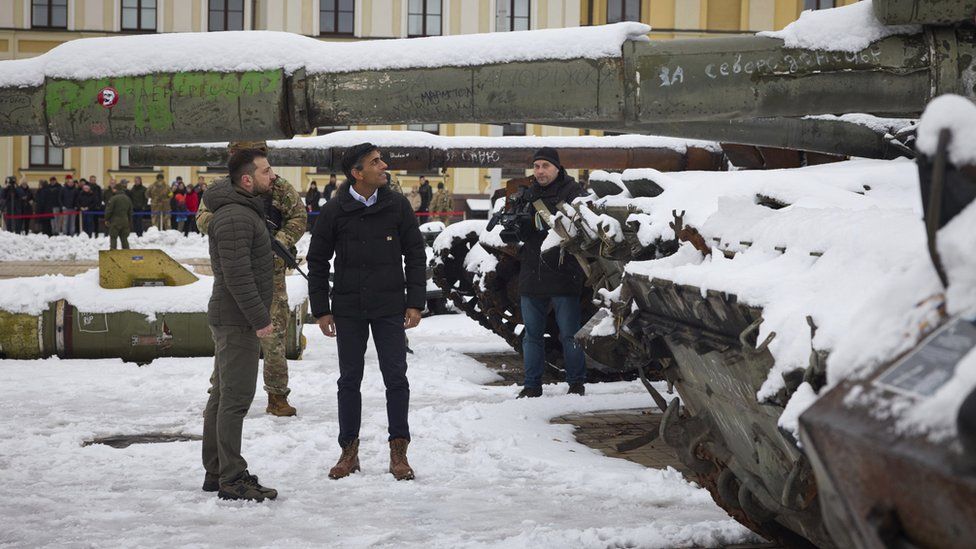

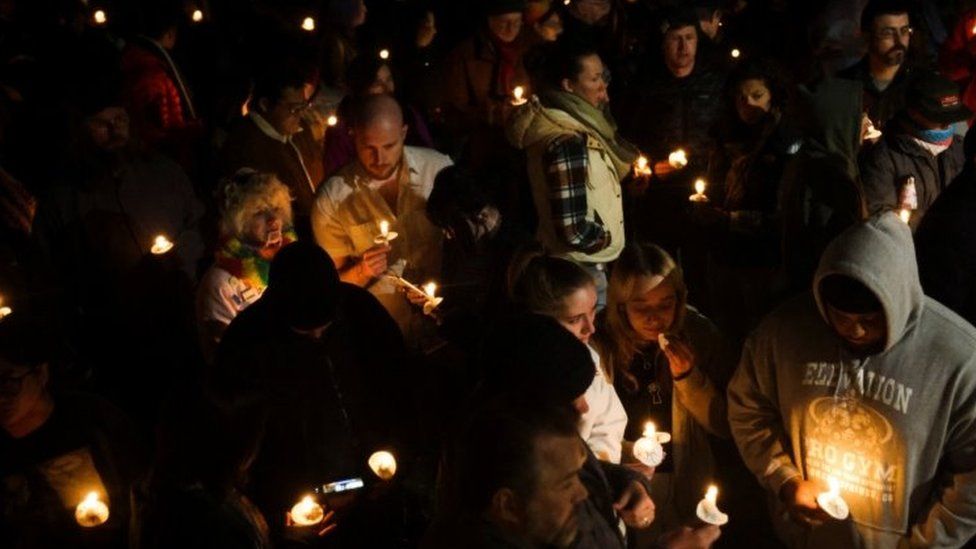


 I saw snow for the first time today”.


