The chief justice of the Islamabad High Courtcites an intelligence report that raises concerns about another assassination attempt on the former prime minister.According to a top Pakistani judge, citing an intelligence report, former Prime Minister Imran Khan’s life is in danger due to fears of another assassination attempt on the politician.
The remarks were made by Aamer Farooq, the chief justice of the Islamabad High Court, on Friday while hearing a petition filed by a traders’ body regarding road closures in the national capital during political protests.
Khan, 70, was shot in the leg by an assailant earlier this month in Wazirabad while on a “long march” to Islamabad to demand immediate elections.
A supporter of Khan’s Pakistan Tehreek-e-Insaf (PTI) was killed and more than a dozen others wounded in the attack, forcing the party to suspend its march.
The cricketing icon-turned-politician accused Prime Minister Shehbaz Sharif, Interior Minister Rana Sanaullah and military officer General Faisal Naseer of plotting the attack.
Khan did not provide any evidence for his allegations, which were rejected by the government and the army. The suspect was arrested and is being interrogated by the police.
During the hearing on Friday, the police presented before the court an intelligence report which suggested there is a possibility of another attack on Khan once he rejoins the march to Islamabad.
Judge Farooq also asked the PTI to submit a new application to seek permission to hold its rally in Islamabad. He urged the police to ensure the security of the marchers when they reach the city.
Khan, who is recuperating from his bullet wound at his residence in Lahore, has been addressing the marchers through a video link after the “long march” resumed on November 10.
He is expected to rejoin the march when it reaches Rawalpindi later this week.
Since his removal from power in April this year after losing a vote of confidence in parliament, Khan has been holding rallies across Pakistan to press the government to call early elections, otherwise due late next year.
The PTI chief blamed his removal on a “foreign conspiracy” hatched by the United States in collusion with his political opponents and his detractors in the powerful military. Islamabad and Washington have repeatedly denied the charges.
However, in a recent interview to the British newspaper Financial Times, Khan made a U-turn, saying he was willing to move on from the controversy.
“As far as I am concerned, it’s over, it’s behind me. The Pakistan I want to lead must have good relationships with everyone, especially the United States,” he said.
The bodies of Ethan Chapin, 20, Madison Mogen, 21, Xana Kernodle, 20, and Kaylee GonCalves, 21, were found dead in an apartment near the campus of the University of Idaho on Sunday.
An Idaho coroner has revealed the cause of death for four University of Idaho students who were killed earlier this week.
Ethan Chapin, 20, Madison Mogen, 21, Xana Kernodle, 20, and Kaylee GonCalves, 21, were found dead in an off-campus apartment on Sunday.
All four victims were stabbed to death, Latah County Coroner Catherine Mabbutt confirmed in a release shared by the Moscow Police Department on Facebook Thursday.
Their deaths were all ruled officially homicides.
Mabbutt did not immediately respond to PEOPLE’s request for comment.
She told NBC News that authorities suspect a large knife was used.
“It would have had to have been … not a pocket knife,” she said. “It would have been a bigger knife.”
Mabbutt, who was worked as a coroner for 16 years, also told the outlet that their wounds “were pretty extensive” and the crime scene was unlike anything she’d experienced before.
Toxicology results for the victims are still pending.
Latah County Prosecutor Bill Thompson also said while on TODAY that it’s possible there are multiple suspects.
“At this point, the investigators are looking at all possibilities. They don’t have a specific suspect,” he said. “We’re really hoping for any information from the public to help recreate everyone’s activities.”
One neighbor said, according to NBC News, that Mogen, Goncalves and Kernodle lived in the home and Chapin and Kernodle were dating. Authorities also said that they had two other roommates who police believe were at home but were not hurt during the killings. Thompson said they are not suspects.
Mabbutt had previously determined the incident was not a murder-suicide, according to Fox News.
In a press release on Tuesday, authorities confirmed that no weapons have been found, but “based on preliminary information, investigators believe that an edged weapon such as a knife was used” in the killings.
Moscow Mayor Art Bettge told Fox News that the crime occurred around 3 or 4 in the morning on Sunday, but was reported to police around noon.
He confirmed that the reason behind the killings was still being investigated, but said it could have been a “burglary gone wrong” or a “crime of passion,” Fox News reports.
“It’s one of any of a plenitude of possibilities, including burglary gone wrong, robbery gone wrong … Any of those is a possibility and not one to the exclusion of others,” Bettge said, Fox News reports.
“It is impossible to understand the senselessness of events like this, and we all are seeking answers that are not yet available,” Bettge said in a statement.
During a Wednesday press conference, Moscow Police Chief James Fry said, “We do not have a suspect at this time, and that individual is still out there. We cannot say there is no threat to the community.”
He stressed that the community should “remain vigilant.”
After years of seemingly unstoppable growth,the tech industry is now facing the “ultimate reality check” as it confronts broader economic uncertainty and waves of layoffs, Airbnb CEO Brian Chesky told CNN on Thursday.
“It’s like we’re all in a nightclub and the lights just came on,” Chesky said in an interview on “CNN This Morning.” After a period of “exuberance and euphoria,” he added, “now we all have to, like, take a hard look at things.”
Silicon Valley’s greatest minds misread pandemic demand. Now their employees are paying for it.
His remarks come at a difficult moment for the tech industry. Facebook-parent Meta said last week it was cutting 11,000 jobs after nearly doubling its staff during the pandemic. Amazon confirmed this week that lay offs had begun in its corporate workforce, with reports saying it plans to cut 10,000 positions. And Twitter recently cut approximately 50% of its staff as new owner Elon Musk races to bolster its bottom line.
Airbnb may be an exception. Chesky said the company is not undergoing layoffs at this time, and in fact is hiring. But that is due in large part to the company cutting 25% of its staff at the start of the pandemic as the travel industry was clobbered, and losing more employees by attrition after.
“Two-and-a-half years ago, we lost 80% of our business in eight weeks,” Chesky said. “People were predicting we were going to go out of business.”
“We just hunkered down,” he added. “We rebuilt the company from the ground up, and we stayed really lean.” Now, Chesky said, “we’re stepping on the gas, we’re not putting on the brakes.”
While the reckoning hitting much of Silicon Valley is painful, Chesky appeared to suggest that a more sober reassessment of the industry could also provide an opportunity for the tech sector to rethink its place in society, after years of criticism for the impact its products can have on people.
“I think Silicon Valley has done so many amazing things for the world, but we have to be careful having a fetishization of new technology, as if the new technology is going to solve all the problems that the last technology created,” Chesky said. “We need more diversity in Silicon Valley, but that diversity should not just be demographic diversity. We need artists, humanists in this industry.”
Ebola has taken almost everything and everyone dear to Joseph Singiringabo. The 78-year-old lost his wife, son, and newborn granddaughter tothe disease in a matter of weeks.
He is left to care for three grandchildren under the age of 13 after their mother fled the village to avoid the threat of Ebola. His livestock was stolen while he was incarcerated for the required 21 days, leaving him destitute and desperate.
“I’m not sure where they got the virus from because I went and got checked and I left the hospital with no problems with these children of mine,” he said, sitting on a log outside his modest house in Madudu, Uganda’s central Mubende district.
“The problem I am facing now is getting food. Secondly, I never went to school, but I want these grandchildren to continue and get educated.”
A deadly outbreak
Uganda is grappling with its deadliest Ebola outbreak in more than a decade, first detected in the Mubende district in late September.
The 2012 Ebola outbreak in the Kibaale district in the country’s western region, led to 17 deaths out of 24 confirmed cases but was declared over in less than 3 months.
Officials have launched aggressive contact tracing to track down relatives and friends who handled the bodies of first victims or attended funerals.
Some escaped from quarantine facilities, others traveled as far as the capital Kampala, and a few visited traditional healers and witchdoctors for treatment instead.
“Some of the patients are still hiding and they don’t know that they have Ebola so they’re out there in the community,” public health physician Dr. Jackson Amone told CNN.
An Ebola treatment unit in Mubende, Uganda. Larry Madowo/CNN
He has been involved in every Ebola outbreak in Uganda as well as in Sierra Leone in 2017. “We need to do case investigation, a lot of contact tracing, and community engagement so that those who present with Ebola symptoms are brought for testing before we release them.”
Dr. Amone is leading the teams operating the Ebola Treatment Units in Mubende. The first was set up in a hurry on the edge of the Mubende Regional Referral Hospital.
A larger center operated by the medical non-profit Médecins Sans Frontières (MSF) is expanding with new ICU beds on the other side of town.
Health workers don extensive Personal Protective Equipment (PPE) to enter the red zones where patients are receiving treatment.
In one zone, a health worker cradles a three-month-old baby suspected of having been infected. Her mother and another sibling are undergoing treatment for Ebola and the disease has already claimed the life of her father.
It’s a cruel welcome to the world for the infant who is wrapped in a blanket as steady rain falls on the makeshift treatment center.
It’s a familiar story across this region as Ebola spreads despite the Ugandan government’s best efforts.
“This Ebola is much easier to deal with than either corona(virus) or AIDS. The main problem here is behavior change,” President Yoweri Museveni told the nation in a Tuesday night address, stressing the need to follow the government’s procedures for those who come into contact with the disease.
Vaccine trials offer hope
Ebola can spread from person to person through direct contact with blood or other bodily fluids such as saliva, sweat, semen, or feces, or through contaminated objects like bedding or needles.
“It doesn’t spread through the air like COVID-19and does not hide for some months before it shows itself like AIDS,” Museveni said in his televised address.
The country had so far recorded 55 deaths from Ebola, 141 confirmed cases and 73 people had recovered, he said.
Health minister Dr. Jane Ruth Aceng Ocero told CNN she expects Uganda to have the outbreak under control by April if communities cooperate with the government.
Health workers don extensive Personal Protective Equipment (PPE) to enter the red zones where patients are receiving treatment Larry Madowo/CNN
There are currently two licensed Ebola vaccines, according to the World Health Organization, but they were developed to be safe and protective against the Zaire strain of the Ebola virus.
Unlike the previous Zaire ebolavirus, the Sudan strain currently circulating in Uganda has no known effective treatment or approved vaccine. However, the country is about to roll out three trial vaccines that have been certified as safe by the World Health Organization (WHO) working group.
The WHO said the first doses would be shipped to Uganda next week and the country expects to expand the vaccine trials after reviewing results from the initial phase.
They are manufactured by the International Aids Vaccine Iniative (IAVI), the Sabin Vaccine Institute USA and a third developed by the University of Oxford and the Jenner Institute UK.
“Our further testing is about efficacy, and how long it protects. We are looking at 3,000 contacts of confirmed cases so we’ll be doing ring vaccination,” Aceng Ocero said, referring to a vaccine process that administers vaccines only to people in close contact with infected patients.
“If we have a confirmed case, then the contacts are the ones who are given the vaccine and they are followed up for 29 days because we want to see if they can quickly generate antibodies and can protect themselves from getting into full-blown disease,” Aceng Ocero added.
Obstacles of tradition and religion
Public health officials believe that cases are stabilizing due to increased vigilance, but tradition and religion are holding back progress. One community in Kassanda district, central Uganda, exhumed a body that had been buried safely by health workers to perform religious rites.
It led to “an explosion of over 41 cases within 5 days and 10 deaths,” President Museveni said in his address. He has now barred traditional healers and witchdoctors from taking clients during the Ebola outbreak.
Infections are also rising as it is hard to keep people apart in close-knit communal settings. Robert Twinamasiko, a 30-year-old driver is undergoing treatment after he helped an infected friend to an ambulance. The friend and one other person involved both died.
A 30-year-old driver, Robert Twinamasiko receives treatment for Ebola after helping an infected friend to an ambulance. Larry Madowo/CNN
Twinamasiko has spent 17 days in hospital but says he has no regrets. Although he looked frail, he was making a recovery and told CNN he was looking forward to going home.
“I’m just waiting for my blood work to be discharged but the world out there should know that Ebola is real,” he said from inside a red zone.
Uganda is also trying to contain the spread of the disease by closing the school term early to avoid an outbreak of Ebola in schools which could be hard to manage. “If you have one learner in a class testing positive, the entire class has to undergo quarantine. But also, you will not be 100% sure that that learner did not have contact with other learners outside that class,” Minister Aceng Ocero explained.
She said she was frustrated that Uganda wasn’t getting enough credit internationally for managing the Ebola crisis. “We have experience. This is our eighth Ebola outbreak. Every time we get an outbreak, our experience increases,” she said.
The Bill & Melinda Gates Foundationhas announced a $7 billion commitment to Africa over the next four years on Thursday, as Bill Gates warned that the Ukraine crisis was reducing the amount of aid flowing to the continent.
The Foundation’s pledge, which is 40% more than what it spent in the previous four years, will go toward projects that address hunger, disease, poverty, and gender inequality.
Nigeria, Africa’s most populous country, will receive the greatest proportion.
Humanitarian groups in Africa are grappling with the diversion of funding away towards Ukraine, and as Russia’s invasion increases goods prices globally, impacting aid operations.
“The European budgets are deeply affected by the Ukraine war and so right now the trend for aid is not to go up,” the billionaire co-founder of Microsoft Corp (MSFT.O) told journalists at the University of Nairobi during a visit to Kenya.
“If you take all aid (into Africa) including all climate aid – we’ll have a few years where it’ll probably go down.”
Kenya and much of East Africa are suffering their worst drought in four decades.
Drought, compounded by conflict and the COVID-19 pandemic, has pushed more than 10 million people in the region “to the very brink of a hunger crisis”, the U.S.-based Christian relief group World Vision said this week.
The United Nations says it expects famine to be declared in parts of Somalia this year.
Following a meeting with Kenyan President William Ruto, Gates said on Wednesday that the Foundation would establish a regional office in Nairobi.
“Our foundation will continue to support solutions in health, agriculture, and other critical areas—and the systems to get them out of the labs and to the people who need them,” Gates, who runs the foundation with his ex-wife Melinda French Gates, said in a statement.
The Foundation in 2021 gave charitable support of $6.7 billion and last week pledged $1.4 billion to help the world’s smallholder farmers cope with climate change.
He sexually assaulted the law graduate and made off with her mobile phone, keys and handbag, the court heard.
Emergency services were called at 2.44am after she was found with severe head injuries, partially naked and struggling to breathe on Cranbrook Road in Ilford, east London.
Paramedics took the victim to the Royal London Hospital where she later died from her injuries.
The Metropolitan Police described the murder as an “opportunist stranger attack”.
CCTV from the night of the killing showed McSweeney following several women before fixating on Ms Aleena.
He had been released from prison on licence just nine days before the murder after serving time for burglary offences.
McSweeney was arrested by police at his home where they found a bag containing blood-stained clothes.
Griner, the US basketball star and Olympic gold medalist, has been transferred to a penal colony 300 miles from Moscow, while Russian national Bout was apprehended in a sting in 2008.
Russia hopes to make a prisoner swap with the United States in exchange for the release of basketball star Brittney Griner in exchange for a convicted arms trafficker known as the “Merchant of Death.”
According to Russian Deputy Foreign Minister Sergei Ryabkov, Moscow and Washington are currently discussing a possible exchange.
According to her lawyers, Griner was transferred to a penal colony in Mordovia, about 500 kilometres (300 miles) southeast of Moscow.
The all-star centre with the WNBA’s Phoenix Mercury and two-time Olympic gold medal winner was detained in February when customs agents said they found vape canisters containing cannabis oil in her luggage at Moscow’s Sheremetyevo Airport.
At her trial, Griner admitted having the canisters in her luggage, but testified she packed them inadvertently in haste to make her flight and had no criminal intent.
Her defence team presented written statements saying she had been prescribed cannabis to treat chronic pain.
She was convicted in August and sentenced to nine years in prison.
Speaking about the possibility of a prisoner swap, Mr Ryabkov said: “I want to hope that the prospect not only remains but is being strengthened, and that the moment will come when we will get a concrete agreement.”
“The Americans are showing some external activity, we are working professionally through a special channel designed for this.
“Viktor Bout is among those who are being discussed, and we certainly count on a positive result.”
Who is Viktor Bout?
Variously dubbed “the merchant of death” and “the sanctions buster” for his ability to get around arms embargoes, Bout was one of the world’s most wanted men prior to his 2008 arrest on multiple charges related to arms trafficking.
For almost two decades, Bout was one of the world’s most notorious arms dealers, selling weaponry to rogue states, rebel groups and murderous warlords in Africa, Asia, and South America.
Ever since his capture in an elaborate US sting, the Russian state has been keen to bring him back.
Oleksander’s restless pale blue eyes are as expressive as his words. He’s nervous, and rightly so, as hereturns to the jail in the newly liberated city of Kherson, where he claims Russian guards beat him every day.
In this Soviet-era prison, we pass through guard rooms, turnstiles, and heavy iron doors, and travel along fences topped with reams of razor wire until we reach one of the epicentres of Russia’s brutal occupation of Ukraine.
Oleksander and another former prisoner who did not want to be interviewed say Russian guards executed Ukrainian prisoners for pro-Ukrainian chants or tattoos in this dark and rubble-strewn corridor. CNN is only identifying Oleksander by his first name.
As Oleksander pushes on a solid, red iron cell door at the end of the corridor, burning wood falls from the ceiling, smoke billows and glowing embers tumble out. The ceiling in this part of the cell block is alight and burning timbers are crashing down.
That’s where the Russian troops brought people for torture, Oleksander tells us. After the Russians withdrew from Kherson “they set fire [to] it to destroy evidence of their crimes,” he says. It is impossible to enter to check it out, due to the flames.
The Russian retreat was fast – some 30,000 troops, according to Russia’s Ministry of Defense, executed their withdrawal within three days of Russia’s announcement they were leaving. They’d been preparing for the move for several weeks and blamed it on poor supply lines across the Dnipro River, which Ukraine had been intentionally targeting with US-made HIMARS rocket launchers since late July.
Back in daylight outside the cellblock, Oleksander says he was arrested in his apartment by Russian police, accused of being a criminal. He says they deliberately broke his leg by kneeling on it as they restrained him.
He tells us it wasn’t his first time in Kherson’s jail, having previously spent time there for a criminal offense. But unlike the Ukrainian guards, he says, the Russians were needlessly brutal. “They abused everybody, kept us hungry, used us as free labor to repair their military vehicles, they were beating us as they wanted,” Oleksander says.
Russia has previously denied allegations of war crimes and claimed its forces do not target civilians, despite extensive evidence gathered by international human rights experts, criminal investigators and international media in multiple locations.
A former prisoner holds up jail keys at Kherson’s central prison following the city’s liberation by Ukrainian forces. Kareem Khadder/CNN
Fear of collaborators
Kosta’s experience was different – his alleged abuse was more psychological than physical, although he says he experienced plenty of that too.
The Russians suspected him of being part of an underground network of saboteurs targeting their officials and facilities, says Kosta, whom CNN is identifying only by his first name for security reasons.
Mysterious car bombs and other explosions had become a nagging concern for the local Russian-installed administration, whose boss, Kirill Stremousov, died in a sudden, unexplained car accident during the final days of the Russian occupation.
Not long after underground activists blew up a Russian police vehicle near Kosta’s Kherson apartment, he says 11 heavily armed Russians showed up at his door and forced their way in.
Closer to 30 than 20, Kosta won’t let us show his face on camera. He says the Russians have him on a database, and knew details of his cellphones when they showed up at his apartment.
They were so well prepared, they knew where he went to school, Kosta says, and accused him of previously being a member of “Right Sector,” a far-right nationalist organization with political and military wings. He denies belonging to the organization.
When we meet in Kherson’s central city square amid the cacophony of liberation celebrations, Kosta is less jubilant than the others around him. He says it is taking him some time to adjust to the new freedoms and he is wary that Russian collaborators, still at large, could target him.
Anger on the front lines and anxiety at home as Russia’s mobilization is mired in problems
Many Ukrainians who came to talk with us during the first few heady days of liberation told us of their surprise at how many people they knew had collaborated with the Russians when they first took control of the city in early March.
A lively 71-year-old former marine engineer who came over to talk with us just hours after the Russians had gone was particularly animated on the subject. “Many people who were born here, educated here, working here, they welcomed the Orcs (an anti-Russian slur), I was astounded, I hated it,” said the man, who didn’t give his name.
The reasons for such collaboration vary. Conversations with people in the city suggest a minority were pro-Russian and thought the Russians would be there to stay, making collaboration the path to an easier life; others were forced by the Russians to collaborate.
Unlike Kosta, the former engineer was less worried about the reappearance of those who worked with the Russians and more concerned that they be held to account. “I want to say burn these people who collaborated with foreign forces in hell,” he said.
‘It was really scary’
In any other circumstance, Kosta seems like the sort of guy who can handle himself – wiry, and judging by his handshake, strong – but he says the Russians put him through a psychological wringer.
It began, he said, when he was still inside the apartment as the Russians first detained him. “One guy come to me with a pistol, with a pistol to my head and start to ask questions. Do you know what [will] happen with your wife? If you will not tell us the truth? I say okay, I guess I will tell everyone, just start to ask questions. They say no, you will tell us without questions.”
Dutch court finds two Russians, one Ukrainian separatist guilty over downing of flight MH17
That was just the beginning, Kosta says. When they took him to a police station and put him in a cell the mental torture got worse. “There is nothing that can prepare you for it,” he says.
They put a gun to his head again, he says, and told him to talk – again, with no questions, to increase the pressure on him to speak – and pulled the trigger. The emotions etch deeper on Kosta’s face as he explains the torment. “I’m not sure that all life pass[ed] before my eyes but it was really scary,” he says.
Kosta doesn’t claim to be part of that resistance organized in part by the Ukrainian intelligence service, or SBU, but plenty of people in Kherson helped where they could. One hotel owner told CNN he hid injured Ukrainian soldiers in his basement for several months until they could be smuggled to safety.
The Russians’ grip on Kherson depended on stamping out pro-Ukrainian sentiment. Kosta knew if he couldn’t convince the Russians he was innocent, they’d take him deeper into Russian-controlled territory for more interrogations.
After the mock execution, he says, they tried fake electrocutions. “They put the electric to my testicles … but don’t start the power.”
He said he’d prepared himself to crack if the torture got very physical. “I understand [with] the real torture nobody can take it,” he says. Indeed, in the cells beneath his, he says he could hear people screaming and crying for their mothers while being beaten into a confession.
Through it all he didn’t crack, and, without hard evidence, he says, the Russians let him go – but he still finds himself looking over his shoulder.
Kosta may feel some relief in the coming weeks; a Ukrainian reconnaissance commander CNN met months ago during the push for Kherson arrived in the city Monday with one stated mission: to root out residents who had worked with the Russians.
How the Ukrainian military handles those suspects will be a true measure of how much they want to separate themselves from theRussian-style brutality that Kherson suffered for most of 2022.
The sale of alcohol is strictly controlled in Qatar, and it had to relax its restrictions to allow FIFA sponsor Budweiser to sell its products outside World Cup match venues and fan zones. Now, fans have been told they cannot buy beer at any games during the tournament.
World Cup fans in Qatar will not be allowed to buy alcohol at the tournament’s eight stadiums.
The U-turn comes 48 hours before the competition’s opening game between Qatar and Ecuadorat the Al Bayt stadium in Al Khor on Sunday.
Qatar had originally ordered Budweiser stands to be less prominent,but now alcohol won’t be sold at all at stadiums – with the exception of corporate spectators.
Those in corporate hospitality at stadiums will still be allowed to drink alcohol.
FIFA said: “Following discussions between host country authorities and FIFA, a decision has been made to focus the sale of alcoholic beverages on the FIFA Fan Festival, other fan destinations and licensed venues, removing sales points of beer from Qatar’s FIFA World Cup 2022 stadium perimeters.”
It added Bud Zero would still be available, and that it would “continue to ensure that the stadiums and surrounding areas provide an enjoyable, respectful and pleasant experience for all fans”.
A source briefed on the decision told Sky News: “These have been long-term discussions, and the overall feeling from everyone involved was that the stadiums need to be for everyone.
“This World Cup is different to others in that a larger number of fans are attending from across the Middle East and South Asia, where alcohol doesn’t play such a large role in the culture. The thinking was that, for many fans, the presence of alcohol would not create an enjoyable experience.
“The fan zones will be different in that some are clearly designated as alcohol-serving, while others are alcohol-free. Fans can decide where they want to go without feeling uncomfortable. At stadiums, this was previously not the case.”
Image:A Budweiser beer bar at the FIFA Fan Festival in Doha, Qatar
The sale of alcohol is strictly controlled in Qatar, and is only allowed in the Muslim nation within hotel bars and restaurants away from street view.
It had to relax its alcohol restrictions to allow FIFA sponsor Budweiser to sell its products outside match venues and fan zones.
Now Qatar 2022 has gone even further – at the insistence of Qatar’s Al Thani royal family, it is understood.
As one of FIFA’s biggest sponsors, Budweiser has the exclusivity to sell beer at World Cup matches.
It reportedly pays more than £60m over four years to be a FIFA top-tier sponsor, and this late change is unlikely to have gone down well.
A tweet from the official Budweiser account on Friday morning, which was later deleted, simply said: “Well, this is awkward…”
One fan replied to the post, saying, “I cannot watch England play whilst I’m sober next Monday” – to which Budweiser responded: “Don’t be, we’ll join you.”
Image:Budweiser later deleted its ‘this is awkward’ tweet
It would have been the only alcoholic beverage available to fans.
The Football Supporters’ Association, for fans in England and Wales, criticised what it described as a “total lack of communication and clarity from the organising committee towards supporters”.
“Some fans like a beer at the match, and some don’t, but the real issue is the last minute U-turn which speaks to a wider problem,” it said in a statement.
“If they can change their minds on this at a moment’s notice, with no explanation, supporters will have understandable concerns about whether they will fulfil other promises relating to accommodation, transport or cultural issues.”
Qatar had initially told fans they would be able to buy beer outside the stadium bowl itself, within the perimeter for ticketholders, “three hours prior to kick-off when the gates open and one hour after the final whistle”.
Now, it is understood beer will only be available in alcohol-serving fan zones in Qatar after 6.30pm and drunk fans will be sent to special zones to sober up.
In response to the request to move its outlets, Budweiser owner AB InBev told Sky News: “AB InBev was informed on November 12 and are working with FIFA to relocate the concession outlets to locations as directed.
“We are working with FIFA to bring the best possible experience to the fans. Our focus is on delivering the best possible consumer experience under the new circumstances.”
Footage on social media in recent days shows red Budweiser tents being moved on wheels by staff.
Qatar World Cup organisers said “operational plans are being finalised” when asked about the change to the location of beer stations earlier this week.
The World Cup Supreme Committee told Sky News: “These plans include venue management teams enhancing overlay requirements for all competition venues. This has a direct impact on the location of certain fan areas.
“Pouring times and number of pouring destinations remains the same across all eight World Cup stadiums.”
Investigators have found traces of explosives at the site of the damaged Nord Stream pipelines, confirming that sabotage had taken place, a Swedish prosecutor said on Friday.
Swedish and Danish authorities are investigating four holes in the Nord Stream 1 and 2 pipelines which link Russia and Germanyvia the Baltic Sea and have become a flashpoint in the Ukraine crisis.
Denmark last month said a preliminary investigation had shown that the leaks were caused by powerful explosions.
“Analysis that has now been carried out shows traces of explosives on several of the objects that were recovered,” the Swedish Prosecution Authority said in a statement.
“The investigation is highly complex and comprehensive. The ongoing probe will determine whether any suspects can be identified,” it added.
The prosecutor’s office declined to give further comment.
Jeremy Hunt has warned that families face “real challenges” as government forecasters predict the greatest drop in living standards since records began.
According to the Office for Budget Responsibility, household income will drop by 7% over the next 18 months.
In his Autumn Statement, the chancellor said tax increases and spending cuts would help tame inflation, which he blamed for the drop.
However, Labour claimed that fairer tax decisions could have been made.
Shadow chancellor Rachel Reeves called the emergency budget measures “an invoice for the economic carnage” caused by former Prime Minister Liz Truss’ policies.
It was deliberately stripped of surprises and political theatre, with many of the announcements having been trailed in the media beforehand.
Mr Hunt told the BBC’s political editor Chris Mason his plan would bring down soaring prices, while protecting public services.
“These are real challenges for families up and down the country,” he said, adding: “I’m not pretending these aren’t going to be difficult times, but there’s a plan, there’s hope – and if we follow this plan, if we stick with it, we can get through to the other side.”
In the next two years, before the next general election is due, there will be further support for households and extra money for schools, the NHS and social care in England.
Tax thresholds will be frozen until April 2028, meaning millions will pay more tax
Spending on public services in England will rise more slowly than planned – with some departments facing cuts after the next election
The state pensions triple lock will be kept, meaning pensioners will see a 10.1% rise in weekly payments
The household energy price cap has been extended for one year beyond April but made less generous, with typical bills capped at £3,000 a year instead of £2,500
There will be additional cost-of-living payments for the “most vulnerable”, with £900 for those on benefits, and £300 for pensioners
The top 45% additional rate of income tax will be paid on earnings over £125,140, instead of £150,000
UK minimum wage for people over 23 to increase from £9.50 to £10.42 an hour
The windfall tax on oil and gas firms will increase from 25% to 35%, raising £55bn from this year until 2028
The Resolution Foundation think tank said the Autumn Statement piled further pressure on “the squeezed middle” earners.
But it said increasing benefits in line with prices would make a “huge difference to those on low-to-middle incomes”.
Mr Hunt denied that he had been forced to raise taxes and reduce spending because of the turmoil caused by Ms Truss’s mini-Budget.
He said there had been mistakes, but insisted the government had “corrected those within weeks”.
He argued that other countries, such as Germany, France and America were all facing similar problems as a result of the conflict in Ukraine and rising energy prices.
The Chancellor’s tone was sober; the facial expressions of Conservative MPs business-like rather than emblazoned with smiles.
Even the opposition parties were relatively muted too: times are and will continue to be very difficult for millions of households.
For all of the numbers, the forecasts, the rhetoric, the standout statistic comes from the government’s independent analysers, the Office for Budget Responsibility: Living standards are falling further right now than at any point since the 1950s.
Bad news.
Add to the mix a chancellor wrestling with a recession; responding with tax rises – taxation levels are their highest for 75 years – and government spending below what it was expected to be.
He argues that protecting the state pension, benefits, and the announcements on spending for education and health shield the government against the suggestion this is another era of austerity.
But lots of government departments face lean years, inflation pickpocketing their spending power.
And Mr Hunt has also postponed the big spending squeezes until after the next election.
The OBR, which produced an economic forecast to accompany Mr Hunt’s statement, says high inflation and rising interest rates will lead to consumers spending less, tipping the UK’s economy into a recession “lasting just over a year”.
It predicts the economy will shrink by 1.4% in 2023 before growth slowly picks up again.
The forecaster also says that as a result of Mr Hunt’s decisions, the tax burden would rise to its highest level since the end of World War Two.
Mr Hunt described a target to reduce government debt in five years time as one of “two new fiscal rules”. But speaking on BBC Newsnight, OBR chairman Richard Hughes suggested the plan could end up only being an aspiration because the end date can be extended every year at the budget.
Attacking Mr Hunt’s plans in Parliament, Labour’s Rachel Reeves said he had introduced “a Conservative double whammy that sees frozen tax thresholds and double-digit inflation erode the real value of people’s wages”.
She accused the government of increasing taxes by “stealth” arguing that freezing the personal allowance – the amount of income someone does not have to pay tax on – would cost an average earner more than £600 per year.
Speaking to the BBC on Friday, Ms Reeves said “fairer choices around tax could have been made”, criticising the Tories for not abolishing non-dom status and instead going to the “pockets of the ordinary working man and woman”.
The Liberal Democrats said people were “being forced to pay the price for this Conservative government’s incompetence”.
The SNP’s Treasury spokeswoman Alison Thewliss said: “This is a UK so weak that no-one would wish to join it – Scotland cannot be forced to stay in broke, broken, Brexit Britain.”
There was also an attack from the chancellor’s own side with former cabinet minister, Conservative MP Jacob Rees-Mogg arguing that the measures announced were based on unreliable economic forecasts.
Meanwhile, a Conservative MP is seeking assurances from the chancellor that he will not increase fuel duty.
The tax is suppose to rise in line with inflation, but has repeatedly been frozen. The Treasury has said a final decision would not be taken until the next Budget in spring 2023.
Writing to the chancellor, Conservative backbencher Jonathan Gullis warned that a “substantial number” of Tory MPs would be opposed to a rise.
As the fire broke out, residents were attending a party in the building. Witnesses reported hearing screams but were unable to assist those inside due to the intensity of the fire.
Officials say at least 21 people were killed and several others were injured in a fire at a residential building in a Gaza refugee camp.
The flames that engulfed the top floor of a four-story residential building in the densely populated Jabalia refugee camp took firefighters more than an hour to extinguish.
Residents were attending a party in the building, and witnesses said they heard screaming but couldn’t help those inside due to the intensity of the fire.
Ambulances rushed those who were injured to local hospitals and Israel, which together with Egypt maintains a blockade on Gaza, said it would allow in those in need of medical treatment.
Gaza’s Interior Ministry said an initial investigation revealed that large amounts of gasoline had been stored at the site, fuelling the blaze. It was not clear how the gasoline was ignited.
Footage from the scene shows large crowds gathering outside the building, while Hamas police officers inside assess the site.
Palestinian President Mahmoud Abbas called it a national tragedy and said there would be a day of mourning.
Image:Hamas officers secure the scene of burned apartment in Jabalia refugee camp. Pic: AP
Hussein al Sheikh, secretary-general of the executive committee of the Palestine Liberation Organization (PLO), said in a statement that the Palestinian Authority urged Israel to open the Erez crossing with Gaza to transport serious cases in order to treat them outside the enclave if necessary.
Israeli defence minister Benny Gantz tweeted that his staff would assist with evacuating those who were injured.
The State of Israel and defense establishment send our condolences following the tragic incident in Gaza. We have offered our assistance in evacuating injured civilians to hospitals via COGAT. The State of Israel is prepared to provide life-saving, medical aid to Gaza residents.
Gaza, which is ruled by Palestinian militant group Hamas and under the crippling Israeli-Egyptian blockage, faces an energy crisis.
People often store gasoline and cooking gas in their homes in preparation for winter and house fires have previously been caused by candles and gas leaks.
Police accuse 51-year-oldof planning ‘armed revolution’ to seize power from ex-President Jovenel Moise.
Canadian federal police have charged a man in the province of Quebec with “terrorism” over an alleged plot to overthrow slain Haitian President Jovenel Moise’s government.
The Royal Canadian Mounted Police said on Thursday that Gerald Nicolas, 51, from the town of Levis near Quebec City “planned to stage an armed revolution in Haiti and ultimately seize power”.
“It is alleged that he took concrete actions, including travelling to Haiti to coordinate a group of individuals whose intention was to take part in a coup against the established authority,” a police statement said.
The police force did not say exactly when the suspect travelled to Haiti or when the alleged plot took place, but it did say its investigation, which began in July 2021, was unrelated to Moise’s assassination that same month.
The Haitian leader was killed on July 7, 2021, by a gang of mercenaries who stormed his home in Haiti’s capital, Port-au-Prince. The killing sent shockwaves around the world and thrust the Caribbean nation, which was already facing political turmoil, into deeper instability.
More than a year later, Haiti is reeling from surging violence as armed gangs have battled for control of key areas in the political vacuum created by Moise’s assassination.
Meanwhile, Haiti’s investigation into the killing appears to have stalled.
Dozens of people have been arrested in the ongoing inquiry, including several Colombian nationals, but the process has been slow-moving and many questions – and theories – remain as to why Moise was killed.
The United States Department of Justice alleges that a group of about 20 Colombians and a group of Haitian Americans participated in a plot that, while initially focused on kidnapping Moise in a purported arrest operation, “ultimately resulted in a plot to kill the president”.
The US has charged three men in relation to the assassination, accusing them of being members of the plot.
Former Haitian Senator John Joel Joseph was extradited to the US from Jamaica and charged in May. The other men charged are Mario Antonio Palacios, a former member of the Colombian military, and Rodolphe Jaar, a dual Haitian-Chilean citizen.
In a report (PDF) ordered by the US Congress on Moise’s assassination, theDepartment of State said it “continues to assist Haitian authorities as they proceed with their investigation” into the president’s killing.
“Embassy Port-au-Prince estimates Haitian authorities have detained around 74 suspects during the investigation; approximately 42 remain in pre-trial detention,” said the report, which was released this month.
The State Department said a fifth judge was appointed to head the Haitian investigation in May but “investigative judges assigned to the case and related figures have reported threats to their safety for working on the case”.
A squabble has broken out in Spain after it was revealedthat a landmark law toughening penalties for sex crimes is being used by lawyers to reduce clients’ existing sentences.
The notorious 2016 Manada or “wolf pack” case, in which five men raped an 18-year-old woman in Pamplona, prompted the “only yes means yes” law.
Last month, the new law went into effect.
According to Spanish media, the change allows at least four sex offenders to leave jail early.
Lawyers have also won sentence reductions for convicted abusers in at least eight other cases.
A lawyer for the Manada gang, Agustín Martínez, also revealed he was working to get a reduced sentence for one of the five convicted of the attack.
This is because the Spanish criminal code states that when a new law is introduced, new sentences contained within it can be retroactively applied to convicted criminals if they stand to benefit.
So in some cases, lawyers argued that the new law established lower minimum sentences, and that the original sentences should therefore be reduced.
Spain’s Equality Minister Irene Montero, who steered the new law into effect, defended it by saying “machismo may make some judges apply the law incorrectly”.
Her comment “provoked uproar among the legal profession”, Prof Carlos Flores, a law lecturer at the University of Valencia, told the BBC, saying Ms Montero had “decided to put all the blame on the judges, and not admit a mistake”. The main judges’ associations also jointly rejected her claim of male chauvinist bias.
“Now 55% of Spanish judges are women, so blaming them for ‘machismo’ is an insult. And the legal education of judges in gender issues has been going on for a long time,” Prof Flores pointed out.
This row is particularly uncomfortable for the government of Prime Minister Pedro Sánchez as gender equality has been a major policy focus since it took power in early 2020.
The new law was one of the government’s landmark reforms, prompted by widespread outrage after the five were found guilty of sexual abuse, but not rape, and got nine-year jail sentences during their initial trial. After mass protests, the Supreme Court in 2019 increased the jail terms to 15 years.
At the original trial, the men had been cleared of rape on the grounds that neither violence nor intimidation had been used.
Spotlight on consent
The new Guarantee of Sexual Freedom law stipulates that victims no longer have to prove that they suffered violence or intimidation, or that they physically resisted, in order to show that they have suffered a sexual assault. Any sexual act without consent will be liable to be deemed assault.
Amid controversy over the recent sentence reductions, Finance Minister María Jesús Montero said she thought the issue needed to be reviewed “because evidently the goal… wasn’t to lower the sentences for abuse of minors – quite the opposite”.
In one recent case, a man jailed for eight years for having sexually abused his 13-year-old stepdaughter had his sentence cut by two years, by a Madrid court.
A man who raped a 67-year-old woman in her own home was jailed for three years and 10 months, but a Barcelona court ruled that, under the new law, his sentence should be between two and four years.
In Majorca, two sex abusers jailed for three years can now go free, a court has ruled, because they have already served two years.
Prof Flores noted that Justice Minister Pilar Llop – a Socialist – had not commented on this “major legal embarrassment” for the government. He saw that silence as a sign that the new law was “adding to the division in the coalition” between the Socialists and Podemos, the junior party in the leftist coalition.
“Even if you go back to a more punitive law you cannot apply it retrospectively,” he said, adding that “we are bound to have a growing number of cases reviewed”.
‘The hour has come for a new generation to lead the Democratic caucus,’ says the 82-year-old former US House Speaker.
US House Speaker Nancy Pelosi has announced that she will not run for reelection to the Democratic Party’s congressional leadership after Republicans regained control of the chamber by a slim margin.
Pelosi, 82, became the first female speaker of the House in 2007, and has been the top Democratic lawmaker for nearly 20 years. She stated on Thursday that she will continue to serve in Congress to represent her California constituents, but that she is ready to pass the leadership torch to the next generation.
“With great confidence in our caucus, I will not seek reelection to Democratic leadership in the next Congress,” Pelosi said in a speech on the House floor. “For me, the hour has come for a new generation to lead the Democratic caucus that I so deeply respect, and I’m grateful that so many are ready and willing to shoulder this awesome responsibility.”
Democrats will elect their leaders for the new Congress, which convenes early next year, at the end of the month. House Democratic Conference Chairman Hakeem Jeffries, a 52-year-old New York representative, is widely considered a frontrunner to replace Pelosi.
The top three Democrats in the House – Pelosi, House majority leader Steny Hoyer and majority whip Jim Clyburn – are in their 80s.
Hoyer also announced in a letter to Democratic lawmakers on Thursday that he will not seek a leadership position in thenext Congress, saying that it was time for a “new generation of leaders”. Clyburn, too, suggested that he will leave his position as whip.
“Speaker Pelosi has left an indelible mark on Congress and the country, and I look forward to her continued service and doing whatever I can to assist our new generation of Democratic Leaders which I hope to be Hakeem Jeffries, Katherine Clark, and Pete Aguilar,” Clyburn wrote in a tweet.
In her speech on Tuesday, Pelosi warned about the fate of US democracy, citing the January 6, 2021 attack on the Capitol by supporters of former President Donald Trump who sought to prevent the certification of President Joe Biden’s 2020 election victory.
“American democracy is majestic, but it is fragile,” Pelosi said. “Many of us here have witnessed this fragility firsthand – tragically in this chamber. And so, democracy must be forever defended from forces that wish it harm.”
Biden called Pelosi the “most consequential” House speaker in US history.
“Because of Nancy Pelosi, the lives of millions and millions of Americans are better, even in districts represented by Republicans who voted against her bills and too often vilify her. That’s Nancy – always working for the dignity of all of the people,” the US president said in a statement on Thursday.
The daughter of a former US congressman and Baltimore mayor, Pelosi has been serving in the House since 1987 – before some current members of her caucus were born.
The outgoing House speaker is often praised as an effective lawmaker who managed to keep unity in a Democratic caucus that is far from ideologically homogeneous.
During her two stints as speaker – from 2007 to 2011 and 2019 until the end of the year – she passed historic legislation, including former President Barack Obama’s healthcare reform law, the Affordable Care Act.
US lawmakers were quick to pay tribute to Pelosi on Thursday, praising her leadership and years of service.
“Nancy Pelosi is a trailblazer. A fierce advocate for California and our entire country, she was fearless in the face of impeachments and insurrection. Her legacy will live on with our next generation of leaders,” House Democrat Katie Porter wrote on Twitter.
Senator Chris Van Hollen said Pelosi made history as the first female speaker of the House but also offered the most effective leadership.
“She has been the fearless force behind much of the progress we have made in the 21st Century. Her legacy is forever etched in American history,” Van Hollen said in a social media post.
Over her career, Pelosi has been criticised from the left for not pushing more progressive legislation and failing to back impeaching former President George W Bush over the Iraq invasion and torture of prisoners after the 9/11 attacks.
And Republicans have vilified Pelosi as a symbol of everything they dislike about Democrats: a member of the so-called “coastal elite” who supports higher taxation and government spending.
Ahead of the midterm vote, “firing Nancy Pelosi” became a rallying cry for Republicans. Despite an underwhelming election performance where they failed to capture the Senate, Republicans were able to narrowly take back the House, ensuring that Pelosi would not serve for another term as speaker.
Although the president is largely responsible for US foreign policy, in her decades-long career, Pelosi has stepped into the international limelight.
Earlier this year, she angered China by visiting Taiwan. She also oversaw the allocation of continuing US aid to Ukraine after the Russian invasion and travelled to Kyiv where she met with Ukrainian President Volodymyr Zelenskyy in May.
The outgoing speaker is a staunch supporter of Israel. “If this Capitol crumbled to the ground, the one thing that would remain would be our commitment to our aid – I don’t even call it our aid – our cooperation with Israel. That’s fundamental to who we are,” she said in 2018.
The military alliance and analysts say the deadly blast in Poland highlights the need to further strengthen NATO’s eastern flank.
Russia’s war in Ukraine jolted NATO this week when a missile exploded in a Polish village near the Ukrainian border, killing two people.
Immediately after Tuesday’s blast, Polish President Andrzej Duda said the explosive that hit Przewodow, a village of hundreds of people, was “most likely Russian-made” as an investigation was still ongoing.
His statement sent shockwaves across the world, and NATO leaders expressed their will to defend every inch of territory in the world’s largest military alliance, of which Poland is a member.
Military analysts took to social media to suggest that this could be a moment when the alliance would invoke Article 4, a consultation between NATO countries when one member feels threatened, or Article 5, when an attack is considered violence against the entire alliance, allowing NATO to decide on action it deems fit to protect its members.
The same day, Russia pummelled critical Ukrainian infrastructure with a wave of missile strikes.
Ukrainian President Volodymyr Zelenskyy called the explosion in Poland “a very significant escalation” and said, “We must act.”
But NATO and Western nations, including the United States have since calmed fears, suggesting the missile was a stray, likely part of Ukraine’s air defence systems. Nevertheless, they said Russia bears overall responsibility as the aggressor and instigator of the war.
NATO Secretary General Jens Stoltenberg has maintained a cautious stance throughout the episode and did not blame Russia as he waited for Polish intelligence.
A day after the explosion, Duda joined his Western allies to say the blast was probably a Ukrainian accident and did not invoke any NATO article.
Stoltenberg said a preliminary analysis suggests a Ukrainian air defence missile landed in Poland and was fired to defend Ukrainian territory against Russian cruise missile attacks.
“But let me be clear, this is not Ukraine’s fault,” he said, stressing that Russia was still ultimately responsible.
Jim Townsend, US deputy assistant defence secretary for Europe and NATO under former President Barack Obama, welcomed NATO’s approach.
“I think NATO did a great job of being very deliberative and cautious, by putting a story together based on facts,” he told Al Jazeera. “I think the US was like that too amid an environment where everything was very murky with a lot of conflicting information out there.”
“The conflicting information was mainly picked up by the press, and it became a real frenzy,” he said.
Alexander Lanoszka, assistant professor of international relations at Canada’s University of Waterloo, told Al Jazeera that the incident demonstrates that “NATO territory cannot be purely insulated from the air defence challenges that Ukraine faces”.
But a direct military intervention against Russia “is too risky”, he said, “because of states’ reasonable concerns about nuclear escalation. Nevertheless, they might let go of some of the hang-ups they have had about the provision of certain platforms to Ukraine.”
Had NATO concluded the missile was Russian and the blast was an intentional attack, the most likely response would have been “an increase of that military assistance”, Lanoszka said.
“Most likely with air defence but perhaps involving the MGM-140 Army Tactical Missile System surface-to-surface missiles that Ukraine has long been coveting,” he added.
Speaking from the G20 summit in Bali, Indonesia, US President Joe Biden said “it was unlikely” the missile was fired by Russia.
His restraint was lavished with rare praise by the Kremlin.
But Russia slammed some Western countries, especially Poland, over their initial responses.
“We have witnessed another hysterical, frenzied Russophobic reaction, which was not based on any real data,” Kremlin spokesman Dmitry Peskov told reporters.
The blast occurred a day before NATO was due to convene a virtual meeting of the Ukraine Defence Contact Group, in which participants would decide on future packages of military assistance.
“Whatever the actual course of events that led to the tragedy in that Polish village,” Lanoszka said, “it took place on a day when Russia launched a massive missile barrage across all of Ukraine.
“Whenever Russia has suffered a very visible loss on the battlefield, it has tended to retaliate by launching a major air attack against Ukrainian cities.
“Part of the strategy is to create a situation of terror that would have psychological effects on the Ukrainian population so that, as the theory goes, it would be more willing to accept Russian terms.”
Harry Nedelcu, geopolitics director at Rasmussen Global and leader of its Ukraine Advisory Service, also stressed that the incident happened on a day “when a string of Russian missiles hit several Ukrainian cities with an aim of terrorising civilians and targeting power grids. Ukraine, in turn, used its air defence systems. So whichever way you look at it, context matters.”
Townsend said that with Moscow’s intensified campaign, the West and NATO must focus on sending more air defence systems to Poland and countries bordering Russia and Ukraine.
“They may need some more Patriot [missile] systems or something along those lines because there could be other missiles down the road as the war continues,” he said. “Next time it might be a real Russian missile, and we need to be ready for it.”
Speaking to reporters in Brussels, Stoltenberg said the blast in Poland underscores the importance of strengthening the alliance’s eastern flank further and supporting Ukraine.
“At least in the winter weeks ahead, air defence systems will help Ukraine because already we see that the country’s air defence is managing to target a lot of Russian missiles,” Nedelcu said. “So now it’s just about closing that gap and making sure that Russian missiles do not hit their targets.”
Meanwhile, as NATO nations continue to support Poland with its investigation, Townsend said he hopes a sort of “future action report” detailing the entire process of the investigation and the pathway ahead will be made available.
“Pretty early on, NATO nations decided to stay prudent and cautious every step of the way whilst gathering evidence,” he told Al Jazeera. “The alliance did a good job in handling this crisis, but a lot of lessons are also being learned as NATO wades through handling this war and supporting Ukraine.”
“So a study to look at what NATO did right and where more work needs to be done to prevent future incidents like this could be useful,” he said.
As late as Tuesday evening, Zelenskyy maintained that the missile was a “message from Russia to the G20 summit”.
Since Poland and other nations such as Latvia were quick to blame Russia, “this incident further reinforces Russia’s narrative of the West ‘pushing for World War III’,” Kamil Zwolski, associate professor of international politics at the University of Southampton, told Al Jazeera. “But Russia’s reaction was entirely predictable.”
The chancellor said he“tried to be fair” and said his plan would lead to a “shallower” recession and £55bn in savings. However, the OBR said disposable incomes will fall by 7.1% in real-term costs – the lowest levels since records began in 1956/7, taking incomes down to 2013 levels.
Millions more Britons will pay more tax as Jeremy Hunt cut the top-rate threshold and announced freezes on several other taxes in his autumn statement.
The total amount of savings from the autumn statement has been costed at £55bn, through tax rises and cutting government spending.
However, in real-term costs, UK households’ disposable incomes will fall by 7.1% over the next two years – the lowest levels since records began in 1956/7, taking incomes down to 2013 levels, according to the independent Office for Budget Responsibility.
Some of the main announcements:
• Higher rate of tax threshold reduced to £125,140
• Benefits and state pension to rise in line with inflation
• Windfall tax extended to March 2028 and increased to 35%
• Electric cars no longer exempt from road tax from April 2025
• An extra £2.4bn per year on schools
• NHS to get £3.3bn and adult social care £1bn next year and £1.7bn in 2024
• Freeze on income tax personal allowance, national insurance and inheritance tax thresholds
• Minimum wage increases to £10.42 an hour
• Social housing rent increases capped at 7% from next year.
The chancellor said the government is introducing two new fiscal rules: that underlying debt must fall as a percentage of GDP by the fifth year in a rolling five-year period: and public sector borrowing over the same period must be below 3% of GDP.
He said he had “tried to be fair” in his decisions by asking those “with more to contribute more” and avoided tax rises that “most damage growth”.
Mr Hunt promised to “protect the vulnerable” and said his plan to plug what he previously called a fiscal “black hole” will lead to “a shallower downturn and lower energy bills”, while revealing his three priorities: “stability, growth and public services”.
But opposition parties and unions have accused the chancellor of holding the country back, with Labour saying the plan means “working people are paying the price” for the Tories’ “failure”.
Higher tax rates for the wealthiest and energy companies
The chancellor said the 45p higher rate of tax will now be payable from £125,140, as opposed to the current £150,000.
He said those earning £150,000 or more will now pay just over £1,200 more a year.
Mr Hunt also expanded and increased the windfall tax, so from 1 January 2023 until March 2028 energy giants will have to pay 35%, instead of the current 25% on their profits.
And there will be a temporary new 45% levy on electricity generators, which is in addition to the tax on the companies that provide energy to households and businesses.
He also said electric car owners will no longer be exempt from vehicle excise duty from April 2025.
And he announced the government, as expected, will proceed with the building of the new Sizewell C nuclear plant in Suffolk, which will create 10,000 highly skilled jobs and provide energy to the equivalent of six million homes over 50 years.
However, there was no mention of fuel duty in the statement, as the law means it goes up by the Retail Price Index – which is set to be 23% in March next year.
The OBR said that would add £5.7bn to the government coffers and would be a “record cash increase” and the “first time any government has raised fuel duty rates in cash terms since 1 January 2011, with an expected rise of around 12p a litre on petrol and diesel.
It is understood the government is not making a decision on fuel duty now but will in the spring budget next year.
Extra cash for schools and the NHS
Much of the chancellor’s statement had been pre-briefed following the economic turmoil the mini-budget created after his predecessor announced surprise unfunded tax cuts.
But Mr Hunt did pull a rabbit out of his hat as he announced an extra £2.3bn each year will be invested in schools for the next two years.
As was expected, he increased the NHS budget by £3.3bn and said he has asked former Labour health secretary Patricia Hewitt to advise on how to make sure the new Integrated Care Boards work properly. They were introduced in April and are aimed at bringing NHS services in local areas together.
Adult social care will get £1bn more next year and £1.7bn in 2024 and he said altogether, along with previous commitments, that means the government is committing to a “record £8bn” package for the health and social care system.
‘Stealth taxes’
There will be a freeze on income tax personal allowance, the main National Insurance thresholds and inheritance tax thresholds for a further two years, until April 2028.
These have been branded “stealth taxes”, with the freeze on income tax to bring in £6.8bn for the government as more people will be pushed into a higher tax bracket.
On personal income allowances, he said the dividend allowance will be cut from £2,000 to £1,000 next year then to £500 from April 2024.
The annual exempt amount for capital gains tax, which is paid on the profit of selling an asset that has increased in value such as property, will also be cut from £12,300 to £6,000 next year then to £3,000 from April 2024. It means people will have to pay tax at a lower threshold than before.
Cost of living and minimum wage help
On help for energy bills, Mr Hunt said the Energy Price Guaranteewill continue for a further 12 months from April 2023 at a higher level of £3,000 per year for the average household. It is currently capped at an average of £2,500.
There will also be additional cost of living payments next year for the most vulnerable, with £900 for households on means-tested benefits, £300 for pensioner households and £150 for those on disability benefits.
Social housing rents will have their increases capped at a maximum of 7% in 2023-24, he added.
And the hourly minimum wage will increase by 9.7% from April next year to £10.42 from the current £9.50.
Pensions and benefits rise
Mr Hunt committed to maintaining the triple lock on pensions, which promises to increase the state pension each year in line with the highest of inflation, average earnings or 2.5%. At the moment, that is inflation which reached a 41-year high on Wednesday of 11.1%.
From April, pensions will rise in line with inflation of 10.1%, meaning an £870 annual increase.
Benefits will also rise in line with inflation while a further 600,000 people on Universal Credit will be made to meet with a work coach to get more people into the workforce and in better-paid jobs.
Defence and overseas aid
Defence Secretary Ben Wallace had previously said he would quit if the government did not stick to spending 3% of GDP on defence by 2030.
He has tempered his tone since as the economy dived but will have been disappointed by Mr Hunt announcing he is committing to “at least 2%”.
On overseas aid, the chancellor said it will remain at 0.5% as he said the “significant shock to public finances” means it will not be possible to return to the 0.7% target.
Heathrow Airport ground handlers will go on strike for 72 hours in protest of their pay.
According to the Unite union, the strike will begin at 4 a.m. on Friday.
The strike by workers at aviation services firm Menzies will affect a number of airlines and disrupt flights departing from terminals 2, 3 and 4 at Britain’s busiest airport, according to a union statement.
Air Canada, American Airlines, Luthansa, Swiss Air, Air Portugal, Austrian Airlines, Qantas, Egypt Air, Aer Lingus, and Finnair flights are the most likely to be affected.
Workers are walking out in protest at what the union describes as a “derisory” pay offer from Menzies to the ground handlers, which they say is “far below the current real inflation rate of 14.2 per cent (RPI) and amounts to a substantial real terms pay cut”.
It had been feared passengers using Qatar Airways to fly to the football World Cupmight be affected, but planned action by another ground handling company, Dnata and by Menzies Cargo, has been cancelled.
Unite regional officer Kevin Hall said the strike was “entirely of Menzies’ own making”.
He added: “They have had every opportunity to make a fair pay offer, but have chosen not to do so.”
A Heathrow spokesperson said it was aware of the proposed industrial action.
A statement added: “We are in discussions with our airline partners on what contingency plans they can implement to support their ground handling.
“Our priority is to ensure passengers are not disrupted by airline ground handler shortages.”
The leading think tank forthe north of England, IPPR North, has calculated that £1 in every £13 allocated through the Levelling Up and Shared Prosperity Funds will be lost to inflation.
They say the chancellor’s move not to “inflation-proof” levelling up – a flagship policy of the Conservative’s 2019 manifesto – means that £560m will be lost from these two key pots of funding:
£223m will be lost from the Shared Prosperity Fund, the government’s replacement for EU structural funds over the next three years.
£340m will be lost from the Levelling Up Fund, named after the government’s flagship agenda, over the same period.
Zoë Billingham, director of IPPR North, said the government is showing an “ever-weakening grip” on levelling up the north.
She said: “This autumn statement leans on local government to raise council tax, just as people are suffering from the soaring cost of living, double digit inflation and stagnant economic growth. This is the wrong call.
“Progress on agreeing devolution deals around the country is welcome, as is the decision to effectively scrap investment zones, as IPPR North has called for, and replace them with university led clusters.
“Overall, the government is showing an ever-weakening grip on levelling up the country.
Investing in and growing our regions is how we grow the UK economy. Northern Powerhouse Rail inskeleton form and levelling up funding eroded by high inflation won’t cut it.”
Jeremy Huntsays he accepts the “uncomfortable situation” that living standards are going down for everyone.
Speaking to reporters after his autumn statement, he claims the government is “helping every bit as much as we can” to reduce the impact on households and businesses, as well as protecting public services.
And indeed, amid the stealth tax rises and departmental cuts, spending is actually going up over the next two years under the government’s new plans.
But while Mr Hunt says he believes the measures will make the current recession “shallower”, he hints further, tougher measures could be on the horizon.
“We have been careful in a very balanced approach to make sure that we’re not making that situation worse,” says the chancellor.
Away from the autumn statement, and it’s been revealed that former PM Boris Johnsonwas paid £276,000 for a speech to American insurers just a few weeks after leaving Number 10.
Mr Johnson addressed a conference held by the Council of Insurance Agents and Brokers (CIAB) in October.
He is said to have given a 30-minute speech and a 45-minute “fireside chat” at the event in Colorado Springs.
An update to the MPs’ register of interests published on Thursday showed the former PM was paid £276,130 for his services.
The entry says this was for eight hours and 30 minutes’ worth of work – giving him an hourly rate of almost £32,500.
It also confirmed Mr Johnson received transport and accommodation from the CIAB for himself and two members of staff.
Another entry in Mr Johnson’s register of interests showed media mogul Rupert Murdoch paid £11,559 to fly Mr Johnson to a business meeting in Montana and provide him with “accommodation and hospitality” after his appearance in Colorado.
The Royal College of Nursing (RCN) announced last week that its members at the majority of NHS employers across the UK had votedto strike.
Nurses have given the government five days to begin “detailed negotiations” on pay, or they will declare a December strike.
It comes as the chancellor pledged an extra £2.3 billion for the NHS over the next two years, as the health service deals with inflationary pressures.
NHS England has forecast a £7 billion funding shortfall for next year, which it cannot close with efficiency measures alone.
However, health officials are said to agree that the new funding is adequate in light of the fact that economists believe October’s inflation figure was the high point.
Last week, the Royal College of Nursing (RCN) announced its members at the majority of NHS employers across the UK had voted to take strike action.
A health system in crisis
In a letter to the health secretary following Thursday’s autumn statement, RCN general secretary and chief executive Pat Cullen said recent meetings with Steve Barclay, while cordial in tone, had not resolved the issues at the heart of strike action.
“I must not let my members, nor the public confuse these meetings for serious discussions on the issues of NHS pay and patient safety,” she said in the letter.
“There is only value in meeting if you wish to discuss – in formal, detailed negotiations – the issues that have caused our members to vote for strike action.”
She added: “You have again asked to meet in the coming days and for this third occasion I must be clearer in my expectation.”
With record demand and waiting times, as well as a growing backlog ahead of what looks set to be a busy winter, the UK’s health and care system are facing a crisis.
Image: Pat Cullen leaving a meeting with the health secretary earlier this month
There are nursing staff shortages across the UK – made worse by the COVID-19 pandemic and cost of living crisis – with 60,000 unfilled nursing roles.
Data from the London School of Economics found the salaries of experienced nurses have declined by 20% in real terms over the last 10 years across most of the UK. This means nurses are effectively working one day a week for free.
The RCN is calling for a pay rise of 5% above inflation to combat this.
Strikes across the NHS
The RCN is not the only organisation threatening strike action within the NHS.
NHS workers in roles such as blood and transplant services were among nearly 10,000 people being balloted over action that could see them walk off the job as soon as January.
Unite union, which represents 100,000 NHS workers, said voting papers are going out across 36 NHS trusts and organisations in England and Wales.
Moving onto the NHS, Jeremy Hunt says he knows how hard those in the healthcare sector work.
“The biggest issues are workforce shortages and pressures in the social care sector. So today I addressed them both,” he says.
Referring to himself in his former role as health and social care select committee chair, Mr Hunt notes that a proposal was put forward for a long-term healthcare workforce plan.
On social care, he says there are 1.6 million employees “working incredibly hard” under enormous struggles.
But he notes that he has “very real concerns” about whether local authorities will be able to deliver the Dilnot social care reforms “immediately”.
“So I will delay the implementation of this important reform for two years, allocating the funding to allow local authorities to provide more care packages,” he tells MPs.
Mr Hunt also confirms he has “decided to allocate for adult social care additional grant funding of £1bn next year and £1.7bn thereafter”.
He says combined with the savings from the delayed Dilnot reforms and more council tax flexibilities, this means an increase in funding available to the social care sector of up to £2.8bn next year and £4.7bn the year after.
“We want Scandinavian quality alongside Singaporean efficiency” in the NHS, Mr Hunt says.
He tells MPs he has asked former Labour health secretary Patricia Hewitt to help ensure new “integrated care boards” work properly.
The chancellor says the NHS budget will increase in each of the next two years by an extra £3.3bn which totals a “record £8bn package for our health and social care system” overall.
Elvis Afriyie Ankrah had just finished reading a Master’s degree course in International Relations and was hoping that he would receive a callback from the Economic Community of West African States (ECOWAS) to start his dream job with them.
And as is the case for most young graduates, the urge to experience working in any environment that presented him with much more made his hopes even greater.
But Elvis Ankrah said something that jolted his dream sideways and put that long-time dream on permanent hold.
And it all started when he was approached by one of the stalwarts of the National Democratic Congress (NDC), Ato Ahwoi, to take up an unusual job: a spokesperson for a presidential candidate.
The job was for him to deputise as a spokesperson for the late former president of Ghana, Prof. John Evans Atta Mills, who was by then campaigning to become Head of State.
He explained to GhanaWeb TV’s Edward Smith Anamale that when that call came through, it was not one of the things on his mind.
“I went to do my Masters in International Relations and when I came back, I was on the verge of… I’d actually gone to ECOWAS to put in an application for a job and I was expecting a response because I had spoken with Dr. Chambas and all that, and then Mr Ato Ahwoi called me and said he wanted me to be the deputy campaign spokesperson for Prof Mills’ presidential primaries.
“It was a very difficult decision to make: go to ECOWAS, go and earn some good dollars because I studied international relations so that had been my interest; to work with an international agency: ECOWAS, AU or the United Nations, so local politics was not part of my plan,” he explained.
Elvis Afriyie Ankrah, however, explained in the election Desk interview on GhanaWeb TV that after a while, he agreed to take on that job, also because of something profound that Ato Ahwoi said to him.
“And he said, go and do this thing for us, and after several months, I eventually agreed because he told me something: ‘If you go to your ECOWAS or UN and after 15 years you come back to Ghana, don’t you know you’ll be a stranger, and your colleagues would have gone ahead of you? So, what will happen to all the experience you gathered as SRC president and NUGS.
“So, that really got me thinking so I took up the challenge and so, myself, Ludwig and Rojo, we went round with Prof Mills around the whole Ghana. We went to almost every city, town, village – every nook and cranny. It was a very eye-opening experience and that is where I gathered a lot of data and network with the grassroots,” he explained.
Chief JusticeKwasi Anin-Yeboah has opened a circuit court complex for the Damongo municipality in the Savannah Region to help bring justice delivery to the doorsteps of the people.
Speaking at the ceremony in Damongo to open the facility, Justice Anin-Yeboah indicated that history is in the making in the Savannah Region with the commissioning of the project. He added that geographical location should not be a barrier to the justice delivery system in the country.
He thanked the government for addressing the judicial gap in the country by providing accommodations and court facilities throughout the country for the administration of justice.
He used the opportunity to thank the ministry of local government and rural development for financing the project and also thanked the chiefs and traditional authorities for releasing the land for the project.
The Chief Justice indicated further that the facility is a child friendly gender-based violence court that will sit on cases of sexual abuses aimed at increasing access to justice for women and children in society.
The facility includes unique features such as a child testifying room outfitted with technological mechanisms such as a CCTV system and a direct transcripts system, which will allow for real-time recording of court proceedings.
Saeed Muhazu Jibril, Savannah Regional Minister, expressed gratitude for the establishment of the court complex in the Savannah Region and was quick to add that it will go a long way to help because most criminal-related issues are referred to the Bole Circuit Court for adjudication.
An aspirant for the position of General Secretary of the largest opposition party in Ghana, the National Democratic Congress (NDC),Elvis Afriyie Ankrah, has given a mental picture of how well-connected he is to the party grassroots.
According to him, his relationship with the ordinary members of the party is such that he constantly keeps in touch with them, a situation that has led to the fact that he currently has over 12,000 contacts on his mobile phone.
He explained 80% of that number are members of the NDC, while he is on about 400 WhatsApp groups.
“… so my phone now, I have about 12,000 contacts on my phone; 80% of them are party people.
“And these are not just people I just know; I know them personally. And, I’m on about 400 platforms and I keep changing my phones almost every six months because the phone gets tired,” he said.
Speaking in an interview on GhanaWeb TV’s Election Desk with Edward Smith Anamale, Elvis Afriyie Ankrah, who is also a former Deputy General Secretary of the NDC, recalled how he got into politics.
Describing it as something he didn’t plan, as he had other plans for entering the international world of work, he said his decision changed after he had an interaction with Ato Ahwoi, one of the stalwarts of the NDC party.
“Mr. Ato Ahwoi called me and said he wanted me to be the deputy campaignspokesperson for Prof. Mills’ presidential primaries. It was a very difficult decision to make: go to ECOWAS, go and earn some good dollars because I studied international relations so that had been my interest; to work with an international agency: ECOWAS, AU or the United Nations, so local politics was not part of my plan.
“And he said, go and do this thing for us, and after several months, I eventually agreed because he told me something: ‘If you go to your ECOWAS or UN and after 15 years you come back to Ghana, don’t you know you’ll be a stranger, and your colleagues would have gone ahead of you? So, what will happen to all the experience you gathered as SRC president and NUGS?
“So, that really got me thinking so I took up the challenge and so, myself, Ludwig and Rojo, we went round with Prof Mills around the whole Ghana. We went to almost every city, town, and village – every nook and cranny. It was a very eye-opening experience, and that is where I gathered a lot of data and networked with the grassroots,” he explained.
Elvis Afriyie Ankrah, a former Director of Elections for the NDC, hopes to fill in the soon-to-be-vacant shoes of the current General Secretary, Asiedu Nketiah.
Kwesi Pratt Jnr, managing editor of the Insight Newspaper, has expressed concern about the composition of the ad hoc committee set up by Speaker of Parliament Alban Bagbin to investigate a censure motion against Finance Minister Ken Ofori-Atta.
Kwesi Pratt questioned the consideration that went into the selection of the committee members during a Good Morning Ghana panel discussion on November 16.
He also stated that the committee members have been engaging in unnecessary confrontations, which is sending the wrong message to the general public.
“…if you look at the members of the ad hoc committee… I’m sitting back as a citizen, and I’m just wondering what went into the selection of these persons as members of the ad hoc committee. And I can’t make up my mind. What went into the selection?
“What consideration went into the selection of KT Hammondas co-chairman of this committee… Normally, if you look at such committees as laypersons, you will be able to tell what went into the selection of certain people based on their background, their practices, and so on.
“Now I am totally confused. There is the other co-chairperson, and I am also asking why. A considerable amount of time on the committee is being spent on needless contestations. Why that is happening, I don’t know. All of us who are watching this drama play out have to be exceedingly careful about the signals we send out there into the public domain,” he said.
The 8-member ad hoc committee started work on Monday, November 14, and it is expected to make a determination on the removal of Ofori-Atta within 7 days.
The committee is co-chaired by Members of Parliament (MP) for Adansi Asokwa, Kobina Tahir Hammond, and Bolgatanga, Dominic Ayine.
The members of the committee from the minority caucus include the MP for North Tongu, Samuel Okudzeto Ablakwa; the MP for Korle Klottey, Zanetor Agyeman-Rawlings; and the MP for Akatsi South, Bernard Ahiafor.
The other members from the majority caucus are MP for Okaikwei Central, Patrick Yaw Boamah; MP for Asante-Akim Central, Michael Kwame Anyimadu-Antwi; and MP for Sekondi, Andrew Kofi Agyapa Mercer.
Dr. Kwame Asah Asante, a political science lecturer at the University of Ghana, has criticised the inconsistency of the over 80 New Patriotic Party (NPP) Members of Parliament (MPs) calling for the resignation of Finance Minister Ken Ofori-Atta.
According to him, the MPs appear to be unsure of what they want, and their stance on Ofori-discharge Atta’s has shifted.
Dr. Asante stated in an interview that if the MPs do not stick to their demands, Ghanaians, including their constituents, will stop taking them seriously.
“At first, 80 NPP MPs, including my classmate Andy Appiah, were demanding that Ofori-Atta and Adu Boahen be sacked by the president and threatened to stay off government business if their demands were not heard.
“Then just a few days later they came and said they met the president and that they have agreed to let the finance minister prepare and read the 2023 budget as well as finish the negotiations with the IMF (International Monetary Fund) before he is sacked. Then the majority leader, who was speaking in an interview with Joy (FM), said that all the majority MPs are on board with the sacking of Ofori-Atta.
“Now the NPP MPs (anti-Ofori-Atta MPs) are now saying that they are back to their original position. My question to the NPP MPs calling for Ofori-Atta’s head, who say they are now 98, is: what exactly do they want? Because I’m starting to get confused,” he said in Twi.
“If they are going to be cold, they should be cold, and if they want to be hot, they should be hot.” They should stop going back and forth. What they are doing now has consequences. It will get to a point where nobody, including their constituents, will listen to them,” he added.
Meanwhile, the over 80 NPP MPs who demanded that President Nana Addo Dankwa Akufo relieve Finance Minister Ken Ofori-Atta have reaffirmed their decision.
According to the MPs, they are not in agreement with President Akufo-Addo’s request for Ofori-Atta to read and see the 2023 budget through appropriation.
The MP for Effiduase-Asokore, Nana Ayew Afriyie, who spoke on behalf of the over 80 NPPs at Parliament on Thursday (November 10), said that they have decided that Ofori-Atta should not be the one to read the budget or lead the subsequent process.
Jeremy Hunt goeson to ask the NHS “to join all public services in tackling waste and inefficiency”.
“We want Scandinavian quality alongside Singaporean efficiency – both better outcomes for citizens and better value for taxpayers”, the chancellor says.
“That doesn’t mean asking people on the frontline to work harder, but rather asking challenging questions on how to reform all public services for the better,” he adds.
BBCCopyright: BBC A packed Commons chamber is watching the chancellor Image caption: A packed Commons chamber is watching the chancellor
There are clear attempts here by the chancellor to avoid some of these political decisions being framed as “tax rises”.
Instead, for taxes like income tax and national insurance he is freezing the threshold at which people start paying certain levels of tax.
What this means in practice, though, is that if people’s wages go up but the tax levels stay the same, they may not feel as big an impact from that wage rise.
That’s because they’re paying more in taxes than they otherwise would have.
Hunt says: “Because we want school standards to continue to rise, we’re going to do more than protect the school budget – we’ll increase it.”
He says in 2023 and 2024 the government will invest an extra £2.3bn in schools.
He says that the government’s message to school staff is: “Thank you for your brilliant work… the Conservative government is investing more in the public service that defines all our futures.”
Chancellor Jeremy Huntis laying out his plan for the country’s finances going forward in the House of Commons.
Here is what the chancellor has announced:
Tax as a percentage of GDP will increase by just 1% over the next five years;
On personal tax, he will reduce the threshold at which the 45p rate becomes payable from £150,000 to £125,140. Those earning £150,000 or more will pay just over £1,200 more a year;
The annual exempt amount for capital gains tax will be cut from £12,300 to £6,000 next year and then to £3,000 from April 2024;
Confirmed two new fiscal rules – the first is that underlying debt must fall as a percentage of GDP by the fifth year of a rolling five-year period. The second is that public sector borrowing, over the same period, must be below 3% of GDP;
From April 2025, electric cars will no longer be exempt from Vehicle Excise Duty;
On windfall taxes, from 1 January until March 2028 he will increase the energy profits levy from 25% to 35%;
Also from 1 January, “we have also decided to introduce a new, temporary 45% levy on electricity generators… together these taxes raise £14bn next year”.
Stamp duty cuts will stay in place until March 2025;
While the employers’ national insurance contributions threshold is frozen until April 2028, the employment allowance will be retained at its new, higher level of £5,000 until March 2026;
Hunt confirms the UK will continue to maintain the defence budget at least 2% of GDP to be consistent with our NATO commitment – but there is no 3% commitment as previously promised.
600,000 more people on Universal Credit will be asked to meet with a work coach to increase hours or earnings;
On education, the chancellor has said he will invest an extra £2.3bn per year in schools;
A £2.8bn funding increase for the social care sector;
With regards to the NHS, the government will increase the budget for healthcare by £3.3bn.
Continuing with his autumn statement, Jeremy Hunt moves on to business taxes.
He says he has decided to retain the employment allowance at its new higher level of £5,000 until 2028.
“This means 40% of all businesses will pay no NICS at all,” he adds, noting that “the VAT threshold is already more than twice as high as the EU average”.
Mr Hunt says he will “make sure multinational corporations, including big tech companies, pay the right tax in the countries they operate”.
He says that reforms to tackle tax avoidance and evasion will raise an additional £2.8bn by 2027-28.
Moving onto the windfall tax,Mr Hunt says he has “no objection” to them if they are “genuinely about windfall profits caused by unexpected increases in energy prices”.
He adds that any such tax “should be temporary”.
“So taking account of this, I’ve decided that from 1 January until 28 March, we will increase the energy profits levy from 25% to 35%,” the chancellor tells MPs.
“The structure of our energy market also creates windfall profits for low carbon electricity generation.
The chancellor ison his feet at the despatch box in the House of Commons to reveal the government’s new economic policies.
Mr Hunt begins by saying that “teachers, nurses and many others” are worried about the future given the economic climate.
He says today he will unveil a plan to revive the economy.
“We are honest about the challenges and we are fair in our solutions,” he tells MPs.
“We will also protect the vulnerable,” he adds.
He says the plan will lead to “a shallower downturn” and “lower energy bills”.
The chancellor says the government has three priorities within the autumn statement – “stability, growth and public services”.
Beginning with stability, he tells MPs “the furlough scheme, the vaccine rollout and the response of the NHS did our country proud, but they all have to be paid for”.
Mr Hunt says the Bank of England has “my wholehearted support” and confirms that the government “will not change its remit”.
The chancellor says “credibility cannot be taken for granted and yesterday’s inflation figures show we must continue a relentless fight to bring it down, including a rock solid commitment to rebuild our public finances”.
The UK is “not as wealthy a nation as it thought it would have been in 2020”, Sky’s economics and data editor Ed Conway has said.
Analysing the country’s financial situation, Ed said that before the pandemic GDP was expected to rise but then when the pandemic hit there was a “massive fall down”.
He went on to say the Bank of England forecast’s were now flatlining.
“There’s a lot of other things going on right now. The dollar has been very strong recently as well,” he adds.
“But even so, these charts, whether it’s the pound, whether it’s government bond yields, are the kinds of things that the government is going to be paying attention to.”
He adds that looking at the latest charts helps explain why the UK will most likely receive a “miserable” update from the chancellor today.
Thousands of microbes, including potentially harmful pathogens, could leak into rivers and lakes.
Aberystwyth University researchers said their study emphasised the importance of acting quickly to reduce global warming.
They looked at meltwater from eight glaciers in Europe and North America, as well as two in Greenland.
Glaciers are massive ice masses that have formed over hundreds or thousands of years. They are melting at an alarming rate as the planet warms, causing sea levels to rise.
The team at Aberystwyth University estimated the situation could result in more than a 100,000 tonnes of microbes, such as bacteria, being released into the environment over the next 80 years – a number comparable to all the cells in every human body on earth.
Microbiologist Dr Arwyn Edwards said the study showed clearly for the first time the “vast scale” of micro-organisms living on the surface or locked inside Earth’s glaciers.
“The number of microbes released depends closely on how quickly the glaciers melt, and therefore how much we continue to warm the planet,” he said.
IMAGE SOURCE,ABERYSTWYTH UNIVERSITY Image caption, Researchers travelled to Greenland to study glacial meltwater
The team’s calculations are based on a “moderate” warming scenario, as developed by the IPCC, an international panel of climate experts.
This would see global temperatures rise by between 2C and 3C on average by 2100.
As the flow of microbes into rivers, lakes, fjords and seas increases, there could be “significant” impacts for water quality, Dr Edwards explained.
But this would be followed within decades by the microbe tap being turned off, as the glaciers disappear completely.
He said: “Globally there are 200,000 catchments of note that are fed by glacial meltwater and some of these are very sensitive environments that are poorly developed in terms of organic carbon and nutrients.
“In others there’s a lot of economic activity and billions of human beings whose livelihoods depend on water that ultimately comes from those glaciers.
“We think of glaciers as a huge store of frozen water but the key lesson from this research is that they are also ecosystems in their own right.”
Thousands of different micro-organisms are found growing on glaciers, or stored inside, he said, with some that may be harmful to humans.
“The risk is probably very small, but it requires careful assessment.”
IMAGE SOURCE,ABERYSTWYTH UNIVERSITY Image caption, The team of researchers studied glaciers in Europe, North America and Greenland
Glaciologist Dr Tristram Irvine-Fynn said more research was needed: “Over the coming decades, the forecast ‘peak water’ from Earth’s mountain glaciers means we need to improve our understanding of the state and fate of (these) ecosystems.
“With a better grasp of that picture, we could better predict the effects of climate change on glacial surfaces and catchment biogeochemistry.”
The Aberystwyth academics’ findings are published in the journal Nature Communications Earth & Environment this month.
President Xi told the Canadian PM, via a translator, this was inappropriate and accused him of lacking “sincerity”.
He was likely referring to reports that Mr Trudeau discussed alleged Chinese espionage and interference in Canadian elections at the sit down.
The talks, which happened behind closed doors, were the pair’s first in years.
In the footage, filmed by journalists at the now finished gathering of world leaders, President Xi and Mr Trudeau can be seen standing close to each other and conversing via a translator.
“Everything we discussed has been leaked to the papers and that is not appropriate,” the Chinese leader told Mr Trudeau in Mandarin.
It captures a rare candid moment of President Xi, whose image is normally carefully curated by Chinese state media.
After smiling and nodding his head, the Canadian PM responded by saying “in Canada we believe in free and open and frank dialogue and that is what we will continue to have”.
“We will continue to look to work constructively together but there will be things we disagree on,” he added.
Before Mr Trudeau could finish, President Xi cut his counterpart off and asked that he first “create the conditions” – eventually shaking Trudeau’s hand and walking away.
A Chinese foreign ministry spokesperson played down the incident, describing it as a normal exchange that should not be interpreted as criticising or blaming anyone.
The spokesperson, Mao Ning, added that Beijing supported having frank exchanges as long as they were held on an equal basis.
The short but revealing exchange highlighted tensions between China and Canada, running high since the detention of Huawei Technologies executive Meng Wanzhou in 2018 and Beijing’s subsequent arrest of two Canadians on spying charges. All three were later released.
But tensions recently resurged following the arrest of Yuesheng Wang, a public utility worker at Hydro-Quebec, who was charged with espionage.
Mr Wang “obtained trade secrets to benefit the People’s Republic of China, to the detriment of Canada’s economic interests,” Canadian police said in a statement.
At the time, Mr Trudeau and President Xi were at the G20 summit on the Indonesian island of Bali.
He starts by addressing the missile strikes in Ukraine carried out by Russia as the summit took place.
He says that “no blame” can be placed on Ukraine if the missile which landed in Poland and killed two people was fired by them in self-defence – the PM says blame lies solely with the Russians for launching the attack.
Mr Sunak says the Bali summit “took place amidst the worst global economic crisis since 2008”.
He notes, however, that this time the headwinds were caused by a G20 member – Russia – “turning off the gas taps and choking off the Ukrainian grain supply”.
The prime minister then runs through what he did at the G20 summit, talking about leaders he met and pledges he made.
He said the UK “committed to maintain free markets, free trade, and to reform World Trade Organisation”.
And he added, on his meetings with other world leaders: “In each of these discussions, there was a shared determination to restore stability, deliver long-term growth and drive a better future – one where no single country has the power to hold us back.
“In just a few moments, my right honourable friend, the chancellor, will build on these international foundations when he sets out the autumn statement, putting our economy back onto a positive trajectory and restoring our fiscal sustainability.”
Andrew Forrest, an Australian mining billionaire, has launched an investment fund worthat least $25 billion (£21 billion) to help rebuild war-torn Ukraine.
Mr. Forrest and his wife have contributed $500 million to the fund, which organisers say could grow to $100 billion in the future.
The Ukraine Green Growth Initiative intends to invest in basic infrastructure such as energy and telecommunications networks.
The move was welcomed by President Zelensky.
“We will take advantage the fact that what the Russians have destroyed can readily be replaced with the most modern, green, and digital infrastructure,” Mr Zelensky said.
The fund said it had been working with Larry Fink, the chairman of investment giant BlackRock, and hopes to gain the support of sovereign wealth funds and other professional investors.
Since starting work on the investment fund in early March, Mr Forrest said he had discussed the plan with a number of world leaders including US President Joe Biden, then-UK Prime Minister Boris Johnson and European Commission President Ursula von der Leyen.
“The president [Zelensky] sees that as an opportunity to completely replace old coal-fired [and] nuclear power stations with brand new green energy,” Mr Forrest told the BBC.
“That capital would be available the instant that the Russian forces have been removed from the homelands of Ukraine,” he added.
In recent years he has turned his attention to sustainable technology, with initiatives to decarbonise his mining operations and become a major producer of green hydrogen.
Rebuilding Ukraine
The Russian invasion of Ukraine has seen large parts of the country’s infrastructure destroyed or damaged.
Recent Russian missile attacks have targeted Ukraine’s energy network including its electricity generation plants.
In July Ukrainian Prime Minister Denys Shmyhal said it would cost $750bn for the country to recover from the war, which had caused $100bn of direct damage to infrastructure.
IMAGE SOURCE,GETTY IMAGES Image caption, Australian mining tycoon Andrew Forrest
This week Russia angrily rejected international calls for it to pay for war damage it has inflicted in Ukraine.
It came after the UN General Assembly passed a resolution saying Russia should face the consequences of its actions, including paying reparations.
The Washington Post reported that , the new owner of the social media firm stated in an email to employees that if they wanted to stay, they should agree to the pledge.
Those who do not sign up by Thursday will receive three months’ severance pay, according to Mr Musk.
The BBC has reached out to Twitter for comment.
Mr Musk stated in an email to staff, which The Guardian obtained, that Twitter “will need to be extremely hardcore” in order to succeed.
“This will entail working long hours at a high level of intensity. Only outstanding performance will result in a passing grade “He stated.
Workers were told that they needed to click on a link by 17:00 EST on Thursday, if they want to be “part of the new Twitter”.
He added: “Whatever decision you make, thank you for your efforts to make Twitter successful.”
The world’s richest man has already announced half of Twitter’s staff are being let go, after he bought the company in a $44bn (£38.7bn) deal.
Mr Musk said he had “no choice” over the cuts, as the company was losing $4m (£3.51m) a day. He has blamed “activist groups pressuring advertisers” for a “massive drop in revenue”.
Last week, the entrepreneur told Twitter staff that remote working would end and “difficult times” lay ahead, according to reports.
In an email to staff, the owner of the social media firm said workers would be expected in the office for at least 40 hours a week, Bloomberg reported.
Mr Musk added that there was “no way to sugar-coat the message” that the slowing global economy was going to hit Twitter’s advertising revenues.
But tech investor Sarah Kunst said the real reason Twitter is facing difficulties is because Mr Musk’s takeover has saddled the company with debt.
His behaviour since the takeover has also led some advertisers to pause their spending, she said.
“He’s now trying to inflict that pain and uncertainty on the employees,” she said.
She added that there was a question mark over how enforceable Mr Musk’s email about hours to staff really was.
“Can you just send an email to staff who already work for you and just unilaterally change their working contract? That remains to be seen.”
Musk shows his ruthless side
Elon Musk likes to think of himself as “hardcore”.
He says he works 100+ hour weeks. He sometimes sleeps at the office.
And he wants that for his staff too.
His management philosophy is about putting together small collections of highly motivated and capable employees.
He says he’d much rather have a small number of exceptional people than many who are “pretty good and moderately motivated”.
With this email, he appears to applying that philosophy.
He wants just true believers at Twitter, people who are fully aligned with what he’s doing.
There are plenty of staff who do believe in Twitter’s mission. There are also staff working for Twitter who will relish working closely with Mr Musk.
And of course, if everyone at Twitter decided to take Elon Musk’s offer of severance at once, it’s hard to see how Twitter could function in the short term.
Mr Musk himself has been sleeping at Twitter in recent weeks, even while leading electric carmaker Tesla and rocket company SpaceX.
He described his work habits in a US court on Wednesday, where he appeared to defend the eye-popping $56bn pay package he received from electric carmaker Tesla in 2018.
“I pretty much work all the time, with rare exceptions.” he said.
In response to questioning, he later added that the “fundamental organisational restructuring” at Twitter would be complete by the end of this week.
One way Mr Musk could lighten his workload is by sharing the leadership of his other companies.
At the hearing, James Murdoch, a Tesla director and the son of media tycoon Rupert Murdoch, said that Mr Musk had identified a potential successor to head the car maker.
Asked to confirm that Mr Musk had never identified a potential new Tesla chief executive, Mr Murdoch said “he actually has”, adding that it had happened in the “last few months”. He didn’t identify who the potential successor was.
“Elon Musk is not going to be doing candlelight dinners and playing ping pong in Twitter’s cafeteria and this is a shock to the system,” he said.
“But he also needs to play nice in the sandbox because if key Twitter engineers and developers leave, this will be a major void in the Twitter ecosystem,” he warned. “There’s a careful balance ahead for him, in this tightrope act.”
President Volodymyr Zelensky has stated that he has “no doubts” that Ukraine was not to blame for the Tuesday missile strike in Poland that killed two people.
Mr Zelensky stated that he had been assured by his top commanders that “it wasn’t our missile.”
He also demanded that Ukrainian officials be allowed to visit the blast site and participate in the investigation.
His remarks came as Nato Secretary-General Jens Stoltenberg stated that Kyiv’s air defence missiles were “most likely” to blame.
US Vice President Joe Biden questioned Mr Zelensky’s claim that the missile was not of Ukrainian origin, telling reporters that “that’s not the evidence.”
The missile blast occurred on a farm in Przewodow, just 6km (4 miles) from Poland’s border with Ukraine.
Ukrainian air defence systems were activated on Tuesday when Russia launched what is believed to be its biggest wave of missile strikes since its February invasion.
The attack, which occurred during the G20 summit in Indonesia, caused an international outcry, while news of a missile blast inside Nato member Poland’s territory raised fears of a dangerous escalation in the war.
But Polish President Andrzej Duda said it was “highly probable” that the missile was launched by Ukrainian anti-aircraft defence.
“From the information that we and our allies have, it was an S-300 rocket made in the Soviet Union, an old rocket and there is no evidence that it was launched by the Russian side,” he said.
Mr Stoltenberg told the BBC that he agreed with Poland’s assessment that the incident was probably caused by a Ukrainian air defence missile.
“But the main message is that Russia bears the ultimate responsibility, because this would not have happened hadn’t Russia waged a brutal war of aggression against Ukraine,” he said.
He added that Nato had pledged to supply a “more advanced air defence system” to Ukraine, which is not a member of the alliance but receives extensive military aid.
And Linda Thomas-Greenfield, the US ambassador to the UN, said Russia bore ultimate responsibility for the incident.
“While we still don’t know all the facts, we do know one thing – this tragedy would never have happened but for Russia’s needless invasion of Ukraine and its recent missile assaults against Ukraine’s civilian infrastructure. The UN Charter is clear. Ukraine has every right to defend itself against this barrage,” she said at a meeting of the UN Security Council.
Meanwhile, the top US general has warned that an early military victory for Ukraine remains unlikely, despite a series of successful Ukrainian counter-offensives in the east and south.
Last week, Ukraine recaptured Kherson, the only major city to fall to Russia since it started its invasion in February. And in the east, a Ukrainian offensive launched in September has seen Kyiv’s forces advance into Donestsk and Luhansk.
“The probability of a Ukrainian military victory – defined as kicking the Russians out of all of Ukraine to include what they claim as Crimea – the probability of that happening any time soon is not high, militarily,” Gen Mark Milley – the Chairman of the Joint Chiefs of Staff – told reporters at the Pentagon.
But he said recent Russian losses meant a “political solution” was possible.
Gen Milley, who serves as President Biden’s top military adviser, said the Ukrainian gains had left Russia “on its back” and observed that its losses could see Moscow agree to some sort of a political withdrawal.
But the top US general did not elaborate as to what that agreement would look like.
Speaking to attendees of the G20 summit in Bali earlier this week, President Zelensky laid out a 10-point peace plan that includes nuclear safety guarantees, the withdrawal of Russian troops from Ukraine’s territory, and reparations and justice for “Russia’s aggression against Ukraine”.
But Moscow’s Foreign Minister Sergei Lavrov said Kyiv’s demands were “unrealistic and inadequate”. He added that Ukraine “categorically refuses” negotiations with Russia.
Elsewhere, the eastern Donetsk region has seen heavy fighting in recent days, according to Ukrainian presidential adviser Oleksiy Arestovych.
He said Russian troops from Kherson region had now been “redirected” towards Donetsk and Luhansk.
A memorandum has shown that ,Tehran and Athens have agreed to foster the cooperation required to improve maritime security.
Iran has confirmed the release of two Greek oil tankers it seized in the Gulf in May, bringing an end to a months-long diplomatic standoff between Athens and Tehran.
According to the Iranian foreign ministry, an Iranian-flagged tanker seized in Greek waters had also left Greek waters.
“The final agreement was reached today in Tehran,” the ministry said in a statement on Wednesday, confirming earlier media reports of a deal.
According to a memorandum signed by the two countries, the parties have agreed to foster the cooperation necessary to improve maritime security, the statement added.
The Greek shipping ministry confirmed the vessels Prudent Warrior and Delta Poseidon had left Iran.
“Today is a very pleasant day for our sailors, but also for Greece in general, since an unpleasant and particularly complex case came to an end, following systematic efforts by the Greek government,” Greek Shipping Minister Giannis Plakiotakis said in a statement.
Greek authorities in April impounded the Iranian-flagged tanker Lana, formerly Pegas, and its oil cargo near the coast of Evia, due to sanctions following legal action by the United States.
The US later confiscated part of its oil cargo because of sanctions on Iran. The removal of oil from the Lana prompted Iranian forces in May to seize the two Greek tankers in the Gulf and sail them back to Iran.
The Prudent Warrior’s destination was listed as the United Arab Emirates port of Khor Fakkan, according to Eikon data.
Polembros Shipping, which manages the vessel, said 17 out of 24 Greek and Filipino crew members had been replaced.
Merchant shipping remains prey to hazards in the Gulf. A tankerassociated with an Israeli billionaire was hit off the coast of Oman on Tuesday, sustaining minor damage to its hull, Israeli-controlled Eastern Pacific Shipping said on Wednesday.
Claims that a media house broadcasted footage of a State witness in the high-profileSenzo Meyiwa murder trial prompted the judge to clear the courtroom of all members of the media on Wednesday.
The witness, Tumelo Madlala, was a childhood friend of the slain Bafana Bafana captain.
He was one of the people who were inside the Vosloorus house where Meyiwa was shot dead eight years ago.
The court had earlier ruled his face should not be shown on camera or in photos while he is testifying in the murder trial.
On Wednesday afternoon, Judge Tshifhiwa Maumela refused to let proceedings continue while the person responsible for broadcasting Madlala’s face was still present.
“That person, whatever the effect and the extent of the footage, that person should leave this courtroom now. If we don’t know who it is, all media are going out now.”
An outraged Maumela suggested that media houses should “sort it out through the night” and return on Thursday to reveal who revealed Madlala’s face on camera.
Initially, prosecutor advocate George Baloyi told the court they had a meeting with various media houses and camera people, then looked at the live feed and found the footage did not appear on the live feed.
“A possibility has been mentioned that perhaps it is some manipulation or photoshopping,” Baloyi told the court.
However, footage of Maumela leaving his bench showed Madlala’s face was in fact broadcast briefly.
The court was supposed to proceed with advocate Zandile Mshololo’s cross-examination of Madlala.
In September, Maumela reprimanded journalists and issued them with written warnings after they allegedly harassed Madlala at court, chasing him and asking him questions before proceedings.
News24 reported at the time that Madlala, who was with a woman, repeatedly gestured he did not want to speak to them.
The centenarian, who shared oral histories about her life and was honored for her volunteerism, died peacefully in Maryland on Monday, according to a friend
Virginia McLaurin, the centenarian who went viral for her dance with the Obamas in 2016, has died at 113.
McLaurin died Monday after spending “a few days in hospice,” according to a statement posted on her official Facebook page.
Her friend Deborah Menkart said in a statement that McLaurin died peacefully in Maryland, where her son Felipe Cardoso currently lives, per The New York Times.
Barack and Michelle Obama honored McLaurin in a tweet featuring the viral video of them dancing with McLaurin at the White House.
“Rest in peace, Virginia,” the former president and first lady said on Twitter. “We know you’re up there dancing.”
A video of the dance shared on the White House’s Facebook page has been viewed over 70 million times in the last six years.
“I thought I would never live to get in the White House. And I tell you, I am so happy,” she told the Obamas in the video. “And I’m here to celebrate Black history.”
The centenarian gained attention from the White House after recording short oral history clips about her life, according to a GoFundMe campaign started “to help her family with memorial services.”
She also volunteered as a UPO foster grandparent and advocated for “quality living conditions” with other tenants, the fundraiser says.
KATE PATTERSON FOR THE WASHINGTON POST VIA GETTY IMAGES
In 2013, McLaurin was honored in Washington D.C. for her volunteer work with students that have severe mental and physical disabilities, according to The Guardian and NBC affiliate WRC-TV. She was 104 years old at the time.
According to Monday’s Facebook post, McLaurin “spent decades volunteering 40 hours a week at schools after she retired.”
McLaurin was also “devoted” to church and watched services “regularly” on YouTube during the COVID-19 pandemic, according to the fundraiser.
The centenarian had spent most of her time inside over the last few years due to the COVID-19 pandemic, according to Monday’s statement on Facebook, but continued to connect with her fans and followers on social media.
“She lived an incredibly full life and appreciated all the love she received from people on this FB page and everywhere she went,” Monday’s post said.
Rwandan President Paul Kagame has lamented the effects of the Ukraine conflict on Africa, declaring that the continent desires world peace.
On Tuesday, Kagame spoke at the G20 Summit in Bali, Indonesia, as chairperson of the African Union Development Agency’s (Nepad) Heads of State and Government Orientation Committee.
The setting was ideal for Kagame to say: “I commend the attention given to the priorities that matter to small and developing countries, including coping with the effects of the war in Ukraine and other crises.” The conference was held under the theme “Recover Together, Recover Stronger.”
Parts of Africa, particularly central and southern Africa, are currently experiencing or preparing for cropping seasons.
But the war in Ukraine has resulted in a shortage of fertiliser, which is mostly procured in Ukraine and Russia. This has led to a spike in the price.
One of the single most notable compromises to help alleviate this crisis this week was the release of a Russian fertiliser cargo which had been detained for months in the port of Rotterdam because of sanctions.
It’s now on its way to Malawi, one of southern Africa’s most food-insecure countries.
The 20 000 tons of fertiliser belong to a Russian who’s been on the United States sanctions list since the start of the war in Ukraine. However, he will not benefit from the cargo that’s now under the radar of the World Food Programme (WFP).
Since the start of the war, a number of African countries have been sitting on the fence, choosing not to vote against Russia or outright support the invasion.
It’s a diplomatic approach that seeks to please both sides of the divided world. But Kagame said Africa should not be blamed for allegedly taking sides.
He said:
What Africa wants to see is peace. We are confident that we cannot be accused of taking sides, simply by asking for peace. Africa is here for Africa and our productive relationship with the rest of the world.
Kagame also highlighted that Africa had specific challenges, made worse by external factors such as the war in Ukraine, and that “too often our people are left to pay the price”.
Climate change, the war in Ukraine, and conflicts in Africa are the major drivers of the widening gap between developing and developed countries. This has led to even more debt for the continent.
Kagame pleaded with the G20to reintroduce debt write-offs, and for more support from the International Monetary Fund through its Resilience and Sustainability Trust.
We don’t have time to choose between stopping emissions and removing CO2 from the air. We need to do both to survive.
In 2015, I visited Fiji, Kiribati, and Tuvalu, which had just been hit by a cyclone. There, I learned a slogan — “1.5 to stay alive” — which refers to the 1.5 degrees Celsius (2.7 degrees Fahrenheit) threshold for global warming that, in theory, would avoid disastrous consequences. People living on the Pacific islands are well aware of the grave threat to humanity posed by climate change.
Six months later, I met these new comrades again at climate negotiations in Paris. While speaking at an event, I referred to “1.5 to stay alive”. I saw people shaking their heads. They told me their slogan had changed. Now, it was “1.5, we might survive”.
This was the sad reality seven years ago. It is even more so today. World leaders are gathered at the United Nations climate change conference in Sharm el-Sheikh. It is past time for them to take action. This means rapidly reducing emissions through just transition pathways.
However, because we have delayed reducing emissions for so long, it also means acting to restore the climate system and removing existing carbon dioxide (CO2) pollution already causing extreme harm. Leaders must act to accelerate research for carbon dioxide removal strategies and enact equitable policy frameworks that ensure solutions are guided and owned by affected communities. This work can happen at the same time that the crucial work of mitigation takes place.
The significant 1.2C (2.2F) of warming we are already experiencing, compared with pre-industrial times, is destroying lives and livelihoods, making parts of our world uninhabitable. These horrific effects are felt especially in the Global South,where people who have made negligible contributions to greenhouse gas emissions are paying the first and most brutal price.
Leaders of the world’s most powerful nations and corporations have chosen to ignore the pleas, with half-hearted responses that fail to offer the scale and pace required. Millions of people stand on the brink.
Enter carbon dioxide removal. While I wish we had acted early enough through emissions reductions so there was not a need for carbon dioxide removal, I recognise now that these strategies must be part of the climate solution. Science agrees. The Intergovernmental Panel on Climate Change – the global scientific body informing the UN on climate change – says we must remove between 100 and 1,000 gigatons of CO2 build-up in our atmosphere in this century, even as we also pursue all other decarbonisation paths.
To be clear, just a decade ago, supporting carbon removal was unthinkable for activists like me. Many, including myself, thought these strategies would be an excuse for the fossil fuel industry to avoid action.
Today, while there is a global consensus that we need to get off fossil fuels, we have no time left to wait. Even if we stop all emissions tomorrow, the problem remains. In fact, the choice between reducing emissions or removing carbon dioxide is one we simply do not have. Rather, affected communities demand we do both, urgently, and equitably.
When considering carbon dioxide removal, I have feared the effects of intervening in nature. It does not help that CO2 removal is mostly a Global North-led effort in the early stages of pilots — sometimes with exaggerated claims of efficacy. These efforts often have inadequate levels of transparency and accountability.
Still, the idea of climate restoration – giving to the earth as much or more than we take – itself is squarely in line with ancient wisdom and indigenous knowledge, as well as with the needs of affected communities. Protection is step one. Clean-up and revitalisation are step two.
Carbon dioxide removal also suffers from being confused with carbon capture and sequestration – a technology and approach led by fossil fuel industry giants that is not delivering on its promise to reduce emissions but instead has been used by these corporations to pollute more. Consider Shell’s Quest facility in Canada, built with $1bn in government grants, and Chevron’s Gorgon facility, built with $60m in government funding.
We must not confuse the two. While carbon capture and sequestration allow for the same bad actors that have gotten us into this mess to continue emitting, carbon removal represents a mindset that allows us to clean up pollution while also transitioning from fossil fuels.
There are, in fact, many forms of carbon removal available. Some are nature-based, or, what some have called “rewilding”. These solutions include planting trees, restoring mangroves, cultivating seaweed or growing algae blooms in the open ocean. There are also more technological solutions that claim to augment and speed up natural processes and bring them to larger scales.
For all solutions, be they natural or technological, it is important that we accelerate science-led research in a transparent and accountable manner. All risks must be considered, including those of no action.
It is also critical that free, prior and informed consent is secured on the lands of the communities involved. Policy frameworks around carbon removal – and particularly that which occurs in the Global South – should be evolved to include systems whereby solutions and profits from solutions are guided and owned by the most affected communities. For ocean-based solutions, which have fewer chances of land conflict, we must also ensure that benefits flow to affected communities globally.
So, not only must we act urgently, but we must act thoughtfully. It is our collective moral responsibility as a global community to move forward together. As my friends on the Pacific islands told me: “1.5, we might survive”. Let this COP be the one at which we reset our ambition to restore and thrive.
DISCLAIMER: Independentghana.com will not be liable for any inaccuracies contained in this article. The views expressed in the article are solely those of the author’s, and do not reflect those of The Independent Ghana
In one of the deadliest attacks in months, Pakistan Talibanattackers ambush a police vehicle in Khyber Pakhtunkhwa province.
In one of the deadliest attacks in months, at least six police officers were killed in an ambush while patrolling in a vehicle in Pakistan’s northwestern province of Khyber Pakhtunkhwa.
According to local officials, the incident occurred on Wednesday morning in the city of Lakki Marwat, about 200 kilometres (125 miles) from the provincial capital of Peshawar.
The police said, there were no security cameras installed in the area where the incident occurred. An investigation has already begun.
In a statement, the banned armed group Tehreek-e-Taliban Pakistan (TTP),also known as the Pakistani Taliban, claimed responsibility for the attack, adding that its attackers made it back to safe havens.
The Pakistani Taliban, allied with the Afghan Taliban, has been waging an armed rebellion in Pakistan for more than a decade, calling for the stricter enforcement of Islamic laws, the release of their members from government custody and a reduced Pakistani military presence in tribal-dominated regions.
In May this year, the group extended an indefinite ceasefire agreement with Islamabad, with the talks brokered by the Taliban government in Kabul.
But attacks by the Pakistani Taliban have not stopped, mainly in the Khyber Pakhtunkhwa province.
In a statement, Prime Minister Shehbaz Sharif’s office condemned the latest attack, calling the police a “vanguard against terrorism”.
“Let us make no mistake. Terrorism continues to be one of Pakistan’s foremost problems. Our armed forces and police have valiantly fought the scourge,” he tweeted.
Let us make no mistake. Terrorism continues to be one of Pakistan’s foremost problems. Our armed forces & police have valiently fought the scourge. No words are enough to condemn terrorists’ attack on a police van in Lakki Marwat. My thoughts & prayers are with bereaved families.
Police officials told Al Jazeera it was the fourth such attack on law enforcement officials in the past few weeks.
According to data compiled by the Pakistan Institute for Peace Studies (PIPS), an Islamabad-based research organisation, at least 65 such attacks took place in Khyber Pakhtunkhwa this year, killing at least 98 people and wounding 75.
Seven of those attacks took place in Lakki Marwat, PIPS data shows.
PIPS director and security analyst Amir Rana told Al Jazeera that while the government and the Pakistani Taliban have a ceasefire in place, the armed group portrays its attacks as defensive manoeuvres.
“Security forces face this issue that whenever they get complaints of abductions or extortion, they carry out their operations which the TTP says is a clear violation of the ceasefire agreement, and then they retaliate,” he said.
Many Kenyans have been eager to hear President Ruto’s position since a governing party lawmaker floated the idea last week.
Kenyan President William Ruto has urged legislators not to remove presidential terms limits from the country’s constitution, dismissing comments by a legislator that there should be no such limits on a capable leader.
He said this on Wednesday during a meeting with lawmakers of the governing United Democratic Alliance, during which he urged them to focus on laws that could improve the lives of Kenyans.
Many Kenyans have been eager to hear Ruto’s position since Salah Yakub, a UDA legislator made comments about tenure extension for the president last week.
Saib had promised to sponsor a bill to that effect, saying the constitutionally permitted two five-year terms are limiting for governance.
Opposition members said the lawmaker was testing the waters for the new president, who succeeded former President Uhuru Kenyatta after winning in the August polls and was inaugurated in September.
On Wednesday, Ruto asked the legislators to stop “pushing for selfish and self-serving legislation like changing the Constitution to remove term limits,” according to local media outlets.
The governing party’s chairperson, Johnstone Muthama, denied there was a plan to amend the Constitution in favour of Ruto after heavy criticism from the opposition parties.
Since the former British colony became independent in 1963, its democracy has evolved. For several years it was a de facto one-party stateand then was officially a one-party state from 1982 until 1992, when multiparty democracy was adopted.
Term limits on the presidency are widely considered sacrosanct, contributing to the view of Kenya as a beacon of stability in the East African region. A number of countries in the region have abolished presidential term limits, allowing leaders to stay in power for long periods.
Exploration in the Qana field is set to begin following the signing of a framework agreement with the contractor by Tel Aviv.Following a United States-mediated agreement that ended a decades-long maritime border dispute between Lebanon and Israel last month, French oil giant TotalEnergies has announced that it will soon begin gas exploration activities in the Mediterranean Sea off Lebanon’s coast.
TotalEnergies and its partner, Italy’s Eni, signed a framework agreement with Israel on Tuesday, paving the way for exploration in the so-called Qana field.
Israeli authorities provided no immediate confirmation.
Under the terms of the deal signed by Lebanese and Israeli representatives on October 27, Israel retains full rights to develop the Karish field while Lebanon retains full rights in Qana – but with a caveat.
As Qana extends southward of the agreed demarcation line – Line 23 – Israel is entitled to receive royalties under the terms of a separate deal negotiated with the operator of the so-called Block 9.
Analysts have expressed their concern that the failure to reach a profit-sharing arrangement could potentially stall production on Lebanon’s side.
Diana Kaissy, advisory board member at the Lebanese Oil and Gas Initiative (LOGI), told Al Jazeera the signature of the framework agreement was “a step forward”.
“But we don’t want it to be a faulty step,” Kaissy added. “Lebanon should be privy to the agreement.”
Cash-strapped Lebanon, which has been technically at war with Israel since its creation in 1948, is hoping that future gas discoveries will help pull itself out of the worst economic and financial crisis in the country’s modern history.
Lebanese officials have said the maritime border agreement does not represent any form of normalisation of relations between the two countries and have avoided direct negotiations with Israeli officials.
Kaissy argued that while Lebanon had contracted TotalEnergies, the state maintained a sovereign right to its resources and should therefore have a say in how Israel’s royalties over its gas field are calculated.
@TotalEnergies needs to publish the framework agreement signed between them and Israel.
@LOGI_Lebanon
Agreement on Maritime Border Line between Israel and Lebanon: TotalEnergies Will Launch Exploration Activities on Block 9 | https://t.co/47Y9zibaGk
It was not immediately clear whether Lebanese authorities had been informed of the terms of the framework agreement, which has not been made public.
Further complicating the debate around Israel’s royalties is uncertainty around which companies have a stake in Block 9.
TotalEnergies said in the statement that it would have 60 percent stake and Eni the rest.
But Lebanon in 2017 had approved licences for an international consortium including TotalEnergies, Eni and Russia’s Novatek. Novatek recently withdrew, and Lebanese officials, including Energy Minister Walid Fayad, have said that Qatar is interested in filling that gap.
“Qatar does not have any formal relation with Israel, which might explain why it was not part of the framework agreement,” Kaissy said.
TotalEnergies CEO Patrick Pouyanné said the company was “proud to be associated with the peaceful definition of a maritime border between Israel and Lebanon”.
“By bringing our expertise in offshore exploration, we will respond to the requestof both countries to assess the materiality of hydrocarbon resources and production potential in this area,” Pouyanné said.
The maritime border deal has been hailed as “historic” and mutually beneficial. It represents the first significant diplomatic breakthrough between the two countries in years.
In September, Hezbollah leader Hassan Nasrallah called the extraction of gas from Karish by Israel a “red line”. In turn, Israel’s Defence Minister Benny Gantz said that if Hezbollah harmed its offshore rig, “the price will be Lebanon”.
Alongside easing regional tensions, the deal could also be a boon for Europe as it attempts to disengage from Russian gas over Moscow’s invasion of Ukraine.
Refugees are concerned that the incoming administration will continue to close UNHCR officesand expand an official tracking system.
Millions of Malaysians will go to the polls on November 19 to decide the direction of their country for the next five years.
While Malaysians vote in the hope of creating the country they want, the 183,000 refugees who live there are wary of what appears to be a recent hardening of rhetoric toward asylum seekers and refugees.
Refugees, who are classified as “illegal immigrants” under Malaysian law, are one of the country’s most marginalised and vulnerable communities, with no right to work or access to formal education.
Like most of its neighbours in Southeast Asia, Malaysia is not a signatory to the UN’s 1951 refugee convention or the 1967 protocol, but in recent months the government of incumbent Prime Minister Ismail Sabri Yaakob has returned asylum seekers to Myanmar, launched a new tracking system for refugees and announced its commitment to closing down the offices of the United Nations High Commissioner for Refugees (UNHCR), which currently handles protection needs for asylum seekers and refugees.
“The presence of UNHCR offices is seen to be the biggest pulling factor towards the increased arrival of foreign migrants,” a cabinet minister, Abd Latiff Ahmad, said in a parliamentary reply to then-opposition member of parliament Charles Santiago on October 7 shortly before the house was dissolved.
Ismail Sabri, who is a vice president of the United Malays National Organisation, is campaigning for re-election as part of the Barisan Nasional (BN) coalition against two other broad coalitions, including BN’s current partner in government Perikatan Nasional (PN) and Pakatan Harapan, which won the last election in May 2018 but collapsed amid political manoeuvring.
Malaysia’s Prime Minister Ismail Sabri Yaakob (second left) is campaigning hard to form the next government. His administration has said it wants to close the offices of the UN refugee agency in Malaysia [Mohd Rasfan/AFP]
Human Rights Watch’s Asia deputy director, Phil Robertson, told Al Jazeera that some see the moves as an election ploy.
“Many observers believe that the Home Affairs Minister is pushing this issue hard for political reasons, to try and scapegoat UNHCR as the problem, which plays well with parts of the conservative electorate who are more xenophobic and anti-refugee,” he said.
“That’s a real shame because refugees should not be demonised for any reason because it puts people’s lives at risk.”
‘Terrible and sad’
Many refugees are alarmed at the potential closure of the UNHCR offices.
The agency not only assesses protection needs but also helps verify the identity of those caught up in the immigration detention system, although the government has not allowed access to the centres since 2019 during Pakatan Harapan’s brief period in power.
James Bawi Thang Bik, a representative for The Alliance of Chin Refugees in Malaysia, described the move as “terrible and sad news for the refugee community”.
People from Myanmar account for 85 per cent of the refugees in Malaysia, and ethnic Chins who come from the country’s west are the second-largest group after the mostly Muslim Rohingya.
Rohingya refugee children feed a sacrificial cow on the eve of Eid al-Adha in Batu Caves, Kuala Lumpur, Malaysia, July 9, 2022 [REUTERS/Hasnoor Hussain]
The UNHCR is usually the first point of call for new arrivals, who go through a series of interviews and checks with agency staff to assess whether they are in genuine need of protection. Those assessed as refugees are given identity cards from the agency, with the lucky few eventually securing resettlement elsewhere.
But the process of getting a card can take months and resettlement years.
“We are afraid the registration process will take longer than the UNHCR registration process,” said Zafar Ahmad Abdul Ghani, the president of the Myanmar Ethnic Rohingya Human Rights Organization in Malaysia (MEHROM). “Usually, it will take between three to six years for the Rohingya asylum seekers to be recognised as refugees. In some cases, more than six years.”
Zafar himself was the target of a disinformation campaign that forced him into hiding in 2020 after a false Facebook post claimed that he had demanded Malaysian citizenship for Rohingya refugees. Two years later, he and his family are still receiving death threats and harassment.
‘Establishing a national framework’
The UN refugee agency first began working in Malaysia during the Vietnam refugee crisis in the 1970s and has expanded rapidly as a result of conflicts in countries from Myanmar to Afghanistan, Sri Lanka and Syria.
Its colonial-era bungalow in Kuala Lumpur has been extended multiple times, and the once-lush garden is covered over with portacabins, parking and a vast covered building where asylum seekers wait for interviews and for claims to be processed.
When asked about the government’s plan to close the offices, Yante Ismail, the Kuala Lumpur-based UNHCR spokesperson, told Al Jazeera that it “welcomes the continued engagement of the Government of Malaysia and ongoing efforts to explore closer cooperation on a variety of issues related to refugee protection”.
She added that the organisation has been in close discussions on a framework of cooperation on managing refugees in the country for years through a government-initiated Joint Task Force, cochaired by the Malaysian Ministry of Foreign Affairs and the UN refugee agency.
“UNHCR welcomes the Malaysian Government’s continued interest in establishing a national framework to manage the refugee situation in the country that may eventually result in the Government assuming greater responsibility for refugee management and protection,” she said.
Rohingya refugee and activist Zafar Ahmad Abdul Ghani and his wife were forced into hiding in 2020 after disinformation was spread about him on social media. He continues to receive death threats [File: Lim Huey Teng/Reuters]
But others are sceptical about the government’s ability to handle the work.
“The bottom line is the government doesn’t really have the capacity to manage the refugee situation in the country,” Human Rights Watch’s Robertson said.
“With more than 180,000 UNHCR-recognised refugees, there is a major human rights protection challenge to keep those people safe, and nothing the Malaysian government has done to date indicates that they are up for that challenge.”
Questions over resettlement
The plan to take control of asylum seekers and refugees in Malaysia has also raised questions about the resettlement process under which people are able to start new lives in third countries. The UNHCR is central to the process and works with accepting countries to submit refugees for resettlement. In Malaysia, most refugees are resettled in the United States.
“What I can say is that there will be no more resettlement for refugees in the absence of UNHCR,” said James Bawi Thang Bik. “I think resettlement for refugees is beyond the capacity of a government without UNHCR.”
Robertson notes that most governments require a UNHCR interview to determine the status of a refugee.
“The fact that Malaysia is not a state party of the UN Refugee Convention means that UNHCR’s role is even more important and that closing down the office would be like Malaysia shooting itself in the foot,” he said.
While UNHCR identifies refugees in need of resettlement, it is up to resettlement countries to decide how many refugees they will accept with a quota decided each financial year. The US, which takes in the most people, has said it will accept 125,000 refugees under resettlement after reaching an all-time low during the administration of former President Donald Trump when the quota was cut to 15,000.
Former Prime Minister Muhyiddin Yassin is campaigning as leader of Perikatan Nasional (PN). As prime minister, he had said Malaysia could not cope with any more Rohingya refugees [Hasnoor Hussain/Reuters]
Despite the challenging situation in Malaysia, many refugees are hoping that whoever wins power this week will not only reconsider the plan to close the offices of the UN refugee agency but also develop a more comprehensive policy for refugees and asylum seekers, even though the competing coalitions’ manifestos barely touch on the issue.
Officials have periodically talked of giving refugees the right to work, while outgoing Foreign Minister Saifuddin Abdullah has often visited community schools for Rohingya refugees while in office.
Back in 2016, as he faced growing questions over his role in the multibillion-dollar corruption scandal, now-jailed Prime Minister Najib Razak held a mass rally condemning Myanmar’s “genocide” against the Rohingya.
It was not possible for the world to “sit by and watch genocide taking place” he told thousands of people at a Kuala Lumpur stadium, adding that the persecution of the Rohingya was an “insult” to Islam.
The next year, hundreds of thousands more Rohingya were forced to flee as the Myanmar army launched a brutal crackdown in the country’s northwest that is now the subject of a genocide trial at the International Court of Justice.
“We hope the new government will allow the UNHCRto resume their work to assist refugees and asylum seekers and find a durable solution for them,” said MEHROM’s Zafar.
Eastern Australia is experiencing its fourth flood crisis this year as a result of a rare multi-year La Nina weather phenomenon.
Hundreds of people have been rescued in Australia, some from rooftops and trees, as rapidly rising floodwaters in the state of New South Wales (NSW) cut off towns and inundated homes, farms, highways, and bridges.
The Australian Broadcasting Corporation reported on Tuesday, citing the southeastern state’s emergency services, that at least 200 people had been rescued from floodwaters in the worst-affected towns in central NSW over a 24-hour period. An estimated 900 calls for assistance were received.
The NSW Rural Fire Service said its helicopters saved nearly 70 people, some of them found clinging to the branches of trees and trapped on rooftops.
Officials said about 600 properties in Forbes will likely be flooded with the Lachlan River set to match levels hit during a severe flooding event in 1952.
It is the fourth major flood to hit eastern Australia this year.
The crises have been caused by a rare multi-year La Nina weather phenomenon, which brings above-average rainfall to eastern Australia.
Data showed that the town of Cowra, about 300km (186 miles) west of Sydney, received 121mm (4.8 inches) over the 24 hours to Monday morning, the highest daily rainfall in 118 years.
Although rains have eased and blue skies have returned to many areas, emergency crews warned the danger had not yet passed.
“Although it is sunny out there at the moment, the waters are still flowing into catchment areas and creating severe risk to communities,” said Carlene York, NSW’s emergency services commissioner.
Rescue efforts are focused on Forbes and the nearby town of Eugowra, officials said.
“We know for many of our communities in the central west, there is a lot of pain and a lot of hurt, but we’ve got through these challenges in the past and we’ll get through these challenges again,” NSW Premier Dominic Perrottet said.
“We do expect a difficult period of time over the next couple of days.”
The federal government will deploy an additional 100 defence personnel for relief efforts, volunteers from New Zealand have arrived, and NSW has also sought help from the United States and Singapore, he said.
The UK is working to remove Iran from a UN body dedicated to women’s rights.
David Rutley, a foreign office minister, was answering an urgent question about the protest in Iran.
He said the UK was working with the US and others to remove Iran from the United Nations Commission on the Status of Women.
Mr Rutley said the protest had seen more than 300 deaths – of which 43 were children.
The demonstrations started two months ago after Mahsa Amini, 22, died in custody after being detained by “morality police” for allegedly breaking strict hijab rules.
There have been large protests in numerous parts of the country, as well as smaller, individual actions like clerics having their headwear knocked off and women breaking rules on wearing head coverings.
Mr Rutley said death sentences are now likely to increase.

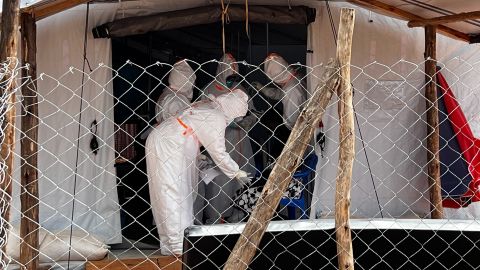
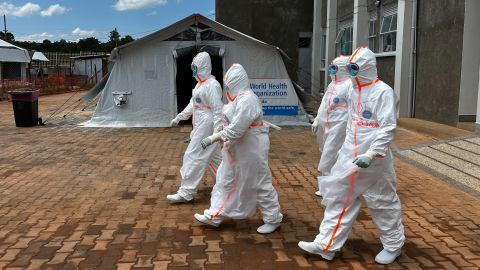
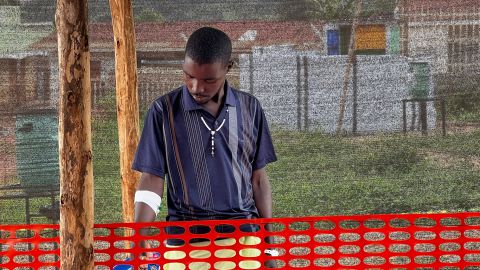
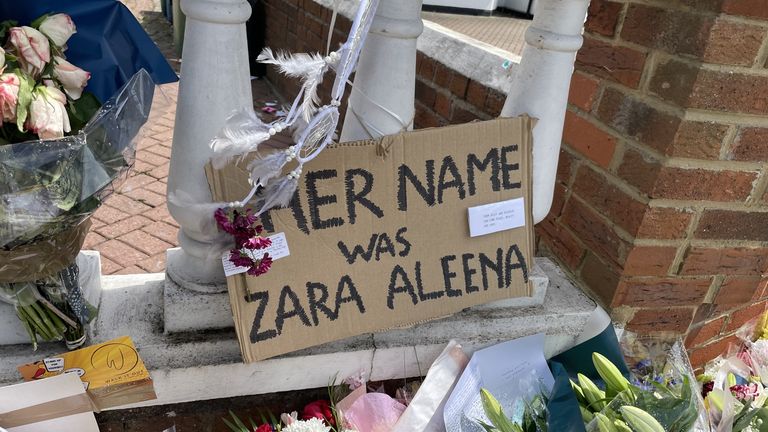

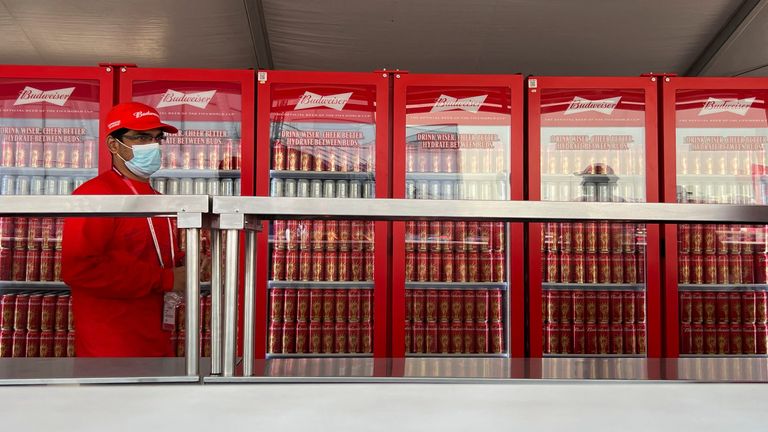


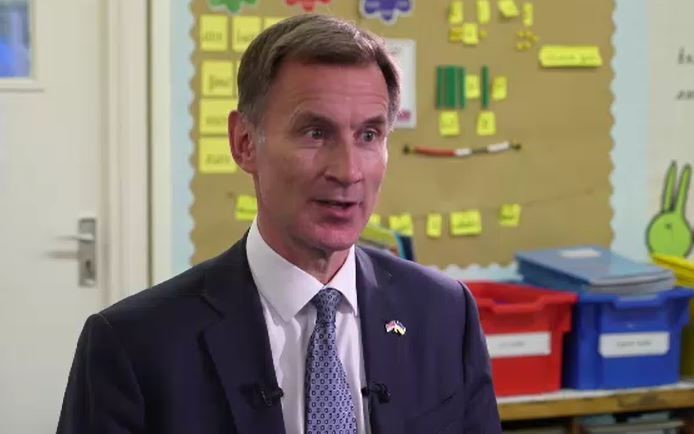
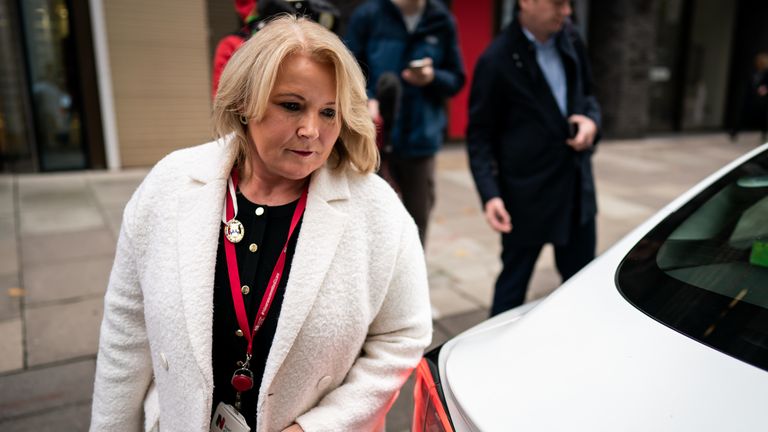

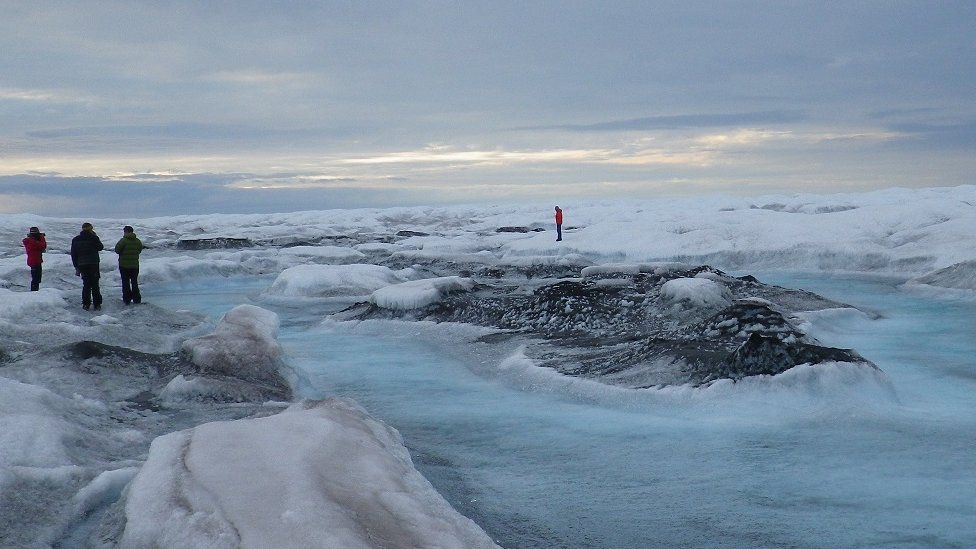
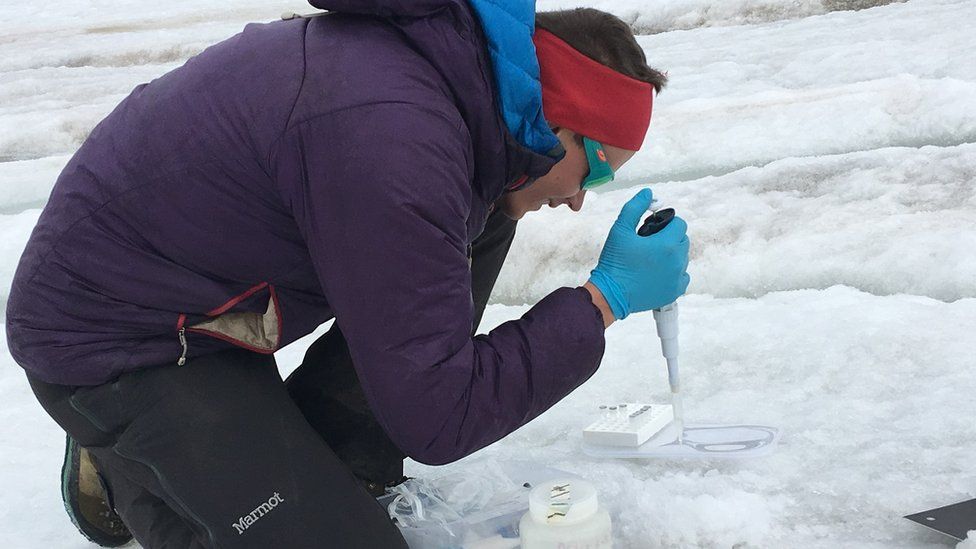
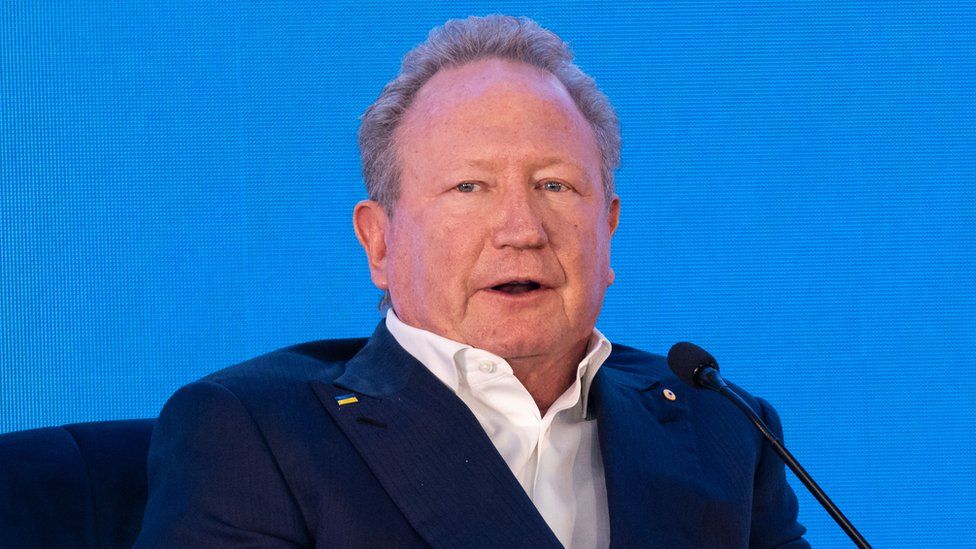
:max_bytes(150000):strip_icc():focal(749x0:751x2):format(webp)/virginia-mclaurin-111622-1-92aa84d9b87a4a51817c2c478fcd2deb.jpg)


