The Communication Workers Union is requesting an urgent meeting with the firm board to submit an alternative business plan, blaming losses on “gross mismanagement.”
Royal Mail has announced it will begin a process to make 5,000 to 6,000 roles redundant by August next year.
The announcement, made in a trading update by the postal service’s parent company, has been blamed on industrial action taken by Royal Mail workers, delays in improving productivity, and falling parcel volumes.
A process of “consulting on rightsizing” is to begin. Jobs are to be reduced by an estimated 5,000 full-time roles by March 2023 and 10,000 by end of August 2023 to achieve short-term cost efficiencies, International Distributions Services plc said.
Based on current estimates, around 5,000 to 6,000 redundancies may be required by end of August 2023, it added.
The parent company reported a loss of £219m for the first half of this financial year, compared to a profit of £235m during the last financial year.
Around £70mof that loss was attributed to “direct negative impacts” from three days of industrial action.
Members of the Communication Workers Union (CWU), which represents Royal Mail workers, had been engaged in strike action over pay and conditions.
Around 115,000 Royal Mail staff walked out over pay and conditions in what the CWU said is the biggest national strike of any sector this year.
Twenty-one days are to be affected by the strikes.
Commenting on the announcement CWU general secretary Dave Ward said: “The announcement is the result of gross mismanagement and a failed business agenda of ending daily deliveries, a wholesale leveling-down of the terms, pay and conditions of postal workers, and turning Royal Mail into a gig economy style parcel courier.
“What the company should be doing is abandoning its asset-stripping strategy and building the future based on utilising the competitive edge it already has in its deliveries to 32 million addresses across the country.
“The CWU is calling for an urgent meeting with the board and will put forward an alternative business plan at that meeting.
“This announcement is holding postal workers to ransom for taking legal industrial action against a business approachthat is not in the interests of workers, customers, or the future of Royal Mail. This is no way to build a company.”
Vladimir Saldo,the Russian-installed head of Ukraine’s southern Kherson region, has urged citizens to flee, alleging daily rocket assaults by advancing Ukrainian soldiers.
He advised them to “save themselves” by going to Russia for “leisure and study,” and he requested assistance from Moscow.
His call was later backed up by Russian Deputy Prime Minister Marat Khusnullin in a message on state television.
Ukraine rejects accusations that it targets its own civilians.
Its troops have recently retaken some areas of north-western Kherson, closing in on the regional capital, Kherson city.
“The government took the decision to organise assistance for the departure of residents of the [Kherson] region to other regions of the country,” said Mr Khusnullin, who has special responsibility for southern Russia and Crimea.
“We will provide everyone with free accommodation and everything necessary.”
The first group of people from Kherson would arrive on Friday in Russia’s Rostov region, said its governor Vasily Golubev, according to Russian state news agency Tass.
“The Rostov region will accept and accommodate everyone who wants to come to us from the Kherson region,” he added.
Kyiv has been using US-supplied Himars rocket systems Among other weaponry to great effect.
It has targeted key Russian-held military targets and threatened to cut off the bulk of the occupying forces on the west bank of the Dnieper river (known as Dnipro in Ukraine).
Kherson is the only regional capital seized by Russian forces since Moscow’s invasion began on 24 February.
Ukraine’s military has been tight-lipped about its troop advances in the key region that borders Crimea – the southern Ukrainian peninsulaannexed by Moscow in 2014.
In other major developments on Thursday:
All of Ukraine – with the exception of Crimea – was for some time under air raid alert, and Russian missile strikes were reported on energy and military targets in the Kyiv region and Lviv, in the west
Two people were killed in shelling in the southern city of Mykolaiv, and dramatic footage showed a young boy being rescued from the rubble of a destroyed house, although he later died, officials said
Both Kyiv and Moscow confirmed that 20 Ukrainian service personnel were exchanged for 20 Russian soldiers – in the latest such swap
Russia accused Ukraine of hitting a residential building in the Russian border city of Belgorod
Russian President Vladimir Putin met his Turkish counterpart Recep Tayyip Erdogan and proposed building a gas hub in Turkey as an alternative supply route to Europe following problems with the Nord Stream pipelines
Nato said it would provide Ukraine with dozens of jammers – transmitters used to disrupt signals – to counteract Russian and Iranian drones. The head of the military alliance, Jens Stoltenberg, also said members had agreed to increase the protection of critical infrastructure after what he called the “sabotage” of the Nord Stream pipelines
Speaking on Thursday, Mr Saldo said many towns in the region – including the two major cities of Kherson and Nova Kakhovka – were now under daily rocket attacks by Ukrainian troops.
“Such strikes are causing serious damage,” he said, urging residents across the whole region – and especially those on the west bank of the Dnieper river – to evacuate to Russia or Crimea.
And he appealed to the government in Moscow to help organise the process. “Russia is not abandoning its people,” he stressed, using a popular saying.
Earlier this month, President Putin declared the annexation of the Kherson and Zaporizhzhiaregions in Ukraine’s south, as well as Donetsk and Luhansk in the east.
Ukraine and its Western allies condemned the move, saying it had no legal power. The Kremlin does not fully control any of the four regions.
On Wednesday, the United Nations General Assembly voted overwhelmingly to condemn the Russian annexation attempt.
The assembly’s resolution was supported by 143 countries, while 35 states – including China and India – abstained. As well to Russia, four countries rejected the resolution – Belarus, North Korea, Syria, and Nicaragua.
Although symbolic, it was the highest number of votes against Russia since the invasion.
The Japanese yen fell to a 32-year low versus the US dollar as official data revealed that prices in America rose faster than predicted.
The yen sank to 147.66 per dollar before recovering some ground.
Japanese Finance Minister Shunichi Suzuki said the government will take “appropriate action” against the currency’s volatility.
In a rare move last month, Japan spent almost $20bn (£17.6bn) to prop up the country’s struggling currency.
“We cannot tolerate excessive volatility in the currency market driven by speculative moves. We’re watching currency moves with a strong sense of urgency,” Mr Suzuki told reporters after attending a G7 finance meeting in Washington, DC.
Last month, Japan intervened in the global currency market to help support the weakening yen.
That move came after the yen hit a fresh 24-year low against the dollar, marking the first time that Japanese authorities had intervened in the currency market since 1998.
However, analysts have warned that interventions like this would have little effect as long as Japan’s interest rates remain far lower than those in the US.
The Japanese currency has come under increasing pressure in recent months, mainly due to the very different approach taken by the Bank of Japan (BOJ) in comparison with the US Federal Reserve.
On Thursday, official figures showed that consumer prices in the US rose more than expected last month in a sign that the inflation fight in the world’s largest economy is far from over.
Inflation, the rate at which prices rise, was 8.2% in the 12 months to September, down from 8.3% in August.
Rising consumer prices in the US are being closely watched as the Federal Reserve’s efforts to cool inflation pushes up the value of the dollar as well as global borrowing costs.
America’s central bank has been aggressively raising its interest rates to combat soaring prices, which has made the dollar more attractive to investors. In contrast, the BOJ kept rates very low.
The dollar’s strength in the global financial markets is also having an impact on other major currencies around the world, including the pound and the euro.
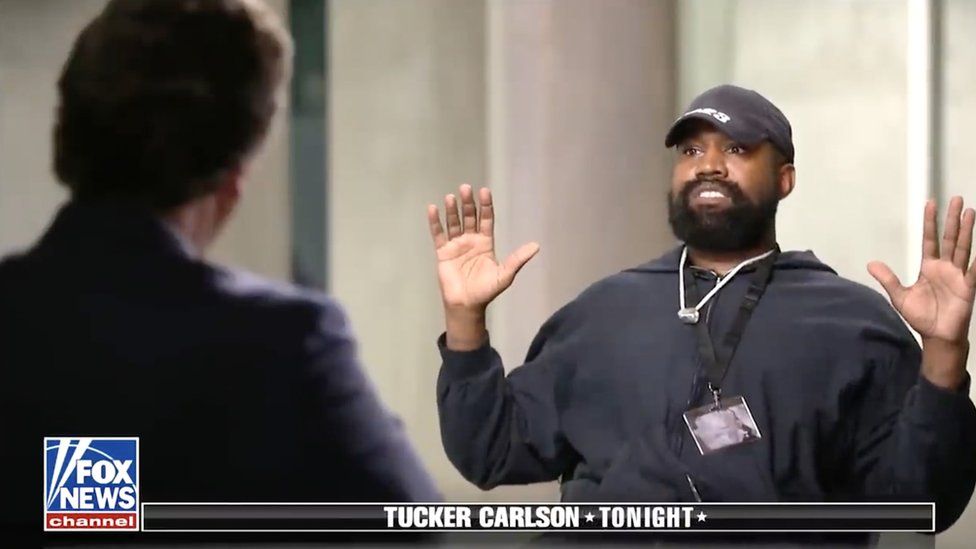
JP Morgan Chase, the world’s largest bank, has ended its connection with rapper and designer Kanye West, now known as Ye, and his Yeezy brand.
A conservative commentator shared a letter from the bank alerting Mr West of the decision on Twitter.
At the weekend, his Twitter and Instagram accounts were suspended after he posted anti-Semitic messages.
The BBC understands the letter from JP Morgan pre-dated recent controversies, as it was sent on 20 September.
In the letter, the bank gave Mr West until 21 November to transfer his business.
JP Morgan Chase declined to comment.
Mr West had previously taken to social media to criticise JP Morgan’s leadership and said they would not give him access to the bank’s chief executive Jamie Dimon.
He told Bloomberg in September that he was severing ties with his corporate partners and that “it’s time for me to go it alone”.
Representatives for Mr West did not immediately respond to a request for comment from the BBC.
The move by JP Morgan comes as Mr West’s business partnerships have come under increased scrutiny.
Last week, sportswear firm Adidas said it was reviewing its deal with him days after he showed a “White Lives Matter” T-shirt design at Paris Fashion Week.
The company did not mention the controversy but said “successful partnerships are rooted in mutual respect and shared values”.
Mr West responded on Instagram, claiming the firm “stole” his designs. That post now appears to have been deleted.
Adidas told the BBC it had made the decision to put the partnership under review after “repeated efforts to privately resolve the situation.”
A spokesperson for the German sportswear company also said that the “Adidas Yeezy partnership is one of the most successful collaborations in our industry’s history.”
Last month, Mr West said he was ending his partnership with the retailer Gap.
He accused the firm of failing to honour the terms of the deal, including by failing to open standalone stores for his Yeezy fashion label.
In just 24 hours, parts of the country received up to four times their typical October rainfall.
At least 500 homes have been flooded, one person has died and another is missing as the disaster unfolds.
Widespread flooding across Australia – driven by a La Niña weather pattern – has killed more than 20 people this year.
Victoria – Australia’s second most populous state – has been worst hit this week. Several communities have been ordered to evacuate, including some in the state capital Melbourne.
Floods have swamped roads, forced school closures, and cut power to 3,000 houses and businesses.
Premier Daniel Andrews said the number of inundated homes was “absolutely certain to grow”, calling it one of the state’s worst flood events in decades.
“This has only just started, and it’s going to be with us for a while,” he told the Australian Broadcasting Corporation.
Barry Webster, who lives in Melbourne’s northwest, is one of those whose house has gone underwater.
“I always said I wanted riverfront views, but not like this,” he told The Age.
“Going downstairs and seeing the lounge floating… it’s a bit surreal, kind of like a movie.”
Many areas received massive 24-hour rainfall totals, but the highest was in Strathbogie, northeast of Melbourne.
It received 220mm – more than double the town’s average October rainfall or about a third of London’s annual average.
Several rivers have also flooded in Tasmania after up to 400mm of rain fell in some areas in 24 hours. It is unclear how many homes and businesses have been affected there.
In New South Wales, about 600 people were told to evacuate from the town of Forbes, where about 250 properties and businesses were expected to flood.
One man died in the state’s west earlier this week after his car became submerged in floodwaters.
Rescuers have also been searching for a man thought to have been swept away in similar circumstances on Tuesday.
More rain is forecast in the coming weeks, placing strain on already swollen rivers and saturated ground.
Experts say recent flooding in Australia has been worsened by climate change and a La Niña weather phenomenon. In Australia, a La Niña increases the likelihood of rain, cyclones, and cooler daytime temperatures.
Ukrainian officials have asked the Red Crossto send a team to a notorious prison camp in the country’s occupied east.
Andriy Yermak, the chief of staff of Ukraine’s president, has ordered that the International Committee of the Red Cross (ICRC) visit the Olenivka prison in Donetsk within three days.
“We just can’t waste more time. Human lives are at stake,” he tweeted.
Last month, the Red Cross tried to secure access to the camp but said it was denied by Russian authorities.
The Olenivka prison has been under the control of Russian-backed authorities in Donetsk since 2014, and conditions are said to be extremely poor.
In July, dozens of Ukrainian prisoners were killed in explosions at the camp, which both sides blamed on each other. Kyiv said the prison was targeted by Russia to destroy evidence of torture and killing, while Moscow blamed Ukrainian rockets. Without an independent investigation, however, the truth remains unknown.
Those detained at the site include members of the Azov battalion, who were the last defenders of the city of Mariupol and whom Russia has sought to depict as neo-Nazis and war criminals.
This is not the first time Ukraine has applied pressure on international organizations to investigate what is going on at the prison.
Mr Yermak said he had raised the issue again during a video conference with officials from the ICRC and other international organizations.
He has demanded the trip be made by Monday.
“Ukraine… will contribute to this mission in every possible way,” he said on Telegram, adding he did not understand why a mission to inspect Olenivka had not yet been arranged.
President Volodymyr Zelensky echoed the calls, and accused the Red Cross of inaction, saying it had “obligations, primarily of a moral nature”.
In his nightly address on Thursday, Mr Zelensky said he believed that the Red Cross was “not a club with privileges where one receives a salary and enjoys life”.
He said a mission to the prison camp could be organised similar to that of the International Atomic Energy Agency (IAEA), which visited the Russian-occupied Zaporizhzhia nuclear power station in August.
“But it requires leadership,” Mr Zelensky said in a thinly veiled criticism of the Red Cross. “The Red Cross can make it happen. But you have to try to make it happen.”
The ICRC has been contacted for comment.
Last month, the organisation’s Director-General Robert Mardini said talks were ongoing with Russian authorities about access to Olenivka – but were eventually denied.
“We are negotiating every day to have full access to all prisoners of war,” he told reporters. “It is clearly an absolute obligation [of] the parties to give the ICRC access to all prisoners of war.”
Also in his Thursday address President Zelensky said Ukraine would celebrate its Defenders Day on Friday, which was made a national holiday in 2014 after Russia’s invasion of Crimea.
“Tomorrow we will definitely celebrate… one of our most important days. The holiday of all our warriors – from ancient times to the present, from the Cossacks to the rebels, from all of them to the soldiers of the modern army,” he said.
Five people have been killed, including an off-duty police officer, and several more were injured in Raleigh, North Carolina officials say
A suspect has been apprehended, according to police.
The shooting occurred near the Neuse River Greenway, a popular trail on the outskirts of the state capital, the city’s mayor said.
A motive is yet to be established, but Raleigh Police Lieutenant Jason Borneo said it would probably “come to bear” in the coming days.
“Tonight, terror has reached our doorstep. The nightmare of every community has come to Raleigh,” North Carolina Governor Roy Cooper told a news conference.
The shooting broke out just after 17:00 EDT (21:00 GMT).
Mayor Mary-Ann Baldwin later reported that the gunman was being “contained in a residence in the area” by police.
Raleigh police then tweeted that the suspect had been taken into custody.
The gunman, a “white male juvenile”, was taken into custody, Mr Borneo said.
At least two other people including another police officer were wounded and taken to hospital, the mayor said.
One victim remains in critical condition in the hospital, Lieutenant Borneoadded.
Mass shootings are a consistent problem in the US.
More than 34,000 people have died in shootings in the US in 2022, more than half of which were from suicide, according to the Gun Violence Archive website.
“We must stop this mindless violence in America. We must address gun violence. We have much to do, and tonight we have much to mourn,” Governor Cooper said.
On day four of the Lucy trial, the court was shown a piece of paper on which she had allegedly written: “I don’t deserve to live. I killed them on purpose because I’m not good enough.”
A neonatal nurse accused of murdering seven babies allegedly left a handwritten note confessing to her crimes that read “I AM EVIL I DID THIS”.
Lucy Letby, 32, is alleged to have gone on a year-long killing spree while working at the Countess of Chester Hospital.
She is also accused of the attempted murder of 10 other babies.
On Thursday morning, on the fourth day of her trial, the prosecution concluded its opening statement, in which the case against Letby was laid out.
Nick Johnson KC finished by telling Manchester Crown Courtabout a series of handwritten notes and Post-Its found during a search of her home.
On one green post-it note – which was shown to the court – she had written: “I don’t deserve to live. I killed them on purpose because I’m not good enough to care for them.”
She also wrote: “I am a horrible evil person” and in capital letters, “I AM EVIL I DID THIS”.
There was no reaction from Letby as her alleged confession was read out.
Nurse ‘killed two of three triplets’
Over the past four days, the 22 charges against Letby have been described in court.
Letby, of Hereford, has pleaded not guilty to all counts.
The children and their families are not being named by the media and so are referred as Children A to Q.
One, Child P, was one of two triplets the prosecution claims were killed by Letby. Their brother survived as he was in another room.
By April 2016, consultants at the hospital had grown suspicious of Letby – moving her off night shifts over concern about the “correlation between her presence and unexpected deaths/life-threatening episodes”.
One consultant began to feel “uncomfortable” when he realised Letby was alone with the child. When he walked into the room, he noted that the infant’s breathing tube was dislodged.
“We alleged she was trying to kill Child K when the paediatric consultant walked in on her,” Mr Johnson told the court.
The expelled student was 18 years old when he used a semi-automatic assault rifle to kill 14 students and three staff members in one of America’s worst school shootings.
After three months of testimony and lawyers’ arguments, 12 jurors took less than 24 hours to reach a decision.
Cruz had said he chose Valentine’s Day to make it impossible for Stoneman Douglas students to celebrate the holiday ever again.
His defence team had acknowledged the severity of his crimes but asked jurors to consider mitigating factors, including lifelong mental health disorders resulting from his biological mother’s substance abuse during pregnancy.
In order to jointly acquire air defence systems that shield allied territory from missiles, Germany and more than a dozen NATO allies have their sights set on the Israeli Arrow 3 system, the US Patriot, and German IRIS-T units, among other options.
“With this initiative, we are living up to our joint responsibility for security in Europe – by bundling our resources,” Christine Lambrecht, Germany’s defence minister, said during a ceremony at NATO’s Brussels headquarters where 14 countries signed a letter of intent.
Estonia wasn’t present at the event but will also be part of the initiative, dubbed “European Sky Shield”. In total it comprises half of NATO’s members – including Germany, the United Kingdom, Slovakia, Norway, Latvia, Hungary, Bulgaria, Belgium, Czechia, Finland, Lithuania, the Netherlands, Romania, and Slovenia.
Ground-based air defence systems such as Raytheon’s Patriot units or the more recently developed IRIS-T are in short supply in many Western nations, which were reluctant to invest too much money in military capabilities after the end of the Cold War.
Erdoganhas stated that despite the challenges on the ground, Turkey will continue to advocate for peace between Russia and Ukraine.
“Our goal is to continue the momentum that has been achieved and bring an end to the bloodshed as soon as possible,” the Turkish leader said in his address to the summit of the Conference on Interaction and Confidence-Building Measures in Asia. The summit is being held in Kazakhstan’s capital, Astana.
Erdogan was referring to agreements that Turkey helped broker which allowed Ukrainians to resume grain exports and led to a prisoner swap between Ukraine and Russia.
“We are all closely experiencing the effects of the crisis in Ukraine on a regional and global scale,” he said. “I always say that a just peace can be established with diplomacy, that there are no winners in war and no losers in equitable peace.”
Turkey has retained close tieswith both Moscow and Kyiv during the war and has repeatedly offered to organise peace talks between the two sides.
The Ministry of Defence reported that the plane was securely escorted to Stansted Airport and welcomed by police there when it landed.
In response to rumours of a security warning, RAF fighter jetswere dispatched to intercept a commercial aeroplane that was “causing concern.”
Typhoon aircraft were launched to meet a Jet2 flight from Dalaman in Turkey that had been headed to Manchester.
The aircraft was safely escorted to Stansted Airport and was met by police upon landing, the Ministry of Defence said.
An RAF spokesperson said: “The RAF can confirm Quick Reaction Alert Typhoon aircraft were launched this evening from RAF Coningsby to intercept a civilian aircraft that was causing concern.”
Essex Police said: “We led a safety operation during which a Jet2.com flight from Dalaman to Manchester was diverted to London Stansted Airport this evening, Wednesday 12 October.
“Shortly before 9 pm, we received a report of a potential threat on board the flight. It was escorted to Stansted Airport, where it landed safely and was parked away from the main passenger terminal.
“The runway was closed for a short time while inquiries were carried out.”
The aircraft was safely escorted to Stansted Airport and was met by police upon landing, the Ministry of Defence said.
An RAF spokesperson said: “The RAF can confirm Quick Reaction Alert Typhoon aircraft were launched this evening from RAF Coningsby to intercept a civilian aircraft that was causing concern.”
Essex Police said: “We led a safety operation during which a Jet2.com flight from Dalaman to Manchester was diverted to London Stansted Airport this evening, Wednesday 12 October.
“Shortly before 9 pm, we received a report of a potential threat on board the flight. It was escorted to Stansted Airport, where it landed safely and was parked away from the main passenger terminal.
“The runway was closed for a short time while inquiries were carried out.”
Police said they were then able to establish there was no threat on board.
In a statement, Jet2 said: “The aircraft landed safely and taxied to a remote stand, and customers have now disembarked.
“Our teams are working very hard to look after customers, and we would like to apologise to everyone onboard for any inconvenience or upset caused by this unforeseen incident.
Ali Larijani, a close advisor to Iran’s Supreme Leader Ali Khamenei and a former speaker of parliament, is the first prominent politician to publicly demand that the government reconsider its harsh punishment of women and girls who do not dress according to the Islamic dress code.
A senior Iranian official has questioned excessive state enforcement of the country’s compulsory hijab laws – following the death of Mahsa Amini in custody.
Ali Larijani, 65, an adviser to Iranian Supreme Leader Ali Khamenei, and a former parliamentary speaker, warned in an interview with the Iranian daily Ettela’at that a “rigid response” to the widespread protests that have followed her death “is not the cure”.
The 22-year-old died while in the custody of Iran’s morality police last month after being detained for alleged violations of the country’s strict dress code.
Mr Larijani is the first senior political figure to publicly call for a rethink on the government’s crackdown on women and girls who do not adhere to the Islamic dress code.
In an apparent break from the uncompromising line shown by the regime, he said in the interview: “The hijab has a cultural solution, it does not need decrees and referendums.
“I appreciate the services of the police force and Basij [parliamentary militia], but this burden of encouraging the hijab should not be assigned to them.
“Do not doubt that when a cultural phenomenon becomes widespread, a rigid response to it is not the cure.
“The people and young people who come to the street are our own children. In a family, if a child commits a crime, then they try to guide him to the right path, the society needs more tolerance.”
He noted that during the period of the last Shah’s rule before the 1979 Iranian revolution, wearing of the hijab was not encouraged by the state but many women wore it voluntarily.
Mr Larijani continued: “Islamic government means that people manage their own affairs. It is the same in terms of social justice. If the affairs are managed by the people, their talents will flourish.”
He added: “The problem is that if in a society, young people do not implement one of the sharia rulings correctly from an intellectual and social point of view, this is not 100% wrong.”
Ms Amini, an Iranian Kurd, was arrested in Tehran on 13 September for wearing “inappropriate attire” and died three days later.
Her death has led young women to cut their hair and defiantly tear off and wave their headscarves, spearheading protests which have quickly spread nationwide – and to other cities across the globe, including London.
The protests, which have called for the overthrow of the Iranian regime, have been met by a harsh government crackdown, including beatings, arrests and the killing of demonstrators.
Human rights groups say at least 201 people have been killed in Iran, along with hundreds injured and thousands arrested by security forces.
At least 20 members of the security forces have reportedly been killed.
After the success of the National Booking Service during COVID, the NHS in England is exploring whether people can schedule their flu vaccinations online.
For 12 million individuals aged 50 to 64, reservations for the autumn COVID booster shot will be available on Friday.
Appointments will be available to book online or by phone after the successful trial of the National Booking Service during the COVID vaccination program. Those who are unable to get online will be given alternative ways to book.
The service is also testing whether flu jabs can be booked in a similar way, with people at 200 sites across the country offered the chance to book this way.
People can still book flu vaccinations through their GP practice or by visiting a pharmacy delivering the jabs.
Around 33 million people in England will be eligible for a flu vaccine this year, including some children who will be given the flu nasal spray.
Since the COVID booster programme began a month ago, seven million people have come forward for their vaccine.
Some 26 million people are eligible for the COVID booster and people have been urged to get the jab amid a warning of a potential “twindemic“ of flu and COVID.
Amanda Pritchard, chief executive of NHS England, said “the rollout is off to a flying start”, adding that it is vital to get protected against COVID and flu in what could be an “extremely challenging winter for the NHS”.
Steve Russell, director for vaccinations and screening, said more than seven million autumn COVID boosters have been administered so far.
He is urging people between the ages of 50 and 64 to log on and book an appointment.
Dr Susan Hopkins, the chief medical adviser at the UK Health Security Agency, said: “The double threat of widely circulating flu and COVID this year is a real concern, so it’s crucial that you take up the free flu vaccine as soon as possible if you are offered it.
“It will help protect you from severe flu this winter, and even save your life.
“All those over 50 are now eligible for the jab, many of which will have low natural immunity due to COVIDrestrictions over the last two years.”
A shortage of defence systems means Western allies are struggling to meet increasingly urgent requests to protect Ukraine’s skies from missile and drone attacks.
The UK will for the first time give Ukraine a number of powerful missiles to defend against Russian airstrikes, but it is not providing the weapons that launch them.
Instead, the AMRAAM rockets – capable of shooting down cruise missiles – will help to arm air defence systems that will be given to Ukraine by the United States.
A shortage of supply of these systems means Western allies, meeting this week in Brussels, are struggling to meet increasingly urgent requests from the government in Kyiv to protect Ukraine’s skies from Russian missile and drone attacks.
Asked by Sky News whether the failure of the West to give Ukraine more of these much-needed air defence systems faster was because of a lack of political will or a lack of supplies, US Defence Secretary Lloyd Austin pointedly only gave half an answer.
“Well certainly it’s not a question of lack of will,” he said on Wednesday at NATO headquarters in Brussels, speaking after chairing a contact group of NATO allies and other partners that have come together to pledge military support for Ukraine.
“The commitment, the resolve that the chairman [of the Joint Chiefs of Staff General Mike Milley] and I witnessed in this contact group meeting today was inspiring, and that’s what I told the members of the group. They remain committed to doing everything they can to generate additional capability.”
But a senior diplomat told Sky News a shortage of supply of air defence systems was a key factor limiting the ability of allies to respond to Ukraine’s needs.
The UK and other NATO members slashed defence spending, shrunk the size of their armed forces and reduced stockpiles of munitions following the end of the Cold War.
Russia’s invasion of Ukraine has belatedly triggered a rethink in funding for their collective security but it takes time to replenish stores.
The British air defence missiles, thought to number in the double digits, will arrive in Ukraine in the coming weeks.
“Russia’s latest indiscriminate strikes on civilian areas in Ukraine warrant further support to those seeking to defend their nation,” Ben Wallace, the defence secretary, said on Thursday in a statement released by the Ministry of Defence.
“So today I have authorised the supply of AMRAAM anti-aircraft missiles to Ukraine.
“These weapons will help Ukraine defend its skies from attacks and strengthen their overall missile defence alongside the US NASAMS.”
As NATO defence ministers gathered in Brussels to discuss additional support for Ukraine, he told Sky News there was no risk of Western allies running out of weapons to support Ukraine with because “unlike Russia” the West has the ability “to refurbish or indeed manufacture a new supply chain, which is what we’re doing right now”.
Mr Wallace said he would not “speculate” on how NATO would respond to a nuclear attack by Russia on Ukraine, adding: “The fundamentals are that NATO is an alliance of all types, conventional and nuclear powers, and fundamentally we are here to make sure our readiness is for whatever is thrown at us.”
Washington has pledged to send a total of eight National Advanced Surface-to-Air Missile Systems (NASAMS) to Ukraine, with the first two expected to be delivered soon and the other six over a longer period of time.
Germany has also delivered one air defence system, with three more due to arrive next year.
As well as the new rockets, the UK will also donate hundreds of additional, less-powerful air defence missiles as well as hundreds of drones and 18 more howitzer artillery guns.
The announcement came as NATO defence ministers meet for a second day in Brussels on Thursday, though Mr Wallace was not present at Wednesday’s gathering.
They are expected to discuss ways to rebuild their own munitions stockpilesand work together to source weapons for their security as well as to keep supporting Ukraine for the long term.
After thousands of people spent Monday night in bomb shelters while explosions erupted, the President of Ukrainedeclared that air defence was the “number one priority.”
After another devastating day of rocket attacks on Ukraine, Volodymyr Zelenskyy remained belligerent and pledged to make the battlefield “more painful” for Russian troops.
The Ukrainian president said air defence was the “number one priority” after thousands of people spent Monday in bomb shelters as explosions erupted in cities across the country.
At least 14 people were killed and 97 injured in attacks on Kyiv, Kharkiv, Dnipro, Lviv, Sumy, Zaporizhzhia, Zhytomyr, and elsewhere.
Vladimir Putin said the strikes were in retaliation for its “terrorist action” against Russian territory – the attack on the Kerch Strait Bridge in Crimea – but Ukraine has rejected this claim of “provocation”.
“We will do everything to strengthen our armed forces,” President Zelenskyy said in his nightly address. “We will make the battlefield more painful for the enemy.”
“Now the occupiers are not capable of opposing us on the battlefield already, that is why they resort to this terror,” he said on Telegram.
Meanwhile, in his nightly address, which he delivered from the streets of Kyiv, Mr Zelenskyy said Ukraine “cannot be intimidated” following the strikes.
He continued: “Only united even more. Ukraine cannot be stopped. Only convinced even more that terrorists must be neutralized.
“The Russian army specifically struck these blows precisely during the morning rush hour. This is a typical terrorist tactic. They wanted to instill more fear and affect more people. They did. The whole world took notice.
In a call with the Ukrainian leader, Joe Biden reiterated that the US will provide advanced air defence systems.
It comes after the Pentagon said on 27 September that it would start delivering the National Advanced Surface-to-Air Missile System (NASAMS) over the next two months or so.
Former Ukrainian prime minister, Arseniy Yatsenyuk, told Sky News that “critical infrastructure” were among Russia’s key targets in Monday’s strikes and that Ukraine is expecting some blackouts as a result, putting hospitals in “jeopardy”.
President Putin has said the strikes were retaliation for the attack on the Kerch Strait Bridge, which links occupied Crimea to Russia.
The Russian leader has blamed the damage on Ukrainian special forces, but Kyiv has not claimed responsibility for the blast.
Whoever was responsible, the attack is set to further squeeze Russian logistics and supply lines amid speculation that Kremlin forces will soon be down to their last supplies of fuel and unable to transport their troops.
The strike on the bridge came after months of Ukrainian forces using HIMARS rocket attacks to degrade Russian logistics, hitting ammunition stores and transport networks.
Sir Jeremy Fleming, the head of GCHQ, is set to deliver a speech saying that Russia is running out of weapons for its war against Ukraine and the costs to the Kremlin are “staggering” in terms of soldiers and equipment lost.
He will say that Ukrainian armed forces are “turning the tide” on the physical battlefield as well as in cyberspace.
As a result of the government’s £45 billion in unfunded tax cuts, which were revealed last month and caused havoc in the markets, Prime Minister Liz Truss is facing an open uprising inside her own party.
The foreign secretary has declined to guarantee that the government will implement all of the tax cuts outlined in the disputed mini-budget presented by the chancellor.
James Cleverlytold Sky News “the package the chancellor put forward is pro-growth and is the right answer”.
He refused to rule out further changes, however, dodging multiple questions on whether the government will stick with its plan to scrap the rise in corporation tax.
Asked if there will be no more reversals of policy, Mr Cleverly told Kay Burley: “The chancellor is making a statement on the 31 October which gives a more holistic assessment of the public finances and our response to the global headwinds that every democracy, every economy in the world is facing.
“But as I say, the foundations of that mini-budget, protecting people from energy bill prices, letting people keep more of their earnings, protecting businesses from those energy prices, making sure we are internationally competitive, all those things are really key for the growth agenda the PM is putting forward.”
Probed again on whether the government will be sticking to its tax-cutting mini-budget, the foreign secretary replied that “ultimately, that mini-budget was about protecting tens of millions of people from unaffordable energy prices”.
Pressed specifically on the government’s plan to axe the increase in corporation tax from 19% to 25% in April, Mr Cleverly said: “Well, I mean the chancellor will come to the dispatch box…”
The foreign secretary added it is “absolutely right” the government helps businesses to “stay competitive” and “stay afloat”
“We have got to make sure we can compete internationally with the other places businesses can choose to locate. We have got to make sure we are tax-competitive.”
Prime Minister Liz Truss faces open revolt in her party over the government’s £45bn package of unfunded tax cuts, which unleashed chaos in the markets after it was announced last month.
Ms Truss and Kwasi Kwarteng, the chancellor, have said the cuts are needed to get Britain’s economy growing again, as data published on Wednesday suggested the country is heading for a recession.
Mr Kwarteng will meet with International Monetary Fund (IMF) leaders in Washington DC today after the institution’s chief economist said tax cuts threatened to cause “problems“ for the UK economy.
The IMF has said Britain’s priority should be tackling inflation rather than adding to the price problem through tax giveaways to achieve economic growth.
The prime minister and her chancellor have already been forced into reversing one of the many tax-cutting policies within their plan – scrapping the 45p tax rate for the highest earners.
In her first PMQs since the mini-budget last month, Ms Truss yesterday pledged not to cut public spending to balance the books – despite a leading economics-focused think tank warning the government is billions short of the sums needed.
The Institute for Fiscal Studies has warned the government would have to cut spending or raise taxes by £62bn if it is to stabilize or reduce the national debt as promised.
On Wednesday, Mel Stride, the Tory chairman of the Commons Treasury Committee, said that given Ms Truss’s commitments to protecting public spending, there was a question over whether any plan that did not include “at least some element of the further row back” on the tax-slashing package can reassure investors.
Tories must ‘get back to being fiscally responsible
“Credibility might now be swinging towards evidence of a clear change in tack rather than just coming up with other measures that try to square the fiscal circle,” Mr Stride warned.
While David Davis, the Tory former minister, called the mini-budget a “maxi-shambles” and suggested reversing some of the tax cuts would allow Ms Truss and Mr Kwarteng to avert leadership challenges for a few months.
The foreign secretary later warned Tory MPs against attempting to replace Ms Truss as prime minister.
“Changing the leadership would be a disastrously bad idea not just politically but economically,” he told BBC Radio 4’s Today programme.
Mr Cleverly also rejected an attack by former Tory leader Sir Iain Duncan Smith – who described Bank of England Governor Andrew Bailey as “stupid”.
“Of course, he is not stupid. You don’t get to be governor of the Bank of England if you are stupid,” the foreign secretary told Sky News.
“The job of the Bank of England is to intervene. He is doing his job. It doesn’t mean we always agree with everything the Bank of England governor says or does.”
As the war in Ethiopia’s Tigray region escalates once more, civilians are increasingly becoming involved in the fighting.
Tigray rebel commanders have embarked on a new recruitment campaign, having previously been accused of forcing people to join the war effort.
Similar accusations have been levelled against Eritrea, which has entered the war on the side of Ethiopia’s government.
The BBC has received an exclusive report from a journalist in Tigray’s capital, Mekelle, on how residents are coping.
Drones fly over the skies of Mekelle, which has a population of around 300,000, almost every day. I can hear one now as I write this article. It makes me feel very insecure. In the last few weeks airstrikes have hit playgrounds and residential areas – it is not clear what the targets were.
This week the Tigray army called on every able-bodied person to join the fight – and as war-weary, as people are after 23 months of violence, they are taking up the call.
“It is considered taboo not to join the military,” says a resident, whose name the BBC is withholding for safety reasons.
Many Tigrayans remain defiant, saying they will no longer accept the federal rule, while Ethiopia’s Prime Minister Abiy Ahmed accuses the region’s leaders of rebelling in a bid to regain the power they lost when he took office in 2018.
Everyone here wants to defend their rights. The latest surge in violence started in late August after the collapse of a five-month-long humanitarian truce.
People from all walks of life, including women and young people, are answering the call to join the army of the Tigray People’s Liberation Front (TPLF).
Women have received military training, and say they are ready to fight if called up.
They include a 23-year-old who told me she was “proud to be Tigrayan and excited to have been trained to protect my rights and preserve my land”.
Tigray has been under a blockade since June 2021, and living conditions have been steadily worsening.
It’s now been more than a year since telephone lines and internet services stopped, disconnecting us from the rest of the world.
People have gone back to using paper to write messages to their families and friends – or they go to the border with Ethiopia’s Amhara region to make calls and receive money from relatives abroad.
Groups gather around a single radio on the side of the road to find out what’s happening. Everyone talks about the peace process and follows attentively the news about that but many people here believe that the Ethiopian government isn’t ready for peace talks, because they have not stopped bombing.
People here cannot make money, or withdraw cash from banks because they have been closed. So businesses are not functioning.
It has led to the emergence of open-air markets, which were illegal before the war, and the movement of cash through the black market, with brokers charging a commission of at least 30%, down from 50% a few months ago.
My own neighbours live on money sent by their families in the US and Canada.
One of the neighbours says he can’t feed his five children if they don’t send cash. He has two sisters in the US, and he has received money from his siblings four times since the start of the siege.
The conflict has prevented essential goods, including fuel, from reaching Tigray. Many people go around on foot, or in donkey carts.
Image caption, Mekelle has been cut off from the rest of the world
Prices keep increasing. Teff, the grain we commonly use to make the traditionally baked bread known as injera, goes up every week. The current price of 100kg (220 lb) is around $265, compared to $85 a year ago.
People are dying due to a lack of medication that can’t be brought in because of the siege. The cost of medicines for chronic diseases has increased tenfold.
As every new airstrike kills more civilians, more young people are driven to join the military.
A 29-year-old woman told me that three of her family members – two brothers and a sister – have now joined the Tigray army.
For the past two months she has been spending her time, and using the little she has, to prepare food for fighters on the frontline.
Other residents are sharing their food with the families of those who’ve gone to fight.
When news broke last week that African Union-brokered peace talks could start in South Africa, people were happy.
But the talks failed to get off the ground for reasons that are unclear. Many here are just desperate for peace and churches and mosques are full every night, with people praying for this war to end.
The BBC has withheld the name of the journalist and interviewees for their own safety.
DISCLAIMER: Independentghana.com will not be liable for any inaccuracies contained in this article. The views expressed in the article are solely those of the author’s, and do not reflect those of The Independent Ghana
The jury’s first day of deliberations on the fate of the shooter who killed 17 people in a Florida high school has come to an end.
In October of last year, Nikolas Cruz entered a plea to 17 counts of murder and attempted murder in connection with the incident on February 14th.
The jury will decide whether the 24-year-old should be sentenced to death or life in prison without parole.
The case is the deadliest mass shooting to reach a jury trial in the US.
Broward County Circuit Judge Elizabeth Scherer delivered instructions to the jury on Wednesday morning before they were sequestered for deliberations. Survivors of the shooting were also in court.
She told the 12 jurors that “a human life is at stake”.
On Wednesday afternoon the jurors asked to again see the AR-15 rifle used in the attack. They also want to see one of the ammunition magazines, which had a swastika etched onto its side.
Sheriff’s officials did not want the weapon to be left in the jury room overnight for safety reasons, so the judge said they would take up the matter on Thursday morning.
During the trial, which began in July, prosecutors argued the gunman planned a “systematic massacre” of 14 students and three staff members at Parkland, and that he should be sentenced to death.
They said he had conducted internet research before the attack and posted online comments in which he vowed to show “no mercy”.
“What he wanted to do, what his plan was, and what he did, was to murder children at school and their caretakers,” assistant state attorney Michael Satz said.
The gunman’s defence lawyer Melisa McNeill has argued that her client was brain-damaged in the womb by his mother’s alcohol and substance abuse during pregnancy.
McNeill added a death sentence “would change nothing” and “not bring back” the victims.
The court also heard statements from the families of those who were killed.
The death penalty exists in 27 US states, including Florida. The annual number of executions in the US, however, has fallen over the decades, from 98 in 1999 to just 11 in 2021.
Under Florida state law, prosecutors can seek the death penalty in cases when the accused has been convicted of first-degree murder with aggravating factors – murders that are “especially heinous, atrocious or cruel”, creating “a risk of death to many persons” and “cold, calculated” murders that were premeditated.
In most US criminal cases, a jury decides culpability and the judge decides on the punishment. In this case, however, the jury will decide how the gunman is sentenced.
The jury’s seven men and five women must agree unanimously to recommend the death penalty.
The last person to be executed in Florida was 57-year-old Gary Ray Bowles in 2019. He was put to death for the murder of six men in 1994.
At a ceremony commemorating the 20th anniversary of the Bali bombings, graphic footage of the attacks was shown, upsetting survivors and the families of the victims.
On the Indonesian island late on Wednesday, hundreds gathered to honour the 202 victims of the attacks.
One victim’s relative said he felt “sick” when the footage aired. It is unclear who made the documentary video.
The Australian government says it is “deeply disappointed” and will formally raise concerns with Indonesia.
People from 21 countries – including 88 Australians – died in the bombings at two popular nightclubs in Kuta on 12 October 2002. Another device exploded outside the US consulate but did not cause harm.
A local group linked to al-Qaeda was blamed for what is Indonesia’s deadliest terror attack.
A 10-minute documentary-style film was screened at 23:05 local time on Wednesday – marking the moment the first bomb detonated.
It included footage of dazed and injured people fleeing in the fiery aftermath. There was also audio of people yelling and a clip from the 9/11 terror attacks in New York, the Sydney Morning Herald reported.
Australian man Jeff Marshall, whose father Bob Marshall died in Kuta’s Sari Club, said he was stunned by the decision to show such “carnage”.
“[It] just ripped all our hearts apart, seeing it all again,” he told the Australian Broadcasting Corporation.
Attendees say the video also included footage of those behind the attack, including convicted bomb-maker Umar Patek, who is currently being considered for early release on parole.
“We were expecting a minute’s silence once we got to 11:05 pm,” Jan Laczynski told Sydney radio station 2GB.
“[Instead] you had all the Bali bombersbeing paraded. You had the actual bomb sequences happening on the screen.”
Mr Laczynski – who lost five friends in the blasts – said some footage was so “traumatic” that he left the service.
Australia’s Department of Foreign Affairs and Trade said its government wasn’t involved in organising the event.
“We understand the distress it has caused,” it said in a statement.
According to Amnesty International, Latvia “violently” forced migrants back into Belarusand even tortured some of them.
They say a recent complaint by the rights group, border guards beat and humiliated individuals trying to enter from Belarus into neighbouring Latvia.
Latvia’s government denied officials used undue force, and said the measures were due to “illegal crossings”.
Last year it declared a state of emergency, which suspended the right to seek asylum in four border areas.
Latvia says that means so-called pushbacks are allowed, even though they contravene EU law.
The state of emergency, which is still in place, was introduced after a surge in people trying to cross over the border from Belarus.
Amnesty International’s report details alleged abuses of power, arbitrary detention, ill-treatment, unsafe and unsanitary conditions, and even torture.
It quotes an Iraqi man named Zaki, who said he was pushed back and forth at the border more than 150 times in three months, including sometimes as many as eight times per day.
Another Iraqi man, Adil, said he and fellow migrants slept in the forest on the snow.
“We used to light a fire to get warm, there were wolves, bears but because we had a fire… they [were] afraid,” he is quoted as saying in the report.
“That is how we survived it, but they [Latvian authorities] did not provide us with special clothes for the weather,” he added.
Amnesty reports that migrants, including children, were held arbitrarily in undisclosed sites in the Latvian forest, and then returned to Belarus.
Many faced beatings and electric shocks with tasers, including on their genitals. Some were returned “voluntarily” to their home countries.
“The Latvian authorities have left men, women and children to fend for themselves in freezing temperatures, often stranded in forests or held in tents,” said Eve Geddie, Amnesty’s Director of the European Institutions Office.
“They have violently pushed them back to Belarus, where they have no chance of seeking protection. These actions have nothing to do with border protection and are brazen violations of international and EU law.”
Amnesty added that Latvia’s treatment of migrants from Belarus stood in stark contrast to its “swift mobilisation” to provide refuge for more than 35,000 Ukraine migrants.
Kristaps Eklons, Latvia’s Minister of the Interior, defended the government’s measure on the border in a written response included in the report.
“The [state of emergency] order was adopted to ensure the internal security of the state,” he said.
Mr Eklons added that authorities had found no evidence of officials using “physical force of special means” against those crossing the border.
Last year Latvia, Poland and Lithuania all saw a huge surge in the number of people trying to enter their countries from Belarus.
The European Union accused the country’s leader Alexander Lukashenko of orchestrating the problem in retaliation against sanctions, which were introduced in response to a crackdown on mass protests.
The BBC uses the term migrant to refer to all people on the move who have yet to complete the legal process of claiming asylum. This group includes people fleeing war-torn countries, who are likely to be granted refugee status, as well as people who are seeking jobs and better lives, who governments are likely to rule are economic migrants.
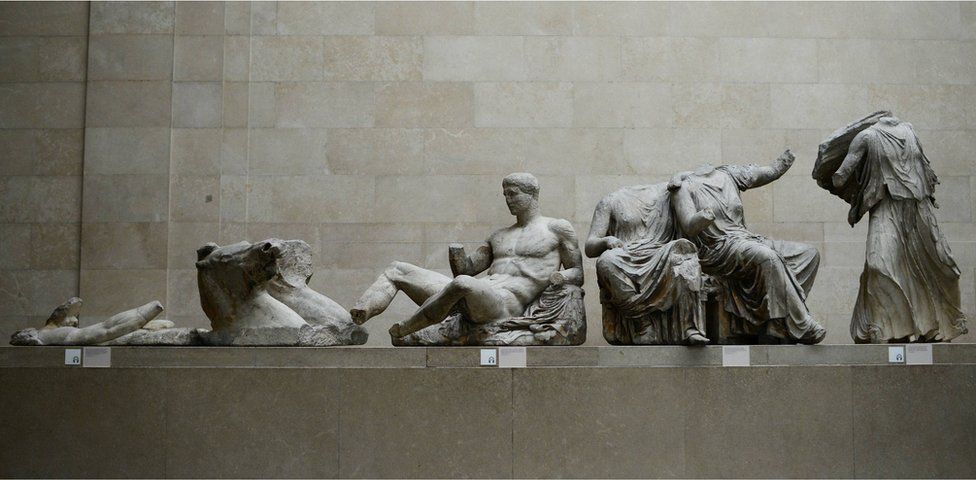
The BBC has learned that a new organisation working to repatriate the alleged Elgin Marbles to Greece would be overseen by a former Conservative culture minister.
Lord Vaizey, who served as minister of culture from 2010 to 2016, says that “a deal is within reach.”
On Thursday, the House of Lords will debate an act that restricts museums from disposing of objects in their collections.
The government said it had no intention of changing the law.
The Department for Digital, Culture, Media, and Sport (DCMS) said: “The British Museum is prevented by law from removing objects from its collections, except in some narrow circumstances. The government has no plans to change this act.”
The Elgin Marbles are currently housed in the British Museum.
In a statement, the museum said: “We will loan the sculptures, as we do many other objects, to those who wish to display them to the public around the world, provided they will look after them and return them.
“Deepening public access and understanding, creating new ways and opportunities for collections to be shared and understood right across the world, and forging connections between the present and the past, remain at the core of what the British Museum seeks to achieve,” they added.
Asked recently about a potential deal that could lead to the return of the sculptures to Athens, Prime Minister Liz Truss said: “I don’t support that.”
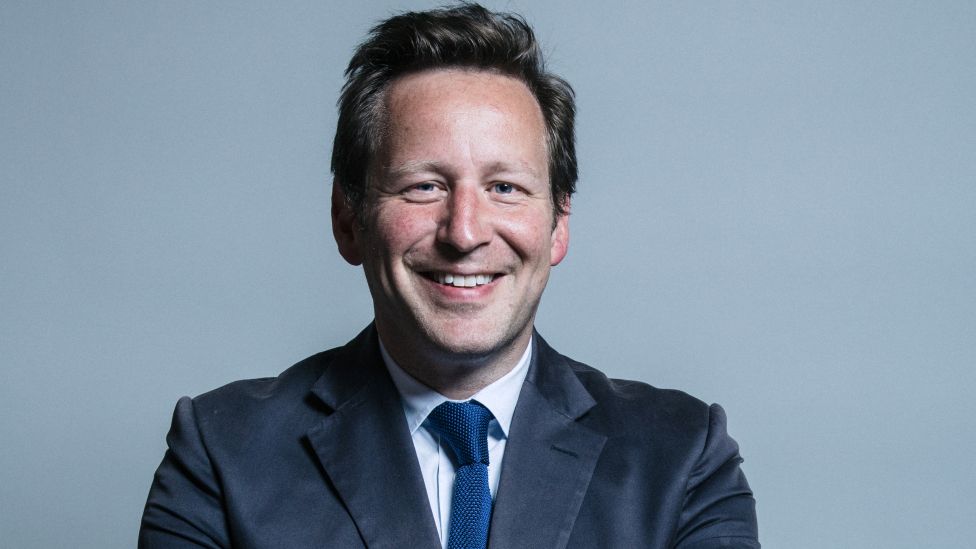
IMAGE SOURCE,UK PARLIAMENT Image caption, Former culture minister Ed Vaizey will chair the new board aiming to return the sculptures to Greece
The fate of the Parthenon Sculptures, as they are more frequently becoming known, is the most high profile in the hotly contested debate about whether museums should return items in their collections to their countries of origin.
For years, Greece has lobbied to bring the sculptures home. They were removed from Greece’s Parthenon temple in the early 19th Century by the Scottish soldier and diplomat, Lord Elgin.
The British Museum has always said that only the government can decide their fate, though the government says the “collections are a matter for the trustees”.
Now an advisory body plans to campaign for a “win-win” deal as a poll shared exclusively with the BBC appears to show the majority of British people support sending the Marbles home.
Lord Vaizey is joined by other founding members on the advisory board of the Parthenon Project, an organisation founded by the Greek businessman John Lefas.
The board also includes two other Conservative peers, the renowned author Lord Dobbs and Baroness Meyer. They’re joined by Stephen Fry and the journalist Sarah Baxter.
The former Conservative Chancellor, George Osborne, now chairman of the British Museum, said earlier this year a “deal is to be done”, though the current Conservative administration appears less keen.
A poll of nearly 2,000 people, commissioned by the Parthenon Project, suggests while 16% of the British public think the Parthenon Sculptures should stay in Britain, 54% think they should be returned.
The strongest reason for supporting the return was because they “rightfully belong to Greece”.
IMAGE SOURCE,REUTERS Image caption, Polling suggests a majority of British people would support returning the Elgin Marbles to Greece
The Parthenon Project points to a breakdown of the poll which shows, amongst people who voted Conservative in 2019, 44% thought the sculptures should go to Greece and 28% didn’t mind either way.
Lord Vaizey, new Parthenon Project chair, said: “I am confident that a deal is within reach. Support for the reunification of the Parthenon Sculptures in Athens from the public, and in particular Conservative-leaning voters, is clear.”
He added it would be “in the best interests of the British Museum and UK government to begin meaningful engagement on this issue”.
On Thursday, Lord Vaizey will prompt a debate in the House of Lords about the National Heritage Act.
With growing calls from some quarters to return items held in British collections to their original countries of origin, some museums, including the V&A, run by Tristram Hunt, have called for the act to be amended or replaced.
The British Museum says it is restricted from returning items from its collection, including the Benin Bronzes from Nigeria, by another act, the British Museum Act of 1963. It has similar terms to the Heritage Act.
Other smaller museums aren’t bound by the same restrictions. London’s Horniman Museum recently announced it was returning its collection of Benin Bronzes. These items were looted by British forces in the late 19th Century.
Glasgow Museums has also agreed to return seven stolen artefacts to India.
The Parthenon Project believes a cultural exchange is a solution to the stalemate over the Elgin Marbles.
Fry said he was “delighted” to be supporting the Parthenon Project, adding: “I firmly believe that we now have a real chance to find a solution that benefits both Britain and Greece. It is time to put our energies into an exchange involving a revolving collection of never-seen-in-London before artifacts populating the Duveen Gallery in the British Museum,whilst the sculptures are returned to Greece.”
Alex Jones, a conspiracy theorist, has been ordered to pay $965 million (£869 million) in damages for making false claims that the Sandy Hook school shooting in 2012 was a fabrication.
In the defamation trial in Connecticut, the families of eight victims and an FBI agent who responded to the attack had demanded at least $550 million.
They alleged the right-wing radio host’s misinformation led to a decade of harassment and death threats.
Twenty children and six adults were killed at Sandy Hook Elementary School.
Jones, who founded the conspiracy-laden Infowars website and talk show, argued for years that the massacre was a “staged” government plot to take guns from Americans and that “no one died”.
He called the parents of victims “crisis actors” and argued that some of them never actually existed.
He now acknowledges the attack was “100% real”, a concession he made in August at a separate defamation trial in Texas.
As the verdict was read out on Wednesday in Waterbury, Connecticut – some 20 miles (32 km) from the site of the 2012 shooting – many of the families were visibly emotional with some in tears.
The three-week trial was marked by emotional testimony from a succession of parents.
Some described receiving a deluge of online hate and others said they had to move homes repeatedly for their own safety. A father, Mark Barden, recounted hearing that people were desecrating his son Daniel’s grave by “urinating on it and threatening to dig it up”.
Jurors also heard evidence that Jones and his company, Free Speech Systems, made millions of dollars selling nutritional supplements, survival gear and other products on the Infowars catalogue.
Jones broadcast himself watching Wednesday’s verdict and scoffing at the court proceedings. He also appealed to his followers to make urgent donations, and pledged that the funds would not go toward his legal costs.
“The money does not go to these people,” he said. “It goes to fight this fraud and it goes to stabilise the company.”
His lawyer Norm Pattis told reporters that they will appeal the decision.
“Candidly, from start to finish, the fix was in this case,” he said outside the court.
In closing arguments, plaintiffs’ attorney Chris Mattei said: “When every single one of these families were drowning in grief, Alex Jones put his foot right on top of them.”
Jones, for his part, had slammed the proceedings as a “show trial” run by a “tyrant” judge and argued he was not to blame for the actions of his followers.
“I’ve already said I’m sorry hundreds of times, and I’m done saying I’m sorry,” he said in dramatic testimony late last month that brought some in the courtroom to tears.
His lawyers urged the six-member jury to ignore political undercurrents in the case and award minimal damages.
His lead defence lawyer, Mr Pattis, also drew a stern rebuke from the judge after he accused the opposing legal team of “inventing anger”.
The trial follows a similar case in Texas in August that saw Jones ordered to pay $49.3m in damages to other Sandy Hook parents.
The plaintiffs – who said they had endured harassment and emotional distress because of the Infowars founder’s misinformation – had sought $150m.
A lawyer in the Connecticut case said families should receive at least $550m, saying Jones’s Sandy Hook content got an estimated 550 million views from 2012 to 2018.
But the jury ultimately made 15 separate awards, ranging from $28m to $120m, totalling $965m.
It said these were to cover emotional distress as well as slander and defamation. It is possible Jones will be separately told to pay punitive damages.
However, it is unclear how much money the families will actually receive, with Jones saying on Wednesday there “ain’t no money”.
He and his company have filed for bankruptcy protection in Texas, where a forensic economist has testified that he and his company are worth around $270m. Jones has disputed that figure.
Jones and his entourage flew to Connecticut from Texas for the trial in a private jet. They stayed in a rented villa with a pool and tennis court, according to the New York Times.
Jones still faces a third defamation trial over the Sandy Hook shooting that begins in Texas later this year.
A deal between the US and Mexicopermits some Venezuelan migrants to enter the US; but, those who do so illegally will be deported to Mexico.
The agreement is expected to reduce strain at the US-Mexico border, as Venezuelans continue to depart the crisis-hit country in large numbers.
Starting immediately, flights will be arranged for 24,000 migrants to arrive in the United States.
Some six million people have left Venezuela in the past five years.
The exodus is one of the largest migrations in the world, fuelled by violence, food, fuel, and medicine shortages, and repression by the government of President Nicolás Maduro.
It has seen people desperate to improve their lives walking thousands of miles along dangerous routes to try to reach the US-Mexico border, where they then try to enter illegally or claim asylum.
Under the new deal, which is effective immediately, the 24,000 eligible Venezuelan migrants – a tiny fraction of those who have fled – will be allowed to access the US by air, and stay for up to two years.
They must still be in Venezuela, and not have made the trek to the US-Mexico border, the US Department of Homeland Security said in a statement.
They will also need to have a person or organization based in the US to provide financial support and back up their claim to be part of the programme.
It will come as a huge relief to those who are set to benefit from it. In theory, they will be spared the exhausting and dangerous journey to the US border and instead will be able to fly into the country, where support measures are in place.
However, one major policy shift is that any undocumented Venezuelans who cross the southern border now face expulsion to Mexico – where previously, authorities usually did not accept expulsions of Venezuelans.
This is a part of a controversial Trump-era policy called Title 42, which allows the US to swiftly expel undocumented migrants, thus taking away their chance to claim asylum. It was brought in during the pandemic to help prevent the spread of Covid-19 in holding facilities, officials said.
Until now most Venezuelans who crossed into the US were not turned back – instead, they were temporarily allowed in and had the chance to apply for asylum.
Now, Venezuelans found to have entered the US illegally – of which there are many thousands – could be sent to Mexico.
The US and Mexican governments have said the policy is designed to discourage people from making the perilous trek across South America and Mexico – which they have been doing in record numbers over the past year as Venezuela’s economic and political situation worsens.
The programme is based on a similar US model called Uniting for Ukraine,which offered safe haven to more than 100,000 Ukrainians who fled their country after Russia invaded earlier this year.
The so-called “humanitarian parole programme” has been launched with the US midterm elections looming in November.
The Biden administration is undoubtedly hoping the idea of helping Venezuelans who are fleeing poverty, political turmoil, and violence will play well politically, especially if it is combined with also expelling thousands who crossed the southern border illegally.
However, with the vote so close, it may have a limited impact, and in the meantime, many thousands of desperate and tired Venezuelan migrantsare caught in the middle.
The BBC uses the term migrant to refer to all people on the move who have yet to complete the legal process of claiming asylum. This group includes people fleeing war-torn countries, who are likely to be granted refugee status, as well as people who are seeking jobs and better lives, who governments are likely to rule are economic migrants.
Some senior Conservative MPs have said that the government may need to reconsider its tax-cutting proposals in order to calm the financial markets and stabilise the economy.
The warnings were issued before the prime minister’s scathing appearance before a gathering of Tory backbenchers.
One loyal minister told the BBC: “We are completely in a dreadful place. There is no way out – maybe Liz Truss will find a way, but I cannot see it.”
Ms Truss has repeatedly defended the proposed tax cuts outlined last month.
The chancellor’s mini-budget on 23 September, which included £45bn of tax cuts funded by borrowing, sparked turmoil on financial markets and prompted the Bank of England to intervene to protect pension funds.
Kwasi Kwarteng is due to set out how he will fund the package and reduce debt on 31 October.
Ms Truss insists cancelling a rise in corporation tax from 19% to 25% due in April and other tax cuts will help boost growth.
The prime minister also believes stepping back from what she describes as the highest tax burden in 70 years would allow the public to keep more of the money they earn at a time of global high prices.
One of the ways the government plans to achieve this is by bringing forward a 1p cut in the lower rate of income tax, so people will be taxed 19% on earnings between £12,571 and £50,270.
But the editor of Conservative Home Paul Goodman has argued the mini-budget is now “more likely than not” to be totally withdrawn.
Mr Goodman told BBC Radio 4’s Today programme he was not sure Conservative ministers and MPs were “capable of putting together a package of public spending cuts on the scale required” to balance the books.
“And if they do, whether [the cuts] are going be acceptable to the markets,” he added. “Or whether the markets are now going to demand the withdrawal, in effect, of the mini-budget.”
Ms Truss has denied she is planning public spending cuts, saying the government would instead focus on reducing debt “by making sure we spend public money well”.
However, Mel Stride, a prominent backer of Ms Truss’s leadership rival Rishi Sunak, suggested the government would need to show a “clear change of tack” to restore credibility with the financial markets.
“Given the current clear government position on protecting public spending, there is an emerging question. Whether any plan that does not now include at least some element of further row back on the tax package can actually satisfy the markets,” he said.
Earlier, he told the Commons he believed it was “quite possible” the chancellor would have to make more changes to the tax cuts announced in his mini-budget.
Asked to confirm whether this possibility was still on the table, Treasury Minister Chris Philp replied: “There are not any plans to reverse any of the tax measures announced in the growth plan.”
Tory MP Kevin Hollinrake, a Sunak supporter, said it would be better for the chancellor to U-turn on aspects of his mini-budget rather than cause more market turmoil.
“I think it’s better to have looked at this more carefully in the context of what’s happened over the last few weeks and say ‘I think we’ve got some of this wrong and these tax cuts need to be introduced over time’,” he told BBC Radio 4’s World at One programme.
He suggested reversing the government’s decision to scrap the planned hike in corporation tax was one potential option.
Meanwhile, former deputy prime minister Damian Green said an obvious way to reduce debt while ruling out public spending cuts would be to defer some tax cuts.
He told BBC Radio 4’s PM programme the reversal of some parts of the mini-budget was being discussed openly by Tory MPs.
Former Conservative minister David Davis suggested overturning some of the tax cuts would “buy some time” and persuade Tory critics to “come in behind them”.
He told ITV’s Peston the mini-budget was a “maxi-shambles” but he did not think there would be moves to replace the prime minister in the next few months as the party would have “zero chance” of winning an election if it was in a “civil war”.
The government has already U-turned on its plan to scrap the top income tax rate, following market turmoil and vocal opposition from some Tories.
However, this only made up £2bn of the tax cuts announced by the chancellor.
On Wednesday evening, Ms Trussfaced sharp criticism from some of her own MPs during a meeting of the 1922 Committee of backbenchers.
Sources in the room told the BBC that Robert Halfon had accused Ms Truss of “trashing blue collar conservatism”.
He told her the party’s record over the past 10 years had included things like boosting apprenticeships and the living wage, whereas she had cut tax for millionaires and wanted to cut affordable housing and benefits.
MPs who were present said he got a cheer, while Ms Truss looked “shocked” and said he could come to speak to her.
They said another Tory MP, James Cartlidge, also criticised the government’s mini-budget, saying the communication had been poor and she had not prepared the markets.
Both MPs supported Mr Sunak during the Tory leadership election.
The BBC’s Nick Watt said he encountered a “wall of derision and unease” about the prime minister outside the room.
The loyal minister also told him: “It’s like Black Wednesday in 1992 when interest rates shot up, we lost economic credibility, and it took us 15 years to get it back.”
However, leaving the meeting the prime minister said it had been “very good”.
One MP who supported Ms Truss in the leadership race said the PM acknowledged during the meeting that she could have laid the ground better for her recent policies.
During the initial election rounds, most MPs did not back Ms Truss to become one of the final two in the contest. She won based on a final voteamong party members.
Moscow expects Turkish President Recep Tayyip Erdogan will “officially” offer to mediate negotiations with Ukraine, a Kremlin aide said.
“The Turks are offering their mediation. If any talks take place, then most likely they will be on their territory: in Istanbul or Ankara,” Kremlin foreign policy adviser Yuri Ushakov told reporters in Moscow.
“Erdogan will probably propose something officially” during Thursday’s talks with President Vladimir Putin in the Kazakh capital, Astana.
Turkey has good relations with Russia and Ukraine and has refrained from joining Western sanctions on Moscow.
“Turkey on principle does not join the illegal sanctions of the West. And this position of Turkey gives an additional impetus for the expansion of trade and economic cooperation,” Ushakov said.
Even though a new liquefied natural gas project off the western coast of Africa is barely 80 percent finished, the potential of a new energy source has already attracted the attention of the governments of Poland and Germany.
The initial field near Senegal and Mauritania’s coastlines is expected to contain about 15 trillion cubic feet (425 billion cubic meters) of gas, five times more than what gas-dependent Germany used in all of 2019. But production isn’t expected to start until the end of next year.
That won’t help solve Europe’s energy crisis triggered by Russia’s war in Ukraine. Still, Gordon Birrell, an executive for project co-developer BP, says the development “could not be more timely” as Europe seeks to reduce its reliance on Russian natural gas to power factories, generate electricity, and heat homes.
“Current world events are demonstrating the vital role that [liquid gas] can play in underpinning the energy security of nations and regions,” he told an energy industry meeting in West Africa last month.
While Africa’s natural gas reserves are vast and North African countries like Algeria have pipelines already linked to Europe, a lack of infrastructure and security challenges have long stymied producers in other parts of the continent from scaling up exports.
Established African producers are cutting deals or reducing energy use so they have more to sell to boost their finances, but some leaders warn that hundreds of millions of Africans lack electricity and supplies are needed at home.
Challenges to exports
Nigeria has Africa’s largest natural gas reserves, said Horatius Egua, a spokesman for the petroleum minister, though it accounts for only 14 percent of the European Union’s imports of liquefied natural gas, or LNG, that comes by ship.
Projects face the risk of energy thefts and high costs. Other promising countries like Mozambique have discovered large gas reserves only to see projects delayed by violence from armed groups.
Europe has been scrambling to secure alternative sources as Moscow has reduced natural gas flows to EU countries, triggering soaring energy prices and growing expectations of a recession. The 27-nation EU, whose energy ministers are meeting this week to discuss a gas price cap, is bracing for the possibility of a complete Russian cutoff but has still managed to fill gas reserves to 90 percent.
European leaders have flocked to countries like Norway, Qatar, Azerbaijan, and especially those in North Africa, where Algeria has a pipeline running to Italy and another to Spain.
Italy signed a $4bn gas deal with Algeria in July, a month after Egypt reached an agreement with the EU and Israel to boost sales of LNG. Angola also has signed a gas deal with Italy.
While an earlier agreement allowed Italy’s biggest energy company to start production at two Algerian gas fields this week, it wasn’t clear when flows would start from the July deal because it lacked specifics, analysts said.
Fossil fuels vs gas reserves
African leaders like Senegalese President Macky Sall want their countries to cash in on these projects even as they’re dissuaded from pursuing fossil fuels. They don’t want to export it all either — an estimated 600 million Africans lack access to electricity.
“It is legitimate, fair and equitable that Africa, the continent that pollutes the least and lags furthest behind in the industrialisation process should exploit its available resources to provide basic energy, improve the competitiveness of its economy and achieve universal access to electricity,” Sall told the UN General Assembly last month.
Algeria is a major supplier — it and Egypt accounted for 60 percent of the natural gas production in Africa in 2020 — but it can’t offset Russian gas to Europe at this stage, said Mahfoud Kaoubi, professor of economics and specialist in energy issues at the University of Algiers.
“Russia has an annual production of 270 billion cubic meters [9.5 trillion cubic feet]— it’s huge,” Kaoubi said. “Algeria is 120 billion cubic meters [4.2 trillion cubic feet], of which 70.50 percent is intended for consumption on the internal market.”
This year, Algeria is forecast to have piped exports of 31.8 billion cubic meters (1.1 trillion cubic feet), according to Tom Purdie, a Europe, Middle East, and Africa gas analyst with S&P Global Commodity Insights.
“The key concern here surrounds the level of production step-up that can be achieved, and the impact domestic demand could have” given how much gas Algeria uses at home, Purdie said.
Cash-strapped Egypt also is looking to export more natural gas to Europe, even regulating air conditioning in shopping malls and lights on streets to save energy and sell it instead.
Prime Minister Mostafa Madbouly said that Egypt hopes to bring in an additional $450 million a month in foreign currency by rerouting 15 percent of its domestic gas usage for export, state media reported.
More than 60 percent of Egypt’s natural gas consumption still is used by power stations to keep the country running. Most of its LNG goes to Asian markets.
A new, three-party deal will see Israel send more gas to Europe via Egypt, which has facilities to liquefy it for export by sea. The EU said it will help the two countries increase gas production and exploration.
In Nigeria, ambitious plans have yet to yield results despite years of planning. The country exported less than 1 percent of its vast natural gas reserves last year.
A proposed 4,400-kilometre-long (2,734-mile-long) pipeline that would take Nigerian gas to Algeria through Niger has been stalled since 2009, mainly because of its estimated cost of $13bn.
Many fear that even if completed, the Trans-Sahara Gas Pipeline would face security risks like Nigeria’s oil pipelines, which have come under frequent attacks from armed groups and vandals.
The same challenges would hinder increased gas exports to Europe, said Olufola Wusu, a Lagos-based oil and gas expert.
“If you look at the realities on the ground — issues that have to do with crude oil theft — and others begin to question our ability to supply gas to Europe,” he said.
Wusu urged pursuing LNG, calling it the “most profitable” gas strategy so far.
Even that isn’t without issues: In July, the head of Nigeria LNG Limited, the country’s largest natural gas firm, said its plant was producing at just 68 percent of capacity, mainly because its operations and earnings have been stifled by oil theft.
In the south, Mozambique is slated to become a major exporter of LNG after significant deposits were found along its Indian Ocean coast in 2010. France’s TotalEnergies invested $20bn and started work to extract gas that would be liquefied in a plant it was building in Palma, in the northern Cabo Delgado province.
But violence from armed groups forced TotalEnergies to indefinitely scupper the project last year. Mozambican officials have pledged to secure the Palma area to allow work to resume.
Italian firm Eni, meanwhile, pressed ahead with plans to pump and liquefy some of its gas deposits discovered in Mozambique in 2011 and 2014. Eni established a platform in the Indian Ocean 50 miles (80 kilometres) offshore, away from the violence in Cabo Delgado.
It’s the first floating LNG facility in the deep waters off Africa, Eni said, with a gas liquefaction capacity of 3.4 million tonnes per year.
The platform liquefied its first gas on October 2, according to Africa Energy, and the first shipment is expected to depart for Europe in mid-October.
The top United Statesgeneral has condemned Russian missile strikes on Ukraine that killed civilians, suggesting they met the definition of war crimes under the international rules of war.
“Russia has deliberately struck civilian infrastructure with the purpose of harming civilians,” Army General Mark Milley, chairman of the Joint Chiefs of Staff, said at NATO headquarters in Brussels.
“They have targeted the elderly, the women, and the children of Ukraine,” he said. “Indiscriminate and deliberate attacks on civilian targets is a war crimein the international rules of war.”
The Russian leader says a mothballed pipeline can ferry energy exports west if it is proven safe following a spate of recent explosions.
Russian President Vladimir Putin has said Moscow is ready to resume gas supplies to the European Union via a link of the Germany-bound Nord Stream 2 pipeline under the Baltic Sea – an offer quickly rejected by Berlin.
Speaking at a Moscow energy forum on Wednesday, Putin said that one of the two links of the pipeline remained pressurised despite a series of ruptures last month which caused major leaks, sending gas spewing out off the coast of Denmark and Sweden.
TheNord Stream 1pipeline was also ruptured by powerful underwater explosions in September.
Western officials have linked the incidents to “sabotage” but have held back from attributing responsibility for the blasts while investigations by German, Danish and Swedish officials continue.
Putin said that if checks prove the Nord Stream 2 link is safe to operate, Russia stands ready to use the pipeline to pump gas to Europe, adding its capacity stands at 27 billion cubic meters (bcm) a year.
The Nord Stream 2 pipeline has never brought natural gas to Europe because Germany prevented the flows from ever starting just before Russia launched military action in Ukraine on February 24.
Putin also repeated an earlier accusation that the United States was likely behind the blasts on the Nord Stream pipelines, without providing any evidence to support his claim, and floated the idea of creating an alternative European gas hub via Turkey.
“The act of sabotage of the Nord Stream 1 and 2 is an act of international terrorism aimed at undermining energy security of the entire continent by blockingsupplies of cheap energy,” Putin said, alleging that the US wants to force Europe to switch to importing more expensive liquefied natural gas.
The White Houseis considering a complete ban on Russian aluminium in response to Russia’s military escalation in Ukraine, Bloomberg reports.
Talks are underway to raise tariffs to levels so punitive they would impose an effective ban, or sanctioning of United Co Rusal International PJSC, the company that produces Russia’s metal, Bloomberg said, citing sources familiar with the decision-making.
The report also said the White House had held off sanctioning Russian aluminium at the start of the invasion out of fear it could disrupt global suppliers.
But there were fewer products remaining for the US and Ukraine’s allies to ban now, Bloomberg said.
In response to the report, a White House official said: “We’re always considering all options. There is no movement on this as of now.”
About $10 million has been raised in the last 24 hours to acquire kamikaze drones for Ukrainian soldiers.
The crowdfunding campaign, which was founded by Ukrainian activists Serhiy Prytula and Serhii Sternenko, was launched after Russian missiles rained down across cities in Ukraine on Monday.
And in a statement on Twitter today, Mr Prytula said a total of $9.6m (£8.7m) had been raised so far to purchase additional weapons for Ukraine’s armed forces.
In an interview with The Guardian, Mr Prytula said: “They wanted to scare us but we united even more.
“Remember: never infuriate Ukrainians. Never. The people have donated for the revenge, so we will ensure the revenge happens.”
Our crowdfunding campaign with @sternenko to help Ukrainian Armed Forces has reach the sum of ≈ 5,6 million USD.
Ukrainians are enraged by russian terror attacks! And we will answer!
Great, but we can do better! The campaign will end tomorrow at 12:00.
So pls join our cause! pic.twitter.com/c9sy7i4Fzz
Vladimir Putin has attempted to justify Monday’s deadly missile strikes targeting cities in Ukraine as retaliation for its “terrorist action” against Russian territory.
The Russian president said the strikes were a response to an attack on the Kerch Bridge which links Russia to the annexed Crimean peninsula.
And he claimed Ukraine had also “tried to blow up” the TurkStream natural gas pipeline – notably switching from calling Ukrainians “terrorists” rather than “Nazis” as he has in the recent past.
Writing in The Guardian, chair of the steering committee of the Ukraine Forum at Chatham House, Simon Smith, said the newest label Mr Putin is using for Ukrainians signals “he is paying no heed to any waning commitment to the war among the population at large, following his mobilisation decision”.
He goes on to write it is “partly an internal message: to underline to his ‘party of war’ that he’s one of them, that he’s lost no time in launching an act of vengeance for this purported ‘terrorist’ outrage.”
Mr Smith writes that for those who have not condemned Russia’s attacks on Ukraine, “Putin’s hope is that those with no time to read beyond the ‘terrorist’ label will lazily reassure themselves that there are, after all, bad lots on both sides and that it’s okay to continue to sit on the fence”.
“Perhaps we’ll see the ‘terrorist’ label emerge as part of a new Putinist rhetorical strategy, to replace the ‘Nazi’ label he ludicrously attached to Ukraine’s administration in his ‘justification’ of the 2022 invasion.”
DISCLAIMER: Independentghana.com will not be liable for any inaccuracies contained in this article. The views expressed in the article are solely those of the author and do not reflect those of The Independent Ghana
Russian forces have depleted a significant proportion of their precision-guided ammunition and the Kremlincannot produce all kinds of ammunition and weapon systems due to Western sanctions, a NATO official has said.
The official also suggested it could take months for Russia to mobilise the number of fighters it was aiming for.
Russia’s defence minister Sergei Shoigu has previously suggested 300,000 men with military experience would be called up to bolster Russia’s war efforts in Ukraine, although Mr Putin’s decree did not disclose a number.
Officials from two separate regions also said this week they had received new orders to mobilise troops, raising fears a second wave of men could be called up to serve in the army.
The governor of Russia’s Rostov region said he had received a “new mobilisation assignment”, while the deputy head of the Kursk region was quoted as saying they had been given a “second” mobilization target.
After allegedly setting fire to a Russian bank in St. Petersburg in an apparent act of protest against the Kremlin’s invasion of Ukraine, a pensioner has been taken into custody by police.
A small fire can be seen in the on-scene video at the Sberbank branch’s entryway as people gather outside.
Following Russia’s invasion of Ukraine, the UK imposed an asset freeze on Sberbank – the biggest lender in Russia – while the US introduced “full blocking sanctions” which meant the bank could no longer transact with any American individual or institution.
In St.Petersburg, a pensioner with the words “Glory to Ukraine!” tried to set fire to the local branch of Sberbank.
We have been reporting todayabout the potential for Vladimir Putin to launch a nuclear attack and what the consequences of that might be.
Now, footage shared by the BBC’s Francis Scarr, who analyses Russian television, shows a Russian TV presenter calling for more strikes in the country.
During a panel discussion on Russia’s state television, Bogdan Bezpalko said the strikes on Monday “could not be a one-off”.
“It needs to be constant, for two to five weeks in order to disable all their infrastructure entirely,” he said.
“All their combined heat and power stations, thermal power stations, electrical power stations, all the traction substations, all power lines, all railway hubs.
“And then Ukraine will descend into cold and darkness. They won’t be able to bring in ammunition or fuel, and then the Ukrainian army will turn into a crowd of armed men with chunks of iron.
“This needs to be done constantly, not just once.”
Mr Bezpalko added that Ukrainian President Volodymyr Zelenskyywould use the recent attacks on the country to “request even more money and arms” and therefore it was important to “batter them constantly”.
Just another totally normal day on Russian TV
Talking head Bogdan Bezpalko says Ukraine needs to be “constantly battered” by missile strikes for several weeks so that the country “descends into cold and darkness” pic.twitter.com/aP8mdzVPsq
From October 25, Russian tourists holding Schengen-zone visas issued by any country will no longer be allowed to enter the Czech Republic.
In recent months, countries bordering Russia, like the Baltic states, along with Finland and Poland, have barred Russian tourists.
Meanwhile, the Czech Republic immediately stopped visas for Russians, except on humanitarian grounds, after Moscow’s invasion of Ukraine but allowed in visitors at airports who had visas issued by other countries in the EU’s Schengen travel zone.
Now, the tightening of rules, approved by the government today, means even those with EU visas from other states will not be allowed to enter.
“While Russian rockets fall on a children’s playground and on people in Ukraine, up to 200 Russian Federation citizens travel to the Czech Republic via international airports every day,” the Czech Republic’s foreign minister Jan Lipavsky said.
The ban will be for Russians holding visas for tourism, sport, or culture, Mr Lipavsky added.
In recent weeks, there has been a lot of discussion over whether President Vladimir Putin will launch a nuclear attack.
Now, a NATO official has said a Russian nuclear strike will change the course of the conflict in Ukraine and almost certainly trigger a “physical response” from Ukraine, its allies, and potentially from NATO.
The senior NATO official said any use of nuclear weapons by Moscow would have “unprecedented consequences” for Russia.
“It would almost certainly be drawing a physical response from many allies, and potentially from NATO itself”, he said.
The official added that Moscow was using its nuclear threats mainly to deter NATO and other countries from directly entering its war on Ukraine.
Rafael Grossi, the head of the International Atomic Energy Agency (IAEA), is currently travelling to Kyiv after discussions with Russian authorities on establishing a protection zone around the Ukrainian nuclear power plant that is currently under Russian occupation.
In a statement on Twitter, Mr Grossi said he had agreed with President Volodymyr Zelenskyy that he would come back to Kyiv and work around the nuclear power plant continued.
Earlier today, a Russian-installed official said the safety zone around the Zaporizhzhia nuclear plantwas not possible until the frontline was at least 100 km (62 miles) away.
“As of today, I think that it is extremely unsafe,” Yevgeny Balitsky told state television.
He also warned that it would not be possible to quickly relaunch the plant, amid fears shelling could further compromise its safety.
“It’s not a toy, you can’t just turn it on and off like a switch. There are runaway processes, there’s cooling, and so forth,” Mr Balitsky added.
The IAEA has been pushing for a demilitarised security zone around the plant, Europe’s Largest, which remains close to the frontline between Russian and Ukrainian forces.
Both Moscow and Kyiv have accused each other of shelling the plant and the facilities around it, risking a nuclear accident.
As agreed with 🇺🇦 President @ZelenskyyUa, after my meetings in St Petersburg I am coming back to Kyiv. The work on the establishment of a nuclear safety & security protection zone around #Zaporizhzhya Nuclear Power Plant continues. pic.twitter.com/JKuAtN8O7E
The 77-year-old Nobel laureate, who played a leading role in the movement against military rule, is accused of at least 18 crimes, ranging from bribery to election fraud, with potential sentences totaling about 190 years if convicted.
A court convicted former Myanmar leader Aung San Suu Kyi guilty of taking part in election fraud, and she was given a three-year prison extension.
The sentencing adds to previous convictions that now leave her with a 26-year total prison term, a legal official has said.
The 77-year-old Nobel laureate, a figurehead of opposition to military rule, faces charges for at least 18 offences ranging from graft to election violations, carrying combined maximum terms of nearly 190 years.
Image:Demonstrators hold placards with pictures of Suu Kyi as they protest against the military coup in Yangon
Graft is defined as the act of taking advantage of your political position or government job by taking money or property in dishonest or fraudulent ways.
Suu Kyi has called the accusations against her absurd and denied any wrongdoing.
She is being held in solitary confinement in the capital, Naypyitaw, and her trials have been conducted in closed courts.
The latest charges were related to allegations Suu Kyi accepted bribes from a businessman, said the source, who
declined to be identified due to the sensitivity of the issue.
Suu Kyi received three-year jail sentences on two charges, to be served concurrently.
Opponents of the military say the charges against Suu Kyi are aimed at blocking her from ever getting involved in politics
again or trying to challenge the military’s grip on power since last year’s coup.
The sentence also imperils the survival of Suu Kyi’s National League for Democracy party following the government’s explicit threats to dissolve it before a new election the military has promised will take place in 2023.
The study also reveals that human brain tissue not only endures but also ingrains itself into the rat brain.
Researchers in the US have demonstrated that human brain tissue put into rats may integrate with its host’s brain, opening up a brand-new avenue for the study of brain illnesses but also posing moral dilemmas.
Professor Sergiu Pasca and colleagues at Stanford Universityin California took sesame seed-sized clumps of human brain cells called “organoids” grown in a test tube and implanted them into the brains of baby rats.
In the research, published in the journal Nature, they report that not only does the human brain tissue survive, but it incorporates itself into the rat brain, making connections with rat brain cells and being served by the rat’s blood supply.
The organoids also grew in the rat brain, to about the size of a pea.
The human nerve cells grow about six times larger in the rat than they do in the test tube.
The team then conducted a series of experiments that showed the human brain cells could receive sensory signals from the rat’s whiskers, but could also send instructions to other parts of the rat brain when trained to do so.
“They can receive sensory input but they also participate in some of the neural circuitry of the rat,” says Professor Pasca.
The research team’s aim is to develop “in vivo” models for studying the human brain and its diseases.
‘Step closer to seeing inside human mind’
The complex cellular or chemical underpinnings of brain disorders like autism and schizophrenia are very hard to study in human subjects. Mice and rats are poor surrogates for the human brain and research using primates is ethically dubious.
And while organoids in test tubes have led to a new understanding of how nerves work at a cellular level, they never grow as large or complex as healthy human brain tissue.
But growing human brain organoids in another species is a step closer to seeinginside the human mind, the researchers hope. Particularly when it comes to testing new drugs for brain disease.
Image:File pic
“Just imagine with this model, you have a non-invasive way of testing the drug on human cells “in vivo”, says Professor Pasca.
But, if the research went beyond that, putting human brain cells into animals would raise profound ethical questions. The research team say they observed no behavioural differences between the rats with human brain grafts and those without.
And given the limited life span of rats, human brain tissue, which takes years to reach maturity, can only develop so much.
Most experts seem to think given the small size of a rat brain and the even smaller size of the transplanted human tissue, the rats will not become even partially human – and the amount of human brain circuitry is too small to have its own consciousness.
But as the field advances, scientists will need oversight, experts say.
“Crucial questions surround whether an organoid can have consciousness and moral status,” write human organoid researchers J Gray Camp and Barbara Treutline in an article accompanying the publication.
Some of the ads include descriptions of sexual violence, paired with images of battered women and photos of male fitness influencers, which were used without permission.
Apps backed by ByteDance and Tencent have been running hundreds of ads on Facebook and Instagram containing sexually explicit content, descriptions of graphic violence, and content promoting acts of self-harm.
The ads, which violate Meta’s policies, contain excerpts from erotic web novels featuring young adult fantasy themes like werewolves and vampires, often paired with short videos and images that appear to be taken from influencers, movies, and TV shows. With descriptions of sexual assault and images of distressed women and girls next to muscular men, these ads push users to download apps where they can pay to read stories by the chapter.
One ad, teasing a story about a “night of terror” where a teen girl will be “mated” to a “creature,” featured a shirtless photo of Brazilian football star Neymar mashed up with a stock image of a beaten woman. A representative for Neymar told Forbes the image was used without permission.
The ad was for iReader, an app into which TikTok’s parent company ByteDance invested $170 million in 2020. As of Saturday morning, 83 other live ads for iReader featured a story chapter titled “His Personal Cum Bucket” and a graphic description of sexual violence. Multiple requests for comment sent to numerous iReader representatives went unanswered.
Ads for the Mytopia app, which is owned by ByteDance, contained similarly troubling content. Three ads for the app included a text description of a teen girl being molested by her step-brother, and three other ads contained a romanticized account of a teen girl cutting herself. After being contacted by Forbes, ByteDance paused Mytopia’s ad campaign, and ByteDance spokesperson Billy Kenny said that the ads “do not match our values.”
Ads paired excerpts of violent erotica with images of distressed women and girls and muscular men, which were sometimes used without permission. Note: some images may be disturbing.
On Wednesday, an app called Webnovel, which is owned by Tencent subsidiary China Literature, began running ads featuring sexually explicit comics that implied incest between a mother and her son. China Literature stopped the ad campaign when contacted for comment by Forbes. In a statement, spokesperson Maggie Zhou said: “We can confirm these ads were posted by third-party agencies without informing China Literature and in violation of our content policies.”
ByteDance (which owns TikTok) and Tencent (which owns WeChat and some of the most popular videogames in the world) have long struggled to show that their products do not expose people to content promoting sex, abuse, or self-harm. But while the Chinese tech giants have invested heavily in removing this kind of content from TikTok and WeChat, they have at the same time paid for erotic web novel businesses to create it and promote it to Meta users through ads.
Meta, for its part, has appeared largely incapable of halting this flood of violent fantasy erotica ads that violate its rules. The company’s Ad Library reveals that while Meta has detected and removed dozens of these ads, advertisers have just put more up. Moreover, Meta’s detection appears weak and haphazard, with weeks-old ads still live featuring text that obviously violates its rules. Before Forbes contacted Meta about the ads, searches of the Ad Library for phrases like “his cock” and “rape me” returned hundreds of results, nearly all of them ads for web novel apps. (Disclosure: in a past life, I held policy positions at Facebook and Spotify.)
Ads paired excerpts of violent erotica with images of distressed women and girls and muscular men, which were sometimes used without permission. Note: some images may be disturbing.
Meta spokesperson Andy Stone said the company had removed dozens of ads from web novel companies before it was approached by Forbes, and that it has removed nearly 200 ads and pages since being presented with our findings. Still, five new renditions of the “cum bucket” ad began running last night from a page that Forbes had flagged to Meta, and a quick search of the Ad Library returns hundreds of similar results.
Apps like Webnovel, Mytopia, and iReader have boomed during the pandemic. The apps first became popular in China, where ByteDance’s Tomato Novel app has been downloaded more than 60 million times. But they have recently become popular in the U.S., too. iReader was downloaded 1.5 million times in 2021, and Webnovel was downloaded more than 2 million times in 2022, according to Sensor Tower. Although Chinese apps dominate the sector, domestic apps offer similar wares: Amazon’s Kindle Vella features identical themes and even some of the same stories featured on other apps. It does not appear to advertise on Facebook or Instagram.
Earlier this year, the Rest of the World reported that the profit margin for China-based web novels is often very high, with companies making as much as 10 times as much as they pay authors for each story. But that profit margin may depend in significant part on ads: In 2021, Protocol reported that 42.7% of China-based web novels were introduced to overseas readers through advertising.
This market also extends beyond just apps backed by Tencent and ByteDance. Last week, Forbes identified more than 1,000 ads running from more than 100 Facebook pages representing China-based web novel apps. Some of the ads stayed within bounds, offering largely standard romance novel fare, but others violated Meta’s policies barring explicit sexual content.
One ad running on Thursday morning promoted an app called MoboReader and described a scene in which a woman’s husband tries to kill her by hitting her with a car, and then another man subsequently rapes her. Moboreader did not respond to a request for comment.
A text excerpt used in at least 32 other ads on Thursday included a graphic, romanticized description of a teen girl engaging in self-mutilation after being abused. The ads were for Supernovel, an app whose Terms of Service claim it is owned by Cloudary Holdings, a subsidiary of Tencent. When asked about the app, Tencent and Cloudary denied any relationship to it.
In 2019, the China-based blog TechNode reported that a ByteDance web novel app popular with domestic Chinese audiences was shut down for three months by the Chinese government for distributing “lowbrow and sexually suggestive content.” But as the web novel industry has grown, ByteDance and Tencent have deepened their investments in it.
In December 2019, ByteDance acquired a majority stake in MyMind Culture, the parent company behind several Chinese-language novel apps. In July 2020, it bought a 10% stake in Beijing Dingtian Culture Entertainment, which runs similar apps, including SweetRead and DmRead. Later that year, ByteDance paid $170 million for 11% of the China-based e-book company Zhangyue, which makes the iReader app, as well as ForNovel, Novelink, Favoread and Noveltells. In 2021, it launched Mytopia, which, like iReader, is targeted to foreign audiences.
Billy Kenny, the ByteDance spokesperson, said that ByteDance (which invested in Zhangyue through its acquisition arm, Quantum Jump) “doesn’t have any involvement in the product and business strategy of Zhangyue’s global businesses.” Zhangyue, however, told shareholders in April: “Mr. Zhang Chao, head of ByteDance’s novel business department, is a director of the company. The company and Byte have cooperated in various aspects such as content copyright and advertising cooperation.” Kenny did not answer follow-up questions about the nature of this cooperation.
Tencent owns the conglomerate China Literature, which controls the flagship English-language Webnovel app through a company called Cloudary Holdings. Terms of service for a cluster of other apps running ads on Facebook, including iNovel, eReader, SuperNovel, PopNovel, Mobooks and MyNovel, list Cloudary Holdings as their operator; however, Maggie Zhou, a spokesperson for China Literature, told Forbes that the entities are not owned or operated by China Literature or Cloudary.
Ads for various apps also used clips from major movies, including Star Wars, Marvel Comics, and DC Comics.
Many of these ads also appear to rip content from influencers, television shows, and movies. In addition to its Neymar ad, Zhangyue has also featured images of other celebrities, including Kylie Jenner and fitness influencer Chadoy Leon. Leon, whose image was stitched together with photos of frightened women, told Forbes he had never heard of iReader. “Whoever is using my pictures is using them without my permission,” he said. Jenner’s rep declined to comment on the record.
Ads for Zhangyue apps, as well as iNovel, Supernovel, and others, also used content from major movies, including those from the Twilight movies, Star Wars, DC Comics, and Marvel Studios. A representative from Warner Brothers (which owns DC Comics) said its content had been used without permission; Disney (which owns Marvel and Star Wars) and Summit Entertainment (which owns Twilight) did not respond to a request for comment.
Many of the Facebook pages running these ads also bore signs of ban evasion, suggesting the companies are intentionally avoiding takedowns by Meta. Some apps used intentional misspellings for words that might lead to flags. One ad for iReader described a character by the “visible V running down to his gen.ita1s.” Other iReader-owned pages, including those promoting Noveltells and Novelink, added a letter to profane terms, including bitcch and whoree.
Novel apps have also spread their ads out across numerous pages — a tactic often used by networks trying to ensure that one or two takedowns will not cripple an entire campaign. Ads promoting an app called Noveland have been placed from pages labeled Noveland1 through Noveland8, as well as pages with title variations like Noveland App and Noveland Romance Story. Pages called Noveland11, Noveland12, and Noveland13 were created earlier this month, but are not running ads at this time. Requests for comment sent to Noveland were not answered.
Other ads have come from pages with more colorful names: Some ads promoting iReader were placed from werewolf-themed pages with names like Alpha King, Gamma Fire, and Ugly Mate, as well as pages with nonsense names like Genius Babies and Llj-Hhh. A Philippines-based app called Pinky Novel has been running ads from a page called Kz Car Tint & Accesories [sic], and an app called AhaNovel, has been running ads from a page titled “Raped by Mr. CEO.” (Pinky Novel and Aha Novel did not respond to requests for comment.)
Despite Forbes reporting the page to Meta on Wednesday morning, at the time of this writing, “Raped by Mr. CEO” is still live on the platform today.
No longer live, though, is a page Facebook published in 2021, highlighting Webnovel as a “success story” in advertiser partnerships. Stone did not respond to a question about whether Meta still considers Webnovel a model for other advertisers today.
DISCLAIMER: Independentghana.com will not be liable for any inaccuracies contained in this article. The views expressed in the article are solely those of the author and do not reflect those of The Independent Ghana
AFRICAN STARTUPS ARE RAISING UNPRECEDENTED AMOUNTS AT RECORD SPEED. FOR NOW, THE CONTINENT IS THE ONLY REGION IN THE WORLD SEEING A RISE IN VENTURE CAPITAL FLOWS. PERSPECTIVES FROM WEST AFRICA.
AS FUNDING FOR STARTUPS FALLS ACROSS the globe, Africa seems to be undergoing a renaissance in this regard.
“We are seeing a time where funding for African startups rose to a massive $3.14 billion in the first six months of this year alone,” says Eric Idiahi, Co-Founder and Partner at Verod Capital, a leading West African private equity investor. “That is unprecedented and it really shows the interest in the continent!”
African entrepreneurs are raising money to solve pertinent socio-economic problems on the continent ranging from financial inclusion, providing access to healthcare for the underserved and vulnerable, and bridging the education gap.
“Africa investmentfirms and angel networks have started putting money into African companies,” says Dr Akintoye Akindele, yet another West African entrepreneur, who is the Founder of investment vehicle Platform Capital in Nigeria.
“It took African entrepreneurs almost 10 months to raise $1 billion in 2019. It took the same group eight months to raise $1 billion in 2020. It took them four months to raise $1 billion in 2021 and it has taken them less than six weeks to raise $1 billion in 2022. That means capital is coming in faster into deals and last year for the first time in our history, African investors invested more than European investors. This is a major milestone.”
Akindele is himself focused on inviting investors “to see Africa the right way”.
“This is because we know the narrative that exists about Africa and the negative questions we get asked.”
The thesis of Platform Capital is that it deploys long-term capital to startups whose center of gravity is Africa.
“Africans need long-term, nurturing and patient capital. Four to five years is too short in Nigeria for a businessto turn capital around and grow and deliver profit to capital providers. I believe from my experience that five to six years does not create enough alignment,” says Akindele.
Based on their extensive research and experience investing in over 100 portfolio companies with a valuation north of $1.5 billion, Platform Capital invests in businesses that will become top in their sectors in 15 years. Akindele also believes his investments should be sector-agnostic.
“I believe in Africa, we should not be choosing what we cannot invest in… whether it’s energy, telecom, agriculture, infrastructure or value-added services like gaming, I believe consumers need their basic needs met and then on the back of that we can evolve.”
Akindele’s primary focus is those sectors fundamental to the development of Africa.
“We invest in key areas that Africa needs to catch up on…so things like technology infrastructure, agriculture or food value chains. They form our anchor sectors and represent about 60% of our portfolio. Then, when you have people who have electricity, food and water, they then go into the next sector like finance as well as education or healthcare…Then our final sector is robotics, artificial intelligence, such as one of our companies that do smell cyborgs,” says Akindele.
The company he is referring to is Koniku, a synthetic biotech company that creates ‘smell cyborgs’ that can detect a range of compounds in the air in real-time, and which recently partnered with Airbus to launch biotech solutions for aviation.
The company has so far reportedly raised $49.2 million in four rounds and is part of a long line of African startups bucking the trend of venture capital (VC) investment worldwide.
According to Yaa Agyare-Dwomoh, a consultant with growth strategy consulting and research firm Frost & Sullivan, African VCs reached $1.8 billion, up 150% compared to $730 million in the same period in 2021 and was subsequently, also the only region in the world to record three-digit growth in the first quarter of 2022.
As the biggest catch-up market, Africa’s advantage lies in its need for innovative solutions to leapfrog years of underdevelopment. For some pioneers like Oshiorenoya Agabi, the Nigerian-born scientist based in Silicon Valley and Founder and CEO of Koniku, that need for innovation has brought the continent to the age of biotech solutions.
The company, which was founded in 2017, is using technology to combine traditional computer cells with living biological neurons.
“We are creating a device capable of thinking in the biological sense like a human by creating neurons that are sensitive to particles and are able detect smell. By this method, the solution can be used for particle detection for aviation, military or agricultural application,”says Agabi.
Apart from biotech, the figures show that it is a fintech that attracted the largest funding by sector by far, mostly spurred by the need to extend banking and financial services to millions of unbanked and underbanked Africans across the continent. “Fintech is now the most popular sector for investments in Africa. In 2021, fintech funding broke the $1 billion funding barrier and continued to receive the largest amount of funding on the continent, representing 54% of all venture funding deals. In 2022, the fintech sector was responsible for the biggest deals securing two-thirds of the total funding for Africa’s technology firms,” says Dwomoh.
And this trend looks set to continue.
“Despite the global trend of tech companies struggling to raise money, African VCs are still raising money at record speed,” adds Akindele.
An unexpected side effect of the coronavirus pandemic has been the need for inclusive development in areas that fundamentally impacts society. This new trend known as impact investment has also consequently been on the rise in the African VC space.
Impact investing is based on the notion that when money is managed effectively, it has the added benefit of positively impacting the lives of people as well as creating a return on investment.
Africa is home to the youngest population in the world, with a median age of fewer than 20 years, and 70% of the population under the age of 30. According to the Global Impact Investing Network 2020 survey, almost half of global impact investment capital goes to the African continent.
Raised to appreciate poverty and wealth at the same time, Akindele is also a firm advocate of his investments positively making an impact on his portfolio companies. Platform Capital writes cheques anywhere from $10,000 to $10 million with most of the companies in the portfolio growing by 500% in terms of money raised, according to Akindele. As an African advocate, each investment the firm makes has to have an impact that
is transformational to the continent and its people and most importantly, makes a profit.
The new influx of money into Africa is just an attestation of everything entrepreneurs like him have consistently been working towards.
DISCLAIMER: Independentghana.com will not be liable for any inaccuracies contained in this article. The views expressed in the article are solely those of the author’s and do not reflect those of The Independent Ghana
A problem in top-flight English rugby has been exacerbated by the Wasps rugby club’s announcement that it is set to “enter administration in the coming days.”
The club made the announcement that it would not play in this Saturday’s Premiership game against Exeter.
Its statement said: “It has become clear that there is likely to be insufficient time to find a solvent solution for the companies within the group, and it is therefore likely that they will enter into administration in the coming days with a view to concluding deals shortly thereafter.
“In light of the current situation, we have therefore taken the decision to withdraw the Wasps men’s team from this Saturday’s league fixture against Exeter Chiefs.”
It marks a low for the domestic game as rivals Worcester are already in administration and face relegation next season after being suspended from the Premiership for the rest of the league campaign.
Wasps, which lost to Northampton Saintsin a Premiership match on Sunday, has been pushed to the brink of financial ruin by a debt pile that includes an unpaid tax bill.
The club’s parent company, Wasps Holdings, filed a notice of intention to appoint FRP Advisory, a restructuring firm, as administrator on 21 September. This was followed by a second such notice last week.
They gave the club ten days of breathing space from creditors as it sought to find a way through its financial troubles.
The statement by Wasps suggested there was hope that a new buyer would take over once the club entered administration.
Sky News revealed at the weekend that David Armstrong, a former Wasps chief executive, was working with investment firm Terminum Capital on a bid to buy the club and its stadium.
Exhibitions group NEC later lodged a bid for the Coventry Building Society Arena, the stadium the club shares with Coventry City FC, though Sky News understood that its interest did not extend to the club itself.
Wasps was founded in 1867 in Hampstead, north London, but its journey away from London and the southeast to Coventry has not proved successful.
The move 80 miles north of its last home, in High Wycombe, alienated the fan base and its subsequent financial struggles prompted an exodus of valuable players this year.
Despite the UK’s current economic unrest, Jacob Rees-Mogg said earlier today that the King’s coronation next year “has to be done well.”
Given that Labour supported the idea, Downing Streetstated that “all options” are still on the table with regard to moving the early May bank holiday to coincide with the King’s coronation.
The event is due to take place on 6 May next year in Westminster Abbey, eight months after the monarch’s accession and the death of the Queen.
Number 10 said a bank holiday for King Charles’s coronation is still “on the table”.
The prime minister’s official spokesman said: “Obviously, this will be a historic event. We are carefully considering our plans. All options remain on the table.”
Meanwhile, Labour has suggested that pushing the 1 May bank holiday back until Monday 8 May to give the country a long weekend would be a “good way for the country to be able to celebrate”.
Sir Keir Starmer’s spokesperson said: “Moving the May bank holiday that there is for that weekend would be a good idea.”
The announcement of the date for the King’s coronation yesterday sparked calls from a number of MPs for a change to the May bank holiday in order to mark the event.
Tory former cabinet minister David Jones told the Daily Mail: “To combine the two events would be welcomed by the entire nation.
“It would make a very special memory for all of us.”
Former Labour frontbencher Khalid Mahmood agreed, adding: “We can move the holiday back to the coronation weekend.
“We have a unique system with the monarchy and an independent parliament – I would back Britons having a three-day weekend to mark the occasion.”
Earlier today, Jacob Rees-Mogg told Sky news that the King’s coronation next year “needs to be done properly” despite the current economic turmoil in the UK.
The business secretary said “we don’t have coronations very often” and disputed that conversations about the cost of the ceremony could be compared to debates about rising wage demands.
But he refused to speculate how much the event will cost.
It is thought the coronation will be more modest and shorter than previous ceremonies, with some suggesting it will last one hour.
King’s coronation date announced
Buckingham Palace has confirmed the Queen Consort will be crowned alongside the King.
The palace said the ceremony would “reflect the monarch’s role today and look towards the future” while staying “rooted in longstanding traditions and pageantry”.
The Queen’s coronation on 2 June 1953 was three hours long and had a congregation of 8,000 dignitaries. The event was broadcast live on television, attracting record-breaking audiences around the world.
Although the King succeeded to the throne when the Queen died, the coronation ceremony marks the formal investiture of a monarch’s regal power.
The King will be 74 next May, making him the oldest person to be crowned in British history.
Human bones have been recovered at a property where some of Leah Croucher’s belongings were discovered, according to police looking into her murder. She was 19 years old.
Her backpack and other personal belongings were earlier discovered by Thames Valley Police at a residence on Loxbeare Drive in Furzton, Milton Keynes.
The teenager was last seen on CCTV in the city on 15 February 2019.
Formal identification has not taken place but Ms Croucher’s family were being kept informed, the force said.
“It is likely to take some time to formally identify the deceased,” a spokesperson said.
Officers have been at the property since 18:30 BST on Monday, after they received information from a member of the public, and said on Wednesday that a murder investigation had begun after her possessions were found.
Later, human remains were discovered during “forensic examinations”.
Police described the scene as “challenging and complex” and said the “forensic examination continues and will do for some time”.
IMAGE SOURCE,SOUTH BEDS NEWS AGENCY Image caption, A police tent has been put up outside a house on Loxbeare Drive in Furzton, Milton Keynes
Since Ms Croucher’s disappearance three years ago, police have carried out more than 4,000 house-to-house inquiries and reviewed 1,200 hours of CCTV footage.
Miss Croucher was described by loved ones as “very quiet” and “not really an outgoing type of person”, preferring to read fantasy fiction or watch DVDs in her room to nights out at the pub.
She had competed internationally in taekwondo but her father said she was “not a fighter”.
IMAGE SOURCE, THAMES VALLEY POLICE Image caption, CCTV footage showed the last confirmed sighting of Leah Croucher walking to work on the day she disappeared
Her family was struck by further tragedy when her half-brother, Haydon Croucher, took his own life, aged 24, in November 2019.
His mother said he had found the disappearance of his sister “very difficult“.
Leah Croucher: A timeline
14 February 2019: Leah Croucher is last seen by her parents at the family home in Quantock Crescent, Milton Keynes at 22:00 GMT
15 February 2019: CCTV footage showed her walking down Buzzacott Lane in Furzton at 08:16. She was thought to be going to work, but she never arrived
April 2019: Thames Valley Police said three people had reported possible sightings of Leah near Furzton Lake between 09:30 and 11:15, on the day she went missing
October 2019: A two-week search by Thames Valley Police of a lake and surrounding area at the Blue Lagoon nature reserve in Bletchley finds nothing
February 2021: On the second anniversary of her disappearance, police said there had been “no significant lead” and the case was “bewildering and frustrating”
October 2022: Police open a murder investigation after unidentified human remains and a rucksack and personal possessions belonging to Leah are found at a property on Loxbeare Drive in Furzton, Milton Keynes
An upcoming episode of the YouTube talk show The Shop: Uninterrupted has been scrapped after Kanye West allegedly used “hate speech and extremely dangerous stereotypes” in an interview.
The move came as it emerged the star had shared a series of comments based on racist conspiracy theories in a separate interview with Fox News.
Fox removed those segments before the broadcast, but the footage was leaked to the technology website Motherboard.
West has not commented on either case.
The BBC has asked both him and Fox News for a response.
The star, who is legally known as Ye, was previously suspended from Instagram and Twitter for making anti-Semitic comments.
Those posts came in response to a backlash against his show at Paris Fashion Week, where he wore a t-shirt carrying the slogan “White Lives Matter”.
The Anti-Defamation League has called the phrase “hate speech” and attributed it to white supremacists, who began using it in 2015 in response to the Black Lives Matter movement.
Amid the backlash, he appeared on Fox News, where he told host Tucker Carlson the t-shirt was “funny” and “the obvious thing to do”.
In unaired clips from the same interview, which leaked on Tuesday, West detailed his belief in an unfounded anti-Semitic conspiracy theory that Planned Parenthood was founded “to control the Jew population” in conjunction with the Ku Klux Klan.
“When I say Jew, I mean the 12 lost tribes of Judah… who the people know as the race Black really is,” he told host Tucker Carlson, referring to a claim, unsupported by historical evidence, that Black people are the “real” Jewish race, and that Jews are attempting to “steal” their birthright.
West also complained that his children were attending a school where Kwanzaa – an annual celebration of African-American culture – is taught, saying he would rather they learned about the Jewish holiday Hanukkah because “at least it will come with some financial engineering”, yet another anti-Semitic trope.
IMAGE SOURCE, FOX NEWS
In another clip, the rapper confirmed he had received the Covid-19 vaccine, despite previously claiming the shots were “the mark of the beast” and part of a plot to implant chips in people.
He also claimed that “fake children” had been placed in his home to manipulate and “sexualize” his four children with former wife Kim Kardashian.
Fox has not explained why it excluded these clips from its broadcast, although most television interviews are edited and condensed for clarity.
Maverick Carter, who produces the show with basketball legend LeBron James, told the Andscape website: “Kanye was booked weeks ago and, after talking to Kanye directly the day before we taped, I believed he was capable of a respectful discussion and he was ready to address all his recent comments.
“Unfortunately, he used The Shop to reiterate more hate speech and extremely dangerous stereotypes.”
The statement continued: “While The Shop embraces thoughtful discourse and differing opinions, we have zero tolerance for hate speech of any kind and will never allow our channels to be used to promote hate.
“I take full responsibility for believing Kanye wanted a different conversation and apologise to our guests and crew. Hate speech should never have an audience.”
It is believed that James was not present as the interview took place.
West was diagnosed with bipolar disorder years ago and has publicly spoken about his challenges with his mental health.
However, medical experts and people who share West’s condition have warned that mental health problems do not go hand-in-hand with anti-Semitism.
“There are many people who don’t have mental health issues who are racist and bigoted. And there are people with mental health issues who are not racist or bigoted,” clinical psychologist Carla Manly told USA Today. “We want to see those as two very different issues.”
“I think Kanye is honestly just an idiot,” Sam, who has bipolar disorder, told BBC World Service.
“He rolls with his disorder and lets it harm whoever is around him, and I think that’s extremely irresponsible.
“I don’t think he should be associated with bipolar disorder or the mental health movement, because he doesn’t speak for us.”
China’s ruling Communist Party is expected to hand a third five-year term to Xi Jinping, arguably the most powerful Chinese leader since Mao Zedong in the 1970s.
The decision – which comes after a two-term limit was abolished in 2018 – would further tighten his grip on China.
It is possible that Mr Xi, 69, will remain in power for the rest of his life.
The historic move is due at a Communist Party Congress in Beijing beginning on 16 October – one of the most important meetings in the party’s history.
Xi Jinping currently holds three top positions
As General Secretary, he is the chief of China’s Communist Party.
As president, he is China’s head of state.
As Chairman of China’s Central Military Commission, he commands the country’s armed forces.
He is also referred to as Paramount or Supreme leader.
Mr Xi is likely to retain the first two titles, party General Secretary and Central Military Commission chairman at the party congress – which takes place every five years – and the presidency at the annual National People’s Congress in Spring 2023.
What happens at the Congress?
Some 2,300 delegates will gather in Tiananmen Square’s Great Hall of the People for about a week.
About 200 of them will be selected to join the party’s central committee, plus around 170 alternate members.
The central committee will elect 25 people to the party’s Politburo.
And the Politburowill appoint the members of the Politburo standing committee.
These are the elite of the elite.
There are currently seven members, including the party’s General Secretary Xi Jinping.
They are all men.
Not all of the action takes place at the congress itself.
The central committee is expected to meet the day after the main congress ends.
Why is it important?
Mr Xi will lead the world’s second-largest economy and one of its biggest military forces.
Some analysts say he is likely to push China towards a more authoritarian political stance in a third five-year term.
“China under Mao was a totalitarian system. We’re not there yet, but we’re moving in that direction.”
Professor Tsang says the Congress could see changes to the party’s constitution, with “Xi Jinping thought” being further enshrined as the party’s guiding philosophy.
“Xi Jinping thought” is Mr Xi’s brand of Chinese socialism, an assertively nationalist philosophy that is highly sceptical of private business.
Under his leadership, the Chinese authorities have cracked down on powerful companies in several sectors of the economy.
“If that happens, they’ll effectively make him a dictator,” Prof Tsang says.
China’s top leadership team, to be unveiled at the congress, will set a huge range of policies.
Any hint of China’s future direction will be followed closely around the world, particularly on the key challenges: economic, political, diplomatic, and environmental.
China’s economic challenge
China’s economy has boomed in recent decades.
But it now faces serious economic disruption from Covid lockdowns, rising prices, and a major property crisis.
Growing fears of a global recession triggered by the war in Ukraine have also damaged confidence.
Economic growth under Mr Xi’s leadership is lower than under previous presidents Jiang Zemin and Hu Jintao.
Some analysts say the legitimacy of the communist government rests heavily on its ability to deliver higher incomes and good jobs for Chinese workers.
So bad economic performance in the next five years could spell serious political trouble for Mr Xi.
The congress will set the stage for a shake-up of key economic roles including central bank governor and premier.
Zero Covid
China’s zero Covid approaches to the pandemic is one of Xi’s landmark policies.
While much of the world has been returning to normal, China’s authorities have intensified their efforts to contain outbreaks, with strict lockdowns, mass testing, and lengthy quarantines.
Reports say that more than 70 cities including Shenzen and Chengdu have been under full or partial lockdown measures in recent weeks, with tens of millions of residents affected, huge numbers of businesses disrupted, and reports of public discontent.
IMAGE SOURCE,GETTY IMAGES Image caption, Medical staff testing residents in Guiyang, Guizhou Province
Mr Xi has vowed to “resolutely fight against any words and acts that distort, doubt or deny” his Covid policy.
A major outbreak in the run-up to the Congress, or during the meeting itself, risks damaging Mr Xi’s image of competence.
Some observers say the party may use Congress to declare victory over the pandemic and end the zero Covid policy.
Alternatively, the party may argue that China – unlike other countries – values people’s lives more than the economy, in which case the policy will continue.
Taiwan and the West
Mr Xi has also favoured a hardline approach to relations with the West, particularly over Taiwan.
A visit to Taiwan by the Speaker of the US House of Representatives in August prompted China to launch military exercises, including live missile firing, around the island.
China sees Taiwan as a breakaway province that will eventually be under Beijing’s control. Taiwan sees itself as distinct from the mainland.
Mr Xi has said “reunification” with Taiwan “must be fulfilled” by 2049, the centenary of the People’s Republic – and has not ruled out the possible use of force to achieve this.
Taiwan is of huge strategic importance to the West, part of the so-called “first island chain”, which includes a list of territories that have been allied to the US for decades.
DISCLAIMER: Independentghana.com will not be liable for any inaccuracies contained in this article. The views expressed in the article are solely those of the author’s and do not reflect those of The Independent Ghana
It’s the question we’ve been asking for months now, even before Russia invaded Ukraine.
What is Vladimir Putin thinking and planning?
Let me get the disclaimer in early. I have no Kremlin crystal ball. Neither do I have Putin on direct dial.
Former US President George W Bush once said he’d looked Vladimir Putin in the eye and “got a sense of his soul”. Look how well that ended for relations between Russia and the West.
So, getting inside the mind of the Kremlin leader is a pretty thankless task. But it’s important to try. Perhaps more than ever now, in light of recent nuclear sabre-rattling by Moscow.
There’s little doubt that the Russian president is under pressure. His so-called “special military operation” in Ukraine has gone badly wrong for him.
It was supposed to last a few days. But we’re nearly eight months in and there’s no end in sight.
The Kremlin admits “significant” troop losses; in recent weeks the Russian military has been losing territory in Ukraine which it had previously occupied.
To boost troop numbers, last month President Putin declared partial mobilisation, something he’d insisted he wouldn’t do. Meanwhile, sanctions continue to degrade the Russian economy.
So, back to Putin’s state of mind. Will he be thinking he got it all wrong, that his decision to invade was a fundamental error?
Don’t assume so.
“Putin’s perceptions drive the entire situation in this conflict,” believes Konstantin Remchukov, owner and editor-in-chief of the Russian newspaper Nezavisimaya Gazeta.
“He is the authoritarian leader of nuclear power. He’s the unchallenged leader in this country. He has some strong beliefs and perceptions which drive him crazy. He’s started to believe that this is existential from the point of view of importance. Not only for him. But for the future of Russia.”
If this conflict is existential, how far is President Putin prepared to go to win it?
In recent months senior Russian officials (including Putin himself) have been dropping unsubtle hints that the Kremlin leaderwould be prepared to use nuclear weapons in this conflict.
“I don’t think he will,” US President Joe Biden told CNN. “But I think that it’s irresponsible for him to talk about it.”
IMAGE SOURCE,EPA Image caption, Russian troops were forced to make a humiliating retreat from nearly all of Ukraine’s north-eastern Kharkiv region in September
This week’s intense Russian bombardment of Ukraine suggests the Kremlin is, at the very least, determined to escalate things with Kyiv.
With the West, too?
“He’s trying to avoid direct confrontation with the West, but at the same time he’s prepared for it,” believes veteran liberal politician Grigory Yavlinsky. “I fear most the possibility of nuclear conflict. And, on the second place, I fear endless war”.
But “endless war” requires endless resources. That’s something Russia doesn’t seem to have. The wave of missile strikes on Ukrainian cities is a dramatic demonstration of force, but how long can Moscow sustain that?
“Could you continue this missile flow for days, weeks, months? Many experts doubt that we have enough missiles,” says Mr Remchukov.
“Also, from the military point of view, no one has ever said what would be the sign of ultimate [Russian] victory? What is the symbol of victory? In 1945 it was the banner over Berlin. What is the criteria for success now? [A banner] over Kyiv? Over Kherson? Over Kharkiv? I don’t know. Nobody knows.”
It’s not even clear that Vladimir Putin knows.
Back in February, the Kremlin’s objective appears to have been the rapid defeat of Ukraine, forcing Russia’s neighbour back into Moscow’s orbit without a prolonged war. He miscalculated. He underestimated not only the determination of the Ukrainian army and people to defend their land but the capabilities of his own military.
What’s he thinking now? Is Vladimir Putin’s current plan to cement control over Ukrainian territory he claims to have annexed and then freeze the conflict? Or is he determined to push on until the whole of Ukraine is back in the Kremlin’s sphere of influence?
This week former Russian president Dmitry Medvedev wrote: “The Ukrainian state in its current configuration… will be a constant, direct, and clear threat to Russia. I believe the aim of our future actions should be the complete dismantling of Ukraine’s political regime.”
If Mr Medvedev’s words reflect President Putin’s thinking, expect a protracted and bloody conflict.
IMAGE SOURCE,REUTERS Image caption, Russia’s military says it wants to mobilise 300,000 reservists – but there appears to be growing opposition to the move across the country
But, inevitably, Mr Putin’s actions abroad are having consequences at home. Over years the Kremlin painstakingly cultivated Putin’s image of “Mr Stability”, encouraging the Russian public to believe that as long as he was in charge they would be safe.
That’s a hard sell now.
“The previous contract between Putin and society was that ‘I protect you,” says Mr Remchukov.
“For many years the main slogan was ‘predictability’. What kind of predictability is there today? The concept is over. Nothing is predictable. My journalists don’t know whether they will receive call-up papers when they get home today.”
Vladimir Putin‘s decision to invade Ukraine surprised many. But not Mr Yavlinsky.
“I think that [Putin] had been moving in that direction – year by year he was constructing the way to what we have now,” Mr Yavlinsky says.
“For example, destroying independent media. He stated that in 2001. Destroying independent business. He stated that in 2003. Then 2014 and what happened with Crimea and Donbas? You’d have to be blind not to see it.
“Russia’s problem is our system. A system was created here that created such a person [as Putin]. The question of the West’s role in creating this system is a very serious one.
“The problem is that this system didn’t create a society. There are a lot of very nice people in Russia. But there is no civil society. That’s why Russia can’t resist.”
DISCLAIMER: Independentghana.com will not be liable for any inaccuracies contained in this article. The views expressed in the article are solely those of the author’s and do not reflect those of The Independent Ghana
Three persons have been detained by Kerala police in southern India for allegedly killing two women in what is thought to be a human sacrificecase.
Tuesday saw the discovery of the women’s remains, who were allegedly slain months apart.
Police say the accused – a couple and another man – “severely tortured” the victims before killing them.
They say they have confessed to the crime and an investigation is underway.
The accused haven’t commented yet on the allegations as they are in police custody.
Warning: This article contains details some readers may find distressing.
The gruesome case has made national headlines and shocked the people of Kerala – considered one of India’s most progressive states.
Police say the accused are Bhagaval Singh – an ayurvedic “healer” – his wife Laila, and Mohammed Shafi, an “occult practitioner” from the Idukki district.
On Wednesday, a court in Cochin city (now Kochi) sent them to judicial custody for three weeks.
Cochin Police Commissioner CH Nagaraju said the murders took place over four months and were suspected to be part of a ritual done for “financial benefits”.
He added that the motive behind the murder was based only on a “preliminary assumption” and that they were investigating based on the confessions.
“Black magic” is still practised in some parts of India – people believe the rituals could bring prosperity, help childless women bear children, cure illnesses and even produce more rainfall.
IMAGE SOURCE,BBC/ARUN CHANDRA BOSE Image caption, Mohammad Shafi is an accused in the case
Police say the accused allegedly lured the victims – who sold lottery tickets in Cochin – with the promise of money and allegedly beheaded them before chopping their bodies into pieces.
Human remains suspected to be of the women were exhumed near Singh’s residence in Pathanamthitta district on Tuesday.
The DNA samples of the remains were sent for testing after the women’s families failed to identify the mutilated body parts recovered from the pit.
Chief Minister Pinarayi Vijayan said the crime had “shocked the human conscience” and that abducting and killing people for superstitious reasons was a crime “beyond imagination in a state like Kerala”.
Who are the victims?
Police have identified the victims as Padma and Rosli.
Padmam, 52, was from Dharmapuram district in neighbouring Tamil Nadu state and lived in Cochin. Rosli, 49, was from the Thrissur district and lived in the satellite town of Kalady.
Padma’s son had registered a complaint in September, saying his mother was missing.
Padma had been living in a one-room dwelling in Kochi since February. “She lived alone but she would call me every night,” her sister Palaniamma told the BBC.
IMAGE SOURCE,PHOTO SUPPLIED BY ARUN CHANDRA BOSE Image caption, Police allege that Rosli was murdered in June
So when Palaniamma did not hear from her sister for a few days, she decided to check on her. “But when I went there [to the house] I found it locked,” she said, adding that her sister’s phone was also switched off.
Police traced Padma’s mobile phone to Pathanamthitta, about 113 km (70 miles) from Kochi. They found that she had received several calls from one of the accused, Shafi.
They say Shafi’s call records revealed that he had been in touch with Singh, who also lived in the same area.
When police questioned Singh, he admitted to the crime, they said.
Police alleged that further investigations revealed that Singh and his wife, along with Shafi’s help, had also committed another murder – of Rosli – in June.
“I can tell you it’s a very strange murder case,” Inspector P Prakash told reporters. “We are trying to confirm when exactly did each murder happen, and if there have been more victims.”