Author: Abigail Ampofo

  • Wolf Hall trilogy author Hilary Mantel passes away at age 70

    For Wolf Hall and its follow-up, Bring Up the Bodies, Dame Hilary Mantel was awarded the Booker Prize. When a trilogy’s conclusion, Mirror, and the Light, was released in 2020, it immediately shot to the top of the fiction bestseller list.

    Dame Hilary Mantel, the winner of two Booker Prizes and author of the monumental Wolf Hall trilogy, passed away at the age of 70.

    In a statement, her publisher 4th Estate books said: “We are heartbroken at the death of our beloved author, Dame Hilary Mantel, and our thoughts are with her friends and family, especially her husband, Gerald.

    “This is a devastating loss and we can only be grateful she left us with such a magnificent body of work.”

    The Derbyshire-born British writer won the Booker Prize for Wolf Hall, and its sequel, Bring Up the Bodies.

    The conclusion to the trilogy, Mirror, and the Light, was published in 2020. It was an instant number one fiction best-seller and longlisted for Booker Prize the same year, winning the Walter Scott Prize for Historical Fiction, which she first won for Wolf Hall.

    The trilogy, which charts the rise and fall of Thomas Cromwell in the court of King Henry VIII, made her an international star.

    It has been translated into 41 languages, with more than five million worldwide sales.

    The first two books were adapted for the screen and broadcast on BBC Two in January 2015, with the six-part series earning substantial critical acclaim, pulling in an average audience of more than four million viewers.

    Directed by Peter Kosminsky, the series starred Mark Rylance as Thomas Cromwell, Damian Lewis as Henry VIII and Claire Foy as Anne Boleyn.

    At the 2016 TV BAFTAs, it won best drama series, while Rylance picked up the award for best actor for his performance. At the Golden Globes the same year, it was named the best mini-series.

    Paying tribute, publishers HarperCollins described Dame Hilary as “one of the greatest English novelists of this century”.

    “Her beloved works are considered modern classics. She will be greatly missed.”

    Her writing career spanned decades, from the publication of her first novel Every Day Is Mother’s Day in 1985, to becoming the film critic of the Spectator magazine in 1987 before she was regularly winning literary prizes for her books.

    Nicholas Pearson, former publishing director of 4th Estate and Dame Hilary’s long-term editor revealed she had been working on a new book.

    “Only last month I sat with her on a sunny afternoon in Devon, while she talked excitedly about the new novel she had embarked on.

    “That we won’t have the pleasure of any more of her words is unbearable. What we do have is a body of work that will be read for generations. We must be grateful for that. I will miss her and my thoughts are with her husband Gerald.”

    Harry Potter author JK Rowling shared a tweet from 4th Estate Books announcing Mantel’s death, writing “We’ve lost a genius.”

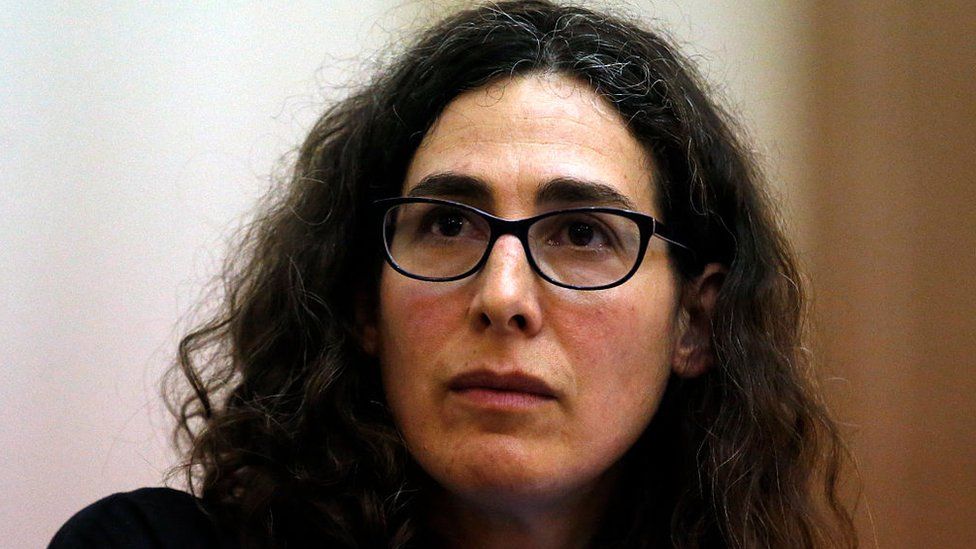
    File photo dated 17/05/14 of writer Hilary Mantel attending a press launch for the new stage production of Wolf Hall and Bring Up The Bodies, at 1 Whitehall Place in London. . The Wolf Hall writer has died "suddenly yet peacefully" surrounded by close family and friends aged 70, HarperCollins has announced. Issue date: Friday September 23, 2022.

    When she won her first Booker prize, Dame Hilary famously said she would spend the money on “sex, drugs and rock ‘n’ roll”. The second time she joked about rehab.

    She was not a stranger to controversy and was outspoken on a number of subjects including the monarchy – and Brexit, saying in 2021 that she hoped to gain Irish citizenship, leave the country, and become “a European again”.

    In 2013 she famously spoke about Kate Middleton now Princess of Wales – being forced to present herself publicly as a personality-free “shop window mannequin”.

    The following year in an interview she recalled fantasising about the murder of former British prime minister Margaret Thatcher, which she later wrote as a short story.

    She was also forthright in her wish for the UK to become a republic, describing “the howl phenomenon of monarchy” as “irrational”.

    The writer also criticised the Catholic Church in 2012, saying it was no longer “an institution for respectable people”.

    Author Hilary Mantel attends a book signing for her new novel "The Mirror and the Light" at a book store in London, Britain, March 4, 2020. REUTERS/Hannah McKay

    The author experienced chronic illness throughout her life, having a severe form of endometriosis that took many years to diagnose and left her unable to have children.

    Bill Hamilton, Dame Hilary’s agent at literary agency A.M. Heath, said it had been the “greatest privilege” to work with her throughout her career, adding she would also be remembered for “her capacity to electrify a live audience”.

    He said: “Her wit, stylistic daring, creative ambition, and phenomenal historical insight mark her as one of the greatest novelists of our time.”

    “Emails from Hilary were sprinkled with bon mots and jokes as she observed the world with relish and pounced on the lazy or absurd and nailed cruelty and prejudice,” he said.

    “There was always a slight aura of otherworldliness about her, as she saw and felt things us ordinary mortals missed, but when she perceived the need for a confrontation she would fearlessly go into battle.

    “And all of that against the backdrop of chronic health problems, which she dealt with so stoically. We will miss her immeasurably, but as a shining light for writers and readers, she leaves an extraordinary legacy. Our thoughts go out to her beloved husband Gerald, family, and friends.”

  • Research trip: British professor Tom Marsh goes missing in Chile

    Police are actively looking for the Warwick University scientist who went missing in the Chilean desert about a week ago.

    According to police, a British professor who was visiting Chile to study has gone missing.

    Tom Marsh, 60, from Rugby in Warwickshire, had been visiting La Silla Observatory on the outskirts of the Chilean Atacama Desert, about 370 miles (595km) north of the capital Santiago.

    He has not been heard from since the night of Friday 16 September.

    Police described him as white, about 6ft 3in tall, balding, with grey hair and a beard.

    He will likely wear a blue rain jacket, walking boots, and a grey woolen hat.

    Professor Marsh works in the Department of Physics at Warwick University, where his research interest is in binary stars.

    In a statement through Warwickshire Police, his family said: “We are deeply concerned for Tom and miss him, and would ask anyone who may have information on his whereabouts to please help.”

    In a post on social media, his daughter Tabitha said the family was “desperate” to find him, adding: “He was out on an observing run at the La Silla Observatory in Chile when he went missing.

    “The closest town is La Serena. If anyone has any information or thinks they can help, please contact the police… Thank you.

    “My family, and my dad’s friends and colleagues, would be beyond grateful for any help or information.”

    La Silla European Southern Observatory (ESO) is seen at Coquimbo, Chile July 2, 2019. Picture Taken July 2, 2019. REUTERS/Rodrigo Garrido
    Image: La Silla European Southern Observatory

    Warwickshire Police said its officers are in contact with the Foreign Commonwealth and Development Office and Interpol, as well as Chilean authorities.

    Anyone with information should call Warwickshire Police on 101 quoting incident number 153 of 18 September 2022.

    If calling from outside the UK, police can be contacted at +44 1926 415000 or information can be reported online.

  • Cyberattack on Australian phones leaks personal information

    Optus, the second-largest telecommunications provider in Australia, has announced a cyberattack.

    Customers’ names, birthdates, phone numbers, and email addresses were revealed due to the breach.

    The company – which has more than ten million subscribers – says it has shut down the attack but not before other details such as driver’s licenses and passport numbers were hacked.

    Optus says payment data and account passwords were not compromised.

    The company said it would notify those at “heightened risk” but all customers should check their accounts.

    Chief executive Kelly Bayer Rosmarin apologized to its customers, on ABC TV.

    She said names, dates of birth, and contact details had been accessed, “in some cases” the driving license number, and in “a rare number of cases the passport and the mailing address” had also been exposed.

    The company had notified the Australian Federal Police after noticing “unusual activity”.

    And investigators were trying “to understand who has been accessing the data and for what purpose”.

    Optus says the type of information that may have been hacked includes customers’

    • names
    • dates of birth
    • phone numbers
    • email addresses
    • addresses
    • ID document numbers such as driver’s license or passport numbers

    “Optus is working with the Australian Cyber Security Centre to mitigate any risks to customers,” a statement on its website said.

    “Optus has also notified key financial institutions about this matter.

    “While we are not aware of customers having suffered any harm, we encourage customers to have heightened awareness across their accounts, including looking out for unusual or fraudulent activity and any notifications which seem odd or suspicious.”

    Ms Rosmarin said the company had put all customers on high alert as a precaution – but many have been left frustrated and concerned.

    Kaspersky cyber-security researcher David Emm told BBC News: “It’s good to see that Optus has said that it will contact those it believes are affected and that they will not be sending messages in emails or via SMS [text] messages – this makes it clear to customers that any such messages they receive will be fake.

    “It’s also reassuring that no passwords or payment information has been stolen.

    “Nevertheless, customers should be on the alert for any fraudulent activity they see and should protect their online accounts with unique, complex passwords and using two-factor authentication.”


  • Boeing to pay $200 million to settle charges of deception of investors over the 737 Max

    In response to allegations that it deceived investors about two fatal 737 Max crashes, Boeing will pay $200 million (£177.5 million).

    The US stock market regulator claimed that the aviation behemoth and its former CEO Dennis Muilenburg misrepresented safety-related issues.

    Boeing “put profits over people” in an effort to rehabilitate its image, according to the Securities and Exchange Commission (SEC).

    The 737 Max was grounded for 20 months after two crashes killed 346 people.

    As part of the settlement, Mr Muilenburg will also pay a penalty of $1m.

    “In times of crisis and tragedy, it is especially important that public companies and executives provide full, fair, and truthful disclosures to the markets,” SEC chairman Gary Gensler said in a statement.

    Boeing and Mr Muilenburg “failed in this most basic obligation,” he added.

    The SEC’s statement also said that both Boeing and Mr Muilenburg did not admit or deny the regulator’s findings.

    “We will never forget those lost on Lion Air Flight 610 and Ethiopian Airlines Flight 302, and we have made broad and deep changes across our company in response to those accidents,” Boeing said in response to the SEC’s announcement.

    “Fundamental changes that have strengthened our safety processes and oversight of safety issues, and have enhanced our culture of safety, quality, and transparency,” the company added.

    The SEC said a fund will be established for investors who suffered losses due to the misleading information between 2018 and 2019.

    This settlement is largely symbolic. The 737 Max scandal has already cost Boeing tens of billions – another $200m will barely register.

    But it does give the SEC the chance to call out Boeing and its ex-chief executive Dennis Muilenburg for making assurances about the plane’s safety, when they already knew it had a serious problem – thereby misleading investors.

    It’s unlikely this will cause Boeing any meaningful harm. Its corporate reputation had already been severely damaged by the affair. The company is now working hard to restore it, and regain public and investor confidence.

    For Mr Muilenberg himself, the financial consequences of the settlement won’t be that painful either. He received some $60m in compensation and benefits when he left the company. But the fact that the SEC chose to charge him personally sends out a powerful signal.

    There have been criticisms in some quarters that the ex-boss has not been properly held to account for his role in the affair. On this occasion, though, the finger has been pointed squarely in his direction.

    On 29 October 2018, Lion Air Flight 610 crashed into the Java Sea 13 minutes after taking off from Jakarta’s Soekarno-Hatta International Airport, killing all 189 passengers and crew.

    Less than five months later, Ethiopian Airlines Flight 302, another Boeing 737 Max on its way to Kenya, crashed six minutes after leaving Ethiopia’s capital Addis Ababa. All 157 people on board were killed.

    The crashes were linked to a flight control system called the “Maneuvering Characteristics Augmentation System” (MCAS) in the Boeing 737 Max.

    The SEC said that “after the first crash, Boeing and Mr Muilenburg knew that MCAS posed an ongoing airplane safety issue, but assured the public that the 737 Max was safe to fly.

    The crashes have cost Boeing more than $20bn, including payments to families of those killed in the crashes.

    In the wake of the incidents, the US Congress passed new legislation reforming how the country’s aviation regulator, the Federal Aviation Administration (FAA), certifies new planes.

    A small number of trials are expected to start next year to resolve outstanding claims.

  • Tax cuts are welcomed by most Tory MPs, but not all of them

    Some members of the Conservative Party appear to have embraced Kwasi Kwarteng’s tax-cutting proposals.

    Beth Rigby, the political editor for Sky, has spoken with some of the chancellor’s colleagues.

    One said it was now “starting to look like a Conservative government”, while another said they were very supportive.

    A third said there was no future in the “steady as she goes” approach pursued under the previous chancellor Rishi Sunak, and that now is the right time to go for growth.

    However, it is notable that those who opposed the tax-cutting, high-spending plans outlined by Liz Truss in her bid to be Tory leader seem to be keeping their cards close to their chest.

    Criticisms have still been made about the lack of an official OBR forecast.

    Sunak supporter and Treasury committee chair Mel Stride said there was a “vast void at the centre of the announcements”.

    Veteran Conservative Sir Roger Gale said: “Fortune favours the brave, but not the foolhardy.

    “Without the support of an OBR Kwasi Kwarteng’s not-so-mini budget is certainly brave but also looks very high risk indeed. I trust that the promised detailed figures will underpin his calculations.”

    The Treasury is understood to have based its analysis on the OBR forecast from March, with updated market prices.

    Mr Kwarteng said a full OBR forecast would be completed by the end of the year.

  • UN Human rights team :Rape so common in South Sudan, women do not even bother to report

    A United Nations human rights team says rape cases are now so frequent in South Sudan that many women choose not to bother reporting frequent sexual assaults.

    Even those who have been gang-raped repeatedly during the country’s prolonged conflict lack access to medical and trauma care.

    Some women have been raped up to five times in the last nine years, the panel said.

    “Just imagine what it means to be raped by multiple armed men, pick yourself up for the sake of your children, and then for it to happen again and again and again,” said Yasmin Sooka, the chairperson of the panel.

    She added: “These women are asking us when it will stop – 2013, 2016, 2018, 2021, and now in 2022 – they say they keep telling their stories and nothing changes.”

    In several villages in Western Equatoria State and Unity State – where fighting is ongoing – there is no medical care for rape victims, the panel said.

    “Women raped by armed forces while collecting firewood are threatened with death if they report it,” said Prof Andrew Clapham, a member of the panel.

    The experts have been participating in meetings at the UN General Assembly in New York to speak about the situation in South Sudan.

  • Guinean junta suffers sanctions from West African bloc

    In response to the coup in Conakry last year, the Economic Community of West African States (Ecowas) has decided to impose sanctions on individuals in Guinea’s military government.

    The leaders from the bloc met in New York where they were attending the UN General Assembly.

    They agreed on “gradual sanctions” on a list of people linked to the Guinean junta who will be identified “very soon”, the AFP news agency reports.

    Guinean leaders say they need three years to return the country to democracy and they are unhappy with Ecowas’ demands for a faster transition.

    In a statement, the Guinean interim prime minister, Bernard Gomou, had earlier described the Ecowas chief and president of neighbouring Guinea-Bissau, Umaro Sissoco Embaló, as a “puppet” and an “overexcited” man who had “forced his way in” to lead the regional organisation.

    Guinea was suspended from Ecowas following the coup in September last year.

  • Chancellor Kwasi Kwarteng pledges to end ‘cycle of stagnation’ in mini-budget

    As he announced his mini-budget, Chancellor Kwasi Kwarteng promised to “turn the vicious cycle of stagnation into a virtuous cycle of growth.”

    He is proposing the largest tax cuts since 1988, which will be paid for by a significant increase in borrowing.

    It is being seen as a major change of direction for the government under new Prime Minister Liz Truss.

    It comes as the Bank of England warns the UK may already be in recession.

    In a departure from Boris Johnson’s economic policies, Mr Kwarteng has scrapped plans to push up taxes to pay for public services with the aim of kick-starting the UK’s sluggish economy.

    In a statement to the Commons, he said: “Growth is not as high as it needs to be, which has made it harder to pay for public services, requiring taxes to rise.

    “This cycle of stagnation has led to the tax burden being forecast to reach the highest levels since the late 1940s.

    “We are determined to break that cycle. We need a new approach for a new era focused on growth.”

    The government normally releases an independent forecast of how major tax changes will impact the economy, but Mr Kwarteng has opted not to do this, as his statement is not technically a Budget.

    However, Mr Kwarteng promised the Office for Budget Responsibility would publish a full economic forecast before the end of the year, with a second to follow in the new year.

    The Institute for Fiscal Studies thinks tank has published its own analysis, saying: “The government is choosing to ramp up borrowing just as it becomes more expensive to do so, in a gamble on growth that may not pay off.”

    The mini-budget fulfilled promises to reverse the rise in National Insurance payments introduced by Boris Johnson to pay for social care and tackle the NHS backlog.

    Mr Kwarteng confirmed a planned corporation tax increase from 19% to 25% would also be scrapped.

    The chancellor also announced an increase to the threshold people in England starts paying stamp duty on home purchases to £250,000.

    For first-time buyers, the threshold will rise to £425,000.

    There are likely to be changes in income tax.

    Mr Kwarteng confirmed the cap on bankers’ bonuses would be lifted and new investment zones would be established, where businesses would benefit from tax cuts and planning rules would be relaxed to encourage house building.

    The cost of cutting these taxes is estimated at about £30bn a year.

    The statement also included details of the cost of the government’s plan to cap energy bills for households and businesses.

    Mr Kwarteng said these estimated costs were “particularly uncertain, given volatile energy prices” but based on recent prices the total cost of the package for the six months from October was expected to be around £60bn.

    “We expect the cost to come down as we negotiate new, long-term energy contracts with suppliers,” he added.

  • What does Russia wants from the votes in occupied Ukraine?

    Four seized regions of Ukraine are being held over by Russian-backed officials, who are holding so-called referendums on joining Russia.

    These so-called elections, which have been denounced as invalid and fraudulent by Ukraine and the West, are being held over the course of five days in four front-line regions: two in the east and two in the south.

    An annexation could lead to a claim by Russia that its territory is coming under attack from Western weapons supplied to Ukraine.

    This could escalate the war further.

    What is going on and why now?

    Seven months after Russia’s invasion began, Vladimir Putin is on the back foot. Ukraine’s counter-offensive has recaptured swathes of territory seized since the 24 February invasion.

    A vote on annexation is one of three steps taken by the Kremlin in an attempt to reset the war.

    By annexing another 15% of sovereign Ukraine, Russia will be able to claim its territory is under attack from weapons provided by Nato and other Western countries to Ukraine. By calling up 300,000 extra troops, it can defend a front line of 1,000km (620 miles). The Kremlin has also criminalized desertion, surrender and going absent without leave during mobilization.

    If Russia’s leader annexing territory sounds familiar, it is. When he ordered troops to seize Crimea in 2014, he followed it up with a vote rejected as an illegitimate sham by the international community.

    This latest event has also been denounced as illegal by many Western countries, including international monitoring groups, the OSCE, and Russian media have already said that a Yes-vote is beyond doubt.

    It is taking place over five days in Russia’s two proxy areas in Luhansk and Donetsk in the east, and in occupied parts of Kherson and Zaporizhzhia in the south.

    What makes these votes a sham?

    We have already seen how Crimea was annexed by Russia in 2014. While the Kremlin claimed 96.7% support, a leaked report from Russia’s Human Rights Council said only around 30% had voted and barely half supported annexation.

    Not a shot had been fired in Crimea, and yet in this latest case voting is expected to take place in the middle of a war.

    The four regions involved are either partially or completely under occupation.

    In the south, the city of Kherson is not a safe place right now, with Russian soldiers struggling to hold back a big Ukrainian counter-offensive. The central administration building was hit by a series of missiles only last week.

    A secure vote is impossible, and yet officials talk of 750,000 people registered and plans to incorporate occupied parts of another Ukrainian region, Mykolayiv, into the annexed area.

    Russian media reported that elected officials would go from door-to-door with portable ballot boxes from Friday to Monday.

    Polling stations will only operate on the fifth day, 27 September, with officials citing security reasons.

    Hundreds of stations are scheduled to open that day, with voters also able to cast ballots in regions outside their own – and refugees eligible to vote in parts of Russia itself.

    Then there’s Zaporizhzhia’s capital, which remains securely in Ukrainian hands, so any vote to annex that region makes little sense.

    Donetsk in the east is only 60% under Russian occupation and very much at the heart of the conflict.

    Russia does control most of Luhansk in the northeast even if it has begun to lose ground. Russian news agencies showed flyers being handed out entitled “Russia is the future”.

    Much of the pre-war population has fled the conflict. The head of Russia’s proxy authority in Donetsk, Denis Pushilin, ordered a mass evacuation days before the invasion.

    Russian-backed leaders have been keen to stage votes for several months, but the decision to hold the vote was taken just three days in advance and smacks of desperation.

    There will be no independent observers. Much of the voting will be online, although officials have promised extra security at polling stations.

    What will change?

    Ukrainian defense ministry adviser Yuriy Sak told the BBC the so-called referendums were doomed. “We are seeing that local populations are all in favour of returning to Ukraine, and this is why there’s so much guerrilla movement resistance in these territories.”

    In any event, Kyiv says nothing will change and its forces will continue to push to liberate the territories.

    Russia analyst Alexander Baunov says merely redefining the occupied areas as Russian territory is unlikely to stop Ukraine’s army, but it does send a message of intent to the populations under their control. And the Kremlin’s hope is that the West will balk at having its weapons fired at land declared by Moscow as Russian.

    Alarmingly President Putin has spoken of using all means at his disposal “to protect Russia”. And in case there was any doubt at all. the deputy head of Russia’s security council, Dmitry Medvedev, made clear that nuclear weapons could also be used to protect annexed territories.

    US Secretary of State Antony Blinken has spoken of a “dangerous escalation”, but reaffirmed Washington’s position that no Russian claim to Ukrainian soil could take away Ukraine’s right to defend itself.

    Even Turkey, which has sought to play a mediating role, has damned the vote as illegitimate.

  • 24 years jail term: Man who attacked female diners in Tangshan, China

    A man who orchestrated a savage assault on four women who were eating at a Chinese restaurant has been given a 24-year prison term.

    In June, in the northeastern city of Tangshan, Chen Jizhi was convicted of the attack that started when one of the ladies rejected his advances.

    Another 27 men were convicted over the violence, in which they used bottles, chairs, and fists to beat the women.

    The surveillance video went viral, sparking debate about gender violence in China.

    After the attack, two of the women spent time in intensive care, while the other two women were seen in photos covered in blood, although their injuries were initially classed by police as only “minor”.

    Chen was fined 320,000 yuan (£40,000, $45,000) in addition to his 24-year prison sentence,

    The other defendants were sentenced to between six months and 11 years in prison.

    The court ordered Chen and five defendants to compensate for the four victims’ medical expenses and other losses, the Global Times reports.

    Women’s rights campaigners say domestic abuse remains pervasive and under-reported in China.

    A report released soon after the assault found the handling of the case by the local deputy director of district police and other officers had been “slow and improper”.

    Chinese authorities censored online debate about attacks on women, and tried to paint the assault as a gang crime, correspondents say.

    The viciousness of the attack sparked outrage and heated debate on social media, taking up one of the most-discussed topics on Weibo, a popular social media platform in China.

  • Desmond Tutu’s daughter prohibited by Church of England from leading funeral

    The Church of England has forbidden Desmond Tutu’s daughter from officiating at a funeral because she is married to a woman.

    Mpho Tutu van Furth, an Anglican priest in the Diocese of Washington, DC, was requested to preside at Thursday’s burial in Shropshire for her late godfather, Martin Kenyon.

    Ms Tutu van Furth told BBC News it “seemed really churlish and hurtful”.

    The Diocese of Hereford said it was “a difficult situation”.

    The Church of England does not permit its clergy to be in a same-sex marriage because its official teaching is that marriage is only between one man and one woman.

    However, its sister Anglican church in the US, The Episcopal Church, does allow clergy to enter into gay marriages.

    “Advice was given in line with the House of Bishop’s current guidance on same-sex marriage,” a statement from the Diocese of Hereford said.

    The former Bishop of Liverpool, the Right Reverend Paul Bayes, who is a campaigner for the church to change its position on sexuality, said to “plead that things are difficult is not good enough”.

    “We urgently need to make space for conscience, space for pastoral care, and space for love,” he said.

    After Mr Kenyon’s family was told of the Church’s decision, they moved the funeral service from St Michael and All Angels in Wentnor, near Bishops Castle, to a marquee in the vicarage next door so Ms Tutu van Furth could officiate and preach.

    “It’s incredibly sad,” Ms Tutu van Furth told BBC News. “It feels like a bureaucratic response with maybe a lack of compassion.

    “It seemed really churlish and hurtful. But as sad as that was, there was the joy of having a celebration of a person who could throw open the door to people who are sometimes excluded.”

    Martin Kenyon, then 91, became an internet sensation in December 2020 with his frank answers during a CNN interview after receiving the Covid-19 vaccine.

    Asked how it felt to be one of the first people in the world to receive the jab, he said: “I don’t think I feel much at all”. But added he hoped not to have the “bug” now because he had granddaughters.

    “There’s no point in dying when I’ve lived this long, is there?” he said.

    Mr Kenyon was close friends with the late South African Archbishop, Desmond Tutu.

    Ms Tutu van Furth was forced to give her upright to officiate as a priest in South Africa after she married Marceline van Furth, a Dutch academic, in 2015.

    Her father Desmond Tutu, who died in December 2021, won the Nobel Peace Prize in 1984 for his struggle against apartheid in South Africa. He also campaigned in favour of gay rights and backed same-sex marriage.

    “I would refuse to go to a homophobic heaven. No, I would say sorry, I mean I would much rather go to the other place,” he said in 2013. “I would not worship a God who is homophobic and that is how deeply I feel about this.”

    He added: “I am as passionate about this campaign as I ever was about apartheid. For me, it is at the same level.”

  • COVID-19: Japan set to remove travel restrictions for tourists

    After having its borders closed due to the Covid pandemic for more than two years, Japan will once again welcome international travellers.

    Starting on October 11, visitors won’t require a visa and won’t have to go via a travel agency to enter the nation.

    A cap on daily arrivals will also be lifted.

    Japan’s announcement comes at around the same time Taiwan and Hong Kong also relaxed entry rules for visitors.

    Taiwan will drop quarantine requirements for international arrivals by mid-October, while Hong Kong on Friday said it would move from hotel quarantine to stay-at-home requirements from 26 September.

    For Japan, the anticipated influx of travelers will be a welcome boost to government and local businesses and comes as the Japanese yen has slid to its slowest point against the US dollar in six months.

    “Japan will relax border control measures to be on par with the US,” said Prime Minister Fumio Kishida.

    The country has allowed visitors since June, but they had to be part of tours.

    Mr Kishida also announced a domestic travel incentive scheme that will give discounts on travel, theme park prices, sporting events, and concerts. Japanese residents and citizens will be eligible for an 11,000 yen (£69; $77) subsidy.

    Similar programmes have been introduced in other countries re-openings to encourage locals to spend and stimulate the economy. However, like elsewhere, the rise in the cost of living has been a dominant concern for locals.

    The world’s third-largest economy was one of the last Asian powerhouses to keep its borders closed due to Covid health concerns.

    Its death rate is the lowest among the world’s wealthiest nations, while the country’s vaccination rate is among the highest.

    Japan also never mandated lockdowns or mask-wearing, but many locals readily adopted protections.

    Japan saw nearly 32 million foreigners visit in 2019, the last year prior to the pandemic. And the restrictions on travellers in recent months had precluded many foreigners from visiting, reports showed.

  • Russia-Ukraine war: Your threats are being taken ‘seriously’ – US to Putin on nuclear threats

    A top White House source told the BBC that Vladimir Putin’s veiled threats to use nuclear weapons to defend territory in Ukraine are being taken “seriously” by the US.

    John Kirby said the US was not changing its “strategic deterrent posture”, but that Mr Putin spoke irresponsibly.

    On Wednesday Russia’s leader warned his country would use all the means at its disposal to protect its territory.

    It came as four Ukrainian regions part-occupied by Russian forces are about to stage snap votes on joining Russia.

    Ukraine and its allies call these votes a sham exercise, designed to give spurious legitimacy to an illegal annexation.

    “It is a dangerous precedent for Mr Putin to be using this kind of rhetoric in the context of a war clearly that he’s losing inside Ukraine,” National Security Council spokesman Mr Kirby told the BBC.

    “We have to take these threats seriously and we do… We’ve been monitoring, as best we can, his nuclear capabilities, I can tell you that we don’t see any indication that we need to change our strategic deterrent posture at this point.”

    He dismissed plans for Russia to annex further parts of Ukraine as “nothing more than a ploy by Vladimir Putin to try to gain… through politics and electoral issues, that which he cannot gain militarily”.

    “But it’s not going to work,” he said. “No one’s going to recognise it. And what needs to happen is Mr Putin needs to leave Ukraine. He needs to stop this war.”

    Russia’s conduct in Ukraine was strongly condemned at a special meeting of the UN Security Council in New York on Thursday.

    “This week, President Putin said Russia wouldn’t hesitate to use ‘all weapon systems available’ in response to a threat to its territorial integrity – a threat all the more menacing given Russia’s intention to annex large swaths of Ukraine in the days ahead…” said US Secretary of State Anthony Blinken.

    “This from a country that in January of this year joined the other permanent members of the Security Council in signing a statement affirming that ‘nuclear war can never be won and must never be fought.”

    Former Russian leader Dmitry Medvedev said in a statement on social media on Thursday that the means by which Russia would defend itself included “strategic nuclear weapons”.

    But Russian Foreign Minister Sergei Lavrov accused some Security Council members of trying to impose a false narrative on Moscow’s operations in Ukraine and restating allegations that ethnic Russians had been persecuted by Ukrainian government forces.

    “There’s an attempt today to impose on us a completely different narrative to show Russian aggression as the origin of all the tragedy,” Mr Lavrov said.

    “This ignores the fact that for over eight years the Ukrainian army and fighters from the nationalist formations killed and continue to kill inhabitants of [the east Ukrainian region of] Donbas with impunity simply because they refused to recognise the results of the coup d’etat in Kyiv. They decided to uphold their rights, which were guaranteed by the Ukrainian Constitution, including the right to freely use Russian, their mother tongue.”

    Russia attempts to justify its invasion by saying it is fighting neo-Nazis, a claim widely dismissed by the international community, as well as resisting Nato expansion.

    In his speech on Wednesday, President Putin also announced a call-up for reservists in a move analysts say is a sign that Russia’s forces in Ukraine are struggling to hold on to the strip of the territory they occupy in the east and south.

  • Liz Truss likely to move UK embassy to Jerusalem

    Liz Truss, who is following Donald Trump’s lead, says she is thinking of moving the British embassy in Israel from Tel Aviv to Jerusalem. This would be a radical change from decades of UK foreign policy.

    In a meeting on the sidelines of the UN general assembly in New York, the prime minister told Israel’s caretaker leader, Yair Lapid, about a “review of the current location” of the building, Downing Street said in a statement.

    The status of Jerusalem, which Israelis and Palestinians claim as their capital, is one of the most sensitive issues in the long-running conflict.

    East Jerusalem, along with the West Bank and Gaza Strip, has been considered occupied Palestinian territory under international law since the six-day war in 1967.

    Like the vast majority of the international community, the UK’s position until this point has been that the divided city should host consulates, rather than embassies until a final peace agreement is reached.

    Trump’s 2018 fulfillment of an election campaign promise to recognise Jerusalem as Israel’s capital prompted international condemnation and led to protests and clashes in which Israeli forces killed dozens of Palestinians. The then UK prime minister Theresa May criticised the move at the time.

    On Thursday, the Israeli prime minister tweeted his thanks to Truss for what he described as “positively considering” the move. “We will continue to strengthen the partnership between the countries,” he said.

    The Guardian understands that the embassy move was one of a range of options put forward to Truss by Foreign Office staff in late 2021 during her stint as foreign secretary. However, she did not make any substantial policy changes during her two years at the foreign office.

    The prime minister appears to have first publicly floated the idea of relocating the embassy in a letter to the Conservative Friends of Israel (CFI) parliamentary group during the Tory leadership campaign over the summer.

    She wrote: “I understand the importance and sensitivity of the location of the British embassy in Israel. I’ve had many conversations with my good friend … Lapid on this topic. Acknowledging that, I will review a move to ensure we are operating on the strongest footing within Israel.”

    At a hustings with CFI, she vowed that “under my leadership, Israel will have no stauncher friend in the world. That’s what I’ve done as foreign secretary and trade secretary. I don’t just talk the talk – I walk the walk.”

    Pressed in the House of Commons on 6 September by the backbench Tory MP Michael Fabricant to follow the US and move the embassy from Tel Aviv to Jerusalem, the Foreign Office minister Amanda Milling said: “The British embassy to Israel is in Tel Aviv. I am aware of the possibility of a review, but will not speculate further on this point.”

    Her remarks suggest the review is only just under way, but advocates of the move inside the Conservative party claim the proposal will prove less controversial than even a few years ago due to the Trump administration setting a precedent, and the thaw in relations between Israel and some Arab countries following the Abraham accords.

    Downing Street has been contacted to explain how long the review will take.

    Other than the US, only three states have embassies to Israel in Jerusalem – Kosovo, Honduras and Guatemala – which all moved from Tel Aviv after the US relocation.


  • Prisoners of war: Heavily pregnant medic among convicts returning home

    A Ukrainian doctor named Mariana Mamonova who is more than eight months pregnant is one of the detainees whom Russia has freed.

    She can be seen in a prisoner swap video that Ukrainian authorities made public on Wednesday.

    She was being held in the notorious Olenivka prison camp in the unrecognized Donetsk People’s Republic after being captured in April in Mariupol.

    Speaking to the BBC before her release, her husband spoke about his fears over the well-being of his wife and unborn baby – the couple’s first.

    “A baby can’t be kept in those conditions, so they could just take it away,” Vasilii said.

    Mariana was reportedly held under extremely difficult conditions at the prison camp.

    A fellow prisoner, Anna Vorosheva, said she was in a cell with more than 20 other women when she first arrived and had to sleep on the floor.

    “Straight away, everyone tried to help her – giving her food, making sure she got fresh air,” Ms Vorosheva, who was released in July, told the BBC.

    Eventually, she was moved to a smaller room with fewer people, and her cellmates ensured that she was able to sleep on one of the room’s two beds each night.

    At first, Mariana assumed that she would be a priority for a prisoner swap. But as her due date at the end of September approached, she began to fear she would give birth in captivity, and became increasingly worried that her baby would be taken from her.

    Frustrated at the lack of news, her family decided to go public with Mariana’s story in August, drawing attention to her case in the Ukrainian media.

    Still, weeks passed with no progress, but finally – just days before she is due to give birth – her family received the good news that she had been released.

  • Mobilization orders: No visa for Russians – Czech Republic announces

    Russian men evading mobilization orders will not be granted humanitarian visas, according to Czech Foreign Minister Jan Lipavsky.

    While understanding their intentions, Lipavsky told the Czech news outlet Novinky. cz that such situations did not fit the requirements for a humanitarian visa.

    The Czech Republic joins other countries such as Latvia which has said it will not provide sanctuary to Russians seeking to avoid the draft on humanitarian grounds. Germany, on the other hand, says it will do so.

    The Czech Foreign Ministry has also confirmed it has written to two NHL teams to say Prague would not issue visas to Russian ice hockey players wishing to travel to the Czech capital to take part in the NHL’s Global Series games.

    Prague will host two matches between the San Jose Sharks and the Nashville Predators, both of which have Russian players, on 7 and 8 October.

  • Over a million US cars soon to be recalled by Tesla

    Tesla is recalling around 1.1 million vehicles in the US due to the possibility that the windows could close too quickly and snag people’s fingers.

    The windows may not respond appropriately after sensing a blockage, according to documents released by American regulators.

    The National Highway Traffic Safety Administration says it is a safety-standards violation.

    Tesla says a software update will fix the problem.

    The world’s largest electric-vehicle manufacturer has had repeated run-ins with federal safety regulators, whom chief executive Elon Musk calls “the fun police”.

    Previous recalls have been due to:

    • rear-view cameras
    • bonnet latches
    • seat-belt reminders
    • sound-system software
    This latest covers all four Tesla models, specifically 2017-22 Model 3 sedans and some 2020-21 Model Y SUVs (sports utility vehicles), Model S sedans and Model X SUVs.

    Tesla discovered the problem with the automatic windows during production testing in August.

    Owners will be notified by letter, from15 November.

    Company documents indicate vehicles made after 13 September already have the updated software needed to remedy the issue.

    Tesla said it was not aware of any warranty claims, crashes, injuries, or deaths related to the recall.

  • Funding of £500 million to assist hospitals help patient discharge

    To support the NHS in England throughout the winter, a £500 million fund will be established to assist in getting patients out of hospitals.

    The majority of patients who are ready to leave the hospital cannot be released right away, frequently due to a lack of community support.

    Health Secretary Thérèse Coffey says the pot can be used to pay for extra help for patients who need it.

    It is part of a package of measures announced by Ms Coffey, but experts said they amount to little more than “tinkering around the edges”.

    Ms Coffey has also promised to improve access to GPs by allowing them to take on more senior nurses alongside giving extra responsibilities to pharmacists.

    This would free up three million appointments a year – about 1% of the total, she said.

    Same-day appointments would be available for patients who needed them, while those wanting a routine appointment should wait no longer than two weeks.

    Reduce delays

    The measures to support hospitals also include a promise to create more flexible pension rules.

    Currently, senior doctors who take on extra shifts can face high tax bills if their earnings go above the pension cap.

    Ms Coffey also reiterated previous commitments to take on extra 999 call handlers and free up hospital beds by giving more support to patients at home.

    During the pandemic, patients who needed it received four weeks of support when discharged from the hospital.

    This scheme helped reduce delays but was scrapped earlier this year despite warnings from hospital bosses.

    Many in the care sector will view the £500m as little more than a sticking plaster.

    The money helps but absent from the plan is the sort of cash injection needed to tackle deep-rooted staff shortages.

    There are currently an estimated 165,000 vacancies in the care sector in England.

    Charities, care providers, and councils have all called for enough funding to increase care worker pay significantly.

    The rising cost of living has made it even more difficult to recruit staff, who can often earn more working at a supermarket check-out.

    In recent weeks, care workers have told the BBC rising prices to mean they sometimes go hungry, despite working long hours doing a vital and skilled job.

    If the pandemic has taught us anything, it is how intertwined the health and care systems are.

    It is argued that for the NHS to be successful in tackling backlogs and reducing ambulance delays, then much more will need to be done to strengthen the care sector now – not just in the future.

    Ms Coffey said the measures in Our Plan for Patients would support the NHS through this winter.

    “Patients and those who draw on care and support are my top priority and we will help them receive care as quickly and conveniently as possible,” she added.

    But the plans have been criticized by doctors’ leaders and health experts.

    Prof Martin Marshall, of the Royal College of GPs, said the announcement on GPs did not amount to a proper plan and would have a “minimal impact”, accusing ministers of “lumbering a struggling service with more expectations” without the means to achieve them.

    “GPs share patients’ frustrations when we cannot deliver the care we want to deliver in a timely way,” he said.

    “But we are caring for an increasing number of patients, with increasingly complex health needs and carrying out more consultations with fewer qualified, full-time GPs.”

    Dr Jennifer Dixon, chief executive of the Health Foundation, said the measures amounted to a series of “short-term fixes” that were tiny compared to the scale of the challenges.

    While the King’s Fund said it amounted to little more than “tinkering around the edges”.

    Labour shadow health secretary Wes Streeting said: “The Conservatives have failed to provide the doctors and nurses needed to treat patients on time – and patients are paying the price in record-long waiting times.

    “Unless the government brings forward a plan for the NHS staffing crisis, they don’t have a plan for the NHS.”

  • Zelensky wants ‘just punishment’ for Russia in the Ukraine war

    During his address to the UN General Assembly in New York, President Volodymyr Zelensky said that Russia must receive “just punishment” for its invasion of Ukraine.

    The Ukrainian president demanded the establishment of a special war tribunal and described alleged war crimes committed by Russia in a pre-recorded video.

    He also set out a “formula”, including more military support and punishing Russia on the world stage.

    During his address to the UN General Assembly in New York, President Volodymyr Zelensky said that Russia must receive “just punishment” for its invasion of Ukraine.

    The Ukrainian president demanded the establishment of a special war tribunal and described alleged war crimes committed by Russia in a pre-recorded video.

    r called up 300,000 reservists for duty.

    The move prompted rare protests in dozens of Russian cities and Mr Zelensky said the partial mobilization showed his enemy was not serious about peace talks. Monitoring group OVD-Info said 1,315 Russians had been arrested.

    The Kremlin said the call-up would be limited to those who had completed military service and had important skills and combat experience. But some of those arrested during protests in Moscow were also told they would have to sign up, reports say.

    The Ukrainian leader said creating a special tribunal would help hold Moscow to account for stealing territory and murdering thousands of people. His address on Wednesday received a standing ovation from many of the session’s attendees.

    Despite Russia’s decision to bolster its military campaign, the two sides took part in the biggest exchange of prisoners since the start of the war.

    In a deal brokered by Saudi Arabia, 215 fighters were returned to the Ukrainian side, including 10 foreigners – while Russia took back 55 soldiers. Pro-Russian politician Viktor Medvechuk was also part of the swap. He has been seen as President Putin’s closest ally in Ukraine and faced treason charges.

    Ukraine said that among those released were 108 members of the Azov battalion who for weeks defied Russia’s bombardment of Mariupol and the city’s steel plant.

    Battalion commander Denys Prokopenko and his deputy were among five senior officers freed. So too was Ukrainian military medic Mariana Mamonova, who is more than eight months pregnant and was being held in the notorious Olenivka prison in an area of eastern Ukraine held by Russian-backed separatists.

    She can be seen, looking heavily pregnant, in a video of the exchange released by Ukrainian authorities.
    IMAGE SOURCE, UKRAINIAN GOVERNMENT Image caption, A heavily pregnant Mariana Mamonova was seen in a video of the exchange released by Ukrainian authorities

    A fellow prisoner, who was released in July, told the BBC how the medic was forced to live in a cell with several other people, sleeping on the floor and going outside only once a day. Her husband had feared their baby would be taken away.

    Ten foreign prisoners held by Russian-backed forces were also released, including five British nationals and two Americans.

    In his UN address, Mr Zelensky condemned Russian plans to stage so-called referendums on joining Russia in occupied areas of Ukraine. The vote which is due to start on Friday has been widely condemned as a sham by Western leaders.

    He addressed the discovery of 445 new graves in Izyum, a northeastern city recently retaken from Russian forces during a sweeping Ukrainian counter-offensive.

    Mr Zelensky detailed allegations of war crimes in the city, including against one man said to have been castrated and murdered.

    “Why are the Russian military so obsessed with castration?” he asked.

    UN delegates stand and applaud President Zelensky's video address
    IMAGE SOURCE, REUTERSImage caption, Zelensky’s words received a standing ovation from some quarters

    The word “punishment” cropped up some 15 times in Mr Zelensky’s speech and was the first of his five non-negotiable conditions for peace.

    Russia must face consequences for its aggression, he said, through further sanctions and by the UN stripping Moscow of its powerful role as a permanent Security Council member.

    He also called for Ukrainian lives to be protected, and for the country’s internationally-recognized borders to be respected.

    As his fourth and fifth conditions, he called for new security guarantees for Kyiv, and for the world to unite in calling out Moscow’s armed aggression.

    Later on Wednesday, the European Union’s foreign policy chief said EU countries had agreed to hit Russia with new sanctions.

    Josep Borrell told reporters the new restrictions would target Russian individuals and the country’s economic sectors.

    Sporting his signature green T-shirt in his video, Mr Zelensky thanked the 101 countries at the UN which voted to allow him to address the assembly in a video rather than in person.

    He blasted the seven countries including Russia which voted against his video appearance and criticized those which have remained neutral during the conflict.

  • New date for rail strikes: 40,000 workers set to strike

    Their union says more than 40,000 employees of Network Rail and 15 train operators will go on strike once more on October 8.

    As part of a protracted dispute over salary, employment, and working conditions, the RMT declared that it will “effectively shut down the railway network.”

    It will come just a week after an even bigger strike by members of RMT and the train drivers union Aslef.

    Network Rail warned passengers to expect very significant disruption and only travel if absolutely necessary.

    It added that full timetables for upcoming strike days would be published soon.

    The latest action comes after a series of large-scale walkouts as unions call for pay increases in line with the rising cost of living.

    In June, the biggest rail strikes for 30 years threatened to grind the country to a halt. But while some people faced substantial disruption it was business as usual for others.

    RMT general secretary Mick Lynch said the union had met with new Transport Secretary Anne-Marie Trevelyan to discuss the disputes.

    “However, as no new offer has been tabled, our members have no choice but to continue this strike action,” he said.

    “We will continue to negotiate in good faith, but the employers and government need to understand our industrial campaign will continue for as long as it takes.”

    The RMT, which represents rail workers including guards and signalling staff, had already announced its 40,000 members would strike on 1 October. This is the day before the London Marathon and the Conservative Party conference in Birmingham.

    Train drivers at 12 operators who are members of Aslef will also walk out on 1 October, meaning that only 10% of UK services are likely to run that day.

    Aslef members will also hold a second day of strike action on 5 October.

  • UN Security meeting: Sergei Lavrov walks out after speech

    After giving his speech, Sergei Lavrov, the foreign minister of Russia, left the UN Security Council meeting.

    He began by saying: “There is an attempt today to impose on us a completely different narrative, about Russian aggression as the origin of all the tragedy”.

    He continued by talking about the historical relationship between Ukraine and Russia and described Ukraine as “totalitarian”.

    He added that he is “concerned about the fate of Russian soldiers taken prisoners by Ukraine”.

    Mr Lavrov said he has “no confidence” in the work of the International Criminal Court.

  • More ‘distortions, dishonesty and disinformation’ from Russia say UN foreign secretary

    After Russia’s foreign minister delivered a speech, James Cleverly, the foreign secretary, said that we have since heard additional “distortions, dishonesty, and disinformation” from Russia.

    At a UN Security Council meeting, Mr. Cleverly said: “President Putin invaded Ukraine illegally and without justification. He ignored the resounding pleas for peace I heard in this council on 17 February”.

    He adds that Russia has tried to “lay the blame on those imposing sanctions” for Vladimir Putin’s invasion.

    “Every day, the devastating consequences of Russia’s invasion become more clear,” he added.

    “We see the mounting evidence of Russian atrocities against civilians, including indiscriminate shelling and targeted attacks on more than 200 medical facilities and 40 educational institutions – and horrific acts of sexual violence.”

    Mr Cleverly then went on to talk about food security.

    He said: “We are not sanctioning food, it is Russia’s actions that are preventing food and fertilizer from reaching developing countries.”

  • Russians flee to border after military mobilization

    Following the military call-up for the war in Ukraine, queues have developed along Russia’s border as men try to leave the country.

    On Wednesday, President Vladimir Putin announced a partial military mobilization that may call up to 300,000 individuals to fight.

    The Kremlin says reports of fighting-age men fleeing are exaggerated.

    But on the border with Georgia, miles-long queues of vehicles have formed including men trying to escape the war.

    One man, who did not want to be named, told the BBC’s Rayhan Demytrie he had grabbed his passport and headed to the border, without packing anything else, immediately after President Putin’s announcement – because he fell into the group that could potentially be sent to the war.

    Some witnesses estimated the queue of cars at the Upper Lars checkpoint to be some 5km (3 miles) long, while another group said it had taken seven hours to get across the border. Video from the scene showed some drivers leaving their cars or trucks temporarily in standstill traffic.

    Georgia is one of the few neighboring countries that Russians can enter without needing a apply for a visa. Finland, which shares a 1,300km (800 miles) border with Russia, does require a visa for travel, and also reported an increase in traffic overnight – but said it was at a manageable level.

    Other destinations reachable by air – such as Istanbul, Belgrade, or Dubai – have seen ticket prices skyrocket immediately after the military call-up was announced, with some destinations sold out completely. Turkish media have reported a large spike in one-way ticket sales while remaining flights to non-visa destinations can cost thousands of euros.

  • Man rescued from the mountains after being trapped for 17 days in China

    After a 17-day search following an earthquake in southwest China, a man was found alive in the mountains.

    On September 5, a 6.6-magnitude earthquake that struck Sichuan province killed 93 people and injured over 400 others.

    Gan Yu stayed behind to help others at the hydropower plant where he was on duty, but then struggled to escape through the rough terrain as he had lost his glasses, local media reported.

    He was found alive but injured by a local villager on Wednesday.

    Mr Gan and his colleague Luo Yong stayed behind at the Wandong hydropower plant on 5 September to give first aid to injured colleagues and to help prevent flooding by releasing water from a dam.

    They then attempted to leave, walking for about 20km (12 miles) in the mountains around the plant.

    But Mr Gan, who is severely short-sighted and had lost his glasses in the quake, struggled to navigate the terrain, state-owned China National Radio (CNR) reported.

    Rescuers were searching the area for survivors, and the two men tried unsuccessfully to signal for help.

    “We took our clothes off, strung them on tree branches, and waved them around,” Mr Luo told CNR.

    Eventually, Mr Luo went to look for help, leaving Mr Gan with a makeshift bed of moss and bamboo leaves and some wild fruit and bamboo shoots to eat.

    Mr Luo was found on 8 September after using fire to attract the rescuers’ attention. But by the time his former companion’s shelter was found three days later, Mr Gan was no longer there.

    Rescuers discovered only discarded clothing and believed he may have died of hypothermia.

    This week a farmer who lives near the plant joined the search, using his local knowledge. After a few hours, he heard Mr Gan’s cries and found him under trees.

    Rescuers later reached the scene and flew Mr Gan to a hospital, where he was treated for broken bones.

  • Donetsk missile strike: About six civilians, including a teenager killed

    A firefighter was consoling a mother whose teenage child had been murdered by shelling on a bus.

    The strike, according to officials supported by Russia, struck Donetsk’s separatist-controlled city centre.

    They blamed Ukrainian forces for the strike on a covered market.

    A Reuters journalist at the scene saw the body of a teenager and four others, as well as several wounded citizens.

    There has been no immediate comment from Ukraine, and the reports of who was behind the shelling cannot be independently verified.

  • Anticipating a steak dinner tonight – Captured Briton returns home

    A Briton, Shaun Pinnerwas freed as part of a prisoner swap between Russia and Ukraine, and he has since been reunited with his family.

    In April, Russian-backed separatists in eastern Ukraine arrested Mr. Pinner, 48, who was later found guilty of “mercenary actions” and given the death penalty.

    Our correspondent Emma Birchley spoke to him at his mother and stepfather’s home near Sandy in Bedfordshire.

    “It’s good to be home,” he said. “I’m looking forward to a steak dinner tonight!”

    He was finally reunited with his mother, stepfather, sister, and son at Heathrow at 6 am.

    For Mr Pinner’s mother, Debbie Price, the relief is overwhelming.

    “It’s been a really, really hard time,” she said. “We are just so happy to have him home. It’s hugely emotional.”

    The first hint Mr Pinner had that something was happening was after lunch on Tuesday.

    “They said you have to roll your stuff up. They said you’re going on a long journey,” he said.

    “We were moved to another location. We didn’t have any idea what was happening.”

    He was later flown with other released captives to Saudi Arabia.

    At 5.30 pm UK time yesterday, Mr Pinner was able to speak to his mother on the phone, from the Middle Eastern country.

    “It’s very emotional, as you can imagine,” he said. “I really want to say thank you to everyone who helped us get out from the government of Saudi Arabia and also Liz Truss and Boris Johnson.

    “The Saudis gave us a full MOT. Their hospitality was great,” he said.

    “Our thoughts go out to those who hope to be exchanged soon,” he said, referring to the prisoner swap which resulted in his release.

    He added that he has many friends still in Ukraine, as well as his wife. Today is their second wedding anniversary.

    It’s hoped she will be able to get a visa to also come to the UK.

    Mr Pinner’s sister Cassandra said she can’t believe how much changed in just 24 hours and described the feeling as “surreal”.

    She knew something was up when her mother phoned her at work, after being contacted by the Foreign Office at just before midday yesterday.

    Mr Pinner is yet to be fully debriefed by the Foreign Office and Intelligence Services.

  • National Insurance rise to be repealed from 6 November – Kwasi Kwarteng

    Chancellor Kwasi Kwarteng,has announced that the National Insurance increase from April will be repealed starting on November 6.

    The 1.25% increase was put in place by the former chancellor Rishi Sunak, but Liz Truss promised to reverse it during the Tory leadership race.

    He said: “Taxing our way to prosperity has never worked.

    “To raise living standards for all, we need to be unapologetic about growing our economy. Cutting tax is crucial to this.”

    The Treasury said most employees will receive a cut to their national insurance contribution directly via their employer’s payroll in their November pay, although some may be delayed to December or January.

    They calculate that almost 28 million people will keep an extra £330 of their money on average next year, whilst 920,000 businesses are set to save almost £10,000 on average next year thanks to the change

    In a tweet, Mr Kwarteng called it a “tax cut for workers”.

    The tax hike was put in place to help fix the NHS backlog and fund social care sector improvements. It was due to raise around £13bn per year.

    However, Ms Truss argued it was wrong of her party to break its 2019 manifesto commitment not to raise taxes and said the extra funds can be raised through general taxation.

    The chancellor confirmed today that the funding for health and social care services will be maintained at the same level as if the levy was in place.

    MPs are expected to vote on repealing the health and social care levy once they return from party conferences in October.

    Downing Street said the repeal Bill was part of the government’s commitment to “a low tax, high growth” economy.

    “This is delivering on a commitment the PM made on the (Tory leadership) campaign trail,” a No 10 spokeswoman said.

    The move comes ahead of Chancellor Kwarteng’s “fiscal event” on Friday when he will set out more details of the government’s plans to cut taxes, including scrapping a planned rise in corporation tax.


  • Ransomware-style hacking campaign: Three Iranian hackers charged

    In what officials described as a “ransomware-style” cyber campaign, the US Justice Department on Wednesday unsealed a criminal indictment charging three Iranian nationals of hacking the networks of hundreds of victims in the US and abroad.

    Although the indictment does not allege the hackers acted on behalf of the Iranian government, U.S. law enforcement agencies released a joint advisory warning about “continued malicious cyber activity” by actors affiliated with Iran’s Islamic Revolutionary Guard Corps, while the Treasury Department blacklisted bitcoin addresses tied to two of the defendants.

    The cybersecurity advisory was issued jointly by U.S., Australian, British, and Canadian law enforcement agencies.

    In a video statement, FBI Director Christopher Wray said the advisory underscored the “broader threat” posed by Iranian cyber actors.

    “To these sorts of actors, nothing is off limits, not even, for example, Boston Children’s Hospital, which they set their sights on in the summer of 2021,” Wray said in a video statement.

    The three Iranian nationals — identified as Mansour Ahmadi, Ahmad Khatibi Aghda, and Amir Hossein Nickaein Ravari — are accused of carrying out “computer intrusions and ransomware-style extortion” between October 2020 and August 2022, according to a 30-page indictment unsealed Wednesday.

    The men remain at large and are believed to be in Iran, according to U.S. law enforcement officials.

    The State Department’s Rewards for Justice Program announced a reward of up to $10 million for information about the three.

    Although the charging document does not accuse the Iranian government of sponsoring their activity, the Treasury Department said in a statement that all three defendants were affiliated with the IRGC, a branch of the Iranian military that operates a number of cyber threat actors tracked by the FBI.

    “These IRGC-affiliated actors are actively targeting a broad range of entities across multiple U.S. critical infrastructure sectors, as well as organizations in Australia, Canada and the United Kingdom,” a senior FBI official said during a background call with reporters, speaking on condition of anonymity.

    This is not the first time Iranian hackers have been charged in a broad cybercrime conspiracy. But the indictment comes as the Biden administration has mounted a whole-of-government effort over the past year to combat what is widely seen as a growing threat to U.S. national security: cybercriminals targeting critical infrastructure and services in what are known as “ransomware attacks.”

    In a ransomware attack, cybercriminals encrypt a victim’s computer files and then demand payments in cryptocurrency in exchange for decrypting them.

    U.S. law enforcement officials described the Iranian campaign of hacking and extortion as a “ransom-related cyberattack.”

    Among the victims were a New Jersey township, two accounting firms, two power companies, a housing authority in Washington state, and a domestic violence shelter in Pennsylvania.

    Wray said many of the victims of the hacking campaign “offer critical services we all rely on every day.”

    “I’m talking about health care facilities, power companies, local governments in communities across the United States and around the globe,” he said.

    In some cases, the hackers demanded hundreds of thousands of dollars in payment, a Justice Department official said. Some victims made ransom payments. The domestic violence shelter paid $13,000 to restore access to its systems and data, according to the indictment.

    Law enforcement officials said the victims were “targets of opportunity,” identified because of vulnerabilities in their computer systems.

    In addition to targeting victims in the U.S., the hackers targeted companies and organizations in the United Kingdom, Iran, Israel, and Russia.

    “No form of cyberattack is acceptable, but ransomware attacks that target critical infrastructure services, such as health care facilities and government agencies, are a threat to our national security,” said U.S. Attorney Philip R. Sellinger for the District of New Jersey.

  • After Saudi Mediation: Russia releases 10 foreigners captured in Ukraine

    Following Saudi Crown Prince Mohammed bin Salman’s intercession, Russia on Wednesday released 10 foreign prisoners of war who had been captured in Ukraine, according to the Saudi foreign ministry.

    According to a statement from the ministry, the liberated inmates included citizens of the United States, the United Kingdom, Croatia, Morocco, and Sweden. It further stated that a plane transporting the convicts had landed in the kingdom.

    “The relevant Saudi authorities received and transferred them from Russia to the kingdom and are facilitating procedures for their respective countries,” the statement said.

    The ministry did not identify the prisoners. A Saudi official said they were five Britons, two Americans, a Croatian, a Moroccan, and a Swedish national.

    British Prime Minister Liz Truss hailed the release of the British nationals on Twitter as “hugely welcome news” after “months of uncertainty and suffering for them and their families.”

    British lawmaker Robert Jenrick said Aiden Aslin was among those released. He was captured earlier this year and then sentenced to death by a court in the self-proclaimed Donetsk People’s Republic (DPR), one of Russia’s proxies in eastern Ukraine.

    Russia also released U.S. citizens Alexander Drueke, 39, and Andy Huynh, 27, a family representative told Reuters on Wednesday.

    The pair, both from Alabama, were captured in June while fighting in eastern Ukraine where they went to support Ukrainian troops resisting Russia’s invasion.

    Large numbers of foreigners have traveled to Ukraine to fight since Russia’s Feb. 24 invasion. Some of them have been caught by Russian forces, along with other foreigners in the country who say they were not fighters.

    Reuters could not immediately establish if the released group included Britons Shaun Pinner and Morocco-born Brahim Saadoun who were also captured and sentenced to death in Donetsk.

    A Swedish citizen, captured at the port city of Mariupol and facing a possible death sentence under the laws of the DPR, was among those released, Swedish Foreign Minister Ann Linde confirmed.

    “I can confirm that the Swede who in May was taken into custody by Russian forces is free and on his way to Sweden,” Linde told Swedish news agency TT on the sidelines of the United Nations General Assembly in New York.

    Prince Mohammed has maintained close ties with Russian President Vladimir Putin, including within the framework of the OPEC+ oil producers group, despite heavy pressure from Washington, Riyadh’s traditional ally, to isolate Russia.

    Both Ukrainian and Russian forces have captured hundreds of enemy fighters since the start of the conflict, with a handful of prisoner exchanges having taken place.

    The head of the U.N. human rights mission in Ukraine said earlier this month that Russia was not allowing access to prisoners of war, adding that the U.N. had evidence that some had been subjected to torture and ill-treatment that could amount to war crimes.

    Russia denies torture or other forms of maltreatment of POWs.

  • Mahsa Amini: Women in Turkey protest death

    In an effort to draw attention to the death of Mahsa Amini, 22, while in the custody of the Tehran police on Wednesday, a group of Iranian residents of Istanbul and residents of Turkey assembled in front of the Iranian Consulate in Istanbul.

    The activity was observed from a distance by Istanbul police, who on Tuesday repeatedly dispersed groups assembled in Taksim Square.

    During the demonstration, at least three women cut their hair to protest the treatment of Amini, who was detained by Iran’s morality police because she didn’t wear her headscarf correctly and therefore her hair was showing. She later died while in custody.

    Protesters shouted slogans in Persian, Turkish and Kurdish. The Turkish chants included, “We do not keep silent, we do not fear, we do not obey,” and “My body, my decision.”

    The Persian and Kurdish slogans included, “Women live freely” and “We do not want a mullah regime.”

    Banners carried by the group of about 300 people included harsh criticism against Iran’s Supreme Leader Ayatollah Khamenei and the Iranian regime.

    Mahdi Sağlar, one of the Iranians who participated in the protest, has been living and working in Turkey for 20 years.

    “They beat a girl to death because her hair was showing,” Sağlar told VOA Turkish. “Their own children dress as they want in Europe and America, they behave as they want, but in Iran, they arrested her because her hair is out, and they killed her by causing a brain hemorrhage with a blow to the brain at the police station. We are here to protest this. Our citizens in Iran are protesting here on the street as well.”

    Gelare Abdi, another Iranian protester, said that although she loves her homeland very much, she can’t live in her country due to heavy pressure.

    “I need freedom,” she said. “But I have no freedom in Iran. I have been here in Turkey for two years out of necessity. … They killed Mahsa because her hair was showing a small forelock. She was just 22 years old. I am also a woman and I want freedom.”

  • Molly Russell: Pinterest regrets girl’s ability to view online content linked to self-harm

    Two streams of video Molly Russell watched earlier in her use of the platform and in the weeks leading up to her death were shown at the inquest. The later stream of materials concentrated on despair and self-harm, while the previous stream covered a wide range of topics.

    Molly Russell, a schoolgirl, was able to access self-harm-related content on Pinterest, according to Pinterest’s head of community operations, who has expressed his regret.

    Two streams of video Molly Russell watched earlier in her use of the platform and in the weeks leading up to her death were shown at the inquest. The later stream of materials concentrated on despair and self-harm, while the previous stream covered a wide range of topics.

    Molly Russell, a schoolgirl, was able to access self-harm-related content on Pinterest, according to Pinterest’s head of community operations, who has expressed his regret.

    Two streams of the 14-year-old content were displayed before North London Coroners’ Court on Thursday, contrasting the information she watched earlier in her use of the platform and in the months leading up to her death.

    Molly, from Harrow, north-west London, was found dead in her bedroom in November 2017 after viewing online content that promoted self-harm.

    She was an active user of Pinterest, with more than 15,000 engagements, including 3,000 saves, in the last six months of her life.

    Judson Hoffman, head of Pinterest’s community operations, was asked by the lawyer representing Molly’s family at her inquest if he agreed the type of content had changed.

    Mr Hoffman said: “I do and it’s important to note, and I deeply regret that she was able to access some of the content shown.”

    Mr Oliver Sanders KC asked: “You’ve said you regret it, are you sorry it happened?”

    Mr Hoffman replied: “I am sorry it happened.”

    The court heard the social media giant sent emails to the teenager with headings such as “10 depression pins you might like” and “depression recovery, depressed girl and more pins trending on Pinterest”.

    The emails also contained images. The family’s lawyer asked Mr Hoffman whether he believed they were “safe for children to see”.

    Mr Hoffman replied: “So, I want to be careful here because of the guidance that we have seen.

    “I will say that this is the type of content that we wouldn’t like anyone spending a lot of time with.”

    Mr Sanders KC said “particularly children” would find it “very difficult… to make sense” of the material – to which Mr Hoffman replied: “Yes.”

    Mr Hoffman said he was “not able to answer” how children could agree to potentially being exposed to content inappropriate for a child.

    In the platform’s terms of service, displayed to the hearing, the court was told users were asked to report “bad stuff” if they saw it on the site.

    The terms of service from November 2016 said users may be exposed to material that was “inappropriate to children”.

    Mr Sanders KC asked: “Bearing in mind it might be children who are opening the account… when a user opens an account they have to agree there may be content that’s inappropriate for a child.

    “If the user is a child, how can they agree to that?”

    “I’m sorry, I’m not able to answer that,” Mr Hoffman said.

    People over the age of 13 can use the platform and Coroner Andrew Walker asked if the firm distinguished between children and adults when accounts are set up.

    “No, we do not,” Mr Hoffman replied.

    On Wednesday, Molly’s father Ian Russell urged action at her inquest to “prevent such a young life from being wasted again”.

    “No one is immune from such tragedy, it is closer to all of us than we would care to think, and breaking the stigma that surrounds mental health, self-harm and suicide is literally vital,” he said.

    The inquest continues.

    Source: Sky news

  • Chadian activist receives Norwegian award for human rights

    A rights advocate from Chad, Nodjigoto Charbonnel, has received the 2022 Rafto Prize in recognition of his efforts on behalf of torture victims.

    His Youth for Peace organization (AJPNV), which works to prevent torture in Chad and care for its victims, received a commendation from the Norwegian fund for its efforts.

    Last year his organization treated 575 survivors of torture.

    Mr Charbonnel, who’s been imprisoned three times by the Chadian authorities, began his work in 2000 after his father was tortured.

    The Rafto Foundation lamented the high rates of such abuse in Chad and urged the self-proclaimed head of state, Mahamat Idriss Déby Itno, the son of the previous leader, Idriss Déby to prosecute those responsibly.

    Four previous winners of the Rafto Prize have subsequently been awarded the Nobel Peace Prize; its 2022 winner will be announced next month.

  • Impose tax on fossil fuel firms ‘feasting’ on windfall profits – UN chief urges rich countries

    Although the UN’s chief cannot direct its members to implement windfall taxes, his remarks do send an “important signal”.
    All wealthy nations are being urged to impose a windfall tax on fossil fuel companies by the head of the United Nations.

    The industry is “feasting on hundreds of billions of dollars in subsidies and windfall profits while household budgets shrink and our planet burns”, Antonio Guterres told world leaders in New York.


    Money raised should be used to help people struggling with rising food and energy bills, as well as to compensate countries suffering the most severe effects of climate change, the secretary-general told the United Nations General Assembly, which is expected to be dominated by discussions of Russia’s invasion of Ukraine.


    In spite of demanding “polluters must pay”, Mr Guterres cannot mandate action from developed countries, many of which are grappling with extreme weather, high food and energy prices, and the Ukraine war.


    But Antony Froggatt, from international affairs, think tank Chatham House, said the statement “is an important signal” and highlights the “unequal nature of the current crisis, with some countries, companies, and citizens benefiting hugely”.


    But Mr Guterres has previously urged an end to funding for more oil and gas exploration and production, “which has not stopped these taking place”, Mr Froggatt added.


    The European Union plans to raise about €140bn (£121bn) by imposing windfall taxes on energy companies’ “abnormally high profits”, a move that could put pressure on Prime Minister Liz Truss


  • Bank of England: Reactions to Bank’s announcement

    The increase in interest rates to 2.25% has, as expected, sparked a lot of debate in both the corporate and political spheres.

    The Liberal Democrats have weighed in despite Downing Street’s refusal to speak on the topic, claiming it is “a matter for the independent Bank of England.”

    ‘Homeowners are being punished’

    The party’s Treasury spokeswoman Sarah Olney said the interest rate rise would be a “hammer blow to struggling homeowners who are being punished by the government’s failure to control inflation”.

    “This monster rate rise could have been avoided if Conservative ministers bothered to take action sooner on energy bills and the rising cost of living,” she added.

    ‘This will dampen consumer confidence’

    There was sympathy from the British Chambers of Commerce, which said the Bank faced “an increasingly tricky balancing act”.

    “The interest rate is a very blunt instrument to control inflationary pressures that are largely driven by rocketing energy costs and global supply chain disruption,” said its head of research David Bharier

    “The Bank’s decision to raise rates will increase the risk for individuals and organizations exposed to debt burdens and rising mortgage costs – dampening consumer confidence.”

    ‘Fiscal statement must get firms investing’

    Never mind today’s news – companies are already looking ahead to tomorrow’s mini-budget, says the Confederation of British Industry.

    “Against the backdrop of stubbornly high inflation, another hefty rise in interest rates was largely expected,” said lead economist Alpesh Paleja.

    “With signs of an economic downturn coming down the track, firms will be looking to the fiscal statement to help perk up confidence and get more firms investing and growing.”

    Source: Sky news 

  • Queen Elizabeth II: Australians rally against Australia’s Day of Mourning

    Indigenous protestors demonstrated against the monarch and the effects of British colonialism on Thursday, as Australia observed a national day of mourning for Queen Elizabeth II of the United Kingdom.

    Australia is a constitutional monarchy, and Anthony Albanese, the prime minister, commended Elizabeth for her commitment and service during a formal ceremony in Canberra.

    However, crowds have gathered across the country for ‘abolish the monarchy’ protests.

    To many Australians, the Queen was a symbol of constancy and dedication, but to indigenous Australians, she represented brutal colonization that stole their land when British settlers arrived in 1788.

    Hundreds of anti-monarchists have expressed their opinions on the streets of Brisbane, Sydney, Melbourne, and Canberra.

    “The Crown has blood on their hands,” a demonstrator said. “Our people are still dying in this country every single day!”

    Protesters burned Australian and British flags as they rallied “against racist colonial imperialism.”

    “We don’t get time off for our mourning whereas they have set a public holiday for the Queen. I think that the government could consider more about what goes on in Aboriginal communities,” said a protester.

    Governor-general David Hurley, the British monarch’s official representative in Australia, has acknowledged the pain and anguish felt by Indigenous people.

    “In considering the unifying role that Her Majesty played, I acknowledge that her passing has prompted different reactions from some of our community. I’m conscious and respect that the response of many First Nations Australians is shaped by our colonial history and broader reconciliation journey. That is a journey we as a nation must complete,” he said.

    But many Australians have celebrated Elizabeth’s long service as their head of state at events, large and small, across the country.

    Speaking at a national day of mourning ceremony in Canberra, Prime minister Anthony Albanese, praised Elizabeth’s dedication.

    “This national day of mourning salutes a sovereign who served our whole nation and sought to know it, too. It is fitting that today’s commemorations in our national capital will be mirrored in communities across our country as Australians express their own affection and respect and celebrate the Queen’s part in their own stories,” he said.

    Albanese has ruled out holding another referendum on Australia becoming a republic until at least 2025, preferring instead to focus on enshrining indigenous rights in the constitution.

    Australia’s rejected severing its constitutional ties to the British monarchy in a referendum in 1999.

  • UK already in recession, Bank of England reveals

    The Bank of England hikes interest rates as it indicates the UK is already in recession; government hints energy support for schools, hospitals, and care homes could continue beyond six months; submit your cost of living dilemma to personal finance expert Gemma Godfrey using the form below.
    What is a recession?

    It is a significant decline in economic activity, lasting months or even years.

    Generally during a recession, companies make fewer sales, people lose work, the economy struggles and the country’s overall economic output falls.

    Economists usually define a recession as two consecutive quarters where GDP has fallen.

    Why do recessions happen?

    There are a number of common causes for recession, including:

    • A sudden economic shock – such as the COVID pandemic or the war in Ukraine
    • Excessive debt
    • Asset bubbles – when investors become too optimistic and inflate the stock market or real estate bubbles, before the bubble bursts and panic selling ensues
    • Too much inflation
    • Too much deflation
    • Technological changes

    When was the last recession in the UK?

    The most recent recession was during the pandemic when the UK saw negative growth in Q1 and Q2 of 2020.

    Many people will also remember the Great Recession of 2008 and 2009 – the UK’s worst in modern history.

    This was largely due to the mortgage crisis in the US impacting the British banking sector, and the subsequent “credit crunch”.

    The UK also saw a recession between 1990 and 1991, caused by rapid economic expansion under Margaret Thatcher and Britain’s plans to maintain membership of the Exchange Rate Mechanism.

    How will a recession affect you?

    Unemployment levels will rise, so more people will be at risk of losing their jobs.

    People who keep their jobs may see cuts to pay and benefits, or struggle to negotiate future pay rises.

    Meanwhile, investments can lose money and savings can be reduced, upsetting some people’s plans for retirement or for large expenses such as buying homes or getting married.

    Businesses make fewer sales during a recession, and mortgage lenders can also tighten standards for mortgages, car loans and other types of financing – meaning you may need a better credit score or larger down payment.

    Source: Sky News

  • Nigerian lecturers to oppose back-to-class order

    The striking university lecturers in Nigeria say they would challenge the arbitration court’s decision ordering them to call off their seven-month strike and report to work.

    The National Industrial Court gave the order on Wednesday while it considered a government suit challenging the strike.

    But the Academic Staff Union of Universities said its lawyers were already filing an appeal and urged its members to “remain calm”.

    The government approached the court to stop the lecturers from continuing their strike after both parties failed to resolve their differences. It said the strike would result in irreparable damage to Nigerian students and to the country if not suspended.


    For the past seven months, public university lecturers have suspended classes across the country due to pay disagreements with the government.

    The lecturers accused the government of failing to fulfill some of the agreements reached with the union 10 years ago.

    The umbrella body of university students in Nigeria, the National Association of Nigerian Students (Nans), had earlier welcomed the court order, describing it as a win-win situation for all the stakeholders in the matter.

    The students’ union however urged the government not to see the ruling as a victory over the lecturers.

  • EU blasts Eritrea’s reported offensive in Tigray

    The reported deployment of Eritrean forces into the Tigray region of northern Ethiopia, according to the European Union, will only help to intensify the conflict.

    “The EU urges once again all parties to forget about any military solution and join efforts for the benefit of their populations,” said Josep Borrell, EU’s foreign affairs and security policy chief.

    It comes amid a reported full-scale offensive by Eritrean troops along the Eritrea-Tigray border.

    The Tigrayan forces spokesman, Getachew Reda, said the Eritreans were fighting alongside Ethiopian federal forces and regional militia.

    But neither the Eritrean nor the Ethiopian governments have spoken about the reported entry of Eritrean forces.

    An American envoy on Tuesday condemned the fighting, noting that the US was aware of Eritrean troops crossing into Tigray.

    Eritrea has been allied with Ethiopian government soldiers in their almost two-year-long war against Tigrayan rebels.

    Thousands of people have been killed and millions have been displaced in the conflict.

  • Kenyan court readies to hear case against Meta

    A former Facebook content moderator is suing the parent company of the American social networking giant, Meta, for alleged unfavourable working conditions, and a Kenyan court is scheduled to hear arguments in the case.

    Samasource Kenya EPZ, also known as Sama, is a local outsourcing company that has been the target of a petition alleging that its employees who moderate Facebook content are subjected to unfavorable working conditions, including low pay, insufficient mental health support, and invasions of privacy and dignity.

    The court will determine if Meta can be tried in Kenya since the 12 petitioners were working for a third-party firm that it had outsourced for moderation services.

    Meta made an application in June seeking to have the case thrown out arguing that the court had no jurisdiction to determine it – since the company is not based in Kenya.

    Daniel Motaung’ is seeking financial compensation on behalf of current and former employees.

    He also wants Meta and Sama to provide mental health support for moderators who spend hours reviewing graphic content.

    The suit also seeks to compel third-party contractors to have the same benefits as Meta employees.

    Meta has denied wrongdoing saying it takes seriously its responsibility to people who review content for the firm.

    It says it requires its partners to provide industry-leading pay, benefits, and support.

    According to court papers, Sama hosts the largest content moderation location in Africa with more than 200 staff.

    In 2020, Facebook agreed to pay $52m (£46m) to content moderators based in the US after they filed a class-action lawsuit for being exposed repeatedly to graphic content such as beheadings, child and sexual abuse, terrorism, and animal cruelty.

    Update: This case has been adjourned until 25 October

  • White rhinos: Hope for declining species at Rwandan sanctuary

    Despite a 12% decline in the species’ global population over the previous four years, the number of white rhinos that were transported to a sanctuary in Rwanda last year is growing.

    The 30 white rhinos were sent from South Africa to Akagera National Park in Rwanda, where they became the first of their kind to live there.

    They are now “thriving well” and their numbers have grown to around 35 after new calves were born recently, said Drew Bantlin, an official at the park.

    “All calves are growing and healthy. They are starting to move widely with their mothers and are showing normal behaviours,” he added.

    The International Rhino Foundation (IRF) says the global white rhino population continues to decline under pressure from poaching.

    In the last four years, the numbers have shrunk from around 18,000 to fewer than 16,000, the foundation says.

  • Multiple-vehicle collision: Florida highway covered in Coors Light beer cans

    Due to the hundreds of beer cans that had covered the road following a multi-vehicle crash, a Florida highway had to be temporarily closed.

    The semi-trailer had been carrying cases of Coors Light when it crashed and spilled its load all over the busy road.

    All lanes of Interstate 75, which is around 30 miles north of Tampa, had to close following the collision, which also included other trailers and a pickup truck.

    The pileup began when one semi-trailer clipped another while changing lanes, causing other semis to brake, officials said.

    But the one filled with cases of the Silver Bullet beer failed to come to a stop and collided with a pickup truck and another trailer.

    People inside the pickup truck suffered minor injuries, and the highway opened sometime later on Wednesday.

    The inside shoulder and travel lanes were opened to traffic around two and a half hours after the crash, but it was six hours after, at around 12 pm, that the rest of the road was reopened.

  • UN speech: Liz Truss condemns ‘desperate’ Vladimir Putin’s ‘catastrophic failure’

    In her first public address as prime minister on a world platform, Ms. Truss called the Russian president’s threat to use “all means at our disposal” to defend his nation “sabre rattling.”

    Vladimir Putin’s nuclear threats are part of a desperate attempt to justify his “catastrophic” failure in Ukraine, Liz Truss has said.

    In her first speech on the world stage as prime minister, Ms Truss accused the Russian president of “sabre rattling” after he said that his country would use “all the means at our disposal” to protect itself.

    The comments appeared to suggest the conflict in Ukraine could spiral into a nuclear crisis.

    Ms Truss said Mr Putin was “desperately trying to justify his catastrophic failures” in her address to the United Nations General Assembly (Unga) in New York.

    “He is desperately trying to claim the mantle of democracy for a regime without human rights or freedoms.

    “And he is making yet more bogus claims and saber-rattling threats.”

    Ms Truss praised the “strength of collective purpose” in response to Mr Putin’s invasion so far, but said that aid for Ukraine must not wane.

    And she told other world leaders that the UK will spend 3% of GDP on defence by 2030, repeating a promise she made when she campaigned to become Tory leader.

    She added: “In the face of rising aggression we have shown we have the power to act and the resolve to see it through. But this must not be a one-off.

    “This must be a new era in which we commit to ourselves, our citizens, and this institution that we will do whatever it takes – whatever it takes to deliver for our people and defend our values.”

  • In Northern Ireland, Catholics outnumber Protestants for the first time since the country’s founding

    Catholics currently outnumber Protestants in Northern Ireland, which might be used to strengthen aspirations for a united Ireland.

    According to the statistics for 2021, Catholics make up 45.7% of the population, while Protestants make up 43.5%.

    A decade ago the census showed Protestants outnumbered Catholics by 48% to 45%, after falling below 50% for the first time. The shift could drive support moves for a united Ireland.

    Last year’s figures also showed that 9.3% of the population belonged to no religion, up from 5.6% in 2011.

    Northern Ireland was established in 1921 to maintain a pro-British Protestant “unionist” majority as a counterweight to the newly independent and predominantly Catholic Irish state in the south.

    At the time the population split was roughly two-thirds Protestant and one-third Catholic.

    The census also asked about people’s sense of national identity, with 31.9% saying they were British only and 8% saying they were British and Northern Irish.

    The proportion saying they were Irish only was 29.1%, and 19.8% were Northern Irish only.

    In the 2011 census, 40% said they were British only, 25% were Irish only and 21% were Northern Irish only.

    Colum Eastwood, the leader of the SDLP, the moderate Irish nationalist party, said the shift was “a seminal moment in the history of modern Ireland” that should not be played down.

    Sinn Fein MP John Finucane said that “historic change is happening”.

    The census also showed a 63.5% increase in the number of people in Northern Ireland with an Irish passport and Brexit is undoubtedly a factor.

  • Government lifts ban on fracking for shale gas

    The government has reportedly violated a manifesto pledge not to allow the controversial method unless research demonstrated that it could be done “categorically” safely by lifting the ban on fracking for shale gas.

    Business and energy secretary Jacob Rees-Mogg said strengthening the UK’s energy security is “an absolute priority” in light of “Putin’s illegal invasion of Ukraine and weaponization of energy”.

  • Corruption: China’s ex-justice minister Fu Zhenghua jailed

    The former justice minister of ChinaFu Zhenghua, who led multiple anti-corruption campaigns, has been imprisoned for bribery.

    In July, Fu pleaded guilty to collecting 117 million yuan ($14.7 million; $16.5 million) in gifts and cash.

    Chinese media reported he’d received a suspended death sentence to be commuted to a life sentence in two years.

    His conviction comes amid a sudden crackdown on officials ahead of a key Communist Party congress next month.

    China’s ruling party holds the event once every five years and this time President Xi Jinping is expected to be given a historic third term and consolidate his hold on power.

    Fu’s jailing follows the sentencing of three former police chiefs this week. All four men are not only accused of corruption but also of being disloyal to Mr Xi.

    They are all alleged to have been part of a corrupt political circle led by another ex-security figurehead, Sun Lijun, who is currently awaiting his sentence.

    Fu was China’s justice minister from 2018 to 2020, after a career where he worked his way up from being a policeman to the deputy head of China’s Ministry of Public Security.

    He led several high-profile investigations into corrupt politicians – including a probe that brought down Zhou Yongkang, one of the most powerful officials in recent years to be convicted of bribery.

    In October last year, the party’s internal watchdog announced it was investigating Fu for “serious violations of discipline and national laws”.

    He was dismissed from public office and then in March this year expelled from the Community Party. He was arrested a month later on corruption charges.

    Prosecutors said he took advantage of his authority to seek gains for others and himself on business contracts, official positions, and even legal cases.

  • Iran protests: Mahsa Amini’s death draws attention to morality police

    The death of 22-year-old Mahsa Amini after she was detained by Iran’s so-called morality police has sparked angry protests, with women burning their headscarves in a defiant act of resistance against the Islamic Republic’s strict dress code and those enforcing it.

    The Gasht-e Ershad (Guidance Patrols) are special police units tasked with ensuring the respect of Islamic morals and detaining people who are perceived to be “improperly” dressed.

    Under Iranian law, which is based on the country’s interpretation of Sharia, women are obliged to cover their hair with a hijab (headscarf) and wear long, loose-fitting clothing to disguise their figures.

    Ms Amini allegedly had some hair visible under her headscarf when she was arrested by morality police in Tehran on 13 September. She fell into a coma shortly after collapsing at a detention centre and died three days later in hospital. The force denied reports that officers beat her head with a baton and banged it against one of their vehicles.

    In a rare interview, one morality police officer spoke anonymously to the BBC about his experience working in the force.

    “They told us the reason we are working for the morality police units is to protect women,” he said. “Because if they do not dress properly, then men could get provoked and harm them.”

    He said they worked in teams of six, comprising four men and two women, and focused on areas with high foot traffic and where crowds gather.

    “It’s weird, because if we are just going to guide people why do we need to pick somewhere busy that potentially means we could arrest more people?”

    “It’s like we are going out for a hunt.”

    The officer added that his commander would tell him off or say he was not working properly if he did not identify enough people violating the dress code, and that he found it particularly difficult when people resisted arrest.

    “They expect us to force them inside the van. Do you know how many times I was in tears while doing it?”

    “I want to tell them I am not one of them. Most of us are ordinary soldiers going through our mandatory military service. I feel so bad.”

    Post-revolutionary decree

    The Iranian authorities’ fight against “bad hijab” – wearing a headscarf or other mandatory clothing incorrectly – began soon after the 1979 Islamic Revolution, a major aim of which was to make women dress modestly.

    While many women were doing so at the time, miniskirts and uncovered hair were not uncommon sights on the streets of Tehran before the pro-Western Shah Mohammad Reza Pahlavi was overthrown. His wife Farah, who often wore Western clothing, was held up as an example of a modern woman.

    Women protesting in Iran in March 1979 with their hair uncovered
    IMAGE SOURCE,GETTY IMAGES Image caption, The anti-hijab protests that erupted in Iran in March 1979 carried on for several days

    Within months of the founding of the Islamic Republic, the laws protecting women’s rights that had been established under the Shah began to be repealed.

    “It didn’t happen overnight, it was a step-by-step process,” said Mehrangiz Kar, 78, a human rights lawyer and activist who helped organise the first anti-hijab protest.

    “Right after the revolution there were men and women on the streets offering out free headscarves to women wrapped in gift paper.”

    A group of women protest against wearing the Islamic veil, while waving their veils in the air outside the office of the Prime Minister, Tehran, Iran, 6th July 1980
    IMAGE SOURCE,GETTY IMAGES Image caption, Women were waving headscarves in the air in resistance in the earlier anti-hijab protests of the 1980s

    On 7 March 1979, the leader of the revolution, Ayatollah Ruhollah Khomeini, decreed that hijabs would be mandatory for all women in their workplaces and that he considered uncovered women to be “naked”.

    “That speech was received by many revolutionaries as an order to force the hijab on women’s heads,” said Mrs Kar, who is now based in Washington DC. “Many thought this was going to happen overnight, so women started resisting.”

    They responded immediately. More than 100,000 people, mostly women, gathered in the streets of Tehran the following day – International Women’s Day – to protest.

    ‘We got creative’

    Despite Ayatollah’s Khomeini’s decree, it took some time for authorities to decide what was considered “proper” clothing for women.

    “There were no clear instructions, so [they] came up with posters and banners showing models, which were hung on office walls. They said women should follow these instructions [about wearing a hijab] or they cannot enter,” explained Mrs Kar.

    Woman holding hijab above her head
    IMAGE SOURCE,BBC PERSIAN Image caption, Pictures posted after Mahsa Amini’s death showed women taking off their headscarves in a nod to the earlier protests
    1px transparent line

    By 1981, women and girls were legally required to wear modest “Islamic” clothing. In practice this meant wearing a chador – a full-body cloak, often accompanied by a smaller headscarf underneath – or a headscarf and a manteau (overcoat) covering their arms.

    “But the fight against the mandatory hijab continued on individual levels. We were creative in wearing the headscarf or not covering our hair properly,” Mrs Kar said.

    “Every single time they were stopping us, we were fighting.”

    In 1983, parliament decided that women who did not cover their hair in public could be punished with 74 lashes. More recently, it added the punishment of up to 60 days in prison.

    Authorities have nevertheless struggled to enforce the laws since then, and women of all ages are frequently seen pushing the boundaries in public by wearing tight-fitting, thigh-length coats and brightly coloured headscarves pushed back to expose plenty of hair.

    Heavy-handed approach

    The extent to which these rules have been enforced and the severity of punishments handed down have varied over the years according to which president has been in power.

    The ultra-conservative then-mayor of Tehran, Mahmoud Ahmadinejad, sought to appear more progressive on the issue when he was campaigning for the presidency in 2004. “People have different tastes, and we have to serve them all,” he said in a television interview.

    An Iranian morality policewoman walks past police vehicles ahead of a crackdown on women violating Iran's Islamic dress code in Tehran, Iran (23 July 2007)
    IMAGE SOURCE,AFP Image caption, Gasht-e Ershad officers have been accused of verbally and physically harassing women

    But soon after his election victory the following year, the Gasht-e Ershad were formally established. Until then, the dress codes had been policed informally by other law enforcement and paramilitary units.

    The morality police are often criticised by the public for their heavy-handed approach, and women are frequently detained and only released when a relative appears to provide assurances they will adhere to the rules in the future.

    “I was arrested with my daughter when we were stopped because of our lipstick,” one woman from the central city of Isfahan told the BBC.

    “They took us to the police station and asked my husband to come and sign a piece of paper that he would not let us out without a hijab.”

    Iranian newspapers on sale in Tehran show photographs of Mahsa Amini on 18 September 2022
    IMAGE SOURCE,WANA NEWS AGENCY Image caption, Questions about Mahsa Amini’s death dominated the front pages of Iranian newspapers on Sunday

    Another woman, from Tehran, told the BBC that a female officer said her boots could be “too erotic” for men and detained her.

    “I called my husband and asked him to bring me a pair of shoes,” she said.

    “I then signed a paper admitting I was wearing inappropriate clothing and I now have a criminal record.”

    Other reports of experiences with the morality police, which have been shared with the BBC, include beatings and more cruel and unusual punishments.

    One woman said the police threatened to put cockroaches on her body during one of her arrests.

    New crackdown

    President Ebrahim Raisi, a hard-line cleric who was elected last year, signed an order on 15 August to enforce a new list of restrictions.

    They included the introduction of surveillance cameras to monitor and fine unveiled women or refer them for “counselling”, and a mandatory prison sentence for any Iranian who questioned or posted content against the hijab rules online.

    Iran's President Ebrahim Raisi speaks at a news conference in Tehran (29 August 2022)
    IMAGE SOURCE,REUTERS Image caption, President Ebrahim Raisi issued a decree in August further curtailing women’s freedom of dress

    The restrictions led to an increase in arrests but also sparked a surge in women posting photos and videos of themselves without headscarves on social media – something that has only intensified in the days following Ms Amini’s death.

    Masih Alinejad, a journalist and activist now based in the US, says the protests which have erupted since the death of Ms Amini feel deeply personal.

    Over the years, she has run several viral campaigns against the hijab laws, including #mystealthyprotest and many, including the government, see her as an instrumental force behind the current unrest.

    Women began removing their headscarves and waving them in the air at Ms Amini’s funeral in western city of Saqez on Saturday.

    Source: CNN


  • EU will not be recognize outcome of planned referenda – foreign affairs chief

    The European Union has condemned Russia’s plans to hold referenda in parts of Ukraine and has said the outcomes will not be recognized.

    In a statement, EU foreign affairs chief Josep Borrell said: “The European Union strongly condemns these planned illegal “referenda” which go against the legal and democratically elected Ukrainian authorities, are in violation of Ukraine’s independence, sovereignty, and territorial integrity, and in blatant breach of international law.”

    Mr Borrell said those involved with these “referenda” will be held accountable and additional restrictive measures against Russia would be considered.

    He added that the EU and its member states would not recognize the outcome of the referendums.

    Moscow-controlled regions in eastern and southern Ukraine are set to hold referenda on becoming parts of Russia, which could give the Kremlin the pretext for a wider war because Vladimir Putin would be able to claim parts of his state were being attacked.

    Source: Sky News

  • Months of suffering ends after release of Britons says UK foreign secretary

    The foreign secretary, James Cleverly,  has welcomed the safe release of five British citizens who had been held as POWs in eastern Ukraine by forces backed by Russia.

    “This brings to an end many months of uncertainty and suffering, including the threat of the death penalty, for them and their families, at the hands of Russia,” he said.

    He said that was “tragically” not the case for British man Paul Urey who was captured by Russian-backed separatists in Ukraine and died in detention in July.

    “I would like to express my gratitude to President Zelensky and his team for their efforts to secure their release, and to HRH Crown Prince of Saudi Arabia, Mohammed bin Salman and his team, for their assistance.”

    He reiterated a call on Russia to comply with international humanitarian law and not exploit prisoners of war and civilian detainees for political purposes.

  • Hawthorn Football Club has been accused of ‘harrowing’ racism and abuse

    The Australian Football League is investigating claims Aboriginal players at one of its most successful clubs were bullied by the senior coaching staff.

    Hawthorn Football Club players were reportedly isolated from family, told to leave their partners and one alleges he was ordered to end a pregnancy.

    One of the coaches implicated has taken leave as the league investigates the “disturbing” claims.

    They were uncovered by a review of the team’s treatment of Indigenous people.

    The Australian Broadcasting Corporation (ABC) published details of the confidential report on Wednesday, as the league prepares for the grand final on Saturday.

    ABC interviewed three unnamed players who were at the Melbourne club – also known as the Hawks – between 2005 and 2021. During that time, they say they were forced to choose between their careers and their families.

    One said the coaching staff had “demanded that I needed to get rid of my unborn child and my partner”.

    “I was then manipulated and convinced to remove my SIM card from my phone so there was no further contact between my family and me. They told me I’d be living with one of the other coaches from that night onward,” he said.

    His partner did not go through with an abortion and the couple reconciled within months. But when she became pregnant again soon after the birth of their first child, the woman told the ABC she felt she needed to end that pregnancy to avoid a repeat ordeal.

    Another player told the ABC Hawthorn reacted similarly when they learned his partner was pregnant. He said he was forced to break up with her and cut off contact. She later miscarried.

    A third player – who was from another state – told the investigation the club had actively tried to stop his young family from relocating to Melbourne to be with him.

    All three couples spoke about their mental health struggles since the incidents.

    Hawthorn said they received the report detailing the allegations two weeks ago, and they passed it on to Australian Football League (AFL) officials.

    But AFL chief executive Gillon McLachlan has told media that the ABC investigation contained previously unknown details, adding that it made for “a challenging, harrowing and disturbing read”.

    “It’s hard to find more serious allegations,” he said.

    An independent panel, to be led by an eminent lawyer, will be appointed to investigate them, he said.

    Ex-coach hits out at report

    Brisbane Lion coach Chris Fagan – who was at the Hawks during the period in question – has announced he will take leave while the investigation takes place.

    Former head coach Alastair Clarkson said he was “shocked by the extremely serious allegations”, according to a statement released on Wednesday and carried by Australian broadcaster 9News.

    Mr Clarkson hit out at the report, saying he was not “interviewed by the authors of the report, nor provided with a copy… [and] not afforded any due process.”

    He added that the players’ welfare was always his “highest priorities”, adding that he “refuted any allegation of wrongdoing or misconduct”.

    Mr Clarkson, who led Hawthorn to four Australian Football League (AFL) championships from 2008 to 2015, left the club last year after 17 seasons as head coach.

    He was recently appointed to coach North Melbourne, where he was due to start work on 1 November.

    But North Melbourne said in a statement on Wednesday that Mr Clarkson would delay the start of his tenure to allow time to fully participate in the AFL’s investigation.

    One other senior coaching staff member mentioned in the ABC report has yet to respond.

    Hawthorn chief executive Justin Reeves on Wednesday said the allegations were “heartbreaking”, but insisted current players feel “culturally safe”.

    “But like so many institutions, I think we have to face our history and our past,” he added.

    Asked if the club had a cultural problem, he responded: “I think Australia has a culture problem.”

    Several star players from multiple AFL teams have complained of racist abuse from stadium crowds and poor support from club officials in recent years.

    Indigenous AFL legend Adam Goodes says years of abuse from rival fans left him “heartbroken” and led to him retiring in 2015.

    And a review into a separate Melbourne club – Collingwood – last year found it was guilty of “systemic racism”.

    Source: CNN

  • Protests across Russia resulted in more than 800 arrests

    A rights organization, said 826 individuals have been arrested across 37 locations in Russia as a result of today’s anti-mobilization protests.

    According to the independent protest monitoring organization OVD-Info, 309 people have been detained in Moscow.

    Sky’s Diana Magnay, who was at a protest in Moscow, said police were dealing with officers “very brutally”.

    It comes after the Russian president announced a partial military mobilization, with 300,000 reservists set to be called up.