Jobberman Ghana, the foremost company specializing in career development, job placement, and recruitment solutions in the country, is delighted to announce its collaboration with the Deutsche Gesellschaft für Internationale Zusammenarbeit (GIZ) GmbH to introduce the “M-Fit Project – Matchmaking of Females in Tech.”
With the goal of narrowing the gender gap in the technology sector, this project aims to empower and equip young women possessing Science, Technology, Engineering, and Mathematics (STEM) backgrounds with crucial soft skills, thereby enhancing their employability in the tech industry.
Hilda Nimo-Tieku, the CEO of Jobberman Ghana, explained that the “M-Fit Project” represents a comprehensive initiative designed to provide training to a minimum of 100 young women aged 18 to 35 with STEM backgrounds in employability soft skills.
Subsequently, these women will be placed in suitable tech-related positions within Ghana.
In today’s rapidly evolving world, the technology sector offers promises of innovation, growth, and boundless opportunities. Nonetheless, women continue to be significantly underrepresented in this field.
Recognizing this disparity, Invest for Jobs, an initiative backed by the German Federal Ministry for Economic Cooperation and Development (BMZ) and executed by GIZ, among others, has chosen to collaborate with Jobberman Ghana to address this gap and foster a more inclusive tech landscape.
“My team is currently undertaking field research to identify the primary reasons for the low participation of women in the tech sector and the specific soft skills that females with a STEM background need to excel in the world of work. The outcome of this research will inform us of the training programmes these 100 women will receive over four weeks. As a recruitment and talent management company, the M-Fit Project aligns perfectly with our mission to connect qualified job seekers with opportunities and transform lives”, Hilda Nimo-Tieku explained.
By placing 60 women with STEM-related backgrounds in relevant IT professions until the start of 2024, this project aims to take a first step toward improving female employability in STEM.
Through GIZ, Jobberman Ghana and BMZ have the potential to have a revolutionary effect on the tech sector that will empower young women and move them toward a better future.
In a tragic incident near Asafo-Kumasi, a truck driver met a devastating fate while trying to address a mechanical problem with his vehicle.
Reports indicate that the driver’s head became trapped between the truck’s tires and mudguard, resulting in a fatal outcome.
Regrettably, he succumbed to his injuries at the accident scene before the arrival of a rescue team from the Ghana Police.
Footage from the scene, which cannot be shared, depicted the man trapped beneath the vehicle while the police rescue team made efforts to free his body from underneath the truck.
Founder of Eastwood Anaba Ministries, Reverend Eastwood Anaba, has emphasized the presence of genuinely well-intentioned politicians in Ghana who often face unwarranted criticism.
He singled out President Nana Addo Dankwa Akufo-Addo and former President John Dramani Mahama as two such politicians with whom he has had personal interactions.
Reverend Anaba shared an example of former President Mahama’s benevolence, recalling an incident where Mahama extended a helping hand.
In a viral video addressing his congregation, Reverend Anaba mentioned that Mahama had played a vital role in saving the life of a pastor from the International Central Gospel Church (ICGC), affiliated with Dr. Mensa Otabil’s ministry.
This assistance came in response to a request from Dr. Otabil, who had contacted Mahama to arrange for the transportation of a severely injured pastor from an accident in Wa to Accra.
“I was in Lagos, a pastor had an accident in Nandom, his head was broken. He must get to Accra otherwise he would die. Dr Mensa Otabil, my good friend called me … and said ‘Eastwood I have an emergency, one of our pastors (a pastor of ICGC), his head is broken, can you help by calling the government so that they call the air ambulance to pick the guy otherwise we are going to lose him.
“I called President Mahama and told him I have a problem. A pastor friend of ICGC has had an accident in Nandom and we need an air ambulance to transport him,” he narrated.
Eastwood Anaba recounted that Mahama swiftly responded by calling him back within a mere 10 minutes, assuring him that the Air Force Commander would promptly get in touch to provide the necessary assistance.
“By the time he (Mahama) put down the phone, the Air Force Commander called me. He (the commander) said ‘The president has given me your assignment, consider it done. By tomorrow your patient will be in Accra’.
“The plane went all the way to Wa Hospital; picked up Pastor Peter Akagara to Accra. And up to today, Pastor Akagara is alive,” he said.
He encouraged Ghanaians not to lend credence to false narratives surrounding specific politicians.
“I came to announce to you to stop listening to liars. There are people that can help you and because they know who they are, they accept who they are, they are acting who they are; people accuse them of pride and they drive them away from you.”
Deputy Ashanti Regional campaign coordinator for Kennedy Agyapong, Ohemeng Ian Moore, a hopeful flagbearer of the New Patriotic Party (NPP), has provided insights into the proceedings of a meeting where the candidates for the party’s presidential primaries were drawing lots for ballot positions.
During an interview on Akoma FM on Wednesday, September 7, 2023, Ian Moore revealed that it was Kennedy Agyapong who intervened to halt the drawing of lots for ballot positions in the November 4 primaries.
He further explained that Ken’s objection stemmed from the fact that numerous unresolved issues from the party’s Special Delegate Conference had surfaced.
“The balloting did not come off today (Wednesday). Ken Agyapong banged on the table and said nobody was doing any balloting. The other candidates followed him except for one who was still seated.
“He stopped it because we are going for an election, but they have failed to resolve the issues that came up during the Super Delegates Conference,” he said in Twi.
He continued, saying that another issue that rankled Ken and a few of the rivals was the party’s proposal to permit lawmakers and appointees of the executive to serve as agents in the congress on November 4.
“And you know, the other funny thing they said? They said MPs, ministers, and other government appointees could be agents for the candidates. This is the intimidation tactic they are trying to put in place. They want to use this to induce the people who come to vote.”
The National Elections Committee of the New Patriotic Party has decided to postpone the scheduled balloting exercise for the prospective candidates in its November 4, 2023, flagbearer election.
As per the Committee’s spokesperson, Alexander Kwamena Afenyo-Markin, the meeting between the committee and the aspirants did not reach a conclusive resolution. The primary aim of the gathering was to conduct the ballot for candidate positions and address various challenges encountered in the process, but it did not proceed as intended.
Afeyo-Markin emphasized that the postponement became necessary due to the lack of an agreement on certain proposals put forth by some of the aspirants. However, he did not provide specific details regarding the nature of these proposals.
“The committee will issue its full report and, based on this, make the report known to the public after due consultations with stakeholders in the party,” he said.
A well-known businessman in Ghana, Sam Jonah, has issued a call to action for professionals, pushing them to give up their complacency and actively participate in topics pertaining to the country’s growth.
Jonah drew attention to a general pattern among professionals, according to which they tend to speak up only when a problem directly affects their jobs or financial interests. He cited a current instance in which the minister of foreign affairs recently voiced public worries about corruption and bribery at the passport office.
Jonah urged the members of the Pharmaceutical Society of Ghana to actively participate in issues relevant to national development while highlighting the significance of their involvement in addressing such issues while addressing them.
“Recently, the Minister for Foreign Affairs Ms Shirley Ayorkor Botchway stormed the passport office to chase out overstayed officers. Of an agency under her ministry she asked how passport services of 100 and 200 Ghana cedis were being charged illegally at 2000 and 3 000 Ghana cedis respectively. The goro boys are outside the passport office, she said, but they need somebody inside to work with; they cannot do it on their own.”
“There are many instances of senior public officials in charge of affairs speaking of corruption. Just yesterday, the Attorney-General Mr Godfred Yeboah Dame bemoaned how public officials responsible for procurement activities in public institutions continue to engage in insider trading, an action he says is having a significant negative impact on the economy, and the development of society,” he said on September 6, 2023.
Sam Jonah claimed that these professional organizations lack the passion to participate in and voice in national dialogues that bring about change.
He indicated: “Today, despite all that is happening, one hardly hears from professional bodies regarding the welfare of the nation. Most associations will only be heard when it concerns their salaries or businesses. Teachers’ associations, journalists, nurses, doctors, surveyors, lawyers, accountants, architects, planners, social workers, psychologists, etc. are all present in this country. What is lacking is the ability of these bodies to assert themselves with the requisite patriotic zeal in matters of national concern.”
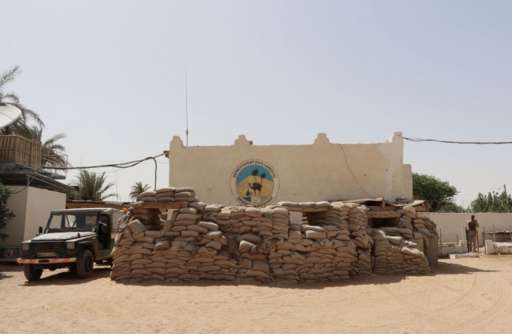
Incensed demonstrators in Chad attempted to breach a French military base in response to the fatal shooting of a Chadian soldier.
The soldier had reportedly visited the Faya-Largeau base in the northern region of the country on Tuesday, seeking medical treatment.
French troops are stationed there as part of their involvement in anti-terror operations in the area.
According to statements from Chadian and French authorities, the soldier then assaulted a nurse with a scalpel.
“The Chadian soldier, who was not in a normal state, went to the French army base seeking medical attention, seized a scalpel, and attacked a French military nurse,” explained General Ali Maide Kebir, the region’s governor, to the AFP news agency.
“In response, the nurse used his firearm and fatally shot the soldier.”
A senior officer from the French forces stated that the military nurse acted in self-defense, adding, “We don’t yet know the motives behind the attack. The nurse sustained three scalpel injuries to the throat, head, and neck, but his condition has stabilized.”
The incident has led to joint investigations by both the Chadian and French militaries. Nonetheless, the news has deeply unsettled the local community, sparking protests outside the military base.
Chadian soldiers guarding the base successfully prevented the demonstrators from gaining access.
The arrest of a suspected serial killer in Rwanda has sent shockwaves rippling throughout the nation.
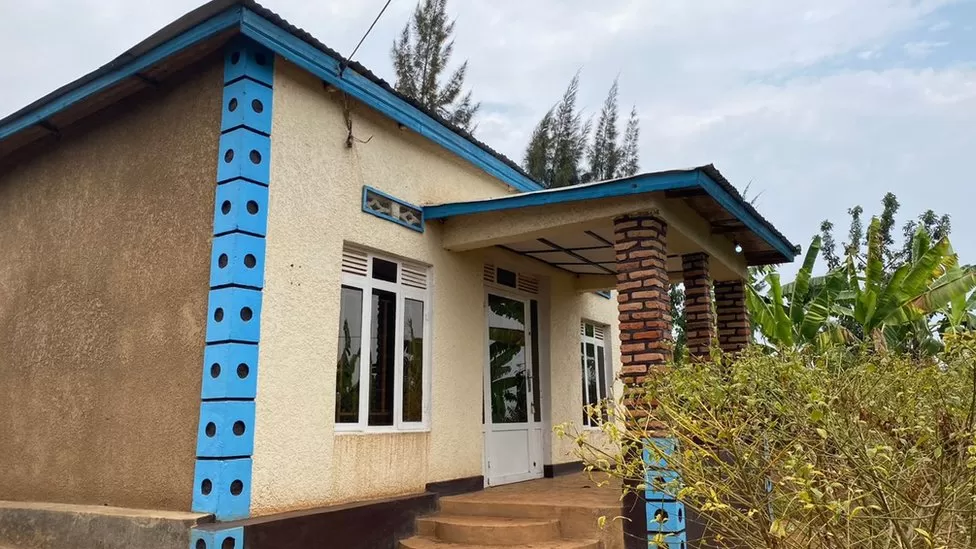
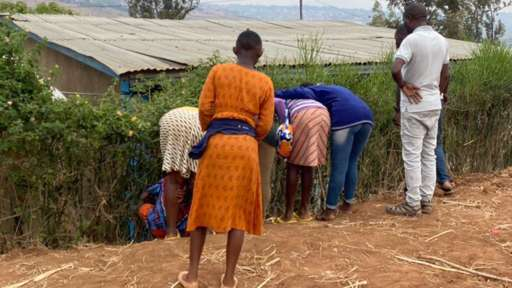
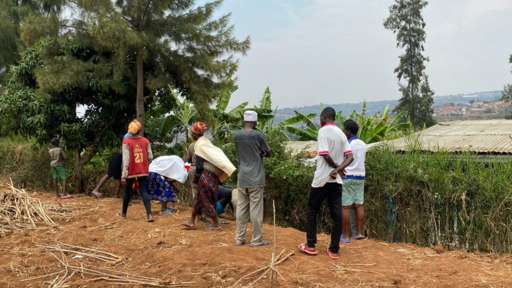
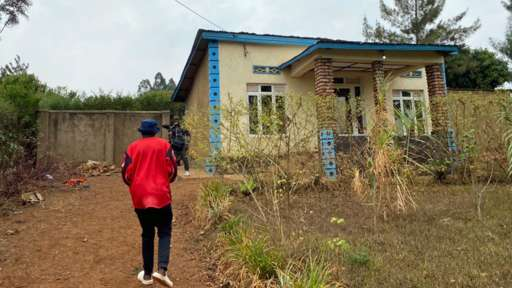
In a country where murder cases are typically infrequent, the discovery of more than 10 bodies buried at a house in the capital city of Kigali has captivated public attention.
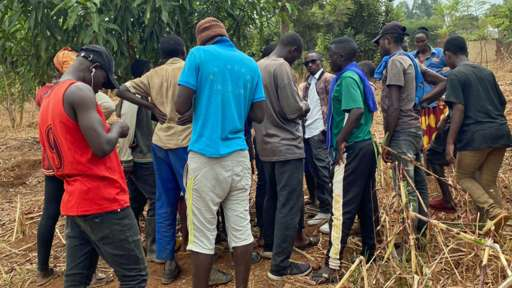
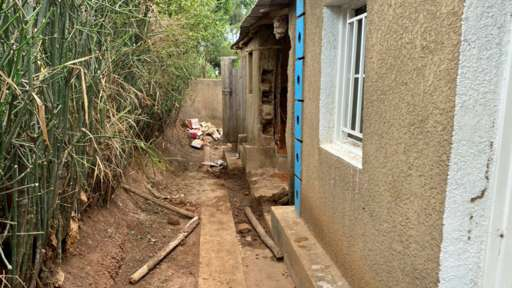
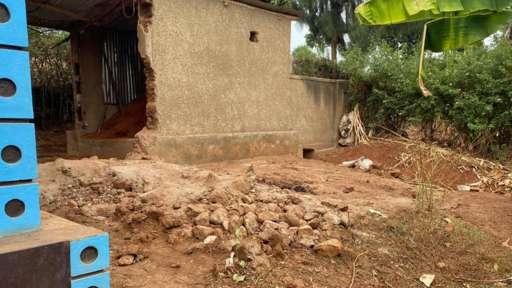
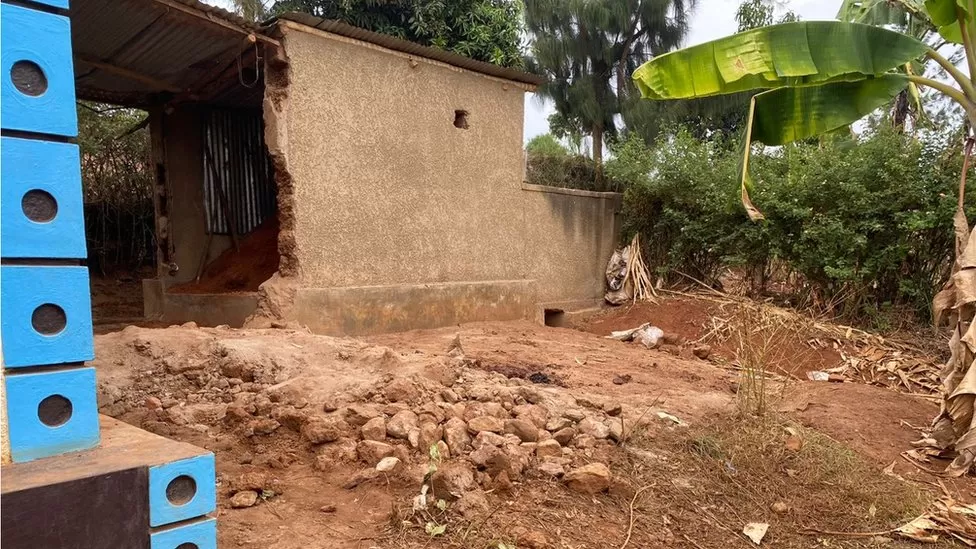
Our correspondent, Jean Claude Mwambutsa from the BBC, visited the site located in Kicukiro, a hilly suburb of the city, and captured these compelling images.
Neighbors have reported that the man had occupied the residence for over a year. Police were initially dispatched to evict him due to unpaid rent, and during this process, the man’s behavior raised suspicions, eventually leading to his confession of the murders.
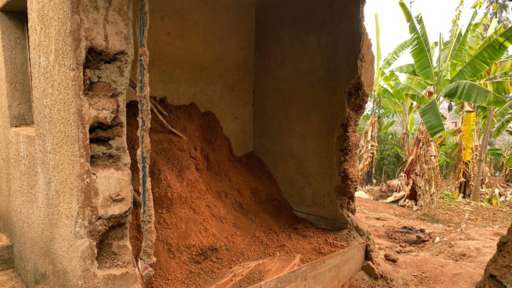
Subsequently, on Tuesday, law enforcement officers revisited the property to initiate an investigation, focusing their efforts on the kitchen.
It was in this very location that the suspect had informed the police he had concealed the bodies of his victims.
Local residents have confirmed that the man had been residing alone in the rented property.
While the victims’ identities remain undisclosed at this point, a police spokesperson has informed the state broadcaster that a majority of them were women he had encountered at bars.
As of now, the 34-year-old suspect has not yet faced formal charges in court, as investigations are still underway.
Rwandan police have arrested a 34-year-old suspected serial killer who is alleged to have murdered more than 10 people and buried them in the kitchen.
Police discovered the crime after the man was evicted from his rented accommodation in Kicukiro, a suburb of the capital, Kigali.
They were called after the suspect had defaulted on rent payments for months.
A police officer told local media the victims appeared to have been sex workers. They included men and women.
Murder is relatively uncommon in Rwanda and this case has shocked the country.
An unnamed police official told Rwanda’s private newspaper The New Times that the man had put up a fight when officers went to evict him on Monday.
“He apologised and cried excessively, which raised our suspicions. It is at the police station where he confessed to having killed some people, prompting Rib [Rwanda Investigation Bureau] to investigate,” the official said.
According to Rib spokesman Thierry Murangira, a number of bodies have been recovered, but the precise number will only become known following forensic examinations.
“He operated by luring his victims, mostly prostitutes, to his home where he would rob them of their phones and belongings and then strangled them to death and buried them in a hole dug in the kitchen of his rented house,” Mr Murangira said.
He hasn’t been formally charged yet.
According to reports, the man was detained in July for allegedly robbing, raping, and threatening some women but was later released due to a lack of proof.
Did you know that number plates with green and red backgrounds hold special significance and are issued to specific groups of people? The yellow plates provided by the Drivers Vehicle and License Authority (DVLA) also target particular individuals.
In this article, GhanaWeb Business will list the various types of number plates and the categories of individuals authorized to use them.
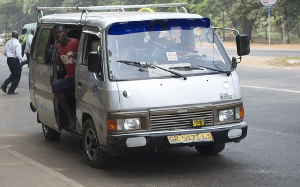
Yellow Number Plate: Commercial vehicle drivers seeking to register their cars are issued a yellow number plate. This type of identification is commonly seen on taxis, trotros, and buses.
Green Number Plate: All vehicles with green number plates are government-owned. They serve as a means for security personnel to identify government officials and sometimes provide them with special treatment when necessary.
CD Plate: The designation “CD” stands for Corps Diplomatic. Cars bearing CD plates are primarily driven by foreign diplomats, such as ambassadors. Additionally, members of international organizations also use CD plates.
DV Plate: “DV” stands for Defective vehicle. Car owners who have not yet registered their vehicles are assigned DV plates. DV cars are intended for temporary use, with the DV designation valid for twelve calendar months and applicable to various vehicles at different times. Moreover, DV plates come with a logbook that should contain records of the vehicle’s movements and driver details, and this logbook must be carried at all times.
Black or White Background Number Plate: These number plates are used by private individuals. Private institutions, such as banks and schools, also employ this type of number plate.
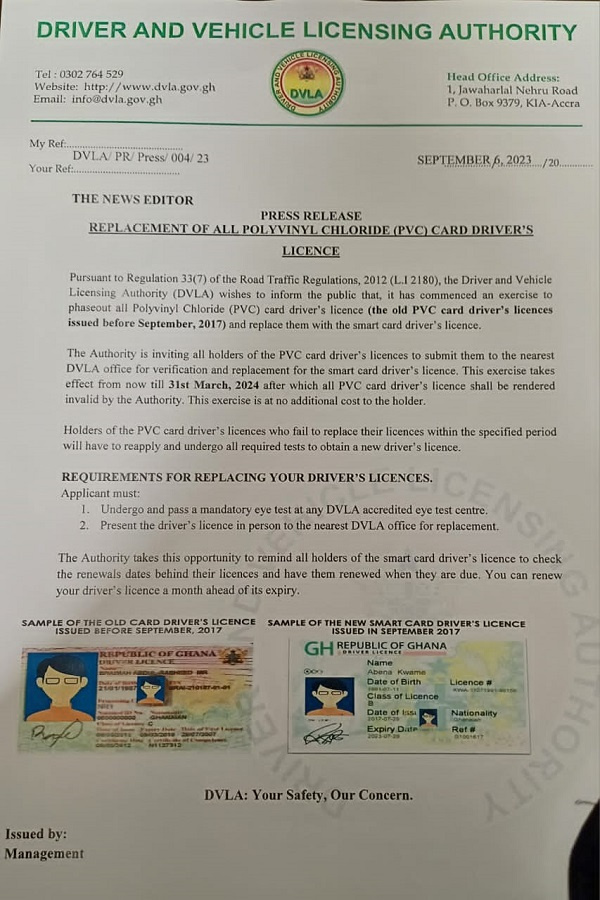
Meanwhile, the DVLA has announced the commencement of an initiative to phase out all old driver’s license cards issued before September 2017 from the system. These outdated cards will be replaced with smart driver’s license cards. The exercise will be in effect from now until March 31, 2024, after which all old card driver’s licenses will be rendered invalid by the Authority.
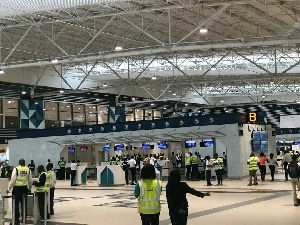
Over the past few months, the departure area of Kotoka International Airport has consistently seen crowds of passengers and their companions as many Ghanaians opt to leave the country.
On social media, stories abound of friends and neighbors reaching out only after they’ve already arrived in their new countries of residence. While a significant portion of these Ghanaians are pursuing further education abroad, the prevailing state of affairs in the country is frequently cited as the primary motivation for their departure.
The escalating rate of this phenomenon, commonly referred to as “jakpa,” is causing widespread concern, especially given that a significant portion of these emigrants are young people. While Ghanaians seeking better opportunities in Europe and other nations is not a new trend, the current surge underscores the profound economic challenges facing the country.
Many Ghanaians are expressing their frustration as the cost of living, essential goods, healthcare, and access to quality infrastructure, such as road networks, have all become prohibitively expensive and increasingly out of reach for the average citizen. In the past year alone, inflation has soared to over 200%, while the stability of the country’s currency against foreign currencies remains precarious.
Youth in particular are increasingly viewing emigration as the only viable path to secure a better future for themselves and their families, as the government appears to be slow in implementing immediate measures to address the nation’s pressing issues.
Recent videos from Kotoka International Airport depict a steady stream of individuals leaving the country, sparking a wave of concern and discussion among Ghanaians about the frequency and implications of this mass exodus.
You don’t know the fire we are in yet in this country. When it gets to you, you’ll understand why everyone is trying everything possible to leave. The mess this government has created for the country, even if God comes to be the president, it will take him 100years to fix it
So they built the Airport for people to only arrive in the country or what? Why are people easily possessed by politics? In the video, the person recording said people are coming and ya here referring to some caption that says people are leaving without even watching the video.
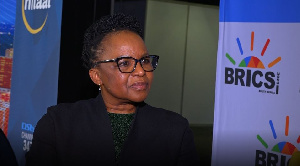
The success of the African Continental Free Trade Area (AfCFTA) is contingent upon the continent’s commitment to embracing industrialization and prioritizing the enhancement of productive capacities. Busi Mabuza, the Global Chair of the Brazil, Russia, India, China, and South Africa (BRICS) Business Council, has emphasized this point.
Additionally, Mabuza underscores the vital importance of collaboration and cooperation among nations to unlock their economic potential. Furthermore, she highlights the value of fostering partnerships and alliances as a means to open up new opportunities for investment and mutual growth.
“We cannot afford to fail in unlocking the opportunity of industrialising the African continent. It is important that we move away from extractive relationships that the continent had in the past to where our partners come and help us industrialise. “This is because with the kind of youthful population we have – with recent reports suggesting that our population could be 1.4 billion, most of whom are young people; we need to build industrial capacity, especially if we are going to make AfCFTA a reality. To make it a reality, we need a regional value chain; we need infrastructure to enable logistics, the transportation of goods and ease of providing services,” she told the B&FT in an exclusive interview. “Most especially, we need to unlock the energy opportunity in a manner that enables a sustainable future for us,” she added.
However, Madam Mabuza considers the presence of the BRICS bloc to be a strategic chance for the continent to use mutual benefit for prosperity.
“We would like to partner with African businesses so that we engage with BRICS nations on the opportunities Africa offers – especially in light of the AfCFTA. With one voice, we need to ensure that what we are asking of the BRICS nations and what we are offering them is aligned from our side as an African continent…we had better stand up and ensure we are engaging with them to ensure mutually beneficial outcomes,” she said.
She added challenged African leaders and the continent’s business community to quit being bound by ideologies and strive toward achieving national prosperity.
“This is our time; we are inviting the West or the East to come and partner with us. But what I have experienced with the partnership that South Africa has enjoyed with the BRICS nations, for the past 10 years, is that the countries operate from a position of not wanting to impose their ideology, their ideas or their way of doing things on South Africa, but rather they are there to listen to us and partner for mutual benefit. So, it is important for us as a continent to be there at the table,” she said.
Local politicians from Loudoun County in the American state of Virginia have faced severe criticism for embarking on a trip to Ghana in the middle of June this year.
According to Fox News, concerned residents in the area attended a Board of Supervisors meeting on Tuesday, September 5, to express their dissatisfaction with the use of taxpayer dollars by local leaders to finance an extravagant journey to Ghana. The expenses reportedly covered first-class flights, luxurious accommodations at a five-star hotel, fine dining, and other lavish expenditures.
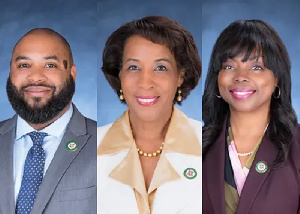
The three officials in question, Phyllis Randall, Koran Saines, and Sylvia Glass, are reported to have expended over $60,000 in public funds during their visit to Ghana, primarily for the purpose of formalizing a sister city agreement with the Tema Metropolitan Assembly (TMA).
Phyllis Randall serves as the Chair of the Loudoun County Board of Supervisors, with Koran Saines as her vice-chair, and Sylvia Glass as a Supervisor on the Board.
Randall responds to allegations:
Randall denied utilizing tax payer money to pay for the vacations in a statement to Fox 5.
“I don’t travel on county taxpayer revenue and never have,” she said, according to the outlet. “It’s a policy I put in place when I came to office in 2016.”
But according to the source, Randall did not pay for the money himself. They originated from the transitory occupancy tax collected by the economic development authority, which is typically borne by outsiders visiting Loudoun County rather than locals.
“There are people who are rebelling in their ignorance while ignoring the truth because they don’t want the answer, they want the issue,” Randall said during Tuesday’s meeting.
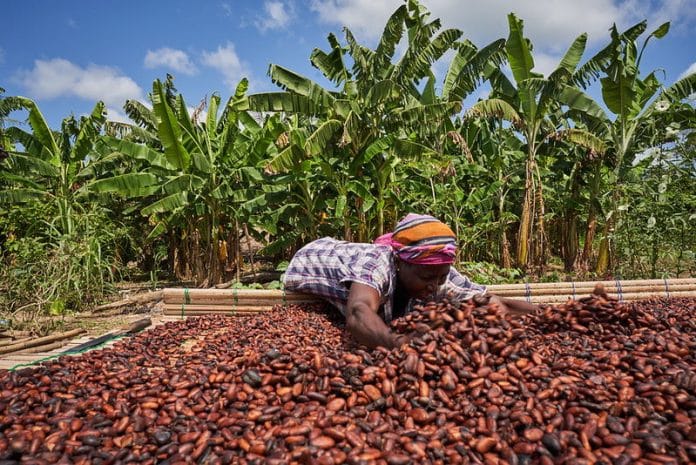
A 62.5kg bag of cocoa beans should cost GH1,380 at the farm gate, a 72.5 percent increase over the present price of GH800, according to cocoa growers.
A group called the Ghana Civil Society Cocoa Platform (GCCP) argued at a press conference in Accra that the 72.5 increase will help stop the problem of cocoa smuggling along the country’s western and eastern borders and protect farmers from rising cost of living and inflation as COCOBOD gets ready to announce new prices for the upcoming 2023/2024 cocoa season.
“We realised that just as the international cocoa market price started appreciating, our neighbours that use the liberalised cocoa marketing approach increased their farm-gate prices. At some point this year, a bag of cocoa was selling in Togo at GH¢1,500 (twice what Ghanaians were being paid), which fuelled the nefarious activity of cocoa smuggling – as some farmers were offered over 30-40 percent beyond the prevailing market price in Ghana to sell their cocoa to these smugglers,” said GCCP, which represents cocoa farmers’ interest.
Leticia Yankey, the founder of Cocoa Mmaa and a cocoa farmer, took the podium at the press conference and urgently urged COCOBOD, the regulator of the cocoa industry, to heed the group’s demands.
She elaborated that, according to the assumptions of the Producer Price Review Committee (PPRC), the Ghanaian Cocoa Coalition for Progress (GCCP) firmly maintains that Ghanaian farmers should be entitled to a minimum of GH¢22,080 per tonne. This translates to GH¢1,380 per bag (62.5kg) of cocoa beans.
The PPRC’s objective is to ensure that the farm-gate price constitutes at least 70 percent of the net free on board (FoB) price of cocoa beans.
Ms. Yankey clarified that this calculation was derived from the lowest projected values, which included the agreed-upon living income differential (LID) of US$400 per tonne and the current International Cocoa Organisation (ICCO) world cocoa market price, standing at US$3,647 per tonne of cocoa beans.
The calculation also factored in the substantial decrease in the origin differential/country premium, which has plummeted from over US$400 to its current level of US$25.
“Assuming COCOBOD gives all the US$400 LID to the farmer that brings the farm-gate price to US$2,162 per tonne (US$135 per bag) for the 2023/2024 cocoa season – and using the year-on-year Bank of Ghana (BoG) exchange rate of US$1:GH¢10.2 – cocoa farmers are expected to receive not less than GH¢22,080 per tonne of cocoa beans; which should translate into a minimum of GH¢1,380 per bag of cocoa beans,” she stated.
“These are very conservative estimates, and we expect COCOBOD will be able to meet them with ease,” she added.
COCOBOD’s announcement
In the previous year, the government did not make any announcements regarding a new cocoa farm-gate price for the 2022/2023 crop season, which commenced on October 1, 2022.
The most recent adjustment to the cocoa farm-gate price by the government occurred in 2020 when it was increased by 21 percent, rising from GH¢660 to GH¢800 per bag. This increase was closely tied to the implementation of the living income differential, a pricing mechanism designed to alleviate poverty among cocoa farmers.
As a result of ongoing developments in the international cocoa market, Ms. Yankey highlighted that cocoa farmers are eagerly anticipating the announcement scheduled for Saturday, September 9, 2023, by COCOBOD, and their expectations are running very high.
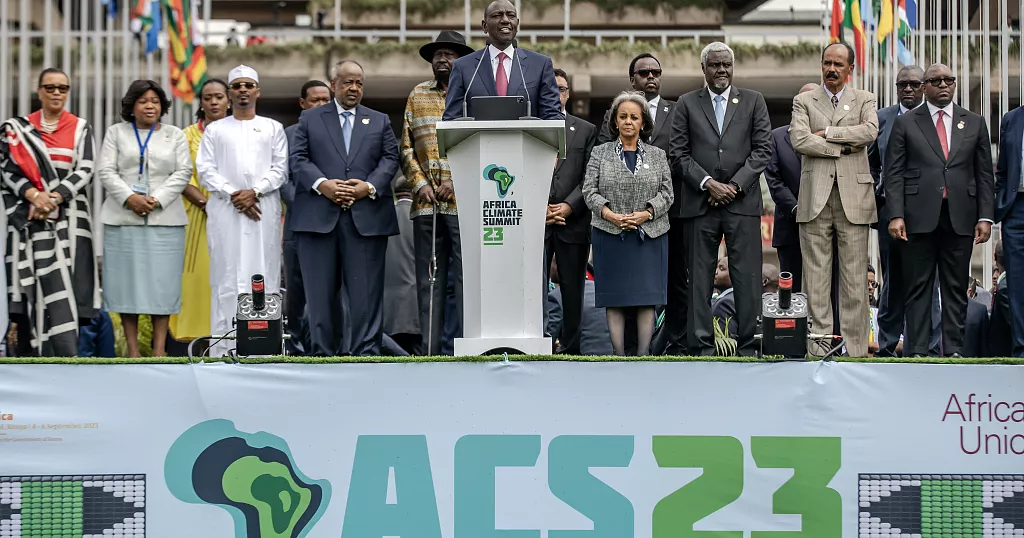
A significant African climate summit concluded on Wednesday after leaders adopted a declaration emphasizing the continent’s potential as a green energy leader, as stated by Kenyan President William Ruto.
“We proceed with the Nairobi declaration,” announced Ruto, marking the end of the three-day conference. Ruto had advocated for a shift in the summit’s narrative, focusing on Africa’s transition to clean energy in the face of climate-related disasters.
The final version of the document, as seen by AFP, said, “This declaration will serve as a basis for Africa’s common position in the global climate change process.”
Analysts believe that a unified African voice could create momentum for a series of crucial meetings leading up to a pivotal UN climate summit scheduled to commence in November, including the G20 meeting in New Delhi this weekend.
The declaration calls for “a new financing architecture that is responsive to Africa’s needs, including debt restructuring and relief,” as concerns rise about the high cost of financing on the continent. It also urges rich carbon-emitting nations to honor their longstanding climate commitments to poorer countries and calls on world leaders to support a proposed “carbon tax on fossil fuel trade, maritime transport, and aviation.”
Although the 54-nation continent is particularly vulnerable to the growing impacts of climate change, the summit primarily focused on calls to unlock investments in clean energy.
“A new Africa is emerging, and it means business,” stated Ruto.
The summit secured pledges of $23 billion in funding “for green growth, mitigation, and adaptation efforts” across the continent, according to him. Competing visions of the world’s energy future are likely to be on display at the COP28 talks in the oil-rich United Arab Emirates, where the world will assess the as-yet-insufficient efforts to reduce planet-warming emissions.
The Ghana Soya Bean Farmers and Aggregators Association has alleged that certain supporters of the ruling New Patriotic Party (NPP) engaged in commercial activities with the government’s Planting for Food and Jobs program.
Abdul Hakeem Issah, the association’s Director of Administration, stated that a significant amount of fertilizers intended for farmers were smuggled, with supplies that could benefit farmers being redirected to party members.
He emphasized that unless this issue is resolved, the success of the government’s second phase of the Planting for Food and Jobs initiative will be jeopardized.
“The first challenge has not been addressed, and we are bringing on another one,” he said. “With the earlier one, fertilizers were smuggled, and inputs were being given to party people instead of farmers. At the end of the day, party people were using these things to do business, and the resources were not getting to the farmers,” he said in an interview with CitiNews. “So, the point is that if these things are not checked, and the next thing comes on board, it will fail,” he added.
Mr. Issah’s statement coincides with the launch of Phase two of the Planting for Food and Jobs program by President Nana Addo Dankwa Akufo-Addo on August 28, 2023.
The second phase of the PFJ initiative outlines a five-year strategy aimed at revolutionizing agriculture in Ghana. Its primary objectives are to promote modernization by enhancing specific commodity value chains and fostering active involvement from the private sector.
According to information provided by the Ministry of Trade and Industry, the Planting for Food and Jobs, a prominent agricultural campaign, was initially inaugurated on April 19, 2017.
An expert in urban planning, Dr. Bernard Abeiku Arthur, emphasized the importance of ensuring the proper implementation of plans related to Accra’s transportation and road infrastructure. He noted that this sector has often been neglected due to a lack of allocated funds for critical projects.
Dr. Arthur expressed that addressing transportation and traffic challenges in Accra is not an insurmountable challenge, highlighting the need for proactive action by stakeholders.
“Accra is not that difficult to manage in terms of urban transport. It is three things that have been worrying us. We have been planning and planning and planning, we have not been implementing. We have been putting measures in place but we are not enforcing and ensuring that the right things are followed. We have been planning and not adding money where we are supposed to put money to ensure that the systems are running.
“Transport is like the heart of every city or every town. If you shut transport or shut energy you grind an economy completely. And we’ve been planning, we’ve been talking about rails, we’ve been talking about non-motorized transport but we are not putting money and efforts and enforcement where we are supposed. That is what is worrying us,” he was quoted by citinewsroom.com.
The Compliance and Enforcement Unit of the Ghana Revenue Authority (GRA) is stressing the importance of companies issuing Value Added Tax (VAT) invoices, emphasizing that failure to do so constitutes a criminal offense punishable by law.
Joseph Annan, the Area Enforcement Manager of GRA responsible for Accra Central, has stated that the unit will enhance its enforcement efforts to crack down on businesses that either fail to issue tax invoices or provide invoices not authorized by the Commissioner-General.
Annan further explained that some businesses were generating their own VAT invoices, while others were selectively issuing them.
He highlighted that the VAT Act outlined penalties for such violations, which could include a fine of up to one hundred penalty units, a prison term of up to six months, or both.
Additionally, offenders may be required to pay a penalty amounting to a maximum of GH¢50,000 or three times the tax amount involved.
He added, “Customers who dodge the operation cannot run away from the law, because they will be caught unexpectedly.”
During their recent operation, the GRA team conducted visits to several businesses located in the Ayawaso West Municipal District, including Hansen Decor City, Boost Electronics, De’lish Restaurant, Heiress Flair Boutique, Max pro-Auto Parts, Relay Express Laundry and Dry-Cleaning Services, Julie-Joan Enterprise, House of Fabrics, Dong Chebe Kretons, Fresh Angels, Gi-Fred Enterprise, Milans Star Fabrics, and About Office Ghana Limited.
Out of these visited shops, ten were officially summoned to the Criminal Investigation Department (CID) Unit of the Ghana Police Service for further investigation. Additionally, two shop managers were arrested as a precautionary measure.
According to the asaasenews.com report, these managers were subsequently taken to the customs office at the headquarters to provide their statements before being handed over to the CID.
The Presidential Election Petition Court in Abuja has issued a ruling stating that the allegations of drug trafficking in the US against President Bola Tinubu, made by the Labour Party’s presidential candidate, Peter Obi, were unsubstantiated.
A five-member panel of the court, led by Haruna Tsammani, delivered the lead judgment on the substantive suit and clarified that President Tinubu had not been convicted of any crime in the United States.
The court referenced correspondences between the Nigeria Police and the US embassy in Nigeria, indicating that the US consulate in Lagos had cleared Mr. Tinubu of any criminal record in the US.
Mr. Obi had asserted in court that Mr. Tinubu was convicted of drug trafficking, resulting in the forfeiture of $460,000.
However, the court emphasized that the forfeiture of $460,000 by Mr. Tinubu was part of a civil case and could not serve as a basis for disqualification from the election under Nigerian law.
Private legal expert, Martin Kpebu commended Special Prosecutor Kissi Agyebeng for re-freezing the funds in the bank accounts of former Minister of Sanitation and Water Resources, Cecilia Dapaah.
Kpebu praised the Special Prosecutor’s actions, noting that Dapaah has not provided evidence that the substantial amount of money stolen was derived from her business activities.
Speaking on TV3’s Ghana Tonight on Tuesday, September 5, 2023, Mr. Kpebu suggested that Cecilia Dapaah would have provided an explanation if the stolen funds were indeed linked to her business endeavors.
Additionally, he stated that the companies involved would have come forward to clarify their positions when the scandal became widely known in both the public domain and the media.
“There is no way we could look at the laws and allow Madam Dapaah to go with the money,” Martin Kpebu said.
He continued that, “She hasn’t shown she has run any business.”
The private legal practitioner added that, “From day one, if she had a company that was producing so much in selling and she had money and she could explain this, you think the company wouldn’t have come out?”
The Financial Division of the Accra High Court issued a ruling on Thursday, August 31, 2023, instructing the Office of the Special Prosecutor (OSP) to return all seized assets of Cecilia Dapaah and unfreeze her accounts within seven days. The court concluded that the OSP lacked valid grounds for the seizure of the property and the freezing of her accounts, emphasizing that the OSP had acted based on speculation and public sentiment.
However, on Tuesday, September 5, 2023, the OSP, in compliance with the High Court’s order, once again froze Cecilia Dapaah’s accounts and assets.
Background
In the meantime, two housekeepers employed by Cecilia Dapaah are currently facing charges in an Accra Circuit Court.
They are accused of stealing an amount totaling $1 million, €300,000, along with millions of Ghanaian cedis from her residence in Abelemkpe in October 2022.
The two individuals, identified as 18-year-old Patience Botwe and 30-year-old Sarah Agyei, allegedly pilfered the money and personal belongings of the couple during the period from July to October 2022.
They have been charged with one count of conspiracy to commit a crime and five counts of theft involving US$1 million, €300,000, and millions of Ghanaian cedis.
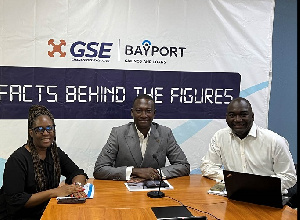
Bayport Savings and Loans has demonstrated remarkable resilience in the face of persistent economic challenges and achieved significant milestones in the first half of 2023.
Despite its absence from the market for several years, Bayport’s latest bond issuance received strong demand from the market. The funds obtained from this issuance were directed towards the company’s assets, resulting in a 2% increase in loan advances compared to the previous year, and an overall expansion of its asset base by 6%.
One of the key drivers of Bayport’s improved profitability was an enhancement in its impairment position. This was achieved through various initiatives in the collections space, including refining processes for reinstating lapsed loans, improving field collection operations, and resuming sales activities after a period of non-activity due to macroeconomic factors. These measures led to improved provision coverages and overall performance.
Bayport embarked on a digital journey three years ago, training all back-office operational staff and agents to use new applications that have enhanced loan turnaround time and customer experience.
The introduction of a self-service e-money platform and other digital initiatives, such as self-origination via WhatsApp and USSD, have further facilitated Bayport’s migration to a cashless operation and improved customer service.
Akwasi Aboagye, CEO of Bayport Savings and Loans, emphasized the transformation of the business through digitization, enabling rapid and sustainable growth while delivering top-tier financial solutions to customers. Bayport also maintained its leading position in the government payroll-lending space.
In terms of environmental, social, and governance (ESG) highlights, Bayport finalized the Client Protection Charter to prioritize customer interests and inaugurated an employee-led corporate social investment (CSI) initiative.
Bayport Management Ltd (BML), the holding company of subsidiaries operating in eight countries across Africa and Latin America, continues to provide financial solutions to both formally and informally employed individuals in emerging markets. With an extensive footprint of more than 400 branches and digital customer channels, Bayport embraces technology and innovation to fulfill its mission of financial inclusion in developing markets.
Vice President Kashim Shettima highlighted the potential for a transformative economic turnaround through enhanced collaboration with experts in the Banking and Finance industry.
As the special guest of honor, he made these remarks today in Abuja during the commencement of the 16th Annual Banking and Finance Conference, which was themed ‘Nigeria’s Economic Growth and Empowerment: The Role of The Financial Services Industry.’
The vice president whose remarks was titled ‘Our Priorities in a Post-Pandemic World’, noted that “we must now do what pessimists may regard as impossible: turning the economy around in record time. We seek your partnership in getting this done. We cannot take your support for granted.”
Continuing he said, “this journey towards economic rejuvenation is not one to be undertaken in isolation. It is a call to forge robust partnerships with strategic nations and multilateral organisations, for in unity, Nigeria can reposition itself as a formidable, globally competitive partner.”
Addressing the role of the banking and finance sector in this economic rejuvenation, Mr. Shettima called on the stakeholders to “join us in serving the nation. We have promised to reposition consumer finance, and that can’t be done without you.
“We have promised to incentivise and finance value-addition to our agricultural and other products, and you are our ally in this. We need you because Nigeria teeters on the edge of a precarious balance of payments as we import more than we export.”
“The future is already here, and this industry is a springboard for the success of our reforms and programmes. Whether in incorporating blockchain technology or expanding financial inclusion to deliver dividends of democracy to banking and unbanked citizens, Nigeria is here to occupy the high-table in a fast-changing world,” the vice president added.
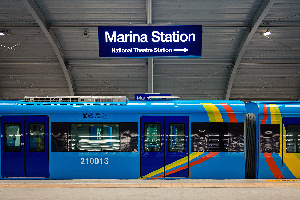
Megapolis with world’s worst traffic gets train metro after 12-year wait
Lagos, Nigeria’s congested commercial hub, inaugurated its inaugural light-rail system on Monday, marking a significant milestone after 12 years of planning and development.
Construction of the 13-kilometer (8-mile) line commenced in 2009, with an initial service launch expected in 2011. However, funding challenges for the 100 billion naira ($132 million) project resulted in delays.
The line, constructed by China Civil Engineering Construction Corp., was officially opened by Lagos Governor Babajide Sanwo-Olu on Monday and is projected to accommodate 150,000 daily passengers, as reported by the Lagos Metropolitan Area Transport Authority.
Lagos, a city of 20 million inhabitants, grapples with some of the world’s worst traffic congestion, according to Numbeo, a crowd-sourced online database. While the new “blue line” rail system is expected to alleviate some of these issues, Sanwo-Olu emphasized in 2021 that the city, which draws Nigerians from all over the country, requires $15 billion over five years to enhance its road and transportation infrastructure.
During the inauguration event, Governor Sanwo-Olu, dressed in a train operator’s uniform, personally engaged with passengers, announcing station names and addressing the crowd.
When fully operational, the train will accommodate up to 1,200 passengers per trip and significantly reduce travel time from Mile 2 near Tin Can Island (the country’s busiest seaport) to Marina on Lagos Island, reducing it from potentially 3 hours to just 25 minutes.
“A mega city cannot function without an effective metro line,” said Adetilewa Adebajo, chief executive of Lagos-based CFG Advisory. “However, Lagos needs not just the metro line. It has to develop waterways too, being a coastal city. It needs an integrated transport system. Those are what will be able to relieve the congestions in the city.”
At present, the government grapples with an annual expenditure of approximately 4 trillion naira due to traffic gridlock, resulting in lost work-hours as commuters collectively spend 14.1 million hours daily stuck in traffic, as indicated by a 2021 report from Lagos-based Danne Institute of Research.
Governor Sanwo-Olu initially commissioned the blue line in December; however, operational commencement was delayed because the necessary facility to power the tracks was not ready. For the interim, the metro will utilize a diesel locomotive for four weeks until the power plant can be connected to the tracks.
Nigeria faces similar inefficiencies in its transportation infrastructure. For instance, in 2018, the government inaugurated a train linking the capital city, Abuja, with its airport. Five years later, train cars remain unused in a depot, while the country continues to service the project’s $500 million loans from the Export-Import Bank of China, amounting to $50 million annually.
Lagos has previously experimented with other mass transit solutions, such as the World Bank-funded bus rapid transit system (BRT-lite) introduced in 2008. While approximately 4 million people have obtained the required cards for BRT, the system struggles to meet the demands of the city’s growing population.
The blue line will initially operate 12 trips per day for two weeks, eventually increasing to 76 trips daily, serving an expected 150,000 passengers daily, according to the state administration. The second phase, which extends the network from Mile 2 to Okokomaiko and is en route to Badagry at the state’s border with neighboring Benin, is currently under construction, bringing the total track length to 27.5 kilometers.
Additionally, Lagos plans to complete another 37 kilometers of rail by the end of the year, connecting the eastern and western parts of the city to further alleviate traffic. This line, referred to as the “red line,” is reported to be 95% complete.
Lagos, home to major companies like Dangote Cement Plc, Unilever Plc, and Heineken NV, experiences a population density of 13,800 residents per square kilometer, significantly higher than cities like Johannesburg (3,100) and Dar es Salaam (6,900).
The Economist Intelligence Unit’s Global Livability index for 2023 ranked Lagos among the least livable cities out of 173 evaluated.
In June, President Bola Tinubu lifted price caps on gasoline and allowed the naira to depreciate, leading to significant increases in prices for various commodities, from transportation to food. As a result, many Lagos residents had to curtail their use of private vehicles.
Transportation expenses absorb the largest proportion of household budgets among major African cities, according to the World Bank.
To provide some relief to residents, the metro service will offer passengers half the recommended fare of 750 naira ($0.97) per trip, with the government subsidizing part of the cost to mitigate the impact of rising living costs, according to the Lagos Metropolitan Area Transport Authority. If the train operates at full capacity, this subsidy could cost the government 1.7 billion naira monthly, based on Bloomberg’s estimation.
“This will bring a huge relief to Lagos in terms of commuting from one point to another point,” said Frank Momoh, a businessman, who was on the metro on Monday. “I will drop my car for the train ride because it is faster and it is more convenient.”
Deep within the rugged landscape of Kasigau, a sprawling wilderness inhabited by elephants, a team equipped with clipboards and measuring tapes is diligently examining an unassuming tree. Despite its gnarled and leafless appearance, this tree holds significant value: it serves as a carbon store. The team’s mission is to precisely quantify the amount of carbon locked within this semi-arid, 200,000-hectare woodland in southern Kenya.
“We want to make absolutely sure we account for every single tree,” asserts Geoffrey Mwangi, the lead scientist at the US-based company Wildlife Works, as the “carbon samplers” gather data from another thorny specimen.
This data translates into carbon credits, and these credits have become a valuable commodity, fetching millions of dollars when sold to corporate giants like Netflix and Shell. These companies purchase these credits to offset their greenhouse gas emissions, enhancing their environmental credentials.
With climate change intensifying and mounting pressure on companies and nations to address their environmental impact, the demand for carbon credits has surged, despite facing scrutiny over their effectiveness.
Cash-strapped African countries are now seeking a larger share of the $2-billion carbon credits market, which is projected to grow five-fold by 2030. Africa is home to the planet’s second-largest rainforest and extensive carbon-absorbing ecosystems, such as mangroves and peatlands, yet it only produces 11 percent of the world’s carbon offsets.
Kenyan President William Ruto, who is hosting a climate summit in Nairobi, expressed the view that Africa’s carbon sinks represent an “unparalleled economic goldmine” with the potential to absorb millions of tons of CO2 annually, translating into billions of dollars.
A single carbon credit represents one tonne of carbon dioxide removed or reduced from the atmosphere. Companies acquire these credits through activities such as renewable energy projects, tree planting initiatives, or forest protection programs.
Carbon markets operate with minimal regulation, and accusations have arisen that certain carbon offsets, particularly those tied to forests, yield limited environmental benefits or exploit local communities, leading to a drop in prices.
Kenya already leads Africa in generating carbon offsets and envisions a substantially larger domestic industry capable of creating jobs and driving economic growth, despite the market’s uncertainties.
“We have massive interest. We currently hold 25 percent of the African carbon credits market in Kenya, and we aim to expand this,” says Ali Mohamed, the president’s special envoy for climate change.
In Kasigau, Wildlife Works runs a flagship carbon credit project, compensating landowners and communities for preserving the forest. Revenue from the project has supported approximately 400 jobs and funded essential infrastructure, including water, education, and healthcare, in an underserved area of Kenya.
Wildlife Works founder Mike Korchinsky affirms that over half of the revenue goes to these communities. The protected forests were previously cleared for firewood and charcoal, leading to the degradation of a vital carbon sink and critical wildlife habitat. Preventing deforestation helps achieve climate goals by retaining carbon in the soil and trees, preventing its release into the atmosphere.
The Kasigau Corridor REDD+ Project was the world’s first to generate certified credits in this manner, with independent verification conducted nine times since 2011, preventing roughly 22 million tonnes of CO2 emissions.
While Kenya emits approximately 70 million tonnes of CO2 annually, projections suggest that Africa could generate 300 million carbon credits annually by 2030, a 19-fold increase from current levels. For Kenya, this would equate to over 600,000 jobs and $600 million in annual revenue.
However, these projections rely on carbon prices significantly higher than current levels and a substantial increase in financing. Carbon markets are grappling with trust and integrity issues in an environment characterized by volatility.
Ahead of the Africa Climate Summit in Nairobi, over 500 civil society organizations called on President Ruto to steer the conference away from carbon markets and “false solutions” driven by Western interests. They argue that these approaches will allow wealthy nations and large corporations to continue polluting while undermining Africa’s interests.
Joseph Nganga, Ruto’s appointee to lead the summit, contends that carbon markets should act as a means of ensuring accountability rather than an excuse for emissions. He believes that the cost should be borne by wealthy polluting nations.
Countries are moving to regulate the carbon credit sector. Zimbabwe, for instance, announced plans to appropriate half of all revenue generated from carbon credits on its land, sending ripples through the markets. Kenya is also finalizing its own legislation to ensure transparency and a fair share for communities without discouraging investors.
Speaker of Parliament, Alban Bagbin, has emphasized that directing resources towards modernizing agriculture and incorporating technology into farming practices can attract more young people to the sector.
He believes that this approach can generate economic opportunities for rural areas and revolutionize the production and distribution of food.
During his speech at the 30th anniversary of the Council of Ewe Associations of North America in Atlanta, Georgia, Alban Bagbin asserted that Africa possesses the potential to become the world’s food provider.
He stated, “If governments direct resources into modernizing agriculture and integrate technology into farming practices, more youth will choose this sector.”
He emphasized that employing technologies like GPS, sensors, drones, and data analytics can enhance farm productivity by monitoring crop health, increasing yields, and optimizing resources.
Alban Bagbin also highlighted that the introduction of technology and innovation can effectively address post-harvest losses in agriculture.
Minister of Works and Housing, Francis Asenso-Boakye, promised that the government would continue to support the private sector in order to make it the leader in housing development.
The Minister claims that the government is working to reduce Ghana’s housing shortage.
The State Housing Company Limited (SHC) in Accra was contracted by the government to build a 40-unit, ultra-modern housing development.
He said: “The government’s interest is to offer support to the private sector so that the private sector can take the lead in housing construction. What the private sector lacks is support from the government, and that is what this government seeks to do by providing that support in the form of subsidies on incumbent land. But the government is also leveraging on public lands to do that.”
“And one big important component of housing infrastructure is horizontal infrastructure, which is the roads, the drains, sewage, electricity, and water. Government is also leveraging on its traditional responsibility of infrastructural provision to make sure that the cost of pricing reduces.”
According to Asenso-Boakye, the project is aimed at people in the middle income range and also serves as a way to raise money for other affordable housing initiatives.
“This estate used to be an abandoned site. We reclaimed it some years ago and construction began about 18 to 24 months ago. It is made up of three- and four-bedroom townhomes and single-family homes. It has various levels of finishing. We also have a sports facility here that residents can use. The concept of this estate was to serve as a support system for our affordable housing project.
“We built this to target middle-income earners, put a bit of a premium on the pricing so that the revenue we generate from this estate can be used to support our affordable housing initiative,” he said.
The Driver and Vehicle Licensing Authority, has stated that all Polyvynl Chloride (PVC) Card driver’s licenses will be declared invalid and replaced by Smart Card driver’s licenses as of March 2024.
In a statement released on September 6, 2023, the DVLA stated that it is encouraging all PVC card license holders to bring their cards to the local DVLA office for verification and replacement with smart cards.
“This exercise takes effective from now till March 31, 2024 after which all PVC card driver’s license shall be rendered invalid by the Authority. The exercise is at no additional cost to the holder,” the statement said.
The DVLA also noted that those who have a PVC card driver’s license but fail to replace it within the allotted time would need to reapply and take all necessary examinations in order to get a new driver’s license.
Former Member of Parliament for Buem Constituency, Mr Daniel Kosi Ashiamah, has described COP George Alex Mensah’s attitude at the public hearing on leaked tape to oust the IGP as devlish.
According to Mr. Ashaimah, some unwaqrranted comments passed by the commissioner of police are all a ploy to destroy and render the police service to nothing.
But the former MP has profusely stated that he will fail in all his attempts.
“He has seen that he is going home, so he is doing all he can to destroy everything before he lives. He is like a witch. Before a witch in a family dies, he kills all the children in the house. That is what he is trying to do. Telling us that he heard Mahama and Dampare are close. He is a devil! But he will not succeed. We must tell him in the face,” the former MP expressed.
He added: “If you want to lobby to become an IGP, you must bring the record of your performance so that Ghanaians and Nana [President Nana Addo Dankwa Akufo-Addo] will assess and give you the IGP position. Don’t go and tell somebody that Dampare is not doing his work so we should take you.”
Meanwhile, the member of parliament for Builsa South, is calling for the removal of COP Alex Mensah and Superintendent George Asare from their positions within the Ghana Police Service.
He asserts that both senior police officers have displayed misconduct and insubordination, rendering them unfit for their roles.
Dr. Apaak urged the Police Council to promptly suspend the two policemen in light of the ongoing investigation and revelations surrounding their behavior.
During separate testimonies before the committee, COP Mensah criticized IGP George Akuffo Dampare as the worst in Ghana’s history, citing low morale within the service due to mismanagement. Superintendent, on the other hand, questioned the IGP’s competence but stated he would discuss this matter privately. He accused the IGP of orchestrating the recording.
Dr. Apaak emphasized the significance of addressing the interests of the two officers in response to the ongoing developments.
Spokesperson for Dr Mahamudu Bawumia’s campaign, Nana Akomea, has described some officers immature for asserting that IGP Dampare is capable of impeding the victory of the NPP in the upcoming 2024 election.
A section of police officers have been exposed in a leaked audio discussing the potential removal of IGP Dampare by COP Alex Mensah, Bugri Naabu, and Supt. Asare.
Their plan emanates from a believe that the IGP will not impact the NPP positively as the country awaits polls next year.
But Nana Akomea states that that notion by the police officers caught on tape has no basis. “Infact its childish. How does the IGP determine the panning out of elections. IGP…how?…Ah…do you even consider the IGP when you are going to cast your vote? Do i think of the IGP when i’m going to vote? or do i consider the police?
He says that if the police officers do not appreciate the the IGP and wants him ousted, they should a better approach to the matter.
A Parliamentary Committee has launched a probe into allegations by senior Police officers, COP Alex Mensah and Supt. George Asare that the IGP is working against the ruling New Patriotic Party to lose the general elections.
The officers were captured in a viral leaked audio recording accusing the IGP of many things including he being a sympathizer of the NDC which fuels their fear that Dr. Dampare may influence the outcome of the election.
Minister of State at the Finance Ministry, Dr. Mohammed Amin Adam, clarified that “perceived risk” entails the belief that a country or continent lacks the capacity to enhance the value of investments, thus hindering returns.
To alter this perception, Dr. Adam stressed the importance of African leaders collaborating, sharing knowledge, and standardizing regional regulations. Such harmonization would ensure consistency and reliability in regulations, regardless of the political climate, thereby mitigating the perceived investment risk in Africa.
Dr. Adam pointed out that available data indicates that out of the $2.3 trillion earmarked for global renewable energy investment, only $55 billion has been directed towards Africa. He attributed this discrepancy to the continent’s inconsistent policies.
Speaking in an interview with journalists on the sidelines of Africa Climate Summit 2023 in Nairobi, Kenya, Dr. Mohammed Amin Adam said, “It is important for us to develop partnerships among ourselves with the aim of creating a regional policy environment that can incentivize investment.”
“We must collaborate, share knowledge, and have harmonized regional regulations so that, regardless of the political environment, the regulations are consistent and sound. This should help to reduce the perceived risk of investing in Africa and allow us to attract the level of investment we need,” he stated.
The Minister of State at the Finance Ministry added that, “The international capital market is not favourable to Africa when it comes to access to capital because they often side with what we call perceived risk…That is the perception. But in reality, we have measures and policies in Africa that reward investments. Therefore, the reason for the perceived risk needs to be addressed.”
Dr. Adam did point out that Africa does not have easy access to capital on the global capital market.
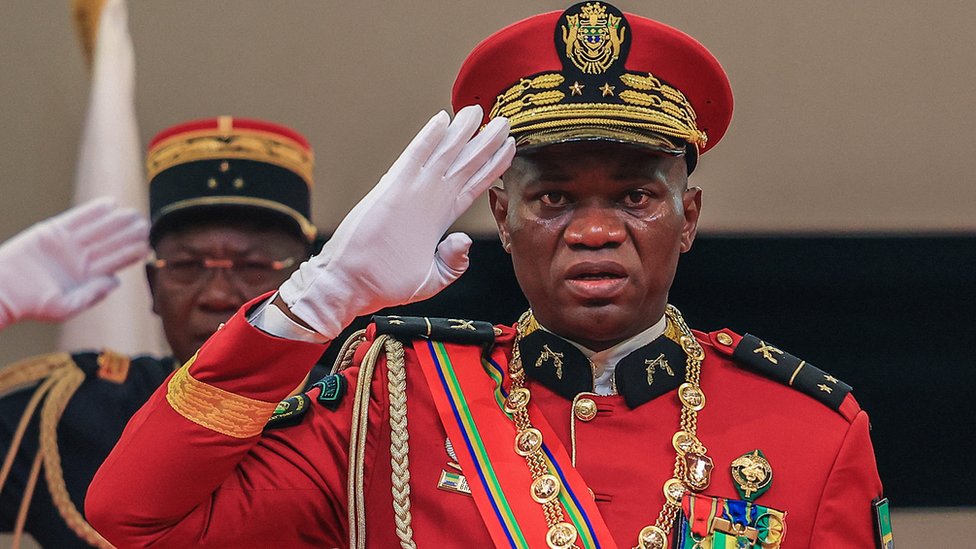
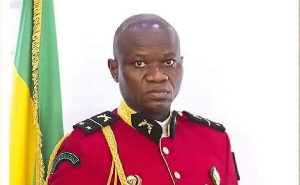
The recently inaugurated military leader of Gabon, who assumed power through a coup last week, has engaged in talks with a mediator dispatched by central African countries.
This development occurred a day after the Economic Community of Central African States (ECCAS) suspended Gabon from its membership.
State television did not disclose specific details about the meeting between General Brice Oligui Nguema and Faustin-Archange Touadéra, the president of the Central African Republic.
During his swearing-in ceremony on Monday, Gen Nguema pledged to conduct equitable elections and reinstate civilian governance, although he did not specify a timeline for these actions.
Ghana’s Minister of Information, Mr. Kojo Oppong-Nkrumah, stressed the urgent need for a strategic transformation of Ghana’s structures during a speech at the International Advertising Association’s (IAA) 6th Africa Rising Conference. This was done to guarantee that the country was prepared for a promising future.
The Information Minister emphasized the critical need for Ghana to adopt creative and adaptive structures in his speech on Tuesday, September 5, 2023.
He drew comparisons between the development of the country and the tactics used by business brands to survive a continually shifting environment.
Under the theme “Building Future-Ready Brands,” the Minister stressed that just as corporate brands must define their purpose, Ghana as a nation must articulate its overarching purpose. This process, he explained, requires the courage to confront challenging questions and make bold decisions, all for the greater benefit of the country.
“Just as we are asking corporate brands to introspect and answer these critical questions to shape their purpose and be future-ready, we as a nation must do the same,” the Information Minister stated. He emphasised that, whether corporate or national brands, both must face difficult considerations.
In order to prepare Ghana for the future, he advised the people to be unafraid of letting go of outdated customs.
“We must take the tough decisions to take new paths without regard to whose ox is gored so that we stand a better chance of being ready for the future rather than champions of the past,” he asserted.
In order to become a “Brand Ghana” prepared for the future, Mr. Oppong-Nkrumah emphasized the significance of prioritizing forward-thinking above clinging to the past. He emphasized that this required guts and a willingness to confront the current quo, regardless of who may be harmed.
“We work for Brand Ghana, not political parties, religious groups, or ethnic divisions,” the Minister noted. He further emphasised the necessity of defining a unified purpose for Brand Ghana that resonates with all citizens, not just a select few.
“We must do better at setting out and upholding a set of norms that all of us, not some, will live by,” the Information Minister urged. He stressed values such as community, integrity, responsibility, and entrepreneurship, calling for a collective commitment to these principles.
Sasan Saeidi, Chairman and World President of the IAA, Andrew Ackah, President of the Advertising Association of Ghana, Steve Babaeko, CEO of X3M IDEAS, Andrew Takyi-Appiah, Co-founder and MD of Zeepay, were among the speakers at the conference.
The Africa Rising conference has been a key event on the MarCom calendar on the continent ever since it started in 2015. With more than 400 attendees each year, it has continuously drawn powerful marketing communications professionals from Africa and other parts of the world. Africa Rising has been crucial in fostering a vibrant MarCom sector throughout the continent while furthering the IAA’s mission there.
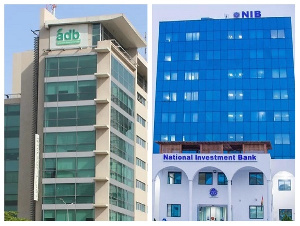
There are reports suggesting that the government is contemplating a plan for the Agriculture Development Bank (ADB) to assume control of the National Investment Bank’s (NIB) operations.
The decision stems from the need to restructure NIB, a state-owned institution that has faced numerous challenges in recent years.
The government is finding it increasingly difficult to provide financial support to NIB. Sources familiar with the proposed takeover indicate that while the government is exploring other options, allowing ADB to assume NIB’s operations appears to be the most favored option at present.
This move by the government follows hints from the Central Bank Governor, Dr. Ernest Addison, who mentioned in July of this year that discussions were underway to assess the viability of NIB.
Dr. Addison made these comments during the 113th Monetary Policy Committee (MPC) press briefing, stating that issues related to NIB and other under-capitalized institutions are now part of Ghana’s financial sector strategy under the current IMF-supported program.
“The NIB is one of the banks that we will make that assessment on, to ascertain whether it is still viable or not. If it is viable and the government can find money to recapitalise it, then Yes. But if it is not viable, then, obviously, we will have to find a different use for that instrument,” Dr Addison earlier said.
“These are ongoing discussions between us and the international partners and I believe that in the next year [2024] or so, we will get a clearer sense of how to handle those particular institutions that are very weak,” he added.
As part of Ghana’s 17th IMF program, the Central Bank has pledged to resolve the solvency issues faced by under-capitalized institutions, including the National Investment Bank (NIB). This initiative is also a response to the persistent under-capitalization problem among various special deposit-taking institutions (SDIs) following the banking sector cleanup operation.
While some banks in the country underwent recapitalization in the aftermath of the banking sector cleanup, the state-owned National Investment Bank, which was on the verge of insolvency, did not participate in the recapitalization process.
ADB’s financial strength for NIB takeover
As reported by Joy Business, sources knowledgeable about the takeover negotiations have suggested that ADB may require financial assistance to facilitate a seamless transition of NIB, which is currently grappling with financial challenges.
Furthermore, some financial market observers have proposed that the government should consider fully privatizing NIB as this could provide the government with additional time to completely relinquish all responsibilities related to NIB.
While discussions are ongoing, certain stakeholders have expressed strong opposition to ADB taking over NIB. These dissenting parties contend that NIB has initiated efforts to revitalize the bank, making a takeover counterproductive.
They argue that NIB has significantly increased its deposit holdings within a short timeframe and has implemented measures to address revenue losses. They further assert that a capital injection of GH¢2.2 billion could enable the state-owned bank to fully recover and enhance its operations.
“We think that NIB should be made to also borrow from private investors. Government can even allow NIB to float shares to individuals and institutional investors to raise funds to recapitalise the bank”, an opposition to the takeover is quoted Joy Business.
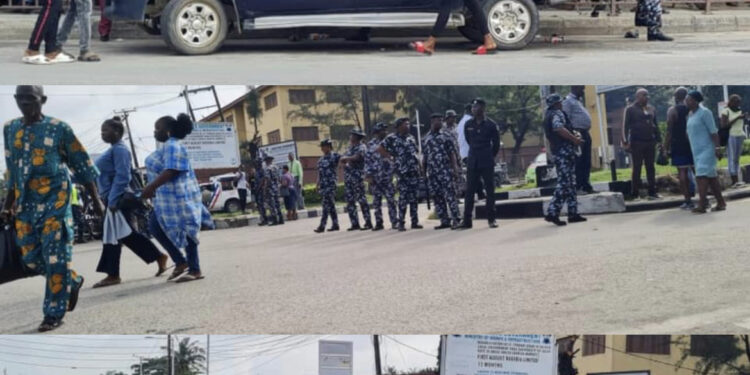
Personnel of the Lagos State Command of the Nigerian Police Force has inflicted and dispersed Students of the University of Lagos with tear gas during their protest against skyrocketing school fees.
In a viral video chanced on social media, voice of the aggressive students is heard insisting that they will not relent on the protest despite hindrances by the security service.
A report by the local media, indicates that, the institution’s management announced a 400 percent increase in student fees a few weeks ago.
But the institution’s students have since the announcement, been vocal about their displeasure towards the development.
Hence, they carried placards with various inscriptions gathered at Unilag junction to protest the increase in the payable fees.
Unfortunately, the students were dismissed with tear gas by some operatives of the Nigerian police.
Video below is an indication of effort by the students to escape inflictions of the tear gas.
Lagos police op£n fir£, throw t£ar gas as UNILAG students protest hike in tuition fees
On Monday, Niger’s military-appointed prime minister expressed optimism about reaching a deal with the West African bloc Ecowas in the “coming days.” Ecowas has threatened to employ force to restore civilian rule in Niger following a coup in July. The prime minister also mentioned ongoing discussions about a swift withdrawal of French forces from Niger, a move that follows deteriorating relations between Niger and France after the military takeover.
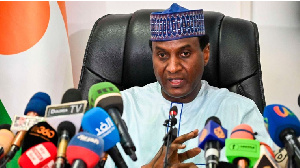
“We have not stopped contacts with Ecowas, we are continuing contacts. We have good hopes of reaching an agreement in the coming days,” said Prime Minister Ali Mahaman Lamine Zeine during a press conference in Niamey.
Ecowas, the Economic Community of West African States, imposed significant sanctions on Niger after rebel soldiers overthrew the democratically elected president, Mohamed Bazoum, on July 26. Ecowas has also repeatedly warned of military intervention to reinstate Bazoum if diplomatic efforts fail.
The crisis revolves around the timeline for returning to civilian rule. Nigerian President Bola Tinubu, the current chairman of Ecowas, suggested a nine-month transition, similar to Nigeria’s experience in the late 1990s. Algeria, Niger’s influential northern neighbor, has proposed a six-month transition, while the military rulers had previously mentioned a three-year handover period.
Ecowas has taken a firm stance on Niger following a series of coups in the region since 2020, including Mali, Burkina Faso, and Guinea.
In addition, Prime Minister Zeine mentioned ongoing “contacts” to facilitate the rapid withdrawal of French forces from Niger, although he emphasized the desire to maintain cooperation with France despite recent tensions. France has around 1,500 troops in Niger, and tensions escalated after France backed the ousted President Bazoum and refused to acknowledge the coup leaders as the legitimate government. France has also ignored announcements canceling military agreements and threats to expel the French ambassador.
The post-coup government renounced military accords with France on August 3, claiming that French troops in Niger were now in an “illegal” position.
Meanwhile, Niger reopened its airspace on Monday after imposing a flight ban on August 6 in response to Ecowas’ threat.
China has also expressed its intent to play a “mediating role” in the political crisis, stating that it supports African countries in resolving their problems in an African manner. China is a significant economic partner for Niger, particularly in the energy sector.
Founder of St. Bakhita School, Felista Muthoki Mutinda, made a bold career change, leaving her secure job as a services executive in the banking industry to pursue her passion for education. At the age of 52, Mutinda embarked on a journey to create an educational institution that prioritized holistic child development, parent involvement, and life skills alongside academics, believing that traditional schools were falling short in these aspects.
Many around her initially questioned her decision to abandon her 14-year banking career for entrepreneurship in education. Despite her lack of experience in the field, Mutinda attended workshops and conducted extensive research to bring her vision to life.
Starting her venture required a significant financial commitment. Mutinda used her personal savings, received financial support from her parents and husband, and even tapped into her pension fund. She began with one kindergarten located in a renovated house in South B, a suburb of Nairobi. Over time, the school expanded to encompass two kindergartens, two primary schools, and a junior school, serving a total of over 2,700 students and employing 327 staff members.
St. Bakhita School quickly gained popularity, attracting 32 students in its first year as an alternative to a nearby kindergarten that had closed down. Within five years, enrollment had grown to 172 students, prompting the school’s expansion into adjacent properties. The kindergarten even had a two-year waiting list within its first five years of operation.
Mutinda attributed the rise of private schools to a policy change in 2003 that led parents to seek quality education in private institutions. The number of private schools in Kenya surged from 7,742 to 16,594 between 2014 and 2020.
Inspired by the success of the South B kindergarten, Mutinda ventured into opening a franchise in Machakos in 2011, which enrolled 53 children in its inaugural year. In 2017, when the Kenyan government introduced a new curriculum aligned with St. Bakhita’s educational approach, Mutinda expanded her enterprise by establishing two additional primary schools to meet evolving community needs.
In 2020, Fanisi Capital, a private equity firm, acquired a minority stake in St. Bakhita Schools for approximately $2.5 million, aligning with the school’s growth strategy.
Mutinda’s advice to aspiring entrepreneurs is, “There is so much potential in every one of us. We shouldn’t look at our businesses just as a form of sustenance but as a source of employment with the ability to transform society. You can take your business from one level to another by creating workable structures.”
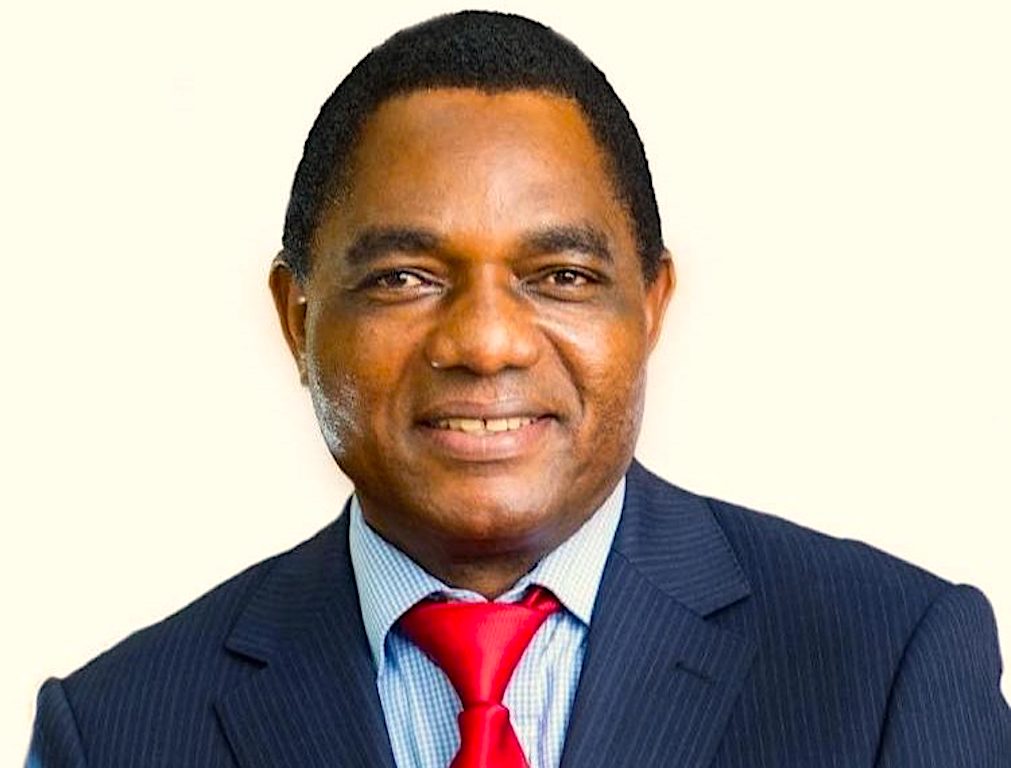
Zambia’s President Hakainde Hichilema has issued a strong warning to potential coup plotters, underscoring the critical importance of preserving the country’s democratic stability, as reported by the BBC.
The motive behind his cautionary statement remains unclear, but it follows a series of recent coup attempts in Francophone African nations and domestic concerns regarding the increasing cost of living.
Addressing those who may underestimate Zambia’s unwavering commitment to upholding the rule of law and who may entertain unlawful thoughts of seizing power through undemocratic means, President Hichilema firmly stated, “We are coming for you.”
It is worth noting that Zambia has maintained its democratic governance since gaining independence in 1964, despite several unsuccessful coup attempts in its history.
Leader of Gabon’s military junta, General Oligui Nguema, who was officially inaugurated in a ceremonythat took place in the capital city of Libreville on Monday, September 4, 2023.
This investiture occurred less than a week after the former head of the Republican Guard spearheaded the ousting of President Ali Bongo Ondimba from power.
The event, held at the National Palace, witnessed the presence of key figures, including security chiefs, former government ministers, members of the diplomatic corps, and other significant stakeholders.
During the ceremony, the president took his oath of office before delivering his inaugural speech. In his address, he provided justifications for the coup and pledged a return to civilian rule through elections, although he did not specify any concrete dates or timelines.
Following his speech, General Nguema was joined on stage by his wife, daughter, and father, who congratulated him. Videos available on GhanaWeb showed him sharing hugs and kisses with his wife and embracing his mother.
When it came to his father, he rendered a formal salute, to which his father responded by removing his cap. The two then embraced, following a traditional Francophone gesture where they gently tapped their heads together.
While the inauguration was taking place, leaders from the regional political bloc convened in Equatorial Guinea.
Gabon had been suspended from the Economic Community of Central African States (ECCAS) following an extraordinary heads of state summit.
The bloc not only denounced the coup but also made the decision, effective immediately, to relocate its headquarters from the Gabonese capital to Malabo, the capital of Equatorial Guinea.
You can watch the video of the junta leader with his wife and parents by following this link.
In the central town of Murang’a, Kenyan police made a discovery on Monday night, uncovering 26 Ethiopian women who had been held captive by human traffickers in a partially constructed house.
The women had endured confinement in the small house for approximately one week, with only a solitary mattress on the bare floor.
These women had reportedly been trafficked into Kenya through the Moyale border point, with their ultimate destination being South Africa.
Law enforcement authorities have taken the women into custody, seizing their passports and mobile phones in the process.
Furthermore, the proprietor and the guard responsible for the house have been apprehended, as the investigation to locate the human traffickers remains ongoing.
Zambia’s government has returned control of the troubled copper mine, Konkola Copper Mines (KCM), to its original owners, Vedanta Resources.
In 2019, KCM was placed under liquidation following accusations by former President Edgar Lungu that it had not fulfilled its obligations, initiating a prolonged legal dispute. Zambia’s efforts to attract new investors for the operation proved unsuccessful.
Mines Minister Paul Kabuswe has now announced Vedanta’s return and their commitment to invest $1 billion (£796 million) in developing the mine.
An additional $250 million will be allocated to settling all outstanding debts to local creditors, as confirmed by a Vedanta executive. Furthermore, an annual investment of $20 million will be directed towards the local community in the Copperbelt region.
Today, September 6, 2023, the Bank of Ghana’s Interbank forex rates reveal that the Ghana Cedi is trading against the dollar at a buying price of 11.0175 and a selling price of 11.0285.
In Accra’s forex bureau, the dollar is purchased at a rate of 11.40 and sold at a rate of 11.65.
Against the Pound Sterling, the Cedi trades at a buying price of 13.8402 and a selling price of 13.8551, while in Accra’s forex bureau, the pound sterling is acquired at a rate of 14.50 and disposed of at a rate of 15.00.
The Euro is valued at a buying price of 11.8030 and a selling price of 11.8147, with the Euro exchange rate at 12.20 for buying and 12.70 for selling in Accra’s forex bureau.
The South African Rand’s exchange rate stands at a buying price of 0.5734 and a selling price of 0.5738, while in Accra’s forex bureau, it is purchased at a rate of 0.35 and sold at a rate of 0.95.
The Nigerian Naira’s rates are set at a buying price of 68.6973 and a selling price of 69.6725, with the exchange rate of 11.00 Naira for every 1 Cedi for buying and 16.00 for selling in Accra’s forex bureau.
Finally, the CFA is trading at a buying price of 55.1679 and a selling price of 55.2222, with exchange rates of 16.50 CFA for every 1 Cedi for buying and 20.50 CFA for every 1 Cedi for selling in Accra’s forex bureau.
Note that these rates may be different at a forex bureau near you. Our forex bureau rates are provided by Afriswap Bureau De Change in Osu, Accra.
Our forex bureau rates are provided by Afriswap Bureau De Change in Osu, Accra.
Gabon’s military leader, General Brice Oligui Nguema, has engaged in discussions with the opposition candidate, Albert Ondo Ossa, as part of consultations aimed at rebuilding the nation.
Mr. Ossa was the primary contender against the deposed President Ali Bongo in the election, which was invalidated following the military’s seizure of power last week.
It appears that the military authorities are seeking to garner support from the opposition in order to chart a new course for Gabon.
Mr. Ossa chose not to attend the inauguration ceremony of General Nguema that took place on Monday, asserting that he had emerged victorious in the annulled elections and should have been sworn in as president.
The meeting between these two figures suggests that the opposition may play a role in the interim government. While Mr. Ossa did not provide specific details, he indicated that the discussions centered on the transition and the restoration of governmental institutions.
The coup that occurred last Wednesday seems to have garnered some level of popular support, but there remains uncertainty about the nation’s future. General Nguema has not yet announced a timeline for the return to civilian rule.
In the meantime, the junta has released several detainees, including Jean Rémi Yama, a pro-democracy activist and leader of the most influential trade union confederation.
The leading opposition party in Tunisia has reported that the Tunisian police have apprehended the top two officials within their ranks.
Among those detained is Mondher Ounissi, the interim head of Ennahda, the main opposition party. Ounissi’s arrest is allegedly linked to audio recordings in which he purportedly accuses fellow party members of accepting illicit funds. However, Mr. Ounissi vehemently denies the authenticity of these recordings.
This detention follows a pattern of the Tunisian authorities detaining various opposition figures throughout the year. Since 2021, President Kais Saied has been governing by decree after dismissing parliament and dissolving the government.
A delegation of International Monetary Fund (IMF) staff members is set to visit Ghana starting on September 25 and continuing into the first week of October. Their purpose is to assess the advancements made in Ghana’s Economic Recovery Programme.
This visit signifies the second evaluation conducted by the IMF following the approval of Ghana’s financial assistance program on May 17. The review will assess the achievements of the targets established under the $3 billion three-year extended credit facility.
Finance Minister Ken Ofori-Atta has expressed the government’s optimism regarding the receipt of the second installment of IMF bailout funds in December. This infusion of funds is expected to strengthen the government’s balance of payments.
Speaking at the 3rd GIPC CEO’s Breakfast Meeting in Accra, Ofori-Atta stated, “The IMF team will be in Ghana from September 25th through the beginning of October. Hopefully, we will achieve a staff-level agreement during their visit, paving the way for a board meeting in November this year.”
He continued, “I believe that the mission in September will allow us to reach a successful staff-level agreement, strengthening our negotiating position.”
Additionally, Ofori-Atta has reconfirmed that Ghana is poised to receive the second installment of the IMF bailout funds in December. This disbursement will serve as vital support for the government’s balance of payments throughout 2023 and 2024.
According to the June 2023 summary of the Economic and Financial Stability Report by the Bank of Ghana, the balance of payments exhibited a deficit of $107.8 million at the end of June 2023, approximately 0.1% of GDP. It is noteworthy that this deficit is markedly lower than the one recorded during the same period in 2022.
Our forex bureau rates are provided by Afriswap Bureau De Change in Osu, Accra.
The issue of encountering counterfeit currency notes may not be unfamiliar to many.
Fake currency notes have, to some extent, infiltrated various financial transactions, including both business dealings and routine cash exchanges.
While the Bank of Ghana bears the responsibility for managing the circulation of banknotes, counterfeiting currency notes is not merely a local concern but a global one, and it is addressed on multiple fronts.
Over the years, the Ghana Police Service and various security agencies have taken action, resulting in the apprehension of individuals involved in the illicit production of counterfeit currency notes with the intention of introducing them into circulation among the unsuspecting public.
It’s important to note that counterfeiting is not restricted to the Ghana Cedi alone. These criminals often extend their operations to create counterfeit US Dollars, Euros, and other currency notes.
So, how can one accurately determine if they have come into possession of a counterfeit currency note?
In this post, GhanaWeb Business offers some advice on how to spot fake currency with the assistance of AfriSwap and the Bank of Ghana.
GhanaWeb initially published this article on May 9th, 2022. Later, it was reprinted for educational purposes.
Techniques for identifying counterfeit notes
*Firstly, when encountering a suspected fake currency note, the holder should compare it with another banknote of the same denomination from a different source.
*It is crucial to avoid comparing it with reproductions found in brochures or internet printouts, as these may differ significantly from genuine banknotes.
*To identify a counterfeit banknote, unfold it and carefully examine both the front and back.
*Additionally, scrutinize the banknote for security features as outlined on AfriSwap.com or the official Bank of Ghana website.
*Furthermore, it’s important to be alert for any signs of soiled or repaired bills when handling currency.
*For those seeking verification of the authenticity of suspected counterfeit notes, the Bank of Ghana offers assistance.
*Lastly, individuals who come across a suspected counterfeit currency note should promptly notify the police if they believe they have encountered a counterfeit banknote.
Social media user Komla Adom posted images of counterfeit GH200 Cedi notes and cautioned the public to exercise caution.
He said that the notes were successfully used for a transaction at a store owned by a relative, and by the time they could verify, the alleged forger had already fled.
He consequently asked everyone to exercise caution.
The Office of the Special Prosecutor (OSP) has taken a series of actions concerning the assets of Cecilia Dapaah, following a court directive to unfreeze her accounts and return her seized cash.
This development occurred subsequent to an order from the Accra High Court, instructing the OSP to unfreeze the accounts and investments of former minister Cecilia Dapaah and return the confiscated funds.
Initially, the OSP complied with the High Court’s ruling, unfreezing Ms. Dapaah’s bank accounts and investments as instructed.
However, the OSP has now opted to reinstate the freeze on Ms. Dapaah’s bank accounts and investments as of September 5, 2023. This decision stems from ongoing investigations into suspected corruption and corruption-related activities involving substantial sums of money connected to Cecilia Dapaah.
“The Office of the Special Prosecutor (OSP) has complied with the ruling and order of the court of the High Court, Accra dated 31 August 2023 by unfreezing the frozen bank accounts and investments of Cecilia Dapaah. The OSP has also returned the seized cash sums of Ms Dapaah in the presence and assent of Ms Dapaah and her lawyers,” part of the statement read.
The statement claims that following the High Court’s decision and order, as well as the adherence to the decision, continued inquiry has turned up contradicting stories of who owns and where the money that was allegedly taken from her home.
The OSP contends that it made a sound conclusion about the former minister.
“Consequently, subsequent to the indicated ruling and order of the High Court and the compliance by the OSP with the said ruling and order, the Special Prosecutor considers that freezing the bank accounts and investments of Ms Dapaah is necessary to facilitate the ongoing investigation. Therefore, the Special Prosecutor has invoked his statutory power under Section 38(1) of Acts 959 and regulation 19(1) of L.I. 2374 by directing the freezing of the bank account and investments of Ms Dapaah effective 5 September 2023.
“Further, subsequent to the indicated ruling and order of the High Court and the compliance by the OSP with the said ruling and order, the Special Prosecutor considers that he has reasonable grounds to suspect that the cash amounts seized from and returned to Ms Dapaah is tinted property and it is necessary to exercise the power to seizure to prevent the concealment or loss of said cash amounts.
“Therefore, the Special Prosecutor has again invoked his statutory power under section 32(1)(a) of Act 959 by directing Ms. Dapaah of the cash amounts previously seized from her. Authorized officers of the OSP have seized said cash amounts from Ms Dapaah,” the statement said.
Since the year 2000, Ghana’s population has consistently been projected as youthful, thereby establishing a substantial market potential for the future.
Throughout this period, the country’s youth have been confronted with the responsibility of preparing themselves for job creation and acquiring entrepreneurial skills, mainly as a response to the prevailing economic challenges and political instabilities within the nation.
During an interview with Dr. Sam Ankrah, an Independent Presidential aspirant, he emphasized that the government has, unfortunately, diverted its focus from the development of the youth in the country. He attributed this to what he described as a negligent attitude exhibited by the government and other relevant stakeholders.
Dr. Ankrah pointed out that while the youth grapple with issues such as unemployment, inflation-related difficulties, and limited access to quality healthcare and education, lawmakers and policymakers seem preoccupied with debates concerning LGBTQ+ matters.
“While the youth are struggling with unemployment, inflated criminal activity, HIV increases, and the lack of access to quality education, lawmakers have busied themselves with deliberations and debates over LGBTQ+ agenda,” he said.
According to him, the future of the country solely depends on the discoveries and development of the youth, and therefore the government needs to pay critical attention to that and help push the youth for a better Ghana. He added that the inability of successive governments to maintain a stabilised economy for the country has resulted in an overreliance on foreign aid.
He further said that the matter of LGBTQ+ has become pertinent in the discussions within the lawmaking and policymaking space due to the deplorable state of our economy and mismanagement of resources, which have left the country in the hands and control of foreign nations.
He mentioned that the country needs a more focused leader who will prioritise the development of the youth and the preservation of the country’s moral heritage, which he strongly represents. He therefore advised that the government pay critical attention to the youth and their development.
Last month, MenzGold, a troubled gold dealership company, made an announcement regarding the cancellation of its customer validation process, which required a fee. This decision was made in an effort to expedite payments to their disgruntled customers.
In an official press release dated August 20th, the company disclosed its decision to abandon the previous plan, which had required customers to pay GH¢650 for an Access Card to ascertain the exact amount owed to them. The press release stated:
“In light of concerns expressed by concerned citizens of Ghana and extensive discussions with stakeholders following our press release dated August 18, 2023, MenzGold has decided on the following course of action:
MenzGold will discontinue the production and issuance of PVC Digital Access Cards, which incurred associated costs. Instead, we will exclusively provide PIN Codes for distribution, and this service will be offered free of charge.”
Several weeks later, GhanaWeb obtained an image of the aforementioned Access Card, shared on Facebook by Bullgod, a music executive and MenzGold investor.
“Just got my Menzgold Transaction Verification Access Card — I am a step away from retrieving my investments from Menzgold,” he captioned his post with the casing of the card.
Spokesperson for Dr Mahamudu Bawumia’s campaign, Nana Akomea, has quashed claims that the Inspector-General of Police (IGP), George Akuffo Dampare, has the potential of influencing the outcome of an election.
In a time of engagement with the media on KROKOKOOO, Nana Akomea explained that there had been several case where the police service voted against the ruling party at at a particular time.
Hence, he said, “I don’t agree with the narrative that an IGP can influence elections. I won’t agree to it today and I wont agree tomorrow. I have explained to you that the IGP is just one person, and at a time when the NDC was in power, even the votes of police officers were against the government of the time. So…IGP…even the votes of police officers kraa he can’t influence it, talk less of influencing the vote of you and I.”
He asserted that even in the time of the former Inspector General of Police (IGP), John Kudalor, “his government suffered the worst defeat than any government in the fourth republic.
“So if an IGP is capable of influencing votes, the evidence is against it. Some people are saying that the IGP was the cause of defeat in Assin North, but how about Kumawu. It doesn’t make sense! That assertion does not make sense! That the IGP caused the NPP’s defeat in Assin? How about Kumawu? Isn’t it the same IGP…or he travelled? I say it does not make sense. Even the electoral commissioner cannot influence votes, neither can the IGP,” Mr. Akomea explained.
Meanwhile, a private legal practitioner, Martin Kpebu, has called for the authority to appoint an Inspector General of Police (IGP) to be removed from the president of the country.
He argued that the police service tends to become politically biased when officers believe that their promotion or appointment depends on the ruling political party.
Lawyer Martin Kpebu made these remarks during a discussion on the weekend edition of The Keypoints on TV3, as the panel deliberated on the leaked audio discussing the potential removal of IGP Dampare by COP Alex Mensah, Bugri Naabu, and Supt. Asare.
The UK government has declared a substantial financial injection aimed at supporting the recruitment and retention of healthcare personnel in three African nations: Kenya, Nigeria, and Ghana.
This initiative is designed to enhance resilience in the face of global health challenges.
A sum of £15 million from the dedicated Official Development Assistance (ODA) budget for the period of 2022 to 2025 will be dedicated to optimizing, constructing, and fortifying the healthcare workforce in these three African countries.
As stated on the UK government’s official website, this funding acknowledges the critical role of the healthcare workforce in lower and middle-income countries in enhancing health outcomes and achieving universal health coverage. The aim is to ensure that individuals in Kenya, Nigeria, and Ghana have access to a comprehensive range of healthcare services precisely when they require them.
It has been emphasized that the COVID-19 pandemic underscored the imperative for the UK to collaborate closely with international partners in addressing global health threats.
This has placed significant strain on the NHS, and the pandemic has also exacerbated challenges related to retaining healthcare workers worldwide, all while the demand for healthcare personnel has surged.
Furthermore, it was highlighted that effectively addressing critical workforce issues is essential for bolstering healthcare systems and enhancing global preparedness against future pandemics. This is crucial to ensure the protection of people worldwide, including those in the UK.
The World Health Organization (WHO) has projected a shortage of 10 million healthcare workers globally by the year 2030. This shortage poses a threat to the achievement of universal health coverage on a global scale and has the potential to exacerbate health inequalities worldwide.
According to the Health Minister of the country, Will Quince, highly skilled and resilient staff members serve as the backbone of a robust healthcare service.
“So I’m delighted we can support the training, recruitment and retention of skilled health workforces in Kenya, Nigeria and Ghana.”
Will explained that the funding’s primary objective is to have a tangible impact on enhancing the effectiveness of healthcare systems in each of the involved nations.
This, in turn, will contribute to improving worldwide readiness to combat pandemics and diminishing disparities in healthcare access.