A global search has been initiated to locate one of the world’s most iconic musical instruments: Paul McCartney’s original Höfner bass guitar.
The Lost Bass Project is appealing for information about what it deems “the most important bass in history.” McCartney acquired the instrument for £30 ($38) in Hamburg, Germany, in 1961, but it vanished eight years later.
This bass guitar played a significant role in The Beatles’ music during that period, including hits like “Love Me Do” and “She Loves You.”
Nick Wass is leading Höfner’s search project and has teamed up with two journalists to unravel the “greatest mystery in the history of rock and roll.”
Having worked extensively with McCartney and authored a book about the missing Höfner 500/1 Violin Bass, Wass shared that the idea to locate the guitar arose during a recent conversation with the famous Beatle.
The circumstances surrounding the instrument’s disappearance remain unclear. Presumably, it was stored away after the Beatles completed filming “Get Back” in 1969.
“It’s not clear where it was stored, who might have been there. For most people, they will remember it… it’s the bass that made the Beatles,” Wass emphasized.
Israel is contemplating stringent measures, including the immediate deportation of Eritrean asylum seekers involved in the riots that took place in Tel Aviv on Saturday.
The violent clashes resulted in 170 injuries and erupted between police and clashes between groups supporting and opposing the Eritrean regime.
Prime Minister Benjamin Netanyahu stated that “a red line” had been crossed and ordered a new plan to remove all African migrants he deemed “illegal infiltrators.”
The unrest began when activists opposed to the Eritrean government asked Israeli authorities to cancel an event organized by their country’s embassy. They breached a police barricade around the venue, which was subsequently vandalized.
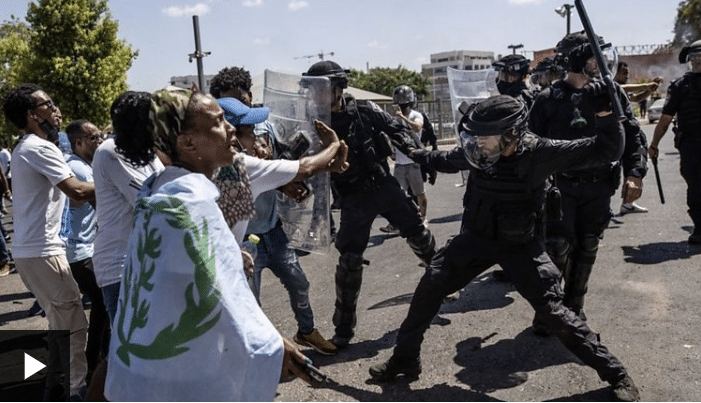
Police in riot gear used tear gas, stun grenades, and live rounds, while officers on horseback attempted to disperse the protesters. An investigation is underway to determine if the use of live fire was legal.
Street battles between large crowds of Eritreans armed with wood, metal, and rocks erupted, resulting in attacks on each other and the vandalism of shop windows and cars. The divisions within the Eritrean community over President Isaias Afwerki’s rule have spilled over into the diaspora, leading to recent outbreaks of violence.
Residents described central Tel Aviv as resembling a war zone during the clashes, with police helicopters overhead and blaring sirens.
The rioting has brought the contentious issue of migrants back into the political spotlight, adding to Israel’s existing divisions over the government’s controversial judicial overhaul plan.
Netanyahu and some members of his cabinet have accused the Supreme Court of blocking previous attempts to expel migrants from Israel.
Regarding the illegal infiltrators in south Tel Aviv and elsewhere, Netanyahu stated, “Now there remains a serious problem.” He called for harsh measures against the rioters, including the immediate deportation of participants, and requested that ministers present plans for the removal of all other illegal infiltrators.
The far-right National Security Minister Itamar Ben-Gvir intends to propose a bill to amend Israel’s quasi-constitutional basic law on human dignity and liberty to facilitate the mass deportation of migrants who entered the country illegally.
Approximately 18,000 Eritrean asylum seekers reside in Israel, with most arriving illegally years ago by crossing Egypt’s Sinai Peninsula. They claim to have fled danger, persecution, and mandatory military conscription in one of the world’s most repressive nations.
While Eritreans supporting the regime may not appear to require international protection as refugees, Israeli authorities have not previously differentiated between asylum seekers based on their political affiliations.
In addition to Israel, Eritrean diaspora festivals in Europe and North America have also been marred by outbreaks of violence, including the cancellation of a three-day Eritrean cultural festival in Toronto, Canada, last month after supporters and opponents of Eritrea’s regime clashed.
An investigation has been initiated into the death of an individual during heavy rainfall at the Burning Man festival in the US state of Nevada.
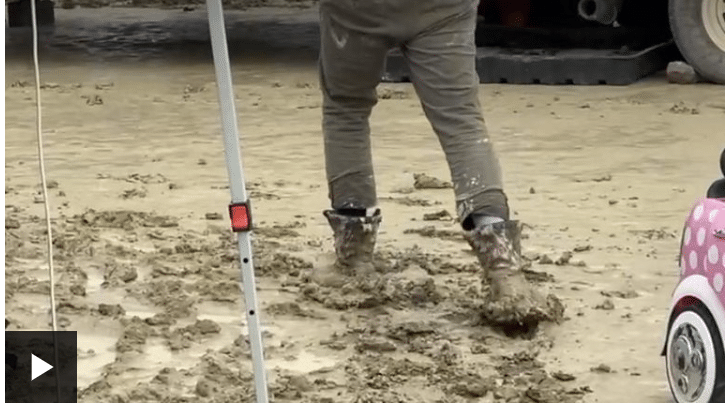
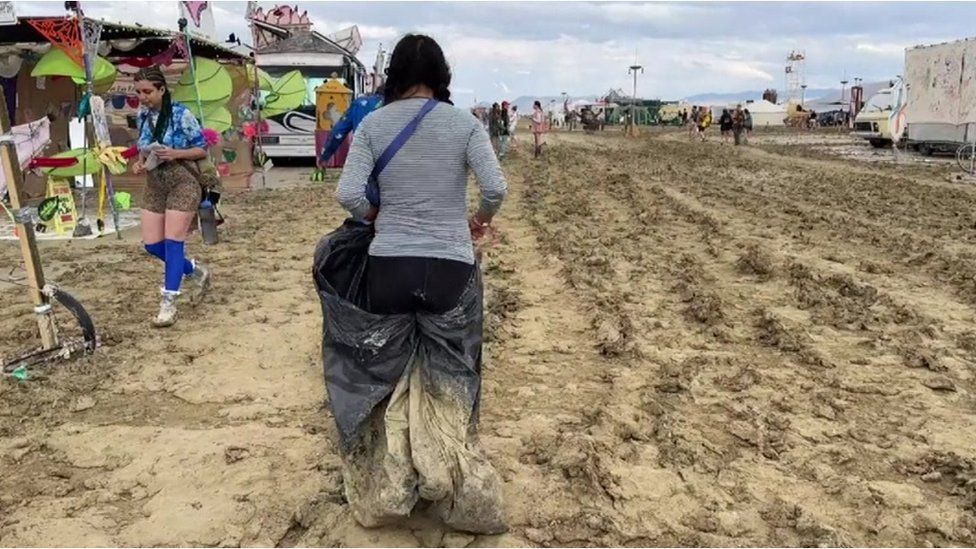
Due to the adverse weather conditions that transformed the festival grounds into deep, slippery mud, thousands of festivalgoers find themselves stranded at the event.
Attendees have been advised to seek shelter and conserve their food, while the roads leading in and out of the festival have been closed because vehicles are struggling to move.
Burning Man is typically held in the dry and dusty Black Rock Desert.
The Pershing County Sheriff’s Office released a statement on Saturday, stating that it is “currently investigating a death which occurred during this rain event,” without providing further details about the circumstances. The statement noted that the person’s family had been notified.
These unusual rainstorms arrived as the nine-day festival neared its conclusion, with the largest crowds gathering to witness the grand finale – the burning of the giant wooden man.
According to BBC Weather, the worst of the rain has now passed, but there is still a possibility of some additional showers and thunderstorms.
It may take several days for the ground to dry up sufficiently for people to leave, and for this reason, attendees have been instructed to conserve their food, water, and fuel.
Festival-goers have also reported that the festival’s toilets are out of order because service vehicles cannot traverse the muddy terrain to empty them.
The sheriff’s office revealed that some individuals who attempted to drive out of the festival ended up worsening the already muddy conditions.
Although more than 70,000 people had arrived at the site before its closure on Saturday, the exact number of those still present remains unclear.
Some individuals have managed to depart the site, including American DJ Diplo and comedian Chris Rock, who walked five miles (8 kilometers) to a road, where they received a ride from fans.
Others have had to rely on the kindness of strangers.
One festival-goer, Ashley Smith, shared with the BBC that he and his friends left much of their gear behind and walked to the road, where they hitchhiked to San Francisco. The entire journey took 14 hours.
The event’s organizers have arranged for buses to pick up people from the road and transport them to the city of Reno, which is over 100 miles away.
Image caption,Some revellers are using plastic bags to protect their shoes from the squelchy mud
Photos show tents partially submerged in muddy flood water.
Milia Nirshberg, 12, who is at the festival with her father for the second year running, told the BBC that they had let friends stay in their campervan, and were also allowing people to use the van’s toilet.
“The people in the tents are having a hard time because it’s flooding. Since we’re in a campervan we’re trying to invite people to come stay with us because they don’t have food or water,” she said.
Burning Man is one of America’s most well-known arts and culture events. Visitors create a temporary city in the middle of the desert, and are expected to be largely self-sufficient while they are there.
“We have come here knowing this is a place where we bring everything we need to survive,” said Burning Man in a statement. “It is because of this that we are all well-prepared for a weather event like this.”
As well as music, the festival usually features giant interactive art installations – but many of the attractions had to be cancelled.
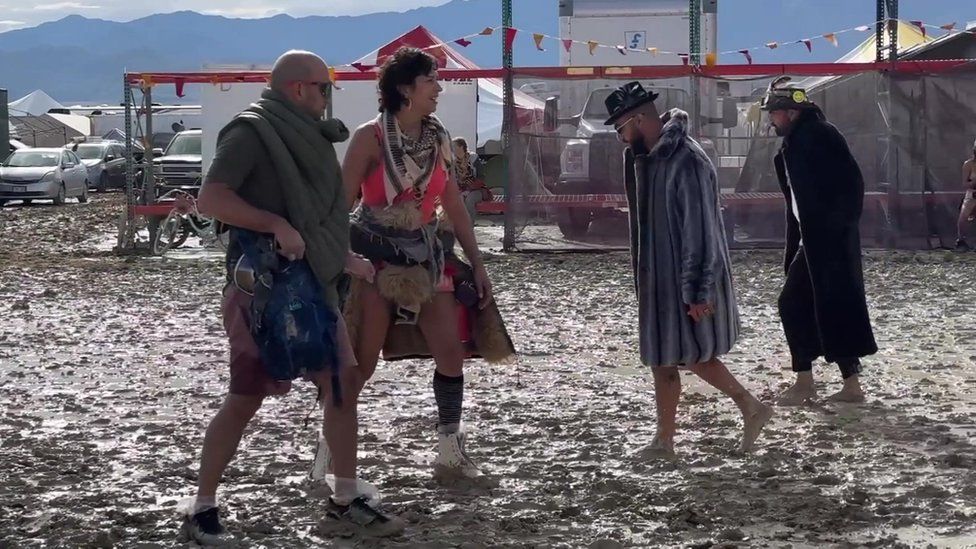
Nonetheless, many were trying to make the best of the situation, dancing in the mud to techno music.
“We’re taking it as an opportunity to hang out and spend more time with our new friends and old friends in the camp,” reveller, Josiah Roe said.
Image caption,Burning Man participants have been trying to make the best of the bad weather conditions
Burning Man was founded in June 1986 and was first held in Nevada’s Black Rock Desert in 1990.
Tickets can be very hard to get and festival-goers sometimes interview to get into popular camps and have to prove their commitment to its ideals.
Some groups spend the entire year planning their camp, artwork and theme.
But this year there had been worries about the weather and tickets were changing hands on the secondary market at below market rate.
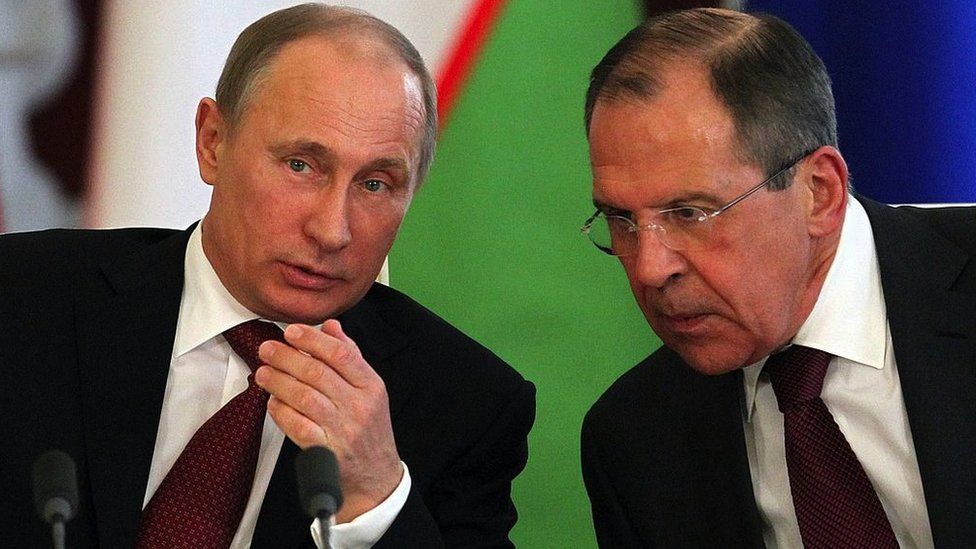
Russia’s diplomats were once a pivotal component of President Putin’s foreign policy strategy, but that paradigm has undergone a profound transformation.
In the years leading up to Russia’s full-scale invasion of Ukraine, diplomats witnessed a erosion of their authority, as their role dwindled to echoing the Kremlin’s aggressive rhetoric.
BBC Russian delves into the breakdown of Russian diplomacy, seeking insights from former Western diplomats, as well as ex-Kremlin and White House insiders.
In October 2021, US Undersecretary of State Victoria Nuland attended a meeting at the Russian foreign ministry in Moscow. Seated across from her was Russia’s Deputy Foreign Minister, Sergei Ryabkov, with whom Ms. Nuland had maintained a decades-long rapport.
Mr. Ryabkov had been perceived by his American counterparts as a pragmatic and composed negotiator—a person with whom they could engage in dialogue, even amid the deterioration of the bilateral relationship.
However, this time, the dynamics were notably different.
Mr. Ryabkov recited Moscow’s official stance from a written statement and resisted Ms. Nuland’s efforts to initiate a discussion. According to two individuals who discussed the incident with her, Ms. Nuland was taken aback.
Describing Mr. Ryabkov and one of his colleagues as “robots with papers,” she reportedly remarked on their demeanor (the State Department declined to comment on the incident).
Beyond the confines of the negotiation room, Russian diplomats were employing increasingly undiplomatic language.
“We spit on Western sanctions.”
“Let me speak. Otherwise, you will really hear what Russian Grad missiles are capable of.”
“Morons” – preceded by an expletive.
These are all quotes from people in positions of authority at the Russian Ministry of Foreign Affairs in recent years.
How did we get here?
A new Cold War
It might be hard to imagine now, but Mr Putin himself told the BBC back in 2000 that “Russia is ready to co-operate with Nato… right up to joining the alliance”.
“I cannot imagine my country isolated from Europe,” he added.
Back then, early in his presidency, Mr Putin was eager to build ties with the West, a former senior Kremlin official told the BBC.
Russian diplomats were a key part of Mr Putin’s team, helping resolve territorial disputes with China and Norway, leading talks on deeper co-operation with European countries, and ensuring a peaceful transition after a revolution in Georgia.
But as Mr Putin became more powerful and experienced, he became increasingly convinced he had all the answers and that diplomats were unnecessary, says Alexander Gabuev, the director of the Carnegie Russia Eurasia Center, who is living in exile in Berlin.
The first signal that a new Cold War was beginning came in 2007 with a speech Mr Putin made to the Munich Security Conference.
In a 30-minute diatribe, he accused Western countries of attempting to build a unipolar world. Russia’s diplomats followed his lead. A year later, when Russia invaded Georgia, Moscow’s Foreign Minister Sergei Lavrov reportedly swore at his UK counterpart, David Miliband, asking: “Who are you to lecture me?”
Western officials still thought it was worth trying to work with Russia. In 2009, Mr Lavrov and the then-US Secretary of State Hillary Clinton pressed a giant red “reset button” in relations, and the two countries seemed to be building co-operation – especially on security issues.
But it soon became obvious to US officials that their Russian counterparts were simply parroting Mr Putin’s growing anti-Western views, says Ben Rhodes, deputy national security advisor to former US President Barack Obama.
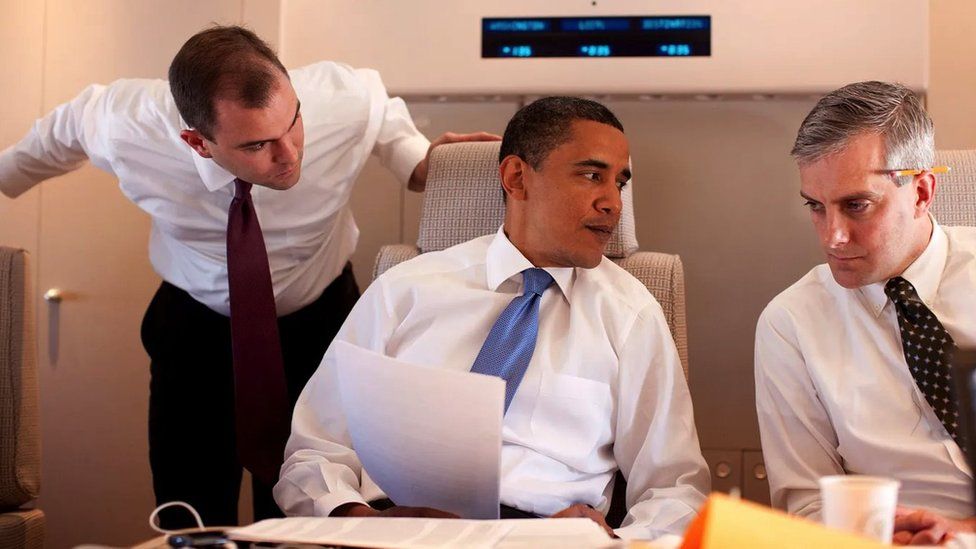
Image caption,Ben Rhodes (L), deputy national security advisor to President Obama, says Putin increasingly ignored his own foreign ministry
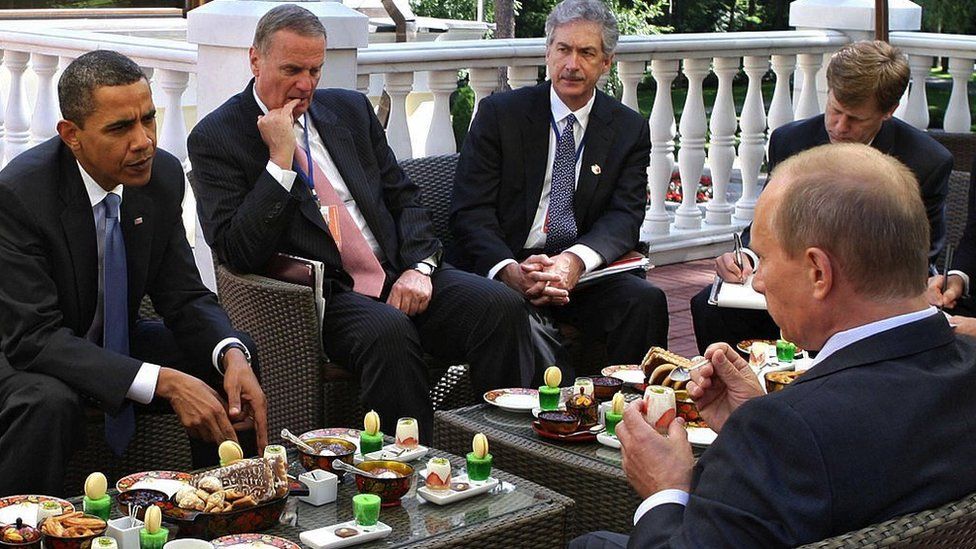
Mr Rhodes recalls President Obama having breakfast with Mr Putin in 2009, accompanied by a folk orchestra. He says Mr Putin was more interested in presenting his view of the world than discussing co-operation and that the Russian leader blamed Mr Obama’s predecessor, George W Bush, for betraying Russia.
As the Arab Spring, the US involvement in Libya, and the Russian street protests unfolded in 2011 and 2012, Mr Putin decided that diplomacy wouldn’t get him anywhere, Mr Rhodes says.
“On certain issues – Ukraine in particular – I did not get the sense that [diplomats] had much influence at all,” says Mr Rhodes.
As an example, when Mr Lavrov, the foreign minister, was appointed nearly 20 years ago he had an “international perspective and his own position”, a former senior Kremlin official told the BBC.
The Kremlin used to consult him even when it knew he might have a different view to Mr Putin, says Mr Gabuev.
But when troops were sent into Ukraine in 2022, Mr Lavrov only found out a few hours before the war began, according to a report in the Financial Times.
Image caption,Putin was said to be more interested in expressing his world views to Obama in 2009 than discussing co-operation
Andrei Kelin, Moscow’s ambassador to the UK, rejects the idea that Russian diplomats have lost their influence. He has worked on relations with Western countries throughout his diplomatic career.
In an interview with the BBC, he refused to concede that either Moscow or individual diplomats bear any responsibility for the collapse of relations with the West.
“We are not the ones doing the destroying,” he said. “We have problems with the Kyiv regime. There is nothing we can do about it.”
He says war in Ukraine is “a continuation of diplomacy by other means”.
Diplomacy as a spectacle
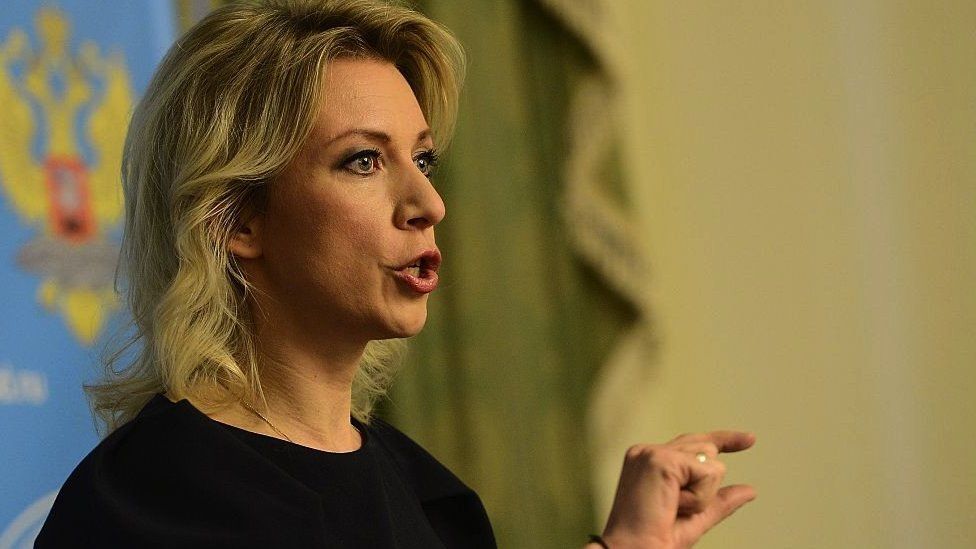
As foreign policy officials became less and less influential, they turned their attention back to Russia. Maria Zakharova, who became the ministry’s spokesperson in 2015, is a symbol of this new chapter.
“Before her, diplomats behaved like diplomats, speaking in refined expressions,” says former foreign ministry official Boris Bondarev, who resigned in protest over the war.
But with Ms Zakharova’s arrival, foreign ministry briefings became a spectacle. Ms Zakharova often yelled at reporters who asked her difficult questions and responded to criticism from other countries with insults.
Image caption,Spokesperson for the Russian foreign ministry Maria Zakharova is known for “theatrical” press briefings
Her diplomatic colleagues were going the same way. Mr Bondarev, who used to work for Moscow’s mission to the UN in Geneva, recalls one meeting where Russia blocked all proposed initiatives, prompting colleagues from Switzerland to complain.
“We said to them: ‘Well, what’s the problem? We are a great power, and you are just Switzerland!’
“That’s [Russian] diplomacy for you,” he says.
This approach was aimed at impressing Russians back home, says Mr Gabuev, the foreign policy analyst.
But an even more crucial target audience for diplomats is their own bosses, according to Mr Bondarev. Official telegrams sent to Moscow after foreign meetings are focussed on how passionately diplomats defended the country’s interests, he explains.
A typical message, according to him, would be something like: “We really gave them a hard time! We heroically defended Russian interests, and the Westerners couldn’t do anything and backed down!”
If everyone writes about “putting Westerners in their place” and you write that you “achieved consensus”, you will be looked at with disdain, he says.
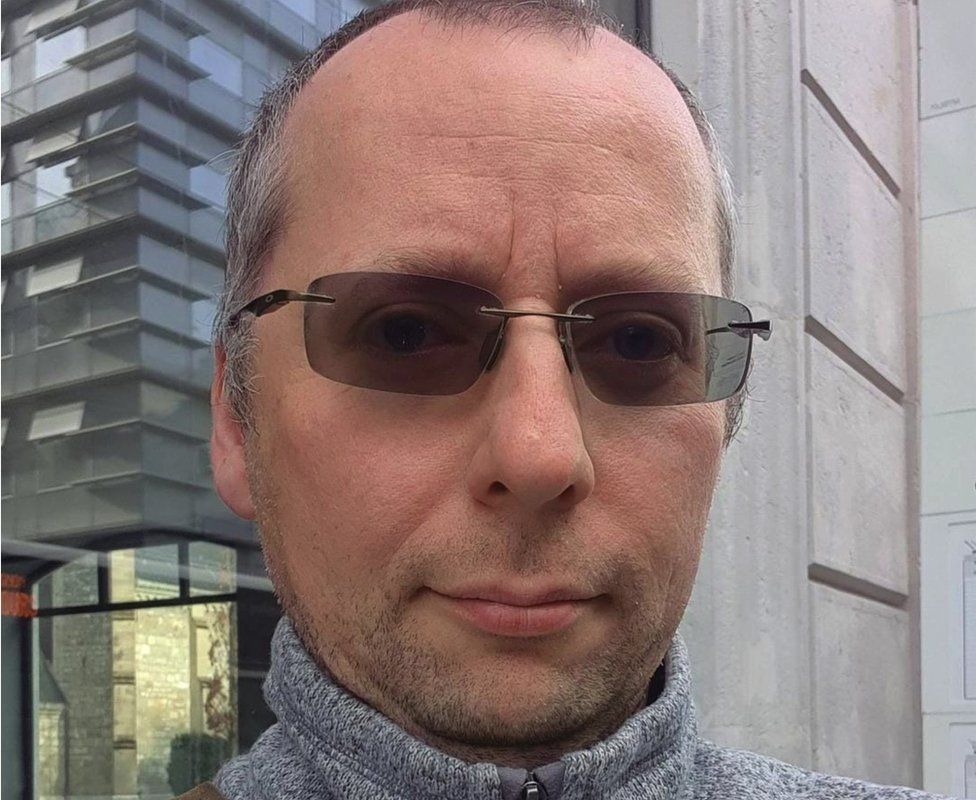
Image caption,Boris Bondarev quit as a Russian diplomat over the Ukraine invasion
Mr Bondarev recalls a dinner in Geneva in January 2022 when Mr Ryabkov, from the foreign ministry, met US officials. US First Deputy Secretary of State Wendy Sherman hoped to avert the invasion of Ukraine through 11th-hour negotiations.
“It was awful,” says Mr Bondarev. “The Americans were like, ‘Let’s negotiate.’ And instead Ryabkov starts shouting, ‘We need Ukraine! We won’t go anywhere without Ukraine! Take all your stuff and go back to the 1997 [Nato] borders!’ Sherman is an iron lady, but I think even her jaw dropped at this.
“[Ryabkov] was always very polite and really nice to talk to. And now he’s banging his fist on the table and talking nonsense.”
It should be noted that, in recent years, the diplomatic tone has changed in other countries too, albeit on a smaller scale.
A few years earlier, Japan’s representative for human rights at the UN, Hideaki Ueda, demanded that foreign colleagues “shut up” at a meeting. Gavin Williamson used the same words against Russia when he was the UK defence secretary. And Ukraine’s ambassador to Germany, Andriy Melnyk, last year referred to German Chancellor Olaf Scholz as an “offended liver sausage”.
The US can’t snap their fingers and end this war
After a year and a half of war, is there any hope that diplomacy could help to bring the fighting to an end?
Most of the people the BBC spoke to think it is highly unlikely. Usually, 95% of diplomats’ work is “unofficial meetings and having coffee”, explains Mr Bondarev. Such contacts have greatly declined, he says – there is no longer much to talk about.
Ambassador Kelin has been banned from entering the UK Parliament. At one point, he says, the Russian embassy in London was almost left without gas and electricity, and insurance companies refused to insure the mission’s cars.
Image caption,President Putin with Russian Foreign Minister Sergei Lavrov
Sooner or later, dialogue will have to happen, says RAND analyst Samuel Charap. The only alternative to negotiations is “absolute victory”, and it’s unlikely either Kyiv or Moscow could achieve this on the battlefield, he argues.
But he does not expect talks to happen soon. “Putin has changed pretty dramatically over the course of his term in power,” he says. “And frankly, I don’t know whether he’s going to be willing to engage.”
The Ukrainian authorities complain that Russia is once again offering ultimatums instead of compromises, such as demanding that Ukraine accepts the annexation of occupied territories. Kyiv has no intention to negotiate under such conditions, and its Western allies publicly support this decision.
Russia seems set on relying on its military machine, intelligence services and geo-economic power for influence – rather than diplomacy.
In these dispiriting circumstances, why aren’t Russian diplomats simply voting with their feet and resigning from the foreign service altogether?
“It’s a problem for everyone who’s been stuck in their positions for 10 to 20 years,” a former Kremlin employee told the BBC. “There’s no other life for you. It’s terrifying.”
Mr Bondarev, the former diplomat, can relate to that. “If it hadn’t been for the war, I probably would have stayed and put up with it,” he says.
“The job isn’t so bad. You sit, suffer a bit and in the evening you go out.”
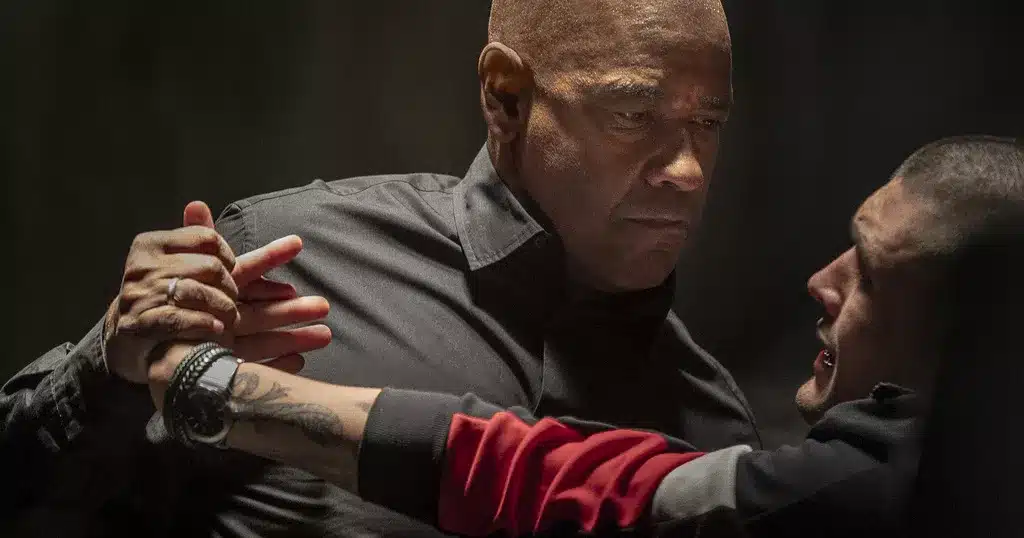
In Antoine Fuqua’s Equalizer 3, the mysterious, reclusive, and unstoppable vigilante played by actor Denzel Washington is back in the spotlight.
This time, the CIA assassin is in Italy, in a village close to Naples, where he takes out the local mob, the Camorra, and challenges the Neapolitan mafia for supremacy.
“Personally, I’ve always been fascinated with the Camorra. You know, they’re certainly a unique group that’s not your father’s ‘Godfather’ type of guys. You know, they’re wilder, younger, you know, more vicious, even. I know a lot of the Italians would say they’re the barbarians of that type. You know, I think that people want to always look at Italy as the old world, the beauty of Italy and the art of Italy. And they forget that under all that beauty is this other thing that’s just as much a part of it. And it’s constantly changing with the times and who they do business with and how they move. So, I’m fascinated with it. I think it’s just it’s – it is Italy, you know,” explained the director.
Fuqua claims that the paradoxes of the setting captivated him for the third and final installment, despite the difficulties of filming in a tiny Italian fishing hamlet.
“The biggest challenge was filming in a small fishing town. And there’s – there’s no infrastructure for movies there, right? And you move out there, you know, you move at their pace, man. You know, you’re not going to tell the old lady that’s been going up the steps her whole life, she’s got to move because she’s getting in the shot. You’ve got to put her in the shot, you know? So, it was like slowing down, respecting the culture, respecting the language, and getting a rhythm with everybody. But that’s really, to me, the biggest challenge was really settling into the culture,” added Antoine Fuqua.
Regarding faith, this film, unlike the other two, makes Catholic iconography a central theme. Appropriate, since the kind of justice dispensed by this saintly surrogate would not be out of place in the pages of the Old Testament.
Due to the SAG and WGA writers’ strikes, Antoine Fuqua had to promote the film without his actors by his side.
The Equalizer 3 hit U.S. theatres on Friday, September 1rst.
On Friday, Senegal temporarily reactivated a long-dormant railway line to transport worshippers to an annual religious festival.
The GTS railway company announced the deployment of three trains, each capable of carrying 240 passengers, on a 130-kilometer route between Thies and the sacred town of Touba in central Senegal.
Dozens of people, some of whom were dancing, gathered by the tracks in Thies to witness the delayed departure of the first four-carriage train, adorned in old-fashioned green and grey livery, as observed by an AFP reporter.
Samba Ndiaye, the head of GTS, remarked, “People are emotional about the train. All the seats for today’s departures have already been sold. Passengers are going to travel in comfort and knowing what time they’ll arrive.”
This temporary train service will operate from Friday to the following Wednesday, helping alleviate the congestion on roads filled with cars and buses heading to Touba for the Grand Magal pilgrimage. The festival is organized by the Mouride Brotherhood, one of Senegal’s four Sufi Islam orders.
The reintroduction of this train service, with stops at Diourbel and Mbacke, is presented as a preview of the potential permanent restoration of railway traffic. The Thies-Touba line had been closed in 2018, and it is part of a network that France built in the 19th and early 20th centuries to connect its colonies in West Africa.
The network in Senegal had fallen into disuse due to a lack of track maintenance. However, this situation began to change in December 2021 when a new 36-kilometer line was inaugurated, connecting the capital Dakar to the new city of Diamniadio.
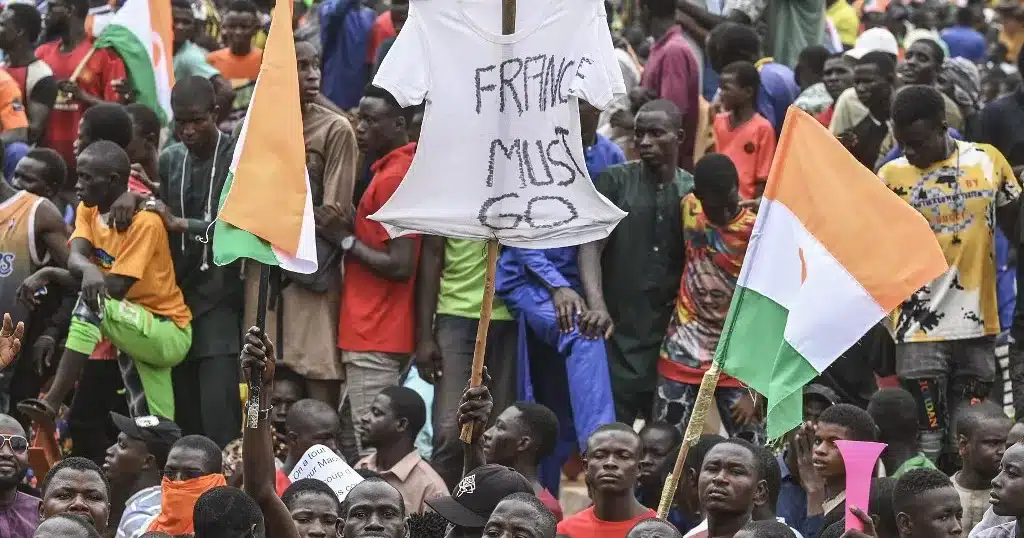
Thousands of demonstrators gathered in Niamey on Saturday to demand the withdrawal of French troops from Niger, as advocated by the junta that seized power in late June.
The protesters assembled near a base housing French soldiers in response to a call from several civic organizations that are critical of the French military presence in the West African nation.
Amidou Gourou, one of the protesters, stated, “We are here to express our determination, commitment, and dedication to removing the French military force and all military bases from our national territory.”
Niger’s military regime had launched a fresh verbal attack on France on Friday, accusing Paris of “blatant interference” for supporting the ousted president, Mohamed Bazoum.
In early August, the regime had announced the cancellation of military agreements with France, despite the presence of approximately 1,500 French soldiers in the country assisting in the fight against jihadism in the region.
Paris disregarded this move, citing legitimacy.
The military rulers had also declared the “expulsion” of the French ambassador, Sylvain Itte, and revoked his diplomatic immunity, citing his presence as a threat to public order.
French President Emmanuel Macron, however, praised Itte’s work in Niger on Monday and announced that he would remain in the country, despite being given a 48-hour deadline to leave Niger a week earlier.
For a very long period of enduring years of persistent power outages, residents of Tripoli, the capital of Libya, are now enjoying a stable electricity supply during the summer months. This improvement has led to the illumination of the city’s public spaces at night, signifying a significant enhancement in the quality of life for its residents.
To cope with the recurring power disruptions, many individuals had invested in batteries to power essential appliances. Those with more financial means had acquired powerful yet noisy, polluting, and diesel-dependent generators, which could cost several thousand euros.
Mohamad Rahoumi, the spokesperson for a renowned pastry brand, highlighted the critical connection between reliable electricity and service quality. He emphasized that a consistent power supply eliminates the need for generators or costly production services, leading to stable prices and improved economic returns.
Over the past decade, the General Electricity Company had resorted to lengthy load shedding during peak seasons. Until last year, power cuts lasting up to 20 hours at a stretch were commonplace in the capital, particularly unbearable in scorching temperatures exceeding 40 degrees Celsius, especially for business owners.
For Mohammed al-Maghribi, a butcher, the improved electricity supply has transformed his business. He expressed his delight that customers could now purchase fresh and uncontaminated meat while enjoying the comfort of air conditioning.
Libyan citizen Lotfi Ahmad Aziz acknowledged the significant and evident enhancement in the electric network compared to previous years. However, he noted that some issues related to strengthening the electrical grid still persisted, along with minor concerns. Nevertheless, he expressed gratitude for the notable improvement compared to past years.
Since the fall of Muammar Gaddafi in 2011, Libya has grappled with persistent power shortages, stemming from a damaged electrical infrastructure resulting from armed conflicts and looting. However, with new management at Gecol and a restructuring plan implemented in July 2022, coupled with relative calm following years of war, electricity supplies have greatly improved. This positive development has also encouraged foreign companies to resume projects that had been stalled for years.
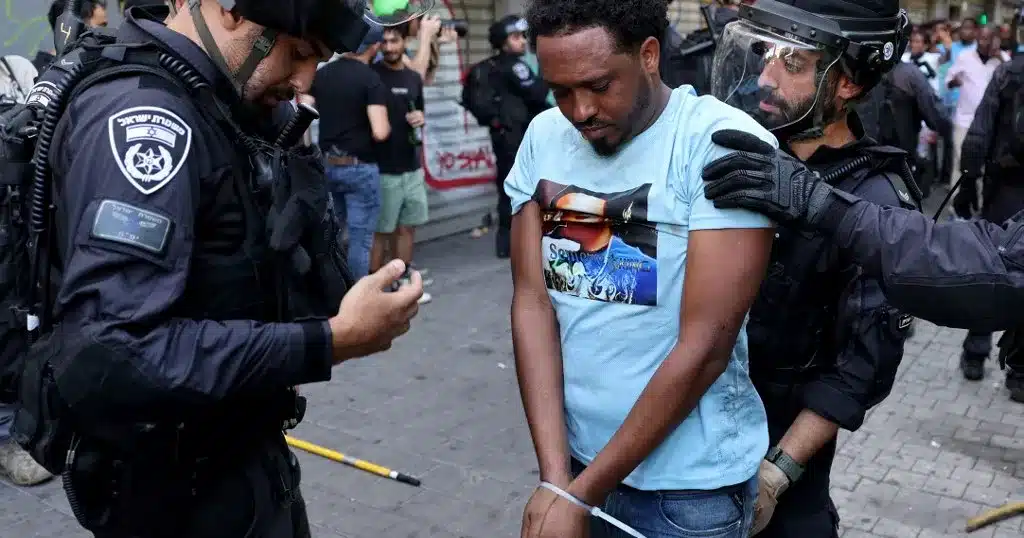
On Saturday, Tel Aviv witnessed a violent clash between supporters and opponents of the Eritrean government, resulting in numerous injuries and widespread destruction. This incident marked one of the most intense confrontations among African asylum seekers and migrants in the city’s recent history.
Among the casualties were 30 police officers and three demonstrators struck by police gunfire. Both sides, composed of Eritrean nationals, armed themselves with construction materials, pieces of metal, rocks, and even an axe, causing havoc in a neighborhood inhabited by many asylum seekers. Protesters vandalized shopfronts and police vehicles, leaving bloodstains on the sidewalks. In a distressing scene, a government supporter lay injured in a pool of blood within a children’s playground.
Israeli law enforcement, clad in riot gear, responded with tear gas, stun grenades, and live ammunition. Mounted officers tried to restore order as protesters breached barricades and hurled rocks at the police. Authorities clarified that live ammunition was used only when officers perceived a life-threatening situation.
Initially, both Eritrean government supporters and opponents had obtained permits for separate events on Saturday and had committed to maintaining distance between their gatherings.
By late Saturday afternoon, the clashes had subsided, but police continued to detain protesters, transporting them on buses for further processing. Notably, anti-government demonstrators wore sky-blue shirts featuring Eritrea’s 1952 flag, symbolizing their opposition to the country’s government. In contrast, government supporters donned purple shirts adorned with a map of Eritrea.
It’s crucial to recognize that Eritreans constitute the majority of the over 30,000 African asylum seekers residing in Israel. These clashes occurred simultaneously with Eritrean government supporters commemorating the 30th anniversary of their current leader’s rise to power near the Eritrean embassy in Tel Aviv, while opponents were allowed to hold a separate event.
Despite assurances that both sides would remain separated during their events, these commitments were eventually broken, according to Chaim Bublil, a Tel Aviv police commander. Eritrea’s notorious human rights record fuels the fears of asylum seekers in Israel and other countries who dread the prospect of returning to their homeland.
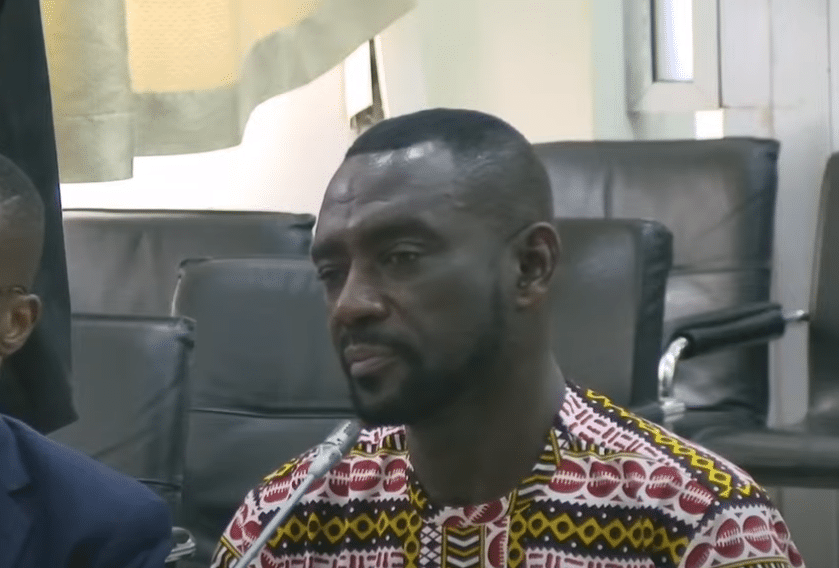
A high-ranking police officer, COP George Alex Mensah, entangled in a scheme to remove the current Inspector General of Police (IGP), Dr. George Akuffo Dampare, has provided new insights into the efforts to alter the leadership of the Police Service.
COP Mensah disclosed that Commander George Asare had actively advocated for his appointment as the new IGP to succeed Dr. Dampare.
According to COP Mensah, Bugri Naabu, the former Northern Regional Chairman of the NPP, relayed to Superintendent Asare that the government under President Nana Akufo-Addo was contemplating a leadership change within the Police Service due to concerns about the current IGP’s performance.
COP Mensah went on to describe how Superintendent Asare subsequently proposed him as a suitable replacement for Dr. Dampare. He further explained that, based on this recommendation, Bugri Naabu extended an invitation to him for a discussion on the matter.
“Bugri Naabu told Asare that the IGP is likely to be changed, and they are looking for a replacement, so Supt. Asare told him that there is a boy who can do the job well. So Bugri Naabu invited me to come so we could talk,” COP Mensah explained.
COP Mensah has made no secret of his displeasure with the leadership of the present IGP, claiming that Dr. Dampare is the worst IGP in Ghanaian history in the past. When he testified before a parliamentary committee looking into the viral audio in which senior police officers were overheard discussing the removal of the IGP with Bugri Naabu, he maintained this stance.
“Dampare is not managing the Police Service well, and the majority of police officers are not happy. You can do your investigations. You can call the police officers underground, and they will tell you,” COP Mensah said.
COP Mensah also confessed to his political affiliation and acknowledged actively working in the interest of the New Patriotic Party (NPP), aligning with the sentiments heard in the leaked recording.
In the recording, he can be heard expressing the opinion that the removal of the IGP is essential to secure the NPP’s success in the 2024 elections.
These revelations provide insight into the political intricacies within the Ghanaian Police Service and the ongoing endeavors aimed at potentially altering its leadership.
The National Petroleum Authority (NPA) has announced the initiation of the first phase of the government’s nationwide Cylinder Recirculation Model (CRM) policy in September 2023, commencing with the Greater Accra and Ashanti Regions. Subsequent phases will gradually extend the program to Ghana’s remaining 14 regions.
Curtis Perry Okudzeto, Deputy Chief Executive Officer of NPA, officially disclosed the implementation date during a briefing with Ghanaian journalists. He explained that this decision follows the completion of four LPG bottling plants specifically constructed for the CRM program.
Mr. Okudzeto provided details of these developments, noting that GOIL Plc has erected two LPG Bottling Plants in Tema and Kumasi, capable of filling 23,000 and 7,600 cylinders per day, respectively. Furthermore, Blue Ocean and New Gas Plants have capacities to fill 24,000 and 20,000 cylinders, respectively.
In addition to these bottling plants, Mr. Okudzeto mentioned that the state-owned Ghana Cylinder Manufacturing Company (GCMCL), APPEB, and Sigma are also prepared to produce cylinders for the CRM program.
The NPA has completed all the necessary regulatory groundwork to ensure the smooth implementation of the program starting in September.
Under the prevailing system, LPG consumers visit retail outlets to refill their cylinders based on their requirements. However, the CRM policy will introduce pre-filled cylinders of five kilograms and above, distributed from bottling plants to cylinder exchange points. Consumers will exchange their empty cylinders for filled ones at these exchange points, based on their preferred LPG quantity.
Mr. Perry Okudzeto clarified, stating, “Consumers will no longer purchase LPG cylinders. All you need to do is identify an exchange point and register as a client of that exchange point. We advise that consumers take proper care of the cylinders.”
Contrary to concerns expressed by LPG Marketing Companies regarding potential job losses and compensation for investments in Bulk Road Vehicles (BRVs), Mr. Okudzeto explained that BRVs would still be utilized to transport LPG to specific consumers and bottling plants.
The CRM policy will operate concurrently with the existing system until full nationwide implementation.
Regarding the transition timeline, Mr. Okudzeto mentioned that discussions are ongoing with stakeholders to determine the exact duration, with suggestions ranging from three to ten years.
He encouraged LPG Marketing Companies to embrace the program, emphasizing that it could potentially increase their revenue. New job opportunities will emerge, with the NPA planning to issue new licenses for the transportation of filled LPG cylinders to exchange points.
Concerning pricing, Mr. Okudzeto assured that the NPA would work to prevent an increase in the cost of LPG and is in discussions with the Ministry of Finance to consider reducing taxes on LPG.
The primary objective of the CRM is to achieve 50% LPG consumption by 2030, emphasizing access to safe, clean, and environmentally friendly fuel. The NPA believes that the CRM represents a safer alternative to the current system.
Kenya has successfully concluded the sale of the defunct Kenya Petroleum Refineries Ltd (KPRL), marking a significant milestone in the development of a transformative gas pipeline connecting Dar es Salaam and Mombasa. The completion of a feasibility assessment has paved the way for a cross-border agreement on this ambitious project, shaping the future of Kenya’s energy landscape.
With a price tag of $1.1 billion and spanning 600 kilometers, this gas pipeline holds the potential to boost trade and substantially reduce energy costs for both Kenya and Tanzania.
Kenya’s Cabinet Secretary for Energy and Petroleum, Davis Chirchir, confirmed the finalization of the sale, which places KPRL under the management of the Kenya Pipeline Company (KPC). This strategic move aligns with the broader goal of ensuring optimal utilization of the facility.
Chirchir elaborated, stating, “The defunct KPRL will now be under KPC (Kenya Pipeline Company), and the Mombasa-Dar es Salaam pipeline project is key to feeding into the facility to ensure maximum use. We hope once the 30,000 metric-tonne gas facility, which is under construction in Changamwe, is complete, the project will move to the next stage.”
Kenya had engaged the services of the U.S.-based company K&M Advisors in December 2021 to conduct a thorough feasibility assessment for gas-powered electricity generation in Mombasa County. This electricity generation would be fueled by liquefied natural gas imported from Tanzania.
The viability of the project was contingent on various factors, including the comparative cost-effectiveness of importing natural gas versus utilizing local resources for energy generation. Fortunately, the findings of the feasibility study supported the collaborative agreement between Kenya and Tanzania.
Notably, approximately half of the Kenyan market had already been served by Tanzania’s Tanga gas facility, albeit through truck transportation across border crossings at Namanga and Holili.
The preliminary agreement for the gas transportation project was inked in May 2021 during an official visit to Kenya by Tanzanian President Samia Hassan and then-Kenyan President Uhuru Kenyatta. Subsequently, in October of the same year, President Samia and Deputy President William Ruto expedited the construction of the 600-kilometer natural gas pipeline to stimulate trade and lower energy costs for both nations.
Davis Chirchir also disclosed that Kenya would be managing the Mombasa storage tanks previously used by KPRL for storing various petroleum products. The Kenya Pipeline Company intends to utilize these tanks for the storage of imported fuel, leveraging the facility’s 45 tanks with a collective storage capacity of 484 million liters for distribution within the region.
He emphasized that Kenya would no longer be importing crude oil for the refinery, as the facility had been inactive and financially unsustainable for nearly a decade. In a significant move, Nairobi granted the Kenya Pipeline Company the authority to take over and utilize these facilities for storing refined oil.
The government of Kenya’s decision to enlist the expertise of K&M Advisors for a comprehensive feasibility study aimed to evaluate the technical, economic, financial, environmental, and social viability of natural gas power generation within Kenya. This assessment also compared the domestic natural gas market’s capacity for electricity generation and industrial utilization against other nearby energy sources.
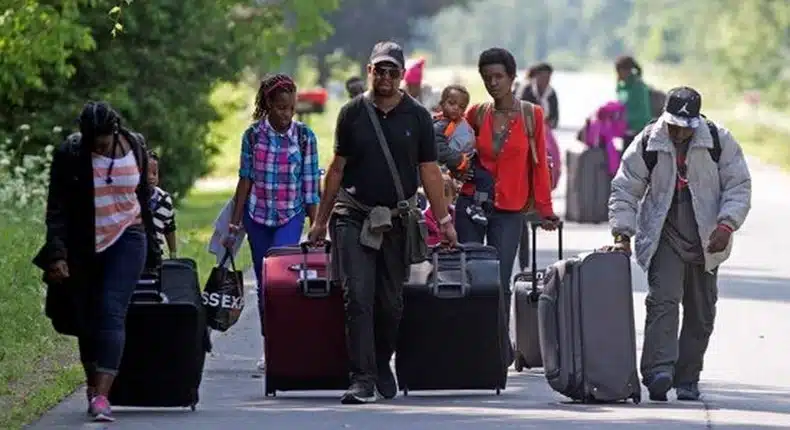
Canada has emerged as a top destination for IT talent, with Nigeria ranking as the second-largest contributor to this influx, according to research conducted by TECNA and CTN.
Between April 2022 and March 2023, Canada experienced a substantial surge in IT professionals arriving from countries like Brazil, India, and Nigeria, totaling over 32,000 workers.
Canada’s attractiveness as a tech talent hub is attributed to its welcoming immigration policies and the growth of remote work. This appeal extends even to rural areas, where the IT workforce has notably expanded. According to findings from The Technology Councils of North America (TECNA) and Canada’s IT Network (CTN), Nigeria is the second-largest source of IT talent professionals relocating to Canada.
As reported by Nairametrics, Canada continues to witness a substantial net inflow of IT talent, especially from Brazil, India, and Nigeria, resulting in a thriving tech sector.
The influx of IT professionals to Canada during the mentioned period exemplifies this trend, with more than 32,000 individuals from the global IT sector seeking employment opportunities in the country. Increased investments by American tech companies in Canada have also played a role in this growth.
Canada’s success in attracting a substantial number of IT professionals can be attributed to its immigration-friendly laws and cost-effective labor market.
The rise of remote work, accelerated by the COVID-19 pandemic, has further encouraged tech talents to explore non-traditional tech hubs and adapt to the evolving landscape of tech migration in North America.
The pandemic has also prompted investments in the tech industry due to proximity and appealing wage differentials. In 2022, a significant 400,000 software engineers were employed in Canada, leading to the expansion of the IT sector beyond major cities.
Notably, the employment of IT professionals has surged at an impressive annual growth rate of 16.3% in smaller regions such as Saskatchewan and Newfoundland and Labrador. Even smaller rural areas like Windsor, Ontario, have seen a substantial 28% increase in their IT workforce over the past year, aligning with the broader trend of migration from urban to rural areas in North America.
The most sought-after technical skills in Canada, as identified by a joint research effort by TECNA and CTN, include Customer Experience, Microsoft Azure, Analytical skills, Amazon Web Services, React.js, Jira, Data Science, GitHub, Customer Satisfaction, and Customer Relationship Management.
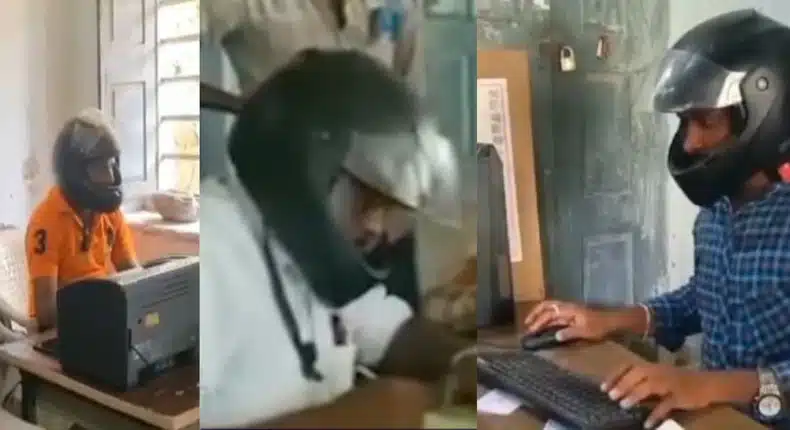
In the aftermath of a grave incident in which a colleague suffered a head injury that posed a significant risk to his brain, a group of government employees in India have taken measures to protect themselves. They now wear motorcycle helmets while working in their offices.
The ‘Development Office’ of Jagtial district in Telangana State, India, is reportedly in a state of severe disrepair, with cement slabs falling from the ceiling into the office spaces.
The Development Office’s primary responsibility is to enhance the district’s development by providing infrastructure and internet access to rural areas.
However, the deteriorating condition of the office building has made it necessary for employees to take precautions against falling debris.
According to Odditycentral.com, following an incident in which a coworker narrowly escaped a severe head injury when a cement slab fell from the ceiling, the workers requested to be relocated to a safer office facility.
Unfortunately, their request was not addressed.
News reports indicate that the roof of the Mandal Parishad Development Office has been leaking since the previous year and is currently in a state of disrepair.
As a result, the staff had no alternative but to find a way to protect themselves, as sections of the ceiling were crumbling due to moisture.
A video showing these workers wearing motorcycle helmets recently went viral, sparking widespread condemnation of the government’s negligence. In response, officials from Telangana’s Jagtial district have announced that plans are underway to relocate the Development Office staff to a more secure building.
However, it remains uncertain when the employees will be transferred to a safer location, thereby eliminating the need for them to wear motorcycle helmets.
Former Presidential Staffer, Stan Xoese Dogbe, has voiced his conviction that John Dramani Mahama, the flagbearer of the National Democratic Congress (NDC), represents a more suitable choice for the youth of Ghana.
He underscored Mahama’s commitment to social intervention programs designed to empower young people and enable them to become self-reliant.
Stan Dogbe highlighted Mahama’s commendable track record of implementing initiatives geared towards uplifting Ghana’s youth, notably the Youth Enterprises Support (YES) initiative. This initiative not only provided financial support but also created job opportunities and offered skills training to numerous young Ghanaians.
Furthermore, Stan Dogbe mentioned Mahama’s forward-looking plans, which include the introduction of additional youth-centric programs. Among these is the National Apprenticeship Program, set to offer free vocational, artisanal, skills, and technical training. This initiative aims to equip young Ghanaians with valuable skills, fostering self-employment and entrepreneurship.
In his words, “John Dramani Mahama is a trusted leader who has previously implemented numerous initiatives to empower the youth of Ghana. His Youth Enterprises Support (YES) initiative provided funding, job opportunities, and skills training for many young Ghanaians. He plans to introduce other youth-focused schemes, including free vocational, artisanal, skills, and technical training under the National Apprenticeship Program. This welcome initiative will help young Ghanaians gain valuable skills, become self-employed, become employers, and be able to support themselves.”
Stan Dogbe emphasized Mahama’s potential to address crucial issues beneficial to the youth, including the promise of a 24-hour economy and substantial investments in infrastructure.
He lauded Mahama’s unwavering commitment to youth empowerment, education, and good governance, asserting that Mahama stands as the superior choice for shaping Ghana’s future.
Additionally, Stan Dogbe took aim at the ruling New Patriotic Party (NPP), expressing disappointment in what he perceived as the party’s failure to tackle youth unemployment, improve the struggling education system, and combat widespread corruption.
He criticized the NPP’s performance in these critical areas and affirmed that Mahama represents a more promising choice for the youth and for the future development of Ghana, contrasting it with the perceived shortcomings of the NPP administration.
“Nana Akufo-Addo and Mahamadu Bawumia’s current administration has faltered in addressing youth unemployment and the struggling education system. Corruption remains rampant, and the pledges made to the youth remain unfulfilled. These two have been a significant disappointment in regard to the youth.”
On September 1, 2023, there was a small increase in the price of pork of GH4.
1 kilo of pork, which was being sold for GH26, is now being sold for GH30.
Augustine Naah, the Ashanti Regional Organiser of the Pig Farmers and Producers Association, claims that the price increase was mostly caused by the high cost of feed.
He stated that, “soya beans, maize, drugs, transport, and labour costs among others have all gone up.”
“To ensure the sustainability of their businesses, pig farmers found it necessary to align their prices with the increased cost of production,” Mr Naah said.
He pleaded with customers to be patient and continue buying their items so that they could stay in business.
In an interview with the Ghana News Agency on the sidelines of a sensitization program held in Bolgatanga, in the Upper East Region, Mr. Jude Okai, a Communication Officer at the FDA, issued a caution.
This warning is part of the implementation of the “promoting quality medicines plus” project by the FDA. The project aims to raise public awareness about the presence of counterfeit and substandard medicines in the market and the associated risks of consuming such products.
Furthermore, the sensitization initiative aimed to introduce the public to a new tool known as “The Med Safety App,” developed by the FDA.
This application serves a dual purpose, enabling the public to report adverse reactions to medicines directly to the FDA or healthcare professionals for prompt action. Additionally, the app provides users with detailed information about medications prescribed by their doctors before purchase.
Mr. Okai pointed out that many Ghanaians often neglect essential details on medication, such as expiry dates, certifications, and standards.
This negligence has led to the inadvertent purchase of counterfeit and substandard medicines, resulting in adverse health effects. He stressed the danger of consuming such falsified and substandard medicines, emphasizing that it could even be fatal.
He urged the public to report any adverse reactions to medicines to the FDA and healthcare providers for immediate assistance.
In a stern warning, Mr. Okai cautioned individuals involved in the distribution of counterfeit and substandard medicines to cease their activities. He also noted that the FDA would enhance its surveillance efforts to crackdown on such activities, with offenders facing legal consequences.
Ms. Linda Eyram Mensah, the Information Officer with the Communications Department of the FDA, emphasized the severe health consequences associated with the use of counterfeit medicines. She advised the public to purchase medicines only from certified sellers and opt for FDA-approved medications.
Mr. Abel Ndego, the Upper East Regional Principal Regulatory Officer of the FDA, provided insights into the FDA’s extensive market surveillance efforts across all 15 Municipals and Districts in the region. Their goal is to ensure that counterfeit and substandard medicines are eradicated from the market. He noted that, with the support of security agencies, some offenders had already been arrested and prosecuted. He urged the public to share information voluntarily to assist the authorities in combating the peddling of counterfeit and substandard medicines.
Mr. Ndego also highlighted the challenges posed by the porous nature of the region’s borders, which allowed unauthorized drugs to enter the country. He underscored the FDA’s commitment to safeguarding the safety and health of the public.
“We have realised as a regulatory body that there has been an influx of substandard and falsified medications on the market, so there is the need for the public to look out for certain things to make sure that whatever medication they go to buy is safe for use.”
“Currently, we have officers stationed at the legitimate entry points of the borders to inspect every consignment coming into the country to ensure that any food and drug related products that are entering the country through our region meet the regulatory standards,” he said.
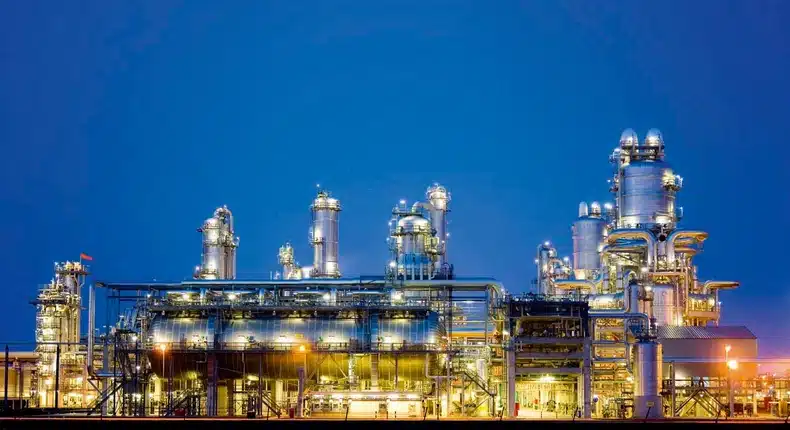
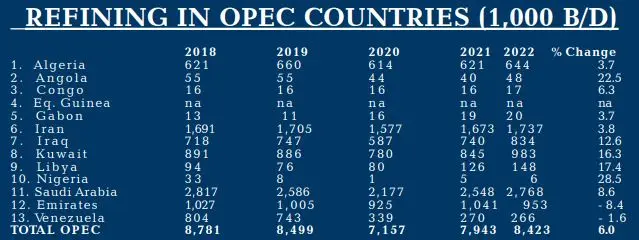
Nigeria, a prominent African oil producer, has been identified by the Organization of the Petroleum Exporting Countries (OPEC) as its member with the lowest refining capacity, averaging approximately 10,600 barrels per day (bpd) over a five-year period.
In 2018, 2019, 2020, 2021, and 2022, Nigeria refined an equivalent of 33,000 bpd, 8,000 bpd, 1,000 bpd, 5,000 bpd, and 6,000 bpd, respectively, according to OPEC’s Annual Statistical Bulletin for 2023.
Conversely, Saudi Arabia emerged as the leading OPEC member in terms of refining capacity, averaging 2.6 million barrels per day (mb/d) during the same period.
Specifically, Saudi Arabia refined 2.8 mb/d, 2.6 mb/d, 2.3 mb/d, 2.5 mb/d, and 2.9 mb/d in 2018, 2019, 2020, 2021, and 2022, respectively.
Saudi Arabia has five operational refineries, while Nigeria has four non-functional state-owned refineries and some privately owned facilities.
Nigeria has continued to import petroleum products from the global market due to inconsistent policies, a lack of long-term funding, difficulties in sourcing foreign exchange and feedstock for new refineries, and other factors.
Experts have cited these challenges, along with a lack of sustainable crude oil supply guarantees and lawlessness in the country, as deterrents for investors looking to build refineries in Nigeria.
Despite these hurdles, the Minister of State for Petroleum Resources, Heineken Lokpobiri, expressed optimism during an inspection of the Port Harcourt Refining Company that fuel importation in Nigeria would cease by 2024, with refineries expected to come online and operate more efficiently in the near future.
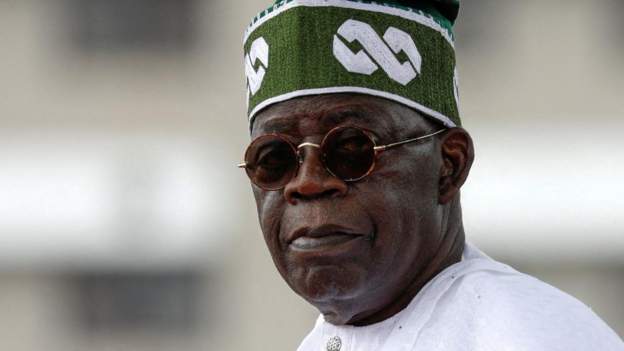
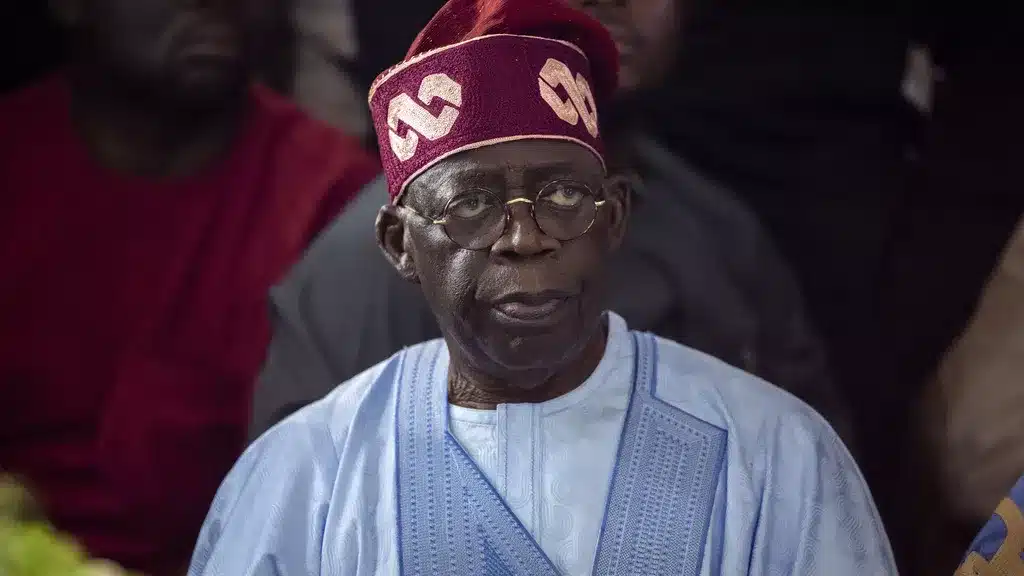
Minister of Ambassador Yusuf Tuggar, has revealed that President Bola Tinubu has called back all of Nigeria’s ambassadors, both professional and non-career.
In a statement released on Saturday by his SA for Media and Communications Strategy, Alkasim Abdulkadir, the minister officially announced the recall of all ambassadors.
Sarafa Ishola, the nation’s representative to the United Kingdom, had been recalled, according to Vanguard.
The resignation of Ambassador Ishola as the Federal Republic of Nigeria’s Extraordinary and Plenipotentiary Representative to the United Kingdom was announced in a recall letter from Ambassador Tuggar.
It urged Ishola “to commence the process of winding down your affairs, and take formal leave of your host government within 60 days and to return to Nigeria by 31 October 2023 at the latest.”
Total recall
The statement confirming the recall of all ambassadors:
“Sequel to the inquiries on the letter recalling the Nigerian ambassador to the UK, the Minister of Foreign Affairs, Ambassador Yusuf Maitama Tuggar, has clarified that all career ambassadors and non-career ambassadors have been recalled on the instructions of President Bola Ahmed Tinubu.
“Ambassadors as representatives of the country serve at the behest of the President and it’s his prerogative to send or recall them from any country.”
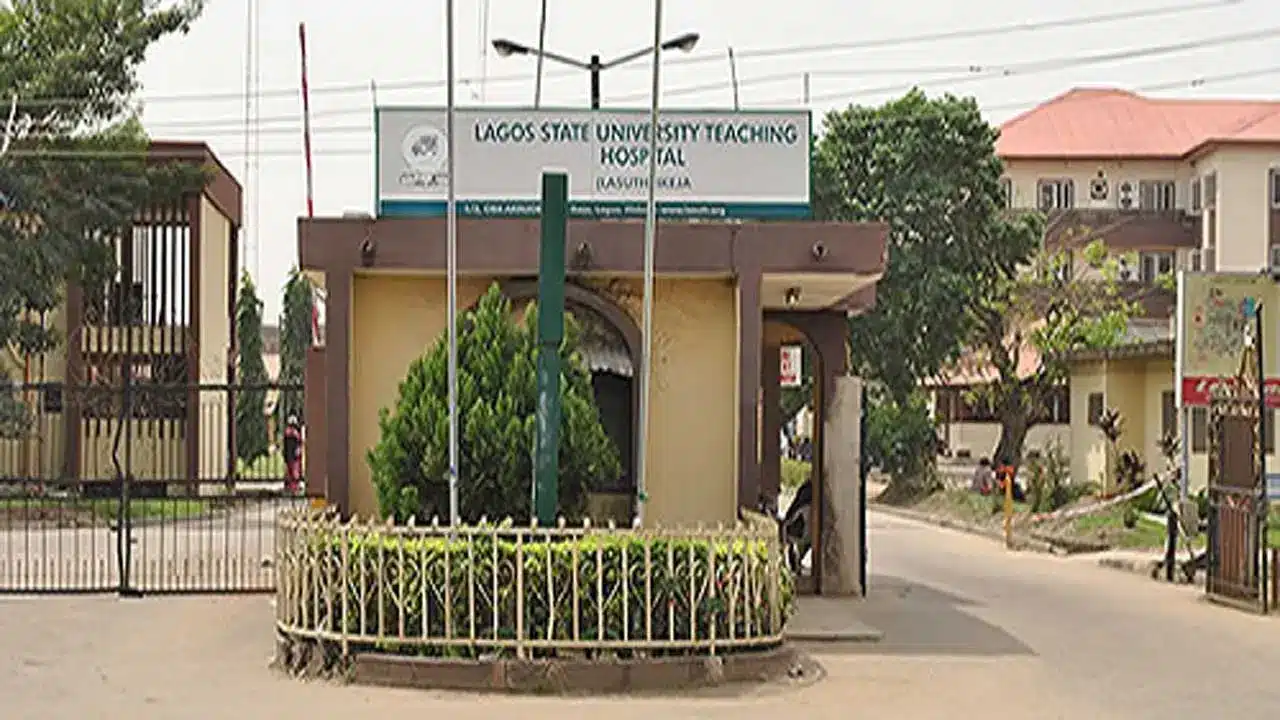
Management of the Lagos State University Teaching Hospital, LASUTH, has denied culpability in the alleged disappearance of the intestines of Adebola Akin-Bright, a 12-year-old patient who was treated by the hospital.
The mother of the patient, Abiodun Deborah, had earlier cried out to the Lagos State Governor, Mr Babajide Sanwo-Olu, to probe the mysterious disappearance of her son’s intestines after undergoing corrective surgery for intestinal obstruction in July this year.
According to Abiodun, her son was referred to LASUTH from Obitoks Medical Centre, Alimosho, where he had previously undergone surgery for a ruptured appendix, and another surgery for intestinal obstruction, but to her shock, after the corrective surgery at LASUTH, she was informed by the Consultant that her son’s small intestine was missing.
But in a response on its handle on X (formerly Twitter) @LASUTHikeja the LASUTH management said. At the same time, corrective surgery was indeed carried out on the patient in question, it insisted that LASUTH did not willfully remove any organ or structure from the patient who was referred to the tertiary health institution after having two surgeries done in a private hospital.
In the statement, the hospital management explained that it has a thorough report detailing the conclusions of a high-powered panel that it set up to investigate the potential outcomes of the case, even as it gave assurance that it is cooperating with the state agency which is already investigating the rather unfortunate case.
The statement reads: “Once again the hospital management needs to clarify issues on the insinuations being made by a mother in a viral video that the alleged loss of her son’s intestines after surgery is a matter between a private hospital and LASUTH.
“Our hospital is an excellent tertiary institution with highly knowledgeable and skilled medical consultants. We are also equipped with state-of-the-art facilities.
“The patient in question was referred to our hospital after having two surgeries carried out in a private hospital. He required extensive optimisation in our facility before a corrective surgery could be carried out.
“At the surgery, which was carried out by an experienced pediatric surgeon and her team, certain strange findings were discovered. There is a video clip of these intraoperative findings. The mother was informed about these findings but she appeared to be in denial.
“The hospital is in possession of a comprehensive report of the findings by a high-powered panel that it quickly set up to look into all ramifications of this case. Clearly, our hospital carried out a corrective surgery and did not willfully remove any organ or structure.
“We empathize with the family of the patient. We believe that financial assistance from any quarters will be in order but we do not think that a blackmail of the state government via the social media is the best approach.
‘The hospital management is cooperating with the state agency which is already investigating this rather unfortunate case,’ the statement noted.
Apple is reportedly testing 3D printers to manufacture stainless steel chassis for its upcoming smartwatches, starting with the Apple Watch 9.
The initial tests are reportedly being conducted for the forthcoming Apple Watch 9, and if successful, Apple plans to incorporate this technology into its manufacturing process for various other products in the future.
Currently, Apple Watch chassis are manufactured by cutting metal slabs into the required shape.
Implementing 3D printing would not only reduce production time but also minimize material usage.
Apple also aims to apply this 3D printing technique to the next version of the titanium-encased Apple Watch Ultra, slated for release next year.
However, mass-producing 3D-printed aluminum enclosures, as used in Apple’s Mac and iPad lineup, remains a challenge. In the long term, Apple intends to utilize both recycled aluminum and steel for its enclosures, aligning with its 2017 goal, which was reaffirmed in 2022.
Apple has already adopted recycled aluminum in many of its products, with 59% of aluminum used in 2021 originating from recycled sources, and some products using 100% recycled aluminum for their enclosures.
Chairman of McDan Group, Daniel Mckorley, reflected on the difficulties he encountered when deciding to revitalize the Ada-Songor salt mine at Sege. He revealed that numerous individuals doubted the project’s potential for success.
Speaking during the launch event for the salt mine and processing unit on August 30, 2023, Mckorley encouraged fellow entrepreneurs to remain steadfast in pursuing their dreams.
He stated, “People asked me questions, and I could see in their eyes the doubt of revamping this project. The question they ask me is, ‘can you do it?’ It sent a wavering fear in my spine. We have been bashed, misquoted, misrepresented, but as a torchbearer, I kept my focus.”
When the project’s last phase is finished, roughly 7,000 young people will be employed, according to McDan.
He claims that the project’s initial phase has thus far given 3,000 young people jobs in Sege, in the Ada West neighborhood.
“As we speak, we have employed 3,000 youth in this place, as we move to Ada East, we are employing 3,000 more. By the end of this project, we are looking at employing 7,000 youth. I have never seen a single project in this country employ so many people like this,” McDan said.
Chief Wole Olanipekun, SAN, a Senior Advocate of Nigeria and former Chairman of the Nigerian Body of Benchers, has called for a thorough examination and audit of past administrations in Nigeria.
He believes that such an audit would shed light on the reasons for the country’s economic challenges, the collapse of refineries despite significant expenditures on refurbishment, and other pressing issues.
Speaking at a colloquium held in Abuja to commemorate the 25th anniversary of Chief Joe-Kyari Gadzama’s elevation to the rank of Senior Advocate of Nigeria, Olanipekun also advocated for the renaming of Nigeria.
He argued that the name “Nigeria” was imposed by the colonial masters and carries a demeaning connotation.
He suggested that the country should adopt a name that reflects its indigenous identity and evokes a strong sense of pride and ownership.
Furthermore, Olanipekun urged President Bola Tinubu to initiate a probe into past administrations to uncover the reasons behind the country’s current challenges.
He raised questions about the state of the economy, the use of allocated funds, the condition of critical infrastructure like airports, and the devaluation of the national currency, the Naira. He stressed the importance of accountability and transparency in addressing these issues.
The colloquium aimed to bring together experts and stakeholders to discuss pressing national issues and find solutions to the challenges facing Nigeria.
It addressed concerns such as corruption, nepotism, electoral rigging, and the need for good governance and transparency at all levels of government.
The event was chaired by retired Justice of the Supreme Court, Mrs. Mary Odili, and attended by notable dignitaries, including the Attorney-General of the Federation and Minister of Justice, Prince Lateef Fagbemi, SAN.
When military takeovers occurred in countries like Mali, Burkina Faso, and Guinea, they were met with condemnation from various quarters, including African leaders and international organizations.
However, some people in Africa viewed these coups as a form of revolution aimed at liberating the continent from oppressive regimes. Dr. Arikana Chihombori-Quao, former Permanent Representative to the African Union Mission in Washington DC, referred to it as an “ideological realignment of economic, political, and social values.”
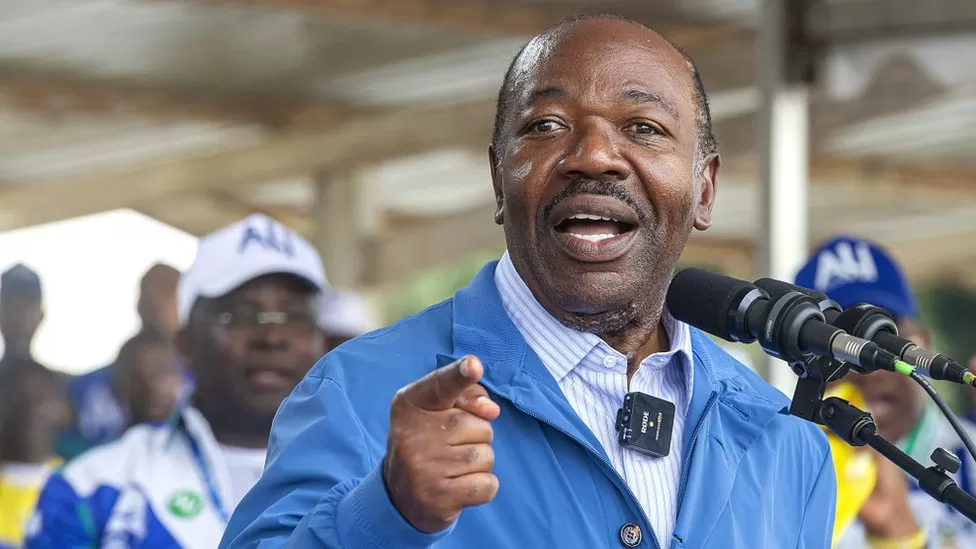
Gabon, which recently experienced a coup, joins the list of African nations affected by political upheaval. This coup marks the eighth in West and Central Africa since 2020.
The military officers in Gabon justified their actions by citing concerns about the transparency and credibility of the presidential election results.
They accused President Ali Bongo Ondimba’s regime of contributing to institutional, political, economic, and social crises in the country.
Africans have grown increasingly intolerant of leaders who cling to power for extended periods, often through dubious means.
Several African presidents, including Paul Biya of Cameroon, Yoweri Museveni of Uganda, Denis Sassou Nguesso of Congo, and Ali Bongo of Gabon, have remained in power for decades.
The military coup in Gabon and similar uprisings in other countries reflect the desire of Africans to challenge oppressive regimes that exploit the nation’s resources while the majority of citizens suffer.
This wave of change in Africa highlights the need for regional bodies like the Economic Community of West African States (ECOWAS) and the African Union (AU) to address institutional coups proactively, rather than waiting for military takeovers before intervening.
Failure to do so has led to criticism of ECOWAS and AU for their stance on coups, particularly regarding the recent events in Niger. African citizens appear determined to hold their leaders accountable for any abuse of power, including attempts to remain in office indefinitely.
The Kebbi Police Command has issued an order for the arrest and prosecution of individuals using unauthorized sirens, tinted glasses, and unregistered vehicles.
According to SP Nafi’u Abubakar, the command’s Public Relations Officer (PRO), this directive was conveyed in a statement released in Birnin Kebbi and attributed to CP Samuel Musa, the State Commissioner of Police.
CP Musa emphasized the ongoing campaign against the abuse of diplomatic number plates, unregistered vehicles, covered number plates, unauthorized use of sirens, and tinted glasses.
He instructed his Tactical Commanders, Area Commanders, and Divisional Police Officers (DPOs) to take action against offenders.
The commissioner assured that these officers had been directed to arrest and prosecute violators while also impounding their vehicles, sirens, and fake private number plates. He urged the people of the state to refrain from violating this order, emphasizing that anyone found in contravention would face appropriate sanctions.
In this interview, Mr. Zaccheus Adedeji, the Special Adviser to President Bola Tinubu on Revenue, discusses the efforts of the Tinubu Administration to enhance Nigeria’s revenue, ensure sustainable financing, and implement ongoing reforms to positively transform the nation’s economic prospects.
The last three months have been challenging for Nigerians due to the economic reforms initiated by President Tinubu. Is the President on track to fulfill his election promises?
For this government, our focus extends beyond the present moment or the short-term achievements of the President’s tenure. We are laying the groundwork for a prosperous future. While the foundation of a building may not always appear glamorous, it is undeniably the most critical part. As the house takes shape, its beauty becomes evident, and it provides shelter from external challenges.
In this short period, we have accomplished several significant milestones, such as addressing pressing tax issues, eliminating the wasteful subsidy on petrol to create fiscal headroom, and implementing forex reforms to rectify market distortions. These actions have placed us on the right path, moving in the right direction.
How is this administration planning to alleviate the burden on Nigerians facing the high cost of living following the removal of fuel subsidies?
We recognize the challenges faced by , particularly in the wake of economic reforms. President Tinubu signed executive orders on July 6 that reversed tax increases on manufacturers, suspended excise taxes on Single Use Plastics that would have affected SMEs, and deferred the commencement of various changes introduced through the Fiscal Measures and Finance Act 2023. These measures provide individuals and businesses with reasonable time to adapt without major disruptions to their livelihoods.
The removal of wasteful subsidies on petrol and forex has halted the financial drain on our treasury and is setting the stage for sustainable financing. Although some of these measures have led to short-term difficulties, we are confident that Nigerians will soon reap the benefits.
Are there plans to reduce the nation’s dependency on a single revenue-generating sector?
We firmly believe that Nigeria’s potential is vast, provided we enhance our policy environment and improve the efficiency of both the private and public sectors. President Tinubu has approved the establishment of a Presidential Fiscal Policy and Tax Reforms Committee, composed of distinguished Nigerians. This committee will advise the government on necessary reforms and support their implementation.
Ultimately, the committee’s work and other policy actions will result in diversifying the economy, revenue sources, and foreign exchange earnings, leading to a more productive economy.
What strategies are in place to attract foreign direct investment and create a conducive environment for potential investors?
President Tinubu’s philosophy is to tax returns on investment rather than investment itself, tax consumption instead of production, and facilitate prosperity while ensuring fair and progressive taxation. This administration’s market-friendly approach has already stimulated excitement in the capital market, with over 20% growth, the best performance in 15 years.
We are also working on reforms to create more job opportunities and entrepreneurship in the digital economy, particularly for our youth. Recognizing the volatility of the oil and gas sector and its impact on the economy, we are committed to diversifying into sectors like agriculture, solid minerals, and maritime.
How can the funds saved from subsidy removal contribute to economic stability?
The removal of subsidies on Premium Motor Spirit (PMS) and forex is a prudent decision that will not only curtail wasteful spending but also promote resource efficiency and eliminate economic distortions. This, in turn, reduces the need for excessive borrowing by the government at all levels to fund public spending.
The savings can be redirected towards building critical infrastructure, social services in education and healthcare, and reducing multidimensional poverty. Infrastructure projects like roads, power, rail, broadband, and pipelines are essential for a productive economy and can only be provided by the government. By investing in these areas, we create an environment that attracts investors and fosters economic growth.
Why should Nigerians trust President Tinubu and his team to deliver on the ‘Renewed Hope Agenda’?
President Tinubu’s agenda centers on inclusive and sustainable economic prosperity. Appointments in his administration are based on competence, with technocrats managing various economic aspects. Even the appointed politicians have proven records of performance.
We are making substantial progress, moving in the right direction, and I am confident that Nigerians will begin to experience the benefits of this administration’s policies in the near future. The future holds great promise.
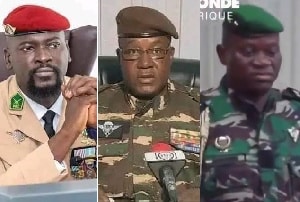
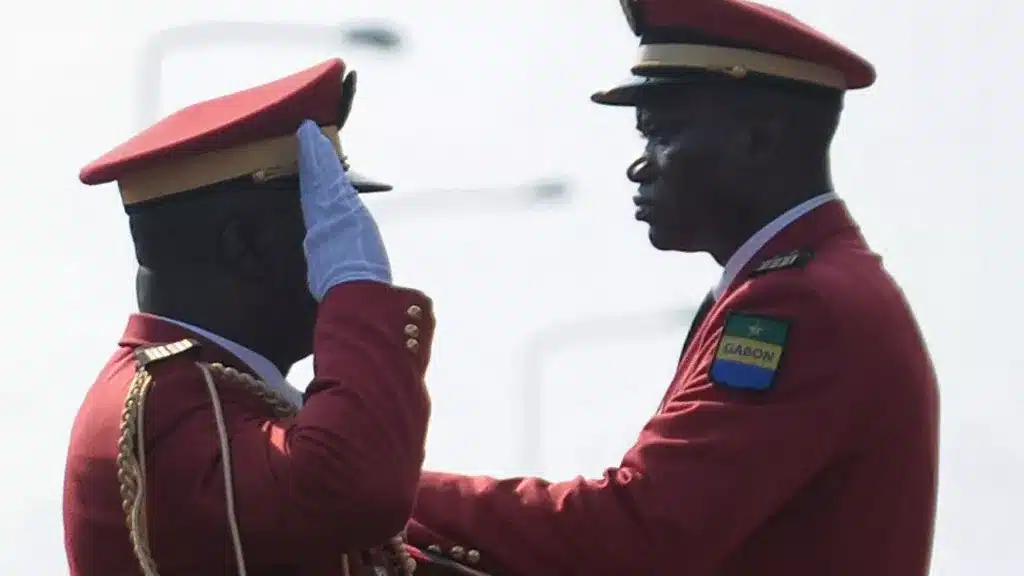
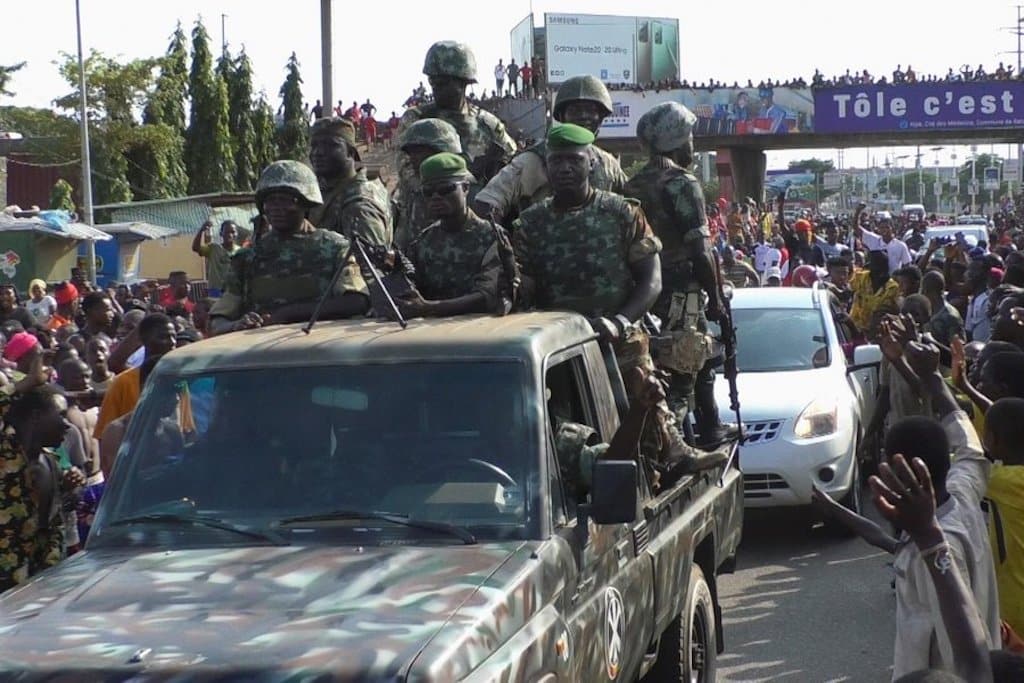
In many French African countries, there exist elite forces known as the presidential or republican guard, entrusted with the duty of safeguarding the president and their family. Governments in West and Central Africa often appoint the most trusted generals to lead these units, as they play a crucial role in ensuring the safety and security of the head of state.
However, recent waves of coups across West Africa, which have also affected Central Africa, have highlighted a concerning trend where leaders of these elite units have turned against the very individuals they were supposed to protect. Three such instances have occurred in recent years, with the most recent taking place in Gabon.
General Brice Oligui Nguema:
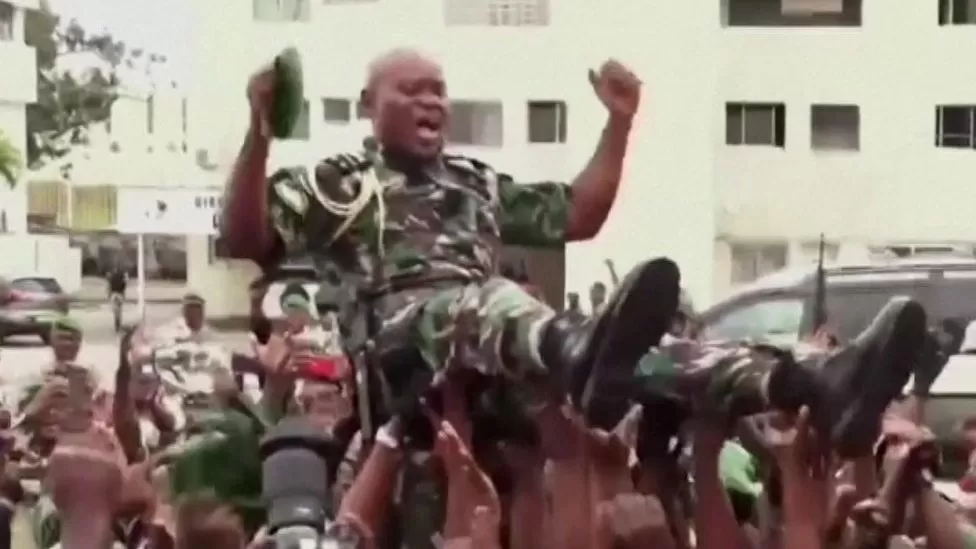
Brice Clothaire Oligui Nguema, the commander-in-chief of the Gabonese Republican Guard, which is the country’s most powerful security unit, emerged as the leader of the military junta that ousted President Ali Bongo Ondimba on August 30, 2023. This swift shift from electoral results to military intervention saw Nguema, who is a cousin of Bongo, leading the charge in overturning the election outcome.
Nguema’s influence and role in Gabon’s affairs have been characterized by a unique blend of military expertise, diplomatic endeavors, and entrepreneurial ventures. He was raised in a military family and pursued his education at the Royal Military Academy of Meknes in Morocco, where he refined his skills. He later served as an “aide-de-camp” to a commander within the Republican Guard during the tenure of former President Omar Bongo.
Abdourahmane Tchiani of Niger:
General Tchiani, aged 62, has been in charge of the presidential guard since 2011. This 700-strong force was established by the former president’s predecessor, Mahamadou Issoufou, with the aim of safeguarding against military takeovers. Tchiani was linked to a 2015 coup attempt against Mr. Issoufou, but a subsequent court case in 2018 cleared him of involvement. He was promoted to the rank of general in 2018 by Mr. Issoufou.
Before the military takeover, President Bazoum had planned to remove General Tchiani as part of changes he was implementing in the security forces, as reported by Niger’s private newspaper, L’Enqueteur.
Mamady Doumbouya of Guinea:
Mamady Doumbouya, a tall and stout French-trained soldier, had initially been entrusted with the leadership of the Special Presidential Guard under ousted President Alpha Conde. However, on September 25, 2021, during a coup in Conakry, Doumbouya emerged as the leader of the junta, despite his strong ties to Conde.
He was subsequently sworn in as the head of the transitional authority as consultations continue on the process of returning the country to constitutional rule. This transition has taken place amidst Guinea’s suspension from ECOWAS and the African Union, as well as sanctions imposed by the former.
Russia’s pro-war influencers are cashing in on substantial advertising revenues through their social media coverage of the conflict, according to the BBC’s investigation.
These influencers, often referred to as “Z-Bloggers” in Russia due to their support for the war, frequently share gruesome videos of drone strikes and disseminate false claims regarding Ukrainian President Volodymyr Zelensky. In addition to this content, they also promote advertisements ranging from cryptocurrency to fashion products.
Many of these influencers are embedded with the Russian military and share frontline footage, encouraging young Russians to join the military. Since the full-scale invasion began in February 2022, pro-war influencers have amassed millions of followers on Telegram, a social media platform that gained popularity among Russians after President Vladimir Putin banned Instagram, Facebook, and Twitter. This surge in Telegram users has led to a booming advertising market on the platform.
War influencers have seized this opportunity by offering advertising space to companies seeking to connect with their young audience. To assess their advertising rates, members of the BBC’s Global Disinformation Team posed as hotel owners interested in advertising on their channels.
Prominent influencers, including Alexander Kots, a veteran correspondent turned war influencer with over 600,000 followers on his personal Telegram channel, and Semyon Pegov, also known as WarGonzo, with over 1.3 million followers, were among those contacted during the investigation.
Alexander Kots disclosed that posting an advertisement on his channel would cost between 48,000 and 70,000 Russian roubles (£440-£680), depending on the duration the ad remained at the top of his Telegram feed. WarGonzo, on the other hand, quoted a price of £1,550 per post.
Leading war influencers typically share a minimum of one advertisement per day, resulting in potential earnings that far exceed Russia’s average monthly wage of 66,000 roubles (£550).
An advertising agent affiliated with Wagner-related channels provided a quote of £260 per advertisement in Grey Zone, a Telegram channel with exclusive access to Wagner and a following of over 600,000 subscribers.
For advertising on Alexander Simonov’s channel, a correspondent affiliated with the Ria Fan website founded by the late mercenary leader Yevgeny Prigozhin, the agent quoted a rate of £180 per post.
In the case of another Ria Fan reporter, Alexander Yaremchuk, who has a smaller following, the rates are lower, at £86 per post.
While some of the Z-bloggers possess substantial experience in war reporting for state-run media, individuals like Maryana Naumova lack professional training. Maryana, a former powerlifter, underwent a reporting course at a Wagner mercenary base and now hosts her own show on national TV.
For advertising on Alexander Simonov’s channel, a correspondent affiliated with the Ria Fan website founded by the late mercenary leader Yevgeny Prigozhin, the agent quoted a rate of £180 per post.
In the case of another Ria Fan reporter, Alexander Yaremchuk, who has a smaller following, the rates are lower, at £86 per post.
While some of the Z-bloggers possess substantial experience in war reporting for state-run media, individuals like Maryana Naumova lack professional training. Maryana, a former powerlifter, underwent a reporting course at a Wagner mercenary base and now hosts her own show on national TV.
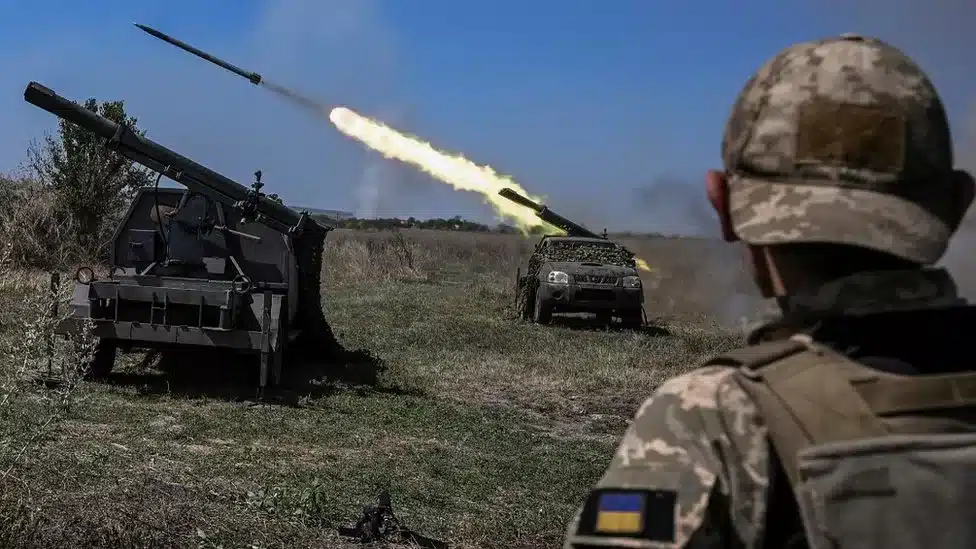
The US government has reported “significant progress” by Ukraine’s forces in their offensive against well-fortified Russian positions in the southern region, specifically south of Zaporizhzhia, within the past 72 hours. John Kirby, a White House security spokesman, made this announcement.
Dmytro Kuleba, Ukraine’s Foreign Minister, informed CNN that Ukrainian forces were indeed advancing but faced a challenging battle.
Meanwhile, Russia asserts that it has captured strategically important heights near the city of Kupiansk in northeastern Ukraine. It’s important to note that none of these claims have been independently verified.
Kirby also mentioned that Kyiv had acknowledged that the southern offensive, aimed at disrupting the Russian land corridor to Crimea, was progressing more slowly than anticipated, though they had managed to achieve some success against the second line of Russian defenses.
Earlier in the week, Ukraine’s military had reported capturing the village of Robotyne in the Zaporizhzhia region.
In the northeast, Russia has assembled forces with the goal of retaking territory that Ukraine had previously reclaimed to the east of Kharkiv.
In the south, Russia is believed to have established an intricate system of trenches and tunnels, defended by minefields, along with artillery positions and anti-tank concrete barriers known as “dragon’s teeth.”
Kyiv initiated its counter-offensive after obtaining advanced weaponry from Western allies and organizing assault battalions. However, progress has been slow, prompting Kyiv to request tanks, de-mining equipment, and warplanes, notably US-made F-16 fighter jets, from NATO countries.
On Thursday, Ukrainian Foreign Minister Mr. Kuleba expressed frustration with critics of the counter-offensive, suggesting that they should come to Ukraine and attempt to liberate even a small area themselves. He made this statement during a meeting of EU foreign ministers in Spain.
Russian President Vladimir Putin initiated a full-scale invasion of Ukraine in February 2022, following Russia’s annexation of Crimea in 2014 and occupation of much of Ukraine’s Donbas region.
In recent weeks, Ukraine has conducted its own attacks on mainland Russia. Russian officials reported the destruction of three Ukrainian drones targeting the bridge connecting Crimea to the Russian mainland in the early hours of Saturday morning.
President Putin, speaking to students at the start of the school year, emphasized Russia’s invincibility, drawing on the nation’s victory in World War Two to boost patriotism in schools. He stated that Russia’s triumph in the war showcased their invincibility, both then and now.
The Kremlin’s “important conversations” program was introduced in schools following the full-scale Russian invasion.
Additionally, Russia’s military announced the placement of a new strategic nuclear missile system called Sarmat on combat duty. These long-range missiles are equipped with multiple warheads, although their deployment has not been independently confirmed.
A Moroccan man has recounted a harrowing incident in which the Algerian coastguard fired upon him and three other tourists who had accidentally ventured into Algerian waters. Mohamed Kissi is the sole survivor of the incident, as his brother and a friend tragically lost their lives, while another friend remains in Algerian custody.
According to Mr. Kissi, they had departed from the Moroccan resort of Saidia on two jet skis when they became disoriented as night fell.
They realized they had unintentionally crossed into Algerian territory when they spotted Algerian coastguard boats approaching.
He described how the coastguard boats charged at them, and his brother signaled for them to turn back. However, the Algerian coastguard opened fire on them, leading to the tragic outcome.
Morocco has initiated an investigation into the incident, while Algeria has not yet commented on the matter. The incident has heightened tensions between the two nations, which have a long history of disputes, particularly related to Morocco’s claims over the disputed Western Sahara territory.
The border between Algeria and Morocco has been closed since 1994, and diplomatic ties were severed by Algiers two years ago, accusing Morocco of hostile acts, a claim denied by Rabat.
The shooting incident has sparked outrage in Morocco after a fisherman shared footage of a lifeless body, identified as Bilal Kissi, floating in the sea. Bilal Kissi, who resided in France, was laid to rest on Thursday. Another individual named Abdelali Mechouar was also killed, with his body still in Algeria.
Smail Snabe, who holds French nationality, reportedly appeared before an Algerian prosecutor on Wednesday, although specific details were not disclosed.
The border between Algeria and Morocco, spanning nearly 2,000 kilometers (1,242 miles), has been a source of tension since gaining independence from French colonial rule. It was closed in 1994 due to security concerns following a terrorist attack in the Moroccan city of Marrakesh.
Morocco-Algeria dispute: The basics
What is the cause of the dispute? Algeria and Morocco have long-standing border disputes that trace their origins back to the era of French colonization. They even engaged in a war in 1963.
What has happened since then? Relations between the two nations have never fully recovered. Algeria supports the Polisario Front, a group fighting for the independence of Western Sahara from Morocco.
What are the consequences? The extensive border running through the Sahara Desert remains tightly sealed, and there is no direct legal trade between the two neighboring countries.
India has successfully launched its inaugural observation mission to the Sun, named Aditya-L1. The launch took place at Sriharikota at 11:50 AM Indian time (06:20 GMT). Aditya-L1 will travel a distance of 1.5 million km (932,000 miles) from Earth, equivalent to 1% of the Earth-Sun distance, and it will take approximately four months to reach its destination.
The mission is named after Surya, the Hindu god of the Sun, and “L1” refers to Lagrange point 1, the precise location between the Sun and Earth where the spacecraft is heading.
A Lagrange point is a position where the gravitational forces of two large objects, such as the Sun and Earth, balance each other, allowing a spacecraft to remain stationary. Once Aditya-L1 reaches this point, it will orbit the Sun at the same rate as Earth, requiring minimal fuel for operation.
The launch was witnessed by thousands of people at the viewing gallery set up by the Indian Space Research Agency (ISRO) near the launch site, and it was broadcast live on national TV. ISRO scientists declared the launch successful, and it will take Aditya-L1 135 days to complete its journey to Lagrange point 1.
The mission aims to benefit not only India but also the global scientific community by studying the Sun continuously, even during eclipses, and conducting scientific research.
It will observe and study various aspects of the Sun, such as the solar corona, photosphere, and chromosphere, helping scientists better understand solar activity and its impact on Earth and near-space weather.
While the exact cost of the mission has not been disclosed, reports in the Indian press estimate it at 3.78 billion rupees ($46 million). The mission is expected to enhance our scientific understanding of the Sun, improve space weather forecasting, and contribute to the longevity of satellites in space.
India’s solar mission comes shortly after the country achieved a historic milestone by successfully landing a probe near the lunar south pole, becoming the fourth nation in the world to achieve a soft landing on the Moon.
Other countries, such as Japan, the US (through NASA), and the European Space Agency (ESA), have conducted missions to study the Sun, with NASA’s Parker Solar Probe being a notable recent example. These missions aim to unlock the mysteries of our solar system’s star and its dynamic behavior.
Swiss Ambassador to Ghana, Mrs. Simone Giger, has said that the total trade transactions between Ghana and Switzerland reached a historic high of $3.6 billion in 2022. This significant increase is attributed to the long-standing and mutually beneficial relations between the two countries.
Out of this total, approximately $3.4 billion came from exports from Ghana to Switzerland, with over 50% of all Ghanaian exports to Europe being directed to Switzerland. These remarks were made during the commemoration of Switzerland National Day in August, which marks the 732nd Anniversary of Switzerland’s mythological founding.
The Ambassador highlighted that the strong trade volumes are a result of the countries’ enduring relationship and their mutually beneficial exchanges in various sectors, including politics, economics, environment, peace, and security. Economic development and cooperation remain central to Switzerland’s collaboration with Ghana, with a focus on strengthening institutions for effective public service delivery.
Furthermore, the Ambassador noted that this close cooperation has led to an increase in Swiss investments in Ghana, with more than 50 Swiss companies establishing themselves in Ghana, creating job opportunities and contributing to the local economy.
Switzerland has also been involved in supporting peace and security efforts in the sub-region, particularly through its assistance to the Kofi Annan International Peacekeeping and Training Centre (KAIPTC).
The friendship between Ghana and Switzerland has a rich history, dating back almost two centuries when Basel Missionaries arrived in the Gold Coast in 1828, fostering bilateral collaborations for mutual benefits.
Recent high-level visits, such as President Nana Addo Dankwa Akufo-Addo’s visit to Switzerland in February 2020 and Madam Doris Leuthard’s visit to Ghana in July 2017, have further strengthened the relationship. These visits resulted in agreements on economic cooperation, environmental initiatives, and support for the cocoa industry, among other areas.
Mr. Ignatius Baffour-Awuah, the Minister of Employment and Labour Relations, who represented the government at the commemoration, highlighted the deepened relations between the two countries, emphasizing shared values, democracy, trade, investments, and support for multilateral initiatives. He also noted the significant growth in bilateral trade volumes, with Switzerland being one of the few countries with a trade balance in favor of Ghana. Cocoa and gold have traditionally been Ghana’s major exports to Switzerland, but the country has diversified its exports to include products like pineapples, vegetables, medicinal plants, and herbs.
At the Dabala Junction checkpoint in the Volta Region, the Customs Division of the Ghana Revenue Authority (GRA) has seized more than 700 counterfeit electrical meters.
Customs officers, conducting a thorough inspection of an Aflao-bound bus destined for Accra on Sunday, discovered the fake meters concealed in the luggage compartment and confiscated them.
None of the passengers on board the bus claimed ownership of the counterfeit meters, prompting the Customs officials to take possession of the consignment.
Ms. Christina Jatoe-Kaleo, the Volta Regional Manager of the Electricity Company of Ghana (ECG), confirmed this development to the Ghana News Agency. She stated that only the ECG, NEDCO, and the Ministry of Energy were authorized to import meters, making it illegal for individuals to engage in such business.
The company is cracking down on these counterfeit meters, as they have been installed without the knowledge of the ECG, she added.
“This nation-wrecking activity is taking a negative toll on the commercial and technical operations of the Company,” Ms Jatoe-Kaleo said.
“It is illegal to import meters into the country and acquire meters from other sources apart from ECG. We will take all necessary legal actions against individuals who are trying to infiltrate our network with these fake meters, including those who aid them by selling or buying those meters.”
She revealed that those meters were substandard and could cause fire outbreaks, saying: “Our meters are tested and calibrated to meet the required standards of our country, but these foreign meters are not calibrated so customers using them are likely to incur higher electricity bills than our standard meters.”
“Using such unauthorized meters poses several dangers to the user, other ECG customers and the company.”
According to Ms. Jatoe-Kaleo, one of these risks could overload and harm transformers, resulting in outages and financial losses.
She urged clients to stay away from buying those meters and interacting with other parties in favor of going to the ECG offices for any needed services.
“With the introduction of the Loss Reduction Programme and Flat rate policy, we have many options to service our customers anytime they apply for meters, so kindly visit the nearest ECG office and apply to ensure you are served instead of engaging in the illegal act of purchasing from illegal sources,” she said.
In order for the ECG to collect enough income to support the power supply chain, Ms. Jatoe-Kaleo urged the public to help the Company win the battle against fraudulent meter dealers by reporting any individuals involved in it.
“Users of these foreign meters consume electricity illegally without paying and this is not fair to customers who pay their bills. Such individuals usually complain they are not receiving bills, and this is because their meters were obtained and installed illegally…”.
“We would like to commend the GRA and Customs Division together with other security agencies like the military, national
security and Ghana Police Service for supporting the company in the fight against illegal meters,” Ms Jatoe-Kaleo said,
She advised clients to download the ECG PowerApp or use the shortcode *226# to settle all unpaid balances so that the business could continue to provide reliable power.
The government has instructed the Ghana Cocoa Board(COCOBOD) to advance the start of the upcoming 2023/2024 season, effective from Friday, September 8, 2023. This directive, as announced by Joseph Boahen Aidoo, the Chief Executive, in a statement issued in Accra, is in response to recent disruptions in the internal cocoa market and is aimed at protecting the interests of cocoa farmers.
The official opening ceremony for the new season is scheduled for Saturday, September 9, 2023. Consequently, the 2023 Light Crop Season concluded at the close of business on Thursday, August 31, 2023.
“In order to assist the Licensed Buying Companies (LBCs) to obtain the final returns from up-country, Ghana Cocoa Board has decided that returns on the declared purchases will be accepted up to 1600 hours on Thurday September 7, 2023,” it said.
It stated that everyone was to strictly comply with the foregoing arrangements and take note of them.
A seasoned journalist and the managing editor of the Insight Newspaper, Kwesi Pratt Jr., strongly criticized Bank of Ghana officials regarding Ghana’s economic condition.
During an event called Arise Ghana in Accra on August 31, 2023, he stated that these officials, including the governor, primarily boast about their academic credentials but seem ineffective in managing the country’s economy.
Pratt emphasized that despite their impressive academic qualifications, the central bank’s experts couldn’t prevent Ghana’s economic troubles.
“Nonsense… all of those universities and those degrees have not prevented the cedi from losing value from GHS4.20 to $1, today, we are exchanging the cedi at GHS12 for $1. No Harvard degree managed to stop this. So, don’t waste our ears with your Harvard degree. We don’t care,” he said.
The seasoned journalist made these comments while opposing the idea that statutory state institutions, such as the Bank of Ghana and their leaders, should operate independently without any oversight from the central government.
He argued that it doesn’t make sense that the president of the country, who appoints the heads of these state institutions, is accountable to the people of Ghana, while these leaders, like the governor of the Bank of Ghana, are not held accountable.
As a result, Pratt called for a revision of Ghana’s 1992 Constitution to introduce checks and balances for these state institutions. He was particularly dissatisfied with the independence of the Bank of Ghana, stating that academics and technocrats at the central bank have negatively impacted Ghana’s economy because they lack accountability.
“The independence of the governor and so on must be thrown into the wastepaper basket, thrown into the dustbin. It has no relevance throughout our history. In whatever we do, it is the will of the people which does matter.
“In whatever we do, it is that taxi driver, that ‘nika nika’ operator, that chop bar operator, it is their while, their interest which must move us forward and not the interest of some godforsaken academics, whose only boast is that they went to Harvard and they have doctorates in economics and so on,” he said.
Gabon’s newly appointed military leader, General Brice Oligui Nguema, has affirmed his commitment to restoring democracy in the country. However, he has refrained from specifying a timeline for holding fresh elections.
General Nguema has assured that Gabon’s state institutions will undergo reforms aimed at enhancing their democratic nature, emphasizing that their suspension is intended to be a temporary measure. Despite these assurances, the opposition coalition in Gabon remains skeptical, contending that the military has yet to demonstrate a clear intention to transfer power back to a civilian government.
Following the ousting of President Ali Bongo, who was subsequently placed under house arrest, army officers took to state television during the early hours of Wednesday to declare their control, bringing an end to the Bongo family’s 55-year reign over the central African nation. They also announced the nullification of the results of the recent presidential election, in which Mr. Bongo had been declared the winner but was contested by the opposition, who alleged fraud in the election process.
During a televised address on Friday evening, General Nguema emphasized the military’s commitment to taking swift but deliberate actions to prevent elections that might perpetuate the same problems of keeping the same individuals in power.
He stated, “Moving quickly does not mean rushing into hasty elections, which would only repeat previous mistakes.”
Gabon’s primary opposition group, Alternance 2023, which claims to be the rightful victor of the Saturday election, called on the international community to support a return to civilian governance.
Alexandra Pangha, a spokesperson for Alternance 2023 leader Albert Ondo Ossa, expressed hope that the international community would advocate for the restoration of civilian rule and democracy in Gabon rather than allowing General Nguema to be sworn in as a transitional president on Monday, describing such a plan as “absurd.”
The coup in Gabon marks the eighth such event in West and Central Africa since 2020, following similar incidents in Niger, Mali, Guinea, Burkina Faso, and Chad.
This coup has garnered condemnation from the United Nations, the African Union, and France, Gabon’s former colonial power with strong ties to the Bongo family.
Mr. Bongo, who had been in power since 2009, made a video appearance from his home this week, calling on his “friends all over the world” to advocate on his behalf. Nevertheless, his removal has been met with celebration by many Gabonese who have grown disillusioned with his family’s long-standing rule. Crowds in the capital, Libreville, and other areas were observed celebrating the army’s announcement earlier in the week.
The Blu Penguin Wins Fastest Growing Fintech Award at Ghana Business Standards Awards
Ghana’s leading in-store payments service provider, The Blu Penguin has been adjudged the Fastest Growing Fintech in the country at this year’s Ghana Business Standards Awards.
The Ghana Business Standard Awards (GBSA), held on at the plush Movenpick Hotel under the theme “Celebrating Organizations Committed to Remarkable Business Standards Geared Towards Sustainable Growth”, was to celebrate organizations committed to remarkable business standards in their sectors and industry leaders breaking barriers of excellence across the Ghanaian business region and the world at large.
The Blu Penguin was among several firms and individuals who walked away with laurels on the night. Its award hinged largely on the performance of its flagship and game-changing in-store payments solution, BluPay, which is currently the most widely used and most recommended product by merchants and banks in the country.
The citation that came along with the award read that “This award is in recognition of BluPay’s widespread footprint nationwide and the mix of merchants from multi-national enterprises to local SMEs all of which are benefitting from BluPay in-store collection services.”
BluPay
BluPay is an application that empowers businesses/merchants to effortlessly accept payments through mobile money and cards from their valued customers.
The app has successfully integrated various local mobile money networks like MTN Momo, Vodafone Cash, AT Money, and even ZeePay to seamlessly enable payments to merchants. It also extends its functionality to accommodate Visa, Mastercard, and contactless (tap an pay) transactions, ensuring a wide range of payment options.
BluPay is designed for installation on POS devices or smartphones to streamline the payment process. The app is compatible with both iOS and Android devices, which ensures that no matter the platform, the app can provide all merchants with a seamless payment experience.
Currently, over three (3) million Ghanaians have transacted on The Blu Penguin’s platforms (particularly BluPay) representing 10% of Ghana’s population and growing.
Founder and CEO of Blu Penguin, Tenu Awoonor said Blu Penguin’s exceptional growth, innovation, and substantial impact on merchant businesses over the past few years, particularly through BluPay, has been instrumental in its achievements.
“We truly understand the needs of business owners and how to solve their problems and safeguard their funds. With BluPay, our merchants “Never Miss a Sale” and that’s a mantra we live by,” he said.
Tenu Awoonor, affectionately called the BluMan, stated that the user-friendly nature of the BluPay App, enables cashiers to swiftly adopt the system and commence accepting payments without hassle, adding that the app’s remarkable capability to seamlessly integrate all payment channels into a single app makes it convenient for merchants.
Additionally, business owners utilizing the BluPay app enjoy access to a dedicated portal. The portal enables business owners to monitor transactions in real-time from anywhere in the world even if they are not in the store.
“Again, our merchants receive their transacted funds on time every day without fail, ensuring they have adequate capital to run their businesses without worries,” Awoonor said.
Payment links, APIs, ShopKeeper, Dashboard
In addition to BluPay, the company also provides payment links and API integration solutions tailored for online stores, enhancing their payment capabilities.
Again, the company has a sales and inventory management app known as ShopKeeper, which allows any seller to track all their sales and inventory in real-time right on their smartphone device.
“No need to purchase expensive systems, simply download it from the Play Store,” the CEO said.
The company also provides banks with a Transaction Management Dashboard, which allows them to monitor, control, and update the terminals within their network in real-time as well as identify and troubleshoot faulty terminals remotely.
Apart from Ghana, the company also has footprints in Cote d’Ivoire and DR Congo, where it is planning to start full operations soon.
The Future
In terms of what the future holds, Tenu Awoonor said “Our focus is directed towards strengthening our presence in Swipe4Cash within Ghana.”
He explained that “Swipe4Cash represents a service where we provide agents with the means to facilitate quick cash availability for individuals holding bank cards. It’s a way for agents to earn extra income and also provide convenience to areas where ATMs are not readily available.”
The CEO said the company is also planning to provide an open API that allows diverse B2B fintech services to seamlessly integrate, so companies can build their own customized financial solutions easily.
“As a company, it is our mission to see the businesses that use our services grow and scale. We are currently working on a credit financing scheme for merchants. With this, they can scale their businesses to the next level,” he stated.
The Blu Penguin is a Licensed Payment Services Provider (PSP) that specializes in providing in-store payment services such as POS, payment links, and USSD for merchants that simplify the collection of payments through a single App connected to all providers.
The company specializes in digital solutions that improve the sales and collection process for business owners so they can be reassured.
According to a recent Africa Trade Barometer report by Standard Bank, Ghana ranks second among countries with a favorable business environment and a welcoming business ecosystem. This recognition highlights Ghana’s potential for fostering thriving businesses and attracting foreign investments.
Ghana secured the second position with an impressive score of 74.28, closely trailing behind South Africa, which secured the top spot with a score of 100.00.
The Africa Trade Barometer (ATB) combines the Quantitative Trade Barometer (QTB) and the Survey Trade Barometer (STB) to provide comprehensive insights into the business landscape. The QTB utilizes existing secondary data sources and reported facts to establish ratings and rankings for each nation. On the other hand, the STB compiles data from primary research surveys conducted with 2,554 enterprises to offer additional scores and rankings.
Here is the ranking of the top 10 countries in the Africa Trade Barometer report:
South Africa – 100.00
Ghana – 74.28
Namibia – 60.23
Uganda – 58.94
Tanzania – 58.90
Mozambique – 57.51
Kenya – 55.81
Nigeria – 48.41
Zambia – 43.21
Angola – 0.00
This recognition underscores Ghana’s commitment to creating an enabling environment for businesses and investment, making it an attractive destination for both local and foreign entrepreneurs.
General Brice Oligui Nguema, who assumed power following the overthrow of President Ali Bongo Ondimba in Gabon, has issued stern warnings to contractors involved in corruption, a deeply rooted issue in the country.
He urged them to demonstrate “patriotism” and “commitment” to the country’s development.
Recent audits have revealed instances of overcharging by companies, and General Oligui Nguema declared that these investigations would be revisited to ensure the overcharged amounts are returned to the state. He delivered this message before more than 200 Gabonese business leaders who were summoned to the Presidential Palace.
At the same time, state television channels displayed images of Noureddin Bongo Valentin, one of the deposed president’s sons, and other former high-ranking members of the presidential cabinet, who were arrested on charges of “massive misappropriation of public funds,” “falsification of the President’s signature,” and “high treason.”
These individuals were shown alongside trunks, suitcases, and bags allegedly filled with large sums of money confiscated from their residences.
General Oligui, who leads the presidential guard and is set to be sworn in as the “president of the transition,” emphasized the need for contractors to demonstrate commitment and patriotism towards the country’s development. He criticized the prevailing situation, suggesting that it could not continue and that he would not tolerate it.
He encouraged contractors to change their approach, stressing the importance of responsible companies over those formed solely for immediate interests and overcharging schemes that have been widely recognized.
Algerian coastguards fatally shot two tourists who were on holiday in neighboring Morocco on Tuesday, reportedly because their jet skis crossed the maritime border between the two countries.
The victims were identified as Bilal Kissi, a resident of France, his older brother Mohamed, their Moroccan cousin Abdelali Mechouar, and their friend Smail Snabe. They had gone jet skiing from the popular beach resort of Saidia.
Mohamed Kissi, the only survivor, explained that they were not attempting to flee but were trying to communicate with the Algerian coastguards when the shooting began. Five bullets struck his brother and their friend, while another friend’s jet ski was hit by a bullet.
Moroccan media reported that Snabe, a French-Moroccan, was arrested by the Algerian coastguard and appeared before a prosecutor on Wednesday.
As of Friday, Mechouar’s body remained in Algeria, and the prosecutor’s office had initiated an investigation into the incident.
This incident has occurred amid increased tensions between Algeria and Morocco over the disputed Western Sahara territory. The border between the two neighboring countries has been closed since 1994, and diplomatic ties were severed by Algiers in 2021.
After mutinous soldiers in Gabon declared the ousting of the country’s president, many residents celebrated in the streets, feeling liberated from the 55-year rule of the presidential family. This scene has become increasingly familiar in West and Central Africa, which has witnessed eight coups since 2020.
These military takeovers are often a response to diminishing democratic dividends, driven by flawed elections, leaders seeking term extensions, and misgovernance that erodes civic space. This has led to widespread resentment and frustration among citizens, with many of the affected countries being among the least developed in the world.
The disappointment in democratic rule and the failure of leaders to significantly improve the lives of their populations have left people desperate, making them open to military rule. Recent surveys have shown declining support for democracy and elections in Africa, with a significant correlation between perceived presidential corruption and dissatisfaction with democracy.
While international sanctions are imposed to reverse coups in Africa, they often result in more hardship for the population. Analysts emphasize that military regimes are not the answer, and efforts should focus on entrenching democracies. While coups may seem initially popular, they have not proven to be a better alternative for good governance, as seen in countries like Mali and Burkina Faso. Military regimes have been associated with security challenges, economic slowdowns, and human rights abuses.
In summary, the resurgence of military takeovers in Africa is driven by dissatisfaction with democracy and governance. While coups may garner initial support, they often lead to instability and setbacks in various aspects of a country’s development. Efforts should prioritize strengthening democratic institutions to address the root causes of these coups.
President of the Private Newspaper and Online News Publishers Association of Ghana (PRINPAG), Andrew Edwin Arthur, has praised the Bank of Ghana for its efforts on behalf of Ghana as a whole.
He claims that the Central Bank has taken steps to ensure that media representatives are adequately informed about its policies and measures for improving financial reporting on economic development, growth, and stability.
The PRINPAG president noted that although the Central Bank has received public criticism recently, he feels that its actions have been within the regulations controlling its mandate while speaking at the BoG’s annual financial literacy event organized for business and financial media.
“I applaud Bank of Ghana for forging a partnership and collaboration with the Ghanaian media to educate the public about the economy, echoing PRINPAG’s policy of encouraging its members to specialize in their chosen profession,” Mr Arthur said.
“This collaboration with the media is helping Ghanaians better understand economic issues, thus fostering greater interest in public discussions about the economy,” he added.
The annual financial literacy program, conducted under the theme “Restoring Confidence in the Economy: The Impact of Monetary Policy,” is an integral component of the Bank of Ghana’s dedication to implementing policies and initiatives that prioritize the well-being of the people, foster financial inclusion, and stimulate business growth within the country.
Dr. Philip Abradu-Otoo, the Director of Research at the Bank of Ghana, who stood in for Central Bank Governor Dr. Ernest Addison, conveyed appreciation for the media’s vital role in disseminating valuable information regarding economic policies. He emphasized that such efforts promote transparency and accountability in economic matters.
“We believe in the power of the media to educate and inform the public and we are committed to fostering this collaboration for the betterment of Ghana’s economy,” the BoG Director said.
“This positive collaboration has contributed significantly to the media’s ability to provide accurate and comprehensive reporting on financial matters, thereby enhancing public awareness and confidence in the financial sector,” he added.
The presidents of Journalists for Business Advocacy (JBA) and Institute for Financial and Economic Journalists (IFEJ), as well as other important business and financial journalists from across the nation, attended the training event.
The company X, formerly known as Twitter, has declared it would begin collecting user biometric and employment data on September 29, 2023.
In an effort to strengthen its privacy practices, X Corp. will compile user photographs. However, X premium subscribers have the option to identify themselves by sending in a selfie and a photo ID.
According to the microblogging platform, this will help app users who are looking for work and employers who are hiring.
Additionally, X Corp stated that user biometric information will stop impersonation on the app.
A story on bbc.com claims that X made this choice after purchasing Laskie, a tech staffing firm, in May 2023.
“We may collect and use your personal information (such as your employment history, educational history, employment preferences, skills and abilities, job search activity and engagement, and so on) to recommend potential jobs for you, to share with potential employers when you apply for a job, to enable employers to find potential candidates, and to show you more relevant advertising,” a new X Corp privacy policy states.
“X will give the option to provide their government ID, combined with a selfie, to add a verification layer.
“Biometric data may be extracted from both the government ID and the selfie image for matching purposes. This will additionally help us tie, for those who choose, an account to a real person by processing their government-issued ID. This will also help X fight impersonation attempts and make the platform more secure,” X Corp told BBC.
The military coup in Zimbabwe in 2017 signalled the institutional return of military high commands to power. This was followed by the 2019 military coup in Sudan and the 2020 military coup in Mali. The military was active in assisting power takeovers in Tunisia and Algeria in 2020. The military strongman in Mali was not happy with the limited powers he was constrained to take in 2020 and he did another coup in 2021, giving himself full powers.
The coup in Gabon this week is most unlikely to be a regime change. General Brice Nguema, the head of the junta, is a relation of the Bongo family and had started his career as a body guard to Omar Bongo, the father of the deposed President, who had earlier ruled for 42 years. The coup occurred minutes after President Ali Bongo was declared as winner of a rigged presidential election. He has been incapacitated since suffering from a stroke in 2019 and the optics of a president without the capacity to govern has been an issue since his stroke. The symbolism of someone who is incapable of exercising power, rigging election after election, posed the question of how much longer the charade could last. When there was an attempted coup in January 2019, the army responded immediately, rounding up the culprits. As everyone knows, Gabon is too precious for France to allow a regime change there. In the coming days, it will become clearer who enable this coup to succeed.
Now all attention is on Cameroon, where, once again, it is clear that 90-year old Paul Biya is too old, weak and sick to govern. Immediately after the Gabon coup, significant changes were made to the military command structure in the country. With the grand return of military takeover in Africa, France might very well be engaged in cosmetic changes to its most beloved colonies that are rapidly falling out of its control. The shock of the coup in Niger was massive for France. Its lackey regime lost power in a country where the optics looked good with elections, power alternation, and the improved combat against violent extremism, but yet a coup to throw out France occurred. What does the future hold for President Ouattara of Cote d’Ivoire?
When the military seized power in Burkina Faso last year, ousting the country’s democratically elected President, Roch Marc Kaboré, it was already public knowledge that it was coming. There were widespread conversations that the military had decided to seize power in the country and the only question was when, not if it would. The main issue was the government’s failure to stem jihadist attacks that have destabilised broad swathes of Burkina Faso, displaced 1.4 million people, and caused 2,000 deaths that year. The general feeling in the country was that the time had come to try an alternative form of government. The Burkinabe coup was therefore similar to the one in Egypt in 2013, when the coup was announced on national television months before it happened. The politics of Africa has been changing dramatically in recent years, propelled by the return of the military to power, and this would clearly occupy the terrain for some time.
The military coup in Zimbabwe in 2017 signalled the institutional return of military high commands to power. This was followed by the 2019 military coup in Sudan and the 2020 military coup in Mali. The military was active in assisting power takeovers in Tunisia and Algeria in 2020. The military strongman in Mali was not happy with the limited powers he was constrained to take in 2020 and he did another coup in 2021, giving himself full powers. The same thing happened in Sudan in 2021, as the military staged another coup to take on full powers and break the bonds with their civilian collaborators. In Chad, the 2021 coup was to keep power in the family, following the killing of strongman, Idris Deby.
Post-colonial Africa has seen over 200 coup attempts, with roughly half of these seeing the civilian leaders successfully removed. The democratic transitions of 1990 to 1994 led to a dramatic decline of unconstitutional seizure of state power. This trend is now being reversed, over the past three years, with the new wave of coups d’état on the continent. The current trend is however different from that of the 1970s and 1980s.
As was the case in the 1970s and 1980s, military coups in Burkina Faso, Mali, Guinea, Niger and Gabon, have seen civilians demonstrate in favour of military rule and they have been ready to collaborate with the juntas. Clearly, there is a new generation in Africa that has no memory of the terrible impacts of military rule in the continent, and in its naivety this generation thinks military rule can be a political solution to the crisis generated by poor democratic practices.
Post-colonial Africa has seen over 200 coup attempts, with roughly half of these seeing the civilian leaders successfully removed. The democratic transitions of 1990 to 1994 led to a dramatic decline of unconstitutional seizure of state power. This trend is now being reversed, over the past three years, with the new wave of coups d’état on the continent. The current trend is however different from that of the 1970s and 1980s. Today, we are witnessing the grand entry of politics by the gun. In the Sahel, as well as other parts of Africa, numerous non-military groups have acquired guns and are engaged in armed struggle for power or sometimes just armed banditry. Generalised insecurity has become the political reality in many of our countries – from Nigeria to Niger, Mali, Burkina Faso, Chad, Mozambique, Sudan, Somalia, Kenya, Central African Republic, Democratic Republic of the Congo and so on. The military has completely failed to contain the armed combatants and reduce insecurity.
This situation has created two narratives in an emerging blame game. The military have been complaining in loud whispers that the corrupt democratic administrations have not been supplying them adequate weaponry to deal with insurgents, jihadists and armed bandits. The response is that deep corruption has also penetrated the military itself and they often misappropriate the funds given to them to execute the wars. A war economy has developed in which officers are massively enriching themselves from the war efforts and thereby sabotaging them. The winner, as it were, is corruption.
The time has come for Africans to reopen the debate on the best pathways of deepening democracy in our countries. The contemporary African must learn to read the tea leaves. Apparent democrats win elections with the promise of democratic consolidation and when they get the power, they work on dismantling the democratic system. We know from our past experience that the military cannot be the solution to our democratic and developmental needs.
The more profound narrative is that the African situation today is characterised by three types of coup d’état. The first is the constitutional coup in which serving presidents recklessly tear the normative framework they had themselves developed and engage in tenure elongation beyond constitutional limits, thereby destroying the legitimacy of the political system. The second coup is engaging in massive electoral fraud to change electoral outcomes. There have been at least thirteen African countries, where the leaders have used various legal devices and political manoeuvres to extend their tenures beyond two terms since 2012.
Often, it is the experience of these forms of coup d’état that creates the conditions for the third type, which is the military coup d’état. The result is that Africa’s robust normative frameworks for deterring unconstitutional changes of government and for advancing democracy, elections and governance have been considerably weakened. The norms codified in Article 30 of the African Union Constitutive Act, 2002 and the African Charter on Democracy, Elections and Governance, 2012 have gradually lost their meanings.
It is for this reason that the condemnation of military coups by the African Union or by ECOWAS has very little resonance because people always ask what these institutions did when democratically elected leaders were messing up national constitutions and/or electoral systems. Democratic culture has therefore been weakened considerably through anti-democratic practices by ruling parties.
Repeatedly, ECOWAS, the African Union, and the United Nations Security Council have strongly condemned coups and called on the military to reinstate the deposed leaders and restore constitutional rule with no effect. Even the imposition of sanctions has had very little effect on the emerging juntas.
The time has come for Africans to reopen the debate on the best pathways of deepening democracy in our countries. The contemporary African must learn to read the tea leaves. Apparent democrats win elections with the promise of democratic consolidation and when they get the power, they work on dismantling the democratic system. We know from our past experience that the military cannot be the solution to our democratic and developmental needs. What we need to reinforce in our political systems is early detection of democratic derailment so we can put the system back on course.
A professor of Political Science and development consultant/expert, Jibrin Ibrahim is a Senior Fellow of the Centre for Democracy and Development, and Chair of the Editorial Board of PREMIUM TIMES.
Minister of the Federal Capital Territory (FCT), Mr. Nyesom Wike, boldly asserted that he has not encountered any party leader who could suspend him from the party.
In an interview with Channels Television, Wike emphasized that governance transcends political party membership, addressing questions about his appointment in an APC-led government. He clarified that he assumed the role of FCT Minister to support President Bola Tinubu’s administration and not as a representative of any political party.
Wike expressed his commitment to the principles of fairness, equity, and justice, emphasizing that his loyalty lies with these principles rather than any particular party.
He stated, “I’m not here to work for a party. I’m here to support the president, who has confidence in me. I owe nobody an apology.”
When questioned about the possibility of the PDP suspending him, Wike questioned whether there was anyone within the party capable of suspending him, emphasizing that such a scenario was unlikely.
He also hinted at his role in advocating for discipline within the party for those who violated its constitution on office rotation.
As Nigerians continue to grapple with economic challenges stemming from the removal of fuel subsidies, President Bola Tinubu offered reassurance on Thursday that, with patience and determination, he would achieve success.
President Tinubu emphasized the necessity of administering a “bitter pill” to a nation and economy in need of healing to pave the way for a brighter future.
During a meeting with the Board and Management of the Nigeria Economic Support Group (NESG) in Abuja, President Tinubu reiterated his commitment to fostering a robust public-private sector partnership to foster economic growth. He emphasized that his administration’s ongoing, bold, and coordinated reforms are built upon a “strong commitment to accountability and transparency.”
The President reaffirmed his unwavering commitment to fully implementing the eight priority reform areas outlined in the Renewed Hope Agenda within the next three years.
He stressed that Nigeria possesses abundant human and natural resources, coupled with unrealized opportunities that can be swiftly harnessed to bring about new prosperity. He called for the urgent exploitation of Nigeria’s diversity for the collective benefit of the nation, with a particular focus on establishing think tanks in the agricultural sector and creating a commodity exchange.
In his words, “We have left the past behind. I will not dwell on the past. My focus, like a racehorse, remains forward-looking. We possess a wealth of knowledge and untapped mineral resources, as well as a divinely endowed agricultural sector. Yet, we often hesitate to take the bold steps necessary for our people’s prosperity. Instead of harnessing our diversity for collective gain, we engage in needless disputes rather than focusing on thinking and working for our people.”
The President underlined that he was elected on a “no excuses” platform rooted in renewed hope and that he would not tolerate excuses from any member of his government as they embark on fulfilling his agenda.
Olaniyi Yusuf, the chairman of NESG, applauded the economic reforms announced by the Tinubu administration, particularly with regard to the elimination of fuel subsidies, the harmonization of foreign exchange rates, food security, and consolation for sub-national governments.
The NESG Chairman promised that the NESG would cooperate with the newly appointed cabinet to carry out the administration’s eight-point plan.
“Your track record in the effective implementation of bold economic reforms as the Governor of Lagos leaves those of us in the private sector without doubt that you will achieve much greater feats as our nation’s president,” the NESG Chairman confided.
During the courtesy visit, he asked the President to officially declare the NESG Summit open and instructed the heads of the ministries, departments, and agencies (MDAs) to join them and fully participate in the Summit as part of efforts to increase both domestic and foreign direct investment in Nigeria.
Truck logistics operators at the Lagos seaports have revealed that they incur approximately N40 million in daily expenses on bribes and illegal taxes within the corridor.
Revealing this information to Vanguard, an official from the Council for Maritime Transport Unions and Associations (COMTUA), who wished to remain anonymous, explained that the entities collecting these funds include both state and non-state actors.
He further clarified that the average daily expenses per truck amount to around N38,500, and their members oversee the movement of over 1,000 trucks through the ports every day.
Breaking down the extortions, he mentioned a N3,000 fee paid at the Tin-Can First Gate roundabout, a N2,000 waybill fee allegedly collected by individuals linked to the Apapa Local Government Area (a claim denied by the Council), an additional N5,000 gathered by certain Nigeria Customs Service operatives within the port, and another N1,000 given to different Customs personnel at the Customs exit gate.
He also alleged that the Police at the Port have two collection points where drivers are expected to pay sums of N2,000 and N1,000.
Other payments reportedly include a N500 warehouse fee, a N2,000 Cutting of Seal fee, a N4,000 fee allegedly paid to certain National Drug Law Enforcement Agency (NDLEA) operatives, another N4,000 collected by an unidentified local council, a N1,000 fee for ‘small paper’ collected by agents associated with an unnamed Lagos political figure, as well as a N3,000 confirmation fee, a N2,000 gate pass fee, and a N1,000 security fee paid within the port.
Furthermore, drivers are required to pay a N2,000 scaling fee, a N1,000 security fee, and a N4,000 fee for dropping off containers.
Some truck owners expressed their frustration, stating that they have made efforts to bring this issue to the government’s attention, but no action has been taken to address it.
Discussing the situation, Mr. Richard Odoka, a truck owner, emphasized that trucks carrying export cargoes are particularly affected by these extortion practices.
Mr. Yinka Aroyewun, President of COMTUA, condemned the alarming and reprehensible extent of extortion.
According to him, “There are 20 extortion points between Tin-Can first gate and the point at which you off-load your empty containers or drop your export cargoes. From N1.000 to N2,000 to N3,000 to N5,000 are collected by agencies of government.”
Dele Afose, Chief of Staff to the Executive Chairman of the Apapa Local Government Area, responded to the claim by denying that anyone had been sent by the Council to collect money on its behalf.
Afose stated:“I am not aware of this development. In fact, I am shocked that people are collecting money on behalf of the Local Government. The Local Government did not post anybody anywhere”.
“Looking backwards is retrogressive for any reformer. Looking forward can give you the leaps that will propel you in the right direction. We need think tanks in the agricultural sector. I don’t see why Nigeria will be so blessed with good soil and not have a commodity exchange. I don’t see why we have not been able to interrogate our real estate sector and propel it.
“I don’t see why we have not used consumer credit to build the purchasing power of our people and the capacity of our very own manufacturing sector,” the President assessed.
While commending the NESG for believing in the reforms of his administration, the President said the “bitter pill” must be administered to an ailing nation and economy to build a better future for the country.
“I am here and I believe we can do it together. No single person succeeds alone. The world is dynamic. We are confronted with climate change and other challenges, but somewhere in the eye of the storm, there is a quiet and peaceful corner for those who can toil well. With patience and determination, we will succeed,” the President assured.
In the wake of a series of coups in African countries, United Nations Secretary-General Antonio Guterres issued a warning on Friday, stating that military takeovers exacerbate problems and are not the solution to governance challenges.
He emphasized the importance of establishing credible democratic institutions, the rule of law, and strengthening international bodies like the African Union to promote peace, stability, and democracy on the continent.
Additionally, Guterres highlighted the need to address the root causes of political instability, particularly the lack of development.
“Development is a central objective if we want to create conditions for peace and stability in Africa.”
Deputy Minister of Communications and Digitalization, Ama Pomaa Boateng, has urged the upcoming cohort of the Huawei Seeds for the future program to seize the opportunity it presents for enhancing their ICT skills, thereby contributing to Ghana’s digitalization efforts.
She emphasized that this STEM-focused (Science, Technology, Engineering, and Mathematics) program is part of the government’s collaboration with Huawei, aimed at offering young participants a chance to engage in global competitive initiatives. This endeavor will help them broaden their knowledge and skills, ultimately preparing them for the dynamic job market.
During the virtual launch of the 2023 Huawei Seeds for the Future program on September 1, the Deputy Communications Minister emphasized the positive impact and advantages that the program will bring to its beneficiaries in 2023.
“In today’s evolving digital landscape, organizations are compelled to adapt and leverage technology to stay competitive. Integrating ICT solutions in the operation of organizations has become an essential tool in enhancing productivity and unlocking new potentials.
It is in this regard that the Ministry of Communications and Digitalization, has put at its forefront the training of more ICT talents to boost the country’s digitalization drive through its ‘Girls in ICT’ initiative,” she noted.
She further cited that data from the International Telecommunications Union (ITU) indicates “that Tens of millions of future jobs will require far more advanced digital skills. As such skills become increasingly important for employment, substantial talent gaps may emerge between workers proficient with ICTs and those lacking it.”
In line with these objectives, the Deputy Communications Minister stressed the importance of increased investments in ICT skills training to bolster digital proficiency. She affirmed the Ministry’s commitment to supporting talent development initiatives, aiming to foster an inclusive and sustainable digital economy.
Furthermore, she encouraged the beneficiaries of the 2023 Huawei Seeds for the Future Program to make the most of this opportunity by learning from experts, exploring new avenues, and building valuable networks for their future endeavors.
On a related note, Kweku Essuman Quansah, the Deputy Managing Director of Huawei Ghana, highlighted the program’s track record of prioritizing the training of ICT talents globally. Its primary goal is to address the growing skills gap within the ICT industry.
“In the space of 2 years, trained 80,000 young girls in relevant ICT courses and we are here once again to witness the opening of an initiative that underscores our commitment to fostering innovation, diversity and collaboration,” Quansah noted.
Additionally, he emphasized that this year’s program will continue to prioritize women, with a specific focus on providing an intensive 8-day online training experience for 70 female university students pursuing STEM-related courses.
During the program, participants will delve into advanced topics such as 5G, AI, Digital Power, and Cloud Computing, equipping them with valuable knowledge and skills in these fields. Moreover, the initiative aims to enhance their leadership abilities.
In addition to the technical training, the participants will engage in mentorship sessions and receive career guidance. These sessions will offer valuable insights from seasoned industry professionals to help shape their career paths.
A multitude of individuals escaping the conflict in Sudan have crossed into Chad, where many find themselves in densely populated camps located in the eastern town of Adré.
These camps are grappling with severe challenges, including shortages of food, water, sanitary facilities, shelter, and medical care.
In Adré’s improvised field hospital, volunteer physicians are working tirelessly to provide care. Dr. Nour al-Sham reports, “The majority of our patients are suffering from malaria, eye infections, respiratory illnesses, and malnutrition. The field hospital we operate in is quite small, and we need to expand the space.”
The overcrowded living conditions in the camp, coupled with Chad’s rainy season and inadequate access to water and sanitation, create an environment ripe for the spread of diseases.
🔴 A major humanitarian emergency is happening now in eastern Chad, where people are desperately waiting for food rations. Some have gone 5 weeks without receiving food.
❗️People are feeding their children on insects, grass and leaves. They have much less water than they need..
Adam Bakht, an old man, and the other 200,000 refugees in the community have been awaiting medical attention in agony.
“I have diabetes, asthma, and allergies. They only gave me an injection to ease the pain. My diabetes medication is supposed to arrive in three days, but for my asthma they told me to buy an inhaler from outside the camp, ” he said.