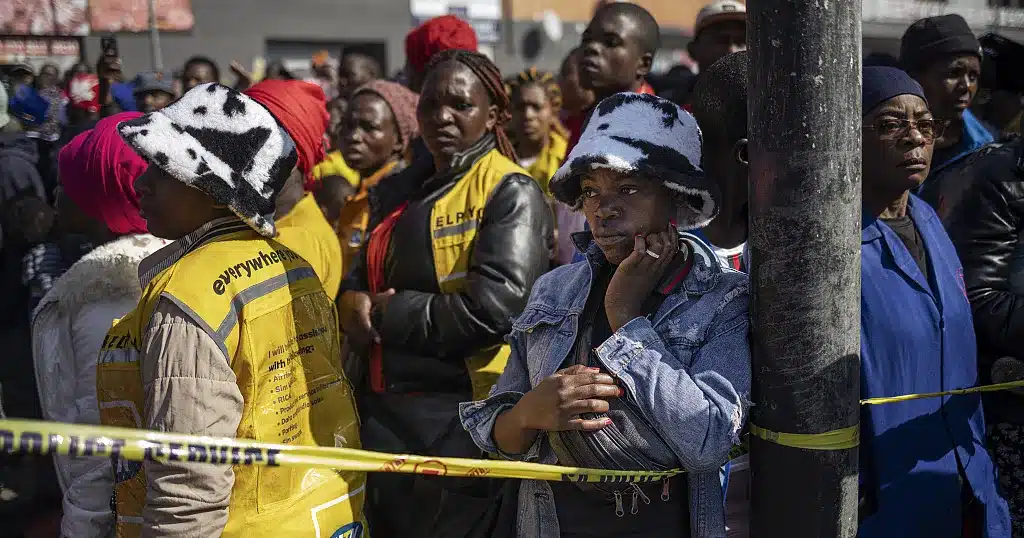
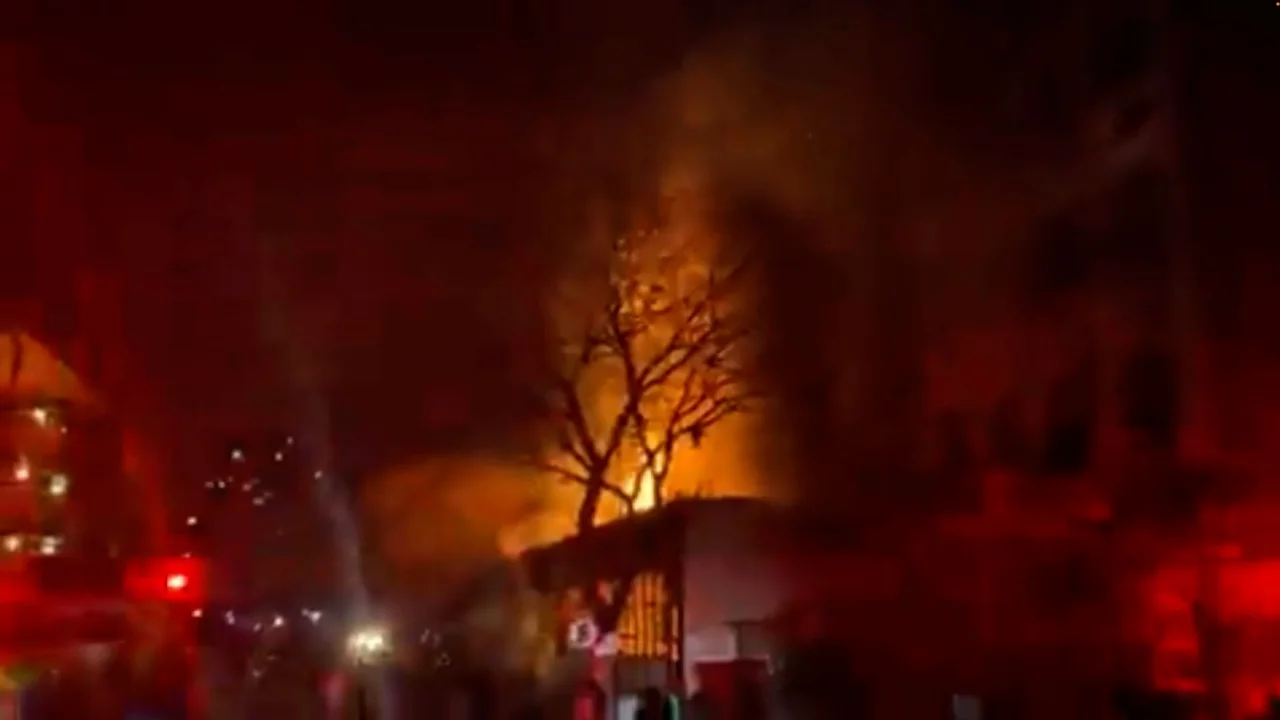
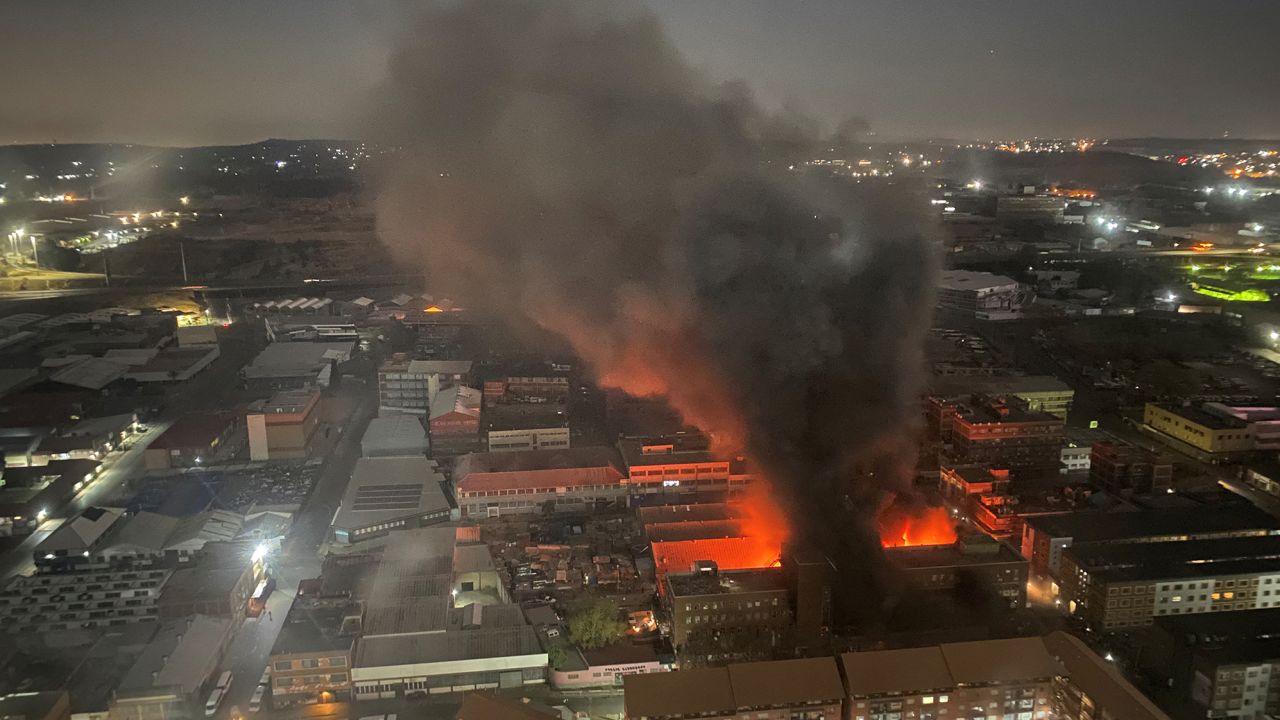
Most of the emergency services teams have departed from the scene of one of South Africa’s deadliest fires, which engulfed a Johannesburg building on Thursday.
On Friday, police sniffer dogs were deployed to scour through the charred remains of the dilapidated structure in search of any remaining bodies.
The devastating fire, which occurred in a condemned five-story block, resulted in the tragic loss of 74 lives, with most victims suffering extensive burns that necessitate DNA testing for identification.
Authorities estimate that around 200 people were residing in the illegal housing created within the abandoned building.
While household fires are a common occurrence in Johannesburg, particularly in impoverished areas where candles and hazardous paraffin stoves are often used for lighting and cooking, Thursday’s blaze has underscored the city’s housing crisis.
Government across all levels is working around the clock to ensure that those who need assistance, from alternative accommodation to trauma counselling, are being looked after. #JHBFirepic.twitter.com/aEEJRjRxCi
Beyond the cordoned-off area, several survivors with visible injuries like head wounds and fractures await assistance.
Meanwhile, alongside the relatives of the deceased, some individuals have commenced the somber process of identifying their beloved family members at a nearby mortuary.
The exact cause of the fire remains a mystery, but forensic investigators were also present at the site on Friday, meticulously examining the scorched remnants of the structure.
The United Nations has called for an “independent” investigation after a crackdown on an anti-UN protest in eastern Democratic Republic of Congo (DRC) resulted in dozens of deaths.
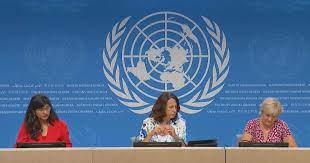
The UN is actively engaging with the DRC authorities to ensure that the probe they have initiated is “independent, effective, and that measures are put in place to ensure that future demonstrations are policed in line with international human rights standards,” stated UN rights office spokeswoman Ravina Shamdasani.
According to the UN, at least 43 people were killed, including a police officer, and 56 others were injured during the crackdown, although the actual toll may be higher.
An internal army document reported 48 deaths in addition to the slain police officer and 75 wounded individuals.
Shamdasani also expressed concern over the high risk of human rights violations in such a charged context.
The incident underscores the ongoing tensions in eastern DRC, which has been plagued by militia violence for several decades, and raises questions about the role and effectiveness of the UN peacekeeping mission (MONUSCO) in the region, which has faced criticism for its perceived passivity in preventing conflicts.
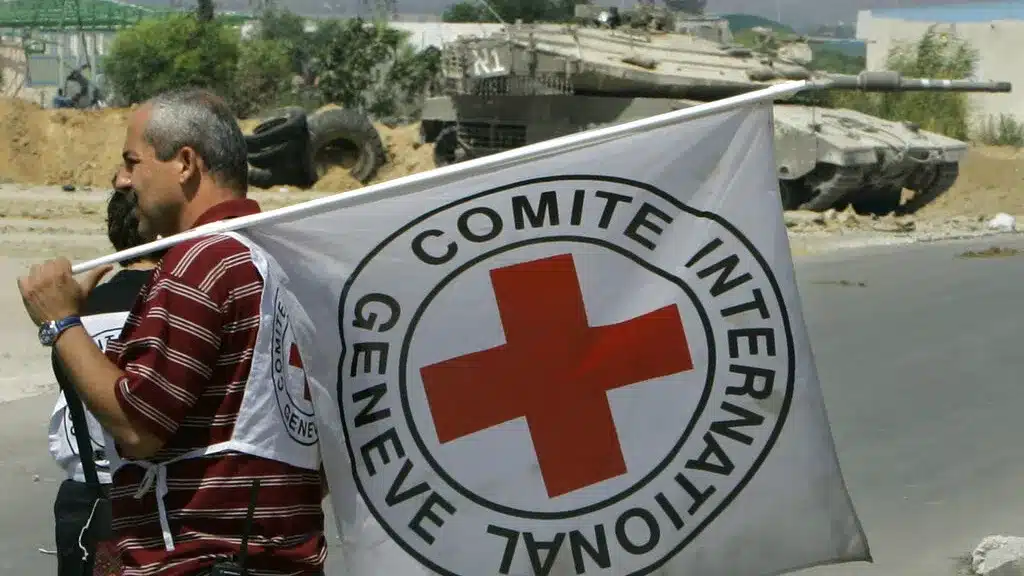
The International Committee of the Red Cross (ICRC) has reported the retrieval of 43 bodies from the front line of recent conflict in a disputed city within Somaliland over the past week. In addition, the ICRC revealed that 110 injured individuals have been transported to hospitals within the last week by the Somali Red Crescent Society.
These clashes have persisted for months in and around Las-Anod, with the ICRC statement refraining from identifying the deceased or assigning blame.
Somaliland, which separated from Somalia three decades ago, has been striving for recognition as an independent nation.
Somaliland’s security forces have been engaged in conflict with clan militias who seek affiliation with Somalia. Puntland, a state within Somalia, has disputed Las-Anod with Somaliland for years.
The ongoing fighting has prompted hundreds of thousands of people to flee, and the total number of casualties remains unknown.
The ICRC noted the “widespread destruction of civilian infrastructure” in Las-Anod, which serves as the capital of the Sool region.
Somaliland’s government issued a statement on Thursday condemning alleged images depicting the mistreatment of its captured soldiers. The government also reminded combatants of the guidelines outlined in the Geneva Conventions and Islamic customs regarding the treatment of prisoners.
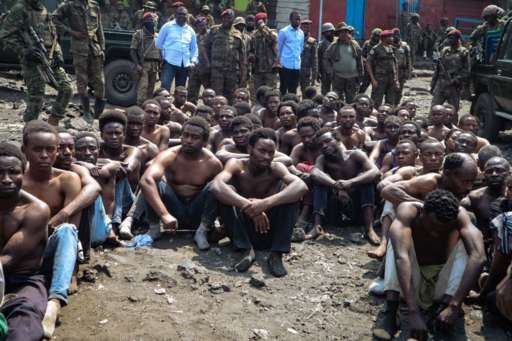
Numerous individuals have been captured by both sides in the recent conflict, and the ICRC reported its first visit to 300 detainees held by the militias.
Four injured detainees were transferred to a hospital. The ICRC had previously visited captured militia forces in the capital of Somaliland.
Earlier this year, Somaliland’s defense ministry refuted claims that the army had shelled the main hospital in Las-Anod.
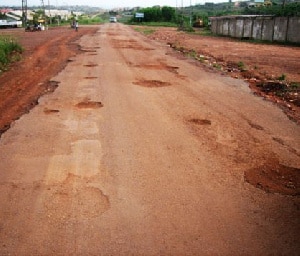
The terrible condition of the roads from Akyem Oda to Agona Swedru has drawn criticism from commuters and drivers.
According to a report by rainbowradioonline, the locals allege that the terrible situation only became worse when the contractor departed the site, which resulted in a number of problems, including damage to their vehicles.
Expressing their concern, some of the drivers lamented, “This road gives us problems a lot. Every second, we take our cars to the shop. We take our cars to shop three times a week.”
“From Swedru to Akroso is an hour’s journey, but because of the nature of the road, we take three hours when travelling,” they added.
They urged the authorities to request the contractor to temporarily flatten the road as it was causing damage to their vehicles.
The poor road conditions were said to be discouraging tourists from visiting the Big Tree tourism spot in Aprokumasi in the Eastern region, and many were opting not to return or recommend the location to others.
Rather than waiting until an election year to address their pressing concerns, commuters implored the government to contact the contractor to complete the road and express their dissatisfaction with the uncomfortable road conditions.
On Friday, Tesla unveiled a redesigned Model 3 produced in China with an extended driving range, marking the first time the automaker has introduced a new model in China ahead of the United States.
The new Model 3 is being manufactured at Tesla’s Shanghai plant and comes with a starting price that is 12% higher than the previous base model in China. It will also be exported to various markets across Asia, Europe, and the Middle East.
Concurrently, Tesla reduced the prices of its premium Model S and Model X by approximately 14% to 21% in both China and the United States, its two largest markets.
Raising the base price for the Model 3, Tesla’s top-selling model after the Model Y, could help protect profit margins. However, the price reductions for its higher-end models highlight the ongoing competitive pressures faced by EV manufacturers, particularly in China, where Tesla initiated a pricing battle with Chinese rivals, including industry leader BYD, earlier in the year.
The new Model 3 marks Tesla’s first modification to its mass-market vehicle lineup since the launch of its global best-seller, the Model Y, in 2020.
Tesla has not disclosed a launch date for the new Model 3 in the U.S. market, where it currently offers discounts of over $5,000 on certain inventory vehicles. The Model 3 is also manufactured in Fremont, California.
CHINA-FIRST INTRODUCTION
Tesla intends to introduce the latest Model 3 at a trade fair in Beijing on Saturday, and some of its new features, such as a rear display for rear-seat passengers, appear tailored to appeal to Chinese car buyers.
Tesla stated that the vehicle boasts an improved acoustic system, a more comfortable interior, and additional airbags. Exterior images revealed minor alterations that give the sedan a sleeker front end and new headlights.
The new Model 3 also promises an increased driving range. The standard version is rated for a range of 606 kilometers (377 miles) based on China’s testing standards, representing a 9% improvement over the previous base model in China.
Tesla has initiated order bookings and will commence deliveries in China during the fourth quarter. It is also accepting orders in other markets where it exports vehicles from Shanghai, including Germany, Japan, Malaysia, Australia, and New Zealand.
The new Model 3 is anticipated to perform well outside China, where there is less competition in the EV market, according to Yale Zhang, Managing Director at the Shanghai-based consultancy Automotive Foresight.
“But in China, we have already seen plenty of new models rolling out since the (Shanghai) auto show in April with similar and even better features and lower prices,” he added.
As reported by Reuters in November of last year, Tesla had been working on a redesigned Model 3 under the codename “Highland.” Individuals involved in the project had indicated that its primary objectives were cost reduction in production and enhancing the model’s attractiveness.
While Tesla did not provide specific details about the new Model 3’s battery, a source familiar with the features mentioned that it employs the same lithium-iron-phosphate battery supplied by CATL for the base model.
The increased driving range is attributed to weight reduction and improvements in the car’s aerodynamic profile to minimize wind resistance, according to the same source. Tesla had not immediately commented on the battery-related information.
In the Chinese market, the Model 3 faces competition from vehicles like BYD’s Seal, Geely’s Zeekr 001, Nio’s ET5, and Xpeng’s P7i. Xpeng recently introduced zero-interest loans and free upgrades for the P7i.
Tesla also announced plans to showcase the new model at the Munich auto show, potentially overshadowing German automakers like Volkswagen and Mercedes, who are expected to unveil numerous new EVs, partly in response to China’s rapidly evolving EV market.
In China, the starting price for the new Model 3 is 259,900 yuan ($35,807), while in Germany, it begins at 42,990 euros ($46,670). Tesla stated that deliveries in Europe would commence in late October.
The African Development Bank’s Financial Modelling for the Extractives (FIMES) project has demonstrated significant achievements in its mission to support transitional African economies in achieving stability and growth.
Representatives from eight African countries, including Guinea, Liberia, Madagascar, Niger, Sierra Leone, South Sudan, and Zimbabwe, gathered for a concluding learning workshop in Abidjan last Thursday to share their experiences with the program, which was launched in 2020.
FIMES is a multi-country project funded by the African Development Bank Group’s Transition Support Facility and executed by the African Natural Resources Management and Investment Centre (ANRC). This initiative aims to enhance financial modeling capabilities and domestic tax revenue generation while strengthening the institutional capacity and resilience of seven transitional countries: Guinea, Liberia, Madagascar, Niger, Sierra Leone, South Sudan, and Zimbabwe.
Vanessa Ushie, Acting Director of the African Centre for Natural Resource Management and Investment, described FIMES as a pioneering and large-scale endeavor by the African Development Bank to enhance financial modeling capacity across Africa.
“With dedicated funding from the Transition Support Facility’s targeted support window, the FIMES programme strengthens these economies by addressing revenue leakages, governance mistrusts and institutional gaps,” Baldeh said.
“Improving their financial modelling capabilities is not just about improving transparency and accountability. It is also about creating lasting impact, catalysing private investment and creating space for wealth creation. As we close the programme [at the end of 2023], we proudly celebrate its profound influence in building resilience, developing institutional legitimacy and promoting long-term stability.”
A report on the ongoing court case involving Gifty Afenyi-Dadzie’s First Africa Savings and Loans (FASL) and The Beige Group has highlighted contradictions in her statements to the police and the Receiver of Banks.
In a prior report by starrfm.com.gh, it was revealed that Gifty Afenyi-Dadzie, the former Managing Director of FASL, had informed the police that she was unaware of her husband, Kwesi Tetteh Dadzie, receiving a $1.5 million partial payment.
This case stems from the collapse of Beige Bank during the 2019 banking sector cleanup.
According to the details shared by the news portal, Gifty Afenyi-Dadzie’s statements to the police regarding her husband’s payment appear to be incorrect, considering her involvement in the agreement that made The Beige Group FASL’s majority shareholder.
The report also noted that in July 2017, Gifty Afenyi-Dadzie approached Mike Nyinaku, the Chief Executive Officer (CEO), to discuss FASL’s financial difficulties. At that time, FASL was facing significant liquidity challenges, struggling to meet its depositors’ demands. Consequently, Gifty Afenyi-Dadzie sought financial assistance from Michael Nyinaku.
“Thinking this was a temporary challenge and on the basis of the fact that Mike held her as a godmother, he gave her an amount of GHS200,000 (Two Billion old Cedis ) as a gift to augment her needs. Within a week of having given her the initial sum of GHS200,000 as a gift, Mrs. Afenyi Dadzie, approached Mike Nyinaku again requesting for more financial support for FASL.
“She explained that FASL had been given notice by the BoG that they were at risk of having their license revoked as a result of a continuous decline in their capital adequacy position. In principle, the company was in dire need of new capital injection far in excess of the initial amount gifted by Mike Nyinaku to GAD. Sensing that this could be a recurrent issue and considering his experience in the industry, Mike decided to make things more formal this time. Mike thus caused TBG to advance to First Africa Group, a loan of GHS200,000. This transaction was executed via a check dated August 8, 2017,” the report indicated.
According to the report, the two parties reached an agreement to address FASL’s persistent issues by having First Africa Group sell 90% of its stake to The Beige Group (TBG) for a value of USD 2.5 million.
Subsequently, the agreement was finalized, and an initial payment of $1.5 million was made to FASL in accordance with Clause 4.1 of the share purchase agreement. This clause stipulated that upon the payment of USD 1,500,000 of the purchase consideration, TBG would assume complete control of FASL.
Consequently, on September 4, 2017, TBG executed two installment payments to FAG, totaling GHS 7 million (equivalent to USD 1,589,684 at the time). The first payment of GHS 5 million (USD 1,136,519) was made on September 5, 2017, followed by the second payment of GHS 2 million (USD 453,165) on September 15, 2017.
As of September 15, 2017, TBG had fulfilled the crucial condition specified in the agreement, granting it the right to assume full control of FASL. Subsequently, TBG appointed Vanessa Atsu as the Responsible Officer, representing the new shareholders. Vanessa Atsu’s primary responsibility was to oversee the complete transition of FASL into a fully integrated subsidiary of The BEIGE Group.
Banking sector cleanup and the events that happened thereafter:
All bank accounts belonging to organizations connected to TBG were instructed to be frozen by the Receiver of Banks on August 1, 2018, the day the BEIGE Bank was taken over. As a result, FASL and all of TBG’s subsidiaries’ accounts were stopped.
Eventually, a few of the subsidiaries petitioned the Receiver to unfreeze their accounts because there were no legal justifications for this action. However, these appeals went unanswered.
Gifty Afenyi-Dadzie and another person by the name of Kwabena Osei Bonsu, who was then a manager at FASL, allegedly hired the Receiver of the BEIGE Bank to speak with The BEIGE Bank about the operations of FASL in order to get her accounts unfrozen.
“Kwabena Osei Bonsu in his statement to the Police indicated that the purpose for which he and GAD engaged the Receiver was for them to enquire about the status of the bank accounts of FASL held with the Beige bank. That meeting was held on August 15, 2018. It turns out that no official of The BEIGE Group – the then majority shareholders of FASL was informed about or invited to be in attendance at this meeting.
“It has further emerged that during that meeting, Mrs Gifty Afenyi-Dadzie and Kwabena Osei Bonsu presented themselves as officials of FASL to the exclusion of the representatives of The BEIGE Group who were the majority shareholders of FASL at the time. What was striking was that Vanessa Atsu, who had served as the representative of The BEIGE Group at FASL and the substantive person managing all the affairs of FASL was not invited to this meeting or even mentioned at the meeting by GAD and Kwabena Osei Bonsu,” the report added.
Also, it emerged that Afenyi-Dadzie told the Receiver at that meeting that TBG had only “expressed the intention to invest in FASL and consequently made a deposit for shares of GHS9M but the process was yet to be completed,” without the mention that prior to the investment of GHS9M into the company by BEIGE, an amount of GHS7M had already been paid by BEIGE to FAG, the outgoing shareholders to secure the shares that were being purchased.
The police Commercial Crime Unit (CCU) of the CID was notified of the situation by the Receiver of the BEIGE Bank, and an inquiry into it was then launched.
According to the report, Gifty Afenyi-Dadzie reiterated the information she had previously given to the Receiver when she appeared before the police, with the exception of the facts that the shares had actually been partially paid for directly to FAG and that full control of FASL had been transferred to The BEIGE Group in accordance with the terms of the share purchase agreement.
“What is not known is whether she provided a copy of the share purchase agreement to the police or not however, what is known without a shred of doubt is that she did not disclose that First Africa Group – the company of which Kwesi Tetteh Dadzie, her husband was the Managing Director – had received and acknowledged payment of an amount of GHS7M being part payment for the share purchase consideration agreed upon between the two parties.
“Secondly, the CID invited Mike Nyinaku. In a statement issued to the Police dated September 12, 2018, Mike Nyinaku narrated the entire story about how the acquisition happened, the purchase consideration of GHS7M paid, the additional capital injection of GHS9M made into the company, the appointment of BEIGE officials to manage the company, amongst others and supported all these with the relevant supporting documentation including a copy of the share purchase agreement,” the report added.
The police chose to confront GAD with the former’s side of the story after Mike Nyinaku also showed up and provided supporting evidence for the agreement between BEIGE and FASL, contradicting what GAD had told them on August 27, 2018.
“Thus, in a supplementary statement offered by Mrs. Gifty Afenyi Dadzie to the Police on September 25, 2018, she admitted that ‘After consulting her boss, he confirmed that the cedi equivalent of USD1.5M had been paid by BEIGE to First Africa Group as part payment of the purchase consideration of USD 2.5M agreed,’” it added.
Kwabena Bonsu, the fourth prosecution witness, who was a manager at FASL at the time, insisted he was unaware of the existence of a share purchase agreement between First Africa Group and The BEIGE Group while being cross-examined by Thaddeus Sory, the attorney for Mike Nyinaku in the ongoing trial.
Since its establishment, the COVID-19 National Trust Fund has accumulated GH¢65,467,911.71 in donations, comprising both cash and in-kind contributions.
The Board provided this information during a briefing for the Presidential Press Corps, where they disclosed the total contributions received and the disbursement of funds.
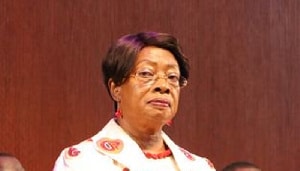
Out of this amount, GH¢58,020,508.91 has been allocated for significant projects, programs, activities, and interventions. Justice Sophia Akuffo, the former Chief Justice, shared these details with the Press Corps.
Additionally, Justice Akuffo revealed that the COVID-19 National Trust Fund Board of Trustees has transferred GH¢7,447,402.80 to the Consolidated Fund.
This payment represents the remaining balance after deducting all contributions received. It was made as the trustees’ term concluded on Thursday, August 31, 2023, after three and a half years of operation.
The conclusion of their mandate followed the President’s announcement in his COVID-19 address on May 28, 2023, signaling the end of the Fund’s activities.
She said that “altogether, the Trust Fund received contributions in cash and in-kind from over 447 individuals, corporate bodies, and other social groups to whom there can be no words sufficient to convey the depth of our gratitude.
“On behalf of the Board of Trustees, we thank His Excellency Nana Addo Dankwa Akufo-Addo, the President of Ghana, for the immense trust he reposed in us to function under Act 1013. We are confident, and our audited books will no doubt show that we have executed our duties well,” she remarked.
The Minister of Trade and Industry, Kobina Tahir Hammond, expressed his belief that Electrochem’s entry into Ghana’s salt industry holds the potential to revolutionize the entire ecosystem and the nation’s economy.
He noted that the company would provide the country with an opportunity to tap into the substantial regional and global demand for salt in industrial applications while also harnessing the commercial and environmental advantages of this natural resource.
K.T. Hammond made these remarks during an event held on August 30 to inaugurate the Ada Songor Salt Mine and Processing Plant. He pointed out that, historically, there has been private sector interest in investing in salt mining and processing.
However, some companies in the sector have faced challenges and either ceased operations or become non-operational at various stages of implementation.
“Electrochem, after experiencing some challenges and setbacks in operations within the area, has managed to invest $88 million in this state-of the-art salt washing plant and its ancillary infrastructure and facilities,” K.T. Hammond said.
“Progress has been relatively fast considering that the Electrochem industrial site, which was completed in February this year, took you just two years to construct,” he added.
The Minister added that the commissioning represents a significant shift toward large-scale salt mining and processing, enabling Ghana to start realizing its proper position as a major producer of salt.
However, he urged the area’s chiefs and authorities, as well as the young people, to support the endeavor.
“It is an important launchpad into the modernization of salt mining and processing in Ghana and that this will be most beneficial in terms of attracting allied industries which require salt as the basic raw material, to invest, locate and create the much-needed jobs in this area,” the minister concluded.
The Ada Songor Salt Mine and Processing Plant is presently generating approximately 650,000 metric tons of salt products annually. There are plans to elevate its capacity to 1 million metric tons by 2024 and further expand it to 2 million metric tons by 2027.
This ambitious expansion would position it as the largest salt production facility in Africa. It is anticipated that this growth will lead to the employment of approximately 3,000 young individuals within the region, and this number is expected to rise to 7,000 upon the completion of the second phase of the project.
The plant is situated on a 41,000-acre concession, which received parliamentary approval in October 2020. Its primary objective is to manufacture and supply salt products to both domestic and international markets.
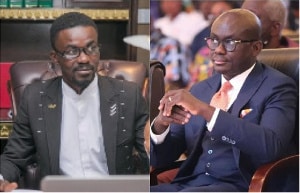
Legal representative for dissatisfied Menzgold customers, Amanda Clinton, commended Attorney General Godfred Yeboah Dame for initiating new charges against Nana Appiah Mensah, the CEO of the now-defunct Menzgold.
According to Amanda Clinton, the decision by the Attorney General’s office to concentrate on the 39 charges indicates that substantial groundwork has been undertaken to ensure the viability of these charges and their successful prosecution in court.
Previously, the Attorney General’s office had brought forward 61 charges against Nana Appiah Mensah in the Circuit Court. However, following the voluntary discontinuation of that case, the Attorney General filed 39 fresh charges against the embattled CEO in the High Court. Amanda Clinton and many Menzgold customers view this as a positive step in the right direction.
“This is encouraging from the Attorney General’s department, particularly because the concern was Mr Mensah was emboldened due to the delay in the prosecution. You know, five years later and 36 adjournments and people were like is he so bold because they aren’t prosecuting him? So the media doing their job, and the investors being in uproar has hopefully led to the government revisiting this and the Menzgolders that I have spoken to are very grateful that the attorney general has taken this up and moved this to the hight court.
“The charges are pretty much the same as the previous one but it is less in terms of count but this is because they want to go after charges that can actually stick.”
According to court documents seen by GhanaWeb, NAM1 is facing 39 counts from the Office of the Attorney.
The charges include 25 counts of “Defrauding by false pretence contrary to sections 131(1) of the Criminal Offences Act, 1960 (Act 29); and seven counts of “Fraudulent breach of trust contrary to section 128 of the Criminal Offences Act, 1960 (Act 29)”.
The other charges are seven counts of “Money Laundering contrary to section 1(2)(a)(i) of the Anti-Money Laundering Act, 2020 (Act 1044).”
The Office of the Attorney General claimed that its investigations had established that NAM1 had indeed committed the crimes for which he has been accused.
“Investigations revealed that the accused persons under false pretences took a total sum of One billion, sixty hundred and eighty million, nine hundred and twenty thousand Ghana cedis (GH 1,680,920,000) from their customers which these customers have not recovered.
“Investigations further disclosed that between 2017 and 2018, the accused persons transferred huge sums of depositor’s funds from Menzgold Ghana Company Ltd. and Brew Marketing Consult Ltd to Zylofon Media, a company related to Al. Huge sums of money were also withdrawn by Al or transferred into his bank account for his personal use.
“Investigations have established that the money fraudulently obtained from depositors and dishonestly appropriated by the accused persons remained unpaid as Menagold Ghana Company Ltd.’s licence was revoked. In the course of investigations, a number of vehicles were recovered from the accused persons which have been auctioned, and the proceeds kept in an exhibit account. Some gold bars were also recovered from the accused persons,” parts of the court document, reads.
The court has scheduled September 19, 2023, as the commencement date for the trial.
Between November 2016 and March 2019, numerous customers of MenzGold reported to the police, alleging that they had invested substantial sums of money with the accused individuals but were unable to recover their investments despite their persistent efforts.
Initially, Nana Appiah Mensah (NAM 1) was charged with 14 counts, including abetment of crime, defrauding by false pretences, conducting a deposit-taking business without a license, selling minerals without a license, engaging in unlawful deposit-taking, and money laundering.
Subsequently, the charges were revised from 61 counts, with the defendant yet to enter his plea on these charges.
It is alleged that the accused obtained various amounts of money, totaling GH¢1.6 billion, from customers.
On June 24, 2020, the state filed new charges against the CEO of Menzgold, also known as NAM 1, at the Accra Circuit Court. DSP Sylvester Asare informed the Court that he had been instructed to withhold the new charges and the plea-taking of the accused.
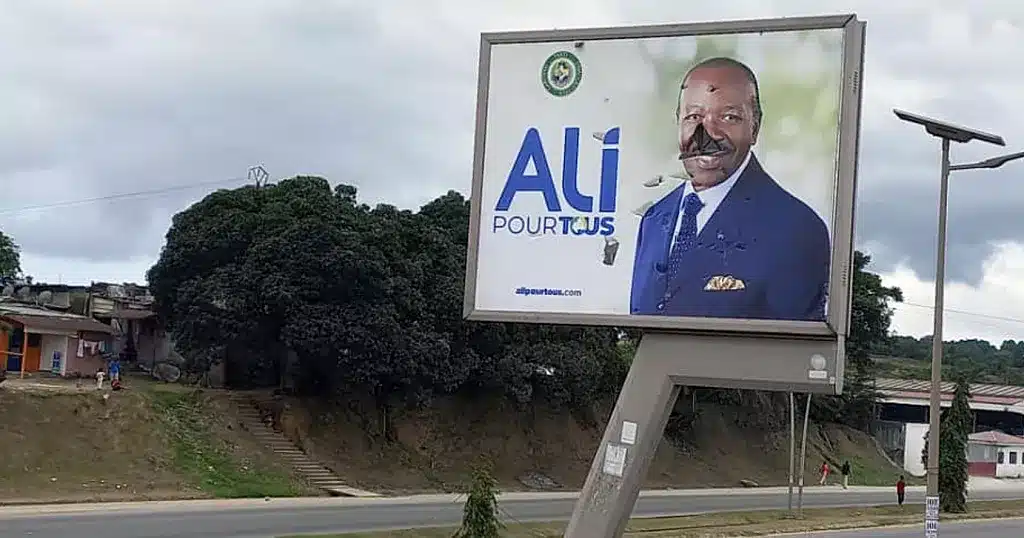
The top trend on Twitter also known as X was Gabon, and it received overwhelmingly positive feedback.
This is in contrast to other recent coups in Africa, which have received far more conflicted or unfavorable reactions.
TikTok has also seen people expressing their hope that the coup will “save” the oil-rich nation from the nearly six decades of the Bongo family in power.
TikTok has also seen people expressing their hope that the coup will “save” the oil-rich nation from the nearly six decades of the Bongo family in power.
“It’s senseless to say one family ruled a particular country for 54 years, and still call it ‘a democracy’,” one tweet said.
Despite widespread support for the coup, several social media users caution that Gabon’s true test has only just begun and that genuine change will only occur if the military cedes control through new democratic elections.
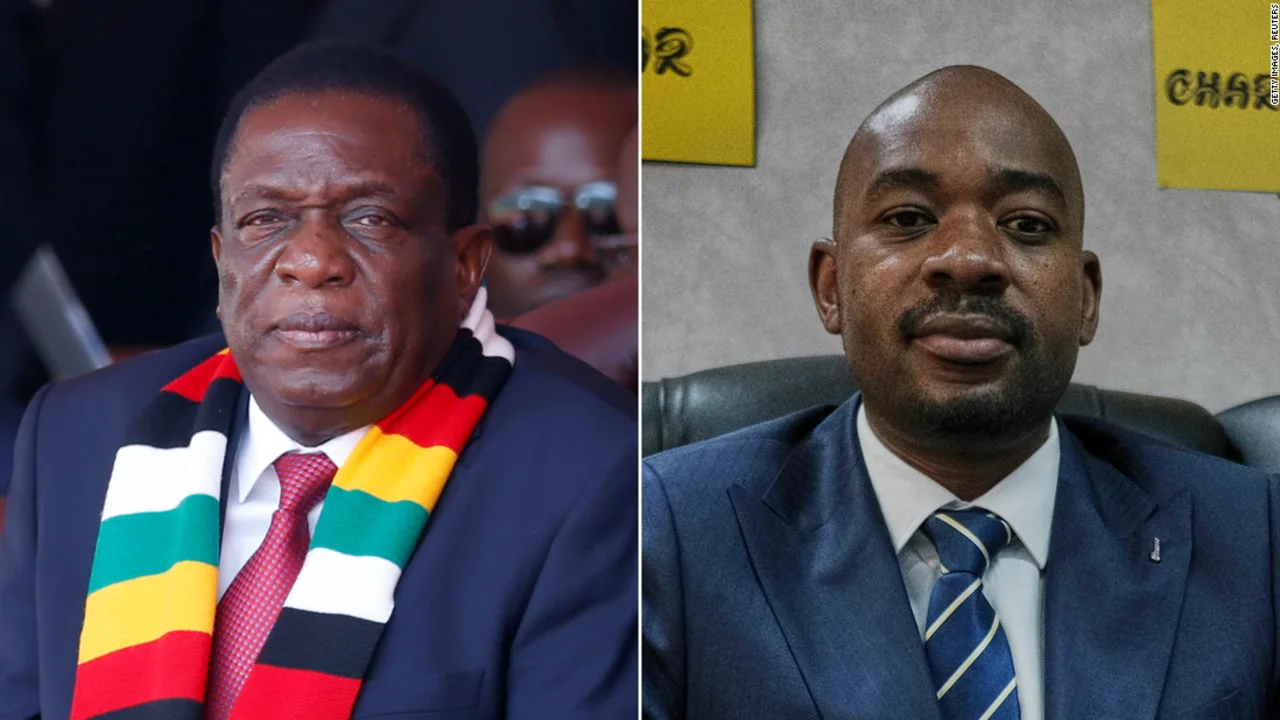
On Friday, Zimbabwe’s primary oppositionparty, the Citizens Coalition for Change (CCC), issued a call for nationwide protests and demanded a rerun of elections, asserting that President Emmerson Mnangagwa had secured a second term in office through fraudulent means.
This appeal from the CCC came just one day after President Mnangagwa declared the election to be valid and cautioned that there would be a crackdown on individuals inciting disorder.
“I warn anybody who may want to bring any chaos in this country we are ready,” he said during a ceremony to open a lithium plant. “Whoever shall preach hate speech will be responsible for their hate speech, our prisons are not full.”
The electoral commission, in a statement issued late on Saturday, announced that President Mnangagwa had garnered approximately 53% of the vote, placing CCC leader Nelson Chamisa in second position with 44%. Mnangagwa’s ruling ZANU-PF party was declared the victor of the parliamentary election but fell slightly short of the two-thirds majority required to amend the constitution.
The credibility of these elections has been scrutinized by analysts, as they were marred by the arrest of vote monitors. In contrast, ZANU-PF has asserted that there were no irregularities, with President Mnangagwa urging those with grievances to seek legal redress through the courts.
The Ghana Statistical Service (GSS), in collaboration with Statistics Denmark, is organizing a hackathon aimed at university students. The primary objectives are to raise awareness about the GSS StatsBank and to encourage the use of census data for policy-oriented research.
This hackathon involves five selected tertiary institutions: the University of Ghana (UG), the University of Cape Coast (UCC), the University of Health and Allied Sciences (UHAS), the Kwame Nkrumah University of Science and Technology (KNUST), and the University for Development Studies (UDS).
Currently, six teams have been chosen to participate in the UG hackathon, offering them unique opportunities for mentorship, collaboration, and the development of teamwork skills. The winning team from UG will then compete with winners from other universities in the national hackathon scheduled for October 5th to 6th, 2023.
A panel is responsible for selecting participants based on criteria such as the relevant skills and experience of team members in data analysis, programming, and data visualization, a genuine interest in the hackathon’s theme, and a strong motivation to learn from the diverse skills and backgrounds of team members.
As part of the event, there will be an academic launch of the StatsBank. This launch will provide a comprehensive introduction to the platform, highlighting its features and data availability to the university community and invited stakeholders. The main objective is to increase awareness within the university community about the availability of census data in the StatsBank and to foster stronger cooperation between the GSS, academic institutions, and key institutions in industry, the public sector, civil society, and the development partner community.
The Vice Chancellor of UG, Professor Nana Aba Appiah Amfo, will lead the program, alongside other speakers including the Government Statistician, Professor Samuel Kobina Annim; Director of the Regional Institute for Population Studies (RIPS), Professor Ayaga A. Bawah; and the Deputy Ambassador for the Denmark Embassy, Vibeke Sandholm Pedersen. An awards ceremony will also be held during the launch to recognize the winning hackathon team.
About StatsBank: The GSS StatsBank is an online database that provides access to disaggregated census statistics. It contains over 300 million unique statistics from the 2021 Population and Housing Census (PHC) reports and allows users to generate customized tables and maps at the national and sub-national levels at no cost. The development of StatsBank is part of GSS’s commitment to using innovative and user-friendly methods to disseminate findings from Ghana’s first fully digital census and promote the utilization of the data for decision-making.
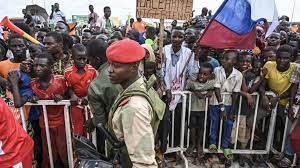
Human Rights Watch (HRW) has criticized the security forces in the Democratic Republic of Congo (DRC) for their actions that resulted in the deaths of numerous protesters who were demonstrating against UN forces.
According to the government, at least 43 individuals lost their lives when soldiers dispersed a protest against UN peacekeepers in the city of Goma in the eastern part of the country on Wednesday. Additionally, dozens were injured, and over 150 individuals were detained, including the leader of a religious group.
Initially, authorities had reported that only seven people had died, which included a police officer who had been killed by stoning.
In a statement, HRW called for the suspension, investigation, and fair and public trials of officials responsible for authorizing the use of unlawful lethal force. HRW also condemned the troops’ actions, stating that they appeared to have fired into a crowd to prevent a demonstration against the UN, characterizing it as an “extremely callous and illegal method of enforcing a ban.”
HRW revealed that it had verified the authenticity of two videos that showed soldiers placing bodies onto the back of a truck.
The government has announced that it has initiated an investigation into the incident.
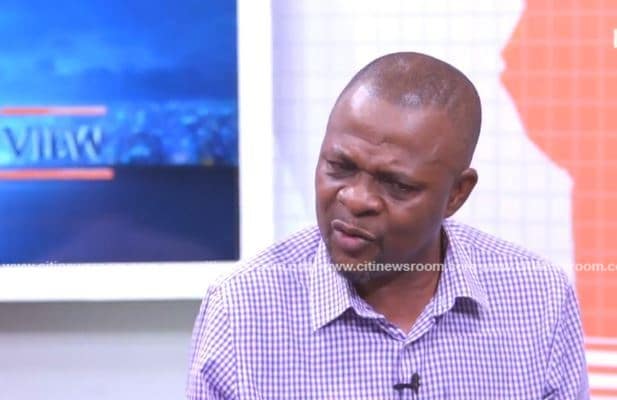
The former head of the Criminal Investigations Department (CID) within the Ghana Police Service, DCOP Bright Oduro, is advocating for a thorough investigation into the allegations made against Inspector General of Police (IGP), Dr. George Akuffo Dampare.
DCOP Bright Oduro believes that the concerns brought forward by COP Alexander Mensah during his testimony before Parliament’s ad-hoc Committee should not be disregarded or overlooked.
In his view, the president has the authority to establish an inquiry to delve into the matters raised within the police service.
“So for me, we shouldn’t brush aside, or throw to the wind the accusations made against the IGP, there should be further probe. If we investigate and find out the IGP is doing what exactly he is mandated to do fine. If on the other hand, we find out that he is not managing the police well, as the officers were saying, then we find ways of rectifying whatever problem there is,” he said.
DCOP Oduro’s statement follows accusations made by COP Alex Mensah, the Director General in charge of operations, against the Inspector General of Police (IGP), Dr. George Akuffo Dampare, alleging mismanagement of the police service.
COP Alex Mensah recently appeared before a committee to address allegations stemming from a leaked tape, where he was purportedly involved in a scheme to oust the IGP from his position.
COP Alex Mensah asserted that the discontent among serving officers towards the IGP is significant and believes that an impartial investigation would substantiate these grievances.
“It is true; the current IGP is not managing the service well. And I will not deny this today or tomorrow. I will say it everywhere I go. You can do your own investigation within the service and you will know.”
In his remarks during an interview on Joy FM’s Top Story on Thursday, DCOP Oduro acknowledged that certain police officers have voiced concerns regarding the IGP’s management of the police service. He went on to emphasize that several senior police officers also hold similar reservations.
DCOP Oduro further stressed that it’s essential to address other matters brought up in the leaked tape concerning the potential removal of the IGP, particularly issues related to the relationship between the police and the military.
The recently established industrial salt production plant, valued at US$88 million and located in Ada within the Greater Accra Region, has the potential to emerge as Ghana’s primary export commodity to the African market under the Africa Continental Free Trade Area (AfCFTA) agreement, according to its owners.
This project is anticipated to contribute approximately US$2 billion to the national economy in the short-to-medium term. Consequently, salt, often referred to as ‘white gold,’ is expected to become one of Ghana’s principal sources of foreign exchange by 2026, especially when the Ada Songhor Salt project, owned by Electrochem (a subsidiary of the McDan Group of Companies), reaches full completion.
Initially, the plant has a production capacity of one million metric tonnes of salt per year, with plans to scale up to around two million tonnes by 2025. The concession, however, has an ultimate capacity of 15 million tonnes per year upon the completion of all phases.
Given salt’s essential role in food security and industrialization across the African continent, the long-term target of 15 million tonnes is projected to meet the demands of numerous countries on the continent. Notably, Ghana and Senegal are the only West African nations with natural salt mineral resources.
During the project’s launch, Minister of Trade and Industry, Kobina Tahir Hammond, mentioned that it could contribute approximately US$2 billion to the Ghanaian economy in the short-to-medium term while potentially creating more than 10,000 direct and indirect job opportunities in the near future. He also highlighted that Nigeria, a major salt consumer in Africa, imports over 1.5 million metric tonnes annually, with more than 80 percent of its industrial salt needs coming from Brazil. Electrochem is encouraged to explore opportunities in the Nigerian market.
Chairperson of the McDan Group of Companies, Daniel McKorley, described the Electrochem project as a game-changer for economic growth during an interview with B&FT.
“With deliberate efforts and the right financial facility, we can easily scale up this project to the 15 million m/t per annum in five years. With the completion of this phase one, we are currently creating about 3,000 jobs. And the most important thing is that it doesn’t require a degree to work here; this is the kind of job that members of this community need. About 98 percent of the workforce here will not require a degree to work, and that is what creating jobs means for a country like Ghana,” he said.
He described the project’s three phases: production of salt, establishment of a world-class salt refinery, and construction of a chlor-alkali plant to meet the highest industrial demands.
“AfCFTA is a huge market. It has given us a door into the African market, and McDan has been a pioneer since trading started… every industry needs salt, and salt has over 14,000 uses. It’s a critical resource for the manufacturing industry; even the recent COVID-19 vaccines from Morrocco relied on salt, so the potential to grow industries and our economy is enormous,” he stated.
Mr. McKorley made a request to the government for help with investments and the creation of fundamental infrastructure that supports them. “We humbly request government to construct the Ada West jetty, which is crucial for our expansion plans and the road network in the Ada area to aid in the transportation of products,” the company said.
Community impact
Being an organization committed to adhering to environmental, social, and governance (ESG) principles, Electrochem places significant importance on the sustainability of the local communities situated around its operational zone. In line with this commitment, the company has undertaken the initiative to establish more than 70 salt banks for seven communities along the Songor Lagoon. Each of these communities has the capacity to produce up to 260,000 tonnes of salt during each harvest season.
Daniel McKorley, the Chairman of McDan Group of Companies, stressed that his vision for the development of human capital and the socioeconomic empowerment of the Ada communities remains incomplete without the establishment of a Chemical Research University in Ada.
The salt concession encompasses an expansive area of approximately 41,000 acres, spanning across both the Ada East and Ada West local government administrative districts within the Greater Accra Region. Remarkably, in terms of acreage, this project is the largest in Africa but has remained inactive as an industrial salt-producing region since 1982.
Expressing his sentiments, Paramount Chief of the Ada Traditional Area, Djetse Nene Abram Kabu Akuaku III, expressed deep gratitude on behalf of the Ada Traditional Council for the establishment of the salt mine and processing plant. He commended the investment and development prospects that this project brings to the region.
The Public Utilities Regulatory Commission (PURC) has received a petition from the Ghana Hotels Association (GHA) regarding the high water rates, which they claim are negatively affecting their members.
While hotels had anticipated an 8.3 percent adjustment, as stated by the PURC earlier in the first quarter of this year, which would have increased the cost of water from roughly GH11.2 per cubic metre to approximately GH12.3, they actually saw a stunning 167 percent increase in their prices.
“When hotels received their water bills for February 2023, our tariff per cubic metre of water was GH¢30, indicating a whopping 167 percent increase as against the 8.3 percent announced by the PURC,” lamented the Association’s president, Dr. Edward Ackah-Nyamike.
In the meantime, it’s noteworthy that water tariffs have experienced three separate increases since the start of this year.
During a press conference held in Accra, Dr. Ackah-Nyamike Jnr pointed out that the actions and decisions made by the utilities regulator, PURC, have led to significant financial burdens for hotels.
He emphasized the need for an urgent resolution to what he described as an ongoing issue.
Dr. Ackah-Nyamike Jnr recalled that the challenges for hotels began in January 2023 when PURC announced an 8.3 percent upward adjustment in water tariffs, effective from February 1, 2023.
In light of what appears to be a lack of response from PURC, the Association has taken the step of submitting another petition to the regulatory body, hinting at the possibility of staging a protest at its offices if the perceived billing inaccuracies are not addressed.
Furthermore, during this press conference, the Association also raised concerns about other issues that, in their view, are exacerbating the challenges faced by the industry.
“The last thing we expect are actions and inactions from public agencies that seek to deepen our woes. We are referring specifically to the actions and inactions of government in keeping the COVID-19 levy in our tax books when the World Health Organisation (WHO) has declared the pandemic over.
“The actions and inactions of government in implementing a new property rate payment regime that has increased property rates astronomically; the Ministry of Roads and Highways in making travel on some of the highways a nightmare for tourists, both domestic and international.
“The actions and inactions of the Board of the Ghana Tourism Authority in the administration of the Tourism Development Fund, which are denying the Tourism Trade Associations of needed financial support to be effective partners in the public private sector collaboration mix. Also, the actions and inactions of the Ministry of Tourism, Arts and Culture and the Ghana Tourism Authority in under-utilising the Public Private Partnership Forum, as provided in the Tourism Act 817, to address industry challenges,” the president listed.
In light of these concerns, the Association has urged the government to reevaluate what it has termed a “faceless” property rate system, which has the potential to further burden businesses.
The Association’s president clarified that their objection is not against the payment of property rates but rather stems from their dissatisfaction with the substantial increases in these rates that property owners, including hoteliers, are now required to bear. He argued, “In an economic climate where businesses are already grappling with survival, the significant hikes in property rates without considering the existing rates are deeply concerning and distressing. A more thoughtful approach to adjusting property rates would have shown empathy for the challenges faced by the struggling business community, including hotels.”
Furthermore, on the issue of deteriorating road conditions, the Association made an appeal to the Minister of Roads and Highways. They called for special attention to be given to the highways that connect to tourist destinations such as Cape Coast and Elmina Castles, Bisa Aberwa Museum, Ankasa Forest, Nzelezu, and others, emphasizing the importance of maintaining these routes for tourism and local businesses.
Tourism Development Fund
“Another worrying trend over the past few years has been the lack of accountability in disbursement of the fund. To put it more bluntly, the administration of the Tourism Development Fund has denied the Tourism Trade Associations much-need financial support to be effective partners in the public private sector. We call on the Board of the Ghana Tourism Authority to revisit the proposal for a portion of the fund to be allocated to functional tourism trade associations every year, to support administration of the associations.
“We also call on the board to revert to the old practice wherein stakeholders were updated regularly on the inflows and outflows of the fund,” he appealed.
The necessary hotel membership, copyright royalties, and funding of training programs are just a few of the other issues he brought up. None of these have gotten the proper attention. Additionally, he exhorted the ministry and Ghana Tourism Authority to seek to maximize the benefits of the Public Private Partnership Forum (PPPF).
According to Dr. Edward Ackah-Nyamike Jr., these trends need to be addressed right now since they are essential to the survival of the hotel sector as well as the tourist and hospitality industry as a whole.
Gold Fields Limited reported that it produced 1,154,000 ounces (oz) of gold during the first half of 2023, marking a 4 percent decline in production compared to the same period in the previous year when they produced 1,201,000 oz.
The decrease in production is primarily attributed to the planned reduction in output at Damang, as stated by the company.
For the first half of 2023, the company’s all-in-costs stood at US$1,398/oz, reflecting a 3 percent increase compared to H1 2022, where it was US$1,352/oz. This increase is attributed to lower gold sales and higher cost of sales before amortization and depreciation, partially offset by reduced non-sustaining capital expenditure.
Conversely, the all-in-sustaining cost (AISC) for H1 2023 amounted to US$1,215/oz, in contrast to the US$1,148/oz recorded during H1 2022. This represents a year-on-year increase of 6 percent.
As a result of these developments, the company reported earnings of US$454 million for the six months ending in June 2023, equivalent to US$0.51 per share. This represents a 9 percent decrease compared to the US$498 million (US$0.56 per share) earned in H1 2022.
In light of these financial results, the company, in unaudited interim results shared with the press, declared an interim dividend of 325 South African cents per share, which accounts for 35.1 percent of normalized earnings.
This compares to the 2022 interim dividend of 300 South African cents per share, marking an 8 percent increase year-on-year. This dividend decision aligns with the company’s dividend policy of distributing between 30 to 45 percent of normalized profit as dividends.
The company’s performance comes on the back of a difficult operating period – marked by “elevated mining cost inflation and strong competition for skills in our key mining jurisdictions presenting significant headwinds”.
The Group made two significant corporate announcements that underscore our commitment to pursuing value-enhancing transactions to enhance the quality and value of our portfolio. These announcements included the proposed Tarkwa/Iduapriem joint venture in Ghana in March 2023 and the Windfall joint venture with Osisko Mining in Canada in May 2023.
Furthermore, we have expedited several internal initiatives designed to further reinforce the execution of our strategy. These initiatives are aimed at unleashing the full potential of our personnel and assets, ultimately driving increased business value.
During the first half of 2023, our primary focus was on two of these initiatives: the implementation of our cultural transformation journey, known as the “Gold Fields Way,” and the optimization of our assets.
Local production
Silver Fields During Q2 2023, Ghana delivered approximately 204,000 oz of gold, including 45 percent of Asanko, at an AIC of US$1,227 per ounce. Ghana produced 397 000 oz of gold in H1 2023 at an AIC of US$1,210 per
On September 1, 2023, the Bank of Ghana released the Interbank forex rates, revealing the exchange rates for the Ghana Cedi against various currencies. Against the US Dollar, the Ghana Cedi is trading at a buying price of 11.0137 and a selling price of 11.0247.
At a forex bureau in Accra, the US Dollar is being purchased at a rate of 11.40 Cedis and sold at a rate of 11.65 Cedis.
In the case of the Pound Sterling, the Ghana Cedi is trading at a buying price of 13.9433 and a selling price of 13.9595.
At a forex bureau in Accra, the Pound Sterling can be bought at a rate of 14.50 Cedis and sold at a rate of 15.00 Cedis.
Regarding the Euro, the Ghana Cedi is exchanged at a buying price of 11.9409 and a selling price of 11.9537. In Accra’s forex bureaus, the Euro is available for purchase at a rate of 12.20 Cedis and is sold at a rate of 12.70 Cedis.
The South African Rand can be obtained at a buying price of 0.5837 and a selling price of 0.5839 when trading with the Ghana Cedi.
Meanwhile, in Accra’s forex bureaus, the South African Rand can be bought at a rate of 0.35 Cedis and sold at a rate of 0.95 Cedis.
For transactions involving the Nigerian Naira, the Ghana Cedi has a buying price of 68.7509 and a selling price of 71.9526. Additionally, in Accra’s forex bureaus, the Nigerian Naira can be bought at a rate of 11.00 Naira for every 1 Cedi and sold at a rate of 16.00 Naira for every 1 Cedi.
Lastly, when dealing with the CFA currency, the Ghana Cedi has a buying price of 54.8748 and a selling price of 54.9336.
In Accra’s forex bureaus, the CFA can be acquired at a rate of 16.50 CFA for every 1 Cedi and sold at a rate of 20.50 CFA for every 1 Cedi.
In terms of its operational endeavors, Gold Fields reported that it maintained its strategic momentum during the first half of 2023 by making notable progress in advancing several key initiatives.
Note that these rates may be different at a forex bureau near you. Our forex bureau rates are provided by Afriswap Bureau De Change in Osu, Accra.
Our forex bureau rates are provided by Afriswap Bureau De Change in Osu, Accra.
According to the Burkinabe presidency, interim President Ibrahim Traoré of Burkina Faso engaged in discussions with a Russian delegation regarding military collaboration.
The visit, headed by Russian Deputy Defence Minister Yunus-bek Yevkurov, serves as a continuation of prior talks held between Mr. Traoré and President Vladimir Putin during the Russia-Africa summit in St. Petersburg back in July.
The conversations primarily revolved around various aspects of military assistance, including “the training of Burkinabe officer cadets and officers at all levels, including pilots in Russia,” as per the statement issued on Thursday.
Additionally, economic cooperation and nuclear energy were subjects of discussion during the visit.
This visit takes place within the context of Russia’s ongoing efforts to enhance its political and economic presence in Africa.
It’s worth noting that the Russian mercenary group Wagner, led by Yevgeny Prigozhin, who tragically passed away in a plane crash last week, had expressed interest in expanding its operations to Burkina Faso.
The Senegalese Minister of Justice has affirmed that the conviction of opposition figure Ousmane Sonko in a moral-related case is definitively upheld, rendering him ineligible for the 2024 presidential election.
Ousmane Sonko, whose protracted struggle with authority and the legal system has captivated Senegal for over two years, was found guilty on June 1 of “debauchery of a minor” and was sentenced to two years in prison.
Choosing not to appear at the trial, which he decried as a plot to exclude him from the upcoming presidential election, Sonko was sentenced in absentia. In late July, he was subsequently incarcerated on additional charges, including incitement to insurrection, criminal conspiracy associated with a terrorist enterprise, and endangering state security.
Authorities have questioned Sonko’s involvement in a series of protest events that have arisen since 2021 due to his confrontation with authority and legal issues, including a significant episode in June, resulting in multiple fatalities.
Sonko’s legal representatives contend that because he has been in detention since his conviction, a retrial is necessary as per the prevailing regulations on absentia trials.
In response to this, Ismaïla Madior Fall, the Minister of Justice, stated in an interview published by Jeune Afrique magazine on Wednesday that Sonko’s arrest was “in the context of another matter” unrelated to the moral case, thereby negating the applicability of the rule that mandates a retrial for someone tried in absentia upon their arrest.
“Why didn’t he become a prisoner if he wanted to get his conviction in absentia overturned? It has since become final,” Fall asserted.
He added, “It is for this reason that Mr. Sonko was deprived of his electoral rights and that he was removed from the lists. There is no conspiracy intended to remove a presidential candidate.”
Sonko commenced a hunger strike on July 30 and has been under hospital care since August 6.
The authorities announced the dissolution of Sonko’s party and conducted numerous arrests, a move met with robust criticism from human rights advocates. The government cites the necessity to safeguard the population from what it characterizes as an insurrectional scheme.
Regarding the 2023 unrest, the minister disclosed that around 500 individuals have been detained. He clarified, “Those incarcerated have vandalized shops or banks, attacked gendarmerie stations, or even set fire to town halls. There are no political prisoners in Senegal.”
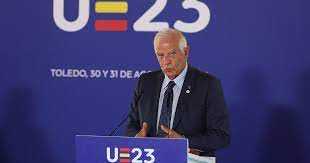
EU foreign policy chief, Josep Borrell, remarked on Thursday that the military coup in Gabon should not be equated with the crisis in Niger.
In Gabon, citizens participated in general elections on Saturday. However, following the announcement of President Ali Bongo as the victor on Wednesday, military officers claimed to have taken control and confined him to his residence.
Borrell explained that their intervention stemmed from the perception that the recently ousted president had secured his position through an unjust election.
“While military coups are undoubtedly not a solution, we should acknowledge that in Gabon, the elections were marred by irregularities,” he stated.
He further elaborated, “There are military and institutional coups, where the use of force is not required. If I manipulate elections to attain power, that is also an improper means of seizing authority.”
Borrell’s comments came amid discussions among EU foreign ministers about aiding the ECOWAS regional group in West Africa in addressing the military takeover that occurred in Niger on July 26.
Both the EU and ECOWAS are firmly against the military’s overthrow of President Mohamed Bazoum in Niger. However, Borrell argued that the circumstances surrounding the dramatic developments in Gabon should not be directly compared.
In Niger, the president had been democratically elected, whereas in Gabon, the Bongo family had maintained control over the oil-rich nation for nearly six decades. Ali Bongo assumed the presidency in 2009 after the passing of his father, Omar.
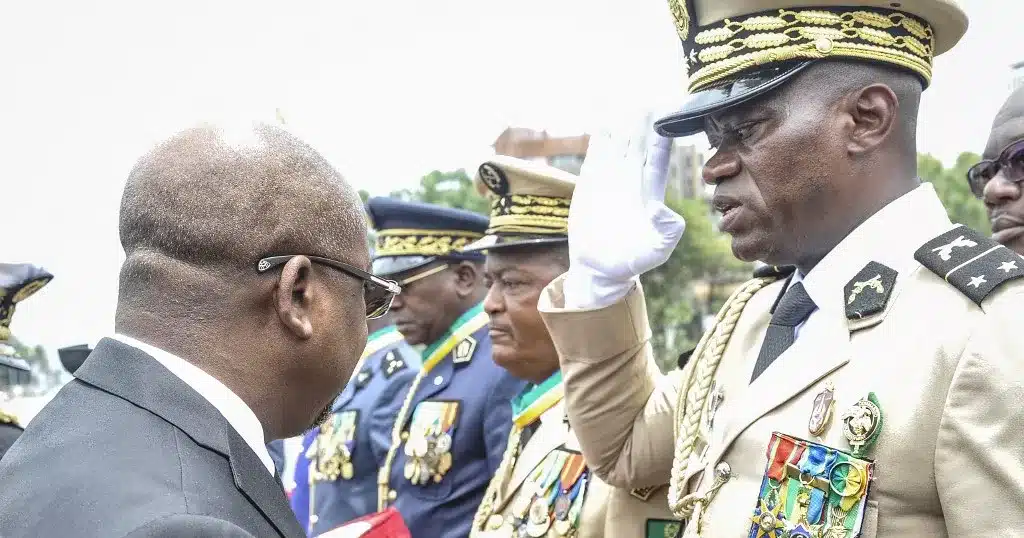
Man who has successfully ousted President Ali Bongo Ondimba in a recent coup, General Brice Oligui Nguema, will officially take on the role of “transitional president” in a swearing-in ceremony scheduled to take place before the Constitutional Court on Monday, September 4. This announcement was made by the coup leaders on Thursday.
In response to the recent political developments, General Oligui, the new leader of Gabon, unveiled plans for the “gradual establishment of transitional institutions” while vowing that the nation would uphold all of its “external and internal commitments.”
Colonel Ulrich Manfoumbi Manfoumbi, the spokesperson for the Committee for the Transition and Restoration of Institutions (CTRI), a collective comprising key military commanders, communicated the upcoming events on state television. He shared that the inauguration of the Transitional President would occur at the Presidency of the Republic on September 4, 2023.
Additionally, General Oligui has taken steps to initiate the phased creation of transitional institutions. However, the duration of this transitional period was not specified. The new leadership has also directed various government officials, including secretaries-general, ministerial cabinets, and directors-general, to ensure an immediate and effective resumption of work, facilitating the continuous operation of all public services.
Colonel Manfoumbi Manfoumbi concluded by affirming that thePresidentof the Transition is determined to reassure international donors, development partners, and the State’s creditors, pledging that comprehensive measures will be enacted to ensure the nation’s commitment to honoring both its domestic and international obligations.
An investigation is ongoing to determine the cause of a tragic fire that consumed a five-story building in Johannesburg, which had been taken over for unauthorized housing. Officials from the city and the region, who visited the scene, have pledged to hold those responsible accountable for the devastating overnight fire.
Lebogang Maile, the MEC for Human Settlements and Infrastructure Development for Gauteng, affirmed, “If any city official is found to have disregarded their duties or neglected their responsibilities, there will be consequences.”
The fire occurred on Thursday morning and resulted in the loss of more than 70 lives, including children, as reported by Johannesburg city’s emergency services. An additional 52 individuals were injured, making it one of the deadliest recent fires on a global scale.
The bodies of the victims were discovered accumulated at a closed security gate, preventing their escape from the blaze, according to an official account. The building, situated in a deprived and crime-prone area, had been repurposed for illegal housing after being abandoned. Many of the occupants were foreigners.
Emergency Management Services spokesman Robert Mulaudzi shared, “We now have 73 fatalities and 52 injured individuals who have been transported to various healthcare facilities for further treatment.” Among the deceased were at least seven children, with the youngest being under two years old.
Kenny Bupe, a survivor caught in the fire while visiting a friend, recounted the Analyst
. “I’m thankful to be alive. Many of us were running, trying to find the fire exit, and unfortunately, many people lost their lives due to smoke inhalation.” He revealed that some individuals resorted to breaking open a locked fire escape gate, while others jumped out of windows to escape the flames.
Firefighters have managed to extinguish the fire, and search and recovery operations are ongoing. Mulaudzi explained, “We are systematically recovering bodies on each floor.”
This tragic event has left the city of Johannesburg deeply saddened, with Mulaudzi expressing, “It is indeed a somber day for Johannesburg… In my over 20 years of service, I have never encountered something like this.”
The cause of the fire is still under investigation, but Mgcini Tshwaku, a member of the city’s mayoral committee overseeing public safety, suggested that candles used for lighting inside the building could be a potential cause. The building had been repurposed for informal settlement, and the tragic outcome was exacerbated by a closed security gate that prevented people from escaping.
Illegal occupation of abandoned structures is widespread in Johannesburg’s city center, often controlled by criminal syndicates collecting rent from occupants. South Africa, as a significant economic hub on the continent, attracts numerous migrants, many of whom are undocumented, from various African nations.
This fire marks one of the deadliest incidents in the country’s recent history and stands as a stark reminder of the challenges associated with informal housing and urban development.
An investigation is ongoing to determine the cause of a tragic fire that consumed a five-story building in Johannesburg, which had been taken over for unauthorized housing. Officials from the city and the region, who visited the scene, have pledged to hold those responsible accountable for the devastating overnight fire.
Lebogang Maile, the MEC for Human Settlements and Infrastructure Development for Gauteng, affirmed, “If any city official is found to have disregarded their duties or neglected their responsibilities, there will be consequences.”
The fire occurred on Thursday morning and resulted in the loss of more than 70 lives, including children, as reported by Johannesburg city’s emergency services. An additional 52 individuals were injured, making it one of the deadliest recent fires on a global scale.
The bodies of the victims were discovered accumulated at a closed security gate, preventing their escape from the blaze, according to an official account. The building, situated in a deprived and crime-prone area, had been repurposed for illegal housing after being abandoned. Many of the occupants were foreigners.
Emergency Management Services spokesman Robert Mulaudzi shared, “We now have 73 fatalities and 52 injured individuals who have been transported to various healthcare facilities for further treatment.” Among the deceased were at least seven children, with the youngest being under two years old.
Kenny Bupe, a survivor caught in the fire while visiting a friend, recounted the chaos. “I’m thankful to be alive. Many of us were running, trying to find the fire exit, and unfortunately, many people lost their lives due to smoke inhalation.” He revealed that some individuals resorted to breaking open a locked fire escape gate, while others jumped out of windows to escape the flames.
Firefighters have managed to extinguish the fire, and search and recovery operations are ongoing. Mulaudzi explained, “We are systematically recovering bodies on each floor.”
This tragic event has left the city of Johannesburg deeply saddened, with Mulaudzi expressing, “It is indeed a somber day for Johannesburg… In my over 20 years of service, I have never encountered something like this.”
The cause of the fire is still under investigation, but Mgcini Tshwaku, a member of the city’s mayoral committee overseeing public safety, suggested that candles used for lighting inside the building could be a potential cause. The building had been repurposed for informal settlement, and the tragic outcome was exacerbated by a closed security gate that prevented people from escaping.
Illegal occupation of abandoned structures is widespread in Johannesburg’s city center, often controlled by criminal syndicates collecting rent from occupants. South Africa, as a significant economic hub on the continent, attracts numerous migrants, many of whom are undocumented, from various African nations.
This fire marks one of the deadliest incidents in the country’s recent history and stands as a stark reminder of the challenges associated with informal housing and urban development.
In the early hours of Thursday morning, a derelict building in the South African metropolis of Johannesburg caught fire, killing at least 74 people, including several children.
“We have now 74 fatalities and 52 people injured who were transported to various healthcare facilities for further medical care,” Emergency Management Services spokesman Robert Mulaudzi said.
A resident of the abandoned five-story building believed that 200 individuals were residing there illegally, many of whom were foreigners.
Residents talked about how tough it was to flee the fire, and those who did so expressed gratitude for their survival.
“It was so difficult for us to get out, others had blocked the corridors with beds, but I managed to get out with my kids, one who is 13 years and the other almost 3. We did inhale quite a lot of smoke, but at least we managed to get out. What is very sad is others died inside,” said resident Nobuhle Zwane.
An official reported that bodies were found heaped up at a security gate that was closed, preventing people from fleeing the fire.
“There was a lot of us running, trying to find the fire exit and a lot of people eventually died because of the smoke inhalation,” said Kenny Bupe, a survivor caught up in the blaze while visiting a friend.
Investigations are continuing to determine what cause the blaze, but one resident said he thought he heard a blast.
“There is something that exploded in the flat that we stay in on the ground floor. I think it’s gas. People were cooking at night, we had no electricity the whole day and night,” said Mthokozi Xaba.
As search and recovery operations continue, officials said the death toll could still rise. The blaze was the deadliest in the country in recent years and one of the worst worldwide.
In the aftermath of this week’s military coup, the Peace and Security Council of the African Union announced on Thursday that it had resolved to “immediately suspend” Gabon.
On X, previously Twitter, the organization declared that it “strongly condemns the military coup that overthrew President Ali Bongo of the Republic of Gabon on August 30, 2023.”
It “decides to immediately suspend Gabon’s participation in all AU activities, including those of its organs and institutions, pending the restoration of the nation’s constitutional order.”
The announcement followed a council meeting convened to address the situation in Gabon, prompted by the recent coup that occurred after contested elections, resulting in Bongo’s contested victory.
This session was overseen by Bankole Adeoye of Nigeria, the AU Commissioner for Political Affairs, and Willy Nyamitwe from Burundi, who currently holds the council’s rotational chairmanship.
On the preceding Wednesday, Moussa Faki Mahamat, the Head of the African Union Commission, called upon the Gabonese military and security forces to ensure the safety of Bongo, who the coup leaders claimed was put under house arrest.
Faki also denounced the coup, characterizing the events in Gabon as a “blatant breach” of the legal and political frameworks of the African Union headquartered in Addis Ababa.
In his statement on X, Faki urged all political, civil, and military stakeholders in Gabon to prioritize peaceful political avenues, facilitating a swift return to democratic constitutional governance within the country.
This move mirrors a similar action taken earlier this month by the African Union, which suspended Niger after a coup in the West African nation in July that ousted the elected president, Mohamed Bazoum.
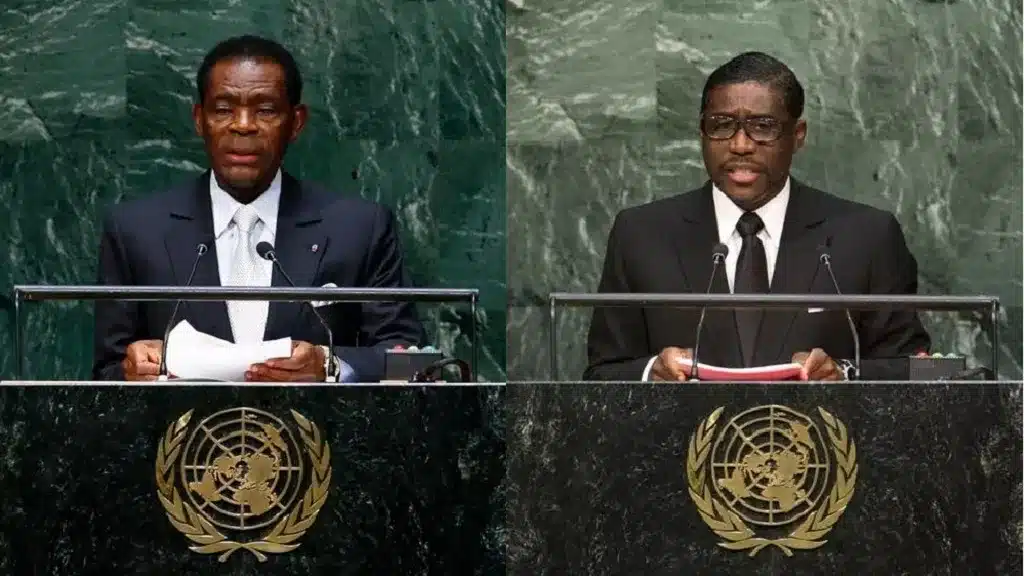
In an announcement made on state television on Wednesday July 2016, President of Equatorial Guinea, elevated his son Teodorin Nguema Obiang to the role of Vice President responsible for security and defense.
The decree from President Obiang stated, “In accordance with the Basic Law of Equatorial Guinea, I appoint His Excellency Teodoro Nguema Obiang Mangue Vice President of the Republic.”
Teodorin Nguema Obiang, a 47-year-old potential successor to his father, served as second vice president from 2012 to the present.
“In accordance with the Basic Law of Equatorial Guinea, I appoint his Excellency Teodoro Nguema Obiang Mangue Vice President of the Republic.”
Following the constitutionally mandated dissolution of the government on June 17 following the April 24 presidential election, President Obiang announced additional appointments.
Later this week, the names of the new government’s remaining members will be made public.
Teodoro Obiang Nguema, the president since 1979, won reelection in April with 93.7% of the vote.
His son went on trial in France for stealing money from the government of Equatorial Guinea in order to gain wealth. Later, the case was dropped.
The military junta in Niger, which took control of the government last month, announced on Thursday that it had nullified the diplomatic immunity of the French ambassador and directed the police to remove him from the country.
In addition, Sylvain Itte’s visa and those of his family have been invalidated.
D’après ce document qui date d’il y a 2 jours mais qui vient d’être rendu public, les autorités nigériennes estiment que @SylvainItte, l’ambassadeur de France, ne jouit plus de son immunité diplomatique et demandent à la police de procéder à son expulsion. pic.twitter.com/YP5lZ6l8RP
Last Friday, the junta informed him that he had 48 hours to depart from the nation as a reaction to actions taken by the French government, which the junta claimed were not aligned with Niger’s interests.
However, the Monday deadline elapsed without any recall orders from Paris.
Emmanuel Macron, the President of France, declared on Monday that the ambassador would remain stationed in Niger despite the military regime’s pressures. Macron also restated France’s backing for the deposed democratically-elected president, Mohamed Bazoum.
The French government maintained that it does not acknowledge the coup leaders as the rightful authorities of the country.
Following the overthrow of the president, the junta has exploited anti-French sentiments within the populace to consolidate its backing.
MobileMoney Limited (MML) has initiated a promotional campaign aimed at acknowledging customer loyalty and encouraging the adoption of digital payments through MoMo.
Over the upcoming two months, commencing from August 17 until September 30, the company will grant rewards to one hundred customers every week. These prizes will encompass e-cash amounts of up to ¢1000.
The promotion operates on a point-based system, necessitating customers to utilize the MoMo Pay service for settling payments related to goods and services through Merchant IDs or QR codes.
In doing so, they will accrue points based on their transactional activities.
For every ¢10 spent, customers will accumulate five points. The top one hundred points earners each week will be granted an e-cash prize of up to ¢1000.
Using the MoMo App for transactions will yield triple the points earned through USSD. You can get the MoMo App from either PlayStore or App Store.
MoMo agents and merchants are encouraged to amplify transaction volume, transaction value, and minimize fraud incidents to secure appealing rewards.
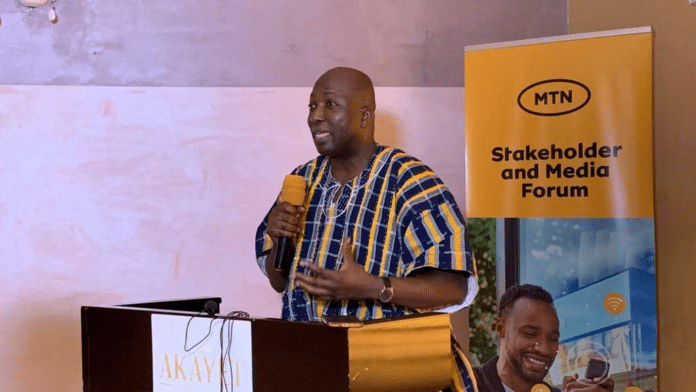
During the launch of the MoMo Season celebrations, CEO of MobileMoney Limited, Shaibu Haruna, discussed the focal points of the season’s activities, centered around the theme “Tackling Barriers to Embracing Digital Payments in Ghana.”
Haruna stated, “Obstacles like interoperability issues, counterfeit identification cards, platform infrastructure, customer onboarding, and MoMo fraud have hindered the widespread adoption of digital payments in Ghana.”
Both MTN Ghana and MobileMoney Limited are dedicated to overcoming these challenges through collaborative efforts with stakeholders and partners, with the aim of establishing a resilient, effective, and more inclusive digital payments ecosystem within the country.
Winners of the weekly prizes will obtain their rewards by the end of each month, after they’ve been contacted by MTN MoMo via 0244 300 000.
In the period from August 21st to 27th in 2023, the Ghana National Fire Service observed the Fire Safety Week.
As part of the week’s commemorations, the National Fire Service carried out a collaborative simulation exercise in conjunction with the Ghana Ports and Harbours Authority.
This exercise, held at the Marine Block within the Port of Tema and spanning approximately one hour, showcased the preparedness of the united fire team in addressing potential incidents.
Assistant Chief Fire Officer Doris Lamptey holds the position of Tema Regional Commander within the Ghana National Fire Service.
She conveyed contentment with the staff’s reaction, even in the face of unexpected circumstances, and expressed gratitude for the educational campaigns pursued over the years.
According to Capt. Francis Kwesi Micah, the Harbour Master and Incident Commander at the Port of Tema, such drills remain essential for continually enhancing the responsiveness of the Authority’s personnel to potential risks.
An economist and associate professor at the Institute of Statistical, Social, and Economic Research (ISSER), Prof. Charles Ackah, has explained why Ghana must prioritize collecting property taxes.
He claims that Ghana can generate up to GH12 billion in property taxes each year.
He added that the GRA’s goal of approximately GH165 million is too modest.
“If you do the analysis and you decide to raise ¢165 million target in Accra alone, divide 165 million by the structures in Accra and each property is likely to pay just about 97 a year. This means that the target is quite low.
“According to my analysis, we could raise as much as ¢12 billion in property taxes alone. So, property tax holds a huge potential to boost the country’s tax revenues. Even if we focus on high-earned communities and the increasing luxury real estate, we can do more”, he said.
Prof. Ackah urged legislators to make sure that the predetermined revenue goals are met as much as feasible.
He added, “What we need to do is to mandate parliament to set revenue targets and apply punitive measures for failure to meet targets.”
Due to the nation’s low revenue levels, the lobbying for the collection of property taxes has become a hot topic.
Many people think that maximizing efforts to collect taxes will contribute to raising the ratio of taxes to GDP in the nation.
President Nana Addo Dankwa Akufo-Addo has established a five-member committee to oversee ex-gratia matters.
The committee’s primary responsibility is to assess the remuneration and benefits of Article 71 officeholders.
Furthermore, it will evaluate the salaries and allowances of political officeholders and other relevant positions as determined by the constitution.
The committee consists of the following members:
Dr. Janet Fofie – Chairperson
Prof. Gyan Baffour – Member
Dr. Osei-Akoto – Member
Madam Gloria Ofori Buodu – Member
Mr. Ben Arthur – Member
President Akufo-Addo while speaking at the inauguration said, “I must indicate that in recent times, [there’s been] a lot of public discourse surrounding the remuneration of public officers, except the primary of those of Article 71 office holders, and whether or not, notwithstanding the constitutional imperatives were deserving of what is being paid to us.
“In view of the challenges currently confronting our national economy. It might well be that your work should also focus on these concerns and make recommendations on how they should be addressed,” he added.
Executive Secretary of the Public Utilities Regulatory Commission (PURC), Ishmael Ackah, has indicated that a reduction in utility tariffs could be possible if the key factors contributing to tariff increases stabilize.
Ackah noted that in the event of a decrease in inflation and a stable or reduced exchange rate, there is a potential for utility tariffs to undergo a downward revision.
“So, our hope is for the exchange rate to remain stable or even fall if possible. Inflation would remain stable or even if it will go up, not so much like the June level. If some of these things happen, we will reduce the tariffs,” he was quoted by myjoyonline.com.
The current rate change, which will take effect on September 1, 2023, was justified, according to the Public Utilities Regulatory Commission (PURC).
The numerous considerations that were taken into account for the tariff adjustment were described by Dr. Ishmael Ackah.
“For water, the major driver, one is electricity. However, because we said the industrial customers would experience no increase, this time it didn’t have any effect.
“The (second) major driver for water is the cost of chemicals. So recently, they were using chemicals for water treatment, now what they have moved on to is what we call Colima, which is about two and half times more expensive than what they were using previously,” he said.
The former minister for Sanitation and Water Resources, Cecilia Dapaah, has taken social media by storm as her name trends on Twitter.
This comes after an Accra High Court ruling a recent court ruling that directs the Office of the Special Prosecutor (OSP) to return funds that were previously seized from her.
The court, in its directive gave the court a 7-day ultimatum to return the seized money from the former minister.
This development has sparked conversation on Twitter making her name trend number one, with users expressing a range of opinions and reactions.
Cecilia Dapaah has been in the news report allegedly stealing $ 1 million, €300,000 and millions of Ghana cedis from her room came into the public.
After the news broke, Cecilia Dapaah resigned from her office as minister after which the Office of the Prosecutor went into the home of the former minister at Abelemkpe and searched for it as part of their investigation.
After the search, the OSP seized the monies found to have been stashed in the home of the former minister.
The survivors of a fire that broke out in an early-morning building in Johannesburg will be given alternative housing in surrounding structures.
73 people have died as a result of the fire, and numerous others have been injured. At least 141 families have had to leave their homes.
Lebogang Maile, the Gauteng MEC for Human Settlements, stated that aid has already arrived at the tragedy site in inner-city Johannesburg.
“There will be social relief. We have already identified three buildings that the surviving victims will be allocated to and we have agreed that we are not going to deal with people on the basis of their nationality. At this point, anybody who’s affected, we are going to give humanitarian assistance. This is a tragedy that affects people, irrespective of their nationality.
“We must convey our condolences to the families who have lost their loved ones. This is a tragedy of monumental proportions and it is unfortunate that today we are here. This, for us, demonstrates a chronic problem of housing in our province as we have previously said, there’s at least 1.2 million people who need housing,” Maile said.
The MEC slammed what he called a “cartel” of people hijacking buildings in the inner city with no running water and limited services.
He added, however, that “if there is an official of the city found to have neglected their responsibilities…heads will definitely roll”.
“There are cartels who prey on poor vulnerable people. Some of these buildings, if not most of them, are actually in the hands of cartels who collect rental from our people. Some of these people who are in these buildings can afford to pay, therefore government must create stock for rental…that is affordable.
“There’s about 23 buildings that the Johannesburg Housing Company owns that are like [that building] that they have a plan but they don’t have money for. There’s a 100 buildings that are owned by the private sector and they are neglected. We have to be decisive in how we deal with that and one of the things might be to expropriate those buildings so that we can be able to house people,” he said.
Johannesburg mayor, Kabelo Gwamanda, confirmed that the building belongs to the city but was overrun by illegal occupation.
“The building does belong to the city. It was…leased to an NGO to run a non-profit organisation to house women that needed to be given relief of some sort. That’s when things escalated out of control. When the city leases a building, whoever is taking responsibility needs to make sure that the building is well kept that they can return it to the city in the condition in which they found it in.
“But I cannot project and predict how the business would then find itself in a situation where it’s abandoning its operation,” he said.
In response to inquiries about the city’s actions regarding the challenge of hijacked buildings, the mayor explained that the city is adopting a cautious stance to prevent potential legal actions.
“The city is currently approaching the matter of addressing hijacked buildings with careful consideration, aiming to avoid any legal complications that might arise. We are aware of various non-profit organizations that closely observe our approach to building evictions. Therefore, our approach is more measured and less forceful. We are actively striving to implement a highly sensitive strategy.
“We have engaged in discussions with both the MEC and the Minister of Human Settlements, where we discussed the possibility of activating a number of buildings for the purpose of offering alternative housing and social accommodations. Our primary focus lies in implementing a strategy that centers on providing viable alternative housing solutions. This way, we can repurpose these buildings for the greater purpose of social housing,” stated Gwamanda.
An accused theft victim who was apprehended by students at Kwame Nkrumah University of Science and Technology (KNUST) was beaten mercilessly by an overwhelming mob of enraged students.
In a video of the event posted to Twitter by a user named @Gbe_Kor, the culprit is seen trying to flee for his life as a furious throng of students surrounds him and smacks him in the face repeatedly.
“Thief caught at Hall 7 ‘KNUST,“ @Gbe_Kor captioned the video.
It is unknown exactly what he is accused of taking or how he got inside the building in the first place. It’s also unknown whether the suspect was turned over to the police or what ultimately happened to him.
A male instructor who was thought to be gay was reportedly beaten up by some people of Blue Town in Prestea in the Western Region for supposedly having sex with another guy, according to a previous report.
In a widely shared social media video, the man, who identified himself as a teacher at the Sankofa International School nearby, is seen wearing a tattered shirt and with blood oozing from the back of his ear as a result of the beatings.
The victim had transformed himself into a woman and gone to have intercourse with another man, according to a voice in the background of the video explaining how the incident happened.
“This is Odeefour TV, Every day we get to hear something different. This is a blue town in Pretea. The man you see here behaves like a woman and has gone to have sex with another man,” the narrator said in the local dialect, Twi.
A private measure that seeks to prohibit its actions in Ghana is currently in parliament awaiting approval. LGBTQI+ is still a contentious subject in Ghana.
The Human Sexual Rights and Family Values Bill, also known as the Anti-the LGBTQ Bill, will inflict severe penalties on anyone found engaging in or supporting LGBTQ+ activities in the nation when it becomes law.
The government’s announcement of the start of the second phase of the Planting for Food and Jobs initiative has been criticized by Dr. Godfred Seidu Jasaw, the committee’s deputy ranking member on the committee for food, agriculture, and cocoa affairs.
He claims that the recently introduced program is not unique and does not differ significantly from the original program, which did not achieve the desired outcomes.
“So clearly, there is nothing special about PFJ Phase 2.0. It’s just a way of telling us the government can no longer support input subsidy and that farmers will be left in the hands of private commercial entities to negotiate and transact their own production input regimes based on market determinants,” he said.
He said it “is substantially not different from the PFJ this government has implemented since 2017.”
Dr. Jasaw added that the International Monetary Fund‘s existence would make it more challenging for the government to fund agricultural projects.
“What exactly are you going to spend the 660 million Ghana cedis approved for PFJ in the 2023 budget on since PFJ ended way back in December 2022? Why has government failed to support food crop farmers in Ghana since January 2023?
“Private agro-dealers and aggregators have been implementing various forms of input credit support schemes to farmers for many years now, what exactly would this new PFJ input credit do differently? In what exact ways are you going to get financial products to agribusinesses at so-called reduced interest rates?” he questioned.
The NDC MP also highlighted the plight of smallholder farmers and the dangers they confront when it comes to inputs.
“How are you going to protect the smallholder farmer from profit motives and market risks under which the input dealers operate? How will you achieve import substitution for critical commodities like rice, maize, and poultry since you have no measure in place to reduce input/production costs?
“How are you going to protect the agri-businesses against the risk of no or under-recovery of produce from beneficiary smallholder farmers? What is the exact start date the farmers will begin to benefit from the government’s integrated smart input credit program?” he asked.
The MP also wanted to know where the program’s funding will come from given that was not included in the 2023 budget.
“Who would hold the produce stock at the end of each production government or private businesses? What are the top 3 priority commodities for the short term out of the eleven crops selected for promotion in PFJ Phase 2 that drive down current high food prices and will deliver food security in the short term?
“What is the cost of PFJ 2.0 and where will its funding come from since it wasn’t provided for in the 2023 budget?” he added.
President Cyril Ramaphosa of South Africa has publicly addressed the Johannesburg fire for the first time, deeming it a “profound tragedy.” During a visit to the Eastern Cape province, he extended his sympathy, stating, “Our thoughts are with all those impacted by this calamity.”
In response to the incident, he emphasized the collective responsibility to aid survivors in their recovery, both physically and emotionally, stating, “This situation underscores the need for us to unite and support survivors in rebuilding their physical and mental well-being.”
President Ramaphosa expressed optimism that the ongoing investigations into the fire would contribute to preventing any recurrence of such a devastating event, thereby enhancing community safety and resilience.
Following the tragic fire in Johannesburg, South Africa’s opposition party, the Democratic Alliance (DA), is urging citizens to unite for improved and safer living standards for all.
Party leader John Steenhuisen conveyed the gravity of the situation, labeling it a national catastrophe that has inflicted unimaginable pain on innocent individuals.
He confirmed that the DA’s representatives in Johannesburg would be actively involved in aiding those affected by the fire. Simultaneously, Steenhuisen called for stronger measures from authorities to avert similar tragedies.
Steenhuisen stressed the party’s ongoing commitment to advocating for enhanced living conditions and adequate housing for inner city residents, emphasizing the importance of safety and well-being.
Minister in the Presidency, Khumbudzo Ntshavheni, noted that the national government and presidency are vigilantly monitoring the situation, prepared to extend assistance if additional support is required.
Executive Secretary of the Public Utilities and Regulatory Commission, Dr. Ishmael Ackah, has clarified that the quarterly adjustments conducted by the Commission were not a requirement set by the International Monetary Fund (IMF) to obtain the $3 billion loan.
He explained that these adjustments were already in place, but their implementation had not been consistent.
Consequently, the IMF’s directive was centered on ensuring the Commission’s consistent application of these adjustments and the collection of reviewed rates.
“We used to have what was called automatic adjustment but now it is called quarterly adjustment.
“The IMF is not asking us to bring the quarterly adjustment back, no. We have it and it’s published on our website. But what they are saying is that in order not to build debt in the sector, PURC should be consistent in implementing it, so that if there are any financial gaps when we implement it, at least it helps to pay, and we won’t go into 2025 saying energy sector debt is this, and government may have to introduce taxes and so many other things,” he told JoyNews.
“Consistency helps to reduce the debt,” he added.
The Executive Secretary emphasized that even though IMF conditionalities remain in place, they are taking Ghanaians’ welfare into account.
“IMF is in town but look at June, we should have done 27% but the Board decided that that will be too much so why don’t we take 450 million out of the 27% that brought the tariff to 18% and that was what we adjusted with.
“So yes, the IMF is there, the World Bank is there but we also looked at the welfare of the Ghanaian. Yes, we don’t have to build debt, but we can’t also kill Ghanaians, so the IMF is a factor but we made the decision even before that,” Dr. Ackah said.
Interbank forex rates from the Bank of Ghana, dated August 31, 2023, the Ghana Cedi is currently being traded against the US Dollar with a buying rate of 11.0112 and a selling rate of 11.0222.
At a forex bureau in Accra, the exchange rate for purchasing US Dollars is 11.40 Cedi and for selling, it’s 11.65 Cedi.
For transactions involving the Pound Sterling, the Cedi’s buying rate is 14.0007, while the selling rate is 14.0158.
At a forex bureau in Accra, the Pound Sterling is being bought at a rate of 14.50 Cedi and sold at 15.00 Cedi.
Regarding the Euro, the buying rate stands at 12.0292, and the selling rate is 12.0401.
At a forex bureau in Accra, the Euro is obtainable at 12.20 Cedi for purchase and 12.70 Cedi for sale.
As for the South African Rand, the buying rate is 0.5908, and the selling rate is 0.5912.
At a forex bureau in Accra, the South African Rand can be acquired at a rate of 0.35 Cedi when buying and sold at 0.95 Cedi.
The Nigerian Naira’s buying rate is 68.4860, and the selling rate is 70.7952.
At a forex bureau in Accra, you can obtain 11.00 Naira for every 1 Cedi during purchase and exchange 16.00 Naira for 1 Cedi when selling.
For the CFA Franc, the buying rate is 54.4810, and the selling rate is 54.5304.
At a forex bureau in Accra, you can acquire 16.50 CFA Franc for every 1 Cedi when buying and sell 20.50 CFA Franc for 1 Cedi.
Please remember that these rates originate from Afriswap Bureau De Change in Osu, Accra.
Please note that these exchange rates may vary at forex bureaus in your vicinity. The forex bureau rates we present are sourced from Afriswap Bureau De Change located in Osu, Accra.
Results may surprise you after a comparism was made with the ability of these 10 nations to engage in aerial combat from highest to lowest.
To assess a country’s military aerial capabilities, it’s crucial to consider the efficiency and scale of its combat aircraft fleet. The ranking of the world’s largest military aircraft fleets takes into account the overall fighting strength of each nation. This involves evaluating aircraft across all branches of service, including Air Force, Army Aviation, Navy, and Marine units.
In essence, the overall composition of an aircraft inventory, spanning fighter jets (multirole, interceptors), trainers (basic, advanced), transport planes (fixed-wing and helicopters), dedicated bombers, ground-attack aircraft, and specialized mission platforms, contributes to a nation’s aerial might.
However, recent data from Global Firepower and the World Directory of Modern Military Aircraft (WDMMA) doesn’t merely focus on the sheer number of aircraft. Parameters like aircraft modernization and defense capabilities are also taken into account.
Hence, considering strength, scale, and functionality, here are the top ten nations worldwide with the most extensive military aircraft fleets:
United States: Boasting an unmatched aerial power, the U.S. possesses over 13,300 active aircraft, combining various military branches. Figures may slightly differ between sources, with Global Firepower reporting 13,300 and WDMMA stating 13,443. The U.S. Air Force alone possesses a diverse fleet, including fighters, bombers, close-air support jets, helicopters, transportation planes, trainers, aerial tankers/refuelers, and special missions aircraft.
Russia: Holding a considerable edge, Russia follows with around 4,182 active military aircraft, a significant difference from the leader. While Global Firepower lists this number, WDMMA slightly varies at 4,036. The Russian Air Force and Naval Aviation account for this robust fleet.
China: China ranks third, reflecting its rise on the global stage. With approximately 3,166 military aircraft, China exhibits remarkable aerial growth. Although sources differ (Global Firepower vs. Statista), its commitment to enhancing its aircraft fleet is evident.
India: Emerging as a surprising contender, India secures the fourth spot. Reliable platforms report over 2,000 military aircraft in India’s possession. Statista and Global Firepower indicate 2,119 and 2,210 aircraft respectively, while WDMMA settles at 2,072.
South Korea: Despite its compact size, South Korea enters the list, underlining its emphasis on defense. Global Firepower and WDMMA estimates range from 1,602 to 967 aircraft.
Japan: Another Asian nation showcases its military strength. Japan’s military aircraft inventory numbers around 1,451, as per Global Firepower.
Pakistan: Demonstrating its aviation capabilities, Pakistan’s military aircraft fleet comprises 1,413 units, securing the seventh position.
Egypt: As the first African representative, Egypt boasts a significant air fleet, totaling 1,122 units. This North African country showcases notable defense prowess.
Turkey: Among Mediterranean nations, Turkey stands out with around 1,065 aircraft. Sources may slightly differ, but the nation’s commitment to defense is clear.
France: Concluding the list, France asserts its aerial capabilities. With approximately 1,004 military aircraft, France maintains a significant presence.
These nations exemplify varying levels of aerial power, highlighting their dedication to defense and national security.
Despite challenging economic conditions, Letshego Ghana Savings and Loans, a subsidiary of Letshego Holdings Limited, a regional inclusive finance group, has reported positive growth and robust results for the first half of 2023.
Even in the face of economic challenges affecting exchange and reference rates, Letshego Ghana exhibited solid business fundamentals and potential for growth, reflected in increased profits and efficiency gains through effective cost management and tax strategies.
In line with Letshego Group’s strategic Transformation Strategy, outlined in a “6-2-5 execution roadmap,” Letshego Ghana is making strides in enhancing customer service, diversifying its product range, and boosting operational efficiencies by automating and digitalizing systems and platforms.
By maintaining its business resilience and upholding a stringent governance framework to mitigate operational and environmental risks, Letshego Ghana is progressing towards becoming a digitally-oriented and future-ready organization. This includes investments in employee empowerment to achieve sustainable returns for shareholders.
With a net impairment release of GHS 6.3 million for the first half of the year, Letshego Ghana underscores its commitment not only to sales but to an all-encompassing approach that continually enhances and supports performance.
Speaking at the Ghana Stock Exchange‘s annual Facts Behind the Figures Session, Nii Amankra Tetteh, the Chief Executive Officer of Letshego Ghana Savings and Loans, remarked,
“Economic challenges are part of doing business in Africa, and we remain steadfast in adopting international standards in risk management to mitigate all business risks as far as possible.
“Our customers come first, and we look forward to expanding our product offering further to give our customers more options, more choices and most importantly, more access to productive capital and solutions to support their families and their businesses.”
A capital injection of GHS 50 million from shareholders has fortified Letshego Ghana’s financial standing, leading to a 33% year-on-year increase in shareholder funds to GHS 160 million. As the second half unfolds, Letshego Ghana is poised to further expand its dedication to source-based lending and mobile loans.
Concurrently, the subsidiary is elevating its commitment to Environmental and Social Governance (ESG). Letshego Ghana is actively progressing with its initiative to implement worldwide Environmental and Social Management Standards (ESMS). This entails the revision of all policies, procedures, and tools to align with international ESG standards.
This comprehensive endeavor encompasses specialized training for ESG Champions across all business functions, the refinement of policies and practices, and the establishment of efficient ESG data tracking mechanisms to facilitate forthcoming reporting standards.
“ESG is no longer a mere luxury for global brands; it has evolved into a universal benchmark for operation and the delivery of sustainable value to all stakeholders.
“In bringing our people, policies and practices up to speed with global practices in Environmental and Social Governance, Letshego Ghana can demonstrate our commitment to playing a meaningful role in building a better society, resilient economy and productive community,” added Nii Amankra Tetteh, Country CEO Letshego Ghana.
Letshego Ghana Savings and Loans PLC holds a valid license as a financial services provider, specializing in extending loans to individuals within both the public and private sectors. Additionally, the company is dedicated to assisting Micro and Small Entrepreneurs.
This entity stands as a wholly owned subsidiary of Letshego Group and functions as a non-bank financial institution. With a network comprising 26 physical branches and a workforce exceeding 100 employees, Letshego Ghana operates effectively.
The company’s capacity to connect with customers is fortified by strategic collaborations, inventive modes of service delivery, and their revamped digital channels, all contributing to an expanded customer outreach.
Amid the increasing occurrence of coups across Africa, certain leaders are being proactive in response by restructuring defense portfolios.
Just recently, Cameroon’s President Paul Biya implemented significant alterations within the country’s Ministry of Defense.
The reshuffle affected positions such as the delegate to the presidency overseeing defense, air force personnel, navy officials, and the police.
Biya originally seized power through a coup d’état in 1982. His initial years in office were characterized by allegations of repression and human rights abuses.
Despite later permitting multiparty elections in the nation, the 90-year-old leader has maintained his presidency since his rise to power.
Following the Gabon coup, Rwanda’s defense force (RDF) made an announcement on X, the social media platform previously known as Twitter, stating that President Paul Kagame sanctioned the retirement of 83 senior officers.
The RDF also reported that Kagame endorsed the advancement and selection of certain officers to assume the roles previously held by others.
Discussions took place involving the Chief of Defence Staff of Rwanda, the Ambassador of the United Arab Emirates (UAE) to Rwanda, and the Defence Attaché of Cameroon. The purpose of these meetings was to explore avenues for strengthening defense collaboration between their individual nations.
In 2015, amendments were made to Rwanda’s constitution, permitting Kagame to continue as president until 2034. Having held power since 2000, the 65-year-old stands among Africa’s longest-serving leaders.
The decisions by Kagame and Biya to reorganize their military forces occurred shortly after soldiers took control in Gabon, ending a 53-year dominance by President Ali Bongo’s family. Bongo had recently secured a third term in office in the Central African nation, an electoral process criticized by the opposition as “fraudulent.”
President Bola Tinubu of Nigeria has voiced grave concern regarding the spreading “contagious autocracy” across the continent. He revealed ongoing collaboration with leaders from the African Union (AU) and other global regions to address this worrisome trend. As the chairperson of the Economic Community of West African States (ECOWAS), Tinubu remains steadfast in his efforts to restore constitutional order to Niger Republic, which has faced its fifth coup.
Analysts posit that the dissatisfaction with prolonged leadership in various African countries serves as a catalyst for the recurrent coups witnessed on the continent.
Today, the CDS RDF Lt Gen M Muganga held meetings with HE Hazza AlQahtani, Ambassador of UAE to Rwanda and Colonel JE ACHU, Defence Attaché of Cameroon. They discussed ways to enhance defence cooperation between their respective countries. pic.twitter.com/K0FU1EyA2L
Funds allocated for businesses and beneficiaries under the recently announced “Youth in Garment and Textile Module” have been distributed by the Youth Employment Agency (YEA).
This follows the YEA’s outdooring of the module in Kumasi in the Ashanti Region in August of this year as part of efforts to give recipients access to long-term employment opportunities that would assist close the skills and knowledge gap.
The Agency said in a statement that the distributions to beneficiaries began on August 30 and would last through mid-September 2023.
“Ahead of the disbursement, the YEA requested that all beneficiary companies must have active bank accounts as a condition for the disbursement of the funds as monies will NOT be paid in cash or through mobile money,” the statement said.
“The payments were made in the company’s name, submitted to the Agency with an account in a duly recognised commercial bank,” it added.
Approximately 2,000 trainees, 500 small-scale dressmaking businesses, and forty (40) shortlisted industrial garment and textile businesses nationwide have all benefited from this help.
By using modules, the government hopes to close skill gaps and provide young people who are interested in dressmaking or tailoring with sustainable work options that will ultimately support growth and development.
The module has been thoughtfully created to give participants the chance to learn in-depth information and practical skills in a variety of tailoring and dressmaking areas, such as fabric selection, cutting methods, sewing, garment construction, pattern making, and modifications.
The Ghana Police Service has submitted an application to the Court, seeking an injunction against the intended protest by the Minority in Parliament. This protest was planned to express dissatisfaction with the Governor of the Bank of Ghana and his deputies.
This development comes in response to a request for the Minority to alter their planned protest routes. The demonstration, scheduled for September 5, 2023, aims to voice concerns regarding the leadership of the Central Bank.
In an official statement released by the Police, it was clarified that a security evaluation of the proposed protest routes chosen by the Minority revealed a significant potential threat to public safety. As a result, the Police urged the organizers of the protest to reconsider their selected routes.
Although discussions have taken place between the Police and the Minority, an agreement has not yet been reached between the two parties.
“As a result, the Police said that they had been left with no choice but to allow a court to decide for them,” the Police statement read.
However, the Police emphasized their commitment to ensuring security for individuals and groups exercising their constitutional right to protest. They reiterated that while facilitating this right, the protection of public safety remains a core responsibility of the Police.
In response to these developments, the Minority in Parliament expressed their disappointment regarding the approach taken by the Accra Police Command in seeking a Court injunction against their planned demonstration on September 5.
The leadership of the Bank of Ghana has faced significant criticism due to the GH¢60 billion impairment loss recorded in the financial year 2022. The Bank, however, characterized this loss as technical, attributing it to the necessity of assuming a majority of the reductions linked to the government’s Domestic Debt Exchange Programme, launched in December 2022.
Dr. Ernest Addison, the Governor of the Bank of Ghana, clarified that the institution had to absorb nearly 50 percent of the reductions resulting from the government’s debt exchange program.
Enterprise Risk Management (ERM) is an essential component of any modern business’s strategic planning.
An effective ERM program enables an organization to identify, assess, and respond to risks that might impact the achievement of its goals.
However, implementing an ERM program can pose its own set of challenges. In this article I share the most common challenges faced in ERM implementation and suggest solutions to overcome them.
Challenge 1: Lack of strong risk culture
A key challenge in implementing ERM is the lack of a strong risk culture within the organization. Without a strong risk culture, employees may not understand the importance of ERM, or fail to incorporate risk management into their daily activities. I remember one time when a senior member of an organisation made a statement that all what the ERM consultant was doing would come to nothing.
This was symptomatic of a bad risk attitude which was driving a bad behaviour that would inevitably affect the risk culture negatively.
Solution: Cultivate a strong risk culture by incorporating risk management into the organization’s core values and practices. Provide regular training to employees at all levels about the importance of ERM and their role in it. Regular communication about the value of risk management, highlighting real examples where risk management has made a difference, can help embed a risk culture within the organization.
Challenge 2: Insufficient resources
Implementing ERM requires time, effort, and resources. Many organizations struggle with dedicating the necessary resources, especially small and medium enterprises with limited resources.
Solution: While implementing ERM does require resources, it should be seen as an investment rather than a cost. Make a case for ERM by highlighting its potential to prevent losses, improve decision-making, and enhance overall business performance. Moreover, consider leveraging technology to automate and streamline ERM processes, reducing the resource burden.
Challenge 3: Lack of leadership support
Without strong support from senior leadership, ERM initiatives may struggle to gain traction. Leaders play a crucial role in setting the tone and demonstrating the importance of risk management. Imagine an institution where the Board is not visible for discussions or ERM governance criteria such as risk appetite and tolerance. Any attempt to get to a senior member discuss issues concerning their role is met with “they are not available”.
Solution: Engage senior leadership in the ERM process from the beginning. Highlight the strategic value of ERM and how it can help achieve organizational goals. Provide regular updates to keep leadership informed about the progress and value of the ERM program.
Challenge 4: Complexity and interconnectedness of risks
In today’s globalized and interconnected world, risks are complex and interrelated, making them difficult to identify, assess, and manage.
Solution: Adopt a holistic, enterprise-wide approach to risk management. This means considering all types of risks – operational, financial, strategic, and others – and how they interrelate. Regularly review and update the risk assessment to capture evolving risks and their interconnections.
Challenge 5: Compliance Focus
Many organizations view ERM as a tool for regulatory compliance rather than a strategic enabler. This limited perspective can impede the full integration of ERM into the organization’s strategy and operations.
Solution: Shift the perception of ERM from a compliance tool to a strategic enabler. Highlight how ERM can improve decision-making, optimize resource allocation, and contribute to the achievement of strategic objectives.
Challenge 6: Inadequate Risk Reporting
Effective risk reporting is crucial for keeping stakeholders informed about the organization’s risk profile and the effectiveness of its risk management activities. However, many organizations struggle with producing clear, concise, and actionable risk reports.
Solution: Develop a robust risk reporting framework that aligns with the organization’s risk appetite and strategic objectives. The reports should be clear, concise, and actionable, providing the necessary information for decision-making. Leverage technology to automate and enhance risk reporting.
Case Study: Overcoming ERM implementation challenges
Consider the case of a hypothetical manufacturing company, ShotoGuda Inc. ShotoGuda decided to implement an ERM program but faced several challenges.
The first challenge was a lack of risk culture. To address this, ShotoGuda provided regular training to employees, incorporated risk management into the organization’s core values, and communicated regularly about the importance of ERM.
The company also faced resource constraints. To overcome this, they presented ERM as an investment and used technology to automate and streamline ERM processes.
Initially, there was limited support from senior leadership. However, by engaging leaders in the ERM process and regularly updating them on its progress and value, they were able to gain their support.
Finally, the complexity and interconnectedness of risks presented a challenge. ShotoGuda addressed this by adopting a holistic approach to risk management, considering all types of risks and their interrelations.
Conclusion: Turning challenges into opportunities
Implementing ERM can indeed present various challenges. However, with a thoughtful and proactive approach, these challenges can be overcome, turning them into opportunities for improvement. By embedding a risk culture, leveraging resources effectively, securing leadership support, managing the complexity of risks, shifting the perspective from compliance to strategy, and enhancing risk reporting, organizations can successfully implement ERM and reap its many benefits.
In a world characterized by uncertainty and rapid change, the ability to effectively manage risk is a significant strategic advantage. And a robust, well-implemented ERM program is a key tool in this endeavor. With perseverance and dedication, organizations can overcome the challenges of ERM implementation and build a resilient and successful future.
Be part of the Internal Audit leadership Summit from the 21-23 September where we discuss these and many more related topics.
The writer is an independent Internal Audit Advisor, Enterprise Risk Management Consultant, and professional trainer. He is the founder and Chief Operating Officer of Redric Consulting, your trusted partner for comprehensive training and consulting services in the fields of Governance, Risk, and Compliance (GRC).
With a proven track record in Internal Audit, Internal Control, Compliance, Fraud Risk Management, and Cybersecurity, Redric Consulting empowers your organization and ensures its success.
DISCLAIMER: Independentghana.com will not be liable for any inaccuracies contained in this article. The views expressed in the article are solely those of the author’s, and do not reflect those of The Independent Ghana
SME finance refers to the many financial channels and resources that assist small and medium-sized firms in acquiring the cash needed to start, operate, and develop their company.
These enterprises are regarded as the backbone of every economy, greatly contributing to employment creation, innovation, and general economic development.
Small and medium-sized firms (SMEs) have been heavily impacted by economic shocks and uncertainty in the face of unprecedented difficulties.
The COVID-19 epidemic has highlighted the vital necessity for SMEs to seek funding in order to weather the storm and guarantee their long-term viability.
Ghana, like many other developing nations, understands the need of assisting SMEs with tailored finance choices.
The funding options accessible to SMEs change as the economic situation changes.
SME finance in Ghana has developed to meet the different demands of small and medium-sized businesses, allowing them to survive even during difficult times.
As the country strives for economic growth and development, it is critical to establish a supportive ecosystem for SMEs by providing a variety of funding choices.
SMEs in Ghana can handle volatility, create innovation, and contribute to the nation’s development by knowing the available funding methods and picking the best solutions.
This article covers strategy and financing options for SMEs during these difficult times.
Loans from banks
Bank loans, which give a lump sum payment for a predetermined duration plus interest, can help SMEs access finance.
Banks in Ghana provide specialized loans for SMEs, such as working capital loans, equipment financing, and trade finance.
Traditional banks provide a variety of loans suited to the specific needs of SMEs.
Term loans for long-term investments, working capital loans for day-to-day operations, equipment financing, and commercial real estate loans are examples of these.
Consider the loan’s purpose and select the type that best fits your company’s objectives. It is critical to understand the loan application procedure.
Begin by compiling all essential papers, such as financial records, tax returns, company plans, and collateral data.
Complete the application with care, paying close attention to correctness and thoroughness.
Banks frequently request collateral to obtain a loan. Real estate, equipment, and inventory are examples of collateral.
Private equity and venture capital
Venture capital invests in early-stage or growth-stage businesses with great growth potential.
Private equity, on the other hand, often targets established enterprises looking for financing for expansion, restructuring, or turnaround. SMEs with great growth potential can attract venture capital and private equity investment.
These investors contribute financing in return for equity ownership, allowing SMEs to build up and enter new markets.
SMEs seeking VC or PE finance should connect their company objectives with the interests of the investors.
Investors may be drawn in by a scalable company plan, a competitive advantage, and great market potential.
When pursuing VC or PE funding, a well-defined business strategy is essential.
Outline your growth strategy, target market, revenue predictions, and future plans for expansion.
Show how the investment will help to increase growth and produce profits.
Angel investors
Angel investors are wealthy individuals who offer financing to startups and small businesses in exchange for stock or convertible debt.
They frequently contribute to the firms they invest in not just financial resources, but also industry experience, networks, and mentorship.
Individuals who spend their own money in early-stage firms are known as angel investors.
They provide not just cash assistance, but also guidance and industry knowledge.
SMEs seeking angel financing should create a succinct and convincing pitch that emphasizes their company’s uniqueness, the problem they’re solving, the market opportunity, and their development potential.
A well-crafted proposal may pique the curiosity and attention of angel investors.
Angel investors are drawn to companies that have a clear market need and significant development potential.
Government initiatives
The activities of the Ghanaian government are critical in providing an enabling climate for SME finance and growth.
By participating in these initiatives, Ghanaian SMEs can have access to critical funding, assistance, and resources that contribute to their success and the country’s general economic growth.
The Ghanaian government has implemented a number of programs to assist SMEs, including the Ghana Enterprise Agency (GEA), Microfinance and Small Loans Centre (MASLOC), Ghana EXIM Bank, National Entrepreneurship, and Innovation Plan (NEIP), Youth Entrepreneurship Support (YES) Initiative, Agricultural Development Bank (ADB), Ghana Venture Capital Trust Fund (GVCTF), Tax Incentives and Support, all of which provide financial assistance, training, and capacity-building opportunities.
Asset financing and leasing
Leasing and asset finance provide an alternate avenue for SMEs to acquire important assets such as machinery and equipment, cars, and technology.
Unlike typical loans, which transfer ownership upon repayment, leasing allows firms to utilize an item for a predetermined length of time while making monthly payments. item finance, on the other hand, entails securing cash, particularly for the acquisition of a certain item.
Leasing firms finance the purchase of equipment, machinery, and other assets required for corporate operations.
Leasing enables them to update assets at the conclusion of lease agreements, ensuring they always have cutting-edge tools available.
Debt restructuring
Debt restructuring is a financial approach that aims to change the conditions of current debt arrangements in order to make them more manageable for the borrower.
This proactive strategy enables SMEs to deal with cash flow concerns, decrease financial stress, and prevent defaulting on their obligations.
Debt restructuring might include modifying interest rates, extending repayment terms, or even lowering the principal amount owing.
If an SME is already in debt, participating in debt restructuring talks with lenders may provide some relief during difficult times.
Extending loan repayment durations, changing interest rates, and seeking temporary payment relief may all be included.
The writer is a Lecturer/SME Industry Coach University of Professional Studies Accra This email address is being protected from spambots. You need JavaScript enabled to view it. IG: andy_ayiku@AndrewsAyiku FB: Andyayiku
SME finance refers to the many financial channels and resources that assist small and medium-sized firms in acquiring the cash needed to start, operate, and develop their company.
These enterprises are regarded as the backbone of every economy, greatly contributing to employment creation, innovation, and general economic development.
Small and medium-sized firms (SMEs) have been heavily impacted by economic shocks and uncertainty in the face of unprecedented difficulties.
The COVID-19 epidemic has highlighted the vital necessity for SMEs to seek funding in order to weather the storm and guarantee their long-term viability.
Ghana, like many other developing nations, understands the need of assisting SMEs with tailored finance choices.
The funding options accessible to SMEs change as the economic situation changes.
SME finance in Ghana has developed to meet the different demands of small and medium-sized businesses, allowing them to survive even during difficult times.
As the country strives for economic growth and development, it is critical to establish a supportive ecosystem for SMEs by providing a variety of funding choices.
SMEs in Ghana can handle volatility, create innovation, and contribute to the nation’s development by knowing the available funding methods and picking the best solutions.
This article covers strategy and financing options for SMEs during these difficult times.
Loans from banks
Bank loans, which give a lump sum payment for a predetermined duration plus interest, can help SMEs access finance.
Banks in Ghana provide specialized loans for SMEs, such as working capital loans, equipment financing, and trade finance.
Traditional banks provide a variety of loans suited to the specific needs of SMEs.
Term loans for long-term investments, working capital loans for day-to-day operations, equipment financing, and commercial real estate loans are examples of these.
Consider the loan’s purpose and select the type that best fits your company’s objectives. It is critical to understand the loan application procedure.
Begin by compiling all essential papers, such as financial records, tax returns, company plans, and collateral data.
Complete the application with care, paying close attention to correctness and thoroughness.
Banks frequently request collateral to obtain a loan. Real estate, equipment, and inventory are examples of collateral.
Private equity and venture capital
Venture capital invests in early-stage or growth-stage businesses with great growth potential.
Private equity, on the other hand, often targets established enterprises looking for financing for expansion, restructuring, or turnaround. SMEs with great growth potential can attract venture capital and private equity investment.
These investors contribute financing in return for equity ownership, allowing SMEs to build up and enter new markets.
SMEs seeking VC or PE finance should connect their company objectives with the interests of the investors.
Investors may be drawn in by a scalable company plan, a competitive advantage, and great market potential.
When pursuing VC or PE funding, a well-defined business strategy is essential.
Outline your growth strategy, target market, revenue predictions, and future plans for expansion.
Show how the investment will help to increase growth and produce profits.
Angel investors
Angel investors are wealthy individuals who offer financing to startups and small businesses in exchange for stock or convertible debt.
They frequently contribute to the firms they invest in not just financial resources, but also industry experience, networks, and mentorship.
Individuals who spend their own money in early-stage firms are known as angel investors.
They provide not just cash assistance, but also guidance and industry knowledge.
SMEs seeking angel financing should create a succinct and convincing pitch that emphasizes their company’s uniqueness, the problem they’re solving, the market opportunity, and their development potential.
A well-crafted proposal may pique the curiosity and attention of angel investors.
Angel investors are drawn to companies that have a clear market need and significant development potential.
Government initiatives
The activities of the Ghanaian government are critical in providing an enabling climate for SME finance and growth.
By participating in these initiatives, Ghanaian SMEs can have access to critical funding, assistance, and resources that contribute to their success and the country’s general economic growth.
The Ghanaian government has implemented a number of programs to assist SMEs, including the Ghana Enterprise Agency (GEA), Microfinance and Small Loans Centre (MASLOC), Ghana EXIM Bank, National Entrepreneurship, and Innovation Plan (NEIP), Youth Entrepreneurship Support (YES) Initiative, Agricultural Development Bank (ADB), Ghana Venture Capital Trust Fund (GVCTF), Tax Incentives and Support, all of which provide financial assistance, training, and capacity-building opportunities.
Asset financing and leasing
Leasing and asset finance provide an alternate avenue for SMEs to acquire important assets such as machinery and equipment, cars, and technology.
Unlike typical loans, which transfer ownership upon repayment, leasing allows firms to utilize an item for a predetermined length of time while making monthly payments. item finance, on the other hand, entails securing cash, particularly for the acquisition of a certain item.
Leasing firms finance the purchase of equipment, machinery, and other assets required for corporate operations.
Leasing enables them to update assets at the conclusion of lease agreements, ensuring they always have cutting-edge tools available.
Debt restructuring
Debt restructuring is a financial approach that aims to change the conditions of current debt arrangements in order to make them more manageable for the borrower.
This proactive strategy enables SMEs to deal with cash flow concerns, decrease financial stress, and prevent defaulting on their obligations.
Debt restructuring might include modifying interest rates, extending repayment terms, or even lowering the principal amount owing.
If an SME is already in debt, participating in debt restructuring talks with lenders may provide some relief during difficult times.
Extending loan repayment durations, changing interest rates, and seeking temporary payment relief may all be included.
The writer is a Lecturer/SME Industry Coach University of Professional Studies Accra This email address is being protected from spambots. You need JavaScript enabled to view it. IG: andy_ayiku@AndrewsAyiku FB: Andyayiku
DISCLAIMER: Independentghana.com will not be liable for any inaccuracies contained in this article. The views expressed in the article are solely those of the author’s, and do not reflect those of The Independent Ghana