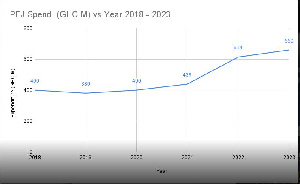
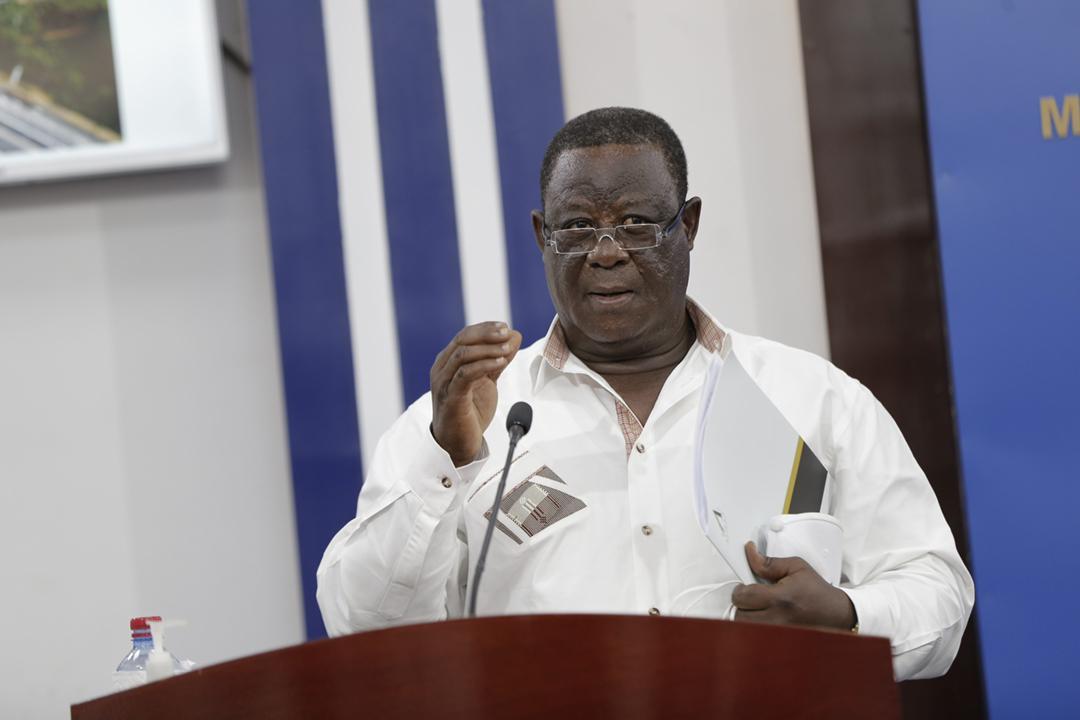
Minority MPs estimate that since Planting for Foodand Jobs (PFJ) was launched in 2017, the government has spent a total of GH2.9 billion on the program.
According to a breakdown of program spending, the government invested GH400 million in 2018, GH380 million in 2019, and GH400 million or so in 2020. In addition, the program received GH 439 million in 2021, GH 614 million in 2022, and GH 660 million in 2023.
The sector’s growth rate has regrettably stayed low at around 0.7 percent, they claimed, despite the enormous sums spent, as the nation struggles with soaring food inflation not seen in decades.
“Having inherited an agricultural sector with a growth rate of 2.7 percent in 2016, and after expending millions of cedis on PFJ for six years, agriculture growth currently stands at a disastrous 0.7 percent,” the deputy Ranking Member, Committee on Food, Agriculture and Cocoa Affairs, Dr. Godfred Seidu Jasaw, said in a press statement.
Launched in 2017, the Planting for Food and Jobs (PFJ) initiative aimed to modernize agriculture, enhance production, and attain food security and profitability for farmers. The initial phase of PFJ, which focused on crops, sought to bolster food security, ensure the immediate availability of select food crops in the market, and generate employment opportunities.
However, it’s worth noting that headline inflation surged to a staggering 54.1 percent in December 2022 and currently stands at 43.1 percent. In light of these economic challenges, the program has been deemed a significant failure with limited tangible outcomes.
The minority has also expressed reservations regarding the allocation of GH¢660 million to PFJ in 2023, despite the government’s announcement that the first phase of PFJ concluded in December 2022. Consequently, they have called for transparency and demanded clarification regarding the purpose of the 2023 allocation.
Meanwhile, President Nana Akufo-Addo introduced the second phase of PFJ last month, which signifies a shift in policy direction from input subsidies in the initial phase to an input credit guarantee system.
“Why has government failed to support food-crop farmers in Ghana since January 2023? Private agro-dealers and aggregators have been implementing various forms of input credit support schemes to farmers for many years now; what exactly will this new PFJ input credit do differently?
“We still cannot account for the so-called increased production figures that were being churned out by the Minister for Agriculture. Where is the maize? Where is the rice? Where are the soybeans? One would have reasonably expected to have a food glut in Ghana by now, which would have driven down prices,” he stated.
The statement outlined several recognized limitations within the initial phase of the program. These included imposing a significant budgetary burden on the government, adopting the value chain approach, restricted access to agricultural credit, a low prioritization of the national strategic stock, and insufficient attention to the requirements of commercial small, medium, and large-scale farmers.
Furthermore, the minority member pointed out that the government rebranded PFJ from its original initiative, which was initially introduced during the tenure of former President Mahama and the NDC administration. The original program, known as the ‘Modernisation of Agricultural Productivity to the Local Economy’ (MAPLE), was intended to receive funding from the Canadian government, with an allocation of C$125 million, equivalent to US$120 million.
Dr. Seidu Jasaw asserted that a thorough examination of the PFJ Phase 2 program document revealed that it lacked substantial novelty and was unlikely to make a significant contribution to enhancing the country’s food security.
“We contend that the objective of this new scheme is to erase the mess from the programme’s failed first phase, and create a face-saving platform to continue the dissipation of our scarce resources through establishments by ‘this family and friends’ government,” the statement captured.
The government was also questioned about how it would safeguard smallholder farmers from the profit-driven practices and market risks that input dealers engage in, as well as how it would achieve import substitution for essential goods like rice, maize, and poultry since there are no policies in place to lower input/production costs.
Dr. Seidu Jasaw pointed out that the economy is unable to finance an input subsidy scheme under the IMF program.
The sale of petrol to private vehicles was formerly prohibited on weekends due to a fuel scarcity in Ghana.
The restriction was in place starting at 6 p.m. on Fridays and ending at 6 p.m. on Sundays as of October 22, 1975.
After the price of the commodity climbed, this was an effort to slightly reduce gasoline usage.
Read the full story below;
The vibrant streets of Accra on weekends became a thing of the past when General Ignatius Kutu (I.K) Acheampong’s government, in response to soaring oil prices, imposed a ban on the use of petrol by private vehicles during weekends.
This restriction, which took effect on October 22, 1975, applied from 6.00 pm on Fridays to 6.00 pm on Sundays.
The primary motive behind this petrol ban was the need to conserve fuel, a necessity prompted by a recent 10 percent hike in oil prices announced by the Organisation of Petroleum Exporting Countries (O.P.E.C.). Additionally, I.K. Acheampong’s government sought to curtail petrol consumption to alleviate Ghana’s balance of payments.
In a government statement clarifying the reasons for the ban, it was mentioned that the government would not pass on the full price increase, which was estimated to be between five and six million pounds sterling.
Effects of a rise in oil prices
An escalation in oil or petroleum product prices typically has repercussions on inflation and economic growth. Concerning inflation, oil price increases directly impact the costs of goods manufactured using petroleum products. This, in turn, affects expenses such as transportation and manufacturing.
The uptick in these expenditures can influence the prices of various goods and services since producers may transfer production costs to consumers. The extent to which oil price hikes trigger consumer price increases depends on the significance of oil in the production of specific goods or services.
Moreover, increases in oil prices can hamper economic growth by affecting the supply and demand for items beyond oil. Such price hikes can undermine the supply of other goods because they elevate the expenses associated with their production.
A financial analyst, Courage Boti, has explained that the increasing subscriptions being witnessed on the primary markets and secondary markets may just be an indication of growing confidence in theeconomy.
According to him, the oversubscription of treasury bills witnessed in the last few weeks may continue.
He explained that this is due to the successful completion of the second round of the government’s debt exchange programme including pension funds, dollar-denominated bonds, and cocoa bills.
Even though the government’s recent treasury bill target seemed ambitious due to the high interest rates currently, it has witnessed oversubscriptions.
Courage Boti was quoted by citinewsroom.com saying, “Now the government has paid coupons on the first DDEP bonds. It is the first step towards restoring confidence. We also know that the government succeeded in rolling out pension funds into the DDEP and that settlement has begun; what this may mean is that there could be more activities on the secondary bonds market and evaluations turn out to favorable, you may witness some gradual activities returning to that segment of the market.”
Overall, the government’s second round of debt restructuring saw an average success rate of about 92%.
The government announced this last week while noting that “this result is a significant achievement for the Government to implement fully the economic strategies in the post-COVID-19 Programme for Economic Growth (PC-PEG) during this current economic crisis.”
This week, the government surpassed the target of GH¢3.064 billion to raise GH¢3.53 billion as interest rates continue to surge.
For the past two weeks, the government has managed to surpass its treasury bill targets even though they were ambitious.
According to the results, the target was oversubscribed by GH¢462.83 million. Interest rates are currently hovering between 27.36 to 31.65%.
However, the continuous increase in the interest rate will make maturities expensive for the government to fulfill.
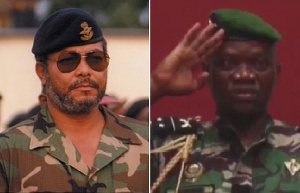
In the course of the inauguration of Africa’s latest coup leader in the Gabonese capital, Libreville, the late Jerry John Rawlings, a two-time coup leader who later became a democratic president of Ghana, was referenced.
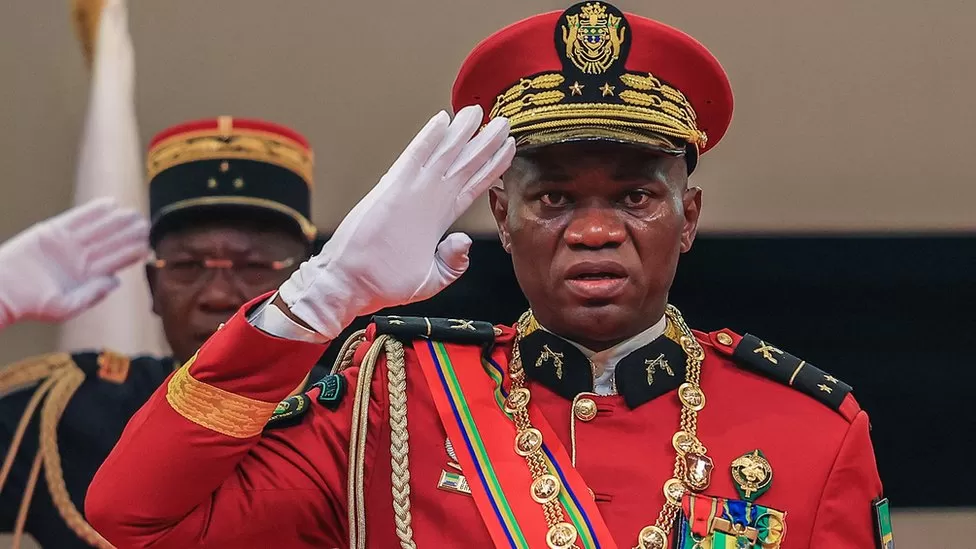
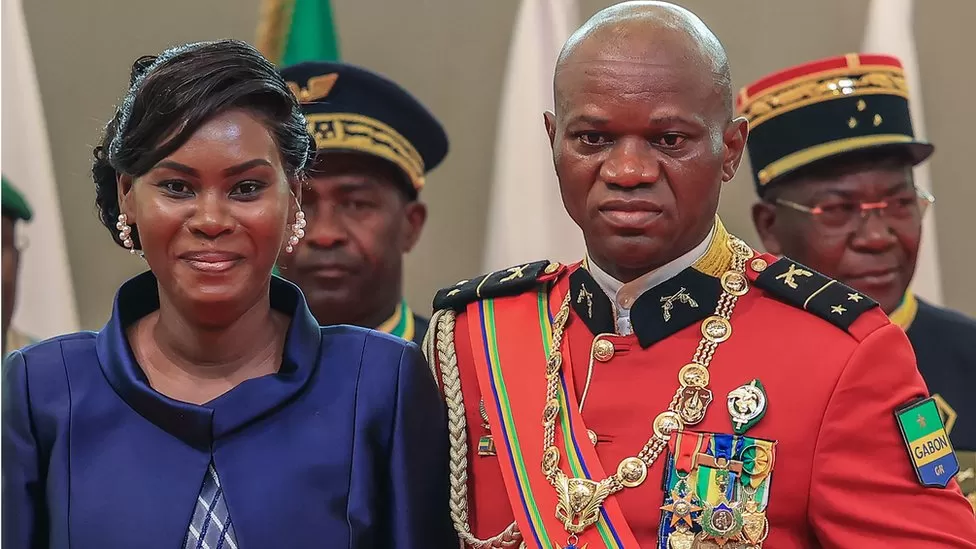
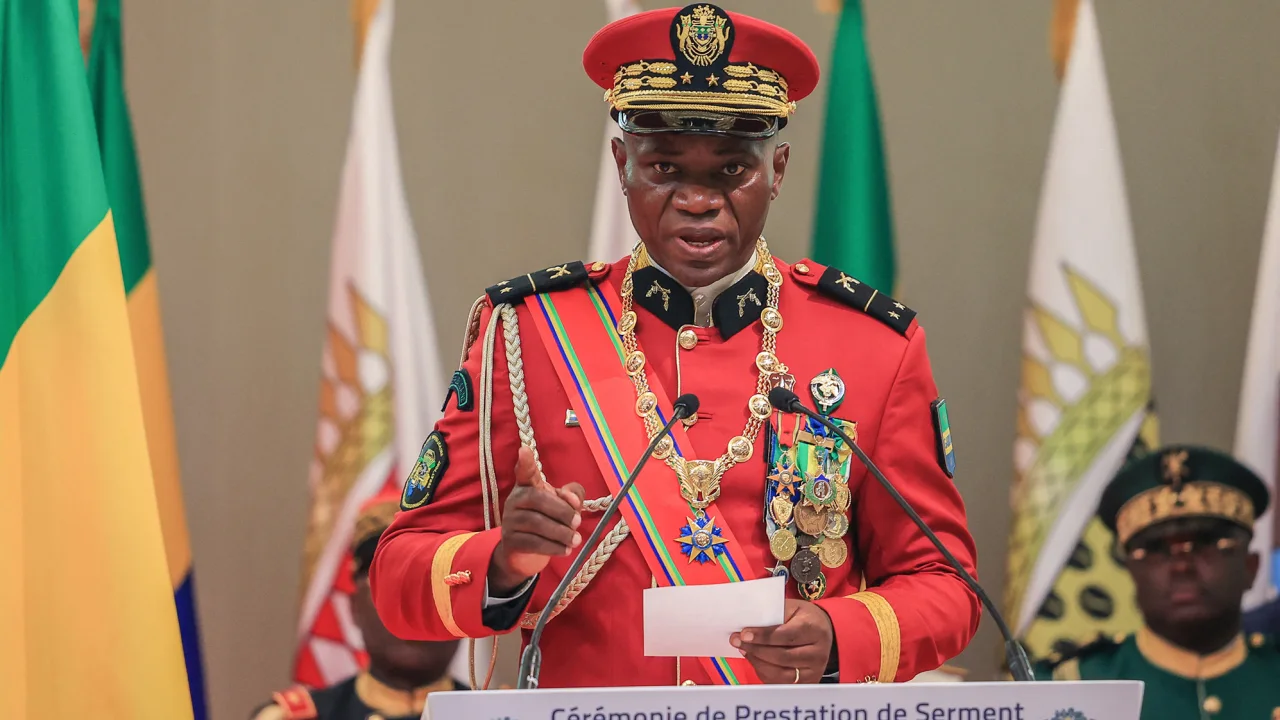
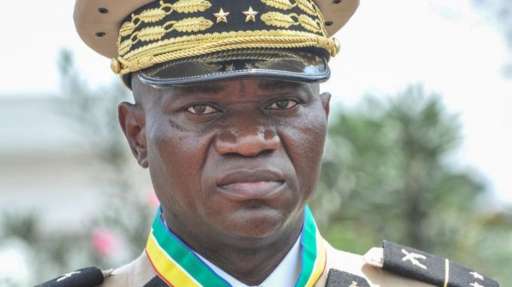
General Oligui Nguema, the leader of the Gabonese military junta, was formally inaugurated in Libreville on Monday, September 4, 2023.
This investiture occurred less than a week after the former head of the Republican Guard led the removal of President Ali Bongo Ondimba from power.
Before delivering his inaugural speech, the president took his oath of office, wherein he justified the coup and pledged a return to civilian rule through elections, although he did not provide specific dates or timelines.
In his address, he invoked a quote by JJ Rawlings to explain why the military had intervened on August 30 and assumed political authority.
Rawlings’ mention came after Oligui had paid tribute to Gabonese pro-democracy figures who had sacrificed their lives for their beliefs.
The junta leader stated: “As former Ghanaian President Jerry John Rawlings said, ‘When the people are crushed by their leaders, with the complicity of the judges, it is up to the army to give them their freedom’.”
He continued: “It is with this spirit that on August 30, 2023, like a meteorite in the dark night, the Defense and Security Forces of our country took their responsibilities by refusing the electoral coup which had just been announced by the Gabonese Elections Center following an outrageously biased electoral process.”
Security chief, past cabinet ministers, diplomats, and other important participants attended the event held at the National Palace.
Whiles the inauguration was ongoing, leaders of the regional political bloc were also meeting in Equatorial Guinea.
Gabon was suspended from the Economic Community of Central African States (ECCAS) after the extraordinary heads of state summit.
The bloc condemned the coup also decided effective immediately to move its headquarters from the Gabonese capital to Malabo, capital of Equatorial Guinea.
For the purpose of attracting the necessary money from donors, civil society organizations (CSOs) and non-governmental organizations (NGOs) have been tasked with being adaptable and sensitive to developing trends of people’s rights and equitable access to development.
In a time when the industry is dealing with declining financing sources, this, in the opinion of Dr. Esther Ofei-Aboagye, a seasoned researcher, policy analyst, and development management expert, has become important.
“Institutional leadership for national NGOs in the West African sub-region must develop the capacity to be predictive and be able to forecast the critical factors that can affect their organisations. I think a critical case in point is the funding landscape. We find that a lot of NGOs and CSOs are struggling to diversify their resources, exploring who is out there and trying to maintain their focus.
“Over the years, partnerships have been diversified in interesting ways – including funding sources. If you look at the way funding landscapes and trends have shifted over the last five years, resulting in downturns because of the weakening flows of financial economies and shorter periods for specific partner interests, you will see that being swift in exploration is a matter of survival,” she said.
In a speech at a public lecture in Accra to mark SEND West Africa’s 25th anniversary with the subject “25 Years of Championing Transformative Advocacy and Livelihood Security for the Poor and Vulnerable,” Dr. Ofei-Aboagye made the plea.
The Speaker promoted the adoption of a diverse and multi-stakeholder approach to executing their mandates by moving beyond just service delivery, all the while maintaining focused on organizations’ vision and the advantages of being agile. She referenced some of SEND’s methods with this strategy that are worth imitating.
“Development organisations have to be multipurpose in their orientation. The pressure has been on NGOs and development organisations to get out with service delivery; but after we continue and we do advocate and take the people along, they need critical services on their doorsteps. But how do you do this without spreading your efforts too thin?
“The focus of good governance that has engaged development organisations over the last decade is critical. It has underpinned the advocacy and engagement efforts of SEND and other organisations.
“But there is still an urgent need to make a difference in the services available to people in their day to day lives, so there is still a case for non-state agencies to construct support services alongside their rights-based advocacy. Such livelihood work has proven innovative and impactful.”
According to Dr. Ofei-Aboagye, while maintaining its original focus and vision, as emerging events bring out new areas of vulnerability, people’s rights and wellbeing, SEND’s experiences over the years have also indicated that viable and mutually beneficial relationships can be formed between state and non-state entities at all levels.
Tapping into local sources
The speaker contends that shifting patterns in the finance of CSOs and NGOs’ operations have made it necessary for those organizations to seek out local funding sources in addition to international ones.
“While they are interested in all of this, they must also support and highlight the nuances that will foster local philanthropy in engaging various philanthropic entities and funding facilities,” Dr. Ofei-Aboagye urged.
Audit firm, Deloitte, has advised insurance companies to explore alternative investment avenues as a safeguard against potential impairment losses resulting from the impact of the domestic debt exchange program.
In their 2023 Africa Insurance Outlook Update, Deloitte stressed the importance of insurance companies capitalizing on regulatory interventions to mitigate these potential losses.
They emphasized that it is evident that insurance companies may face enduring financial losses in the long term.
“While the programme is expected to alleviate the country’s debt burden, it is also likely to impair the return on investment for insurance companies. Insurers are encouraged to take advantage of the regulatory interventions and explore alternative investment choices to boost returns,” the report said.
It said, “Again, it is anticipated that the tradability of the Old Bonds will be restricted, reducing liquidity and potentially affecting the ability to pay claims.”
Minority MPs estimate that since Planting for Food and Jobs (PFJ) was launched in 2017, the government has spent a total of GH2.9 billion on the program.
According to a breakdown of program spending, the government invested GH400 million in 2018, GH380 million in 2019, and GH400 million or so in 2020. In addition, the program received GH 439 million in 2021, GH 614 million in 2022, and GH 660 million in 2023.
The sector’s growth rate has regrettably stayed low at around 0.7 percent, they claimed, despite the enormous sums spent, as the nation struggles with soaring food inflation not seen in decades.
“Having inherited an agricultural sector with a growth rate of 2.7 percent in 2016, and after expending millions of cedis on PFJ for six years, agriculture growth currently stands at a disastrous 0.7 percent,” the deputy Ranking Member, Committee on Food, Agriculture and Cocoa Affairs, Dr. Godfred Seidu Jasaw, said in a press statement.
PFJ, initiated in 2017, had the ambitious goal of modernizing agriculture, enhancing production, and ensuring food security and profitability for farmers. The program’s initial phase focused on crops, aiming to bolster food security, ensure the immediate availability of select food crops in the market, and create job opportunities.
However, it is worth noting that headline inflation surged to a staggering 54.1 percent in December 2022, and it presently stands at 43.1 percent. Against this backdrop, the program has been deemed a significant failure, yielding minimal positive outcomes.
The minority expressed apprehensions regarding the allocation of GH¢660 million to PFJ in 2023, despite the government’s announcement that the program’s first phase concluded in December 2022. Consequently, the statement called for transparency and demanded clarification regarding the purpose of the 2023 allocation.
Furthermore, it’s noteworthy that President Nana Akufo-Addo recently launched the second phase of PFJ, signaling a shift in policy direction from input subsidies, as observed in the first phase, to an input credit guarantee system.
“Why has government failed to support food-crop farmers in Ghana since January 2023? Private agro-dealers and aggregators have been implementing various forms of input credit support schemes to farmers for many years now; what exactly will this new PFJ input credit do differently?
“We still cannot account for the so-called increased production figures that were being churned out by the Minister for Agriculture. Where is the maize? Where is the rice? Where are the soybeans? One would have reasonably expected to have a food glut in Ghana by now, which would have driven down prices,” he stated.
The statement highlighted several recognized limitations within the program’s initial phase. These include imposing a significant budgetary burden on the government, adopting the value chain approach, limited accessibility to agricultural credit, low prioritization of the national strategic stock, and insufficient attention to the specific requirements of commercial small, medium, and large-scale farmers.
Furthermore, as per the minority member’s assertion, the government rebranded PFJ from its original concept, which was initially introduced during the tenure of former President Mahama and the NDC administration. The original initiative, known as the ‘Modernisation of Agricultural Productivity to the Local Economy’ (MAPLE), was intended to receive funding from the Canadian government, with a budget allocation of C$125 million, equivalent to US$120 million.
Dr. Seidu Jasaw maintained that upon a thorough examination of the PFJ Phase 2 program document, it became apparent that there were no substantially new elements incorporated, and it is unlikely to make a significant contribution to enhancing the country’s food security.
“We contend that the objective of this new scheme is to erase the mess from the programme’s failed first phase, and create a face-saving platform to continue the dissipation of our scarce resources through establishments by ‘this family and friends’ government,” the statement captured.
The government was also questioned about how it would safeguard smallholder farmers from the profit-driven practices and market risks that input dealers engage in, as well as how it would achieve import substitution for essential goods like rice, maize, and poultry since there are no policies in place to lower input/production costs.
Dr. Seidu Jasaw pointed out that the economy is unable to finance an input subsidy scheme under the IMF program.
Between January and June of this year, Ghana recorded direct financial losses of GH¢49.5 million due to cyber fraud activities. These reported losses represent only a fraction of cases reported to government agencies, suggesting that the actual financial losses from unreported cases may be higher.
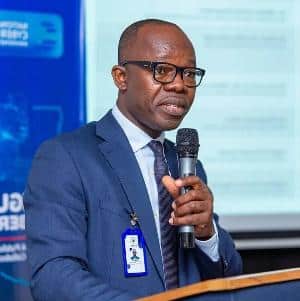
Director-General of the Cyber Security Authority, Dr. Albert Antwi-Boasiako, made this announcement during the media launch of the National Cybersecurity Awareness Month in Accra on Sunday.
The theme for this National Cybersecurity Awareness Month is “Promoting a Culture of Digital Safety.” Its goal is to raise awareness among Ghanaians and organizations about the opportunities and threats of cyberspace, promoting the responsible use of online resources for a safer environment.
Dr. Antwi-Boasiako emphasized the need to increase awareness, especially among young people, despite progress in educating the public about cybersecurity issues. He mentioned that the Cyber Security Authority received 41,285 complaints from the public related to cybercrime and other activities between October 2019 and July 2023. Of these, 41 percent were related to online fraud, including shopping fraud, romance fraud, online blackmail, and identity fraud.
Dr. Antwi-Boasiako called for collective and individual responsibility in protecting against digital fraud and encouraged the public to report online fraud issues to the Authority’s toll-free line at 292.
He also urged for better coordination among state agencies responsible for collecting statistics on arrests, prosecutions, and convictions of individuals involved in cyber fraud.
Dr. Antwi-Boasiako highlighted the impact of global digitalization trends on businesses and noted that the government is creating opportunities and interventions for economic growth in this digital era.
Internet penetration in Ghana has significantly increased, with 17 million users in 2022, representing 53 percent of the population. Cybersecurity awareness is part of a global initiative to promote best practices for online safety.
Ghana began its National Cybersecurity Awareness efforts in 2017, leading to the establishment of the National Cyber Security Week, which later evolved into a month-long event.
According to the GSMA Mobile Connectivity Index (MCI) 2023 report, Ghana is ranked fourth in Africa, with a score of 51.4%, showing substantial progress in connectivity over the past five years.
Ghana has also scored well in online security, with a score of 86.69% in the same report, consistent with its score on the ITU’s Global Cybersecurity Index (GCI).
Dr. Antwi-Boasiako emphasized that Ghana’s efforts to promote a culture of digital safety are based on the country’s cyberculture and societal dimension, as derived from cybersecurity assessments conducted in collaboration with the World Bank and the University of Oxford.
The assessments identified a lack of cybersecurity awareness among the Ghanaian public, inadequate security measures for government e-services, and knowledge gaps in fundamental cybersecurity concepts. The theme for this year’s National Cybersecurity Awareness Month, “Promoting a Culture of Digital Safety,” aims to address these concerns.
“We expect the media launch to set in motion a month-long national cybersecurity awareness creation that will assemble public and private sector players, cybersecurity professionals, the academia, and representatives from civil society organisations, in preparation for the NCSAM as we seek to encourage every Ghanaian to stay digitally alert,” Dr Antwi-Boasiako added.
In order to ensure the prudent, economical, and effective use of public resources and to create a streamlined mechanism for ensuring that cybersecurity service providers, establishments, and professionals in the nation carry out their duties in accordance with recognized international standards, he called for cooperative efforts to harmonize public procurement processes in the public service.
According to data from October 2019 to July 2023, 45% of recorded cases of internet fraud involved online shopping, investment fraud, romance scams, advance fee fraud, and fraud involving job applications. Cyberbullying (9%; Fake Loan Apps), illegal Access (10%; Account Takeover, Phishing, etc.), and Online Blackmail (13%).
Online Impersonation/Identity theft (8%)
The Point of Contact (PoC) portal has given citizens a way to fact-check information they find online and conduct due diligence before taking certain actions/decisions online, which can be attributed to the high numbers (37,559 (91%) for the direct advisories.
Therefore, people from all walks of life should contact the Cyber Security Authority through one of the channels listed below before making any online commitments, such as financial ones to buy a good, subscribe to a paid service, or make an investment of between GHC50 and thousands of Cedis. They should also avoid visiting or downloading malicious websites or downloading content that could disrupt business operations.
Elmi Bile Mohamed, a 25-year-old man with albinism, reflects on the harsh stigma he faces in Somalia. He laments, “People label me as a cannibal and fear that I will harm their children. The prevailing terror surrounding me is relentless.”
Elmi has encountered immense difficulty in securing a place to live in Mogadishu, the capital city, after leaving his rural home in Hiraan’s central region. His brothers share his condition and have suffered alongside him.
“Our own community subjected us to relentless insults and torment,” he recalls. “We endured physical violence and ridicule because of the pale complexion of our skin, hair, and eyes.”
Initially hopeful for a better life in Mogadishu, Elmi’s optimism waned as he faced rejection while searching for shared housing. He eventually settled for a storage shed in the historic Hamar Weyne district, paying $30 (£23) per month for shelter.
“People perceive me as cursed,” he sighs. “They frequently toss saltwater and raw eggs onto my doorstep, believing this will shield them from me.”
Elmi managed to secure a job as a cleaner at a restaurant, earning a modest daily wage ranging from $1.40 to $4 (£3). Unfortunately, his employment was short-lived, as customers stopped visiting the restaurant, fearing they would contract albinism—a misconception, as it is a genetic condition and not contagious.
“I went from one restaurant to another in search of employment, but no one would hire me,” he recounts. “I resorted to begging on the streets, displaying a sign with my phone number for people to make mobile payments.”
Income from begging scarcely covers his basic needs, including meals and rent, let alone the essential sunblock and glasses required to shield his sensitive skin and eyes. Individuals with albinism lack or have minimal melanin, the pigment that provides natural protection from the sun and determines eye, hair, and skin color.
“I cannot afford sunglasses,” Elmi laments. “The market where I beg is filled with dust and heavily polluted traffic. My eyes are in constant pain, and my vision is deteriorating rapidly.”
“At times, people offer me their leftover food, but there are moments when I have nothing to eat.”
Mr Mohamed’s dreams of running away to Mogadishu to earn money to send back to his family, especially his albino brothers, have been shattered.
The head of Somalia’s albino association, Mohamed Abukar Abdiqadir, with his children
It is not clear how many people with albinism live in Somalia as there is no data available. The country has been affected by conflict and instability for more than three decades so it is impossible to gather reliable information.
Earlier this year, about 80 families living with albinism in Mogadishu came together to form an association, Somali Albinos, which they hope will raise awareness about their plight and help reduce stigma.
So far, they have been sent 86 bottles of sun cream from Somali women living in the diaspora.
It is recommended that people with albinism wear high-factor sunscreen, protective clothing and sunglasses to reduce exposure to sunlight.
Their lack of melanin means they are at increased risk of getting sunburn and skin cancer. It also leads to eye problems as melanin is involved in the development of the retina, the thin layer of cells at the back of the eye.
“Other Somalis with disabilities have formed organisations which lobby for help from the government and international organisations,” says the group’s chairman, 40 year-old Mohamed Abukar Abdiqadir. “They now have rights. We don’t.”
“I was elected as the leader of our association because I am a hero and I never give up,” says Mr Abdiqadir, who has six children. Like him, they all live with albinism.
He scrapes together a living by selling dried and tinned food from a trolley in Hamar Weyne market. He always wears a hat to protect himself from the harsh sun.
“The reason people hate and fear us is ignorance,” he says.
“The evil and discrimination we face must not stop us from fighting for our rights and feeding our families. If Somalis learn about albinism, they will realise we are people just like them.”
Asha Gele Mother of children with albinism
Currently, discrimination against individuals with albinism is so deeply entrenched that children with this condition rarely have the opportunity to receive an education.
Asha Gele, a mother of two sons living with albinism, shares the heartbreaking decision she had to make: “I had to withdraw my children from school because they were subjected to daily stoning incidents,” she reveals. “The delicate nature of their skin suffered extensive damage from the stones thrown at them. Now, I keep them indoors all day, every day. While they may miss out on an education and the chance to interact with other children, at least they are safe.”
The family resides in a makeshift two-room dwelling in the Huriwa district of north Mogadishu, paying $40 a month for accommodation. Their home is constructed with old fabric and weathered, rusted corrugated iron sheets, providing insufficient protection against the harsh sunlight that relentlessly burns the children’s skin.
Mrs. Gele reminisces about her previous livelihood, selling vegetables in the market, which she was forced to abandon to care for her children. The family now grapples with survival on the meager income of $4 to $6 that her husband earns daily as a rickshaw driver.
The strain on Mrs. Gele’s marriage is palpable, as her husband holds her responsible for giving birth to children with albinism, blaming her for bringing misfortune to the family.
“The people I cherish the most – my husband and my own relatives – ostracize my children,” she shares with a heavy heart. “Even my own brother keeps his distance, fearing that they might somehow transmit albinism to him.”
“But I will forever stand by their side and defend them, regardless of the circumstances,” Mrs. Gele asserts. “I will remain patient and unwavering in my commitment to them. They did not choose to live this way.”
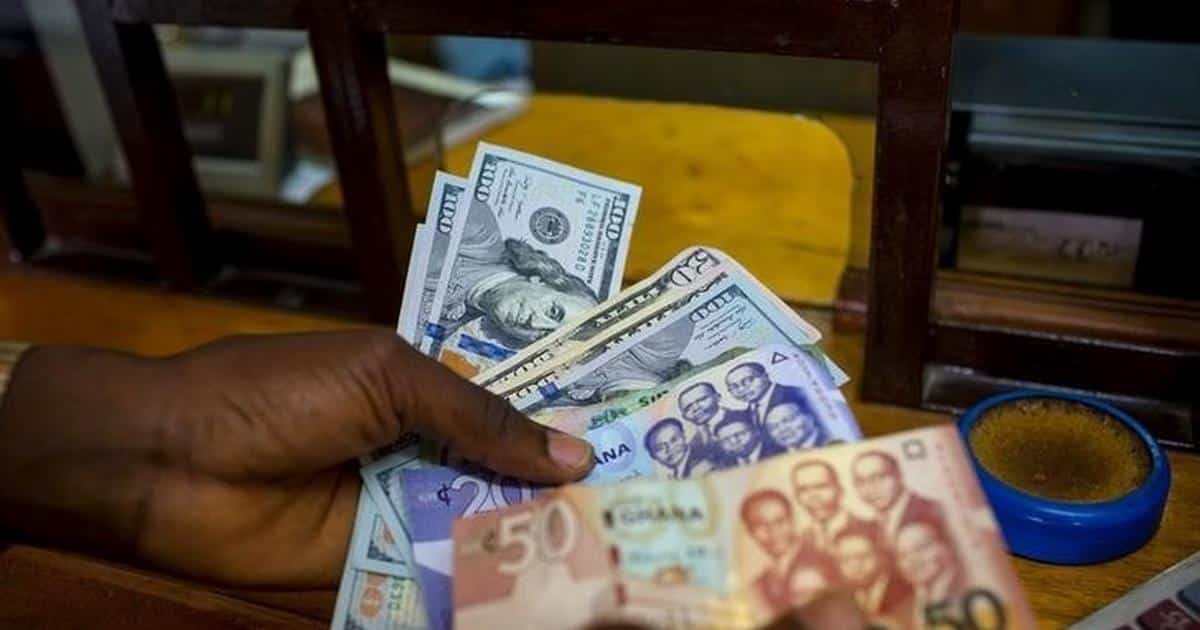
The Bank of Ghana’s interbank forex rates for today, September 5, 2023, indicate that the Ghana Cedi is exchanging against the US Dollar at a buying rate of 11.0152 and a selling rate of 11.0262.
In Accra’s forex bureaus, the US Dollar is being purchased at 11.40 and sold at 11.65.
Against the Pound Sterling, the Cedi is trading at a buying rate of 13.9001 and a selling rate of 13.9151.
In Accra’s forex bureaus, the Pound Sterling is being bought at 14.50 and sold at 15.00.
The Euro is available at a buying rate of 11.8875 and a selling rate of 11.8993.
In Accra’s forex bureaus, the Euro is being acquired at 12.20 and sold at 12.70.
The South African Rand is trading at a buying rate of 0.5788 and a selling rate of 0.5791.
In Accra’s forex bureaus, the South African Rand is being purchased at 0.35 and sold at 0.95.
The Nigerian Naira can be obtained at a buying rate of 69.6380 and a selling rate of 70.7260.
In Accra’s forex bureaus, the Nigerian Naira is being bought at a rate of 11.00 Naira for every 1 Cedi and sold at a rate of 16.00.
As for the CFA, it is trading at a buying rate of 55.1679 and a selling rate of 55.2222.
In Accra’s forex bureaus, the CFA is being acquired at a rate of 16.50 CFA for every 1 Cedi and sold at a rate of 20.50 CFA for every 1 Cedi.
Note that these rates may be different at a forex bureau near you. Our forex bureau rates are provided by Afriswap Bureau De Change in Osu, Accra.
Our forex bureau rates are provided by Afriswap Bureau De Change in Osu, Accra.
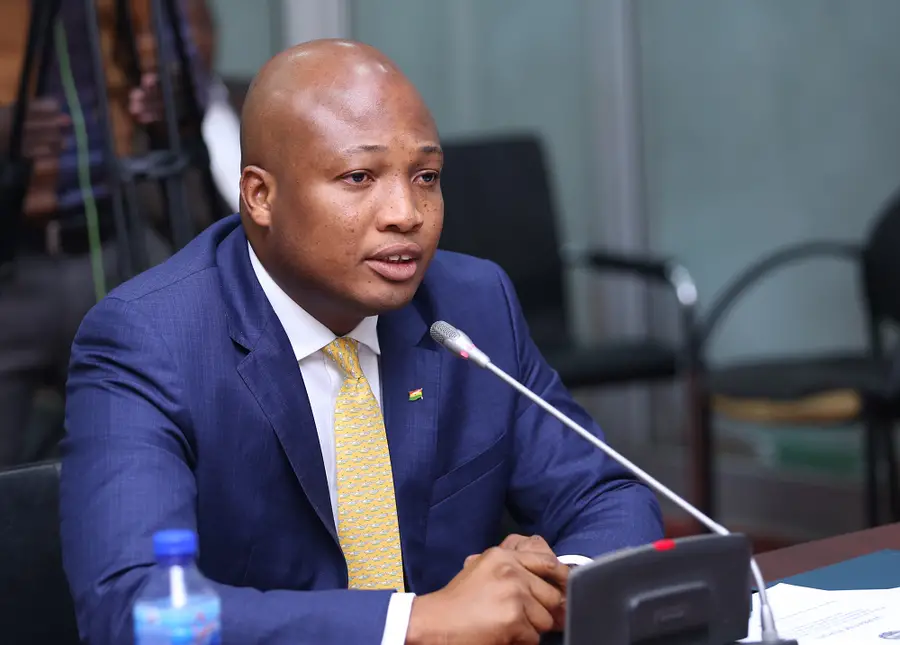
Member of Parliament representing North Tongu, Samuel Okudzeto Ablakwa, has released documents revealing an ongoing legal dispute concerning the land upon which the new Bank of Ghana (BoG) headquarters is currently under construction.
Ablakwa, who has been unveiling a series of revelations regarding the BoG building project, asserts that the land was initially appraised at approximately GH¢91 million. At one point, the BoG reportedly offered the landowners GH¢100 million for the parcel.
However, the central bank eventually withdrew its interest in the land. Subsequently, in 2020, the government invoked a compulsory acquisition provision through an Executive Instrument (E.I) in lieu of compensation for the land, which, as Ablakwa discloses, has not been paid. According to experts, the total amount, along with accrued interests, has now reached 400 million cedis.
Originally, the land was owned by the State Insurance Company (SIC). It became entangled in legal proceedings after ITALCONSTRUCT INTERNATIONAL LIMITED obtained guarantees from SIC for a loan from IVORY FINANCE COMPANY, which subsequently defaulted. The loan agreement was established in 2013, with the consent judgment delivered in 2014.
Ablakwa reveals that in August 2019, the Bank of Ghana, despite being aware of the ongoing litigation and the consent judgment, approached the managements of both SIC and IVORY FINANCE. The BoG reportedly offered GH¢100 million to both entities to acquire the land for their new headquarters project.
“Interestingly, BoG did not pursue their offer and rather placed IVORY FINANCE under receivership,” following which the E.I. of October 2020 was issued, and even with that due compensation, according to his sources, had yet to be paid.
“Based on the Consent Judgement which has not been set aside, the interest and penalties which have accrued and factoring inflation — experts confirm that a combined compensation will not be less than a staggering GHS400million,” his post of September 5, 2023 read in part.
Click on link below for Ablakwa’s full post on Facebook:
The inaugural African Climate Summit is set to host over a dozen heads of state from African countries, marking an important step for the continent in addressing a global crisis to which it contributes the least.
The event, launched in Nairobi by Kenyan President William Ruto’s government and the African Union, aims to enhance Africa’s global influence and secure increased funding and support for climate initiatives.
President Ruto emphasized the enormous opportunities presented by the climate crisis, including multibillion-dollar economic prospects, innovative financial structures, Africa’s vast mineral resources, and the goal of shared prosperity. He stressed that the summit is not intended to catalog grievances but rather to seize opportunities.
Despite Africa’s limited contribution to global emissions, there is frustration about being urged to develop cleaner economies, especially when many promised financial aids have not materialized.
Mithika Mwenda of the Pan African Climate Justice Alliance pointed out that annual climate assistance to the continent falls far short of the required amount and is only a fraction of some polluting companies’ budgets.
In 2020, over $83 billion in climate financing was provided to poorer countries, a 4 percent increase from the previous year but still below the $100 billion annual goal established in 2009.
Mohamed Adow of Power Shift Africa emphasized the need for funding from wealthy nations that have benefitted from Africa’s struggles to unlock the continent’s abundant clean, renewable energy resources.
The ONE campaign warned in a report before the summit that high-interest rates and insufficient capital from institutions like the World Bank are making debt unsustainable for low-income countries and hindering financing for climate solutions.
Notable participants from outside Africa include John Kerry, the United States government’s climate envoy, and United Nations Secretary-General Antonio Guterres, who will address finance as a central issue in the climate crisis.
While President Ruto emphasized tree-planting in his video welcome for the summit, he did not mention his government’s decision to lift a long-standing ban on commercial logging earlier this year, which raised concerns among environmental watchdogs. The decision is currently under legal challenge, with the government asserting that only mature trees in state-run plantations would be harvested.
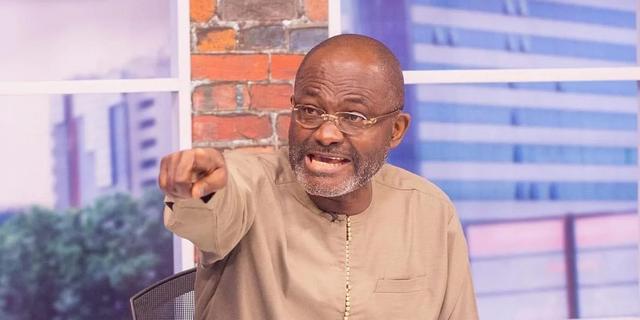
Politician and Ghanaian lawmaker, Kennedy Agyapong, has criticized Ghanaians for their lack of discipline, honesty, and corruption.
He believes that indiscipline and dishonesty are ingrained traits in Ghanaians from birth. Agyapong asserts that this is why foreigners conducting business in the country exploit their employees.
Despite the harsh treatment they endure from these foreign employers, Ghanaians continue to work under these conditions without resistance.
Agyapong further argued that the situation is entirely different when a fellow Ghanaian provides employment. In such cases, employees tend to handle their jobs carelessly and may even exhibit a sense of entitlement.
“What has been inculcated in us from when we were born, makes us very bad people, very dishonest people until somebody uses a cane or harsh words on us, we don’t even realize that that is not the way to live as a human being.
“An example is these foreigners, the way they treat Ghanaian workers and they succumb to it and work but when you give them jobs, the way they treat their own, my sister, it is horrible. That is why the foreigners are succeeding. Imagine you are working with me, you’ve done something wrong and I fire you, you get the pastor coming to beg, the minister coming to beg, my mother coming to beg but when a Chinese fires you, nobody goes to him, when Indian fires you, nobody goes to him, Lebanese nobody goes to him,” he told Dentaa in 2021 on Odana Network on YouTube.
The politician, who is presently running for president, noted that Ghanaians generally lack discipline because of their too sympathetic outlook.
He asserts that, despite its difficulty, changing the narrative is not impossible.
The recent water and electricity tariff increases by the Public Utilities Regulatory Commission (PURC) have left some residents in Sunyani, the Bono Regional capital, lamenting their impact.
These concerns arise in the wake of the 4.22% increase in electricity tariffs and the 1.18% increase in water tariffs, which took effect on September 1, 2023, affecting average end-user tariffs for non-lifeline residential consumers.
Residents are already grappling with financial challenges in a difficult economic environment, and they fear that the recent tariff hikes will exacerbate their struggles.
Voicing their discontent over the tariff increases, they have appealed to the government to reconsider the decision, as it would result in a higher cost of living and further hardships.
Nana Kwame Asamoah, a long-time Sunyani resident, expressed how the tariff hikes are affecting ordinary people like himself, given the current challenging economic conditions. He mentioned that the increased costs of electricity and water are becoming unbearable, causing financial strain for many.
Eno Mary called on the government to focus on improving the country’s economic situation before approving any future tariff adjustments. She emphasized that they cannot afford to pay higher bills during these difficult times.
Agya Oppong criticized the PURC for consistently favoring utility providers, despite poor service delivery, and failing to address consumers’ concerns and hardships. He believes that any tariff increase during these challenging times is regrettable.
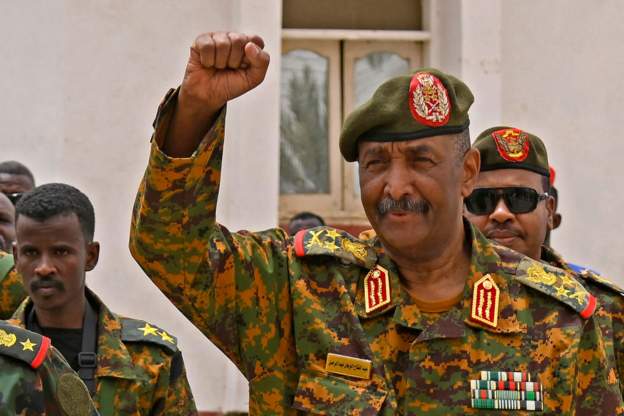
Sudan’s military leader, Gen Abdel Fattah al-Burhan, has journeyed to South Sudan for talks with President Salva Kiir in Juba, the capital.
This visit follows several rounds of unsuccessful peace negotiations aimed at ending Sudan’s ongoing four-and-a-half-month conflict.
Journalists were not allowed to cover the meeting, but according to a press release from President Kiir’s office, the two leaders discussed the Sudanese crisis.
Sudan’s acting Foreign Minister, Ali al-Sadiq, told reporters that they believe South Sudan is well-suited to mediate the conflict in Sudan due to their shared history, understanding of each other’s problems, and knowledge of their respective needs.
South Sudan’s Minister of Cabinet Affairs, Martin Elia Lomuro, emphasized President Kiir’s unique familiarity with Sudan and his ability to find a solution to the Sudanese crisis.
The UN refugee agency has issued an appeal for $1 billion (£790 million) to provide essential aid and protection to the hundreds of thousands of people who have fled to neighboring countries.
Since the conflict began in April, the UN reports that 4.8 million people have been displaced.
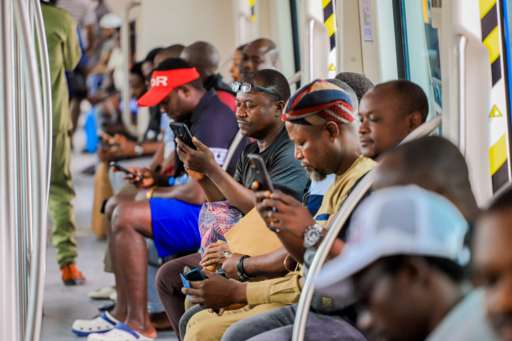
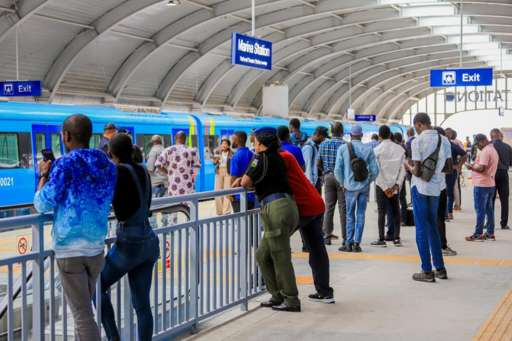
In the aftermath of two decades since the announcement of plans and 14 years since the project’s construction commenced, paying passengers have finally utilized the Lagos metro rail service for the first time. The commercial operations began with the presence of Governor Babajide Sanwo-Olu, following months of test rides since the launch earlier this year.
The newly operational 13km (eight-mile) Blue Line connects Marina on Lagos Island to Mile 2 on the mainland, establishing a vital link between business districts and residential areas. This development is expected to alleviate the traffic congestion that Lagos has long been notorious for.
The introduction of this rail line is anticipated to reduce travel times on this route by up to three hours, although road commutes have already seen significant improvements due to the reduction in traffic following the removal of fuel subsidies.
The overland route encompasses five stations, offering a 30-minute journey at a cost of 750 naira ($1; £0.80) for a full trip. Initially, there will be 12 trips during morning and evening peak hours, increasing to 76 at full operation.
The Blue Line is part of a comprehensive transport plan in Lagos, which includes ferries and the Bus Rapid Transport system.
The leader of Gabon’s military junta has pledged to return power to civilians through “free and transparent” elections. However, in his speech following his swearing-in as interim president, he did not specify a date for the end of military rule.
Gen Brice Nguema, who led the coup against President Ali Bongo last Wednesday, acknowledged the need for change and promised a fresh government would be formed “in a few days.” He recommended new electoral legislation, a new penal code, and a referendum on a new constitution. Additionally, Gen Nguema expressed his commitment to considering the release of political prisoners.
Despite welcoming the coup as a chance for change, some critics argue that Gen Nguema’s rule could represent a continuation of the 55-year Bongo dynasty. Gabon has witnessed dynastic rule, with Ali Bongo succeeding his father, Omar Bongo, who held power for 41 years until his death in 2009.
During the inauguration ceremony, attended by numerous officials, including former ministers from the ousted government, the opposition called for a swift return to civilian rule. Meanwhile, international organizations and foreign governments, including the African Union, the UN, and France, condemned the coup.
Gen Nguema’s takeover is the latest in a series of military coups in West and Central Africa, reflecting broader regional instability and challenges to France’s influence in its former colonies. Gabon’s suspension from the African Union further illustrates the international response to the coup, while Gen Nguema expressed surprise at foreign criticism in his inaugural address.
It’s almost as if unfaithful husbands find a thrill in navigating between their marital obligations and extramarital affairs.
These men, who engage in infidelity, often make promises of leaving their wives to marry their mistresses, but rarely follow through with it.
They frequently hurl accusations at their wives, such as being terrible in bed, old, or overweight, yet they persist in their marriages.
Men who cheat on their spouses seem to relish the challenge of balancing their family life with their secret affairs, akin to having their cake and eating it too.
Here are the reasons why married men who cheat don’t leave their wives for their mistresses:
Concern for Reputation
Married men often hold high social status, belonging to respected institutions such as churches, mosques, or companies. They are reluctant to jeopardize their social standing by leaving their wives for another woman.
Wives Tolerate Infidelity
Many women adopt a lenient attitude towards their husbands’ infidelity, believing phrases like “all men cheat” or “as long as he hides it from me, it’s acceptable.” By failing to hold their husbands accountable for fidelity, wives indirectly condone their infidelity, enabling them to continue their extramarital relationships.
Genuine Love for Their Wives
Surprisingly, some cheating husbands claim to love their wives while simultaneously engaging in extramarital affairs. They may compartmentalize their feelings, reserving love for their wives and viewing their mistresses as sources of enjoyment without the intention of replacing their wives.
Concern for Their Children
Many married men refrain from leaving their wives for mistresses to ensure their children grow up in what they perceive as a stable and complete family.
Maintaining a Functional Arrangement
If a man has been receiving sex without commitment, benefiting from physical intimacy without the responsibilities of a committed relationship, he may be reluctant to disrupt this arrangement. A cheating husband often prefers to maintain the status quo rather than risk changing it.
In summary, married men who cheat often choose not to leave their wives for their mistresses due to concerns about their reputation, their wives’ tolerance of infidelity, their genuine love for their wives, the desire to provide a stable environment for their children, and the comfort of their current arrangement.
A segment of music enthusiasts and industry insiders, including radio presenter Sammy Flex, have contended that Sarkodie was caught off guard during his live radio interview with Andy Dosty while promoting his latest project, ‘Stir It Up,’ alongside legendary reggae singer Bob Marley.
During the interview on Daybreak Hitz, host Andy Dosty surprised Sarkodie by connecting him with Samini, who had previously labeled Sarkodie as “fake and disrespectful” on Twitter.
Samini expressed frustration over Sarkodie’s failure to respond to his WhatsApp messages and not getting back to him after he had requested a verse from the rapper.
In the heated exchange on Hitz FM, Samini referred to Sarkodie as “his small boy.”
“Sarkodie did not try for me. He did not try for me and he knows it. Sark, you are my small boy. Sark was one of the boys who said in his raps that he wants to blow up and become like Samini. Ask him. My guy, don’t play,” he fumed.
In an effort to address the situation, the rapper stated, “I’m offering an apology, not because everything you’re saying is accurate. I handle things differently from how others do. I wouldn’t describe it as pain because I’m not affected. Everyone experiences something in their life. There are numerous individuals out there who would say I’m quick to collaborate with them.”
Responding to the unfortunate incident that witnessed a clash between two of Ghana’s prominent musicians on radio, Sammy Flex, in a tweet dated January 29, suggested that Sarkodie might refrain from participating in radio interviews due to the disappointing experience.
“The @sarkodie vs @Hitz1039FM experience… the next time I see King Sark going for another radio interview, I will respect him even more because some of us noticed the disappointment in his demeanor on the day after the @samini_dagaati call. But he displayed Emotional Intelligence,” Sammy tweeted.
The interview concluded with social media users shifting their focus from Sarkodie’s collaboration with Bob Marley to the exchange with Samini.
Baba Sadiq, the former CEO of 3 Music Awards, shared a similar perspective with Sammy Flex. He believed that Andy Dosty “and his producers let him (Sarkodie) down.”
“He was clearly disappointed. Andy and his producers let him down. This is a clear example of how the media drops the ball and disappoints top talents in our pursuit of ratings and clout, at the expense of the artist’s intended PR impact. Quite disappointing,” he tweeted.
In just 18 months, the Ghana Minerals Income Investment Fund (MIIF) has defied global economic challenges, experiencing remarkable growth.
Starting at approximately US$125 million in October 2021, the fund’s Assets Under Management (AUM) are poised to reach the one-billion-dollar milestone by January 2024, making it one of the world’s fastest-growing specialized funds during this period.
“The growth trajectory of the Fund is attributed to the hard work of the entire team at MIIF. They have fueled this incredible rise in the last 18 months. Our primary focus as a Fund is to remain true to the founding law and the President’s vision of creating long-term sustainable value for Ghanaians. We have achieved AUM growth through innovative expansion of our royalties base, the strong performance of the gold sector, strategic investments, sound asset allocation, and effective treasury management,” said Edward Nana Yaw Koranteng, the Chief Executive Officer.
Mr. Koranteng highlighted Ghana’s historical significance as the heart of West African mining for centuries and its current status as the continent’s leading gold producer. However, the mining industry has not fully delivered on its promise of bringing lasting prosperity and opportunities to Ghana.
In response to this, President Nana Addo Dankwa Akufo-Addo established the Minerals Income Investment Fund in 2018 through an Act of Parliament (Act 978). The fund’s mandate includes managing all of the Government of Ghana’s equity interests in mining companies, overseeing and investing royalties and dividends received from mineral resources in strategic investments across the entire mining value chain, and implementing measures to mitigate the Republic’s exposure to fluctuations in minerals income.
The President’s Charge
“Hopeful this Fund, when properly managed and selectively invested, will over the period of time erase that image and give us a new architecture in the mining industry which includes significant Ghanaian players.” President Nana Addo Dankwa Akufo Addo
Bongo, 64, succeeded his father Omar Bongo, who ruled the Central African nation with an iron fist for more than four decades before his death in 2009.
A new MIIF Board of Directors was established in October 2021 under the leadership of Edward Nana Yaw Koranteng, a lawyer and investment banker with experience in Ghana, the United Kingdom, and sub-Saharan Africa. Professor Douglas Boateng, a Professor Extraordinaire in Supply Chain Management, served as the board’s chair.
“The President charged us to create long-term value for Ghanaians. Create a conducive investment environment around the participation of Ghanaians in the mining sector and to make Ghanaians the primary beneficiaries of the natural resources God has bestowed on our dear motherland. “These words underpin the objectives of the Fund and are fundamental in the way we approach business” says Edward Koranteng.
Establishing a Strong Foundation Expanding Royalties Sources The Ghana Minerals Income Investment Fund primarily relies on royalties and dividend payments for its income. Among these, royalties from mineral resources, particularly gold, account for approximately 93% of all royalties collected. While gold is a significant contributor, the Fund recognized the need to diversify its royalties sources beyond gold. To achieve this, the Fund initiated two key strategies.
Inter-Agency Framework and Committee To expand the royalties base and include non-gold minerals such as manganese, salt, sand winning, limestone, and quarrying activities, an inter-agency framework and task force were established. This task force comprises organizations like the Ghana Revenue Authority (GRA), Minerals Development Fund (MDF), Ghana Standards Authority, Minerals Commission, and the Economic and Organized Crime Office (EOCO). This strategic approach aims to enhance royalty collection, broaden the royalties net, and improve communication regarding royalty payments from non-gold mining companies. Since its inception in December 2021, this initiative has enabled MIIF to receive royalties from previously untapped sources such as sand winners, salt, and silver. Royalties from quarries and limestone activities have seen remarkable increases of over 105% and 125%, respectively.
Royalty Tracking System Additionally, MIIF developed an in-house geo-mapping and monitoring system that provides real-time monitoring of mining activities at selected mines in Ghana. This system facilitates accurate tracking of mining companies and ensures timely royalty payments with the support of the Inter-Agency Framework.
Beyond Gold: A Diverse Mineral Sector While gold remains a vital contributor, MIIF recognizes the importance of developing other mineral resources in Ghana. To create a comprehensive and value-driven integrated mining sector that benefits Ghanaians, MIIF has initiated programs and investment plans to support the growth of all 16 mineral types in the country. The objective is to establish significant equity positions across the entire value chain for each mineral type, fostering sustainable development.
The Salt Opportunity Industrial salt, if well-developed across its value chain, has the potential to generate over US$1 billion in direct revenue annually. The Songhor Salt pans in Ada, Ghana, span 41,000 acres and can become Africa’s largest producing facility. The development of the salt industry has applications across various sectors, including oil and gas, mining, food processing, pharmaceuticals, textiles, and more. With industrial salt projected to become a US$49 billion market by 2030, MIIF aims to transform the Ada enclave, making it a vital contributor to Ghana’s economy.
The Lithium Opportunity Lithium, a mineral of high strategic importance in the era of global decarbonization and green energy, presents significant growth potential. The global lithium market, valued at about US$38 billion, is projected to reach US$90 billion by 2030. MIIF is finalizing an equity investment in the Australian and UK-listed Atlantic Lithium, which is developing the Ewoyaa lithium finds in Ghana. This project is expected to be Ghana’s first lithium mine operation, producing spodumene concentrate with significant value. MIIF plans to invest approximately $35 million in the Ewoyaa lithium project, focusing on value addition components, including chemical plants, aligning with Ghana’s Critical Minerals Policy.
Formalizing Ghana’s Gold Sector and Creating a Mining Financial Ecosystem The Small Scale Mining Incubation Program (SSMIP) Recognizing the importance of the small-scale gold mining sector, MIIF has introduced the Small Scale Mining Incubation Program (SSMIP). This investment package aims to support and formalize small-scale gold mining in Ghana. The licensed small-scale sector contributes up to 40% of Ghana’s total gold output and employs over 10% of the workforce. SSMIP provides capital support, mining equipment, gold traceability mechanisms, corporate governance training, and responsible mining practices to beneficiary firms. Additionally, the program offers a ready market through the MIIF Gold Trade Desk. SSMIP has the potential to triple the small-scale gold output, currently valued at around US$2 billion annually.
Developing the Capital Market MIIF has signed an MOU with the Ghana Stock Exchange (GSE) to establish a framework for trading minerals securities on GSE’s markets. MIIF is working toward listing all its investments on the GSE, contributing to the development of a robust capital market in Ghana. Additionally, MIIF plans to introduce a gold-backed ETF (Exchange-Traded Fund) listed on the GSE, offering investors an opportunity to invest in physical gold.
Capacity Building and Human Resource Development MIIF has implemented a corporate social investment policy focusing on education, health, and resource capacity building. The fund is sponsoring the construction of the Technical Building at the University of Mines and Technology in Tarkwa, which includes a jewelry-making training center to develop the gold value chain. MIIF is also launching a “women in mining” scholarship scheme in January 2024, supporting underprivileged girls from mining communities in pursuing education at the University of Mines and Technology.
Investing in Local Content MIIF recognizes the importance of local content in the mining sector. With the recent local content directive, MIIF is facilitating equity investments in various opportunities, including heavy mining, to promote local content in the supply chain. The fund has injected GHS25 million into the Injaro Private Equity Fund to support mining SMEs and micro-suppliers. This approach aligns with Ghana’s local content policy and contributes to Ghanaian participation in the mining sector.
MIIF as an Engine for Long-Term Development MIIF’s Chairman, Prof. Douglas Boateng, emphasizes the fund’s generational perspective. MIIF’s initiatives are aimed at creating a lasting impact for future generations in Ghana. By investing in the mining sector and supporting various programs, MIIF aims to transform Ghana’s mining industry,
An Accra Circuit Court has handed down an eight-year prison sentence with hard labor to a 34-year-old man for operating an unlicensed microfinance company. Kofi Asante was also charged with forging a license from the Bank of Ghana (BoG) for deposit-taking businesses.
He pleaded guilty to both charges—operating a microfinance business without a license and forging official documents to do so. Consequently, he received concurrent sentences of four and eight years in prison, respectively.
Assistant Superintendent of Police (ASP) Emmanuel Haligah informed the court, presided over by Mr. Jojo Hagan Amoah, that in June 2023, the police received information about Asante’s establishment of microfinance business centers under the names KM COMMUNITY BANK and PRYM CAPITAL in Suhum and its environs. He did so with the intention of collecting deposits from the public without the requisite license from the Bank of Ghana.
ASP Haligah noted that KM Community Bank purportedly had branches in Anum-Apapam, Akorabo, and Amanase, while Prym Capital was headquartered in Suhum.
On June 30, 2023, the accused was arrested for investigation, and searches were conducted at all his office premises. Copies of documents falsely claiming to be licenses issued by the Bank of Ghana in the name of KM Community Bank were found and seized for investigation.
It was revealed during the investigation that between January and April 2023, Asante had forged a Bank of Ghana license to operate the microfinance business. He had also established branches in Suhum, Anum Apapam, Akorabo, and Amanase.
As part of his operations, Asante hired 24 individuals as sales agents in Suhum and the surrounding areas. He managed to convince approximately 950 members of the public to make daily deposits totaling GHC56,000.00 with his businesses.
In his cautioned statement, Asante admitted that KM COMMUNITY BANK and PRYM CAPITAL were not registered with the Office of the Registrar of Companies and were not authorized by the Bank of Ghana to engage in deposit-taking operations. He also confessed to forging the Bank of Ghana’s license.
ASP Haligah said after the investigation, he was arraigned.
Richard Anamoo, the former Director General of the Ghana Ports and Harbours Authority (GPHA), has clarified that former President John Dramani Mahama did not sell the Tema Port to Meridian Ports Services (MPS).
He is urging the general public to dismiss any reports suggesting that the rising prices of imported goods are a result of the sale of GPHA to a foreign company by former President John Dramani Mahama.
Anamoo’s statement follows a viral video in which Bernard Antwi Boasiako, the Bono Regional Chairman of the ruling New Patriotic Party (NPP), popularly known as ‘Abronye,’ was seen giving a studio interview explaining why President Akufo-Addo was unable to reduce taxes and duties paid at the port.
In the video, Mr. Abronye stated that the president’s inability was due to Ghana losing control of the port.
However, the former GPHA boss provided an explanation for the increasing cost of products in the country. According to him, the Tema Port was put under a concessional agreement by former President John Agyakum Kufour in 2001 for a duration of 20 years.
“Did President Kufour sell the Tema Port?” he questioned.
He stated that the NDC would no longer tolerate what he referred to as the usual “propaganda from elements within the NPP who spread falsehoods whenever they have the opportunity to speak.”
Describing this situation as a “common tactic of NPP members,” he pointed out that similar lies were circulated in 2021 but were debunked because former President Mahama did not sell GPHA to MPS.
He clarified that in the early 2000s, then-President Jerry John Rawlings decided to expand the Tema Port facility and secured a Dutch credit facility to begin the first phase.
He continued, “We dredged the port constructed by the first president, Kwame Nkrumah, and the NDC lost power in the process.”
“When President John Agyekum Kufour took over in 2001, he disregarded what the NDC had initiated and proceeded to establish a new company to take over from GPHA.
“It was just at a management meeting when we were told that a new company was going to be formed called Meridian Port Services (MPS), and GPHA would only take 30% of the shares.”
“That was the end of the story, there was neither evaluation nor a letter, and the new company would take the investment and everything,” he revealed.
“So, would we say that President Kufour sold GPHA to MPS?” he asked.
“If Abronye claims that the Tema Port was sold, then it was sold by President Kufour, not John Dramani Mahama,” he further clarified.
He recounted that when Prof. John Evans Atta Mills took over in 2009, the concession was not terminated, and the NDC allowed the contract to continue, demonstrating their commitment to principles.
According to the former D-G, the documentation referred to a concession and not the sale of the entire port. He emphasized that no one, including John Dramani Mahama, sold the Tema Port.
He explained that MPS existed before Professor Mills and John Mahama came into power. The only thing John Mahama did was amend the existing concession. As of 2015, the initial concession had nine years left, and MPS had only constructed the terminal by that time.
He said, “Under the expanded agreement, the new terminals were going to be like a new port, with almost about 4 kilometers of breakwater in open sea, reclaiming over 100 hectares, creating facilities that could accommodate about 17 berths, meaning at full capacity, dredging the harbor to minus 16 or 17 meters, which MPS agreed to construct, along with the motorway.”
However, MPS only created 4 berths for their own operations and agreed to operate them for 35 years. The remaining 13 berths were available for other private investors.
He stressed, “MPS does not control the Tema Port. Duties and taxes are imposed by customs and GPHA, so if imported goods are expensive, it is because the duties are too high.”
He described the current customs regime as punitive and discouraging for cargoes to be brought to the Tema Port.
“Now, I am told that MPS wants to construct the fifth berth and has applied to GPHA for permission. If it is true that John Mahama sold the Tema Port to MPS, why then did they write to seek permission from GPHA? This means their limitation is with the four berths,” the former D-G questioned.
“Also, if it is true that John Mahama sold the Tema Port to MPS, how come MPS is paying substantial dividends to GPHA? In 2021, GPHA received a dividend of $70 million from MPS, and in 2022, GPHA received over $60 million from MPS,” he further inquired.
He asked, “Why isn’t the money from MPS being used to replace damaged equipment at the Tema Port? Why has the dividend from the Tema Port been diverted into the Boankra Inland Project, a private project? Who owns that project?” he requested answers.
He further queried, “If John Dramani Mahama sold the Tema Port to MPS, how come MPS is paying substantial dividends to GPHA? The Akufo-Addo government had, at the time, diverted $33 million into the Boankra project, even though the government is not a shareholder. As we speak, there is no railway line, even with the $33 million,” he lamented.
Radio presenter, Sammy Flex, has admitted to being among the lot who lost significant amount of cash due to the MenzGold’s ponzy scheme.
In a televised interview with KSM, the presenter indicated that Ghanaians regard him as one who never shared in the pain of defunct menzgold customers, but his case is not farfetched.
Sammy Flex said that until he lost his investment with NAM 1’s financial firm, he was unaware of the terms and conditions of the investment package he signed up for.
“As it stands now, if you ask me about the Modus Oprandi of MenzGold and whether I understood it or not, I will tell you I never did. Because, I was not part of the operations of MenzGold. I never worked with MenzGold. Even as I am talkin to you now, I am or I was also an investor MenzGold. So I have also lost money just as any ordinary people have,” he told the host of The KSM Show days ago in an interview.
He added that, when Ghanaians attack him on social media as though he earned some benefit from the firm, ” I tell them that you guys don’t even know what you are talking about. Because if you know how much me and my wife, we lost out of MenzGold investment, you will not come and write those BS to me.”
Suggesting that what he lost may have been much more than “what you have lost.’
Meanwhile, the Attorney-General and Minister for Justice, Godfred Yeboah Dame, has assured the victims of the Menzgold scam that they will be served with justice.
Mr Dame admitted that the scam has broken homes and, to some extent, led to the loss of lives.
The A-G made this known when he addressed the “Fortieth Cambridge International Symposium On Economic Crime” as the keynote speaker.
According to him, although, this was due to their negligence and greed, the government will ensure they get justice.
“The greed and ignorance of thousands of otherwise hardworking Ghanaians was the oxygen for the operations of the company, as we often witness in the case of many Ponzi schemes around the world.
“People paid their life savings to the suspects in the case, resulting in losses worth millions of dollars and in some cases, loss of lives.”
“The misery and distress caused to many homes nearly unleashed a social crisis as riots and demonstrations broke out on the streets of Accra and other parts of the country. In reality, people lost their homes, and some marriages even broke up as a result of the Menzgold saga.”
In a televised ceremony on Monday, Gen. Brice Nguema, the leader of Gabon’s military junta, was officially sworn in as the interim president by the country’s constitutional court.
Last week, General Nguema led a coup that resulted in the removal of President Ali Bongo Ondimba, marking the end of the Bongo family’s long-standing dominance in Gabonese politics. Ali Bongo had succeeded his father, Omar Bongo, who ruled the nation for over four decades with an iron grip until his passing in 2009.
Prior to the coup, President Bongo, who had been in power for nearly 14 years, was declared the winner of a contested presidential election marred by voting delays, internet disruptions, and restrictions on foreign press coverage.
In the wake of the coup, the ousted leader, Ali Bongo, was placed under house arrest by the junta, which also invalidated the election results and imposed border closures, drawing widespread global condemnation.
The nation witnessed jubilant celebrations as thousands of supporters expressed solidarity with the military.
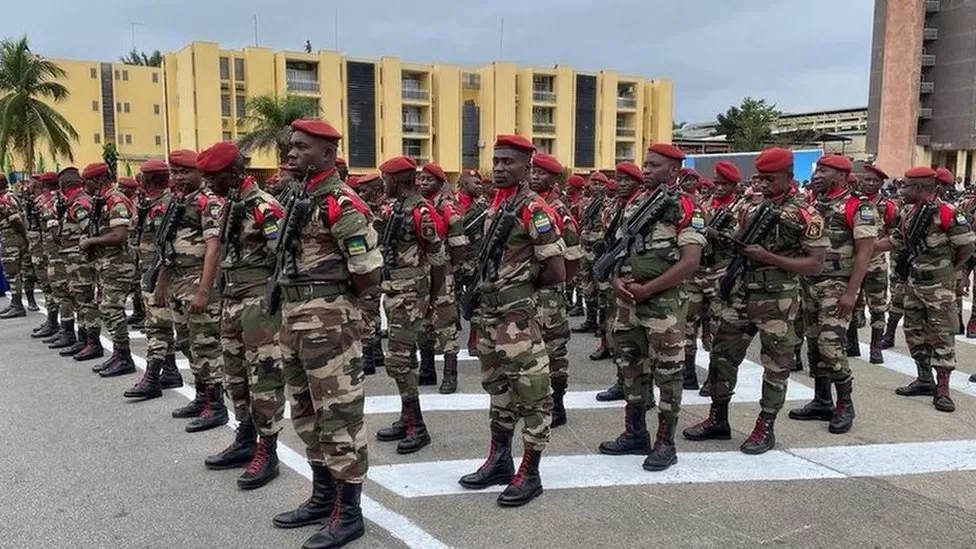
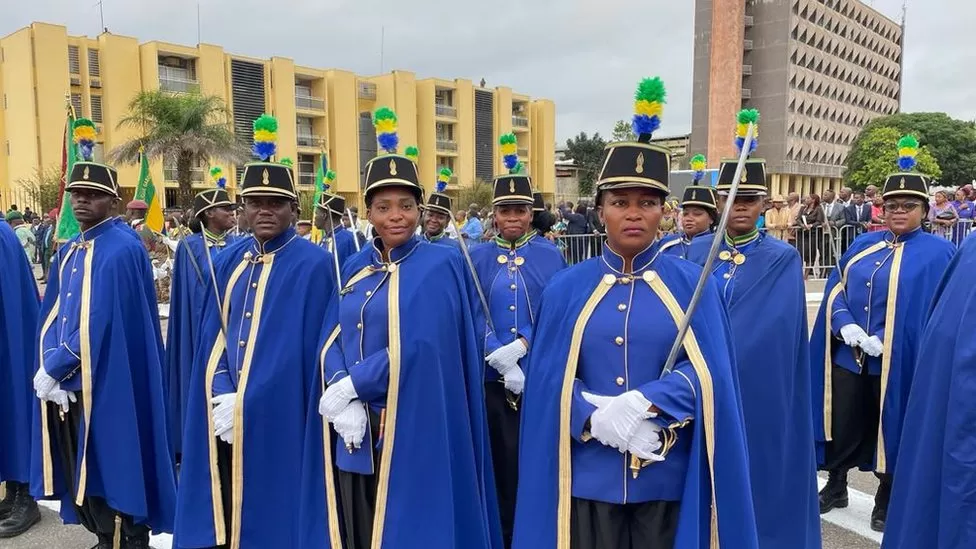
General Nguema, a former bodyguard of Omar Bongo, swiftly assumed the role of a transitional leader. He was inaugurated as interim president during Monday’s ceremony, accompanied by a military parade and enthusiastic cheers from his civilian supporters.
Before taking office, Nguema granted approval for the reopening of Gabon’s borders and engaged with political leaders to discuss reform and the potential transitional period, as reported by local media.
The duration of General Nguema’s tenure remains uncertain. He has previously emphasized the country’s cautious approach to a new election, aiming to avoid a repetition of past mistakes.
In response, a coalition of opposition parties in Gabon has called upon the junta to resume the electoral process and complete the vote count, potentially opening the path to victory for opposition leader Albert Ondo Ossa, the runner-up in the annulled election.
It is worth noting that several former French colonies, including Mali, Guinea, Burkina Faso, Chad, Niger, Tunisia, and now Gabon, have experienced nine coups in the past three years, undermining democratic progress in these nations. Many Gabonese citizens view Ali Bongo’s removal as a significant victory in the oil-rich but economically challenged state.
In response to concerns raised by the Ghana Hotels Association and the Ghana Progressive Hotels Association regarding the tariff adjustments implemented by the Public Regulatory and Utilities Commission (PURC) in February, the Minister of Tourism, Arts and Culture, Dr. Ibrahim Awal, has stated that the price increase was preferable to experiencing a power crisis, commonly known as “dumsor.”
He clarified that the tariff adjustment was aimed at aiding the restoration of the country’s macroeconomic stability.
Dr. Awal, while urging participants in the hospitality industry to understand the situation, said,
“For four years, we did not increase tariffs. It is only now that we are facing some economic challenges and working to restore macroeconomic stability. Once we do that, it will be better than dumsor’.”
“Let’s not forget what happened before we came to power. Before 2017, we know what happened. We don’t want to go back to dumsor. Dumsor is devastating. Bear with us, we know that slowly we will stabilize the economy and this tariff adjustment will abate,” he added.
In February of this year, water and energy rates increased by 167%.
The Ghana Hotels Association and the Ghana Progressive Hotels Association petitioned PURC as a result of the increase.
In a similar spirit, Akwasi Agyeman, CEO of the Ghana Tourism Authority, announced that a meeting with hoteliers would be convened to address their concerns.
However, he asserted that some of these tariffs need to be reviewed if hotels are to run properly and efficiently.
“But we are also mindful of the fact that they say an expensive electricity is better than no electricity. So let’s see how we work together to resolve it,” the GTA CEO stated.
African heads of state have convened in Kenya for the inaugural Africa Climate Summit, focusing on the continent’s strategy to address climate change.
This gathering in Nairobi marks a historic event in Africa and seeks to formulate a unified plan to be presented to global leaders during the upcoming COP 28 United Nations climate summit later this year.
During the three-day summit, attendees will explore a novel financing approach to support governments in their efforts to mitigate carbon emissions.
Kenyan President William Ruto emphasized that Africa should actively contribute to combating global warming rather than merely being impacted by it.
“For a very long time we have looked at this as a problem. It is time we flipped and looked at it from the other side,” he told delegates at the opening of the meeting.
“There are opportunities, immense opportunities as well. And that is why we are not here to catalogue grievances and list problems, we are here to scrutinise ideas, assess perspectives, so that we can unlock solutions.”
African nations suffer from some of the greatest effects of climate change despite being among its smallest contributors.
France’s Foreign Minister has reaffirmed her country’s commitment to retaining troops in Niger and maintaining the presence of the French ambassador.
The military leadership in Niamey had previously demanded the expulsion of the French ambassador more than a week ago.
Catherine Colonna, speaking to Le Monde newspaper, emphasized that Ambassador Sylvain Itte represented France to Niger’s “legitimate authorities,” referring to the deposed government of President Mohamed Bazoum.
This statement came amid ongoing protests in Niamey, where tens of thousands of demonstrators have taken to the streets for the third consecutive day near a French military base. These demonstrators continue to call for France, their former colonial power, to withdraw its troops.
France currently has approximately 1,500 soldiers stationed in Niger, primarily to assist in addressing the Islamist insurgency in the Sahel region.
In the aftermath of battling liver and colon cancer, Heath Streak, a former Zimbabwe cricket captain and the country’s all-time leading wicket-taker, passed away at the age of 49.
“In the early hours of this morning, Sunday, 3 September, the greatest love of my life and the father of my beautiful children, was carried to be with the angels from his home where he wished to spend his last days surrounded by his family and closest loved ones,” his wife, Nadine Streak, wrote on social media.
As reported by ESPN, Heath Streak had been undergoing specialized treatment at a hospital in Johannesburg, South Africa, on a biweekly basis since May.
Heath Streak, renowned for his remarkable fast bowling skills and batting prowess, played a pivotal role in Zimbabwean cricket teams that competed competitively against the sport’s larger nations in the late 1990s and early 2000s.
Unfortunately, his cricketing career came to an ignominious end in 2021 when he was banned for eight years for violating the International Cricket Council (ICC) Anti-Corruption Code.
In May of this year, it was announced that Streak was seriously ill, and in August, reports of his demise circulated following a social media post by former teammate Henry Olonga. Streak swiftly clarified that he was still alive, but not before numerous former teammates and opponents paid tribute to him.
Streak, one of Zimbabwe’s cricketing greats, was a robust fast bowler capable of extracting movement from challenging pitches. He amassed 236 wickets at an average of 28.14 in 65 Test matches, a record unmatched by any other Zimbabwean cricketer who took more than 80 Test wickets. He also contributed 1,990 runs with an average of 22.35 in Tests, including his highest score of 127 (not out) against the West Indies in Harare in 2003.
In One-Day Internationals (ODIs), Streak claimed 237 wickets, surpassing his closest competitor by 104 wickets. He also scored 2,901 runs in 187 ODIs.
Among his memorable Test performances, his six for 73 against India, even as they posted a formidable total of 366, stands out. This performance led Zimbabwe to a 10-wicket victory in Harare in 2005.
Streak served two terms as Zimbabwe’s captain, with a brief interruption due to a dispute with Zimbabwe Cricket in 2001 regarding pay and racial quota issues. One of his notable captaincy achievements was Zimbabwe’s first Test victory against India in Harare in 2001. He took seven wickets in the match, including dismissing Sachin Tendulkar in both innings and contributing 40 runs in the first innings.
Streak led Zimbabwe in 68 ODIs, including the 2003 World Cup in Southern Africa, where Zimbabwe advanced to the Super Six stage. His tenure as captain ended in 2004 during a period of upheaval in Zimbabwe Cricket when 15 leading players rebelled against the administration, leading to a temporary loss of Test-playing status for the weakened team.
He retired from international cricket in 2005. Subsequently, after his final stint as a player with the English county Warwickshire, he embarked on a coaching career. His coaching journey included roles in Bangladesh, India, England, and Scotland.
Streak served as Zimbabwe’s head coach from 2016 to 2018, but he was dismissed from the position when the team failed to qualify for the 2019 World Cup.
In a significant setback to his career, Streak received an eight-year ban from the ICC for sharing information and player contact details with an undisclosed individual in India. He accepted responsibility for his actions but maintained that he had never been involved in match-fixing.
Registering a business in Ghana is a straightforward process designed to accommodate small businesses and aspiring entrepreneurs seeking legal operation within the country.
This registration can be accomplished through two methods: in-person or online.
The Registrar-General’s Department is the authoritative body responsible for business registration in Ghana.
For the in-person registration process, business proprietors are required to present three potential business or company names for a name availability search. This step ensures that the chosen business name is unique and not already in use.
Following a successful name search, entrepreneurs are expected to either purchase or download the requisite Entity Registration form.
Next, complete the Entity Form, obtain a ticket based on the Entity Type, and wait for your ticket number to be called.
Submit the completed form, along with all necessary supporting documents, for verification by the inspector.
A payment slip will be generated for the required fee.
Once payment is made, the documents are left at the in-house bank for further processing. During this stage, a decision is made to either Approve, Query, or Reject the registration.
If the application is approved, a certificate and other relevant documents will be issued to complete the registration process.
For online business registration in Ghana, follow these simple steps:
Conduct a Name Search to check the availability of your desired Business Name by clicking on the “Name Search” option.
Download the registration forms corresponding to the Entity Type you intend to register.
Print out the forms, complete them, sign, and scan both the forms and any required supporting documents.
Create a user account on the portal by registering with your details. Once registered, log in using the provided username and password generated during account creation.
On the welcome page, select the “Entity Registration” link. Then, click on the “Entity Registration” link once more on the left pane.
If the name has not been reserved previously, click the “Create New” button. If the business name has been reserved, select “Create from Name Reservation.”
Choose the entity type from the dropdown menu, enter the business name under “Entity Name,” and click the “Proceed” button.
Follow the provided instructions to input data and upload the scanned and signed documents.
Make the required payment online by clicking on the “Make Payment Online” link.
The status of your registration will be communicated via SMS.
After approval is granted, click on the “Certificate” link to either save or print the certificate and other associated documents.
By following these steps, you can complete your business registration process conveniently and efficiently online.
Subscriptions for treasury billsin the government’s most recent auction on September 1, 2023, have experienced a significant surge.
The government not only met but exceeded its target of GH¢3.064 billion, raising a total of GH¢3.53 billion as interest rates continue to climb.
Over the past two weeks, the government has consistently exceeded its treasury bill targets, even though they were set at ambitious levels.
All bids submitted in this week’s auction were accepted, resulting in an oversubscription of GH¢462.83 million above the target amount. Presently, interest rates range between 27.36% and 31.65%.
However, the ongoing rise in interest rates may pose challenges for the government in meeting its maturity obligations.
Specifically, interest rates for the 91-day and 182-day bills have increased to 27.02% and 28.6%, respectively.
For the 364-day bills, interest rates have surged to 31.65%.
In terms of subscription, the 91-day bill received a total of GH¢2.63 billion, while GH¢650.63 billion was accepted for the 182-day bill, and GH¢237.08 million was accepted for the 364-day bills.
Looking ahead, the government’s target for the next auction has been adjusted to GH¢2.601 billion.
Senior Lecturer at the University of Ghana Business School (UGBS), Professor Kobby Mensah, has clarified that the impact ofcoup d’états on businesses varies depending on the specific circumstances.
He explained that the consequences differ across different sectors of the economy, with some businesses experiencing significant negative effects, while others may encounter minimal or no disruptions.
Professor Kobby Mensah pointed out that the tourism sector tends to be the most adversely affected since potential patrons and foreign tourists tend to stay away due to security concerns associated with military takeovers.
In contrast, he noted that the extractive industry often thrives during coups because many western mining companies seize the opportunity to exploit the situation and potentially gain advantages at the expense of the affected countries.
“There are different types of coups and their implications on businesses, but it must be noted that not every business suffers during coup d’etats.
“The tourism sector suffers the most during coup d’etats, but the extractive sector for instance doesn’t, and this is because some of the Western countries particularly the unscrupulous ones use it as an opportunity to siphon the country’s natural mineral resources at cheap prices,” he was quoted by norvanreport.com.
The marketing lecturer stated that the uncertainties that come with coups do not support the business climate, hence coups surely have a lasting influence on the economy.
Torrential rain-triggered flooding in western Algeria has resulted in the tragic loss of eight lives, according to the country’s civil defense service. The incidents occurred in Tlemcen and El-Bayadh on Saturday.
The victims, comprising two women and two men aged between 22 and 73, were discovered on Sunday in Tlemcen, situated in the northwest region. They had been inside a vehicle swept away when the Oued Ed-Dali river overflowed its banks.
In El Bayadh, located in the southwest, three women and a man tragically lost their lives as their car was carried away by floodwaters from the Oued Chadli river.
Algeria’s meteorological office had issued a warning bulletin on Friday, predicting rainstorms in the northern part of the country starting on Saturday.
Her Excellency Martine Moreau, the Canadian High Commissioner to Ghana, has emphasized the size of recent trade between Canada and Africa, which has surpassed $15 billion.
She claims that more than 100 Canadian businesses are engaged in mining operations in Africa.
Even while investments have expanded gradually at a rate of 12.5% annually over the last four years, she claimed that this illustrates the strength of trade links between the continent and Canada.
“Last year total trading merchandise between Canada and Africa surpassed 15 billion dollars representing a 56 percent increase over pre-pandemic figures. Canadian investments have over the last four years been increasing at an annual rate of 12.5 percent. More than 100 Canadian-owned companies conduct mining operations in Africa,” she was quoted by citinewsroom.com.
According to H.E. Moreau, if the African Continental Free Trade Area’s existing framework is used effectively, trade and investment volumes might be increased as soon as possible.
“While we continue to benefit from exiting opportunities, we also recognize the tremendous economic potential to be realized through the implementation of the Africa Continental Free Trade Agreement,” she opined.
In light of this, she expressed her unwavering support for the idea while pointing out that the AfCFTA will also benefit other countries outside of Africa by opening up new prospects for commerce.
“We strongly support this agreement as it will establish a continent-wide rule-based and investment regime that will afford significant opportunities not only for African nations themselves but also for external trading partners including Canada,” she noted.
The leader of the military junta in Gabon, Gen Brice Oligui Nguema, is scheduled to take the oath of office as the interim president of the nation.
The army ousted President Ali Bongo on Wednesday shortly after he was declared the winner of a disputed election.
Supporters of the military regime in Gabon are expected to attend Gen Nguema’s inauguration.
While the atmosphere in the country remains calm, security measures have been heightened.
Interestingly, Gen Nguema is reported to be the cousin of the deposed President Ali Bongo, raising questions about whether this signifies a true end to the 55-year-long Bongo era.
Gen Nguema has emphasized that he will not hastily transition the country back to civilian rule, aiming to avoid repeating past errors.
However, the opposition has voiced concerns that the military is displaying no intention of relinquishing power.
Gabon becomes the sixth Francophone country in the last three years to come under military rule, highlighting challenges for former colonial power France in maintaining its influence on the continent.
Zimbabwe’s President Emmerson Mnangagwa is on the brink of taking his oath for a second term in office.
Official results indicate that he secured nearly 53% of the vote in the presidential election, a contest that international observers deemed to have fallen short of democratic standards.
His Zanu-PF party also triumphed in the parliamentary vote, securing close to two-thirds of the seats.
Nelson Chamisa, Mr. Mnangagwa’s primary rival, has called for fresh elections and has until Monday to request the court to overturn the election results.
Preparations for Mr. Mnangagwa’s inauguration are in full swing, with several heads of state confirming their attendance. The government remains confident that the ceremony will proceed as planned.
However, an official revealed to the BBC that if the opposition submits their court application before the inauguration, the event could be called off.
Mr. Chamisa’s Citizens’ Coalition for Change has denounced Mr. Mnangagwa’s election victory as fraudulent, although they have not officially confirmed whether they will pursue legal action.
The scathing criticism from international observers regarding the election results is likely to impede Mr. Mnangagwa’s efforts for increased international re-engagement and economic recovery. Nonetheless, the presence of certain regional leaders is expected to provide a semblance of legitimacy to his leadership.
Her story has been recounted numerous times over many years, that of an African woman who endured suffering and exploitation due to a condition she had, known as steatopygia.
Sarah Baartman, originally named Saartje, possessed exceedingly prominent buttocks and hips as a result of steatopygia, a condition characterized by the accumulation of substantial fat in the buttocks.
Born into a Khoikhoi family in South Africa’s Eastern Cape in 1789, she hailed from a nomadic Khoikhoi community. Tragedy struck early in her life as her mother passed away when she was just two years old, and her father, a cattle driver, died during her adolescence.
As a teenager, Sarah entered into marriage with a fellow Khoikhoi from her tribe, only to witness his tragic murder by his slave master, a Dutch colonist. To survive, Sarah turned to domestic service in Cape Town, South Africa, but it was during this period that her tribulations began.
According to a feature in a BBC magazine, Sarah’s life took a fateful turn when she was discovered by a British surgeon named William Dunlop. This occurred after one of her employers, Hendrik Cesars, for whom she worked as a domestic worker, began exhibiting her at a city hospital in Cape Town, all in exchange for money.
Intrigued by her unique condition and physique, Dunlop made promises to take her abroad to work as an “indentured servant” and urged her to sign a contract to that effect. Despite her illiteracy, Baartman signed the contract, only realizing later that it had been intended for a different purpose.
She was subsequently dispatched to Europe, where she became a featured attraction in numerous British freak shows, particularly in London, at a venue located in Piccadilly Circus. There, she was given the stage name “Hottentot Venus,” a term that is now considered derogatory but was then used in Dutch to describe the Khoikhoi and San peoples, collectively known as the Khoisan.
The BBC magazine feature reveals that during her exhibitions, Sarah Baartman was dressed in skin-tight, flesh-colored attire, adorned with beads and feathers. She would smoke a pipe while performing on stage, singing and dancing. At times, affluent members of the audience would pay for private viewings in their homes, where guests were permitted to touch her.
It is reported that she was occasionally suspended in a cage on stage, subject to poking, prodding, and unwanted touching.
In 1807, after the British Empire had abolished the slave trade, campaigners who were appalled by Baartman’s mistreatment in London took legal action against her employers, accusing them of holding her against her will. Regrettably, when called to testify in court, she sided with her employers. This has since raised questions about whether she had been coerced into the exhibitions against her will or if she had faced threats of repercussions for testifying against her employers in court.
Following the campaigners’ unsuccessful lawsuit, Sarah went to Paris with Hendrik Cesars, where she was sold to an exhibitor named S. Réaux. During this period, she engaged in heavy drinking, smoking, and was allegedly subjected to prostitution.
She even consented to being studied and painted by certain scientists and artists, although she refused to appear completely nude before them, citing that it was beneath her dignity.
Baartman is believed to have passed away at the age of 26 due to an “inflammatory and eruptive disease,” which some sources speculate may have been a result of pneumonia, syphilis, or alcoholism. Her death occurred on December 29, 1815, yet her exhibition persisted.
According to the BBC, “The naturalist Georges Cuvier, who had danced with Baartman at one of Réaux’s gatherings, made a plaster cast of her body before conducting a dissection. He preserved her skeleton and preserved her brain and genitals, placing them in jars on display at Paris’s Museum of Man. These remains remained publicly exhibited until 1974, a fact described as ‘grotesque’ by some.”
Following Nelson Mandela’s election as South Africa’s president in 1994, he requested the repatriation of Baartman’s remains and the plaster cast created by Cuvier.
Following the French government’s approval, Baartman’s remains were returned to South Africa in March 2002. One hundred and ninety-two (192) years after leaving for Europe, her remains were interred in Hankey, Eastern Cape province, in August of the same year.
On September 1, 2000, Nokia, the renowned mobile phone manufacturer, introduced one of its iconic phone models, the Nokia 3310, as a successor to the 3210 model.
This phone, which holds a special place in the memories of countless users, achieved remarkable global sales, exceeding 126 million units. In Ghana, the Nokia 3310 continues to evoke strong nostalgia among many users.
The phone’s enduring popularity can be attributed to its distinctive features, including an array of unique ringtones and an exceptionally long-lasting battery life. Users formed strong attachments to the device due to its robust build, efficient phonebook, and convenient speed dialing functionality.
Among the notable features of the Nokia 3310 was its monochrome graphical screen, which could display a variety of screensavers. The phone also boasted the capacity to store up to 250 phone numbers and their corresponding names, allowing users to assign specific ringtones to individual contacts.
Users had the option to choose from a range of ringtones, and the phone even offered a composer function for creating custom tones. Additionally, it provided entertainment through games such as Snake II and Space Impact, among others.
The Nokia 3310 facilitated comprehensive SMS text messaging, featuring T9 predictive text input and basic graphic picture messaging capabilities. The phone also included additional utilities like a clock, stopwatch, calculator, and calendar.
Although obtaining this phone may pose a challenge in today’s market, its iconic status ensures it will forever hold a cherished place in the memories of its numerous users.
The Minister of Roads and Highways, Kwasi Amoako-Atta, has announced that Cabinet has granted approval for the establishment of a unified roads management body. As reported by GraphicOnline, this new entity, named the Ghana National Roads Authority, will bring together the Ghana Highway Authority, the Departments of Urban Roads, and Feeder Roads.
Addressing participants at a stakeholders consultative forum held in Koforidua, located in the Eastern Region, the Roads Minister outlined that the primary role of the Authority will encompass road planning, development, maintenance, and overall management throughout the country.
He further elucidated that the consolidation of the Ghana Highway Authority, the Departments of Urban Roads, and Feeder Roads is designed to streamline operations, enhance coordination, and optimize investments within the nation’s road sector.
“The lack of coordination and separate mandates of the agencies had led to duplicated efforts, insufficient maintenance, inconsistent standards and project delays,” Amoako-Atta stressed.
However, he pointed out that the Attorney-General’s Office and the Roads Ministry have suggested drafting a bill, which would be sent to Cabinet and Parliament for review and approval.
“When this bill is approved the management of trunk roads, arterial roads, collector roads and district and inter-district roads would be placed under the jurisdiction of the National Roads Authority” he clarified.
The Minister of Roads added that numerous assemblies would be in charge of overseeing the internal road system inside districts and municipalities.
Seth Kwame Acheampong, the Eastern Regional Minister, praised the decision and asserted that it will improve the abilities of the various authorities in the road sector while fostering the necessary synergy and teamwork.
“For us as stakeholders and end users, in any reform, our primary expectation is to have an improved way of doing business which should reflect on the condition of the roads in our communities,” the Regional Minister said.
Representatives from the Local Government Services and the Civil Service, Ghana Highways Authority, Public Services Commission, and the Chairman and Ranking Member of the Parliamentary Select Committee on Roads and Transport were present at the consultative forum.
The Interbank forex rates published by the Bank of Ghana today, September 4, 2023, indicate that the Ghana Cedi is trading against the US dollarwith a buying price of 11.0152 and a selling price of 11.0262.
At a forex bureau located in Accra, the dollar commands a buying rate of 11.40 and a selling rate of 11.65.
In relation to the Pound Sterling, the Cedi is exchanging at a buying price of 13.8681 and a selling price of 13.8842.
At an Accra-based forex bureau, the Pound Sterling is bought at a rate of 14.50 and sold at a rate of 15.00.
As for the Euro, it is currently quoted with a buying price of 11.8785 and a selling price of 11.8902.
At a forex bureau in Accra, the Euro is purchased at a rate of 12.20 and sold at a rate of 12.70.
The South African Rand is trading with a buying price of 0.5853 and a selling price of 0.5853.
At a forex bureau in Accra, the South African Rand is acquired at a rate of 0.35 and disposed of at a rate of 0.95.
Regarding the Nigerian Naira, it registers a buying price of 68.0374 and a selling price of 69.4148.
At a forex bureau in Accra, the Nigerian Naira is procured at a rate of 11.00 Naira for every 1 Cedi and sold at a rate of 16.00 Naira for every 1 Cedi.
Lastly, for the CFA, it is trading at a buying price of 55.1679 and a selling price of 55.2222.
At a forex bureau in Accra, the CFA is exchanged at a rate of 16.50 CFA for every 1 Cedi when buying and 20.50 CFA for every 1 Cedi when selling.
Note that these rates may be different at a forex bureau near you. Our forex bureau rates are provided by Afriswap Bureau De Change in Osu, Accra.
Our forex bureau rates are provided by Afriswap Bureau De Change in Osu, Accra.
The near-term outlook for the Cedi suggests it will maintain a moderate level of stability in its exchange rates with its major trading partners.
This stability is expected to result from a combination of factors, including recent coupon payments for new bonds, decreased import demands, and foreign exchange allocations to the oil sector, which will help counter the increased demand from corporate entities.
Since the beginning of the year, the Cedi has experienced an approximate 22 percent depreciation against the U.S. dollar. However, it has managed to remain relatively stable, fluctuating within a range of 11.01 to 11.45 against the dollar in recent weeks.
Databank Research has highlighted a recent surge in corporate demand for foreign exchange in the past two weeks, temporarily straining liquidity in the market.
Nevertheless, the Cedi closed stronger, partly attributed to the Federal Reserve’s announcement of a cautious policy rate hike, which helped alleviate market uncertainties.
“While we envisage an increase in corporate demand and a possible offshore FX repatriation from the coupon payments on the new bonds, we expect the GH¢ to gain a cushion from this week’s BDCs FX auction,” Databank’s analysts stated.
According to GCB Capital, an observant player in the market, the current rally of the US dollar and tightening liquidity conditions in the foreign exchange market pose a certain level of risk to the stability of the Cedi. Nonetheless, they hold an optimistic view concerning fiscal improvements and the recent coupon payment, which are expected to enhance market sentiment.
Approximately two weeks ago, the Treasury successfully fulfilled its commitment by settling the first coupon payment of around GH¢2.4 billion for new bonds under the Domestic Debt Exchange Programme. This development alleviated concerns about the government’s ability to meet its financial obligations. Notably, a significant portion of this coupon payment, amounting to GH¢5.37 million, was allocated to individual bondholders.
GCB Capital, however, cautioned that the Cedi remains susceptible to short-term shocks if liquidity conditions in the foreign exchange market continue to remain tight. Their research arm emphasized, “The Cedi could face precarious conditions in the coming week if FX liquidity remains constrained.”
Meanwhile, analysts at Constant Capital believe that the Cedi is benefiting from reduced imports and diminished demand pressure for foreign exchange. Currently, a substantial trade surplus has bolstered the nation’s current account, resulting in a surplus of US$849 million in the first half of the year, equivalent to 1.1 percent of Gross Domestic Product (GDP). This improvement includes a significant year-on-year decline of 13.5 percent in imports compared to the same period last year when there was a deficit of 1.5 percent of GDP.
Analysts at Constant Capital anticipate certain expected foreign exchange inflows by the year-end, including a US$600 million disbursement from the International Monetary Fund (IMF) and funds from the cocoa syndicated facility.
“The local currency seems to be benefitting from reduced imports and lower demand pressure for FX, ahead of certain expected FX inflows toward year-end – the US$600million IMF disbursement and COCOBOD debt syndication.”
AZA Finance, which forecast that the cedi will remain comparatively stable because of a consistent supply of forex to meet retail demands, agreed with this general opinion.
A potential flagbearer for the New Patriotic Party (NPP), Kennedy Ohene Agyapong, reportedly received a request from the party’s leadership to apologize to President Nana Addo Dankwa Akufo-Addo for his threat to engage in a “showdown.”
The Assin Central Member of Parliament flatly declined the request when he stood before the party’s disciplinary committee, according to Me Man Nti host Adakabre Frimpong Manso of Neat FM.
“As a party you could not take a firm position to say Kwame Akompreko did this and that so this.
“He came before you and as elders you were asking him to go and beg the president. So if he goes to beg the president the party would not have any other initiative to take?
“Now you watch him tell it to your face that he won’t beg the president today or tomorrow. Is that not disgraceful to you?” he stated on the September 1 2023, edition of his show.
Amidst the fervor of the party’s Special Delegates Election on August 26, 2023, Kennedy Ohene Agyapong, a hopeful candidate for the flagbearer position, was captured on video launching a vehement verbal attack aimed at President Nana Addo Dankwa Akufo-Addo and Vice President Dr. Mahamudu Bawumia, who is also in contention for the flagbearer role.
Kennedy Agyapong’s outburst stemmed from allegations of threats and intimidation against his campaign representatives, leading him to issue a stern warning of a potential “showdown” with the President and Vice President.
Following this incident, he was summoned and subjected to a comprehensive five-hour inquiry by the party’s disciplinary committee.
As of now, the party has not disclosed any details of the outcome of the meeting to the public.
In the meantime, the NPP has scheduled November 4, 2023, as the date for its national delegates congress, during which they will select their flagbearer for the upcoming 2024 presidential election.
77 security men allegedly leaving Jubilee House for their various units has been refuted by the President’s Office.
Since the start of the Akufo-Addo administration, no security officers have ever deserted their posts, according to a statement issued by the Director of Communication at the Presidency, Eugene Arhin.
“The Office of the President would like to put on record that at no point in the tenure of Nana Addo Dankwa Akufo-Addo, from 2017 till date have seventy-seven security personnel left Jubilee House to their respective units.
“Indeed, no security officer has left Jubilee House because of “unfair treatment” meted out to them at the seat of the presidency,” Mr. Arhin stated.
In a bid to tackle the challenge of limited access to financing in the agribusiness sector, a new initiative called the ‘Affordable Agricultural Financing for Resilient Rural Development (AAFORD)’ project has been launched.
This substantial project, valued at US$69 million, has a primary objective: to enhance agricultural productivity, boost incomes, and strengthen the resilience of smallholder farmers, particularly vulnerable women and youth.
These objectives will be realized through the expansion of access to cost-effective financing, enabling better marketing connections, the adoption of sustainable and climate-smart practices, skill development, and the advancement of enterprises within agricultural value chains.
AAFORD will implement a targeted inclusive policy that aims to harness the untapped potential of women and youth to bolster family resilience. This initiative is led by the Ministry of Finance and is financially supported by the International Fund for Agricultural Development (IFAD).
The project will employ a value chain partnership approach, concentrating on fostering profitable connections between agricultural producers, buyers, and collaborating financial institutions. It will promote business models that facilitate linkages between households and buyers (nucleus farmers, processors, and aggregators), thereby increasing household incomes.
Partner financial institutions will benefit from agricultural credit guarantees, agricultural insurance initiatives, capacity-building in agricultural lending, and access to concessional credit funds and incentives from the AAFORD-supported Blended Finance Facility (BFF) to reduce the interest rates on agricultural loans.
The AAFORD project aims to directly serve approximately 75,000 impoverished rural households and indirectly benefit around 465,000 individuals within smallholder households. In total, over 540,000 rural individuals engaged in small-scale agriculture are expected to gain from this project. The project will focus on specific geographical regions, including the Northern, Savannah, North-East, Bono, Bono East, and Ahafo Regions.
The target crops encompass cassava, sorghum, maize, soybeans, millet, and groundnuts. Additionally, depending on opportunities, the project will also support vegetable value chains such as tomatoes, peppers, cabbage, carrots, and eggplants that are relevant to smallholders. High priority will also be given to import substitution crops like rice.
Dr. Amin Adams, the Deputy Minister of Finance, officially launched the project in Sunyani, the capital of the Bono Region. He praised AAFORD as a critical component of the government’s efforts to boost agricultural productivity and enhance the livelihoods of individuals involved in the value chain. Dr. Adams also highlighted the positive impact of previous government policies like ‘Planting for Food and Jobs,’ ‘Planting for Exports and Development (PERD),’ and ‘Ghana Incentive-based Risk Sharing System for Agricultural Lending (GIRSAL)’ in improving the agricultural sector and reducing poverty in rural areas. He extended his commendation to IFAD for its ongoing support of government programs aimed at agricultural sector development.
“Since 1980, IFAD’s interventions have supported a range of programmes in Ghana; focusing on areas such as agricultural productivity improvement, developing rural institutions, marketing through offtaker linkages, supporting access to finance, youth skills development and youth micro-enterprises. These interventions have led to the development of resilient livelihoods for the citizenry. We are grateful for your support and collaboration over the years in bringing a smile to the face of Ghanaian rural folk,” he said.
On September 1, 2023, a heated and confrontational exchange unfolded on Peace FM’s Kokrokoo between Kwesi Pratt Jnr, the Managing Editor of the Insight newspaper, and Yaw Adomako Baafi, a former Communications Director for the New Patriotic Party (NPP).
The intense debate centered around the contentious issue of justifying coups and the evolving positions of certain political figures on this matter.
The sparks flew when Kwesi Pratt asserted that some members of the NPP were now expressing disapproving views regarding coups, despite their past celebration of the 1966 coup in Ghana’s history.
In response, Adomako Baafi challenged Pratt’s claim, vehemently asserting that neither official NPP members nor the party itself had ever endorsed or supported coups. He called upon Pratt to substantiate his statement with concrete evidence.
Kwesi Pratt responded by urging Adomako Baafi to procure a copy of ‘The Stolen Verdict,’ a book in which he claimed the NPP justified the 1966 coup, and encouraged Baafi to read it to verify the accuracy of his claims.
Adomako Baafi remained resolute, asserting that the reference provided by Pratt did not align with the facts and vowed to present evidence to counter what he perceived as distortions by the seasoned journalist.
The conversation between the two characters went as follows:
Kwesi Pratt: In Ghana here, things have changed. Our brothers who justified the 1966 coup, today, because they are in government, they are saying all coups are not good. Is it now that they have realized that all coups are not good?
Adomako Baafi: Wofa Kwesi
Kwesi: Please, I beg you, time changes. Time passed, and whenever you talk about the 1966 coup, they claim that it is good because some coups are good. But now when you listen to them, they claim that all coups are not good.
Adomako: Don’t generalize it. As I am sitting here with you, Wofa Kwesi, I am an NPP member, and I was born into the party, of which I am very proud. I am saying that a coup in whatever form is not good, and our leaders have said so. So, if you sit here and neglect certain things and go by heresy, please, with all respect, NPP has never written a book that justifies any coup.
Kwesi Pratt: Masa, I have never said that.
Adomako Baafi: The distortions that some of you wrote about the 1966 coups and others, some of us are ever ready to set the records straight. But as it stands now, as a member representing the NPP, I am saying that a coup is never good. So, if you come and sit here and say things, please, I beg you that politics of fallacies shouldn’t be entertained, and let us be straightforward.
Kwesi Pratt: Professor Mike Ocquaye, did he condemn the 1966 coup? Go and read the ‘Stolen Verdict,’ an official document of the New Patriotic Party. They went on a demonstration regarding the 1966 coup. So, if today all of you have agreed to speak against all coups, let us take it that way.
Adomako Baafi: Uncle Pratt, this is a discussion. Mike Ocquaye’s issue that you are talking about, ‘The Stolen Verdict,’ for me, I have my documents. Let me show them to you. Kofi Awoonor is not an NPP member. His book, which he wrote to justify the coup, and Tawiah Adamafio, who was a CPP member, also justified the coup. I am coming to bring the documents for you to see.
Kwesi Pratt: Yaw, what I am saying is time has changed, and we have moved forward. Those who praised some coups, today are saying all coups are not good. May be it is because of modernity, but that is the truth. Some time back, some of us were praising the 1966 coup.
Last weekend, Vice President Dr. Mahamudu Bawumia graced the Manhyia Palace with his presence to partake in the celebration of Akwasidae alongside Otumfuo Osei Tutu II, the esteemed monarch of the Asante Kingdom. This memorable event unfolded on September 3, 2023.
Dr. Bawumia, adorned in the rich and vibrant traditional kente attire, was joined at the Manhyia Palace by a delegation that included several party officials.
During this significant gathering, the Vice President took the opportunity to convey his heartfelt appreciation for the blessings bestowed upon him by Otumfuo during the Party’s Super Delegates Conference, which had taken place on August 26. Dr. Bawumia openly acknowledged the pivotal role that Otumfuo’s blessings had played in securing his victory during the conference.
“I came in peace, and today being Akwasidae, I came for a visit and to celebrate with him (Otumfuo). Again, I came here initially to ask for his blessing when I was going to contest for the flagbearership of the NPP. He blessed me, and God also blessed his blessing, which materialized for me to win the contest on August 26, 2023.”
The Vice President made it clear that his journey was more than just one of thanks. In order to prepare for the NPP’s presidential elections’ final round, when he will compete against four other contenders, he expressed his need for Otumfuo’s ongoing blessings and prayers.
“We have another contest coming again on the 4th of November, where we are going to elect the flagbearer, and I still need his blessing. So, I came to ask for his blessing and inform him about it, that he may give me his blessings and show me the way to clinch victory. I thank you so much, and may God bless you.”
During the NPP Super Delegates Election held on August 26, 2023, Dr. Bawumia garnered a total of 629 votes, which constituted an impressive 68.15 percent of the overall votes cast. Following closely in second place was Kennedy Agyapong, the lawmaker representing Assin Central, who secured 132 votes, equivalent to 14.30 percent of the vote share. Alan Kyerematen occupied the third position with 95 votes, translating to 10.29 percent of the total.
Dr. Owusu Afriyie Akoto, on the other hand, secured the fourth position, amassing 36 votes, which accounted for 3.90 percent of the vote tally.
The upcoming final round, scheduled for November this year, will ultimately determine the official candidate of the NPP for the forthcoming presidential election, a crucial milestone in preparation for the 2024 general elections.
A member of the NPP’s communication team named Solomon Owusu has questioned the rationale for forming a parliamentary committee to look into a tape that was leaked and showed some senior police officers pleading with Bugri Naabu for help in removing the current Inspector-General of Police.
Owusu claims that the work of the committee is superfluous since Bugri Naabu, a former regional chairman of the party, and the senior officers involved lack the authority to remove Dampare from office.
Solomon Nkansah labeled Bugri Naabu as the major gossip in the NPP, whose specialty is creating rumors about people, during an appearance on Happy FM’s “Epa Hoa Daben?” program.
“If you know Bugri Naabu, he is the number one gossip. Bugri Naabu’s eyes hate to see money.
“In 2015, it was Bugri Naabu who claimed on tape that Paul Afoko and Kwabena Agyepong had received money and V8 vehicles from John Mahama. Bugri Naabu played a role in bringing down Kwabena Agyepong and Paul Afoko,” he stated.
Former NPP regional chairman Bugri Naabu recently made headlines after the media received the anti-Dampare audio.
Bugri Naabu testified before a parliamentary committee looking into the tape’s content and acknowledged that he had taped the conversation with the senior officials in order to provide it as proof to President Nana Addo Dankwa Akufo-Addo.
The senior police officers claimed, among other things, that Dr. Dampare’s removal is essential for the party to win the 2024 presidential election. One commissioner identified himself as a member of the NPP.
Ghana’s efforts to lead child internet safety initiatives have been compared to a shining example for Africa and the rest of the world.
Afrooz Kaviani Johnson, the global chief child protection specialist at UNICEF’s headquarters in New York, applauded Ghana for establishing a legal framework to safeguard the rights of Ghanaian children online.
“I am happy Ghana has been able to put the fundamental structures in place for public education, social welfare, and awareness creation on child online protection. We really do look to Ghana as a case study example,” she said.
Afrooz Kaviani Johnson, leading a team from UNICEF Ghana, praised the Cyber Security Authority (CSA) Management during their visit to Accra. As part of her visit, Johnson participated in a stakeholder consultative meeting concerning the development of a Legislative Instrument (L.I.) related to the Cybersecurity Act, 2020 (Act 1038), focusing on Child Online Protection.
Since 2016, Ghana has collaborated with UNICEF and other stakeholders to address Online Child Sexual Exploitation and Abuse (OCSEA) and integrate targeted interventions into the National Child Protection systems.
During their visit to the CSA, the UNICEF team engaged with civil society organizations and other relevant state institutions to contribute to the development of the Legislative Instrument.
Ms. Johnson commended Hon. Ursula Owusu Ekuful, the sector Minister, and Dr. Albert Antwi-Boasiako, the Director-General of the CSA, for their leadership in safeguarding children against harmful online content. She also highlighted their collaboration on child online protection and cybersecurity issues.
Johnson stressed the importance of protecting vulnerable children, who make up a significant portion of the population in many African countries, from consuming inappropriate online content.
Dr. Antwi-Boasiako acknowledged UNICEF’s support in Ghana’s cybersecurity efforts. He cited the significant progress Ghana has made in cybersecurity readiness, attributing it to UNICEF’s collaboration and support. He praised Mrs. Ursula Owusu-Ekuful, the Minister for Communications & Digitalisation, for her dedication to child protection, which led to the establishment of Child Online Protection systems in Ghana.
The Director-General proposed that the collaboration between the CSA and UNICEF be expanded and institutionalized in various areas, including awareness creation, research on child online protection, support for criminal justice responses, and victim support services.
He commended UNICEF for its humanitarian efforts and described the staff at UNICEF Ghana as “faithful servants and advocates of children in Ghana” for their dedication to child online protection.
Johnson was accompanied by Miho Yoshikawa, Hilda Mensah, Joyce Odame, and Benjamin Kobina Amoah Dadson from UNICEF Ghana Country Office during the visit.
According to Ukrainian President Volodymyr Zelenskyy, two more ships have passed via the “temporary” Black Sea shipping channel that has been in place since Russia withdrew from a UN-backed grain export agreement in July.
Zelenskyy didn’t mention which ships were participating or when their trip was complete.
Four vessels have now reportedly used the channel, according to officials, who reported on Friday that two more have cleared it.
Dmitry Medvedev, the former President and deputy chair of the Russian Security Council, announced that approximately 280,000 individuals have enlisted in Russia’s military as professional service members since the beginning of this year.
During his visit to Russia’s far east, Medvedev held meetings with local officials to discuss initiatives aimed at strengthening the country’s armed forces.
Medvedev stated, “According to the Ministry of Defence, since January 1, about 280,000 people have been accepted into the ranks of the Armed Forces on a contract basis,” which also includes reservists. These figures were reported by the state news agency TASS.
Russia has documented a string of drone attacks within its borders, including an assault on an airport situated hundreds of miles away from Ukraine. This attack resulted in at least two military cargo planes catching fire.
Despite Moscow’s consistent allegations that Ukraine is responsible for these drone strikes in recent months, Ukraine has not claimed responsibility. However, President Volodymyr Zelensky had previously characterized attacks on Russian territory as an “inevitable, natural, and entirely justifiable occurrence.”
How many drone attacks have there been in Russia?
BBC Verify has been continuously tracking reports of drone strikes in Russian media since the beginning of 2023. According to these reports, there have been over 190 suspected attacks in Russia and the Russian-annexed Crimea this year.
The overnight assaults on August 30th represent the most extensive series of attacks we have observed in a single day since the year began, with drones targeting at least six regions across Russia, ranging from the south to the north-west.
Among the targets was an airbase in the Russian city of Pskov, which, according to Ukraine’s military intelligence chief, was subjected to an attack originating from inside Russia. However, he did not specify the responsible party.
This strike resulted in at least two military planes catching fire, and a satellite image captured of Pskov Airport after the incident reveals one aircraft completely destroyed.
A suspected drone attack on 19 August left one of Russia’s flagship Tupolev Tu-22 bombers ablaze at an airbase south of St Petersburg, according to footage verified by the BBC.
In 2023 so far, drone attacks have been concentrated in the Bryansk, Belgorod and Kursk regions in Russia near the western border with Ukraine, as well as in Russian-annexed Crimea.
On August 23, three people were killed by a suspected drone attack in Belgorod, and five people were injured when a railway station was hit in Kursk region some days earlier, Russian officials say.
There have also been about a dozen sea drone attacks in 2023 on Russian targets in the Black Sea, including on naval bases and on the Crimean bridge.
Drone attacks on Moscow
Drones have reached the Moscow region, which is about 450km (280 miles) from the border with Ukraine.
There was a strike on a skyscraper under construction on 23 August and the Expo Centre exhibition complex in the capital several days earlier.
Image caption,A suspected Ukrainian drone hit Moscow’s Expo Centre in August, damaging an exhibition hall
Flights were diverted from Vnukovo International Airport in Moscow after a drone attack on 4 July and the airport briefly closed following drone attacks on 30 July and on 1 August.
Russia accused Ukraine of trying to kill President Vladimir Putin in an alleged attack on his residence in the Kremlin in Moscow on 3 May – Ukraine has denied this.
Social media reports that several recent attacks on Moscow have involved drones of the “Beaver” type – a long-range attack aircraft said to be recently manufactured by Ukraine.
Drone specialist Steve Wright, of the University of the West of England, cross-examined images of these aircraft against verified footage strikes on Moscow on 30 May.
He concluded the two examples are consistent in design and the Beaver was “most likely” used.
In February, a drone crashed about 100 km (62 miles) from Moscow, in what the local governor said was an attempt to target civilian infrastructure.
A picture of the wreckage appeared to be consistent with a UJ-22 – a type of drone manufactured by Ukraine.
Image caption,An image of what appears to show a Ukrainian manufactured UJ-22 drone
It has a range of 800km (497 miles) in autonomous flight. Its range under directly-controlled flight is much shorter.
Attacks on Russian infrastructure
Oil facilities, airfields and energy infrastructure have all been targeted in 2023.
We have identified at least nine reported drone attacks on oil depots. One of these was in Sevastopol, a major city in Crimea, which was hit on 29 April, destroying several of its oil tanks.
On 31 May, an oil refinery was set ablaze in Krasnodar Territory in southern Russia, about 200km (124 miles) from the Crimean border. The regional governor said it was probably caused by a drone.
Layla Guest, an analyst at Sibylline security consultancy, says: “Ukrainian forces will highly likely prioritise targeting oil refineries, as well as railway infrastructure and wider Russian logistics, to cause maximum disruption.”
How far can Ukraine’s drones fly?
Drones have been deployed by both sides in the conflict, with Russia using Iranian-made drones on targets in Ukraine.
Ukraine says it is rapidly increasing its production of drones as demand grows on the front line.
In terms of range, experts say drones launched from Ukraine could reach deep into Russian territory.
“Although Ukraine has not confirmed that its armed forces carried out the attacks [on Moscow], I think that the pre-emptive raids we have seen last year prove that Ukraine has the capability to launch long range attacks of that kind from within Ukrainian territory,” says David Cenciotti, editor of the Aviationist blog.
Drone specialist Steve Wright also said it was possible that a drone could hit the Kremlin having been launched from within Ukraine.
But he added: “My guess is that the drone was launched from far closer in than that, as this would avoid it having to run the gauntlet of much of Moscow’s defences.”
In April Ukraine’s Minister for Digital Transformation Mykhailo Fedorov boasted of a Ukrainian drone that “can fly from Kyiv to Moscow and back”.
Mr Cenciotti says: “Ukraine has made extensive use of several drones, with the Bayraktar TB2 drone emerging as the real star of the air war for Ukraine, inflicting heavy losses on Russian forces, some of those caught on tape and circulated online.”
Turkey has sold Bayraktar TB2 armed drones to Ukraine in recent months, while the Turkish manufacturer of the drones has donated to crowd-funding operations in support of Ukraine.