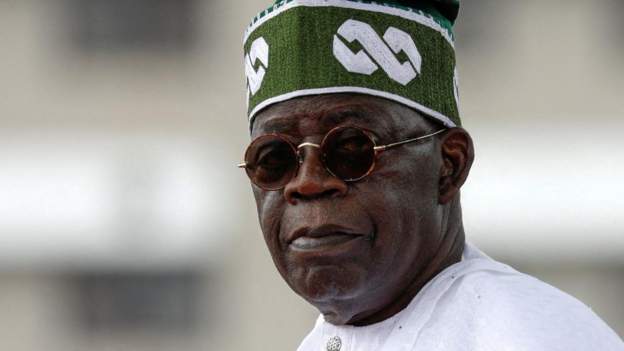
Fans of Ghanaian music icon, TiC, known in private life as Nana Kweku Okyere Duah, may be wondering what may be of their music idol as it’s been a while they heard from him on the airwaves.
Well, he has revealed that he is now managing his own business and playing ambassadorial roles.
“I now manage my Pizza business. I was recently made the ambassador for OA Pay (a money transfer App), and am making sure that all my followers will get to know about it,” he made this disclosure in a time of engagement with the media.
Commenting on his music career, the entrepreneur, mentioned that he has not relented on producing new songs to his fans.
“I am working on my new songs that will soon be out. Music is me, and I am music, thus I can bring out a song at any time. I have done music for a while so its not going to me a new thing for me,” the rapper expressed.
He released his maiden EP dubbed Mama Grace in 2019 at the Dansoman Asoredanho branch of his Gennex Pizza Restaurant and Grill.
The EP, had songs like, Love Me Now, Goro, Toli, Ditto, Nipa, Wori, and London Bridge which featured Zeal, Article Wan, Adina, Big Ghun, Samuel G and Awu from Cameroon.
Efia Odo received advise from renowned Kumawood actor Akrobeto in response to a statement she made about the kind of man she wants to date.
Actress and socialite Efia Odo stated that she wouldn’t want to date a man who isn’t already well-off. She made it clear that she wouldn’t even think about interacting with a man like that.
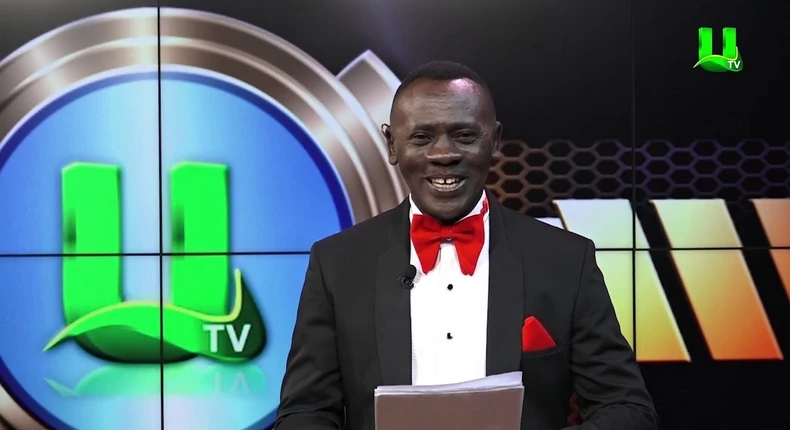
Akrobeto, during his Real News program on UTV, shared some wisdom with Efia Odo. He reminded her that the future is unpredictable, using the phrase “Nobody knows tomorrow.” He explained that someone who might not appear wealthy now could experience a positive change in their life within a few years.
Akrobeto used Efia Odo’s own journey as an example. He mentioned that she wasn’t widely known before, but as time passed, she became more recognizable. Similarly, he believes that a man who might be facing financial challenges today could achieve success in the future.
Drawing from his own life, Akrobeto revealed that he went through a similar situation. His girlfriend left him in the past for a wealthier footballer. However, he has since gained fame and recognition over time.
In simple terms, Akrobeto advised Efia Odo not to judge someone’s future solely based on their current financial status. He shared his personal experiences to illustrate that circumstances can change unexpectedly, highlighting the importance of keeping an open mind about people’s potential for success.
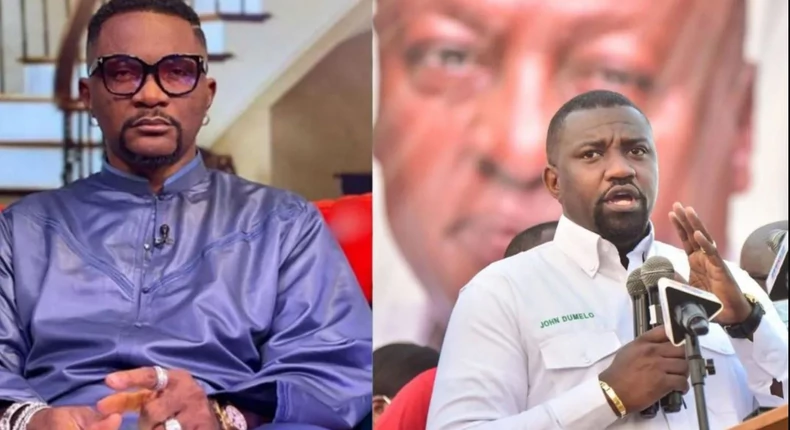
A politician and actor from Ghana, John Dumelo, has reacted to Mr. Logic’s remarks on his chances of winning the forthcoming elections.
Dumelo would experience another electoral setback, according to Mr. Logic’s forecast. Dumelo dismissed the prediction, pointing out that Mr. Logic is a member of the New Patriotic Party (NPP), which may have an impact on his opinions.
During an interview on TV3, Dumelo dismissed Mr. Logic’s views, saying, “I watched that video and you know I wouldn’t make logic out of what Mr. Logic is saying at all… I mean he is a sympathizer of the NPP, so I don’t expect anything different from what he is saying.”
Dumelo, who recently officially announced his candidacy for the position, highlighted the wide spectrum of political viewpoints. He emphasized that his followers and he have different viewpoints and that he is optimistic about his chances.
“Opinions are like music, everybody has them,” Dumelo said. “Some people will think I will win, some people will also think I will not win, and so that is his opinion.”
On a panel discussion, Mr. Logic had spoken his opinions and expressed disappointment about the resignation of a different contender.
He believed that the candidate had a better chance of winning than Dumelo. Mr. Logic stated, “If Fred Nuamah has backed down, I am disappointed with the entire system. I wanted Fred to win because, regarding John, I foresee another loss.”
Mr. Logic’s prediction was based on his research and the preferences of the people in the area.
However, Dumelo remains confident due to the support he received in the previous elections and the anticipated support in the upcoming one. He said, “I think that the over 45,000 people who will also vote for me bear a different opinion, that, yes indeed I can win and I will win.”
Dumelo is running as the National Democratic Congress (NDC) candidate for the Ayawaso West Wuogon Constituency in Accra.
Michy, a well-known socialite, actress, TV host, and musician, has voiced her complaints about the situation of the Musicians Union of Ghana (MUSIGA) at the moment.
When asked about how to revive MUSIGA during a guest appearance on the program “Ultimate Entertainment Records” on Ultimate 106.9 FM, Michy passionately argued that the day-to-day administration of the union should not be left to old men and old women but rather be given to young men and young women who have the energy to run the union.
“The old folks are old and they do not know the demands of modern-day music which is dominated by young folks so they aren’t fit to lead the current generation,” she said.
According to Michy, the older generation’s inclination towards adhering to practices from their era, even if they might not be relevant today, renders them unsuitable for leading the Union.
Established in December 1975, the Musicians Union of Ghana (MUSIGA) aimed to foster and safeguard Ghana’s culture by empowering local musicians to be self-sufficient, innovative, and diligent through education.
Unfortunately, the union has become entangled in numerous legal disputes and member grievances since the tenure of its former president, Bice Osei Kuffour, concluded in 2019.
Since Bessa Simons was appointed as acting president, the union has been unable to elect a permanent president.
The Ghana Extractive Industries Transparency Initiative (GHEITI) has strongly advocated for the inclusion of the Ghana National Petroleum Corporation (GNPC) in the Ghana Stock Exchange (GSE).
GHEITI has put forth the argument that having the state-owned oil company listed on the stock market would facilitate the generation of substantial capital, enhance its corporate governance framework, and ultimately support its goals as an independent operator and its aspirations for diversification.
As a globally recognized standard for enhancing transparency and accountability in the oil, gas, and mining sectors, GHEITI expressed confidence in its proposal to list the corporation on the GSE.
If taken into consideration, this move could potentially be the most pivotal step in transforming GNPC’s prospects and establishing it as a capable national oil company with an international reputation.
Dr. Steve Manteaw, GHEITI’s Co-chair, highlighted that the stringent accounting, auditing, and transparency standards required for stock market listing would address persistent issues like political intervention and excessive quasi-fiscal expenditures, among other challenges.
“We have done this before and we can do the same with GNPC. A similar situation occurred when SIC Insurance PLC was not making any gains and government at the time wanted to sell 70 percent to a strategic foreign investor – but CSOs kicked against it, asking for the company to get listed and that was done. The same thing happened with GOIL, and today the company is a market leader. So we have done it before and we can do it again,” he explained.
The proposal was made during a GHEITI workshop on the 2020 oil and gas, as well as mining sector reports held in Aburi, Eastern Region.
He added that the stock market remains the best route to getting the best out of the company without jeopardising the state’s interest in it as a strategic public entity in the upstream petroleum sector. The move will also position the GNPC to maximise returns from the country’s hydrocarbon resources.
Citing the Ghana Commercial Bank – now GCB Bank PLC – as another success from opening up the ownership of struggling state-owned firms for private participation, Dr. Manteaw said the lender’s marked turnaround is there for all to see.
Misplaced priority
The call for improved management of the GPNC is not new. The Public Interest and Accountability Committee (PIAC) – a public watchdog over the use and management of petroleum revenues, in its 2022 annual report highlighted that GNPC engaged in several quasi-fiscal expenditures such as road construction, Astro-turf constructions and funding traditional festivities among others, to the detriment of its core mandate.
As a result, in 2022 GNPC’s expenditure on various line items such as capital projects and administration witnessed a significant increase of over 200 percent.
Since 2014, GNPC has spent over US$124.66million on constructing roads in the western corridor enclave, which is a primary responsibility of the central government and not a national oil company PIAC said.
GNPC’s financial standalone by 2026 is impossible
It will be recalled that in September 2022 Dr. Manteaw expressed worry over GNPC’s preparedness to be weaned off government support by 2026 as stipulated by its law, insisting that the company was not putting in place enough measures to that effect.
Government, as required under the Petroleum Revenue Management Act (PRMA), Act 815 section 7 (3), is to provide financial support to the corporation for 15 years from the date of promulgating the Act in 2011 – which ends in 2026.
However, with just about three years to reach the stated timeline, the corporation has over the years not managed its operations and revenues efficiently to be able to make a profit or even pay a dividend to the state.
Against this backdrop, Dr. Manteaw is concerned that if stringent measures are not taken to get the company listed on the stock market – to ultimately ensure accountability and rid it of political interference immediately – its standalone operator ambition for 2026 will remain a fantasy.
The Economic Community of West African States (ECOWAS) has stated that countries in the West African sub-region are suffering the most from the political unrest in the area.
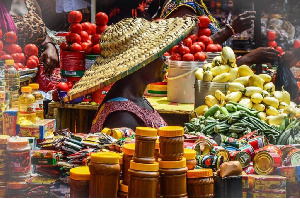
The union said that between 2021 and 2023, there had been five coup d’etats in the four ECOWAS member states, which had led to an unmanageable rise in the price of market goods such onions and tomatoes, which are both heavily produced in Niger and Burkina Faso, respectively.
“As a result of insecurity and instability, economic activities in the region have been disrupted”, Ambassador Mrs. Perpetua O. Dufu, the Coordinating Director, Multilateral and International Organisation of the Ministry of Foreign Affairs and Regional Integration stated.
She addressed the inaugural session of a one-day awareness workshop about ECOWAS protocols on Monday in Sunyani.
Ambassador Dufu also highlighted the troubling humanitarian situation, expressing concern about the potential increase in refugees entering the country and the disruption of travel by both land and air throughout the region.
The Ministry of Foreign Affairs and Regional Integration, in collaboration with Media Response, a non-governmental organization dedicated to promoting regional integration in the sub-region, coordinated the workshop.
Its purpose was to educate governmental and non-governmental entities on the ECOWAS protocols and their advantages.
Ambassador Dufu emphasized that without peace and stability, economic prosperity couldn’t be achieved or maintained in the sub-region due to widespread conflict and instability. She noted that regional integration was closely connected to maintaining peace.
She noted that the region was currently facing significant challenges, with many states experiencing insecurity, conflict, violent extremism, and even unconstitutional changes of government, leading to political instability in some areas.
The Niger coup on July 26, 2023, further highlighted the necessity of protecting democracy and upholding democratic principles within the sub-region.
Madam Justina Owusu-Banahene, the Bono Regional Minister, remarked that the ECOWAS protocols offered a roadmap for addressing issues like border security and terrorism in the region.
“By collaborating with agencies of neighbouring countries, in our case La Cote d’Ivoire and regional partners, we can enhance intelligence-sharing, joint patrols and coordinated efforts to counteract potential threats,” she said.
The Regional Minister instructed the members of the Municipal and District Security Councils (MUSECs/DISECs), the Regional Security Council (REGSEC), and the Regional Security Committee to familiarize themselves with the protocols in order to help identify and prevent security threats in the region.
As the second pricing window of August arrives, some oil marketing companies are raising petroleum prices, just as the Chamber of Petroleum Consumers predicted.
Total Energies has upped the price of petrol from ¢12.95 to ¢13.50 per litre. Diesel has also risen to ¢13.90 per litre from the previous ¢12.95.
Goil has similarly increased the prices of petrol and diesel to ¢13.50 and ¢13.90 per litre respectively.
Other oil marketing companies are expected to follow suit and adjust their prices.
Earlier, the Chamber of Petroleum Consumers (COPEC) had foreseen an increase in petroleum product prices.
COPEC’s Executive Secretary, Duncan Amoah, stated that petrol and diesel might go up by 5.7%.
Currently, petrol and diesel are being sold at GH¢12.95. COPEC further mentioned that the price of LPG will likely increase by about 11.9% during the same period.
He said: “Indications are that Petrol and Diesel pump prices are likely to increase averagely by about 5.7% over the current mean price of GHS12.45/L across the country whilst LPG prices increase by about 11.9%.
“The following basic information forms the basis of projections for the coming window, that; prices of finished products on the international market have shot up by an average of around 11% for both petrol and diesel.”
He added that “Crude price has been increased by 6.79% from the mean price of $80.67/barrel to $86.15/barrel, even though the forex or Dollar exchange rate has relatively decreased from a previous average of GHS11.7185 to GHS11.4538 (-2.26%) per $1.”
According to Duncan Amoah, gasoline would cost GH12.97 per liter, while diesel is anticipated to cost GH13.43 per liter.
While the 14.5 kg LPG cylinder is anticipated to be sold at GH 178.36 inside the window, LPG is anticipated to be sold at GH 12.30 per kg.
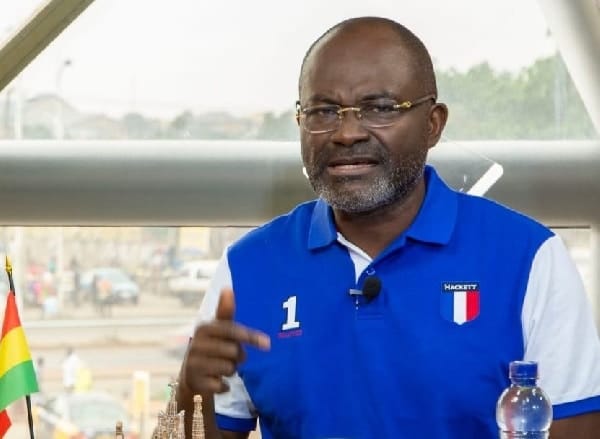
Member of parliament for Assin Central, Kennedy Agyapong, has accused some banks of disclosing account information for some ministers of state and other authorities.
He thought that would help to explain why some people chose to store their significant sums of cash at home.
In an interview with Roland Walker on TV3 on August 16, Mr. Agyapong remarked, “We cannot run away from it.
The issue is the previous Minister of Sanitation and Water Resources, Cecilia Dapaa, who stored enormous amounts of money at her apartment. Although I am aware that there may be criticism, God knows that I stated the truth.
“When Victoria Hammah said If ‘I make one million dollars’, look at the backlash Ghanains gave. The one who said if I make got this back then what about the one who has it?
He added that because the banks are aware of his company, they wouldn’t question him about sending money to the bank, but other people will be interrogated if they do the same.
“The banks leak information that this minister has this amount of money at home,” he alleged.
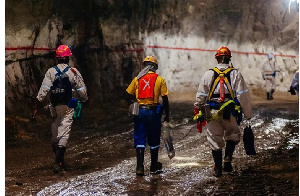
Walking along an underground tunnel at the South Deep gold mine are miners wearing safety gear.
According to the Catholic Church, it is guiding a class-action case through the legal system on behalf of coal miners with lung disease against mining firms in South Africa.
Lawyers submitted documents to South Africa’s High Court on Tuesday, according to the Southern African Bishops Conference on Wednesday.
Representing the miners is Richard Spoors, an attorney renowned for his successful history of securing compensation in similar instances.
Initiated on behalf of 17 current and former mine workers, this lawsuit is directed at major mining entities: BHP, its subsidiary South32, and South Africa’s Seriti. According to Dasantha Pillay, a lawyer at Spoors’s law firm, who spoke to the Agence France-Presse news agency, the case seeks redress for individuals who have toiled for these corporations since 1965 and who have suffered from lung diseases. The suit also includes family members of workers who succumbed to illnesses triggered by coal dust.
As of now, the mentioned companies have not yet responded to AFP’s inquiry for comment.
The church has revealed that it instigated and facilitated this lawsuit subsequent to being approached by mine workers seeking assistance.
Coal stands as a cornerstone of South Africa’s economy, employing nearly 100,000 individuals and contributing to 80 percent of electricity generation. This industry is predominantly concentrated in the eastern Mpumalanga region, an area Greenpeace, an environmental advocacy group, identifies as having some of the most polluted air worldwide.
The collective legal action alleges that despite being aware of the hazards faced by coal miners, the implicated companies neglected to provide sufficient training, proper equipment, and a secure working environment for their workforce.
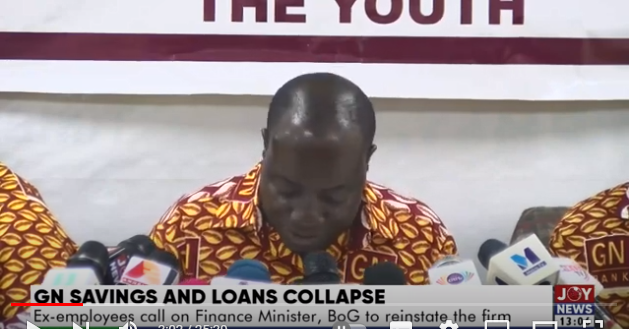
Concerned ex-employers of GN Savings And Loans Bank have appealed to government to issue an executive order for the Governor of Bank of Ghana, Dr Ernest Addison to reinstate the firm.
Speaking at a press conference to commemorate 4 years of the license revocation, the convenor of the group, Kofi Fosu said, the move will restore lost jobs and strengthen the jeopardized economy.
“Life after the revocation of GN license has been terrible nightmare for majority of the employees. Most ex-staff have remained jobless as a result of the limited job opportunities in the country as well as the stigmatization associated with the revocation of licence.”
Mr. Ofosu explained that it is imperative for them to get rid of the stigma that is likely to influence other employers to deny them job opportunities.
He added that the revocation of the license has had an adverse effect on their pension.
“Majority of the ex-employees are unable to make contributions towards their pensions for the last 4 years since revocation.”
The Bank of Ghana revoked the licences of twenty-three (23) insolvent savings and loans companies and finance house companies (see Annex 1) on 16th August, 2019.
These actions were taken pursuant to Section 123 (1) of the Banks and Specialised Deposit-Taking Institutions Act, 2016 (Act 930), which requires the Bank of Ghana to revoke the licence of a Bank or Specialised Deposit-Taking Institution (SDI) where the Bank of Ghana determines that the institution is insolvent.
The revocation of the licences of these institutions became necessary because they are insolvent even after a reasonable period within which the Bank of Ghana has engaged with them in the hope that they would be recapitalized by their shareholders to return them to solvency.
Below are the list of Banks that were closed down by BoG;
1 Accent Financial Services Ltd. Finance House 2 Adom Savings and Loans Ltd. Savings and Loans Company 3 AllTime Finance Ltd. Finance House 4 Alpha Capital Savings and Loans Ltd. Savings and Loans Company 5 ASN Financial Services Ltd. Savings and Loans Company 6 CDH Savings and Loans Ltd. Savings and Loans Company 7 Commerz Savings and Loans Ltd. Savings and Loans Company 8 Crest Finance House Ltd. Finance House 9 Dream Finance Company Ltd. Finance House 10 Express Savings and Loans Company Ltd. Savings and Loans Company 11 First African Savings & Loans Company Ltd. Savings and Loans Company 12 First Allied Savings and Loans Co. Ltd. Savings and Loans Company 13 First Ghana Savings and Loans Co. Ltd. Savings and Loans Company 14 FirstTrust Savings and Loans Ltd. Savings and Loans Company 15 Global Access Savings and Loans Company Ltd. Savings and Loans Company 16 GN Savings and Loans Ltd. Savings and Loans Company 17 Ideal Finance Ltd. Finance House 18 IFS Financial Services Ltd. Finance House 19 Legacy Capital Savings and Loans Ltd. Savings and Loans Company 20 Midland Savings and Loans Company Ltd. Savings and Loans Company 21 Sterling Financial Services Ltd. Finance House 22 Unicredit Savings and Loans Ltd. Savings and Loans Company 23 Women’s World Banking Savings and Loans Co. Ltd.
A Kenyan senator has been apprehended in connection with a scholarship scandal.
Jackson Mandago, along with three others, faces a total of 11 charges, encompassing accusations of theft and misuse of authority.
Allegedly, Mandago participated in a scheme that purportedly conspired to embezzle approximately 1.1 billion Kenyan shillings (equivalent to $7.6 million or £5.9 million). These funds were originally intended to facilitate higher education opportunities for Kenyan students in Finland and Canada.
Local media reports have indicated that numerous students who had made payments for overseas education were left stranded within Kenya due to these purported actions. For those who had already commenced studies abroad, the situation posed the risk of homelessness, expulsion, and deportation as the county government ceased disbursements for accommodation and tuition.
The allegations come to light during a period when Mr. Mandago was serving as a governor.
It has been noted that Mr. Mandago has previously denied any misappropriation of the funds in question, as reported by Kenya’s Star newspaper.
According to an additional report, Mr. Mandago, along with the incumbent Uasin Gishu county governor, has undertaken an agreement to facilitate refunds for the affected individuals.
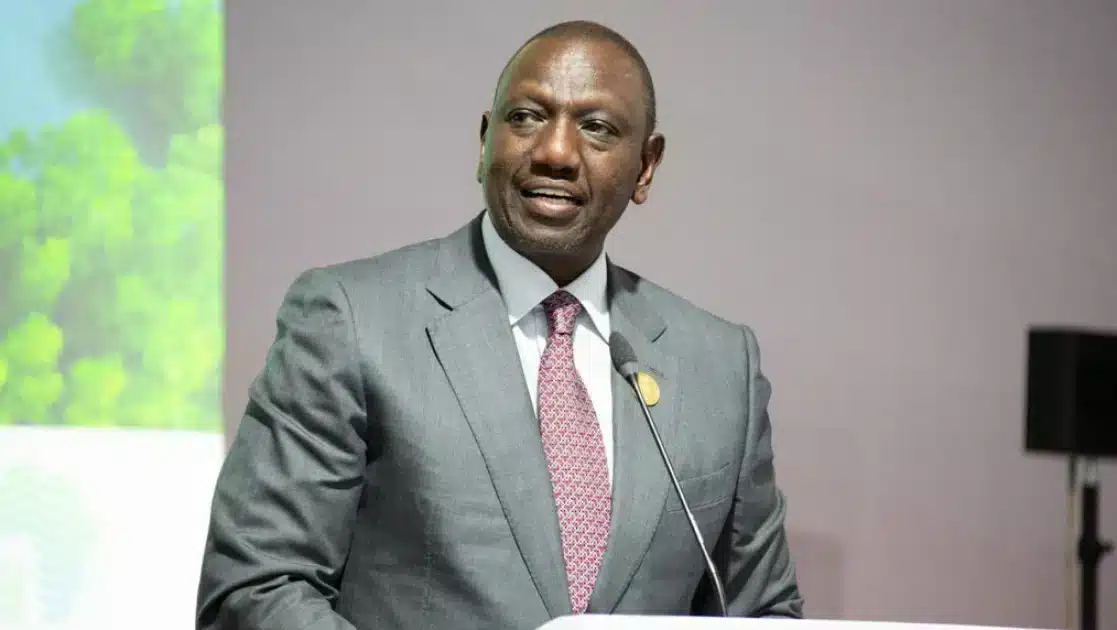
The scandal’s perpetrators have been warned to promptly return the funds for the Finland and Canada Overseas Education Program under penalty of “trouble” by President William Ruto, who also made a statement on the subject.
He declared that he would provide local scholarships to individuals affected once the investigations were completed.
General Secretary of the People’s National Convention (PNC), Janet Nabila has strongly asserted that some Ghanaians are encouraging housemaids to steal from their masters.
Her comment comes on the back of Cecilia Dapaah’s theft case involving a housemaid who stole a part of an outrageous amount kept in her home.
In a time of media engagement, the PNC secretary said she is expecting Ghanaians to first hold their horses and wait for the final verdict from The Special Prosecutor and Attorney-General before they put up any reaction.
Madam Nabila has painfully disclosed that there is a roaming narrative by a section of Ghanaians urging housemaids to steal money from their masters.
“Unfortunately, Some Ghanaians are already speculating accusations on Cecilia Dapaah and calling her a thief. To the point that some Ghanaians are urging house helps to steal monies kept by their masters at home. “All because of of Cecilia Dapaah. Christians and Muslims inclisive, pushing for housemaids to steal from their masters,” she expressed.
On August 14, 2023, the People’s National Convention (PNC) issued a call to civil society organizations (CSOs), political parties, the media, and the general public, urging them to exercise caution and prudence in their statements regarding the controversy involving the former Minister for Sanitation and Water Resources, Cecilia Dapaah.
Cecilia Dapaah, currently under investigation by the Office of the Special Prosecutor, tendered her resignation amidst allegations that certain individuals, including her domestic staff, were involved in a conspiracy to pilfer US$1 million, £300,000, as well as other assets like Kente fabric and jewelry belonging to her family, from her residence in Abelemkpe, Accra.
In a released statement, the PNC emphasized that the discourse within the media concerning this matter insinuates that Dapaah has engaged in unlawful activities. However, the PNC contends that such accusations infringe upon the constitutionally protected rights of the former minister, as she is being labeled as a wrongdoer by various entities, despite the absence of any court verdict indicating her guilt in a criminal act.
“Despite our claims that there are state institutions in place to deal with situations of this sort, we pollute these institutions by believing rumours, which only serves to further alienate women from politics,” parts of the statement is quoted.
A representative of the Gaming Committee within the Ghana Revenue Authority (GRA), Spio Abaidoo, has indicated that the government could potentially yield approximately GH¢400 million in revenue from the recently implemented gaming tax.
This novel tax imposition involves a 10 percent charge on earnings derived from bets and lotto victories, and the deductions will be executed directly at the source.
In an interview with Citi News, Spio Abaidoo elaborated that, “they are the withholding agent by law of the Commissioner General.
So, they will withhold and pay same to the Commissioner General on the 15th of every month. The amount since 2021 was around 400, so it was suggested that it also includes the gross gaining revenues from the entities. We are looking at something that is close to more than 400 million.”
On Tuesday, August 15, 2023, the Ghana Revenue Authority (GRA) began implementing the 10% withholding tax on all gross gaming profits.
The entity in charge of collecting taxes indicated that the new approach was in keeping with a change made to Act 1094, the Income Tax Act 2023 (No. 2) at the time.
You may remember that the government announced plans to impose taxes on all winnings from gambling, gaming, and lotteries in April of this year.
Many Ghanaians who participated in sports betting criticized the new levy harshly on social media.
A contender for the flagbearer position in the New Patriotic Party (NPP), Kennedy Agyapong has expressed his commitment to include individuals in the informal sector within the tax payment framework.
He has outlined this initiative as part of a comprehensive strategy aimed at broadening the scope of the country’s tax collection efforts.
During an appearance on Citi TV’s “Face to Face” program, Kennedy Agyapong elaborated that individuals operating in the informal sector, such as artisans, often earn higher monthly incomes than their counterparts in office jobs.
To substantiate his point, he provided an example from his own experience. He mentioned that a mason working at his construction site in Tema earns GH¢150 per day, resulting in a monthly income of around GH¢4,000. Comparatively, a university graduate employed at Oman FM and Kencity Media receives a monthly salary of about GH¢2,700.
Kennedy Agyapong highlighted the disparity where employees of organizations like Oman FM and Kencity Media are subject to taxation, while those involved in artisanal professions such as masonry are not.
To address this discrepancy, Kennedy Agyapong proposed a solution whereby every artisan and worker in Ghana would be required to register, obtaining a license and a unique pin number. This approach would enable their inclusion in the tax system, ultimately contributing to the nation’s revenue generation efforts.
He said, “My policy on taxes is that taxes will be reduced and expanded and what I mean by reduce is that taxes in this country are so high but only a few people are paying taxes.”
“I am a pragmatic person and I have the experience. I am a business person and I am fortunate to have employed educated people, uneducated people, and artisans and I can tell you that artisans make more money than some educated people and this is clear in my construction site in Tema where a mason makes about GH¢150 a day which translates to close to GH¢4000 a month and graduate at Oman and Kencity makes between GH¢2,700 and is taxed in addition but the mason is not taxed,” he added.
The businessman further said, “When I am given the opportunity to become president, every artisan, everybody working in this country will have to register to have a license and a pin number so that we can tax them and when the tax base is expanded, we then reduce taxes.”
A former President of the Chartered Institute of Taxation Ghana and a Fellow of the Institute of Chartered Accountants Ghana, Mike Kofi Afflu, has lodged a formal request with the Auditor-General to initiate an investigation into the perplexing transfer of GH¢52.5 billion to an undisclosed account during the year 2020.
Afflu has brought attention to a letter dated October 5, 2020, sent by the Audit Service to the Managing Director of GCB Bank Plc.
This letter, addressed to the Auditor-General, prompted the bank to provide an explanation regarding the substantial sum of GH¢52.5 billion that had been transferred from the bank to an account of unknown origin.
In his petition, which bears the date August 11, 2023, and is directed to the Chairman of the Public Accounts Committee of Parliament, with copies furnished to GhanaWeb, Afflu pointedly voiced his concern over the lack of any elucidation offered by the Auditor-General to the taxpayers of Ghana.
He inquired about the specific whereabouts of the transferred funds, the authorized source of the transfer, the destination account’s details, and any correlated issues.
Afflu’s apprehension extends to the exchange rate between USD and GHS for the month of October 2020, which averaged 5.77522.
Based on this exchange rate, the sum of GH¢52.5 billion would correspond to approximately US$9,090,783 (approximately $9.1 billion).
According to him, “If this GH¢52.5 billion (from GRA Account) had been transferred to the Bank of Ghana as mandated by Law, Ghana would not have gone to the International Monetary Fund (IMF) for the bailout of $3 billion.”
“I am therefore requesting the Public Accounts Committee of Parliament of which you are the Chairman, to invite the Auditor-General of Ghana to provide the necessary explanation to your committee and Ghanaians as a whole,” the petition noted.
“We want to know who withdrew that amount of money from the GCB Bank Plc and for what,” he concluded.
In the Alemão favela complex in Rio de Janeiro, moviegoers ventured to watch the latest Barbie film and unexpectedly came across a local figure affectionately referred to as the “Black Barbie of the Complexo do Alemão.”
Anne Beatriz dos Santos, recognized by the alias Anne Belize, has become an inspiration for young girls to embrace their identity by portraying a Black Barbie. Her actions aim to counter the perception that the iconic dolls are exclusively depicted with fair skin and straight hair.
Through diligent efforts, Anne’s mother, Vanessa, managed to locate a Black Barbie doll after an extensive search. This unique discovery became a meaningful birthday gift for Anne, accompanied by a tailor-made dress resembling the attire of her newfound doll.
_“As she was born I saw the need of her to accept herself. When I was younger I wanted to be white, to change my hair because I didn’t see myself represented, I thought that beauty only existed with light skin. So I saw the need to pass this to her so she could love herself the way she is,”_expressed Vanessa dos Santos, Anne’s mother.
Vanessa took some photos of her daughter in the favela and was so pleased with the results that she made a Barbie-themed notebook cover for Anne.
At school, it became popular right away, and friends urged her to make more covers.
Anne wants to be a model and actor to empower other girls and has a developing social media following.
“I’m very happy that some mothers send messages to me saying that their children are accepting their hair, are allowing them to be full because they saw me on social media. Some friends of mine are also accepting their full hair, I’m very happy with that,” she said.
With around 1.2 million viewers on opening day, the Barbie movie has the second-largest opening day audience in Brazil since 2014.
Zimbabwean authorities have reported the apprehension of 40 members affiliated with the primary opposition party on grounds of obstructing traffic and inciting disorder during a campaign event on Tuesday. This occurrence transpired just a week before the national elections are scheduled to take place.
In anticipation of the forthcoming elections, slated for August 23, tensions are mounting within this southern African nation. Analysts foresee a tense atmosphere due to an increased crackdown on dissent and apprehensions about potential vote manipulation.
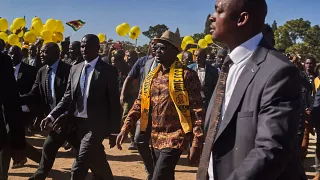
During the campaign event held on Tuesday in a southwestern suburb of the capital city Harare, the opposition party Citizens’ Coalition for Change (CCC) encountered interference from law enforcement, leading to the disruption of their supporters, as reported by party spokeswoman Fadzayi Mahere.
The police have officially confirmed that they took into custody 40 activists associated with the CCC. The authorities assert that the party initially communicated its intention to conduct a rally but subsequently deviated from the prearranged location.
The group “went on a car rally procession” in a nearby area, and stopped at a traffic light “openly blocking traffic”, police said, adding that CCC supporters “started chanting party slogans and singing”.
Social media users posted video of a packed junction of people wearing the yellow uniforms of the CCC, some of them were crammed within the bed of a small truck.
The opposition has long alleged that it was unfairly singled out for attention by the government in the run-up to the election, with its members being detained and numerous CCC activities being halted.
A report by Human Rights Watch this month said the upcoming ballot will be held under a “seriously flawed electoral process” that does not meet global standards for freedom and fairness.
It accused police of “partisan conduct” and of using “intimidation and violence against the opposition”.
In the presidential election next week, President Emmerson Mnangagwa, 80, of the ZANU-PF, who has led the country since its independence in 1980, is running for re-election.
Nelson Chamisa, a preacher and CCC leader who is 45 years old, is his biggest rival.
The civilian prime minister appointed by Niger’s junta, Ali Mahaman Lamine Zeine, along with two other members of the ruling military council, embarked on a visit to Chad on Tuesday to engage in discussions with interim President Gen Mahamat Idriss Déby.
Mr. Zeine, recognized as the diplomatic representative of the military administration, conveyed that his country was presently under a “transitional” government and restated the junta’s willingness to engage in dialogue.
However, he emphasized that the junta would engage in discussions solely with “partners” who uphold his nation’s sovereignty.
Chadian President Déby has been actively attempting to mediate between the Niger junta and the ousted government of President Mohamed Bazoum.
Chad has also declared its non-involvement in any military actions directed against the leaders of the Niger coup.
Concurrently, the heads of the armed forces from the Economic Community of West African States (ECOWAS) are set to convene in Accra, the capital of Ghana, on Thursday and Friday to deliberate on the situation in Niger.
These military leaders reportedly plan to strategize a course of action for potential military intervention in Niger, aiming to restore power to Mr. Bazoum.
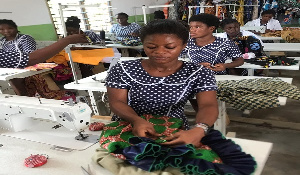
Beneficiaries of the garment and textile module would be hired based on merit, according to Alhaji Ibrahim Bashiru, the Youth Employment Agency’s (YEA) deputy chief executive officer in charge of operations.
He emphasized that only those with the necessary talents would be given the opportunity to work; no one would be chosen based on political affiliations.
He claimed during an appearance on the Asaase Breakfast Show that the creation of jobs for young people will enhance their quality of life and advance the economy.
“It is not the creation of jobs for political parties. It is the creation of jobs for young people in this country and the overall effect is how you can improve upon your lives; how you can contribute significantly to the growth of this country,” Alhaji Bashiru stated.
He added that, “I think that at this point in time, this is skills training and I can state emphatically without mincing words that under no circumstances will someone be considered because of party affiliations.”
This module was launched after the apparel and clothing sector worked with the youngsters Employment Agency to teach prospective unemployed youngsters the necessary skills to become qualified dressmakers and tailors.
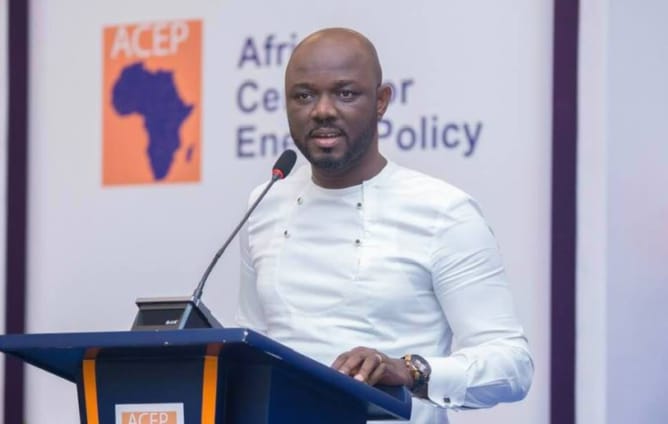
Executive Director of the Africa Centre for Energy Policy (ACEP), Benjamin Boakye, has opposed assertions put forward by private legal practitioner Gabby Asare Otchere Asare-Darko concerning the contentious Agyapa Royalties deal.
Gabby, in a Twitter post on August 15, criticized Civil Society Organizations (CSOs) for pursuing the gold transaction agreement to the ECOWAS Court and subsequently remaining silent after the Court determined the deal was not corrupt.
Responding to Gabby’s statement, Benjamin Boakye emphasized that not all CSOs opposing the Agyapa deal had presented their arguments before the ECOWAS Court.
He further suggested that the ECOWAS Court would not have known that “the same lawyers that cooked the MIIF Act were the lawyers behind Agyapa”.
“Parliament that passed the MIIF act could not anticipate the trickery in the eventual sale of 49% of royalty,” Benjamin Boakye added.
See Ben Boakye’s response to Gabby below:
In the year 2020, the Ghanaian government put forth a proposition aimed at generating funds through the issuance of shares from a company named Agyapa Royalties Limited on the London Stock Exchange.
This proposal was met with widespread criticism from civil society groups and the opposition, who contended that the deal was shrouded in secrecy and corruption, asserting that it would provide a means for politicians to amass wealth while detrimentally affecting the country.
Subsequently, later in the same year, veteran journalist Kweku Baako confirmed that Gabby’s firm had played the role of transaction advisors to the government in the ultimately unsuccessful deal.
Baako further clarified that a UK-based law firm acted as the primary advisors for the deal, and Africa Legal Associates operated in the capacity of working for this law firm.
“It is not true that Gabby’s firm got US$2 million from the deal. It is not true that his firm is a beneficiary of US$2 million. It’s not even up to US$105,000. It is the main transaction advisor that paid Gabby. It is about US$103,000. It is not US$2 million”.
1. It's not every CSO against Agyapa that was in court. 2. The court would not know that the same lawyers that cooked the MIIF Act were the lawyers behind Agyapa. 3. Parliament that passed the MIIF act could not anticipate the trickery in the eventual sale of 49% of royalty https://t.co/h8sUkZfObJ
4. You were selling 49% of gold royalties forever, valued at $500m. 5. Since the aborted efforts, Ghana has made more than $500m for the share you were selling forever. 6. There ars about 5 pipeline projects that would’ve been part of the transaction to benefit the investors.
It's a brave thing to do it for the country and resist the annexers. TOR’s MD preferred to exit, even if they won't prefer resignation. Still dignifying. @BBSimons
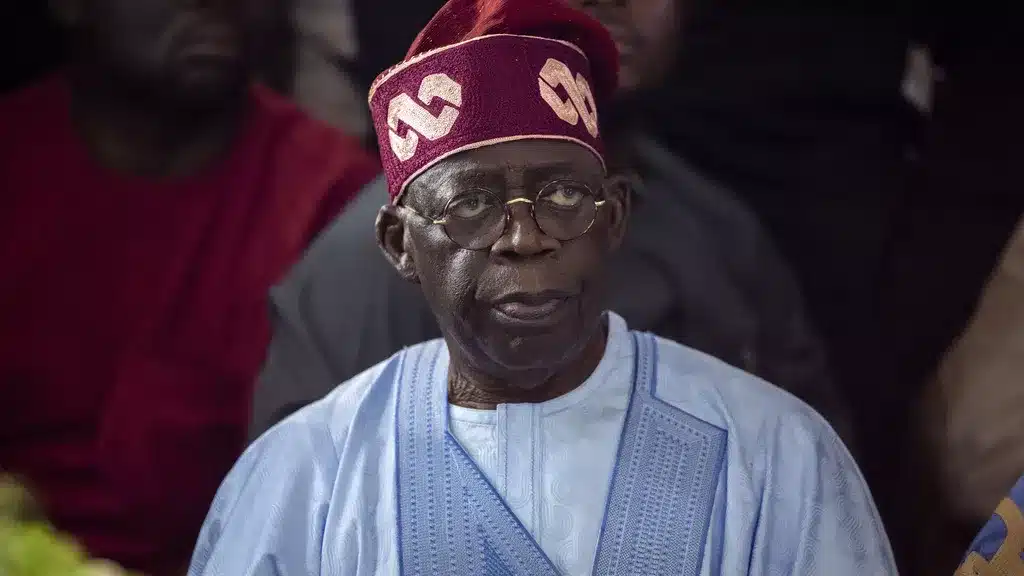
Nigeria’s President, Bola Tinubu, has provided reassurance to the nation’s citizens, confirming that the existing petrol price will remain unchanged as there is “no intention to raise fuel prices at present.”
This affirmation comes in response to warnings issued by certain oil marketers, predicting a potential third increase in petrol prices since President Tinubu’s assumption of office in late May. These warnings were attributed to Nigeria’s ongoing foreign exchange challenges.
However, President Tinubu’s spokesperson, Ajuri Ngelale, conveyed to BBC News that both Mr. Tinubu and industry stakeholders are firmly convinced that they can uphold the current pricing structure without making any adjustments.
“Reversing our deregulation policy by swiftly cleaning up existing inefficiencies within the midstream and downstream petroleum sector”.
Similarly, Nigeria’s state oil company, NNPC, posted a statement online, explaining that “we do not have the intention to increase our pump prices as widely speculated”.
Since the government harmonised the exchange rates, the naira has continued to plunge on the foreign currency market, driving up the price of getting petroleum to customers.
Nigerians have been dealing with rising food prices and higher transportation costs due to high inflation rates since the elimination of the gasoline subsidy.
The Youth in Afforestation, a part of the Forestry Commission and operating under the Ministry of Lands and Natural Resources, has issued a strict one-month deadline to the government, demanding the prompt settlement of their outstanding allowances spanning over a year.
This group has accused the government of displaying satisfaction in the achievements of the tree planting initiative, all the while failing to fulfill its obligation of disbursing their entitled allowances.
In a press release shared with GhanaWeb, the Youth in Afforestation revealed that they have successfully planted over 67 million trees across the nation since the commencement of the program in 2018.
They lamented the elevated cost of living, underscoring that some members have been compelled to borrow money merely to cover their work-related expenses.
“We the Youth In Afforestation (YIA) under the Forestry Commission, Ministry of Lands and Minerals Resources are demanding our unpaid allowance for over one year and four months from the government and we are giving the government up to this month of August to clear all allowances due us,” part of the release read.
“We were over 60,000 when we began the Youth In Afforestation (YIA) program introduced by the government in 2018 under the leadership of late Hon. Kwaku Owusu Afriyie popularly known as Sir John, since the program started we have planted over 67million trees across the country,” it added.
The Youth in Afforestation (YIA) are demanding the settlement of their outstanding unpaid allowances spanning one year and four months, with a deadline set for the end of August.
As members of the Youth in Afforestation (YIA) program under the oversight of the Forestry Commission and the Ministry of Lands and Minerals Resources, we are urging the government to promptly address our grievances concerning the overdue allowances that have accumulated over the course of more than a year and four months. We hereby give the government until the conclusion of August to ensure the full disbursement of all the allowances owed to us.
When we initially embraced the Youth in Afforestation (YIA) initiative introduced by the government in 2018 under the leadership of the late Hon. Kwaku Owusu Afriyie, commonly known as Sir John, we numbered over 60,000 participants. Throughout the program’s tenure, we have successfully planted over 67 million trees across the entirety of our nation.
Nonetheless, due to extreme dissatisfaction and the neglect of our rightful remunerations, we have tragically lost valuable members of our community (May their souls rest in peace).
At present, a staggering count of over 25,000 Youth in Afforestation members have decided to withhold their support for the current ruling government and have indicated their intention to cease their participation unless our concerns are promptly addressed.
It is with great distress that we, the Youth in Afforestation (YIA), find ourselves in this plight. The need for us to struggle for the stipends that are rightfully ours before receiving them is an unfortunate reflection of both the Government and the Forestry Commission Ghana.
It is crucial to remember that we have families to support, and our suffering arises from the absence of payment. We are constantly plagued by hunger and endure immense challenges.
The agonizing reality is that many of us must endure considerable hardships before even reaching our workplaces. Numerous individuals resort to borrowing simply to make it to work, and a significant number among us arrive on the job with empty stomachs, yet our plight seems to be ignored by those in power.
Our unwavering dedication to our country has driven us to endure these hardships, all for the sake of our beloved Mother Ghana. However, it is disheartening to witness the Minister of Land and Natural Resources celebrating the accomplishments of the Afforestation program while neglecting to acknowledge the crucial role played by us, the Youth in Afforestation (YIA), in its success.
The minister has unfortunately turned a deaf ear to our predicament and has taken no significant steps towards resolving our longstanding allowance issues.
It is essential for those in positions of authority to realize that the collective struggles and challenges faced by the Youth in Afforestation are also a reflection of the larger responsibilities of our government. The consequences of the suffering and difficulties experienced by all those who have been negatively affected by the non-payment of our allowances will ultimately fall on your shoulders. For as of now, we have not received our deserved allowances for an extended period of one year and four months.
While the government seems to take pride in the achievements of the program, it has fallen short in fulfilling its duty to ensure the timely and complete disbursement of our allowances.
We wish to express our deep disappointment with both major political parties, NPP and NDC, for neglecting us in their agendas despite the hardships we endure.
As the 2024 elections approach, we, the Youth in Afforestation (YIA), will take it upon ourselves to consider the actions and commitments of these political parties.
At the tail end of September 30 2023, all providers and practitioners involved in the field of cybersecurity within the country are required to undergo the process of registration, obtaining licenses, and securing accreditation from the Cyber Security Authority (CSA).
Failing to adhere to this directive, as stated by Dr. Albert Antwi-Boasiako, the Director-General of CSA, would lead to the imposition of administrative penalties and potential legal action. Furthermore, those who do not comply will not be considered for offering their services to state entities and institutions.
Dr. Antwi-Boasiako made these remarks during a joint press conference held in Accra, accompanied by the Public Procurement Authority (PPA). The purpose of this press conference was to announce the implementation of the requirement for security service providers and professionals to obtain proper licensing and accreditation before rendering their services to state establishments.
Highlighting the legal context, Dr. Antwi-Boasiako pointed out that Sections 49, 57, and 58 of the Cyber Security Act (Act 1038) mandated the CSA to oversee the licensing of Cybersecurity Service Providers (CSPs) and the accreditation of Cybersecurity Establishments (CES) and Cybersecurity Professionals (CPs).
The objective behind the licensing and accreditation, he elaborated, was to ensure that CSPs, CES, and CPs across the nation conduct their cybersecurity-related activities in alignment with internationally approved best practices. This approach would offer increased confidence in cybersecurity and safety for consumers while also addressing concerns related to national security.
Up to the present moment, Dr. Antwi-Boasiako informed that a total of 448 cybersecurity service professionals, 25 establishments, and 92 service providers have completed registration for the licensing and accreditation process since it began on March 1 of this year.
He further explained that the CSA is working in collaboration with the PPA, a key state entity, to enforce the guidelines pertaining to the Licensing of CSPs and the Accreditation of CES and CPs, particularly concerning state institutions that procure cybersecurity services.
“The focused areas of collaboration include ensuring that Covered Entities, in procuring cybersecurity services in accordance with the Guidelines developed pursuant to Act 1038, engage Cybersecurity Service Providers who are licensed by the CSA; and ensuring that state institutions engage Cybersecurity Establishments and Cybersecurity Professionals who are accredited by the CSA in performing cybersecurity- related functions.
Through this collaboration, the PPA will ensure that as part of vetting procurement applications to the PPA Board, cybersecurity issues are considered and Cybersecurity Service Providers who submit applications to the PPA Board are accredited by the CSA before being considered for any form of engagement,” Dr Antwi-Boasiako added.
According to him, the implementation of this regulation would position Ghana as a pioneer in Africa, joining a limited number of countries globally, such as Singapore, that have introduced a licensing system for Cybersecurity Service Providers and a framework for accreditation for Cybersecurity Establishments and Professionals.
Additionally, he pointed out that this move would align with Ghana’s endeavors to elevate its ITU Global Cybersecurity Index ranking from 3rd place to the top position in Africa, as well as secure a place among the top 25 globally.
He went on to mention that, since the initiation of this regulatory initiative, the CSA has collaborated with various agencies, institutions, and associations involved in providing cybersecurity-related services. He urged the public to rally behind the Authority in its efforts to bolster cyber safety.
Frank Mante, the Chief Executive Officer of the PPA, affirmed that the Authority is committed to ensuring that state institutions exclusively engage companies and professionals who possess CSA licenses and accreditation as part of their qualification prerequisites for any contracts pertaining to cybersecurity.
He emphasized that the PPA is dedicated to enforcing compliance with established standards and will incorporate CSA licensing and accreditation as key factors in the qualification and pre-qualification criteria for the selection of Cybersecurity Service Providers, Cybersecurity Establishments, and Cybersecurity Professionals.
Mante also stated that the PPA is resolute in fulfilling its mandate of collaborating with the CSA to address cybersecurity concerns, combat cybercrime, and safeguard the online well-being of the public.
“This partnership will ensure that best practices are observed, especially by ensuring that only CSA licensed experts provide cybersecurity services in the public sector,” Mr Mante added.
The Chief Executive Officer of the National Youth Authority (NYA), Pius Enam Hadzide, emphasized that individuals aged 15 to 35 engaged in sectors such as tourism, manufacturing, water, and sanitation are eligible for a 5-year tax holiday.
He highlighted that despite this beneficial provision, many individuals remain unaware of this opportunity, consequently missing out on the advantages of tax exemptions.
During an appearance on 3FM’s Sunrise show on Tuesday, August 15, 2023, Pius Enam Hadzide stressed the importance of increasing public awareness regarding tax holidays and other established provisions designed to support young entrepreneurs in Ghana.
He indicated that it’s time for his organization and relevant stakeholders to enhance educational efforts in this regard.
He said, “one of the things I have noticed is public education and we at the NYA must accept the challenge to go out more. There are many interventions in our systems that we need to let young people know about.”
“If you are a young person between the ages of 15 and 35 years in our country and you start a business in some areas like tourism, manufacturing, water and sanitation, according to the law, you are entitled to tax holidays for 5 years but many people don’t know and they don’t, therefore, apply themselves to some of these provisions,” the CEO of National Youth Authority stated.
Tax holidays, often known as tax exemptions or subsidies, are times when an individual or business is permitted to pay no taxes or significantly less taxes than usual.
Tax holidays reportedly give business owners the chance to recuperate their investments without having to pay taxes.
In July of 2023, a lawsuit against the Agyapa Royalties deal filed by the Ghana Integrity Initiative and Transparency International Ghana was rejected by a regional court.
The verdict issued by the Economic Community of West African States’ (ECOWAS) Court of Justice indicated that the plaintiffs’ request for Ghana to halt the sale of its gold royalties through the Agyapa deal lacked a valid foundation.
During a virtual hearing held on July 11, 2023, the court dismissed all claims made by the plaintiffs, which included Transparency International and its subsidiary, the Ghana Integrity Initiative.
The Ghanaian government was taken to the ECOWAS court by Transparency International, Ghana Integrity Initiative, and Ghana Anti-Corruption Coalition over concerns related to the Agyapa deal.
The Agyapa Royalties deal
In the year 2020, the Ghanaian government put forth a proposition aimed at generating funds through the issuance of shares from a company named Agyapa Royalties Limited on the London Stock Exchange.
However, this proposal was met with substantial backlash from both civil society organizations and the opposition. They contended that the deal was veiled in secrecy and tainted by corruption, alleging that it would permit politicians to amass wealth to the detriment of the nation.
Later within that same year, veteran journalist Kweku Baako confirmed that Gabby’s company had fulfilled the role of transaction advisors to the government in the unsuccessful deal.
Baako went on to clarify that a law firm based in the UK served as the primary advisors for the deal, and Africa Legal Associates operated on behalf of this law firm.
“It is not true that Gabby’s firm got US$2 million from the deal. It is not true that his firm is a beneficiary of US$2 million. It’s not even up to US$105,000. It is the main transaction advisor that paid Gabby. It is about US$103,000. It is not US$2 million”.
One major issue that has emanated from the brouhaha surrounding the deal is the role of Osafo-Maafo’s son and Gabby Otchere-Darko.
Reports from Libyan medical authorities, says confrontations between two influential armed factions in Tripoli have resulted in the loss of 27 lives and injuries to over 100 individuals.
The outbreak of violence occurred on the late hours of Monday following the apprehension of a commander from the 444 Brigade by the Special Deterrence Force (SDF).
The situation de-escalated after the release of the commander on Tuesday evening.
These clashes have disrupted a period of comparative tranquility in Tripoli that lasted for several months.
While a ceasefire established in 2020 had brought a certain degree of calm to Libya, the deeply ingrained factional divisions consistently pose a threat to its stability.
A founding member of the New Patriotic Party who was implicated in a GH187 million judgment debt issue responded to Samuel Okudzeto Ablakwa, a member of parliament for North Tongu.
Gabby Asare Otchere-Darko called the GhanaWeb article “Kitchen scandal: Government has backed down from paying GH 187m judgment debt – Ablakwa” ludicrous in a tweet on August 15.
He claimed that Ablakwa exposed a corruption inside his own party and also defended a client in relation to a contract that he now doubts.
His tweet read: “Laughable. You created a “scandal” against your own NDC! You’ve made Ken Ofori-Atta look good for “standing up” 2yrs against his “influential” cousin, representing a client with a good case over a contract President Mahama awarded, which you now question!”
On Friday, August 4, 2023, Gabby responded, stating that his company was carrying out a very legal task on behalf of their client.
According to him, his company has been hired by West Blue Ghana Limited since April 2021 to help the business recover GH187,356,969 in unpaid taxes it is owed by the Government of the Republic of Ghana under a contract that was signed between West Blue and the Ghana Revenue Authority (GRA) and the Ministry of Finance (MoF) on August 4, 2015.
Background
Samuel Okudzeto Ablakwa, the MP for North Tongu, released certain documents labeled “Kitchen Scandal” on August 1, 2023.
Ablakwa claimed in the magazine that Gabby Asare Otchere-Darko, the cousin of President Nana Addo Dankwa Akufo-Addo, was attempting to have his client, West Blue, pay a judgment debt of GH187.3 million even though the present administration had changed the terms of the contract.
According to him, the Nana Addo Dankwa Akufo-Addo administration conducted a value-for-money audit on the disputed deal and came to the conclusion that West Blue should actually be paying the Ghanaian government, not the other way around.
“The Kitchen Scandal is a tale of betrayal, bravado, double standards, influence peddling, dishonesty, greed, collusion, arm-twisting, naked nepotism and blatant rape of the public purse.
“The Kitchen Scandal will afford us a rare insight into how President Akufo-Addo’s “Kitchen Cabinet” operates and how destructive they have been to national progress,” the MP’s introductory paragraphs in the exposé read.
The Sudanese military has launched attacks on a region within Omdurman city where a traditional healer has been providing medical care to injured paramilitary fighters.
On Monday, ten individuals lost their lives due to shelling, marking the four-month point since the onset of the intense power struggle between the military and the paramilitary Rapid Support Forces (RSF).
Throughout the duration of the conflict, the RSF has established bases in numerous residential districts of the Greater Khartoum area, encompassing Bahri, Khartoum, and Omdurman. These locations have often become targets of airstrikes and artillery attacks.
A shell, originating from the nearby Karari military base, struck a small square in Omdurman’s Ombada 19 suburb, where young men sought shelter from the heat. Additionally, another shell hit the residence of a restaurant owner, tragically resulting in the death of his son.
A separate shell was fired towards the house of the traditional healer on the following Tuesday, although it did not detonate. These attacks disrupted internet connectivity, which was later restored on Tuesday.
Throughout the conflict, the home of the traditional healer, who remained unharmed, has transformed into a makeshift clinic due to the closure of 80% of hospitals as a consequence of the fighting. Known for treating bone fractures, she had been recently attending to RSF personnel. Traditional healing is widely embraced in Sudan, with many regarding it as more effective for treating fractures compared to modern medicine.
Ombada 19 also houses members of the Rizeigat ethnic group, originally from Darfur. Notably, RSF leader Gen Mohamed Hamdan Dagalo, along with many of his fighters, belong to the Rizeigat group. RSF soldiers are often seen within the neighborhood, prompting a considerable number of residents to flee in response to the ongoing attacks.
However, Hawa Adam, a resident of Ombada 19 who sought refuge with her young son in a safer area, expressed confusion over the shelling. She stated, “I really don’t know why they shelled our neighborhood. There’s not a single RSF fighter here.”
In a separate incident on Sunday, an airstrike hit another part of Omdurman, Ombada 16, resulting in the death of three young men—two brothers and a neighbor—according to a local neighborhood organization.
The US Secretary of State, Antony Blinken, has confirmed that he had a conversation with President Bola Tinubu regarding the ongoing developments in Niger.
The communication that took place on Monday marked the third exchange within three weeks between senior US officials and Abuja, following the seizure of power by coup leaders in the West African nation.
President Tinubu holds the position of chairman within the regional organization Ecowas, which is at the forefront of initiatives to restore the deposed President Mohamed Bazoum. Ecowas is also in the process of assembling troops for potential deployment of military force in Niamey.
Mr. Blinken said in a Twitter post that he had called President Tinubu to “commend his leadership of the Economic Community of West African States and discussed shared efforts to restore constitutional order in Niger.”
The US is one of many western nations with military installations in Niger, which is thought to be crucial in the struggle against the development of the Sahelian Islamist insurgency.
Many common people in West Africa are adamantly opposed to any military intervention in Niger, and there was a minor protest against the use of force over the weekend in Kano, the capital of northern Nigeria.
Ghana’s inflation is anticipated to deteriorate before showing signs of improvement, according to Professor Williams Peprah, a finance lecturer at Andrews University in Michigan, USA. However, he expressed his belief that the rate of inflationary increase would not resemble that of 2022.
In July 2023, inflation experienced a slight uptick, reaching 43.1 percent, primarily driven by a surge in food inflation, which stood at 55.0 percent.
During an interview with Joy FM in Accra, Professor Peprah explained that global commodity prices have been on the rise, while the performance of the cedi, impacting import-related inflation, has not demonstrated strong performance despite recent stability.
He further elaborated that food inflation within the country has reached alarming levels, raising questions about the effectiveness of government agricultural initiatives like Planting for Food and Jobs.
Among the findings, ten specific food items exhibited inflation rates higher than the overall food inflation rate. These items included tea and related products (150.0 percent), cocoa drinks (86.5 percent), fruit and vegetable juices (66.7 percent), cereals and cereal products (64.2 percent), sugar, confectionery, and desserts (62.7 percent), oil and fats (59.5 percent), milk and other dairy products and eggs (58.3 percent), coffee and coffee substitutes (58.2 percent), fish and other seafood (57.7 percent), and live animals, meat, and other parts of slaughtered land animals (55.2 percent).
Professor Peprah highlighted that recent reports, such as the World Bank’s Food Security Report and the International Monetary Fund’s Country Report on Ghana, indicate that food inflation is expected to worsen before any improvement is observed.
He noted, “The World Bank issued a report on Food Security Index saying we should have anticipated, and also our IMF-Ghana document had already mentioned that the situation will get worse before getting better. So, all these issues indicate that food inflation will be high.”
The global shortage of rice due to Indian policies has contributed to the recent global scarcity of rice.
“The Indians control about 40 per cent of the rice production and has sent some to part of Europe and Africa, so food prices is going to go up because of shortages.
“It is going to get worse before getting better. What I see is that maybe the rate of increase will not be as it happened in November and December last year. The rate of increase may be marginal as we noticed between the previous month of June 2023 and July 2023,” it said.
He advised the government to address some policies within the agriculture sector.
“The government should be able to address some policies and strategies in the agriculture sector to address the farmgate versus the urban market. That kind of issue can be addressed. We should anticipate that inflation will get worse before it starts to come down,” he said.
Analysts anticipate that inflation would go down when the harvest season starts in September 2023 and October 2023, but could go up again in November 2023 and December 2023 because of the festive season.
The Ghana Revenue Authority has taken action by arresting the managers of three hotels located in Accra for their failure to issue Value Added Tax invoices in accordance with regulations.
These three hotels are situated in the Dansoman and North Kaneshie areas within the Greater Accra region. Legacy Hotel, Kegali Hotel, Mascot Hotel, and Silver Clouds, a wholesale supermarket, have been identified as not complying with the requirement to issue VAT invoices.
During the execution of the Authority’s ‘Test Purchase Exercise,’ officials from the Ghana Revenue Authority, in collaboration with the police, apprehended the managers of these establishments. As a result, these individuals are expected to appear in court to face legal consequences.
Assistant Commissioner Joseph Annan, the Accra Regional Head of Enforcement at the GRA, explained that while these companies had indeed registered for VAT invoices, they were neglecting their responsibility to provide these invoices to their customers as stipulated by the law.
“We went to Legacy Hotel at North Kaneshie but is not issuing the VAT invoice. So, we have picked one of the employees up including some documents so we can do an assessment that is linked to the infractions,” he told the media.
He added that “The same can be said about Kegali around Sakaman Estate and Mascot Hotel at the Dansoman Exhibition area where the managers showed us the invoice. But they were also practicing the selective system and we have to pick one of the staff for questioning and some documents as well.”
Joseph Annan also added that since the GRA’s enforcement exercise, the issuance of VAT had increased.
“So, we want to resume again [distress action] with the media so that we can mobilize revenue for the state,” the GRA official disclosed.
The Ghana Revenue Authority (GRA) has taken into custody the managers of three hotels in Accra for their failure to provide Value Added Tax (VAT) invoices as required by law.
These three hotels are located in the Dansoman and North Kaneshie areas within the Greater Accra region. The establishments in question, namely Legacy Hotel, Kegali Hotel, Mascot Hotel, and the wholesale supermarket Silver Clouds, were identified as not complying with the VAT invoice issuance regulations.
During an operation known as the Authority’s ‘Test Purchase Exercise,’ officials from the Ghana Revenue Authority, in collaboration with the police, apprehended the managers of these establishments.
Subsequently, these individuals are anticipated to make a court appearance to answer for their actions in accordance with the law.
Assistant Commissioner Joseph Annan, who serves as the Accra Regional Head of Enforcement at the GRA, clarified that while these companies had indeed registered for VAT invoices, they were neglecting to provide them to their customers as mandated by the law.
“We went to Legacy Hotel at North Kaneshie but is not issuing the VAT invoice. So, we have picked one of the employees up including some documents so we can do an assessment that is linked to the infractions,” he told the media.
He added that “The same can be said about Kegali around Sakaman Estate and Mascot Hotel at the Dansoman Exhibition area where the managers showed us the invoice. But they were also practicing the selective system and we have to pick one of the staff for questioning and some documents as well.”
Joseph Annan further stated that following the GRA’s enforcement campaign, more VAT has been issued.
“So, we want to resume again [distress action] with the media so that we can mobilize revenue for the state,” the GRA official disclosed.
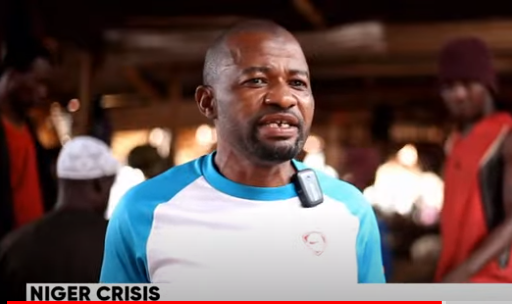
Some onion sellers have allegedly been hospitalized due to the excruciating pain of looked up funds invested in bags of onions withheld at Niger border.
In a time of media engagement with one of the sellers, Mumuni Anabila, disclosed that some of them secured loans to keep their onion business running.
Unfortunately the Niger coup happened and it’s negatively impacting their finances and business stability.
He revealed that some of his brothers involved in the business have been hospitalized due to the “grave” financial loss.
“We the onion traders went in to secureloansfor our business. When the cars were blocked from discharging the onions to us we were heavily affected. As it stands now we don’t know what we are going to do.
“We are appealing to the government to do all he can to release the onions to us. Some of our goods were spoilt over there because they were seized for two weeks.Some of the traders with us here are in hospital. Two of my brothers are in the hospital because of their locked up funds,” Mr. Anabila shared.
About one hundred trucks of onions expected to deliver onions to the kwadeso market are locked up in Niger for many days.
Each truck transporting at least 300 bags of onions at a cost of 1500.00 each.
An estimated 45milion Ghana ceds remains locked up at the border for fear of terrorist activities.
Meanwhile, individuals belonging to the Ghanaian Onion Sellers Association find themselves stranded at the Benin border, and they are once again appealing to the government for assistance.
The group’s spokesperson, Ali Umar, communicated during an interview with Citi Business News, said that their inability to traverse the border into Ghana is poised to negatively impact their business operations.
Umar elucidated that a number of association members had taken loans from both individuals and financial establishments to undertake their onion procurement. Consequently, if prompt measures are not taken, these individuals will face financial incapacitation, leaving them unable to fulfill their repayment obligations.
“Our trucks are still at the border, they are not able to allow them to come over. We need support from the government because some of us have to go and borrow money,” Ali Umar said.
“…So if it has come like this, it is not easy to pay the money back. So we really need the support. If the government can support us with something, we will be really grateful,” he added.
The Parliamentary Committee on Mines and Energy has highlighted the need for more sustainable funding avenues to materialize the strategic establishment of the Petroleum Hub Development Corporation (PHDC).
Currently, the PHDC, which is intended to position the nation as a leader in the petroleum and petrochemical products and services value chain in the sub-region, relies on funding from Parliament-approved funds, internally generated funds, grants, loans, and historical support from the Ghana National Petroleum Corporation (GNPC).
As part of its 2023 operational plan, the GNPC allocated US$3 million to support the PHDC. However, the Committee on Mines and Energy expressed concerns over the inadequacy of this funding in light of the challenges faced by the PHDC.
In response, the committee recommended that the Ministry of Finance explore more sustainable funding sources that align with the PHDC’s strategic importance.
Notably, GNPC’s projected expenditure for 2023 is US$1.4 billion, while the total revenue is estimated at US$1.2 billion, leaving a funding gap of US$172.82 million. GNPC intends to cover this gap through cash reserves, debt collection, and term loans.
Given this context, the committee argued that the PHDC, which aims to foster a competitive and sustainable environment for investments in the midstream and downstream petroleum industry, requires strong financial grounding to achieve its strategic goals.
The ambitious mega-project, expected to be completed by 2030, encompasses four oil refineries, two oil jetties, crude oil storage tanks, and two petrochemical plants. Located in the Western Region’s Jomoro municipality, the petroleum hub aims to be a comprehensive integrated complex adding value to Africa’s upstream and downstream oil and gas value chain.
Upon completion, the project will span over 20,000 acres, hosting an array of onshore, offshore, and auxiliary assets, with the intention of revolutionizing the continent’s petrochemical industry.
Enacted through a parliamentary Act, the PHDC also aims to generate around 780,000 jobs during and after the development phase. It foresees a positive economic impact, projecting an export tax of approximately US$1.56 billion by 2030 and an increase of about 70 percent in the gross domestic product.
Kenya has reinstated a small subsidy to stabilise retail fuel prices for the next 30 days, the energy regulator says, in a reversal of government policy after public anger over the high cost of living.
After taking office in September, President William Ruto removed fuel and maize flour subsidies put in place by his predecessor, saying he preferred subsidising production rather than consumption.
The move was also aimed at cutting government spending as the government seeks to get a handle on debt repayments that have forced it to deny market speculation about a possible default.
But the subsidy cuts as well as recent tax hikes have increased living costs and contributed to violent anti-government protests in recent months.
The Energy and Petroleum Regulatory Authority (EPRA) said late on Monday that the maximum retail price of a litre (0.26gal) of petrol would remain constant at 194.68 shillings ($1.35), shielding consumers from an increase of 7.33 shillings ($0.05), which the government will shoulder through a price stabilisation fund.
Retail fuel prices are set in the middle of each month. The government also applied small subsidies on kerosene and diesel, EPRA said.
The regulator did not provide an explanation for the government’s decision. Officials from EPRA, the Ministry of Energy, and the National Treasury and Economic Planning did not immediately respond to requests for comment.
Fuel prices shot up when Ruto removed the subsidies. They spiked again in July after the government pushed a contentious law through parliament that doubled the fuel tax.
The protests organised in response to that law were called off last month after the opposition and Ruto agreed to talks to resolve their differences, the second such attempt this year.
Both sides agreed that opposition to a financial bill signed into law in June “should be decided in court”, where it is being challenged by the opposition. In July, an appeals court lifted a suspension placed on a law that would double the value-added tax on fuel and introduce a new housing levy.
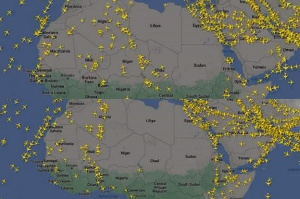
The shutdown of Niger’s airspace has caused a notable increase in the volume of flights utilizing Ghana’s airspace.
Since the military regime’s closure of Niger’s airspace on August 6, 2023, an analysis by AviationGhana of real-time flight data from Flightradar24 reveals that numerous European airlines have altered their flight paths to include Accra, Ghana, as a stopover on routes to key travel markets like Nigeria and other nations in Central and Southern Africa.
Mr. Francis Armah Mensah, President of the Ghana Air Traffic Controllers Association (GHATCA), confirmed this development to AviationGhana.
“The closure of the Nigerien Airspace is having an impact on the Accra Flight Information Region. We have more traffic routing our airspace now than ever. The situation has increased the workload on Air Traffic Controllers. In terms of revenue, it will boost our revenue,” Mr. Mensah said.
The Ghana Civil Aviation Authority (GCAA), the regulator of the aviation sector, is poised to benefit from overflight charges.
For operators not conducting flights into Ghana, a scheduled overflight costs US$150 (per single request). Similarly, all non-scheduled flights passing through Ghana’s airspace are required to obtain a permit at least 72 hours before the intended flight date and pay the same fee.
The current closure of Niger’s airspace exacerbates flight difficulties across Africa, given that Sudan and Libya are designated “no-fly” zones for international flights due to instability in those regions.
The necessity to divert and reroute flights, especially those between Europe and Sub-Saharan Africa, has led to extended flight durations and heightened expenses for airlines.
To illustrate, an additional hour of travel time on a Boeing 777 translates to an extra consumption of 3,500 to 4,000 gallons of aviation fuel for the journey.
With today’s fuel price at US$1.993 per gallon, this results in an added expense ranging from US$6,975 to US$7,972 for airlines. These costs could potentially be passed on to passengers, leading to higher airfares.
Reportedly, the individuals who staged the coup in Niger are said to have agreed to engage in negotiations with the Economic Community of West African States (ECOWAS), as confirmed by mediators.
This information was disclosed by the leader of a delegation of Islamic clerics, Nigerian Sheik Bala Lau, on Sunday following a meeting with Niger’s newly established leader, General Abdourahmane Tchiani.
The Nigerian delegation journeyed to Niamey, Niger’s capital, on Saturday amidst escalating tensions between Niger and the ECOWAS group of states, currently under the leadership of Nigeria.
Sheik Lau mentioned that during the meeting, all topics were discussed, including ECOWAS’ demand for the reinstatement of President Mohamed Bazoum, who was removed from power in the coup that occurred on July 26.
Tchiani reportedly assured the delegation that diplomatic and peaceful resolution avenues were open to address the matter. He also defended the motives behind the coup.
Until now, Niger’s new leadership has declined official delegations from ECOWAS. One delegation was forced to depart shortly after arriving at the airport, and another was barred from entering the country.
ECOWAS has imposed sanctions on Niger and has issued threats of force if the coup leaders do not restore President Bazoum to power.
On a related note, ECOWAS heads of state made the decision on Thursday to activate a standby force for the purpose of reinstating constitutional order in Niger. Simultaneously, efforts to find a peaceful solution were reaffirmed as a top priority.
Algeria has officially prohibited the movie “Barbie,” which had been screened at certain cinemas in the country for some few weeks now.
Both an official source and the local news site 24H Algerie confirmed this on Monday August 15, 2023.
According to the official source, the film is deemed to “promote homosexuality and other Western values,” which contravenes Algeria’s religious and cultural principles.
Featuring Margot Robbie and Ryan Gosling as Barbie and Ken, the movie depicts Mattel Inc’s doll entering the real world on an adventure.
Despite the ban by Lebanon and Kuwait h, the film has however achieved a global box office revenue of over $1 billion since its premiere on July 21, 2023
Fleeing hunger and economic hardship, a growing number of unemployed young individuals are departing the country in pursuit of domestic jobs in the Middle East. The Observer has discovered that this trend has surged, with an estimated 2,000 youths leaving each month. This adds up to approximately 24,000 migrants annually.
“These are sad statistics but true… There was a time, before the outbreak of Covid-19 when we would take about 3,000 domestic workers monthly to the Middle East. Now that travel restrictions are relaxed, the numbers have picked up. Between 1,500 and 2,000 migrant workers are leaving the country every month,” Lawrence Egulu, the commissioner in charge of Employment Services at the Ministry of Gender, Labour, and Social Development (MGLSD) said in a recent interview.
It is “unfortunate,” he said that the bulk of migrant workers is female, making up to 75 percent of housemaids in the Middle East. They make up the long queues at Entebbe International Airport every day enroute to the Middle East. Most of the unflattering images and videos on social media capture youths desperately walking to unknown territory in search of employment at all costs.
According to statistics provided by the MGLSD, from 2016 until now, a total of 223,102 migrant workers, both domestic and professional, have left the country for opportunities in the Middle East. These figures don’t encompass Ugandans who have been trafficked into the Middle East. Among these workers, only 32,876 are engaged in professional roles. Out of the remaining 190,226 domestic migrant workers, Saudi Arabia employs the largest portion with 131,970 workers, followed by the UAE with 45,636 and Qatar with 12,620 workers.
Domestic workers earn between Shs 900,000 and Shs 1.2m. Despite the rising instances of abuse against migrant workers, the numbers continue to rise due to the lack of sufficient employment opportunities for both skilled and unskilled youth within the country. Public outcry over the mistreatment of Ugandan workers in the Middle East has prompted government intervention.
In response to inquiries about reports of Ugandan worker deaths in the Middle East, Dr. Chris Baryomunsi, the Minister for ICT and National Guidance, stated that the cabinet has directed the Ministry of Gender to release a comprehensive report on the state of migrant workers in the Middle East. Commissioner Egulu, in a recent interview, noted that most Ugandans struggle to secure professional jobs, as the offers in the Middle East or Gulf Cooperation countries are primarily for domestic positions.
For Ugandan professionals like teachers, drivers, security experts, and plumbers seeking work, Commissioner Egulu explained that they often need to pay significant amounts to secure such positions. This includes expenses for airfare, passports, medical exams, and visas. Some Ugandan companies are charging as much as Shs 7 million for professional job placements in the Middle East. Domestic workers, on the other hand, do not need to pay anything, as long as they are willing to work as housemaids.
“To get domestic workers, a Ugandan recruitment company instead gets paid to look for workers. If a company in Saudi Arabia demands about 100 workers, they can pay between $1,000 and $1,300 depending on one’s negotiation. Since most Ugandan companies have no cash up front and the Saudi company is providing it, the business becomes more attractive – a reason why most Ugandans go for domestic jobs,” Egulu said.
Allan Asiimwe, the managing director of Alastar Company (U) Ltd, a labour recruitment agency, said it is less tedious to find casual jobs for Ugandans. Whereas professional jobs are always available, he said, the slots are often limited compared to jobs for unskilled and semi-skilled people. Without signed job contracts from external recruitment agencies, Ugandan companies can’t advertise any jobs.
“Uganda exports few professionals because we lack accreditation centers that meet the standards of most foreign countries. If we are to externalize professional nurses, teachers, or engineers, they need to travel to Nairobi (Kenya) for accreditation. This process requires some money, which many Ugandans cannot afford. Also, the professional jobs come once in a while and need a lot of patience yet Ugandans are hungry for work and money,” Asiimwe said.
“As a businessman, you will choose what works fast; whether you are taking graduates as housemaids, it’s business as long as they are comfortable with the job,” he added.
Saudi Arabia takes mainly drivers, housemaids, cleaners, teaching assistants, waiters, and waitresses while Qatar employs labourers, security guards, carpenters, cleaners, personal assistants, administrators, and waiters and waitresses. In the UAE, the most significant chunk are security guards, labourers, loaders and cleaners. It’s worth noting that the UAE, Qatar, Kuwait, Bahrain and Somalia don’t employ domestic workers.
GOVT TO BLAME
Commenting on the low uptake of professionals abroad, Egulu said the government is not aggressive.
“I think Ugandans have gone to school and the onus is on the government to be able to make deals with foreign countries. It is difficult for a Ugandan recruitment company to negotiate better for such big professional jobs. We, maybe, have government officials [meant to negotiate for these jobs] that have not been so much exposed to big labour markets in countries like Brazil, Japan, and Russia,” he said.
Egulu added: “The doors to foreign nations can be opened by the government through the ministry of Foreign Affairs. We are not doing great there with the existing bilateral relations with these countries.”
He insisted that there’s a need to expand the skills base beyond the Middle East because Uganda is not a country that prides itself on “exporting” domestic workers.
“We have been to school and one of the best countries in the region. A situation of war in the Middle East can wipe out every gain. Look…the USA has pulled out of Afghanistan and Iraq, something that fizzled out Ugandan employment opportunities in security. So, Ugandan ex-combatants who were running out lost just like that yet they had other skills,” he said.
Egulu also took a swipe at Ugandan envoys for not tapping into meaningful professional employment opportunities abroad.
“Our diplomats should not just go and shake hands in high-level meetings. Whenever an opportunity knocks, they must sit down and compare notes about job opportunities for professional Ugandans,” he said.
According to the 2020 World Bank second report on the state of the job market in Uganda, around 700,000 young people reach working age every year. This figure is expected to rise to an average of one million in the decade from 2030 to 2040.
“It is estimated that an additional 13 million workers will enter the job market by 2030. This and Uganda’s high dependence rate of 1:42 dependants per employed person mean Uganda has to raise labour productivity whilst increasing the number of jobs created to match the per capita income growth of other economies with low dependency,” reads the World Bank report.
In the Middle East, many Ugandan professionals get jobs without government assistance. The few who go through companies are employed as agricultural workers, administrators, teaching assistants, and technicians. Nurses, most of whom work in homes, provide palliative care to people who are terminally ill but not attached to major hospitals. On teaching jobs, a source who preferred anonymity, said people in the Middle East believe Ugandans are not skilled enough to teach their children.
“Our teachers are good but most schools in the Middle East have people from France, the Philippines, Kenyans, and West Africans. In Dubai alone, you must bribe human resource officers and agents to get professional jobs. For instance, you may be a graduate teacher in Uganda but end up as a kindergarten teacher or school bus/van attendant with a salary ranging from Shs 1.5m to Shs 2m,” the source said.
The source added that some recruitment companies in Uganda can scout for better professional jobs but fear being arrested. For instance, if a professional job goes for Shs 8m, clients can be asked to make initial deposits as they process their travel documents.
“However, some impatient clients end up reporting us to authorities if their visas take long or are rejected. Yet, this is the shortcut being used lately to get better jobs. You pay half and clear the balance when you reach your final destination,” the source said.
In this arrangement, some untrustworthy clients also fleece companies when they eventually settle on the job.According to a source at Uganda’s embassy in the UAE, the majority of Ugandans are into unskilled labour and professional jobs are typically taken up by Europeans and a few individuals from African countries like South Africa.
“Professional jobs are always available because we have IT experts working both here in Abu Dhabi and Dubai, nurses, and engineers working in the oil and gas industry. Ugandans have to position themselves and take up these opportunities whenever they come up,” the source said.
Currently, Uganda has one signed Bilateral Relations Agreement with the Kingdom of Saudi Arabia for domestic workers. For Qatar, the agreement is in the final review stages for signing while that of the UAE is still under review. In Turkey, Oman, Bahrain, and Kuwait, negotiations to sign agreements are still ongoing yet an unknown number of Ugandans are employed in these countries. In Somalia, Afghanistan, and Iraq, there are no signed agreements.
The agreements cover the working conditions of migrant workers including the provision of medical insurance, standard employment contracts, and agreeing to implement Ugandan laws in their countries. Uganda was also sending domestic workers to Jordan [about 30%] but the arrangement was suspended three years ago because of the incessant mistreatment of workers with limited remedial measures from authorities there.
HUGE REMITTANCES
As of June 13, 2022, there were 235 licensed private recruitment companies. Every two years, each company pays Shs 2m in license fees. Last year, the ministry of Gender suspended operations of 11 companies in line with Regulation 13 of The Employment (Recruitment of Uganda Migrant Workers) Regulations 2021. Some directors of the suspended companies have since unsuccessfully made efforts to appeal the ministry’s orders.
“When we listed the companies, they came back trying to appeal but they have not fulfilled the ministry requirements to date. For now, their operations remain illegal in Uganda until they put in place what was required of them. We don’t know about their existence,” a source at the ministry said.
The companies were found with forged training reports, renewal documents, accumulated refund claims from clients, forged Covid-19 results, and trafficking people, among others. From migrant workers, the government annually collects US$1.2bn globally – the Middle East alone sends in $600m. This money, wired directly to the Uganda Revenue Authority accounts, is collected from the Middle East-based recruitment companies that are charged $30 [about Shs 110,000] for each worker.
Egulu was concerned that whereas the Gender ministry brings in lots of remittances and non-tax revenue, funding remains a hindrance to the sector.
“We know how to generate this money for the government but we don’t see it. I would have loved to keep track of the girls and boys in the Middle East by establishing labour attaches in all those countries and distress centers, among others, but we are cash-strapped. This money goes to the treasury and we must negotiate to get it,” he said.
Egulu added: “We need to talk more with people in the ministry of Finance that the money you are using to fund other government projects, we contributed to it and deserve a share as the source. We must be entitled to 40 percent of the remittances because we know best how to generate more for you. These have been long proposals and discussions that have not yet materialized. These are dynamics in government and that’s where we are.”
With inadequate funds to support migrant workers, the distressed ones in Saudi Arabia can either report to the Ugandan embassy based in Riyadh or report to the Gender ministry through its recently developed online system. Alternatively, a worker can complain through a relative based in Uganda who in turn logins into the system to file a complaint or manually write the ministry through the permanent secretary.
Deaths/injuries
From 2019 to date, Uganda has registered 88 deaths of migrant workers, according to the Gender ministry. Of these, Saudi Arabia has the highest number at 69. It is followed by the UAE and Jordan with five deaths each; Somalia with three, and Qatar, Kuwait, and Bahrain with two deaths each. Following the suspension of Jordan, the ministry no longer tracks the illegal trafficking of migrant workers and deaths in that country. On work-related injuries, only seven have been registered since 2019 in Saudi Arabia (five) and Iraq (two).
Some of the licensing requirements
• Company must be registered with URSB • All shareholders and directors shall be Ugandans • The company shall have a minimum authorized share capital of Shs 50m • A Ugandan-based commercial bank guarantee of Shs 100m • Non-refundable application fee of Shs 100,000 • Interpol certificates of good conduct for staff, directors, and shareholders • License fee of Shs 2m every two years • Individual income tax returns for the past year and tax clearance certificate • Staff or board members must not be engaged in the travel or sales agency of an airline company
A zebra crossing is a road marking with white stripes resembling a zebra’s pattern. It allows pedestrians to cross safely, giving them priority over vehicles and preventing accidents.
According to the Road Traffic Act, 2004 (Act 683), drivers must stop when pedestrians want to cross the road using a zebra crossing. Overtaking near a zebra crossing within 30 meters is prohibited. Drivers must yield to pedestrians on the crossing.
But is this really the case in Ghana?
However, this is not always the case in Ghana. Zebra crossings across the country have over time lost their essence. There is little or no respect for zebra crossings by both drivers and pedestrians. While drivers often speed up when they see people using the zebra crossing, most pedestrians who are impatient for a “God-sent driver” to stop most often use illicit crossings.
This negligence has led to many crashes and deaths which could have simply been avoided if these crossings were respected. It is important to note that respecting zebra crossings is not the only way to avoid road crashes and accidents, but doing so can go a long way to help ensure safety on the road. For instance, findings have shown that about 336 pedestrian crashes were recorded between 2007 and 2016 in the Cape Coast metropolis, with 15.2% of the victims dying while about 328 pedestrian crashes were recorded in 2019 in the same metropolis.
For many years, there have been several advocacies and campaigns, particularly by the National Road Safety Authority, as well as lots of write-ups on the need for Ghanaians to respect zebra crossings.
One of such recent campaigns is the “Respect Zebra Crossing” campaign being championed by blogger, Kobby Kyei.
According to Mr. Kyei, his observations on the disregard of zebra crossings pushed him to leverage his followership on his social media platforms to embark on the campaign.
With the help of some volunteers, Kobby Kyei has been to New Bortianor, Circle, Madina, and GBC to provide assistance to pedestrians using the zebra crossings and educated both pedestrians and drivers on the importance of respecting the zebra crossings.
In an interview with Citi News on Monday, Mr. Kyei said, “As a blogger who has amassed quite a number of followers on social media, I saw the need for me to use my platform to start an initiative to educate the followers and the masses who are out there. So I decided to come out with this Respect for Zebra Crossing campaign because I noticed that I am a driver myself but anytime I get to the zebra crossing, most drivers don’t respect it.”
“You will see pedestrians both old and young for hours with drivers not respecting or stopping for them to cross. Again, pedestrians themselves not using the Zebra crossing but trying to cross using other avenues and not even using the overpass.”
Mr. Kyei said the campaign has had some celebrities’ endorsement and urged all and sundry to also get on board in order to safeguard lives and ensure orderliness and discipline on the country’s roads.
“I have had celebrities coming on board to have an endorsement for me. I have had Joselyn Dumas endorsing it, I have had Ohemaa Mercy, I have had Adjetey Annan, I have had Medikal, I have had Martha Ankomah, I have had Peter Ritchie, I have a host of others who have come on board to endorse it and I am looking forward to drive this campaign to the end of the year.”
“I am also urging the authorities in charge of our roads, the Ministry of Roads and Highways, also to the Motor Transport and Traffic Directorate (MTTD), the Ghana Police Service (GPS) and all other departments that are making sure that the laws on our roads are being ensured can also be a part of this initiative,” he stated.
Recommendations/Way Forward
Mr. Kyei proposed that more public awareness campaigns be initiated to educate both drivers and pedestrians about the importance of zebra crossings and the right of way through posters, social media, and community events.
Again, he called for the stricter enforcement of traffic regulations by the MTTD and the police to discourage drivers from violating pedestrian rights and impose fines for violations.
“Ensure clear and visible zebra crossing markings with proper signage at strategic locations. Enhance visibility during low-light conditions through reflective materials. Invest in pedestrian-friendly infrastructure like sidewalks, crosswalks, and pedestrian islands to encourage safe crossing behaviour.”
“Involve local communities and organizations in promoting pedestrian safety and respecting zebra crossings. Collaborate with schools, businesses, and resident associations. Organize pedestrian safety workshops and involve citizens in suggesting improvements and solutions for safer crossings,” he stated.
Proposing the usage of smart traffic lights or pedestrian-activated signals to improve pedestrian safety and make drivers more aware of pedestrian crossings, Mr Kyei further recommended the implementation of reward programmes or incentives for drivers who consistently follow road safety rules, including respecting zebra crossings.
“Include pedestrian safety awareness in driving schools and license renewal programmes to reinforce the importance of zebra crossings. Work with public transport authorities to ensure drivers of buses and taxis are trained to respect pedestrian crossings,” he added.
Climate change! Global warming, food insecurity, rising temperatures, melting glaciers, sea-level rise, more frequent, severe weather events (hurricanes, droughts, and heatwaves), and disruptions to ecosystems and biodiversity – I bet you thought of these too.
The discourse on climate change has rightly captured global attention, but the changing dynamics of our economic and political landscapes demand some attention. Previously, it would be herdsmen and migratory animals seeking greener fields to feed on, but today, the nation grapples with the challenge of losing skilled graduates, particularly nurses, to foreign lands in search of greener pastures. This development brings forward the need for the need for innovative strategies that encompass labor export, technological integration, and human security considerations.
Conversations are rife on traditional and social media about the many – both young and old – relocating to settle abroad. Everybody dey japa! The average young person today is thinking of “japaing”, an adopted term from our Nigerian neighbours that speaks of travelling to a Western country for greener pastures. Climate change enthusiasts speak passionately about the deletion of the earth, but after we have saved the earth and our environments, who will tend to it?
In my usual moments of reflection, my racing thoughts converged at the epicentre of developing a globally competitive workforce as a counter-mechanism for brain drain. After all, aren’t we taught to make good use of both the good and bad times.
It is worth noting that while the brain drain challenge is multifaceted, solutions that are likely to be proffered may in themselves be nuanced. cannot be discounted. For instance, despite the government’s investment in nursing and teacher trainee allowances, the allure of “greener pastures” overseas persists – moreso when these trainees have to struggle for jobs after studies. I’d want to reserve the discussion on the payment of allowances for another time. Meanwhile, there is the need to adopt a strategy that capitalizes on the global demand for skilled labor while addressing the root causes of emigration.
Labour export can become a strategic asset for Ghana. By identifying sectors with surpluses of trained professionals and forging partnerships with countries experiencing shortages, the country can create a virtuous cycle of economic growth and talent retention. Collaborative agreements can include skills development, mutual recognition of qualifications, and ethical labour migration policies.
We must not lose sight, however, of the fact that technology rules the world today. The globally-competitive workforce we seek to build must be tech-savvy. Experts and relevant stakeholders in education must begin to look at ways of incorporating AI and technological education through AI literacy, sector-specific AI applications, and hands-on projects that foster innovation and problem-solving skills to train students. Ghana could be known as a hub for cutting-edge skills and innovation.
Also, policymakers need to consider the broader implications of labour export and technological integration in education on citizens’ well-being, social cohesion, and access to basic services. We can begin to gather comprehensive data on emigration patterns, skills shortages, and global labour demands, and tailor our cultural and educational systems to suit them. While cultural integrity must be upheld, we cannot stand in deep waters and die thirsty. Isn’t culture in itself, dynamic?
Investment in skill development programs that align with both domestic needs and international labour demands is needed for this cause. There have been numerous concerns about the harsh conditions under which some Ghanaian migrant workers in some advanced countries work. Government must begin to think of crafting ethical migration policies that protect workers’ rights, ensure fair wages, and provide social support systems. A collaboration with destination countries can ensure migrants’ wellbeing, and give government the power to request taxes from migrant workers.
With the prevailing economic crisis, it’s about time our social justice advocates began raising awareness about the broader impact of talent migration and technological shifts on society. We must not, again, lose sight of the few patriotic ones who would want to stay and till the motherland, that it may bear fruits for all its citizens, home and abroad. A review of the current minimum wage, the establishment of robust social safety nets, and the regulatory mechanisms that ensure that businesses engage in ethical labour practices and responsible technological innovation that prioritize people’s well-being over profit could be useful in this regard.
We cannot stop young people from leaving, especially when they suffer hunger while at home. We can create an opportunity out of it though, for maximum benefit. Where are our leaders? Arise and do something.
DISCLAIMER: Independentghana.com will not be liable for any inaccuracies contained in this article. The views expressed in the article are solely those of the author’s, and do not reflect those of The Independent Ghana
As expected, the president’s recent suggestion that the University of Ghana might be renamed after his late uncle, Dr. J.B. Danquah, the Gold Coast lawyer and “nationalist,” has provoked a firestorm of criticism from a public that has clearly had enough of the tribal-supremacist agenda of the president and his kinsmen.
And none of them have articulated the rationale behind this agenda more brazenly than a relative of the president, lawyer Samuel Atta Akyea, who three years ago said the following on the television programme, Good Evening Ghana:
“If you remove the role of the Akyem people from the history of this country, we won’t have a history… The guy who named this country is from Akufo-Addo’s background. The one who wanted Ghana called Ghana… [was] J. B. Danquah….” Mr. Akyea went on to cite the Big Six, the leaders of the United Gold Coast Convention (UGCC) who were arrested by the British colonialists after the 1948 riots that accelerated the independence process, and reminded viewers that the president’s father, among the six, “was one of the individuals who are acclaimed as the pioneers of our independence.”
With this crude concoction of facts and fiction, they tend to believe that they own the country and can do as they please. Textbooks, for instance, have been doctored and Danquah given disproportionate prominence in Ghana’s history.
This peasant aristocracy sense of entitlement, especially among people occupying national offices, is a threat to social cohesion and national development. So let us demolish forthwith a few myths about J.B. Danquah and the Big Six, and tackle other aspects of Ghanaian history that the tribalists have bastardised to drive this dangerous ideology of tribal supremacy. (For the record, I condemn the term “Akyem mafia,” or any term that demonises an entire tribe for the folly of a few).
Myth No. 1: Danquah’s research linked the Akan of Ghana to the ancient Ghana Empire.
Fact: That credit goes to Rev. J. B. Anaman, of Anomabo and Sekondi, whose research took place in 1895, the year Danquah was born.
Myth No. 2: Danquah founded the United Gold Coast Convention (UGCC).
Fact: Danquah himself described George Alfred (Paa) Grant, the wealthy Gold Coast merchant, as the “architect and founder of the UGCC.”
Myth No. 3: UGCC was the first political party in the Gold Coast.
Fact: The earliest known political parties (for municipal, not national, elections) were mainly the Accra Rate Payers Association and the Ga Manbii (Ga Nationalist) Party of Kojo Thompson in the 1920s. Lesser-known parties, such as the Asene Koo Wulu Party, later emerged in Accra and other municipalities like Cape Coast and Sekondi in the 1930s; never in Abuakwa, Danquah’s hometown. By the time the UGCC was founded in Saltpond in 1947, there were already other (if generally inactive) parties, particularly, the Gold Coast People’s League and the Gold Coast National Party. As a result, the name originally proposed by the founders was changed from Gold Coast People’s Party (GCPP) to United Gold Coast Convention (UGCC), to rein in the other parties.
Myth No. 4: The Big Six were the architects of the 28th February 1948 demo that propelled Ghana’s independence movement.
Fact: George Padmore, Kwame Nkrumah’s political advisor, stated in his book, The Gold Coast Revolution, that the Big Six did “not” initiate the demonstration. Nkrumah was away from Accra on the 28th , and Danquah and the other four initially condemned the ex-service men for the violence that had been instigated by the reckless shooting of unarmed demonstrators by a trigger-happy British officer named Colin Imray. The British arrested the six politicians – Kwame Nkrumah, Ebenezer Ako-Adjei, Edward Akufo-Addo, J.B. Danquah, William Ofori-Atta, and Emmanuel Obetsebi-Lamptey – more for their UGCC work than any direct involvement in the events of 28th February.
Who then was the architect of 28th February? That credit goes mainly to Mr. B. E. A Tamakloe, general secretary of the Ex-servicemen’s Union, who negotiated the demonstration with the governor; to whom the governor addressed all letters; and in whose name the permit for the demonstration was issued. He was supported by five other people, according to the Watson Commission’s report, making them the Real Big Six, but the five were not named.
However, all eight executives of the Union who planned the demo were named, giving us the Big Eight: (1) B. E. A. Tamakloe; (2) S. A. Codjoe; (3) R. T. Dodoo; (4) J. S. Laryea; (5) R. P. Craig; (6) F. L. Adjei; (7) J. D. Ankrah; and (8) G. E. Lutterodt. We need a proper history of Ghana.
And then there were the 29 martyrs who died from the disturbances of the 28th and the days that followed, including Sgt. Cornelius Nii Adjetey; Corporal Patrick Attipoe, and Private Odartey Lamptey, who were murdered by Imray. The Big Six, as a group, were accidental beneficiaries of history, their individual contributions to the nationalist movement notwithstanding.
Myth No. 5: Ashantis did not play any role in the independence movement because they don’t appear in the Big Six.
Fact: Ghana’s history is bigger than the Big Six, despite efforts by Danquah’s descendants to make the Big Six (and, within the Big Six, their relatives) the alpha and omega of our history. Krobo Edusei of the Ashanti Youth Association (AYA) was the chairman of the Kumasi committee of the nation-wide Anti-Inflation Campaign that was organised by Mantse Nii Kwabena Bonne (a chief of both Osu and Techiman, then part of Ashanti) in 1948.
When the Big Six were incarcerated in Kumasi, AYA plotted to storm the prison and free them, prompting the governor to whisk them to the Northern Territories, under stricter security, for fear that the hard-nosed AYA members may still make their way up north. Edusei later served nine months in jail for his political activism alongside Nkrumah. The AYA, in its militancy, had also demanded “self-government within the next five years,” compared to the UGCC’s gradualist approach of self-government “in the shortest possible time”.
The AYA, the Osu Youth Association, and the Sekondi Youth Association were among the youth groups that dragged Nkrumah from the UGCC and forced him to form the Convention People’s Party (CPP), which led Ghana to independence. They were the original foot soldiers! The proposed name for their new party was Ghana People’s Party, but Nkrumah asked that “Ghana” be reserved for independence and replaced it with “Convention” to show continuity, at least in name, from the UGCC.
Myth No. 6: Danquah named the Gold Coast Ghana.
Fact: That was simply impossible, as by 1957 Danquah’s political career was effectively over (he and Ofori-Atta having lost their seats to the CPP in the 1954 and 1956 elections). Only Nkrumah as prime minister in 1957 was in a position to propose that name, and he did. Danquah and the others criticised Nkrumah for choosing the name Ghana, and in his autobiography Nkrumah was forced to defend his choice.
Danquah, however, had a weird obsession for naming places, like the president does today. He had proposed, without any consultations, that the Northern Territories be renamed Fergusonia, after Ekem Ferguson, the surveyor from Anomabo who had done much work in the North. The idea was rejected by the British, much like his previous suggestion to rename the Gold Coast Akanland, and later Akan-Ga, when he was reminded that there were more than Akans in the colony. (He, like the president today and his fellow tribalists, was married to a Ga woman).
His most “valiant” name-changing effort was his suggestion after the 1948 riots that he and his relatives be put in charge of the Gold Coast, under the name Ghanaland. The idea of course was laughed off by the British. He pioneered the tribalism that his inward-looking descendants are now perfecting with national resources. (Remember the president’s statement, “Yen Akanfo” during his desperate struggle to win power – and destroy the country?)
Myth No. 7: Danquah was the “doyen of Gold Coast politicians”.
Fact: The Watson Commission described him as such but suggested that this was before Nkrumah came on the scene. Thus, in the 1951 election, Nkrumah won over 95% of the votes (from prison!) whilst Danquah scraped through with only 53% (and Ofori-Atta with 51%) in Abuakwa. In the 1954 election, both Danquah and Ofori-Atta, running on Busia’s Ghana Congress Party (GCP) after the collapse of the UGCC in 1951, lost to CPP upstarts, despite threats from the Okyenhene to deport anyone who voted for the CPP. Of the 104 seats, the GCP won only one – by Busia, who squeezed through his Wenchi constituency with an 11-vote victory over his CPP rival.
Danquah and Ofori-Atta again lost the 1956 elections, exposing the limits of Danquah’s purported doyenness. He was a novice when it came to political organisation and electioneering, no match for Nkrumah, the consummate organiser, strategist, orator, and man of the people. Whilst Nkrumah wore batakari, Danquah preferred his three-piece suit in the hot African sun, making him a stranger to his own people.
Myth No. 8: Kwame Nkrumah hated Ashantis.
Fact: The opposite was true. Nkrumah loved Ashanti and Ashanti loved him (and the CPP) back. One of the most fanatical members of the CPP was an Asante woman from Bekwai (but lived in Kumasi) who named herself Ama Nkrumah (the female version of Kwame Nkrumah) and pledged support to Nkrumah and the CPP with her blood. The CPP swept five of the six seats in the 1950 Kumasi municipal elections (6,210 votes versus 50 for the opposition), and would have won the sixth seat had it not been for a technical disqualification.
Ashanti was the first to benefit from Nkrumah’s Accelerated Education Programme of 1951, with the establishment of the Kwame Nkrumah University of Science and Technology and Opoku Ware Secondary School in 1952, among others. Despite the terror attacks by the National Liberation Movement (NLM) in 1956 against CPP members, which led to an exodus of CPP refugees from Ashanti, the CPP won 8 seats in Ashanti, compared to 12 for the NLM in the 1956 election. The CPP won 43% of the total Ashanti vote and claimed NLM strongholds like Obuase and Asante Akyem hands down.
Suffice it to say that there is more to Ghana’s history than the Big Six, in whose shadow some now seek relevance and pre-eminence for their dead relatives. It appears that without the Big Six, they are nothing, unlike Nkrumah, whose legacy goes beyond the Big Six and stands on its own.
The public’s swift and no-nonsense rejection of the president’s loose talk about renaming UG after his uncle is a pointed reminder that Ghanaians would not tolerate the bastardisation of their history by any group or tribe, no matter how powerful or privileged they might feel.
Power, after all, in a democracy like Ghana’s, is fleeting. A word to the wise….
DISCLAIMER: Independentghana.com will not be liable for any inaccuracies contained in this article. The views expressed in the article are solely those of the author’s, and do not reflect those of The Independent Ghana
The FDA branch located in the North East region has taken possession of unregistered pharmaceutical goods across six districts within the area.
As per Jacob Amoako Mensah, Director of the FDA North East Region, the seized unregistered pharmaceutical items were not intended for over-the-counter sales.
He noted that these products were meant to be acquired with a prescription, yet they were openly exhibited for direct sale to the general public.
Mr Mensah in an interview with the media said, “The Food and Drug Authority since we came to the North East Region over four months now, we have combed the entire six districts of the region and have conducted market surveillance in all the over-the-counter medicine shops.”
“We have retrieved a number of unregistered pharmaceutical products that are not to be sold by over-the-counter medicine sellers because for pharmaceuticals, we are supposed to buy them with prescriptions and these drugs found are not supposed to be sold,” he said.
The confiscated goods were disposed of at the Gambaga dam site.
The Minister of education, Dr Yaw Osei Adutwum has called out Africans to wake up and fully embrace the fast growing digital age.
For him, Africans should stay away from discussing AI dangers because AI has not been appreciated thoroughly enough to think of the jeopardy it may incur.
Delivering his keynote address at the 2nd National Digital & Distance Learning Conference on Monday August 14, 2024 on the theme: “A call on Multi-Stakeholder coordination and action for equitable access to digital and distance learning,” the minister made these remarks.
“We are in the 4th industrial revolution. The world is changing. Africa’s place in the world is going to be defined by how we respond to the current era we live in. The erra of the first revolution passed us by.
“Electricity came, we didn’t catch it. Then computers started with main frame computers, big ones. Now computers are on our phones, we didn’t catch it much. We are in the fourth revolution. The merger between the biological and physical. You can enter your home by just looking into some mirror and facial recognition software will allow you to do many things.”
He said he chanced on a discussion by the international media addressing some of the dangers of Artificial intelligence but that was when he told himself, “we have not even gotten there to talk about dangers.”
The member of parliament for the Bosomtwe Constituency in the Ashanti Region further highlighted the Sub-Saharan Africa Africa’s poor tertiary enrolment ratio as compared to other countries he did not specifically mention.
“When you look at the Gross tertiary enrolment ratio of Sub-Saharan Africa Africa, 7%. Different countries have changed their fortunes by incresing their Gross tertiary enrolment tratio from 40 to 50 to 60% and some are at 90%,” he expressed.
Inspite of Mr. Adutsum’s concerns, Artificial Intelligence (AI) has been transforming education in recent years.
This increasing significance of AI has garnered the interest of numerous scholars actively exploring diverse methods to incorporate various AI tools within the classroom environment.
With the increasing availability of data and the growing sophistication of machine learning algorithms, AI has the potential to revolutionise the way we learn, teach and assess student progress in their educational endeavors.
Young Ghanaian pupils from Basic 1 to 3 can now have the opportunity to upgrade their way of studying in and out of their classroom through a platform known as the Learning Passport.
Learning Passport was launched by the Minister of Education, Dr. Yaw Osei Adutsum with some student representations who are already making use of the service.
This initiative by is giving children the opportunity to study all their syllabus online with the aid of their teachers while parents monitor progress in every step of their learning endeavour.
Ahead of the launch, Senior lecturer and Doctor of Philosophy from the University of Ghana, Dr. Kofi Sarpong Adu-Manu explained that the learning passport is Ghana’s first digital initiative tailored to suit pupils at the basic level as they grow up.
“You believe that in our homes, the 2 and 3-year-olds are chasing after phones because their cartoons are resting on our digital infrastructure. So they are already having the feeling for digital technologies. So we can take them out. We want to introduce them, and get them to play with it and then they grow up with it,” he said.
He proceeded to guide the audience to sign up to the website to familiarize with how the initiative works.
“Go to Google now and type, Ghana.learningpassport.org. So on your top right, you will see a sign up button. You will see the register. Click on it. We will take your basic information because we want to make sure it is runned by the children with parental control.”
“We want you to know whatever your ward is learning on that platform. So your name, phone number, email address is required. We proceed to authenticate your email address to have accessibility to track the performance of these young people. We want you to see the analytics and know whether or not your wards are doing well,” the website’s consultant explained.
The Minister of Education was now invited to officially launch the the initiative where he stated that “this is a great opportunity afford us by UNICEF“.
He invited a student from the Haatso Presby basic school to join him launch the program as they were given the privilege to experience how the platform works.
The student named Tracy said, “I am very happy to be here today for launching of the learning passport. Learning passport has really helped me and i recommend it to you.”
The minister added his voice to say, “what a better way to launch this program with recommendation from a student, the end user. Today I am excited to join Tracy in launching the Learning passport. Consider it duely launched by Tracy and the Minister for Education,”
The Minister of Education has a bold agenda to transform Education in Ghana using robust and innovative Edtech solutions.
Education Minister, Dr Yaw Osei Adutwum has urged headteachers to take advantage of technology to strengthen student learning practices and their cognitive skills.
According to him, this will help create a generation of critical thinkers who are able to do more than recall information.
The Minister launched the initiative in collaboration with the Centre for National Distance Learning and Open Schooling (CENDLOS).
An initiative previously known as The President’s Special Initiative on Distance Learning (PSI-DL), established in 2002 to blend ICT with Ghana’s system of education.
Meanwhile the Learning Passport was invented by the United Nations International Children’s Emergency Fund (UNICEF) propelled by Dr Yaw Osei Adutwum’s vision to impact Ghana’s education with technology.
To provide relief to Ghanaians, some experts have urged the government to step up efforts to strengthen the relative economic stability attained in the first half of 2023.
The economists stated in their analyses of the mid-year budget review that despite some indications of a stabilizing Ghanaian economy in the first half of the year, the government could not draw the conclusion that the economy had “turned the corner.”
“We’ve turned the first corner, but there are a few more to turn,” Professor Peter Quartey, the Director of the Institute of Statistical, Social and Economic Research (ISSER) said.
Prof. Quartey stated that the present inflation, currency rate, and budget deficit data did not warrant an exuberance that everything was well with the economy and residents during a conference on the mid-year budget review in Accra.
“We’ve seen inflation decline from 53.6 per cent in January to 42.5 per cent as of June 2023, exchange rate has also shown some stability, and some revenue handles have improved in the first half of the year. However, a good number of the revenue handles have missed their half year targets, and there are still threats of exchange rate depreciation as the government would have to pay its external loans,” Prof Quartey noted.
Dr Patrick Asuming, who is a Senior Lecturer with the University of Ghana Business School (UGBS), also said: “Some of the progresses at the beginning of the year are reversing.”
“From the current developments in the economy, the government has not turned the corner, because when you say you’re turning the corner, you shouldn’t come with a downward revision of your growth targets,” he said.
He explained that the country’s inflation rate had stayed flat since some disinflation occurred in the first quarter of 2023, but had recently started to gradually increase.
“Even though the GDP growth for the first quarter was good, you realise that it was necessitated by activities of government and not private sector sustainable growth, so, we can’t say we’ve turned the corner,” he said.
Dr Asuming said the support from the International Monetary Fund (IMF) bailout programme would help in relatively stabilising the local currency against its major trading partners for the rest of the year, but there would be a slow growth in the economy.
“We must not backslide on the short-term goals agreed with the IMF. The government must implement long-term strategies and revive the failing flagship programmes, including the Planting for Food and Jobs (PFJ),” he urged.
During the presentation of the 2023 mid-year budget to Parliament last Monday, Mr Ken Ofori-Atta, the Finance Minister said despite the headwinds hitting the Ghanaian economy, “we have turned the corner.”
“We have avoided the unimaginable, including empty shop shelves for medicines and other essentials, long queues for fuel and gas, as well as disruptions to power supply as occurred elsewhere,” Mr Ofori-Atta said.
He said: “This turnaround is underpinned by the investments we have collectively made during this difficult period since March 2020,” including the support from the IMF to implement the government’s Post-COVID-19 Programme for Economic Growth (PC-PEG).
In order to ensure a shared success moving forward, he stressed the importance of all Ghanaians speaking the same language of productivity, growth, and close collaboration. He also vowed the government’s commitment to maintaining a favorable macroeconomic climate for everyone.
The varied initiatives made by the German Embassy to strengthen commercial and economic cooperation between Germany and Ghana have been highlighted by Daniel Krull, the German Ambassador to Ghana.
In an exclusive interview with Doreen Abanema Abayaa for GhanaWeb Special, Ambassador Krull stressed that even though Germany has given the European Union (EU) responsibility for trade policy, the embassy is still actively working to level the playing field and foster partnership.
“Germany is an important economic powerhouse in the middle of Europe,” he stated.
He went on to clarify the division of trade-related responsibilities between Germany and the EU, noting that “everything that is related to economic trade treaties and so on, that is run in Brussels.”
However, he continued, the German Embassy in Ghana is crucial in maintaining fair competition and assisting German businesses operating in the Ghanaian market.
Ambassador Krull also highlighted quality control initiatives in the construction sector, aimed at ensuring products meet the specified standards.
“We are trying to strengthen the Ghanaian institutions in the market,” he added, emphasizing the collaborative approach taken by the embassy to support local institutions in enhancing market dynamics.
One of the cornerstones of the embassy’s efforts lies in its collaboration with a network of German institutions based in Ghana.
Ambassador Krull noted the significant role played by the Delegation of German Commerce and Industry in Ghana and the German Chamber.
“With them, we try to encourage German companies to come to Ghana to participate in trade fairs,” Ambassador Krull explained.
He emphasized recent participation at trade shows targeted at the mining and construction industries, adding that these occasions give German businesses a chance to present their goods and services in Ghana and look into possible alliances.
The ambassador emphasized the value of reciprocity and mentioned that the embassy also supports small and growing Ghanaian businesses’ participation in trade shows in Europe, notably in Germany.
These trade shows give entrepreneurs crucial information about global industry trends that they can use to stay informed and make wise decisions.
“There are some very, very important trade fairs in Germany. These companies and these entrepreneurs can, within a few days, get a clearer idea of where the international market is going these days. So that is also a very important tool for increasing bilateral trade,” Ambassador Krull stated.
The Governing Council of the Institute of Directors Ghana (IoD-Gh) has voiced its displeasure on the annual violations and irregularities that State Owned Enterprises have been found to have committed.
The Institute said it is discouraging to learn that the violations were due to inadequate oversight.
“It is indeed very disheartening to learn and observe that these yearly irregularities occurred as a result of poor oversight responsibility and nonexistent or weak internal controls. As the leading advocate for good corporate governance and ethical leadership in Ghana, IoD-Gh reiterates our unwavering and total commitment to upholding the highest standards of corporate governance in Ghana,” parts of a release by the Institute noted.
“Even though we are saddened by this report by the Auditor General, we are very hopeful that this offers an opportunity for close collaboration to establish and sustain best practices to ensure better corporate outcomes,” it explained.
The IoD has consequently urged these organizations to use their services to promote teamwork as a means of overcoming these obstacles.
It furthered that “Our resolve is to continue playing an active role in improving the culture of good corporate governance, which will ultimately lead to the growth of our economy and the prosperity of Ghana. In this regard, the Institute stands ready to collaborate with any and all stakeholders in both public and private sectors to effectively address the challenging issues raised in the Auditor-General’s report”.
Total anomalies among public boards, corporations, and other statutory institutions were valued at 15.059 billion dollars, according to the 2022 Auditor General Report.
The find also includes £61,748 converted into Ghanaian cedis at the current currency rate of 10.3118 to £1 as of December 31, 2022, and $1.477 billion converted into cedis at the current exchange rate of 8.5760 to US dollars as of that date.
In an article that was published on February 25, 2023, the German ambassador to Ghana, Daniel Krull, clarified any misunderstandings over stories that indicated his position on Ghana’s expenditure reduction during the World Bank loan application process.
The initial piece, which was distributed across a number of media outlets, quoted Ambassador Krull as saying that Ghana’s government could not request aid from outside while also refusing to reduce spending.
The ambassador, however, claimed that his viewpoint had been misrepresented.
Ambassador Krull addressed the discrepancy between his actual words and how they were reported by the press and social media exclusively with Doreen Abanema Abayaa on GhanaWeb Special.
“There was what I said, and that was what was reported, reportedly. Social media is a very huge difference between the two, and I never advised to cut down on parliamentarians,” he stated.
Ambassador Krull made a point of emphasizing that his comments were consistent with the fiscal approach Ghana and the International Monetary Fund (IMF) had jointly agreed upon.
He emphasized that his remarks were entirely consistent with the framework established during talks.
“I think what I reflected in that interview was precisely what Ghana agreed with the IMF. Not more, not less, and I think it’s by now in a way, common sense,” he added.
The ambassador also placed his remarks within a broader global context, discussing collaborative efforts aimed at assisting Ghana through its fiscal challenges.
“I think I clearly flagged that Germany is willing to help, and we do that in a certain context, and the context that all the other countries are also willing to help, especially all the other creditors, especially the big ones, especially China,” he stressed.
He added another level of complexity to the situation by highlighting the ongoing difficulties in the creditor’s committee negotiations.
The ambassador emphasized the importance of Ghana’s commitment to upholding its financial obligations.
“And I added also, the obvious fact that, of course, Ghana has to do its homework,” he stated.
He reemphasized that the Ghanaian government had communicated its intentions to the IMF, aligning with his original remarks.
This approach entails a concerted effort to curtail expenditures and bolster revenue sources, aligning with the consensus reached between the IMF and the Ghanaian government.
Nigeria’s President, Bola Ahmed Tinubu, participated in the ECOWAS meeting held in Abuja, Nigeria, on Thursday, August 10, 2023.
During this meeting, West African leaders discussed their next steps in response to the defiance of Niger’s military junta, which failed to meet their deadline for reinstating the ousted president.
However, experts suggest that the regional bloc, ECOWAS, might be running out of viable options as support for a military intervention wanes. (AP Photo/Gbemiga Olamikan)
In light of a military junta’s refusal to step down after seizing power through an undemocratic abduction of Niger’s president, West African nations have placed their armed forces on standby, prepared for a potential military intervention.
The Economic Community of West African States (ECOWAS), a coalition of 15 nations, convened on Thursday and issued a statement that strongly denounced the unlawful detention of President Mohamed Bazoum of Niger.
While the final decision entails the readiness of troops that could potentially intervene in a matter of weeks, ECOWAS underscores its ongoing pursuit of a peaceful resolution to the ongoing crisis.
President Alassane Ouattara of Ivory Coast confirmed his nation’s involvement in the operation, alongside Nigeria and Benin.
Ouattara informed reporters that the coup in Niger constitutes a “terrorist act” and highlighted that diplomatic negotiations with military leaders have so far yielded no progress.
“We cannot let this continue, we have to act,” Ouattara said. “We will not accept coup d’etats.”
Any military action could be dangerous for Bazoum. Military junta leader Gen. Abdourahmane Tchiani has threatened to kill the abducted president if neighboring countries invade Niger.
Tchiani has refused diplomatic negotiations from the West, including officials from the State Department, and entrenched himself in power this week by appointing his own officials to lead the government.
The situation in Niger has quickly spiraled out of control since the coup in late July displaced Bazoum in the capital of Niamey. ECOWAS imposed a deadline on Sunday to release Bazoum, which the military junta ignored. Leaders instead closed all flights in and out of the country.
Tchiani has justified the overthrow by citing an economic crisis and soaring violence in the West African nation.
Some in Niger have supported the coup because of concerns about corruption during Bazoum’s administration, along with a compounding economic insecurity and violence crisis.
Two West African nations have also supported Niger’s military leaders, Burkina Faso and Mali. Their governments are military-led and suspended from ECOWAS membership. It’s unclear how both nations might respond to military intervention in Niger.
The African Union on Friday supported the ECOWAS activation of troops.
In a statement, African Union Commission Chairman Moussa Faki Mahamat expressed “deep concern about the deterioration of the conditions of detention of President Mohamed Bazoum.”
“The Chairman of the Commission calls on the whole of the international community to unite all its concrete efforts to save the life and the moral and physical integrity of President Mohamed Bazoum,” he said.