The Ghana Revenue Authority (GRA) has been urged by the minority in parliament to refuse to pay a sum of 187 million cedis that is allegedly owing to West Blue, a private corporation.
They claim that the West Blue company’s legal counsel, Gabby Asare Otchere-Darko, has been sending letters to the GRA and the Finance Ministry to put pressure on them to pay the business.
North Tongu MP and the ranking member of the foreign affairs committee, Samuel Okudzeto Ablakwa, said they have brought the issue to the Finance Committee’s attention for further review.
The Telegram messaging app has been blocked in Iraq, according to the country’s telecoms ministry, due to concerns about national security and to protect the integrity of customer data that the program allegedly managed improperly.
Iraqis frequently use the app for texting, news consumption, and content sharing.
A significant amount of personal information, including Iraqis’ names, addresses, and familial ties, may be found on some channels.
The ministry said in a statement it had asked the app to close down “platforms that leak the data of the official state institutions and the personal data of citizens… but the company did not respond and did not interact with any of these requests.”
“The Ministry of Communications affirms its respect for citizens’ rights to freedom of expression and communication, without prejudice to the security of the state and its institutions,” the statement said.
Telegram did not immediately respond to an emailed request for comment.
The Chamber of Corporate Trustees and the leadership of Organized Labor have both expressed their agreement with the provisions of the Alternative Offer for Pension Funds and urged members to take part on the recommendation of their boards.
The two organizations noted in separate press releases that the choice was made after careful consideration of the offer.
“It was concluded that the terms stated in the Alternative Offer is better than the initial offer Organised Labour rejected in December 2022,” the Organised labour said in its statement signed by its Secretary General, Dr Yaw Baah.
The Alternative Offer’s guarantee that there will be no loss in patrimonial value is another factor that both parties appreciate.
Additionally, there is a guarantee that coupons and maturities will be paid on schedule, the bonds can be actively traded on the secondary bond market, and they have value.
“In addition to these, we also hope any restructuring of bonds held by pension schemes will contribute to the recovery of the Ghanaian economy,” said the Chamber of Corporate Trustees in a statement signed by Thomas Kwesi Esso, Executive Secretary.
The boards of trustees of various pension funds have been urged by organized labor to evaluate the Alternative Offer on their own and take part in the exchange in the members’ best interests.
In order to guarantee that the government does not fall behind on the payment of interest and principal when it becomes due, it stated that it will rigorously monitor the implementation of the Exchange Memorandum’s stipulations.
“In other words, Organised Labour will not tolerate default. In the event that government fails to implement the provisions as stated in the Exchange Memorandum Organised Labour will advise itself” it added.
The chamber, on the other hand, has advised pension funds to call emergency Board of Trustees meetings so that appropriate decisions may be made and inclusivity is promoted.
On July 31, 2023, the government stated that the next stage of its Domestic Debt Exchange Programme (DDEP) would involve the restructuring of 31 billion pension funds.
The exercise will have an impact on the Daakye Trust Plc and E.S.L.A. Plc, according to the Ministry of Finance.
In a social media post, Elon Musk has made claimes that the cage match he had in mind with Meta (META.O) CEO Mark Zuckerberg would be broadcast live on social media network X, formerly known as Twitter.
Since June, the owners of social media have been encouraging a mixed martial arts cage fight in Las Vegas.
“Zuck v Musk fight will be live-streamed on X. All proceeds will go to charity for veterans,” Musk said in a post on X early on Sunday morning, without giving any further details.
Earlier on Sunday, Musk had said on X that he was “lifting weights throughout the day, preparing for the fight”, adding that he did not have time to work out so brings the weights to work.
When a user on X asked Musk the point of the fight, Musk responded by saying “It’s a civilized form of war. Men love war”.
Meta did not respond to a Reuters request for comment regarding Musk’s post.
The controversy began when Musk stated in a post on June 20 that he was willing to engage in a cage match with Zuckerberg, who is skilled in jiujitsu.
The following day, Zuckerberg, 39, who has shared pictures of his victorious matches on his company’s Instagram platform, asked Musk, 51, to specify the location for the proposed showdown. In response, Musk suggested “Vegas Octagon,” referring to a venue known for hosting mixed martial arts (MMA) championship bouts.
Subsequently, Musk expressed his intention to start training if the cage fight were to materialize.
On Sunday, a tragic road crash claimed the lives of 24 people in a rural area of Morocco, as reported by the state news agency.
The accident occurred in Azilal Province, approximately 310 km (190 miles) away from the capital city Rabat. A truck, transporting local shoppers to the regional weekly market, overturned on the road, leading to the devastating loss of lives.
Morocco, a North African country bordering the Atlantic Ocean and Mediterranean Sea, is distinguished by its Berber, Arabian and European cultural influences.
The recent “turning the corner” remark made by the finance minister, Ken Ofori-Atta, at the 2023 mid-year budget review in parliament, according to deputy finance minister Dr. John Ampontuah Kumah, has drawn criticism.
He asserts that the phrase does not imply that the nation’s economic problems have been fully handled but rather that it has made some progress and can now clearly see a road to recovery.
“Let me start with the meaning of turning the corner and how it’s being interpreted. Clearly, the Minister for Finance spoke with all humility and he understands the challenging current global and domestic financial situation we find ourselves in.
“So our choice of the phrase ‘turning the corner’ should not in any way be interpreted as we are out of the woods so we have seen full recovery but as we can understand from the metaphor, when you’re driving and you turn the corner, it means you see a way clearer. It means that your path is rather now straight to a better destination.
“So let us not misinterpret the phrase when we say we have turned the corner,” he said on JoyNews’ Newsfile on Saturday.
He clarified that the minister’s use of the phrase was accurate because all the facts he presented during the budget review showed that the nation has, in fact, “turned the corner.”
This, he continued, is further considered as evidence that the administration has already complied with some IMF recommendations.
“Some finance experts have taken on the Finance Minister over his ‘turning the corner’ comment regarding the economy.
“This ‘turning the corner’ is underpinned by the investments and sacrifices we have collectively made during this difficult period since March 2020,” said the Minister.
“Mr. Speaker, we have turned the corner and, more importantly, we are determined to continue down that path. Soon, we expect the measures taken to result in economic activity greater than anything experienced in the history of the Fourth Republic. Our plans and programmes should soon lead to a sustained increase in domestic production, including manufacturing and farming, replacing many of the products that we are used to importing,” he said.
However, according to Finance Lecturer Professor Godfred Bokpin, the government’s attitude of not carrying out fundamental duties is stunting the nation’s economic progress.
According to him, this is because the government has stopped paying interest on its external debt and is not in good standing when it comes to paying contractors, such as Independent Power Producers (IPP), who have accumulated arrears.
He claims that the government has not upheld its duties to significant economic interests.
“The economy is not in full gear because we’re not honouring important obligations. They have suspended debt servicing on our external debt, we are not in optimal position with all payments to arrears to contractors, independent power producers, important stakeholders within the economy,” he said
“So if you see some stability and you interpret it that to mean you have turned the corner, you may be surprised if pressures from all these begin to mount then you’ll see that the stability you’re talking about is actually not durable,” Prof Bokpin added.
African countries emerged from the second Russia-Africa Summit in St. Petersburg with a mix of benefits. For vulnerable nations like Somalia, Burkina Faso, Eritrea, Mali, and the Central African Republic, they can expect 50,000 tonnes of free grain soon.
In a significant move, Russia declared its forgiveness of more than $20 billion worth of debt owed by African countries. This debt relief includes countries such as Ethiopia ($5.7 billion), Libya ($4.5 billion), Angola ($3.5 billion), and Somalia ($684 million).
During the summit, Tanzanian Prime Minister Kassim Majaliwa, representing his country, engaged in fruitful discussions with senior executives from four Russian companies, exploring potential trade and business opportunities.
Majaliwa emphasized that Tanzania is banking on the fast-growing regional markets shared with neighboring countries like Kenya, Uganda, Congo, Rwanda, Burundi, Zambia, Malawi, and Mozambique. To meet the rising demand of over 800,000 tonnes of fertilizers per year, Tanzania seeks to establish fertilizer factories with the help of Russian companies, as the country can currently only meet 200,000 tonnes of that demand.
Russia’s post-summit announcement highlighted its objective to boost trade with Africa, especially in light of Western sanctions.
“We are planning to build up our trade in quality and quantity and improve its pattern. We are also going to gradually switch to national currencies, including the ruble, in making financial payments on commercial deals,” Russian leader Vladmir Putin told a press conference in St Petersburg.
“We will be removing trade barriers by aligning integration processes in the Eurasian Economic Union and the African Union and its free trade area. We intend to increase exports to Africa of Russian industrial products that have earned a good reputation on the continent, including machinery, automobiles, equipment, chemicals and fertilisers.”
Neocolonialism
Putin used the occasion to trumpet what he called a fight against neocolonialism and unilateralism in international order.
Comorian President and chair of the African Union Azali Assoumani was more diplomatic, indicating that Africa is banking on mutual victories in the fight for global justice.
“If Russia wins, Africa wins,” Assoumani said.
The St Petersburg Declaration, the common document agreed between the two sides, said they had agreed to “work together to counter manifestations of neo-colonial policies that aim to undermine the sovereignty of states, deprive them of the freedom to make their own decisions, and plunder their natural resources.”
Despite the fact that there were less participants than in 2019 (17 heads of state and government showed up), many believe the time of the summit was favorable for Russia to demonstrate its significance on the international scene.
“Unlike the West, Russia is the only power appearing to give solutions to food challenges in Africa, and it has coincided with a coup crisis in Africa, putting Russia at the centre of global security governance,” said Dr Nasong’o Muliro, a foreign policy and security specialist at the Global Centre for Policy and Strategy in Nairobi.
“The summit may have appeared low-key, but it was timely in improving global perceptions about Russia,” said Dr Nasong’o Muliro, a foreign policy and security specialist at the Global Centre for Policy and Strategy in Nairobi.
They will also “oppose the application of illegitimate unilateral restrictive measures, including secondary ones, as well as the practice of freezing sovereign foreign exchange reserves. Reaffirm the unacceptability of using political blackmail to bring leaders of third countries to implement such measures or influence the political and economic policies of states.”
African countries, however, will not be getting free lunch. In 2019, the Summit decided that Russia will invest $40 billion over five years. This year, Russia promised specialised programmes for healthcare, including the 1.2 billion rubles ($130 million) to prepare African countries to fight new infections. It runs until 2026.
But, as in the past, Russia won over African countries to side with it in fighting the “injustices’ in the world, including what it called unfair sanctions by the West.
On Saturday, German police said that they had discovered the body of a 24-year-old Mexican woman who vanished in Berlin at the end of July and whose story had received a lot of attention in her home country.
According to the authorities, a guy walking over a bridge in Berlin’s Adlershof district discovered Maria Fernanda Sanchez’s body floating in a canal. Interpol had issued a yellow search notice for Sanchez.
“No third-party blame can be assumed,” police said in a statement, but added that “the police investigation continues.”
On social media site X, formerly known as Twitter, the Mexican Foreign Ministry announced that German officials had discovered a dead lady who matched Sanchez’s description.
The president of Mexico, Andres Manuel Lopez Obrador, stated earlier this week that he would urge the leader of Germany to help with the search for Sanchez, who, according to local media, was a masters student there.
A few days after the woman’s disappearance, Berlin police said in a statement that there were “indications” that the woman was “in an exceptional psychological situation.”
The reporting was done by Stefanie Eschenbacher and Adriana Barrera. The writing was carried out by Alexander Villegas, with editing done by Jonathan Oatis.
The host of Good Morning Ghana, Randy Abbey, has expressed bewilderment over the government’s classification of sanitary pads as luxurious items.
Despite pleas from Civil Society Organizations to remove the importation tax on sanitary products, in order to make them affordable for all women and girls, the government has not taken any action in this regard.
During the 2023 mid-year budget review statement delivered by the Minister of Finance, Ken Ofori-Atta, in parliament on Monday, July 31, 2023, Randy Abbey expressed disappointment that the government did not address this essential need for women and girls.
He questioned whether the government has overlooked the concept of period poverty and its significant impact on women and girls.
Despite the urgent calls for affordability and accessibility of sanitary products, the matter seems to have been overlooked in the budget review.
“Do you in classifying some particular items as luxury and slapping the luxury tax on them, add sanitary pads. I am sure there were women at the table …you’ve not read about period poverty and its implications?,” Randy Abbey asked government.
It would be recalled that the Speaker of Parliament, Alban Bagbin, on June 23, 2023, expressed strong abhorrence at the imposition of taxes on sanitary pads in the country.
He described the passage of laws by parliament to impose the tax on sanitary pads as “unconscionable and a cardinal sin.”
Currently, Chapter 96 of the Harmonized System lists sanitary items, which are subject to a 32.5 percent tax on imported sanitary pads, which is made up of a 20 percent import fee and a 12.5 percent VAT.
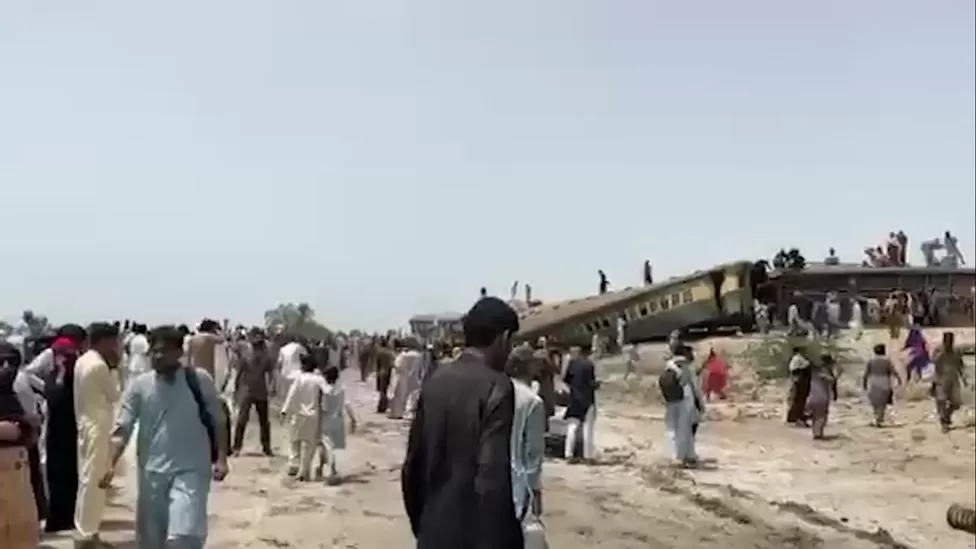
The local media has reported a tragic train derailment in southern Pakistan has resulted in the deaths of at least 15 people and left dozens injured.
The incident occurred near Sahara railway station in Nawabshah, approximately 275km (171 miles) away from Karachi, the country’s largest city. Several coaches of the Hazara Express overturned, leading to a devastating scene of twisted wreckage.
Wounded passengers have been swiftly transported to nearby hospitals for medical attention, as rescue teams work tirelessly to free people trapped in the overturned coaches. The gravity of the situation has prompted the deployment of army rescue teams to assist in the rescue efforts.
In response to the disaster, an emergency has been declared in the main hospitals in Nawabshah and the surrounding districts of Sindh.
Social media videos captured the aftermath of the accident, showing numerous people gathered at the accident site, with some passengers managing to climb out of the overturned coaches.
Khawaja Saad Rafique, the Federal Minister for Railways and Aviation, stated that the primary focus would be on rescue operations before investigating the cause of the tragic accident.
It is worth noting that accidents on Pakistan’s aging railway system are not uncommon. In the past, there have been several unfortunate incidents, including a train collision in Sindh province in 2021 that claimed the lives of at least 40 people and caused injuries to numerous others.
Over the years between 2013 and 2019, local media reports have recorded the deaths of 150 individuals in similar railway incidents.
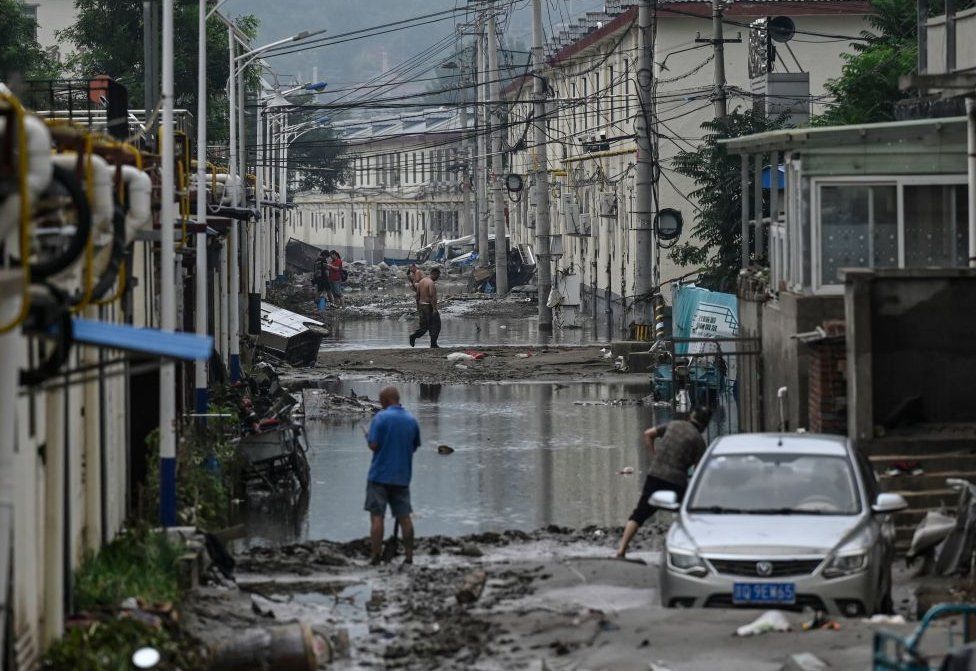
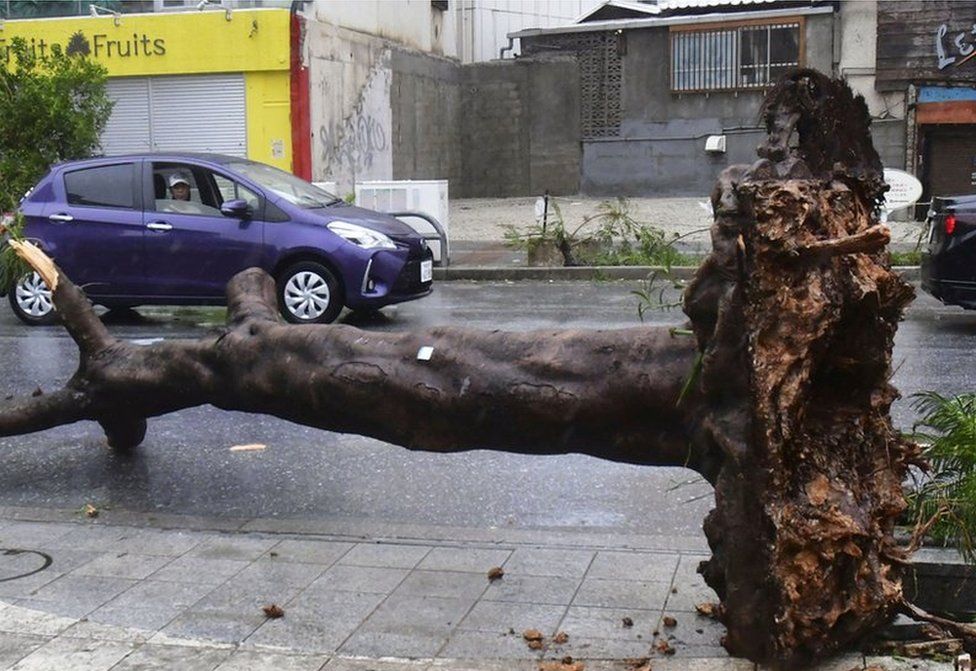
Large areas of East Asia have been inundated by storms that brought unusually heavy rain and fierce gusts so early in the north Pacific typhoon season, with China among the worst affected nations.
The quantity of rain that fell during the last week in Beijing alone surpassed a record that had stood for 140 years.
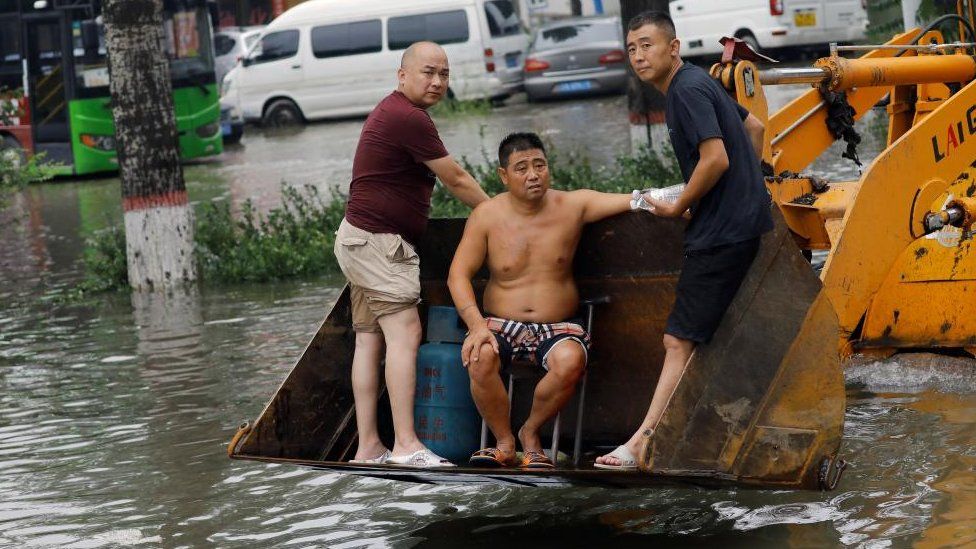
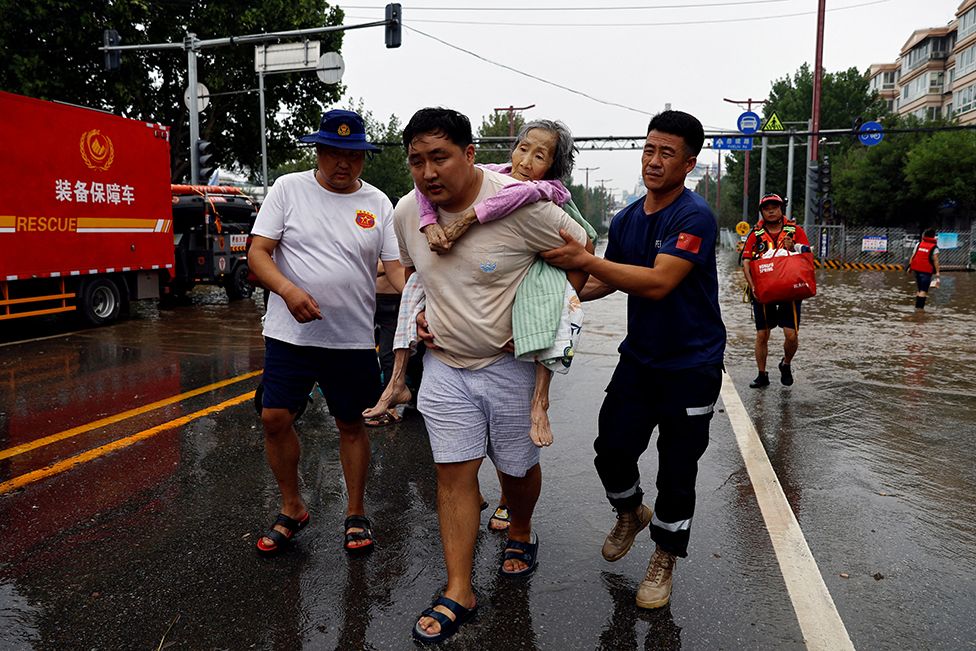
As Doksuri, a previous super typhoon, flooded China’s northeast, residents of Beijing and the nearby province of Hebei fled their houses on inflatable boats and trucks.
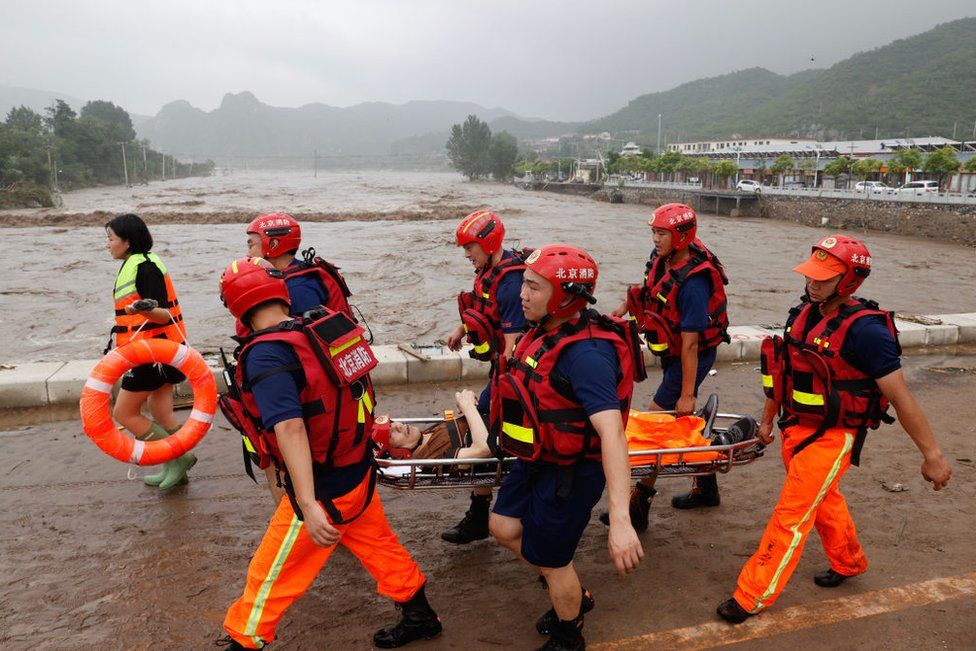
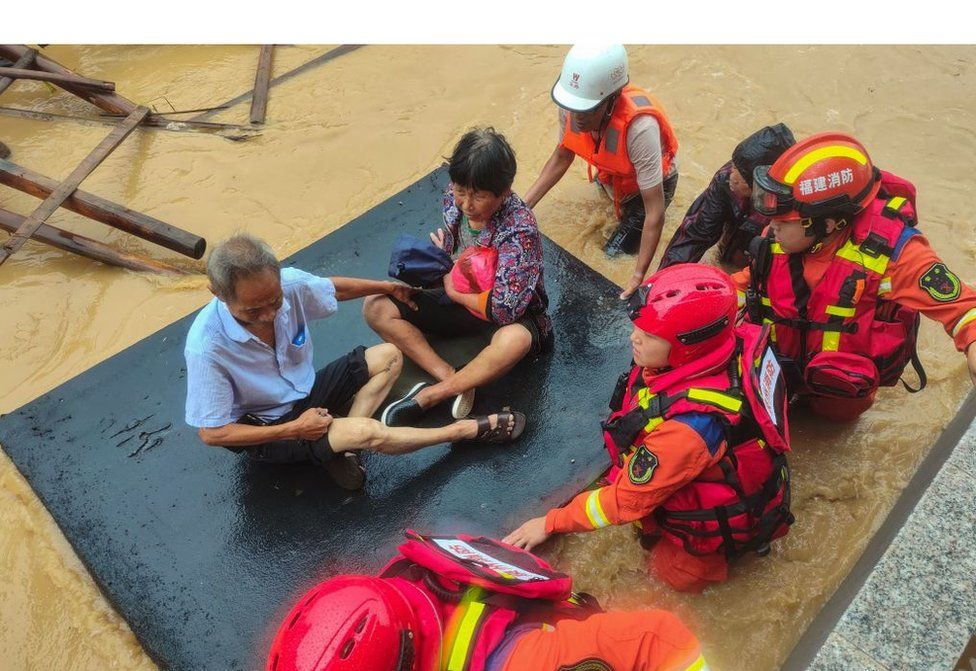
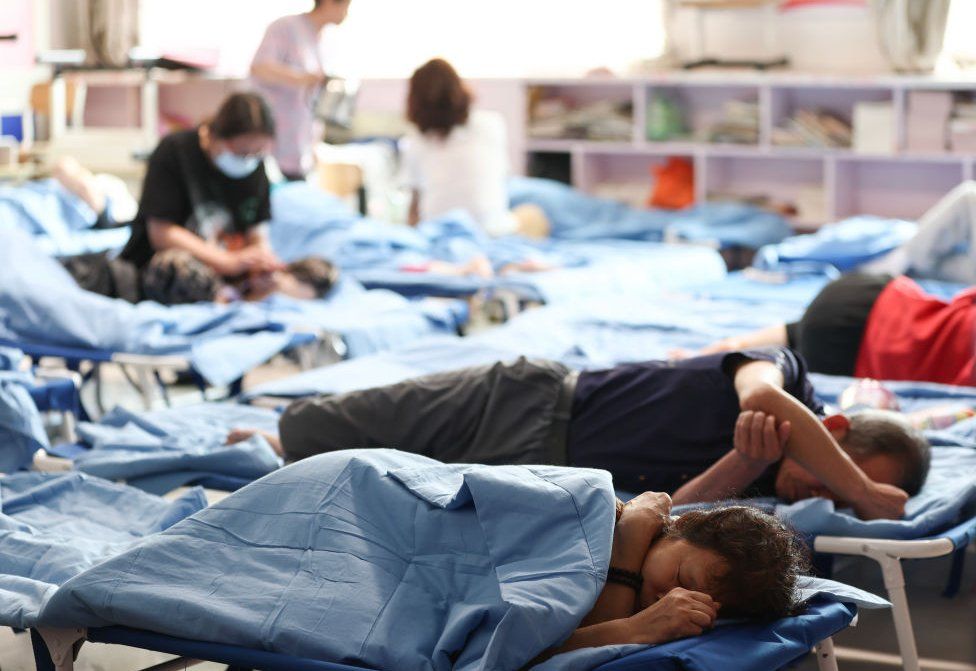
Authorities have evacuated millions of people, and at least 10 individuals have perished and 18 are still missing.
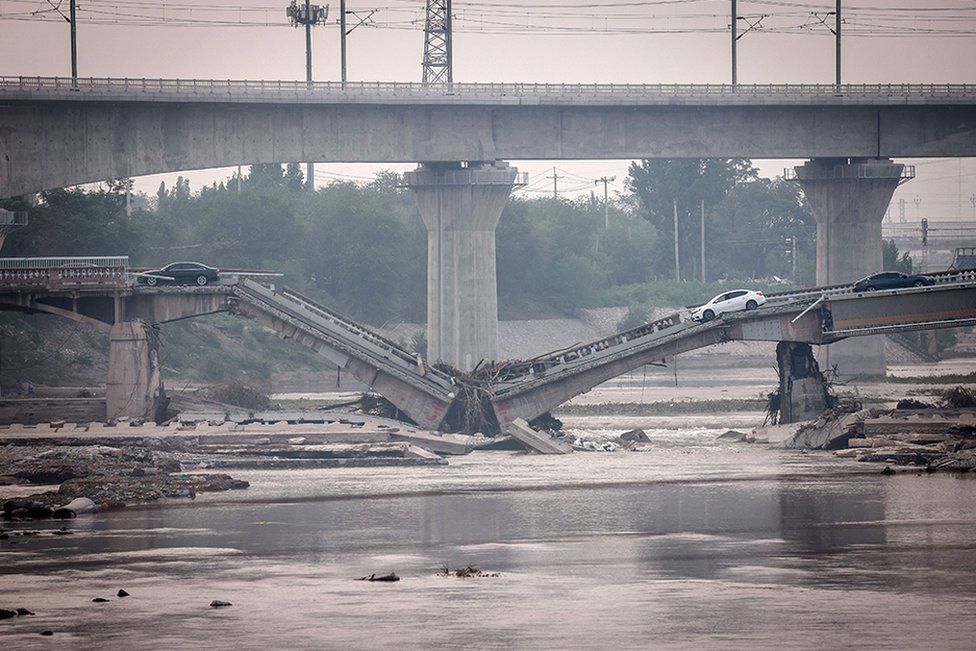
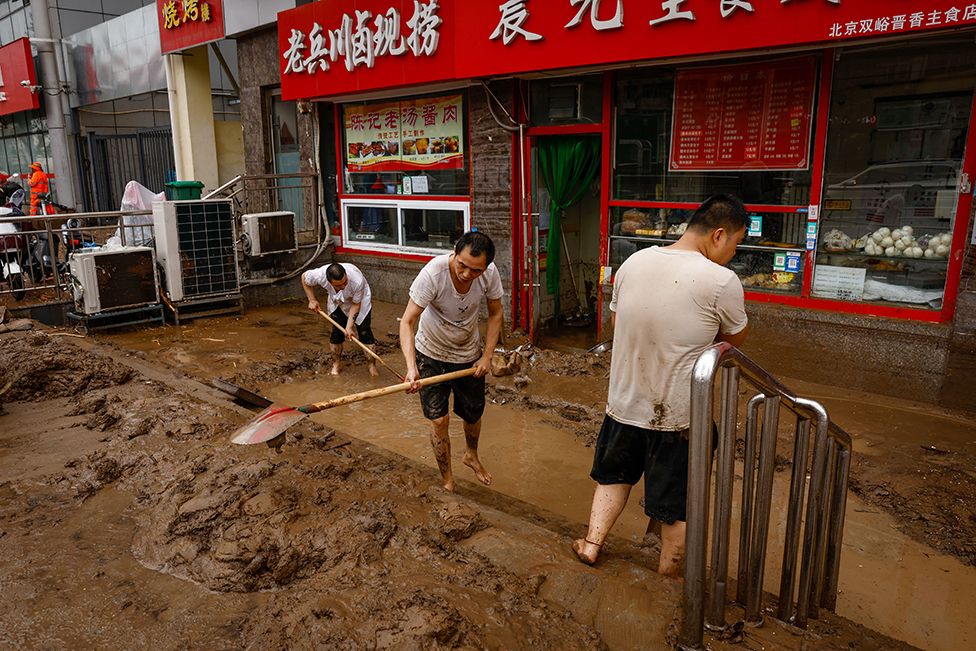
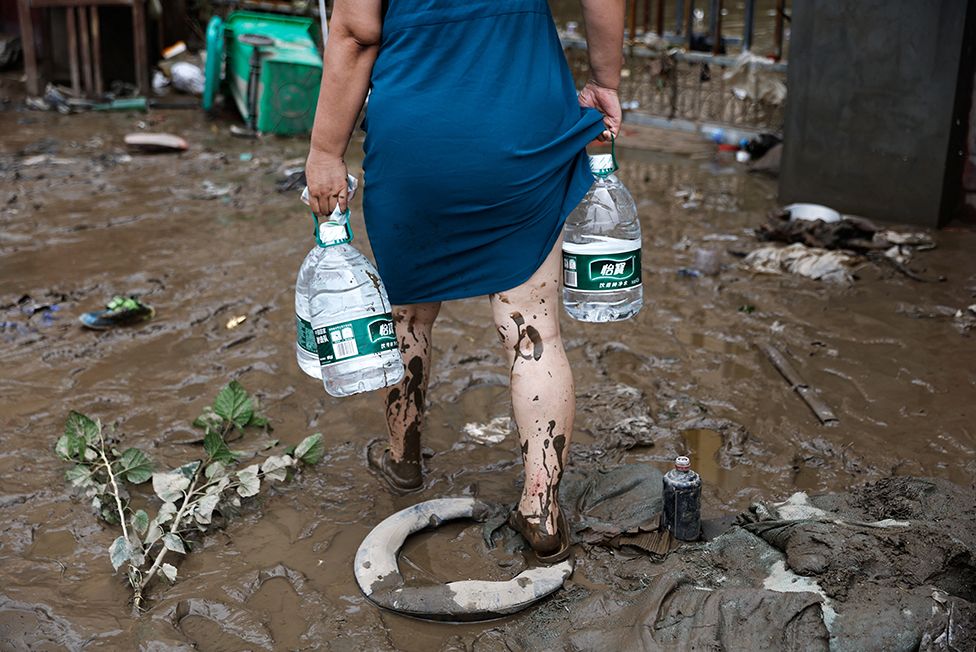
Image caption,People stand on a front loader after the rains and floods in Zhuozhou, Hebei province, ChinaImage caption,Mentougou District, Beijing, ChinaImage caption,An evacuation in Quanzhou, Fujian province, ChinaImage caption,Beijing, ChinaImage caption,A temporary shelter in Longquan Primary School of Mentougou district, Beijing, China.
The floods damaged roads and bridges, submerged cars and destroyed construction sites.
Doksuri slammed into China last weekend and drenched the north-east for most of the week. The region had barely recovered from typhoon Talim the week prior.
Then, there’s the threat of typhoon Khanun out at sea off China’s east coast, which threatens to intensify rains in areas hit by Doksuri.
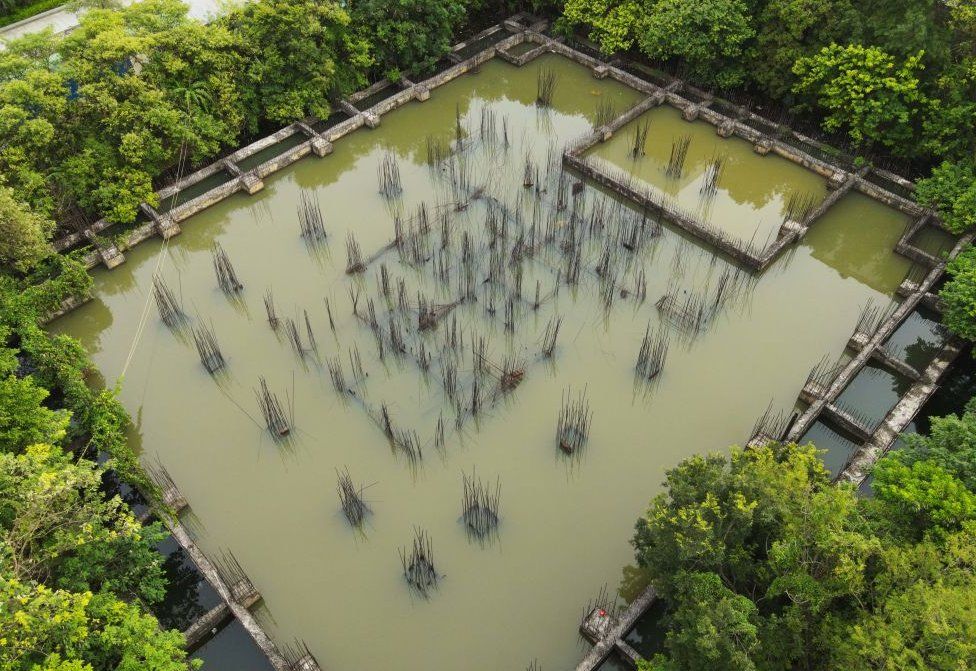
Image caption,Fengtai District, west of Beijing, ChinaImage caption,Beijing, ChinaImage caption,Uncompleted residential buildings were swamped in Beihai, Guangxi, China
In areas where the floods have subsided, residents have started shovelling mud out of their homes. The following three photos were also taken in Beijing.
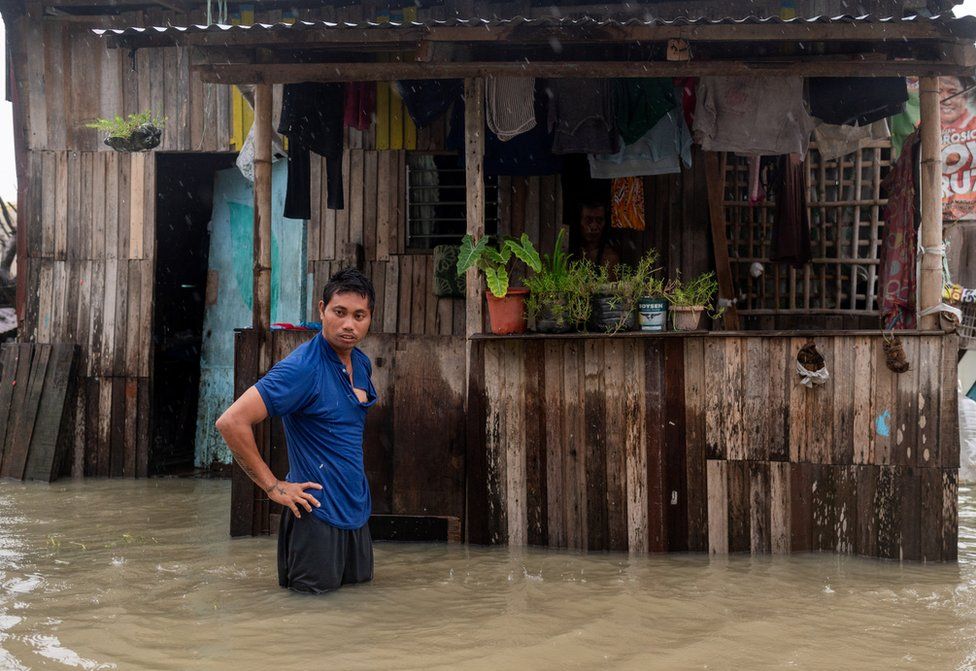
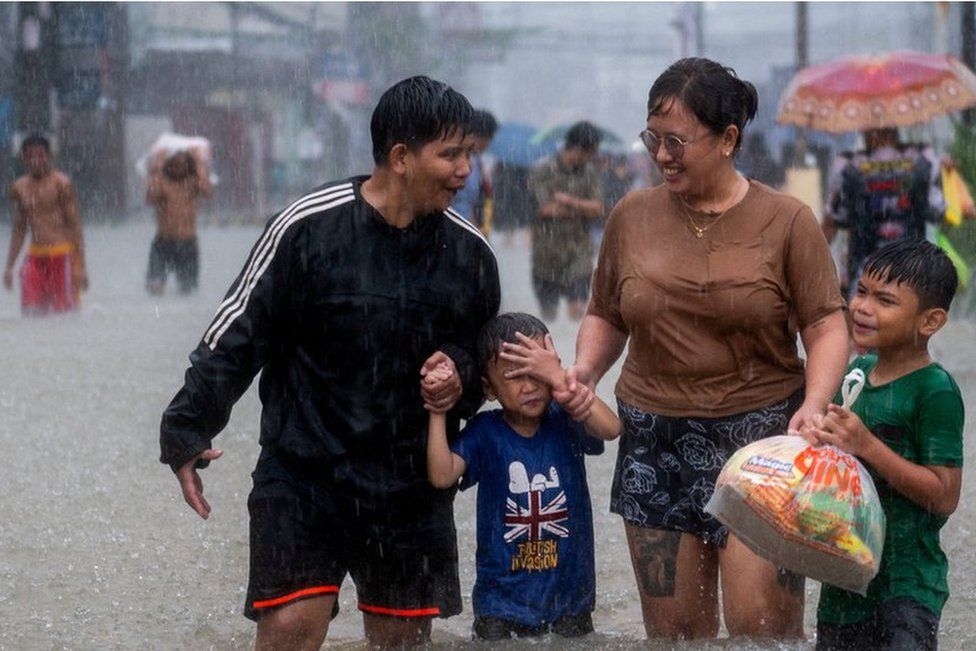
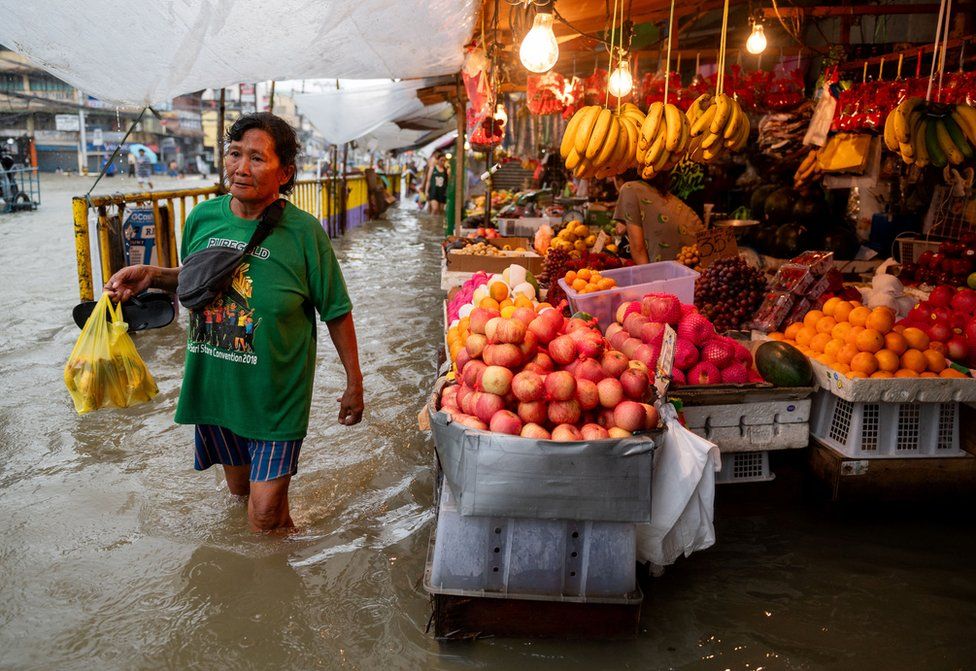
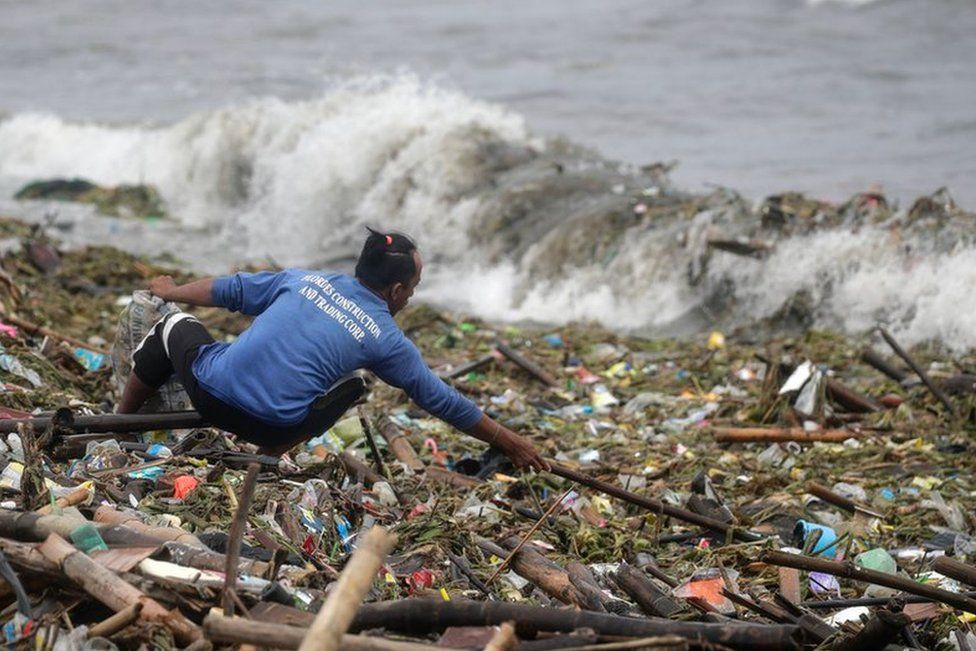
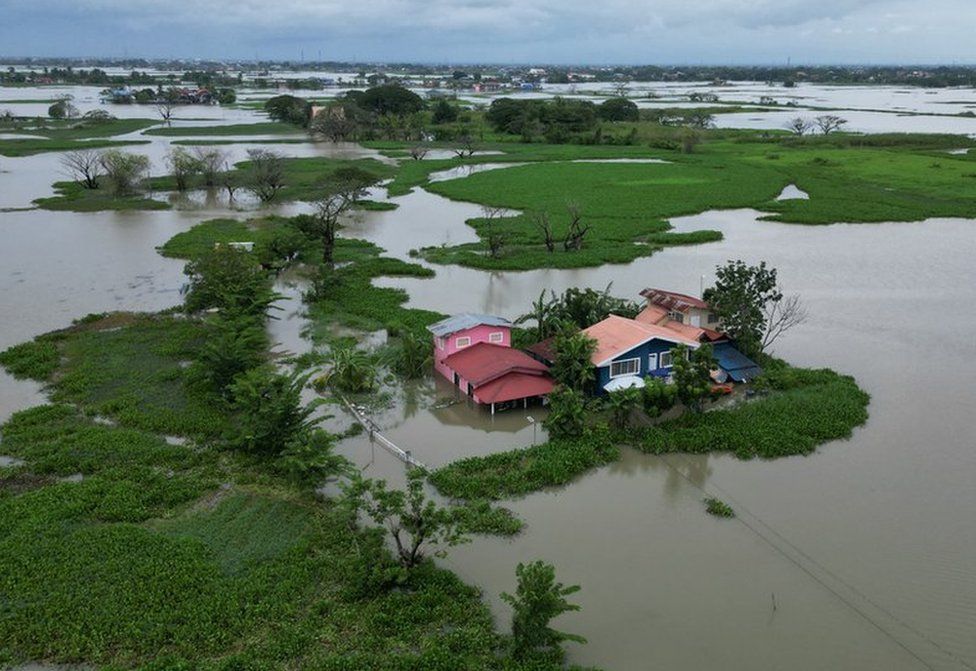
The waterlogged scenes also played out in the Philippines, where Khanun, Doksuri and Talim exacerbated seasonal monsoon rains.
While storm-weary Filipinos went about with as much of their daily routines as they could, the typhoons highlighted perennial problems of flooding in the capital, Manila, and its suburbs of Bulacan and Pampanga.
Image caption,Balagtas, Bulacan province, PhilippinesImage caption,Balagtas, Bulacan province, PhilippinesImage caption,Balagtas, Bulacan province, PhilippinesImage caption,A man collects washed up rubbish along the shore of Manila Bay, PhilippinesImage caption,Calumpit, Bulacan Province, Philippines
Slow-moving Khanun lashed Okinawa in the middle of the week and threatens to curve back to mainland Japan while intensifying rains in China.
It cut power to one-third of Okinawa in its wake and shut the airport for a day during peak tourism season.
Typhoon Khanun led to offices and schools being shut for a day in Taiwan.
Image caption,Naha, OkinawaImage caption,Most stores are closed in this residential area of Taipei, Taiwan
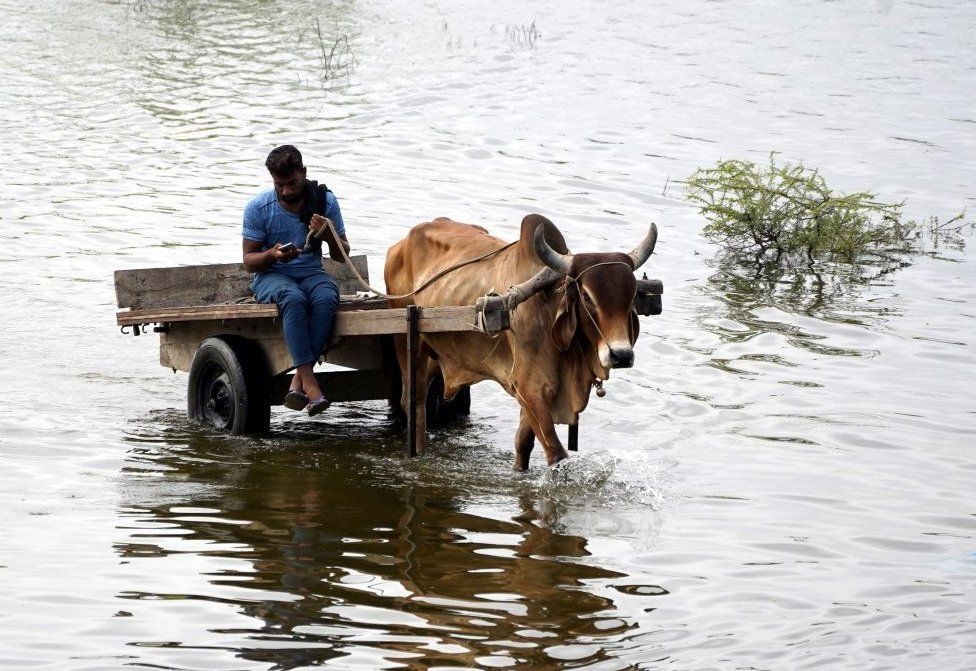
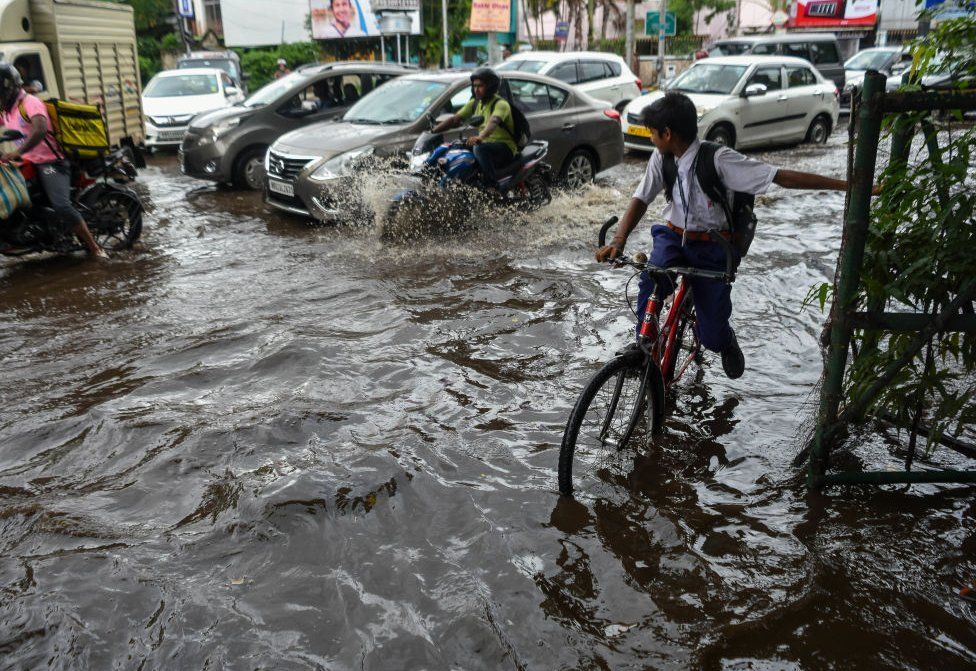
Meanwhile, India is in the middle of a heavy monsoon season that has waterlogged parts of the country.
In the first two weeks of July alone, floods and landslides there have killed almost 100 people in the north.
Image caption,Ajmer, IndiaImage caption,Kolkata, IndiaImage caption,Kolkata, India
The Aflao Sector Command of the Ghana Immigration Service has issued a plea to Volta fishers, urging them to refrain from crossing to Togo in canoes for fishing, as such actions could attract undesirable migrants into Ghana.
Assistant Superintendent of Immigration (ASI), Justice Kudzo Normeshie, who oversees Immigration Professional Standards and Ethics at the Command, expressed concern over some fishers from the region’s coastal districts crossing into neighboring Togo for fishing activities. He emphasized the importance of understanding the security implications associated with this practice.
ASI Normeshie made this call during a durbar attended by fisher associations and groups, representatives from civil society, traditional authorities, and other stakeholders in the fishing industry.
The occasion marked the end of the 2023 closed fishing season at Adina, Ketu South, organized by the Ministry of Fisheries and Aquaculture Development (MoFAD) and the Fisheries Commission in collaboration with the U.S. Agency for International Development (USAID).
The purpose of this initiative was to lift the month-long ban on fishing for artisanal and inshore fleets, aimed at recovering the fast-depleting fish stock.
The Immigration officer explained that the practice of fishers crossing to Togo might encourage counterparts on the other side to use their canoes for illegal activities, such as smuggling undesirable migrants, human trafficking, and drug trafficking.
He emphasized the emergence and risk of complex security issues, including violent extremism and cross-border crimes, which should be a shared concern among all stakeholders. Safeguarding the nation’s peace and security requires collective responsibility.
Mr. Maxwell Koffie Lugudor, the Municipal Chief Executive for Ketu South, expressed concern about the lack of marine officers to secure the Volta Region’s coastline from sea crimes and fishing violations.
He stressed the importance of their presence to deter and punish perpetrators of such infractions, including those who might evade the closed fishing season by fleeing to Togo.
The Municipal Chief Executive also appealed to MoFAD for support in assisting fishers severely affected by devastating tidal waves by providing Yamaha outboard motors to help them resume their livelihoods.
He also requested a constant supply of premix fuel for fishers to embark on fishing expeditions.
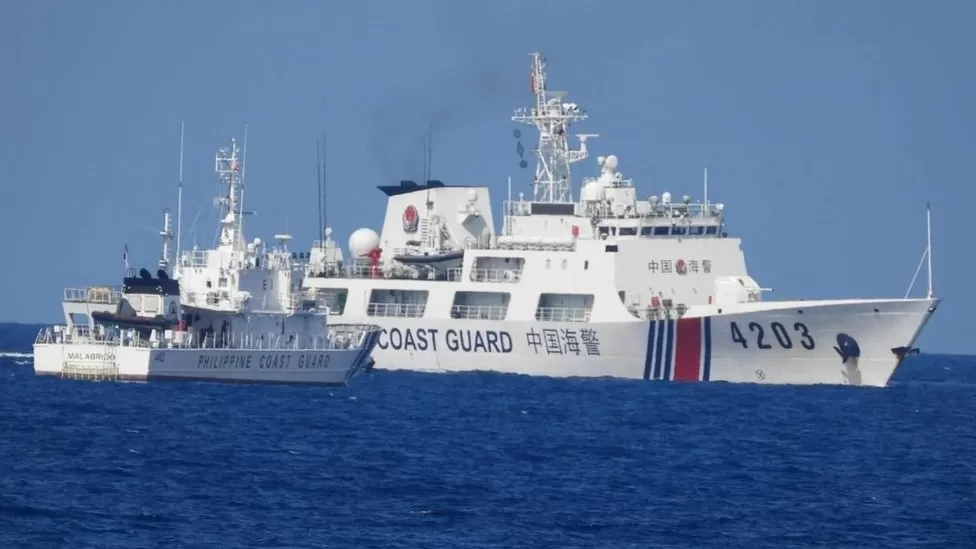
The Philippine Coast Guard has accused its Chinese counterpart of stopping its ships in the disputed South China Sea and firing water cannons at them.
It said that this incident occurred as its ship escorted boats carrying supplies for Filipino military stationed on a disputed Spratly Island.
The US condemned Beijing’s “dangerous actions”, also blaming Chinese “maritime militia” for the incident.
Regarding the alleged incident, China has not made any public comments.
The Spratly Islands, which are also partially claimed by the Philippines, are included in Beijing’s almost total claim to the South China Sea.
Additionally, Malaysia, Vietnam, Brunei, and Taiwan have countervailing claims.
The incident took place on Saturday while PCG vessels were traveling to Second Thomas Shoal in the Spratly Islands, according to a statement.
It added that the actions taken by China were “excessive and unlawful” and that they also broke international law.
The US Department of State has stated that “our Philippine allies” have its support.
“Firing water cannons and employing unsafe blocking manoeuvres, PRC [China’s] ships interfered with the Philippines’ lawful exercise of high seas freedom of navigation and jeopardised the safety of the Philippine vessels and crew,” the department said in a statement.
China has disregarded the ruling of an international arbitration court, which declared its claim to almost the entire South China Sea as unfounded.
In April, a BBC team aboard a PCG (Philippine Coast Guard) ship witnessed firsthand instances of Chinese harassment.
The South China Sea has become a major global hotspot, particularly amid escalating tensions between the United States and China in recent years.
The strategic access to these waters plays a crucial role in defending Taiwan, especially as China’s claims over the self-governed island have become more assertive.
Moreover, the waterways facilitate approximately $5tn (£4tn) of global trade each year, leading to concerns that China’s expanding presence in the region could potentially impede commerce.
The Rent Control Department has invited Ghanaians to submit memoranda regarding the draft rent bill for consideration. In 2022, the Cabinet approved the draft rent bill and forwarded it to parliament for discussion.
Mr. Emmanuel Kporsu, the Public Relations Officer for Rent Control, emphasized the importance of receiving memoranda from individuals, groups, and stakeholders to refine the new rent bill.
He encouraged all concerned Ghanaians to actively participate in the review process and share their recommendations and expectations with their respective members of parliament, as the House prepares to debate the draft bill.
The proposed bill includes provisions that make it unlawful for landlords to demand rent in advance for more than one month in a monthly lease or tenancy less than one month, and for more than one year in a year tenancy exceeding one year.
Any tenant found paying rent in excess of one year after the bill becomes law will be in violation of the legislation.
Mr. Kporsu highlighted that the new bill is the result of thorough discussions and proposals, aiming to bring much-needed improvements to the rental sector.
He also pointed out that the existing rent law, enacted 59 years ago, has become outdated and needs to be replaced to better serve the current needs of tenants and landlords.
“As parliament debates the bill, we encourage Ghanaians to submit their suggestions and memoranda.”
This suggestion can be made to your MP, the Ministry of Works and Housing, and the Rent Control Department.
Ghanaians should take advantage of this opportunity to submit suggestions before the bill is considered and passed. We don’t want a situation where the law is approved and Ghanaians complain about not being consulted,” Mr Kporsu said.
In the Kasese District near the Uganda-Democratic Republic of Congo (DRC) border, numerous residents are facing the threat of starvation as a result of insecurity caused by suspected Allied Democratic Forces (ADF) rebels.
According to these residents, the fear for their safety escalated after the devastating attack on Mpondwe-Lhubiriha Secondary School on June 16, which tragically claimed the lives of over 40 people, including 38 children. Many individuals abandoned their gardens in the DRC to seek refuge, leaving them exposed to hunger. While the exact number of affected residents remains unknown, the situation is dire.
Previously, these residents used to cross the DRC through porous borders and rivers to cultivate their gardens. However, due to the prevailing insecurity, Ugandan security forces have tightened control over the borders, now permitting only recognized crossing points for anyone attempting to enter Congo.
One resident, Ms. Rebecca Kyakimwa, aged 50, revealed that her two-acre garden is situated in Domena Village, DRC. Regrettably, despite the crops in her garden, including cassava, sweet potatoes, and yams, being ready for harvest, she and others are unable to access their gardens due to safety concerns.
“Since the ADF rebels incident happened in Kasese, I cannot access my garden anymore because of the insecurity in Congo,” she said.
For fear of being targeted by the rebels in their attacks, Mr. Manasi Kakuhi was forced to leave his garden close to the border.
His 10-person family now risks going hungry since they have lost their main source of food.
“When you want to cross to DRC using the main channel, you are required to pay US$ 10,000 ($2.78) at the border and many of us don’t have that money. We also fear losing our lives,” he said.
“We sometimes hear gunshots at night, and I fear risking my life going to harvest crops from my gardens. We have nothing to eat at home and we are only living at the mercy of God,” he added.
The business community has been impacted by the unrest in the DRC.
Daniel Bwambale used to deal in shoes from the DRC, but his business has now been put on hold due to the current unrest there.
Elon Musk announced that X, formerly known as Twitter, will cover the legal expenses of individuals who face unfair treatment from their employers due to their activity on the social media platform.
In a message to users on Sunday, Musk assured that the financial assistance provided by X would have no limits. He encouraged users to inform the platform if they have experienced any form of discrimination or retaliation for their posts or likes.
The social media platform recently underwent a name change, transitioning from Twitter to X.
Elon Musk has been vocal about being a “free speech absolutist” and has criticized the platform’s content moderation policies prior to his involvement with it.
When he announced that he was taking over Twitter in April last year, Mr Musk said “free speech is the bedrock of a functioning democracy, and Twitter is the digital town square where matters vital to the future of humanity are debated”.
Elon Musk sues anti-hate campaigners
The company that runs Twitter recently disclosed that it was suing an anti-hate group whose research criticized the website.
According to studies by the Center for Countering Digital hatred (CCDH), hatred and misinformation were “spreading like wildfire on the platform under Musk’s ownership.”
X Corp charged CCDH with “unlawful acts” in order to “improperly gain access” to its data.
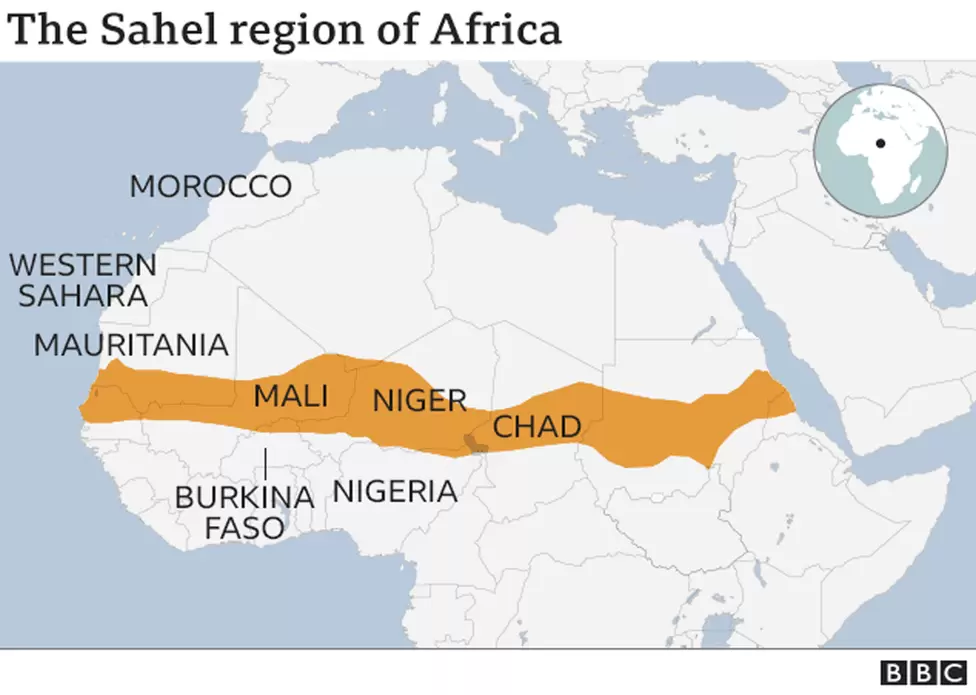
Niger has now joined the ranks of West African countries where the military has taken control, following the footsteps of Burkina Faso, Guinea, Mali, and Chad – all of which were former French colonies.
Interestingly, since 1990, a significant 78% of the 27 coups in sub-Saharan Africa have taken place in Francophone nations, prompting some analysts to question whether France, or the lingering effects of French colonialism, bear responsibility for these events.
Many of the coup plotters themselves appear to support this notion. For instance, Colonel Abdoulaye Maiga, who assumed the role of prime minister in Mali under the military junta in September 2022, vehemently criticized France, implying a connection to the country’s political upheaval.
Criticising “neocolonialist, condescending, paternalist and vengeful policies”, Mr Maiga alleged that France had “disowned universal moral values” and stabbed Mali “in the back”.
Anti-French vitriol has also flourished in Burkina Faso, where the military government ended a long-standing accord that allowed French troops to operate in the country in February, giving France one month to remove its forces.
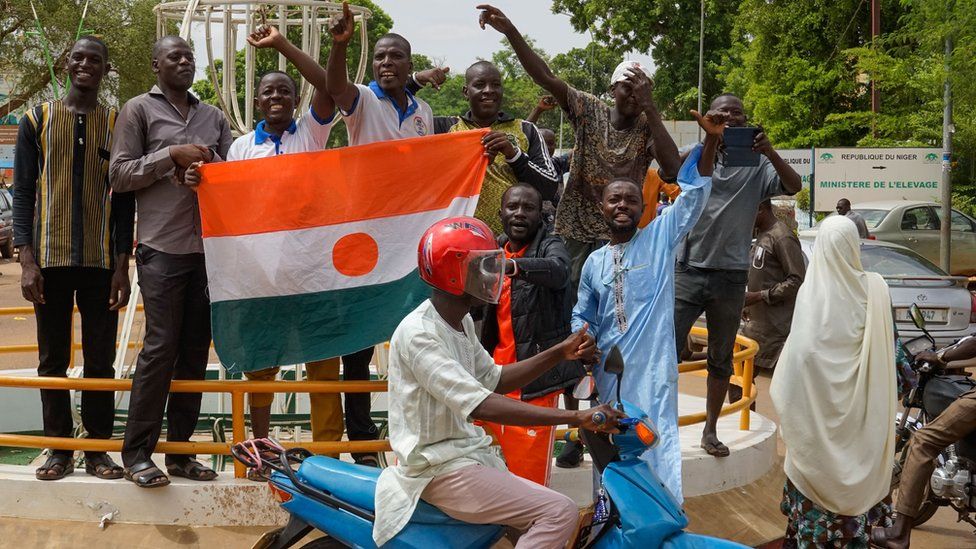
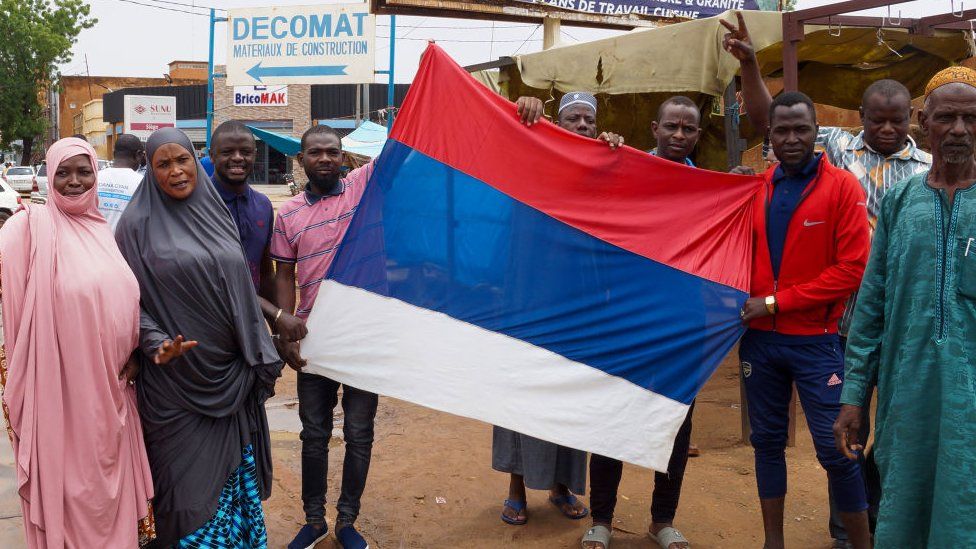
In Niger, which neighbours both countries, allegations that President Mohamed Bazoum was a puppet for French interests were used to legitimise his removal from power, and five military deals with France have since been revoked by the junta led by Gen Abdourahmane Tchiani. Partly as a result, the coup was followed by popular protests and attacks on the French embassy.
The historical record provides some support for these grievances. French colonial rule established political systems designed to extract valuable resources while using repressive strategies to retain control.
So did British colonial rule, but what was distinctive about France’s role in Africa was the extent to which it continued to engage – its critics would say meddle – in the politics and economics of its former territories after independence.
Seven of the nine Francophone states in West Africa still use the CFA franc, which is pegged to the euro and guaranteed by France, as their currency, a legacy of French economic policy towards its colonies.
France also forged defence agreements that saw it regularly intervene militarily on behalf of unpopular pro-French leaders to keep them in power.
Image caption,Demonstrators in Niger also condemned neighbouring countries that have imposed economic sanctions since the coup
In many cases, this strengthened the hand of corrupt and abusive figures such as Chad’s former President Idriss Déby and former Burkinabe President Blaise Compaoré, creating additional challenges for the struggle for democracy.
Although France did not intervene militarily to reinstate any of the recently deposed heads of state, all were seen as being “pro-French”.
Worse still, the relationship between French political leaders and their allies in Africa was often corrupt, creating a powerful and wealthy elite at the expense of African citizens.
François-Xavier Verschave, a prominent French economist, coined the term Françafrique to refer to a neocolonial relationship hidden by “the secret criminality in the upper echelons of French politics and economy”. These ties, he alleged, resulted in large sums of money being “misappropriated”.
Although recent French governments have sought to distance themselves from Françafrique, there are constant reminders of the problematic relations between France, French business interests and Africa, including a number of embarrassing corruption cases.
It is therefore easy to understand why one Nigerien told the BBC that: “Since childhood, I’ve been opposed to France… They’ve exploited all the riches of my country such as uranium, petrol and gold.”
Such scandals were often swept under the carpet while France’s African political allies were strong, and France’s military support helped to maintain stability.
In recent years, the ability of France and other Western states to ensure order has deteriorated, leaving them increasingly vulnerable to criticism.
Despite considerable funding and troops, the French-led international response to Islamist insurgencies in the Sahel region has failed to enable West African governments to regain control of their territories.
This was particularly significant to the fate of civilian leaders in Burkina Faso and Mali because their inability to protect their own citizens created the impression that French support was more of a liability than a blessing.
In turn, growing popular anger and frustration emboldened military leaders to believe that a coup would be celebrated by citizens.
Yet, for all of the mistakes France has made in its dealings with its former colonies in Africa over the years, the instability Francophone states are currently experiencing cannot be solely laid at its door.
It has hardly been the only former colonial power to prop up authoritarian leaders abroad.
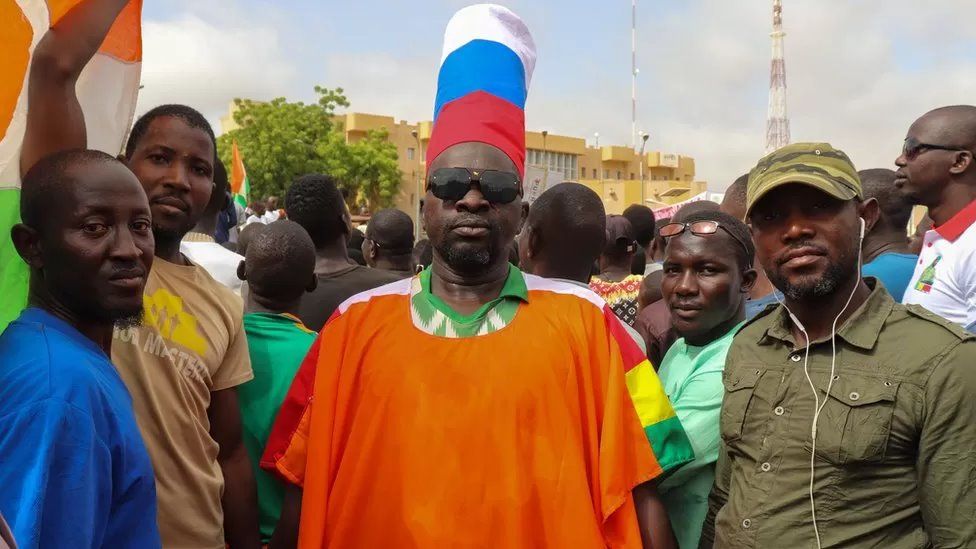
Image caption,Some of those opposed to French involvement in Niger have shown their support for Russia instead
During the dark days of the Cold War, the UK and the United States helped prop up a number of dictators in return for their loyalty, from Daniel arap Moi in Kenya to Mobutu Sese Seko in what was then Zaire, now the Democratic Republic of Congo.
The strong relationship between coups and the former colonial power was also much less prevalent in previous eras. Four of the countries that have seen the highest number of coup attempts since 1952 are Nigeria (8), Ghana (10), Sierra Leone (10), and Sudan (17), which all experienced British rule.
While the recent trend of coups in Francophone states may reflect the legacy of Françafrique coming home to roost, it has also been underpinned by “unprecedented” levels of insecurity in parts of West Africa and the Sahel region, with “armed groups, violent extremists and criminal networks” undermining public confidence in civilian governments, according to the UN.
Each of the coups over the last three years has also been driven by a specific set of domestic factors that demonstrate the agency of African political and military leaders.
In Mali, the background to the coup included an influx of extremist forces following the the collapse of the Libyan state in 2011, allegations the president had manipulated local elections, and mass anti-government protests orchestrated by opposition parties in the capital.
The trigger for the coup in Niger appears to have been President Bazoum’s plans to reform the military high command and remove Gen Tchiani from his position.
This is a strong indication that the coup was not really intended to strengthen Nigerien sovereignty, or to aid the country’s poorest citizens, but rather to protect the privileges of the military elite.
The mixed motives of recent coups are well demonstrated by the speed with which many of the new military governments have sought to replace one problematic relationship with an external ally with another.
At the recent Russia-Africa summit in St. Petersburg, leaders from Burkina Faso and Mali declared their support for President Vladimir Putin and the invasion of Ukraine.
As in the past, the beneficiaries of these global alliances are likely to be the political elite rather than ordinary citizens. There are already reports that in May, troops from the Wagner group, in alliance with Putin’s government at the time, were responsible for the torture and massacre of hundreds of civilians in Mali as part of anti-insurgency operations.
Reducing French influence is therefore unlikely to be a straightforward boon for political stability, and in decades to come we may well see a new generation of military leaders attempting to legitimise further coups on the basis of the need to rid their countries of malign Russian influence.
Leonard Mbulle-Nziege is a research analyst at Africa Risk Consulting (ARC) and Nic Cheeseman is the director of the Centre for Elections, Democracy, Accountability and Representation at the University of Birmingham.
Deputy Chief Executive Officer of the National Petroleum Authority (NPA), has said that Perry Okudzeto, the Cylinder Recirculation Model (CRM) programme is scheduled for implementation in September this year.
Under the CRM, residents of Accra and other selected areas in the country will no longer be required to own a cylinder to access Liquefied Petroleum Gas (LPG) for their domestic and commercial needs.
“Filled LPG cylinders will be kept at exchange points for customers to pay for the content and pick up the filled cylinders after registering with their National Identity Card”.
The National Petroleum Authority (NPA) and its partners, under the supervision of the Ministry of Energy, will lead the implementation of the Cylinder Recirculation Model (CRM), according to Mr. Perry Okudzeto, the Deputy Chief Executive Officer of NPA.
During a media briefing in Accra regarding the planned implementation of the CRM, Mr. Okudzeto stated that the program is set to commence in September, starting in Accra and Kumasi, with gradual expansion to cover the entire country.
He emphasized that the CRM would coexist alongside the current distribution model until its complete phase-out, and a dedicated 50-member committee has been formed to work on the CRM.
Furthermore, Mr. Okudzeto noted that the LPG Marketing Companies are actively involved in the committee, and their valuable inputs have been incorporated into the CRM framework.
“All industry players have been engaged, their ideas have been taken on board and the framework has been designed with their input and are ready to offer their support to ensure the success of the project,” he stressed
According to Mr. Okudzeto, the CRM’s implementation aims to provide safe, clean, and environmentally friendly LPG to at least 50% of Ghanaians by 2030.
“It is also meant to improve access to LPG, improve safety in the distribution of LPG and increase adoption of LPG.
“Additionally, it is a policy shift to stop the unnecessary loss of lives and property as well as gas filling stations, mostly due to human error.”
According to Mr. Okudzeto’s explanation, cylinders obtained from manufacturing firms would be delivered to bottling plants to be filled.
The filled cylinders will be delivered in bulk to exchange depots where they will be stored and sorted before being delivered in batches to cylinder exchange terminals where customers can register and pay for any quantity for both domestic and commercial consumption.
“Specialised trucks will be used to transport the filled cylinders from the bottling plants to the retail stations or exchange points, where consumers will exchange their empty cylinders for filled ones”.
According to Mr. Okudzeto, the program had been successfully piloted, the system had been streamlined, and the infrastructure had been put in place to ensure the safe delivery and use of LPG throughout the operational areas. He added that registration with the Ghana card at the exchange points was necessary to have data on consumers for traceability.
“The NPA commissioned a pilot programme with the existing infrastructure. The pilot programme was done in the Eastern Region around the Kwaebibem area, in Ashanti Region in the Obuasi zone and then in the Northern Region in the Yendi zone. The programme taught us quite a number of lessons and that has gone into shaping the framework for the implementation of the new policy,” he said.
Four CRM Bottling facilities, including the Blue Ocean and Newgas facilities as well as the GOIL Bottling Plant in Tema and Kumasi, were ready to launch, according to Mr. Okudzeto.
The cylinders will be produced and supplied statewide by the APPEB Cylinder Manufacturing Company in Awutu Senya, SIGMA Cylinder Manufacturing Company in Accra, and the Ghana Cylinder Manufacturing Company at Spintex. All three companies are prepared for the deployment.
“So far, since 2017, the first step had been to construct bottling plants that will be the main pivot around which the policy will operate since under the new policy, cylinders are going to be filled with LPG and sent to exchange points for distribution,” Mr Okudjeto stressed.
President of Ukraine, Volodymyr Zelensky have said tha a Russian “guided bomb” struck a blood transfusion facility in northeastern Ukraine, killing one person and injuring several others.
The number of those killed or injured in the attack that took place in the Kharkiv region on Saturday was not disclosed by Volodymyr Zelensky.
“This war crime alone says everything about Russian aggression,” he said.
Russia has made no remarks. It has previously refuted any claims that it has committed war crimes or targeted civilians.
The BBC has not been able to verify the report.
Two months in, Ukraine’s big offensive is slower than it hoped
Saturday night’s attack occurred in the Kypiansk area.
The city of Kupiansk and nearby settlements were seized by Russian troops in the first few days of Moscow’s full-scale invasion of Ukraine, launched in February 2022.
The area was liberated during a Ukrainian counter-offensive last September.
In a post on social media, Mr Zelensky described the perpetrators as “beasts”.
“Defeating terrorists is a matter of honour for everyone who values life,” he added.
President Zelensky reported that on Saturday, Russia conducted a missile attack on an aeronautical company operated by the Motor Sich group in the western Khmelnytskyi region.
These Russian strikes occurred in the context of Moscow’s accusation against Ukraine of targeting a Russian tanker in the Black Sea with a drone attack, resulting in damage to the engine room of the Sig tanker in the Kerch Strait. Fortunately, there were no injuries among the 11 crew members on board during this incident, marking the second sea drone attack within two days.
Russian tanker hit in attack near Crimea
The Kerch Strait connects the Black Sea and the Sea of Azov, separating Crimea – Ukraine’s peninsula annexed by Moscow in 2014 – and Russia’s Taman peninsula.
Ukraine has not publicly commented. But a Ukrainian security service source told the BBC a sea drone had been used.
In a demonstration of support for the democratically-elected government of President Mohammed Bazoum in Niger Republic, the Economic Community of West African States (ECOWAS), a prominent West African regional organization, has directed Nigeria to temporarily close its border with Niger.
This directive was made public through a press statement delivered by Nigeria’s Acting Comptroller General of Customs, Bashir Adeniyi.
The situation in Niger, following the military coup that ousted President Bazoum, has prompted ECOWAS to call for restrictions on movement along the border areas.
As a result, the Nigerian government has taken the necessary steps to comply with ECOWAS’ directive and temporarily halt cross-border activities with Niger Republic.
Acting Comptroller General Adeniyi emphasized that the closure aims to ensure the safety and security of Nigerian citizens and fellow ECOWAS member states. He urged those who typically travel through Niger Republic to reach Libya to remain at home for their own safety.
Only Nigerians returning to their home country are allowed to cross the border during this period.
To enforce the border closure effectively, the Nigeria Customs has deployed its personnel to block any unorthodox roads that might be used by foreigners attempting to infiltrate the country through alternative routes. This measure is taken to maintain the integrity of the border closure and protect the interests of both Nigeria and ECOWAS at large.
“You know Sokoto and Niger Republic, we are a homogeneous society, with the same language, religion and culture, but we have a colonial boundary which we must respect,” he added.
President Nana Akufo-Addo has designated Evans Aggrey-Darkoh as the new head of the Civil Service of Ghana, succeeding Nana Kwasi Agyekum-Dwamena.
Before assuming this new role, Dr. Aggrey-Darkoh held the position of chief director at the Ministry of Parliamentary Affairs.
In a letter signed by the Secretary to the President, Nana Bediatuo Asante, it was stated that Dr. Aggrey-Darkoh has a period of 14 days to indicate his acceptance of the appointment or decline it.
“Pursuant to Article 193(1) of the Constitution and Section 6 (1) of the Civil Service Act, 1993(PNDC 327), I am pleased to inform you that the President has appointed you to act as the head of the Civil Service, pending receipt of the constitutionally required advice from the Public Services Commission.
“I take this opportunity to congratulate you on your appointment,” the letter says.
Supporters of New Patriotic Party (NPP) Presidential hopeful, Dr. Mahamudu Bawumia, based in the United Kingdom (UK), have undertaken a philanthropic initiative by constructing a borehole for Banso D/A basic school in the Ahanta West District of the Western Region.
The decision to provide this essential water facility was prompted by a publication on Joy News’ Samuel Kojo Brace’s Facebook wall, which highlighted the poor state of water access for the children in the area.
Under the guidance of Okyere Darko, the group known as ‘UK for DMB’ pledged to commence the project and made assurances to the committee, headed by Kojo Brace and consisting of the chief, headteacher, a teacher, and other members, that the necessary funds would be provided to complete the borehole.
Bismark Asante, the spokesperson for the group, expressed gratitude to all who contributed financial donations towards the project on behalf of Vice President Dr. Bawumia.
He emphasized the importance of everyone, especially those in the diaspora, supporting such initiatives to make the country better, as governance is a collective responsibility.
Mr. Asante urged those with the means to extend their support to address generational issues in communities, stressing that waiting solely for the government to solve all problems is not a practical approach.
A private legal practitioner, Martin Kpebu, has brought to light some revelations concerning the ongoing controversy involving the former Minister of Sanitation and Housing, Cecilia Abena Dapaah, regarding an alleged theft of $1 million, 800,000 euros, and an undisclosed amount in cedis.
During an appearance on TV3’s Key Point program, Martin Kpebu disclosed that he possesses certain information about the case that contradicts the statement made by the Attorney-General.
According to Kpebu, the Attorney-General’s assertion that the police made a mistake by attributing the entire $1 million to Cecilia Dapaah on the charge sheet is not accurate. He claimed that the documents he has access to support the police’s statement, and furthermore, Cecilia Dapaah reported the case last year.
Kpebu mentioned that despite repeated advice from her lawyers to withdraw the case, Cecilia Dapaah persisted with it, fearing potential repercussions if the matter were to become public.
“Theoretically, the police can make a mistake because we all make mistake. It is no brainer that the police can make a mistake but I don’t believe that it was a mistake. I don’t buy it because I happened to understand a few more of the facts which are not in the public domain,” he said.
“Madam Dapaah had been crying about this money. This money went to a certain court last year and madam Dapaah came to testify, crying about the money. She was crying that there was money in this bag and that bag. Lawyers advised Madam Dapaah to leave this matter. They told her that be careful because it could lead you into some trouble,” he added.
“She kept indicating that it was about money but the court kept saying that madam you’ve not brought a case of money to this court. This is not a mistake. Wait for the OSP. After the search they found something significant. What I know is no consistent with what the A-G is saying. Madam Dapaah was crying about this money last year,” he said.
What the A-G said
The Office of the Attorney-General and Ministry of Justice has provided legal guidance to the police concerning the theft case involving former sanitation minister, Cecilia Abena Dapaah.
Following the initial hearing of the case on July 20, the police reached out to the A-G’s office, seeking advice on how to proceed with the matter.
In a comprehensive nine-page advice obtained by GhanaWeb, Deputy A-G Alfred Tuah-Yeboah outlined the series of events leading to the alleged theft of funds, as reported by the former minister and her husband, Daniel Osei Kuffuor – the complainants.
The advice critically examined the police docket and the charges brought against the five individuals accused in the case.
It emphasized the need for further investigations into the exact amount of money involved. Additionally, it recommended the separation of some charges and, in certain instances, the complete dismissal of charges against specific accused individuals. For one accused person, the A-G urged the dismissal of all charges brought against them.
Dr. Lawrence Boakye, a senior lecturer at the University of Ghana (UoG), claims that the spirit of patriotism that inspired Ghanaians’ ancestors to battle for our freedom and the right to self determination has been lost and needs to be rekindled.
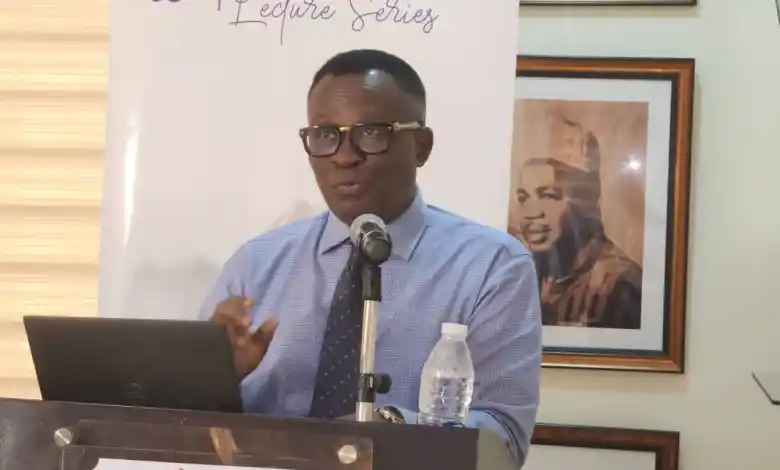
He made the comment while presenting a talk on “African Nationalism: A Road to Patriotism and the Attainment of Self-determination” as part of the Danquah Institute (DI) Founders’ Day lecture series today, August 4, 2023.
African Nationalism
Dr Boakye started his lecture by tracing the history of African Nationalism noting that it is “a subjective feeling of kinship or affinity shared by people of African descent. He explained further that Africa Nationalism “is a feeling based on shared cultural norms, traditional institutions, racial heritage, and a common historical experience”.
Dr Antoinette Tsiboe-Darko, the Executive Director of DI, in discussion with Dr Lawrence Boakye at the Founders Day lecture series
One enduring historical experience shared by nearly all Africans Dr Boakye said, “was colonial oppression”, stressing that “along with this sense of shared identity is a collective desire to maintain one’s own cultural, social, and political values independent of outside control”.
“It is worth stressing that African nationalism, like nationalism elsewhere in the world, is not new; it is as old as ancient times. In fact, in Africa, contrary to a common view in Western scholarship of Africa, African nationalism predates colonialism” Dr Lawrence Boakye stated.
Following his discussion on the continent of Africa’s struggle for independence, Dr. Boakye focused on Ghana and the “big six,” who are widely regarded as the founding fathers of the Republic of Ghana.
Rekindle spirit of patriotism
The UoG department for the study of religions lecturer in his presentation said “in our Gold Coast we discover the UGCC ( United Gold Coast Convention) we remember the six leaders (Kwame Nkrumah, Ebenezer Ako-Adjei, Edward Akufo-Addo, Joesph Boakye Danquah, Emmanuel Obetsebi-Lamptey, and William Ofori Atta).
“These founders of our dear nation understood that the continued existence of colonialism was going to prevent the development of international economic co-operation, impede the social, cultural, and economic development of our nation, and will militate against the ideals of universal peace.
“For these reasons these men and many others risked their lives for this country. Today (4 August) as we celebrate these courageous compatriots, we reflect on their heroism, sacrifice, leadership, the restoration of patriotism, and the establishment of the foundation of our democracy” Dr Boakye said.
“In our circumstances today, the only factor that can enkindle our passion to contribute magnanimously to the development and progress of our nation is our patriotic values. When we lack this quality, we throw our own destiny into chaos, dishonesty, apathy, and dismay, turning back our clock of development.
“Our founders Day celebration comes with a clarion call to ask ourselves some vital questions regarding our country Ghana. As a people what are our aspirations, what do we lack as a nation, what is our vision for Mother Ghana. May the resilience of our past leaders continue to enkindle and awaken the civil consciousness, the desire for identity, freedom, unity, self-determination, and the restoration of the spirit of patriotism” he further stated.
“Our Self-determination and our patriotism are integral to the realization of our freedoms. “It is only through the realization of this very basic right of people to determine, with no compulsion or coercion, holding onto their own future, political status and independence that we can begin to address other important factors such as dignity, justice, progress and equity,” Dr Lawrence Boakye added.
Danquah Institute
The Danquah Institute regards itself as guardians and ambassadors of the political and economic thought known as liberalism and how its promotion must benefit Africa and the African as members of the greater global community.
Dr Antoinette Tsiboe-Darko, the Executive Director of DI, reviewing a document with Dr Lawrence Boakye
DI seeks through its work to advance Danquah’s beliefs in individual freedom, rule of law, multiparty democracy, liberal economics and equality of opportunity and ensure they inform the actions of the democratically elected Government of Ghana and governments of other African states.
Through the examination, evaluation, publication and promotion of alternative and novel policy approaches based on these principles, together with a critical analysis of existing political prescriptions, DI aims to improve the quality of the decision-making process and the efficaciousness of social, political and economic policies in Ghana and other African states.
The Institute’s intention is to make a courageous, imaginative, constructive and coordinated contribution to nation-building and Africa’s development in general, with the purpose of enhancing the life of every individual citizen and, through this, the development of the Ghanaian, Ghana, the African and Africa.
DI actively seek to promote its ideas, principles, values and ideals within Ghana and the African continent. In subscribing diligently, explicitly and conscientiously to those values of democracy, rule of law, human rights, free movements of people, ideas, cultures, knowledge, technology, goods and services, the institute can strengthen the building up of the power of Africa as an economic and peaceful, self-disciplined and cooperative community of opportunities and individual liberties, a force of reason and initiative to be reckoned with and emulated in the global arena.
The institute aims to achieve this through public advocacy of the ideas and philosophy of J B Danquah, particularly among Ghana’s youth, as well as research into governance, the economy and the media.
It also undertakes publication of research papers, seminar proceedings and a periodic journal, the DI Quarterly, organises events to provide a forum to debate and evaluate policy prescriptions, and networks with like-minded think tanks and groups across the African continent.
DI has been a rich breeding ground for leaders of the New Patriotic Party (NPP), including its pioneers such as Nana Bediatuo Asante, Saratu Atta, Samuel Abu Jinapor, Dr Mustapha Hamid, Sophia Kokor, Eugene Arhin, Herbert Krapa, Dr Stephen Amoah, Annor Dompreh, and Ambassador Mike Oquaye Jr and many more.
The digital revolution has transformed industries, spawning internet enterprises and remote labor, among other things.
However, with the emergence of the gig economy and freelancing revolution, the traditional borders of employment have blurred, enabling agile, project-based engagements and empowering individuals to diversify income streams through platforms such as Uber, Airbnb, and Upwork.
According to Akenten Appiah-Menka University of Skills Training and Entrepreneurial Development (AAMUSTED) Financial Economist lecturer, the environment of disruption is not without its facilitators and enigmas.
Dr Evans Duah stated that, while automation and AI improve efficiency, they have spurred discussions about the significance of upskilling and adaptability in the face of potential job displacement.
“Concomitantly, the COVID-19 pandemic has accelerated the adoption of remote work and virtual collaboration tools, prompting us to reconsider company culture, work-life balance, and office space utilization,” he said.
In a gig economy, the labor market is characterized by the prevalence of independent contractors and freelancers who take on temporary and part-time roles rather than traditional full-time permanent positions. While gig workers enjoy flexibility and independence in their work arrangements, they often sacrifice job security.
The term “gig economy” originates from the music industry, where performers schedule individual or short-term commitments, known as “gigs,” at various locations.
Within this gig economy, many individuals engage in part-time or temporary jobs, or operate as independent contractors. This economic model has led to the emergence of cheaper and more efficient services, exemplified by platforms like Uber or Airbnb, which are embraced by those seeking such benefits.
Dr. Duah has observed that entrepreneurship and startups are driving their own narratives of change in this dynamic gig economy.
“Entrepreneurship has become more accessible, with lowered barriers for startups and an influx of venture capital and incubators fostering innovation.”
Dr. Duah was speaking at Innovation, Creativity and Entrepreneurship Seminar at the Beulah SDA Church at Kwadaso Estate near Kumasi in the Ashanti Region.
Franklin Karikari, the Director of Business Support NEIP, spearheaded a three-day conference that attracted more than 300 daily participants. The attendees gathered with the aim of acquiring knowledge and devising plans for their future financial freedom endeavors.
In the United States, a significant gig economy is already taking shape, with forecasts indicating that as much as a third of the working population engages in some form of gig work.
Experts, including Dr. Duah, project that the number of gig workers in Ghana will rise as these types of jobs foster independent contracting opportunities, with many not requiring freelancers to work from a traditional office setting. This trend makes gig workers more inclined to take up part-time roles and work from the comfort of their homes.
“Gig work is one of the catalyst to unemployment reduction. Ghana should maximize this opportunity as we are well positioned to leverage this. I expect an incremental change but I would prefer the government to accelerate it for an exponential increase,” he further explained.
“…. a wave of creative minds and innovators are taking center stage, fueling disruptions across sectors, from E-commerce and Retail to Healthcare Innovation. The vanguard of young professionals is weaving Sustainability and Energy Innovation into the fabric of their pursuits, redefining industries with renewable energy sources, electric vehicles, and groundbreaking health tech,” he indicated.
In the midst of these changes, he explained that the emphasis on social entrepreneurship and sustainability has paved the way for enterprises that have a positive societal impact while also making a profit.
“In this orchestra of change, Lifelong Learning and Upskilling underscore the urgent need for continuous education to remain relevant in a rapidly evolving landscape. Concurrently, Blockchain and Cryptocurrencies emerge as the quintessential disruptors in the arena of digital identity, as the discourse surrounding Data Privacy and Security serves to underscore the paramount importance of safeguarding sensitive information.”
Dr. Duah urged young professionals to be visionary as well as adaptable.
An entrepreneur and CEO of Bencyn Pharmacy, Benjamin Anyanah Achelisewine, has raised an important concern about government payroll workers who find themselves burdened with multiple expensive loans.
According to him, the main reason behind this financial predicament is their lack of knowledge on how to invest their income wisely to generate returns.
Instead of utilizing their earnings to accumulate profits, these workers tend to spend money meant for the future, leading to a cycle of debt. Mr. Achelisewine attributed their inability to invest to their limited financial knowledge and the absence of a proper financial plan to guide them in managing their finances prudently and lucratively.
In an interview with Bolgatanga-based Dreamz FM, Mr. Achelisewine, who has diverse investments across various sectors beyond pharmaceuticals, emphasized that many government workers are experiencing severe financial strain due to their debts. Consequently, they are forced to resort to further borrowing to meet their basic needs and provide for their dependents.
“If you go to those who are in the formal sector – and I have gone there several times – if you are talking to them [about investment], they are rather interested in taking tomorrow’s money and spending it today,” he said.
“After all, they have an income coming…Because they have a regular income, the financial institutions come with juicy things: “If you take this you can get this’. They take those monies and they get stuck. Some of them will find it difficult to come out because each time they are getting out, they will go and get another loan,” he lamented.
He said that in order to get out of debt and become financially independent, one could identify a society issue, gather the appropriate information, and then resolve the issue by offering goods or services. One will achieve financial success in this method.
Mr. Achelisewine is passionate about encouraging financial literacy and supporting the success and scaling up of enterprises.
The French foreign ministry announced on Saturday that France will assist ECOWAS’s attempts to undermine the military coup in Niger.
On Saturday, Niger Prime Minister Ouhoumoudou Mahamadou and the Niger ambassador met in Paris with French Foreign Minister Catherine Colonna.
Earlier, Colonna said the coup leaders in Niamey had until Sunday to hand back power, otherwise a threat by member countries of the Economic Community of West African States (ECOWAS) to stage a military intervention had to be taken “very seriously”.
“The threat is credible,” she said on French public radio.
On Saturday, France did not provide explicit details regarding whether its support would involve military assistance for an ECOWAS intervention in Niger.
On the preceding Friday, ECOWAS announced that its military chiefs had reached an agreement on a potential intervention plan in Niger.
“All the elements that will go into any eventual intervention have been worked out,” ECOWAS commissioner Abdel-Fatau Musah said.
These included “the resources needed, and including the how and when we are going to deploy the force”, he added.
“We want diplomacy to work, and we want this message clearly transmitted to them [the junta] that we are giving them every opportunity to reverse what they have done,” Musah said.
The leaders of the coup have threatened to use force against you.
Mali and Burkina Faso, both under military leadership since 2020, have issued warnings that any regional intervention would be viewed as a “declaration of war” against them.
Russia, which has been expanding its presence in the Sahel region in recent times, expressed the belief that a foreign intervention would not lead to a resolution of the crisis.
In contrast, neighboring countries Benin and Germany advocated for continued diplomacy to de-escalate the situation.
On Friday, the United States announced the suspension of some aid to Niger in response to the coup.
Washington is pausing “certain foreign assistance programmes benefitting the government of Niger”, Secretary of State Antony Blinken said in a statement.
“As we have made clear since the outset of this situation, the provision of US assistance to the government of Niger depends on democratic governance and respect for constitutional order,” Blinken said, adding that Washington would continue to review its foreign assistance as the situation on the ground evolves.
Blinken did not specify what programmes would be affected but said life-saving humanitarian and food assistance, as well as diplomatic and security operations to protect US personnel, would continue.
“We remain committed to supporting the people of Niger to help them preserve their hard-earned democracy and we reiterate our call for the immediate restoration of Niger’s democratically-elected government,” Blinken said.
As a result of conflict that started in April, more than three million people in Sudan have been displaced from their homes. According to the health ministry, measles vaccinations will be given to all children in the nation.
“Most of the displacement camps offer vaccination services through traveling medical teams,” says Health Minister Haitham Ibrahim. The doses were provided by the UN’s children fund, Unicef.
The first states expected to be attacked are White Nile and Sennar. Despite the fact that staffing levels are at 60% due to a shortage of funds, remote areas like Darfur, which has had some of the worst violence, are also reportedly a priority.
It’s unclear how they will handle the ongoing violence between Sudan’s opposing military forces or whether they have been given permission to travel safely so they may perform their duties.
According to Mr. Ibrahim, certain regions have proved more difficult to work in than others.
“Al-Gezira state the vaccination service covers 90% of the children including internally displaced people. In some states the vaccination services dropped from 60% to only 47%.”
With 1,000 cases reported in seven states and several child fatalities, he thinks measles is a big worry.
Some traders, particularly Ghanaian onion vendors, have been left stuck as a result of the Benin border shutdown.
If the border is not opened quickly, these onion vendors worry that their products would spoil before they can sell them on the Ghanaian market.
Therefore, they pleaded with the Ghanaian government to intervene by starting talks with the Beninese government to reopen the border so that stranded traders may enter Ghana.
The Niger coup has sealed down the border with Benin, leaving the drivers of the onions stuck there for days.
The sellers of roughly 15 trucks of onions expressed concern that the onions might spoil if the President did not get involved by speaking with those in charge at the Benin border.
During an interview on Eyewitness News, the spokesperson for the onion sellers association, Yakubu Akpeneda said, “We have loaded onions from Niger, and they have parked at the Benin border, they are now in Benin, but the border has been locked. They said they locked the border because of the Niger coup. On August 2, they promised to open the border at midnight, but we didn’t hear anything.”
“We are calling on the authorities to intervene in the matter, else the onions will rot if they keep long on the road. The authorities should help us by talking to authorities in Benin to open the border for us to bring our onions to Ghana. Our trucks are plenty, the trucks are more than 15. And they are all carrying onions”.
He suggested that the predicament might have an impact on onion pricing in several markets.
Senior officials from around 40 nations, except Russia, will gather for a weekend meeting in Jeddah, Saudi Arabia, with the goal of formulating fundamental guidelines for ending Russia’s invasion of Ukraine.
Volodymyr Zelenskyy, the president of Ukraine, hailed the diversity of nations participating in the negotiations, which got underway on Saturday. This included developing nations that were particularly severely impacted by the rise in food prices brought on by the conflict.
“This is very important because, on issues such as food security, the fate of millions of people in Africa, Asia and other parts of the world directly depends on how fast the world moves to implement the peace formula,” he said.
Last month, Russia took the decision to suspend its involvement in a United Nations-mediated grain agreement, which facilitated the transport of Ukrainian agricultural products through the Black Sea to regions facing food shortages.
President Zelenskyy expressed his aspiration that this move would pave the way for a global gathering of leaders during the upcoming autumn, dedicated to endorsing the principles outlined in Ukraine’s 10-point formula for conflict resolution.
Among the crucial components of Ukraine’s formula are demands for the acknowledgment of its territorial integrity and the removal of Russian forces from areas that Moscow claims to have annexed.
The forum excludes Russia, which has rejected Ukraine’s peace formula. The Kremlin said it will “keep an eye” on the meeting.
Kremlin spokesman Dmitry Peskov said earlier this week that Russia would “need to understand what goals are set and what will be discussed”.
“Any attempt to promote a peaceful settlement deserves a positive evaluation,” he said.
Al Jazeera’s Step Vaessen, reporting from Kyiv, said the summit was important for Ukraine as it presented an opportunity to reach out to nations that have remained neutral, including India and Brazil.
The participation of China, a steadfast ally of Russia, was particularly noteworthy. Vaessen continued, “What Ukraine truly hopes is that China will support Zelenskyy’s peace plan.
China, which claims to be a third party to the war but has come under fire from Western capitals for delaying to denounce the invasion of Ukraine, announced on Friday that it would send Special Envoy for Eurasian Affairs Li Hui to the Jeddah talks.
“We have many disagreements and we have heard different positions, but it is important that our principles are shared,” he said.
A spokesperson for the Chinese ministry, Wang Wenbin, stated that China is committed to collaborating with the international community to actively contribute to finding a political resolution to the crisis in Ukraine.
China and Russia have repeatedly emphasized their strong relationship, particularly after Presidents Xi Jinping and Vladimir Putin declared an extensive partnership in February 2022 during Putin’s visit to Beijing.
However, tensions arose when China’s embassy in Russia criticized the treatment of five Chinese citizens denied entry into Russia, stating that it was inconsistent with the overall amicable relations between the two nations.
Saudi Arabia also played a significant role in the recent talks, expressing its readiness to use its influence to help achieve a lasting peace. As the world’s largest crude exporter and closely aligned with both Russia and Ukraine on oil policy, Saudi Arabia has positioned itself as a potential mediator in the conflict.
Crown Prince Mohammed bin Salman’s rehabilitation on the global stage was facilitated in part by the energy crisis stemming from the Ukraine war. Although isolated following the 2018 killing of Jamal Khashoggi, Saudi Arabia’s stance against Russia’s invasion and annexation in Ukraine has bolstered its international significance.
The recent meeting between key parties follows informal talks organized by Ukraine in Copenhagen in June, which did not yield an official statement.
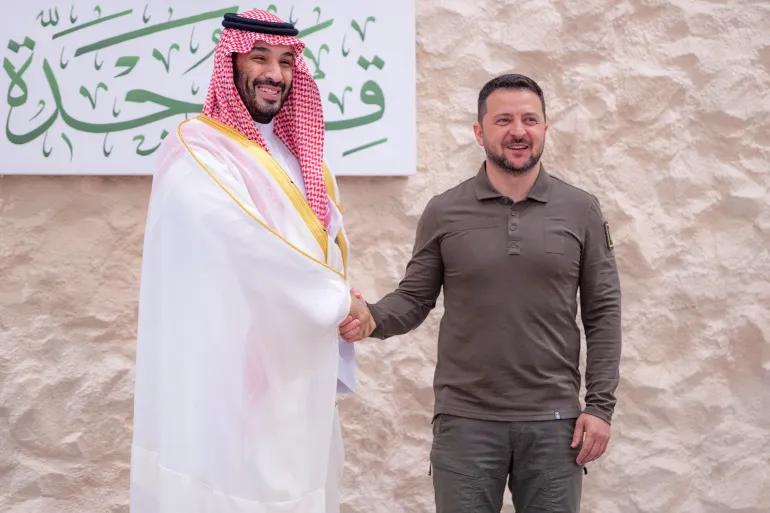
In May, Saudi Arabia hosted Ukrainian President Zelenskyy at an Arab League summit in Jeddah, where he called out some Arab leaders for turning a blind eye to the atrocities of Russia’s invasion in Ukraine.
There is a concerning surge in the number of men inUganda seeking paternity tests, sparking fears of potential family breakups and lasting psychological effects on children.
The topic has become a major subject of debate in the country, triggered by a tabloid newspaper’s publication alleging that a prominent business tycoon, with multiple wives and mistresses, had a dispute with one of his spouses.
The alleged disagreement led the tycoon to request paternity tests, reportedly revealing that he was the biological father of only 15 out of his 25 children.
The tycoon and his family have chosen not to address the issue publicly, and the accuracy of the report remains unverified. Nonetheless, the story rapidly spread, causing significant controversy over the past months.
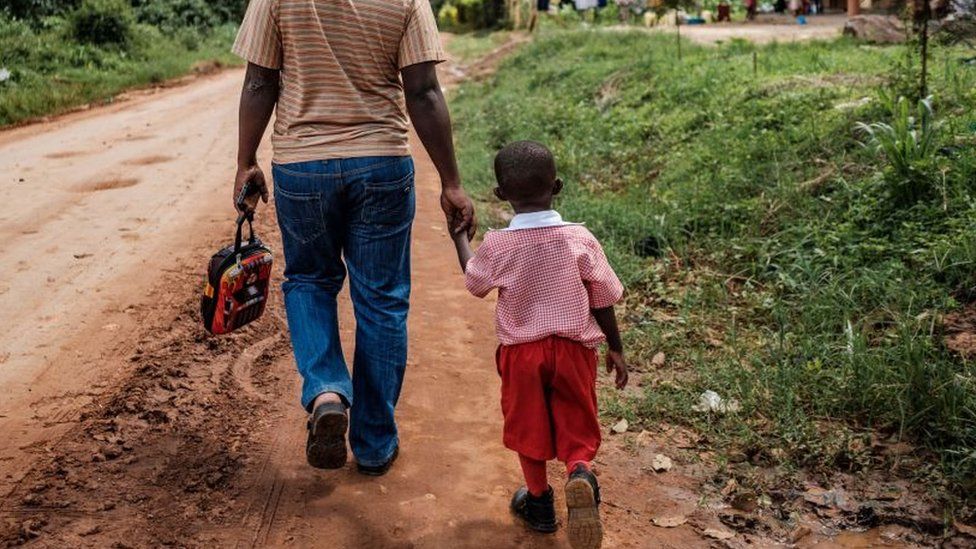
Lawmakers have been compelled to make heartfelt appeals, urging men to reconsider putting their families and children through the emotional trauma of such tests. The situation has prompted concerns about potential family discord and the lasting psychological impact on the affected children.
“Let’s live like our forefathers lived. The child born in the house is your child,” Minister of Mineral Development Sarah Opendi said in parliament. Although she qualified her statement by adding that if a man wanted a paternity test it should be done when a child is born – not when they are grown up.
Most concerningly, the privately owned Monitor daily stated that testing has resulted in domestic violence, with police detaining an Israeli national who lives in Uganda for allegedly killing his wife after DNA results revealed he was not the father of his six-month-old child. The individual isn’t yet facing any charges.
Speaking in mid-July, Ministry of Internal Affairs spokesman Simon Mundeyi claimed that the number of requests for testing, which need collecting the father and child’s DNA, had increased tenfold.
“We used to have on average 10 applicants daily at our government analytical lab. We are now averaging 100 daily and the numbers are still increasing,” he added.
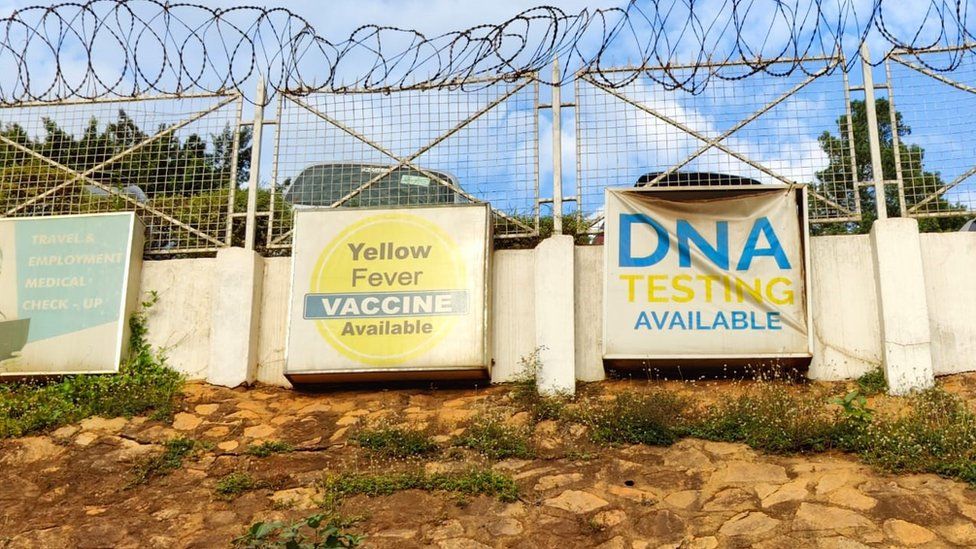
Private clinics also cashed in on the trend, putting up advertisements on the back of taxis and on billboards offering tests.
Image caption,The government is cracking down on DNA testing in private health centres
This raised concern that results may turn out to be wrong, especially after reports surfaced that suspected fake testing kits had been smuggled into Uganda.
The Ministry of Health stepped in to restrict testing to just three state-run laboratories – though the director of public health, Daniel Kyabayinze, said there was more social media hype than a surge in testing.
Nevertheless, steps were being taken to ensure that families received counselling and psychological support when tests were done.
“We have seen social media messages where people think paternity tests are disruptive to families and can cause gender-based violence. We want to make sure that doesn’t happen because of the result which is given,” Dr Kyabayinze told the BBC.
Public opinion has been split in the debate that has raged across Uganda – from bars to Parliament; taxis to Twitter, now known as X.
Expressing his support for tests, Kampala resident Bwette Brian told the BBC: “I think the man has the right to know whether the children are his or not. Children are responsibilities and every child must know the family they are attached to.”
Disagreeing, another resident, Tracy Nakubulwa, said: “I have seen happy marriages and families separate all due to the issue of paternity testing – and children are becoming victims.”
Human rights activist Lindsey Kukunda said the fact that wives sometimes secretly have a relationship with another man, to give her husband a child, “is not new”.
“Our ancestors did it, our grandparents did it, our mothers did it,” she said.
She points out that when couples have difficulty having children, it is often the man who has fertility problems, whereas “in African culture, if a woman can’t provide a man with children, she will be divorced or thrown out of the house”.
“So what these men don’t realise is that the woman that has provided them with children has slept with another man – to give you the child you desire.”
Ms Kukunda accused husbands who seek paternity tests of double-standards.
“It is common for men to have affairs and bring home children – but the wives raise these children as their own,” she said.
Image caption,Most paternity tests in Uganda confirm a biolgical link between fathers and their children
Microbiologist Freddie Bwanga said the state laboratory where he works has not seen a major increase in requests for testing, but greater awareness now exists around the issue.
His experience over the years shows that 60-70% of tests prove a biological link between the father and child.
As for the 30% to 40% who found they were not, the outcome was often beneficial in “helping children to be settled where they are born”.
And, some would argue, testing is better than relying on age-old cultural practices – like smearing cow fat on the umbilical cord, and putting it in a woven basket filled with water.
If it then floats – a cultural researcher pointed out to Uganda’s Monitor newspaper – it means the child belonged to the family.
But Uganda’s state minister for primary health care said there was no need for men to seek paternity tests.
“Anything that you don’t know can’t kill you. If you don’t know that this is not your child, it won’t break your heart. But when you find out your heart will be broken,” Margaret Muhanga said.
John Ackah Blay-Miezah’s elaborate and deceitful scams gained international attention as he swindled high-profile personalities, including presidents, businessmen, politicians, and ordinary people.
His story, chronicled in the book titled “ANANSI’S GOLD: The Man Who Looted the West, Outfoxed Washington, and Swindled the World” by Yepoka Yeebo, unfolds in the backdrop of Ghana’s economic crisis in the 1970s, with soaring inflation and dwindling cocoa production.
Portraying himself as an affluent businessman with connections and vast wealth, Blay-Miezah lured victims with tales of hidden riches left behind by Ghana’s first president, Dr. Kwame Nkrumah.
He claimed that Nkrumah had entrusted him to access tens of thousands of gold bars and immense sums of cash stored in Swiss accounts under strict conditions set by a Trust.
Blay-Miezah’s narrative raised suspicions, leaving doubts about the authenticity of his tale. However, his ability to manipulate and read people, honed from a young age in a coastal village, helped him become a skilled con artist.
A stint in prison exposed him to powerful elites and a radical chaplain, from whom he learned the art of projecting authority and affluence in his speech and mannerisms.
Blay-Miezah’s audacious schemes extended beyond Ghana, attracting fraud accusations in Liberia and drawing the attention of U.S security operatives. Throughout his exploits, he sold the illusion of liberation and the chance to reclaim African ancestral wealth, while in reality, he was swindling and looting from unsuspecting investors.
Despite being wanted for fraud and facing legal scrutiny, John Ackah Blay-Miezah continued to deceive and evade authorities, leaving a trail of loss and deception in his wake.
“He’s full of lies,” a former Ghanaian diplomat said to U.S. prosecutors.
Not only were John Ackah Blay-Miezah’s investment schemes fake, but they were also incredibly intricate, leading his American victims to view them as speculative investments, and others realizing that any returns would likely take years to materialize.
Blay-Miezah was known for his lavish lifestyle, often seen wearing tailored suits, smoking cigars, and driving a white Rolls-Royce. He surrounded himself with a team of security personnel, reputedly former special forces soldiers.
Over a span of 15 years, Blay-Miezah executed these fraudulent schemes, deceiving numerous individuals and amassing millions of dollars. One of his American partners, for example, defrauded at least 300 people, resulting in a total scam of $15 million.
His crimes made him a fugitive, and at one point, a disgruntled investor even traveled to Accra in an attempt to personally confront and reclaim his investment, resorting to violence.
Blay-Miezah’s deceit eventually caught up with him, and he was indicted on multiple counts of wire fraud. While the Ghanaian government showed willingness to extradite him, he managed to escape from a prison in Pennsylvania.
In 1992, John Ackah Blay-Miezah passed away while under house arrest. Even in death, he caused confusion among his family members by convincing them of a non-existent $15 billion stashed in a foreign bank, further illustrating the depth of his deception and manipulation.
Women in Texas with serious pregnancy complications will be temporarily exempted from the southern US state’s abortion ban, a judge has ruled.
Judge Jessica Mangrum said there was a lack of clarity in the legislation, siding with women and doctors who had sued Texas over the ban in March.
Doctors would not be prosecuted when exercising their “good faith judgement” for provision of abortions, she added.
The temporary injunction will be in force until the lawsuit is decided.
Friday’s ruling is expected to be appealed by the state.
The Texas law that bans all abortions except in dire medical circumstances is seen as one of the strictest in the US.
Breaking the ban can carry a $100,000 (£78,000) fine and up to life in prison.
The legislation was introduced in 2022 – shortly after the Supreme Court overturned its 50-year-old Roe v Wade decision, meaning that millions of women across the country lost the constitutional right to abortion.
This case is the first brought on behalf of women who have been denied abortions since then.
The group of women and doctors are suing the state of Texas in the hope of changing the ban, to give doctors more leeway in determining when an abortion is necessary.
Top US court ends constitutional right to abortion
In her ruling in the city of Austin, Judge Mangrum wrote that women were “delayed or denied access to abortion care because of the widespread uncertainty regarding physicians’ level of discretion under the medical exception to Texas’s abortion bans”.
She also said that doctors must be allowed to determine what constituted medical emergencies that would risk a woman’s health or even life.
The temporary injunction is intended to last until the lawsuit is decided. But under Texas law, a ruling is automatically stayed as soon as it is appealed, so it could be blocked once the state appeals.
The Center for Reproductive Rights, which is suing Texas, hailed the ruling.
“Today’s ruling alleviates months of confusion around what conditions qualify as medical emergencies under Texas’ abortion bans, giving doctors permission to use their own medical judgment in determining when abortion care is needed,” the group said.
Lead plaintiff Amanda Zurawski said that “for the first time in a long time, I cried for joy when I heard the news”.
Ms Zurawski says her life was put at risk last year when she was denied an abortion.
She was denied an abortion – then she almost died
A binding interpretation of the current law’s definition of medical emergency is demanded in the case brought against Texas in March of last year.
The Texas attorney general’s office contends that the plaintiffs’ proposed exceptions would essentially make it possible to avoid the ban.
“It would, for example, permit abortions for pregnant females with medical conditions ranging from a headache to feelings of depression,” office lawyers say.
The Aga Khan Hospital in Dar es Salaam has achieved a significant milestone in the treatment of obese patients, eliminating the need for them to seek treatment abroad.
Recently, the hospital successfully performed four weight-loss surgeries between July 24 and 28, signaling the beginning of more similar surgeries in the upcoming months.
In the past, the lack of such specialized services had compelled many Tanzanians and individuals from neighboring countries to incur substantial expenses by traveling abroad for treatment.
In Tanzania, Muhimbili National Hospital’s Mloganzila branch introduced the intragastric balloon placement service in November 2022 as one of the methods to address overweight and obesity. This weight-loss procedure involves placing a saline-filled silicone balloon in the patient’s stomach, helping them lose weight by limiting food intake and inducing a sense of fullness quicker.
The Aga Khan Hospital’s progress aligns with the government’s ambition to position Tanzania as a hub for medical tourism.
According to a report published in the BMC Endocrine Disorders journal, a considerable burden of diseases in Tanzania, including 14 percent of heart failure, 23 percent of ischemic heart disease, 44 percent of diabetes, 70 percent of hypertension, and up to 41 percent of cancer cases, can be attributed to excess body weight.
The report further highlights that Sub Saharan Africa (SSA) is experiencing a rapid shift from a predominantly underweight population to an overweight one. Currently, around 35 percent of SSA inhabitants are affected by excess body weight, with the World Health Organization (WHO) estimating a prevalence of up to 50 percent in urban areas.
According to the International Diabetic Federation (IDF), there were 897,000 reported cases of Diabetes
“Community studies from urban Tanzania have revealed escalating overweight and obesity rates from 24.1 to 34.5 percent and 19.2 to 23.4 percent respectively,” it reads in part.
Dr Mandela Makalala, Internal Medicine Specialist at the hospital said: “Bariatric surgery has shown to be a revolutionary game changer in the field of medicine.”
“Recent studies have shown that bariatric surgery could actually be a long-awaited cure for those people with Type 2 diabetes, and for those who are suffering from obesity, with no diabetes, it could reduce the risks of getting diabetes.”
The hospital attributed its achievements to a successful collaboration with Dr. Syed Tanseer Asgher, a renowned Bariatric surgeon from Pakistan, who possesses more than fifteen years of experience in the field. Dr. Asgher has performed over 3,000 successful bariatric procedures.
Dr. Athar Ali, the Head of Surgery at the Aga Khan Hospital, explained that weight loss surgery encompasses various procedures, including gastric bypass, which involves modifying the digestive system to facilitate weight loss in individuals.
He emphasized that the surgery is a specialized minimally invasive procedure, conducted through laparoscopic (keyhole surgery) techniques, with a primary focus on assisting individuals struggling with severe obesity to achieve significant weight loss while enhancing their overall quality of life and holistic health.
“Obesity increases the risk for various non-communicable diseases such as Type 2 diabetes, heart disease (from high cholesterol levels and high blood pressure), sleep apnea and asthma (from breathing problems), osteoarthritis, and cancer,” he said.
NASA has successfully reestablished full contact with its lost Voyager 2 probe, months ahead of the original expectations, the space agency reported.
Back in July, an incorrect command had altered the spacecraft’s position and severed communication with Earth.
However, on Tuesday, a signal was detected, and an “interstellar shout” – a powerful instruction – allowed the probe’s antenna to realign with Earth.
NASA had initially anticipated a possible self-reset of the spacecraft in October. It took mission controllers 37 hours to confirm whether the interstellar command had been effective, considering Voyager 2’s vast distance from Earth.
Utilizing the “highest-power transmitter,” the space agency sent a precisely timed message during optimal conditions to align the spacecraft’s antenna with the command.
Prior to this breakthrough, the probe had been unable to receive instructions or transmit data due to the severed communication with NASA’s Deep Space Network, an array of large radio antennas scattered across the globe.
On 4 August, NASA confirmed the receipt of data from Voyager 2, confirming its normal operations. The spacecraft, equipped with various scientific instruments, is expected to continue on its planned trajectory through the universe.
NASA’s large dish in Canberra, Australia, had been actively seeking any stray signals from Voyager 2. The first faint “heartbeat” signal was detected during this process. The antenna had been persistently sending the correct command to the spacecraft, hoping for a connection.
Voyager 2 and its twin, Voyager 1, are the only spacecraft to have ventured beyond the heliosphere, the protective bubble of particles and magnetic fields generated by the Sun. Voyager 2 has flown by Neptune and Uranus, while Voyager 1, currently over 15 billion miles away from Earth, holds the record as humanity’s most distant spacecraft.
Even after their power runs out, expected after 2025, both Voyager probes will continue their journey through space.
In 1947, the idea to establish a national bank with central banking functions was conceived in the then Gold Coast, now known as Ghana. Today, that financial institution is none other than GCB Bank, making it arguably the oldest indigenous bank in the country.
The formation of GCB Bank was driven by proposals from prominent politicians in the Gold Coast. Subsequently, in 1949, a select committee of the Legislative Assembly was appointed to investigate the establishment of a national bank with exclusive central banking functions. In 1951, Sir Cecil Trevor was commissioned by the government to examine the possibility of creating a state-owned commercial bank that would finance development projects and act as a reserve bank providing clearing house services.
Following his recommendation, the Bank of the Gold Coast was established in 1952 under the Bank of the Gold Coast Ordinance. It officially commenced operations in 1953 as GCB Bank. Alfred Engleston was appointed to lead the Bank at that time. Initially, the Bank operated in two sections, with one becoming the Bank of Ghana, functioning as a bank of issue and destined to become a complete central bank. The other section was named Ghana Commercial Bank and was intended to evolve into the largest commercial bank with a monopoly on the accounts of public corporations.
GCB Bank started with 27 employees in its first branch, primarily catering to Ghanaian traders, farmers, and business people who faced challenges obtaining financing from expatriate banks at the time.
Soon after Ghana gained independence in March 1957, Alfred Engleston was appointed as the first Governor of the Bank of Ghana. Under his leadership, the Bank of Ghana assumed responsibility for managing the currency and introduced the cedi as the country’s first national currency in July 1958, replacing the old West African currency notes.
In line with Ghana’s independence, the Bank of the Gold Coast was rebranded as Ghana Commercial Bank, taking on the role and functions of government bankers, while assuming financial management of most government departments and public corporations.
While wholly-owned by the Government of Ghana, the shares of the Bank of Ghana were listed on the Ghana Stock Exchange in 1996 when government shareholding stood at 51.17 percent. Presently, government ownership of Ghana Commercial Bank stands at 21.36 percent, with institutional and individual holdings accounting for 78.64 percent, according to the Bank of Ghana.
Between 2013 and 2014, Ghana Commercial Bank underwent a rebranding exercise, resulting in its current name, GCB Bank Limited. It now serves the banking needs of large corporations, parastatal companies, small and medium enterprises, as well as individuals.
Over the years, GCB Bank has experienced remarkable growth, expanding from a single branch in the 1950s to approximately 150 branches and 11 agencies spread throughout the country.
In a shocking turn of events, the democratically elected President of Niger, Mohamed Bazoum, has been ousted from power by the very individuals entrusted to safeguard and uphold his office – the presidential guards stationed outside his palace.
President Bazoum had made history as the first democratically elected leader to succeed another in Niger since its independence in 1960.
However, his presidency was cut short as his captors, the presidential guards, have taken control of the country. They have gone on to suspend Niger’s constitution and have appointed Gen Abdourahmane Tchiani as the new head of state.
Niger holds a significant position in the African region known as the Sahel, which stretches from the Atlantic Ocean to the Red Sea. The area is grappling with ongoing jihadist insurgency and has a history of military rule.
The international community, particularly Western nations, had viewed Niger as a vital pillar against further instability and the spread of Russian influence in the region. Unfortunately, those hopes have been dashed as the recent events unfold.
The crisis in Niger has profound implications, and the situation is closely being monitored by the global community.
Why is Niger important?
From a geographical standpoint, Niger holds the distinction of being the largest country in West Africa.
On the political front, it has been regarded as a beacon of relative democratic stability in recent times, in stark contrast to its neighboring countries, Mali and Burkina Faso, which have experienced military coups.
Strategically, Niger plays a crucial role as it hosts military bases belonging to both France and the United States, making it a significant partner in the global fight against Islamist insurgents.
In fact, the US state department recognizes Niger’s importance, describing it as a linchpin for stability in the Sahel and a reliable counter-terrorism partner against various Islamist groups associated with either Islamic State or al-Qaeda.
Economically, Niger boasts substantial uranium reserves, accounting for 7% of the world’s total supplies. The significance of this radioactive metal is so profound that one of the grandest thoroughfares in the capital, Niamey, is named the Avenue de l’Uranium.
Despite its uranium wealth, the people of Niger continually face challenges, consistently ranking as having the lowest standards of living anywhere in the world.
Why did the coup happen?
The Sahel region is a turbulent and unstable part of the world and democracy is currently in retreat there.
Violent Islamist groups have gained ground by controlling territory and conducting attacks in the tri-border region between Mali, Niger and Burkina Faso.
The mutinous soldiers in Niger have cited this worsening security situation as a reason for their uprising, although Niger was handling the insurgencies far better than Mali and Burkina Faso before their own coups.
The growing unrest has led some to believe that only harsh military crackdowns can solve the problem, hence the popular support that the coup seems to enjoy in some quarters.
However, it is far from clear that a military junta would have greater success in tackling the insurgents than the recently ousted government. The takeovers in neighbouring countries have not made much difference.
Did coups in Mali and Burkina Faso halt jihadist attacks?
Adding to the instability in the region, climate change is causing desertification to spread southwards from the Sahara into the Sahel. Experts say temperatures in the Sahel are rising faster than anywhere else in the world.
What’s the international reaction to the coup?
France, the former colonial power, has been stern in its condemnation of the military takeover.
A statement by the French foreign ministry said President Bazoum was the country’s sole leader, adding that France “does not recognise the authorities resulting from the putsch led by Gen Tchiani”.
It added that France “reaffirmed in the strongest terms the clear demands of the international community calling for the immediate restoration of constitutional order and democratically-elected civilian government in Niger”.
The US Secretary of State, Anthony Blinken, has called for the president’s immediate release, while the African Union, the West African regional bloc Ecowas, the EU and the UN have all spoken out against the coup.
The only voice in favour has been that of the leader of Russia’s Wagner mercenary group, Yevgeny Prigozhin, who has reportedly described it as a triumph.
“What happened in Niger is nothing other than the struggle of the people of Niger with their colonisers,” he was quoted as saying on a Wagner-affiliated Telegram channel, although his comments have not been independently verified.
What’s it got to do with Russia and Wagner?
As well as jihadist groups, the Wagner mercenaries, who are active elsewhere in the region, have been seen as exercising a malign influence in Niger. Some supporters of the coup have been seen waving the Russian flag alongside that of Niger.
Image caption,Supporters of the coup have been waving the Russian flag
Before the coup, President Bazoum had complained of “disinformation campaigns” by Wagner against his government – and there is little doubt that Wagner, which has exploited mineral resources in other African countries to fund its operations, would like to do the same in Niger.
The US has said there is no indication that the Wagner force was involved in the overthrow of President Bazoum, but added that the situation continues to be quite fluid.
Niger coup makes a troubled region yet more fragile
Now there are concerns that Niger’s new leadership could move away from its Western allies and closer to Russia.
If it does, it would follow in the footsteps of Burkina Faso and Mali, which have both pivoted towards Moscow since their own military coups.
What other global consequences could the coup have?
President Bazoum’s government has been a partner to European countries trying to stop the flow of migrants across the Mediterranean Sea, agreeing to take back hundreds of migrants from detention centres in Libya.
He has also cracked down on human traffickers in what had been a key transit point between other countries in West Africa and those further north.
On Thursday, the Office of the Registrar of Companies (ORC) launched a public engagement initiative to emphasize the importance of registering and renewing businesses.
The campaign commenced around 0940 hours at the Registrar General’s Department premises, involving 70 ORC staff, some on a trailer and others on foot, accompanied by music and police escort.
The campaigners made their way through targeted market areas in Accra, including Makola, Tudu, Kantamanto, Agbogbloshie, Abossey Okai, Kaneshie, and Odorkor, reaching out to the business community.
Previously operating as part of the Registrar General’s Department, the ORC is now an autonomous entity, established by an Act of Parliament under Section 351 of the Companies Act, 2019 (Act 992).
While it shares premises with the Registrar General’s Department, the campaign sought to create awareness that the ORC now functions independently and is responsible for registering and regulating business entities in Ghana.
On the other hand, the Registrar General’s Department continues to carry out other functions, such as registering marriages, intellectual property rights, estate administration, among others.
Mr Nicholas Ofori Obeng-Twum, Head, Public Relations, ORC, indicated that: “As a new institution, there is the need to do public sensitisation not only on the brand and the institution, but to drum home the need for the public to register their businesses, the consequences of not registering their business and the opportunity they have when they register their businesses.”
During the campaign, a portion of the campaigners addressed the crowds using loudspeakers, while the majority engaged in one-on-one interactions with the audiences. They also handed out flyers containing valuable information about the services offered by the ORC.
The campaigners actively communicated with both small and medium-scale business owners, emphasizing the importance of registering their businesses if they hadn’t already done so, and encouraging those whose businesses required renewal to take immediate action.
Ms. Catherine Gbikpi Benissan, a State Attorney representing the Office of the Registrar of Companies, highlighted the benefits of business registration. She explained that registering a business grants it a legal identity, enabling it to avail itself of various privileges such as access to loans and the ability to enter into contracts.
“We realised there are business entities that had registered, but not complying with the regulations of filing their annual returns and renewal,” she noted.
“We are hoping that with this sensitisation, companies and businesses will know the requirements and the obligation to file their returns and stay viable on our books. And companies that have already registered will come to renew annually,” she added.
Ms Benissan said the ORC offered online services and so businesses and companies could go online to register.
“We want every company to comply with the law so that we can grow businesses and make Ghana rank high on the ease of doing business,” she said.
Former Pakistan Prime Minister, Imran Khan, who was ousted from his position, has been handed a three-year jail sentence following corruption allegations, which he vehemently denies.
The verdict was delivered by a court in Islamabad, which found him guilty of failing to disclose income obtained from the sale of state gifts.
The presiding judge issued an order for his immediate arrest, and Imran Khan’s lawyer, Intazar Hussain, confirmed that the former PM was taken into custody from his residence in Lahore.
In response to the ruling, Mr. Khan’s team has announced their intention to appeal the decision, continuing their efforts to contest the charges leveled against him.
Tragic Road Accident Claims Lives of Absa Bank Tanzania Senior Executive, Lecturer, and Two Others
In a devastating road accident that took place yesterday in Mapatano Village, Bagamoyo District, Coast Region, four individuals lost their lives. Among the victims were Neech Msuya, a senior executive at Absa Bank Tanzania Limited, and Nora Msuya, a lecturer at Mzumbe University Dar es Salaam Campus College. The other two casualties were identified as Dayana Mageta, a businesswoman from Dar es Salaam, and an unidentified individual.
Neech and Nora were members of the same family, both tragically succumbing to the accident while en route to their Msangeni home in Ugweno, Mwanga District, to attend a funeral.
According to a police statement, the accident occurred during the early hours of the day when the vehicle, driven by Neech Msuya, collided with a truck traveling from Arusha to Dar es Salaam. The incident has left the community in shock and mourning for the untimely loss of these valuable lives.
“The cause of the accident was a small car’s sudden shift from one side of the road, which caused a head-on collision with a truck,” said the statement.
Ms. Nora, who tragically passed away in the recent road accident, had been a dedicated and influential figure at Mzumbe University Dar es Salaam Campus College. According to the acting principal, Cyriacus Binamungu, she served as a law and administration teacher at the college for an impressive tenure of 12 years.
In 2011, Ms. Nora made a significant shift from the University’s Morogoro main campus to Dar es Salaam, and during her time there, she played a crucial role in advancing the field of law studies at the college. Prof. Binamungu fondly remembers her as the longest-serving head of the law department and also recognized her contributions as the campus secretary.
Her dedication, expertise, and commitment to education have left a lasting impact on the institution, and she will be deeply missed and remembered for her invaluable service to the university community.
The opposition National Democratic Congress (NDC) has challenged the government’s claims of stabilizing the economy, asserting that President Akufo-Addo is avoiding responsibility for his administration’s fiscal irresponsibility, which has led to the current economic challenges.
The NDC argues that the government cannot boast of economic stability without acknowledging its own role in causing the current state of the economy.
Fifi Kwetey, the General Secretary of the NDC, criticized the Finance Minister, Ken Ofori-Atta, accusing him of attempting to cover up the government’s mismanagement of the economy.
“The kind of collapse we have seen in terms of the economy is one that requires a certain amount of humility. To rush quickly and want to start beating your chest and applauding, it indicates that somehow they have not learned as quickly as they should,” he said.
He said, “by no means can you call this ‘turning the corner.’ In the first place, you can’t even call it turning the corner. A situation where inflation has gone up to over 50 per cent, and now they are trying to bring inflation down to some 30 or a little below 30, you call it turning the corner?”
Mr. Kwetey further pointed out that the government is claiming to have stabilized the economy because it is desperate to look good.
“The very fact that they still allow the country to believe that the Russia-Ukraine war and Covid-19 are the real reasons why we are where we are tells me that this is a group that simply has not accepted responsibility,” he continued.
Although he accepts that there were external economic shocks during the period, he believes, “those obstacles have been faced by other countries, but no country in West Africa or Africa has gone through what we’ve gone through.”
Mr Kwetey added that the government not accepting responsibility shows that they have no genuine remorse.
“There’s not even an acceptance of the real acts of irresponsibility, fiscal irresponsibility, and moral leadership irresponsibility that have brought us here. So to jump quickly and start celebrating worries me because it’s like you haven’t really learned. And therefore, if you are given an opportunity, you quickly run it down again.”
The oxygen any economy could have relied on before COVID-19 struck the country, according to Ghanaian economist Dr. Nii Moi Thompson, was destroyed by Finance Minister Ken Ofori-Atta.
He claims that before the epidemic, important economic sectors of Ghana, including as the financial industry, which is the lifeblood of any country, were not properly established.
“He blames Covid and the Ukraine war for his mess, but the facts say otherwise. Long before Covid, in November 2019, when he presented the 2020 budget to Parliament, he prophesied a steady decline in GDP growth from 7.0% in 2019 to as low as 4.6% in 2022, followed by a weak recovery to 6.5% in 2023.”
“This grim outlook reflected the consequences of his vindictive and ruinous policies since 2017, including the wanton destruction of the financial sector – the source of oxygen for any economy – which shrank by an average of nearly 12% per year, and the very dynamic construction sector, which declined by 6.5% by the end of 2019, fuelling unemployment. Growth in other sectors either slowed or also declined. The economy was heading for the doghouse long before the world heard of Covid,” Mr. Thompson has said in a statement.
In response to the mid-year budget review presented in Parliament by the Finance Minister, critics of the economic policies expressed their dissatisfaction, stating that the Minister has turned the exercise into a comical display of incoherent biblical quotations.
“And whilst Covid did stagger the economy and put a strain on government finances for most of 2020, it also became a financial bonanza for the government, which raised nearly GH¢28 billion (not the GH¢21.8 billion in the Auditor-General’s report) to fight the pandemic. (The report omitted the GH¢5.8 billion, or US$1 billion, that the IMF gave the government in 2021, in addition to the US$1 billion (GH¢5.6 billion) given in 2020). (Combined tax revenue shortfall in 2020 and 2021 was GH¢5 billion).
“Of the GH¢28 billion, nearly GH¢12 billion (about 43%) “was spent on Covid-related activities”, according to the report, with the remainder going to the nebulously named “budget support,” which could mean anything.
“The positive impact on the economy – and the budget – of all that money is yet to be felt. Rather, the government has followed the IMF’s crazy advice and imposed more taxes and raised the rates for others, ostensibly to “revitalise” the economy and “mobilise revenue”. The woman roasting plantain by the roadside would tell you this is madness, and it is, as reflected in the minister’s gloomy economic prophecy for 2023.”
Dr. Kwabena Donkor, the former Minister for Power, revealed that the Electricity Company of Ghana (ECG) experiences a 30 percent loss of power due to both commercial and technical reasons.
During an interview on Morning Starr with Francis Abban, he emphasized the need to provide prepaid meters to most state institutions.
“The laboratories and everything else should go on prepaid like the hospital has a huge IGF and yet never see the payment for power as a priority. It was only this year a month or so ago that the Ministry of Health is now saying that going forward the government will not pay for electricity. Are we serious?
“I will only advise that they put the operating theatres on postpaid. The wards, the laboratories not even the morgues should be on prepaid. It is one of the most profitable units of Korle-Bu. In other jurisdictions, the Chief Executive of Korle-Bu will not necessarily be a medical doctor. By the way, it sounds, you are basically running a business organization.
He continued: “The same goes to the Universities, the public Universities apart from the laboratories and probably the lecture halls everything else there should go prepaid. If you look at ECG, ECG loses nearly 30 per cent of what it buys in technical and commercial losses, the Commercial loses are even more. How many businesses have a markup of 30 per cent?”
The MP for the Pru Constituency went on to say that providing our prepaid meters is the only way to stop electricity theft.
“So right from the word go we are in a loss-making situation. So let’s put measures in place that will make stealing difficult. Put the person on prepaid and if the person bypasses the meter then he’s even a bigger thief,” Dr. Donkor stated.
A chartered economist, has said that mid-year budget review presented to parliament provides an accurate depiction of the current state of the country.
As a lecturer at Kumasi Technical University, he emphasized that the presentation acknowledged the challenges faced by the country and outlined the government’s efforts to tackle them.
Dr. Anumah explained that the budget review addressed critical issues such as high food prices, inflation, and the depreciation of the cedi, while also highlighting the measures taken to stabilize the economy.
Speaking on Nyankonton Mu Nsem on Rainbow Radio 87.5Fm, he stated that, from an economist’s perspective, the economic challenges are being adequately addressed, and the economy is showing signs of stability.
Finance Minister Ken Ofori-Atta, in his speech to Parliament on July 31, 2023, reported modest progress in reviving the Ghanaian economy after the severe economic difficulties faced in 2022. He also highlighted the positive outcomes of the government’s plans and programs.
Despite this optimistic outlook, the Minority expressed a different view, describing the budget presentation as misleading and stating that it exacerbated the hardships faced by Ghanaians.
However, Dr. Anumah countered this argument, asserting that things are gradually returning to normal, and any opposing views might be driven by political motives.
“Because I understand the system and have followed the issues, I can say that the mid-year budget review accurately reflected our situation. We have turned the corner today, but now we must focus on maintaining our gains.”
“We, economists, are not like politicians who will make political liberal claims and speak obliquely after the Minister has submitted the budget. We follow the issues and therefore comment objectively.”
“Any reasonable person will admit that things have changed,” he said. Even without figures, any reasonable person can see that things have changed by comparing our challenges last year to what has happened this year”.
Head of Public Relations at the Controller and Accountant General’s Department (CAGD), Cephas Dodoo has indicated that the department did not make payments to 59 deceased pensioners, contrary to what was reported in the Auditor-General’s Report.
Dodoo explained that at the time of the audit, the pension payments to the deceased pensioners had already been halted by CAGD upon receiving notification of their passing.
In an interview with the Ghana News Agency, Dodoo clarified the Department’s response to the Auditor-General’s Report, which implicated CAGD in making illicit payments to deceased pensioners. He clarified that the mentioned report referred to a section of management’s letter regarding military pensioners who had passed away, but the information about their demise was not promptly communicated to the Department for their names to be removed from the payment list.
He emphasized that the widows of the deceased military personnel were entitled to widows’ pensions. After removing the names of the deceased military personnel from the payment list, the Department initiated a process to recover the overpaid amounts from the widows’ monthly benefits.
“The process of recovery from the widows was in progress,” Mr Dodoo added.
According to Mr. Dodoo, CAP 30 institutions were expected to supply inputs to CAGD for the payment of benefits to pensioners as part of the business process for pension payroll management.
“When a pensioner dies the institution or families of the deceased equally have the responsibility of informing CAGD, unfortunately, information about the death of the 59 pensioners were delayed,” he added.
Mr. Dodoo pointed out that the management letter addressing the issue recognized the challenges faced by CAGD in halting benefit payments due to delays in reporting the deceased. Unfortunately, the publication failed to highlight this crucial information along with CAGD’s responses to the observation.
He expressed hope that the Birth and Death Registry’s ongoing digitalization process would soon be integrated with the Pension Payroll System. This integration would enable prompt deletion of pensioners from the system as soon as death certificates are issued.
Mr. Dodoo emphasized that CAGD initiated the CAP 30 Pensioners Biometric Data verification exercise in July 2023. This exercise is aimed at linking National Identification Authority (NIA) numbers to the pension database as part of various internal control measures to enhance payroll integrity.
In May, Kenya witnessed the largest volume of coffee exports in 14 years, driven by increased local production attributed to favorable weather conditions.
According to recent data from the Central Bank of Kenya, the country exported 6,447 tonnes of coffee in May, the highest since May 2009 when exports reached 7,401 tonnes.
These exports were valued at Ksh4.83 billion ($33.84 million), with each tonne selling for Ksh750,543 ($5,257), the highest value since August 2022.
Kenya has experienced significant growth in coffee production in recent months, with a 50.24 percent increase recorded in the financial year 2021/22, marking the highest annual crop yield in two decades.
National coffee production rose from 34,512 tonnes in the 2020/21 crop year to 51,853 tonnes in 2021/22. The auction volumes and direct sales volumes also witnessed substantial increases.
Coffee companies have benefited from this bumper harvest, with firms like Eaagads, a coffee seller listed on the Nairobi Securities Exchange (NSE), reporting a 14 percent increase in net profit for the financial year ending in March.
Increased coffee sales led to a revenue surge, with the company’s earnings reaching Ksh234 million ($1.64 million) from Ksh142 million ($994,746) the previous year.
“In the year under review, the company achieved sales of 348 tonnes of coffee compared with 185 tonnes in March 2022,” said the firm.
“The increase was mainly attributed to the favourable weather experienced in the year which enhanced bean development.”
The UN’s human rights mission in Kampala will be closing after 18 years of operation, as the Ugandan government has terminated its mandate.
The sub-offices in Gulu and Moroto have already been shut down in northern Uganda.
This decision comes in the wake of Uganda passing some of the world’s toughest anti-LGBT laws, disregarding advice from local and international human rights organizations, including the UN.
In response, UN High Commissioner for Human Rights, Volker Türk, released a statement on Friday, urging the government to ensure the effective and independent functioning of Uganda’s national human rights body, which is tasked with overseeing human rights in the country.
Mr. Türk expressed concern over the continued closure of the majority of 54 NGOs that were arbitrarily suspended in 2021, as well as the potential further restrictions on free expression due to Uganda’s amended computer misuse law.
Moreover, he raised deep concern about the situation leading up to the 2026 elections, stating that human rights defenders, civil society members, and journalists in Uganda are facing an increasingly hostile environment.
“In the year under review, the company achieved sales of 348 tonnes of coffee compared with 185 tonnes in March 2022,” said the firm.
“The increase was mainly attributed to the favourable weather experienced in the year which enhanced bean development.”
Recently, the coffee sector in Kenya has come to a standstill as the government suspended coffee trading licenses for all traders in an effort to address the issue of cartels. As a result, the auction at the Nairobi Coffee Exchange (NCE) has been inactive for over four weeks, leaving farmers burdened with unsold coffee beans.
Farmers are becoming increasingly concerned about the accumulation of stockpiles, fearing that when trading eventually resumes, the excess supply will lead to a sharp drop in prices, potentially resulting in financial losses for them.
The halt in coffee trading is not only impacting the farmers but also affecting the government, as coffee exports constitute a significant source of foreign exchange. At a time when the country is facing a rising import bill and increasing foreign debt payment obligations, the suspension poses challenges to the nation’s financial stability.
“The government had promised to extend existing marketing and brokerage permits by three months up to September through a gazette notice but that hasn’t happened,” an industry source told Nation last week.
Explaining its decision to end the mandate of the UN’s human rights office earlier this year, Uganda’s foreign ministry assured the UN of its “commitment to the protection and promotion of human rights”, and the presence of “strong national human rights institutions and a vibrant civil society”.
Niger’s military junta has decided to sever diplomatic ties with Nigeria, Togo, the US, and France after unsuccessful talks with an Ecowas delegation aimed at resolving the political stand-off following the ousting of President Mohamed Bazoum last week.
Col Amadou Abdramane, a member of the junta, announced the decision on state TV, recalling Niger’s ambassadors from the four nations.
A delegation led by Nigeria’s former military head of state, Gen Abdulsalami Abubakar, met some junta members on Thursday but left without any signs of progress after just a few hours.
The response from Nigerian President and Ecowas head, Bola Tinubu, is yet to be received regarding Niger’s cutting of diplomatic ties.
West African defense chiefs are concluding a three-day meeting in Nigeria to discuss possible military interventions if diplomatic efforts fail.
The Energy and Water Utilities Regulatory Authority (EWURA) has recently announced an increase in fuel prices in Dar es Salaam, with petrol seeing a rise of Sh463 per litre, and diesel going up by Sh391 per litre.
EWURA attributes this price hike to various factors, including challenges in the availability of US Dollars, changes in fuel levy, fluctuations in global prices of petroleum products, and importation premiums.
The depreciation of the Tanzanian shilling against the US Dollar has also contributed to the increase in fuel prices. With the shilling trading at around Sh2,300 to a greenback in the past, it now stands between Sh2,505 and Sh2,610, affecting the cost of petroleum products locally.
For consumers of petroleum products in Tanzania, this means they will be paying more for fuel, regardless of global price fluctuations.
The Tanzania Truck Owners Association (TTOA) has expressed concerns over the fuel price hike, noting that petrol and diesel are significant drivers of inflation and have implications for governments worldwide.
“When the price of fuels rises, our operational costs will rise and so will the prices of everything else,” cautioned Mr. Lukumay. This, he added, is because everything else is being moved from one place to another—from producer to consumer—on vehicles using either diesel or gasoline.
Diesel is more frequently used to move commodities, but gasoline is far more widely used by everyday drivers.
Donath Olomi, chief executive officer of the Institute of Management and Entrepreneurship Development, claimed that the rise in fuel prices was causing more people to worry about inflation.Dr. Olomi, an economist and trade specialist, cautioned that the current prices (Sh463 for a litre of gasoline and Sh391 for diesel) represent a significant increase from before.
He went on to add: “The costs of living will be high as the skyrocketing of fuel prices have an impact on transport and transportation that tends to drive the costs of other products.”
To alleviate the impact of rising fuel prices, Dr. Olomi suggested that the government should consider providing subsidies to reduce the cost of fuel. This wouldn’t be the first time for such measures, as in May, the government had already provided a subsidy of Sh100 billion to lower fuel prices in the country.
In the long run, Dr. Olomi proposed that Tanzania should shift its focus towards natural gas to reduce its dependency on imported petrol and diesel. He emphasized the need for substantial investments in gas, which is a more cost-effective option compared to traditional fuels.
Currently, residents in Dar es Salaam spend around Sh17,000 to refill an 11-kilo cylinder of compressed natural gas (CNG). Given that a kilo of CNG has the energy equivalent of 1.39 liters of petrol, the price difference is significant, with petrol being 65.24 percent more expensive than CNG.
The increase in fuel prices is particularly challenging for drivers, whose livelihoods heavily rely on affordable fuels. The Tanzania Drivers Workers Union chairman, Schubert Mbakizao, warned that if fares don’t increase, some employers might consider suspending operations, leading to potential job losses for drivers without contracts.
The Tanzania Bus Owners Association (TABOA) secretary general, Priscus Joseph, expressed concerns about how the price hikes will affect them. For buses traveling to upcountry locations, the increased fuel costs will result in higher operational expenses, ranging from Sh100,000 to Sh250,000.
Joseph called on the respective authorities to review bus fares to help mitigate the impact of rising fuel prices. The Land Transport Regulatory Authority (LATRA) acting head of Public Relations and Communication, Salum Pazzy, stated that if stakeholders desire new fares, they should adhere to the appropriate procedures for fare adjustments.
“They need to file an application to us,” he underscored. However, he said, there were several factors to be considered before changing fares of public transport. The factors include prices of vehicles and spare parts, as well as the business trend.
It was unsuccessful to contact The Tanzania Association of Oil Marketing Companies (TAOMAC) for new comments.
But recently, The Citizen reported that the organization’s executive director, Mr. Raphael Mgaya, suggested that the government set up a system so that Oil Marketing Companies (OMCs) may import fuels using the local currency.
Additionally, TAOMAC suggested a government-to-government agreement that will enable OMCs to make payments in installments notwithstanding the problem of the dollar shortage.
An expert has told the international media that the coup leaders in Niger cited the country’s ongoing insecurity as one of the reasons behind their decision to overthrow President Mohamed Bazoum last week.
However, the expert, Olayinka Ajala from Leeds Beckett University, pointed out that a rift between some in the military and the president had been developing.
He mentioned that there was an ethnic dimension to the power struggle and growing discontent with the presence of foreign troops in the country.
President Bazoum, being from the ethnic Arab minority, was perceived by some as having foreign origins, adding to the complexities of the situation, as highlighted by Dr. Ajala in his analysis.
According to the expert, “this did not sit well within the military circle, which is predominantly composed of the larger ethnic groups.”
In addition to the reasons mentioned earlier, Dr. Ajala also highlighted that the presence of French troops in Niger after their expulsion from Mali last year, along with the establishment of US and French drone bases in the country, added to the growing discontent among certain factions within the Nigerien military.
According to David Kampmann from BBC Monitoring, there were reports suggesting that the leader of the coup, Gen Abdourahmane Tchiani, was on the verge of being replaced by President Bazoum as head of the presidential guard as part of security apparatus reforms.
Gen Tchiani apparently took preemptive action and ousted the president before any such changes could take place.
However, it’s important to note that these reports remain unconfirmed rumors, as emphasized by Mr. Kampmann.