Former Sanitation Minister, Cecilia Dapaah, is facing more trouble as her late brother’s widow has filed a lawsuit against her to recover an alleged $800,000, which she claims belonged to her late husband.
The controversy arose after NPP propaganda journalist, Paul Adom-Otchere, defended the Minister, stating that out of the alleged $1 million stolen by her housemaids, $800,000 actually belonged to Cecilia Dapaah’s late brother, Nana Akwasi Essan II, a former Asante chief who passed away in 2022.
Adom-Otchere argued that the public’s outrage over the missing money was misplaced, as only $200,000 of the stolen amount belonged to Cecilia Dapaah herself. He further clarified that the additional missing 300,000 euros did not belong to the Minister but to her husband.
However, in a new development, the late Nana Akwasi Essan II’s wife has come forward, expressing her ignorance of any substantial sum of money belonging to her late husband being in Cecilia Dapaah’s possession.
As a result, she has initiated legal proceedings to recover the money, stating that her late husband’s property must be rightfully returned to her and their children in accordance with Ghanaian laws.
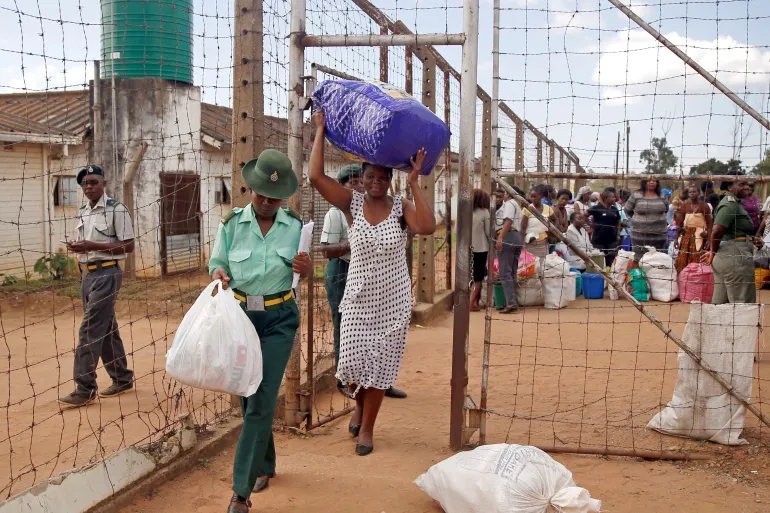
Parere Kunyenzura spent 187 days in a prison cell last year in Harare’s central business district for organizing what the police deemed an illegal gathering.
Throughout his imprisonment, he endured the harsh conditions of the prison without trial. While fellow inmates came and went, he remained, haunted by the persistent and overpowering stench of human waste and urine.
The conditions were particularly unbearable during the night when more than 100 inmates, including Kunyenzura, were locked up from 3 pm to 6 am.
They huddled together on the floor, sharing lice-infested blankets left behind by previous inmates. It was a situation that none of them desired, but they had to endure the challenging circumstances of their confinement.
During his time in jail, Kunyenzura frequently saw many inmates resort to defecating in plastic buckets. “The toilets don’t have a flushing system or don’t have the sitting bowls. Of the few that do, the flushing system doesn’t work,” he told Al Jazeera.
The Zimbabwe Transformative Party (ZTP) leader and cleric Kunyezura would silently pray that no one would experience episodes of diarrhea. However, one night some poorly prepared spinach started a messy incident, and the inmates had to put up with the foul odor of feces for up to 15 hours before everything was cleansed.
“It was a crisis,” he told Al Jazeera. The buckets were not enough.”
Misheck Nyembe, a 72-year-old pensioner who spent 13 days behind bars in January for attending a political meeting the police had not given a permit for, told Al Jazeera that the prison was “infested with lice” and his body was itchy for weeks after his release. Nyembe, who ate only food provided by his family during his detention, said the prison meals were only “fit for pigs”.
“Everything about prison [in Zimbabwe] is horrible,” said Wilbert Mandinde, programmes coordinator at Zimbabwe Human Rights NGO Forum, which advocates for prisoners’ rights, including the right to vote and have access to water. “The conditions are terrible in the sense that they are congested.”
‘A need to decongest’
The Southern African nation has depended extensively on prisons built during the colonial era since gaining independence from Britain in 1980. These facilities have long been overworked and are currently breaking under the weight of Zimbabwe’s escalating economic problems.
The Zimbabwean judicial ministry reports that there are 46 prisons in the country. Two are reserved solely for female inmates, 17 are reserved for men, and the remaining rooms are coed.
As of March 2021, the jails were housing 23,000 convicts despite having a 17,000-capacity. According to the justice ministry, Harare’s Remand Prison, which had a capacity of 800 people when it was completed in 1910, today houses roughly 2,220 inmates.
Even a 2018 pardon of almost 3,000 prisoners by the government did not help significantly.
In 2022, the World Prison Brief, published by the University of London’s Institute for Crime & Justice Policy Research, ranked Zimbabwe’s prisons as the 75th most overcrowded globally on a list of 203 countries. The database lists its occupancy rate at 130 percent.
“Post-independence, we have done very little in terms of building new prisons. Additionally, the country’s population has increased tremendously since independence,” Mandinde told Al Jazeera.
From independence to the last population count in 2022, Zimbabwe’s population had swelled from 7 million to 15 million people. Madinde added that population growth in the midst of an economic downturn has spurred an increase in criminal activity.
“The economy is bad and criminal activity has risen, and this has caused the overcrowding of facilities. … There are instances where we have been at more than 100% holding capacity,” he said. “The number of people in prison remains very high, and there is a need to decongest the prison.”
United Nations resolutions on basic treatment of prisoners stipulate that they be treated “fairly and with dignity”, regardless of the nature of their crimes. They have set out the basic minimum standards for their treatment, including food, clothing, medical care and access to legal assistance.
But in Zimbabwe, these standards have become nonexistent as the country’s economic woes have worsened, analysts said.
“Ever since the country started experiencing an economic meltdown almost two decades ago, prisons have been failing to perform their mandate of providing a decent diet among other things,” said Edison Chihota, chief executive of Zimbabwe Association for Crime Prevention and Rehabilitation of the Offender (ZACRO).
Rising inflation means allocated funds are no longer enough to feed prisoners or fund organisations like ZACRO, he said. Consequently, prison authorities now rely on private sector donations for essential needs.
A prison warden who spoke to Al Jazeera on the condition of anonymity said he was struggling to survive on a salary with constantly depreciating value.
It remains unclear what the budget allocation to the Zimbabwe Prisons and Correctional Services (ZPCS) is because it is disbursed at the discretion of the justice ministry.
Mandinde told Al Jazeera that there was also no long-term plan to tackle the overcrowding of prisons.
“We had this serious problem when COVID-19 hit, which required people to be isolated and reduced inmates,” he said. Other than presidential amnesties, there has been no plan to decongest the prison. We have seen that with amnesty, those pardoned inmates end up back in prison in no time.”
Neither ZPCS spokesperson Meya Khanyezi nor Information Minister Monica Mutsvangwa responded to Al Jazeera’s requests for comment on the allegations or general state of the prisons.
A tool of repression
Former inmates of the Harare Remand facility told Al Jazeera that they either witnessed or suffered violence at the hands of prison guards.
“Not a day went by without someone getting beaten up for no apparent reason. It was the order of the day,” Kunyenzura said.
Others complained of filmed strip searches, and some inmates said they were forced to attend church services, regardless of their religious rights and beliefs, and beaten for not singing or participating enough.
Another increasing burden on the prison system is the rise in detentions of activists and opposition figures without trial for long periods of time. In the past year, close to 100 opposition supporters have been arrested and detained for varying periods.
That, Kunyenzura says, is evidence that the justice system is now a tool to silence critics.
“Our judiciary system is by and large captured by [the ruling party] Zanu-PF. … It seemed to us during our persecution that the magistrates were simply told, ‘Do XYZ to suspect so and so,’ and they didn’t have control over the matter,” Kunyenzura said. “At the back of their minds, we were political offenders.”
Even a 2018 pardon of almost 3,000 prisoners by the government did not help significantly.
In 2022, the World Prison Brief, published by the University of London’s Institute for Crime & Justice Policy Research, ranked Zimbabwe’s prisons as the 75th most overcrowded globally on a list of 203 countries. The database lists its occupancy rate at 130 percent.
“Post-independence, we have done very little in terms of building new prisons. Additionally, the country’s population has increased tremendously since independence,” Mandinde told Al Jazeera.
From independence to the last population count in 2022, Zimbabwe’s population had swelled from 7 million to 15 million people. Madinde added that population growth in the midst of an economic downturn has spurred an increase in criminal activity.
“The economy is bad and criminal activity has risen, and this has caused the overcrowding of facilities. … There are instances where we have been at more than 100% holding capacity,” he said. “The number of people in prison remains very high, and there is a need to decongest the prison.”
United Nations resolutions on basic treatment of prisoners stipulate that they be treated “fairly and with dignity”, regardless of the nature of their crimes. They have set out the basic minimum standards for their treatment, including food, clothing, medical care and access to legal assistance.
But in Zimbabwe, these standards have become nonexistent as the country’s economic woes have worsened, analysts said.
“Ever since the country started experiencing an economic meltdown almost two decades ago, prisons have been failing to perform their mandate of providing a decent diet among other things,” said Edison Chihota, chief executive of Zimbabwe Association for Crime Prevention and Rehabilitation of the Offender (ZACRO).
Rising inflation means allocated funds are no longer enough to feed prisoners or fund organisations like ZACRO, he said. Consequently, prison authorities now rely on private sector donations for essential needs.
A prison warden who spoke to Al Jazeera on the condition of anonymity said he was struggling to survive on a salary with constantly depreciating value.
It remains unclear what the budget allocation to the Zimbabwe Prisons and Correctional Services (ZPCS) is because it is disbursed at the discretion of the justice ministry.
Mandinde told Al Jazeera that there was also no long-term plan to tackle the overcrowding of prisons.
“We had this serious problem when COVID-19 hit, which required people to be isolated and reduced inmates,” he said. Other than presidential amnesties, there has been no plan to decongest the prison. We have seen that with amnesty, those pardoned inmates end up back in prison in no time.”
Neither ZPCS spokesperson Meya Khanyezi nor Information Minister Monica Mutsvangwa responded to Al Jazeera’s requests for comment on the allegations or general state of the prisons.
A tool of repression
Former inmates of the Harare Remand facility told Al Jazeera that they either witnessed or suffered violence at the hands of prison guards.
“Not a day went by without someone getting beaten up for no apparent reason. It was the order of the day,” Kunyenzura said.
Others complained of filmed strip searches, and some inmates said they were forced to attend church services, regardless of their religious rights and beliefs, and beaten for not singing or participating enough.
Another increasing burden on the prison system is the rise in detentions of activists and opposition figures without trial for long periods of time. In the past year, close to 100 opposition supporters have been arrested and detained for varying periods.
That, Kunyenzura says, is evidence that the justice system is now a tool to silence critics.
“Our judiciary system is by and large captured by [the ruling party] Zanu-PF. … It seemed to us during our persecution that the magistrates were simply told, ‘Do XYZ to suspect so and so,’ and they didn’t have control over the matter,” Kunyenzura said. “At the back of their minds, we were political offenders.”
Two US Navy sailors in California have been arrested on charges related to providing sensitive military information to China.
Jinchao Wei, a 22-year-old naturalized US citizen, is accused of conspiring to send national defense information to a Chinese agent. Petty Officer Wenheng Zhao, 26, was arrested for accepting money in exchange for sensitive photos and videos.
It remains unclear whether the same Chinese agent is connected to both cases.
Both individuals were apprehended on Wednesday in California. Jinchao Wei was arrested while on his way to work at Naval Base San Diego.
Prosecutors made the announcement regarding the charges during a news conference in San Diego on Thursday.
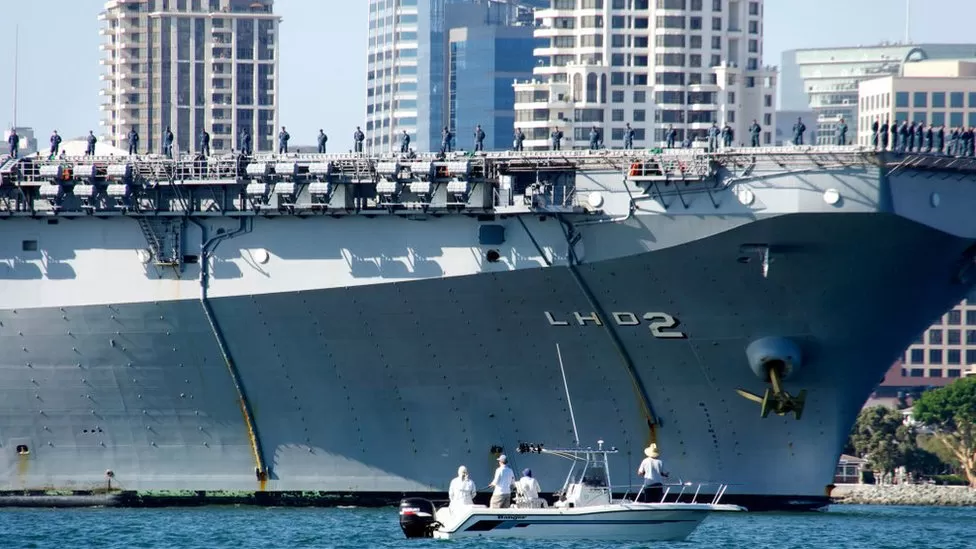
Jinchao Wei, who served as a machinist’s mate on the USS Essex, an amphibious assault ship, possessed security clearance and had access to sensitive information concerning the vessel.
According to the indictment, a Chinese agent approached him in February 2022 while he was in the process of becoming a US citizen. The agent allegedly paid him thousands of dollars for photographs, videos, technical manuals, and blueprints of the ship.
Furthermore, Justice Department officials disclosed that Jinchao Wei also provided the agent with details of US Marines involved in a maritime training exercise.
“When a soldier or sailor chooses cash over country and hands over national defence information in an ultimate act of betrayal, we have to be ready to act,” said US Attorney Randy Grossman.
China has so far refuted any knowledge of the purported action.
The Wall Street Journal cited Liu Pengyu, a spokeswoman for China’s embassy in Washington, as saying: “The US government and media have routinely exaggerated examples of ‘espionage’ relating to China.
“China firmly opposes the US side’s groundless slander and smear of China,” he added.
Mr. Zhao, also known as Thomas Zhao, was employed at Naval Base Ventura County near Los Angeles. In 2021, he was reportedly approached by a Chinese agent who masqueraded as a researcher seeking information for investment decisions.
The agent paid Mr. Zhao nearly $15,000 (£11,800) in exchange for photos, videos, diagrams, and blueprints of a radar system deployed on a US military base in Okinawa, Japan, as per authorities’ statements.
If found guilty, Mr. Wei could face a prison sentence of 20 years to life, while the charges against Mr. Zhao carry a maximum penalty of 20 years.
Both individuals were charged in separate cases.
Authorities have categorized this alleged espionage as part of a larger effort by China to obtain US military secrets.
Earlier this year, a Chinese spy balloon floating over the United States created tension between the two countries. However, American authorities later confirmed that it did not collect any sensitive information.
“The Department of Justice will continue to use every tool in our arsenal to counter threats from China and to deter those who aid them in breaking our laws and threatening our national security,” said Assistant Attorney General Matthew Olsen.
It was not clear if either Mr Wei or Mr Zhao had hired lawyers who could comment on their behalf.
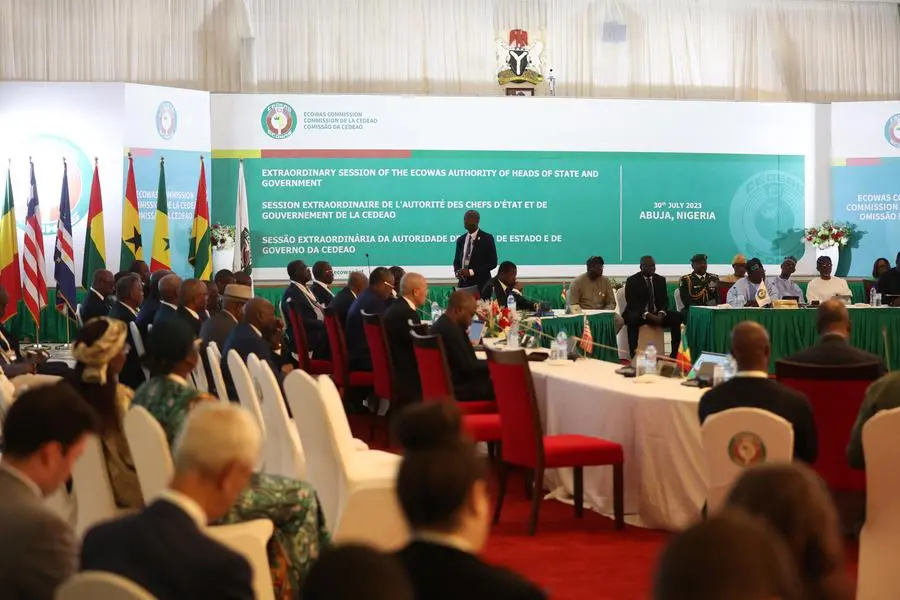
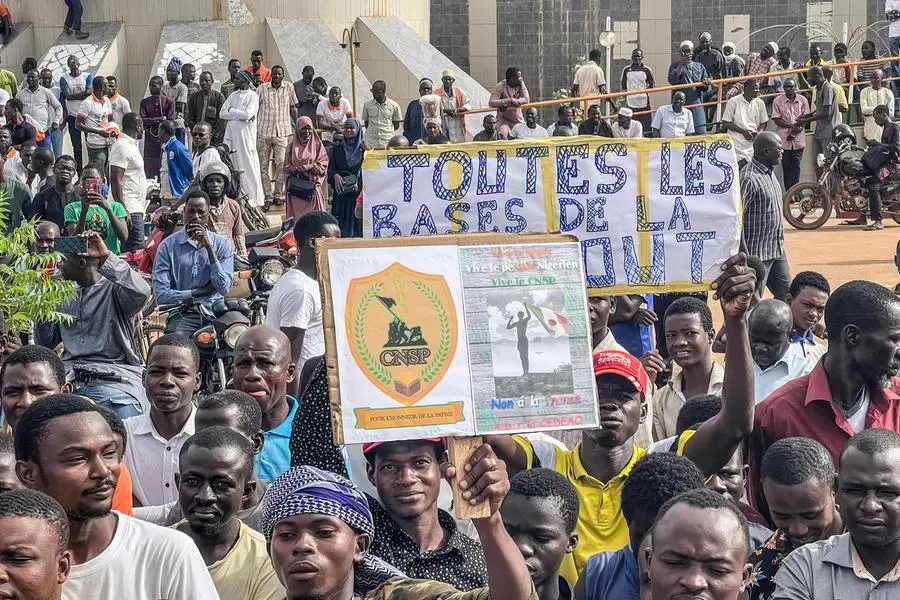
A delegation from West Africa, tasked with mediating in Niger after last week’s coup, has left the country after only a few hours, with no visible signs of progress.
The mediators, appointed by the regional body Ecowas, were unable to meet with the coup leader or the deposed president, Mohamed Bazoum.
In response to the coup, Ecowas has imposed sanctions on Niger and has issued a threat to use force if Mr. Bazoum is not reinstated as president. Mr. Bazoum has called on the international community to assist in restoring constitutional order.
Moreover, Mr. Bazoum has warned that the entire Sahel region may come under Russian influence.
Late on Thursday, the coup leaders in Niger also criticized all military agreements with France. It is worth noting that French troops are present in Niger to combat Islamist extremists.
An official accusation alleging that Zambia’s head coach Bruce Mwape sexually assaulted a player at the Women’s World Cup is being looked into by Fifa.
Mwape is accused of touching one of his players’ chests while they were in New Zealand for a training session on July 29.
“A complaint has been received,” a Fifa spokesperson said.
However, the Football Association of Zambia (FAZ) stated that it was a “surprise” and that “it has not received any such complaint”.
Two days prior to Zambia’s last group match against Costa Rica, which they won 3-1 for their first World Cup triumph, the alleged event is believed to have occurred during a training session.
The spokesperson for Fifa further stated, “Fifa takes any allegations of misconduct extremely seriously and has a clear process in place for anyone in football who wants to report an incident.”
After placing third in Group C, Zambia was eliminated and has since gone home.
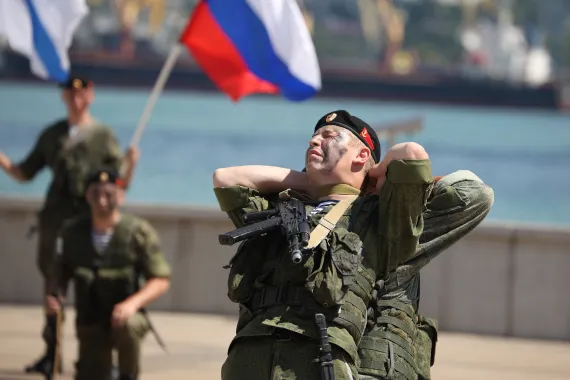
Ukrainian sources, has stated that a Russian naval ship in the Black Sea was damaged in a drone attack conducted by the Ukrainian navy. The incident reportedly took place near the Russian port of Novorossiysk, a major hub for Russian exports.
Russia’s defense ministry claimed to have repelled the Ukrainian attack on its naval base using two sea drones but did not acknowledge any damage to its vessel. However, Ukrainian security service sources revealed that the ship, Olenegorsky Gornyak, was struck and suffered a serious breach. They stated that a sea drone carrying 450kg (992lb) of dynamite hit the ship.
Russia’s official report did not mention any damage resulting from the attack. Sea drones are unmanned vessels that operate either on or below the water’s surface.
A video provided to the BBC by a source with Ukraine’s security service appears to show the drone approaching a ship, believed to be the Olenegorsky Gornyak. The footage depicts the vessel coming close to the ship’s side before the feed abruptly cuts off, presumably due to the impact. An unverified video also shows the ship listing to one side.
The Olenegorsky Gornyak is a landing ship designed for launching amphibious forces close to shore for beach landings and efficiently unloading cargo at ports. Any damage to this vessel could disrupt Russia’s efforts to resupply its forces fighting in occupied southern Ukraine.
In response to the attack, the Novorossiysk port temporarily suspended ship movements, as stated by the Caspian Pipeline Consortium, which handles oil loading onto tankers at the port.
Research conducted by BBC Verify indicates that Ukraine has carried out at least ten attacks using sea drones, targeting military ships, Russia’s naval base in Sevastopol, and Novorossiysk harbor in a previous assault. Ukrainian defense sources also disclosed that sea drones were employed in an attack on the Kerch Bridge in Crimea in July.
Ukraine’s attempts to target the Novorossiysk port are not new, and the reasons behind their actions are apparent.
The port plays a crucial role in exporting approximately 1.8 million barrels of oil per day, accounting for about 2% of the global supply. Additionally, Novorossiysk serves as a significant naval base for Moscow.
Recent weeks have witnessed an escalation in sea clashes following Russia’s decision to abandon a UN deal that allowed safe grain exports between Russia and Ukraine across the water. As a result, Ukrainian ports have faced attacks from Russian drones, prompting Kyiv to respond actively.
Interestingly, Ukraine appears more forthcoming in acknowledging its involvement in strikes using sea drones, in contrast to attacks deeper within Russian territory.
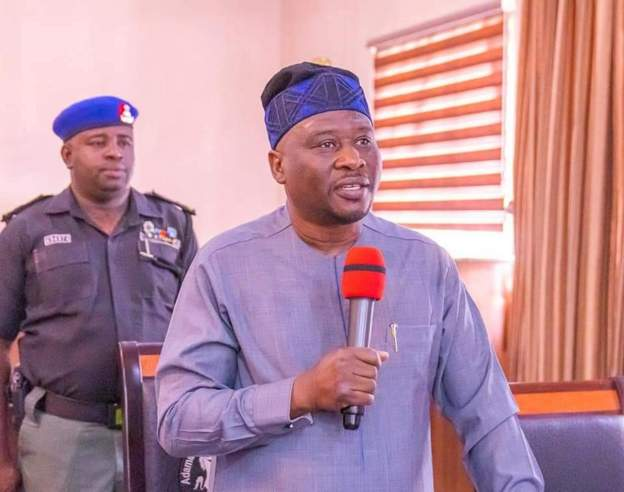
The announcement made by the governor of Adamawa state in north-east Nigeria, Ahmadu Fintiri, regarding the appointment of a 47-member media team, has sparked anger and ridicule.
Governor Fintiri’s tweet, which listed all the names, has garnered one million views on the social media site.
The media team comprises:
Two special advisers
Ten senior special assistants
35 “special assistants for social media and content creation”
In his tweet, the governor expressed confidence that this diverse and talented team would significantly enhance communication efforts and strengthen public engagement.
However, reactions to the announcement have been critical, with many questioning the need for such a large media team. People on social media responded with laughter emojis and memes, joking that not even Nollywood stars have such extensive media teams.
Some even sarcastically suggested that the governor might be aiming to establish a media production company to rival Universal Studios.
Amidst the rising prices and economic difficulties faced by people in Adamawa state and beyond, questions were raised about how the governor intends to reduce the cost of governance with such a large number of media advisers.
The state of people’s personal budgets has become a pressing concern, exemplified by the recent looting of warehouses in the state capital, Yola, as people struggle to cope with the increasing challenges.
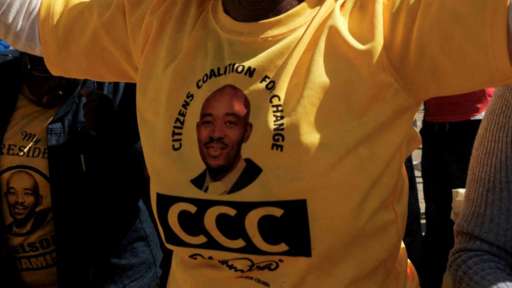
Two individuals have been arrested by the police in Zimbabwe following the death of an opposition supporter during political clashes at a campaign rally south of the capital, Harare, on Thursday.
A video circulating on social media showed members of the Citizens Coalition for Change (CCC) fleeing the scene in vehicles while being pursued by a group of people throwing stones.
Local human rights monitors have reported an increase in violence and rights violations as the country prepares for general elections later this month.
The police are currently conducting investigations into the incident that resulted in the death of Tinashe Chitsunge.
Though official details are limited, eyewitnesses from CCC claim that they were heading to a pre-booked venue for a rally in Glen Norah. They allege that supporters of the ruling Zanu-PF party, who had gathered at the rally grounds, chased them away, tore up their campaign posters, and pelted them with stones.
They assert that Mr. Chitsunge was struck and fell to the ground, possibly being run over by a vehicle affiliated with CCC as it was fleeing the violence.
The defense ministry of Russia reported that it successfully thwarted Ukrainian attacks on the Novorossiysk naval base in the Black Sea overnight.
In response to the situation, Russia’s defense minister, Sergey Shoigu, visited Russian troops on the front line in Ukraine.
Additionally, Russia claimed to have shot down at least 13 Ukrainian drones over the Crimean Peninsula.
Amid the escalating costs of the conflict in Ukraine, Russia has reportedly revised its 2023 defense spending goal to exceed $100 billion, constituting around one-third of its total public expenditure. A government document examined by Reuters reveals this updated budget allocation, as specific financial data concerning the conflict is no longer publicly disclosed.
The disclosed figures provide insight into Russia’s financial commitment to the ongoing conflict in Ukraine. Notably, during the initial half of 2023, Russia’s defense spending surpassed its original target by 12 percent, amounting to 600 billion roubles ($6.4 billion) more than the initially allocated 4.98 trillion roubles ($53 billion) for the year.
These revelations highlight the substantial allocation of resources to defense, with the first half of 2023 witnessing defense expenditures of 5.59 trillion roubles ($58 billion) out of a total expenditure of 14.97 trillion roubles ($159 billion). The document indicates that Russia’s budget aims to allocate 17.1 percent of total funds to “national defense.”
Despite these disclosures, neither Russia’s government nor its finance ministry has responded to Reuters’ requests for commentary on the provided numbers.
Deputy Minister of Transport, Hassan Tampuli, has revealed that data from the World Bank indicates that Ghana has one of the highest electricity penetrations in Africa.
The government is further dedicated to increasing this figure to 90% by the end of 2023.
Speaking at a stakeholder consultation on electric vehicle policy and implementation framework in Accra on Wednesday, August 2, 2023, the deputy transport minister highlighted that Ghana possesses substantial electricity reserve capacity, including hydro, thermal, and renewable sources, surpassing that of many other African countries.
Hassan Tampuli added that, “Really and truly, our reserve capacity is way more than a lot of countries even in Africa…A lot of these countries; Burkina Faso has 19% penetration, Liberia 29%, Niger 18.6% and so on and so forth. The closest you have is Côte d’Ivoire which is 71.1% so we have enough. Sometimes we don’t realize what we have in this country until we compare with other countries.”
“Almighty Rwanda is 48.7% and we sometimes hail Rwanda as the big boy of Africa but we have way more so we have more in terms of electricity capacity, hydro, thermal and renewables put together,” he stated.
In alignment with global commitments and the National Energy Transition Plan 2022, the government, through the Ministry of Transport, has crafted a draft policy on Electric Vehicles (EV) with the objective of decarbonizing the transport sector.
The policy’s primary aim is to establish standards, guidelines, and operational frameworks for managing the utilization of electric vehicles in the country.
The Deputy Minister of Transport emphasized that electric vehicles will soon become prevalent in the Ghanaian market. He encouraged Ghanaians to prepare themselves for this development and the increasing presence of EVs.
“A number of them are already in town, we do not have a policy yet so it’s very crucial that we run very fast.The electric vehicles will come whether we like it or not, so we better be prepared for it,” he said.
Mr. Hassan Tampuli added that there is an alternative for owners to replace their internal combustion engines (ICE) with conventional engines or electric motors that are powered by rechargeable batteries to power electric vehicles, thus all vehicles with ICEs will not be phased out.
The founder of the indigenous cosmetic line AFB Golden Enterprise, Akosua Frimpomaa Boateng, has expressed remarkable optimism for the Africa Continental Free Trade Area (AfCFTA) following her positive experience trading under the new dispensation. However, she emphasized the need for significant improvements in the available transport and logistic systems to support trade effectively.
During an interview with Kennedy Mornah on Eye on Port, Miss Boateng commended the smooth processes that led to significant sales during her participation in the special Guided Trade Initiative (GTI). She expressed her concern about the unfavorable logistics and transport systems that hinder her ability to trade cost-effectively on her own.
The Guided Trade Initiative (GTI) was launched in Accra, Ghana, on October 7, and its purpose is to facilitate commercially meaningful trading while testing the operational, institutional, legal, and trade policy environment under the AfCFTA.
Eight countries, including Cameroon, Egypt, Ghana, Kenya, Mauritius, Rwanda, Tanzania, and Tunisia, are participating in the GTI, representing five regions of Africa.
Akosua Frimpomaa Boateng praised the collaboration between the AfCFTA Secretariat, the National Coordination Office of AfCFTA, and the Ghana Export Promotion Authority for their support in helping her and other local producers export, exhibit, and sell goods in Kenya without incurring logistical costs.
“I happen to participate in the Ghana Expo 23 in Kenya where the Ghana Trade House was launched. What this means for my brand is the access to a wider market and an interaction with various industry players. We were able to sell almost half of the products we took under 24hrs. This tells us there is available market waiting. Only thing left is to supply the market with goods,” she recounted.
AFB Golden Enterprise’s founder appreciated AfCFTA’s significance in creating a production mindset as opposed to the consumer mindset that today’s kids are accustomed to. She therefore urged the government to establish an enabling climate that will facilitate youth shipping commodities across the continent.
“I have not experienced export by myself as everything was done for me, but I am looking forward to a day where I export on my own. Somewhere in the past, we had controversies getting clearance in Nigeria. We are looking forward to a time where it costs less to transport goods, while the safety of our goods are guaranteed, in timely fashion. We are looking forward for the bureaucracies to be minimized by 80%,” she expressed.
The Founder of AFB Golden Enterprise recognized the significant role played by AfCFTA in promoting a producer mind-set among the youth, moving away from the consumer mind-set they have been accustomed to. She urged authorities to take action in creating an enabling environment that facilitates the smooth movement of goods across the continent, thereby empowering the youth to engage in trade more efficiently.
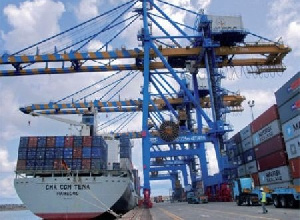
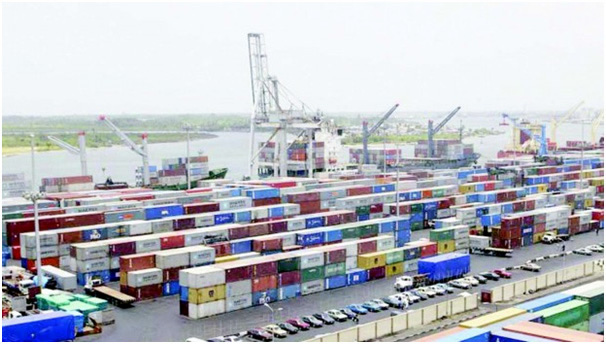
Global economic challenges, inflation, and currency depreciation informed the newly-increased port tariffs, the Ghana Ports and Harbour Authority (GPHA) has justified.
The GPHA explained that while there has been an upwards adjustment of charges, Ghana’s rates remain more competitive among other countries in the sub-region.
Earlier, in a statement, the President of the Ghana Union of Traders’ Association, Dr. Joseph Obeng, called on the GPHA to suspend the implementation of the new tariff.
He explained that this new review will cripple businesses within his sector.
But the GPHA has also explained in an August 3, 2023, statement that its hands were tied with respect to the adjustments.
“Despite their concerns, GPHA was compelled to implement the revised tariff due to the current global economic challenges including Inflation and currency depreciation which have increased our operational cost.
“Just like all other increments done in the past, the rates of increment in this year’s tariff adjustment were informed by the outcome of a comparative port tariffs studies we conducted in our neighbouring Ports of Lomé and Abidjan, to ensure that at every given time, our ports will remain competitive in terms of price and quality of services. We wish to note that even with the increment of 1″ August 2023, overall, our port tariffs remain competitive compared to our neighbours,” the statement said.
The Ghana Ports and Harbour Authority (GPHA) has stated that it has spent millions of dollars modernizing port infrastructure and creating a productive port system, which will lower corporate operating costs.
“GPHA has invested millions of dollars in upgrading port infrastructure and a well maintained and efficient port system will, which in the long run, will contribute to a reduction in operational costs for businesses, enhance productivity and facilitate smoother trade operations,” it added.
On Tuesday, August 1, 2023, the new GPHA ports rates went into effect.
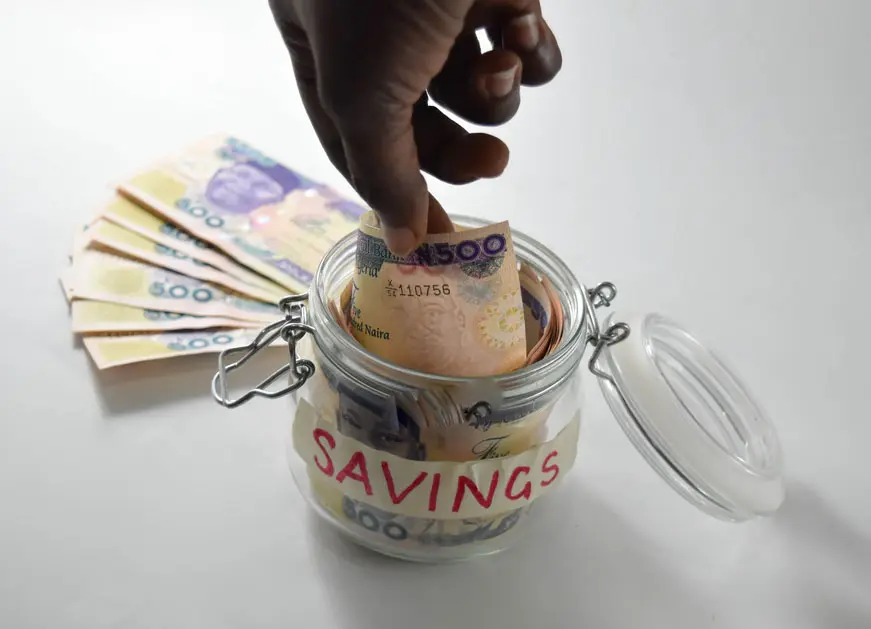
Businessman and politician, Hassan Ayariga, expressed his concern regarding the current policy of haircuts on people’s money held in banks. According to him, it would be more prudent for individuals to keep their money at home due to the apprehension surrounding haircuts on bank accounts.
Ayariga highlighted that the issue of haircuts has become a major concern for many people. Consequently, a significant number of individuals have chosen not to keep their money in banks, fearing the possibility of haircuts or, worse, the uncertainty of accessing their funds when required.
“I have met contractors of my calibre, from Germany, UK, America, have sent them millions od dollars to build them house. And such contractors can come up with as much as even $5 million and keep it at home because now, you cannot send such monies to the bank because the finance minister will do a haircut on it and when you even want your money, it will not be released to you…
“Yes, a lot of people have refused to put monies in the bank because of haircut. So, the haircut issue is another problem that people do not want to keep their monies in the bank anymore because when you put your money there and you want it back, the banks don’t have the monies. So, it is better to keep the money in your house,” he said in an interview with Kofi TV.
To encourage young people’s interest in agriculture, the government, in collaboration with the National Service Scheme (NSS) Secretariat, has secured roughly 20,000 acres of farmland, according to Minister of Finance Ken Ofori-Atta.
They have successfully acquired approximately 20,000 acres of farmland with the aim of generating interest in agriculture among the youth.
The government’s commitment to promoting agriculture among young people is part of a broader effort to boost food production.
The allotted land, situated in the Ashanti Region, will undergo development and be equipped with state-of-the-art technology to facilitate mechanized farming methods.
“In partnership with the National Service Scheme, about 20,000 acres of land in Sekyere Kumawu in the Ashanti Region is being developed to accelerate maize, tomato, groundnuts and animal production,” he said.
The partnership to develop approximately 20,000 acres of land in Sekyere Kumawu, Ashanti Region, is a significant step that complements the flagship Planting for Food and Jobs (PFJ) and Rearing for Food and Jobs (RFJ) initiatives.
Over the past few years, the NSS Secretariat has been engaging in innovative collaborations with various private and public organizations to enhance personnel skills in different fields and bridge the gap between academia and industry.
For example, in 2022, the NSS ventured into the building sector in partnership with Ghana Education Trust Fund (GETFund) to address low-cost housing needs in the nation. Similarly, in 2021, the NSS partnered with the University of Professional Studies, Accra (UPSA) and Innohub to launch the UPSA Venture Lab Entrepreneurial Programme.
The agricultural project joins the list of various initiatives aimed at helping graduates develop their skills and become self-employed. The PFJ has already shown positive outcomes, contributing to significant increases in crop yields for major staples like maize, rice, and soya.
The partnership with the NSS is expected to encourage more youths to venture into agriculture. Moreover, the government is in the process of finalizing Phase II of the PFJ program, which includes elements like an inputs credit system (ICS), storage and distribution infrastructure (SDI), commodity trading, and digitized platforms. These measures aim to provide more efficient and targeted support for the agricultural sector.
“Planting for Food and Jobs has brought substantial improvements in Ghana’s agriculture sector. This has resulted in increased food security, employment along agricultural value chains, and accessibility of raw materials for developing industries,” he mentioned.
Additionally, Ken Ofori-Atta said that the GhanaCARES ‘Obaatan Pa’ initiative is helping to increase youths’ capacity in agriculture.
“I can report that efforts toward promoting commercial agriculture, building technological capability, and advancing digitalisation under the GhanaCARES programme are on track,” he added.
Amidst the legal dispute surrounding the funeral of the late Founder and General Overseer of the Resurrection Power New Generation Church, Rev. Anthony Kwadwo Boakye, lawyer Anokye Frimpong has provided insight into the constitutional context relevant to the ongoing controversy.
The funeral arrangements for Rev. Boakye have been entangled with two court injunctions, prompting lawyer Anokye Frimpong to clarify the rights and responsibilities pertaining to such ceremonies.
In an interview on Angel News on August 3, 2023, he explained that the constitution specifies that only the family head of the deceased has the authority to decide the guest list and make all funeral arrangements.
He emphasized that the late pastor’s wife and children do not have any decision-making power in the arrangements, as that responsibility solely lies with the family head.
He further clarified that once a person passes away, their possessions and funeral arrangements become the responsibility of the family, and it is the family head who takes charge of such matters.
“If someone dies, the moment the person is no more, all his properties no longer belong to him, even though they used to be his/hers when he/she was alive.
“So, we don’t say, ‘like the late Kwadwo Mensah’s properties,’ but we say, ‘the late Kwadwo Mensah’s estate.’ Similarly, when someone dies, their body, funeral, or place of burial is not the responsibility of the wife or the children.
“When someone dies, their body, funeral, and everything related to them belongs to the family, specifically the head of the family (Abusuapanyin, who is in charge), and not to the wife or children.
“This kind of case has been to court thousands of times all around the world. There is a common principle we all follow called common law,” he said.
The attorney continued by saying that any “death wish” or instructions provided by the deceased regarding his funeral arrangements or inheritance are not enforceable legally since such power belongs to the family head and key figures in the extended family system.
“So sometimes, you hear people saying that the deceased person instructed not to be buried here or there, or that certain people shouldn’t attend their funeral, we call these things a ‘death wish.’ People used to say that when they die, a certain person should inherit their belongings. All these statements are considered a death wish. According to the law, nobody can appoint their successor after their death, and nobody can dictate who should or shouldn’t attend their funeral.
“Only the family head and the principal members of the family are the ones to decide who should come to the funeral or not. The reality is that only one person can decide anything about a deceased person, and that person is the family head of the deceased (Abusuapanyin).”
He added “The kind of family I am talking about is the extended family system, not the nuclear family. I mean the family to which the late Reverend or the wife belonged before they married; the family that escorted him to the lady’s place to go and marry her. That is the family I am talking about, so the family head of that family is the only person who can decide in this case. And if it was the death of the woman, her family to which she belonged before her marriage, the family head is the one who can decide.
“The children are not part of the said family, and the wife is not part either.”
A High Court has issued an injunction on the funeral of Rev. Anthony Kwadwo Boakye. The funeral, originally scheduled for Saturday, August 5, 2023, was halted by the court following a request for interpretation from Margaret Boakye, the widow of the late pastor.
Rev. Anthony Boakye passed away on Tuesday, February 21, 2023, after a prolonged illness, which led to conflicts between his widow, his family, and his church.
During the One-Week Ceremony of the late pastor at the church premises, an issue arose when his widow was prevented from attending. In response, the widow filed a writ at the Kumasi High Court, seeking, among other things, an injunction on the funeral scheduled for August 5.
She also sought the court’s validation of her marriage to the late pastor, claiming that she should be granted the right to perform all the widowhood rights in accordance with traditions.
In addition to the widow’s injunction, the funeral has been further halted by an interlocutory injunction. This decision was documented by the court after the involved parties, including the church, some family members of the late pastor, and the late pastor’s children, filed appearances in the case on Thursday, August 3, 2023.
A leaked audio recording allegedly featuring the Member of Parliament for Awutu Senya East, Mavis Hawa Koomson, criticizing Assin Central Member of Parliament and New Patriotic Party flagbearer hopeful, Kennedy Ohene Agyapong, has recently surfaced on a WhatsApp platform.
In the viral voice note shared by One Ghana TV on YouTube, Hawa Koomson can be heard accusing Kennedy Agyapong of being boastful and using the assistance he offers to people as a means to insult them.
She further reveals that she has even turned down help from Kennedy Agyapong, despite his reputation as a businessman and a prominent financier of the NPP, due to his outspoken nature.
“I am not one of those who will receive his help for him to go out and trumpet for the entire world to hear. In 2012 when he said he giving out cars I inquired from Butey and he told me that I had to pay something small which was GHC500 at the time. I told him I won’t pay because the Toyota Corolla I was using was stronger than the Hyundai he was going to give me.
“Also, because I know Kennedy Agyapong will turn around to insult you in the future whenever he helps you and knowing that I didn’t want to be insulted in the future, I did not go for the car.
“So I am not part of those Kennedy Agyapong gives help. That is why when he came to Christ for All Mission to brag and I heard about it I called KT Hammond and Afenyo Markin that these are the lies Kennedy has come to Kasoa to peddle so I want to confront him. Thankfully to God, I met him at KT Hammond’s office where I confronted him and told him my mind because I know I don’t have my hand in his mouth,” she said.
The statement by Hawa Koomson was in response to what she said was an attack by a pro-Ken NPP member on the party’s WhatsApp platform in the Awutu Senya East Constituency.
The Minister for Fisheries and Aquaculture who has openly declared her support for Vice President Dr Mahamudu Bawumia in the NPP flagbearer contest also accused Kennedy Agyapong of not being a true member of the party.
“I am not part of those Kennedy Agyapong takes care of and if Ken Agyapong is a true NPP member he would not threaten to abandon the party to go and live abroad if he is not voted for.
“As a true member will you follow someone with such a mindset; someone who says he won’t work for the party if he loses a contest. Would he expect anyone to come and work for him if he wins?” she questioned.
Hawa Koomson goes on to allege that Kennedy Agyapong has made money from the NPP through contracts but is now is now insisting that he is elected flagbearer because of his assistance to the party.
Senior Partner at Africa Legal Associates, Gabby Asare Otchere-Darko, has issued a comprehensive response to Samuel Okudzeto Ablakwa’s recent “Kitchen Scandal” exposé.
The Member of Parliament for North Tongu alleged that Gabby’s law firm was involved in a plot to defraud the state of GH¢187.3 million on behalf of a client.
In a statement released on Friday, August 4, 2023, Gabby maintained that his firm was performing a legitimate duty on behalf of their client.
He clarified that since April 2021, his firm had been engaged by West Blue Ghana Limited to assist in the recovery of GH¢187,356,969.
This amount represented outstanding payments owed to West Blue by the Government of the Republic of Ghana under a contract dated 04 August 2015.
The contract was executed between West Blue on one hand, and the Ghana Revenue Authority (GRA) and the Ministry of Finance (MoF) on the other hand.
“Our client’s claim is founded on clause 13.1 of the NSW Contract, which sets out without equivocation, the fees due to our client under the NSW Contract. It was a contract duly crafted and executed by the John Mahama administration, of which you were a key member.
“Clause 13.1 of the NSW Contract provides that in consideration of its services, our client shall be paid a fee equivalent to 0.35% of the final invoice CIF (Cost, Insurance, and Freight) value of import consignments entering into Ghana through the seaports, airports and land borders from time to time. Going strictly by the express terms of the NSW Contract, our client calculates the arrears still left outstanding to be in the sum of GH¢187,356,969. Indeed, a demand letter providing details of the sum of GH¢187,356,969 owed, was submitted to the Ministry of Finance on 28 July 2020 by the previous lawyers of our client, Bentsi-Enchill, Letsa & Ankomah,” he wrote in his response.
According to Gabby, he mentioned that both the Ministry of Finance and GRA had consistently rejected his client’s claim, and despite several efforts by his firm to seek legal clarification on the matter, they were unsuccessful.
Gabby asserted that it was only after Mr. Ablakwa’s exposé that his firm became aware of the legal advice provided by the Attorney General, which now supports and confirms his client’s position.
“Until the release of your article, ALA had not been afforded notice of the content of the legal opinion of the Attorney General regarding our client’s claim. If, as purported by you, the chief legal advisor to the Government is of the opinion that our client’s claim is of merit, then this revelation by you is much appreciated by us, as it actually validates the legitimacy of our client’s claim,” he stated.
Gabby emphasized that no payment has been made to his client thus far. He questioned Mr. Ablakwa’s motives in the case, wondering if his interest was due to the substantial amount involved or the legitimacy of his client’s claim. Despite accusations from the MP, who alleged that Gabby was leveraging his position as a cousin to President Akufo-Addo, Gabby raised the question of whether Ablakwa’s stance would have been any different if another lawyer had been handling the case.
“If I may ask: is it the legitimacy of our client’s claim or the quantum of the sum claimed by our client that bewilders you? Further, is this not a simple matter of a legitimate claim arising out of the specific performance of the terms of a contract mutually entered into by the parties? Again, has the MoF and/or GRA agreed to pay or to even sit down to negotiate it down? Would this have been a matter at all, in your reckoning, if any other qualified lawyer was handling this matter? Is it your point that as a cousin to the President it is unethical for me to represent a client who has a legitimate case against the state?”
Read Gabby’s full response below:
To Hon. Samuel Okudzeto Ablakwa
My attention has been drawn to a publication by you under the title “The Kitchen Scandal”. In this thrilling publication, you seek to castigate me and my firm, Africa Legal Associates (ALA), for our provision of legitimate and bonafide legal services to our client, West Blue Ghana Limited.
ALA was engaged by West Blue Ghana Limited on 29 April 2021 to assist the company to recover outstanding payments due it from the Government of the Republic of Ghana under a contract dated 04 August 2015, executed between our client, on the one hand, and the Ghana Revenue Authority (GRA) and the Ministry of Finance (MoF), on the other hand. We have been on this matter for more than two years now and the MoF and GRA continue to dispute the claim in spite of what we consider to be the incontrovertibility of our client’s case per the contract. Our client’s claim is to recover arrears owed by the MoF and GRA for services it rendered to the Government of Ghana under the National Single Window and Integrated Risk Management System Contract (‘NSW contract’) dated 04 August 2015. Our client’s claim is founded on clause 13.1 of the NSW Contract, which sets out without equivocation, the fees due to our client under the NSW Contract. It was a contract duly crafted and executed by the John Mahama administration, of which you were a key member.
Clause 13.1 of the NSW Contract provides that in consideration of its services, our client shall be paid a fee equivalent to 0.35% of the final invoice CIF (Cost, Insurance, and Freight) value of import consignments entering into Ghana through the seaports, airports and land borders from time to time. Going strictly by the express terms of the NSW Contract, our client calculates the arrears still left outstanding to be in the sum of GH¢187,356,969. Indeed, a demand letter providing details of the sum of GH¢187,356,969 owed, was submitted to the Ministry of Finance on 28 July 2020 by the previous lawyers of our client, Bentsi-Enchill, Letsa & Ankomah.
Contrary to your assertion of West Blue’s contract being terminated before the claim period, note that West Blue continued to render services to the Government under the contract, following an extension of the said contract post 31 December 2018, instructively, a period not included in the claim of GH¢187,356,969, which is set between 2015 and 2018.
The MoF and GRA deny the claim of our client and state that our client’s fees were rather to be calculated on the total inspection fees, which is merely a constituent of the total CIF, paid on imports. This, if you like, constitutes the gravamen significado of the dispute.
ALA has written numerous letters to the MoF and GRA to explain the legal justification of our client’s claim. Per a letter dated 05 August 2021, the Attorney General, who is the chief legal advisor to the Government, was requested to assist the parties (MoF, GRA, and our client) with a legal opinion that would clarify the legal operation of the key terms of the NSW Contract. This request was made pursuant to a mutual understanding between lawyers from ALA and representatives of GRA during a meeting held to discuss our client’s claim.
On 13 December 2021, ALA wrote to the Attorney General for an update on the request for the legal opinion and our client’s claim in general, as all our efforts to procure an update from the MoF and GRA had thus far proven futile. In the Attorney General’s response to us, we were advised to contact the MoF and GRA as they had been furnished with the legal opinion by the Attorney General’s office.
The MoF and GRA have consistently refused to share the legal opinion with us despite numerous requests for the same. They have also refused to meet with our client since 2021 to explore a possible settlement of our client’s claim which, if not settled, could result in a hefty judgment debt against the country. It is imperative to emphasise that no money has been paid to our client since we made the demand on MoF and GRA on our client’s behalf. Not a pesewa. Indeed, the MoF and/or GRA have not sat down with ALA or the client directly to even attempt a negotiation.
Until the release of your article, ALA had not been afforded notice of the content of the legal opinion of the Attorney General regarding our client’s claim. If, as purported by you, the chief legal advisor to the Government is of the opinion that our client’s claim is of merit, then this revelation by you is much appreciated by us, as it actually validates the legitimacy of our client’s claim.
Further, a Notice of Intention to Sue was issued by ALA in a letter dated 01 March 2022. In a bid to further allow the Government ample opportunity to address our client’s claim, ALA, per a letter dated 22 July 2022, issued a reminder to the Attorney General to respond to our Notice of Intention to Sue. It was only in October 2022 that ALA received an invitation from the Attorney General’s office, to attend a meeting together with MoF and GRA to discuss matters relating to our Notice of Intention to Sue. At the meeting, the parties rehashed their positions following which the Attorney General requested written submissions from all parties. ALA complied and submitted its client’s position but has not received that of either the MOF or GRA. Indeed, until your generous release of the Attorney General’s opinion(s), as far as we were aware, no real progress had been made. We are, indeed, thankful.
If I may ask: is it the legitimacy of our client’s claim or the quantum of the sum claimed by our client that bewilders you? Further, is this not a simple matter of a legitimate claim arising out of the specific performance of the terms of a contract mutually entered into by the parties? Again, has the MoF and/or GRA agreed to pay or to even sit down to negotiate it down? Would this have been a matter at all, in your reckoning, if any other qualified lawyer was handling this matter? Is it your point that as a cousin to the President it is unethical for me to represent a client who has a legitimate case against the state?
Be assured that there are numerous other top-tier firms in this country that are currently representing clients whose legitimate causes of action stem from quite similar issues, regarding contracts signed around the same period by the government in which you served.
Again, I wish to underscore the fact that our client has not been paid any part of the amount claimed to be owed to it under the NSW Contract. Our client’s case is not a challenge to the termination of the NSW Contract. It is simply a dispute over arrears owed for work already done and a claim for monies due it in accordance with the express terms of the said contract between the parties.
It is intriguing that you, of all people, see as a scandal lawyers engaged in their legitimate work of seeking to recover arrears owed to their clients, even when their claim, per your own “leaked” documents, is not, in principle, disputed by the Attorney General. I wonder how you reconcile your stance against ALA with the claim against you by the then Attorney General when you were a member of government? See Peace FM website:
If a deputy minister at the Ministry of Education (and a non lawyer at that) could gather the moral courage and see no wrong in lobbying to be paid, a contractor, whose very claim was being challenged in court at that material time by the Attorney General, then the world may be forgiven to see as extremely curious your description today of the West Blue claim as a “scandal.” Assuming, of course, the claim against you by your Attorney General is true.
Be assured that ALA is fully committed to pursuing our client’s legal rights in respect of its claim under the NSW Contract, and that should the MoF and the GRA decide to give us audience, we are duty-bound to assist our client to negotiate a settlement with the Government on the payment of the claim. In the event that this does not happen, our client reserves its rights to resort to a lawsuit for the recovery of the debt.
In the interest of the public, we are willing and ready as a firm to defend the integrity of our professional work in this matter before any appropriate forum and without prejudice to any course of action we may wish to take in the interest of our client.
Lastly, take note that I am a lawyer and Senior Partner of a corporate law firm and that I am entitled by the codes of my profession to provide legal services to clients who approach our firm, and will continue to do so without any other considerations, besides the legitimacy of the issues involved. …signed…
Founder of the All People’s Congress (APC),Hassan Ayariga, has shed new light on the investigation surrounding former Minister of Sanitation and Water Resources, Cecilia Dapaah.
The case gained public attention when news surfaced that Cecilia Dapaah had taken two of her former house helps to court for allegedly stealing substantial amounts of money from her home, including $1 million.
Speaking with Kofi Adomaa on Kofi TV, Hassan Ayariga expressed that like many Ghanaians, he was initially angered by the news until he took the time to thoroughly understand the situation. During his investigation, he obtained close-source information that revealed many people were too quick to pass judgment on the former minister.
He clarified that not all the money stolen from Cecilia Dapaah and her husband’s residence in Abelemkpe actually belonged to her.
“I’m told that the money was $1 million, 300,000, and GH¢250,000, and through my investigations, what I heard was that their brother, who is a king died. All his estates were then valued at $800,000, and this is not from Paul Adom-Otchere. It is from a different and very intimate source… I am telling you from the right source that I have done my own investigations because when I speak, I want to come out with the truth.
“So, the $800,00, his gold watches, kente cloths and others were for the chief and so they took all of them and threw them inside a box so that when they were done with the funeral, the family would sit down and look at how they shared the money. They also started asking for monies for the funeral and got GH¢250,000; so that was the contribution for them to do the funeral,” he explained.
Hassan Ayariga provided further explanation, stating that the valuable items were stored in a separate room within the house, and Cecilia Dapaah and her husband believed it to be secure. Unbeknownst to them, the domestic workers had secretly made a duplicate key to that room.
Due to this, the couple had no suspicions, and they didn’t realize that their money was gradually disappearing because they assumed it was safely stored away from everyone’s reach.
The illicit activities of the house helps came to light when one day, the man of the house unexpectedly walked in on one of the girls, revealing their wrongdoings.
“So, they put all these things in a box, locked it and out it in a different room from where they sleep. While this was their room, they had the key in the bedroom they sleep in but then the house girls cut a key to the room, and would go to the room with the package. So they themselves didn’t know the money was stolen until the husband got home one day.
“When he got home, he realised that there were lights in the locked room when there shouldn’t have been. So, he went inside and went found the girl hiding behind the bed. And before that, he noticed that the key in the door was not his and that it was a strange key. When he caught her, he then called the police,” he narrated.
Hassan Ayariga further revealed that after the girl was caught in the act, she and her boyfriend were later apprehended in Tamale. This happened after the girl had been granted bail.
He explained that the reason for their arrest was due to their disturbance of public peace while driving a car with excessively loud music.
The Bank of Ghana has announced its resolution to cease all financing to the government of Ghana from now on.
This decision, according to Dr. Philip Abradu-Otoo, the Director of Research at the apex bank, is one of the four critical steps being implemented to address the current financial distress faced by the Central Bank.
“Those steps that are put in place will ensure that we get out of this place quickly and if you read the governors foreword in our annual report, four steps have been outlined; one, is to try as much as possible not to lend to government again.
“Which in the IMF program we have logged that in as zero financing because it is part of the problem,” he told JoyNews in an interview.
According to the Bank of Ghana’s 2022 annual financial report, there was a significant loss of over GH¢60 billion.
Critics attribute this loss primarily to the government’s excessive borrowing and lack of financial discipline.
In an interview with Joynews, Dr. Abradu-Otoo explained that the Bank of Ghana is currently implementing its zero financing strategy as a measure to restore the bank’s financial stability.
However, the government’s decision to write off debts owed to the Central Bank has faced strong opposition from the parliamentary minority.
Isaac Adongo, the Minority spokesperson on Finance, addressed the media in Parliament, arguing that the debt write-off without parliamentary approval violates the Public Financial Management Act and, therefore, should be considered invalid.
The minority has demanded that the government reinstate the debt, which resulted from a Debt Exchange Program implemented by the government.
Reaching the source of the Tigris is not an easy task. Where a dirt road ends, a small path leads over the shoulder of a jagged mountain whose peaks are gnawed like fingernails. The path becomes a goat track, treacherously narrow, winding around the hillside until it is halted by a tumble of springs. These form a torrential stream that disappears into a vast, arched tunnel. When the nascent river emerges 1.5km later, it is tamed by whatever happened deep inside the cave.
The ancient Assyrians believed this to be a place where the physical and spiritual worlds collide. Three thousand years ago, their armies travelled upstream to offer sacrifices. A relief of Tiglath-Pileser, King of Assyria from 1114-1076 BCE still stands at the mouth of the tunnel. Time has dulled his edges, but he remains upright and regal, pointing out across his empire.
The source of the Tigris lies in present-day Turkey, where it flows south-east out of the Taurus Mountains. It skims a pinched corner of north-east Syria and then passes through the cities of Mosul, Tikrit and Samarra on its way to Baghdad. In southern Iraq, the sprawling Mesopotamian Marshes absorb the Tigris close to the confluence with its sister river, the Euphrates, and both flow together to the Persian Gulf.
For 10 weeks, the author and a small team travelled the entire length of the Tigris river (Credit: Ruby/Alamy)
Around 8,000 years ago, our hunter-gatherer ancestors settled in the great floodplain between these two rivers and developed agriculture and animal husbandry, leading many to call the area the “Cradle of Civilisation“. From these early city-states – like Eridu, Ur and Uruk – came the invention of the wheel and the written word. Codified legal systems, sailing boats, beer brewing and love songs followed, among other inventions.
And yet, because of the decades of conflict that have plagued modern Iraq, the fact that the Tigris has guarded and shaped our shared human heritage is easily forgotten.
For 10 weeks in 2021, a small team and I travelled roughly 2,000km by boat and overland from the Tigris’ source to where it empties into the Persian Gulf – a journey one advisor told me likely hadn’t been attempted since the Ottoman era. My goal was to chart the river’s historical importance and tell its story through the voices of those who live along its banks, while also investigating the threats to its future. A combination of geo-political instability, poor water management and climate change has led some to state that this once-mighty river is dying. I hoped our journey would be a reminder of what emerged from this land, and what we would collectively lose if the river that birthed civilisation dried up.
Eighty kilometres from the Tigris’ source in Eğil, Turkey, the ramparts of an Assyrian castle have been modified by the Greeks, Armenians, Byzantines, Romans and Ottomans who all later settled along the river’s banks. Further downstream in Diyarbakır, Turkey, where another fortress still stands that has existed in some incarnation since the Bronze Age, a similar layering has taken place. Today, the city is the de-facto capital of Turkey’s large Kurdish population, and in its labyrinthine alleyways, we rested in a basalt courtyard under the shade of a mulberry tree, transfixed by the haunting sounds echoing around the walls.
Diyarbakır is one of the major settlements along the Tigris and Turkey’s largest Kurdish-majority city (Credit: Huseyin Bostanci/Getty Images)
There, a woman in a quilted beige jacket sat on a bench, her right hand cupped around her ear. Her name was Feleknaz Aslan, and for 30 minutes, her booming voice held us captive. She was a dengbêj, a Kurdish singing storyteller, whose ancestors have passed histories and folktales down through generations. Aslan’s song was about a doomed love affair on the banks of the Tigris. Most dengbêj are men now, she said, but the practice was invented by women. It was a way of preserving identity and culture, and she explained that the Tigris is a common backdrop in these songs – recognised then as now as a central feature of life for Kurds in this region.
South-east of Diyarbakır, the Tigris etches a deep canyon through the Tur Abdin region of Turkey’s Taurus mountains. For centuries, this has been the heartland of the ancient Syriac Orthodox Church, whose origins date back to the dawn of Christianity. We climbed to a remote 4th-Century monastery, Mor Evgin, which clings to the cliff as if suspended by faith alone.
Inside the nave, plaster applied by some of the world’s first Christians still stuck to the walls, and spidery Syriac script crawled around the walls in webs of prayer. I lit a candle in an alcove and bowed my head. It was another reminder of how the Tigris’ fertile watershed allowed Judaism, Christianity and Islam to flourish (Abraham, a spiritual model for each faith, is said to have come from here), and how these populations later took their goods, ideas, beliefs to the far corners of the world.
We travelled by small boat whenever possible, though access to the Tigris is often tricky. In Turkey, navigating the river is difficult because of a series of highly contentious dam-building projects. In Syria, the Tigris is an international border. It wasn’t until Mosul, a city carved in two by the river, that we were finally able to travel more freely.
Mosul is one of the oldest cities in the world (Credit: Universal Images Group North America LLC / DeAgostini/Alamy)
When ISIS occupied Mosul from 2014-2017, it forbade residents from using the Tigris and Mosul’s Old City on the river’s west bank became the group’s last refuge.
During the fighting, every bridge in Mosul spanning the river was destroyed and some jihadists reportedly jumped into the Tigris in an attempt to escape during the final battle. Historically, the river might have been a connective force, but we saw how it became a point of conflict.
Mosul’s Arabic name, Al-Mawsiil, means “the linking point”, likely because it was a crossroads of trade and a major hub along the Tigris between Diyarbakır and Basra. Established in the 7th Century BCE, it’s one of the oldest cities in the world, and during its pinnacle in the 12th-Century AD, it not only wielded great power and influence over the region but became ethnically and religiously diverse. This confluence of cultures created a rich cultural space, and while much of the Old City was destroyed by ISIS, the city’s spirit lingers on.
“People think we have nothing left,” said Salman Khairalla, who co-founded the Tigris River Protectors’ Association and a companion on our journey. “But there’s so much along the Tigris that survived it all. And more than that, we Iraqis always rebuild. We will never accept destruction.”
In Mosul, the toppled 12th-Century Great Mosque of al-Nouri is being reconstructed with a huge endowment from Unesco and the UAE. Just as striking is the community-led cultural revival. Opposite al-Nuri is Baytna, meaning “our home”, where young Moslawi artists have created a multi-purpose museum, cafe and venue space by refurbishing an old Ottoman home. “We don’t want people to forget what happened here,” Sara Salem Al-Dabbagh, one of the space’s founders, told me. “But we want to create opportunities for employment, and a place to support people with skills.”
An ancient gate marks the entrance to Ashur, the first capital of the Assyrian empire (Credit: imageBROKER.com GmbH & Co. KG/Alamy)
The Tigris carried us on to Ashur, the first capital of the Assyrian empire, where a 4,000-year-old ziggurat looms over the river. In the desert beyond were Nimrud, a later Assyrian capital and the 2,000-year-old caravan city of Hatra. All three were damaged by ISIS, but heroic teams of local archaeologists are doing their best to protect the sites, even with the scant resources available.
In a region that often makes international news for its war and hostility, one of the most lasting impressions of my journey was that of unadulterated hospitality. Even during Ramadan, tea was prepared by hosts who were themselves fasting. Many a poor goat ended up atop a rice platter for us in lavish banquets. In the village of Kifrij, the mayor told us how two young shepherds smuggled civilians across the Tigris from ISIS-held territory to safety at night using only a tractor inner tube. I found that no amount of recent violence could shatter residents’ willingness to help strangers and their sense of generosity. Like strands of the braided river itself, the Tigris is woven throughout all of these stories; as a boundary between life and death, but also as the vehicle for great acts of kindness.
We spent a Sunday with the Mandaeans, the smallest, and perhaps oldest, ethno-religious group in Iraq. The Mandaeans believe in regular baptisms as a source of spiritual nourishment and a way to cleanse sins. Baptisms must be performed in running water and the Tigris, as one of the two rivers that allowed the faith to first flourish, is still home to many members of the community.
I watched as, one by one, a priest led eight women to the Tigris and gently submerged them, whispering prayers in Mandaic; an ancient Aramaic dialect for which they are the sole guardians. “The water here is the same as in the next universe,” the priest’s assistant told me.
The Mandaeans believe the Tigris is sacred (Credit: dpa picture alliance/Alamy)
The river that the Mandaeans and so many communities rely on is in danger. But from activists like Khairalla to the archaeologists of Ashur to the Moslawi artists reclaiming their culture, I found that the Tigris’ guardians are not willing to give up and are committed to rebuilding.
When I asked Khairalla about the future of the river, he said simply, “Iraqis must always have hope. Whatever generations before us do, we can change.”
DISCLAIMER: Independentghana.com will not be liable for any inaccuracies contained in this article. The views expressed in the article are solely those of the author’s, and do not reflect those of The Independent Ghana
A team in the South African Premier Soccer League, Stellenbosch FC, has officially announced the signing of Prince Annor Amponsah, a talented 18-year-old defender from Ghana. The club confirmed the long-term deal on its website.
Amponsah’s journey to this professional contract began with his youth development at Scores Football Academy in Ghana, followed by a short stint at the Ubuntu FC Academy. His impressive performances at these clubs caught the attention of Stellenbosch FC, leading to a professional trial with the team.
During his trial period, Amponsah showcased his skills and potential as a center-back. Notably, he was part of Stellenbosch FC’s U-21 squad that traveled to India to participate in the prestigious Premier League’s international NextGen tournament. There, he displayed excellent defensive abilities, helping the team secure a second-place finish.
Impressed by his performances, Stellenbosch FC offered Prince Annor Amponsah a professional contract, securing his position in the team’s ranks. With his promising talent and dedication, the young Ghanaian defender looks set to make a significant impact in the South African football scene.
“We are massively excited about the signing of Prince and his addition to our squad,” head coach Steve Barker said. He is a young player with huge potential,” the club wrote on its website after finalizing the deal.
Stellenbosch FC added, “He has immense ability with the ball at his feet, a great passing range, and is all-round a really good defender, so we are excited to see him grow and develop with us at the club.”
After signing a large contract with the club, Prince Annor Amponsah will be looking to make the first squad and establish himself as a regular.
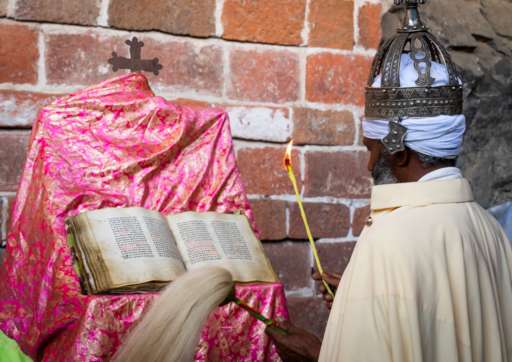
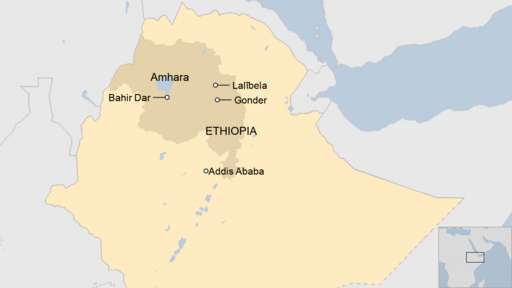
The highest governing body of the Ethiopian Orthodox Church has taken a strong stance against Tigrayan clergy involved in the appointment of six bishops, leading to condemnation and ex-communication. This incident highlights an escalating division within the church concerning its response to the Tigray civil war, which concluded in November after two years of conflict.
During a ceremony at St Mary’s Church in Aksum, the Tigray Orthodox Tewahedo Church ordained six bishops, prompting the Ethiopia Holy Synod to revoke their priestly authority. The synod declared that these bishops should be referred to by their secular names and denied any spiritual services both in their lifetime and after their death.
The synod deemed the appointment of these bishops as illegal and a violation of religious principles and laws, emphasizing that the decision has significant consequences. It has led to divisions within the Ethiopian Orthodox Church, conflicts among believers, and disturbances in the peace.
In response, the Tigray bishops have rejected the Ethiopian Synod’s decision, considering it futile condemnation and unacceptable. The synod, however, has extended an offer for reconciliation, stating that the Tigray priests could be welcomed back if they repent and apologize for the violation of the canon.
The tensions between the Tigrayan clergy and the Ethiopian Synod began earlier when the Tigrayan bishops announced their intention to establish their own church, expressing dissatisfaction with the synod’s failure to condemn the fighting and provide adequate support to the faithful during the civil war.
While the church leadership issued an apology to the people of Tigray regarding the civil war, it seems that the apology has not been sufficient to mend the rift, leading to this latest episode of condemnation and ex-communication.
In their debut appearance at the Women’s World Cup, Morocco secured a 1-0 victory against Colombia, earning a spot in the last 16 of the tournament.
Anissa Lahmari scored the crucial goal for the Atlas Lionesses in the dying moments of the first half during the intense match held in Perth, Australia.
In another match of Group H, two-time former champions Germany were held to a 1-1 draw by South Korea, resulting in their elimination from the competition.
Both Morocco and Colombia finished the group stage with six points, while Germany obtained four points and South Korea managed only one point.
Colombia topped the group, edging out Morocco on goal difference.
Throughout the first half, both teams created opportunities, but it was in stoppage time that Morocco had a real scoring chance when Colombia’s Daniela Arias committed a foul in the penalty area against forward Ibtissam Jraidi.
Although Las Cafeteras’ goalkeeper, Catalina Perez, made a save on Ghizlane Chebbak’s penalty kick, midfielder Lahmari was quick to convert the rebound, securing the victory for Morocco in the ensuing goalmouth scramble.
In the second half, Colombia took control of the game, pushing for an equalizer. In the 59th minute, Daniela Montoya and Lorena Bedoya Durango attempted shots, testing Morocco’s goalkeeper Khadija Er-Rmichi.
Er-Rmichi displayed her skills once again in the 72nd minute, making a crucial save as she tipped teenage striker Linda Caicedo’s shot over the bar.
The match had a frenzied finish, with both teams engaging in end-to-end action. However, Morocco, the newcomer to the World Cup, held on to their lead, continuing their remarkable journey in their debut campaign.
With the elimination of two-time former champions and one of the pre-tournament favorites, Colombia, from the competition, following Brazil, Italy, and Olympic champions Canada, the tournament has seen some surprising results in double-quick time.
“To be honest, it’s still hard to understand,” skipper Alexandra Popp, who scored the German goal and was their chief threat throughout, told German TV network ZDF.
“I still can’t quite understand what happened here.”
Morocco, who were thumped 6-0 by Germany in their opener before beating South Korea 1-0, move on to meet France in Adelaide and Colombia play Jamaica in Melbourne on Tuesday.
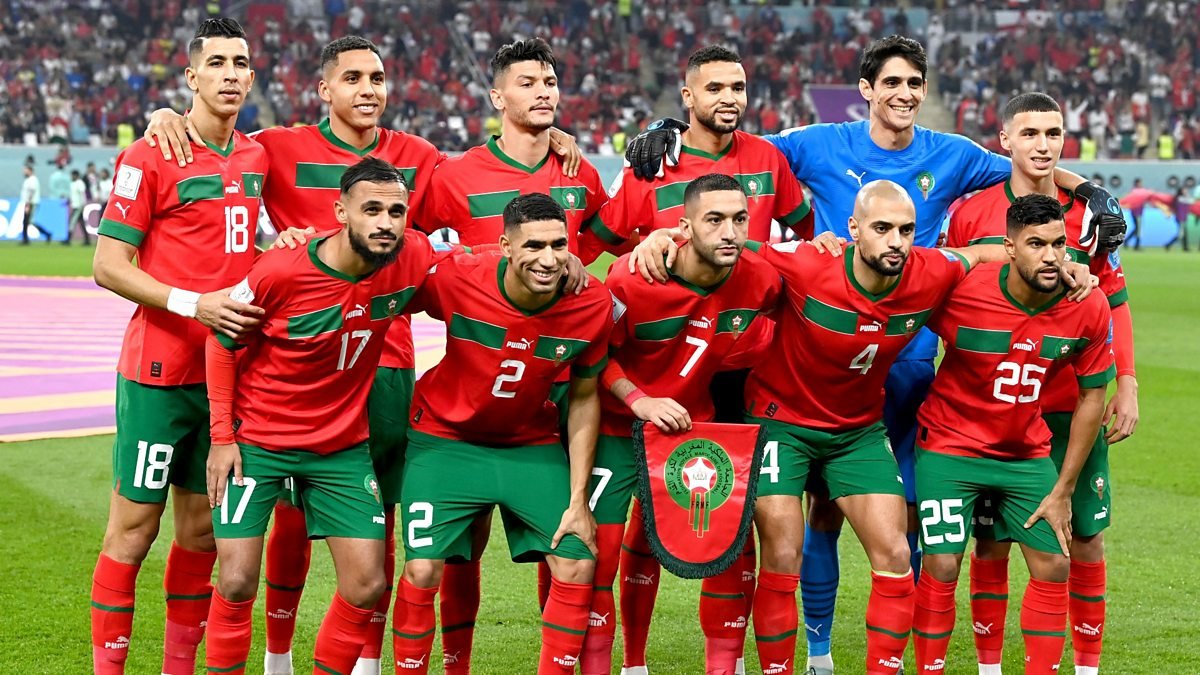
Moroccan fans have had plenty of celebrate with their national teams at the World Cup.
The Atlas Lionesses had created history just by qualifying, and then just by scoring their first win. Beating Colombia to knock Germany out of the tournament was completely unexpected for most.
Morocco’s men’s team also made World Cup history last year. In the 2022 men’s World Cup, the Atlas Lions advanced to the round of 16 for the first time since 1986 and became the first African or Arab nation to reach a World Cup semifinal.
On Thursday, the Christian Association of Nigeria (CAN) urged Nigerians to be patient with President Bola Tinubu and allow him the opportunity to address the country’s challenges.
CAN also praised Tinubu for proactively taking measures to prevent the proposed strike by the Nigeria Labour Congress and Trade Union Congress in response to the removal of fuel subsidies.
The organization advised the NLC and TUC that if any call to action is necessary, it should be for the prudent and accountable use of the funds that would have been allocated to subsidize fuel.
During a press conference in Abuja, the Chairman of Lagos State chapter of CAN and Methodist Bishop of Ikeja Diocese, Stephen Adegbite, raised these concerns.
He criticized the fuel subsidy as a misguided policy that benefits the wealthy and politically connected, while ordinary citizens suffer.
Adegbite commended Tinubu’s approach in inviting the leaders of NLC and TUC for private discussions, which led to a resolution and the end of the nationwide protest.
He praised the President’s willingness to listen and take action in the national interest.
Adegbite appealed to Nigerians to give President Tinubu an opportunity to address the country’s issues once and for all.
He said, “I have keenly followed the socio-economic developments in our country since May 29, 2023, when the new administration of President Bola Ahmed Tinubu took the reigns of governance.
“The President had, on assuming office, made his now famous ‘fuel subsidy is gone’ pronouncement in his inaugural speech and since then, fuel prices have twice gone up in line with the dictates of market forces.
“The step he took was one majority of Nigerians had agreed needed to be taken. It was increasingly obvious that the subsidy regime was not benefiting the masses it was originally designed to benefit.”
He added, “The truth is that the fuel subsidy misadventure was profiting the rich, the politically connected, and even worse, our regional neighbours and smugglers who enjoyed opulent returns at the expense of the citizenry.
“Basically, the masses who were supposed to benefit from the subsidy were not the primary or secondary beneficiaries, but the saddest part is that the people have somehow been hoodwinked and deceived into believing that the fraud of subsidy was in their favour.
“It is against this background that I commend President Tinubu for inviting NLC and TUC leaders for follow-up discussions after organized labour went ahead with protest marches, despite his nationwide broadcast.”
Adegbite stated that Tinubu is a listening president who provided clarity to the leaders of the NLC and TUC, over matters that were unclear.
He mentioned, “I find it assuring that he used the opportunity to provide clarity on a number of things labour leaders felt were not clear enough.
“This, in my view, shows that we indeed have a listening President who is interested in getting things done in national interest.”
Adegbite acknowledged that labor raised the issue of refineries in its criticism of President Tinubu’s recent nationwide broadcast. He mentioned that there have been assurances that the Port Harcourt refineries will be operational by December 2023.
He added that the Nigeria Labour Congress (NLC) should be aware that all four of the nation’s refineries are undergoing refurbishment under an arrangement made during the previous administration of Muhammadu Buhari, each with its specific timeline.
Adegbite emphasized that there is a clear plan in place to ensure local refining of petroleum. He expressed his satisfaction with the decision of labor to suspend its protest marches.
“So my message to NLC and TUC is that if there is any need for a call to action, it should be for the judicious and accountable use of the funds that would otherwise have been used to subsidise fuel.”
“We can’t be complaining about a deficit of social infrastructure and amenities as well as low wages for civil servants, and at the same time be opposed to efforts to improve the quality and availability of same,” the state CAN chairman said.
A major hindrance to the smooth growth of non-oil exports in Nigeria is the limited access that exporters have to banks’ financial services.
Dr. Ezra Yakusak, the Chief Executive Officer of the Nigerian Export Promotion Council, highlighted this challenge during a capacity-building event organized for bankers on non-oil export commodities at the council headquarters in Abuja.
According to Yakusak, the high-interest rates imposed by banks and their low disbursement of credit facilities to finance non-oil export trade are significant obstacles faced by the nation’s non-oil export business sector.
The recent increase in the benchmark interest rate to 18.75 per cent by the Monetary Policy Committee of the Central Bank of Nigeria has further exacerbated the issue.
The CEO emphasized that these unfavorable lending conditions negatively impact the nation’s non-oil exports.
To foster the growth of this sector, it is crucial for financial institutions to address these challenges and provide more accessible and supportive financial services to exporters.
The event themed, “Enhancing non-oil export growth through effective export procedures, documentation and logistics” was part of the Council’s effort at strengthening collaboration in promoting export competitiveness to achieve the economic diversification agenda of the federal government.
In his welcome address, the CEO of NEPC highlighted the significant role that the non-oil export sector plays in Nigeria’s economic development. He emphasized that this sector offers excellent opportunities for more Nigerians to participate in the global market and earn foreign exchange.
However, the CEO pointed out that many exporters lack the necessary financial resources to establish modern export-related industries and produce high-quality products. To address this requirement, banks play a crucial role in providing financial support to boost the issuance and processing of NXP forms, which contributed to a total export value of $4.8 billion in 2022.
In his welcome address, the CEO of NEPC highlighted the significant role that the non-oil export sector plays in Nigeria’s economic development. He emphasized that this sector offers excellent opportunities for more Nigerians to participate in the global market and earn foreign exchange.
However, the CEO pointed out that many exporters lack the necessary financial resources to establish modern export-related industries and produce high-quality products. To address this requirement, banks play a crucial role in providing financial support to boost the issuance and processing of NXP forms, which contributed to a total export value of $4.8 billion in 2022.
Ezra also argued that bankers stress the significance of banks in non-oil export commerce and the need for them to develop their export knowledge and skills in order to complement one another more effectively when promoting export business.
The Nigeria Customs Service’s Apapa Area Command reported a record revenue of N119 billion in June, making it the highest monthly collection to date.
The command’s Public Relations Officer, Abubakar Usman, released a statement on Wednesday, highlighting the remarkable achievement.
During his farewell session with senior officers of the command, the outgoing Customs Area Comptroller, Mohammed Auwal, revealed that the command had generated a total of N540 billion in revenue from January to July. In recognition of his exemplary service, Auwal was recently promoted to the rank of an Assistant Comptroller-General of Customs by the acting Comptroller General of Customs, Adewale Adeniyi.
Auwal attributed the improved revenue collection to a strong focus on compliance, which he emphasized as the cornerstone of port efficiency. He further acknowledged that the command’s success in revenue generation was a result of implementing measures to prevent leakage, maintaining a strict stance against duty evasion, and exercising due diligence despite facing reduced trade volumes.
In his closing remarks, Auwal expressed gratitude to the officers and stakeholders for their unwavering support, and he commended the effectiveness of various interventions, such as demand notices, in recovering identified shortfalls in revenue.
“Before now, N95b collected between January and August 2022 was the highest monthly collection.
The job of preventing prohibited items such as arms, ammunition, illicit drugs, and others under the import and export prohibition lists from entering or exiting the country through Apapa port was treated as a collective duty under his watch,” the statement read.
According to Auwal, inter-agency synergy and intelligence sharing are the first bold step in defeating criminals, who seek to use ports for their unlawful activities.
“Compliance is one word that appeals to both government and private sector stakeholders because we are all governed by rules to which we owe a duty to obey.
“Apapa port holds the potential to handle the highest volume of trade in West and Central Africa with the possibility of being a trade hub for seamless cargo movement if importers, agents, and freight forwarders comply by making sincere declarations and avoiding smuggling,” he concluded.
Employees facing economic hardship are increasingly tapping into their pension savings held in Retirement Savings Account (RSA) due to financial difficulties, as indicated by recent findings.
Vanguard’s investigation reveals that in the first quarter of 2023 (Q1’23), RSA account holders under the Contributory Pension Scheme (CPS) withdrew a total of N3.02 billion from their Additional Voluntary Contribution (ADV). This amount marks a significant 240.1 percent increase from the N887.9 million recorded in the fourth quarter of 2022 (Q4’22).
According to the report from the National Pension Commission (PenCom) for Q1’23, the number of RSA holders making withdrawals from their ADV rose quarter-on-quarter (QoQ) to 1117 during the period, representing a 94.6 percent increase from the 574 withdrawals in the preceding quarter (Q4’22).
Additional Voluntary Contributions (ADV) are supplementary funds that workers can choose to add to their mandatory pension contributions, serving as additional retirement savings.
Under the Pension Reform Act (PRA) 2014, employees are allowed to make ADV contributions to their RSA in addition to their compulsory pension contributions, with the aim of enhancing their retirement benefits.
In terms of RSA registrations, Stanbic IBTC maintained the largest market share of 28 percent with 23,586 new registrations during Q1’23. Access Pensions Limited followed with an 11 percent market share and 9,546 new registrations, while ARM Pension Managers Limited ranked third with a 9.2 percent market share and 9,546 new registrations.
On the other hand, NPF Pensions Managers and Nigerian University Pension Management Company had lower numbers of new RSAs with only 131 and 179 respectively, representing a small fraction of total registrations. Guaranty Trust Pensions Managers Limited recorded 879 new RSAs, accounting for 1.1 percent of total registrations.
Chelsea midfielder Carney Chukwuemeka has not ruled out the possibility of playing international football for the Super Eagles in the future. However, he emphasized that his current focus is on representing England.
Born in Austria to Nigerian parents but raised in England, Chukwuemeka is eligible to play for Nigeria, Austria, and England.
Having begun his international career with England’s U18s and progressing to the U20s, the Aston Villa academy product was recently named in the Young Lions’ FIFA U20 World Cup squad, making one appearance in the competition.
When asked about the prospect of playing for the Super Eagles, he stated, “I haven’t really thought that far. At the minute, I’m focused on England. Obviously, I’ve played for England at youth level, so we’ll see what the future holds,” as quoted by Football London.
Chukwuemeka showcased his talents during Chelsea’s pre-season games, providing one assist in the club’s 5-0 victory over Wrexham. Despite struggling for game time last season with just two Premier League starts, he hopes to receive more opportunities under his new manager Mauricio Pochettino in the upcoming season.
Amnesty International has urged the conflicting parties in Sudan to put an end to their war crimes.
It claims that purposeful and indiscriminate attacks are killing a lot of civilians.
The majority of those who were questioned by the rights organization had fled from the Darfur region to camps in Chad.
Numerous children and women, some as young as 12, have allegedly been the victims of sexual violence, including rape.
According to Amnesty International, the majority of the crimes were committed by members of the Rapid Support Forces and affiliated Arab militias.
Acute food shortages are anticipated to affect more than 20 million people in Sudan, or more than 40% of the population, according to UN agencies and NGOs.
The second quarter saw a 56% decrease in the average monthly imports of gasoline into West Africa, according to statistics from Refinitiv Eikon.
According to Refinitiv statistics, June loadings from the Amsterdam-Rotterdam-Antwerp hub to West Africa decreased to 629,000 tonnes from 895,000 tonnes in 2017.
Loadings decreased from 1.5 million tonnes in July of last year to 627,000 tonnes in July of this year.
“The key point is that demand from West Africa is drying up,” said Refinitiv Lead Oil Analyst Raj Rajendran.
Since the removal of petrol subsidies on May 29, the demand for petrol from Nigeria has seen a reduction. Despite this decrease in demand, foreign refiners from Russia, the Middle East, and Europe are now in competition to increase their exports of refined petrol to Nigeria.
Last week, The PUNCH reported an 84% surge in the importation of petrol from Russia over the past year.
Data obtained by The PUNCH from Argus on Nigeria’s gasoline European trade overview indicates a significant rise in the share of Russian petrol finding its way into Nigeria.
In 2023, the volume of Russian petrol imported to Nigeria has reached 24,000 barrels per day, compared to 3,700 b/d in 2022.
This increase in direct Russian gasoline flows into West Africa commenced in January, with cumulative volumes growing from almost negligible levels in recent years to approximately 800,000 tonnes year-to-date, as reported by Refinitiv Eikon data cited by Reuters. Despite the growth, the overall volumes remain relatively small for now.
“One of Europe’s main markets for gasoline has shrunk, threatening to squeeze European refiners, after Nigeria removed fuel subsidies, which destroyed much of the country’s domestic demand and a regional market for smuggled fuel.
“North America and West Africa, with Nigeria at the helm, historically have been the top two destinations for petrol exports from Europe, which produces more gasoline than it uses, meaning its refiners rely on exports to support profit margins.
“A steady decline in European refining margins in recent years, as competition from the Middle East, the United States and Asia grew, was reversed when fears of fuel supply shortages boosted profits after Russia’s invasion of Ukraine,” the report said.
According to Refinitiv Eikon data, benchmark profit margins for gasoline in northwestern Europe have remained steady at around $27 a barrel. These margins have been supported by factors such as demand from North America, a shortage of high-quality blending materials, disruption caused by low wave levels inland, and local refinery outages.
However, analysts anticipate that the reduction in petrol flows following the recent upheaval in Nigeria could add pressure on European refiners. The potential winners in this situation are likely to be newer Middle Eastern refineries.
Since the removal of subsidies, Nigeria’s petrol demand has reportedly declined by 28%. As a result, onshore gasoline stocks in the country have increased significantly, climbing to 960,000 tonnes from an average of 613,000 tonnes between January and June, as reported by Jeremy Parker of CITAC consultancy, which specializes in Africa’s downstream energy market.
Due to its inadequate domestic refining capacity, Nigeria heavily relies on petrol importation.
The army of Nigeria has stated that it has not received a directive “to begin military action against the military junta in Niger.”
The armed forces could not launch a mission on behalf of the regional organization, Ecowas, without the heads of state’s authorization, a spokesperson said in a statement in response to a news that Nigerian soldiers were mobilizing in anticipation.
According to Brig Gen Tukur Gusau, the military option in Niger was the last resort in the event that all other measures proved unsuccessful in changing the course of events.
In order to “submit their plans” to the leaders of the area, military leaders are currently gathering in Abuja, Nigeria.
In an effort to resolve the ongoing political impasse in Niger Republic, Nigerian President and Chairman of the ECOWAS Authority of Heads of State and Government, Bola Tinubu, has taken decisive action.
Following the resolution reached during the extraordinary summit of ECOWAS in Abuja, President Tinubu has dispatched a delegation to Niger with a mandate to promptly address the situation.
The delegation, led by former Nigerian Head of State, General Abdulsalami Abubakar (retd), left for Niamey on Thursday after receiving a briefing from President Tinubu at the State House in Abuja.
Alongside General Abubakar, the delegation includes the Sultan of Sokoto, Alhaji [Name].
The move is aimed at finding a swift and effective resolution to the current political challenges in Niger Republic, and it underscores the commitment of ECOWAS to supporting stability and peace in the region.
A significant gathering has taken place at a square in central Niamey, the capital of Niger, with people showing their support for the recent military coup.
On the occasion of the country’s independence anniversary, a coalition of civil society organizations called on the public to denounce the sanctions imposed by the West African regional bloc, Ecowas, and warned that force could be used if President Mohamed Bazoum is not reinstated.
The square witnessed a sizable crowd, mostly composed of young men, expressing their backing for the coup leaders.
Amid the show of support, anti-French slogans were chanted, and a few Russian flags were displayed.
Despite this display of solidarity with the coup, there remains widespread opposition to the military takeover among many Nigerien citizens.
Some view the coup as an attempt by senior soldiers to safeguard their positions and preserve their authority, fearing being replaced if they relinquished power.
To justify their actions, there is a growing trend of anti-French sentiment being fostered by the coup leaders, echoing similar events in Mali and Burkina Faso, where the military took over and subsequently strengthened ties with Russia.
The situation in Niger bears similarities to these past instances, leading to concerns and reactions from various sectors of society.
Emel Mathlouthi, a Tunisian singer known as the voice of Tunisia’s uprising in 2011, faced consequences after performing in the Israeli-occupied West Bank.
Her upcoming show at the Hammamet International Festival in Tunisia was cancelled following accusations from pro-Palestinian campaigners who claimed she was promoting “normalisation” with Israel.
Last month, Mathlouthi had performed in Bethlehem, Ramallah, and East Jerusalem to Palestinian audiences.
However, she asserted that she did not perform in Israel and was the victim of a “big misinformation campaign.” She expressed her disappointment over the cancellation, stating that it was unjustified considering the circumstances.
Ophelia Philomena Aovare, the Women’s Organiser of the New Patriotic Party (NPP) in Navrongo Central, has extended support to 130 women farmers in the area by providing them with bags of organic fertilizers to enhance their farming endeavors.
On Tuesday, August 1, Aovare distributed the fertilizers to the women, emphasizing the significance of empowering women in agriculture and providing them with the necessary resources to enhance their livelihoods and independence.
The total cost of the 130 bags of organic fertilizers amounted to GHC 14,300.
Addressing the media during the presentation, Aovare highlighted that supporting women in agriculture plays a pivotal role in enabling them to actively contribute to nation-building.
Driven by her commitment to empowering women and acknowledging the substantial efforts made by women in the area towards its development, Aovare took the initiative to provide them with the necessary assistance.
She expressed her hope that the provision of fertilizers would alleviate the challenges faced by women who lack access to farming inputs, particularly fertilizers, thereby enhancing their farming activities and leading to increased yields. Aovare believed that improved yields would directly translate into better living conditions for the farmers and their families.
families.
“The women here, most of them are not office workers. They do farm and so in this era and season, there was the need to do something to support them. So, I took it upon myself to mobilize support from our financiers to support them. They rely on that to feed themselves and their families. So, if you can help them with farm inputs during this season, you have done it all for them.”
“This is not about money; it is about what they need. Identifying the needs of the people at a particular period and supporting them. So, with this the women can improve their farm yields and be able to take care of their families,” Aovare said.
Aovare revealed that she was able to pull off the donation successfully with the kind support of Michael Luguje, the director-general of the Ghana Ports and Harbours Authority (GPHA) and some of her friends.
“The main supporter who has made this a reality is Michael Luguje who has been of support to us in the constituency and the region as a whole. I went to him and he gave me more than half of the support. I’m very grateful to him. The others were personal friends who came in to support me.”
Ophelia Philomena Aovare, the Women’s Organiser of the New Patriotic Party (NPP) in Navrongo Central, reiterated her commitment to supporting the empowerment of women and girls both during and after her tenure in office. She encouraged the women to remain dedicated to their work and not let the lack of support hinder their progress.
Aovare also disclosed that she is actively arranging resources to conduct skills training workshops for women and girls in the area, aiming to equip them with valuable expertise to enhance their prospects.
Moreover, she highlighted the efforts of the Akufo-Addo government in improving the support system for farmers nationwide. Aovare expressed hope that the coming year would be favorable for farmers as various policies and initiatives are set to be implemented in the agriculture sector to bolster their endeavors.
“Whatever I can do, I have and will continue to do to support women empowerment in our constituency. Also, with the current policies the government is rolling out, I know that next year things will be better for us [farmers and the citizenry]. Our [NPP] aim is to break the eight, so that the people will see the reason to support us [NPP] to break the eight,”
Some of the farmers, who received the fertilisers, expressed gratitude for the donation describing it as a timely intervention. Naaseh Wemeye, a beneficiary, said the fertiliser will be used on her maize and rice farm which seriously needed application. She was thankful to the Women’s Organizer for her thoughtful initiative.
She said, “In fact, the fertilisers that our women organizer gave to us is good. She has done very well. For now, the economy is very hard and we too don’t have work. We don’t also know how to struggle for fertilizer. So, I was very happy when they told us she is going to distribute fertilizers to us. I have maize and rice and I don’t have fertilizer. I pray for her to get more strength so that next time she will give us more. We are all happy and grateful.”
The main opposition Citizens Coalition for Change (CCC) in Zimbabwe reported that an opposition supporter, Tinashe Chitsunge, was tragically killed while en route to an election rally.
This incident occurred during a period of escalating contention and violence in the campaign.
According to CCC spokesperson Fadzayi Mahere, Chitsunge was part of a group of supporters who were attacked and stoned as they were making their way to a rally in Glen Norah, a suburb of the capital, Harare.
Social media posts showed images of a man lying on the ground in a pool of blood, with the party’s yellow T-shirts covering his head.
Videos shared on social media depicted the attack, as a large group threw a barrage of stones at a lorry carrying CCC supporters, tearing campaign posters off the vehicle.
In response to the tragedy, Zimbabwe’s Ministry of Information conveyed its condolences and stated that the police were investigating the incident.
The violence surrounding the campaign has raised concerns and highlighted the need for peace and security during this crucial period in Zimbabwe’s political landscape.
A distressing and tragic incident occurred near Soja Bar in Teshie, within the Ledzokuku Municipal Municipality of the Greater Accra Region, where the lifeless body of a young man in his mid-twenties was found lying by the roadside.
The discovery has sent shockwaves through the community, leaving residents in a state of grief and distress. Locals who woke up to the unfortunate sight stumbled upon the grim scene.
Speculations have arisen regarding the circumstances of the young man’s death, with suggestions that he might have been involved in robbery attempts within the community. Unfortunately, this led to a brutal lynching, though the exact details surrounding the incident are yet to be fully ascertained.
The situation has instilled fear and unease among the residents, and they are anxious for answers and action. The police were informed early in the morning, but there has been a delay in their response, prompting concerns within the community.
The tragic loss of a young life has deeply shaken the community, prompting calls for a thorough investigation into the events that led to this untimely death. The authorities are urged to act swiftly to apprehend those responsible and ensure justice prevails to prevent any further escalation of violence.
In the wake of this heartbreaking event, the community is pleading for enhanced security measures to be put in place to safeguard against similar incidents in the future.
This tragedy serves as a somber reminder of the importance of collaboration between residents and law enforcement to ensure the safety and well-being of everyone in the area.
A Police Officer, a freelance Journalist, and a Lecturer have been remanded into Police custody for one week by an Accra Circuit Court on allegations of robbery.
The accused individuals jointly robbed an Indian businessmen of GHC700,000.00, USD56,450.00, and several electronic devices, including iPhones, Infinix phones, and laptops, as well as four Indian passports.
Four Indian passports, laptops, six mobile phones, and cash totaling GHC 595,665.00 and USD 45,140.00 were found after their detention, according to the prosecution, which was led by Police Inspector Ebenezer Teye-Okuffo.
The case was proceeded to August 3, 2023 by the court, which was presided over by Mrs. Kizita Naa Koowa Quarshie but did not accept their arguments. The trial court further mandated that the complainants receive access to the recovered objects.
According to the prosecution, the complainants were Indian businessmen residing in Osu, and on July 19, 2023, the accused, including a Police Officer in uniform, presented themselves as a Special Investigation team and proceeded to handcuff the complainants before robbing them at their home.
The Police Officer was identified during the robbery and arrested. He confessed to the crime and led the police to his house, where they retrieved a sum of GH₵185,105.00 and USD22,500.00.
Further investigations led to the arrest of the journalist and the lecturer, both of whom also confessed to the crime. The journalist claimed that the complainants were involved in money laundering, which motivated their actions.
During a search of the journalist’s room, GH₵63,800.00 cash was found, which she admitted was her share of the booty. She then led the Police team to her friend at Teshie to retrieve GH₵242,100.00 and USD18,640.00.
Similarly, the lecturer was tracked and arrested, confessing to the crime. He led the team to his house, where they retrieved GH₵64,920.00 and USD2,000.00.
The accused individuals also demonstrated to the Police how they successfully carried out the robbery at the crime scene, and videos of the act were found on the journalist’s laptop.
After the robbery, the accused persons shared the stolen items at the private residence of the Police Officer in La.
In total, the Police retrieved a sum of GH₵595,665.00 and USD45,140.00 from the accused individuals and retained them as exhibits for the court case.
Criticism directed at the Finance Minister regarding his assertion that the government has turned the corner in managing the Ghanaian economy shows no sign of abating.
The latest individual to add to the Minister’s troubles is Sammy Gyamfi, the National Communications Officer of the opposition National Democratic Congress. Gyamfi contends that the Minister lacks a proper understanding of the English language, suggesting that had he possessed a better grasp, he would not have made such a statement.
Speaking on Metro TV on Thursday, August 3, Gyamfi further accused Ken Ofori-Atta of disregarding the sensibilities of Ghanaians, attributing this as the reason for the controversial statement he made.
“With these figures you the (Finance Minister) presented yourself and you’re saying you’ve turned a corner, you need free education on the phrase turned the corner or you don’t respect the sensibilities of Ghanaians or you want to insult the sensibilities of Ghanaians.”
“With his own figures, it means that this year 2023 we are not going to see any improvement in GDP growth rate, and that means employment will suffer, incomes will suffer and Ghanaians will suffer more,” he said.
Richard Ahiagbah, the director of communications for the New Patriotic Party, stated on the same program that the administration has actually turned the corner and is on the right track to restoring the economy.
He claims that the NDC is purposefully refusing to acknowledge truth in an effort to mislead Ghanaians.
“I want to say that indeed we have turned the corner and the reasons for which I say this is the history of this government since 2017 to date, our record has been very clear.”
“The economy that we inherited was in decline and was in free fall. But in the first year in office, we turned things around and started growing. We did so again in 2018, we did so again in 2019, and then something changed.
“What changed was the Covid-19 outbreak which was the departure the NDC does not want to accept and when they do, they say it did not happen to Ghana alone. And when we started to find our feet again, then the Russia Ukraine war began,” he also said.
What did the Finance Minister say?
While addressing Parliament during the Mid-Year Budget Review on Monday, July 31, 2023, Mr Ofori-Atta highlighted the significant progress his government has made in Ghana’s economy since the decision to go to the International Monetary Fund (IMF) for a bailout.
He told the House that “we have turned the corner and, more importantly, we are determined to continue down that path.”
What does the phrase turned the corner mean?
The phrase turned the means “pass the critical point and start to improve.”
Synonyms on are 1. Improve 2. Get better 3. Pick up.
The Asantehene, Otumfuo Osei Tutu II, attended this year’s Emancipation Day celebrations in the queen’s park in Savannah on Tuesday along with the people of Trinidad & Tobago.
The annual commemoration honors the historic abolition of chattel slavery on August 1, 1834, in the British colonies.
Otumfuo Osei Tutu II arrived at Port of Spain, Trinidad and Tobago’s capital city, to a cordial welcome as the honored guest of honor.
The GHC 21 billion decrease in the government’s appropriation for the fiscal year 2023, according to Kojo Oppong Nkrumah, Minister of Information, is praiseworthy.
On Monday, July 31, Finance Minister Ken Ofori-Atta made a statement about the Mid-Year Budget.
Nkrumah noted that while there are still calls for additional budget cutbacks, the GHC 21 billion drop is praiseworthy.
“I think one of the first things to note is that the appropriation has been reduced by GHC 21 billion and I think for those who pay attention to fiscal policy or to the fiscal framework, that is a good thing except that GHC 10 billion of that is somewhere around interest payment and the rest is spread across the various expenditure lines.
“Nonetheless, it’s a reduction in the appropriation of the government expenditure and I think that it is something that should give people some comfort, that we are doing well to stay within the deficit constraints that we have imposed upon ourselves. But there are a lot of lessons that I think we need to learn moving forward and one of them for example deals with bolstering their relative stability that the Minister speaks about,” he said.
The 2023 Budget witnessed a significant reduction of GHC 21 billion in government expenditure, a move that the Information Minister praised as commendable. He emphasized the importance of this fiscal discipline in achieving economic stability and adhering to the deficit constraints set by the government.
Although a portion of the reduction was allocated to interest payments, the Information Minister highlighted that the overall decrease in expenditure showcases the government’s commitment to optimizing its financial resources and prioritizing development initiatives.
The current economic landscape serves as a crucial learning opportunity, prompting the government to make informed decisions to support the country’s economic growth. Nkrumah reiterated the government’s determination to strengthen financial stability, a central theme emphasized by Finance Minister Ken Ofori-Atta during the budget presentation.
The Mid-Year Budget review presented an opportunity to assess the country’s economic performance and evaluate fiscal policies, ensuring alignment with national development priorities.
The reduction in government expenditure reflects the positive impact of the successful Domestic Debt Exchange Programme (DDEP), which has created fiscal space for growth-enhancing reforms and managed rising debt costs.
The budget review also shed light on the government’s growth agenda, which places emphasis on inclusive development and private sector investments to foster job creation and sustainable economic growth.
Notable growth-oriented programs, such as the Planting for Food and Jobs (PFJ) Phase II, aim to bolster agriculture and value-addition, providing opportunities for the youth and promoting economic diversification.
The Ghana Ports and Harbour Authority (GPHA) has been advised not to implement the proposed price rise, which equals equal to a 68% increase, by the Ghana Export-Import (EXIM) Frozen Foods Association.
Additionally, they urged the Ghana Shippers Authority to act urgently on behalf of the business sector to defend port users from what they described as excessive fees that would drive them out of business.
The Association further urged the GPHA, Ghana Shippers Authority, to have key stakeholder engagements to develop sustainable solutions that will foster a climate that is conducive to business growth in a press release seen by GhanaWeb Business.
“We acknowledge that maintaining a sustainable port infrastructure is crucial for the smooth functioning of trade and commerce. However, we firmly believe that such a substantial increase in tariffs could have far-reaching consequences on our industry, causing additional strain on already struggling businesses,” part of the release read.
“One particular area of concern is the potential impact on the cost of importing frozen foods [Fruits and protein], a vital source of nutrition for millions of consumers in our nation,” it added.
The Ghana EXIM Frozen goods Association warned that the increase in port taxes may result in higher import expenses and, consequently, higher retail pricing for frozen goods.
They claimed that this might make the nation’s food insecurity situation worse.
Read the press release below;
FOR IMMEDIATE RELEASE
CONCERN OVER UNEXPECTED INCREASE IN PORT TARIFFS: A POTENTIAL THREAT TO FOOD SECURITY.
3rd August, 2023 Accra-Ghana
The EXIM FROZEN FOODS ASSOCIATION expresses deep concern regarding the recent announcement made by the Ghana Ports and Habour Authority (GPHA), regarding significant hikes in Port Tariffs.
Our members are taken aback by this decision, especially in light of the prevailing economic challenges and the almost stifling environment of doing business we have been driven into.
We acknowledge that maintaining a sustainable port infrastructure is crucial for the smooth functioning of trade and commerce. However, we firmly believe that such a substantial increase in tariffs could have far-reaching consequences on our industry, causing additional strain on already struggling businesses.
One particular area of concern is the potential impact on the cost of importing frozen foods (Fruits and protein), a vital source of nutrition for millions of consumers in our nation. An escalation in port tariffs could lead to higher import costs, which, in turn, may result in elevated retail prices of frozen foods. This could exacerbate food insecurities
Moreover, we note that previous concerns raised by GPHA itself about reduced port traffic which has been a consequence of the higher cost of doing business comparatively to our neighboring ports remains unresolved. Therefore, Implementing these new tariffs might exacerbate the issue, leading to further escalation in port operations charges, adversely affecting importers and exporters alike.
We are particularly worried about the apparent lack of concern on this matter by the Ghana Shippers Authority as a regulator within the industry. This raises serious questions about their commitment to ensuring a conducive and sustainable trading environment.
In light of these pressing concerns, we urge GPHA to an immediate halt the implementation of the proposed tariff hikes which hovers around 68% and engage in meaningful consultations with relevant stakeholders. We also call on the Ghana Shippers Authority to act with all urgency to protect port users from this exorbitant fees, that could further leave our ports empty.
Collaborative discussions will provide an opportunity to assess the potential adverse impact on businesses, especially those dealing with essential food items, and the overall economy.
We believe that a joint effort towards finding sustainable solutions is paramount to ensure a conducive environment for business growth and maintain a healthy trade ecosystem.
We, as stakeholders in the port community, stand ready to contribute constructively to this dialogue and work towards a balanced approach that benefits all parties involved.
We look forward to the opportunity to engage in discussions and find a way forward that promotes growth, economic stability, and the well-being of our nation.
Ongoing fighting between local militias and government troops in Ethiopia’s Amhara region continues to be reported, with clashes occurring in various areas.
Notably, the outskirts of Gondar, one of the region’s largest cities, have become a battleground, leading to disruptions in transport services, especially around the city’s airport.
Mobile data services have also been disrupted in major cities and towns within the Amhara region, including the capital, Bahir Dar. In Lalibela, home to famous rock-hewn churches, militias have taken control of the airport, causing disturbances in flight operations.
Protesters supporting local militias, known as the Fano, have been seen using roadblocks made of rocks and trees to hinder the movement of the army. Reports from media outlets and activists associated with the group suggest that they have gained control of several towns and villages, although these claims have not been independently confirmed by the BBC.
Additional reports indicate that prisons and police stations have been broken into in some towns, adding to the escalating tensions in the region.
In response to the situation, Deputy Prime Minister and Foreign Minister Demeke Mekonnen expressed concern, calling the recent developments “alarming.”
The Amhara region has been experiencing underlying tensions and sporadic clashes since authorities announced the disbandment of a state-backed paramilitary group. Critics of this move feared it would leave the region vulnerable to attacks, exacerbating the already volatile situation.
In a significant triumph, Morocco secured its spot in the next round of the Women’s World Cup with a 1-0 victory over Colombia.
This win secured second place in their group.
Surprisingly, Morocco’s progress came at the expense of Germany, one of the tournament’s favorites.
Germany could only manage a 1-1 draw against South Korea, resulting in them finishing in the third spot in the group.
Next Tuesday, Morocco will face France in the round-of-16, marking a crucial match in their journey through the tournament.
Among the African teams, the Atlas Lionesses now join Nigeria and South Africa in the knock-out stages, showcasing the impressive performance of African women’s football in the competition.
A delegation from the Upper House ofParliament in the Republic of Namibia recently visited Ghana to pay a courtesy call to the Public Interest and Accountability Committee (PIAC).
The purpose of the visit was to gain insights into petroleum revenue management and its effective utilization for the benefit of Namibia’s citizens.
Led by Mr. Elder Filipe, the Vice-Chairman of Namibia’s Parliamentary Committee on Agriculture, Environment, and Natural Resources, the delegation sought to learn from Ghana’s experience in managing revenues from petroleum resources.
The visit was in accordance with Rule 159 of the National Council Standing Rules and Orders of the Namibian Parliament, which mandates the committee to address matters related to various sectors, including water, agriculture, land, environment, forest, mines, and energy.
Mr. Filipe expressed Namibia’s interest in effectively exploiting its discovered hydrocarbons for the welfare of its people. Learning from other countries’ experiences, especially those with successful petroleum revenue management, is seen as crucial to getting it right from the outset.
Namibia is considering setting up a committee similar to PIAC to ensure the responsible management and utilization of petroleum revenues to avoid the resource curse.
The Namibian delegation commended Ghana’s progress in managing its petroleum revenues, which includes the establishment of appropriate laws and institutions governing the sector’s operations.
In response, Professor Kwame Adom-Frimpong, Chairman of PIAC, stressed the importance of securing adequate funding for the Accountability Committee to ensure its smooth operation.
He also encouraged the Namibian Parliamentarians to demonstrate genuine commitment to the work of the yet-to-be-established Committee, which would facilitate the implementation of its recommendations.
Professor Adom-Frimpong extended PIAC’s readiness to provide technical support to their Namibian counterparts in promoting transparency and accountability in managing natural resources.
In response to last week’s coup in Niger, the United States has issued an order for the partial evacuation of its embassy in the country. The situation has prompted the evacuation of hundreds of foreign nationals, and on Sunday, protesters attacked the French embassy.
The coup leader, Gen Abdourahamane Tchiani, has issued a warning against any interference in the country’s internal affairs. Despite an official ban on demonstrations, protests in support of the coup are expected to take place on Thursday, coinciding with Niger’s independence day.
France, being Niger’s former colonial power, has requested the military junta, which now controls the country, to ensure the security of their embassy. The attack on the French diplomatic mission on Sunday led to the organization of evacuation flights.
According to France’s Defence Minister Sébastien Lecornu, more than 1,000 French citizens and other Europeans have been flown out of the country. As the situation unfolds, one resident in the capital city, Niamey, reported that everything had been relatively calm so far.
“People are doing their duty like they do it every day,” said Sidien.
The Ghana Cocoa Board (COCOBOD) has made an important announcement regarding an extension of the closing date for its debt exchange offer programme.
This initiative is designed to manage debt securities and provide investors with improved investment opportunities.
The decision to extend the closing date was prompted by an error in the previously announced date, which coincided with a statutory public holiday.
To rectify this, COCOBOD clarified that the voluntary cocoa bills exchange programme, launched on July 14, 2023, will now close on August 3, 2023, at 4 pm.
The original offer period was initially set to end on July 31, 2023, and August 4, 2023. However, the correction was necessary due to August 4, 2023, being declared a statutory public holiday by the Minister of Interior.
This extension aims to ensure that all participants have ample time and opportunity to take part in the debt exchange programme, offering holders of COCOBOD’s short-term debt securities the chance to swap their bills for longer-term debt securities issued by COCOBOD.
“We refer to the debt securities exchange programme launched by the Ghana Cocoa Board (COCOBOD) on 14th July, 2023 (the Exchange Programme). It would be recalled that the transaction timetable provided in press releases and the exchange memorandum in relation to the Exchange Programme (the Exchange Memorandum) states that the offer period for the Exchange Programme opened at 4pm on 14th July, 2023 and closes at 4pm on 31st July, 2023 and 4th August, 2023. The date in the press release was in error; therefore, the 4th August date is the correct closure date,” a statement from COCOBOD read.
“Subsequently, by a press release issued on 26th July, 2023, the Minister of Interior has declared 4th August, 2023 as a statutory public holiday and mandated that the day should be observed as such throughout the country. In compliance with the directive regarding the observation of 4th August, 2023 as a statutory public holiday, we urge all persons who intend to participate in the Exchange Programme to submit their applications by 4pm on 3rd August, 2023 instead of 4th August, 2023, which is now a public holiday,” it added.
All other dates in the transaction schedule, as stated in the Exchange Memorandum, will remain the same, according to COCOBOD, unless specifically extended by COCOBOD, in its sole discretion, and with the Securities and Exchange Commission’s prior consent.
Additionally, it stated that the window for exchanging chocolate bills had ended.
The GH7.93 billion exchange program intends to replace current bonds with updated ones that have revised terms in an effort to improve the organization’s debt management and give investors a more alluring investment alternative.
If their offers are approved, holders will get five distinct bonds, each with a different maturity date between 2024 and 2028 and a total principal amount equal to the principal of the tenderized cocoa bills.
The timing of this event coincides with local banks’ recent calls for better conditions in the reorganization of cocoa bill holdings. Five new bonds have been proposed by the government to replace the bills, prompting worries about how this would affect the holders’ financial records.
The main labor union federations in Nigeria have agreed to pursue negotiations with the government and have delayed a statewide strike in protest of the growing cost of living.
The main problem is the withdrawal of the gasoline subsidy by President Bola Tinubu.
The government had until Wednesday to change its mind on the subsidies, according to the unions.
The unions organized marches in cities all throughout the nation on Wednesday as the authorities refused to budge.
But according to a statement from the Nigerian presidency, the unions have now consented to further negotiations.
“Consequent upon the fruitful and frank discussion with President Tinubu and their confidence in his ability to encourage open and honest consideration of all the issues put forward by the labour movement, the labour leaders resolved to stop further protest,” it said.
The Reuters news agency is quoting the Nigeria Labour Congress as saying that it had “decided for a return to a new and reinvigorated dialogue process”.
Since taking office as president in May, Mr. Tinubu has started a number of economic reforms.
He claimed that by eliminating the gasoline subsidy, which cost the government $10 billion (£8 billion) last year, the government will be able to allocate more funds to specific programs that benefit the less fortunate.
The Bank of Ghana has disclosed that its financial losses in 2022 were a result of a 50 percent haircut taken during the first phase of the Domestic Debt Exchange Programme (DDEP).
Speaking to the media about the BoG’s 2022 financial results, Dr. Philip Abradu Otoo, the Director of Research at BoG, explained that the central bank made a deliberate decision to absorb the losses on behalf of the country.
This move was taken to facilitate the securing of a deal with the International Monetary Fund (IMF).
To achieve the IMF deal and ensure sustainable levels of public debt by 2028, the government was required to restructure both its domestic and external debts.
During the initial discussions on debt restructuring, the plan involved a 10 percent haircut on the principal, a 10 percent reduction in coupon rates, and a 10-year extension of the tenor, which was intended to apply to all stakeholders.
“As a country, we did not want the haircut on the principal so that was shelved and this meant that we needed to go back to the drawing board.
“We had to look at what combination will be feasible to ensure that our debt matrix reaches sustainable levels to enable us secure the IMF deal and that is why we had to take a 50 per cent haircut,” he explained.
According to him, the country’s central bank must act to protect it and make sure the IMF agreement is carried out.
“As a country, we did not want the haircut on the principal so that was shelved and this meant that we needed to go back to the drawing board.
“The BoG acted as the last absorber and as the last absorber, the external partners are also watching.
They are as well require some sort of care, but before approving a debt restructuring plan, they must first assess how it would affect domestic institutions.
“What happened to us will send a signal that they need to work fast on it because the biggest public policy institution took the biggest haircut,” he stated.
Dr. Otoo further assured that the second round of the Domestic Debt Exchange Programme (DDEP) would not impact the Bank of Ghana’s balance sheet for 2023. This is because the central bank decided to take a one-time hit to account for all of its DDEP losses in the 2022 financial statements.
The DDEP, aimed at achieving sustainable debt levels by 2028, has had a significant impact on banks and the financial sector regulator in the country. The Bank of Ghana’s 2022 financial results revealed a loss of GH¢60.81 billion, primarily attributable to the DDEP and the depreciation of the local currency.
Of the total losses, GH¢53.1 billion was attributed to the DDEP, affecting the bank’s marketable instruments, non-marketable instruments, and cocoa bills.
The DDEP involved the government swapping 12 old bonds valued at GH¢82.99 billion for new ones with reduced coupon rates and longer tenors. This restructuring affected all 23 banks in the country, with some institutions having as much as 50 percent exposure in government bonds.
The audited 2022 accounts of the banks showed that 16 out of the 23 banks operating in the country recorded losses, indicating the severity of the impact on the financial sector.
In the nation’s capital, Niamey, hundreds of supporters of Mohamed Bazoum, the democratically elected president of Niger, have assembled for a large rally. Some of them are waving enormous Russian flags.
Following a summons from a coalition of civil society organizations on the day of the 63rd anniversary of the country’s independence from France, the protesters gathered at Independence Square in the center of the city on Thursday.
One of the protesters, Issiaka Hamadou, stated that regardless of whether assistance comes from “Russia, China, or Turkey, if they want to help us,” “only security that interests us” is what matters.
“We just don’t want the French, who have been looting us since 1960 – they’ve been there ever since and nothing has changed,” he said.
In order to combat armed groups in the Sahel, France deploys about 1,500 soldiers in Niger.
Economic Community of West African States (ECOWAS) sanctions have been imposed in response to the coup, and the African Union, United Nations, and Western nations have all condemned it.
But coup leader General Abdourahamane Tchiani remained defiant on Wednesday, saying he “refuses to give in to any threats, wherever they come from”.
The immediate release of Bazoum and his family is required, as well as the preservation of the nation’s democracy, according to a statement made earlier on Thursday by US President Joe Biden.
“In this critical moment, the United States stands with the people of Niger to honour our decades-long partnership rooted in shared democratic values and support for civilian-led governance,” he said.
“The Nigerien people have the right to choose their leaders,” Biden said. “They have expressed their will through free and fair elections- and that must be respected.”
The removal of Bazoum, 63, has also been criticised by Russia which said the situation was “cause for serious concern”. The Kremlin’s comments came days after Wagner mercenary boss Yevgeny Prigozhin appeared to show support for the coup.
Bazoum’s victory in the 2021 elections that ushered in Niger’s first peaceful transition of power was seen as a new start for a country that had seen four previous coup attempts since independence from France in 1960.
Leaving Niger
Amidst the political turmoil in Niger, ECOWAS made a demand on Sunday for the coup leaders to reinstate Bazoum to power within a week or face the potential “last resort” of military intervention. This call came alongside a violent demonstration outside the French embassy, where protesters smashed windows and chanted anti-French slogans.
In response to the escalating situation, several European countries have initiated evacuation operations to ensure the safety of their nationals. France, in particular, carried out an evacuation operation that saw almost 1,000 people being transported to safety, primarily consisting of French citizens, but also including individuals from the United States and Germany.
In light of the upcoming protests in Niamey on Thursday, France has also urged Niger’s new military government to guarantee the safety of its embassy. The French foreign ministry emphasized that such measures are vital to uphold foreign diplomatic rights and the safety of diplomatic personnel, as mandated by international law, especially under the Vienna Convention.
However, Niger’s new military government, as represented by Tchiani, expressed that French citizens had no reason to leave the country and were not facing any threats. Despite this stance, concerns remain high, and diplomatic efforts are underway to ensure the security and protection of all nationals during this tense period.