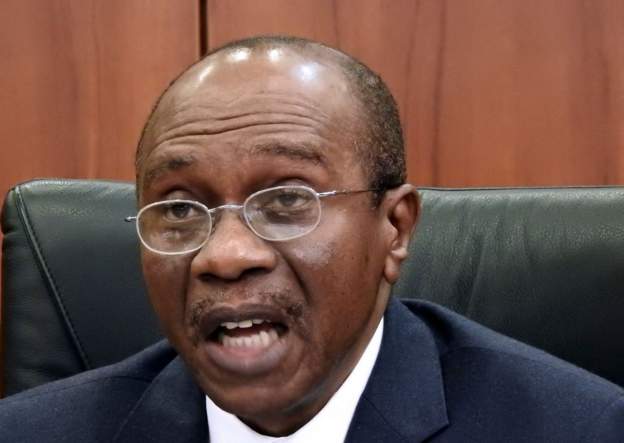
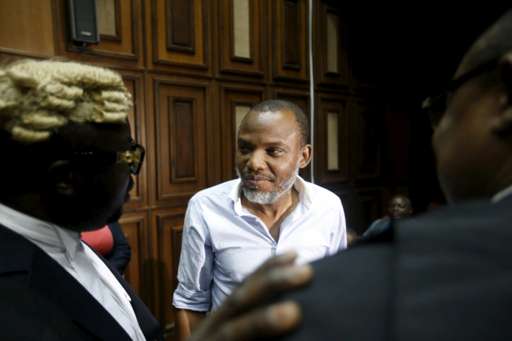
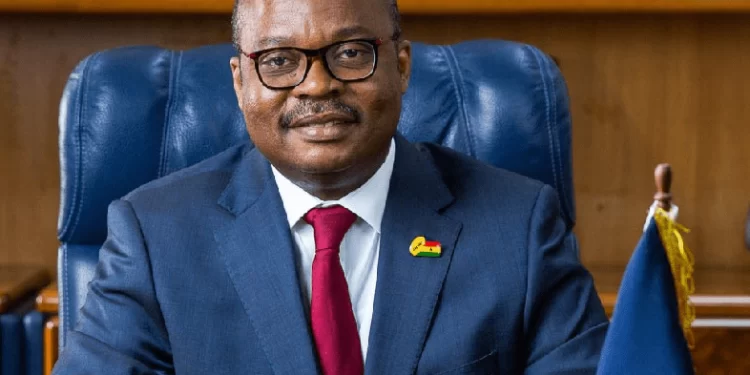
The Department of State Services (DSS) had filed a request to extend the detention of the suspended Central Bank Governor, Godwin Emefiele, by 14 days, presenting alleged new evidence against him. However, the Federal High Court in Abuja dismissed the application, citing it as an abuse of the court process and stating that the court lacked jurisdiction to rule on the matter.
The application was made following Mr. Emefiele’s re-arrest by the DSS after the Federal High Court in Lagos ordered him to be remanded in a correctional center until he paid his bail, set at 20 million naira ($26,000; £20,000).
On Tuesday, there was a heated clash between the DSS and correctional services officials over the custody of Mr. Emefiele, resulting in condemnation from the DSS, which vowed to investigate the incident.
Mr. Emefiele, aged 61, has been charged by the DSS with illegal possession of a shotgun and ammunition, a charge which he denies. His trial is scheduled to take place on November 14.
The practice of keeping significant amounts of cash on hand at home has an impact on how the money supply aggregate in Ghana is calculated, according to a banking consultant Mr. Richmond Attuahene.
“In Ghana, we have M1 and M2 which is all about the aggregation of money so far in the economy.
“If somebody is holding such a quantum of money, it means all the figures we have been churning out in the M1 supply and M2 supply are not complete, so it makes it very difficult,” he made this statement during a media engagement on Wednesday, July 26, while discussing the situation where some foreign cash was found in the bedroom of former Minister of Sanitation and Water Resources, Cecilia Abena Dapaah.
According to reports, Madam Cecilia Dapaah stored millions of unreported Ghana Cedis, $300,000, and $1 million at home.
Furthermore, according to Mr. Attahene, the practice deprives banks of cash they could use to make loans to the private sector for economic development.
He claimed that this approach has an impact on the monetary policy’s effectiveness.
“It also deprives the banks. when we take deposits, we then churn them into investments and be lending to the private sector so we move the money from the surplus area to the deficit area to support the private sector in the growth of the economy.
“So seriously, somebody hiding this money, it means that the economy is being deprived of money to be used in loanable funds to the private sector,” he said.
The governor of the Bank of Ghana (BoG), Dr. Ernest Addison, previously stated that the central bank was concerned about the tendency of people keeping significant amounts of foreign currency, particularly dollars, in their houses.
At the 113th Monetary Policy Committee (MPC) press conference in Accra on Monday, July 24, when asked if the BoG was concerned about Cecilia Dapaah’s situation, Dr. Addison responded, “It is a worry to all of us but it is matter in court so there is not much to say about it.”
The largest professional services company in Africa, PricewaterhouseCoopers (PwC) has urged businesses in Ghana to strengthen their commitment to social responsibility and environmental problems.
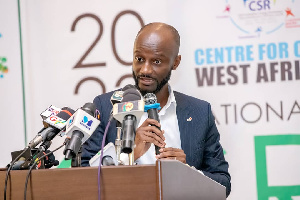
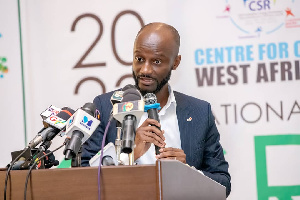
Speaking on Tuesday, July 25, 2023 at the 10th National CSR and Sustainability Conference of the Centre for CSR West Africa at the Kempinski Hotel in Accra, Mr. Richard Ansong, a Partner at PwC, urged businesses in Ghana to keep looking for ways to strengthen their ties to sustainable practices.
Mr. Ansong said: “Companies can no longer operate without strong commitments to values that promote, support and protect people and the planet. It is no longer fashionable or acceptable to stand aside and watch. Some companies are doing well to integrate sustainability practices in their businesses, others have a long way to go. The more companies in Ghana imbibe sustainability, the better the business ecosystem would become.”
Talking about PwC, he said: “As the largest provider of professional services in Africa, we are a forward-thinking, forward-looking, sustainability-conscious organization. We specialize in providing industry-focused assurance, tax and advisory services to enhance value for our clients globally and in Ghana. We ensure that sustainability is engrained in our service delivery. We take pride in the fact that our services add value by helping to improve transparency, trust and consistency of business processes in Ghana and across the world.”
The Centre for Corporate Social Responsibility (CSR), West Africa, a prominent advocate for CSR and Sustainability, partnered with the Association of Ghana Industries to organize a Conference. The event brought together numerous socially responsible companies and organizations that showcased their impressive and excellent social stewardship efforts.
Several companies and organizations, including RYTHM Foundation, Japan International Cooperation Agency (JICA), Vodafone Ghana, Environmental Protection Agency (EPA), World Vision, Volta River Authority, and VIVO Energy, delivered speeches and presentations on their contributions to CSR and sustainability.
During the Conference, Prof. Martin Gyambrah, a Senior Educational Manager and Corporate Advisor with extensive experience in Institutional Development, urged companies to establish actions and systems that ensure the sustainability and continuity of critical resources for achieving their sustainability objectives. He emphasized the importance of sustainable business practices and foresight in planning for the future.
Representatives from various companies, including GOIL, Promasidor, Republic Bank, CBL West Africa, SIC Ghana, and many others, attended the event. Media organizations and the Ghana National Chamber of Commerce and Industry were also present at the Conference. The event served as a platform for businesses to share their societal stewardship efforts, network, and collaborate for sustainable business practices.
Speaking at the Conference, Mr, John Kojo Williams, Co-Founder of the Centre for CSR, West Africa said: “Since 2013, we have been at the forefront of creating awareness on CSR and sustainability issues and matchmaking companies to create sustainable impact. We are happy that this Conference is a huge success and that companies were provided the much-needed platform to render their CSR account, network and partner for more sustainable projects that will keep their businesses alive and make society better. This Conference brought together, companies, business associations, regulatory agencies, international aid organisations, academia and the media.”
The Centre for CSR West Africa reported that a magazine cataloging the CSR endeavors of businesses in Ghana would shortly be released. The 10th Edition of the Ghana CSR Excellence Awards 2024 is now accepting entries. Contact information is available at centreforcsr@outlook.com.
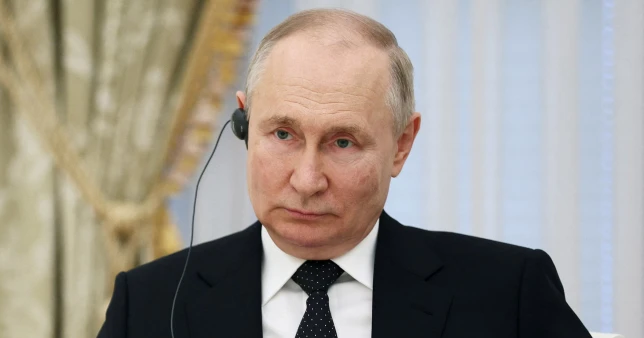
President Putin is set to convene a special summit in St. Petersburg with African leaders. However, the number of participants is significantly lower than expected, partly due to concerns surrounding Moscow’s invasion of Ukraine and its withdrawal from a UN-brokered deal that facilitated safe grain shipments from Ukraine’s southern ports.
Given the critical issue of food security following the Russian invasion, the agreement had played a crucial role in stabilizing global food prices.
During the first Russia-Africa summit in 2019, 43 leaders attended, whereas this time, only 17 are expected to participate.
An Accra Circuit Court has once again threatened to dismiss the alleged GH¢1.2 million theft case involving a former employee of Absa Bank, Emmanuel Sakyi Afriyie.
As reported by the Chronicle newspaper on July 27, 2023, Her Honour Ellen Ofei-Ayeh, the presiding judge, expressed her intent to throw out the case due to the prosecution’s failure to file necessary disclosures required for the trial to proceed.
Since June 26, 2023, the prosecution, led by Chief Inspector Isaac Anquandah, has been unable to provide the required disclosures, citing the need to amend the charge sheet and brief facts, as well as the referral of the docket to the Attorney-General’s (A-G) Department for advice.
Despite two weeks passing, the prosecution claimed they had not received any response from the A-G.
Consequently, the court issued a final ultimatum to the prosecution to file their disclosures by August 3, 2023, or face the possibility of case dismissal.
Judge Ofei-Ayeh emphasized that while some of the accused individuals were out on bail, the first accused (A1), Emmanuel Sakyi Afriyie, remained on remand, which infringes on his rights.
The court directed the prosecution to comply with the disclosure filing deadline and scheduled the case to continue on August 7, 2023.
Emmanuel (A1), 25 and now a businessman, is standing trial alongside Cecil Nyamesem Agyarkwa (A2), Richard Aikins (A3), Michael Tweneboah Oppong (A4), Fouad Mohammed (A5), and Caleb Bandoh (A6).
Others involved are Nicholas Nii Sai (A9), Nana Kwesi Gyimah (A10), Benjamin Adoari (A11), Boadu Nana Yaw Adjei (A13), Joseph D Anim (A14), and Othniel Amankwah Darkwa (A17).
Clinton Asamoah (A7), Kwame Owusu Buadu (A8), Daniel Osei (A12), Ernest Aryee (A15), and Isaac De-Heer (A16) are yet to be arrested.
A1 is facing additional charges, including forgery of other documents and falsification of accounts, totaling 13. The rest are accused of stealing and conspiracy to commit a crime.
All the accused persons pleaded not guilty to the charges, and except for A1, they have been remanded and granted bail in the sum of GH¢200,000 each, with two sureties who are employed and earn not less than GH¢2,500 a month.
Notably, this is the third time the court has issued a warning to the prosecution to rectify issues or risk the dismissal of the case.
On July 10, 2023, the court also threatened to strike out the alleged GH¢1.2 million criminal case involving a former employee of Absa Bank due to the prosecution’s failure to update the charge sheet and brief facts in alignment with six other accused persons connected to the Absa Bank theft case. The delay was attributed to the referral of the dockets to the Attorney-General’s office for advice.
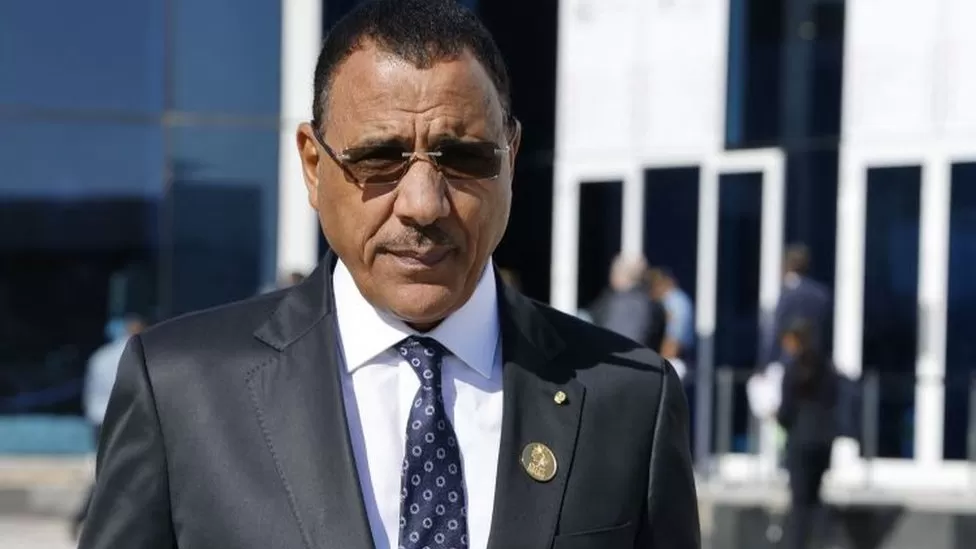
Secretary-general of the United Nations, Antonio Guterres, has “strongly condemns the unconstitutional change in government” in Niger, according to a statement released by his spokesperson on Wednesday.
The coup was declared on national television by Nigerien soldiers, who claimed to have suspended all institutions, dissolved the constitution, and locked the country’s borders.
In a statement released by his spokesperson Stephane Dujarric, Mr. Guterres said he was “deeply disturbed” by President Mohamed Bazoum’s incarceration and was “concerned for his safety and well-being.”
“The Secretary-General calls for an immediate end to all actions undermining democratic principles in Niger,” Mr Dujarric added.
President Vladimir Putin expressed his desire for the African Union (AU) to become a full member of the G20 club of nations while speaking at the beginning of a summit for African leaders in St. Petersburg.
“We hope that this decision will be made as early as September, during the G20 summit in New Delhi,” Mr Putin said.
“As before, Russia is ready to do everything possible to promote the strengthening of the sovereignty of African states, to help make Africa one of the key partners in the new system of a multipolar world order,” he added.
Regarding Russia’s decision to leave a UN-mediated agreement that would have allowed grain supplies from southern Ukrainian ports to finally reach Africa in safety, Mr. Putin declared that Russia can fill the gap.
In the upcoming months, six African nations would be able to get free food from Russia, he noted.
The summit has fewer African leaders participating than the last gathering, in part due to Russia’s invasion of Ukraine.
Head of the secessionist Indigenous People of Biafra (Ipob), Nnamdi Kanu, had a resolution for his release rejected by the Nigerian senate by senators from the south-east area.
The motion’s sponsor, Senator Osita Izunaso of Imo West, said that releasing Mr. Kanu would put an end to the local gunmen’s sit-at-home instructions.
“When people are forced to stay at home and businesses remain closed, productivity declines and income is reduced, affecting livelihoods and economic growth,” he said.
Nevertheless, the Senate turned down the appeals from the south-east lawmaker and instead urged the federal government to arrest those responsible for enforcing the sit-at-home orders.
Since August 2021, unknown gunmen have been enforcing the weekly sit-at-home directives every Monday, despite Ipob’s disassociation from their actions.
Mr. Kanu has been in detention since June 2021, even after the court dismissed all terror charges against him in October 2022.
The announcement of the coup in Niger is a significant setback for the leadership of the West Africa regional bloc, Ecowas, and further exacerbates the constitutional crises in the region.
Over the past three years, military coups have toppled the presidents of Mali, Guinea, and Burkina Faso.
Similarly, in Niger, the soldiers have pointed to the deteriorating security situation and poor governance as the rationale behind their takeover of the government.
This trend raises questions about potential external influences driving these military coups in the former French colonies.
Just two weeks ago, Ecowas chairman President Bola Tinubu expressed grave concern over the escalating levels of terrorism and the emerging pattern of coups in West Africa. He called for urgent and concerted action to address these issues.
In response to the current situation in Niger, President Tinubu has dispatched the President of Benin, Patrice Talon, to mediate and seek a resolution.
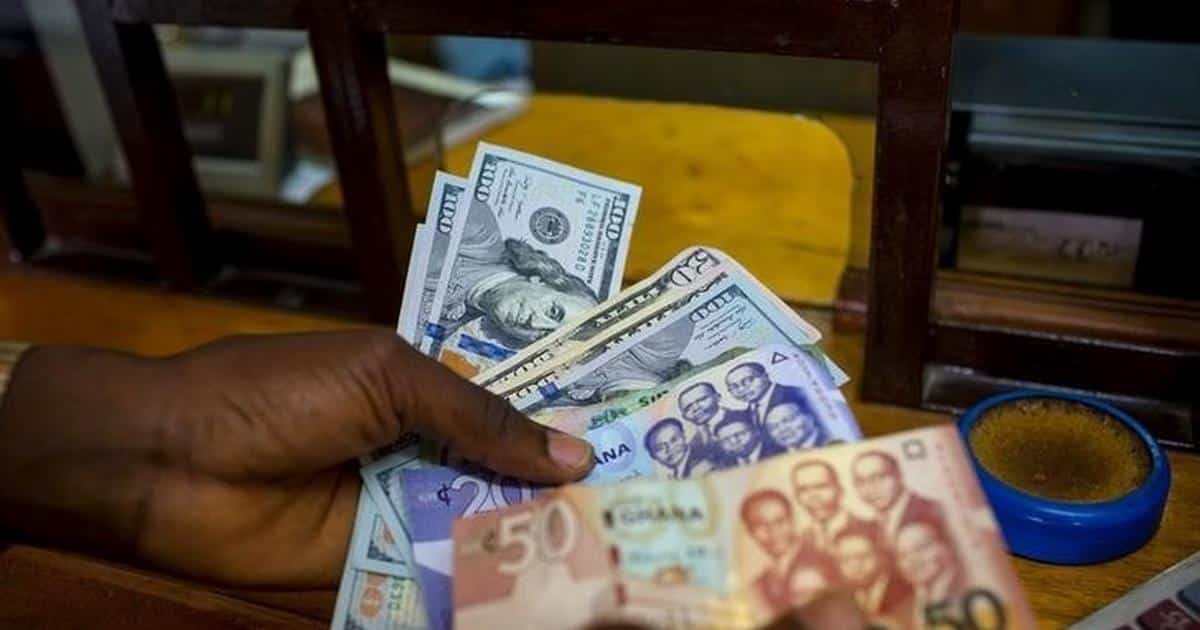
Bank of Ghana’s interbank exchange rates has shown that the Ghana Cedi is now trading against the dollar at a purchasing price of 10.9984 and a selling price of 11.0094 as of today, July 27, 2023.
The exchange rate f
Against the Pound Sterling, the Cedi is trading at a buying price of 14.2231 and a selling price of 14.2385.or the dollar at a forex bureau in Accra is 11.40 for buying and 11.70 for selling.
The exchange rate for buying and selling the pound sterling in Accra is 14.90 and 15.60, respectively.
The Euro is trading at a buying price of 12.1805 and a selling price of 12.1915.
At a forex bureau in Accra, the Euro is being bought at a rate of 12.40 and sold at a rate of 13.10.
The South African Rand is trading at a buying price of 0.6235 and a selling price of 0.6239.
At a forex bureau in Accra, the South African Rand is being bought at a rate of 0.30 and sold at a rate of 0.90.
The Nigerian Naira is trading at a buying price of 70.7785 and a selling price of 70.8840.
At a forex bureau in Accra, Nigerian Naira is being bought at a rate of 12.00 Naira for every 1 Cedi and sold at a rate of 18.00.
For the CFA, it is trading at a buying price of 53.8045 and a selling price of 53.8530.
At a forex bureau in Accra, CFA is being bought at a rate of 17.00 CFA for every 1 Cedi and sold at a rate of 21.00 CFA for every 1 Cedi.
Our forex bureau rates are provided by Afriswap Bureau De Change in Osu, Accra.
Note that these rates may be different at a forex bureau near you. Our forex bureau rates are provided by Afriswap Bureau De Change in Osu, Accra.
Member of Parliament (MP) for Ningo-Prampram, Sam Nartey George, refuses to budge in the face of calls from the Ghana Real Estate Developers Association (GREDA) for an immediate and unconditional apology and a retraction of his remarks.
He asserts that he has no intention of offering an apology or retracting any of his statements regarding the real estate industry.
During a broadcast on ‘Joy NewsFile Joy FM and Joy TV’ on Saturday, July 22, 2023, the MP reportedly referred to the real estate business in Ghana as an enterprise involved in ‘money laundering’.
In response to GREDA’s reaction, the Ningo-Prampram MP expressed his disappointment and accused the association of adopting an ostrich-like approach by denying the existence of money laundering in Ghana’s real estate sector.
“Let me start by stating that I have absolutely no intention to render an apology, qualified or not, nor make any retraction. As a public office holder, I am minded first by my fidelity to the truth, my conscience and the general well-being of the Ghanaian people. These considerations in my opinion supersede the whims of any individual or specific grouping.
“It is shocking that an association like GREDA would seek to play the ostrich and display publicly the malaise that bedevils our beautiful Nation – hypocrisy! How GREDA can boldly seek to make them that they are unaware of the fact that money laundering is happening in the real estate sector of our country is shocking and disappointing. The phenomenon is not peculiar to Ghana alone and is serious jurisdictions, legitimate industry players work with State authorities to rid their sector of these criminals. Unfortunately, here in Ghana, we are seeing GREDA seek to silence any voice that points out this criminality,” part of the MP’s statement read.
Sam George claims that his comments were not intended to single out all GREDA members but rather to address the issue of money laundering in the industry.
He mentioned messages of encouragement from reputable real estate developers who applauded him for speaking out on a matter that threatens the credibility of the industry.
“Let me state for the records that I have received messages from hardworking and credible real estate developers who are engaged in honest enterprise commending me for speaking out on an issue that threatens the viability of the sector. The attempt by the Executive Council to paint a picture that all GREDA members are saints and above reproach is one that would leave any discerning minds in stitches,” he continued.
The MP went on to say that many Ghanaians share his views on the real estate and that GREDA should use all legal means at their disposal to address those views rather than turning their legal efforts against him.
Sam George also gave the association assurances that his office is open to working with them to combat dishonest players in the industry who take part in unlawful activity.
“I am fortified that my position is one that the majority of Ghanaians agree with and believe in. I encourage GREDA to exercise any legal options available to your good selves as you have indicated in your statement. It may open a vista for a wider investigation into a sector that we may not have looked at closely.
“My office remains available to work with GREDA whenever it is prepared to deal with unscrupulous elements who use the sector to perpetrate illegalities,” the MP stated.
A Ghanaian student majoring in biological science at a university in the US runs the risk of losing his PhD funding due to a tweet shared about anti-Lesbians, Gays, Bisexual, Transgender, and Queer (LGBTQ+).
Derrick Boadi Sakyi’s problems began when one of his tweets was reported on Twitter on June 21.
A pro-gay rights activist in Ghana who identifies as “intersex,” Papa Kojo Ampofo, filed a petition with the school where Sakyi was enrolled.
“One guy sent me death threats and I just checked his profile. He’s been inciting hate for years…in one of his most recent tweet, he confessed setting up gay men to be beaten and blackmailed and said if Ama allows him to correctively rape her, he’ll get get her to the bar.
“I’ve found his name and details on LinkedIn and he moved to the US two weeks ago to start a PhD in Ohio. I want everyone to hold on tight because this TL is about to get bloody messy af in the coming days,” Ampofo tweeted on July 21.
As per the Ohio-based institution’s statement, they have decided to suspend the Fellowship and Funding of an individual, Sakyi, until the investigation is completed. The matter is currently under the University’s jurisdiction.
The university further revealed that Sakyi himself admitted to posting the tweets and sending anti-LGBTQ messages to activists via their inbox. Additionally, he has taken down the account associated with these actions.
Ampofo, in response to Sakyi’s actions, shared screenshots of a petition he submitted to the school and the subsequent response. The response confirmed that Sakyi’s scholarship is at risk due to his expressed views.
The institution clarified that the scholarship Sakyi received comes with an expectation that fellows will respect the rights of the LGBTQ+ community and other minority groups. As a result of his conduct, which contravened their guidelines, his scholarship is in jeopardy.
“The goal of our fellowship and Funding is to provide access for minority groups including the LGBTQIA+ community, Applicants from the Global South, first generation students and people with disability.
“Our decision to grant Fellowship and Funding to Mr Derrick Boadi Sakyi to fund his PhD in Biological Science went through stringent selection and interview process. His Fellowship and Funding was given on the basis that he remains a good representative of our school and advocate or an Inclusive and Diverse school and work environment,” the school added.
Former Member of Parliament (MP) for the Evalue Ajomoro Gwira Constituency, Catherine Ablema Afeku, has assured the constituents of her unrelenting support should she be elected as NPP parliamentary candidate for her constituency.
“If you support Presidential candidate A or B, it’s not part of the constituency election, so you can choose me as your parliamentary representative and vote for any Presidential aspirant you want. Don’t let anyone intimidate you into thinking otherwise,” she told the gathering.
She gave this assurance while encouraging the delegates to vote for their preferred candidate to lead the party in the 2024 elections, despite her extensive campaigning for the former Trade and Industry Minister across the nation.
“When you come to the constituency, does the president come here? When you’re sick, I’m the one in the constituency to take care of you and not the presidential aspirant or president. When I win, I will go to Parliament, and the President goes to Jubilee House,” Catherine Afeku stated.
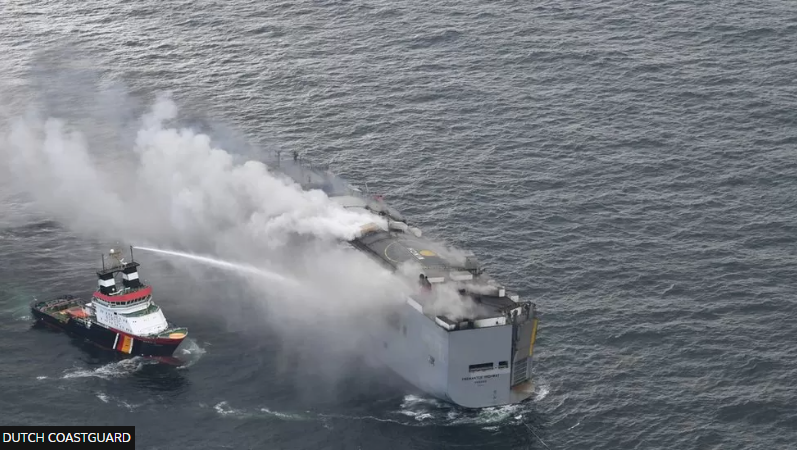
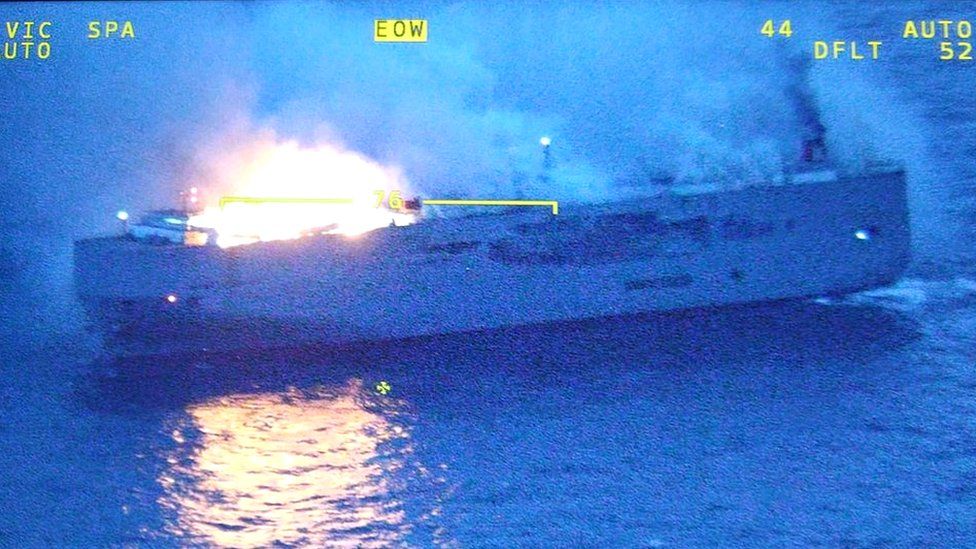
Off the shore of the Dutch island of Ameland, a cargo ship carrying nearly 3,000 automobiles caught fire, killing one crew member and injuring 22 others.
In order to escape the fire, some of the crew made a 30 m (100 ft) leap into the water.
Rescue workers worry that the fire could burn for days as a massive recovery operation is underway in the North Sea.
Initial attempts by crew members to put out the fires by themselves failed due to being overpowered, and they were ultimately forced to leave.
Willard Molenaar, the skipper of the Ameland lifeboat, reported that seven of them dove into the water.
“One by one, they jumped and we had to fish them out of the water,” he told public broadcaster NOS. “They were really desperate so they had to jump – you don’t just do that for the sake of it.”
In the North Sea, distressing images shared by the coastguard depicted the Panamanian-flagged Fremantle Highway shrouded in smoke, its deck ablaze.
According to the Dutch news agency ANP, the coastguard stated that the fire was expected to persist for several days. In an effort to cool down the vessel, water was being sprayed on the ship’s sides.
However, rescue boats exercised caution in their water usage, as excessive pouring could pose a risk of sinking the ship.
The cargo ship embarked from the port of Bremerhaven in northern Germany, en route to Port Said in Egypt, departing on Tuesday around 15:00 local time.
Unfortunately, it encountered difficulties overnight, approximately 27km (17 miles) north of Ameland in the Wadden Sea, an area within the North Sea designated as a World Heritage site.
The exact cause of the fire remained unknown, although earlier suggestions by the coastguard had indicated the possibility of an electric car being involved, as around 25 of the vehicles onboard were electric.
About 25 of the vehicles on the ship were electric.
Image caption,The cause of the fire has not yet been established
To move the cargo ship away from major shipping routes to and from Germany, a tugboat was deployed for the task.
The freighter, operated by K-Line but owned by a subsidiary of the Japanese shipbuilding firm Imabari Shipbuilding, is presently stationary. However, there are concerns that it might be listing, adding to the challenges faced by emergency crews at the scene.
The primary focus for the responders is to extinguish the fire and prevent the cargo ship from sinking. Salvage boats are strategically positioned around the vessel, ready for any potential scenarios, while an oil-recovery vessel has been dispatched to the area in case of a leak. As a precautionary measure, air traffic officials have restricted planes from flying near the ship.
Environmental group North Sea Foundation has expressed concern over the increased vulnerability of the Wadden Sea due to the high volume of larger ships utilizing the busy shipping route.
In the past, the area has experienced incidents involving cargo ships. Four years ago, another Panamanian-registered cargo ship lost 270 shipping containers, some of which contained chemicals, during a storm, with some containers washing up on Dutch beaches.
Similarly, in a separate incident last year, a cargo ship carrying 4,000 luxury cars caught fire and sank off the Azores. The blaze was attributed to lithium-ion batteries in the cars, and although water initially proved ineffective, firefighters managed to bring the situation under control before the ship eventually sank during towing.
The Ministry of Lands and Natural Resources has denied media allegations that claim it has granted licenses to numerous businesses to exploit Ghana’s lithium deposits against the country’s best interests.
The Ministry adamantly declared that the claims making the rounds in the media are false in a press release issued on Wednesday, July 26. The Ministry highlighted that in every decision-making process, the welfare of the citizens is still given top priority.
“The attention of the Ministry of Lands and Natural Resources has been drawn to various publications in a section of the media, to the effect that the Government of President Akufo-Addo has granted licenses to several companies to exploit Ghana’s lithium resources against the national interest.”
“These stories are totally false. For the avoidance of doubt, no company has been granted a lease, license, and/or permit to exploit, mine, and/or produce lithium in Ghana.”
Lithium explorations are currently under way, according to the Ministry, and it has submitted a policy proposal to Cabinet for the administration, exploitation, and control of Ghana’s green minerals, including lithium. The suggestion is now being examined and assessed.
The Government is devoted to ensuring that the extraction of these essential minerals, such as lithium, is done in a way that is consistent with the interests of the country. The main objective of the strategy is to make sure that Ghana’s citizens, who are the genuine owners of such priceless resources, profit from them.
“The Hon. Minister responsible for Lands and Natural Resources, Hon. Samuel A. Jinapor, MP, has stated on a number of platforms, both local and international, that the Government is committed to ensuring that the exploitation of these minerals and others are done in a manner that accords with the national interest.”
The policy will act as the basis for all contracts, leases, licenses, and permits relating to the extraction and use of Ghana’s green minerals once it has been approved.
National Chairman of the National Democratic Congress (NDC), John Asiedu Nketiah, has urgently called for a thorough investigation into the homes of all government appointees following allegations of significant funds being stolen from the former Minister of Sanitation and Water Resources, Cecilia Abena Dapaah.
During an interview on Okay FM on July 25, 2023, Asiedu Nketiah expressed his lack of surprise regarding the reported theft of money from Cecilia Dapaah’s private residence. He voiced his belief that the current government and its appointees are engaged in accumulating personal wealth at the expense of deceiving ordinary citizens.
Nketiah expressed deep concern about the prevailing level of corruption within the administration and emphasized the need for swift and decisive action to hold those responsible accountable.
“For Cecilia Dapaah’s case, I am not surprised because we have been saying often times that the aim of this government is to deceive Ghanaians to amass wealth and use the same wealth to stay in power.
“So, they acquire such monies, they always make sure that it is distributed equally to everyone who might have an interest in investigations to silence them, so it is God’s doing that this case has exposed them and because the money was enough, she couldn’t even realize that some have been stolen,” he said.
The NDC National Chairman stressed the need for action once more, saying that the Special Prosecutor should request that all government appointees submit their passports and order a statewide search of their homes if Ghana is sincere about fighting corruption.
He voiced the opinion that the money that would be recovered from such an operation might be greater than the bailout amount Ghana is requesting from the International Monetary Fund (IMF).
“If we are serious as a country today, the Special Prosecutor would have ordered that all government appointees should submit their passports, ministers and every appointee, then we search everybody, a nationwide swoop to check every minister’s residence.
The amount we receive will be greater than the loan we are receiving from the IMF, in my opinion, because they mismanaged the money and distributed it to us while preaching that the conflict between Russia and Ukraine caused our hardships even though we did not cast our votes for either country.
“…so the monies are in their various houses and rooms, so they have the money but they don’t know where to keep them,” he added.
Since July 22, Cecilia Dapaah has resigned from her job as a minister. Following a search of her home, the Special Prosecutor detained Cecilia Dapaah and granted her bail.
The Attorney-General has been consulted by police over the theft case docket that was reported by the minister and her spouse.
Some of the former minister’s family members have, however, also been questioned regarding the stolen funds from her Abelemkpe home, which prompted her resignation from office and the ongoing investigation by the Office of the Special Prosecutor.
Late on July 26, soldiers in Niger came on national television to announce the removal of President Mohamed Bazoum.
10 officials made up the group, and judging by their outfits, they were all affiliated with different parts of the security architecture.
The nine others lined up behind the announcer, Col. Major Amadou Abdramane, who was dressed in a blue uniform.
Aside from announcing Bazoum’s removal, the proclamation also disbanded the country’s institutions, suspended the constitution, and shut down its borders.
Developments earlier in the day:
Soldiers were reportedly barricading the presidential palace and various ministries in Niamey, the capital of Niger.
No bullets were fired during the incident, but the reason for the obstruction was not immediately clear, according to sources from the BBC.
While negotiations to resolve the crisis were taking on, the president was reportedly at home with his family.
There were military personnel all around the home.
Unnamed source: The incident was characterized as a “fit of temper” by the military.
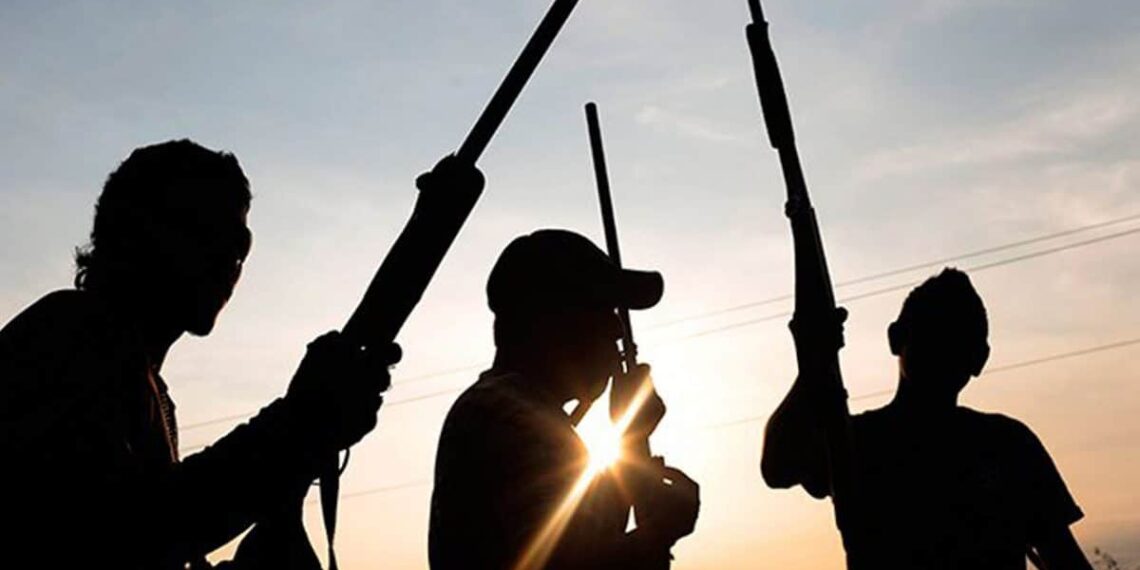
When terrorists raided five towns in the Batsari region of Katsina State on Tuesday morning, some farmers who were working on their farms were kidnapped.
The villages of Nahuta, Madogara, Dan Tsuntsu, Zamfarawa, and Salihar Dadare provided the farmers who were abducted.
35 persons, mostly farmers working on their farms, were still missing following the attacks, according to a health worker in the Dan Tsuntsu hamlet who requested anonymity for security concerns.
“The bandits began their operations (attacks) around 9:00 a.m. when farmers started working on their farms. They would just go into the farm, scare people and abduct the unlucky ones,” he said over the phone. He was in Batsari town when a PREMIUM TIMES reporter called him, and he said he might not be returning to Dan Tsuntsu anytime soon.
He claimed that more than 10 farmers had been kidnapped in only his village.
The terrorists, who arrived in the area in motorcycles, abducted men and women, including children working on their farms, and took them into a part of the Rugu forest, which the terrorists from Katsina and Zamfara use as hideouts.
“My nephew was among those abducted. He is a twelve-year-old boy and couldn’t run when the bandits started shooting into the air. He went to the farm with his father, my older brother. It was later that we saw my brother who ran, but the son is still with the terrorists,” another local from Dan Tsuntsu, who also asked not to be named, told PREMIUM TIMES over the phone.
“We don’t go to our farms now because of fear of attacks,” another resident, Bello Nahuta, told PREMIUM TIMES. “Even last week, they came on over sixty motorcycles and abducted several people, including my neighbour. His family had to pay N100,000 to secure his release. Things are becoming hard for us.”
When contacted, the police spokesperson in the state, Abubakar Sadik, said 14 people were kidnapped during the attack.
“Fourteen people were kidnapped in Madogara village. Investigation is ongoing as efforts are on with a view to rescuing the kidnapped victims and arresting the perpetrators, please,” he said in a message sent to PREMIUM TIMES.
Terrorists operating in the North-west, especially Zamfara, Katsina and Sokoto states, are known to intensify attacks during the rainy season which residents believe is to compel local authorities into dialogue with them.
“The rainy season also gives them the opportunity to launch attacks and quickly hide without the security agents able to trace them. They also intensify such attacks during the season to make life difficult for the Hausa people in the local communities because they know farming is the most important occupation to the Hausas,” Saifullahi Kauraye, a public affairs analyst, said.
Former Arsenal and Manchester City defender, Kolo Toure, faced accusations of cheating on his then-fiancée, Awo, with a UK-based Zimbabwean model named Kessel Kasuisyo.
In a 2012 interview with Mirror, Kessel claimed that she had a two-year fling with the Ivorian footballer without knowing his real identity. According to Kessel, during their affair, Toure introduced himself as ‘Francios’ and portrayed himself as a Ghanaian car salesman operating in Africa.
Throughout the duration of their relationship, which lasted from September 2010 to December 2012, Toure allegedly concealed his true identity. He avoided taking pictures with Kessel and used his Islamic heritage as a pretext to prevent her from meeting his parents.
Kessel only discovered Toure’s true identity when a friend suggested that she search for the player’s information online after seeing his picture. To her surprise, she found out that Toure was already married to Awo.
“I am devastated. On some of the wedding pictures he is crying but a few weeks before he was in my bed.
“Two or three weeks after the wedding he was at mine. Around the time he got married, he called and said he was back in Africa and had just sold two cars.
“I believed everything he said, I am hurt and confused by it all. Maybe he wanted me to be a second wife. I just don’t know. Everything about his strange behaviour now all makes sense.”
“Two or three weeks after the wedding he was at mine. Around the time he got married, he called and said he was back in Africa and had just sold two cars.
“I believed everything he said, I am hurt and confused by it all. Maybe he wanted me to be a second wife. I just don’t know. Everything about his strange behaviour now all makes sense.”
Kessel told Mirror that they met at a nightclub in Manchester in September 2010 and they began talking before they exchanged numbers.
“He started chatting me up and we swapped numbers,” she said.
“Then he gave me a lift home. The next day he called me and we met at a hotel. I told him he looked familiar and he just said maybe he looks like somebody. He said he sold cars in Africa and did some charity work.”
“He said he came from Ghana and was a student too. He said his father was a minister. I am not a fan of football. I thought maybe I had seen him on telly with his father,” he added.
She claimed that during that time, Toure sent him expensive gifts like lingerie and even a £1,000 ring as a sign of his devotion to her.
Toure would vanish and then emerge nine months later, she said, adding that he always had a cap and sunglasses hiding his face when he visited her. She went on to describe their on-and-off connection.
“He asked if I wanted to meet up and I told him I had my own flat now. He came around in a big car. He was wearing a cap and big sunglasses.
“I told him it was my birthday and he asked me if I would wear some of the stuff he bought me so I got dressed up and we ended up in the bedroom.
“The next time I saw him he bought me a birthday present. He got me a gold watch and some 18-carat diamond earrings.
Kessel said Toure used to call her through a private number with the excuse that he does not want her to waste her money in reaching him.
“He used to call me constantly but from a private number so I couldn’t call back. I was suspicious, but he said he didn’t want me to waste my money calling.
“He once gave me £500 to send to my mother in Zimbabwe. Another time he gave me £200 for food because my fridge was empty. I started to question him about exactly what he did and he would say just selling cars. Things were on and off.”
Kolo Toure never reacted to the allegation that popped up after his marriage in 2012.
They tied the knot after nine years of dating and currently have two children, a daughter, and a son.
Soldiers in Niger’s capital, Niamey, have reportedly blockaded the presidential palace and several ministries, as reported in various news outlets.
The incident did not involve any shots being fired, but the motive behind the blockade remains uncertain.
President Mohamed Bazoum is currently at his residence with his family, while talks are being held to address the situation.
Though there is speculation about a potential attempt by the presidential guard to seize power, there is no official confirmation at this time.
According to the Africa Press Agency (AFP), military personnel have surrounded President Bazoum’s residence.
One unnamed source has described the incident as a “fit of temper” by the troops. More information and updates are expected to follow as authorities work to de-escalate the situation and restore order.
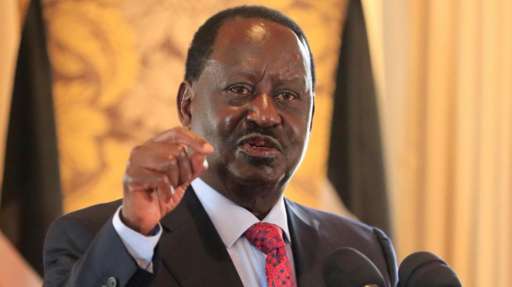
The head of the opposition in Kenya, Raila Odinga, called President William Ruto’s offer to hold discussions over anti-government demonstrations “not serious at all” and rejected it.
Following weeks of demonstrations against the growing cost of living and the implementation of new levies, Ruto stated on social media on Tuesday that he was ready to see Odinga “anytime.”
Nevertheless, the leader of the opposition Azimio alliance claimed to Al Jazeera on Wednesday that the president’s offer to hold discussions was merely a “public relations exercise”.
“If he wanted to meet with me he would not have invited me through social media,” Odinga said, speaking from Nairobi. “He knows my address, he knows my telephone number. He is basically just playing games.”
“We have a crisis in this country that requires a serious approach,” Odinga said. “We are ready anytime, when they are ready for those talks”.
Critics accuse Ruto of increasing taxes at a time when the economy of the nation is collapsing due to spiraling inflation and of going back on his election campaign pledges from 2022, when he ran as the candidate for the underprivileged Kenyans and promised to improve their economic circumstances.
Since the opposition leader asked Kenyans to demonstrate in the streets in March, his coalition has organized nine days of anti-government demonstrations, with the gatherings occasionally degenerating into looting and violent altercations with the police.
Human rights organizations report that at least 30 individuals have died. Odinga, who claims that the presidential election from the previous year was “stolen” from him, has charged the government with “unprecedented police brutality.”
Human rights activists have denounced the police for using live ammunition and tear gas to disperse demonstrators throwing rocks.
Amnesty International and more than two dozen other rights organizations said last week that they had proof of 27 “extrajudicial, summary, and arbitrary executions” in July alone.
Accusations of “extrajudicial executions and/or excessive use of force… are malicious, false, and intended to distort public opinion,” the interior ministry stated on Tuesday.
Odinga canceled his protests in April and May when Ruto agreed to talk, but after the negotiations stalled, this month saw a number of protests.
On Wednesday, Odinga also urged Kenyans to attend vigils in memory of anti-government demonstrators who had died in the protests.
His coalition urged “Kenyans to come out and light candles and lay flowers, preferably white, in remembrance of and respect for the victims.”
Information from Niger’s presidency, says that members of the presidential guard attempted to move against President Mohamed Bazoum while threatening to be attacked by the army if they did not back down.
According to the official presidential Twitter account, the presidential guards participated in a “anti-Republican demonstration” on Wednesday and sought “in vain” to rally the assistance of the other security forces.
According to reports, it was clarified that President Bazoum and his family were safe, countering earlier news that security sources claimed he was being held by guards within the presidential palace in Niamey, the capital of Niger.
On Wednesday morning, the presidential palace and adjacent ministries were barricaded by military vehicles, preventing staff from accessing their offices. However, the rest of Niamey remained calm during the situation.
Al Jazeera’s Ahmed Idris, reporting from Abuja in neighboring Nigeria, mentioned that the army had issued a directive for Bazoum’s loyal troops to intervene and quell what appeared to be a coup attempt. Additionally, there were unconfirmed reports of skirmishes related to the control of the state television station.
After news organizations cited security sources as indicating that the guards were holding Bazoum within the presidential palace in the nation’s capital, Niamey, it was further stated that Bazoum and his family were in good health.
On Wednesday morning, military vehicles had blocked access to the palace and the nearby ministries. According to accounts, employees inside the palace were also unable to enter their offices. However, some parts of Niamey were peaceful.
From Abuja in the neighboring Nigerian city of Bazoum, Al Jazeera’s Ahmed Idris said that the army had ordered Bazoum’s supporters to go in to put an end to what appeared to be a coup attempt. Additionally, he claimed that there had been unsubstantiated reports of clashes over control of the state television.
Moussa Faki Mahamat, the chair of the African Union Commission, “strongly” condemned what he dubbed a coup attempt “by members of the military acting in total betrayal of their republican duty” in a statement.
The president of Nigeria and chair of the Economic Community of West African States (ECOWAS), Bola Tinubu, stated that he was already in “close consultation” with other regional leaders over the situation.
“The ECOWAS leadership will not accept any action that impedes the smooth functioning of legitimate authority in Niger or any part of West Africa,” he said in a statement. “We will do everything within our powers to ensure democracy is firmly planted, nurtured, well rooted and thrives in our region.”
Military takeovers
It remains uncertain why there was a revolt but analysts say rising costs of living and perceptions of government incompetence and corruption may have driven the guards’ move.
“The [attempted] coup fits into a long pattern of inability by the political class to speak to the economic challenges and the security and political instabilities in the country,” Emmanuel Kwesi Aning, professor of peacekeeping practice at Kofi Annan International Peacekeeping Training Centre, Accra, told Al Jazeera. “That nevertheless, does not justify the attempted coup,” he said.
“Corruption is the big elephant in the room, plus a fight against violent extremists. This is a challenge that almost all West African governments are facing,” he added.
Bazoum was elected president in a 2021 election that was the first democratic transition of power in a state that has witnessed four military coups since independence from France in 1960.
There have been four military takeovers in neighbouring Mali and Burkina Faso since 2020.
Those coups were spurred in part by frustrations over authorities’ failure to stem a rebel uprising blighting the Sahel region – which includes Niger – that was once derided as the “coup belt”.
There was also a thwarted coup attempt in Niger in March 2021, when a military unit tried to seize the presidential palace days before Bazoum who had just been elected, was due to be sworn in.
Niger is a key ally to Western powers seeking to support local troops fighting a conflict which took root in Mali in 2012 and has spread to neighbouring countries including Burkina Faso and the southern coastal states.
France moved troops to the country from Mali last year after its relations with the military government there soured – an emerging pattern in former French colonies in the region.
In a significant collaboration, Google has joined forces with Verve, Africa’s largest domestic card scheme, to enhance the digital transaction experience on the Google Play Store for Nigerians.
Effective immediately, Nigerians can utilize their Verve cards to conduct purchases on the Google Play Store, bolstering the digital ecosystem within the country.
Under this newly established partnership, Google will process Verve transactions within Nigeria, using the local currency, Nigerian Naira (NG). Consequently, these transactions will be treated as local by the country’s banking institutions.
This development ensures that any Nigerian with an Android device and a Verve card can now enjoy a seamless and streamlined method of making purchases on the Google Play Store.
Anthea Crawford, Head of Retail and Payment Partnerships, Google Play, said, “We are thrilled to collaborate with Verve, expanding Google Play access for more Nigerians. The introduction of local payments with Verve cards is a significant milestone, enabling more Nigerians to participate in the app economy and access the apps they need.”
Speaking about this partnership, Vincent Ogbunude, Managing Director Verve International, stated that “the integration with Google Play is a significant stride towards achieving Verve’s vision of promoting financial inclusion. We are excited to bring digital content and services closer to Verve cardholders, hence bridging the digital divide.”
Verve’s growing recognition as Nigeria’s most popular payment card program fosters inclusion by bringing digital services to a wider range of the country’s citizens. Users may now add their Verve Cards to their Google Play Account and pay in Naira without hassle, maximizing this amazing prospect.
How to use your Verve card on Google Play is as follows: Open the Play Store, select the app you want to purchase, click “add credit or debit card” and, when prompted, input your Verve card information. Additionally, you can visit pay.google.com, sign in with your Gmail account, select “Add a payment method,” enter your Verve card information, and then save. After that, make your purchase by going back to the Playstore.
This new alliance helps create a more accessible digital environment for Nigerians while also streamlining the payment process for Google Play Store apps and services.
Meet Ibrahim Mahama, the Ghanaian business mogul and entrepreneur behind Engineers and Planners, a leading heavy-duty equipment renting company based in Accra, Ghana.
His company provides rental services to major mining companies operating not only in Ghana but also in other African countries, as well as serving road contractors. Upon his return to Ghana from England in 1997, Mahama noticed the pressing need for equipment in the country’s mining and construction industries. Recognizing the opportunity, he ventured into the equipment rental space to meet this demand.
His determination paid off when he secured a significant sub-contract to supply trucks to Razel-Bec for the construction of the Ako Adjei Interchange in Accra, marking a pivotal moment in his entrepreneurial journey.
“It is interesting. We didn’t even own the number of trucks that the contract required at the time but we still made do,” he told Emy Africa.
Engineers and Planners, founded by Ibrahim Mahama, has achieved remarkable success over the past three decades and has become the largest wholly indigenous mining and construction contracting company in West Africa, as well as one of the largest in Africa. Employing over 3000 people, the company has made significant contributions to the region’s economy.
Taking inspiration from renowned entrepreneurs like Aliko Dangote, Mahama has diversified his investments, venturing into agriculture with Asutuare Poultry Farms, a thriving enterprise that produces hundreds of thousands of eggs and 10,000 live broilers daily. He also owns Man Bosch Ghana (MBG) Ltd, a prominent retailer of MAN trucks and other heavy-duty equipment.
Not content with his achievements, Mahama launched Dzata Cement, becoming Ghana’s first wholly-indigenous cement manufacturer. The factory, which began construction in 2011, is expected to create 1,200 direct jobs and has a projected production capacity of 2 million tonnes of cement per year.
For his remarkable entrepreneurial exploits, Mahama has received worldwide recognition, including the prestigious 2018 African Achievers’ Award in London, where he was honored as the African Industrialist of the Year 2018. He has also been a recipient of the EMY Africa award.
Born in Piase, in Ghana’s Northern Region, Mahama hails from a prominent family background, with his father, Emmanuel Adama Mahama, being the country’s first Northern Regional Minister under Kwame Nkrumah. His mother, Joyce Tamakloe, is from Keta in the Volta Region of Ghana, and he is the brother of Ghana’s former President, John Mahama. Despite his family’s background, Mahama attributes his success to taking risks, continuous learning, and establishing the right partnerships.
After completing his secondary education at Ghana Senior High School in Tamale, Northern Region, Mahama pursued further studies at the College of North London in the United Kingdom. He gained work experience at a property development company in London before returning to Ghana to embark on his entrepreneurial journey.
In addition to his business ventures, Mahama co-founded the Joyce Tamakloe Cancer Foundation, which raises funds for hospitals to support the fight against cancer in Ghana.
Nigeria’s Nobel Prize-winning author, Wole Soyinka, has come to the defense of Afrobeats star Davido regarding a music video he shared on social media, which was deemed offensive to Muslims.
One scene in the video allegedly depicted men in white clothes dancing in front of a mosque, leading to criticism and anger from some individuals. In the north-eastern city of Maiduguri, predominantly Muslim, angry youths attacked Davido’s posters, tearing them down and setting them on fire, as reported by local media.
The 45-second clip promoting a new song by Logos Olori, who is signed to Davido’s record label, also sparked outrage on social media. Prominent Muslims called for an apology, prompting the Nigerian singer to remove the video from Instagram.
Dear Nothern Muslim here’s the video that’s causing the outrage. Una go cry tire, una never see anything. 😂😂 Na Davido I blame if he hadn’t deleted the video you people wouldn’t have been asking him to apologize pic.twitter.com/gWrlYNMwG9
According to a report from the UN’s education agency (Unesco), approximately 360 million students worldwide, with 72% of them from Africa, were unable to access distance learning during theCovid-19 pandemic.
Despite the potential of online learning to reach over one billion students, the study highlighted the significant disparities in access to educational resources during the pandemic.
However, the report also acknowledged that distance learning did help mitigate the crisis in the education sector when schools were forced to close in 2020 due to the coronavirus.
In particular, distance learning proved beneficial for 22,000 children affected by the Islamist Boko Haram insurgency in north-eastern Nigeria. Mobile phones and radios were utilized to support their education, resulting in improvements in both literacy and numeracy skills.
However, the research pointed out that not everyone has access to the internet: Only 40% of elementary, 50% of lower secondary, and 65% of upper secondary schools worldwide have internet access.
In order to preserve teacher-led, in-person instruction, the report encourages nations to have technology built on their own terms.
Unesco also cautioned that using technology by kids in the classroom or at home could be “distracting, disrupting learning” and that it should not be used as a substitute for face-to-face connection.
“Its use must be for enhanced learning experiences and for the well-being of students and teachers, not to their detriment,” Unesco head Audrey Azoulay said.
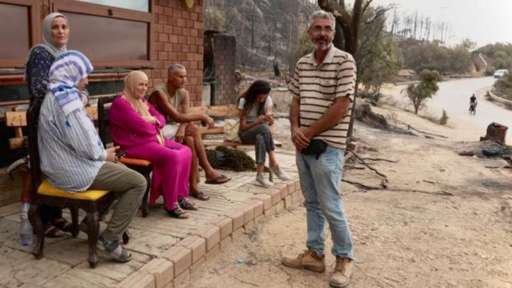
In the area between Tabarka and Melloula, a Tunisian coastal village that had to evacuate 300 people due to wildfires, I encountered numerous cars parked outside Adil El Selmy’s eco-friendly restaurant.
In a show of support, people had hurriedly gathered to stand in solidarity with the owner, whose eatery had been completely destroyed by the devastating fires that are wreaking havoc in this region along the border with Algeria.
“We left the restaurant as the flames approached,” Mr Selmy says.
The recent unprecedented heatwave in Tabarka had a detrimental impact on the water supply, further complicating the situation for those combating the fires.
People have come to commiserate with Adil El Selmy, who employed 22 people at his restaurant
“We couldn’t douse flames, hours after the wooden building was devastated,” Mr Selmi told me, looking deeply afflicted.
The devastated restaurant, which typically offers a view of the sea, is now obscured by a thick haze of smoke blanketing the area, making it difficult to see the Mediterranean.
On Monday, temperatures soared to 48°C (118°F) in certain parts of North Africa.
In the Sudanese city of Nyala, heavy fighting between rival military forces has persisted for several days, resulting in the death of at least 30 civilians and leaving dozens others injured.
The paramilitary Rapid Support Forces (RSF) and allied Arab militias have been engaged in attempts to seize control of the main army base in the city, which serves as the capital of South Darfur state.
In response, the army has used heavy artillery, leading to shells hitting residential areas.
As a consequence of the violence, many people have fled to villages outside the city, seeking safety.
A human rights worker informed the BBC that RSF fighters have been compelling civilians to surrender their vehicles.
The western region of Darfur has witnessed the worst of the violence since the fierce power struggle erupted in April between the army and the RSF.
Numerous regional efforts have been made to negotiate a ceasefire between the two factions.
Due to the government’s failure to pay arrears owed to Independent Power Producers (IPPs), the producers have called for an emergency meeting as the debt has escalated from US$2 billion to approximately US$2.3 billion.
The meeting is scheduled to take place tomorrow, Thursday, July 27, 2023.
One month ago, the IPPs had planned to shut down their power plants supplying the national grid but postponed the action due to what they considered fruitful engagements with the Electricity Company of Ghana.
Despite the agreements reached, sources from Citi Business News suggest that the government has breached the agreements, causing disappointment among the IPPs.
The primary objective of the meeting is to devise a strategy to address the government’s outstanding debts and avoid a potential power crisis.
The IPPs have refrained from disclosing further details about their challenges but have promised to provide more information after the emergency meeting.
The Economic and Organized Crime Office (EOCO) and Mobile Money Limited, a division of the world’s largest telecoms company, MTN, have signed a Memorandum of Understanding (MoU) to increase their cooperation in the fight against mobile money fraud and other fraudulent online activities.
The MoU aims to encourage cooperation in areas like information sharing on trends and patterns of scams, creating training manuals to increase investigators’ capacity, coordinating investigations, and looking into ways to improve the effectiveness of creating robust dockets for prosecuting offender
Criminals
At a quick signing ceremony yesterday at the EOCO headquarters in Accra, the Chief Executive Officer of MTN Mobile Money Limited, Shiabu Haruna, initialed for his company while the Executive Director for EOCO, Commissioner of Police (COP) Maame Yaa Tiwa Addo Danquah, initialed for hers.
Mrs. Addo Danquah declared before the agreement was signed that EOCO was dedicated to working with all stakeholders to stay one step ahead of criminals.
“If the criminals are working together, what about those of us who are fighting them,” she asked.
She disclosed that the Economic and Organized Crime Office (EOCO) has successfully obtained convictions for certain criminals involved in SIM swap fraud, with assistance from telecommunication service providers and the banking industry.
“The conviction should send a signal to perpetrators that you cannot get away with such crimes,” she said.
She claimed that while using digital financial services and transactions had “made life simple for us in terms of making payments and transferring money, some criminals have taken advantage of that to swindle unwary individuals.
“If the criminals are working together, what about those of us who are fighting them,” she asked.
She disclosed that the Economic and Organized Crime Office (EOCO) has successfully obtained convictions for certain criminals involved in SIM swap fraud, with assistance from telecommunication service providers and the banking industry.
“The conviction should send a signal to perpetrators that you cannot get away with such crimes,” she said.
She claimed that while using digital financial services and transactions had “made life simple for us in terms of making payments and transferring money, some criminals have taken advantage of that to swindle unwary individuals.
How do we stop them?”
According to the MOU, she stated that Mobile Money Limited will exchange information about vulnerabilities and things to watch out for when developing new products with EOCO in order to enable investigators know what to watch out for when handling cases. EOCO would also receive training support from Mobile Money Limited.
Protection
Mr. Haruna claimed that the collaboration would aid the company in better safeguarding its clients from national internet fraud.
“Mobile money has become an integral part of our lives as individuals and businesses but we are saddled with issues of fraud that have permeated the services.
We will use the partnership to combat the increasing rate of financial crimes,” he said.
He pointed to a recent Bank of Ghana report on digital financial services fraud and claimed it indicated an increase in cases recorded between 2021 and 2022.
According to the research, a sizeable sum of GH 26 million was lost via Electronic Money Issues (EMIs), representing a roughly 103% increase in financial crime.
“This shows that there is some value that our customers are losing to organised and financial crime and it is our responsibility to work with law enforcement agencies to ensure that the perpetrators are brought to book,” said Mr Haruna.
He said the two organisations would work together to fight emerging crimes in relation to financial crime.
“As a leading provider of digital financial service, we owe it to our customers to collaborate and support the fight against crime and ensure our customers have a safe environment to conduct their business and personal transactions,” he said.
Nigerian doctors are on strike, according to a prominent doctor, in order to demand that the government quickly hire doctors for dangerously understaffed public hospitals.
“Our first request is for the government to quickly replace the doctors and nurses that have left the system. A lot of our colleagues have left the country in search of greener pastures,” Dr Emeka Innocent Orji, president of the Nigerian Association of Resident Doctors (Nard), told BBC Newsday’s Rob Young.
Their “total and indefinite strike” was also because an earlier pay deal had not been honoured by the government, he said.
Due to the demanding working conditions, Nard employees were “breaking down and dying,” and patients were suffering as a result of the “brain drain” in the workforce.
There areNigerian doctors available, according to Dr. Orji, who added that the government should act fast to fill the gap before they decide to leave the nation as well.
According to the International College of Surgeons, Nigerian Section (ICS-NS), one destination for Nigerian medical professionals is the UK, where their numbers increased from 4,765 in 2017 to 10,986 in 2023.
In Nigeria, there are currently more than 4,000 patients per doctor. A doctor should see 600 patients, according to the World Health Organization.
Reports have indicated that soldiers in Niger have surrounded the presidential palace and several ministries in the capital city, Niamey
However, no shots were fired, and the motive behind the blockade remains unclear. It’s uncertain if this is an attempt by the presidential guard to seize power.
President Mohamed Bazoum is said to be in his residence with his family, and negotiations are ongoing, as reported by AFP.
An unnamed source informed the same agency that the soldiers’ action may have been a result of a “fit of temper.”
Governor of the Bank of Ghana (BoG), Dr. Ernest Addison, has reiterated the bank’s commitment to maintaining a managed floating exchange rate regime with minimal interventions. He emphasized that this framework is considered the most ideal for the domestic economy’s growth and stability needs at its current stage of development.
Under a managed floating exchange rate regime, a country’s currency is allowed to fluctuate in the foreign exchange (FX) market, with occasional interventions by the central bank to stabilize its value. In contrast, a fixed exchange rate regime (monetary unification) sets the currency’s value at a specific rate and requires continuous central bank intervention to maintain it.
Conversely, a free-floating exchange rate regime (complete monetary autonomy) allows the currency’s value to be determined solely by market forces without any government or central bank interventions.
“The Bank remains committed to maintaining a flexible exchange rate regime with minimal interventions, and has taken innovative measures such as the ‘gold for reserves’ and ‘gold for oil’ programmes to accrete the country’s external reserves,” he said in a keynote address at the opening ceremony of a Regional Course on Exchange Rate Regimes and Policies organised by the West African Institute for Financial and Economic Management (WAIFEM) in Accra.
Dr. Addison stated that the FX rate serves as a crucial monetary policy tool for managing the economy, particularly during periods of domestic and external shocks.
He continued, “The Bank continues to support the foreign exchange market, particularly during market stress, to ensure its smooth functioning,” praising the relative success of the country’s exchange rate policy since it moved away from a fixed system.
Describing the evolution of the local exchange rate framework, the head of the central bank highlighted that Ghana has maintained a liberal foreign exchange system without restrictions on payments for imported goods and services since enacting the Foreign Exchange Act, 2006 (Act 723).
A significant change occurred in July 2016 when the Bank of Ghana (BoG) decided that exporters were no longer required to surrender their export earnings to the central bank. Instead, they were mandated to sell the surrender portion of their export receipts directly to commercial banks, which in turn increased forex liquidity. These banks are now obligated to report all foreign exchange transactions to the apex bank.
Furthermore, to improve price discovery and the depth of the foreign exchange market while reducing uncertainty, the BoG introduced the multiple-price forward foreign exchange auction. This initiative has been successful in easing pressure on the spot market and minimizing front-loading of forex purchases by economic agents.
However, some critics have expressed concerns about the extent of foreign exchange interventions made by the BoG, given a combination of factors such as the pandemic, conflict between Russia and Ukraine, supply chain bottlenecks, global central bank rate hikes, and investor-flight to safety.
In a discussion paper titled ‘Rethinking Inflation Management in Ghana in the Wake of Covid-19 and Russia-Ukraine War,’ Dr. John Kwakye, Director of Research at the Institute of Economic Affairs (IEA), commended the BoG’s approach while also raising certain considerations.
“The BoG should continue conducting measured market interventions to counter extreme exchange rate volatilities,” he said.
“While Ghana operates a flexible exchange rate regime, flexibility is limited by active BoG interventions to stem inordinate depreciations. The BoG’s inclination to stem exchange rate depreciation renders the exchange rate a de facto secondary target of monetary policy, which is thereby somewhat undermined,” the economist added.
Dr. Kwakye however called for urgency in addressing lingering structural challenges as the perennial depreciation of the exchange rate – caused by the ongoing imbalance between foreign exchange supply and demand – influences domestic prices through imports. Consequently, the BoG – relying on its limited reserves and occasional borrowing – can only intervene from time to time to curb rapid depreciations.
“The Banks’ interventions will remain palliatives, but cannot stabilise the exchange rate on a durable basis. Only transformative policies that substantially increase our foreign exchange earnings and reduce our demand for foreign exchange will ensure lasting stability of the exchange rate and stem its impact on inflation,” said the former Monetary Policy Committee member
In 2022, the cedi depreciated by 30 percent against the US dollar compared to 4.1 percent in 2021, data from the central bank released earlier this year showed. By January 26, 2023 it had cumulatively depreciated by 19.1 percent, 21.4 percent and 20.7 percent against the US dollar, pound and euro respectively.
At the end of December 2022, gross international reserves were US$6.2billion (2.7 months of import cover), down from US$9.7billion (4.4 months of import cover) in December 2021. The net international reserve position declined from US$6.1billion to US$2.4billion during the comparative period.
A survey report conducted by Deloitte Ghana, has it that domestic producers are expressing significant concerns about high inflation and currency fluctuations.
The survey revealed that 68 percent of manufacturers see inflation and currency fluctuation as the main barriers to the industry’s growth.
Furthermore, the study conducted by the audit, tax, and advisory services firm found that the cost of capital and lack of infrastructure are also hindering the growth of producers in the country.
Moreover, the government’s aggressive drive for domestic revenue mobilization is perceived as having a negative impact on the local business environment.
Meanwhile, the ‘global economic downturn’, which government mostly pinpoints as the main cause of the current economic crises, only received a 34 percent mention in the multiple entries’ response, Deloitte said.
In light of this, Deloitte emphasized industry participants’ expectations that growth will be boosted by reducing value added tax (VAT), enhancing private sector involvement, and eliminating some irksome taxes.
The main demands from the business community are faster loan facilities, tax benefits, and an increase in public capital expenditures.
According to Deloitte, manufacturers want the government to be aware of their expectations for the economy, particularly in light of the domestic debt exchange programme’s (DDEP) effects on the industrial sector, which were implemented as a condition for acceptance of the International Monetary Fund (IMF) program.
Mid-year budget review
Though producers are very pessimistic about government’s ability to introduce policies that will drive industry growth, they believe introducing tax-waivers and green financing incentives will propel Ghana toward carbon-neutral commitments.
About 73 percent of respondents indicated that tax incentives and subsidies to promote a green economy would be of great support, while some 46 percent also want government to devise innovative green instruments for financing.
Environmental, social and governance (ESG) investing is used to screen investments based on corporate policies and encourage companies to act responsibly. As the country is committed to climate change and global warming mitigation initiatives, government’s ability to incentivise private financing and private-public partnership (PPP) is strongly recommended.
Extractive, services, agriculture to drive 2nd quarter economic growth
Once more, a significant number of respondents highlighted the extractive, services, and agriculture sectors as the ones likely to drive growth in the second half of 2023.
Approximately 69 percent of the respondents believe that the services sector will be the leading driver of growth without a change in current tax policies, followed by the extractive and agriculture sectors.
In order to boost the industry’s productivity and increase exports, the respondent said: “Credit availability and reduced Customs fees will increase industry exports. For instance, reviewing capital allowance deduction for saloons and certain vehicles upward; abolishing financial sector recovery levies; and removing minimum chargeable income regime”.
Partner-Financial Advisory, Deloitte Ghana, Yaw Appiah Lartey – in a presentation of the report at the pre-mid-year budget discussion on the theme ‘Positioning for sustainable recovery; Ghana’s economic outlook post-IMF deal’ – mentioned that industry is really suffering to continue in business; hence, the strategy adopted by many is to prioritise survival.
The Executive Council of the Ghana Real Estate Developers Association (GREDA) has expressed its dissatisfaction with recent remarks made by the Member of Parliament for Ningo Prampam, Sam Nartey George, regarding Ghana’s real estate sector.
According to GREDA, the lawmaker made an error in his statements when he characterized the entire real estate business in Ghana as a haven for individuals to launder money acquired through illicit means.
In a statement issued by GREDA and seen by GhanaWeb Business, they have requested that the Ningo Prampram MP issue an immediate and unqualified apology, as well as a retraction of his statement from the July 22nd edition of Joy News’ File within 7 days.
“It is therefore an affront to our genuine hardworking members for this Honorable MP to make such an unguarded and irresponsible utterance without offering any proof whatsoever.
We demand an immediate unqualified apology and retraction of this unfortunate statement within 7 days of this press statement,” the statement read in part.
GREDA continued, “We however, wish to serve him notice and notice is hereby served that we reserve our right to seek legalredress should he not retract his unfortunate comments and apologize accordingly.”
The Association, however, reminded the lawmaker that as part of efforts to ensure the real estate sector is sanitized, it collaborates with the Economic Crime and Intelligence Office (EOCO) and Financial Intelligence Centre (FIC) and other parallel state agencies to implement of the Anti-Money Laundering Law, AML (Act 749) as amended.
“Members of our Association are hardworking Ghanaians who every day have to battle with the economic conditions in the country as every other business sector is doing,” GREDA emphasized.
Read the full statement from GREDA below:
Background
On the July 22nd edition of the Joy News’ File, Member of Parliament for Ningo Prampam, Sam Nartey George raised concerns over the legitimacy of some real estate businesses operating in the country.
According to him, the real estate sector has become a haven for individuals to launder money acquired through illicit means and ways.
He suggested that individuals engaging in these money laundering schemes in the real estate sector often exchange these properties as part of a ploy to effectively ‘clean’ illicit funds.
“Real estate business in Ghana is money laundering. If our authorities want to deal with it, they will deal with it,” Sam George lamented.
He explained that “the cost of real estate in Ghana is not justifiable by any stretch. You keep seeing all these new high-rise buildings going up and they are selling them for half a million, a million dollars and they keep buying and buying amongst themselves.”
“…I have dirty money to clean, I put up a real estate property, you have dirty money you come and buy the property from me and then automatically your money becomes clean, then tomorrow you also start building your own then I come back and buy and we are just cleaning the money,” Sam George added.
The Ningo Prampram MP further asserted that the funds generated from such illegal activities are subsequently used to finance political campaigns and among others.
His remarks were on the back of a recent newspaper report from The Chronicle detailing how a former Minster of Sanitation, Cecilia Abena Dapaah had been keeping huge sums of foreign currency in her home which was subsequently stolen by her two maids.
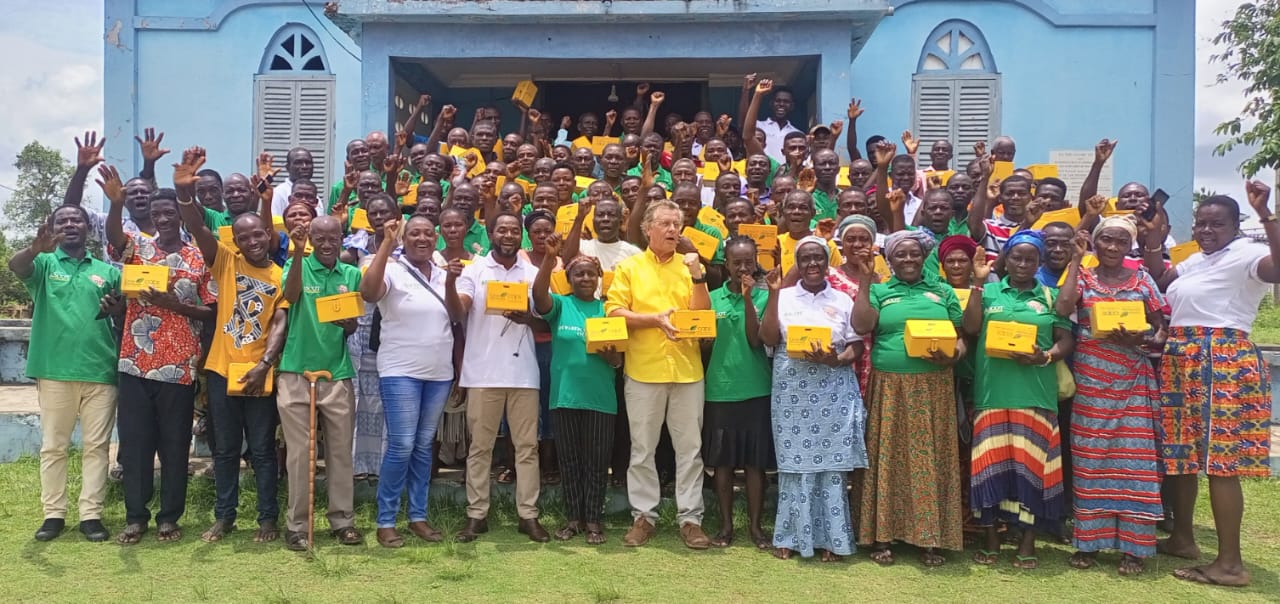
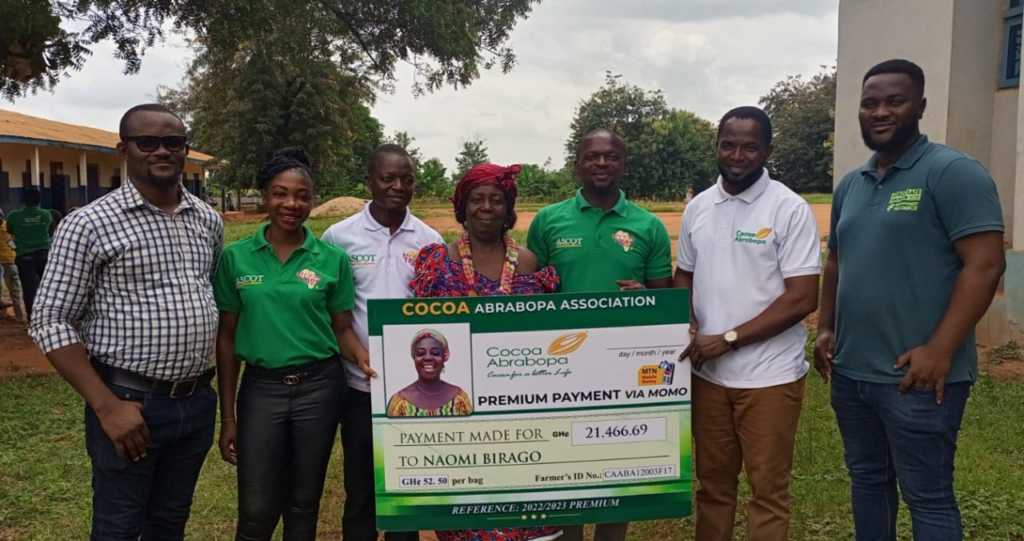
A farmer-based organization called Cocoa Abrabopa Association (CAA) has paid a total of $9.2 million in premiums to its farmers in Ghana’s several cocoa-growing districts.
The Rainforest Alliance Certification Programme’s operations included the monetary premium, sometimes known as the Sustainability Differential.
The Sustainability Differential is an additional, required payment that farmers must get on their produce for the 2022–2023 growing season in order to encourage them to use sustainable agricultural methods and to better their living circumstances.
Overall, the program benefited around 8,000 cocoa growers across their 39 operating cocoa areas. For each bag of certified cocoa sold to CAA, a farmer received an additional payment of $52.50.
Mode of payment
All of the recipients of payments received their payments via mobile money, saving them the trip to the association office in Kumasi.
Abrabopa implemented a number of initiatives as part of its corporate social responsibility to the sector to assist farmers in increasing their yields, promoting environmental sustainability, eradicating child labor and other harmful farming practices, and promoting sustainable agriculture in all of its operational areas.
Success
The Regional Manager for CAA, Ebenezer Agbozo, said the sustainability program has supported numerous development projects in the areas of education, water, and sanitation in the 39 cocoa operational areas across the cocoa regions of the country since its inception. He was speaking to a durbar of stakeholders at Anyinam in the Eastern Region.
“We at Abrabopa have also embarked on other sustainability programmes such as afforestation, accessible soil and Sustainable Environment Projects, Child Labour Monitoring Projects and Living Income Projects.”
The Sustainability Differential is an extra compulsory cash amount earned on the produce for the 2022/23 crop season. It is designed to motivate and enhance the living conditions of approximately 8,000 cocoa farmers in their 39 cocoa operational areas.
“Women participation in our programmes in the Eastern Region has also grown to about 30 per cent in the last three years, an increase we see as encouraging,” he said.
Chairman of the CAA Council, Ismaila Pomasi, stated that Abrabopa and its partners contributed millions of cedis to the sustainability program by way of infrastructure facilities and financial premiums.
He said the regional durbars for 2023 were special since they were set up in the operational regions so that many farmers could participate.
“The significance of the durbar is to provide a platform for farmers, the council and management to fraternize and share ideas on the strategic policies and programs outlined to propel the association’s growth and development.
“I believe that sustainable agriculture and a targeted set of alternative livelihood innovations, like the additional livelihood initiative we have introduced will help the farmers produce better cocoa, adapt to climate change, and increase their productivity,” he said.
The Acting Executive Secretary and Chief Finance and Operations Manager for CAA, Patrick John Van Brakel said this year’s durbars also served as an opportunity for members to verify the total volumes of certified beans delivered to the association and to sign their premium letters thereof.
“The signing of premium letters helps the management to pay premiums to farmers electronically and on time.
“We need good quality cocoa beans this year and our target is 16,000 tonnes for the 2023/24 crop season. Every one of you must work hard for us to achieve this together and also remember to record every delivery in your passbook” he said.
Motivation
For his part, the Operations Manager for CAA, Roland Obosu asked the farmers to let the increase in premium payment motivate them to produce quality cocoa that would meet the standards, help increase local sourcing and contribute to the local economy.
“The increase in premium payment for you our farmers, is part of the Association’s commitment towards developing thriving and resilient communities within our 39 operational areas” he said.
Appreciation
The farmers were grateful to Abrabopa for the massive improvements it has made in their lives and their work and assured them of their commitment to the association.
they appealed to the association to engage Ghana Coaoa Board (COCOBOD) to find a solution to the menage of the illegal mining popularly known ‘galamsey’, which they said was posing a threat to their livelihood.
“As farmers, our livelihoods depend on the land and we are urging you to discuss with COCOBOD immediately about how galamsay is destroying our future”, Joseph K. Bosompem who owns about 15 acres of cocoa farm said.
“My fear is that some farmers may accept such juicy offers and this will not bode well for the industry,” he pleaded.
The Auditor-General has managed to accrue more than GH¢11.52 million in disallowed unearned salaries and allowances in a special account at the Bank of Ghana (BoG) as of June 2023.
Out of the total amount, GH¢10 million has been transferred from the ‘Auditor-General’s Recoveries Account,’ which was established in June of the previous year, into the Consolidated Fund.
This sum constitutes expenditure disallowances related to unearned salaries and other recoveries that were reported to Parliament through various Auditors-General reports.
The Auditor-General, Johnson Akuamoah Asiedu, disclosed this information in an exclusive interview with the Daily Graphic in Accra.
He mentioned that the specialized account was created with the specific purpose of safeguarding the public purse by closely monitoring the progress of recoveries made through expenditure disallowances in real-time.
Additionally, he clarified that the account was opened at the central bank primarily to receive the funds recovered from unearned salaries and allowances.
“The specialised account we set up to receive unearned salaries and other recoveries has yielded GH¢11.52 million in just a year.
Consequently, GH¢10 million has been transferred from the account into the Consolidated Fund,” he said.
The context
Until June last year, the Auditor-General’s recommendations for recoveries of unearned salaries had always been directed into the Controller and Accountant-General’s Suspense Account (CAGSA).
However, the CAGSA could not provide real-time information on those recoveries, making efforts of enforcing the rules on surcharging and disallowances appear to be yielding less positive result.
“It is in the light of this that the Auditor-General’s Recoveries Account was opened to track and report on recoveries made in implementing audit recommendations with regard to unearned salaries and allowances,” Mr Asiedu said.
Issues on infractions
Mr Asiedu observed that every year, the Auditors-General reports to Parliament were replete with issues of infractions in the use of public funds.
He explained that article 187(7)(b) of the 1992 Constitution provided that in the performance of its functions, the Auditor-General might disallow any item of expenditure which was contrary to law and surcharge the amount of any expenditure disallowed upon the person responsible for incurring or authorising the expenditure.
Mr Asiedu added that the enforcement of the law had not been without challenges because in the expectation of the public, all amounts reported in the Auditor-General’s reports should necessarily be recovered to the state and the persons involved surcharged.
He said so far, some surcharges had been successful while the majority of them were yet to yield the expected results.
Disallowances, surcharges
Differentiating disallowances from surcharges, the Auditor-General stated that disallowance of expenditure normally led to the Auditor-General recommending recovery from individuals, public officers and institutions who committed infractions.
An example was found under paragraph five of the Special Audit Report on Disallowance and Surcharge as at November 30, 2018 and issued on December 19, 2018 in which the Audit Service recovered GH¢67.32 million from public officers, individuals and institutions that committed financial infractions in the course of performing their duties, Mr Asiedu said.
He said it was through the same process of disallowing expenditure contrary to law that the service recovered over GH¢2.2 billion between 2017 and 2020.
He noted that surcharges, on the other hand, often ended up in court.
“Any audit infraction that has the potential of surcharge is flagged and subjected to a thorough forensic examination to gather evidence that may be admissible by the courts.
“Thereafter, a notice of intention to surcharge is issued to the affected person and the person is given 14 days to respond.
On the expiration of the 14 days, if the person is unable to respond satisfactorily, a surcharge certificate is issued, and the person is again given 60 days to challenge the certificate,” Mr Asiedu explained.
He said after the expiration of the 60 days, the case was then forwarded to the Attorney-General for prosecution.
“If within the periods, the affected person is able to provide sufficient, appropriate and satisfactory evidence to the Auditor-General, the intention to surcharge and the surcharge certificate, as the case may be, becomes irrelevant for purposes of further lawsuit,” he added.
Staff training
The Auditor-General reiterated the resolve of his office to continue to train staff of the service in gathering audit evidence that would be acceptable by the courts to enable more recoveries.
Mr Asiedu said that other avenues had also been adopted to retrieve all recoverable disallowed expenditures, including unearned salaries and unearned allowances.
He said all other recoveries were made to the audited entities and the Ghana Revenue Authority as recommended in the various A-G’s reports.
Audit reports
Mr Asiedu indicated that his office on June 27, this year furnished Parliament with 15 audit reports for the 2022 financial year in compliance with the constitutional requirement.
He commended the government and the Ministry of Finance for the timely release of funds to the service to enable it to fulfil its mandate.
“The service will continue to perform its functions to promote good governance, transparency, accountability and probity in the country’s public financial management system,” the Auditor-General stated.
In response to emerging upside risks to inflation, the Monetary Policy Committee (MPC) of the Bank of Ghana has implemented a tighter monetary stance.
As a result of this move, there will be significant implications for Treasury securities, particularly 91-day to 365-day T-bills, which will experience an extended period of higher yields.
During its policy meeting on July 23, the MPC raised its policy rate by 50 basis points (bps) to 30 percent. The increase aims to counter inflation risks and calls for substantial tightening in both fiscal and monetary policy frameworks. The Committee highlighted a cumulative 130 bps increase in headline inflation over the past two months, mainly driven by relentless food prices.
Although the 50 bps hike is considered marginal and precautionary, market observers, such as GCB Capital, suggest that it may lead to higher interest rate demand and potentially moderate credit growth in the short term.
Since Q1 2023, inflation and general macroeconomic uncertainties have caused higher interest rates, pushing benchmark 91-day bill yields to potentially breach 25 percent at the next auction. This upward trend in yields follows the government’s short-lived efforts to reduce bids and capitalize on strong demand for bills to lower borrowing costs.
Consequently, yields on the 91-day bill dropped from 35.36 percent in Q4-2022 to 19.39 percent in Q1-2023, while the 182-day bill declined from 35.98 percent to 21.44 percent, and the 364-day bill fell from 35.89 percent to 25.66 percent during the same period.
At the most recent auction held on July 21, 2023, yields settled even higher, with the 364-day bill clearing at 30.05 percent (+40 bps w/w) and the 182-day bill surging to 26.91 percent (+50 bps w/w), while the 91-day yield increased at a relatively slower pace to 24.92 percent. Cumulatively since Q1 2023, yields on the 91-day have surged by 553 bps, while the 182-day and 364-day bills have surged by 547 bps and 439 bps, respectively.
These higher T-bill yields now surpass the coupon rates on restructured bonds, and the tighter monetary stance may lead to even higher yields until the Treasury accesses concessional funding alternatives.
Furthermore, the rising borrowing costs for the government, driven by higher yields on Treasury bills, are adding strain to an already burdened fiscal position. As government borrowing costs increase, managing existing debt burdens and fulfilling future financial commitments become increasingly challenging.
Despite efforts to restructure the country’s debt portfolio, the updated public debt stock, excluding debt from state-owned enterprises and special purpose vehicles (SOE/SPVs), reflects significant growth mainly due to an increasing domestic debt burden and exchange rate movement earlier in the year.
According to the BoG’s summary of macroeconomic and financial data published in July 2023, the total debt stock increased by 21.3 percent from December 2022 to GH¢569.3 billion (71.1 percent of GDP) in April 2023. The domestic debt component rose by 6.29 percent, amounting to GH¢15.6 billion, and reaching GH¢247.9 billion (30.95 percent of GDP), while external debt in cedi terms surged by 33.41 percent, totaling GH¢80.5 billion, and amounting to GH¢321.4 billion (40.13 percent of GDP).
Treasury auctions ahead
The Treasury faces upcoming Treasury bill maturities on July 31, 2023, with a total face value of GH¢2.02billion across the 91-day and 182-day bills. To roll over these maturities, the Treasury aims to conduct a gross issuance of GH¢2.28billion at the next T-bill auction later in the week.
Despite the interbank market remaining broadly liquid, the 50 bps increase in policy rate to 30 percent may result in a sharper increase of T-bill yields at the next auction. It is expected that the benchmark 91-day yield will exceed 25 percent at this auction.
Market expectations indicate that yields on Treasury bills will continue to fluctuate in the near-term, with the potential for further increases. However, the real return on Treasury bills will remain negative until inflation returns to a single-digit figure or drops below 20 percent. The projected range for Treasury yields in the near-term is around 20 percent to 25 percent.
Dr. Ernest Addison, Governor of the Bank of Ghana, voiced confidence in the banking sector’s ability to quickly restore capital buffers with help from a capital infusion from shareholders, despite a considerable increase in industry earnings during the first half of 2023.
This expansion is anticipated to boost the real estate sector’s economic activity and increase the banking sector’s overall resilience.
In an interview with the media in Accra after the Monetary Policy Committee (MPC) meeting in July 2023, Dr. Addison emphasized the significant increase in profits during the first half of 2023, which followed the previous year’s sizable losses brought on by the domestic debt exchange programme (DDEP).
“If this trend persists we expect banks to rapidly rebuild capital reserves, with additional support from equity capital injections by shareholders,” he remarked,
To strengthen the stability of the banking industry, Dr. Addison highlighted the importance of activating the Financial Stability Fund, aimed at providing crucial recapitalization assistance to eligible banks.
In the first half of 2023, the banking sector experienced significant growth in profitability. Net interest income saw a remarkable surge of 41.4 percent, reaching GH¢9.9 billion, surpassing the 12.4 percent increase recorded during the same period the previous year.
Furthermore, net fees and commissions also witnessed substantial growth, rising by 30.6 percent to GH¢2.2 billion, compared to a 27 percent growth in the preceding year. This robust performance in operating income resulted in a sharp 46.1 percent increase, outperforming the 22.6 percent growth observed in 2022.
However, despite the strong rebound in profitability following losses incurred at the end of 2022 due to impairments of holdings in Treasury bonds, Dr. Addison noted that data provided by banks for the first half of 2023 indicated that lingering effects of the DDEP (Depository and Deposit Protection) persisted.
As of June 2023, the total assets of the banking industry reached GH¢242.4 billion, showing a moderated growth rate of 21.2 percent compared to 22.8 percent in June 2022. On a positive note, total deposits experienced significant growth, reaching GH¢187.6 billion in June 2023, representing a 42.8 percent increase from GH¢131.3 billion recorded in the same period in 2022. In contrast, total borrowings contracted by 39.1 percent to GH¢16 billion, down from GH¢26.4 billion a year earlier.
Dr. Addison disclosed that the banking industry’s investments witnessed a sharp increase, driven by significant deposit growth. Total investments rose to GH¢89.9 billion in June 2023, compared to GH¢81 billion in June 2022.
This growth was primarily propelled by a 149.6 percent increase in short-term investments to GH¢39.9 billion, while medium-to-long-term investments declined to GH¢50.1 billion due to portfolio rebalancing following the DDEP.
Despite the industry’s increased cost of operations, with operating expenses rising by 44.9 percent during the first half of 2023 compared to 22.9 percent growth in the same period of 2022, the overall effect resulted in a 51.2 percent increase in profit-before-tax in June 2023, far exceeding the 20.8 percent growth seen in June 2022.
The industry’s profit-after-tax stood at GH¢4.3 billion, reflecting a substantial 51.4 percent increase from GH¢2.8 billion in 2021. As a result, the banking sector saw a higher return-on-equity of 37.6 percent in June 2023, up from 21.9 percent in June 2022, as well as a higher return-on-assets of 5.5 percent compared to 4.6 percent in June 2022.
On Friday, July 28, 2023, Finance Minister Ken Ofori Atta will participate in an extensive meeting with Members of Parliament.
This meeting serves as a preliminary discussion ahead of the forthcoming 2023 mid-year review and the potential presentation of a supplementary budget, which is scheduled for Monday.
Before the house, Speaker Alban Bagbin disclosed the meeting’s aim to be that,
“On Friday, the Minister of Finance will be available to hold an intensive meeting with Members of Parliament. This is an agreement entered into between leadership and the Ministry of Finance as a prelude to the presentation of the mid-year review and possibly a supplementary budget on Monday.”
An extensive meeting with MPs is expected to serve as a platform for in-depth discussions and consultations regarding the upcoming mid-year review and any potential supplementary budget proposals.
In the latest update, Parliament has officially confirmed a new date for Finance Minister Ken Ofori-Atta to present the highly anticipated 2023 Mid-Year Budget Review. Originally scheduled for July 25, 2023, the presentation had to be rescheduled and will now take place on Monday, July 31, 2023.
The Mid-Year Budget Review, mandated by Article 179 of the 1992 Constitution and the Public Financial Management Act 921, provides a crucial opportunity to reassess macroeconomic targets and present a comprehensive economic outlook for the remaining fiscal year.
This budget review holds significant importance as it marks the first major financial statement of the government since Ghana secured a substantial $3 billion International Monetary Fund (IMF) extended credit facility.
During the session, Finance Minister Ken Ofori-Atta is expected to provide Parliament with updates on the measures taken by the government to stabilize the economy in the aftermath of the IMF deal.
A London court has ruled that the lawyer of a former Nigerian governor must pay around $36 million (£28 million) as a result of his involvement in concealing illicit funds.
Back in 2010, Bhadresh Gohil was convicted of money laundering for his role in helping James Ibori, the former governor of the oil-rich Delta State, to hide the proceeds obtained through criminal activities.
Both Gohil and Ibori had previously served prison sentences in the UK for their roles in the money laundering scheme.
In addition to the lawyer’s penalty, the court directed Mr. Ibori, who currently resides in Nigeria, to surrender $130 million of embezzled funds .
The London court issued a strong warning that both men would face further prison terms if they failed to comply with the orders to make the required payments.
On Tuesday, the Brazilian government issued a provisional decree to legalize sports betting and impose an 18% tax on the revenues of betting companies. This decision comes in the midst of a widespread investigation that has implicated numerous individuals in a match-fixing scandal.
The decree, proposed by President Luiz Inacio Lula da Silva, has been forwarded to the congress for approval. The congress has a 120-day period to vote on it in order for the decree to remain valid. The finance ministry of Brazil anticipates that if the provisional measure is confirmed, the government will collect a minimum of 2 billion Brazilian reals ($420 million) in taxes from betting companies in the next year.
Regarding Brazilian bettors, they will be exempt from paying tax on gains up to approximately $445 on each bet. However, any gains surpassing this amount will be subject to a 30% income tax.
The ruling was issued less than a year after a Goias attorney’s office inquiry revealed that some players had been offered between $10,000 and $20,000 to carry out specific actions, such as obtaining yellow cards and resulting in penalties. Then, alleged crooks would make money on gambling websites.
Brazilian championship sponsor galera.bet CEO Marcos Sabiá expressed his approval of the decision in a statement.
“This decree is welcome because it brings us some regulation and legal protection,” Sabiá said. “It establishes the limits to the operation of betting companies, rights and assurances for betters, the prohibition for companies that do not have a license, and the means for cooperation between authorities and betting companies so we fight match-fixing.”
This year, the inquiry has expanded to include the Brazilian Congress and Federal Police as well as roughly 20 games from the top flight and second divisions of the nation as well as certain smaller state leagues.
The Associated Press was informed by a district attorney in May that the scandal might have an international impact. According to local media, accused perpetrators stated having contacts in Lithuania, Greece, and the United States.
15 soccer players from Brazil’s first and second divisions are among the 31 people accused of participating in the plan who have already been charged by a Goias court.
The Ghana Cedi is currently trading against the dollar at a purchasing price of 10.9979 and a selling price of 11.0089, according to the Bank of Ghana’s interbank exchange rates for Wednesday, July 26, 2023.
The exchange rate for the dollar at a forex office in Accra is 11.50 for buying and 11.75 for selling.
The Cedi is now trading with the Pound Sterling at a purchasing price of 14.1345 and a selling price of 14.1497.
The pound sterling is being purchased at a forex office in Accra for 15.00 and sold there for 15.60.
Euro is trading at a buying price of 12.1493 and a selling price of 12.1614.
At a forex bureau in Accra, the Euro is being bought at a rate of 12.50 and sold at a rate of 13.10.
The South African Rand is trading at a buying price of 0.6260 and a selling price of 0.6265.
At a forex bureau in Accra, the South African Rand is being bought at a rate of 0.30 and sold at a rate of 0.90.
The Nigerian Naira is trading at a buying price of 71.7251 and a selling price of 71.8160.
At a forex bureau in Accra, the Nigerian Naira is being bought at a rate of 12.00 Naira for every 1 Cedi and sold at a rate of 18.00.
For the CFA Franc, it is trading at a buying price of 53.9376 and a selling price of 53.9913.
At a forex bureau in Accra, the CFA Franc is being bought at a rate of 17.00 CFA for every 1 Cedi and sold at a rate of 21.00 CFA for every 1 Cedi.
Note that these rates may be different at a forex bureau near you. Our forex bureau rates are provided by Afriswap Bureau De Change in Osu, Accra.
Our forex bureau rates are provided by Afriswap Bureau De Change in Osu, Accra.
In the midst of widespread protests, Kenya’s opposition leader, Raila Odinga, says he intends to start a fund for “families who lost their loved ones and those still in hospital receiving treatment.”
The Azimio coalition leader stated that more donations might be made to the fund while speaking to the International Press Association of East Africa’s members on Tuesday morning.
A different kind of protest is being called for on Wednesday from 06:00 to 18:00 instead of the additional demonstrations that were originally scheduled. He declared that they would organise vigils and parades of support for those who had been the victims of police brutality in various cities across the nation.
“We condole with the families who have lost loved ones and they are the reason as to why we called off the demos,” he added.
In the most recent opposition protests against the growing cost of living and tax increases, Kenya’s police have been engaged in clashes with demonstrators.
The World Health Organization (WHO) has issued a warning about a worsening humanitarian crisis in Sudan, where more than two-thirds of the country’s hospitals are no longer operational.
Health care facilities and staff are facing increasing reports of attacks.
For the hundreds of thousands of people who have fled the violence and crossed borders, life remains precarious.
The WHO reveals that disease outbreaks, such as malaria, measles, and dengue, which were previously well-controlled before the current conflict, are on the rise due to disruptions in basic public health services.
The organization also reports a growing number of incidents of sexual and gender-based violence against women and girls.
Although several attempts at peace talks have been made, none have resulted in a lasting ceasefire.
The WHO is calling on all warring parties to prioritize the protection of civilians, humanitarian workers, and health facilities. The situation requires urgent attention to prevent further deterioration of health and well-being in the country.
Nigeria’s suspended bank chief has made a court appearance over a month after being arrested by the country’s secret police.
Godwin Emefiele faced charges of illegally owning a shotgun and ammunition during Tuesday’s hearing in Lagos, where he arrived with a large Bible in hand.
Emefiele vehemently denied the allegations.
Despite the government’s claim that he posed a flight risk, Justice Nicholas Oweibo granted the 61-year-old bail.
This turn of events marks a significant downfall for a man who had recently considered running for Nigeria’s presidency. Although he did not secure the nomination of the ruling party, his decision to pursue it while still serving at the bank drew strong criticism and marked a low point in the institution’s history, according to critics.
Before the tightly contested presidential election in February, Emefiele led an unsuccessful effort to redesign the local currency to combat vote-buying.
Many Nigerians view him as a crucial figure in the government of former President Muhammadu Buhari, which presided over eight years of economic turmoil, including two recessions, high inflation, currency devaluation, surging unemployment, and mounting debts.
The international trade in church bells marks the beginning of a new age for Christianity, one with Africa at its core.
“Our bells are like the thermometer of the faith… Through our trade, we can immediately understand where the faith is most alive, and where it is waning,” says Armando Marinelli, an artisan church bell-maker from Italy.
“We currently have orders from Tanzania, Nigeria, [Democratic Republic of] Congo… So we can tell that, whereas faith here in Italy is a bit up and down, in Africa it’s thriving.”
His foundry, Campagne Marinelli, is centuries old, and bells made there hang in some of Italy’s most well-known locations, including the Vatican’s St. Peter’s Square and the Leaning Tower of Pisa.
The declining popularity of Marinelli bells in homes now mirrors the fall of Christianity in western Europe, historically the center of the religion.
The Marinelli bells are therefore sent across the oceans rather than being placed in adjacent residences.
We tracked the Marinelli bell to Odoni in south-western Nigeria for a BBC World Service documentary where we discovered a vibrant Christian community.
“The bell, we see it as the voice of God… the church in Africa is booming,” announces Father Cletus, the parish priest.
“We believe the re-evangelisation of the Earth is going to happen from sub-Saharan Africa, Nigeria in particular,” agrees Pastor Paul Enenche of Dunamis International Gospel Centre.
Victim of the assault incident, which took place at Adisadel College, has disclosed the apparent cause of the abuse inflicted on him in the viral video.
He said the incident occurred as result of a misunderstanding that ensued between him the the other student who ended up hurting him severely.
Narrating the events in the lead up of the fight, he stated that: “He had my sim card and I asked for it but he refused and that is what started the fight.”
As it has commended the school administration for acting quickly to suspend the offender pending more inquiry.
The housemaster in charge of the students has also been suspended.
Mother of the Adisadel College assault victim on the other hand has disclosed that she became aware of the incident four weeks after it occurred.
In a viral video, her son was subjected to a violent attack by another student in a dormitory on June 30, 2023.
The video has ignited widespread outrage throughout the country and raised serious concerns about the safety and well-being of students in educational institutions.
Ms. Margaret Annor Afari spoke with journalists on Tuesday, July 25, explaining that she was only notified of the assault on her son on Monday, July 24, after the video had already circulated widely.
However, she expressed her inability to watch the video due to the distressing and violent nature of the incident her son endured.
“I don’t want to see the video. I have heard it being described but I have not seen it and I don’t want to see it. It was the elder brother who saw it yesterday and called the housemaster who later called me to explain the incident,” she said amidst tears.
She appealed to the school authorities to allow her son, who has been sent home, to stay in school to write the final exams.