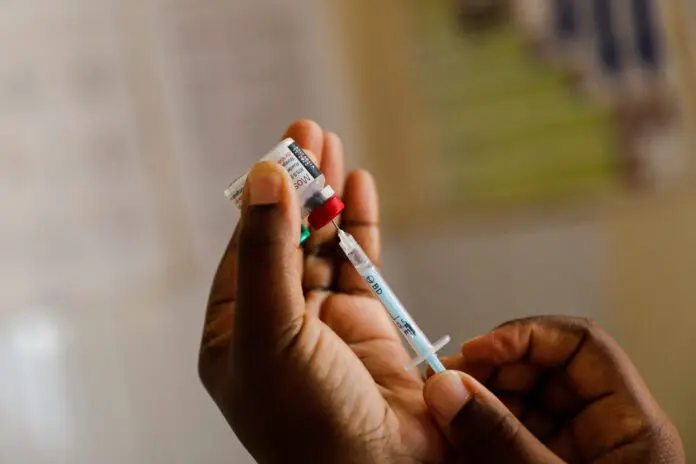
Health authorities in Burkina Faso have granted approval for the use of a new malaria vaccine on young children, raising hopes for saving millions of lives.
The R21 vaccine has already received approval in Ghana and Nigeria.
Malaria remains the leading cause of infant mortality in Burkina Faso, making the introduction of this new vaccine a crucial step in the fight against the disease, according to Health Minister Robert Kargougou.
Successful trials involving 5,000 children have been conducted for the R21 vaccine.
This vaccine will be made available for children aged between five months and 36 months, and each dose is expected to cost a couple of US dollars.
The Serum Institute of India has the capacity to produce two million doses annually, and there are plans to establish a factory in Ghana, where the use of the vaccine has already been approved, along with Nigeria
An Egyptian-German who helped a Jewish family during World War Two, Dr. Mohamed Helmy, has been recognized with a Google Doodle.
On the occasion of Dr. Helmy’s 122nd birthday, Google commissioned the piece by Berlin-based artist Noa Snir.
It shows the doctor’s “open-hearted nature” by displaying him with his arms spread wide.
Born in Sudan in 1901 to an Egyptian father and a German mother, Dr. Helmy subsequently migrated to Germany to pursue his medical studies. He eventually worked his way up to become the chief of the urology division at a hospital in Berlin.
When Adolf Hitler came to power in 1933, the persecution of Jews grew worse.
Non-Aryan people were also subject to prejudice, and Dr. Helmy was twice detained by the Nazis in 1939 and 1940, lost his job, and was forbade from marrying his German fiancée.
However, Dr. Helmy made the decision to support the family of one of his Jewish patients, especially a teenage girl named Anna Boros who, at one point, he mistook for his niece by donning a Muslim headscarf.
Just seven stocks – Apple (AAPL), Microsoft (MSFT), Alphabet (GOOG), Amazon (AMZN), Nvidia (NVDA), Tesla (TSLA) and Meta Platforms (META) – make up close to $11 trillion in market value and contributed about 75% of returns of the S&P 500 in the first half of 2023, according to a recent Bank of America report.
Big Tech is soaring to new heights – largely by quickly gobbling up any potential competition.
That worries the Federal Trade Commission and the Biden administration. The so-called “magnificent seven,” they fear, could become monopolies that buy and squash any new innovation so they can remain on top.
The question is whether the FTC and White House have the power to stop that.
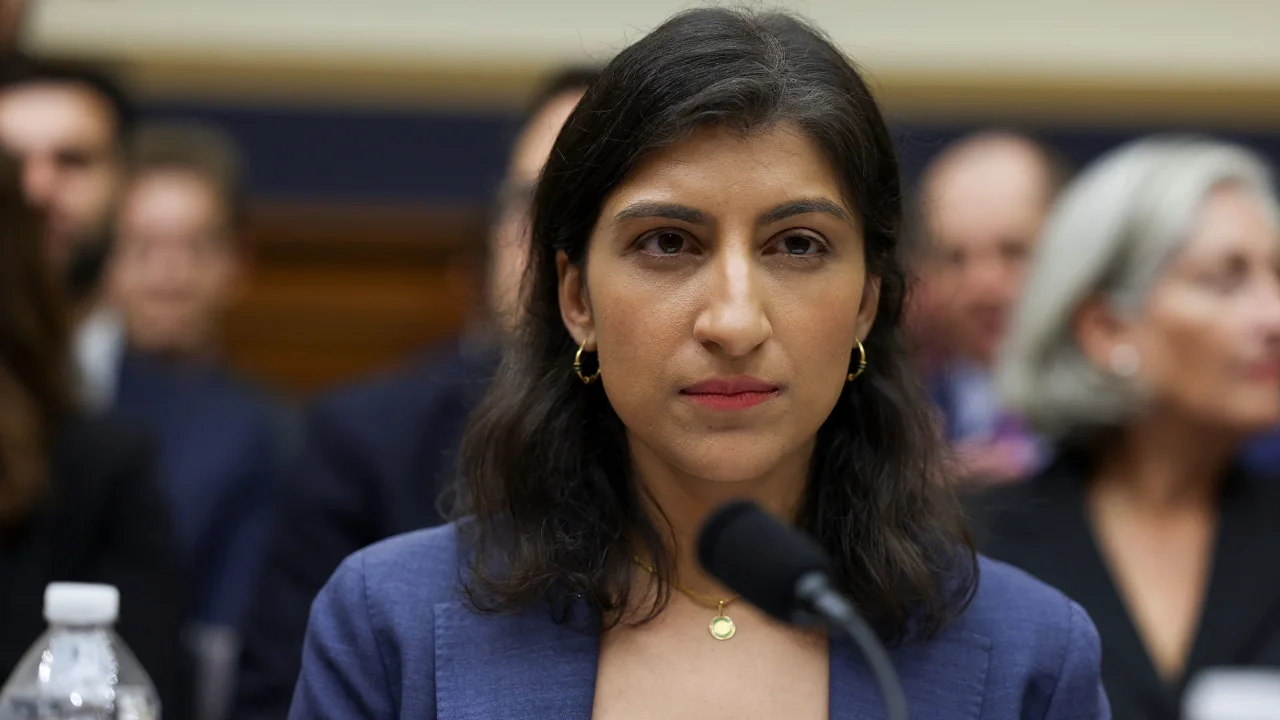
What’s happening: Two years ago, Lina Khan, 34, became the youngest and perhaps most progressive leader of the FTC’s 100-plus year history.
Khan’s tenure was heralded as the start of a new era of antitrust governancein the US that would challenge decades of loosepolicytowards mergers and acquisitions, which allowed tech titans to swallow up their competition and emerge as companies with trillion-plus dollar market caps.
So far, those challenges haven’t made a huge impact.
Apple is now worth $3 trillion, the only company ever to reach that milestone. Khan, meanwhile, was unable to successfully block Microsoft from closing its $69 billion purchase of videogame publisher Activision Blizzard last week. The FTC is appealing, but lost a similar case earlier this year when it was unable to prevent Meta Platforms from purchasing virtual reality startup Within Unlimited.
Earlier this month, Khan sat before Congress for more than three hours while facing a barrage of criticism from Republican policymakers who accused her of “harassing” businesses during a House Judiciary Committee hearing.
“You are now zero for four in merger trials,” Representative Kevin Kiley, a Republican from California, said to her. “Why are you losing so much?”
But Khan appears undeterred, and late last week, the FTC and President Joe Biden released a set of long-anticipated draft updates to the nation’s merger guidelines, introducing potentially comprehensive changes to the way the US government reviews mergers and acquisitions for the first time in more than a decade.
The proposed changes could lead to major shifts in how the US government identifies — and tries to block or alter — deals it believes are anticompetitive, reports my colleague Brian Fung.
Some members of the business community aren’t happy about that.
But on Monday, Khan defended her record and actions at The Economic Club of New York.
“In federal court, we have lost two merger cases. We have brought somewhere between 13 and 20, depending on how you count,” Khan said. “In the scheme of our merger enforcement program, losing two is OK.”
The FTC, she said, doesn’t have any specificity about how big or small a business should be. “Congress, when passing the antitrust statutes, was setting out a policy preference, in many cases, for competition over monopoly,” Khan said. “That said, the statutes don’t prohibit being a monopoly. They only prohibit becoming a monopoly through illegal tactics. And so that’s the sort of thing that we look at.”
What’s next: Khan, who first garnered attention when she wrote a 98-page article about Amazon’s anticompetitive behavior for the Yale Law Journal, is undeterred. She’s preparing to take on Amazon headfirst in the coming months with a big antitrust suit.
Khan’s FTC has already put forward three cases against Amazon, but according to a Bloomberg report, they are getting ready to take them on once again. The suit, reported Bloomberg, will focus on Amazon’s core marketplace business – alleging that Amazon uses its power to reward merchants that use its logistics services and punishes merchants that don’t.
Tech earnings also begin this week. Alphabet and Microsoft report on Tuesday afternoon followed by Meta on Wednesday.
From CNN’s Samantha Delouya
Lazarus Limo usually starts his day at 10 a.m. ET, driving passengers and delivering food for Uber around Chapel Hill, North Carolina.
“I tend to set a minimum target of how much I should get by the end of the day. As soon as I get my target, that’s it; I’m done for the day,” he said. His goal is usually to make between $200 and $300 and, depending on the day, achieving it may take him between 8 and 10 hours, he told CNN.
But that’s just his weekday job.
On weekends, Limo, who is 28 years old, works as a “Dasher,” delivering food orders for DoorDash.
He is one of millions of people in the United States who participate in the so-called “gig economy,” a term that has grown in popularity over the last decade to describe the rise in freelancing work through apps like Uber, Lyft, Doordash and Instacart.
Government data on this group of workers is elusive. The last time the Bureau of Labor Statistics officially tracked workers with alternate job arrangements was 2017. But workplace experts say the number of gig workers is growing, and their impact is being felt throughout the economy. It could even be distorting government economic data, they say. For example, easy-to-access work through mobile phones may be keeping the national unemployment rate lower than it would be without the rise of these workers. It may also be a factor helping more people avoid bankruptcies, providing a fallback option for those who have been laid off from work in recent years, they say.
“People who have access to the gig economy borrow less money than people who don’t. You can think of it as an alternative to debt for some people — as a way to get through volatile times,” said Louis Hyman, a professor of labor and business at Cornell University. “Society needs to account for these different kinds of experiences.”
Read more here.
Have you tried to get tickets to go see the Barbie movie? I have and it’s nearly impossible – there are only front row tickets available for more than a week out.
That’s something I haven’t seen in a while, since well before the pandemic began. Insiders are hoping that this isn’t a fluke and that after years of declining box office profits, cinema is staging a comeback.
Summer blockbusters “Barbie” and “Oppenheimer” have given the troubled film industry a big shot in the arm, reports my colleague Anna Cooban.
The films raked in a combined $511 million in box office sales over their opening weekend, according to Boxoffice.com, which cited data from Warner Bros., the producers of “Barbie,” and Universal Studios, which is behind “Oppenheimer.”
It was “Barbie” that came out on top, earning $337 million globally, compared with “Oppenheimer’s” $174 million. That gave the pink-drenched film the largest opening weekend of 2023 so far and the biggest-ever debut for a female director. (Warner Bros., is owned by CNN’s parent company Warner Bros. Discovery.)
The unlikely pairing seems only to have fueled interest in both. AMC, the world’s largest movie theater chain, said last week that 60,000 people had bought tickets to see both films on the same day.
“The Barbenheimer phenomenon was the catalyst to something we hadn’t seen for years in this industry: rather than driving the cultural conversation around seeing a movie, it became a global viral campaign around going to the movies,” Daniel Loria, editorial director at Boxoffice.com, told CNN.
But whether the success of both films will translate into a sustained revival of the movie industry remains to be seen. Big budget films like DC’s “The Flash” and Disney’s “Indiana Jones and the Dial of Destiny” have underperformed this summer, and an ongoing strike by Hollywood actors and writers over pay and working conditions has temporarily stopped production on most films.
DISCLAIMER: Independentghana.com will not be liable for any inaccuracies contained in this article. The views expressed in the article are solely those of the author’s, and do not reflect those of The Independent Ghana
Authorities in Libya have found the bodies of five sub-Saharan Africans in a militarized buffer zone near the nation’s border with Tunisia.
The revelation comes after the Tunisian authorities expelled thousands of black Africans in a single week.
The action was taken in response to violent conflicts between migrants and locals in Sfax, the second-largest city in Tunisia and a major entry point for those attempting to travel illegally across the Mediterranean to Europe.
According to rights organizations, hundreds of black Africans were bused to the isolated desert buffer zone and left without food or water. Some of these people have legal status in Tunisia.
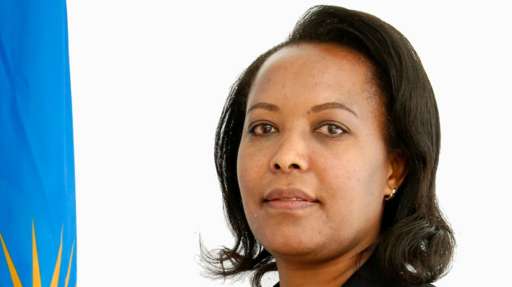
After she took part in a ceremony to introduce a clan head, the vice president of the Rwandan senate wrote and uploaded a lengthy apology to President Paul Kagame on Twitter.
Espérance Nyirasafari said she had “done a horrible thing” for taking part in that function, an act that the governing RPF party said “threatens the unity of all Rwandans”.
Several other party members who participated in the incident have also issued apologies.
In the aftermath of the incident, one vice-mayor made the decision to resign on Monday night.
The clan leader, who was introduced at the function earlier this month, also expressed remorse and offered an apology.
Given the sensitivity surrounding ethnicity in Rwanda, which still persists nearly three decades after the genocide that claimed the lives of around 800,000 Tutsi and moderate Hutu in just 100 days, Mrs. Nyirasafari’s apology casts doubt on her political influence and position.
Throughout her career, she has held various prominent roles, serving as a national prosecutor, minister of gender, and minister of sports and culture.
In her apology, she expressed regret for not taking action to prevent the clan meeting from occurring.
Public apologies are not uncommon for the RPF, and the opposition believes that their purpose is to publicly shame and discredit officials who might otherwise express differing policy ideas.
On April 15, a power struggle between Abdel Fattah al-Burhan, the head of the army, and Mohamed Hamdan “Hemedti” Dagalo, the commander of the Rapid Support Forces (RSF), descended into all-out war, killing thousands of people, uprooting millions of people, and escalating an already dire humanitarian situation.
The major war developments to date are listed here.
April 15: Fighting erupts
On April 15, Khartoum’s capital was rocked by intense gunfire and explosions, which causes terror both within the city and outside.
Each side accuses the other of striking first: the army and the RSF.
Conflicts have broken out following years of unrest and several coup attempts.
Fighting also breaks out in Darfur, an area in western Sudan that is still suffering from a terrible conflict that began there in 2003 under the authority of longstanding leader Omar al-Bashir.
April 22: Evacuations begin
Many nations hurry to airlift or evacuate their citizens.
In the evacuation, thousands of people evacuate, and numerous embassies are looted.
April 25: Failed truce
A 72-hour cease-fire was agreed upon by the US and Saudi Arabia, but it was swiftly broken. Then, a slew of more truce agreements fell through.
Ahmed Harun, a key member of al-Bashir’s administration who was overthrown by the army following months of widespread protests, claimed to have escaped from prison.
The army claims that al-Bashir was taken to a hospital prior to the start of the battle. Al-Bashir is wanted by the International Criminal Court (ICC) on genocide accusations related to the war in Darfur.
April 26: Aid agencies struggle
As humanitarian activities are disrupted across the nation, aid organizations raise the alarm. Businesses struggle to get back to work while maintaining employee safety.
April 27: Ceasefire violated
The RSF and the Sudanese army agree to extend the shaky truce for “an additional 72 hours” despite the ongoing bloodshed in Khartoum and the western Darfur area.
According to witnesses, however, battle is still going on as jets patrol above the northern districts of the capital and fighters on the ground trade heavy machine gun and artillery fire.
10 minutes and 9 seconds of the video
What has changed in Sudan since the war began three months ago?
May 6: Jeddah talks start
US and Saudi-backed talks between army and RSF envoys begin in Saudi Arabia’s city of Jeddah.
May 11: Humanitarian aid needed
Both sides agree to allow urgently needed humanitarian aid to reach affected areas, committing “to ensuring the protection of civilians” but, once again, the fighting never stops.
May 22: Ceasefire violated again
A new one-week ceasefire comes into effect but is also repeatedly violated.
May 31: Army walks out
On May 31, the army says it has suspended its participation in the ceasefire talks, accusing the RSF of failing to respect its commitments.
June 1: US imposes sanctions
The US imposes the first sanctions related to the conflict, targeting two firms associated with the army and two others linked to the RSF.
It warns that it will “hold accountable” all those undermining peace in the country and says will impose visa restrictions “against actors who are perpetuating the violence”.
June 3: Army brings reinforcements
The Sudanese army calls in reinforcements, sparking fear among Khartoum residents that the conflict will worsen.
The army tries to take control of a military base in the capital that belongs to the RSF.
June 6: Shortages of supplies
Intensifying attacks add to the misery of civilians already struggling with limited water, food and medicine, while looters rob neighbourhoods across Khartoum, stealing cars, breaking open safes and occupying people’s homes.
June 7: Fuel fire erupts
A major blaze engulfs a fuel facility in Khartoum as fighting rages for a crucial weapons depot. Smoke billows from the fuel-storage site that is close to an army base and the weapons manufacturing company.
Video Duration 01 minutes 31 seconds
Sudan fighting pushes refugee camps to the limit
June 8: Orphans evacuated
At least 280 children and 70 of their carers are taken from the Al-Mayqoma orphanage in Khartoum to a new facility in Madani, about 135km (85 miles) southeast of the capital. That the transfer takes finally place eight weeks into the conflict highlights the difficulty in obtaining security guarantees from warring parties.
June 9: UN envoy declared ‘persona non grata’
Sudanese authorities declare the UN envoy to the country, Volker Perthes, “persona non grata” two weeks after the army chief accused him of inflaming the conflict.
June 10: Ceasefire announced
Warring sides agree to a 24-hour ceasefire and agree to allow the unimpeded movement and delivery of humanitarian assistance throughout the country.
June 11: Fighting resumes
Within 30 minutes of the ceasefire ending, fighting resumes with renewed intensity. Air raids, artillery shelling and machine guns could be heard pounding several parts of the country, killing seven civilians.
June 14: More than two million people flee
UN says more than two million people have been forced to flee their homes across Sudan, with more than 1.6 million leaving for safer areas inside the country, and about 530,000 others leaving to neighbouring countries.
June 15: West Darfur governor killed
West Darfur state Governor Khamis Abakar is abducted and killed after publicly blaming the deaths of civilians on the RSF. The incident marks a new escalation in the conflict.
June 17: Ceasefire announced
Rival sides agree to a 72-hour ceasefire and to allow the unimpeded movement and delivery of humanitarian aid.
June 19: Donors pledge nearly $1.5bn
After urging nations to boost up relief efforts, the UN reports that approximately $1.5 billion in international donations had been made for the humanitarian response to Sudan and the area.
The group claims that $2.57 billion in funding is needed for its emergency help program.
June 20: Darfur governor calls for probe
Darfur Governor Mini Arko Minawi calls for an international investigation into violence against residents of the region and urges the UN Security Council to allow the ICC to probe “crimes and assassinations”.
Video Duration 02 minutes 41 seconds
What’s happening in Darfur in Sudan?
June 21: Fighting resumes
Intense battles break out after a 72-hour ceasefire expires, with fierce fighting reported in parts of the capital including around the intelligence agency’s headquarters near Khartoum International Airport.
June 27: Army declares ‘unilateral’ truce
Al-Burhan announces a “unilateral” ceasefire on the first day of the Muslim Eid al-Adha holiday. His announcement comes after Hemedti declared a two-day “unilateral” ceasefire.
June 28: Air raids reported
Residents say air raids and anti-aircraft fire strike Khartoum as fighting between the warring sides intensifies.
July 2: Fighting continues
Fighting continues as air raids are launched in northern parts of Khartoum and heavy artillery is used in the city’s east.
July 5: UN decries ‘sexual violence’
UN expresses shock at increasing sexual violence against women and girls in Sudan and calls for thorough and independent investigations into all alleged violations and abuses to hold perpetrators to account.
July 10: Regional bloc calls for summit
The Intergovernmental Authority on Development (IGAD), made up of eight states in and around the Horn of Africa, meets in Addis Ababa to kick-start a peace process.
But the initiative faces a setback as a delegation from Sudan’s army fails to attend the first day of meetings.
July 11: Sudan rejects peace efforts
The army rejects a proposed regional summit to consider deploying peacekeeping forces for the protection of civilians.
The mediation offer by IGAD was the first in weeks after talks in Jeddah were suspended following several ceasefire violations.
July 12: UK imposes sanctions
The United Kingdom imposes sanctions on three businesses linked with the army and three with the RSF.
The Defence Industries Systems and two other entities are blacklisted for bankrolling and providing support to the army. For financing and arming the RSF, the UK sanctioned Al-Junaid.
July 13: ICC probing Darfur violence
The ICC launches an investigation into a surge of hostilities in the country’s Darfur region. These include reported killings, rapes, arson, displacement and crimes affecting children.
July 15: Jeddah talks revived
Army representatives return to Saudi Arabia’s Jeddah for talks with the RSF, according to reports.
Going to the police to report a theft at her home must have seemed like the correct thing to do for a government minister in Ghana, but when she was arrested, it backfired horribly.
Cecilia Abena Dapaah had a sizable sum of money stolen, according to a court charge sheet linked to individuals suspected of the theft that was filed last Thursday.
It mentions a “cash sum” of $1 million (£780,000), 300,000 euros ($333,000), and 350,000 Ghana cedis ($30,000), as well as further personal stuff such purses for $35,000 and jewelry worth $95,000.
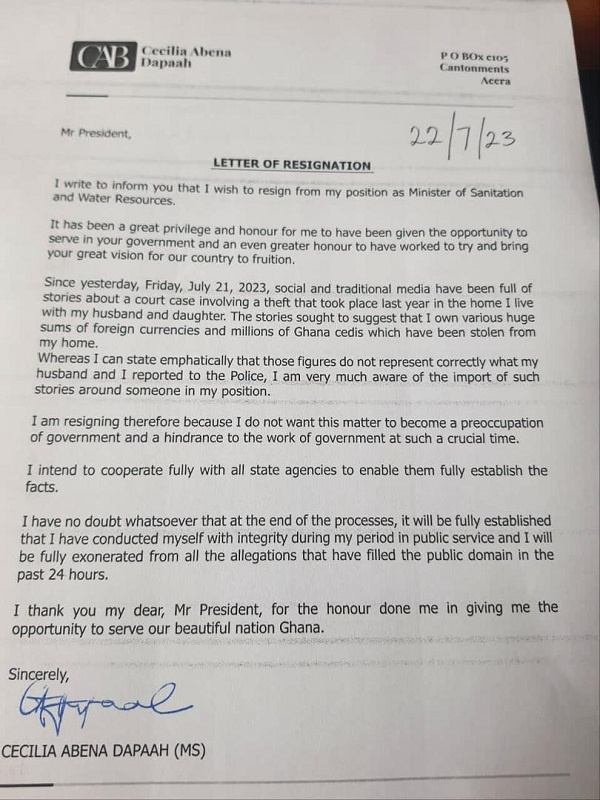
In her resignation letter, Ms. Dapaah refuted the reports claiming that she and her husband possessed “various huge sums of foreign currencies and millions of Ghana cedis,” stating that these reports did not accurately represent what they had reported to the police.
President Nana Akufo-Addo’s response to the situation disappointed anti-corruption campaigners, as it seemed to pre-judge the outcome of the ongoing investigations. He expressed confidence that Ms. Dapaah’s integrity during her time in office would ultimately be proven.
Having served as a minister since President Akufo-Addo’s initial election in 2017, Ms. Dapaah held roles in both aviation and, later, water and sanitation. As one of only three women in the president’s cabinet, she was well-known.
Now, her political future remains uncertain as the special prosecutor conducts an investigation to ascertain whether she did indeed possess such substantial amounts of cash in her house and, if so, where the funds originated from.
The Office of the Special Prosecutor, which deals with graft allegations against high-level officials, announced that it had arrested and was questioning Ms Dappah for “suspected corruption and corruption-related offences regarding large amounts of money and other valuable items reportedly stolen from her residence”.
Late on Monday evening, she was granted bail following searches conducted at her official and private residences in the capital city, Accra.
The chain of events started with a reported burglary, or potentially a series of burglaries, at the minister’s private residence, where she lives with her husband and daughter.
At the heart of the accusations are two female domestic workers who were employed by the family. One of them is suspected of acting as a lookout, while the other is alleged to have been involved in stealing the cash and other belongings. As for the three other individuals accused in the case, they have not offered any comments on the charges.
According to the “brief facts” of the case attached to the charge sheet, last October Ms. Dapaah’s husband, Daniel Osei Kuffour, returned home to “an unusual noise” coming from his bedroom. He then went to investigate and discovered one of the suspects crouching behind the door.
The couple only realized that items were missing after some time had passed, but they waited for seven months before reporting the incident to the police.
The reason for the significant delay remains unclear, but during that time, the accused individuals are alleged to have engaged in an extravagant spending spree.
One of them reportedly purchased a three-bedroom house on the outskirts of Accra, along with various household items such as a double-decker fridge, a television, a washing machine, a chest freezer, a gas cooker, and a water dispenser. Additionally, she allegedly provided money to her boyfriend to buy two cars – a Hyundai Elantra and a Honda Civic.
The couple is also accused of renting another three-bedroom house in a different city, as well as a store room.
The other former employee of Ms. Dapaah is said to have used some of the stolen money to build her own three-bedroom house.
As for the former minister herself, the origin of the funds that supposedly financed this extensive shopping spree remains a mystery.
In her resignation letter, Ms. Dapaah refuted the reports suggesting that she had “various huge sums of foreign currencies and millions of Ghana cedis,” asserting that they did not accurately represent what she and her husband had reported to the police.
President Nana Akufo-Addo’s response to the situation disappointed anti-corruption campaigners, as it seemed to pre-judge the outcome of the ongoing investigations. He expressed confidence that Ms. Dapaah’s integrity during her time in office would ultimately be established.
Having served as a minister since President Akufo-Addo’s initial election in 2017, Ms. Dapaah held roles in both aviation and, later, water and sanitation. As one of only three women in the president’s cabinet, she was well-known.
Now, her political future remains uncertain as the special prosecutor conducts an investigation to ascertain whether she did indeed possess such substantial amounts of cash in her house and, if so, where the funds originated from.
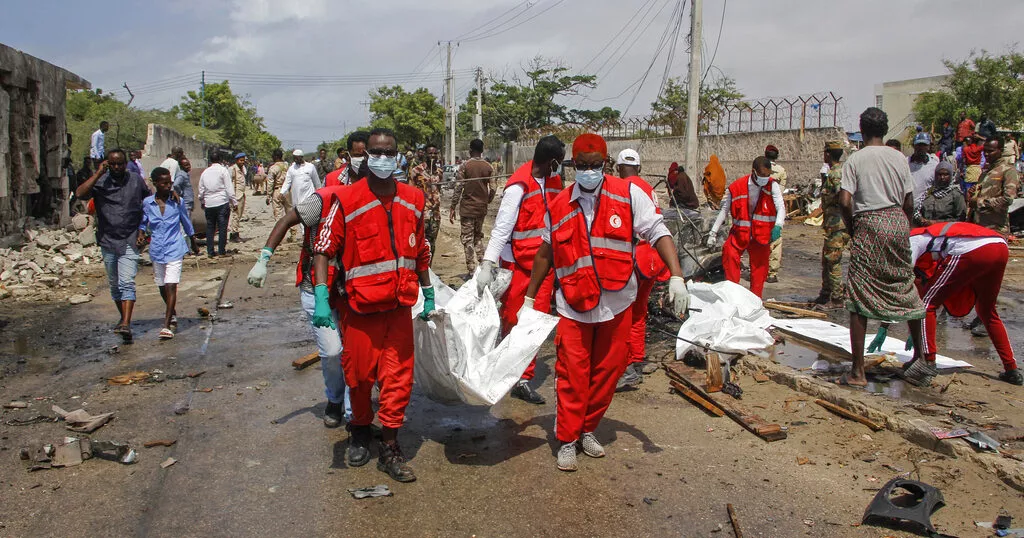
At least 20 soldiers were killed on Monday in a suicide bombing by an Islamist inside a camp for the Somali army in Mogadishu, according to officials and witnesses.
The Al-Qaeda-affiliated Al-Shabaab group made the claim for the assault, which took place at the Jaalle Siyad Military Academy.
“More than 20 people died in the explosion,” Mohamed Ibrahim Moalimu, a member of the Somali parliament, told AFP. “The victims are soldiers who were defending their country against terrorists,” he added.
Another parliamentarian, who asked to remain anonymous, reported 27 dead and around 60 injured.
The suicide bomber managed to enter the base where the 14th infantry brigade was about to begin a refresher course and detonated its explosive vest, witnesses said.
“I was in a nearby military camp when the explosion happened. We rushed to the scene, it was horrible,” said Mohamed Hassan, a member of the Somali army. “The investigation is still ongoing and the death toll could be higher”.
Since 2007, the Al-Shabaab organization has been fighting a insurgency of violence against the Somali government.
Despite a major offensive launched in August by forces loyal to the government and supported by African Union soldiers and US aircraft, its militants were forced out of Mogadishu in 2011 but the organization is still a strong force.
Large portions of Somalia are still under the group’s control, and it continually conducts lethal operations against civilian, political, and military targets.
Governor of the Bank of Ghana, Dr. Ernest Addison, has voiced worry about the practice of some people stockpiling enormous sums of foreign currency outside of the banking system.
The Governor remarked that the behavior of the former Water Resources and Sanitation Minister Cecilia Dapaah allegedly hoarding one million dollars and 300,000 euros at her residence is concerning in response to a question at the Central Bank’s Monetary Policy Committee press conference in Accra.
He didn’t say anything else, though, about the case that was in court.
“It is a worry to all of us, but it is a matter that is still unfolding and is in court. Therefore, there is nothing to say about it.”
Over the years, the Bank of Ghana has urged people and organizations to keep their local and foreign currencies with Ghanaian commercial banks.
As part of the Inflation Targeting Policy, this will assist in properly monitoring the quantity of currencies in use. For the foreign currencies, it will assist in supplying the commercial banks with the foreign exchange they require to support their international activities.
What is Bank of Ghana doing to deal with spike in currencies outside Banks?
The Governor said the Central Bank is using the various monetary tools to deal with the challenge.
Fresh data from the Central bank showed that currencies outside the banking sector went up from ¢22.1 billion in May 2022 to ¢31.6 billion at the end of May 2023.
Dr. Ernest Addison explained that the Bank of Ghana has increased its open market operations as well as improved liquidity management instruments to also address the challenge.
“This is an area that the Bank of Ghana is taking a closer look at when it comes to liquidity operations and expect more measures from the Central Bank in the coming weeks”.
The Governor noted that there is a seasonal effect in terms of contributing to this spike, adding “One can talk about the purchase of cocoa and gold”.
But he noted that with the purchase of gold , there had been a cedi cover to deal with this challenge.
Capitalisation plans of commercial banks in Ghana
The Governor also announced that all commercial banks have submitted their re-capitalization plans to the Central Bank.
This is ahead of the September 2023 deadline.
The Central Bank at the last Monetary Policy Committee (MPC) meeting announced that commercial banks in the country have been directed to submit their recapitalization plans by September 2023.
This might influence any plan in the future in terms of banks that turn to the BoG for support with respect to operationalization of the Ghana National Financial Stability Fund.
Suspension of Fidelity and First National Banks’ Forex License
The Bank of Ghana earlier this month announced the suspension of the forex license of Fidelity Bank and First National Bank of South Africa for breach of operational measures, beginning June 29, 2023.
The two banks were also fined a combined 1,000 penalty points each for breaching sections 3.4, 3.5, and 3.9 of the Ghana Interbank Forex Market Conduct rules.
Given the license suspension, customers of the banks had to look elsewhere to do their forex business.
But responding to questions at the MPC press conference, the Governor said the licenses of these two banks have been restored even ahead of the deadline.
“The licenses of these commercial banks were restored some two weeks ago, this should mean that they did not do the full one month” the Governor noted.
When reminiscing about the tragic church massacre that claimed the lives of her mother, two siblings, and four other relatives, Judith Ariho remains composed, without shedding any tears.
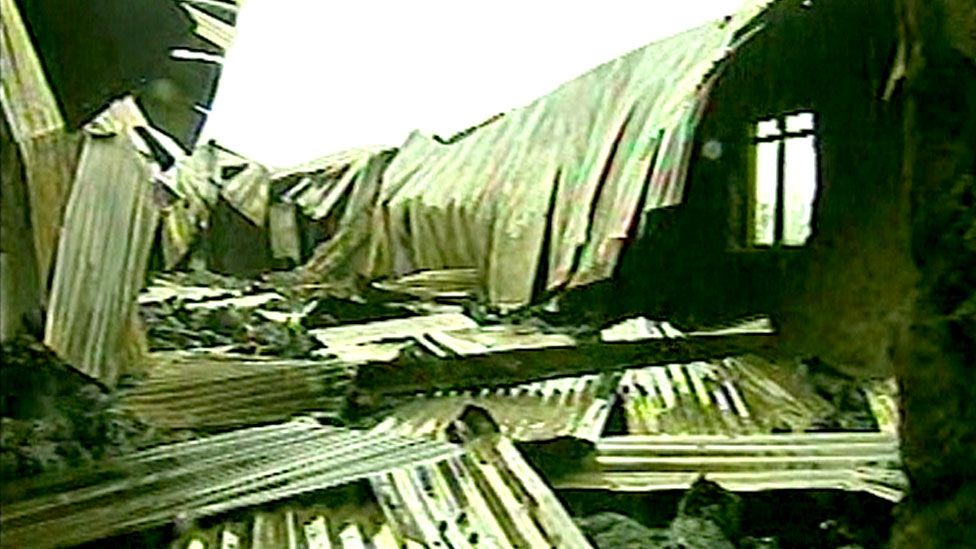
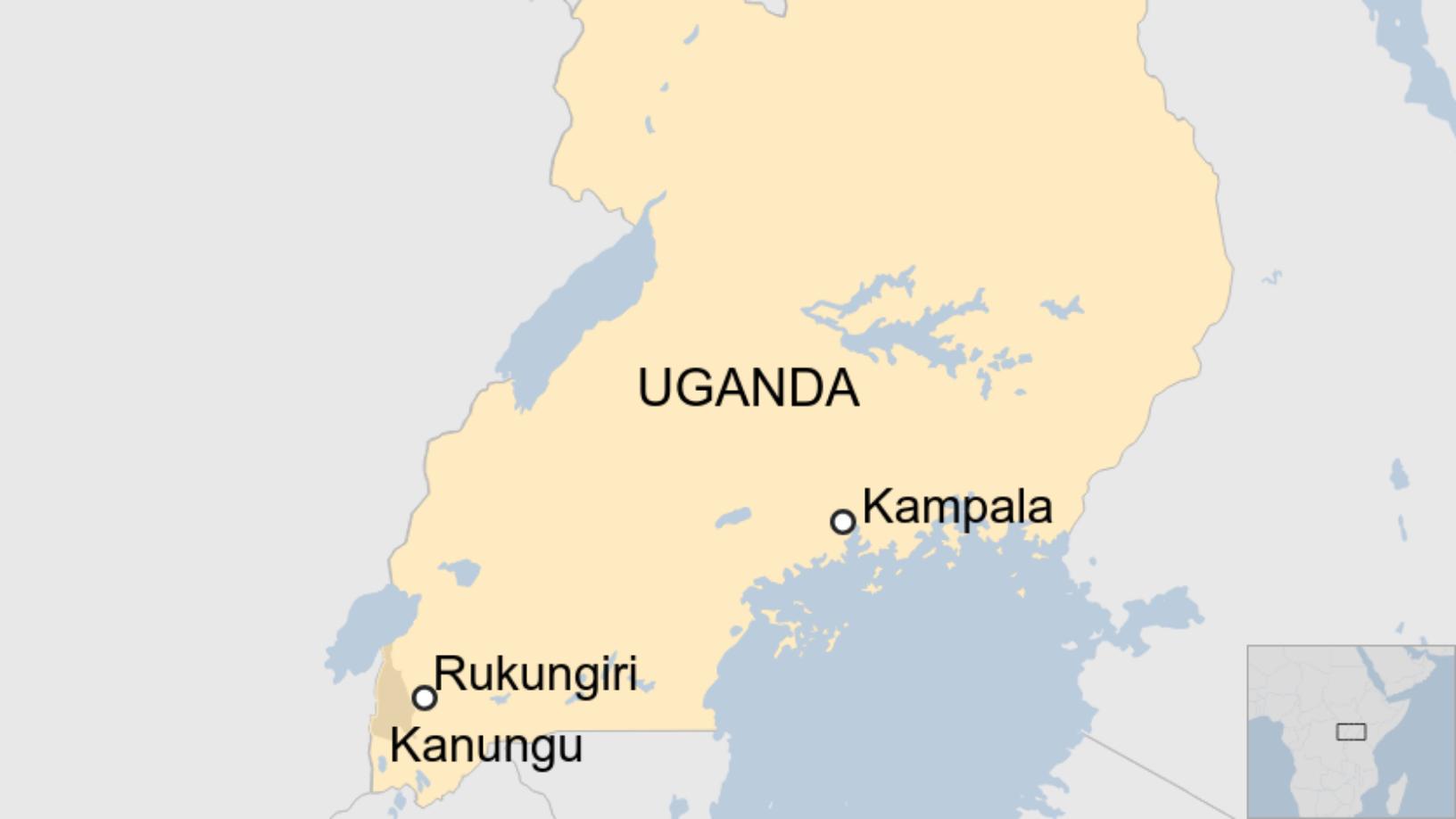
The heart-wrenching incident occurred exactly 20 years ago in the Kanungu district of south-western Uganda, where they were trapped inside a church with the doors and windows nailed shut from the outside, and the building was set on fire.
Even after two decades, the magnitude of the horrifying event remains overwhelming for Ms. Ariho. To cope with the trauma, she seems to have developed a coping mechanism of distancing herself from the emotions associated with the tragedy.
Image caption,This still from archive footage shows the ruins of the church in the wake of the fire
The dead were members of the Movement for the Restoration of the Ten Commandments of God – a doomsday cult that believed the world would come to an end at the turn of the millennium.
“The end of present times”, as one of its books phrased it, came two-and-a-half months later, on 17 March 2000.
Twenty years later, no-one has been prosecuted in connection with the massacre and the cult leaders, if they are alive, have never been found.
BBC
Everything was covered in smoke, soot and the stench of burnt flesh. It seemed to go right to your lungs”Anna Kabeireho Neighbour
Anna Kabeireho, who still lives on a hillside that overlooks the land that the cult owned, has not forgotten the smell that engulfed the valley that Friday morning.
“Everything was covered in smoke, soot and the stench of burnt flesh. It seemed to go right to your lungs,” she recalls.
“Everybody was running into the valley. The fire was still going. There were dozens of bodies, burnt beyond recognition.
“We covered our noses with aromatic leaves to ward off the smell. For several months afterwards, we could not eat meat.”
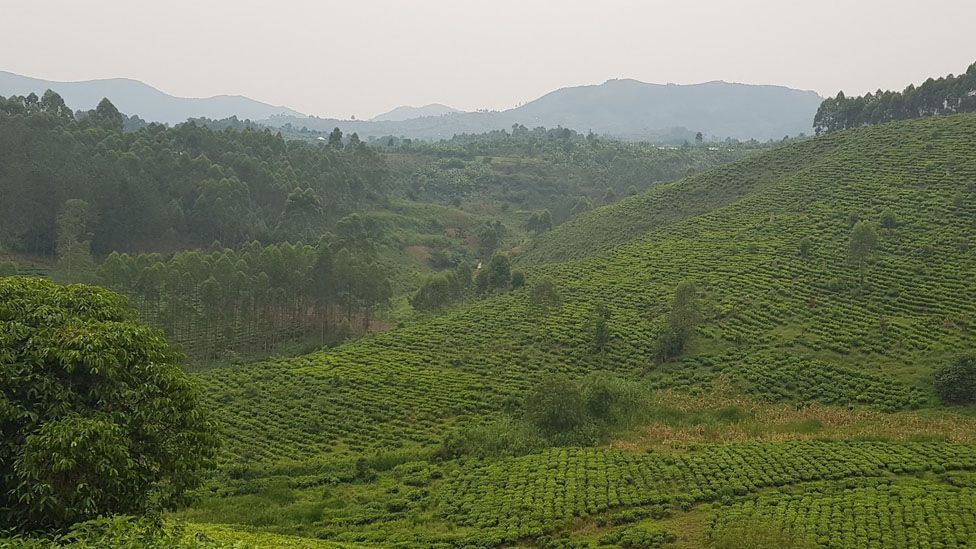
Kanungu is a fertile and peaceful region of green hills and deep valleys, covered in small farms broken up by homesteads.
The journey down into the valley that was once the headquarters of the Movement has to be taken by foot.
From down there, it is easy to see how the religious community would have maintained their lives away from the eyes of neighbours.
Birdsong bounces off the hills and there is the sound of a waterfall in the near distance. It is the ideal setting for a contemplative existence.
But nothing remains of the building that was doused in petrol and set alight. At the edge of the spot where it stood is a long mound of soil, the only marker for the mass grave in which the remains from the inferno were buried.
Defrocked priests and nuns
The faithful had been drawn by the charismatic leaders Credonia Mwerinde, a former bartender and sex worker, and ex-government employee Joseph Kibwetere, who said that they had had visions of the Virgin Mary in the 1980s.
They registered the Movement as a group whose aim was to obey the Ten Commandments and preach the word of Jesus Christ.
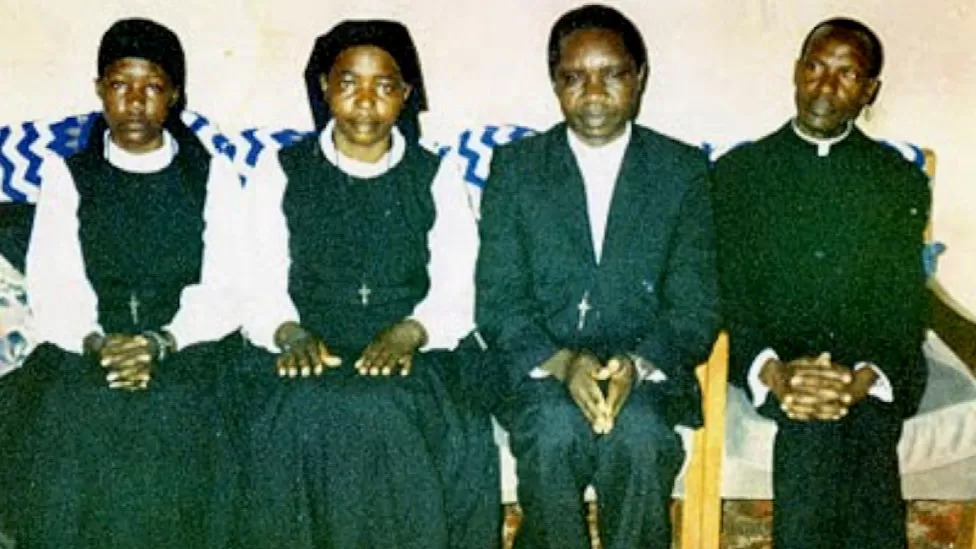
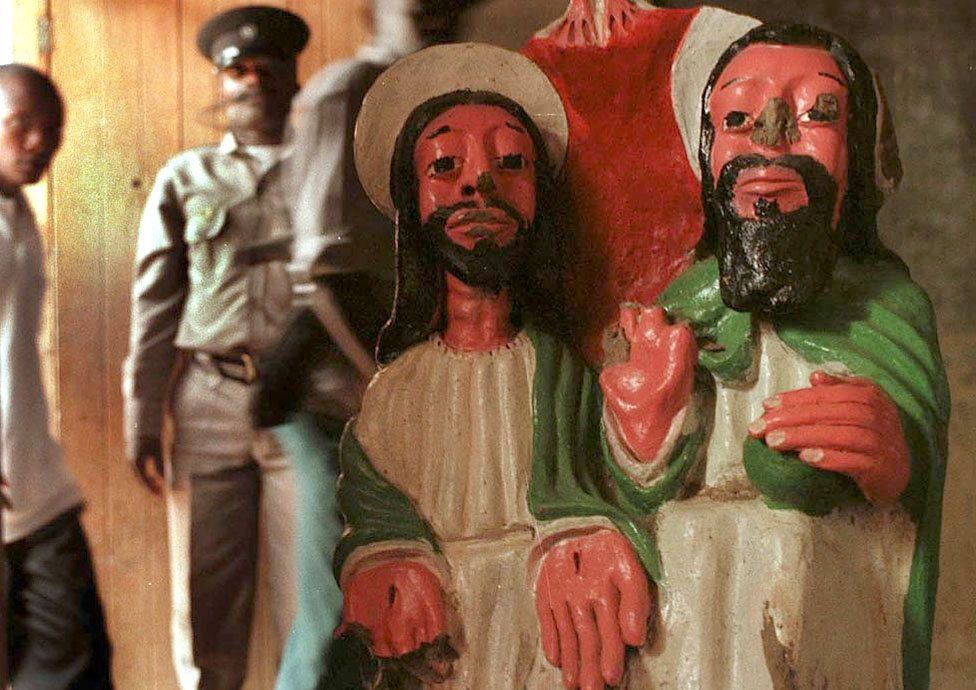
Christian icons were prominent in the Movement’s compound and the cult had tenuous links to Roman Catholicism with its leadership dominated by a number of defrocked priests and nuns, including Ursula Komuhangi and Dominic Kataribabo.
Image caption,Christian iconography was found in one of the compound’s buildings after the fire
Believers lived mostly in silence, occasionally using signs to communicate.
Questions would be sent to Mwerinde in writing. Known as “the programmer”, she is said to have been the mastermind behind how the establishment run, and would write back with answers.
Ms Ariho, 41, joined the Movement with her family when she was 10.
Her widowed mother was struggling to raise three children, one of whom suffered from persistent headaches. Kibwetere’s group offered prayer and a sense of belonging, she says.
The self-sustaining community would take in whole families, providing for their every need. The members grew their own food, ran schools, and used their skills to contribute labour.
BBC
We did everything possible to avoid sin. Sometimes, if you sinned, they would command you to recite the rosary 1,000 times”Judith Ariho Former cult member
Ms Ariho’s family hosted a branch of the church with about 100 members in their compound, 2km (1.2 miles) outside the town of Rukungiri.
“Life rotated around prayer, although we also farmed,” she says.
“We did everything possible to avoid sin. Sometimes, if you sinned, they would command you to recite the rosary [an entreaty to God] 1,000 times.
“You had to do it, and also ask friends and family to help, until you had served your punishment.”
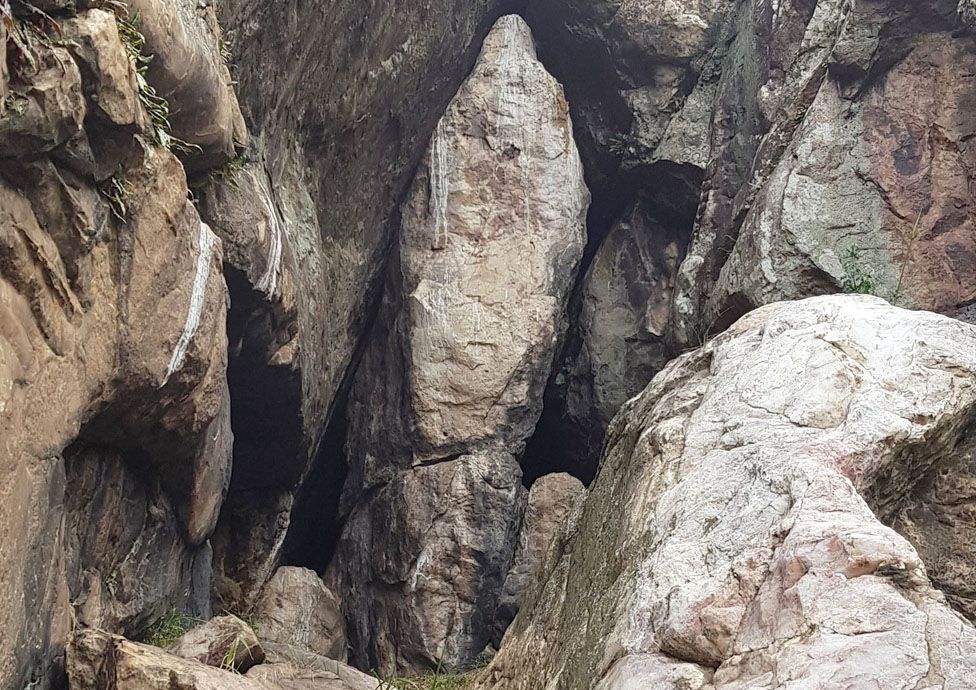
Devotion to the Movement regularly involved pilgrimage to a steep, rocky hill nearby. After a tough hike through a eucalyptus forest, hanging onto rocks and grabbing at tufts of grass, the faithful would reach a rock that they believed depicted the Virgin Mary.
Image caption,Followers of the Movement believed that this rock resembled the Virgin Mary
As we walk through her village, she points to the homesteads of the immediate neighbours. “Over there, they lost a mother and her 11 children, and in that home, a mother and her eight children died too,” she says, shifting her gaze to the ground.
Ms Ariho had not travelled to Kanungu as by 2000 she had married into a family who were not part of the Movement.
But she remembers that the leaders had an omniscient grip on the faithful, saying that Mwerinde and Komuhangi seemed to be aware of every sin that had been committed in the far-flung outlets of the church.
When a follower broke the rules, the two women would shed tears of blood, she says.
But it appears that the cult leaders may have also engaged in murder and torture before the final massacre.
In Kanungu, there are numerous wide and deep pits where dozens of bodies, thought to have been dumped over several years, were retrieved days after the blaze.
At the back of what seems like a ruined office building are two more pits, said to have been torture chambers. Pits were also found near other branches of the church.
What turned ordinary members of society into murderous cult leaders is still not clear.
Before his apparitions, Kibwetere had been a successful man, and a regular member of the Roman Catholic community.
Topher Shemereza, now a local government official, saw him as a father figure.
“He was an upright member of the community and a shrewd businessman. I did not have a job when I finished university, so he offered me a deal to transport local moonshine, which we sold in the neighbouring districts,” he explains.
A few years on, Kibwetere informed his protégé that he would no longer sell alcohol. The older man and his fellow cult leaders spent a fortnight in Mr Shemereza’s government-issued house right up until the night they set off for Kanungu, where they would establish the Movement’s headquarters.
“That was the last time I ever saw him. The man I knew was not a murderer. Something must have changed in him,” he says.
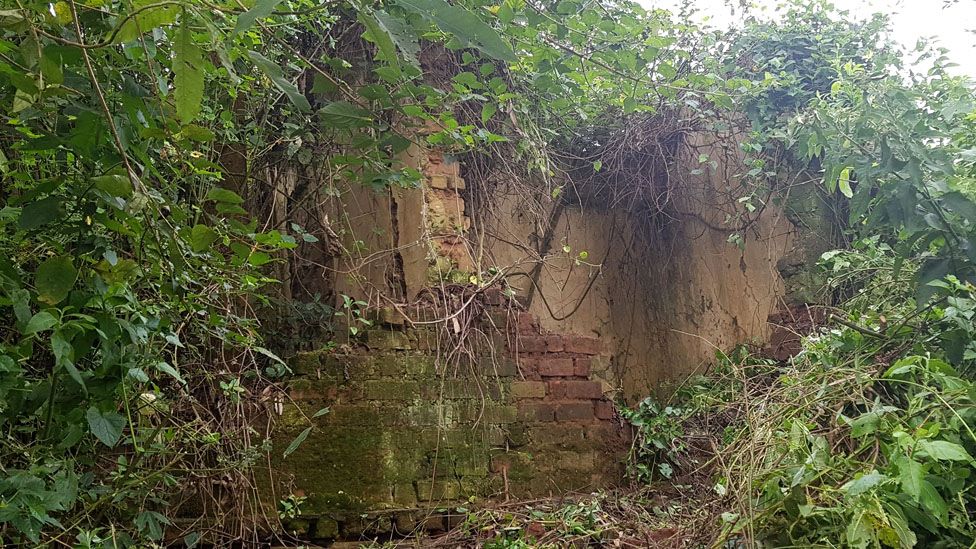
Image caption,The remains of some of the Movement’s buildings can still be seen
After the Movement’s foundation, word of Kibwetere and his religion spread across south-west Uganda and beyond.
The community was not closed off from the rest of society, and several people in positions of authority – including policemen and local government officials – were aware of its activities. But little action was taken against the cult before the inferno.
Although Interpol issued notices for the arrest of six cult leaders in April 2000, it is still not known if any of them died in the fire or whether they are living in hiding.
A 2014 Uganda police report indicated that Kibwetere may have fled the country. But others doubt that he was well enough to do this.
No memorial
Spiritual movements that bear the hallmarks of the Kanungu cult, where devotees unquestioningly believe their pastors can resurrect the dead or that holy water will heal ailments, have continued to emerge across the continent.
BBC
The Kanungu cult pointed out the evils of the time… and preached a renewal or re-commitment to the faith”Dr Paddy Musana Makerere University
Their appeal is clear, according to Dr Paddy Musana of Makerere University’s Department of Religion and Peace Studies.
“When there is strain or a need which cannot be easily met by existing institutions like traditional faiths or government, and someone emerges claiming to have a solution, thousands will rally around them,” he tells the BBC.
“The Kanungu cult pointed out the evils of the time… and preached a renewal or re-commitment to the faith.”
Dr Musana adds that one need not look too far to find a similar thread in the messages of today’s self-proclaimed prophets.
“The ‘Jesus industry’ has become an investment venture. Today’s preachers talk about health and wellness, because of the numerous diseases, and a public health system that barely functions,” says the academic.
He argues that the government needs to do more in overseeing these spiritual movements.
Two decades on, the 48-acre plot at Kanungu is now being used as a tea plantation, but local businessman Benon Byaruhanga says he has plans to turn parts of it into a memorial.
So far, the dead at Kanungu have never been officially remembered. Those who lost family members have never got any answers.
“We pray for our people on our own. We bear our pain in silence,” Ms Ariho says, reflecting on the deaths of her mother and siblings.
It’s incredibly challenging to avoid all the dangers associated with sharing a bed with a close friend.
Friendships between ex-opposites are typically great until sex enters the picture due to growing sexual interest.
“Oh, we are mature” and “it’s just sex, we can always handle ourselves,” are the well-used responses you get from people who have been going down with their friends.
The truth is that no matter how cool or mature you may feel, you can never completely avoid the risks associated with sleeping with a buddy.
Here are several uncomfortable situations and issues to think about before you do it with that close buddy.
1. When they get someone else.
So you sleep with them and a new partner comes into the picture shortly after. That awkward moment when she introduces you to the new guy as her close friend but you both know you are not just a good friend.
And then there’s the problem of that partner finding out later that he/she isn’t just your friend.
So you’re faced with confessing and losing one of your friend or partner, or facing that awkward moment when your partner confronts you with the truth that he/she found out from someone else.
Oh dear.
2. Recurrence.
The understated struggle that comes out of this kind of situation is how to minimise the ‘damage’ that has been done.
Quite a number of first-time friends sex happen in moments of rashness or uncontrolled excitement and friends would ideally love to keep it at that single time, but to continue being friends and keep the sex from recurring is one helluva difficult task you’d better avoid.
3. Opinions and judgments become questioned.
It becomes strange to go to this person, who you slept with, to talk about your heartbreaks and dating life.
It used to be normal and OK to seek their opinions before the sex happened, but not anymore. Their opinion somehow appears coloured by personal interests in you.
4. Pure intentions?
You also call their actions to question. Whatever he or she does might get interpreted as a calculated move to get back in bed with you – especially if the first time was really bomb.
5. Things won’t be the same again.
Seven out of 10 times, you won’t be able to get your friendship back to what it was before.
Once you go down that thin road, that relationship dynamic changes. Usually from good to bad.
DISCLAIMER: Independentghana.com will not be liable for any inaccuracies contained in this article. The views expressed in the article are solely those of the author’s, and do not reflect those of The Independent Ghana
Out of the 45 unlisted companies in which the Social Security and National Insurance Trust (SSNIT) has made investments, ten of them have failed to pay any dividends to the Trust for the past decade.
As of December 2020, the combined investment value of these ten companies amounted to GH¢150.30 million.
Among these companies, only four have shown capital appreciation, exceeding the initial investment value. On the other hand, the remaining companies have individual values that fall below the amount originally invested by SSNIT.
The total portfolio value of all 45 companies reached GH¢3.26 billion as of December 2020, and within the same year, SSNIT’s share value in the ten companies amounted to GH¢326 million.
Campanies
The Social Security and National Insurance Trust (SSNIT) revealed a list of defaulting companies, including Golden Beach Hotels (GBH), CDH, Kumasi Abattoir, Accra Abattoir, Intercity STC Coaches Limited, Bayport Financial Services, Trust Logistics Limited, Africa World Airlines (AWA), SIMNet, and Metro Mass Transit Company Limited.
This disclosure occurred during a meeting with the Public Accounts Committee (PAC), where SSNIT’s management, led by Director-General Dr. John Ofori-Tenkorang, addressed certain infractions highlighted in the 2021 Auditor-General’s report of the company.
According to James Klutse Avedzi, the Chairman of PAC, the SSNIT representatives serving on the boards of these companies explained that they have not been profitable for the past ten years.
“This could have serious effect on sustainability or solvency of the Trust in a long time. We recommended that management should assess the operations of these companies to take strategic decisions to safeguard the interest of the Trust,” he said.
Response
Responding, the Deputy Director-General in charge of Investment, Kofi Osafo-Maafo, said: “We are working on the initiatives for a turnaround in their operational performance over a longer term. With that they will be able to pay dividends”.
He stated that the Trust was looking for a strategic investor to buy into Golden Beach Hotels (GBH).
“What we expect to get are strategic investors who have both the financial muscle and knowledge of managing hotels better to be able to turnaround performance of our hotels,” Mr Osafo-Maafo said.
Kumasi, Accra Abattoir
He claimed the Accra Abattoir was a CSR initiative that SSNIT was working to exit due to a similar pricing issue that prevented it from turning a profit. He also claimed the Kumasi Abattoir began as a CSR investment and had been challenged by non-commercial pricing.
“Following a board and shareholders resolution of the company, they are looking to dispose of four acres out of about 21 acres of land to settle the debt.
“Once the financing cost are out of the way, we expect the underlying financial performance of the company to be better,” Mr Osafo-Maafo said.
Regarding CDH, he stated that the Trust, which owned a 1.3% equity position in the business, was eager to leave the organization and that two of the group’s underlying financial asset management companies had had their licenses withdrawn.
“Since we last came here (PAC), we have found a buyer for our shares and a transactional advisor is now being procured to look at the valuation of our shares.
“We should be, hopefully, looking to exit CDH,” Mr Osafo-Maafo said.
Bayport Financial Services was mentioned as a non-bank financial organization that had initially planned to make a dividend payment to the Trust in 2024.
According to Mr. Osafo-Maafo, the business produced a profit and added to its reserves in 2022 and the year before.
“But as we are all aware within the financial sector and as a result of the Domestic Debt Exchange Programme, the banking and non-financial institutions are facing challenges and, therefore, the need to protect their balance sheet.
“We, therefore, do not expect them to pay a dividend this year. We are hopeful that if the economic conditions improve, they should be able to pay dividend on the back that they are now posting positive earnings,” he said.
Mr Osafo-Maafo said his outfit was looking forward to Trust Logistics Limited to leverage its existing assets as they had gone into partnership with Goil Company Ltd to leverage their landed assets.
“We are also in discussions with Central Oil Refinery and if that should come off then the primary issues of our competitiveness on the market and our ageing fleets will be resolved to improve its performance in order to pay dividends,” he said.
Intercity STC Coaches Limited
Mr Osafo-Maafo described the challenge with Intercity STC as “a more difficult situation” of pricing and operating cost.
“On the operating cost, they are facing head wings from fuel cost that has resulted in a much higher operating cost.”
“However, they were not able to get permission to improve their pricing that resulted in negative margins,” he said, adding that a meeting would be held at the end of September and December this year to assess the situation.
“And if their financial performance permits, there will be a plan in place to meet their indebtedness,” Mr Osafo-Maafo said.
He said that AWA was using leased aircraft to operate, which had an impact on the company’s operating costs.
“There are also internal issues that we are addressing with the majority shareholders with respect to corporate governance and we expect that if all of these come together the company should be able to pay dividend in 2024,” Mr Osafo-Maafo said.
Regarding SIMNet, the service provider for the National Lottery Authority, it was mentioned that they are currently pursuing a diversification strategy.
“If that should materialise, it will help transform the company. In the interim, we are working with the authority to renew their licence so that they improve their financial performance going forward,” Mr Osafo-Maafo said.
Additionally, he said that the Metro Mass Transit Company Limited was a CSR venture that had problems with pricing from a business perspective.
The cost ofcocoa, a crucial raw material for chocolate production, surged to its highest level in over 12 years in New York on Tuesday, July 18.
This rise in prices comes shortly after cocoa reached its highest point in 46 years in London. The situation has put traders and chocolate manufacturers in a challenging position due to limited supplies.
During the trading session, the benchmark cocoa contract at the Intercontinental Exchange in New York reached $3,429 per metric tonne, the highest level since March 2011. It closed at $3,407, representing a 1.4% increase.
Cocoa has become one of the most sought-after agricultural commodities, primarily because of an unusual decline in production in the western part of Africa. This region is a major supplier of raw cocoa to chocolate makers worldwide.
Moreover, the prospect of potentially adverse weather conditions in the future is also impacting the market.
Analysts have expressed concerns about the areas of Ghana, Ivory Coast, Nigeria, and Cameroon, where drier-than-normal weather is anticipated for the coming months due to the developing El Nino pattern. These factors have combined to drive cocoa prices to their current soaring levels.
“Cocoa production is usually weaker in an El Nino year. We don’t know how strong this current El Nino will be, but forecasters say it will probably be strong,” said Rabobank cocoa analyst Paul Joules.
“The 2023/24 mid crop could be affected, as well as the 2024/25 main crop,” he added, referring to the two annual cocoa crops African countries harvest.
On Monday, exporters estimated that the volume of cocoa arriving at ports in Ivory Coast, the world’s leading cocoa producer, has decreased by 4% compared to the previous year, indicating a smaller production for the season.
In London, cocoa futures settled with an increase of 18 pounds, equivalent to 0.7%, reaching 2,532 pounds per metric tonne.
As for other commodities, raw sugar settled up by 0.3% at 23.86 cents per pound, remaining within a recent narrow range and below the 11-year peak above 27 cents reached in late April.
Arabica coffee experienced a rise of 0.3%, settling at $1.563 per pound, while robusta coffee, on the other hand, settled down by $20, or 0.8%, at $2,532 per metric tonne.
On July 24 2023, the Federal Government officially announced the country’s first confirmed case of anthrax.
According to a statement from the Ministry of Agriculture and Rural Development, Dr. Columba Vakuru, the Chief Veterinary Officer of Nigeria, confirmed that animals displaying symptoms suggestive of anthrax were reported on a farm in Suleja, Niger State, to the Office of the Chief Veterinary Officer on July 14.
The affected farm, located at Gajiri along the Abuja-Kaduna Expressway in Suleja Local Government Area of Niger State, is a multi-species animal farm housing cattle, sheep, and goats. Some of these animals exhibited distressing symptoms, including bleeding from various body openings such as the anus, nose, eyes, and ears.
In response to the situation, a rapid response team consisting of federal and state health professionals promptly visited the farm to conduct initial investigations and collected samples from the ailing animals.
The ministry said subsequent laboratory tests by the National Veterinary Research Institute’s laboratory confirmed the diagnosis, “marking the first recorded case of anthrax in Nigeria in recent years”.
In response to learning of an anthrax outbreak in Northern Ghana where all infected animals had perished, the federal government had issued a warning to Nigerians weeks earlier.
“Anthrax is caused by the spore-forming bacterium Bacillus, which mostly affects livestock like cattle, sheep, and goats. However, it can also infect people who come into contact with infected people or contaminated animal products like meat, wool, or skins.
“Anthrax that spreads via the skin might result through open wounds or contact with contaminated objects, while anthrax that spreads through the air can happen when spores are inhaled,” it stated.
The ministry said the federal government appealed to Nigerians to immediately report cases of animals bleeding from body openings to veterinary authorities or agriculture extension workers.
“The blood of an anthrax-infected animal does not clot. Do not process or move the dead or sick animal, quickly report to your veterinary doctor or veterinary authorities at the ministry of agriculture in your state,” the statement added.
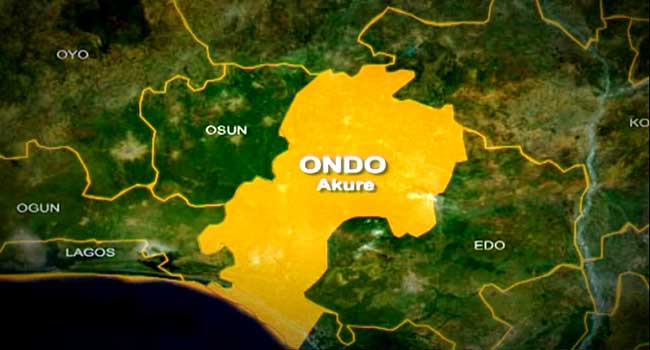
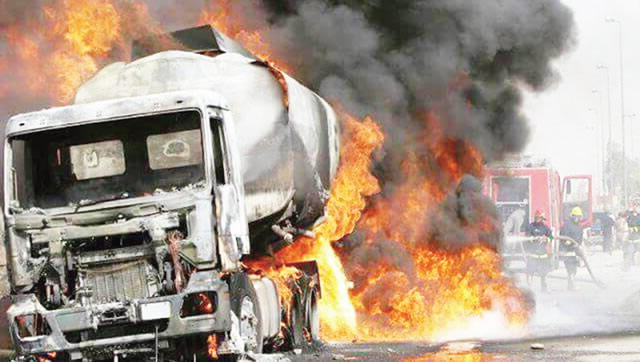
Eight people have died in a petrol tanker explosion that happened in the commercial town of Ore, in the state’s Odigbo Local Government Area, according to the Federal Road Safety Corps (FRSC) in Ondo State on Monday.
According to the Daily Trust, on Sunday, a fuel tanker carrying 33,000 liters of petroleum crashed as the driver was navigating the Benin-Ore-Lagos Expressway.
Mr. Ezekiel SonAllah, State Sector Commander of the FRSC, briefed journalists on the event and reported that the victims were petrol scoopers who had swooped on the fuel tanker as soon as it fell into a ditch by the roadside.
“The driver and motor boy of the vehicle escaped unhurt, but the eight villagers scooping fuel got burnt in the act. The dead bodies were taken to General Hospital Ore Morge, our men were on the ground,” he stated.
Mr. SonAllah’s provided casualty figure contradicted the accounts of eyewitnesses who observed the petrol tanker explosion. Several witnesses stated that the incident resulted in the death of over 20 people, including three children and a pregnant woman.
On another note, the Ondo State government expressed deep sorrow over the victims of the tragic petrol tanker explosion. In an official statement issued by the Commissioner for Information and Orientation, Mrs. Bamidele Ademola-Olateju, the government conveyed its profound devastation caused by the unfortunate incident.
The statement read in part, “This is a most horrendous way to die. We are shocked and traumatized as we express the depth of our grief for the victims of the explosion. The state would reach out to the victims’ families who are affected by these avoidable deaths. Whatever circumstances that led to this unfortunate incident must be discouraged.
“This is one tragedy too many and it is our joint responsibility to ensure this does not happen again.”
Likewise, Mr. Olatunji Ifabiyi, the representative of Odigbo 1 Constituency, expressed his condolences in response to the incident on Monday, referring to it as an unfortunate event.
He issued a stern warning to those engaged in the dangerous act of scooping fuel from fallen tankers, urging them to desist from such actions to prevent fatal consequences among residents.
Furthermore, the All Progressives Congress (APC) in Ondo State also described the incident as deeply unfortunate and emotionally moving.
In a statement released by the party’s spokesperson, Alex Kalejaiye, they appealed to all Nigerians to exercise greater caution when dealing with explosive materials, regardless of the temptations they may face.
“Times are hard, no doubt, but we are very certain that the situation will begin to relax very soon. We need to stay safe, and in good health to keep hope alive,” the party said.
Private legal practitioner, Samson Lardy Anyenini, has raised doubts about the former Sanitation and Water Resources Minister’s justification for contesting media reports regarding the amount of money stolen from her residence after her resignation.
On Friday, media reports surfaced indicating that two housemaids who were employed by the former minister and her husband are currently facing trial, along with others, for the theft of significant sums of money and various items from their home.
The charge sheet states that the two housemaids, 18-year-old Patience Botwe and 30-year-old Sarah Agyei, are accused of stealing US$1 million, €300,000, and millions of Ghana cedis between July and October 2022.
The stolen items allegedly include clothes, handbags, perfumes, jewelry, kente cloth, and suits belonging to the former minister’s husband, valued at thousands of dollars.
Following the publishing, Cecilia Dapaah has drawn criticism from the general population. Surprisingly, she has questioned the purported theft figures, stating that there are “noticeable inconsistencies” between what she reported to the police and the conversations about the supposed theft.
“Whereas I can state emphatically that those figures do not represent correctly what my husband and I reported to the Police, I am very much aware of the import of such stories around someone in my position,” she said in her resignation letter.
On July 24, Samson Anyenini claimed during an appearance on Joy FM’s Super Mr that the charge sheet has already been altered twice and wouldn’t be shocked if if the charge sheet were revised to state that only $1 had been taken.
He claims that the charge sheet is typically presented to the complainant(s) for any corrections or other changes before the police take a case to court.
“Well, when you make a complaint to the Police and they are about to file your charges in the court, they normally will check with you because there are times that certain errors are made and sometimes they even put the matter in court before you discover that they have made some errors and their attention is drawn and they go back and make the necessary corrections and do what we call an amendment.”
“In this case in particular, the 10 count charge sheet that was put in the court, it has been amended twice. There was an amendment on June 5, and the latest amendment was on June 20. So I don’t know why any correction that has to be made is still outstanding. So, it has been amended two times from the original amendment from the documentation that we have seen so far, and in the amendments, the first figure of a million dollars has never changed in any of the amendments, the second figure €300,000 never changed.”
“I think part of the money said to have been given to the boyfriend that appeared to be have been changed to the current amount that it is. So I don’t know what inconsistencies she is talking about. And the Police would have checked with you for something that they would have amended twice in respect of the figures. So I don’t know what they are talking about that there some inconsistencies with what was reported to the Police and what is on the charge sheet.”
“It is absolutely up to them to determine whether they want to go and do further amendments and reduce the $1 million to $1. That is up to them, if it’s $1 that has been stolen that they are chasing,” he said.
The Office of the Special Prosecutor has officially confirmed the detention of Cecilia Dapaah on suspicion of corruption and corruption-related charges.
According to a statement released by the Special Prosecutor’s office, Cecilia Abena Dapaah, who stepped down from her role as Minister of Sanitation and Water Resources on July 22, 2023, was apprehended by the Office of the Special Prosecutor (OSP) on July 24, 2023, at 11:55 GMT.
The arrest is in connection with the alleged involvement in corrupt practices and the theft of significant amounts of money and valuable items from her residence.
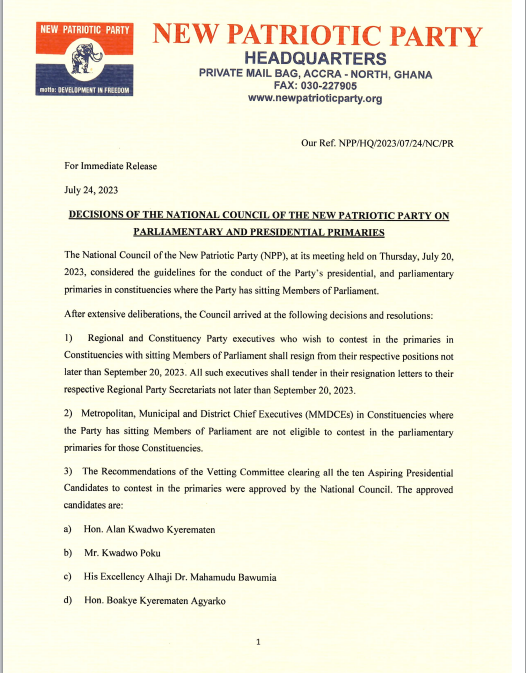
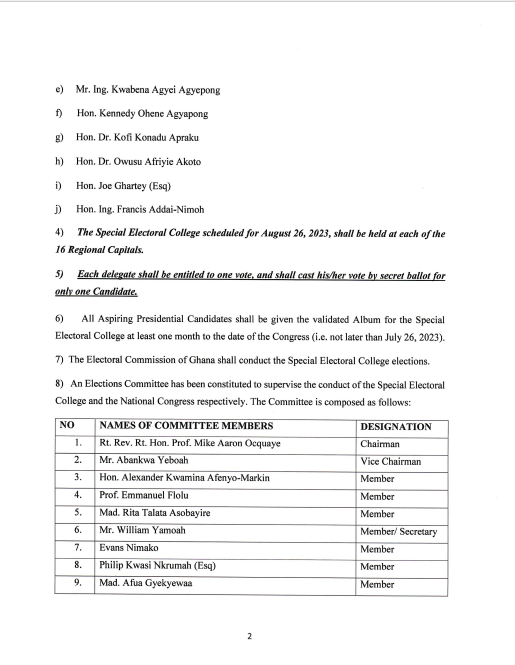
Guidelines for the New Patriotic Party’s (NPP) impending presidential and parliamentary primaries in November of this year have been announced by the NPP National Council.
These rules have been made public for all candidates to comply by in order to prove their eligibility and be ready for the elections. They were debated and taken into consideration during its meeting on Thursday, July 20, 2023.
Here is a press announcement from the party’s national council that includes all the essential rules.
The presidential primaries held by the ruling New Patriotic Party (NPP) to choose a candidate for the general elections in 2024 will take place on November 4, 2023.
The 10 presidential candidates, who were all approved during the vetting process, will be reduced to five in a Special Electoral College on August 26, 2023.
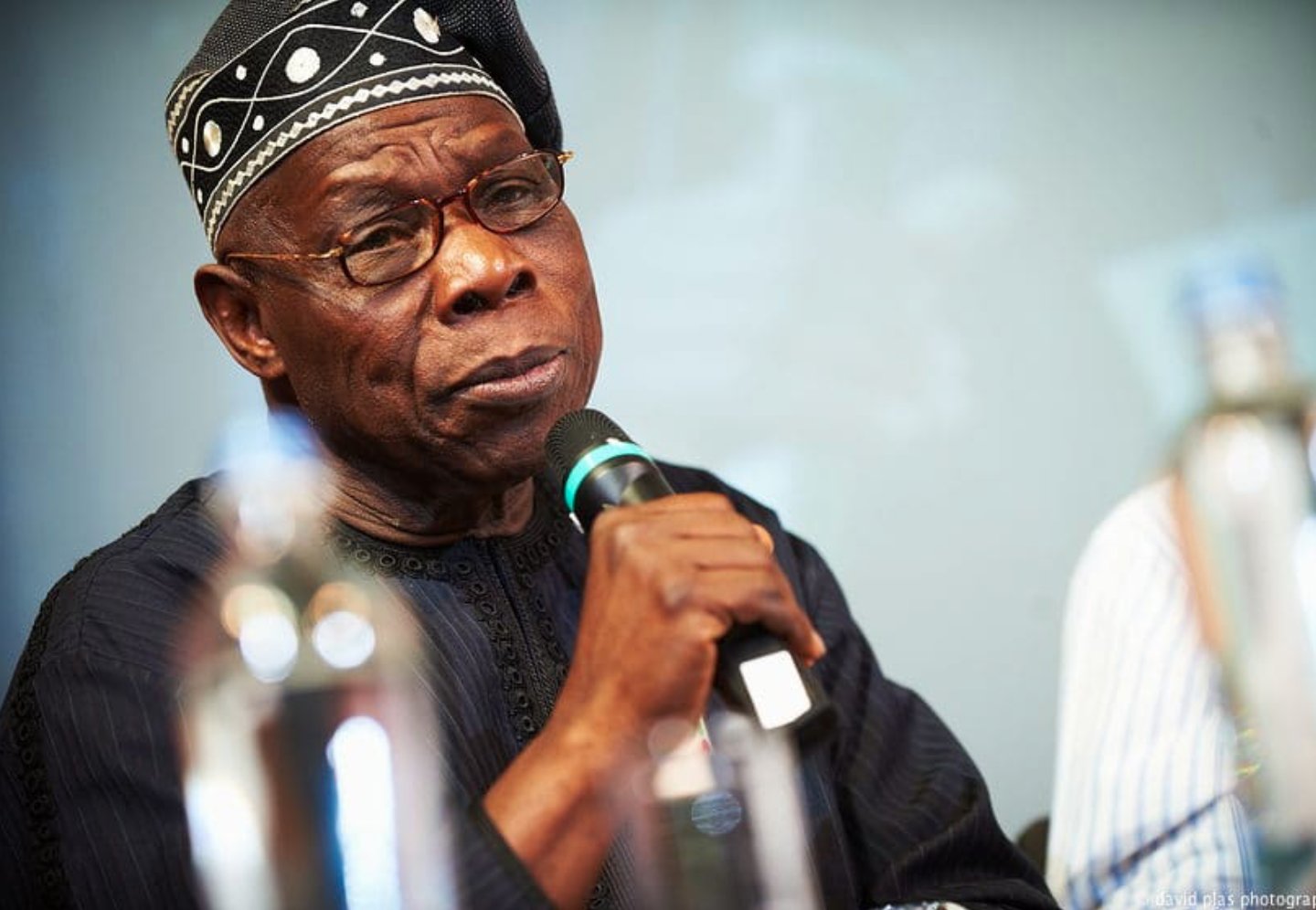
Nigeria has not lived up to expectations since it gained independence 63 years ago, according to former president Olusegun Obasanjo
He addressed Wednesday in Abuja at the launch of a book written by Olusegun Aganga, a former minister of trades, investment, and industry.
At the time of its independence, he claimed, the black race looked to Nigeria as a guiding beacon.
“We’ve disappointed ourselves, we’ve disappointed Africa, we’ve disappointed the black race and we’ve disappointed the world,” he said.
Obasanjo said to chart a new course for the country, the leaders needed to admit their failure.
The former president said: “We’ve not always put the round peg in the round hole.
“We’re carried along by ego and emotion of self, selfishness and self-centeredness, ethnic and religious jingoism with total lack of understanding of the world we live in and gross misunderstanding of what development entails and how to move fast and continuously on the trajectory of development.”
He said the country needed leaders that would shape and give direction for the development
“If you ask most of our leaders why they want to be in the position they’re craving for, you’ll weep for your nation over their level of emptiness as far as development issues are concerned,” he stated.
He identified two major issues which are inter-related on the factors for all-round development, saying “these are peace and security which we cannot achieve without justice, equity and inclusive society.”
Also speaking, former President Goodluck Jonathan described the book as a rich resource on development and a pathway to progress.
According to him, the book focuses on the solutions Nigeria needs to unleash its greatness for the good of our people.
“As my Minister of Industry Trade and Investment, Dr Aganga, at a point, turned me into a marketing manager by travelling with me to at least 40 countries in search of foreign investment. I’m glad that the venture and travels which he captured in one of the chapters in the book paid off as our nation then became Africa’s first destination for foreign direct investment and one of the fastest growing economies at that time,” Jonathan said.
The media has engaged some Ghanaians to gather their thoughts on the arrest of Cecilia Dapaah by the Special Prosecutor yesterday, July 24, 2023.
This action follows a court filing accusing two housekeepers of the former minister of stealing goods valued at $1 million, $300,000, and numerous additional millions of Ghana cedis from Cecilia Dapaah and her husband.
The Office of Special Prosecutor was commended and given the public’s support for making an arrest.
Others demanded an extensive investigation into Cecilia Dapaah‘s income and added that no honest or clean money should be stored at home rather than in the bank.
“She deserves to be arrested. The arrest is in the right direction. Whether she has resigned or not, she needs to be arrested. Even if it is her money, Ghana needed help and she could assisted but she didn’t,” one of the citizens said.
This youngman really let it all out on this Cecilia Dapaah matter.
Ghanaian Politician Clement Apaak states that the Office of the Special Prosecutor must go beyond the arrest of Cecilia Dapaah as just arresting her isn’t enough.
He questions why someone would have such a large amount of money in their house when we have banks. pic.twitter.com/PgLQYYCyNp
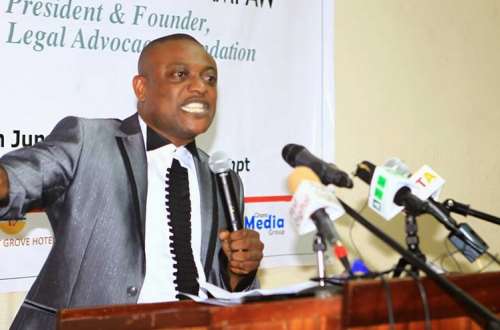
Critics of former minister of Sanitation and Water Resources Cecilia Dapaah have been roundly lambasted by attorney Maurice Ampaw for the suspected theft of funds totaling US$1 million, €300,000, and 350,000 Ghana cedis from her private property.
Ampaw claims that people criticizing the former minister are hypocrites because many Ghanaians actually have large quantities of cash stashed away in their residences.
“Today if you ask for money from any Ghanaian, the person will tell you that hthey don’t have money, but the kind of money that people are having in this country…though a lot of people are suffering, most of them have money, they are…loaded.
“The hypocrisy of Ghanaians, you are all hypocrites, the monies that you people have that you have kept in your various homes…but you people are condemning Cecilia Dapaah as if she has committed a crime. If you like let us start with every politician in this country.”
He added “Cecilia Dapaah’s US$1 million is someone’s chicken change money; someone spends much more than that money in less than one month. I was a lawyer for one of the collapsed banks and the owner disclosed to me that his wage bill alone is sixty-six billion Ghana cedis, wage bill alone, what is one million Ghana cedis?”
“Shameless people, because of propaganda even today Mahama is also doing propaganda, You, President Mahama, look at the hypocrisy of President Mahama. President Mahama US$1 million is just a day’s money for you…because today you NDC people don’t have money and you are hungry…. for how many years from 2016 until now? How many years have you been in opposition?
“You people had money from 2008 to 2012, NDC, you made money and kept them in your houses same as Cecilia Dapaah did, some of you, hypocrisy all the NDC people,” he added.
The former minister revealed why she decided to resign in her letter of resignation to President Nana Addo Dankwa Akufo-Addo, saying that the problems with the money could have a negative impact on the government.
She did, however, point out that the theft issue in her home has been greatly overstated in many accounts.
“Since yesterday, Friday, July 21, 2023, social and traditional media have been full of stories about a court case involving a theft that took place last year in the home I live with my husband and daughter.
“The stories sought to suggest that I own various huge sums of foreign currencies and millions of Ghana cedis which have been stolen from my home. Whereas I can state emphatically that those figures do not represent correctly what my husband and I reported to the Police, I am very much aware of the import of such stories around someone in my position.
“I am resigning therefore because I do not want this matter to become a preoccupation of government and a hindrance to the work of government at such a crucial time,” parts of the letter read.
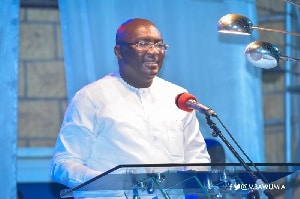
Prior to the 2016 election, Vice President Mahamudu Bawumia gained notoriety for using the word “incompetent.” This was true even though the criticism was intended at the administration of the previous president, John Dramani Mahama.
As the years pass, Bawumia is dealing with a similar situation of offensive branding, which is mostly being done by pro-opposition activists on the social media site Twitter.
Senior members of the National Democratic Congress (NDC) have repeatedly called Bawumia a liar in media interviews and online postings.
According to a report on the #Bawuliar hashtag, among other things, the trends were primarily unnatural and resulted from a spike in NDC activists’ engagement on Twitter.
Additionally, it was discovered that Sammy Gyamfi, the NDC’s national communications officer, was a significant contributor to the #Bawuliar tweets that became popular, the majority of which were started after Bawumia delivered a significant economic declaration or address.
The most recent occurred when Bawumia declared his intention to run for president of the New Patriotic Party (NPP).
Findings from Kwetey Nartey’s analysis
A media journalist, Kwetey Nartey, undertook an analysis on the trend and discovered, among other things, that while the terms “Bawuliar” and “#Bawuliar” were first used in 2016, their use for political involvement only began in February of last year.
“Criticisms which started as an organic onslaught on Dr. Bawumia’s credibility on the streets and in the mass media, gained traction in social media circles with the hashtag #Bawuliar.
“During the investigation, we observed that almost every comment the Vice President made about the economy was met with a spike in #Bawuliar tweets,” his report read in part.
The analysis pinpointed the leading accounts, influencers, and boosters of the #Bawuliar trend whenever it is used, typically following a significant economic announcement from the Vice President.
Nartey also discovered through analysis that the cut-and-paste postings, which indicated that they were coordinated and cranked up to achieve a specific result, were at the root of the trend’s inorganic nature.
It mentions how the NDC Twitter army appropriated the hashtag #BawumiaNeverLies when pro-government activists attempted to fight the #Bawuliar trends.
“#Bawumianeverlies first emerged on 22 April 2022 in @kingkobby_gh’s reply to @Yabbanx’s tweet about the use of drones to deliver blood to save lives being a manifestation of the vision of President Akufo Addo and Vice President Dr. Mahamudu Bawumia.
“#Bawumianeverlies was supposed to be a counter to #Bawuliar. However, #Bawumianeverlies was hijacked by pro-NDC Twitter accounts to drive the narrative that Dr. Bawumia had failed to deliver on his promises, suggesting that he had been dishonest. 16 accounts used the copy-paste technique coordinatedly amplify tweets about Dr. Bawumia’s supposed failed promises,” the report added.
The verdict
The journalist concluded that even though government and Bawumia specifically has come under sustained critique by people in opposition and the civil society space, which critique are organic, “the NDC has taken advantage of these sentiments and branded the Vice President as a liar for political gains.
“The coordinated sharing of #Bawuliar tweets by 28 accounts using the copy-paste technique shows an aggressive move to exaggerate and entrench the “liar” narrative.”
“Whilst the Vice President may indeed be facing a credibility deficit, #Bawuliar is an inorganic trend that exaggerates the existence of narrative,” he added.
The report was produced with support of the African Academy for Open-Source Investigations
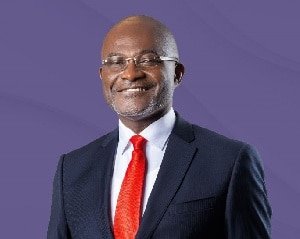
A candidate for the New Patriotic Party’s flagbearer position, Kennedy Ohene Agyapong, has vowed to put a stop to what he calls corrupt practices in Ghana’s fishing industry, which he claims are harmful to the nation’s development.
The member of parliament for Assin Central, who claims to run the largest cold store in Africa, said in a speech to NPP delegates that such corrupt practices in the local business have forced him to import goods for his store.
“Today I was reading a comment where somebody I claim to have built a cold store but I import fish for the cold store. Let me explain to them why. We live in Ghana here where Ghanaians have become the source of our woes. When you go to Tema fishing harbour Ghanaians are the ones fronting for foreigners by acquiring fishing license for them to fish in our seas.
“What is sad is that every fishing vessel has a blast freeze machine that the fish is stored to be frozen at -40 degrees before it is packaged and sold. Instead of them bringing the fish here to sell they send it abroad to sell and when they finish, they pay the Ghanaians fronting their business a thousand dollars a month. So we end up losing all the revenue,” he said.
I patronize foreign fish for my cold store because of some corrupt practices Ghanaians are leading foreigners to do, these practices prevent our fishes from meeting international standards. pic.twitter.com/ifdDyWEGjt
— Hon. Ken Ohene Agyapong (@honkenagy) July 20, 2023
Kennedy Agyapong pointed out that because of this method, Ghanaian fish does not match international standards, depriving the country of the necessary foreign currency.
He emphasized, however, that once he is elected president, these abuses will stop.
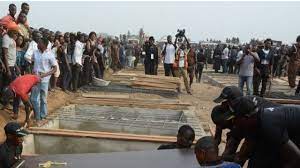
The Nigerian public is in an uproar following the leak of a memo revealing that the Lagos State government authorized $77,000 (£60,000) for a mass burial of 103 individuals allegedly linked to the historic 2020 #EndSars protest against police brutality.
Many Nigerians are expressing shock and disbelief, as they believe that the victims set to be buried were demonstrators who were allegedly killed by the army during the Lekki toll gate shooting on 20th October, a tragic event that occurred amidst the protests.
The exact number of casualties from the incident has been a contentious issue in Nigeria, with the military initially denying any fatalities. However, a Judicial Panel of Inquiry has since reported that nine protesters were killed, and four others were presumed dead.
Despite the leaked memo, the government refutes the claim that the 103 bodies are all from the Lekki incident, dismissing such interpretations as misleading. According to the permanent secretary to the Lagos State Ministry of Health, Dr. Olusegun Ogboye, the bodies were gathered from various locations across the state, amounting to at least 12 sites. These locations include areas affected by #EndSARS violence and community clashes, as well as the aftermath of a jailbreak at Ikoyi Prison.
The situation has sparked significant controversy and public outcry, with many demanding transparency and accountability from the government regarding the handling of these casualties related to the #EndSARS protests.
“Peddlers of the news are deliberately misinterpreting and sensationalizing a letter from the Lagos State Government Public Procurement Agency.”
He said the government had approved the mass burial after no families claimed the 103 bodies.
Tens of thousands of Nigerians took to the streets in October 2020 against police brutality and also called for the Special Anti-Robbery Squad (SARS) police unit to be disbanded.
Chad is making preparations for the scheduled referendum on 17th December, which aims to adopt a new constitution aimed at transitioning the country back to civilian rule. To facilitate the process, the government initiated a campaign on Monday to revise and update the electoral register from the 2021 biometric file.
A team, led by the Minister of Territorial Administration, who also serves as the chairman of the national committee responsible for organizing the referendum, along with other government officials, launched this initiative in the Moyen-Chari region.
The publication of the new electoral register is anticipated on 12th November, paving the way for campaign activities in the lead-up to the referendum.
The provisional results of the referendum are scheduled to be announced on 26th December, after which they will be transmitted to the Constitutional Court for validation.
It’s worth noting that on 27th June, the majority of the members of the Transitional National Council approved the new constitution aimed at returning Chad to civilian rule. However, the process has faced challenges due to significant divisions among the government, opposition, and civil society groups over some provisions of the new constitution.
Currently, Chad is under the leadership of transitional President General Mahamat Idriss Déby Itno, who assumed office in April 2021 following the passing of his father, President Idriss Déby, during a military operation.
The National Union of Ghana Students (NUGS) is urging the government to implement a structured formula for the upward adjustment of the national service allowance.
On July 23, 2023, the management of the National Service Scheme announced that it had received approval from the government to increase the monthly allowances for National Service Personnel from GHC 559.04 to GHC 715.57, with the increment backdated to January 2023.
This decision came after prolonged protests and calls for an increase in the allowance since the previous year.
However, according to NUGS President, Dennis Appiah Larbi-Ampofo, the increment falls short of their proposed figure.
He suggested that implementing a structured adjustment formula would eliminate the need for periodic prolonged advocacy to secure the necessary increases in allowances. By establishing a clear and consistent formula, the process of adjusting the national service allowance can be streamlined and made more efficient.
“If you look at the expenditure of service personnel it would have been fine if we had gotten to the 800 cedis mark we had pleaded for. But at this point what our focus is now is that we don’t want to travel 5 years again before service allowances are increased again. We are calling on the government to institute a structured formula for increasing NSS allowance. If this happens it would save us from having to go through lengthy advocacy, pleading, negotiations before NSS allowances are increased”, he stated.
Mr. Larbi-Ampofo further proposed the increase be adjusted in line with the times.
“The money is already not enough so if the increments are not in tandem with the prevailing economic conditions, this makes lives unbearable for service persons.”
“All we are calling for is a structured formula of increasing NSS allowances, so we don’t need to go so long a time before NSS allawa are increased”, he concluded.
The Algerian Interior Ministry, has said that wildfires have broken out across the country, resulting in the tragic loss of at least 15 lives, while thousands have been evacuated to safety. On Monday, 97 outbreaks of wildfires were recorded in 16 provinces, causing significant damage to forests, crops, and farmland.
In response to the devastating situation, approximately 7,500 firefighters are diligently working to contain the fires.
However, the fires have proved to be highly challenging, particularly in the mountainous Kabylie region to the east of Algiers. The flames have spread to residential areas in the coastal towns of Bejaia and Jijel, fueled by strong winds.
Adding to the severity of the situation, northern Algeria has been gripped by an unprecedented heatwave, with temperatures reaching a scorching 48°C. This record-breaking heat has led to a surge in electricity consumption in the country, marking the highest level in its history.
Meanwhile, southern Europe is also grappling with an intense heatwave, causing devastating wildfires in Greece. The World Meteorological Organization has issued a warning that this heatwave in Europe may persist into August, and the extreme temperatures worldwide are becoming the “new normal” due to the effects of climate change.
July saw the three hottest days ever recorded, with an average global temperature of 17.04°C, according to the EU climate and weather service, Copernicus. These extreme weather patterns emphasize the urgent need for substantial climate action, as climate change increases the risk of hot, dry conditions that fuel wildfires. Without significant efforts to reduce emissions, global temperatures will continue to rise, exacerbating the frequency and intensity of such extreme events.
In recent months, there has been widespread outcry among Ghanaians regarding the exorbitant costs associated with clearing goods at the ports. Numerous social media posts have surfaced, with users sharing the staggering amounts they have been compelled to pay, particularly when it comes to clearing vehicles.
In one post made in April, a user revealed the staggering number of 21 taxes they had to pay at the ports in order to clear their goods.
These taxes include Import Duty, Import VAT, Processing Fee, ECOWAS levy, Network Charge, Network Charge VAT, Network Charge COVID-19 Health, Ghana Shippers Authority SNF fee, Import NHIL, Network Charge NHIL, IRS Tax deposit, GHS disinfection fee, MoTIe e-IDF fee, Special Import Levy, Ghana Export-Import bank (EXIM), and many others.
Similarly, another social media user shared a video expressing their dismay after inquiring about the cost to clear a car they had purchased abroad for $2,000. To their astonishment, they were informed that they would have to pay a whopping $4,800 to clear the vehicle at the Tema Harbour. This significant disparity in cost has raised widespread concern and frustration among the public.
He said: “I bought a Ford Fiesta for $2000 and then I contacted an agent and asked how much it would cost for it to be shipped to Ghana and he said $1000. And then I contacted another agent at Tema Harbour to check how much it will cost to clear it from the ports. He said it would cost $4800.”
This has sparked several reactions on social media over the outrageous nature of the taxes being demanded at the ports.
GhanaWeb Business sources have revealed that in an attempt to dodge these taxes, traders are seeking other means of importing items into the country.
Businessman, Raymond Archer, has raised serious questions about the Chief Executive Officer of McDan Group of Companies, Daniel McKorley, and his actions that could affect the livelihoods of approximately 5,000 people in his pursuit of building an empire.
Archer expressed his astonishment at the decision to grant an individual the rights to mine salt for commercial purposes in the Ada – Songor lagoon, which is rich in natural resources. He believes that this move disregards the well-being of those who depend on the lagoon for their livelihoods.
During an interview on Radio Gold, which was monitored by GhanaWeb Business, Archer, who had his multi-million dollar company demolished in 2020, criticized the governing New Patriotic Party (NPP) for allegedly favoring party supporters when awarding projects and for seemingly undermining businesses associated with supporters of the National Democratic Congress (NDC).
“Now, he has the McDan Group…a whole lagoon, natural resource was ceased and given to him and all those people who lived on that lagoon and I understand about 4,000, 5,000 livelihoods have been taken and given to one man…he is building his empire whiles trampling on other people is who they are and what they have always done,” he said on Radio Gold.
In order to make Ghana the top producer of the product in West Africa, the salt mining company Electrochem Ghana Limited [One of McDan’s businesses] plans to mine 1 million tonnes of salt from the Ada Songor Lagoon per year.
This forecast is based on feasibility studies carried out in the enclave following the company’s acquisition of a 15-year lease to revive salt mining in the Songor Lagoon and nearby settlements.
The Ada Songhor Salt Project initially produced 60,000 tonnes of salt, but after two years of operation and an investment of more than 80 million dollars, the company is now generating between 200,000 and 300,000 metric tonnes.
The Director of Operations at Dalex Finance has strongly emphasized the drawbacks of using treasury bills as a means to finance the country’s debts.
According to him, relying on treasury bills, which are short-term debt instruments, to finance long-term debts could lead to a “disaster waiting to happen.”
Joe Jackson, as reported by norvanreports, expressed concern over the government’s lack of determination in addressing the escalating expenditure, which has resulted in high interest rates in the treasury bills market.
In the government’s latest auction, interest rates on treasury bills have reached 30%.
Despite the increasing interest rates, the government has managed to surpass its targets recently.
However, looking ahead to the mid-year budget review, which is scheduled to be presented by the finance minister on July 25, 2023, Joe Jackson, the analyst, is urging the government to be transparent and forthcoming about fiscal matters.
He also called for clarity on the government’s strategy to tackle the GH¢60 billion budget deficit
In a statement released on Thursday, the government of Guinea-Bissau has taken measures to eliminate fraudulent salary claims from non-existent employees by suspending teachers’ salaries. This move is aimed at addressing the issue of ghost civil servants and reducing the country’s wage bill, as Guinea-Bissau heavily relies on external aid to pay salaries in the education sector.
In line with this decision, the country’s Council of Ministers, in a resolution from July 18, has directed the education ministry to conduct a thorough census of its employees. Approximately 8,000 teachers in primary and secondary schools, earning an average of 50,000 CFA francs ($86) per month, will be affected by this decision. As a result, a teaching union has expressed its discontent and threatened to take action in response to the suspension of salaries.
Guinea-Bissau’s economic reforms progress has also been monitored by the International Monetary Fund (IMF), which recently agreed on a staff-level arrangement for a $3.16 million extended credit facility for the country. However, the government fell short on three out of eight economic reform targets, including a target related to capping wages.
Domingos de Carvalho, the president of Bissau’s National Union of Teachers, labeled the decision as unfair and stated that the union intends to appeal against it.
The Rwanda Patriotic Front (RPF) leadership is currently grappling with maintaining the image of Rwanda following a clan meeting organized by a group of influential leaders to ordain a leader. This event has the potential to foster factionalism within President Paul Kagame’s party.
After the gathering on July 9, several senior party officials who attended the ceremony were briefly detained and questioned due to pictures and videos showing them dancing at the venue circulating.
During the Abakono Clan meeting, Rwandan business magnate Justin Kazoza was crowned clan chief, and funds were raised for various activities. However, the ruling party swiftly condemned the event, viewing it as an attempt to divide the nation.
While party chairman President Kagame refrained from commenting on the matter, the ruling party cautioned its members against engaging in sectarianism.
Although the meeting may seem innocuous at face value, it has put the RPF in a challenging position, given that the party has always prided itself on promoting national unity and eliminating discrimination based on ethnic and cultural identities, while advocating for Ndu’munyarwanda.
On Monday, a suicide bomber carried out an attack inside a military academy in Somalia’s capital, Mogadishu, resulting in the deaths of at least 13 soldiers and leaving at least 20 others wounded, as reported by a soldier who witnessed the aftermath. The al Shabaab militant group claimed responsibility for the attack.
Despite a military campaign launched by government forces and allied militiamen last year, which succeeded in pushing the al Qaeda-linked group out of significant portions of southern Somalia, the militants have persisted in launching deadly raids.
In recent weeks, with the military campaign against them stalled as the army readies for a second phase of the offensive, al Shabaab fighters have intensified their attacks. Notably, in late May, they killed at least 54 Ugandan peacekeepers at a base south of Mogadishu, laid siege to Baidoa for nearly two weeks, and carried out several raids in Mogadishu this month.
The recent bombing specifically targeted the Jale Siyaad military academy, and the casualties included soldiers who had traveled from the Lower Shabelle region to the capital for training. Captain Ali Farah, who knew some of the victims, reported that he was aware of at least 10 deaths thus far.
“The soldiers were being counted in the queue when the suicide bomber blew himself up,” Farah said.
In a statement, Al Shabaab claimed that the bomber had injured 124 people in addition to killing 73 soldiers. Usually, the group provides casualty estimates that are far higher than those made available by the authorities.
Since 2006, Al Shabaab has fought to overthrow Somalia’s national government and install its own system of governance based on a strict application of Islamic Sharia law.
In southwestern Nigeria, a fuel truck exploded as locals tried to siphon gasoline out of it, killing at least eight people, according to authorities on Monday.
The truck was involved in an accident on Sunday night that sent it off the road and onto its side in a neighborhood in Ondo state, according to the police.
“Some people went there to scoop fuel, in the process the tanker exploded,” said Ondo state police spokesman Fumilayo Odunlami-Omisanya.
Since a long-standing subsidy was eliminated at the end of May, the price of gasoline has more than tripled, impacting both drivers and residents and small companies who use gasoline generators to generate electricity.
Tife Owolabi reported, MacDonald Dzirutwe wrote, and Miral Fahmy edited.
As the mid-year budget review approaches, a consensus among experts from various sectors is that while it will adhere to the framework of the International Monetary Fund (IMF) program, the government must not overlook a crucial opportunity to address persistent economic issues.
These experts voiced their opinions during a roundtable discussion hosted by the Economic Governance Platform. The session centered on the theme ‘The 17th IMF bailout: What did Ghana sign up for? Considerations for the 2023 mid-year budget review.’
They strongly emphasized that neglecting domestic concerns will only worsen negative sentiments and prolong the economic recovery process.
External debt restructuring in the footsteps of Zambia
Dr. Theo Acheampong, a petroleum economist and political risk analyst, emphasized that Ghana can draw valuable lessons from Zambia’s recent success in negotiating external debt as discussions with bilateral and private creditors continue.
Although Zambia’s debt-to-Gross Domestic Product (GDP) ratio did not decrease significantly in nominal terms as a result of the deal, the country secured a three-year grace period for principal repayment and successfully negotiated reduced interest rates ranging from 1% to 2.5%, compared to an average of 9%. These favorable rates will remain in effect until 2037.
Furthermore, Dr. Acheampong highlighted a novel conditional clause in Zambia’s debt deal, wherein interest rates can increase to 4% if the economy exceeds projections and demonstrates improved debt-carrying capacity. This innovative approach is something that Ghana should seriously consider.
Dr. Acheampong urged local authorities to promptly initiate negotiations with bilateral and private creditors and strive to conclude such arrangements before the presentation of the 2024 budget.
“The substance of the deal that Zambia has negotiated is what Ghana can look to emulate. I think we should do the same, and in the next 6 months it is possible for us to put forward and conclude some of these things ahead of the budget for 2024,” he noted.
Energy sector challenges and the delayed energy sector recovery programme
Benjamin Boakye, an energy governance expert and Executive Director at the Africa Centre for Energy Policy (ACEP), expressed concerns over the seeming lack of urgency in presenting the Energy Sector Recovery Programme (ESRP II) second phase, which should have been delivered by the end of June – describing it as “alarming”.
This comes as the potential revenue contributions from energy exports, estimated at approximately US$1.4 billion which could have alleviated the budget deficit, seem unlikely due to the falling prices of oil globally.
“It baffles me that we have not been aggressive in putting out the programme to improve under-recoveries. Even though government has pledged to address the challenges, there have been no engagements with local stakeholders… Our initial estimate of generating US$1.4billion from energy exports might not be met due to the expected price of US$88/barrel not materialising. As a result, we may face a deficit of approximately US$500million considering our half-year revenue receipts amount to around US$500million,” he elaborated.
Furthermore, imposition of the 1 percent Growth and Sustainability Levy on the gross production of companies in the extractives industry has caused consternation, as government failed to engage in good faith negotiations with the companies who have stability agreements in place, he added.
“It would have been expected that there’d be some good faith negotiations to establish a reasonable timeframe for their support in the recovery effort. Unfortunately, the power-play involved seems to have hindered progress,” he said, stating that he expects positive developments in this regard.
He also expects much-needed clarity on the ‘gold for oil’ programme. Previously, revenues were generated through the purchase of gold with a 1.5 percent tax applied.
However, this tax has been waived since the Bank of Ghana (BoG) started purchasing gold from the Precious Minerals Marketing Company (PMMC). This move has resulted in a loss of much-needed revenue, Mr. Boakye noted.
“If we are not careful, we risk institutionalising a process that makes it difficult for us to accurately track the quantity of gold produced. In the past, disparities have been observed between our export data and the import data from other countries involved in gold-buying. It is crucial to address this issue in order to ensure transparency and effective revenue management,” he added.
Food security and inflation concerns
Dr. Charles Kwowe Nyaaba, Executive Director-Peasant Farmers Association of Ghana (PFAG), for his part, called for a strong message in the interim budget to address food insecurity.
He said this is pertinent with as much as 5.2 percent of the population facing severe food insecurity, and 6.5 percent experiencing moderate food insecurity.
This comes as consumer inflation rose to 42.50 percent in June 2023 from 42.2 percent the previous month, driven primarily by food inflation which accounted for 54.2 percent of the headline inflation figure – further increasing from 51.8 percent in May.
Education disbursement regime, provision of desks and textbooks
Kofi Asare, Executive Director of Education Watch (Eduwatch), stressed the need for clarity in the disbursement regime for education grants; saying stakeholders need assurance of a clear disbursement roadmap to address accountability issues. Additionally, accumulated arrears in the education sector need urgent attention as many school administrators face financial challenges due to unpaid loans.
Mr. Asare emphasized the critical shortage of desks in the basic education sector, which is negatively impacting over two million children.
The lack of desks presents one of the most significant challenges in the basic education sector, with more than 2 million children affected. To address this pressing issue adequately, an urgent requirement for approximately 1 million dual desks has been identified.
However, Mr. Asare explained that the approved budget allocated by parliament for desks is only GH¢15 million, which falls short of the funding needed to procure the required number of desks. With this funding, a maximum of 35,000 desks can be purchased, leaving a substantial gap in meeting the students’ needs.
Furthermore, Mr. Asare highlighted that even after four years into the current basic school curriculum, textbooks are available for only 3 out of 10 subjects, and they are still limited in quantity. This exacerbates the challenges faced in providing quality education to the students.
“However, a more pressing concern arises at the junior high school level. As we enter year 3, students who are currently in JHS 2 and moving to JHS 3 at the end of this year began their education 2 years ago, yet they have not been provided with any textbooks. It is crucial to address this situation promptly as they will be writing their BECE next year,” he said, adding that the budget must address the “unrealistic” school feeding allocation.
Campaign funding
Director of Advocacy and Policy Engagement-Ghana Centre for Democratic Development (CDD-Ghana), Dr. Kojo Asante, stressed the significance of addressing the issue of campaign financing; particularly with the impending elections next year, saying leaving the space unregulated continues to breed corruption and impede economic growth. However, it is not directly within the IMF programme’s purview and is likely not to be mentioned in the upcoming interim budget presentation.
President Putin has stated that Russia has the capability to replace Ukraine as a supplier of grain to Africa after withdrawing from a deal that allowed safe shipment of grain across the Black Sea.
In a statement from the Kremlin, Moscow announced its willingness to provide grain to Africa on both commercial and free-of-charge terms. Previously, in the year leading up to June 2022, Russia was a major exporter of wheat to Africa, shipping 10.8 million tonnes. During the same period, Ukraine exported 6.3 million tonnes of wheat to the continent.
President Putin expressed confidence in a record harvest this year in Russia. The country is set to host the second Russia-Africa summit later in the week.
The termination of the Ukraine grain deal was met with regret from the African Union, whose member states have been severely impacted by the surging food prices.
There are reports suggesting that Moscow is seeking to supply grain to Africa through a partnership involving Qatar and Turkey, although it remains uncertain whether they will accept this arrangement.
Ghanaian tycoon Paa Kwesi Nduom has received approval from Ghana’s Supreme Court to proceed with a lawsuit in the High Court, challenging the suspension of GN Bank’s license.
This decision comes after the Supreme Court nullified the Court of Appeal’s previous ruling, which had barred Nduom from contesting the license revocation in the High Court.
On July 19, 2023, the Supreme Court affirmed the jurisdiction of the High Court to handle the lawsuit filed against the Bank of Ghana (BOG) in August 2019. With the highest court supporting the High Court’s authority, the way is now clear for further proceedings and a final judgment.
The case will now return to the High Court, where it will be evaluated on its merits.
In 2018, as part of an effort to restructure the banking industry, the Bank of Ghana revoked the licenses of several financial institutions, including GN Bank, which was under the control of Paa Kwesi Nduom’s conglomerate, Groupe Ndoum.
Nduom, as the founder of GN Bank, initiated a lawsuit in the High Court to challenge the license revocation.
However, the respondents, including the Bank of Ghana, argued that arbitration should be the appropriate avenue for contesting the revocation, in accordance with the Specialized Deposit-Taking Institutions Act.
The Court of Appeal had granted their request, leading to a suspension of proceedings in the High Court and directing the parties to pursue arbitration. Subsequently, Groupe Ndoum appealed to the Supreme Court, which ultimately ruled in favor of Nduom’s position.
Groupe Ndoum, established by Paa Kwesi Nduom, is a multinational family holding company with Ghanaian and American roots, comprising over 60 independent businesses spanning various industries.
In its latest auction on July 21, 2023, the government exceeded its treasury bill target by GH¢45.05 million.
The total subscription for the 91-day, 182-day, and 364-day bills amounted to GH¢2.69 billion, surpassing the auction’s target of GH¢2.65 billion.
The results from the Bank of Ghana indicate an increase in interest rates for the 364-day bill, reaching 30.4%. Similarly, the 91-day and 182-day bills saw interest rates rise to 24.92% and 26.80%, respectively.
Despite the higher interest rates, all bids tendered were accepted. Specifically, GH¢1.78 billion was accepted from the 91-day bill, GH¢356.97 million from the 182-day bill, and GH¢557.07 million from the 364-day bill.
Looking ahead, the government is planning to borrow GH¢2.282 billion from its next auction.
Member of Parliament for Ningo Prampram, Sam Nartey George, has expressed deep concerns about the legitimacy of certain real estate businesses operating in the country.
The lawmaker raised alarm over how the real estate sector has turned into a safe haven for individuals to launder money obtained through illicit means and activities.
During an appearance on the July 22nd edition of Joy News’ File, Sam George lamented the inflated pricing of real estate properties and high-rise buildings, which are often sold at exorbitant prices.
He suggested that those involved in money laundering schemes within the real estate sector frequently use these properties as a means to effectively ‘clean’ illicit funds by exchanging ownership among themselves.
“Real estate business in Ghana is money laundering. If our authorities want to deal with it, they will deal with it,” Sam George lamented.
He explained that “the cost of real estate in Ghana is not justifiable by any stretch. You keep seeing all these new high-rise buildings going up and they are selling them for half a million, a million dollars and they keep buying and buying amongst themselves.”
“…I have dirty money to clean, I put up a real estate property, you have dirty money you come and buy the property from me and then automatically your money becomes clean, then tomorrow you also start building your own then I come back and buy and we are just cleaning the money,” Sam George added.
The Ningo Prampram MP went on to say that the money made from these unlawful acts is then utilized to support political campaigns and other things.
His comments follow a recent newspaper article from The Chronicle that described how Cecilia Abena Dapaah, a former minister of sanitation, kept enormous amounts of foreign currency in her residence, which were later taken by her two maids.
Amidst the fervent political debate over migration across the Mediterranean, a topic that has propelled right-wing parties into power in Italy and other places, it’s easy to get lost in a sandstorm of statistics: the tens of thousands of arrivals on Italy’s shores, or the estimated 2,000 people who have tragically lost their lives crossing the Mediterranean this year.
However, after spending a week reporting from southern Italy on migration, what truly stands out are the personal stories – tales of fear, hope, tragedy, and triumph – that surpass anything else.
Consider Tessy, a young Nigerian woman who successfully made it to Italy 15 years ago. As she recounted her journey to Europe, she almost broke down. For ten days, she found herself stranded in the unforgiving Sahara desert, with minimal food and water, facing a grim 50:50 chance of survival.
Today, Tessy is happily married and dedicates herself to helping newly arrived migrants and refugees settle into life in Italy. Despite her current contentment, she firmly believes that she would never advise her 21-year-old self to embark on such a perilous journey.
Then there’s Anicet, an Ivorian woman whom I encountered outside a migrant reception center in Crotone. She revealed that she had been sold into slavery in Tunisia, describing the horrifying reality of beatings and rapes that countless women endure while attempting to reach Europe. Men, too, spoke of imprisonment and beatings in Libya, where they were held until they could pay ransoms.
The physical and psychological scars inflicted on these individuals will undoubtedly take a long time to heal.
Nevertheless, despite the tremendous risks and challenges, those who undertake this perilous journey hold onto hope that, like Tessy, they can ultimately establish a better life for themselves in a new land.
Okyenhene Osagyefo Amoatia Ofori Panin has called on the Ghanaian government to take action in ensuring the effective functioning of institutions and promoting development in key areas.
The traditional ruler expressed his concerns about the current centralized administration, where most government ministries and headquarters are concentrated in Accra. He believes that this concentration is impeding progress and equitable growth across the entire nation.
Okyenhene’s plea for decentralization arises from his observation that certain ministries lack a compelling reason to be located in the Greater Accra Region. During a recent gathering, he specifically pointed out the Ministries of Agriculture and Lands and Forestry as examples that should be relocated from Accra.
“Baby step development, we talk about it but it doesn’t yield any response. 66 years after independence and if you are traveling from Accra to Kyebi or Kumasi then you are frightened because the roads are not good.
“So, I plead with you it is not easy for all of us, sometimes you see people asking that since you came as a chief what developmental projects have you embarked on?
“But how do I develop without a budget, all of the time, we are calling the assemblies for certain things and they tell you that there is no money? So, if the assembly says there is no money and Okyenhene also doesn’t have money then it means that we will suffer, and the people suffer.
“So, we have to have the guts to change how things work. Moreover, I have told the government that we should change things, for instance, the Ministry of Agriculture what is it doing in Accra? What form of agriculture is in Accra that the workforce is there?
“Ministry of Lands and Forestry what is it doing in Accra? The only one we can agree on is maybe is Defense and Fisheries and the rest can be distributed among the regions and when that happens, what you are doing is that you are developing the town and spreading the opportunity for people to work and stay where they are and by that, you are also increasing taxes and revenue,” he said.
He also underlined the need for reform and said that the current government processes are not operating as they need to.
“What I am saying is I had written papers to Professor Mills and Kufour about how we can change this, but their fear is that when they distribute such an opportunity, they might lose something which is not true. The only thing they will lose is that they won’t get the opportunity to spend the money anyhow.
“We need to change this country and the change means that the systems that we have it is not working, it is not working. You can go to school and become a doctor, you will complete and for about five years no work, you can go to school and become an engineer, I haven’t seen anywhere that someone has gone to learn a mechanical engineer and for about two, three years the person doesn’t have work, engineering and you don’t have work,” he lamented.
Former presidential spokesperson, Koku Anyidoho, has addressed the circumstances surrounding the death of John Evans Atta Mills in July 2012.
The late president passed away at the 37 Military Hospital after being rushed there from the Castle, the seat of presidency at the time.
Anyidoho, who was perceived as a ‘powerful’ aide to the former president, had faced numerous accusations of personally taking custody of the ailing president and transporting him to the hospital.
While he had refuted these claims in previous interviews, on the occasion of the 11th anniversary of Mills’ death, he has penned his side of the story, intending to put an end to all other allegations.
Facts.
Koku Anyidoho DID NOT drive the President to the 37 Military Hospital.
The President was transported in a designated ambulance by well-known medical personnel.
The Intensive Care Unit (ICU) was the President’s immediate destination.
His piece published on Rainbow Radio’s website continued: “As regards the ICU, and as fate would have it, President Atta-Mills, as part of his “Surprise Visits” to selected State Institutions, visited the 37 Military Hospital, and the ICU in particular was one of the facilities that he entered, to walk through upgrading that had taken place.
“He was also shown around (certainly not inside) the rebuilt mortuary. So, he died at the ICU and was sent to the morgue – life has a way of throwing at us, the fleeting nature of our existence.
“Do I know what killed President Atta-Mills? NO! No autopsy report has been made public so the nation still does not know what killed our beloved President.
“Fact is, he is gone and shall never come back in flesh. All I can do, is to help keep his memory alive – and I shall do so no matter the evil and wicked nonsensical noises that the pretenders make in their obtuse world.”
FULL TEXT: 11 Years On: Did I Drive President Atta-Mills To 37 Military Hospital? Koku Anyidoho writes
Some people, for diverse reasons, invested time and energy in announcing the death of President John Evans Atta-Mills (as if the death would prolong their lifespan) several times before that fateful, Tuesday, July 24, 2012.
Many weird stories flew cluelessly, about how the President and Commander-in-Chief of the Armed Forces of the Republic of Ghana was moved from the Castle to the 37 Military Hospital.
One of the weirdest of the weirdest, had it that, Koku Anyidoho drove the President in the boot of his official Ford vehicle, to the 37 Military Hospital. Hmm!
As part of attempts to create the extremely fake impression that I had absolute control at the Castle, this falsehood about me carrying the President to the 37 Military Hospital, was bandied around.
Over the years, I have tried in many ways to tell the true story. This year, I decided to tell the true story in print because of a question a highly respected personality in Ghana asked me during a casual conversation.
The conversation went thus:
“So how is the Atta-Mills Institute doing?”
“By the kind grace of God, we are marching on gradually”.
“… So, is it true you carried the President in the boot of your vehicle to 37? And is it true that he was sent to the maternity ward?”
“It is not true I drove the President to 37 and it is not true he was sent to the maternity ward”.
“Are you sure about what you are saying? Because it was/is all over the place that you drove him and you took him to the maternity ward. Honestly, if I had not met you today to have this conversation with you, that’s what I have believed all these years …”. Phew!
It was this conversation that occasioned this piece in memory of the late President John Evans Atta-Mills.
Facts.
The President was NOT driven to the 37 Military Hospital by Koku Anyidoho.
The President was driven in an assigned ambulance with known medics.
The President was not sent to the Maternity Ward.
The President was driven straight to the Intensive Care Unit (ICU).
As regards the ICU, and as fate would have it, President Atta-Mills, as part of his “Surprise Visits” to selected State Institutions, visited the 37 Military Hospital, and the ICU in particular was one of the facilities that he entered, to walk through upgrading that had taken place.
He was also shown around (certainly not inside) the rebuilt mortuary. So, he died at the ICU and was sent to the morgue – life has a way of throwing at us, the fleeting nature of our existence.
Do I know what killed President Atta-Mills? NO! No autopsy report has been made public so the nation still does not know what killed our beloved President.
Fact is, he is gone and shall never come back in flesh. All I can do, is to help keep his memory alive – and I shall do so no matter the evil and wicked nonsensical noises that the pretenders make in their obtuse world.
A year ago, thanks to the goodness of His Excellency President Nana Addo Dankwa Akufo-Addo, a hitherto embarrassing specter called Asomdwe Park, was rebuilt and commissioned.
This year, the Government has also taken over the Atta-Mills Memorial Library in Cape Coast, and the Atta-Mills Institute (AMI) is grateful to God and Country for this move.
Now that Government has taken over the library, it will be our duty to look into how funds raised in the name of the library was not accounted for by the Chairman of the Funeral Planning Committee.
I was a member of the Funeral Planning Committee, and I shall clear my family name from any rot that has taken place in the name of the Library.
Did I ever want to own Asomdwe Park? Extremely ridiculous!
How can one person own such a state monument?
Atta-Mills Institute (AMI) is humbled that we were able to point Government in the direction of the need to give the former President a befitting resting place.
The management of the Asomdwe Park is in the capable hands of the State. If the help of AMI is needed in any way, we shall not hesitate to help.
AMI was NOT setup to manage state monuments; we are setup as a Public Policy and Advocacy Think-Tank – we advocated for Asomdwe Park and we thank God we did.
At least, the world knows that Koku Anydoho did not exhume any dead body; all we did, was help exhume the heavy disgrace that was sitting on the face of the nation when Asomdwe Park was an eyesore.
The monument of President Atta-Mills that sits in my heart (which no one can take away from me), is more illuminating than any physical one.
President John Evans Atta-Mills, sir, continue to rest well knowing that the covenant between us shall always stand and I am holding on firmly to what you gave me to the glory of God and country.
Sir, I shall do whatever I can do humanly possible to keep your legacy alive and I know the genuineness of my heart will see me through the challenges.
With Christ in the vessel, I shall certainly smile at all the storms.
President John Evans Atta-Mills, please pray for me sir, for I need it!
Samuel Koku Anyidoho Founder & CEO, Atta-Mills Institute Accredited Member, Institute Of Public Relations, Ghana.
CEO of the Environmental Protection Agency (EPA), Dr. Henry Kwabena Kokofu, has called on Ghanaians to approach the recent allegations against former Minister of Sanitation and Water Resources, Cecilia Abena Dapaah, with caution.
The accusations pertain to the alleged theft of funds amounting to US$1 million, €300,000, and 350,000 Ghana cedis from her residence. While acknowledging that keeping such substantial amounts of money at home is inappropriate, Dr. Kokofu advised against rushing to judgment and prematurely passing verdicts in the court of public opinion.
He stressed the importance of allowing the proper investigative processes to unfold before arriving at any conclusions.
“For me, that should not give way to a court of public opinion where people will be roasted and sentenced, judged before the actual investigations have begun,” he said.
Speaking on a panel discussion on TV3 over the weekend, he highlighted the opportunity to legally amass such wealth, particularly through the sale of land in some pricey regions of the nation.
“The practice of keeping money at home is not to be encouraged, I for one, I don’t know how I will be able to do that because I can’t sleep even though I don’t have [such funds].”
He added “The point is until investigations prove otherwise, we are here in this country and you go to East Legon and other lands are being sold for $150,000 per plot…and even more, so $200,000 per plot, so if somebody has five plots and sells them, $1,000,000 is on hand easily…I am trying to say that, how you can realize money in the scheme of things, legally without necessarily engaging in corruption…”
The former minister indicated in her letter of resignation to President Nana Addo Dankwa Akufo-Addo that she had made the decision to leave because the problems with the money could have a negative impact on the administration.
She did point out that many media have greatly overstated the theft that has occurred in her home.
“Since yesterday, Friday, July 21, 2023, social and traditional media have been full of stories about a court case involving a theft that took place last year in the home I live with my husband and daughter. The stories sought to suggest that I own various huge sums of foreign currencies and millions of Ghana cedis which have been stolen from my home. Whereas I can state emphatically that those figures do not represent correctly what my husband and I reported to the Police, I am very much aware of the import of such stories around someone in my position.
“I am resigning therefore because I do not want this matter to become a preoccupation of government and a hindrance to the work of government at such a crucial time,” parts of the letter read.
Background
As per an official charge sheet from an Accra Circuit Court, audacious thefts took place at the residence of Cecilia Abena Dapaah and her husband in Abelemkpe, a suburb of Accra, spanning three months from July to October 2022.
The accused individuals, identified as Patience and Sarah, are facing grave charges, including conspiracy to commit a crime and multiple counts of stealing, involving staggering amounts of money.
Not only were significant sums of money stolen, but the accused also allegedly made off with Madam Cecilia Abena Dapaah’s personal belongings, such as valuable clothing, handbags, perfumes, and jewelry, amounting to an astonishing value of GH¢95,000 and US$95,000.
In addition, Patience stands accused of acting alone in the theft of cultural treasures, which include six pieces of Kente cloth worth GH¢90,000 and six sets of men’s suits valued at US$3,000, belonging to the minister’s husband.
The court has also pressed charges against three other individuals connected to the thefts, indicating the complexity of the case.
It is alleged that the stolen funds were utilized by the accused to finance various properties and purchases, including renting a 3-bedroom apartment and a store in Tamale, acquiring vehicles, and funding other personal expenses.
The court has adjourned the case to August 2, 2023, to allow ongoing investigations to continue.
Well-known music producer, Fred Kyei Mensah, popularly known as Fredyma, has expressed his displeasure over the alleged arrest of Mohammed Ismail Sherif Kwaku Frimpong, also known as Black Sherif, at Kotoka International Airport (KIA).
According to reports, Cruise People Limited (Your Cruise People) filed a fraud charge against him, which led to the reported arrest.
In his moving Facebook post from July 21, Fredyma discussed the difficulties facing the music business and how such situations affect artists’ reputations.
He stated, “It’s humiliating being accosted while going to board a flight. A lot of spin and lies were said about his arrest at the onset. It’s a dent in the hard-earned image of his minimal success, and his management should, as a matter of urgency, sort things out with those that engaged him for that event.
“It’s too early for him to be having such bad publicity about his unreliability when one engages him. In our Akan culture, it is said ‘fromfrom nte ho daa,’ loosely translated ‘you cannot enjoy grace all the time’.”
Having worked in the creative field for 38 years, mostly in the music industry, Fredyma considered the challenges that artists confront and lamented the fact that some artists have lost out on possibilities due to their lack of discipline.
“Several musicians have lost great opportunities in the creative space for lack of discipline, naivety, and not paying attention to detail.
“Having dealt with a lot of talents, some peculiar traits that emanate from their actions are non-strict adherence to contractual agreements, inadequate preparation for major performances, lack of routine training and upgrade of their crafts, deception, money conscious, and not capturing detailed daily events,” he lamented.
He also warned Black Sherif about the delicate nature of life and advised, “Black Sheriff, don’t blacken your chef’s dress while consuming his delicacy for life is delicate! Good beads don’t rattle (sic).”
On the evening of July 19, 2023, the well-known Ghanaian musician, Mohammed Ismail Sherif, popularly known as Black Sherif, encountered an incident at Kotoka International Airport (KIA). Though reports about the occurrence emerged on social media, comprehensive details only surfaced in the early hours of July 20.
According to a report by Kofi TV, Black Sherif was stopped upon his arrival in the country because his name had been placed on a ‘STOP LIST.’ The authorities detained him and subsequently took him to the police headquarters in Accra.
The reason for his detention was revealed to be a contractual breach related to a scheduled show in Greece on August 19. Black Sherif allegedly failed to fulfill the terms of the contract, which required him to perform on a cruise ship in Greece. The contract involved a payment of US$40,000, with the artist receiving half of the amount upfront. The balance was supposed to be paid after the show.
Initially, no photos or videos of the incident were available. However, blogger Nkonkonsa later shared footage on Twitter, which showed Black Sherif being escorted into a car by a police officer and another individual in casual clothing.
In the midst of the unfolding situation, it has been gathered that Black Sherif was not arrested but rather escorted to the police car. The circumstances surrounding the contractual dispute are being closely monitored by the public and the media.
Ghanaian forward, Joel Fameyeh, showcased his scoring prowess for Rubin Kazan on Saturday afternoon during their opening match of the 2023-24 season in the Russian Premier League.
Fameyeh played a crucial role in securing a 2-2 draw against Lokomotiv Moscow at the RZD Arena. Kazan’s opening goal came early in the 3rd minute, courtesy of Kosovan forward Mirlind Daku. However, Lokomotiv managed to equalize twenty minutes later through Nair Tiknizyan.
In the second half, Fameyeh stepped up and put his name on the scoresheet, expertly finishing after receiving a pass from Daku, thereby restoring Kazan’s lead.
The match’s dramatic conclusion saw French attacker William Isidor score for Lokomotiv, ensuring the game ended in a thrilling 2-2 stalemate just two minutes before the final whistle.
Joel Fameyeh’s impressive performance marked his debut in the Russian top flight, making it one goal in one match for the talented Black Stars forward.
Few individuals stand out as strongly in the lively Ghanaian entertainment scene as Sarkodie, a well-known rapper and musician whose talent has captured the hearts of many.
A recent dispute over his response to Yvonne Nelson’s biography, “I Am Not Yvonne Nelson,” has revealed a darker side to his artistic expression, causing admirers and detractors to wonder how his words affect other people.
The controversy is explored in this feature story, along with the effects of Sarkodie’s diss track and his path to repentance.
The controversial allegations
Yvonne Nelson’s memoir was a raw and candid account of her struggles and experiences in her journey towards self-identity as a young woman. Among the revelations was an explosive claim that she was romantically involved with Sarkodie, leading to an unplanned pregnancy, and an alleged refusal of responsibility on his part, resulting in an abortion. While Yvonne’s decision to share her story was a brave and personal one, Sarkodie’s subsequent response in the form of a diss track titled ‘Try Me’ sparked a fierce debate.
The dark side of artistry
Artists often use their craft as a form of self-expression and storytelling, and Sarkodie’s previous lyrics occasionally alluded to personal experiences. However, the content and tone of his previous work, when compared to the sensitive nature of Yvonne’s allegations, left many disappointed. Sarkodie’s diss track seemed to cross a line, making it appear as if he was using his artistry to retaliate against someone’s personal story.
The disappointment expressed by fans and critics stemmed not only from the nature of his response but also from the respect and admiration many held for Sarkodie as a public figure. His position of influence in the entertainment industry highlighted the responsibility that comes with wielding such power over a massive audience.
A surprising admission
In a recent interview, Sarkodie revealed a surprising and introspective revelation: no one on his team or close associates knew about his decision to release the controversial diss track. He admitted that the response was entirely his own, leading many to question the motivations behind his actions and whether he fully comprehended the potential consequences of engaging in such a sensitive matter.
Sarkodie’s response after song release
During the interview, Sarkodie’s demeanor conveyed a deep sense of remorse and regret. He openly acknowledged that his diss track might not have been the most appropriate way to address the situation, recognizing its deeply personal nature. The realization that his actions had caused harm and perpetuated a negative cycle weighed heavily on him, leading to a profound moment of introspection about the impact of his choices as an artist.
As the curtains draw on the controversy surrounding Sarkodie’s response to Yvonne Nelson’s memoir, it has brought to light the darker aspects of artistry, where creative expression can sometimes cross boundaries into sensitive territory.
Being a public figure, Sarkodie’s path to redemption involves genuinely understanding the impact of his words, taking full responsibility for his actions, and learning from the experience. This serves as a powerful reminder that artists carry significant responsibility for their influence and the potential effects of their art on others.
Through this transformative experience, Sarkodie’s growth as an artist and as a person emerges, setting an example for others in the entertainment industry to embrace humility, empathy, and self-awareness in their creative journeys. It is a pivotal moment for him to reassess the power of his voice and art and to use it responsibly and positively in the future.
Human relationships naturally and unavoidably include sexual intimacy, which offers fulfillment, emotional reassurance, and pleasure.
While the act itself is frequently the focal point, it is also important to recognize the importance of aftercare, especially for women.
The term “aftercare” describes the medical and psychological attention provided to people after engaging in sexual activity.
In this essay, we examine the importance of aftercare for women after sex and how it contributes to their general wellbeing.
Physical recovery
Just like any physical activity, sex can leave the body tired and in need of recovery. Women, in particular, may experience vaginal dryness, soreness, or even minor injuries during intercourse.
Aftercare involves providing gentle care, such as using a water-based lubricant, taking a warm bath, or applying soothing creams to help alleviate discomfort and promote healing.
Emotional connection
Intimacy creates emotional connections between partners, and after sex, these feelings can be intensified. Aftercare provides a safe space for partners to express their emotions, share their experiences, and foster a deeper emotional bond. Simple gestures like cuddling, holding hands, or having a heart-to-heart conversation can create a sense of security and emotional fulfillment.
Reducing anxiety and stress
Sexual encounters, especially for women, can sometimes lead to feelings of vulnerability and anxiety. Aftercare offers reassurance and a sense of comfort, reducing any post-sex anxieties that may arise. This emotional support can help build trust and strengthen the relationship between partners.
Enhancing intimacy
Aftercare isn’t solely about physical recovery; it also plays a crucial role in enhancing intimacy. Taking the time to engage in affectionate acts like kissing, hugging, or giving compliments can reaffirm the emotional connection between partners, making them feel valued and cherished.
Promoting open communication
Post-sex aftercare encourages open communication between partners. It creates an opportunity for both individuals to discuss their desires, boundaries, and preferences, leading to a more satisfying and mutually enjoyable sexual experience in the future.
Acknowledging consent
Respecting boundaries and consent is fundamental in any sexual relationship. Aftercare allows partners to check-in with each other, ensuring that both parties are comfortable and content with the encounter. This acknowledgment reaffirms the importance of consent and fosters a healthy and respectful relationship.
Emotional release
Sexual encounters can evoke various emotions, from excitement to vulnerability. Aftercare provides a space for women to process these emotions and allows partners to be present and supportive during this time.
DISCLAIMER: Independentghana.com will not be liable for any inaccuracies contained in this article. The views expressed in the article are solely those of the author’s, and do not reflect those of The Independent Ghana
Diana Hamilton’s most recent track, “Say Amen,” has been an instant hit throughout Africa, winning over admirers in nations like Nigeria, Liberia, Cote D’Ivoire, and more.
Listeners have responded strongly to the song by the celebrated Ghanaian artist, posting videos of themselves performing it and expressing their gratitude on social media.
‘Say Amen’ is more than simply another song; it is a potent demonstration of confidence and assurance in God’s promises. Diana Hamilton’s soul-stirring vocals and heartfelt lyrics have connected with audiences all over Africa. Diana Hamilton draws her inspiration from passages that exhort believers to walk by faith and not by sight.
Diana focuses on the strength of declarations and faith in God’s integrity throughout the song. She echoes the ageless insight found in Job 22:28 by decreeing and pronouncing with faith, reminding audiences that God will establish what they believe in.
Her supporters, who have enthusiastically embraced the song, have responded strongly to this song’s profound message.
Viewers have been deeply affected by the song’s impactful lyrics and engaging imagery, which have brought them even closer to the song’s core.
Videos with the new single playing in the background are everywhere on social media. As followers continue to post their moving interpretations of “Say Amen” on social media, it is clear that Diana Hamilton’s song has reached believers all over Africa, bridging cultural and linguistic divides.
Her unshakeable faith and dedication to her craft have brought audiences together, making “Say Amen” a potent hymn of inspiration and hope in these trying times.
Talented forward for the Black Stars, Joseph Paintsil, is overflowing with joy after being recognized as one of the top three performers for KRC Genk during an exceptional season. His remarkable contributions to the team’s success in the 2022-23 campaign across all competitions earned him this prestigious honor.
The 25-year-old winger was presented with the coveted award in front of the home fans at the Cegeka Arena during the final pre-season friendly against Premier League side Burnley.
Sharing the spotlight with him were Mike Tresor Ndayishimiye and Patrik Hrosovsky, who were also acknowledged as the top three players for the Belgian club throughout the past season.
In a heartwarming gesture, Paintsil dedicated the award to his teammates and the coaching staff, recognizing their role in his achievements. He expressed deep gratitude to the fans for their unwavering support throughout the season, which undoubtedly fueled his passion and determination on the field.
“Humbled and honoured to receive this award as one of the top three performers last season. I dedicate this to the rest of my teammates and coaching staff for always having my back,” Paintsil wrote on his Twitter page.
“Thanks to the fans as well for pushing me to be the best I can be. It felt good to see you today.”
With 18 goals and 14 assists in 39 games for Genk across all competitions, the former Tema Youth player was spectacular.
He was nominated for the 2023 Ebony Shoe for the arresting displays. He lost to colleague Ndayishimiye, who won the award, hence he was not given the honor.
At the conclusion of each season, the Belgian Pro League top African or African-origin player receives the Ebony Shoe award.
After news of a theft case involving two of her domestic workers broke the internet, Cecilia Abena Dapaah, who recently resigned as Minister of Sanitation and Water Resources, faced intense criticism and public backlash over the past week.
The accused individuals, 18-year-old Patience Botwe and 30-year-old Sarah Agyei, have been charged with conspiracy to commit a crime and five counts of stealing.
These alleged thefts took place between July and October 2022.
During this period, the house helps allegedly stole personal belongings of Cecilia Abena Dapaah, which included assorted clothes and an amount of money allegedly valued over $1 million, kept at her residence.
The majority of public perception leans towards the belief that the money kept at the former minister’s home is likely ill-gotten wealth.
However, there are a few public figures who stand in defense of Cecilia Dapaah, arguing that she may not be involved in any sinister activities.
Below is a list of individuals who have shown strong support for Cecilia Dapaah amid the allegations.
Lawrence Kwesi Botchway Jnr
A member of the NPP National Communications, Lawrence Kwesi Botchway Jr., denied all allegations that Cecilia Dapaah acquired her money through stealing from the government. He asserts that the issue has been exaggerated and that the minister’s husband, a very successful architect and businessman, is the rightful owner of around 70% of the funds.
“The money was not stolen on a day. The money was actually stolen in bits in 2019. All the money does not belong to Madam Cecilia Dapaah. About 70% of the money belongs to the husband of Mad. Dapaah, who is an accomplished business mogul,” he said in a statement.
Mr. Clement Wilkinson
During a discussion on Accra-based UTV and monitored by GhanaWeb on Saturday, July 22, 2023, about how Cecilia Dapaah came by such money, Clement Wilkinson, the Ga West Municipal Chief Executive Officer opined that the said stolen money US$1m, €300K, GH¢350k could have been funded from funeral donations.
“Someone was asking why she has such an amount of money in her room. You see, for about a year now, mama Cecilia Dapaah has lost two relatives; her big brother died and we went for the funeral as well as her mother,” he said.
“When my brother was speaking, he mentioned that she has gone to work for a company for 40-something million dollars and that the company has also taken 40-something million dollars. I really cannot tell but maybe at the funeral grounds, the company alone donated $2 million as their funeral contribution,” he added.
Mr.Logic
Entertainment pundit Mr Logic has defended Cecilia Abena Dapaah, the former Minister of Sanitation and Water Resources, in the midst of the ongoing allegations of stolen monies from her home. Mr Logic criticized Ghanaians on the said issue for what he called hastily labelling the former minister as a thief and argued that the poverty-stricken mindset prevalent in the country tends to misconstrue luxury and wealth as ill-gotten gains.
“If someone wants to save his or her money at home, whether the money is for a project or family money or something, you don’t know, then all of a sudden, all of you are tagging her as a thief. Look, I posted that people should look for their own money and stop criticizing others’ wealth, come and see insults on my page, I have to turn off the comment session. I have realized that in Ghana, the poverty mindset dominates, and people want to be poorer than to live a good life,” he said.
He added, “The woman is not a thief, it is her own money that people have stolen and she wanted to be honest because she is a public official so she has stepped down for investigations …I don’t see why people should think that it is outrageous for her to have that money, I see it just like George said, I see it like a bit myopic to think that way, and so please I don’t support those who are saying she stole the money”.
The former minister resigned from her position on July 22, stating that she did not want the government to be burdened with her personal issues. President Nana Addo Dankwa Akufo-Addo has accepted her resignation.
Chairman of the National Circles Council (NCC), Asantehene Otumfuo Osei Tutu II, Christopher Damenya, has said that the Owner and Life Patron of Asante Kotoko, has made a firm commitment to revamp the Adako Jachie Complex, currently serving as the club’s training facility.
The existing state of the complex falls short of the standards expected for a club of Kotoko’s prestige. However, the King is resolute in his determination to elevate it into a facility that befits one of the top football clubs in Africa. His resolve to take action was evident during his visit to the complex on a Saturday.
During a meeting with the club’s legends and fans at Manhyia on the preceding Friday, Otumfuo Osei Tutu II pledged to personally visit Adako Jachie the following day. As promised, he toured the facility, becoming acquainted with the challenges faced by the club.
Accompanied by the club’s representatives, he was given a comprehensive tour of the complex, during which the plans for its renovation were shared, and they sought support for the ambitious project.
In response to the situation and the aspirations of the club, the Asantehene expressed his commitment to spearheading the reconstruction of the Adako Jachie Complex, aiming to enhance its facilities significantly. With the King’s backing, Asante Kotoko looks forward to an upgraded and state-of-the-art training facility to support the club’s continued success.
“We took Him around and exposed our challenges to Him,” Christopher Damenya told Kumasi-based Akoma FM.
“He (Otumfuo) promised to rebuild the AJ project and make it more befitting, so He has taken the architectural design, very soon we will all witness the Adako Jachie project from a different perspective,” he added.
While Asante Kotoko’s administration is being reorganized, Otumfuo Osei Tutu II has created an Interim Management Committee (IMC) to manage the club’s operations.
They are Kontomponiaferehene, Nana Apinkra Akwasi Awua, a chartered accountant, Kwesi Appiah, a former Black Stars coach, Dr. Prosper Narteh Ogum, a former club coach, and Emmanuel Dasoberi.