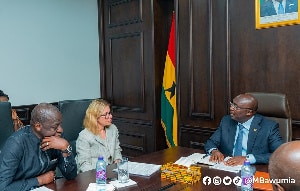
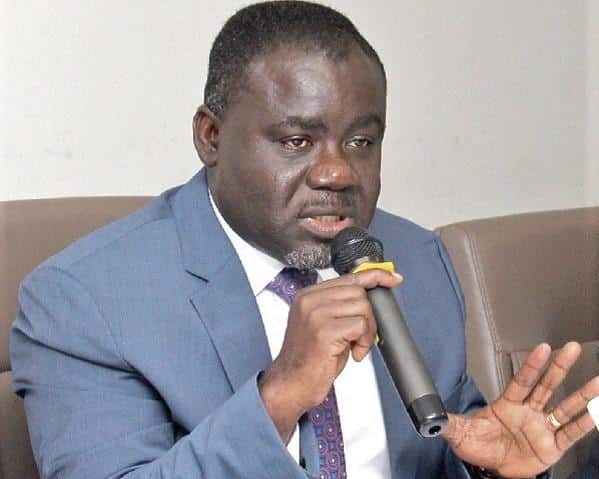
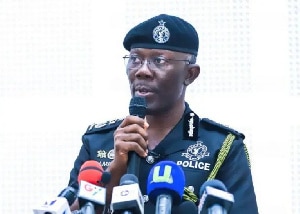
On Friday, Vice President Mahamudu Bawumia held bilateral talks with a delegation from the World Bank at the Jubilee House in Accra.
In a post on his Facebook page, the Vice President shared that he had received the World Bank Managing Director of Operations, Anna Bjerde, along with the Ghana Country Director, Pierre Laporte, and their team.
During the meeting, the Vice President and the World Bank team engaged in discussions primarily focused on the critical energy sector and the challenges associated with it. He highlighted that the government, through its relevant agencies, is actively working to address these challenges and has developed a comprehensive strategy spanning from immediate to long-term solutions.
The Vice President further noted that the World Bank team commended the government of Ghana for making sound decisions in tackling the country’s challenges. The Bank expressed its commitment to supporting the government in effectively addressing these issues.
In attendance at the meeting were the Energy Minister, the Minister of State at the Finance Ministry, and the Minister of the Interior, all of whom made valuable contributions to the discussions, as per the Vice President’s statement.
The Education Department said on Friday that the administration of U.S. President Joe Biden will forgive $39 billion in student loans for more than 804,000 students.
The department attributed the relief to a “fix” to income-driven repayment (IDR) plans.
According to the agency, borrowers will be qualified for forgiveness after 20 or 25 years of consistent IDR payments.
Lower-income borrowers’ monthly payments are capped under the IDR scheme, and after a certain period of time, the remaining sum is forgiven.
In an effort to earn over a billion pounds to make up for revenue deficits, British Prime Minister Rishi Sunak has stated that visa application fees will be dramatically increased.
In a speech in Downing Street on July 13, Sunak outlined several government aims during a recession, including halving inflation, expanding the economy, and reducing debt.
He also mentioned a significant pay raise for teachers as a means of averting a planned strike.
He said of the pay award: “This is a significant pay award and it is costing billions of pounds more than the government budgeted for.”
“We are going to increase the charges for migrants when they are applying for visas to come to this country and indeed something called the Immigration Health Surcharge, which is the levy that they pay to access the NHS,” he told the press.
He said payments arising from the two tax measures will come up to over billion pounds in revenue, before emphasizing his point and justifying the planned hike in both fees.
“So, across the board, visa application fees are going to go up significantly… none of these fees have been increased recently and we think it is appropriate given that cost of everything has gone up,” he added.
The Foreign Office will be expected in the coming days and weeks to roll out the said increases.
The United States recently announced hikes in certain visa categories for non-migrant visas. Visa fees have traditionally been criticized as a means of fleecing applicants as Embassies make huge sums from even rejected applications.
UK visa application fees are about to increase “significantly,” says PM Rishi Sunakpic.twitter.com/2FUT430oqg
Human Rights Watch, a New York-based organization, claims that there have been numerous homicides, rapes, and acts of looting in northeast Mali this year, prompting thousands of people to escape and seek safety.
Six attacks were reported in the Gao region and two in Menaka between January and June, according to a report released by the rights organization on Thursday. Unconfirmed claims from aid workers and eyewitness indicate that thousands of residents were forced to evacuate and hundreds were killed.
Numerous witnesses told authorities that the fighters rode motorbikes and pickup trucks, carried assault rifles and occasionally rocket-propelled grenade launchers, and wore recognizable turbans.
Some of the most beautiful beaches in the world can be found in Africa. There are 54 countries and 18,950 miles of coastline on the continent.
A total of 38 countries in Africa lay claim to a coastline. These captivating coasts are incredibly diverse and ideal for bucket-list dives, family vacations, and romantic getaways.
These 10 beaches in Africa will introduce you to some of the natural wonders of the region.
Anse Source D’Argent, La Digue Island, Seychelles
Anse Source D’Argent, on the sleepy island of La Digue, is located on the southwest coast of Seychelles.
While there are beautiful beaches all over the archipelago, Anse Source D’Argent is among the most breathtaking. Numerous honors and well-known travel publications have bestowed this title upon it. Anse Source d’Argent is also often referred to as the world’s most photographed beach.
The beach also has ideal swimming, sunbathing, and snorkeling conditions.
Camps Bay Beach, Cape Town, South Africa
Camps Bay is both the name of the small bay on the west coast of the Cape Peninsula and an affluent suburb of Cape Town, South Africa ‘Afrikaans: Kampsbaai’. It draws a lot of South African and international tourists during the summer.
This palm tree-bordered beach, which is renowned for its lovely white sand and superb views of the ocean, and the mountains of Lion’s Head, has established itself as the ideal location for exciting group activities or romantic strolls on its typically warm summer evenings.
The suburb’s charming white sand beaches and strategic location between the Azure Atlantic and the Twelve Apostles mountain range have also made it famous in modern times. There are gourmet beachfront restaurants and 5-star boutique hotels, making it a favorite hangout for celebrities and the ultra-stylish.
Nungwi Beach, Zanzibar Island, Tanzania
On Zanzibar’s main island Unguja, Nungwi is the second-largest settlement after Stone Town.
Nungwi, once a center for dhow construction, balances tradition and modernity. Due to its equatorial location, the island of Zanzibar experiences warm sunny weather most of the time; although, it is best to keep an eye out for storms and the occasional rain before a trip.
Additionally, due to its ideal location on the Main Island, exquisite beauty, activities, and lodging for all budgets, Nungwi is a popular destination for tourists.
On Zanzibar’s main island Unguja, Nungwi is the second-largest settlement after Stone Town.
Nungwi, once a center for dhow construction, balances tradition and modernity. Due to its equatorial location, the island of Zanzibar experiences warm sunny weather most of the time; although, it is best to keep an eye out for storms and the occasional rain before a trip.
Additionally, due to its ideal location on the Main Island, exquisite beauty, activities, and lodging for all budgets, Nungwi is a popular destination for tourists.
Margarida, Príncipe
Santa Margarida is a village in the Mé-Zóchi District of São Tomé and Principe, located in the mid-north of São Tomé Island.
The beach stretches from Salatar to the entrance of the residential marina in Santa Margarita. It is a 550-meter-long, wide beach with fine, golden sand, shallow and clear water.
This beach area is a significant tourist destination and includes a marina with more than 15 km of navigable waterways, as well as a wide variety of dining and entertainment options, shops, and vibrant nightlife.
Plage d’Agadir, Morocco
Plage d’Agadir is located 2.3 kilometers from the region’s center, the city of Agadir, and is ranked second out of 10 beaches in the Souss-Massa region. It is one of the Agadir settlement’s beaches, located just 2.3 km from the city’s core. The beach is situated in a city.
This beach enjoys a lot of popularity because of its reputation, especially during the summer. However, because of its length, it is rarely overly congested.
It extends from the marina to the Cité Founty seaside neighborhood. Additionally, there are numerous hotels and eateries that surround this beach. It is well-protected from the wind, has calm waters, and is perfect for young children. The water at Plage d’Agadir is cooler than other beaches.
Trou aux Biches, Mauritius
On the island of Mauritius’ northern coast in the Pamplemousses district is a small settlement called Trou-aux-Biches, which has a public beach – one of the most gorgeous on the island, according to the World Travel Organization.
At the 2011 World Travel Awards, Trou aux Biches was recognized as the World’s Leading Beach Destination.
The Trou aux Biches Resort & Spa is one of many tourist resorts and boutique hotels located close to the beach. The M2 highway travels in that direction from Port Louis; the beach is located about a mile west of where the M2 ends. A public bus links the town to the airport.
Lamu Archipelago, Kenya Coast
In the Indian Ocean, close to Kenya’s northern coast, is the Lamu Archipelago. The islands are close to the Coast Province, situated between the towns of Lamu and Kiunga.
Lamu has the best beach in Kenya, a vibrant African-Arabic coastal tradition, and a top-notch selection of homes and villas. It is trendy, and bohemian, but very much an old Swahili archipelago.
Along with the typical beach vacation activities, visitors can sail down the Kenyan coast in traditional dhows, go dolphin watching, visit Lamu Town – a World Heritage Site, and go on historical tours of museums, excavation sites, and ancient sites.
For those seeking to unwind and get away from the hustle and bustle, Lamu Island offers white beaches, fantastic food, friendly locals, and a variety of lodging options.
Bazaruto Island, Mozambique
Sand beaches, coral reefs, and numerous opportunities for fishing and surfing are among the Southern African region’s tourist attractions. The meaning of the name Bazaruto is “island of the mist.”
In 1971, the Bazaruto Archipelago was designated a national park. The picturesque islands of Mozambique’s Bazaruto Archipelago are well-known for their pristine beauty and varied ecologies. Along with whales and dolphins, the pristine coral reefs are home to more than 2000 different fish species.
Naama Bay, Egypt
Naama Bay, which is known for its cafes, restaurants, hotels, and bazaars, is a natural bay in the Sharm El Sheikh resort and is regarded as the city’s main tourist attraction.
Swimming, surfing, kayaking, and other activities are available for visitors to enjoy at the beach. There are numerous exotic coral reefs to see, and it is also excellent for diving.
A guarantee for memorable vacations and trips is the pleasant climate, which includes year-round sunshine, clear skies, and summertime highs of around 35 degrees Celsius.
Île Sainte-Marie, Madagascar
The island of Sainte Marie is a favorite Madagascan tourist destination. It has a higher standard of living compared to the rest of the Red Island, which makes the atmosphere quite different.
It is a tiny island full of historical mysteries, due to its past as a pirate island and natural wonders like white sand beaches, natural pools, and coral reefs. Tourists who visit Sainte-Marie are immediately sucked into a dream they don’t want to leave.
The Global Peace Index (GPI) study from 2022, published on July 12, 2023 has indicated that the three most tranquil nations in Africa are Sierra Leone, Botswana, and Mauritius.
Mauritius, an island nation in East Africa, maintains the 23rd overall position and overall score of 1.546 that it has held for the past few years.
Botswana received a total score of 1.762 and was ranked 42nd globally, while Sierra Leone received a score of 1.792 and was ranked 47th globally. The list takes into account 163 nations worldwide.
Top 10 most peaceful countries in Africa:
a. Mauritius
b. Botswana
c. Sierra Leone
d. Ghana
e. Senegal
f. Madagascar
g. Namibia
h. The Gambia
i. Zambia
j. Liberia
See Africa’s most peaceful country ranking
About the GPI report
The Global Peace Index (GPI), which rates 163 independent states and territories based on how peaceful they are, is in its 17th edition.
Created by the Institute for Economics and Peace (IEP), the GPI, c is the most often used indicator of world peace. The trends in peace, its economic importance, and how to create peaceful communities are all covered in this research in the most thorough data-driven examination to date.
Using 23 qualitative and quantitative indicators from reputable sources, the GPI covers 163 nations and 99.7% of the world’s population. It gauges the condition of peace in three areas:
the magnitude of ongoing domestic and international conflict, the level of societal safety and security, and the level of militarization
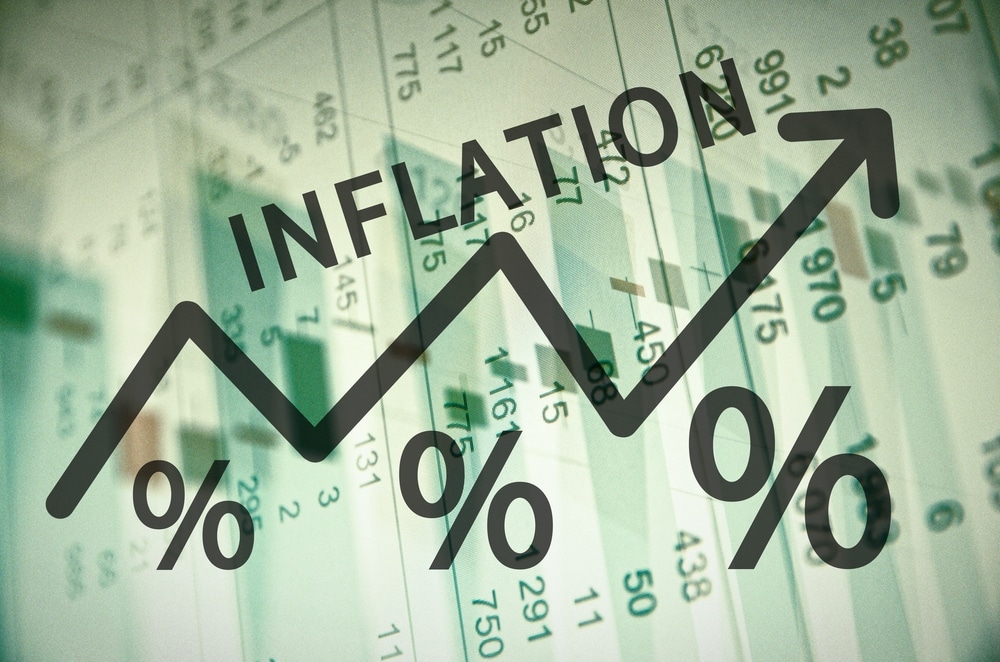
A research by GCB Capital has it that Ghana’s inflation may decline in July 2023, but the threat posed by rising food costs is still very real.
Even if noon-food inflation may be slowing down, the report claims that this may not have a big impact on inflation relief.
The report titled: “Policy Insights: Ghana’s June -23 Inflation Update” said, “While the disinflation process could resume in July 2023, the food basket remains a significant source of price pressure.”
The analysis also implied that the new tariff measures’ diminishing impact would contribute to lower inflation in July 2023.
“We expected the waning lagged impact of the revenue and utility tariff measures and the favourable base effects to reset inflation on the downward path from July 23 and reinforce low inflation expectations, all things being equal. We flag the simmering food price pressures as a near-term upside risk to inflation, which could moderate the pace of disinflation,” it added.
Inflation rate for June increases marginally to 42.5%
Ghana’s inflation rate for June has increased marginally to 42.5% from the 42.2 % recorded in May 2023.
This means that this is the rate at which prices of goods and services increased in June.
It also indicates that in the month of June 2023, the general price level was 42.5 percent higher than in June 2022.
The Ghana Statistical Service announced this on July 12, 2023. Also, month-on-month inflation between May 2023 and June 2023 was 3.2 percent.
Food inflation remains high at 54.2% but higher than the 51.8% recorded last month while non-food inflation saw a marginal decrease to 33.4% from 34.6% last month.
Inflation for locally produced items and imported items was 35.9% and 44.5% respectively.
The Electricity Company of Ghana has stopped providing electricity to the Tema Oil Refinery (TOR) because it is unable to pay it debts according to a media report
The portal has indicated that TOR is now experiencing financial difficulties that have prevented it from being able to pay its electricity debts as well as the salary of its employees.
ECG turned off the flow of electricity to TOR’s facilities a few months ago due to a debt of roughly GH26 million.
As a result, when the the power distribution firm visited TOR’s facilities in March 2023, the management was able to pay a portion of the cost.
It has, however, been unable to adhere to the agreed-upon payment schedule.
According to the media, after speaking with some employees under the condition of secrecy, it was discovered that salaries had been delayed by a week.
Given that the refinery has been unable to run at full capacity for some time, this raises questions about its operationalization.
The condition of other stations around the Volta Lake and the ferry station at Kpando-Torkor in the Volta Region has drawn the attention of the transport minister.
When Mrs. Della Sowah, the Member of Parliament (MP) for Kpando of the National Democratic Congress (NDC), asked a question on the House floor, Mr. Kwaku Ofori Asiamah answered by expressing his concern.
The MP questioned the Minister over the start date for Kpando-Torkor Landing Port rehabilitation.
According to Mr. Asiamah, the Volta Lake Improvement Project, which is being funded by the Korea Exim Bank, has started in order to address the problem at the landing places.
In order to assist the Volta Lake Transport Company’s social activities along the Volta Lake, he stated the project included the construction or refurbishment of 10 landing sites and receiving facilities, the provision of five contemporary ferries, as well as additional infrastructure including a slipway shipyard and access roads.
He claimed that Kpando-Torkor was one of the landing places chosen to take advantage of this facility.
“Evaluation has been completed for Expression of Interest (EOI) to engage a consultant for the project and Request for Proposal (RFP) has been prepared and submitted to the Korea Exim Bank awaiting approval to issue to the shortlisted firms.” Mr Asiamah stated.
The minority party in parliament has threatened to use all legal means to prevent the Tema Oil Refinery’s planned privatization by Torrentco.
Bright Simmons, vice president of Imani Africa, was the first to voice concerns about the six-year contract, which could only bring Ghana $3 million in revenue.
John Abdulai Jinapor, the committee’s ranking member for mines and energy, said the contract is not in the nation’s best interests when speaking to the media in parliament.
He requested that the government end the agreement right away so that a fair selection procedure may be used to identify a viable strategic partner for the revival of TOR.
“The Minority once again has been following yet another emerging scandal in the energy sector. It does appear that even when we decide that we want to take a rest the Akufo-Addo led government will always inundate us with scandals especially in the energy sector.
“We have been keenly following developments at the Tema Oil Refinery. We have become aware by the Akufo-Addo government to lease the Tema Oil Refinery for a six year period to a company known as Torrentco Asset Management Company,” Mr. Jinapor stated.
He continued: “Our checks have indicated that this company has no track record when it comes to oil refineries. It has no track record when it comes to the oil sector and its balance sheet does suggest that it cannot provide the needed support to Tema Oil Refinery.”
The minister added that Tema Oil Refinery is the only State refinery with the capacity to refine around 45,000 barrels of oil per day and is a vital asset.
“If Tema Oil Refinery is well positioned and strategically positioned it will result in millions if not billions of savings when it comes to import substitution,” he added.
Professor J.E. Mensah, the department head, at least three surgeons leave their positions at the Korle-Bu Teaching Hospital (KBTH) Department of Surgery each month in search of better opportunities.
According to Prof. Mensah, the situation peaked during the introduction of COVID-19 and has continued to be severe in other hospital departments.
“During and after COVID, there was and is a high demand for specialised medical staff and critical expertise worldwide. These experts are leaving the country, especially critical-care nurses and doctors,” he said.
In the same vein, over the past six years, approximately 150 experienced nurses and other health workers have departed Pantang Hospital in Accra alone in search of better opportunities.
100 of those are specialized psychiatric and general nurses, with the remaining professionals in the healthcare delivery system including doctors, pharmacists, technicians, and other skilled workers.
More concerningly, the Ghana Registered Nurses and Midwives Association (GRNMA) reports that over 3,000 nurses and midwives reportedly left the country in 2022 alone in pursuit of greener pastures.
Aggressive hiring procedures
According to Prof. Mensah, some western countries are even more aggressive, and are employing bonded nurses and doctors using attractive salaries that these experts cannot reject.
As long as those hospitals abroad are offering very attractive salaries, the situation seems impossible to halt, he said, adding: “We cannot match the salaries being offered in Europe and North America, and it has become difficult to convince these people to stay”.
He said the western countries are very much interested in the skilled medical expertise which KBTH and other health facilities across the country are endowed with. He lamented that low salaries for doctors and specialised medical staff remains the problem.
Salary disparity
Interestingly, the B&FT observed that a medical doctor who currently works at the KBTH or other national hospitals across the country do not earn up to US$400 per month.
Also, a senior medical doctor who may have practiced for more than two decades, and probably a lecturer at a medical school in Ghana, does not earn up to US$1,500 per month in salaries and allowances.
According to Forbes, an expert doctor of any nationality who is employed in the US is likely to get paid an average annual salary of US$165,347 and more in some fields.
Willingness to stay
Despite the temptation to leave, Prof. Mensah said some doctors are prepared to stay and offer their services here.
“For some of us, we know this is our country and we are determined to stay and encourage the younger ones to also stay and give their best,” he said.
He encouraged government to invest in training more doctors and ensure that they are employed as quickly as possible.
The introduction of new financing sources for the country’s plant biotechnology projects, which include genome editing and Genetically Modified Organism (GMO) technologies, is being pushed by stakeholders in the agricultural ecosystem.
A major number of biotech crop programs in Africa currently rely primarily on donor generosity, according to the International Symposium on Agricultural Transformation and Biotech Crops in Africa (ISATBCA). This is a concerning situation, according to stakeholders.
Dr. Richard Ampadu-Ameyaw, Principal Research Scientist at the Council for Scientific and Industrial Research (CSIR), stated that it is essential to introduce new funding sources, such as taxes and a designated fund that will provide money for the nation’s biotechnology projects, in order to escape this dependence.
“Government must establish a fund for the development, promotion and commercialisation of the biotechnology industry and every other activity related to it…because now we are going that way. Several forms of biotechnology and scientific concepts will come for the development of food products and the rest,” said Dr. Ampadu-Ameyaw, who’s also the National Coordinator of the Open Forum for Agricultural Biotechnology (OFAB) – adding that “It could be in the form of tax”.
The Chief Executive Officer and Founder of Motivating The Farmer, Nana Yaw Reuben, concurred, stating that the problem with Ghana and Africa’s agricultural value chain is over-dependence on donor funding.
“Donor support in the agricultural value chain is not helping Africa and Ghana, and we think that the way forward is by setting up appropriate funding to be used on agricultural-related projects and research rather than continuously relying on donors for support in terms of agricultural value chain activities – which is not achieving the results,” Mr. Reuben, who is a member of the Alliance for Science Ghana, told the B&FT.
Stressing the need to break away from over-reliance on donor support, he added: “I’ve been to fields where modern infrastructure was built for a farming community; but because the project had ended, the community could no longer maintain that infrastructure so it’s deteriorating. Also, I’ve been to irrigation fields where only a pump is needed to bring it back to life; but because the community doesn’t have money, the irrigation facility is left to rot”.
For him, setting up the fund will be crucial in advancing the country’s scientific frontiers in agriculture and could prove pivotal in the fight against food insecurity, and for growth of the agricultural value chain.
He continued, “Remember the donor has an objective; it’s business; it’s not about him or her loving you. He or she may love you, but what matters is what he or she also receives.
Consequently, he gave state regulators the task of closing gaps in the laws governing genetically modified organisms (GMOs) and crops that have had their genomes altered, while also streamlining and strengthening the procedures.
President Nana Addo Dankwa Akufo-Addo plans to formally open the Setuo Oil Refinery, a privately owned facility located close to the Tema Oil Refinery, in August 2023, barring any unforeseen circumstances.
An investment of $1.98 billion was made in the facility, which has a two-phase production capability of about 5 million metric tons of petroleum products annually.
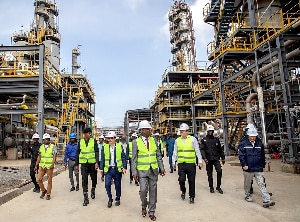
Minister of Trade and Industry, Mawuli Ahorlumegah and Kobina Tahir Hammond, visited the facility to become familiar with it for this episode of BizTech on GhanaWeb TV. The facility hopes to produce up to 100 percent of the country’s needs by the time its second phase is finished.
Over the course of the two phases, the refinery is anticipated to process a variety of substances, including gasoline, jet fuel, LPG, sulfuric acid, diesel, fuel oil, and ammonia.
Additionally, it has the potential to provide direct employment for around 900 Ghanaians.
Although GCB Capital has warned that simmering food price pressures represent a problem, growing inflation may start to slow down in July 2023.
In a report titled: “Policy Insights: Ghana’s June -23 Inflation Update”, it, however, said the continuous decline in non-food inflation may not be enough to bring inflation down.
“While the disinflation process could resume in July 2023, the food basket remains a significant source of price pressure”.
“We expected the waning lagged impact of the revenue and utility tariff measures and the favourable base effects to reset inflation on the downward path from July 23 and reinforce low inflation expectations, all things being equal. We flag the simmering food price pressures as a near-term upside risk to inflation, which could moderate the pace of disinflation”, it added.
Although the divisions of Alcoholic Beverages & Narcotics, Housing & Utilities, Furnishing & Household Equipment, Personal Care & Miscellaneous Goods, and continue to record inflation rates higher than the national average, the disaggregated data shows inflation is decreasing across these divisions. They continue to contribute less and less to the overall inflation print, highlighting the ongoing fall in non-food inflation.
For the second consecutive month since May 2023, year-over-year inflation increased, reaching 42.5% in June 2023.
After four straight months of deflation from the beginning of 2023, the inflation in June 2023 continued the reversal in the inflation trend, albeit at a slower rate.
The chief executive officer of the Association of Oil Marketing Companies, has indicated that a significant number of OMCs are struggling to turn a profit as a result of the status of the economy.
“We had almost about 40% of them who were struggling such that month by month they were not making anything,” he said of the group at the beginning of the year.”
“They were only trying to survive to make sure that they just break even and others are even under the water now and they’re trying to struggle to come up,” he said this on JoyNews’ PM Express Business edition on July 14, 2023.
Agyemang Duah claimed that the country’s inflation and the depreciation of the cedi have had a severe impact on their pricing; but, due to the competitive nature of the oil market, OMCs are unable to increase or alter their margins as they see fit.
He claimed that this is just another element that impacts their profit margins.
“And you know in Ghana prices of goods and services are just rising just like that. And obviously for you to compete or be able to survive you need to up your scale in terms of the margin that you’d have to put on, but we’re not able to do that because it’s the market.
Duah continued, “The market is so competitive that if you decide to increase your margin, obviously it will affect your price, when you increase your price you’re out of the game. So, it’s really a tough hurdle that we have now,” he said.
The decision by government to delist over 17 State Owned Enterprises (SOEs) is long overdue, according to financial expert and Financial Advisory Partner Yaw Appiah-Lartey of Deloitte Africa.
On Wednesday, Joseph Cudjoe, the minister of public enterprises, revealed that the cabinet would soon make a decision regarding the future of about 17 state-owned businesses.
The Minister claims that because the government is only incurring expenses by maintaining these State-Owned Enterprises as operational, they are currently liabilities to the nation.
Speaking on the development on Starr Today with Joshua Kodjo Mensah Thursday, the financial analyst stated that although the decision is welcome it is long overdue.
“I think this is long overdue, if you take accounts of the companies that the minister mentioned a lot of them have been underperforming, reporting losses and obviously a drain on government coffers. The idea to restructure is therefore welcoming news and therefore long overdue.
“All these companies that in the past have been listed under state interest and governance authority some of them have been reporting losses for a long time; over the last 5 years. There is nowhere in the world that a private entity operating for the past 5 years reporting losses will continue to be in existence”, he bemoaned
Mr. Yaw-Appiah added that a lot of such non-performing entities remained due to political expediency.
“It is partly because of how some of them have been politically sensitive over the years… Once the government has the political will and has the basis for restructuring these entities by liquidating some, privatizing and bringing in strategic investors and also listing some on the stock exchange, it is a good idea”, he added.
During predates banking or financial system, individuals provided either cash or an item to another individual within an arrangement that the borrower will return cash or item to the lender with or without interest in the future.
Peer to Peer lending occurs when a lender and borrower transact business without the role of any intermediary. P2P lending differs from traditional lending where a financial institution serves as an intermediary, mobilizes capital from its client base and lend.
The fast-paced fintech innovation has driven peer-to-peer lending. According to The Business Research Company, the global P2P lending is valued at $143.64 billion in 2023.
Peer-to-Peer lending is categorized into:
Informal P2P lending where an individual within a circle of friends or colleagues requests a loan usually through face-to-face interaction or phone call. The transaction is usually undocumented, trust-based and on the ability of network to influence the behaviour of a borrower to pay up.
The blacklisting of an individual borrower becomes a deterrent to pay up on time. The absence of mechanism of enforcement is a challenge.
Formal P2P lending which uses digital tools like online platform to connect a borrower and lender to transact loans, involving a limited role of an “intermediary” who provides and maintain the platform to facilitate loan processing. The “intermediary” is not a party to the transaction, unlike a bank will serve as an intermediary in similar loan transactions. All risk are borne by both parties. U.K.’s largest P2P lender, Funding Circle for small-to-medium enterprise lending, Lending Club, Prosper, SoFi, Upstart and Peerform, CreditEase, China Rapid Finance, Dianrong are examples of formal P2P around the world.
The advancement of emerging technologies such as blockchain gave rise to the third type. Facilitated by Decentralized Finance (DeFi), it promises to revolutionize financial services by replacing the “intermediary” in the formal P2P lending processing with a decentralized system powered by blockchains. In effect, any one with internet connection can network with others to transact financial services. It is estimated that loans issued through DeFi lending protocols is increasing at an annual rate of 800%+ to $23 billion. (DeFi Risk, Regulation, and the Rise of DeCrime)
Risks and Challenges
A key challenge affecting most P2P lending platforms is the little or zero restriction on borrower’s eligibility which can lead to high borrower defaults. Some lenders on the P2P lending platforms may not have liquidity to finance loans. Irrespective of the P2P lending type, it is risk-associated.
Top on the list is a high default due to inability to enforce transactions. It must be noted that financial institutions suffer same. The key risk with P2P platforms is the absence of direct regulation by financial regulators, exacerbating the risk levels. An example is China’s Ezubao P2P lending platform before it ceased operations, suffered over 900,000 P2P lender lost, collectively 7.6 billion USD.
Also DeFi-based P2P lending has new risks like hacking, money laundering and other fraud. Other risks related to P2P lending include misleading advertising and standardized disclosure in terms and conditions.
Given the high level of risks in P2P lending, it is imperative for platform operators to ensure detailed information is provided on the risk borne by lenders, protect identity of users and implement measures to prevent misconducts by both parties. Also, such platform must implement protection for transactions including the use of bank escrow account services to manage lenders’ funds and borrowers’ payments. Further, P2P lending platforms should ensure user-friendly interfaces.
Regulations
Regulators are still crafting ways to regulate P2P platforms. Hence, many of these are either unregulated entities or taking advantage of regulatory arbitrage where they package P2P lending products to ensure it takes advantage of the cross-sectoral regulatory gaps or is offered outside existing legal frameworks. Banking and Security Exchange regulators are working to formulate rules to caution and protect clients.
Some banks are partnering with P2P lending platforms or thinking about creating services similar to P2P platforms in order to service SMEs clients whose lack of credit scores, records or business history makes them high risk.
Some key benefits of P2P lending platform includes access to lending services to all, democratic and transparent loan acquisition, lower transaction costs and interests than traditional loans, and efficient loan processing, hence, faster service delivery.
In a wrap, P2P lending given its long history, is here to stay. Regulators must ensure they regulate operation while P2P platform providers ensure a responsible lending environment. Borrowers and lenders must take cognizant of its risky nature to mitigate risks.
Dr. Kwami Ahiabenu, II is a Tech Innovations Consultant. You can reach him at Kwami@mangokope.com
DISCLAIMER: Independentghana.com will not be liable for any inaccuracies contained in this article. The views expressed in the article are solely those of the author’s, and do not reflect those of The Independent Ghana
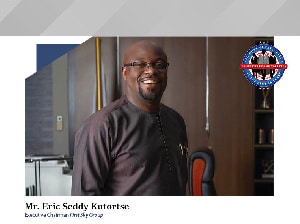
The Executive Chairman of the First Sky Group, Eric Seddy Kutortse, has donated a sizeable sum of money—more than GH13 million—over the past six years to support the 25% of Ghanaians who are dependent on dialysis owing to kidney failure.
He explained to journalists in Accra that he felt the need to relieve some of these people’s financial burdens, thus he decided that ongoing help for such individuals was now necessary.
Eric Kutortse further emphasized that his support was only motivated by the need to help humanity, as opposed to that of other individuals who do so based on their own personal experiences or because of some odd connections they have with patients who have similar medical conditions.
He revealed that the Bible is the source of his inspiration when speaking to journalists at an occasion at the Korle-Bu Teaching Hospital, where the nation’s first all Ghanaian medical team successfully performed kidney transplants.
“The main motivation about all this in our Holy Book. The Bible says that we should have compassion on our fellow beings. And then more so, we have been privileged in the positions that we are able to create wealth and we believe this world is not meant for us alone.
“It has to go to support the kingdom work, it has to go in to support humanity, and that is the reason we believe God has blessed us with these resources, and that is what we are doing,” he stated.
The executive chairman of First Sky Group also expressed his happiness over Ghana’s medical industry’s progress, noting that even though he has continued to help these sick individuals over the years, the cost of care is rising.
He also mentioned how he has personally paid for a couple people’s medical trips to India, where they would have otherwise had to pay hundreds of dollars in fees.
The executive chairman of First Sky Group also expressed his happiness over Ghana’s medical industry’s progress, noting that even though he has continued to help these sick individuals over the years, the cost of care is rising.
He also mentioned how he has personally paid for a couple people’s medical trips to India, where they would have otherwise had to pay hundreds of dollars in fees.
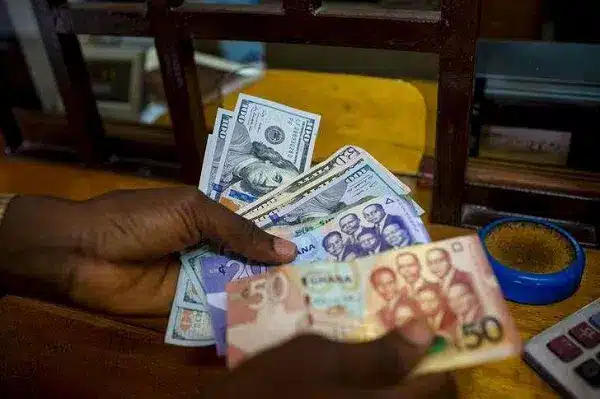
The Bank of Ghana’s interbank exchange rates, has indicated that the Ghana Cedi is now trading against the dollar at a purchasing price of 10.9973 and a selling price of 11.0083 as of today, July 14, 2023.
The exchange rate for buying and selling the dollar in Accra at a Forex bureau is 11.50 to 11.90.
The Cedi is now trading at a purchasing price of 14.4131 and a selling price of 14.4286 versus the British pound.
At a forex bureau in Accra, the pound sterling is being bought at a rate of 14.80 and sold at a rate of 15.50.Europe finally reaches a historic nature and climate agreement
The Euro is trading at a buying price of 12.3041 and a selling price of 12.3153.
At a forex bureau in Accra, the Eurois being bought at a rate of 12.40 and sold at a rate of 13.00.
The South African Rand is trading at a buying price of 0.6127 and a selling price of 0.6132.
At a forex bureau in Accra, the South African Rand is being bought at a rate of 0.30 and sold at a rate of 0.90.
The Nigerian Naira is trading at a buying price of 70.6611 and a selling price of 70.7456.
At a forex bureau in Accra, Nigerian Naira is being bought at a rate of 13.00 Naira for every 1 Cedi and sold at a rate of 19.00.
For the CFA, it is trading at a buying price of 53.2636 and a selling price of 53.3121.
At a forex bureau in Accra, CFA is being bought at a rate of 17.00 CFA for every 1 Cedi and sold at a rate of 21.00 CFA for every 1 Cedi.
On social media, there have been conflicting reactions to the recently announced dorm housing costs for the 2023–2024 academic year at Ghana Hostels Limited, also known as Pent Hall, a part of the University of Ghana.
Many people on social media are voicing their outrage over what they called extortionate costs established for students who want to live in the hall.
The upcoming academic year’s fees have been announced by the hostel administration, and most students have found them to be extremely excessive and out of their price range.
From four thousand nine hundred twenty-eight Ghana cedis (GH4,928.00) for a shared room with four occupants to thirty-five thousand three hundred twenty Ghana cedis (GH35,320.00) for a single room reserved for international students, prices range.
Twitter in particular has been inundated with comments expressing anger about the high rates.
One user exclaimed, “The hostel prices are crazy in Legon herrrrhhh.” Another user expressed frustration with the situation, blaming the leadership, stating, “You want students who aren’t working to pay such amounts? The evil is from our leaders. We are only seeing the ripple effect around.”
The issue has also prompted discussions about the affordability of education in Ghana, with some users vowing to avoid sending his children to any overpriced universities in the country. “Sia money wey somebro go fi take do masters den dey post for here like that. Legon Pent and that KNUST brunei, all demma owners are wicked.”
“Pure definition of ‘de wo lane mu.’ Eii Legon, how much is even a two-bedroom rent in East Legon?”
Another user asked, “Moagyimi anaa Na school fees kraa be how much” (Does education itself cost this much?).
How should I explain to someone that Ghc4500 which is the price of 4-in-room at Legon is the average price of 2-in-room at KNUST. pic.twitter.com/4ZFQ2Ygvep
One thing i have promised myself is that i will try as much as possible to avoid sending my kids to any overpriced University in Ghana. Sia money wey somebro go fi take do masters den dey post for here like that. Legon Pent den that KNUST brunei all demma owners are wicked. pic.twitter.com/e5ca9J8AYY
If you own property or you get empty boys quarters for Legon & surrounding areas, this is your sign to open a hostel and make money from cheaper rates ! What dis? 😳 https://t.co/wylxKj4FWl
Transport Minister, Mr. Kwaku Ofori Asiamah, has disclosed that the new terminal building at the Tamale Airport will become operational on July 31.
In response to a query from, Member of Parliament (MP) for Mion, Mr. Musah Abdul-Aziz Ayaba, for the New Patriotic Party (NPP), the Minister informed the House.
The MP enquired as to the Tamale International Airport’s anticipated opening and completion dates.
According to Mr. Asiamah, Tamale Airport Phase II was largely finished in August 2022.
He added that as a result, the Operational Readiness and Transfer program started in August 2022 to make sure that potential risks involved in the transition process from the construction to operational phase were carefully managed to avoid subpar start-up performance that could harm the country’s reputation.
He explained that originally, the Terminal was scheduled to “Go-Live” in December 2022, to stimulate operations and effective integration of the airport systems.
He said the “Go-Live’ had to be postponed to pave the way for the completion of all the requisite training, Site Acceptance tests, and systems integration.
“Mr Speaker, I wish to inform this August House that, having completed all these, the “Go-Live” for operationalization of the New Terminal Building is scheduled for July 31st, 2023.
Mr. Ayaba questioned the Minister once more on the start date for Phase 3 of the Tamale International Airport.
In his response, the Minister noted that Tamale International Airport Phase 3 was still in the conceptual phase.
A request for expressions of interest for an engineering, procurement contractor, and financing (EPC+F) was in the works, he claimed.
The completion of Tamale International Airport is guaranteed by the transport minister by July 31.
A proponent of the Promotion of Proper Human Sexual Rights and Ghanaian Family Values Bill in parliament, Sam Nartey George, has written to the chief justices of the country pleading with them to uphold the rule of law in the best interests of the populace rather than their own personal interests.
He explained that they need to know this because they are representing the interests of the broader public by holding these positions.
Sam George, who represents the Ningo-Prampram constituency in parliament, was discussing the question, “Is Sexual Preference A Human Rights Issue?” on GhanaWeb TV’s Legal Agenda.
The first thing these judges should understand is that they are there for the public, not for themselves, he informed the media.
Adding that the justices had to take public policy into consideration.
“This is a respectful message to the judges in the Supreme Court and in the High Court: they should bear in mind that they sit there and dispense justice for and on behalf of the people of Ghana, not on their own behalf and they must be mindful of public policy,” he stated.
Sam Nartey George added that the judges of Ghana’s highest courts had to take the general uproar into consideration.
He continued by saying that they should be conscious that they have little confidence in the public’s judgment when making decisions about important topics, such as those involving the anti-gay measure currently before parliament.
“The judges would not want to see a public outcry against them. And again, don’t forget that our judiciary is one element of our governance system that people lack a lot of trust and faith in because the judiciary has not necessarily comported itself in the best of manner,” he said.
The anti-gay bill, known as the Promotion of Proper Human Sexual Rights and Ghanaian Family Values Bill, is being spearheaded by 8 Members of Parliament from both sides of the House.
Together with the explosive evidence of voice recordings intercepted by GhanaWeb, the scheme by some senior officers of the Ghana Police Service to have the incumbent Inspector-General of Police removed is coming to light.
The cabal of top officials were caught convincing a prominent NPP member during one of their sessions that one of their members would make a strong replacement for Dr. George Akuffo Dampare.
In the audio recording, a police officer urged that Mensah, a commissioner who was described as a devoted NPP supporter, should be appointed IGP.
He emphasized, among other things, that the appointment of COP Mensah will help the NPP win the general election in 2024.
“You have seen him; you see how humble he is? And I told you, he is a lawyer. That is why every police officer wants to see him as his or her IGP. You see this is genuine humility not fake. Yes, he is the one that we want and when you do that you will see that outcome of the election,” he said.
While accusing the NPP of treating COP Mensah unfairly, the senior officer disclosed that their goal is to have him represent the NPP’s interests at the national level, which is what prompted the commissioner to decline the chance to run for the Bekwai Constituency.
While accusing the NPP of treating COP Mensah unfairly, the senior officer disclosed that their goal is to have him represent the NPP’s interests at the national level, which is what prompted the commissioner to decline the chance to run for the Bekwai Constituency.
In a another video, COP Mensah defends himself while emphasizing that he doesn’t mind not getting the IGP job as long as Dr. Dampare is replaced by an advocate of the NPP.
“Alhaji, my only problem… this current IGP if we do a mistake and take him to the elections, it will not help us. It will not help us at all and I will not mind if the position is not given to me but that man is changed; because he will not help us, he will not help us at all… he won’t help the party at all.
“I know there are others who are also good for this position, if I don’t get and this man is changed and those people that we think they are our men get I (it is ok)… Because we need to break this 8. That is important, we need to break the 8… Because I wouldn’t want doctor to become the flagbearer and then we lose the elections… ” he said.
He goes on to emphasise that elections can only be won through rigging and that the NPP must ensure they have a favourable police hierarchy which is indispensable in prosecuting such an agenda.
“This IGP is not correct, he won’t help us. Alhaji you have done politics, you know elections is not… sometimes elections mafia work is inside,” he stated to which the party guru concurred saying “not just sometimes, mafia work is inside. As for elections mafia work is involved.”
In the release of some recordings revealing a plot by a group of senior police officers to depose the current Inspector-General of Police (IGP), security and elections have become a major topic of discussion in the country.
The plot involved courting the support of a senior member of the ruling New Patriotic Party (NPP).
The group’s purported motivation, according to the recording’s specifications, was to remove George Akuffo Dampare as IGP because of his suspected membership in the opposition National Democratic Congress and to allow the rigging of the general election of 2024 in favor of the ruling NPP.
A 50-minute tape of one of the senior police officers, a particular Mensah with the rank of Commissioner, confirms the latter purpose.
“So that is my fear that during (the 2024) elections, how is this man going to help us; he can’t help us. He won’t. He will make sure that everything is fair. But Alhaji you don’t go to elections like that, you don’t do elections like that at all. The Supreme Court said elections is won at the polling station so whatever you need to do at the polling station you have to do. And the security has a major role to play,” COP Mensah who touted himself as staunch member of the governing party is heard saying in the audio.
In other parts of the audio, the senior officer who had come to the conclusion that Dr. Dampare’s control over police affairs made the NPP’s ‘Breaking The 8’ agenda impossible said that, despite his high qualifications for the IGP position, he would not mind losing out as long as the current IGP was replaced with a pro-NPP officer.
“Alhaji, my only problem… this current IGP if we do a mistake and take him to the elections, it will not help us. It will not help us at all and I will not mind if the position is not given to me but that man is changed; because he will not help us, he will not help us at all… he won’t help the party at all.
“I know there are others who are also good for this position, if I don’t get and this man is changed and those people that we think they are our men get I (it is ok)… Because we need to break this 8. That is important, we need to break the 8… Because I wouldn’t want doctor to become the flagbearer and then we lose the elections… ” he said.
He continues by highlighting the fact that manipulating elections is the only way to win them and that the NPP must take steps to have a supportive police hierarchy, which is essential for carrying out such an agenda.
Dozens of demonstrators on Thursday called for the release of opponents of Tunisian President Kais Saied’s policies, denouncing a judiciary “under orders”, journalists observed.
Around twenty opponents and leading figures from the business and media worlds have been arrested since February as part of an investigation into “plotting against state security”. Mr. Saied, who seized full power in the country in the summer of 2021, has described them as “terrorists”.
Around a hundred demonstrators and relatives of the detainees gathered outside the Court of Appeal in Tunis.
Imed Khemiri, spokesman for the Islamo-conservative Ennahdha party, President Saied’s bête noire, said that the arrests were “politically motivated”.
These imprisonments “reflect a suffocating political crisis in Tunisia” but they “cannot silence free voices”, added Mr. Khemiri, also a member of the National Salvation Front (FSN), the main opposition coalition.
“My father is paying the bill for his love of Tunisia“, lamented Abdelaziz, the son of Issam Chebbi, 65, an FSN leader who was once a fierce opponent of the dictator Zine El Abidine Ben Ali, overthrown by the 2011 Revolution, his voice choked with emotion.
According to Mr. Chebbi, “the judiciary is at the orders of the executive and is not independent”.
In addition to the political crisis triggered by Mr. Saied’s coup de force, Tunisia, which is heavily in debt, is shaken by a serious financial crisis and is seeking foreign aid.
Speaking to the press on Wednesday, European parliamentarians voiced their opposition to any “unconditional agreement” between the European Union and Tunisia because of the “excesses” committed by President Saied.
They called on the Tunisian authorities to “release arbitrarily imprisoned opponents, defend the rights of Tunisian citizens and support their struggle for democracy”.
The campaign of arrests launched since February has targeted prominent political leaders. The NGO Amnesty International denounced a “politically motivated witch-hunt”. “Detainees were questioned about meetings and telephone exchanges with foreign diplomats, others about media interviews”, according to the NGO.
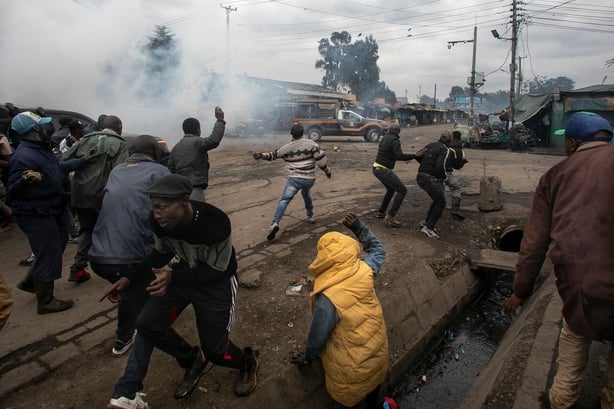
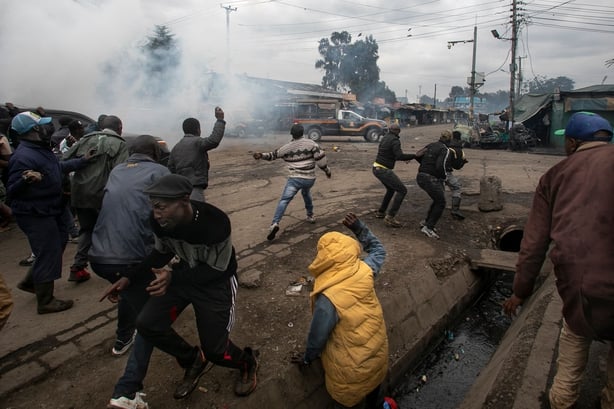
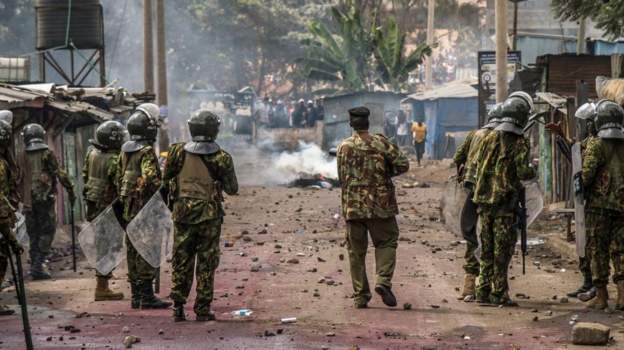
The police have said that, more than 300 people, including an opposition politician, have been detained in the wake of deadly anti-government demonstrations that took place in major Kenyan cities.
The head of the opposition, Raila Odinga, has called for weekly protests across the country in opposition to President William Ruto’s administration, recent tax increases, and the rising cost of living.
On Wednesday, demonstrators marched to the streets of Nairobi, the country’s capital, and other cities to protest new tax increases that had been implemented despite a court-ordered delay. Police deployed tear Black Stars to face Mali, Madagascar, others for 2026 World Cup qualification at civilians, notably at a school where numerous children were hospitalized, and were criticized for their harsh response.
A member of parliament is among the 312 people who are in police custody in connection with Wednesday’s riots. CS @KindikiKithure has stated that the suspects are facing criminal charges following the loss of lives, injuries, looting and destruction of property witnessed in some… pic.twitter.com/xK7m70BeQM
— Ministry of Interior | Kenya (@InteriorKE) July 13, 2023
In a statement on Thursday, Kenya’s Interior Minister Kithure Kindiki said “acts of lawlessness … can neither be accepted nor tolerated”.
“There is no relationship between lowering the cost of living and destruction of critical infrastructure built using public funds. That is hooliganism, lawlessness, and a recipe for anarchy,” Kindiki said.
He said 312 people “who directly or indirectly planned, orchestrated, or financed” the protests had been arrested and would be charged, including a member of parliament.
Local media identified him as Mavoko MP Patrick Makau, saying he was released following his arrest but was asked to present himself again to authorities on Friday.
Ruto’s government has insisted that the 200 billion shillings ($1.42bn) per year the taxes will raise are essential to covering the country’s costs.
But the opposition asserts that the tax hikes will only exacerbate the hardships faced by Kenyans, who are already struggling with the skyrocketing prices of basic commodities, including food. Odinga, who lost to Ruto in last year’s election, has pledged to keep up the street action until cost-of-living pressures come down.
The unrest has so far claimed nine lives, according to the Kenya National Commission on Human Rights (KNCHR), an independent watchdog created by parliament, which said the figures were shared by the police.
The rights body called for an investigation into reports of looting, vandalism and incidents of police brutality on Thursday, warning the country was “teetering on the brink of anarchy”.
Kericho Police Commander Geoffrey Mayek told AFP news agency that one person succumbed to injuries at the hospital as a result of clashes between rival groups in Sondu on the border of Kericho and Kisumu, the latter an Odinga stronghold.
Six people lost their lives when police opened fire on demonstrators in the towns of Mlolongo and Kitengela on Nairobi’s outskirts, and in Emali along the highway to Mombasa.
Two others were killed in Migori and Busia in western Kenya, KNCHR said.
In Nairobi’s Kangemi informal settlement, dozens of children were hospitalised, some unconscious, after tear gas was fired near their classrooms.
The National Gender and Equality Commission, a state authority, strongly condemned the incident.
“School children… who should be shielded from such chaos, were tragically caught in the crossfire,” it said, deploring the vandalism and rights abuses linked to the protests.
Already hit by soaring inflation, many Kenyans say the country can ill afford the disruption caused by the demonstrations.
Each day of protest costs the economy an average of three billion shillings ($21.2m), according to an estimate by the Kenya Private Sector Alliance.
Some of the animals at the Rabat Zoo are being given frozen food and chilly showers by the zookeepers to assist them survive the summer heat, especially during heatwaves.
Rabat’s summertime highs can reach 40 degrees Celsius (104 degrees F), so zookeepers use cooling techniques to help the animals that can’t endure the heat.
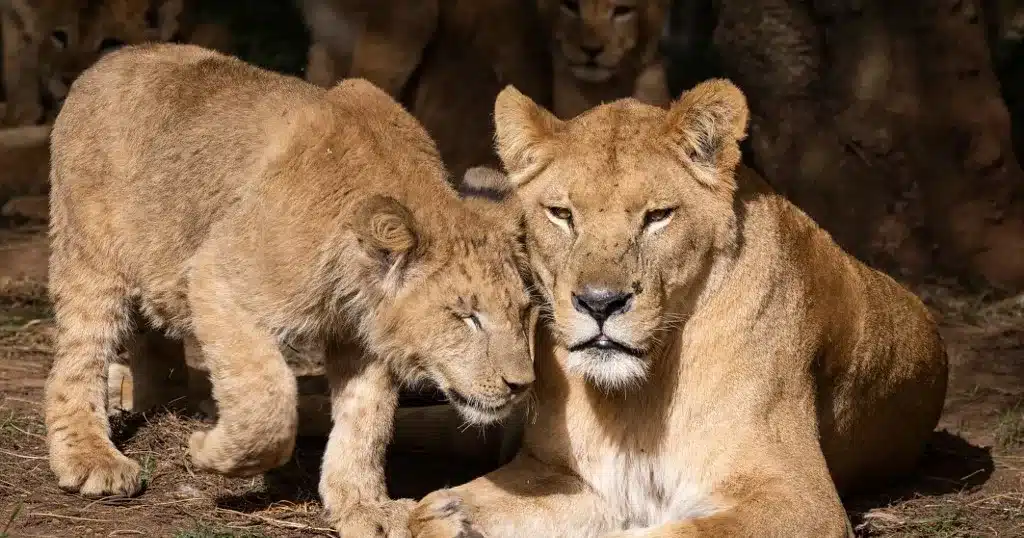
Animals like lions, who take their time devouring frozen goodies, get some cooling respite from them at the zoo.
“We spray the birds with water and aim to recreate the conditions they would find in nature,” said Hafid Achentarmoun, a zookeeper.
“Birds are constantly seeking water whether to drink it or swim in it. These are the methods they use to lower their body temperatures,” he added.
Opened in 2012, the Rabat zoo houses approximately 2,000 animals from nearly 190 species.
It also plays a crucial role in safeguarding endangered and rare fauna, notably, the Atlas Lions.
The beloved big cats have gone extinct in the wild but a few dozen roam in enclosures at Rabat’s zoo, where they are carefully looked after.
Stretched across 27 hectares, the zoo draws an average of 60,000 visitors each year, making it a significant cultural and tourist destination.
On Thursday, the African Union, the Regional Economic Communities, and the Regional Mechanisms organization convened a high-level session in Nairobi, Kenya.
From July 13 to July 16, 51 foreign ministers from AU member states will attend the 5th Mid-Year Coordination Meeting. 15 heads of state will gather on Sunday at the United Nations African office in Gigiri, Nairobi.
The summit is following the AU theme for 2023, “Acceleration of African Continental Free Trade Area Implementation” (AcFTA) and will explore ways to enhance integration across the continent and boost trade.
Kenyan Foreign Affairs Cabinet Secretary Dr Alfred Mutua said that the meeting would also consider the AU’s financial budget for 2024.
We will convene press briefings during the 5th Mid-Year Coordination Meeting. The briefings will cover thematic areas of #Agenda2063 & their impact on the citizenry.
On Thursday, the African Union, the Regional Economic Communities, and the Regional Mechanisms organization convened a high-level session in Nairobi, Kenya.
From July 13 to July 16, 51 foreign ministers from AU member states will attend the 5th Mid-Year Coordination Meeting. 15 heads of state will gather on Sunday at the United Nations African office in Gigiri, Nairobi.
The Carbon Border Adjustment Mechanism (CBAM) is the European Union’s measure to encourage countries where it sources imports to adopt cleaner manufacturing.
The CBAM which goes into force on a transitional basis in October introduces a carbon tax on exports to the EU.
But the measure has elicited concern in Africa which counts Europe as a major export market.
A study carried out by the African Climate Foundation and the London School of Economics suggests that the CBAM’s economic repercussions will be ‘far-reaching’ and most strongly felt in Africa.
Their modelling based on €87 per ton suggests that the CBAM would lead to around $25 billion in losses based on 2021 GDP levels, nearly four times higher than what the EU gave to Africa in development assistance in 2021.
Products such as iron and steel, cement, aluminium, fertiliser, hydrogen, and electricity – which make up a significant portion of Africa’s exports to Europe, will be the first victims of the mechanism.
After 2026, the CBAM’s scope will extend to other products, potentially leading to bigger economic loss.
Experts say the measure is punitive, and dramatically reduces the space for developing countries to achieve growth and to create jobs.
Our guest this week is Faten Aggad, the senior advisor climate diplomacy and geopolitics at the African Climate Foundation.
Uganda mulls zero tax on electric cars
Uganda is racing to switch to e-mobility despite having limited infrastructure in the country. Authorities say waiving tax on electric vehicle imports will encourage mass adoption.
The goal is to reduce pollution and to improve Kampala’s green credentials.
East Africa sees record growth in FDI
East African countries defied economic turbulence in 2022 to post a 17 percent growth in foreign direct investment, with South Sudan and Kenya seeing the highest percentage increases.
On the contrary, Inflows fell in Southern, western and central Africa.
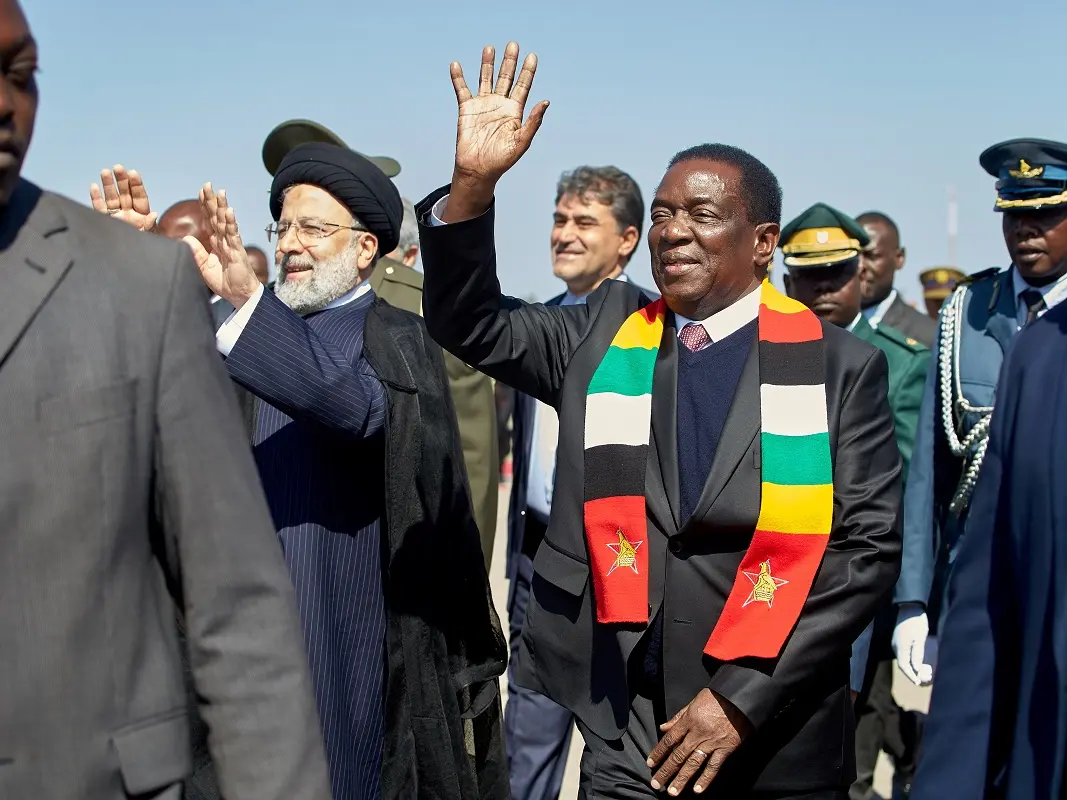
Ebrahim Raisi, the president of Iran, arrived in Zimbabwe on Thursday for what is anticipated to be his final stop on a threenation journey to Africa, and was greeted by residents shouting anti-Western chants.
Emmerson Mnangagwa, the president of Zimbabwe, welcomed Raisi at the international airport in Harare and congratulated him for demonstrating “solidarity.”
Both nations are subject to U.S. economic sanctions, and Raisi’s journey to Africa, which has already included stops in Kenya and Uganda, exemplifies Iran’s efforts to forge new alliances in an effort to lessen the impact of those severe economic restrictions.
Iran and Zimbabwe already have a joint permanent commission on political and trade relations.
They also share historical ties and Mnangagwa thanked Raisi for Iran’s help in a liberation war in the 1970s that eventually led to the southern African nation breaking free of white minority rule.
“When we went to war, Iran was our friend. I am happy you have come to show solidarity,” Mnangagwa said in brief remarks on the tarmac at the Robert Gabriel Mugabe International Airport named after the late Zimbabwean leader Mnangagwa helped oust in a coup in 2017.
Dozens of supporters came out to see Raisi arrive, with some waving Zimbabwe’s and Iranian flags, and some holding placards with Raisi’s face on them. They also sang songs criticizing the West as “white masters” intent on interfering in Zimbabwe.
Members of Zimbabwe’s Muslim community also came to the airport to welcome Raisi and he inspected an honor guard by Zimbabwe’s military.
On his visit to Uganda on Wednesday, Raisi sharply criticized Western nations’ support for homosexuality and LGBTQ+ rights, calling it “one of the dirtiest things.” He said Uganda’s recently-passed anti-gay legislation and Western criticism of it was “another area of cooperation for Iran and Uganda.”
Zimbabwe also has anti-gay laws, and homosexuality and same-sex marriages are illegal. However, Mnangagwa has not attacked homosexuality, unlike his predecessor, the late Mugabe, who described gays as “worse than dogs and pigs.”
The last visit by an Iranian leader to Zimbabwe was in 2010 by then-President Mahmoud Ahmadinejad.
In a courtroom outburst on Thursday, a man accused of terrorism in connection with a fire that severely damaged South Africa’s Parliament building last year claimed that he “burned it intentionally.”
Zandile Mafe yelled and pointed his finger, threatening to “burn it more” if the Parliament was not relocated from Cape Town to either Bloemfontein or Pretoria.
In January of last year, a massive fire that tore through many buildings, including the main chamber where members sit, severely destroyed the historic Parliament complex. It still needs to be fully fixed, which would cost about $120 million and take at least three years, according to estimates.
Mafe was arrested in the Parliament precinct soon after the fire started. He was charged with breaking and entering, arson and terrorism, but his case has been held up after a judge ordered him to undergo a psychiatric evaluation to determine if he is fit to stand trial.
The judge overseeing Thursday’s court appearance allowed Mafe to finish his rant, saying he didn’t want to “exacerbate” his “mental condition,” according to South African media reports.
Judge Nathan Erasmus then said an expert report indicated that Mafe was not able to understand the wrongfulness of the acts he is accused of, although a final decision on whether there will be a criminal trial was postponed until next month.
Mafe had also challenged the court to give him a sentence of 25 years to life, which is what he could face if his trial goes ahead.
“I’m not afraid of a life sentence,” he shouted.
The fire at the seat of South Africa’s democracy raised criticism of the security procedures in place at the Parliament whose members were on a break and the buildings were largely empty. No one was hurt.
Mafe has said he is angry at various issues in South Africa. He has called the opposition political party that runs the Cape Town municipality racist against Black people and has also accused the government of failing to help the poor.
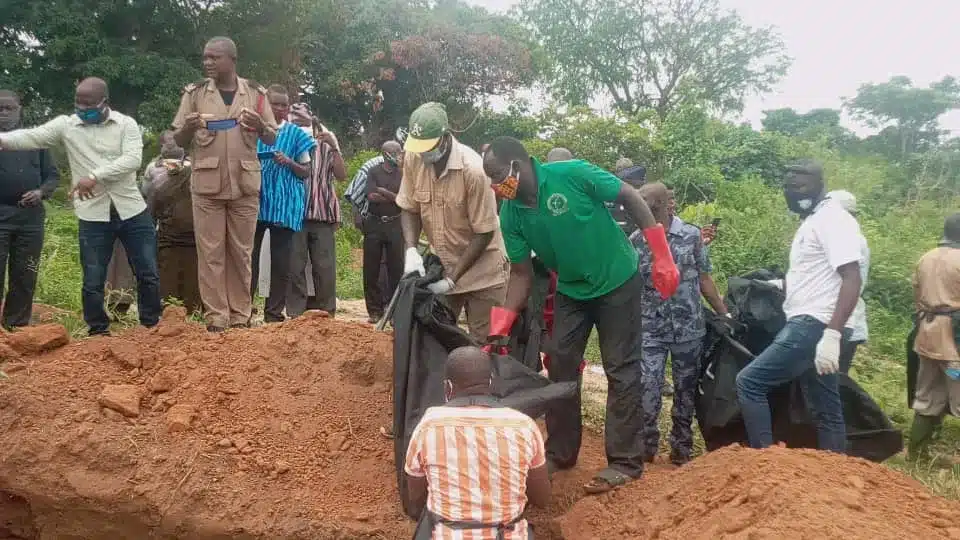
The bodies of dozens of persons who were allegedly slain by militias affiliated with Sudanese paramilitary groups have been discovered in a mass grave in West Darfur, according to a statement from the UN on Thursday.
The bodies of the 87 persons, some of whom are members of the Masalit tribe of ethnic Africans, were allegedly thrown in a one-meter (about three-foot) grave just outside the West Darfur city of Geneina, according to “credible information” acquired by the U.N. Human Rights Office.
According to a statement from the United Nations agency in Geneva, the first 37 dead were buried on June 20.
The next day, another 50 bodies were dumped at the same site. Seven women and seven children were among those buried.
Darfur has been at the epicenter of the 12-week conflict, morphing into ethnic violence with RSF troops and allied Arab militias attacking African ethnic groups.
News of the mass grave comes just days after Human Rights Watch called for the International Criminal Court to investigate atrocities in Darfur.
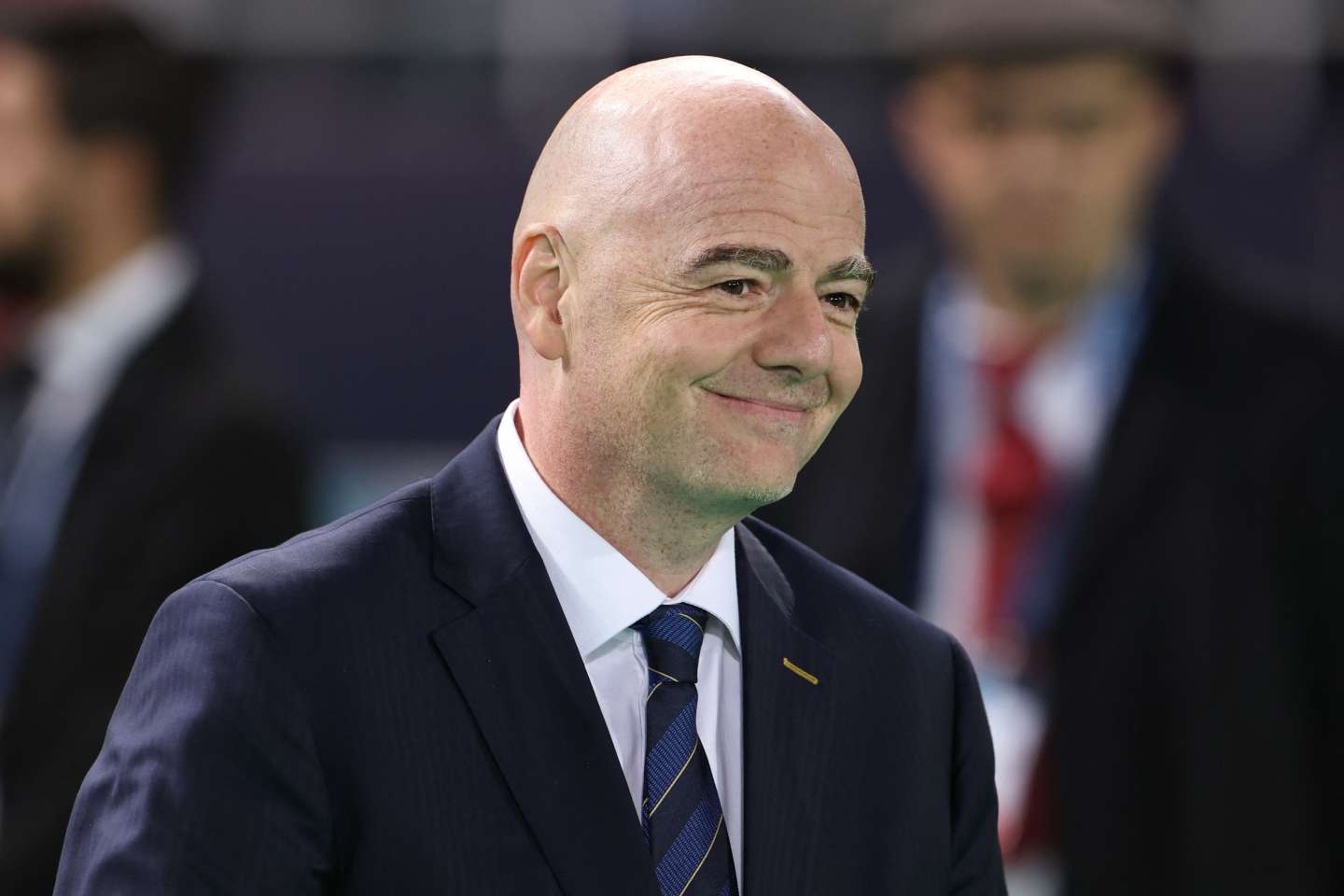
Gianni Infantino, the president of FIFA, made the news during the General Assembly of the Confederation of African Football (CAF) on Thursday in Abidjan. The start date of the new eight-team African Football League has been set for October 20.
The competition has been significantly reduced from the original proposal of 24 teams due to CAF’s $15.7 million loss for the fiscal year 2022–2023.
“It will have eight great teams, which will be followed in the future with a bigger version,” Infantino told delegates. “We have to invest in African club football as well as national team football.
“It is our responsibility, duty and task, and with the work and contribution of all of us as a team, we will succeed.”
A little more than three months before it is scheduled to begin, not much more is known about the competition because CAF has not yet formally confirmed the participating teams.
According to Reuters, the eight teams include the defending champions Mamelodi Sundowns of South Africa, who are owned by CAF President Patrice Motsepe’s family, Petro Atletico of Angola, TP Mazembe of the Democratic Republic of the Congo, Al Ahly of Egypt, Horoya of Guinea, Wydad Casablanca of Morocco, Tanzania’s Simba, and Esperance of Tunisia.
The competition, which will feature domestic league champions from all around the continent, will operate alongside CAF’s Champions League and is not a substitute.
For the time being, information on broadcasters, sponsors, and logistics is also kept under wraps.
In what is believed to be the largest mass grave discovered since Sudan was plunged into war, numerous bodies have been found, allegedly victims of a Sudanese paramilitary group.
According to the United Nations Human Rights Office, there is “credible information” indicating that last month, 87 bodies, including women and children, were buried in a shallow grave in West Darfur.
The victims include members of the Masalit tribe, an ethnic African group that has become a target in the escalating conflict between rival military factions, resulting in ethnically motivated massacres.
These revelations come as Egypt initiates a new mediation effort between the warring factions. Previous attempts at truces and ceasefires have proven unsuccessful, leading to ongoing violence.
Since clashes between Sudan’s army and the Rapid Support Forces (RSF) paramilitary group erupted in the capital city of Khartoum in April, the conflict has spread to the fragile regions of Darfur and Kordofan.
History repeating itself
More than three million people have left their homes, while basic services such as healthcare have broken down. The UN said the first 37 bodies were buried in the grave outside Geneina on June 20. Another 50 were dumped the following day.
Darfur has become a centre for the conflict as the violence has spread, with RSF troops and allied Arab militias accused of rampaging through the area and attacking African ethnic groups.
The killings have raised fears of a repeat of mass killings two decades ago, when the Sudanese government was accused of genocide crushing a rebellion by mainly non-Arab groups in Darfur, killing some 300,000 people.
The RSF denied involvement in the mass grave. A senior official in the force told Reuters it “completely denies any connection to the events in West Darfur as we are not party to it, and we did not get involved in a conflict as the conflict is a tribal one”.
Volker Turk, UN High Commissioner for Human Rights, said: “I condemn in the strongest terms the killing of civilians and hors de combat individuals, and I am further appalled by the callous and disrespectful way the dead, along with their families and communities, were treated.”
The Minority leader in parliament, Dr Cassiel Ato Forson, has made claims that the government refuses to use budgetary restraint while dealing with issues that are seriously affecting the nation.
The mid-year budget review will be presented to parliament by finance minister Ken Ofori-Atta on July 25, 2023. According to Ato Forson, the minority will fight any attempt by the government to enact new taxes.
Instead of enacting new tax policies, he claims there is “massive room” for spending reductions.
“I won’t be surprised if the government introduces new measures because if you read the MEFP, the IMF is asking for additional measures of about 1% of GDP and I don’t know where that is going to come from.
“If I look carefully, there is a massive room for expenditure cuts, but the government obviously is indiscipline, and they don’t seem to care,” he said.
Dr. Ato Forson continued, “They want to live large on the back of the people of Ghana. So, they need to cut that kind of expenditure and if I am the one in charge or responsible, I would rather go for a cut in expenditure as against a tax measure or an increase in taxation.”
In the aftermath of a Quran-burning stunt in Sweden that sparked protests throughout the Muslim world, the United Nations Human Rights Council (UNHRC) has endorsed a resolution on religious hate and bigotry.
The proposal was approved on Wednesday, but the United States and the European Union opposed it because they claimed it went against their stances on free speech and human rights.
Concerned by the incident last month outside Stockholm’s largest mosque, in which an immigrant from Iraq desecrated the Quran on the festival of Eid al-Adha, Pakistan and other OIC nations obtained an urgent debate at the UN’s highest rights council on Tuesday.
The resolution, among other things, called on countries to take steps to “prevent and prosecute acts and advocacy of religious hatred that constitute incitement to discrimination, hostility or violence”.
Pakistan’s Foreign Minister Bilawal Bhutto Zardari told the Geneva-based council via video on Tuesday: “We must see this clearly for what it is: incitement to religious hatred, discrimination and attempts to provoke violence.”
He said such acts occurred under “government sanction and with the sense of impunity”.
Bhutto Zardari’s remarks were echoed by ministers from Iran, Saudi Arabia and Indonesia.
“Stop abusing freedom of expression,” said Indonesia’s Foreign Minister Retno Marsudi. “Silence means complicity.”
UN human rights chief Volker Turk told the UNHRC that inflammatory acts against Muslims, as well as other religions or minorities, are “offensive, irresponsible and wrong”.
Sweden has condemned the Quran burning but maintains the country has a constitutionally-protected right to freedom of assembly, expression and demonstration.
On Tuesday, France’s ambassador Jerome Bonnafont noted that human rights “protect people – not religions, doctrines, beliefs or their symbols … It is neither for the United Nations nor for states to define what is sacred”.
How did your country vote?
UNHRC resolutions are not legally binding but are seen as strong political commitments by states.
Tuesday’s motion called for countries to review their laws and plug gaps that may “impede the prevention and prosecution of acts and advocacy of religious hatred.”
A Kenyan physician told the BBC that 53 children were treated at his hospital without charge after police on Wednesday used tear gas in their school.
“As a parent, you positively and fearfully react, which compelled me to act without asking for money,” Dr Aron Shikuku, from the private Eagle Nursing Home hospital in the capital, Nairobi, told the BBC’s Newsday programme.
According to the most recent data from 2018, only 19% of the population in Kenya has access to any type of medical insurance, making healthcare highly expensive.
While receiving care at a private hospital is sometimes more expensive and can result in crippling medical debt, the nation’s public hospitals are typically grossly understaffed and underequipped.
The children were treated for shock and respiratory issues brought on by the tear gas, according to Dr. Shikuku, and then released.
He said they were being monitored as they settle back into their school, which is in Kangemi, a slum area in the north-west of the city.
There were demonstrations around the country called by the opposition over the rising cost of living, but they turned deadly.
The South African government is attempting to crack down on the torching of vehicles on busy highways. 21 large trucks have been set on fire so far this week.
The arson occurs on the same day as the second anniversary of deadly countrywide riots that claimed more than 350 lives.
Despite similarities with the methods used, the government claims the lorry attacks are unrelated.
Investigators are closing up on 12 people who have been named as the instigators, according to Police Minister Bheki Cele.
“They’ve been identified by names, some of them by address and some of them by the cars they drive,” Mr Cele said on Wednesday.
Investigations are being conducted into a number of motives, including economic sabotage, robbery, and labor problems.
The police minister stated that soldiers had been sent to key locations where arson attacks had been recorded.
They constituted “economic sabotage,” according to President Cyril Ramaphosa, because the trucks were burned “on the main artery of our country.”
The arrest in 2021 was brought on by the arrest of former President Jacob Zuma for contempt of court, which fueled accusations that Zuma’s loyalists were attempting to topple South Africa’s fledgling democracy.
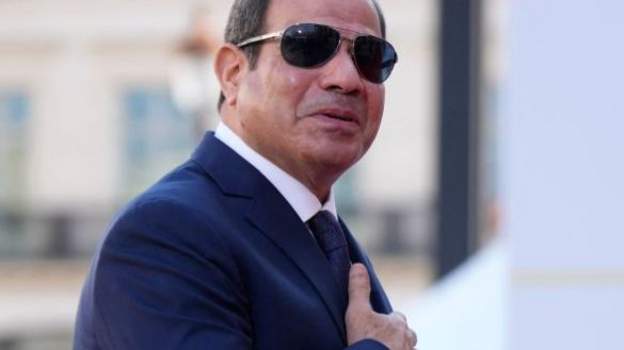
President of Egypt Abdul Fattah al-Sisi has pleaded with the warring parties in Sudan to put down their weapons in exchange for peace talks and to allow for the safe delivery of humanitarian goods.
He listed these as the top two priorities in his opening remarks at a summit on the war taking place in Cairo:
Firstly, calling on the warring factions to cease escalation and to start without further ado on serious negotiations that aim at reaching an immediate and sustainable ceasefire.
Quote Message: Secondly, calling on all Sudanese parties to facilitate the passage of humanitarian aid, to provide safe passage to deliver this aid to the areas most in need inside Sudan, and to establish a mechanism to provide needed protection to the humanitarian aid convoys and the staff of the international relief agencies to help them do their jobs.”
Secondly, calling on all Sudanese parties to facilitate the passage of humanitarian aid, to provide safe passage to deliver this aid to the areas most in need inside Sudan, and to establish a mechanism to provide needed protection to the humanitarian aid convoys and the staff of the international relief agencies to help them do their jobs.”
Some of Sudan’s neighbors, including South Sudan, Chad, and the Central African Republic, are also present at the summit.
The conflicting military factions have sent representatives to the summit, although earlier regional and global peace efforts have been unsuccessful.
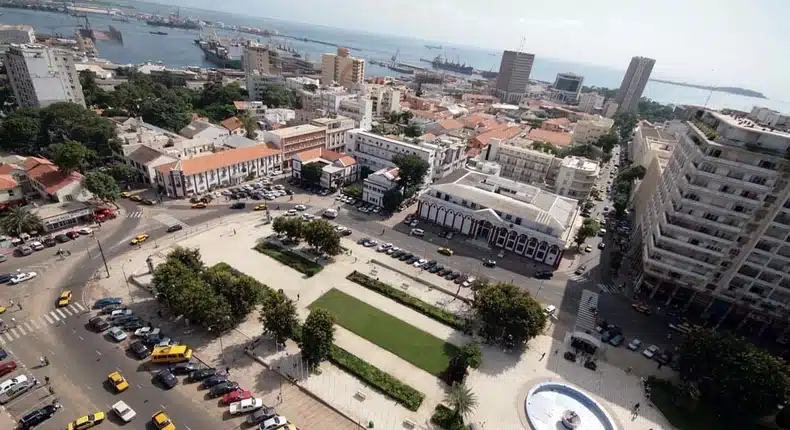
From 4.7% in 2022 to above 5.3% in 2023, Senegal’s growth is projected to pick up, in part due of a growing oil and gas industry. But the country faces many challenges, including an economic fallout from the Ukraine crisis, stricter financial regulations, and growing political upheaval in the region. Two major problems are growing fiscal imbalance and rising government debt.
The strong post-pandemic recovery of Senegal has been impeded, according to Edward Gemayel, IMF Mission Chief for Senegal. As a result, GDP predictions have been reduced, and inflation has increased, worsening the fiscal and current account deficits. Additionally, the national debt now accounts for nearly 76% of GDP.
However, the nation has bright prospects, which are supported by the production of oil and gas, which will stimulate the economy for the foreseeable future. With the assumption that the IMF-supported programs’ cautious macroeconomic policies and resolute structural reforms are carried out, growth is forecast to pick up to 10.6% in 2024 and 7.4% in 2025, with non-hydrocarbon growth anticipated to reach about 6%.
“Inflation hit a multi-decade high of 9.7 percent in 2022, driven largely by the surge in food prices, which account for almost half of the CPI basket in Senegal. Inflation has since eased to around 9 percent and is projected to fall to around 5 percent by year-end but could potentially increase again if commodity prices remain high,” he disclosed during an interview.
The Senegalese government responded by raising public sector pay by almost 20% and increasing gasoline and energy subsidies, which have risen to about 4% of GDP.
However, in order to address the budget deficit, public investments were decreased. Future important actions, such as cutting tax exemptions and gradually eliminating energy subsidies while better focusing on social spending to mitigate the consequences of falling real wages, will be required to maintain debt sustainability and help contain inflation.
According to Senegal’s Nationally Determined Contribution (NDC), which outlines the country’s projected climate actions between 2023 and 2030, the nation will need funds equivalent to almost 7% of its GDP year until 2030 to achieve its mitigation and adaptation goals.
Only 10% of Nigerians have access to pension plans, according to managing director of Norrenberger Pensions Limited. Mr. Hamisu Bala Idris,
Idris stated this at a retirement planning session in Abuja aimed at preparing retirees and those who have already retired for a financially secure future after retirement. He also stated that 80% of retirees in Nigeria rely completely on their monthly pension for survival.
Idris said: “80 per cent of Nigerian retirees depend solely on their monthly pension for survival, many of whom live in constant fear of financial crisis based on delayed payments. This highlights the crucial role pension plays in their livelihoods. Moreso, only 10 per cent of the Nigerian population has access to pension schemes.”
A comprehensive financial literacy workshop addressing important topics like financial planning, insurance, lifestyle modification, legal issues, and estate preparation was a highlight of the program. Participants had the chance to interact with subject matter experts from Norrenberger on various retirement planning topics and also examine other topics related to the success of their pension funds.
Speaking further, Idris said: “In line with our mission to unlock opportunities in the society, we established this event to embolden individuals with the necessary knowledge to maximize the profitability of their pension savings and ultimately secure a comfortable retirement.”
Business Head, Asset Management of Norrenberger Pensions, Abigail Utomi, , expressed her enthusiasm about the initiative and its multiple benefits to the attendees and the wider society. She emphasized the critical role events of this nature play in piloting financial literacy and security for senior citizens in Nigeria and positively impacting the country’s capital market and economy.
She said: “We continue to seek ways to deepen the market, grow our reach and expand our contribution to Nigeria’s GDP.”
While the current federal administration is implementing significant economic changes, it is estimated that Nigeria‘s public debt would reach N70 trillion and that inflationary pressures will continue through the second half of 2023 (H2’23).
However, it is anticipated that the GDP will slightly increase at 2.94 percent.
Giving information during a webinar yesterday, analysts at Meristem Securities Limited, a Lagos-based investment firm, blamed the securitization of the N22 trillion ways and means balances among other factors for the increase in the public debt portfolio in H2’23.
Increased non-oil sector activity and higher oil output as a result of the new administration’s policies were key factors in the expected 2.94 percent GDP growth.
The ongoing increase in the MPR, or monetary policy rate, formed the foundation for the persistent inflationary pressure.
Presenting the Macro economic outlook for H2’23 at the webinar themed: “Tough start, bumpy road, propitious end”, aimed to provide guidance on strategies for investment positioning for H2’23, Investment Research Analyst at Meristem, Mr. Sodiq Safiriyu, said: “When we are looking at the fiscal policy, we talked about the revenue base as well as the debt structure or the debt stock of the country. We see that these are still increasing for a while now even in H1’23 we see our debt stock rise to an unprecedented level and we still expect this to go higher amidst the securitized ways and means that will accumulate the debt stock and will make it rise over N70 trillion.
“Again, our expectation is that while the government continues to implement important reforms to increase its revenue base, to try to finance its promises, through borrowings so we expect the debt stock to continue to trend upwards.”
On GDP growth he said: “What we expect in H2’23 is that the GDP growth will be higher and this hinges on the improvement in business activities in the non oil sector. As well we expect that policies from the administration of President Bola Ahmed Tinubu will help to increase oil production volume during the period.
“Cumulatively, we have revised our 2023 GDP forecast upward to 2.94 percent (from an initial estimate of 2.7 percent). As I said earlier, this is lower than what was recorded in 2022.”
Safariyu added that the Monetary Policy Committee, MPC, will increase rates by 100 basis points as a result of the expectation that inflation will continue to be high due to rising food costs.
“For us, we expect that the MPC will still hike rates but at this point it will be less aggressive from what we experienced in the half part of the year. “For the end of 2023 our forecast for the naira for the year to end date is between N779 to N786 per dollar.”
The International Money Transfer Operators (IMTOs) have been ordered by the Central Bank of Nigeria (CBN) to start sending beneficiaries remittances in Naira in addition to foreign currency.
Additionally, it has mandated that the rate for such Naira payouts be determined using the Investors and Exporters’ Window foreign currency rate.
The Director of Trade and Exchange issued a CBN circular with the following reference: FED/FEM/PUB/FPC/001/004. Ozoemena Nnaji, M.D.
According to CBN, the new circular, issued July 10, 2023, was a continuation of an earlier circular, dated November 30, 2022, with reference number: FED/FEM/FPC/01/011 which set forth rules on the payout policy of beneficiaries receiving remittances from the diaspora.
The payment of dollars to recipients of diaspora remittances through international money transfer operators (IMTO) through the selected bank of their choosing and with unlimited access to their funds was made official by that November 30, 2022 circular.
The Naira payment was only one of three options for receiving remittances from the diaspora, along with US dollars and E-Naira, according to the latest circular.
“Further to the circular referenced FED/FEM/FPC/01/011 dated November 30, 2022 in respect of the foregoing subject, the Central Bank of Nigeria hereby announces Naira as a payout option for receipts of proceeds of International Money Transfers,” the circular’s complete text reads.
“Accordingly, all recipients of Diaspora remittances through the CBN-approved International Money Transfer Operators (IMTOs) on the attached list shall henceforth have the option of receiving Naira payment in addition to USD and e-Naira as payout options.
“For the avoidance of doubt, IMTOs are required to pau out the proceeds using the Investors’ & Exporters’ window rate as the anchor rate on the date of the transaction.
“The regulation takes effect immediately.”
Recall that the CBN announced the consolidation of all forex market segments in Nigeria by merging all windows into the Investors & Exporters (I&E) window in the middle of last month.
The action was seen as a part of the new administration’s initiatives to increase market stability and liquidity by luring foreign capital into the Nigerian economy.
The RT200 program and the Naira4dollar remittance plan were both discontinued by the apex bank last month.
Recall that the CBN announced the consolidation of all forex market segments in Nigeria by merging all windows into the Investors & Exporters (I&E) window in the middle of last month.
The action was seen as a part of the new administration’s initiatives to increase market stability and liquidity by luring foreign capital into the Nigerian economy.
The RT200 program and the Naira4dollar remittance plan were both discontinued by the apex bank last month.
In order to save expenses, 17 dormant State-Owned Enterprises (SOEs) will have their assets sold, according to Joseph Cudjoe, Minister for Public Enterprises.
He said that the operations for disposal will start in the coming months after the Cabinet authorized the procedures for evaluating the assets of the concerned SOEs.
The Central Stores of the Aboso Glass Factory, the bungalow of the Bolgatanga Meat Factory, the clinic at the Bonsa Tyre Factory, the research facility at Ghana Consolidated Diamonds, the regional office of the Ghana Food Production Corporation at Srodae, and the guesthouse of the State Construction Company on Dagomba Street in the Northern Region are just a few of the SOEs whose assets will be put up for auction.
At the Minister’s News Briefing held by the Ministry of Information in Accra on Wednesday, Mr. Cudjoe made this announcement.
The Minister had the chance to inform the public about the different policies and interventions his Ministry had been working on during the media interview.
Since taking office in 2021, Mr. Cudjoe claimed to have visited 44 Boards and Managements of various Specified Entities, communicated with them, and assisted them in finding solutions to some pressing problems affecting their day-to-day operations.
He claimed that the Ministry had set up workshops for some SOE Board and Management members to develop their competence in the areas of corporate governance, financial stewardship, legal and regulatory framework, and public procurements.
The market worth of the State’s equity holdings in 63 active Specified Entities as of December 2016 was estimated by a research the Government conducted and finished in 2019 to be GHS 35.7 billion, according to the Minister.
92 percent of the total was made up of SOEs, while the remaining eight percent was made up of State stock in Joint Venture Companies (JVCs), he continued.
The Minister revealed the government’s plans to reorganize a number of SOEs through their listing on the Ghana Stock Exchange, liquidation, strategic investment, and outright disposal.
He stated that in 2021 a Public Enterprises League Table (PELT) was launched as a tool for measuring the performances of the Specified Entities and to foster healthy competition among them for enhanced performance as part of measures to promote effective and efficient administration of the SOEs.
The first edition of PELT, which was published in 2022 and greatly sparked public attention, inspired numerous SOEs to strengthen their position on the table in later editions.
The Ghana Chief of Mission for the Commonwealth Enterprise and Investment Council, the official trade organization established by 56 Heads of Commonwealth Governments to promote trade and enterprise, has reaffirmed his request for an active engagement between the AfCFTA and his organization.
The Chief of Mission, John Apea, stated that although the African Continental Free Trade Area (AfCFTA) agreement has connected 1.3 billion people across 55 countries with a combined gross domestic product (GDP) valued at US$3.4 trillion, its tangible benefits have yet to be realized. Apea was speaking at the recent India-African conclave organized by the Commonwealth and the Confederation of Indian Industries.
Mr. Apea said that no other organisation has the depth, breadth, connections and ties that the Commonwealth has, “The Commonwealth is home to a growing membership of 56 countries, 21 of which are African countries, with Gabon and Togo being the most recent to join at the Commonwealth Heads of Government Meeting in 2022. With a regional diversity only second to the United Nations, the Commonwealth covers 2.5 billion people (60% under 30), representing approximately a third of the world’s population, with a combined GDP around $13 trillion and which is estimated to reach 19.5 trillion by 2027”.
He added, “The Commonwealth network provides AfCFTA with important rails into other global networks. For example, Singapore, Brunei and Malaysia can link AfCFTA to the ASEAN network which has a GDP of 3.66 trillion dollars, whilst Canada which is the third largest economy in the Commonwealth, can be an important gateway for AfCFTA into the North American market with a GDP of 31.4 trillion USD. Malta can provide an important gateway into the European Union with a GDP of 15.8 trillion Euros”
He added that 44 of the G77 nations are Commonwealth members, along with 21 of the 39 nations that make up the African Union, 12 from the Caribbean Community and the Organization of the Islamic Conference, 10 from the Pacific Island Forum, and 7 from the Asia-Pacific Economic Cooperation.
Chief Enterprise Business Officer at MTN Ghana, Daniel Asare, has asked all users of the various telecommunication networks to keep their personal pin numbers private in order to protect themselves from scammers.
He stated that despite numerous attempts by MTN and other networks to crack down on these fraudsters in coordination with security services, they continue to advance daily with new technology in their modes of operation.
Under no circumstances, he said, should anyone reveal his data or pin code to anyone, even if they identify themselves as MTN employees.
“These days fraudsters have upgraded themselves, be very vigilante with them. They are high grade fraudsters who are coming with the advance technologies. Some have even set up call centers where they use artificial intelligence and they are able to predict based on maybe some of the transactions you’ve done online. They are even able to steal your information. That’s what we call identity fraud, and they try to use that to come onto your network”, he said.
He claims that these people used to just target mobile money wallets, but now that MTN service providers are aware of this, they have switched their activities to bank accounts.
In a brief interview with media after 2023 Media and Stakeholders Forum in Kumasi, he made all of these remarks.
This year’s programme which was themed; “Leveraging Technology to Serve Customers through Media Excellence, was meant to educate both the media and the general public on how they can adapt to new technologies and take advantage of it in their daily activities. It was also meant to explore these technologies by the service providers in their quest to serve their customers better and to clamp down on fraudsters.
In order to establish a united front against these fraudsters, he mentioned that MTN has worked with cyber security and other security authorities in their efforts to deal with such fraudulent activities.
“But in all that case, like I said that the identity text is more important. You need to protect your identity so that you don’t leak information to them”, he added.
He said, another measure the telecommunication network has put in place is an API that MTN has brought up to check SIM swap.
He stated: “We check SIM swap because most of these start with SIM swap and on one front, we stop all third party point from these SIM swap. In the past, you can go to an agent point and do a SIM swap. Now we’ve realised that most of the fraud is coming from there. Once they do the swap they try to go into your bank account and then to withdraw money, and that is where the SIM swap API comes in. So, we work with some of the bank’s who are currently using it. They put in a parameter to do that check”.
He continued by saying that the bank is able to freeze transactions until you physically visit their office so they can verify your genuine identification based on the recentness of the SIM swap or how recently it was completed.
Both regional and national MTN officers, as well as media editors from all categories, attended the 2023 media (editors) and stakeholder forum, which was hosted at the Greenwood Event Center in Asokwa, Kumasi. Some chiefs were among the other dignitaries who attended the event.
The Chief Executive Officer of the Hempire Association of Ghana, Nana Kweku Agyemang, has praised the House’s decision on the passage of the Narcotics Control Commission Bill 2023 on Wednesday, July 12, 2023, which permits the production of cannabis for industrial reasons.
For the numerous young people who are unemployed in the nation, he claims that the large-scale industrial cultivation of cannabis will produce both direct and indirect jobs.
On Wednesday, July 12, 2023, Mr. Agyemang stated on TV3’s News 360 that the passage of the measure will also aid in raking in substantial sums of money for the nation through the taxation of this product.
He emphasized that the industrialisation of cannabis in Ghana would improve the local economy.
Mr Agyemang said, “What we are looking at is tens of thousands of direct jobs and indirect jobs across the country, it is something that we need. We have graduates who are leaving the universities and they are being told there are no jobs for them, they should go and fend for themselves but the establishment of this industry is something that could pull in their resources and the knowledge they have learned in the universities.”
“It is also great for the economy because now, the government of Ghana can have something whereby they will generate revenue internally from the taxes. If you look at other countries and what those governments have been making from the taxes alone, it has been huge, humongous,” he stated.
The Narcotics Control Commission Amendment Bill 2023 was passed by Parliament on July 12, 2023, and it made significant modifications to the industrial and medical cultivation of cannabis.
The modified measure gives the Ministry of Interior the power to award permits for cannabis growing.
This action follows a judgment by the Supreme Court in July 2022, which nullified Section 43 of the measure because there was insufficient parliamentary discussion before it was passed into law.
The 1992 Constitution’s Article 106(5) and (6) were declared to be violated by the court in a 4-3 majority judgment.
The repealed clause had previously permitted the Minister to issue licenses for the growing of cannabis, or “wee” as it is known in Ghana, with a THC content that did not exceed 0.3% on a dry weight basis.
The cultivation of cannabis for industrial purposes is prohibited by the 1961 Single Convention on Narcotic Drugs, save for the production of fiber and seed.
Another cannabis plant species, Cannabis indica, has unique chemical properties and applications.
Numerous commercial and industrial products, including food, ropes, fabrics, paper, plastics, composite materials, building materials, jewelry, cosmetics, and biofuels, are made from hemp.
A group of interested parties gathered in Accra, Ghana, met a week ago to discuss ways to work together to support Ghanaian aviation industry workers in joining different labor unions that will advance their interests.
There are many unions that represent different types of workers in the aviation industry, including pilots, cabin crew, ground staff, maintenance workers, and air traffic controllers.
The Flight Attendants Association of Australia (FAAA), Service Employees International Union (SEIU) – United States and Canada, Transport Workers Union (TWU) – United States and Australia, and UNITE – UK and Ireland are a few major unions in the aviation industry throughout several regions.
Union representation and power might differ from one nation to the next depending on regional dynamics of the aviation sector, cultural norms, and local labor legislation.
All employees in Ghana have the legal right to unionize, which is protected by labor legislation.
Deputy Ranking Member of the Education Committee in Parliament, Dr. Clement Apaak, has demanded that government provides reasons why vendors are yet to be paid after the House approved enormous sums of money for the Free Senior High School (FSHS) initiative.
His concerns comes on the back of a picketing exercise by National Food Suppliers Association on July 5, 2023 that left them to spend four nights at the National Buffer Stock Company’s offices in demand for their money.
During a media engagement on Thursday July 13, 2023 the Deputy Ranking Member of the Education Committee indicated that the Minister of Finance must explain to Ghanaians why they owe suppliers.
“With regards to Food Suppliers who call themselves Food Suppliers Association who claim that cumulatively they are owed some 270 million Ghana cedis. When the Ministers brief the august House of Parliament the rest of us will have the opportunity to comment,” he said.
“We will ask the Ministers what the monies that we have been approving are being used for. For example in 2021 we approved 1.9 billion the year before that 2020 we approved 2.4 billion and 2022 we approved 2.3 billion and 2023 we have approved 3 billion Ghana cedis. Cumulatively since the program started since 2017 till date we have approved 11.9 billion Ghana cedis,” Dr. Apaak stated.
The leadership of National Food Suppliers Association have rejected part payment of money owed them by the government after a meeting with the Education Minister, Dr. Yaw Osei Adutwum.
The group who last Friday suspended their picketing at the premises of the National Buffer Stock Company after 4 days of sleeping there were assured of steps to get their about 270 million cedi debt owed them paid by the 17th of this month.
However, after a meeting with the Education Minister, Dr. Yaw Osei Adutwum, the food suppliers said the minister pledged that the Ministry of Finance is in the process of releasing part of their arrears this week since government is not in the position to pay the arrears in full.
Thus, Mr Apaak is still yet to ascertain the reason behind government failure to pay the association.
He says there are a number of absolved fees that the government is failing to remit to the schools including ICT, library fees and the cost of maintenance as well as utility.
Over the years, we have successfully gone around the country educating individuals and engaging institutions on smart, safe, and wise investing. As part of our seminars, we usually go through the various investment assets and their commensurate level of risk and return.
The commonest among these assets is usually the Fixed Deposit. This investment asset is loved by several investors from our part of the world, but unfortunately many lack the proper understanding of it.
Today, we would like to discuss this investment asset called Fixed Deposit and how it generally works. A fixed deposit (FD), also known as a Certificate of Deposit, Term deposit or Time deposit, is a financial instrument offered by banks and other financial institutions except investment banks and asset/fund management firms. It is a type of investment where you deposit a specific amount of money for a predetermined period at a fixed interest rate.
In order to break it down for the investing public to understand and to know if it actually fits into their investment objectives, here are some of the key features of the Fixed Deposit instrument:
The Deposit Amount: First of all, you deposit a lump sum amount of money with the financial institution which is held for a fixed period. Usually, the bigger the investment amount, the higher the interest rate.
The Tenure: The second feature of a fixed deposit is tenure. The tenure or maturity period of a fixed deposit can vary, typically ranging between a few months, 91- days (3 months), 182 – days (6 months), and 365 – days (1 year). You cannot withdraw the funds before the maturity date without incurring penalties or losing your interest component.
This is one of the reasons you must be convinced this investment product is in line with your investment objectives.
The Interest Rate: The third key aspect of the fixed deposit is the Interest rate. The fixed deposit earns a fixed interest rate over the entire tenure. The interest rate is predetermined and agreed upon at the time of opening the fixed deposit account and depositing the agreed amount. It can be either simple or compound interest, depending on the terms and conditions set by the financial institution.
This is one important aspect of the fixed deposit that the investor must understand. Compound interest is the best option and if you can negotiate for monthly compounding, your investment can achieve rapid growth.
The Interest payment: The fourth one is the interest payment. The interest on fixed deposits can be paid at regular intervals, such as monthly, quarterly, or annually, or it can be paid upon maturity along with the principal amount. The interest payment frequency is determined at the time of opening the fixed deposit account and it must be clearly defined from the onset.
Safety: The fifth feature to discuss is the safety of the fixed deposit. Fixed deposits are considered relatively safe investments because they are offered by reputable financial institutions, and are usually insured up to a certain amount by government-backed deposit insurance schemes.
This protection is one of the reasons the interest offered by these financial institutions is lower than other fixed-income investment products. Of cause, fixed deposit product like every other investment still has some amount of risk. It is very important therefore that you consult your financial advisor before you take any investment decision because these issuing financial institutions have some risk just like any other institutions.
Liquidity: One key limiting feature of fixed deposits is Liquidity. While fixed deposits are considered relatively safe, they are not as liquid as some other forms of investments. Withdrawals before the maturity date may come with penalties, and the interest rate may be adjusted if the tenure is shortened.
This is done to discourage investors from withdrawing prematurely, but instead to leave their funds for the full tenure of the investment.
Form of Returns: The seventh feature is the form of returns from the investment. The returns from fixed deposits are predictable as the interest rate is fixed for the entire tenure. The interest earned is based on the principal amount and the interest rate agreed upon.
Fixed deposits are popular among conservative investors who prioritize capital preservation as their investment objective, and are looking for a relatively secure investment option. They are suitable for individuals who have surplus funds that they do not need immediate access to and are willing to commit their money for a specific period to earn a fixed return.
It is therefore very important to compare interest rates, terms, and conditions offered by different financial institutions before investing in a fixed deposit to ensure you get the best possible return on your investment.
Always remember that every investment asset has its own level of risk and therefore it is important to get compensated for the level of risk you take with your money.
For a deeper understanding of this subject and further assistance kindly contact EcoCapital Investment Management Ltd., at +233(0)50 155 3502.
EcoCapital Investment Management Limited (EIML) is a company incorporated in Ghana and licensed by the Securities and Exchange Commission (SEC) as an Investment Management firm, and by the National Pensions Regulatory Authority (NPRA) as Fund Manager of both second and third tiers of the national pension scheme.
The corporate mandate of the firm is to provide premium financial solutions and investment management services to both retail and institutional investors in Ghana. Services on offer at EcoCapital include Wealth Creation and Management, Investment Portfolio Management, Pension Fund Management, Mutual Funds, Retirement Planning, Investment Research and Advisory.
The firm has three mutual fund products under management, namely; EcoCapital Prime Fund, EcoCapital Nordea Income Growth Fund, and EcoCapital Weston Oil & Gas fund.
DISCLAIMER: Independentghana.com will not be liable for any inaccuracies contained in this article. The views expressed in the article are solely those of the author’s, and do not reflect those of The Independent Ghana