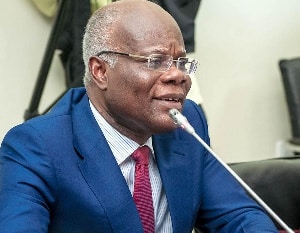
At a recent session of the Public Accounts Committee in Parliament, Member of Parliament representing Ningo-Prampram, Sam Nartey George, raised concerns regarding a contract awarded by the Ghana Revenue Authority (GRA) to Safaritech.
Sam George uncovered information indicating that Safaritech, a company purportedly registered in the United Kingdom, had actually been delisted since 2016.
In addition, he disclosed that the current address associated with Safaritech led to a tailoring shop located in Spintex.
These revelations have raised serious doubts about the legitimacy and credibility of the contract awarded by the GRA, as the company in question appears to have questionable registration status and an unconventional business address.
Questioning the GRA representatives, George stated, “Would it interest you if I told you that, according to our information, you engaged this company in 2020, despite it being delisted as a registered company in the UK since 2016? They had displayed the UK as their base of registration. What due diligence did you carry out before engaging them?”
In response, Dr. Ammishaddai Owusu-Amoah, the Commissioner-General of the Ghana Revenue Authority, admitted, “I will gather this information because I didn’t expect it to be part of today’s schedule. I don’t think that was around 2020, but I will check and provide you with the necessary information.”
Undeterred, Sam George emphasized, “Well, that doesn’t change the fact that in 2016, this company was delisted. Moreover, you imposed a 773 million US dollar back tax on MTN Ghana Limited, designated as the best corporate taxpayer in Ghana, based on a Safaritech report that KPMG disputed. What due diligence was carried out, and at what cost? Could you provide details of the consultancy that Safaritech conducted and its cost to the taxpayer?”
The GRA boss requested time to gather accurate information to provide a comprehensive response.
George then requested that the committee be furnished with the details of the cost associated with Safaritech’s engagement, to clarify the nature of their involvement with a company whose listed address is currently a tailoring shop on Spintex Road.
Based on this, the chairman of the PAC committee James asked GRA to provide this information before the House in two weeks.
The “2023 Future of Jobs Report” released by the World Economic Forum (WEF) has identified secretarial roles, cashiers, and clerks as the occupations experiencing the fastest decline worldwide.
This report sheds light on the impact of technology and digitalization on the corporate landscape.
The study emphasizes that a significant number of the fastest declining job roles are clerical or secretarial positions.
Occupations such as Bank Tellers and Related Clerks, Postal Service Clerks, Cashiers, Ticket Clerks, and Data Entry Clerks are expected to face the sharpest decline. These roles, characterized by manual and administrative tasks, are being phased out as automation and digital systems increasingly take over.
The WEF underscores the rapid advancements in technology as the driving force behind these changes. To remain competitive in the evolving job market, the report emphasizes the need for workers to adapt and upskill.
It highlights the importance of reskilling and acquiring digital literacy as essential tools for thriving in the changing workplace.
” The majority of fastest declining roles are clerical or secretarial roles, with Bank Tellers and Related Clerks, Postal Service Clerks, Cashiers and Ticket Clerks, and Data Entry Clerks expected to decline fastest”.
However, the report also brings positive news as it identifies sectors with significant job growth potential. Education, agriculture, digital commerce and trade are expected to experience large-scale job expansion in the coming years.
In the Education industry, the report forecasts a growth rate of approximately 10%, leading to the creation of 3 million additional jobs. Vocational Education Teachers and University and Higher Education Teachers are expected to benefit the most from this trend.
“Jobs for agricultural professionals, especially Agricultural Equipment Operators, are expected to see an increase of around 30%, leading to an additional 3 million jobs. Growth is forecast in approximately 4 million digitally[1]enabled roles, such as E-Commerce Specialists, Digital Transformation Specialists, and Digital Marketing and Strategy Specialists,” the report explained.
The World Economic Forum report indicates that as the global workforce continues to evolve, it is essential for both employees and employers to stay ahead of the curve. The WEF’s Future of Jobs Report aims to provide valuable insights and guide stakeholders in shaping a future where technology and human skills work hand in hand to drive economic growth and prosperity.
An exiled Ugandan writer Kakwenza Rukirabashaija, who claims to have been tortured for his writing, has affirmed his unwavering commitment to continue writing, stating that he will persist until his “last breath,” in an interview with the BBC’s Focus on Africa.
Despite the threats he faces, the 35-year-old writer expressed his desire to return home. He emphasized that his primary goal is to contribute to making Uganda a better place. Writing has served as a coping mechanism for him in the face of pain and adversity.
Rukirabashaija gained recognition for his satirical novel, “The Greedy Barbarian,” which exposes high-level corruption in a fictional country. His book “Banana Republic: Where Writing is Treasonous” recounts the alleged torture he endured while in detention in 2020.
After the publication of his second book, which enraged the authorities, Rukirabashaija was arrested again in 2021. Both of his novels were seen as direct criticisms of President Yoweri Museveni, who has held power in Uganda since 1986.
Following his online ridicule of President Museveni’s son, Muhoozi, Rukirabashaija was detained once more. Eventually, his passport was confiscated, but he managed to escape through a covert route and sought refuge in Europe in 2022.
Rukirabashaija’s decision to leave was primarily influenced by the advice of several medical professionals who recommended urgent medical treatment abroad.
Suffering from severe post-traumatic stress disorder, he is concerned about the potential psychological impact on his children resulting from the ordeals they have collectively experienced.
Nevertheless, his aspirations of returning home persist. While he acknowledges that forgiveness towards those who nearly took his life is a difficult prospect, he rejects the idea of remaining in exile and refuses to be labeled a “coward.”
The Ghana Cedi is currently trading against the dollar at a purchasing price of 10.9949 and a selling price of 11.0059, according to the Bank of Ghana’s interbank exchange rates for Wednesday, July 7, 2023.
The exchange rate for buying and selling the dollar in Accra’s Forex bureau is 11.50 to 11.80.
Against the Pound Sterling, the Cedi is trading at a buying price of 13.9679 and a selling price of 13.9830.
At a forex bureau in Accra, the pound sterling is being bought at a rate of 14.70 and sold at a rate of 15.40.
The Euro is trading at a buying price of 11.9527 and a selling price of 11.9646.
At a forex bureau in Accra, the euro is being bought at a rate of 12.25 and sold at a rate of 12.85.
The South African Rand is trading at a buying price of 0.5758 and a selling price of 0.5760.
The South African Rand is being bought at a rate of 0.30 and sold at a rate of 0.90 at a forex bureau in Accra.
The buying and selling prices for the Nigerian Naira are respectively 68.1439 and 68.2375.
Nigerian Naira is being purchased and sold at a forex bureau in Accra at a rate of 13.00 Naira for every 1 Cedi.
The buying and selling prices for the CFA are respectively 54.8248 and 54.8794.
CFA is being purchased and sold at a forex bureau in Accra at a rate of 1 Cedi = 17.00 CFA and 1 Cedi = 21.00 CFA, respectively.
Contrary to recent claims, a new study found that global rating agencies have not shown any appreciable prejudice against developing nations, including Ghana.
The study, which was co-authored by Dr. Richmond Atuahene, a banking consultant, and K.B. Asante, a financial analyst, examined the nation’s credit ratings between 2003 and 2023 and examined the methodologies used by rating agencies like Standard and Poor’s (S&P), Moody’s, and Fitch. It found that several downgrades to the country’s credit rating, particularly in 2022, were justified based on empirical data.
“From both quantitative and qualitative data reviews, there is no evidence that S&P, Moody’s and Fitch have been reckless in downgrading the Ghanaian economy eleven times in 2022,” the paper reads in part.
“All bonds issued, including Ghana’s debut bonds, have risk rated either B+, or BB- and BB+ by Fitch, Standard and Poor’s or Moody’s. Successful issuance of the various bonds was testament to investors’ renewed confidence as well as positive ratings by the three credit rating agencies. Credit rating agencies had been incredibly important for Ghana for several reasons,” the authors posited.
The report highlights that government’s favorable and positive ratings over the past 16 years have facilitated the raising of capital on international financial markets.
Furthermore, the study emphasizes the crucial role played by credit rating agencies in modern capital markets. Their assessments of sovereign entities have increasingly become benchmarks for regulators and global investors. Since 2007, international credit rating agencies have significantly contributed to reducing information asymmetry between the state and investors, offering valuable insights into the country’s creditworthiness.
Significantly, the report notes that agencies such as Fitch, S&P, and Moody’s have consistently assigned risk ratings of B+, BB-, and BB+ to all bonds issued, including Ghana’s inaugural bonds. The successful issuance of these bonds stands as a testament to the renewed confidence of investors and the positive ratings bestowed upon them by the three credit rating agencies.
“Empirical pieces of evidence based on both quantitative and qualitative data clearly showed that during the year 2022, the Ghanaian economy was downgraded eleven times by global credit rating agencies – Fitch, Moody’s and S&P – as a result of dwindled foreign exchange reserves; persistent depreciation of the local currency against major trading currencies like the US$, euro and UK pound sterling; high inflation, high fiscal deficit; current account deficits, high debt servicing obligations; lack of access to capital markets; shortfall in government revenues and an increase in expenditures associated with the pandemic; over-bloated government expenditures and the weakened economy – which clearly showed that Ghana was rightly classified as a defaulting nation by credit rating agencies,” it added.
The call over perceived bias began getting louder in the wake of the pandemic. In April 2020, a month after the nation’s first confirmed case of the virus, Minister of Finance Ken Ofori-Atta in an article titled ‘What does an African Finance Minister do now?’ famously quizzed: “Are the rating agencies beginning to tip our world into the first circle of Dante’s Inferno?” – A reference to ‘Limbo’, the first in nine circles of hell as captured in the 15th-century classic.
That same month, in opening remarks as Chairman of the Development Committee of the World Bank and International Monetary Fund (IMF) at the 2020 Spring Meetings, he called for a new global financial architecture, saying: “We must design a new global financial architecture in order to rebuild global growth and institute a new global public good” – a point he reiterated during the Vulnerable Twenty (V20) meetings this year.
Most recently, President Nana Akufo-Addo – speaking during the 30th annual general meeting of the African Export-Import Bank (Afrieximbank) in Accra said “reckless downgrades” by the agencies are detrimental to the economic fortunes of African countries, as he charged stakeholders to build strong financial institutions.
That sentiment was echoed by the Regional Director-United Nations Development Programme (UNDP), Ahunna Eziakonwa. Citing a recent study by the agency, she suggested that “less subjective assessments” by the agencies cost Ghana and other African nations US$75billion annually.
However, the authors believe that investors and other stakeholders were already wary of the nation’s high debt level, terribly exposed currency, and excessive reliance on imports. Coupled with the domestic debt exchange programme and unilateral suspension of Eurobond payments, these have seen the nation lose some of its pre-existing goodwill.
Meanwhile, to remedy the situation, they said it is crucial for government to promptly address and eliminate any policy uncertainties. This action, they argue, will create a favourable environment for domestic firms – motivating them to increase their investments in the economy.
The resulting accelerated economic growth will enable government to generate higher tax revenues, potentially leading to an improvement in the debt situation. Additionally, the positive rating suggests that increased domestic investment could also attract higher levels of foreign direct investments (FDI).
“The improving economic situation and government debt environment will allow risk rating agencies to adjust the country’s risk level upward. Economic growth and investment need to be stimulated to revive government’s debt position and return its credit ratings to investment grade.
“Achieving investment-grade ratings will increase investment inflows into Ghana, thus putting government in a position where its economic conditions will improve. Key strategies need to be developed and directed toward various investments in the agricultural sector and development projects – like road networks, railway systems and incentives, both domestically and internationally – to improve the country’s sovereign credit rating,” it added.
I bring you warm greetings from Governor Ernest Addison and the entire management team at BoG.
I am honoured to be providing the welcome remarks at this kick-off event to formalise the partnership between IFC, SECO, and BOG for the implementation of the Integrated Environment, Social, and Governance (IESG) Ghana Programme.
The IFC and SECO have been long-standing strategic and important partners to BoG in the development of key interventions for the banking sector. Our cooperation over the years has yielded many benefits in terms of capacity building and the development of market infrastructure to promote the development of Ghana’s financial sector.
Among other things, the IFC with SECO support were instrumental in the joint development of the Sustainable Banking Principles and Sector Guidance Notes by BoG, the Environmental Protection Agency, and the Ghana Association of Banks.
Following the launch of the Sustainable Banking Principles in November 2019, the IFC has provided additional technical support to BoG for the design and roll-out of a standardised reporting template by which banks now report to BoG’s Banking Supervision Department on the extent to which they are complying with the seven principles.
The IFC has also supported BoG through capacity building of BoG staff and the development of a road map for BoG’s own internal sustainability commitments under Principle 2 of the Sustainable Banking Principles.
Finally, IFC has supported the banking industry with the development of a roadmap for capacity building of the industry which is currently being rolled out to promote more effective implementation of the Sustainable Banking Principles by the end of 2023.
Building on these successes, this new partnership being launched today will deliver several outputs that will help make sustainable banking a core feature of banking in Ghana to help banks manage their ESG risk and to help promote a more sustainable and resilient economy.
The IESG Ghana Programme is a four-year programme of the IFC with funding support from the SECO. It seeks to promote an enabling environment for sustainable banking and to build capacity for improved ESG practices for financial intermediaries (FIs) and corporate clients to help promote stronger and more sustainable local businesses, boosting investments in key sectors of the economy, and leading to a more diversified and resilient economy.
Through its collaboration with BoG, IFC will continue to support the implementation of the Ghana Sustainable Banking Principles, build the capacity of local training partners on ESG-related matters, and support BoG’s ESG-related regulatory developments for banks and other regulated entities.
Ladies and Gentlemen, it is BoG’s expectation that this new partnership will help to firmly entrench good practices in sustainable banking in the Ghanaian banking landscape over the next few years. We see the launch of the IESG partnership today as a major milestone for promoting the resilience of the banking sector and the economy as a whole.
Sustainable banking can be a crucial tool for addressing the structural vulnerabilities of our economy, and can create long-term value for all economic actors, by promoting a more sustainable and equitable future. We also continue to count on the strong cooperation with the EPA and GAB to make the Sustainable Banking Principles an even bigger success.
On behalf of BoG, under the leadership of Governor Addison, I would like to thank the IFC and SECO again for their continued commitment to the development of a stable, inclusive, and resilient financial system for Ghana.
I wish us all a successful kick-off meeting and workshop and a mutually beneficial partnership under the IESG programme.
The Accra High Court has set a deadline of July 27, 2023, for the Founder of the now-defunct Capital Bank, William Ato Essien, to pay the remaining outstanding amount of GH¢12 million as part of the second tranche, as stated in the terms of settlement.
During the court hearing, Mr. Baffour Gyawu Ashia, representing the convict, informed the Court that an additional GH¢2 million had been paid, bringing the total payment to GH¢8 million since the last adjourned date. This leaves a balance of GH¢12 million for the second tranche of the agreed GH¢20 million, which was supposed to be settled by April 28, 2023.
Mr. Ashia stated that the convict’s company, Essien Swiss, had reached an agreement with another entity to generate additional funds for settling the debt. He requested the Court to release the convict’s passport, which was held in the Court’s registry, so that he could travel to gather the necessary funds.
In addition, Mr. Essien requested ample time to make the outstanding GH¢12 million payment to the State.
However, Mr. Alfred Tuah-Yeboah, a Deputy Attorney General, opposed the request for the convict to regain access to his passport, expressing concerns that he might not return to Court if granted permission.
Essien was convicted for embezzling over GH¢90 million of the Bank of Ghana’s liquidity support provided to Capital Bank at the time.
According to the High Court’s judgment, Essien was required to pay GH¢20 million as part of the GH¢60 million restitution by April 28, 2023, with the remaining amount to be paid by the end of December 2023.
The Court, presided over by Justice Kyei Baffour, an additional High Court Judge sitting as a Court of Appeal Judge, approved the filed Terms of Settlement presented by the Attorney-General and Ato Essien. As per the settlement, William Ato Essien was obligated to refund the sum of GH¢90 million.
The Attorney-General filed a motion requesting the Court to impose a custodial sentence on Ato Essien for his failure to pay the GH¢20 million by April 28, 2023.
Oil and gas businesses are required by local content rules to give preference to Ghanaians in their hiring procedures in an effort to localize the industry, but skills and knowledge gaps—particularly in highly specialized areas—remain a barrier.
Even after more than ten years of commercial oil production, Egbert Faibille Junior, Chief Executive Officer-Petroleum Commission, laments that international oil companies (IOCs) frequently struggle to find qualified Ghanaians to fill certain roles within the industry.
“When we engage with international oil companies and international service companies that hire our people, they always come back to us and say ‘we want to hire your people; however, we realise that the certifications they hold and qualifications do not meet the required standards’,” he said, calling for closer collaboration between industry and academia to bridge knowledge-gaps in the sector.
He stated that the industry’s qualifications adhere to international standards, which is both a challenge and an excellent opportunity for both industry and academia.
“Those qualifications have to be of international standards, and our educational institutions have a role to play in ensuring that the men and women are well-trained and qualified.”
Mr. Faibille Junior, who spoke at a conference organised by his outfit in Accra themed ‘Utilising trained Ghanaian technicians to achieve job-role localisation in the upstream petroleum sector’, noted that companies will gladly employ locals where the expertise exists – because the cost involved for bringing in an expatriate is way too expensive.
“Much as the world is now a global village and we get expatriates coming in, the truth and sad reality is that for each expatriate you see working in the oil industry in Ghana, the cost of bringing the expatriate, their living and working here, is passed on to Ghana when the crude is lifted,” he added.
On how the country should proceed if it wants to increase the number of highly qualified technical personnel in oil and gas, Mr. Faibille Junior said: “We need to deliberately train our own people, so that over a period of time they will take over the expatriate roles; and by that, the cost of oil and gas production in Ghana will go down.
“This way, our investor friends will make more money and our earnings from oil will also go up.”
Mr. Faibille Junior’s concerns are not isolated. For instance, last year the General Manager-Engineering at state-owned Ghana National Petroleum Corporation (GNPC), Victor Kofi Sunu-Attah, told the B&FT that although some progress has been made in promoting local content in the industry, much more is needed to indigenise the sector.
He lamented that after more than 10 years of production, the country still lacks core competencies and not many local companies are capable of executing fabrication and engineering jobs.
“We have tried all that we could to build capacity; we have upped it a bit, but a huge amount of it stays outside the country. “In the area of service, we need to up our game – although we are doing better in engineering than fabrication,” Mr. Sunu-Attah said.
Employment in upstream petroleum industry
The Petroleum Commission says a total of 3,759 Ghanaians are currently employed in the upstream petroleum sector out of a 4,147 workforce – of which 388 are expatriates.
However, those jobs held by expatriates are highly technical and at the high end of the industry, where local knowledge does not exist.
The Commission said local workers comprise 3,088 males and 671 females with varied technical expertise; including engineering, welding and fabrication, production operators, mechanics and instrumentation.
The Commission last year sponsored 150 technicians at a cost of GH¢4million to enhance their technical expertise at Takoradi Technical University under government’s Accelerated Oil and Gas Capacity Building (AOGC) programme; and they have gained employment in the petroleum industry and allied sectors, said Sarah Quayson Danquah, acting Director in charge of Localisation at the Commission.
She added that the Commission also sponsored nine instructors selected from Cape Coast, Ho and Tamale Technical Universities to undergo a ‘trainer-of-trainers’ programme in Canada to improve their skills, while 10 instructors will go to Singapore this year.
The conference
A symposium conducted by the Petroleum Commission has as its theme “Utilizing trained Ghanaian technicians to achieve job-role localization in the upstream petroleum sector.”
Participants included representatives of global oil and gas companies, corporate executives, government authorities, and service providers.
It sought to address problems with localizing job responsibilities in the upstream oil and gas industry, such as the inability of indigenous people to acquire adequate training and skill development.
The General Overseer of the Prophetic Prayer Palace International, Pastor Emmanuel Adjei, has shared his thought on the recent uproar over Archbishop Charles Agyinasare’s remarks concerning Nogokpo, a revered shrine in the Volta Region.
Pastor Adjei insisted that if Archbishop Agyinasare had accepted an offer from the Nogokpo traditional council, he would have been unhappy and would have even thought about leaving his devotion to God.
“I was in Canada when I heard the story, I think the people were extremists. They went too much. He came out and made a statement. He’s been in ministry for years. He has a track record. He is not a man that creates controversies. He has a good track record.
“Now he slips and makes a statement and now he comes back to the same location and retracts, I think it should die there. You overstretch the issues, why, do you have personal interests? I think it should die there.
“I said if the Archbishop had gone to Nogokpo, I would have stopped worshipping God. Because I will feel so ashamed, and disappointed because we see him as a father, we see him as a mentor and a leader. Now you leave our territory and go there, I’ll feel very disappointed,” 3news.com quoted him to have said.
During the Supernatural Summit held at the Perez Chapel headquarters in Accra on May 25, 2023, Archbishop Agyinasare preached about divine protection and the existence of evil forces.
During his sermon, the preacher provided several illustrations to reinforce his teachings, including an incident involving his team facing spiritual challenges following a crusade held in the Volta Region.
A statement made by Archbishop Agyinasare gained significant attention and triggered criticism from various segments of the public. As a result, a press conference was organized at the Royal Palace of the Dufia of Nogokpo, Torgbui Saba V.
During the press conference, the chiefs expressed their dissatisfaction and demanded that Archbishop Agyinasare appear before them within 15 days. They accused him of making derogatory remarks about Nogokpo, labeling it as the “demonic headquarters of the Volta Region.”
The chiefs voiced their disappointment and called for a resolution to address the negative impact caused by Agyinasare’s statements. They emphasized the historical importance of Nogokpo, highlighting how Ghana’s first President, Osagyfo Dr. Kwame Nkrumah, sought divine intervention from the Thunder Deity, Torgbui Zakadza, during the struggle for independence.
Spokesperson for Vice President Dr Mahamudu Bawumia, Dr Gideon Boako, has refuted claims that he is endorsing renowned Ghanaian footballer Asamoah Gyan to run for the Bortianor-Ngleshie Amanfro parliamentary seat on behalf of the New Patriotic Party (NPP), with the intention of unseating current NPP Member of Parliament (MP) Sylvester Tetteh.
Hon. Sylvester Tetteh had accused Dr. Gideon Boako of orchestrating his defeat by supporting the influential and affluent Asamoah Gyan, purportedly due to Tetteh’s unwavering support for Alan Kyeremanten’s candidacy in the NPP flagbearership race.
However, Dr. Boako strongly emphasized that he has never engaged in such activities and has neither met nor spoken to Asamoah Gyan in person.
“So this is how the likes of Sylvester Tetteh and supporters of Alan Kyeremanten want to run their campaign. I have never spoken to or met Baby Jet in person before. I have no idea he even wants to contest for parliamentary elections, let alone go and support him. SMH,” he said in reply to Hon. Sylvester Tetteh’s accusations.
According to reports, Asamoah Gyan is considering running for the Bortianor-Ngleshie Amanfro parliamentary seat. Rumors circulated in 2020 that he was getting ready to run for the position on the ticket of the New Patriotic Party (NPP), a group he finances.
In 2022, Asamoah Gyan Asamoah Gyan, in an interview with Kumasi-based SOMPA FM, gave the strongest indication yet that he could contest the seat.
“For me, it’s a positive thing we are hearing. When people choose you that’s the most important thing. I and my team have not thought about venturing into politics. But you might not know.
It is a positive thing that we’ve heard. There are many other places that have written to me to become a Member of Parliament. I’m not ready now because it’s a full-time thing and what I want to say is that I’m thankful they have confidence in me that I can lead them.”
“I’m neutral, I don’t align with any political party. I’ve been the Captain of Black Stars and so I can’t align with any political party because you don’t know the party that will come to power. I’m tagged as an NPP because NPP comes from my family. Busia brought my father from Wenchi to Accra so people tag me as NPP. I’m neutral and I’ll be open to any form of appointment from any political party.” He revealed.
In the NPP flagbearership race, Alan Kyeremanten and Vice President Dr. Mahamudu Bawumia are typically seen as the front-runners.
Samuel Okudzeto Ablakwa, a member of parliament for North Tongu, has disclosed that Ursula Owusu-Ekuful, minister of communications, improperly awarded a multi-million dollar contract.
The MP offered correspondence between himself and the Public Procurement Authority (PPA) in a post from July 6, 2023 on his social media accounts to support his accusations.
“In my latest exposé, I reveal how Communications Minister Ursula Owusu-Ekuful shockingly awarded a US$48million contract without PPA approval,” portions of his caption for the post read.
“The contract was dubiously awarded to the same Nigerian cabal which has hijacked the Communications & Digitalization sector,” he added.
Ablakwa’s request dated 8th June was titled “REQUEST FOR INFORMATION,” and read in part: “Respectfully, can you confirm if the Public Procurement Authority has granted procurement approval as required per the Procurement Act, 2003 (Act 663) as amended with (Act 914) to Ascend Digital Solutions under a US$48 million Rural Telephony Project contract purportedly for Engineering, Design, Build, Rollout and Managed Services which is being executed by the Ministry of Communications and Digitalization since the year 2020.”
The PPA in its response dated 30th June, 2023 and signed by Deputy Chief Executive Kwame Prempeh read: “We wish to inform you that our records do not reflect any information of the above-mentioned project.”
Read Ablakwa’s full post below:
In the midst of the ongoing political persecution by the Akufo-Addo government, it is important to shed light on the true perpetrators of severe wrongdoing against the Ghanaian people.
In my latest disclosure, I uncover a shocking incident involving Communications Minister Ursula Owusu-Ekuful, who granted a staggering US$48 million contract without obtaining the necessary approval from the Public Procurement Authority (PPA).
The PPA’s response to my request made under the Right to Information (RTI) Act confirms this blatant violation, which raises serious concerns. This particular contract was suspiciously awarded to a Nigerian group that has effectively seized control of the Communications & Digitalization sector.
It is worth noting that the removal of EC boss Charlotte Osei was justified on grounds of procurement breaches, while others have been unjustly incarcerated for far less severe procurement infractions. These stark inconsistencies in the treatment of individuals involved in procurement malpractices are deeply concerning.
A reports by local media says three employees of a well-known food manufacturing company in Kenya have been arrested after allegations surfaced of them forcibly stripping female staff members to ascertain their menstrual status.
Brown’s Food Company expressed deep regret over the incident, emphasizing that such actions are not in line with the company’s established procedures and values.
The incident gained public attention when Senator Gloria Orwoba highlighted it through a Facebook post, condemning the company for period shaming and sexual harassment. The controversy arose when a senior company official discovered a sanitary towel in the wrong disposal bin.
According to Senator Orwoba’s post, the official proceeded to gather female employees from the department in question, urging them to admit to the incident. When these attempts were unsuccessful, it is alleged that the senior official demanded that the women strip in order to verify their menstrual status.
In response to these serious allegations, Brown’s Food Company has suspended the accused individuals pending a thorough investigation. The company is committed to addressing the matter transparently and ensuring appropriate action is taken to uphold accountability.
President Paul Kagame of Rwanda has urged for immediate action to tackle various issues affecting Rwandan football, including the presence of witchcraft.
During a televised session titled “Ask the President” with the Rwanda Broadcasting Agency (RBA), President Kagame expressed his concern about unethical practices, particularly among coaches, such as witchcraft and bribery.
Rather than focusing on proper training and development, some individuals resort to these unethical practices, which President Kagame identified as a pressing matter that needs to be addressed.
Despite significant investments in the sports sector, Rwandan teams have faced challenges in achieving success. The national football team, for instance, has qualified for the Africa Cup of Nations only once, in 2004, and currently sits at the bottom of their qualifying group, yet to secure a victory.
Known for his passion for football and his support for the English club Arsenal, President Kagame has been actively involved in promoting sports in Rwanda. Since 2018, Rwanda’s Tourism Authority has maintained a controversial sponsorship deal worth £30 million ($42 million) with Arsenal Football Club.
The president of the Confederation of African Football (Caf), Patrice Motsepe, has stepped in to resolve a salary dispute between the South Africa women’s football team and the national federation.
The team’s preparations for the upcoming Women’s World Cup were thrown into disarray ahead of their final warm-up game against Botswana. In protest, the Banyana Banyana team boycotted the match and refused to sign contracts due to concerns over bonuses.
While FIFA had guaranteed each player $30,000 (£24,000) for their participation in the tournament, this amount was not included in the contracts provided to the players.
Patrice Motsepe, a wealthy South African businessman who also serves as the president of Caf, and his wife Precious Moloi, played a pivotal role in mediating an agreement between the two parties. Their foundation made a donation towards the players’ bonuses, helping to resolve the issue.
The Women’s World Cup is scheduled to commence later this month, with Australia and New Zealand as the host countries.
A trial has commenced in the Democratic Republic of Congo involving 27 individuals accused of participating in the kidnapping of taxi passengers in the capital city of Kinshasa.
The accused include four police officers, six young women who allegedly acted as bait for the victims, and 17 others. The victims were subjected to various ordeals, with some being robbed and released, while others were held against their will for several days until a ransom was paid.
Kinshasa, Africa’s third-largest metropolitan city after Cairo and Lagos, has over 30,000 registered taxis. However, due to the prevalence of these kidnappings, residents often feel fearful when using taxis.
The trial is of particular significance as the authorities are preparing for the upcoming Francophone Games, a major competition that showcases sports and arts from French-speaking countries worldwide.
With the games scheduled to commence on July 28, ensuring public safety and addressing the issue of taxi kidnappings is a top concern for the authorities.
To raise funds for the displaced individuals seeking refuge in his small kingdom, the Fon of Akum, George Ndikum II, a Cameroonian king, is currently visiting the United Kingdom.
Having held the throne for 65 years, the Fon of Akum presides over an area in the North-West region of Cameroon. This region, along with another English-speaking region, has experienced a separatist conflict for the past six years. The conflict emerged from the grievances of those in the Anglophone regions who have long felt marginalized by the predominantly French-speaking majority in the country.
Akum, a picturesque village situated in the highlands, relies heavily on agriculture as its main source of livelihood. However, it is now facing significant challenges due to the influx of people who have been displaced by the war. Amnesty International recently released a report highlighting rampant human rights abuses and other crimes, including executions, torture, and rape, taking place in the conflict.
To assist those who have lost their homes in this ongoing crisis, the Fon of Akum seeks to secure financial support during his visit to the UK.
The Fon of Akum has been feted since his arrival last Wednesday by London’s Cameroonian community.
Events during the monarch’s visit are focussed on raising funds for displaced children to give them access to education and to provide food.
“Every contribution, no matter how small, holds immense power.
Like the drops of rain that come together to form a river, our collective efforts can create a powerful current of change,” said Charles Mambo, UK president of the Akum Welfare Association, during a gala event that brought hundreds of people from around the world for the first Akum General Convention.
“As the Akum people say, ‘A tree is only as strong as its roots.’ Let us strengthen the roots of these children, allowing them to grow tall and strong, capable of weathering any storm that comes their way,” he said.
The Fon’s visit continues in London, where he is attending various events, until this weekend.
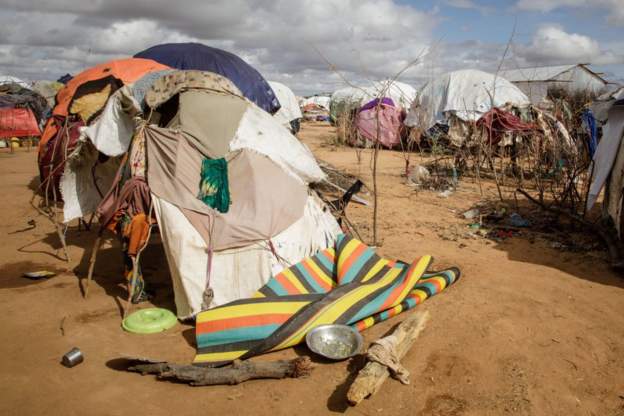
The Kenyan government has announced a delay in the planned reopening of its border with Somalia, citing recent attacks attributed to the Islamist militant group al-Shabab.
Interior Minister Kithure Kindiki stated that the phased reopening of border posts along the extensive frontier would not proceed as originally announced in May. This decision has been prompted by the “recent incidents of threats and cases of insecurity in the frontier counties.”
The move comes after separate incidents near the border resulted in the deaths of five civilians and eight police officers last month.
The border between Kenya and Somalia was initially closed in 2011 due to frequent attacks by al-Shabab, which has been engaged in an insurgency against the Somali government in Mogadishu.
In addition, the minister disclosed that Kenya plans to begin integrating refugees who have been residing in camps within a few weeks as part of a new approach to managing them.
The new system aims to identify and address “agents of terror and criminals” who exploit refugee spaces to harm host communities.
The Minister for Food and Agriculture, Bryan Acheampong has announced that government would stop providing farmers with fertilizer subsidies starting of April 11, 2023.
He claimed that despite the subsidies costing the country GH3 billion over the previous six years, it had little impact because of the rampant corruption that disfigured the intervention.
“We have canceled subsidy since 11th April, 2023 when I assumed office. Because the subsidy has cost the nation GH¢3 billion in the last 6 years. Yes, it has moved Agriculture contribution to GDP from 2% to about 6% but the amount of money invested and the way the structure has behaved is due to misconducts in the subsidy”.
The Agric Minister said “The subsidy was not reaching the farmers but the people in the middle colluded such that the farmers were not benefiting from the subsidy. I believe if they were really benefiting in the full hog the way the government intended it would have been better.”
Bryan Acheampong hurried to add, however, that the government will soon implement a guarantor system where it will ensure the farmers’ access to fertilizers in exchange for repayment after harvest.
“With this new program, there will be no subsidy. You don’t also have to come up with that GH¢85 that you have to pay. What the government is going to do is to sign an agreement with the suppliers to guarantee for the farmers to provide the fertilizers on credit and after harvest payback”.
The Minister said these when answering questions from the local media in Kwahu dubbed “The Big Interview”.
The flagbearer of Ghana’s largest opposition party, John Dramani Mahama, has consistently criticized the government’s decision to discontinue the free fertilizer supply program, arguing that it has exacerbated the challenges faced by Ghanaian farmers.
Mahama has pledged to reinstate the free fertilizer supply program if his party, the NDC, regains power in 2025.
However, Bryan Acheampong holds a different perspective and believes that the cancellation of the program and the implementation of the guarantor system are in the best interest of the country.
Acheampong disclosed that the government is entering into an agreement with a private fertilizer company in Takoradi to produce fertilizer using gas waste. This initiative aims to address the significant fertilizer deficit exacerbated by the Russia-Ukraine conflict, which has disrupted global fertilizer production and supply chains.
A 21-year-old man from South Africa, who stands accused of the murder of six sex workers, including one who was pregnant, now faces an additional charge of rape.
As reported by Eyewitness News, Sifiso Mkhwanazi was arrested and charged last October after the authorities discovered the decomposed bodies of the victims at a workshop belonging to his father.
Mkhwanazi appeared before the Johannesburg Magistrates Court on Tuesday for the proceedings.
Initially, the prosecutors had indicated their intention to transfer the trial of the 21-year-old suspect to a high court. However, during the court session, prosecutor Tshepo Mahange kaMzizi informed the court that they had obtained additional details regarding the case.
“There is a matter which is not a part of this prison case that the directive from the director of Public Prosecutions in the south is asking that we also pursue – which is a matter of Sexual Offenses Act which happened prior to the events of this present situation of the six dead bodies,” kaMzizi said.
kaMzizi also said they will review Mkhwanazi’s rape docket and likely add it to his murder trial.
The 21-year-old was initially accused of killing one of the six sex workers, however, Eyewitness News reported he has since been charged in connection with the five other murders.
The suspect’s trial has been adjourned to August.
South Africa has one of the highest rates of sexual violence against women. Per the National Institute of Health, “South Africa is considered to be the rape capital of the world with 10 818 rape cases reported in the first quarter of 2022.”
The institute also states that the “rate at which women are killed by intimate partners in this country is five times higher than the global average.”
Cesvi also states that 40% of men in South Africa have “beaten their partners and one in four has committed sexual crimes.” “Even if only 2% leads to charges being laid, violence against women is a growing phenomenon and as many as one woman in four has undergone beatings or abuse,” Cesvi adds.
The organization said poverty was the main cause of the staggering rate of violence against women in the country.
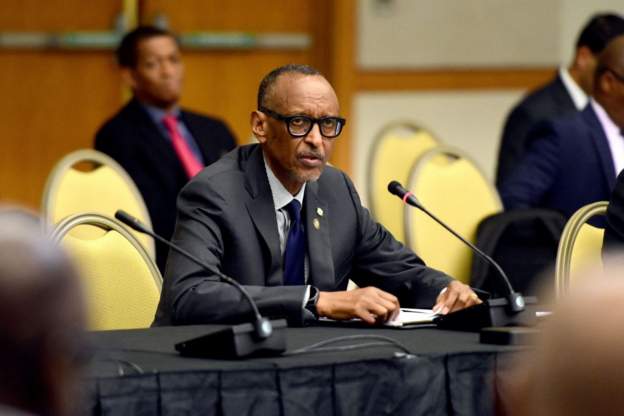
At the 45th Caribbean Community (Caricom) summit in Trinidad and Tobago, Rwandan President Paul Kagame pressed for closer connections between Caribbean and African nations and urged both areas to stop pointing the finger at one another for their issues.
“We should not be comfortable blaming others for our problems, including the harm we inflict on ourselves,” President Kagame said.
“The starting point here is how we govern our own individual countries, striving to be the best we can be, with a culture of accountability,” he added in a statement.
“We need to come together in real terms and focus on concrete initiatives which address the challenges that nations like ours face today,” Mr Kagame said.
He emphasized the need for both areas to promote more inclusive credit terms for nations that require loans as well as more collaboration in the fight against climate change.
He also spoke about opportunities for both regions to improve connectivity when it comes to “transport and telecommunications”.
He also mentioned Haiti, which Rwanda has previously said it was willing to support in terms of security and peacekeeping, according to the Miami Herald.
President Kagame said his country “cannot look away” and that Rwanda’s own painful history shows that “nothing is beyond repair”.
Haiti has descended into increasing lawlessness since the assassination of President Jovenel Moïse in July 2021.
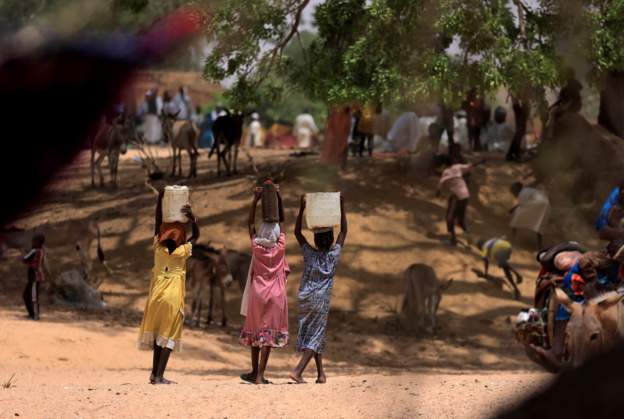
The United Nations has strongly denounced the escalating prevalence of sexual violence targeting women and girls in Sudan during the ongoing conflict that has spanned over two months.
The UN human rights office in Sudan has reported receiving credible information regarding more than 20 cases of conflict-related sexual violence, affecting at least 57 women and girls. Disturbingly, one incident involved the rape of up to 20 women in a single attack.
Martin Griffiths, the UN’s chief humanitarian official, expressed deep concern over these abhorrent acts and emphasized that it is morally unacceptable for Sudan’s women and children to endure such traumatizing experiences.
The World Health Organization (WHO) and its partners have announced plans to distribute approximately 18 million doses of the world’s first malaria vaccine to 12 African nations by 2025.
These countries include Malawi, Ghana, and Kenya, where the Mosquirix vaccine has already been utilized in pilot programs. Due to limited supply and overwhelming demand, priority will be given to countries with the most urgent need, as well as those where the vaccine can have the maximum impact.
Regrettably, Mozambique and Sudan have been excluded from this distribution due to their high rates of vaccine drop-outs. The WHO has made this decision to ensure that the vaccine reaches the intended recipients effectively.
The vaccine, developed by the British pharmaceutical company GSK, has the potential to save one life for every 200 children vaccinated, according to the WHO. Malaria remains a significant threat in Africa, claiming the lives of approximately half a million children under the age of five each year.
Chief Executive Officer (CEO) of MASLOC, Hajia Abibata Shanni Mahama Zakariah, has urged staff members, stakeholders, and other affiliated entities to give it their all in order to capitalize on the success of the AfDB funding to the organization.
At the joint $31.34 million Post COVID-19 award announcement by the African Development Bank and the Government of Ghana in Accra, Hajia Zakariah made this statement.
She emphasized the importance of paying close attention to making sure that the project’s key performance metrics are properly followed in order to realize its maximum benefits.
Additionally, she emphasized the significance of implementing the Livelihood Restoration Program with a strong focus on a comprehensive strategy for restoring livelihoods. This strategy aims to provide crucial support to youth and women, enabling them to swiftly reestablish sustainable income-generating activities and mitigate the vulnerabilities arising from the far-reaching effects of the COVID-19 pandemic.
Hajia Zakariah further emphasized the importance of entrepreneurship and employment opportunities for youth and women, recognizing the intricate link between livelihoods, income sources, and vulnerability. In light of this, she recommended that the primary livelihood support program concentrate on skills training and address the specific needs of disadvantaged and vulnerable individuals and groups within the youth and women populations.
She emphasized the significance of identifying marginalized or disadvantaged individuals and groups who are more likely to face severe repercussions from the impacts of COVID-19. By recognizing the heightened challenges they face, appropriate measures can be taken to alleviate their conditions and ensure equitable support is provided.
Expressing her gratitude to both the Government of Ghana (GoG) and the African Development Bank (AfDB) for their support to the Microfinance and Small Loans Center (MASLOC), she acknowledged that this grant marks a significant milestone for MASLOC, opening doors to additional financing opportunities that can meet the growing demand beyond traditional institutional sources.
She emphasized that she would continue to guarantee that the organization fulfills its responsibility in alleviating poverty by creating jobs and wealth for both women and youth.
Hajia Mahama Zakariah emphasized the importance of MASLOC having a positive image to match its brand, which will assist position the institution to win future donations for the aim of aiding disadvantaged groups based on gender, economic status, and other factors.
She was upbeat, considering that the implementation of new reforms has been swiftly developing and contributing to the establishment’s strong image since her appointment as CEO.
Hajia Zakariah took the opportunity to thank the government and the AfDB for the funding noting that it is very important and strategic to complementing this unique initiative to reach out to more Developmental Finance Institutions to supplement their efforts in providing access to financing for all customer segments across sectors, particularly those in agriculture value chains, MSMEs, Youth and Women businesses.
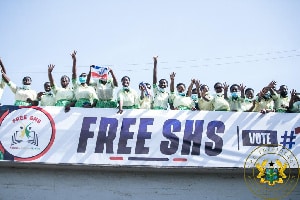
The cumulative investment in the government’s Free Senior High School Program, according to Mr. Mohammed Amin Adam, Minister of State at the Ministry of Finance, was GH5.3 billion by the end of 2021 rather than the GH7.62 billion earlier stated.
In response to a query from Mr. Clement Abas Apaak, Mr. Adam, Member of Parliament (MP) for Builsa South of the National Democratic Congress (NDC), made the announcement on the floor of Parliament on behalf of Mr. Ken Ofori-Atta, the Minister for Finance.
“Mr Speaker, we invested GH¢3.2 billion to implement Free SHS, resulting in over 1.2 million teenagers being in secondary school now, looking forward to better opportunities in life. For their parents and families, this has translated into GH¢2.2 billion in savings,” he said.
Mr. Apaak wanted to know why the cost of implementing the Free Senior High School (Free SHS) had increased dramatically from GH3.2 billion since its inception, as reported in the 2020 Mid-Year Review of the Budget Statement and Economic Policy, to GH7.62 billion, as reported in the 2021 Mid-Year Fiscal Policy Review of the Budget Statement and Economic Policy.
Mr. Adam Amin clarified that the sources of funding for the Free SHS were included in the 2021 Mid-Year Fiscal Policy Review in accordance with the government’s desire for budget transparency.
“Mr Speaker, over the years GH¢7.62 billion has been allocated to implement the Free SHS Programme.,” he said.
He explained that the increase in allocation was a result of the growth in cohorts and enrollment, adding that in the 2017/2018 academic year, total enrollment was 362,108 and that increased to 432,791 in the 2018/2019 academic year.
“Mr Speaker, by the 2021/2022 academic year, enrollment reached 465,242. Subsequent allocations increased because of the number of cohorts and for that matter, the number of enrollments has been increasing,” he told Parliament.
Mr Adam Amin said the cumulative allocation for the programme did not usually and naturally translate into the amount spent and invested in the Free SHS Programme for key two reasons; how the government was able to spend and invest depended on revenue performance and non-alignment of the financial and academic year, which required that reconcile occurred before amounts were fully paid in the next financial year.
According to him, the 2021 West African Senior School Certificate Examination results being the second batch of the “Akufo-Addo graduates” showed 54.08 per cent of the students recording A1-C6 in English, as opposed to 51.6 per cent in 2016; 65.70 per cent recording A1-C6 in Integrated Science in 2021, as opposed to 48.35 per cent in 2016; 54.11 per cent recording A1-C6 in Mathematics, as compared to 33.12 per cent in 2016; and 66.03 per cent recording A1-C6 in Social Studies, as compared to 54.55 per cent in 2016.
“Mr Speaker, as a result of this transformational and inclusive government intervention, about 2 million young people have either found a pathway to further education, training, apprenticeships, employment and a potentially prosperous future,” he said.
He added that it was President Nana Addo Dankwa Akufo-Addo’s priority to protect the sovereign rights of the people to pursue dignified and fulfilling lives and ensured that young people were equipped with the skill set to achieve social mobility.
“Mr Speaker, the government believes that the Free SHS Policy sets a real solid foundation for our young people to compete in the global marketplace and reach even higher heights by the grace of God,” he said.
MOBO Awards nominee, renowned for his chart-topping track “Dance For Me,” Eugy, took to Instagram on Wednesday, July 5, to announce a transformative decision.
Eugy revealed through a heartfelt video of his baptism, accompanied by a caption which said that he couldn’t have predicted embarking on such a life changing journey.
“If someone asked me at the beginning of 2023 what my year would look like I don’t think this is what I would’ve said. That’s how powerful the Lord is.
“When Jesus calls you there’s nothing you can do about it. You must heed and answer. I’ve always said that I know God loves me but l’ve also always tried to manoeuvre using my own might & strength and let’s be honest I wasn’t living righteously – but there comes a point when you realise you must submit to the almighty father and allow his will to be done.
The singer added that he is not perfect and he is not better than anyone else but the grace of God found him.
Eugy, an influential figure in the Afrobeats genre both in the UK and beyond, recently expressed his profound transformation after being baptized and embracing his newfound faith in Christ. With a renewed sense of purpose, he eagerly anticipates the promising journey that lies ahead in the future.
“I vow to move forward purposefully and with a clean heart. I got baptised last Sunday and I was blessed enough to have my Dad, Pastor Joe (white t-shirt) and Uncle, Pastor Joshua (Grey t-shirt) usher me into this new life. I give God all the praise. Looking forward to what the future holds. Love always,” he added.
To signify the start of a new era, Eugy has also cleared every memory of his “old life” on his social media pages.
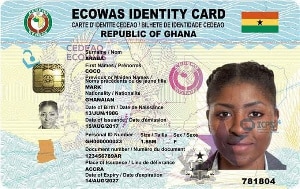
Executive Secretary of the National Identification Authority (NIA), Prof. Kenneth Agyemang Attafuah, has made it known that more than 800,000 printed national identification cards (Ghana Cards) are still awaiting collection.
To facilitate the retrieval of these IDs, the NIA has established 276 district offices, each corresponding to a constituency, as well as 16 regional offices.
Prof. Attafuah urges individuals who have undergone registration but have not yet received their Ghana Cards to visit the nearest office to obtain their IDs.
This situation arises at a time when numerous individuals attribute their inability to participate in the recent SIM card re-registration process to the lack of a Ghana Card, which is the sole accepted national ID for the exercise. As a consequence, many mobile phone users have had their numbers blocked.
Meanwhile, the NIA reports that it has registered a total of 17.4 million individuals aged 15 and above since 2019, out of a population of 31 million. Among this number, 16.3 million people have received their Ghana Cards. It is estimated that approximately 2.5 million individuals have yet to be registered and issued their identification cards.
The Authority is hoping to undertake a mop-up exercise to register the remaining citizens over a three-month period.
For those aged 0 to 15 years, the Authority said it is working with the Births and Deaths Registry and the Ghana Health Service (GHS) to register and provide new-borns with their unique identity numbers linked to that of their parents.
But for children aged 6 to 14 years, a partnership arrangement has been made with the National Health Insurance Authority (NHIA) to begin registering and issuing them their Ghana Cards.
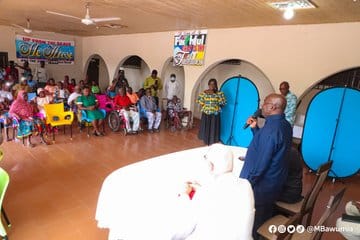
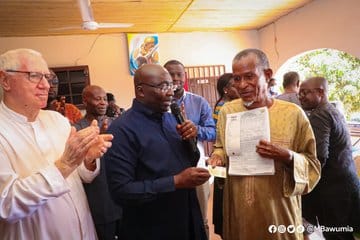
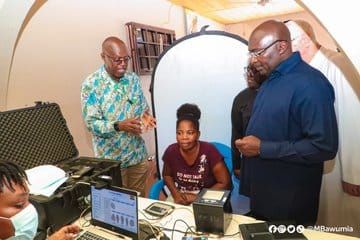
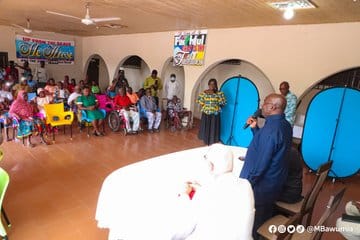
Prof. Attafuah revealed this during a ceremony to register some 50 cured lepers at the Weija Leprosarium, and intimated that no Ghanaian will be left behind in the registration of Ghana Cards.
It is against this background that he said efforts are being made to go around the country to also register inmates and patients of specialised institutions, including homes for cured lepers and hospitals among others.
Despite their disability that prevented cured lepers from joining the mass registration exercise, Prof. Attafuah explained that the NIA has devised a scheme to capture their biometric data using the facials, irises and ears of those being registered.
“It is an important occasion because it assures the people of this country of our bounding duty to ensure social, economic and political inclusion,” he said.
All Ghanaians per the law establishing the authority, regardless of their social and economic status, must be registered onto the national identity register. To this end, he indicated that the NIA will proceed to register those in prisons as well.
Vice President Dr. Mahamudu Bawumia, through whose facilitation the registration was undertaken for the cured lepers, acknowledged the Ghana Card as important for all citizens, as it will be required for many official undertakings in the future.
Because of this, he said, it is required that nobody is left out or denied a chance to be registered. It is in this regard that the opportunity has been created to register the cured lepers, he said.
“This is going to be repeated in other parts of the country,” he assured, adding that for instance the law prescribes some 17 mandatory uses of the Ghana Card – for which reason everyone must be registered by the NIA.
He commended the NIA for being able to register a significant number of Ghanaians, while revealing that usage of the GhanaCard has gone up – with data showing over 120 million identity verification using it.
Head of the Weija Leprosarium, Rt. Rev. Father Andrews Campbell, while welcoming the exercise at the facility also noted the challenges faced in being able to care for those at the Leprosarium.
He entreated the public to continue their assistance to leprosy patients across the country, given the lack of funding. He was very thankful in this regard to Vice President Dr. Bawumia for his keen interest in helping the cured lepers.
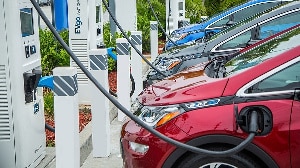
Minister of State at the Finance Ministry, has revealed government’s intention to construct approximately 1,000 electric charging stations throughout Ghana by 2028.
According to the minister, this initiative aims to accelerate Ghana’s position in the electric vehicle sector and aligns with the implementation of an energy transition framework.
Speaking at a conference on Climate Finance for Sustainable Transition in Africa, the minister emphasized the need for increased investments totaling around $600 million from now until 2070. These investments are crucial for Ghana to achieve sustainable energy sources as part of the transition framework.
He acknowledged that careful planning and execution are necessary for the energy transition plan. However, he also highlighted the evident and long-lasting presence of electric vehicles, indicating that they are here to stay.
“With more than 1,000 electric vehicles already in operation across Ghana, government aims to build an additional 1,000 electric charging stations within the next five years to provide the necessary infrastructure to promote EV adoption throughout the country,” Dr Amin Adam noted.
Regarding the regulation of electric vehicles, the Minister of State highlighted the implementation of comprehensive guidelines by the Energy Commission of Ghana to govern their manufacturing and usage.
Additionally, the minister emphasized the establishment of car manufacturing companies that are already operational within Ghana.
“By establishing the required electric charging stations, the government aims to encourage these companies to produce electric vehicles locally, further supporting the country’s sustainable transportation goals,” Dr Amin Adam said.
“The commitment to set up electric charging stations aligns with Ghana’s broader energy transition plan, which seeks to reduce greenhouse gas emissions, enhance energy efficiency, and promote the use of renewable energy sources,” he added.
As of today, July 6, 2023, the Bank of Ghana’s Interbank forex rates indicate that the Ghana Cedi is being traded against the US Dollar at a buying price of 10.9949 and a selling price of 11.0059.
At a Forex bureau in Accra, the US Dollar is being bought at a rate of 11.50 and sold at a rate of 11.80.
Regarding the Pound Sterling, the Cedi is being traded at a buying price of 13.9767 and a selling price of 13.9918.
At a forex bureau in Accra, the Pound Sterling is being bought at a rate of 14.60 and sold at a rate of 15.30.
For the Euro, the buying price is 11.9541 and the selling price is 11.9660.
At a forex bureau in Accra, the Euro is being bought at a rate of 12.20 and sold at a rate of 12.80.
The South African Rand is being traded at a buying price of 0.5850 and a selling price of 0.5854.
At a forex bureau in Accra, the South African Rand is being bought at a rate of 0.30 and sold at a rate of 0.90.
The Nigerian Naira is trading at a buying price of 69.5529 and a selling price of 69.6466. .
At a forex bureau in Accra, Nigerian Naira is being bought at a rate of 13.00 Naira for every 1 Cedi and sold at a rate of 19.00.
For the CFA, it is trading at a buying price of 54.8184 and a selling price of 54.8730.
At a forex bureau in Accra, CFA is being bought at a rate of 17.00 CFA for every 1 Cedi and sold at a rate of 21.00 CFA for every 1 Cedi.
Our forex bureau rates are provided by Afriswap Bureau De Change in Osu, Accra.
Note that these rates may be different at a forex bureau near you. Our forex bureau rates are provided by Afriswap Bureau De Change in Osu, Accra.
Data available at the Ghana Revenue Authority (GRA), has it that betting companies have since 2019 paid an estimated GH450million to the government in various forms, including taxes and licensing fees.
The US$100 billion global sports betting industry has significantly aided in the growth of the world economy, including Ghana, according to secretary of the Ghana Association of Sports Betting Operators (GHASBO), Dr. Kweku Ainuson, who made this announcement at a compliance workshop organized for members of the Association in Accra.
GHASBO has urged the government, through the GRA, to reconsider the implementation date of the amended Act, which imposes a tax on all betting winnings, currently set for July 1, 2023.
Director of Betway Ghana, Mr. Ainuson, revealed that GHASBO has written a letter to the GRA, expressing their appeal.
Furthermore, GHASBO is actively working on establishing a self-compliance regulation mechanism to ensure that all its members adhere to the law.
The association also expressed its willingness to provide financial support for any corporate social responsibility initiatives initiated by the Gaming Commission.
On March 31, 2023, Parliament passed the Income Tax (Amendment) (No.2) bill, 2022 into law, reintroducing a 10 percent tax on lottery winnings that had been eliminated in 2017.
The new tax, which affects betting and lottery winnings, will apply to domestic punters. In addition, betting companies operating in the country will face a 20 percent tax on their revenue.
Following the law’s passage, Ghanaians expressed diverse views. While some hailed the decision as a means of generating cash for the state, others criticised it as yet an additional burden on an already over-taxed population.
A representative of the GRA, Thomas Agorsor, said since passage of the act and its ascent into law, the Authority has not collected any taxes in winnings from operators. He however said that from July 1, 2023, operators which have failed to calibrate their system must cease operations.
He indicated that enough of a grace period – of almost two months – has been given for operators to re-calibrate and meet the deadline.
Currently, a total of twenty-one betting companies are operating in the country.
Board Chairman of the Gaming Commission, Gary Nimako Marfo, stated that the outfit has instituted sufficient monitoring systems to ensure all genuine winners receive their winnings from operators.
He urged aggrieved gamblers to address grievances to the Commission for immediate redress.
Head of Compliance at the Financial Intelligence Centre (FIC), Seth Nana Amoako, said the FIC is committed to ensuring that all betting companies are compliant with anti-money laundering laws and other international standards.
According to him, all betting companies are mandated to keep records of their customers and update the same at all times; and are expected to conduct risk assessments to ascertain delivery channels, geographical locations and customer base.
The Data Protection Act 2000, Act 843, mandates that all betting companies are registered by the Data Protection Commission and provides for the protection of data collected by online betting companies.
The sanctions regime of non-compliant companies is between 160 to 10,000 penalty units, in addition to 10 years imprisonment for data breaches.
The one-day GHASBO regulatory compliance workshop powered by Betway was organised in collaboration with the Gaming Commission and Ghana Revenue Authority.
Representatives of other stakeholders including the Criminal Investigations Department (CID) Unit of the Ghana Police Service, Data Protection Commission, Financial Intelligence Centre, and Telecommunications Service Providers were in attendance.
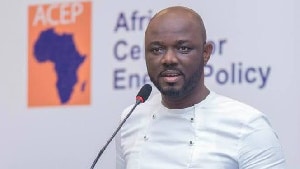
The Africa Centre for Energy Policy (ACEP) has raised concerns regarding the government’s decision to extend the contract with AKSA Plant for a duration of 15 years.
The Africa Centre for Energy Policy highlights that the AKSA power plant, which they consider to be outdated, has already generated approximately US$700 million for capital recovery and fixed operation and maintenance expenses, despite operating at an average utilization rate of 16 percent between 2017 and 2022.
However, with the contract extension, the plant is now assigned a capital recovery charge of around US$750 million for the extended period.
The AKSA plants consist of older Wartsila engines assembled by a private developer during the period of power outages (known as “Dumsor“) in 2015. These units were procured from various countries such as Cyprus and Sri Lanka at a cost ranging from US$1.2 million to US$2 million per unit.
According to ACEP, the total investment cost of the projects should not exceed US$60 million, a fact that the sector regulators are already aware of. These concerns raised by ACEP highlight the need for transparency and careful assessment of investment decisions in the energy sector.
“Over the past six years, the company has earned approximately US$700million from the people of Ghana for capital recovery and fixed operation and maintenance. Remarkably, these same plants are now being assigned a capital recovery charge of about US$750million for the next 15 years under the pretext of retrofitting them to improve efficiency. In other words, government and the Electricity Company of Ghana (ECG) suggest that these over-20 year-old plants will operate efficiently for another 15 years,” it said in a new report.
The approval of the deal by both the Energy Commission and Public Utility Regulatory Commission (PURC) has raised additional questions from ACEP, as they express concerns over the potential negative impact on the power sector.
In its report on the power sector released in July, ACEP reiterates the importance of deploying highly efficient power plants in Ghana to ensure long-term sustainability and prudent management, enabling cost savings and reliable electricity supply.
The AKSA power plants, consisting of older Wartsila engines assembled by a private developer in 2015, were sourced from various countries such as Cyprus and Sri Lanka at costs ranging between US$1.2 million and US$2 million per unit.
ACEP, a civil society group, argues that Ghanaians have been overcharged for the facility. Despite the conclusion of the current arrangement, ACEP further contends that this stance is not only incompetent but also undermines the engineering capabilities of newer power generation systems.
“Proper system planning will ensure that generation additions deploy state-of-the-art modern equipment, mainly when the state is the fuel supplier. It is also a basic fact that old plants are less reliable.
“For a power system struggling to recover from persistent power interruptions, planning to build long-term efficient power systems is a fiducially duty of government and its agencies. No company should promise a reliable power supply from dead plants, no matter how cheap the promise would be,” it stated.
Following this development, ACEP opined that inconsistencies surrounding the justification for extending these power plants necessitate a closer examination. This comes on the back of explanations from the Ministry of Energy that there is a current need for additional capacity; a position ACEP says contradicts the ongoing assertion that there is already excess capacity.
Meanwhile, it said ECG persistently attributes the under-recoveries to this purported excess capacity: “Furthermore, a perplexing shift in perspective has occurred; as individuals who previously criticised the concept of take-or-pay agreements now deem it acceptable when the percentage is lower – about 40 percent in the case of AKSA”.
“It is important to note that even a mere one percent of take-or-pay becomes problematic when a plant is deemed surplus to requirements. In essence, take-or-pay is not a problem when the plant is required. It is only a risk mitigation measure to guarantee the repayment of investment capital, which has proven to be relevant in our context. Had the companies not signed take-or-pay agreements, there would have been a high chance that government would ignore paying the IPPs for their investments.
“These inconsistencies in reasoning and selective acceptance of unfavourable terms raise concerns about transparency and accountability. It is crucial to scrutinise these contradictory narratives and render the sector free from political expediency. It is imperative to hold those involved accountable and ensure efficient decision-making that aligns with the Ghanaian people’s overall welfare. This is a test that the new AKSA contract fails at all levels. The mysteries surrounding the AKSA project would be subject to criminal investigation in any serious country,” the ACEP report noted.
More worryingly, it said the same AKSA projects are under scrutiny by the United States government authorities for alleged bribery payments to Ghanaian government officials.
But while extending the AKSA plant – the AMERI plant for which Ghanaians have paid the full value of US$510 million – is idling and deteriorating. The plant has been left neglected under the pretext of relocation to Kumasi, ACEP fumed.
The plant’s lack of maintenance has rendered it deplorable – with leaky roofs, damaged air-conditioners and non-operating computers in some of the units.
While the relocation tarries and the plant deteriorates, the pipeline to supply gas is already completed – requiring a pass-through of its cost to the public through tariffs.
In addition, the Ghana National Petroleum Corporation (GNPC) is currently requesting a tariff adjustment to incorporate the gas discounts granted to Genser, an amount estimated by ACEP and Imani to be approximately US$1.5 billion throughout the 16-year duration of the contract.
Moreover, ACEP highlights the need for investments in converting other single-cycle plants of the Volta River Authority (VRA), such as the KTPP and TTIP, into combined-cycle plants to achieve higher efficiency compared to AKSA.
Despite these critical assets requiring attention, ACEP concludes that they are being neglected while the Electricity Company of Ghana (ECG) and the Ministry of Energy continue to extend contracts for other power plants on a take-or-pay basis.
At a parliamentary debate on July 5, 2023, member of parliament for Akatsi South, Bernard Ahiafor, expressed his belief that countries practicing LGBTQ+ will cease to exist within the next five decades.
Ahiafor justified his prediction by referring to the concept that when humans were created, they were instructed to procreate and populate the Earth. Therefore, in his view, countries that deviate from this natural order will eventually perish.
It’s important to note that these statements were made in the context of a debate in support of the passage of the anti-LGBTQ+ legislation.
“Countries practicing LGBTQ+ activity, I give them 50 years by prophesy they will be extinct on earth. Most of those countries will no longer exist on earth, very soon they may even have to be taking labour force from countries not practicing LGBTQ+ activity and that is not the way we are to go,” he said.
Emphasizing Ghana’s divergence from the global trend, Bernard Ahiafor underscored his endorsement of the bill, stating that Ghana aimed to follow a different path.
He expressed his enthusiasm for the legislation, highlighting that the Promotion of Proper Human Rights and Family Values Act did not contravene any provision of Ghana’s 1992 constitution.
“Mr Speaker look at the constitution, from article 12 is dedicated to fundamental human rights and you go through it, the bill if passed to law will never violate any provisions in our constitution,” he said.
Background
The controversial LGBT bill is a private member’s bill that was presented to Speaker Alban Bagbin on Tuesday, June 29, 2021. It is being spearheaded by eight MPs.
The proponents want the promotion, advocacy, funding, and acts of homosexuality to be criminalised in the country.
Although the Bill is in Parliament, the LGBTQ+ conversation was reignited during US Vice President, Kamala Harris’ visit to Ghana.
The Member of Parliament for Tamale Central, Murtala Mohammed, has refuted claims that he referred to the Communications Minister, Ursula Owusu-Ekuful, as an LGBTQ practitioner.
In a media appearance on Wednesday, Mohammed clarified that he never used the term “practitioner” and did not specifically mention the name of the Communications Minister.
Addressing his previous statement that sparked the altercation, he explained, “The only remark I made, which the Speaker has requested me to withdraw, was that every parliamentarian should have the opportunity to debate the bill and that no one should remain neutral.”
“And that you are either for the bill or against the bill, those who refuse to support the bill, then everybody will know their position.”
According to Murtala Mohammed, based on the aforementioned statement, he was not aware of Ursula’s stance on the matter, which led to the confrontation.
“… I never used the word practitioner. In fact, I don’t know the last time I used the word practitioner…perhaps, it is a case of who the cap fits. I never mentioned Ursula’s name, I never said Ursula you are a practitioner,” he insisted.
His remarks come after a momentary disruption during a parliamentary session when microphones in the chamber captured a whispered comment while the South Dayi MP, Rockson-Nelson Dafeamekpor, was addressing the legislation of the Anti-LGBTQ bill.
The Second Deputy Speaker, presiding over the session, called upon Murtala Mohammed, the Member of Parliament for Tamale Central, to retract a remark that was deemed to be inappropriate for parliamentary conduct.
On the other hand, Ursula Owusu-Ekuful was incensed by the development and accused the legislator of calling her a practitioner of LGBTQ.
“I sat here and repeatedly heard Hon Murtala refer to me as a practitioner of LGBT to the hearing of everyone in this house… and in response to that if I say he is mad, it is only a mad man who will refer to his colleague in this house as a practitioner of LGBTQ when you haven’t seen me having sexual intercourse with your wife or your daughter or your mother,” she flared up.
She burst out and called out all other legislators who she believes heard the comment but turned deaf ears to it.
“And you all [parliamentarians] heard it and pretend that suddenly you’ve lost your sense of hearing,” she added.
Following the intervention of the Second Deputy Speaker, both individuals retracted their statements as requested, allowing the proceedings to resume.
Murtala Mohammed defended himself by explaining that remarks made in Parliament when the microphone is off are not considered official statements recorded in the Hansard. He emphasized that only statements made using the microphone are documented.
Furthermore, Mohammed highlighted that even Ursula had gestured “you are mad” during the debate conducted by Rockson-Nelson Dafeamekpor in the House. However, since it was not spoken into the microphone, it was not officially noted.
Although Mohammed complied with withdrawing his comments in the House, he does not view this act as an admission of guilt.
“I just withdrew to allow sanity to prevail and that is why I didn’t withdraw a specific statement. It is not an admission of guilt,” he said.
The visit of a Chinese naval squadron to Lagos, according to China’s envoy to Nigeria, is intended to increase security in the waters off of West Africa and East Africa, which are notorious for piracy and oil theft.
“Peace is not free, peace should be defended. So I think that we need military security collaboration, so Africa-China, Nigeria-China can do things to not only safeguard the peace, but to protect the vessels in the Gulf of Aden and also here in the Gulf of Guinea,” Cui Jianchun said.
For a rare four-day visit, three Chinese navy ships docked in Nigeria on Sunday.
Nigeria is a significant source of oil to China, and in Lagos, China just completed a deep sea port at a cost of $1 billion (£787 million).
“The Nigerian navy can benefit from the Chinese partners. First they can exchange technology and also experiences,” the ambassador said, adding that they could also build trust between the two sides.
He said he also believed the two countries could collaborate more when it came to infrastructure, technology and other areas.
In 2017, China opened its first overseas naval base in Djibouti and there has been speculation it may also want to set up a military base on Africa’s Atlantic coast.
Last year, US defence officials expressed concern about such ambitions.
But the Chinese ambassador sought to play down such fears: “We are working not to only serve Chinese nation… we are also working to do something for human progress and also harmony of the world.”
Before arriving in Nigeria, the Chinese naval fleet made four-day visits to Ivory Coast and Ghana.
They will be continuing to Gabon and the Democratic Republic of Congo before heading home.
The recent killing of a security chief in a town within Ethiopia’s Amhara region has led to the implementation of a night-time curfew and heightened tensions in the area.
The security situation in Amhara has been deteriorating since April, following the decision to dissolve the region’s paramilitary group.
The government’s efforts to bring the state’s special forces under the control of the military and police have sparked deadly anti-government protests in Amhara.
In response to the escalating violence, a curfew has been imposed in Shewa Robit town after the head of the local security department, Abdu Hussein, was fatally shot by unidentified attackers on Tuesday. This incident marks the third targeted killing within Amhara in as many days, as both a police chief and a security head in another district were previously gunned down.
The authorities in Shewa Robit, situated approximately 200 kilometers (124 miles) northeast of the capital, Addis Ababa, have implemented restrictions on the movement of individuals and vehicles after 18:00 local time.
The Amhara special forces played a significant role in assisting the Ethiopian army during the conflict with Tigrayan fighters who rebelled against Prime Minister Abiy Ahmed’s government in 2020. The conflict concluded in November of the same year with the signing of a peace agreement.
Vice President, Dr. Mahamudu Bawumia, in collaboration with the management of the Weija Leprosarium, has facilitated the enrollment and acquisition of the national identification system, Ghana Card, for cured lepers residing at the facility.
This exercise is a fulfilment of Bawumia’s word to ensure that leprosarians across the country are enrolled and registered.
“I announced that we will extend this registration to the residents of all the other leprosaria across the country so they also get registered and get issued Ghana Cards,” he stated on facebook.
Expressing his excitement, DrBawumia shared photos from the event which was led by Prof Kenneth Agyemang Attafuah, Executive Secretary, of the National Identification Authority.
Stating that, “It was an exciting day today at the Weija Leprosarium, to have facilitated the enrolment onto and acquisition of the national identification card, the Ghana Card, for cured lepers at the facility. The system captured the face, iris, and ears of each leper in the registration process for the purpose of verification.”
He further expressed his profound gratitude to everyone who participated in making his dream come true.
“Congratulations to all my friends at the Weija Leprosarium and my thanks to the Executive Secretary and staff of National Identification Authority for making this possible. God bless our homeland Ghana,” he wrote in a facebook post.
Ever since Bawumia took office as a Vice president, he has been championing the course for digitalization in runnning the affairs of the country.
He has digitalized Biometric national ID card, Property Address System and Mobile Money Interoperability.
On Sunday, an attack carried out by gunmen in Jenuwa Nyifiye community, located in the Takum Local Government Area of Taraba State, resulted in the death of three individuals and left several others injured.
Confirming the incident to the media on Tuesday, Abdullahi Usman, the spokesperson of the Taraba State Police Command, stated that the gunmen were believed to be members of a Fulani militia.
According to Usman, the assailants targeted the community as worshippers were returning from church services, engaging in indiscriminate shooting.
He further reported that three individuals lost their lives, and numerous others sustained injuries during the attack. The security forces, including soldiers and police personnel, successfully repelled the attackers.
The attack also led to the destruction of multiple houses, as informed by PREMIUM TIMES.
The traditional ruler of the community, Godson Danlami, described the attack as “very pathetic.” He subsequently advised the state government to collaborate with security agencies to bring an end to criminal activities in the community and the council at large.
In the last few years, Southern Taraba, especially Takum has been in the news as a result of attacks by suspected bandits and kidnappers. Fatal communal classes have also rife in the area.
Residents said several criminal groups operates in the area.
The police have urged a businessman based in Lagos, Amarah Kennedy, to present himself for questioning regarding his alleged sharing of explicit photos of a widow on social media.
In a statement on his verified Twitter account, Benjamin Hundeyin, the police spokesperson in Lagos, revealed that the State Commissioner of Police, Idowu Owohunwa, had a meeting with the victim of Mr. Kennedy’s alleged actions in his office on Tuesday.
“The CP, while assuring the survivor of justice, has directed the Police Medical Services, Lagos State Command to provide her with adequate psychosocial support.
“The suspect is advised to submit himself to prove his innocence, and failure to do so will result in deploying all law enforcement machinery available to secure his apprehension and prosecution accordingly,” he said.
Mr Hundeyin said that an officer, Raphael Edeifo, accused of demanding money to take up the case at Pen Cinema, has been handed over to the Provost for investigation and orderly room trial if found guilty.
According to him, Mr Owohunwa has assured that all necessary steps would be taken to ensure that the long arm of the law catches up with Mr Kennedy.
The News Agency of Nigeria (NAN) reports that the suspect allegedly blackmailed the victim with her nude photos.
According to a series of reports by The Punch newspapers on the case, the victim, a widow, who met Kennedy on Facebook, had sexual intercourse with him in a hotel where he allegedly took her nude pictures without her knowledge.
The suspect demanded N140,000 from her as a condition not to post her pictures, but after collecting the N140,000, he didn’t fulfil his promise.
Mr Kennedy, after posting over 50 nude pictures, kept demanding more money and threatening to post more if she refused to comply.
It was learnt that when the case was reported at Pen Cinema Police Station, the officer demanded N50,000 from the victim.
The Federal High Court in Awka has blocked an attempt by the federal government to assist the local government areas (LGAs) in Anambra State in recovering over N16 billion that was diverted by the state government.
This amount represents the share of the Paris Club refund allocated to the local governments, which the Anambra State Government received from the federal government on their behalf but failed to hand over to them.
In a judgment delivered on 21 June, Judge Nnamdi Dimgba declared that the approach taken by the federal government, facilitated by the Minister of Finance, was unconstitutional in its efforts to recover the funds.
According to Mr. Dimgba, the federal government exceeded its legal authority by deducting the money from the state’s allocations and directly paying it into the joint account of the local government areas.
The court agreed that the state government’s failure to pay the local governments’ share of the money into the State Joint Local Government Account “is clearly a constitutional breach”.
But he said the solution is not in the minister “exercising unconstitutional powers of deducting at source monies due to the states, and in this case Anambra State, from the federation account.”
“Where a state has failed to make this payment, the state clearly has fallen foul of its constitutional obligation,” the judge said. “For a breach of the Constitution cannot be cured by another breach of the Constitution by another party, no matter how well motivated.”
Citing section 162(5) of the Nigerian constitution and the Allocation of Revenue (Federation Account Etc) Act, the judge said: “None of the relevant provisions empowers the 1st Defendant (finance minister) to make deductions from the statutory allocation due to a state from the Federation Account on the basis that the State has failed to transfer the LGCs share into the State Joint Local Government Account.”
He said the federal government would require a court order to help the local government areas recover their money.
Funds steeped in corruption
The fund in question is a fraction of what the federal government has released to all 36 states of the federation and their local government areas as Paris Club refunds over the years.
The refunds followed the discovery that money was over-deducted from allocations of states and local governments across the country between 1995 and 2002 to offset Nigeria’s indebtedness to the Paris Club and the London Club.
But the handling of the proceeds of the refunds has been steeped in corruption in various states.
Allegations concerning the misappropriation of funds disguised as payments to consultants for achieving the Paris Club refund are still unresolved and widespread.
Observers note that the refunds primarily benefited public officials and their associates, rather than the intended recipients, the people of the respective states.
Even after receiving the windfall from the Paris Club refund, many state governors neglected their obligation to pay outstanding salaries owed to workers.
Abdulaziz Yari, a former governor of Zamfara State and then-chair of the Nigeria Governors’ Forum (NGF), is currently under investigation by the Economic and Financial Crimes Commission (EFCC) regarding his handling of the funds allocated to his state.
This case also underscores the extent of control exercised by state governments over the local governments beneath them, thereby hindering the financial independence guaranteed to the third tier of government, which should be closest to the people.
Anambra’s share of Paris Club refund
Anambra State alone received N38.2 billion under an agreement that dates back to 2016 during the administration of the immediate-past governor of Anambra State, Willie Obiano.
Former Governor Willie Obiano of Anambra State (PHOTO CREDIT: Official Twitter Page)
Based on the prevailing revenue sharing formula, the state government took 57 per cent of the money, amounting to about 21.8 billion, while the rest, 43 per cent, amounting to about N16.4 billion, was meant for the local government areas in Anambra State.
But the 21 local government areas (LGAs), like many of their counterparts across the country, did not get their share of the funds from their state governments.
This prompted the Association of Local Governments of Nigeria (ALGON), a forum of all the 774 local governments across the country, to engage a prominent Senior Advocate of Nigeria (SAN), Femi Falana, to send a series of letters to the Federal Ministry of Finance over the issue.
Mr Falana’s law firm sent two such letters dated 1 July 2019 and 29 September 2019 to the finance ministry.
Acting on the prompting of ALGON, the Federal Ministry of Finance serially requested the state government to provide evidence of remitting LGA’s share of the funds to them.
When it got no answer, the ministry sent another letter dated 20 December 2022 intimating Governor Charles Soludo of the plan to start deducting the sum of N16, 422, 695, 111.20 from the state’s monthly allocations.
The ministry said it would make the deductions from the Anambra State’s share of Statutory Allocation from the Federation Account in 36 equal instalments of N456, 185, 975.31 from January 2023.
Anambra goes to court
Almost two months after receiving the ministry’s letter and after the first tranche of the deduction was suspected to have been made, the Anambra State government filed a legal action to stop it on 16 February 2023.
It sued the Minister of Finance and the Attorney-General of the Federation as co-defendants in the suit.
The Anambra State Government, through its lawyer, Patrick Ikwueto, a Senior Advocate of Nigeria (SAN), argued in the suit that the federal government overstepped the limits of its powers with its plan to deduct the funds from its allocations.
It cited Sections 2 (2) and 3 (1) of the Nigerian constitution and Sections 1 and 3 of the Allocation of Revenue (Federation Account, Etc) Act, 1982.
Both the Minister of Finance, represented by A. A. Shamaki and the Attorney-General of the Federation, defended by Ekene Elodimuo, vehemently opposed the suit.
‘No room for direct relationship between LGAs and FG’
But delivering his judgement, Mr Dimgba dismissed the preliminary objections and the substantive defence filed by the defendants in opposition to the suit.
Mr Dimgba held that the law does not provide room for a ”direct relationship” to disburse funds between the federal and local government areas.
He said the law “does not permit any bilateral interaction between the federal government represented by the 1st defendant and LGCs under a state”.
Section 162(5)(6)(7)(8) of the Nigerian constitution, the judge said, only stipulates that “any amount standing to the credit of LGCs must be allocated to the states who will in turn to remit it to the State Joint Local Government Account and distribute them in the terms and manner approved by the National Assembly and State Houses of Assembly”.
Weeping more than the bereaved?
Mr Dimgba also faulted the finance minister’s decision to deduct the local government funds from the state government’s allocations.
He said there was no reference or accusation in the letters written by Mr Falana’s law firm.
The judge said apart from the fact that the letters from ALGON and Falana & Falana Chambers made no reference or accusation anywhere that the Anambra State Government was running afoul of its obligations, there was also “no complaint from any LGCs in Anambra State to the 1st Defendant or any other body.”
“No petition emanated from Anambra State from any Non-Governmental Organisation (NGO), Civil Society Organisation (CSO) or any other concerned individual. So, where exactly did the 1st Defendant get its suspicions from?”
ALGON’s lawyer reacts
ALGON’s lawyer, Mr Falana, faulted the rationale behind the judgement, as he maintained that the court ought to have dismissed the Anambra State Government’s suit.
He criticised the judgement on the grounds, including a contention that the affected local government areas, which were necessary parties, were excluded.
“After all, the subject matter of the suit pertained to the London/Paris Club refund, which ought to have been paid to the State Joint Local Government Accounts but diverted by the State Governments,” Mr Falana said.
He added that contrary to the court’s decision, the case is not one of illegal deduction from state government’s allocations, “but a case of directing state governments to refund and return the fund illegally diverted from the State Joint Local Government Accounts.”
He noted that the court relied upon section 162 of the constitution “does not authorise state governments to divert funds from the State Joint Local Government Accounts by the Federal or State Governments.”
“Since it was abundantly clear that the State Governments had diverted the funds belonging to the local governments, the Federal Government has the power to deduct the fund and ensure that it is paid into the State Joint Local Government Accounts where it was illegally diverted,” the lawyer added.
Noting that the Supreme Court had ruled in different cases that the federal government is the custodian of the funds in the Federation Account, Mr Falana said, it implies that “the custodian has the power to prevent the diversion of the fund paid to the State Joint Local Government Accounts that state governments have illegally diverted.”
Overbearing control
The case is another reminder of state governors’ overbearing control over local governments across the country.
Many local governments in the strangling grip of the governors have little say over their statutory allocations, which the law provides must first be entrusted in the care of their state governments before it is remitted to them.
There were attempts by the immediate-past administration of President Muhammadu Buhari to deepen local governments’ financial independence through an executive order and constitution amendments, but the efforts did not sail through.
On Tuesday July 6, a group of masked gunmen carried out an attack on residents and traders in Ebonyi State, located in the southeastern region of Nigeria.
A video clip capturing the incident has since gone viral, depicting the assailants, approximately nine in number, shooting at and pursuing traders within a market in Isheke, a community in the state capital of Abakaliki.
These gunmen reportedly sought to enforce a controversial one-week sit-at-home order proclaimed by a faction of the outlawed Indigenous People of Biafra (IPOB).
Clad in red attire, they patrolled the area in a light brown Sienna vehicle. Additionally, the attackers were observed setting several tricycles on fire and vandalizing goods within the market.
“(There is) sit-at-home! Nnamdi Kanu must be released. No Nnamdi Kanu, no peace. You can see that Keke (tricycle) is burning,” a voice, apparently one of the hoodlums, was heard speaking in the background of the video.
Motorcycle riders and traders in the market were seen scampering for safety, abandoning their motorcycles and wares.
In another clip circulating on various WhatsApp groups, a child — apparently abandoned by her mother — was seen seated on the ground in another section of the market while the gunmen shot in the air near her.
The clip did not show if the gunmen attacked the child or not.
The gunmen destroyed several goods. They were seen hitting a tricyclist with a plastic chair and their rifles while the tricyclist pleaded, assuring the attackers that he would not step out again on a sit-at-home day.
Police speak
The police spokesperson in the state, Onome Onovwakpoyeya, confirmed the incident but said no life was lost during the attack.
“The group came and shot sporadically at the new market opposite Liberation Estate, and our tactical team responded quickly, and people cleared,” Ms Onovwakpoyeya, a superintendent of police, told reporters in Abakiliki.
“Police have intensified patrol within the town and even at the hinterlands,” she added.
Background
Simon Ekpa, the leader of Autopilot, a faction of the IPOB, had, in a statementon 14 June, announced that there would be a one-week sit-at-home in the region.
Mr Ekpa, a self-acclaimed prime minister of “Biafra Republic Government in Exile”, said the sit-at-home would hold from 3 to 5 July and continue from 7 to 10 July.
The agitator said the proposed civil action was to demand the “immediate and unconditional release” of IPOB leader, Mr Kanu, who is detained at the facility of Nigeria’s secret police, State Security Service.
He said the action was also in preparation for the conduct of “Biafra’s self-referendum.”
But Emma Powerful, the spokesperson of the IPOB faction led by Mr Kanu, would later disown the declaration saying the sit-at-home order did not emanate from the group.
Mr Ekpa, a Finnish-Nigerian citizen, hails from Ngbo, a community in Ohaukwu Local Government Area of Ebonyi State. But he stays in Finland, a North European country.
Ebonyi State is the only state in the South-east where residents often defy the IPOB’s sit-at-home order.
Unlike other states in the region, hoodlums enforcing the sit-at-home order had rarely done so in Ebonyi before now.
This latest incident occurred exactly two days after a Nigerian senator, Ifeanyi Ubah, accused Mr Ekpa of enforcing the civil action in other parts of the region while ignoring Ebonyi, where he (Ekpa) hails from.
Mr Ubah, who represents Anambra South District, hails from Nnewi, a community in Nnewi North Local Government Area of Anambra State.
On Tuesday, President Bola Tinubu presented his academic records to the Presidential Election Petition Court in Abuja.
The records, obtained from the Chicago State University in the United States of America, were submitted by Mr. Tinubu in response to a lawsuit filed by Atiku Abubakar challenging his victory as Nigeria’s president.
The Independent National Electoral Commission (INEC) had declared President Tinubu, representing the All Progressives Congress (APC), as the winner of the presidential election held on 25th February.
However, Atiku, representing the Peoples Democratic Party (PDP) and finishing second in the race, disputed the election results.
Consequently, Atiku filed a petition with the court on 21st March, seeking to overturn Mr. Tinubu’s victory on grounds of alleged fraudulent academic and criminal records, along with other issues, including electoral malpractices.
He concluded the presentation of his case on 23 June, paving the way for Mr Tinubu, the APC and INEC to open their defence.
During the proceedings on Tuesday, Mr. Tinubu’s lead lawyer, Wole Olanipekun, submitted documents to support the president’s case. As a Senior Advocate of Nigeria (SAN), Mr. Olanipekun presented academic records from the Chicago State University, where Mr. Tinubu completed his graduation.
Additionally, he tendered a letter from the U.S. Embassy in Nigeria, which explicitly stated that Mr. Tinubu had no criminal conviction or arrest record in the United States.
This letter was in response to a request made in 2003 by the then Inspector-General of Police, Tafa Balogun (now deceased), to the U.S. Consular General in Lagos.
The inquiry was initiated by the Alliance for Democracy, a political party on whose platform Mr. Tinubu sought re-election as the governor of Lagos State in 2003.
“The screening committee of the Alliance for Democracy has written to the Nigeria Police Force Headquarters, requesting confirmation of any criminal record of conviction to date against Governor Bola Ahmed Tinubu in the United States of America,” Mr Balogun’s letter dated 3 February 2003 read in part.
In a reply to the police’s enquiry, the American Consulate in Lagos said the Federal Bureau of Investigations (FBI), National Crimes Information Centre (NCIC) ran a check on Mr Tinubu.
In the reply dated 4 February 2003, a legal attache at the U.S. Consulate, Michael H. Bonner, disclosed, “The results of the checks were negative for any criminal arrest records, wants, or warrants for Bola Ahmed Tinubu.”
The NCIC is a centralised information centre that maintains the records of every criminal arrest and conviction within the U.S. and its territories, a copy of the letter seen by PREMIUM TIMES explained.
In furtherance of his quest to debunk allegations of fraud against Mr Tinubu, Mr Olanipekun tendered the immigration documents of Mr Tinubu’s trips to the U.S. between 2011 and 2021.
He said the documents were certified by the Nigerian Immigration Service.
The lawyer also presented the final results of the presidential election, which declared Mr Tinubu president-elect on 1 March.
After tendering tons of documentary evidence, Mr Olanipekun told the five-member panel of the court headed by Haruna Tsammani that a “documentary foundation” had been laid for Mr Tinubu’s case.
“We will continue with oral evidence tomorrow by calling witnesses,” Mr Olanipekun said.
But Atiku’s lawyer, Chris Uche, a SAN, opposed the admissibility of the documents.
Mr Tinubu’s co-respondents – INEC and APC – did not oppose the tendering and admissibility of the papers in evidence.
After admitting the documents in evidence, the court adjourned further hearing until Wednesday.
Background
In the petition challenging Mr Tinubu’s victory, Atiku accused the then president-elect of drugs trafficking and falsification of U.S. academic records and identity.
In the filings, Atiku’s lawyer, Mr Uche, said Mr Tinubu forfeited $460,000 as a ‘compromise agreement’ in the U.S.
Atiku further faulted Mr Tinubu’s victory because he “holds dual citizenship of Nigeria and Guinea, having voluntarily acquired the citizenship of the Republic of Guinea.”
He accused INEC of fraud and substantial non-compliance with the provisions of the Electoral Act and the Constitution during the conduct of the 25 February election.
Real Warri Pikin, also known in real life as Anita Alaire Afoke Asuoha, has disclosed that she was celibate up to the night of her wedding. The disclosure was revealed by the well-known comedian during a recent interview with media figure Chude Jideonwo.
Afoke claimed that she decided to live a celibate life after having her heart shattered by a university partner. She claimed that the separation had left her feeling so devastated that she had made the decision to devote her life to serving God.
“I said, you know what? I’m not doing men anymore. I will serve God,” Afoke said. “I started serving God and going to church, praying on campus. I stopped going to parties. And I became celibate. I vowed that no man will see my nakedness again till my wedding night.”
Afoke said that while serving in Abuja as part of the National Youth Service Corps (NYSC), she met her husband, Ikechukwu. They wed in 2012 and now have three kids.
Reactions to Afoke’s disclosure have been conflicted. While some have applauded her for her dedication to her faith, others have questioned her choice to postpone having sex until after marriage.
Regardless of people’s opinions, Afoke’s story is a reminder that there are many different paths to happiness and fulfillment. She is living proof that it is possible to find love and happiness without having to compromise your values.
In her interview, Afoke also spoke about her struggles with depression and suicidal thoughts. She said that she turned to comedy as a way to cope with her pain.
“I used comedy to express my pain,” Afoke said. “I used comedy to tell my story. And I used comedy to heal.”
The tale of Afoke serves as a potent reminder that we are not the only ones who struggle. Anyone who has ever felt lost or alone can take inspiration from her. Her experience demonstrates to us that even the most trying circumstances can be overcome.
On Tuesday, a group from the International Bank of America paid a visit to President Bola Tinubu at the State House in Abuja and praised him for the economic reforms he has already implemented.
The team, which was led by Mr. Bernard Mensah, President of the bank, expressed delight about the first actions taken by the new administration, which, according to him, was returning Nigeria to its proper position on the international stage.
Dele Alake, the President’s Special Adviser on Special Duties, Communications, and Strategy, who made this announcement in a statement on Tuesday, also cited the American bank as saying it was willing to help Nigeria address its short- and long-term challenges by providing ideas and financing, among other things.
Mensah said, “We’re excited about the initial direction of the government. We’re looking to see how we can help and partner. We have a lot of global resources that we think can help the Nigerian economy.
“We operate on such a global basis. We’re a huge international firm. We touch so many things. We think we can help think through the markets, the financial architecture and structure.”
Mensah asserted that the bank may also aid in considering new technological applications, the global conversation surrounding climate change, and how it might mobilize resources so that Nigeria can take a position on the global arena with regard to such concerns.
In his remarks, the Nigerian President said though his administration had been on the right track in the past over 30 days, it needed strategic help from international partners.
“We believe we are on the right track so far. We believe we need all the help we can get,” Tinubu told the delegation.
The President said Nigeria’s governance and development challenges could not be addressed without fiscal and institutional reforms.
He said, “21st-century actions on climate change, finance and innovation are intertwined.
“Having a good platform and believing in innovation will help in undertaking reforms and tackling the issues.
“This is the largest economy and democracy in Africa and if we cannot do it, nobody will do it for us,” Tinubu said.
He invited the International Bank of America and other willing financing institutions to help make sure that Nigerian gas competes favorably on the world market as a viable alternative revenue source by highlighting specific areas of support.
Wale Edun, the President’s Special Advisor on Monetary Policy, reported that topics covered during the meeting included the importance of financing and liquidity in advancing the economy as well as the critical function of technology in economic growth.
Mensah was accompanied on the trip by Mr. Chuba Ezenwa, Head of Investment Banking Sub-Saharan Africa, and Mrs. Yvonne Fasinro, Head of Sub-Saharan Africa, International Bank of America.
Nigeria has established itself as the third-largest investment management hub in sub-Saharan Africa, following South Africa and Morocco, with an estimated N3.5 trillion ($7.8 billion) worth of assets under management by the end of 2022.
According to a report by Agusto & Co, this growth represents a significant 25 percent increase compared to the previous year’s figures.
The report attributes the growth to factors such as increased investor confidence due to rising yields on naira-denominated investments during the latter part of the year. Additionally, there has been growth in dollar-denominated portfolios as Nigerians seek to protect themselves against the continuous devaluation of the naira.
However, despite this positive growth and the substantial inflow of foreign exchange remittances from Nigerians in the diaspora, amounting to $20.9 billion (or N9.3 trillion) in 2022, the report highlights that the asset management industry in Nigeria continues to face challenges.
The industry’s growth is constrained by factors such as a significant informal sector, estimated to account for 65 percent of the country’s GDP, a high poverty rate of 40 percent, and limited investment opportunities within the Nigerian capital market.
The report emphasizes that the difficult operating environment in Nigeria has led to a decline in real incomes and purchasing power, resulting in investors’ increasing preference for dollar-denominated assets. The year-over-year inflation rate, which rose from 15.6 percent in January 2022 to 21.37 percent in December 2022, further reflects the unfavorable macroeconomic climate in the country.
“In addition, the parallel market exchange rate stood at N750/$ as of 31 December 2022, indicating a 63 per cent arbitrage from the official market rate and a 32 per cent depreciation from N570/$ recorded in the corresponding period of the prior year. Naira-denominated investments have lost their lustre in light of current market conditions, and investors are instead looking to high-yield alternatives and FCY- denominated investments.”
According to the report, in 2022, segregated portfolios accounted for more than half of total managed assets (52 per cent), which amounted to N1.76tn as of December 31, 20225 – 40.2 per cent higher than in 2021.
Segregated portfolios include privately managed discretionary and non-discretionary client funds as well as other private collective investment schemes. They provide investment options that are tailored to the unique risk profiles and investment objectives of individual clients.
Collective investment schemes, on the other hand, accounted for 42 per cent (N1.37tn) of AuM in 2022, while alternative assets – comprising publicly-listed private equity and infrastructure funds – accounted for the remaining 6 per cent (N345bn) of the asset management industry’s managed assets as at the same date.
The report added that investors have shown a growing inclination towards privately managed portfolios rather than the often more restrictive and conservative collective investment schemes, as they seek to gain relatively higher yields from investments.
The Minister for Trade and Industry, Kobina Tahir (KT) Hammond, has made a statement regarding the fate of James Gyakye Quayson, the Member of Parliament for Assin Central.
Hammond has asserted that Gyakye Quayson’s destiny has been determined, and he will face imprisonment similar to the former MP for Bawku Central, Adamu Dramani Sakande, who was incarcerated for providing false information about his Burkinabe and British citizenships.
During an interview with Oyerepa TV at Parliament on Monday, July 4, 2023, KT Hammond emphasized that the circumstances surrounding Adamu Sakande’s case closely resemble those of Gyakye Quayson, which explains why the latter is expected to face imprisonment.
“There is something we call precedence at the court… this is the same thing that happened with Adamu Sakande. He (Sakande) came to this house, the same NDC (National Democratic Congress) members were the ones who sacked him from parliament and took him to court. He was imprisoned and he eventually died and was buried. It is the same matter.
“They are making all kinds of noise about his swearing-in. I prompted the former deputy Attorney General, Dominic Ayine, to tell the gentleman (Quayson) that we have seen this before in this house. He should leave this house before he would be jailed.
“There is precedence, this is the same as the Adamu Sakande case. Adamu was jailed for having multiple citizenships and Quayson had the same issue. Now he (Quayson) has renounced his other citizenship and he is only Ghanaian… but laws he broke previously is what we are talking about,” he said in Twi.
In addition, KT Hammond, the Member of Parliament for Adansi Asokwa, expressed his disapproval of the Dormaahene, Osagyefo Oseadeeyo Agyemang Badu II, for criticizing the Supreme Court’s ruling that resulted in the removal of Quayson from his parliamentary seat. Hammond also took issue with the Dormaahene’s call for the state to dismiss the criminal case against the former MP for Assin North.
About Adamu Dramani Sakande case:
In July 2012, Adamu Dramani Sakande, a Member of Parliament (MP) for Bawku Central representing the New Patriotic Party (NPP), faced legal consequences for his actions.
The Accra High Court convicted Sakande after finding him guilty of perjury and forgery.
Sakande’s conviction stemmed from his failure to renounce his UK citizenship before running for the Bawku Central seat.
He was charged with perjury and forgery, resulting in a two-year concurrent jail sentence for all counts.
The challenge to Sakande’s status as the MP for Bawku Central came from Sumaila Bielbiel, a cattle dealer based in Bawku. Bielbiel raised concerns about Sakande’s dual citizenship, questioning his eligibility to hold the position.
Specifically, Sakande was accused of registering as a voter during the opening of the voters’ register and subsequently casting a vote in the December 2008 general elections when he was not entitled to do so.
The Lagos State Neighbourhood Safety Agency (LNSA) has announced plans for an international exchange program on community policing with The Gambia.
General Manager of LNSA, Ifalade Oyekan, revealed this following a meeting with a delegation led by Mr. Omar Jawara, a security consultant and the son of the former President of The Gambia.
The meeting took place at the agency’s headquarters in Bolade Oshodi, Lagos.
In a statement released on Tuesday, Jawara expressed his satisfaction with the agency’s pioneering efforts in community policing in Africa.
He also commended the initiatives of Governor Babajide Sanwo-Olu in enhancing the safety and security of Lagos.
Jawara highlighted the similarities between The Gambia and Nigeria as West African countries and stressed the importance of fostering a conducive environment for mutually beneficial relations between the two nations.
“Nigeria and The Gambia will obviously be the better for it, if we collaborate,” Jawara was quoted to have said.
In his remarks, the GM, LNSA said, “This visit is a sign that our governor is doing something unique and commendable.
That is why even our brothers across borders can see and want us to exchange ideas and I can assure you that Mr Governor will graciously do anything to make Lagos the cynosure of all eyes as a safe home for residents and a secure haven for business and leisure visitors.”
Ifalade added that the exchange programme would benefit the two countries as they share experiences while assuring Lagosians of Sanwo-Olu’s commitment to a safer and more secure Lagos State.
All rights reserved. This material, and other digital content on this website, may not be reproduced, published, broadcast, rewritten or redistributed in whole or in part without prior express written permission from PUNCH.
The state of marine pollution in Ghana has reached a critical juncture. The continuous pollution of the country’s marine environment with plastic waste not only raises concerns for the future but is already causing significant negative impacts.
Experts are now emphasizing the need for urgent action to address the menace of plastic pollution in Ghana’s marine environment.
During a discussion with Kennedy Mornah on Accra-based Metro TV’s Eye on Port, Richster Nii Amarh Amarfio, the Executive Director of the Blue Economy and Governance Consult, joined the longstanding call for an immediate ban on single-use plastics in the country.
Amarfio argues that since Ghana has struggled to effectively manage single-use plastics, it is crucial to prohibit their usage rather than allowing the problem to persist.
He explained that single-use plastics constitute a significant portion of the plastic pollutants found in the marine environment, primarily due to their disposable nature. Unfortunately, these items are readily available and challenging to control when it comes to disposal.
“The amount of single plastics we are bringing in is alarming. When I was young, when you go shopping, you go with a basket which is reusable. These days, for everything you buy, it comes with a polythene bag that you dispose of right after use. Can we just take the bull by the horn and ban them?”, the seasoned fisherman appealed.
Richster, who also serves as the Secretary of the National Fisheries Association of Ghana and Ghana Tuna Association also called for a policy that encourages waste segregation practices at all levels of the society.
He claimed that because current garbage disposal methods used in the nation are not environmentally friendly, this has become absolutely necessary.
“People buy organic substances and other biodegradable items and tie them in plastic bags before dumping them into waste bins. What this means is that, the organic substances are not allowed to decompose.”
“Waste disposal contractors should be made to take separated waste, for example we need separate bins for organic waste, plastics, paper and other products. This should be done at the district and municipal levels. Why don’t we pilot these at our basic schools and universities?” he added.
His call was further strengthened by the Director of Petroleum at Ghana’s Environmental Protection Agency, Kojo Agbenor-Efunam, who revealed that single-use plastics take about 450 years to decompose.
The environmentalist likened plastic pollution, which he termed as “a man-made disaster”, to humans subjecting the earth to extreme suffocation, even though the price will be ours to pay.
He argued that the problem of waste disposal is not a matter of awareness and education as his outfit consistently embarks on nationwide sensitization.
He said Ghana’s problem is one of attitude and a behavioral change towards the environment.
He doubled up on the reconsideration of the laws governing single-use plastics hinting that landfill sites are getting overwhelmed with plastics.
He lamented that not only are plastics affecting the marine ecosystem and defacing Ghana’s beachfront, but posing a great danger to arable lands as well.
“In our younger days, it was very common to find earthworms that enrich our soil, but nowadays they are hard to find. They are being smothered by plastics and they suffocate and die out.”
Contributing to the discourse, the Head of the Marine and Fisheries Sciences Department at the University of Ghana, Professor Francis Kofi Ewusie Nunoo, intimated that fish health and marine biodiversity is at immediate risk from plastic pollution.
He said fish often ingest plastics as food which is dangerous for their survival.
He revealed that, during a fisheries study conducted around Tema, researchers discovered plastics in the stomachs of fish species, which he said accounts for many premature fish deaths in the country.
He said when fish do not die, their growth is stunted and reproduction is impaired.
Prof. Nunoo who is also the Chairman of the governing board of the Fisheries Commission, described the disheartening nature of plastic flow into water bodies during the rainy season.
“We have studied using satellite remote sensing. When it rains you see large chunks of plastics moving from the Odaw into the Korle.”
Together with Richster Amarfio, Prof. Nunoo appealed to the government to reconsider channelling little to zero-treated waste into water bodies as it is unsustainable.
People in Omdurman, the city adjacent to Sudan’s capital, Khartoum, have told the BBC that conditions are dire after two days of intense clashes between rival military factions.
“In the neighbourhood where I dwell, al-Thawra, there is a single hospital that is still operating and providing services to the sick and injured, but it suffers from a major shortage of medical supplies and a lack of the working staff,” one resident told the BBC’s Sudan Lifeline programme.
Another person explained how they were struggling to find bread.
“A number of neighbourhood groceries and markets have been out of service for a long period of time and many merchants have abstained from selling their goods because of continued shelling and gunfire, which threaten their lives.”
A vicious power struggle between the army and the paramilitary Rapid Support Forces (RSF) erupted in mid-April causing a major humanitarian crisis and forcing nearly three million people from their homes.
Associate Director, Tax Advisory Service at KPMG, Michael Boateng, has made claims that the majority of medium- and small-scale organizations (MSMEs) who are also paying double taxes, are burdened with too much.
He argues that the majority of MSMEs in the nation lack awareness of tax regulations and, as a result, do not maintain records.
He claims that this problem persists even after these businesses have faithfully completed their annual reports because they are frequently discovered to be ineligible when tax authorities visit them. Additionally, he claims that they frequently incur some extra, unnecessary charges because they are unable to furnish their operating and transaction details.
“There are several instances in which when doing tax audits you will realise some businesses are paying certain taxes they are not supposed to pay, because they are not in that category or have paid it already in another form; but because they do not keep records and lack the knowledge, when tax officers come after them they end up making payment again,” he said.
Speaking on the topic Strategies to optimise the potential impact of the IMF programme on businesses at the Ghana National Chamber of Commerce and Industry’s (GNCCI) dialogue series in Accra, the tax expert said while it is imperative for businesses to seek expert advice on tax-related issues in a bid to cut down cost as well as ensure proper record-keeping, the Ghana Revenue Authority (GRA) must do more in sensitising taxpayers.
Though he lamented there are several businesses which are going down due to non-compliance with tax rules, he added that businesses are overburdened with taxes and must be able to dialogue with government to introduce initiatives to widen the tax net without further burdening the few compliant ones.
CSO calls on govt to scrap Covid-19 tax
On his part, Director-Institute of Statistical Social and Economic Research (ISSER), University of Ghana, Prof. Peter Quartey, speaking on the topic ‘Understanding the IMF programme including its potential risks and opportunities’, urged businesses to adopt cost-cutting initiatives, create partnerships, focus on increasing efficiency and find alternative revenue streams.
Waning investor confidence
National President-GNCCI, Clement Osei-Amoako, taking his turn mentioned that the economic situation in which the country finds itself has led to high levels of uncertainties, waned investor confidence, rising inflation, weak local currency, high policy rate translating into high cost of borrowing, unsustainable debt, and impaired economic growth among others, which are all affecting businesses negatively.
The Chamber therefore urged government to work with the central bank to find innovative ways of addressing high inflation in the economy to enable businesses secure funds for expansion and recovery from the impact of COVID-19.
More importantly, it wants government to find innovative ways of increasing the efficiency of tax administration and expanding the tax net, rather than introducing new taxes and increasing tax rates.
“The negative effects of tax policies and reforms on businesses are clearly evident in recently released reports. The Chamber urges government to carefully examine the sectoral contribution to GDP and not overly-emphasise the reported 4.2 percent growth in first-quarter 2023,” he said.
He emphasised that a thorough analysis of the report suggests that while the public sector is expanding, the industrial sector is contracting – a situation he said is risky to sustainable growth of the economy.
Member of Parliament (MP) for Atwima Kwanwoma, Mr. Kofi Amanankwah-Manu, has made it clear that he will not intervene on behalf of anyone involved in illegal mining as an MP.
He firmly believes that such actions would undermine the government’s efforts to combat the destructive activities of illegal miners, which have adverse effects on the environment and water bodies throughout the country.
Addressing the fourth session of the District Assembly, Mr. Amankawah-Manu issued a stern warning to influential personalities in society, including chiefs, politicians, assembly members, and others, who support illegal mining activities. He urged them to refrain from engaging in such unpatriotic businesses.
As both an MP and the Deputy Minister for Defence, Mr. Amankawah-Manu emphasized that the law would take its course regardless of the identity or status of those caught destroying the ecosystem through illegal mining activities. The principle of law and order would prevail in dealing with such matters.
“The topmost discourse in the country for years now, has been the activities of illegal miners who are polluting water bodies and plundering our natural resources,” he said.
He said the activities were carried out by some natives with the backing of financiers in poor communities, muddying river bodies and destroying roads, thereby exposing people to many dangers associated with the menace.
The MP lamented the lackadaisical attitudes of security agencies in the district towards the fight against illegal mining and urged them to step up to protect the environment from destruction.
“Do not connive with such unscrupulous people undermining government’s effort to fight the act,” he advised them.
He advised those who want to go into mining to put together a proposal and register with the appropriate bodies so that their activities could be regulated.
According to the MP, he had no authority to release impounded excavators to owners and asked those calling on his office for such help to stop.
On the poor roads in the district, he noted that the government was committed to fixing the roads, adding that some of them had been awarded on contract already.
He urged all contractors working on roads in the district to deliver quality work and avoid delays.
He announced that consultation with stakeholders was ongoing to terminate the contract of the contractor working on the Twedie-Foase stretch due to unsatisfactory work done so far.
Mr. Amankwah-Manu assured the constituents of his commitment to lobby for development projects across the district and urged them to remain calm.
The Head of the Eye Department at the University of Health and Allied Sciences (UHAS) in Ghana, Dr. Alfred Osafo-Kwaako, introduced the Minimally-Invasive Glaucoma Surgery (MIGS) in the country nine years ago.
This pioneering procedure has not only enhanced the quality of life for glaucoma patients but has also significantly reduced cases of glaucoma-related blindness in Ghana.
The UHAS MIGS is conducted under the supervision and introduction of the School of Medicine at UHAS, located in Ho, Volta region, Ghana. It is a cost-effective procedure that typically takes only 10-15 minutes to complete, in contrast to traditional glaucoma surgeries that may require 30-60 minutes.
Unlike conventional glaucoma surgeries, which often involve painful eye injections and the use of small scissors to dissect eye tissues, the UHAS MIGS eliminates the need for eye injections and scissors. These factors contribute to the complications observed in traditional glaucoma surgery.
During the UHAS MIGS, the surgeon creates a small channel to alleviate pressure in the eye, rendering the use of pressure-reducing eyedrops and tablets unnecessary. Notably, no cases of blinding complications have been recorded in the past nine years of performing MIGS at UHAS.
To address the challenge of excessive scarring in the eyes of black individuals, which reduces the effectiveness of glaucoma surgeries, Dr. Alfred Osafo-Kwaako modified the MIGS procedure to achieve better outcomes in black populations. This modified version is now known as UHAS MIGS.
In 2018, Dr. Alfred Osafo-Kwaako presented data on the results of UHAS MIGS operations performed on 77 patients in 2016 to the members of the Ophthalmological Society of Ghana (OSG).
He presented the data while speaking at the 2018 Glaucoma Update Conference held at the Korle bu Teaching Hospital in Accra, Ghana, with world-renowned glaucoma specialist, Professor Donald Budenz from the USA as the co-speaker on minimally invasive glaucoma operations.
One of the glaucoma patients who had undergone the UHAS MIGS, Dr Thomas Tontie Baah, a top eye surgeon in Ghana and founder of the Save the Nation Sight Clinic in Accra, disclosed that he is lucky to be a beneficiary of the UHAS MIGS and recommended that the operation be made easily available and accessible to the many patients suffering from the scourge of glaucoma in Ghana.
“It was a short uneventful procedure lasting only about 15 minutes and I am very pleased with the results so far. After I examined some of the patients who had undergone the UHAS MIGS, I decided to act fast to save my eye” Dr Baah added.
Another glaucoma patient who has undergone the UHAS MIGS five years ago, Professor Col (Rtd) Edwin Afari, Professor of Public Health at the University of Ghana and former commander of the 37 Military Hospital stated that he hasn’t had to use glaucoma eyedrops anymore since he underwent the UHAS MIGS.
He used glaucoma eyedrops for eight years before his MIGS operation. According to Professor Afari, his MIGS was painless and was done in 10 minutes, and he also recommended MIGS for all glaucoma patients.
In 2016, Rev Joshua Tamakloe of the Assemblies of God Church was warned by eye doctors in London that, without surgery, he will go blind in a matter of days, considering the progression of his glaucoma, so the doctors performed surgery on one eye.
“When I returned to Ghana, I was introduced to Dr Alfred Osafo-Kwaako for surgery on my second eye. To my surprise, the surgery in Ghana was relatively cheap, completed very fast in 10-15 minutes and there was no pain during and after the surgery,” Rev Tamakloe added.
Other glaucoma patients who had undergone the UHAS MIGS operation also made positive comments and recommendations at the 9th-year celebration of the UHAS MIGS in Ghana.
They are Togbe Tepre Hodo IV, president of the Volta Regional House of Chiefs and former Council Member of UHAS; Dr Ransford Antwi, Dean of Arts at the Central University in Ghana; and Mr Nana Bosompim, Ahafo Regional Manager of the Forestry Commission of Ghana
Eye surgeons from various hospitals and universities in Ghana have started training on the new UHAS MIGS glaucoma operation with Dr Alfred Osafo-Kwaako as the training instructor.
However, at present, the UHAS MIGS operation is only available from the UHAS Eye Team headed by Dr Alfred Osafo-Kwaako.
Eye surgeons training on the new UHAS MIGS came from the Korle Bu teaching hospital, Komfo Anokye Teaching Hospital, Tamale teaching hospital, Cape Coast University Hospital, 37 Military Hospital, Ridge Hospital, Emmanuel Eye Center, Tema Christian Eye Center, Agogo Presby Hospital, Manhyia Hospital and Asamang SDA Hospital.
Dr Alfred Osafo-Kwaako is sincerely grateful to God for the success of the UHAS MIGS operation for the past 9 years.
He also expressed special thanks to the UHAS authorities for their support since the introduction of the UHAS MIGS operation, especially the vice chancellor, Prof Lydia Aziato; the immediate past vice chancellor, Prof John Gyapong; the Pro vice chancellor, Prof Harry Tagbor; the immediate past Pro vice chancellor, Prof Seth Owusu Adjei; the Registrar Madam Yaa Amankwah Opuni and the Dean of the school of medicine, Professor Frank Edwin.
He also appreciated the support of ophthalmic nurses, optometrists and ophthalmologists or eye surgeons who have participated in various ways in the delivery of the UHAS MIGS operation to glaucoma patients in Ghana.

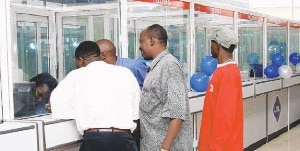

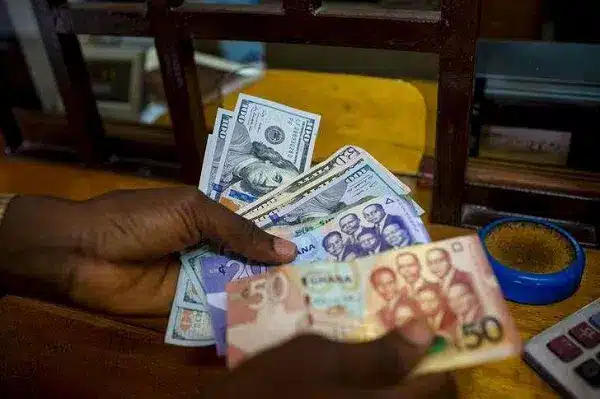
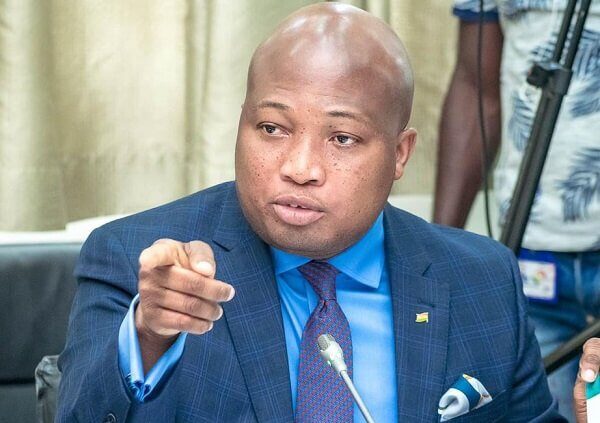
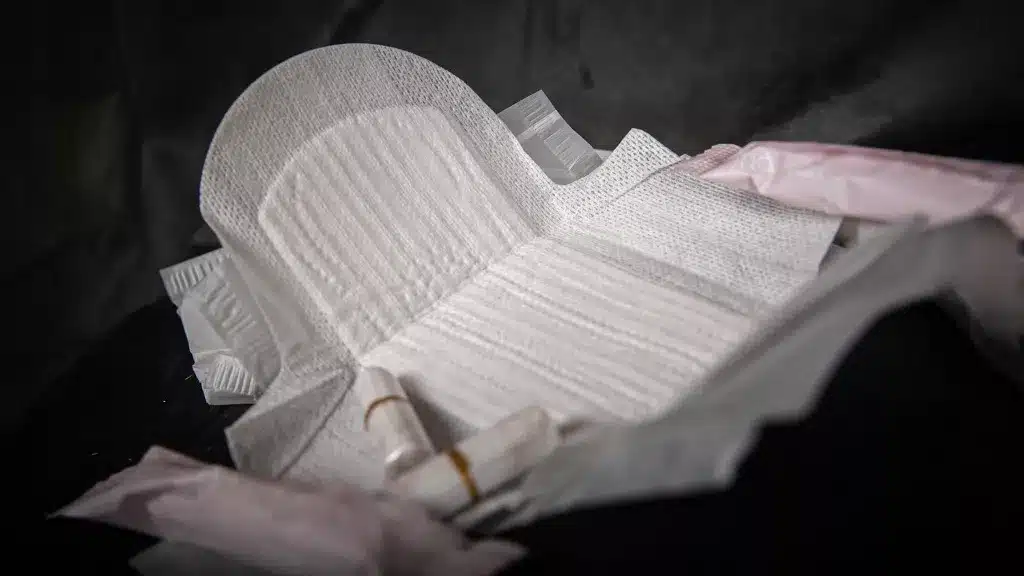
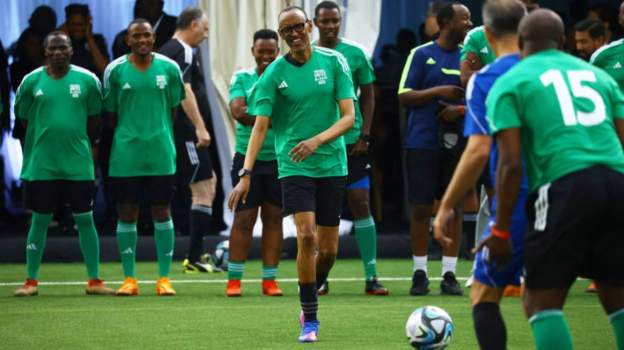

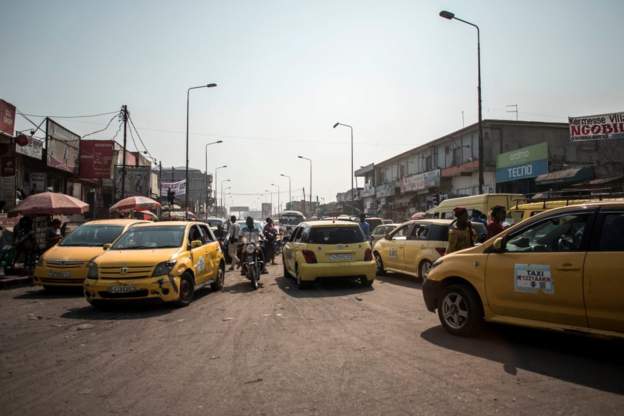
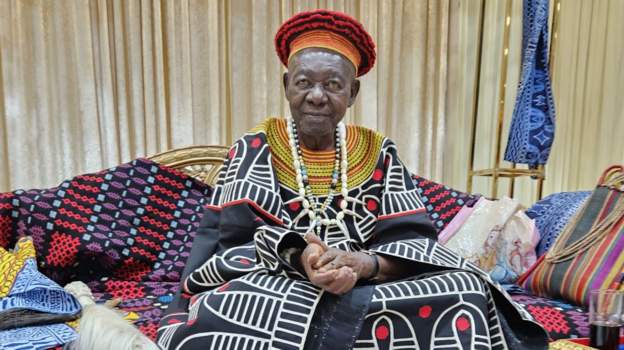

 “Every contribution, no matter how small, holds immense power.
  “As the Akum people say, ‘A tree is only as strong as its roots.’ Let us strengthen the roots of these children, allowing them to grow tall and strong, capable of weathering any storm that comes their way,” he said.