Author: Amanda Cartey

  • GSE market cap reaches record high in first half of 2023

    GSE market cap reaches record high in first half of 2023

    Despite a challenging start, the Ghana Stock Exchange (GSE) concluded the first half of the year on a positive note, with its market capitalization reaching an all-time high of GH¢70.24 billion. Investors have continued to show confidence in equities, contributing to this impressive performance.

    As trading commenced for the second half of the year on Monday, July 3, 2023, the market capitalization further increased by 0.14 percent to GH¢70.34 billion. This growth was primarily driven by the GSE Composite Index (GSE-CI), which achieved its second-highest monthly return in June 2023.

    The GSE-CI, a benchmark for overall market performance, experienced a significant rise of 296.7 points, resulting in a year-to-date return of 14.9 percent. Additionally, the GSE Financial Stock Index (GSE-FSI) saw an increase of 14.6 points during the month. This improvement can be attributed in part to the recovery of some key stocks in the financial segment, reducing losses since the beginning of the year to 17.6 percent, according to data from the Accra bourse.

    In comparison to the first half of 2022, the GSE-CI has risen by 10.3 percent, climbing from 2,545.48 points to 2,808.03 points. Likewise, the market capitalization has appreciated by 8.32 percent compared to the same period in the previous year.


    Source: afx.kwayisi.org

    This represents a reversal of fortunes compared to 2022, when the GSE-CI closed the financial year with -12.38 percent from a high of +43.66 percent the previous year – ending the period as one of the worst performers on the continent, as investor sentiment kept pace with happenings in the general economy.

    This surge in market capitalisation is not unrelated to improved investor confidence on the back of listed stocks’ performance, as well as the announcement of dividend payment dates by a number of them.

    However, trading activity experienced a notable decrease in volume and value. Compared to the previous month, both volume and value traded decreased by 87.1 percent and 86.6 percent respectively. This decline can be attributed to various factors, including market fluctuations and investor caution as elements of profit-taking took ground.

    Similarly, the circa 20 percent depreciation of the cedi against the US dollar resulted in a -10.1 percent return for the GSE in US dollar terms.

    Commenting on this performance on the side-lines of a Facts Behind the Figures session when the GSE hosted Société Générale, Managing Director-GSE Abena Amoah said: “In the first half of 2023 performance and what we are seeing now is that there’s a gradual upturn in the equities market; the index is up about 14.96 percent – almost 15 percent, and the market cap has also crossed GH¢70billion for the first time. We’re very excited about that as it means investors are looking for diversification and equities are interesting to them. Several of our listed companies have also announced strong dividends, and we see investors reacting to that market.”

    The top-five price-gainers for the month are spread across the manufacturing, telecommunications, extractives and finance sectors. They include Guinness Ghana Breweries (28.48 percent), MTN (21.1 percent), CalBank (20 percent), New Gold Exchange Traded Fund (18.2 percent) and Standard Chartered Bank (3.9 percent).

    Earlier this year, analysts at Databank Research projected that as the year progresses initial defensive sentiments will normalise since the domestic debt exchange will positively influence demand for equities – with low interest rates on Treasury securities drawing investors to dividend-paying stocks.

    This, it added, will push the GSE-CI to approximately 2,737 points (±500bps) at the end of 2023, from the 2.443.91 with which it closed in 2022.

    Debt market

    On the debt market, the Ghana Fixed Income Market (GFIM) trades in short-term Government securities accounted for 77.8 percent of activity on the market. The platform witnessed a volume-traded of 5.41 billion at the end of June 2023. This represents an 8.2 percent increase compared to the previous month, but is down 78 percent from the same period in 2022.

    The volume and value traded in the GFIM were 4,581,168 and GH¢14.8million respectively. These figures represent a decline of 90.5 percent and 67.35 percent compared to the same period last year. Cumulatively, the volume of trades in the GFIM from January to June 2023 amounted to 40.9 billion – down 67 percent compared to the 124.1 billion traded during the same period last year.

    “On the debt market, I think many are still waiting to see how government pays its first interest on the new bond in August; and for the overall macroeconomic environment also, especially for interest rates, to come down so investor confidence will be there. So yeah, we are cautiously watching that and engaging the right people to ensure we have the right macroeconomic environment to drive demand in the market,” the GSE MD added.

  • Government to achieve 35% of GDP through tourism – Ken Ofori-Atta

    Government to achieve 35% of GDP through tourism – Ken Ofori-Atta

    The importance of tourism and its potential effects on the domestic economy as well as its role in job creation have been highlighted by Finance Minister Ken Ofori-Atta.

    He claims that the government wants to increase the country’s gross domestic product by around 35% through tourism in order to spur regional economic growth.

    On July 4, the finance minister stated, “The building is expected to contribute significantly with approximately 1.2 million anticipated tourism arrivals into Ghana for 2023 and an estimated corresponding revenue of $3.4 billion.”

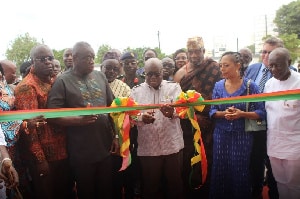
    He was speaking at a ceremony to commission the renovated Kwame Nkrumah Memorial Park in Accra.

    “The evidence of the vital role of tourism for economic development is clear. For instance, in 2022, tourists spent 660 billion in emerging and developing countries which is about 3 times the amount of official development assistance for that year,” he noted.

    “Tourism contributes about 5 percent of Ghana’s GDP and in Jamaica its about 35 percent of their GDP and that is where we [Ghana] want to achieve,” Ken Ofori-Atta.

    According to him, the tourism industry offers a distinct opportunity to generate employment and income for people of all genders, ages, and skill levels, thereby providing a way out of poverty for millions.

    The finance minister expressed appreciation to the Ministry of Tourism for their diligent efforts in prioritizing and enhancing the sector’s contribution to national development and cultural progress.

    Furthermore, he extended gratitude to the World Bank for their unwavering financial support of $3.5 million, dedicated to the revitalization of the Kwame Nkrumah Memorial Park.

    Meanwhile, President Nana Addo Dankwa Akufo-Addo emphasized that the 5.4-acre facility, established in 1992 to commemorate, promote, and preserve the legacy of Ghana’s first president, Dr. Kwame Nkrumah, had not undergone any significant improvements until now.

    He highlighted that the renovated park now reflects the extraordinary stature of Dr. Kwame Nkrumah, a renowned Pan-Africanist who played a prominent role in the struggle for Ghana’s and Africa’s liberation.

    The park’s renovation, estimated at $3.5 million, is part of the Ghana Tourism Development Project (GTDP), a $40 million initiative supported by the World Bank. The project aims to enhance tourism performance in selected destinations across the country.

  • Peter Amewu mistakenly introduces Alan Kyerematen as incoming Vice President

    Peter Amewu mistakenly introduces Alan Kyerematen as incoming Vice President

    Minister of Railway Development, John Peter Amewu, had a momentary slip of the tongue when he introduced Alan Kyerematen as the incoming Vice President of Ghana.

    Amewu was addressing a large gathering of New Patriotic Party (NPP) supporters at Liberty Park in Dansoman on July 4, 2023, during the presidential flagbearer hopeful’s constituency delegates durbar.

    As the penultimate speaker before Alan took the stage, Amewu praised Alan’s impact and record within the party and his contributions as a member of previous NPP governments.

    However, during the formal invitation to Alan to speak, he unintentionally referred to him as the incoming Vice President before quickly correcting himself.

    “With all honour and respect, I want to use this opportunity to introduce the incoming Vice President of the Republic of Ghana, in the person of Hon. Alan Kwadwo Kyerematen,” he said to cheers.

    He swiftly rectified his mistake as Alan approached him, clarifying: “as the incoming president of the Republic of Ghana.”

    Alan descended from the platform and proceeded to deliver his speech, which contained impassioned segments. He urged the delegates to remain steadfast and courageous, emphasizing that if Ghanaians heeded his words, the government would not have to seek a bailout from the International Monetary Fund (IMF).

    Expressing gratitude, Alan Kyerematen extended his appreciation to the delegates for their unwavering support and the impressive turnout at the event.

    He acknowledged their aspirations for power and confidently asserted that he, Alan Kyerematen, was the individual capable of fulfilling those aspirations for the NPP.

    “I would like to thank you all, I am very happy for coming in your numbers. God bless you all. And I know that all delegates who are present here are interested in power, and the person who can give you power is me, Alan Kyerematen,” he affirmed.

  • Akufo-Addo commissions US$3m refurbished Nkrumah Memorial Park

    Akufo-Addo commissions US$3m refurbished Nkrumah Memorial Park

    After undergoing rehabilitation work that began in August of the previous year, President Nana Akufo-Addo has officially commissioned the newly redeveloped Kwame Nkrumah Memorial Park in Accra.

    The 5.4-acre park, initially constructed in 1992 as a tribute to Dr. Kwame Nkrumah, Ghana’s first president, aims to honor, preserve, and promote his significant contributions. Surprisingly, this redevelopment marks the first substantial facelift the park has received since its establishment.

    The renovation project, costing an estimated US$3 million, is part of the Ghana Tourism Development Project (GTDP), a larger initiative supported by the World Bank with a budget of US$40 million. The GTDP is designed to enhance tourism performance in selected destinations throughout the country.

    During the opening ceremony, President Akufo-Addo emphasized that the park’s refurbishment was carried out to match the extraordinary legacy of Dr. Kwame Nkrumah, a Pan-Africanist who played a crucial role not only in Ghana’s liberation but also in the liberation movements across Africa.

    The president called upon the Ministry of Tourism and the Ghana Tourism Authority (GTA) to develop effective marketing and promotional strategies to ensure that the Kwame Nkrumah Memorial Park attracts one million visitors annually.

    “Prior to this rehabilitation, the Park’s annual visitor turnout was estimated at a little over 90,000. However, with Ghana strongly placed on the continent’s tourism map it is possible for one million visitors, both domestic and inbound, to come here annually,” he said.

    As part of measures to make the country a hub of heritage tourism in Africa, the president touted the several museums and other heritage attractions which are being constructed or renovated in various parts of the country.

    “The construction of museums including the Bonwire museums, the Yaa Asantewaa Museum, Aborigines Museum in Cape Coast and a Memorial Enclave in Tamale are all in the offing,” he disclosed.

    The president asked the GTA to work closely with metropolitan, municipal and district assemblies to ensure that the upcoming ‘December in Gh’ events this year are well-executed, as the initiative has come to stay.

    He tasked sector players to adopt sustainable tourism practices in order to deepen gains of the sector and to make it viable.

    World Bank Country Director for Ghana, Frank Larporte, lauded the newly renovated facility and described it as a visionary project by government.

    “As we honour Dr. Kwame Nkrumah’s legacy, the World Bank wishes to congratulate the government of Ghana and the president for this facelift,” Mr. Larporte said.

    He reiterated the Bank’s commitment to supporting viable projects such as the rehabilitation in order to create jobs and generate revenue for the country.

    Finance Minister Ken Ofori Atta said his ministry will continue to invest in projects which have massive potential to raise sustainable income for the state, adding: “The ministry wants many of these projects replicated across the country”.

    Sector minister Dr. Ibrahim Mohammed Awal noted that the ministry will continue investing in the tourism sector to put the country’s potentials on the global map.

    The facility

    The facility’s renovation started in August last year, entailing total refurbishment of the Mausoleum and t Park. At its unveilling, the facility had a newly built Presidential Library, a training centre, new restaurant, VVIP lounge, an Artistic Freedom Wall, a befitting car park, state of the art lavatory, music and light fountain, digitised revenue collection system and many other ancillary facilities.

    The Park, according to Dr. Awal, has created an additional 50 permanent jobs and many indirect ones upon its completion.

    The facility will expectedly contribute significantly to the country’s 1.2 million anticipated international tourist arrivals in 2023, with an estimated corresponding revenue of US$3.4billion.

  • Capital Bank case: Ato Essien ordered by court to pay remaining GHS12m by July 27

    Capital Bank case: Ato Essien ordered by court to pay remaining GHS12m by July 27

    Founder of the now-defunct Capital Bank, William Ato Essien, convicted, has been granted an extension until at least July 27 to fulfill his first installment payment of GH¢20 million to the State.

    During the court session on Tuesday, July 4, it was revealed that Mr. Ato Essien has paid GH¢8 million out of the GH¢20 million, leaving an outstanding balance of GH¢12 million.

    Last year, Essien reached an agreement with the state under section 35 of the Courts Act, where he was required to make three installments of GH¢20 million each, totaling GH¢60 million, to the state.

    However, based on available records, he has only paid GH¢8 million as of July 4, despite the April 28 deadline for the first installment.

    Represented by his lawyers, led by Baffour Gyau Bonsu Ashia, Essien requested additional time before Justice Erich Kyei Baffour, a Justice of the Court of Appeal sitting as an additional High Court judge.

    Deputy Attorney General Alfred Tuah Yeboah, who led the prosecution, expressed concern about Essien’s request for more time, considering the missed deadline.

    After hearing both sides, Justice Kyei Baffour urged Ato Essien to settle the remaining outstanding balance of GH¢12 million by July 27, 2023. The court warned that sanctions would be imposed if he fails to do so.

    “Based on the pleas of his counsel, I once again reluctantly give the convict one more opportunity to make payment.

    “I will adjourn to July 27, 2023, for the amount of GH¢12 million to be paid by the convict,” Justice Eric Kyei Baffour stated.

    According to EIB network’s Legal Affairs Correspondent, Murtala Inusah, the court turned a request from his counsel to move a Viva Voce argument to his passport which is in the custody of the court to be released in other for him to embark on a business venture to mobilize funds.

  • Rana Motors introduces ‘KIA Carens’ model, designed for families in Ghana

    Rana Motors introduces ‘KIA Carens’ model, designed for families in Ghana

    A new car made by Rana Motors Limited and targeted towards Ghanaian families, ‘KIA Carens’, has just been introduced to the market in Ghana.

    The vehicle has seven seats and a 1.5-liter engine.

     It has the necessary room and features for a family car, including 10 strong safety features including six airbags, ABS, ESC, HAC, VSM, DBC (Downhill Brake Control), BAS, all-wheel disc brakes, TPMS Highline, and rear parking sensors, among others.

    Speaking to reporters at the introduction on July 4, 2023, Rana Motors’ Chief Operating Officer Kassem Odaymat said the car has features that are safe and easy for families.

    “The KIA Carens is one of the first 7-seater cars which we have launched and is affordable, low on fuel consumption with a good output and is filled with convenience such as leather seats, 8-inch screen with Android Auto and Apple Car Play,” Odaymat said.

    He continued, “It also comes with a remote engine which can be switched on from a distance, collapsible seats, sunshade curtains for the backseats, enough storage and utility spacing among other features for the day-to-day convenience of the family”

    In terms of the price range, Kassem Odaymat explained it is positioned between the KIA Celtos and KIA Sportage models and comes with a cheaper price range.

    “So, a customer will be having 7-seater family car full of good features of convenience and safety which is being priced cheaper and less than the KIA Sportage model,” the COO disclosed.

  • ECG to embark on ‘Operation Zero’ from July 11

    ECG to embark on ‘Operation Zero’ from July 11

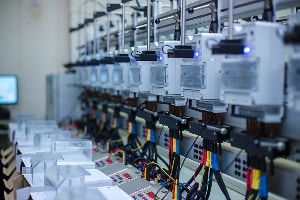
    The Electricity Company of Ghana (ECG) has introduced a new nationwide initiative called “Operation Zero” to enhance revenue collection.

    The campaign, which will run from July 11 to September 11, 2023, aims to retrieve all outstanding debts down to the last unit of currency.

    In an official statement, the ECG highlighted that during the two-month operation, comprehensive inspections will be conducted at customers’ residences and all establishments consuming electricity. This thorough examination is intended to identify any outstanding payments and facilitate their recovery.

    Additionally, the ECG will closely collaborate with the security services to ensure the smooth implementation of the operation. Any individuals impeding the process will be apprehended and prosecuted in accordance with the law.

  • Government must pay attention to funding needs of the office – OSP

    Government must pay attention to funding needs of the office – OSP

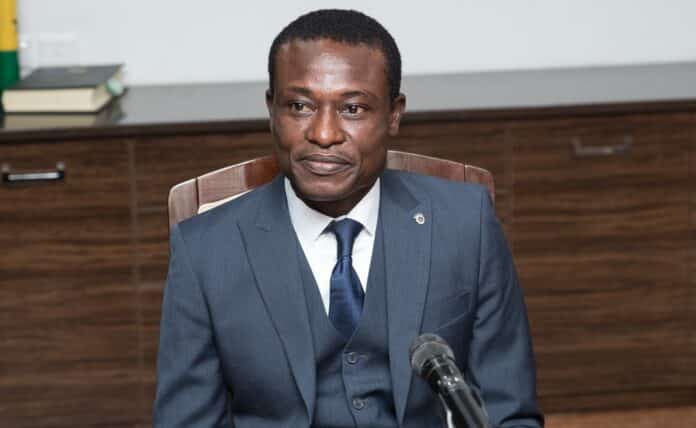
    The Special Prosecutor, Kissi Agyebeng, has reaffirmed his plea for the office to get proper fiscal support in its fight against corruption.

    The Special Prosecutor bemoaned the fact that the Office of the Special Prosecutor (OSP) was still operating without a set budget in a half-yearly report (ending in June 2023).

    “We continue to emphasise the need for the State to pay particular attention to the funding needs of the Office,” Mr Agyebeng stated in the report.

    He said the Office had proven that with sufficient funding, it was best placed to prevent and reduce the menace of corruption and corruption-related activities.

    “It is in our collective interest to build a resilient, independent, and technologically advanced Office of the Special Prosecutor to stay ahead of and effectively repress corruption and corruption-related actors,” he said.

    According to the half-year report, the Office of the Special Prosecutor (OSP) is actively pursuing four criminal cases in court and conducting investigations into nine suspected corruption and corruption-related offenses. Additionally, they have concluded four investigations, with 150 other cases currently at various stages of consideration.

    Among the ongoing criminal cases is the Republic versus Sumaila Abdul-Rahman, Stephen Yir-Eru Engmen, Patrick Seidu, and Andrew Kuundaari. These individuals are facing 11 counts of corruption and corruption-related offenses related to procurement.

    In another case, the Republic versus Issah Seidu, Mr. Seidu, an official of the National Insurance Commission (NIC), has been charged with failing to comply with a directive to declare his income and property. Mr. Seidu, along with three others, is also under investigation for suspected corruption in the importation of 10,000 bags of rice.

    The Republic versus Adjenim Boateng Adjei and another case involves the former Chief Executive of the Public Procurement Authority and his brother-in-law, who are being tried on procurement issues related to using their public office for profit. Mr. Adjei faces eight counts of using public office for profit and nine counts of influencing the procurement process to obtain an unfair advantage. His brother-in-law faces one count of using public office for profit.

    The fourth criminal case involves Mr. Alexander Kwabena Sarfo-Kantanka, the President’s nominee for the Chief Executive position of the Juaben Municipal Assembly in the Ashanti Region. He has been charged with 26 counts of corruption in relation to a public election.

    Among the investigations that the OSP has concluded is the case involving Mr. Charles Adu Boahen, a former Minister of State at the Ministry of Finance, concerning corruption allegations arising from the investigative piece titled “Galamsey Economy” by Tiger Eye P.I. and journalist Anas Aremeyaw Anas.

    The OSP has also concluded investigations into allegations of the use of public office for profit against Charles Bissue, who served as Secretary to the former Inter-Ministerial Committee on Illegal Mining (IMCIM). These allegations arose from the investigative documentary titled “Galamsey Fraud Part I” by Tiger Eye P.I. and journalist Anas Aremeyaw Anas.

    Furthermore, the OSP has completed investigations into allegations of an attempt to bribe members of the majority caucus of Parliament by an unnamed wealthy businessman, as stated in the half-year report. They have also concluded investigations into suspected corruption and corruption-related offenses regarding the procurement and award of a contract to Turfsport Ghana Limited by the Gaming Commission of Ghana.

  • Inform him I said he is an NDC member – KT Hammond sends message to Dormaahene

    Inform him I said he is an NDC member – KT Hammond sends message to Dormaahene

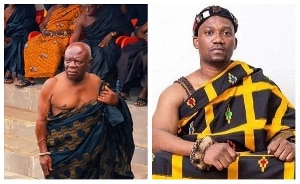
    The Dormaahene is allegedly a member of the opposition National Democratic Congress (NDC), according to the member of parliament for Adansi Asokwa in the Ashanti Region, Kobina Tahir Hammond.

    Osagyefo Aseadeeyo Agyemang Badu II has allegedly violated all of the constitutional prohibitions against chiefs participating in active politics, according to the MP who also serves as the minister of trade.

    “All along, he was an NDC member,” KT Hammond told a journalist who responded that chiefs are not supposed to engage in politics.

    The Minister fired back: “he has breached all provisions of the Constitution against chiefs engaging in politics. He is bona fide NDC member and is active in the party’s activities and engagements.

    When the reporter pressed him further, KT Hammond reiterated his argument and claimed he could be found quoting himself anyplace before stepping towards his waiting vehicle without providing any supporting evidence.

    “You don’t know anything in this town, go tell him, I, KT Hammond said he is an NDC member that is why he is doing the things he does.”

    Dormaahene in the news over nolle prosequi call

    Nolle prosequi is a legal terminology that has become popular in the last few days after Dormaahene Osagyefo Oseadeeyo Agyemang Badu II appealed to government to invoke it in the criminal case involving Assin North Member of Parliament James Gyakye Quayson.

    It is simply the dismissal or termination of legal proceedings by the Attorney General.

    The Dormaahene’s call was premised on the fact that the Quayson trial was of no need to the populace more so the people of Assin North who retained the defendant as their MP even after his tenure was terminated by the Supreme Court in May.

    Pro-government voices have outrightly dismissed the call terming it undue interference in the legal process and an attempt to put some people above the law because of their status in society.

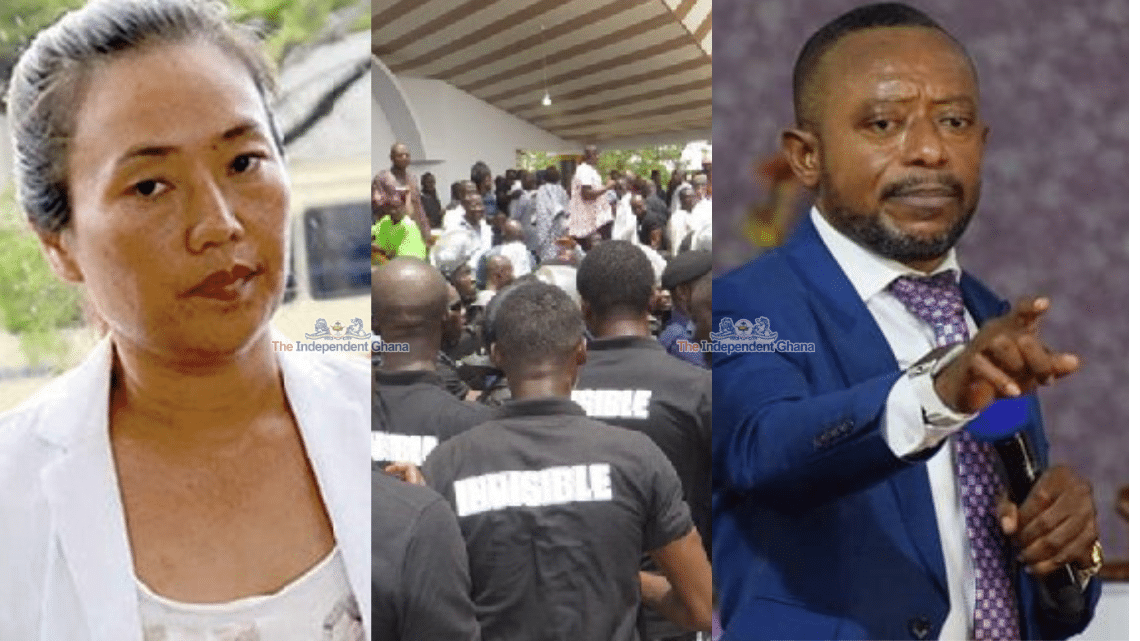
  • Nolle prosequi : How Aisha Huang, Owusu Bempah and Delta Force got away

    Nolle prosequi : How Aisha Huang, Owusu Bempah and Delta Force got away

    The legal term “nolle prosequi” has gained popularity in recent days as a result of a request made by Dormaahene Osagyefo Oseadeeyo Agyemang Badu II to the government to use it in the criminal case involving Assin North Member of Parliament James Gyakye Quayson.

    Government has employed the legal action known as nolle prosequi on four notable occasions in high-profile cases. Nolle prosequi refers to the dismissal or termination of legal proceedings by the Attorney General.

    There are two key aspects to nolle prosequi: it applies specifically to criminal cases and must be initiated by the Attorney General before the case concludes.

    It is important to note that the filing of nolle prosequi does not automatically result in the complete discharge of the accused, granting them permanent freedom. Nolle prosequi is typically utilized when the Attorney General determines that there is insufficient evidence, witnesses, or other factors to support the prosecution.

    In the case involving Quayson, the Dormaahene’s appeal was based on the belief that the trial was unnecessary, particularly considering that the people of Assin North had reelected Quayson as their Member of Parliament despite the Supreme Court’s ruling to terminate his tenure in May.

    Certain pro-government voices have strongly rejected the appeal, labeling it as undue interference in the legal process and an attempt to afford special privileges to individuals based on their societal status.

    Should the government choose to act on this appeal, it would not be the first time such an application has been made before the courts.

    GhanaWeb highlights three prominent cases in which the government of Naana Addo Dankwa Akufo-Addo has utilized nolle prosequi.

    OSP vs. Mahama Ayariga

    On October 11, 2022, Kissi Agyebeng, the Special Prosecutor, filed a “nolle prosequi” to end the prosecution of Mahama Ayariga, the NDC Member of Parliament for Bawku Central.

    Agyebeng said in a statement to the media following his submission, “We entered a nolle prosequi in relation of the second case against Mahama Ayariga and Kenrick Marfo this morning [Monday].

    “It’s simple: after I assumed office, we have further scrutinised the docket [and], upon the available evidence, we deem that the republic would be unable to prove its case.

    “It would be a complete waste of time if we were to open this case further and go to a length where it will only be dismissed on the submission of no case to answer,” Agyebeng told journalists outside the court.

    May 2017 – State vs. NPP Delta Force members

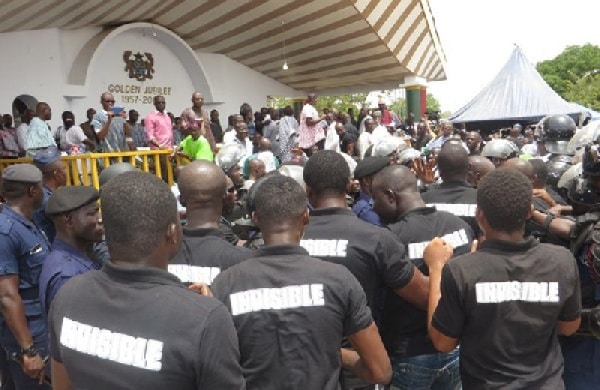
    The case against eight individuals linked to the pro-New Patriotic Party (NPP) vigilante group, Delta Force, who were accused of forcibly entering the Kumasi Circuit Court to release fellow members on trial, has been dropped by the Attorney General.

    During the court proceedings, the prosecutor, ACP Okyere Darko, revealed that the Attorney General at the time, Gloria Akuffo, had directed the police to cease pursuing the case due to insufficient evidence against the defendants.

    As a result, the presiding judge, Her Honour Patricia Amponsah, discharged the accused individuals and dismissed the case.

    The eight Delta Force members were facing trial for their alleged involvement in the 2017 incident where they stormed the court premises to free thirteen members who were facing charges of conspiracy to assault. The charges stemmed from the destruction of property at the Ashanti Regional Coordinating Council and the assault of the Regional Security Coordinator, as they opposed his appointment.

    State vs. Aisha Huang

    Aisha Huang

    Then there is the infamous Aisha Huang case in which on December 19, 2018, without giving any reasons, the State Attorney, Mercy Arthur, presented an application for nolle prosequi to the Accra High Court, that was presided over by Justice Charles Ekow Baiden.

    Aisha and her compatriots were first arraigned on May 9, 2018 for engaging in illegal small-scale mining at Bepotenten in the Amansie Central District of the Ashanti Region.

    Aisha Huang was charged with three counts of undertaking small-scale mining operations, contrary to Section 99 (1) of the Minerals and Mining Act, 2006 (Act 703); providing mining support services without valid registration with the Minerals Commission, contrary to the Minerals and Mining Act, 2006 (Act 703), and the illegal employment of foreign nationals, contrary to the Immigration Act, 2000 (Act 573).

    It was also alleged that she had granted sexual favours to some top officials and continued to enjoy their support due to threats of blackmail if they attempted to expose her.

  • ‘Death is my only escape’ – KNUST student’s alleged note reveals motive for suicide attempt

    ‘Death is my only escape’ – KNUST student’s alleged note reveals motive for suicide attempt

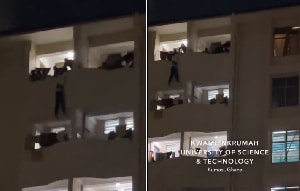
    A recent incident at Kwame Nkrumah University of Science and Technology (KNUST) involved a student named Kwadwo Asare Konadu Gyamfi, who was saved from a suicide attempt by his fellow students.

    Gyamfi, reportedly a medical student, was seen in a video shared by The KNUST Voice, a social media page focusing on campus events, hanging from a balcony of an 8-story hostel block on campus.

    Fortunately, his colleagues acted swiftly and managed to hold onto him, ultimately pulling him to safety by dislodging the balcony.

    Following the circulation of the video, a purported suicide note that Gyamfi had left behind was also shared on social media. In the note, he expressed condolences to his parents, siblings, and friends, explaining that his decision had been a difficult one to make but had ultimately become his last resort.

    He put his situation down to depression which pushed him into seeing nothing to live for. “I’ve been seeing demons … and actually heard one speak,” he wrote in portions of the note sighted by GhanaWeb.

    GhanaWeb is unable to independently verify the authenticity of the said note.

    Neither the school administration nor the hostel operators have commented or respeonded to GhanaWeb enquiries.

    The full note as shared on Twitter is below:

    https://twitter.com/VOICE_of_KNUST/status/1676311674532294683?s=20
  • Why the attacks on Dormaahene when Aisha Huang was released via nolle prosequi? – Randy Abbey

    Why the attacks on Dormaahene when Aisha Huang was released via nolle prosequi? – Randy Abbey

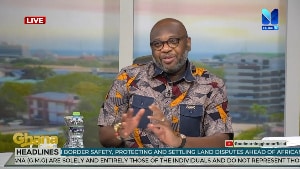
    In the course of the July 4 episode of Good Morning Ghana, the host of Metro TV’s show, Randy Abbey, weighed in on the discussion surrounding the appeal for nolle prosequi in the case involving James Gyakye Quayson, the Member of Parliament for Assin North.

    Abbey expressed his curiosity about the controversy surrounding the call made by Dormaahene Oseadeeyo Agyamang Badu II in relation to the case, drawing a parallel to the situation involving Aisha Huang, the Chinese galamsey queen.

    He explained that while discussing the nolle prosequi issue with New Patriotic Party MP Sly Tetteh, the mention of Sam Okudzeto and the nolle prosequi reminded him of something.

    “Remember the case of Aisha Huang and the nolle prosequi? Considering the detrimental impact of Aisha Huang’s activities on our country, not to mention the fact that the president declared war on galamsey and staked his presidency on it…”

    “Yet we were comfortable to file a nolle prosequi on the issue of Aisha Huang and the Senior Minister even went somewhere and suggested the trial won’t solve our economic problems.

    He concluded his remarks by stating, “And when a chief appeals for a nolle prosequi in the case of Gyakye Quayson, it seems like chaos is imminent.”

    In contrast, Sly Tetteh disagreed, emphasizing that the calls to discontinue the case required stronger justifications than the current argument that Quayson had won a by-election alone.

    The Dormaahene’s appeal was based on the belief that the trial of Quayson was unnecessary, especially since the people of Assin North -had reelected him as their Member of Parliament even after his tenure was nullified by the Supreme Court in May.

    Some pro-government voices have outrightly rejected the appeal, considering it as unwarranted interference in the legal process and an attempt to grant certain individuals special treatment due to their societal status.

    It should be noted that if the government were to consider this request at any point, it wouldn’t be the first time such an application has been presented before the courts.

  • UN Rights Council to deliberate upon burning Quran

    UN Rights Council to deliberate upon burning Quran

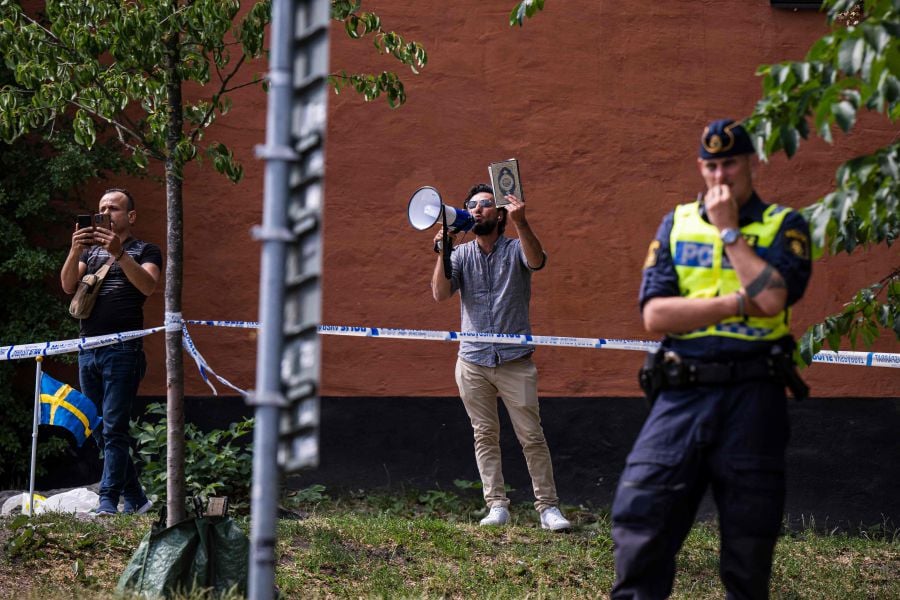
    A spokesperson of the UN Human Rights Council has said they will convene an urgent session to address the recent burning of the Koran in Stockholm, which has sparked widespread global outrage.

    The incident took place outside the main mosque in the Swedish capital last Wednesday and has resulted in a diplomatic backlash across the Muslim world.

    The act was carried out by Salwan Momika, a 37-year-old who had sought refuge in Sweden after fleeing from Iraq several years ago. He stomped on the sacred book and set several pages on fire, coinciding with the observance of the Eid al-Adha holiday by Muslims worldwide and the conclusion of the annual hajj pilgrimage to Mecca, Saudi Arabia.

    In response to a request from Pakistan, the UN Human Rights Council, currently in session until July 14 in Geneva, will modify its agenda to include an urgent debate on this matter.

    “The UN Human Rights Council will hold an urgent debate to ‘discuss the alarming rise in premeditated and public acts of religious hatred, as manifested by the current desecration of the holy Koran in some European and other countries’,” council spokesman Pascal Sim told reporters, citing the wording of the request.

    “This urgent debate will be convened following a request of Pakistan, sent on behalf of several members of the Organisation for Islamic Cooperation, including those that are members of the Human Rights Council.

    “The urgent debate will most likely be convened this week at a date and time to be determined by the bureau of the Human Rights Council that is meeting today.”

    There are 47 members of the Human Rights Council. The UN’s top rights body is currently in the second of its three regular sessions per year.

  • Switzerland returns portion of Ramses II’s statue to Egypt

    Switzerland returns portion of Ramses II’s statue to Egypt

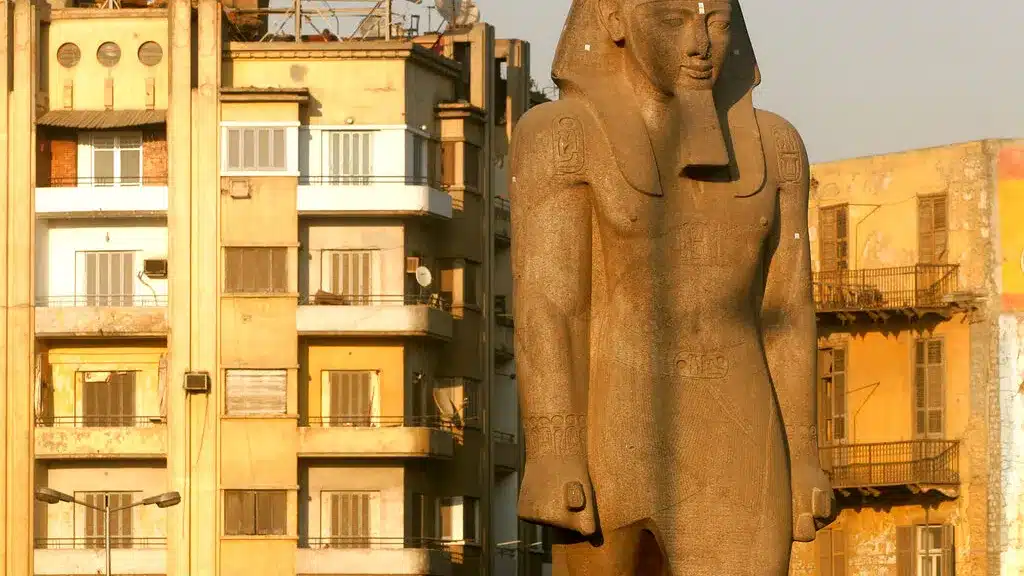
    On Monday, Switzerland returned a fragment of a statue of Pharaoh Ramses II to Egypt, which had been stolen several decades ago from a temple in Abydos.

    Carine Bachmann, the director of the Federal Office of Culture (OFC), handed over this “significant archaeological artifact” to the Egyptian embassy in Bern, Switzerland.

    The fragment belongs to a stone sculpture of Pharaoh Ramses II, which is part of a group statue featuring the king alongside various Egyptian deities, according to the OFC.

    Ramses II ascended to the throne at the age of 25, succeeding his father Seti I, and his reign lasted approximately 66 years, making it the longest in Egyptian history. Currently, there is an exhibition dedicated to Ramses II in Paris, which runs until September 6th.

    The fragment that was returned had been stolen from the temple of Ramses II in Abydos, Egypt, between the late 1980s and early 1990s.

    It had passed through several countries before reaching Switzerland, where it was ultimately confiscated by the authorities in the canton of Geneva following legal proceedings.

    “This restitution underlines the joint commitment of Switzerland and Egypt to combat the illicit trade in cultural property, reinforced in 2011 by the entry into force of a bilateral agreement on the import and return of cultural property. “, said the Federal Office of Culture.

    Both Switzerland and Egypt are parties to the 1970 UNESCO Convention to Prohibit and Prevent the Illicit Import, Export and Transfer of Ownership of Cultural Property.

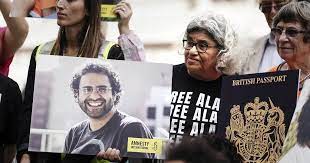
  • Family holds vigil to protest imprisoned British-Egyptian activist

    Family holds vigil to protest imprisoned British-Egyptian activist

    On Monday, the family of a British-Egyptian activist who is currently imprisoned organized a vigil outside the foreign ministry in London. The purpose of the vigil was to draw attention to a call made by 100 British lawmakers for the adoption of “fresh approaches” to secure the activist’s release.

    The activist in question, Alaa Abdel Fattah, is a prominent advocate for democracy and human rights. He is serving a five-year prison sentence for the charge of “spreading false news” after sharing a Facebook post about police brutality.

    Alaa Abdel Fattah played a significant role in the 2011 uprising that led to the overthrow of Egyptian autocrat Hosni Mubarak. He obtained British citizenship in 2022 through his mother, who was born in Britain.

    Expressing their concern, the lawmakers emphasized the lack of progress in securing the activist’s release. They highlighted that Prime Minister Rishi Sunak had personally raised the case with Egyptian President Abdel Fattah Al-Sisi during the COP27 climate summit in November of the previous year.

    “Private lobbying of the Egyptian government even at the highest levels is yet to deliver results. This calls for fresh approaches,” the lawmakers from the lower and upper house of the UK parliament say in a letter to Foreign Secretary James Cleverly which was submitted on Monday.

    French President Emmanuel Macron also took up the 41-year-old’s case with Sisi and US President Joe Biden raised human rights issues.

    Abdel Fattah’s sister, Mona Seif, told AFP the family wanted to see the British government make his case a “top priority”.

    “We are asking them to shift gear. They have been using this approach of soft diplomacy and raising Alaa’s case for over a year-and-a-half now and they haven’t received anything in return,” she said.

    Rights groups say there are more than 60,000 “prisoners of conscience” who have been jailed in Egypt under the rule of President Al-Sisi.

    Sisi deposed Islamist president Mohamed Morsi in 2013, before being elected the following year.

    – Hunger strike –

    At the time of the climate meet in the Egyptian Red Sea resort of Sharm el-Sheikh, Abdel Fattah had been on hunger strike for seven months.

    On the day the conference opened he had begun refusing water too.

    The British lawmakers want the UK to “take the lead on a joint statement on Egypt” at the UN Human Rights Council and to update the UK’s travel advice to align it with the United States.

    The US government warns that US citizenship does not provide protection from detention or arrest in Egypt and that those detained may be subject to “prolonged interrogations and extended detention”.

    Abdel Attah’s sister Mona added that she believed a joint statement on Egypt at the UN Human Rights Council would almost certainly be “effective” in persuading the Egyptian government to move on the case.

    “We know that a lot of countries would be willing to join in on a statement… but it needs to be led by the UK government because they have a higher stake, they have one of their citizens in arbitrary detention,” she said.

    The lawmakers’ letter adds that the British embassy in Cairo has been prevented from visiting Abdel Fattah in jail for the past 18 months.

    His mother Laila Soueif, a mathematician, said she could not understand why the UK government had been unable to secure this and described the situation as “unacceptable”.

  • Tunisian migrants in police grips over stabbing of man

    Tunisian migrants in police grips over stabbing of man

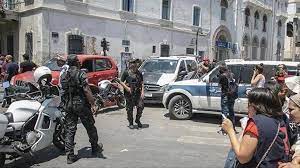
    Three African migrants have been apprehended as suspects in the fatal stabbing of a local man in the coastal city of Sfax, Tunisia.

    The incident occurred during a confrontation between residents and migrants from sub-Saharan Africa, with the victim being stabbed during the altercation.

    According to Faouzi Masmoudi, spokesperson for the city’s prosecutor, the three suspects are from Cameroon. In response to potential reprisals, police have been stationed outside the migrants’ residence.

    Anti-migrant sentiment

    The event occurred following months of rising tensions between Tunisians and migrants.

    Locals in Sfax, Tunisia’s second-largest city, often protest the migrants’ presence in the city, which serves as a departure point for many migrants attempting to reach Italy.

    In February, President Kais Saied accused “hordes” of illegal migrants of bringing violence, crime and “unacceptable practices”, prompting a rise in racially motivated attacks on migrants and foreign students.

    In late May, police arrested three Tunisians on suspicion of stabbing to death a migrant from Benin. 

    Tunisian economic crisis

    Tunisia hosts an estimated 21 000 migrants from other parts of Africa, out of a population of 12 million, representing 0.2 percent. 

    Though some of those migrants come to Tunisia to study, many hope to use the country as a springboard to reach Europe across the Mediterranean sea. 

    Amid an economic crisis in the country, Tunisians themselves are also joining the exodus. 

    Tunisian is highly indebted and in talks for a bailout loan from the International Monetary Fund. However, Saied has repeatedly rejected what he terms the “diktats” of the Washington-based IMF.

  • New currency notes for Burundi attract backlash

    New currency notes for Burundi attract backlash

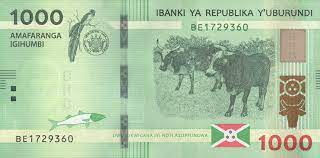
    Burundians in Bujumbura are reacting to the recent introduction of new 5,000 and 10,000 Burundian franc banknotes. It comes as they struggle to exchange their old notes for new ones, particularly since the deadline expired in June.

    “This is the beginning for the government to be able to start reforms, a necessary awareness to really break this cultural conservatism,” says Faustin Ndikumana, an economist and president of PARCEM think tank. “(In) Burundian culture … each person wants to keep his wealth at home” Ndikumana explains. 

    However, not everyone agrees. At least not in the markets, where many people are having problems trading due to a scarcity of new currency notes.

    _”When you don’t have a bank account, your old bills aren’t replaced. It’s impossible. They force us to open accounts at the bank when we have no means to add to an account”, _Chantal Mugisha, a merchant at the COTEBU market said.

    The two denominations, worth $1.77 U.S. and $3.54 U.S., are the highest of the six in circulation in a country with a per capita GDP of $270.

    The Bank of the Republic of Burundi attributed the move to what it called an increase in circulation in the “informal circuit” that led to instability in the activities of financial institutions. It also said in its press announcement that there was a shortage of these notes in banks that destabilized activities.

    All 5,000- and 10,000-franc notes dated July 4, 2018, were withdrawn as of June 7, and replaced by new ones dated Nov. 7, 2022. There was a 10-day time limit that expired on June 17 for holders to deposit the old notes in their accounts and to open a bank account if necessary. The old notes were to be legal tender only until June 17.

    “I have here a sum of old 170,000 Fbu (Burundian francs, about 54.8 euros) banknotes. I wanted to get gas from Gatumba and I heard that if I don’t have new bills they can’t give me gas. So I wonder how to deposit these notes in my boss’s bank account and I will be forced to stay in Bujumbura, I live inside the country,” says Abdoul Karim Niyonkuru, a Taxi driver in Bujumbura.

    Further restrictions by the Bank of Burundi limited individual total deposits of cash to 10 million francs ($3,543) and legal entities to 30 million francs per day and per account. Burundi’s apex bank has said it would deploy agents to rural areas to assist in the exchange.

  • Concerns grow as Kenya’s deteriorating economy necessitates   borrowing

    Concerns grow as Kenya’s deteriorating economy necessitates borrowing

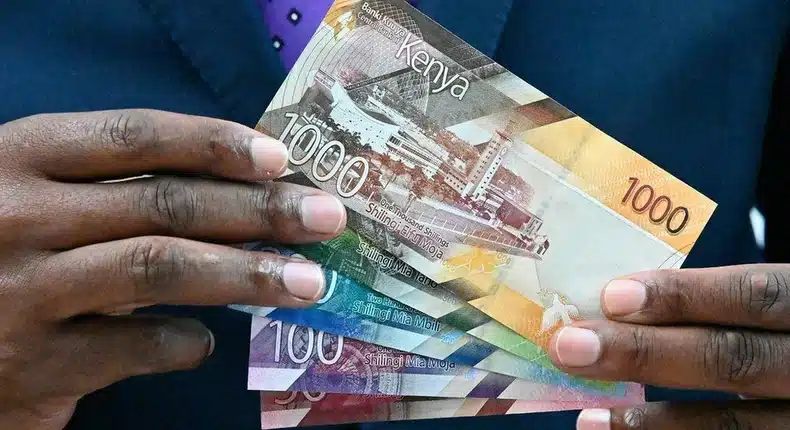
    Growing concerns have been raised regarding the impact of the weakening shilling on Kenya’s debt profile, particularly as foreign debt accounts for 52.9% of the country’s total debt.

    During the first half of the fiscal year 2022-23, the devaluation of the shilling against the US dollar resulted in Kenya borrowing Sh3.43 billion to cover the budget deficit in foreign debt service commitments, as reported by the Auditor-General.

    To safeguard taxpayers from increased debt service requirements caused by foreign exchange exposure in the public debt stock, the Auditor-General has urged the Treasury to consider adopting hedging strategies.

    Based on information provided by the Controller of Budget, the Auditor-General highlighted that Sh3.43 billion was allocated in the first half of 2022-23 to cover deficits in payments on external debt resulting from fluctuations in foreign currency rates.

    These concerns arise at a time when recent data from the Central Bank of Kenya (CBK) reveals that Kenya’s public debt stock stood at Sh9.63 trillion as of April 2023, with foreign debt accounting for 52.9% of the total debt. This percentage has increased from 50.9% in January, reflecting the impact of the weakening shilling on the country’s debt profile.

    According to CBK statistics, the shilling has depreciated by 13.9% against the US dollar since the beginning of 2023, with the exchange rate currently at 140.52 units.

    In an attempt to alleviate pressure on the local currency, the government announced a credit agreement in March to purchase petroleum products from Saudi Aramco and the Abu Dhabi National Oil Company over a six-month period.

    Additionally, the Office of the Auditor General has raised concerns over the payment of commitment fees amounting to Sh680 million for unused loans during the first half of the fiscal year 2022-23. The Auditor-General has emphasized the need for greater transparency and criticized the lack of clarity in recording liabilities at both the national and local government levels.

    “There is the non-disclosure of loans and overdrafts held by other national and county government entities as well as other government liabilities such as pending bills and pension arrears. The government continues to pay commitment fees on undrawn amounts in respect of loans signed between the government of Kenya and foreign lenders. Within the first half of 2022/23, the National Treasury paid commitment fees worth Sh680 million,” the audit office reports.

  • Sudan: Army plane shot down  in Khartoum

    Sudan: Army plane shot down in Khartoum

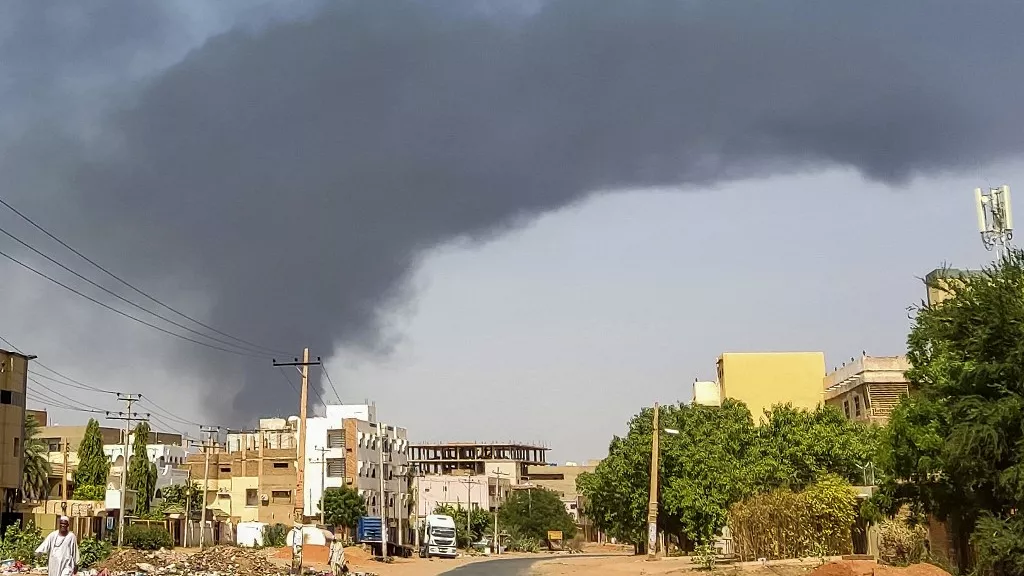
    Witnesses have reported that a fighter plane has been shot down in Khartoum on Tuesday, as fighting and artillery fire struck numerous districts in Sudan’s war-torn capital.

    “We saw pilots parachuting as the plane dived towards the ground ,” said a witness in northern Khartoum. A source within the paramilitary Rapid Support Forces (FSR) told AFP that the FSR had shot down the army plane.

    The FSR said they had “arrested the pilot after he landed” in a statement, also accusing the army of “heinous massacres” in the Khartoum region.

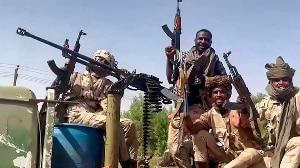
    The Sudanese army, led by General Abdel Fattah al-Burhane , has been at war since April 15 with the paramilitaries of the FSR led by its former number two, General Mohamed Hamdane Daglo .

    The conflict has killed nearly 3,000 people, according to the NGO Acled, and 2.8 million displaced persons and refugees, according to the UN. A resident of Omdurman, in the northern suburbs of the capital, reported on Tuesday “violent clashes using various types of weapons”.

    Other witnesses said they observed “airstrikes (near) the state television building”, which the RSF launched an attack on this week and used anti-aircraft missiles on Tuesday.

    In the east of the capital, residents also reported clashes with machine guns.

    The army also “launched rockets and heavy artillery” at RSF bases in the centre and north of the capital, a witness said. Homes were damaged and civilians were rushed to one of the few hospitals still operational, another added.

    In Khartoum and the western Darfur region, the fighting mainly affected densely populated neighborhoods. The streets are littered with dead bodies and houses have been targeted by missiles, witnesses said.

    Trapped by the fighting, civilians have had to ration water, food, electricity and medicine for almost three months.

  • Oxford cow gift for taken objects insufficient – Maasai

    Oxford cow gift for taken objects insufficient – Maasai

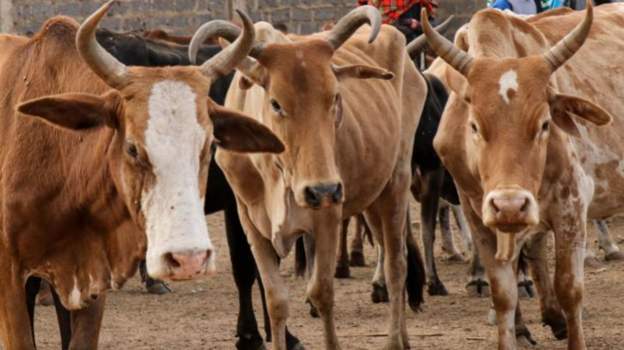
    Maasai families, who were given cows as a symbolic gift by a museum in Britain as part of a process to build relations, have expressed appreciation for the gesture. However, they emphasize that it is not enough to compensate for the display of their cultural objects in the museum.

    The Sululu and Mpaima families received 49 cows each from the University of Oxford, as reported by the Nation newspaper. Additionally, the Saiyalels and Mosekas families also received 49 cattle each, according to the K24 news site.

    This gesture comes after five years since Samuel Sankiriaki, a Kenyan man, discovered a significant collection of Maasai artifacts at the Pitt Rivers Museum in Oxford and petitioned the university for their return, as reported by the Nation.

    While the Maasai families acknowledge the symbolic gift of cows, they emphasize that it does not fully address their concerns regarding the display of their cultural objects. The issue of repatriation and preserving cultural heritage remains a significant matter for the Maasai community.

    Laura Van Broekhoeven, Oxford’s director of museum studies, is quoted as saying that the institution has 148 colonial-era Maasai artefacts but that only five were “identified as culturally sensitive family heirlooms”.

    But local Governor Patrick Ntutu disagrees, telling journalists “we believe the owners were either killed or maimed before the ornaments were taken away from them”.

    A spokesman for the Maasai families, Seka ole Sululu, told the Nation newspaper that they opted to pursue peaceful reconciliation with the university instead of suing but they are still expecting adequate compensation.

  • South Sudan concerned about rebel threats to halt crude oil shipments

    South Sudan concerned about rebel threats to halt crude oil shipments

    South Sudan is growing increasingly concerned about the potential impact of the ongoing conflict in neighboring Sudan on its oil transportation and revenue, which are vital for its economy.

    The conflict poses a significant security threat to the transportation of oil, and recently, the Rapid Support Forces (RSF) issued a threat to South Sudan. They warned that they would disrupt the transportation of oil passing through their controlled territories unless they receive a share of the rental and transit fees.

    Furthermore, the RSF has also threatened to shut down the pipeline infrastructure unless South Sudan ceases its contributions to the military leadership led by Gen Abdel Fattah al-Burhan.

    Ezekiel Lol Gatkuoth, a former Petroleum minister, acknowledged that it is unclear whether these threats are genuine or part of the wider propaganda of the war. However, he emphasized that a shutdown of South Sudan’s oil operations would have catastrophic consequences.

    The oil sector is crucial to South Sudan’s economy, and any disruption in oil transportation or production would severely impact the country’s revenue and economic stability.

    “A shutdown would be a loss to South Sudan, Sudan and our oil partners China National Petroleum Corporation, Petronas of Malaysia, and ONGC of India,” Mr Gatkuoth told The EastAfrican.

    The RSF controls pumping stations at Heglig of South Kordofan, while government forces control transport routes to Port Sudan, where the oil is loaded onto cargo ships for international sale.

    Deserting workers

    Juba pays Khartoum fees and a non-commercial tariff to ship its crude abroad.

    South Sudan transports crude oil to the Port of Sudan through the pipeline, with Sudan being the guarantor and protector of all oil infrastructure passing through its territory. Last year, South Sudan paid Sudan $148 million as a cost for oil processing, transportation, and transit fees.

    South Sudan earned $1.4 billion in oil revenue.

    The situation could adversely affect the economy of South Sudan, which depends on oil exports for 95 percent of its income, as oil production has been affected because some contractors ceased operations and foreign workers left oilfields due to fears of insecurity.

    According to the Ministry of Petroleum, South Sudan produces 170,000 barrels per day, and Sudan gets $25 per barrel.

    These threats led the government to announce plans to enhance the collection of non-oil revenue. Currently, the National Revenue Authority collects about $135 million per month in non-oil revenue, but the agency is targeting about $308 million per month by the end of the 2023/2024 fiscal year.

    While Juba depends on oil to run the economy, most of the experts in the oil sector are Sudanese. According to the Ministry of Petroleum, South Sudan produces 170,000 barrels per day, and Sudan gets $25 per barrel.

    In addition, 28,000 barrels a day are refined in Khartoum Refinery at Al-Jaili, and the products are consumed by both countries. The Central Processing Facilities at Al-Jabalain and Heglig are also operated by Sudanese experts.

    The marine terminal at Port Sudan, through which oil is shipped to the international markets, employs hundreds of Sudanese. Al Khair terminal in Sudan has a storage capacity of 50,000 tonnes at a time and handles 67 million tonnes per year.

    To avoid dependency on one route, South Sudan has been considering alternative oil export routes by road through Ethiopia to the port of Djibouti. The country is also constructing the road from the Bentiu oil refinery to Gogrial to transport refined oil and make space for storage.

    The other potential Kenyan route, through the Lamu Port-South Sudan-Ethiopia-Transport corridor, is uncertain due to years of delays in completion.

  • Twitter rival to be launched on Thursday by Mark Zuckerberg

    Twitter rival to be launched on Thursday by Mark Zuckerberg

    The Owner of Facebook Meta, Mark Zuckerberg is set to introduce its new app, Threads, in direct competition with Twitter.

    The app is scheduled to launch on Thursday and is already available for pre-order on the Apple App Store.

    Threads will be connected to Instagram, allowing users to seamlessly navigate between the two platforms. Initial screenshots reveal a user interface resembling Twitter, and Meta describes Threads as a “text-based conversation app.”

    This development adds to the ongoing rivalry between Meta’s CEO, Mark Zuckerberg, and Elon Musk, the owner of Twitter. In recent times, the two prominent figures even jokingly agreed to engage in a physical fight, although the seriousness of their intentions remains uncertain.

    “Thank goodness they’re so sanely run”, Mr. Musk responded to a tweet about Threads, in an apparent fresh swipe at Mr Zuckerberg.

    Meanwhile, Twitter has said that the popular user dashboard, TweetDeck will go behind a paywall in 30 days time.

    The move is the latest push by Mr Musk as he tries to get users to sign up to Twitter’s subscription service, Twitter Blue.

    On Saturday, the multi-billionaire restricted the number of tweets users could see, citing extreme “data scraping”.

    It appears from Meta’s Threads app that it will be a free service – and there will be no restrictions on how many posts a user can see.

    “Threads is where communities come together to discuss everything from the topics you care about today to what’ll be trending tomorrow” the description on the App Store says.

    Pictures show screengrabs from the app, that look almost identical to Twitter.

    It being a Meta app, Threads will also hoover up data on your phone, including location data, purchases and browsing history.

    Several apps that bear a striking resemblance to Twitter have sprung up in recent years – such as Donald Trump’s Truth Social and Mastodon.

    Another similar app, Bluesky claimed to have seen “record” traffic after Mr Musk’s move to restrict usage at the weekend.

    However, Threads could be the biggest threat faced by Twitter to date.

    Mark Zuckerberg has a history of borrowing other company’s ideas – and making them work.

    Meta’s Reels is widely seen as a TikTok copy, while Stories looks similar to Snapchat.

    Meta has the resources to compete with Twitter. Threads will be part of the Instagram platform, so it will also be connected to hundreds of millions of accounts. It’s not starting from zero, as other would-be rivals have had to do.

    Although Mr Musk has been praised in some quarters for his commitment to free speech, he has also alienated some users.

    Mr Zuckerberg will hope he can pull enough disenchanted users away from Twitter to create a genuine alternative.

  • Kenya: Wife of cult leader granted bail

    Kenya: Wife of cult leader granted bail

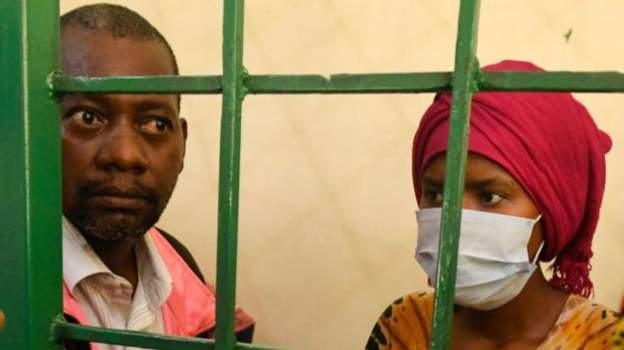
    A Kenyan court has granted bail to Rhoda Maweu, the wife of Paul Mackenzie, a cult leader and self-proclaimed pastor accused of being responsible for the deaths of hundreds of people.

    Rhoda Maweu had been held in custody for 62 days but has now been released on bail.

    However, the court ruled that Paul Mackenzie and 16 other co-accused should remain in custody for an additional 30 days.

    There has been a legal debate surrounding the prolonged detention of the suspects, but the magistrate justified their continued custody, citing it as being in the public interest.

    The case involves the Good News International Church, with at least 339 people believed to have died from starvation, severe beatings, or strangulation in the Shakahola Forest in southeastern Kenya.

    The Kenya Red Cross reports that 600 people are still missing.

    The state emphasized that the investigations were ongoing and that the hunger strike staged by the suspects in custody had hindered the progress of the case.

    Wycliffe Makasembo, the suspects’ lawyer, argued that the prosecution and the police were conducting a fishing expedition, lacking clarity on the potential charges and whether the respondents would be charged. Two other lawyers representing the suspects have recused themselves.

    The next hearing is scheduled for August 1st.

  • Senegal’s president was forced to resign – Opposition

    Senegal’s president was forced to resign – Opposition

    Opposition leaders have reacted to Senegal President Macky Sall’s decision that he will not run in the 2024 presidential election, claiming that it was due to popular pressure.

    A member of parliament and Pastef Abass Fall, the party of key opposition leader Ousmane Sonko, said it came as no surprise:

    “What would have surprised us is if Macky Sall had declared his candidacy for 2024. We all know that he wanted to… unfortunately for him, the pressure was such that he had no choice but to respect the constitution, which he himself cited several times, which he had voted in 2016.”

    Former Prime Minister Aminata Touré, who is currently in opposition, claimed Mr Sall’s decision to obey the constitution was due to the “mobilisation of Senegalese democrats” both locally and in the diaspora:

    “No one was prepared to accept the democratic regression he envisaged. So, in desperation, he respects the Constitution. If he had done so much sooner, we wouldn’t be where we are today,” she said.

    She said 16 people had been killed in protes”s “and the commission of inquiry will have to tell us who the masterminds were and who the others were”.

    A former trade minister and leader of the ruling Alliance pour la République party, Aminata Assome Diatta, has however described the moment as “historic”.

    “Today is a historic date, and more than in the past, the President of the Republic has shown the world that politics can go hand in hand with ethics,” she said.

  • Amnesty International reports widespread abuses in Cameroon

    Amnesty International reports widespread abuses in Cameroon

    Amnesty International has accused Cameroon’s security forces, separatists, and ethnic militias of perpetrating “rampant atrocities” in the country’s English-speaking core.

    Amnesty International documents extensive human rights violations and other crimes in the North-West region, including executions, torture, and rape.

    It says people have been caught in the crossfire as multiple fighters clash in the region, with individuals who speak out on the atrocities being threatened and arbitrarily detained.

    The rights group has also expressed “deep concerns” over the failure by the authorities to co-operate effectively with international and regional human rights institutions.

    It said repeated requests for fact-finding missions had remained unanswered.

    “We call on Cameroonian authorities to investigate allegations of human rights violations and other crimes under domestic law committed in the context of the armed violence in the Anglophone regions, and to prosecute and punish those responsible for such violations in fair trials and before independent, impartial, and competent tribunals” said Samira Daoud, Amnesty International’s Regional Director for West and Central Africa.

    Cameroon has been plagued by fighting since English-speaking separatists launched a rebellion in 2017.

    The conflict has claimed more than 6,000 lives and forced more than a million people to flee their homes, according to the conflict research body the International Crisis Group.

  • Mali ex-rebels ‘reassured’ of peace  after talks with Russian envoy

    Mali ex-rebels ‘reassured’ of peace after talks with Russian envoy

    In the aftermath of negotiations with Russia’s ambassador to Mali, a spokesman for Mali’s Tuareg armed factions voiced confidence in the country’s reconciliation process.

    The armed groups have previously warned that the removal of the UN’s peacekeeping force in the nation, Minusma, would give a “fatal blow” to the peace effort in northern Mali.

    Ex-rebels have already expressed concerns about the future of the 2015 peace accord, which officially ended the separatist insurrection in northern Mali.

    “We met today with the ambassador of the Russian Federation to Mali, His Excellency Igor Gromyko. The discussions on a number of topical issues and concerns were very productive and reassuring,” Attaye Ag Mohammed said on Twitter.

    The Wagner group’s recent mutiny in Russia, which has deployed thousands of mercenaries to Mali since 2022, has raised concerns about the Malian army’s ability to deal with militant violence on its own as the UN withdraws.

    The situation of Wagner fighters in the country is still unknown.

  • Zulu monarch of South Africa denies being poisoned

    Zulu monarch of South Africa denies being poisoned

    South Africa’s Zulu King Misuzulu kaZwelithini, has refuted reports that he was poisoned, insisting in a video that he was in good condition.

    It comes amid contradictory worries after the Zulu traditional prime minister announced over the weekend that the king was being hospitalized for possible poisoning in neighboring Eswatini.

    According to Chief Mangosuthu Buthelezi, the King was in hospital after the untimely death of one of his senior aides, who died of suspected poisoning. But the king’s official spokesman, says he is in “perfect health.”

    However, in the video released to South African media, the monarch stated that he was due to go for his regular medical check-ups, which he chose to undertake in Eswatini.

    “[It’s] not because I have been poisoned, I am not poisoned. I am well. I feel 100%.

    “I’m happy, everything is well functioning, there is no poison whatsoever. So please people, mostly to the Zulu people, the Zulu royal family also to remind everyone to please don’t listen to everything that people say,” he said.

    King Misuzulu is also quoted as telling the AFP news agency over the phone from Eswatini that he was “very fit and sound.”

    The 48-year-old monarch succeeded to the throne last year after his father, monarch Goodwill Zwelithini, died in a royal succession dispute.

  • Nigeria saves $28b after decision to end fuel subsidies

    Nigeria saves $28b after decision to end fuel subsidies

    Oil marketers have reported that, the Federal Government of Nigeria has saved over N400 billion since May 31, 2023, as a result of eliminating the subsidy on Premium Motor Spirit (PMS), commonly known as gasoline.

    In addition, these oil traders anticipate a likely increase in gasoline prices in July due to the recent decision by the Federal Government to allow the naira to float against the US dollar.

    Following the Central Bank of Nigeria’s decision on June 14, 2023, to unify the country’s currency rates in the investors and exporters’ window, market forces now determine the exchange rate.

    Operators in the downstream oil sector confirmed that Nigeria has achieved substantial savings since the removal of the subsidy regime in May, based on the information provided by the Nigerian National Petroleum Company Limited regarding the previous monthly expenditure on subsidies.

    The National President of the Independent Petroleum Marketers Association of Nigeria, Chinedu Okonkwo, stated to the Punch Newspaper that the removal of fuel subsidies has been beneficial and aligned with its intended purpose.

    He stated: “Right now they (the government) are making money. At least with this removal of subsidy, the government has racked in hundreds of billions, whether in naira or dollars. This is because every month we know how much they lose before.”

    Referring to statements made by the company’s Group Chief Executive Officer, Mele Kyari, during a meeting with oil sector operators in February, the statement claimed that marketers had been informed of the amount of money the NNPCL spent on subsidies on a monthly basis.

    At the meeting, Kyari had said, “Today, by law and the provisions of the Appropriation Act, there is a subsidy on the supply of petroleum products, particularly PMS imports into our country. In current data terms, three days ago, the landing cost was around N315/liter,” Okonkwo stated.

    “Our customers are here; we are transferring to each of them at N113/liter. That means there is a difference of close to N202 for every liter of PMS we import into this country. In computation, N202 multiplied by 66.5 million liters, multiplied by 30 will give you over N400bn of subsidy every month,” he added.
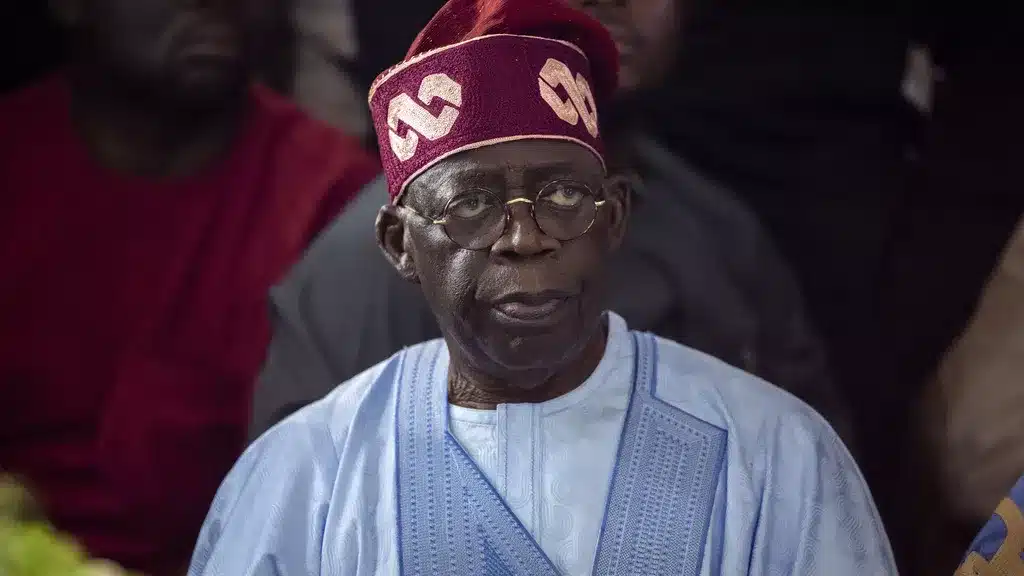
    Also, following the elimination of the subsidy on Premium Motor Spirit, which has continued to put a strain on Nigerians, organized labor has urged the population to be patient as it engages in negotiations with federal government representatives.

  • 5 football players who embarked on holiday trips to Africa

    5 football players who embarked on holiday trips to Africa

    In the aftermath of an intense nine months of competition with their respective European clubs, many players take the opportunity to visit the continent of Africa for their summer holidays.

    Several of these players have ancestral ties to countries such as Ghana, Mali, Tanzania, the Central African Republic, Congo, and Nigeria.

    For some of these players, their visits to Africa serve as a chance to reconnect with their families and friends whom they may have left behind at a young age after their birth.

    Others use their time in Africa to support charitable causes and give back to their communities through their ancestral connections.

    Additionally, some players take advantage of their holiday to explore the breathtaking tourist sites that Africa has to offer and create lasting memories with their fans.

    GhanaWeb highlights five players who embarked on trips to various African countries during their off-season break in Europe, immersing themselves in the rich culture and warmth of the continent.

    Memphis Depay

    The Dutch-born Ghanaian arrived with Holland teammate and AS Roma star Georginio Wijnaldum on Sunday, June 25.

    Depay and Wijnaldum visited a boxing gym in Accra, where the duo interacted with aspiring boxers and young children in the area.

    The former Manchester United attacker donated funds to the gym for renovation after spending some good time at the arena.

    The former Liverpool midfielder was born to Surinamese parents in Holland but was raised by a Ghanaian father.

    Kingsley Coman Tanzania

    Bayern Munich winger Kingsley Coman has been spotted on a beach in the Eastern African nation of Tanzania as he enjoys his holiday.

    Coman, who narrowly missed out on winning the 2022 FIFA World Cup, played a vital role in securing Bayern’s 11th consecutive Bundesliga title during the 2022-23 season.

    Following the conclusion of the campaign, the versatile winger has taken the opportunity to relax and recharge before the upcoming season.

    Additionally, the Frenchman generously gifted Bayern jerseys to the locals during his visit.

    Bukayo Saka

    The Arsenal star of Nigeria descent, Bukayo Saka arrived at the Murtala Muhammed International Airport, Lagos, Nigeria on Wednesday, May 31 for holidays.

    Saka played an integral for the Gunners as they finished second in the Premier League behind eventual winners Manchester City and was eventually named London Football Awards Men’s Young Player of the Year 2023.

    Born to Nigerian immigrants in the United Kingdom, Saka’s visit isn’t just a casual holiday but reports said he met with Lagos State Governor, Babajide Sanwo-Olu.

    Alejandro Balde

    The FC Barcelona youngster is on holiday with his brother Edi Balde visiting the country of his father’s origin (Guinea-Bissau). There he was given a hero’s welcome at the airport,on Monday, June 26 as he visits his family.

    Balde was catapulted to global stardom this season, winning a starting spot in the Barcelona line-up in late 2022. His rise has been dramatic, and he made his debut for Spain at the 2022 World Cup in Qatar.

    He also met with the President of Guinea-Bissau Umaro Sissoco Embalo where he presented the leader with a Barcelona jersey.

    Kehrer

    West Ham United star Thilo Kehrer paid a visit to his mother’s village in Burundi as footballers continue to enjoy their break. The 26-year-old defender was born in Tubingen, Germany, to a German father and a Burundian mother.

    Kehrer was impressive for the Hammers as he featured in 27 league games, helping the team to avoid relegation from the Premier League.

    He has the Kehrer Foundation in Burundi which supports the less fortunate in the country.

  • Rot-causing disease affects Cocoa output, hiking prices

    Rot-causing disease affects Cocoa output, hiking prices

    Cocoa prices have surged to a 13-year high due to heavy rainfall across West Africa, which has accelerated the spread of a rot-causing disease, posing a threat to cocoa output in major producing countries.

    Farmers in Ivory Coast, Ghana, and Nigeria have reported the presence of blackpod disease, causing cocoa pods to blacken and rot. This disease can have a significant impact on the quality and quantity of cocoa beans, potentially disrupting the supply chain. According to Fuad Mohammed Abubakar, the head of Ghana Cocoa Marketing Co., the disease can be devastating for cocoa production.

    Farmers in Ivory Coast are concerned about the mid-crop’s output and quality, expecting it to be disappointing compared to the previous year. This raises worries that the smaller harvest may not be sufficient to offset any shortfall from the main crop.

    Cocoa is harvested twice a year, with the main crop harvested mostly from October to March and the mid-crop from May to August.

    London cocoa futures have experienced a remarkable surge of over 20% this year. On Monday, the most active futures reached £2,544 per ton, marking the highest level since mid-2010.

    In Nigeria, farmer Sola Ogunsola reported significant damage to cocoa farms in coastal areas, resulting in the loss of developing pods. Additionally, heavy rainfall has made roads impassable, hindering the application of chemical treatments in plantations and the transportation of cocoa to ports.

    Ivory Coast farmers have sent 2.24 million tons of cocoa to ports during the current season, slightly below the estimated 2.29 million tons from the previous year.

    Furthermore, the return of El Niño conditions is adding support to cocoa prices, as the weather phenomenon typically brings hot and dry conditions to West Africa, increasing the risk of a potential 10% drop in output, according to Bloomberg Intelligence estimates.

  • Dormaahene calls for completion of projects initiated by previous leaders

    Dormaahene calls for completion of projects initiated by previous leaders

    The Paramount Chief of Dormaa Traditional Area and President of the Bono Region House of Chiefs, Osagyefo Oseadeeyo Agyemang Badu II, delivered a speech at the 10th anniversary memorial lecture for the late former President John Evans Atta Mills, where he emphasized the importance of continuing and completing development projects initiated by previous administrations.

    Osagyefo Agyemang Badu II specifically highlighted the need to address the deterioration of physical educational and health infrastructure projects that were initiated by the National Democratic Congress (NDC) government but have been left unfinished.

    He urged the government to explore alternative funding sources to ensure the completion of these projects, as they play a crucial role in the overall development and well-being of the community.

    By prioritizing the continuation and completion of these initiatives, successive governments can demonstrate their commitment to sustainable development and the improvement of essential services in the region.

    The Bono, Bono East, Ahafo and Western North Regional branches of the National Democratic Congress (NDC) jointly organised the lecture on the theme “The Man John Evans Atta Mills-10 Years On”, and attended by leadership of the Party, traditional leaders, youth groups and some Members of Parliament.

    Osagyefo Agyemang Badu II said continuity of development projects would improve the nation’s physical infrastructure and urged the government to complete educational and housing projects such as the E-blocks for the benefit of Ghanaians.

    He said governments must not play partisan politics with development, saying doing so would deny the citizenry the required development that would better their lives.

    Osagyefo Agyemang Badu II cited that it would be unfortunate for any government to abandon the “Agenda 111 Hospital” project if the New Patriotic Party (NPP) government was voted out of power.

    He said the nation’s development had been back and forth because of the unwillingness and failure of successive governments to continue with projects initiated by their predecessors and advised politicians to desist from that behaviour.

  • ILAPI proposes establishment of fiscal covenant to reduce govt expenditure waste

    ILAPI proposes establishment of fiscal covenant to reduce govt expenditure waste

    The Institute for Liberty and Policy Innovation (ILAPI) has proposed the formulation of a new fiscal covenant in Ghana as a solution to address government expenditure waste.

    The suggested fiscal covenant aims to define clear guidelines for government spending, specifying what, how, and when to spend within allocated budgets to avoid non-prioritized and extravagant expenses, as explained by Mr. Peter Bismark Kwofie, the Executive Director of ILAPI.

    Mr. Kwofie emphasized that effective public finance management is crucial for any democratic state, and the fiscal covenant plays a pivotal role in determining the legal responsibilities of the government towards its citizens based on tax contributions.

    The recommendation came after ILAPI conducted a representative perception poll, highlighting the necessity for legislators to establish fiscal responsibility laws and rules to ensure the efficient and prudent utilization of state resources.

    Over the years, Ghana, as a democratic state, has faced challenges in rational decision-making without a fiscal covenant.

    “A fiscal covenant leads to the development of consensus on norms, standards, and principles that must guide public policy delivery; the state must be guided, and there should be consistency in that behaviour in terms of how it collects resources and how they can be used,” he added.
    To realize such expectations, political agreement among social actors regarding tax collection, usage, and accountability is essential. The fiscal covenant would also entail fiscal discipline, legislating on debt limits, and reducing executive discretions on revenue legislation with specific sunset clauses.

    Transparency in public expenditure would be promoted by establishing regular engagement with all stakeholders involved in the development value chain.

    Furthermore, the fiscal covenant would include developing efficient criteria for managing national resources, indexing revenue and expenditure, and adhering to the principles of budgetary unity and universality, among other tenets.

  • Senegal president concedes to step down in 2024

    Senegal president concedes to step down in 2024

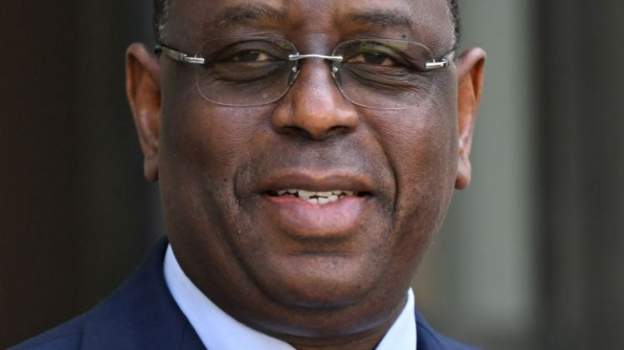
    President Macky Sall of Senegal has officially declared that he will not be pursuing re-election when his current term comes to an end next month.

    In a highly anticipated address to the nation on July 3, 2023, he put an end to the speculations and dispelled the rumors surrounding his intention to seek a controversial third term in office.

    “My dear fellow citizens, my decision after long consideration is to not be a candidate in the election on February 25, 2024. Senegal is more than me, and is full of capable leaders for the country’s development,” he said in French.

    The news of his candidacy and the subsequent arrest of a prominent opposition candidate, Ousmane Sonko, sparked violent protests that resulted in loss of lives and extensive property damage in recent times.

    Reacting to Sall’s announcement, former Niger president Mahamadou Issoufou tweeted: “The President, Macky Sall, has just shown great political intelligence. Thus, Senegal remains one of the torchbearers whose flame lights up our continent.”

    The United Nations Secretary General tweeted: “I would like to express my deep appreciation for President Macky Sall and the statesmanship he has shown. His decision represents a very important example for his country and the world.”

  • Why student loans won’t solve Nigeria’s education problems

    Why student loans won’t solve Nigeria’s education problems

    Excitement fills the household of Esther Abu as she and her daughters learn about an upcoming law that aims to assist impoverished Nigerian families by providing loans to send their children to university.

    Mrs. Abu’s youngest daughter, a spirited teenager with a knack for rap, is set to graduate from secondary school next month. She harbors a deep passion for computer engineering but understands that her mother, a single parent working as a street sweeper, struggles to provide enough food for the family with her meager salary.

    The family often relies on charitable donations from their church to make ends meet. As for her elder sister, she completed secondary school two years ago and immediately took up a job as a hair stylist to contribute to the family’s well-being.

    Together, they reside in Mararaba, a densely populated suburb on the outskirts of Abuja.

    “As a girl I dreamed of working as a doctor,” says 21-year-old Eunice.

    Both now have a chance, albeit slim, of reviving their dreams, as the government says it will provide loans to pay the tuition fees for people from such poor backgrounds. However many questions have been raised about the scheme.

    Since coming into office at the end of May, President Bola Tinubu has carried out a raft of reforms at lightning pace – ending fuel subsidies, devaluing the naira, sacking the head of the central bank and security chiefs – and his latest aims to revamp Nigeria’s ailing tertiary education sector.

    For decades, fees have been kept low by the government to encourage enrolment in a country where many are poor and there is a high level of illiteracy.

    While medicine students at the University of Lagos in Nigeria’s richest state pay just 25,000 naira (£32; $26) per year, their peers at the University of Ghana in Accra pay 3,500 cedis (£242, $308).

    But such low fees have not been matched by government funding over time which has led to schools with obsolete equipment, overcrowded classrooms, and poor remuneration for lecturers and other staff.

    An average Nigerian university professor takes home less than 500,000 naira (£570; $725) a month, while a graduate assistant gets 160,000.

    These conditions have led to incessant strikes, which saw universities closed for eight months last year – the ninth stoppage in 13 years.

    The strikes and lack of adequate funding have eroded confidence in Nigeria’s public universities, leaving people to enrol at expensive private establishments or to study abroad, especially in Eastern Europe.

    By introducing the loans, President Tinubu has given universities a free rein to increase tuition fees, which the government reckons students from poor families can now afford.

    The president says the scheme “will expand access to education to all Nigerians regardless of their backgrounds”.

    The zero-interest loan will be paid back as monthly deductions of 10% of the salaries of beneficiaries two years after they complete a mandatory post-graduate paramilitary service.

    “But what if they finish school and don’t get a job?” asks Mrs Abu in a low voice that hushed the room.

    It is a question has been repeated across Nigeria by students and their parents since the scheme was announced two weeks ago.

    Every year, huge numbers of graduates are pumped into Nigeria’s labour market but only a few find a job.

    In the last survey, in 2020, one in three of those who wanted to work were unemployed, and millions of graduates were doing jobs below their skillset such as working as hair stylists.

    A man in front of a classroom
    Image caption,Ayuba Mayah thinks the loan will be a burden when he leaves school

    “I know at least 200 graduates in my village who returned to farming after going to school because of no jobs,” says Ayuba Mayah, a student at the College of Education in Zuba, Abuja.

    He is not going to take the loan, he says, to avoid that burden hanging around his neck while job-hunting after graduating. Instead, he is working to pay for his education.

    Aminu Sadiya and Mercy Sunday, who are both studying economics at the same college, agree that getting a job is their main concern about taking the loan.

    “My parents did not think of a loan before they sent me to school, they will find a way to pay the fees,” says Ms Sunday, whose parents are farmers.

    Though Mr Tinubu has promised to halve the unemployment rate in three years by creating millions of jobs for young people, the new law is mute about graduates who can’t repay the loan because they are unemployed.

    However, those who become self-employed risk a two-year jail term or fine if they refuse to pay back the loan as 10% of their monthly profits.

    But the loan is not available to all – it is specifically for students that come from homes with an income of less than 500,000 naira annually.

    In theory, millions could benefit, but the conditions for acquiring a loan are stringent.

    Poor families will have to prove they earn that little, which means they will have to provide bank statements which many of them are unlikely to have.

    Applicants are also required to provide at least two guarantors:

    • a senior civil servant
    • lawyer with at least 10 years experience
    • judicial officer or justice of peace

    It has been pointed out that poor Nigerians are unlikely to know such people, and where they do, have a slim chance of such a person standing as a guarantor for a loan.

    Even after meeting the requirements, applicants are not guaranteed the loan as it is subject to the availability of funds.

    “They should just say they don’t want anyone to access the loan,” says Vanessa Macaulay, a third-year Mass Communication student at the Yaba College of Technology in Lagos.

    The president of the universities lecturers’ union also describes the loan conditions as “not practicable”, adding that more than 90% of students won’t meet the “requirements”.

    But other academics such as Professor Mudashiru Mohammed, who heads the Education Management department at state-owned Lagos state university, says despite tuition fees of just 30,000 naira (£34, $43) per semester, many of his students cannot pay.

    University students in a classroom
    Image caption,Funding for education has improved recently but it still falls short of the UN-recommended 15-20% of the annual national budget

    He says the conditions were necessary to ensure people paid up, in a country where most see government loans as free money.

    While it is hard to measure the financial background of students in public tertiary schools, many at the University of Abuja tell the BBC they are from low-income homes.

    Their education is funded by parents and guardians who are junior civil servants, private security guards and company drivers.

    Combined earnings in such families are often just above the threshold, putting the loan out of reach, even though they are not well-off by Nigerian standards.

    These families have already taken hits from transport fares that have doubled, while the cost of food has also soared recently.

    Now, they will have to deal with tuition fees which have gone up in some universities – which have been mulling increases since last year – by as much as 200%.

    The loan is strictly for tuition and excludes other fees such as accommodation and food, which usually account for a higher proportion of the total cost of university.

    “If they are not paying for everything, then what is the point of it? Who will buy books, pay for hostel, feeding,” asks Mrs Abu, the chatter long extinguished in her home.

    “They should have made the loans available to every student,” says Caleb Issac a self-sponsored part-time student at the National Open University in Abuja.

    In his spare time he works as a marketer for a transport company and fears a hike in fees will be hard on him.

    This is not Nigeria’s first attempt at a students’ loan – an initial plan in 1972 by the military government crumbled because beneficiaries refused to repay, says Prof Mohammed.

    “Maybe the president should have first concentrated on creating jobs,” says Mrs Abu.

    The lack of jobs, other fees involved and a lack of clarity about what will happen to employees who default on repayments, mean the loan does not work for her family, she says.

    “Better if my daughters learn trades and get small jobs than go to school and face jail,” she says.

  • 3.2m vehicles were registered in Ghana as of 2022 – Transport Minister

    3.2m vehicles were registered in Ghana as of 2022 – Transport Minister

    In a statement delivered on behalf of Mr. Kwaku Ofori Asiamah, the Minister for Transport, it was acknowledged that the transport sector in Ghana remains a significant contributor to greenhouse gas emissions, impeding the nation’s progress towards achieving the global goal of net-zero emissions by 2025.

    The minister attributed this to the country’s reliance on fossil fuels, noting that the Driver Vehicle and Licensing Authority had registered a total of 3.2 million vehicles by the end of 2022.

    According to the minister, approximately 72 percent of the registered vehicles were powered by petrol, 27 percent by diesel, and around one percent by Liquefied Petroleum Gas (LPG).

    These remarks were made during the opening of the Bono Regional Consultative meeting on the Electric Vehicle Policy, which took place in Abesim near Sunyani.

    The event was organized by the Ministry of Transport and attended by key stakeholders in the transport industry, including representatives from the National Road Safety Authority, Driver Vehicle Licensing Authority (DVLA), Motor Traffic and Transport Department (MTTD), and other security services.

    The Ministry, in collaboration with the Ministries of Energy and Finance, is conducting nationwide consultative meetings to gather input from key players in the transport industry for the development of the electric vehicle policy.

    Mr. Asiamah expressed concern about the adverse effects of climate change and global warming, which are increasingly felt in various parts of the country, posing significant challenges to the environment and human life.

    Therefore, the minister emphasized the need to transition from diesel and petrol-powered vehicles to electric vehicles.

    Madam Justina Owusu-Banahene, the Bono Regional Minister, stressed the importance of phasing out old and outdated vehicles to position the country on track to achieve net-zero emissions by 2025.

    She highlighted that carbon emissions from these vehicles, coupled with air pollution, contribute significantly to global warming, hindering the nation’s efforts to mitigate climate change.

    Madam Owusu-Banahene further stated that the government is fully committed to removing old vehicles from the system and mentioned the establishment of vehicle assembling plants in the country as evidence of the government’s dedication to facilitate the transition to net-zero emissions.

    These vehicle assembling plants are expected to make it more accessible for Ghanaians to purchase and use new vehicles.

  • More than 700,000 campanies not in good standing – ORC

    More than 700,000 campanies not in good standing – ORC

    Since 2011, the Office of the Registrar of Companies (ORC) has successfully registered a total of 1,023,715 business entities.

    However, recent data as of June 30, 2023, reveals that only 257,038 of these registered entities are currently in good standing, leaving a significant number of 719,973 businesses not in compliance, according to the B&FT.

    In light of this situation, the ORC has made the decision to extend the deadline for filing annual returns and renewals.

    The new deadline is now set for September 30, 2023. This extension aims to provide an opportunity for defaulting companies and businesses to complete the necessary procedures for filing their annual returns and renewals.

    The scope of this extension covers various types of entities, including companies limited by shares, companies limited by guarantee, external companies, partnerships, business names (sole proprietorships), and subsidiary business names.

    “The deadline-extension is to enable Companies and Businesses in default to complete the processes for filing their annual returns and renewals, which they invariably could not complete due to the downtimes experienced by our software application system throughout the period,” the Registrar of Companies, Jemima Mamaa Oware, stated in a statement seen by the B&FT.

    Importantly, the deadline extension applies to a wide range of entities, encompassing business names, companies limited by shares, companies limited by guarantee (such as churches, schools, NGOs, CSOs, foundations, associations, unions, societies, and charities), external companies, partnerships, and professional bodies.

  • A dollar goes for GHS11.90 on forex, GHS11.00 on BoG interbank

    A dollar goes for GHS11.90 on forex, GHS11.00 on BoG interbank

    The Bank of Ghana’s interbank forex rates on July 4, 2023, shows the Ghana Cedi is currently being traded against the US dollar at a buying rate of 10.9914 and a selling rate of 11.0024.

    At a forex bureau in Accra, the US dollar is being bought at 11.45 and sold at 11.90.

    In relation to the Pound Sterling, the Cedi has a buying rate of 13.9536 and a selling rate of 13.9686.

    At a forex bureau in Accra, the Pound Sterling is being bought at 14.60 and sold at 15.30.

    The Euro has a buying rate of 11.9979 and a selling rate of 12.0098.

    At a forex bureau in Accra, the Euro is being bought at 12.20 and sold at 12.80.

    For the South African Rand, the buying rate is 0.5860 and the selling rate is 0.5864.

    At a forex bureau in Accra, the South African Rand is being bought at 0.30 and sold at 0.90.

    The Nigerian Naira has a buying rate of 68.1528 and a selling rate of 68.9003.

    At a forex bureau in Accra, the Nigerian Naira is being bought at a rate of 13.00 Naira for every 1 Cedi and sold at a rate of 19.00.

    Regarding the CFA, it has a buying rate of 54.6185 and a selling rate of 54.6727.

    At a forex bureau in Accra, the CFA is being bought at a rate of 17.00 CFA for every 1 Cedi and sold at a rate of 21.00 CFA for every 1 Cedi.

  • Tax for seafood import to increase to 1,500%

    Tax for seafood import to increase to 1,500%

    The United States Department of Agriculture (USDA), has indicated in it second quarter foreign agricultural service report that government plans to significantly increase import taxes on frozen seafood by 1,573 percent.

    The current tax rate of GH¢15 per metric tonne will rise to approximately GH¢251 per metric tonne. The USDA’s second quarter foreign agricultural service report states that the tax will be paid in US dollars, which are currently in short supply. This tax hike could lead to a reduction in fish imports and a decrease in fish supplies on the local market.

    In addition to the tax increase, the elimination of the benchmark value discount policy and an increase in Value Added Tax (VAT) are cited as potential challenges that could impact seafood imports in Ghana.

    These tax measures are already discouraging importers, especially given the current economic situation, making business in the major port of Tema less attractive. Consequently, vessels are opting to unload their cargo in neighboring countries like Togo and Cote d’Ivoire, where they can avoid paying the import taxes.

    Despite these tax measures, the seafood industry remains attractive to importers due to the rapid growth of Ghana’s hospitality industry, particularly the food services sub-sector. Ghana relies heavily on seafood imports, as it is a net importer of fish and seafood products. In 2022, the country imported approximately US$145 million worth of seafood, a decrease of 13 percent compared to 2021.

    Mauritania was the top supplier of seafood to Ghana in 2022, followed by China and Morocco. Other significant seafood supplying countries include the Faroe Islands, Spain, Norway, South Korea, the Netherlands, Angola, and Singapore.

    The United States ranked 13th as a seafood supplier to Ghana, with a value of US$4.2 million in 2022, an increase of 42 percent compared to 2021. Mackerel, sardines, and whiting/hake are among the most commonly imported fish species in Ghana.

    Seafood plays a vital role in Ghanaian cuisine, accounting for 60 percent of animal protein intake and having one of the highest per capita consumption rates of fish in Africa, estimated at 26 kilograms per year.

    While U.S. seafood sales to Ghana have recently experienced growth, the sustained export of seafood from the U.S. is at risk due to the substantial tax increase on frozen seafood. However, a previous USDA report highlighted that Ghana’s seafood market presents a long-term opportunity for U.S. suppliers if efforts are made to prioritize and enhance domestic production.

  • Obomsase Mankrado reinstated by Okuapehene after wrongful destoolment – Report

    Obomsase Mankrado reinstated by Okuapehene after wrongful destoolment – Report

    In response to a wrongful destoolment carried out by certain members of the traditional council, Okuapehene Oseadeyo Kwasi Akuffo II has reinstated Nana Donkor Manianor II as the Mankrado of Obosomase.

    According to a report by Nana Ayeh of Ofie TV, the restoration took place after it was discovered that the Mankrado had been destooled without the knowledge or consent of the Okuapehene.

    It was revealed that Abusua Panin Kwaku Asare of Obosomase, along with ten others, unlawfully removed the Mankrado from his chieftaincy position through a ritual involving the sacrifice of animals and libation. They falsely claimed that the Okuapehene had ordered the destoolment.

    Following their actions, they were summoned to the palace for questioning, during which they admitted their wrongdoing during interrogations conducted by the chief linguist (Okyeame).

    As a consequence of their misconduct, Abusua Panin Kwaku Asare and his accomplices were imposed a penalty of 30 sheep, ten boxes of schnapps, and GH¢100,000. This served as a form of punishment for their actions.

    “The agreed to forgive them but on the condition that they bring 30 sheep, GH100,000, and 10 boxes of schnapps. So, they had to go and look for people to come and plead on their behalf, and at the end, they agreed on GH¢ 50,000, 20 sheep, and the five boxes of schnapps.”

  • Okudzeto calls for Dormaahene’s resignation or be dismissed from High Court

    Okudzeto calls for Dormaahene’s resignation or be dismissed from High Court

    A member of the General Legal Council and a former President of the Ghana Bar Association (GBA), Sam Okudzeto, has demanded the resignation or dismissal of Osagyefo Oseadeeyo Agyemang Badu II, the ruler of the Dormaa Traditional Area, from their position as a High Court judge.

    Okudzeto referenced the paramount chief’s call for the discontinuation of the criminal case against James Gyakye Quayson, the Member of Parliament-elect for the Assin North Constituency, as the basis for his demand.

    During the 10th Atta Mills Anniversary Lecture held over the weekend, the President of the Bono Regional House of Chiefs, who also serves as a High Court judge, appealed to President Nana Addo Dankwa Akufo-Addo and Attorney-General Godfred Yeboah Dame to urgently terminate the trial against James Gyakye Quayson.

    He urged the minister to file a nolle prosequi to formally discontinue the case in the interest of the public.

    In response to these remarks, Sam Okudzeto expressed his condemnation of Dormaahene in an interview with Joy FM on July 3, 2023. He stated, “It is wrong, it is repugnant, it is senseless for a sitting High Court judge to stand on a public platform and make an utterance of that nature. This is my view.”

    Furthermore, the former GBA president called for the High Court judge to be dismissed or to resign from their position.

    “If I was sitting in that disciplinary committee of the judicial council, I would have asked him to resign or asked him to be sacked as a judge. That’s what I would have done,”myjoyonline.com quoted him to have said in the interview.

    Gyakye Quayson is currently facing charges of perjury and four other charges related to his Canadian citizenship status at the time of filing his nomination forms for the 2020 parliamentary election.

    Legal proceedings were initiated against Gyakye Quayson following a Supreme Court ruling that deemed the Electoral Commission’s decision to allow him to run in the 2020 elections without providing proof of renouncing his Canadian citizenship as unconstitutional.

    The Supreme Court instructed Parliament to remove Gyakye Quayson’s name from its records, rendering his election null and void. Additionally, his swearing-in was deemed unconstitutional.

    Subsequently, a by-election was conducted, in which Gyakye Quayson emerged as the winner. According to the Electoral Commission’s announcement, he received a total of 17,245 votes, constituting 57.56% of the total votes cast.

    Charles Opoku of the New Patriotic Party (NPP) was his closest contender, garnering 12,630 votes, accounting for 42.15% of the votes. Bernice Enyonam Sefenu of the Liberal Party Ghana (LPG) secured 87 votes, representing 0.29% of the overall tally.

  • It would be beneficial to file a nolle prosequi in Gyakye Quayson’s case – Ayikoi Otoo

    It would be beneficial to file a nolle prosequi in Gyakye Quayson’s case – Ayikoi Otoo

    Nii Ayikoi Otoo, former Attorney-General and Minister for Justice, has advised the government to terminate the criminal case involving James Gyakye Quayson, the Member of Parliament-elect for Assin North.

    Otoo, who previously served as an ambassador to Canada, emphasized the political prudence of filing a nolle prosequi in the case.

    He pointed out that the New Patriotic Party (NPP) should consider the broader public sentiment and the potential reaction of the people of Assin North if the case continues.

    However, Otoo clarified that the Attorney-General does not have the authority to make this decision independently unless it is supported by the cabinet.

    “It will be a good thing to enter a nolle prosequi and stop all this to show more maturity but you cannot as an Attorney-General do it on your own, you are not independent, you are part of a whole.

    “The Attorney-General is bound by cabinet decision and cabinet secrecy even if he disagrees, once it has been taken, you are bound,” he said on EyeWitness News on Citi FM (July 3).

    “So, if you ask me, what I will tell you is that there is the need for some negotiation, a broader conversation on the matter,” he stressed.

    The former Attorney-General responded to recent statements made by the Dormaahene, who suggested that the state should terminate the trial of Gyakye Quayson in an Accra High Court. This comment received a prompt rebuttal from Attorney-General Godfred Yeboah Dame.

    James Quayson, who pleaded not guilty, faced five charges including deceit of a public officer, forgery of passport or travel certificates, knowingly making a false statutory declaration, perjury, and false declaration for office. These charges stem from his alleged dual citizenship at the time of his participation in the 2020 elections.

    The Accra High Court ordered a daily trial, but Quayson’s lawyers have contested this ruling in the Court of Appeal.

  • Phone repairer displays nudes of student nurses in church

    Phone repairer displays nudes of student nurses in church

    A male student blackmailer has recently leaked a sex tape involving two first-year students from Kwadaso SDA Nursing and Midwifery Training College in Kumasi, the capital of the Ashanti region. The video, which was recorded off-campus, came into the possession of the blackmailer after the female student handed her phone over to a colleague for repairs.

    The blackmailer, having copied the video from the phone, proceeded to demand Fifty Thousand Ghana Cedis (GHC50,000) from the female colleague and threatened to release the video if she failed to meet his demand.

    Due to the lady’s financial constraints, she was unable to fulfill the blackmailer’s request, which led to the strategic release of the tape during the evening church service on Wednesday, June 23, 2023, precisely at 6:30 PM.

    According to reports from some students, the unfortunate incident caused a disruption during the church service, as the entire auditorium burst into laughter due to the perceived lack of respect exhibited by the female student.

    Confirming the incident, a female student shared the details with the media…

    “What I can say is that yes, the two persons in the video are our colleague students. They are all first-year students. The video was recorded off campus that’s all. The case at the moment is before management of the school’’ She said.

    She added “The two students even though they are adult I think they need psychological support; the issue is very embarrassing’’.

    However, she declined to confirm whether the two students featured in the sex tape are currently present on the campus or not.

    Numerous attempts to contact the school management for their response regarding the matter have been unsuccessful.

  • Management of uniBank accused of misrepresenting its actual financial status – Receiver tells High Court

    Management of uniBank accused of misrepresenting its actual financial status – Receiver tells High Court

    Receiver of collapsed uniBank, Nii Amanor Dodoo, has informed the Accra High Court that the management of the bank deliberately misrepresented the true financial position of uniBank in their reports to the Bank of Ghana (BoG).

    The Receiver clarified that the financial reports were prepared by the management team of uniBank collectively, and not by any individual. While Benjamin Ofori, a former Executive Head of the Credit Risk Department of uniBank, did not submit any report directly to the BoG in his personal capacity, he did so as part of the bank’s management team.

    The Receiver acknowledged that the financial reports of uniBank, which were submitted to the BoG, went through the bank’s internal processes. He further explained that misreporting involved not only communicating false information but also participating in the falsification of reality.

    The misreported matters included fictitious loans, fictitious income generated from those loans, and the amounts illegally transferred out of uniBank by the shareholders. The Receiver affirmed that Benjamin Ofori played a critical role in these activities.

    The Receiver also revealed that Mr. Ofori played a key role in opening fictitious accounts and assisted with memos that led to the creation of fictitious loans. From 2016 to 2018, Mr. Ofori held the position of executive head of Credit Risk at uniBank, responsible for assessing credit risks and making loan recommendations.

    During the court proceedings, the Receiver referred to a memorandum dated 30th November 2016, which formed the basis for a purported loan of GHS 14 million disbursed to Fuzak Construction. The funds were transferred to a fictitious account instead of the regular account of Fuzak Construction, and later transferred to the shareholders’ account.

    The Receiver distinguished between fictitious and irregular loans, explaining that an irregular loan may be one approved by someone beyond their approval limits. However, a loan intentionally obtained using a fictitious account number and presented as if it were a regular transaction cannot be described as irregular.

    The Receiver highlighted that Mr. Ofori was expected to ensure accurate facts in the memos he reviewed and confirm the regular account numbers of customers listed.

    The Receiver further informed the court that no offer letters were generated for the fictitious loans. The case was adjourned for continuation on 11th, 12th, and 13th July 2023.

  • Pope Francis frowns on burning Quran in Sweden

    Pope Francis frowns on burning Quran in Sweden

    Pope Francis has strongly criticized the recent incident of Quran burning in Sweden, expressing his anger and disgust at the desecration of the Muslim holy book.

    In an interview with the United Arab Emirates newspaper Al Ittihad, the Pope emphasized the importance of respecting any book that is considered holy, as a means of showing respect to those who hold it sacred.

    “I feel angry and disgusted at these actions.”

    During the celebration of Eid al-Adha on Wednesday, a distressing incident occurred in Stockholm where an individual tore up and burned a Quran outside a mosque. This act has received condemnation from various quarters, including the governments of Turkey and Saudi Arabia.

    In response to this incident, the Organisation of Islamic Cooperation (OIC), consisting of 57 member states, has called for collective action and emphasized the importance of utilizing international law to combat religious hatred.

    The OIC said in a statement: “We must send constant reminders to the international community regarding the urgent application of international law, which clearly prohibits any advocacy of religious hatred.”

  • Ethiopia responds to issuance of birth certificates for refugees

    Ethiopia responds to issuance of birth certificates for refugees

    In response to a recent BBC report, the Refugee and Returnees Service (RRS) in Ethiopia has addressed the issue of birth certificates not being issued to new-born babies born to Eritrean refugee parents.

    The parents have expressed their concerns that this situation is obstructing the process of family reunification.

    The RRS called the claims “a baseless allegation”.

    “Registration is going on since November 2022 and 2,149 Eritrean children are registered,” it said in a statement.

    However, the statement from the Refugee and Returnees Service (RRS) did not clarify whether they are currently issuing the birth certificate documents that the families require.

    A man residing in Germany shared with the BBC that he has been anxiously awaiting the opportunity to reunite with his wife and children.

    The issuance of birth certificates is a necessary requirement by the German embassy in order to proceed with visa applications for the babies.

    “I have seen the response from RRS. Our problem is not registration – what we need is the birth certificate document which the German embassy is requesting,” one father said.

    Another said: “Our wives have been going to the RRS offices many times for months asking for the birth certificate but still we are waiting despite repeated promises.”

  • GPRTU protest against bad roads at Shama

    GPRTU protest against bad roads at Shama

    On Monday morning, protesters in Shama, a town in the Western Region of Ghana, staged a demonstration that led commuters stranded.
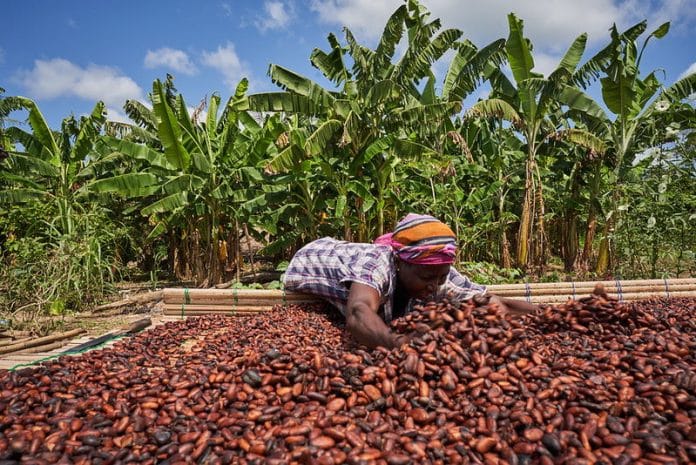
    Members of the Ghana Road Transport Union (GPRTU) parked their vehicles in protest of the poor state of roads in the constituency.

    Traditional authorities, who also share concerns about the district’s conditions, joined the drivers in the demonstration.

    This collective action effectively brought all vehicular movement within the district to a halt, causing significant inconvenience and economic disruption.

    John Amoh, the Shama District Chairman of the GPRTU, voiced the drivers’ frustration with the condition of the roads. He expressed that the roads in the district are in a deplorable state and criticized the government for consistently failing to address their concerns.

    Amoh further stressed that the drivers and protesters would continue their demonstration until their grievances are properly addressed.
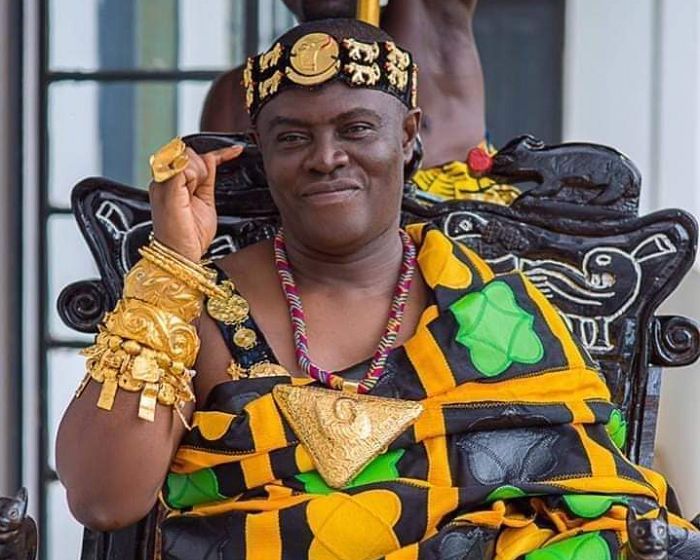
    Amoh highlighted the government’s broken promises, including the announcement and ceremonial sod-cutting for the construction of a district hospital, which has shown no progress. The protesters feel neglected by the government and are resolute in their determination to persist until their voices are heard.
  • Govt successfully borrows GHS10.50b through T-bills

    Govt successfully borrows GHS10.50b through T-bills

    In June 2023, the government successfully raised GH¢10.50 billion through treasury bills, although the subscriptions were lower compared to the previous month’s auctions, which garnered GH¢11.26 billion.

    The total bids fell short of the set target of GH¢11.53 billion. T

    he economy showed signs of stability, according to the International Monetary Fund’s initial assessment. Interest rates have been steadily increasing, reaching nearly 26% at present.

    However, the recent auction fell short of the target by 17%. The Bank of Ghana stated that the target included a sell buy-back of GH¢1.01 billion, which will mature and be rolled over on July 6, 2023.

    Interest rates for the 91-day bill stood at 23.95%, while the 182-day bill reached 25.79%. In the next auction, the government anticipates raising GH¢1.57 billion through the 91-day bill, 182-day bill, and 364-day bill.

  • Investing in scientific research, essential to unlock potential of nuclear technology – MESTI

    Investing in scientific research, essential to unlock potential of nuclear technology – MESTI

    Director of Science, Technology and Innovations, Ministry of Environment, Science, Technology and Innovations (MESTI) Kwamena Quaison, has emphasized that sufficient investment in scientific research and development is crucial to unleash the full potential of nuclear technology.

    “Taking such steps would yield more opportunities by creating new industries, new jobs, ensure food security, provide health solutions to the labour force and provide a cleaner and more sustainable future for all,” he said.

    Mr. Quaison delivered these comments during the Scientific Innovations Dialogue held in Accra as part of the celebration of Africa’s Scientific Renaissance Day.

    The celebration, championed by MESTI, was on the theme, “Harnessing the power of the atom for economic transformation through science and technology.”

    The Director said nuclear technology could create new industries and jobs if the country took the necessary steps to build capacity, starting from the basic level of education.

    He said, “Although an atom was the smallest building block for any substance, it possesses power for economic transformation. An atom has been a source of energy for the industrial revolution of many countries over the years, and with further advancements in this technology, it has become even more valuable.”

    During the Scientific Innovations Dialogue in Accra, Mr. Quaison highlighted the importance of resilient economies relying on reliable and affordable energy. He emphasized the need for a comprehensive examination of energy production and consumption activities, including power generation sources, distribution, and usage. Recognizing the established connection between energy and development, he emphasized that the significance of this nexus cannot be overstated.

    Mr. Quaison pointed out the transformation in Ghana’s electricity generation, with hydro now accounting for 38% and thermal for 60%, compared to the previous composition of 84% hydro and 14% thermal. This shift has resulted in high tariffs due to gas price fluctuations and inconsistent gas supply. He noted that the electricity cost, accounting for 40% of production expenses for Ghanaian industries, hampers their competitiveness.

    With limited hydro potential left to tap into, Mr. Quaison highlighted the attractiveness of Nuclear and Coal as baseload options to help reduce tariffs and facilitate industrialization in Ghana. He mentioned that the country has already issued a request for information and received feedback for six large reactors and nine small modular reactors (SMRs).

    Dr. Samuel Boakye Dampare, the Director-General of Ghana Atomic Energy Commission (GAEC), also emphasized Ghana’s pioneering role in offering research-driven solutions in various fields such as agriculture, health, environmental sustainability, energy, water resource management, and geological mineral resources management. He highlighted the efforts of GAEC’s Biotechnology and Nuclear Agriculture Research Institute (BNARI) and its collaborators in enhancing crop yields and developing drought-tolerant, disease-resistant, and nutritionally superior varieties of crops like cassava and tomatoes.

    Dr. Dampare emphasized the importance of teamwork and collaboration among scientists and research institutions in achieving innovations and breakthroughs.

    “A typical example of this spirit of collaboration was the work between the Radiological and Medical Sciences Research Institute (RAMSRI) of the GAEC and the National Radiotherapy Oncology and Nuclear Medicine Centre of the Korle Bu Teaching Hospital in cancer treatment,” he said.

    Dr Dampare said GAEC expected the collaborations between the scientific communities of Ghana to be deepened and strengthened to enhance knowledge sharing and the churning out of innovations and technologies for the benefit of Ghanaians.

    The Director-General said the Government, private sector industries and other stakeholders must commit to spending a lot more on Science, Technology and Innovations to realise their vision of economic transformation soon.

    He said to increase innovation, productivity and economic growth, African governments should raise their national gross expenditure on research and development to at least one per cent of Gross Domestic Product (GDP).

  • Chinese naval vessels made an uncommon visit to Nigeria

    Chinese naval vessels made an uncommon visit to Nigeria

    A rare visit by three Chinese military ships to Nigeria is intended to enhance maritime security, according to officials.

    The fleet, led by a destroyer, arrived in the country six months after the opening of a billion-dollar deep sea port in Lagos, which was constructed by China and is operated by a company in which China holds a majority share.

    This visit, along with the establishment of the port, underscores China’s increasing influence in Africa, with Nigeria being a significant oil supplier to China.

    In a statement, China’s ambassador in Nigeria Cui Jianchun described the event as a major move in China-Nigeria relations saying it “demonstrates the high degree of political mutual trust between the two countries which will have a profound impact on development”.

    The Nigerian navy led by Rear Admiral JD Akpan expressed “willingness to work with China to tackle maritime security threats and maintain stability in the Gulf of Guinea”.

    US defense officials raised alarm last year about the potential risk to America’s national security if China were to establish a military base along the West African coastline.

    China’s first overseas naval base was inaugurated in Djibouti on the East African coast in 2017.

  • Victims of road crush in Kenya yet to be identified

    Victims of road crush in Kenya yet to be identified

    Several of the victims from the fatal road accident in Kenya on Friday remain unidentified, with some bodies being severely damaged.

    County authorities have indicated that they are awaiting the assistance of a pathologist from the national government to aid in the identification process.

    The accident occurred near the town of Kericho when a lorry transporting a shipping container lost control at the Londiani junction, resulting in the deaths of at least 50 people.

    So far, 41 bodies have been identified and released to their respective families. The lorry collided with multiple vehicles at the busy junction before coming to rest in a ditch.

    In response to the incident, Transport Minister Kipchumba Murkomen has ordered the relocation of markets situated alongside the road at the accident site.

    He also stated that speed limits in the area would be reassessed, and measures such as speed bumps, road signs, and speed cameras would be implemented.

    Additionally, the area will be designated as a high-risk section to facilitate stricter enforcement of traffic laws.

    These actions have been prompted by criticisms that the government has not done enough to address the issue of road accidents.