Author: Amanda Cartey

  • Are we still a non-aligned nation? – Dafeamekpor reacts to Akufo-Addo’s comments against Russia

    The Member of Parliament for South Dayi, Rockson-Nelson Dafeamekpor, has reacted to comments against the Russian Federation by  President Nana Addo Dankwa Akufo-Addo.

    President Nana Addo Dankwa Akufo-Addo, at a meeting in Washington, on Thursday, December 15, 2022, stated that Ghana’s security apparatus has noticed the activities of Russian mercenaries along its borders in the northern parts of the country, who have been contracted by the Burkinabe government.

    Addressing officials of the US government, including Secretary of State Anthony Blinken, Akufo-Addo said that the Burkinabe government had contracted these mercenaries to help them fight Islamic militants in their country and is paying them with a mining concession.

    Akufo-Addo also stated that Ghana was against Russia’s occupation of Ukraine and the use of African countries as training grounds for foreign powers, particularly Russia.

    “Apart from not accepting the idea of great powers once again making Africa their theatre of operation, we have a particular position that you know about over the Ukraine war, where we have been very, very vocal and up front about condemning the invasion of Ukraine by Russia,” he said.

    Reacting to this in a tweet shared on Friday, December 16, 2022, the MP said that Akufo-Addo’s comments against Russia hurts Ghana’s status as a member of the Non-Aligned Movement (NAM) – nations that do not align with or are against any of the world powers.

    He added that Akufo-Addo revealing a security briefing he had received in public is also not the best.

    “As an MP & a Citizen, I’m terribly worried about the laissez-faire manner the Prez revealed what appears to be contents of classified security briefings on Burkina Faso to a foreign power in this video.

    “More worried about how Russia will react. Are we still a Non-Aligned Nation?” parts of the MP’s tweet read.

    See the MP’s tweet, plus a video of Akufo-Addo’s statement below:

    Akufo-Addo ‘cries’ to US over presence of Russian mercenaries on Ghana’s borders

    Akufo-Addo ‘cries’ to US over presence of Russian mercenaries on Ghana’s borders

    Source: Ghanaweb

  • Ken Agyapong’s warning on high customs duties but no one listened

    I’ve written a few articles about Ken Agyapong, and to be completely honest, I would have given him the backing he requires to be a leader if he hadn’t gotten involved in activities that have questioned his abilities and marred his reputation. Ken Agyapong is smarter than the bulk of NPP politicians, despite what critics may say about him and the bad things he has done in the past. Kennedy Agyapong alerted the NPP administration to impending events, but no one heeded his warnings.

    Ken Agyapong claimed that “the World Bank and the IMF are two entities undermining the Akufo Addo’s government to collapse, “prompting to write: Corrupt IMF and World Bank? – Ken Agyapong confirms the truth of an article I wrote.” Because I had already written on how corrupt multinational corporations take resources from developing countries with the assistance of the World Bank and the IMF before he made this claim.

    Osafo Maafo as Senior Presidential Advisor to Akufo Addo seems to me to have been detrimental to the president because, since the president’s appointment, he hasn’t been successful, even though the corrupt media he is funding keep promoting his false agenda. The majority of Ghanaians saw terrible decisions, a surge in the high rate of corruption, waste of resources, unprecedented hardships, and a significant national debt without responsibility despite all of his struggles.

    While the majority of dishonest NPP politicians want Ghanaians to believe that COVID and the Russia-Ukraine war are to blame for the country’s economic calamity, many others, including the writer and Ken Agyapong, are not persuaded of this. Why President Akufo Addo would choose to rely on the IMF rather than take the proper action to free himself from hardships and improve life for the suffering masses is beyond me.

    I recently proved once more why Ghana’s economy crashed in my article, “The NPP’s Years of Crisis: A Chronology Of The Collapse Of The Banking, Economic, Businesses, And Financial Systems,” notwithstanding the NPP’s claims that COVID and the Russia-Ukraine war are to blame. More significantly, the Russian government stood up for itself and provided evidence of such, but a government that refuses to acknowledge failure will always rely on its own misunderstanding.

    When the local banking institutions collapsed, the economy of the nation started to have issues. The vice president, Bawumia, who is reputed to be an economist, and the finance minister, Ken Ofori-Atta, could have encouraged investment during that time by establishing a flexible import and export trade to entice investors. Unfortunately, that was also the moment when the already-existing corruption began to spread. The president, Nana Akufo Addo, has given Ghana Revenue Authority to raise GHC 39 billion.

    Kennedy Agyapong had made vehement complaints about the exorbitant cost of customs taxes at the ports. By then, I had already published three articles that proved beyond a shadow of a doubt that Ghana’s economic collapse was caused by widespread corruption at the ports, discouraging domestic and foreign investments. Angry Ken Agyapong exposed it as well, stating that “If the president has given GRA the order, doesn’t mean they have to hike rates with their CTN,” I wasn’t at all surprised.

    According to the Assin Central Member of Parliament for the New Patriotic Party, “things are very tough in Ghana because of high duties and as a result, the problem will erode the fortunes of the NPP.” I wrote this in the article “The Lamentation Of Ken Agyapong Reveals Akufo Addo Is Behind The Corruption At The Ports.” In that specific piece, I backed it up with a video of Ken Agyapong’s interview, which revealed that President Akufo Addo is responsible for the corruption occurring at the ports, just as he has been involved in illegal mining around the nation.

    It was shocking to discover that the video in which Ken Agyapong implicated the president in corrupt practices at the ports, had been deleted when I referred to the article I wrote for ModernGhana. In reality, several of my articles that have been supported by videos of Akufo Addo’s corruption and unfilled promises, have been removed from public view. What are they trying to conceal, then?

    There is a reason why Ken Agyapong said, “Read my lips, NPP politicians are not at all clever; what is called intellect, none has one.” This is accurate since I share his perspective that the IMF would not be Ghana’s savior. Even after the NPP government had earlier said it would seek financial assistance from the organization, Ken Agyapong opposed the idea of going to the IMF.

    It’s really terrible that some ignorant NPP members, like the finance minister, Ken Ofori-Atta, and Gabby Otchere-Darko, are giving desperate Ghanaians false assurances that the help from the International Monetary Fund will allow milk and honey to flow on the country’s streets. The best way to quickly restore Ghana’s collapsing economy is to stimulate and promote both domestic and international investment by addressing corruption issues and decreasing tariffs.

    However, considering Akufo Addo is the one who is responsible for the corruption at the ports, I don’t believe this is conceivable. Ken Agyapong has proven it, and I have also confirmed it in earlier columns. As a result, ignorant NPP politicians, especially Richard Ahiagba, the national director of communications, should quit pleading with Ghanaians for assistance in reviving the economy.

    Source: Ghanaweb

    DISCLAIMER: Independentghana.com will not be liable for any inaccuracies contained in this article. The views expressed in the article are solely those of the author’s, and do not reflect those of The Independent Ghana
  • Wagner Group: Burkina Faso anger over Russian mercenary link

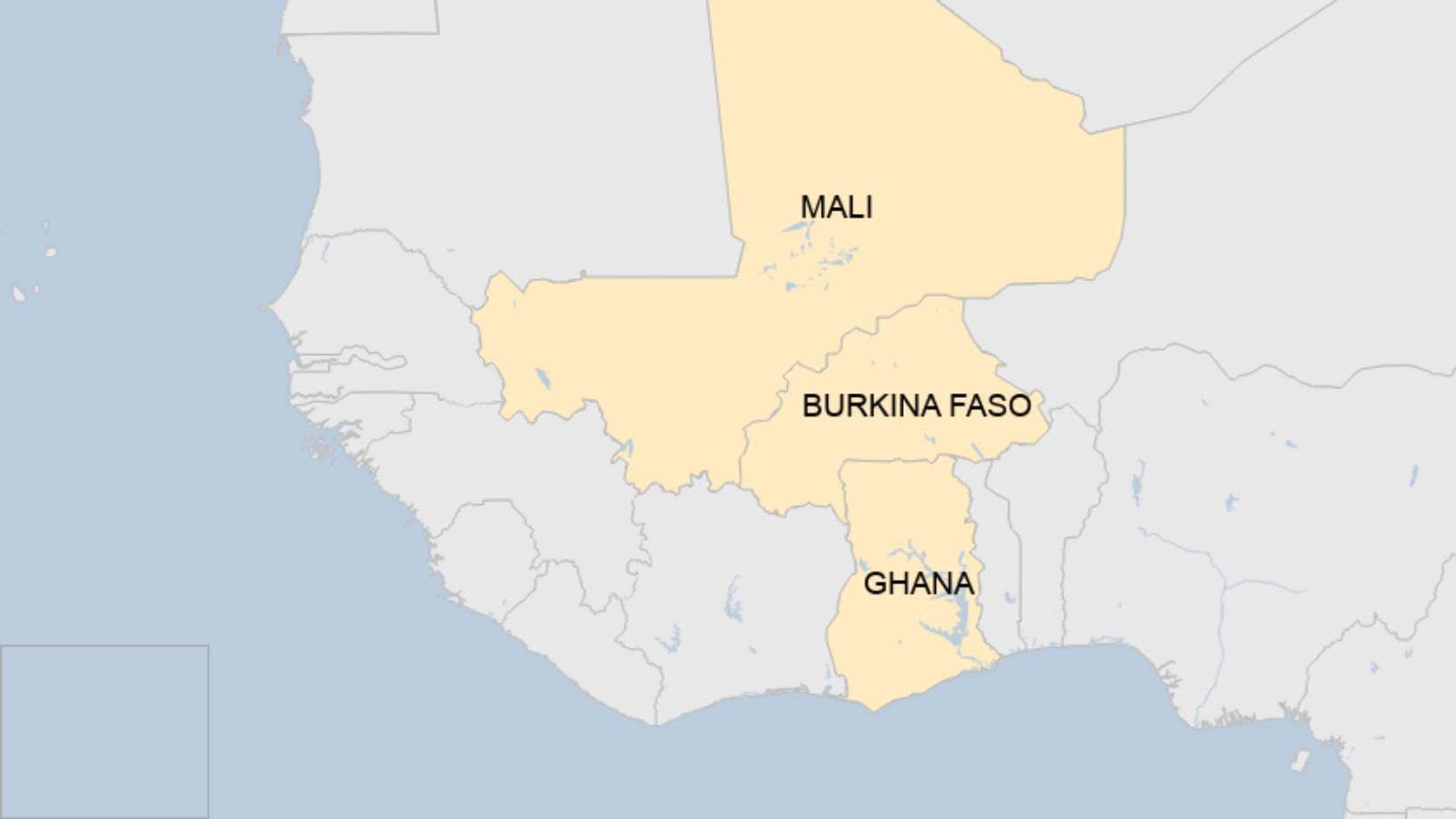
    The military authorities in Burkina Faso have summoned Ghana’s ambassador after its neighbour alleged it had hired a Russian mercenary group.

    Wagner Group’s presence was “distressing” said Ghana’s President Nana Akufo-Addo.

    Burkina Faso has been struggling to contain Islamist militants who operate in many parts of the country.

    Neighbouring Mali faces a similar challenge and is already widely believed to be working with Wagner.

    Since Capt Ibrahim Traoré seized power in Burkina Faso in September, there had been widespread speculation that he might follow suit and start working with Russian mercenaries.

    Both countries have already cut long-standing security ties with France, the former colonial power.

    While visiting Ghana, the UK’s Minister for Development and Africa Andrew Mitchell said Britain was concerned about the activities of Russian mercenaries in West Africa.

    Mr Mitchell told the BBC that Russia’s presence in the region was “neither constructive nor helpful.”

    Capt Traoré has promised to win back territory from the jihadists, and to hold democratic elections in July 2024.

    His government has also recalled the Burkinabe ambassador in Accra for a “consultation” over comments made by the Ghanaian president.

    President Akufo-Addo, speaking on the sidelines of the US-Africa summit in Washington DC on Wednesday, said Ghana’s northern neighbour had made a deal with the mercenary group.

    “Today, Russian mercenaries are on our northern border. Burkina Faso has now entered into an arrangement to go along with Mali in employing the Wagner forces there,” he said.

    He also said that Burkina Faso had ceded a mine, reportedly with gold reserves, near the border with Ghana in exchange for the group’s services to deal with the militant insurgency that began in 2015.

    In recent weeks, hundreds of people fleeing militants attacks in Burkina Faso have crossed the border into northern Ghana.

    So far, there has not been any official confirmation about an agreement between the Wagner Group and Burkina Faso, even though Prime Minister Apollinaire Kyelem recently visited Russia.

    The reports that Mali was working with Wagner fighters were one reason why France withdrew its forces from the country in August – after nearly a decade of helping to fight jihadist fighters in the country.

    The details of any pact between Mali and the mercenary group, which has been accused of committing atrocities in the country, including killing civilians, remains unclear.

    Jihadists attacks have continued in many parts of the country despite the presence of the Russian mercenaries, described as instructors by Mali’s military authorities.

    Wagner also has fighters in Libya, Central African Republic and Mozambique.

    Map

  • Zuma launches private prosecution against Ramaphosa

    South Africa’s former President Jacob Zuma says he has launched a private prosecution against his successor Cyril Ramaphosa.

    The announcement was made by the Jacob Zuma Foundation which on Thursday night said President Ramaphosa was charged for “serious crimes” but did not specify the alleged offence.

    “President Cyril Ramaphosa has been charged in a private prosecution with the criminal offence of being accessory after the fact in the crimes committed by among others Advocate Downer namely, breaching the provisions of the [National Prosecuting Authority] NPA Act,” the foundation said in a statement.

    It added that the crimes carry a sentence of 15 years imprisonment.

    In a response on Twitter on Friday, President Ramaphosa accused Mr Zuma of “abuse of legal processes”.

    He termed the charges “completely spurious and unfounded”.

    South Africa’s former President Jacob Zuma says he has launched a private prosecution against his successor Cyril Ramaphosa.

  • Ramaphosa on track to win ANC race after cash scandal

    South Africa’s governing ANC starts its national conference on Friday morning to elect its new leadership.

    President Cyril Ramaphosa is hoping to be re-elected as party leader after escaping an impeachment inquiry earlier this week.

    This after ANC MPs voted against the adoption of a report which found that he may have breached the country’s anti-corruption legislation following the theft of a large sum of foreign currency at his private game farm.

    Mr Ramaphosa will face off against former Health Minister Zweli Mkhize for the top post.

    It is widely expected that the party’s integrity committee will table its report on the “Farmgate” scandal that almost cost Mr Ramaphosa his job as well as a corruption scandal that entangled his competitor.

    It’s alleged Dr Mkhize benefited from a Covid-19 government tender in which communication contracts were awarded to his allies.

    This will be followed by the adoption of credentials – a process that could take hours and is usually contested by various factions because that determines which delegates are eligible to take part and vote.

    Mr Ramaphosa is likely to retain his position despite recent the setbacks.

    Source: BBC

  • Several toddlers in Egypt die from fake medicine

    Reports have revealed that some kids in Egypt have perished as a result of receiving phony medications.

    In one instance, doctors at the hospital administered medications that turned out to be fake to a two-year-old boy who had a high temperature. The boy later died.

    Egyptian media say more than $160m worth of fake medicines have been seized there in the past month alone – though the problem is a global one.

    A recent report by the American Journal of Tropical Medicine and Hygiene estimated that counterfeit medicines kill as many as 300,000 children each year.

    Source: BBC

  • Senegal MPs detained for hitting female colleague

    Two Senegalese MPs from the opposition have been detained for allegedly assaulting a pregnant colleague in the legislature earlier this month.

    It follows the unrest that broke out during a budget discussion in parliament in broadcast images.

    Social media users have widely shared videos of the unpleasant occurance.

    Massata Samb is said to have slapped the female MP, Amy Ndiaye Gniby, after she scoffed at him during the debate.

    She threw a chair at him before another MP, Mamadou Niang, kicked her in the stomach after she was pushed to the ground.

    Both Mr Samb and Mr Niang have been detained and are charged with voluntarily causing hurt, their lawyer told the Reuters news agency, adding that the detention violated their parliamentary immunity.

    They are expected appear in court on Monday.

    Source: BBC

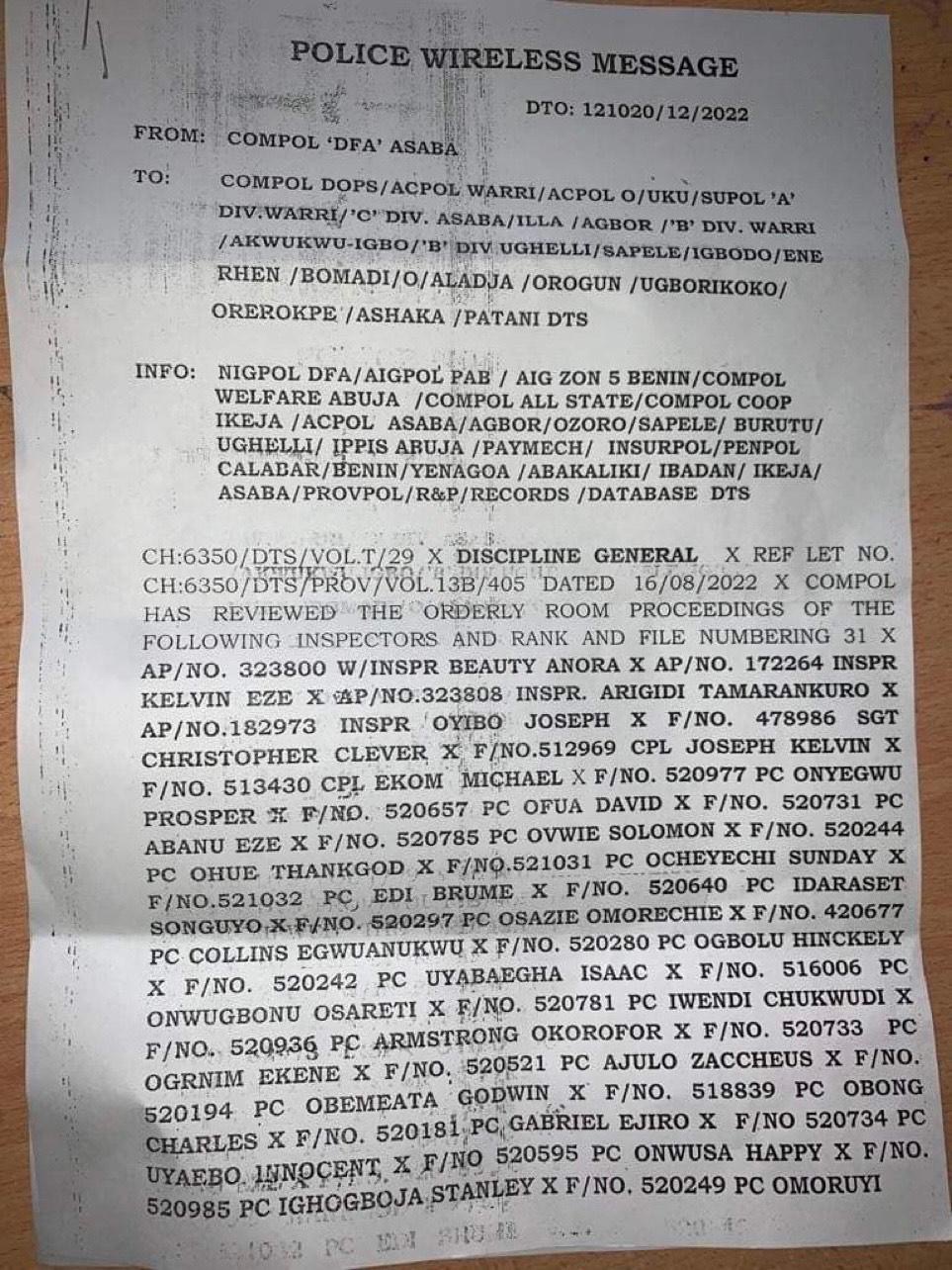
  • Nigerian Police dismiss 24 officers and demote a number of others

    Nigerian Police Sack 24 Officers, Demote Many Others Over ‘Protest Against Non-payment Of Osun Gov. Election Duty Allowance’

    In a video , the South Sudanese president Salva Kiir Mayardit may be seen peeing in public while launching a road project on Tuesday.

    Salva Kiir Mayardit who has been the President of the country since its independence on 9 July 2011 peed himself during the recitation of the national anthem.

    Unfortunately, because the event was broadcast live on television, nothing could be done to rectify the embarrassing situation.

    Salva Kiir Mayardit, 71, is believed to be suffering from a urinary tract infection, which is common in older men.

    The viral video has elicited mixed reactions from the international community, with many social media users expressing opposing viewpoints.

    Some also accused the cameramen of doing a dirty job by disgracing their president, while others said they did the right thing by exposing the President as medically unfit to lead a country.

    Signal

    Police signal

    Source: Sahara Reports

  • 5 sex issues women often lie about

    When it comes to sex, women aren’t always transparent with their thoughts and feelings.

    When you are being dishonest with someone, then you are essentially denying that person the privilege of the truth. Whether it’s an effort to spare another person’s feelings or protect yourself, lies are lies and must not be encouraged.

    Successful relationships are always built on the bedrock of honesty. It is a symbol of trust.

    While both men and women are capable of being untruthful to their significant other, they may not always do it for the same reasons.

    It is not always wise to keep secrets but sometimes women can’t help but keep some things to themselves.

    Let’s take a look at some of the secrets women lie about or perhaps never tell their partners:

    • Sex with their exes

    Women avoid telling their husbands about how sex was, with their previous partners. Women feel that their husbands may get very insecure regarding how the sex was with their wife’s previous partners. Insecurity regarding sex can be a real issue.

    • Performance in bed

    Sometimes, women do not like how their husbands or partners perform in bed. They keep their desires a secret to avoid creating a ruckus or an issue. Men also get pretty insecure when they can’t perform sexually in bed such as premature ejaculation or erectile dysfunction.

    • Orgasm

    Women often fake their orgasms just to get it over with. Women take a lot of time to climax, compared to men. They require foreplay, lots of kissing and grabbing that most men are unaware of. And most wives do not tell their husbands about this so that the latter doesn’t feel bad.

    • High sex drive

    Some women have a very high sex drive that their husbands do not realise. Women fear being judged about the amount of sex they like. They like to keep their sexual desires and sexual drive a secret.

    • Masturbation

    Not every woman is comfortable with telling their husband about masturbating. Most wives like to keep this a secret. Masturbation in women is largely considered to be a taboo, even though the world is becoming more aware of it, day by day.

    Source: Pulse

  • BREAKING: Nigeria’s Ambassador To Spain, Demola Seriki, Dies

    Nigeria’s ambassador to Spain, Demola Seriki, is dead.

    Seriki died on Thursday, December 15, 2022, in Madrid, Spain, his children said in a notice on Thursday.

    Seriki died on Thursday, December 15, 2022, in Madrid, Spain, his children said in a notice on Thursday.

    His death was announced in the notice signed by his children, stating,

    “It is with heavy hearts and profound gratitude to Almighty Allah that we announce the loss of our much loved and admired patriarch, husband, father, grandfather, brother, uncle and friend, His Excellency, Ambassador Ademola Rasaq Atanda Seriki (CON) on December 15th, 2022.”

    “He passed away peacefully surrounded by his family in Madrid, Spain.”

    Born on November 30, 1959, Ademola was a politician, teacher, businessman, and public administrator.

    Source: Sahara Reporters

  • The age you have the best sex according to research

    Research suggests an entirely different age when you will experience the best sex.

    You’re young, healthy and full of raging hormones, so it’s only fair to think your 20s are the time when you’ll experience mind-blowing sex, full of fantasies, role play and sex positions. But that’s not it.

    Research suggests an entirely different age when you will experience the best sex. It’s not your 30s, but your 50s or 60s! Stunned? We are too.

    But let’s know why this age can get us to experience the best climax.

    A recent study has observed that people falling within the age bracket of 60 to 66, experience the best sex. Single women feel immense pleasure when they are 66 and for men, it’s 64. If the couple is well, healthy and active, they can easily feel pleasure during sex, especially for women, after their menopause.

    Sex in your 20’s and 30’s

    During the 20s, people feel very insecure about their bodies and the same can be felt during sexual intercourse, when people have to go bare all in front of their partner. They feel very conscious about their looks, performance in bed etc. and this affects their ability to concentrate on sex at the moment.

    The change in sex

    When your body changes day by day, sex also changes. Navigating through menopause, sickness and lethargy, people start experiencing different kinds of changes that either affects sex in a positive or negative way. But quite interestingly, sex becomes quite enjoyable after a certain period of time.

    The best sex

    Sex may not be the same kind of wild when you were 20, but having sex in your 50s or 60s means you take your time adjusting to the sex. This further means better foreplay and getting to feel each sensation slowly. And slow sex is always a charmer.

    Sex expectations

    Sex isn’t only about sexual penetration. It’s so much more. But that’s a mistake most people make. Focusing only on penetration lets them forget about the other ways of sex that takes time but are very sensual and pleasurable. You will be surprised to know how satisfying sex can be when penetration is not the goal. The old people certainly enjoy it thoroughly.

    Source: Pulse

  • UN: 27 migrants’ bodies, including children, discovered in desert of Chad

    The bodies of 27 migrants believed to have died of thirst have been found in the Chadian desert, the U.N. migration agency said on Tuesday.

    According to reports, the migrants reportedly left Moussoro, a crossroads town in West-Central Chad, 17 months ago in a pickup truck, the IOM said in a statement.

    It is believed the truck got lost in the deep desert, broke down due to mechanical issues, and the migrants died of thirst, said the migration organization affiliated with the UN.

    “We are deeply saddened by this most recent tragedy and extend our heartfelt condolences to the migrants’ families,” said Anne Kathrin Schaefer, IOM Chad Chief of Mission.

    Chad, at the crossroads of North and Central Africa, currently hosts about 300,000 refugees in 17 refugee camps and 160,000 internally displaced persons in the eastern and southern parts of the country.

    The forced migration has been caused mainly by conflict and general insecurity in western Sudan, eastern Chad, and parts of the Central African Republic.

    According to the IOM, food insecurity, failed harvests, and inconsistent rains have impacted migration patterns.

    Since 2014, 110 migrant deaths have been recorded within Chad, including this latest incident.

    These numbers are likely higher, as many migrant deaths go unrecorded, leaving families worried and without answers about their loved ones, said the IOM.

    In June, the bodies of 20 Chadians and Libyans were found in the Libyan desert in Koufra, a town located along the Chad-Libya border.

    Source: African News

  • American pro-LGBTQ journalist died of a ruptured aortic aneurysm at World Cup – Wife

    American soccer reporter, Grant Wahl,  who passed away last week while covering the 2022 World Cup in Qatar, suffered from a ruptured aortic aneurysm, according to his wife, Dr. Celine Gounder.

    “It’s just one of these things that had been likely brewing for years, and for whatever reason, it happened at this point in time,” Gounder said on “CBS Mornings.”

    In a longer statement, Gounder said an autopsy performed by the New York City Medical Examiner’s Office determined he died from a “slowly growing, undetected ascending aortic aneurysm with hemopericardium.

    “The chest pressure he experienced shortly before his death may have represented the initial symptoms. No amount of CPR or shocks would have saved him,” she said.

    Wahl, a longtime college basketball and soccer reporter for Sports Illustrated and his newsletter collapsed while covering Friday’s Argentina-Netherlands match and was later declared dead. He was 49.

    He had covered soccer for more than two decades, including 11 World Cups — six men’s, five women’s – and authored several books on the sport, according to his website.

    His body was returned to the US on Monday for the autopsy, US State Department spokesperson Ned Price said.

    According to the US Centres for Disease Control and Prevention, an aortic aneurysm is a balloon-like bulge in the aorta – the large artery that carries blood from the heart to the chest. In a rupture, the aneurysm bursts completely, causing bleeding inside the body.

    The CDC says aortic aneurysms or dissections caused about 10,000 deaths in 2019. About 59% of those deaths were among men.

    CNN Chief Medical Correspondent Dr. Sanjay Gupta said an aortic aneurysm is generally rare and difficult to spot.

    “It’s very hard to screen for this sort of problem,” he said. “This is probably something that had been there for some time but not causing much in the way of symptoms.”

    In the days before his death, Wahl said he was feeling unwell.

    “It had gotten pretty bad in terms of like the tightness in my chest, tightness, pressure. Feeling pretty hairy, bad,” he told co-host Chris Wittyngham in an episode of the podcast Futbol with Grant Wahl published days before his death. He added that he sought help at the clinic at the World Cup media centre, believing he had bronchitis.

    He further described the incident in a newsletter published on December 5, writing that his body “broke down” after he had little sleep, high stress and a heavy workload. He’d had a cold for 10 days, which “turned into something more severe,” he wrote, adding that he felt better after receiving antibiotics and catching up on sleep.

    Gounder says how she learned of his death

    Tributes to her late husband are touching and bring her comfort, Gounder said in her interview with CBS.

    “He was so loved by so many people,” she said, and hearing the outpouring “is like a warm hug when you really need it.”

    She said she learned something was wrong last week when she began seeing messages from a friend who said Wahl had collapsed and medical personnel attempted CPR for 20 minutes. She tried to track down someone at the hospital in Qatar to learn more and kept asking whether he had a pulse.

    “No one would answer the question,” she said. “I was scared.”

    She also said she went to see her late husband’s body; “I just really needed to see,” she said.

    “Honestly, this has been so surreal… even now having seen the body it’s really hard to believe this is real, but I just needed that,” she said.

    Though she was not much of a sports fan, she said for Wahl, “Soccer was more than just a sport, it was this thing that connected people around the world.”

    “There’s so much about the culture, the politics of sport, of soccer. To him it was a way of really understanding people and where they were coming from,” she said. “I want people to remember him as this kind, generous person who was dedicated to social justice.”

    She recalled how her husband promoted the women’s game, and recent statements he made about LGBT rights. “That was Grant,” she said.

  • Akufo-Addo getting an IMF loan, yet, cautions against pleading with the West – Shehu Sani

    Former senator of the Federal Republic of Nigeria Shehu Sani has responded to President Nana Akufo-Addo of Ghana’s recent counsel to African leaders not to beg from the west.

    He said the Ghanaian president cannot call on African leaders to stop begging from the West while he is doing the same.

    Sani juxtaposed Ghana’s current economic engagement with the IMF with the president’s call.

    In a post on Twitter, Mr Sani referred to Ghana’s recent staff-level agreement with the International Monetary Fund.

    “Ghana’s President is collecting IMF loan with the right hand and using the left hand to warn African Governments against begging the west for money,” the tweet read.

    Ghana on Tuesday (November 13) reached an agreement with the International Monetary Fund on a $3 billion bailout loan, as the country faces a severe economic crisis.

    On the same day of the agreement, President Akufo-Addo urged African leaders to stop begging. “If we stop being beggars and spend African money inside the continent, Africa will not need to ask for respect from anyone. We will get the respect we deserve. If we make it prosperous as it should be, respect will follow,” Akufo-Addo said.

    This was during the opening of the US-Africa Leaders’ Summit in Washington DC on Tuesday, December 13.

    He admonished Africans living abroad to bring their expertise and wealthy knowledge on board to help shape the image of the continent. He believes that it will take unity of purpose to succeed in changing the narrative and enhancing Africa’s image.

    Source: African News

  • Kenyan security guard dies during 2022 World Cup

    A Kenyan migrant worker has been reported dead on Saturday following the Argentina versus Netherlands game, adding to the number of fatalities at the 2022 World Cup.

    John Njau Kibue who served as a security man during the game has been confirmed dead after falling off the Lusail Stadium.

    Supreme Committee for Delivery and Legacy, the World Cup organising body, in a statement said that the 24-year-old Kenyan died three days after being under intensive care in a Qatari hospital.

    “On Saturday 10 December, John Njau Kibue, a security guard at Lusail Stadium, suffered a serious fall while on duty,” the SC said. “We regret to announce that, despite the efforts of the medical team, he sadly passed away in hospital on Tuesday 13 December after being in the intensive care unit for three days. His next of kin have been informed.

    “Qatar’s tournament organisers are investigating the circumstances leading to the fall as a matter of urgency and will provide further information pending the outcome of the investigation.”

    Kibue becomes the second person who has been confirmed dead during the tournament after celebrated US journalist, Grant Wahl died while covering the same match.

    Wahl according to an autopsy report died of aneurysm in his heart.

    “Grant died from the rupture of a slowly growing, undetected ascending aortic aneurysm with hemopericardium,” the widow wrote on her husband’s Substack newsletter; hemopericardium refers to blood in the sac that surrounds the heart.

    “The chest pressure he experienced shortly before his death may have represented the initial symptoms. No amount of CPR or shocks would have saved him. His death was unrelated to COVID. His death was unrelated to vaccination status. There was nothing nefarious about his death.”

    Source: Ghanaweb

  • CEO of South Africa’s power company, Eskom, resigns

    In the midst of frequent statewide poweroutages lasting up to 10 hours each day, Eskom’s problematic CEO has resigned.

    The resignation of Andre de Ruyter comes amid pressure from the public and various stakeholders as Eskom has failed to keep the lights on, plunging South Africa, the continent’s most developed, into an electricity crisis that appears to be worsening.

    The state-owned Eskom confirmed De Ruyter’s resignation Wednesday. He will stay on until March 31 “to ensure continuity while we urgently embark on a search for his successor,” said Eskom Board ChairmanMpho Makwana.

    Eskom cannot generate adequate power for South Africa’s consumption and the country has had rolling power cuts for years. But in recent weeks the situation has become much more serious with power cuts of up to 10 hours per day.

    Experts warn that ongoing mechanical breakdowns at the country’s ageing coal-fired power stations and backlogs in their maintenance could lead to even longer power cuts that may last 12 to 14 hours per day.

    De Ruyter has recently faced criticism from Energy Minister Gwede Mantashe and Public Enterprises Minister Pravin Gordhan.

    The country’s failure to secure a stable power supply has been one of the vexing challenges to President Cyril Ramaphosa and is expected to be one of the key issues at the upcoming national conference of the ruling African National Congress.

    De Ruyter was appointed Eskom’s chief executive in December 2019 following years of power cuts and wide-ranging allegations of corruption at the utility.

    A judicial probe into corruption in government and state-owned enterprises placed Eskom at the center of massive revelations about corruption in government during former President Jacob Zuma’s tenure from 2009 to 2018.

    Soruce: Africa News

  • Joe Biden, together with Weah, Buhari and Moroccan PM watch Morocco vs. France march

    The US-Africa Leaders’ Summit discussions were put on hold while President Joe Biden of the United States and several of his guests watched some World Cup action.

    The game in question being the second semi-final clash between Morocco and France at the Al Bayt stadium in Doha, Qatar.

    A photo shared by the US president showed him seated in the company of among others, presidents George Weah and Muhammadu Buhari of Libéria and Nigeria respectively.

    Ethiopian and Moroocan Prime Ministers, Abiy Ahmed Ali and Aziz Akhannouch were also watching the game as was Malawian president Lazarus Chakwera.

    The performance of Morocco’s Atlas Lions at the 2022 World Cup did not only impress Moroccans, Africans and Arabs but also presidents of some powerful countries.

    United States of America president, Joe Biden and French President, Emmanuel Marcron are two world leaders who have been awed by the spirited performance of the Atlas Lions.

    In a social media post, President Biden announced that he watched Morocco’s 2-0 defeat to France with the Moroccan Prime Minister and despite the defeat was proud of the performance of the team.

    More praise for Atlas Lions despite France defeat

    Leading world sports journalist, Fabrizio Romano also reported that French president Emmanuel Marcron stormed the Moroccan dressing room after the game and commended them for their incredible run in the tournament, singling out midfielder Amrabat for praise as the best midfielder in the competition.

    US Congresswoman Ilhan Omar also took to Twitter to shower praises on the Moroccan for becoming the first African country to reach the semi-final of the World Cup.

    Former Arsenal and German midfielder Mesut Ozil who was at the Al Bayt Stadium to support Morocco also applauded them and so did Arsenal and Egyptian midfielder Mohammed Elneny.

    Despite not making the final, Morocco are being hailed as true winners as the upset odds to reach the semis.

    During what hs been described as being historic as an incredible run, Morocco defeated Spain, Portugal and Belgium to set up a date with France.

    Unfortunately for the Atlas Lions of Africa, they were overpowered by an efficient French team that scored through Theo Hernandez and Kolo Muani.

    France will now play Argentina in the final on Sunday, December 18, 2022 but before then Morocco will take on Croatia in the third-place play-off.

    Source: Ghanaweb

  • Zanzibar sells a ship to reduce loss

    After accruing repair bills of almost $1.5 million, the government of Zanzibar has sold a passenger-plus-cargo ship that has been undergoing repairs in Kenya to an unknown bidder for $230,000.

    The archipelago’s Transport ministry said that the government had “decided not to continue with the repairs but to dispose of” MV Maendeleo, whose repairs were being done at a dry dockyard in Mombasa. The cumulative expenses had reached $1,554,551, according to the ministry.

    The ship’s value had deteriorated from $500,000, according to government-hired evaluators, to $370,000.

    In its heyday, MV Maendeleo used to ply the Dar es Salaam-Zanzibar-Pemba route. It could carry 600 passengers and 697 tonnes of cargo at a go.

    Last May, the Zanzibar Shipping Corporation announced the sale of three vessels — MV Maendeleo, MV Ukombozi and MV Mapinduzi II — on an ‘as is, where is’ basis. The fate of the other two vessels is unknown.

    State-owned shipping companies in the region have been struggling to sustain their fleets and face off competition from private operators.

  • Did CNN goof in its report on LGBTQI+ and churches in Ghana getting foreign funding?

    An exclusive investigation conducted by CNN has cited some Ghanaian churches as having received foreign aid and funding from United States, United Kingdom and European donors who support Lesbian, Gay, Bisexual, Transgender, Queer and Intersex (LGBTQ+) activities.

    These churches, according to the report, despite their strong support for the anti-LGBTQ+ Bill in parliament, have benefitted from funding from intergovernmental organisations that support LGBTQ rights and activities for developmental purposes.

    CNN’s findings cited Churches and Christian institutions, including the Christian Council of Ghana (CCG), Evangelical Presbyterian Church (CCG member), Methodist Church (CCG member), Presbyterian Church (CCG member), and the Catholic Church, as having received not less than $5.1 million of monies from donors for development projects by or for the church.

    Source: Ghanaweb

  • How to plan a cheap wedding: 3 ultimate tips to know

    It is very much possible to have a great wedding on a small budget. You just have to use your resources better and use innovative ideas for cost-cutting.

    A cost-effective wedding does not mean an inferior wedding.

    You might be wondering how to organize a cost-effective wedding without compromising on the quality of the ceremony. If you want to have a great wedding within a limited or low budget, you need to have a very clear idea about how much money you can spend.

    You can spend as much money on your wedding as you want. It could be an exorbitant amount or could be absolutely minimal. But, the ultimate point is to have a decent wedding ceremony without burning holes in your pocket.

    Here are some tips that are going to help you plan a beautiful wedding within a limited budget:

    • Never undermine the importance of budgeting

    The first step towards planning a cost-effective wedding is to plan your budget systematically and realistically. In this way, you can save a lot of careless spending and can canalize your existing funds much more effectively.

    The importance of planning a budget can hardly be overstated. If you do not have a budget, then the money just keeps on slipping from your hand through impulsive and whimsical purchases and unorganized expenditures.

    If you have a budget, then you will think twice before buying an expensive wedding cake or dress. Instead, you can spend your energy looking for great choices within your budget.

    • Keep the guest list small

    If you are wondering about how to plan a cheap wedding, then keeping the guest list small might help.

    There will be some people whom you can afford not to invite to your wedding reception. You can call them later at a private dinner party and so on. Many people do not invite all their office colleagues to their wedding. They have an informal celebration later.

    This is a very good way of cost-cutting.

    But, it is important that you make your guest list very carefully and do not meet out preferential treatment to the same category of people.

    A smaller guest list means you can save a lot on the catering, the food, the drinks, the venue etc. It will also be more stress-free and intimate for you and your family and chances are you will enjoy your wedding more.

    • Talk your parents out of funding your wedding

    For organizing a cost-effective wedding, you need to consult all the funding parties and have a perfect idea about the limits of expenditure.

    If the parents are paying for your wedding ceremony, then have a talk with them about the monetary issues right at the beginning.

    It is important for you to know how much money they can spend. They might tell you that they are going to pay for certain things like flowers or food. They can also have certain preferences of how you should spend the money.

    Note that misinformation and misconception can lead to undue and extravagant expenditure, causing a lot of tension later.

    Source: Pulse

  • Abronye “loses his mind” over Sammy Gyamfi’s house in Airport Hills

    Bono Regional Chairman of the ruling New Patriotic Party, Kwame Baffoe alias Abronye, DC, has waded into the controversy about a supposed mansion being built by the National Communications Officer of the opposition National Democratic Congress, Sammy Gyamfi.

    Elements within the NDC have raised concerns about the source of funding for the said mansion, which is allegedly being built by the NDC communications officer in the plush East Legon Hills area.

    In a Facebook post sighted by GhanaWeb, Abronye alluded that while a part of the funds for the construction comes from monies diverted by the previous government, a major part of the funding for Sammy Gyamfi’s mansion is from persons within the ruling NPP.

    “The most important question footsoldiers must ask ourselves is: who gave him the money to construct the said building? What is his source of wealth in opposition? Or is it the case that he is benefiting more from this administration than those who birthed it?

    “As a matter of fact, part of the money came from monies Mr. Mahama diverted from the state through several corrupt activities that occurred under the erstwhile government, of which we (the NPP government) have been unable to prosecute a majority of such cases; however, a large chunk of the money also came from NPP bigwigs,” Abronye wrote.

    According to Abronye, this is happening at the expense of NPP members who worked to ensure the party attained power and continue to defend the party and the government without being rewarded.

    “I know a government appointee who flies NDC communicators to Dubai for holidays so as to stop them from attacking his personality and the agency he heads as a CEO.

    “Same NDC communicators will sit on TV and attack Akufo Addo left, right, and center, using all manner of words, and that seems not to be a problem for such CEOs and appointees because all they care about is their side chicks and themselves.

    “The benefit Sammy Gyamfi and Co. have received from these government appointees far exceed what constituency executives, regional executives, polling station executives, and foot soldiers combined have received since this party came to power,” Abronye said.

    Kwame Baffoe noted that he has had recourse to desist from defending the NPP due to the sheer neglect he and other members of the party are suffering despite working hard in the interest of the party.

    While promising to delve more into the issue, Abronye asked that officials of the NPP and members serving in government stop giving out money to NDC elements while ignoring those working for the NPP.

    Some NDC members have openly accused Sammy Gyamfi of being bought by the ruling NPP.

    George Opare Addo, the NDC’s re-elected National Youth Organiser, openly questioned Sammy Gyamfi’s source of wealth.

    This was after Sammy Gyamfi had openly led the campaign of Opare Addo’s main contender in the recently held youth and women’s elections by the NDC.

    “Mugabe, ask Sammy Gyamfi how he built a house at Airport Hills. What work does he do?” George Opare Addo asked during a recent radio interview.

    Read the full statement by Abronye below:

    SAMMY GYAMFI’S MANSION WAS FUNDED BY SOME NPP APPOINTEES; SEVERAL OTHER NDC COMMUNICATORS ARE ON THE PAYROLL OF TOP NPP APPOINTEES.

    I have seen a video of George Opare Addo which has been widely circulated by some npp footsoldiers and patriots concerning a house Sammy Gyamfi is building at Airport Residential area.

    The most important question footsoldiers must ask ourselves is who gave him the money to construct the said building? What is his source of wealth in opposition? Or is it the case that he is benefiting from this administration than those who birth it?

    As a matter of fact, part of the money came from monies Mr. Mahama diverted from the state through several corrupt activities that occurred under the erstwhile government of which we (NPP Government) have been unable to prosecute a majority of such cases however, a large chunk of the money also came from NPP bigwigs.

    Indeed, not all NPP faithfuls can be appointees but all worked hard to birth this government. In fact, some persons who survived incidents that may have taken their lives just to see NPP win power in 2016 are the ones suffering the most.

    As a footsoldier, what support have you received from the government appointees you see living lavish lifestyles on social media?

    I know a government appointee who flies NDC communicators to Dubai for holidays so as to stop them from attacking his personality and the agency he heads working as a CEO.

    Same NDC communicators will sit on Tv attacking Akufo Addo left, right, centre and using all manner of words and that seems not to be a problem for such CEO’s and appointees because all they care about is their side chicks and themselves.

    The benefit Sammy Gyamfi and Co has received from this government’s appointees far exceed what constituency executives, Regional Executives, polling stations executives and foot soldiers combined have received since this party came to power.

    In recent times, I have been calling on the president Akufo Addo government and his appointees to publish list of projects that have been given to Regional chairmen, Regional Executives and Constituency Executives since 2017.

    I have informed the Chief of staff, The president, Vice President, former GS and Gaby Otchere Darko about this issue and nothing has been done about it. I have on so many occasions informed the president about how myself and several other persons who sacrificed to birth this government have been maltreated by his government and I don’t think the president can on any day deny this.

    Those who sacrificed the most in 2016 are those suffering the most today.
    Today, NPP is in power but certain serial callers, social media activists even struggle to make ends meet.

    If I kwame Baffoe Abronye and my colleague Regional Chairpersons, Former Constituency Chairmen, Current and former constituencies Executives are suffering, how much more a footsoldier, serial caller, social media activist, etc..

    It will amaze you that, party executives who are industrious farmers are begging for loans from a certain Bank [Name withheld] to expand their businesses, but to no avail.
    These farmers have been denied support yet AKwasi Addai Odike has been given $50,000 by this same state bank to set up a factory in Kumasi and absolutely nothing has been done on the purported land.

    Odike has squandered the money to the bone and yet he is always on Radio and TV insulting the President.

    Same Akwasi Addai Odike was awarded a cocoa road contract worth GHS 10 million and sold it to our Chairman WONTUMI for GHS 800,000.00

    Meanwhile the contract documents of party officers who are sustaining the party including my good self contract documents every now and then mysteriously disappear from the Jubliee house. Other die hard faithfuls have not even seen a contract before.
    Is Odike better than our Regional Chairmen, our constituency executives, former party Stewart who are dying of hunger? Or did Odike sacrifice more than our teeming footsoldiers?

    Again, Aseidu Nketia in 2018 had mining concessions from the late Sir John but NPP executives were denied same.

    Today, certain appointees are still giving out juicy contracts to known NDC officers while our own remain neglected.

    If Sammy Gyamfi and Co are enjoying today then we should blame some of this government appointees who are financing them.

    Personally I have stopped defending the party because of this.
    Some of our appointees pay NDC communicators monthly to stop them from attacking them but do not care about those who defend the President.

    If all our ministers and appointees are like Napo, Ursula Owusu, Amoako Atta, Dr Afriye Akoto, Kan Dapaah and Ken Ofori Atta , Baffour Awuah, Kennedy Agyapong , Dr Boadi of Geftfund and our able and dynamic vice president then we are good to break the 8 because these appointees and “big men” are not afraid of any attack from the NDC let alone bribing them to keep quiet. These appointees especially head of state agencies should know that the NPP has a vibrant communication team than the NDC but because of their wickedness the party is today suffering.

    I know several party officers and foot soldiers are suffering to death but can’t speak out. For me, I will speak out!

    Breaking the 8 is possible only if our appointees will stop being self centered and greedy.

    The irony is that, the few benefiting from this government are rather feeding NDC officers so that in the unlikely situation when NDC wins power they will also feed them.

    In my next episode, I will name and shame NPP appointees funding NDC communicators and anti Akufo Addo crusaders.

    Arise Arise Arise NPP Footsoldiers.

    Arise To Save The Party

    To be continued……

    Source: Ghanaweb

  • Abronye claims Odike obtained a GH10 million contract from NPP and sold it to Wontumi

    Bono Regional Chairman of the ruling New Patriotic Party, Kwame Baffoe popularly known as Abronye DC,   has accused his group of disdaining the NPP’s industrious members.

    According to Abronye, officials of the party who have been appointed in the current government have rather been focused on rewarding members of opposition parties at the expense of NPP members.

    In a Facebook post sighted by GhanaWeb, Abronye, citing an example, alleged that the government awarded a GH¢10 million contract to the founder and leader of the United Front Party, Akwasi Addai Odike.

    “It will amaze you that party executives who are industrious farmers are begging for loans from a certain bank [name withheld] to expand their businesses, but to no avail. These farmers have been denied support, yet Akwasi Addai Odike has been given $50,000 by this same state bank to set up a factory in Kumasi, and absolutely nothing has been done on the purported land.

    “Odike has squandered the money to the bone, yet he is always on radio and TV insulting the president. Same Akwasi Addai Odike was awarded a cocoa road contract worth GHS 10 million and sold it to our Chairman Wontumi for GHS 800,000,” he alleged.

    Abronye emphasized that current government officials have been focused on rewarding their cronies from opposition parties, while people who contribute to the growth of the NPP have been sidelined.

    “Meanwhile, the contract documents of party officers who are sustaining the party including my good self, contract documents every now and then, mysteriously disappear from the Jubilee House. Other die-hard faithfuls have not even seen a contract before.

    “Is Odike better than our regional chairmen, our constituency executives, or former party stewards who are dying of hunger? Or did Odike sacrifice more than our teeming footsoldiers?” he questioned.

    Abronye’s outburst was in response to claims that the National Communications Officer of the opposition National Democratic Congress, Sammy Gyamfi, is building a mega-mansion in the plush East Legon Hills area with funding from NPP officials.

    “If Sammy Gyamfi and Co. are enjoying today, then we should blame some of these government appointees who are financing them.

    “Personally, I have stopped defending the party because of this. Some of our appointees pay NDC communicators monthly to stop them from attacking them but do not care about those who defend the president,” Abronye added.

    Read the full statement by Abronye below:

    SAMMY GYAMFI’S MANSION WAS FUNDED BY SOME NPP APPOINTEES; SEVERAL OTHER NDC COMMUNICATORS ARE ON THE PAYROLL OF TOP NPP APPOINTEES.

    I have seen a video of George Opare Addo which has been widely circulated by some npp footsoldiers and patriots concerning a house Sammy Gyamfi is building at Airport Residential area.

    The most important question footsoldiers must ask ourselves is who gave him the money to construct the said building? What is his source of wealth in opposition? Or is it the case that he is benefiting from this administration than those who birth it?

    As a matter of fact, part of the money came from monies Mr. Mahama diverted from the state through several corrupt activities that occurred under the erstwhile government of which we (NPP Government) have been unable to prosecute a majority of such cases however, a large chunk of the money also came from NPP bigwigs.

    Indeed, not all NPP faithfuls can be appointees but all worked hard to birth this government. In fact, some persons who survived incidents that may have taken their lives just to see NPP win power in 2016 are the ones suffering the most.

    As a footsoldier, what support have you received from the government appointees you see living lavish lifestyles on social media?

    I know a government appointee who flies NDC communicators to Dubai for holidays so as to stop them from attacking his personality and the agency he heads working as a CEO.

    Same NDC communicators will sit on Tv attacking Akufo Addo left, right, centre and using all manner of words and that seems not to be a problem for such CEO’s and appointees because all they care about is their side chicks and themselves.

    The benefit Sammy Gyamfi and Co has received from this government’s appointees far exceed what constituency executives, Regional Executives, polling stations executives and foot soldiers combined have received since this party came to power.

    In recent times, I have been calling on the president Akufo Addo government and his appointees to publish list of projects that have been given to Regional chairmen, Regional Executives and Constituency Executives since 2017.

    I have informed the Chief of staff, The president, Vice President, former GS and Gaby Otchere Darko about this issue and nothing has been done about it. I have on so many occasions informed the president about how myself and several other persons who sacrificed to birth this government have been maltreated by his government and I don’t think the president can on any day deny this.

    Those who sacrificed the most in 2016 are those suffering the most today.
    Today, NPP is in power but certain serial callers, social media activists even struggle to make ends meet.

    If I kwame Baffoe Abronye and my colleague Regional Chairpersons, Former Constituency Chairmen, Current and former constituencies Executives are suffering, how much more a footsoldier, serial caller, social media activist, etc..

    It will amaze you that, party executives who are industrious farmers are begging for loans from a certain Bank [Name withheld] to expand their businesses, but to no avail.
    These farmers have been denied support yet AKwasi Addai Odike has been given $50,000 by this same state bank to set up a factory in Kumasi and absolutely nothing has been done on the purported land.

    Odike has squandered the money to the bone and yet he is always on Radio and TV insulting the President.

    Same Akwasi Addai Odike was awarded a cocoa road contract worth GHS 10 million and sold it to our Chairman WONTUMI for GHS 800,000.00

    Meanwhile the contract documents of party officers who are sustaining the party including my good self contract documents every now and then mysteriously disappear from the Jubliee house. Other die hard faithfuls have not even seen a contract before.
    Is Odike better than our Regional Chairmen, our constituency executives, former party Stewart who are dying of hunger? Or did Odike sacrifice more than our teeming footsoldiers?

    Again, Aseidu Nketia in 2018 had mining concessions from the late Sir John but NPP executives were denied same.

    Today, certain appointees are still giving out juicy contracts to known NDC officers while our own remain neglected.

    If Sammy Gyamfi and Co are enjoying today then we should blame some of this government appointees who are financing them.

    Personally I have stopped defending the party because of this.
    Some of our appointees pay NDC communicators monthly to stop them from attacking them but do not care about those who defend the President.

    If all our ministers and appointees are like Napo, Ursula Owusu, Amoako Atta, Dr Afriye Akoto, Kan Dapaah and Ken Ofori Atta , Baffour Awuah, Kennedy Agyapong , Dr Boadi of Geftfund and our able and dynamic vice president then we are good to break the 8 because these appointees and “big men” are not afraid of any attack from the NDC let alone bribing them to keep quiet. These appointees especially head of state agencies should know that the NPP has a vibrant communication team than the NDC but because of their wickedness the party is today suffering.

    I know several party officers and foot soldiers are suffering to death but can’t speak out. For me, I will speak out!

    Breaking the 8 is possible only if our appointees will stop being self centered and greedy.

    The irony is that, the few benefiting from this government are rather feeding NDC officers so that in the unlikely situation when NDC wins power they will also feed them.

    In my next episode, I will name and shame NPP appointees funding NDC communicators and anti Akufo Addo crusaders.

    Arise Arise Arise NPP Footsoldiers.

    Arise To Save The Party

    To be continued……

    GA/SEA

    Source: Ghanaweb

  • Mourning as flood casualties in the DR Congo reach over 120

    The biggest floods in years have reportedly killed more than 120 people in the Democratic Republic of the Congo’s capital, Kinshasa, according to the authorities.

    Most of the dead were in hillside areas which suffered landslides in torrential rain.

    One journalist reported seeing the bodies of nine members of the same family whose home had collapsed.

    A three-day period of national mourning is beginning on Wednesday.

    Correspondents say there has been a big increase in the number of people moving to Kinshasa in recent years and the city suffers from inadequate drainage and poor urban planning.

    Source: BBC

  • Images show flood wrecks havoc in DR Congo’s capital

    Floods caused by Monday night’s heavy rains in Kinshasa, the capital of the Democratic Republic of the Congo, wrecked many homes and blocked off one of the main entrances to the city.

    The damage left a third of the city with no water and electricity, according to authorities. Most of the dead were in hillside areas which suffered landslides.

    A damaged house is seen after heavy rains caused floods and landslides, on the outskirts of Kinshasa

    Kinshasa has about 15 million inhabitants and is one of the most densely populated capitals in Africa.

    A view of the collapsed road due to the landslide after heavy rain cause flood in Kinsasha

    Prime Minister Sama Lukonde visited the affected neighbourhoods on Tuesday together with the city’s Governor Gentiny Ngobila.

    A car is seen stuck after heavy rains caused floods and landslides, on the outskirts of Kinshasa

    The governor said the provincial government will pay all the funeral expenses for the deceased.

    Source: BBC

  • Kenya office of first daughter a ‘private entity’ – Charlene clarifies

    The second child of Kenyan President William Ruto, Charlene Ruto,  has defended her comments on the existence of the office of the first daughter.

    Kenyan law does not recognise the office of first daughter.

    In a statement, Ms Ruto says the office is not a government department but is a “private entity”.

    “It is neither a constitutional office nor being funded by Kenyan taxpayers. The office runs to purely facilitate the activities of and any programs being run by Charlene Ruto,” the statement said

    It follows criticism over what some saw as a misuse of taxpayers’ money.

    Ms Ruto has been regularly meeting leaders across the country and attending international forums meeting foreign dignitaries since her father became president.

    Source: BBC

  • Approval of ₵80m for National Cathedral suspended by parliament

    The approval of GH80 million set aside for the National Cathedral‘s building has been held up by the Trades and Industry Committee of Parliament.

    The allocation, which was made to the Ministry of Tourism (MoT), has failed to receive endorsement by the Committee because members want more answers from the sector Minister.

    According to Tamale Central MP, Murtala Mohammed who disclosed this to the media, until the Committee is satisfied, they will approve the Ministry’s estimates without the funds allocated to the National Cathedral.

    “What the Committee decided was that we cannot just approve this GH₵80 million, we must know how the other GH₵339 million was spent. What did it constitute?

    “The GH₵80 million you want us to approve, how did it find space in the budget line of the Ministry of Tourism when the Minister and the directors could not speak to the questions we were asking? What constitutes the GH₵80 million, they should give us a breakdown,” he disclosed in an interview with JoyNews’ Parliamentary Affairs Correspondent, Kwaku Asante on Tuesday, December 13.

    Source: Myjoyonline.com

  • NDC elections: Competition is the name of the game -Lecturer tells Ofosu-Ampofo

    Political Science lecturer at the University of Ghana, Dr. Kwame Asah Asante, has said that the National Chairman of the National Democratic Congress (NDC), Samuel Ofosu-Ampofo, should not be worried about facing competition from the General Secretary of the party, Johnson Asiedu Nketiah.

    According to him, persons making the argument that the leaders of the NDC should have prevented Asiedu Nketiah from contesting Ofosu-Ampofo, because it will not be in the interest of the party, are wrong.

    Speaking in an interview on TV3 which was monitored by GhanaWeb, Dr Asante added that competition is an essential part of politics and anybody who does not yearn for competition should not be in it.

    “There is nothing wrong with contesting for positions. If you see the national chairmanship race within the NDC, it started with all manner of noise associated with it. That they should have prevailed on Mr Asiedu Nketiah not to have stood for the elections and all that. I don’t get it.

    “Because in politics once you put yourself up for the business, be prepared for anybody who comes face to face with you.

    “So, I will advise Mr Ofosu Ampofo that if he is serious about winning, other arguments that they should have prevailed (on Asiedu Nkekiah not to contest) don’t come in at all. You’re either ready or not. And fear not, once you are in the confines of democracy, competition is the name of the game,” he said.

    Meanwhile, the party’s national elections are slated for Saturday, December 17, 2022.

    Candidates will be contesting for various positions, including the National Chairman, National Vice-Chairmen, General Secretary, Deputy General Secretary, National Organiser, and Deputy National Organiser, as well as the National Treasurer and Deputy National Treasurer.

    Others are the National Communications Officer and Deputy, and the National Zongo Caucus Coordinator.

    The current National Chairman of the party, Samuel Ofosu-Ampofo, is expected to face stiff competition from the outgoing General Secretary of the party, Johnson Asiedu Nketiah, for the chairmanship position.

    The party’s women and youth leadership elections were held on Saturday, December 10, with the National Youth Organizer, George Opare Addo, and the National Women’s Organiser, Dr. Hannah Bissiw, retaining their positions.

    Source: Ghanaweb

  • Black Optimists confident to win medals in Dubai

    The Black Optimists, a Para Powerlifting team from Ghana, will leave for Dubai later today Tuesday, December 13, 2022, to compete in the 12th Fazza Dubai Para Powerlifting World Cup.

    Dubai will host the final World Cup of the season, with the world ‘s top powerlifters set to be in action from December 15-18, 2022.

    Last season, the event served as the final qualifier for the Tokyo 2020 Paralympics with 300 para powerlifters from 62 nations vying for the slots.

    China emerged the best team with seven gold, two silver and one bronze in the medals’ standings followed by Russia with three gold, three silver and four bronze, and Egypt with three gold and three silver medals.

    The Black Optimist clinched 14 medals at the 2022 Cairo African Open Championship in Egypt last month.

    On the back of the huge achievement in Cairo, Prince Nyarko who is the Head Coach for Ghana’s Para Powerlifting team revealed to Accra FM Sports about the team’s objective heading into the United Arab Emirates.

    ”We are always ready for battle because the support given us by our President, Samson Deen is enormous and we are sure of winning medals because we have seen huge improvement with our performance in Cairo,” he stated.

    The championship is the second mandatory qualification for the 2024 Paris Paralympic Games.

    The Team sponsored by Mr. Samson Deen, the National Paralympic Committee of Ghana president, and the Ministry of Youth and Sports are on a mission to hoist the flag of Ghana high all the way in Dubai.

    The Black Optimist held their final training session at their training Gym in the Accra Sports Stadium yesterday ahead of their departure to Dubai for the competition.

    Emmanuel Nii Tettey Oku who won two silver medals and two gold in the 72 kilogram of the men’s category will take part in the event with Tahiru Haruna also taking part this time around after been suspended for flouting covid rules in Manchester 2021 and hence not making it to the 2020 Paralympic Games in Tokyo.

    Isaac Obeng, the other Para-athlete who recorded his first ever appearance and placed fourth but qualified for the Paralympic Games with a lift of 170kg will also take part in the event.

    Prince Nyarko will lead his team all the way in Dubai in their quest to remain competitive at the 12th edition of the FAZZA DUBAI POWERLIFTING WORLD CUP commencing on Thursday, December 15, 2022.

  • Tunisians support Morocco prior to World Cup semifinal

    The relationship between Tunisia and Morocco may be in disarray, but Tunisian Wissam Sultani will inspire the Atlas Lions on Wednesday against France in the World Cup semi-final in Qatar.

    Football unites people when politics split them.

    “On the pitch, politics has nothing to do. Supporting an Arab country, whatever it is, is a duty when it reaches this stage of the competition,” said Sultani, 41, who runs a fruit and vegetable stall in the central market of Tunis.

    After breaking a glass ceiling by becoming the first African or Arab team to reach the last four of a World Cup, Morocco can indeed count on the support of an entire continent whose hopes it carries, by challenging the French title holders for a place in the final.

    Morocco’s run, which eliminated the Spanish giants in the round of 16 and Cristiano Ronaldo’s Portugal in the quarterfinals, has sparked a surge of pride and excitement among neighbors Tunisia and Algeria, transcending political squabbles in the Maghreb, as well as in the rest of Africa.

    In downtown Tunis, a sports store’s sound system blares Moroccan folk songs to attract customers. The red Atlas Lions jersey is the highlight of the display.

    “Stand up”

    The country is however in cold with Morocco, which reproaches him for having aligned with the position of Algeria in the Western Sahara issue, at the heart of extreme tensions between the two neighbors of the Maghreb.

    In Algeria, if the official media have virtually ignored the performance of the Moroccans, sometimes content with the dry result, the private press has welcomed their achievements.

    “It is quite normal that Algerians support Morocco, which is a Muslim country, brother and neighbor,” says Madjid, 58 years.

    For Salim, 45 years old, employee of a public company, “Algerians are with the Moroccan team because it represents a Maghreb country and Amazigh” (Berber).

    In the Maghreb as elsewhere in the Arab world, fans say their support for Morocco is increased tenfold when they see its supporters and players waving the Palestinian flag, showing their attachment to the Palestinian cause even though Rabat normalized relations with Israel in December 2020.

    According to Tunisian sociologist Mohamed Jouili, this support for Morocco, which is becoming more and more apparent as the match against Les Bleus approaches, can also be explained by “France’s colonial past in the Maghreb.

    “The countries of the region can not compete with France economically, militarily or geopolitically, but can stand up to 90 minutes on a soccer field and even beat it,” he added, recalling the victory of Tunisia in the group stage against the men of Didier Deschamps.

    Source: African News

  • UNICEF issues $2.6 billion appeal for children in Middle East and North Africa

     UNICEF has made an appeal for $2.6 billion on Tuesday December, 13, 2022, to help children in the Middle East and North Africa with their expanding needs.

    These funds are intended to provide lifesaving assistance to more than 52.7 million children in need in the Middle East and North Africa in 2023.

    “With nearly half of the countries in the region in crisis or experiencing the ripple effects of conflict and war, children remain the most affected and in dire need of assistance,” said Adele Khodr, Regional Director of UNICEF for the Middle East and North Africa, quoted in the press release on Tuesday.


    Source: African News

  • Mozambique destroys cosmetics deemed to cause cancer

    In response to a warning from the European Union, the Mozambican government burned 10,000 cosmetic products that represent a “possible risk” like cancer to human health.

    The products include shower gels, shampoos, creams and sprays.

    The authorities say they contain substances that can cause cancer, in addition to being harmful to reproductive health and potentially causing infertility.

    The EU had warned against the products in early September, said Sheila Mercis, an inspector at the country’s medicines regulatory authority (Anarme).

    “By incinerating, we are guaranteeing that in the market, at least, there will no longer be any [harmful] products for sale,” said Paulo Aguiar, a director of Medis Moçambique, which is owned by the Portuguese pharmaceutical group Azevedos.

    The manufacturers have already submitted new formulas of the cosmetics in question to Anarme for approval so that they can be imported again “without the harmful substances”, according to Medis.

    “All manufacturers in Europe have already withdrawn the [harmful] substance. The next batches will not contain these substances,” Mr Aguiar said.

    Source: BBC

  • Tems surprised by Golden Globe nomination

    Nigerian Singer Tems in the US,  has been nominated for a Golden Globe award for her work on the Wakanda Forever soundtrack, namely for her part in writing Rihanna’s song Lift Me Up.

    It’s the latest accolade for the singer-songwriter, who was last year nominated for a Grammy for her performance with fellow Nigerian Wizkid on the song Essence.

    This time around it’s her writing that’s up for an award – along with Ryan Coogler, Ludwig Göransson and Rihanna.

    “My God! This one is too much,” Tems tweeted after hearing the news:

  • Numerous free tickets are available for Moroccan football fans

    The Moroccan Football Federation says it’s giving fans 13,000 free tickets for the country’s World Cup semi-final against France on Wednesday.

    The nation’s national airline, Royal Air Maroc is putting on 30 flights to Qatar at reduced rates.

    Huge excitement is building in the country after a series of victories against highly rated European sides, which led to celebrations across north Africa and the Middle East.

    Argentina play Croatia in the first semi-final on Tuesday.

    Source: BBC

  • Lockerbie bombing suspect will not face death penalty

    In a US courtroom, a man accused of creating the bomb that brought down Pan Am Flight 103 over Lockerbie, Scotland, 34 years ago was informed that he would not get the death penalty.

    The US alleges that Abu Agila Masud was a Libyan intelligence operative and played a key role in the 1988 attack, which left 270 people dead.

    Scottish and US officials announced on Sunday that Mr Masud was in US custody.

    He is the first person charged on US soil in connection with the attack.

    A device on board the Boeing 747 exploded as the flight was flying over the English-Scottish border, killing 243 passengers, six crew and 11 local residents on the ground – including a family of four.

    The dead were citizens of 21 different countries, including 190 Americans and 43 Britons.

    It remains the deadliest terrorist incident to have taken place on British soil.

    At Monday’s hearing, US Magistrate Judge Robin Meriweather elected to delay the formal reading of charges until after Mr Masud secures legal representation for his trial. He did not enter any plea.

    He spoke his full name into the record, and was informed by the judge that a translator was present to interpret court proceedings into Arabic for him. He was ordered to remain in custody at least until a detention hearing on 27 December.

    Mr Masud is facing multiple charges, including destruction of aircraft resulting in death. Prosecutors said at Monday’s hearing that they would not seek the death penalty and Mr Masud could face life imprisonment if convicted.

    Wearing a teal prison jumpsuit, he lightly limped into court with a medical mask covering his white beard.

    As the judge read out the three charges, he interrupted to say in Arabic: “I can’t talk until I’ve spoken to my attorney.”

    He is currently seeking legal counsel, which the judge said was his right after Mr Masud rejected the offer of free representation from the public defender’s office.

    Some of the families of the victims were in court – they told the BBC beforehand they were nervous. They sat silently as the hearing got under way.

    Each of the charges he faces include a possible sentence of life in prison, the death penalty or a fine of up to $250,000 (£203,000).

    But US prosecutors told the court they would not seek death, as they believe the punishment was not legally available at the time of his alleged crime.

    The US justice department first announced criminal charges against Mr Masud in December 2020. At the time, US prosecutors alleged that he had worked for Libyan intelligence in a number of roles between 1973 and 2011, including as an explosives expert.

    The case against Mr Masud partly rests on an interview he gave to Libyan officials in 2012 after he was taken into custody following the overthrow of Muammar Gaddafi’s government. In the interview, he admitted building the bomb used in the attack and setting its timer to explode while the aircraft was in flight. Mr Masud also claimed that Gaddafi had thanked him and two co-conspirators “for their successful attack” on the US.

    A number of observers have voiced concerns that the confession may have been coerced in the chaotic months following the regime’s fall, when Libya did not have a fully functioning legal system.

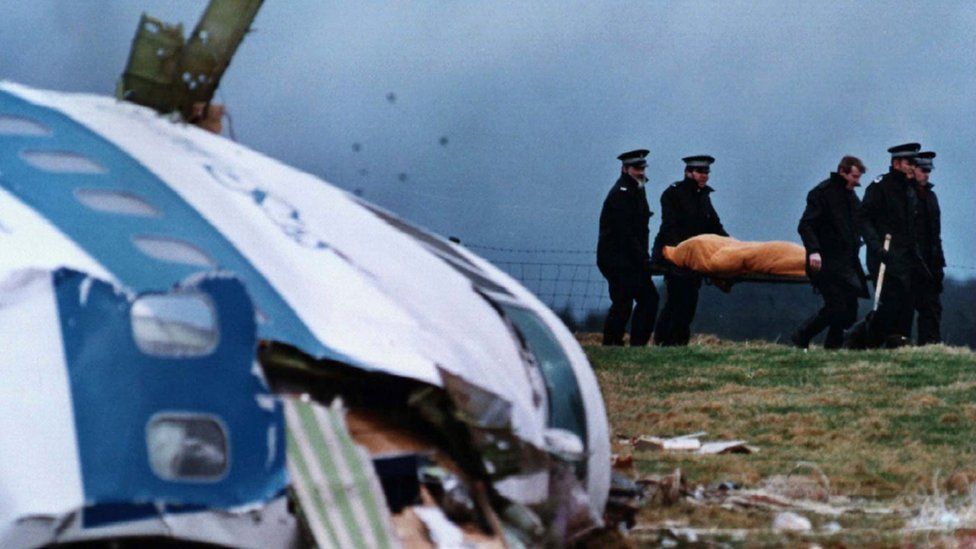
    Wreckage of Pan Am Flight 103Image source, Reuters
    Image caption, The Pan Am flight was bombed just days before Christmas

    At a news conference on Monday, Victoria Cummock – whose husband John died in the bombing – called the US prosecution a “major milestone” for the families of the victims.

    She added that the apprehension of Mr Masud was the “first tangible step” by US authorities to hold anyone accountable for the bombing after what she described as a “decades-long miscarriage” of justice.

    It remain unclear how Mr Masud came to be in US custody. In late November, it was reported that he had been kidnapped by armed militia members in Tripoli.

    In 2001, one of the other co-conspirators identified by US and Scottish officials – Abdelbaset al-Megrahi – was convicted by a Scottish court convened in the Netherlands for his role in the attack. The Scottish government released him on compassionate grounds in 2009, and he died in Libya three years later.

    To date, Megrahi – who always maintained his innocence – has been the only person convicted in connection with the attack.

    Media caption, Newsnight’s Kirsty Wark recalls arriving at Lockerbie on the night of 21 December 1988

    Scotland’s Lord Advocate Dorothy Bain, who is the most senior Scottish law officer in the government, said in a statement that she would travel to Washington DC next week to meet prosecutors and attend commemoratives events with victims’ families.

    In a statement on Monday, she called the US prosecution of Mr Masud a “legal breakthrough”, adding that Scottish authorities welcomed the American inquiry.

    “The recent developments demonstrate that there can be no time limits placed on the pursuit of justice,” Ms Bain said.


    Source: BBC

  • Cyril Ramaphosa to face vote from parliament over cash-in-sofa scandal

    South Africa’s parliament will vote on whether to start impeachment procedures against President Cyril Ramaphosa during a special session.

    The president is accused of covering up the theft of a large sum of foreign currency from his farm in 2020, some of which had been hidden in a sofa.

    The debate will focus on an independent report which concluded he may have violated the constitution.

    Mr Ramaphosa, who is up for re-election as ANC leader, denies any wrongdoing.

    The African National Congress has told its MPs to block a possible impeachment – although some could break ranks and side with opposition parties to vote for proceedings to get under way.

    But some last-minute legal questions could halt the sitting altogether.

    If Mr Ramaphosa survives, he is thought likely to win re-election at his party’s conference, which starts on Friday. He will then be in pole position to become the ANC’s presidential candidate at the next election in 2024.

    The report, which was commissioned from a panel of legal experts by the speaker, is due to be debated in parliament from 12:00 GMT (14:00 local time) on Tuesday.

    The 70-year-old leader has denied any wrongdoing calling the report, which he has challenged in the Constitutional Court, “flawed”.

    Mr Ramaphosa became president in 2018 pledging to tackle corruption. He replaced Jacob Zuma, whose time in office had been weighed down by many such allegations.

    This scandal erupted in June, when a former South African spy boss, Zuma-ally Arthur Fraser, filed a complaint with police accusing the president of hiding a theft of $4m (£3.25m) in cash from his Phala Phala game farm in 2020.

    Mr Ramaphosa admitted that some money, which had been hidden in a sofa, had been stolen, but said it was $580,000 not $4m.

    The president said the $580,000 had come from the sale of buffalo, but the panel, headed by a former chief justice, said it had “substantial doubt” about whether a sale took place.

    South Africa has strict rules on holding foreign currency, which say that it must be deposited with an authorised dealer such as a bank with 30 days. It appears as though the president may have broken those rules, according to the panel’s report.

    Furthermore, if the money was from selling buffalo as he said, this money should have been declared, rather than kept in cash.

    In his submission to the Constitutional Court, Mr Ramaphosa wants the country’s top judges to rule that the findings of the panel are unlawful and set aside.

    The president argues that the panel went beyond its scope when looking at whether he had a case to answer related to the robbery at the farm.

    He is also asking the court to declare that any steps taken by parliament on the back of the release of the report to be declared unlawful and invalid.

    Source: BBC


  • Nigeria no longer requires travelers to take the Covid test

    In Nigeria, officials have announced that regardless of vaccination status, all travelers will no longer be required to present documentation of a negative Covid-19 test upon arrival or departure.

    In its latest guideline, the Nigerian Civil Aviation Authority (NCAA) said the decision comes after the government said the virus “has been persistently rare in Nigeria and most of the rest of the world”.

    “Pre-departure and post-arrival Covid-19 PCR tests are no longer required for all passengers irrespective of vaccination status,” it said.

    Health declaration forms and permission to travel would no longer be required, the agency added.

    Source: BBC

  • Fitch warns of more rating downgrades of African banks

    International rating agency, Fitch, has announced that the declining global and domestic shocks would weaken the credit drivers for African banks in 2023.

    According to Fitch’s sector outlook, these will add to existing operating environment risks, but they believe moderate GDP growth, with no major African economy entering a recession, combined with banks showing a good degree of resilience over the past two years, will prevent a more material downside scenario.

    “Weakened African sovereigns and significant contagion risks to banks play a large part in our deteriorating sector outlook for 2023,” Fitch stated.

    “Political risk will remain high and could bring further market uncertainty. Asset quality risks will return and be more prominent, with households and businesses continuing to be hit by high inflation, rising rates, currency depreciation and US dollar shortages,” it added.

    Nevertheless, Fitch assume only a moderate increase in impaired loan ratios.

    According to the rating agency, high commodity prices will be supportive of many African economies and banks’ operating environments but a key risk to asset quality would come if there was a sharp fall in commodity prices triggered by a global slowdown, especially with economic developments in China, a major trade partner.

    Rising interest rates and still satisfactory loan growth (above GDP growth) will be supportive of banks’ revenue generation and profitability, and mitigate moderate rises in credit costs, it noted.

    In a statement, Fitch said “Capitalisation, funding and liquidity remain comfortable, with the latter in particular, underpinning banks’ standalone creditworthiness. Sovereign debt distress is the major risk to African banks’ financial profile.

    “Sovereign downgrades could result in more bank rating downgrades in 2023.”

    “We are most concerned about potential sovereign defaults with many African governments facing very high and increasing debt servicing burdens exacerbated by rising interest rates, US dollar strength and unfavourable external funding conditions. The Ghana debt restructuring will affect domestic as well as regional banks,” it added.

    Source: Classfmonline

  • Muntaka: Bagbin is turning into a tyrant, ruined the Ofori-Atta censure hearing

    The Speaker of the parliament, Alban Bagbin, has come under fire from Minority Chief Whip Muntaka Mubarak for his involvement in the Finance Minister’s censure mess.

    The Asawase MP says the Speaker is becoming a tyrant.

    In a yet-to-be-aired interview on PM Express tonight on the JoyNews Channel at 9 pm, the NDC MP gives the full inside story of how they lost that crucial historic vote.

    He reserved some sharp criticism for Speaker Alban Bagbin whom he accused of abusing Parliament’s Standing Orders in setting up the controversial Adhoc committee that gave Ken Ofori-Atta a public hearing.

    The Minority last week lost the vote after their Majority colleagues walked out of the chamber.

    The NDC Minority had triggered the vote of censure motion desperate to remove the Finance Minister.

    Source: Myjoyonline.com

  • Kenya commemorates its 59th year as a republic

    On Monday, December 12, 2022, Kenya commemorated 59 years of freedom from British colonial authority.

    Kenya’s fifth president, William Ruto, paid homage to those who helped free Kenya from British colonialism nearly six decades ago as heroic defenders of the country’s “sovereignty”.

    Speaking in Nairobi, Ruto said independence had brought many achievements and much progress to the country.

    “The sixth decade of our independence, we can proudly cite many achievements and impressive progress made through our own consistent efforts as evidence that our freedom struggle was neither an empty political adventure nor a reactionary born of idle resentment,” he said.

    “We gather as a nation to commune with our forefathers who were long suffering innocent victims of imperial plunder and colonial oppression, yet also heroic defenders of inalienable sovereignty and valiant fighters of our freedom,” he added.

    Ruto said Kenya was consistent in peacekeeping missions to ensure security and stability in Africa.

    “We are proud of Kenya’s consistent record of leadership to advance the cause of peace, cohesion , security and stability in our region. Under various regional and continental frameworks and with the support of international partners, we are deploying our position as a regional anchor state for the benefit of our neighbours and region,” Ruto said.

    Source: Africa News

  • Nigeria police kill three in fresh attack on electoral commission

    An attack on the Electoral commission office in South-eastern Nigeria, has lead to the killing of three gunmen.

    The attackers tried to storm the main Inec office in Owerri, capital of Imo State, police said, on Monday (November 12).

    “The Inec headquarters in Owerri was attacked early this morning by gunmen who destroyed part of the building, furniture and equipment,” Michael Abattam, spokesman for the Imo State police told AFP.

    An exchange of fire broke out, “three of the attackers were killed and two were arrested,” Abattam added.

    Nigerians will elect a successor to President Muhammadu Buhari at the end of February. Buhari, a former army general, is not standing for re-election after two terms in office and a record that is seen as disastrous, with the country in the grip of a severe economic crisis and widespread insecurity.

    Several Inec offices have recently been attacked, particularly in the southeast where separatist groups are active.

    Inec spokesman Festus Okoye confirmed the attack in a statement Monday, saying it was the third such incident in Imo State in two weeks.

    The Inec recently warned of the threat of increased violence during the election campaign, adding that it had recorded at least 50 attacks since the exercise began nearly two months ago.

    Although no group has claimed responsibility for the new attack, southeastern Nigeria has seen a large number of attacks attributed to the Indigenous Peoples of Biafra (IPOB) movement.

    Ipob, which seeks the rebirth of a separate state for the Igbo ethnic group, has repeatedly denied any responsibility for the violence.

    According to local media, more than 100 police and other security personnel have been killed since the beginning of last year in targeted attacks.


    Source: African news

  • Our self-inflicted massive economic crisis – Togbe Afede XIV writes

    Introduction

    About six weeks ago I was in New York, and for the first time in almost three decades, I struggled to sell the economic credentials of my country. When we were approaching the runway at Kotoka International Airport, at the end of my return journey, I looked outside from my window seat, and my joy about a safe return, as often, turned into sadness – the sharp contrast to what one sees when approaching the runway of the international airport of an average modern city was distressing. I asked myself, why?

    Any hope of accelerating our development is now dimmed by our current economic crisis, the result of a monumental failure of leadership. I saw it coming when after only three months in office, the government rushed to raise USD2.25billion from a single source. I thought the interest rate, 19.75%, was punitive, and the redemption premium was protective of the term (duration) of the bond. I saw tell-tale signs of recklessness and I advised a more critical look at proposals from the Ministry of Finance.

    Our economy is in a mess and the growing frustration and sense of helplessness among the youth is frightening. I am worried about the greed-inspired, divisive and acrimonious politics which is at the root of all this. What has become of all the love we shared as one people? How I wish we all are committed to building the Ghana that was the dream of our founding fathers.

    I know what suffering is like, so I’m worried for my “fellow Ghanaians”. That is why, once again, I want to share my thoughts on our development challenges. Much of what I have to say, I have said before and are common knowledge. But there are certain things that can never be overemphasized, and there is often the compelling need to repeat what may seem obvious.

    Our vulnerabilities

    The COVID-19 pandemic has been a great challenge, and so has been meningitis in northern Ghana, and Ebola in some parts of Africa. These and other tragedies have exposed the vulnerability of the black race and the imperative need for our leaders to think about what we can do to further the cause of development in Africa. Here in Ghana, we seem to have missed the opportunity to strengthen our peace and unity, which are vital for development.

    Our current economic challenges predate COVID and, of course, the ongoing war in Ukraine. We shall survive all of these, but we must remember always that survival is not the same as prosperity. The truth is that our people are suffering.

    Our resource endowments

    We are lucky, just like many other African countries, to be endowed with so much, the most important being our human resource – young and growing population. Our country, and the rest of the continent, have more than our fair share of the world’s natural resources.

    About 30% of all known mineral resources are found in Africa; we have 20% of the world’s landmass and 60% of uncultivated arable land; and we have 17% of the population. Yet we account for only about 3% of global output, GDP, and a similar share of world trade. According to the International Energy Agency, Africa has 60% of the world’s best solar resources, but only 1% of solar generation capacity.

    Ghana, with its fertile land, gold, diamond, bauxite, manganese, oil and gas, etc., is much better endowed than the average African country. So, the potential for development is great.

    The dream of our founding fathers and the 1992 constitution

    Development that provides the necessities of food, shelter, water, health, education, electricity, roads, jobs and incomes, thus good living standards, and ultimately, happiness, is the minimum that Ghanaians desire, and indeed, deserve.

    Not only did the founding fathers of our nation recognise this, but they also believed that we could work for the desired development. That was what inspired the demand for independence and the proclamation that “the black man is capable of managing his own affairs”.

    They also believed that we need a free, just, and democratic society in order to develop to our full potential, hence the choice of the motto, Freedom and Justice, to inspire commitment to these most basic requirements of democracy.

    The framers of the 1992 Constitution underscored the need for development by providing in Article 36 (1), under The Directive Principles of State Policy, that “The State shall take all necessary action to ensure that the national economy is managed in such a manner as to maximize the rate of economic development and to secure the maximum welfare, freedom and happiness of every person in Ghana and to provide adequate means of livelihood and suitable employment and public assistance to the needy”.

    The importance of individual initiative and the private sector are also recognised through the provision in Article 36 (2) (b) that “The State shall, in particular, take all necessary steps to establish a sound and healthy economy whose underlying principles shall include affording ample opportunity for individual initiative and creativity in economic activities and fostering an enabling environment for a pronounced role of the private sector in the economy”.

    Happiness is the essence of life, and it is important for unity, peace, stability and for continuing development. So, without guaranteeing the freedom of every individual to pursue happiness, no nation can develop to its full potential. Thus, peace, development, prosperity and happiness for all were in the minds of our founding fathers and the framers of the 1992 Constitution.

    The reality of the state of affairs

    The truth is that we have failed, woefully, to achieve the ideals of the 1992 Constitution, and the vision of our founding fathers – a nation that is able to provide, under indigenous leadership, the basic necessities to all its people and ensure their happiness. We have pretended for too long.

    I consider poverty in Ghana a paradox because of our enormous resource endowments – we are hungry in the midst of plenty; thirsty, while standing in the middle of the stream; and beaten by the rain, while holding our umbrellas down.

    Notwithstanding all our endowments, we are now a highly indebted, bankrupt, poor country. From 35% of GDP a few years ago, our debt-to-GDP ratio is projected to balloon to 104% by year-end, 2022. We are now faced with questions about debt sustainability and our ability to find the fiscal space to fund urgent and critical development needs. Now, the fears about Ghana defaulting on its debt repayment have effectively materialised with the announcement of a domestic Debt Exchange Programme. And we are making a mockery of ourselves talking “no haircuts” when that is exactly the effect of reduction in promised coupon payments.

    Holders of Ghana Government bonds have already seen the value of their investments plummet. Holders of domestic bonds have been worse. The real losses they suffered comprised of the discounts on the nominal values of their investments and the loss of value in dollar terms because of cedi depreciation.

    Even more alarming is the fact that we have piled on so much debt and yet we still lack basic socio-economic infrastructure – we could not fix our roads, provide the hospitals that our people need, or schools for our kids, with many still taking lessons under trees.

    Making matters worse are the galloping inflation, currency depreciation and the frightening unemployment rate. Inflation, which has been on the rise since December 2021, stood at 40.4% in October 2022. Over the same one-year period, the dollar went up (gained) 141%, from average GHS6 in October 2021 to GHS14.47, equivalent to 58.53% cedi depreciation.

    Even though denied, there have been signs of a nation in crisis everywhere you turned – unsustainable indebtedness and threats of default, deteriorating socio-economic infrastructure, turmoil in the markets, and growing joblessness among our youth. So much to do, yet no jobs! And now, business failures are threatening more job losses. We have failed miserably and have fallen far behind our neighbours.

    Consequences of failure

    The consequences of these failures have been mass suffering and growing frustration, leading Ghanaians to leave the country in droves in search for greener pastures, preferring xenophobic isolation abroad to the stifling conditions at home. The suicide rate has been rising, and so has been the crime rate, with dire implications for our peace and security.

    Over the last two years, hundreds of experienced medical professionals, trained at the expense of the state, have left Ghana for care-home jobs in the United Kingdom. By the way, the government itself is facilitating the exit of our nurses to countries that have relatively more.

    As I said in September 2021, during a courtesy call by the Speaker of Parliament, Ghana would have filed for bankruptcy if it were a company. This is effectively what we have done by going back to the IMF, and with the Debt Exchange Programme.

    How did we get here?

    Understanding our difficulties is the first step in the search for solutions. Our chaotic economic situation is the product of a toxic mix of, among others, our dishonesty; partisanship, cronyism and tribalism; greed-fuelled corruption; lack of proper planning, and the consequent episodic approach to economic management; and bad monetary policy that has indexed our future to the past. The situation is worsened by our attitudes and beliefs, and by a constitution that has outlived its usefulness.

    Respect for the truth, and the rule of law

    Whilst we project ourselves as very religious, we have little respect for the truth. People are not ashamed to invoke the name of God to back the lies they tell, destroying whatever is left that is good in our value system. The way people shamelessly defend wrongdoing is worrying.

    Today in Ghana, one is confused as to what the truth is, depending so much on who is talking. Some have become so self-centred that even an obviously wrong action is the best so long as they benefit from it.

    Such dishonesty has undermined the principles of fairness, equality before the law, and our democracy, and has adversely impacted our peace, unity, stability and development. Truth and accountability are the foundations of democracy and development. That is why the most developed countries are the ones where the law works.

    Even in managing our current crisis, we have not been served with the truth about the government’s intentions.

    Divisive, tribal, winner-takes-all politics

    Today, everything is seen through political lenses. The anti-nation, winner-takes-all brand of politics has politicised development, granting of tax and duty waivers, award of contracts, and appointments, even recruitment into the security services. It is shocking that even some aspirants to the Presidency shamelessly advocate for the exclusion of non-party members in the award of contracts and jobs, promising same when elected to power. So, the wrong people get the contracts, and the wrong people get the appointments. The result has been pervasive mediocrity.

    Whether it is about development projects, fighting corruption, dispensation of justice, fighting Galamsey or dealing with the consequences of COVID-19, parochial political objectives have taken precedence over national interest. This has been the major factor in our acrimonious and divisive politics.

    Indeed, some of our people have a false sense of ownership and entitlement and have become so accustomed to privilege that exclusivity is bad unless they are the beneficiaries. Discrimination has stifled hard work, initiative, and creativity, and has prevented the country from benefitting from all the skills and talents available.

    Our constitution advocates a system that is all-inclusive and provides opportunities for all. But we do not have a model or formula for the allocation of the nation’s resources, for example, to ensure equity. Politics has become an end, losing its development objective. Our leaders have shown more commitment to remaining in power than to the development of the country.

    Greed, corruption, transparency and accountability

    Ghana Integrity Initiative estimated that Ghana “loses close to USD3billion to corruption annually”. There is no doubt that our budget deficit would have been narrower, and we probably would not need to borrow from external sources, if honesty and prudence had guided our spending.

    The resort to single sourcing or limited tender in the award of contracts, under false certificates of urgency, has been harmful. It has allowed a few to deploy foul means to secure contracts for relatives and cronies at inflated prices that hurt everybody. While some exploit “urgency”, other officials hide under “confidentiality” to appropriate our limited resources into personal wealth.

    Lack of accountability has allowed a few people, with predatory and parasitic tendencies, some of whom come into leadership or public service with the objective of enriching themselves, to profit at the expense of the majority.

    Corruption has been stifling and disruptive. Some of our leaders suddenly become businessmen. They obstruct genuine entrepreneurs, frustrate them, or steal their ideas. Their methods stifle initiative and hurt the growth of the private sector. They deprive the country of development by syphoning money that could have built the roads, schools, and hospitals, and are the main reason why our economy is in such a deplorable state.

    But corruption is not limited to the public sector. It is pervasive and has undermined productivity in both the public and private sectors because corrupt officials do not achieve much on the job. They spend most of their time plotting to take from the pie, instead of increasing its size. I liken them to termites at the woodwork, eating at the very foundations of our development.

    Greed and the fight for control of resources has bred so much partisanship that political opponents are seen as enemies, even when the public posture is different. Our educated elite have replaced the colonialists in a more painful new scramble for our resources, raping our country mercilessly

    As someone wrote in a comment on a news article, “Corruption was not in the news in Gold Coast, but corruption has flooded the news in independent Ghana”. We have succeeded in making a once clean Ghana another word for corruption”.

    Too many transactions and projects have raised eyebrows recently. These include the payment of judgement debts, the proposed Agyapa deal, the failed PDS transaction, the National Cathedral, and the sale of state lands.

    Fiscal policy, planning, priorities and waste

    The management of our economy has been poor. We have over the years talked about the structural defects in our economy, with regards to foreign domination, over-reliance on imports and our inability to add value to our exports. We have not been able to implement any viable strategies to correct these defects.

    And, quite obviously, not a lot of thought or planning appear to have gone into some of the choices we made. We all were witnesses to the rushed introduction of the Single Spine Salary Structure and the Free SHS Programme and the sudden and reckless cancellation of road tolls without adequate planning. Many other programmes have been decided without any idea where the required resources would come from. And very soon, our small country will be boasting three international airports while our internal road network is very poor.

    We also set targets without detailed roadmaps defining required actions, their timing, and their effects as was the case with the E-levy, which failed to bring in the expected revenues. All these, combined with corruption, made budget shortfalls and excessive borrowing inevitable.

    We are poor, earn so little, but spend the way even the most affluent countries would not on things which are not necessary. When Houphet Boigny built the 18,000 capacity Basilica of Our Lady of Peace, in Yamousokro in 1990, 32 years ago, Ghanaians mocked at him. Little did we know that decades later, we will be attempting to outdo him with our own National Cathedral.

    The large increase in the number of ministries and appointees in 2017 was, invariably a waste, because it did not make any impact, let alone produce the promised outcomes. Political motivations dictated reckless increases in the size of our parliament, with little or no thought about the extra costs – salaries, multiple ex-gratia payments, Common Fund allocations, etc., etc.

    Payment to directors and employees of non-existent Keta Port, monies lost in the failed award of ECG to PDS, abandoned projects, sale of government vehicles and their replacement after four years or less, and expenditure on new voters registration, have been wasteful.

    Similarly wasteful have been payment of end-of-service benefits and all manner of allowances and perks to some state employees, huge convoys, unnecessary expensive travel for mostly unproductive seminars and conferences (e.g., the reported 322 people who attended the recent UN Climate Change Conference in Egypt).

    By the way, I am not sure whether, and how, our parliamentarians account for the various monies they are given for development interventions in their constituencies. Meanwhile, NABCO trainees are fasting and praying over unpaid allowances.

    Our SOEs are poorly supervised. That is why they build edifices they do not need, spend almost all the revenues they generate, and pay very little or no dividends to the state. That is why their executives seize every opportunity to travel abroad, most of the time needlessly. And that is why they have policies that provide for the payment to redundant workers as much as four (4) months’ salary for every year they have worked, even when their enterprises provide Tier 3 pension contributions.

    The so-called banking sector clean-up, involving the closure of some banks, was a reckless unplanned move that imposed unnecessary cost on the state. We are yet to see the cost-benefit analysis of that exercise. Meanwhile, we are paying the price for all the recklessness.

    Monetary policy failure

    Our monetary policy is one segment of economic policy that has escaped scrutiny over the years. Not since 2003 when I complained about monetary policy in this country has there been any open debate about how monetary policy has been conducted.

    The failure of monetary policy to achieve its objectives and targets has been a key part of our problems. The arguments I made in 2003, 19 years ago, are still valid today. BOG has indexed its policy rate to past inflation, a self-fulfilling prophesy, with predictable adverse consequences for inflation and the value of the cedi.

    By this dogmatic interest rate policy, BOG tried to keep its policy rate above year-on-year inflation. In their article responding to my concerns in December 2021, BOG argued that “The simple theory underpinning finance suggests that investors will always have to be compensated for inflation and that investors always factor in real interest rates in making decisions. With an inflation rate of 11 percent, the central bank’s policy rate of 13.5 percent implies a real interest rate of 2.5 percent”. I am surprised that today they are happy to fix their policy rate at 27%, below the year-on-year inflation rate of 40.4%, when they have always argued for the opposite.

    It is surprising that the economists at BOG still do not understand that the year-on-year inflation is a historical concept, and that, it is not past price changes that interest rates must seek to compensate for. The relevant inflation rate for fixing the policy rate, in my view, should be expected inflation, adjusted for seasonality, etc. Expected inflation is what astute investors are interested in, much the same way they look at forward price-earnings (P/E) ratios as opposed to trailing P/E ratios in evaluating shares for investment purposes.

    The Fisher effect, named after Irving Fisher, defines the link between inflation, nominal interest rate and real interest rate, and explains the tendency for interest rates to rise when expected inflation is high and fall when expected inflation is low. Thus, a fall in expected inflation, if the expected real interest rate is unchanged, should cause an equal fall in the nominal interest rate.

    It is sad that our economists have failed to realise the fallacy in comparing the current interest rate to past year-on-year inflation in determining the real interest rate. BOG’s fixation of its policy rate based on this statistic, with no interest in recent month-on-month changes, has been a self-fulfilling prophesy that has only succeeded in importing past inflation into the future, plunged us into a vicious circle, and made Ghana a “high inflation – high interest rate” environment, one of the worst on the continent.

    It is also wrong for BOG to persist in trying to tame inflation in Ghana using high interest rates as could be successfully done in a rich country like the UK. The minimum wage in the UK is GBP9.50 an hour or GBP76 for an 8-hour workday. In Ghana, the minimum wage is GHS14.88 per day, less than GBP1. The average cost of a litre of petrol is GBP1.69 in the UK, 2.2% of the daily minimum wage. In Ghana, the average cost of petrol is GHS16.5, 122% of the daily minimum wage.

    The relativities are similar with regards to other necessities of life. So, unlike in the UK, increasing interest rates will only increase cost of living in Ghana, but will not encourage the average Ghanaian, who can hardly make ends meet, to spend less and save more.

    These high interest rates made it difficult for businesses to borrow to invest in the real sectors of the economy to achieve the value-addition we crave. It also perpetuated our import dependence, while making it difficult for local entrepreneurs to borrow, invest and increase local ownership of the economy. Thus, BOG officials have inadvertently frustrated the restructuring of the economy, which they themselves have identified as the solution to our balance of payments deficit and currency depreciation problems.

    It is difficult to see how policy rate increases can fight cost-pushed inflation resulting from food or crude oil price increases or increased taxes on petroleum products. Sadly, even at the height of the COVID-19 pandemic, when income levels had fallen world-wide, and stimulus packages were being implemented everywhere to boost economic activity, BOG still ensured that we suffer under strangulating high interest rates.

    While BOG’s monetary policy over the years has succeeded in maintaining a growth-stifling “high inflation – high interest rate” environment, it has also created the most profitable banking sector in Africa, if not the world, all with disastrous consequences for the cedi.

    The size of UK’s economy, as reflected by its GDP, was about USD2.7trillion in 2019, almost 40 times Ghana’s GDP, USD72billion. But the Bank of England (BOE) made a profit of GBP57million (USD76million) in 2020/21, down from GBP72million (USD96million) in 2019/20. BOG, on the other hand, made a profit of GHS1.57billion (USD270million) in 2020, down from GHS1.8billion (USD310million) in 2019. Thus, BOG made almost 4 times as much profit as BOE. Incredible!

    Over the years, our commercial banks have made enormous profits while the real sectors, including manufacturing, have been in trouble.

    BOG claimed that “The banking industry’s performance has defied the general economic downturn with strong growth across key metrics including total assets and deposits, as well as sustained improvement in profitability within the industry during the first half of 2022.”

    And that, “The sector’s total assets increased by 22.8 percent to GHS200billion at end of the period, representing a 17.2 percent growth over the previous year. The domestic component of total assets recorded a higher growth rate of 23.5 percent in June 2022 compared to a growth of 18 percent in June 2021”.

    They added further that “…the higher growth in the industry’s assets by mid-year was primarily on the back of an upsurge in deposits and borrowings during the review period”.

    But the undeniable truth is that all these “growths” were fuelled by high interest rates, and represent a transfer of assets from government and the real sectors to the banking sector. BOG and the commercial banks’ huge parasitic profits put a lot of stress not only on the private sector, but on the public sector as well. They impose a huge burden on those outside the banking sector and frustrate the realisation of the needed structural change.

    The use of the wrong inflation variable accounts for the failure of BOG’s inflation targeting policy. When in December 2021 BOE increased its prime rate from 0.1% to 0.25%, to meet a 2% inflation target, BOG, on the other hand, increased its policy rate from 13.5% to 14.5%, while targeting an inflation of 8%. BOG’s policy rate was more related to the reported year-on-year (past) inflation of 12.2% instead of its target (expectation) of 8%. BOG sought to keep their policy rate above year-on-year inflation to maintain a “positive real interest rate” based on their awkward understanding of real interest rate.

    It is worth noting that Zambia’s November 2021 inflation was 19.3% but Central Bank of Zambia’s prime rate was as low as 9% in December 2021. Today, while Ghana’s inflation in October 2022 stood at 40.88%, Zambia recorded 9.7% inflation in October 2022.

    Our high inflation and interest rate statistics naturally feed into external market perception of our outlook. We cannot through our policy rate give an impression of a high inflation risk outlook and expect the external financial markets to think differently. So, BOG’s approach has been costly for us in the international financial markets too.

    Speaking during a press briefing on Friday, October 7, 2022, in Washington, DC, on the 2022 edition of the Babacar Ndiaye Lecture, Dr Hippolyte Fofack, Chief Economist and Director of Research at Afreximbank, elaborated on the importance of this year’s theme, “The Developing World in a Turbulent Global Financial Architecture”:

    Africa’s total external debt is about $726 billion. That makes it less than a third of Italy’s debt estimated at about US$2.8 trillion. And expressed as a percentage of GDP, Africa’s total external debt is 27%, compared to 130% in Europe. Yet African countries are more at a risk of debt distress than their European counterparts largely as a result of large spreads and default-driven borrowing rates assigned to African sovereign and corporate entities.”

    Thus, BOG cannot justify the astronomically high monetary policy rates that have burdened our economy over the past 20-plus years. It has not only increased money supply over the years, fuelling price increases, but has also undermined the cedi. Contrary to their claims, we cannot use “higher interest rates to maintain exchange rate stability”, and more so when they have failed to protect the cedi as the only legal tender in Ghana. High interest rates have not and will not help us “maintain exchange rate stability”. Parity laws tell us the opposite.

    On November 1, 2007, GHS1 was equivalent to USD1. GHS1 invested in Ghana government’s 91-day treasury bill on that day and rolled over for 15 years would grow to about GHS12 on

    October 31, 2022. Coincidentally, the price of USD1 on October 31, 2022 was about GHS13! Obviously, this huge return on the cedi has been inflationary, and also aided cedi depreciation.

    As I pointed out, inflation was 40.4% in October 2022. Along with it, the dollar went up 141%, from average GHS6 in October 2021 to GHS14.47, implying cedi depreciation of 58.53%.

    Most importantly, it must be realised that the high monetary policy rates will not help efforts to remove the “structural bottlenecks” that BOG often alludes to. On the contrary, they have been the stumbling block to creating an enabling financial market where businesses can source debt capital for growth and expansion. They have made the cost of capital excessive, aggravated the supply problems in the economy and increased our import-dependence.

    Today, we are locked in the same, growth-stifling, demand-side approach to the inflation problem, and find ourselves in a vicious circle of high inflation and high interest rates.

    The mere fact that after over 100 years of producing cocoa, we still go abroad to borrow money to finance its purchase is ample evidence of how our banking system has failed the real sectors of our economy. Bank of Ghana has been at the centre of this problem.

    Private sector and crony capitalism

    We have failed to give genuine support to private initiative and create conditions for all to participate in the development process to reduce the burden on government, reduce the national debt and minimise public sector corruption.

    The few initiatives in support of the private sector have been politicised. Tax waivers, duty exemptions and other incentives have become a privilege reserved for loyal party supporters instead of being targeted at sectors of the economy that need support to become globally competitive.

    Great ideas and initiatives have not been supported merely because of selfish or political reasons. Crony capitalism has spelt doom for the genuine entrepreneurs, ensuring the happiness of a few, and discontent, misery and suffering of the majority.

    retentious, poorly planned initiatives like NABCO have been the preferred short-term political reaction to the unemployment problem. But these, we all know, do not create real jobs, and thus cannot provide sustainable solutions to the youth unemployment problem.

    Weak institutions

    Many of the above issues and challenges are the result of the virtual bastardisation of many of our institutions. Parliament, for example, has been very ineffective, while the judiciary has been perceived to be politicised, leading to mistrust. These have contributed to the creation of a chaotic and toxic political environment.

    Many have lost faith in the courts, and their ability to ensure justice when rights are trampled upon. And when at the same time Parliament has been weak and toothless, freedom and justice became imperilled, making a complete mockery of our democracy.

    Many of our other institutions have also failed us because they have been weakened by the loss of their independence, with adverse consequences for the nation’s development. The Council of State, Electoral Commission, National Media Commission, Public Services Commission, Commission on Human Rights and Administrative Justice, National Commission on Civic Education, Lands Commission and even the military, the police service, and chieftaincy have all become politicised.

    The following words of Nobel Prize laureate, Rigoberta Menchú, are quite instructive: “Without strong watchdog institutions, impunity becomes the very foundation upon which systems of corruption are built. And if impunity is not demolished, all efforts to bring an end to corruption are in vain”.

    The 1992 Constitution and the President’s powers

    Our constitution has outlived its usefulness, is responsible for the weakness of our institutions, and has been a major bottleneck to our development. Many of its provisions appear to belong to a different era or look like inspired by considerations than democratic or development objectives.

    The excessive powers of the President, for example, and the indemnity clause that ensures that he cannot be held to account, have encouraged reckless abuse of power, and are at the root of corruption in our country.

    Our President appoints people to thousands of positions and can dismiss them at will, virtually. It is the main reason why many of our institutions are politicised and weak.

    Galamsey

    There is no doubt in my mind that our resort to prayers and deities, instead of the law, to stop the massive destruction of our environment by unregulated small-scale miners has presented a negative outlook for our country, generally, and its economy, in particular.

    At a time when environmental sustainability and issues about climate change have dominated discussions at almost every level of global policy dialogue, it is shocking that we can remain, apathetic bystanders, while a few people destroy our agricultural land and water bodies. It is hard to imagine any other country which will tolerate that level of environmental degradation.

    It was not only a bad environmental practice, but laughable and wasteful to burn a few excavators, which probably cost foreign exchange to bring in, as a way of showing commitment to fighting Galamsey.

    Attitudes, beliefs and value system

    Our attitudes, beliefs and value system have been a major part of the problem. They have allowed under-development, poverty, and dependency to become the lot of our people, as is the case with virtually very black nation, from Haiti, the poorest country in the Western Hemisphere, to the Horn of Africa.

    We seem to have replaced bad traditional beliefs with equally bad, if not worse religious beliefs. A study showed that the richest 25 countries are generally non-believers, while the poorest 20 countries, mostly in Africa, are great believers.

    Many of our new pastors predict only bad news and preach mostly about the devil, bad spirits and evildoers. Every misfortune is the work of the devil, and so people must seek help from the pastor. These beliefs and practices stifle initiative and discourage hard work. They make most of our people lose trust in their own ability to effect the desired changes in their lives.

    Also, we have developed a get-rich-quick attitude that does not question the source of people’s wealth and does not recognise that success must be a product of honesty and hard work. It has allowed us to become so tolerant of corruption as to virtually accept it as “business”.

    Our attitudes and beliefs are also the reason why we sit aloof and allow a few people to toil with our lives and disrespect us. We watch our leaders shower praises on themselves while celebrating mediocrity.

    Threats to peace, stability and unity

    All the above are lingering threats to our peace, stability and unity. They have hurt our outlook and our ability to realise our full potential, and partly explain why after enjoying more than 30 years of relative peace in a turbulent West African subregion, we have little dividend to show.

    Now our current economic crisis is breeding more distrust and suspicion among our people, because of perceptions of unfairness and unequal access to opportunity, much of it rooted in politics, and creating a chaotic socio-politico-economic environment. These have further negative implications for our peace, stability, unity, and development.

    It is true that “money does not like noise”. But we must also appreciate that cronyism, corruption, acrimonious politics, and lawlessness also create disorderliness that deters investors.

    We can turn it around

    As I have always said, poverty is not God’s desire for man. We can turn our fortunes around and make a paradise out of our small country, so we would enjoy sustainable peace, unity and equitable development, maximise the welfare and happiness of every Ghanaian, and make it unnecessary for the youth to embark on hazardous journeys across deserts and seas in search of greener pastures.

    The resources needed are right here. We can do it with a bold compelling vison backed by detailed planning, hard work, honesty, and genuine support for the private sector.

    It would require leadership that recognises the need and encourages us to work together and do things differently. More of the same approach will not produce different results. So, we need to reflect on the way we have done things in the past, and try to mobilise and utilise better, the resources that we have.

    It would require leadership that respects the truth, eschews divisiveness, and accepts that we have done enough politics, and that it is time we focus on development and the things that bind us together, put the interest of the nation ahead of personal and party interests, and unite to confront our development challenges as one people with a common destiny.

    Leadership must encourage us to do away with this greed-inspired and violence-backed democratic dispensation that often denies people free choice. As former President, General Acheampong said, “I can go today and the SMC Government can go, but the problems of the nation will still remain, unless the people as a whole change from their greed, avarice and other social evils that afflict us”.

    We must recognise that corruption retards development, so we all must commit to fighting it. Delia Ferreira, Chair of Transparency International, sums it up well: “People’s indifference is the best breeding ground for corruption to grow”.

    Still, it would require leadership that insists on transparency and accountability in our institutions. We have gotten to a point where nothing should be confidential, including our national security spending, which is alleged to be an avenue for syphoning state funds. I would rather we go through rigorous processes and get value for money in all our transactions. I agree with Angel Gurría, Secretary General, OECD, that, “Integrity, transparency and the fight against corruption have to be part of the culture. They must be taught as fundamental values”.

    We also need a development-driven fiscal policy, backed by proactive and complimentary growth-inspiring monetary policy, and accept that slogans do not produce development.

    Leadership must lead a review of our constitution to align it with our aspirations. The resulting amendments should, among others, reduce the powers of the President, modify the indemnity clauses, put caps on the number of ministries, constituencies, etc., and strengthen our institutions so they can serve their various purposes.

    One cannot over-emphasise the need for trustworthy, visionary, honest, humble, tolerant and selfless leadership that truly believes in democracy, is committed to the best interests of the people, and desires to leave a genuine legacy.

    However, it is fair to say that the fate of our democracy, and thus, our development rests, ultimately, on us, the people. Hence the need for us to change our attitudes, eschew apathy and work hard.

    But in the short term, we must get our response to the current debt crisis right. The unilateral domestic debt exchange announced is a wrong response that will destroy our credibility as a country, undermine the progress we have made in the development of our capital market, especially the debt market, and set us back several years.

    As an alternative, government could decide the following quickly, and make projections of revenue and expenditure accordingly to form the basis of a new strategy in debt negotiations:

    1. Implementation of the most drastic measures necessary to rein in corruption 2. Increase of taxes on high income earners, companies, and property
    2. Introduction of taxes on income from tax-exempt government domestic bill and bond investments
    3. Immediate re-introduction of road tolls at much higher rates than they were in the past 5. Suspension of non-essential new capital projects
    4. Suspension of funding of non-essential and unproductive projects like the National Cathedral 7. Implementation of other expenditure reduction measures to affect, among others, number of

    political appointments, allowances paid to public sector employees, foreign scholarships, foreign travel, vehicle procurement, and end of service benefits.

    1. Freezing of non-essential capital expenditure by major state-owned enterprises (SOEs) and enhancement of their dividend payments to government
    2. Support of private sector investment in infrastructural projects, and 10. Sale of non-strategic state assets.

    The dangers we faced were evident, and these measures could have been implemented at least a year ago if we had not been in denial. All said, our current situation is the product of our past actions and inactions, including our apathetic attitude to corruption over the years. Our future will reflect the actions we take at this critical time in our history. Fighting poverty requires that we all join in fighting every obstacle to our prosperity.

    Source: Graphiconline

    DISCLAIMER: Independentghana.com will not be liable for any inaccuracies contained in this article. The views expressed in the article are solely those of the author’s, and do not reflect those of The Independent Ghana
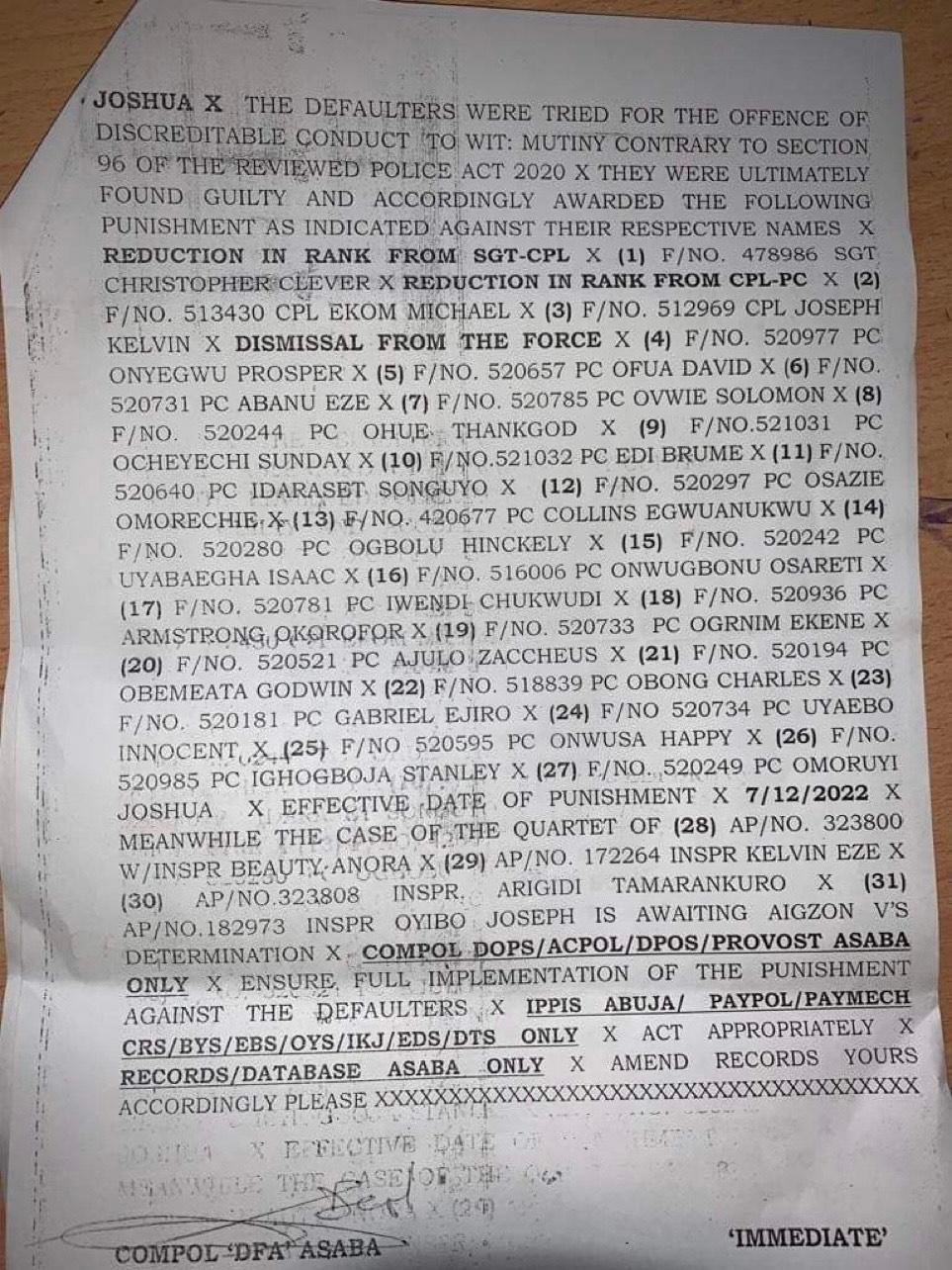
     

  • Get to know these five groundbreaking tech innovators

    It is irrefutable that tech innovation can affect change and development. For Africa to progress, it needs to find solutions to the problems on the continent through groundbreaking innovation and technology. The Africa Rising agenda is mere rhetoric if the change needed in the region is not led and designed by Africans in Africa for Africans.

    Many illustrious sons and daughters of the land are contributing immensely to the development of local solutions for local problems. They are building the future of Africa and harnessing the power of engineering and technology to address many of the problems on the continent.

    This article focuses on five young African innovators and entrepreneurs whose cutting-edge solutions are worth celebrating. These five people are winners/finalists of the Africa Prize for Engineering Innovation. This scheme is founded by the Royal Academy of Engineering, and it is Africa’s biggest prize dedicated to engineering innovation. The Africa Prize offers a unique benefits package for up to 16 shortlisted participants to help accelerate their business including access to business and technical expertise and sector-specific engineering mentoring, an eight-month tailored training programme, and prize money of up to £25,000.

    Now, in no particular order, meet the innovators:

    Source: BBC

  • New conflict in South Sudan has forced 40,000 people to flee

    A UN agency has reported that over 40,000 people have been forced from their homes as a result of fresh conflict in South Sudan’s oil-rich Upper Nile state.

    In its latest update, the UN’s Office for the Coordination of Humanitarian Affairs (Ocha) said threats of violence continue to hamper humanitarian response in the state.

    It said the displaced people were living in dire conditions and required urgent life-saving assistance.

    Last week ceasefire monitors said they would send a team to investigate the ongoing deadly clashes in the state.

    Fighting has been reported in the state since state mid-November – reportedly involving the national army and the Maiwut opposition forces.

    There are also reports of renewed hostilities in Fashoda area between different ethnic rival groups.

    A prominent civil society group, the Community for Progress Organisation (CEPO), told the BBC that it received credible reports from civilians about armed youths amassing troops in the state over the weekend.

    The BBC could not independently verify this information.

    Source: BBC

  • Dogs in costumes parade through Lagos

    Dog owners flocked to Nigeria’s economic capital of Lagos to display their canines at the weekend’s fourth annual canine carnival.

    According to the Reuters news agency, the dogs on show came out beautifully groomed and in fancy dress.

    Dog dressed up

    The aim was to break stereotypes that Africans mistreat their pets, Reuters says quoting organiser Jackie Idimogu.

    “I have been able to make humans understand that dogs are not for guards, like they are not just to be kept at the gate or outside the compound,” she said.

    Dog dressed up

    Pasha (above) – dressed in sunglasses and an outfit to match the owner’s – was named dog of the year.

    Dogs on the red carpet
  • Somali police unit returns from training in Djibouti

    State-run Somali National TV announced on Sunday that a group of Somali police officers who had finished a training course in Djibouti had returned to Mogadishu.

    Police commissioner General Abdi Hassan Mohamed Hijar, who welcomed the officers at the airport, said the training was jointly conducted by instructors from Djibouti and Italy.

    “The training was held through collaboration efforts of the governments of Italy, Djibouti and Somalia,” Mr Hijar said, adding that the Italian instructors accompanied the officers to Mogadishu.

    Mr Hijar said that the police officers would join the fight against al-Shabab.

    The state TV said this was the 17th batch of police officers that had trained in Djibouti and returned to the county.

    Source: BBC

  • We are not promoting homosexuality – US ambassador

    US Ambassador to Ghana, Virginia Palmer, has admonished the media not to consider appeals to protect same-sex individuals as effort to further such interests.

    “We don’t want your straight children to be gay, we want your gay children to be safe and I think it is very important that any sort of threat on one group demonstrates that the rights of other people can be encroached upon,” she said.

    Speaking in an interview with JoyNews’ Foreign Affairs program, Ambassador Palmer stated that discrimination of all kinds is bad, hence the need for social protection measures to safeguard the minority group.

    Intimate same-sex relationships are punishable in Ghana with a prison term of three years.

    A bill named the “Promotion of Proper Human Sexual Rights and Ghanaian Family Values”, was proposed months after Ghana’s first LGBT community centre opened in Accra in January last year.

    The bill seeks to increase jail terms to up to a decade and makes cross-dressing and public displays of same-sex affection punishable by fines or detention. It also makes the distribution of material deemed pro-LGBT by news organisations or websites illegal.

    Source: BBC

  • Former Guinean leader Camara denies involvement in the massacre

    Former military commander of Guinea, Moussa Dadis Camara has  reportedly denied being responsible for the 2009 stadium massacre.

    More than 150 people were killed, and women and girls were raped at the protest against military rule 13 years ago.

    Monday was the first time that Capt Camara gave evidence at the trial which began in September.

    Ten other former officials are on trial alongside Capt Camara, who is charged with having command responsibility over the soldiers who carried out the alleged crimes.

    Capt Camara told the judge that he does not recognise the charges and then proceeded to make a long speech in which he referenced European philosophers and Egyptian Pharaohs, AFP reports.

    On the day of the killings, 28 September 2009, security forces tried to stop the rally going ahead and allegedly blocked off the exits to a stadium in Conakry, before opening fire. Some protesters were shot dead or attacked with knives, while others were trampled on.

    The long-delayed trial is the first involving human rights violations on this scale in Guinea, rights group Human Rights Watch has said.

    Capt Camara was supposed to have given evidence last week but proceedings were delayed as he was unwell.

    The 58-year-old seized power in 2008 when long-time President Lansana Conté died, but he was ousted and fled the country not long after the Conakry killings, following an assassination attempt.

    He had been living in Burkina Faso before returning to Guinea for the trial.

    Source: BBC

  • Zambian police continue investigations on Ethiopian migrants’ deaths

    After finding 27 Ethiopian migrants’ dead over the weekend, Zambian police have announced that they will intensify vehicle inspections at the nation’s borders.

    The men – all aged between 20 and 38 – were found dumped by the side of the road on the outskirts of the Zambian capital, Lusaka.

    They are thought to have suffocated whilst trying to reach South Africa.

    One man found gasping for air was taken to hospital.

    In October, the bodies of 25 Ethiopians were discovered in neighbouring Malawi.

    The UN says 12,000 migrants have been recorded as missing across Africa since 2014.

    Source: BBC

  • Flash flooding hits Gauteng province in South Africa

    Heavy rains during Thursday and Friday morning have provoked flash floods in parts of Gauteng province in South Africa.

    In Lenasia, a suburb south of Soweto, residents quickly mobilised to respond to cries for help.

    The rise in water levels left some residents with no choice but to abandon their homes.

    Many residents, mostly elderly, had to be rescued from the rising waters by members of the community.

    Paramedics were on site to help any victims.

    Some local inhabitants criticised the local authorities saying their absence showed lack of leadership.

    Source: African News

  • US imposes sanctions against former Guinean president

    The former president of Guinea, Alpha Condé, will now face penalties, according to American authorities’ announcement on Friday.

    The sanctions are related to violence against opponents before being ousted in a coup in 2021.

    The former Guinean leader will have his US assets frozen. All transactions involving Alpha Condé will also be criminalized.

    Condé became the first democratically elected president of Guinea in 2010 but after two terms was accused of rising authoritarianism, culminating in a bloody crackdown against protestors in 2020.

    According to the US Treasury Department, Alpha Condé, who is now 84 years old, was engaged in serious human rights abuse.

    Source: BBC