The most anticipated moment since the opening of the September 2009 massacre trial in Guinea, the appearance of Moussa Dadis Camara, came to a halt on Monday when the court accepted the former dictator’s request for a postponement on health grounds.
The moment of the appearance arrived late morning when President Ibrahima Sory Tounkara said: “Mr Moussa Dadis Camara, come to the bar, please.
Less than 12 minutes later, the same president pronounced the postponement of the case to December 12, 2022, with these words: “You have one week Mr Camara, the hearing is adjourned.
In the meantime, the 57-year-old former autocrat, who used to make those who suffered his wrath tremble, obsequiously pleaded for the adjournment, citing his health.
“With all due respect to your august court – I have already informed the director of the prison guard, the chief medical officer of the prison guard – for a very long time I have been suffering,” said Captain Camara after taking the stand with an unsteady gait and in civilian clothes, he who never took off his uniform.
“I am not above the law,” he said, “but in all sincerity, I don’t feel at the moment that I am in a state to testify.
The main defendant in this historic trial vaguely referred to “malaria I had, a total weakening”, and suggested that he preferred not to elaborate.
“The court cannot force you to say or do what you do not want to do (…) If you say you cannot (testify), the court will follow you,” the president said before announcing the adjournment.
Captain Camara has been on trial since September 28, 2022, along with a dozen former military and government officials, for the massacre that took place 13 years earlier to the day.
Captain Camara, who came to power in a coup nine months earlier, was president on the day and on the following days when the red berets of his guard, soldiers, police and militia killed dozens of people in and around a stadium in Conakry who had gathered to dissuade him from running for president in January 2010. Dozens of women were raped, individuals were kidnapped and tortured, and many bodies were disposed of.
He was exiled to Burkina Faso a few months after the massacre and was imprisoned after returning for the trial.
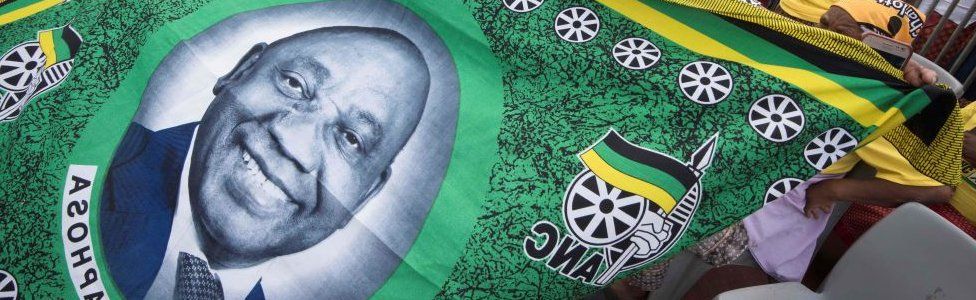
President of South Africa, Cyril Ramaphosa, has filed a petition with the Constitutional Court to have a parliamentary report that implicated him in a corruption scandal and whose conclusions opened the door for impeachment proceedings against him overturned.
In a document submitted to the supreme court, a copy of which was obtained by AFP on Monday, the head of state demanded that the report submitted to parliament on Wednesday be “reviewed, declared illegal and not taken into account”, while the report is still pending.
The 70-year-old Ramaphosa, who has been embarrassed by the scandal for several months, is accused of trying to cover up a burglary at one of his properties in 2020 by not declaring it to the police or tax authorities. The criminals took $580,000 in cash, hidden under the cushions of a sofa.
Founder and head of Heaven Way International Ministries, Evangelist Patricia Oduro, has made claims that God used her recent arrest to further the gospel.
Following her arrest on October 9, 2022, on suspicion of fraud, the former fetish priestess was detained by the police for more than a month.
She just left detention after fulfilling the terms of her bail.
Sharing her prison experience with her Church members, Agradaa in a video sighted by GhanaWeb said God used her during her time cells to convert lesbians. She believes this was the sole purpose for her arrest.
“God sent me to cells for a purpose. This woman was brought into the cell I was in at Chorkor. They were two girls and they were lesbians. God spoke to her through me and she wept. She decided to accept Jesus as her Lord and personal saviour.
“Today I feel sad seeing her because the devil thought he was sending me to Chokor cells but Jesus said there are some lesbians so I should go there to preach for them to give their lives to Christ,” she told the members about her encounter with some two ladies during her time in cells.
According to Agradaa, her time in police cells was for a purpose ordained by God.
A court in a high-security desert prison in Chad has sentenced 262 people arrested during a bloody anti-regime protest in October to two to three years in prison after a mass trial behind closed doors with no lawyers and no independent media.
Some 80 others, out of 401 people on trial – mostly young demonstrators – were given one to two years’ suspended prison sentences, and 59 were acquitted, N’Djamena’s public prosecutor, Moussa Wade Djibrine, told reporters on Monday.
The trial lasted four days and ended on Friday, but as only state television was allowed to attend, in the absence of any other media, the prosecutor did not make the judgment public until three days later, on his return to the capital on Monday.
On 20 October 2022, around fifty people – mostly young demonstrators shot dead – died, mainly in N’Djamena, when the police opened fire on the slightest attempt at a rally.
They were responding to the call of the opposition against the extension of General Mahamat Idriss Déby Itno’s rule for two years. He had been proclaimed head of state by the military on 20 April 2021 following the death of his father, President Idriss Déby Itno, who was killed at the front by rebels after ruling Chad with an iron fist for 30 years.
– Mass trial –
The government had acknowledged the arrest of 601 people in N’Djamena alone – including 83 minors – and their transfer to the high-security prison of Koro Toro. The transitional president Mahamat Déby had accused them of having wanted to lead an “insurrection” and an attempted “coup d’état”.
Those convicted on Friday were found guilty of “unauthorised assembly, destruction of property, arson, violence and assault and disturbance of public order”, according to the prosecutor.
The mass trial took place in the prison of Koro Toro, 600 km northeast of the capital, an “illegal” procedure according to the lawyers who decided not to attend.
Amnesty International had denounced on Friday “a trial behind closed doors which raises serious concerns about respect for the right to a fair trial (…) the right to prepare one’s defence (…) the right to a public trial (…) and the right to information” of the public, “rights enshrined in the African Charter on Human and Peoples’ Rights, to which Chad is a party”.
– Excessive use of violence” –
The Bar Association went on strike throughout the country before the opening and for the duration of the trial, denouncing the “arbitrariness and injustice” of a “parody of a trial”. He announced on Monday a resumption of the pleadings from Tuesday and their intention to appeal.
Of the 600 people arrested during and after the demonstration in N’Djamena, the cases of more than 200 are still under investigation by investigating judges, including 80 minors repatriated from Koro Toro to N’Djamena, the prosecutor said Monday.
After the bloody demonstrations, the opposition – whose main leaders are now in hiding or in exile -, local and international NGOs, as well as part of the international community, led by the European Union (EU) and the African Union (AU), strongly condemned the excessive use of violence “against civilians”.
On Monday, the government announced the lifting of the state of emergency declared in N’Djamena and some other cities on the evening of 20 October.
On 20 April 2021, Mahamat Déby, a young 37-year-old general, was proclaimed President of the Republic at the head of a junta of 15 generals and had promised to hand over power to civilians through elections after a “transition” of 18 months.
But he extended his presidency on the recommendation of a “National Reconciliation Dialogue” boycotted by the vast majority of the political opposition and several of the most important armed rebel groups.
Four teachers were among the six civilians murdered in a suspected jihadist attack on Sunday in Bittou, a town in Burkina Faso close to the Ghana-Togo border, according to security and local sources on Monday November 5.
A group of armed men burst into a neighbourhood in Bittou late Sunday afternoon and opened fire on a group of workers, killing six people, a security source told AFP.
“The defence and security forces as well as the Volunteers for the Defence of the Fatherland (VDP), civilian auxiliaries to the army, “immediately set off after the terrorists, who retreated to the nearby Nouhao forest”, according to this source.
Confirming the attack and the death toll, the regional coordination of the Federation of National Unions of Education and Research Workers (F-Synter), said in a statement that four teachers from the departmental high school of Bittou, including the headmaster, were among the victims.
“This cowardly and barbaric murder is the second to be suffered by education staff in our region after the one in Maytagou on 27 April 2019,” said Ouédraogo Al Hassan, regional coordinator of F-Synter.
Located in the Centre-East region, Bittou is on the road between Ouagadougou and Lomé. It is an important town close to the borders of Togo and Ghana where commercial activity is very important.
Since 2015, Burkina Faso has been regularly plagued by increasingly frequent jihadist attacks that have killed thousands and forced some two million people to flee their homes.
These attacks have increased in recent months, mainly in the north and east of the country.
On 26 November, four Burkinabe soldiers were killed in an improvised explosive device in the north of the country and three civilians died in another attack in the north-east, according to security and local sources.
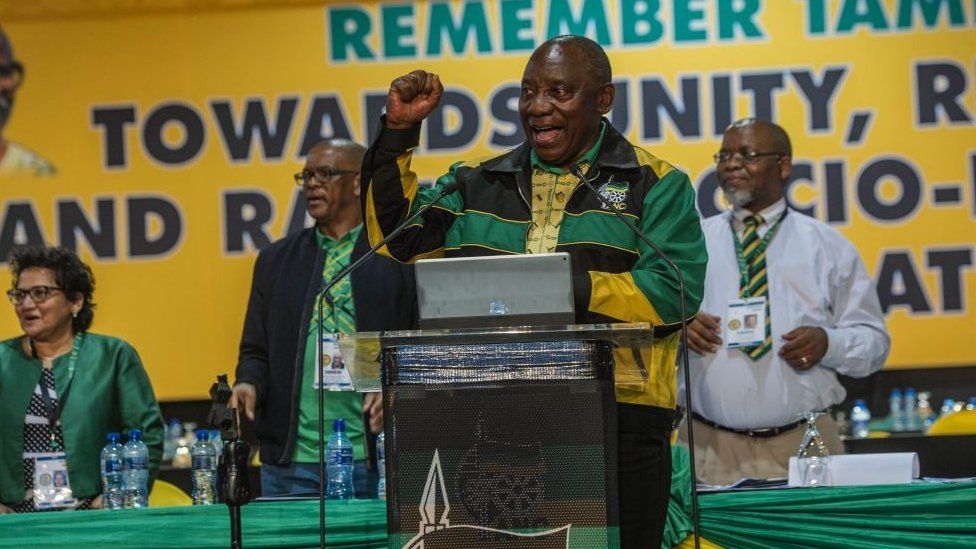
Despite Cyril Ramaphosa’s weekend declaration that he would not step down, the South African president still has to face a parliamentary vote on Tuesday, December 5, 2022 that might result in his impeachment.
The ruling African National Congress (ANC) will meet Monday to discuss Ramaphosa’s fate after a parliamentary panel’s report last week said he might have acted illegally in covering up a burglary at his farm.
Despite deep divisions inside the party, there appears to be a majority backing the president.
There was pressure last week from some quarters for Ramaphosa to quit or be forced from office over what has become known as the Phala Phala affair, after the farm at the centre of the controversy.
But Ramaphosa looked relaxed and cheerful Sunday as he spoke to journalists outside a conference centre where some ANC delegates were already discussing the case against him.
With a smile, he explained he had been excluded from the meeting, agreeing that, in the circumstances, it was best for him not to take part.
He has been accused of having covered up the burglary of more than half a million dollars in cash from his farm in northeastern South Africa.
Last week’s report said the president “may have committed” serious violations and misconduct.
– Parliamentary scrutiny –
The president has been under fire since June, when a former spy boss filed a complaint with the police alleging that Ramaphosa had hidden the February 2020 burglary from the authorities.
He accused the president of having organised for the robbers to be kidnapped and bribed into silence.
Ramaphosa said a vast sum of cash stashed at the farm was payment for buffaloes bought by a Sudanese businessman. A police inquiry is ongoing, but he has not so far been charged with any crime.
And while Ramaphosa insists he is innocent of any wrongdoing his explanations did not convince the parliamentary panel, which consists of three lawyers who were appointed by parliament.
On Monday, the ANC’s highest body — the National Executive Committee (NEC) — meets to discuss the matter.
On Tuesday the report will go before parliament to be examined and there will be a vote on whether to launch an impeachment process against the president.
In South Africa, impeachment means removal from office.
The scandal, with its colourful details of more than half a million dollars in cash being hidden under sofa cushions, comes at the worst possible time for Ramaphosa.
On December 16, he will contest elections for the ANC presidency — a position that also holds the key to staying on as the nation’s president.
– ‘Flawed’ report –
On Saturday Ramaphosa’s spokesman said the president would challenge the parliamentary report in court.
“President Ramaphosa is not resigning based on a flawed report, neither is he stepping aside,” said Vincent Magwenya.
“It is in the long-term interest… of our constitutional democracy, well beyond the Ramaphosa presidency, that such a clearly flawed report is challenged, especially when it’s being used as a point of reference to remove a sitting head of state,” he added.
A majority is needed to trigger the impeachment procedure — and if it is launched, it would take a two-thirds majority to remove the president from office.
Despite its divisions, the ANC has a comfortable majority in parliament.
“Ultimately the decision on impeachment would be a political one in parliament,” said a judicial source who requested anonymity.
US Presidents Bill Clinton and Donald Trump had “survived their impeachment processes because the necessary majorities couldn’t be found by their challengers”, the source pointed out.
Nor is it even certain that parliament will vote to launch the procedure.
As well as Ramaphosa, some legal experts have outlined flaws in the report.
They argue that without recourse to the ongoing criminal investigation it is based largely on hearsay, Ramaphosa’s statements, and the initial complaint lodged by an opponent of the president.
The recent attack comes barely three months before the conduct of the 2023 general elections.
Nigeria’s electoral body, Independent NationaL Electoral Commission has announced that its office in Oru West Local Government Area of Imo State was attacked early on Sunday.
The recent attack comes barely three months before the conduct of the 2023 general elections. According to INEC, there have been seven attacks on its facilities in five states within the last four months.
This was disclosed in a circular released on Sunday by Festus Okoye Esq, INEC’s National Commissioner and Chairman of the commission’s Information and Voter Education Committee while announcing Sunday’s attack on its office in Imo.
The statement reads: “The Resident Electoral Commissioner (REC) for Imo State, Professor Sylvia Uchenna Agu, has reported that our office in Oru West Local Government Area was attacked at about 4.00am today Sunday 4th December 2022.
“The attack affected the Conference Room where office furniture and fittings were destroyed. However, other critical facilities were not affected.
“It would be recalled that on Thursday 1st December 2022, our office in Orlu Local Government Area of Imo State was also attacked.
“Overall, this is the 7th attack on our facilities in five States of the Federation in the last four months.
“Once again, the Commission expresses its concern on the consequences of what appears to be a systematic attack on its facilities across the country on the conduct of elections in particular and electoral activities in general.
“The attention of the security agencies has been drawn to this latest incident for investigation and prosecution.”
As Nigeria prepares for the general elections to hold early next year, attacks on INEC offices have become commonplace.
SaharaReporters reported in November 2022 that INEC decried the incessant attacks on its local government office in Ogun State during which critical materials were also destroyed.
It was also reported that some hoodlums numbering about eight were said to have scaled the perimeter fence, jumped into the premises and set the INEC building on fire from the rear side.
However, the electoral umpire in an official statement in reaction to the fire attack, said over 65,000 uncollected PVCs were destroyed in the fire.
In the same week, there was also an attack on the commission’s office in Osogbo, the Osun State capital.
Authoritiesin Madagascar have started works on the country’s first motorway linking the capital, Antananarivo, to Tamatave, the country’s economic hub and largest port.
Egyptian company Samcrete will be in charge of the 4-year project for a budget of nearly $1 billion.
“The highway will allow us to relieve the congestion of the national road number 2 because in fact it is estimated that the traffic will be multiplied by 5 in the next three years. So it will be unbearable for the national road number 2 to handle this extra traffic”, said Public Works Minister of Madagascar, Jerry Hatrefindrazana.
The project has sparked controversy amongst the population. Farmers are one group particularly affected.
“We are in the middle of the rice transplanting period, right at the moment when our rice fields will be destroyed. And we have been waiting for the state to take action for us farmers. In all the speeches, no official spoke about the farmers“, complained farmer Roland Edie Rakotodramasy.
Others, like teacher Pauline Ramialisoa, remain convinced about the overall benefits.
“Traffic will be faster, cars will not use much gasoline, and the transport of goods from inside and outside will be more fluid”, she said
One of the Egyptian companies involved in the project, EGAAD, stressed the environmental advantages of the new infrastructure.
“This highway that will link the capital to the main port, the economic hub of the country, will ease a lot of things, reducing an 11-hour journey to a 2.5-hour journey. It will help to reduce CO2 emissions by 25 to 30%”, claims EGAAD group president, Reda Boulos.
The first stage of the project is scheduled to be completed by the end of the president’s mandate in 2023.
The secretary-general of Tunisia’s powerful UGTT union claimed on Saturday that legislative elections due later this month serve no purpose.
Speaking before an audience, Noureddine Taboubi, denounced President Kais Saied’s constitutional reforms that in his view had neutralized political parties.
“We are heading for electionswithout colour or taste, they came as a result of a constitution that was not participatory, and there was no room for consensus or majority approval”, said Taboubi.
The union official left the threat of action hanging in the air.
“We warn the government against any measures targeting basic materials and leading to the starvation of the people, and we consider the secret agreements it has reached with the International Monetary Fund as non-binding for wage earners, and they will confront them in all legitimate and militant ways”, threatened the secretary-general.
Last year, President Kais Saied sacked the government and suspended parliament.
This year Saied extended his power grab with a constitutional referendum marred by an official turnout of barely 30 percent.
Kenya’s Charlot Magayi, who is the founder of Mukuru clean cooking stove was awarded $1.2 million Earthshot Prize by British Prince William.
Mukuru Clean Stoves aims to bring cleaner-burning stoves to women in Kenya and Africa as a whole.
According to studies, more than 950 million people in the sub-Saharan Africa alone rely on heavily polluting wood and charcoal for cooking. This number estimated to grow to 1.67 billion by 2050.
Charlot Magayi, 29, began the project in 2017 at Mukuru kwa Njenga slum, one of the biggest slums in Nairobi, Kenya.
Her main aim was to get rid of the pollutant sources of fuel like firewood and charcoal that is still rampant in many Kenyan homes.
The stove emits 90% less pollution compared to using wood and far much less than charcoal.
The stove itself is also cheap at approximately $10, an amount that is quite affordable to low income families.
Religious leaders met on Saturday in Goma following the violence that resulted in at least 50 deaths in eastern DRC.
On Thursday, the military accused the M23 rebel movement of the deaths and breaching a recently brokered ceasefire.
“Our effective commitment to the inter-faith project for peace in North Kivu, our support for the authorities of the province in their efforts to seek peace and the peaceful coexistence of communities, our appeal to all of the faithful, in particular the population in general, to get involved in the promotion of peace. Our determination to say each week in our parishes and mosques a common prayer on the ecumenical peace of the French saint of Assisi”, said Rev. Samuel Ngahiembako, President of the ECC (L’Eglise du Christ au Congo: Church of Christ in Congo, Ed.)
On Friday, DRC president Felix Tshisekedi declared three days of national mourning following the violence.
Local resident Amani Fundiko, added “I have so many worries because we have no peace, no joy to see our compatriots being killed in Rutshuru, Runyonyi, Rugari, everywhere there, our wish is that the President takes decisions to take charge of this situation and see if they can put an end to the M23, even look at the Goma-Rutshuru road, it is blocked. The situation is very complicated and we are hungry”, he said.
The M23 rebel movement re-emerged last year in November claiming the government had not stuck to the terms of the peace deal.
South Africa Rugby World Cup winner Sbu Nkosi has been reported to police as a missing person, his club said on Saturday.
Nkosi has been “absent without leave” for three weeks and hasn’t responded to calls and messages, the Blue Bulls said in a statement.
The Blue Bulls said they were now concerned for Nkosi’s safety. He last had contact with anyone at the Blue Bulls on Nov. 11 and the team opened a missing person case with police on Nov. 17, it said.
“This resulted from the grave worry and concern of everyone (at the Blue Bulls),” the team said.
The Pretoria-based team has sent officials to check for Nkosi at his home four times over the past three weeks and haven’t found him. They are relying on “the expert assistance of the South African Police Services” to locate him.
The 26-year-old Nkosiplayed 16 tests for the Springboks and was part of the squad that won the 2019 Rugby World Cup in Japan.
Seventeen private jet owners, including Nigerian billionaires, leading commercial banks, and other ultra-high net worth individuals have sued the Nigerian government over import duties totaling more than N30 billion ($67.5 million).
The legal action, which is part of efforts to prevent the government from grounding their planes, comes after the government approved the Nigeria Customs Service’s decision to ground 91 private jets belonging to wealthy Nigerians in November 2021 due to alleged refusal to pay $67.5 million in import duties.
Customs, acting under the auspices of the federal government, has been working hard in recent weeks to perfect the process of grounding private jets whose owners failed to pay the import duty.
In response, the jet owners sued the government through the foreign shell companies and trustees through which the foreign-registered jets were purchased, requesting a judicial review of whether or not it is legal for them to pay the contentious import duty on their private jets.
Aircraft Trust and Financing Corp Trustee, UAML Corp, Bank of Utah Trustee, Masterjet AVIACAO Executive SA, and Cloud Services Limited are among the applicants.
MHS Aviation GmbH, Murano Trust Company Limited, Panther Jets, SAIB LLC, Empire Aviation Group, and Osa Aviation Limited are some of the other companies.
Respondents in the court documents included Customs, the Nigerian Civil Aviation Authority, the Federal Airports Authority of Nigeria, and the Nigerian Airspace Management Agency .
It is unknown who owns this private jet, but it is worth noting that Nigeria’s richest woman Folorunsho Alakija, the vice chairman of Famfa Oil and the owner of one of Nigeria’s most productive oil blocks, owns a Bombardier Global Express XRS with the registration number “VP-CEO.”
Africa’s richest man Aliko Dangote jets around the world on his Bombardier Global Express XRS, and Nigerian energy and telecom billionaire Mike Adenuga owns both a Bombardier Global Express XRS and a Bombardier Challenger 604.
After a Swedish company obtained a $165 million award against Tanzania owing to revoked land title in the Bagamoyo sugar plant, the Netherlands confiscated an Air Tanzania Company Limited plane.
It is still not clear exactly which aircraft on ATCL’s fleet has been seized and under what circumstances.
However, on Wednesday, the government dispelled fears of the possible attachment of an ATCL plane by a Dutch court, with the Attorney General saying everything was under control.
Dr Eliezer Feleshi confirmed to The Citizen that a Swedish firm that won a $165 million award against Tanzania had persuaded the court to uphold the attachment of the aircraft despite the International Centre for Settlement of Investment Disputes (ICSID) having issued a stay of execution, pending annulment proceedings.
It’s true that they went to court in the Netherlands after we had successfully appealed to the ICSID for a stay of execution.
Everything is under control,” he said.
Dr Feleshi added that the governmenthad already appealed against the Dutch court’s decision, but declined to offer further details.
“I can’t disclose further details…let’s be patient as the matter is in court.”
Tanzania has argued that the attachment is unlawful because it was obtained a day after the State had petitioned the ICSID to annul EcoDevelopment’s award.
But the judge reasoned that the ICSID’s provisional stay of execution of the award only took effect on the date the institution registered the state’s annulment request.
The Swedish company is using the legal firm Houthoff in the Dutch courts, and Mannheimer Swartling in the ICSID proceedings.
Tanzania on the other hand has turned to Buren Legal for the attachment proceedings, but has not appointed an external counsel in the arbitration or annulment proceedings.
EcoDevelopment, which is owned by 18 Swedish nationals, brought its ICSID claim in 2017 under the Sweden-Tanzania bilateral investment treaty.
That came after the government decided to unilaterally revoke the land title for a multi-billion sugar project in Bagamoyo.
The case commenced at the ICSID, a World Bank organ based in Washington.
The land revocation was a major blow to the Swedish company, which had for over ten years worked to develop the project and invested $52 million in a ready-to-go project for local production of sugar, renewable electricity, and fuel.
The consortium of EcoEnergy Africa AB of Sweden and Uttam Group of India was to inject $100 million into the project as its own equity.
The remaining funding $250 million would have been a combination of DFI and commercial bank lending, where a commitment was given by the African Development Bank (AfDB) to act as a lead financing arranger. The AfDB board had already made a decision to allocate $100 million towards the project.
However, AfDB later withdrew their financing commitment due to the government’s failure to respond to its requests of endorsing the Bagamoyo project and information it had revoked the land title.
The integrated sugar project that was to be carried out by the firm would have been one of the largest private agriculture investments in East Africa, with an overall investment of about $500 million, including an outgrowers programme.
It was estimated that the Bagamoyo project would have created 20,000 direct and indirect jobs in the processing facility, the estate, logistics and the outgrowers programme.
Although the legal redress sought by the investor was okayed by ICSID, the aggrieved party went further, and persuaded a Dutch court to uphold the attachment of an aircraft that was grounded in the Netherlands due to engine problems.
According to media reports, Tanzania argued that the attachment was unlawful as it was obtained a day after the government had applied to ICSID to annul EcoDevelopment’s award.
The government therefore applied to the Limburg court to lift the attachment and prohibit EcoDevelopment from seeking any further attachment based on the ICSID award while the annulment proceedings are pending.
The government has since argued that the effect of the automatic stay granted by ICSID was that the award was not provisionally enforceable, and that the attachment was thus granted unlawfully and that the Dutch courts were bound to recognise the ICSID stay decision as binding.
Further the government argued that the attachment had affected its interests in a disproportionate way, and that as a national government it had sufficient assets within and outside its territory to ensure the award would be paid.
Two people have died in South Africa and 15 others are missing after a flash flood in a river swept away worshippers taking part in a church ceremony.
Some of the more than 30 congregants were standing on rocks in the river on Saturday when a torrent of water surged through, an eyewitness said.
The pastor was saved after he clung on to an overhanging tree branch, he added.
Rescuers resumed the search of Johannesburg’s Jukskei river on Sunday.
It is notorious for flooding during South Africa’s rainy season.
The search operation involves the police and fire service as well as specialist aquatic rescue teams, Robert Mulaudzi spokesperson for the City of Johannesburg Emergency Management Services said.
Victor Ncube, who had been taking part in the church service, told local news station eNCA that he managed to pull out five people from the river who had been swept 100 metres downstream.
Others had been carried too far down the river for him to try to save them, he said.
Of the 33 who had been at the service, 15 are still unaccounted for, the authorities say.
Former winners England will take on African champions Senegal in the second knockout match on Sunday.
Despite star player Sadio Mane’s absence, Senegal have been impressive in the World Cup. The Lions of Teranga have scored five goals this tournament and finished behind leaders Netherlands in Group A.
England sit on top of the tournament scoring charts with nine goals and finished top of Group B.
Kashef, our artificial intelligence (AI) robot, has analysed more than 200 metrics, including the number of wins, goals scored and FIFA rankings, from matches played over the past century to see who is most likely to win.
Here is Kashef’s prediction:
Who: England vs Senegal
Where: Al Bayt Stadium
When: December 4, 10pm (19:00 GMT)
Prediction: England and Senegal have never met. However, based on comparable performance metrics, Kashef has given England, ranked fifth, a 68 percent chance of beating Senegal, ranked 18th.
Gareth Southgate’s side are then predicted to take on France in the quarter-finals on December 10.
(Al Jazeera)
Who is going to win the World Cup?
After 50 matches this World Cup, Kashef has a 66 percent accuracy level. After every match, Kashef reruns the model to predict the outcome of the next game all the way through to the final.
Sign up for Al Jazeera
Week in the Middle East
Catch up on our coverage of the region, all in one place.
Predicting match results is no easy task – external factors like team morale or player fitness make a big difference in how the game goes.
See if you can outsmart Kashef and predict today’s winners by playing our AI game here.
According to him, some staff of government agencies like the Nigerian Maritime Administration and Safety Agency (NIMASA), the Nigerian Communications Commission (NCC), the Nigerian Ports Authority (NPA), and the Central Bank of Nigeria (CBN), amongst others, earn emoluments bigger than the President.
The Chairman of the Revenue Mobilisation Allocation and Fiscal Commission (RMAFC), Muhammed Shehu, has disclosed that some public servants earn monthly salaries bigger than that of President Muhammadu Buhari.
Shehu said this on Thursday in an interview on Channels Television.
According to him, some staff of government agencies like the Nigerian Maritime Administration and Safety Agency (NIMASA), the Nigerian Communications Commission (NCC), the Nigerian Ports Authority (NPA), and the Central Bank of Nigeria (CBN), amongst others, earn emoluments bigger than the President.
He noted that the NPA is one of the agencieswith high revenues in 2022, adding that the agency generated over N172 billion in the first half of 2022.
He said, “The salary of Mr President is not up to N1,300,000 a month…the allowances of the President are factored into that salary. In 2008, that was considered a lot of money but now, there are people in the private sector and public sector that earn twice, three times, four times.
“No public servant should earn salaries bigger than Mr President. but we do have public servants that earn bigger than Mr President: NCC, NIMASA, NPA, Central Bank.”
He said Nigeria has about 17 different salary categories across several agencies.
He, therefore, proposed the regularisation of the salary schemes for the civil service.
A volcanoon Indonesia’s densely populated island of Java has erupted, spewing a huge column of ash into the air and prompting evacuations of villages in the area.
Indonesia’s disaster mitigation agency (BNPB) warned residents on Sunday living near Mount Semeru in East Java province – located around 640km (400 miles) southeast of the capital Jakarta – not to conduct any activities within 8km (4.9 miles) of the volcano and to keep away from riversides in the area due to risks of lava flow.
The agency said it has raised the volcano’s alert status to the highest level.
“Most of the road accesses have been closed since this morning. Now it’s raining volcanic ash and it has covered the view of the mountain,” Bayu Deny Alfianto, a local volunteer told the Reuters news agency by phone.
Several hundred people have begun moving to temporary shelters or evacuating for safe areas, said Joko Sambang, who heads the BNPB’s office in Lumajang, East Java province.
Mount Semeru, Indonesia’s highest volcano, began erupting at 2:46am local time (19:46 GMT on Saturday), according to the BNPB.
Videos posted on social media showed huge clouds of grey ash in areas near the volcano.
Catch up on our coverage of the region, all in one place.
Abdul Muhari, a spokesman for the BNPB, said the eruption was caused by monsoon rains eroding and collapsing the lava dome on top of the 3,676-metre (12,060-foot) Mount Semeru.
Japan’s Meteorology Agency meanwhile said it was monitoring for the possibility of a tsunami after the eruption. There was no immediate comment from the BNPB on Japan’s warning of a tsunami threat.
A sudden eruption of Mount Semeru last year killed at least 51 people, injured more than 100, and thousands of houses and buildings were damaged.
With 142 volcanoes, Indonesia has the largest population globally living in close proximity to a volcano, including 8.6 million within 10km (6 miles).
The Indonesian archipelago of more than 270 million people sits along the Pacific “Ring of Fire”, a horseshoe-shaped series of geological fault lines, and is prone to volcanic activity and earthquakes.
Charges have been dropped against a Nigerian student who was arrested over a tweet in which he allegedly accused the first lady of misusing public money.
The authorities had accused Aminu Adamu of defamation and spreading “false” information, which he denied.
His lawyer Chijioke Kingsley Agu told the BBC the charge at a high court in Abuja had been withdrawn by the prosecution on Friday.
Mr Agu said his client has been discharged on “compassionate grounds” and that they were “in the process of his release” on Friday evening.
The arrest and the subsequent charge against the 24-year-old undergraduate had sparked outrage in Nigeriawith many social media users and rights campaigners calling for his immediate release.
On Thursday Amnesty International said the student was subjected to “torture” and other forms of “ill-treatment” after his arrest, calling it a “deeply repressive act” that “brazenly violates his human rights”.
Nigerian authorities have not yet commented on these allegations.
He is studying Environmental Management at the Federal University in Dutse, in the northern state of Jigawa, and is due to start his final exams on Monday.
Peace talks between Colombia’s government and the ELN rebel group have reached a first point of agreement, the country’s president has said.
President Gustavo Petro made the remarks during a visit to the province of Western Antioquia.
Both sides have agreed that indigenous people displaced by the conflict should be guaranteed safe return to their lands in the province, he said.
The conflict in Colombia has lasted nearly 60 years.
The left-wing National Liberation Army (ELN) is the last rebel group still active in the war, and no ceasefire has been reached yet.
Last month, talks between the two sides resumed after more than three years following the election of Mr Petro – the country’s first left-wing president, himself an ex-guerrilla.
Mr Petro, also a former member of the M-19 rebel group, took office in August promising to bring “total peace” to Colombia.
These talks held in the Venezuelan capital of Caracas are an important milestone for Colombia, aimed at ending the lengthy civil war.
Previous negotiations with the ELN as part of the historic 2016 peace deal with the larger Revolutionary Armed Forces of Colombia (Farc) rebel group failed.
The ELN has about 2,500 members and the group is accused of getting funds through drug trafficking and illegal mining.
Along with Venezuela, Cuba and Norway have agreed to act as co-sponsors of the peace process.
Speaking at the time of the talks resuming, ELN delegation head Pablo Beltrán said: “We cannot see each other as enemies, the task we have is reconciliation.”
Colombia’s High Commissioner for Peace, Danilo Rueda, previously said “human dignity” must be the focus of the peace dialogue, to eliminate the fear of being killed or kidnapped.
Ghanaian actress, Habiba Sinare, has put a dim light on the prospect of her wedlock with a man from the northern region of Ghana.
She asserted that people from the nothern part of Ghana were difficult to deal with.
According to the actress, her assertion is based on her marital experience with her ex-husband who is a former Black Stars player, Abdul Majeed Waris.
Speaking in a yet-to-be-aired episode of Just Being Us hosted by MzGee, Habiba Sinare disclosed that she suffered from postpartum depression after she gave birth to her baby with her ex-husband.
Talking about her relationship with her ex-husband’s family, Habiba said she was made to suffer in the hands of her countrymen and has since resolved never to marry a northerner again.
“My husband’s father comes to the house, I am going out and he doesn’t understand why I am going out…They make my depression worse… I became so skinny, I was going through worse things [and] I couldn’t talk to nobody about..
“Our northern people are very hard to deal with. Every northerner knows that. I am not ashamed to say that I am a northerner. I cannot marry a northerner again; I am not even joking. Dating them is something else, marrying them is horribly something else,” she said.
Habiba Sinare and Abdul Majeed Waris had a short-lived marriage which has seen the actress share in various interviews what she describes as a bitter experience.
In our series of letters from African journalists, Sudanese writer Zeinab Mohammed Salih samples some rhythms with a political agenda from Sudan’s Red Sea state.
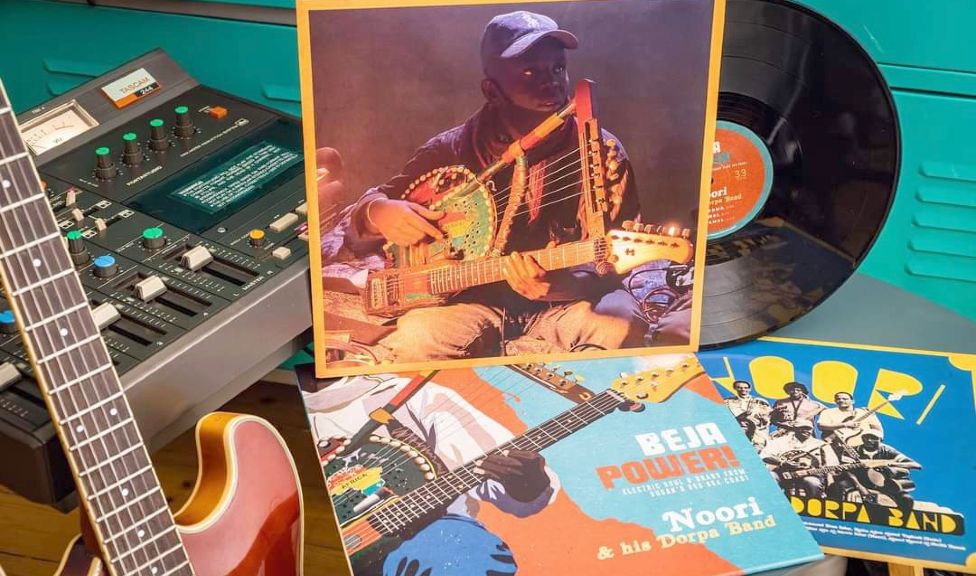
Noureddine Atta Al-Mawla Jabar’s new album, Beja Power!, has been dubbed a soundtrack of Sudan’s recent revolution.
But the musician, better known by his stage name Noori, does not want his electrifying sound just to be a matter of historical record of the time in 2019 when long-time President Omar al-Bashir was ousted after mass protests.
For him the international release of the album by New York-based Ostinato Records is a continuation of his Muslim nomadic community’s resistance against successive regimes in Sudan.
The Beja people come from eastern Sudan, living between the mountains and the Red Sea coast, an area which is rich in gold and other resources but with little to show for it.
“Through music, I’d like to reflect my culture and to let people know about us and about our plight,” the 47-year-old told me as he sat on the west bank of the River Nile in Omdurman, the twin city of Khartoum, Sudan’s capital.
As he spoke, he clutched what many see as the secret of his success – his electric “tambo-guitar”.
It is a hybrid instrument – his invention – combining the neck of an guitar with a traditional four-stringed tambour.
Noori started his musical career in Port Sudan, the capital of Red Sea state, at the age of 18 in the early years of Mr Bashir’s rule.
It was a time when the Beja people felt neglected – and like many other communities in the country – squashed by the Islamist government.
Its attitude was summed up by Bashir after the secession of the mainly Christian and animist area of South Sudan in 2011.
He told a rally that without the south, Sudan could now be a country with one identity – Arab – and one religion – Islam.
‘Non-Arab music banned’
During Bashir’s nearly three-decade rule, the Beja’s language – Bidhaawyeet – and their culture were repressed.
“In the past we didn’t have access to the platforms that are now available to perform, only Arabic music was allowed,” explains Noori.
Image source, NooriImage caption, Nori and his Dorpa band now have the freedom to perform in Bidhaawyeet
“We were told that we don’t want music and songs in non-Arabic language. At some of the festivals, they used to tell us that our language wasn’t understandable.”
The Red Sea region, like elsewhere in Sudan, has had some armed opposition groups – and there have also been deadly clashes with communities living in Kassala state to the south, violence some suspect of being orchestrated to stop a united opposition.
“I also play a role in stopping the tribal conflict that’s been going on in eastern Sudan, by playing my music,” said Noori.
The main point of contention for Beja community leaders is that they want a say over how their state is run – something, they say, the short-lived post-Bashir transitional government ignored as did the junta that took power just over a year ago.
Before the coup, the Beja began organising crippling protests at the busy port in Port Sudan, from where the country’s oil is exported, to drive home their demands.
They are also angry about a plan to build a new port, in partnership with the United Arab Emirates (UAE) 200km (125 miles) north of Port Sudan which would see Beja people moved from their land.
In November, Beja community leaders said they had lost patience with Khartoum over negotiations on the future of their region and announced they were setting up their own provincial government.
Noori, who wants to promote understanding, formed his band, Dorpa – meaning “mountains”, in 2006 with other musicians from marginalised communities.
One is conga player Mohammed Bilal from the non-Arab Angsana community in the Blue Nile state, who understands Noori’s passion.
“People don’t know much about the Beja people with their long history,” the drummer said.
“I believe what we are doing now will let them know, will bring some light to them… their area is just so poor despite being rich in its resources.”
Around 10,000 troops have surrounded the city of Soyapango in El Salvador as part of a massive crackdown on gangs, President Nayib Bukele has announced.
All roads leading to the city have been blocked, and special forces have been searching houses for gang members.
Officers have also been stopping everyone attempting to leave the city and checking identity papers.
The operation is part of a massive crackdown on gangs after a surge in violence earlier this year.
The justice minister said 12 people had been arrested so far.
Soyapango is one of El Salvador’s largest cities and is home to more than 290,000 people. The city – which sits just 13 km (8 miles) west of the capital San Salvador – has long been known as a hub for gang activity.
“As of this moment, the municipality of Soyapango is totally surrounded,” President Bukele wrote on Twitter. “Extraction teams from the police and the army are tasked with extricating all the gang members still there one by one.”
He added that ordinary people “have nothing to fear” and said that the crackdown was part of “an operation against criminals, not against honest citizens”.
Images released by the government showed heavily armed troops clad in body armour and carrying assault rifles outside the city.
One resident, Guadalupe Perez, told the AFP news agency that the raid had come as a welcome surprise.
“They search you and ask for your identity papers to verify where you live, but that’s fine – it’s all for our safety,” the 53-year-old said.
Since Mr Bukele announced a state of emergency in late March, more than 58,000 people have been jailed by authorities in the country of 6.5 million people.
Rights groups have criticised the heavy handed nature of the crackdown, saying the measures, which allow police to arrest suspects without warrants, have led to arbitrary detentions.
But Mr Bukele’s allies say the crackdown is necessary after a wave of homicides culminated with gangs being blamed for 62 murders in a single day on 26 March.
A recent poll taken by the Central American University (UCA) found that 75.9 percent of Salvadorans approved of the state of emergency.
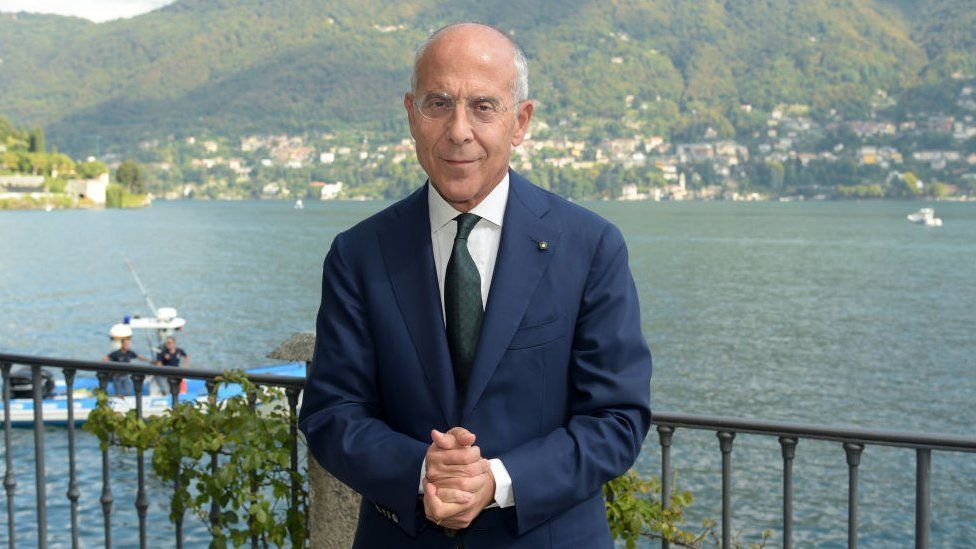
It “will take years” to get energy prices back to pre-Ukraine war levels, the boss of one of the world’s biggest energy firms has told the BBC.
Enel’s Francesco Starace said bringing prices down depends on new sources of energy such as renewables and heat pumps.
Governments across Europe are spending billions helping business and households afford energy bills.
They are also scrambling to secure new supplies.
Mr Starace said the company, which produces and distributes electricity and gas, tried to shield its 20 million European customers from energy market volatility this year.
It did its best to stick to the fixed-price contracts it had agreed, he said.
Breaking customertrust would inflict greater damage on the firm than a hit on one year’s results, he said.
The Italian energy giant sells power to more than 70 million homes and businesses in over 30 countries.
But Enel is planning to leave many of those countries as it focuses on renewable energy and becoming carbon neutral by 2040.
It also wants to cut its huge debts of around $63bn (£52bn).
It is investing heavily in making solar panels as it expands an existing factory in Sicily and builds a new one in the US.
Image source, Getty ImagesImage caption, Enel’s Francesco Starace says that new supplies of renewable energy are key to cutting prices
Soaring energy prices have been the biggest contributor to inflation and the cost of living crisis in the UK, the US and the eurozone.
The global energy crisis triggered by Russia’s invasion of Ukraine “showed very clearly how dependence on one single source of energy is dangerous for Europe”, Mr Starace said.
The future will be “extremely decarbonised” and depend on nuclear and renewable energy, he said.
However, that shift to renewables also has risks.
In July, the International Energy Agency said that China’s dominance of solar and wind turbine production creates “potential challenges that governments need to address”.
Mr Starace said the West has been over-reliant on China for renewables and other goods.
“Some rebalancing needs to be happening because it is healthy,” he said, when asked about geopolitical tensions interfering with energy supplies.
This has helped drive Enel’s investment in solar panels, although the expansion of the Sicilian factory will still meet only 10% of Europe’s needs, he said.
Political leaders have also acknowledged that Europe needs to get its energy from more places.
According to the European Council on Foreign Relations, the EU and its member states have signed 56 energy deals with 23 countries this year.
Among the latest was a 15-year deal for Germany to get liquefied natural gas (LNG) from Qatar through a contract with ConocoPhillips.
Norway is also boosting natural gas production and the world’s biggest producer, the US, has been pumping out record amounts.
This means the chances of Europe repeating its dependence on Russia with another country are “quite low”, according to Megan Richards, a former director of energy policy at the European Commission.
“A lot of work has been done” to replace Russian energy, she added, before warning: “I think Europe will not be completely domestically independent for a very, very long time, if ever” even though “renewables will increase dramatically”.
You can watch Francesco Starace’s interview in full on Talking Business with Aaron Heslehurst on BBC iPlayer.
The fighting in Ukraine has been slowing down and this will likely continue in the coming winter months, US intelligence agencies believe.
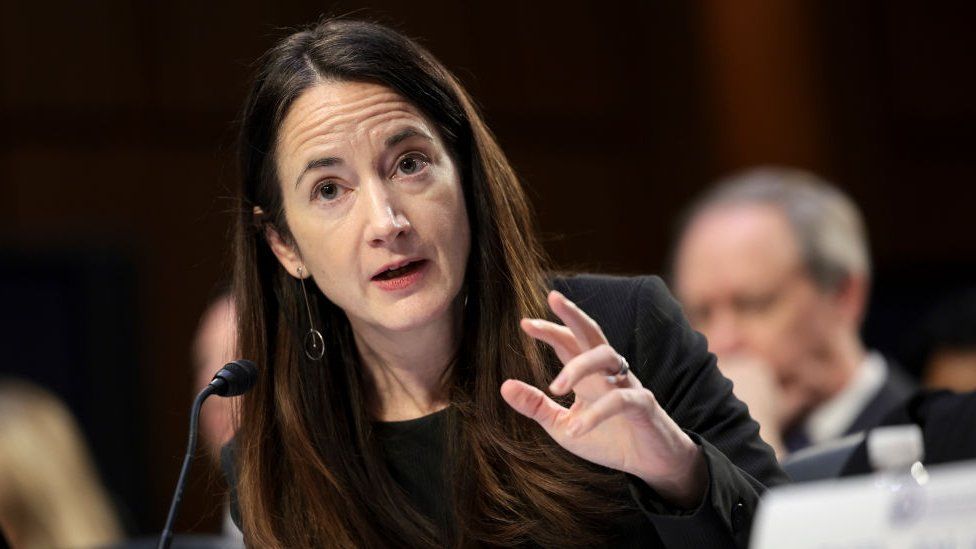
However, there has been no evidence of fading resistance on the part of Ukrainian forces, US director of intelligence Avril Haines said.
She said both sides would try to “refit, resupply and reconstitute” for any counter-offensive in the spring.
The war in Ukraine is now in its ninth month, but Russia has lost more than half the land it seized.
Ms Haines told a defence forum in California that most of the fighting is currently around the Bakhmut and Donetsk region of eastern Ukraine.
“We’re seeing a kind of a reduced tempo already of the conflict… and we expect that’s likely to be what we see in the coming months,” she said.
She said both Ukraine and Russian militaries would be looking to to prepare for any counter-offensive after the winter.
“But we actually have a fair amount of scepticism as to whether or not the Russians will be, in fact, prepared to do that,” she said.
“I think more optimistically for the Ukrainians in that time frame.”
Ms Haines said US intelligence believes Russian President Vladimir Putin does not have a full picture at this stage of just how challenged his military are.
“We see shortages of ammunition, for morale, supply issues, logistics, a whole series of concerns that they’re facing.”
Image source, Getty ImagesImage caption, US Director of National Intelligence Avril Haines said Ukraine showed no evidence of fading resistance
Meanwhile on Saturday, Ukraine President Volodymyr Zelensky described a price cap set by his Western allies on Russian oil exports as “weak” and said it was not “serious” enough to damage to the Russian economy.
The cap, due to come into force on Monday, is aimed at stopping countries paying more than $60 (£48) for a barrel of seaborne Russian crude oil.
Kremlin spokesman Dmitry Peskov said that Moscow had prepared for the move but would not sell its oil under the cap.
At a virtual meeting on Sunday, a group of the world’s top oil-producing countries is expected to stick to its oil output targets.
At their last ministerial session in October, the Opec+ group – made up of countries including Russia and the United Arab Emirates – agreed to reduce output by two million barrels per day from November in a bid to help boost oil prices.
The move angered the United States and other Western nations with Washington accusing the group of siding with Russia.
Since October, oil prices have declined due to slower global growth and higher interest rates. Opec sources say the group is likely to approve a policy rollover.
Meanwhile, Ukraine’s security service said the government in Kyiv is imposing sanctions against 10 senior Orthodox Church figures it accuses of having supported Russia’s invasion.
The sanctions, which will freeze their assets for five years, are the latest moves by the Ukrainian government against religious groups seen as potentially subversive.
The row centres on claims he kept large sums of cash on his property then covered up its theft.
A panel of legal experts concluded that he has a case to answer.
But Mr Ramaphosa’s spokesman suggested he would fight on, and rather than quit would seek a second term as leader of his African National Congress party.
“President Ramaphosa is not resigning based on a flawed report, neither is he stepping aside,” Vincent Magwenya said.
“It may be in the long-term interest and sustainability of our constitutional democracy, well beyond the Ramaphosa presidency, that such a clearly flawed report is challenged,” he added.
The scandal erupted in June, when a former South African spy boss, Arthur Fraser, filed a complaint with police accusing the president of hiding a theft of $4m (£3.25m) in cash from his Phala Phala game farm in 2020.
Mr Ramaphosa admitted that money had been stolen, but said it was $580,000, not $4m.
The president said the $580,000 had come from the sale of buffalo, but the panel, headed by a former chief justice, said it had “substantial doubt” about whether a sale took place.
The panel’s findings have been handed to parliament, which is set to examine them and decide whether or not to launch impeachment proceedings against the president.
Mr Ramaphosa is also under pressure from the opposition, as well as rivals from his governing ANC, to resign.
He is due to meet the ANC’s top leadership bodies on Sunday and Monday after failing to turn up at an earlier meeting.
The scandal is especially damaging for Mr Ramaphosa because he came to power vowing to clear up the corruption which had dogged the country under his predecessor, Jacob Zuma.
The ANC remains deeply divided between supporters of Mr Zuma and those who back Mr Ramaphosa.
Mr Ramaphosa will be challenged for the ANC’s leadership by his former health minister Zweli Mkhize, who has also been accused of corruption. He denies the allegations.
A 300-level student of Business Administration at Nnamdi Azikiwe University, Ebuka Joshua, has reportedly committed suicide after taking a sniper.
This was confirmed by Unizik Plus, a campus press outfit in the school via a Facebook post on Friday.
This was confirmed by Unizik Plus, a campus press outfit in the school via a Facebook post on Friday.
“300L, UNIZIK Student Of Business Administration Reportedly Dies After Poisoning Himself With Sniper. | #unizik_plus
“Stories have it that the deceased Ebuka Joshua, has been battling with depression from the beginning of this semester following his inability to cope with his studies.
“May his soul rest in peace!,” the post added.
Suicide among university students in Nigeriahas lately become a disturbing trend.
For Instance, SaharaReporters also reported that a young graduate identified as Ugwoke Jerry has committed suicide in Nsukka, Enugu State in October.
It was learnt that Jerry was found hanging on a tree by his colleagues inside a forest in the community, a discovery which caused tension among the students.
Before his death, the deceased had sent an emotional message to his mother on why he decided to commit suicide.
“You are the best mother ever, in this world. Am sorry for disappointing you. Please.” he said in the message to his mother. The reason for his action remained unknown.
“It’s so sad, this guy is my colleague. He was lucky to graduate and had also completed his National Youths Service Corps. Some people are still in school finding how to graduate but he was even fortunate,” a source lamented.
The school authorities and Jerry’s family could not yet be reached to comment on the incident.
Also, the Nigeria Police Force, Abia State command confirmed the death of Modestus Hyacinth Egbulefu, a 500-level student of Michael Okpara University of Agriculture, Umudike (MOUAU), who committed suicide in August.
In Kenya’s capital, motorcycle taxis or boda bodas are the easiest and cheapest means to navigate Nairobi’s dense traffic.
One startup, Roam Motors, is working to tackle climate change and mobility by curbing air pollution.
The company came up with an effective and cost-friendly way to curb air pollution in Kenya.
The company produces electric motorcycles that run on two rechargeable batteries.
The batteries can be charged at any charging point, each battery can drive for around 90 kilometers, meaning both batteries, when fully charged, can travel for about 180 kilometers.
The batteries take about four hours to fully charge. The bike ranges from $1,550 upwards depending on the client’s demands.
Joan Igamba, communications specialist at Roam, says the company noticed the air pollution problem in Nairobi and decided to make electric motorcycles to curb the problem.
She says around 20,000 motorbikes are imported into the country every month, continuing to add to the problem:
“Even though these motorcycles help us navigate the fragmented transportation system here in Kenya, they really do increase the air pollution levels in the city,” she says.
“So, with our solution, the Roam Air electric motorcycle, it is a fully electric motorcycle with a removable battery, which can be charged any outlet where you charge your phone.”
Manufacturing electric vehicles can be costly, but the company is able to produce the bikes cheaply because it owns the frame.
This gives them the right to use their frame without paying royalties. They do however import other necessary parts and assemble them in Kenya.
Another reason why they’re able to produce cheaply is because of tax relief from the Kenyan government to companies that produce locally.
Igamba says their main goal is to ensure thousands of fossil fuel vehicles are taken from the roads, paving the way for electric vehicles:
“How we see the future here at Roam is thousands of electric motorcycles on our roads eliminating fossil fuel driven motorcycles and moving into this new future for the continent and the country,” she says.
The first Earthshot Prizes were awarded last year in London just before the UK hosted the COP26 climate conference.
Earthshot offers 1 million pounds ($1.2 million) in prize money to the winners of five separate categories: nature protection, clean air, ocean revival, waste elimination and climate change.
The winners and all 15 finalists also receive help in expanding their projects to meet global demand.
Igamba says winning the prize would be an honor, it would also help the startup expand.
“Winning the Earthshot Prize would really be such a dream come true because we will be able to ramp up production, expand to other markets other than Kenya, and be able to really build on this electric revolution happening in Africa today,” she says.
The South African president Cyril Ramaphosa, who was a favorite of Nelson Mandela and one of the most talented of his generation, has fallen from his pedestal, tainted by a scandal that has plagued him for months.
A parliamentary commission assured Wednesday that he “may have committed violations and misconduct” in a botched 2020 burglary at one of his properties that revealed a dollar fortune hidden in a sofa.
Soon, one question loomed large and heady: Can he stay on as a leader? Mr. Ramaphosa promised to address his fellow citizens soon.
But the road ahead seemed clear. He was expected to be reappointed in December as president of the ruling ANC party and to serve a second term as head of state, but everything froze with the threat of impeachment hanging over his head.
The plump, round-faced 70-year-old, sometimes mocked for his apparent bonhomie concealing a formidable negotiator, succeeded the sulphurous Jacob Zuma in 2018, making the fight against corruption his hobby horse.
But a complaint filed in June accuses him of not reporting the burglary at his Phala Phala farm, located two hours north of Pretoria, to either the police or the tax authorities. The case is still under police investigation.
This scandal, for months, makes “doubt his probity and reminds that he is not a superman”, says the political scientist Susan Booysen, adding that the president had so far forged an image of “icon of the fight” against corruption.
– From Mandela to Coca-Cola –
Born on November 17, 1952, in Soweto, the epicenter of the struggle against apartheid near Johannesburg, Mr. Ramaphosa longed for the supreme office before he reached it.
As a law student, he became an activist in the 1970s and spent eleven months in solitary confinement. He turned to trade unionism, the rare legal way to fight the racist regime. In 1982, he founded the powerful miners’ union, which shook the white power with massive strikes.
He was at the side of the iconic Mandela when he was released from prison in 1990 and contributed to the democratic transition. He was a candidate for the presidency of the ANC in 1999, but the party caciques preferred him to Thabo Mbeki.
This father of four then moved away from politics and turned to business. With interests in McDonald’s and Coca-Cola, he amassed millions of thanks to the black economic emancipation program and entered the Forbes ranking of the 50 richest people in Africa.
He developed a passion for breeding rare cattle, which earned him the nickname “the buffalo”. His wealth has sometimes been a handicap, with his detractors claiming that the businessman came before the politician.
– Shadow of the picture –
In 2012, as a director of the mining group Lonmin, he supported a police intervention against striking miners in Marikana. Thirty-four of them were killed in the worst police shooting since apartheid. He was not prosecuted, but even today, some people still hold him responsible.
But this did not prevent him from returning to politics. First as deputy president of the ANC in 2012, then to President Jacob Zuma in 2014. This will later earn him reproached for his silence during this era of corruption.
Patient and strategist, he finally took over the leadership of the ANC in 2017. With Zuma ousted the following year, he took the reins of the country.
He spearheaded the battle for equitable access to vaccines, and his handling of the Covid crisis won international acclaim. But at home, he has faced growing discontent fueled by unemployment and high inequality.
Cyril Ramaphosa is also struggling to resolve the energy crisis in Africa’s leading industrial powerhouse, which is plagued by chronic power outages.
Shocked by the zero out of five, four years ago, in Russia, where Nigeria, Egypt, Morocco, Tunisia, and Senegal had gone out in the first round, Africa will have at least two, and perhaps three, representatives in the next round.
Morocco even finished at the top of its group F, which was very tough with the Croatian vice-champions of the world and the Belgians, as it had done in 1986 in front of Portugal and England.
The last African team to have managed to take first place in a group was Nigeria in 1998.
It is joined by Senegal, which recovered from Sadio Mané’s injury just before the start of the competition and a frustrating opening loss to the Netherlands (2-0).
Tunisia, who beat a reshuffled France (1-0) for the last day of Group D, came close, but Ghana, second in Group H before facing Uruguay, could also pass the first round, while the mission will be more complicated for Cameroon, facing Brazil.
Africa has had more than two teams in the World Cup round of 16.
Lovers of Sudanese dates are taking part in the 4th International Dates Festival which opened its doors in Khartoum, on Wednesday, November 30.
The festival started at the Friendship Congress Hall under the auspices of the Sudanese Ministry of Agriculture and Forestry.
Organisers say it is aimed to increase the international recognition of Sudanese dates and to develop production, marketing and exports. About 250 farmers from the United Arab Emirates, Egypt, Mauritania, Jordan and Saudi Arabiaare taking part in the festival.
With an annual production of about 330,000 tons and a date palm population of about 8 million, Sudan ranks number 8 in the list of top date producing countries of the world according to the International Society for Horticultural Science.
South African President Cyril Ramaphosa is facing serious calls to step down after a parliamentary probe found he may have breached the country’s anti-corruption laws related to the theft of millions of dollars at his Phala Phala game farm.
This follows allegations laid by the country’s former head of intelligence, Arthur Fraser, that Ramaphosa tried to conceal the theft of millions of dollars at his farm in 2020.
Ramaphosa was due to appear in parliament on Thursday and answer questions but instead postponed.
Dr. Dale T. McKinley, an independent political analyst, said that “the evidence seems to be overwhelming” in lieu of all the evidence having been presented.
“I think it’s really the way in which he’s approached it,” McKinley said of Ramaphosa.
Ramaphosa approached it in “a very secretive, very non-disclosing kind of way” that will “permanently” damage his “political legitimacy” McKinley said.
In its report, the parliamentarypanel raised questions about the source of the money and why it wasn’t disclosed to financial authorities, and cited a potential conflict between the president’s business and official interests.
Ramaphosa has denied any wrongdoing, insisting that the money was proceeds from the sale of animals at his farm.
But opposition parties and Ramaphosa’s detractors in the ruling African National Congress party have called for him to step down.
The South African rand has fallen amid the uncertainty.
“I don’t see Cyril Ramaphosa stepping aside unless he’s charged. If he’s charged, he’s got to. He has to,” McKinley said.
Lawmakers are expected to debate the report on Tuesday, and they will vote on whether further action should be taken, including whether to proceed with impeachment proceedings.
ANC lawmakers are a majority in Parliament and may push back against attempts to impeach their leader.
A Nigerian studenthas appeared before a criminal court in Abuja on charges of defaming the head of the state’s wife over a tweet deemed offensive to her, his lawyer said on Thursday.
According to court documents consulted by AFP, Aminu Adamu, born in 1998 and a student at the Federal University of Dutse, in northern Nigeria, was arrested on November 18 and transferred to Abuja, five months after posting the message in which he commented on the physical appearance of the First Lady, Aisha Buhari, and criticized her for “eating the money of the poor.
His arrest, strongly condemned by Amnesty International, followed a preliminary investigation by the police after the filing of a complaint by the wife of President Muhammadu Buhari, a judicial source revealed.
The young man “was brought before a Federal Capital Territory (FCT) Magistrate’s Court on Tuesday,” his lawyer Chijioke Agu told AFP by telephone. “The charge is defamation,” he said.
According to the Nigerian criminal code, Mr. Adamu faces up to two years in prison.
The hearing has been adjourned to January 30, Agu said, adding that he had applied for bail for his client, who is being held in Suleja prison, northwest of Abuja.
According to court documents seen by AFP, the student admitted posting the offending message on Twitter, which included a photo of Mrs. Buhari and a comment in Hausa, the most widely spoken language in northern Nigeria.
In a statement released on Sunday, Amnesty International said Adamu’s family and relatives said he was “subjected to beatings, torture and other ill-treatment.
Amnesty also denounced an “illegal arrest” and called for his “immediate” and “unconditional” release.
On Thursday, one of Nigeria’s most significant student associations (Nans) called on students to demonstrate nationwide next Monday in support of Mr. Adamu. “Our demonstrations must continue until his unconditional release,” Nans wrote in a statement.
Under the constitution, Buhari must leave office in 2023 after serving two terms as Nigeria’s president. In recent years, human rights organizations have increased their criticism of the government, which they accuse of repeated attacks on freedom of expression and opinion.
Many opponents and journalists have been arrested, demonstrations have been bloodily suppressed and the social network Twitter was banned for seven months in 2021.
On Friday, Soweto residents voiced their opinions on the country’s president in light of calls for Cyril Ramaphosa to resign after a parliamentary investigation concluded he may have broken anti-corruption rules.
25-year-old Linda Mogoje, an unemployed Soweto Resident said he does not believe that Ramaphosa has added any value to the country since he’s been in power. “I feel that for me, he hasn’t brought any change,” he said.
Opposite views were held by 18-year-old Melva Maphaha, who feels that the issue has nothing to do with Ramaphosa’s presidency. “I think so far he’s been a good President,” she said.
Adding, “I think that he has been trying his best.”
Pule Galeboe, 69, echoed the same sentiment saying the president should not resign.
“He must continue because he is a good leader as far as I’m concerned. He brings investors into the country, which creates jobs,” he said.
The calls for Ramaphosa to resign follow allegations by the country’s former head of intelligence, Arthur Fraser, that the President tried to conceal the theft of a huge sum of cash stuffed into couches at his farm in 2020.
Fraser accused the president of money laundering and violation of foreign currency control laws.
The ruling party’s highest decision-making body is expected to meet Thursday evening tobe briefed on the matter and possibly to determine Ramaphosa’s fate.
On the fringes of East Africa’s trade bloc session in Juba Thursday December 1, the UN envoy for Sudan discussed the peace process in Khartoum.
2 years after the signing of the Juba Peace Agreement, by the former Sudanese military-civilian power sharing government and various rebel groups, protocols have made little headway.
“We informed the three stakeholders about the political process in Khartoum, Voker Perthes said.
“We asked their views, we asked their perspectives, we also asked for their advice and we got it and we said that we will, of course, we will report back to the stakeholders.”
The UN envoy for Sudan’s press conference took place after he met with representatives of the African Union (AU) and the Intergovernmental Authority on Development (IGAD) as well as non-state stakeholders who are not part of the Juba peace agreement.
“Some forces may not be eager to enter the political process in Khartoum at this particular stage but it does not mean that they are not relevant for a lasting, return to transition towards democracy and lasting peace and we have said it often but we can only repeat that transition towards democracy and stable inclusive peace are very, very closely interrelated.”
According reports by local media Sudan Tribune, the UN, AU and IGAD representatives met with delegates from the Sudan People’s Liberation Movement-North and separately with the Sudan Liberation Movement, two organisations of rebel groups from regions of Darfur.
In Sudan, ongoing talks between the county’s main civilian bloc and the military aim to break the political deadlock following the 2021 military coup.
South Africa is on tenterhooks as the top leadership of the governing ANC party meets behind closed doors, to debate the scandal engulfing President Cyril Ramaphosa over his response to a robbery two years ago.
There has been intense speculation that he would resign. But ahead of Friday’s meeting, ANC chairman Gwede Mantashe said he didn’t think President Ramaphosa should resign, that he wasn’t a liability to the party, and that the full process must be allowed to unfold at the meeting.
This comes after a damning report into a burglary at Mr Ramaphosa’s private game farm in 2020 in which at least $580,000 (£470,000), and maybe much more, in foreign currency was stolen.
The findings of the report suggest that the president may have committed serious misconduct, but he denies any wrongdoing.
Some in the ANC have been calling for the president’s resignation while those close to him have said he will take a decision that is in the best interest of the country.
Some of the biggest businessesin South Africa have voiced their support for a panel that found the nation’s president may have broken the law in his handling of a robbery at his farm.
Business Leadership South Africa – a grouping that includes Shell, MTN, Citigroup and BMW among others – said Wednesday’s report was healthy for democracy and urged the authorities to continue investigating “without fear or favour”.
Political turmoil and fears that President Cyril Ramaphosa would resign caused a slump in the value of the rand on Thursday, but the currency has rallied somewhat as of Friday morning.
Businesses and stakeholders are seeking stability and a quick resolution.
“We would also like to call on all the other organs of state who are working on this matter to conclude their processes and come forward with their findings,” read the statement from Business Leadership South Africa.
Kenyan President William Ruto has suspended four electoral commissioners who refused to endorse the results of the last presidential election, which delivered his win.
Mr Ruto on Friday announced a tribunal headed by a judge would investigate the four officials for serious violation of the law, gross misconduct and incompetence, which could see them ultimately sacked from their posts.
But opposition leader Raila Odinga has condemned Mr Ruto’s move as the government’s plan to rig the elections in 2027.
“The four are being forced out because Ruto and his administration wants a clean slate at the IEBC [Kenya’s electoral commission] and fill it with its stooges and henchmen for the 2027 elections. [Mr Ruto] wants to wants to rig the 2027 elections in 2022,” Mr Odinga said.
Mr Ruto’s announcement of the tribunal follows a recommendation by the national assembly to suspend the commissionersover their conduct during the August elections.
Mr Ruto was declared the winner after narrowly beating his rival, Mr Odinga, with 50.5% of the vote.
But four out of seven commissioners, including the vice-chairperson, said the tally was flawed and the result “opaque”.
The producer of award-winning film Borga, which has just started streaming on Netflix and Amazon Prime, has told the BBC that its reception was markedly different in Ghana and Germany – the two countries in which it is set.
“The film is a Ghanaian film in that it is in Twi, but it’s not a typical Ghanaian film in that it’s not a slap-stick comedy; it’s not a supernatural comedy; it’s not a romantic comedy – it’s an emotionally driven film about subject matter that is very dear to Ghanaians,” Danny Damah says.
It has allowed Ghanaians to see themselves on the big screen following a widespread ambition to travel overseas – in this case to Germany “where the Western dream is actually a nightmare”, he says.
“Borga” is a word used to describe a Ghanaian who has travelled abroad and returns, trying to keep up a lavish lifestyle.
Damah says the word is short for Hamburg, a city in Germany: “In the 80s there were so many Ghanaiansthat migrated to Hamburg and when they returned to Ghana they were obviously very wealthy and really showed off their gains.”
The film was inspired by German director York-Fabian Raabe’s visit to Ghana 12 years ago as well as the 2012 hit Borga Borga by Ghanaian rapper Sarkodie, which explores these migration issues.
For audiences in Germany, the scenes of Borga set in the Agbogbloshie electric waste dump site in the Ghanaian capital, Accra, have been an eye-opener.
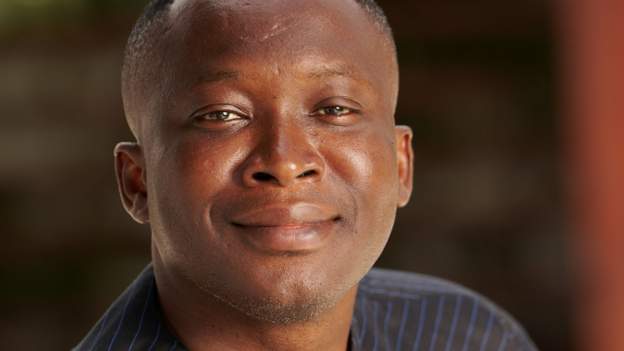
Danny DamahCopyright: Danny Damah
Danny Damah says it is rare for Ghanaians to see locations like Agbogbloshie on the big screenImage caption: Danny Damah says it is rare for Ghanaians to see locations like Agbogbloshie on the big screen
Germany refers to Ghana as a “digital dumping ground” and is one of the biggest producers of toxic e-waste sent to the West African country, Damah says.
The movie tells the story of brothers Kojo and Yoofi, who grew up on Agbogbloshie. To make ends meet, they extract valuable metals by burning the dumped devices – and one of them eventually makes it to Germany.
Filming the scenes in Agbogbloshie were the most difficult but the most powerful as it is rare to see locations like this in the cinema, Damah says.
“It’s a very toxic area to be in. We’d go there in the morning and by evening time we would have changed about four different industrial masks throughout the day, and we would have to wash and rinse our eyes and wash our skin. It was just so horrible. And we had to do this for a couple of weeks.
“Agbogbloshie looks like an apocalyptic neighbourhood but you’re seeing it in real life – even though it’s cinematic, it’s a little gut wrenching to actually know that people have to do this for a living.”
After a rights group argued in court that the law was being unfairly applied against the most marginalized members of society and that it was being used to extract bribes from them while they were in custody, a colonial-era law against being a “rogue or vagabond” has now been declared unconstitutional in Uganda.
Hawkers and other petty traders, sex workers, drug users and the homeless are who most often receive these charges of vagrancy under the country’s Penal Code Act, said Adrian Jjuuko representing the Human Rights Awareness and Promotion Forum.
“Anyone found walking the streets could be rounded up and charged for being a vagabond. It is a convenient charge because it is vague,” he tells the BBC.
Sex work is illegal in Uganda, and hawking is not permitted in some areas of the capital Kampala. It is common for the police and city authorities to carry out mass swoops against hawkers and sex workers.
On Friday Uganda’s constitutional court ruled that anyone under arrest should be clearly informed of what they are being charged with, that the legal provisions for “rogue and vagabond charges” are unconstitutional, and that the Penal Code Act clauses are against freedom of movement, and freedom of liberty from arbitrary arrest and detention – which is every Ugandan’s right.
Judges however said that the petitioners did not provide enough evidence to justify that the clauses are used to discriminate between the poor and the rich.
“This gives us motivation to draw up petitions on clauses such as those on being a common nuisance or idle and disorderly. When certain provisions have been declared unconstitutional, then it signals to parliament that the entire law is up for amendment,” Mr Jjuuko tells the BBC.
A film directed by a woman has been chosen as the greatest of all time by a group of experts.
Jeanne Dielman, 23 quai du Commerce, 1080 Bruxelles, directed by Chantal Akerman, has topped the British Film Institute’s Sight and Sound poll.
It is the first time a work directed by a woman has reached the top ten. The poll, which runs every decade, has been criticised for a lack of diversity.
The winning spot was held for 40 years by Orson Welles’ Citizen Kane.
It was overtaken in 2012 by Alfred Hitchcock’s Vertigo.
Jeanne Dielman, released in 1975, is the story of a Belgian widow who turns to prostitution to make ends meet, but kills one of her clients. The film runs for almost three and a half hours.
Though not as well-known outside the world of film criticism as previous winners, it has been lauded as a “masterpiece”, and a ground-breaking piece of feminist film.
Chantal Akerman, the Belgian director, died in 2015 aged 65.
Lillian Crawford, a film critic and writer who contributed to the poll, said the film was the “essential text” in feminist cinema.
Image source, Getty ImagesImage caption, Chantal Akerman pictured in 2004
“Jeanne Dielman isn’t a film that I would say to someone getting into cinema ‘Oh, this is the first film you absolutely must see’,” she told the BBC.
“I think if you’re going to work through the list, maybe do it in reverse order and sort of build towards it, because it’s quite an ask to invite people to see this.
“But in an academic sense and thinking about cinema and encouraging more people to seek out experimental film, films by women, and in terms of the history of feminist cinema, this is absolutely the sort of essential text.”
In an article for the British Film Institute, Laura Mulvey, a professor of film studies at Birkbeck University, called the vote a “sudden shake-up”.
“Things will never be the same,” she wrote.
The poll has been run by the British Film Institute’s Sight and Sound magazine each decade since 1952.
It has faced criticism in the past for a lack of diversity in the experts polled and the list of 100 best films chosen.
In 2012, Jeanne Dielman was one of just two films directed by women which made it on to the list, along with one by a black director – Djibril Diop Mambéty’s Touki Bouki.
Over the years the number and diversity of people consulted have increased. This year, 1,639 critics, programmers, curators, archivists and academics were asked to choose their top ten films.
Last time’s winner, Vertigo, claimed the second spot, while Citizen Kane was third.
Yasujirō Ozu’s Tokyo Story came fourth, followed by Wong Kar Wai’s In the Mood for Love in fifth place.
South Africans are waiting, many in deep trepidation, to find out if President Cyril Ramaphosa is about to resign in the wake of a murky and highly politicised scandal involving cattle, a sofa, and the theft of hundreds of thousands (and possibly millions) of dollars.
Much now hangs on a meeting, starting on Friday, of the leaders of the country’s governing party, the African National Congress (ANC).
Mr Ramaphosa’s most ardent supporters – and he remains a popular leader – frame this moment as an all-or-nothing fight between a decent man, desperately trying to clean up a corruption-ridden country, and the forces of chaos with the ANC who are trying to get rid of him in order to keep hold of their loot and keep themselves out of prison.
One commentator likened the drama to Shakespeare’s Henry V, urging Mr Ramaphosa to “stiffen the sinews” and fight to clear his name.
There’s no doubt that the case against Mr Ramaphosa was – at least to begin with – politically motivated.
A well-known political rival, linked to South Africa’s disgraced former President, Jacob Zuma, dramatically revealed allegations that millions of dollars – hidden in a sofa – had gone missing from Mr Ramaphosa’s high-end Phala Phala game farm, and that there had been a police cover-up.
The president – a wealthy businessman and former liberation struggle icon, once backed by Nelson Mandela to succeed him – loftily declared that he was innocent.
But the story has not gone away, and over time, as fresh details and denials have leaked out, even some of his supporters have acknowledged that the scandal has been poorly handled by Mr Ramaphosa and his aides.
“There are questions that he has not been able to answer… about these huge sums of cash. He’d told us he’d put all these [businesses] in blind trust. I think he was very clumsy and careless… and out of touch,” said Nombonisa Gasa, a political analyst.
So now what?
In the over-heated world of the ANC – a party so long in power that its furious internal feuds now feel more like open-warfare – the campaigning and jockeying are in full swing.
The party is due to select a leader later this month – with Mr Ramaphosa an easy favourite to win. But those calculations are now changing fast.
Image source, Getty ImagesImage caption, The process of finding a successor for Mr Ramaphosa may weaken the ANC heading to the next elections
It’s been widely reported that Mr Ramaphosa has already decided to quit, but is being persuaded by allies to think again, or at least to buy time in order to ensure a smooth transition to someone credible.
His current deputy, and automatic heir, Vice-President David Dabede Mabuza, is not tipped as the right man for that role.
But could anyone in the current ANC leadership – so many tainted, themselves, by allegations of corruption – garner the levels of nationwide popular support that Mr Ramaphosa still enjoys?
And if not, are we watching the slow unravelling of the party that once liberated South Africa from apartheid – and election defeat in 2024?
South Africa’s main opposition party, the Democratic Alliance, is certainly hoping to capitalise on the current crisis, calling for early elections. Some analysts see the ANC’s decline as both inevitable, and good for the country’s young democracy.
“Most South Africans are really concerned about what will happen next. Because there is no-one ready to [replace Mr Ramaphosa]. But this is the beginning of the end for the ANC – and that’s a good thing. The ANC has done its job. It liberated the country. It’s time for something new,” said political analyst Thembisa Fakude.
“I think South Africa has managed to establish very strong democratic shock absorbers, and [Mr Ramaphosa’s resignation – if it happens, would be] exemplary for Africa – here’s a leader who voluntarily resigned.”
Image source, Getty ImagesImage caption, Former President Jacob Zuma remains an influential figure in the country’s politics
It seems unlikely – but still possible – that Mr Zuma’s faction within the ANC will be able to capitalise on the chaos, return to power, and derail the entire anti-corruption drive. That would be a recipe for political oblivion at the next elections.
“The Zuma faction is battling to cohere, beyond a group of people have grievances because they might face charges of corruption. But it’s too early to say they cannot come back,” said Ms Gasa.
But even a moderately competent replacement for Mr Ramaphosa is likely to shake the markets and drive away the few foreign investors still willing to give South Africa a chance, at a time when the economy – grappling with almost daily power cuts – is struggling to recover from the pandemic, and from the years of state corruption during Mr Zuma’s era.
Last year, the feuding within the ANC triggered riots in Durban and elsewhere that left more than 300 people dead and caused billions of dollars in damages. There was a sense then that South Africa had peered over the abyss and stepped back – that it now understood how fragile its young democracy was.
That may be the case, but with no single, credible party poised to capitalise on the ANC’s struggles, the concern here is that South Africa is heading towards an era of deeply unpredictable and unstable coalition politics, easily exploited by smaller populist parties.
As for President Ramaphosa himself – many wonder whether he has the stomach for a long fight, or whether the billionaire businessman, credited for his institution-building approach to government, but criticised for a lack of political muscle – may prefer to leave the ANC to its battles and return to his cattle ranch.
“He did not have enough fighting instinct and an ability to go for the jugular, in getting rid of the most toxic anti-constitutional folk [in the ANC]. We needed someone with a more muscular approach,” said political analyst Eusebius McKaiser.
Seven things about Cyril Ramaphosa:
Image source, AFP
Born in Soweto, Johannesburg, in 1952
Detained in 1974 and 1976 for anti-apartheid activities and launched the National Union of Mineworkers in 1982
Chairman of the National Reception Committee which prepared for Nelson Mandela’s release from prison in 1990
Became an MP and chairman of constitutional assembly in 1994
Moved full-time into business in 1997, becoming one of South Africa’s richest businessmen
On Lonmin board during 2012 Marikana massacre
Elected ANC leader in 2017 and on 15 February 2018 became president after the resignation of Jacob Zuma
Brazilhave already qualified for the last 16 with top spot in Group G guaranteed if they avoid defeat.
Alves said: “For me, it represents the fact that I can wear the Brazil jersey. It makes me very proud to be here.”
The former Barcelona defender has recovered from a knee injury to compete at his third World Cup.
“I’ve been with the Brazilian squad for many years and to be able to wrap up this cycle, playing a Brazilhave already qualified for the last 16 with top spot in Group G guaranteed if they avoid defeat., makes me very happy,” added Alves, who made his international debut in 2006.
“It’s been 16 years with the national squad and I’ve tried to do my very best. Life, I think, always rewards the people who love what they do, who truly do their best in the mission.
“I think I’m reaping what I have planted over those 16 years.”
Tite insisted he was not yet focused on the knockout stage, despite the anticipated changes.
“We have 26 great playersand I do not have time to be focusing on the broader picture,” he said.
“We’ll make a few changes, we’ll include keys players. In two games we used 19 players. We do not call them starting players or reserves, they are all players.”
Cameroon, who came back from two goals down in their previous game against Serbia to draw 3-3, must win and hope Switzerland fail to beat Serbia in order to go through.
Head coach Rigobert Song said: “With regards to what is at stake tomorrow, we know the Brazilian squad off by heart.
“But we aren’t worrying about what they’re going to bring to the game, it’s about what we bring to the game.
“I don’t really care about what they’re going to do, it’s about us. We are preparing as if we’re playing a final.”
MATCH STATS
Brazil have won both previous World Cup games between themselves and Cameroon – 3-0 in 1994 and 4-1 in 2014.
Brazil have won all seven of their FIFA World Cup matches against African sides, scoring 20 goals and conceding just twice.
A defeat or draw for Cameroon will see them eliminated from the group stage of the World Cup in their sixth successive appearance at the finals, last reaching the knockout rounds in 1990. They’ve never won their final group stage game in seven previous appearances at the World Cup (D2 L5).
Brazil are yet to face a single shot on target at the 2022 World Cup, the first team to not face a shot on target in their first two games at a tournament since France in 1998.
CHRIS SUTTON’S PREDICTION
We’ve seen Serbia and Switzerland focus on keeping Brazil out and they both managed it for a while.
The difference is Cameroon need to win this game to have a chance of staying in the tournament.
Brazil might make a few changes now they are through, but if Cameroon open up and play expansive football against them, things are only going to go one way.
That is the age-old World Cupquestion for Germany, who crashed out as Japan beat Spain thanks to an opinion-dividing winner that left many scratching their heads.
Kaoru Mitoma’s cutback for Ao Tanaka’s tap-in happened just after the ball looked to have crossed the byeline.
Even after cropping and zooming it looked incredibly close. Eventually it was ruled that the ball had not fully crossed the line.
In other words, if you drew an imaginary line upwards at 90 degrees from the far edge of the whitewash, it would have still passed through the curve of the ball – albeit only just – even though the part of the ball that touched the ground had fully crossed the line.
The goal was initially ruled out by the assistant referee after a long pause, then the video assistant referee (VAR) intervened and ultimately Japan’s lead would stand – and they would go on to win.
“I have seen a photo that must have been tampered with, it cannot be that this photo is real. It has to be manipulated,” said Spain boss Luis Enrique.
“I felt that something fishy was going on when the VAR took as much time as it did to decide… I have nothing to say.
“Luckily, the team only goes into collapse mode once every four years, otherwise I wouldn’t be able to cope.”
The controversy evoked memories of Frank Lampard’s “ghost goal” against Germany in 2010, when England went out in the last 16, and – no doubt for German fans of a certain vintage – of 1966 and Geoff Hurst’s extra-time effort when England won the World Cup.
In Qatar, those three points for Japan meant Germany were out, the four-time winners falling at the group stage for a second consecutive tournament.
It was just one moment on a World Cup night full of spinetingling drama.
A rollercoaster night in Group E
It was a frantic and thrilling Thursday night which began with Belgium, the side ranked second in the world, being eliminated by a goalless draw with Croatia in Group F.
And halfway through the second half of the late games, both Germany and 2010 winners Spain were set for an early exit.
At the break Germany had a comfortable 1-0 lead over Costa Rica, with Spain also winning 1-0 as both European sides seemed to be cruising into the last 16.
Then the drama unfolded. Japan levelled against Spain four minutes into the second period.
Then, incredibly, 142 seconds later they were in front. Japan and Spain, despite trailing, were heading through. With just under 40 minutes to go Germany and Costa Rica were going out.
“The Japan fans around me can barely believe their eyes,” said BBC Sport’s Chris Bevan. “An incredible turnaround from their team, with the added drama of a long VAR delay.”
“Japan are a completely different animal,” added former England defender Matthew Upson.
Defeat for Spain wasn’t a disaster, unless Costa Rica – then 1-0 down to Germany – took the lead.
But Costa Rica equalised in the 58th minute, and after 70 minutes they were ahead. At 2-1 Costa Rica were suddenly set to advance with Japan at Spain’s expense.
However, that lead lasted for only three minutes before Kai Havertz levelled for Germany.
For three second-half minutes Costa Rica were heading through and Spain were going out
“Germany desperately needed that,” said BBC Radio 5 Live’s Connor McNamara. “It may not be enough for them but it could save Spain.”
“It’s hard to keep up with what is happening at the moment,” added Bevan. “There were huge roars here from the Japan fans when the big screen flashed up what the group looked like with Costa Rica winning… but then seconds later the Spain fans to my right celebrated wildly after hearing that Germany had equalised.”
‘The tension is unbearable’
Germany would hit two further goals to win 4-2. But, as long as Japan held on to all three points against Spain, the champions in 2014 would go out.
“The tension is unbearable,” chuckled Upson.
Spain kept on coming but Japan, dodgy goal or not, survived until full-time, winning 2-1. They and Spain, despite their defeat, reached the last 16. Germany and Costa Rica were out.
Spain boss Enrique said he was not aware his side were on course to head out of the tournament when Costa Rica led Germany.
“If I had found out, I would have had a heart attack,” he confessed.
For Germany forward Thomas Muller, the night had turned into an “absolute catastrophe”.
“It is unbelievably bitter for us because our result would have been enough,” he added. “It’s a feeling of powerlessness.”
Team-mate Havertz, meanwhile, said it was “like watching a horror movie”.
“For the second tournament in a row, Germany go out in the group stages,” added McNamara. “One of the really big guns, one of the four-time winners of the World Cup, they are out of Qatar 2022. It’s one of those nights where it just hasn’t been enough.”
“Incredible doesn’t do it justice,” said BBC Radio 5 Live chief football reporter Ian Dennis. “The drama fluctuated throughout the course of the second half.
“We’ve had a game that was the football equivalent of snakes and ladders.”
However, former England goalkeeper Karen Bardsley summed it up best – simply saying: “It was chaos.”
Kanye Westhas been suspended from Twitter and accused of “inciting violence” over offensive tweets – just two months after his last ban.
The US rapper, who now goes by the name Ye, posted a series of erratic tweets – one of which appeared to show a symbol combining a swastika and a Jewish star.
Twitter’s new boss Elon Musk was asked by one user to “fix Kanye”.
West had “violated our rule against incitement to violence”, Musk tweeted.
“Account will be suspended,” Musk wrote in a Twitter post.
Also on Thursday, during an interview with US conspiracy theorist Alex Jones and with his face covered in a mask, West praised Nazi leader Adolf Hitler and ranted about sin, pornography and the devil.
West has for years caused controversy both on- and offline with anti-Semitic and racist remarks.
West was initially locked out of his Twitter and Instagram accounts after posting anti-Semitic messages in October. Both platforms removed West’s posts – which accused rapper Diddy of being controlled by Jewish people – saying the star had violated policies on hate speech.
These posts came in response to a backlash against his show at Paris Fashion Week, where he wore a t-shirt carrying the slogan “White Lives Matter”.
The Anti-Defamation League branded his phrase “hate speech” and attributed it to white supremacists, who began using it in 2015 in response to the Black Lives Matter movement.
Earlier this year, West was suspended from Instagram for 24 hours in March after using a racial slur in reference to comedian Trevor Noah.
In 2018, singer Will.i.am led a backlash against West after he claimed the enslavement of African Americans over centuries may have been a “choice” – remarks he later tried to clarify.
His latest Twitter ban comes hours after the right-wing social media platform Parler – which styles itself as a “free speech” alternative to mainstream platforms – said West could no longer buy the firm.
In a statement, Parlement Technologies said: “The company has mutually agreed with Ye to terminate the intent of sale.”
The firm – which runs the much smaller platform, popular with conservatives and the far right – said the decision was made in mid-November.
“Parler will continue to pursue future opportunities for growth and the evolution of the platform for our vibrant community,” the firm said in its statement.
Musk took control over Twitter in October and immediately embarked on a series of radical changes within the social media giant – including lifting the bans on controversial accounts.
He has clarified that he had no role in bringing West back on Twitter, saying the account was restored before he acquired the social media platform.
West was diagnosed with bipolar disorder years ago and has publicly spoken about his challenges with his mental health.
However, medical experts and people who share West’s condition have warned that mental health problems do not go hand-in-hand with anti-Semitism.
A US appeals court has ended a “special master” review of documents seized from Donald Trump’s Mar-a-Lago estate.
The ruling is a win for the US Department of Justice, which is probing if Mr Trump took classified documents with him when he left the White House.
The “special master” is an independent lawyer who decides if any of the records are covered under attorney-client or executive privilege.
Investigators can now review the documents in full.
The ruling was made on Thursday by a three-judge panel in the Atlanta-based 11th Circuit US Courts of Appeal, after the Department of Justice challenged a September decision that granted Mr Trump’s request for the special master review.
In its ruling, the appeals court wrote that there was no “judiciary license to interfere in an ongoing investigation”.
“The law is clear. We cannot write a rule that allows any subject of a search warrant to block government investigations after the execution of the warrant. Nor can we write a rule that allows only former presidents to do so,” the court wrote.
A special master review would have delayed the Department of Justice’s inquiry into Mr Trump’s handling of classified documents, as the government was banned from reviewing or using the materials until it was complete.
Raymond Dearie, a 78-year-old New York judge who was first nominated by Republican President Ronald Reagan in 1986, was assigned as the special master with his case.
It is unclear if Mr Trump and his lawyers will appeal against Thursday’s ruling.
Mr Trump is being investigated for allegedly taking national classified documents with him to his private Florida home in Mar-a-Lago after he left the White House.
The authorities say these documents should have been handed over to the National Archives – as required of US presidents upon leaving office.
The FBI seized 15 boxes of White House documents in January, which officials said contained “highly classified reports”, some of which were “intermixed with other records” and contained Mr Trump’s “handwritten notes”. They also seized another 20 boxes in August.
In total, the Department of Justice alleged that 11 sets of classified documents were taken from the White House by Mr Trump.
The former president denied any wrongdoing, and argued that he had declassified all the documents as president and that they were kept securely at his Mar-a-Lago home.
When requesting a special master, Mr Trump’s lawyers argued some of the documents are covered by attorney-client privilege – meaning they can be withheld under a US law that allows people to keep conversations with their lawyers private.
Trump records probe timeline
January 2022 – The National Archives retrieves 15 boxes of White House records from Mar-a-Lago, and says some of the documents it received at the end of Trump administration were torn up
February – Reports emerge that classified files were found in the Mar-a-Lago cache and National Archives has asked DoJ to investigate
April – US media report the FBI has begun a preliminary investigation
3 June – A senior DoJ official and three FBI agents travel to Mar-a-Lago to review items in a basement. According to Mr Trump, he told them: “Whatever you need, just let us know”
8 June – Federal investigators write to a Trump aide to ask that a stronger lock be used to secure the room storing the items. Trump says that request was quickly fulfilled
22 June – The Trump Organization receives a DoJ summons for CCTV footage from Mar-a-Lago
8 August – Dozens of agents search Mar-a-Lago, seizing more than 33 boxes, some containing top secret files, according to the warrant
12 August – Warrant released, showing that 11 sets of classified documents were taken
25 August – Judge orders justice department to release a redacted version of court papers that convinced him to authorise a search of the Trump estate
5 September – A judge grants Mr Trump’s request for a “special master” to review the documents
1 December – A US appeals court reverses the earlier special master decision, giving the DoJ full access to documents seized from Mar-a-Lago
An Australian man who became the subject of a popular crime podcast has been jailed for 24 years for his wife’s murder.
Chris Dawson, 74, was convicted in August after decades of speculation about Lynette Dawson’s 1982 disappearance.
A judge ruled Dawson killedhis wife so he could continue his relationship with his teenage lover and babysitter.
His lawyer has indicated he is likely to appeal against the conviction.
Mrs Dawson was 33 when she vanished from her Sydney home. Her body is still missing and all the evidence in the trial was circumstantial.
In his sentencing remarks on Friday, Justice Ian Harrison said Dawson’s crime was “self-indulgent brutality” that “was neither spontaneous nor unavoidable”.
Justice Harrison said Dawson would be eligible for parole after 18 years, acknowledging it was likely he would die in prison.
Dawson was charged in 2018 after the podcast The Teacher’s Pet – by The Australian newspaper – garnered global attention and prompted a renewed investigation, helping build enough evidence to lay charges.
During the trial Dawson had denied having anything to do with his wife’s disappearance, maintaining she had abandoned him and their two children – possibly to join a religious group.
Justice Harrison said in August that the evidence against Dawson was “persuasive and compelling”, finding Dawson was obsessed with his teenage lover – who is known as JC for legal reasons. She was also a student at the school where Dawson taught and he wanted her as a “replacement” for his wife, the judge said.
The judge said Dawson had become increasingly desperate as previous plans to leave his marriage failed and JC had wanted to end their relationship.
In an earlier hearing, Dawson’s daughter Shanelle Dawson begged him to reveal the location of her mother’s body, saying: “Please tell us where she is.”
Ms Dawson was just four when her mother disappeared.
“The night you removed our mother from our lives was the night you destroyed my sense of safety and belonging in this world for many decades to come,” she said. “Why didn’t you just divorce her, let those who love and needed her keep her?”
Speaking after the sentencing, the victim’s brother Greg Simms said: “We really didn’t believe this day would ever come. What we need now is to find Lyn and put her to rest.”
When asked by reporters whether Dawson would now reveal her body’s whereabouts, his lawyer Greg Walsh said his client maintained his innocence.
In October this year, the New South Wales government passed laws to make it impossible for convicted murderers to be released on parole if they refused to co-operate and reveal the location of victims’ remains.
The case against a former politicaladviser accused of raping a colleague inside Australia’s Parliament House has been dropped.
Bruce Lehrmann, 27, denies sexually assaulting Brittany Higgins on a minister’s sofa after a night out in 2019. He maintains no sex took place.
Mr Lehrmann’s trial collapsed in October because of jury misconduct.
The ongoing risk to Ms Higgins’s mental health means a retrial is not in the public interest, prosecutors say.
New medical advice found that a planned retrial for February posed a “significant and unacceptable risk to the life of the complainant”, said Australian Capital Territory Director of Public ProsecutionsShane Drumgold.
“The evidence makes it clear that this is not limited to the harm of giving evidence in the witness box,” he told reporters on Friday.
Mr Drumgold said this outweighed his belief there would be a reasonable prospect of securing a conviction.
Ms Higgins is currently in hospital to help deal with the trauma of the alleged incident and its aftermath, according to her friend Emma Webster.
“The last couple of years have been difficult and unrelenting,” Ms Webster said in a statement.
“While it’s disappointing the trial has ended this way, Brittany’s health and safety must always come first. Brittany is extremely grateful for all the support she has received, particularly from our mental health care workers.”
The jury in October’s trial was discharged after 12 days of evidence and five days of deliberation, when it emerged one member had brought in academic research papers looking at false accusations in sexual assault cases.
Juries are required to reach a verdict only on evidence presented in the courtroom.
Before giving her account to police in early 2021, Ms Higgins gave up her right to anonymity and went public with her claims in high-profile newspaper and television interviews.
Her allegations were a catalyst for what has been called Australia’s “Me Too moment”, sparking huge protests over the safety of women, particularly in politics.
It also led to a damning review which found that a third of employees in federal parliament had been sexually harassed.
Mr Lehrmann and Ms Higgins had worked in the same office – for then-Defence Industry Minister Linda Reynolds. On 22 March 2019, they both had drinks with colleagues and others in Canberra.
Ms Higgins told police she had later fallen asleep on a sofa in Ms Reynolds’s office and had woken to find Mr Lehrmann having sex with her.
She reported the alleged rape in the days afterwards but initially did not proceed with her complaint because she feared for her career, a jury heard.
Mr Lehrmann chose not to give evidence at the trial, but in a police interview said what was alleged “simply didn’t happen”.
His lawyer, Steven Whybrow, had argued parts of Ms Higgins’s evidence were “totally and utterly inconsistent”.
If you are feeling emotionally distressed and would like details of organisations in the UK which offer advice and support, go to bbc.co.uk/actionline.
Samaritans provide a safe place to talk where calls are completely confidential. From UK and Ireland call 116 123 or visit www.samaritans.org.
Social media video from Spain appears to show a novel method of transport for African migrants trying to enter the European Union.
On Thursday evening, a paraglider drifted over the border fence that separates Morocco from the Spanish territory of Melilla.
Spanish police have not caught or identified the illegal entrant.
Security forces in Spain’s enclaves in North Africa have frequently had to deter large groups of migrants trying to climb over fences, swim onto beaches or walk round at low-tide.