US President Joe Biden has said he would be ready to meet Russia’s Vladimir Putin “if in fact there is an interest in him deciding that he’s looking for a way to end the war”.
Addressing reporters alongside French President Emmanuel Macron, he stressed Mr Putin had not yet done that.
The two men stressed they would continue to stand against Russia’s war.
In response, the Kremlin said President Putin remained open to talks aimed “to ensure our interests”.
However, spokesman Dmitry Peskov told reporters that Moscow was certainly not ready to accept US conditions: “What did President Biden say in fact? He said that negotiations are possible only after Putin leaves Ukraine.”
It complicated the search for a mutual basis for talks, he said, that the US did not recognise “new territories” in Ukraine, which Russia claimed as its own at the end of September.
President Macron made clear that he had agreed with Mr Biden that they would never urge the Ukrainians to make a compromise “that will not be acceptable for them”.
They were speaking as a senior Ukrainian official said that between 10,000 and 13,000 of its soldiers had been killed since the start of Russia’s invasion on 24 February.
Neither Ukraine nor Russia tend to release figures for casualties, and the remarks by presidential adviser Mykhailo Podolyak have not been confirmed by the Ukrainian military.
Speaking to Ukrainian TV outlet Channel 24, Mr Podolyak said Kyiv was “openly talking about the number of the killed”. He added that the number of civilians killed could be “significant”. He also suggested that up to 100,000 Russian soldiers had been killed since the invasion.
In a video address on Wednesday, EU Commission head Ursula von der Leyen said that 100,000 Ukrainian troops had been killed. However a spokesperson for the EU Commission later clarified that this was a mistake, and the figure referred to those both killed and wounded. Ms von der Leyen had also spoken of 20,000 Ukrainian civilian deaths.
After their talks at the White House, the US and French presidents issued a joint statement pledging “continued support for Ukraine’s defence of its sovereignty and territorial integrity”, stepping up delivery of air defence systems and plans for an international conference on Ukraine in Paris on 13 December.
President Biden’s suggestion that he was ready to talk to the Russian leader came with a heavy caveat and his French counterpart said “we will never urge the Ukrainians to make a compromise that will not be acceptable for them.”
President Macron was speaking hours after Russian Foreign Minister Sergei Lavrov complained that European countries had offered nothing concrete so far in terms of mediation. “Macron, by the way, has been regularly stating over the last two weeks that he was planning a conversation with the Russian president,” he was quoted as saying, while adding that Russia had not had any signals via diplomatic channels.
Mr Lavrov named former US Secretary of State John Kerry as the kind of figure who had in the past been able to solve problems and engage in true dialogue.
During a visit to Australia, Finnish Prime Minister Sanna Marin said Europe had to build its defence capabilities: “Europe isn’t strong enough right now. We would be in trouble without the United States”
The Ukrainian military said Russia was using dummy nuclear-capable missiles to exhaust Ukraine’s air defences. Russia was using rockets designed for nuclear use without explosive warheads, Ukrainian military experts said, suggesting this might be because the country has used so many of its other missiles in massive strikes on Ukrainian infrastructure
Another senior adviser to President Zelensky, Oleg Ustenko, accused BP of being entitled to hundreds of millions of pounds in “blood money” from investments in Russia. BP said it was no longer receiving any profits from Russian energy giant Rosneft
TikTok is hosting dozens of videos glorifying violence by Russia’s Wagner group of mercenaries, according to a new report. The videos have been viewed more than a billion times, found US-based organisation NewsGuard. Tiktok said it will act against any content violating its policies.
School authorities in Kenya have indicated that due to a lack of resources and teachers, students in junior secondary schools, which will be implemented in Kenya’s new curriculum the following year, will attend current primary schools.
It came as more than 1.2 million candidate students in grade six (11-12 years) concluded their final assessment tests unsure of how they would transition to secondary school alongside studentsgraduating in the older curriculum (13-14 years).
The transition appears to face several huddles, including the lack of classroom infrastructure and a shortage of teachers to adequately cover all the students who are supposed to join secondary school.
JUNIOR SECONDARY TO BE DOMICILED IN PRIMARY SCHOOLS
Junior secondary schools will be domiciled in primary schools, an interim report by the Presidential Working Party on Education Reform shows. pic.twitter.com/G5D9cPL5QW
In an announcement on Thursday, a task force on the implementation of the new curriculum recommended that the students in the newer curriculum would study in existing primary schools and share some of the facilities in neighbouring secondary schools.
The education ministry is expected to build additional classrooms and a laboratory in each of the primary schools within the next one year.
The government is also set to recruit an additional 30,000 teachers by January next year to bridge the teacher shortage.
As President Cyril Ramaphosa deals with a controversy that could cost him his job, the opposition Democratic Alliance (DA) party in South Africa plans to introduce a motion in parliament calling for an early election.
The president has been accused of covering up a $4m (£3.3m) theft from his farm in 2020, including kidnapping and bribing the burglars into silence. He denies any wrongdoing.
The country’s parliament is set to examine a report on the scandal and decide whether or not to launch impeachment proceedings next week.
📣 Ramaphosa’s #PhalaPhalaFarmGate confirms that the ANC is rotten from the top to the bottom.
“The DA calls for an early national election – not one involving delegates at an ANC conference, but one that gives all South Africans the opportunity to determine their future.” pic.twitter.com/mXcMviTziv
DA leader John Steenhuisen said the country cannot leave it up to the ruling party to “choose the future of our country” – referring to the upcoming ANC conference where Mr Ramaphosa will seek a second term as the leader of the ruling party.
“The party of Nelson Mandela has become a cess pit of corruption, greed and dishonesty from top to bottom,” said Mr Steenhuisen.
The motion for an early election would need a simple majority of 50% plus one of the national assembly to vote for the dissolution of government, which would then trigger an early election, he added.
In Nairobi, the capital of Kenya, churches and mosques have been encouraged to be “considerate” and lower excessive noise levels on their property.
In a tweet, Nairobi Governor Johnson Sakaja said he will be having a discussion with religious leaders on regulating noise levels.
The city recently banned nightclubs from operating in residential areas following complaints from residents about noise and many people have called for a similar ban on worship places – known for having loud music systems.
Mr Sakaja said: “Even with the nightclubs; we didn’t start by shutting them down. We spoke to them over time, they agreed to comply but some ignored. Then we took action.”
Earlier on Thursday, the governor said he will not close down places of worship but will instead initiate dialogue.
Nairobi has a large number of evangelical churches where loud music is common during worship and overnight vigils.
Burkina Faso’s interim leader, Captain Ibrahim Traoré, has announced that he was the target of a coup attempt last week.
In a meeting with civil society organisations on Thursday, Captain Traoré confirmed the coup attempt and said that he knew who was behind it, but was not going to make any arrests as he “prefers dialogue and the situation is under control”.
Capt Traoré took power in Burkina Faso on 30 September through a coup by ousting his predecessor, Lieutenant Colonel Paul-Henri Damiba, who himself had seized power through a coup.
On the same day, they were indicted by a federal grand jury in Missouri ‘charging them for their roles in a conspiracy to provide material support or resources to a conspiracy to kidnap persons and use weapons of mass destruction in a foreign country‘.
The trio allegedly supported and raised funds – more than $350,000 – for English speaking separatists in Cameroon since January 2018.
These funds were suposedly raised through online chat applications and payment platforms from individuals located in the United States and abroad. Then transferred from various financial and cryptocurrency accounts controlled by the defendants through intermediaries to the separatist fighters to support attacks in Cameroon.
According to the indictment, the defendants drafted a list of expenditures related to improvised explosive devices (IEDs), firearms and ammunition.
Other expenditures included funds related to the kidnapping of late Cardinal Christian Tumi and of a Cameroonian traditional leader named Sehm Mbinglo II on Nov. 5, 2020.
If convicted, the defendants face a maximum legal sentence of up to 15 years in prison for the material support charges, up to three years in prison for receiving money from a ransom charge and up to 20 years in prison for the money laundering conspiracy.
The FBI said it was continuing its investigation to dismantle the entire network.
Yaoundé has not yet reacted to the announcement.
The Cameroonian government has always asked countries hosting separatists to extradite them to Cameroon for trial.
Craig David paid tribute to his father on Wednesday night as he received the Outstanding Contribution honor at the 25th MOBO awards in London.
The British singer/rapper explained that his father was part of the Windrush generation, who experienced racism and prejudice when they arrived in the U.K..
“But he nurtured me and showed me love and he always said to me never dim your light and always speak your truth. And I love you dad for that because that has served me so well,” said David.
The R and B star then went on to praise the awards, which recognize and celebrate black music and culture.The awards returned to London with Chunkz and Yung Filly hosting the annual ceremony at the OVO Arena Wembley.
The show paid tribute the late DJ Jamal Edwards, who was posthumously honored with the Paving The Way prize, along with a tribute performance from Emeli Sande.
Little Simz and Knucks both took home a prize for Album of the Year with “Sometimes I Might Be Introvert” and “Alpha Place” respectively, while Chic frontman Nile Rodgers was recognised with the Lifetime Achievement award.
Kenya avoided becoming a sporting pariah as World Athletics president welcomed its government’s pledge of a financial package to combat doping in what he called “a long journey” to build trust.
“The Kenyan federation and government feel this (doping) has been a disfiguring period in what should have been a Herculean period for Kenyan athletics,” Sebastian Coe said after a World Athletics Council meeting in Rome.
“But I’m really delighted because all the stakeholders that matter, both domestically and internationally, are now aligned to do everything we can to resolve this issue.”
Following talks with Kenya’s new Sports Minister Ababu Namwamba, Coe said: “We made some real progress.”
The Kenyan government pledged $25 million (24.20 million euros) over five years to help finance more anti-doping personnel, increase testing and investigation, bolster education programmes and also “deeper dive into entourages”.
The Athletics Integrity Unit (AIU) will “work closely with Kenyan government to try and resolve this as quickly as it possibly can”.
The east African track and field giants have 55 athletes listed on the AIU’s global list of ineligible persons, last updated on November 21. A further eight are listed as being provisionally suspended.
The doping problem, however, is not new. The athletics powerhouse has been in the top category on the WADA watch list since February 2016, alongside only Bahrain, Belarus, Ethiopia, Morocco, Nigeria and Ukraine.
In a further announcement, Coe confirmed that the 2024 World Relays, which will act as a qualifier for the Paris Olympics, will be held in Nassau, Bahamas, it was announced Wednesday.
The allocation of the sixth edition of the World Relays came in the wake of last month’s announcement that the Chinese city of Guangzhou had opted not to host them “due to the ongoing pandemic conditions”.
Nassau hosted the three opening World Relays editions, in 2014, 2015 and 2017, before they moved to Yokohama, Japan, in 2019 and Chorzow in Poland last year.
Burkinabe Prime Minister Apollinaire Kiélem de Tembela has asked France for “weapons and ammunition” for army auxiliaries who are helping him in his fight against jihadists, according to an article from his communications service.
During a meeting on Tuesday with Luc Hallade, French Ambassador to Burkina Faso, the Prime Minister “stressed that the partners’ efforts must focus on the deep aspirations of the people of Burkina Faso, a people committed to defending themselves for freedom, against barbarism and terrorism”, indicates this article consulted Thursday by AFP.
“This is what justifies the launch of the operation to recruit 50,000 Volunteers for the Defense of the Homeland (VDP)”, the army auxiliaries, he explained, adding: “France could help this popular resistance by providing arms and ammunition and also taking into account the financial support of the brave fighters.
To Mr Hallade’s “concerns” “about the impossibility for French NGOs based in Burkina Faso to travel to the field for their activities “, Mr Kyelem de Tembela replied: “This is the reason why you must help us to have the necessary equipment to overcome terrorism”.
“The Burkinabè are looking for a lifeline for their country and if this lifeline must come from another country other than France, why not?”, he added.
The Burkinabè Prime Minister also affirmed during this meeting that “Burkina Faso has been cornered for six years and nobody is moved”. He considered that France “showed a different solicitude when it came to helping Ukraine in the recent conflict between it and Russia”.
At the end of his meeting with Mr Kyélem de Tembela, Luc Hallade felt that everyone had an “interest” in ensuring that Burkina, plagued by jihadist violence, “stays upright “.
This request for help to the VDPs “is made repeatedly, whether by him (the Prime Minister) or by other authorities” and “it is a complaint that remains on the table”, according to a French diplomatic source.
“But the question for us is: if you need help in the fight against terrorism, why don’t you call on the (French) special forces who are based in Kamboinsin (near Ouagadougou) and who are available to intervene? The only condition for intervention is that you ask us,” she added.
According to this source, “we accuse France of not helping, but when there is a tool which is immediately available and a priori effective for an intervention” which “we do not call on, it is very complex”.
The VDPs are paying a heavy price in the jihadist attacks by groups linked to Al-Qaeda and the Islamic State which regularly strike Burkina Faso, particularly in the north and east.
Since 2015, Burkinabe civilians and soldiers have been regularly bereaved by increasingly frequent jihadist attacks, particularly in the north and east, which have killed thousands and forced some two million people to flee their homes.
Near weakly protests against the October 2021 coup usually gather thousands in Sudan. Among the demonstrators some stand out with their flags, placards or hairstyle.
Rastafarianism considers former Ethiopian emperor Haile Selassie to be its Messiah.
In the majority Muslim nation, unlike in Jamaica were most Rastafarians are found, wearing dreads doesn’t have religious overtones.
“It is a way of protesting [the October 2021 military coup],” Saleh Abdalla explains.
“We, as youths, refuse all our government’s violations. After all, we don’t consider it a government that represents us, the youths, or the people. We will keep the Rasta [dreadlocks] until the regime falls. After it falls, I might shave my head or keep my Rasta-like lifestyle. We do not consider it a religion[…]”
The number of Rastafarians in Sudan is unknown. Environments like an art exhibition in Khartoum celebrate reggae culture.
The whiff of freedom after the fall of Omar Al Bashir enabled many Rastas to thrive. However, it did not last as a post-Bashir transition to civilian rule was upended last year when army chief Abdel Fattah al-Burhan led a military coup.
“The Rasta never dies”
The community doesn’t want to go back to largely living underground.
“During the [anti-Omar al-Bashir] protests, I knew that if I got arrested, they [security forces] will shave [my head]. It was my motivation to keep running [from security forces]. It was very bad, and I feel this [behaviour from the authorities] is back.”
Men and women Rastafarians would face persecution under public order laws restricting how people dress or behave in public. during Omar al-Bashir’s tenure.
The killings of several Sudanese Rastafarians in mass anti-coup demonstrations since General Al-Burhan’s takeover have given rise to a popular protest slogan, “The Rasta never dies”.
At least 121 people have been killed in the crackdown on protests since the October 2021 coup, according to medics group.
Noting the “peacefulness and spontaneity” of the demonstrations, 35-year-old filmmaker Afraa Saad said “this made us [Rastas] believe they were being especially targeted.”
“I believe the slogan emerged to say that their good reputation will last.”
Being a woman, Saad said she has faced greater scrutiny than men Rastafarians since she embraced the tradition during the height of the anti-Bashir demonstrations.
“The most persistent objection is why would a girl wear dreadlocks when there are other more acceptable hairstyles,” she said, noting a “prevalent stereotype” tying dreadlocks with drug use and “unbecoming behaviour”.
For now, wearing dreadlocks, listening to reggae music or having a Rasta-like lifestyle is an act of defiance in Sudan.
Fighting with heavy weapons resumed on Thursday in eastern DRC between the M23 rebels and the Congolese army, after five days of a truce following the decisions of the Luanda summit on November 23.
This summit had decided on a ceasefire from Friday 25 at 6:00 p.m. (4:00 p.m. GMT), followed two days later by the withdrawal of the M23 from the areas conquered for several months in the province of North Kivu.
No withdrawal was observed, but the fighting had ceased since Saturday morning between the army and the M23, even if the latter continued to oppose militias, in particular on Tuesday in a village in the Bambo region, around 70 km north of the provincial capital Goma, where many civilians are believed to have been killed.
It is not far from there that a resumption of fighting between the rebels and the armed forces of the DRC (FARDC) was reported Thursday, in Kirima, about ten km from the town of Kirizi.
“Since the morning, fighting has resumed between the FARDC and the M23 in Kirima. The rebels crossed the bridge towards Kibirizi after the fighting the day before yesterday in Kishishe. There is panic”, testified Paul Lutibahwa , president of the civil society of Bambo.
A security source, on condition of anonymity, accused the M23 rebels of violating the ceasefire and of “continuing to loot and fight”. “The fighting is violent, we are using heavy artillery” against the M23, a Congolese army officer told AFP, who also requested anonymity.
Also questioned by AFP, the military spokesman of the M23, Willy Ngoma, confirmed these fights with the FARDC.
According to Julson Kaniki, head of civil society in Kibirizi, the prospect of the rebels arriving in this town has also caused panic. “People are starting to flee,” he said.
In a rematch of one of the most contentious games of the World Cup, Ghana and Uruguay face off on Friday, and Luis Suarez has yet to apologize for his pivotal role in the controversy from 12 years ago.
Uruguay striker Suarez’s deliberate handball on the goal line at the end of extra time in the quarterfinals of the 2010 World Cup in South Africa denied Ghana a certain goal and a place in history as the first African team to reach the semis.
Suarez was sent off for the handball but celebrated wildly on the sidelines when Asamoah Gyan hit the penalty off the crossbar. Uruguay won the ensuing penalty shootout.
To make it worse, Suarez boasted after the 2010 game: “Truth is, it was worth it.”
On Thursday, he remained unrepentant.
“I don’t apologize because I take the handball and the red card but the Ghana player missed the penalty. It’s not my fault because I didn’t miss the penalty,” Suarez said.
Ghana can now go some way toward settling the score. By beating Uruguay in their final Group H match, Ghana would advance to the round of 16, while knocking Uruguay out of the tournament.
Though the match in Al Wakrah has been circled as one to watch ever since the World Cup draw was made, Ghana coach Otto Addo tried his best to cast it as a “normal game” despite 2010 remaining a raw and painful memory for many Ghanaians, who are demanding revenge for the handball.
“For me, it’s not a big topic,” Addo said, adding he wouldn’t criticize one of his own players if they did the same as Suarez. “I would expect every player to do all he can to make sure his team goes through. Even sacrificing himself with a red card.”
“What happened in 2010 is very sad but we can’t change it. We want to look forward and we want to win this game,” he said. “No matter how.”
Ghana, which squeezed out a thrilling 3-2 win over South Korea in its last game, must win again in Al Wakrah to be certain of going past the group stage for the first time since 2010. A draw could also be enough depending on the result of South Korea vs. Portugal.
Captain Andre Ayew is the only Black Stars player in Qatar who was on the 2010 squad.
Uruguay has a handful, including the 35-year-old Suarez, who is playing what’s likely his farewell World Cup before winding down a career that saw him celebrated as one of the best forwards in the world at one point.
He won the Copa America with Uruguay and Spanish league titles and a Champions League trophy with Barcelona.
Suarez also carved out a reputation as one of the game’s most controversial characters and has been punished three times for biting opponents, including a four-month ban for biting Italy defender Giorgio Chiellini on the shoulder at the 2014 World Cup in Brazil.
Suarez started Uruguay’s 0-0 draw with South Korea in Qatar but was on the bench for the 2-0 loss to Portugal, which left Uruguay bottom of the group.
Uruguay must now beat Ghana and hope South Korea doesn’t beat Portugal to extend its stay at the World Cup and Suarez’s international career for at least one more game. The goal difference will decide if Uruguay and South Korea both win.
Stoking it just a little bit more, Suarez said the 2010 game against Ghana does still mean anything to Uruguay.
“We are going to put our lives and soul into this match,” Suarez said. “Ghana is a good team but we know them, we have beaten them before and we know how to beat them again.”
LGBT refugees in one of Kenya’s biggest camps for displaced people are asking to be relocated because of what they have described as an increase in discrimination and harassment by other refugees in the camp because of their sexual orientation.
One of the refugees, who asked not to be identified due to fears of further backlash, told the BBC “we do not feel safe at the camp any more”.
Kakuma is run by the United Nations Refugee Agency (UNHCR) and is one of the biggest refugee camps in Kenya, hosting hundreds of thousands of internally displaced people, as well as those from neighbouring countries.
Last week there were protests by LGBT groups in the camp, who complained about harassment and abuse towards them, which led to the temporary arrest of 18 people, scuffles, and the use of tear gas.
All of those detained were released the next day after UNHCR officials negotiated their release.
“We are fed up, Kakuma is no longer safe for us as members of the LGBTQI community. We are threatened. We have made complaints to the UNHCR and no action has been taken,” said the refugee.
They allege that the discrimination and harassment has made it close to impossible to access social services like education and events held at the camp because they are not allowed to mingle with the rest of the community.
A UNHCR spokesperson told the BBC that the body has been working with the LGBT community at the camp to guarantee their safety and security by increasing police patrol where they live and work, with community volunteers to help integrate them and increase awareness about protection of their rights and equality.
“The UNHCR remains committed to working towards ensuring the protection of, and finding durable solutions for, all refugees regardless of their culture, nationality, sexual orientation, gender identity, religion, or any other factor,” said UNHCR spokesperson Charity Nzomo.
“We are committed to ensuring that all refugees and asylum seekers residing in Kenya, including those with an LGBTIQ+ profile, are provided with the best possible protection and assistance on a fair and equal basis,” Ms Nzomo continued.
Africa’s leading public health organization in South Korea will donate the first round of monkeypox vaccines to the continent.
The Africa Centers for Disease Controland Prevention said Thursday the 50,000 doses will be used first for health workers and people living in the hardest-hit areas. No timing was given for the doses’ arrival.
The continent this year has recorded 202 deaths from monkeypox — formerly known as monkeypox — with a fatality rate of 19.3% across 13 countries, yet African health authorities for months have pursued vaccines mostly in vain as major outbreaks were reported in rich, Western countries for the first time.
Acting CDC director Ahmed Ogwell noted 51 new monkeypox cases in Congo in the past week and said Ghana and Nigeria are the other most affected countries.
The president of Rwanda Paul Kagame, has accused Felix Tshisekedi, the president of the Democratic Republic of the Congo, of using the unrest in eastern Congo as an excuse to postpone elections.
Fighting in eastern DRC between government forces and rebels from the M23, a former Tutsi rebellion, has heightened tensions with neighbouring Rwanda, which the DRC accuses of encouraging the militia. Kigali denies any involvement.
Talks between the two countries in Angola last week led to a ceasefire that appears to have held for several days.
In a state address on Wednesday (November 30), Kagame said “the whole world” blamed Rwanda for the crisis, but that it was Felix Tshisekedi who was seeking to profit from the violence ahead of the presidential election scheduled for 20 December 2023.
In the DRC, the presidential election is a one-round election, coupled with legislative elections as well as elections for provincial deputies and communal councillors.
“This problem can be solved if a country that is heading for elections next year does not try to create the conditions for an emergency situation so that the elections do not take place,” Kagame said at a swearing-in ceremony for new cabinet members.
The Military Mission of the Southern African Development Community (SADC), best known as Samim, deployed as part of the fight against terrorism in Cabo Delgado in northern Mozambique, says it has killed 30 suspected jihadists in an operation launched last Tuesday.
Weapons used by the jihadist suspects have also been recovered.
The SADC military mission also announced that two of its soldiers, one from Botswana and the other from Tanzania, lost their lives in the operation in the woods of Nkonga village, in the district of Nangade, north of Cabo Delgado.
Nangade still has strongholds of jihadists, who have carried out daily attacks against villages, farms and military positions.
Recently, Tanzanian forces integrated in the SADC military mission fell into an ambush and five soldiers were injured. During the ambush, the jihadists seized weapons.
Four of the defendants arrested in connection with a 2016 Islamic extremist attack that killed19 people on a tourist beach in Ivory Coast appeared in court Wednesday to face murder and terrorism charges.
Authorities last week had released the names of 18 defendants accused in the Grand-Bassam killings, which were later claimed by Al-Qaida in the Islamic Maghreb.
It was the nation’s first terror attack of its kind, and it deepened fears that Islamic extremism was spreading further south from neighbouring Mali and Burkina Faso. In the year after the violence, suspects also were arrested in those countries as well as in Senegal.
Prosecutors did not address where the other defendants were on Wednesday or whether they might appear at a later date.
Prosper Kouassi, a defence lawyer representing the detainees, could not provide an explanation either.
“It is the prosecutor who must answer,” Kouassi said. “We have been presented with the four people, it is the four people we will defend.”
Grand-Bassam is linked by highway t- o Abidjan, Ivory Coast’s commercial hub, and was a popular weekend destination for beach-goers.
The victims that day included 11 Ivorians, four French, one German, one Lebanese, one Macedonian and one Nigerian.
When gunfire broke out on the beach on that Sunday afternoon in 2016, many holidaymakers initially thought it was fireworks going off. As the jihadis approached closer with their Kalashnikovs, terrified tourists and those working at the beachside bars and restaurants nearby tried to seek refuge in nearby hotels. Some beachgoers who were in the ocean at the time of the attack were able to swim out against the waves to safety.
Among those at the courthouse Wednesday was Odile Koko Kouamenan, whose son was among those witnessing the attack.
“The scene happened in front of him,” she recalled. “He was a witness on the ground. He was so traumatised that he left the city and went to the village for a year.”
She said her son needs follow up medical care, which he has not yet received.
“If the state can do anything for him, that’s all a mother wants for her child.” Kouamenan added.
The trial is expected to last until the end of December.
Kenyan President William Ruto has officially launched his “resourceful fund” on Wednesday, the flagship measure of his campaign intended to give the poorest access to credit and revive the economy of this African country “from below”. ‘East.
The Head of State, who presented himself during the presidential campaign on August 9 as the herald of the “resourceful” (“hustlers”) of the common people, inaugurated the first part of his program: personal loans to a rate of 8% up to 50,000 shillings (approximately 400 euros), accessible to any adult Kenyanwith a money transfer application by mobile phone.
Endowed with a total amount of 50 billion shillings (approximately 400 million euros) over five years, the “resourceful fund” will include three other components: micro-credit (available by the end of January 2023), loans to SMEs (by the end of March 2023) and start-up loans (by the end of May 2023).
“With this program, the government is committed to creating opportunities for millions of people at the bottom of our economic pyramid to advance and realize their aspirations,” the Kenyan President said.
“More affordable credit will boost borrower confidence and inject significant amounts into productive activity across the economy,” he continued.
This fund will also oblige borrowers to open a savings account, 5% of the amount of the loan taken out being automatically paid into a personal savings plan that the government will top up for a maximum of 6,000 shillings per year (approximately 45 euros).
Since taking office in September, President Ruto has struggled to deliver on his campaign promises in a country struggling with historic drought, rising living costs and a $70 billion debt burden.
He cut costly food and fuel subsidies introduced by his predecessor Uhuru Kenyatta, and also pledged to make income tax more progressive in an attempt to reduce inequality.
With its 50 million inhabitants, Kenya is the economic locomotive of East Africa, but a third of its population lives below the poverty line.
Inflation officially reached 9.6% in October, its highest for more than five years, while the currency, the Kenyan shilling fell against the dollar (122 shillings for one dollar).
Tunisianfans celebrate their surprise 1-0 win over France, but it isn’t enough to prevent them leaving the World Cup without progressing from Group D.
Wahbi Khazi’s goal was the difference between the two sides, but with Australia beating Denmark 1-0 in the other game, it is France and Australia who progress.
But in stoppage time, the Tunisians on the sidelines were more interested in the other Group D game, crowding around a TV screen on the bench hoping Denmark would be able to score against Australia — a circumstance that would have lifted Tunisia into second place and also into the round of 16 in Qatar.
“We were praying for a Denmark goal but it never game,” Khazri said. “But that’s the thing with soccer, you should only count on yourself. We didn’t do enough in the first two games, otherwise we’d be through.”
The Tunisian fans are still hopeful, their energy is refilled.
France ended up winning the group with six points, ahead of Australia on goal difference. Tunisia finished with four points in third place. Denmark, which lost to Australia 1-0, ended up in last place with one point.
Meanwhile, the French soccer federation is filing a complaint with FIFA over Antoine Griezmann’s disallowed goal at the end of their loss to Tunisia.
Griezmann was in an offside position when a cross came over but then retreated and appeared to be played back despite the referee having blown the whistle to terminate the game.
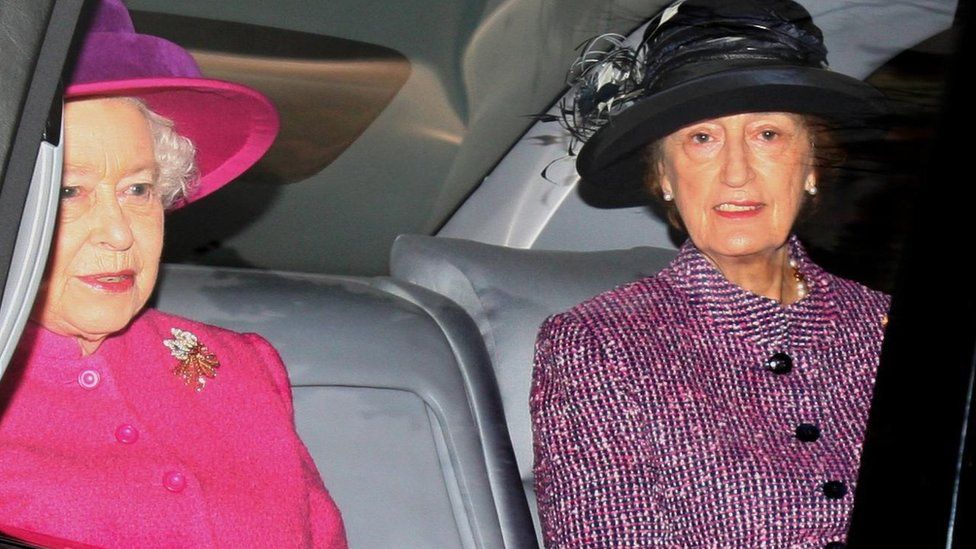
A black British charity boss who was repeatedly asked where she was “really” from by the Prince of Wales’s godmother, Lady Susan Hussey, has told the BBC the encounter was an “abuse”.
Ngozi Fulani was questioned about her background at a Buckingham Palace event on Tuesday. The late Queen’s lady-in-waiting has since resigned.
Ms Fulani likened the conversation with Lady Hussey, 83, to “an interrogation”.
The palace described the remarks as “unacceptable and deeply regrettable”.
And a spokesperson for Prince William said “racism has no place in our society”. The incident has overshadowed the Prince and Princess of Wales’s visit to the US to hand out awards for his Earthshot Prize.
Lady Hussey, who was a close confidante of the late Queenand accompanied her at the funeral of the Duke of Edinburgh, has apologised.
Ms Fulani, who founded domestic violence charity Sistah Space, rebuffed suggestions that Lady Hussey’s remarks had anything to do with her age.
“Let us be clear what this is. I’ve heard so many suggestions it’s about her age and stuff like that, and I think that’s kind of a disrespect – an ageism kind of thing,” she told BBC Radio 4’s Today programme.
“It was like an interrogation. That’s the only way I can explain it.”
She continued: “If you invite people to an event, against domestic abuse, and there are people there from different demographics, I don’t see the relevance of whether I’m British or not British.
“You’re trying to make me unwelcome in my own space.
“I have to really question how this can happen in a space that’s supposed to protect women against all kinds of violence.
“Although it’s not physical violence – it is an abuse.”
Lady Hussey was a key figure in the Royal Household for many decades, having started working for the Royal Family in the same year the Queen gave birth to Prince Andrew, eventually becoming her longest-serving lady-in-waiting.
Buckingham Palace announced last week that Lady Hussey and the other former ladies-in-waiting would subsequently be known as “ladies of the household” – a role which involves helping to host occasions at the palace.
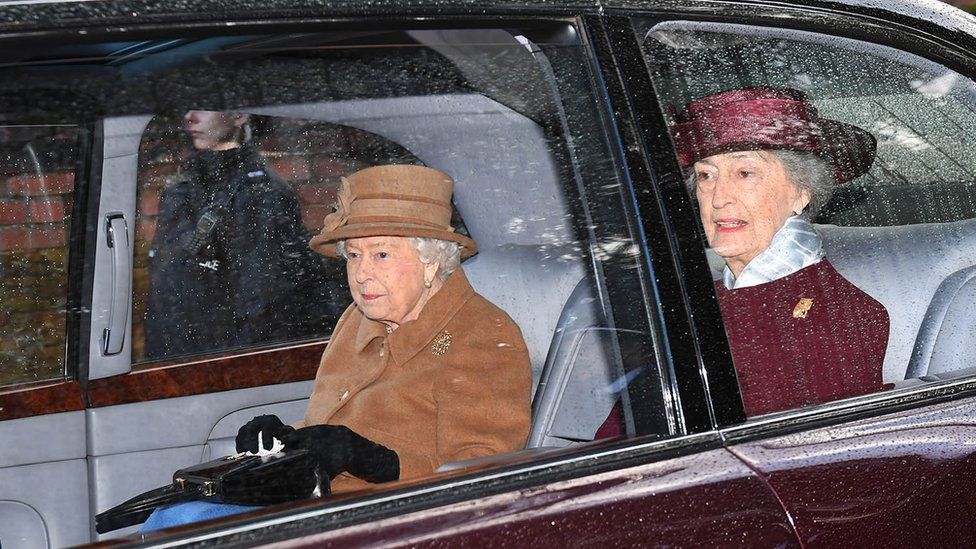
Image source, PA MediaImage caption, Lady Susan Hussey was a key and trusted figure in the British royal household for decades
Lady Hussey resigned and apologised on Wednesday following the incident at the royal reception.
A spokesperson for Prince William said “racism has no place in our society”, adding: “The comments were unacceptable, and it is right that the individual has stepped aside with immediate effect”.
Speaking to the BBC, Ms Fulani said she wanted the focus to remain on domestic abuse survivors and not the resignation of Lady Hussey.
She said would have preferred to accept Lady Hussey’s apology instead of seeing her quit the royal household. “I would have preferred it did not happen,” she said.
She also said she wanted the focus to remain on violence against women and girls.
In its statement, Buckingham Palace said: “We take this incident extremely seriously and have investigated immediately to establish the full details.
“In this instance, unacceptable and deeply regrettable comments have been made. We have reached out to Ngozi Fulani on this matter, and are inviting her to discuss all elements of her experience in person if she wishes.
“In the meantime, the individual concerned would like to express her profound apologies for the hurt caused and has stepped aside from her honorary role with immediate effect.
“All members of the household are being reminded of the diversity and inclusivity policies which they are required to uphold at all times.”
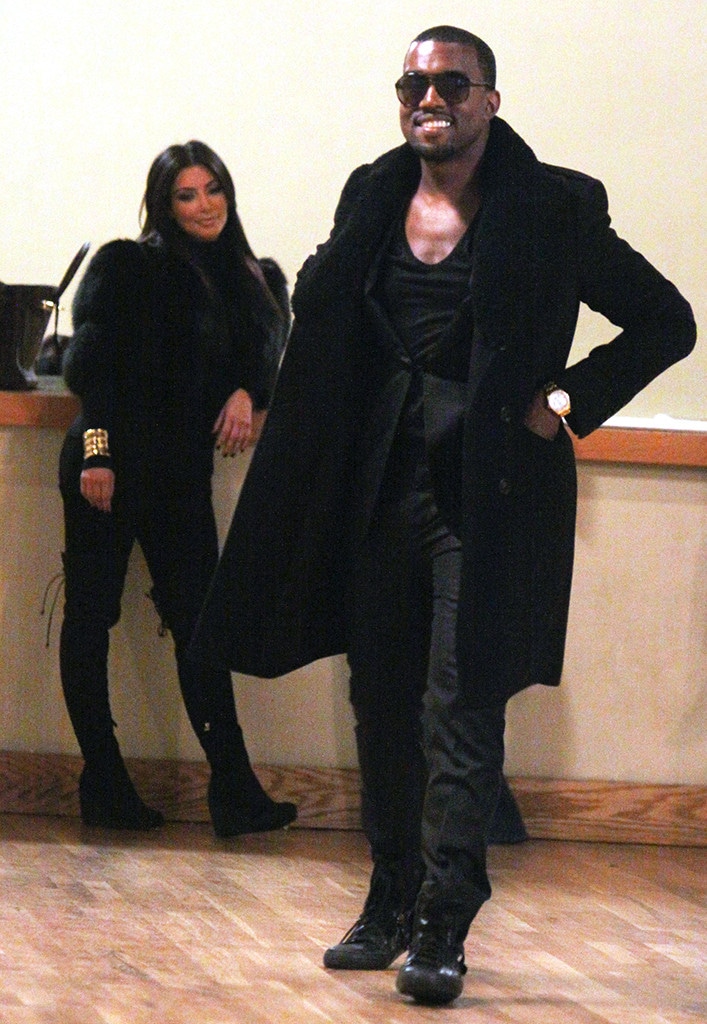
Nearly two years after Kim Kardashian filed for divorce, she and Kanye West have reached a settlement, agreeing on joint legal custody of their four kids, according to the court document obtained by E! News on Nov. 29.
While neither will pay spousal support, Kanye will shell out $200,000 per month in child support to the reality star.
“Everything Kim did here was to benefit her kids,” a source told E! News after the settlement was filed. “She wants to be a good co-parent.”
Though the document still needs to be signed by a judge to be official, the agreement is 21 months in the making and marks a new chapter in their relationship—which has shifted to co-parenting since their split.
“He’s the father of my kids, I’ll always be protective,” she said on The Ellen DeGeneres Show in March. “I always want my kids to see the best of the best, so I just try to—as hard as it can be sometimes—I do try to ignore it and do whatever’s best for the kids. Take the high road.”
Kim, 42, and Kanye, 45, first crossed paths in the 2000s, though their friendship turned romantic in 2012. They welcomed their first child, North, in 2013 before tying the knot in Italy in 2014. The fashion-forward couple went on to welcome kids Saint, 7, Chicago, 4, and Psalm, 3.
Keep reading to look back at Kimye’s most major moments over the years.
Jose Perez/Splash News
2010: Just Friends
As was documented on Kourtney & Kim Take New York, Kanye swung by the sisters’ future DASH store in NYC. While Kim and Kanye were just friends at the time, October 2010 to be exact, there was definitely chemistry between the two.
Eric Ryan/Getty Images
2012: Clearly Close
Although Kim and Kanye weren’t official by the time of his March 2012 Paris Fashion Week Show, she sat front row at the event, even wearing many of his pieces.
Gotcha Images / Splash News
2012: Cheerio!
More than friends! During a day date in London, Kim and Kanye stopped by the Hakkasan restaurant in May 2012.
Christopher Polk/Getty Images
2012: Awards Show Date
At the 2012 BET Awards, Kanye took a moment to pose for a picture with his girlfriend Kim.
Instagram
2012: South of the Border
According to Kim, this throwback photo is from a trip they took to Mexico before they had any children.
Headlinephoto / Splash News
2012: Courtside Cuties
Kim and Kanye sat courtside at the LA Clippers vs. Denver Nuggets NBA game in December 2012.
Splash News
2013: Parents-to-Be
In April 2013, the expectant couple did a little shopping in NYC after Kim finalized her divorce from ex Kris Humphries.
TIMOTHY A. CLARY/AFP/Getty Images
2013: Kim’s First Met Gala
In 2013, pregnant Kim joined Kanye for Fashion’s Biggest Night: The Met Gala!
Instagram
2013: Kimye’s Firstborn
Kim and Kanye welcomed their first child together, North West, in June 2013.
Twitter
2013: Rock Solid
This photo was taken just moments after Kanye proposed to Kim in October 2013 in San Francisco. They were surrounded by their family and friends!
Denise Truscello/WireImage
2013: Birthday Babe
The rapper beamed at his new fiancée as they celebrated her 33rd birthday at Tao Las Vegas in October 2013!
Splash News
2014: Vogue Cover Stars
Kim and Kanye made their way to the Waverly Inn to celebrate their Vogue cover with Anna Wintour in 2014.
Splash News
2014: Sweet Treat
The engaged twosome were spotted grabbing ice cream in Paris mere days before their nuptials.
2014: They Do!
As fans may recall, on May 24, 2014, the two said “I Do” in a lavish wedding at the historic Forte di Belvedere in Florence, Italy.
2014: The Wests
North West dressed to the nines for her parents’ nuptials in 2014.
Frederick M. Brown/Getty Images
2014: Look of Love
The newlyweds take in each other as they hit a red carpet in November 2014.
AKM-GSI
2015: Super Bowl Sweethearts
The married duo turned Super Bowl XLIX into a date night in February 2015!
Jason Merritt/Getty Images
2015: PDA
Kimye flaunt some PDA while on the red carpet at the 57th Annual Grammys.
Splash News
2015: Romance Abroad
The happy couple shares a sweet moment while out and about in Armenia in April 2015.
AKM-GSI
2015: Baby on Board
Pregnant with baby No. 2, Kim and Kanye went to dinner at Nobu in Malibu in July 2015.
Jason Merritt/Getty Images
2015: Power Couple
Kim and Kanye hit the red carpet at the 2015 MTV Video Music Awards. That night, Kanye accepted the Michael Jackson Video Vanguard Award and declared he would run for president.
Instagram
2015: Baby No. 2
In December 2015, the Wests welcomed another little one into their brood, a baby named Saint!
Jamie McCarthy/Getty Images
2016: Supportive Spouse
Kim supported her husband at his Yeezy season 4 fashion show in 2016.
Jamie McCarthy/Getty Images
2016: A Memorable Night
A year after his headline-making speech, Kanye returned to the 2016 MTV VMAs with his wife by his side.
Eli Linnetz
2017: Casual Christmas Card
The West family stole the spotlight for day 21 of the Kardashian Christmas card.
Kim Kardashian/Instagram
2018: Another Baby Girl!
The couple welcomed baby Chicago via a surrogate back in January 2018.
Pascal Le Segretain/Getty Images
2018: Return to Paris
Nearly two years after her robbery, Kim returned to Paris alongside the rapper to support Virgil Abloh‘s debut collection for Louis Vuitton.
Garguibo / SplashNews.com
2018: Miami Mood
Kim and Kanye attended 2 Chainz and Kesha Ward‘s wedding in Miami in August 2018.
Instagram / Kim Kardashian
2019: The Youngest West
Kim and Kanye turned to surrogacy once more to have their fourth child, a baby boy named Psalm. They welcomed the youngest West into the world in May 2019.
Dimitrios Kambouris/Getty Images for The Met Museum/Vogue
2019: Fashion’s Biggest Night
Kim pulled out all of the stops at the 2019 Met Gala with her custom Thierry Mugler design. Kanye looked just as dapper with his all-black ‘fit.
When Stormzylast played London back in March, he blew the roof off the O2 with an arena show full of bombast, rage and energy in support of second album Heavy Is The Head.
Ten months later at the cosy Queen Elizabeth Hall across town, he launched third LP This Is What I Mean on Tuesday afternoon with a tender presentation of touching ballads and considered storytelling. A lot can change in a short amount of time.
At this special mid-afternoon show, which will be streamed worldwide today, Stormzy performed six songs from the new album, many for the first time, and gave context to them through periodical Q&A segments between songs with Julie Adenuga.
A song would be played – first came the introspective, heartbroken Hide and Seek – before armchairs were wheeled out again for more chat, over and over.
While it could have broken up the flow of a traditional live show, this felt more like a documentary playing out on stage, where you’d find out about a song – such as Please, where Stormzy spoke about interrogating the many meanings of the word through the writing process – before hearing a dazzling rendition of it moments later.
Stormzy and Debbie at the Queen Elizabeth Hall/ Dave Benett
As well as a window into the new album, the conversations between the songs also gave framing to the rapper’s story so far. With Adenuga, he discussed the lineage of Black British music alongside special guest Jazzie B. He explained how he wanted to focus on growth to avoid becoming a “manchild,” and said that the inner peace he found while making This Is What I Mean could only have come from shedding all expectations placed on him from others.
“It takes a village,” Stormzy said of his success, bringing to mind the endless list of rappers he reeled off during his Glastonbury headline performance in 2019, all of whom were part of his journey. Many were in attendance here too, with Wretch 32, Gabrielle and comedian Mo Gilligan all standing up to ask questions at the end. As became abundantly clear, the message of the show was one of community and collaboration.
During the conversations, Stormzy also admitted that he’s still a work in progress as a singer (work is going very well it seems, according to this showing) and you get the sense the quiet, considered statements on the new album are the path he may well tread for a long time. With performances as gorgeous and affecting as those on Firebabe and Give It To The Water – both backed by the excellent Debbie – he showed himself to be as wonderful a deep thinker as he is a hellraiser.
Some foods and the vitamins, minerals, and other nutrients found in them may raise or lower cancer risk. Researchers have been studying how the foods, nutrients, and eating patterns listed below are related to cancer.
Plant-based foods. These foods contain naturally-occurring substances called phytonutrients. Examples include:
Carotenoids, or carotenes, found in red, orange, yellow, and some dark-green vegetables
Polyphenols, found in herbs, spices, vegetables, tea, coffee, chocolate, nuts, apples, onions, berries, and other plants
Allium compounds, found in chives, garlic, leeks, and onions
Antioxidants. Examples include beta carotene, selenium, and vitamins C and E. Antioxidants protect against oxidants, which are substances that can lead to cell damage. Oxidants can be naturally occurring, created by normal cell processes. Or they can be environmental, such as pollution or cigarette smoke.
Other vitamins and minerals. These include calcium, iodine, vitamins A, D, K, and the B vitamins.
Dietary fiber. Fiber helps add bulk to stool. It moves food more quickly through the digestive system. Fiber helps nourish a healthy community of microbes living in the digestive tract. This community is called a microbiome. A healthy microbiome has been linked with a lower cancer risk.
Foods that have fiber include:
Whole grains and seeds, including barley, oats, kamut, spelt, bulgur, corn, psyllium, and rye
Whole grain bread and pasta
Legumes and pulses, including beans, lentils, and split peas
Vegetables and fruits
Protein. These are the major sources of animal protein in most diets:
Meat
Fish
Poultry
Shellfish
Dairy products
Eggs
Of these, red and processed meats raise the most concern in terms of cancer risk. Red meat includes pork, beef, veal, and lamb. Processed meat includes bacon, ham, lunch meats, meat jerky, hot dogs, salami, and other cured meat products. Any amount of processed meat and more than around 18 ounces of fresh meat per week are most strongly linked with a higher risk of cancer.
Alcoholic beverages. Drinking alcohol increases the risk of developing certain types of cancer. Learn more about alcohol and cancer risk.
Connections between food and cancer
It is challenging to find specific links between a food or nutrient and cancer because:
Foods contain many substances that may either increase or lower cancer risk.
Most people eat and drink a variety of foods. This creates interactions that are hard to study.
The effects of a food or nutrient can vary depending on how much of it you eat.
Some research shows that how a food is prepared may influence its risk or benefits.
Plant-based foods
Fruits and vegetables likely lower risk of several types of cancer, including:
Head and neck cancers
Esophageal cancer
Stomach cancer
Lung cancer
Pancreatic cancer
Prostate cancer
These findings come from the Continuous Update Project and the Third Expert Report on Diet, Nutrition, Physical Activity and Cancer: a Global Perspective. These reports are funded by the American Institute of Cancer Research (AICR) and World Cancer Research Fund (WCRF).
Phytonutrients found in fruits and vegetables most likely work together to lower cancer risk, rather than a particular food component affecting risk. Some help regulate hormones, such as estrogen. Others slow cancer cell growth or block inflammation. Many lower the risk of damage caused by oxidants.
Plant-based foods researchers have studied for cancer prevention are:
Cruciferous vegetables. These foods include broccoli, cauliflower, cabbage, Brussels sprouts, bok choy, and kale. Frequently eating these foods is associated with a lower cancer risk.
Studies show cruciferous vegetables protect against:
Head and neck cancers
Esophageal cancer
Stomach cancer
Several laboratory studies suggest cruciferous vegetables help regulate enzymes that defend against cancer. Studies also show that cruciferous vegetables may stop cancer cell growth in other ways. But these effects may differ between cells and animals used in the lab and people.
Lycopene. This carotenoid is found in tomato products. Other important sources of lycopene include pink grapefruit, watermelon, and apricots.
Studies show that lycopene may protect against cancers of the:
Lung
Stomach
Prostate
Colon
Mouth and throat (oral cavity)
Esophagus
But researchers have not yet demonstrated a direct link between lycopene and reduced cancer risk in controlled clinical trials.
Soy. Soy contains unique phytonutrients. Laboratory studies suggest that these substances help protect against some types of cancer. Clinical trials are more clearly defining the role of soy in cancer prevention.
The relationship between soy and breast cancer risk is especially complex. Current studies suggest eating up to 3 servings of whole soy foods, such as edamame, tofu, soy milk, and miso, is safe and may reduce breast cancer risk. But guidelines do not specifically recommend adding soy foods into the diet to reduce breast cancer risk. Doctors do recommend avoiding concentrated isoflavone pills and powders.
Vitamins, minerals, and antioxidants
Your body needs vitamins and minerals. They help the body:
Perform essential functions
Grow and develop
Repair itself
Some vitamins, minerals, and other nutrients are antioxidants. Research on their role in cancer prevention continues because studies show mixed results.
A review of clinical trials in people shows the following:
Beta carotene. High-dose beta carotene supplements do not seem to prevent cancer. Two large clinical trials have found that people at high risk for lung cancer, including smokers, former smokers, and people exposed to asbestos, have a higher risk of lung cancer if they take high-dose beta carotene supplements.
Calcium and vitamin D. The Women’s Health Initiative (WHI) was a large study of women who had been through menopause and were generally well nourished. Researchers studied the effects of supplemental calcium and vitamin D. They found that supplements did not affect colorectal cancer risk.
Folate. Folate is a type of B vitamin found in:
Leafy, green vegetables
Fruits and fruit juices
Dried beans and peas
One form, folic acid, is made in the laboratory and found in dietary supplements. Enriched, white flour is fortified with it. This means that foods made with flour, including breads and cereals, contain folic acid.
Studies show a link between folate and cancer risk. People with low folate levels have a higher risk of:
Breast cancer
Colon cancer
Pancreatic cancer
But clinical studies have not yet shown a relationship between taking extra folic acid and cancer prevention.
Multivitamins. Currently, there is no strong enough evidence that multivitamins reduce cancer risk. But 1 study showed a potential benefit. People who took multivitamins for more than 10 years had reduced colon polyp formation. Some polyps can develop into colorectal cancer if not removed during colonoscopy cancer screening. By reducing polyps, the study suggests multivitamins might also lower colorectal cancer risk. But this research can be difficult to interpret. Usually, the healthiest people get regular cancer screening. And those people also commonly take multivitamins.
Selenium. One study evaluated whether selenium prevents cancer. Supplements did not prevent people with skin cancer from getting a second one. But it did reduce new cases of:
Prostate cancer
Lung cancer
Colorectal cancer
Some studies link selenium to a higher risk of diabetes. So use caution when considering supplements that contain selenium.
Vitamin C. Some studies show diets with higher amounts of vitamin C can lower stomach cancer risk. But results have been inconsistent.
Vitamin E. A large clinical trial called the Selenium and Vitamin E Cancer Prevention Trial (SELECT) found that participants who took vitamin E had a higher risk of prostate cancer.
High-dose vitamin C and E supplements have been shown to raise the risk of a head and neck cancer recurrence. A recurrence is when the cancer comes back after treatment.
Dietary fiber
The AICR/WCRF study discussed above found connections between fiber-rich foods and reduced cancer risk. This relationship is strongest for colorectal cancer.
Protein
Most studies suggest a link between red meat and a higher risk of colorectal cancer. But avoiding processed meats is even more important. This includes bacon, ham, lunch meats, meat jerky, hot dogs, salami, and other cured meat products. The AICR/WCRF study found these meats increase colorectal cancer risk. The study also found that people can eat up to 18 ounces (510 grams) of unprocessed red meat a week without raising cancer risk.
Obesity
Eating more calories than your body needs can cause weight gain. Many people eat too much food with added sugar and fat. The following foods add extra calories that can contribute to obesity:
Sugar sweetened beverages, including soda and fruit-flavored drinks. Sugary drinks can be hot or cold.
Full-fat dairy products, such as whole milk cheese
High-fat meats, including fried chicken with skin, duck, hamburgers, bacon, ham, sausage, hot dogs, and many deli meats
Obesity is linked to a higher risk of many cancers. Talk with your health care team about whether your weight is affecting your health and cancer risk.
Namibia’s Deputy Prime Minister Netumbo Nandi-Ndaitwah is edging closer to becoming the country’s first female president.
The 70-year-old has just been elected as vice-president of the governing party Swapo, which has been in power since independence in 1990 and has won every election with a large majority.
This makes her the frontrunner to succeed President Hage Geingob, who will be stepping down, as Swapo’s presidential candidate for the 2024 elections.
“We have now a female comrade who may take over the presidency of Swapo and also the presidency of the republic,” President Geingob said at the elective congress.
Ms Nandi-Ndaitwah, who is minister of international relations and cooperation, beat Prime Minister Saara Kuugongelwa-Amadhila and Environment Minister Pohamba Shifeta.
A spokesperson for the Spanish government mission in the Canaries stated on Wednesday that the three Nigerian stowaways who were discovered on an oil tanker’s rudder following an 11-day ocean cruise from Lagos, Nigeria to Las Palmas, in the Canary Islands, are looking for refuge in Spain.
The three men were picked up Monday by Spain’s Maritime Rescue Service from the rudder of the Alithini II ship and transferred to two hospitals on the island of Gran Canaria with symptoms of dehydration and hypothermia.
One of them remained hospitalized while the other two had been released, Spanish authorities said.
According to Spanish law, unless the stowaways seek asylum, or are minors, the ship owner or agent is responsible for returning them to their point of departure – in this case, Lagos.
Given that they are now seeking asylum, the ship is free to leave port again.
The asylum seekers’ identities and their motives for leaving Nigeria and hiding on the ship’s rudder haven’t been made public.
Earlier Wednesday, the human rights organization Walking Borders issued a statement demanding the Spanish government halt their potential return to Nigeria and calling for their cases to be assessed individually.
The statement was issued following reports by Spanish authorities that two of the men were returned to the vessel for a potential return.
The non-governmental organization advocated that they be placed into the government’s humanitarian program for migrants so they could recover from their voyage and possibly seek asylum.
Spain’s Maritime Rescue Service shared a poignant photo that went viral this week showing the three men sitting precariously on top of the rudder with their feet only a few centimeters (inches) from the water’s surface under the ship’s massive hull.
According to the MarineTraffic tracking website, the Malta-flagged vessel left Lagos, Nigeria on Nov.
17 and arrived in Las Palmas on Monday. The distance between the ports is roughly 4,600 kilometers (2,800 miles).
Late Queen’s lady-in-waiting Lady Susan Hussey has apologised and resigned after she frequently asked a black charity executive where she was from.
During the Tuesday charity function at the palace, Ngozi Fulani, the founder of a charity, was questioned about her history.
Ms Fulani, said she was “totally stunned” by Prince William’s godmother’s comments.
The palace described the remarks as “unacceptable and deeply regrettable”.
A spokesperson for Prince William said “racism has no place in our society”.
“The comments were unacceptable, and it is right that the individual has stepped aside with immediate effect,” they said.
An eyewitness to the conversation, Mandu Reid, told BBC News that Lady Hussey’s questions had been “offensive, racist and unwelcoming”.
The leader of the Women’s Equality Party said she had felt a “sense of incredulity” about the exchange in which Ms Fulani was interrogated about where she was from, even though she had already explained she was born and lived in the UK.
In its statement, Buckingham Palace said: “We take this incident extremely seriously and have investigated immediately to establish the full details.
“In this instance, unacceptable and deeply regrettable comments have been made. We have reached out to Ngozi Fulani on this matter, and are inviting her to discuss all elements of her experience in person if she wishes.
“In the meantime, the individual concerned would like to express her profound apologies for the hurt caused and has stepped aside from her honorary role with immediate effect.
“All members of the household are being reminded of the diversity and inclusivity policies which they are required to uphold at all times.”
Lady Hussey, 83, was a close confidante of the late Queen and accompanied her at the funeral of the Duke of Edinburgh last year.
Image source, PA MediaImage caption, Lady Hussey, 83, was part of the inner circle of royal aides for decades
Ms Fulani was at the reception at Buckingham Palace on Tuesday representing the London-based charity Sistah Space, which supports women of African and Caribbean heritage across the UK who have faced domestic and sexual abuse.
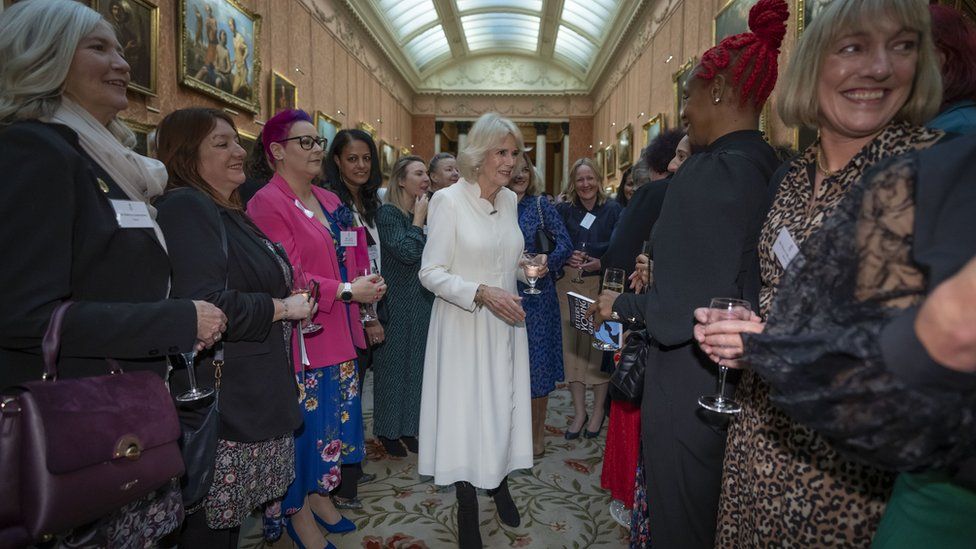
Along with 300 guests, she had been invited to the event, where the Queen Consort, Camilla, had warned of a “global pandemic of violence against women”.
Image source, Kin CheungImage caption, The Queen Consort, Camilla, hosted the reception for campaigners about tackling violence against women
But afterwards, Ms Fulani described on Twitter how the royal aide moved her hair aside to see her name badge, and then challenged her to explain where she was from.
In the post, Ms Fulani referred to the palace aide only as “Lady SH”.
But Ms Reid confirmed to the BBC the person who had made the remarks was Lady Susan Hussey, having seen her name badge. Neither Buckingham Palace nor the charity named her.
Here is the full conversation, as recounted by Ms Fulani:
Lady SH: Where are you from?
SH: No, where are you come from?
Me: We’re based in Hackney.
SH: No, what part of Africa are you from?
Me: I don’t know, they didn’t leave any records.
SH: Well, you must know where you’re from, I spent time in France. Where are you from?
SH: No, but what nationality are you?
Me: I am born here and am British.
SH: No, but where do you really come from, where do your people come from?
Me: ‘My people’, lady, what is this?
SH: Oh I can see I am going to have a challenge getting you to say where you’re from. When did you first come here?
Me: Lady! I am a British national, my parents came here in the 50s when…
SH: Oh, I knew we’d get there in the end, you’re Caribbean!
Me: No, lady, I am of African Caribbean descent and British nationality.
Leadersof the Federal Government of Somalia, its international partners, and a cross-section of Somalis gathered in the capital on Monday and Tuesday for the country’s first-ever International Investment Conference–an opportunity for the world to appreciate the progress being made by Somalia on the political and economic front.
President Mohamud highlighted the efforts of his government to create a favorable investmentenvironment to attract foreign direct investment through constitutional governance and stability based on the rule of law and democracy as the country rebuilds after years of conflict.
Held under the theme: ‘Unlocking Sectoral Investments to Accelerate Economic Growth,’ the conference is organised by the Federal Ministry of Planning, Investment, and Economic Development, in partnership with the private sector and development partners, and is supported by the United Nations in Somalia.Potential for investment.
In his remarks at the opening day of the conference, the Deputy Special Representative of the UN Secretary-General to Somalia, Resident and Humanitarian Coordinator, Adam Abdelmoula, noted that the investment conference was in line with the objectives of the UN in Somalia to achieve the Sustainable Development Goals Agenda 2030, and was aligned with the Sustainable Development cooperation framework between the UN and Somalia (2021-2025).
The United States Ambassador to Somalia, Larry E. André Jr., who was one of the keynote speakers during the opening of the conference, expressed confidence in Somalia’s full economic revival and noted that the United States supports the partnership between Somalia and international financial institutions.
In recent years Somalia has normalized its relations with the International Monetary Fund, the World Bank, and other international financial institutions after 30 years outside the international financial system.
The US Ambassador said that ongoing reforms to have Somalia qualify for debt relief through the Highly Indebted Poor Countries (HIPC) Initiative, will ensure the flow of significant resources to support reconstruction efforts.
The Somali diaspora continues to play an important role in providing much-needed financial remittances, which are key to boosting economic growth in the trade, hospitality, banking, fishing, and real estate sectors. In the recent past, Somalia has focused on improving infrastructure, regulating import and export standards, accession to international and regional trade mechanisms such as the World Trade Organisation, and the African Continental Free Trade Area (AfCFTA).
The gathering heard that Somalia’s strategic location with the longest coastline in Africa for trade and market access and its endowed natural resources makes the country a prime investment destination with opportunities in priority sectors of energy, ICT, banking and finance, fisheries, and agri-business.
In his address at the closing day of the conference, the Prime Minister of Somalia, Hamza Abdi Barre expressed the government’s commitment to implement legislative, economic, and security reforms to enhance the ease of doing business and create a favourable investment climate.
The “Black Blues Brothers,” an acrobatic troupe originally from Nairobi, livened up the Pope’s monthly audience in St. Peter’s Square on Wednesday.
The hundreds of faithful gathered in St. Peter’s Square were ready for the usual catechism lesson, prayers, and blessings from the Pope and instead, they got a circus act.
Pope Francis seemed to love the show.
Dressed in black suits with hats the group performed to tunes of “Soul Man” and “Do the Twist” doing acrobats, summersaults, and handstands in the air.
The Black Blues Brothers are five Kenyan acrobats whose shows have been staged for years in theaters and festivals around the world.
With a strong musical component and an extraordinary repertoire of somersaults, human pyramids, stunts with fire, and virtuosity of the body, their performances amuse spectators.
Nigerian President Muhammadu Buhari has said that the Russia-Ukraine conflict and the Sahel insurgency have caused a proliferation of arms in the Lake Chad Basin countries.
He said weapons being used in Ukraine and Russia were “beginning to filter to the region” and arms used in the Libya war “continues to find [their] way” there.
He said this was a major threat to the security of the regional countries of Cameroon, Chad, Niger and Nigeria,
“Regrettably, the situation in the Sahel and the raging war in Ukraine serve as major sources of weapons and fighters that bolster the ranks of the terrorists in the region,” he said at the summit for the Lake Chad region in the Nigerian capital, Abuja.
Mr Buhari said the countries in the region must improve border security to stop arms trafficking, noting that the region faced a complex and dynamic security situation.
He said this was “increasingly influenced by the impact of climate change and other variables, including sadly, some external factors”.
The summit – attended by presidents of Benin, Chad, Niger, Central African Republic, and representatives of the Cameroon and Libya – approved further joint army operations against Boko Haram and Islamic State group militants active in the region.
The speaker of South Africa’s parliament has received a report from a panel tasked to establish whether President Cyril Ramaphosa should face impeachment for allegedly covering up a crime.
The panel investigated the circumstances around an alleged cover-up of a robbery that took place at his private farm, Phala Phala, back in February 2020.
It handed over its report to Speaker Nosiviwe Mapisa-Nqakula at a televised event on Wednesday morning.
Ms Mapisa-Nqakula said that the report will be made public on 6 December, according to local mediareports.
President Ramaphosa denies any wrongdoing. He previously “pledged his full co-operation to the investigation” and said he was happy to be held accountable.
Several female candidates sitting for their final primary and secondary school examshave given birth, local news sites report.
Many have managed to continue with writing the exams but there was one tragic case on Tuesday of a 19-year-old who died after birth complications.
Velma Ochieng, a secondary school student in Homa Bay county in western Kenya, died shortly after a successful caesarean section delivery of a baby boy.
Cases of national examination candidates both at primary and secondary schools sitting exams while pregnant have become common.
The governorof Homa Bay county called for investigations into the circumstances leading to the loss of Velma’s life.
“We will continue our efforts to ensure no mother ever loses their life when bringing forth life especially if it can be avoided,” Gladys Wanga said.
In the south-western county of Narok 248 pregnant girls are among the candidates sitting the national exams.
County Commissioner Isaac Masinde said ambulances had been put on standby in case they needed to be rushed to hospital.
In neighbouring Kajiado county some 124 pregnant girls were registered as candidates.
A Zambian student who died in Ukraine early this month had been fighting for the shadowy Russian mercenary group Wagner, the Reuters news agency quotes Russian businessman Yevgeny Prigozhin as saying.
“Yes, I remember this guy well,” Mr Prigozhin, who is head of the Wagner group, is quoted as saying in a written response to a question from a reporter.
Zambia had asked Moscow “to urgently provide information on the circumstances” surrounding Lemekhani Nyirenda’s death.
The 23-year-old, a student at the Moscow Engineering Physics Institute, had been serving nine years in jailfor a drug offence.
The circumstances of his release from prison are unknown, but Russia has offered freedom to some prisoners in exchange for fighting in its war in Ukraine.
Mr Prigozhin is quoted as saying that Nyirenda had died a “hero” and that he was “one of the first to break into the enemy trenches on 22 September”.
Street celebrationserupted in Senegalese capital, Dakar, after the men’s football national team advanced into the World Cup’s knockout stages for only the second time in the country’s history.
Senegal defeated Ecuador 2-1 on Tuesday night to finish as runners-up in Group A behind the Dutch.
The win saw Aliou Cissé’s side set up a last-16 meeting with Group B winners England on Sunday (19:00 GMT).
Après la victoire des Lions, les sénégalais sont venus massivement et spontanément devant les grilles du Palais de la République pour célébrer, en communion avec le Président @Macky_Sall, cette belle qualification en 8eme de finale de la coupe du monde.🇸🇳#Qatarpic.twitter.com/ePcVfXMjuN
A Mozambican port has received its first ship in three years after activities there were stopped over jihadist attacks.
The cargo vessel carrying fuel, vehicles and other equipment docked at the Port of Mocimboa da Praia in the northern Cabo Delgado province, which has been wracked by jihadist violence for years.
The cargo belongs to companies supporting multinationals who have been exploiting natural gas in the area.
During a ceremony to reopen the port, Cabo Delgado’s governor Valige Tuabo said that the resumption of operations was a result of the restoration of security and the confidence of the partners to continue to invest and develop the region.
The general director of French energy giant TotalEnergies, Maxime Rabilloud, who was also present at the event, reaffirmed that his company would continue to support the government and the private sector in the rebuilding of the province.
TotalEnergies last year suspended operations at a site exploring a major gas field in the province after Islamist militants attacked a nearby town.
Its $20bn (£16.6bn) gas liquification plant in Mozambique is the largest foreign investment in Africa.
Since last year, troops from the southern Africa region and Rwanda have been helping local forces battle the jihadist insurgency in Cabo Delgado.
The US says it has “serious doubts” about the credibility of Equatorial Guinea’s election resultsthat saw the world’s longest-serving president continue his 43-year-rule.
Teodoro Obiang Nguema Mbasogo, 80, secured almost 95% of votes, according to election officials.
“Given the scale of irregularities observed and the announced results giving the [ruling party] PDGE 94.9% of the vote, we have serious doubts about the credibility of the announced results,” said US State Department spokesman Ned Price.
It said there were credible allegations of “significant election-related irregularities, including documented instances of fraud, intimidation, and coercion”.
President Obiang seized power in 1979 after a military takeover and has survived several coup attempts. He has a strong grip on the oil-rich central African nation.
On an old airfield, on the outskirts of Berlin, almost 1,000 people sleep in giant heated tents. The German capital is struggling to properly house Ukraine’s refugees.
And, as winter deepens and Russia continues to attack Ukraine’s energy infrastructure, authorities here are hastily preparing more emergency shelters in anticipation of the arrival of what they estimate could be up to 10,000 more people.
A million Ukrainians have fled to Germany since the start of the war, according to latest figures.
That has awakened memories of 2015 and 2016 when a comparable number of people sought asylum here.
As then, Germany initially extended a warm welcome. But there are now growing concerns about how best to accommodate such a large number of people.
In Berlin, around 100 Ukrainians arrive every day at the city’s main reception centre for refugees which is sited in a terminal at a converted former airport.
Workers in brightly coloured tabards lead them past defunct baggage carousels to the old departure halls which are now filled with crowded trestle tables.
There’s food here, medicalaid and a bed for a few nights.
It’s designed to be temporary; strangers sleep in bunks in shared cubicles or tents.
But many of the people here will stay longer; it’s getting harder to find permanent accommodation in a city where the rental market is under pressure, and sending people on to other parts of Germany is getting harder too.
Operations manager Kleo Tümmler admits it’s a challenge: “We are built to take care of people for a few days. Sometimes they have to stay here for two weeks, maybe three weeks.”
Despite the logistical difficulties, there’s a relaxed atmosphere in the centre.
Ms Tümmler and her colleagues appear committed to making life as easy and comfortable as possible for the people here.
They’re trying to adapt to the needs of longer-term guests. They’ve bought washing machines, they’re trying to provide some entertainment, and they’re extending the educational facilities for the 300 children on site, some of whom are home-schooling via video link to their Ukrainian schools.
They have learnt, they say here, from the experience of 2015.
But their positivity is not mirrored elsewhere.
One politician from northwest Germany recently used an editorial in a national newspaper to warn that communities like his were “massively challenged” by numerous Ukrainian refugees as well as a growing influx of asylum seekers.
The number of people seeking asylum has indeed risen, fuelled largely by people from Syria and Afghanistan.
Frederik Paul said he was reminded of the atmosphere during the migrant crisis when an initially warm welcome gave way to a bitter national debate over how much support Germans could and should offer to those seeking asylum.
He echoed comments made earlier in the year by Martina Schweinsburg, a district councillor from Thuringia, who said her area had relied on private landlords to house Ukrainians – mainly women, children and elderly people at first – but were now reluctant to do so.
Turning over school gyms for emergency accommodation was, she said, something the public increasingly considered unacceptable.
“Our capacities are exhausted,” she said. “Our backs are against the wall.”
The mood is darkening; the authorities recorded 65 attacks on refugee accommodation so far this year, a significant increase on 2021.
And a recent survey for the national broadcaster found that concerns about immigration had increased in the last year: 53% of those asked were concerned that too many people were coming to Germany, up by 11% from September 2021.
Those fears and that social division are exactly what Russia’s Vladimir Putin has sought to exploit in his latest campaign to render Ukraine uninhabitable and drive yet more of its citizens into Europe.
That will test the tolerance of this German government, which came to power with a far more liberal attitude towards refugees than its predecessor.
How this country, itself much changed by the experience of the migrant crisis.
The Nigerian high court has given the nation’s police chief a three-month prison term for defying a court order.
The ruling followed a lawsuit by a police officer who was dismissed in 1992.
The officer challenged his forced retirement, and his dismissal was later quashed in court.
The court found that Inspector General Usman Alkali Baba should serve the three-month jail sentence, unless he reinstates the police officer.
So far the police force has failed to comply.
In a statement, police spokesman Olumuyiwa Adejobi described the decision as “astonishing”.
He said the police force was studying the ruling to know what action to take.
“It is instructive to note that the case in point concerns an officer who was dismissed as far back as 1992, a few years after the current IGP joined the Nigeria Police Force,” he said.
He added that “the most recent judgement on the matter was given in 2011 which should ordinarily not fall under the direct purview of the current administration of the force”.
In solidarity with those who have been impacted by the continuing drought in some regions of the country, Kenyan ministers will forgo theirsalariesfor one month.
A statement from the presidency said the cabinet agreed that the funds collected from all members of the cabinet would contribute to the state interventions to support the affected Kenyans.
It also noted the “unacceptably high” prices of the staple food maize, and pledged market support for farmers who were harvesting their crop.
A minister had earlier indicated that the country would be importing millions of tonnes of maize, but the cabinet noted that this would now be done in February in order to give the farmers a priority to sell their produce to the market.
Millions of Kenyans are currently facing hunger amid the ongoing drought and are in dire need of food aid.
Last week, the government announced a funds drive for Kenyans to donate to victims of the drought including through a mobile money platform.
The Ukrainian governmenthas said a scheme it created for Russian soldiers to surrender is getting up to 100 enquiries a day.
The “I Want To Live” project was started in September.
By calling a hotline or entering details through messenger apps, Russian troops can arrange the best way to surrender to Ukrainian forces.
Officials in Kyiv say they’ve had more than 3,500 contacts from invading personnel, as well as their families.
There’s been an apparent increase since Russian President Vladimir Putin mobilised hundreds of thousands of Russian men, and since the city of Kherson was liberated.
The BBC has been given recordings from some of the calls.
As the dark hallways suggest, Ukraine’s headquarters for the Treatment of Prisoners of War isn’t immune to the power blackouts which plague the country.
In a small office we meet Svitlana, not her real name, a Ukrainian call handler who speaks to Russian soldiers daily.
They can either get in touch over the phone or on most messenger apps, such as Telegram and WhatsApp.
She explains the evenings are busiest, when troops have more spare time and can sneak off and make a call.
“First of all, we hear a voice, mainly male,” she explains. “It’s often part-desperate, part-frustrated, because they don’t fully understand how the hotline works, or whether it’s just a set-up.
“There’s also curiosity because many call not to surrender but to find out how they could if needed. It’s different every time.”
Image caption,The BBC was given access to some of the calls made to the hotline
Svitlana isn’t allowed to tell us how many Russians she’s helped, or exactly how it happens. They’re just told to share their location before being given further instructions.
Some Russian soldiers also get in touch to provoke them, she says, although she doesn’t think all of them believe the Kremlin’s baseless claims that Ukraine is run by Nazis.
“We can’t judge an entire country,” she says. “The majority of them are worried about their lives.”
Svitlana also recalls a call from one man who lived in occupied Crimea and had been mobilised to fight against his own family, and country.
It seems Moscow has now blocked the phone numbers from being reached inside Russia. Calls from either a UK or Russian Sim card are greeted with an error message.
Staff at the I Want To Live project said each call is different
“Ask yourself a question – what are you fighting for?” says the dramatic voice-over in Ukraine’s “I Want To Live” propaganda video aimed at Russian soldiers.
Explosions appear in sync with evocative music, and there are images of Russian soldiers apparently surrendering before two phone numbers are shown at the end.
They’re even told to wave a white flag if they’re too close to the front line.
This is, of course, part of the information war. The anatomy of Ukraine’s attempts to weaken Russian morale.
On the walls of Svitlana’s office are pictures of Ukrainian prisoners of war. They’re all thought to still be alive, and this hotline is central to Kyiv’s efforts to bring them home.
Once they surrender, Russian prisoners of war (PoWs) can be used as currency in future exchanges.
According to the Institute for the Study of War, the Kremlin is also carrying out more prisoner of war exchanges as it tries to soothe critics from inside Russia.
There are thought to be thousands of PoWs on both sides, but the exact numbers aren’t clear.
Image caption,Vitalii Matviyenko, who leads the I Want To Live project, says it was created to help save lives of those who surrender
“We especially want to target the partially mobilised who not only can’t fight but are thrown in as cannon fodder,” says Vitalii Matviyenko, who heads up the scheme.
“This project was created so their lives will be guaranteed if they surrender voluntarily.”
For outnumbered Ukraine, it’s also hoped it will soften the belly of their larger invader.
Additional reporting by Daria Sipigina, Hanna Chornous and Moose Campbell.
The first drug to slow the destruction of the brain in Alzheimer’s has been heralded as momentous.
The research breakthrough ends decades of failure and shows a new era of drugs to treat Alzheimer’s – the most common form of dementia – is possible.
Yet the medicine, lecanemab, has only a small effect and its impact on people’s daily lives is debated.
And the drug works in the early stages of the disease, so most would miss out without a revolution in spotting it.
Lecanemab attacks the sticky gunge – called beta amyloid – that builds up in the brains of people with Alzheimer’s.
For a medical field littered with duds, despair and disappointment, some see these trial resultsas a triumphant turning point.
Alzheimer’s Research UK said the findings were “momentous”.
One of the world’s leading researchers behind the whole idea of targeting amyloid 30 years ago, Prof John Hardy, said it was “historic” and was optimistic “we’re seeing the beginning of Alzheimer’s therapies”. Prof Tara Spires-Jones, from the University of Edinburgh, said the results were “a big deal because we’ve had a 100% failure rate for a long time”.
Currently, people with Alzheimer’s are given other drugs to help manage their symptoms, but none change the course of the disease.
Lecanemab is an antibody – like those the body makes to attack viruses or bacteria – that has been engineered to tell the immune system to clear amyloid from the brain.
Amyloid is a protein that clumps together in the spaces between neurons in the brain and forms distinctive plaques that are one of the hallmarks of Alzheimer’s.
The large-scale trial involved 1,795 volunteers with early stage Alzheimer’s. Infusions of lecanemab were given every fortnight.
The results, presented at the Clinical Trials on Alzheimer’s Disease conference in San Francisco and published in the New England Journal of Medicine, are not a miracle cure. The disease continued to rob people of their brain power, but that decline was slowed by around a quarter over the course of the 18 months of treatment.
The data is already being assessed by regulators in the US who will soon decide whether lecanemab can be approved for wider use. The developers – the pharmaceutical companies Eisai and Biogen – plan to begin the approval process in other countries next year.
Image caption,
David Essam, with his wife Cheryl, has been taking part in the trial
David Essam, who is 78 and from Kent in the UK, took part in the international trial.
His Alzheimer’s meant he had to give up work as a joiner – he could no longer remember how to build a cabinet or use his tools. He now uses a digital watch as he can’t tell time using a clock face.
“He’s not the man he was, he needs help with most things, his memory in general is almost non-existent,” said his wife Cheryl. But she said the trial had given the family hope.
David said: “If somebody can slow it [Alzheimer’s] down and eventually stop it all together that would be brilliant, it’s just a horrible nasty thing.”
There are more than 55 million people in the world like David and the numbers with Alzheimer’s disease are projected to exceed 139 million by 2050.
Will it make a difference?
There is debate among scientists and doctors about the “real world” impact of lecanemab.
The slower decline with the drug was noticed using ratings of a person’s symptoms. It’s an 18-point scale, ranging from normal through to severe dementia. Those getting the drug were 0.45 points better off.
Prof Spires-Jones said that was a “small effect” on the disease, but “even though it is not dramatic, I would take it”.
Dr Susan Kohlhaas, from Alzheimer’s Research UK, said it was a “modest effect… but it gives us a little bit of a foothold” and the next generation of drugs would be better.
There are also risks. Brain scans showed a risk of brain bleeds (17% of participants) and brain swelling (13%). Overall, 7% of people given the drug had to stop because of side effects.
A crucial question is what happens after the 18 months of the trial, and the answers are still speculation.
Dr Elizabeth Coulthard, who treats patients at North Bristol NHS Trust, says that people have, on average, six years of living independently once mild cognitive impairment starts.
Slow that decline by a quarter and it could equate to an extra 19 months of independent life, “but we don’t know that yet”, she says.
It is even scientifically plausible that the effectiveness could be greater in longer trials. “I don’t think we can assume that this is it,” says Dr Kohlhass.
The emergence of drugs that do alter the course of the disease asks big questions of whether the health service is ready to use them.
The drugs have to be given early in the disease before too much damage to the brain is done, whereas most people referred to memory services are in the later stages of the disease.
That requires people coming forward at the earliest signs of memory problems and doctors being able to send them for amyloid tests – either brain scans or spinal fluid analysis – to a determine if they have Alzheimer’s or another form of dementia. At the moment only 1-2% of people with dementia have such tests.
“There’s an enormous gulf between current service provision and what we need to do, to deliver disease modifying therapies,” said Dr Coulthard.
She said that, currently, only those living near big medical centres or paying privately were likely to benefit.
Scientists also stressed that amyloid was only one part of the complex picture of Alzheimer’s disease and should not become the sole focus of therapies.
The immune system and inflammation are heavily involved in the disease and another toxic protein called tau is the one that’s found where brain cells are actually dying.
“That’s where I would put my money,” said Prof Spires-Jones.
She added: “I’m very excited we’re on the cusp of understanding enough to get a hold of the problem and we should have something that will make a bigger difference in a decade or so.”
Ukraine’s First Lady Olena Zelenska has spoken to the UK parliament about the devastating war in her country.
She said Ukrainians were going through a terror similar to that experienced by the UK in World War Two, when Nazi Germany bombed cities in the blitz
“Victory is not the only thing we need, we need justice,” Zelenska says, adding she “came came to you for justice, because it will lead to the end of this war”.
She goes on to say it would have been impossible for the people of bombed British cities to accept those responsible would not recieve justice.
The Ukrainian people affected by Russia’sattacks deserve that same justice, Zelenska adds.
Portugal has dispatched a team of investigators and experts from the judicial police at the request of Sao Tome and Principe to participate in the investigation into the failed coup attempt in this former Portuguese colony.
This team, made up of “investigators and experts from the judicial police” as well as an “expert in forensic medicine”, was sent on Sunday following “an urgent request for help” from the authorities of Sao-Tome- Principe, says a joint statement from the Ministry of Foreign Affairs and the Ministry of Justice.
Portuguese investigators “will work directly with the judicial authorities of Sao Tome and Principe, as part of the investigation into the events of Friday”, specifies the Portuguese government.
The Lisbon decision follows the failed coup attempt in this small island country in the Gulf of Guinea that the government claims to have foiled overnight from Thursday to Friday.
Four people, arrested following these events, died, according to the army chief of staff, Olinto Paquete, who did not give more details on the unclear circumstances.
The government of this independent country since 1975 has “firmly condemned” what it describes as a “violent attempt to subvert the constitutional order”, following a council of ministers on Sunday, while assuring that “all investigations will be carried out to determine the causes and circumstances of the deaths”, in addition to the investigations to determine the responsibilities for the attempted coup.
Following several coup attempts, the last in 2003 and 2009, the parliamentary regime has asserted itself in this archipelago, considered a model of parliamentary democracy in Africa.
He has alternated several times between two parties: the Liberation Movement of Sao Tome and Principe-Social Democratic Party (MLSTP-PSD, center-left) and the Independent Democratic Action (ADI, center-right) of Mr. Trovoada.
Senegal have qualified for the first knockout stage of the 2022 FIFA Qatar world cup. The teranga lions beat Ecuador 2-1 in a pulsating encounter that is arguably the best showing of the African champions at the Khalifa International Stadium in Doha, Qatar.
The important win ensured Senegal got six points, enough to sit second place in group A where Netherlands led with seven, having easily gone past hosts Qatar in a 2- 0 win,- a match played simultaenously with that of Senegal against Ecuador.
It is the first time that Senegal have claimed back-to-back World Cup victories and.the third time the reigning Africa Cup of Nations holders have reached the knockout phase of the World Cup. Previous occasions were by Nigeria, when they reached the last 16 in 1994 and 2014.
For hosts Qatar, it was a sad ending. Though it was well known the show was over for the team, after been eliminated Friday when they lost to Senegal 3-1, their play for pride did not produce a result they had hoped for as Netherlands proved to good to beat or salvage anything from.
The second fixtures of the group phase of 2022 Qatar World Cup ended Monday (Nov. 29) with two exciting performances by Cameroon and Ghana. Overall, the 5 African nations represented were able to raise up their game.
Africa’s representatives at the 22nd FIFA World Cup can still qualify for the round of 16. With some provided with bigger ad other slimmer chances.
France, Portugal and Brazil are the first nations which have already booked their ticket for the next stage.
Bets are open ahead of the fixture Senegal-Ecuador. The Netherlands only need a point to advance in the tournament. On Tuesday (Nov. 29), they’ll play already eliminated hosts Qatar.
The African champions must win to qualify and will want to build on their strong offensive performance against the Qataris (3-1). A draw would qualify the Central American team, which is worried about its captain Enner Valencia, co-top scorer of the tournament (3 goals) who suffered a knee injury.
Tunisia will play reigning champions France on Wednesday (Nov. 30). ‘Les Bleus’ became the first team to qualify for the next round when beating Denmark (2-1) on November 26 and are expected to rotate their squad for their last group game.
The Carthage Eagles can keep their dream to reach a knockout stage spot in 6th World Cup appearance if they beat the French substitute team. In addition to that, Australia vs Denmark should end in a draw.
For the Danes to qualify they must beat the Australians and hope for a draw or a France’s victory in the other fixture of the group.
Standing: France (6pts), Australia (3pts), Danemark (1 pts), Tunisia (1pt).
Group F
Morocco is in a rather comfortable position ahead of its match against already eliminated Canada on Thursday, December 1st.
Croatia, the finalist of the 2018 World Cup, need to secure a draw to move forward. Belgium will play its qualification on Thursday in a stressful clash against the Croats. A success would send the Red Devils through the round of 16. A defeat would mean elimination. In case of a draw, their fate would be in the hands of Morocco.
Cameroon secured a draw against Serbia in dramatic fashion on Monday (Nov. 28). The Indomitable Lions will remember an eventful and historic day as they scored a first point in the World Cup in 20-years.
They are however in a complicated position ahead of their game against Brazil on Friday (Dec. 2).
The Seleçao qualified after beating Switzerland with a goal by Casemiro to reach the knockout stage on November 28.
Switzerland will have to dominate Serbia to secure a spot in the next round.
Standing: Brazil (6pts), Switzeland (3pts), Cameroon (1pt), Serbia (1pt).
Group H
Ghana vs Uruguay already has a taste of legend. The fixture is a repeat of the 2010 quarter finals as well as a must-win for the Black Stars.
The game provides an opportunity to even the score in the rivalry and is a decisive match to advance in the Qatar World Cup.
Cristiano Ronaldo’s Portugal qualified after beating Uruguay on Monday (Nov. 28). The Portuguese will face South Korea on Friday (Dec. 2). The situation is critical for South Korea and Uruguay, but both teams can still qualify.
Standing: Portugal (6pts), Ghana (3pts), South Korea (1pt), Uruguay (1pt).
At least 15 people died Sunday in a landslide on a hillside where a crowd was attending a funeral in a popular neighborhood of Yaoundé, the Cameroonian capital, the governor of the region told AFP Monday in a new report.
A few hours after the tragedy, Naseri Paul Bea, the governor of the Centre region, announced on the state radio CRTV that 11 people had died but that the search was continuing for possible other victims.
“We are now at 15 dead,” he told AFP on Monday morning, some time after a dozen firefightersbegan digging with shovels on an imposing pile of red earth at the foot of the hill in this neighborhood of Damascus, in the east of Yaoundé, according to an AFP correspondent on the spot. Around them, a hundred residents and onlookers were kept at a distance by police officers.
A little further on, people entered two modest houses one by one to offer their condolences to two families who had lost their loved ones in the tragedy. One of them was a cab driver, his vehicle is still parked in front of the family home.
Late Sunday afternoon, at least one tent, among several others housing dozens of participants in a ceremony to honor five members of an association who died this year, was swept away by a landslide.
Four bodies had been quickly evacuated, covered with a white sheet, on the flatbeds of three police pick-ups and the rescuers then gradually removed 11 new deceased people, before stopping their search around 11 pm.
Four large white tents remained intact at the top of the hill but on the edge of a whole collapsed section, reported AFP reporter Sunday evening.
In the vicinity of the wasteland, there are relatively well-to-do houses in good condition and very precarious dwellings, like those, countless, sometimes made of wood and sheet metal, which cover the sides of the seven hills forming part of the relief of the Cameroonian capital, populated by more than four million inhabitants.
Team USAis mounting one last-ditch effort to earn a spot in the Qatar World Cup knock-out stage.
The squad will play a tense and critical game against Iran on group B’s final day on Tuesday (Nov. 29)
The Stars and Stripes will count on Tim Weah the only scorer for the team in 2 matches.
The 22-year-old is the son of George Weah, Liberia’s acting president and the only African player awarded the ballon d’Or prize.
Together, they celebrated Weah Jr first’ goal in Qatar.
“Just thank God, thank my family, thank my teammates for pushing me everyday. It’s a dream come true to score in the World Cup. Hopefully, I can provide more for the team”, he said during after the draw against Wales.
USA versus Iran will take palce at Al Thumama Stadium on November 29 starting from10:00 p.m. local time.
The last World Cup clash between the United States and Iran 24 years ago is considered one of the most politically charged matches in soccer history.
In 1998, Iran won 2-1 in Lyon, a low point for the U.S. men’s team as Iranians celebrated in Tehran.
Iran have three points, and a draw would take them into the round of 16 as long as Wales fail to beat England, ealier on Tuesday evening.
The Russian paramilitary group Wagner acknowledged Tuesday that a Zambian student recruited in prison was killed in Ukraine, two weeks after Zambia demanded an explanation from Russia on the circumstances of the death of one of its citizens.
“Lemekhani Nathan Nyirenda, on September 22, was one of the first to enter the enemy trenches, showing courage and bravery,” greeted on his company’s social networks the head of Wagner, Yevgeny Prigozhin.
Oligarch reputedly close to Vladimir Putinand became a media personality of the conflict in Ukraine, Mr. Prigozhin said he “well remembered this guy” of 23 years, “died as a hero” in combat.
For several weeks, Yevgeny Prigozhin was accused by Ukraine of sending to the front thousands of fighters recruited directly in Russian prisons, against the promise of a salary and an amnesty.
Mr. Prigozhin admitted on Tuesday that his group had recruited Mr. Nyirenda, convicted in Russia, in a prison in the Tver region, northwest of Moscow.
He said the young Zambian had volunteered to join Wagner and fight in Ukraine.
Zambia had asked Moscow in mid-November for an explanation for the death of one of its nationals in Ukraine, where Russia has been conducting a military offensive since February.
According to the Zambian government, Lemekhani Nathan Nyirenda was initially a student of nuclear engineering at the Moscow Engineering Physics Institute (MEPhI).
He had been sentenced to nine years and six months in prison after being convicted of violating Russian law in April 2020, according to the same source.
An influential Libyan official said that the United Nations’ special envoy should meet with the joint electoral committee made up of rival Libyan factions, to start constitutional arrangements for elections.
Aguila Saleh, the influential speaker of Libya’s east-based parliament, was speaking to reporters in Cairo after meeting Arab League Secretary-General, Ahmed Aboul Gheit.
Saleh said the joint committeecould send their recommendations to the High National Election Commission, which would then be responsible for holding elections.
Earlier this month, Abdoulaye Bathily, the new UN special envoy for Libya warned that the first anniversary of Libya’s postponed elections is quickly approaching and that further delaying a vote could lead the troubled north African nation to even greater instability, putting it “at risk of partition.”
“The Libyan executive body’s term is over,” said Saleh, calling for a peaceful transfer of power and a return to previous electoral procedures.
One beneficiary is 33-year-old former criminal Elijah Wambua.
Before joining the league, Wambua terrorised Nairobi residents with violent robberies.
But after losing some of his friends in the violence – Wambua decided to turn over a new leaf.
“Football is everything to me, and if it were not for football, I would be dead or in jail,” says Wambua, whose nickname is ‘Gaucho’, after famous Brazilian forward, Ronaldinho.
“I use football for living. It has made me to be a useful person in my community, a useful person in my area,” he adds.
Now, Wambua mentors young people in the community, moving them away from a life of crime and instead honing their football skills with hopes of a better future.
The league was founded in 2019 by Eric Juma, who’s also known as ‘Totti’, a name he was given for playing in a similar style to Italian forward Francesco Totti.
“Inter Base League is a league which we play in. We normally call it an amateur league, played within a slum settlement. Basically, the league was introduced to end things to do with crime and drugs in our society,” says the 32-year-old, who also works as a mechanic.
Juma was inspired to start the league after his childhood friend was killed while taking part in a carjacking.
On that fateful day, Juma and his friend were meant to meet for a football match.
The fear of losing more friends to crime inspired him to start the league.
“A lot of people are being killed in our society and football was the only uniting factor which could unite us as one family. We normally say that football unites and that is the only language we use to end crime in our society,” says Juma.
Juma hopes the league might one day have two men’s divisions, also a children’s and women’s division.
The league has many fans who come to support the teams that consist of around 1,000 young people.
While each team ideally has 16 players, some have 50.
As a show of support, some fans make small donations, while players pay for their own team jersey.
Players are forbidden from playing while under the influence of drugs.
The term “base” is popular slang among Kibera youth, meaning “hangout spot.”
This inspired Juma to bring young people from different hang-out spots to form teams.
Many players have since left a life of crime and drugs.
A ban preventing Kenya from taking part in international soccer activities has been lifted after nine months.
Soccer governing body FIFA notified the Football Kenya Federation (FKF) on Monday (28 November), the decision was made following the reinstatement of the federation’s executive committee by Kenya’s new sports minister.
The ban took effect on Feb. 24 after the sports ministry disbanded the FKF over alleged misappropriation of funds and appointed a caretaker committee.
The FIFA letter stated that “upon the lifting of the suspension, a FIFA-CAF mission will be deployed to Nairobi in order to define the next steps for the FKF and also meet with the newly appointed Cabinet Secretary for Sports.”