The French baguette, Algerian Rai music and Tunisia’s harissa condiment are among this year’s contenders for recognition as intangible cultural heritage by UNESCO, which started deliberations Monday in Morocco.
The United Nations’ cultural agency is examining 56 proposals for items to add to its Lists of Intangible Cultural Heritage, including four in urgent need of preservation — including the pottery of the Cham people of central Vietnam.
This year’s meetings in Morocco, which holds the organisation’s rotating presidency, are the first to be held in person since the coronavirus pandemic.
UNESCO will tweet its decisions starting from Tuesday afternoon.
Other contenders include a French-Belgian application for fairgrounds, the chai (tea) culture of Azerbaijan and Turkey, traditional Chinesetea-processing technique and a central Asian lute called the Rubab.
Cuban light rum and the Serbian plum brandy known as Slivovitz also make the list.
The organisation stresses that the list honours traditions, practices and knowledge and all such forms of culture that are “human treasures” that cannot be touched.
Rai music is on the list not just as a form of music but as a whole cultural tradition.
The 2003 Convention for the Safeguarding of the Intangible Cultural Heritage aims to safeguard and raise awareness about the “intangible cultural heritage of the communities, groups and individuals concerned”.
“Intangible cultural heritage, transmitted from generation to generation, is constantly recreated by communities and groups in response to their environment, their interaction with nature and their history, and provides them with a sense of identity and continuity, thus promoting respect for cultural diversity and human creativity,” it says.
All regions of the world saw water extremes last year – both floods and droughts — and billions of people had insufficient freshwater, the United Nations said on Tuesday.
Large areas of the planet recorded drier than normal conditions in 2021, the UN’s World Meteorological Organization said in its first annual State of Global Water Resources report.
The report assesses the effects of changes in the climate, environment and society on the Earth’s freshwater resources – limited supplies that are under growing demand — so they can be managed better.
“The impacts of climate change are often felt through water — more intense and frequent droughts, more extreme flooding, more erratic seasonal rainfall and accelerated melting of glaciers — with cascading effects on economies, ecosystems and all aspects of our daily lives,” said WMO head Petteri Taalas.
“And yet there is insufficient understanding of changes in the distribution, quantity and quality of freshwater resources.”
Some 3.6 billion people face inadequate access to freshwater at least one month per year. That is forecast to rise to more than five billion by 2050, the report said.
Between 2001 and 2018, 74 percent of all natural disasters were water-related, according to UN studies.
In 2021, all regions saw devastating water extremes, the report said.
There were record-breaking floods in western Europe and the Amazon, while water levels in rivers in Paraguay and southern Brazil dropped to an all-time low.
The report assessed streamflow – the volume of water flowing through a river – over a 30-year period.
Drops in water volumes were twice as widespread as rises.
Major river basins in the Americas and central Africa saw water volumes shrink. Rivers in northern India and southern Africa saw above average increases.
Frozen resources
Terrestrial water storage — all water on the land surface and in the subsurface – shrank more than it grew, the report said.
Negative hotspots included Patagonia, the Ganges and Indus headwaters, and the southwestern United States.
“Some of the hotspots are exacerbated by (over-extraction) of groundwater for irrigation. The melting of snow and ice also has a significant impact in several areas, including Alaska, Patagonia and the Himalayas,” the WMO said.
The world’s biggest natural reservoir of freshwater is the cryosphere – glaciers, snow cover, ice caps and permafrost – and changes to this reservoir affect food production, health and the natural world, the report said.
Around 1.9 billion people live in areas where drinking water is supplied by glaciers and snow melt but these glaciers are melting increasingly fast, it stressed.
It urged authorities to speed up the introduction of drought and flood early warning systems to help reduce the impact of water extremes.
There is “no timeline” for restoring internet access to Ethiopia’s embattled Tigray region, a senior governmentofficial said Tuesday.
The restoration of Tigray’s internet service will be carried alongside the resumption of its phone and electricity services, though no date has been set for those goals, Ethiopia’s Minister for Innovation and Technology Belete Molla said.
He was speaking at the U.N.’s annual Internet Governance Forum being held this week in the Ethiopian capital Addis Ababa.
“The government of Ethiopia is designing a package that is not only about internet resumption but the resumption of everything, because this is what we need as a people, as a government,” Belete said of the internet shutdown in Tigray. “There is no timeline.”
Tigray, home to more than 5 million people, has been mostly without internet, telecommunications, and banking since war broke out between federal government troops and forces led by the Tigray People’s Liberation Front in November 2020.
A ceasefire deal signed between the warring sides in South Africa earlier this month commits the government to restore Tigray’s basic services, but the communications blackout has not yet been lifted.
Renewed fighting in August halted aid deliveries to Tigray, which is in the throes of a humanitarian crisis. Aid has now started reaching the region, but the World Food Program said last week that access to parts of Tigray remains “constrained.”
With the Tigray blackout still in place, the U.N.’s decision to hold its flagship event on internet access in Ethiopia has drawn criticism.
This year’s conference aims to build steps towards “universal, affordable, and meaningful connectivity,”, especially in Africa where 60% of the continent’s 3 billion people are offline.
Ethiopia has shut down the internet at least 22 times since 2016, according to internet rights group Access Now. The blackout affecting Tigray “is the world’s longest uninterrupted shutdown,” said Brett Solomon, Access Now’s executive director.
Aid workers and rights groups say the communications blackout has hampered the delivery of aid to Tigray and fueled human rights abuses by fostering a culture of impunity among armed actors. U.N. investigators have accused all sides of abuses, including killings, rape, and torture.
Addressing the opening ceremony of the internet forum on Tuesday, Ethiopian Prime Minister Abiy Ahmed appeared to defend the shutdown in Tigray, saying the internet has “supported the spread of disinformation as Ethiopia dealt with an armed rebellion in the northern part of the country.”
Namibia’s Deputy Prime Minister Netumbo Nandi-Ndaitwah is an inch closer to becoming the southwestern country’s first female president.
Namibia’s ruling party on Monday (November 28) elected Nandi-Ndaitwah as its vice president, making her the frontrunner to lead the party into the country’s upcoming national elections in 2024.
The 70-year-old edged out Prime Minister Saara Kuugongelwa-Amadhila and Environment Minister Pohamba Shifeta in the race for the No. 2 position in the South West AfricanPeople’s Organization.
President Hage Geingob, who is due to step down at the end of his current term, refused to endorse a successor as his predecessors had done.
“We have made history by electing the first female president come 2024,” Geingob said in a speech Monday in the capital, Windhoek. “I would like to tell her your task going ahead is heavy.”, Bloomberg quoted in a report.
Swapo has led Namibia since independence in 1990 and remains the country’s biggest political party, but its popularity has recently waned because of discontent over rampant unemployment and a graft scandal that led to the arrests of former cabinet ministers and businessmen linked to the party.
The party lost its two-thirds majority in the National Assembly in the last general election in 2019, and Geingob’s share of the vote fell to just over 50%, from 87% five years earlier.
There is “no timeline” for restoring internet access to Ethiopia’s embattled Tigrayregion, a senior government official said Tuesday.
The restoration of Tigray’s internet service will be carried alongside the resumption of its phone and electricity services, though no date has been set for those goals, Ethiopia’s Minister for Innovation and Technology Belete Molla said.
He was speaking at the U.N.’s annual Internet Governance Forum being held this week in the Ethiopian capital Addis Ababa.
“The government of Ethiopia is designing a package that is not only about internet resumption but the resumption of everything, because this is what we need as a people, as a government,” Belete said of the internet shutdown in Tigray. “There is no timeline.”
Tigray, home to more than 5 million people, has been mostly without internet, telecommunications, and banking since war broke out between federal government troops and forces led by the TigrayPeople’s Liberation Front in November 2020.
A ceasefire deal signed between the warring sides in South Africa earlier this month commits the government to restore Tigray’s basic services, but the communications blackout has not yet been lifted.
Renewed fighting in August halted aid deliveries to Tigray, which is in the throes of a humanitarian crisis. Aid has now started reaching the region, but the World Food Program said last week that access to parts of Tigray remains “constrained.”
With the Tigray blackout still in place, the U.N.’s decision to hold its flagship event on internet access in Ethiopia has drawn criticism.
This year’s conference aims to build steps towards “universal, affordable, and meaningful connectivity,”, especially in Africa where 60% of the continent’s 3 billion people are offline.
Ethiopia has shut down the internet at least 22 times since 2016, according to internet rights group Access Now. The blackout affecting Tigray “is the world’s longest uninterrupted shutdown,” said Brett Solomon, Access Now’s executive director.
Aid workers and rights groups say the communications blackout has hampered the delivery of aid to Tigray and fueled human rights abuses by fostering a culture of impunity among armed actors. U.N. investigators have accused all sides of abuses, including killings, rape, and torture.
Addressing the opening ceremony of the internet forum on Tuesday, Ethiopian Prime Minister Abiy Ahmed appeared to defend the shutdown in Tigray, saying the internet has “supported the spread of disinformation as Ethiopia dealt with an armed rebellion in the northern part of the country.”
Somali forces on Monday stormed a hotel in the capital, Mogadishu, where Islamic extremists had been holed up for more than 18 hours after killing eight civilians and trapping dozens in the building, officials said.
Police spokesperson Sadik Dodishe said all six extremists died during the operation at the Villa Rosa hotel, and one member of the security forces was also killed.
Dodishe said about 60 people who had been trapped in the hotel were freed and none of them were injured. It was not immediately clear whether others were missing.
According to Dodishe, five of the attackers were killed by security forces, and one blew himself up.
Islamic extremist group al-Shabab claimed responsibility for the attack.
Mogadishu resident Mohamed Suleyman told the AP that two of his relatives, both civilians, died in the attack. “It’s a great sadness to learn that two of my relatives were among those killed in yesterday night’s attack,” he said. “We were informed by their colleagues who managed to escape the attack after jumping (over the perimeter) wall of the hotel.”
Ali Moalim, another Mogadishu resident, said he saw “two bodies of the security forces carried by their fellow soldiers.”
Al-Shabab said in a broadcast on its own radio frequency Sunday that its fighters attacked the hotel, which has a restaurant popular with government and security officials. The attack is believed to have started with an explosion before gunmen penetrated the hotel’s gates.
The hotel is not far from the presidential palace, Villa Somalia, in one of the most protected parts of central Mogadishu. A successful attack near the seat of the federal government is likely to instill deep fear among residents of the seaside capital that has long been prone to attacks by militants.
Such militant attacks are common in Mogadishu and other parts of the Horn of Africa nation.
The latest attack comes amid a new, high-profile offensive by the Somali government against al-Shabab, which still controls large parts of central and southern Somalia.
Extremist fighters loyal to the group have responded by killing prominent clan leaders in an apparent effort to dissuade support for the government offensive, and attacks on public places frequented by government officials and others persist.
Hotels and restaurants are frequently targeted, as are military bases for government troops and foreign peacekeepers.
Last month at least 120 people were killed in two car bombings at a busy junction in Mogadishu. Al-Shabab carried out that attack, the deadliest since a similar attack at the same spot killed more than 500 people five years ago.
Al-Shabab opposes Somalia’s federal government, which is backed by African Union peacekeepers, and seeks to take power and enforce a strict version of Sharia law.
The United States has described al-Shabab as one of al-Qaida’s deadliest organizations and targeted it with scores of airstrikes in recent years. Hundreds of U.S. military personnel have returned to the country after former president Donald Trump withdrew them.
Anna Wintour, Sarah Jessica Parker and more of fashion’s A-list graced the front row of Fendi’s New York Fashion Week runway in September. Also there: 18-year-old TikTok fashion influencer Ellie Zeiler. Huh?Fashion Week is no longer reserved for just editors and movie stars — influencers have become an integral part of guest lists, to the befuddlement of most observers. Zeiler, who has over 10.7 million followers, is one of many social media influencers who received invitations to coveted Fashion Week shows in the fall. “There I was, sitting in the same room as Kim Kardashian. Never in my wildest dreams did I think that TikTok would bring me such amazing opportunities,” she said.
Brands invite influencers to their runways because they hold value: A niche audience follows their content and wants to see which clothing they’re most passionate about. One 15-second TikTok video or series of Instagram stories can drive thousands of sales.
“Brands ask for our analytics, so they know exactly who is watching our videos. The age, gender, where our followers are based,” Zeiler explained. “Why spend money promoting on a billboard when you don’t know who’s driving past that billboard? You can just hire a fashion influencer and know that people are specifically going to that page for fashion content.”
In searching for a paid partner, companies look for authenticity — the influencer should be familiar with, or a fan of, the brand. “Brands look for how much influencers align with their brand. They also want genuine people who get along with everyone,” said Marissa Ren, a TikToker with over 2.4 million followers. Ren has worked with Revolve for several years — she was scouted after the company saw she had already been posting in the clothes on her page gratis.
“I’ve been able to develop a relationship with the influencer relations team,” Ren explained. “Usually, my ads are just one-time deals, but I’ve really gotten to know the people who work at Revolve and become friends with them. They treat me well and always keep me in mind for fun trips and activations.”
Branded trips are one of the biggest perks of being a TikTok personality. Revolve sent Ren to a private Super Bowl party in Los Angeles, with performances by Justin Bieber and Drake. Zeiler has been on several sponsored vacations, including an Amazon-led trip to Mexico.
However, some influencers don’t feel like it’s an authentic use of their time. “On these trips, everyone’s trying to suck up to the brand people because they want a partnership with them,” Zeiler said. Furthermore, TikTokers often feel like they’re being forced to put on a “show” or make a good impression at events. Appearances can become stressful instead of enjoyable.
TikToker Kristine Thompson, who has 1.6 million followers on her page @trendycurvy, also had a less-than-ideal experience on a sponsored trip. “They give you swag bags and one time they gave me pajamas I couldn’t fit into,” she said. “They don’t necessarily think about the fact that they invited a plus-size person. There could have been more of an effort to include both size and racial diversity.”
A lack of inclusion has become a regular occurrence on Thompson’s branded vacations. “It’s disappointing, but I think about how it’s not the first time,” she said.
Thompson feels an added pressure to fit in at fashion events due to the absence of diversity in the industry. “I don’t get invited to fashion shows by brands very often,” she admitted. “I’m not the influencer they choose to highlight their fashion. They’re not very inclusive.”
Thompson said a “Mean Girls” mentality is ever-present during Fashion Week — you’re either a part of the crowd, or you’re not. “I feel like I’m trying to constantly insert myself into conversations and events,” she explained.
Thompson is not alone. Now that influencers’ fame has transcended social media, some struggle with feeling like they don’t belong in the fashion industry. There’s a pressure to prove oneself as deserving to be there.
“I feel like an underdog,” Zeiler admitted. “To some people, ‘influencer’ is such a dirty word. I have to legitimize my job to people because they don’t know the work that goes into it.”
Zack Lugo, an influencer who has worked with Fendi, Dior, Boss and more, also admits to impostor syndrome. “I’m still very fresh out of my hometown. It’s nerve-wracking to be invited to events that A-list celebrities are at and be in the same place as them,” he said.
Kit Keenan, an influencer and the daughter of fashion designer Cynthia Rowley, has been going to Fashion Week for as long as she can remember. Despite invitations to Michael Kors, Prabal Gurung and more coveted shows, she still feels out of place sometimes. “Fashion Week can make you feel bad about yourself. It makes me feel small,” she revealed. “I’ve seen major celebrities at events. I have to remind myself that I have my own role as an influencer. I don’t feel the need to compete with [celebrities] who have built such successful careers.”
So, are TikTok fashion influencers the next celebrities? Zeiler sees being a TikToker as a steppingstone to a career on the big screen. She recently took on an acting gig, starring on the Brat TV series “Crown Lake.” “TikTokers are like the Disney stars that started when they were younger and then got to do what they actually wanted to do in mainstream entertainment,” she explained. “I don’t like to think of myself as a celebrity.”
Indeed, according to their audience demographic, TikTok influencers may not have reached celebrity status just yet. While celebrities are widely known across different ages, not everyone is on TikTok to familiarize themselves with popular creators. But TikTokers can certainly reach a similar level of fame (take Charli D’Amelio for example, who has over 148.2 million followers).
However, what separates influencers is their relatability. If viewers see a small-town creator building a following from the ground up, they feel like they, too, have the ability to make an impact online. That’s something not even fashion’s A-list can achieve.
The grave of anti-apartheid activist Chris Hani was vandalized in South Africa, a week after the controversial announcement of the early release of his killer, sources from the municipalityof Ekurhuleni where the monument dedicated to his memory said on Tuesday (November 29).
“The monument was vandalized overnight from Saturday to Sunday. One of the pillars is badly damaged. One side collapsed and the lighting system was stolen,” spokesperson Zweli Dlamini told AFP of the city located east of Johannesburg. An investigation was opened for theft and vandalism.
South Africa: Janusz Walus, killer of anti-apartheid leader Chris Hani to be released on parole https://t.co/PSaaQAYKim
The monument consists of four marble columns symbolizing the pillars of the struggle against white power led by the African National Congress (ANC), in power since the advent of democracy in 1994.
South Africa: Janusz Walus, killer of anti-apartheid leader Chris Hani to be released on parole https://t.co/PSaaQAYKim
A demonstration against the release of the assassin of Chris Hani, in the Hall of Heroes of the Anti-Apartheid Struggle and whose disappearance is commemorated each year in South Africa, gathered dozens of people on Saturday at the call of the ANC.
The ANC said in a statement “deeply saddened by the vandalism and desecration” of the monument.
Communist leader and senior member of the armed wing of the Liberation Party, Chris Hani, 50, was killed at close range in his driveway on April 10, 1993, by the Polish immigrant linked to the far-right white Afrikaner, Janusz Walus.
A demonstration against the release of the assassin of Chris Hani, in the Hall of Heroes of the Anti-Apartheid Struggle and whose disappearance is commemorated each year in South Africa, gathered dozens of people on Saturday at the call of the ANC.
The ANC said in a statement “deeply saddened by the vandalism and desecration” of the monument.
Communist leader and senior member of the armed wing of the Liberation Party, Chris Hani, 50, was killed at close range in his driveway on April 10, 1993, by the Polish immigrant linked to the far-right white Afrikaner, Janusz Walus.
At the time, delicate negotiations with the white power in view of the first democratic elections in the country were underway. The assassination exacerbates racial tensions and provokes violent riots in the townships of South Africa shaken by the last gasps of the racist regime. In a vibrant televised speech, Nelson Mandela calls for calm.
Janusz Walus, now 69, had been sentenced to death but the new regime abolished capital punishment in 1994, and his sentence was commuted to life imprisonment.
After several refusals, the court granted him conditional release on November 21. He must be released from prison no later than December 1. Chris Hani’s widow has denounced a “diabolical judgment”.
Barefooted, wearing all white gear with a black belt. This is not quite how you expect to see a Foreign Ministerdressed overseas.
But that was how Alfred Mutua, Kenya’s top diplomat was captured when he visited the Taekwondo Headquarters in South Korea.
Mutua was in Soeul together with President William Ruto, over the weekend, as the two nations aim at deepening diplomatic and cultural ties.
He posted a video in which the all-dressed up Taekwondo minister is seen fending off jabs and kicks from an opponent while he also attacks intermittently.
He captioned the video: “CULTURAL DIPLOMACY with a bit of TAE KWONDO. As part of our visit to Seoul Korea, my counterpart, Foreign Minister Dr. Park Jim, organized for me to visit the World Headquarters of Tae Kwondo (Kikkuwon) where Grandmaster Lee made me an honorary 6th Dan Black Belt.”
“In my late teens & early 20’s I practiced Tae Kwondo before picking up Temple Kungfu. I need to get back to the sport. I’m getting rusty.
“As they say, like father like son, I am proud of the fact that my 1st born son, 2 weeks ago, qualified as a black belt holder in Tae Kwondo,” Mutua wrote in a tweet accompanied by photos.
It’s easy to tell when you’re watching a Bokeem Woodbine movie: You’re immediately drawn from whatever was holding your attention to whatever he’s doing when he shows up onscreen. Consider it an effect of his staggering presence, quiet mystery or seemingly effortless ability to illuminate the humanityof even the most morally depleted characters.
Joshua Alexander in “Jason’s Lyric.” Fathead Newman in “Ray.” Officer Jones on “Southland.” Those are just a few of his onscreen personas we’ve been lucky to watch.
But it’s his most recent work as a hardened drill sergeant in the military drama “The Inspection,” inspired by director Elegance Bratton’s deeply personal experience as a queer Black man who joined the Marines, that has people turning their heads this time.
Part of that comes down to the fact that, once again, Woodbine is low-key stealing scenes from the already-impressive lead actor (in this case, Jeremy Pope). It’s yet another example of how Woodbine, whether others realize this or not, is one of the greatest under-the-radar actors of his generation.
He’s not unlike the actors he admired when he was coming up: Sidney Poitier, Humphrey Bogart, Forest Whitaker, Robert Duvall and Bob Hoskins, to name a few.
Bratton certainly sees it in Woodbine. “I felt I had a chance to do something with him that should have been done a long time ago and will remind people that this man is an American institution,” the director writes in the film’s production notes. “He’s literally one of the best living, breathing actors on this planet right now.”
Talking to Woodbine on a recent call, though, he’s as cool as a cucumber about this kind of praise. Despite his lingering presence onscreen, he doesn’t give off main character energy at all. Being in the game for three decades now has apparently given him a humility and clear-mindedness unmatched by his peers.
“I think I’ve tempered my ambition over the years and just focused on trying to be as honest and thorough as I can in my preparation,” Woodbine said.
“So much of this is out of my control. I don’t have the aesthetic that is generally associated with a leading man, and just being at peace with that took me some time.”
That “aesthetic,” as the actor expounds, isn’t simply a reference to being a Black man in Hollywood and navigating the racism with which we’re all too familiar. As Woodbine said, “there’s plenty of leading men that are Black actors.”
For him, it goes deeper than that. “I don’t have the physical characteristics that most people would associate with the guy who’s the lead in the movie,” he continued.
He feels that other people’s perception of him, in an industry where that can make or break you, is just “what it is.” “It hasn’t stopped me from creating these characters that I’m proud of, to a large extent,” he said.
“It hasn’t stopped me from being able to put food on the table, travel the world and have all these wonderful experiences. It’s just an observation I think that one has to make in order to eliminate any misunderstanding about what’s going on in one’s career.”
Woodbine says these words with such zen-like clarity that they immediately remind me of the fact that he practices martial arts, something I only discovered when he popped up on a recent episode of “United Shades of America” and shared how he came to it. Or, really, who brought the Harlem native to it.
Woodbine on the set of the movie “Caught Up,” circa 1996.
Michael Ochs Archives/Getty Images
“My kung fu master is Shifu Shi Yan Ming, the abbot of the USA Shaolin Temple,” Woodbine said. “He’s a 34th-generation Shaolin Temple warrior monk who defected to the United States in 1994 and has gone on to teach many celebrities the beauty of Shaolin kung fu.”
He names a few fellow stars, including Rosie Perez, “my big brother” The RZA, Wesley Snipes (a fellow alum of LaGuardia High School of Music & Art and Performing Arts in New York) and John Leguizamo.
“Countless other talented people have trained with him and find inspiration in his teachings —not only the physical but the mental.”
It makes you wonder if we’ll ever see Woodbine’s martial arts practice reflected on the big screen. Unsurprisingly, he already wrote a script he hopes will get off the ground one day.
It’s not that we haven’t seen him in certain action roles. The actor is clearly no stranger to “gunplay,” as he describes it. He can inarguably play a gangster like few others, as evidenced in part by his 2015 Emmy-nominated portrayal of Mike Milligan on “Fargo.”
“Normally, when I do action, I’m more of a pistolero, and I love it,” Woodbine said. “Because even though I hate guns in real life — I mean, I own several, but it’s a weird dichotomy because I hate them. I have them, I know how to use them, but I have an aversion to them. It’s very strange.”
He tries to explain that. “It’s like having a painting in your house that you don’t like, but it’s worth money or something,” he said. “But I do harbor hope that one day I’ll be able to do some kicks and punches and show some kung fu onscreen.”
Drill sergeant Laws (Woodbine) often trains his Marine recruits by intimidation in “The Inspection.”
Josiah Rundles/A24 Films
It’s interesting that Woodbine mentions this distaste for guns because his “Inspection” character, Laws, is the guy who boasts about his “four confirmed kills” in Iraq and constantly intimidates recruits like French (Pope), often while toting a fully loaded weapon. But Woodbine was convinced that the role was meant for him. He called his agent immediately after reading the script.
“I said to him, ‘I don’t want anybody else to play Laws,’” he recalled. “My agent is a beast, but he’s very matter-of-fact. I call him ‘Mr. Spock.’ He was like, ‘Well, we’ll see what they’re talking about as far as who they have in mind and blah, blah, blah’ — basically, who your competition is.”
“And I was like, ‘Nah, I don’t think you understand. Nobody can play this but me.’”
Luckily, time, as well as his undeniable talent, was on Woodbine’s side. While Bratton searched for his leading man, Woodbine was able to finish the project he had been working on and jump over to “The Inspection” right after that. But what was it about Laws that made Woodbine so assured that he could step into the role?
“I just knew this guy,” he said plainly. “I knew who Laws was beneath the surface and what motivated him. And I was compelled to try to bring some honesty to the character.”
“Because here’s somebody that was in the field at one point and knew combat and understood what it means to be in that situation,” he added, “and how do you go from being in that situation to a decade later being somebody who’s trying to prepare other people for it?”
“I just knew this guy,” Woodbine said of playing Laws in “The Inspection.”
Josiah Rundles/A24 Films
Woodbine’s curiosity led to several conversations with Bratton about the interiority of the character. “How do you turn it off? Can you ever accept the fact that you don’t do that no more — either because doing it maybe scarred you mentally, or maybe you’re getting older and you’re not as capable or … How do you still stick around?
The actor likened it to the guy at the gym who, as he put it, “could have been a contender” or a champion boxer and now trains others. “How do you not feel, if not resentful, maybe a little envious about the fact that now here is this young person who’s going to create their glory, and you’re not the dude doing it?”
These questions really help put Laws in perspective. While the character might say he’s “toughening up” his young recruits — to the point that he’s actively antagonizing them and pitting them against each other — he has an antiquated understanding of how to do that. And there’s a bitterness about him that points to something else.
“He thinks that maybe for whatever reason, they’ve gotten a little soft as a generation,” Woodbine said. “Now he feels it a responsibility to try to remind them about some things that he thinks are important. I guess this is true of a lot of generations as time goes on.”
Laws (Woodbine) is a relentless force in “The Inspection.”
Courtesy of A24 Films
“People tend to think that they had it tougher or they were tougher, or this, that and the other. How much of that is true — I mean, I guess it’s up to the person who’s feeling that way.”
Certainly, Woodbine can provide some of his own perspective here as an actor who came up through a very different, but in some obvious ways similar, Hollywood where there was a clearer path to success, even if it wasn’t available to everyone. Today, particularly with social media, those lines are blurred. So are the motivations of young actors.
“When I was first doing my thing in the ’90s and was first having the opportunity to try to appear onscreen and bring life to characters and stuff like that, [there] is such a difference between just 1992 and, say, 2006,” he recalled. “It’s a completely different world.”
He remembers feeling totally “alien” in the then-new era of filmmaking. “Fourteen years isn’t an incredibly long amount of time,” he said. “It’s this snap of a finger in the annals of history. But from ’92 when I first started making films to 2006 was all these new faces, new talent, new energy, new disparate notions that left me feeling like, ‘What the hell is going on?’”
And it’s no less discombobulating in 2022, 16 years later than that.
So, how do you release a character like Laws — one Woodbine embodied so thoroughly in “The Inspection” — who in some ways shares your mindset, but in other, more caustic ways is a departure from who you are?
Director Elegance Bratton called Woodbine “literally one of the best living, breathing actors on this planet right now.”
Maarten de Boer/NBC via Getty Images
Typically, Woodbine takes off at least two months after wrapping a project — perhaps retreating to his adoptive home in Hawaii. But it was around six months later, and after finishing a whole other project, that he realized that he had been holding on to Laws for much longer.
“I can’t remember what the catalyst was, but I just remember thinking, ‘I’m done,’” Woodbine said.
“I hadn’t had an experience like that since I worked on a film many years prior to that, which, ironically, also had a military basis,” he added. “A film called ‘Dead Presidents.’ It was not easy to snap out of that one for some reason.”
That’s understandable. The 1995 drama follows a young Black man (Larenz Tate) who returns from Vietnam and, along with his crew (among them, Woodbine’s Cleon), turns to a life of murder and other crimes when faced with few other options. And it’s an absolutely visceral watch.
As much as Woodbine takes advantage of his downtime, one look at his IMDB page reveals that he has at least two more projects coming up. So, relaxation, even with the best of intentions, can’t come easy.
But — and you can almost hear Woodbine smiling on the other line as he says this — “Hawaii has a way of just cooling you out.”
A man who barely survived a motorbike accident in the United States last year woke up thinking it was 1993 and asked his wife to marry him again.
Kristy and Andrew Mackenzie from Virginia nearly died in a motorcycle accident in June 2021 after a car skipped a red light and smashed into the pair. As per ABC 7, the couple was launched more than 50 feet across the street leaving the husband unconscious and in need of life-saving surgery. Following the accident, the pair was immediately airlifted to a nearby hospital as they suffered internal bleeding, punctured lungs and broken bones.
But when Andrew woke up three days later in the hospital, he thought he was back in 1993. 29 years of his life had disappeared into thin air. Speaking to the outlet, Kristy said that he didn’t even recognise his own daughters, Lorelai Mentzer and Amanda Mackenzie.
“He just immediately, it was, ‘Where’s my wife? Where’s my wife?’ And I think he thought I was working at the hospital,” Lorelai said.
Andrew, on the other hand, told the outlet, “One of the first things I remember is Kristy in a wheelchair bedside trying to worry about me taking care of myself.”
The family was given the devastating news from the doctors who were unable to confirm if Andrew’s memory would ever return. However, upon hearing the news, his wife convinced the hospital staff to put her husband in her room as she believed this would help aid his memory.
“He started coming around asking me things and I was, like, amazed,” Kristy said, adding, “There were happy tears, and within 24 hours, he was a new person”.
After spending 11 days in the hospital and extensive rehab, the couple was then able to walk. As per ABC 7, they even took a family beach vacation in August. During this trip, Andrew popped the question for a second time and the couple renewed their vows days later.
“Luckily, she said yes. We’d already been married 37 years or whatever, and so it worked out,” Andrew said.
Post a comment The 58-year-old, who doesn’t remember any of the accident, also added that his wife is the one person who got him through.
Dogs are fun creatures. They can brighten up anyone’s gloomy day with their sweet gestures. Whether it’s their delicious meals or a tasty snack throughout the day, dogs get very excited about food. At the first hint of food, they bark, jump, lick their lips, and wag their tails.
In a similar incident, a dog was seen jumping excitedly as a woman was seen pouring his food in a dog plate.
It gets funnier because the dog keeps on jumping, which makes the woman smile.
A few seconds later another dog arrives and sits patiently for food. The person recording the video shows the stark contrast between the two dogs. The dog, who is jumping, doesn’t stop even for a bit.
The video was shared on Twitter by user Buitengebieden on Twitter on November 27 and since then has amassed three million views and over a lakh likes.
One user commented, “My dogs are so spoiled they don’t get excited at all over dry food. They literally look at me then look at their bowl and look back at me completely insulted then walk away.”
“My mood when pay day is here,” said another user.
“Look at the excitement. Lol Such a cutie,” said a third person.
Post a comment “I love when dogs do that. The thing is: when my dog does that to get something, I always take more time to give her, because I love seeing her jumping this way,” commented someone else.
A 40-year-old man has sparked passionate debate after revealing he has been keeping a secret – he is dating his brother-in-law’s niece, who is 20 years younger than him
We can’t help who we fall in love with, but sometimes people will have strong opinions on who that ends up being.
For one couple with a 20-year age gap, they haven’t been confident enough to tell their families about their relationship.
They not only have a considerable difference in age, but they are technically part of the same extended family – although not related by blood – and aren’t sure how relatives would react if they knew.
Taking to Reddit’s Age Gap forum, the 40-year-old user explained that his 20-year-old girlfriendis actually his brother-in-law’s niece.
Explaining the situation further, the anonymous user said: “We never met before until a year ago, and we hit it off immediately.”
The couple are not blood related, but part of the same extended family (stock photo)
The man continued: “We’re keeping it a secret as we’ve got no idea how either family would take it, especially my brother-in-law who I have a good relationship with.
Promoted Stories
“But keeping it under the lid is not really something that can go on, for a multitude of reasons.”
His story sparked an intense debate in the comment section, with some believing his situation is “just messy”.
Another user said: “There are literally millions of 20-year-olds you could date, and you chose someone who’s family because? Just call it what it is: An Awful Idea.”
What is happening where you live? Find out by adding your postcode.
A third added: “Age gap relationships are fine under the right circumstances, this is not one of them.
Covid and flu spread more quickly in winter
“Just want to add that dating inside your family, whether blood related or not, is just disgusting.”
After being asked why he went for a “family member,” the user explained that they don’t see each other in that ay because up until a year ago they were strangers.
He added: “This is extended in-laws family we’re talking.
“The thing is, when you get seduced in the heat of the moment, the milk is already spilled. The next day it was simply ‘f**k it, let’s see where this goes’ and here we are year later.
“We want to move in together, and this whole cloak and dagger thing is just silly at this point.”
Some didn’t feel like the situation was as controversial as others, with one person saying: “I find it amusing that so many people on this sub find this gross or disgusting.
“Being related by family is different than being related by blood. Nobody would care if you were dating her mother. The two of you met after she was an adult.”
How do you feel about the situation? Let us know in the comments below.
We use your sign-up to provide content in the ways you’ve consented to and improve our understanding of you. This means that we may include adverts from us and third parties based on our knowledge of you. We also may change the frequency you receive our emails from us in order to keep you up to date and give you the best relevant information possible. As always you can unsubscribe at any time. More info
Thank you for subscribingWe have more newsletters Show me
You can find this story in My Bookmarks.Or by navigating to the user icon in the top right.
Pistis Gh and Sima Brew are among the top fashion designers in Ghana now with clients beyond the borders of Ghana due to their uniqueness and solid team
Read on to get tips on 5 of the hottest wedding kente gown styles and how to pull them off on your big day.
It has been a great year so far for some wedding vendors as they work tirelessly to satisfy the needs of their clients.
Wedding vendors such as fashion designers, makeup artists, photographers, hairstylists, and gele stylists, among others, have showcased their handiwork on various social media platformswith their client’s approval.
Some fashion designer has stood out among the lot with their creativity, fabric selection, designs, and finishing of their works.
The healthy competition among their experts raised the Ghanaian fashion industry to a new level this year. The brides who are perfect muses and clients have modeled their looks beautifully as they set trends for new brides in 2023.
1. Sadia Sanusi styles Marian in a purple corset kente gown
Ghanaian fashion designer Sadia Sanusi designed this timeless kente gown for the beautiful bride Marian who made headlines for over a week with her lavish wedding.
The stylish bride wore a corseted beaded gown flaunting her shape. Popularly called Afia the stylish on Instagram the bride’s flawless makeup was done by Reggies Makeover to match her elegant hairstyle.
2. Top fashion designer Modabertha works on this gold and pink gown
The mother and hardworking designer usually travel outside Ghana to source the best fashion accessories, sequins, and different beads to make her brides stand out. The bride looked ravishing in the turtleneck corseted gown designed with beads and glittering embellishments.
3. Sima Brew styles the wife of Menscook’s staff
The gorgeous wife of Ghanaian professional chef Wendy and fashion designer Wendy has set a fashion trend with this look.
The off-shoulder dress fit perfectly without showing cleavage as she danced beautifully on her wedding day.
4. Ghanaian professional makeup artist Emerje teams up with Anutua creations
Ghanaian makeup artist Emerje walked down the aisle with the chief executive officer of Ram Studios in a star-studded ceremony.
She looked regal in a corseted kente gown that matched perfectly with her coiled hairstyle and flawless makeup.
5. Dr. Asomdwee marries Kessben’s son in a beautiful Kente gown
Rich Ghanaian couple Dr. Asomdwee a professional makeup artist tied with knot with the son of Kessben in a luxurious wedding.
The energetic bride made headlines with the colors of her ombre kente gown, design, and beading techniques.
5 Times TV Host Serwaa Amihere Wore Corset Dresses That Became The Talk of Town
Earlier YEN.com.gh wrote about media star Serwaa Amihere who worked effortlessly to excel as a morning show host on television.
The charismatic celebrity is also renowned for her impeccable sense of style. She puts a lot of effort into the craft, but she also pays attention to what she wears. After all, what you wear gives you the self-assurance to take on the world.
When the accomplished media personality relaunched her apparel business in September 2022, it came as no surprise. Top Ghanaian socialites, celebrities, and friends attended the event to express their congratulations and purchase for themselves.
From the start of the war, a military airfield and village just outside Kherson city achieved legendary status in Ukraine.
Captured by Russian forces within days of Russia’s full-scale invasion in February, Chornobaivka was then repeatedly attacked by Ukrainian forces.
It became one of the most important battlefields of the war.
Russian hardware was airlifted in with the aim of reinforcing troops in the south. The initial ambition was to advance along the southern coast of Ukraine, first to Mykolaiv and then Odesa.
Most importantly, the airbase at Chornobaivka enabled Russian troops to steer clear of dangerous river crossings as they pushed to the west.
But occupying the base was to prove difficult. Russian helicopters and vehicles were destroyed and two Russian generals were killed there as Ukrainians forces picked off targets sometimes on a daily basis.
Image source, Planet LabsImage caption, Ukrainian forces bombarded the airbase repeatedly, causing heavy losses among the occupying force
And that resistance gave birth to a symbol of Ukrainian glory and Russian defeat. Many Ukrainians saw Chornobaivka as representing their entire country, as Russia’s invasion strategy fell apart.
It was glorified in songs and paintings and Ukrainians turned to black humour as they watched Russian forces flying into the base again and again, taking on ever-increasing losses.
The name Chornobaivka became a war meme for Ukrainians, synonymous with mass Russian casualties.
Image source, Oleksandr GrekhovImage caption, A cartoon shows that for this Russian knight every direction points to Chornobaivka – and certain death
Earlier this month Ukrainian recaptured Kherson city and Chornobaivka almost at the same time. Behind them Russian forces left a huge minefield and a graveyard of Russian weapons, vehicles and personnel.
Russia forces have never confirmed details of their losses in the south.
For weeks before the Russians pulled out, Ukraine’s military systematically targeted bridges, command points and arms depots. However, the ministry of defence in Moscow said they had suffered no losses of either soldiers or hardware during their retreat from the western bank of the Dnipro river.
Beyond the debris of military occupation, another story has emerged of a small Chornobaivka community next door to the airbase, cut off from the outside world for months and becoming a symbol of national resistance without knowing it.
“We got out just a couple of times per month to buy food. We didn’t go anywhere,” said Viktoria who until the war had worked as an operator at the airfield. “We grew carrots, beetroot and potatoes in our backyard.”
Image caption, The area around Chornobaivka airbase is now heavily mined
Days into the Russian occupation, on 8 March, she remembered going with a friend to buy bread: “The Russia
Philippines sees a pandemic boom in child sex abuse
ns arrived at the shop in a tank and shot in the air. I’d never seen a tank in a real life before.”
Months later, her old place of work lies in ruins.
Sitting on a bench in the centre of the village, Svitlana Miroshnichenko, told of her shock at seeing Russian troops abusing her country’s flag.
“When the Ukrainian flag was taken down, they trampled on it. Russians mocked the Ukrainian flag, they wiped their car windows with it. My heart was broken. Then they flew the Russian flag. We didn’t accept it.”
As they retreated from Kherson on 11 November, Russian forces destroyed all communications. Chornobaivka was off the grid and residents were unable to call their relatives.
A former teacher for 30 years at the local school, Svitlana talks of two former students killed on the battlefield and others still defending their country.
Image caption, Svitlana Miroshnichenko remembers two former students at the local school who were killed in the war
The next stop will be to rebuild damaged houses and restore the power supply, but after that Chornobaivka will have to tackle the tensions within the community that built up during eight months of occupation.
“Some people stayed under the Russian occupation. Others fled,” explains village leader Ihor Dudar.
“Some of them needed to evacuate their children. Others just felt a very strong fear. And now Chornobaivka residents who escaped feel that they are being judged for fleeing and getting too scared.”
Remaining in the village under Russian occupation posed a deadly threat. Local authorities estimate that Russian forces shot and killed at least 20 civilians in Chornobaivka. Four local residents are still being held captive by the Russians.
“The Russian military were driving past the shop. They gunned down two teenagers after they just asked them for cigarettes. These two 19-year-old teenagers were my neighbours,” Viktoria told the BBC.
Ihor Dudar showed pictures taken immediately afterwards of the two teenagers lying dead in a pool of blood. Ukrainian forces are investigating their deaths.
Ukrainians are now talking of setting up a war museum at the airfield. However, the war has not gone away.
Artillery shells continue to land very close to people’s homes here. But despite the danger, many residents believe that for them the worst is over.
United States manager Gregg Berhalter has apologised after a modified version of Iran’s flag was used in social mediaposts by the US national team.
Before their World Cup meeting on Tuesday, the US removed the the Islamic Republic emblem from the flag in graphics posted online, which were later deleted.
Iran’s football federation complained to Fifa over the issue.
“Sometimes things are out of our control,” Berhalter said on Monday.
“We’re not focused on those outside things and all we can do is apologise on behalf of the players and the staff, but it’s not something that we were a part of.”
The US and Iran cut diplomatic relations in 1980 and the meeting of the two nations in the World Cup comes amidst a backdrop of widespread anti-government protests in Iran.
Iran has accused the US and other foreign adversaries of instigating the protests, with the US government imposing sanctions on Iranian officials over the crackdown.
The US said they decided not to use Iran’s official flag in the social media posts to show “support for the women in Iran fighting for basic human rights”, amid mass anti-government protests in the country.
The protests in Iran, met with a fierce crackdown, have been sparked by the death in custody in September of Mahsa Amini, a 22-year-old woman who was detained by morality police for allegedly breaking the strict rules around head coverings.
A US Soccer spokesman later said the posts had been removed and replaced with ones using the correct Iran flag, but added: “We still support the women of Iran.”
Berhalter said: “We had no idea what US Soccer put out. The staff, the players, we had no idea. For us our focus is on this match and I don’t want to sound aloof, or we’re not caring by saying that.
“Of course are thoughts are with the Iranian people, the whole country, and everyone. But our thoughts are only on this match.”
Both the United States and Iran go into Tuesday’s match knowing they will definitely go through to the World Cup last 16 with a win, but will be eliminated if they lose. A draw would knock out the US, and leave Iran relying on Wales not beating England.
The two teams last met at the World Cup in 1998, with Iran winning 2-1, but both teams going out in the group.
Employees increasingly expect autonomy with how they work. But as they thrive in hybrid and remote set-ups, many of their bosses are struggling.
lada Randjelovic says his life at a Belgrade-based IT company became much harder when the firm introduced hybrid working. Randjelovic managed a sales team of 10 employees, half of whom chose to work in the office, while the other half worked from home. “I ended up having two worlds: one that existed in the office, the other remote,” he explains, “and they would only ever connect over Zoom meetings. I had to suddenly manage two separate teams doing the same work.”
As he implemented the day-to-day running of the new working model, Randjelovic had to address issues as they arose, both from those above him and those reporting to him. “The hardest aspect of middle management is that everything has to go through you,” he says. “Top management would bring issues to middle management in coming up with a flexible solution. Hybrid was chosen, but it was much easier to say than to do; it came down to middle managers to solve challenges on a daily basis.”
Part of the problem, he says, was that employee expectations became radically different. “People fundamentally changed following the pandemic. Employees wanted more in terms of salary, flexibility and freedom to work how they want. They became more stressed and sensitive to company changes.”
Plus, he says, leading hybrid teams through a fundamental shift in how, when and where employees did their jobs proved to be a tremendous challenge. “You had a style of communication that needed to change overnight as people worked flexibly,” he says. “You had to re-think recruiting processes: hiring a worker that you might never meet in person. You had to accept that a fully remote team would naturally build its own workplace culture. Alongside that, everything sped up and intensified: you had less time to learn or make mistakes. It became a recipe for stress, overwork and burnout.”
Many managers are indeed struggling in the new work world. In an October 2022 survey of 10,766 knowledge workers by US think-tank Future Forum, executives reported 40% more work-related stress and anxiety, 20% worse work-life balance and 15% less job satisfaction in the past year. This trend was particularly pronounced among middle managers, with those at large organisations showing the lowest scores for work-life balance, alongside the highest levels of stress and anxiety.
These figures suggest that many bosses are having a hard time dealing with shifting employee expectations and working patterns. While employees have overwhelmingly relished greater autonomy over workdays and working models, managers have struggled to adapt as they lead teams through an unprecedented workplace transition.
‘Stuck in the middle’
Within an organisation, middle managers typically sit between an organisation’s executives and its employees. Even before the pandemic, this could be a difficult position to be in: they historically rank among the least happy in the workforce.
“The name gives it away: middle managers are caught in the middle, they have to deal with issues up and down an organisation,” says Denise Rousseau, professor of organisational behaviour and public policy at Carnegie Mellon University’s Tepper School of Business, based in Pittsburgh, US. “It’s traditionally been a hard role – they have to act upon conflicting feedback that comes from employees and senior leaders.”
When the pandemic hit, middle managers’ jobs became harder: they not only had to deal with the emotional impact on their teams – they also had to find ways of enabling remote work virtually overnight. “The processes in which people had communicated, coordinated and shared information in the workplace for decades were suddenly overhauled, and left for managers to figure out,” says Rousseau.
As the pandemic has waned, middle managers have faced ongoing pressures as workplaces pivot their operations. It’s these leaders who executives ask to implement unpopular return-to-office mandates or hybrid-working policies. In many cases, managers are caught between two sides pulling in opposite directions: while many workers want to hold on to their autonomous set-ups, some bosses have pushed for an office return. “They can end up caught in the middle, having to balance the uncertainty of what executives say about their working models against the clamour among employees for flexible working,” says Helen Kupp, senior director at Future Forum, based in California.
Middle managers can also find they struggle to lead flexible teams, says Rousseau; the methods they used before are no longer available to them. “Flexible working requires a shift in the behaviours, processes and systems that enable managers to build connections, assess work and monitor the circumstances of staff,” she adds. “But the ways in which managers have been trained to offer support and evaluate work require them to have eyes on the person and the information being right in front of them.”
Compared to in-office settings, engaging and leading teams through a screen can be much harder, says Rousseau. “Managing often requires thinking about how the other person is thinking – it’s predicated on assumptions made of that person having worked with them before. But that needs updating amid flexible working, and a culture of trust. And trust takes longer to build among distributed teams in which colleagues never meet in person.”
All this means that much more is being demanded of middle managers now than before the pandemic. “A manager before Covid-19 compared to today is completely different,” says Randjelovic.
Middle managers may not always have the training and skills to handle the challenges they are facing, experts say (Credit: Getty)
Why they’re struggling to cope
Many middle managers may be unprepared for the new challenges they’re facing. Although managers are in theory promoted based on their leadership strengths, many are actually thrust into senior positions as a reward for perceived company loyalty or day-to-day job skills.
“In reality, managers are often in their role because of hard skills,” says Kupp. “But to be a good manager, especially with flexible working, requires a focus on softer skills: building connections, culture and belonging among distributed teams.”
Right now, some managers are experiencing a crash course in soft skills, while also having to tackle their daily workloads. “Hybrid working challenges you on a personal level as a worker, and then also on a managerial level,” says Randjelovic. “You need to update your company culture, have online routines set up for your team, and place your trust in them on a completely new level.”
Plus, while executives continue to fine-tune their hybrid set-ups, middle managers may find themselves without much-needed organisational support in place. “Managers were often under-supported in their role even before the pandemic,” says Kupp. “Flexible working has deepened the issues that make the transition to management difficult: it requires more help, training and the redefining of what it means to be a successful manager.”
Forced to deal with evolving policies and norms, often without organisational help, it’s no wonder many managers are feeling stressed and unhappy. “They should be the lynchpins in making flexible work successful, but they’re instead stuck in a tug-of-war between what executives and employees want from flexible working,” says Kupp.
Being a middle manager means being the middleman: everyone’s problems become yours – Vlada Randjelovic
Teuila Hanson, chief people officer at LinkedIn, based in San Francisco, says that managers who find themselves in firms still clinging on to presenteeism are more likely to struggle leading hybrid teams. “When the job is more about monitoring who’s going into the office or not, rather than conversations around trust, that becomes harder for managers.”
The longer-term picture
While difficulties managing distributed and remote teams remain, remote and hybrid working aren’t going away. This means companies will need to find a way to help miserable or stressed middle managers.
Hanson believes that managers will need fresh training if they’re to thrive leading flexible teams. “There previously weren’t many courses on managing hybrid teams: knowing which conversations to have in terms of working in person, or knowing how to manage someone you’ll never meet in real life. It’s not easy: if you’re a manager today compared to 2019, absolutely your job is more challenging.”
Kupp predicts, however, that the tug-of-war between employers and employees over flexibility will gradually ease, potentially lightening the load on middle managers. Market demand means flexible working will be here to stay, she says, so employers will ultimately have to cede ground. “We know that employees want flexibility and that they’re willing to walk if their current job doesn’t provide it. So, what we’re currently seeing are likely short-term growth pains.”
Randjelovic, meanwhile, believes that managing flexible teams will become more enjoyable once formal systems are more widely adopted. “When the pandemic first hit, and everything turned online, managers believed that company culture and processes didn’t need to change – we just needed online alternatives for everything. I think it’s only now that businesses have accepted they need to adapt, rather than find quick fixes.”
He now works as a business consultant for an HR firm, after leaving management for a fresh challenge. He hasn’t ruled out managing again in the future, however; for all its challenges, leading a hybrid team through the pandemic gave him skills he’s been able to take forward. “Being a middle manager means being the middleman: everyone’s problems become yours,” he says. “But it’s not a challenge to run away from – I’ve personally made big improvements in my online and in-person communication.”
Seven-year-old Eric giggles, showing off a broad toothless grin, as he talks about space travelin the shade of a garden, surrounded by lush, thick forest, a few hours north of the Philippines’ capital Manila.
Eric dreams of flying a rainbow-coloured rocket to Saturn. He has just lost his baby teeth but he is small for his age. His white, checked shirt hangs off his tiny shoulders.
“What do you cry about during therapy?” his social worker asks him. “I cry about my parents,” he says, looking at the ground.
Fedalyn Marie Baldo has spent months with Eric, his 10-year-old sister Maria and two older brothers to help them understand that theirs is not a normal childhood.
For years, when their neighbourhood was asleep and much of the Western world was awake, all four children were forced to perform live sex shows for paedophiles around the world.
They were raped and repeatedly sexually abused on camera by their mother. Their father, aunt and uncle also took part.
It was the children’s father who eventually reported his wife and her family to the police, allegedly after a dispute. Investigators traced payments to the family from accounts in the UK and Switzerland.
Months later, Eric, his brothers and sister ended up at a home run by the charity Preda, which focuses on helping sexually abused children.
That has also been Ms Baldo’s job for 17 years. In that time, images and videos of child sexual abuse have ballooned into a billion-dollar industry in the Philippines, now the world’s largest-known source of such exploitation.
Grinding poverty, high-speed internet access and an ability to accept instructions in English have all kept it going.
Then came the pandemic. More than two years of lockdowns and some of the world’s longest school closures left vulnerable children stuck at home with cash-strapped parents desperate to make money.
A recent study by Unicef and Save the Children estimates that around one in five Filipino children are now at risk of sexual exploitation, putting the grim figure close to two million.
Ms Baldo fears that the abuse is becoming “normalised” in the Philippines and may become endemic in some of the country’s poorest neighbourhoods.
President Bongbong Marcos has declared an “all-out war” on child sexual abuse and the industry it has spurred. But so far, it’s a war the Philippines is not winning.
A global war
In Manila, as the clock ticks towards dawn, a team from the National Bureau of Investigation has gathered near a graveyard.
Flashlights are kept low, guns are loaded, cameras are ready to film evidence as the team leader gives a final briefing. They are under pressure to get results.
Amid the tombstones in this densely populated city, a family live among the dead. A 36-year-old mother is on her smartphone in a small wooden hut built against some of the largest monuments in the cemetery.
She thinks she is messaging a paying customer in Australia who is requesting a live sex show involving her three children. In truth, her texts are going to an undercover police officer.
As she switches on the camera, around a dozen officers rush through narrow paths to her door. The only warning is when the stray dogs start to bark.
She offers no resistance as a female officer takes the children to safety and others start to bag evidence: sex toys, smartphones, receipts detailing overseas payments.
As with many of these arrests, this one too is the result of a tip-off from abroad.
The Australian Federal Police told the BBC they caught a man at an airport with a storage device full of explicit child abuse videos. His phone allegedly contained messages between him and a woman in the Philippines requesting money in exchange for the videos.
The operation then took dozens of officers weeks to plan and led to two arrests. One in Manila and the other in Sydney.
Australian officials said they had recorded an increase of around 66% in reports of child exploitation in the last year.
They are working alongside teams from the International Justice Mission, the UK National Crime Agency and the National Police of the Netherlands, and officers in the Philippines, to try to find child sex offenders. Once they’ve identified them, they try to track down the source of the material.
But often, the only way the abuse is reported is when the child comes forward. And even then it’s a long road ahead.
Several social workers say they have to spend days, even weeks, pushing local police to rescue the children and file charges against the parents.
“Sometimes we get the co-operation of law enforcement authorities, other times the actions of people who are supposed to really protect children are delayed. But we have to work around it,” says Emmanuel Drewery from Preda.
Image source, Getty Images
Image caption, One in five Filipino children are at risk from sexual exploitation
The organisation first set up a children’s home for girls back in the 1970s near the port city of Olongapo, once home to a large American naval base.
It had become a hub for sex tourism – illegal prostitution between foreign men and Filipina girls often still in their teens and trafficked into the industry, or young women pushed into the sex trade by family pressure and economic desperation.
Years on, social workers fear much of the sexual abuse here is generational, that many of the children’s mothers were also raped or sexually assaulted. They believe their view is: “It happened to me, I did this to survive and so must you.”
Father Shay Cullen, president of Preda, has been fighting for the rights of abused children in the Philippines since 1974. He wants a global solution to this new and growing problem.
“There has to be [an] international law. This is the only way. All national governments need to really put restrictions on the internet corporations. They must co-operate to restrict the passage of child abuse material and the online streaming of the sexual abuse of children.”
Things are changing, he agrees – but slowly.
But that’s only one part of the war. For organisations like Preda, the bigger battle lies in rehabilitating the children.
‘Why did you do this to me?’
Some of the toughest healing at Preda happens inside a dark room with soft music playing in the background.
There are large pads on the walls and floors – the kind gymnasts would use for a soft landing. The only light comes from the open door.
About five children are kneeling, each in their own space. Most of them are facing the wall.
The overwhelming sound is the erratic thud of their fists and feet as they pummel the pads.
Image caption, Eric says he enjoys power dance and therapy at the centre
The first raw, anguished cries make your heart stop. And then it starts again, but it’s difficult to keep listening, even from a distance, even for a few minutes.
The questions hurled at the cushioned walls – “Why did you do this to me? Why me? What did I do?” – are heart-breaking.
A therapist kneels quietly inside, ready to help.
“It all begins in the room,” says Francisco Bermido Jr, president of Preda.
“If they are able to confront the abusers in the ‘primal’ room, they can move on forward and confront these abusers in the court-room. These are emotions like hate towards their abusers, but also hate towards those they told, but who did not believe them.”
Preda has used this form of emotional release therapy – called primal – for decades to help children cope with the emotional impact of physical and sexual abuse.
But they are struggling for resources. Their centre near Manila can only afford to take around 100 children a year. But so many more need help.
Once a police report is filed, children can be sent to a number of homes or orphanages, but many don’t have the training or experience to care for children who have suffered abuse.
Eric’s older brother was first placed into a nearby orphanage without his siblings before he was moved to the Preda centre.
Social workers at the centre say that around 40% of abused children who’ve been in their care go on to live a life safe from harm. And every success keeps them going.
Routine helps. The centre offers a daily schedule of schoolwork, sports like karate and volleyball, storytelling sessions and, of course, therapy.
“I love karate, power dance and primal,” Eric shouts as he punches happily in the air.
He also enjoys singing – and he joins his friends in the playroom. When it’s his turn for a solo, he sings softly at first, then his confidence grows and his voice soars around the room.
Image caption, Social workers say routine – and sports like karate – help the children heal
One of his older brothers is still too traumatised to talk. Their sister Maria, Ms Baldo warns, also speaks little.
But on that day, a beaming Maria, clinging to either her prized pencil case or a soft toy, was surprisingly curious and full of questions. She really wanted to know what a snowflake felt like.
“When they arrived, they were very meek and docile and untrusting of the world and of others,” Mr Bermido Jr says.
But months later, they are able to tell their story – every horrifying detail – to the social workers. All four children have also testified against their family, a requirement by Philippines’ courts.
“That’s actually very important because that’s where their quest for justice begins,” he adds.
Both Eric and Maria attend the group storytelling session. He sits next to her and absently curls his fingers around his sister’s ponytail.
Ms Baldo asks Maria about Cinderella, and she replies: “Cinderella did not give up even during hard times, even in the toughest situation, she still had hope,” she says, hugging her soft toy tighter.
“Just like us – even though our parents abused us, we should be like Cinderella.”
Rishi Sunak has said the so-called “golden era” of relations with China is over, as he vowed to “evolve” the UK’s stance towards the country.
In his first foreign policy speech, the PM said the closer economic ties of the previous decade had been “naïve”.
He said the UK now needed to replace wishful thinking with “robust pragmatism” towards competitors.
But he warned against “Cold War rhetoric”, adding that China’s global significance could not be ignored.
Mr Sunak has faced pressure from Tory backbenchers to toughen the UK’s stance on China since he took over as Tory leader and UK prime minister last month.
The speech, to the Lord Mayor’s Banquet in London, comes after protests in China over the weekend against the country’s strict Covid lockdown laws.
Police have made several arrests, and a BBC journalist was detained while covering a protest in Shanghai on Sunday. He was beaten and kicked by the police during his arrest, and held for several hours before being released.
Mr Sunak told the audience of business leaders and foreign policy experts that, in the face of the protests, Chinahad “chosen to crack down further, including by assaulting a BBC journalist”.
“We recognise China poses a systemic challenge to our values and interests, a challenge that grows more acute as it moves towards even greater authoritarianism,” he said.
He added that the “golden era” of UK-China relations was “over”, along with the “naïve idea” that more trade with the West would lead to Chinese political reform.
The phrase “golden era” is associated with closer economic ties under former prime minister David Cameron – but relations between London and Beijing have since deteriorated.
However, Mr Sunak stressed that “we cannot simply ignore China’s significance in world affairs – to global economic stability or issues like climate change”.
He added that the UK would work with allies including the US, Canada, Australia, and Japan to “manage this sharpening competition, including with diplomacy and engagement”.
“It means standing up to our competitors, not with grand rhetoric but with robust pragmatism,” he added.
Mr Sunak and Chinese President Xi Jinping were set to meet for the first time at the G20 summit in Indonesia earlier this month, but the encounter was cancelled following a missile blast in Poland.
Mr Sunak’s predecessor Liz Truss was reportedly planning to re-categorise China as a “threat” to the UK as part of a review of its foreign policy.
In his speech, Mr Sunak echoed the phrase used in the review – that China is a “systemic challenge”. He said there would be more details of the review in the new year.
The truth is, right now, we don’t know in practical terms what this new approach will actually amount to.
Mr Sunak is promising more detail in what is known as the Integrated Review – which will set out the UK’s national security and foreign policy – in the new year.
But we know already how China is now described: a “systemic challenge”.
The government hopes that people will understand that international relations, like any human relations, are complex and nuanced; that a binary approach, as they see it, would not be in the UK’s interests.
But for the prime minister’s critics, failing to describe Beijing as a “threat” is a big mistake.
Read more from Chris here.
But the “robust pragmatism” line in the speech was criticised by former Tory leader Iain Duncan Smith, one of a number of backbenchers pushing for a tougher line.
Reacting to a preview of the speech, he wrote in the Daily Express that China had become a “clear and present threat to us and our allies”.
“I wonder if robust pragmatism now sounds more and more like appeasement,” he added.
Labour’s shadow foreign secretary David Lammy called the speech “thin as gruel”, accusing the prime minister of “flip-flopping its rhetoric on China”.
Elsewhere in his speech, Mr Sunak promised to continue support for Ukraine, adding: “We will stand with Ukraine for as long as it takes.”
He promised to “maintain or increase” British military aid to the country next year, and provide new air support to protect civilians and critical infrastructure.
Getty Images China’s President Xi Jinping and former prime minister David Cameron drink a beer together during his state visit to the UK in 2015
Mr Sunak visited Ukrainian President Volodymyr Zelensky earlier this month, in his first visit to Kyiv since entering Downing Street.
During the visit, he announced the UK would supply Ukraine with additional anti-aircraft guns and radars, and increase the training offer to Ukraine’s armed forces.
President Zelensky’s wife, Olena Zelenska, made her own visit to London on Monday where she spoke about sexual violence allegedly being perpetrated by Russian troops in Ukraine.
China’s protests against Covid restrictions which erupted over the weekend appear to have died down, as authorities begin clamping down.
A heavy police presence has been reported in several cities, and some gatherings were quelled or failed to materialise.
Reports have emerged of people being questioned and their phones searched.
But overseas Chinese have continued protesting, in at least a dozen cities across the world.
Last weekend’s demonstrations had grown after a fire in a high-rise block in Urumqi, western China, killed 10 people on Thursday.
It is widely believed residents could not escape the blaze because of Covid restrictions, but local authorities have disputed this.
As a result, thousands took to the streets for days, demanding an end to Covid lockdowns – with some even making rare calls for President Xi Jinping to stand down.
But on Monday, planned protests in Beijing did not happen after officers surrounded the assembly point. In Shanghai, large barriers were erected along the main protest route and police made several arrests.
On Tuesday morning, police could be seen in both cities patrolling areas where some groups on the Telegram social media app had suggested people should gather again.
A small protest in the southern city of Hangzhou on Monday night was also quickly stopped with people swiftly arrested, according to social media footage verified by the BBC.
But in Hong Kong, dozens of protesters gathered in the centre of the city and at the campus of the Chinese University of Hong Kong, in a show of solidarity with demonstrators in mainland China.
Many also gathered outside Chinese embassies in major cities around the world like London, Paris and Tokyo, and universities in the US and Europe.
One expert suggested that local protests were not likely to die down any time soon, saying they were likely to “ebb and flow” because people were “not being called out to the streets in a controlled fashion… they move between social media and the street”.
But Drew Thompson, a visiting senior research fellow at the National University of Singapore, added that it was also important to note that Chinese police had “tremendous capacity…[and] the ability of China to control these protests going forward… is quite high”.
Image source, Getty ImagesImage caption, Police officers blocked Wulumuqi street in Shanghai on Sunday to stop protests against China’s zero-Covid policy
Reports also claim that police were stopping people and searching their hones to check if they had virtual private networks (VPN) set up, as well as apps like Telegram and Twitter which are banned in China.
One woman told news agency AFP that she and five of her friends who attended a protest in Beijing had received phone calls from police, demanding information about their whereabouts.
In one case, a police officer visited her friend’s home after they failed to answer their phone, and asked whether they had visited the protest site, stressing that it was an “illegal assembly”.
It is unclear how police might have discovered the identities of those in attendance.
Police have also detained journalists covering the protests in recent days. News agency Reuters said one of its journalists was briefly detained on Sunday before being released.
BBC journalist Ed Lawrence was also held for several hours while covering a protest in Shanghai on the same night. UK Prime Minister Rishi Sunak said his detention was “shocking and unacceptable”, adding that Britain would raise concerns with China about its response to the protests.
Censorship has gone into overdrive on Chinese social media platforms since the weekend’s protests, to stop people seeing and discussing them.
Tens of millions of posts have been filtered from search results, while media are muting their coverage of Covid in favour of upbeat stories about the World Cup and China’s space achievements.
It’s a vastly different scene on Western social media platforms, which some Chinese people have taken to to share information including advice for protesters to avoid arrest.
One account on Instagram – a platform which is blocked in China and accessible only through a VPN – published a “safety guide for friends in Shanghai and across the country” and included tips like wearing dark coloured clothing for anonymity and bringing along goggles and water in the event that tear gas is fired.
The Chinese government has not acknowledged the protests or responded in any formal way.
Dilemma for Xi’s government
Tessa Wong, BBC News, Singapore
Could the government listen to the protesters, and unwind zero Covid?
To do that now – while minimising deaths and infections – would be difficult, due to the country’s low vaccination rates among the elderly, a lack of highly effective domestic vaccines, and the government’s continued refusal to follow the rest of the world in using foreign vaccines.
“There’s a dilemma for the government,” Oxford University professor of modern Chinese history Rana Mitter told the BBC – do they import foreign vaccines “which may look embarrassing in nationalistic terms or do they try to hold the line by keeping the borders closed without any end date for this policy?”
China recently appeared to test the waters by loosening measures slightly, where they reduced some quarantine periods and stopped recording secondary contacts.
But, as seen in other countries such as Singapore and Australia which transitioned from zero Covid to living with the virus, any relaxation of measures would inevitably result in a jump in infections and deaths.
This is an outcome which Chinese authorities still appear unwilling to accept.
China remains the only major economy with a strict zero-Covid policy, with local authorities clamping down on even small outbreaks with mass testing, quarantines and snap lockdowns.
While China developed its own Covid vaccines, they are not as good as the mRNA technology – such as the Pfizer and Moderna shots – used elsewhere.
Two doses of the Pfizer/BioNTech vaccine gives 90% protection against severe disease or death vs 70% with China’s Sinovac.
The vaccines have also not been given to enough people. Far too few of the elderly – who are most likely to die from Covid – have been immunised.
There is also very little “natural immunity” from people surviving infections as a consequence of stopping the virus in its tracks.
It means new variants spread far more quickly than the virus that emerged three years ago and there is a constant risk of it being imported from countries that are letting the virus spread.
Elon Musk has said Apple has halted most of its advertising on Twitter and accused the company of threatening to remove the platform from its app store.
The feud comes as many companies have halted spending on Twitter amid concerns about Mr Musk’s content moderation plans for the site.
Apple has not responded to requests for comment from the BBC.
Mr Musk has said Twitter has seen a “massive” drop in revenue, blaming activists for pressuring advertisers.
In a series of Tweets on Monday, he accused Apple of “censorship” and criticised its policies, including the charge it levies on purchases made on its app store.
“Apple has mostly stopped advertising on Twitter. Do they hate free speech in America?” he said.
He appealed directly to Apple’s CEO – asking: “What’s going on here @tim_cook?”
The owner of the social media platform also claimed Apple had threatened to withhold Twitter from its app store, but did not say why.
Mr Musk, who purchased Twitter for $44bn last month, is under pressure as some companies halt spending.
He has said he hopes to make money by turning Twitter verification into a paid subscription service, but currently the vast majority of the site’s revenue comes from advertising.
The Washington Post reported Apple was the top advertiser on Twitter, spending $48m on ads on the social network in the first quarter of 2022.
Companies including Cheerios maker General Mills and Volkswagen are among the firms that have halted their spending in recent weeks.
Media Matters, a watchdog site, reported last week that half of Twitter’s top advertisers had pulled their advertising on Twitter after concerns about the direction of Twitter.
Apple’s media agency Omnicom recommended the Silicon Valley giant pause advertising on the platform out of concern for Apple’s “brand safety”, according to US tech site The Verge.
Elon Musk squares up to Apple
Elon Musk has worked out who really holds the power over social media companies.
The billionaire famously doesn’t like being told what to do. And yet Apple holds all the cards when it comes to Twitter.
Firstly, as others have found out, only Apple decides who’s allowed on the App Store. If Apple wanted to, it could stop Twitter from being downloaded on iPhones around the world – which would be a devastating blow for Twitter.
Not only that but Apple can also charge what it likes for the privilege of being on the App Store. For companies like Twitter, it can charge anywhere from 15-30% for in-app purchases.
That charge has been challenged in the US courts by Fortnite producer Epic Games. In 2021, the company sued over Apple’s commission for access to their “walled garden”, as the App Store is referred to in the case.
Lastly, Apple has the power to stop advertising on Twitter – an important source of revenue for the company.
Mr Musk isn’t the first to flag this power imbalance. Meta has for years complained about the dominance Apple holds over its Instagram and Facebook apps.
But in Mr Musk, Apple now has another powerful and very rich adversary.
In picking a fight with Apple, Mr Musk is wading into a wider debate over the clout that Apple wields over online activity via its app store, which is the way that iPhone owners download games and other apps.
As it stands, Apple could take up to 30% of the money from the monthly fee Twitter plans to charge some users.
On Twitter, Mr Musk posted a meme saying “pay 30%. Go To War” with an arrow pointing to the latter.
All companies listed in the app store have to abide by Apple’s rules and pay its fees, or face removal or suspension.
Last year Apple suspended social media platform Parler from the store, saying it didn’t do enough to remove hate speech.
Apple later restored Parler after the company updated its policies.
Substitute Vincent Aboubakar scored one goaland created another as Cameroon rallied from 3-1 down to draw 3-3 with Serbia at the World Cup on Monday.
He lobbed goalkeeper Vanja Milinkovic-Savic in the 64th minute and then set up striker Eric Maxim Choupo-Moting two minutes later.
The thrilling draw was the first game at the World Cup in Qatar in which both teams gave up a lead.
But the result suited neither side.
They each have one point after two Group G matches and either Brazil or Switzerland can qualify with a win when they meet later Monday.
Cameroonled through central defender Jean-Charles Castelletto’s 29th-minute tap-in but also conceded twice in quick succession.
Strahinja Pavlovic scored the equalizer on a header in the first minute of first-half stoppage time and, two minutes later, midfielder Sergej Milinkovic-Savic struck from 20 meters.
Striker Aleksandar Mitrovic made it 3-1 in the 53rd at Al Janoub Stadium.
Cameroon coach Rigobert Song dropped goalkeeper Andre Onana for the match. It was not immediately clear why Onana was left out amid reports it was for disciplinary reasons.
Onana, who has 34 international caps and plays for Inter Milan, responded by posting the lineup on Instagram.
His absence overshadowed a fine comeback performance when all the talk should have been about Aboubakar.
Aboubakar, the top scorer at the African Cup of Nations, turned the game when he came off the bench in the 55th minute.
First, he calmly guided the ball over goalkeeper Milinkovic-Savic. The goal was given offside but awarded following a video review.
Then, a quick break sliced open the Serbian defence as Aboubakar sprinted down the right and squared the ball to give Choupo-Moting an easy goal.
Both sides lost their opening games, with Serbia beaten 2-0 by Brazil and Cameroon losing 1-0 to Switzerland.
Cameroon took the lead when Pierre Kunde’s corner from the left was flicked on by Nicolas Nkoulou to the back post and found his fellow central defender Castelletto unmarked.
Castelletto dropped to his knees to kiss the grass then pointed to the sky, as the entire bench swarmed across the field to engulf him in celebration.
The Serbian bench did the same when central defender Pavlovic headed the equalizer from a free kick by Dusan Tadic.
Serbia’s second goal came after Napoli’s highly-rated midfielder Andre-Frank Zambo Anguissa got into a tangle trying to clear the ball.
The ball found its way to Sergej Milinkovic-Savic on the edge of the penalty area, who shot into the bottom right corner.
Mitrovic then made no mistake as Serbia prised open Cameroon with three passes and he stroked the ball into an empty net for his seventh goal in six games for his nation and 51st overall.
Then it was the turn of Serbia’s defence to fall apart.
The ceasefire between the M23 rebels and the Congolese army appeared to be holding on Monday in eastern DRC, but no movement to withdraw from areas occupied by the rebellion, as called for by the Luanda summit, appeared to be taking place, according to reports gathered by AFP.
As at the weekend, clashes pitted the Tutsi rebel M23 against Hutu militias, notably the Democratic Forces for the Liberation of Rwanda (FDLR).
“During the night, an M23 vehicle was ambushed” near the village of Kinyandonyi, in Rutshuru territory. Another attack attributed to the same militia took place on Sunday about 30 km away, in the locality of Biruma, according to a local resident.
A hospital source also said that six civilians were killed in clashes on Saturday in the same area between the M23 and “mai-mai” (community militias) in Kisharo .
But no fighting was reported between the M23 and the loyalist army, as the two sides continued to observe each other on the various front lines, including that of Kibumba, the closest – about 20 km – to the major city of Goma, capital of North Kivu province.
During an offensive launched last month, the rebels quickly approached the town but have not advanced for about two weeks, progressing instead on other fronts, towards the west in the direction of Masisi, and the northeast.
A precarious calm has prevailed since the weekend, suggesting that calls for a ceasefire may have been heeded.
Last Wednesday, a mini-summit in Luanda decided on a cessation of hostilities on Friday evening, followed two days later by the withdrawal of the M23 rebels “from occupied areas” and their “withdrawal to their initial positions” on Sunday.
But no withdrawal was triggered on Monday. “We have always said that we are asking for dialogue with the government and at that time we will discuss this issue,” said Willy Ngoma, M23 military spokesman.
The Luanda summit added that if the M23 rebels refused to withdraw, the East African regional force deployed in Goma would “use force to push them into submission”.
As long as the M23 occupies parts of Congolese territory, the Kinshasa government refuses to talk to the M23, which it describes as a “terrorist movement” backed by Rwanda.
A new round of talks with armed groups active in eastern DRC opened in Nairobi on Monday, without the M23.
At night or during the afternoon, World Cupattendees in Qatar can hear the voices of the Last Mile Marshals.
They point visitors flooding Doha in the right direction on their search for one of the four metro lines of the city.
The vast majority of them are migrant workers from Kenya and Ghana and they’ve managed to turn the repetitive task into a staple of the World Cup.
“I am really excited about it because I am interacting with people from all walks of life, whom I have never met before, and I am really enjoying it”, Marshall Jerry Kipkoech says.
In the midst of the crowdor seated on high chairs, wearing a giant foam finger, the street marshalls cheerfully give instructions.
A week after the tournament launch, the Last Mile Marshals orders’are now sung out, chanted, repeated and played out on speakers sparking laughs among fans who often join in for the chants and dancing.
“We appreciate their efforts,” Amro Zarqan a fan from Jordan lauds.
“They help people and guide them, despite the difficulties of communicating with all these different nationalities.”
Marshal Abubakar Abbas is the one who came up with this idea to break the monotony and engage with football fans.
“It is stuck in my head”, the 33-year-old confesses smiling. “Even when I sleep at night, I hear metro, metro, metro ringing in my head. I wonder which time I will wake up and go back to work. I am obsessed with this work, because it is work and it is fun and interesting and I love it. ”
The ultimate reward for the Kenyan known as Metro Man came on Friday, the viral sensation warmed up the crowd at the match between England and the USA.
The special guest performance certainly went beyond his wildest dreams.
Electricity shortages that have been plaguing Zimbabwe are set to worsen after an authority that manages the country’s biggest dam said water levels are now too low to continue power generation activities.
The Zambezi River Authority, which runs the Kariba Dam jointly owned by Zimbabwe and neighbouring Zambia, said in a letter dated Nov. 25 that water levels are at a record low and electricity generation must stop.
The Kariba South Hydro Power Station provides Zimbabwe with about 70% of its electricity and has been producing significantly less than its capacity of 1,050 megawatts in recent years due to receding water levels caused by droughts.
The Kariba plant has been generating 572 megawatts of the 782 megawatts of electricity produced in the country, according to the website of the state-run power firm, Zimbabwe Power Company.
The dam “no longer has any usable water to continue undertaking power generation operations,” said the authority’s chief executive officer, Munyaradzi Munodawafa, in a letter to the Zimbabwe Power Company.
The authority “is left with no choice” except to “wholly suspend” power generation activities pending a review in January when water levels are expected to have improved, said Munodawafa in the letter seen by The Associated Press and widely reported in local media.
The authority has been reporting low levels of water at Kariba Dam during this period preceding the rainy season in recent years, but not enough to shut down power generation activities.
Coal-fired power stations that also provide some electricity are unreliable due to ageing infrastructure that constantly breaks down, while the country’s solar potential is yet to be fully developed to meaningfully augment supply.
Households and industries have been going for hours, and at times days, without electricity due to shortages in recent months.
The State-run Herald newspaper reported on Monday that an ongoing expansion of a major coal-fired power station, Hwange, could help plug the shortages exacerbated by the Kariba plant shut down if it goes live by year-end as scheduled.
Three months prior to the presidential and parliamentary elections in Nigeria, the Nigerian Electoral Commission (INEC) reported that one of its offices was burnt down on Sunday, Novemeber 27, in the state of Ebonyi in the southeast.
On 25 February, Nigerians will elect a successor to President Muhammadu Buhari, who is not standing for re-election after two terms in office and a record that has been deemed catastrophic both economically and in terms of security, two major issues in the election.
INEC recently warned of the threat of escalating violence during the election campaign, adding that it had recorded at least 50 attacks since the exercise began nearly two months ago.
Although no group has claimed responsibility for Sunday’s attack, southeast Nigeria has seen a large number of attacks attributed to the Indigenous Peoples’ Movement of Biafra (IPOB).
The IPOB, which is seeking to revive a separate state for the Igbo ethnic group, has repeatedly denied responsibility for the violence.
According to local media, more than 100 police and other security personnel have been killed since the beginning of last year in targeted attacks.
Nigeria has a long history of election-related unrest and malfeasance. In 2011, more than 800 people were killed in post-election violence in the country.
This is Munu Nyende’s first harvest of avocado after clearing his sugarcane farm for Hass three years ago.
Many had cautioned him about his decision. However, with the government’s assurance, he found the courage to grow the fruit whose new popularity around the world is widening its global market.
“There is a shamba which I harvested after about 36 months and obviously you get disappointed. And when you look at avocado and what we read about it because incidentally we have not started harvesting but the prospects are high”. Nyende said
Uganda’s soils and climate favour avocado growing and are considered among the best even compared to the world’s top ten exporters including neighbour Kenya.
According to Africanews correspondent, Raziah Athman, “From one avocado tree that’s about five years old, a farmer can harvest 3000 fruits in a year, that’s about 500 kilograms. And, as direct export, a kilogram is sold at $2. That compared to a cane farm of the same size means that the avocado farmer is earning six times more but experts say sufficient export volume needs at least 10,000 more farmers to grow the fruit”.
Munu Nyende’s is not the only in this field of farming. Ali Kibwika Muyinda says even as it picks up, those willing to venture into Hass are treading carefully. Ali Kibwika Muyinda is part of an initiative working with a nucleus avocado farm in the eastern region.
“I wouldn’t say switching to avocado is a gamble, I think it should be the thing”. Ali said
The government says the idea is not to replace sugarcane but grow the list of strategic crops.
“Our intention is to have Hass avocado for export, but also have value-addition because vegetable oil is extracted from Hass avocado so the nucleus farmer will act as the off-taker, the buyer from the grass root farmers in the sub-counties but also act as a value adder”. Bwino Fred Kyakulaga – minister of state for agriculture
In 2021, avocado exports totalled $7 billion, a figure Uganda hopes it can tap into if more farmers embrace avocado.
Coach Aliou Cisse anticipated Senegal’s Group A championshipmatch against Ecuador on Monday.
The AFCON champions go into Tuesday’s showdown knowing a win guarantees a spot in the round of 16, and could see them finish as group winners if the Netherlands fail to beat Qatar.
A point seprates the top three in Group A, with Netherlands (1st) and Ecuador (2nd) on four points and Senegal (3rd) three.
A win is likely to be the only result that will send ‘The Lions of Teranga’ into the knockout stages.
In the unlikely event the already-eliminated hosts beat Louis van Gaal’s Oranje, a draw keeps Senegal in contention.
“We have to win if we want to continue with this adventure”, said Cisse, “not going to the round of 16 would be a hard pill to swallow”, the 46-year-old added.
FIFA has lifted the suspension on the Kenya Football Federation (FKF) following the local government’s decision to reinstate the body after it was dissolved over suspicions of corruption, the sports minister said on Monday.
A letter from Fifa on Monday, seen by AFP, said it had “decided on November 25, 2022 to lift the suspension of the FKF with immediate effect.”
In February, world football’s governing body had suspended the FKF, citing government interference after authorities shut down the organisation last year over allegations of corruption.
In November, Sports Minister Ababu Namwamba announced that the federation would be reinstated, but warned former leader Nick Mwendwa, who is facing corruption charges, not to return to the KFK until the case was concluded.
Namwamba told reporters in Nairobi that he had met Fifa officials in Qatar to discuss the suspension.
“I would like to express my joy for Kenya making a comeback (on the scene) of international football,” he said.
“I am happy that FIFA has made it clear that certain issues of integrity, accountability and good governance in football will be addressed and that the judicial investigations will remain ongoing,” he added.
The FKF was dissolved in November 2021 after an investigation into its finances revealed it had failed to account for funds received from the government and other sponsors.
Its leader Nick Mwendwa was arrested the same month.
The case was dropped for lack of evidence, but Mr Mwendwa was re-arrested in July 2022 on new charges of misappropriating 38 million shillings, about €312,000.
Ghana is experiencing a deep economic crisis, with a rampant inflation that has reached almost 40% and its currency that has fallen by almost half compared to the US dollar.
The government’s finances are also at their lowest point in years.
President Nana Akufo-Addo, who has faced several protests in the West African country because of the situation, admitted that Ghana is in crisis and blamed what he called “malevolent forces…that have come together at the same time” referring to the COVID and Russia’s invasion of Ukraine.
Ghana, along with many African economies, was still recovering from the pandemic when it was hit by the global increase in theprice of food and energy, caused by the war in Ukraine. But the country also had to deal with the fell of the Cedi – its currency – that has been one of the world’s worst performing against the dollar this year
Home of 31 million people, Ghana is now one of the most affected by the crisis in the region, and that’s heavily felt for those who rely on imports and depend on the dollar to obtain their products.
“The amount you will use to import let’s say one container; these days, you have to double the amount. The same goods, the same quantity but the amount has been doubled,” said Obeng Krampah, a businessman from Accra who imports used home and office furniture from Europe and America to sell in Ghana,
“I have used dollar to buy the goods, paid freight, and then calculating duty in dollar for me to pay so when the goods is out, definitely I have to factor everything inside, so the final consumer is bearing the whole cost,” he added.
But for the consumers the situation is also difficult, less people spend in non essential things, and that’s felt by the shopkeepers and business people in the capital of the country.
Mary Sarfoa is an entrepreneur that has worked for more than 30 years importing used sofas from Europe.
“Previously, the longest time I would take to sell my wares is within one or two months then I go back (to Europe to buy) but this time, it’s been four months since my last import and I have only sold three sofas,” she said, “If you look behind me, we have so many packed sofas, even the container is full, the economy is not going well,” she complained, showing her products.
The Importers and Exporters Association of Ghana have been reeling over challenges leading to months of uncertainty.
Samson Asaki Awingobit, the Executive secretary of the association, said that like Sarfoa and Krampah, the situation is affecting a lot of business that have either been forced to shut down or stopped importing.
“Every businessman that is in this country has lost sales, month by month over 50%,” he said. “Many people are winding up or stopping from importing into this country.”
Ghana’s government blamed the pandemic and the war in Ukraine as some of the drivers of the economic crisis, but analysts think that the poor performance of the country to help investors to make business is also a factor to consider.
Louis Yaw Afful, an international trade analyst, said infrastructure development, the energy prices as well as business governance – how simple it is to do business in the country – influence the decision of investors.
“Once we (Ghana) ignored those sides for some time and we are underperforming, they (investors) will look for the competitive country that has all these as a one,” he said.
Ghana’s cost of living has risen exponentially with inflation reaching almost 40%, one of the highest levels in the last years.
Last week the government said it has agreed on a debt management strategy with the IMF as the country faces high risk of debt distress.
The country’s finance minister, Ken Ofori-Atta told the parliament that to deal with the crisis, Ghana will freeze hiring of public and civil servants among other measures.
A Mohammed Kudusbrace helped Ghana beat South Korea 3-2 in a thrilling match to revive their hopes of reaching the last 16 of the 2022 World Cup at Doha’s Education City Stadium on Monday.
It was the first time in the history of the FIFA World Cup that a team like Ghana has been able to qualify for the knockout stages of the tournament,” the coach said. “The team has been able to get a good result in the last two years, but it’s not going to be easy. It’s a good thing we’re not going to be able to play in the World Cup,” he said. “We’re not going to be able to play in the World Cup,” he added.
It was the first time that the Black Stars had taken a 2-0 lead at the break, with Mohammed Salisu and Mohammed Kudus scoring the second. But Cho Gue-sung gave the South Koreans hope with a brace (58th, 61st), before Kudus followed suit to restore Ghana’s lead (68th).
The South Koreans were not to be denied, however, as Son Heung-min and his team-mates began to attack the goal in the opening minutes of the lively but fruitless match against Uruguay. But the six corners the South Koreans won in twenty minutes did not allow them to open the score against the Black Stars’ defence, which was not very reassuring.
It was the Ghanaians who finally took advantage of their second set-piece to open the scoring against the run of play.
Salisu took advantage of a free-kick from Jordan Ayew to give the Ghanaians the lead after a poor clearance by Napoli defender Kim Min-jae (24th). The goal was then ruled in as a result of a suspected handball by Andre Ayew, but the referee did not rule it out.
Ayew’s younger brother Jordan made full use of his coach’s confidence, setting up a second free-kick for the talented Ajax Amsterdam midfielder Kudus to head home (34′).
But the Taeguk Warriors showed great mental strength after the break. In the second half, the Taeguk Warriors showed great mental strength, with Cho of Jeonbuk Motors preferred to former Bordeaux man Hwang Ui-jo, who was ineffective against Uruguay (0-0), heading home a brace in the 58th and 61st minutes.
Kudus then put the South Koreans out of their misery with his second goal of the match, a left-footed strike (68th). He gave his team the right to dream of a place in the last 16.
It’s a great way to get back into the game,” he said, “but it’s not the only way to get back into the game.
During the Fifa World Cup in Qatar, all the fun doesn’t only happen on the pitch.
Supporters of the US, Tunisia, Morocco, and Senegal were among those donning looks that somehow represented their countries.
They carried flags and played drums around Souk Waqif, a major tourist site in the Qatari capital.
“This face mask, we wear it in Tunisia to encourage the team, with God’s will, we will win and as you see here there is a huge celebration, we hope we will win against Australia and go forward,” Amir Farshishi said.
“We wish good luck to all the Arab teams and hope they will win.”
This other one wore a lion costume; why? It’s crystal clear, he backs the Atlas Lion.
“This expresses our emblem, our emblem is the lion, the emblem of Morocco,” Medya Yous gladly explained.
About 1.2 million visitors are expected to visit Qatar which hits its first World Cup.
Tunisiawill take on its second game of the World Cup with ‘the knife between their teeth’.
Reassured by a very encouraging draw against Denmark, this Saturday, Jalel Kadri’s men must beat Australia, the presumed weakest team in group D.
The Carthage Eagles will be able to count on their entire squad and perhaps some fresh blood with the prodigy Hannibal Mejbri or the experienced Whabi Khazri.
For defender Mohamed Drager, “the pressure is still on especially as Australia has nothing to lose”. he says. “This willl be a final for them” adds Drager. “We will have to be ready. With the same spirit and concentration as against Denmark we can do something”.
The Australian Soccerroos, widely beaten by the French world champions 4-1, have no choice but to win. Graham Arnold will have a lot to play for and could choose to align his three players of South Sudanese rigine, the experienced Awer Mabil in attack and the defender Thomas Deng, but especially the big hope, Garang Kuol, 18 years only and future player of Newcastle.
Tunisian and Australian will have to wait for the result of France-Denmark to know more about their chances of progression in the tournament.
The army chief of staff of announced on Sunday the death of four people who had been arrested following the failed coup attempt, which the power claims to have thwarted on the night of Thursday to Friday, deaths on which the Santomean justice will investigate.
“Four human lives were lost,” said the Chief of Staff of the Armed Forces, Olinto Paquete, quoted by the government news agency STP-Press.
Prime Minister Patrice Trovoada announced on Friday that he had foiled a coup attempt in this small Portuguese-speaking archipelago, considered a model of parliamentary democracy in Africa.
He said a four-man commando was captured on Friday after six hours of firefights at army headquarters. “Four citizens” with “12 army soldiers” tried to occupy military installations, the chief of staff said.
Regarding the four dead, three of them who had been “captured and neutralized” , died of their “wounds”, said Mr Paquete on Sunday, without giving further details on the circumstances of these deaths which remain unclear.
The fourth dead, Arlecio Costa, is a former Santomean mercenary from the sulphurous South African group “Bataillon Buffalo”, dismantled in 1993 by Pretoria, who had been accused on Friday by Mr Trovoada of being one of the sponsors.
Here too, the circumstances of his death remain unclear: his arrest was announced by the authorities on Friday and, on Sunday, Mr Paquete explained that he died after “jumping from a vehicle”, without giving further details.
In this context, a judicial source contacted by AFP indicated on condition of anonymity the opening of two investigations: the first concerning the attack on the army headquarters, the second on facts of “murder” and “torture” against alleged perpetrators of the coup attempt.
A judicial source was also unable to say whether or not Mr Costa had been arrested at army headquarters with the three other people. In February 2009, then leader of a small opposition party, Mr Costa had already been arrested and accused of being the leader of a thwarted coup attempt 12 days earlier.
At the end of a Council of Ministers held on Sunday, the government “firmly condemned” what it described as a “violent attempt to subvert the constitutional order”, while ensuring that “all investigations will be carried out to determine the causes and circumstances of the deaths” , in addition to the investigations to determine the responsibilities of the attempted coup.
The government notably urged hospital services to “properly preserve the bodies” of the victims, adding that an “international team”, including a forensic doctor, must join the archipelago to support the teams of investigators.
The president of the Economic Community of Central African States (ECCAS), Gilberto da Piedade Verissimo , and Abdou Barry, head of the UN Office for Central Africa, carried out a “fact-finding mission” this weekend -end in the archipelago, announced the two organizations in a joint press release.
Several other people, including the former number 1 of Parliament, Delfim Nevès , were arrested on Friday after being denounced by the commando responsible for the assault on the army headquarters, Mr Trovoada said after the events.
Mr. Nevès was the president of the outgoing National Assembly and lost this function on November 11 during the installation of the new chamber resulting from the legislative elections of September 25, won by an absolute majority by the centre-right party of Mr. Trovoada, Independent Democratic Action (ADI). “Some do not accept the will of the ballot box”, had dropped the latter.
Following several coup attempts, the last in 2003 and 2009, the parliamentary regime asserted itself in this poor archipelago, independent from Portugal since 1975, which allowed several alternations between two parties: the Movement of the release of Sao Tome and Principe-Social Democratic Party (MLSTP-PSD, centre-left) and Mr. Trovoada’s ADI.
Cameroon and Serbia played out a dramatic 3-3 draw at the al-Janoub stadium in Doha on Monday in the second round of Group G matches, leaving them in a tricky position with just one point each.
Castelletto (28th) opened the score for Cameroon. But the Serbs totally reversed the situation in less than 10 minutes, before and after the break, thanks to Pavlovic (45th+1), Milinkovic-Savic (45th+3), and Mitrovic (53rd).
However, the Indomitable Lions came back on level terms thanks to two goals from Aboubakar (63rd) and Choupo-Moting (66th).
In this group, the winner of the match between Brazil and Switzerland (20h00) will qualify for the 1/8th.
A court in the Comoros on Monday (Nov 28) handed down a life sentence for high treason to ex-president Ahmed Abdallah Sambi.
The 64-year-old was convicted of selling passports to stateless people living in the Gulf.
Sambi headed the Indian Ocean archipelago between 2006 and 2011.
In 2008, he passed a law allowing the sale of passports and was accused of embezzling millions of dollars under the scheme which was since referred to as “economic citizenship” scandal.
But Sambi’s French lawyer, said there is no evidence of this money — “no account discovered”.
Sambi refused to attend the trial, as his lawyers said there were no guarantees he would be judged fairly. He appeared once with his defence asking the judge to recuse himself since he had previously sat on the panel that decided to indict him.
The rulings by the State Security Court, a special judicial body cannot be appealed.
Sambi is an opponent to current president Azali Assoumani.
After minimal progress since its launch in January 2018, the Single African Air Transport Market (SAATM) appeared to reach a decision this week with 15 of the 35 signatory states launching a cluster to pilot the scheme in real life.
The announcement is a major boost to the proposed joint airline by Kenya Airways and South African Airways, which will have immediate and unlimited access to key markets on the continent as both countries will be participating in the trial runs.
It is also a signature achievement for the International Air Transport Association (IATA), which has been working behind the scenes to get SAATM off the ground in 2023.
Dubbed the SAATM Pilot Implementation Project, the landmark decision – which bands together some of Africa’s more significant air transport markets – was announced on November 14 by the African Civil Aviation Commission(AFCAC).
Meeting in Dakar, Senegal, to mark the 23rd anniversary of the Yamoussoukro Decision, ministers from Kenya, Ethiopia, Rwanda, South Africa, Cape Verde, Côte d’Ivoire, Cameroon, Ghana, Morocco, Mozambique, Namibia, Nigeria, Senegal, Togo and Zambia, agreed to launch SAATM flights between their territories.
President of Equatorial Guinea has won re-election for the sixth consecutive time extendig his stay in office to beyond four decades.
Teodoro Obiang Nguema Mbasogo, secured almost 95% of votes, in a vote he was largely expected to win.
Officials results were released over the weekend by the national poll body six days after the vote.
Obiang Nguema is the world’s longest-serving president and is the country’s only second president after overthrowing his uncle to take power in 1979.
“The results prove us right again,” Vice-President Teodoro Nguema Obiang Mangue, the president’s son, said. “We continue to be a great party.”
According to Western media channels like the BBC, President Obiang has a strong grip on the oil-rich central African nation, with family members in key government roles.
He seized power in 1979 after a military takeover and has survived several purported coup attempts.
When even Kevin De Bruyne has an off-day you know something is wrong. In the context of Belgium’s World Cup, perhaps it shouldn’t be a surprise.
The noises coming out of the camp, from the Man City maestro in particular, have been eyebrow-raising for all the wrong reasons. His open frustration with Jan Vertonghen’s long passing against Canada. Then an admission that he and his team-mates were “too old” to win the tournament.
Against a backdrop of increasing disharmony, Belgium now need to beat Croatia in their final group game to be sure of qualifying for the last 16, four years after the Golden Generation marched past Brazil and to third place for their best-ever World Cup in Russia.
That they should do so having lost to a Morocco side celebrating only a third win in their World Cup history, half as many as Belgium managed in 2018 alone, is even worse.
Belgium’s body language looked concerning from the first minute against the African underdogs. They controlled possession, but never looked to know what to do with it. It would have all felt very familiar for anyone who lived through England’s years of underperforming.
Morocco had moments of quality, flashes of brilliance through Sofiane Boufal in particular but there was only one reason they won the game – they wanted it more.
Belgium’s players were sniping at each other long before Morocco’s opener, eventually credited to Romaine Saiss, and the unhappy camp which they present is just as big of an issue for Martinez as their most embarrassing World Cup defeat in nearly 30 years.
Vertonghen offered a small insight into the situation inside the Red Devils squad, telling reporters: “A lot is going through my head now, things that I shouldn’t say outside the dressing room.”
That didn’t stop him also sarcastically biting back at De Bruyne, and questioning whether Belgium’s poor attacking play was because his team-mates were “too old”. When things start spilling out in public, you know there’s trouble brewing.
At some point, that Belgium dressing room has to end the infighting and focus on creating a united front ahead of Croatia on Thursday. But on current evidence, you wouldn’t bet on it. Ron Walker
Is Fullkrug Germany’s trump card?
Image:Niclas Fullkrug celebrates after he equalises for Germany
He ran immediately into the outstretched arms of manager Hansi Flick. It transpired, in the 83rd minute against Spain, that Germany do indeed have a natural No 9 and he goes by the name of Niclas Fullkrug. The sense of occasion was enormous. It was the goal that kept the four-times world champions’ tournament dreams alive.
The 29-year-old travelled to Doha as the Bundesliga’s top-scoring German, with 10 goals in 14 games for promoted Werder Bremen, yet he’s only four weeks and three caps into his senior international career. It’s taken some time but the striker, who has drawn comparisons with the infamous Mario Gomez, has finally announced himself – scoring Germany’s first World Cup goal as a substitute since Mario Gotze at the 2014 final.
Kai Havertz played up top against Japan. Thomas Muller was entrusted with the role against the Spaniards. But neither have made the impact Fullkrug has in Qatar. Unai Simon sunk to his knees as the forward, Germany’s oldest outfield debutant, fired high into the Spanish net, almost in admiration of a strike that was simply unstoppable.
Special mention must be reserved for 19-year-old Jamal Musiala, for his role in the goal, and his general command of the pitch, but the remainder of the plaudits can be attributed to Fullkrug. He came to Germany’s rescue in their time of need.
The Mannschaft have failed to win their first two group stage matches at a World Cup finals for the first time in their history, but thanks to Fullkrug, they live to fight another day. Laura Hunter
Image:Substitute Alvaro Morata celebrates after scoring his side’s opening goal
It’s two in two for Alvaro Morata at his first World Cup but his strike against Germany was a better indicator of his usefulness to Luis Enrique at this tournament, compared to his goal which added gloss to the thumping win over Costa Rica.
In a fascinating tactical battle, Germany were doing well to shut off the passing avenues into playmakers Pedri and – in particular – Gavi and Spain had run up against an opposition side able to stymie their attacking play. Dani Olmo had forced Manuel Neuer into an early parry onto the bar but Hansi Flick’s side were carving out the better openings despite having less possession.
Marco Asensio was largely ineffective through the middle and Spain needed a focal point; the only recognised striker in their squad. Step forward Morata.
He is a player who can delight and frustrate in equal measure – his performance against Italy in the semi-finals of the Euros summed that up when he scored the extra-time equaliser but never looked confident with his spot-kick in the shootout.
But speaking after the draw with Germany, it’s clear he feels comfortable with his role in Luis Enrique’s plans. He knows what’s needed of him.
Stepping off the bench for the second game in a row, he produced a goal which was a wonderful example of his finishing ability, a clever flick past Neuer on the move. A striker’s run. Only a brilliant tackle from Nico Schlotterbeck prevented him capitalising on more good movement, before a loose touch let him down when he looked to be away from Niklas Sule.
This is a Spain side capable of playing wonderful football but like any side with ambitions of winning major trophies, they need options and Morata allows this talented group to tweak their approach and find a way through the opposition’s plans. Peter Smith
Image:Costa Rica’s Keysher Fuller celebrates after scoring his side’s opening goal against Japan
“You have to be at your strongest when you are feeling at your weakest.”
It’s a quote better suited to – and no doubt aimed at – the trials and tribulations of the real world, but it seems Costa Rica took that on board after they were thrashed by Spain on Thursday.
As such, Los Ticos set up with defence at the forefront of their minds on Sunday. With the pace Japan attacked at times, it was almost as though they were resigned to their fate and saving face for the remainder of their stay in the tournament would be more important.
But even after their win over Germany, the Japanese could never generate the fluency needed and, as the second half wore on, it looked as though a mistake would settle the game – in either team’s favour. That was exactly what happened. Hidemasa Morita made a hash of his clearance, Costa Rica pounced and the points were theirs.
A draw would have all-but sealed their fate, but Keysher Fuller’s moment of magic not only kept them very much in the tournament, but provided added inspiration that they could even qualify for the last 16. Who would have guessed that would be the case earlier this week?
Costa Rica may not have been at their best and it may not have been the most convincing win – by any stretch of the imagination – but the way they dug deep to triumph in the face of adversity should offer inspiration for others.” Dan Long
Having spent so long in the shadows of his esteemed colleagues Luka Modric and Ivan Rakitic, Sunday may have been the day that – on the award of his 86th cap – Mateo Kovacic finally emerged as the key cog in Croatia’s engine room.
That is not to say that Modric wasn’t also excellent in their 4-1 win over Canada, but it was Kovacic, an unused substitute in their World Cup final defeat four years ago, who proved the most influential figure in their turnaround victory.
His reclaiming of possession and driving runs forward helped Croatia retake control of the game after Canada’s quick start, turning it on its head and getting their World Cup campaign truly underway.
At 37 it is likely Modric’s last tournament, while Rakitic retired from the international game in 2020. At 28, Kovacic will be at the heart of Croatia’s plans for plenty of years to come. Simeon Gholam
Image:Canada’s Alphonso Davies celebrates after scoring his side’s opening goal
Canada’s first World Cup for 36 years ended prematurely on Sunday, but the performances of John Herdman’s team in Qatar will provide hope they will not have to wait over a quarter of a century for the next.
They were very narrowly beaten by Belgium in their Group F opener earlier in the week and that prompted a confident start against Croatia, which resulted in them taking a shock lead with just two minutes on the clock.
It was their first-ever goal at a World Cup finals and there was little surprise that starboy Alphonso Davies was the player that scored it.
Croatia – finalists in 2018, of course – looked nervy early on, but grew as the minutes ticked by and, in the end, proved to be too strong, too experienced and too big a barrier for the side ranked 41st in the world before a ball was kicked.
Herdman had been bullish before the encounter, suggesting his side would “F’ Croatia”, which seemingly provided fuel for the Europeans. Two-goal Andrej Kramaric batted back after the final whistle: “In the end, Croatia demonstrated who F’d whom.”
There is perhaps a lesson to be taken about choosing battles wisely, which Herdman and Canada will no doubt learn from as they look to remain players on the world stage. Dan Long
GOAL’s Ed Dove remembers the Indomitable Lions side that broke new ground for African teams at the World Cup
Getty
Thomas N’Kono
Was Cameroon’s starting goalkeeper at the 1990 tournament, being named ahead of long-term rival Joseph-Antoine Bell for the competition.
He remains the only African goalkeeper to have won the African Footballer of the Year award, having been honoured in 1979 and 1982.
He spent eight years in Spanish football with Espanyol.
Getty Images
Victor N’Dip
Starting centre-back, N’Dip was conservative in possession but not adverse to some tough tackling when looking to retrieve the ball.
He was fortune not to have been sent off in the Argentina game, but ultimately featured for every minute until the elimination by England.
Getty Images
Stephen Tataw
Late Cameroon captain who was one of four players who featured for every minute during the tournament in Italy, Tataw was the side’ starting right-back.
He was also influential in starting attacking moves, regularly attempting to seek out Francois Omam-Biyik, and was unfortunate to have missed out on the Team of the Tournament.
Emmanuel Kunde
Operated as a sweeper in the heart of the defence, and saw a lot of the ball, taking more proactive ball-using responsibilities off Onana and N’Dip.
He scored from the spot against England after Paul Gascoigne had fouled Roger Milla.
Getty Images
Benjamin Massing
Infamous for his red card in the opening game, as he appeared to have broken poor Claudio Caniggia in half with an outrageous lunching tackle which was so forceful that Massing even lost his boot in the process.
He’d return to the starting XI for the defeat by England.
Sportpari
Bertin Ebwelle
Another player who featured for every minute, Ebwelle operated on the left side of the defence and while his primary focus was defensive, he still sought to support the team’s attacking players from deep.
Getty
Louis-Paul M’Fede
Creative left-sided midfield talent who was named in the Team of the Tournament as Cameroon won the Africa Cup of Nations in 1988.
He took responsibility for many of the side’s freekicks, and was one of the more accomplished players in the squad having spent four years at Stade Rennais.
Getty Images
Francois Omam-Biyik
Scorer of the most famous goal in Cameroon football history when he leapt above the Argentina defence to head home beyond the fumbling Nery Pumpido as the Indomitable Lions defeated the reigning champions in their World Cup opener.
He was also an underrated creator in the final third, with his interplay with Milla proving one of the Lions’ major assets, and missed a big chance against England.
Getty
Andre Kana-Biyik
Francois’ brother, Andre was sent off in Cameroon’s opener after a foul on Caniggia—the first player ever to see red in a World Cup opener.
The central midfielder returned to the team for the defeat by USSR and the victory over Colombia.
Getty Images
Emile M’Bouh
Kana-Biyik’s midfield partner, M’Bouh played every minute of Cameroon’s first four matches but was replaced by Thomas Libiih for the England game.
Getty Images
Cyrille Makanaky
One of the great underrated attackers in African football history, Makanaky operated just off Omam-Biyik, providing a creative spark in the final third and linking midfield and attack.
He was one of the brightest offensive talents on show at Italia 90.
Getty
Roger Milla
The star of Cameroon’s team…eventually, Milla was only included in the squad after Cameroon’s poor showing at the 1990 Nations Cup and the intervention of President Paul Biya.
Then 38, he stepped into a super-sub role, netting doubles against Romania and Colombia while coming off the bench to register an assist and win a penalty in the quarter-final against England.
His hip-shimmying corner flag Makossa celebration has become one of the defining images of Africa’s contribution to the World Cup.
Thomas Libiih
Valuable utility man who came on as a substitute for the opener against Argentina, as Cameroon looked to compensate for their red cards, and also played throughout the quarter-final.
Getty Images
Jacques Songo’o
Didn’t feature in Italy, but would make almost 100 appearances for the national side, starting for Cameroon at the ’98 World Cup.
Getty
Jules Onana
Came into the team after Massing’s red card and featured in the next three matches, Onana partnered N’Dip in the centre of defence for the victories over Romania and Colombia.
His long ball forward set up Milla for the opener against Romania.
Emmanuel Maboang
First-choice right midfielder who featured in three matches including both knockout clashes.
Getty Images
Jean-Claude Pagal
Back-up defensive option who was introduced in both the Romania and USSR matches, before starting the England game.
Bonaventure Djonkep
Union Douala forward who has introduced as a substitute in the victory over Colombia. He was the Cameroon Elite One’s top scorer in 1981.
Eugene Ekeke
Only give one appearance—coming on against England—and scored a fine chipped effort with one of his first touches after being set up by Milla to send Cameroon 2-1 up.
Michelly Rall/Getty Images
Joseph-Antoine Bell
Legendary Cameroon stopper who vied with N’Kono for the starting berth in the team throughout his international career.
He was a multi-Africa Cup of Nations winner, but was also part of the squad that were eliminated in the group stage in 1994.
Bell didn’t play a single minute during the 1990 tournament.
Neymar is set to miss the rest of the group stage of the World Cup in Qatar after learning of his sprained ankle injury, which forced him off in the opener against Serbia, a match that Brazil won 2-0.
His ankle has been plaguing the Brazilian striker for almost his entire career and has kept him out for almost 300 days since he signed for Barcelona in 2013.
Neymar perfectly controls a ball dropped by a drone from 35 meters
The doctors of the Brazilian national team are aware of the problems he has there and that is why there is real concern around an area that is a torment for the player.
Neymar’s photos on social media
Neymar wanted to share with all his followers the state of his ankle on Instagram, where a large swelling can be seen.
The Brazilian had to be substituted after the tackle, but luckily he was able to leave the field limping on his own feet.
Brazil are optimistic that their star player will be available for the last 16 of the World Cup, should they confirm their qualification.
Ghana coach Otto Addohas admitted feeling the pressure heading into their second World Cup fixture against South Korea on Monday.
WHAT HAPPENED? The Black Stars will return to action when they take on the Taegeuk Warriors at the Education City Stadium on Monday.
Ghana will head into the fixture seeking victory since they suffered a 3-2 defeat against Portugal in their Group H opener. Meanwhile, South Korea managed a 0-0 draw against Uruguay.
Ahead of the clash, Addo has revealed why they will face a difficult task against the Taegeuk Warriors.
WHAT ADDO SAID: “First of all, surely, we have a chance especially since they played a draw so if we win against South Korea and Portugal win hopefully against Uruguay then we will be second so the chance is still big,” Addo said.
“And surely it will be very, very tough to beat South Korea because they are good. But now we have to win. We are under pressure but they are too.”
THE BIGGER PICTURE: The Black Stars will need a win to stand a chance of reaching the knockout stage. Heading into matchday two, Ghana are fourth without a point while Portugal are top with three points.
WHAT NEXT FOR GHANA? After facing South Korea, Ghana will conclude their group matches against Uruguay at Al Janoub Stadium on Friday.
The president of the Cameroon Football Federation Samuel Eto’o took to social media to give his predictions for the FIFA World Cup™ before the tournament kicked off, with the former Indomitable Lions legend saying that Africa would be front and centre and tipping a rather unexpected final between his own Cameroon and Walid Regragui’s Morocco.
Was this merely a way of provoking a reaction or did he really believe in what he said? Either way, the one-time Barcelona striker captured the boundless optimism and ambition of Cameroon at this World Cup that even a 1-0 opening-match loss to the Swiss has done little to dampen.
“We’ve got work to do and there are still six points up for grabs,” said a defiant Nicolas Nkoulou after the final whistle against Switzerland. “We’re going to take on board what happened during this game and come back all guns blazing for the remaining matches.”
Switzerland v Cameroon | Group G | FIFA World Cup Qatar 2022™ | HighlightsSwitzerland v Cameroon | Group G | FIFA World Cup Qatar 2022™ | Highlights
Watch the highlights from the match between Switzerlandand Cameroon played at Al Janoub Stadium, Al Wakra on Thursday, 24 November 2022.Watch the highlights from the match between Switzerland and Cameroon played at Al Janoub Stadium, Al Wakra on Thursday, 24 November 2022.
When they emerged from the team bus at the Al Janoub Stadium on Thursday, the Cameroon squad were already a tight-knit group, singing, dancing, clapping in rhythm and reminding everyone that the World Cup is first and foremost a celebration of the beautiful game.
And while they were not celebrating after losing their tournament opener, Cameroon were by far and away the least downhearted of the teams who came up short in their first match. Georges-Kevin Nkoudou, for example, was all smiles in the mixed zone. Whilst he was obviously not delighted with the result, he has the necessary lucidity to analyse what had happened.
Despite the defeat, there were plenty of positives to be taken out of the game for Cameroon in their build-up play and he was also magnanimous enough to be happy for his friend Breel Embolo.
“We wanted to play a high line and press them, win the ball back and get forward quickly,” added team-mate Jean-Pierre Nsame, who was an unused substitute but was already looking ahead as to how to improve his team’s game.
As they search for their first World Cup win since 2002, Cameroon have an unflagging sense of optimism, and they are one of the rare squads capable of giving off positive vibes even when the going gets tough. Coach Rigobert Song encapsulated this mindset in his post-match press conference, opting to look to the future rather than dwelling on the defeat they had just suffered.
“The second game’s where we’re going to come into our own, I reckon,” he said of their clash with Serbia on Monday. “I think my players will show a different side to themselves”.
When they return to the Al Janoub Stadium, Andre-Frank Zambo Anguissa and his fellow Lions will no doubt be as positive and enthusiastic as they were when they got off the bus before the opening match, buoyed by their seemingly never-ending reserves of hope. After all, for decades now on the world’s biggest stage, the Cameroon motto has been ‘never say die’.
Could Ghana’s comeback at the ’06 World Cup show the current Black Stars the way to the knockouts?
In 2006, Ghana were defeated in their opening World Cup fixture—losing 2-0 against Italy—but bounced back with consecutive victories over Czech Republic and the United States to progress to the knockout stages.
16 years on, the Black Stars need the same spirit again after a controversial 3-2 defeat by Portugal in their tournament opener, and Monday’s meeting with South Korea is an opportunity for three points that cannot be passed up.
Speaking to GOAL, veteran of 2006 John Paintsil has explained how Ratomir Dujkovic’s team battled back from their opening loss against the eventual champions in order to reach the Last 16.
“We had a belief before that although we lost to Italy, our next game would determine our fate,” he began. “Either we are staying or we are going, so we made an agreement and decided that we should go all out and die, this is our last chance if we don’t win we’ll be off so we have to go all out and get the three points.
“We also decided we must go for early goal as soon as possible,” he added. “The early goal would help us put pressure on the Czech Republic and not allow them to play.
“We did that, and it worked for us.”
Asamoah Gyan ultimately netted a second-minute opener to stun a star-studded Czech side, before Sulley Muntari made sure of progression with a second eight minutes from time.
Now, the 2022 generation need to follow in their footsteps and keep their World Cup dreams alive.
“We all witnessed how great the players were,” Paintsil added, “there was a lot of positive stuff, they kept the team plan until [Portugal scored] and then we opened up.
“Looking at the performance, enthusiasm and fighting spirit, it shows that the boys are committed and ready to turn things around.”
“We are positive and we believe that in the two matches, the boys will go for it.”
Korea held Uruguay in their opening match, one of the most lacklustre bouts so far, and based on the evidence of that showing, the Black Stars may quietly fancy their chances of bouncing back from their valiant defeat against Portugal.
A controversial Cristiano Ronaldo opened the scoring on Thursday in the 65th-minute—after Mohammed Salisu was dubiously adjudged to have brought the free agent down—although Andre Ayew equalised eight minutes later.
Joao Felix and Rafael Leao gave Portugal a two-goal advantage with strikes in quick succession as the Black Stars crumbled, before Osman Bukari’s late goal made for a nervy finale.
In Beijing, protestershave reacted to police demands in a different way.
They’ve acquiesced to a request for them to stop chanting “no more lockdowns” – and instead have taken to sarcastically demanding that they “want more lockdowns” and “Covid tests”.
When police ask the protesters not to chant “no more lockdowns”, so they chant this instead:
“MORE LOCKDOWNS!”
“I WANT TO DO COVID TESTS!”
Folks. Let me remind you this brave effort also encapsulates the highest Chinese wisdom: weaponized passive aggressiveness. pic.twitter.com/PlzK2PCiMW
Yanzhong Huang, a Chinese health policy expert based at US think tank, The Council on Foreign Relations, says the protests in China represent a “tipping point” for Covid-related dissent in the country.
Speaking to the BBC, Huang says that though there is no indication the Chinese government is ready to give up its zero-Covid strategy, there have already been some loosening of Covid restrictions in Urumqi, where protests took place on Friday.
But Huang says that even if local governments decide to change course on the policy in response to protests elsewhere, it will still have to address the rapid surge in Covid cases nationwide.
More from Shanghai now, where thousands protestedagainst strict Covid measures over the weekend – with some even calling on President Xi Jinping to step down.
One observer of the protest there is Frank Tsai, who organises public lectures in China. He told the BBC he was surprised at how large the protest had become.
“I haven’t seen any protestsof this scale in Shanghai in the entire 15 years that I have lived here,” he said.
Over the past two or three decades, he said, there have been tens of thousands of small-scale protests about things including labour rights and land grabs.
But, he says, “very, very few” have targeted the central government, and “basically nothing” has targeted the regime itself before.
Unlike other countries, which have accepted they will have to live with the disease to a certain extent, China is following a policy it calls “dynamic zero” – taking dynamic action wherever Covid-19 flares up in order to eradicate it.
China’s government argues that this policy saves lives, because uncontrolled outbreaks would put many vulnerable people at risk, such as the elderly.
Strict lockdowns mean China’s death toll has stayed low ever since the start of the pandemic – the official figure is now just over 5,200.
This reported figure equates to three Covid deaths in every million in China, compared with 3,000 per million in the US and 2,400 per million in the UK.
There have been two very small events in Hong Kong to support the demonstrations in China.
Two mainland Chinese students held flowers and gave out leaflets at the University of Hong Kong (HKU). The leaflets asked others to express condolences to the victims of a fire in Urumqi, the western Chinese city that has been under Covid restrictions since August. Police took their details and then let them go.
Meanwhile about a dozen students gathered and lit candles at the Hong Kong University of Science and Technology (HKUST).
“Well done, classmates,” said Avery Ng, former chairman of the radical pro-democracy party, League of Social Democrats.
Comments on social media showed a mixed reaction – Hong Kong saw months of clashes between anti-government protesters and police in 2019 but Beijing has largely quelled the unrest by imposing a controversial national security law.
“Let mainlanders experience for themselves what it’s like when you can’t express yourselves freely,” said one user.
Under Hong Kong’s Basic Law the territory enjoys rights including freedom of assembly and freedom of speech, which do not exist on the mainland. But Beijing’s national security law has limited those rights.
Heartbreaking accounts are emerging of the last moments of victims of a powerful landslide that tore across the Italian island of Ischia on Saturday.
The father of one woman in her 30s told how she phoned him for help as earth began breaking on the hill above her, but that he was unable to save her.
Hers was one of five bodies found by rescuers, but at least nine people are still missing on the island off Naples.
The torrent of mud and debris destroyed homes and dragged cars into the sea.
It followed days of relentless rain in southern Italy, but now that weather has abated, the scale of the destruction is becoming clear.
More than 100 firefighters, as well as divers and earthmoving units, have been deployed to Ischia to try to clear streets strewn with debris.
Destroyed vehicles are piled on top of each other, crushed by the force of the mudslide whose trail of destruction indelibly marks the landscape of this popular tourist island.
Image source, Ciro de Luca/Reuters
Image caption,
Rescue team members attempt to remove a car from the sea
Like nearby Capri, Ischia, in the Tyrrhenian Sea, is a holiday destination for foreigners and Italians alike. It featured in the book series Neapolitan Novels by Elena Ferrante and was the backdrop to the 1999 film The Talented Mr Ripley.
A key issue on the island, though, is that around half the houses are built illegally – and so cannot withstand the force of landslides and earthquakes.
Nello Musumeci, the minister for civil protection, told Il Messaggero newspaper that Italy needed a “national plan of adaptation to climate change” to ensure buildings and infrastructure could withstand increasingly frequent phenomena such as heavy rainfall. “Securing our territory is the biggest public work we have to complete in the next few years. If we don’t, we’ll mourn yet more people,” he said.
The government has approved a state of emergency, allocating an initial sum of €2m (£1.7m) to help rebuild homes.
Authorities say they have recovered the bodies of five people so far.
A woman in her 30s, whose husband is still missing, called her father for help as masses of land began breaking off the mountain, but he was unable to reach her due to the torrents of mud surrounding the house. When rescue services managed to wade through the debris, the woman was already dead.
The body of an elderly woman was also found on Sunday, as well as that of a young girl of five or six whose parents, brother and uncles are reportedly still missing.
On Sunday afternoon, emergency workers said they had found a fourth body. Details of that victim’s identity are still not known.
Residents are being urged to stay home to avoid hindering emergency services in their efforts.
Up to 155mm (6.1in) of rain fell on Ischia over the course of six hours, causing the landslide early on Saturday.
The torrent of mud dislodged trees, engulfed buildings and swept away cars and people’s homes.
Heavy rains have battered Campania, the region surrounding Naples and Ischia, for several days.
On Thursday, two people were killed due to bad weather in the region. An Argentine tourist drowned after being swept into the sea during a coastal storm, while a man was struck by lightning on a beach.
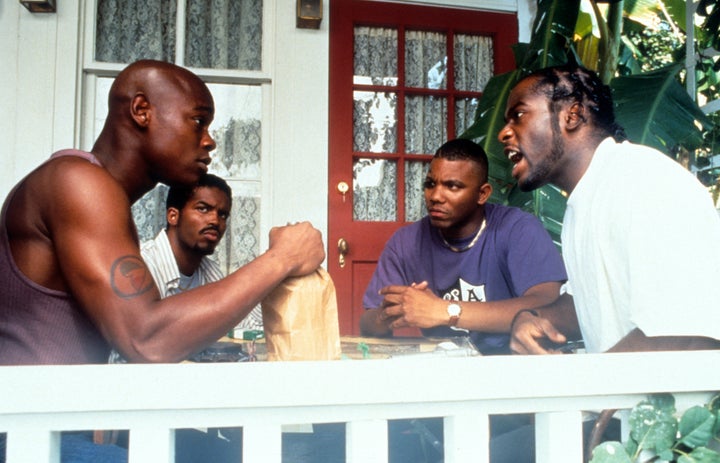
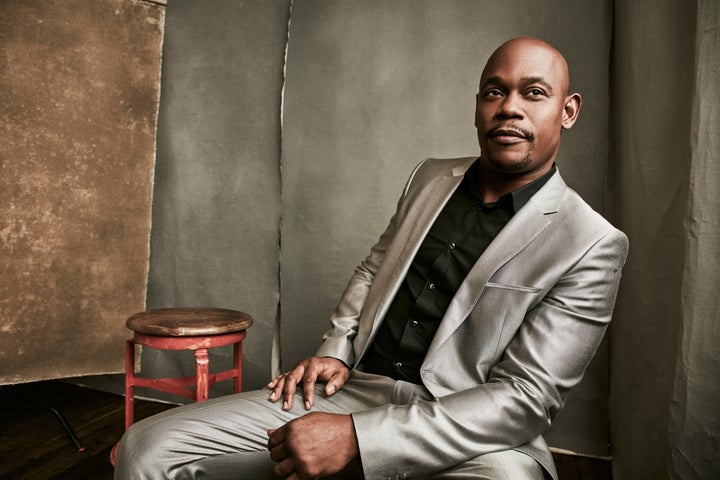
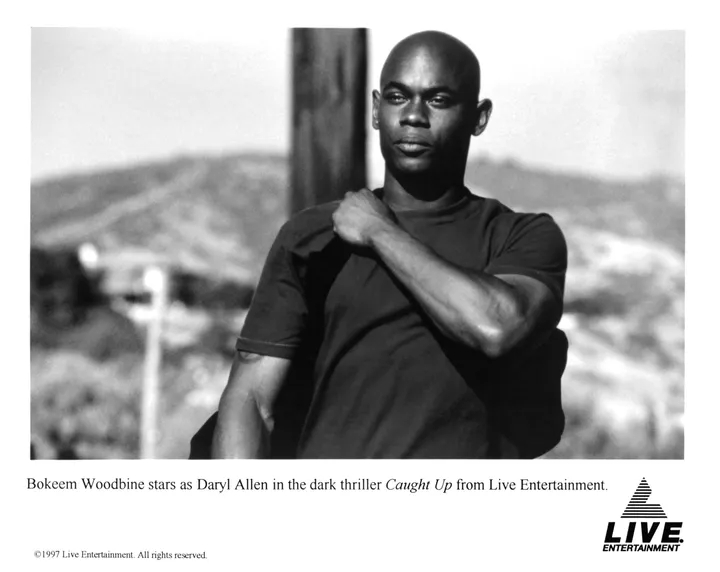



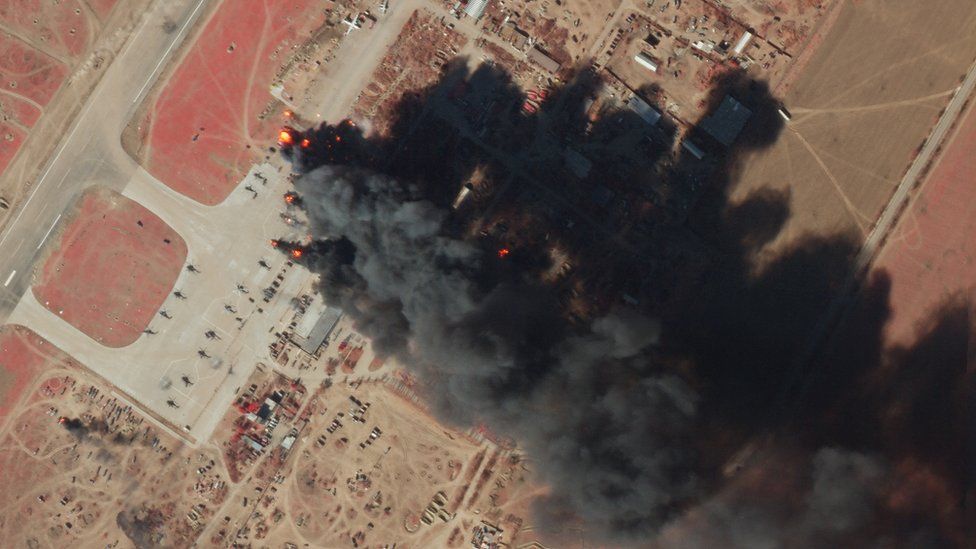
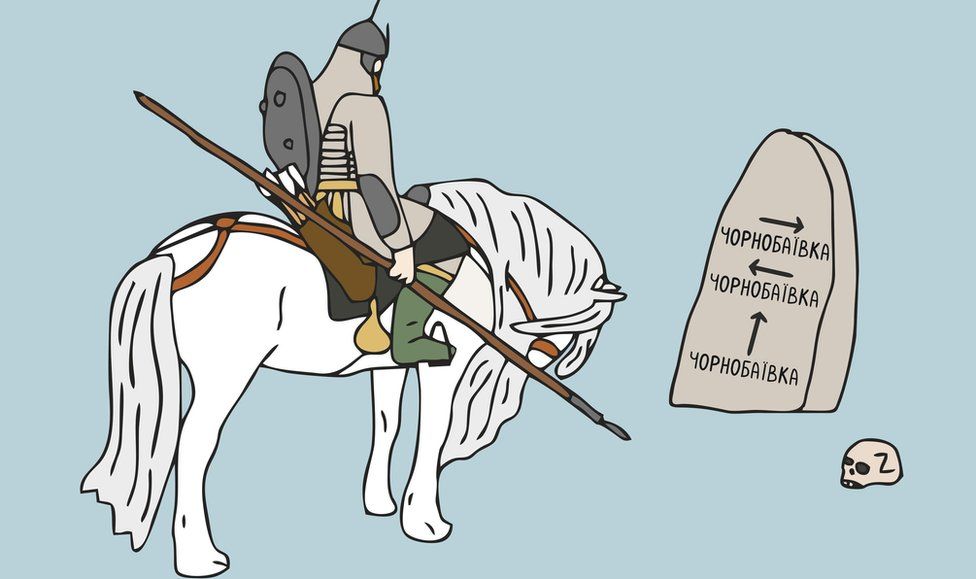
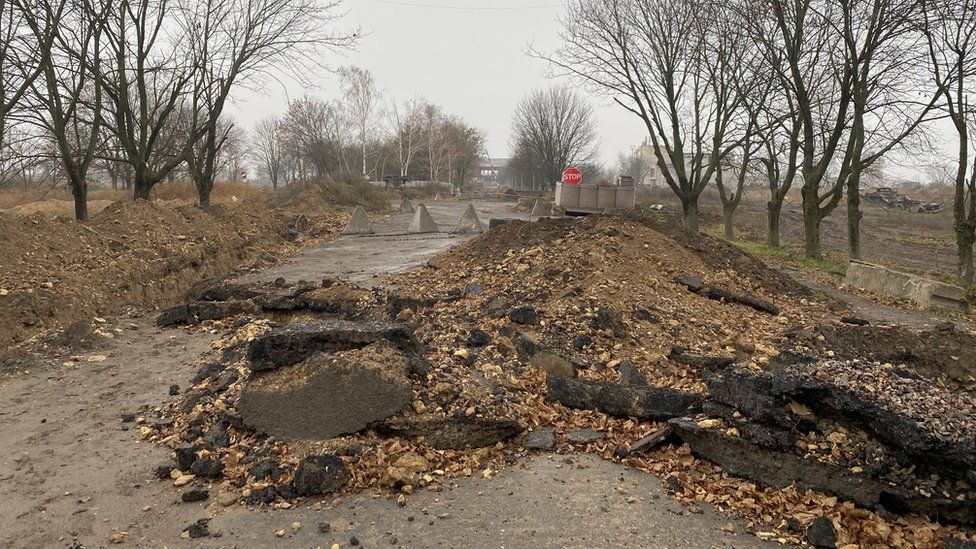
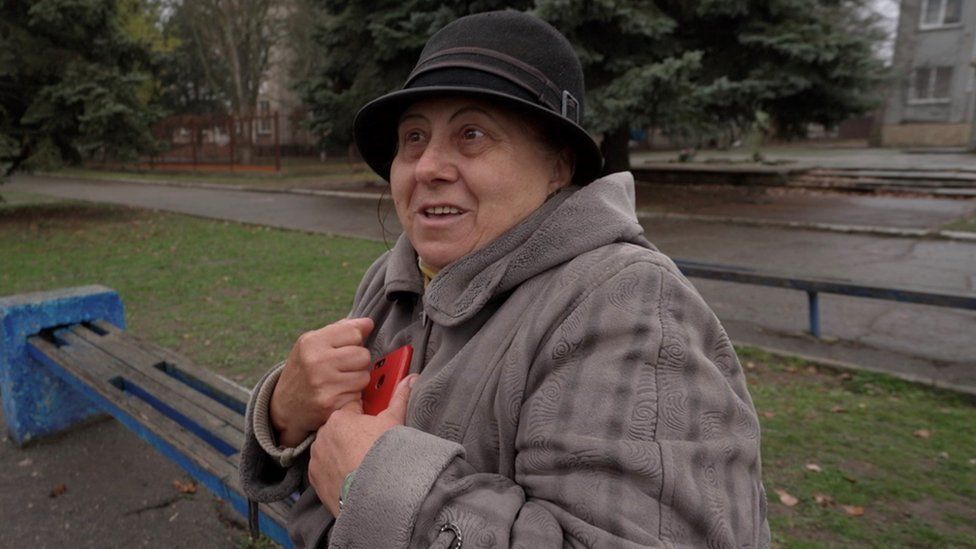
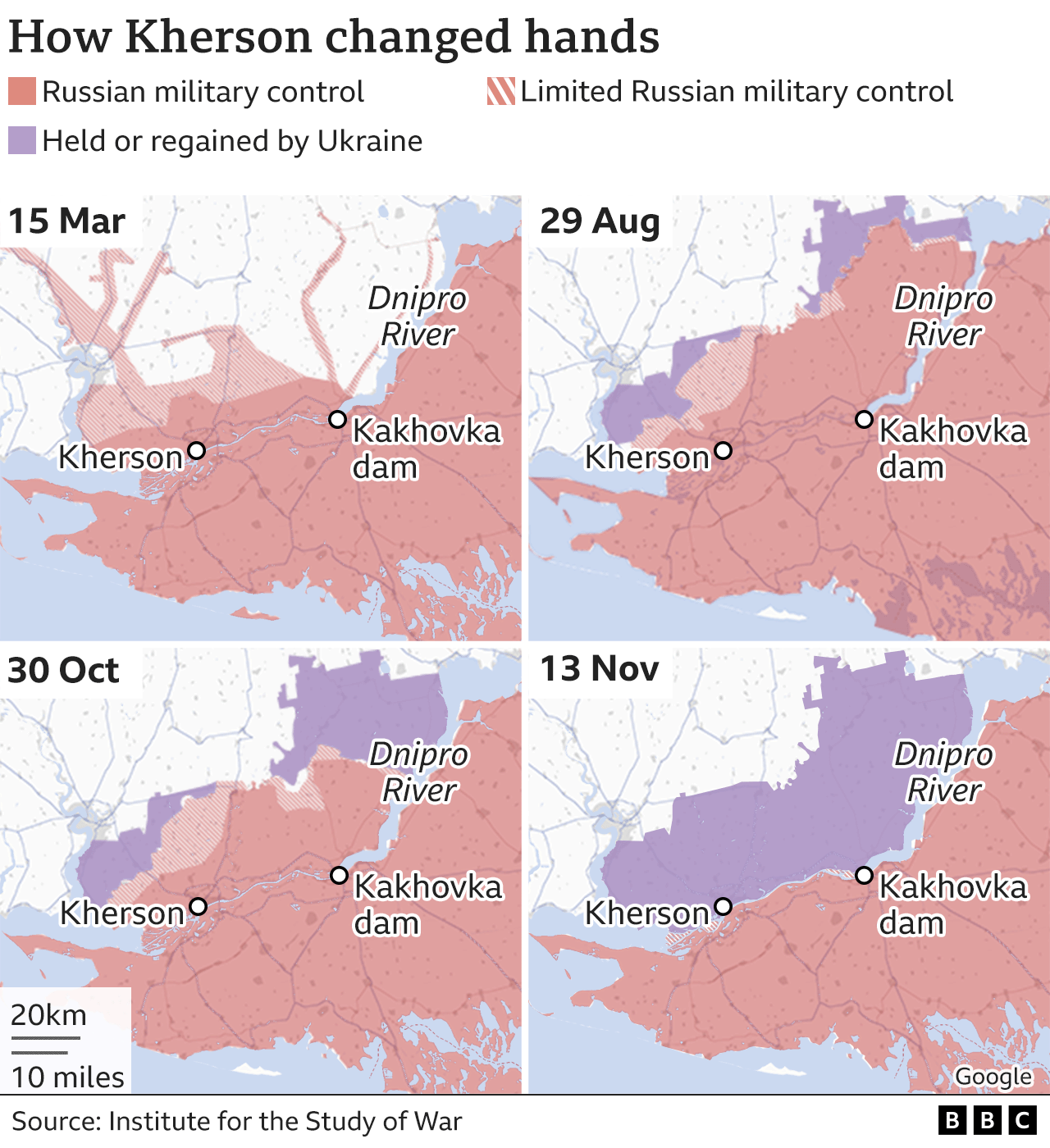

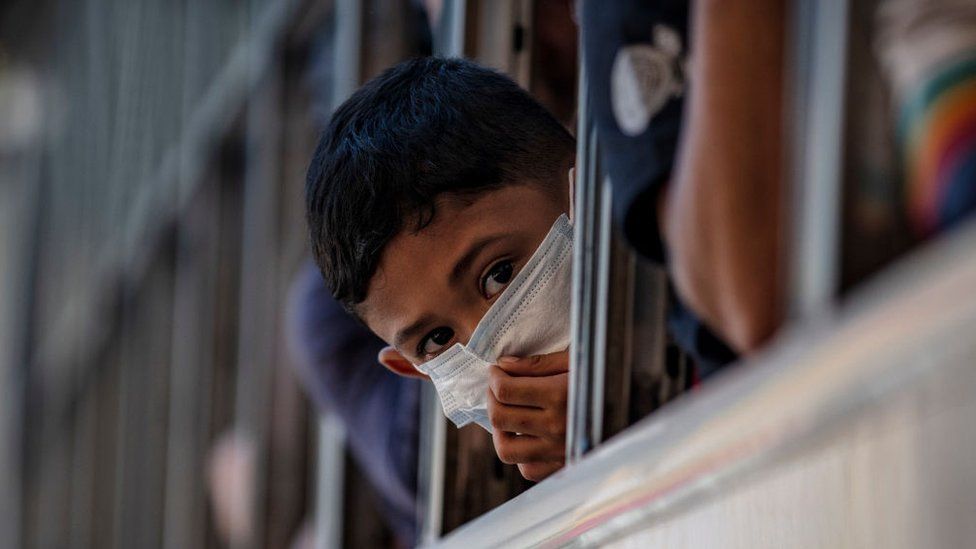

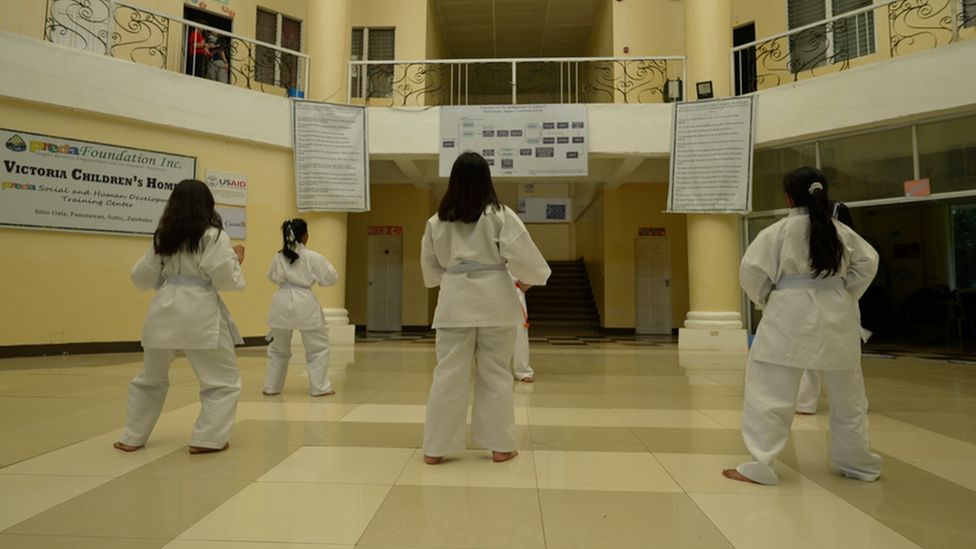
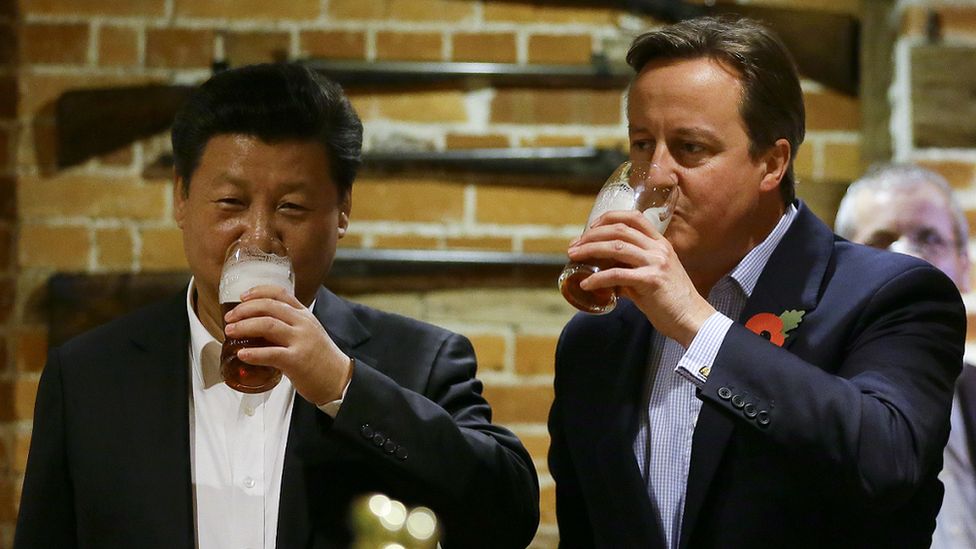
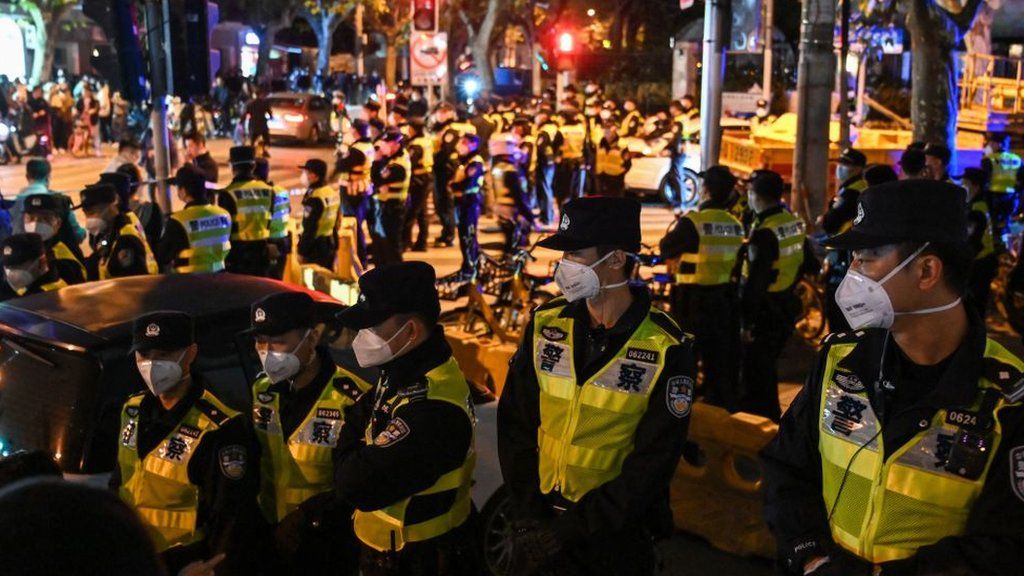



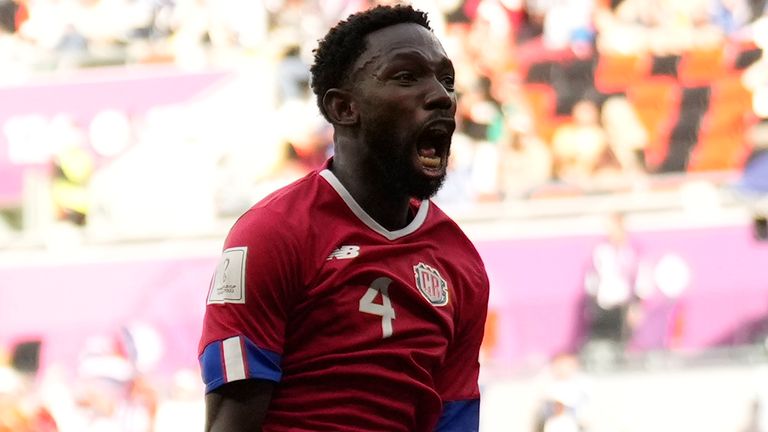

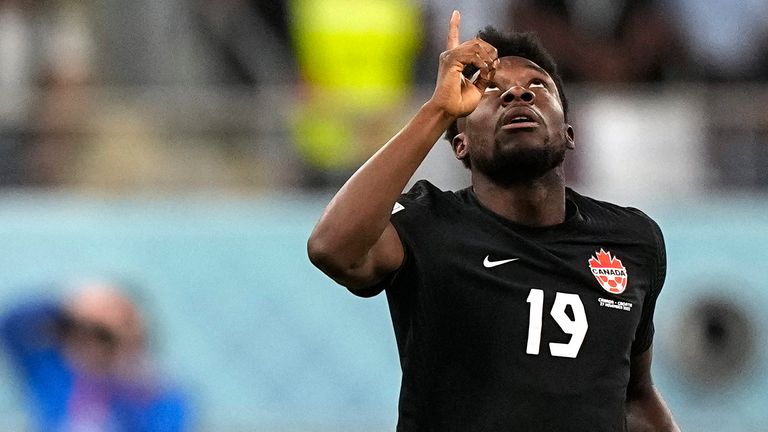
 Getty
Getty Getty Images
 Getty Images
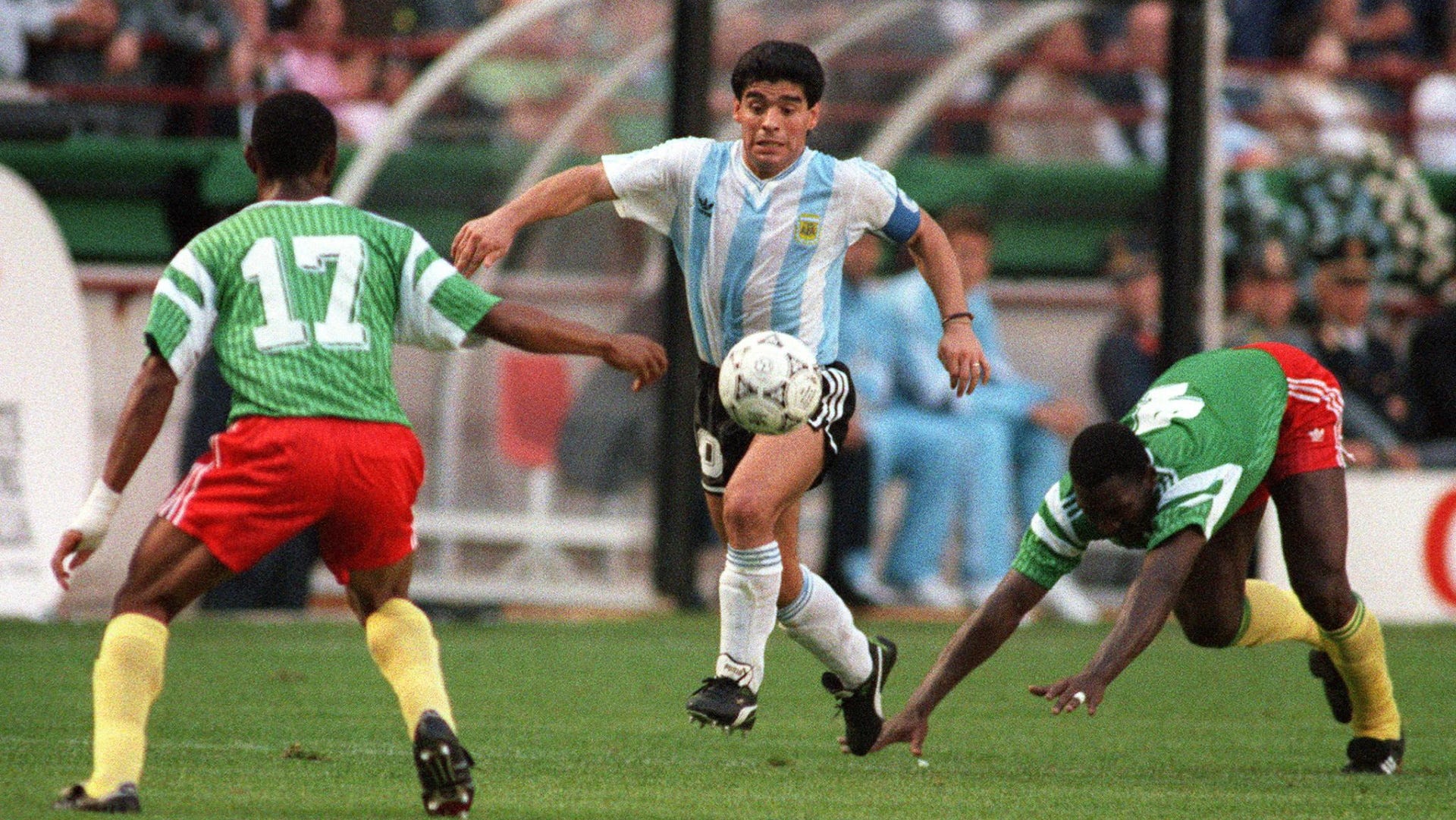 Getty Images
 Sportpari
 Getty
Getty Getty Images
 Getty
Getty Getty Images
 Getty Images
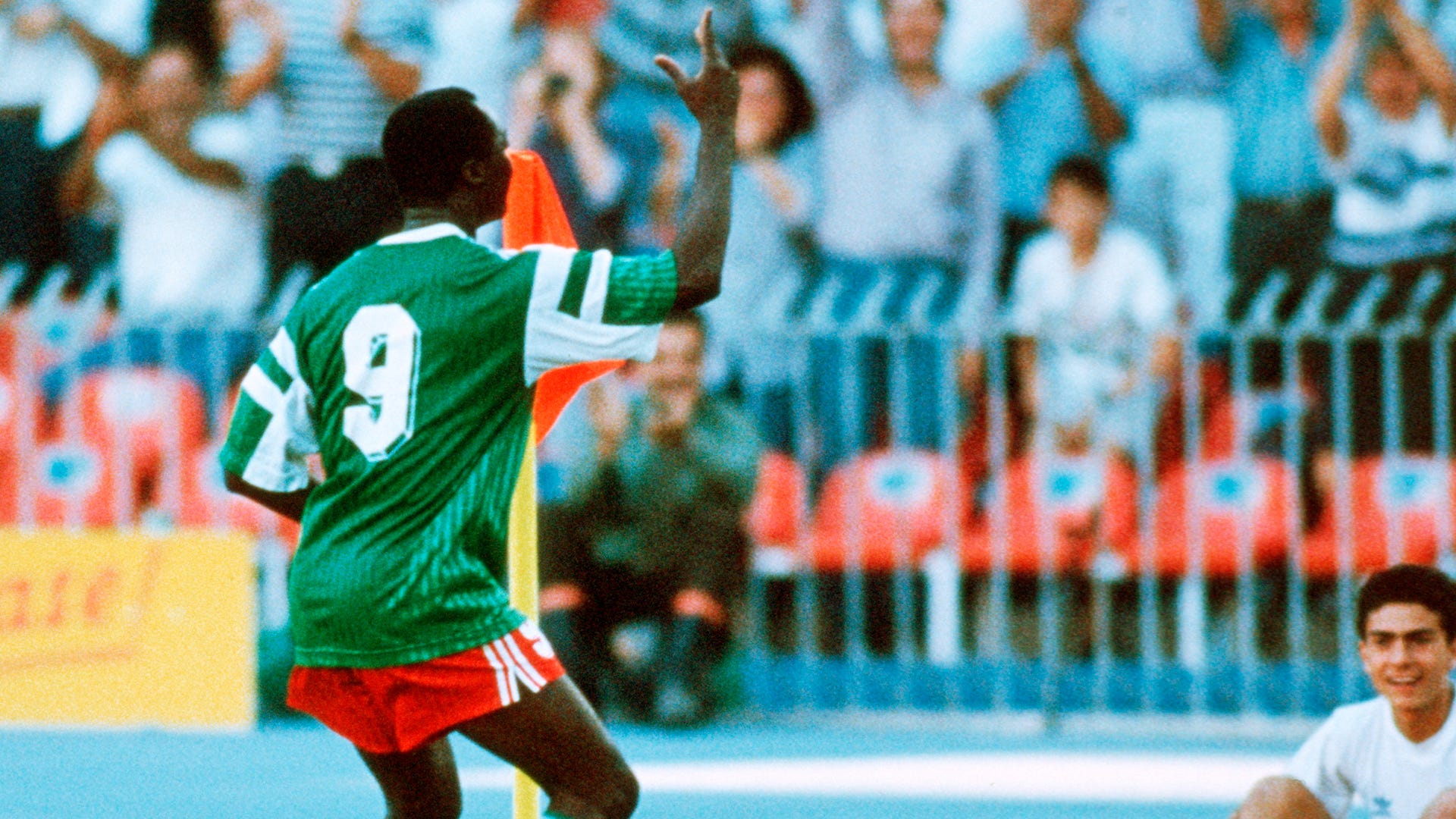 Getty
Getty Getty Images
 Getty
Getty Getty Images
 Michelly Rall/Getty Images